



Thick hair is not hard to braid. It just punishes sloppy sectioning. If the parts wander, the extensions are packed in too fast, or the first inch at the hairline is overloaded, the whole style starts looking heavy before you even leave the chair.
That’s why braids with hair extensions for thick hair work best when the extension hair is used as structure, not stuffing. Pre-stretched braiding hair, a sharp rat-tail comb, and a little restraint at the root make a bigger difference than buying extra-long hair and hoping for the best. The braid should sit on the head like it belongs there.
I keep coming back to styles where the braid line does the talking. Knotless sets, feed-in cornrows, stitch rows, wrapped ponytails, and shorter shapes can all handle dense hair without turning puffy at the base. Some are sleek. Some are dressed up with cuffs or beads. A few are plain on purpose. The styles below are the ones that keep the outline clean.
Why These Braids Stay Sharp on Thick Hair
-
The root stays flatter: Knotless and feed-in starts keep thick hair from stacking up into a hard lump right at the scalp, which is where a style starts to look tired if it’s done badly.
-
The braid gets shape, not extra bulk: Thick hair already brings volume, so the extension hair should refine the silhouette and add length where you want it, not puff things up.
-
Parting matters more than people think: Triangle parts, curved parts, center parts, and zig-zags all change the feel of the whole style before the braid even reaches the nape.
-
Long wear starts with clean sections: When the sections are even and the feed-in is gradual, frizz shows up later and the braid line stays readable longer.
-
There’s room to move between neat and styled: A style can stay crisp and still take beads, curls, cuffs, or a wrapped ponytail base without looking overworked.
1. Classic Knotless Box Braids
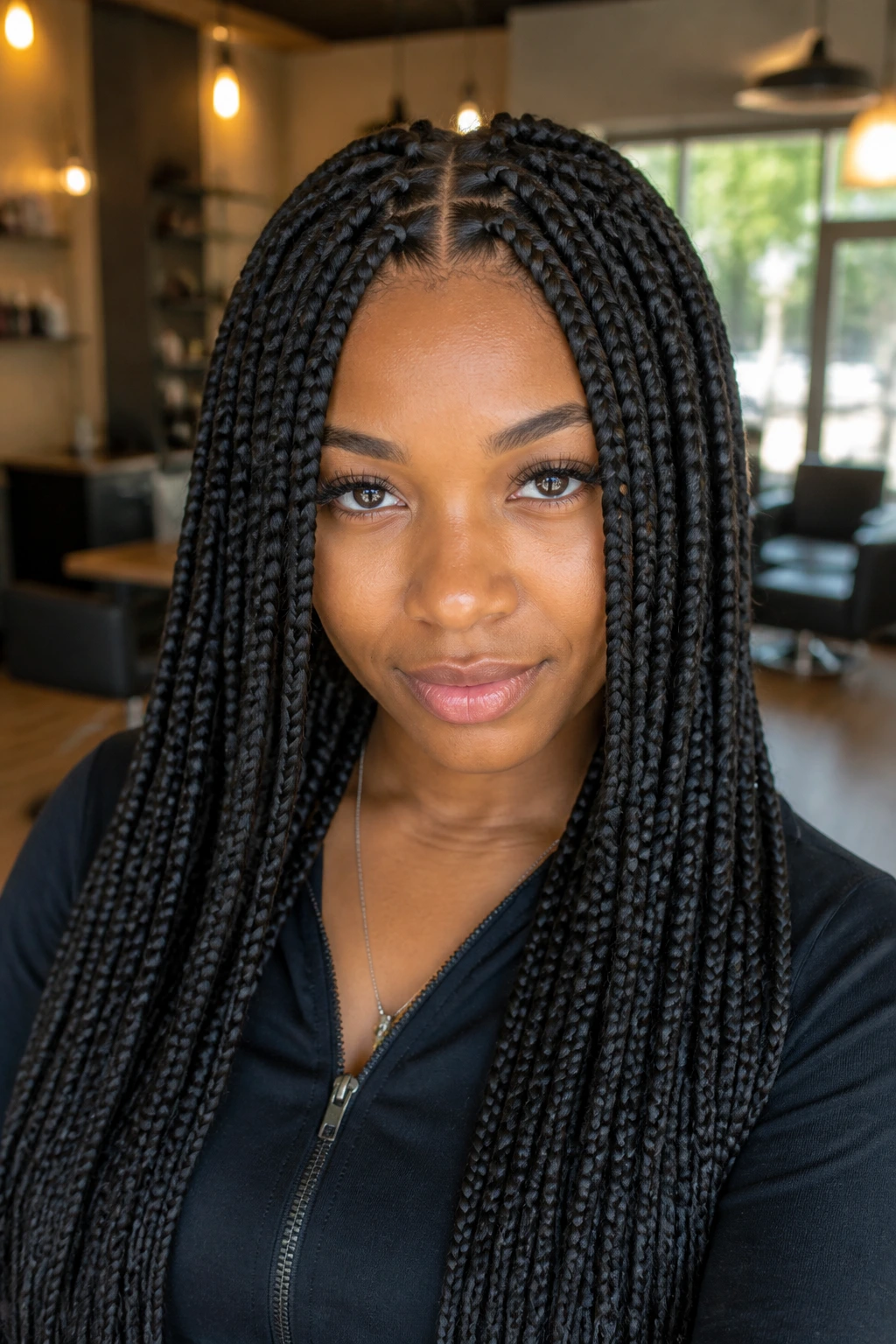
Knotless box braids are the cleanest first choice if you want thick hair to look neat instead of crowded. The extension starts small and gets fed in gradually, so the root lies flatter and the braid does not sit there with a hard little knot on top of dense growth. On thick hair, that flatter root matters a lot.
Why It Works on Dense Hair
Your own hair already gives the braid body, which means the extension can be used for length and polish. I like medium squares on thick hair—tiny boxes can look busy, and huge ones get bulky fast. Ask for pre-stretched braiding hair in a matte finish if you want the ends to blend instead of gleam.
- Best length: 20 to 30 inches if you want swing; 14 to 18 inches if you want lighter weight.
- Best part size: medium squares that let the braid sit flat without puffing at the scalp.
- Best finish: hot-water-dipped ends or lightly curled ends for a softer line.
If you want the most forgiving style in the whole group, this is it. It gives thick hair room to breathe and still looks finished on day one.
2. Medium Feed-In Straight-Back Cornrows
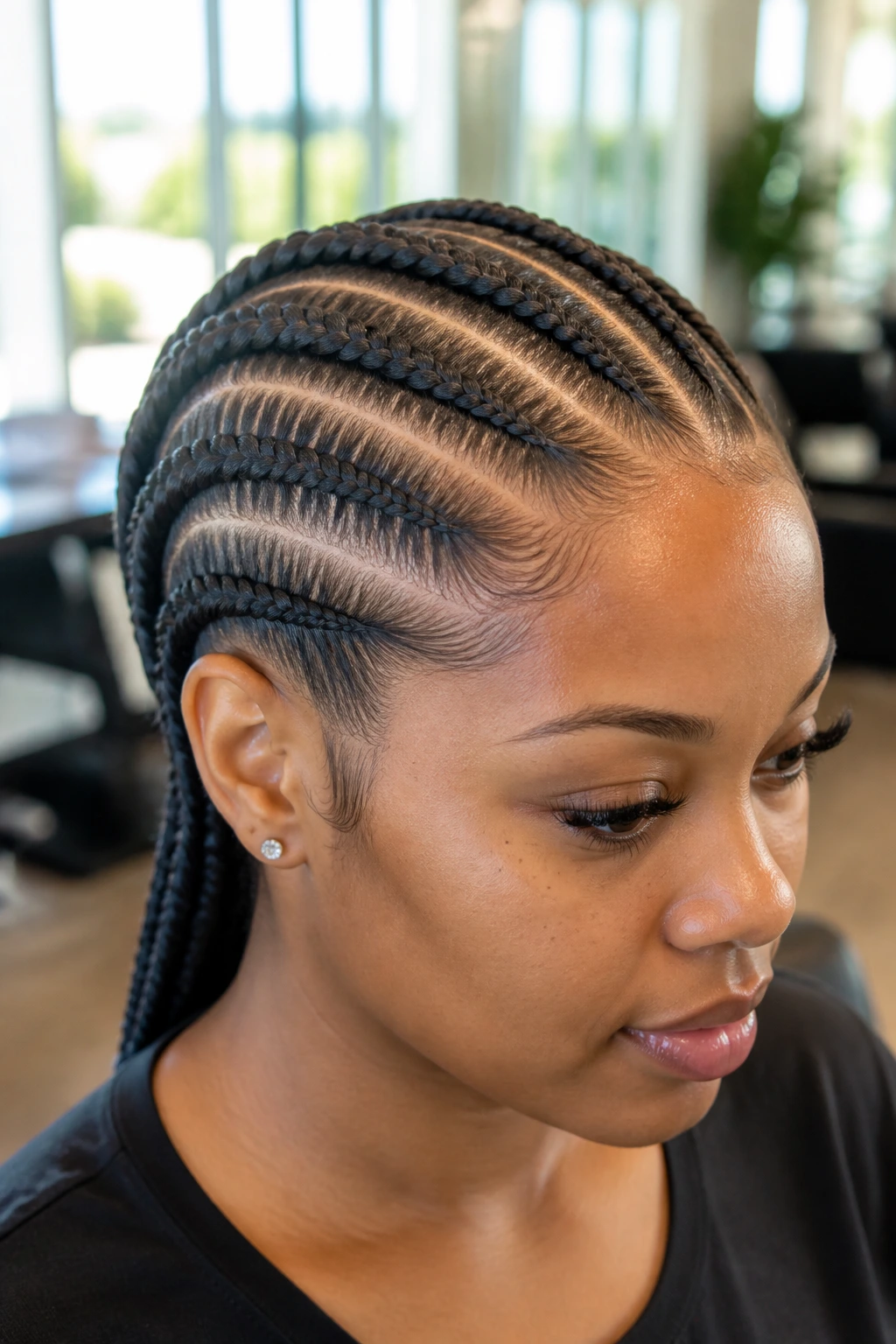
Want the scalp line to be the main event? Feed-in cornrows do that. Thick hair gives the braid grip, so the rows stay put, and the extension builds a smooth, steady track without forcing all the weight into one starting point. Straight-back rows are clean, classic, and very hard to mess up if the parting is neat.
What to Ask For
Ask for four to eight rows depending on how dense your hair is and how full you want the look. More rows can make the style feel busier; fewer rows look sharper and keep the scalp more visible. I prefer a low ponytail or low bun with this set because it keeps the ends controlled and stops the whole thing from spreading out.
Nope, you do not need heavy hair at the root here. A small feed-in at the start and slightly larger sections as the braid moves back usually looks cleaner than stuffing the first inch with too much extension.
3. Stitch Braids with Clean Center Parts
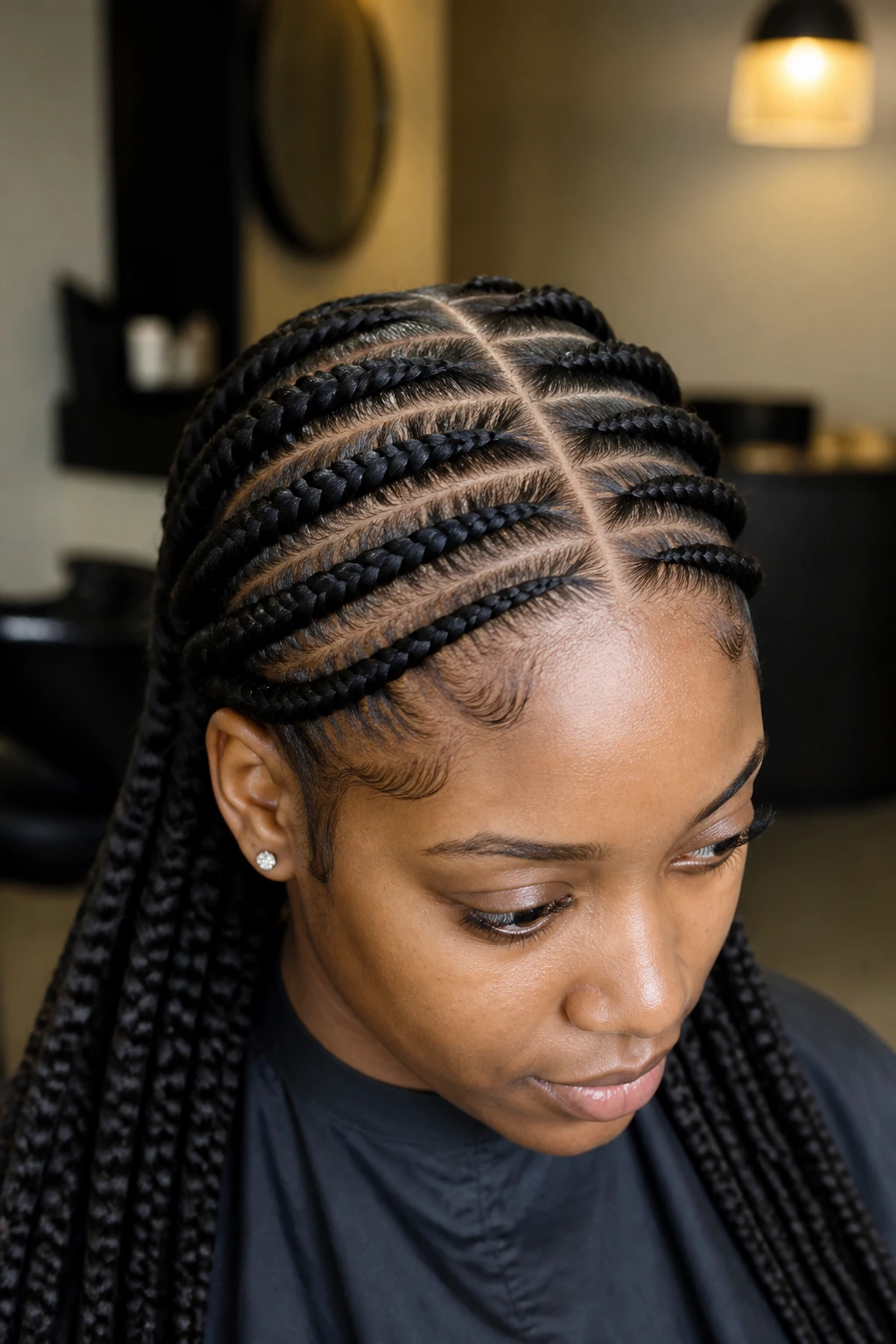
Stitch braids look almost engineered. That’s the appeal. The horizontal lines at the scalp are crisp, and thick hair helps them read as strong, not flimsy, because there’s enough density beneath the pattern to hold the shape.
The Parting Is the Point
A sharp center part changes everything. If the sectioning is crooked, the style looks off even if the braids themselves are tight and even. I like this style on hair that’s been stretched first—blown out or band-stretched—because the cleaner the root, the cleaner the stitches.
- Keep the first rows narrow enough to show the stitch pattern.
- Use a light hand with edge control; too much makes the part look chalky.
- Finish with mousse and a silk wrap for 15 to 20 minutes so the lines settle.
This is the style I’d choose when I want the scalp work to look deliberate from the first inch.
4. Fulani-Style Braids with Beaded Front Pieces
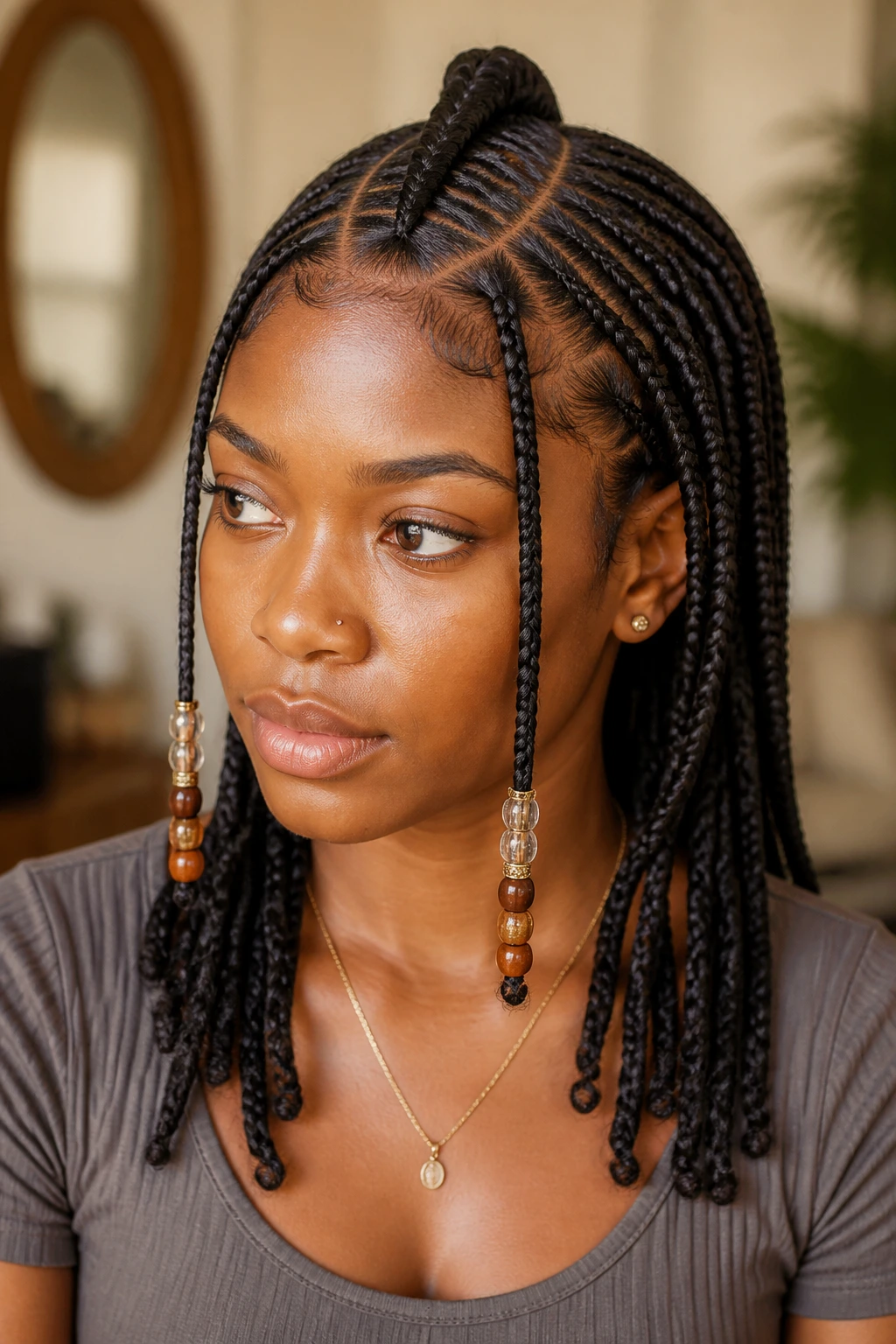
A center braid and a few side braids can completely change the balance of thick hair. Fulani-style braids look especially good when the front section is tight and neat, because the style has a built-in frame around the face. The back can stay simple; the front does enough.
Beads or cuffs belong here, but not everywhere. Three or four beads on the front ends usually reads cleaner than scattering jewelry across the whole head. Thick hair gives those front braids enough substance to hold the ornaments without looking flimsy, which is why this style often feels more grounded than it looks in photos.
I like this one when a style needs a little personality without losing structure. The trick is restraint. One decorated braid can say more than six.
5. Ghana Braids Pulled into a Low Ponytail
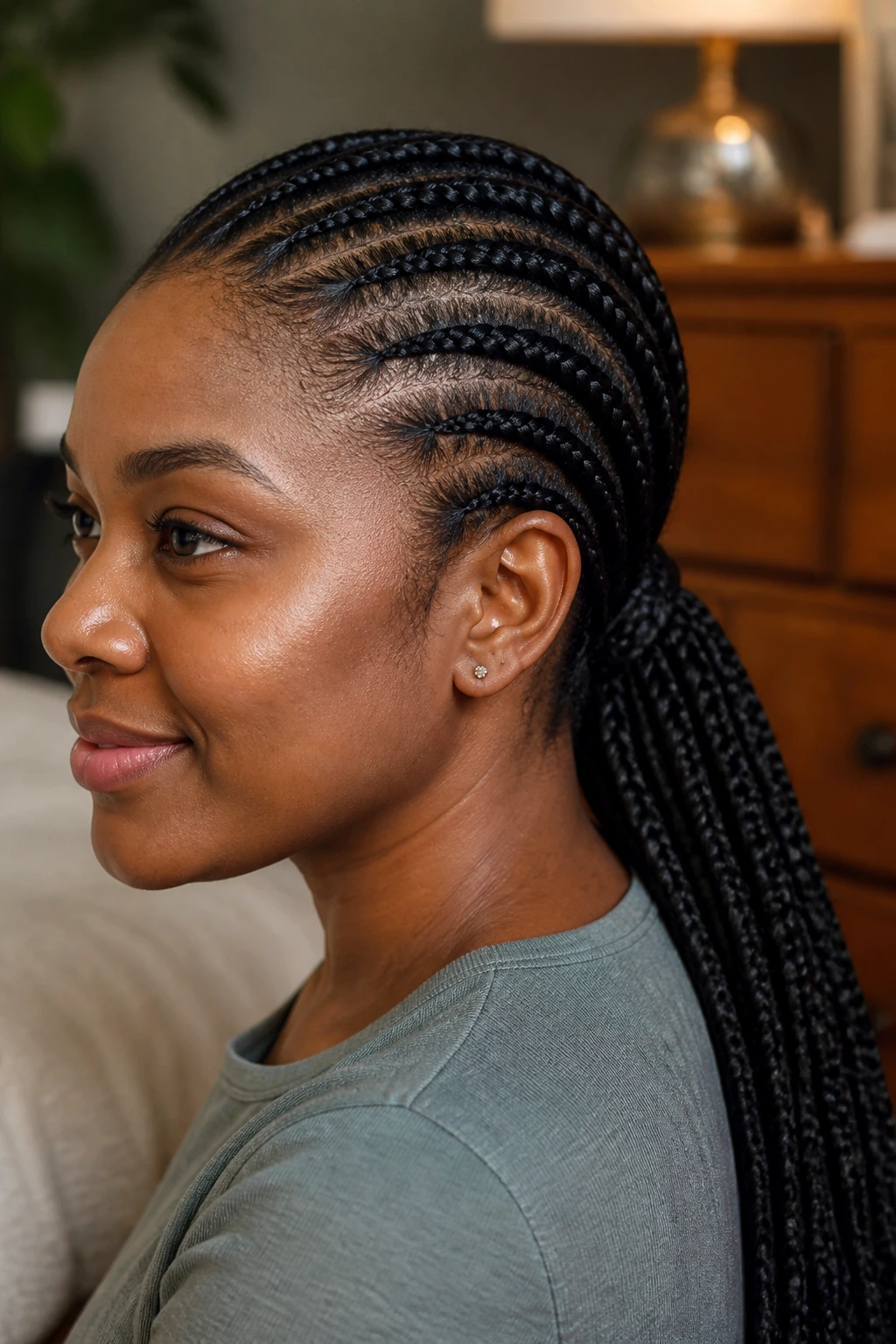
Ghana braids are the style I reach for when someone wants width and neatness at the same time. The feed-in starts raised and sculpted, and thick hair makes the ridges look full instead of skinny. Pulling the braids into a low ponytail keeps the shape tidy and stops the length from taking over the whole head.
Best When You Want the Hair Off Your Neck
This is a smart choice for anyone who runs warm, works long hours, or just dislikes hair brushing the collar all day. The low ponytail keeps the finish contained, and the braid pattern at the crown does the visual work. I would not crowd the ponytail base with too much extension hair; the braids already bring enough structure.
If the hairline is sensitive, ask for very gradual feed-in at the temples. That small change makes the style feel much better by day three.
6. Wrapped Braided Ponytail
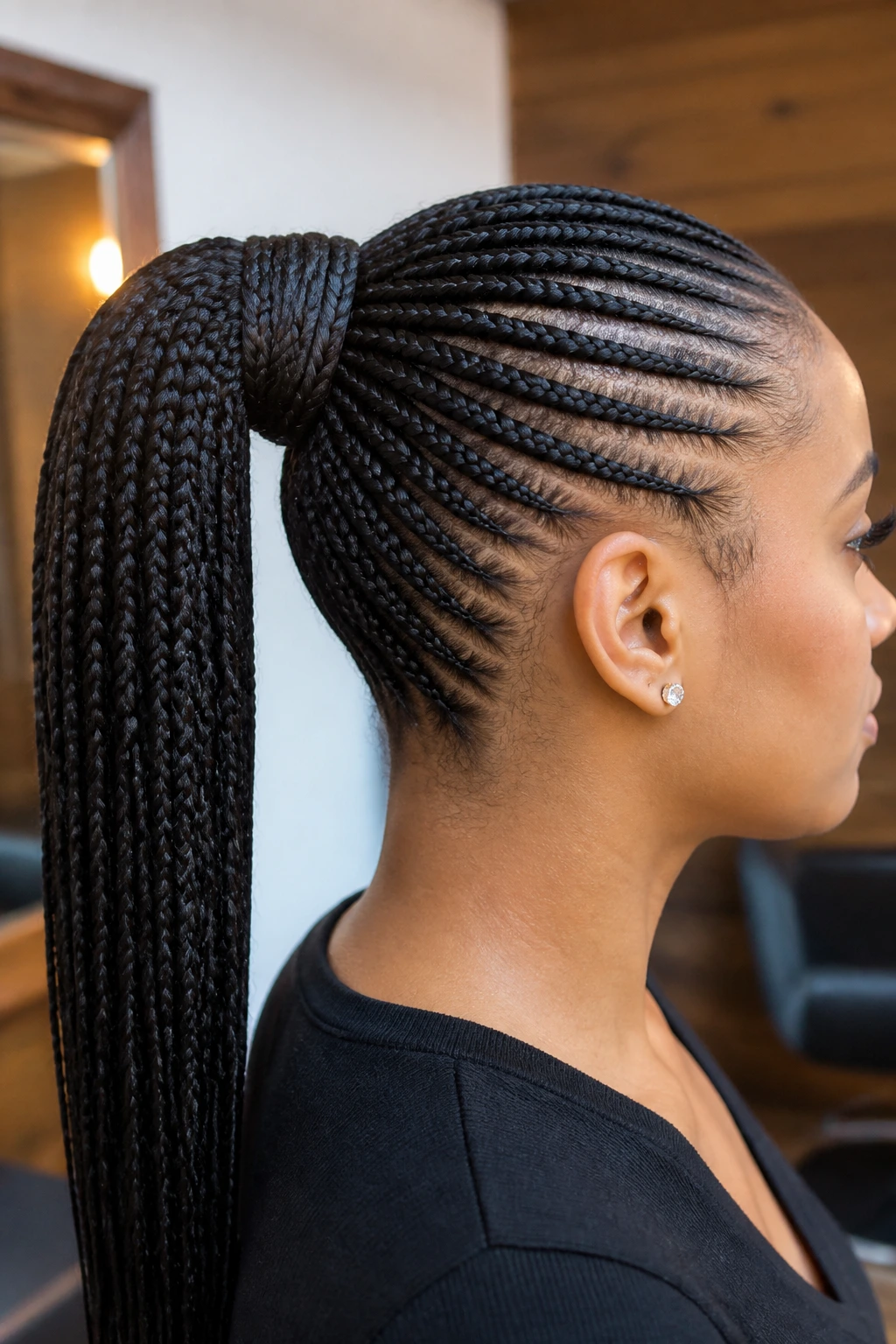
If you’ve ever had a ponytail slump because the base was too soft, this fixes it. A wrapped braided ponytail uses the extension hair to build a firm anchor, then hides the elastic or base with a neat wrap so the whole style reads as one clean shape. Thick hair helps here because the ponytail has enough body to look full without needing a giant pile of hair.
I like this for events, work, or any day when you want a pulled-back finish that still looks intentional. A mid-height ponytail usually sits best on dense hair; a very high ponytail can tug if the base is overloaded. Keep the wrap slim and smooth. One thick wrap around the base is enough.
7. Jumbo Box Braids with Soft Curved Parts
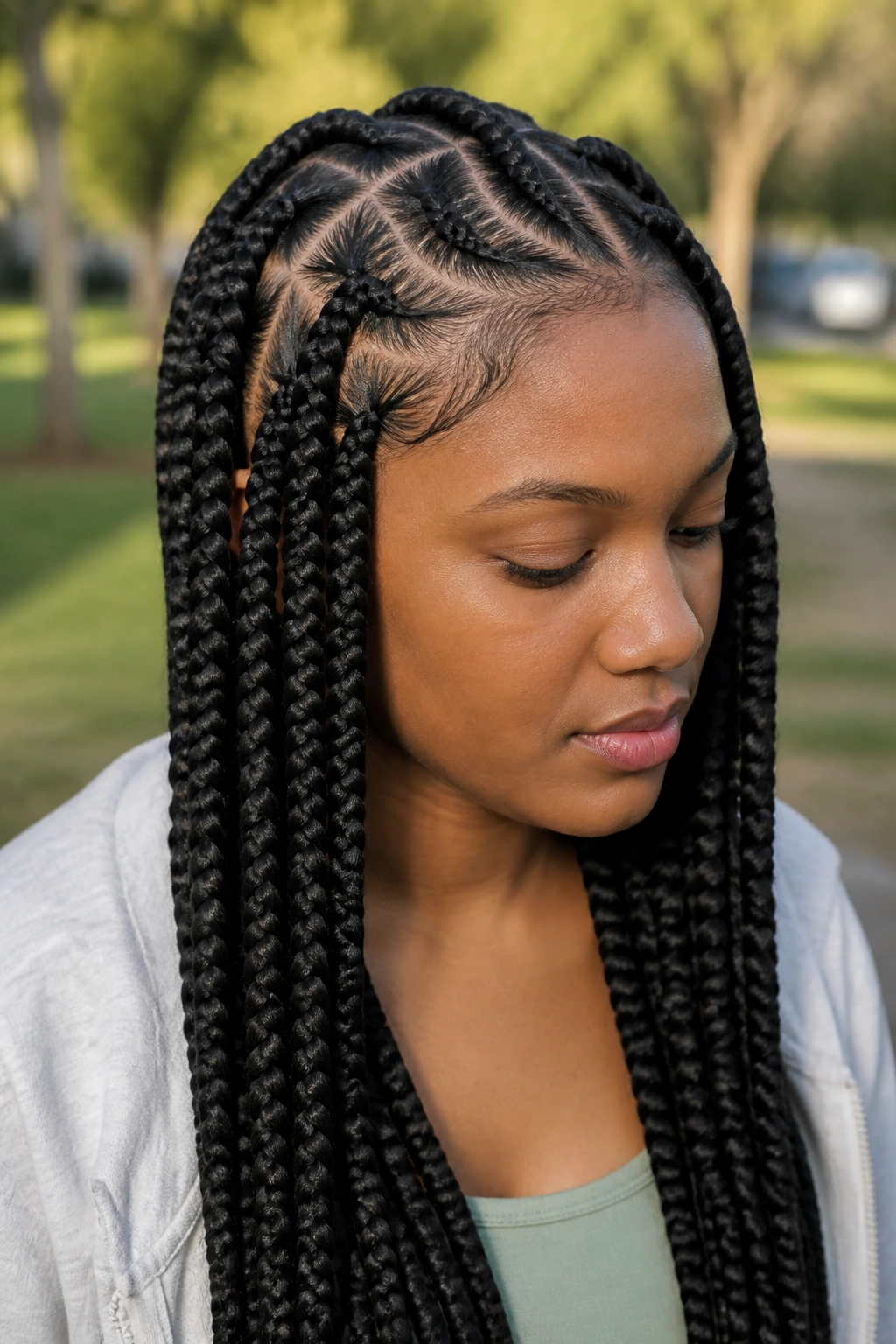
Jumbo box braids are the blunt instrument of the braid world. That is not a criticism. On thick hair, they can look bold and neat at the same time because the natural density supports the bigger size instead of making the sections look underfed.
Why the Size Matters
Fewer, larger parts mean less chair time and less fiddling at the roots. The key is not to make the braids too thick at the start. If the base is overpacked, the braid looks like a cable and the scalp around it starts to feel crowded. A soft curved part makes the style look less grid-like, which I prefer on dense hair.
This is the style for someone who wants presence without hours of tiny sectioning. It reads clean from across the room and stays clean because the sections are honest about their size.
8. Lemonade Braids Swept to One Side
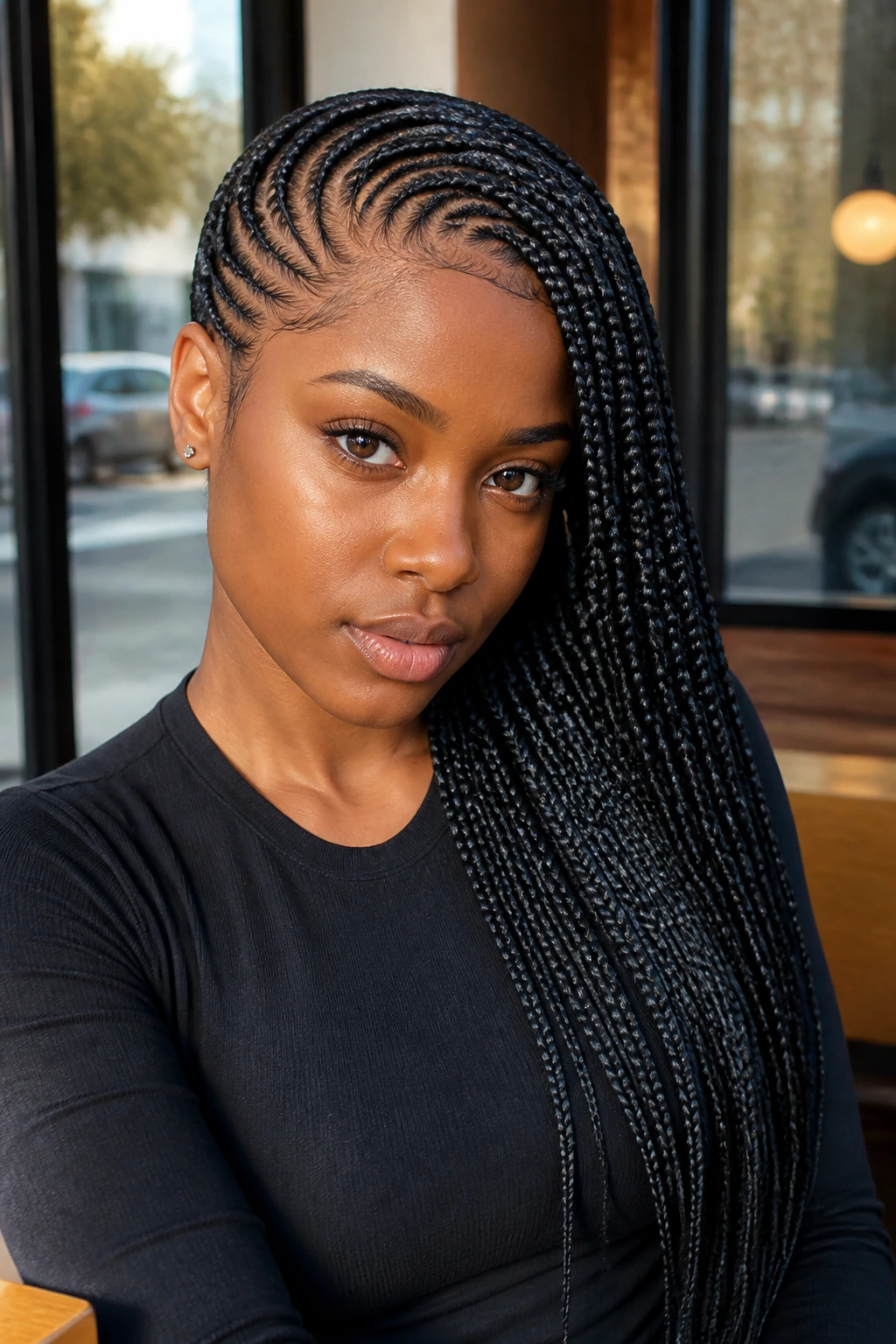
Why do side-swept braids stay tidy so long? Because the weight falls in one direction and the braid pattern works with it instead of fighting it. Lemonade braids give thick hair a sleek front and a long sweep of motion that feels controlled, not messy.
The temple area is where this style wins or loses. Keep the feed-in gradual there, and do not let the first row get too chunky. I like this with lengths that fall mid-back rather than all the way down the waist, because the shape stays cleaner and the braid does not start dragging the whole head to one side.
A deep side part and smooth edges are enough. The style already has attitude.
9. Half-Up, Half-Down Knotless Braids
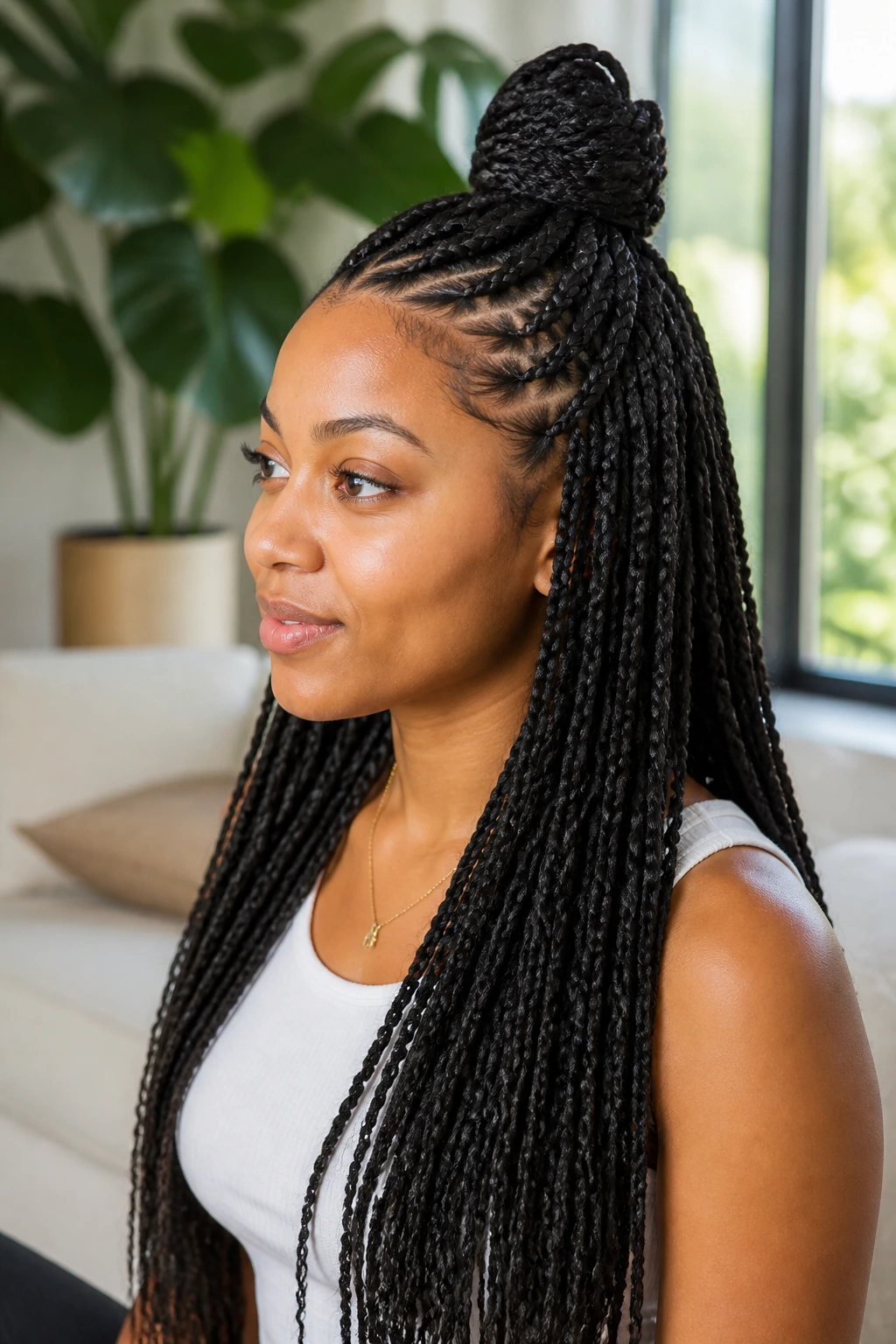
Half-up, half-down braids solve the “too much hair around my neck” problem without losing the movement of long braids. On thick hair, this matters more than people admit. Dense hair can feel heavy fast, and pulling the top half up takes enough pressure off the face to make the style easier to wear.
I like the top section gathered a little tighter than the lower section so the split reads as intentional. A wrapped knot, a small braided bun, or a clean elastic base all work. The lower half can stay loose and straight, or you can curl the ends if you want the finish to feel softer.
This is one of the easiest ways to keep long braids from feeling like too much hair.
10. Chin-Length Braided Bob
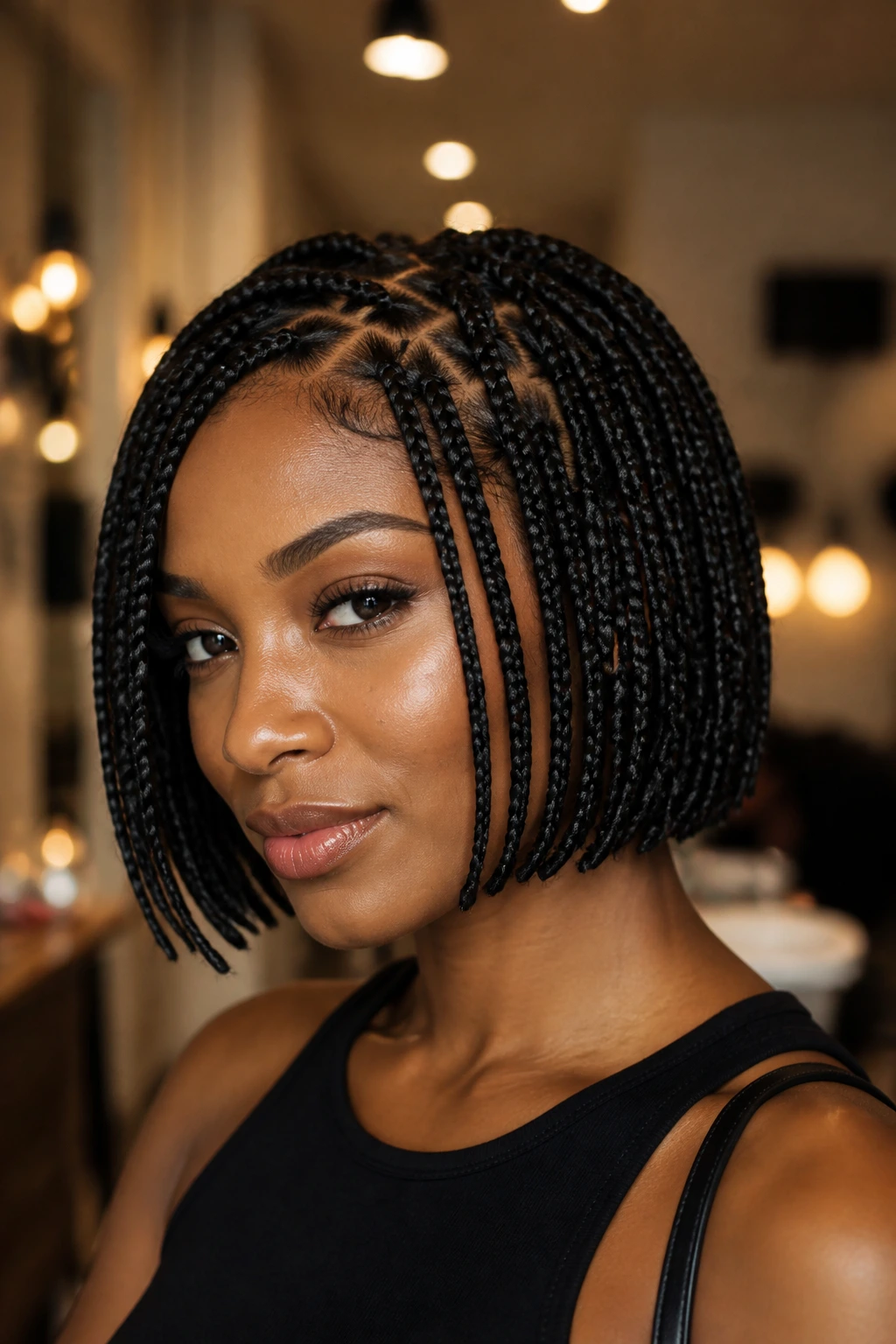
A braided bob changes the whole mood. Shorter extensions keep thick hair from turning the style into a heavy curtain, and the line at the jaw or chin makes everything look more precise. I like this when the wearer wants braids that sit close to the head and do not catch on every sweater or jacket collar.
Why Shorter Can Look Sharper
The bob works because there is nowhere for the braid to sprawl. The ends stop moving around, the weight stays manageable, and the shape looks deliberate. Ask for the cut line after the braids are dipped or sealed so the length lands cleanly. A blunt finish feels modern; a slight angle at the front softens the face.
This is the style I’d pick if the goal is tidy, light, and easy to live with.
11. Goddess Braids with Curly Ends
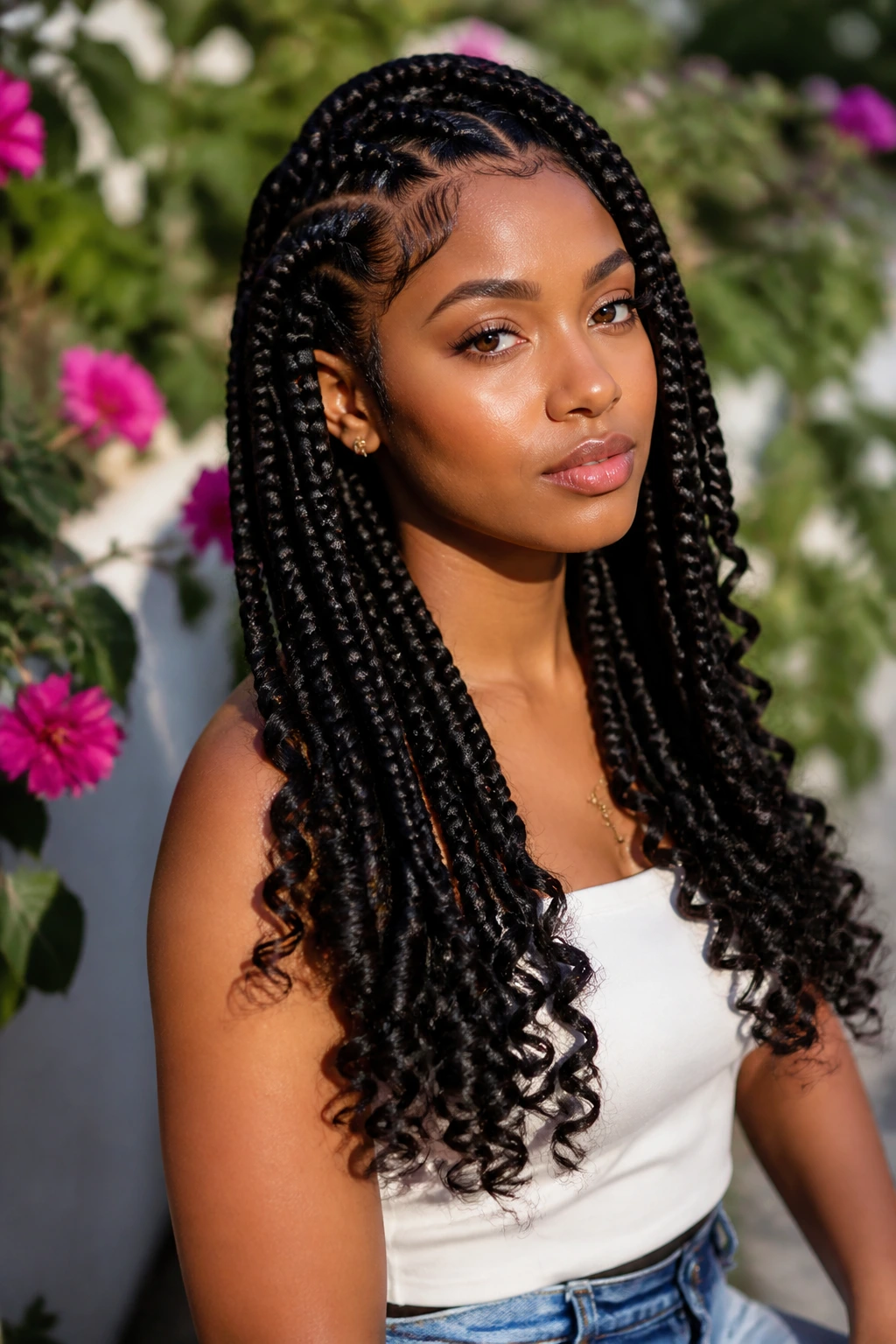
Goddess braids ask for a little softness. The braid itself is thick and structured, but the curly ends keep the finish from feeling hard. On thick hair, that balance works because the dense base gives the braid enough presence while the curls add movement where the eye naturally lands.
I like the curls to live at the ends or around the front pieces, not everywhere. Too much curl too high up can make the style look fuzzy instead of polished. If you want the look to stay neat, keep the braid body smooth and let the curls do the decorating at the bottom.
A side part or center part both work. The style is flexible that way, which is rare for something this structured.
12. Side-Swept Tribal-Style Braids
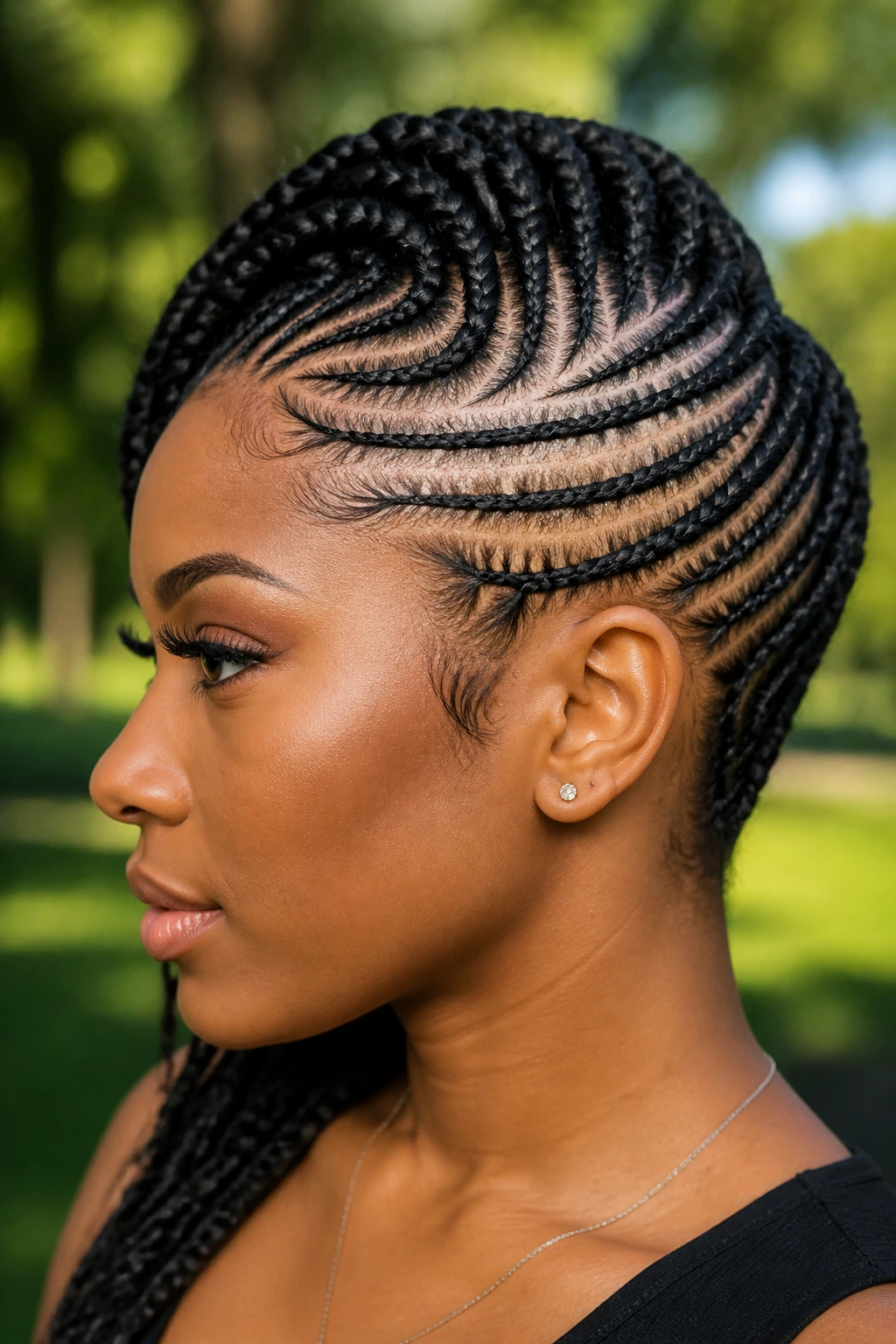
Side-swept tribal-style braids are for someone who wants a pattern you notice right away. The scalp design does most of the work, so the lengths do not need to be oversized. Thick hair helps the style hold its lines because the braids have enough fullness to look intentional without looking bulky.
Keep the side sweep clean and the braid sections consistent. I would not pile on extra beads or cuffs unless the front rows are simple enough to carry them. The appeal here is the contrast between the neat scalp work and the softer fall of the lengths.
If your hair tends to puff at the nape, this style helps hide that by directing the eye diagonally instead of straight back.
13. Braided Crown Updo
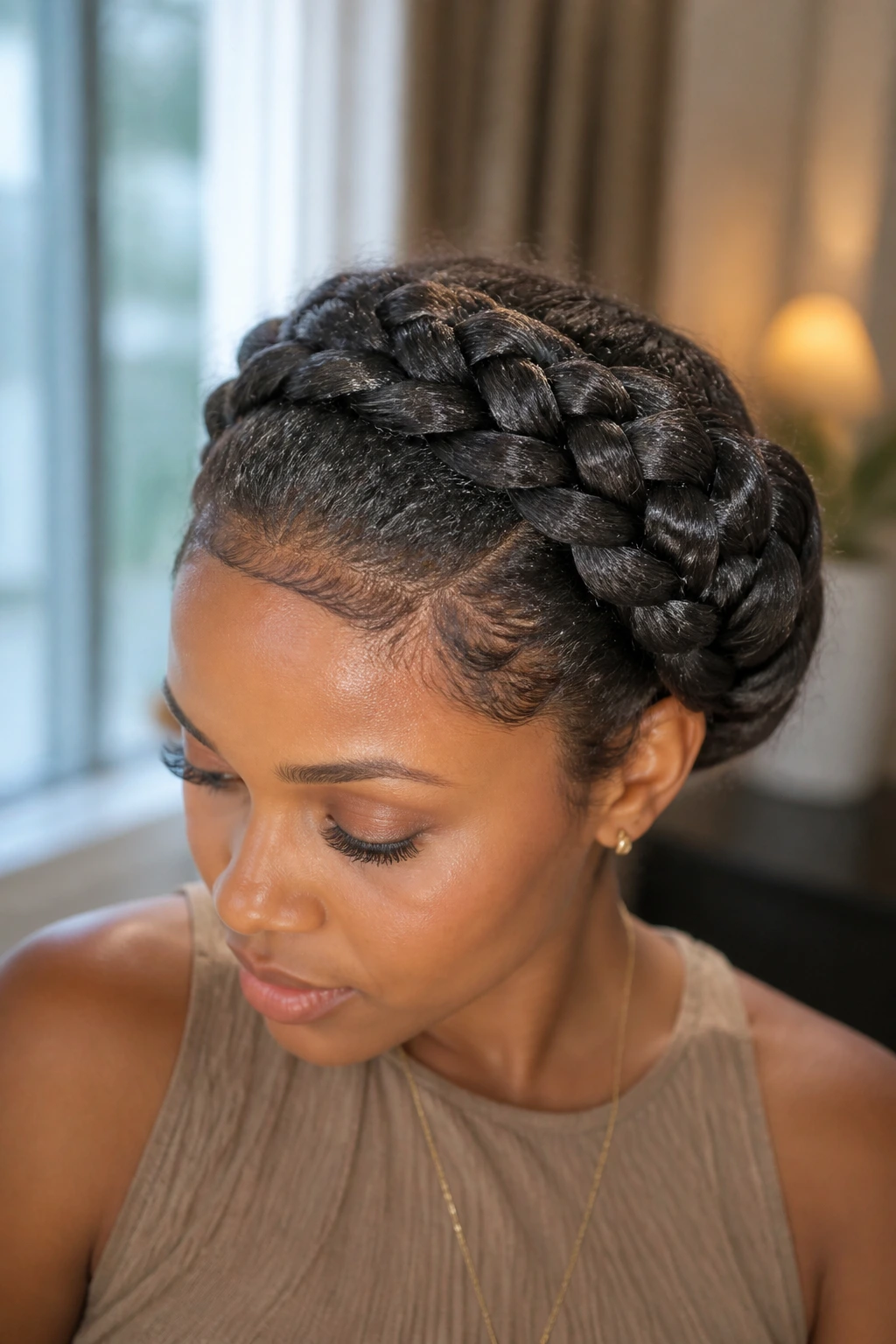
The braided crown updo is what you choose when you need the braids off your neck and still want the pattern to matter. Thick hair gives the crown fullness, so the style does not collapse into a thin ring around the head. It sits with shape.
This is a strong choice for events, warm rooms, or long days where you do not want hair brushing your shoulders. I like the pins tucked where the braid crosses itself, not sticking out on the outer line. That keeps the finish clean from every angle.
It is one of those styles that looks more detailed than it is, which is a nice trick if you like a polished finish without a lot of fuss.
14. Triangle-Part Knotless Braids
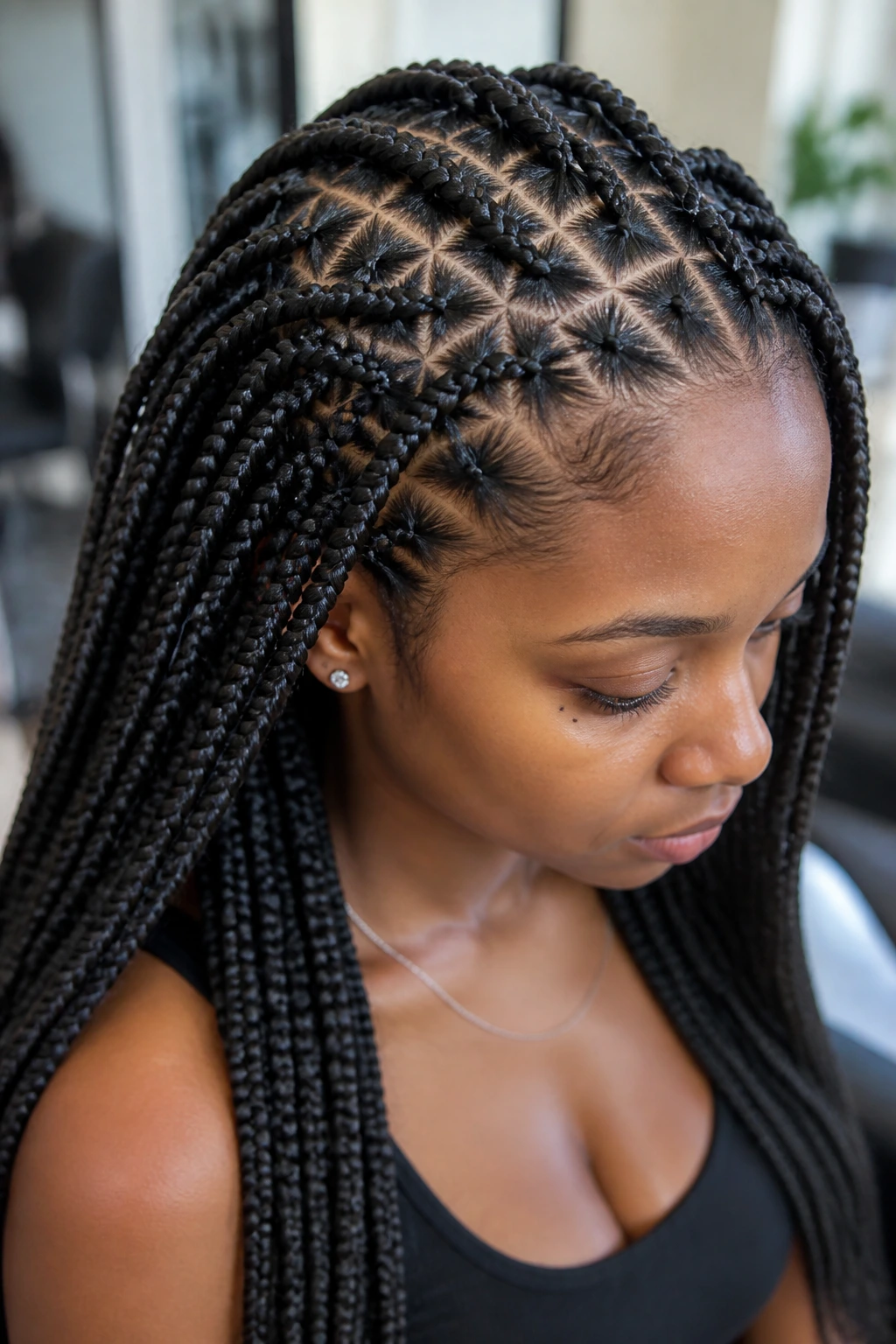
Triangle parts are small work, but they make a big visual difference. On thick hair, the triangle pattern breaks the grid into something that feels more deliberate and less boxy. The braids themselves can stay medium-sized; the parting does the interesting part.
Why the Shape Works
A triangle part spreads the visual weight in a way that flat squares do not. It also helps a full head of hair look organized, which matters when the density is high and every part has to earn its place. I would not go too tiny here. The whole point is crisp geometry, not extra chair time for no reason.
This is a good style when you want classic knotless braids but do not want them to look standard. It’s the parting that makes people look twice.
15. Micro Braids with Extension Length
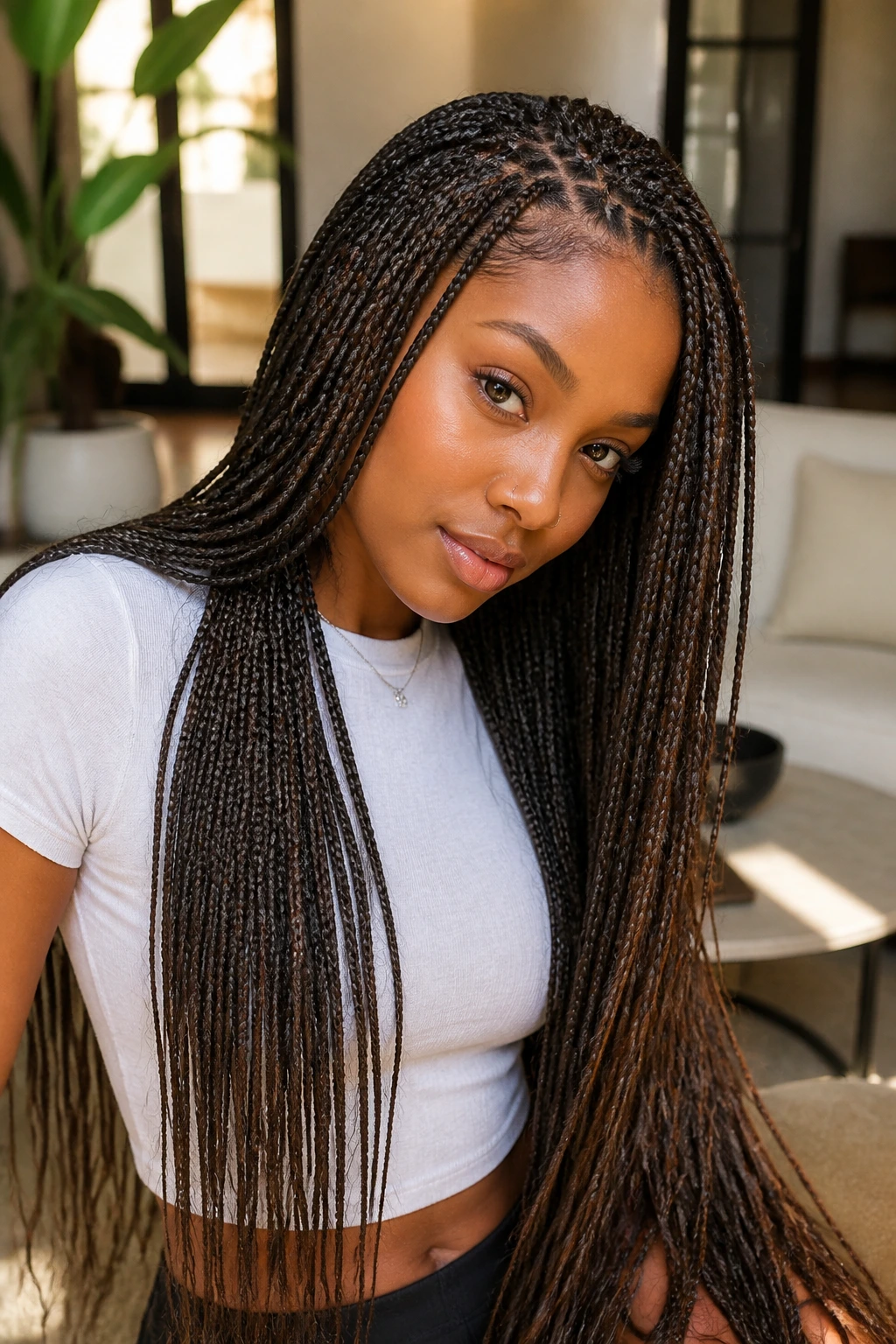
Micro braids are not casual about anything. They take time, they take patience, and on thick hair they need serious section control. When they are done well, though, the result is very neat and very flexible. You can wear them down, up, side-swept, or tucked away without losing shape.
The Trade-Off
This is the style I would choose for someone who loves tiny detail and does not mind a longer install. The sections must be tiny enough to stay neat but not so small that the scalp feels crowded. Heavy extension hair is a bad idea here; lightweight braiding hair is the safer move, especially if your own hair is dense.
- Best for: long wear and lots of styling options.
- Skip it if: you want a quick install or a very light chair day.
- Ask for: lightweight extensions and careful parting around the hairline.
I like micro braids on thick hair when the finish is sleek, not overstuffed. They reward patience.
16. Crisscross Feed-In Braids
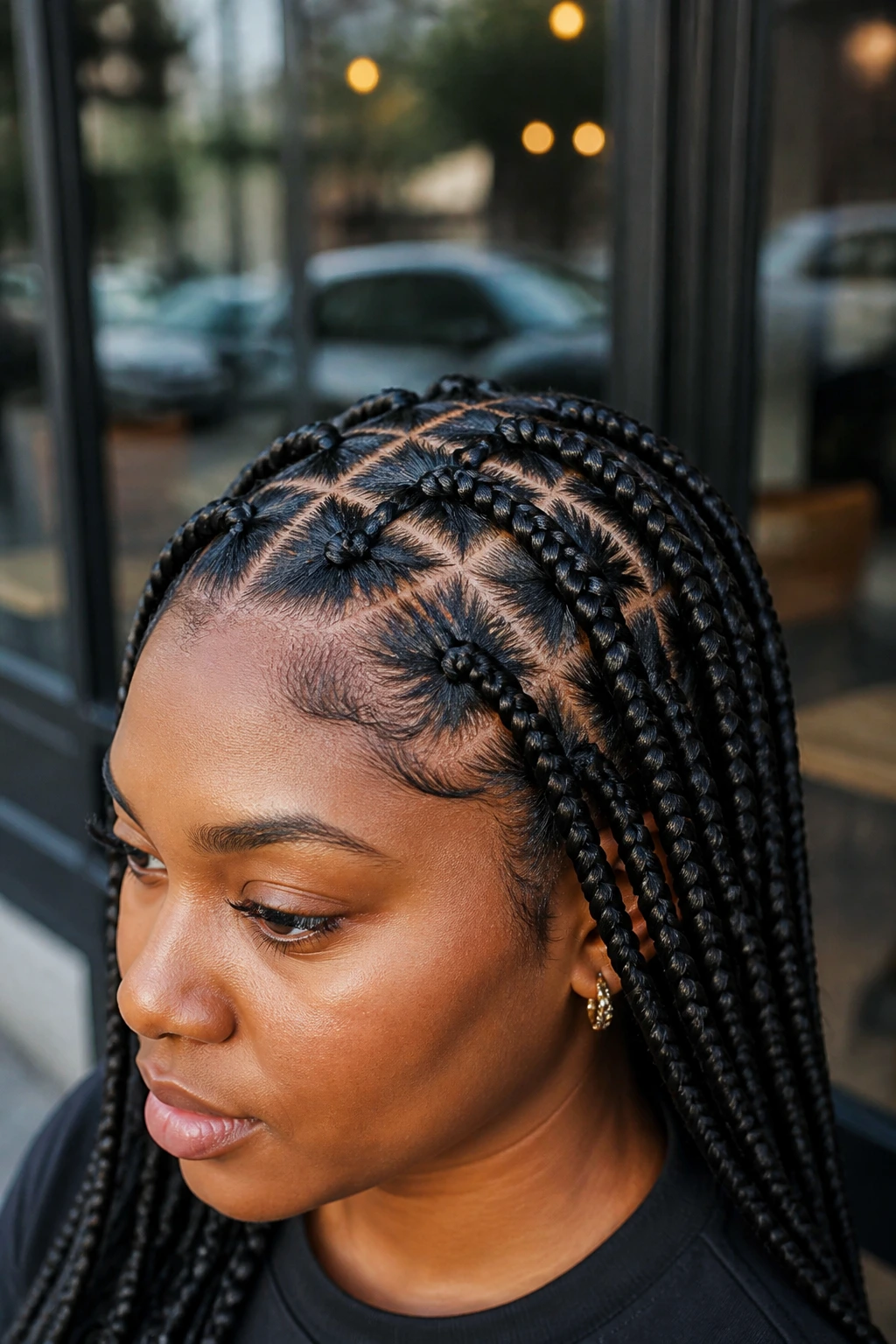
Crisscross feed-in braids look like the parts were drawn with a ruler and then crossed on purpose. That little overlap is what makes the style interesting, and thick hair helps it hold shape instead of sagging into the scalp. The braid line stays neat because the design is built in at the root.
Keep the crisscrossing close to the scalp and let the lengths stay simple. If you overdecorate the ends, the eye gets pulled away from the parting, which is the point of the whole style. I like this one when plain straight-backs feel too expected but I still want a crisp finish.
It is a clean style with a small twist. That is usually the sweet spot.
17. Zig-Zag Part Braids
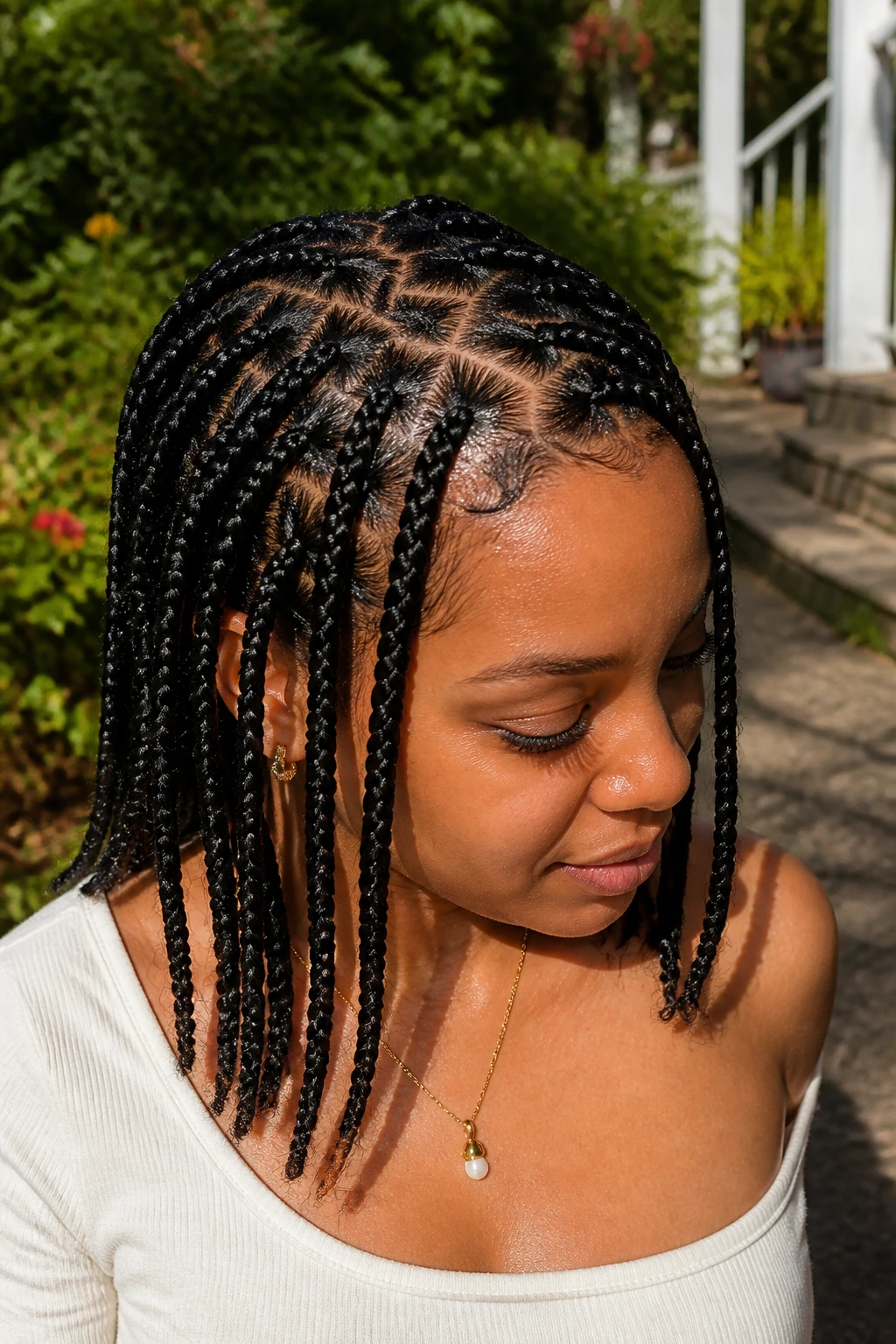
Zig-zag parts are the fix for anyone tired of straight rows. The parting line adds movement before the braid even starts, and on thick hair the zig-zag shape keeps the scalp work from looking too stiff. The braids themselves can stay simple because the part line is already doing a lot.
I would keep the braid size medium and the finish matte. When the hair is too shiny, the zig-zag lines can get lost in the glare. A light mousse set and a scarf for a short wrap time help the pattern settle in.
This style works best when the parting is the star and everything else stays calm.
18. Braided Space Buns
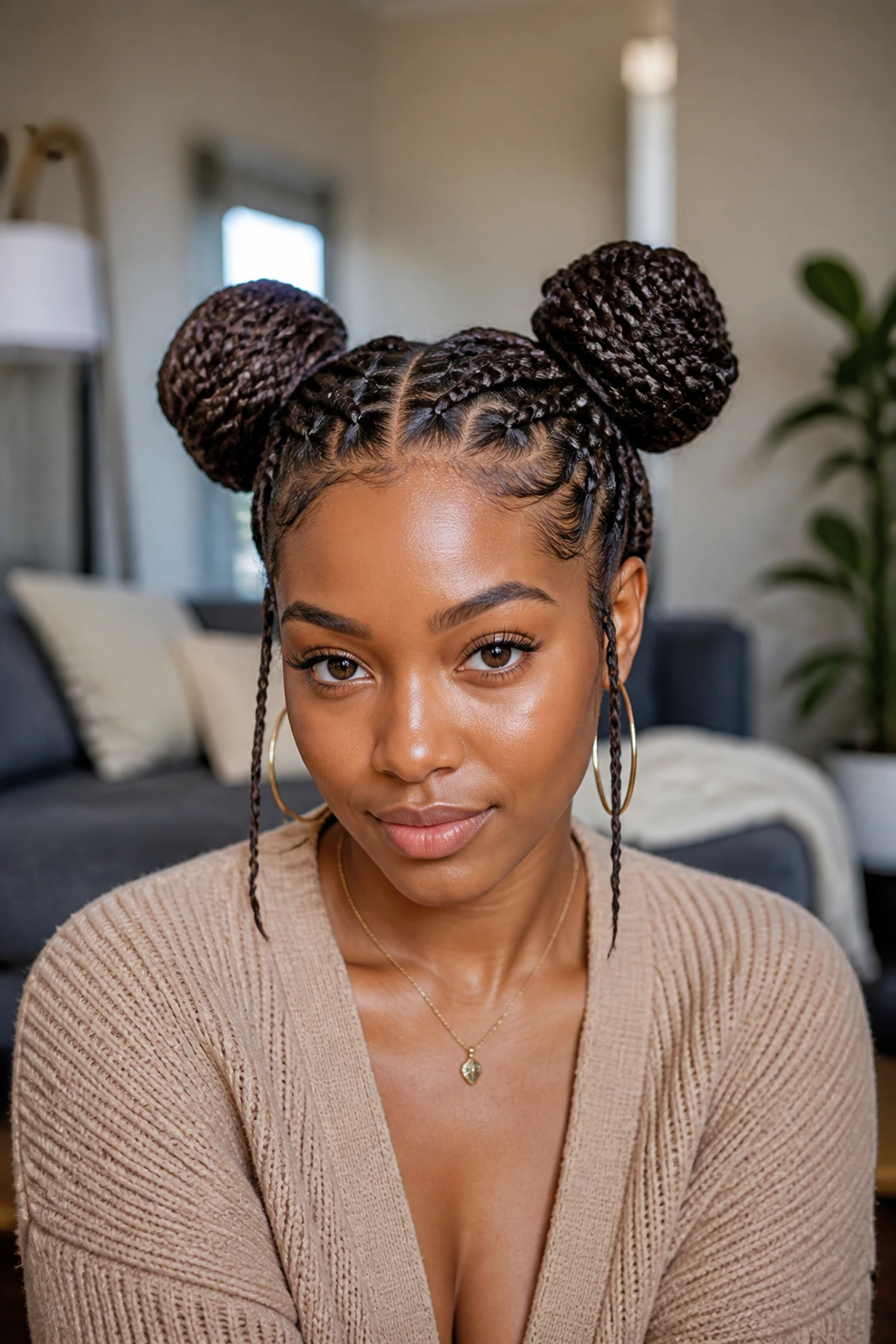
Braided space buns can look playful or sharp depending on how tight the base is. Thick hair helps the buns hold their shape, which is useful because thin buns can end up looking like little knots instead of actual buns. Here, the extension hair gives the buns enough size to read clearly from the front and the side.
Keep the Base Firm, Not Painful
The line around the hairline should be smooth, but not pulled so hard that the temples complain by lunch. I like the buns slightly higher than ear level on dense hair because it keeps the style balanced. If the buns sit too low, the weight can drag the look down.
This is one of the few styles here that can be playful and still look tidy enough for a dressed-up outfit.
19. Waist-Length Knotless Braids with Curled Ends
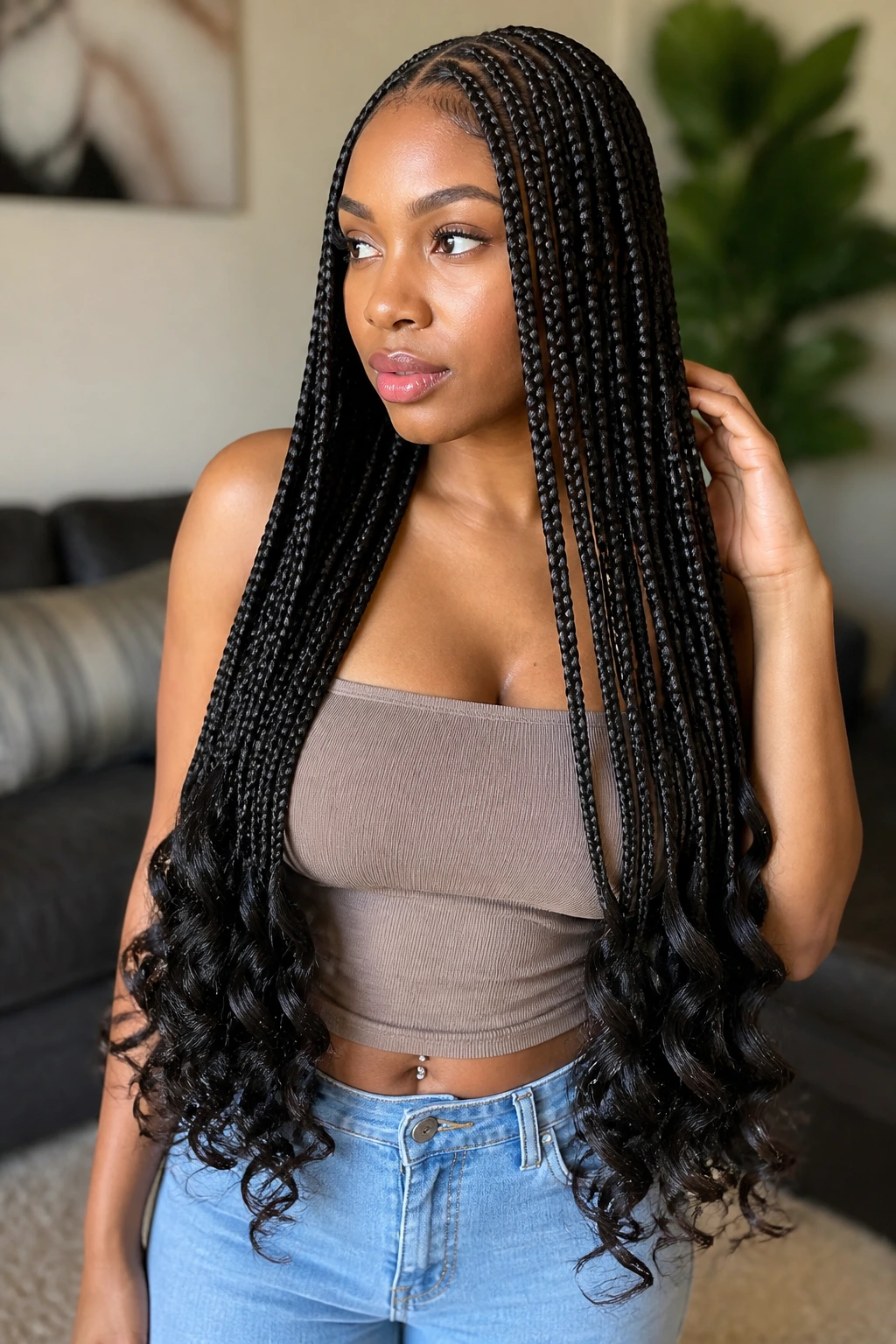
Waist-length knotless braids are all about controlled weight. Thick hair can support the look, but only if the roots are not overloaded. The long length should come from the extension hair, not from stuffing the base so full that the scalp starts to look puffy.
Curled ends help this style feel softer and less blocky. I prefer them over blunt ends when the braids go past the waist because the curl breaks up the long line and keeps the finish from feeling severe. Ask for a little extra care around the front rows so the weight distribution stays even.
This is the style for someone who wants drama but still wants the braids to lie clean at the root.
20. Boho Knotless Braids
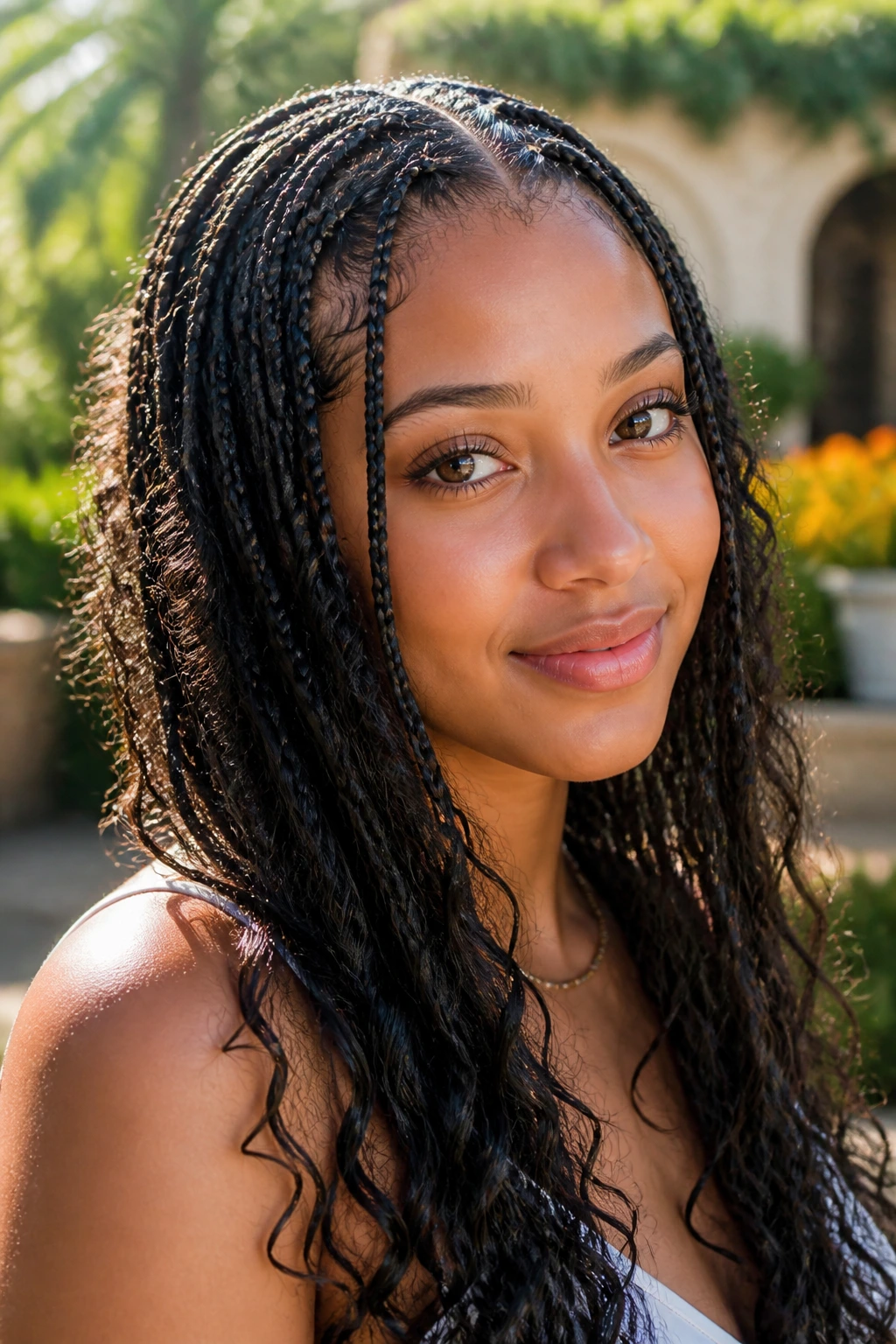
Boho knotless braids work because the loose pieces are placed, not tossed in. The difference matters. On thick hair, the braids themselves already give a lot of structure, so the loose curls or tendrils should show up in the middle and at the ends, where they soften the outline without turning the whole style fuzzy.
Keep the roots clean. That is the whole trick. If the front rows are neat and the curls are distributed with some restraint, the style reads polished rather than chaotic. I like this one when someone wants movement but still wants the braid pattern visible through it.
A few well-placed tendrils do more than a pile of them ever will.
21. Braided Mohawk with Tapered Cornrow Sides
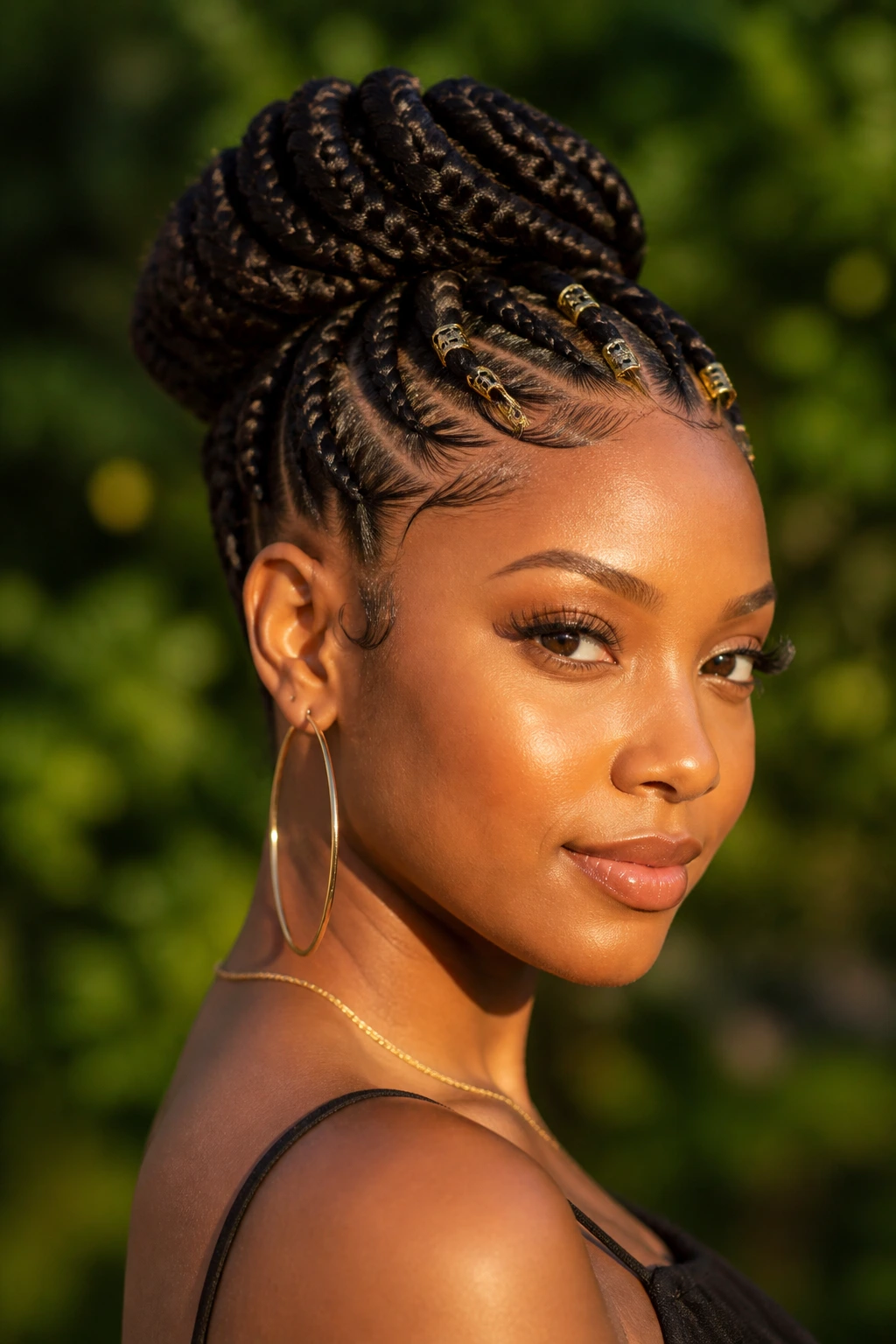
A braided mohawk changes the head shape more than any other style here. The sides stay flat in tapered cornrows, and the center ridge carries the visual weight. Thick hair helps the mohawk look full instead of flimsy, which is the whole reason this style works so well on dense heads.
Strong Shape, Clean Sides
Keep the side braids tight enough to lie close to the scalp, but not so tight that the first day feels miserable. The center section can be larger and more expressive. I like this style when the goal is to show off the braid pattern while keeping the perimeter neat and controlled.
If you want a style that stays out of the face and still has real shape, this is a good one.
22. Cornrow Ponytail with Gold Accessories
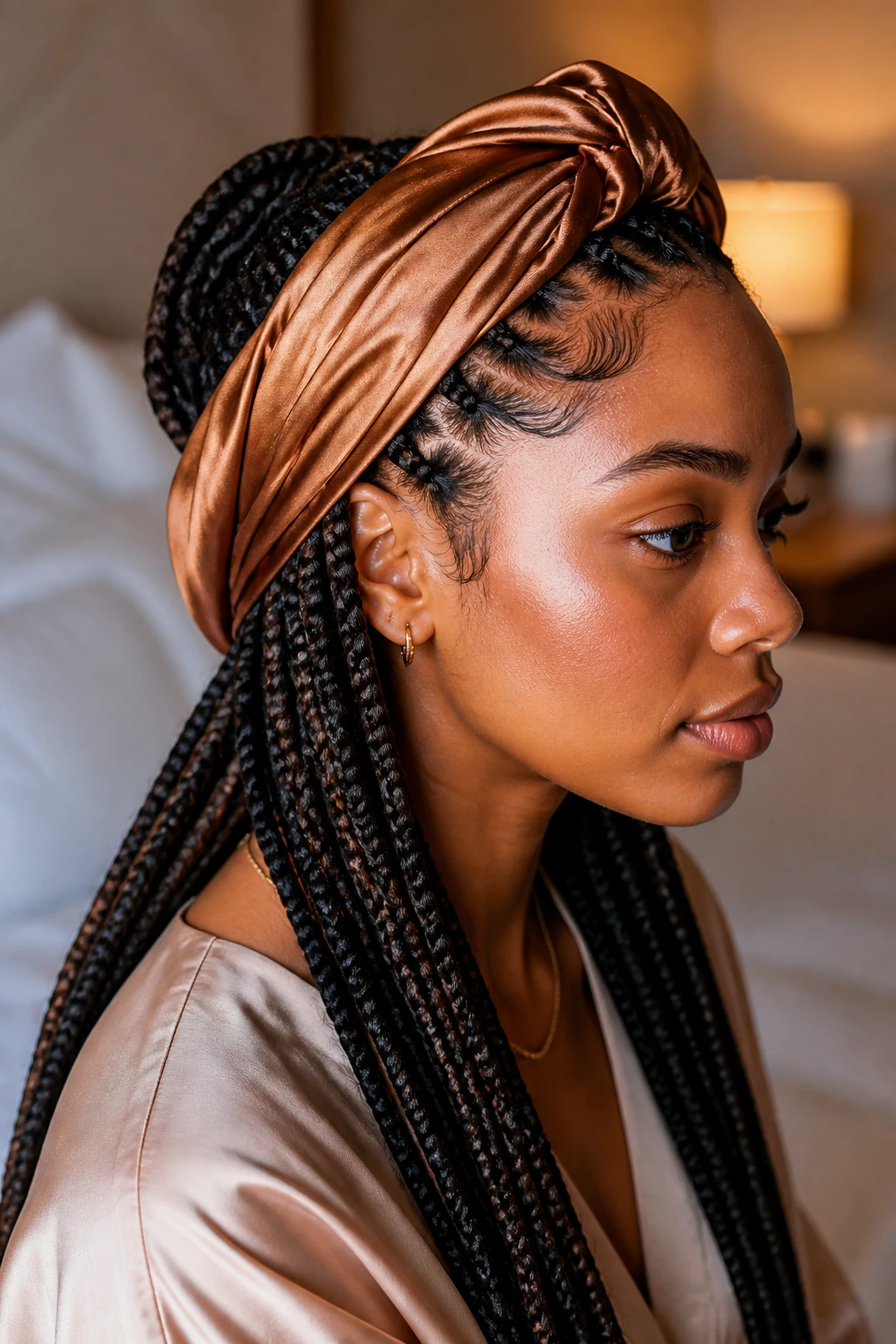
Gold cuffs and a clean cornrow ponytail do a lot of work without adding more hair mass. That’s a useful thing on thick hair, because the ponytail already has enough body. The braids feed back into one gathered tail, and the accessories give the finish a sharp edge.
Don’t scatter the jewelry everywhere. Two or three cuffs on the visible rows and one small accent near the tail base usually look cleaner than covering every braid in metal. I like this style when the goal is sleek, tidy, and finished without looking crowded.
It ends the list on a very practical note: when the base is clean, the extra details can stay small.
Why Extensions Behave So Well on Dense Hair
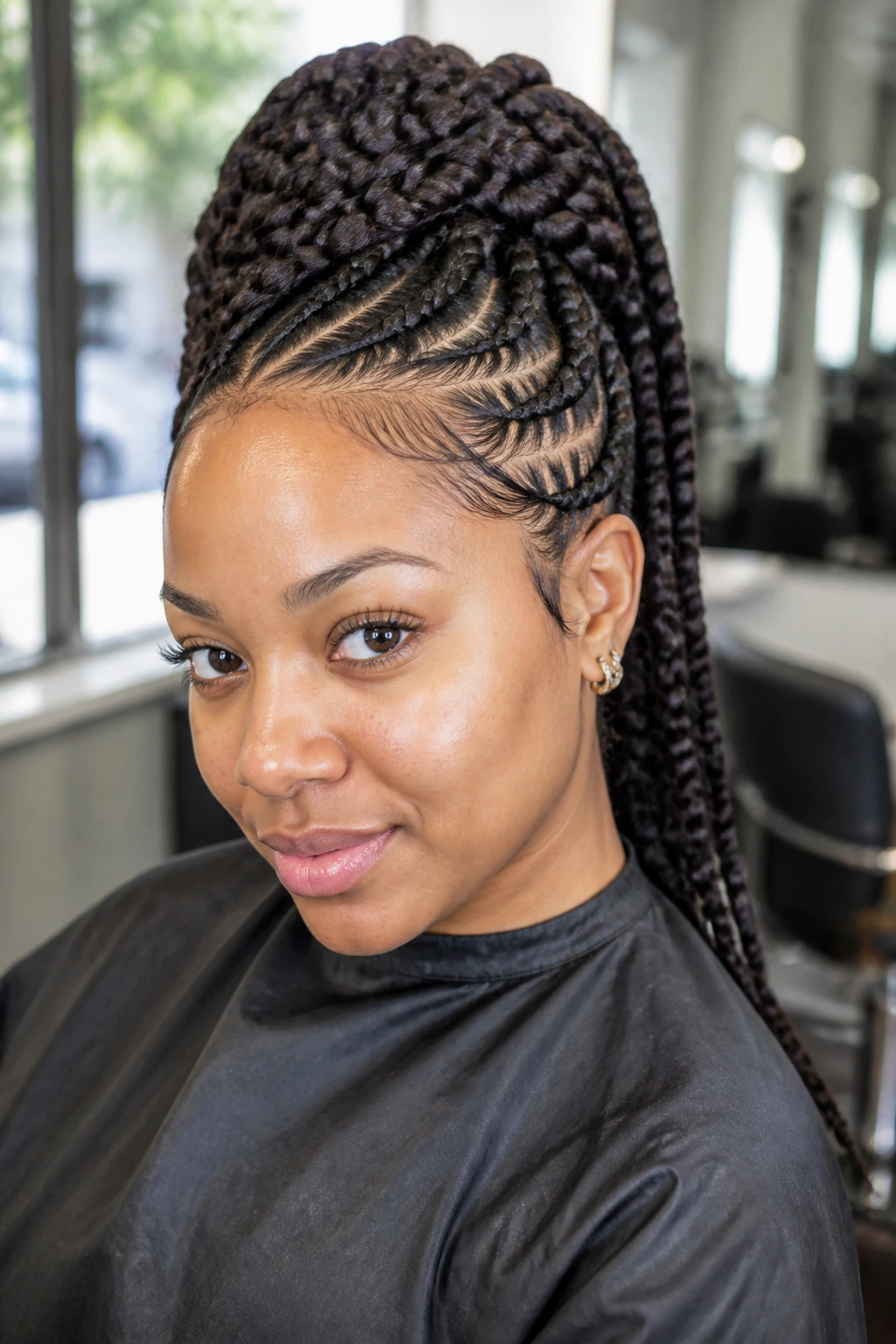
Thick hair already supplies the skeleton. Extensions are there to refine it. That is why braid styles with added hair can look so much cleaner on dense heads than on hair that is too fine to hold shape. The base has something to work with, and the extension just smooths the finish.
The First Inch Decides a Lot
The root is where the visual noise starts if you are not careful. Add too much extension hair too fast, and the braid turns bulky before it leaves the scalp. Add it gradually, and the braid lies flatter, which gives the rest of the style room to look neat. Feed-in methods and knotless starts do this well because they spread the weight out instead of dumping it in one place.
Parting Math Matters More Than Product
A thick head of hair can swallow tiny sections, but that does not mean tiny sections are a good idea. Sometimes they create more puff than polish. Medium parts often work better because the braid has enough natural hair to grab without looking stuffed. Curved parts, triangles, and zig-zags help because they break up the visual weight.
Shape Beats Sheer Length
Long braids are not automatically better. A shoulder-length bob, a ponytail, or a crown updo can look more deliberate on thick hair because the shape stays readable. If the goal is neatness, choose the outline first and the length second. That’s the part people skip, and it shows.
Essential Equipment for These Styles
-
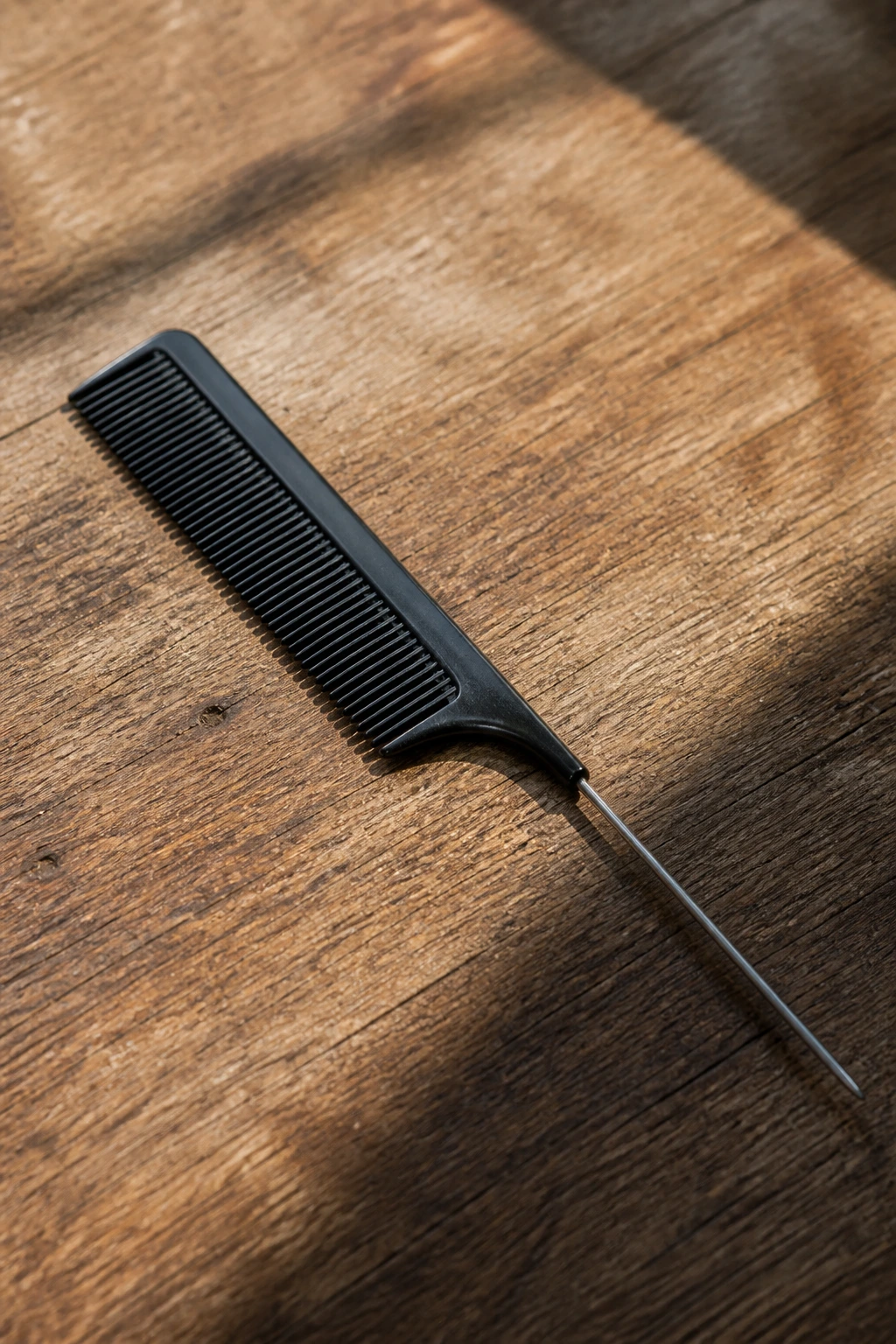
Rat-tail comb: The pointy tail makes clean part lines, and clean part lines are half the battle here.
-
Fine-tooth comb: Good for smoothing each section before you start braiding so the roots do not catch.
-
Sectioning clips: Thick hair gets out of the way fast; clips keep the unused hair from sneaking into the braid.
-
Pre-stretched braiding hair: It tapers better at the ends and saves time because you are not fighting blunt synthetic edges.
-
Matte or yaki-textured extension hair: The texture blends better with dense natural hair than ultra-shiny hair does.
-
Edge control: Use a light touch on the hairline and parting, not a thick smear.
-
Braid mousse: Helps lay down flyaways and gives the finished braids a smoother surface.
-
Satin scarf or bonnet: Keeps the top of the style from puffing up overnight.
-
Small elastics: Optional for ponytails, buns, or securing the ends of certain styles.
-
Scissors: Handy for stray threads and packaging, not for trimming finished braids on the head.
-
Hot water dip bowl or kettle: Useful for sealing heat-safe synthetic ends after braiding.
-
Blow dryer with comb attachment: Optional, but useful if you want the hair stretched before installation.
Smart Shopping and Prep Notes
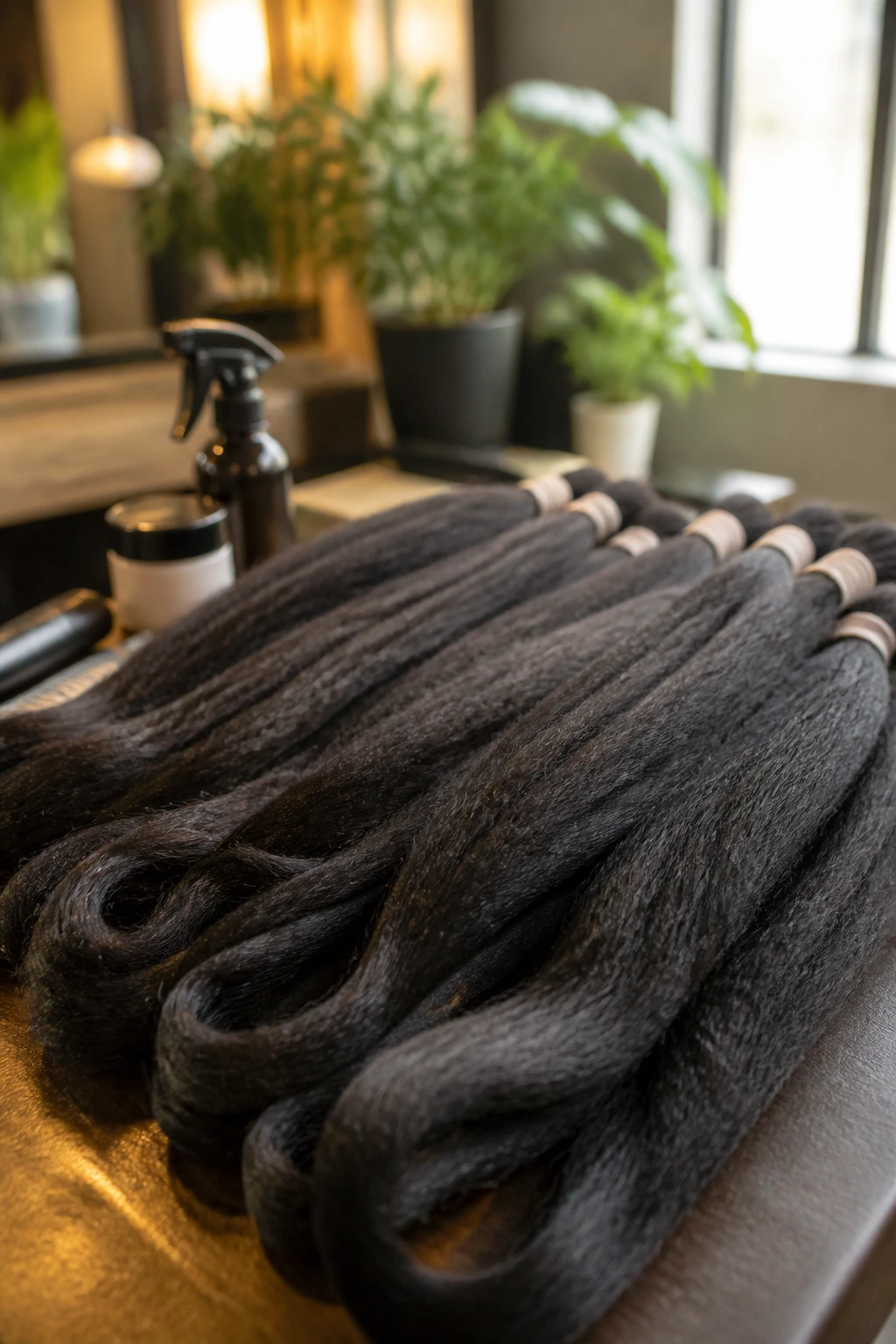
Choose Hair That Blends, Not Hair That Screams
The best braiding hair for thick hair usually has some texture to it. Pre-stretched hair with a matte or lightly yaki finish blends better than glossy hair that sits on top of your natural texture like a plastic layer. If your hair is coarse or very dense, that little bit of texture helps the braid look like one piece instead of two separate materials.
Match Length to the Style You Actually Want
Long hair is not a moral victory. It is just longer. For chin-length bobs, shoulder-length sets, and braided ponytails, 18 to 24 inches is often enough. For waist-length braids or styles with wrapped bases, 24 to 30 inches gives you more room to shape the finish. Micro braids and very long knotless sets usually need more packs than people expect, so buy extra instead of hoping one more trip to the beauty supply will not happen.
Prep Thick Hair Before the Appointment
Clean, dry, stretched hair braids better. I like washing the day before, detangling well, then either blow-drying on low heat with a comb attachment or band-stretching if heat is not the plan. Wet roots make the parts slippery, and heavy oils at the scalp make the braid slip even more. A light leave-in on the lengths is fine; a greasy base is not.
If your ends are rough, trim them first. Braiding hair catches on split ends, and thick hair already has enough work to do.
How to Wear These Braids Without Losing the Shape
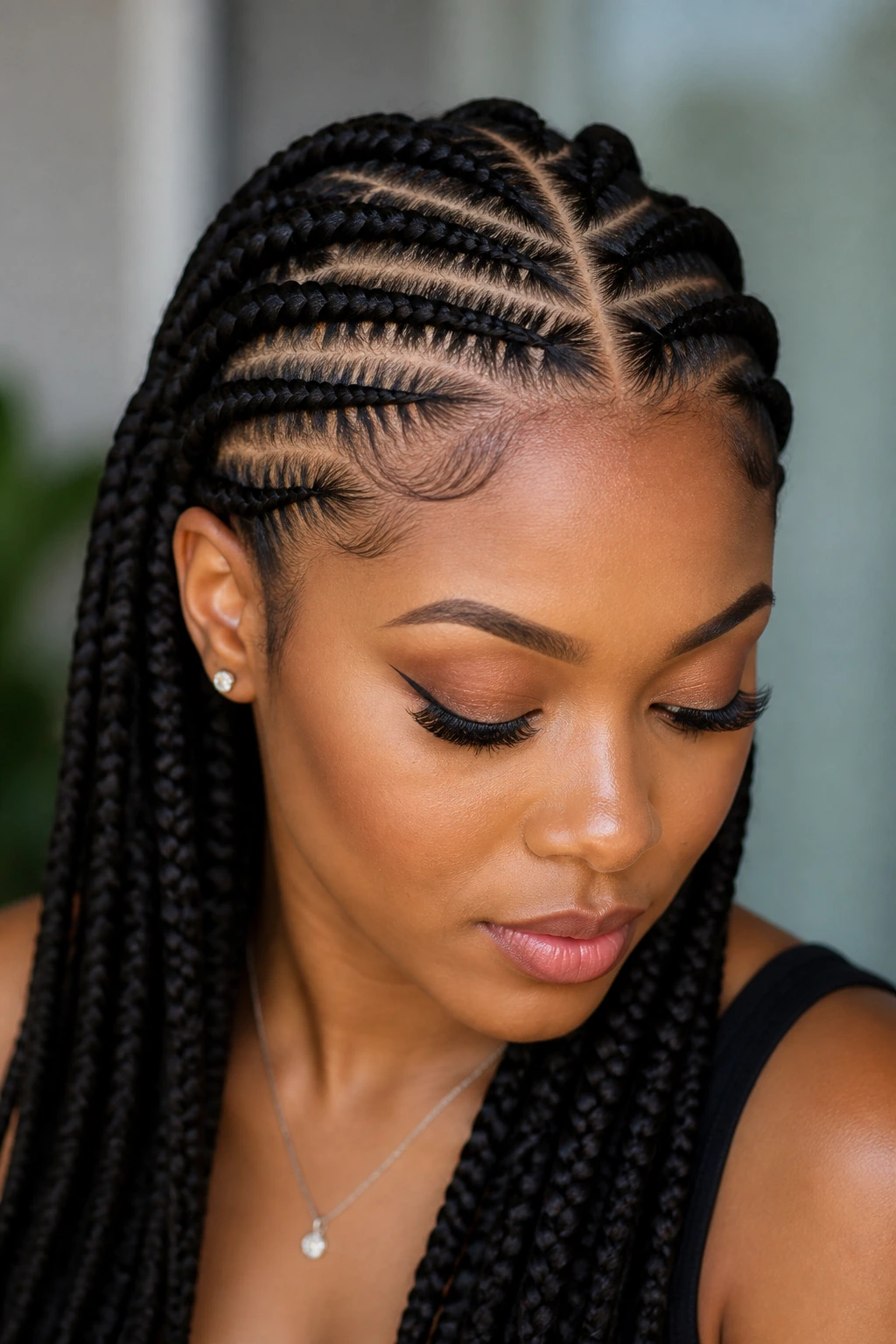
Presentation: Keep the parting clean and let the braid pattern be the first thing people notice. If the style has a center part, triangle parts, or a zig-zag line, don’t bury it under a ton of baby hair or chunky accessories.
Outfit Pairings: Structured collars, open necklines, simple hoops, and scarves all suit these styles because they leave the braid line visible. Very bulky necklines can swallow a braided bob or a side-swept set, which is a shame when the braid work is the whole point.
Length Choice: Go shorter if you want lighter weight and less neck drag. Go longer only if you actually want the motion and you’re willing to handle the maintenance. Waist-length braids are pretty; they are also a commitment every time you put on a coat.
Situations: Straight-backs, stitch braids, and ponytails feel right for work or travel. Lemonade braids, boho sets, and half-up styles lean more relaxed. The shape matters more than people think, and the right shape makes the whole look feel intentional without trying too hard.
Extra Styling Tips That Make a Big Difference
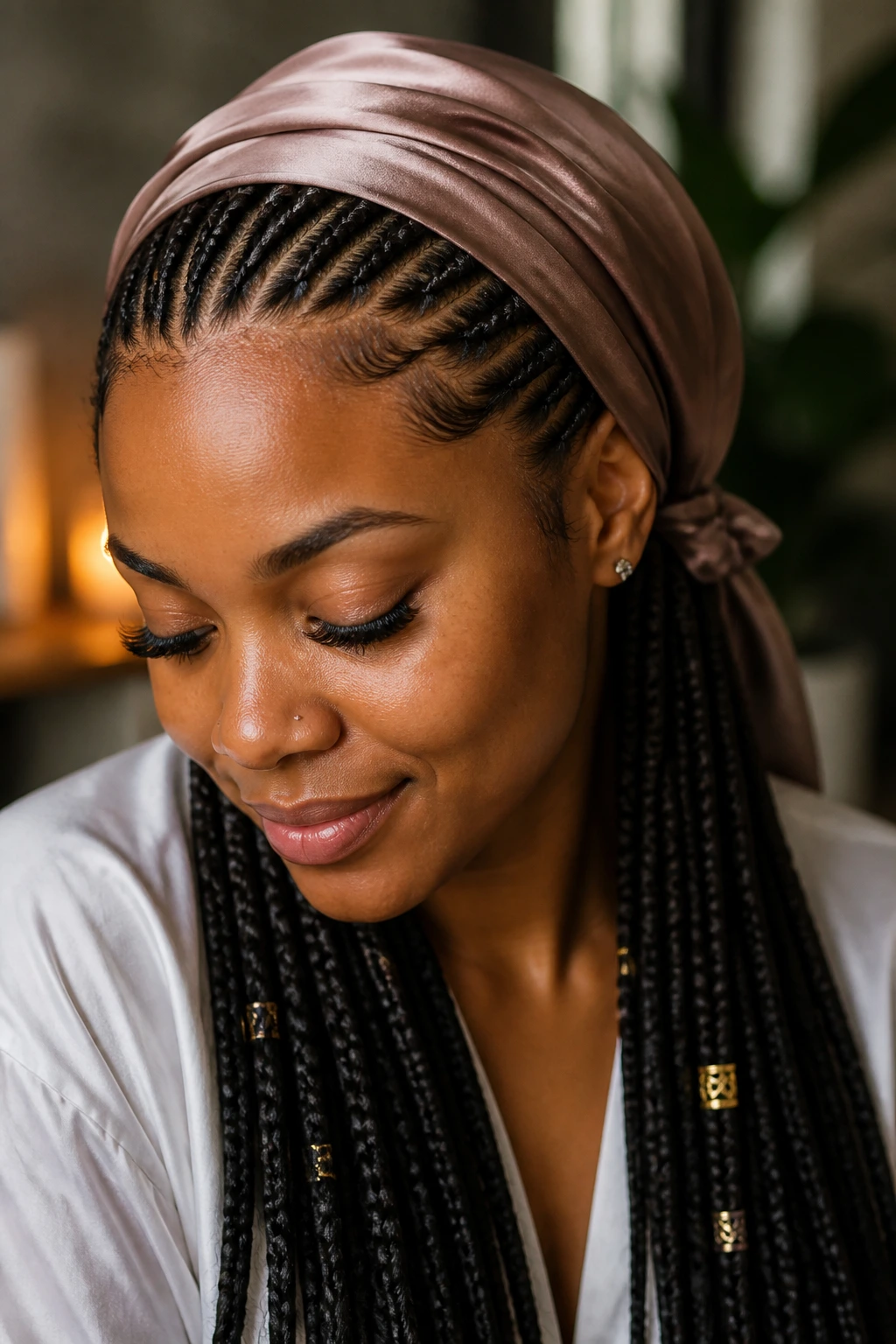
Finish: A light foam mousse brushed over the braids, then wrapped down with a satin scarf for 20 to 30 minutes, settles flyaways and keeps the surface smoother. If the ends are curled, set them first and let them cool before you take anything down.
Customization: Beads, cuffs, thread, and colored extension pieces all work best when they’re placed with some restraint. A few accents near the front or at the ends usually look sharper than decorating every braid. One color pop through the lower half can change the whole mood without forcing the style to look busy.
Scalp Comfort: On thick hair, the first row around the temples and nape should get the gentlest feed-in. That tiny detail protects edges and makes the style easier to wear after the first day. If you can feel a braid tugging when you turn your head, the tension is too high.
Make-It-Yours: If you want a cleaner workday look, keep the braids medium and skip the loose curls. If you want more softness, add curled ends only to the front pieces or the last third of the length. The braid can stay neat and still have personality.
Common Mistakes That Throw Off the Finish
The biggest mistake is stuffing too much extension hair into the root. It makes the base bulky, the scalp line lumpy, and the braid harder to settle down later. The fix is simple: start smaller and feed in gradually.
Another one is braiding thick hair while it is still damp or half-dried. The parts blur, the extension hair grips badly, and the style can smell stale if the inside never dries completely. Dry hair, stretched hair, and clean sectioning make the whole install cleaner from the start.
A third problem is choosing a style that is too tiny for the amount of hair on the head. Micro braids and ultra-small parts can look elegant on paper and exhausting in real life. If the hair is dense, medium sections or larger feed-ins often look more polished because they stay flat instead of fighting the natural volume.
Tight edges are another easy way to ruin a braid set. If the first row is pulling, the style may look neat for two hours and feel awful for two weeks. Ask for low tension around the temples and hairline. Your scalp will tell you if the choice was right.
Finally, sleeping uncovered is a fast way to fuzz up a clean braid line. Satin matters. It is not glamorous, but it saves the style.
Variations and Adaptations to Try
Low-Tension Starter Set: Choose knotless braids or feed-in cornrows with medium parts and a shorter length. This is the version I’d hand to anyone with a tender hairline or anyone who wears braids for the first time. The finish still looks clean, but it sits lighter on the scalp.
Office-Sleek Edit: Straight-back cornrows, a low ponytail, or a braided bob all work here. Skip the extra curls and keep the accessories minimal. The result reads tidy without looking stiff, which is the sweet spot for a workweek style.
Dressy Trim Version: Add gold cuffs, a wrapped base, or a crown updo. Keep the ornaments limited to the front rows or the ends so the details feel intentional. A little shine goes farther than a lot of it.
Short-and-Light Version: Cut the length down to chin or collarbone level and let the braid pattern do the talking. Thick hair often looks sharper when the style stops before the weight starts dragging. This one is good if you want less time under the dryer and less strain on the neck.
Color-Threaded Version: Work in one accent shade—burgundy, honey brown, or deep copper—through the lengths or ends. Keep the roots natural so the parting stays clean. A small color shift can change the entire set without making the style look busy.
Keeping Braids Fresh for Weeks
Nightly care is simple, and it matters more than fancy products. Wrap the hair with a satin scarf or put it in a bonnet before bed so the crown does not puff up and the ends do not rub against the pillow. If you wear a ponytail or crown style, use a scarf that covers the base as well.
Every few days, use a light braid spray or a tiny amount of scalp oil along the parts. Do not soak the scalp. Too much product turns into buildup, and buildup makes dense braids look dull fast. If you work out often, a diluted shampoo wash every one to two weeks can help keep sweat from hanging around the base.
Drying is where people get careless. If you wash braids, squeeze out as much water as you can with a microfiber towel or even a clean T-shirt, then make sure the inside is actually dry before you restyle. Damp synthetic hair can hold odor in a way that is hard to ignore. For most braid sets, six to eight weeks is a sensible outer limit, but if the roots are pulling or the parts are collapsing sooner, take them down earlier.
Frequently Asked Questions
Are knotless braids better than box braids for thick hair?
Often, yes. Knotless braids usually sit flatter at the root because the extension is fed in gradually instead of starting with a hard knot. On thick hair, that flatter base helps the style look clean instead of bulky.
How much braiding hair do I need for thick hair?
That depends on the style and length, but medium knotless sets often land around 5 to 7 packs of pre-stretched hair. Jumbo styles use fewer packs, while micro braids and very long sets can use more than you expect. It is smarter to buy an extra pack than to run short halfway through.
Should thick hair be blown out before braiding?
Usually, yes, if you want sharper parts and a flatter finish. A low-heat blowout or a band-stretching method makes sectioning easier and keeps the roots from puffing up too fast. If your hair is heat-sensitive, stretch it without direct heat.
What braid style is the lightest on the scalp?
Styles with fewer sections and a cleaner feed-in tend to feel lighter, like medium knotless braids, straight-back cornrows, or a braided bob. Very small braids can look neat, but they usually take more time and can feel more demanding on dense hair. Light does not always mean loose; it means the weight is distributed well.
Can I wash braids with extensions?
Yes. Use diluted shampoo at the scalp, massage gently with your fingertips, and rinse well without roughing up the lengths. The key is drying fully afterward, because damp synthetic hair can hold onto odor.
What if my braids feel too tight after install?
If the discomfort is sharp, causes headaches, or makes your scalp feel sore, that is not something to ignore. A little firmness is normal; pain is not. If the tension is bad, loosen the style early rather than waiting for the edges to pay for it.
How do I keep the roots neat longer?
A satin wrap at night, light scalp oil every few days, and a mousse refresh once in a while help a lot. Also, avoid piling on heavy creams at the base. The cleaner the root area stays, the longer the style holds its line.
What if the parts are crooked?
Tiny imperfections can be softened with a careful mousse set and a clean wrap, but severe crooked parting usually needs a redo in the front rows. Thick hair can hide a little wobble, but it cannot hide a rushed section map. The fix is better sectioning, not more product.
Braids That Hold Their Shape
Thick hair gives these styles something solid to work with. Extensions just sharpen the outline. That’s the part many people miss: the braid does not need to fight dense hair. It needs to organize it.
Pick the shape that fits your real life, not the one that only looks good in a chair photo. A knotless set, a crisp ponytail, a bob, or a crown updo can all look just as polished as a longer style when the parting is clean and the tension is right. And once that base is right, everything else gets easier.