



Thin hair can go flat in a hurry, and oval faces can make a haircut look almost too easy — which is exactly why the best mom haircuts for thin hair and oval faces are built around shape, not drama. The cut has to do some of the heavy lifting. A blunt edge at the jaw, a clean collarbone line, a soft fringe that opens at the brow — those little decisions change everything once the hair dries and you’re standing in front of the mirror with ten minutes left.
There’s also a small but important wrinkle that gets missed all the time: fine hair and thin hair are not the same thing. Fine hair means the strand itself is slender; thin hair means there aren’t many strands on the head. You can have one without the other, and the haircut should respect that difference. Heavy layers can erase density in a blink. Too much length can make the ends look see-through. The right cut keeps weight where you need it and movement where you want it.
Oval faces give you room to play, which is the fun part. You can wear a center part, a side part, bangs, no bangs, chin length, collarbone length, even a short crop if the silhouette is tidy. But thin hair changes the equation. The most flattering styles here don’t just frame the face — they make the hair look fuller at the perimeter, cleaner at the crown, and easier to live with on a Tuesday morning.
Why These Cuts Keep Showing Up on Real Hair
-
Blunt edges do the visual thickening: A solid line at the jaw or collarbone makes thin hair look denser because the ends land together instead of fraying into wisps.
-
Oval faces can take a lot of shape: That balance means you can add bangs, side parts, or cheekbone-length pieces without throwing the face out of proportion.
-
Shorter lengths keep the hemline from going sparse: Once thin hair gets too long, the ends start looking tired. A chin-length or collarbone cut usually keeps more visual weight.
-
Light layering beats shredded layering: A few invisible layers can add lift; too many can make the interior hollow. That’s a fast road to stringy ends.
-
The right part changes everything: A slight off-center part or deep side part adds lift at the crown and gives thin hair a little more body right where it’s most visible.
-
These cuts grow out better than they sound: The best “mom haircuts” are not high-maintenance in the cute, meaningless sense. They’re the ones that still look intentional three weeks after a trim.
The Cutting Rules That Keep Thin Hair Looking Full
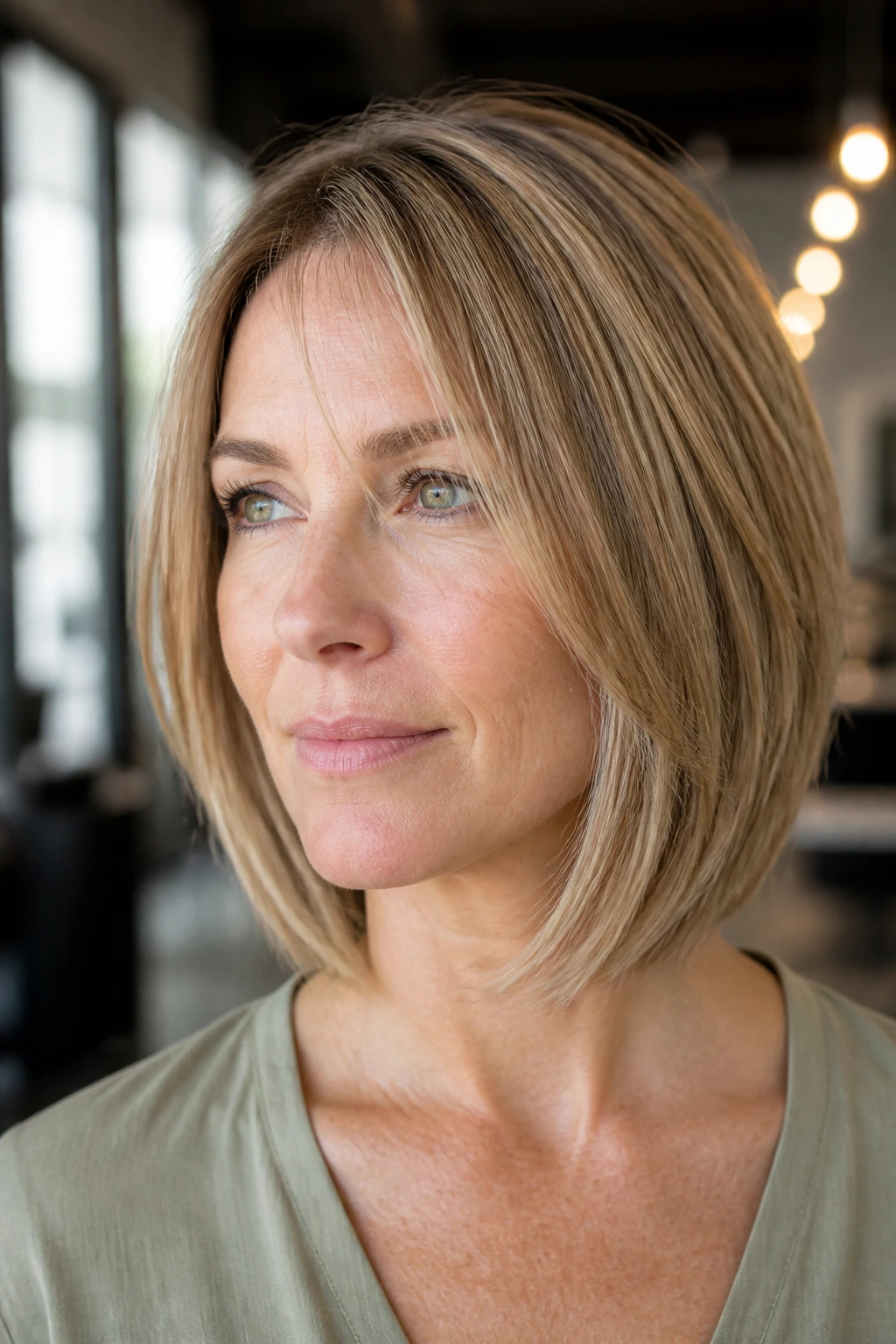
Thin hair has a bad habit of showing every mistake, which is why the haircut has to be disciplined. A stylist can’t hide behind layers here. If the outline is weak, the whole cut looks weak. If the perimeter is too feathery, the ends disappear in daylight. If the crown is over-thinned, you get the kind of flatness that looks worse after blow-drying than it did when wet.
A good cut for this hair type usually keeps the strongest line at the bottom. That might mean a blunt bob, a collarbone lob, or a shoulder-skimming shape with only a little internal movement. The point is to keep the ends together long enough that they read as density, not fringe. One clean edge can do more than a dozen choppy layers ever will.
Oval faces make this easier, but not effortless. Because the face is already balanced, the haircut doesn’t need to “fix” anything. It can focus on creating body around the cheekbones, jaw, or crown. That’s the real trick. You’re not chasing volume everywhere; you’re placing it where the eye lands first.
And no, more texture is not always better. Sometimes the best answer is a slightly off-center part, a 1-inch bend at the ends, and a cut that stops before the hair starts looking tired. That’s not boring. That’s smart.
What to Tell Your Stylist Before the Cape Goes On

Bring photos, yes, but bring the right photos. A picture of a sleek bob on hair twice as thick as yours is a trap. Same with a shag that only works because the model has natural wave and enough density to survive all that slicing. Pick examples with hair that behaves like yours, then point to the exact part you like: the length, the fringe, the fullness at the ends, the way the shape sits at the cheek.
Say how you wear it on an ordinary day. Air-dried? Blow-dried with a round brush? Tossed into a clip after school drop-off and forgotten? That matters more than your wish list. If you never heat-style, you do not want a haircut that only looks good after ten minutes with a round brush and a can of spray.
Ask for weight at the perimeter and, if needed, only soft internal shaping. That sentence alone can save you from a lot of over-layered regret. If you want bangs, ask how they’ll sit when the hair is flat, not just on the day they’re cut. Thin hair near the front can show a sparse fringe faster than the salon mirror lets on.
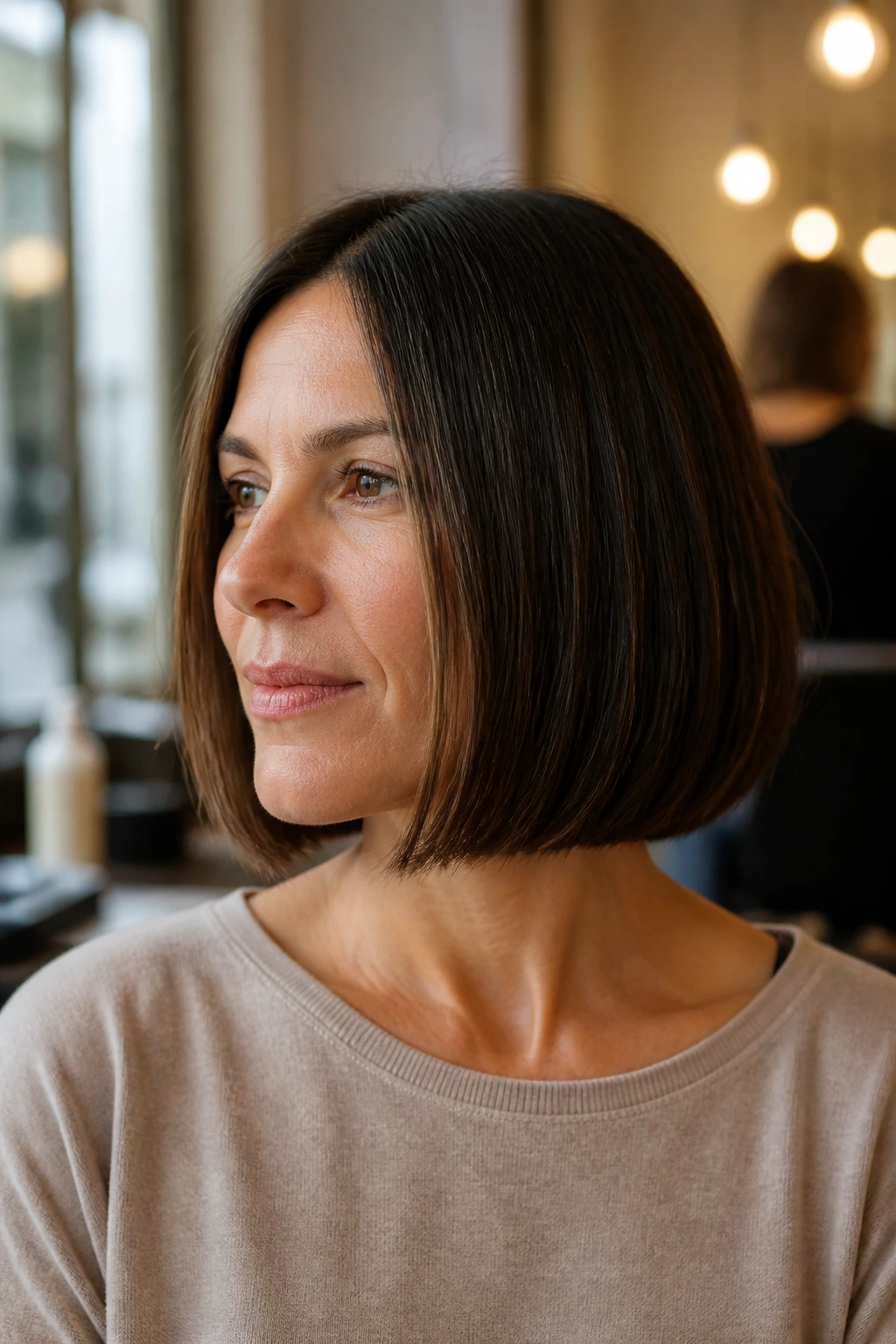
1. Chin-Length French Bob With a Soft Underbend
This is the cut that makes thin hair look polished without trying too hard. A chin-length French bob sits right where the jaw can hold the line, and that matters. The ends don’t trail off into see-through lengths. They stop, gather themselves, and look deliberate.
On an oval face, the chin-length version gives a little structure without making the face look long. The soft underbend at the ends adds just enough movement to keep the bob from reading stiff. I like this length for hair that needs a clean outline more than it needs layers. Ask for the perimeter to stay full, with only light point-cutting at the very ends if the stylist needs to soften the line.
What makes it work
- The cut lands in a place where thin hair can still look dense.
- The underbend can be created with a 1-inch round brush or a flat iron turn under the last 1/2 inch.
- It works especially well with a side part that lifts the crown.
The best part? It dries fast. Not “sort of fast.” Fast enough that you won’t resent it.
2. Collarbone Lob With Invisible Layers
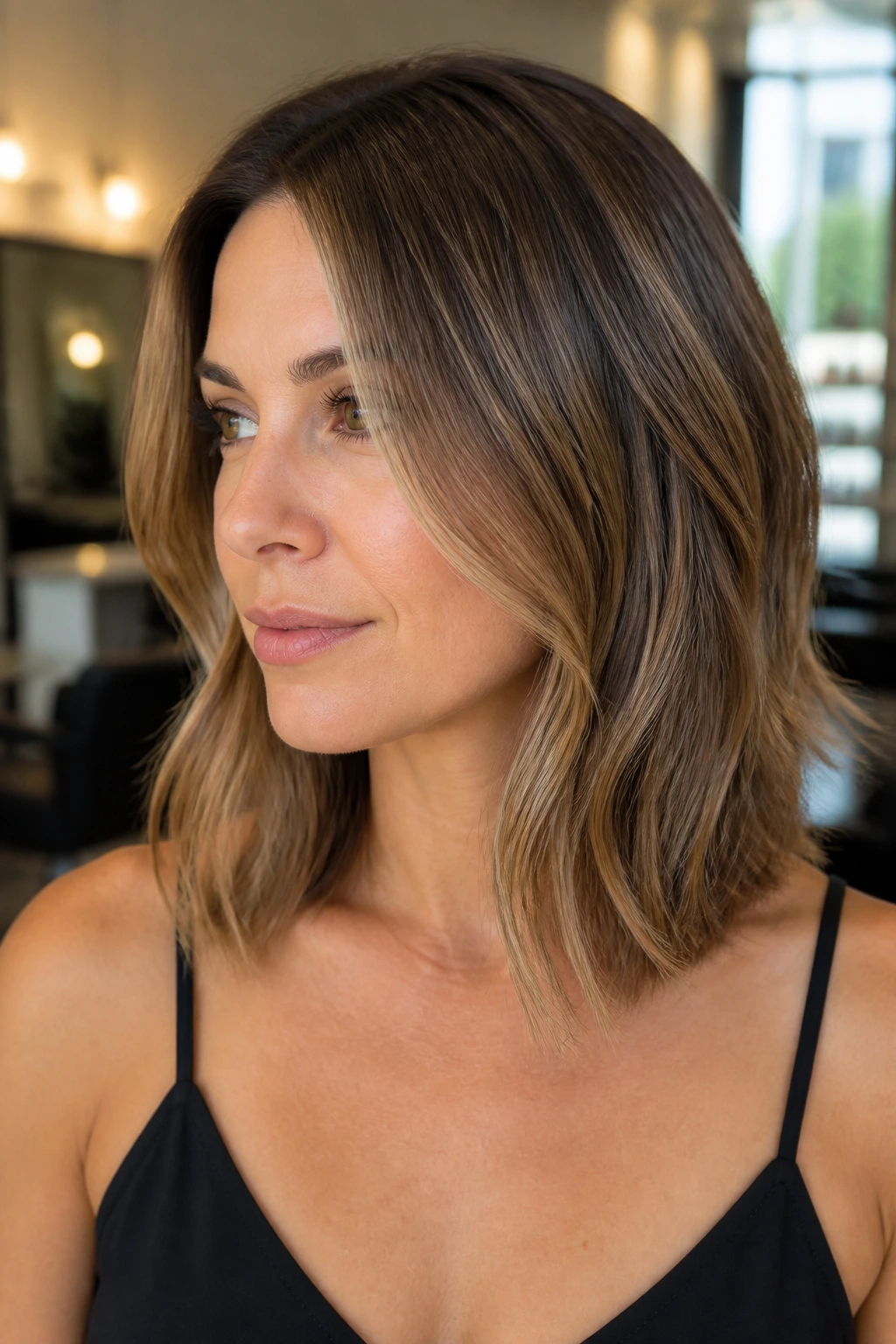
Why does this style keep winning for thin hair? Because it gives you length without letting the ends look ragged. A collarbone lob lands at a sweet spot — long enough to tuck behind the ear, short enough to keep the hemline solid. On oval faces, that length is forgiving in the best way.
How to ask for it
- Keep the longest point at the collarbone or 1 inch below it.
- Request invisible layers that start below the chin, not up near the cheeks.
- Skip heavy razoring through the bottom inch.
Those hidden layers matter. They let the top move a little while the perimeter stays thick. If your hair is pin-straight, this cut looks especially good with a bend at the front pieces. If it’s slightly wavy, even better. You get that easy swing without losing body.
I’d call this one the safest bet in the bunch. Not the most dramatic. The one that behaves.
3. Bixie Cut With a Tapered Neckline
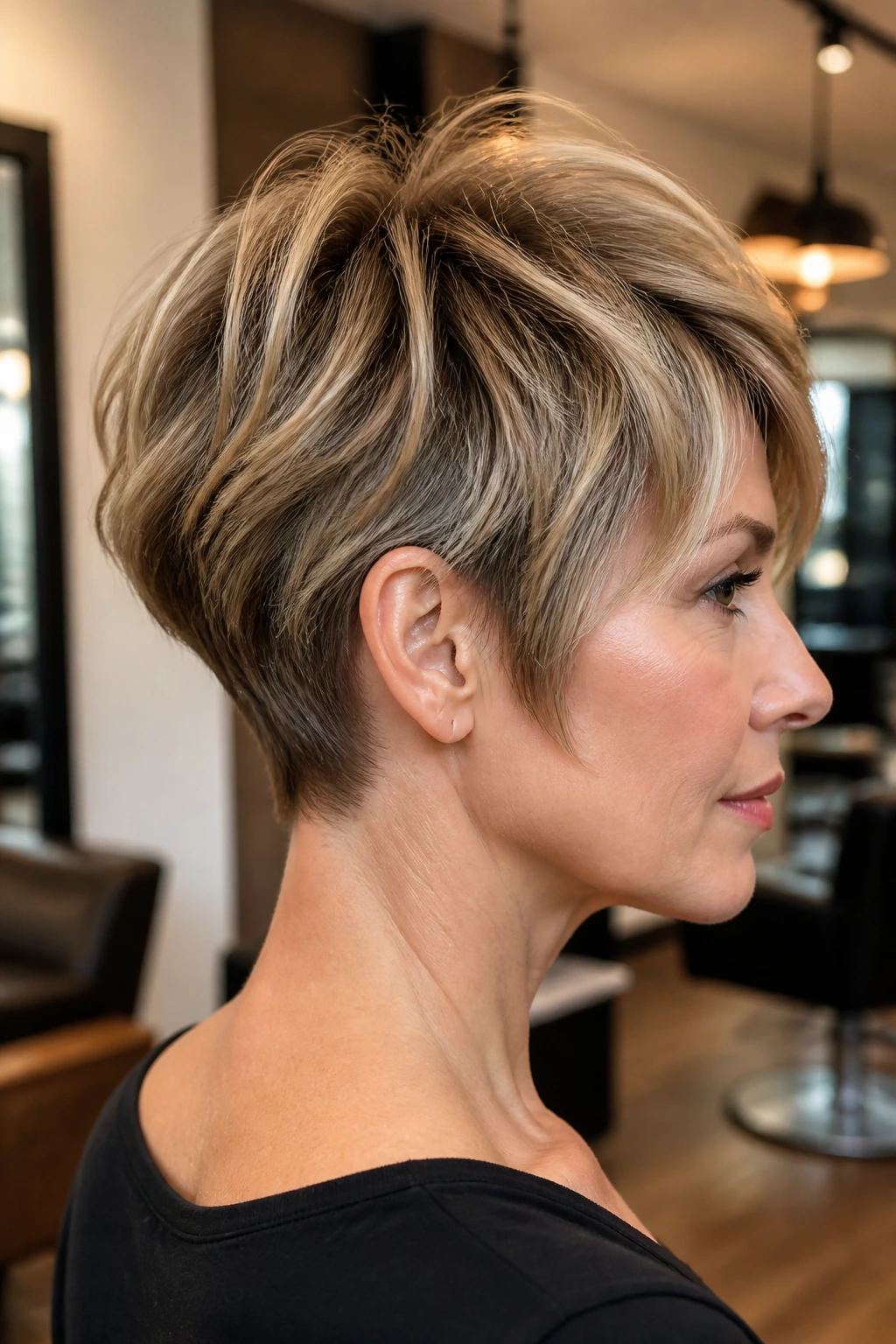
A bixie is what happens when a pixie wants just a little more softness. It keeps the neck clean, the ears partly covered, and the top long enough to finger-style in under two minutes. For thin hair, that shorter length can be a gift. Less weight means less collapse.
Picture this on a busy morning: damp hair, a pea-sized puff of mousse, a quick blast from the dryer, and a little piecey movement at the crown. Done. The tapered neckline keeps the back neat, which is why this cut tends to look expensive even when the styling is bare-bones.
A few details make or break it. Ask for the top to stay around 2 to 3 inches if you want movement. Keep the sideburns soft, not severe. And make sure the nape is tapered cleanly rather than chopped bluntly, because the neckline is where short cuts either look chic or a little awkward.
4. Blunt Bob With a Slight Side Part
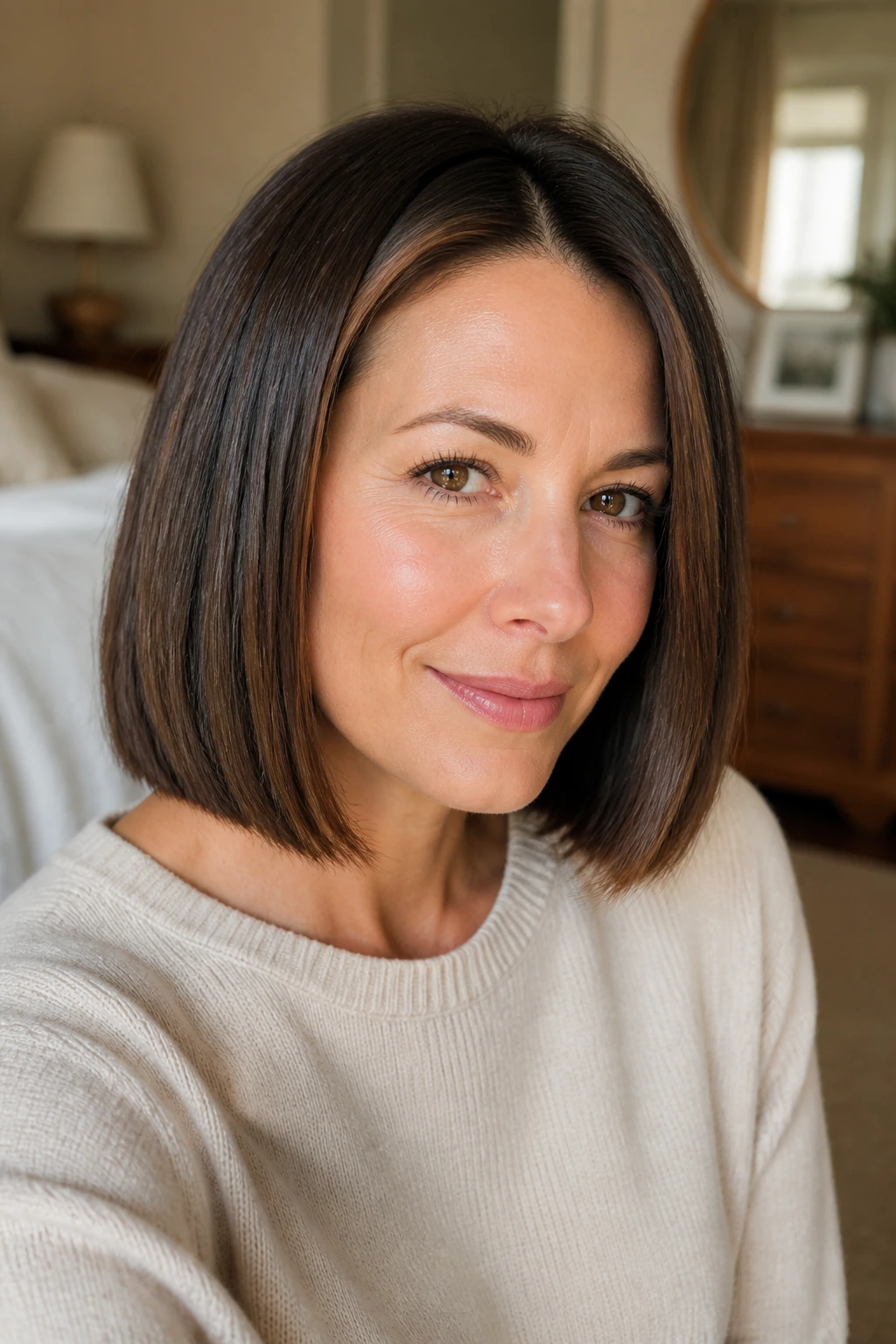
Thin hair does not always need layers. Sometimes the cleanest bob is the one that looks fullest. A blunt bob with a slight side part gives the eye a solid line to follow, and that line makes the ends read thicker than they are.
The side part is doing quiet work here. A dead-center part can split thin hair right down the middle and show too much scalp at the crown. Move the part a little off center and the top picks up lift. On an oval face, that shift is enough to soften the symmetry without hiding the bone structure.
Use this cut if you like order. If you want the hair to swing, not flutter. If you’re tired of styles that look interesting only when your head is perfectly still. It’s not the flashiest haircut here. It may be the smartest.
5. Soft Shag With Crown Volume

A shag can be tricky on thin hair, and that’s me being polite. Too many layers and you get airy ends, hollow sides, and a crown that collapses by lunchtime. But a soft shag with controlled crown volume can be excellent on an oval face, especially if your hair has a little bend.
The shape to ask for
- Shorter layers at the crown, but not so short they spike.
- Cheekbone-grazing pieces that frame the face.
- A perimeter that still feels present, not shredded.
The crown is the point. That’s where the cut creates the illusion of lift. Too much thinning in the middle and the whole thing turns wispy. Too little and it loses the shag feel entirely. The right version looks a little undone in the front and still has enough substance in the back to hold its own.
This cut likes mousse and a diffuser. Or mousse and a rough blow-dry if you’re not a diffuser person. Either way, don’t overwork the top after it dries. Thin hair can go from “soft texture” to “frizz halo” in about 45 seconds.
6. Long Pixie With a Swept Fringe
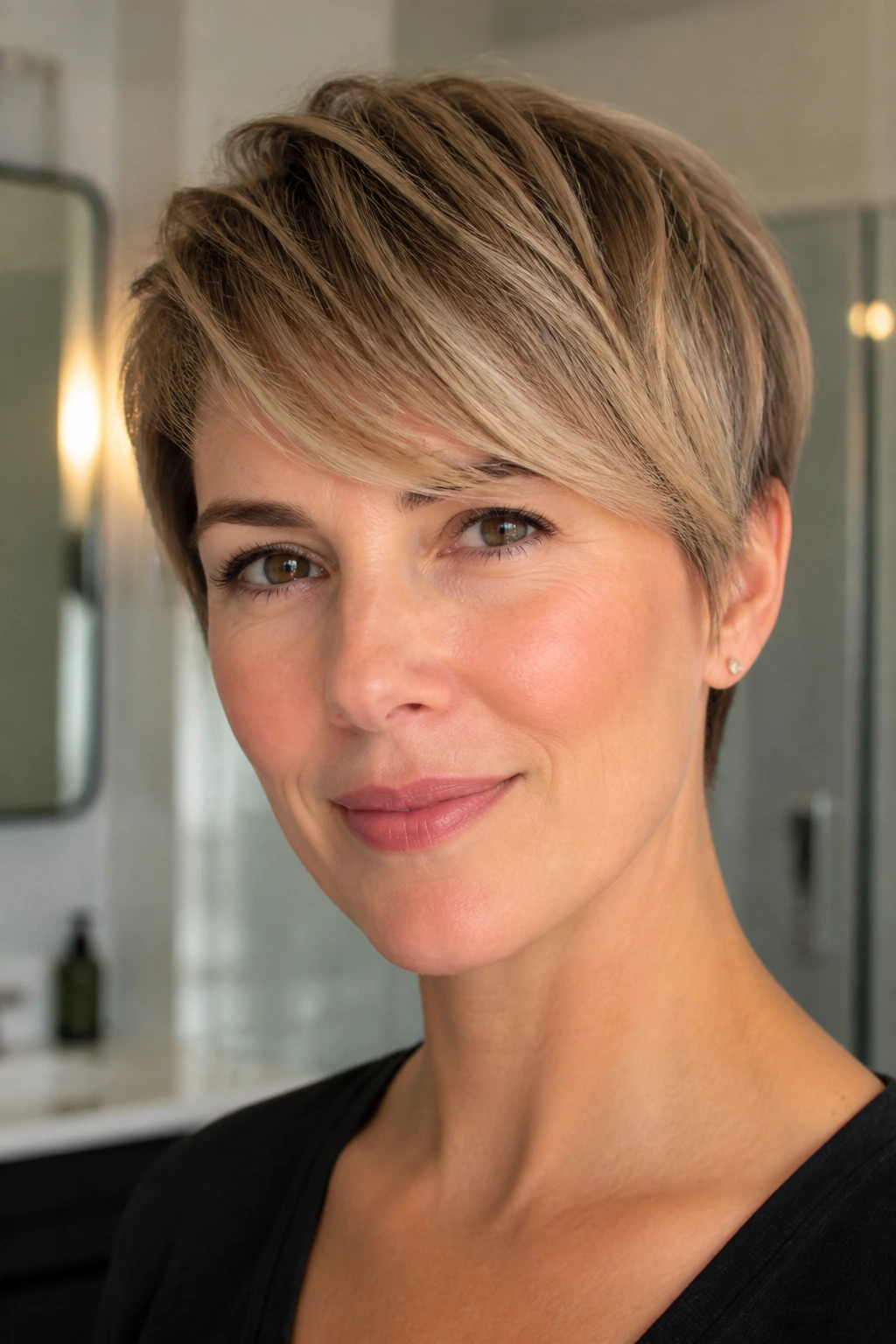
This is the short cut for people who want the neck to feel clean but still want hair that moves when they turn their head. A long pixie keeps enough length on top for a side-swept fringe, which is especially flattering on oval faces because it breaks up the forehead a bit without hiding it.
The key is restraint. The sides should be tapered close enough to show shape, but not so tight that the cut starts looking severe. The top needs enough length — usually around 3 to 4 inches — to sweep across the forehead and create a little lift over the eye. Thin hair actually loves this kind of design because there’s less weight fighting against the styling.
Use a light paste or cream, not a heavy gel. You want the fringe to move, not freeze. And if your hairline is a little uneven, this cut is merciful. The fringe can cover more than a blunt bang ever could.
7. Shoulder-Length Cut With Face-Framing Pieces

Shoulder length can be dangerous on thin hair if the ends are too blunt and the layers are too timid. Then the style just hangs there. But when it’s cut with purpose, shoulder length becomes one of the best “I have a life” haircuts around.
Picture hair that brushes the shoulders, flips a little at the ends, and doesn’t get trapped under every coat collar or car seat headrest. That’s the version worth keeping. On an oval face, the front pieces can start around the chin or lip line and slide back into the rest of the haircut. The result is softer around the face without draining density from the middle.
I like this length for people who are not ready to go short but are tired of pretending mid-back hair still has enough body to look full. Sometimes it doesn’t. This length is the compromise that usually feels better than the compromise itself.
8. Textured Lob With Micro-Layers

How do you create movement without turning thin hair into shreds? Keep the layers tiny and the perimeter honest. That’s the whole game with a textured lob. You want just enough internal movement to stop the cut from looking like a solid block, but not so much that the ends lose their shape.
Micro-layers are small. Think subtle removal around the crown and face, not big staircase layers running through the whole head. The bottom line stays in place. The top gets a little give. That balance is what makes this cut work on thin hair. It’s especially good if you wear your hair mostly straight and only bend the front pieces with a brush or iron.
Ask for the texture to be concentrated where your head needs lift — usually the crown, temples, and front corners — rather than through the full length. A lot of stylists understand that instinctively. Some do not. Bring a photo if you need to. This is one of those cuts where “a little texture” means a very specific thing.
9. Curtain Bangs on a Mid-Length Cut

Curtain bangs can save a thin-hair mid-length cut if the fringe is light enough to split open. Heavy curtain bangs are the problem. They sit on the forehead, steal density from the front, and then everyone wonders why the style feels flat. Light curtain bangs, though? Those are useful.
The face framing starts at the cheekbones, which is a great spot for an oval face. It gives width where the face can use it, without making the cut boxy. The rest of the hair can stay at collarbone or shoulder length, depending on how much movement you want. The important part is that the bangs shouldn’t be thick enough to fight the rest of the haircut.
Styling note
- Blow-dry the fringe forward first.
- Then split it with your fingers while it’s still warm.
- Finish with a quick bend away from the face using a round brush or flat iron.
That’s the move. Not a heavy, curled-under bang. A soft split that opens the face and makes the haircut feel intentional.
10. Inverted Bob With a Clean Stack
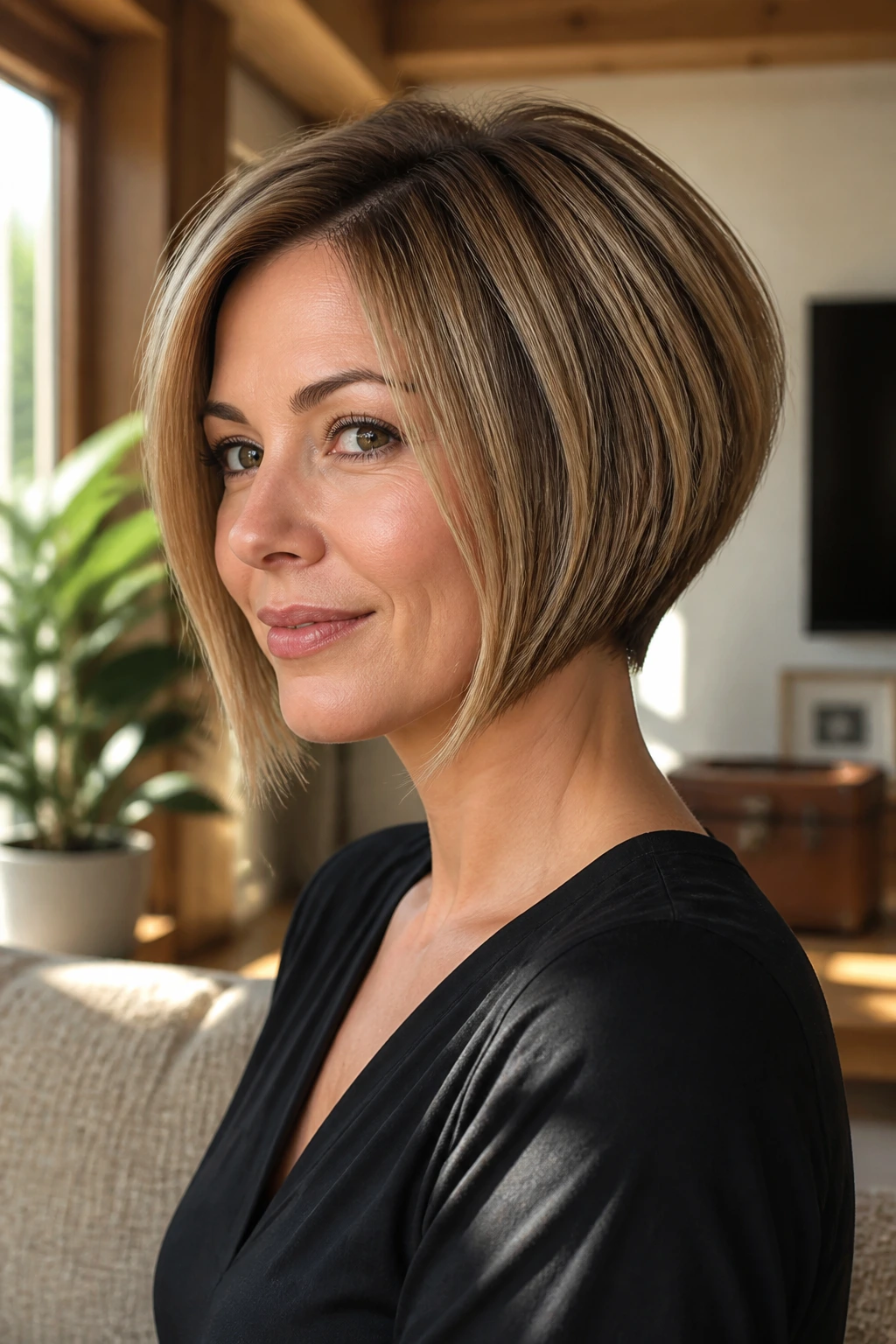
A cleanly stacked inverted bob gives thin hair a little architecture, which is often exactly what it needs. The back sits a touch shorter, the front stays longer, and the whole cut leans forward in a way that creates lift at the nape. Compared with a straight bob, it has more shape. Compared with a shag, it has more discipline.
This is not the place for dramatic stacking unless your hair has more density than you think. Too much angle and the back looks narrow. Too little and you lose the point. The sweet spot is a subtle slope that keeps the front grazing the jaw while the back sits close enough to the neck to support volume.
Oval faces wear this well because the angled front doesn’t fight the proportions. It just frames them. If your hair tends to lie flat behind the ears, this cut can help. The slightly shorter back gives the style a little lift where it usually collapses first.
11. U-Shaped Long Layers With Density at the Ends
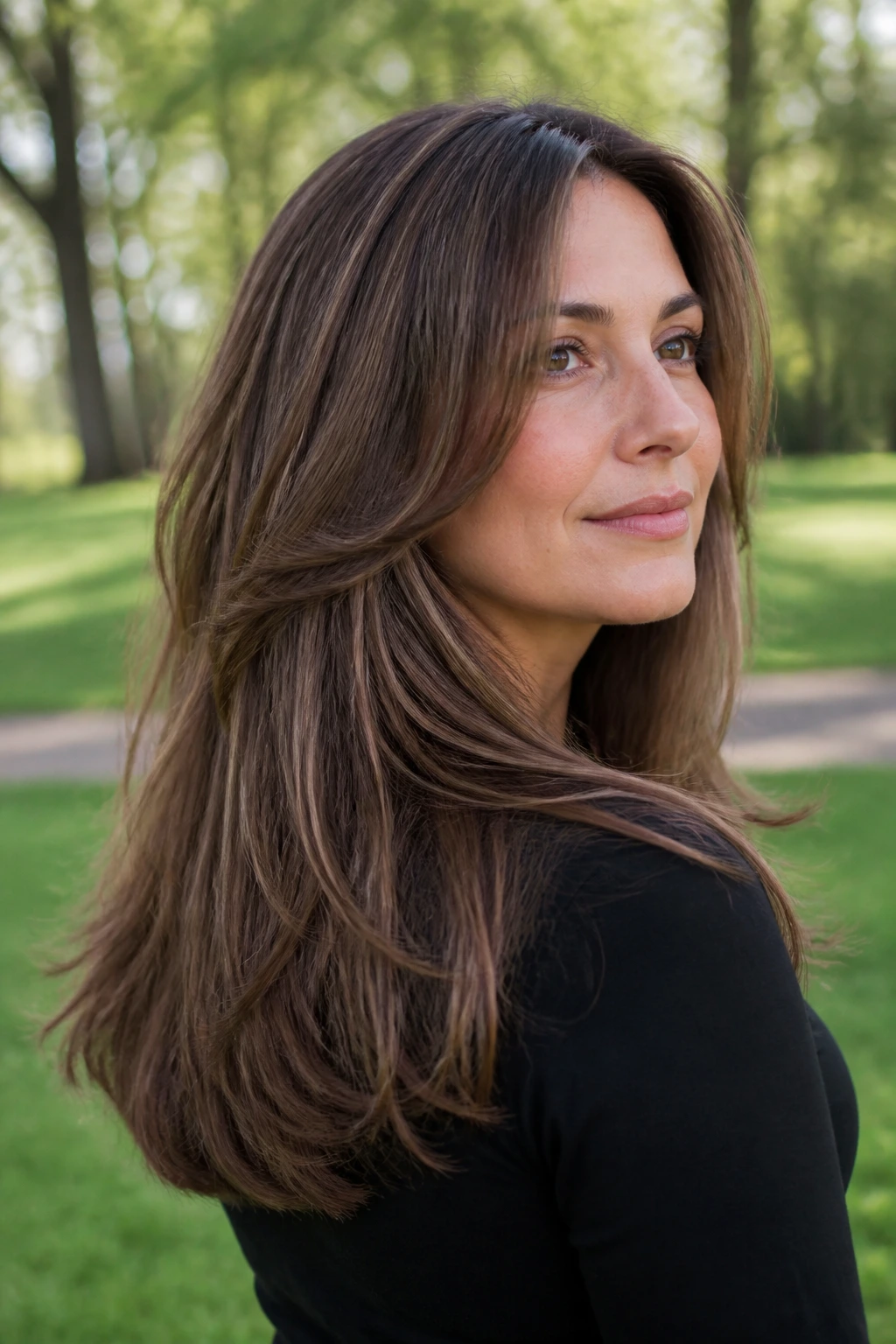
Long hair can work on thin strands if the ends stay honest. A U-shaped cut does that better than straight-across layers in many cases. The shape keeps the perimeter fuller at the back while allowing the front to soften gently around the face.
The trick is restraint again. Long layers should start low — usually below the chin and often lower if the hair is especially sparse. You want movement, not transparency. The U shape keeps the center slightly longer so the hemline doesn’t look chopped off, and that helps the hair feel thicker when it’s down.
This is the cut for someone who refuses short hair and has good reasons. Maybe you like ponytails. Maybe your kids pull at short pieces and you’re over it. Maybe you just like having hair on your shoulders. Fine. If the ends are dense and the layers are careful, this length can still look polished.
12. Wavy Midi Cut With Internal Debulking
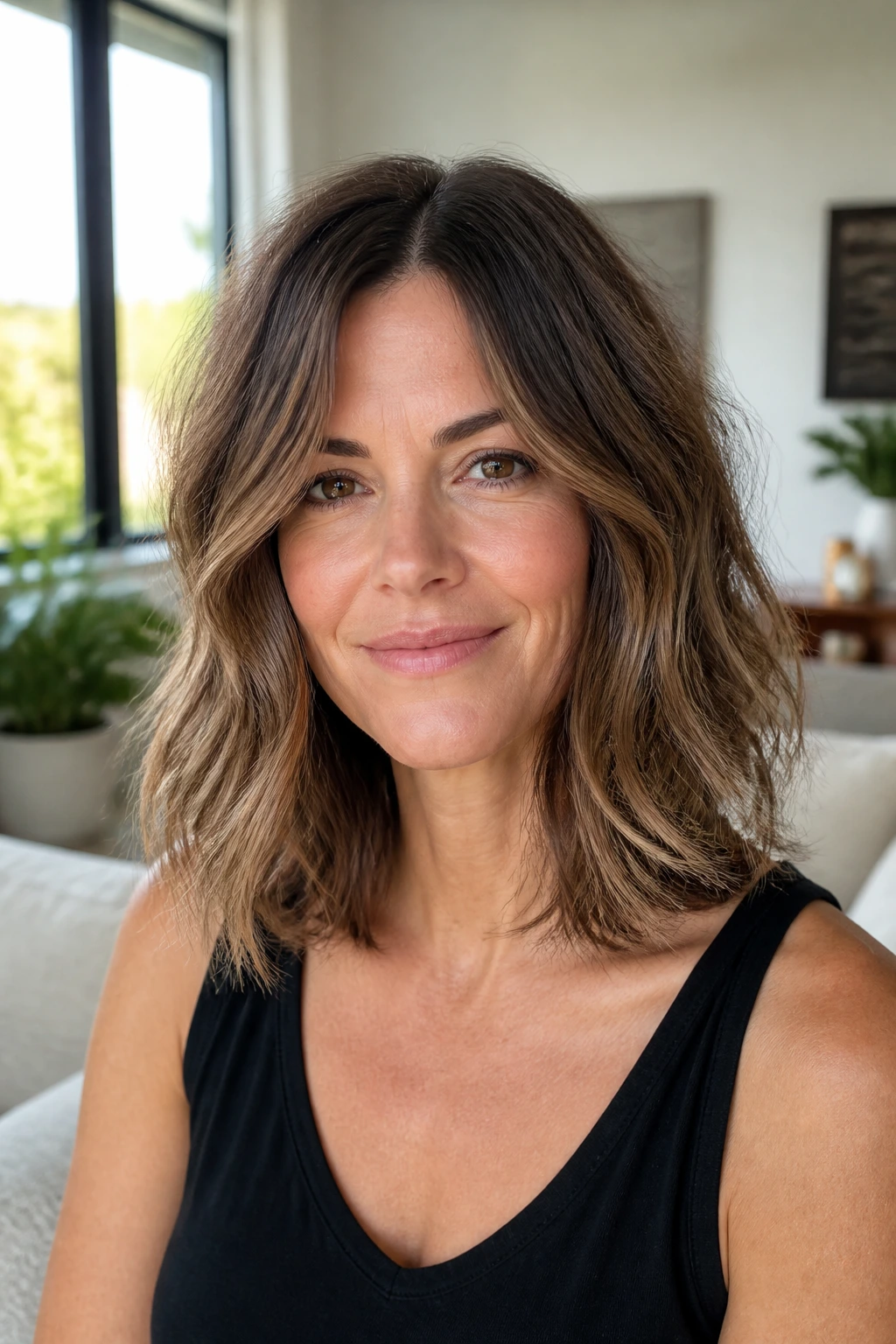
Wavy thin hair gets puffy at the wrong spots when it’s cut blunt all the way around. Internal debulking can fix that, but only when it’s done lightly. The goal is to reduce bulk underneath so the wave pattern can sit flatter and clump better. Not to thin the hair into fog.
This cut usually works best around the collarbone or just below it. That gives the waves a place to land without dragging them down. On an oval face, the shape stays balanced because the front pieces can be left a little longer, skimming the cheek and jaw instead of hanging straight from the temple.
The thing to watch for is over-texturizing. One good stylist can remove weight under the top layer and leave the ends intact. A careless one can carve holes in the shape. If your hair is naturally wavy, this cut can be lovely. If your hair is mostly straight, it may not do much except require more styling than you wanted.
13. Side-Swept Bob With Tucked-Behind-the-Ear Length
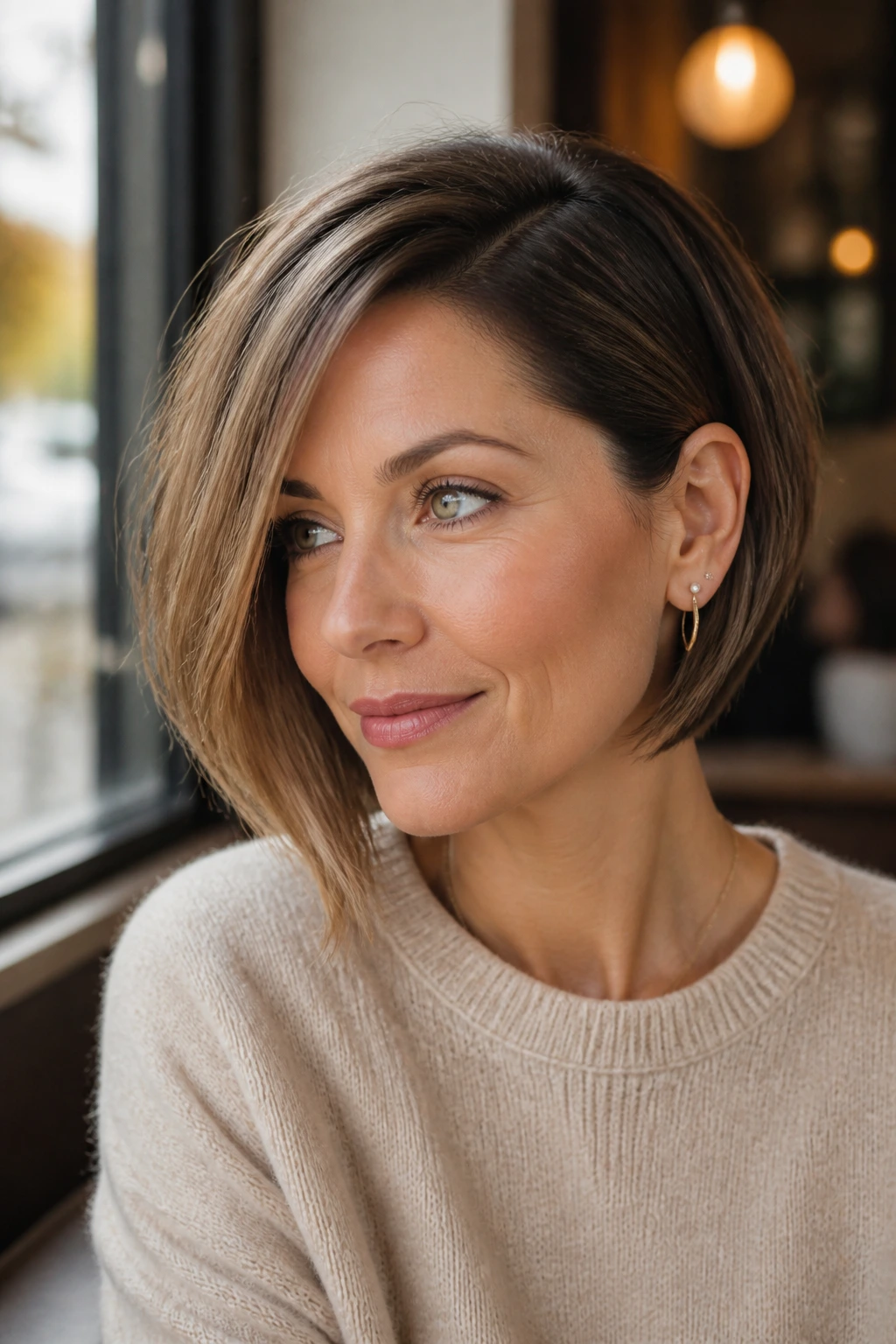
A side-swept bob is one of the easiest ways to make fine hair look like it has more lift than it actually does. The side part gives the top some height. The asymmetry keeps the eye moving. And the tucked-behind-the-ear side creates a nice contrast with the fuller side.
On an oval face, this is one of those cuts that just sits right. The line doesn’t need to be dramatic. It just needs to be clear. One side can graze the jaw while the other sits a bit fuller around the cheek. The shape feels modern without getting fussy.
This works especially well if your hair tends to fall flat on one side more than the other. That’s common. Instead of fighting it, use it. A little side-swept structure can turn a limp bob into a style with actual presence.
14. Feathered Shoulder Cut With Light Movement
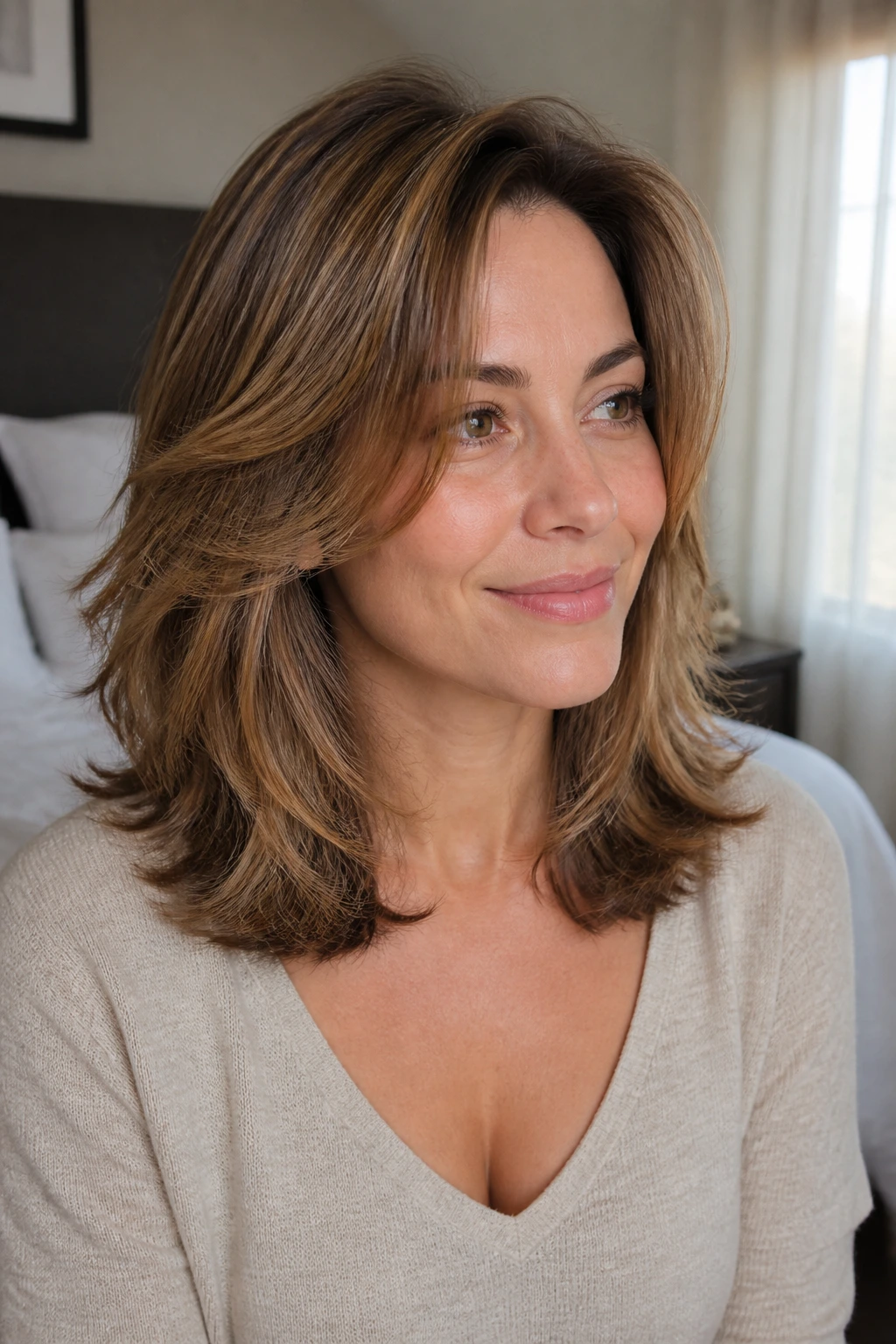
Need shoulder-length hair without the helmet effect? Feathering, done lightly, keeps the outline soft without stealing density. The mistake people make is treating feathering like a license to shred the ends. That’s not the move here. You want softness around the face and a little flick at the shoulders, not a wispy outline.
What to ask for
- Feather only the front and upper sides.
- Keep the bottom edge full.
- Use a round brush or large hot brush to bend the ends slightly under or away from the neck.
This cut is useful if you wear your hair loose most days but still need it to behave under clips, scarves, and seat belts. It’s also a decent compromise if you’re growing out a shorter bob and need the in-between stage to feel intentional. Thin hair gets a little motion without losing the sense that there’s hair there.
15. Jaw-Grazing Crop With Piecey Top
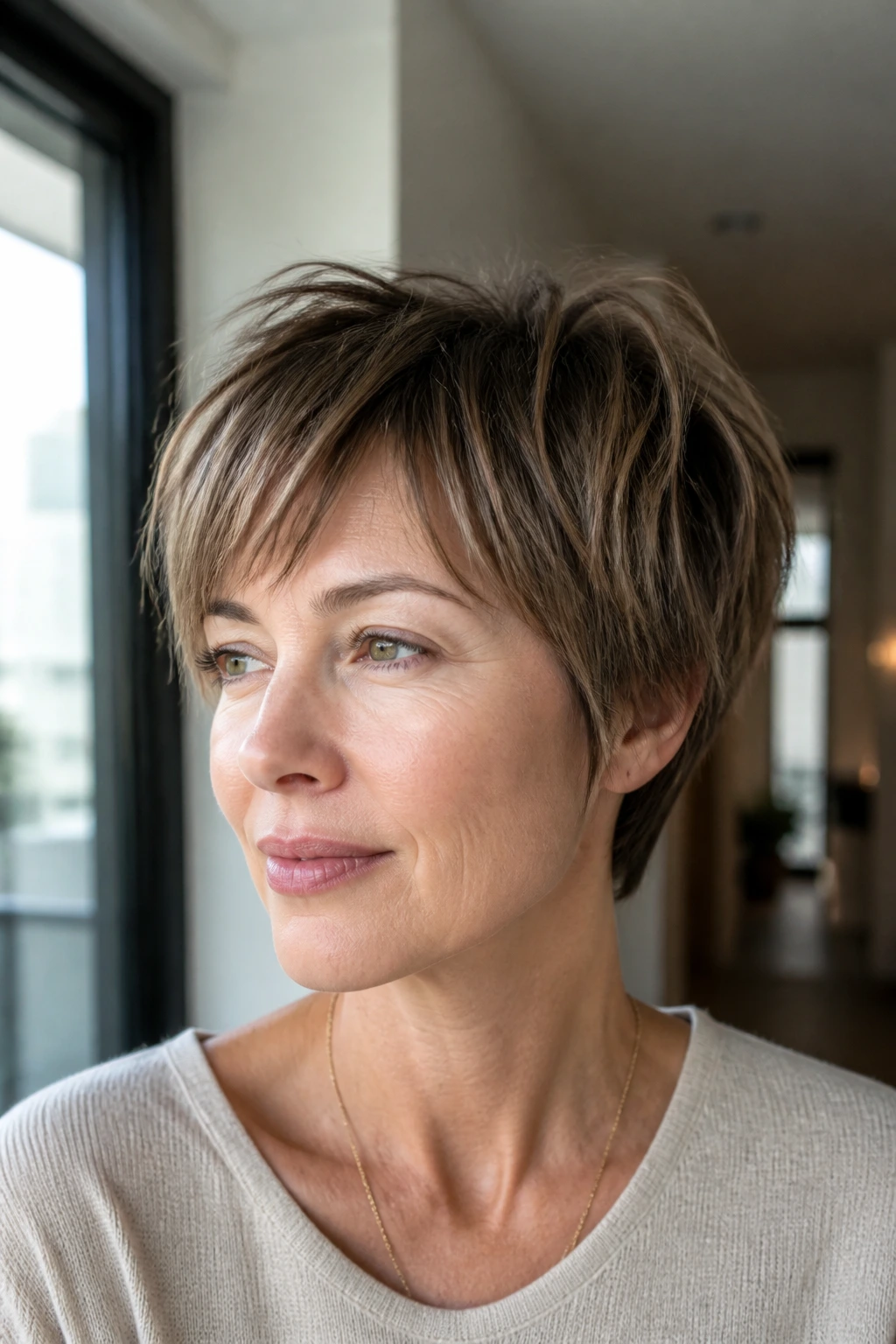
The jaw-grazing crop is short, neat, and a little cheeky. The top stays piecey enough to create height, while the sides and back stay trimmed close enough to keep the silhouette clean. For thin hair, that can be a win. Less length means less droop.
This cut is especially good if you want a hairstyle that looks finished even when you’ve done almost nothing to it. A little styling cream, a finger-combed top, maybe a quick blast at the roots. That’s usually enough. It also plays nicely with glasses because it doesn’t crowd the frames at the temples.
The big caution: the top must not be too heavy. If the crown is left too long and the sides too tight, the crop starts looking lopsided in a way that isn’t cute. The balance matters. Keep the top soft, not shaggy. Keep the neckline neat, not shaved down to nothing.
16. One-Length Mid-Bob With Tucked Under Ends
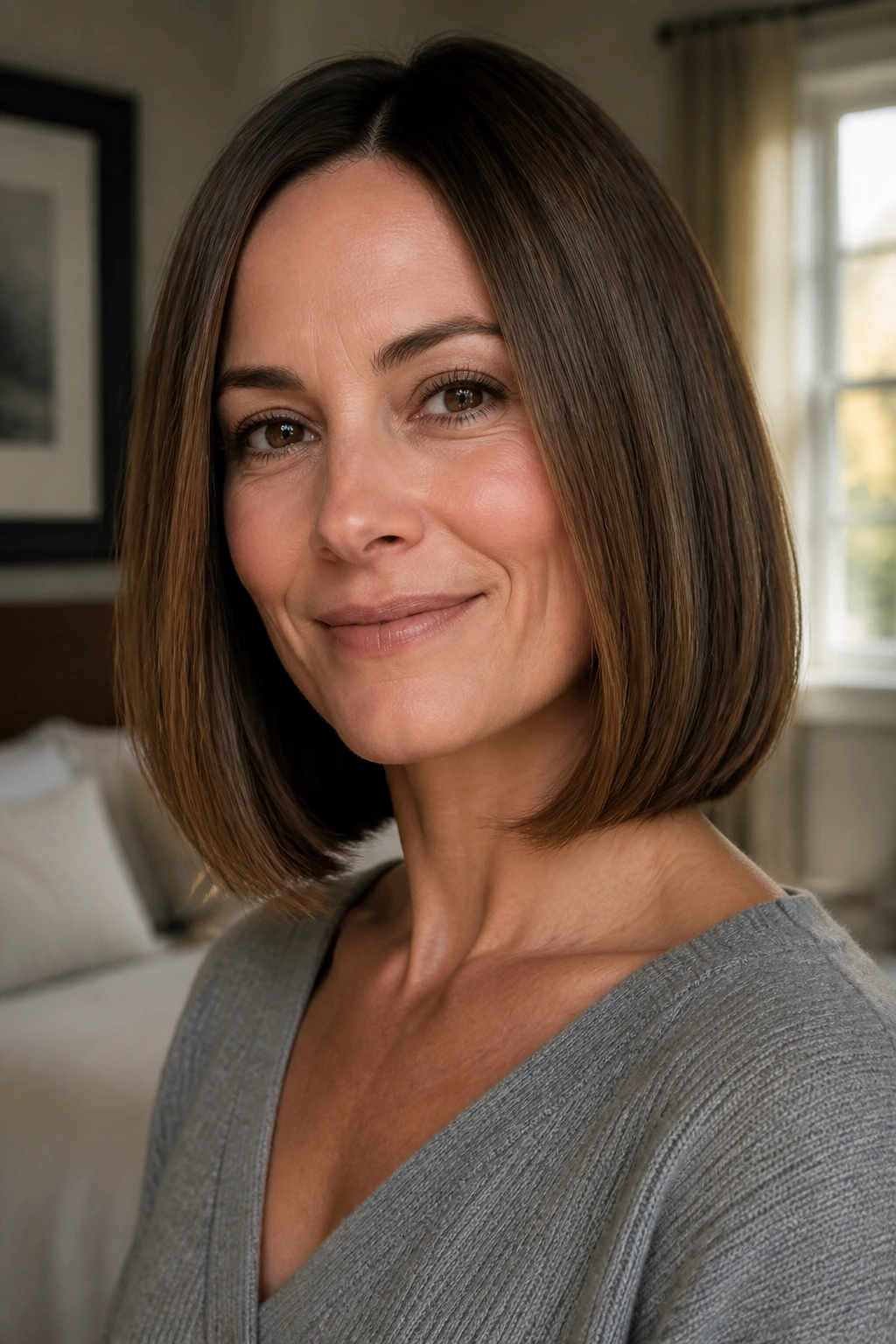
If thin hair hates choppy layers, a one-length mid-bob is the blunt answer that makes sense. The weight stays where it belongs, the line stays strong, and the cut can be tucked under at the ends for a bit of polish. On oval faces, the shape works because it doesn’t need gimmicks to hold attention.
This one is best when the hair is straight or has only a mild bend. Too much natural curl and the line can puff out. Not enough density and the hemline needs to be kept fresh with regular trims. But when the hair cooperates, the result is tidy in the best possible way.
I like this cut for people who want a haircut that can go from clean and straight to softly bent with one pass of a brush. It is not flashy. It is dependable. That counts for a lot when your hair is thin and your mornings are not generous.
17. Soft Wolf Cut With a Gentle Fringe

A wolf cut can work on thin hair, but only when the layers are soft enough to keep the outline believable. The harsh, shredded version is usually a bad match. It eats density fast. The softer version keeps a bit of crown lift, a light fringe, and some movement through the top without letting the ends vanish.
Oval faces can handle this better than most, because the shape doesn’t need hard angles to look balanced. The fringe can skim the forehead, the sides can feather around the cheekbones, and the back can keep a little length for softness. The trick is to avoid razor-heavy ends and overdone texture at the bottom.
If your hair is wavy and fine, this can be fun. If it’s straight and sparse, I’d be cautious. The cut needs some natural texture to do its best work. Without that, it can look like it was cut to be interesting and then forgot to be wearable.
18. Rounded Bob With a Deep Side Part
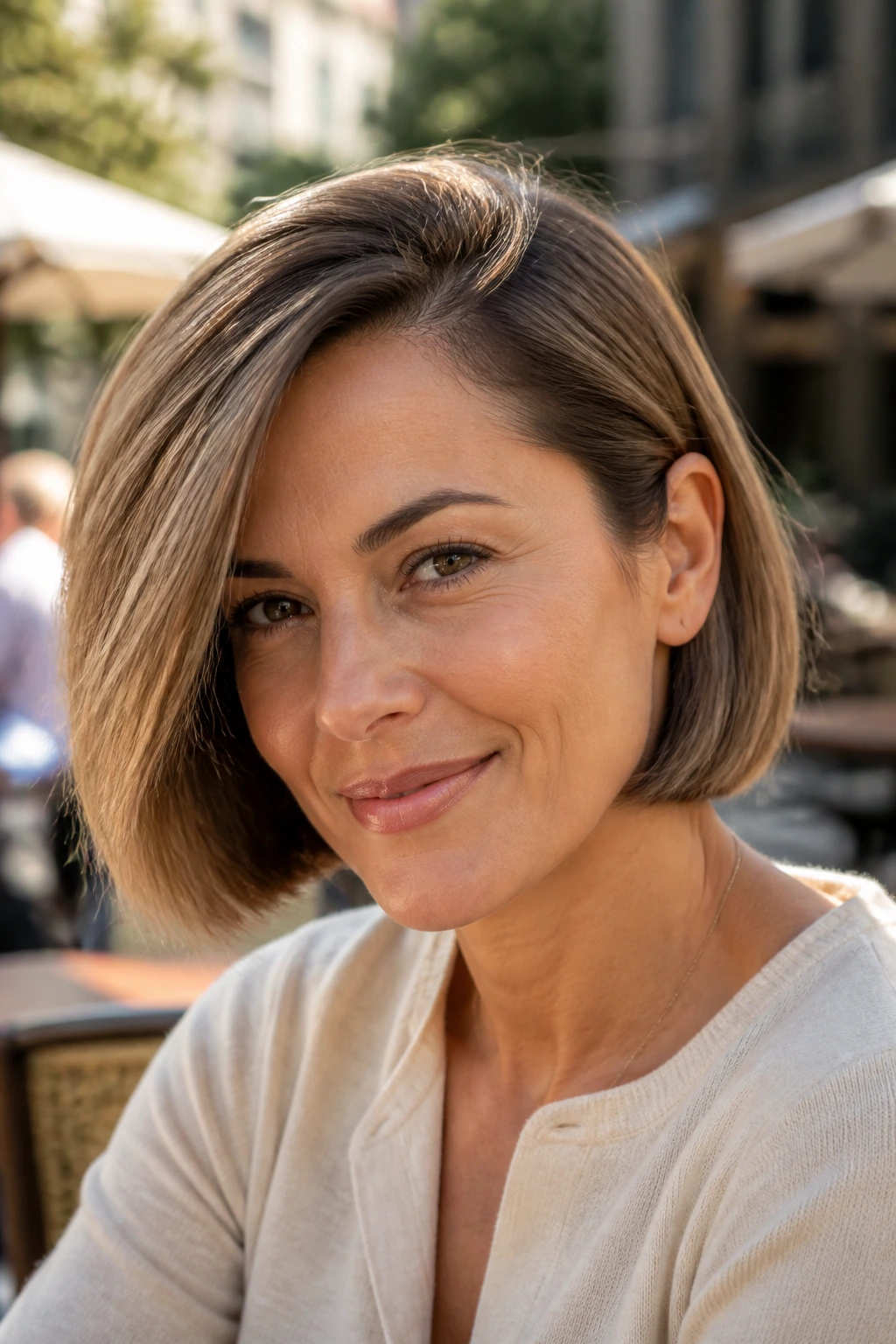
A rounded bob is one of those haircuts that looks tidy when you tuck it behind the ears and still keeps shape when you wear it down. The rounded silhouette follows the head instead of fighting it, which is useful on thin hair because there’s no extra bulk to wrestle with. A deep side part pushes lift into the crown and gives the cut a little drama without making it fussy.
On an oval face, the rounded edge adds width at the cheek level in a flattering way. Not puffy. Just full enough. That’s the difference. The ends can be brushed under slightly so the whole thing feels polished, or left with a soft bend if you want it looser.
I tend to like this cut more than the super-trendy versions of short bobs because it works when the day goes sideways. Wind, humidity, a school-run scramble — it still looks like hair on purpose. That’s the real test.
What These Cuts Need to Look Good on a Real Tuesday Morning
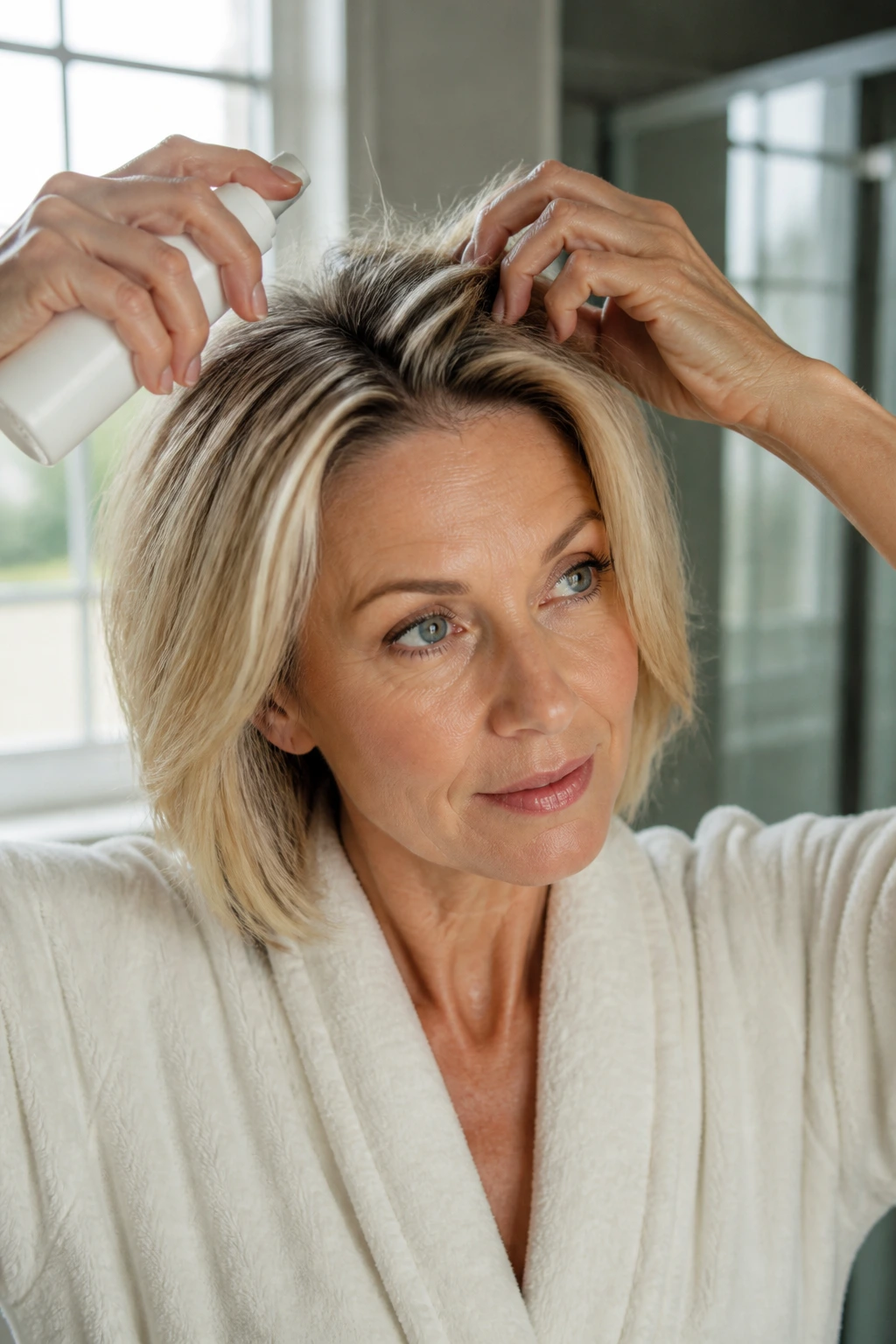
Thin hair doesn’t respond well to vague advice. “Add volume” is not a plan. “Use texture” is not a plan either. What helps is a routine built around the cut you chose. If the haircut is blunt, you need lift at the roots and a small bend at the ends. If the haircut has internal layers, you need a little air at the crown and less product on the bottom half.
The easiest morning move is usually a root-lift mousse or spray on damp hair, applied mostly at the crown and temples. Then dry the hair enough to set the shape before fussing with the ends. That first five minutes matters more than the final five. If the roots collapse, the rest of the style spends the day trying to recover.
The other thing I like to see is restraint with conditioner and oil. Thin hair can get slick fast. A dime-sized amount at the ends is plenty for many cuts. Put heavy products near the scalp and the style loses its grip. Put them only where the hair is thirsty. That’s the cleaner way to do it.
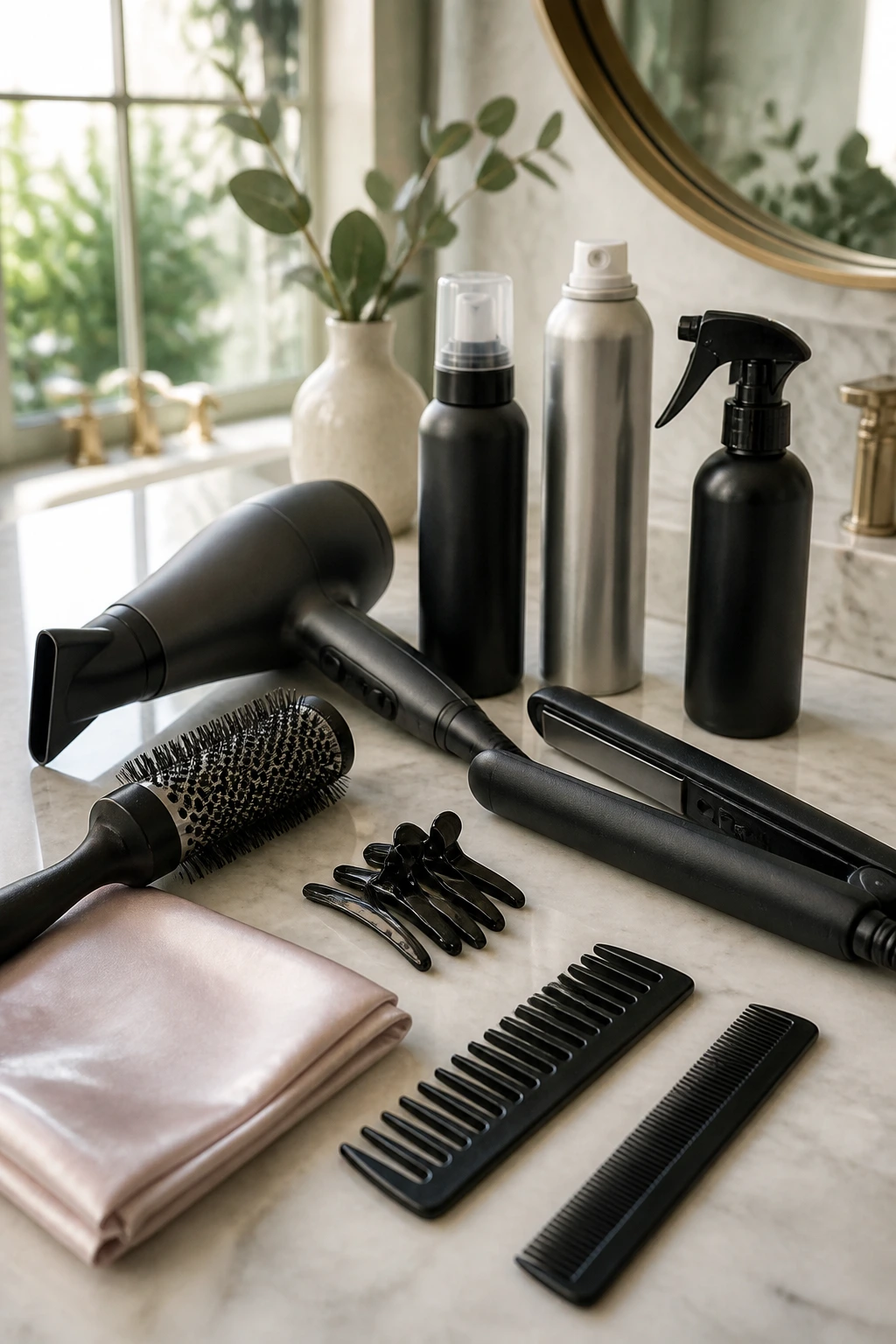
Essential Equipment for These Styles
-
Blow dryer with a concentrator nozzle: Directs air at the roots so you can build lift instead of blasting the cut apart.
-
1-inch or 1.25-inch round brush: Best for giving bob and lob ends a soft bend, especially around the face.
-
Root-lift mousse or spray: Gives thin hair a little structure before heat styling, especially at the crown.
-
Dry shampoo: Works best on day two or three when applied to roots, not ends, to keep the top from looking greasy.
-
Texturizing spray: Good for bixies, shags, and piecey crops when you want separation without stiffness.
-
Flat iron or small curling iron: Useful for adding a slight underturn or loose wave to the front pieces.
-
Hair clips: Handy for sectioning the crown and letting the front cool in the right direction.
-
Satin pillowcase or bonnet: Helps keep shorter cuts from getting flattened overnight.
-
Wide-tooth comb and tail comb: One for detangling, one for parting and sectioning without creating a rough mess.
How to Style Mom Haircuts for Thin Hair in Ten Minutes or Less
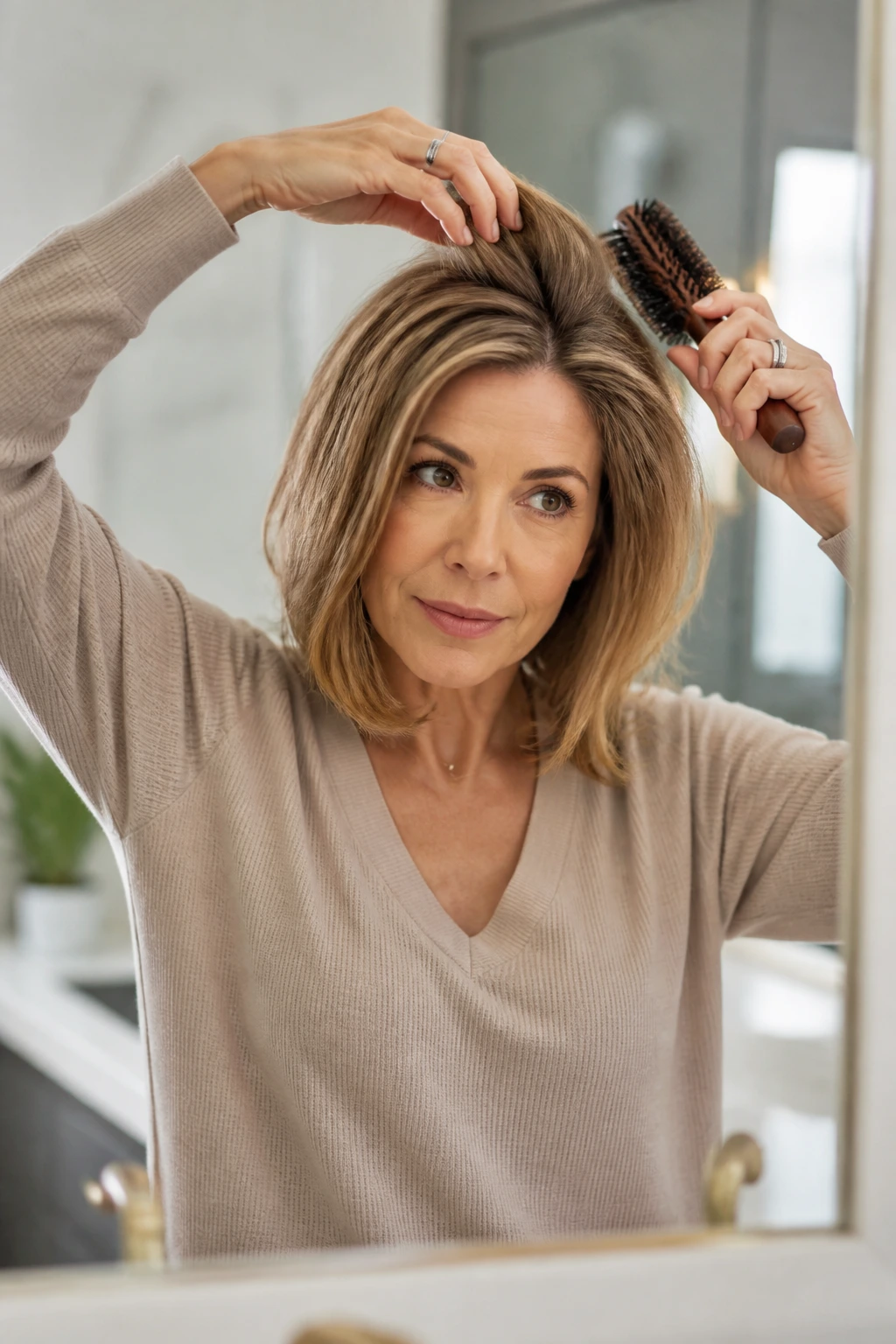
Root Lift: Put mousse or a root spray on damp hair, then rough-dry the crown first. You do not need to dry every strand perfectly before moving on; you need the top to stand away from the scalp.
Parting Trick: Flip the part to the opposite side while the hair is still warm, then switch it back once it cools. That tiny reset gives the roots more memory and keeps the crown from falling flat by noon.
End Shape: For bobs and lobs, bend only the bottom 1/2 inch to 1 inch of hair. Too much curl looks dated fast. A soft tuck under or a slight outward flick is enough to make the cut look intentional.
Product Control: Use less product than you think. Thin hair hates a heavy hand. Start with a pea-sized amount of cream or paste, emulsify it between your palms, and work it only through the mids and ends.
Fast Finish: If the front pieces are the part that matter most, clip them up for three minutes while you get dressed. They set with more body when they cool off in a lifted position. It’s a tiny trick, but it pays rent.
Common Mistakes That Make Thin Hair Look Flatter
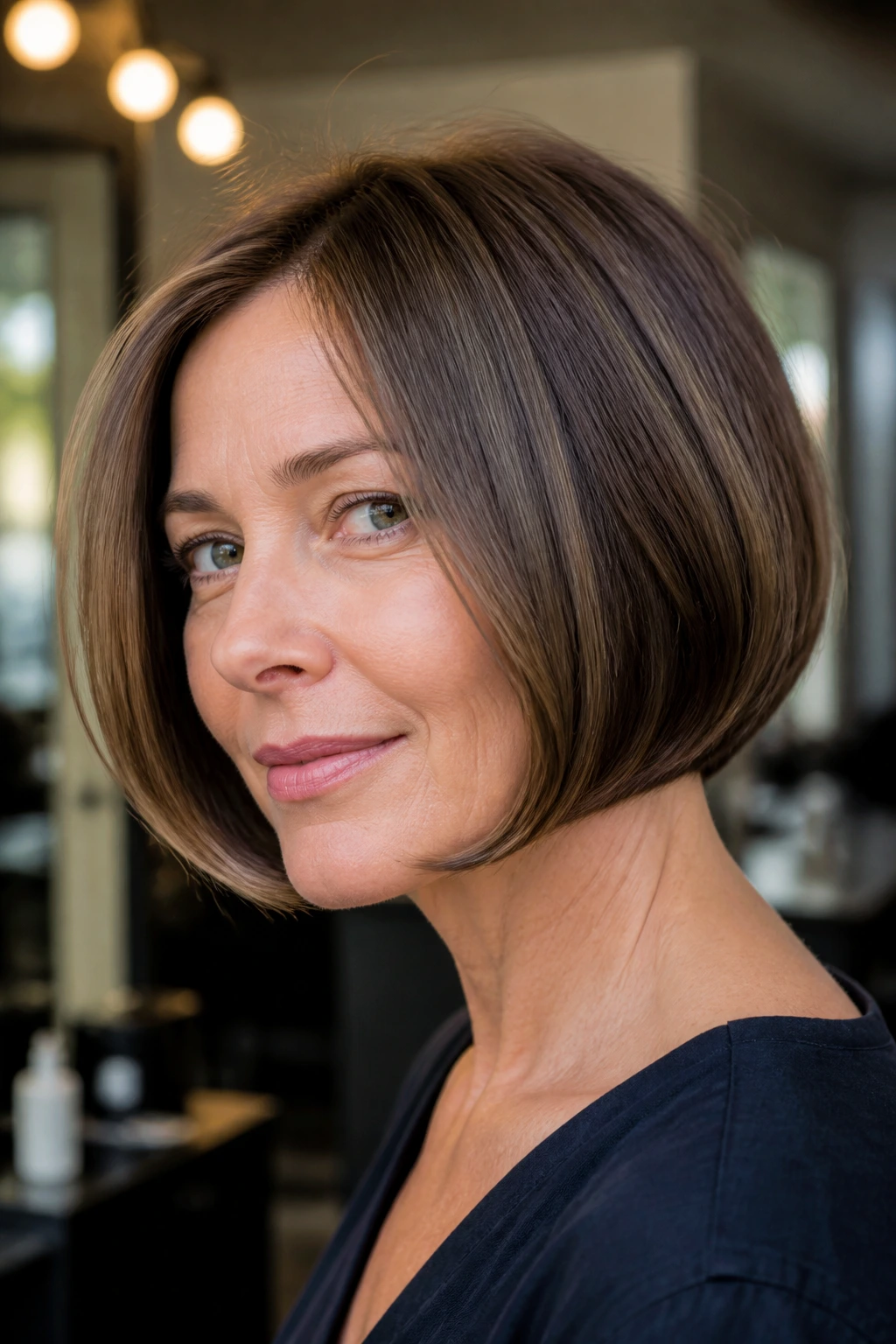
The first mistake is too many layers. The symptom is familiar: the hair looks full when wet, then the ends go stringy once it dries. The fix is usually a stronger perimeter and fewer internal cuts, especially through the bottom third of the head.
Another problem is cutting too long and hoping volume appears on its own. It won’t. Thin hair that drops below a point of support can look tired and stretched, especially at the ends. If the density is low, a shorter shape often looks fuller than long hair ever could.
A third mistake is heavy fringe. Thick bangs can rob too much hair from the front, which leaves the rest of the style looking sparse. If you want bangs, keep them airy, split them softly, or let them open at the center.
Then there’s product overload. Cream, oil, and leave-in conditioner all at once can weigh fine strands down before the day has started. Use what the hair needs at the ends and keep the scalp cleaner. Grease at the roots turns a good cut into a limp one.
And finally, never changing the part. Hair gets trained. If you always part it in the same place, the roots compress there and the crown flattens. Move the part a little now and then. Not wildly. Just enough to keep the shape awake.
Variations That Change the Mood Without Changing the Bones
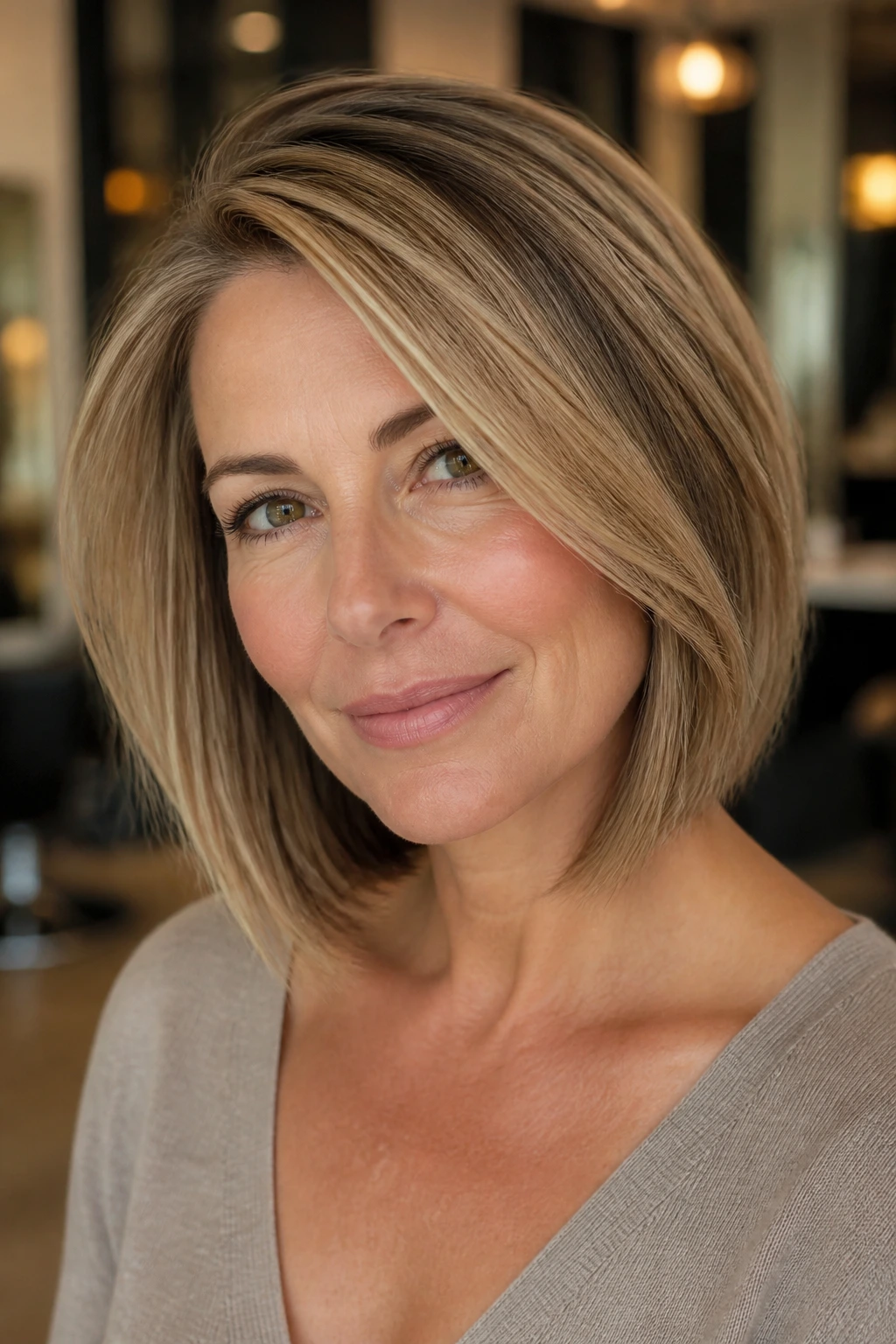
Air-Dry Friendly Version: Ask for softer lines, less crown layering, and a perimeter that still looks clean when the hair dries on its own. This works well for wavy hair and for people who refuse a morning blow-dry.
Glasses-Friendly Fringe: Keep the bangs light and split them so they sit above the frames instead of crashing into them. Short pixies and bobs benefit from this when the glasses are part of your daily face.
Low-Commitment Grow-Out: Choose collarbone or shoulder length with soft face-framing pieces. These grow out without looking obviously “between cuts,” which is useful when salon time is uneven.
Extra-Lift Version for Straight Hair: Add a deeper side part, a subtle angle in the bob, or a slight stack at the nape. Straight hair needs shape drawn into it, not piled on top of it.
Wavy-Hair Version: Let the stylist keep a little more length in the front and remove weight underneath with care. Wavy thin hair looks fuller when the wave can clump instead of being chopped into pieces.
Keeping the Shape Between Haircuts
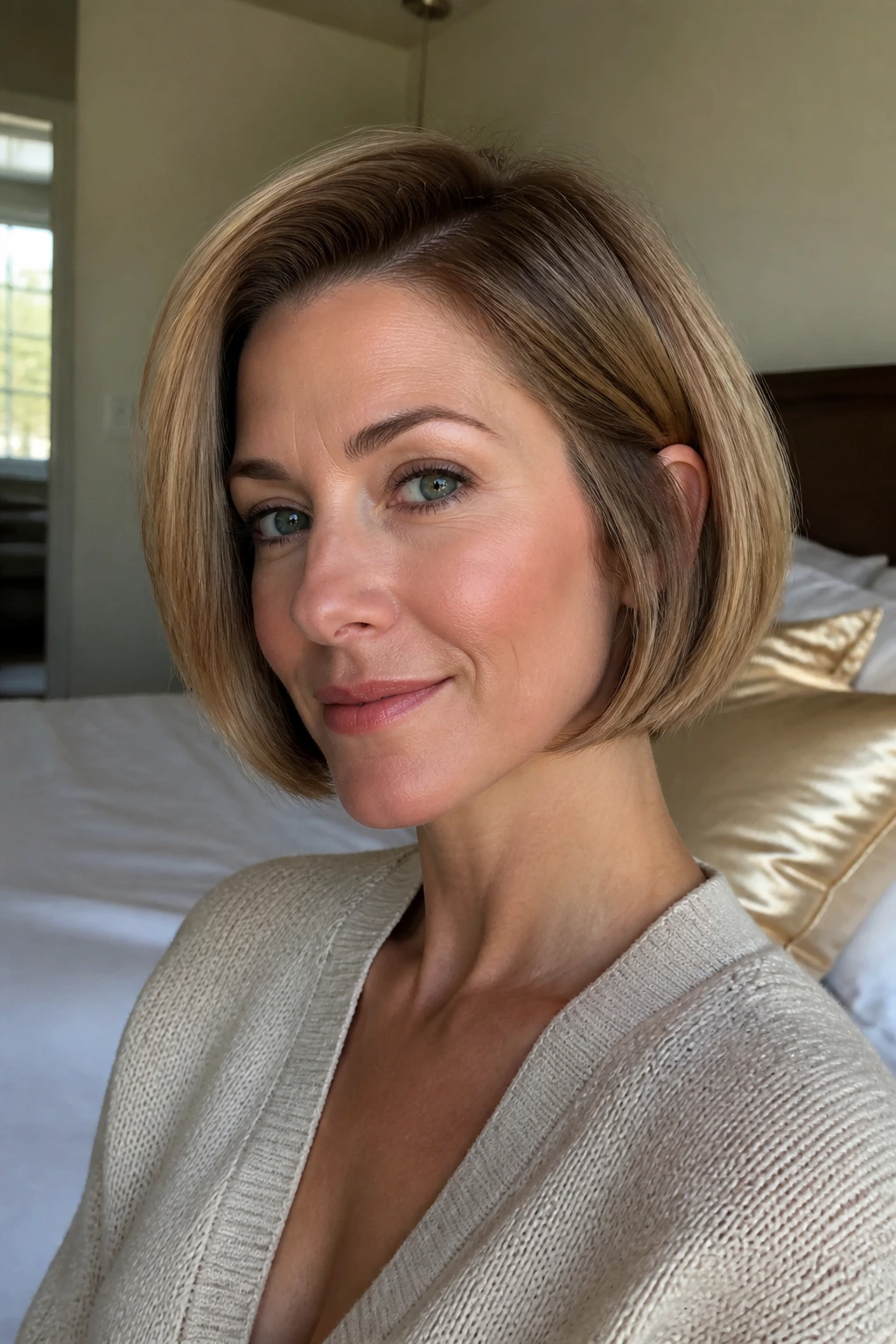
Shorter haircuts for thin hair usually need more frequent trims than people expect. A bob or pixie can lose its shape in 5 to 7 weeks if the ends start flipping oddly or the neckline gets fuzzy. A lob can usually stretch to 7 to 10 weeks, and a shoulder-length shape may go a bit longer if the ends stay healthy and the layers are soft.
Overnight care matters more than people think. A satin pillowcase helps, especially with bobs and pixies, because cotton can rough up the top and leave the crown flat. If the hair kicks up at the back, clip it loosely before bed or tuck it into a soft scrunchie. Not a tight elastic. That just leaves a crease and a bad mood.
Wash schedule should follow scalp oil, not guilt. Thin hair often looks cleaner with more frequent washing than thick hair does, but that doesn’t mean scrubbing every day is required. If you wash every other day, use a small amount of mousse or root spray on damp hair and a little dry shampoo at the roots on the off days. Product buildup shows up fast on fine strands, so a clarifying shampoo every 2 to 4 weeks can keep the shape from getting muddy.
If you’re growing a cut out, ask for tiny maintenance trims instead of waiting for a dramatic overhaul. Half an inch removed at the right time keeps the outline tidy and prevents the ends from splitting into thin little tails. That tiny trim is boring. It also saves the haircut.
Questions People Ask Before Booking the Appointment
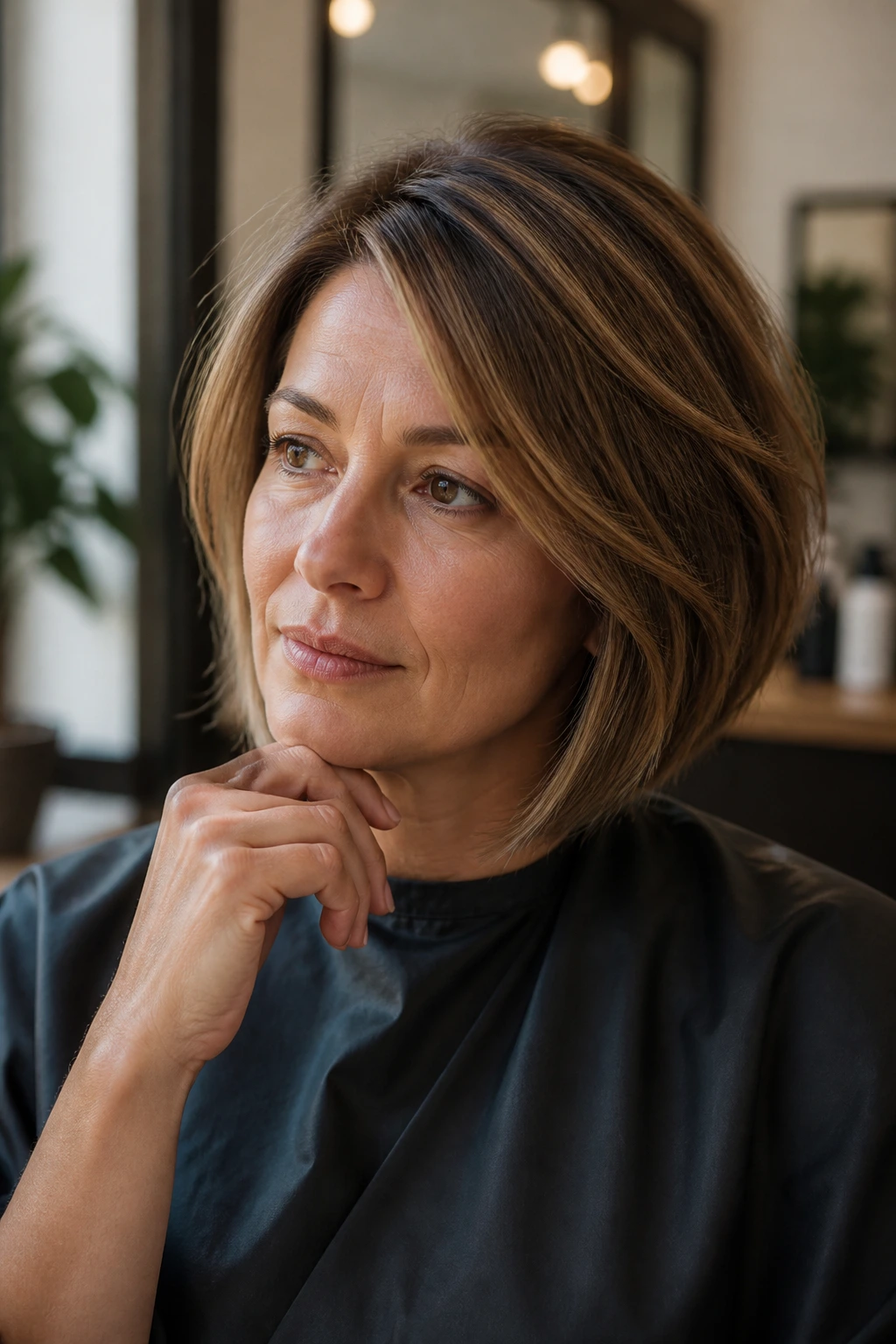
Is a bob or lob better for thin hair and an oval face?
Both can work, but a bob usually gives more visible fullness because the hair ends stop higher and stay denser. A lob gives more styling flexibility if you like to tie it back or tuck it behind the ear. If your hair is very fine, the bob often wins by a small margin.
Should thin hair avoid layers completely?
No, but the layers should be strategic. Heavy layers can make the ends look scraped out, while subtle internal layers can add lift at the crown without stealing density from the perimeter. The haircut needs balance, not zero layering.
Can oval faces wear bangs with thin hair?
Yes, and that’s one of the advantages of the face shape. The trick is keeping the bangs light enough that they don’t drain the front of the haircut. Curtain bangs, side-swept bangs, and airy fringe usually work better than thick, blunt ones.
What haircut makes fine hair look thickest?
A blunt bob or a one-length lob usually creates the strongest illusion of thickness. The sharp perimeter gives the ends a fuller line, which is exactly what thin hair needs when the goal is visual density.
How often should I trim a mom haircut?
Shorter shapes often need a trim every 5 to 7 weeks. Longer lobs and shoulder cuts can stretch a little farther, but only if the ends still look full. Once the hemline starts to fray, the cut stops doing its job.
Can I air-dry these cuts and still look put together?
Yes, if the haircut was planned for it. Soft shags, textured lobs, and wavy mid-length cuts are the easiest air-dry candidates. Blunt bobs and rounded bobs usually need at least a quick bend at the ends to look finished.
What if my hair falls flat by lunchtime?
That usually means the cut is too long, too layered, or overloaded with product. Try a lighter styling product, a stronger root lift at the crown, and a slightly shorter length at the next trim. Thin hair often needs less weight, not more effort.
Will these cuts still work if my hair is straight?
Yes, but straight thin hair usually needs a stronger shape than wavy hair does. Blunt ends, side parts, and clean angles help straight strands look fuller because there’s no natural texture filling in the gaps.
The Shape That Does the Heavy Lifting
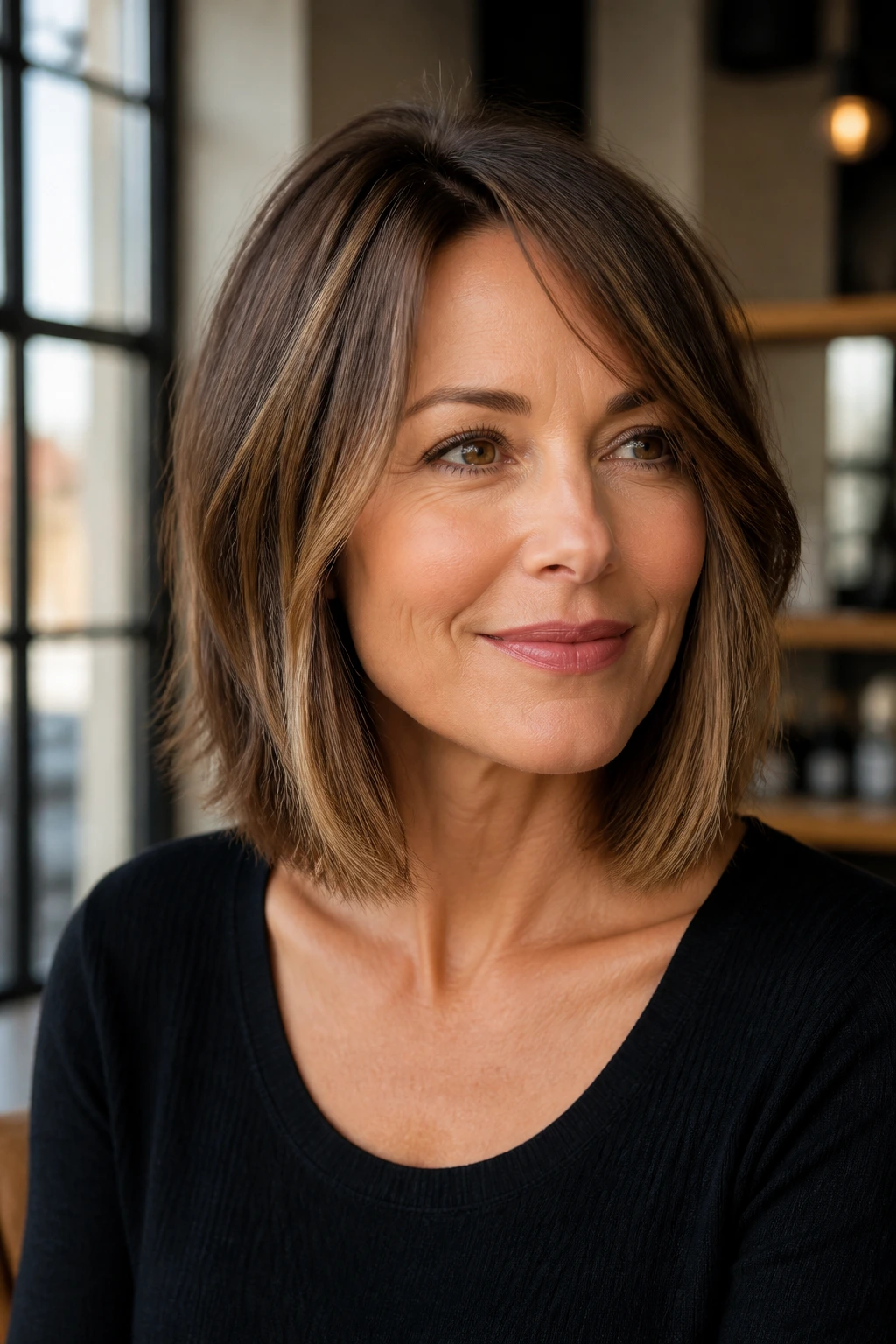
The nicest thing about these haircuts is that they don’t ask you to become a new person before breakfast. They do the work in the structure itself — the edge at the jaw, the lift at the crown, the side part that wakes up the top, the fringe that softens the forehead without stealing density. That is the whole point. The cut should make the hair look more intentional even when you’ve had a rough week and the blow-dryer barely made it out of the drawer.
If you’re choosing among them, start with the version that fits your real routine, not the one you’d style if somebody handed you a round brush and an extra half hour. A chin-length bob, a collarbone lob, or a soft bixie is usually the easiest place to begin. All three give thin hair a clean outline and let an oval face stay balanced without a lot of fuss.
The best haircut here is the one that still looks like itself after a coat comes on, a car door shuts, and the day gets noisy. That’s the cut worth booking.