



If your brunette hair has a side-swept fringe, one flat color can make the whole cut go limp. The bang stops reading as a shape and starts reading as a shadow. That’s the problem.
The better move is to treat the fringe as its own design element. Side-swept bangs catch light along a diagonal, which means the right brunette shade can make them look thicker, softer, sharper, or more expensive-looking without changing the whole head into a high-maintenance project. The wrong placement does the opposite. Too much light at the front and the bang starts shouting. Too little and it disappears into the rest of the hair.
That’s why hair color ideas for brunettes with side-swept bangs need more thought than a basic “add highlights” answer. Brunette hair has enough depth to hold warm copper, cool ash, golden caramel, smoky beige, plum, or blue-black without losing its brown backbone. The fringe just changes how those tones land. A good color plan respects the swing of the bang, the density at the hairline, and the way the front pieces sit against the cheekbone when you move.
Why These Color Ideas Work on Side-Swept Bangs
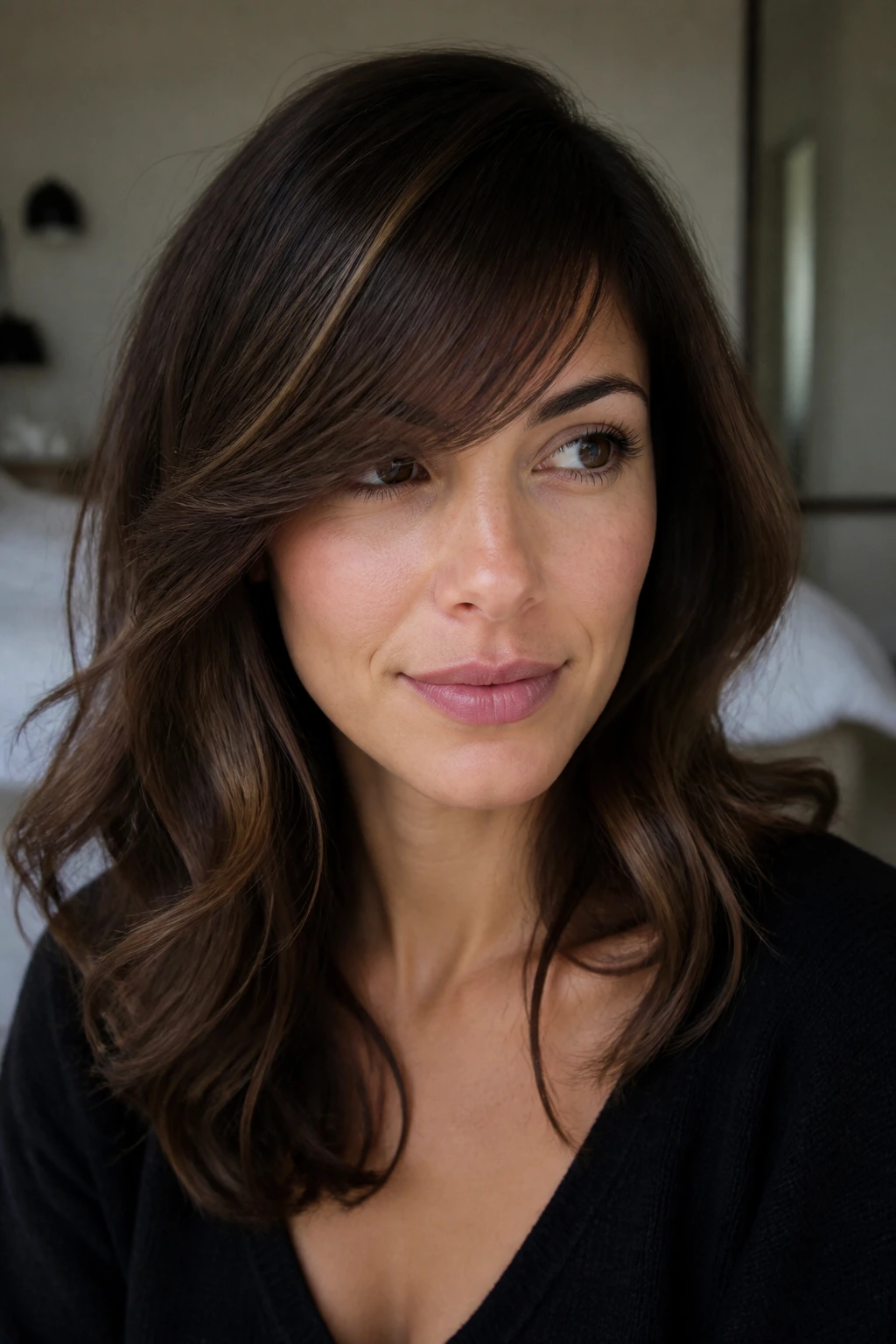
- The diagonal line does half the work: A side-swept fringe already guides the eye across the face, so a slim ribbon of color can look much more dramatic than the same ribbon hidden in the back.
- You do not need to lighten everything: Brunettes can keep depth at the crown and nape while brightening the front pieces by one to three levels, which saves time at the chair and keeps the cut from going mushy.
- The fringe shows porosity fast: Hair at the hairline is often finer and a little more porous, so glosses, toners, and demi-permanent color tend to grab faster there. That is useful when you want dimension without a harsh stripe.
- Warm and cool tones both work: Side-swept bangs let you place a warm note near the cheek and keep the rest cooler or deeper. That contrast is what keeps brunette color from looking one-note.
- Grow-out is easier when the front is soft: A narrow face frame, a root shadow, or a melt from dark brown into caramel usually ages better than chunky highlights that start at the root and sit there like lines on paper.
1. Mushroom Brown with Champagne Ribbons
Mushroom brown is one of those shades that looks calm until the light hits it, then it turns into something much better than plain brown. On brunette hair with side-swept bangs, it keeps the base cool and earthy while the champagne ribbons around the front add just enough brightness to keep the fringe visible. The effect is soft, misty, and a little expensive-looking without being loud.
The key is placement. Keep the ribbons narrow at the part and slightly wider where the bang falls over the cheekbone. If they start too high, the whole front can look stripey. If they stay too low, you lose the lift that makes the sweep stand out.
Why it works
This shade flatters hair that pulls red or orange because the mushroom base quiets the warmth without making the hair look flat. Champagne is a smart choice for the side bang specifically; it reads brighter than beige, but it doesn’t turn brassy in the same way a strong gold can.
Ask for a cool brown gloss through the mids, then a few ribbon highlights framed around the sweep. If your hair is fine, keep the ribbons soft and thin. The best version of this color looks like movement, not stripes.
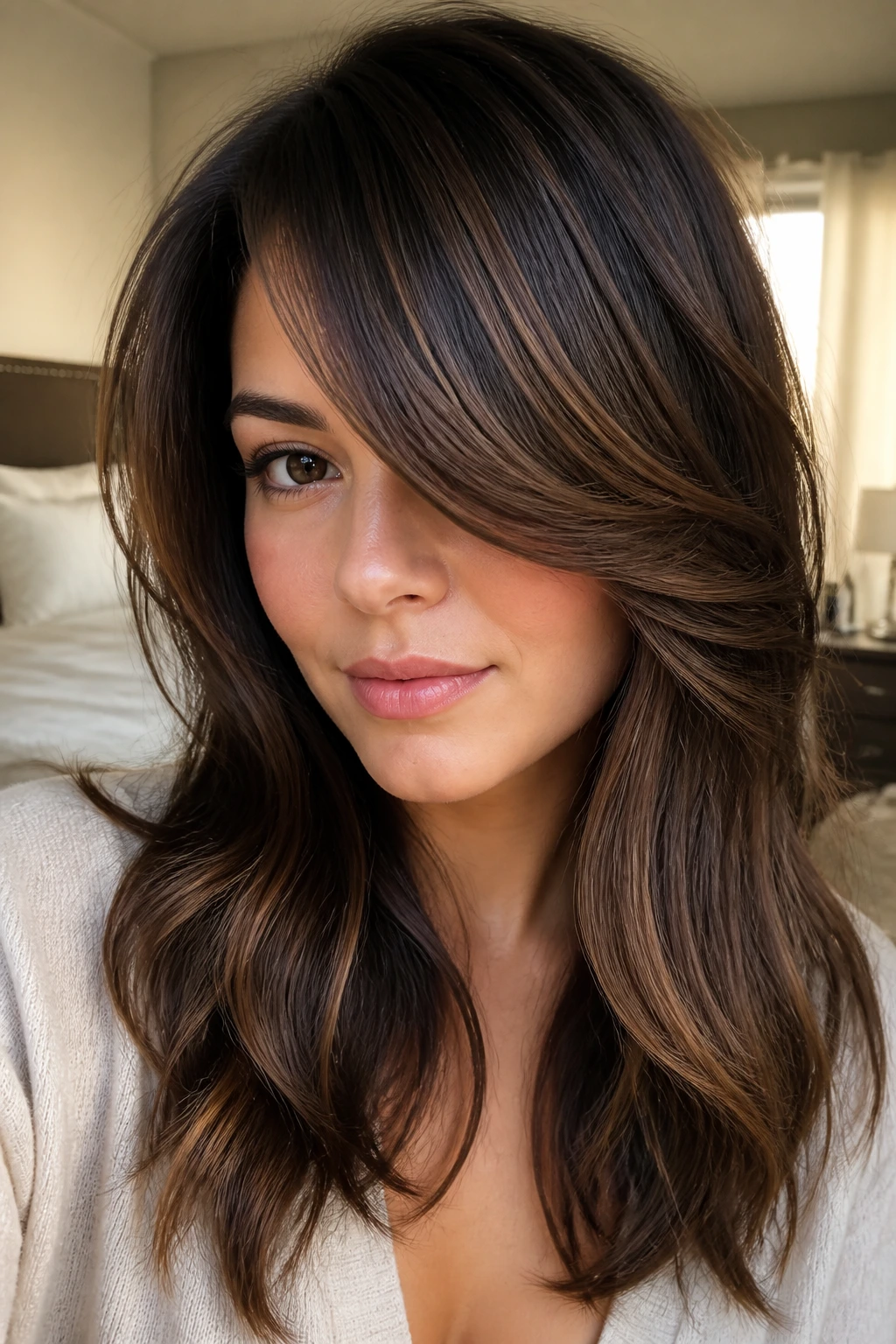
2. Espresso Base with Soft Caramel Money Piece
Espresso brown is deep enough to make caramel glow, and that’s the whole point here. Side-swept bangs give you a natural path for that lighter face frame, so the color lands right where people look first. This is the brunette version of contrast done with restraint.
The front pieces should start at the cheekbone or just above it, not at the root. That keeps the bang from looking carved out. A few delicate caramel threads under the top layer can keep the fringe from disappearing when it falls across the forehead.
A good fit if…
- You want visible brightness without turning blonde.
- Your hair is medium to thick and can hold dimension.
- You like the look of salon color that still grows out cleanly.
The strongest version of this idea has a dark espresso base, a warm caramel money piece, and a tiny amount of lighter color tucked under the bang so it moves when you turn your head. It is polished, but not stiff. And that matters.
3. Mocha Balayage with Honey Ends
Mocha balayage is the friendliest color on the list. It sits in that sweet middle zone where brunette still looks brunette, but the ends carry enough honey to keep the shape from sinking into the shoulders. On side-swept bangs, the trick is to let the sweep catch one brighter strand and then let the rest melt back into mocha.
This shade works especially well on long layers because the movement gives the color somewhere to go. If the hair is pin-straight and one length, it can feel heavy. Add a soft bend with a round brush or a large curling iron and the honey pieces suddenly make sense.
What to ask for
- A mocha root shadow or gloss at the top.
- Balayaged honey through the lower mids and ends.
- One brighter piece around the bang side so the front does not disappear.
Honey can go yellow if it is pushed too light, so keep the lift controlled. The goal is warmth, not gold foil. On the right brunette base, this is one of the easiest ways to add light without messing up the integrity of the cut.
4. Cinnamon Brunette
Cinnamon brunette is all about warmth that feels woven in, not painted on. The shade sits between chestnut and copper, which is a useful place to be if you want your side-swept bangs to look richer without going full red. It works best when the gloss is applied evenly from root to mid-length, then slightly brighter around the temple and fringe.
There is a reason this color looks so good on brown hair: the warmth gives the surface a soft glow, and the side sweep catches it with every turn of the head. On matte brown hair, a cinnamon glaze can wake everything up in one appointment.
Best for
- Medium brunettes who want a noticeable shift.
- Warm or neutral skin tones.
- Hair that needs shine more than major lift.
A cinnamon brunette shade can be low-maintenance if the tone is semi-permanent or demi-permanent. That makes it a nice choice if you want color that fades gracefully rather than fading into a weird orange band. Keep the bang area a touch lighter so the sweep reads as a shape, not a shadow.
5. Chestnut Copper Melt
Chestnut copper is for the brunette who wants a little fire without giving up depth. The chestnut base keeps the root rich and grounded, while copper slides through the mids and ends like warmth under a lamp. Side-swept bangs give you a place to park that copper where it matters most: the front edge.
The nicest version of this color is not loud. It should feel like brown hair that has been left in the sun long enough to warm up. If the copper starts too bright near the root, the result can veer costume-y fast. Keep the copper in the front sweep and through the lower lengths instead.
A good colorist will usually soften this with a warm gloss so the copper doesn’t look raw. On wavy hair, the melt looks especially good because the bends catch different tones at different angles. That movement is half the charm.
6. Cherry Cola Brunette
Cherry cola brunette is dark, glossy, and a little sneaky. At first glance it reads as rich brown, but outside or under warm light, you get that red-violet shift that makes the color feel alive. Side-swept bangs are perfect for it because the fringe gives you a little moving canvas for the tint.
This is not the same as a loud burgundy. Keep the red-violet note deep and controlled. The best version has a brown base with a cherry gloss layered over the mids and a touch of extra shine near the bangs. The result is moody, not harsh.
If you want color that looks different in daylight and candlelight, this is a strong pick. It suits cool and neutral undertones well, especially if your wardrobe leans black, cream, denim, or deep green. The front pieces can stay a half-step lighter so the sweep still has shape.
7. Smoky Ash Brown Balayage
Smoky ash brown is the answer when brunette hair keeps pulling orange no matter how carefully it’s toned. The ash tone cuts the heat, while the balayage placement keeps the hair from looking flat. With side-swept bangs, you get a cool little flash around the face instead of a blunt band.
This look has a clean edge to it. It is not icy blonde, and that is the point. The ash should sit like a veil over medium brown, with the front pieces lifted just enough to separate them from the base. If you overdo the toner, the result can go muddy. Keep the finish soft and smoky.
Good to know
- Great for brunettes who hate warmth.
- Better on hair that already lifts evenly.
- Needs a toner refresh when the ash starts turning beige.
On a side-swept fringe, ash tones can look especially sharp because the bang crosses the face at an angle. That angle gives the cool pieces somewhere to live without stealing all the attention from the cut.
8. Hazelnut Lowlights
Most people think about highlights first, but lowlights can do more for brunette hair than a pile of light pieces ever will. Hazelnut lowlights deepen the darker sections, create thickness, and keep side-swept bangs from floating away from the rest of the hair. On fine hair, that matters. A lot.
The trick is not to hide the bang. Instead, weave in a few hazelnut tones under the sweep and keep the top layer a touch lighter. That makes the fringe look fuller and gives the whole style a denser, richer shape. If you’ve ever had highlights make your hair look stringy, lowlights are the repair work.
This is also a smart choice for someone who wants brunette color but not much upkeep. Lowlights grow out quietly. They don’t need to be perfect. They just need to add shadow in the right places.
9. Toasted Almond Face Frame
Toasted almond is lighter than most brunette tones but softer than blonde. Around side-swept bangs, that matters, because the front pieces can brighten the face without dragging the rest of the hair into a lighter maintenance bracket. The shade sits in a creamy beige-brown zone that looks clean rather than golden.
The best placement is around the temple, cheekbone, and the side where the bang falls. Keep the almond tone thin and feathered. You want it to look like sunlight, not like a streak. On layered cuts, it works especially well because the pieces can separate and show movement.
This idea suits people who want a fresh front without a drastic change. If your skin tone can handle beige warmth, it’s a safe and flattering option. If not, ask for a cooler almond gloss so the front stays soft instead of yellow.
10. Walnut Brown with Bronze Veil
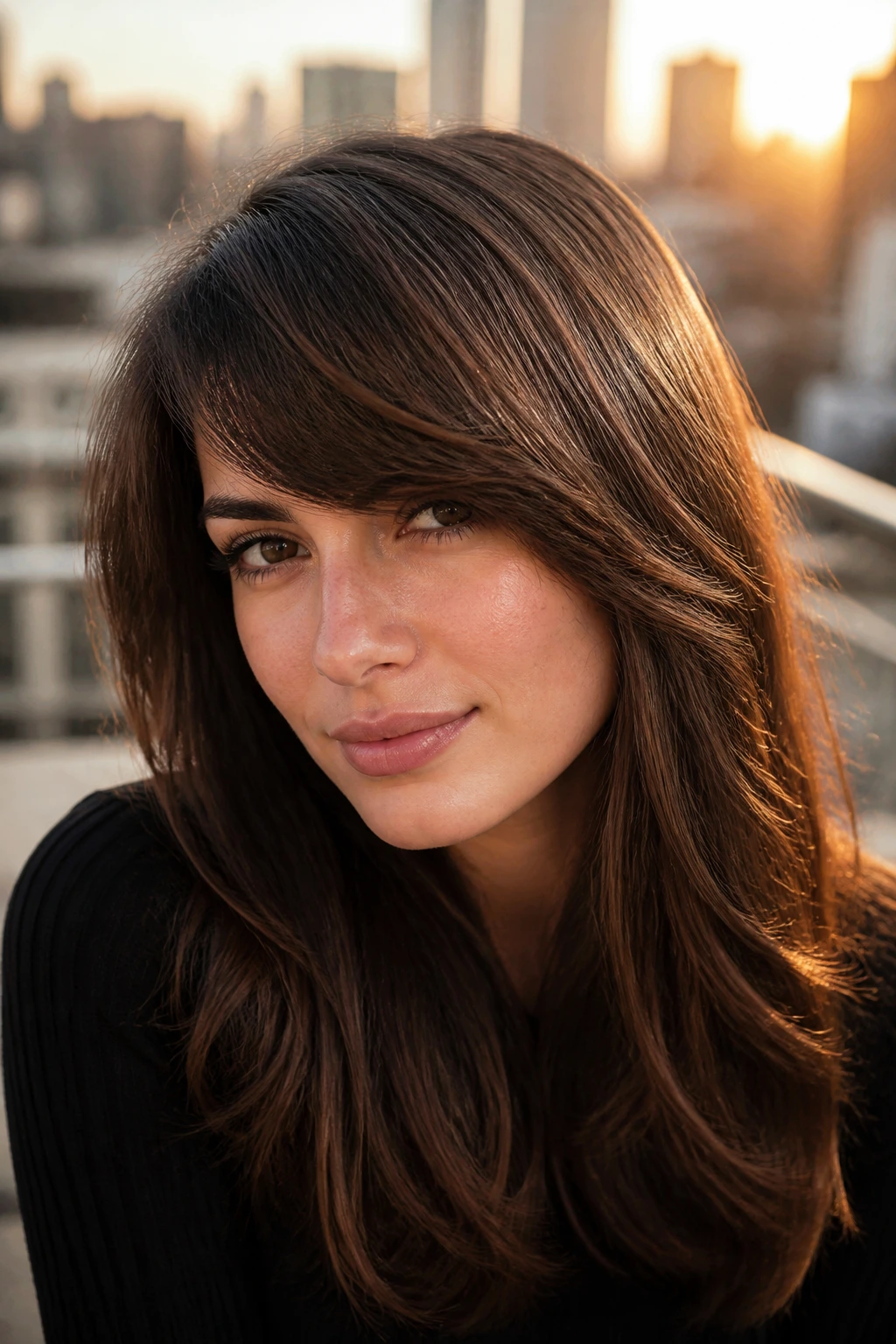
Walnut brown is deep, earthy, and a little more dimensional than plain chocolate. Add a bronze veil over the top layers and the hair starts to shimmer in motion. Side-swept bangs benefit from this because the swing of the fringe catches the bronze before the rest of the head does.
This is a good color for anyone who wants a polished brunette with some shine but not a visible highlight pattern. Think of the bronze as a surface effect rather than a stripe. It should sit lightly over the mids and front pieces, then fade back into walnut at the root.
Ask for this if…
- You want warmth without obvious copper.
- Your hair is thick enough to hold layered tone.
- You like soft shine instead of contrast.
Bronze can go orange if it is too bright, so keep it muted. That muted quality is what makes the color look grown-up rather than flashy. It is one of the easiest ways to make side-swept bangs look intentional in photos and in person.
11. Iced Cocoa Babylights
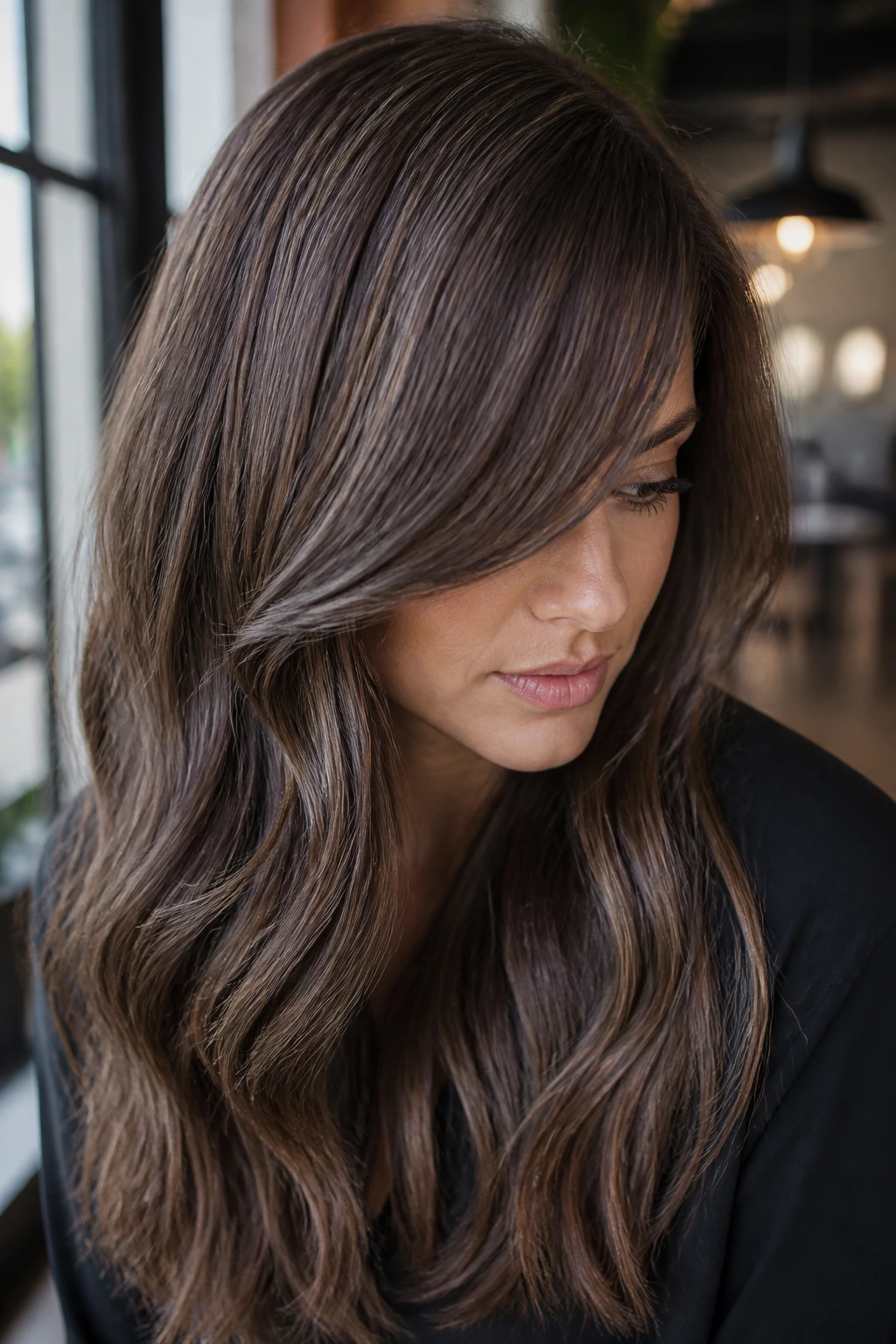
Iced cocoa is for brunettes who want cool brightness without any brass. The babylights are so fine that they almost blur into the base, which is exactly why they work so well with a side-swept fringe. The bang gets texture, not stripes.
The look depends on restraint. A few ultra-fine lighter strands around the front pieces are enough. If the highlights get too wide, the whole front starts to look busy. Keep the ends softly icy and the roots deep cocoa, and the contrast stays elegant.
This shade is especially good if your hair tends to feel heavy around the face. Fine babylights break up that weight. On a smooth blowout, the effect looks neat and tailored. On a wave, it feels more lived-in. Either way, the fringe stays visible.
12. Auburn Gloss on Deep Brunette
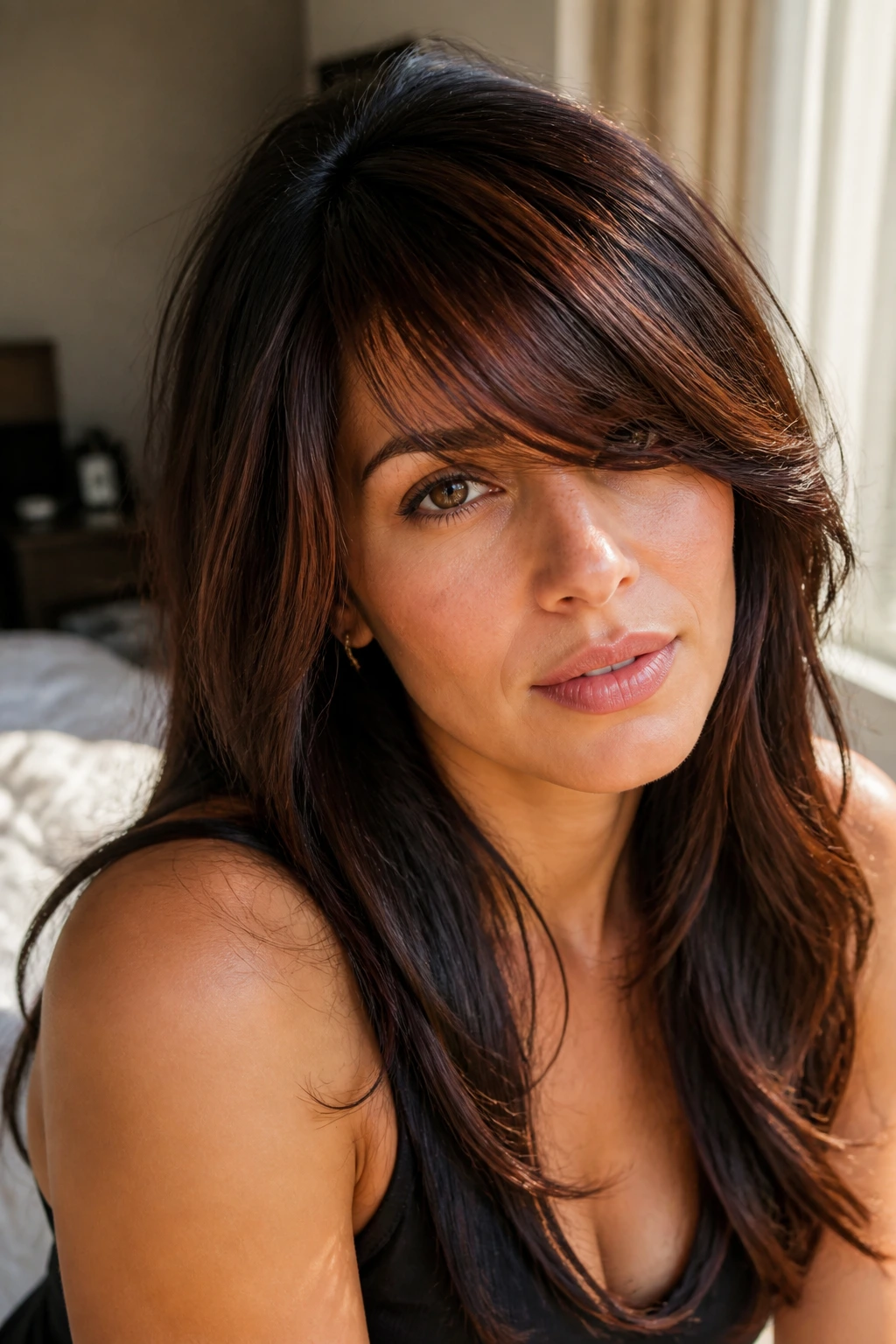
Auburn gloss on deep brunette is one of my favorite low-commitment changes because it gives depth more than lift. The auburn note sits under the brown and warms the whole head without making it look red from every angle. With side-swept bangs, the front gets that glossy warmth right where the light lands first.
This is a strong choice if you want to try red tones but do not want a bright copper job. It works best when the base stays dark and the auburn is layered as a gloss or demi-permanent tone. That keeps the finish smooth and helps the shade fade in a predictable way.
The bang area can be left slightly richer so it doesn’t look too light against the forehead. A little depth at the root and a warm glaze through the sweep is usually enough. Simple. Effective.
13. Mahogany Satin Shine
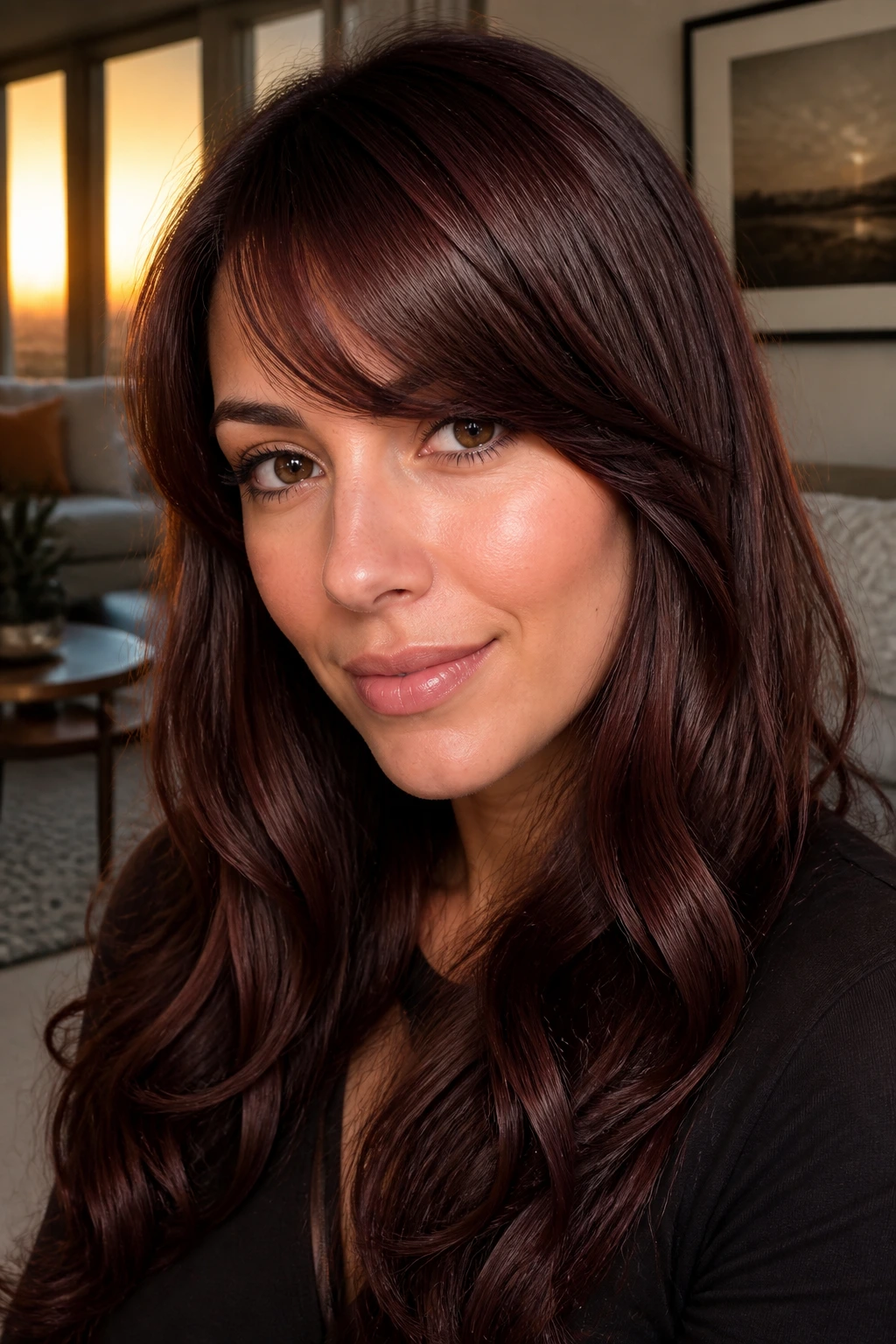
Mahogany has a red-brown depth that can look expensive when it’s done right. On side-swept bangs, it creates a satin effect: enough shine to catch the eye, enough darkness to keep the look grounded. The color sits between brunette and wine, which gives it range.
It suits straight or softly bent hair best because the surface shine matters. If the hair is dull or over-toned, mahogany can flatten out. A gloss finish helps a lot here. The front pieces should be the glossiest part of the whole head, especially where the bang sweeps over the brow.
This is a great pick if you like a refined, slightly dramatic brunette. It works with gold jewelry, cream clothes, deep green, and black. It also behaves better than a louder red when it grows out, which is never a bad thing.
14. Dark Bronde with Beige Lifting
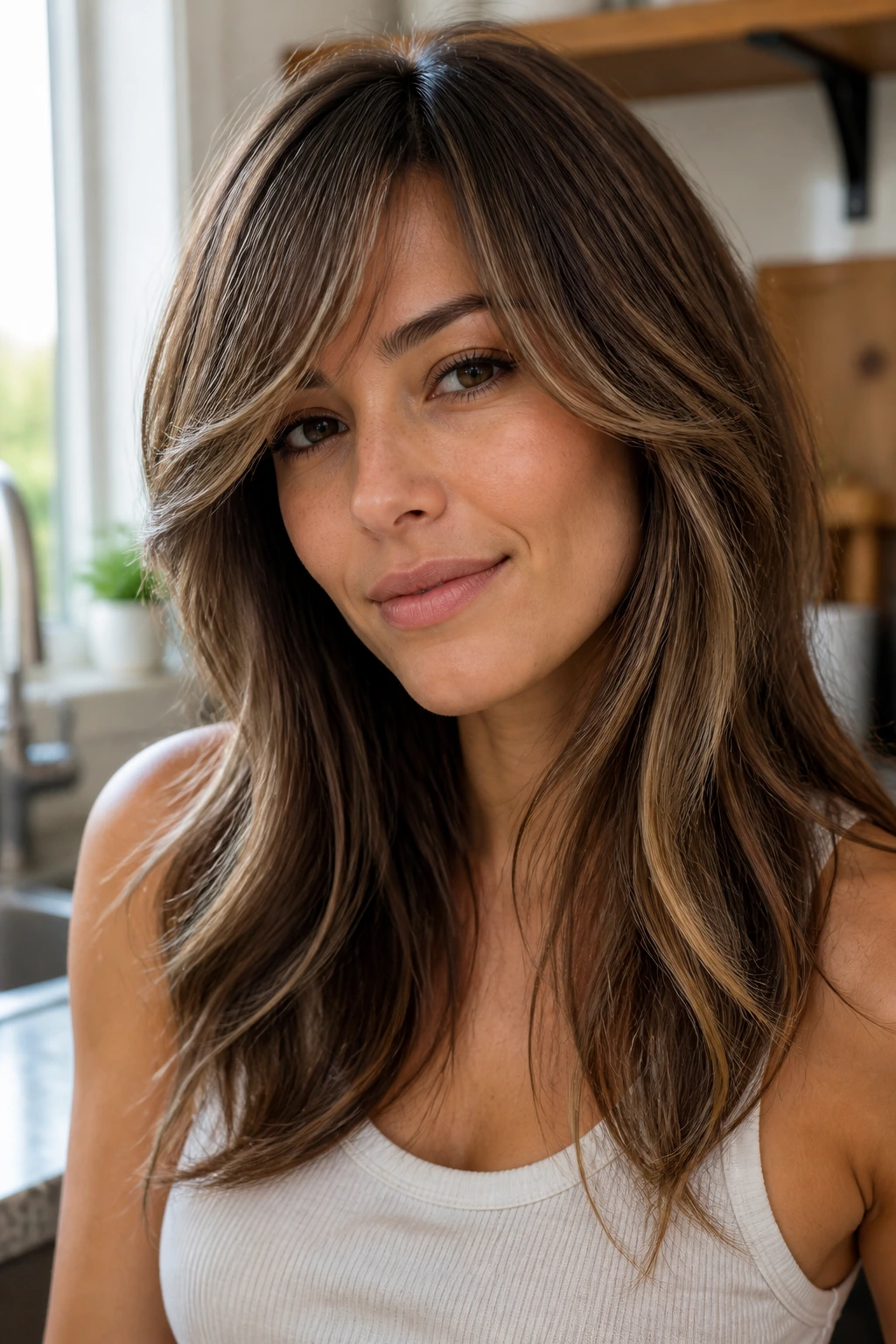
Dark bronde is the move for someone who wants to stay brunette but doesn’t want the front to feel heavy. The beige lift around the side-swept bangs gives the face brightness, while the darker underlayers keep the hair from drifting too blond. It’s brunette, but with air in it.
The point of this color is balance. The beige should be fine and soft, not chunky. The root can stay deep brown, and the lighter pieces can start just below the part and sweep across the face. That makes the bangs look lighter without turning them into a harsh focal line.
If you have a lot of hair, this is a good way to stop the front from swallowing your face. If your hair is finer, keep the lift controlled so the color doesn’t look see-through. Either way, it’s a useful middle ground.
15. Toffee Ribbon Highlights
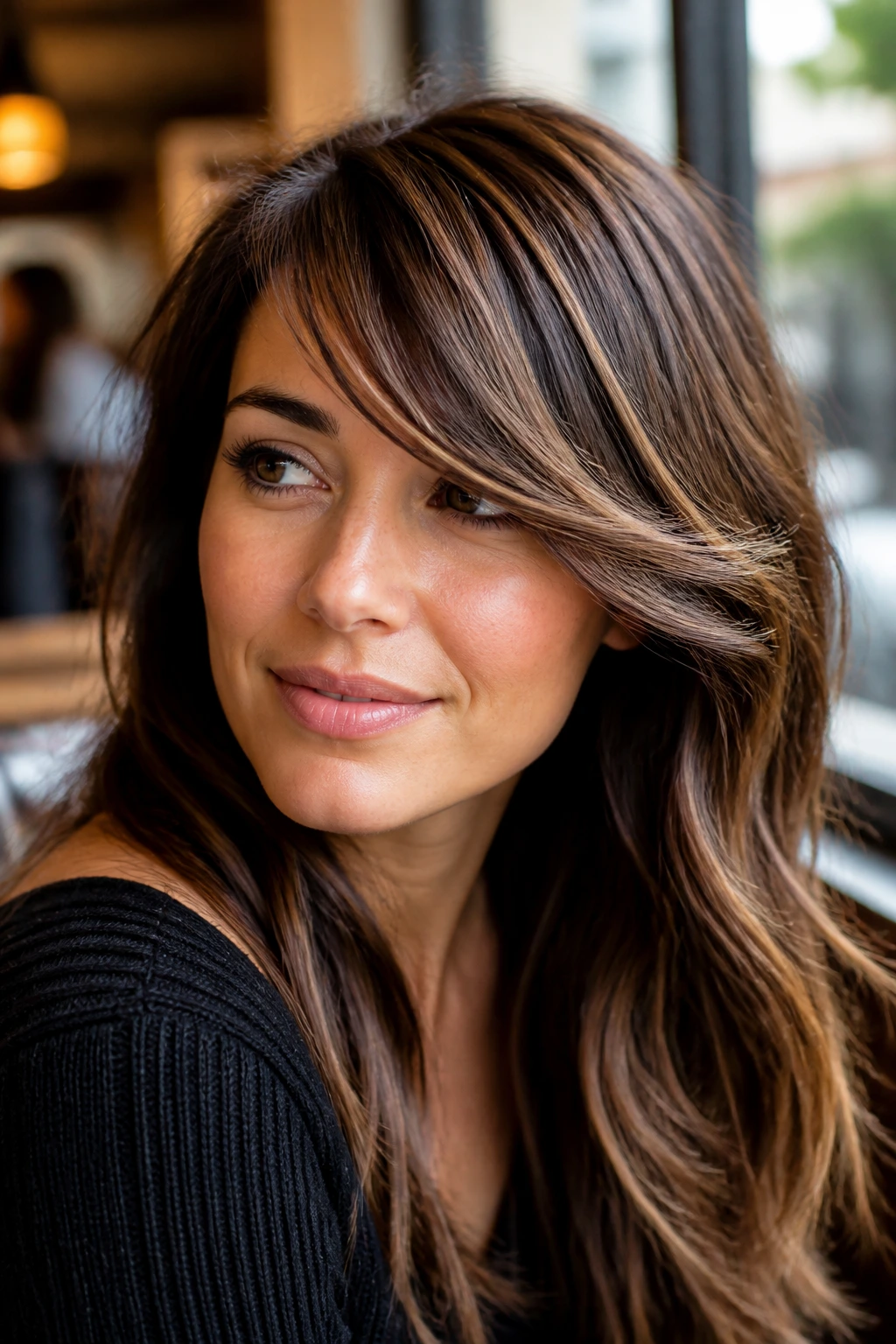
Toffee is warm, sweet in the best sense, and very easy to wear. Ribbon highlights give side-swept bangs a clean path of light, which is useful when the fringe overlaps the rest of the haircut. Instead of one thick strip, you get soft bands of brightness that move when the hair moves.
This is a smart choice for waves and curls because the ribbons can wrap around the bends. On pin-straight hair, they need more precise placement or they can feel flat. Around the face, keep the toffee a half-step lighter than the mids so the bang still shows.
What makes it work
- The warmth lifts brunette hair without making it brassy right away.
- Ribbon placement creates movement instead of blocks.
- It grows out softer than chunky highlights.
Toffee is also one of those shades that looks more expensive when the cut is styled with a little bend. A smooth round-brush blowout and a touch of serum on the ends do a lot for it.
16. Honeyed Espresso
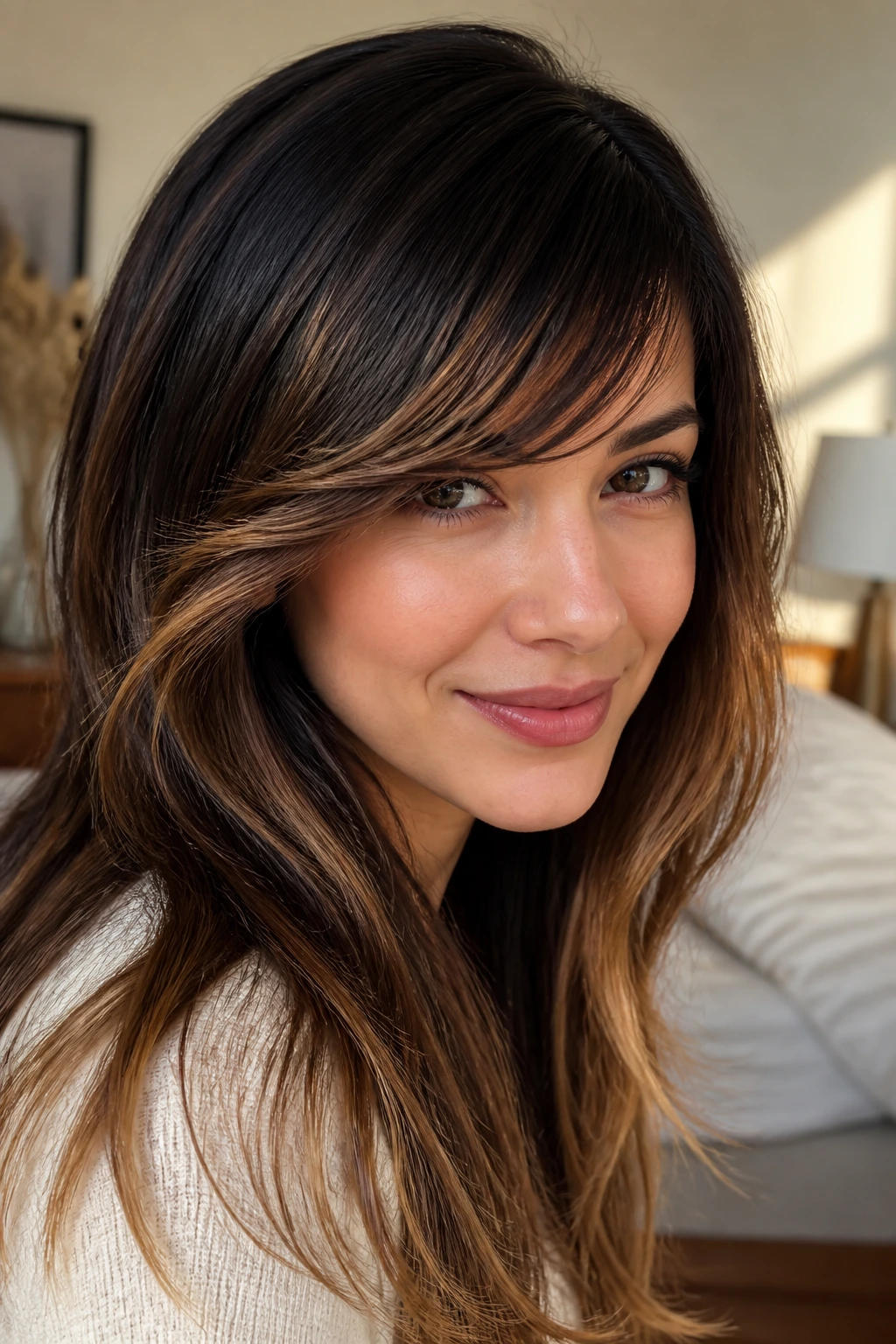
Honeyed espresso is a dark, shiny brunette with just enough golden warmth to stop it from feeling severe. The honey belongs on the front and lower mids, not scattered everywhere. That’s what makes the side-swept bangs look bright without losing the deep base that keeps the cut grounded.
This color is useful if you want contrast but do not want a full highlight map. The espresso base gives you density, and the honey acts like a soft spotlight around the cheek. If the honey is too high or too wide, the look gets loud fast. Keep it narrow. Let the brown do most of the talking.
I like this shade on medium to thick hair because the depth is part of the appeal. The bangs get enough light to stand out, and the rest of the hair stays rich. That balance is hard to beat.
17. Blue-Black Brunette
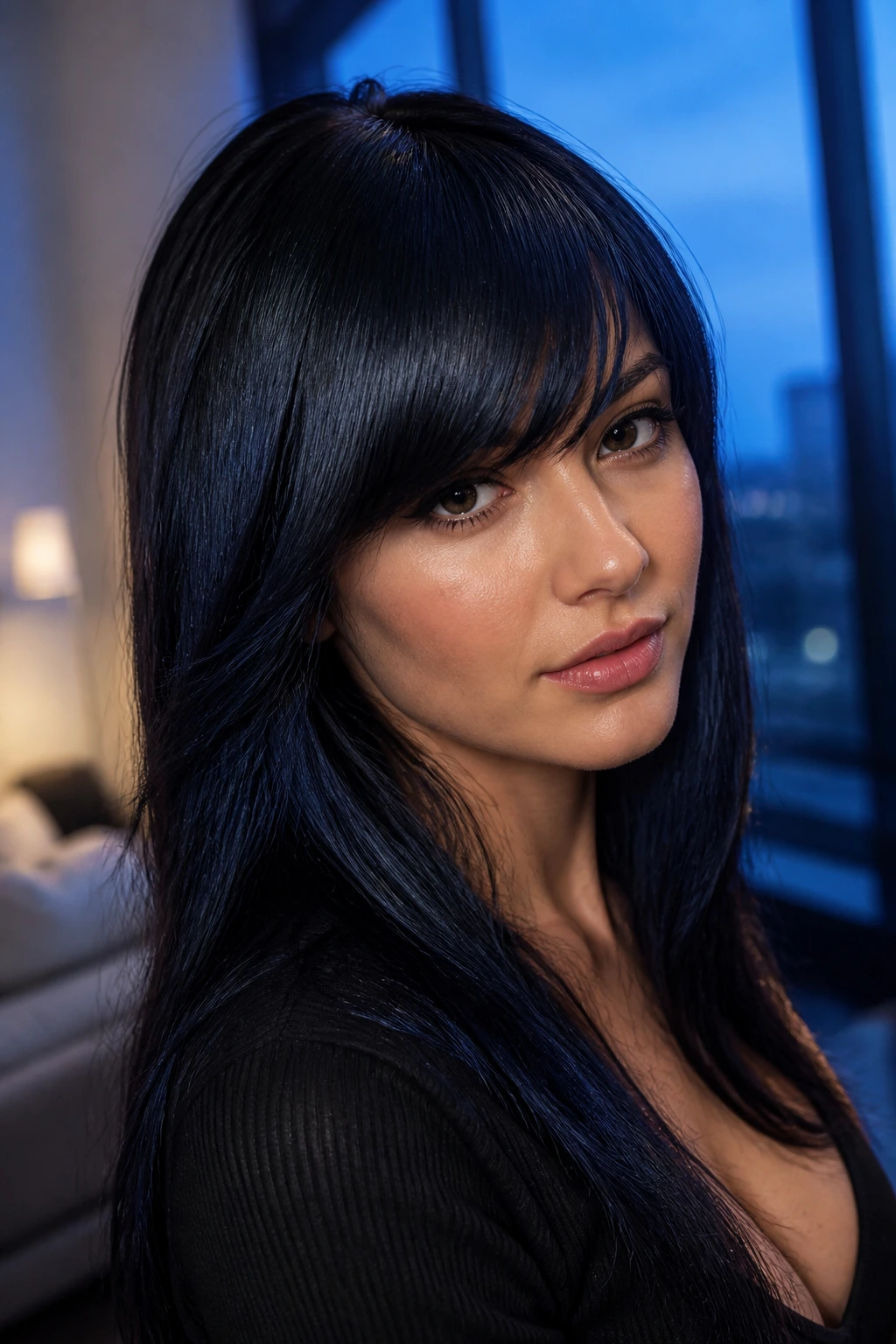
Blue-black brunette is dramatic without being fussy. It looks almost ink-dark indoors, then throws a cool blue sheen when light hits it. On side-swept bangs, that sheen gives the front a crisp edge, which can be gorgeous on strong cuts and sharp brows.
This is not a soft, airy shade. It has attitude. If you want the fringe to read as a deliberate shape rather than a face-framing wisp, blue-black delivers. Keep the color glossy and even; patchiness is the enemy here because any unevenness shows up faster in dark, reflective shades.
It works especially well on hair that already sits naturally dark. If your base is lighter, you may need pre-color prep to get that true blue-black depth. And yes, it can stain towels and pillowcases early on, so good aftercare matters.
18. Cinnamon Sugar Highlights
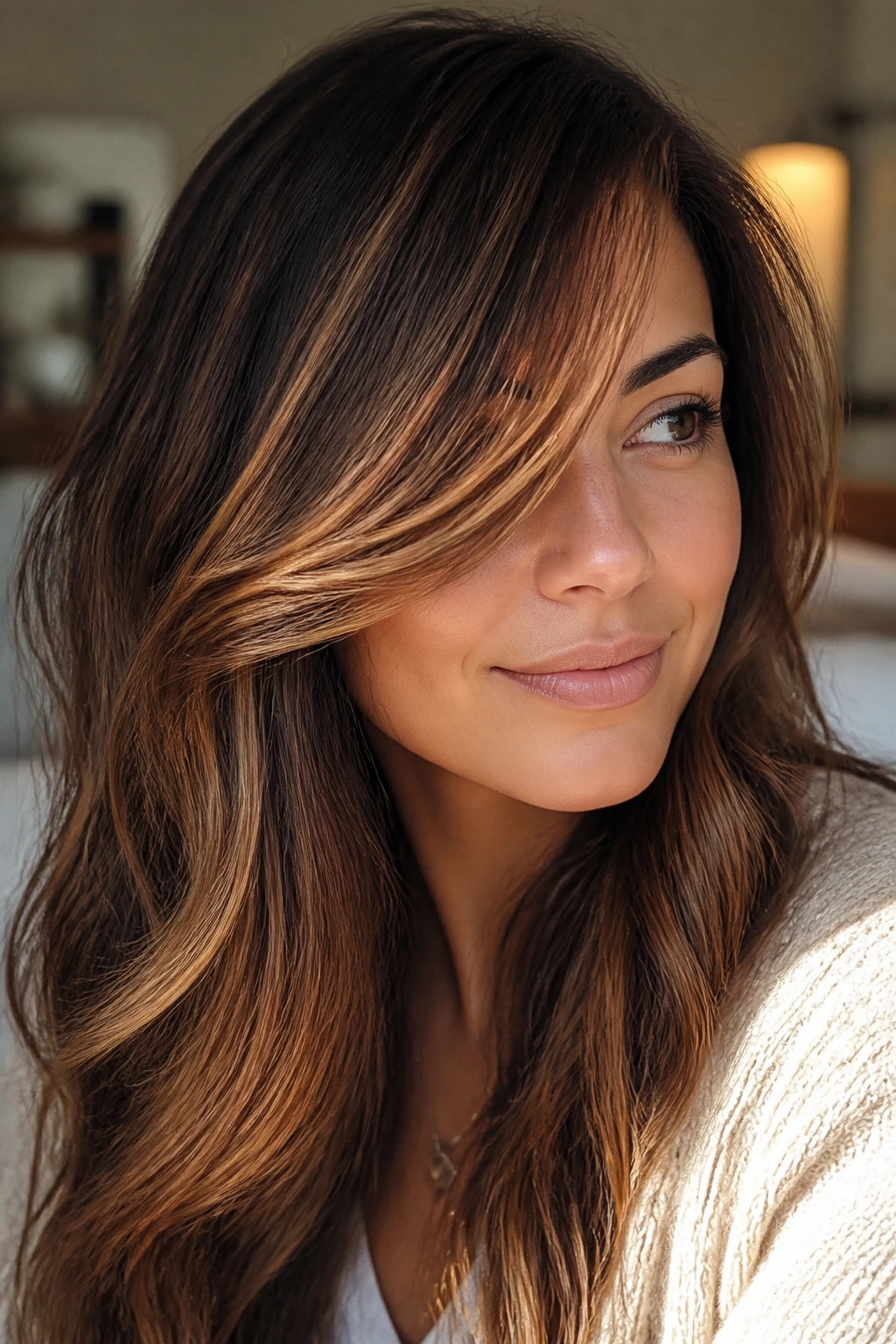
Cinnamon sugar highlights bring in warmth and brightness without making the brunette base look busy. Think scattered, fine pieces in a cinnamon tone with a softer sugar-beige note near the face. Side-swept bangs love that kind of placement because the color follows the line of the sweep.
The nice thing about this shade is that it doesn’t demand perfect symmetry. It can be a little imperfect and still look natural. The front pieces can hold the brightest strands, while the rest of the hair stays more muted. That makes the haircut feel light and airy.
This is a good choice for someone who wants dimension but hates a striped result. The highlights should look woven in, not dropped on top. If your natural brunette is already warm, keep the cinnamon restrained so it doesn’t drift orange.
19. Rose Brown
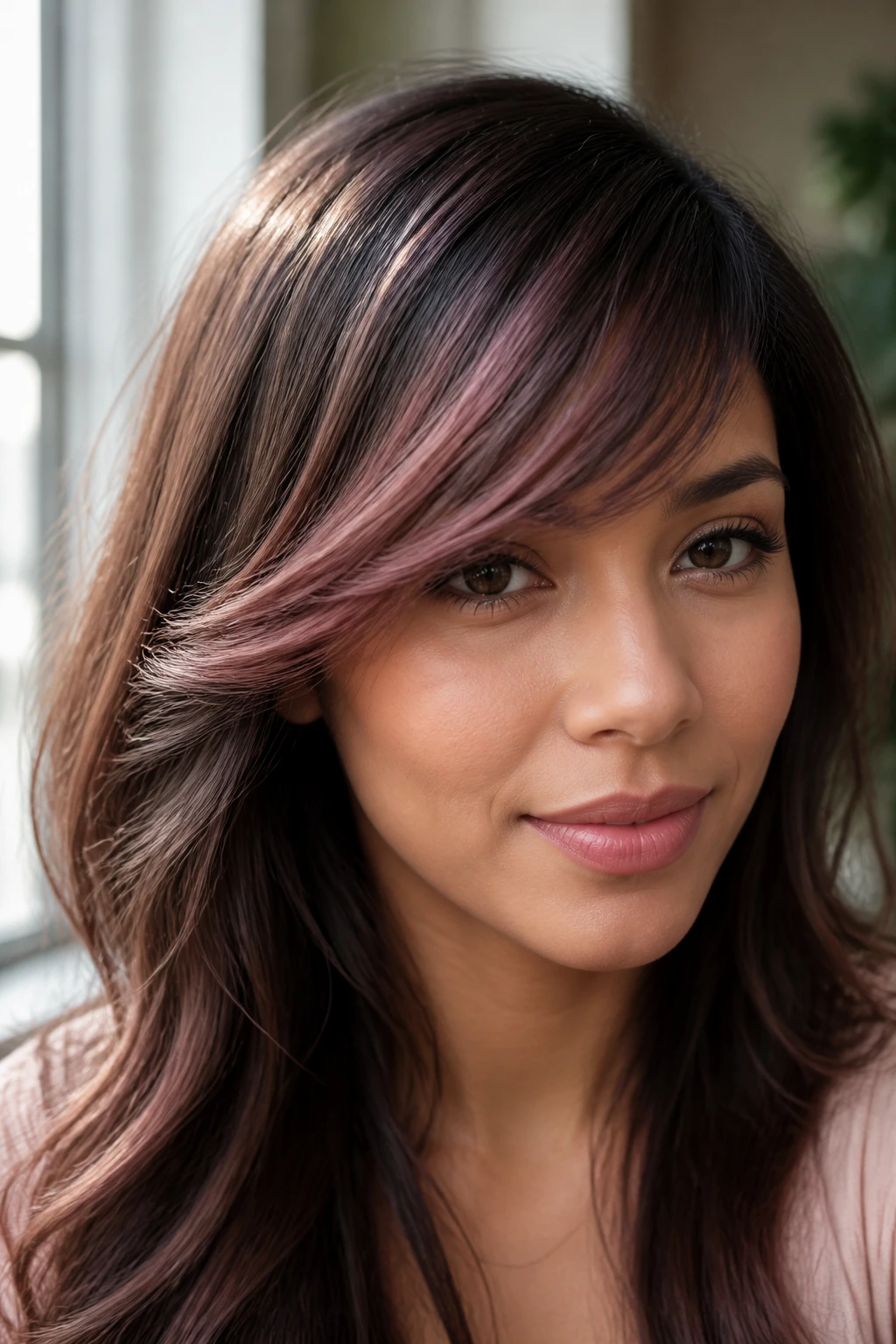
Rose brown is a brown base with a dusty pink-brown glaze that reads soft, not candy-colored. On side-swept bangs, it gives the fringe a subtle tint that changes under light. You catch it near the temple, then it disappears back into brunette at the root.
This is one of the better fashion-adjacent shades for brunettes because it keeps the structure of the brown intact. You’re not bleaching the life out of the hair just to get pink. The rose tone should sit as an overlay, not a full-on pastel.
It works best on smoother styles where the shine can carry the color. If the hair is heavily textured, the rose note can look more muted, which is fine if you want something quieter. Ask for a gloss rather than a permanent red-violet unless you want more commitment.
20. Sandy Beige Brunette
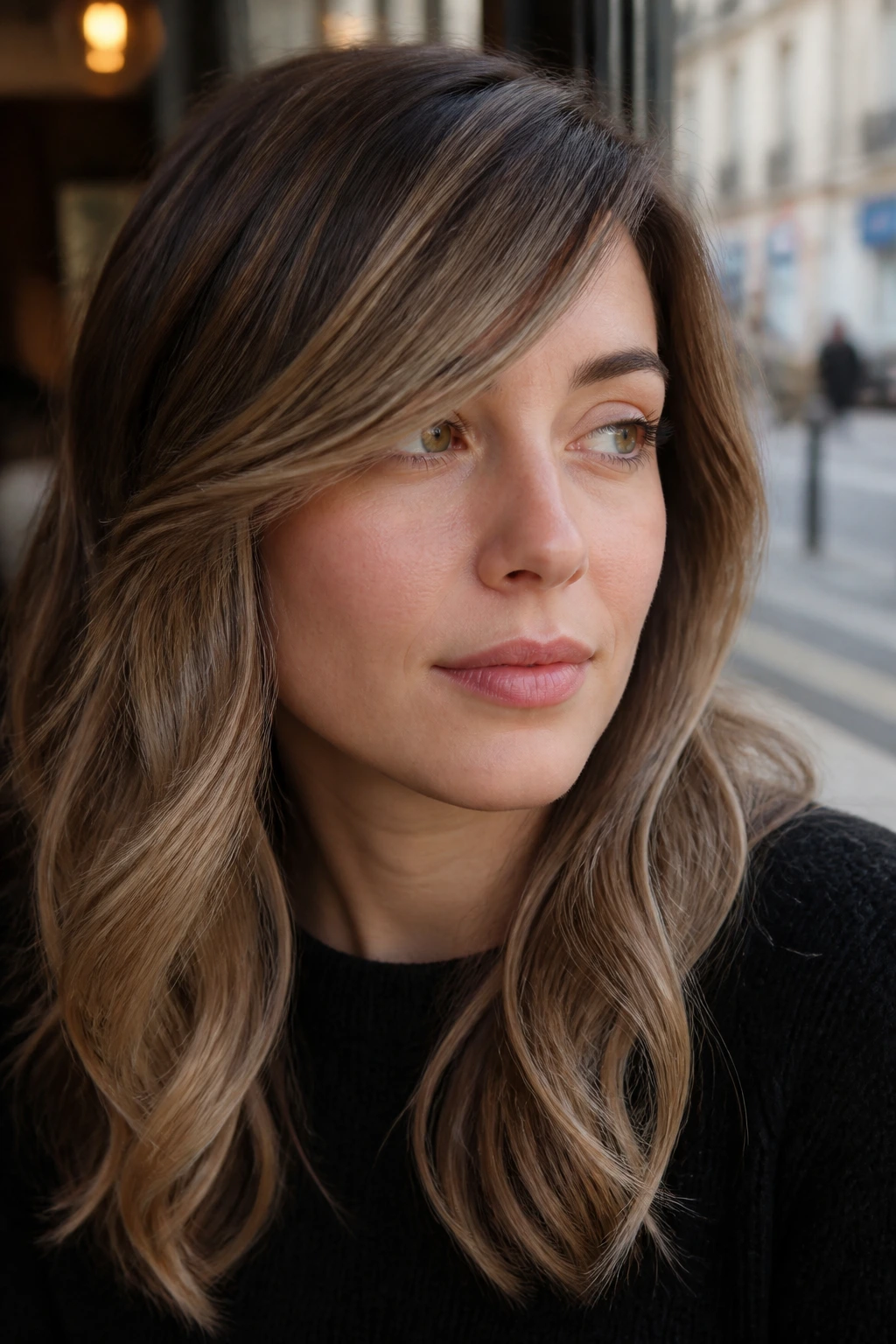
Sandy beige brunette sits in a clean, soft zone that keeps the color light near the face without pushing it into gold. Side-swept bangs pick it up well because beige tones show movement nicely on a diagonal line. The effect is fresh, soft, and easy on the eyes.
This is a solid choice for brunettes who want brightness but hate warmth. Beige can go flat if it’s too ashy, so the color needs a touch of warmth to keep it alive. The best version still looks brown, just lighter and smoother around the fringe and face frame.
If your haircut has layers around the cheek, beige can make those pieces separate in a nice way. The bang no longer disappears into the rest of the hair. It becomes part of the shape again, which is the whole game here.
21. Copper Penny Ends
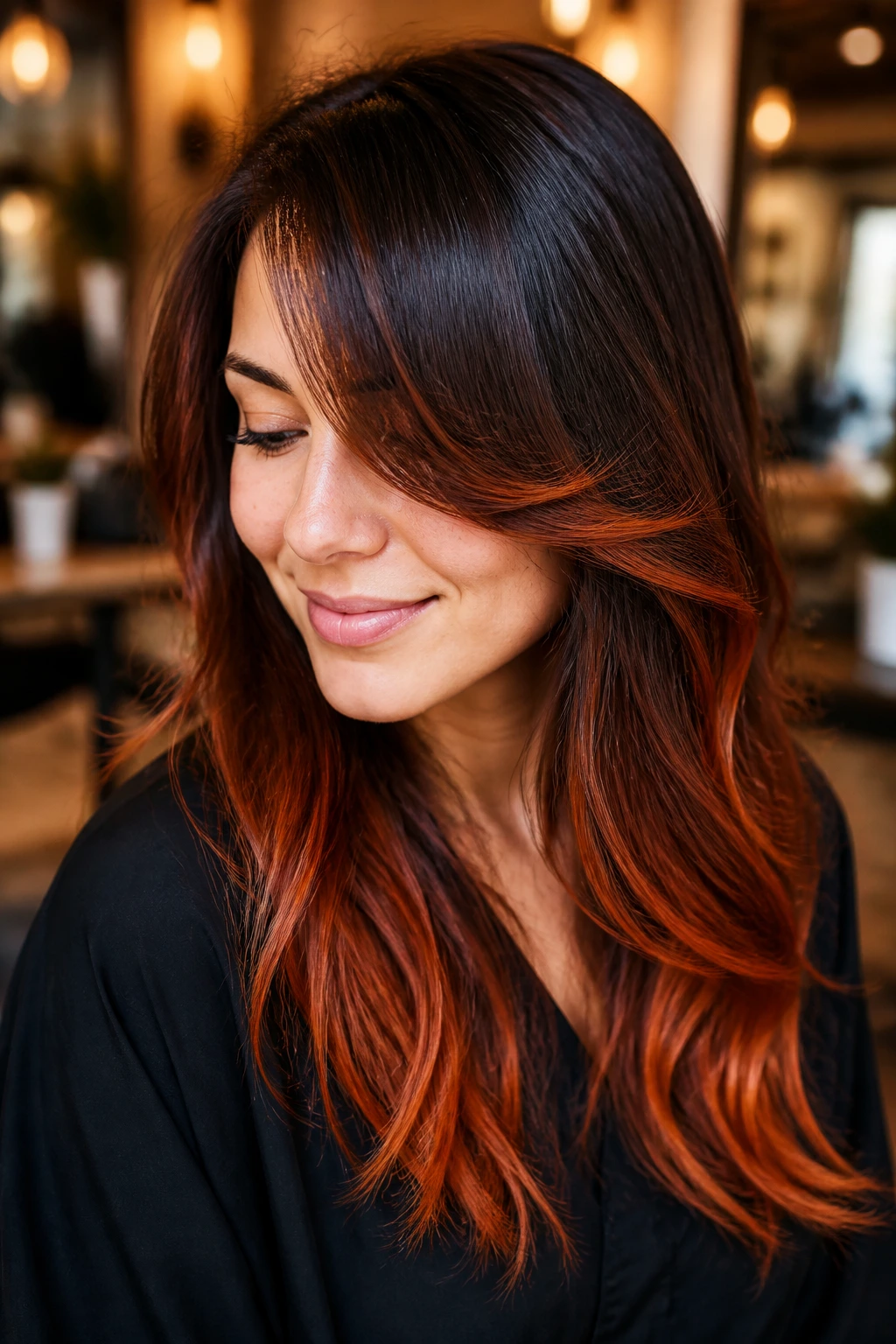
Copper penny ends are a bolder choice, and they work best when the color stays concentrated toward the ends and the sweep. Brunette roots keep the style grounded, while the copper adds a flash of warmth that shows when the hair moves. Side-swept bangs can carry a small copper accent near the tip so the front ties in with the rest.
This is a nice option if you want color that feels alive without full-head brightness. It works well on long layers because the copper has room to show. Keep the root dark and the copper rich, not neon. Penny, not traffic cone.
A little gloss goes a long way here. Copper is one of those shades that can fade fast if you wash too often with harsh shampoo. Use a color-safe cleanser and keep heat controlled, or the shine will vanish before the shape does.
22. Smoky Amber Balayage
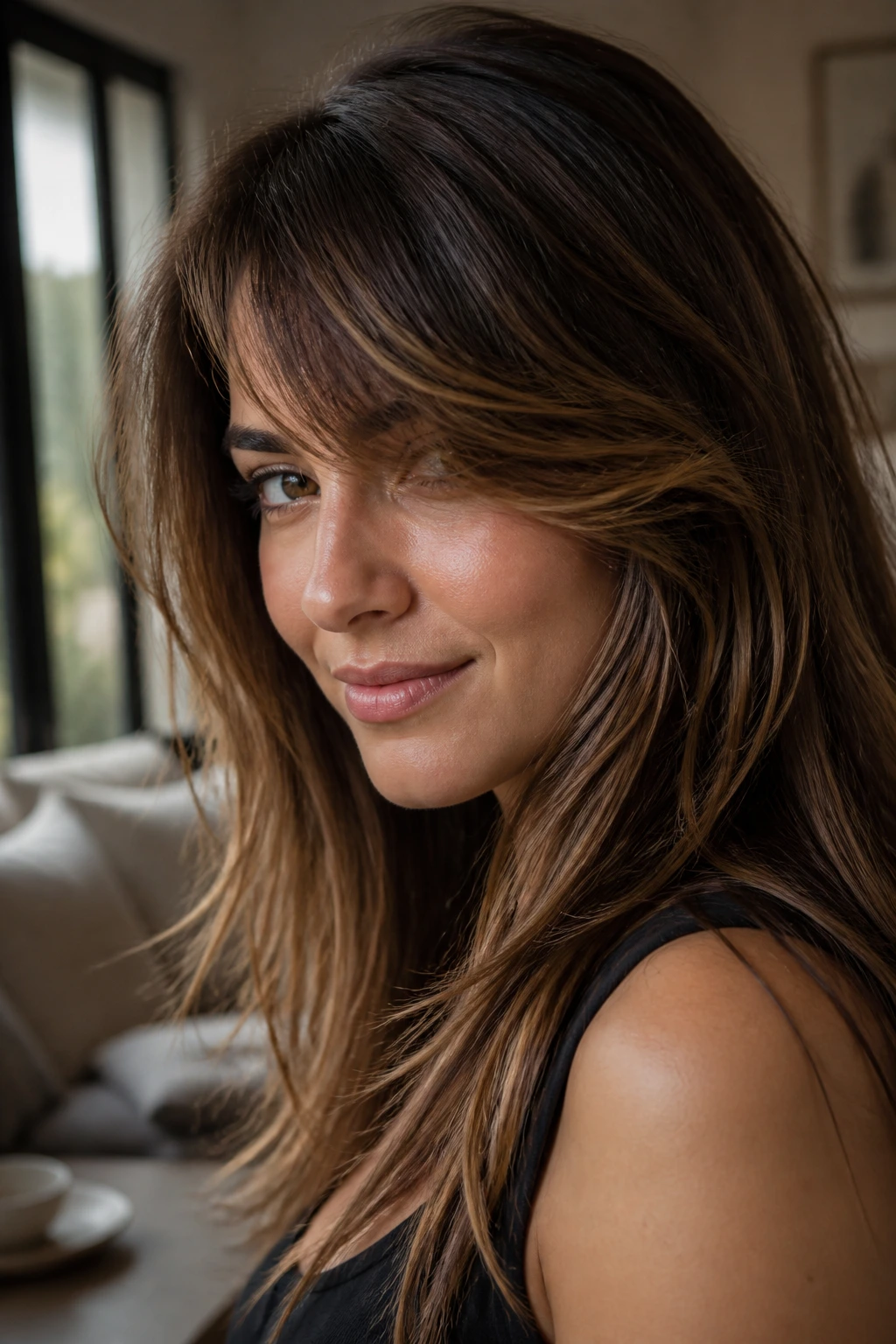
Smoky amber is what happens when warmth gets edited down instead of turned up. The amber tone sits inside a brown base, but it is softened with smoke so the result never goes orange. Around side-swept bangs, that smoky edge gives you a face frame with depth.
This color is especially good for thick hair because the balayage breaks up the bulk. The front can stay a little brighter, then the mids fall back into a softer amber-brown blend. If everything is made the same shade, the style loses its shape. Keep the variation.
It’s also useful for people who want warmth but have been burned by brass. The smoky note keeps the amber under control. One gloss refresh can usually bring it back if the color starts looking dull.
23. Maple Brown Melt
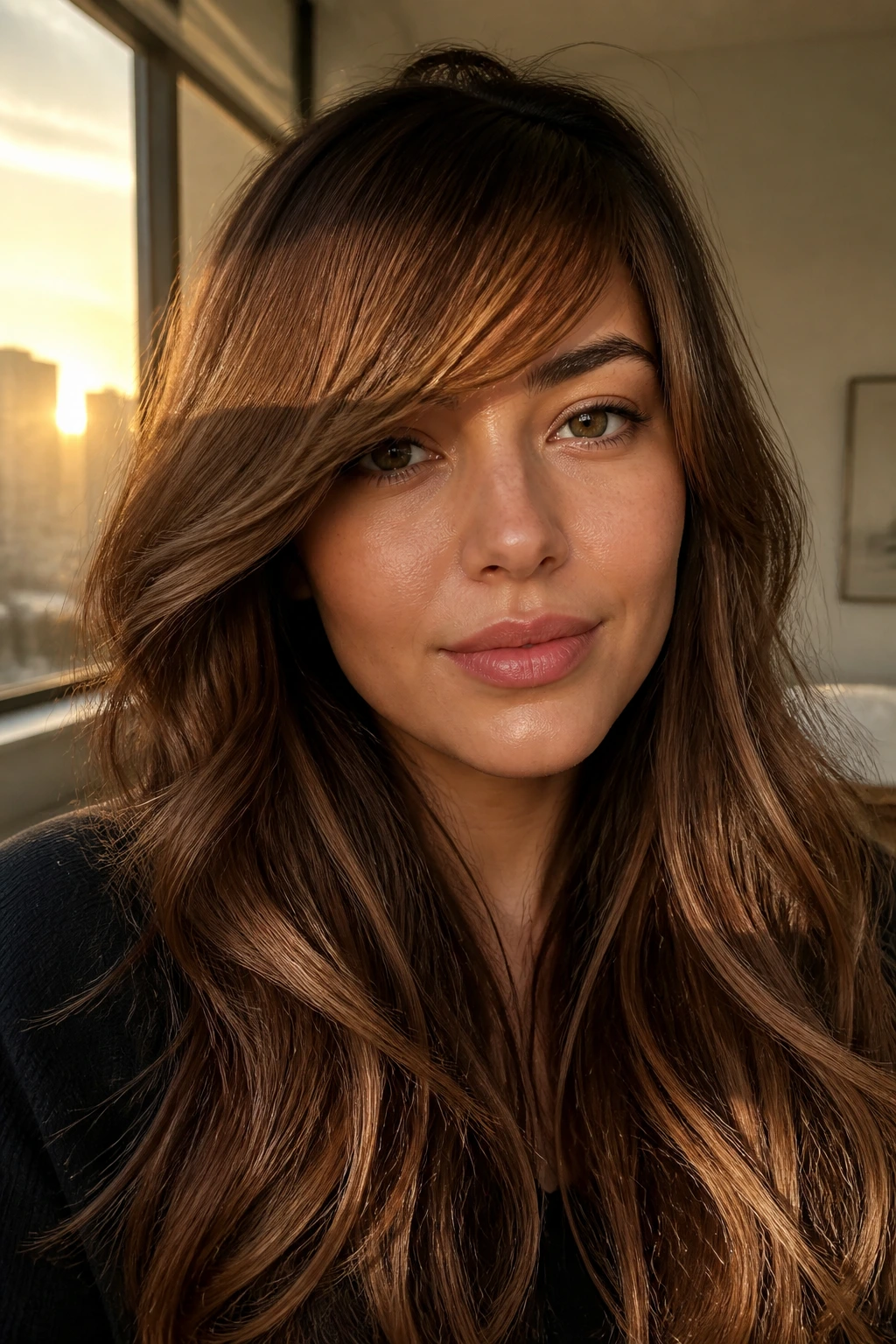
Maple brown is a warm brunette with syrupy depth and a smooth melt from root to end. The side-swept bangs get a little extra glow at the front, but the overall effect stays brown and wearable. There’s a reason this color keeps coming back: it flatters without fighting the haircut.
The melt matters here. If the transition from root to mids is too abrupt, the look loses that easy flow. Keep the base deeper and let the maple warmth appear gradually. On movement, it looks especially good because the front sweep catches the lighter strands and sends them back into the darker lengths.
This is one of those shades that works for a lot of wardrobes. Denim, black, cream, olive, camel—it all goes with maple brown. That makes it practical, which is not the same thing as boring.
24. Latte Brunette
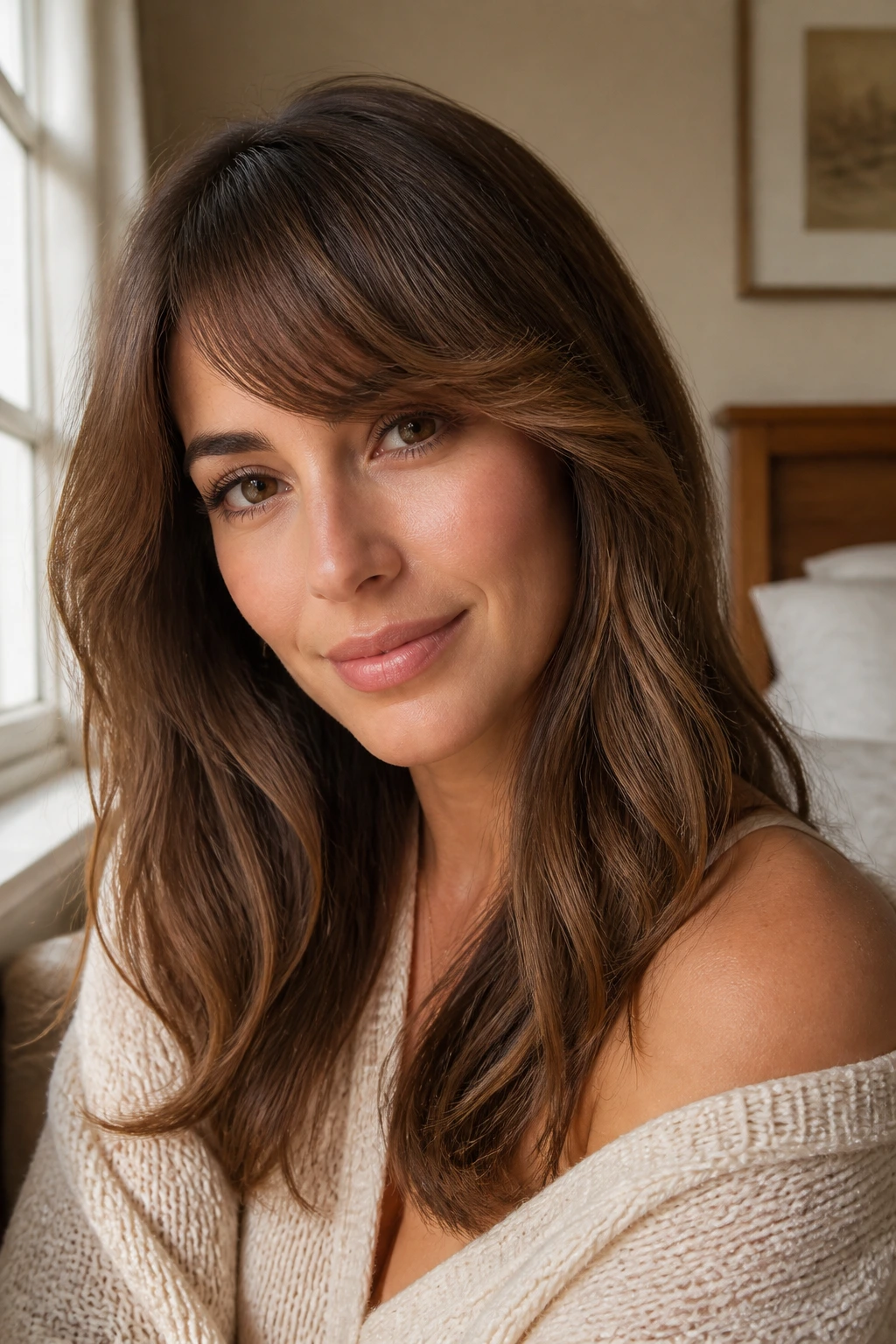
Latte brunette is a creamy, neutral-warm take on brown hair that softens the face without making the fringe too bright. It’s lighter than espresso, calmer than gold, and easier to wear than a heavy copper job. The side-swept bangs pick up just enough latte tone to look airy.
This shade is strong on cuts that already have nice movement. If the hair is very blunt or heavy, the color can feel too soft for the shape. Add a few face-framing pieces and the cut wakes up fast. The brunette base should still stay visible in the back and underneath.
Latte is a dependable option when you want brightness but don’t want your color to announce itself in every room. It reads polished in a quiet way. Not bland. Just controlled.
25. Tiger Eye Caramel
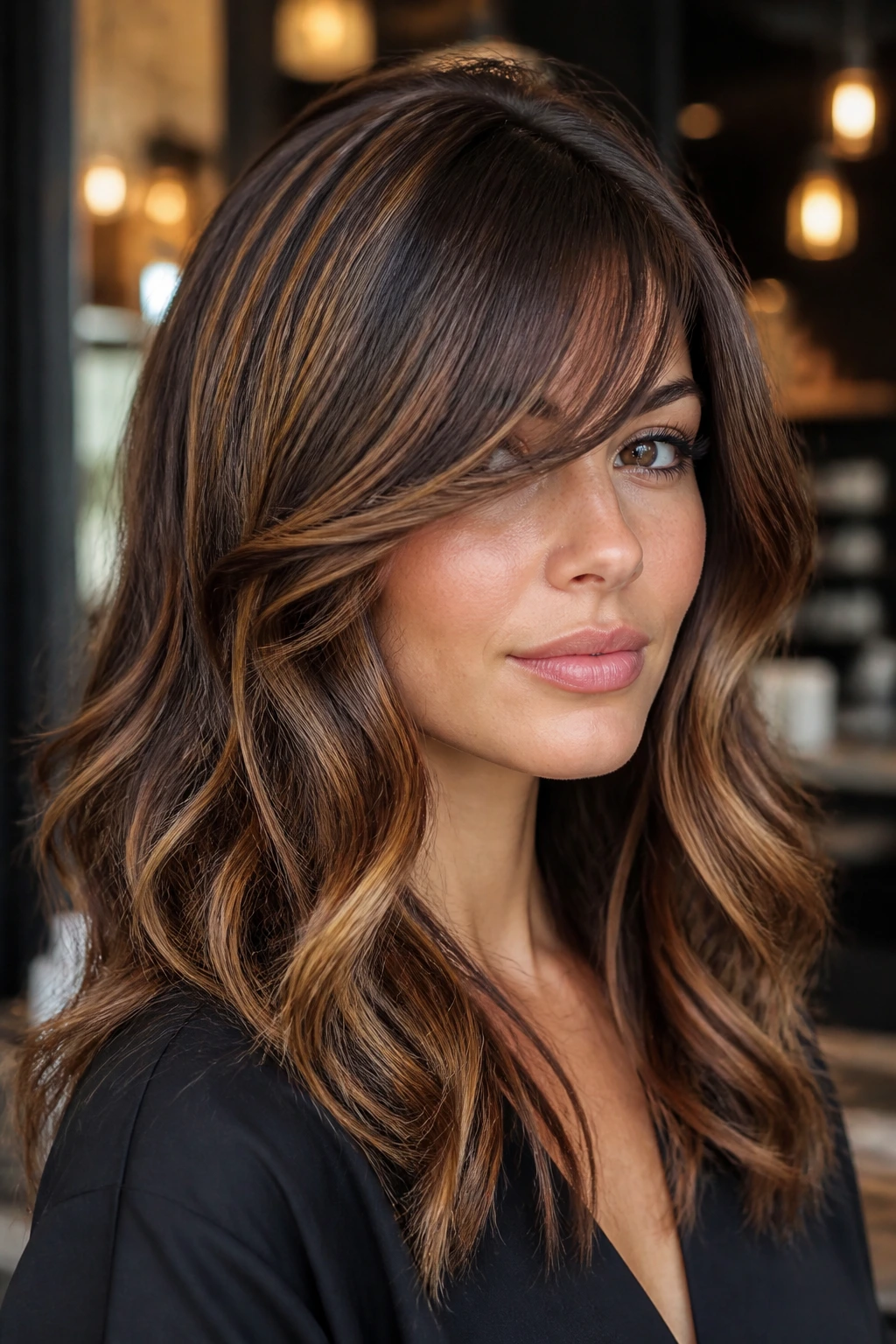
Tiger eye caramel is high-contrast in a good way. It uses golden brown, caramel, and deep brunette bands to create a rich striped effect that can look very striking on longer hair. Side-swept bangs are the key detail here because they keep the front from feeling too heavy under all that dimension.
The placement has to be precise. If the caramel is dropped too wide across the bang, the style can look busy. Keep the brightest pieces near the curve of the sweep and let them taper into the lengths. That gives the eye a path to follow.
This is a strong color for someone who likes visible dimension and doesn’t mind a little upkeep. Tiger eye is not subtle. It’s a look. But on the right brunette base, it has depth and shine that cheaper-looking caramel jobs never quite manage.
26. Plum Brunette
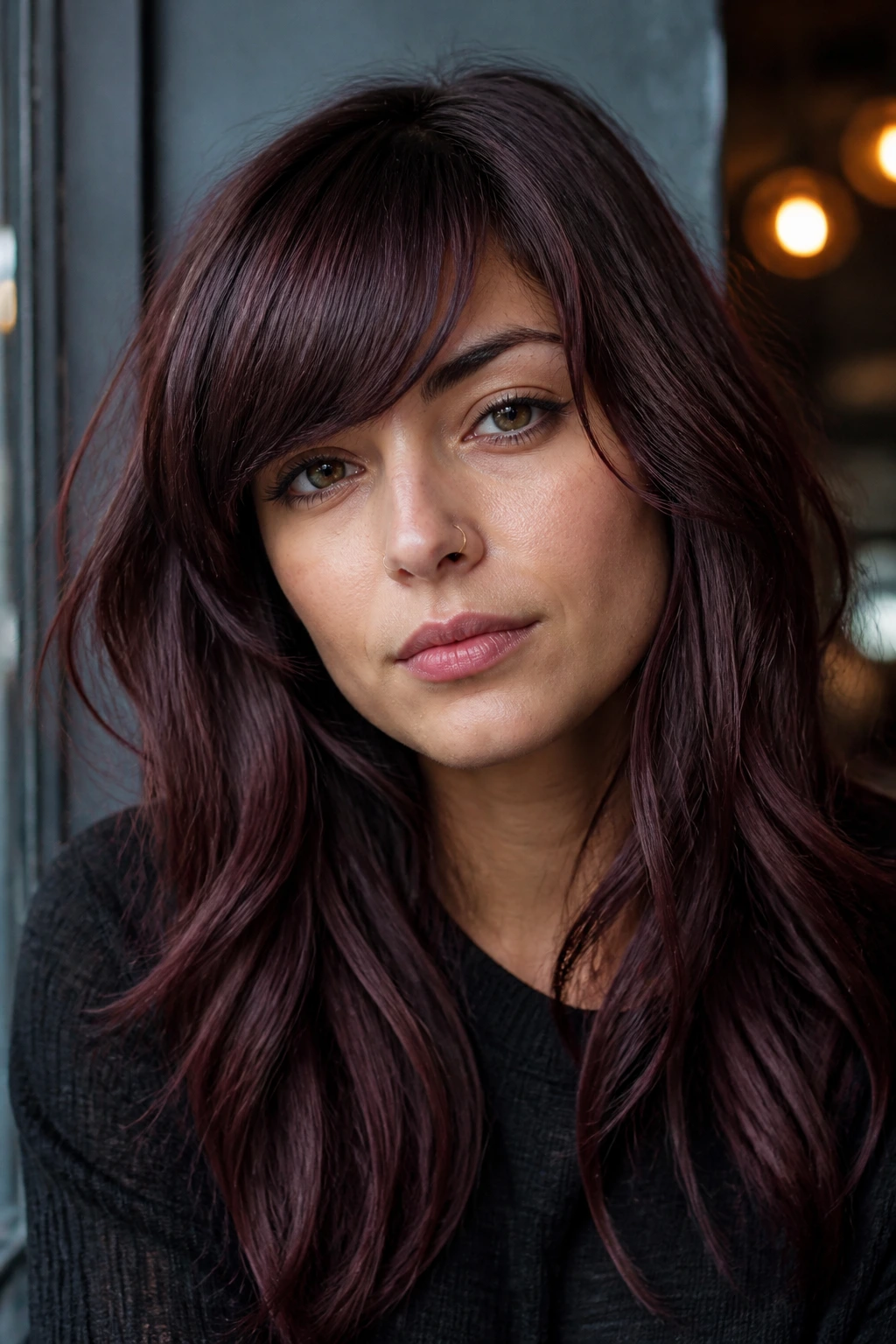
Plum brunette is for anyone who wants cool depth with a hint of edge. The plum sits under the brown and gives the hair a wine-dark cast when light catches it. Side-swept bangs are perfect for this because the fringe can show that color shift without needing a full head of fantasy tone.
This shade works best when the plum is deep rather than bright. You want brown first, plum second. That balance keeps it wearable and keeps the finish from turning purple in a loud way. A gloss or demi color usually gives the cleanest result.
It is especially flattering if you wear darker clothes or cool metals, but it can look good with warm makeup too because the brown base keeps it grounded. If your hair is porous at the front, the plum may grab richer there, which can be a nice bonus.
27. Bronze Smoke
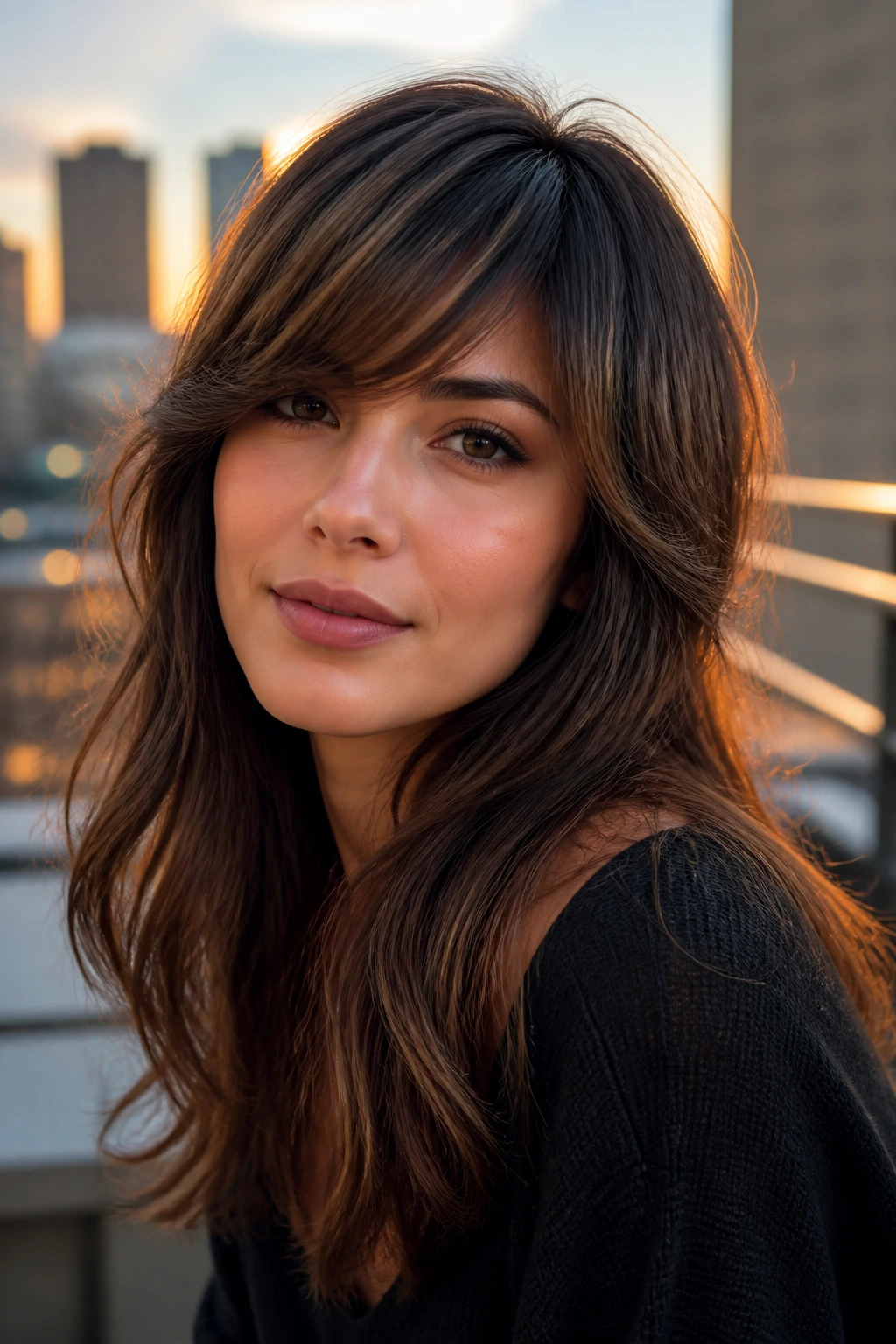
Bronze smoke gives brunette hair a metallic feel without turning it reflective in a harsh way. The bronze tone warms the mids, while the smoky base keeps everything calm. On side-swept bangs, that means the front gets shimmer, not glare.
This color is a good middle path for brunettes who want dimension but are tired of basic caramel. Bronze has more body than gold, and smoke keeps it from going too bright. The result is rich, a little moody, and easy to style with a loose bend.
If your skin tone likes warmth but not orange, this is worth a look. Ask for bronze that stays muted at the root and slightly brighter through the front sweep. That keeps the fringe visible without making it the only thing people notice.
28. Dimensional Mocha Melt
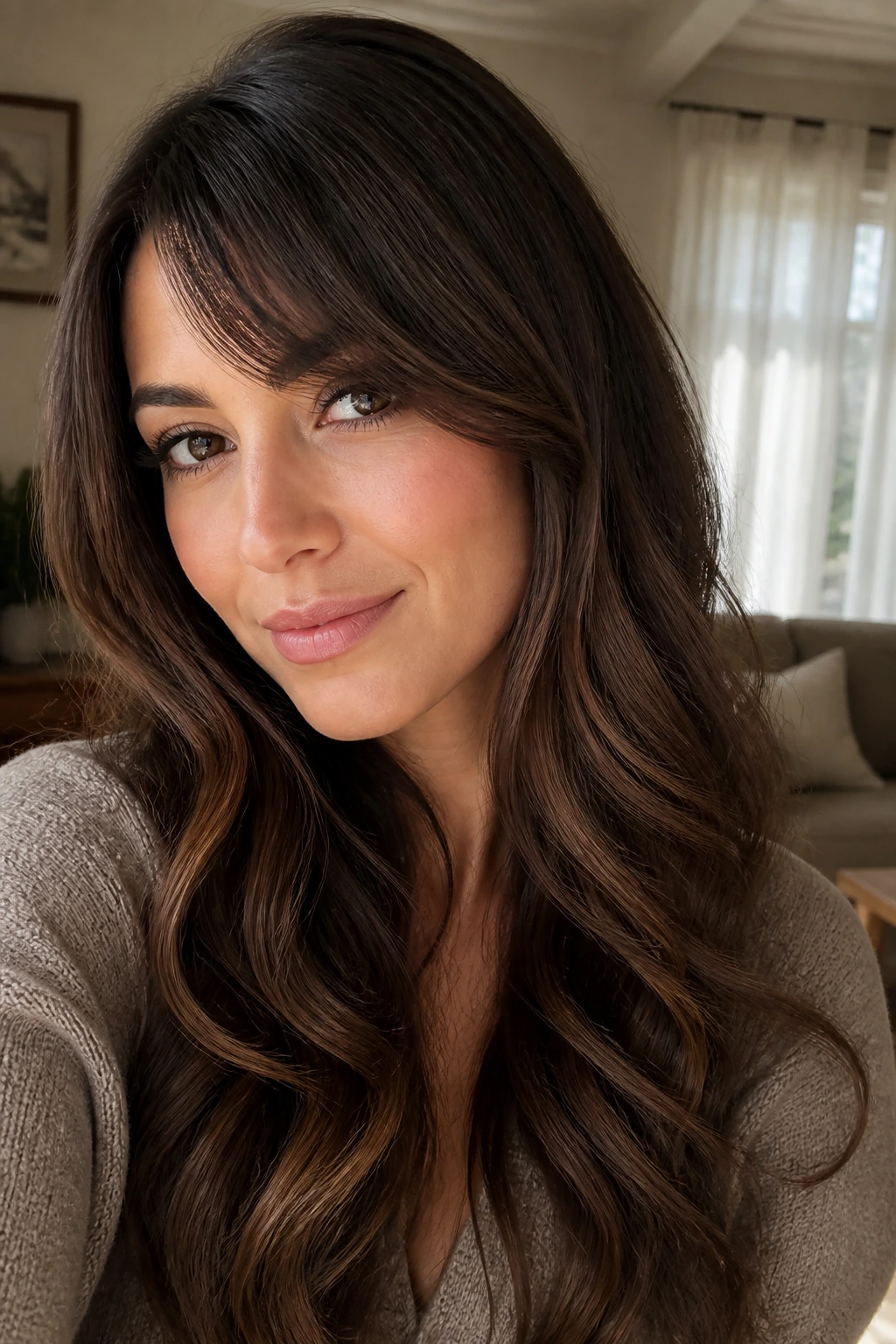
Dimensional mocha melt is the dependable workhorse of brunette color, but don’t mistake that for boring. It keeps the base dark mocha and threads in softer mocha and espresso tones so the hair has movement from root to tip. With side-swept bangs, it gives the front enough contrast to show shape without looking highlighted to death.
This works on almost any density because the depth and lightness are subtle. On finer hair, it adds fullness. On thicker hair, it breaks up weight. The melt is the key. Nothing should sit in one hard line.
If you want a brunette color that can survive a bad hair day and still look intentional, this is it. It’s also one of the easiest shades to grow out without drama. Hard edges? Not here.
29. Soft Apricot Glaze
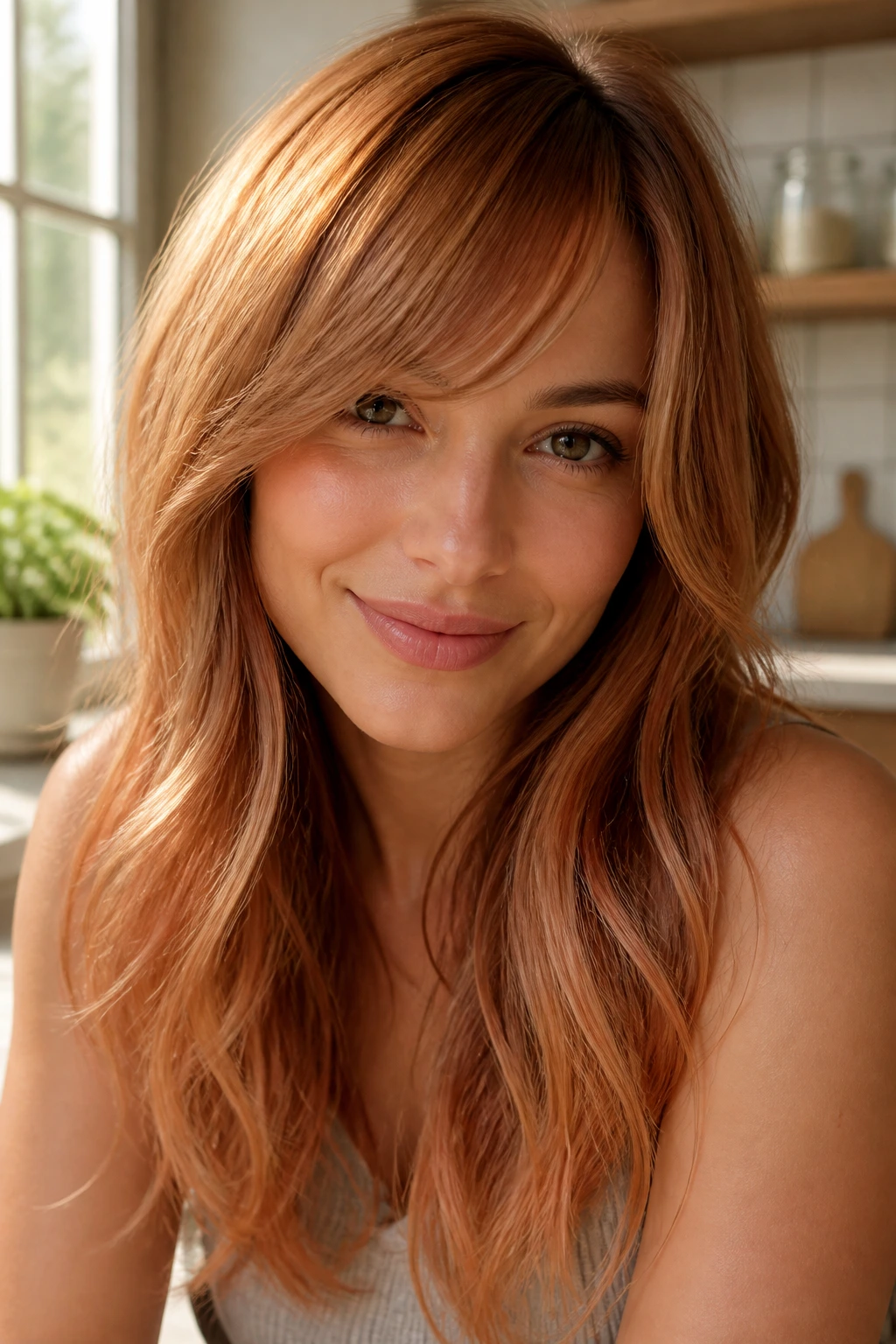
Soft apricot is a warmer, gentler take on brunette color. It adds peachy warmth around the face and a little through the ends, which makes side-swept bangs feel lighter and more lifted. The trick is keeping it soft. Apricot should whisper, not shout.
This is a good option for brunettes who want something different but still wearable to work, dinner, and ordinary life. It flatters warm undertones especially well. If your base is deep, you may need pre-lightening only on the front sections to get the apricot to show.
The best version looks sun-touched and glossy. Pair it with a smooth blowout or a soft wave, and the front pieces will do the rest. If the apricot turns too peach or too gold, tone it down with a beige glaze.
30. Midnight Espresso with Face-Framing Gold
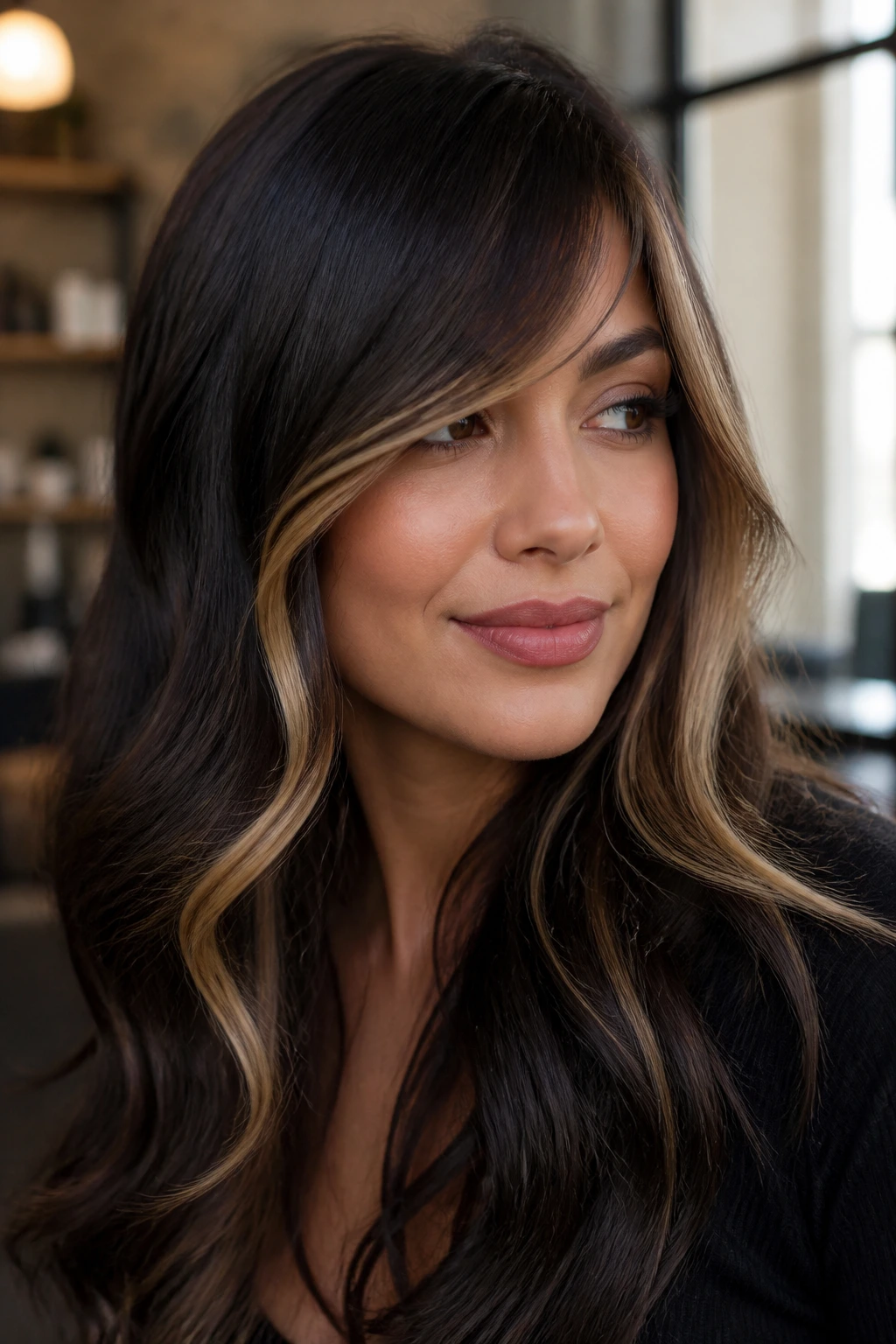
Midnight espresso is deep, glossy, and dramatic, and the face-framing gold is the whole reason it works with side-swept bangs. The dark base keeps the hair grounded while the gold pieces at the front pull the eye across the sweep. It’s high-contrast, but the contrast is controlled.
This shade suits anyone who wants visible brightness and isn’t afraid of maintenance. The gold needs to stay narrow and strategic, not spread across the entire front. Too much and the brunette identity gets lost. Too little and the color never shows up. Narrow ribbons around the bang side and cheekbone are the sweet spot.
It is especially effective on cuts with volume at the crown or soft bends through the lengths. Midnight espresso makes the face frame look deliberate. That’s the whole point of the look.
Why Side-Swept Bangs Change the Color Map
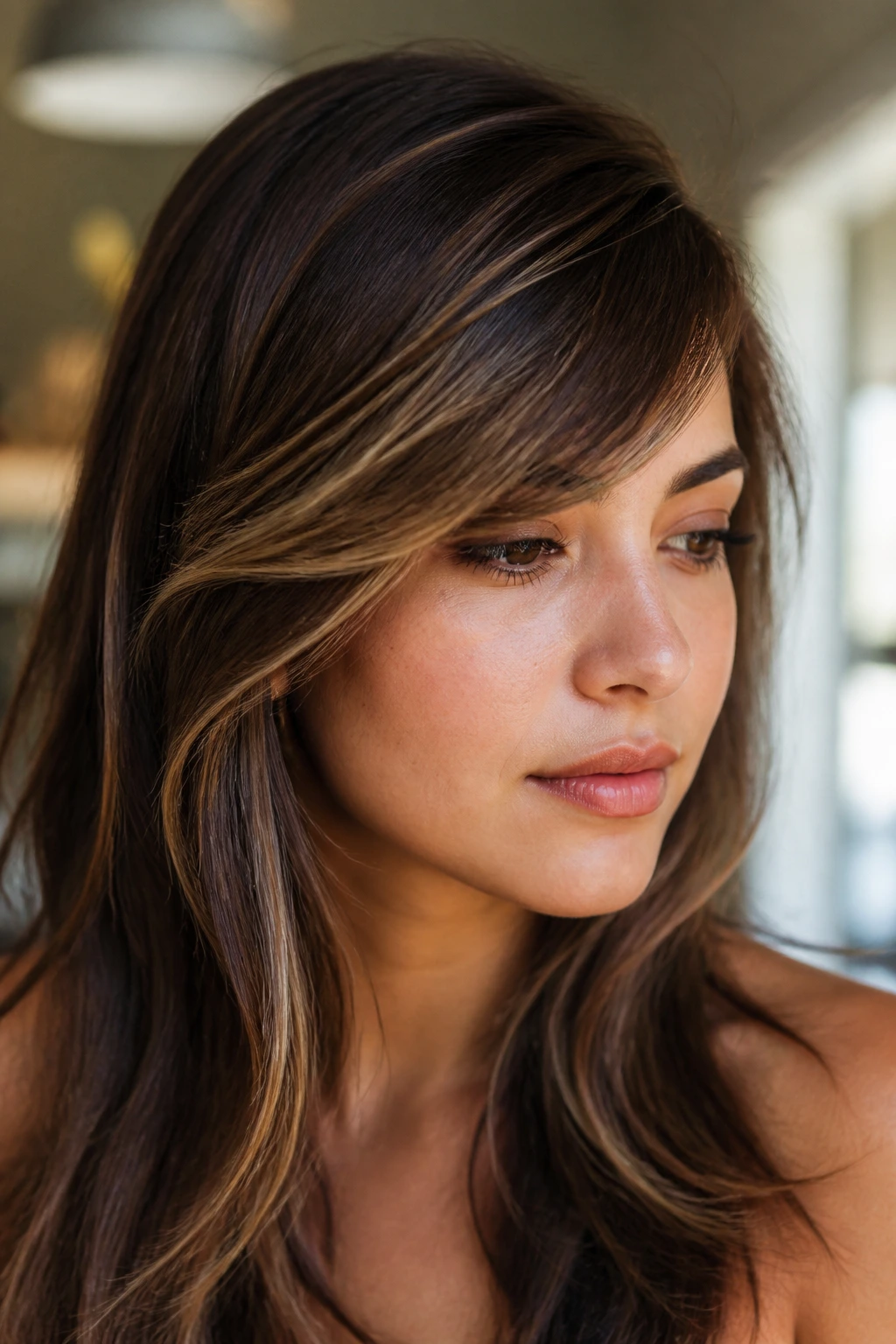
A side-swept fringe is not a straight line, and that changes everything. Hair color on a blunt bang acts almost like a curtain. Color on a side sweep behaves more like a ribbon in motion. The front pieces bend with the face, the temple, and the part, so where you place brightness matters more than how much brightness you add.
That diagonal shape also changes how people see the haircut from the front. A narrow highlight can look bigger because it keeps traveling across the face as the head moves. A heavy stripe can look even heavier because there is no clean edge to hide it. That is why soft placement near the cheekbone usually wins.
There’s one more thing people miss. Side-swept bangs sit close to the forehead, which means they get more oil, more heat from styling, and more friction from touching. The color there fades or shifts faster than color in the back. If you want the whole look to stay balanced, the front usually needs a slightly different tone or level than the rest of the hair.
Tools That Make the Front Pieces Easier to Paint and Maintain
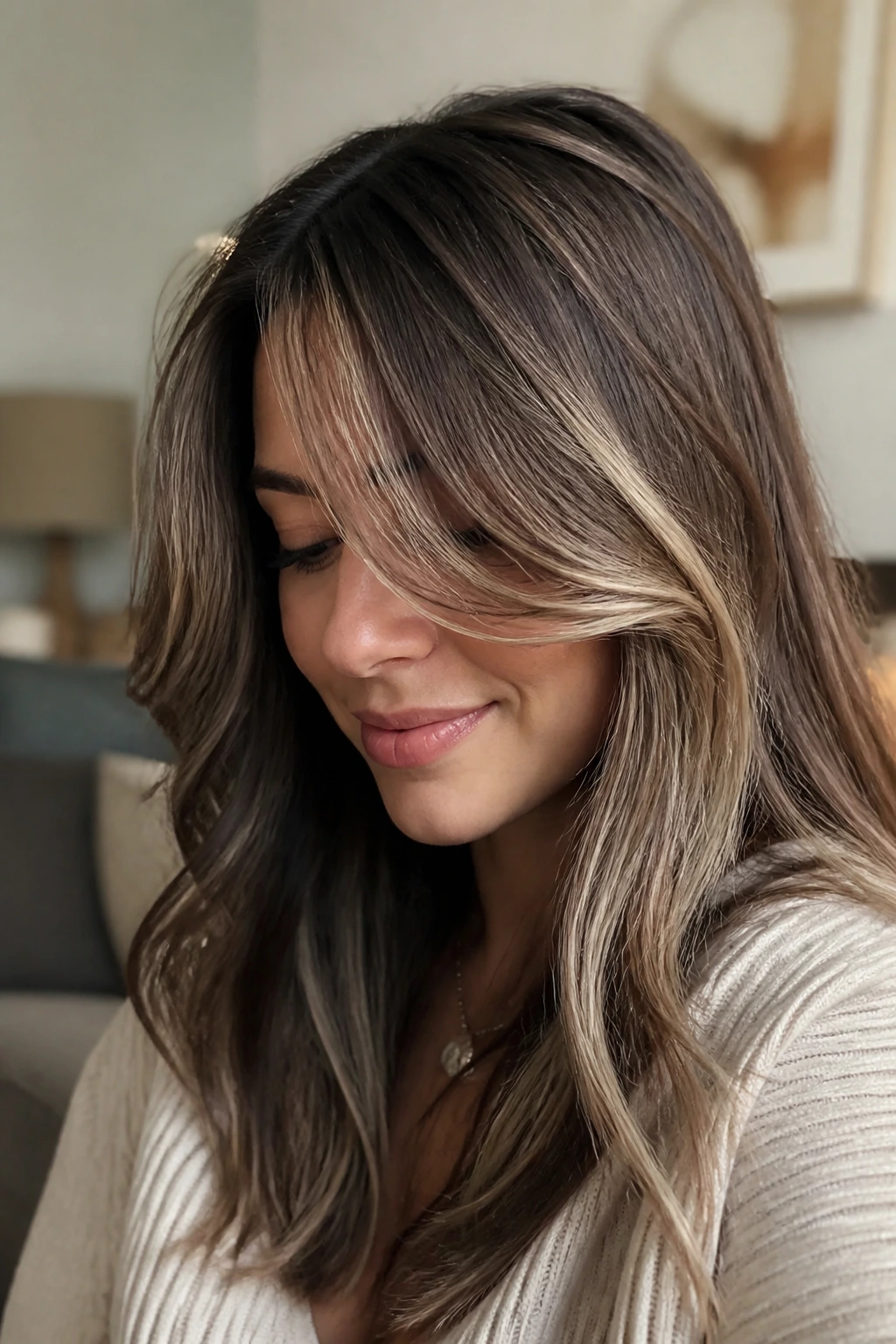
You do not need a drawer full of gadgets, but a few tools make brunette color with a side-swept fringe much easier to manage.
- Tail comb: Useful for sectioning the bang and placing fine highlights without making the front look chunky.
- Sectioning clips: Keep the sweep separated while you dry, gloss, or style.
- Color-safe shampoo: Helps preserve toner and gloss so the front pieces do not dull fast.
- Sulfate-free conditioner: Keeps the ends from drying out, especially if the front has been lightened.
- Heat protectant spray: Essential if you blow-dry the bang daily; the hairline is too delicate to cook repeatedly.
- Round brush or small vent brush: Gives the fringe a bend instead of a flat, stuck-to-the-forehead finish.
- Purple or blue shampoo, used carefully: Best for ash, beige, or icy brunettes. A little goes a long way, and overuse can mute warmth you actually wanted.
- Weekly mask: Good for highlighted fronts because those pieces usually need more slip and less breakage.
A salon mirror with decent daylight matters more than people think, too. If the front looks good in bad bathroom light, you have a better read on the color.
How to Choose the Right Brunette Base Shade
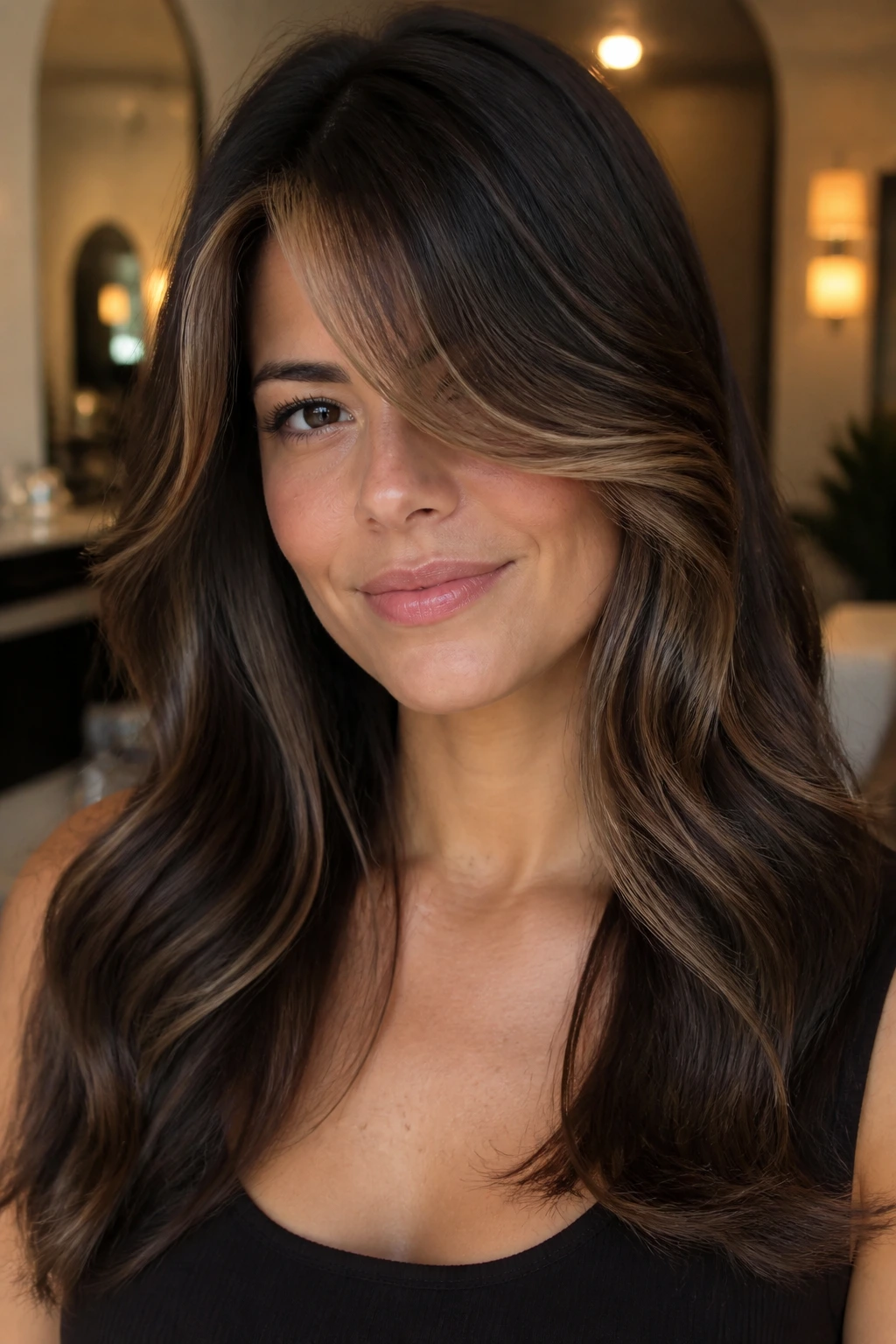
The base is the part that decides whether the whole look feels lush or sloppy. Too dark, and the front brightness can seem pasted on. Too light, and the brunette stops looking like brunette. The sweet spot usually sits between level 3 and level 6, depending on how much contrast you want.
Deep brunettes at level 3 or 4 tend to take richer tones best: espresso, cherry cola, blue-black, mahogany, plum. Medium brunettes at level 5 or 6 can hold caramel, honey, copper, bronze, and beige without the color reading too severe. Lighter brunettes can wear bronde, sandy beige, and latte shades with less effort.
Your undertone matters too, but not in a rigid, one-shade-fits-all way. Warm skin often likes copper, honey, maple, and apricot. Cooler skin tends to look cleaner in ash, mushroom, plum, blue-black, or rose brown. Neutral skin can move either way.
If your hair lifts orange fast, don’t fight it with a pale beige that will go muddy. Pick a tone that works with the base you actually have. That choice saves more trouble than any flashy trend ever will.
Where to Put Brightness So the Bang Doesn’t Disappear
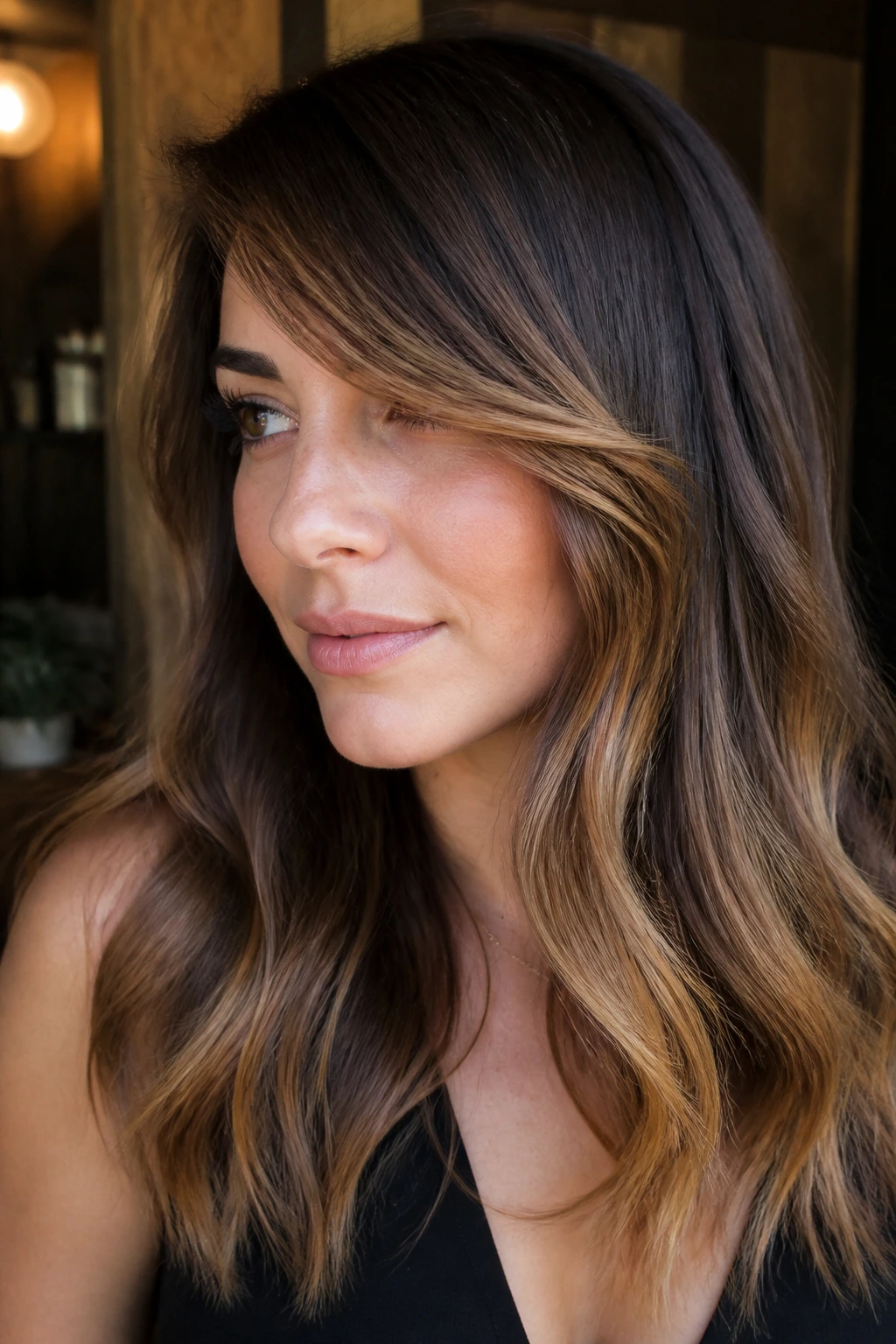
The front pieces need a plan. Without one, side-swept bangs can melt into the rest of the haircut, especially on medium-dark brunettes. The easiest fix is to place brightness where the fringe naturally lands: temple, cheekbone, and the first inch or two of the sweep.
Three placement rules that work
- Keep the brightest pieces narrow near the part. That prevents the front from turning into a billboard.
- Let the color widen slightly as it drops toward the cheek. This gives the sweep movement and keeps the bang from looking chopped up.
- Leave some depth under the top layer. That shadow is what makes the lighter pieces look clean instead of patchy.
A money piece is useful, but it should be tailored. On side-swept bangs, I like a softer, more angled version than the blunt-center money piece you see on straight-across fringe. The front should look like it belongs to the haircut, not like it was attached after the fact.
How to Style These Colors So the Front Reads Clearly
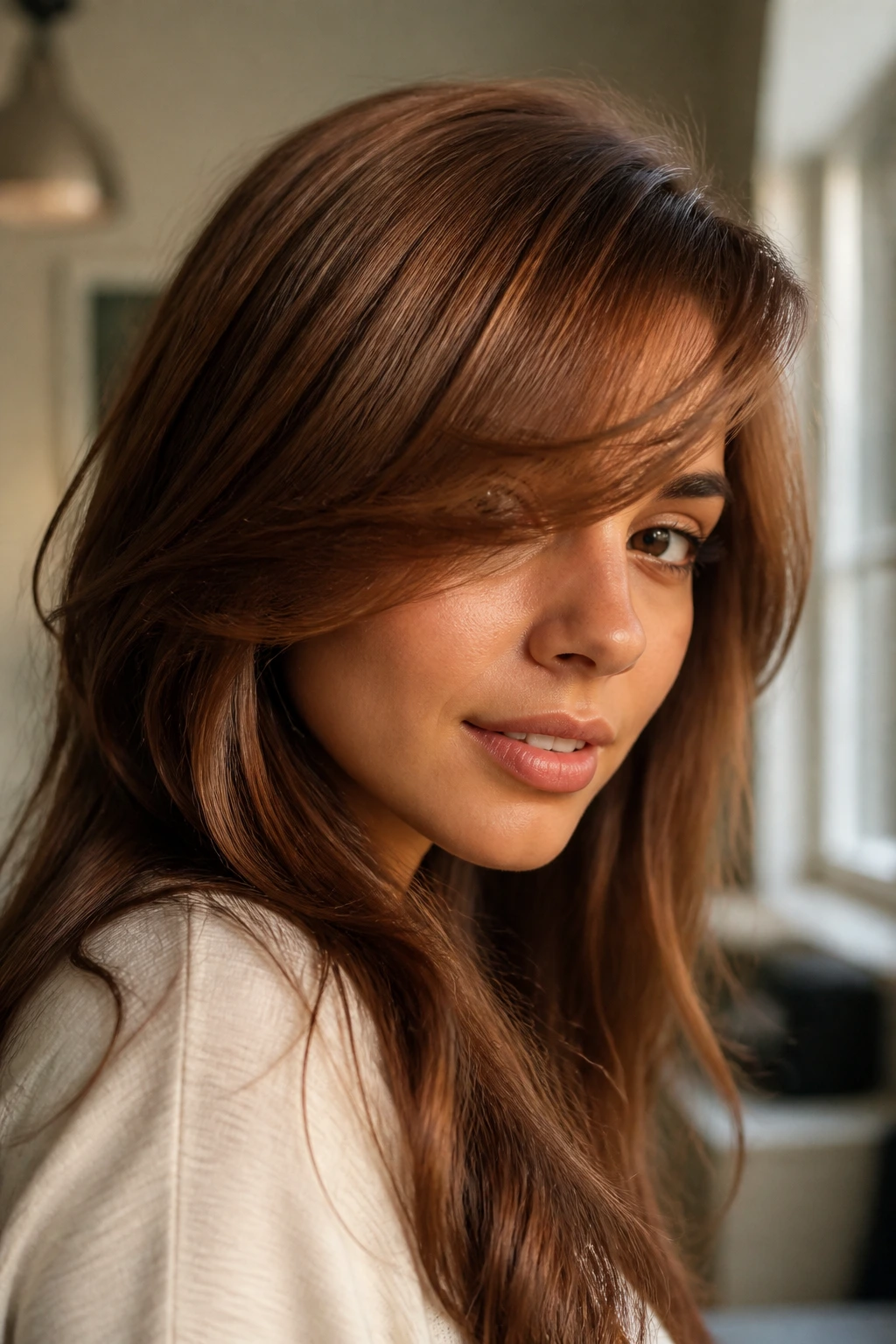
Color only shows up when the cut is styled in a way that lets it move. A side-swept bang with no bend can swallow nice color whole.
Parting: A slightly off-center part usually helps. It gives the fringe a natural drop and keeps the lighter pieces from sitting dead-flat against the scalp.
Texture: A soft blowout, a loose wave, or even a brushed-out bend works better than pin-straight hair for most of these shades. The movement makes ribbons, melts, and glazes more visible.
Makeup: Warm browns, peach blush, soft berry lips, and clean brows tend to complement these brunette shades without competing with them. Heavy black liner can sometimes harden a softer caramel or beige front.
Wardrobe: Cream, forest green, rust, deep navy, and black all work well with most brunette-and-bang combinations. If your color leans copper or auburn, warm neutrals usually look best. If it leans ash or blue-black, cooler clothes sharpen the effect.
A little shine spray on the mids and ends can help too. Not on the roots. Not near the bangs if your hair gets oily fast. Just enough to give the front pieces a clean finish.
Keeping Brunette Color Fresh Between Visits
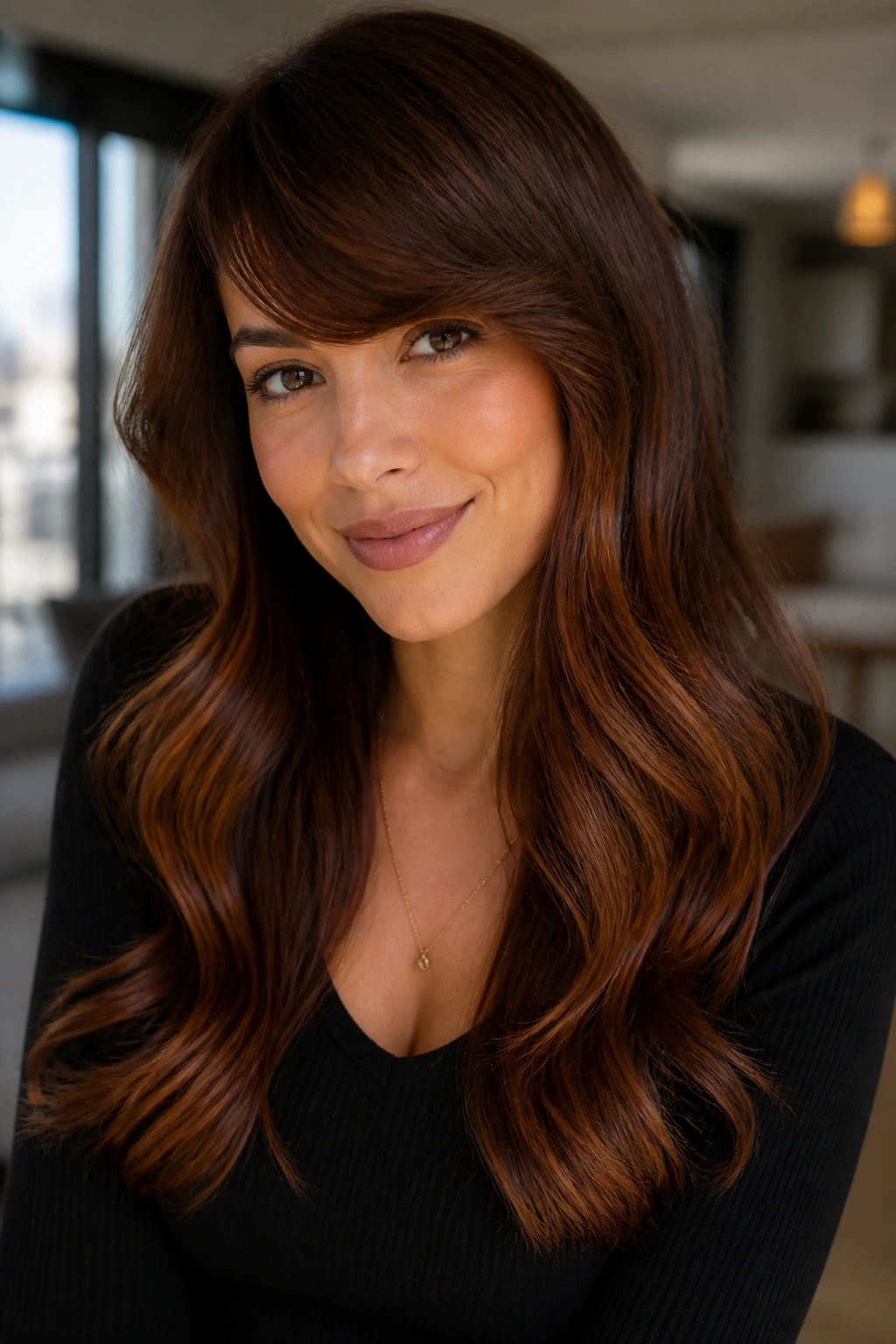
Brunette color fades in a sneaky way. It doesn’t always go obviously lighter; sometimes it just loses tone and starts looking flat around the front. Side-swept bangs show that first because they live on the face and take the most heat.
A glaze or toner refresh every 4 to 6 weeks keeps warm browns from going muddy and cool browns from drifting too orange. Root touch-ups usually fall in the 6- to 8-week range for more obvious contrast, though soft melts can stretch longer. If you’ve got lighter front pieces, plan on those fading fastest. That’s normal.
The front also needs less washing than you think. If you shampoo the bangs every day, the color there goes first. A quick rinse at the hairline or a small amount of dry shampoo at the roots can buy you time without flattening the sweep.
Heat tools are another culprit. Keep the blow-dryer moving, use a protectant, and try not to blast the bang on the highest setting. Hairline pieces are fine. Fine hair burns faster than people expect.
Common Mistakes That Flatten the Fringe
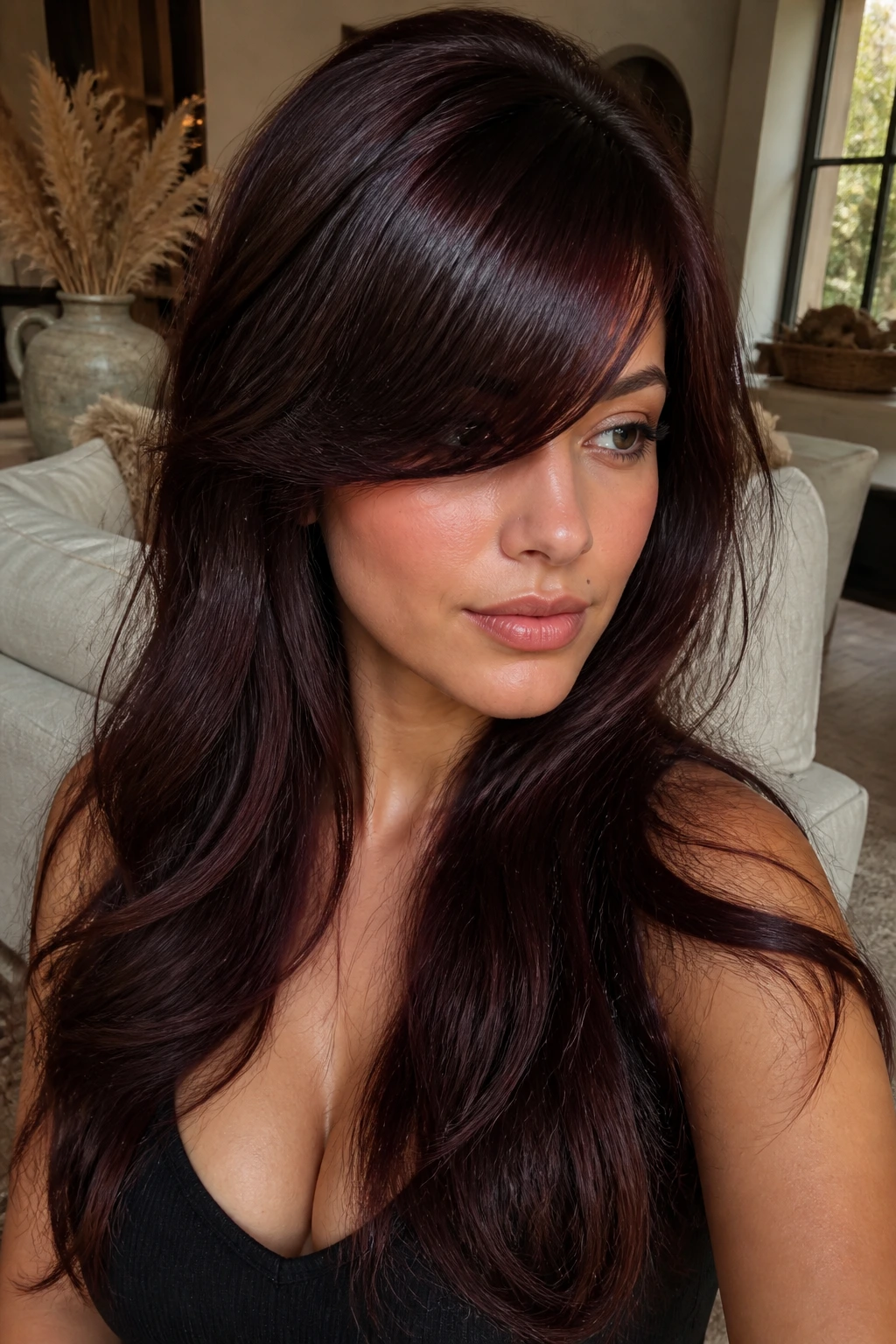
The biggest mistake is making the front too light. A pale stripe at the bang can overpower the haircut and make the rest of the brunette look dull by comparison. The fix is simple: narrow the brightest pieces and keep a deeper shadow underneath.
Another common issue is putting the highlights too high. When the light pieces start at the root and stay wide through the bang, the color can look blocky. Ask for a softer angle that starts lower and blends into the sweep.
Over-toning is a sneaky one. If you chase ash or beige too hard, brunette hair can turn hollow, gray, or matte. A little warmth usually keeps the color alive. You do not need to erase every hint of gold.
Skipping heat protection is another bad habit, especially when the fringe gets blown out every morning. Those front pieces are the first to dry out and the first to split. Protect them or expect frizz.
Finally, ignoring hair texture ruins the whole job. A chunky highlight map on fine hair can look striped. A super-soft babylight on very dense curls may disappear. The color has to match the amount of hair and the amount of movement.
Additional Tweaks That Make the Color Better
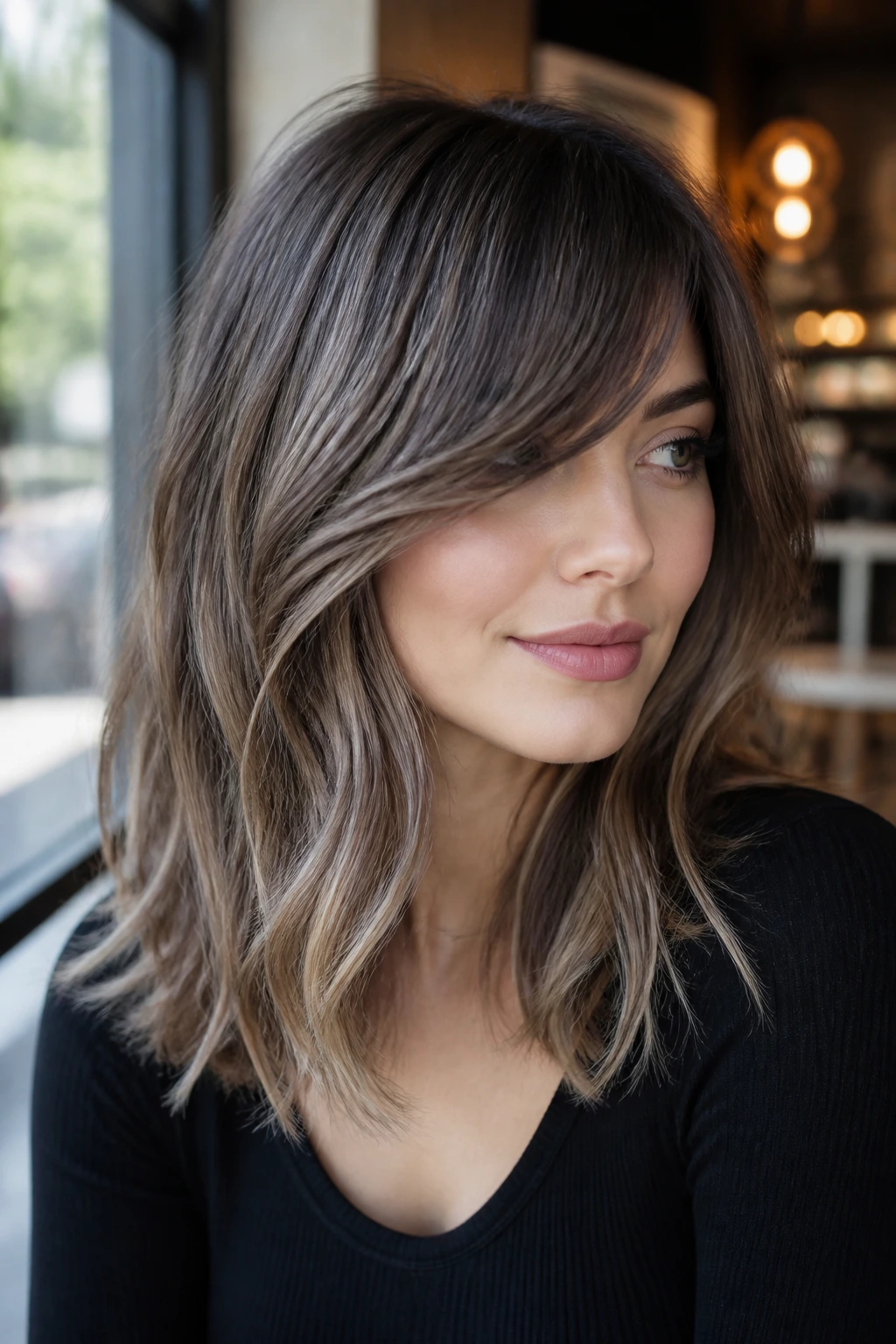
Glossing: A clear or tinted gloss every few weeks keeps brunette color shiny and helps the fringe read as one polished sweep instead of a dry, separate piece. If your shade leans warm, ask for a warm gloss; if it leans cool, keep the toner restrained.
Face Frame: Add a slightly brighter, thinner slice near the temple and cheekbone if the bang keeps vanishing into the rest of the hair. A tiny placement change can fix the whole silhouette.
Texture: Soft bends make almost every shade on this list look richer. Straight, flat hair can work, but it needs more precision in the color placement to avoid looking dense.
Tone Refresh: If your brunette is copper, auburn, or caramel, refresh the tone before it gets brassy. If it’s ash, mushroom, or smoky, refresh before it goes beige and lifeless. Waiting too long is how good color turns vague.
Make-It-Yours: For fine hair, keep the highlights narrow and close to the face. For thick hair, add a second ribbon under the bang so the movement shows from more angles. For curly hair, let the front brightness follow the curl pattern instead of fighting it. For low-maintenance wear, choose a root shadow and softer mid-length lift rather than high contrast.
Variations and Swaps to Try
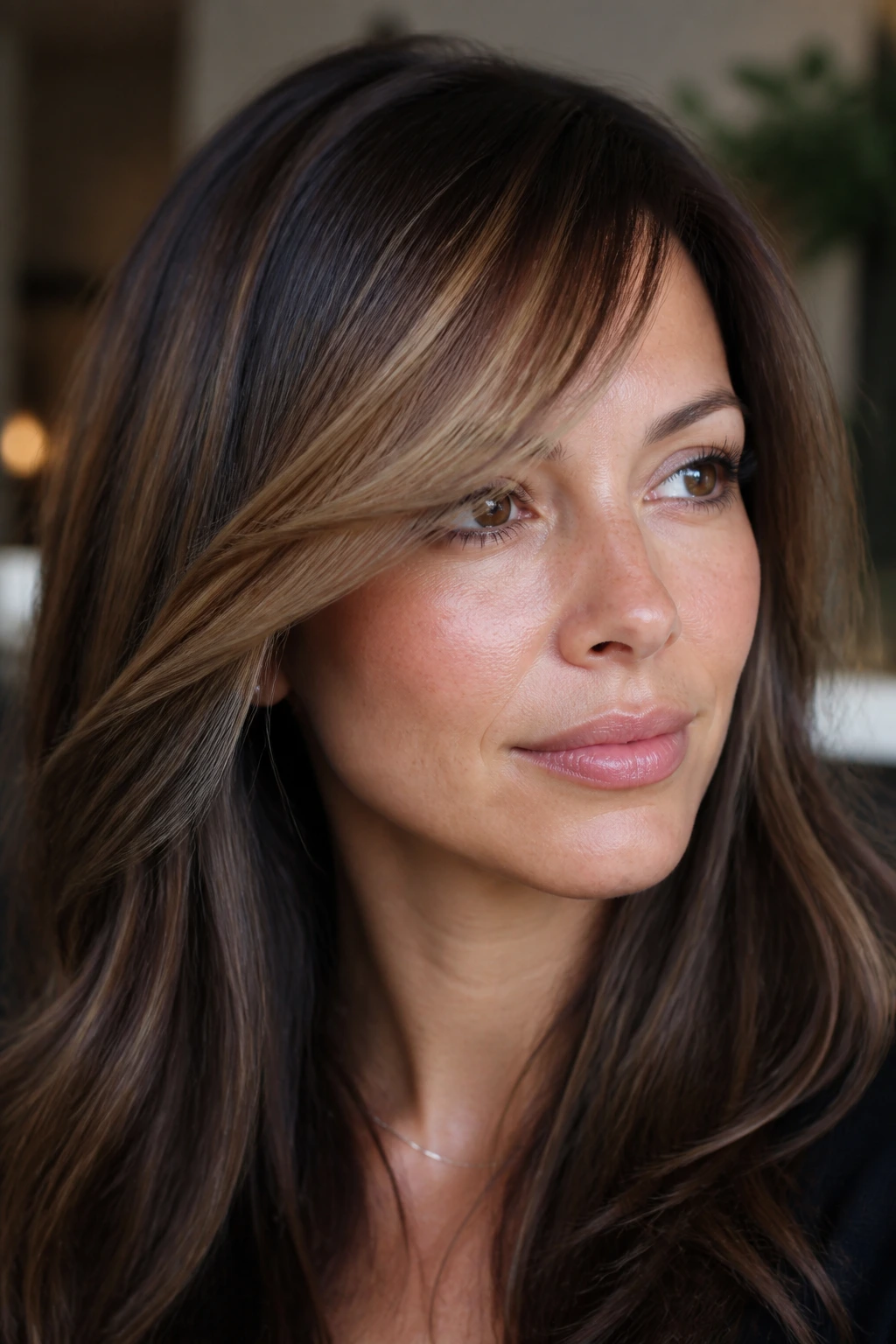
Soft Money Piece Upgrade: If you love the idea of a bright front but hate harsh contrast, ask for a slimmer face frame that fades into the bang sweep. It gives the same lifting effect with less upkeep.
Cool-Tone Edit: Mushroom brown, smoky ash, and iced cocoa all work better when the toner is a little cooler than you think you need. Ask for a muted finish, then stop before the hair starts looking dusty.
Warm Glow Version: Caramel, honeyed espresso, maple, and chestnut copper all brighten a brunette base without looking fake. The front should be warmest around the cheekbone, then taper into the lengths.
Fashion Color Peekaboo: Rose brown and plum brunette are good if you want a little edge without covering the whole head in fashion color. The side-swept fringe can hide or reveal the tone depending on how you style it.
Low-Maintenance Grow-Out: Dimensional mocha melt and hazelnut lowlights are the easiest choices if you want the color to fade without a hard line. They keep the haircut looking full even after several weeks.
Frequently Asked Questions
Can you do these brunette color ideas without bleaching the whole head?
Yes. A lot of these looks use glosses, demi-permanent color, or selective lightening only around the front. You can keep most of the hair dark and still brighten the side-swept bangs enough to change the whole cut.
Which shades are easiest to maintain?
Dimensional mocha melt, hazelnut lowlights, mushroom brown, and walnut brown tend to age well because the roots stay deep and the lighter pieces are soft. Anything with a narrow face frame also grows out better than chunky contrast.
What brunette color works best if my hair turns orange fast?
Smoky ash brown, mushroom brown, iced cocoa, and blue-black are the safest starting points. They counter the warmth instead of fighting it. If you want a warmer look, keep the lift controlled and refresh the toner on schedule.
Do side-swept bangs need different color placement than blunt bangs?
They do. Side-swept bangs work better with angled ribbons and softer face framing because the hair falls diagonally across the forehead. Blunt bangs can handle a straighter, more uniform band of brightness; side-swept fringe usually looks better when the light pieces taper.
What if I want a bold look but still want to look brunette?
Choose cherry cola, plum brunette, blue-black, or copper penny ends. Those shades add edge without erasing the brown base. The brunette stays in charge, which is the whole point.
How often should the front pieces be toned?
Usually every 4 to 6 weeks if the front is noticeably lighter or warmer than the rest. The hairline fades first because it gets more heat, oil, and washing. A gloss can keep the sweep from going dull before the rest of the hair does.
Can curly or wavy hair wear side-swept bangs with these colors?
Absolutely, and the color often looks even better because the bends show off the different tones. The only caution is placement: highlights should follow the curl pattern and not get painted too wide, or they can look busy.
Why does the bang sometimes look thinner after color?
Usually because too much contrast was put in the front or the hairline was lightened too aggressively. The fix is a softer root shadow, narrower ribbons, and a little more depth under the sweep so the fringe keeps its shape.
A Fringe That Still Has Something to Say
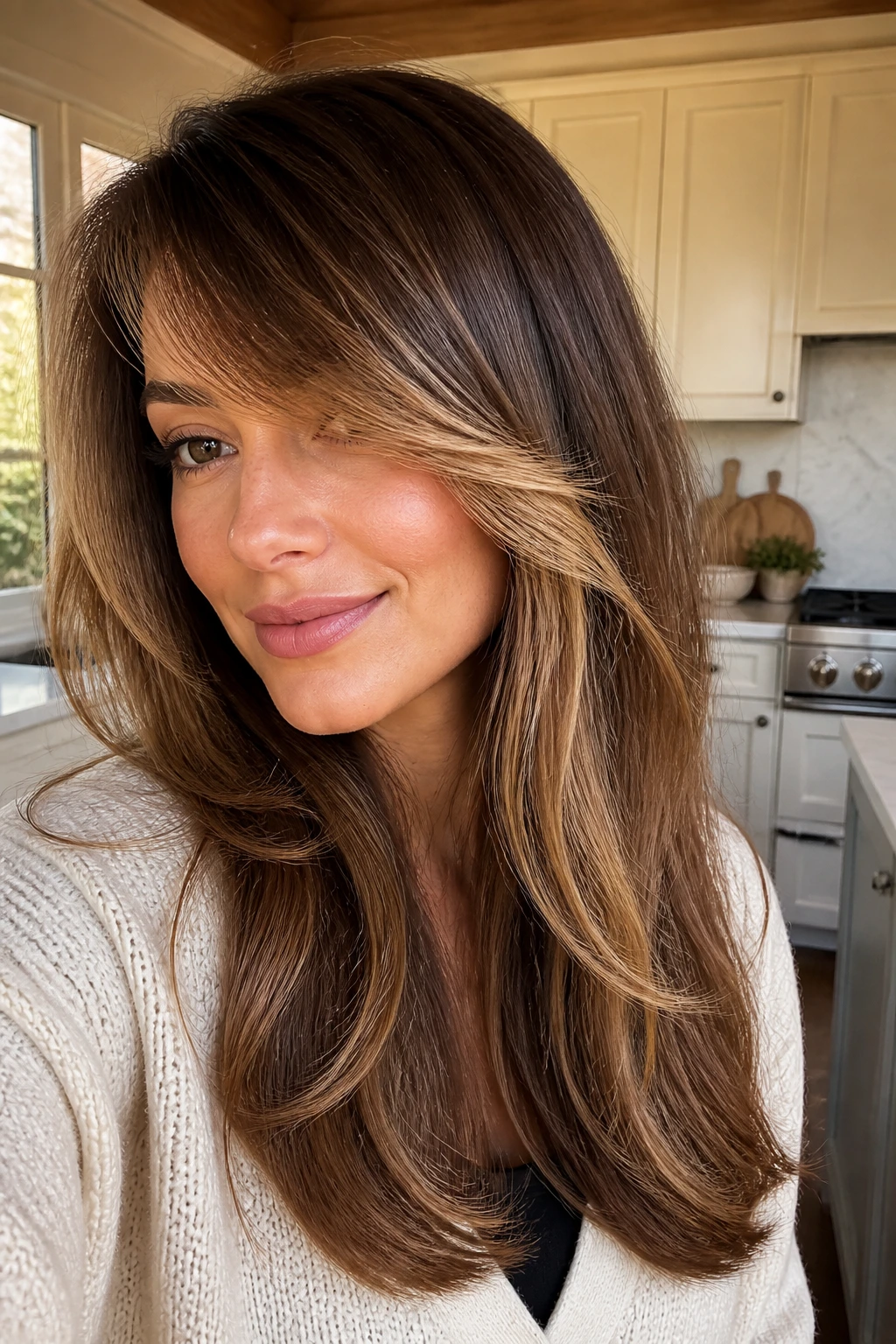
A side-swept bang can either fade into the haircut or carry the whole look. The difference usually comes down to where the light lands, how deep the base stays, and whether the front pieces were painted for movement instead of for a screenshot. That’s where brunette color gets interesting.
The best choices on this list all do the same quiet thing in different ways: they keep the brown rich, then place enough tone near the face to make the sweep worth noticing. Pick warm if you want glow. Pick cool if you want sharpness. Pick deep contrast if you want the bangs to feel dramatic the second they move.
One good photo helps. One honest consultation helps more. And if the colorist asks where your bangs usually fall, pay attention—that answer matters more than almost any shade name on the menu.