



Square faces can take a blunt fringe and make it look like a helmet. Crescent bangs do the opposite. They bend the eye away from the jaw, open a little room at the center of the forehead, and let the sides fall where the face needs softness most.
On long hair, that curve matters even more. A fringe that just sits there gets lost in the length; a crescent shape keeps its own line. The best versions don’t sit flat and stiff. They lift at the root, skim the temples, and taper into the cheekbones with that slightly undone bend that makes a haircut feel finished.
There’s also a practical reason this shape keeps showing up in real salons and real bathrooms: it can be tuned. You can wear it airy, polished, thick, piecey, or almost invisible. You can push it toward a blowout, or let it live closer to natural texture. And if your face reads square through the jaw and forehead, the right arc changes the balance without hiding what you actually have.
Why Crescent Bangs Earn Their Keep on Long Hair and Square Faces
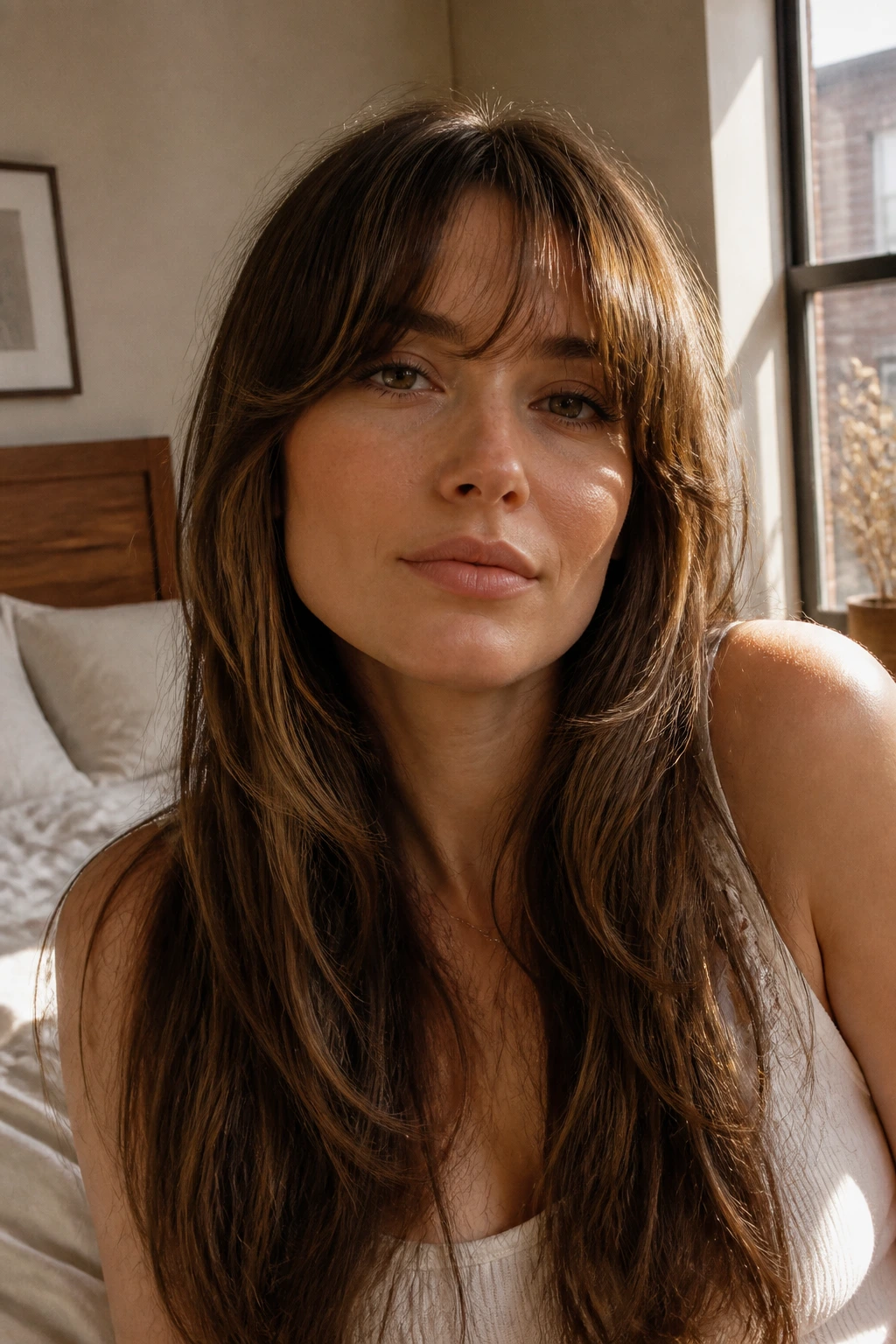
-
They break the horizontal line at the forehead: A square face often reads strongest when the hairline and jawline echo each other; the crescent shape interrupts that with a curve, and the face feels less boxed in.
-
They give long hair a front edge: Long lengths can drag the eye downward. A crescent fringe creates a front focal point, so the haircut has a face-first shape instead of looking like one long curtain.
-
They let you choose how much forehead to show: A shorter center gives more lift and drama. A longer center keeps the look softer and easier to grow out. That little adjustment changes the whole mood.
-
They work with both smooth and textured hair: Straight hair can be brushed into a clean arc. Wavy hair can keep a looser bend. Even curls can wear the shape if the shortest point is cut with shrinkage in mind.
-
They play nicely with updos and half-up styles: The side pieces that fall past the temples make a bun or ponytail look intentional, not severe. That matters on a square face, where too much tightness can sharpen the outline.
1. Soft Center-Part Crescent Bangs
The soft center-part version is the easiest place to start if you want crescent bangs without a lot of drama. The middle sits shorter, then the sides slide down in a gentle arc that lands near the cheekbones. On long hair, that kind of frame keeps the length from swallowing the fringe.
Why It Works
A square face usually benefits from movement that runs diagonally instead of straight across. This shape does that without looking fussy. The center opens the forehead, and the longer sides loosen the corners of the jaw.
Ask for the shortest point to sit around brow level on straight hair, a touch longer if your hair shrinks when it dries. The side pieces should taper, not drop like two thick ropes.
- Best on: medium to thick hair with some bend
- Ask for: a center that curves to cheekbone length
- Style with: a 1-inch or 1.25-inch round brush
- Avoid: blunt ends at the temples
Pro tip: Blow the center down first, then brush each side away from the face while the hair is still warm. That’s what gives the curve its shape instead of a flat split.
2. Feathered Cheekbone-Lift Crescent Bangs
If you want the fringe to make your cheekbones look higher, this is the version I’d pick. The feathering softens the ends so the bang doesn’t land as one solid block, and that matters on a square face where hard edges can feel extra strong.
The cut starts a little fuller in the middle, then thins out as it drops toward the temples. The result is light around the outer edges and clean where the eye needs to land. It’s especially good on long hair with layers, because the fringe doesn’t fight the shape underneath.
This one likes a round brush and a soft finish. Too much polish takes away the feathered lift.
3. Long Curtain Crescent Bangs
Are curtain bangs and crescent bangs the same thing? Not quite. Curtain bangs are usually more relaxed and even, while this version carries a deeper arc and a slightly shorter center. The shape matters because it keeps the fringe from just hanging there like a split curtain.
On long hair, the longer side pieces blend into the rest of the cut, which is exactly what keeps the look from feeling chopped up. The center still gives you that opening at the forehead, but the sweep toward the cheeks does the face-softening work.
How to Wear It
Keep the part clean and let the bangs dry with a little tension, not a lot of product. A light cream is enough. If you overload the roots, the center gets greasy fast and the sides stop moving.
4. Jaw-Skimming Crescent Fringe
If the jaw is the part you want to soften, let the fringe land right there. Jaw-skimming crescent bangs move the eye downward first, then back inward, which is useful when your face has a stronger angle around the lower half.
This is a more styled version of the crescent shape. It feels polished, a little cinematic, and very deliberate. On long hair, especially straight or softly waved lengths, the side pieces look elegant because they seem to melt into the rest of the cut.
- Best on: medium to thick hair
- Most flattering with: a round-brush blowout
- Needs: a little internal layering so the sides don’t puff
- Good if you want: a fringe that reads grown-up, not cute
The mistake people make here is letting the bang stop too abruptly. A clean taper is everything.
5. Piecey Razor-Soft Crescent Bangs
Razor-soft crescents have a little edge to them, but not in a harsh way. The razor work shreds the ends enough to create separation, so the fringe moves in little strands instead of one heavy sheet. On long hair, that’s useful because the front of the haircut stays light even when the rest of the length is full.
The square face benefit is simple: piecey lines are easier on strong angles than blunt ones. The fringe doesn’t sit like a barrier. It breaks up the forehead and lets the jaw keep its shape without shouting it.
This is one of those cuts that looks best when it’s not overcoached. A bit of texture spray. A quick finger rake. Done.
6. Brow-Grazing Rounded Crescent Bangs
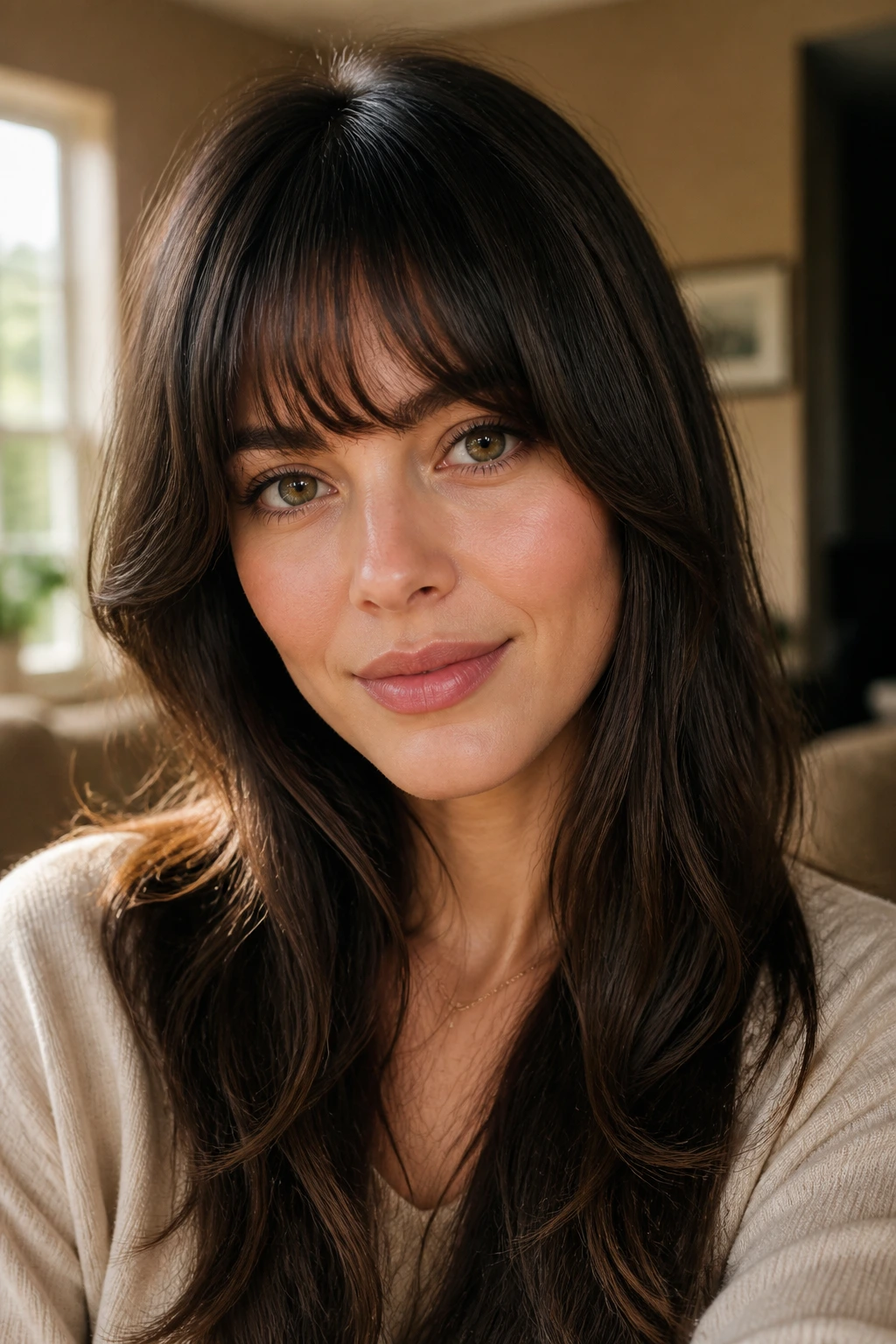
A brow-grazing crescent gives you more coverage than a whisper fringe, but it still curves away from the face instead of cutting straight across it. That roundness matters. It keeps the look soft around the forehead, which is where square faces can start to feel boxed in.
The center should hover at or just below the brow when dry, then the sides should slide down toward the upper cheek. That arc creates a little shadow under the brow bone, which makes the eyes look more defined without turning the fringe heavy.
What Makes It Different
Unlike blunt brow-grazers, this one keeps a sense of air. It doesn’t force the eye into one straight line. If your hair is long and you want the fringe to feel like part of the whole cut, this is a smart middle ground.
7. Full Crescent Bangs With Tapered Sides
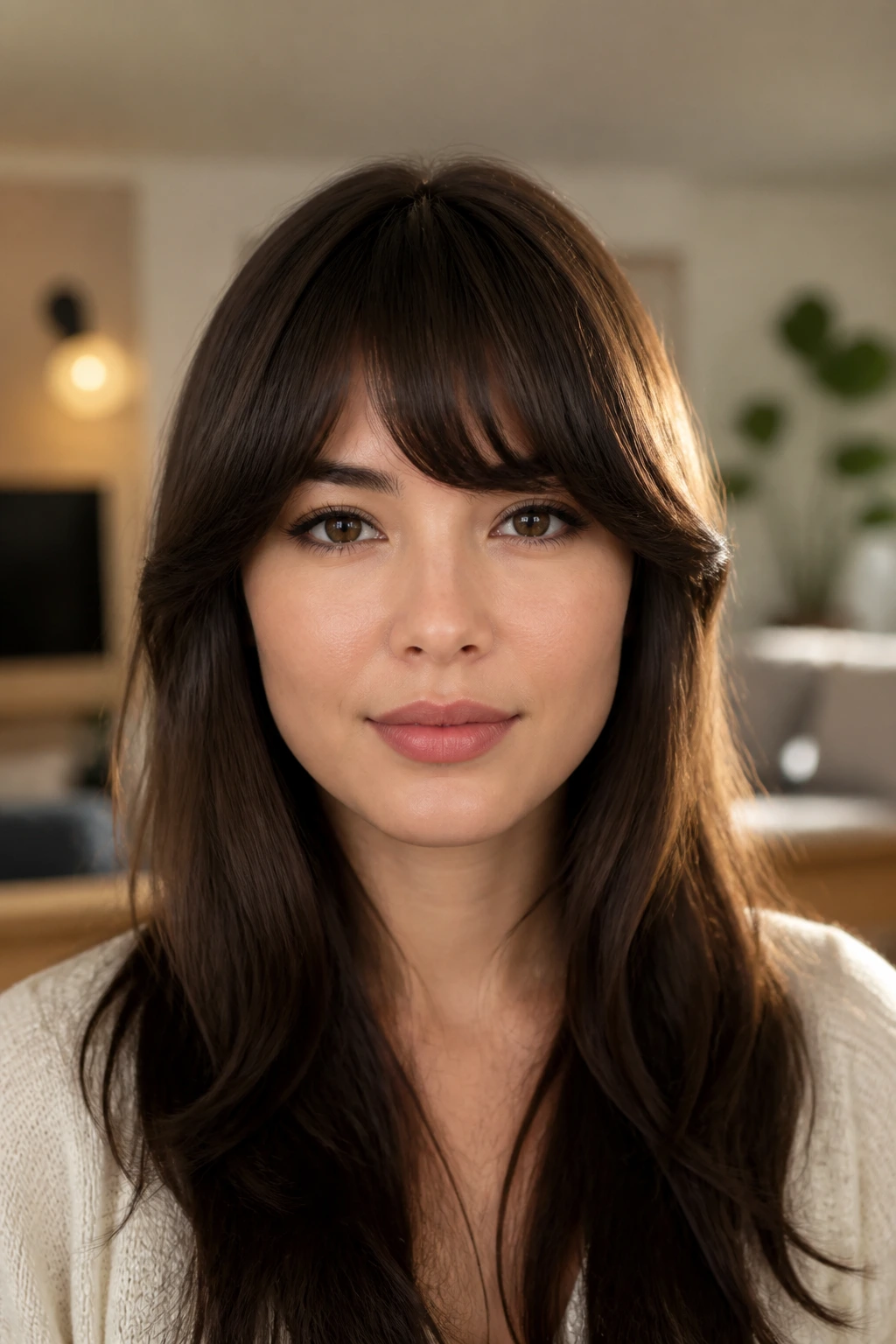
This is the fuller version for people who want a noticeable fringe but not a hard line. The center carries more weight, while the sides taper out into the layers. That balance is a good match for square faces because the stronger center gives structure, and the tapered edges soften the corners.
It works best when the hair has enough density to hold a curve. If your hair is very fine, this shape can go limp fast unless the cut is kept light. If your hair is thick, though, it can look expensive in that old-school blowout way that still holds up by lunch.
Quick Fit Check
- Choose it if: you want real fringe coverage
- Skip it if: you hate daily styling
- Best pairing: long layers around the face
- Finish: polished, rounded, slightly lifted at the root
8. Wavy Crescent Bangs on Layered Long Hair
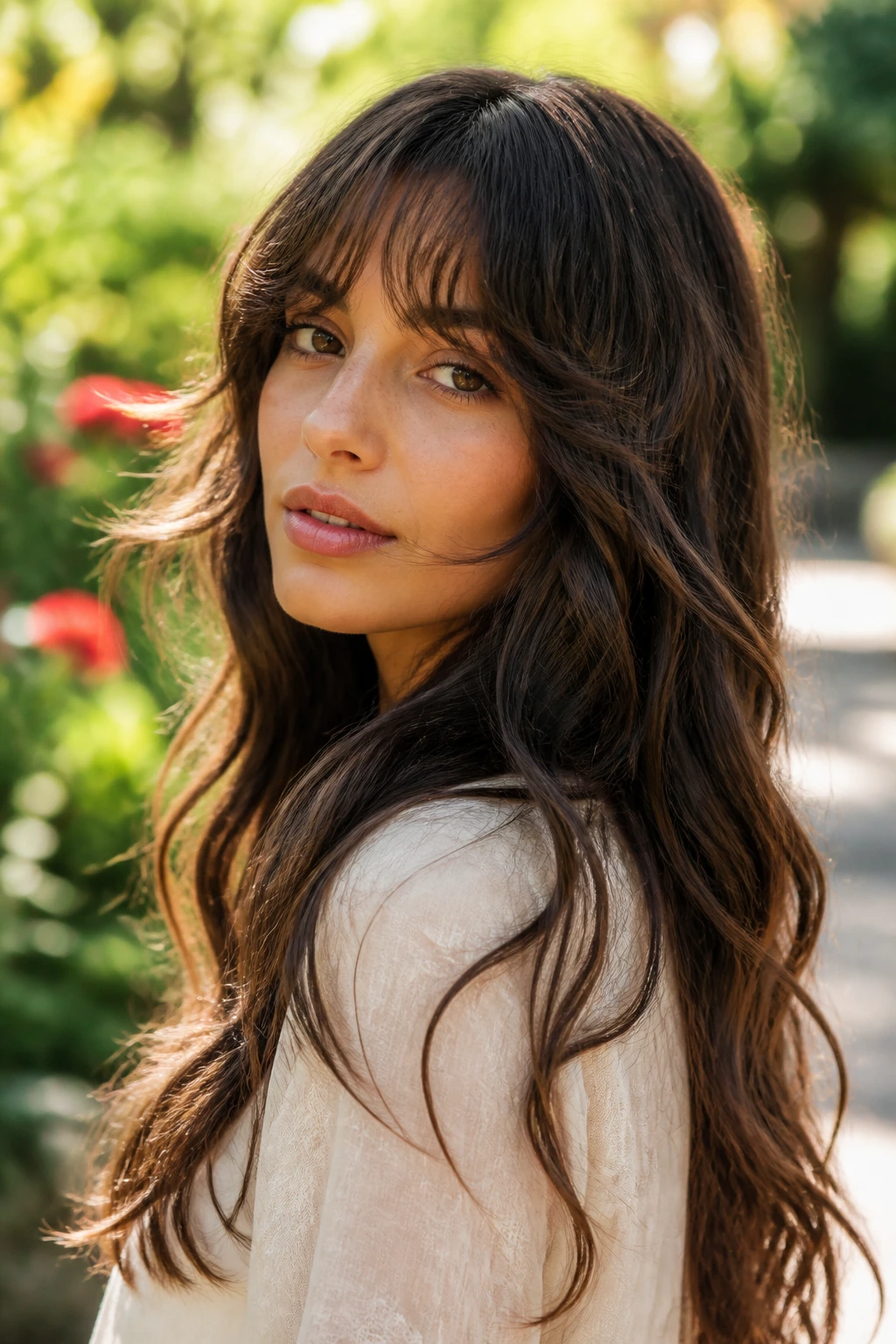
This one makes sense the second you see it move. The fringe follows the same wave pattern as the rest of the hair, so nothing feels pasted on. On long hair with layers, the bangs and lengths bounce together, and that keeps the front of the haircut from looking stiff.
For square faces, the benefit is the softness of motion. Wavy hair already breaks up sharp edges. When the crescent arc is cut with the wave pattern in mind, the fringe lands in a looser, more forgiving shape.
Air-dry cream is your friend here. So is cutting the fringe slightly longer than you think you need. Wavy hair has opinions.
9. Sleek Blowout Crescent Bangs
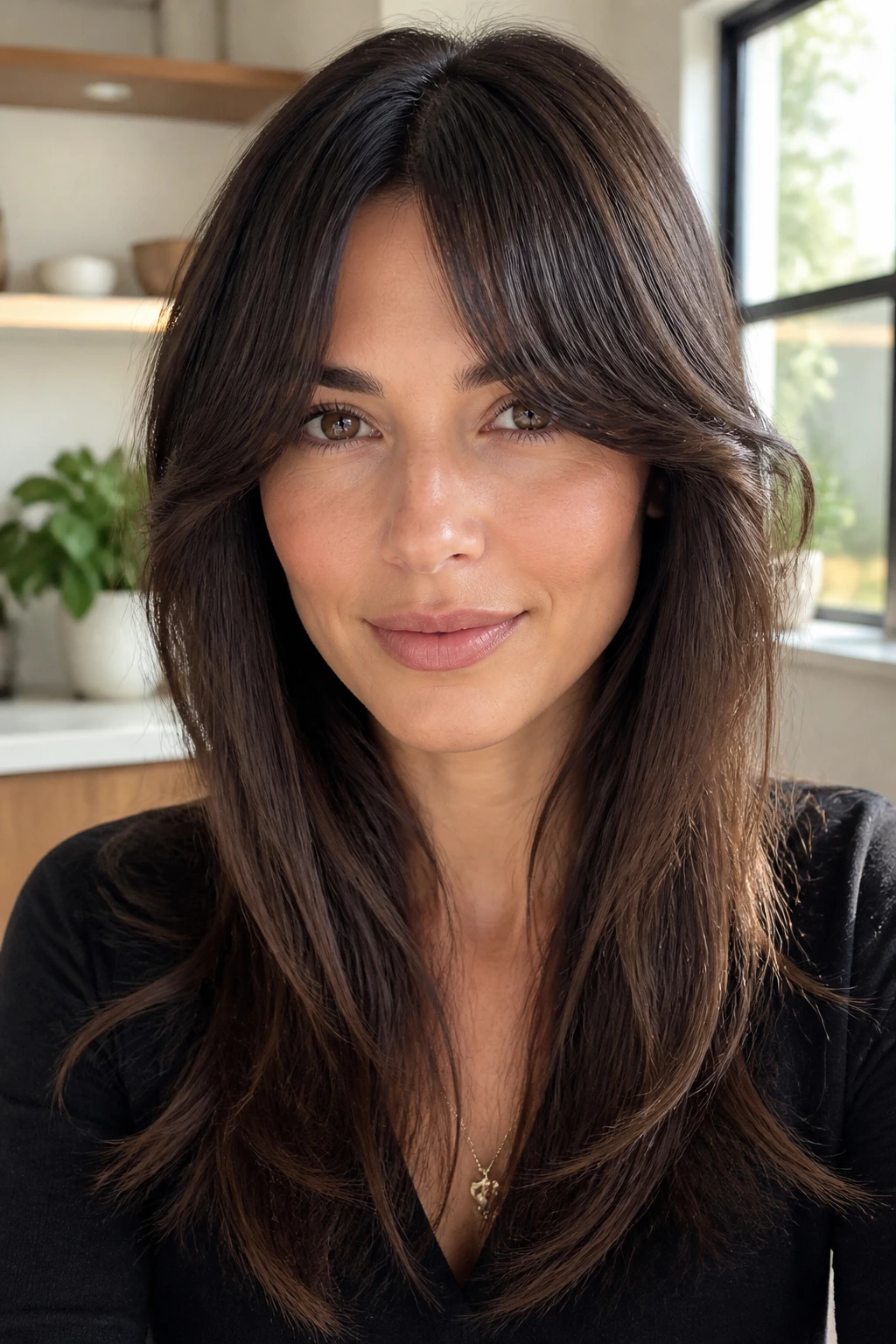
This is the version that looks the most edited. The line is clean, the bend is smooth, and the root lift makes the fringe feel intentional instead of accidental. A square face gets a break from all the straight geometry because the curve sits right where the forehead meets the temples.
The trick is tension. Not a ton of product. Not a frantic round-brush session. Just enough heat and direction to train the fringe to sweep inward at the center and outward at the sides.
Best Styling Move
Blow the bangs forward until they’re about 80 percent dry, then roll the center under with a round brush and direct each side away from the face. Finish with a cool shot while the hair is still wrapped. That’s the part people skip, and it’s why the curve falls apart so quickly.
10. Deep Side-Part Crescent Bangs
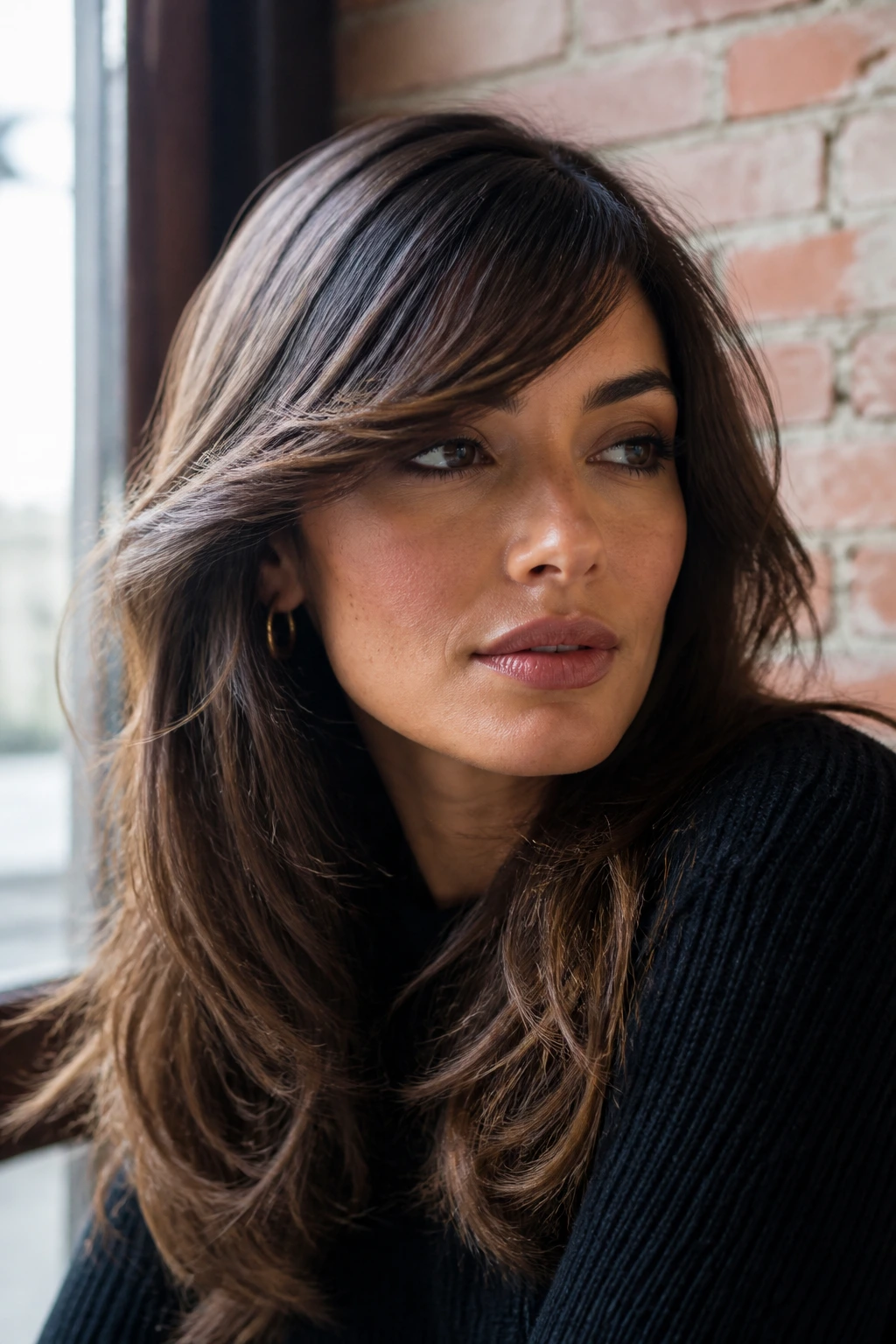
What if a center part feels too symmetrical for your face? Shift it. A deep side-part crescent breaks up the square outline at once because the fringe falls in a longer diagonal sweep instead of splitting the forehead evenly.
This version is especially useful if your hair has a stubborn cowlick or if the front wants to separate in one direction anyway. Fighting the growth pattern is exhausting. Working with it usually looks better, and it’s easier to style before coffee.
A side part also changes the way the jaw reads. The face looks longer, the fringe feels softer, and the curve has room to travel instead of stopping at the middle.
11. Bottleneck Crescent Bangs
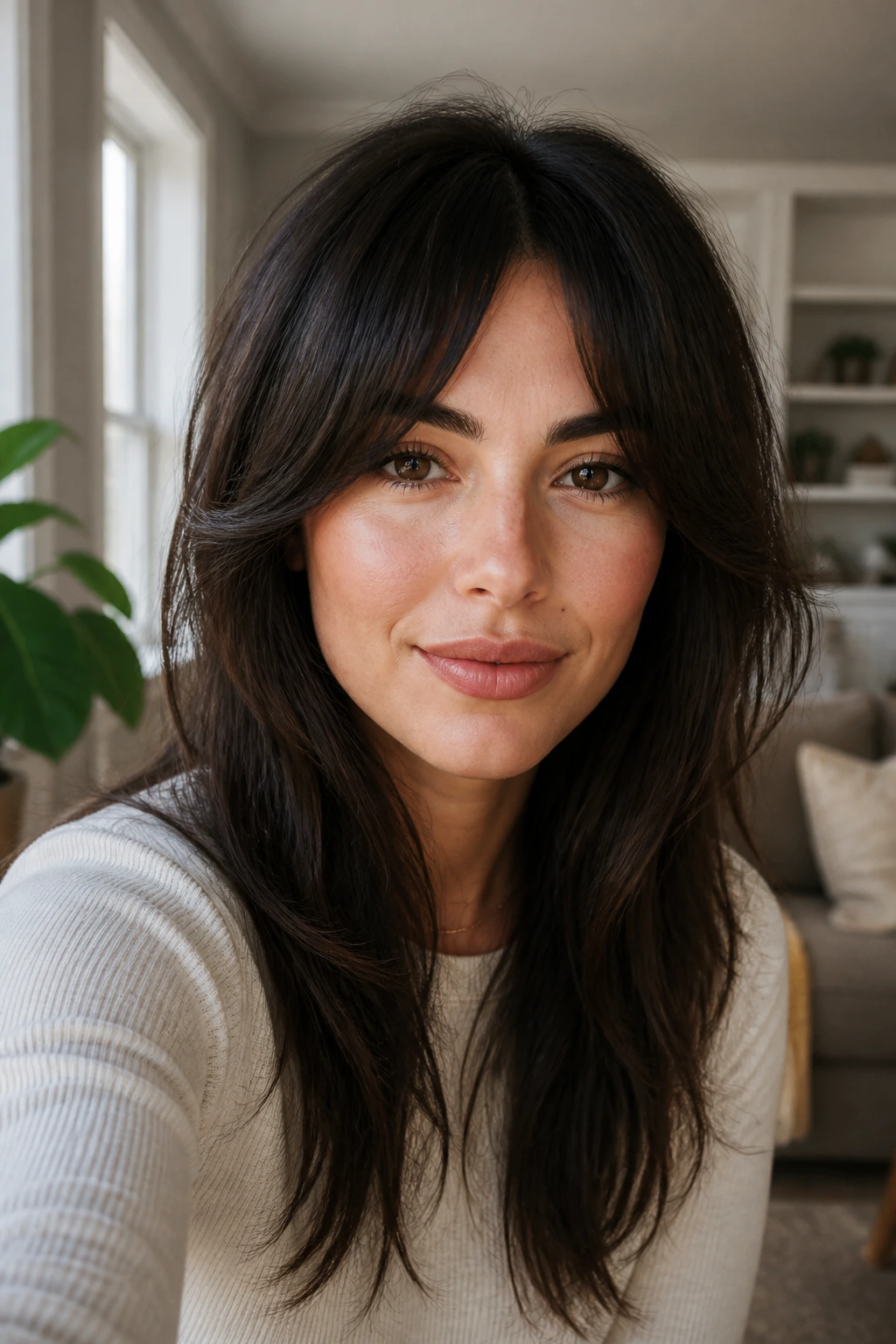
Bottleneck bangs are narrower in the middle and fuller at the sides, which makes them a nice fit for long hair that needs a little shape without a heavy front panel. The crescent version keeps that narrow-to-wide movement but softens it with a curve instead of a straight drop.
On a square face, that narrowing at the center opens the forehead without exposing too much. Then the wider sides glide toward the cheekbones and jaw, which blurs the sharper corners in a way that feels controlled, not fussy.
- Good for: medium-density hair
- Ask for: a narrower center and elongated side pieces
- Works best with: loose waves or a smooth blowout
- Avoid: over-thinning the outer edges
12. Invisible Blend Crescent Bangs
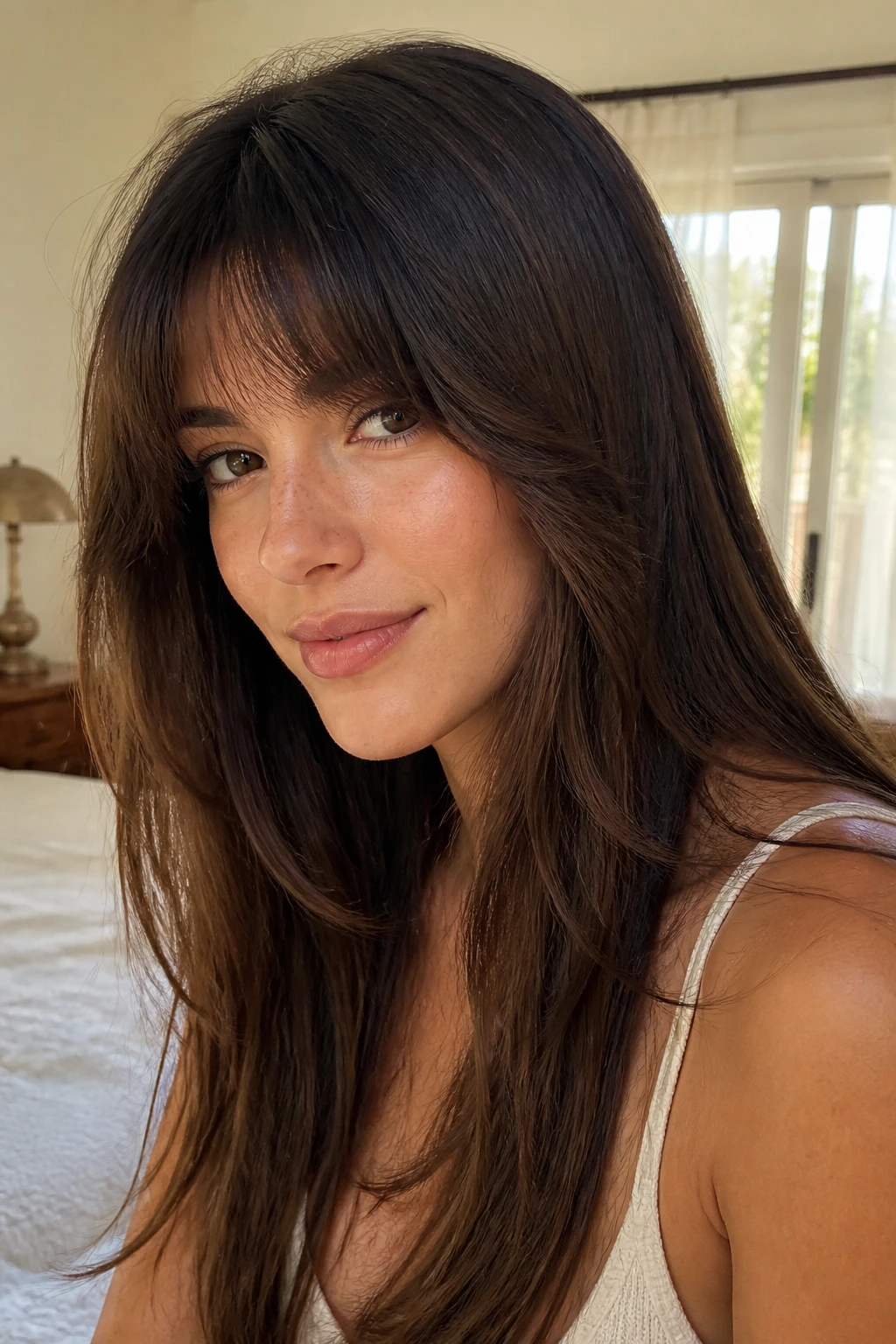
Some people want fringe. Some people want the idea of fringe. Invisible blend crescent bangs sit in that second camp. The arc is there, but the transition into the face-framing layers is so soft that you barely notice where the bang ends and the haircut begins.
That makes them smart for long hair because the front doesn’t feel chopped off. It also makes them easier on square faces, where a hard line at the forehead can look too exact. The whole point is to blur the transition.
Keep the layering soft and let the side pieces stay long enough to brush the jaw. If the perimeter gets too neat, the illusion falls apart.
13. French-Inspired Crescent Fringe
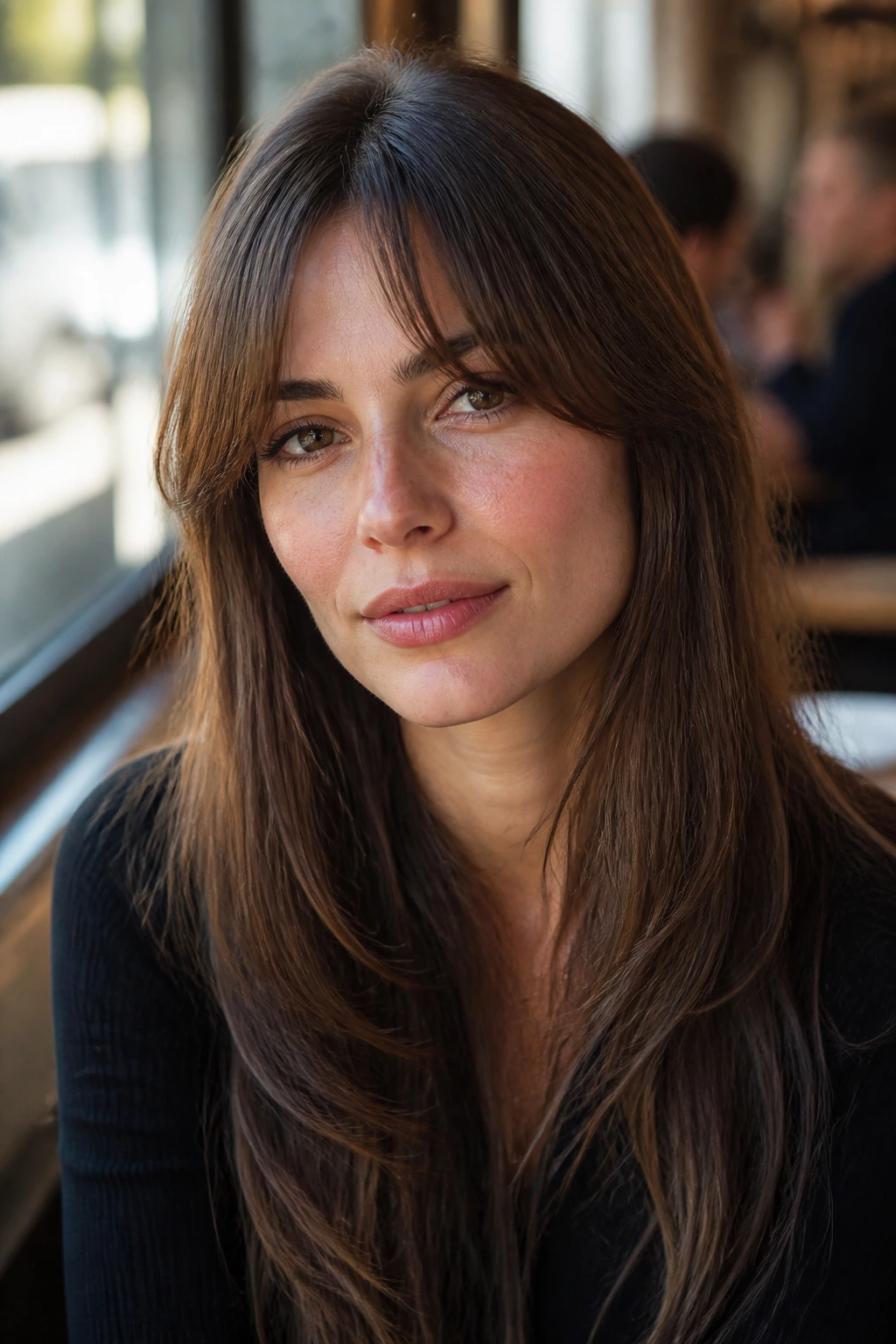
This is the chic, slightly untidy cousin of the classic crescent. It’s shorter in the middle, a little piecey at the ends, and happiest when it doesn’t look overdone. Long hair gives it contrast; the fringe stays airy while the length stays calm.
The French-inspired version suits square faces because it keeps the top of the face open and doesn’t let the jawline feel boxed in. It works especially well if you like some natural separation near the forehead. A bit of texture is part of the point.
How to Keep It Looking Good
Use very little product. A pea-size amount of lightweight cream or mousse is enough. If the fringe starts to clump, you’ve gone too far.
14. Long Shag Crescent Bangs
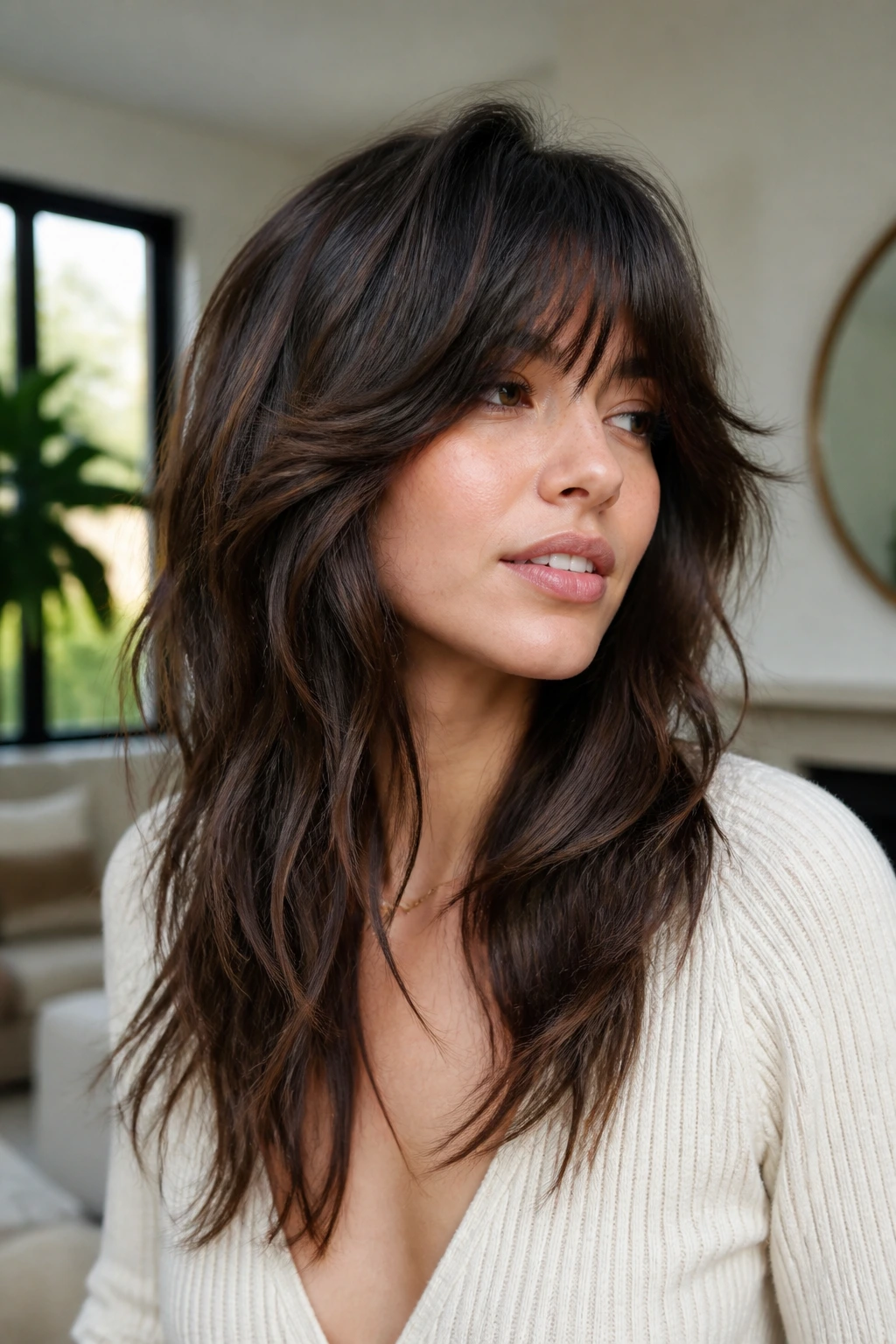
If you like your hair to move when you turn your head, this is the one. The shag layers keep the fringe from sitting rigidly against the forehead, and the crescent arc gives the whole cut a front-facing shape.
Square faces benefit from the broken-up texture. The shag softens the jaw without trying to hide it, which is the right attitude for this face shape. The fringe works better when the rest of the hair has some piece and lift too.
This is not a sleek cut pretending to be messy. It’s a cut that wants texture from the start. If you air-dry, diffuse, or scrunch, the shape usually looks better, not worse.
15. Soft Razor-Cut Crescent Bangs
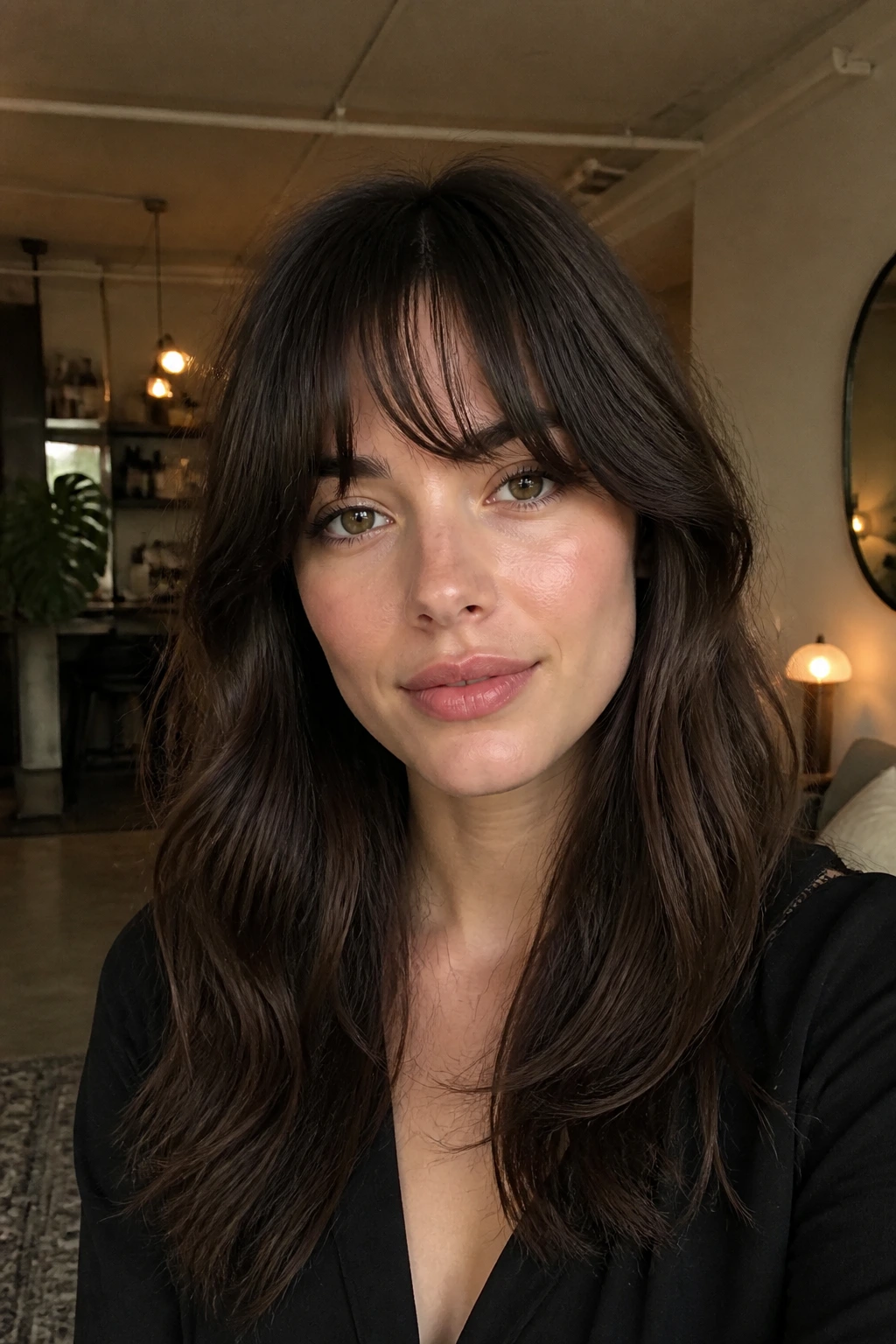
Thick hair gets heavy fast. A soft razor cut takes some of that bulk out and leaves the bangs with a lighter edge, so the center doesn’t sit on the forehead like a panel. The sides taper out in a way that gives the square face a softer frame.
The important thing is control. A razor can remove weight quickly, which is great if the fringe feels dense, but too much of it can make the ends wispy in a bad way. You want movement, not gaps.
This shape tends to work well on long hair because the rest of the length can carry more weight while the fringe stays light.
16. Voluminous 90s Crescent Bangs
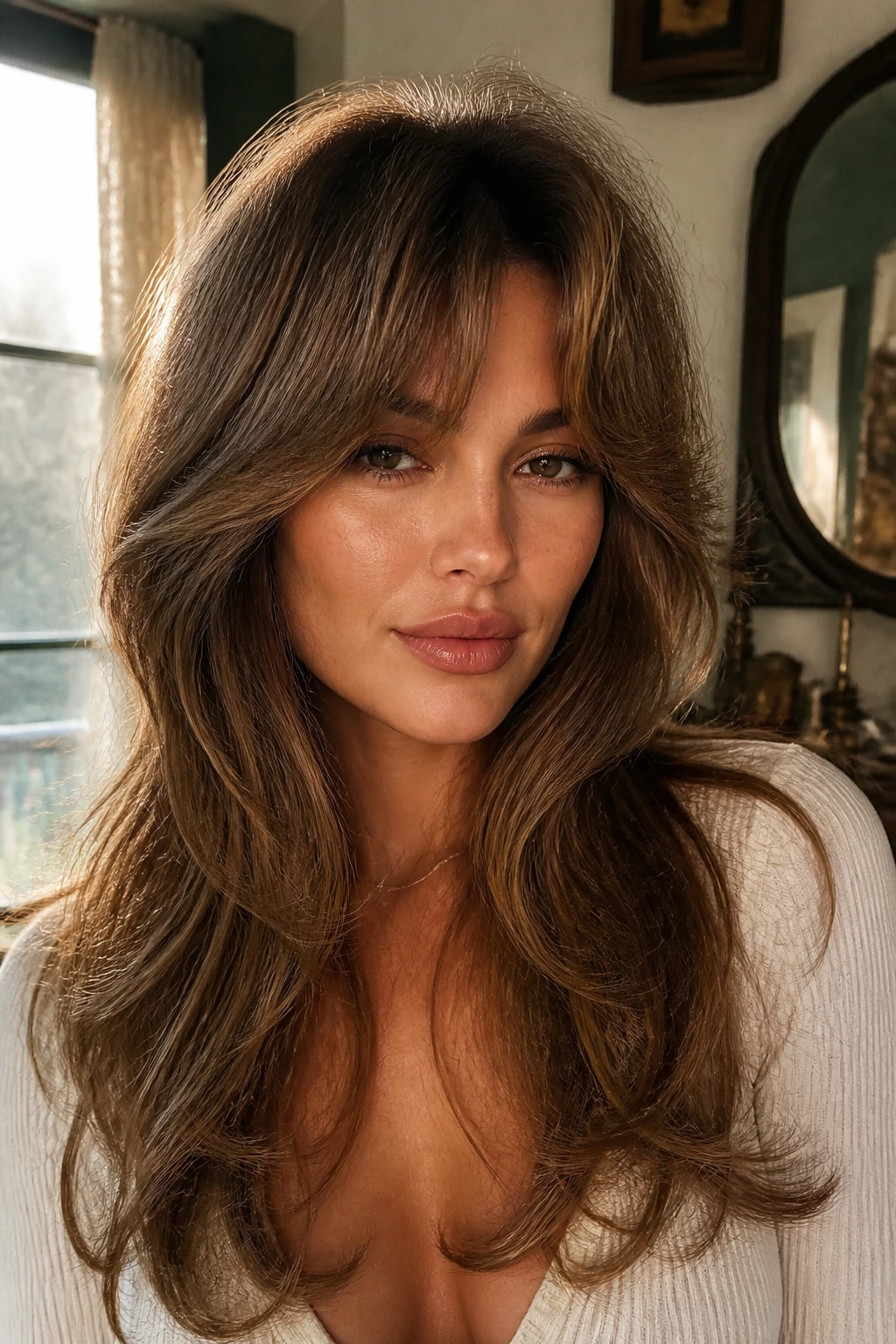
This is the glam version. The root lift is bigger, the curve is rounder, and the side pieces have enough body to hold their shape through the day. On long hair, that volume feels balanced instead of puffed, which is why the style can read retro without looking costume-y.
For square faces, the volume matters because it adds height and softness at the top third of the face. The jaw still has definition, but the fringe keeps the attention moving upward and outward. That’s a useful trick if your face reads strong and angular.
Velcro rollers help. So does a round brush with a little patience. Nothing fancy, just timing.
17. Wispy Air-Light Crescent Bangs
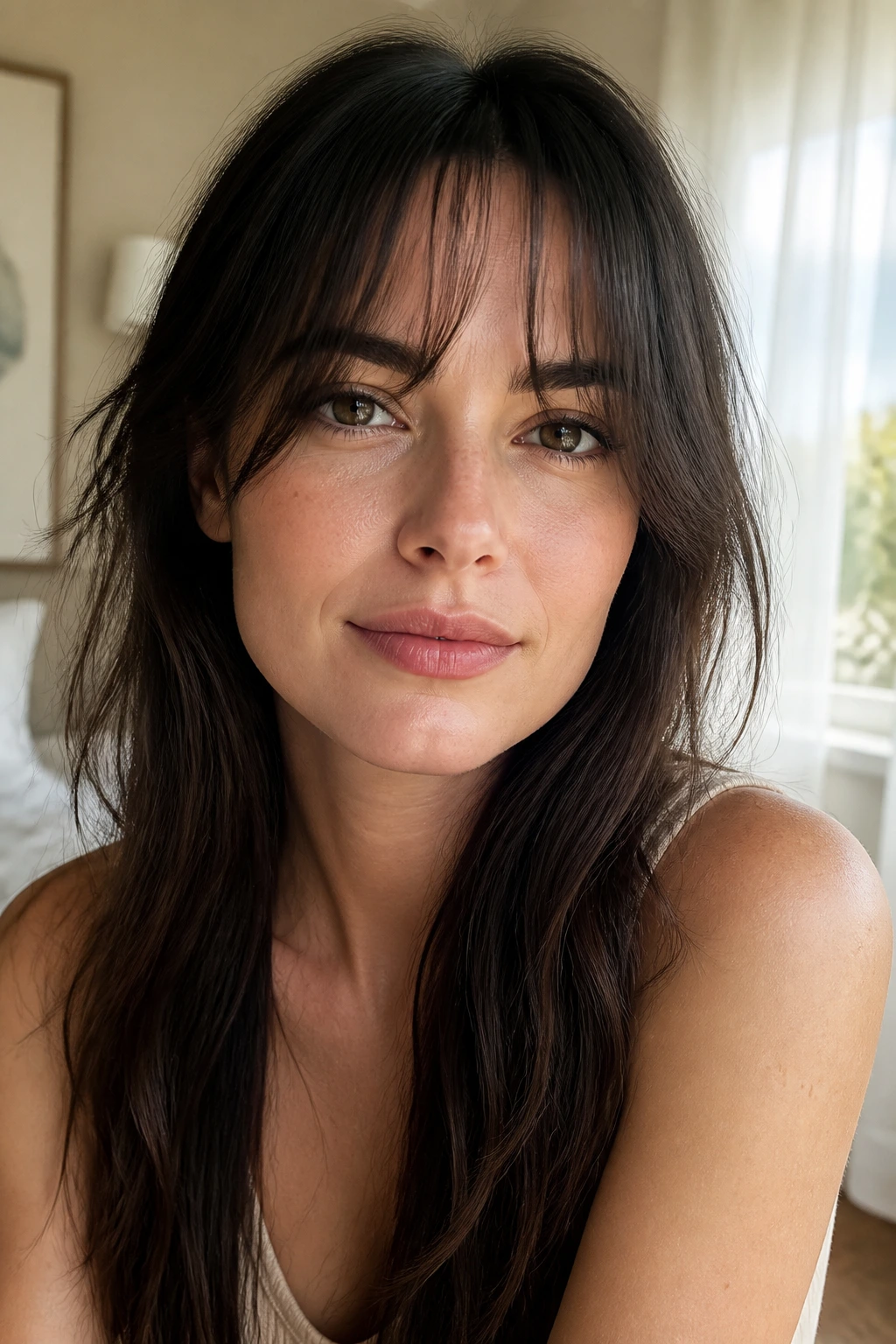
A wispy crescent still needs shape. It just needs less of it. The center is light, the sides are soft, and the whole fringe feels like a gentle bend rather than a statement line. That makes it a good match for long hair if you want fringe without sacrificing the open feel of the face.
Square faces can wear this shape well as long as the curve is still there. If the bangs get too thin, they disappear. If they’re cut too blunt, they start fighting the jaw. The sweet spot is a soft, see-through center with enough side length to blur the temples.
Use a round brush only if you need it. Sometimes a finger-dry and a tiny bend at the ends is enough.
18. Collarbone-Frame Crescent Bangs
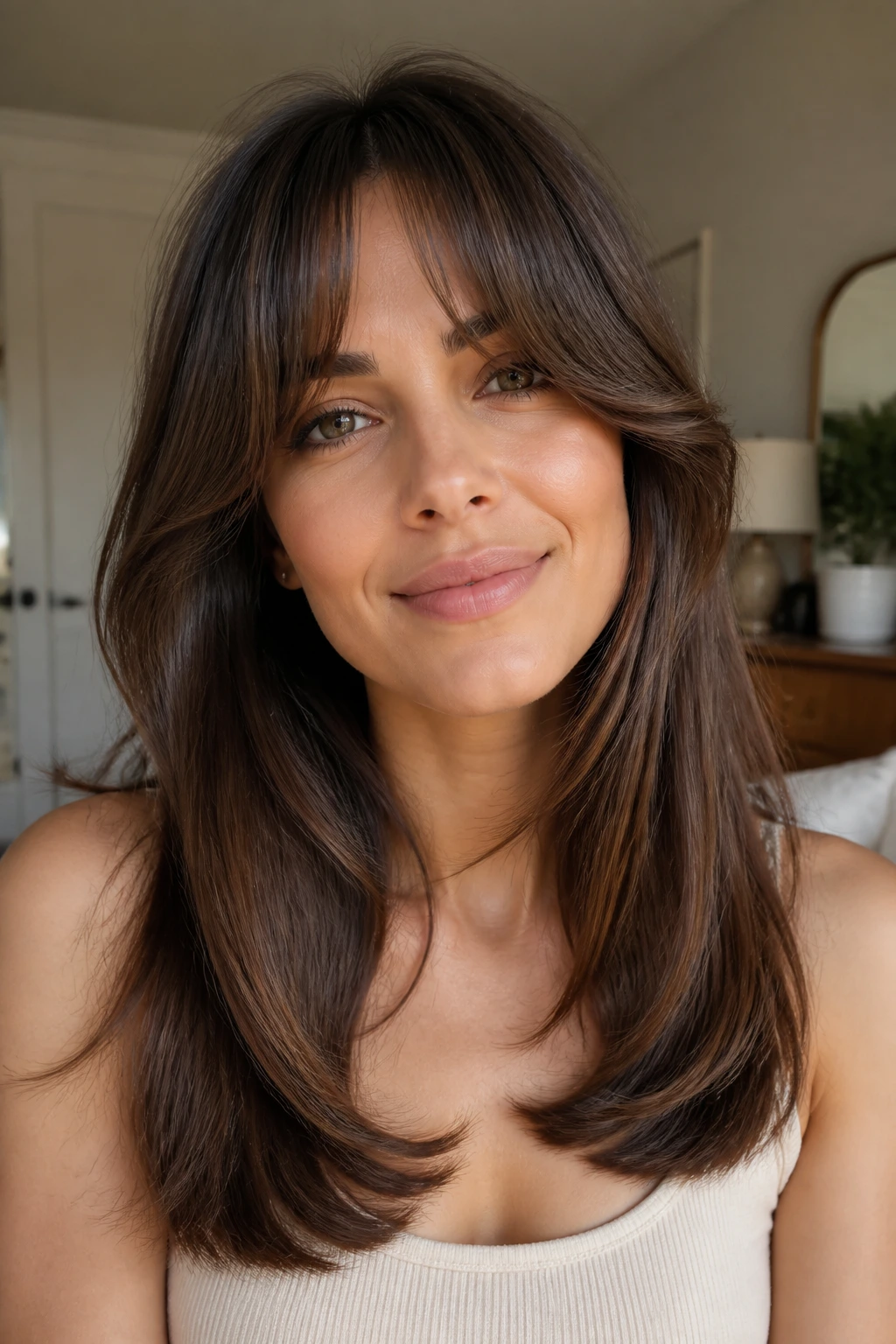
This version stretches the idea of fringe into longer face-framing pieces that end near the collarbone. It’s a good option if you want the softness of bangs but don’t want a lot of forehead maintenance. The middle still opens the face, and the long sides keep the square jaw from feeling too direct.
Long hair is where this style makes the most sense. The bangs don’t look detached from the rest of the cut; they feel like the beginning of the haircut’s shape. That makes the whole style read calm and continuous.
- Best if: you like low-commitment fringe
- Works with: center parts and soft off-center parts
- Pairs well with: ponytails, loose twists, and half-up styles
- Maintenance: lighter than a shorter fringe, but still needs shaping
19. Curly Crescent Bangs
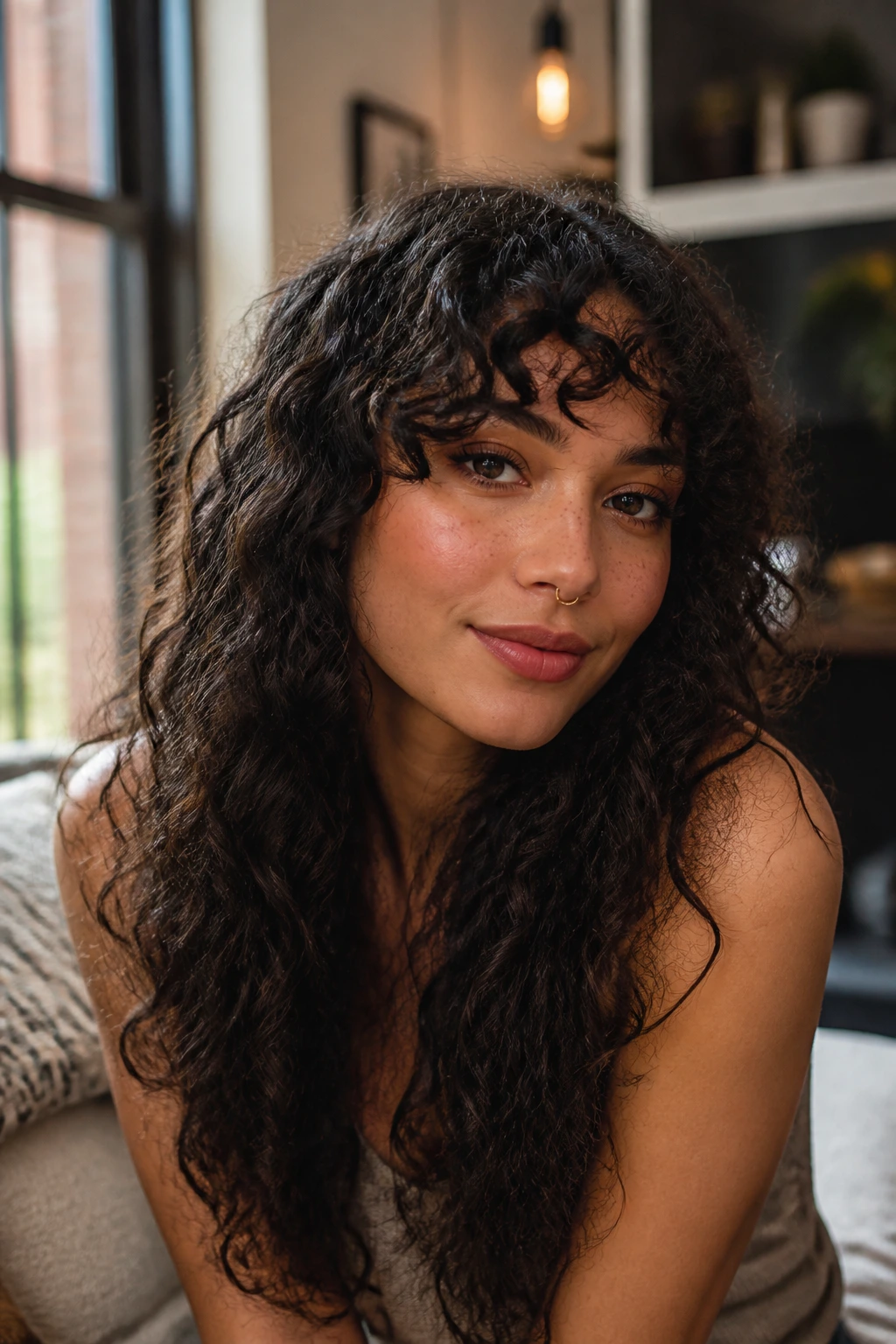
Can curls pull off a crescent shape? Absolutely, as long as the cut respects shrinkage. Curly crescent bangs should be longer than you expect when they’re wet, because the center will spring up and the sides will tuck into the curl pattern.
That extra length is what keeps the fringe from sitting too high on a square face. The curve gives the forehead softness, and the curls themselves break up the angularity around the jaw. The result is lively, not heavy.
Styling Note
Cut them dry or mostly dry if possible, and use a diffuser or air-dry cream instead of trying to force a straight line. A curly fringe that’s brushed too hard usually loses the shape fast.
20. Bouncy Blowout Crescent Bangs
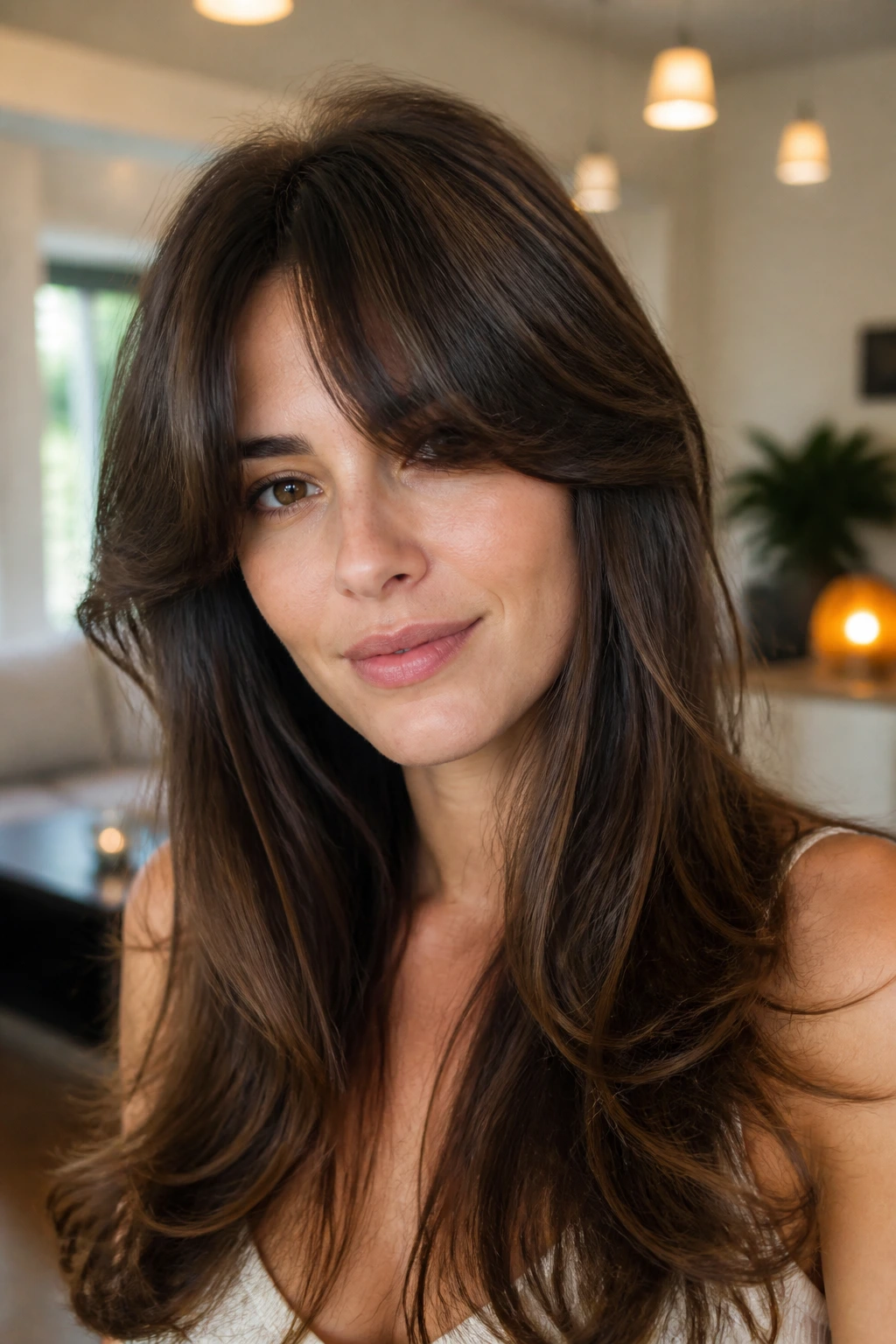
This is the salon bounce version. The fringe has lift, the ends tuck under slightly, and the sides sweep away from the temples in a way that feels expensive without needing a dramatic haircut. On long hair, the bounce keeps the front from falling flat against the length.
Square faces often benefit from this because the rounded movement offsets the straightness of the jaw. It’s a cleaner, more controlled look than loose waves, and it can feel especially good if your hair naturally holds a blow-dry.
Use a round brush or a large roller and let the fringe cool before touching it. Warm hair lies.
21. Off-Center Crescent Bangs

A little asymmetry can soften a square face faster than a perfect middle part. Off-center crescent bangs keep the arc, but the part is shifted just enough to break the symmetry. That slight imbalance makes the face read less rigid.
This is a useful option if your hair naturally wants to fall one way or if you wear glasses. The off-center shape gives room around the frames and keeps the bangs from feeling too formal.
The side with more length should still taper toward the jaw. If both sides are the same, the cut loses the point of the crescent shape.
22. Tailored Long-Line Crescent Bangs
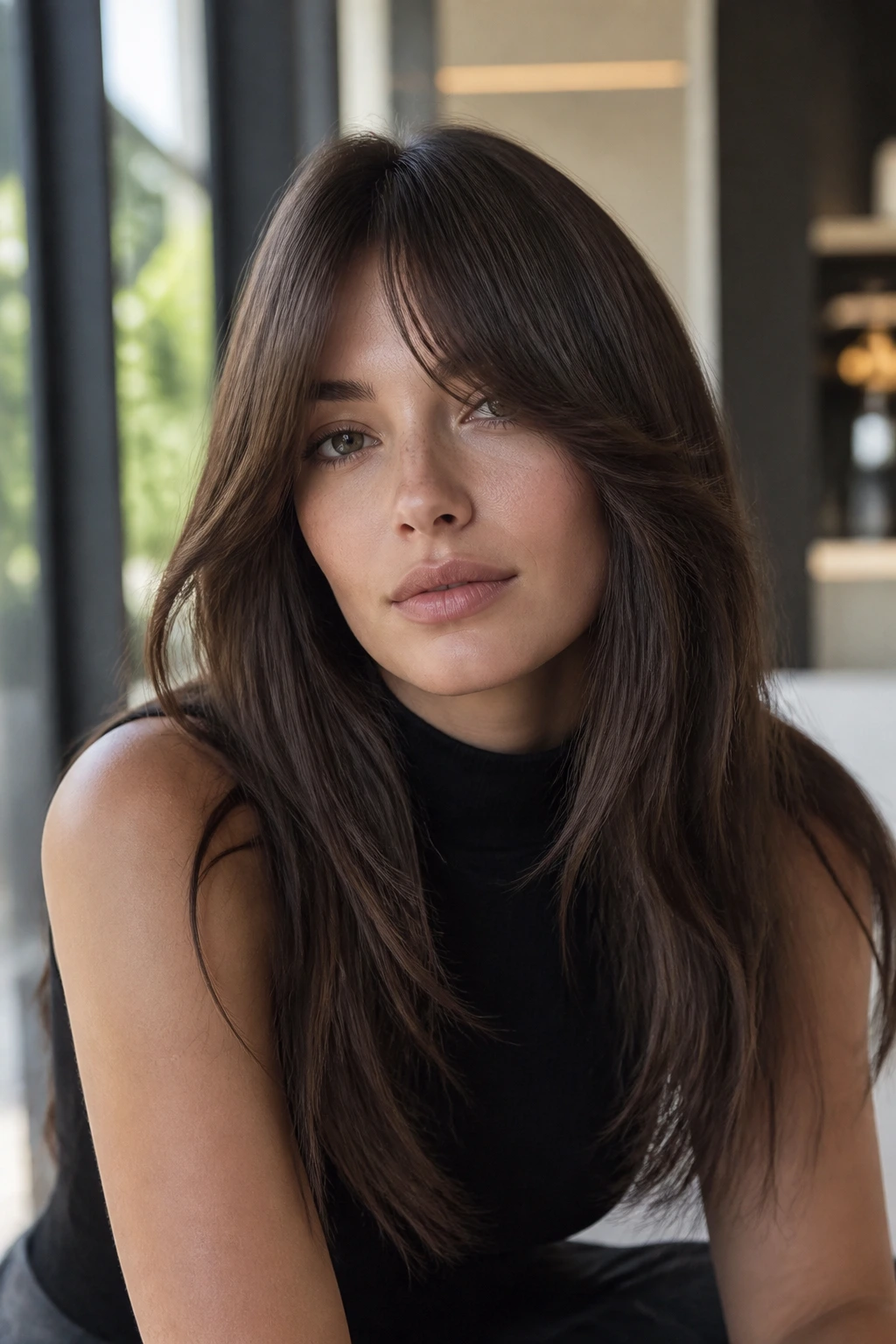
This is the precision cut. The lines are cleaner, the curve is longer, and the whole thing feels intentionally drawn rather than casually worn. On long hair, that restraint is useful because it keeps the fringe from competing with the length.
A square face often looks good in this shape because the clean arc softens the structure without turning playful or shaggy. It’s a smart choice if you like sleek clothes, polished makeup, and hair that looks thought through.
The length should be long enough to move into the cheek and jaw, not stop at the brow and freeze there. That’s the difference between tailored and chopped.
23. Mini-Crescent Bangs With Face Layers
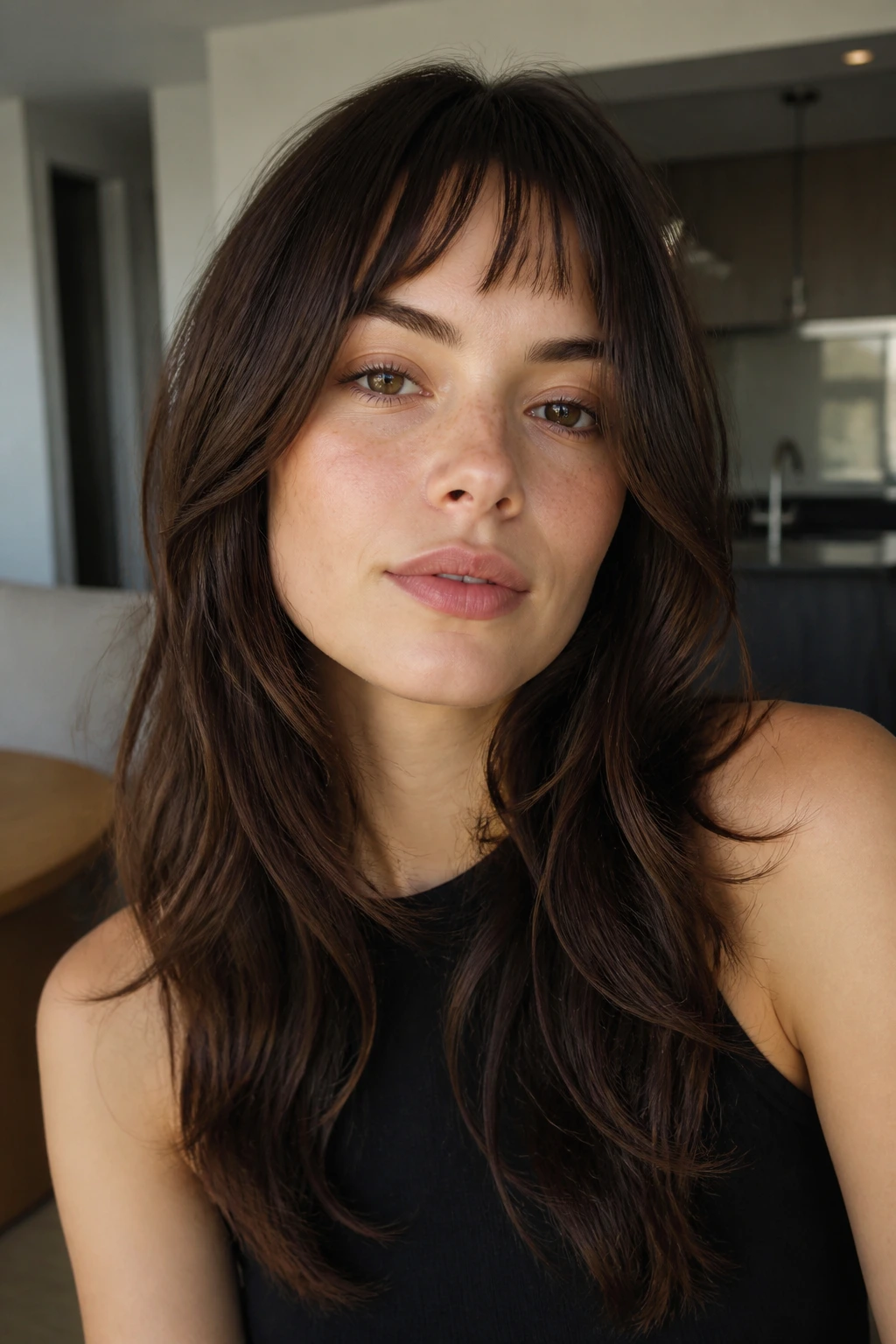
If you want the shortest center without going all the way into a baby bang, this is the wild card. The center sits higher, the sides stay long, and the face layers do most of the softening. On square faces, that can look striking because the eyes get a clear frame while the jaw keeps some air around it.
This one asks for confidence and a little maintenance. It’s not a background bang. It shows up.
- Best on: straight to slightly wavy hair
- Ask for: a soft center lift, not a hard chopped line
- Pair with: long face-framing layers
- Style tip: bend the sides inward only at the ends
24. Polished Glam Crescent Bangs
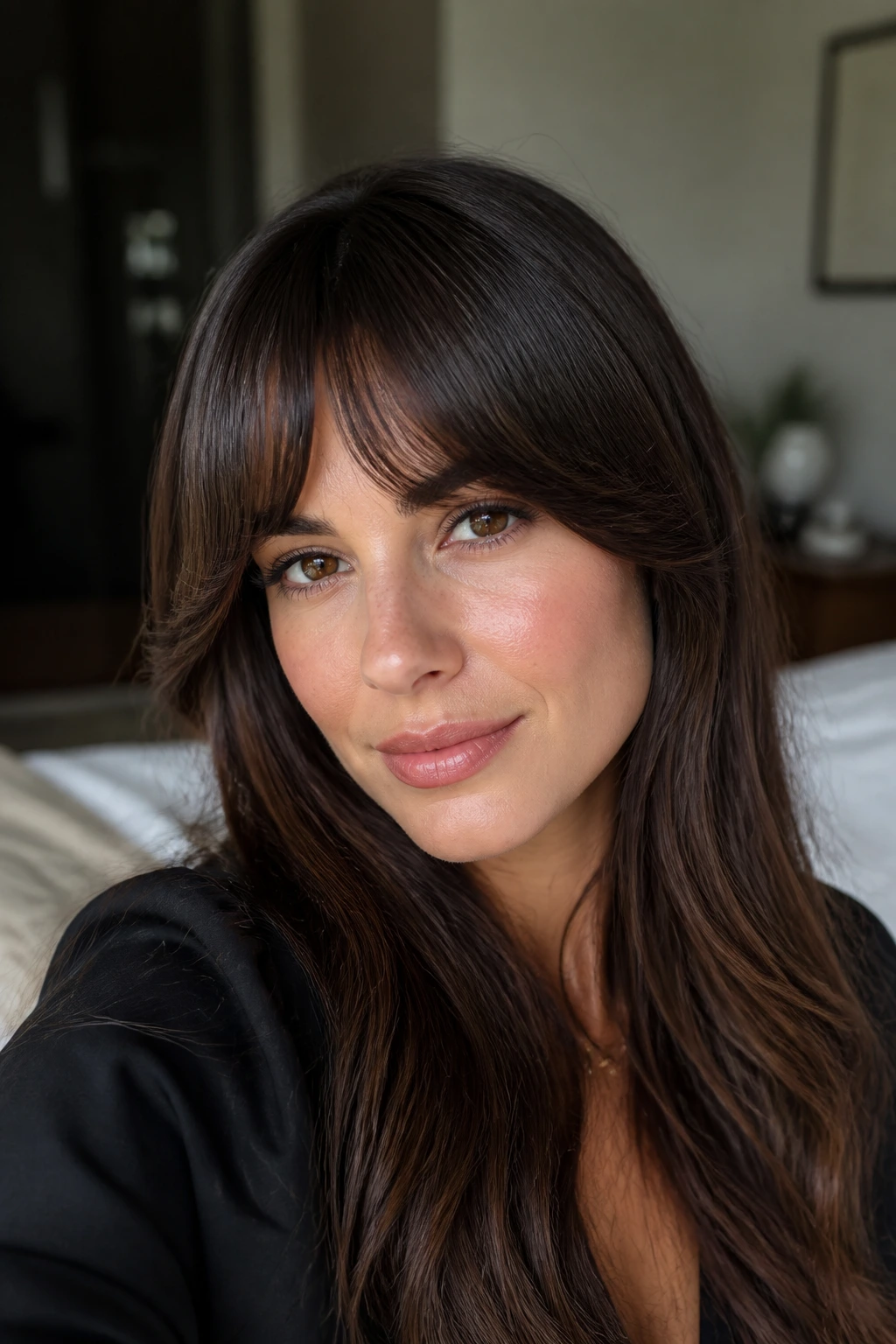
This version likes shine. The curve is smooth, the ends are controlled, and the finish leans glossy rather than piecey. On long hair, that polish can look especially strong because the fringe reads as part of a bigger, more formal shape.
For square faces, the glam version works because the arc softens the forehead while the rest of the hair adds vertical length. It’s a neat way to keep the face from feeling too squared off in photographs or under brighter light.
Keep the root lift, but don’t make the fringe stiff. The best glam fringe still moves a little when you turn your head.
25. Grown-Out Crescent Bangs
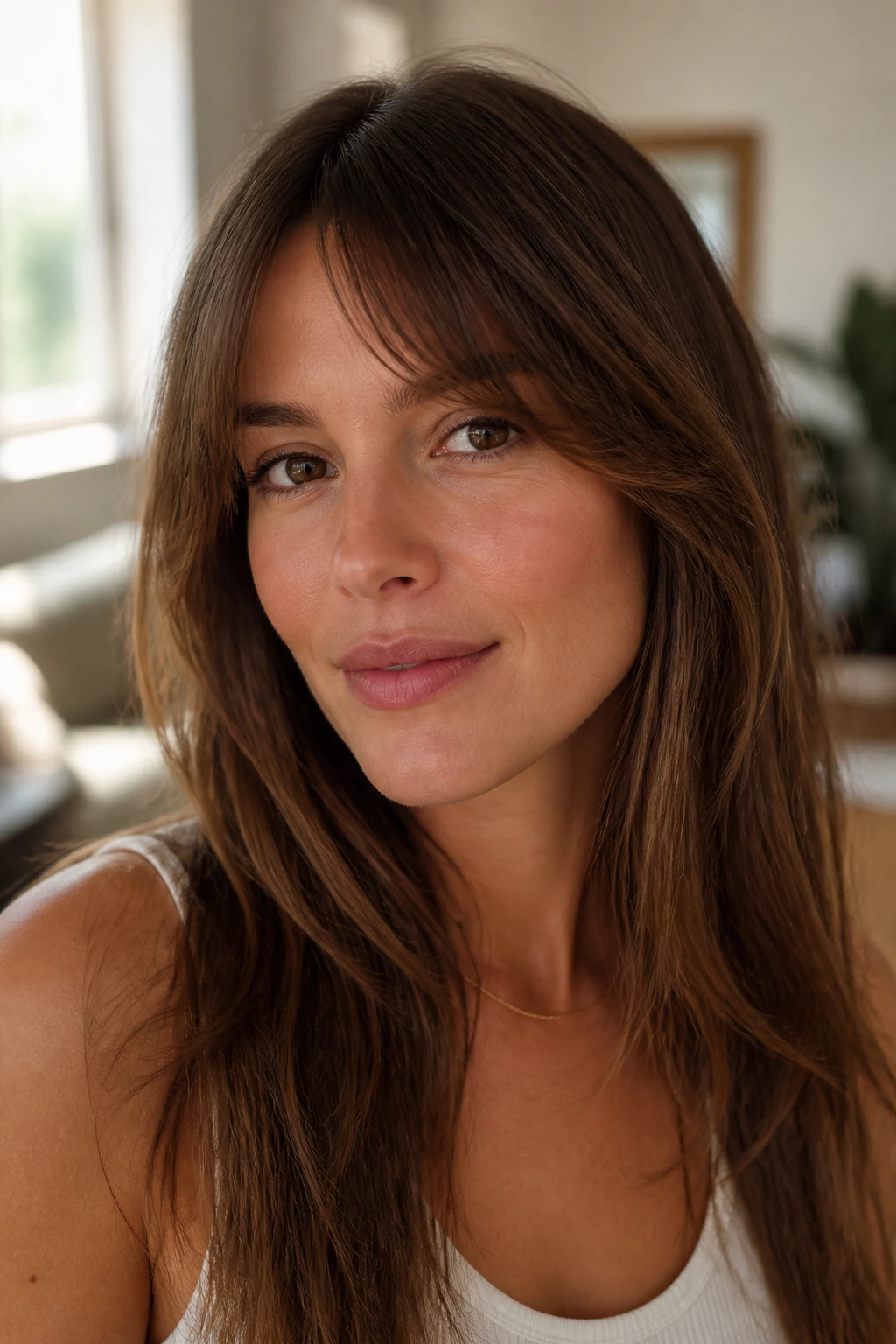
What happens when the fringe is halfway to layers but still holds a curve? You get the grown-out crescent, and honestly, that’s one of the easiest versions to live with. The center is longer, the sides are already blending into the haircut, and the shape stays soft even when you skip a trim.
That makes it a strong option for square faces because the curve remains in place while the grow-out starts to soften the edges further. Long hair is where it really makes sense. The fringe doesn’t separate from the rest of the cut; it just melts into it.
Why People Keep It
It works with ponytails. It works with loose waves. It even works on the days you forget to style it and just tuck one side behind your ear. That’s not an accident. It’s the kind of fringe that gets better when it stops looking brand new.
What to Tell Your Stylist Before the First Snip
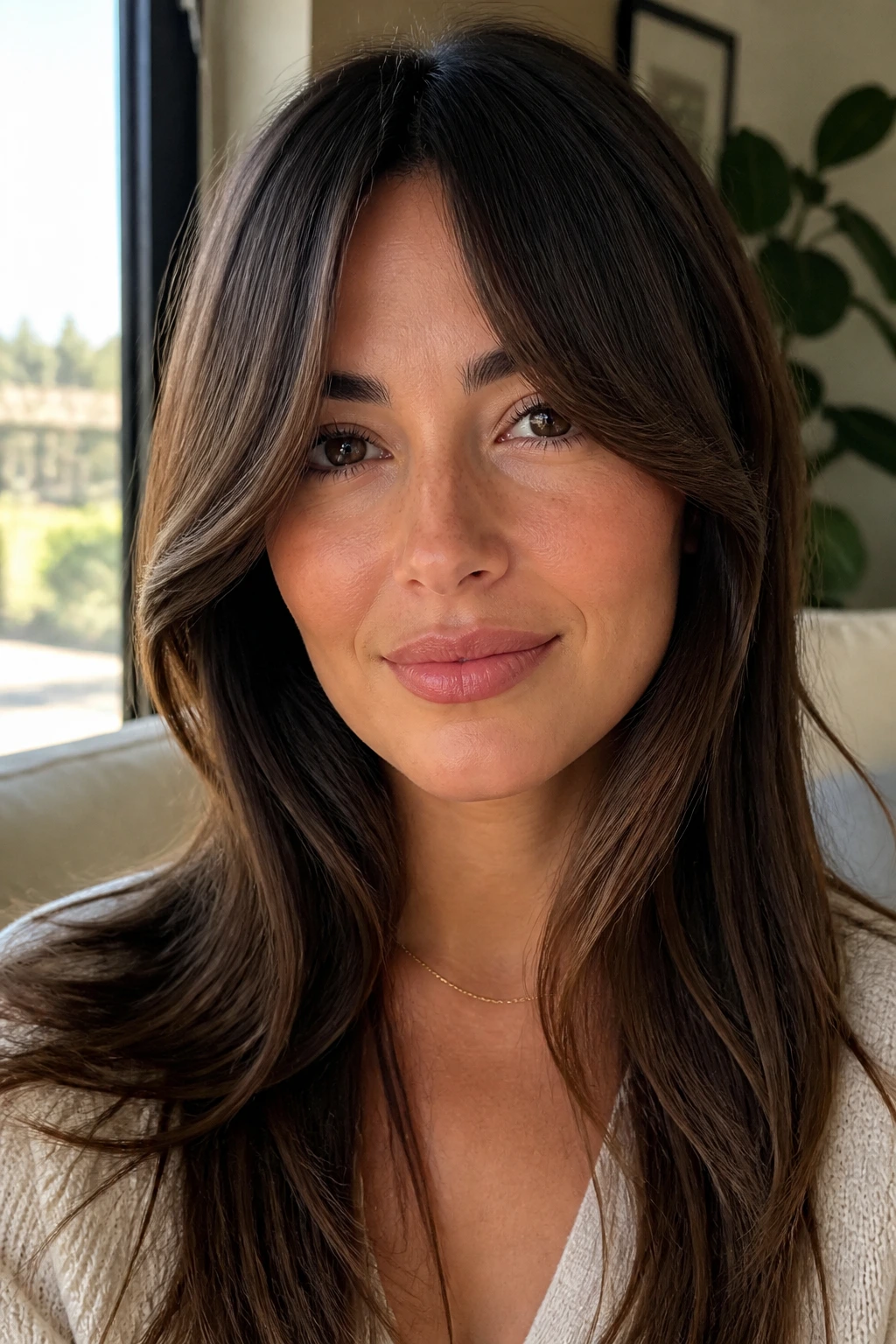
A good crescent bang starts with a good conversation. Show a photo, sure, but don’t stop there. Your stylist needs to know where your cowlick lives, how flat your hair falls at the front, and whether you usually wear a center part or a slight offset. Those details matter more than the picture on your phone.
Be specific about length. If you have a square face and long hair, the center point usually looks better a little longer than you think, especially if your hair shrinks when it dries. Ask where the shortest point will sit when dry, not just when wet. That one question saves a lot of regret.
The Three Things Worth Saying Out Loud
- How much forehead you want to show
- Whether your hair is fine, thick, straight, wavy, or curly
- How often you’re willing to restyle the front
If you like air-drying, say that. If you use a round brush every morning, say that too. A fringe cut for a blowout can fall apart fast on someone who wants to scrunch and go. And if your hair is thick, ask about removing weight inside the shape instead of thinning the edges until they fray.
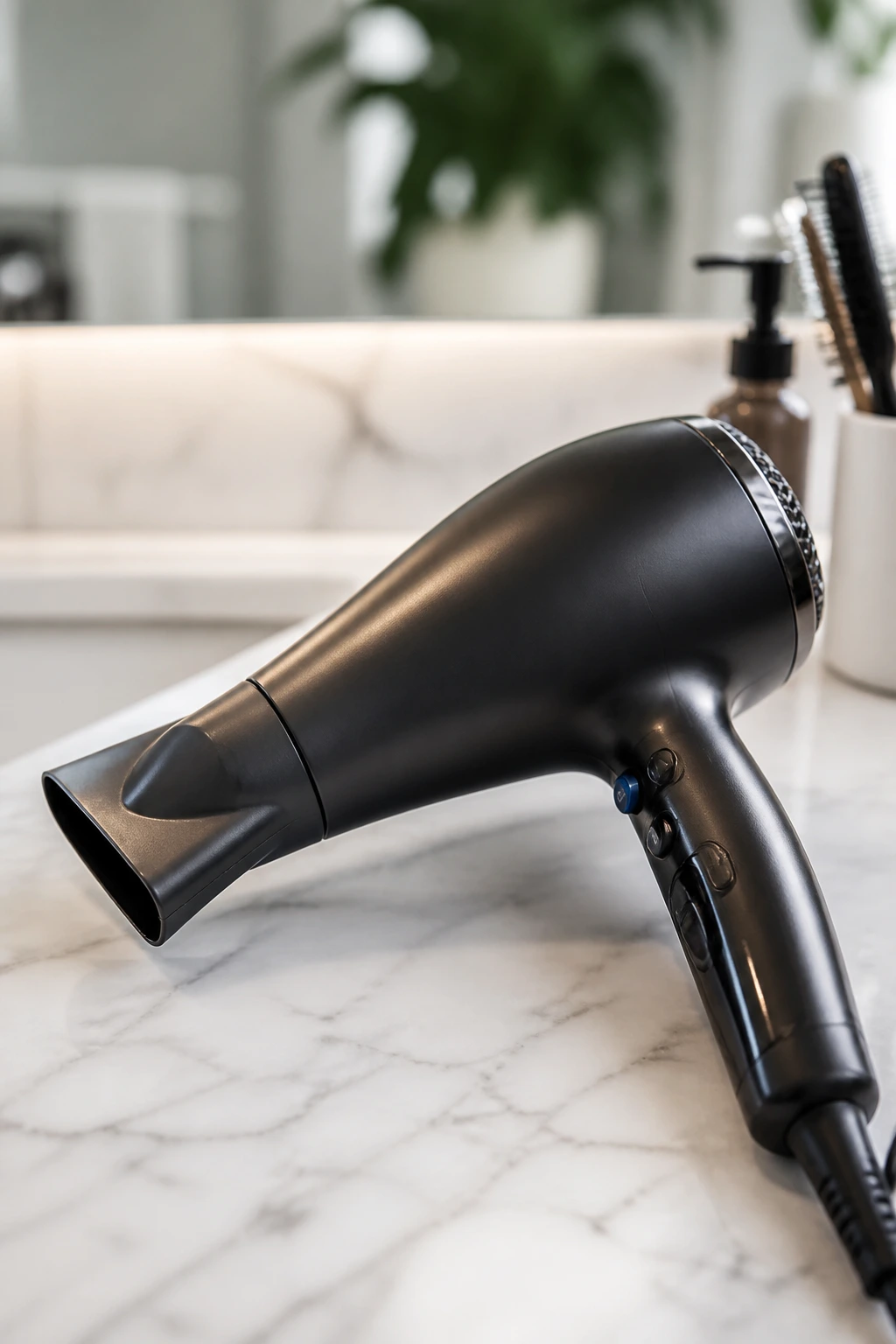
Essential Equipment for These Styles
-
Blow dryer with a nozzle attachment: Directs airflow so the fringe bends where you want it instead of puffing around the forehead.
-
1-inch to 1.25-inch round brush: Small enough to shape the crescent, but not so small that the curve turns into a curl.
-
Fine-tooth tail comb: Helps part the hair cleanly and keep the center section narrow where needed.
-
Sectioning clips: Keep the rest of your long hair out of the way while you shape the front.
-
Heat protectant spray: Worth using every time you add heat. Fringe hair is short and gets fried faster than the rest.
-
Lightweight styling cream or mousse: Controls flyaways without making the bangs sticky or heavy.
-
Velcro roller or large setting roller: Useful for bouncy versions and polished blowouts.
-
Small flat iron: Optional, but handy for touching up the side pieces or fixing a stubborn bend.
-
Texturizing spray: Good for piecey or lived-in versions, especially on wavy hair.
How to Wear Crescent Bangs With Long Hair
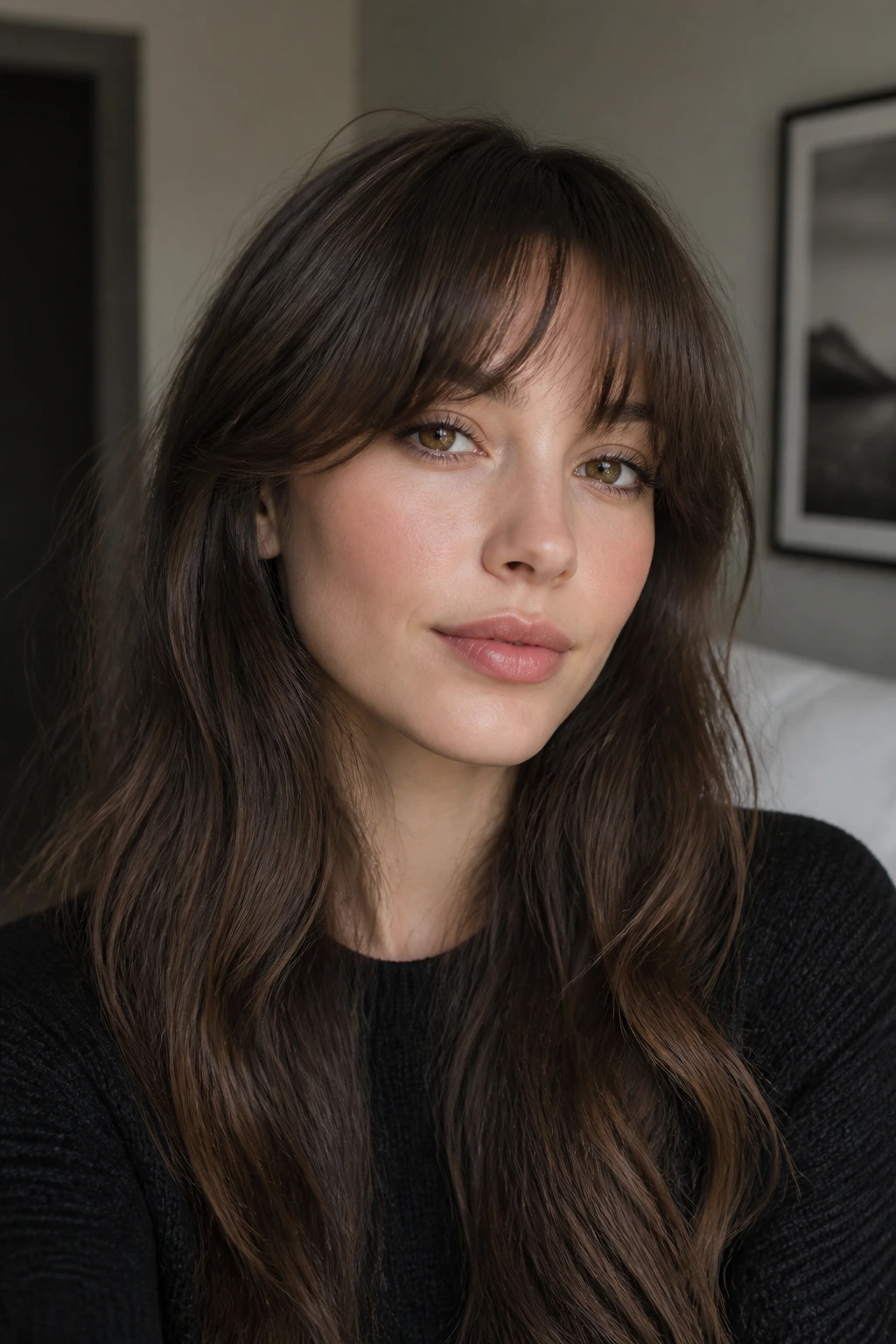
Presentation: Let the center of the fringe sit where it can open the face, usually around brow level or a touch longer, then let the sides fall toward the cheekbone or jaw. On a square face, that curve should feel like a frame, not a fence.
Best Pairings: Loose waves, soft straight hair, half-up styles, low buns, and ponytails all work. The fringe gives those styles a front shape, so the hair doesn’t disappear into a single mass down the back.
Balance: If your jaw is strong, keep the outer pieces longer than the center. If your forehead feels broad, don’t cut the middle so short that it exposes too much space. The arc should change the line of the face, not fight it.
Finish: Airy and touchable beats stiff and sprayed down every time. A little movement in the side pieces keeps the whole look from becoming helmet-like, which is the one thing crescent bangs should never do.
Styling Tricks That Keep the Curve Soft
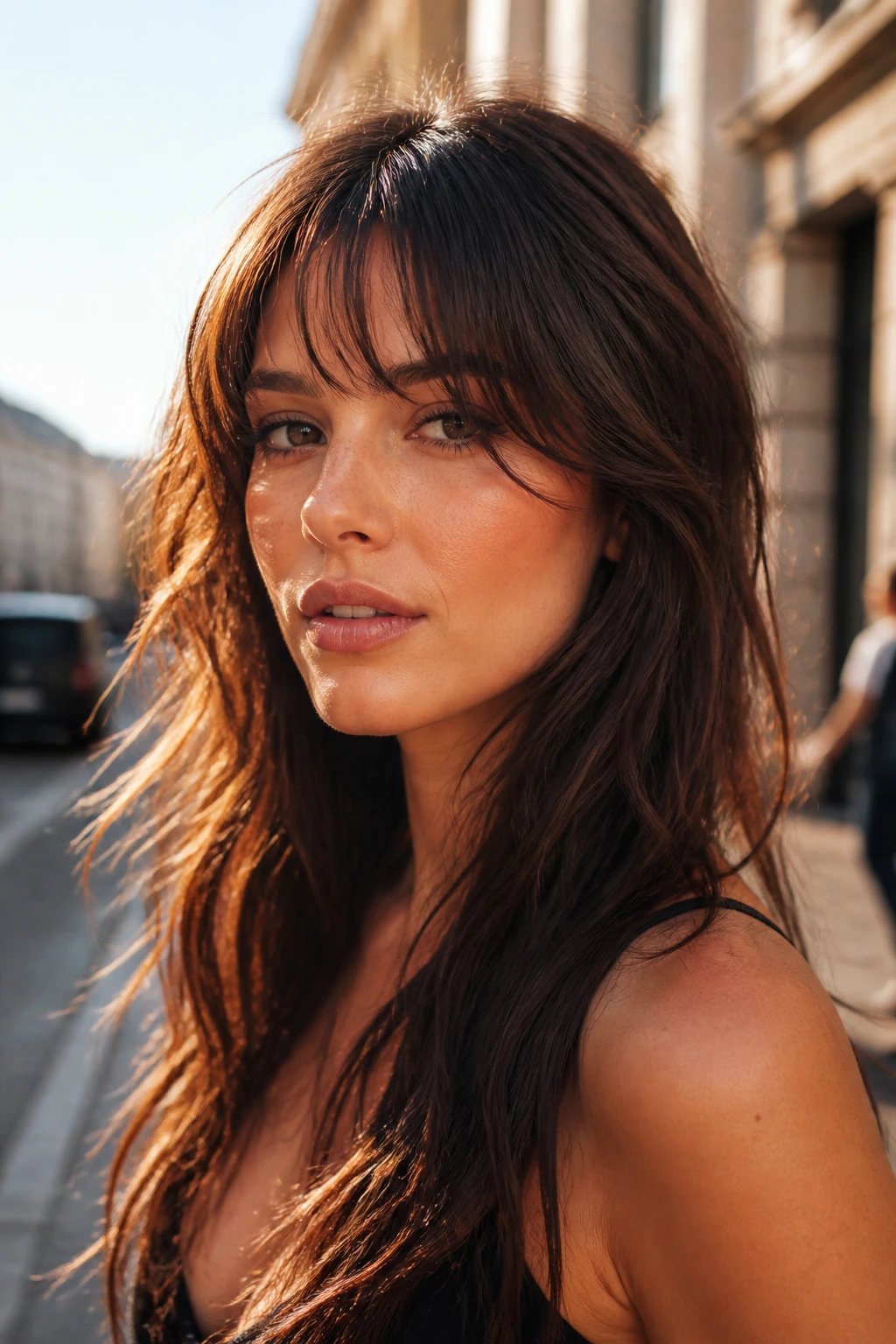
Root Lift: Blow the center forward and slightly down, then lift the roots with your brush as the hair cools. A flat root makes the whole fringe look heavier and shorter than it actually is.
Bend, Don’t Curl: The side pieces should bend away from the face, not twist into ringlets. One slow pass with a round brush or flat iron is enough. More heat usually means less shape, not more.
Texture Control: Fine hair likes mousse at the root and almost nothing on the ends. Thick hair usually needs a touch of smoothing cream through the side pieces so the curve doesn’t puff outward by noon.
Make-It-Yours: If you wear glasses, keep the shortest point just above the frame line. If your hair is curly, cut the bangs longer than a straight-haired client would. If you live in humidity, choose a looser crescent so the shape has room to change without collapsing.
Common Mistakes That Make the Shape Boxy

Cutting the center too short: The fringe pops up, sits stiff, or leaves no room for the curve to read. The fix is simple: leave the center longer than you expect and adjust after drying.
Making the sides end bluntly: When the outer pieces stop in a hard line, the whole style starts looking square again. Ask for point cutting or feathering through the ends so the curve can taper.
Ignoring your growth pattern: A stubborn cowlick at the front will split the fringe every time if you cut it too short. Shift the part slightly and let the hair fall in the direction it already prefers.
Over-thinning fine hair: A fringe that looks airy in the chair can turn stringy a week later. Keep enough density in the center to support the arc.
Leaving thick hair too dense: The front can balloon if the interior isn’t relieved. Remove weight inside the shape, not from the visible edge, or the cut will look choppy.
Variations and Adaptations to Try
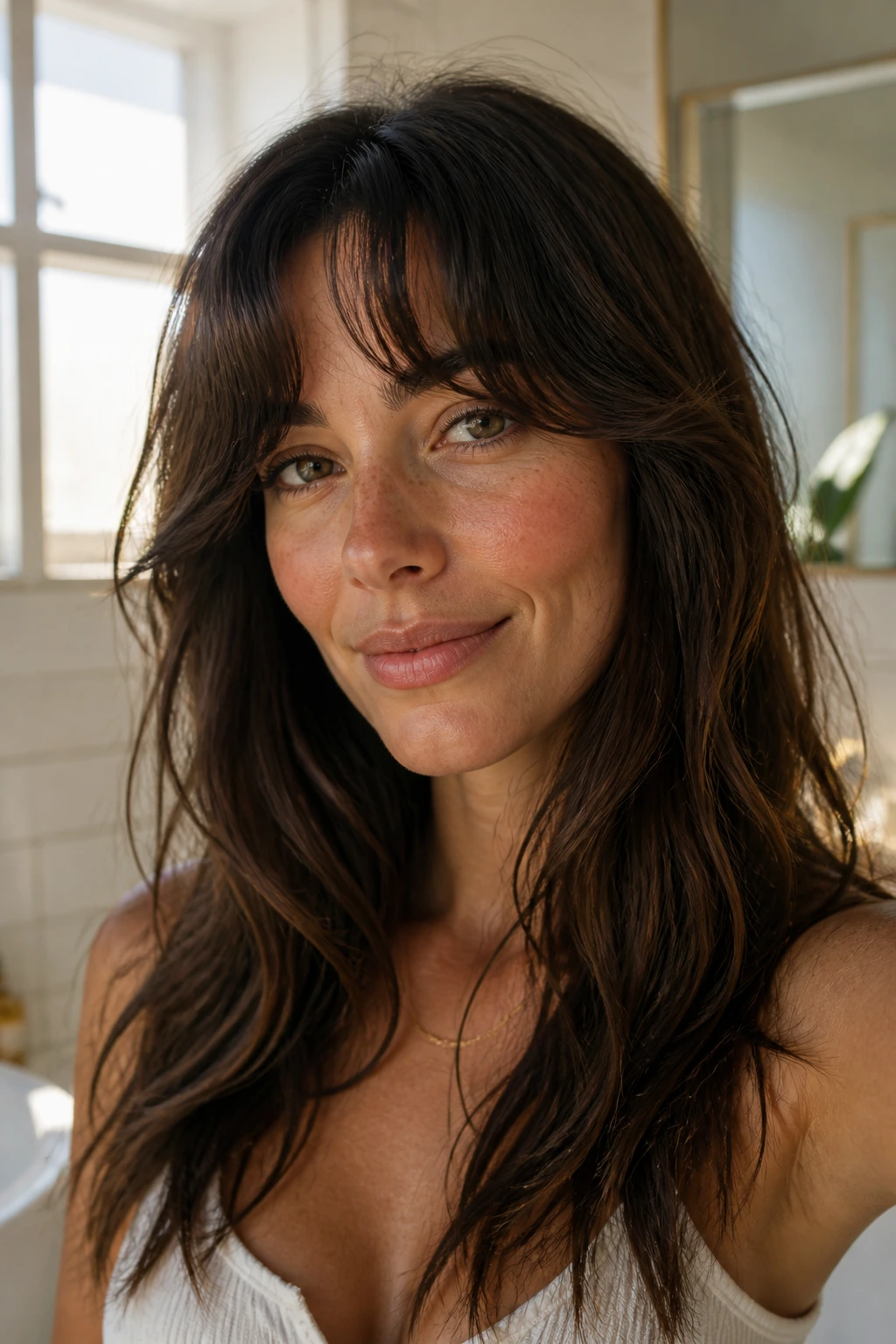
The Air-Dry Crescent: Cut a little longer and lean into natural texture. This version works best if your hair has wave or loose curl and you don’t want to blow-dry the fringe every morning.
The Glasses-Friendly Crescent: Keep the shortest point just above the frame line and let the sides sweep away cleanly. That keeps the bangs from crowding the eyes or sitting on the lenses.
The Thick-Hair Crescent: Leave more weight in the center and ask for internal texturizing rather than aggressive thinning. It gives the fringe room to move without exploding outward.
The Curly Crescent: Cut for shrinkage and shape it dry. The curve should still be obvious when the curls spring up, which means the wet length has to look longer than feels safe in the chair.
The Grow-Out Crescent: Stretch the side pieces into face-framing layers and keep the center just long enough to tuck or sweep aside. This is the version that survives skipped trims with the least drama.
Keeping the Fringe in Shape Between Trims
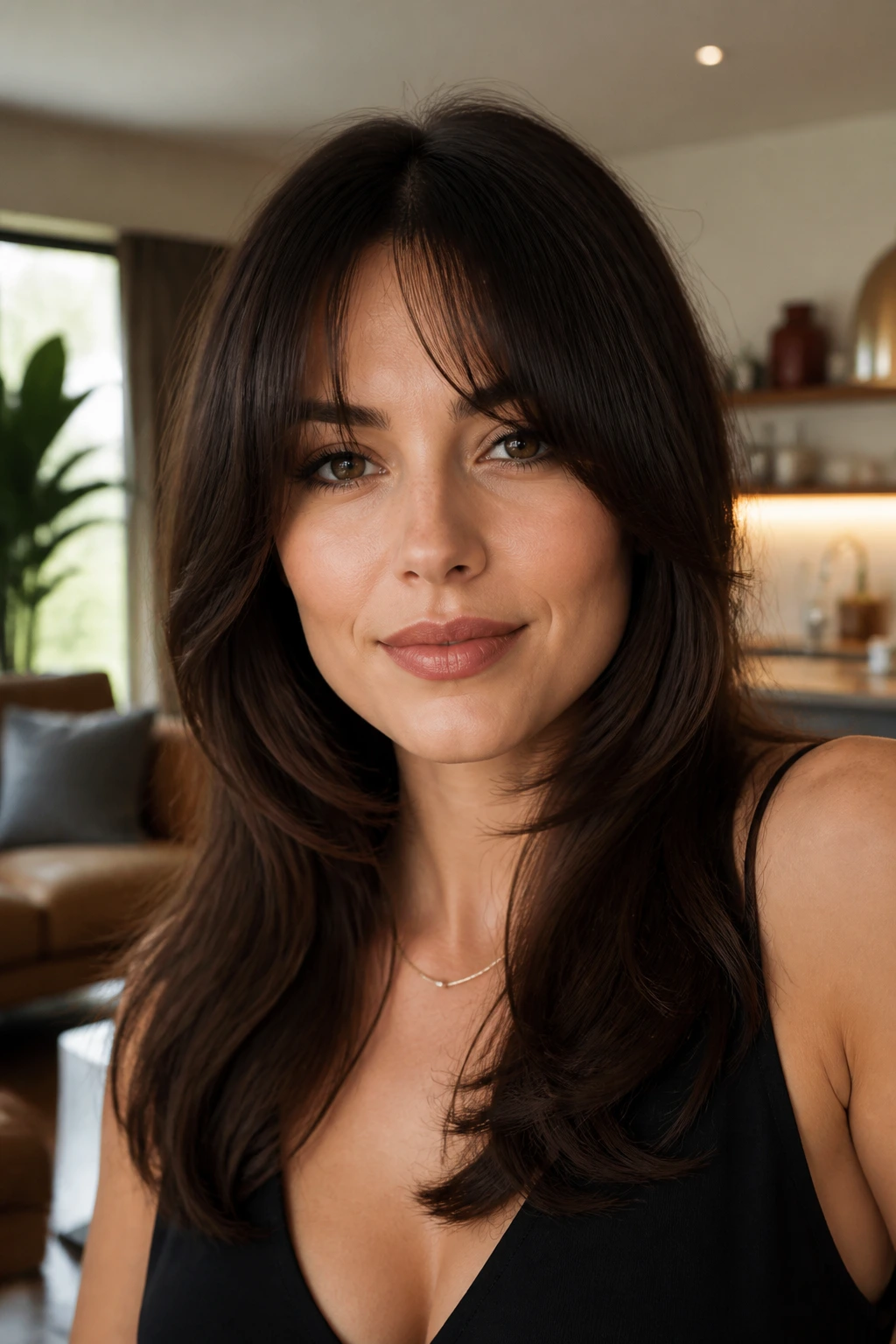
The first minute after you wash your hair matters more than most people think. If you want the crescent shape to reset well, dry the fringe first, before the rest of the hair starts dripping around it. A small round brush and medium heat usually do the job. If you let the bangs air-dry flat against your forehead, they tend to set in the wrong direction and stay there.
Between washes, use dry shampoo sparingly at the roots, not through the ends. Too much powder makes the fringe feel chalky and stiff. A quick lift at the root with your fingertips is often enough on day two, and day three usually wants a light mist of water plus a short re-blow-dry rather than another round of product.
Trims are the real maintenance line. For a sharp crescent, 4 to 6 weeks keeps the arc clean. If you like a softer, grown-out version, 6 to 8 weeks is usually fine. Let it go much longer and the center loses its point, which turns the shape into face layers whether you wanted that or not.
Sleep can flatten the front fast. A loose clip at the crown, a silk pillowcase, or a soft roller at the front can help the curve survive the night without needing a full redo in the morning. That sounds fussy. It isn’t, once you’ve watched a good fringe collapse in six minutes.
Frequently Asked Questions
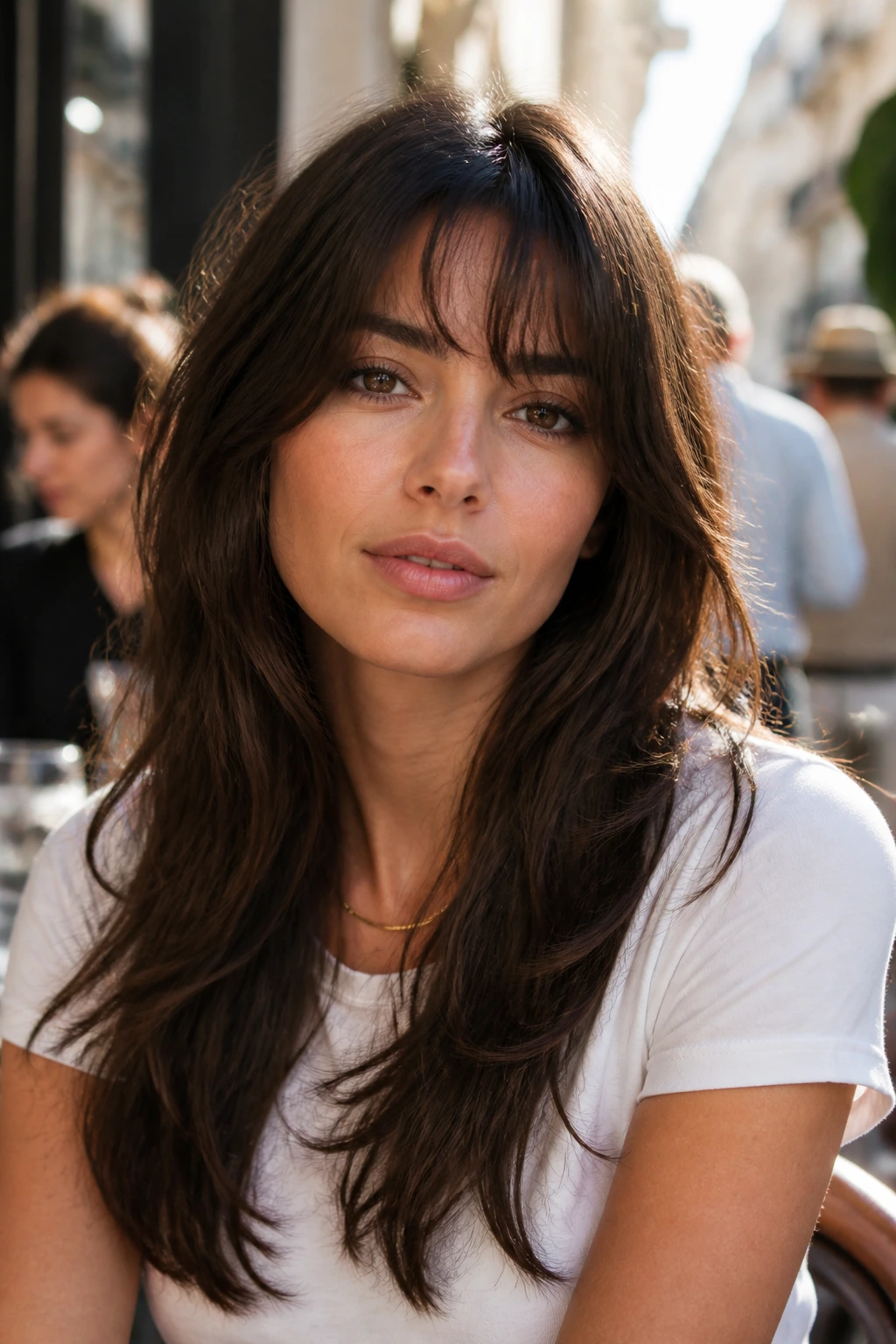
Do crescent bangs actually flatter a square face?
Yes, if the curve is placed well. The soft arc breaks up the straight line of the forehead and keeps the jaw from feeling too dominant, especially when the side pieces reach the cheekbone or lower.
How short should the center be?
For most people, the center should sit around brow level or slightly longer when dry. If your hair shrinks, is curly, or tends to puff up, keep it longer than you think you need and adjust after styling.
What’s the difference between crescent bangs and curtain bangs?
Curtain bangs are usually looser and more even from side to side. Crescent bangs carry a more obvious curve, with a shorter center and a stronger taper toward the outer edges.
Can I air-dry crescent bangs?
Yes, but the cut has to suit your texture. Wavy and curly hair often does well with a longer crescent and a bit of product; straight hair usually needs at least a quick brush-dry to keep the arc from falling flat.
What if I have a cowlick at the front?
Don’t fight it with a short center cut. Shift the part slightly, keep the shortest point a little longer, and style the fringe while it’s damp so the cowlick doesn’t set the wrong way.
Are crescent bangs hard to grow out?
Not really, if they’re cut with the grow-out in mind. The longer side pieces blend into layers fast, and the center can be tucked to the side as it lengthens.
Can I wear them with ponytails and buns?
Yes, and that’s one of the reasons they work so well on long hair. The side pieces soften the hairline and keep a tight updo from looking severe.
Should I get layers with them?
Usually, yes. Even subtle face-framing layers help the crescent shape melt into the rest of the haircut instead of sitting like a separate piece on the forehead.
The Shape That Softens the Edges

Crescent bangs give long hair a front edge that feels considered, not chopped on as an afterthought. On a square face, that curve matters because it changes where the eye goes first. The forehead gets softer. The jaw gets a little less loud. The whole haircut starts moving in a more flattering direction.
The best part is the range. You can go polished, airy, shaggy, curly, minimal, or grown-out and still keep the same basic shape. That makes crescent bangs one of the rare fringe choices that can change with your mood instead of trapping you in one look.
If your long hair feels heavy around the face, this is the fringe that can cut through the weight without cutting away the personality.