



Square faces can wear a blunt fringe, but they usually pay for it. The forehead reads wider, the jaw reads firmer, and the whole cut starts feeling a little too tidy in the wrong way. A swoop bang changes the geometry. It sends the eye on a diagonal, which is a small design move on paper and a big one in a mirror.
Long hair gives that diagonal room to breathe. Instead of stopping at the brow and sitting there like a shelf, the bang can slide into cheekbone-length pieces, chin-grazing layers, or a soft bend that keeps moving as the hair falls. That movement matters. On a square face, the most flattering fringe is rarely the one that shouts the loudest; it’s the one that breaks up the hard lines without hiding the face behind a curtain.
The difference between “cute fringe” and “why does this look boxy?” usually comes down to three things: where the part lives, how heavy the bang is, and where the longest piece lands. Get those wrong, and the shape fights you all day. Get them right, and the bang looks like it grew there on purpose.
Why These Swoops Earn Their Keep on Square Faces
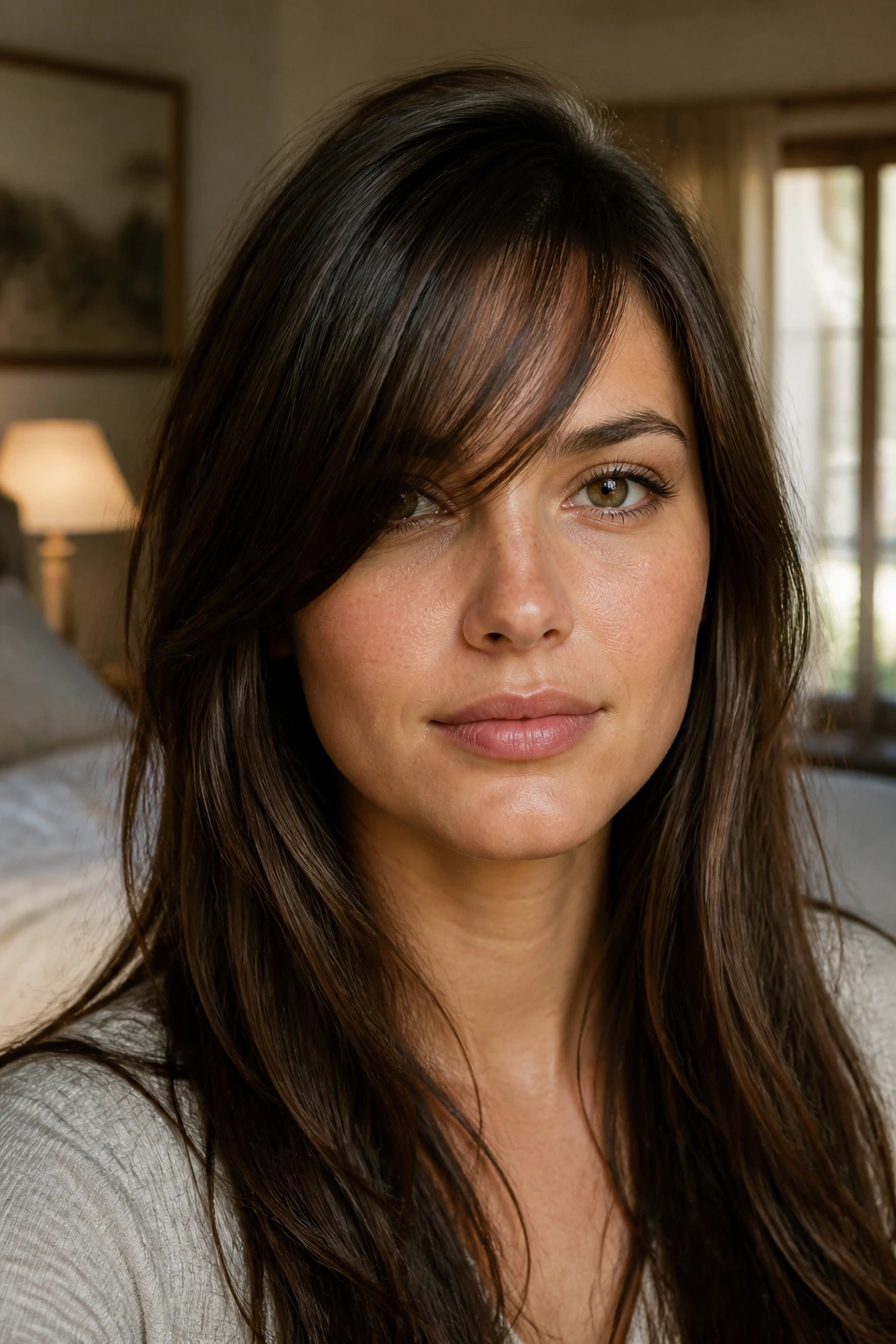
- Diagonal lines soften hard angles: A swoop bang cuts across the forehead and cheek area instead of sitting straight across it, which keeps a square face from reading as wide and squared-off.
- Long hair gives the bang a landing strip: The front pieces can blend into length, so the fringe feels connected to the haircut instead of pasted on top of it.
- You can dial the mood up or down: The same basic swoop can look glossy and polished, airy and piecey, or loose and lived-in depending on how you blow-dry it.
- The grow-out is less rude: A well-cut side sweep usually ages into face-framing layers instead of turning into a weird gap in the middle of the forehead.
- It keeps the eyes in play: The best swoops open one eye, skim the brow, and leave enough skin visible to keep the face from looking boxed in.
What to Tell Your Stylist Before the Snip
A good swoop bang starts with a good conversation. Bring a photo of the finished style, not just the cut. Hair that’s air-dried, brushed out, or curled under can look very different from hair that’s freshly cut and still hanging damp in a cape.
Say where you part your hair on a normal Tuesday. Say whether your front hairline has a cowlick, because that little patch near the part can make or break the whole thing. And say how much effort you actually want to spend in the morning — because a bang that needs a 20-minute round-brush session is a different animal from one that falls into place after three clips and a blast from the dryer.
A few phrases help a lot:
- “Keep the shortest piece below or right at the brow.”
- “Let the front curve toward the cheekbone or lip, not straight across.”
- “Blend it into the layers so it grows out softly.”
- “I want movement, not a blunt shelf.”
If your hair is thick, ask for internal removal rather than hacking the front thin at the ends. If your hair is fine, ask for light point cutting instead of heavy texturizing. Those are small words in a salon chair, but they change the whole result.
1. Deep Side-Swept Cloud Bangs
This is the version people imagine when they say they want “something soft in front.” The bang starts from a deep side part, sweeps across the forehead in one airy panel, and lands somewhere near the cheekbone with a feathered edge. On a square face, that deep angle matters more than the length itself. It pulls attention away from the jaw corners and sends it upward.
Ask for weight at the root and lightness through the ends. That keeps the swoop from collapsing into a flat strip by lunch. I like this shape on long hair because the fringe doesn’t compete with the length; it just gives the haircut a better front door.
The styling part is simple, but not lazy. Blow-dry the root in the direction you want the fringe to live, then wrap the mid-lengths around a small round brush and finish with a cool shot. If the ends flip too much, the cut probably needs less texturizing. If they hang like a curtain, it needs a little more internal movement.
2. Chin-Grazing Swoop with Long Layers
Why stop at the eyebrow when the front can travel all the way to the chin? This cut uses a longer swoop that starts near the temple and drops into a chin-grazing face frame. On square faces, that length is useful because it breaks up the jawline right where the face gets strongest. It also gives long hair a cleaner transition into the front layers.
The key is not making the whole front one heavy sheet. The shortest section should still feel like a bang, while the longest piece should kiss the jaw or skim the top of the collarbone. That contrast keeps the shape from reading blunt.
This one works especially well if your hair already has some weight. The long front pieces help balance a wide jaw, and the long layers behind them keep the haircut from looking bottom-heavy. It’s also one of the easiest styles to tuck behind the ear on busy mornings, which is useful when you don’t want your fringe to run the whole show.
3. Bardot-Style Swoop Bangs
Can a center-adjacent fringe still count as a swoop? Absolutely. Bardot-style bangs start with a soft split near the middle, then drift outward so one side becomes the stronger swoop. That little opening at the forehead is a gift for square faces, because it keeps the top of the face from feeling sealed off.
This version likes a little fluff at the root. You want the fringe to sit loose, not glued to the skin. The whole thing should feel like it was brushed with fingers instead of lined up with a ruler. On long hair, that relaxed shape keeps the cut from looking overdesigned.
If you wear waves, this is one of the easier shapes to keep happy. Let the fringe air-dry about 70 percent of the way, then finish the front with a round brush or a large Velcro roller. The bend should be soft enough that you can still see some forehead through the center. That small bit of openness is what keeps the style from fighting the face shape.
4. Glossy Side Bangs with an Old-Hollywood Bend
This is the polished version. One smooth curve, one clear direction, and a finish that looks deliberate without feeling stiff. The bang sweeps from a deep part, hugs the forehead, and slips into the side layers with a glossy bend. Square faces usually like this shape because the curve softens the hard corners without covering too much skin.
Straight hair takes to this cut well, especially if the strands are medium to thick. The shape stays clean, and the front doesn’t fray into fluff by the third hour. Use a round brush, not a flat paddle brush, if you want the bend to hold. The round brush is doing more than styling here; it’s teaching the fringe where to go.
A pea-size bit of smoothing cream is enough. Too much product and the front goes limp, which is the fastest way to make this style lose its grace. You want the swoop to feel sleek at the root and soft at the edge, like it was brushed into place rather than lacquered there.
5. Piecey Swoop Bangs with Airy Ends
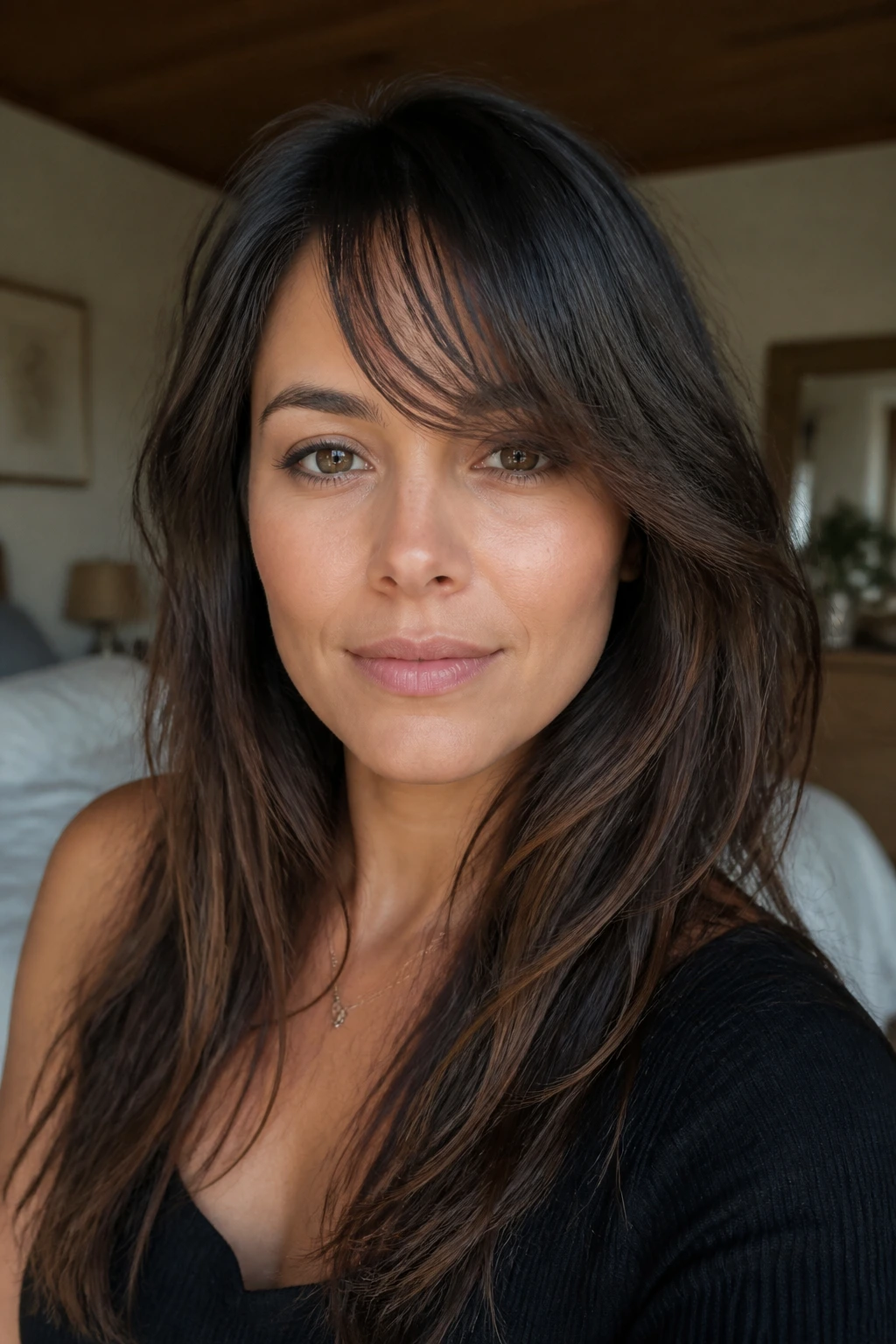
A square face can handle texture. In fact, it usually benefits from it. Piecey swoop bangs break the front into small, separated strands instead of one solid arc, which keeps the forehead looking open and the jawline from feeling boxed in. The ends are light, the texture is obvious, and the whole thing has a bit of movement even when the rest of the hair is still.
This is one of my favorite options for finer hair, because it avoids the heavy, flat look that can happen when a fringe is cut too dense. You want softness, not see-through wisps that vanish the second humidity shows up. Ask for point cutting through the ends, not a harsh thinning shears job.
Styling is all about restraint. A touch of texturizing spray at the root and a quick wrap around a small brush are enough. Then stop. Overworking this one ruins it fast. The charm is in the loose pieces falling across the forehead at slightly different lengths, not in making every hair obey the same line.
6. Curtain Bangs That Swing to One Side
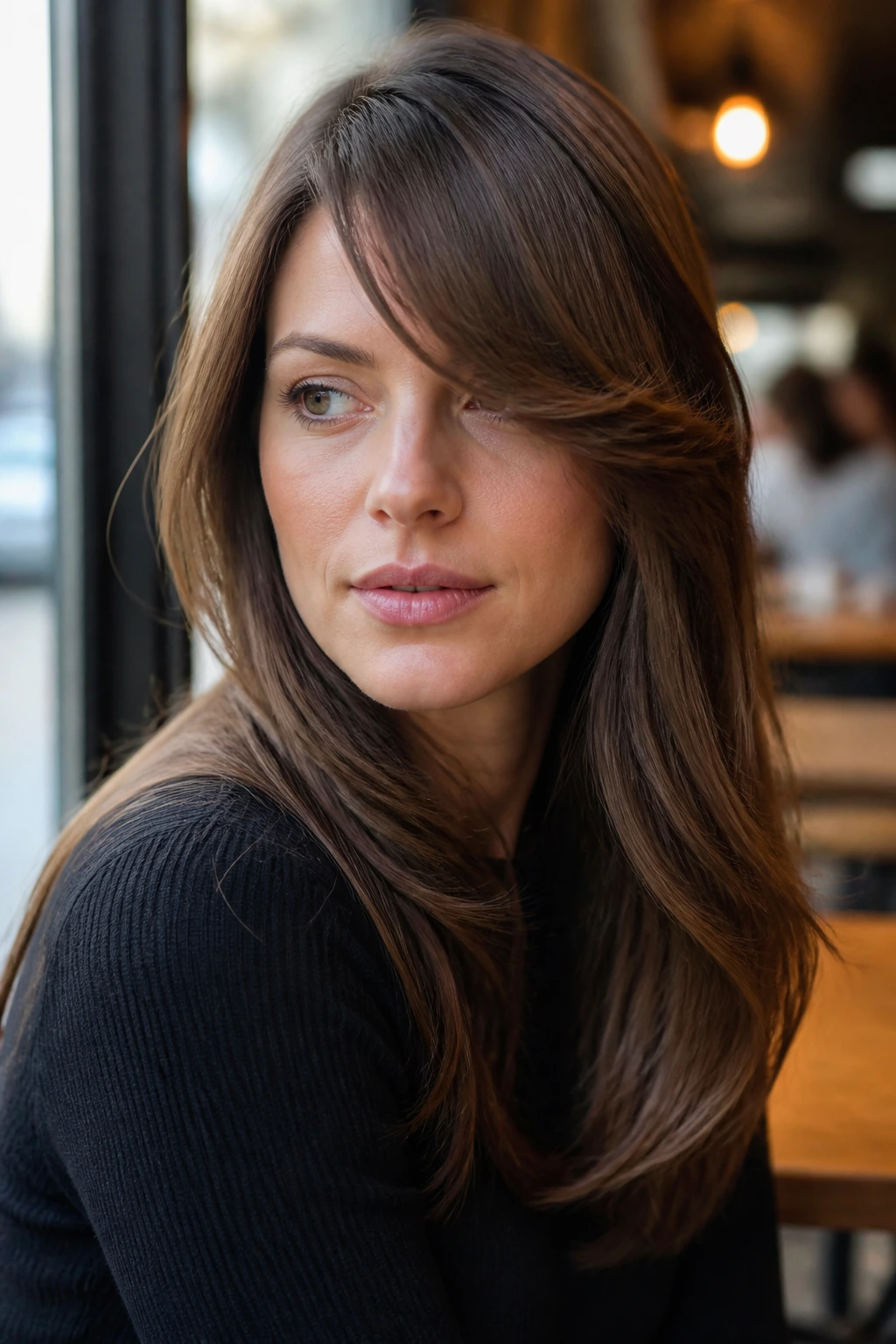
This is the easiest way to live with a swoop bang if you don’t want a strict side fringe. Curtain bangs are cut longer in the middle and then trained to fall more strongly to one side, which gives square faces a softer frame around the temples and cheekbones. The center stays open enough to keep the face from feeling crowded.
Long hair and curtain-to-swoop bangs get along because the fringe doesn’t sit there pretending to be separate. It melts into the layers. That makes the grow-out phase less annoying, which is half the battle with any fringe.
Ask your stylist to keep the shortest section long enough to tuck behind the ear if needed. That extra length gives you room to change the part on days when the front wants to misbehave. If you wear your hair half-up, this shape also leaves a few flattering pieces loose around the face without needing a full styling session.
7. Arched Swoop Bangs with a Long Face Frame
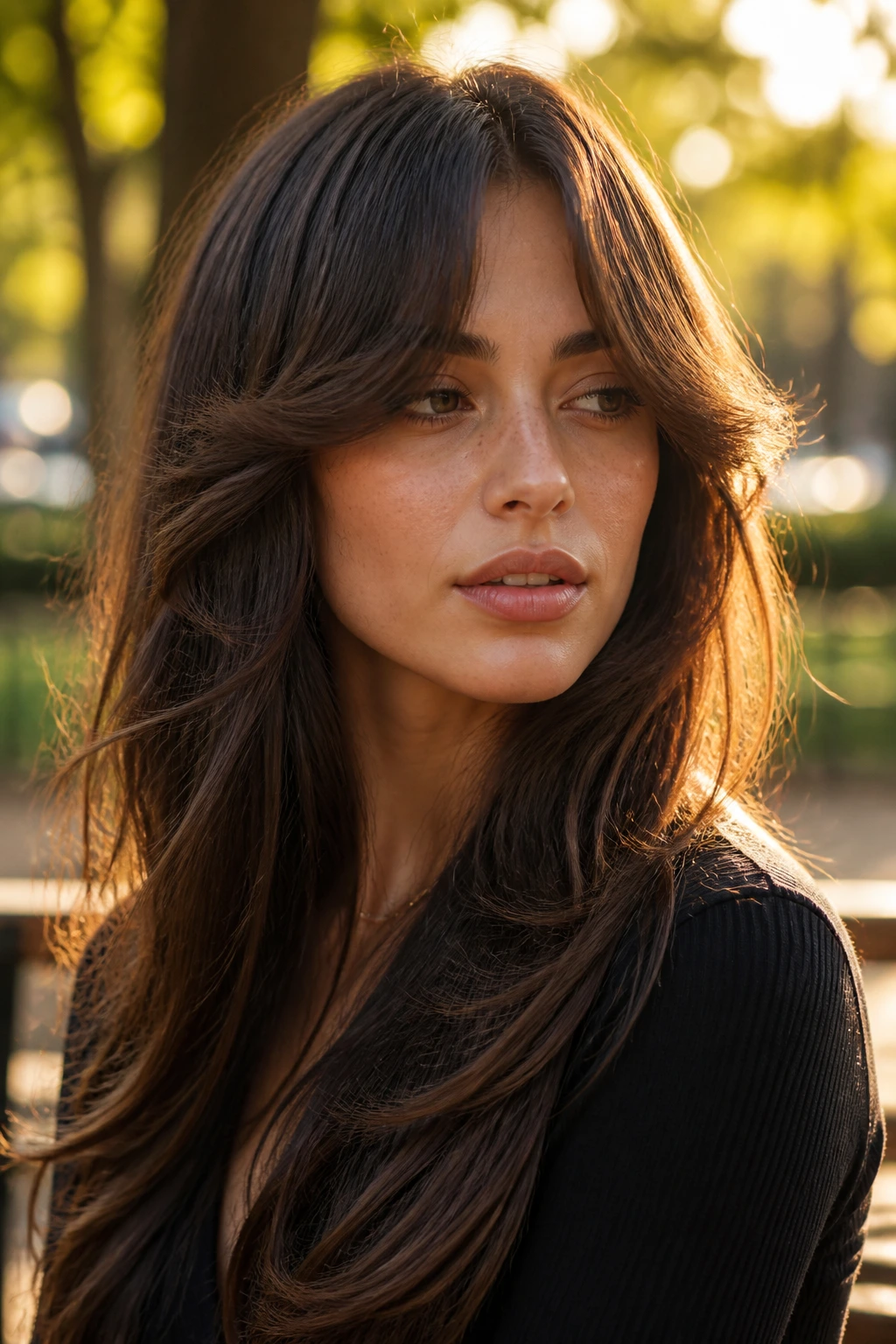
Why does a little arch matter so much? Because a square face already has straight lines to spare. An arched swoop bang lifts in the middle and curves down at the sides, which gently rounds the visual outline at the forehead. The effect is subtle, but it takes some of the edge off the face without hiding the bone structure.
This cut works best when the longest pieces land around the cheekbone or upper lip. That gives the face frame a second job: it narrows the sides a touch and keeps the eye moving. The shape looks especially good with long hair that has a few loose layers around the shoulders.
The style is neither harsh nor fussy. Blow-dry the center section upward first, then roll the brush toward the side as you move through the ends. You’re building a curve, not a corkscrew. If the arch looks too round, take some weight out underneath; if it falls flat, the root probably needs more lift.
8. Romantic Curved Bangs for Loose Waves
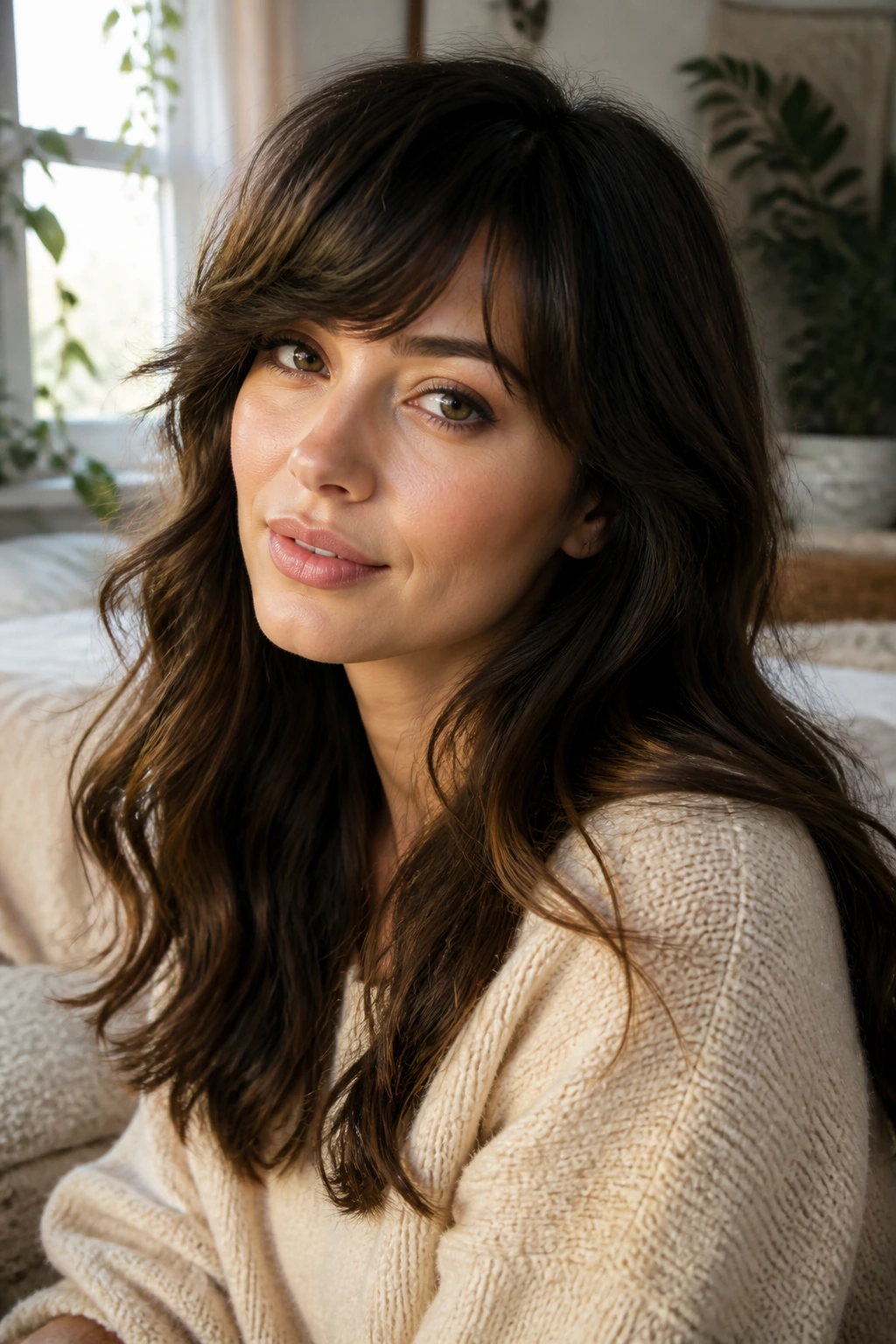
Loose waves change the game. A curved bang can ride on top of that texture instead of fighting it, which is why this shape feels so easy on square faces. The front bends softly across the forehead, then dissolves into wavey face-framing layers that keep the jaw from looking too sharp.
The trick is not forcing perfect symmetry. One side can sit a little heavier than the other, and the front can still look intentional. In fact, that slight irregularity is part of what makes it work. Straight lines are the enemy here; soft curves are the friend.
If your hair has natural wave, let it show. Scrunch a little curl cream into the front and finger-coil only the pieces that want to split apart. Too much brushing ruins the curve and turns the bang into a puff. A square face doesn’t need another hard line, and this cut knows it.
9. Butterfly-Layer Swoop Bangs
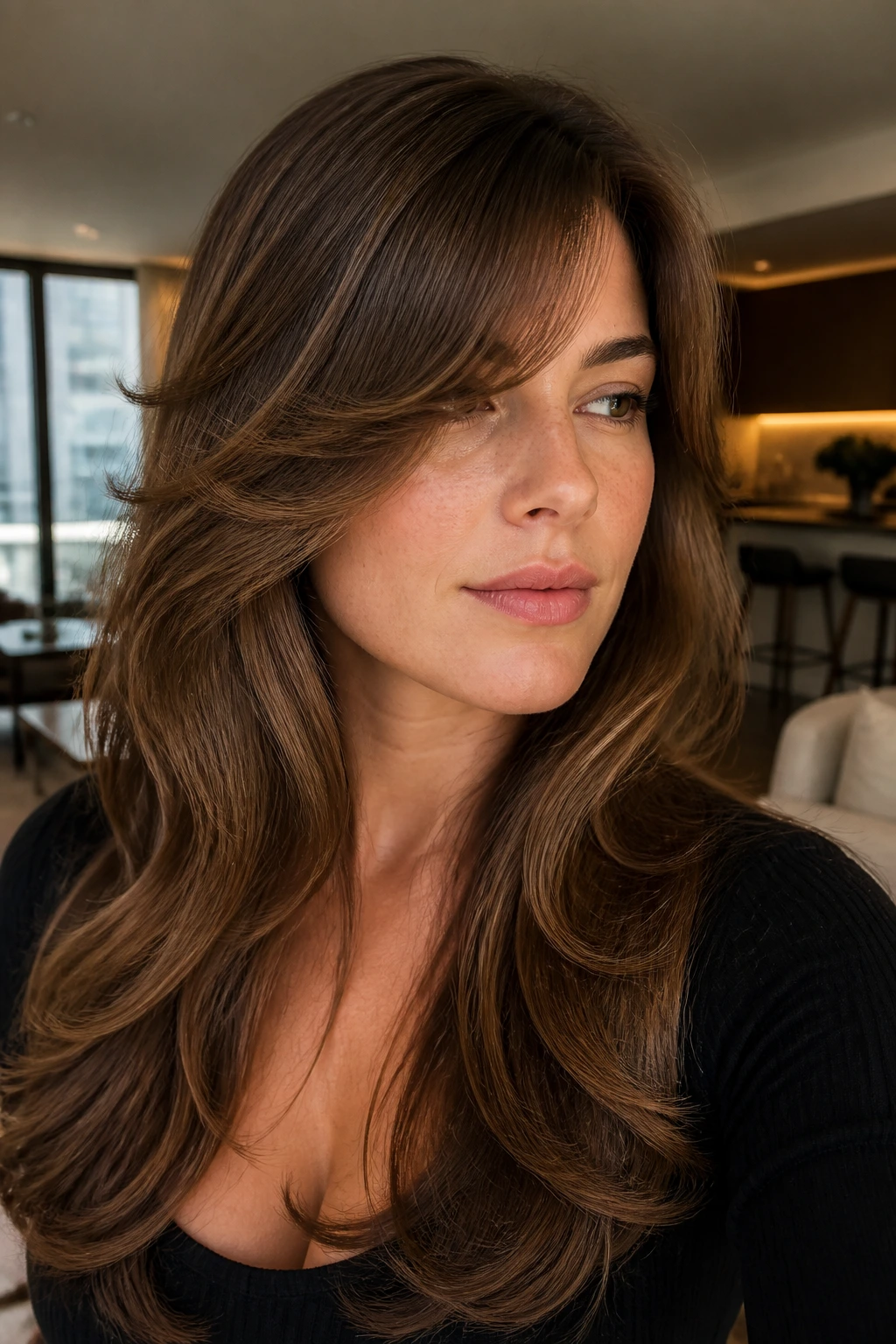
This is the one for people who want the fringe and the long layers to talk to each other. Butterfly-layer swoop bangs start as a side sweep, then merge into longer pieces that hit near the cheekbone and collarbone. The front gets movement, the length gets lift, and the square face gets a much softer frame.
The shorter front piece should float near the outer brow or temple. The longer piece needs enough length to swing when you turn your head. That swing is the whole point. It keeps the style from looking static, which matters a lot on a face shape that already has strong structure.
It also photographs well in motion, which sounds shallow until you stand in front of a mirror and realize the front is doing actual work. A little root lift spray and a round brush at the crown help the shape stay buoyant. If the front droops, the butterfly effect disappears and you’re left with regular layers.
10. Razor-Cut Swoop Bangs for Dense Hair
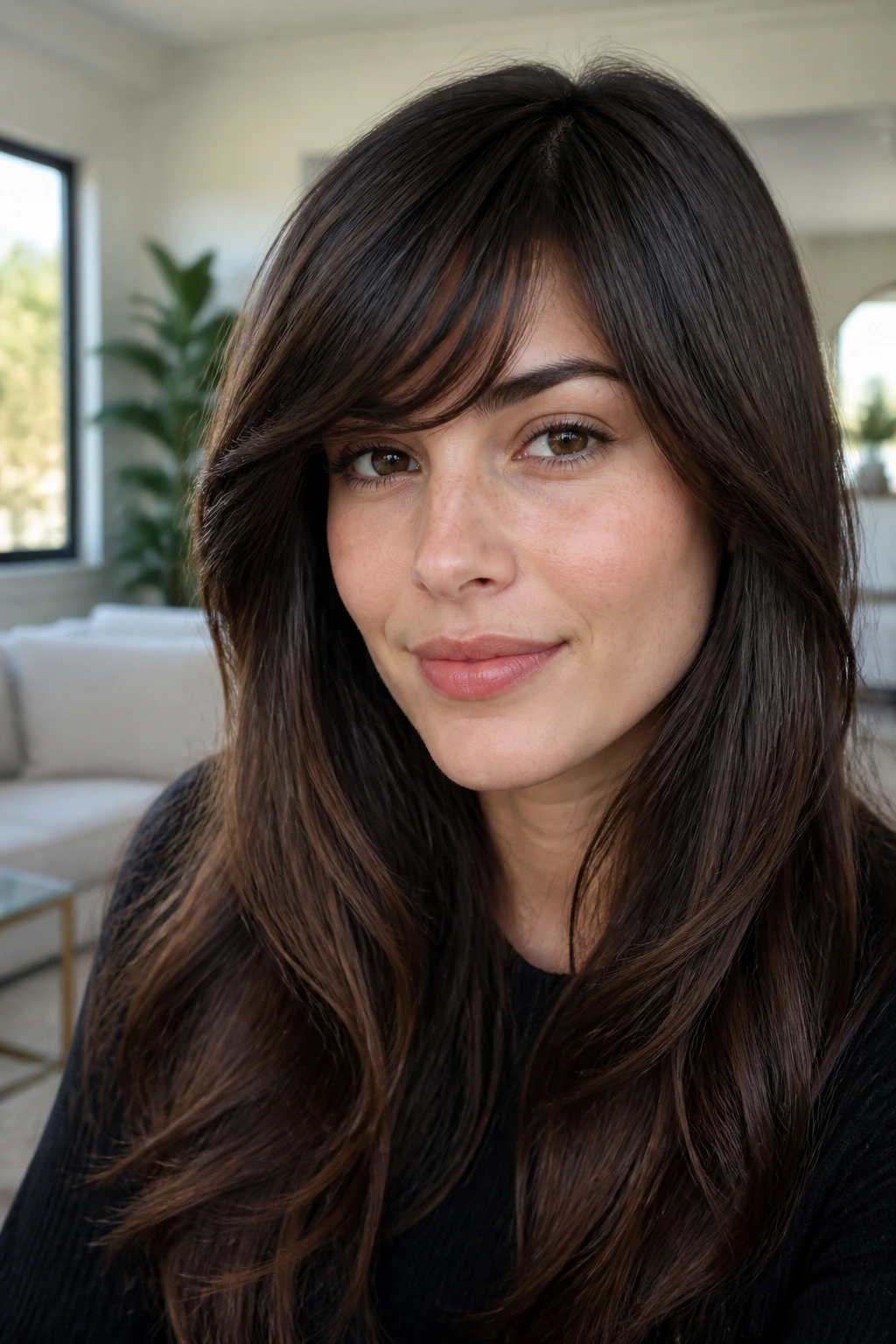
Dense hair can make a swoop bang look heavy fast. Razor-cut ends solve that problem by removing bulk and giving the fringe a lighter edge, so the front sweeps instead of sitting there like a chunk. On square faces, that softness matters because dense bangs can sharpen the face more than they soften it.
This cut needs a stylist who knows what they’re doing. A razor can create beautiful movement, but it can also fray the ends if the hair is too dry or too coarse for the tool. Used well, though, it gives the fringe a broken-up, airy edge that moves instead of puffing out.
Styling is easier than the cutting. A medium round brush, a small amount of blow-dry cream, and a directional finish are enough. If the fringe starts to puff, add less product, not more. Heavy cream weighs this shape down fast, and then you lose the whole point of the cut.
11. Side Bangs with a Flipped Temple Finish
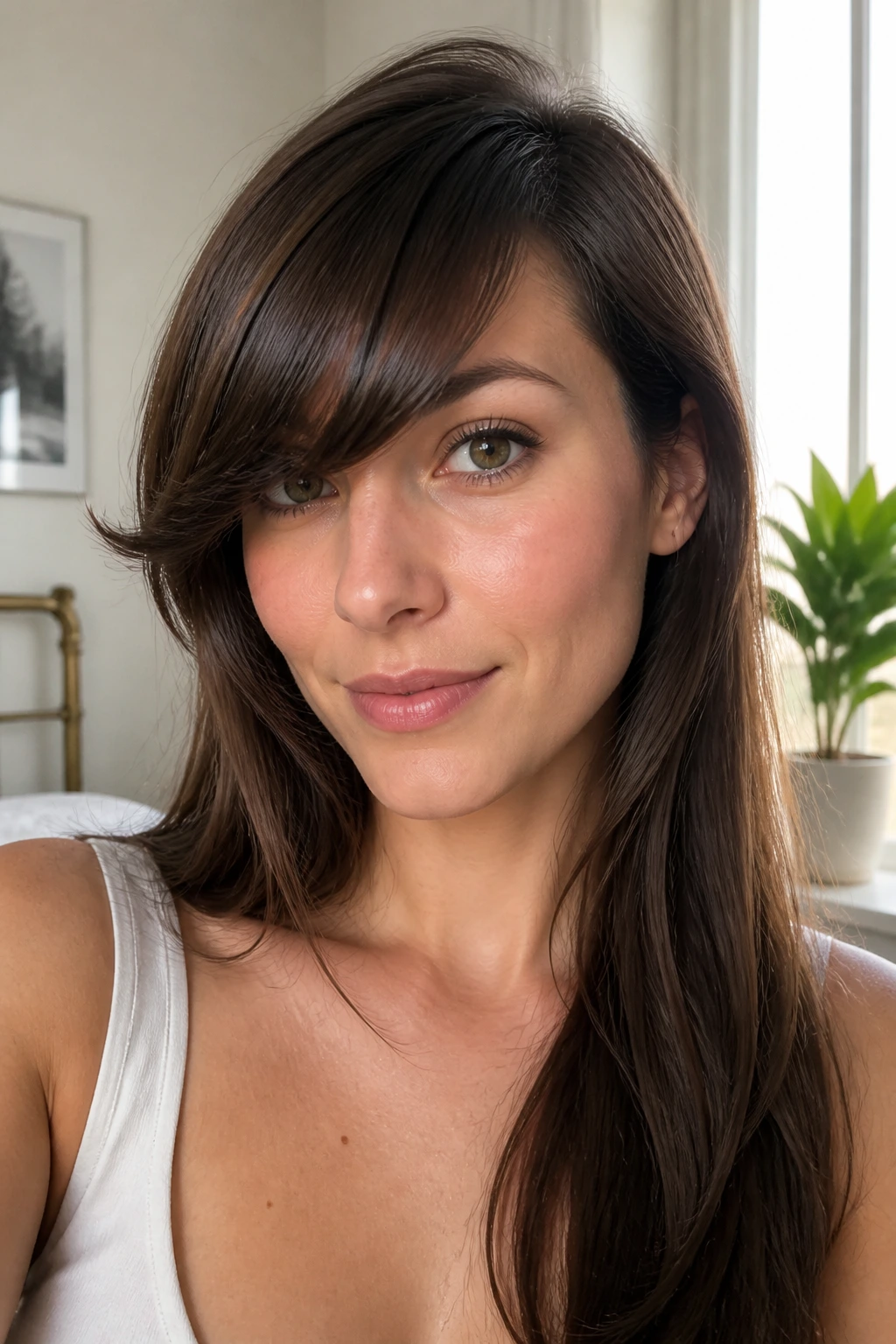
There’s something satisfying about a fringe that flicks outward near the temple. It feels retro, but not costume-y, and it works surprisingly well on square faces because that flip interrupts the straight descent from forehead to jaw. The shape gives the front a little attitude without turning severe.
This look is especially good if your long hair is fairly straight or has only a slight bend. The flip at the end keeps the bang from lying too flat against the cheek. It also creates a nice visual break near the widest part of the face, which is useful when you want the jawline to feel softer.
Use a flat iron or a round brush to turn the ends away from the face just slightly. Not a hard curl. Just enough bend to catch the light and separate the front from the rest of the hair. The finish should feel deliberate, not like the bang escaped the brush halfway through.
12. Voluminous Blowout Swoop Bangs
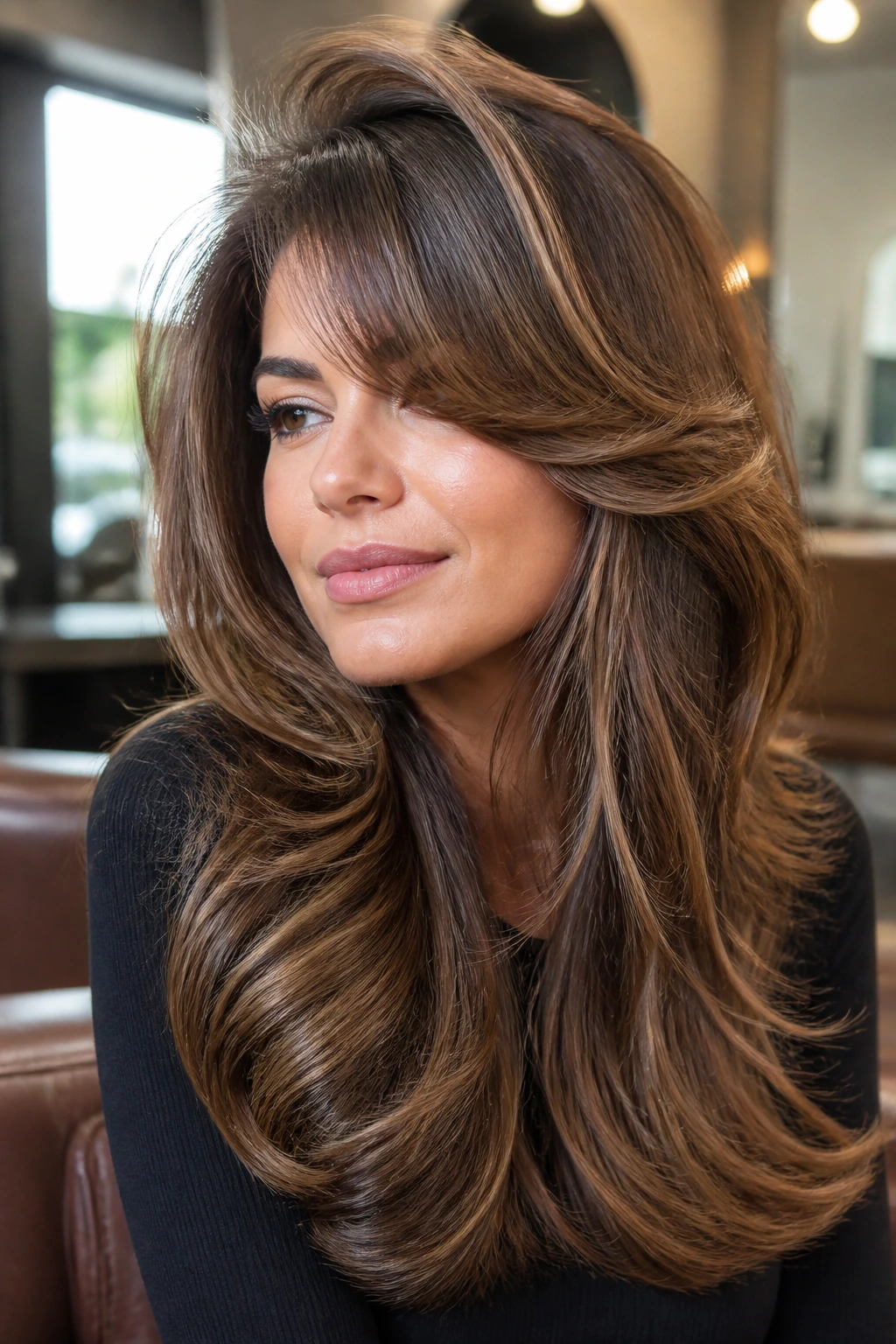
If you like a big blowout, this is your lane. Voluminous swoop bangs are built to hold root lift, roll over a round brush, and land with a plush curve across the forehead. For square faces, volume near the top can help balance the jaw without making the lower face feel heavier.
This style loves thicker hair, but it can work on medium density too if you prep the roots well. Mousse at the base and a quick set with a Velcro roller can make a huge difference. The hair doesn’t need to be stiff; it needs a memory of shape.
The best version of this cut doesn’t feel helmet-like. The curve should be full, not fixed. If the front starts to look stiff, the brush was probably too small or the product too heavy. Bigger is better here — a larger brush creates a smoother bend and keeps the fringe from turning into a tight curl.
13. Collarbone-Skimming Fringe Sweep
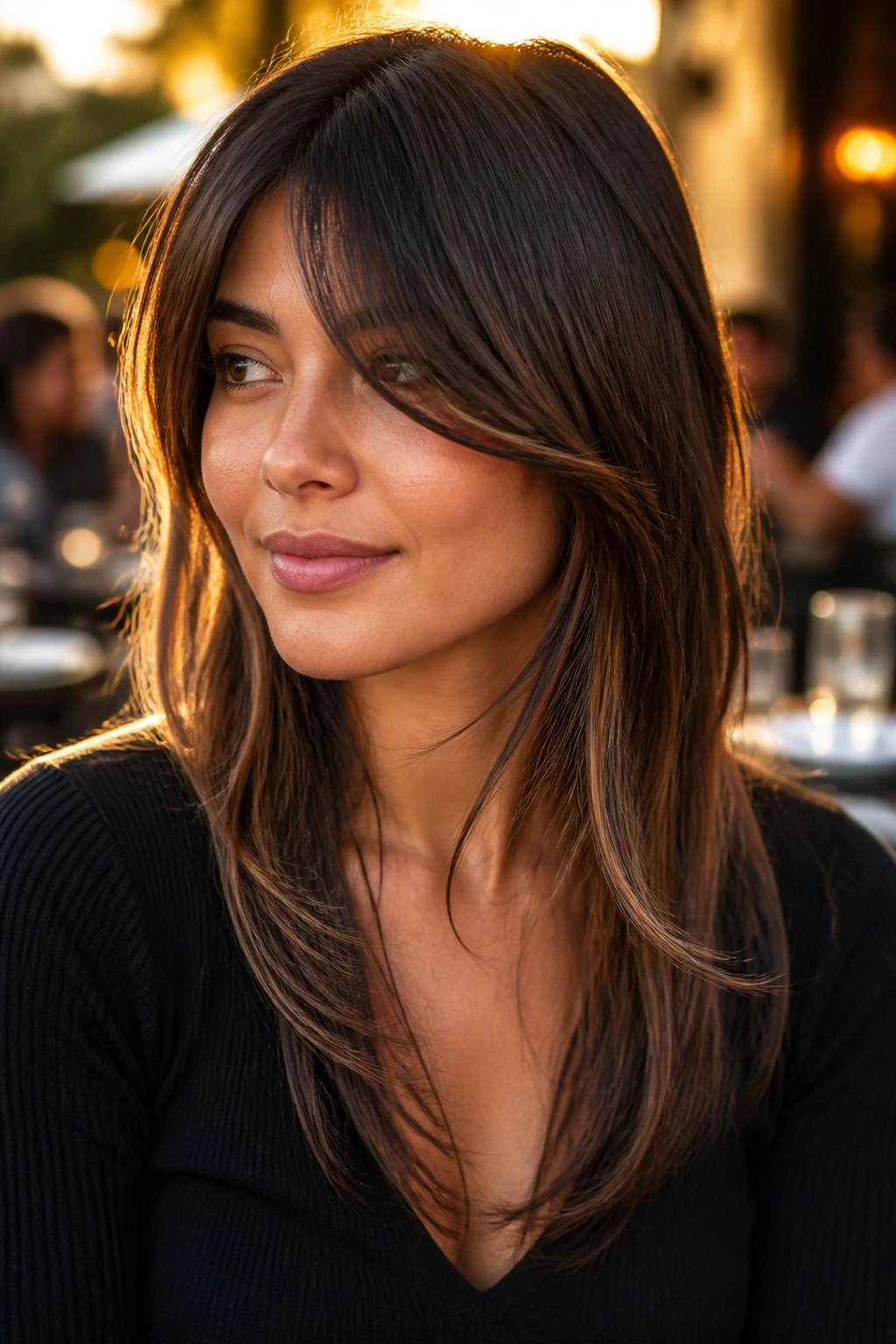
This is the low-drama option that still does the job. The front pieces are long enough to skim the collarbone, which means the “bang” part is more of a sweep than a strict fringe. Square faces like this because the longest pieces keep drawing the eye downward and away from the jaw’s sharp corners.
It also gives you room to live with the cut. Some days the front sits like a side bang. Other days it behaves like a face frame. That flexibility is useful when you’re not in the mood to style every strand.
Ask for enough length that you can tuck the front behind the ear without losing the shape. That little bit of slack is what makes the cut feel easy instead of fussy. And because the front pieces are long, they blend into long hair in a way shorter bangs can’t.
14. Invisible-Part Swoop Bangs
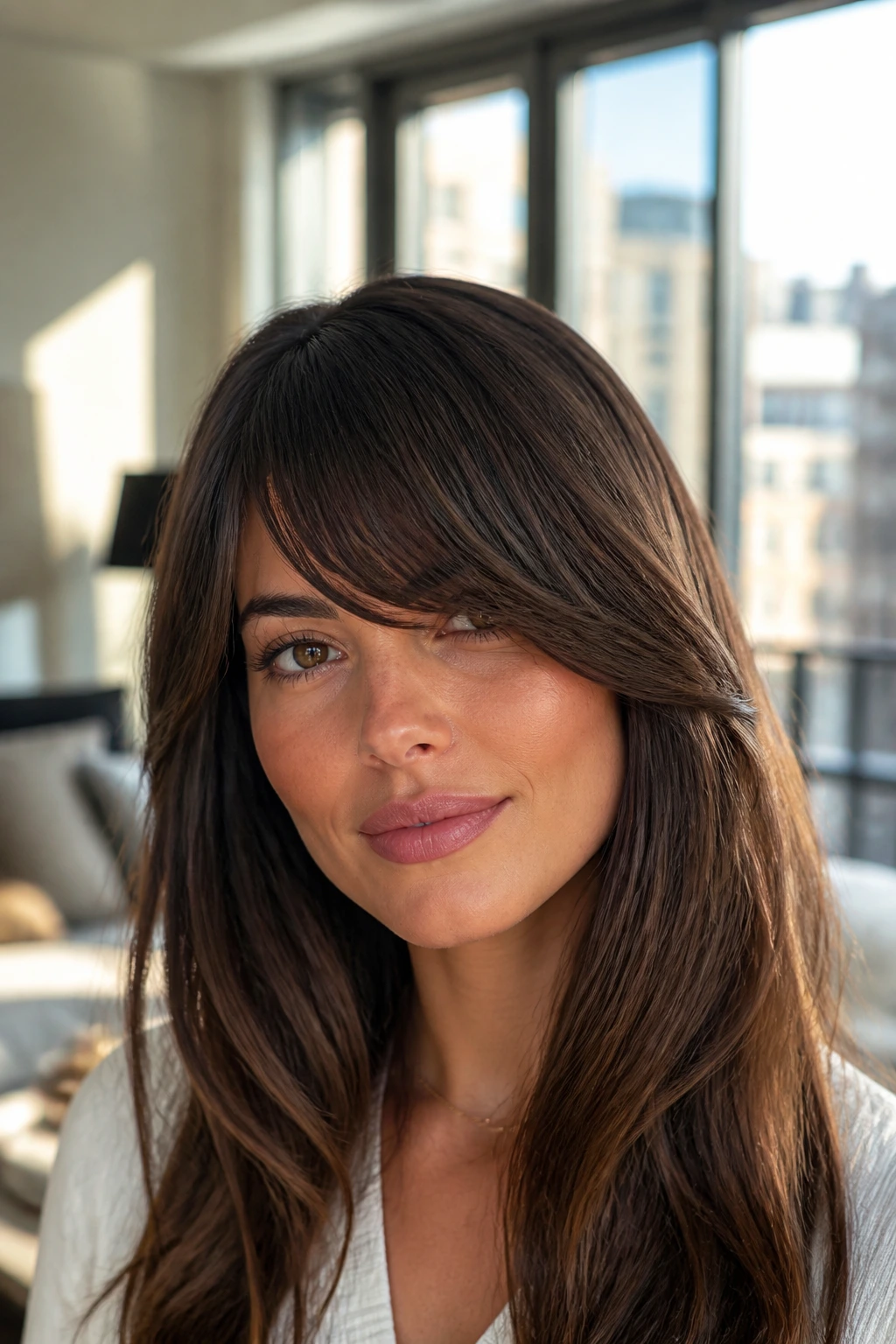
Some people hate a visible part line. Fair enough. Invisible-part swoop bangs hide the transition so the front appears to flow from the hairline into the sweep with almost no obvious split. The effect is clean, soft, and especially kind to square faces because there’s no hard center line making the face look boxed in.
This shape depends on good direction at the root. Dry the front in the direction you want it to live, then pinch the curve into place with your fingers before it cools. If you try to build the sweep after the hair has already settled, you’ll spend the whole day pushing it back over.
I like this cut when the goal is polish without ceremony. It doesn’t scream “bangs.” It just makes the haircut look more expensive than it was. That may sound shallow. It isn’t. Shape matters, and this shape understands the assignment.
15. Wispy Swoop Bangs for Fine Hair
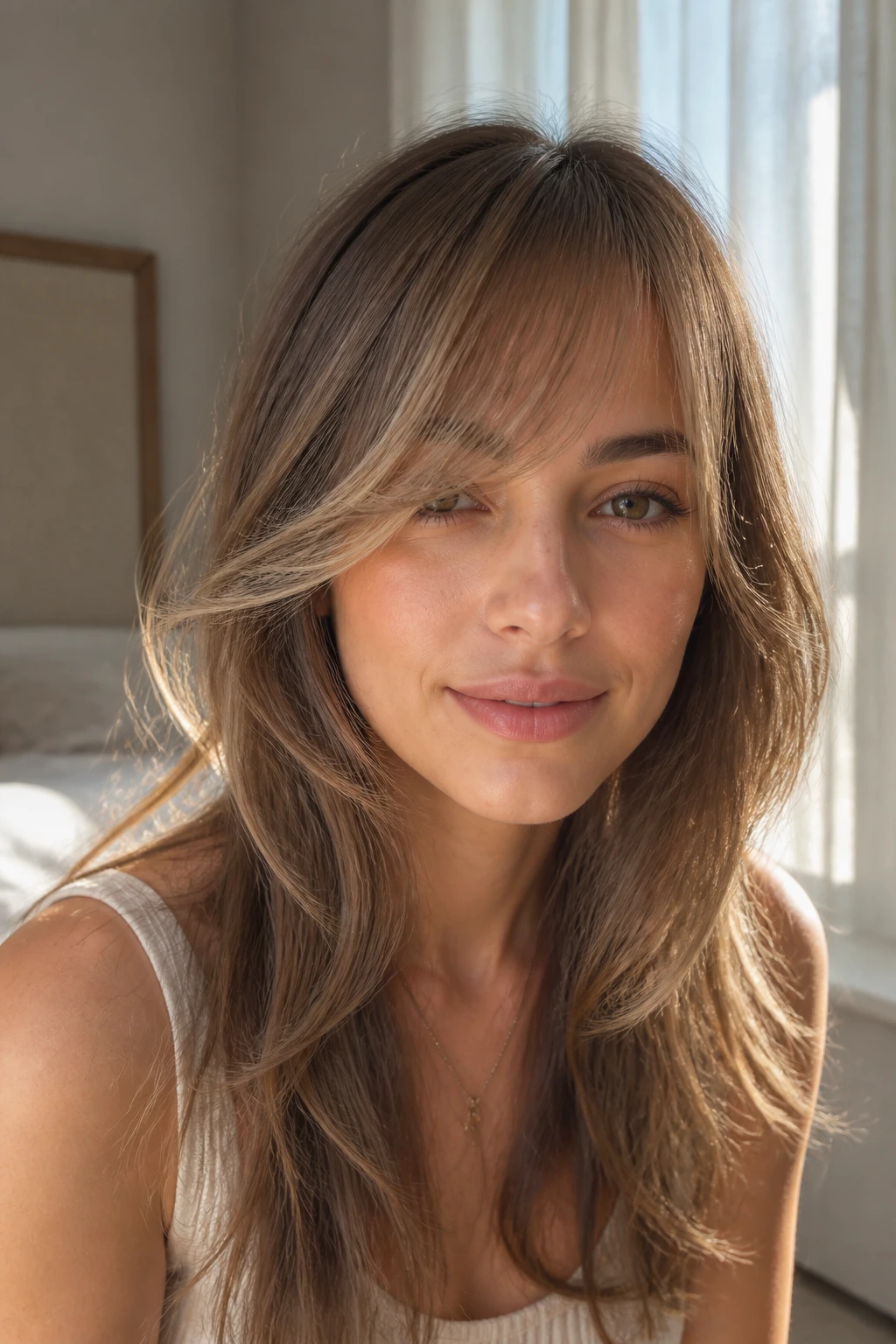
Fine hair needs a gentle hand. Too much density at the front and the bang goes limp; too much thinning and it turns see-through. Wispy swoop bangs land in the sweet spot, giving square faces a soft diagonal line without dragging the front into a heavy block.
The best version of this cut uses a light, airy perimeter and a little extra length on the side that sweeps across the forehead. That gives the fringe enough body to show up, but not so much that it overwhelms the face. The ends should feel like soft threads, not chopped bits.
Use a lightweight mousse and keep the brush small. A big round brush can stretch fine hair too much and leave it flat by noon. What you want is lift, not fluff. A tiny amount of dry shampoo at the roots the next day helps the shape hold without getting greasy.
16. Heavy Swoop Bangs for Thick Hair
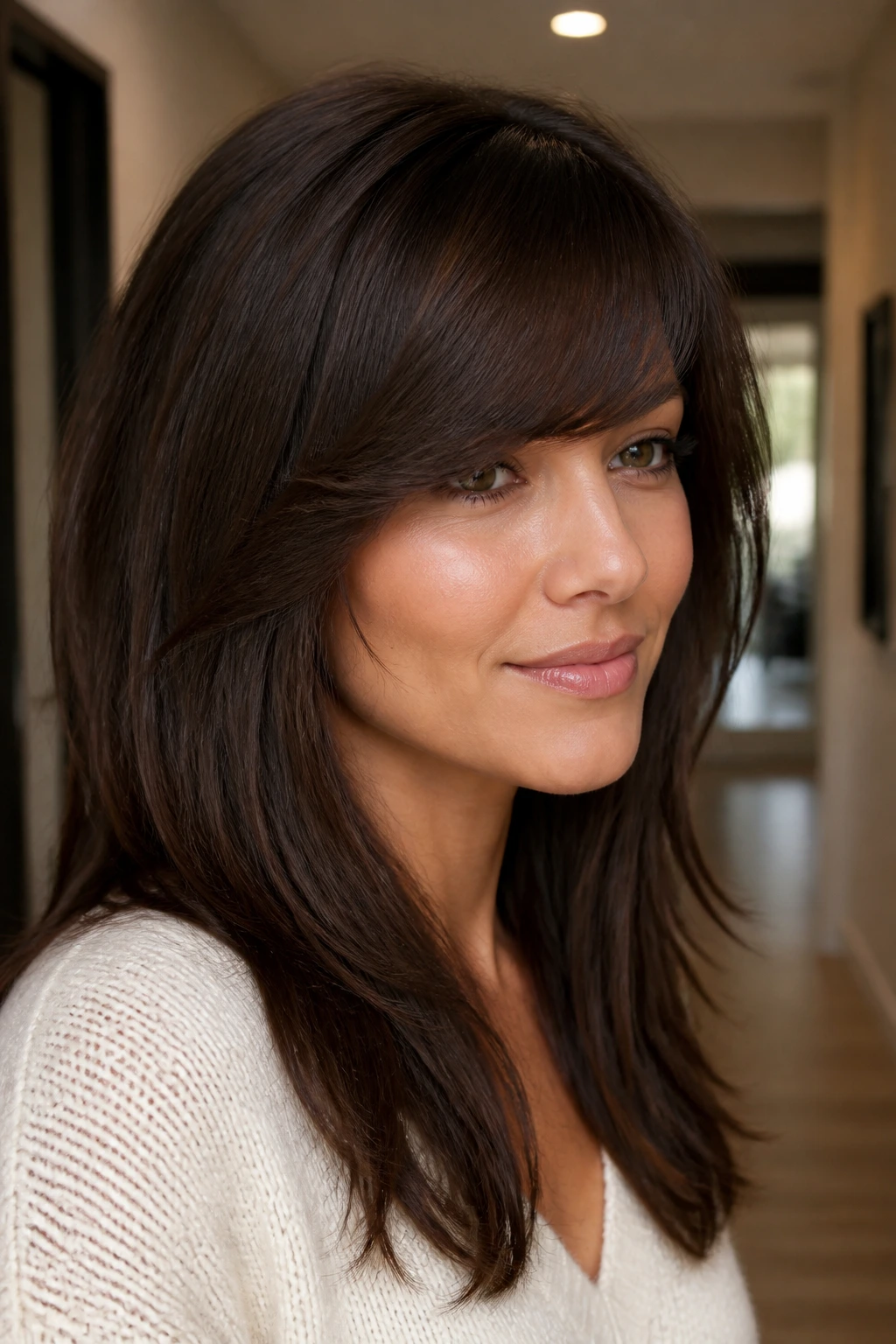
Thick hair can wear a fuller bang if the cut is controlled. Heavy swoop bangs keep enough weight to feel substantial, but the inside is thinned just enough so the front can move across the forehead instead of sticking out like a panel. On a square face, that controlled fullness can actually be flattering because it softens the top half of the face while leaving the jaw visible.
The mistake with thick hair is removing too much from the ends. Then the bang gets frizzy and expands at the wrong places. Better to keep the outer line slightly fuller and remove bulk underneath. That way the shape still reads as a swoop instead of a puff.
Blow-dry the roots first. Always. Thick hair resists direction when it’s damp, and if you let it dry where it wants to, the sweep will fight you all day. A strong nozzle, medium heat, and a firm brush give this style the direction it needs.
17. Grown-Out Swoop Bangs with Cheekbone Bend
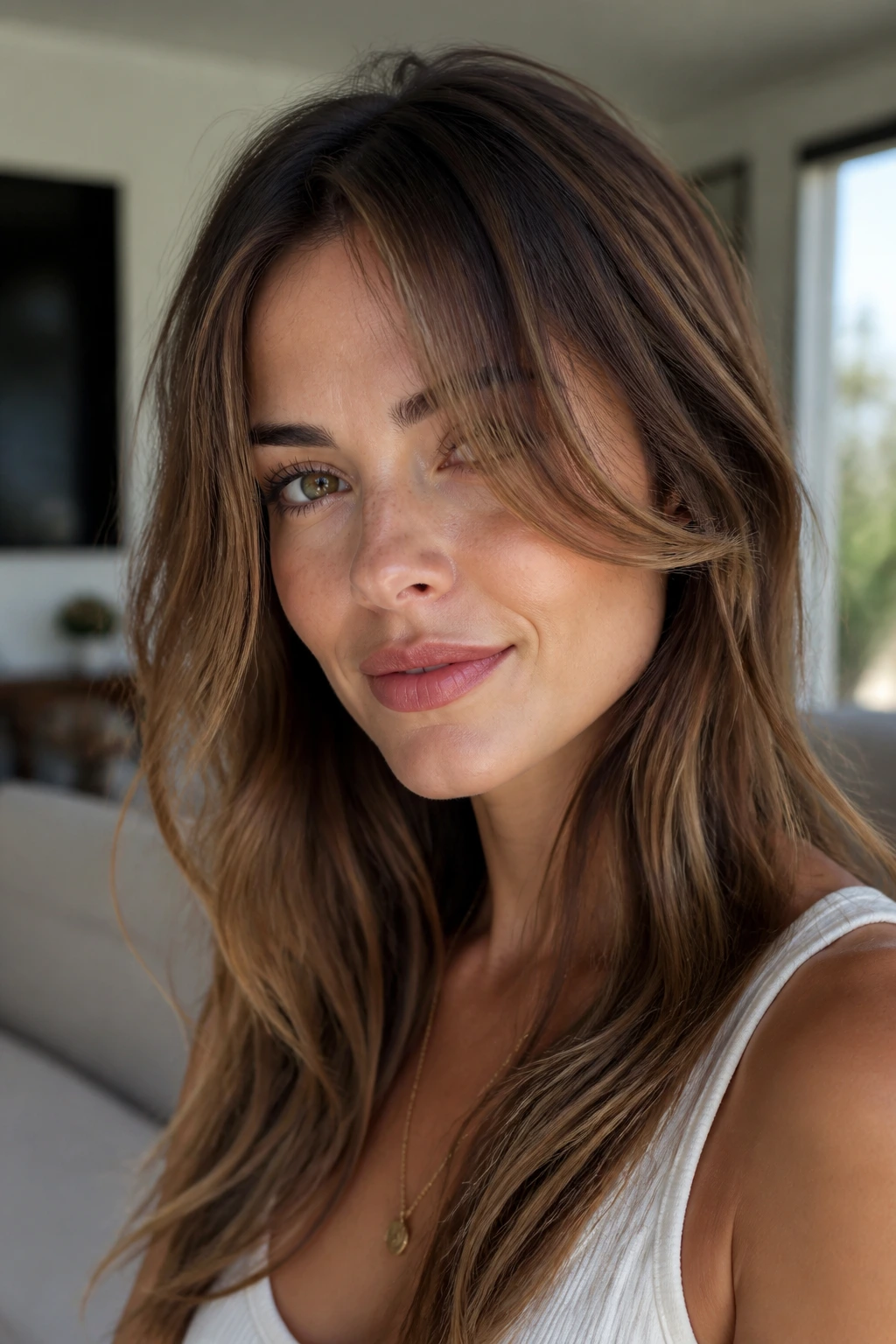
This is the cut for anyone who’s in between trims and doesn’t want to look like it. The front has grown past the brows, the side sweep lands closer to the cheekbone, and the whole thing starts behaving like intentional face framing. Square faces benefit because the longer bend softens the side of the face more than a short fringe can.
Honestly, this is one of the most forgiving looks on the list. It doesn’t need perfect styling every day. A quick twist with a blow dryer and a brush is enough to make the front sit where it should. If you’re growing out bangs, this is the stage where they start looking like a haircut again instead of a project.
You can also pin one side back and let the other side sweep across. That unevenness reads casual rather than sloppy when the cut is long enough. It’s a smart choice for people who want the idea of bangs without the maintenance tax.
18. Shag-Inspired Side Fringe
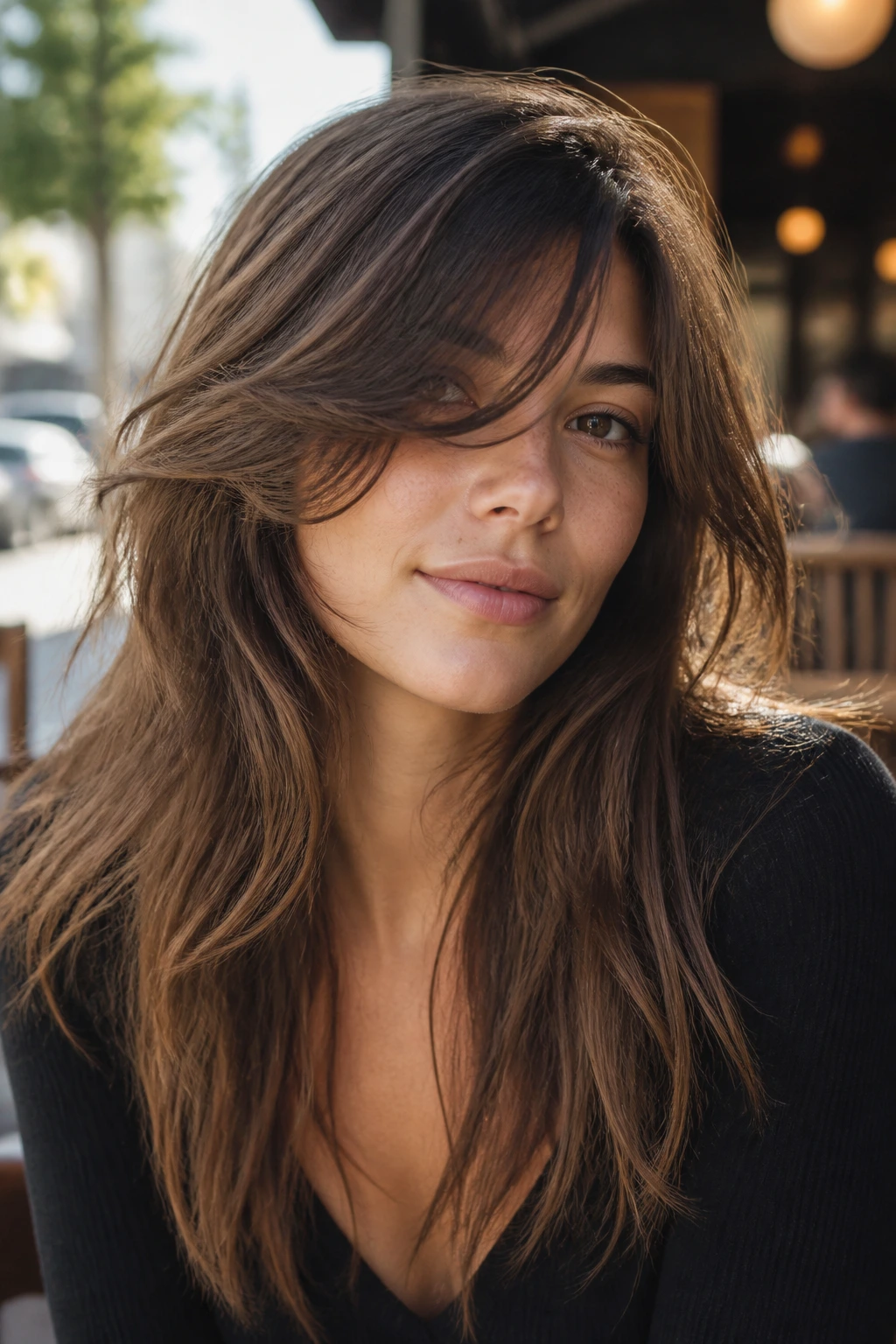
A little shag energy can be very useful on a square face. The point is not to go full rocker cut unless you want to. It’s to let the front have enough broken texture that it never looks rigid. A shag-inspired side fringe creates a soft, choppy diagonal that keeps long hair from feeling too neat.
The front pieces should move in different directions without looking random. That’s where the shape gets interesting. One section brushes the brow, one section flips toward the cheek, and another slips into the longer layers. The face ends up framed by motion instead of a single block of hair.
This version suits wavy or naturally tousled hair best. If your hair is pin-straight, you’ll need a little texture spray or a bend from a small iron. Keep the ends soft. A shag with hard edges loses its charm fast, and square faces need softness more than edge.
19. Bouncy Swoop Bangs with Rounded Layers
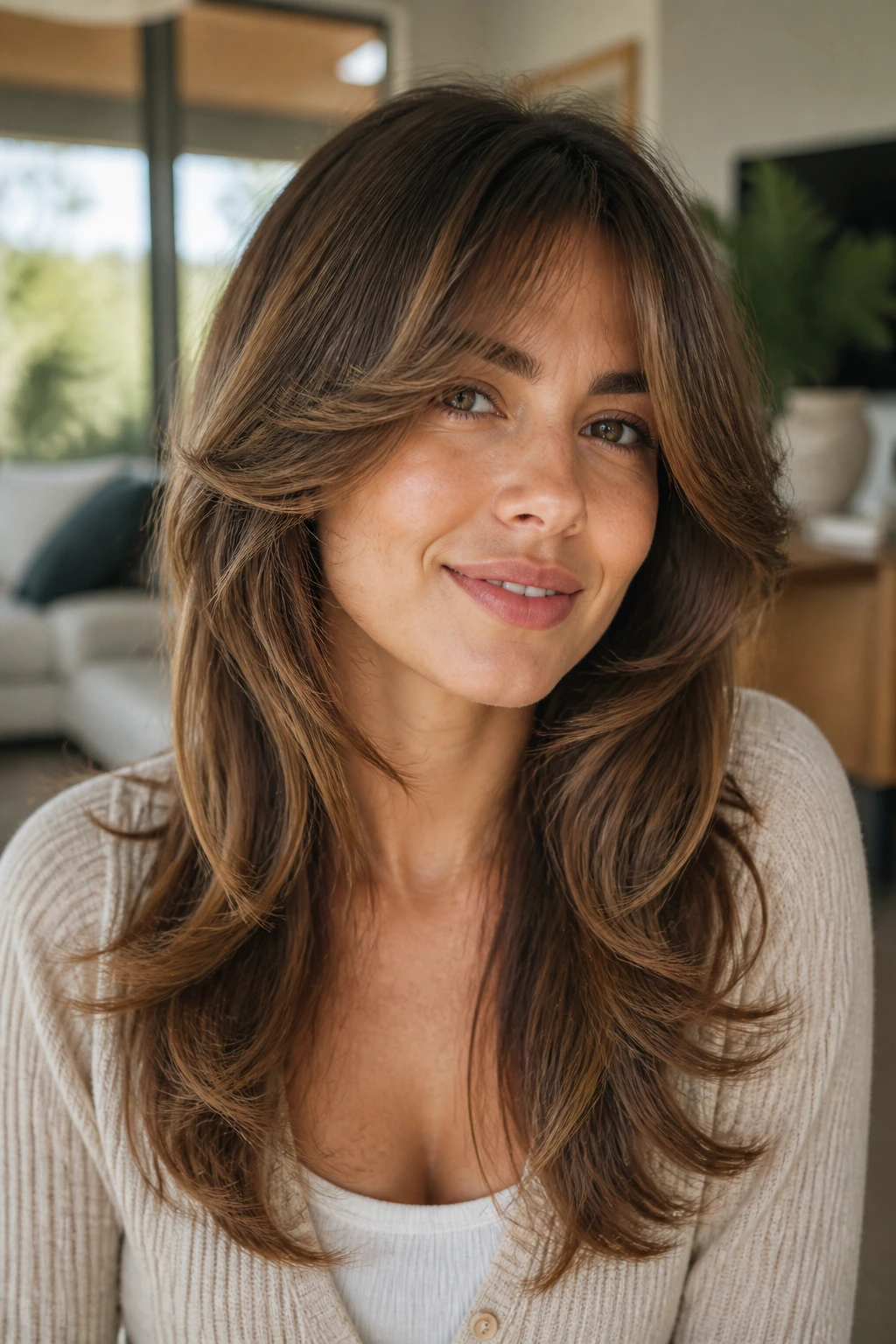
Some fringes lie flat. This one does not. Bouncy swoop bangs are built around a rounded blowout, with root lift and a curved finish that gives the front a little spring. The bounce matters on square faces because it keeps the front from mimicking the face’s straight lines.
The cut usually includes rounded layers near the temples and cheeks so the bang can blend instead of stopping abruptly. That makes the front feel fuller, which is useful if your hair has medium density and can hold shape well. The curve should move as you turn your head. If it doesn’t, the layers are probably too heavy.
I like this look with a medium round brush and a cool-shot finish. Set the front, let it cool on the brush for a second, and release. That little pause locks the bend in better than rushing through the process. Hair has memory. Use it.
20. Sleek Swoop Bangs for Straight Hair
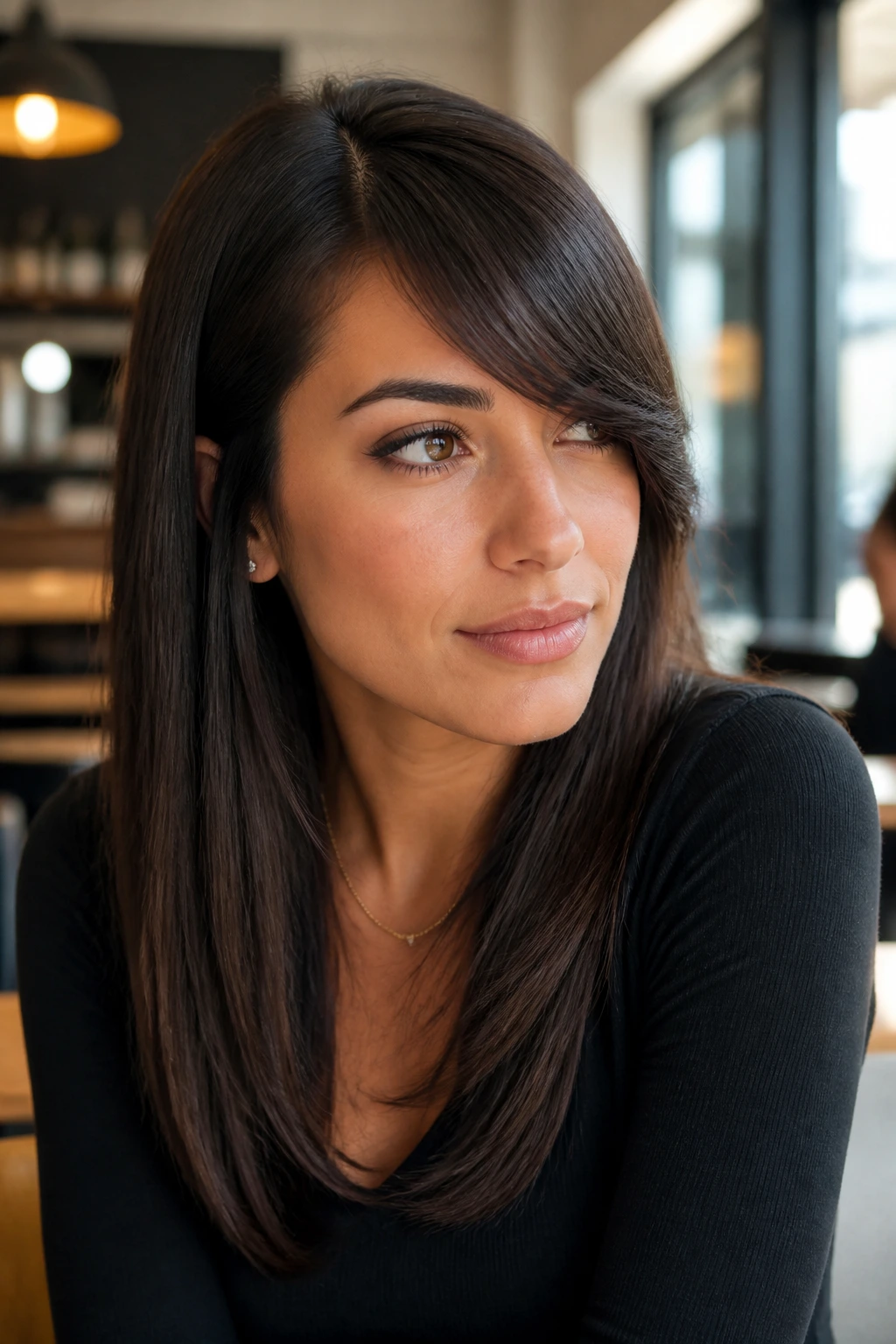
Straight hair can wear a swoop bang beautifully if the cut has enough curve built into it. Sleek swoop bangs rely on precision: a strong side part, a smooth bend at the root, and ends that taper cleanly into the side layers. Square faces like this because the shape reads elegant rather than severe.
The key is not letting the front hang like a flat ribbon. Even straight hair needs movement here. A pass with a round brush or a flat iron curve at the end makes the bang feel shaped instead of merely longer on one side.
Use a heat protectant with a light finish, not a heavy silicone mask that will flatten the front. You want gloss, not grease. The shine should catch the curve, not erase it. Straight hair is honest hair. It shows every choice you make, which is why this cut rewards careful styling.
21. Tousled Swoop Bangs for Wavy Hair
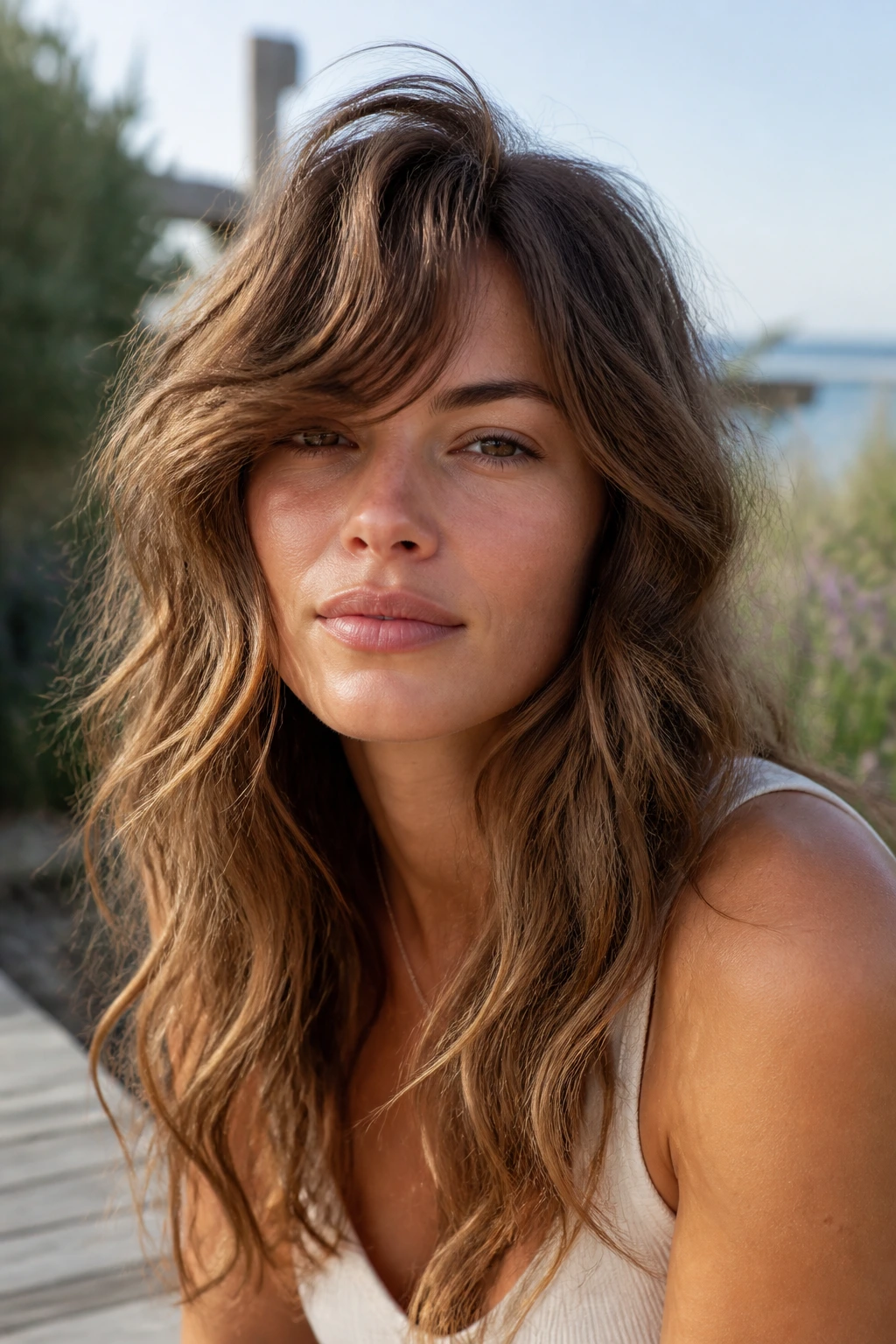
Wavy hair and swoop bangs are old friends. The natural bend does half the work, which means the front can look soft and lived-in without a ton of heat. On square faces, that irregular movement helps break the straight path from forehead to jaw and keeps the whole cut from feeling too exact.
The trick is deciding how much to encourage and how much to leave alone. If the wave is strong, use a light cream and let the fringe dry in the direction it wants. If it’s loose, give it one or two brush-throughs and stop. Brushing it to death is a quick way to turn pretty texture into puff.
This style looks especially good when the rest of the hair is long and loose, not over-styled. The bangs feel like part of the haircut, not a separate event. That’s the charm. It looks like you didn’t overthink it, even though a little thought went into every bend.
22. Glam Barrel-Curl Swoop Bangs
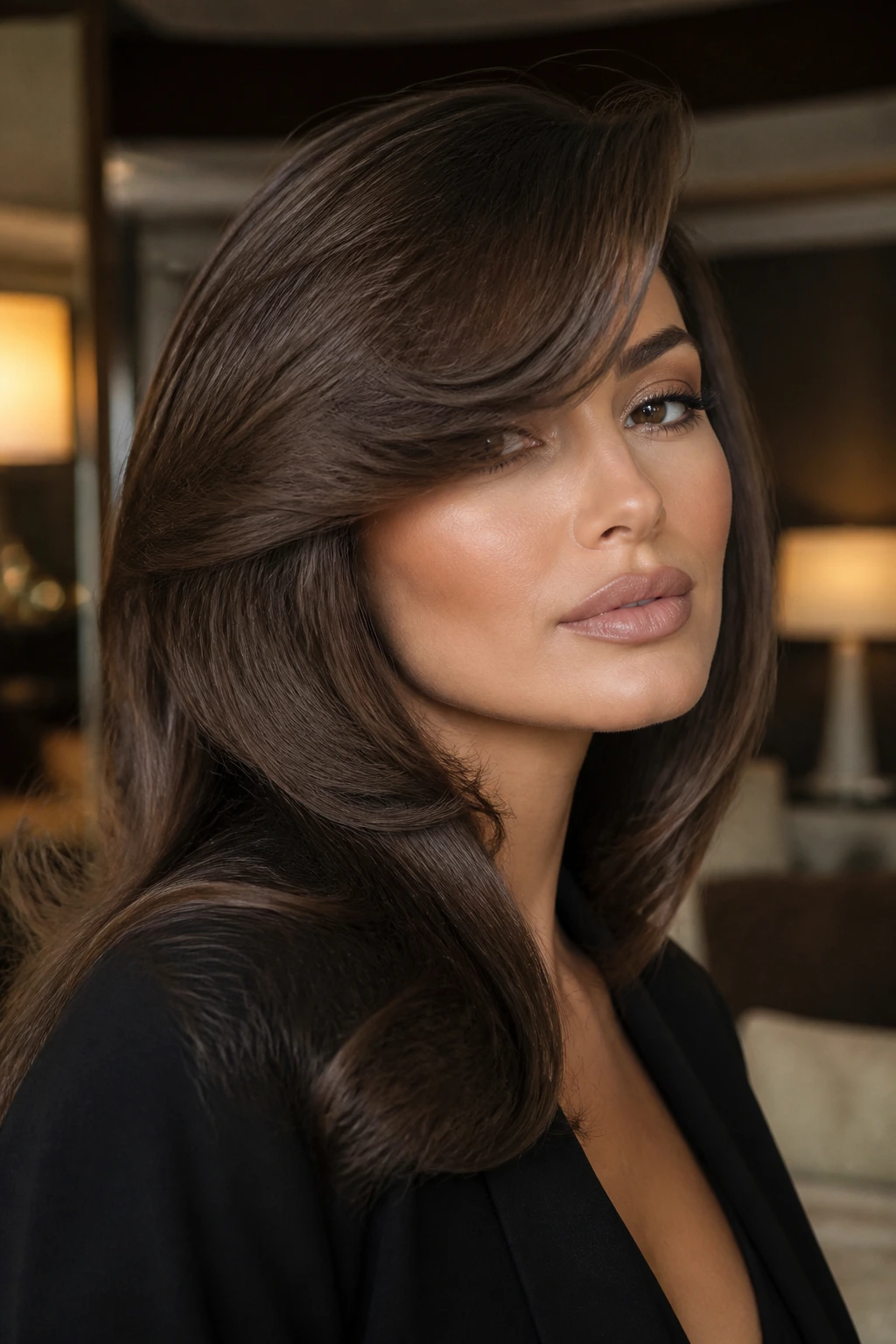
Sometimes you want the fringe to show up. Barrel-curl swoop bangs are the dressier version of the cut, built around a bigger bend from a medium or large curling iron. The result is a soft, wide sweep that skims the forehead and gives square faces a rounder top edge.
This look is best when the curl is loose enough to brush through. Tight ringlets in the front make the bang feel fussy, and that’s not the point. You want one big curve that opens the face and moves toward the cheekbone. The long hair behind it can stay sleek or be curled into matching waves.
A 1.25-inch or 1.5-inch barrel usually gives the right size bend. Smaller than that, and the front gets too springy. Larger than that, and the curl may not hold. The sweet spot depends on density, but the principle stays the same: a larger arc is more flattering than a tight twist.
23. Long Low-Maintenance Swoop Bangs
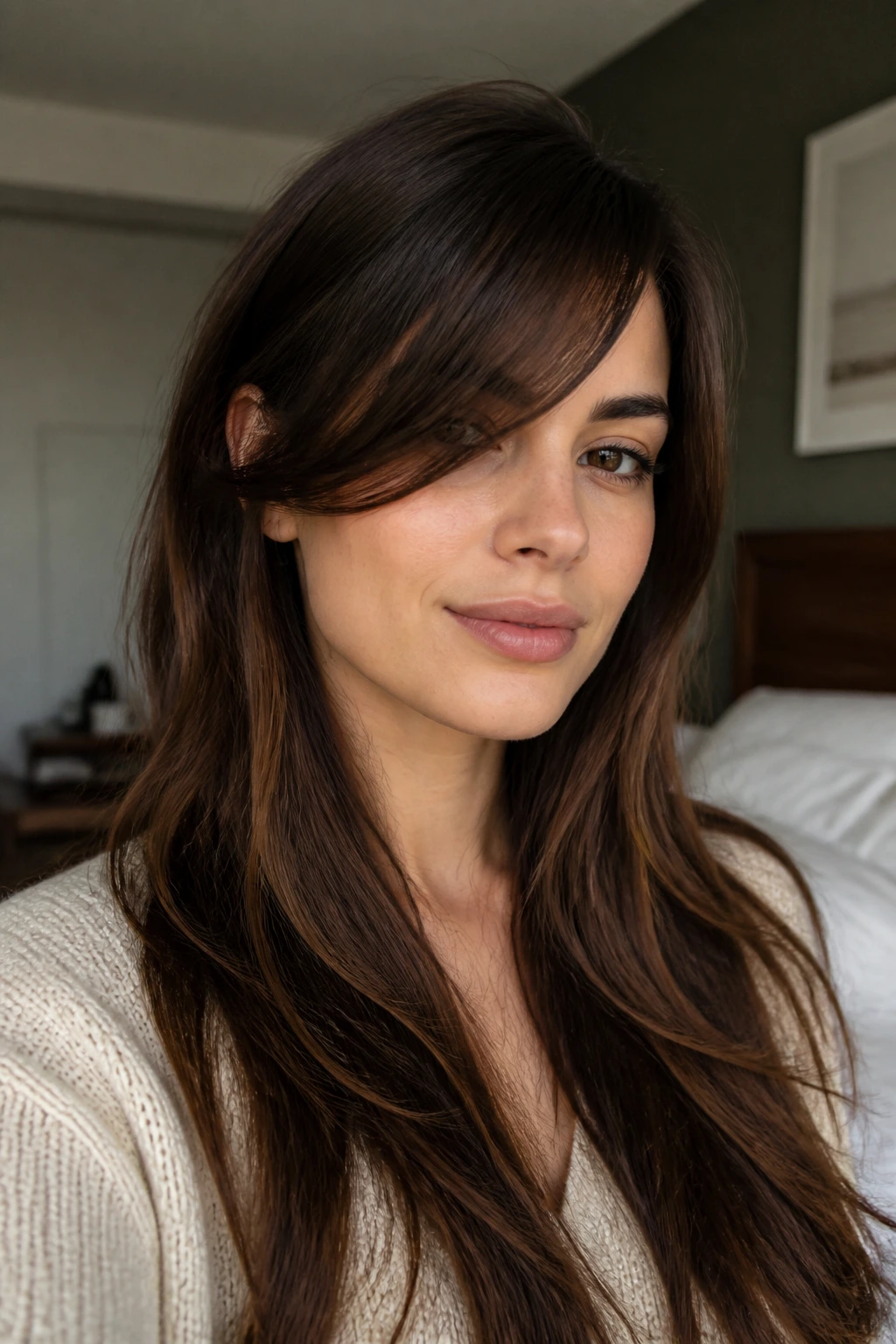
Not everyone wants a fringe that needs a daily pep talk. Long low-maintenance swoop bangs are cut with extra length so they can be worn as a side bang, tucked behind the ear, or blended into face-framing layers on days when styling time is thin. On a square face, that longer sweep still creates the diagonal movement you want without demanding perfect behavior.
This is a smart choice if you’re commitment-shy. The cut can live in the “bangs” category without trapping you there. If you miss a trim, it doesn’t fall apart. If you skip a wash, it usually still looks fine after a quick bend at the roots.
Ask for softness through the ends and enough length to keep the curve visible even when the hair settles. The whole point is flexibility. A fringe that can survive a windy commute and still look intentional is worth more than a high-maintenance shape that only works on salon day.
24. Money-Piece Swoop Bangs
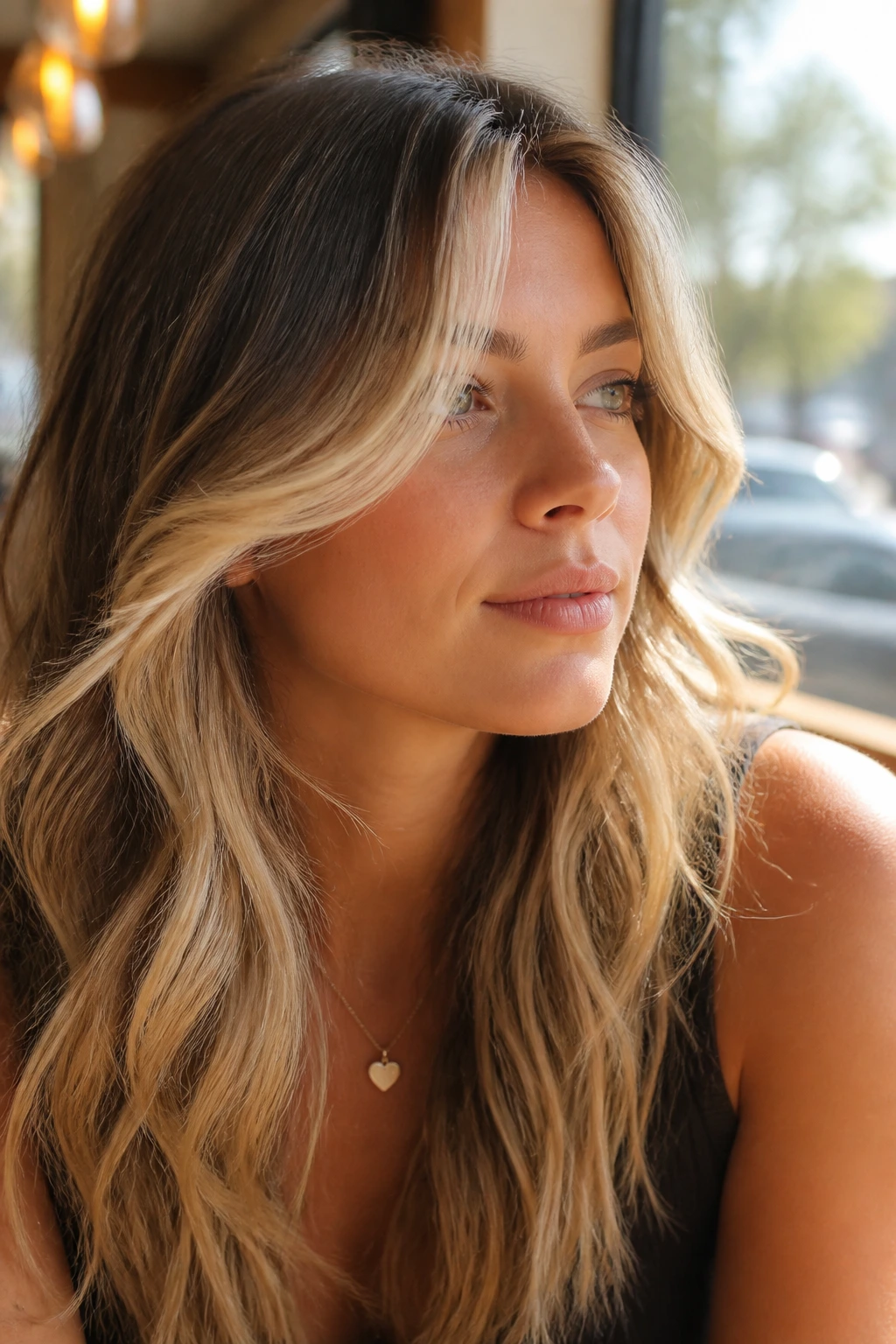
Color can help the cut do its job. Money-piece swoop bangs combine a side sweep with brighter front sections, which pulls attention outward and upward instead of straight to the jawline. On square faces, that little brightness near the cheekbone can make the front feel lighter and the face feel more open.
The shape should still be soft. Strong color alone won’t fix a bad line. The sweep needs a diagonal, the ends need to move, and the front pieces need enough length to blend. But when the cut and color cooperate, the effect is sharp in the right way.
This version looks especially nice with long, layered hair because the bright front panels can trail into the rest of the haircut. If the contrast is too strong, it can look streaky. Keep the tone refined and the lightening placed where the hair naturally frames the face. That’s the part people notice first.
25. Soft-Edged Asymmetrical Swoop Bangs
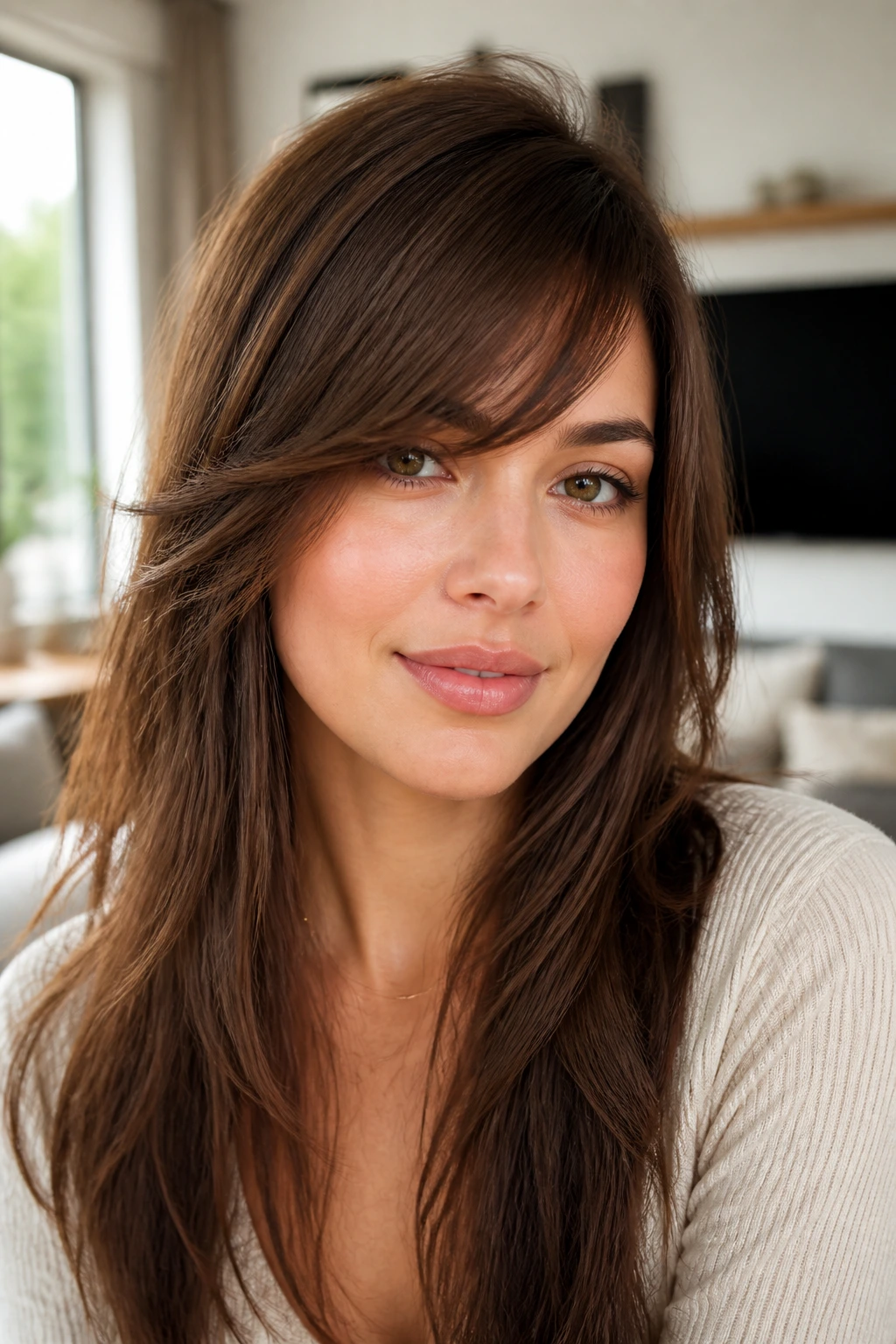
A little asymmetry can be flattering when a face already has strong structure. Soft-edged asymmetrical swoop bangs lean heavier to one side, then taper into a lighter finish on the other. That unevenness interrupts the square lines at the forehead and jaw, which is exactly why the shape works.
The cut should still feel soft, not severe. You’re not building a dramatic diagonal for drama’s sake. You’re making the front look alive. On long hair, this shape feels especially good because the rest of the length gives the asymmetry somewhere to land.
If you like a cut that feels a little bolder, this is the one. It has more personality than the softer swoops, but it still flatters a square face when the ends are feathered and the longest piece doesn’t stop too high on the cheek. The face should feel framed, not fenced in.
How to Blow-Dry the Bend So It Lands the Same Way Twice
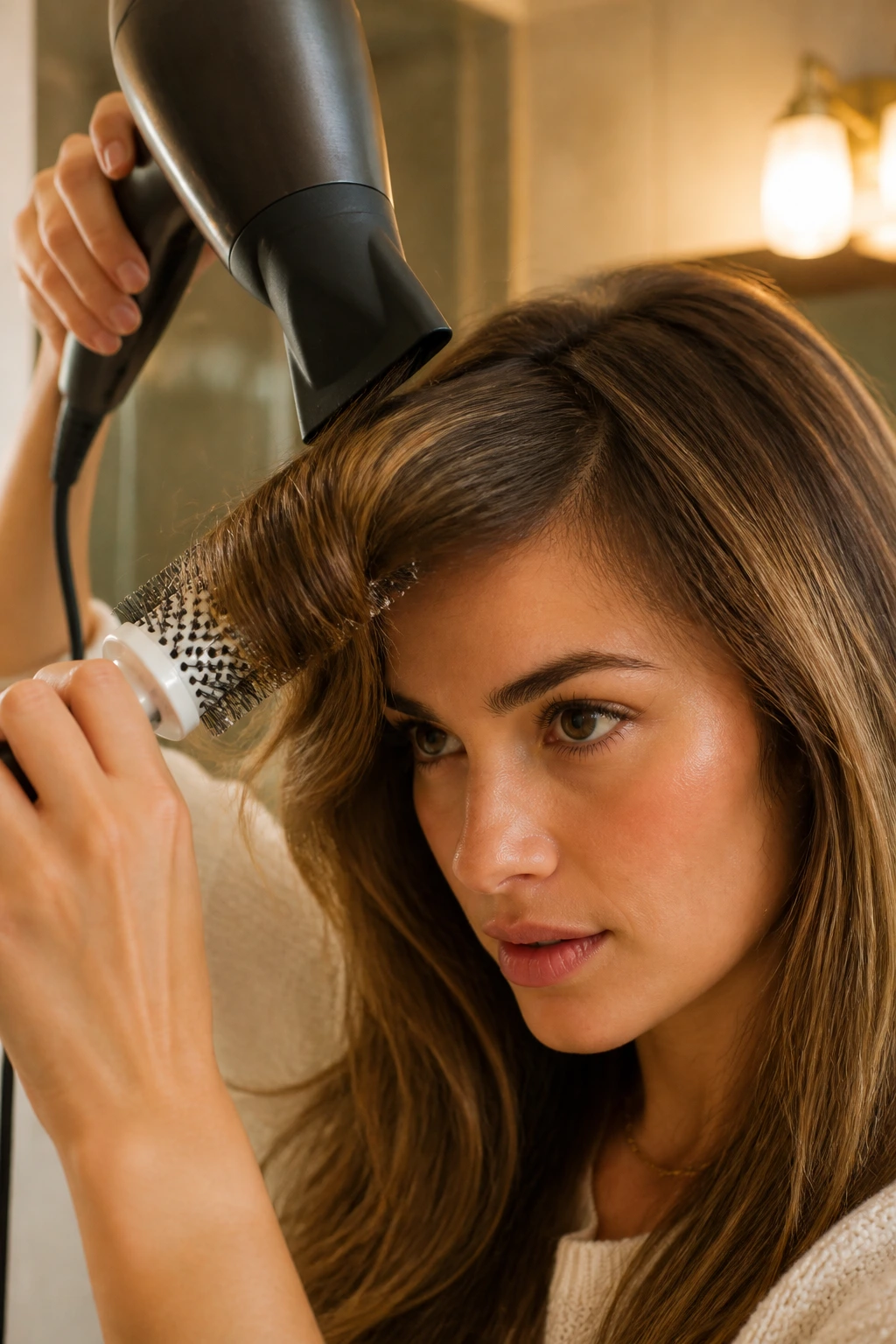
The biggest styling mistake with swoop bangs is treating them like a full head of hair. They’re not. They’re a small section with their own rules, and they need to be dried with direction from the start.
Root Direction: Aim the nozzle from the part across the fringe and slightly down. That first pass sets the bend before the hair can decide to fall straight again. If your cowlick pushes hard, clip the front in the opposite direction for 2 or 3 minutes while you dry the rest of your hair.
Brush Size: Use a 1-inch to 1.25-inch round brush for most fringe lengths. Smaller brushes create too much curl; bigger ones can flatten the front into a lazy bend that drops by noon.
Heat + Cool Shot: Hold the brush under the bang for 5 to 8 seconds, then finish with a cool shot before releasing. That cool-down is what helps the shape stick. Skip it and the front relaxes faster than you want.
Product Load: Keep styling cream and serum light. A pea-size amount is usually enough for the whole fringe. Too much product makes the hair hang in strings or separate at the roots.
Second-Day Reset: Mist the front lightly with water, rewrap it around the brush for 10 to 15 seconds, and re-dry just the roots. You do not need to start from scratch every morning.
Common Mistakes That Make Swoop Bangs Look Boxy
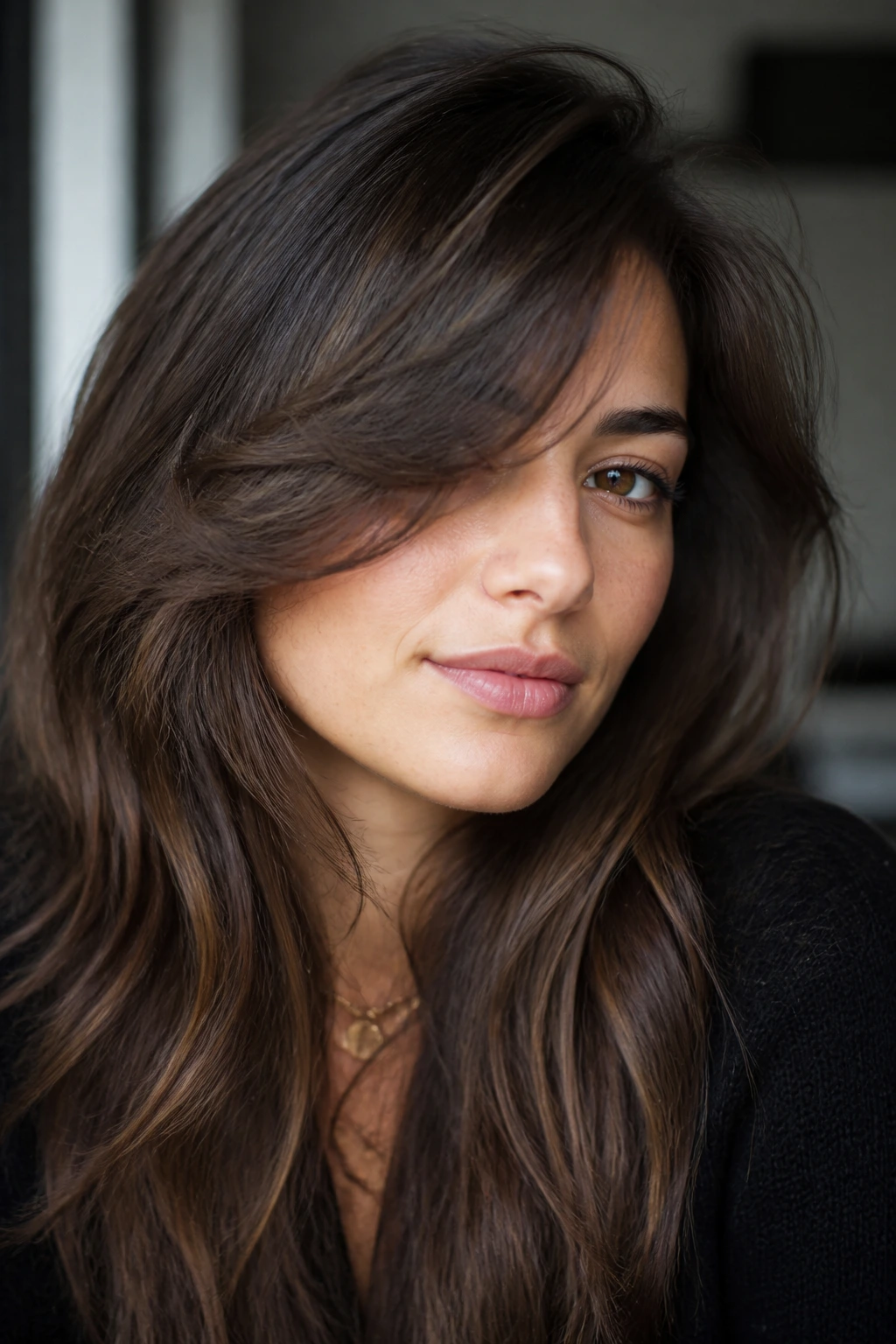
- Cutting the fringe too short: If the shortest piece sits too high above the brow, the bang springs up and exposes the forehead in a way that can make a square face look wider. The fix is simple: leave the first cut longer than you think, then shorten only after checking how the hair sits dry.
- Starting with a blunt line: A sharp edge across the front turns the bang into a shelf. Ask for point cutting or a soft curve through the ends so the fringe can bend instead of sitting straight.
- Ignoring the part: A middle-heavy part can make the front look stiff, especially on square faces. If your hair naturally wants a deep side part, let it have one and train the fringe from there.
- Over-thinning thick hair: Removing too much bulk can make thick strands frizz at the ends and puff at the root. Better to lighten the inside of the bang and keep the outer shape intact.
- Using too much product: Heavy creams, oils, or shine serums can collapse the swoop. The front should feel touchable, not coated.
- Styling only the ends: The bend starts at the root. If the top section isn’t directed first, the fringe will split, lift awkwardly, or fall flat by lunch.
Ways to Change the Shape Without Losing the Softness
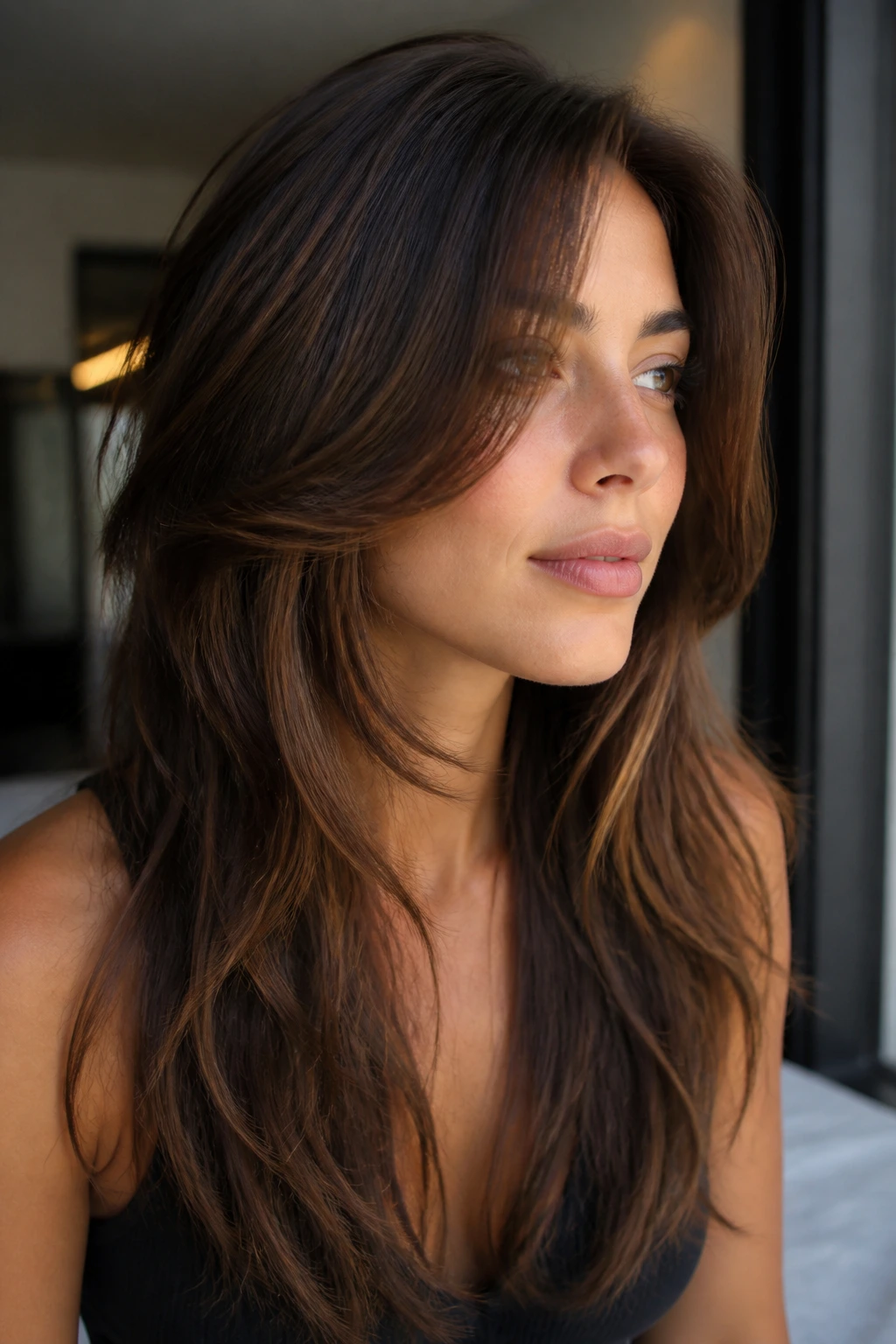
- The Curtain-Bang Drift: Keep the middle a little longer and let the front split softly before sweeping to one side. This is the easiest shift if you want less commitment and more face opening at the center.
- The Soft Shag Turn: Add broken layers through the fringe and temple area so the front feels lived-in and airy. It’s a smart move for wavy hair or anyone who prefers texture over polish.
- The Glossy Side Sweep: Keep the cut smooth and the ends clean, then style with a round brush and a light serum. This version suits dressier outfits and straighter hair.
- The Grown-Out Face Frame: Let the shortest piece hit cheekbone level and blend the rest into the long layers. This works when you want the idea of bangs without a daily styling job.
- The Bold Asymmetry: Push the weight farther to one side and leave the opposite side lighter. This gives a stronger diagonal line and can be very flattering on square jaws if the ends stay soft.
Tools That Make the Front Pieces Behave
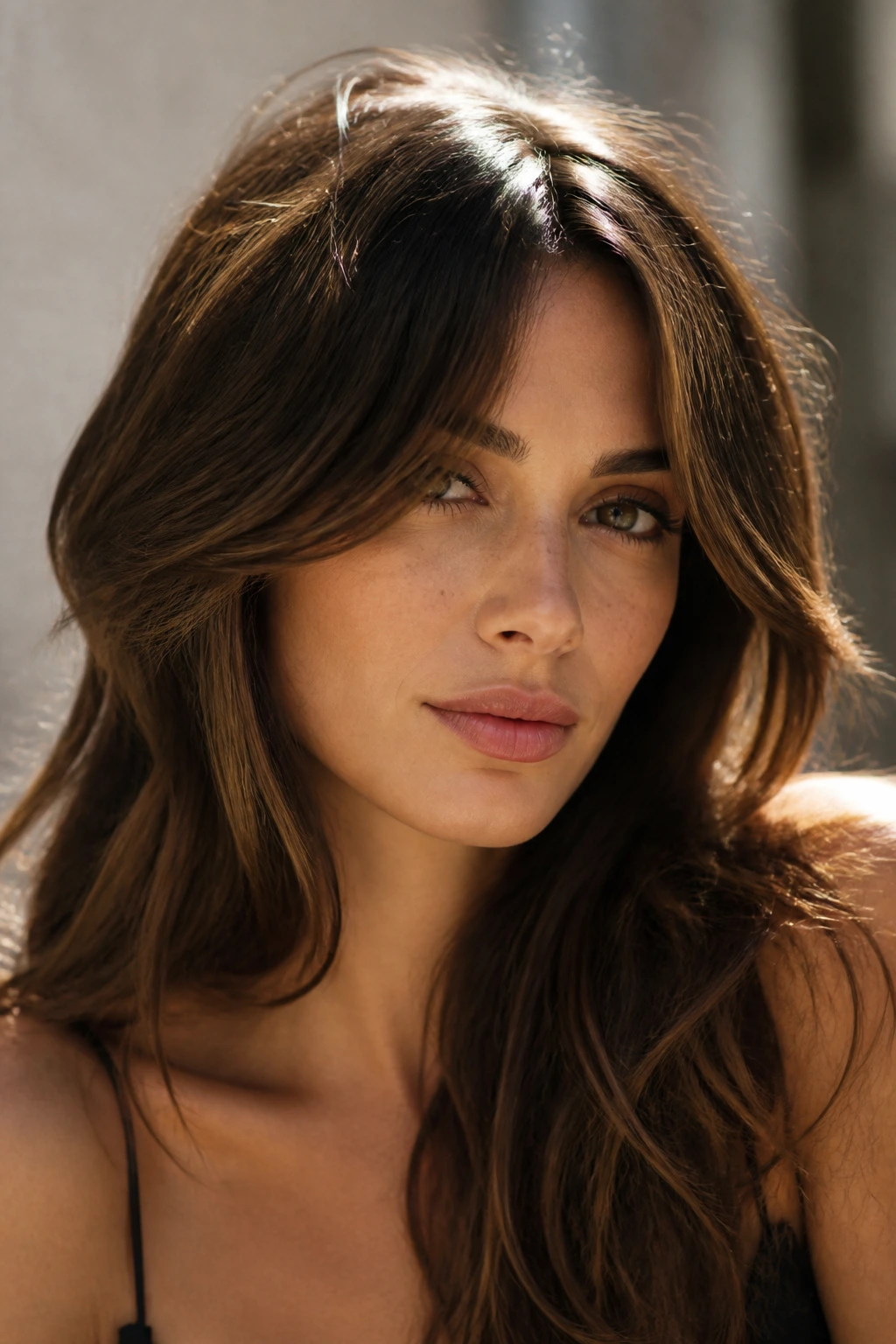
- Blow dryer with a concentrator nozzle — directs airflow where you want the bend and keeps the fringe from flying around.
- Round brush, 1 to 1.25 inches — small enough to shape the front, large enough to keep the curve smooth instead of curly.
- Heat protectant spray — keeps the front from frying, especially if you restyle the bang every day.
- Duckbill clips or sectioning clips — useful for training the bang while it cools in the direction you want.
- Lightweight mousse — gives the root some memory without making the fringe sticky.
- Texturizing spray — helps piecey or airy styles hold their separation.
- Dry shampoo — keeps the front from collapsing when the roots start to go oily.
- Flat iron or curling iron, 1 to 1.25 inches — handy for smoothing a stubborn bend or adding a polished curve.
Keeping the Shape Between Trims
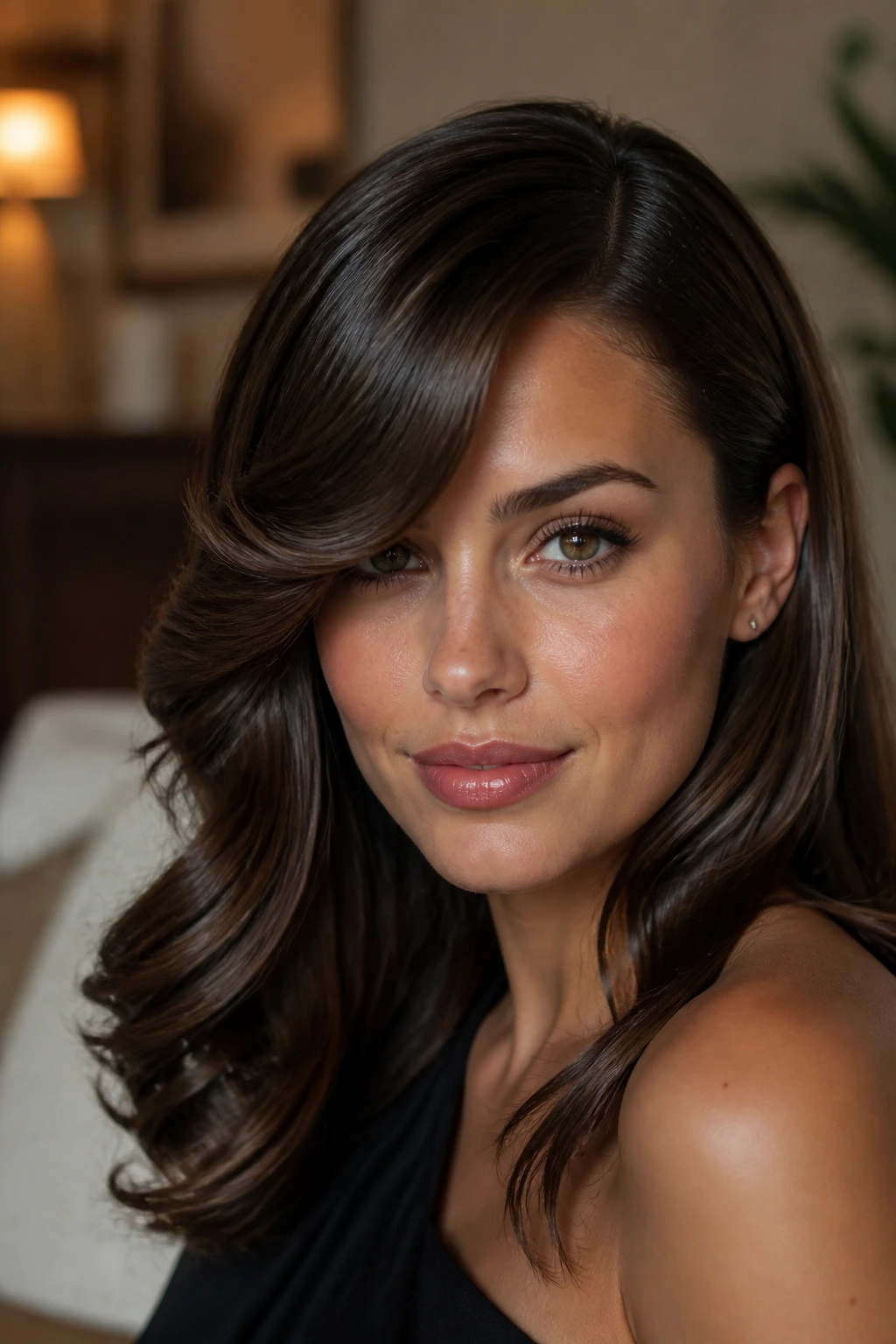
Swoop bangs usually need a trim every 4 to 6 weeks if you want the curve to stay crisp. If you like them longer and more relaxed, you can stretch that a bit, but once the shortest piece falls past the cheekbone, the shape starts acting more like face-framing layers than a true fringe.
Wash the front more often than the rest of the hair if it gets oily fast. Bangs sit on the skin, collect product, and pick up oil from the forehead, so they usually need attention every 1 to 2 days. A little dry shampoo at the roots is fine, but don’t dump it through the ends or the hair turns chalky.
At night, pin the front loosely to the side or wrap it in a silk scarf if it tends to kink. If the bang is already grown out, you can tuck it into the rest of the hair and wake up with less to fix. The more the shape blends into the long layers, the easier the upkeep gets.
If you’re growing the fringe out, ask for the front to be nudged into the side layers instead of being cut off bluntly. That keeps the grow-out from looking like an accident. And yes, a bad grow-out can be fixed. It just takes one or two trims that aim for blending rather than cutting more length away.
Questions People Ask Before They Commit

Do swoop bangs really flatter square faces?
Yes, when they’re cut with a diagonal line and enough softness through the ends. The point is to break up the forehead and jaw without adding another straight edge.
Should I ask for a deep side part?
If you want the strongest softening effect, yes. A deeper part usually gives the fringe more sweep and keeps the face from looking too symmetrical and boxy.
Can I wear swoop bangs with curly or wavy hair?
Absolutely. The cut just needs to respect the texture. Curly and wavy hair usually looks best with a longer, softer swoop that can dry in its natural pattern instead of fighting it.
How short should the shortest piece be?
For square faces, I usually prefer the shortest point to sit at the brow or just below it, not high above it. That keeps the fringe from opening the forehead too much.
What if my bangs split down the middle every day?
That usually means the root wants a different direction or the part isn’t strong enough. Dry the front from the side you want it to fall, then clip it while it cools. A little training goes a long way.
Are swoop bangs high maintenance?
Some are, some aren’t. A polished blowout version takes more effort, while a longer, piecey sweep or grown-out fringe can be very forgiving.
Can I wear glasses with swoop bangs?
Yes. Just keep the shortest point out of the frame line and make sure the fringe sweeps to the side instead of crowding the lenses.
What if my hair is very thick?
Ask for internal weight removal, not a blunt chunk of fringe. Thick hair needs room to move or the bang will sit like a heavy curtain.
A Fringe That Softens the Edges
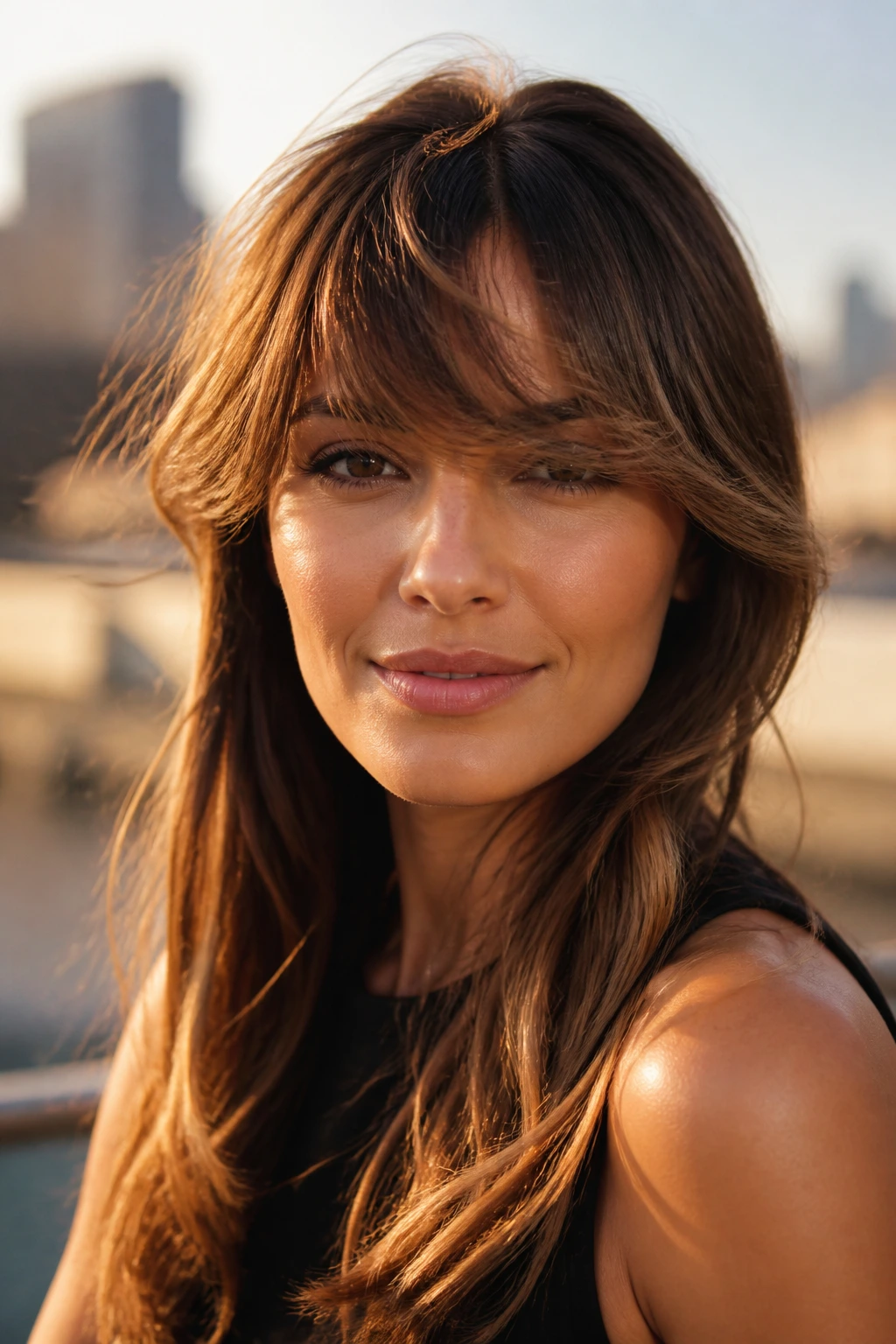
The best swoop bangs for long hair and square faces do one thing well: they take a strong face shape and give it motion. Not disguise. Motion. The jaw stays there, the structure stays there, but the eye gets a softer path across the face, and that changes the whole feel of the haircut.
If you’re thinking about trying one, bring the idea to a stylist with the part, the length, and the upkeep conversation already in mind. That’s where the real result lives. A flattering swoop is not a lucky accident. It’s a small set of choices stacked in the right direction.
A good one should still look right after a windy walk, a skipped wash, and one slightly impatient morning with the round brush. That’s the version worth keeping.