



Short hair and a round face can get along beautifully with fringe, but only when the bangs have some bend. A blunt line across the forehead tends to stop the eye in the widest part of the face. A wavy edge, by contrast, breaks that width apart and sends the eye upward, then back down along the cheek and jaw.
That’s why wavy bangs for short hair and round faces work so well when they’re cut with a little air in them. A bob gets lighter. A pixie gets softer. Even a cropped shag can stop looking boxy the minute the front pieces move instead of sitting like a shelf.
I’ve always liked bangs that do a little more than “cover the forehead.” The best ones leave room for brows, cheekbones, and texture to breathe. Some of the styles below are polished; some are messy in the good way; a few are a little edgy. All 25 are built around the same idea: make the face look longer, not wider, and make short hair feel deliberate instead of accidental.
Why These 25 Wavy Bangs Work on Short Hair and Round Faces

-
They break up width: A soft wave interrupts a straight line across the forehead, which keeps the face from reading as one wide shape.
-
They add vertical movement: Pieces that fall from brow to cheekbone pull the eye down, which helps short cuts feel less top-heavy.
-
They stay flexible while growing out: Wavy fringe can blur into face-framing layers instead of turning into an awkward helmet of hair.
-
They play well with short cuts: Bobs, pixies, shags, and French crops all need front pieces that can carry some of the shape without swallowing the face.
-
They work with real texture: If your hair has a natural bend, these styles lean into it instead of fighting for pin-straight perfection.
-
They make styling easier on busy mornings: A quick mist, a bend from a 1-inch iron, or a five-minute round-brush pass is often enough to bring the fringe back to life.
1. Soft Curtain Bangs on a Cropped Bob
Soft curtain bangs are the easiest way to make a cropped bob look a little longer in the front without losing that short, clean shape. The center opens up just enough to show the forehead, while the outer pieces skim the cheekbone instead of stopping right at the brow. On a round face, that diagonal fall matters. It keeps the eye moving.
Why it flatters a round face
Ask for the shortest point to land just above the brow, then let the sides grow toward the cheekbone. That difference in length creates a gentle V-shape, not a hard curtain. I like this version best on hair that bends easily, because the wave gives the fringe a broken edge rather than a solid block.
Quick notes:
- Best on chin-length or jaw-length bobs
- Works well with a middle part or a soft off-center part
- Needs only a light bend at the ends, not a full curl
Pro tip: Blow-dry the center first, then wrap each side away from the face for 5 to 8 seconds. That little turn keeps the curtain open instead of collapsing into the cheeks.
2. Side-Swept Wavy Fringe
A side-swept fringe is the old reliable of round-face styling, and I mean that in the nicest way. It gives you angle without drama. The front section starts deeper on one side, slides across the forehead, and ends somewhere near the temple or outer brow. That diagonal line is doing a lot of work.
What makes it different
Unlike a straight-across fringe, this one never lands at the widest part of the face. It pulls attention across the brow and then down toward the jaw, which is exactly what you want on a short cut. If your hair is fine, keep the fringe light and pieced out. If it’s thick, ask for point cutting so the edge doesn’t turn heavy.
Wear it with a rough wave, not a polished flip. A side-swept bang that’s too smooth can feel formal in a way that fights short hair. A little movement keeps it modern.
3. Bottleneck Bangs on a Textured Pixie
Bottleneck bangs are my favorite answer when someone wants fringe but does not want a solid wall of hair in front. The center sits shorter, the sides get longer, and the whole thing narrows and widens in just the right places. On a pixie, that shape gives the cut a soft frame without losing the sharpness of the short length.
How to style it
The center should hover just above the brow, then the side pieces can taper toward the temples. That opening at the middle makes the face look taller. The longer edges at the sides keep the pixie from feeling too severe. It’s a smart cut if your wave pattern is loose and your hair likes to split on its own anyway.
Use a pea-sized amount of styling cream on damp fringe, twist the front section once, then air-dry or diffuse on low. Too much product flattens the shape. Too little and the bends fray.
4. Micro Wavy Bangs for a Choppy Crop
Micro bangs sound bold because they are bold. But on short, choppy hair, a tiny wavy fringe can be a sharp little trick for round faces if the rest of the cut has enough lift. The goal isn’t to cover the forehead. It’s to put a small, broken edge right above the brows and let the texture do the rest.
Where this one works best
I’d keep the shortest pieces at least 1/2 inch above the brow so the fringe doesn’t sit like a ledge. That extra distance leaves room for a wave to read as airy instead of harsh. The surrounding layers need to stay piecey, especially around the temples. Otherwise the cut starts widening the face instead of lengthening it.
This one is best for people who like a little attitude in their haircut. It’s not shy. If you wear it, keep the finish imperfect—fingers, not a brush. A mist of texturizing spray and a rough dry are usually enough.
5. Feathered French Fringe
French fringe has a reputation for being effortless, but the version that works best on round faces is usually a little feathered and a little broken. You want softness through the center and gentle separation at the ends. Nothing helmet-like. Nothing too dense. The bangs should hover near the brow and then melt outward.
The reason this shape works is simple: it lets the forehead show through in places, so the face does not get cut in half. That matters on a rounder face, where too much fullness at the front can make the whole shape feel shorter. Feathered ends help the cut breathe.
I like this style with a bob that has a loose bend in the mid-lengths. If the hair is too sleek, the fringe reads as plain. If it’s too messy, the whole look loses the French softness and starts looking like a grow-out. The sweet spot is slightly undone, not unfinished.
6. Shaggy Bangs with a Mini Mullet Bob
A shaggy fringe on a mini mullet bob is for the person who wants shape, texture, and a little edge in the same haircut. The front pieces blend into the sides, then the whole cut gets a bit longer in the back. On a round face, that extra length in the silhouette helps more than people realize. It stretches the line of the haircut.
Why this one earns its keep
The fringe should be broken, not blunt, with the shortest bits sitting near the brow and the longer pieces falling toward the cheekbone. That uneven edge keeps the front from feeling heavy. The shag layers take care of the rest by adding vertical texture through the crown and sides.
This cut is happiest with a diffuser or a rough dry. Scrunch in mousse, flip your head, dry until the roots are almost set, then stop before the wave gets too fluffy. Too much volume around the cheeks is the enemy here. You want lift, not puff.
7. Long Peekaboo Bangs on a Cropped Cut
Long peekaboo bangs are for anyone who likes the idea of fringe but still wants to tuck hair away from the face on command. The bangs live just under the brow line, sometimes brushing the lashes, and then drift into the sides. They can hide or reveal the forehead depending on how you part them. I love that flexibility.
A round face benefits from this length because the fringe creates a diagonal line without taking over the whole forehead. The eye sees movement first, not width. If your hair is short and you often wear it behind the ears, this style gives you something to play with without demanding constant upkeep.
Keep the ends soft. A blunt, heavy line defeats the purpose. The best version has a light bend at the bottom, usually made with a round brush or a quick pass of a small iron.
8. Asymmetrical Wavy Bangs
Asymmetry is one of the fastest ways to make a round face look longer. One side falls shorter; the other side continues downward toward the cheek or jaw. The result is a line that never settles into a neat half-moon. It keeps the eye moving.
The shape to ask for
I’d keep the shorter side around brow level and let the longer side skim the outer eye or cheekbone. That spread gives you a slant instead of a curve. On short hair, especially a bob or a close crop, that slant is useful. It adds motion without asking the rest of the haircut to do too much.
This one looks best when the wave is loose and a little irregular. Perfect curls make it feel costume-y. A slightly imperfect bend makes it look lived-in. And if your face leans rounder on one side than the other, this is a smart way to balance that without making the whole cut feel lopsided.
9. Wispy Split Fringe on a Chin-Length Bob
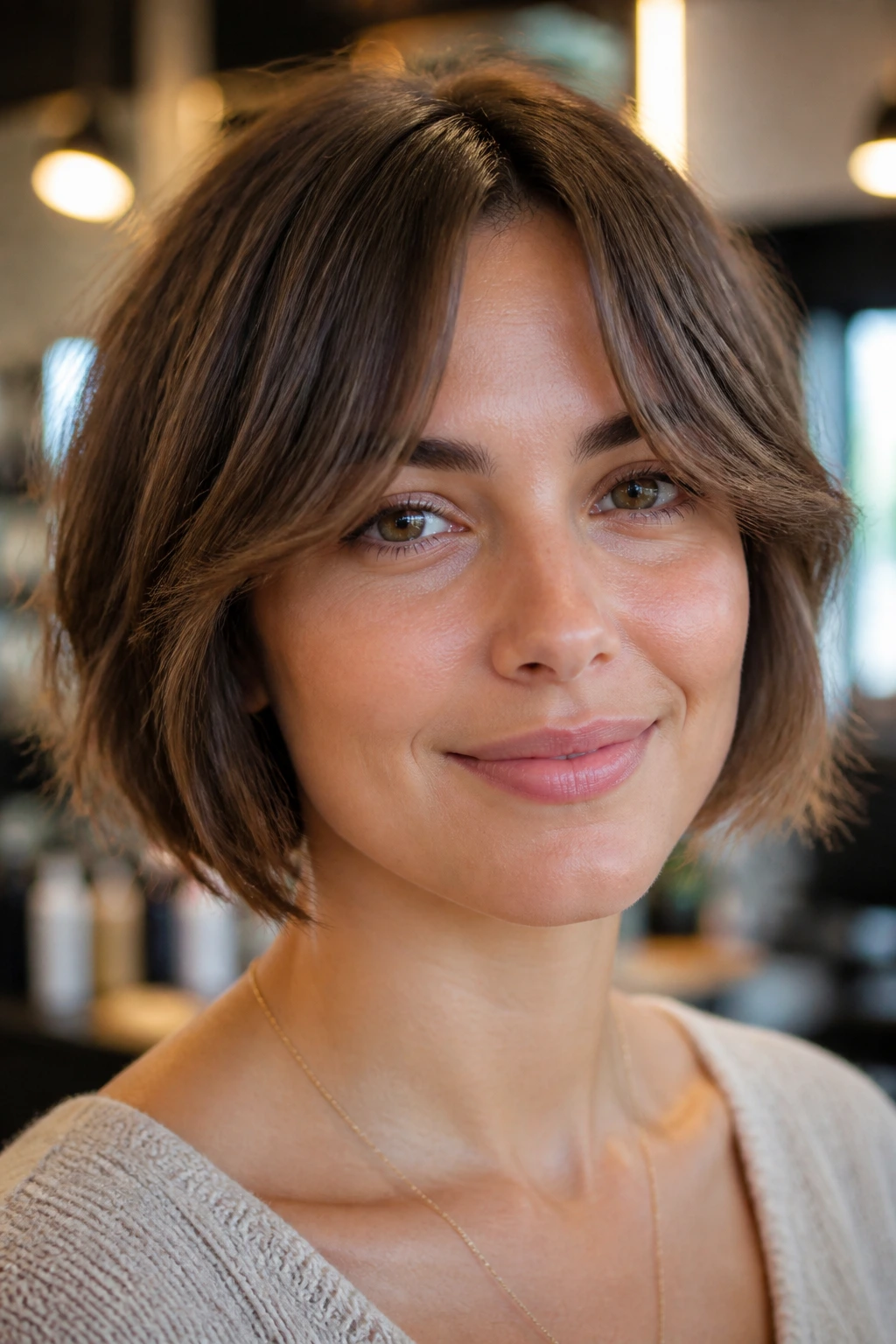
A split fringe is lighter than curtain bangs, but it still opens the face in the middle and sends the side pieces outward. That makes it a clean choice for a chin-length bob, especially if you want something airy instead of full. The center part should be soft, not severe, so the fringe falls into two loose wings.
On a round face, the split does a nice thing: it exposes a little forehead, then frames the cheeks rather than sitting straight across them. That keeps the shape from reading wide. If your hair is fine, this style gives you movement without needing much product. If it’s thick, ask for more internal texture so the split doesn’t turn bulky.
I like this fringe with a subtle bend through the ends. A deep curl makes the split too playful. A straight fringe makes it too sharp. The little wave in the middle is what gives it character.
10. Piecey Baby Bangs with Texture
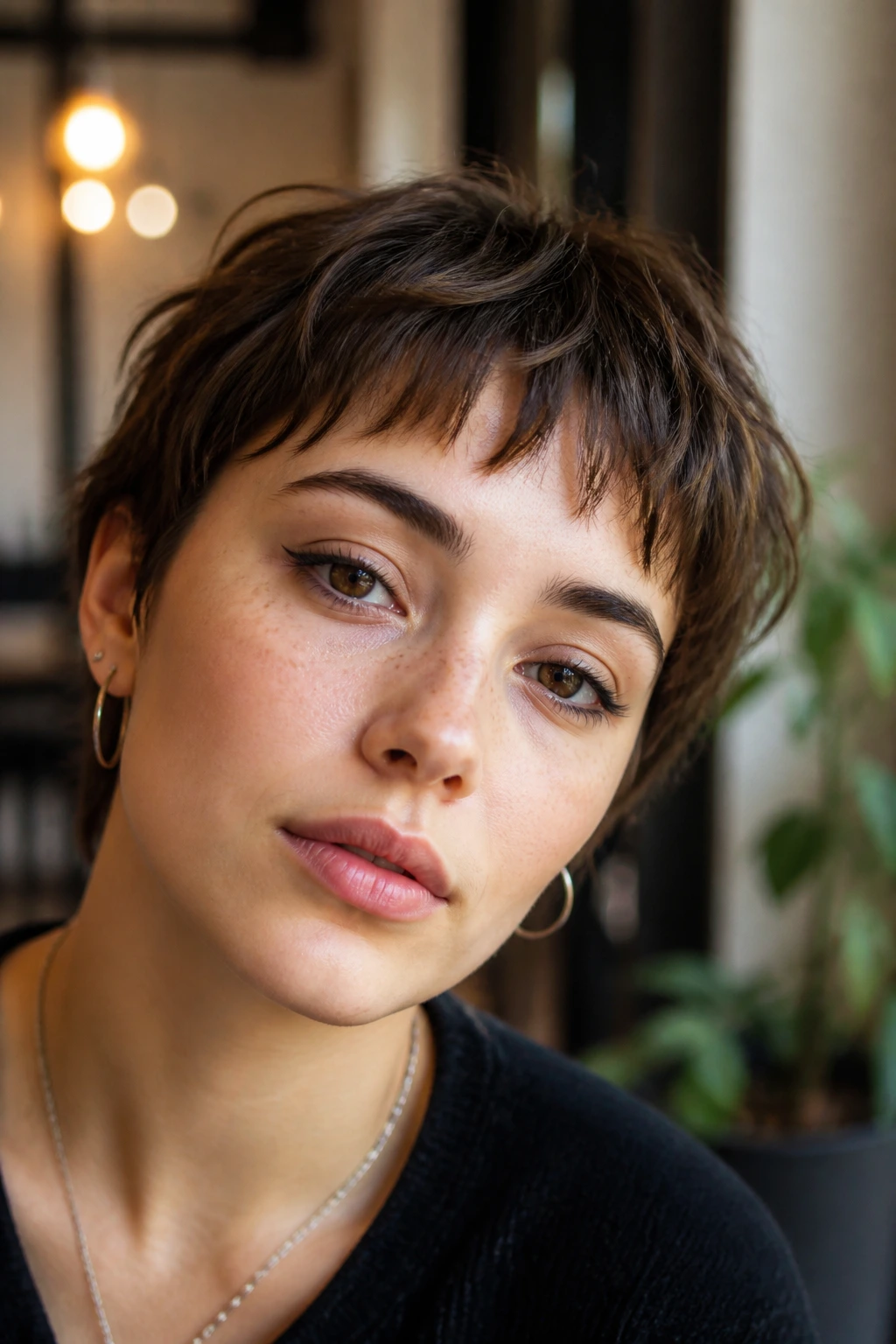
Piecey baby bangs are a strong look, and I’m not going to pretend they’re safe. They are short. They are visible. They put the brows in the spotlight. On a round face, though, a textured version can work if the rest of the cut gives you height at the crown and a narrow shape at the sides.
The secret is density. Keep the fringe sparse enough that the forehead still peeks through. That little gap stops the bangs from turning into one solid strip. Then rough them up with a touch of paste or dry wax so the pieces separate. The result is sharper than wispy bangs and less sweet than a full fringe.
If you wear makeup, this cut can be fun because it frames the eyes hard. If you don’t, it still works. The haircut does the talking. Just know this one grows out fast and asks for regular trims. No getting around that.
11. Arched Full Fringe with Loose Waves
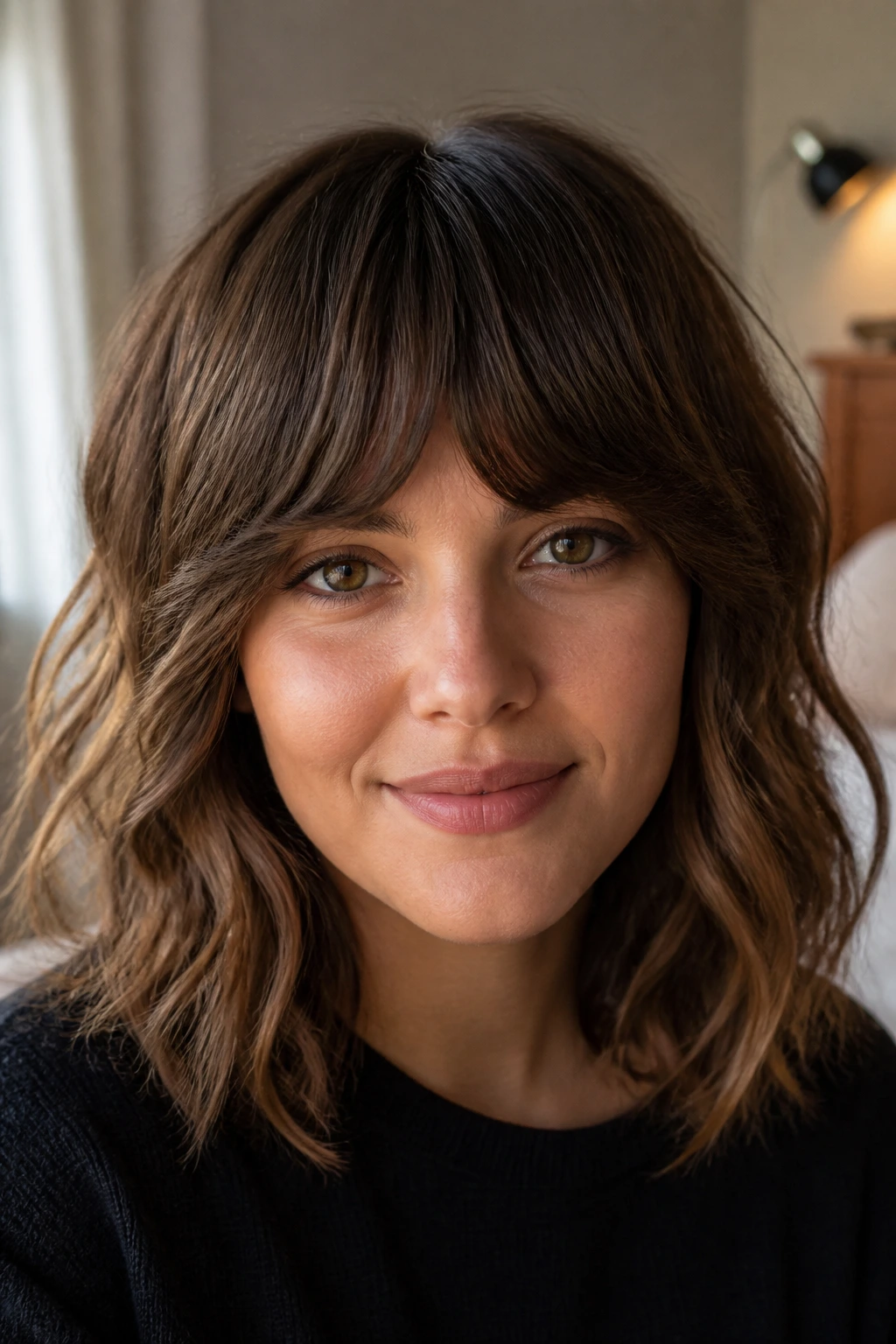
A full fringe on a round face can go wrong fast if it’s too blunt. But an arched version, softened by loose waves, has a nice built-in lift. The arch opens the center a bit higher, then the sides settle lower near the brow tails. That shape keeps the face from feeling boxed in.
Why the arch matters
The middle should sit high enough to show a little skin, even when the hair falls forward. That tiny window of forehead helps elongate the face. The outer corners can stay heavier, but only if the ends are softened with point cutting or slide cutting. I wouldn’t let the line go sharp. Sharp is the problem.
This style looks especially good on short bobs with rounded ends. The soft curve of the haircut matches the soft curve of the fringe, but the waves keep both from turning static. If you want a polished look without a straight line across the face, this is one of the better choices.
12. Grown-Out Curtain Fringe on a Boxy Bob
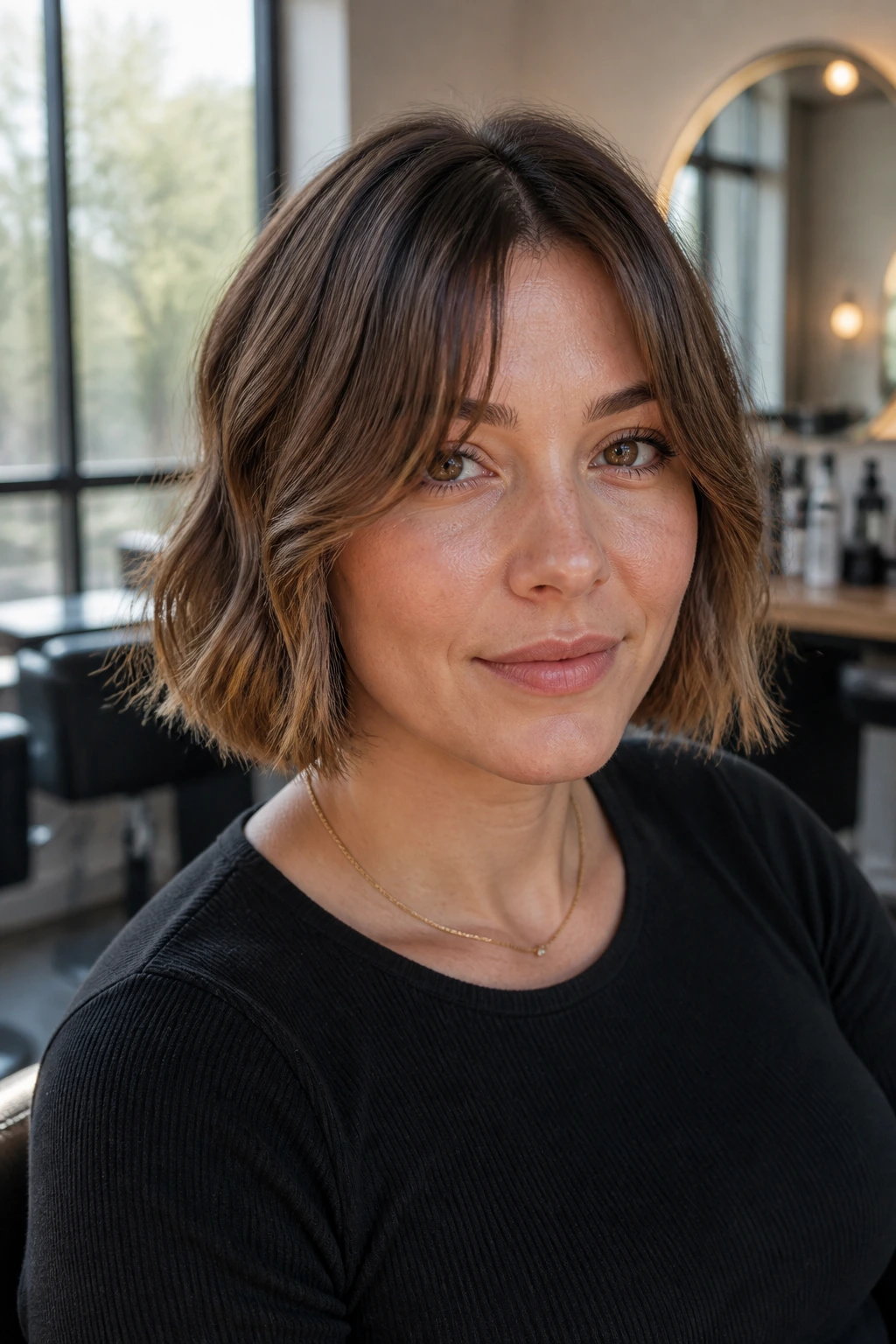
A boxy bob can look heavy on a round face unless the front gets broken up. A grown-out curtain fringe does that job with almost no fuss. It starts near the center, parts easily, and hangs long enough to merge into the cheek-length pieces. That length is the point. It softens the boxy edge of the bob.
This is one of those styles that gets better a few weeks after the cut. The fringe settles past the brows, the sides loosen up, and the whole shape looks less rigid. If your hair has a natural wave, even better. The bend helps the curtain fall in a way that feels relaxed instead of overstyled.
I’d ask for the longest pieces to hit around the cheekbone or upper lip. Anything shorter risks widening the upper face. Anything longer starts drifting into face-framing layers rather than bangs, which is fine, but it changes the whole shape.
13. Deep Side-Part Fringe with Tucked Ends
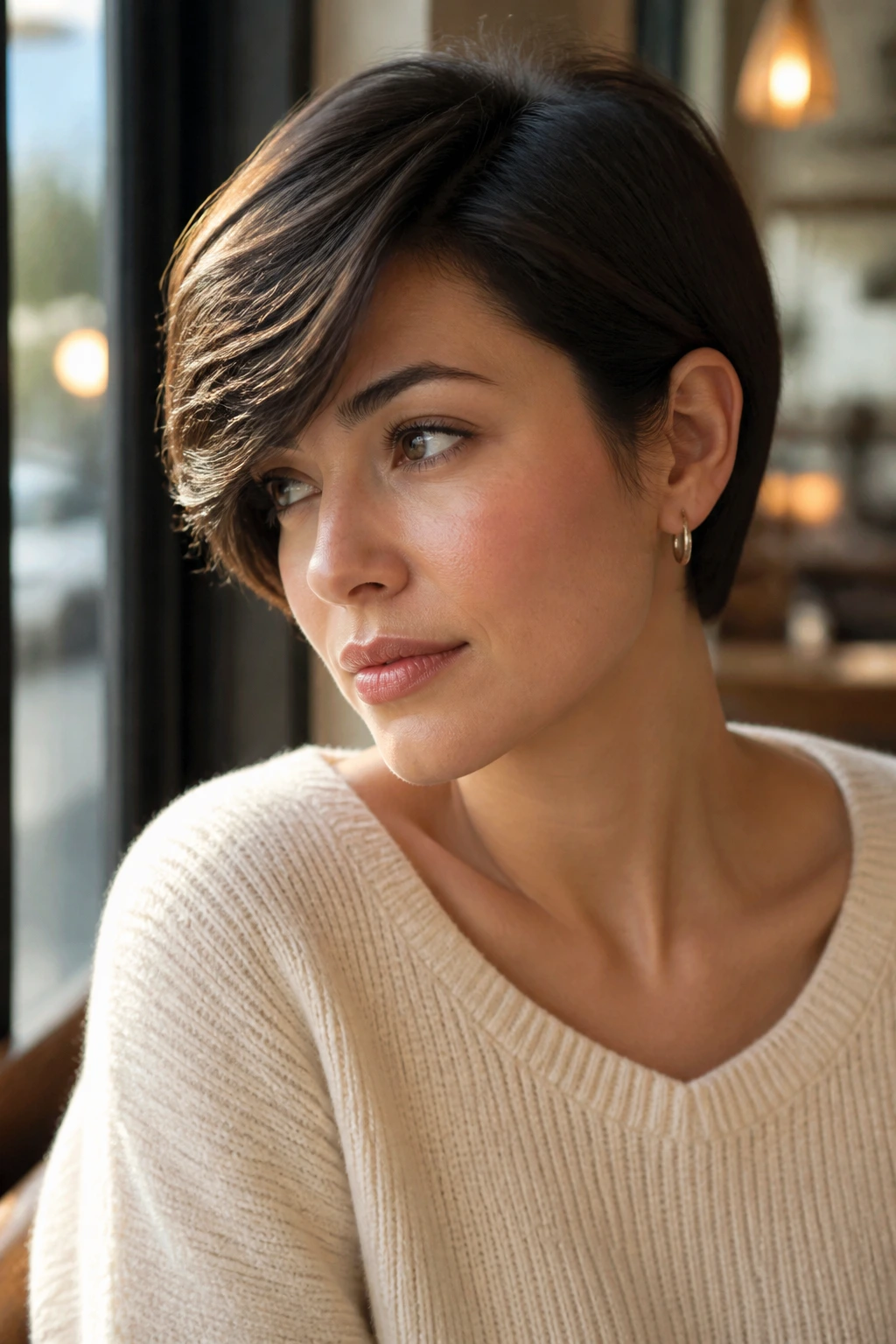
A deep side part is a cheat code for round faces. It creates instant asymmetry and gives the crown a little lift, which makes short hair look taller. With a wavy fringe, the part line does half the styling for you. The front section sweeps across the forehead, then the ends tuck behind one ear or rest against the temple.
What to ask for
Ask your stylist to keep the front heavy enough to sweep, but not so heavy that it collapses. The shortest point can sit near the brow on the fuller side, while the longer side drifts toward the cheek. That unevenness is what makes the face look less circular. It is also a good choice if you wear glasses, because the fringe can sit above or beside the frames instead of landing directly on them.
This one feels easy in real life. It’s forgiving on day two. A quick blast of dry shampoo at the roots and a finger twist at the front usually brings it back.
14. Swoopy Retro Bangs with Short Waves

Retro swoop bangs bring a little old-school polish to short hair, but the trick is not to make them stiff. The wave should move away from the forehead in one smooth arc, then break into softer texture toward the ends. On a round face, that arc acts like a long diagonal line, and the shape can be surprisingly flattering.
This style likes a little root lift. A round brush, a medium roller, or a 1.25-inch iron all work, as long as the bend starts near the root and not halfway down the strand. If the wave begins too low, it looks limp. If it starts too high, it can get puffy. There’s a narrow sweet spot, annoyingly enough.
Wear it with a short bob or a sculpted crop. The retro front works best when the rest of the cut stays clean. Too many layers competing for attention can turn the whole thing blurry.
15. Airy Birkin Bangs on a Short Cut
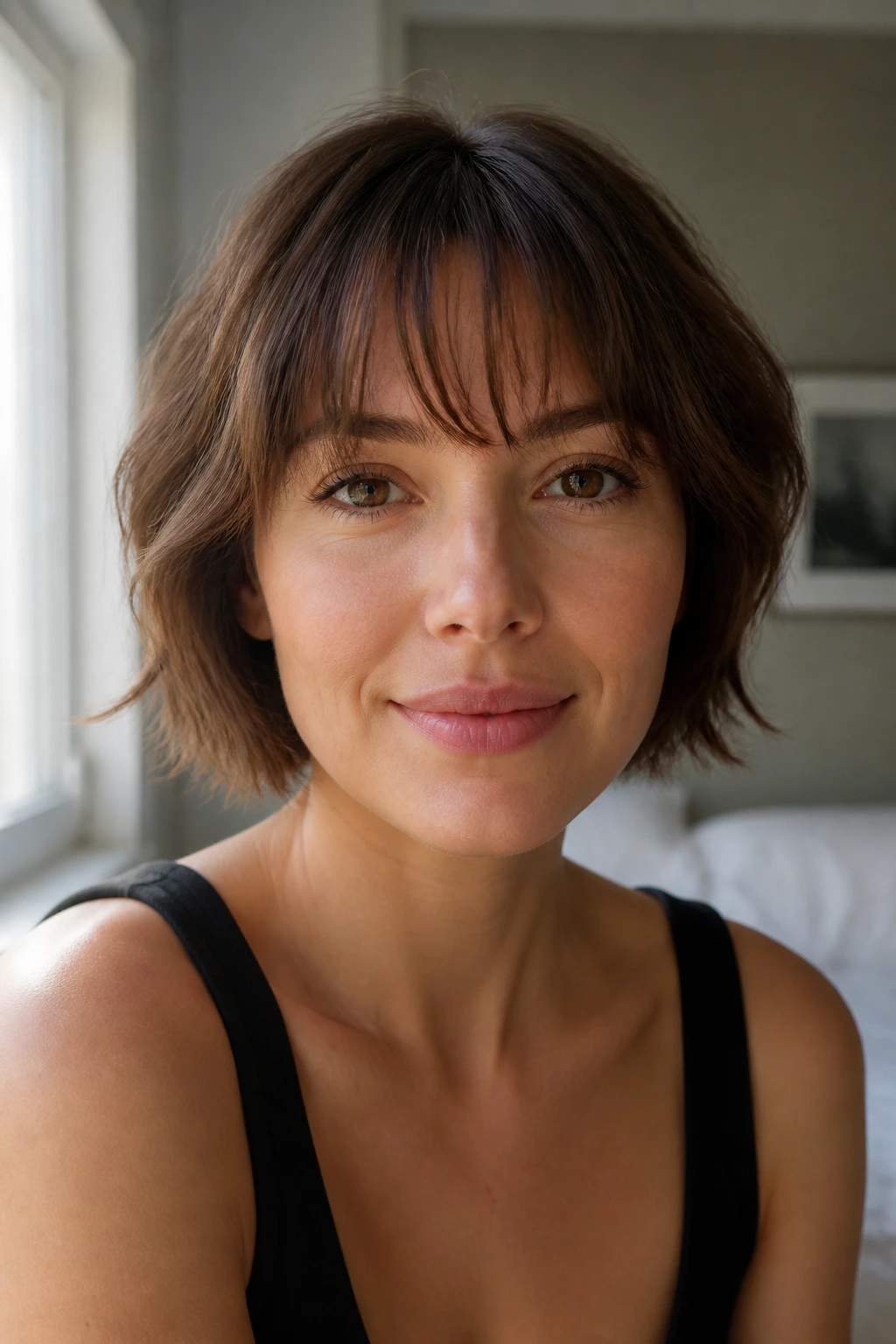
Birkin bangs have that imperfect, slightly borrowed-from-the-70s feel, and I think they’re especially useful on short hair when they stay airy. You want a fringe that skims the brow, shows some forehead, and separates into little sections as it dries. No heavy wall. No dense sweep.
The reason they suit round faces is that they soften the upper face without sealing it off. The line stays loose. The ends are feathered. And because the fringe isn’t cut too full, it doesn’t widen the forehead in a way that fights the shape below. This is one of the best options if you want bangs that feel lived-in on day one.
Point cutting helps a lot here. So does a tiny bit of styling cream rubbed between your palms and pressed through the ends. Skip the heavy serum. It makes Birkin bangs lose their air, and once that happens, the whole style goes flat.
16. Choppy Brow-Grazing Fringe

A choppy brow-grazing fringe is all about little changes in length. One piece sits slightly higher. The next dips lower. The result is a broken line that makes the forehead feel narrower and the eyes stand out more. On a round face, that irregularity is doing useful work.
The fringe should hover right at the brow, not bury it. If it falls too low, the cut starts to compress the face. If it sits too high, you lose the framing effect. I like this one on a bob with a little wave through the ends, because the texture in the front matches the texture everywhere else.
There’s also a nice side effect: choppy bangs are forgiving. A little cowlick? Fine. Slightly crooked blow-dry? Still fine. They do not need to look perfect to look good, which is my kind of fringe.
17. Wavy Fringe with an Undercut
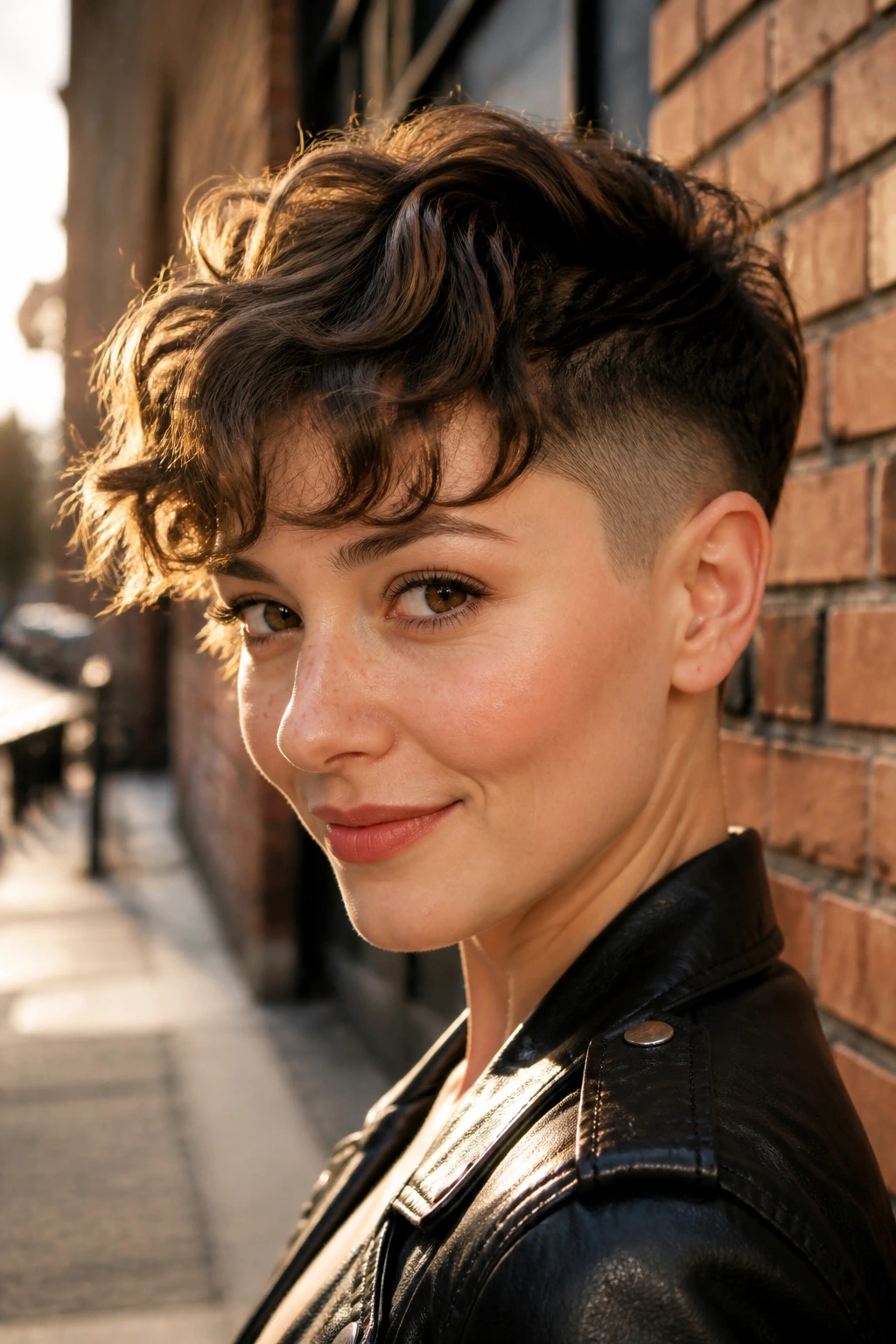
This is the bold one in the group. A soft wavy fringe with an undercut creates contrast—lightness in front, shorter bulk underneath, and a clear outline around the face. On a round face, that contrast helps because it removes width at the sides while leaving softness where it matters.
The fringe itself should stay touchable. Keep the wave loose and the ends broken. If the front gets too heavy, the undercut loses its purpose and the hairstyle starts feeling top-loaded. A little lift at the roots is enough. You do not need a big blowout.
I like this style for people who want the haircut to look crisp from the side and soft from the front. It’s an odd mix, and that’s why it works. The sharpness underneath makes the wave feel intentional instead of accidental.
18. Soft See-Through Bangs
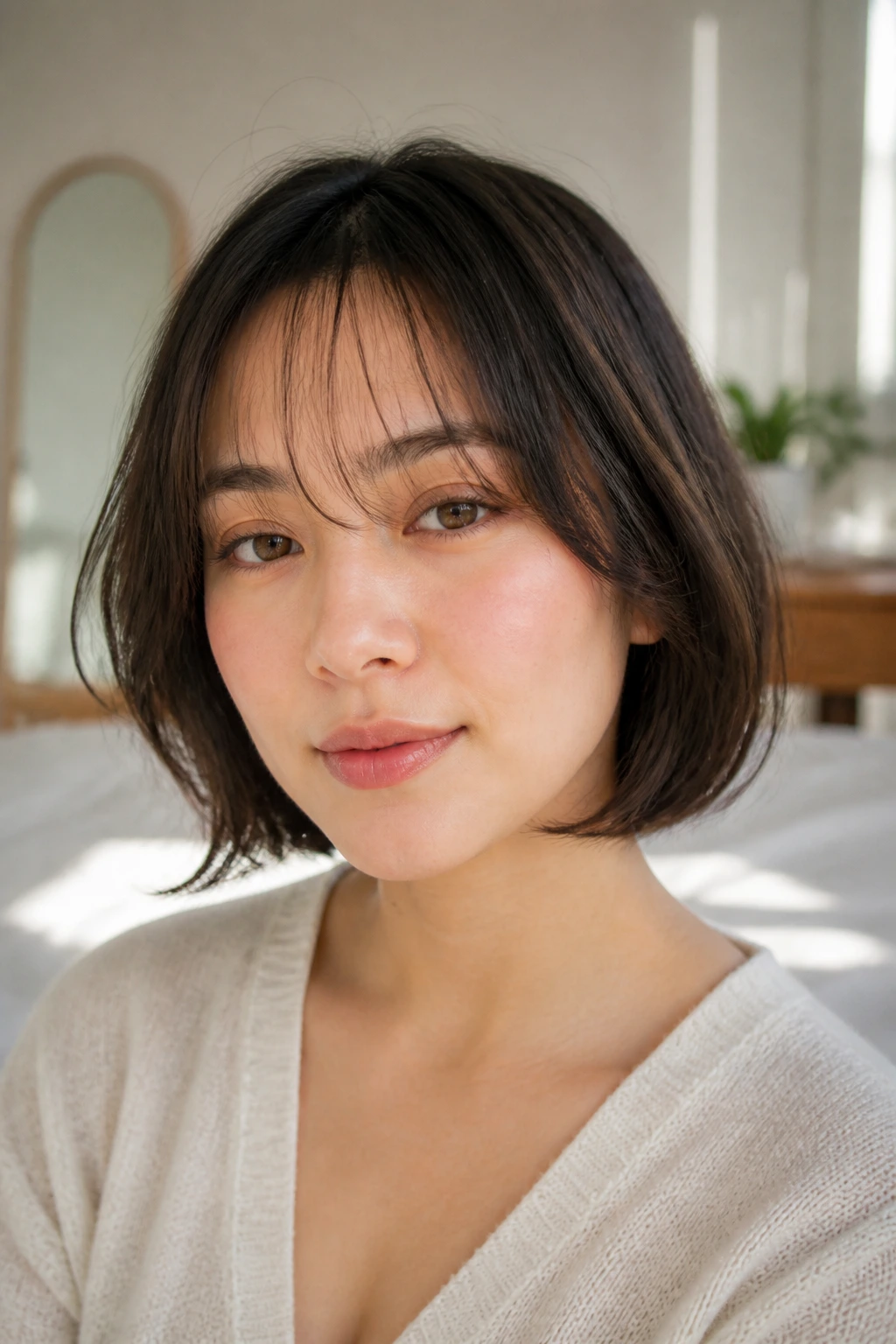
See-through bangs are thinner than most fringes, and that’s their whole advantage. They let the forehead show through, which keeps a round face from being chopped in half. The effect is gentle rather than dramatic. The fringe sits close to the brow, but not heavy enough to block it.
The best version of this look
The best version has a little bend at the ends and a light, airy density through the middle. If the fringe is too sparse, it just looks unfinished. If it’s too thick, you lose the transparency that makes the shape useful in the first place. I’d choose this style for a short bob or a cropped cut that already has some softness around the cheeks.
It’s also friendly for fine hair. A small amount of mousse at the roots, dried forward with your fingers, can give the fringe enough body without making it bulky. The whole point is to keep it light.
19. Rounded Fringe with Tousled Layers
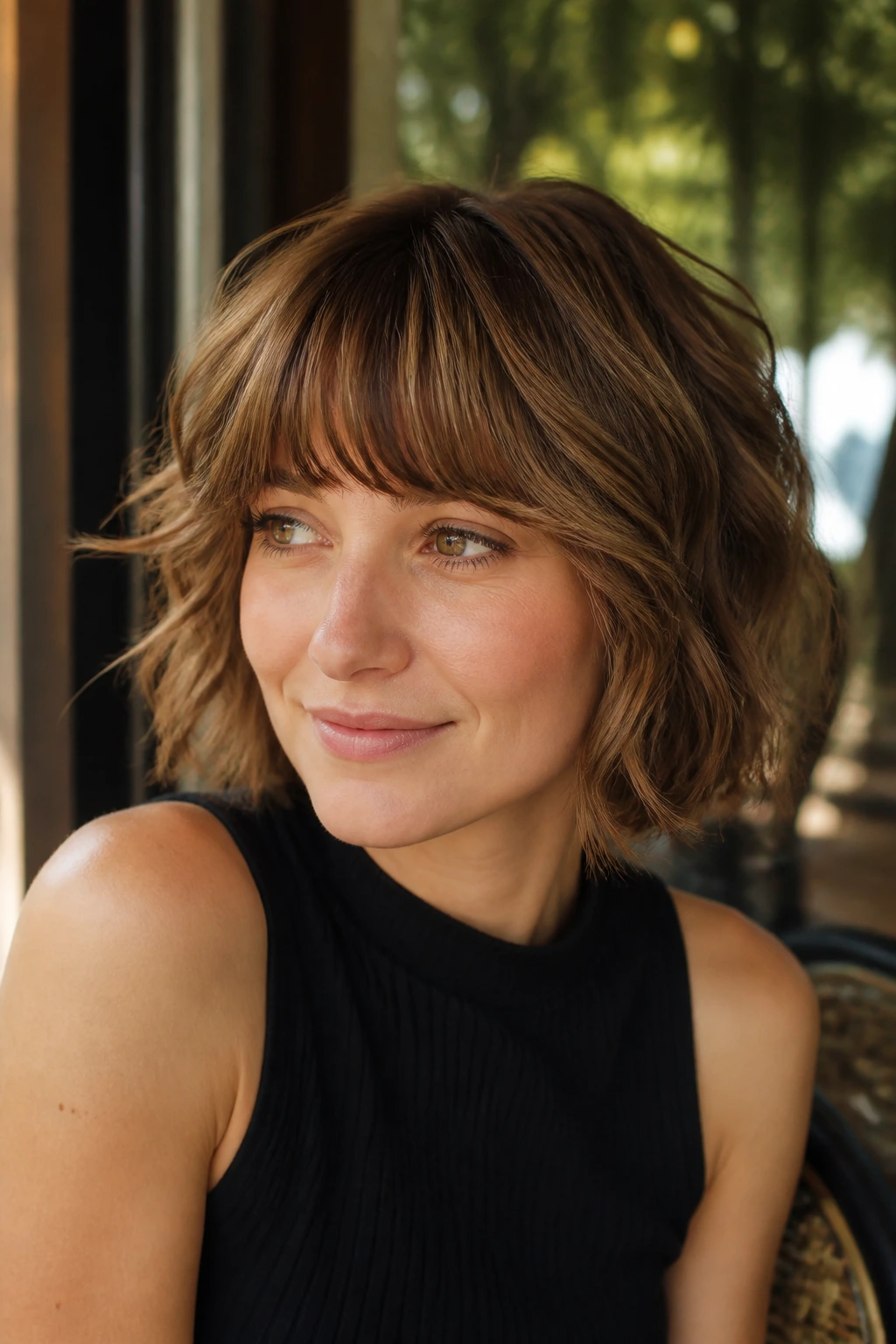
A rounded fringe can be tricky on a round face, which is exactly why I only like it when the edges are tousled. You want a soft curve that follows the brow, but you also want broken ends so the line doesn’t become too neat or too circular. The waves should interrupt the shape.
This works best when the haircut underneath has longer side pieces or layers that pull downward. That counterweight keeps the round fringe from echoing the face too much. If the rest of the cut is flat and heavy, skip this one. If the cut has movement, it can look lovely.
Think of it as soft geometry. The curve is there, but the texture keeps it from becoming a mirror.
20. Face-Framing Fringe with Flipped Ends
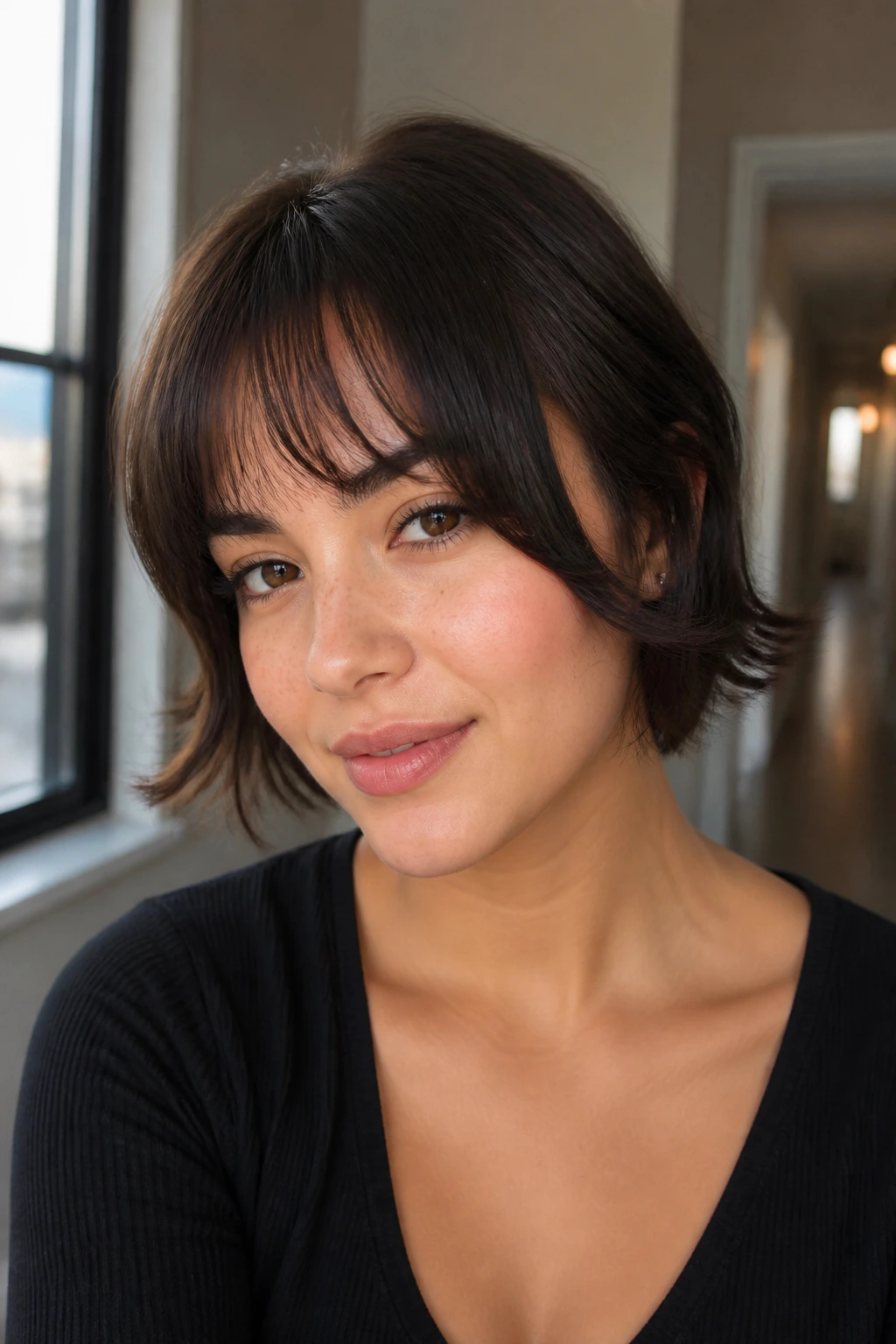
Face-framing fringe with flipped ends is one of the most flattering choices for short hair because the hair moves away from the face right where you need space. The bangs start at the forehead, then turn out at the cheekbone or jaw. That outward flip creates a clean little angle.
A round face benefits from that angle immediately. It adds length without forcing a severe part or a dramatic edge. If you like a style that works with a rounded bob or a sleek crop, this is a strong option. The flip can be loose and airy or a little more polished depending on your tools.
Use a brush or iron to turn the ends away from the face by about half an inch. That small bend matters more than people expect. Too much curl and you get poodle territory. Too little and the fringe just sits there.
21. Curved Fringe on a French Bob

A French bob already has a sharp little personality, and a curved fringe softens it just enough for a round face. The bangs follow the brow line in a gentle arc, then break into wave at the edges. The shape feels compact, but not severe.
The curve works because it creates shape without a hard stop. On a round face, that keeps the upper half from feeling wider. I especially like this with a jaw-length bob that has a slight inward bend at the ends. The fringe and the bob echo each other, but the wave keeps the look from turning rigid.
If your hair is dense, ask for internal texturizing through the fringe. Otherwise the curve can go heavy fast. If it’s fine, keep the cut lighter and let the wave supply the body.
22. Side-Heavy Fringe with Root Lift
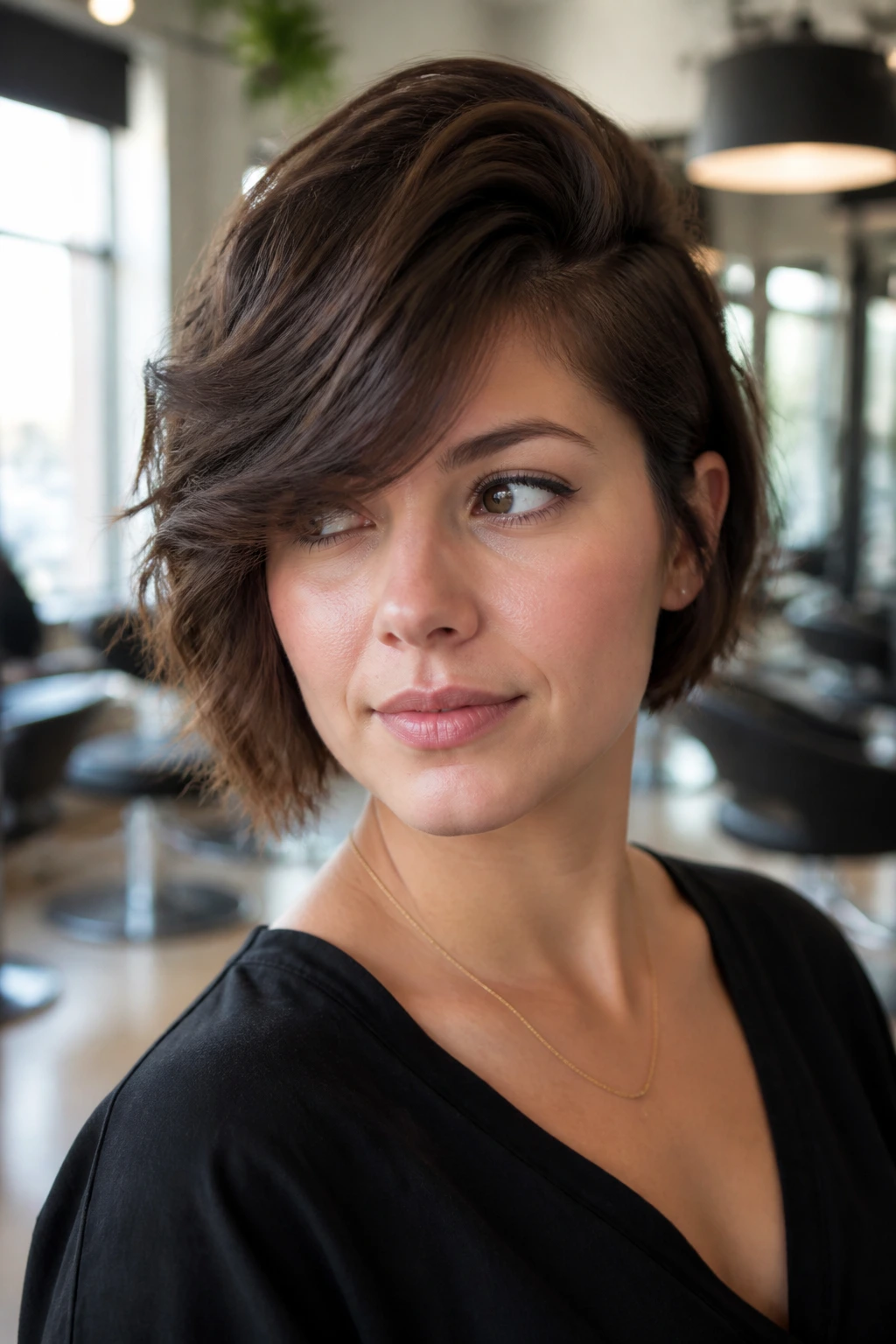
Side-heavy fringe is one of the most underrated ways to stretch a round face. Most of the weight sits on one side, and the roots are lifted so the front doesn’t collapse straight down. The result is a slanted frame that opens one eye area and leaves the other side softer.
Why I like it on short hair
It creates a vertical line at the crown and a diagonal line across the forehead. That combination is powerful on a short cut. The face looks longer, the hair looks fuller at the top, and the bangs never feel too symmetrical. Symmetry can be the problem on round faces; a little imbalance often helps more.
This version is especially useful if one side of your hair naturally falls flatter than the other. Work with it. Push the heavy side forward, clip it while it cools, and let the lift set at the root.
23. Jagged Fringe with Loose Bedhead Texture
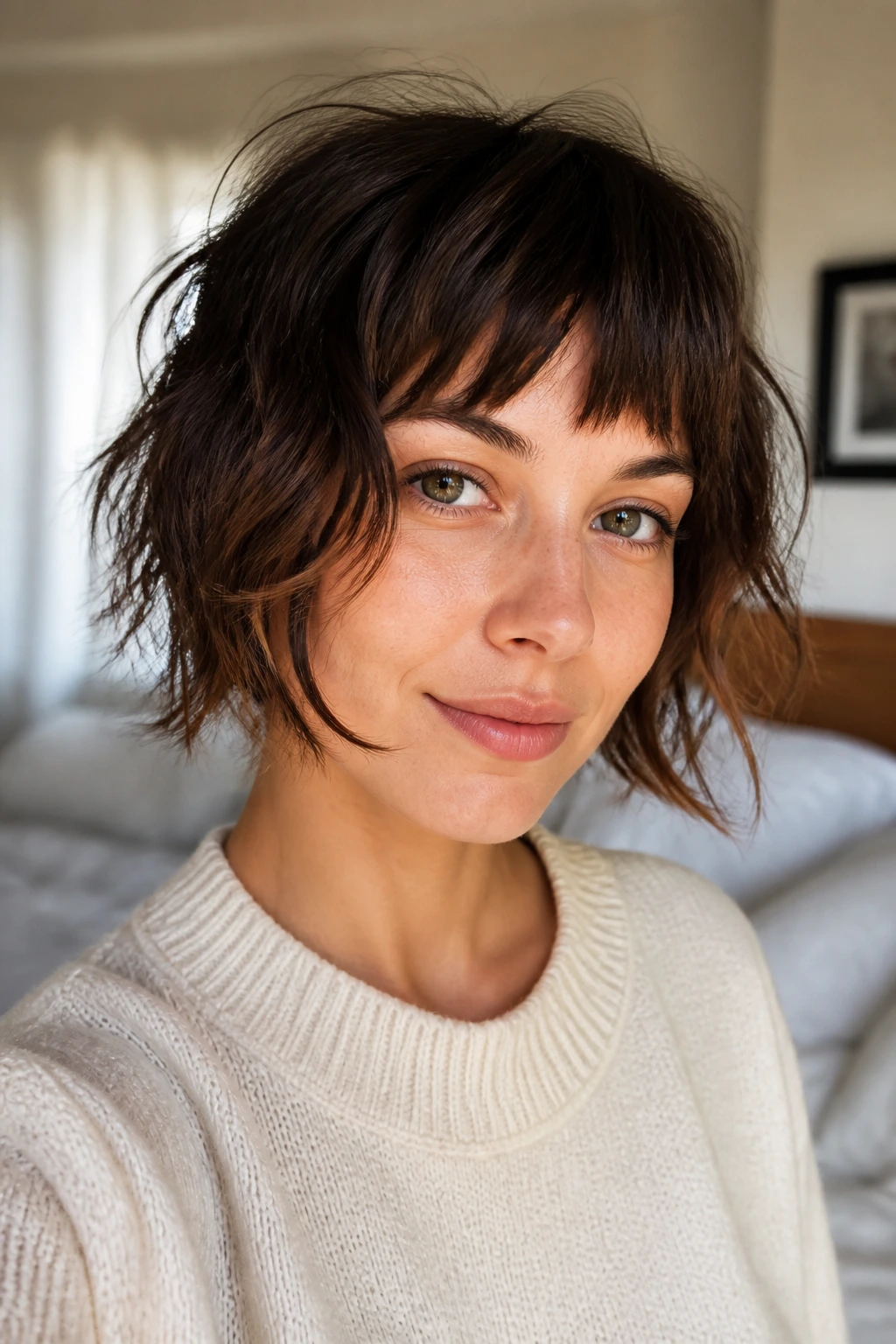
Jagged bangs are a nice answer when you want fringe that feels a little rough around the edges. The line is broken on purpose, with short and long pieces mixed together. On a round face, that broken edge interrupts the width across the forehead and keeps the cut from reading too sweet.
The texture matters. Loose bedhead waves turn the jagged line into something modern rather than messy. If the hair is too polished, the unevenness looks accidental. If it’s too rough, the fringe can go frizzy. I like a matte paste or a light spray wax here, rubbed in and then left alone.
This is one of the easier styles to wear if you are not precious about perfection. It forgives a lot. That’s worth something.
24. Curly-Wavy Fringe on a Short Shag

If your hair wants to wave or curl on its own, do not flatten that out. A curly-wavy fringe on a short shag can be one of the best-looking options for a round face because the texture adds lift without creating a straight horizontal line. The shag layers give the whole cut a narrow, elongated shape.
Keep the fringe long enough to bounce, but not so long that it covers the eyes. A piecey bend at the brow or just below it usually works well. The shorter layers in the crown help balance the fullness that curls can bring to the cheeks. That balance is the entire game.
A diffuser is helpful here, but low heat and low speed are the point. High blast, high heat, high frizz. You know the drill.
25. Long Layered Fringe with Soft Bend
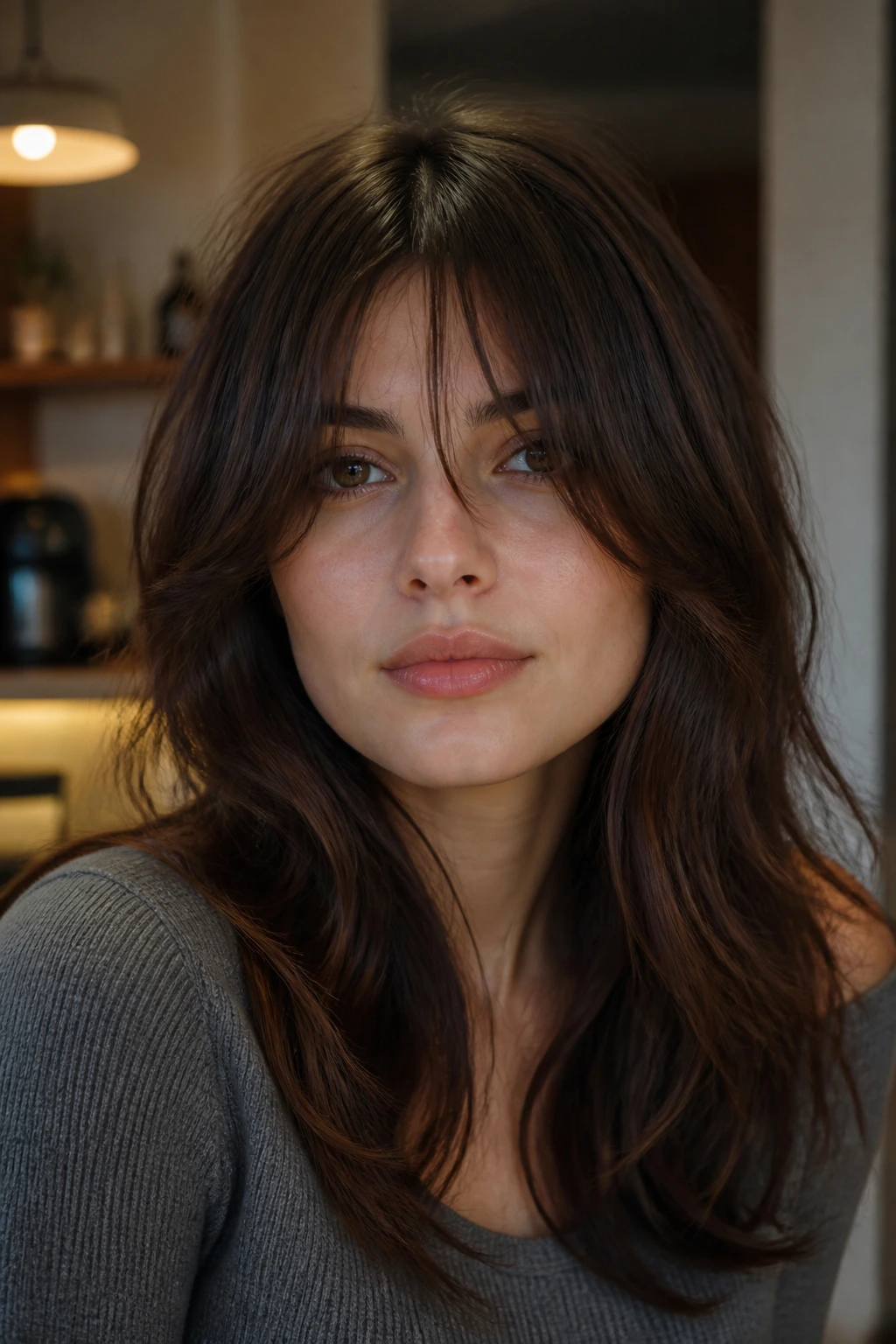
Long layered fringe is the one I’d hand to someone who wants to flirt with bangs without signing a lifetime contract. The layers fall from the brow toward the cheekbone and can keep going as they grow out. On short hair, that softness is gold. It lets the front pieces frame the face while still staying light.
A soft bend is what stops this from turning into a curtain that makes the face look wider. The bend should happen near the middle or end of the strand, not right at the root. That keeps the fringe moving vertically, which is what round faces need most.
If you are unsure about bangs, start here. It is easy to part them, sweep them, tuck them, or pin them back. That kind of flexibility is rare, and honestly, underappreciated.
Why Wavy Bangs Work So Well on Short Hair and Round Faces

Round faces usually have softer angles, fuller cheeks, and a similar width-to-length ratio. That does not mean you need to fight the shape. It means you should build a haircut that adds lines where the face is missing them. Wavy fringe does that better than a straight, heavy bang because the eye keeps moving through the hair instead of stopping at one blunt edge.
Short hair makes this even more important. A bob or pixie has less length to hide behind, so the front section carries more visual weight than people expect. If the bang is too thick, the face can look shorter. If the bang is too flat, the haircut can feel wide. A bend in the fringe solves both problems by creating movement at brow level and cheekbone level at the same time.
I also like that wavy bangs are forgiving. A straight fringe on short hair can show every cowlick, every bent section, every oily root. Wavy fringe already expects a little imperfection. That means a morning touch-up can be quick—a mist of water, a round brush pass, a finger twist, done. Short hair should not feel precious. It should feel like it can live in the real world.
The Tools That Keep the Bend Soft Instead of Puffy
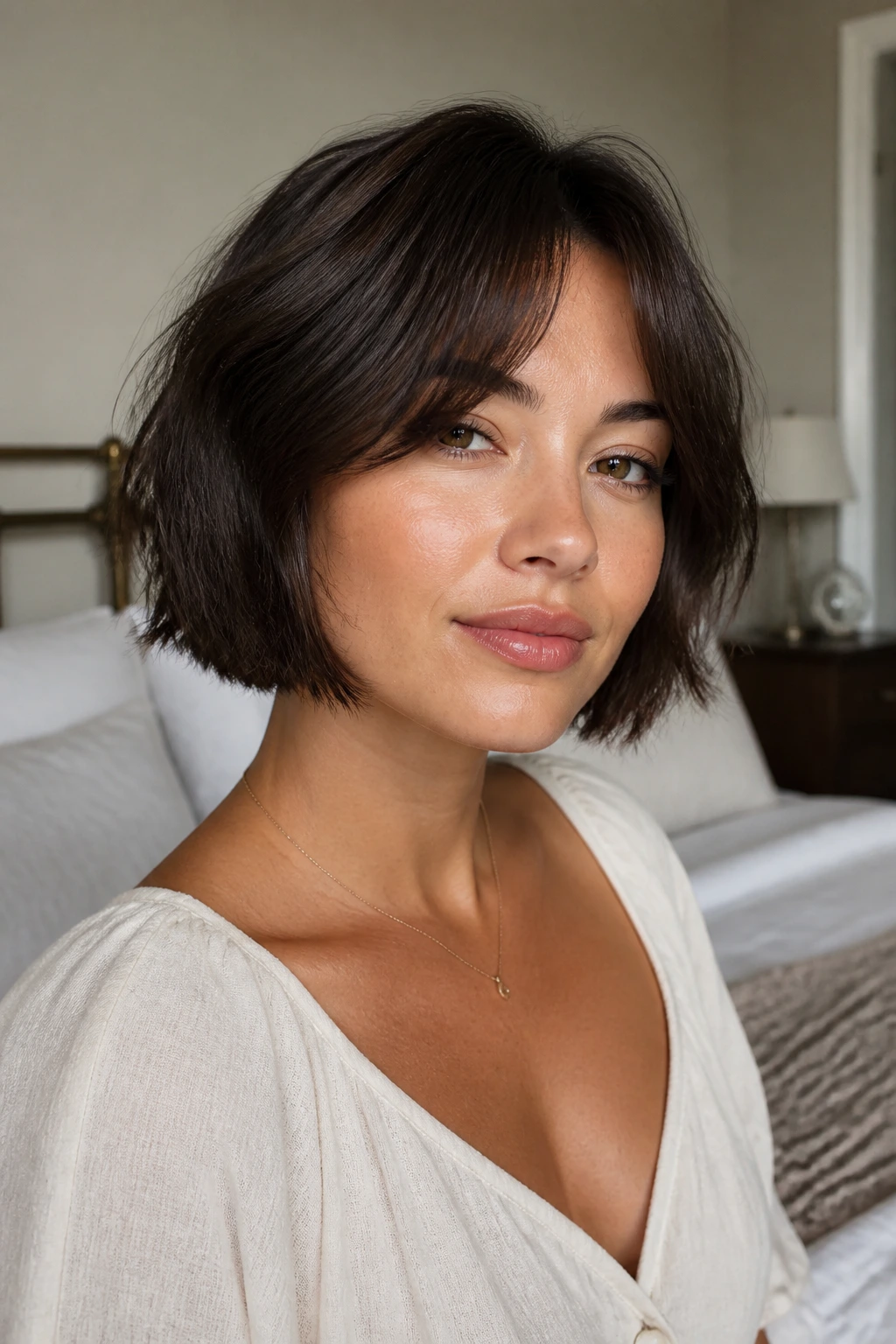
The right tools make these styles easier, and no, you do not need a drawer full of gadgets. A few solid basics matter more than a pile of extras.
- 1-inch or 1.25-inch curling iron: Small enough to shape the fringe without turning it into a full curl.
- Mini flat iron: Great for nudging a bend into short front pieces or correcting one stubborn corner.
- Round brush, 1.5 inches or smaller: Useful for blow-drying curtain, side-swept, or swoopy bangs.
- Blow-dryer with a concentrator nozzle: Helps keep the airflow directed so the fringe does not puff out.
- Duckbill clips: Handy for setting a bend while the hair cools.
- Light mousse or styling cream: Gives texture without the crunch.
- Texturizing spray: Good for piecey, shaggy, or jagged fringe.
- Dry shampoo: Saves day-two bangs from collapsing at the roots.
- Fine-tooth comb: Useful for sectioning, parting, and keeping the front clean while you style.
- Small roller or velcro roller: Nice for adding lift at the root of a curtain or swoop.
I’d skip heavy oils on the fringe unless your hair is very dry. Bangs live on your forehead. They get warm, damp, and a little more dramatic than the rest of your hair.
What to Ask for at the Salon Before the Scissors Come Out
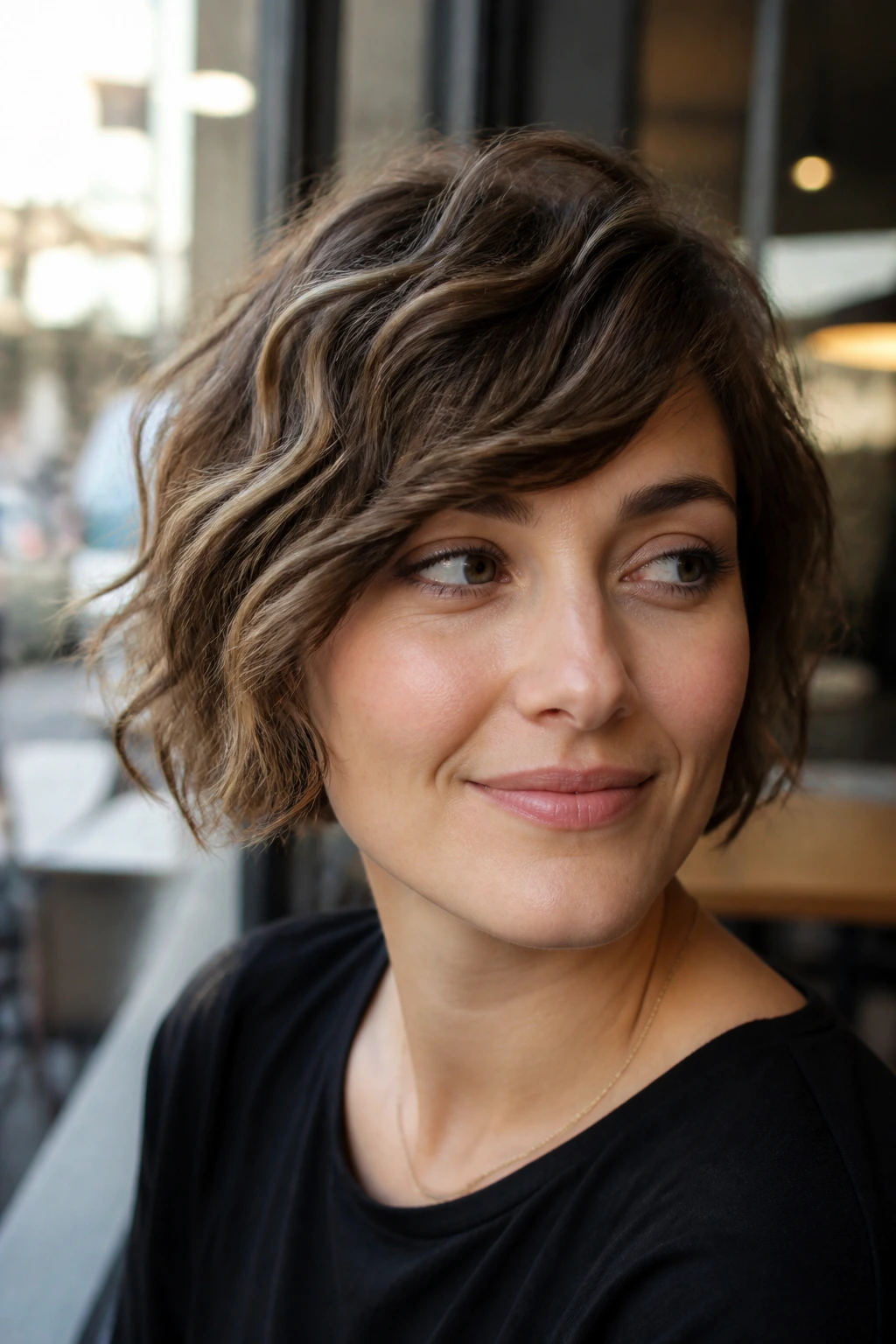
Bring photos, yes, but bring language too. The best salon conversations use simple landmarks: brow, cheekbone, lip line, chin. Those points tell a stylist where the fringe should land without a lot of hand-waving in the mirror.
Say whether you want the shortest pieces to sit above the brow, at the brow, or just below the brow. Then tell them how much forehead you want to see. That one detail changes everything. A dense fringe that lands at the brow behaves very differently from a wispy one that stops half an inch higher.
Tell them about your cowlicks. Seriously. If the front pushes right, the cut should work with that. On wavy hair, I also think dry cutting can be worth asking for, because the natural bend shows up more honestly than it does when the hair is wet and stretched flat. If your hair is dense, ask for point cutting or internal texturizing. If it’s fine, ask them not to over-thin it, or the fringe will disappear the first time you bend forward.
One more thing: mention whether you wear glasses. A fringe that looks gorgeous naked in the mirror can sit straight on the frames and drive you nuts at home.
How to Wear These Bangs in Real Life
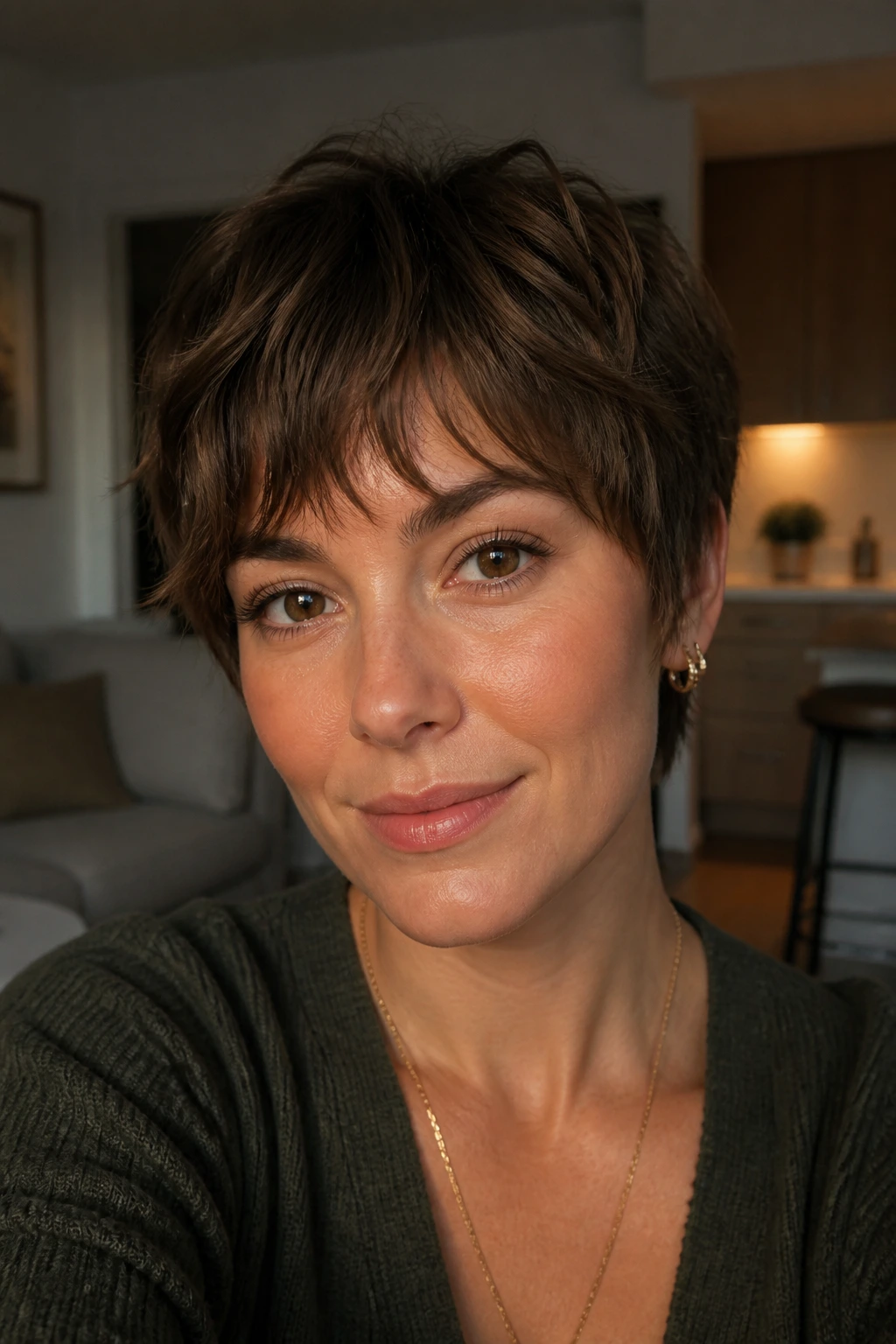
Presentation: Keep the front pieces broken enough to show brow shape. If the fringe hides your eyes completely, pull back a little of the width at the temples.
Accompaniments: Hoop earrings, short necklaces, and open necklines give wavy bangs room to breathe. Heavy collars and oversized scarves can crowd the face fast.
Length: On a round face, the most useful lengths usually land somewhere between the brow and cheekbone. That zone gives you framing without a hard horizontal line.
Best setting: Soft matte finishes suit most of these cuts better than glossy, lacquered shine. A touch of separation reads modern; a shellacked fringe reads stiff, and short hair has enough trouble already.
I also like to think about glasses here. Thin frames can coexist with nearly any style on this list. Thick frames do better with airy fringe, not dense fringe. If you wear a bold lip, the fringe can be lighter. If your makeup is minimal, a fuller bang can carry more of the visual weight.
Extra Styling Tricks and Finishers
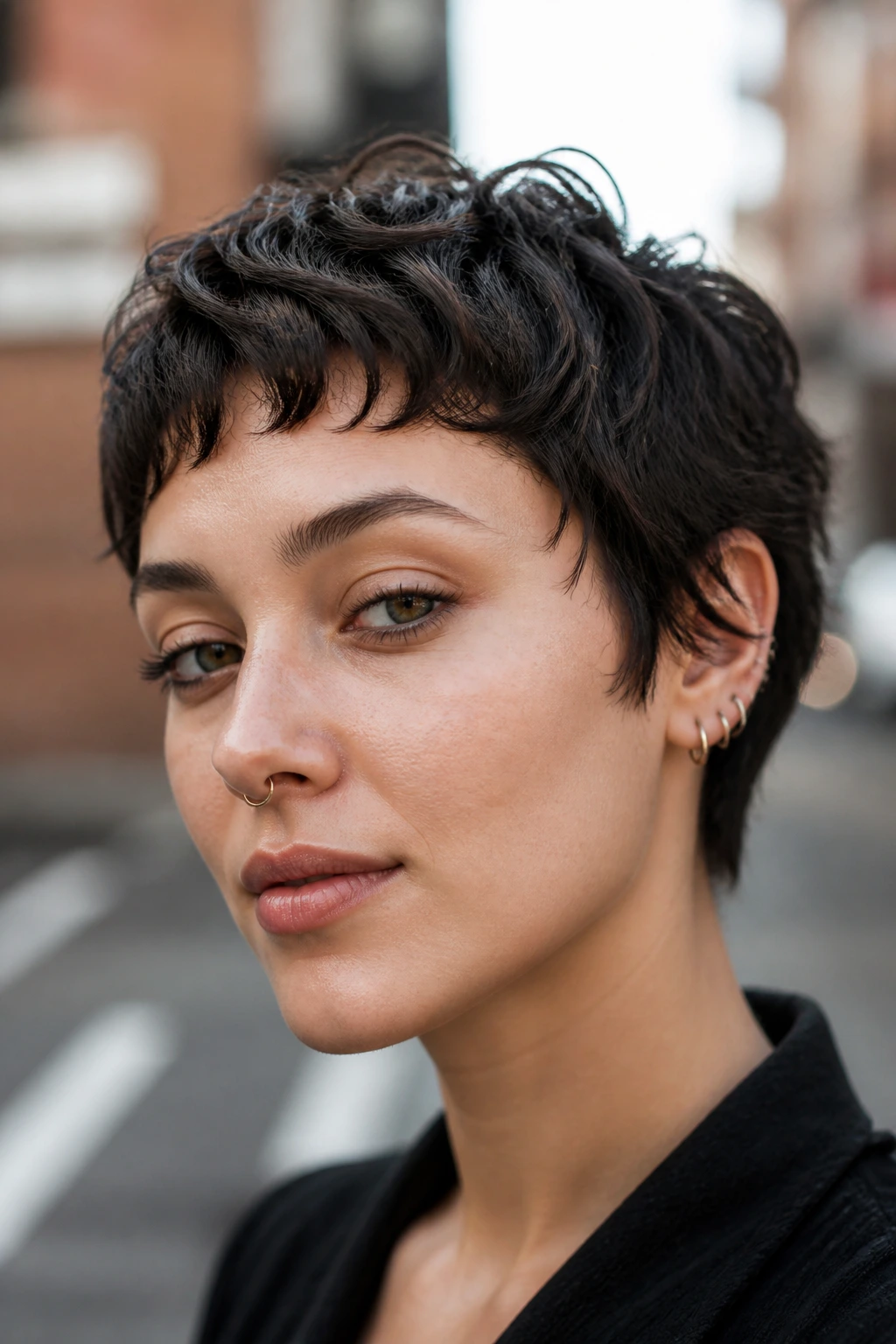
Root Lift: Spray a small burst of volumizing mist at the roots of the fringe, then lift with your fingers while you blow-dry. The point is height at the base, not fluff on the ends.
Bend Control: Wrap only the bottom third of the bang around a 1-inch iron for 4 to 6 seconds. That gives you movement without creating a curl that bounces right up into the forehead.
Texture Rescue: If the front goes flat by noon, rub a speck of dry shampoo through the roots and twist the fringe once. That tiny twist gives the wave back some shape.
Finish Line: Stop styling before every strand agrees with the next one. A little mismatch is the charm here. Overworking the fringe is how you end up with a stiff helmet instead of a soft frame.
If you like a more polished finish, use a boar-bristle brush only at the very top of the fringe and fingers through the rest. That keeps the root smooth and the ends piecey. Nice balance. Easy to overdo.
Refresh, Trim, and Maintain the Shape

Bangs grow fast enough to annoy you and slow enough to tempt you into ignoring them. Neither approach helps. For short hair, I’d usually plan a fringe trim every 3 to 5 weeks, depending on how quickly your hair grows and how much forehead you want showing. If the bangs are curtain-style or long layered, you can stretch that a bit longer.
Between washes, the front is the first part to need help. A quick mist of water on the bangs alone is often enough. You do not need to rewash the whole head every time the fringe loses shape. Wet the front lightly, reshape it with your fingers or a brush, then dry it until it’s just set. If you go in with a full wash and blow-dry every time, the hair around the face can get dry and frayed.
At night, clip the bangs away from your forehead if they tend to stick flat. A small roller, a loose pin, or even a soft clip can keep the bend alive until morning. If your hair is naturally wavy, sleeping on a satin pillowcase helps the fringe keep its smoother surface. It sounds fussy. It isn’t. It saves time.
Variations and Adaptations to Try

The Glasses-Friendly Fringe: Keep the front longer and lighter so it sits above the frames instead of fighting them. This works especially well with see-through or curtain shapes.
The Air-Dry Version: Ask for more texture through the fringe and less weight at the corners. Once the cut is there, a little leave-in cream and finger scrunching are enough.
The High-Contrast Pixie: Pair a very short crop with a soft wavy front. The contrast between the close sides and the loose fringe makes the face look longer.
The Curly-Wave Hybrid: If your hair bends in some places and curls in others, keep the bangs longer than you think you need. That gives the curl room to shrink without jumping too far above the brow.
The Soft Grow-Out Plan: Start with a curtain or Birkin shape, then let the sides lengthen into face-framing pieces. This is the safest route if you hate frequent trims.
Common Mistakes to Avoid
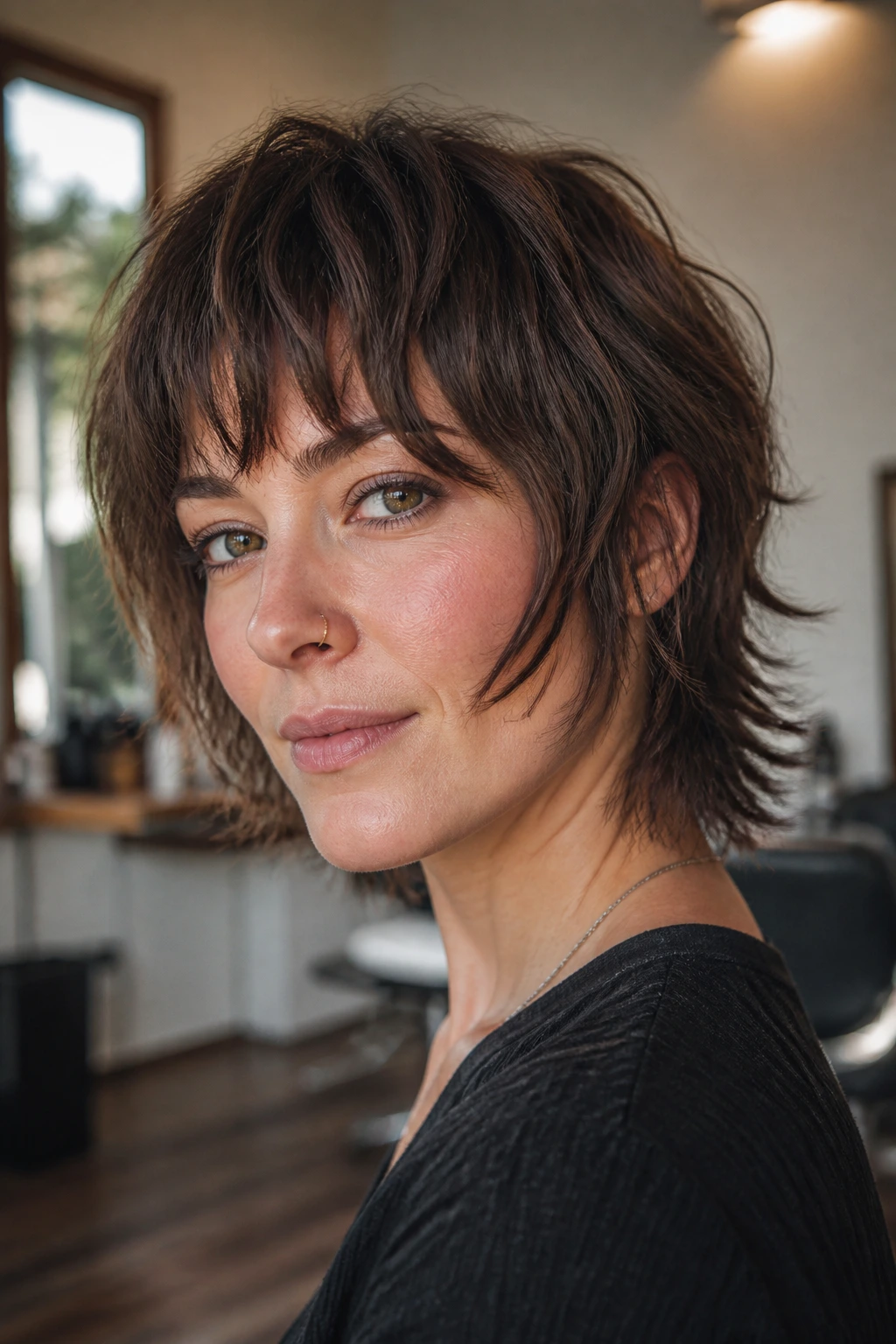
A fringe that’s too dense is the easiest way to flatten a round face. If the bangs cover too much forehead, the cut reads wide and heavy. The fix is simple: lighten the density, open the center, or push the shortest point a little higher.
A blunt line that lands at the widest part of the cheek can make the face look shorter. This happens a lot when people ask for bangs by feeling rather than by length. Say where you want the fringe to hit. Brow, cheekbone, or lip line. That removes the guesswork.
A too-perfect wave can look stiff on short hair. The front should move, not curl into a tidy loop. If the hair starts looking like it was pressed into place, finger-comb it, shake it out, and use less heat next time.
A heavy product hand is another trap. Fringe lives right where skin oils, humidity, and sweat gather. Too much cream or oil makes the bangs separate in greasy chunks. Use the tiniest amount you can get away with.
And then there’s ignoring cowlicks. You can fight them, but they usually win. A better cut respects the direction the front already wants to move and builds the fringe around that pattern.
FAQ
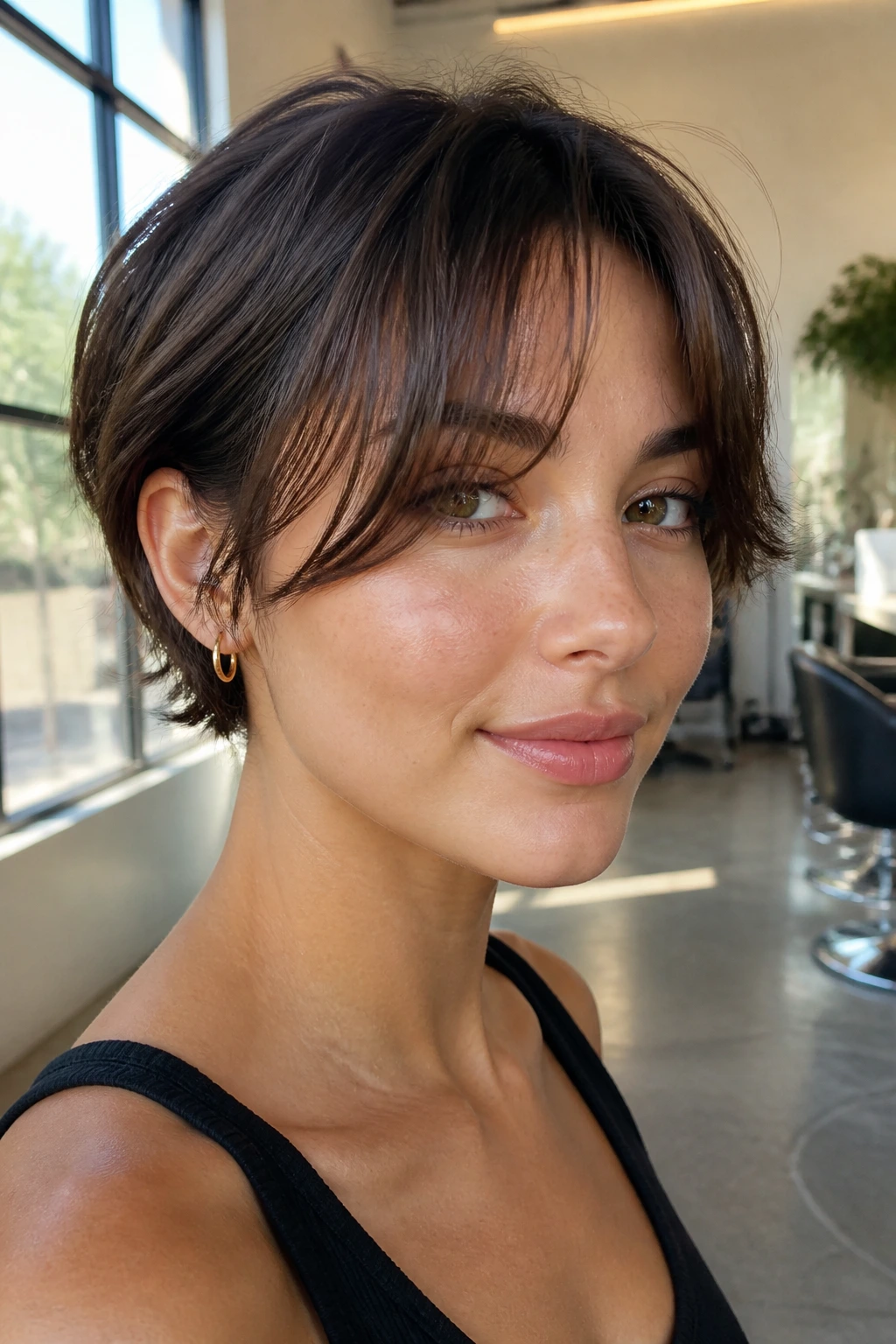
Can wavy bangs make a round face look slimmer?
Yes, if the bangs create diagonal movement or a soft opening in the center. The goal is not to hide the face. It’s to avoid a hard horizontal line that cuts across the widest part of it.
What’s the safest bang shape if I’m nervous?
Curtain bangs or a long layered fringe are the easiest place to start. They grow out cleanly, can be tucked away, and give you enough length to adjust the shape if you change your mind.
Do short bangs work on round faces?
They can, but they need help from the rest of the haircut. Keep the sides textured, add height at the crown, and avoid a thick, blunt micro fringe unless you want a bolder look.
Should wavy bangs be cut wet or dry?
Wavy hair often behaves more honestly when it’s cut dry or mostly dry. That lets the stylist see how much the fringe shrinks, bends, or splits once it lives in the real world.
How do I stop bangs from separating into weird sections?
Use less product at the roots and more control through the ends. A light mist of water, a quick brush, and a tiny bit of styling cream usually smooths the worst pieces without making the fringe limp.
What if my bangs puff up by lunchtime?
Blow-dry the roots forward with a nozzle, then let the ends cool around a brush or clip. Puff usually comes from rough drying too early or using too much air in one spot.
Will these styles work with thick hair?
Yes, but thick hair usually needs internal texturizing and a little more weight removed from the corners. Otherwise the fringe can sit too heavy and overwhelm the face.
Can I wear this kind of fringe with glasses?
Absolutely. The best choices are airy curtain bangs, see-through fringe, or long layered bangs that can sit around the frames instead of right on them.
How often should I trim wavy bangs?
Plan on every 3 to 5 weeks for shorter fringes. Longer styles can stretch to 6 or 7 weeks, but once the front starts landing in your eyes, it’s time.
The Shape That Keeps Moving
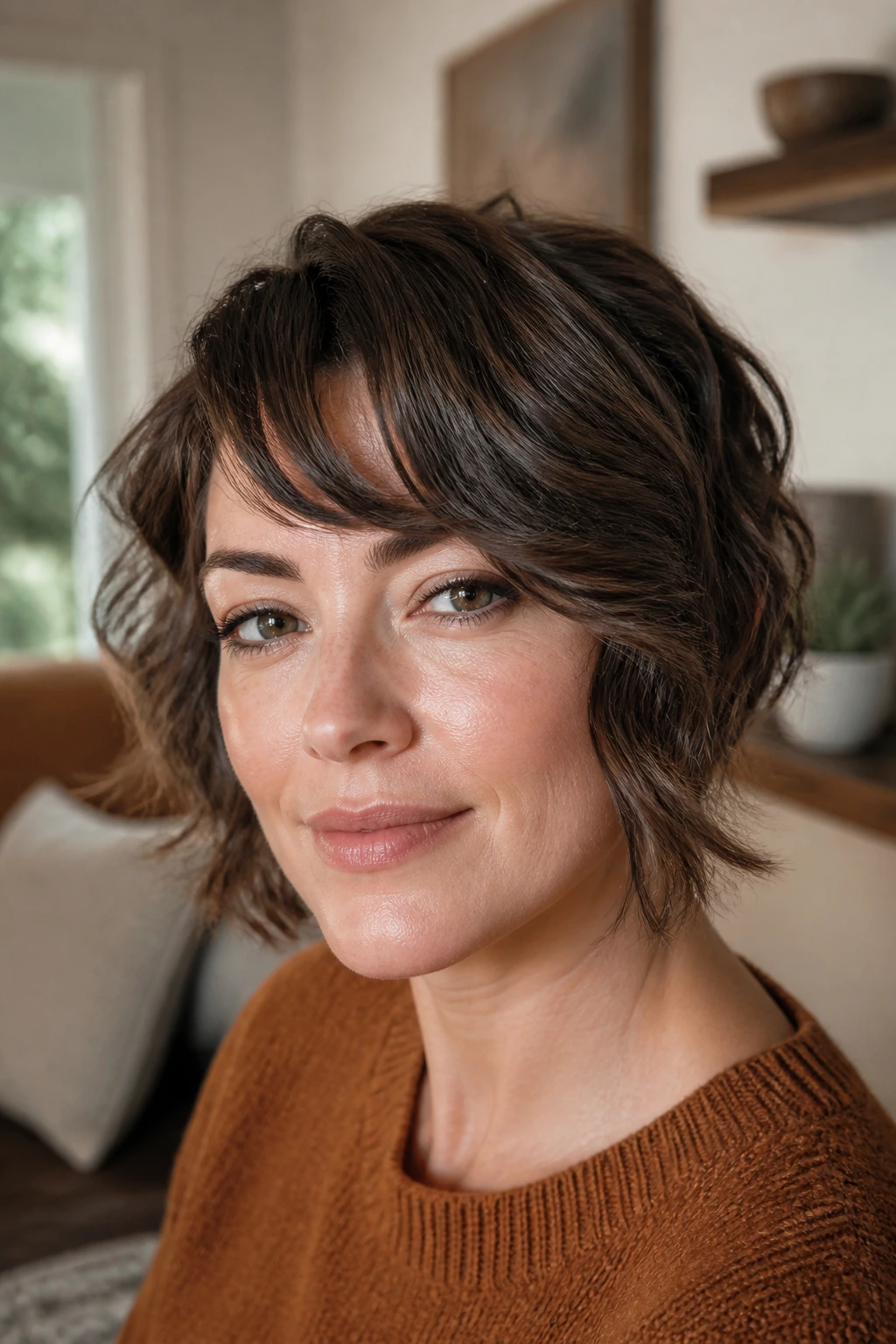
The best thing about wavy bangs on short hair is that they do not ask your face to be smaller; they ask the haircut to be smarter. A little bend, a little asymmetry, a little room at the center—those small choices change the whole read of the cut. Round faces do not need to be hidden. They need lines that move.
If you’re choosing between a blunt fringe and one of these softer, wave-friendly shapes, I know which way I’d lean. Start with the version that leaves you room to adjust—then let the texture do the flattering work for you.