



Sew-in styles with bangs for women over 40 work best when they look deliberate, not busy. A good fringe can soften a forehead, pull the eye up toward the face, and keep a long install from feeling like it’s wearing you instead of the other way around. That’s the part people miss. Bangs are not just decoration here. They change the whole proportion of the style.
The tricky part is that bangs on a sew-in need more thought than bangs on a natural cut. Density matters. So does where the fringe starts, how the rest of the hair is layered, and whether the install is built around a closure, a frontal, or some leave-out at the top. A fringe that sits too high or too heavy can look stiff by lunchtime. A softer one, trimmed with the hair’s own movement in mind, looks polished even when it’s doing a lot of work.
Women over 40 are often told to “keep it simple” with hair. I’ve always thought that advice was lazy. The better rule is cleaner shape, smarter movement, less fuss at the front. Bangs can do all three if the install is chosen with a real eye for texture, face shape, and maintenance. Some are airy and forgiving. Some are sharp and sleek. A few are a little bold. All of them can work beautifully when the fringe and the sew-in are built to match the person wearing them.
Why These Sew-In Bang Looks Work So Well After 40
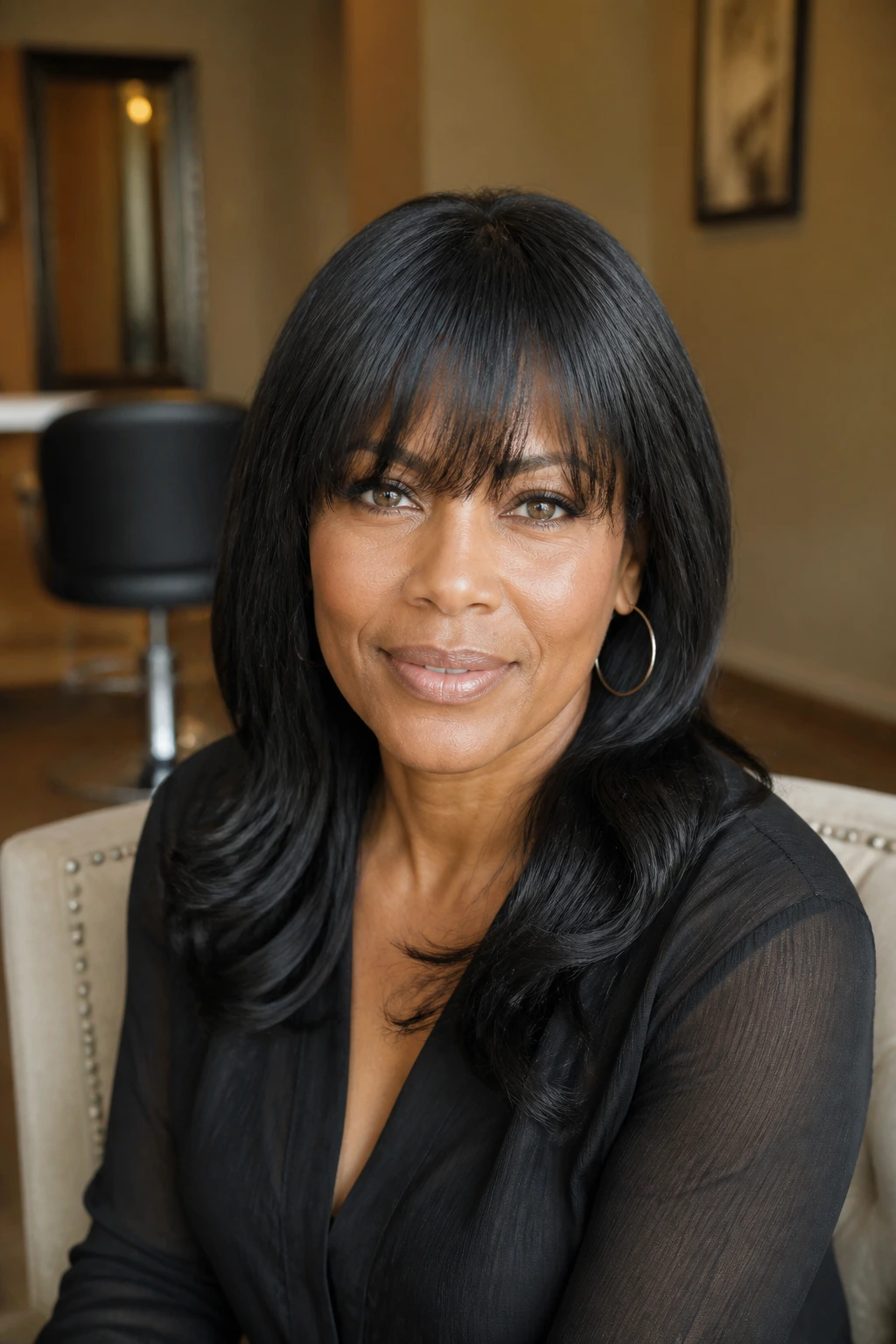
- The front line gets softer: A bang breaks up a strong hairline or a wide forehead without hiding your face behind a curtain of hair.
- You keep the length you like: The fringe gives shape at eye level while the rest of the install stays shoulder-length or longer, so the style doesn’t collapse into one heavy block.
- The grow-out is less dramatic: A sewn-in fringe usually has a gentler transition than a blunt cut on natural hair, especially when the front is layered into the rest of the install.
- Texture does half the work: Waves, bends, curls, and feathering keep the bang from looking helmet-like. Straight styles need more precision, but they can look very clean.
- Glasses and bangs can coexist: The right fringe clears the frame line instead of fighting it, which matters more than people admit.
- The style can be tuned to your routine: Some versions need a hot comb and a round brush. Others only need mousse and a finger comb. That difference is the whole game.
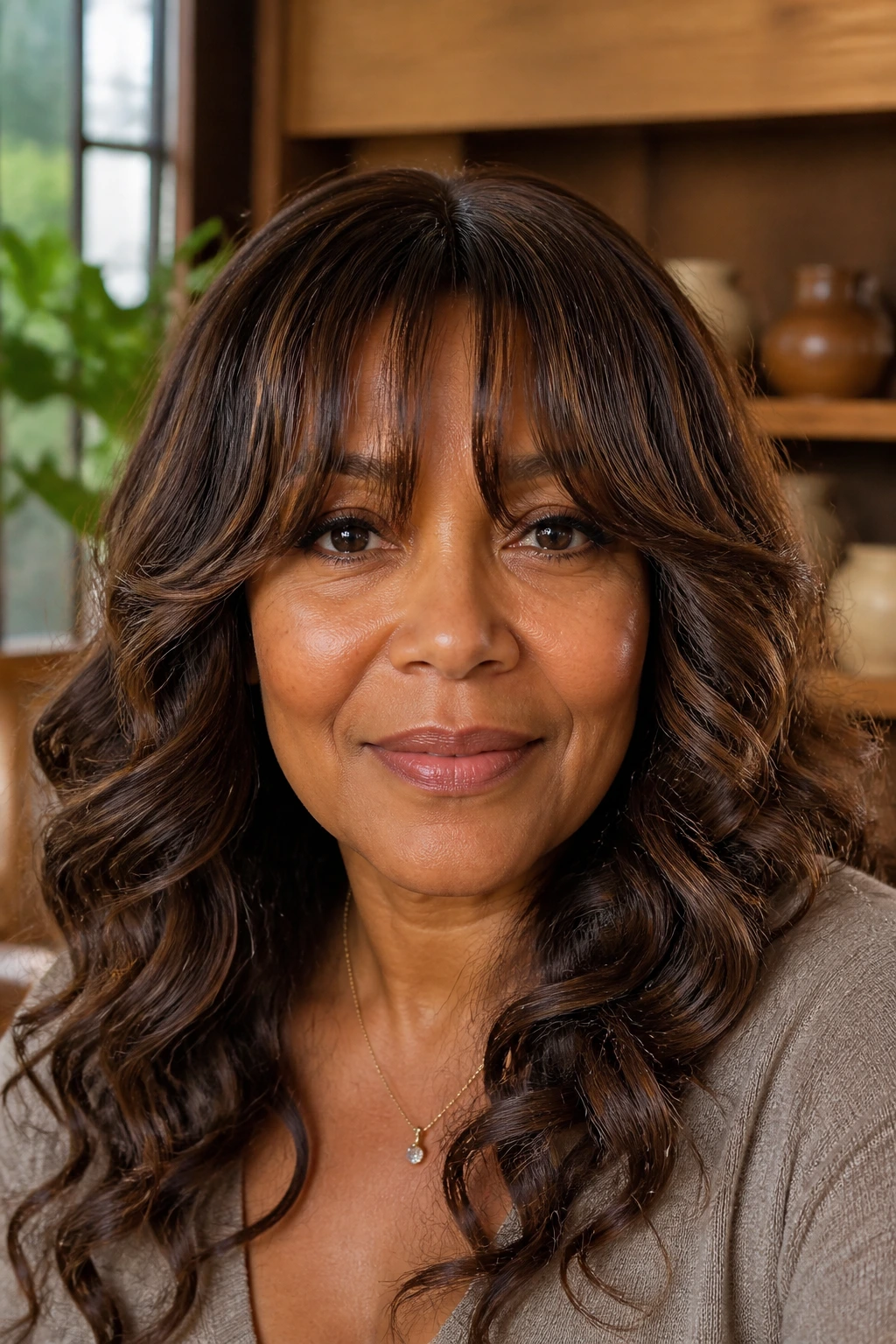
1. Soft Curtain Bangs with Loose Body Waves
This is the easiest place to start, and I’d argue it’s the safest bet for most women who want a fringe without drama. The center stays a little shorter, then the hair falls away toward the cheekbones, where it melts into loose waves. The result is soft, not sleepy. There’s shape at the face, but nothing hangs there like a wall.
Ask for the shortest point to land just below the brow bone, then let the outer corners sweep to the top of the cheek. That little slope makes a big difference. Too short, and curtain bangs can feel choppy; too long, and they disappear into the rest of the hair before they do their job.
The body wave pattern matters here. A 20- to 24-inch install with a soft bend gives the bangs a nice echo, so the front doesn’t look like it belongs to a different head. If you wear glasses, this is especially kind. The fringe opens enough space at the temples that the frames don’t get swallowed.
Best for: women who want a low-fuss, face-softening sew-in that still looks styled.
Watch for: bangs that are too thick at the center. They should move. If they sit like a shelf, the whole look loses air.
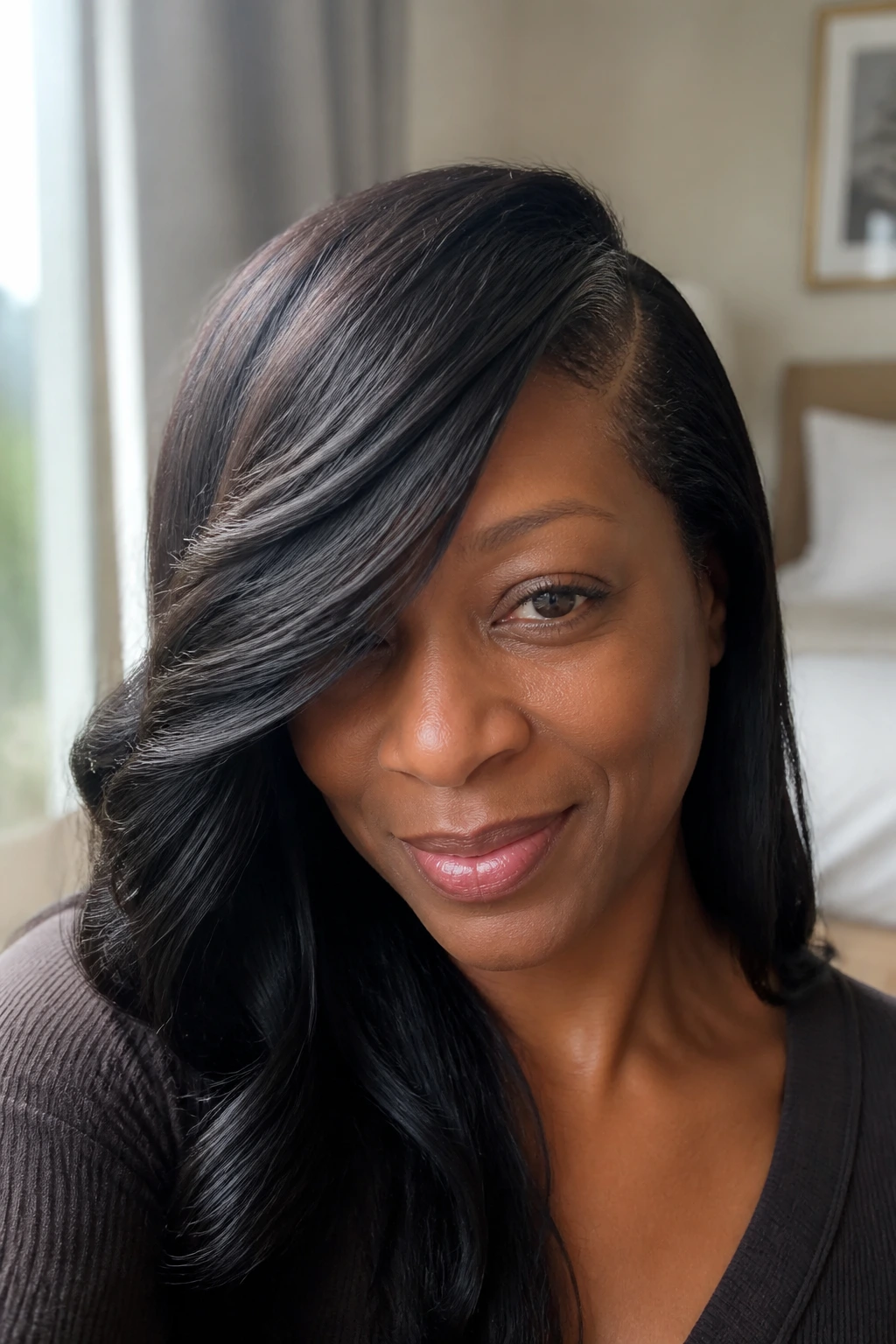
2. Feathered Side Bangs on a Shoulder-Length Sew-In
What makes feathered side bangs so useful is that they work with the face instead of competing with it. One side starts a little deeper, then the fringe sweeps across the forehead and breaks into light, layered ends. On a shoulder-length sew-in, that creates lift right where a lot of styles go flat.
I like this shape for women who want polish without stiffness. It plays well with blowouts, soft wraps, and even a slightly bent finish on the ends. The side bang doesn’t need to be huge. It just needs enough width to skim the brow and enough texture to avoid looking carved in place.
This style is also quietly good for hairlines that need a little forgiveness. A feathered bang hides a braid pattern better than a center-split fringe, and it gives the front of the style a bit of motion if the install is a touch fuller through the sides.
Ask your stylist for: a long side bang that starts around the arch of the brow and blends into face-framing layers.
Skip it if: you hate re-directing hair with a comb each morning. Side bangs do want a small reset, even when they’re sewn in.
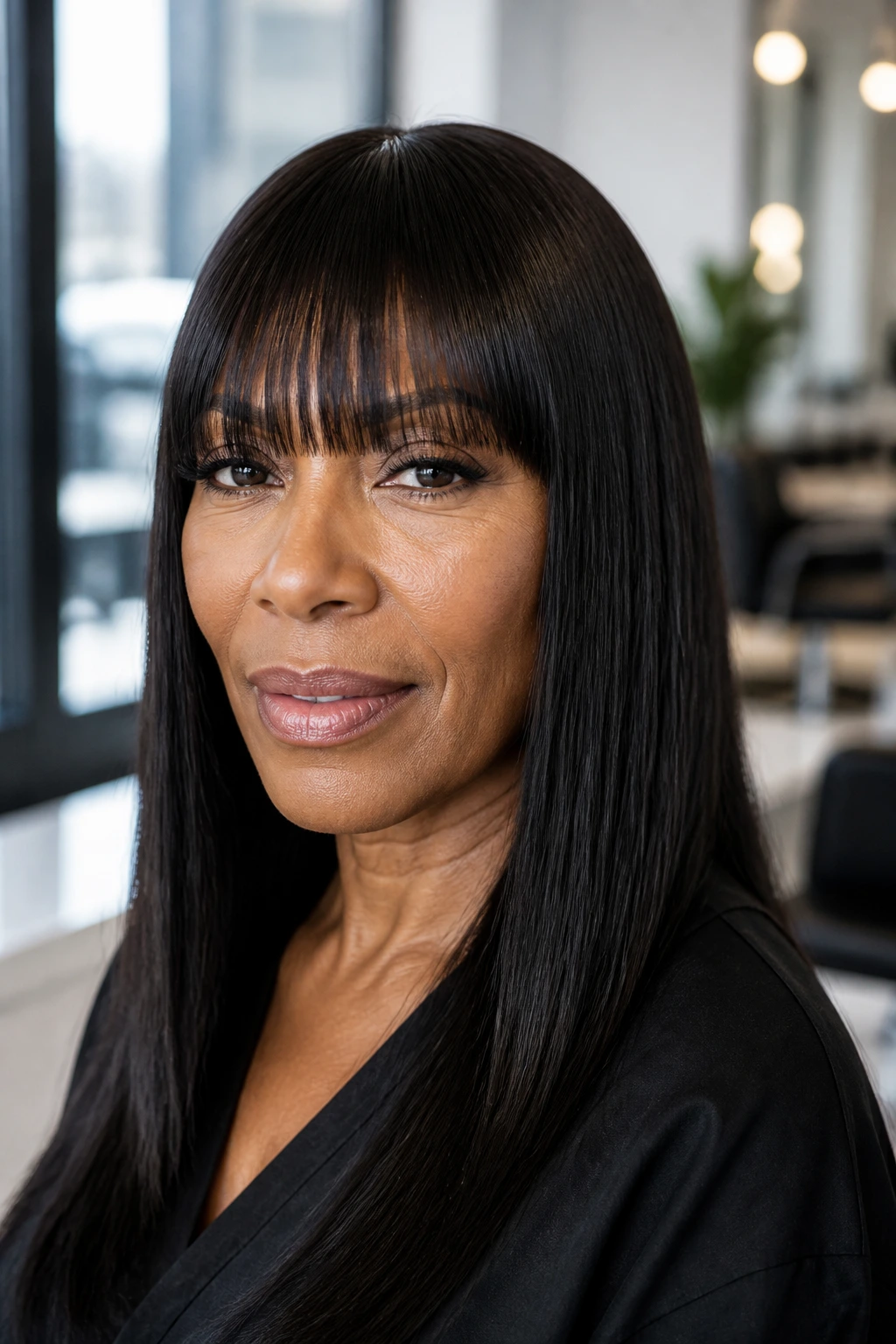
3. Blunt Brow-Grazing Fringe with a Sleek Straight Install
A blunt fringe changes the mood fast. It turns a sew-in into a statement, but it does not have to read severe. The key is the length: brow-grazing, not carved up too high. When the edge touches the eyebrow line and the ends are cut clean, the whole look feels crisp and grown-up in the good sense.
This style depends on a sleek install. Think straight bundles, a neat part, and a flat, controlled root area. If the roots puff or the bang piece has too much bulk underneath, the line loses its snap. I prefer this on a closure or frontal that sits low and lies flat, because the front has to look intentional from every angle.
There’s also a practical upside. A blunt fringe can hide a high forehead, soften strong brows, and frame the eyes without needing extra layers everywhere else. It’s a strong choice for women who like structure in clothes and makeup too.
How to keep it from looking hard
The trick is not to make the fringe too dense. A blunt line can still be light at the ends. If the bang is thick from root to tip, it starts to feel heavy in daylight, especially if your hair color is dark and the install catches shine.
A tiny bit of movement at the ends helps. Just a small bevel under with a round brush or flat iron does enough. No need to curl it under like a pageant bang from a different decade.
4. Bottleneck Bangs with Soft Curls
Bottleneck bangs are one of those shapes that look clever without looking fussy. They begin a little narrower at the center, widen as they travel out, then blend into soft curls at the sides. On a curly sew-in or a body wave install with a bent finish, the shape feels balanced and expensive without trying to be glossy and stiff.
I like them for women who want face framing but don’t want a full, blunt edge at the brow. The shorter center opens the face, while the longer edges brush the temple and cheek. That little contour can be kinder to a strong jaw or a very round face, because it creates a visual taper.
The best version is cut with the curl pattern in mind. If the install is textured, the bangs should be trimmed a touch longer when dry, not wet. Curly and wavy fringe shrinks. A lot. If you cut to the final length while it’s soaking wet, you will end up with bangs that sit higher than planned.
What to ask for: a rounded, tapered fringe that starts short at the center and lengthens toward the outer corners.
What to avoid: too much thinning. Bottleneck bangs need shape, not wisps that disappear by day two.
5. Wispy Fringe with a Layered Lob
Wispy fringe has a different energy. It’s lighter, softer, and a little less committed than a blunt bang, which is exactly why it works so well with a layered lob install. The fringe gives the face a bit of edge, but the rest of the hair stays relaxed and wearable.
This style is a good match for finer hair or for anyone who hates the feeling of a thick bang sitting on the forehead. The ends are trimmed into soft points, not one solid line, so the forehead peeks through a little. That openness keeps the style from looking heavy, and it makes the fringe easier to refresh with a quick wrap at night.
The layered lob around it matters. If the perimeter is all one length, the wispy front can look accidental. When the lob is cut with movement around the cheek and collarbone, the bang feels like part of the design, not a separate add-on.
If you wear a lot of knit tops, button-downs, or soft jackets, this shape reads especially well. It’s neat around the face, but it doesn’t fight fabric or jewelry.
6. Deep Side Part with Long Swoop Bangs
A deep side part and a long swoop bang can do a lot for a face with almost no effort once it’s installed. The part creates height at the crown, then the bang drifts diagonally across the forehead and lands somewhere near the cheekbone or jaw. That diagonal line is doing real work. It pulls the eye upward and outward at the same time.
This is one of my favorite sew-in styles for women who want volume without a lot of teasing or obvious layering. The swoop bang can hide a little forehead, soften one side of the face, and make the whole install feel more fluid. It also handles grow-out fairly well, which is useful if you hate touching your hair every morning.
The part placement matters more than people think. Too far over, and the style starts to feel theatrical. Too close to center, and you lose the lift. Somewhere around a 70/30 split usually gives enough drama without turning the bang into a costume piece.
Best on: straight, blown-out, or softly curled installs with medium density.
Styling note: use a round brush only at the root of the bang. Dragging the brush through the whole section can flatten the movement that makes this look work.
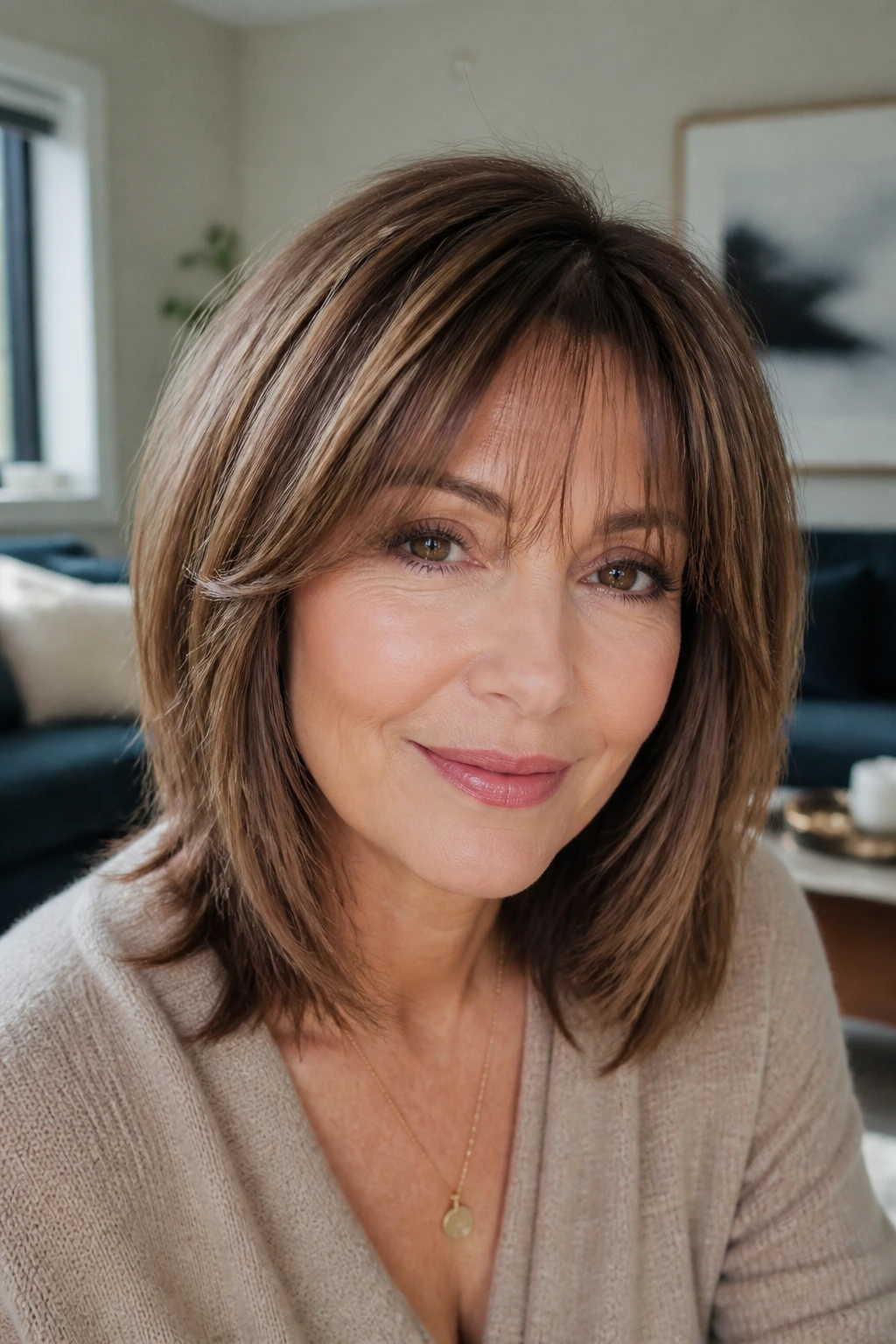
7. Choppy Micro Layers with a Shaggy Sew-In
This one has edge. Not teenage edge. Better than that. Choppy micro layers around the front of a sew-in create a shaggy shape that feels modern when the rest of the hair is kept soft and touchable. The bangs are broken into pieces, not one clean line, which lets the style sit nicely on thicker hair or hair with a little natural bend.
The danger with a shaggy look is over-layering. Too many razor cuts and the fringe can look frayed, especially if the install is silky or very dark. The better version keeps the front textured but controlled. The ends are light, the silhouette is still readable, and the layers around the cheek don’t chop the face into pieces.
I like this on a shoulder-length or collarbone-length install because the shape has room to breathe. On longer hair, the shag can get lost. On shorter hair, it can get too busy. Somewhere in the middle feels right.
The texture rule
If the install is very straight, give the front a bend with a flat iron and a tiny twist of the wrist at the ends. If it’s wavy, scrunch a little mousse into the bang area and let it dry with a loose roller or clips. The point is movement, not mess.
8. Curly Bangs with a Textured Curl Pattern
Curly bangs can be gorgeous on a sew-in when they’re cut with the curl pattern in mind instead of against it. The front opens the face, the curl lands just where the forehead needs a little break, and the texture gives the whole install a sense of life. There’s no false neatness here. That’s the charm.
The biggest mistake with curly bangs is cutting them too short when wet. Curl hair shrinks, and not by a little. The best result comes from trimming dry or at least checking the dry shape before making any final cut. The bang should look a little longer than you think it should, because curls spring up once they set.
This style is especially nice if you like a rounder, softer frame around the face. The curls take the place of a hard line, which is useful when you want the install to feel expressive instead of strict. A layered curl pattern near the temples also helps the bangs blend into the rest of the hair instead of sitting there like a separate object.
Ask for: a curl-by-curl fringe with the shortest pieces around the brow and the longest pieces around the cheekbones.
Use this if: you want texture to do the styling for you most days.
9. Arched Bangs with a Classic Bob Sew-In
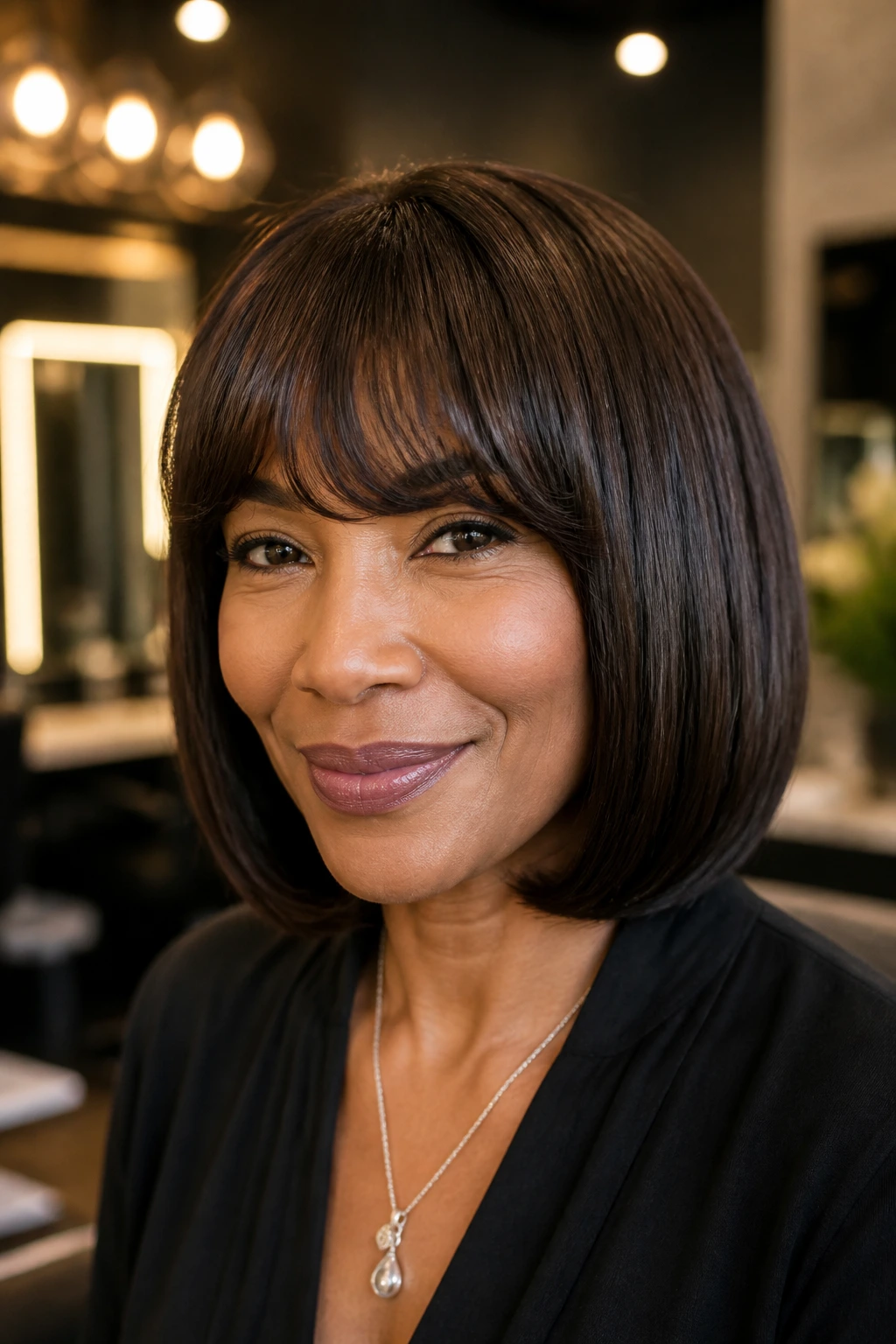
An arched bang gives a bob structure without making it harsh. The center is a little shorter, the outer corners follow the brow line, and the whole fringe curves gently with the face. On a classic bob sew-in, that arch keeps the style neat and composed, which matters if you like clean lines around the jaw and neck.
This is one of the most polished options on the list, but it does not have to look stiff. The key is keeping the bob’s ends with a tiny bit of bend, not cutting everything razor straight. A slight undercurve near the nape and a smooth bang shape at the front create balance. It’s the balance that sells it.
I also like this with statement earrings. The hair sits close enough to the face that jewelry can do its job, which is a nice bonus for women who enjoy a little visual rhythm without piling on extra layers. If you wear glasses, the arch keeps the fringe from landing right on top of the frames.
Best paired with: side parting, a chin-length or jaw-skimming bob, and a satin finish rather than a glassy one.
10. Face-Framing Bangs with a Mid-Back Install
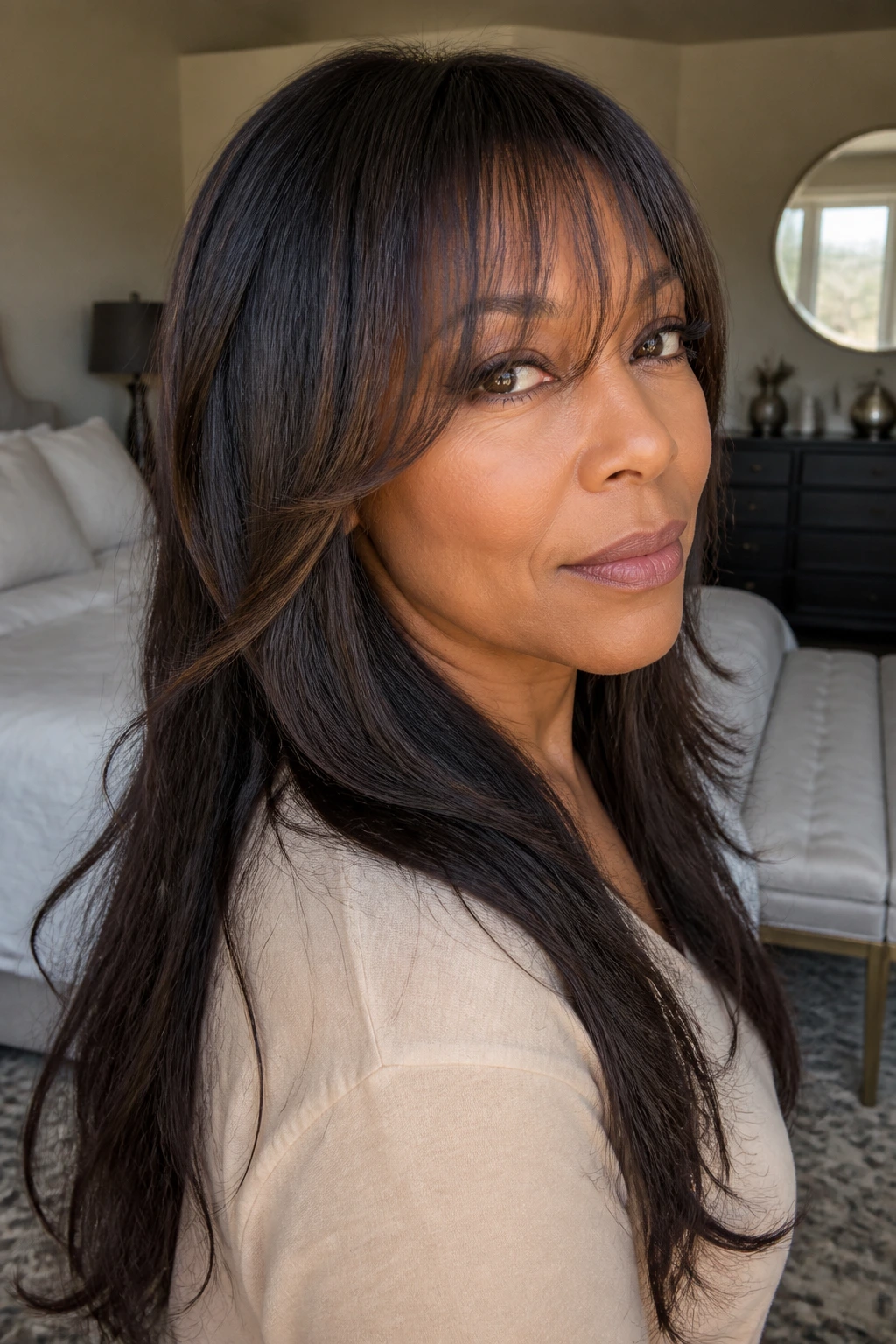
Not every fringe needs to live entirely on the forehead. Face-framing bangs that start as a shorter front section and blend into a longer mid-back install can give you the bang effect without a hard line across the brow. Think of it as a fringe with escape routes. It lets the face open and close depending on how you style it.
This shape is useful when you want length, movement, and some softness around the forehead, but you don’t want a true bang sitting there all day. The shortest pieces can sit near the cheekbone or even lip level, then taper back into the rest of the hair. That makes the style easier to tuck behind the ear on one side and wear forward on the other.
There’s a quiet practicality here too. If you change your mood often, this style gives you options. Wear the front swept apart. Wear it across the forehead. Pin one side back. The install still works.
What to ask for
Ask for a layered front that is cut to blend into the install, not a separate fringe piece. That one detail keeps the style from looking patched on.
11. Peekaboo Bangs with a Half-Up Sew-In
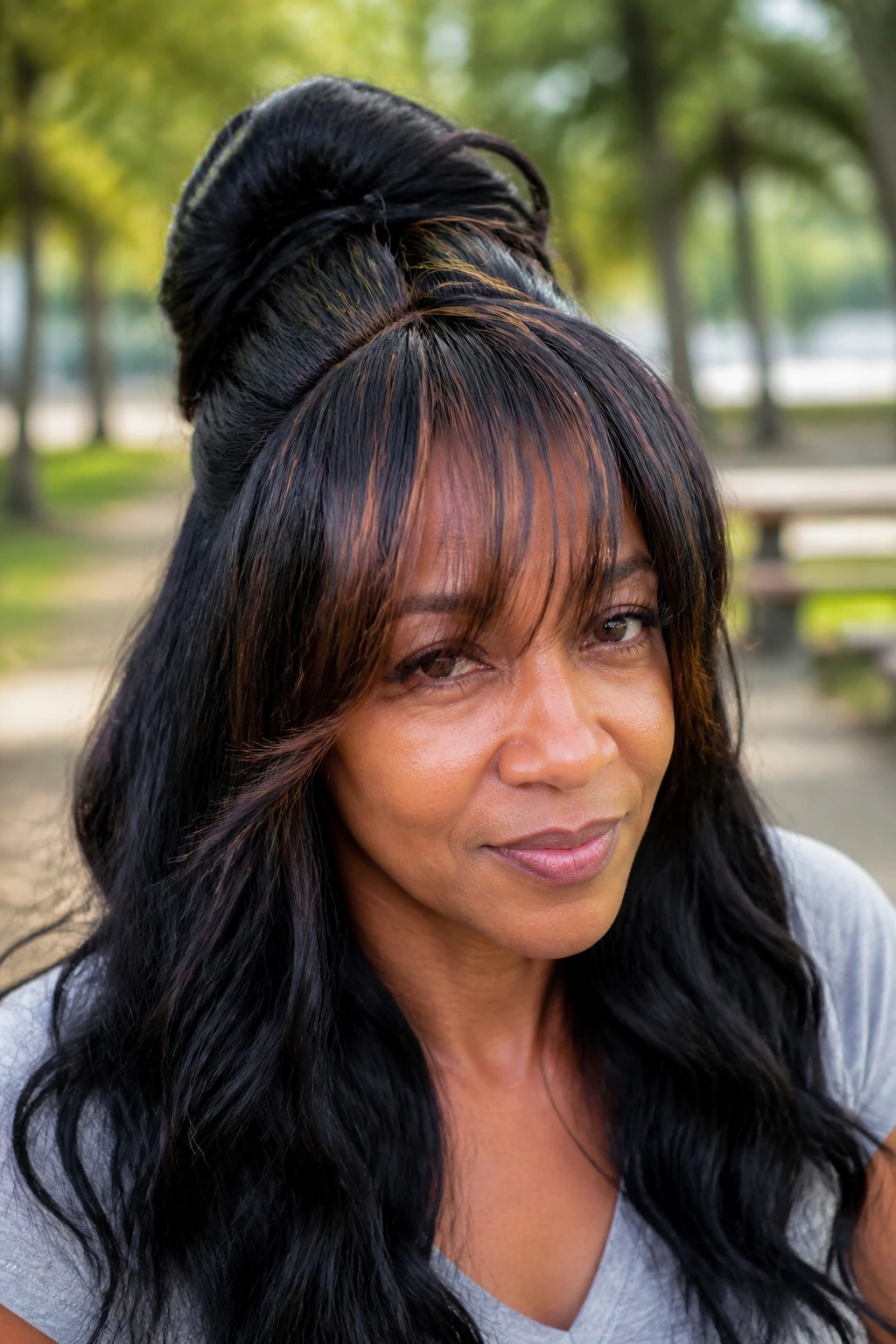
Peekaboo bangs are for the woman who likes a little flexibility. Down, they soften the face and frame the eyes. Half-up, they disappear into the style and leave a cleaner forehead line. That makes the whole look feel less committed than a full fringe, which is handy if you work in settings where you want options.
The half-up part is what makes this interesting. A small lift at the crown reveals the shape underneath, so the bangs become a detail instead of the whole story. It’s a nice move when you want to wear the same install to dinner, errands, and a more dressed-up setting without changing the cut itself.
This style also helps if your forehead changes from day to day depending on how you wear your hair. Some days a full bang is the right answer. Other days it feels like too much. Peekaboo fringe sits in the middle.
Pro detail: keep the bang area light enough that it does not collapse when the top is pinned back. Overbuilt bangs fight this style. They need a little air.
12. Tapered Fringe with a Chin-Length Curled Bob
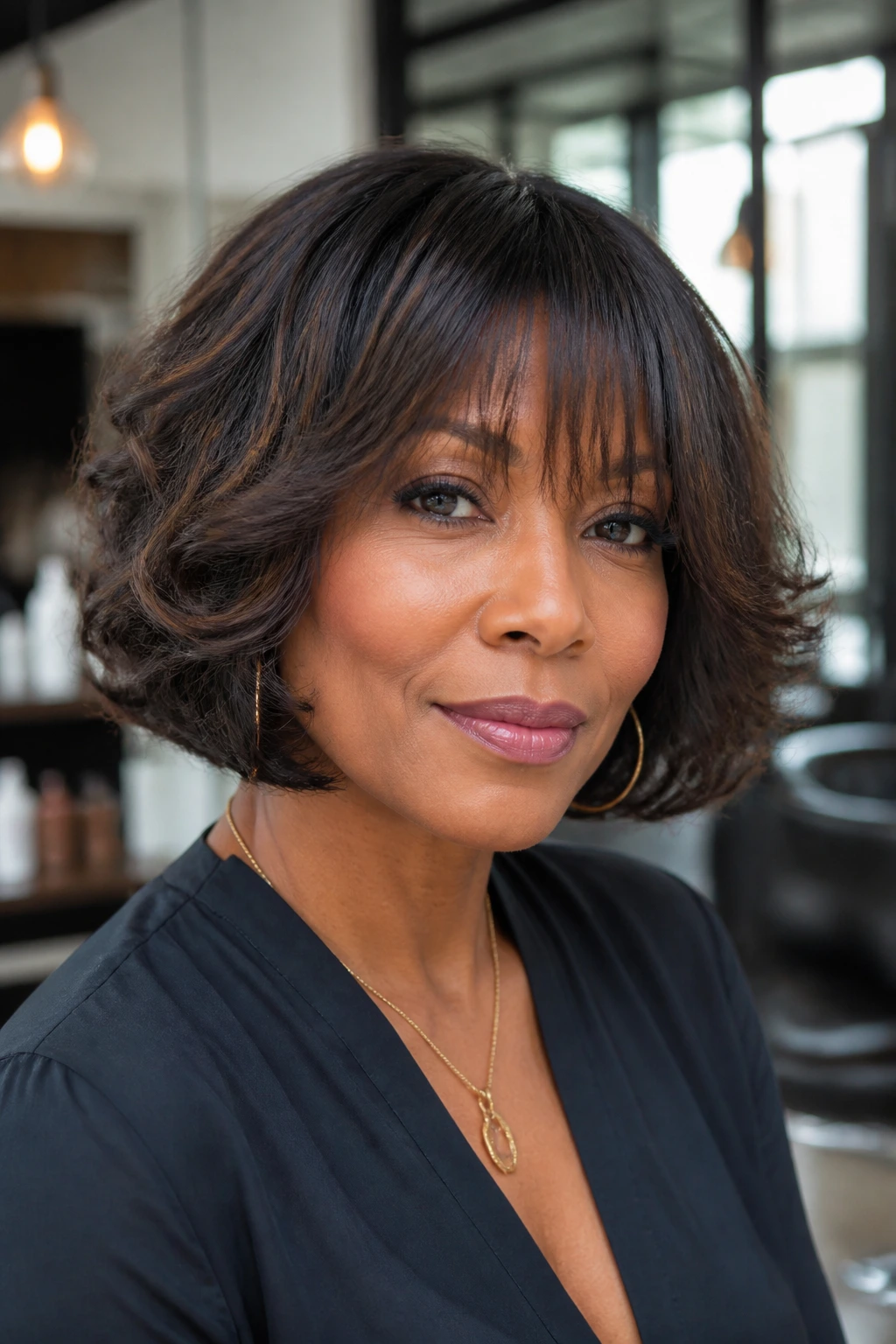
A tapered fringe on a chin-length bob is neat in the best way. The front starts fuller near the center, then narrows as it moves outward, which keeps the shape from looking boxy. When the bob is curled under or given a soft bend, the whole style feels tidy but not hard.
I like this look for women who want the neck and jawline to stay visible. The fringe gives coverage and softness, but the shorter length keeps the silhouette clean. It’s a good choice if you’re tired of hair swallowing your collarbones and earrings at the same time.
The taper matters because it prevents the fringe from turning into one heavy band. A chin-length bob already carries shape through the ends, so the front should support that rather than compete with it. When the two pieces work together, the style has a crisp finish without looking severe.
The salon request that helps
Ask for the bang to be slightly longer at the temples and a touch fuller in the center. That shape frames the eyes without crowding the sides of the face.
13. Long Layered Bangs with a Silk Press Sew-In
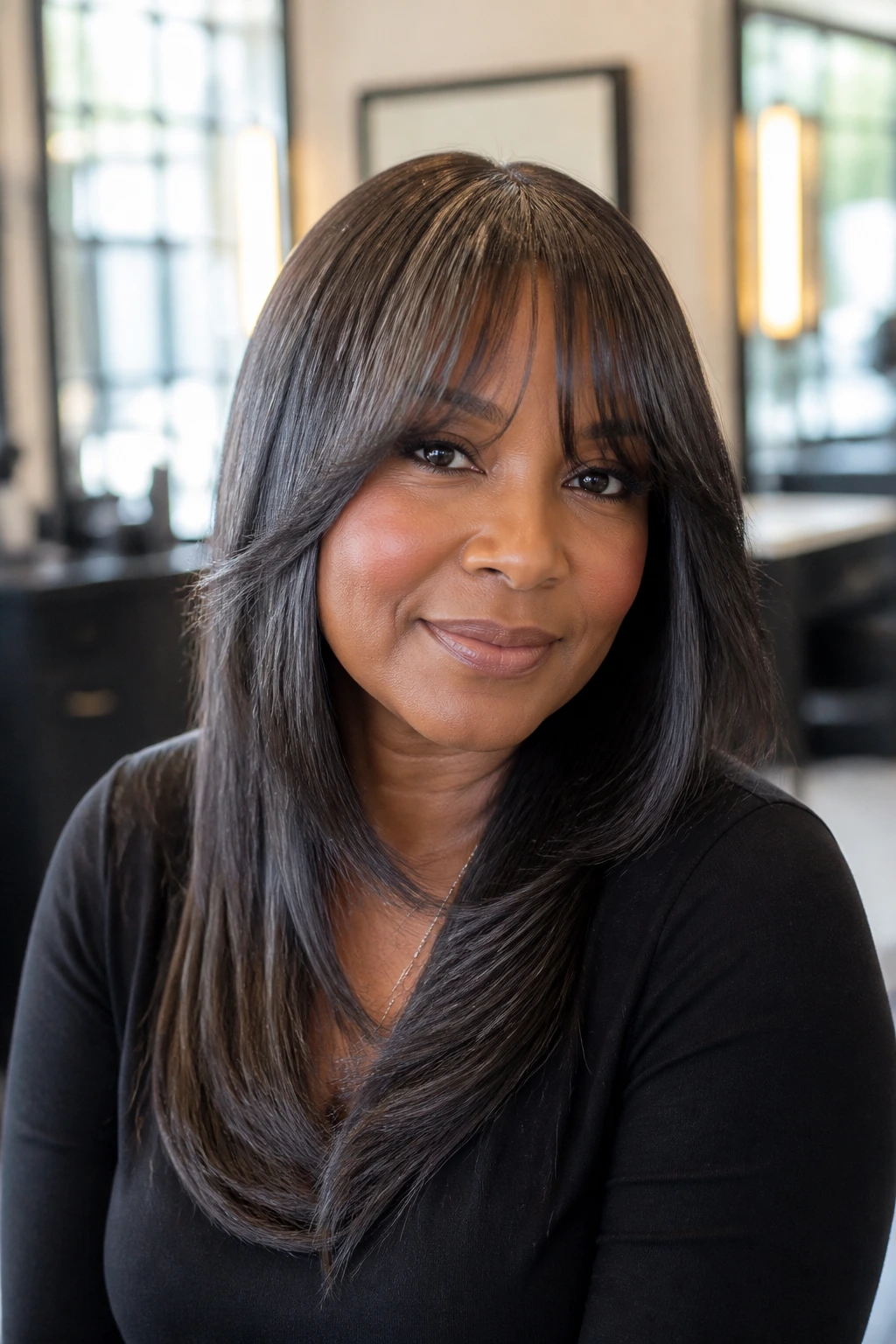
Long layered bangs are for women who want sleekness without sacrificing softness. The fringe brushes the lashes or sits just below the brow, then feathers into the rest of the silk press finish. This is one of the easiest sew-in bang styles to keep looking clean because the line is longer, which gives you more room to work with when the hair starts moving around during the day.
The style depends on control. A silk press sew-in needs smooth roots, good heat protection, and a flat finish at the front. If the bang area is puffy, the whole look loses its shape fast. But when it’s done well, the fringe moves with the hair instead of sitting in front of it like a separate panel.
This is also a smart choice if you like a grown, refined silhouette. Nothing is overcut. Nothing is screaming for attention. The bangs are there to frame, not to dominate.
Watch-out: long bangs need a real trim schedule. Let them grow too far past the eyes and they begin to collapse into the cheeks, which is never as elegant as it sounds.
14. Rounded Bangs with a Retro Flip
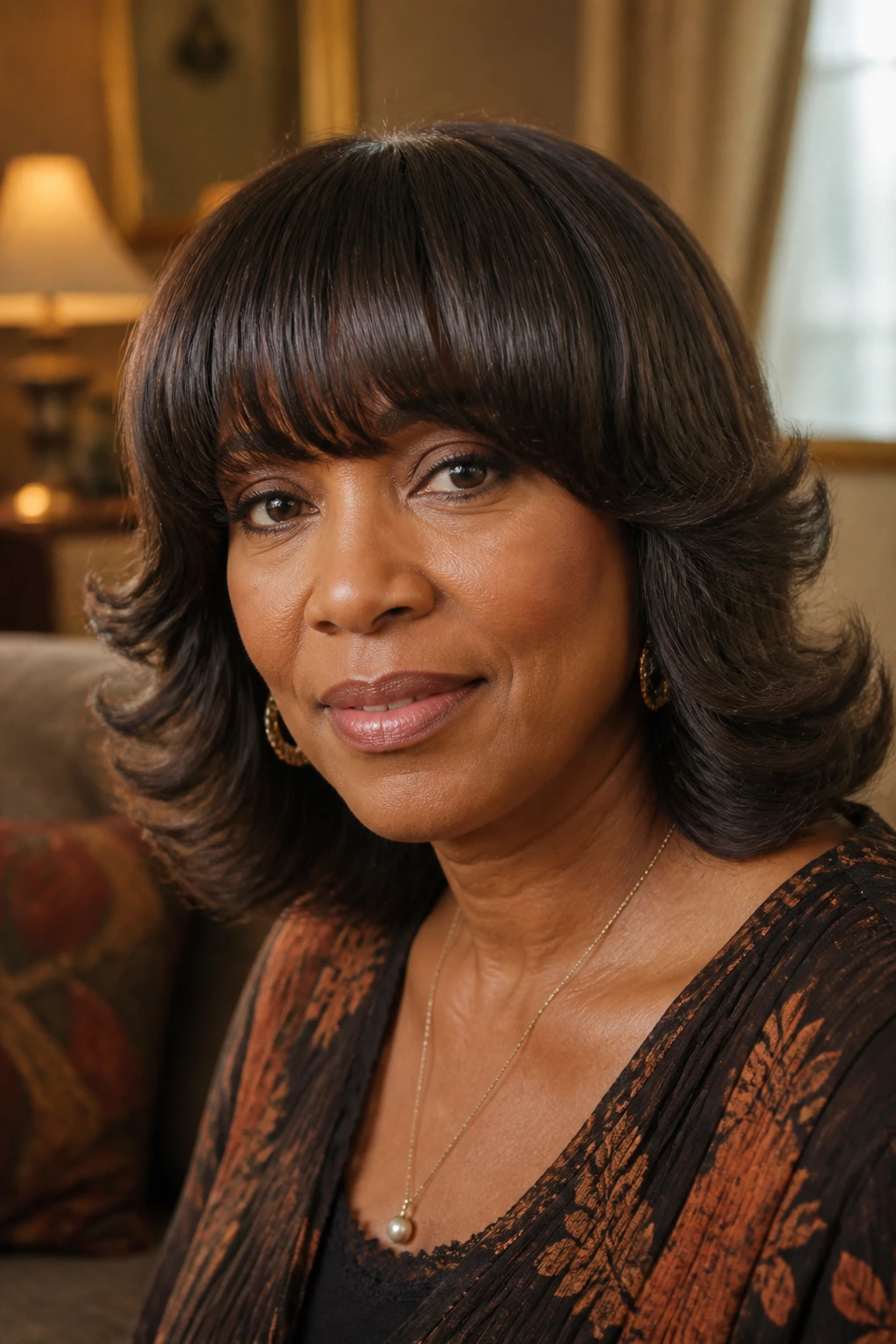
Rounded bangs are a little nostalgic, but they don’t have to look dated. On a sew-in with a soft flip at the ends, the curve around the forehead can feel charming and polished, especially when the rest of the hair has body and a bit of movement. The key is softness. No hard helmet line. No stiff curl under.
The rounded shape works because it mirrors the natural curve of the brow and gives the face a gentle frame. If the rest of the install is turned out at the ends, the style reads intentional from top to bottom. If the ends are flat, the bang can feel disconnected. That mismatch is what ruins most retro-inspired looks.
I’d use this one for women who enjoy a little personality in their hair and don’t mind styling the shape into place. It’s not the lowest-maintenance option on the list, but it’s rewarding when the curl pattern holds.
A useful twist
Keep the center of the fringe a touch shorter than the sides. That tiny difference keeps the shape from flattening across the forehead.
15. Side-Swept Fringe with Crown Volume
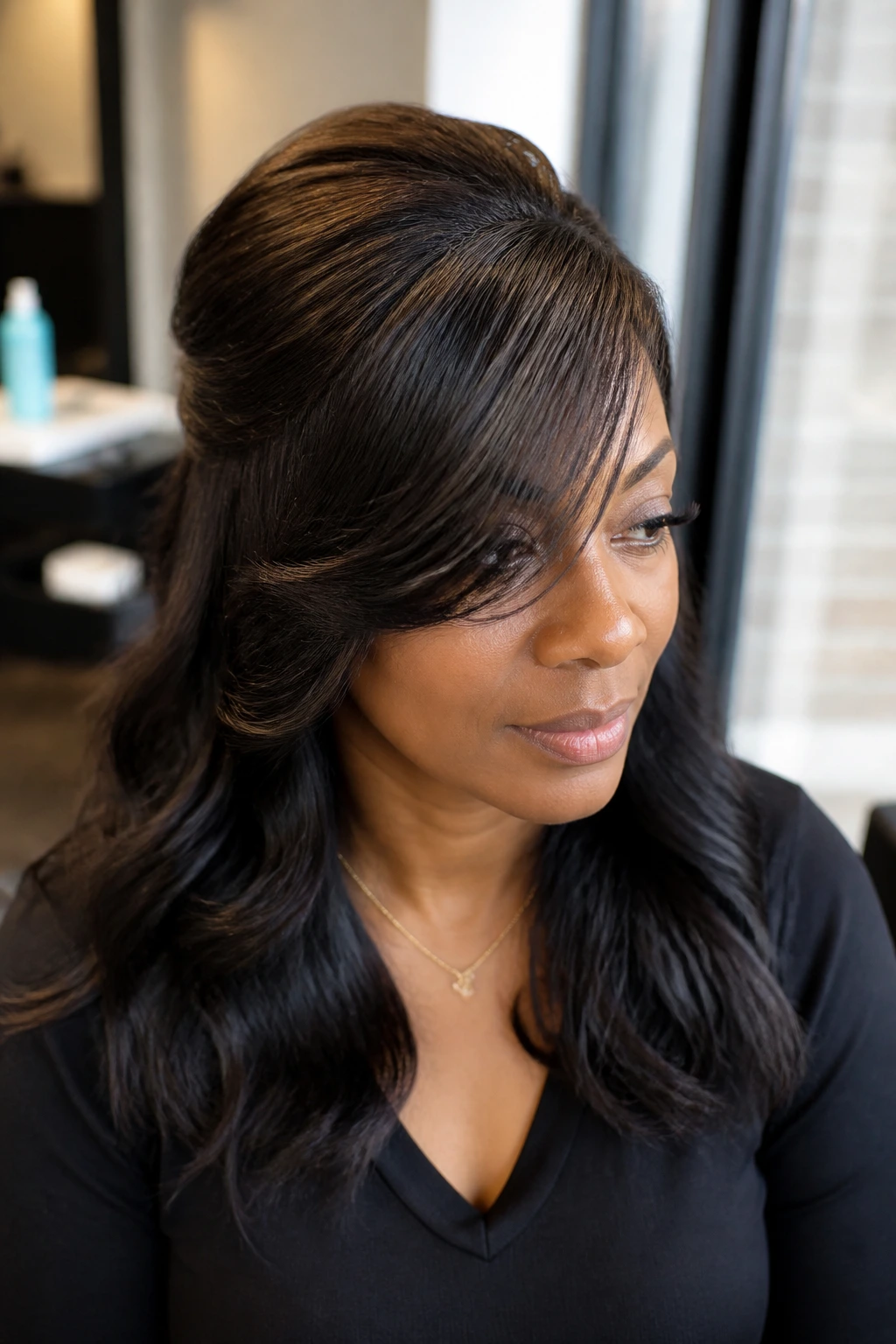
If you want lift, this is the one. A side-swept fringe with crown volume gives the face height, opens one side of the forehead, and keeps the whole sew-in from settling too low around the cheeks. It’s one of the most flattering shapes for women who like a little structure at the top of the head without a full bang line.
The crown volume matters just as much as the fringe itself. A soft lift at the roots makes the face read longer and the install feel lighter. Without that height, the side sweep can collapse into the face and start looking flat by noon. A little mousse, a root clip, or a small round brush at the base can fix that.
This style also has a nice practical edge. It works with casual clothes, dressier tops, and even a blazer without looking out of place. Some sew-in bang styles feel tied to one mood. This one moves around.
Use it when: you want an easy shape that still gives the front of the hair a purposeful finish.
Why a Fringe Changes the Whole Install
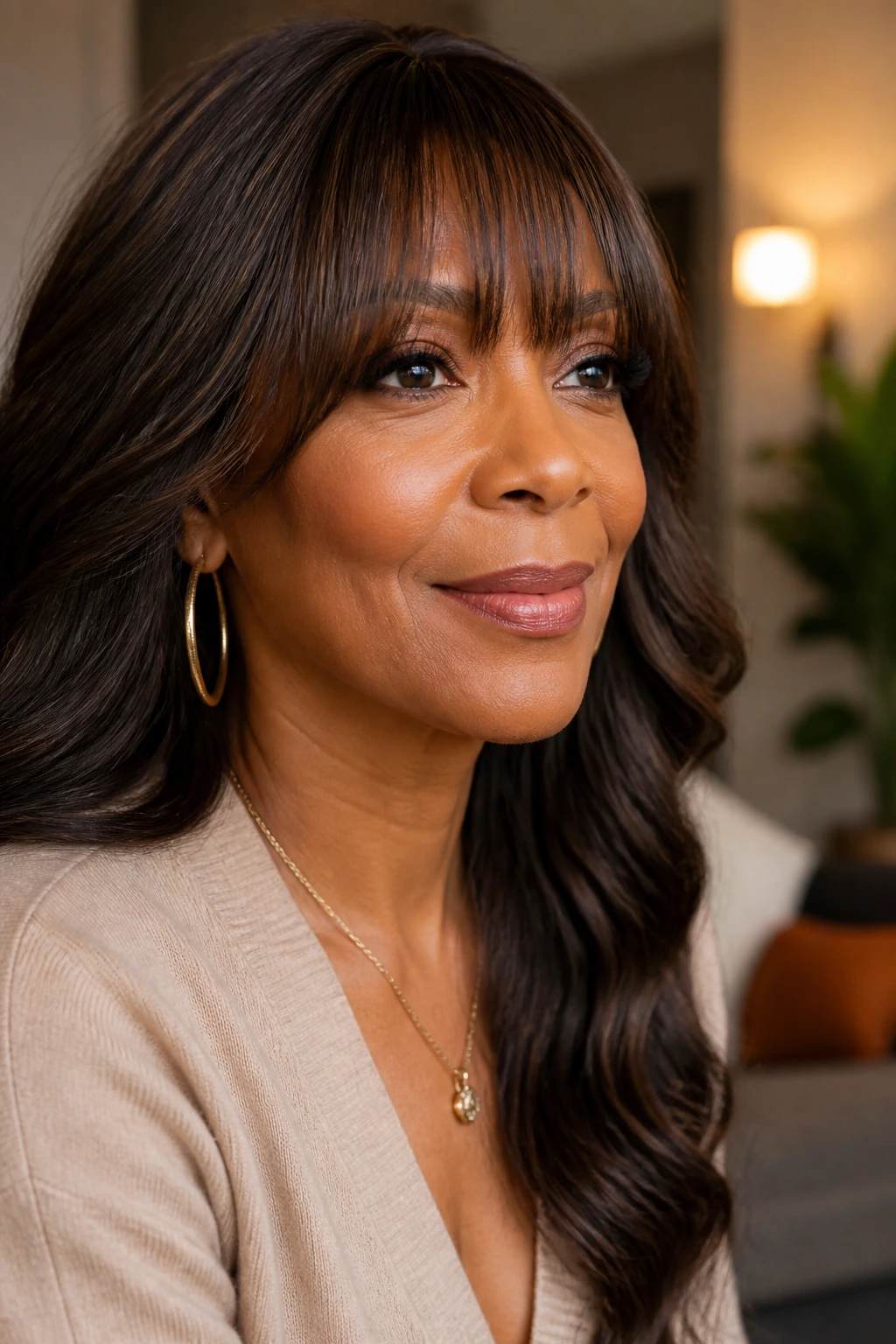
A sew-in with bangs changes the way the eye reads the whole head. That sounds obvious until you see how much difference the front actually makes. A little fringe can soften a strong forehead, break up a wide face, or give the install a cleaner edge when the rest of the hair is long and full. Without that front shape, long hair can sometimes pull the face down. With it, the style sits where it should.
There’s also a practical reason stylists like bang-led installs. The front does not have to depend on a flawless daily part or a perfectly flat leave-out area. If the bang is cut and placed with care, it can hide braid pattern, blend a closure more naturally, and make the first impression of the style feel finished even when you haven’t spent an hour on it.
And that matters. A lot.
For women over 40, the goal is rarely “more hair at any cost.” It’s more often cleaner framing, less daily fuss, and a shape that looks good from a phone camera, a restaurant mirror, and the grocery aisle. Bangs do that well when the install is built around the forehead instead of glued on as an afterthought.
Essential Tools for These Styles
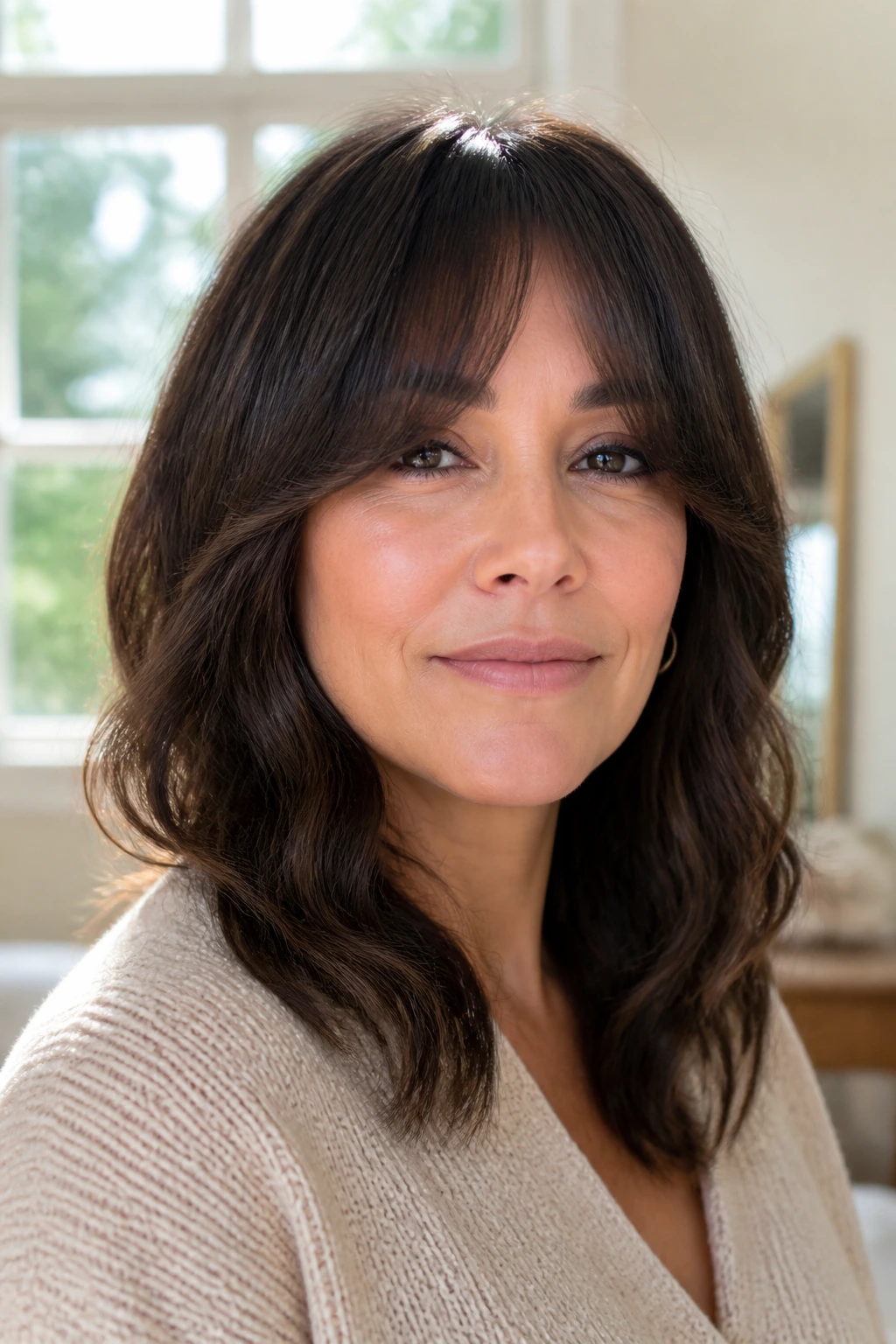
- Rat-tail comb: Useful for clean parts, sectioning the fringe, and checking that the bang falls where you think it does.
- Round brush, medium barrel: Helps shape curtain bangs, swoops, and blunt fringes without leaving hard bends.
- Blow-dryer with concentrator nozzle: Directs airflow so the front can be smoothed or lifted without frizzing the whole install.
- Flat iron with rounded plates: Good for sleek bangs and gentle bevels at the ends; sharp edges can leave ridges.
- Hot comb: Handy for flattening the root area at the front when the install needs a clean base.
- Duckbill clips or small setting clips: Keep the bang section in place while it cools, which is half the battle.
- Light mousse or setting lotion: Gives fringe a little memory before styling, especially on wavy or curly looks.
- Heat protectant spray: Non-negotiable for silk press or blunt bang styles, especially if the fringe is touched up often.
- Satin bonnet or wrap scarf: Helps preserve shape overnight and keeps the bang from puffing up by morning.
- Small trimming scissors: Only if you truly know what you’re doing; otherwise let a stylist handle the cut.
Smart Shopping for Bundles, Closures, and Bang Hair
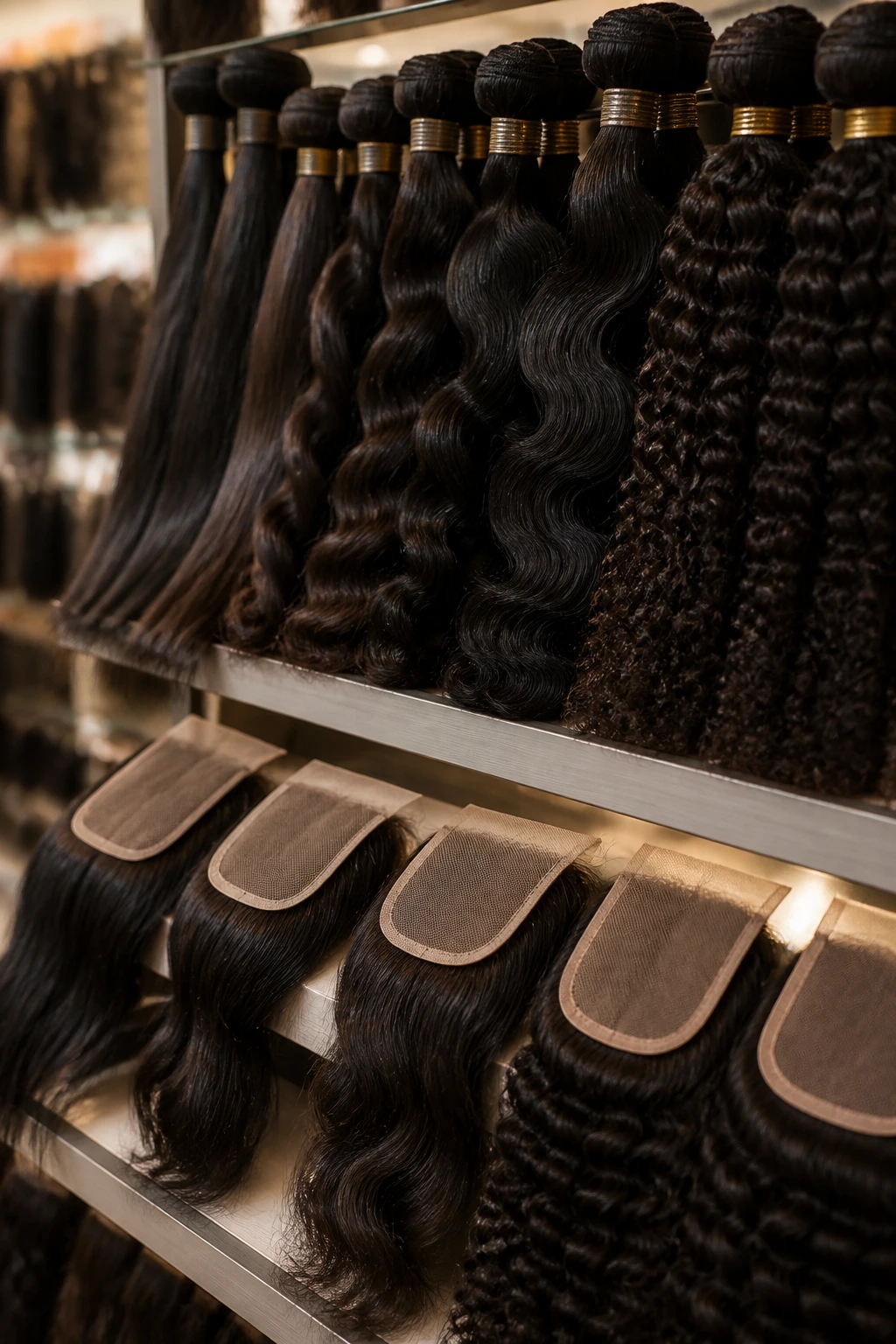
The hair you buy changes how the bangs behave. Straight, silky bundles are easy to shape into blunt or side-swept fringes, but they can look too flat if the density is heavy at the front. Wavy hair gives you more forgiveness because the bang can bend and settle without looking overworked. Curly textures need the most planning, because shrinkage is not a surprise, it’s part of the design.
For a blunt or brow-grazing fringe, I prefer a lighter front density and more fullness through the mid-lengths and ends. That keeps the bang from turning into a thick strip across the forehead. For curtain bangs or face-framing pieces, you want enough length to cut into the desired slope, usually longer than you think at first glance. A bang that can be trimmed gradually is easier to live with than one cut too high on day one.
Closures and frontals matter too. A closure gives you a tidy, low-maintenance front and works well if you want a neat bang that doesn’t need a lot of parting freedom. A frontal gives more styling flexibility, which helps with swoops and off-center bangs, but it also asks for more care around the hairline. If you’re not the type to fuss with baby hairs and lace every morning, a closure plus a bang-shaped fringe can be a calmer path.
How to Wear Them So They Read Intentional
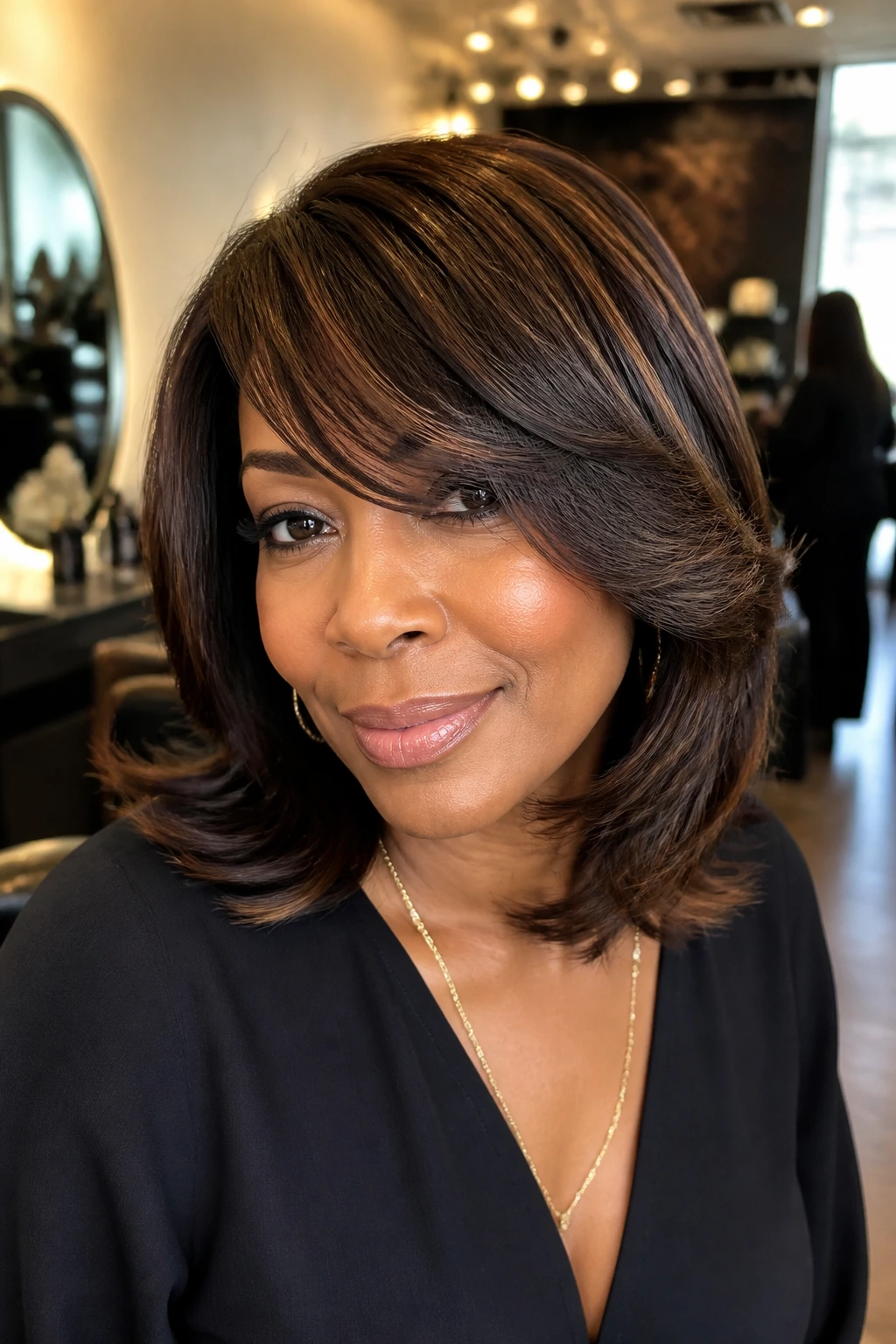
Presentation: Keep the front shape clean and the rest of the hair slightly softer than the fringe. If the bangs are blunt, the lengths should move a little. If the bangs are feathered, the ends can carry a touch more polish. That contrast keeps the whole install from looking flat.
Accompaniments: Earrings, collars, and glasses matter more than people think. A blunt fringe looks sharp with simple hoops or a tailored neckline. A wispy or curtain bang goes well with softer fabrics, open collars, and glasses with a defined frame. The face needs room to breathe somewhere.
Proportion: If your forehead is short, avoid pushing the shortest point too high. If your forehead is longer, a bang that lands around the brow or just below it can balance the face without hiding it. The goal is not to erase anything. It’s to make the front of the hair sit in the same rhythm as the face.
Finish: Decide whether you want shine or texture, then commit. A shiny blunt fringe looks crisp. A soft wave with a matte bend feels relaxed. Mixing the two without a plan often makes the style look confused.
Extra Styling Tricks That Keep the Fringe Lively
A fringe gets better when the roots and ends are treated differently. The root usually needs lift or control, depending on the style. The ends need movement, not too much heat. That’s why I like setting the front with a round brush or small roller and then letting it cool fully before touching it again. If you break that set too soon, the bang falls flat by lunchtime.
Shape Boost: Mist the front lightly with setting lotion or mousse before blow-drying. You do not need much. A thin veil is enough to help the fringe remember its curve.
Color Play: Face-framing highlights can make curtain bangs or swoops look lighter around the eyes. Even a subtle warm brown ribbon near the front can break up a heavy line.
Low-Heat Move: On wavy or curly styles, use clips or a loose roller at the front while the rest of the hair air-dries. It’s a small thing, but it keeps the bang from drying into the wrong direction.
Make-It-Yours: For fine hair, keep the fringe lighter and use less bulk at the base. For thick hair, remove weight from underneath so the bang sits instead of bulging. For glasses wearers, choose a shape that clears the frame line instead of sitting right on it.
Common Mistakes That Make a Banged Sew-In Look Off
- Cutting the fringe too high too soon: The bang sits above the brow, then puffs up and feels harsh. The fix is simple: leave more length at the start and trim in stages.
- Making the front too dense: A thick bang can overwhelm the forehead and make the install look heavier than the rest of the hair. Thin the underside, not the visible edge.
- Ignoring the rest of the silhouette: A fringe without matching layers can look pasted on. The solution is to blend the bang into the perimeter so the shape has a reason to exist.
- Forcing one texture across the whole head: Straight bangs on a curly install, or curly bangs on a pin-straight install, can look disconnected. Match the front texture to the body of the hair, or create a smooth transition on purpose.
- Skipping the night reset: Bangs flatten, split, and puff while you sleep. A satin wrap and a quick root touch-up in the morning save a lot of frustration.
- Choosing a style that fights your routine: If you do not want to touch a round brush daily, skip the most structured fringe shapes. Pick curtain, side-swept, or face-framing versions instead.
Variations and Adaptations to Try
Glasses-Friendly Arc: If you wear glasses every day, keep the fringe slightly shorter in the center and longer at the corners so it clears the frame line. This works especially well with curtain bangs and bottleneck shapes. The front stays neat without rubbing against your lenses.
Fine-Hair Lift: For finer hair, ask for a lighter bang section and a little more root lift at the crown. A small bump at the front keeps the fringe from lying too close to the scalp. That tiny bit of air makes the style look fuller than it is.
Curly-Coil Version: On curly installs, let the bangs be part of the curl story instead of fighting it. Cut them dry, shape them with the curl pattern, and keep the shortest pieces soft around the brow. The fringe will sit in a more natural way, and you’ll spend less time trying to force the shape.
Gray-Blending Finish: If you wear silver strands or mixed gray, soft fringe styles look especially good with light layering around the front. A bit of dimension near the face breaks up the line and keeps the color from reading flat. It also makes the transition between your natural roots and the install less obvious.
Low-Maintenance Weekday Shape: Choose side-swept or long layered bangs if you want fewer daily touch-ups. They can be re-set with a brush and a little serum instead of a full blowout. That’s the version for people who want the style to behave between appointments.
Office-Ready Softness: Keep the bangs polished but not sharp. A gentle curve, a clean line, and modest shine are enough. It reads tidy without looking overworked.
Maintenance, Night Care, and Touch-Up Schedule
A bang is the first part of a sew-in to show wear, so upkeep matters more at the front than anywhere else. Most styles benefit from a quick refresh every morning, even if it only takes 3 to 5 minutes. A round brush, a blow-dryer set to medium heat, and a touch of root control are usually enough for straight or wavy bangs. Curly versions need a mist of water or leave-in and a little finger shaping instead.
At night, wrap the bangs with a satin scarf or tuck them under a bonnet so the front stays smooth. If the fringe is blunt or side-swept, a loose roller at the front can help preserve the curve. If the bang is curly, pineapple the hair gently and keep the front section from being crushed. The goal is not perfect preservation. The goal is less morning repair.
Salon refreshes usually make sense every 2 to 3 weeks for the fringe area, even if the full install lasts longer. A clean trim at the front keeps the bang from dropping into the eyes or splitting in the middle. Full sew-ins often need to come down after about 6 to 8 weeks, sooner if the braid base shifts, the front starts itching, or the style stops lying flat. If the bang is part of a closure or frontal, keep an eye on the lace and the edges, because that front line is doing the most visible work.
Frequently Asked Questions
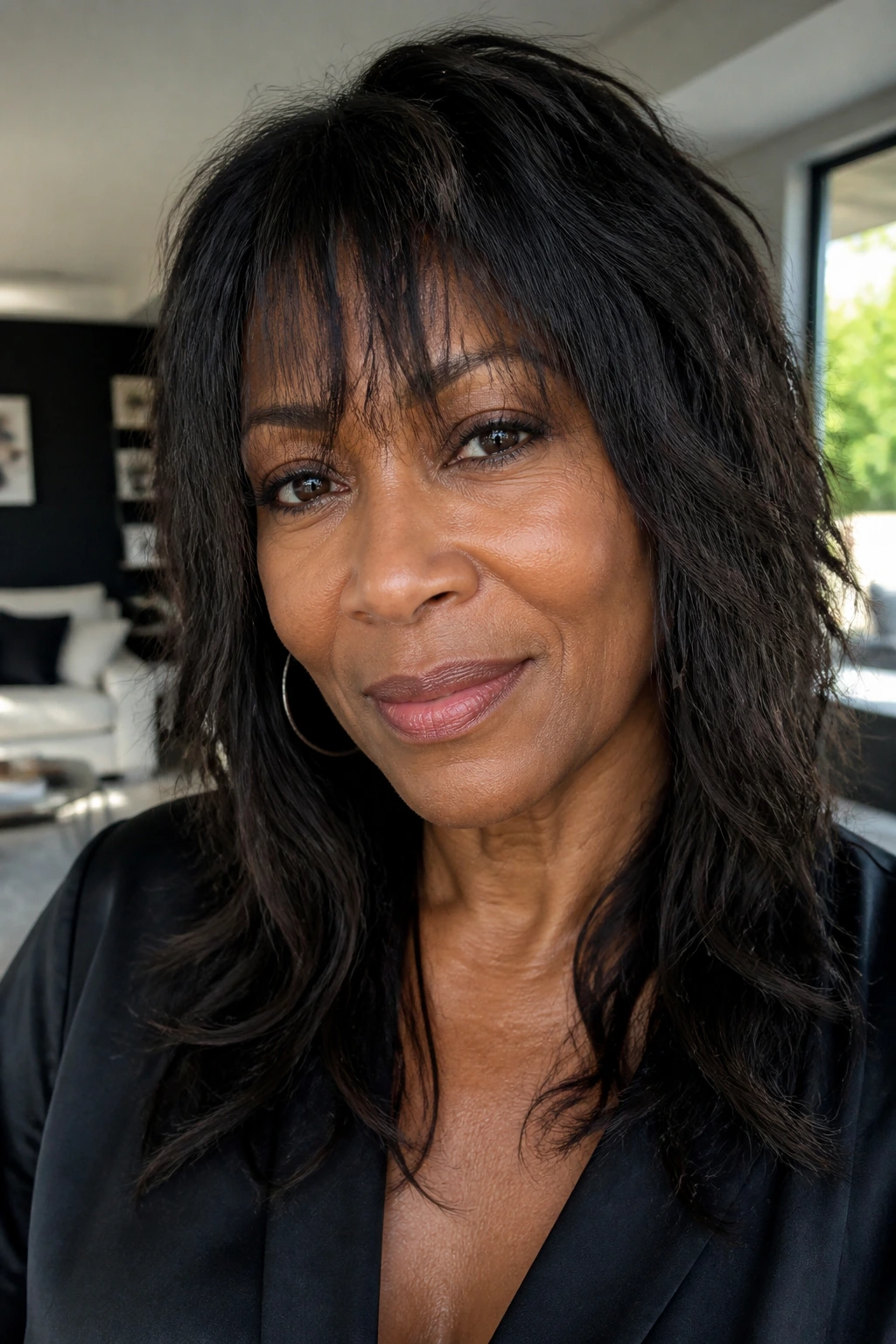
Can sew-in styles with bangs look natural on women over 40?
Yes, and the more natural-looking versions are usually the softer ones. Curtain bangs, feathered side bangs, and long layered fringe tend to blend best because they follow the face instead of sitting on it like a separate panel.
Do I need a frontal, a closure, or leave-out for bangs?
A closure is the easiest low-maintenance choice if you want a neat fringe with less daily fuss. A frontal gives more styling freedom for swoops and deep parts, while leave-out can look very natural but asks for more heat and blending at the front.
What bang shape works best with glasses?
Curtain bangs, side-swept fringe, and bottleneck bangs usually play nicest with frames because they clear the lens area and don’t press straight across the bridge. A blunt bang can still work, but it needs careful length so it doesn’t bunch up on the glasses.
How short should I cut sew-in bangs?
Shorter than you think is usually the wrong answer. Start longer, then trim in small steps while the hair is in its styled shape. Curly and wavy fringe especially should be cut with shrinkage in mind.
What if my bangs keep puffing up?
That usually means the roots need more control or the front is too dense. Use a round brush, a little setting lotion, and a satin wrap at night. If the problem keeps happening, the stylist may need to thin the underside of the bang.
Can I wear a bang with a long sew-in and still look balanced?
Yes. Long layered bangs or face-framing fringe are made for that. They add shape around the face while the length keeps the install from feeling chopped off.
How do I keep the fringe from separating in the middle?
Set it while it’s still warm, clip it in place until it cools, and avoid over-touching it during the day. A tiny bit of dry texture spray or light mousse at the roots can also keep the front from splitting as easily.
Which style is easiest if I want low maintenance?
Side-swept fringe, curtain bangs, and face-framing bangs are usually the calmest choices. They forgive a rough morning better than blunt or highly sculpted fringe because they’re built to move a little.
A Fringe That Still Feels Like You
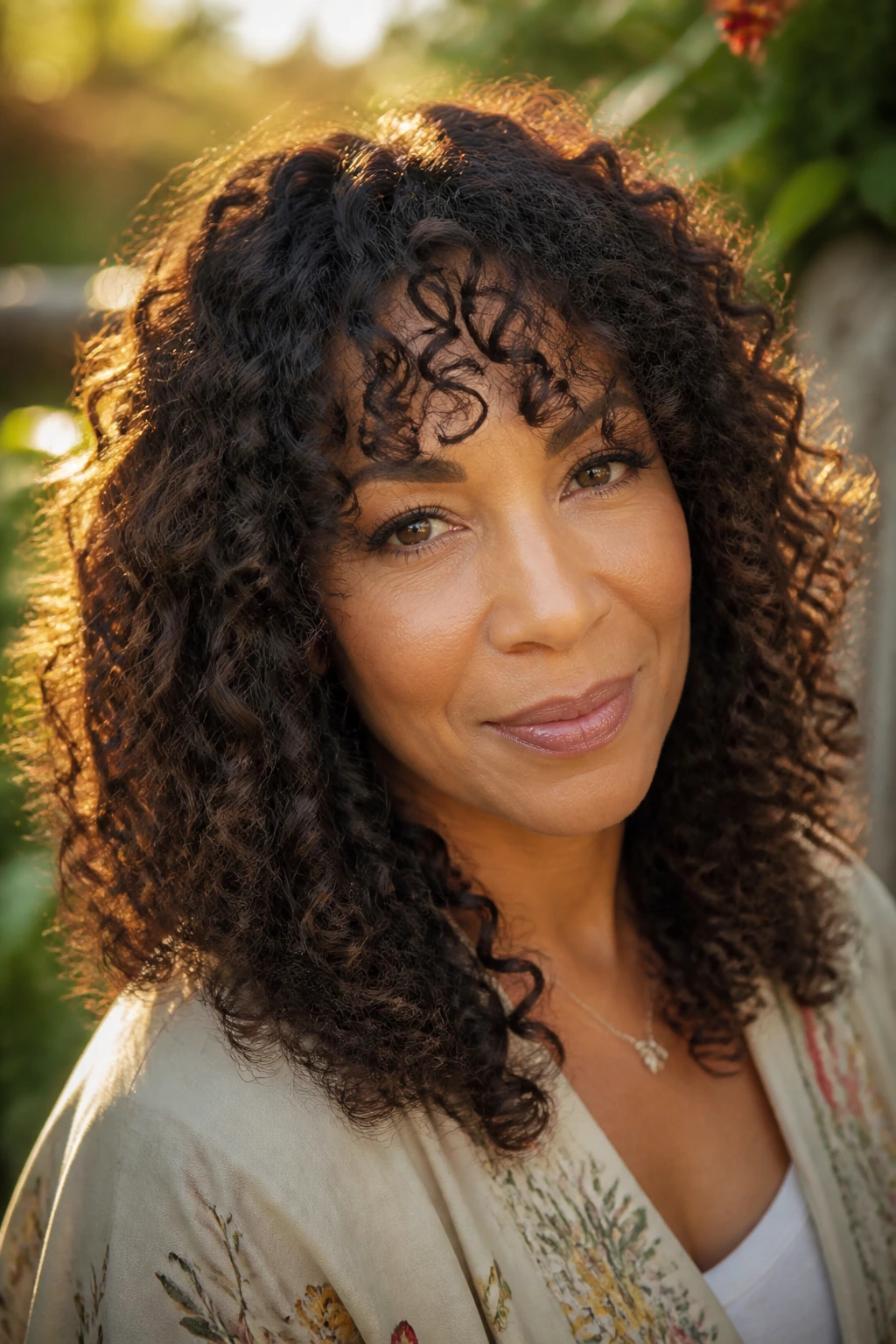
The nicest thing about a sew-in with bangs is that it can change the shape of your face without making you feel dressed up in someone else’s hair. That’s the whole point. A fringe should sit on top of the install like it belongs there, not like it was dropped in as an afterthought. Soft curtain bangs, side sweeps, blunt brows, curly fringes — they all work when the texture, density, and maintenance match the person wearing them.
If you’re torn between two styles, choose the softer one first. It is much easier to sharpen a fringe later than to rescue one that was cut too hard. And once the front shape is right, the rest of the sew-in falls into place around it in a way that feels quietly satisfying every time you look in the mirror.