



Long hair can go flat in a hurry. One blunt sheet of length, one lazy fringe, and suddenly the whole cut feels heavier than it looked in the chair. Side-swept layers with bangs fix that by bending the eye line on purpose — a little diagonal at the front, some lift through the crown, and enough movement to keep the ends from hanging there like wet rope.
A good side sweep does not scream for attention. It slides across the forehead, grazes a cheekbone, and then disappears into longer layers so the haircut still feels grown-up instead of fussy. On straight hair, that shape can add the bend people usually chase with a curling iron; on wavy or curly hair, it gives the front a softer landing instead of a blunt block.
That is why this cut keeps showing up in so many forms. It can be feathered, choppy, polished, airy, dramatic, or nearly invisible. The trick is matching the sweep to your texture, your face shape, and how much time you actually want to spend with a round brush before coffee.
Why Side-Swept Layers Earn Their Keep on Long Hair
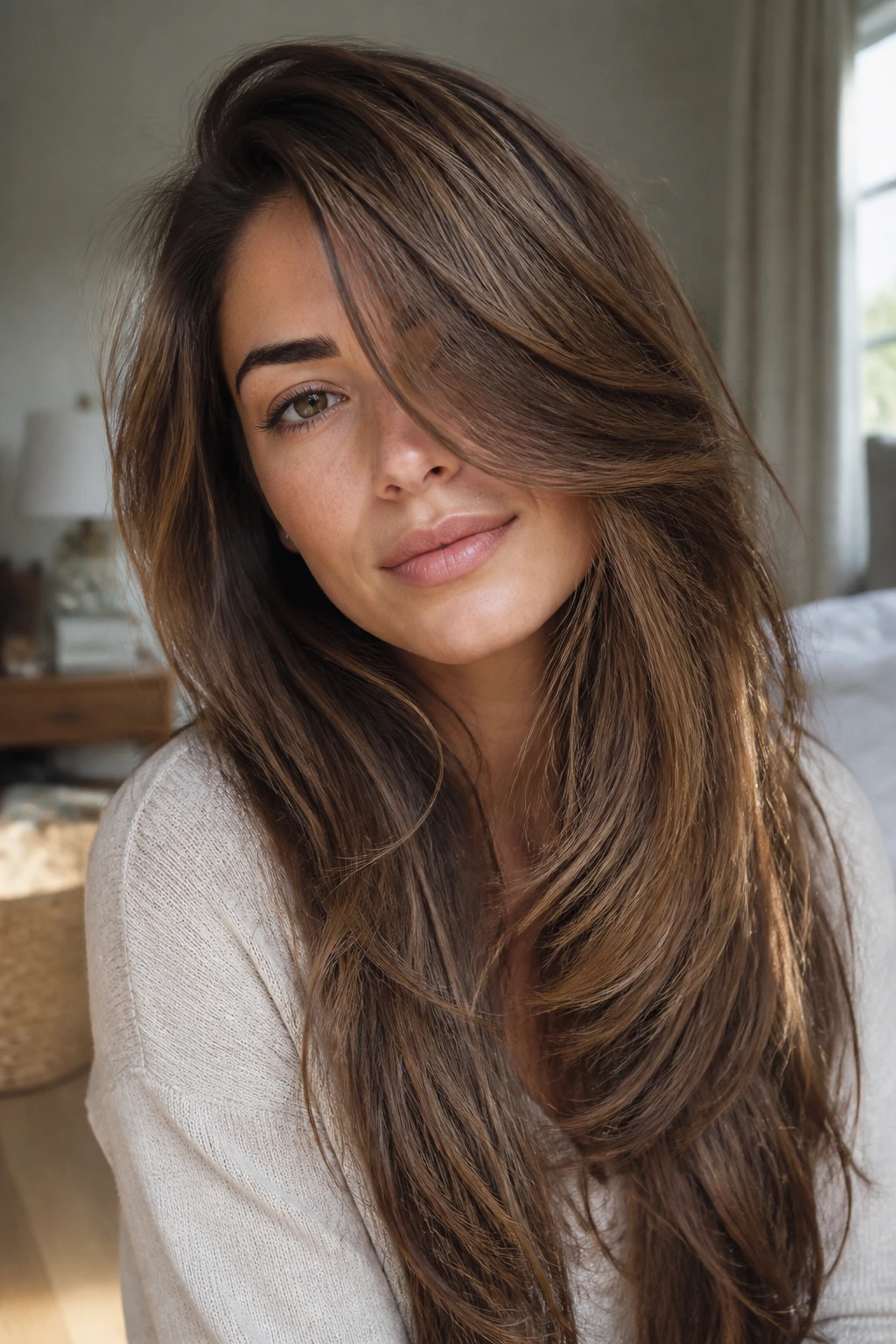
-
They break up the weight line: Long hair can hang like a curtain when every section is the same length, and a diagonal front piece stops that straight drop before it starts.
-
They soften the face without hiding it: A side-swept fringe draws attention to the eyes and cheekbones, but it leaves more forehead open than a heavy full bang.
-
They work with the part you already wear: If your hair naturally falls left or right, this cut uses that habit instead of fighting it every morning.
-
They play well with texture: Straight hair gets shape, wavy hair gets direction, and curly hair gets a front section that does not puff into a block.
-
They let you keep length: You can remove bulk and add movement without chopping the hemline up to your shoulders.
-
They are easier to grow out than a blunt fringe: The longest side pieces slide into the layers behind them, so the awkward phase is much less annoying.
1. Soft Chestnut Sweep with Cheekbone Bangs
This is the version I’d hand to someone who wants long hair to look alive without looking styled to death. The layers begin low, around the collarbone and ribcage, then the front section lands right at cheekbone level so the fringe skims instead of slaps. On chestnut or brunette hair, the shape looks especially good because the darker tone lets the diagonal line read cleanly from a distance.
What makes it work is the balance. The bangs are long enough to tuck behind one ear, but short enough to create a visible swoop when you wear the hair down. Ask for the shortest piece to graze the outer edge of the eyebrow, then melt into longer face-framing pieces that land below the jaw. That keeps the front soft while the rest of the length stays polished.
If your hair is thick, this cut removes enough weight to stop the ends from flaring. If it’s fine, keep the layers broad and gentle so the perimeter still feels full.
2. Butterfly Layers with a Light Side Fringe
Why do butterfly layers look so good with a side sweep? Because the cut already splits the job between volume up top and length down below. The top layers hit around the chin and cheekbone, then the lower length keeps the drama. Add a light side fringe and the whole thing starts to move in a way that feels expensive even when you air-dry it badly.
Why the butterfly shape matters
The shortest layers sit high enough to give lift around the crown, which is exactly where long hair tends to collapse. The side fringe acts like a guide rail for the face, so the front never feels chopped off.
Ask for the bang to start soft, not heavy. You want a piece that can be brushed across the forehead and still blend into the shorter butterfly layers. A 1.5-inch round brush and a medium-hold mousse are enough to make the front bounce instead of flop.
- Best for: flat crowns, long faces, and people who want movement without sacrificing length.
- Styling note: blow-dry the front forward first, then sweep it sideways at the end so the bend stays soft.
- Watch for: too many short layers near the face. That turns the cut into a halo of flyaways.
3. Long Shag with Piecey Side Bangs
If your hair already has some bend, a long shag with side-swept bangs is where that texture finally gets a job. The layers are choppier here, with more separation between pieces and a fringe that looks deliberately undone rather than brushed into one smooth curve. It has a little attitude. Not a lot. Just enough.
The cut works because the layers are not trying to behave like one neat sheet. They’re meant to fall in staggered lengths, which gives wavy hair a place to land and keeps straight hair from looking too severe. Tell your stylist you want the front to stay soft around the eye, but the body of the cut to feel airy and separated. That keeps the shag from drifting into mullet territory.
This one is especially good if you hate spending ten minutes trying to force your bangs into a perfect arc. The piecey finish looks better when it is slightly imperfect.
4. Glass-Straight Length with a Deep Side Part
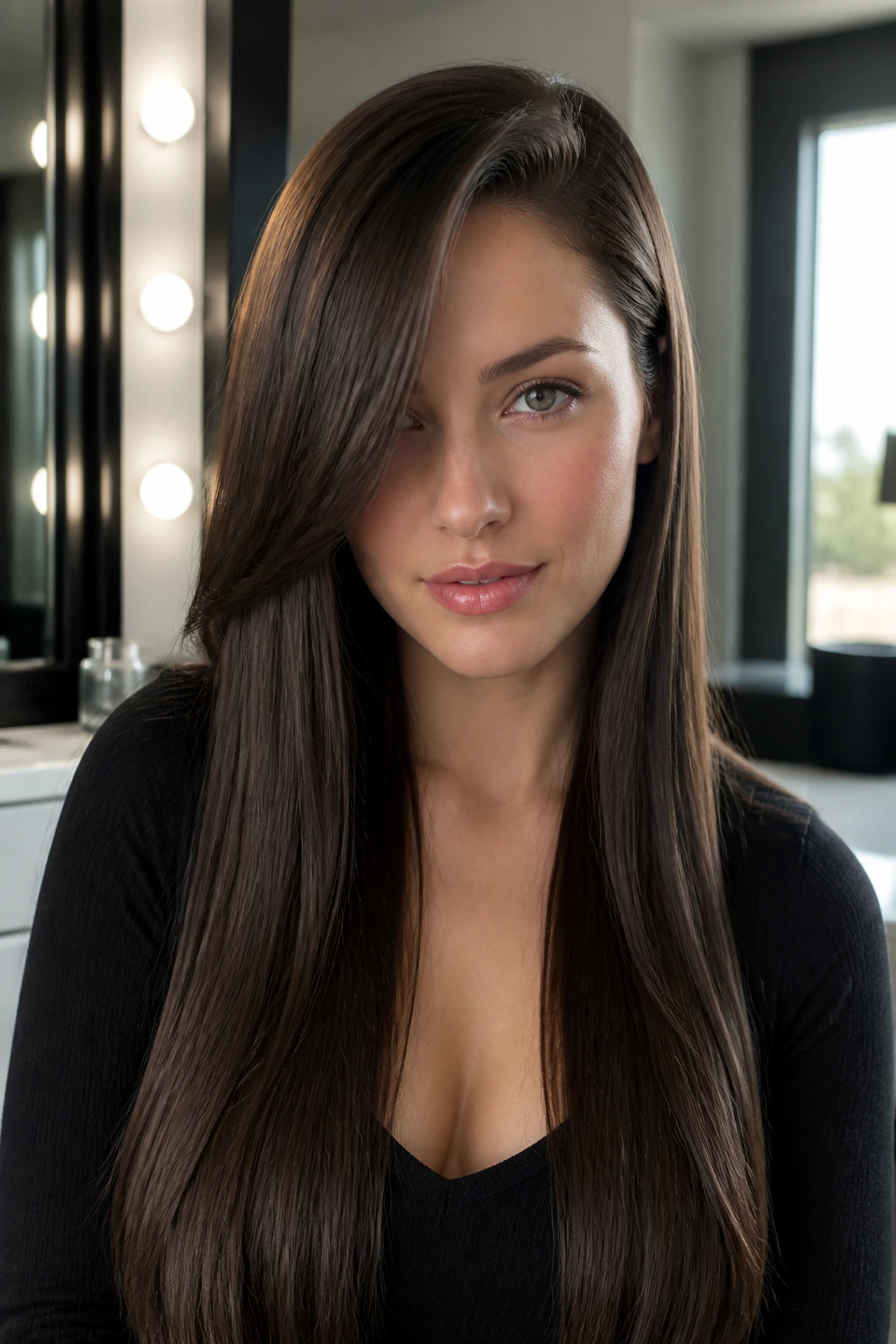
Straight long hair can look razor-sharp in a good way, or it can look flat in a very boring way. The deep side part solves that fast. With side-swept layers, the front gains a bend that breaks up the clean line of the lengths, and the whole cut stops reading like one long sheet of silk.
The key is restraint. You do not want a lot of short layers here. You want a controlled face frame that starts near the cheek and drops into longer lengths, plus a side part deep enough to give the root a little lift. If the part is too shallow, the bang disappears. If it’s too deep, the scalp can show more than you wanted, especially on fine hair.
This is the version for someone who likes a sleek finish but still wants movement near the face. Flat-ironing the ends and giving the fringe a slight bend with a round brush is enough. No need to curl the whole head into submission.
5. Wavy Caramel Layers and a Loose Curtain-Side Fringe
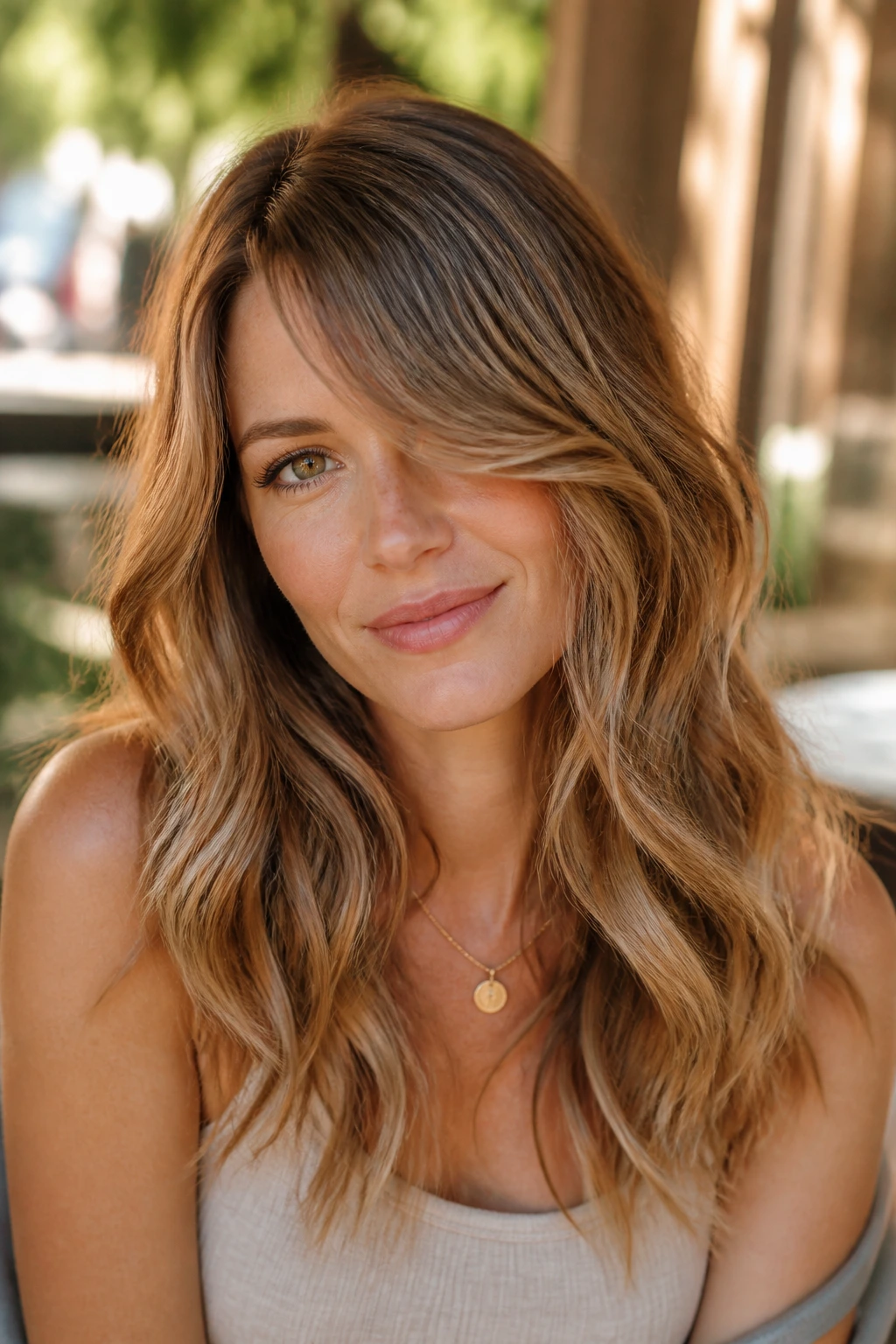
Wavy hair has a funny habit: it wants to do its own thing, and the best cuts simply stop arguing with it. This one leans into that. The front fringe starts almost like a curtain bang, then gets swept to one side so it falls open around the eyes instead of closing in on the face.
What makes it feel so easy
The layers are long enough to let the wave pattern show, but not so long that everything drops into one heavy bend. On caramel or honey tones, the movement stands out even more because the light catches each curve differently.
Ask for the side fringe to be cut longer than you think. Wavy hair shrinks a little when it dries, and a bang that looks cheekbone-length when wet can bounce higher than you expected. If you usually part your hair on one side, tell the stylist to cut the front to match that habit. Fighting the natural fall is a waste of everyone’s time.
A diffuser helps here, but only if you keep your hands out of the hair while it dries. Let the wave set first, then sweep the fringe with your fingers.
6. Face-Framing Curls with a Long Side Bang
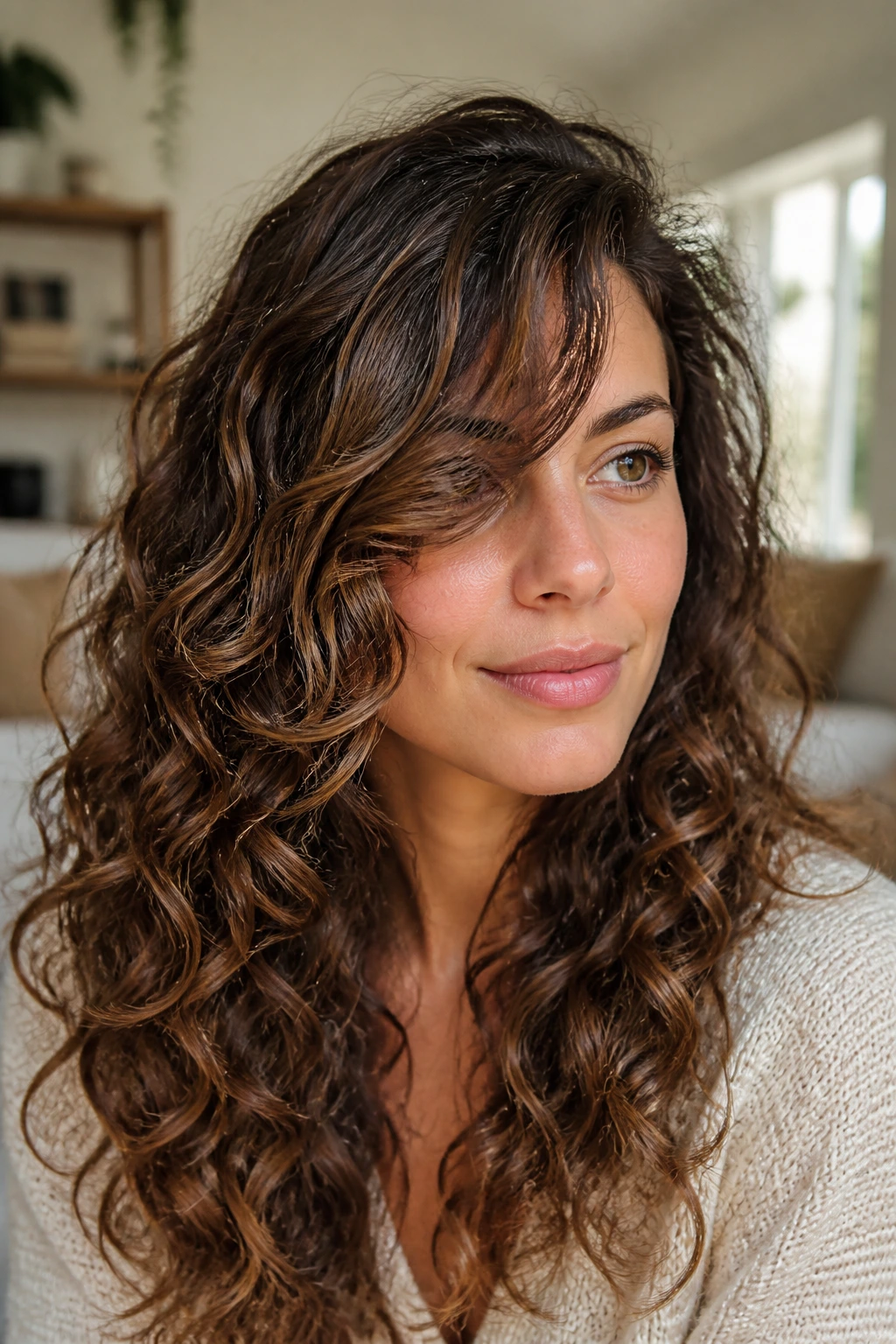
Curly hair needs a longer front section than most people expect. Period. If the bang is cut too short, shrinkage will make it sit awkwardly above the eye, and then you’ll spend the next six weeks pinning it back with a look of mild regret. A long side bang solves that by giving the curl room to spring up and still land in the right place.
The best version of this cut keeps the curls intact through the body while carving a diagonal line at the front. You want the shortest curl to graze the cheekbone when stretched, then blend into longer layers that follow the curve of the face. That way the front reads as a sweep, not a chunk.
Ask for the fringe to be cut on dry hair or at least checked dry before the scissors stop. Curly hair lies to you when it’s wet. It always does. The safest plan is to leave more length than you think you need and refine it later.
7. Razor-Cut Ends and a Feathery Sweep
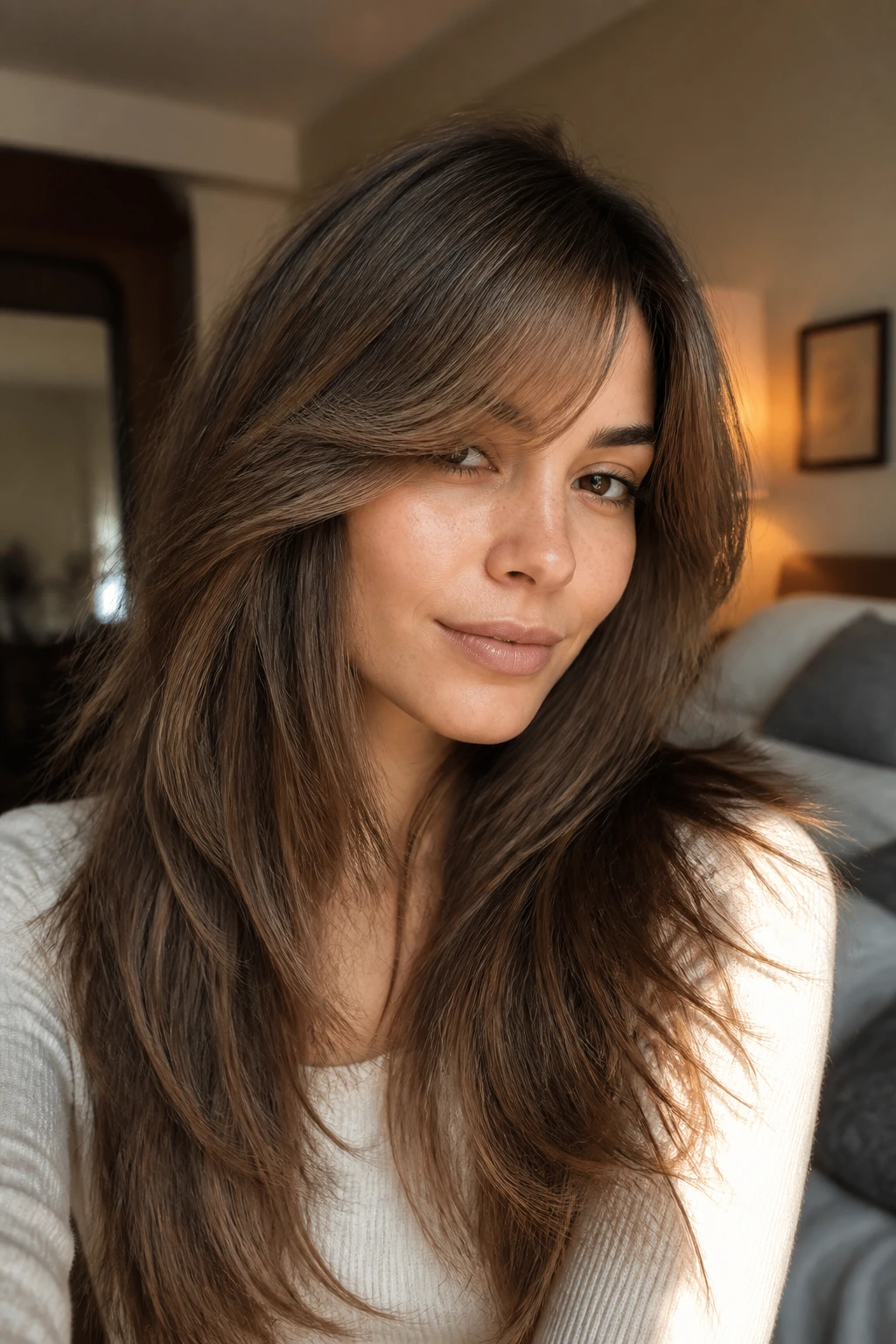
Razor-cut layers are not for every head of hair, and I’ll say that plainly. On thick, healthy hair, though, they can remove bulk in a way that scissors sometimes can’t. The ends go soft and feathery instead of blunt, and the side-swept fringe gets that airy, almost windblown finish that looks good even when you have not had time to style the rest.
The catch is control. A razor on fine or fragile hair can make the ends look wispy in the wrong way, and that is not the same thing as movement. You want the softness at the perimeter and around the face, not a shredded hemline.
This version is for someone who likes edge and texture. It works especially well if your hair tends to puff at the ends or feel bulky around the jaw. The feathery sweep keeps the front from sitting heavy, which makes the whole shape feel lighter on the shoulders.
8. Blowout Layers with a Salon-Polished Fringe
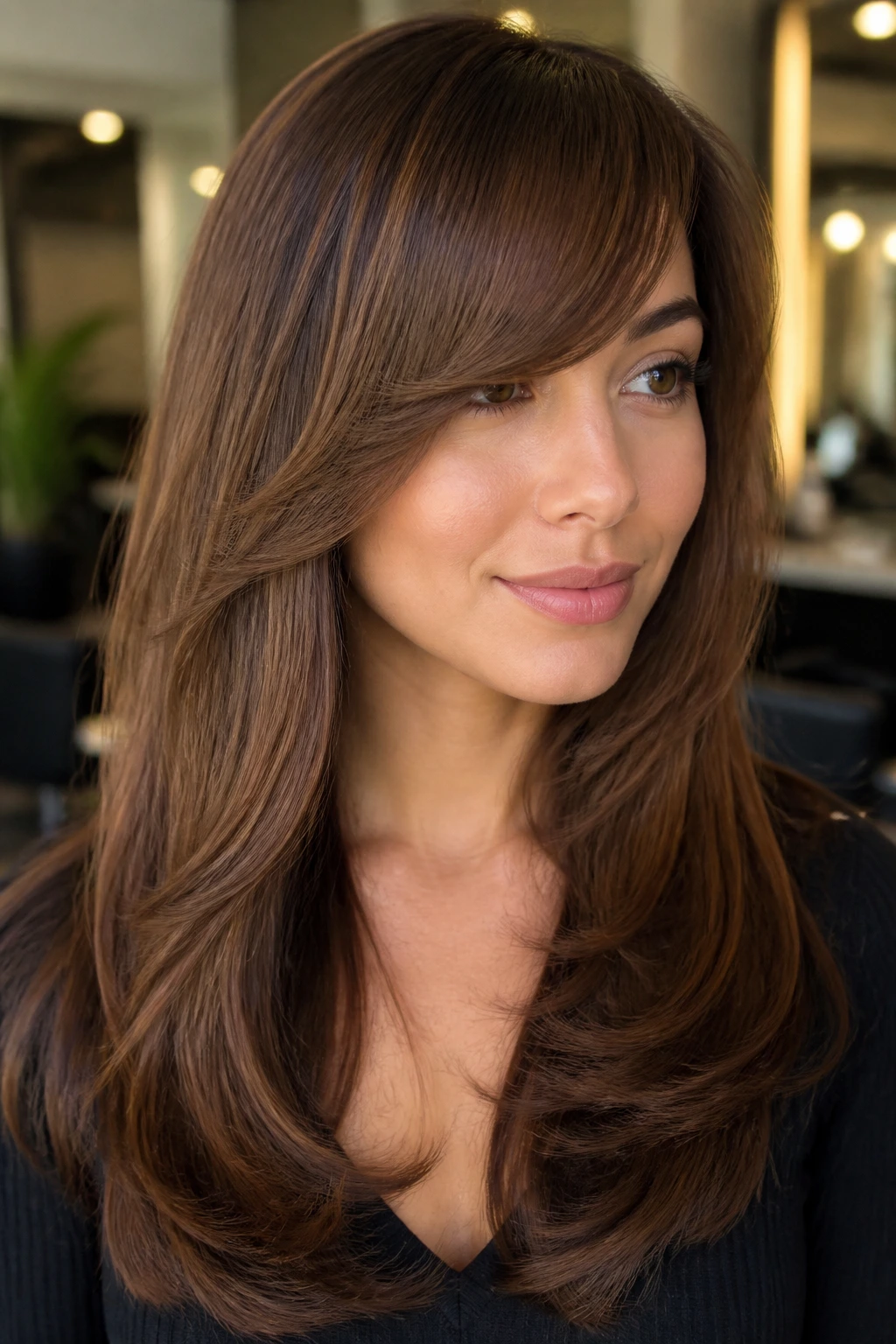
If you want your hair to look like you rolled out of a salon chair with a giant round brush still warm in your hand, this is the cut. The layers are long enough to bounce, but the front pieces are shaped so the fringe sweeps across the forehead in one smooth curve. It has that polished, brushed-out finish that makes long hair look expensive without needing a lot of product.
A large round brush, a nozzle on the dryer, and a little root lift are the whole game here. Start by drying the bangs forward, then wrap them away from the face and let them cool in the sweep. If the front is still warm when you leave it, it will fall flatter than you want.
- Best for: coarse hair that needs shaping, or anyone who likes a clean, done look.
- Ask for: layers that start below the chin so the ends still feel substantial.
- Finish with: a light hairspray sprayed on the brush, not directly on the fringe. That keeps the front touchable.
9. Thick Hair Cut with Long Internal Layers
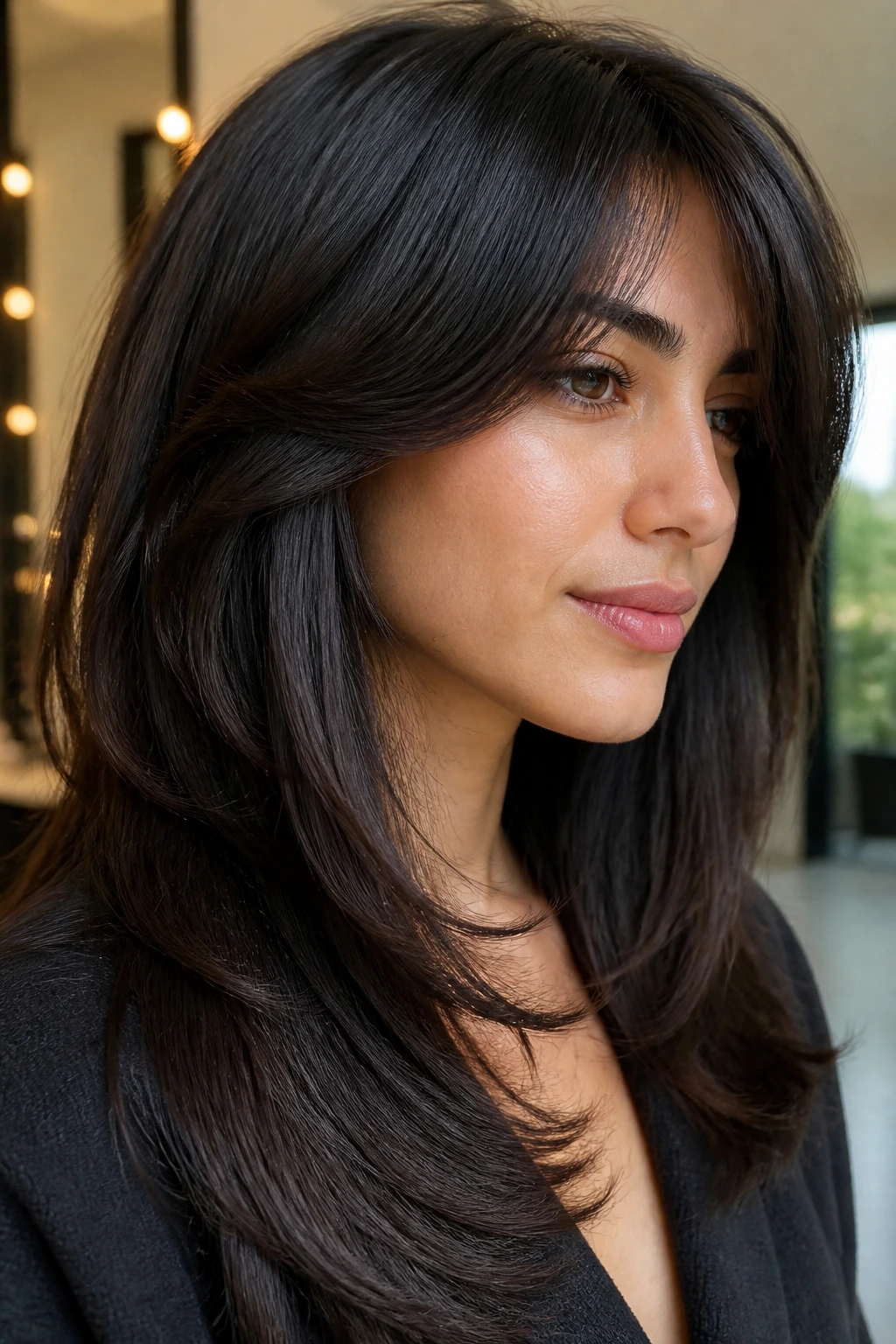
Thick hair can take a side-swept fringe better than almost anything else, but only if the bulk is handled properly. The magic is in the internal layers — the hidden ones that remove weight without making the outside look chopped up. That leaves the length looking full, while the front can sweep across the face instead of bowing outward like a shelf.
The cut should keep the perimeter long and clean. Then the stylist can take weight from inside the shape, especially around the mid-lengths and the area just in front of the ears. That keeps the hair from mushrooming out. Good thick-hair layering looks calm, not shredded.
A slightly heavier side bang often works best here because thick hair can support it. Too-light bangs vanish into the rest of the hair. Give them enough density to show up, then taper them into the layers so they don’t feel separate.
10. Fine Hair Lifted by Airy Side Bangs
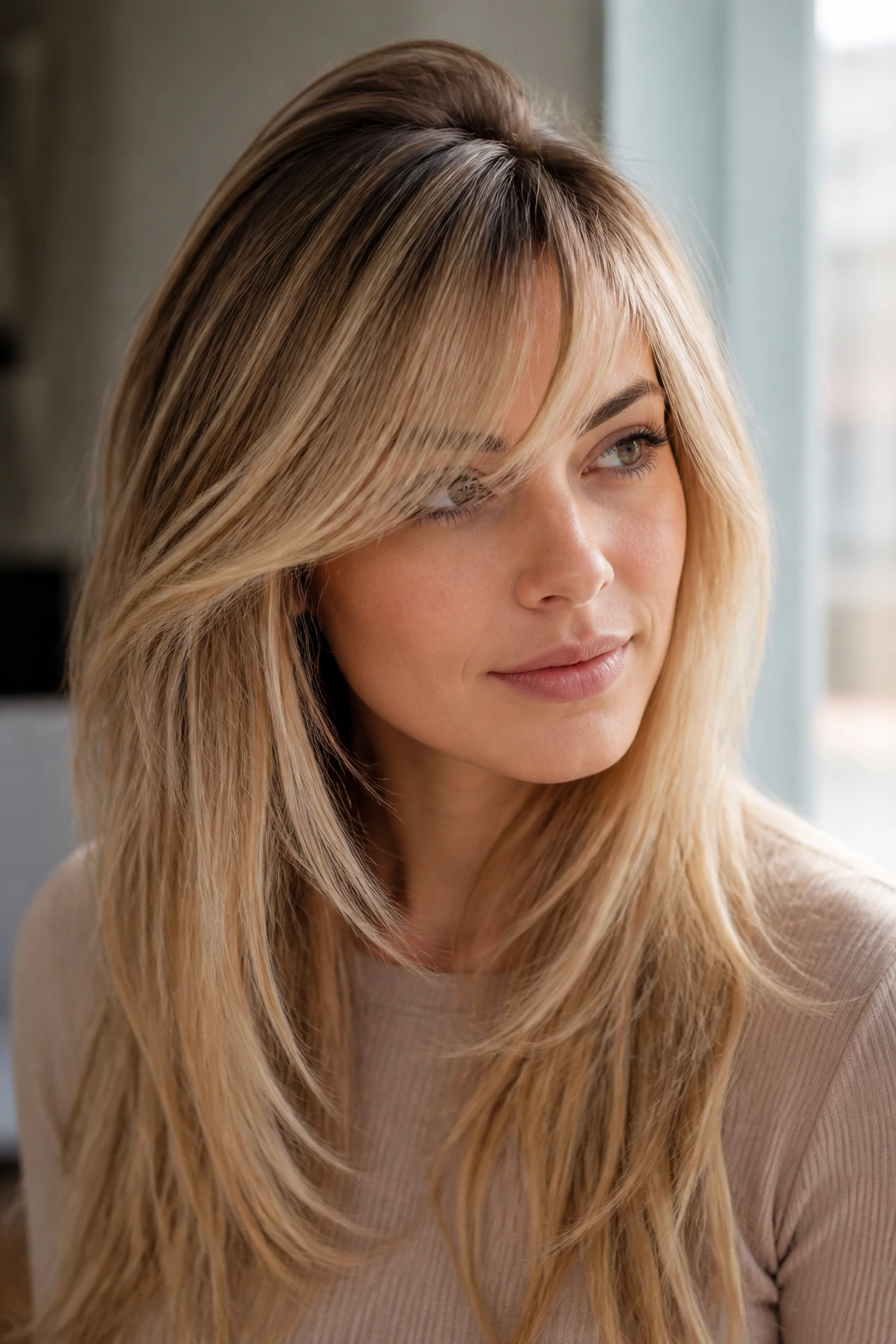
Fine hair does not need a hundred tiny layers. It needs a careful cut that keeps density where it counts and builds lift near the front. Airy side bangs do that nicely because they add interest around the face without stripping the length too aggressively.
The trick is to keep the front soft and the layers long. A few cheekbone pieces, a gentle sweep, and a subtle bend at the ends are enough. If the layers start too high or the bang is sliced too thin, the hair can look sparse at the sides. That’s the one thing to avoid.
Use a volumizing mousse at the roots and a blow dryer with medium heat. A tiny round brush is enough. You’re trying to bend the fringe, not inflate it into a helmet.
11. Copper Lengths with a Brow-Skimming Sweep
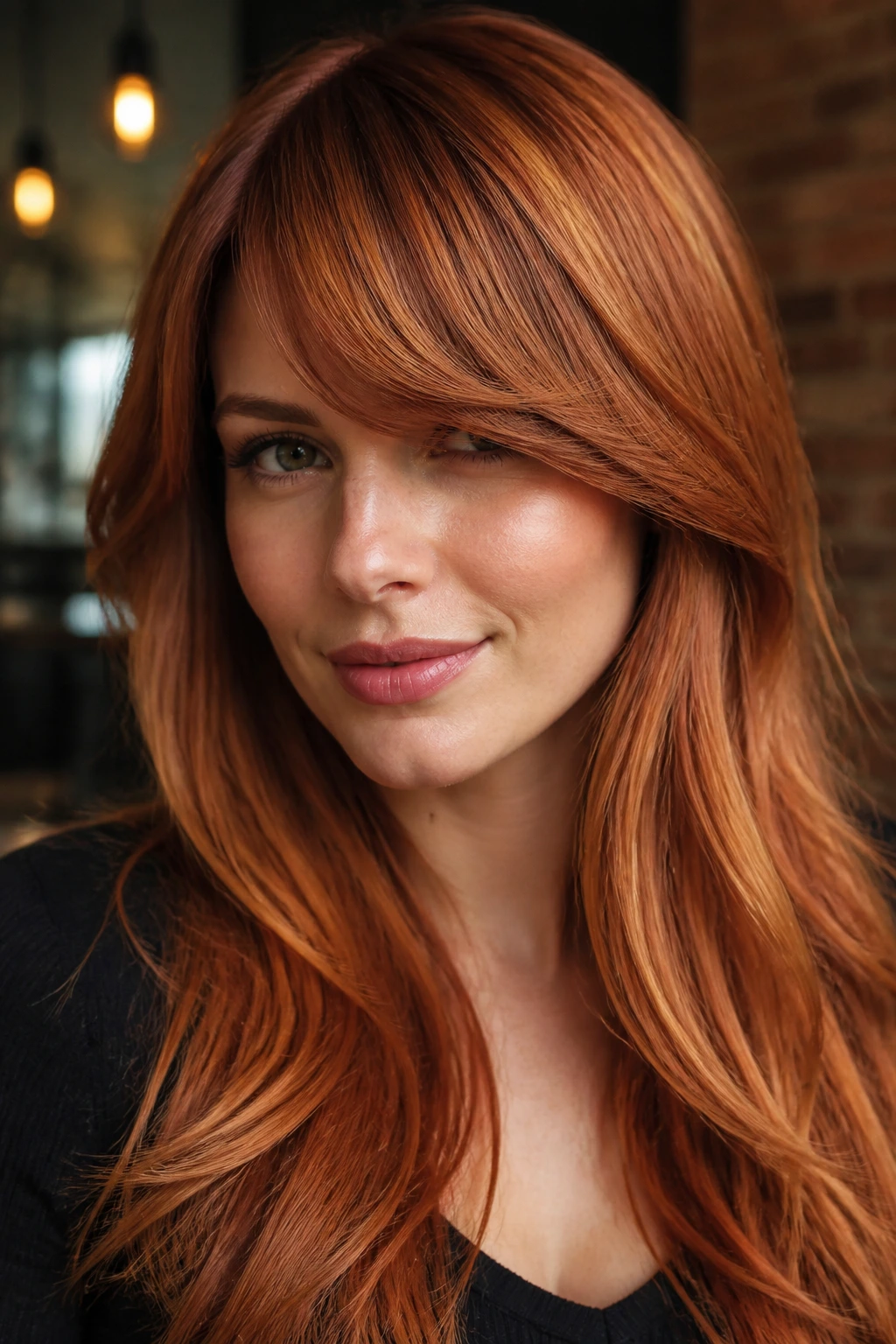
Copper hair loves movement because the color catches on every angle of the cut. A side-swept fringe that skims the brow gives that color a place to shine right at the front, where people actually notice it. The rest of the layers can stay long and smooth, but that front curve keeps the look from falling flat.
This style works especially well if you want the bang to be part of the haircut, not a separate piece bolted on later. The shortest point sits just at the brow line, then the fringe drops into a soft diagonal that meets the first layer around the cheekbone. It’s a strong line, but not a hard one.
For copper shades, keep the finish glossy. A little shine serum on the ends is enough. Too much product near the bangs can make the front separate in a way that looks greasy, and copper does not forgive that.
12. V-Cut Layers and a Soft Diagonal Fringe
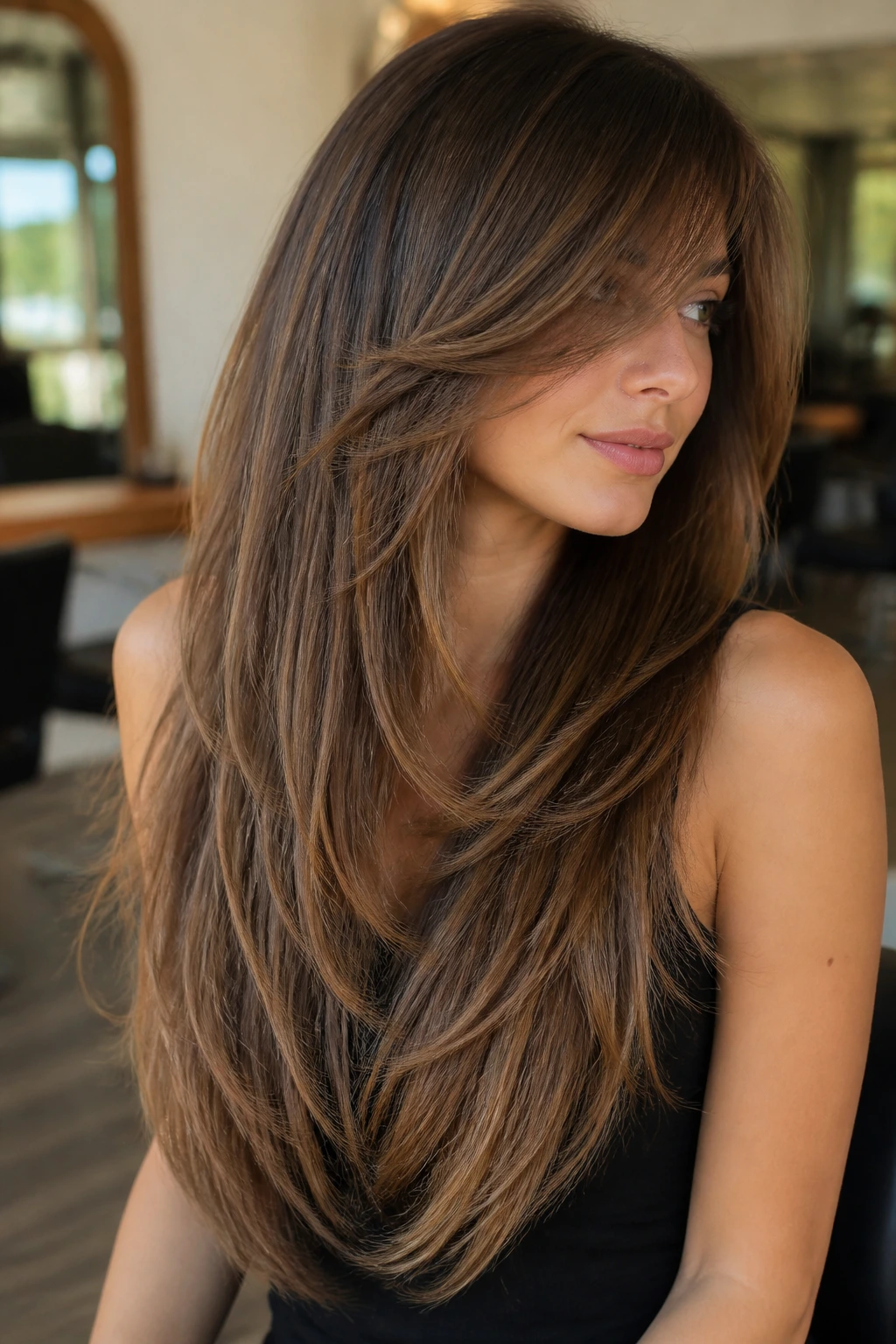
A V-cut gives long hair a tail-like shape down the back, which sounds dramatic because it is. The point of the V keeps the length visible, while the side-swept fringe softens the front so the haircut does not feel severe from the front view. It’s a smart combination if you like long hair that still shows off movement.
The shape to ask for
Tell your stylist you want the longest layers to taper into a V at the back, not a blunt U. Then keep the front fringe soft and diagonal, starting around the eye and sliding toward the cheek. That contrast between a pointed back and a sweeping front gives the haircut an actual silhouette.
This is a good choice if you wear your hair down most of the time. The V shape keeps the ends from looking like one block, and the fringe stops the front from feeling too severe. If you have naturally straight hair, this cut can look sharp in a clean, flattering way. If you wave your hair, the V just becomes more obvious.
13. The Modern Rachel-Style Layered Sweep
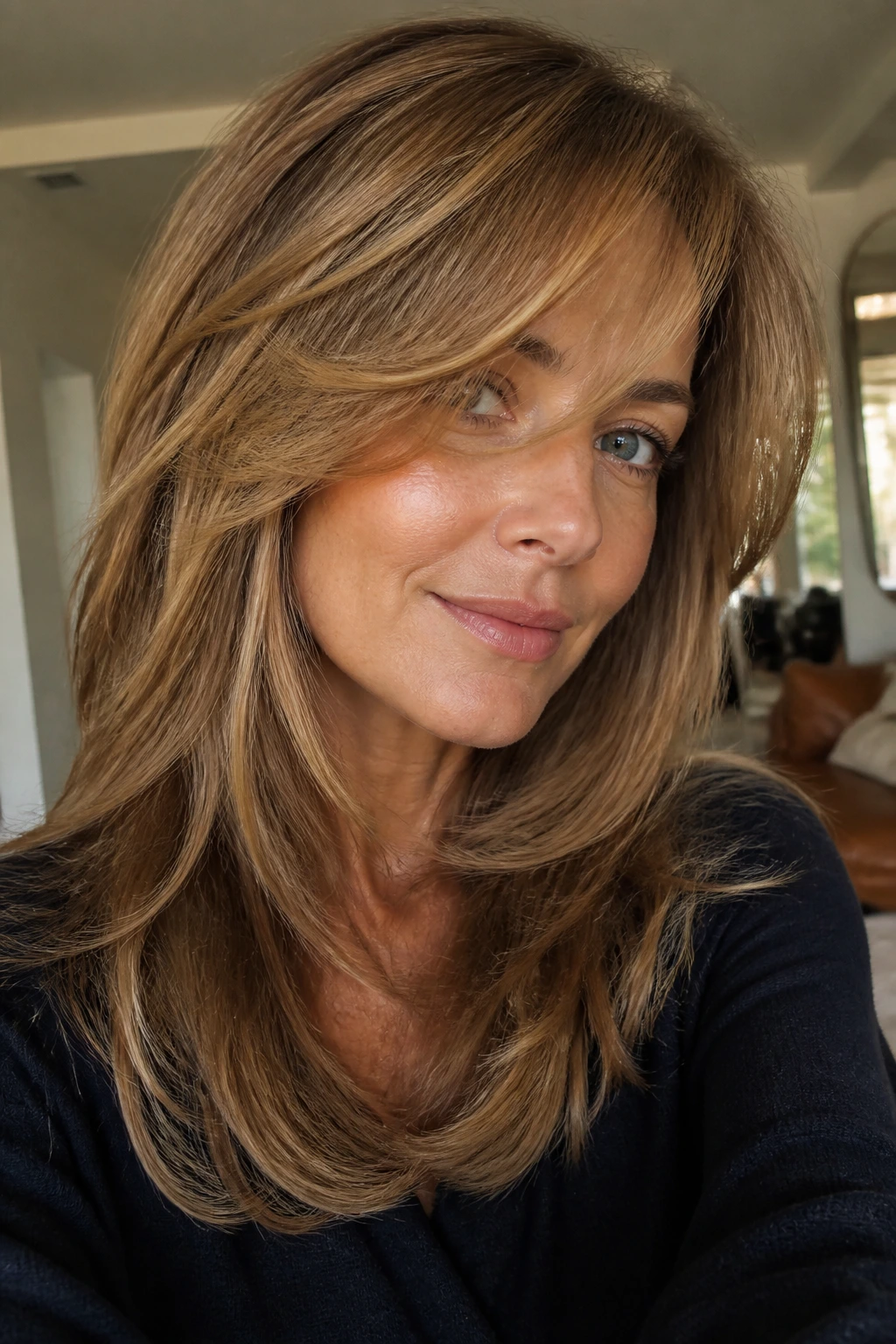
There is a reason that old layered shape keeps coming back in softer forms. When the face frame hits around the chin and cheekbone, long hair suddenly has structure. The modern version is less round-brushed and less chunky, with a side-swept fringe that bridges the gap between the classic cut and something a little looser.
The line around the face should not stop dead. It should melt. That is the whole point. Ask for layers that flick away from the face, not toward it, and let the fringe land just off-center so it feels lived in instead of costume-y.
This style works best if you like your hair to look styled even on days when you barely touched it. A quick blow-dry with a round brush or a few Velcro rollers near the front is enough to bring back the shape.
14. Invisible Layers for a Quiet Side Part
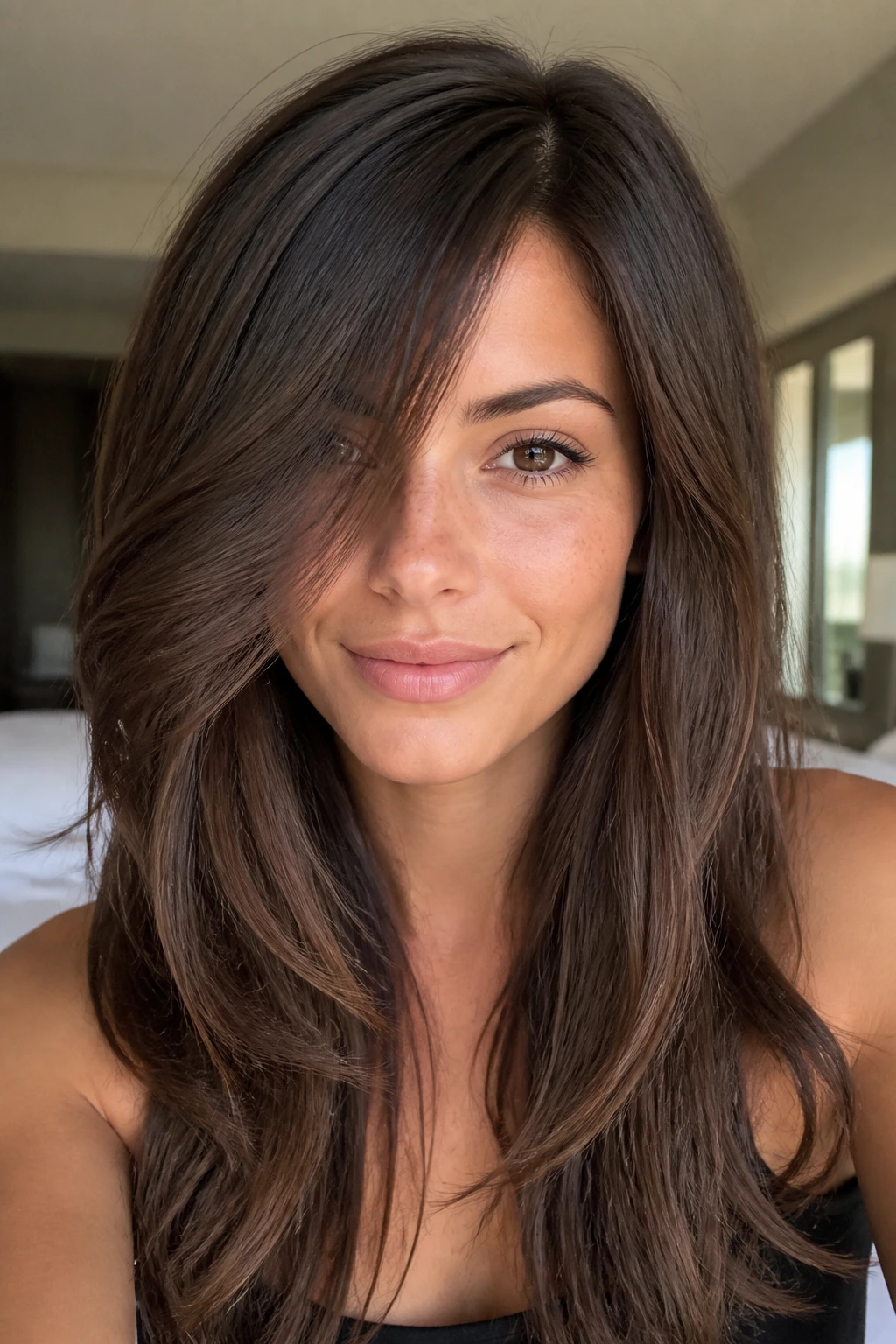
Not every long haircut needs to announce itself. Invisible layers are for the person who wants movement but hates seeing obvious steps in the hair. The side-swept bangs here are understated, more like a soft diagonal suggestion than a dramatic fringe.
The layers are cut underneath the surface so the hair still looks dense from the outside. That makes this a strong option for long, straight, or slightly wavy hair that tends to get stringy when over-layered. The front bends into the part and then slides away from the cheek, which keeps the whole cut calm.
It’s the kind of haircut that looks better the second or third day after washing. That little bit of lived-in movement helps the invisible layers show themselves without ever looking choppy.
15. Bronde Balayage with Collarbone Face Framing
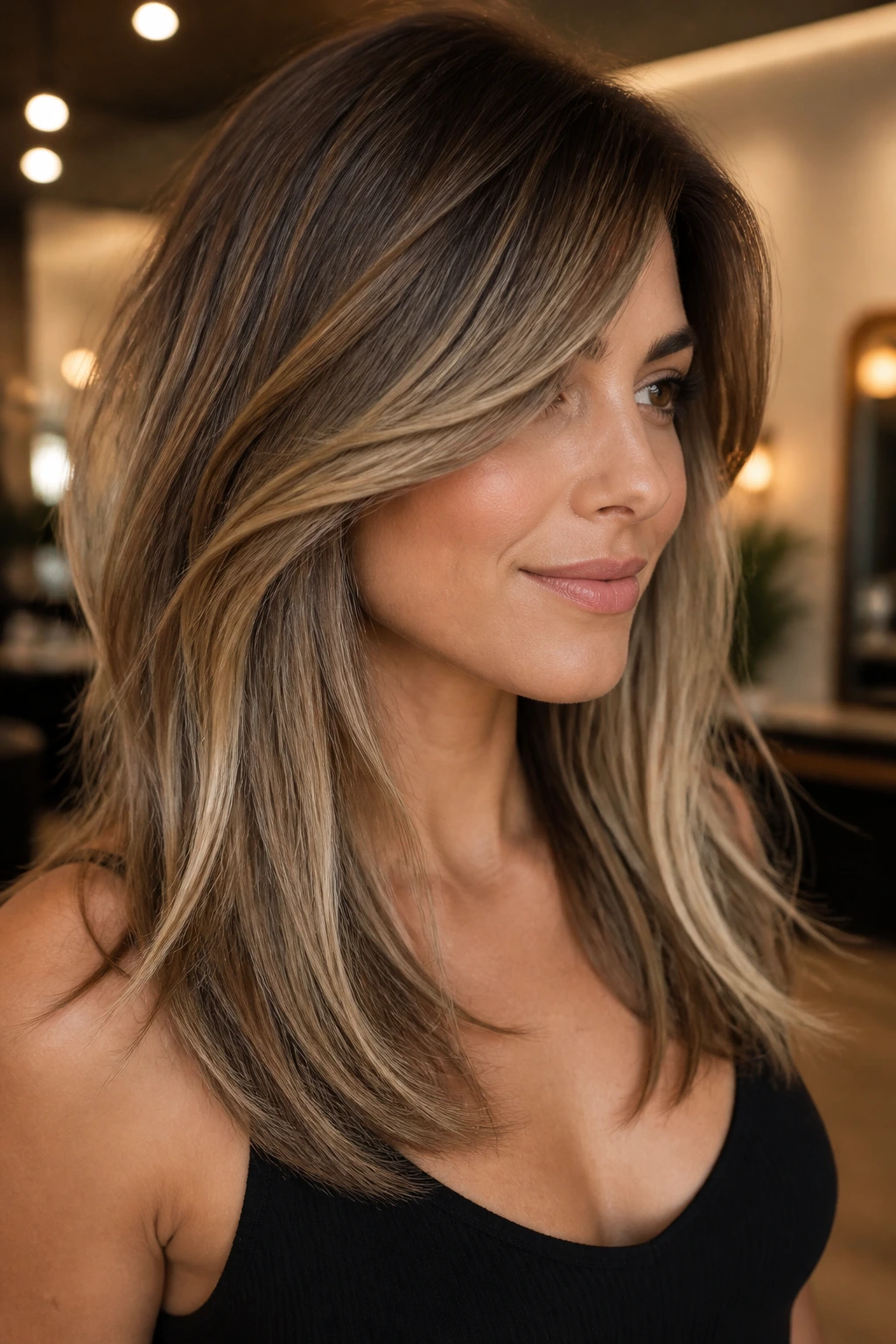
Color and cut can do each other favors. Bronde balayage — that mix of brown and blonde — looks especially good with side-swept layers because the brighter pieces around the face make the diagonal line pop. The cut frames the face; the color underlines it.
The front pieces should land around the collarbone or just above it, which gives enough length for the color to show without making the front look heavy. If the brightest pieces are tucked into the side sweep, they’ll catch light whenever you move your head. That’s a small thing, but it changes the whole haircut.
This is a solid choice if you want dimension without a huge chop. The layers do not need to be aggressive. The color does half the work.
16. Boho Waves and a Loose Side Fringe
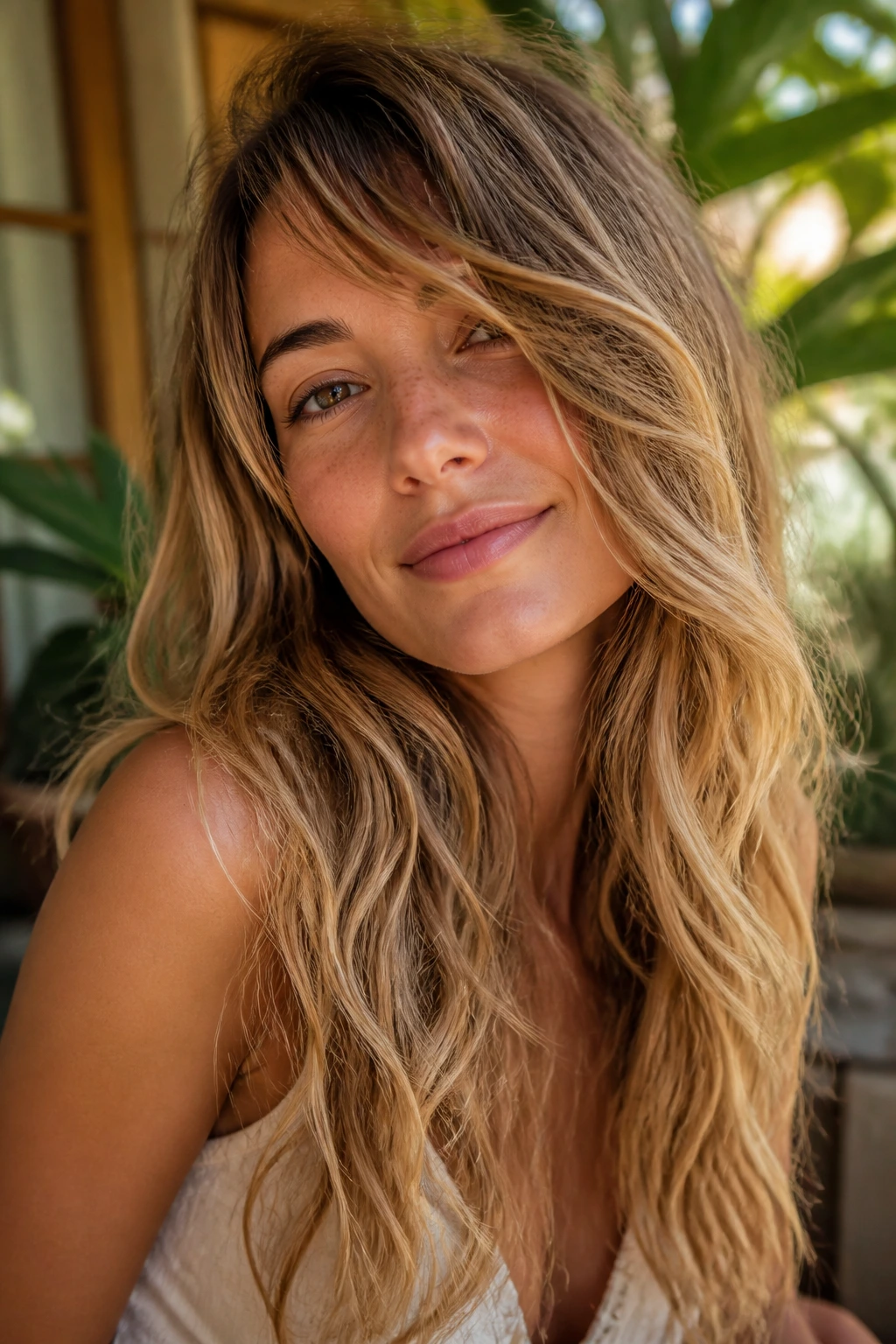
Boho waves can turn sloppy fast if the layers are too blunt or the fringe is too short. A loose side fringe keeps the look soft and mobile. It lets the hair fall forward and back without sticking to one tidy shape, which is exactly what makes the style feel relaxed.
The best version starts with long layers and a side piece that is more bent than cut. You want enough length to tuck it behind the ear, enough face framing to matter, and enough softness that it still looks good after you’ve been outside for an hour. Salt spray can help, but use it lightly. Too much and the hair gets rough.
This is an air-dry friendly cut. Scrunch a little wave cream into damp hair, twist the front away from the face, and let it dry before you mess with it. That last part matters.
17. Sleek Mid-Back Length with a Heavier Side Sweep
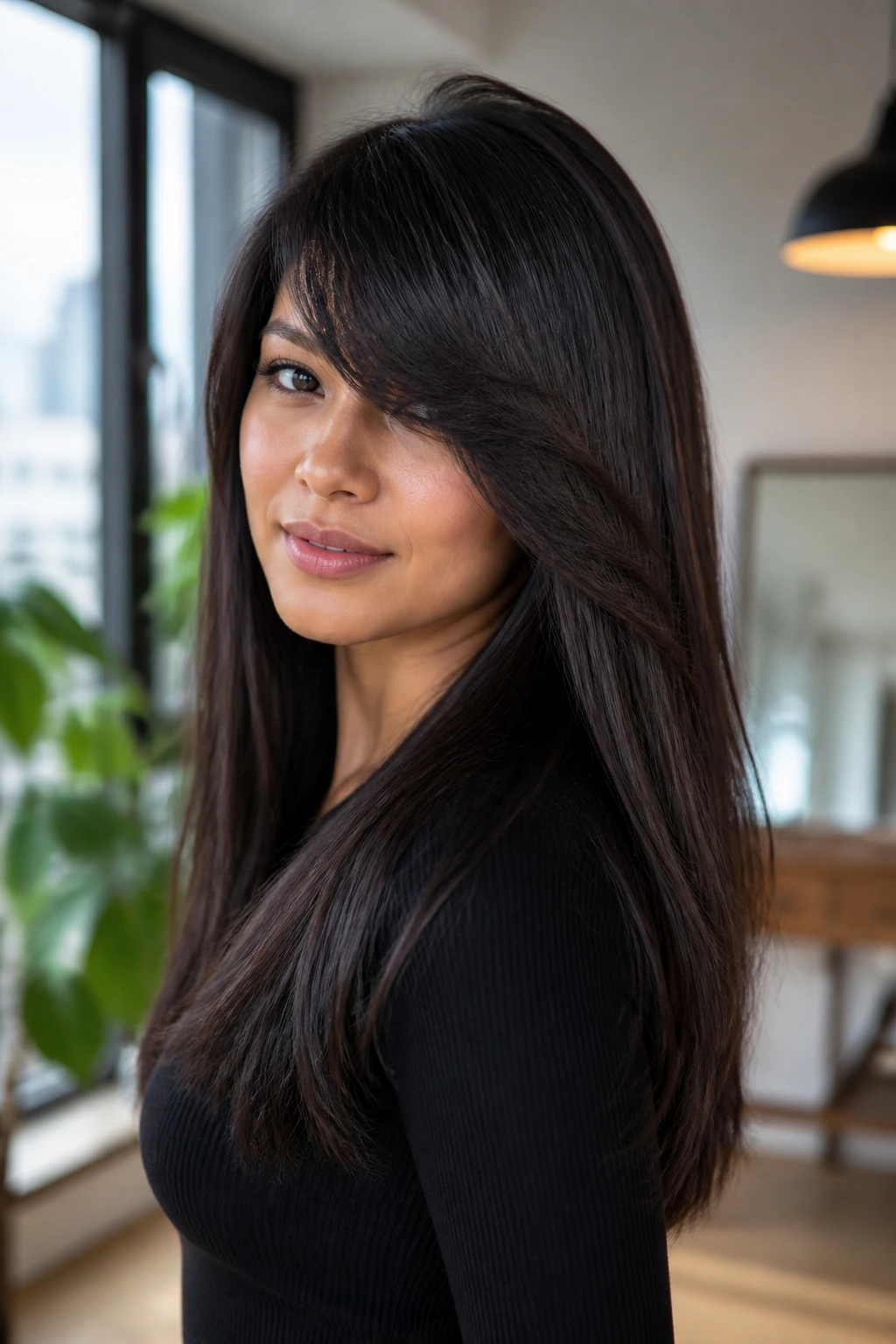
Some side bangs are whisper-light. This is not one of them. A heavier sweep on sleek, mid-back length hair creates a more dramatic line across the forehead, which can look especially sharp if the rest of the hair is kept smooth and nearly flat.
The trick is density. You want enough hair in the bang to show a real shape, but not so much that it becomes a separate curtain. On straight or slightly waved hair, the fringe can be cut a touch heavier at the root and then tapered at the ends so it falls into the side part cleanly.
This version suits people who wear dark shades, glossy brunettes, or one-color blondes where the silhouette matters more than texture. It’s clean. It’s blunt in the front, but not harsh. That balance is why it works.
18. Curly Long Hair with a Stretchy Side Bang
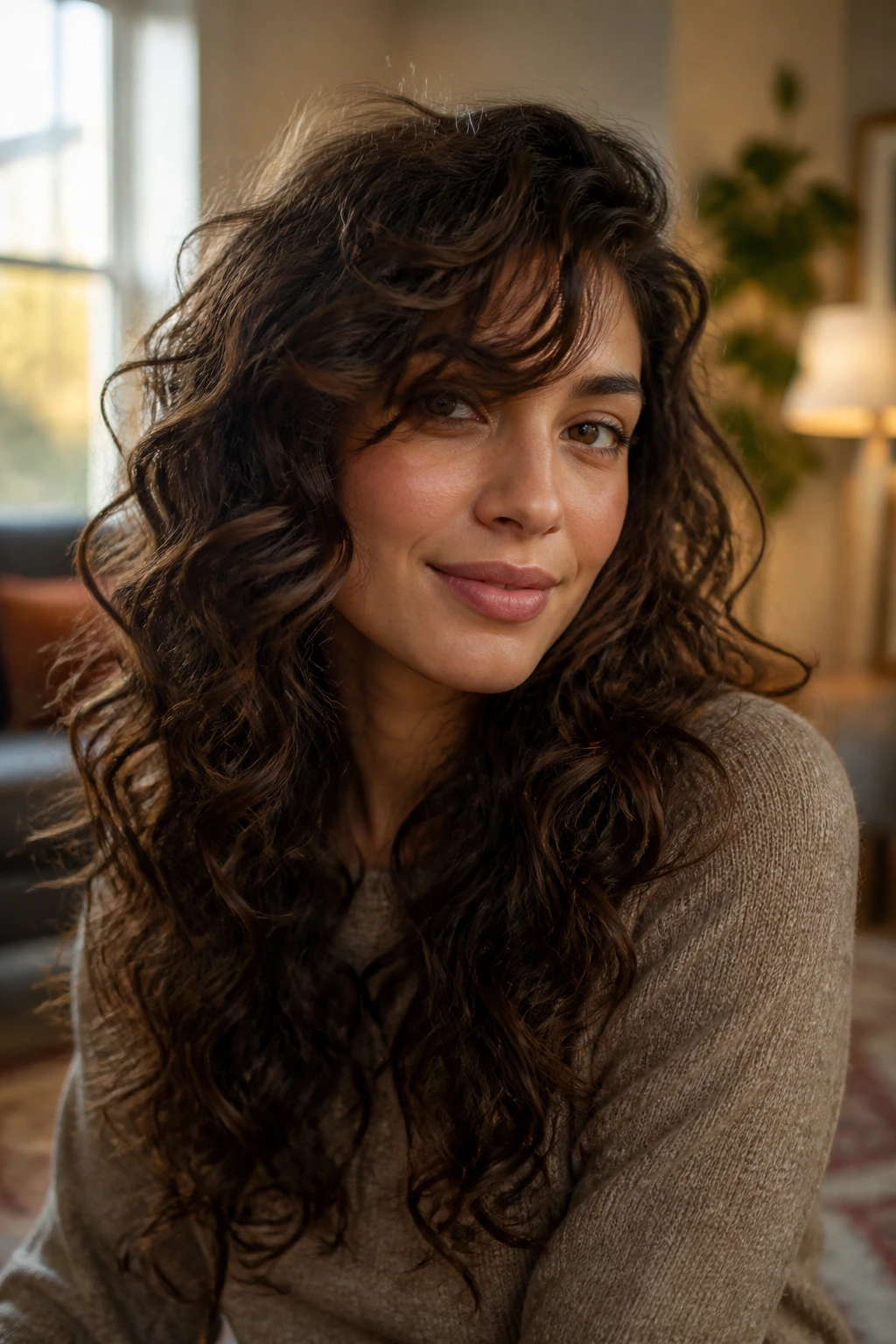
Curly hair looks best here when the front is left longer than your instinct tells you to leave it. The bang needs room to shrink, stretch, and still land in a flattering spot beside the face. A stretchy side bang gives you that flexibility, and the rest of the layers keep the curl pattern from turning into one big triangle.
Ask for the cut to respect the curl’s natural spring. That often means cutting the fringe longer than the shortest point you want to see in the mirror. If your curls are loose, the sweep can sit just below the eye when dry. If they’re tighter, let it drop even farther. Better to trim later than panic now.
A side bang on curly hair should never look forced. It should fall. Or at least lean.
19. Bottleneck Fringe on Layered Ends
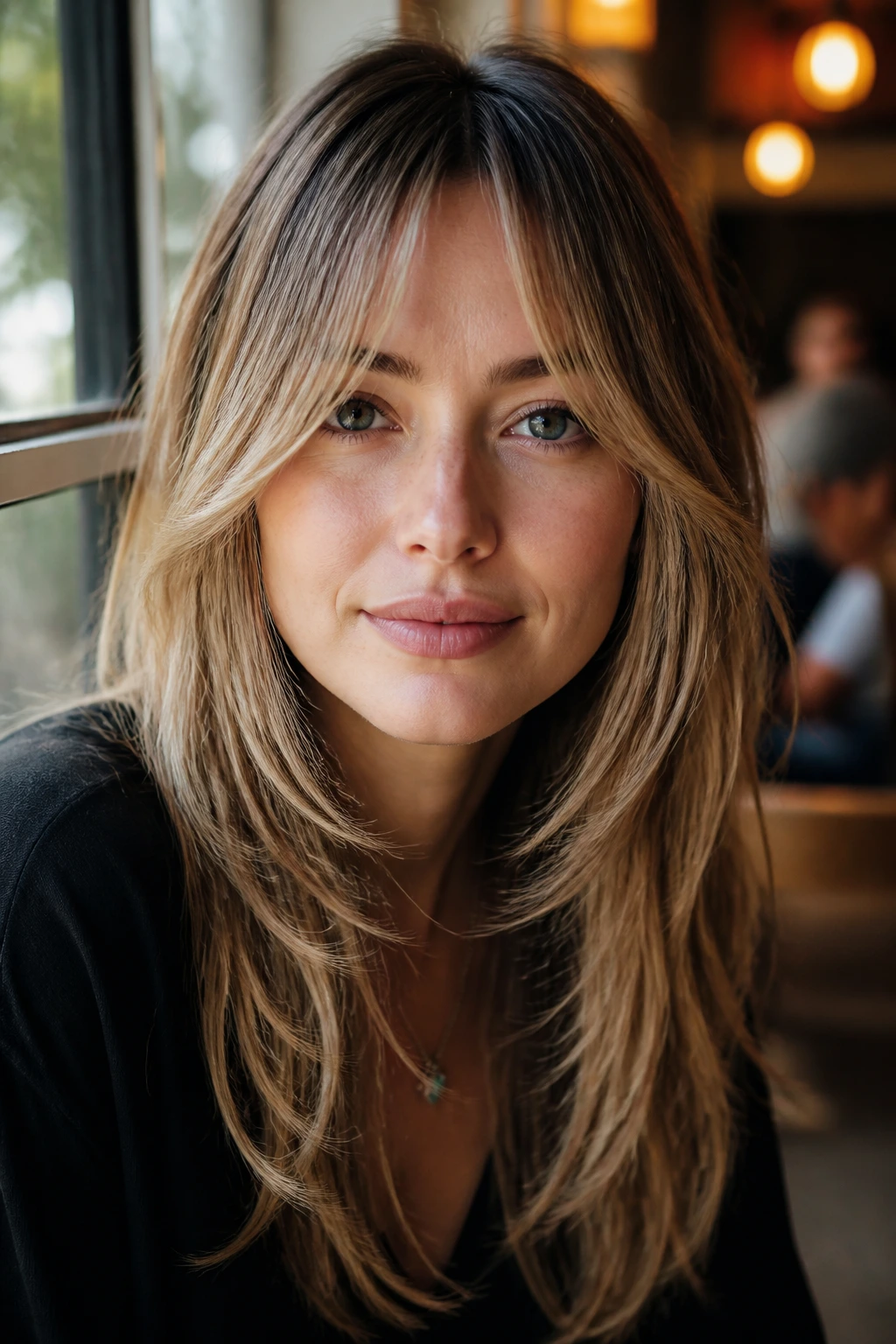
A bottleneck fringe starts shorter in the center and drops longer on the sides, which makes it a clever match for long layers. The center gives a little face opening, the sides blend into the hair, and the whole thing feels less severe than a blunt full fringe. On long hair, it’s one of the neatest ways to get bangs without boxing yourself in.
What to ask for
Tell the stylist you want the middle to sit around the bridge of the nose or just above the brows, then lengthen the sides so they sweep into the cheekbone pieces. That side length is what makes the fringe live happily with long hair instead of sitting on top of it like a separate object.
This version is especially good if you like a slightly modern, editorial shape but still want the haircut to be wearable every day. It looks fresh in a center part, but the side sweep gives you more room to move it around. I like that flexibility. It means you’re not married to one styling habit.
20. Low-Maintenance Long Layers with a Soft Arc
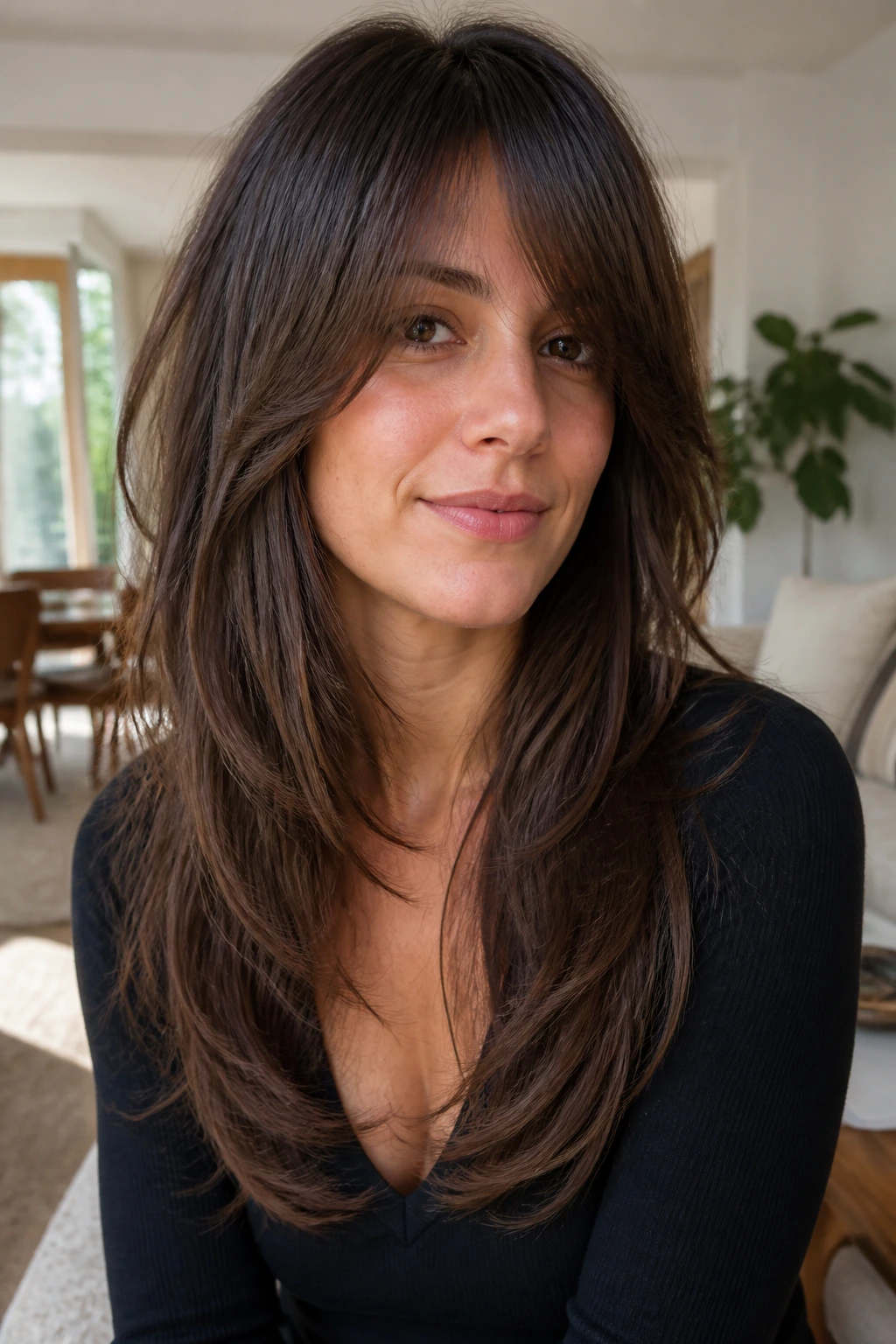
Not everyone wants a bang that needs a brush the second it dries. A soft-arc version keeps the front long enough to fall on its own, with layers that begin low and a side sweep that follows the head shape rather than fighting it.
The result is quiet. A little face framing, a little bend, and not much else. It works well on people who air-dry their hair or who only blow-dry the front and let the rest do its thing. The cut should still have a clear shape, but it should not collapse if you forget to style it one morning.
This is the practical option. Not boring. Practical. There’s a difference.
21. Money-Piece Layers with Bangs
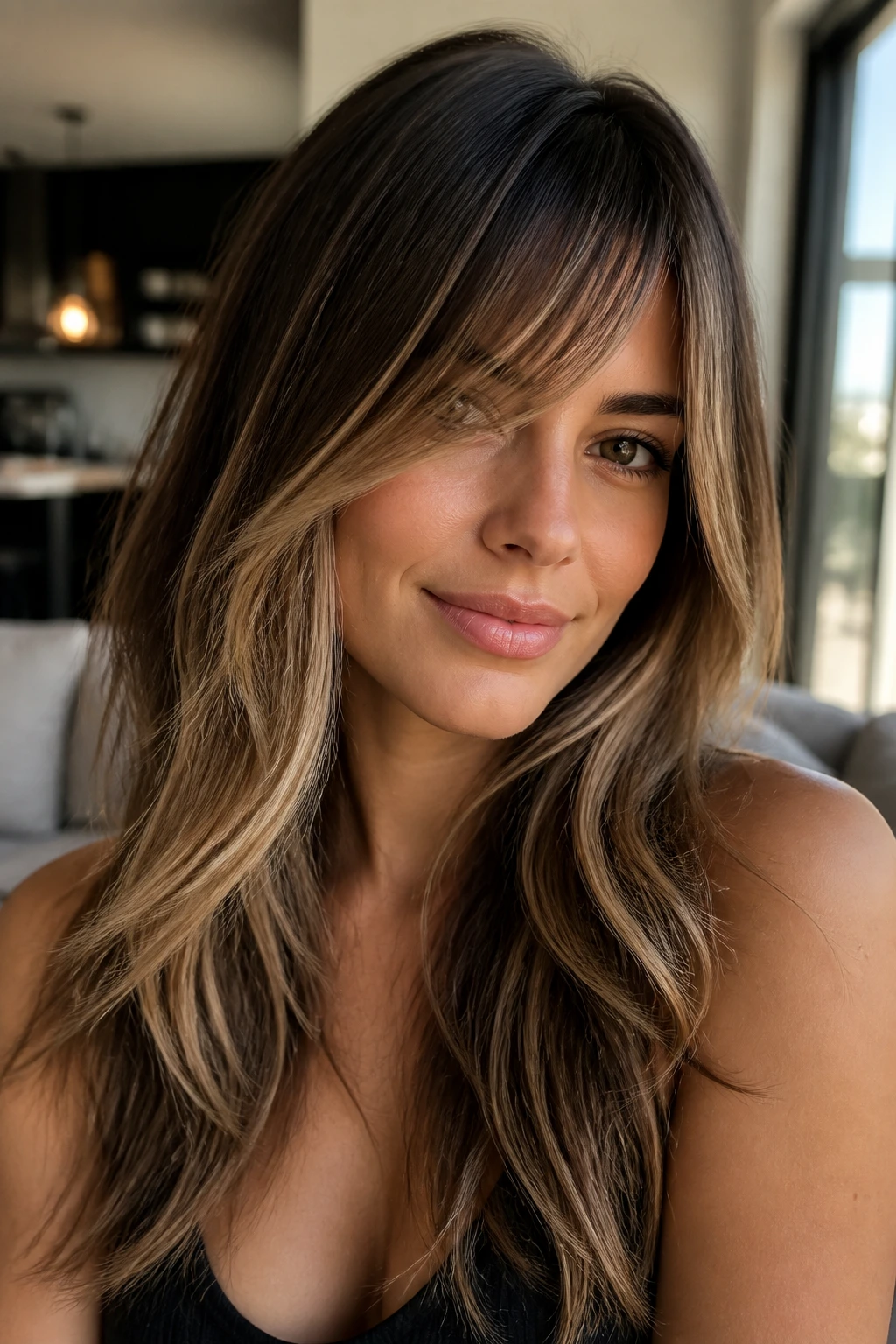
Money pieces can be overdone, and when they are, the front starts looking striped instead of bright. The better version keeps the highlights soft and uses the side-swept fringe to show them off where the hair naturally curves around the face.
The layers should start just below the chin so the highlighted front pieces stay visible in motion. If the bang is too short, the bright section can look harsh. If it’s too long, the highlight disappears into the rest of the hair. The sweet spot is somewhere between eyebrow and cheekbone, with a gentle taper at the ends.
This works well if you like dimension but don’t want a full-color overhaul. The cut does the framing, and the lighter front pieces do the rest.
22. Feathered Extra-Long Length with Airy Bangs
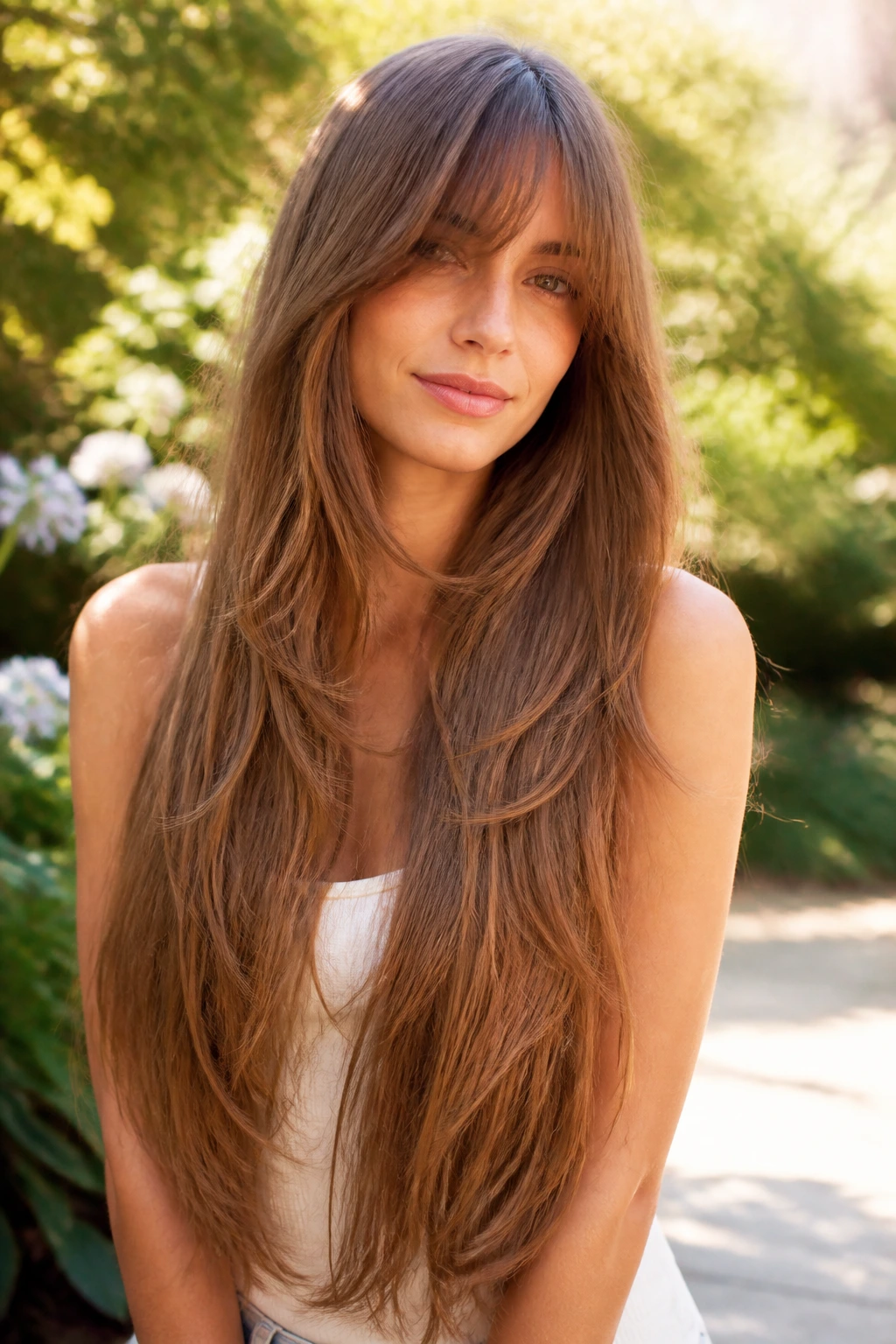
Extra-long hair can get dragged down by its own weight. Feathering the layers keeps that from happening. The ends move more, the fringe stays light, and the whole shape feels less like a blanket and more like hair.
The bangs here should be airy rather than dense. Think wispy, but not weak. The front should still have enough body to show on a windy day. If the hair is very long — waist length or close to it — this cut keeps the outline from becoming too heavy at the bottom.
It’s a smart option if you love length but hate how static it can look once it gets past the ribs. The sweep in front gives your eye somewhere to go.
23. Soft Wolf Cut with a Diagonal Fringe
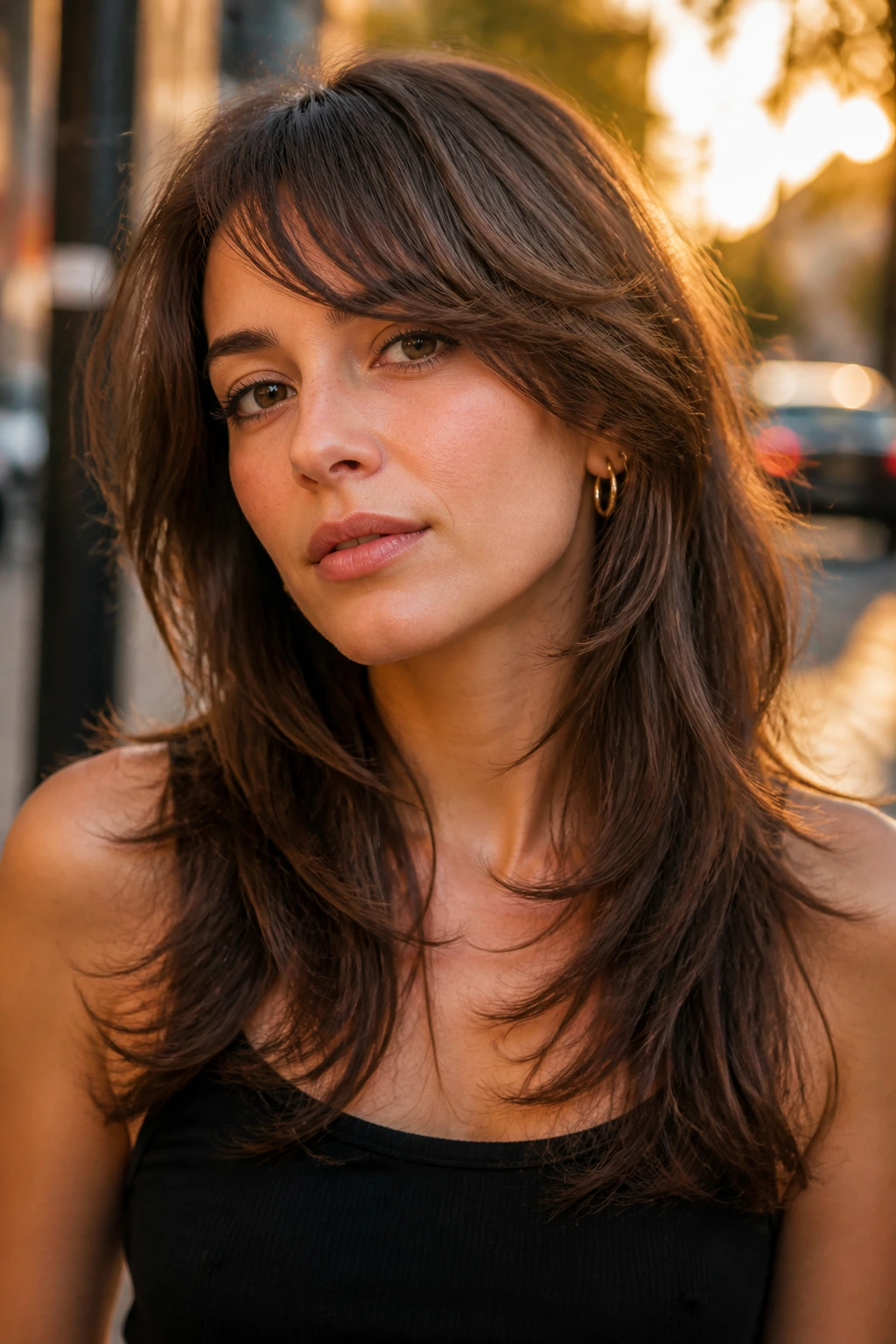
A wolf cut can be too much if the layers are aggressive and the crown gets too short. The softer version keeps the edge but stretches the length farther down, so you still have long hair with a side-swept fringe instead of a full shaggy cloud.
The diagonal fringe matters here because it softens the transition between the shorter crown pieces and the longer back. Without it, the cut can feel disconnected. With it, the whole shape reads as intentional. Use a texture spray sparingly; you want separation, not crunch.
Who should try it
If you like movement, texture, and a little bit of roughness around the face, this is your lane. If you need a haircut that stays perfectly smooth with zero effort, skip it.
24. Elegant S-Shaped Layers with a Gentle Sweep
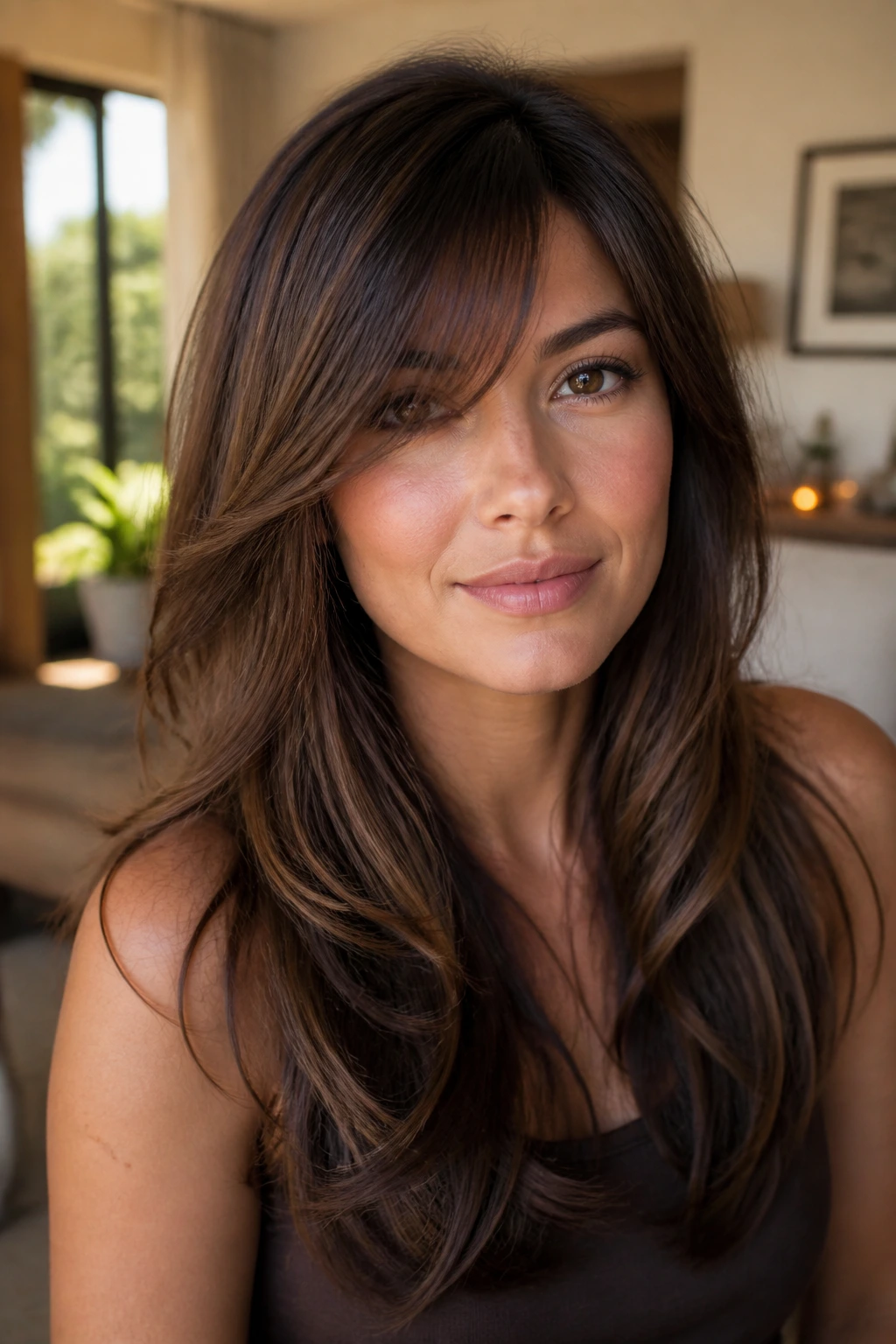
Some haircuts are all line and no softness. This one leans the other way. The S-shape comes from layers that curve away from the face, then back in slightly at the ends, which creates a gentle ripple through the silhouette. The side-swept bangs echo that motion without stealing the show.
It’s a lovely choice for long hair that needs grace more than drama. The layers should be subtle enough that the hair still looks rich and full, but the front should have enough bend to keep the eyes moving. A big round brush and a cool shot at the end make this shape last longer than you’d expect.
This is the polished cousin in the group. Quiet, but not plain.
25. Long Layers with a Deep Side Part and Tucked Bangs
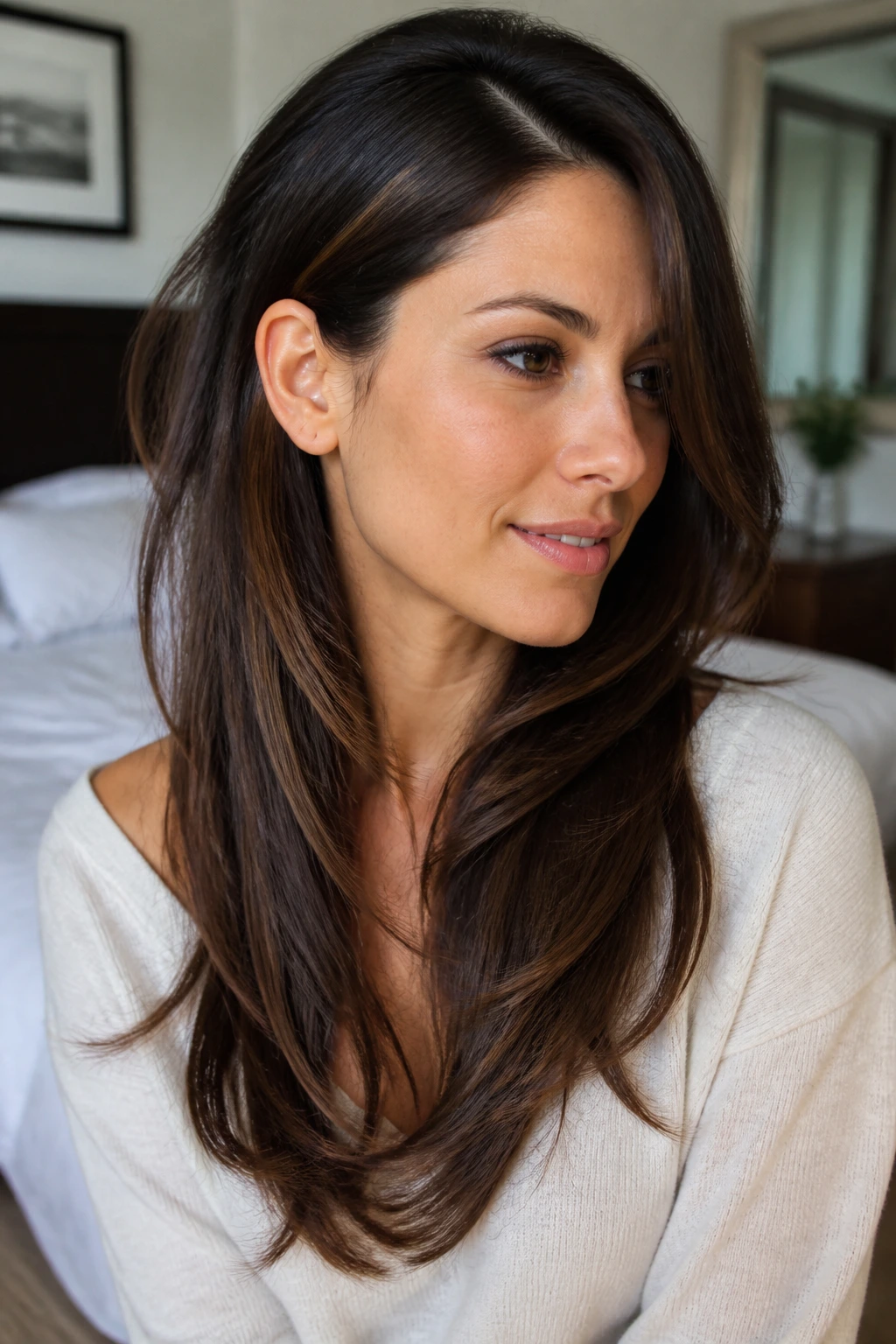
A deep side part changes everything, especially when the bangs are long enough to tuck behind one ear and let the diagonal shape show from the other side. The haircut feels casual one minute and dressy the next, just by shifting where the front sits.
What I like about this version is how easy it is to adjust. Wear the fringe loose for movement, tuck it for a cleaner line, clip one side back for a sharper face frame. The layers stay long, the sweep stays visible, and the whole cut looks more flexible than it sounds.
If you’re the kind of person who changes your mind halfway through getting ready, this is the safest kind of haircut to live with.
How the Diagonal Line Keeps Long Hair from Looking Heavy
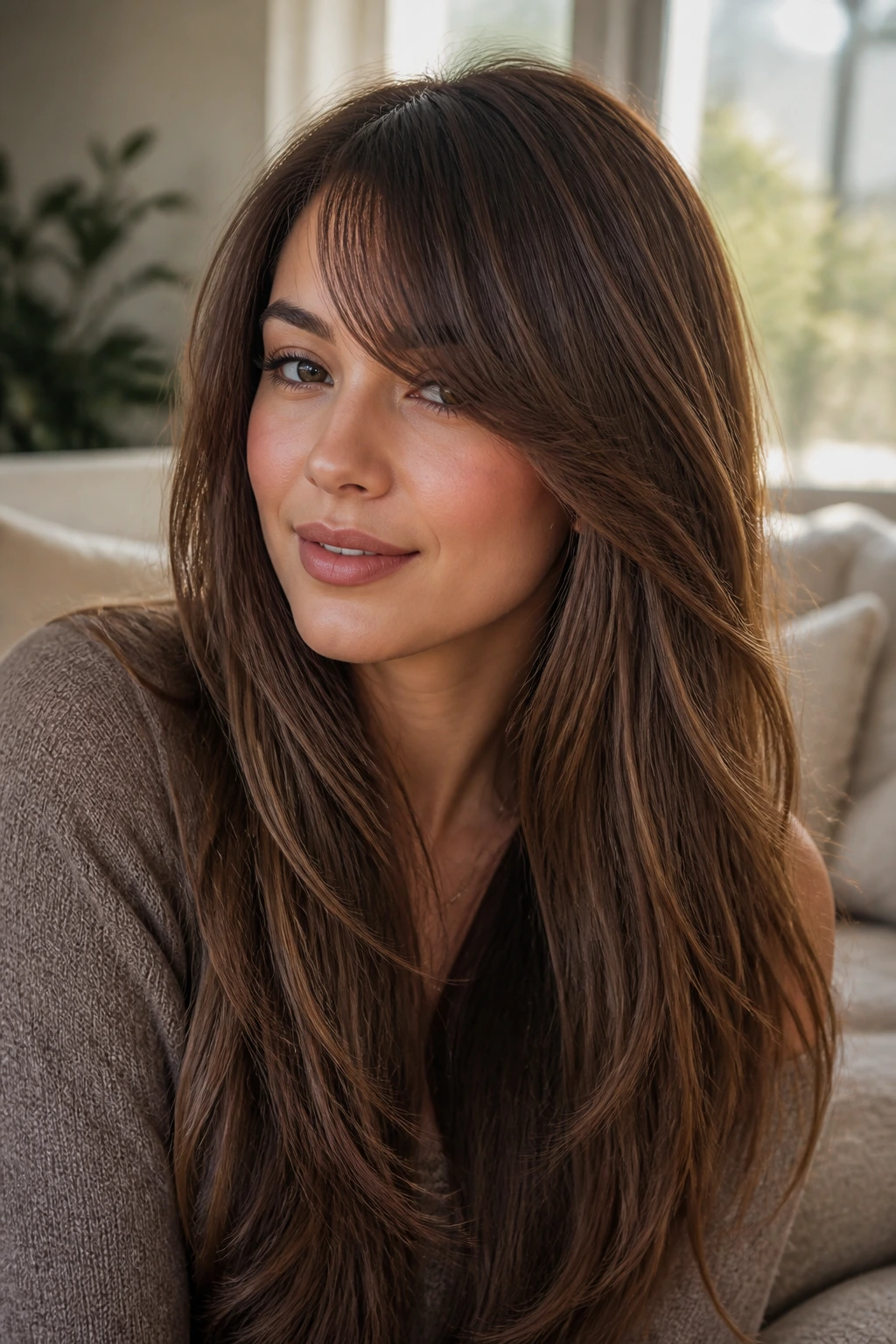
A straight-down cut has a problem: it gives the eye nowhere to go. Long hair then starts to read as weight rather than shape, especially if the texture is fine or the ends are all one length. A side-swept layer changes that instantly because the line of the haircut is no longer vertical. It tilts. The face frame moves first, and the rest of the hair follows.
That diagonal front piece also does useful work around the jaw and cheekbones. It can soften a square face, trim the visual width of a round face, and keep long faces from looking even longer when the front is left open. None of that requires a huge chop. A few inches in the right place are enough.
The other thing the diagonal does is help the hair fall. A side part and a side sweep usually create a more natural bend than a perfectly centered fringe on long hair. That makes styling easier, because the cut already wants to go that way.
How to Ask for the Cut at the Salon Without Losing Length
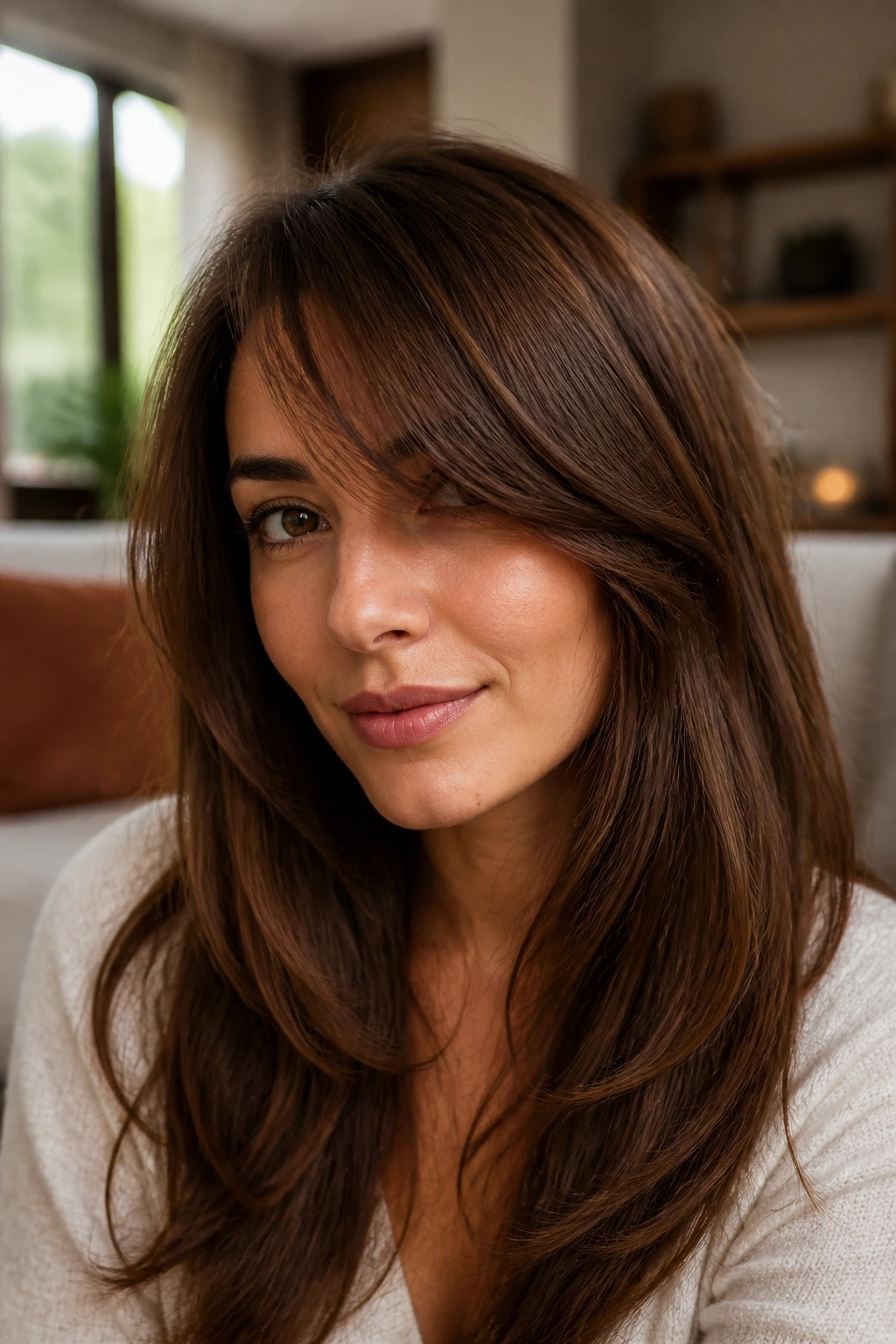
Bring a photo, yes. But bring one that shows a hair texture close to yours, not just a pretty face and a flattering angle. That matters more than people admit. A loose wave on thick hair behaves differently from a loose wave on fine hair, and a good stylist will want to know which one they’re dealing with before the scissors come out.
Be specific about the shortest point. If you want the fringe to sweep, tell them where it should land when it’s dry: eyebrow, outer brow, cheekbone, or just below the eye. That one detail changes the whole front shape. Also say whether you normally part your hair left or right. If you always wear it one way, the cut should respect that rather than pretending you’ll wake up a new person.
A few things are worth saying out loud:
- How much length you want to keep: If you love long hair, say so. Stylist shorthand can get vague fast.
- How you style it: Air-dry, blowout, curling iron, flat iron — the cut should fit your routine.
- How thick your hair feels: Dense hair needs different layering than hair that lies flat.
- Whether you have a cowlick or strong part: That can decide where the fringe should start.
Tools and Products That Keep the Sweep in Place
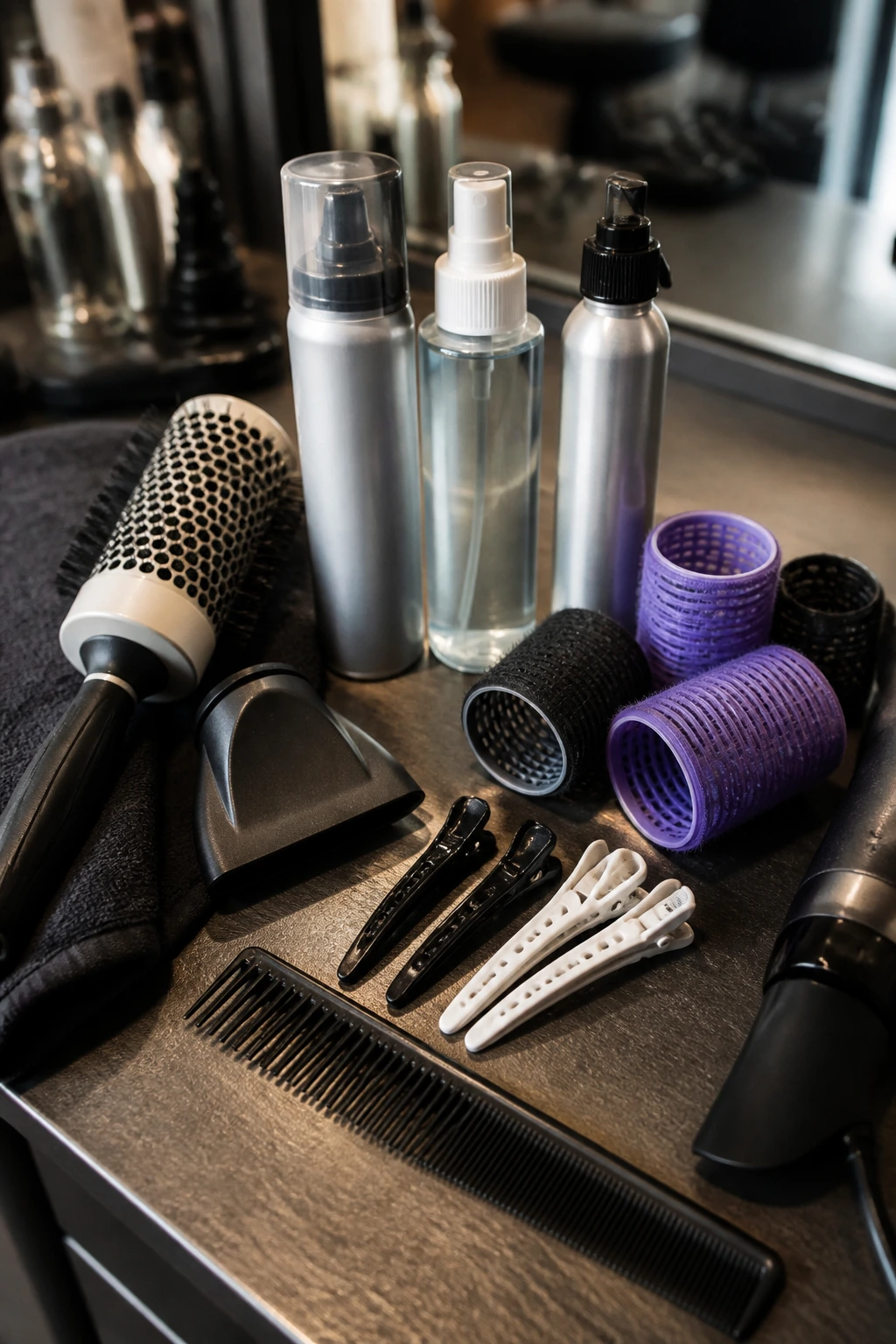
- 1.25- to 1.5-inch round brush: Big enough to bend the fringe, small enough to control the front.
- Blow dryer with a concentrator nozzle: The nozzle smooths the cuticle and helps the bangs lay in one direction.
- Lightweight mousse: A golf-ball-sized amount at the roots gives the front some lift without making it crunchy.
- Heat protectant spray: Use it on damp hair before any blow-dry or hot-tool work; it keeps the front pieces from frying.
- Velcro rollers: Useful when the bangs need cooling time after a round brush pass.
- Duckbill clips: Handy for pinning the front while it sets, especially on stubborn cowlicks.
- Texturizing spray: Best on the mid-lengths and ends, not the fringe itself.
- Dry shampoo: Helps the front survive day two without collapsing into oil.
How to Style Side-Swept Layers Without Making Them Stiff
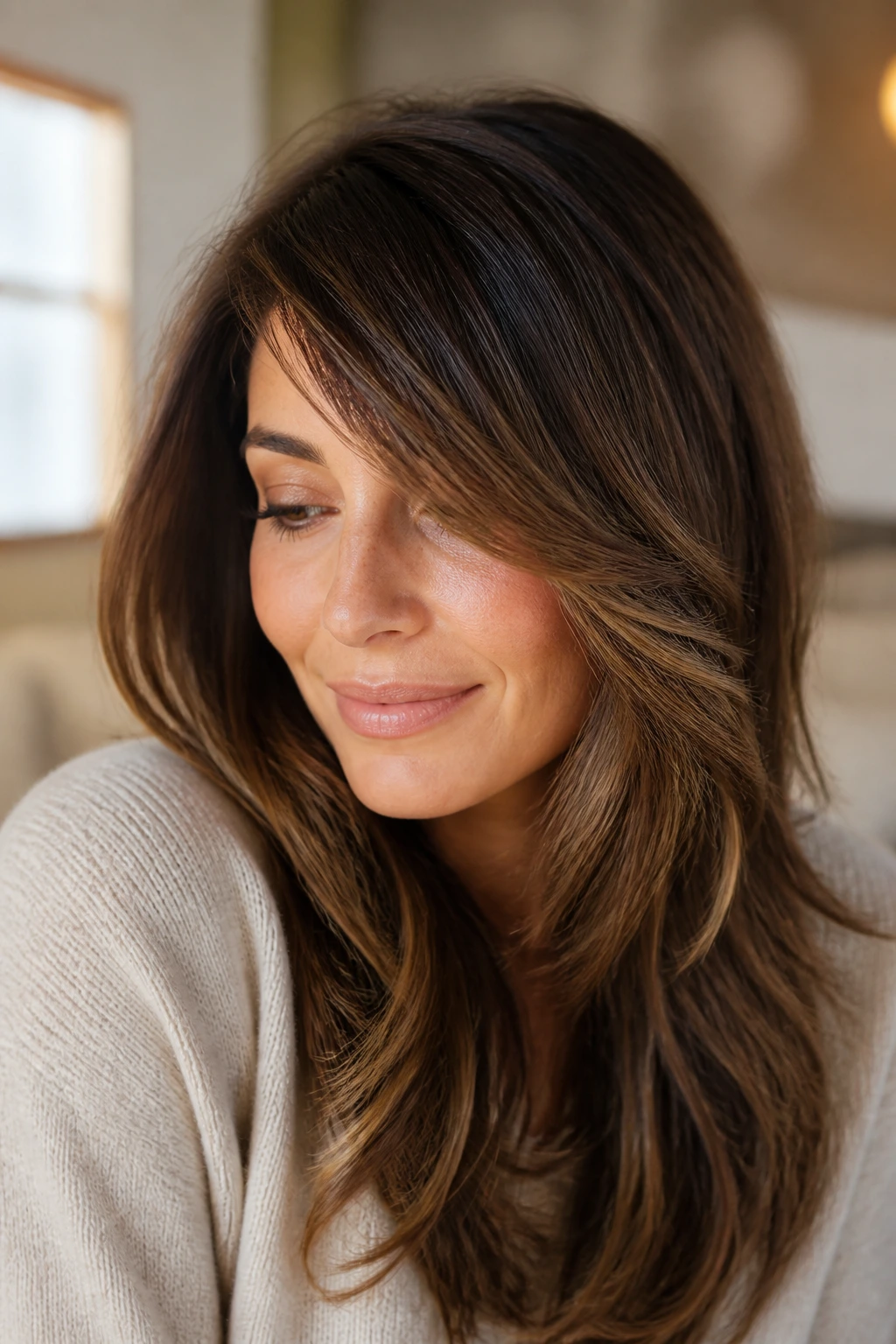
Prep: Start with damp hair that’s about 70 to 80 percent dry. Mist heat protectant through the front and a light mousse at the roots near the fringe, then comb it through so the product doesn’t clump in one spot.
Blow-Dry: Dry the bangs first, not last. Brush them in the direction you want them to fall, then wrap the ends slightly away from the face so they keep a soft bend. If you wait until the rest of your hair is done, the front usually dries in the wrong direction and fights you.
Set the Shape: For a cleaner sweep, clip the front in place for 3 to 5 minutes while it cools. Cool hair keeps shape better than warm hair. A lot of people skip that part and then wonder why the fringe falls apart in half an hour.
Finish: Use a pea-sized amount of serum on the ends only. If you put it near the bangs, they can separate and get greasy faster than you’d like. A quick mist of flexible hairspray from 10 inches away is enough for hold.
Common Mistakes That Make Side-Swept Bangs Look Off
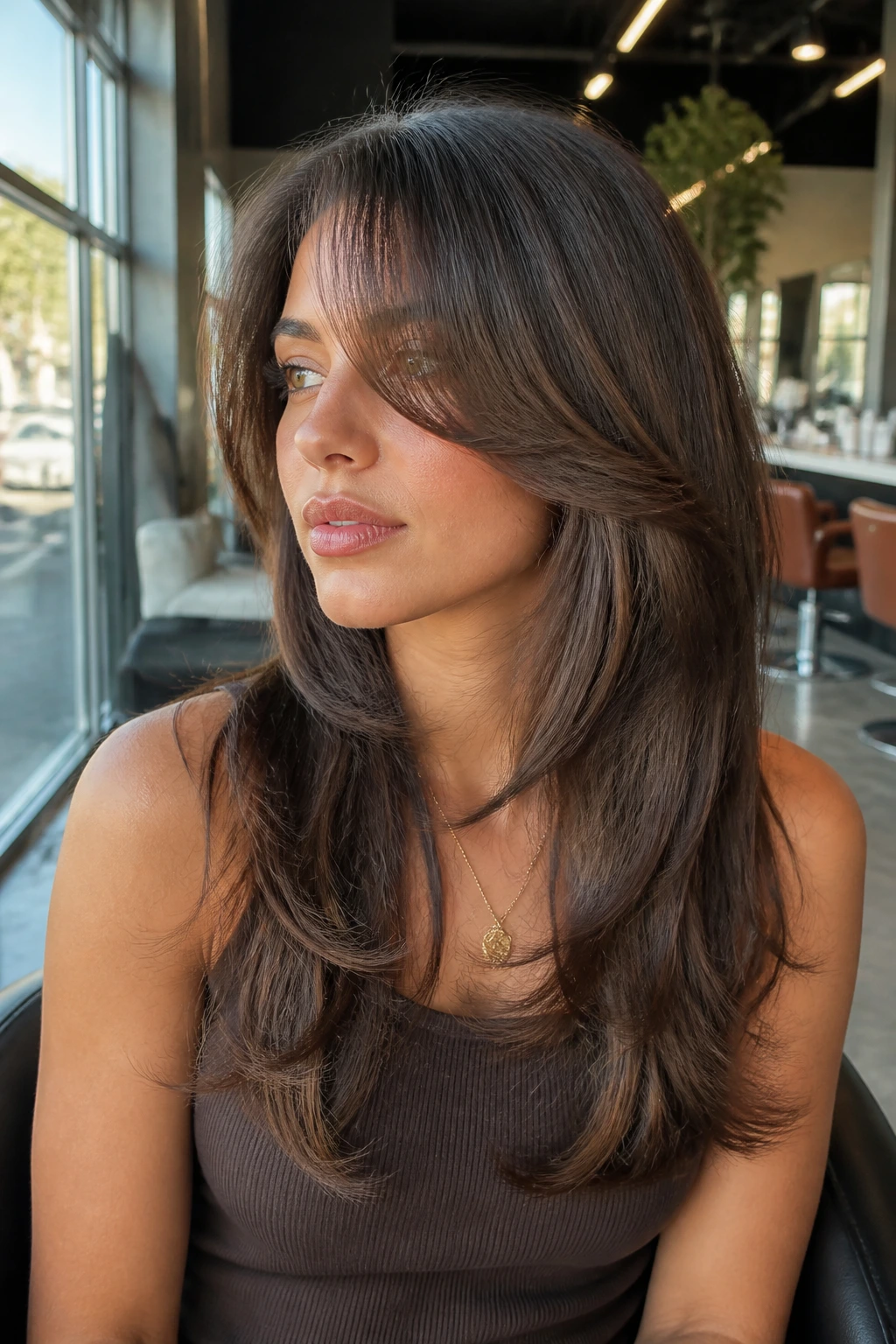
- Cutting the fringe too short: The bangs spring up once they dry, and then they sit higher than the cheekbone sweep you wanted. The fix is simple: leave more length at the first cut and refine after drying.
- Thinning the front too much: If the bang is sliced into wisps, it can disappear into long hair and look accidental. Keep enough density for the sweep to show.
- Starting every layer at the same point: That creates a shelf effect, where the whole cut moves in one block. Ask for staggered starts so the hair falls in softer steps.
- Ignoring the part you naturally wear: A cut built for the wrong side will always feel slightly off. Match the part to your real routine.
- Using too much oil near the fringe: The front collapses fast when it’s coated. Keep heavier products on the ends and away from the forehead.
- Over-curling the bangs: A side sweep should bend, not spiral. If the front looks like a corkscrew, the shape has gone too far.
Variations and Alternatives for Different Hair Types
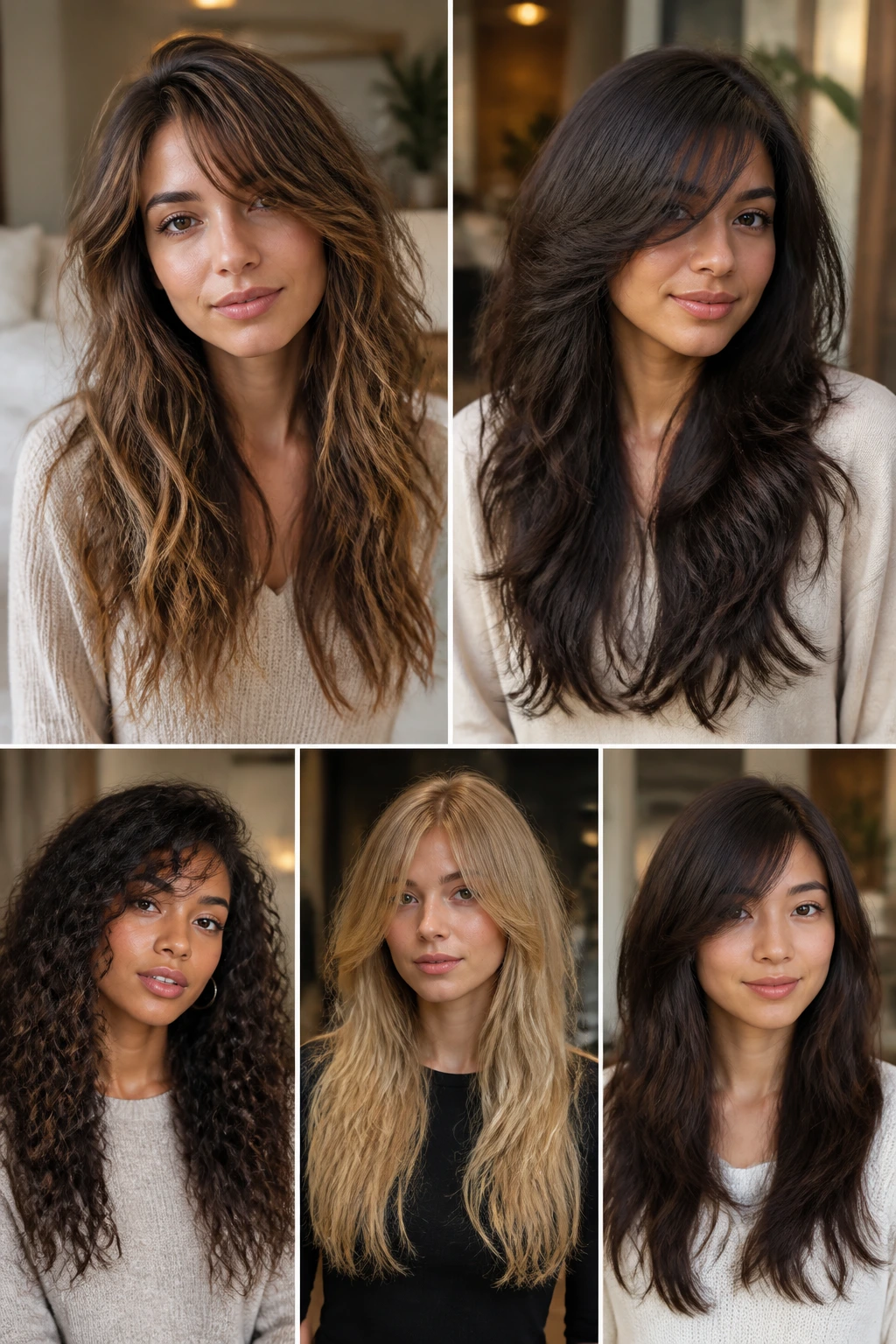
The Air-Dry Arc: Best for wavy hair that needs a soft front and low fuss. The fringe stays longer and the layers begin lower, so the hair can dry on its own without turning into frizz.
The Polished Blowout Sweep: For thick or coarse hair that likes structure. Use a round brush and a little tension at the roots, then cool the front in place so it keeps that salon curve.
The Curly Split Sweep: A smart option for curls that need room to spring. The bang is cut long, then separated into soft side pieces so the curl pattern still shows.
The Feather-Light Fringe: Good for fine hair that gets overwhelmed by heavy bangs. The front stays airy, the layers stay long, and the density remains around the perimeter.
The Heavy Luxe Sweep: Best when you want the front to look dramatic and full. This version leans into a deeper side part and a denser bang that travels across the forehead instead of whispering over it.
Make the Shape Last Between Trims
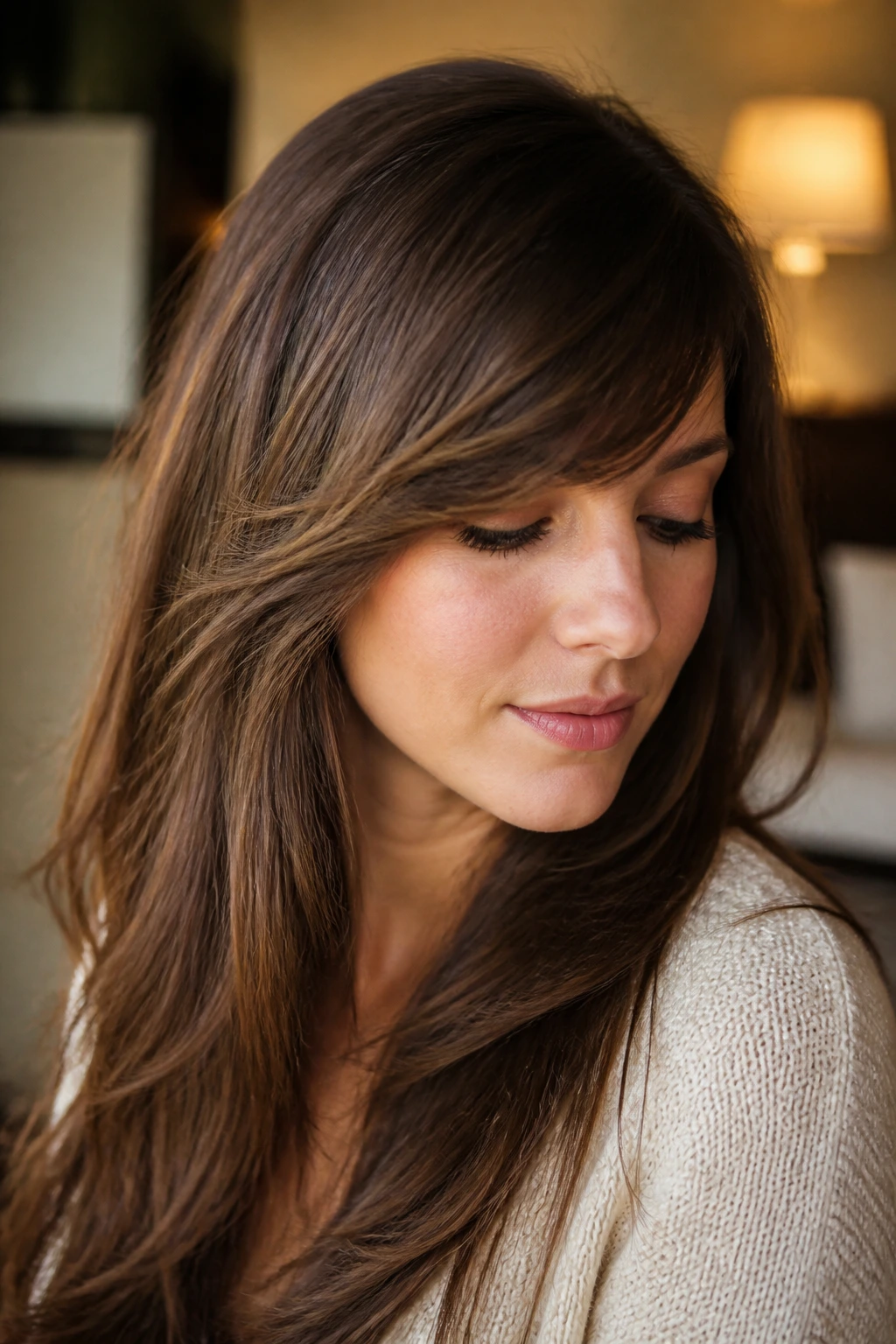
Bangs need attention before the rest of the haircut does. That’s just the deal. Plan on a fringe trim every 3 to 5 weeks if the front starts touching your lashes or losing the sweep. The longer layers can usually go 8 to 12 weeks, depending on how fast your hair grows and whether the ends start looking stringy.
At home, refresh the front with a damp brush or a tiny mist of water, then re-bend it with a blow dryer for 30 to 60 seconds. That is often enough. You do not need to wash the whole head every time the fringe misbehaves. A little dry shampoo at the roots can buy you another day.
Sleep makes a difference too. If the bangs get crushed overnight, clip them loosely to one side or let them dry with the part already set. A silk pillowcase helps, but the real trick is not going to bed with the front soaking wet and hoping for the best. That usually ends in a cowlick you didn’t ask for.
Questions I Hear Most About Side-Swept Layers with Bangs
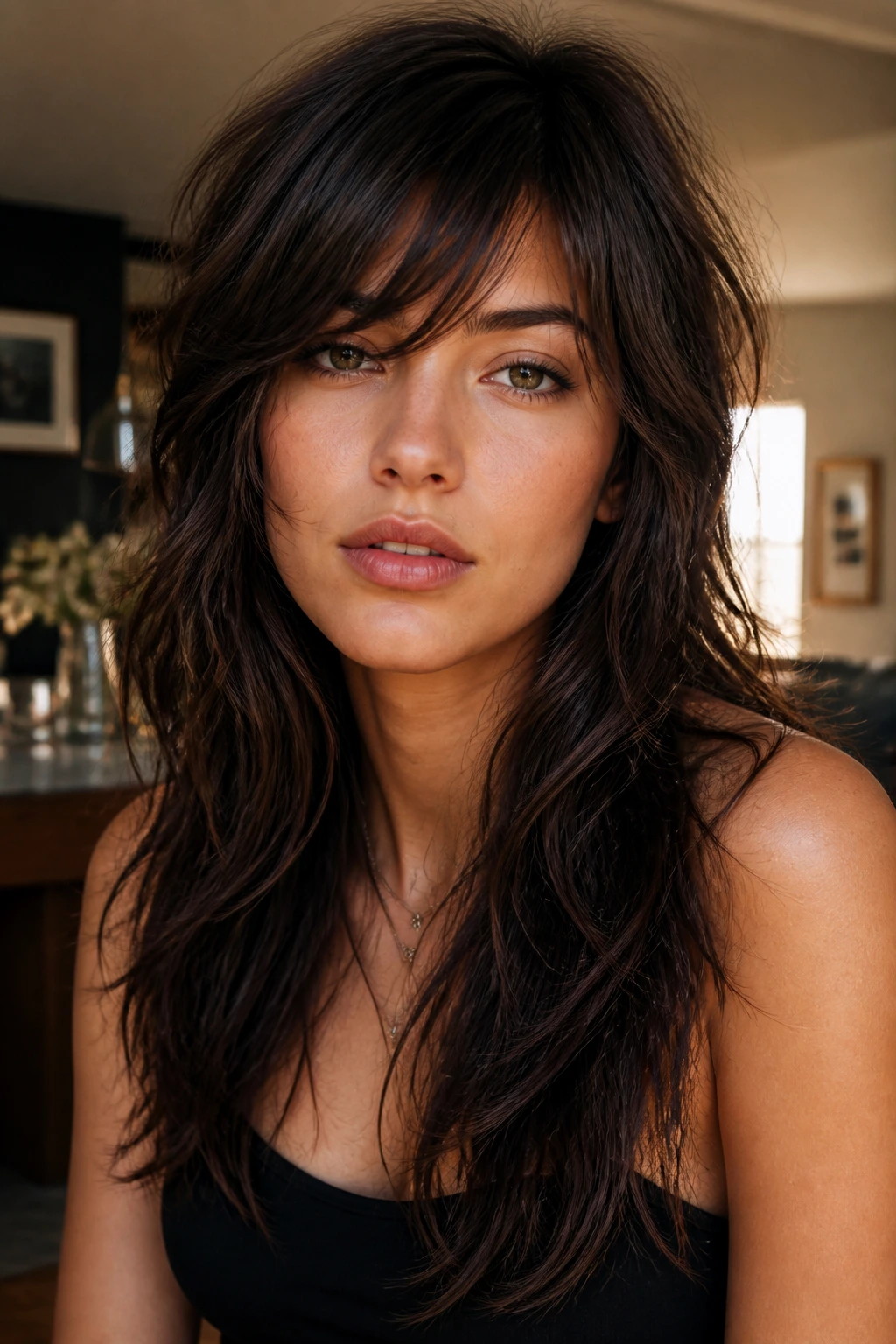
Do side-swept bangs work on every face shape?
They work on a lot of them, but the angle changes. Round faces usually look better with longer side pieces that hit below the cheekbone, while square faces often do well with a softer sweep that breaks up the jaw line. The real test is where the shortest piece lands and how much forehead you want to show.
Should the fringe be cut wet or dry?
Dry is safer on wavy and curly hair because shrinkage can change the whole length. On straight hair, a skilled stylist can cut wet and refine it dry, which is common. The important part is not trusting the wet hair as the final answer.
Can I wear this cut with a middle part?
Yes, if the layers are long enough to move both ways. Some side-swept cuts actually look better with a soft off-center part that can drift toward the middle on quieter days.
What if my bangs keep splitting down the center?
That usually means the part is too stubborn or the front is too heavy in the wrong place. A root lift at the blow-dry stage, plus a slight change in where the fringe starts, usually fixes it. Sometimes the answer is as simple as moving the part half an inch.
Is this a good cut for fine hair?
Yes, if the layering stays long and controlled. Too many short layers can make fine hair look thin at the sides, but a soft diagonal fringe adds shape without stealing density.
How do I grow out side-swept bangs without the awkward phase?
Let the fringe get longer, then start directing it into the front layers with a round brush or a pin-back on one side. The trick is to fold the bang into the haircut rather than waiting for it to become “long enough” all at once.
What if my hair is very thick and puffs out near the face?
Ask for internal weight removal, not just face-framing cuts. The bulk has to come out from inside the shape, or the front will still flare away from the face.
Can I get this look without heat styling every day?
Yes, but choose a softer version with longer bangs and lower layers. Air-dry the fringe in the direction you want it to sit, clip it briefly while it cools, and use a light texturizing spray on the ends only.
The Sweep That Keeps Long Hair Interesting
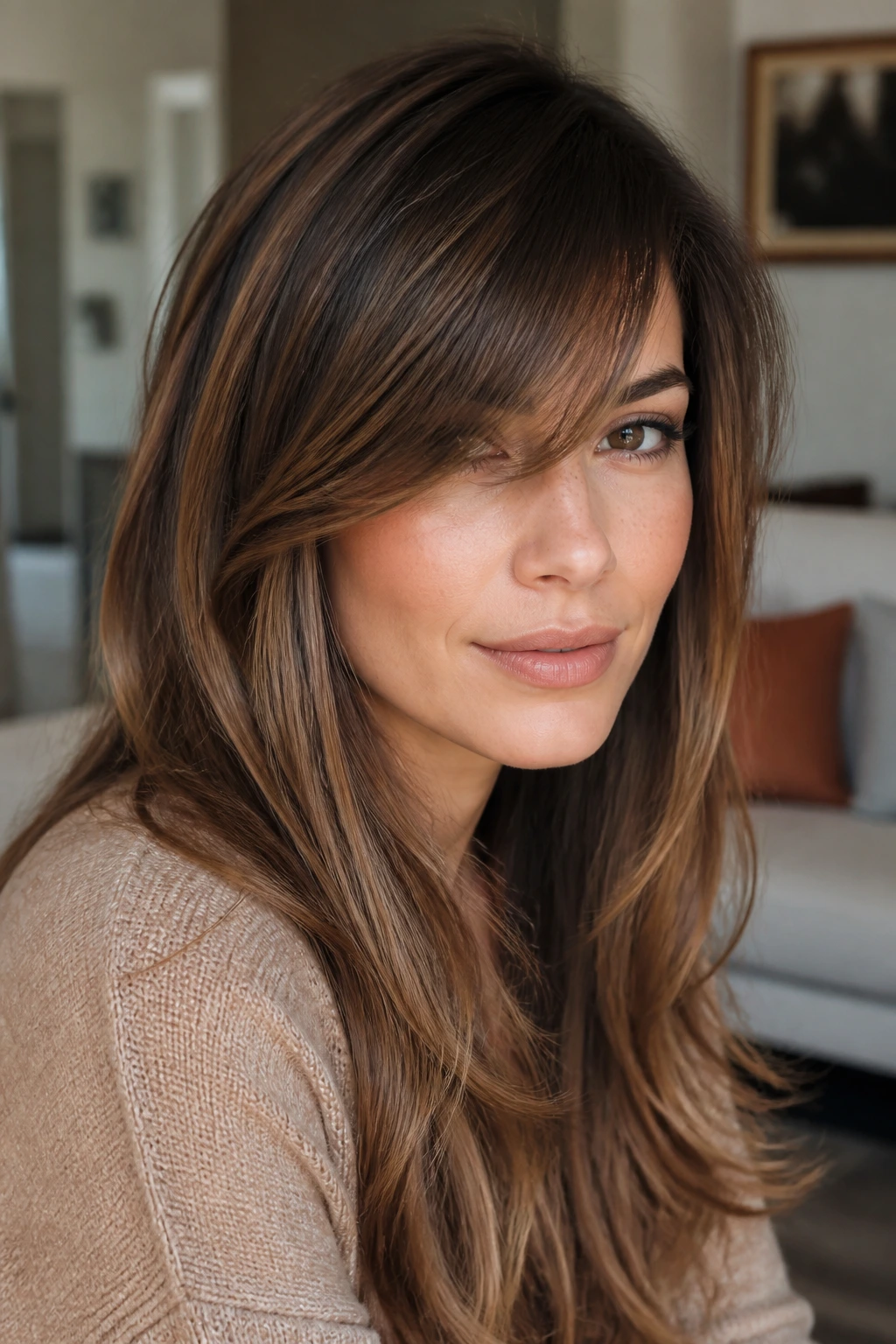
A side-swept fringe can do more for long hair than people expect. It breaks the straight drop, makes the face look softer, and gives you a shape that still works when the styling gets lazy. That last part matters. A cut that only looks good after a twenty-minute blowout is not as useful as it sounds.
The best versions here are the ones that fit the texture instead of fighting it. Thick hair needs weight removed from the inside, fine hair needs density left alone, and curly hair needs length left in the front so the sweep can land in the right spot after it dries. Once you match the cut to the hair you actually have, the whole thing gets easier.
If you’re ready for long hair that moves a little more and sits a little better around the face, a side-swept layer with bangs is a smart place to start. Choose the version that suits your texture, keep the front soft, and let the diagonal line do its job.