



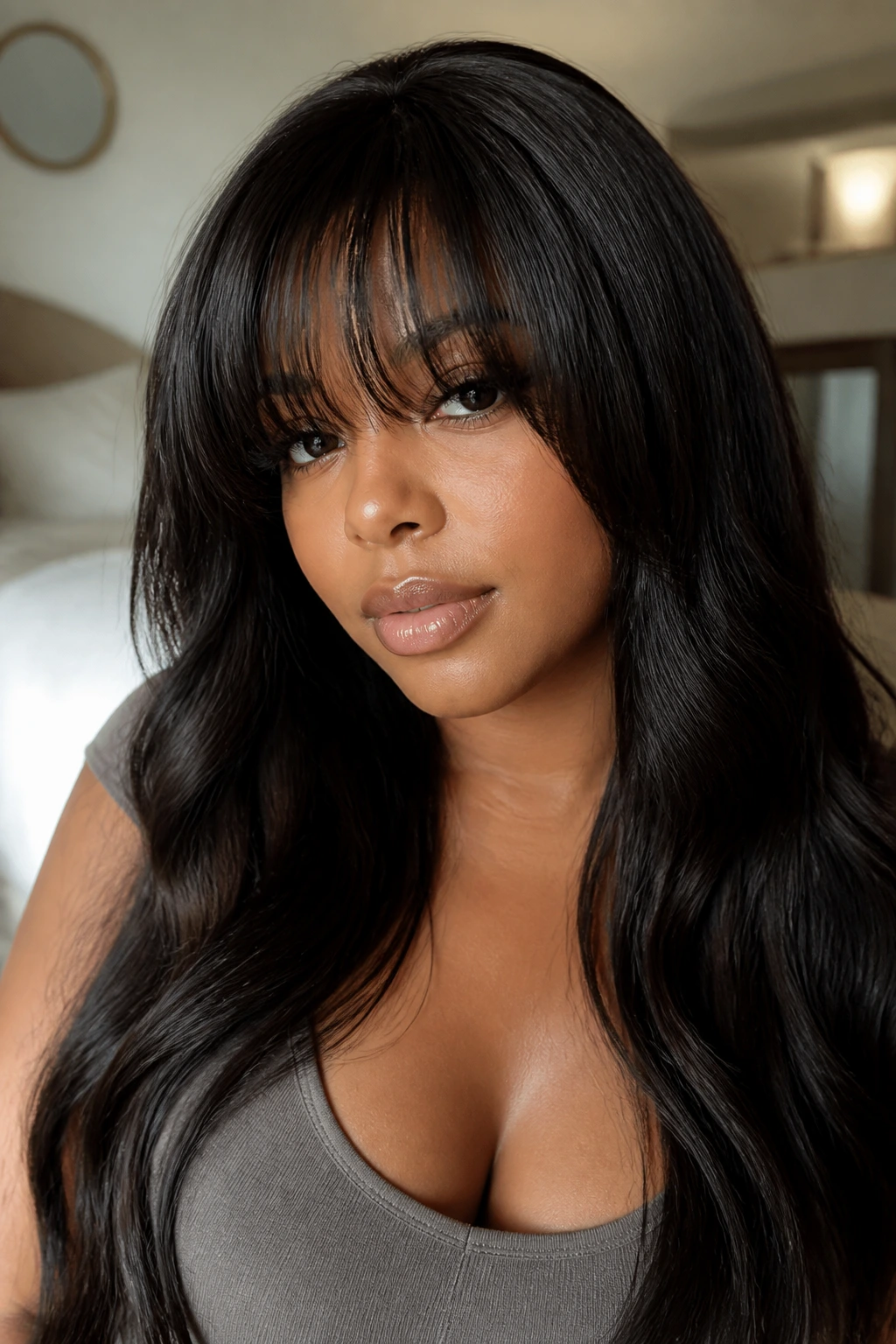
A full weave no leave out sew-in with bangs solves a very specific hair problem: you want the front of your style to look finished, but you do not want to spend your mornings wrestling your own hair into submission. That matters more than people admit. Once the fringe is cut well and the lace is sitting flat, the whole install reads as deliberate instead of improvised.
The best thing about bangs on a no-leave-out sew-in is that they change the mood of the whole head without asking for a ton of daily blending. You are not chasing a straight piece of leave-out with a hot comb. You are not smoothing the same sliver of hair over and over because humidity got nosy. You get a cleaner front, a calmer routine, and a lot more room to play with shape.
And shape is the whole game here. A blunt bang on a bob says something completely different from a curtain fringe on body wave, and a rounded curly fringe can make a sew-in feel softer than a dozen layers ever could. The styles below are the ones that actually make the bang part of the design, not an afterthought.
Why These Bang-Forward Sew-Ins Earn Their Place
- Less daily blending: A no-leave-out install means you are not flat-ironing your own hair every morning just to hide a seam.
- The fringe does the camouflage: A well-cut bang hides a lace edge, a closure line, or the front braid pattern faster than extra powder ever will.
- Texture can carry the look: Bone-straight, yaki straight, body wave, kinky straight, and curly bundles all behave differently in the front, which gives you more than one kind of bang.
- Closure size changes everything: A 5×5 or 6×6 closure makes softer fringe easier, while a 13×4 frontal gives more room for swoops and deep side parts.
- The style can be polished or messy on purpose: The same sew-in can read sleek, airy, edgy, or soft depending on where the bang starts and how the ends are finished.
1. Glassy Blunt Bob With Straight-Across Bangs
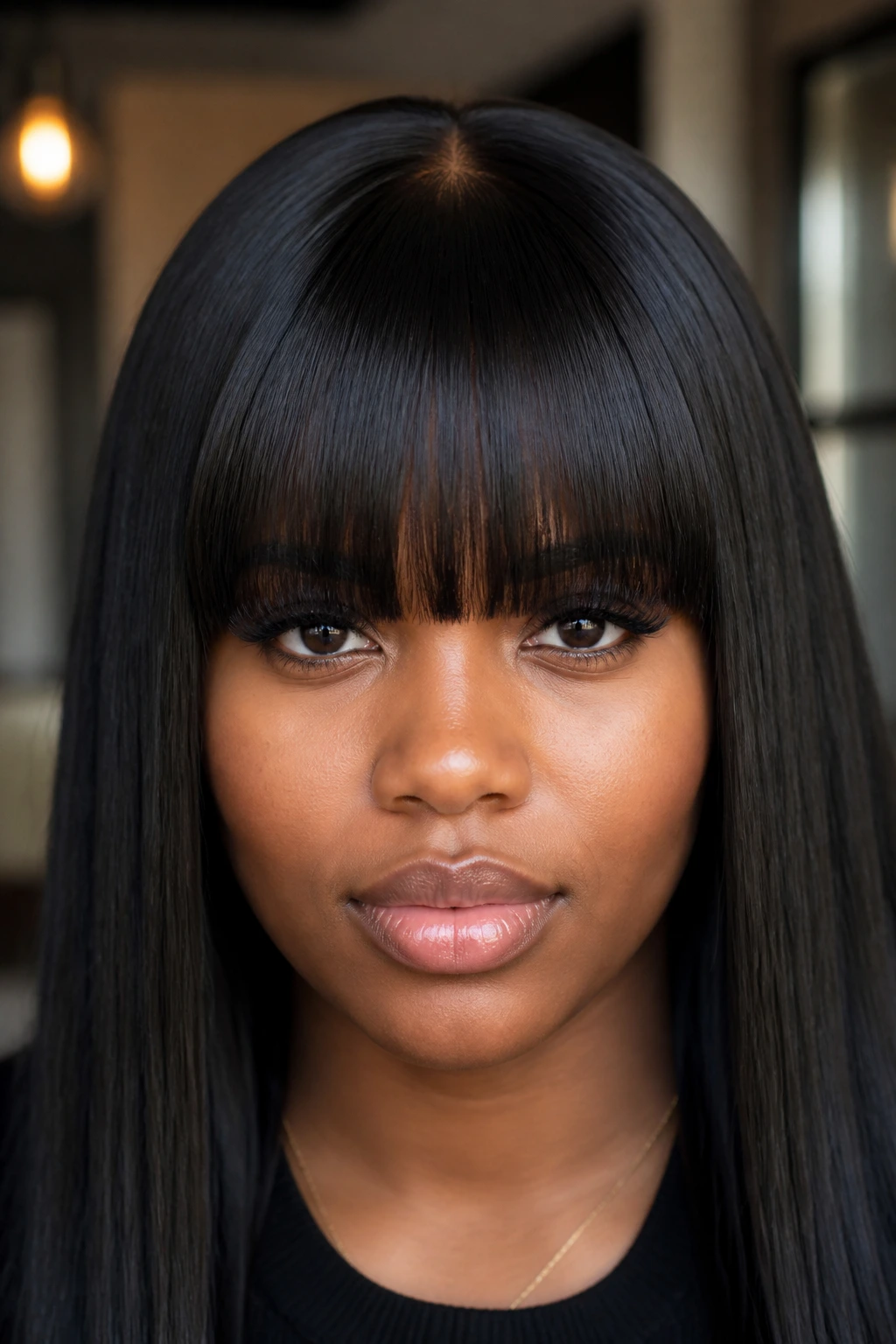
A blunt bob with blunt bangs is the cleanest answer when you want a sew-in to look sharp from the first glance. The line sits right at the jaw or just below it, and the fringe lands straight across the brows with almost architectural precision. It is the kind of install that makes people notice the cut before they notice the lace.
The reason it works so well is simple: the whole shape is controlled. A 4×4 or 5×5 closure usually gives enough room for the bang area without forcing a huge part. Keep the density medium, not heavy, or the front gets boxy fast.
What to ask for
- A bob that hits the jawline or chin.
- Bangs cut dry, not wet, so they do not spring up later.
- A slight point-cut into the fringe so it does not look like a hard shelf.
This look loves a flat iron pass at 300°F to 330°F and a light wrap at night. It is not the most forgiving style if you ignore it for three days. But when it is freshly laid, it has that crisp, expensive-looking line that some styles try very hard to fake.
2. Shoulder-Skimming Body Wave With Curtain Bangs
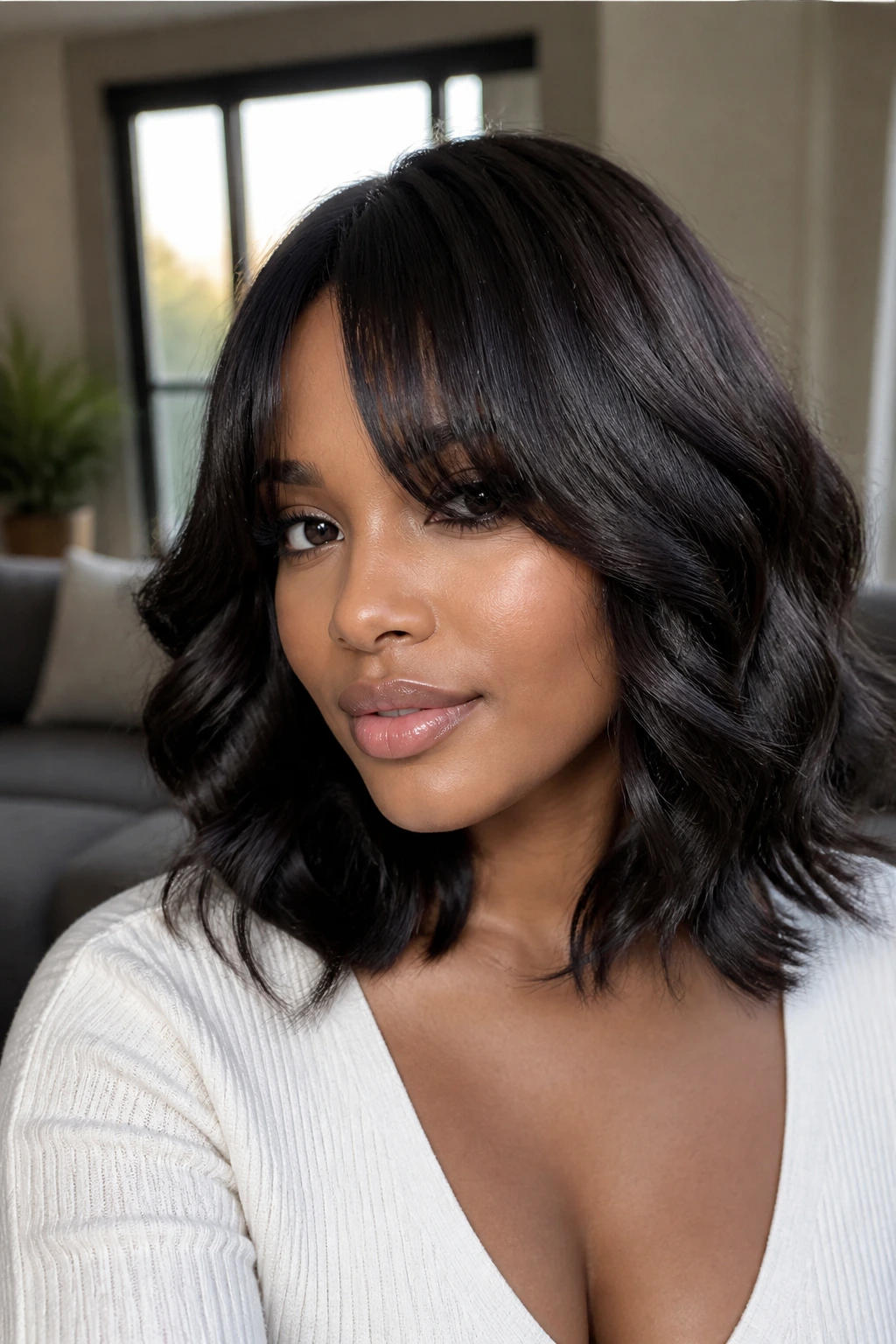
Want softness without giving up shape? Curtain bangs over a body-wave lob hit that note without trying too hard. The hair bends away from the face, the fringe parts in the middle or just off-center, and the whole install gets this easy, lived-in swing that still feels put together.
A 5×5 or 6×6 closure is the sweet spot here because the bang area needs a little width. If you go too narrow, the curtain effect starts to look cramped. You want the front pieces to open like a soft V, not sit there like two separate strips.
Why it reads so well
The wave pattern gives the bang something to blend into, and that matters. Straight hair with curtain bangs can look severe if the cut is too blunt. Body wave gives the fringe a little air, which makes the face look less boxed in.
A curling wand at 1 to 1¼ inches is enough to bump the front pieces away from the cheeks. I like this look for anyone who wants movement without the daily battle of perfect straightness. It has a calmer mood than a blunt bob, and it usually behaves better in humidity too.
3. Waist-Length Bone Straight With Side-Swept Bangs
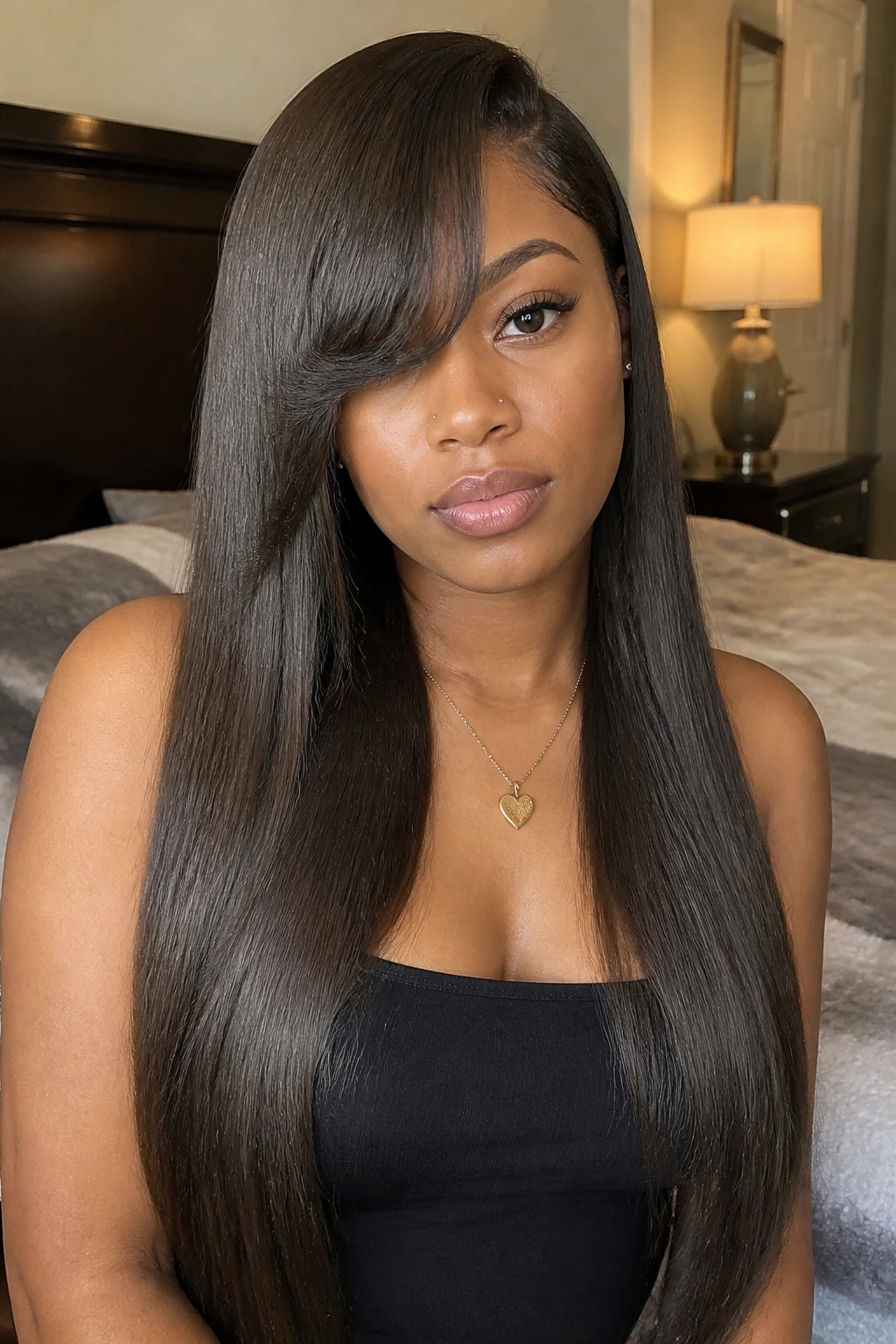
Side-swept bangs are the old reliable of a long bone-straight install, but only when the part and density are handled with some discipline. If the bang is too thick, it fights the length. If it is too thin, it looks like an apology. The sweet spot is a soft sweep that starts a little deeper than the center line and drapes toward one brow.
This is where a 13×4 frontal earns its keep. You need room to sweep the front without exposing a blunt edge, especially if the long layers are sleek and reflective. A little mousse at the root and a flat wrap overnight keep the front from splitting in weird places.
The best version of this style has a tiny bend near the cheekbone and a blunt, tidy hem at the ends. It looks luxurious in motion, which is the whole point. Without the side bang, long straight hair can sometimes feel a bit too flat at the front. The sweep fixes that. Fast.
4. Curly Coil Sew-In With Rounded Fringe
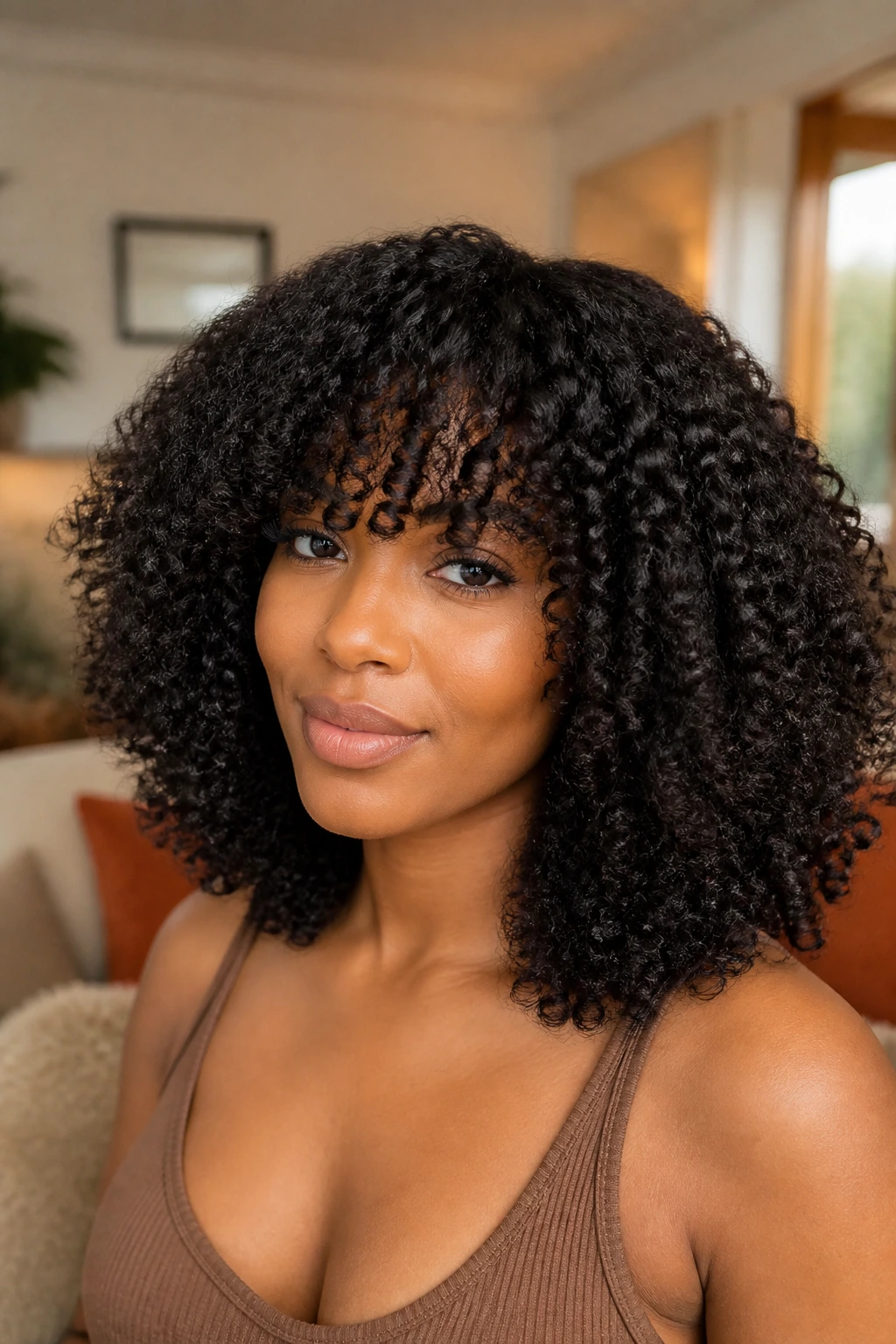
Curly bangs are not the messy version of bangs; they are the most honest. The curl pattern falls forward in a rounded shape, and the front of the style looks soft even when the rest of the install has a lot of volume. On a full weave with no leave out, this can be one of the best ways to keep the whole head cohesive.
The trick is to cut the fringe dry and stretched. If you trim curly bangs while they are wet, you will end up two inches shorter than you expected, and that is not a fun surprise. Let the bundles settle into their curl pattern first, then shape the fringe with tiny cuts.
Best for
- Tight curls that already have bounce.
- A closure install that needs the front to blend naturally.
- Anyone who likes volume at the crown but not around the ears.
A small diffuser, a bit of mousse, and a finger-coiling pass around the fringe are usually enough. Don’t smear heavy oils through the front. Curly bangs get clumped and stringy fast when the roots are greasy. A soft halo of curl is what you want here, not wet-looking curls that stick to the forehead.
5. French Bob With Wispy Baby Bangs

A French bob with wispy bangs is the style I reach for when I want the install to feel a little sharper and a little more charming at the same time. The cut lands around the cheekbone or just below the ears, and the fringe is broken up enough that you can see skin through it. That airiness matters. It keeps the look from turning heavy.
This is a good match for a small closure because the bang itself is doing the visual work. A 4×4 closure can handle it if the stylist keeps the density moderate and the parting neat. If the bangs get too thick, the whole thing loses that easy Parisian feel and starts looking like a helmet with ambition.
The bangs should not sit like a straight wall. They need a little texture, a tiny bit of separation, and a clean line at the brow. I prefer this style with a slight bend under at the ends, not a severe curl. It looks better when it feels accidental. That’s the charm.
6. Asymmetrical Lob With Diagonal Bangs
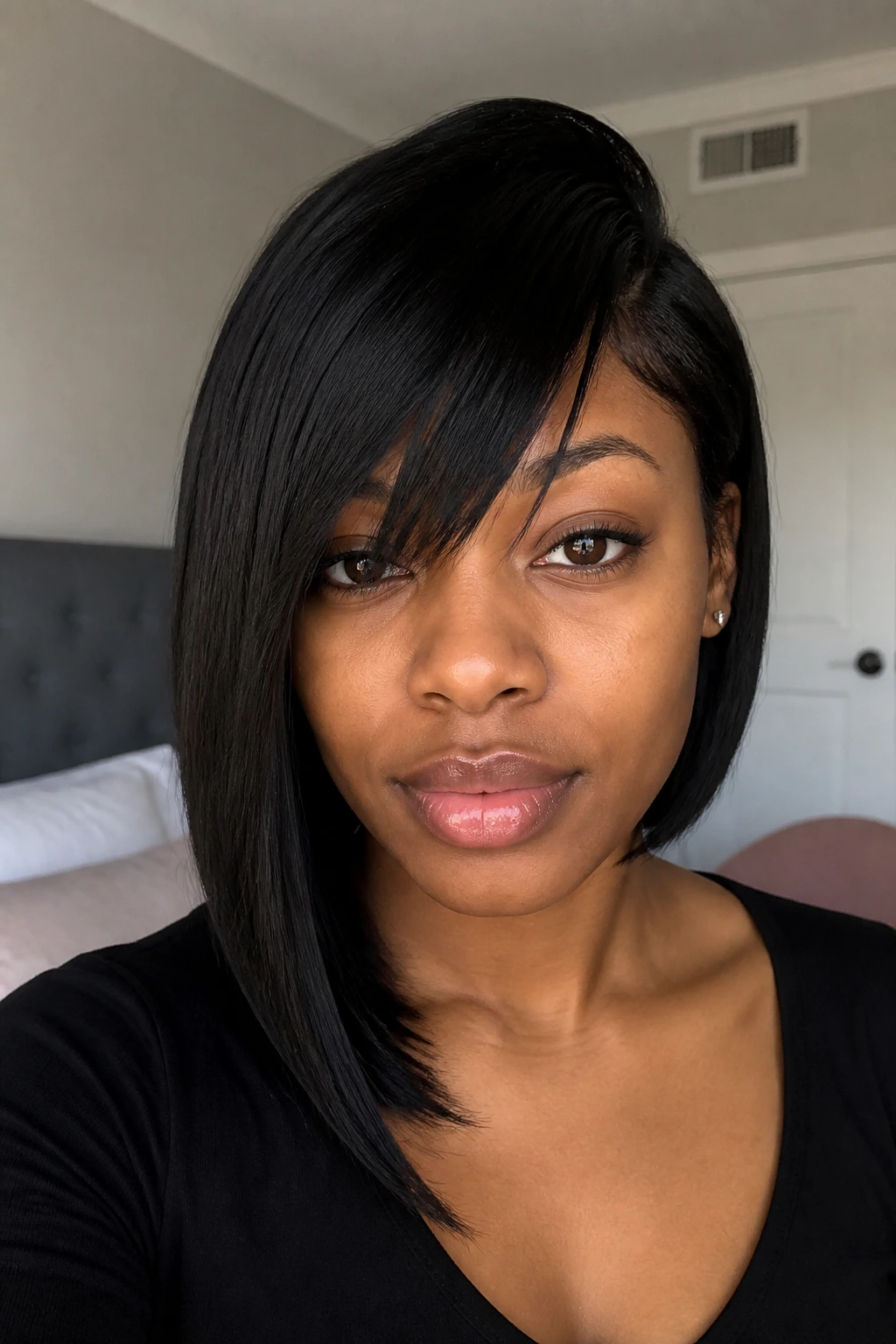
An asymmetrical lob does something blunt bangs can’t: it gives the eye a path to follow. One side sits a little longer, the other side sits a little tighter, and the diagonal bang line ties the whole thing together. It is a strong shape without being loud about it.
This one really benefits from a frontal, because the diagonal sweep needs room to travel. A closure can work, but only if the bang section is cut with restraint. The front should fall across the forehead, not fight it. If the angle is too steep, the style starts looking like a haircut that is trying to escape the head.
What makes it different
The asymmetry gives the sew-in movement even when the hair is straight. That matters because long straight styles can go stiff fast. The diagonal bang softens the front while still keeping the silhouette interesting.
It is especially good for rounder faces or anyone who likes the illusion of length. The eye follows the slant, and the whole face seems a little longer. No magic. Just geometry, which is usually the better kind of style trick anyway.
7. Feathered Shag With Piecey Fringe
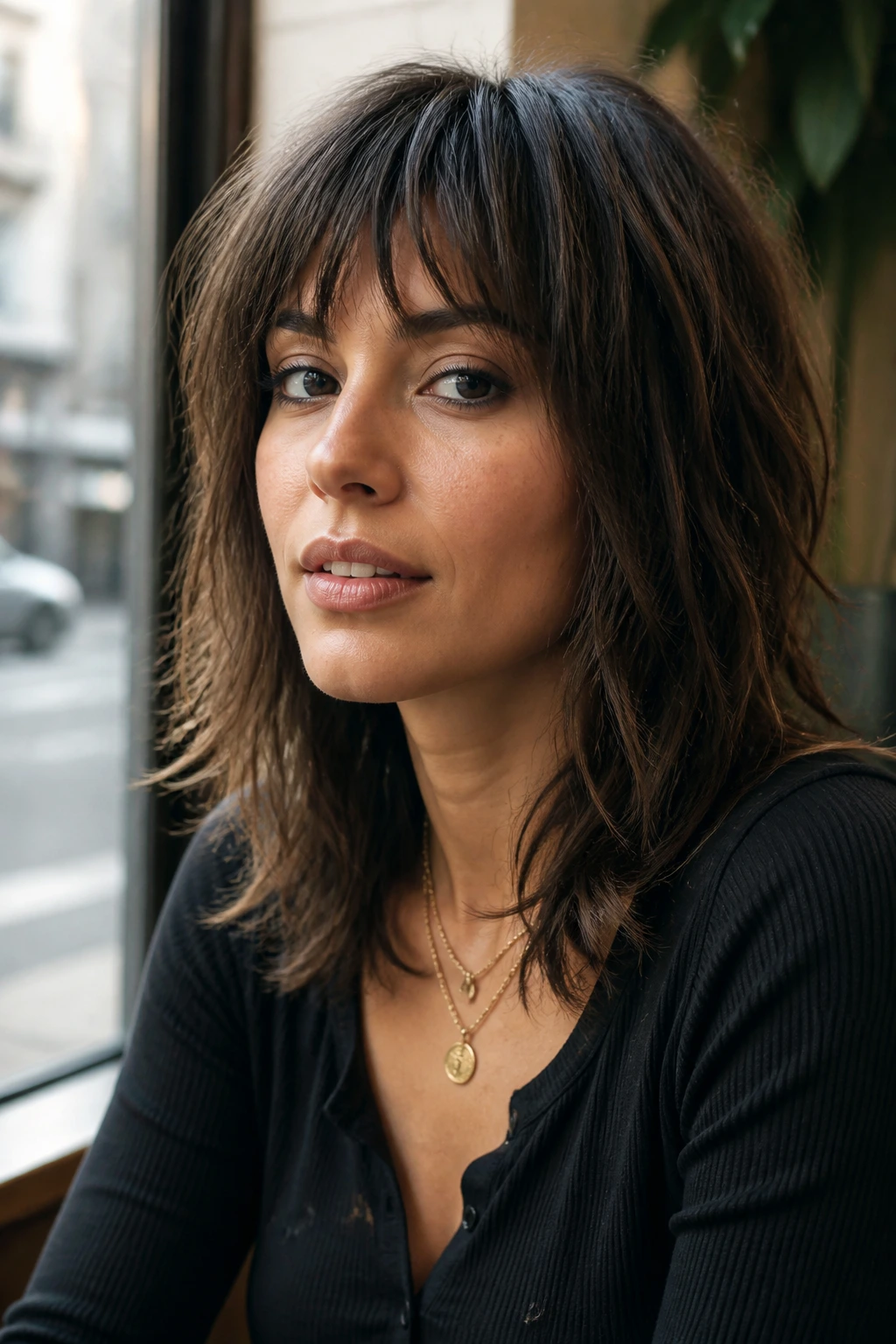
Feathered shags can look sloppy fast, so the sew-in version needs precise layering and a fringe that breaks up the outline. When it lands right, though, it has a lot of life. The crown lifts, the ends flick out a bit, and the bangs sit in little separated pieces instead of one solid block.
This style works best when the stylist uses point-cutting or a light razor touch on the fringe. Heavy, blunt scissors kill the whole mood. You want movement near the face and a little roughness in the best sense of the word. Not careless. Just airy.
A shag like this is perfect if you hate styles that look too “done.” It still needs mousse, a round brush, and maybe a quick bump at the front, but it does not demand perfect hair every second. The texture is the point. If you like a soft rock-and-roll edge without going full drama queen, this one lands right in the middle.
8. Yaki Straight Mid-Back Sew-In With Brow-Grazing Bangs
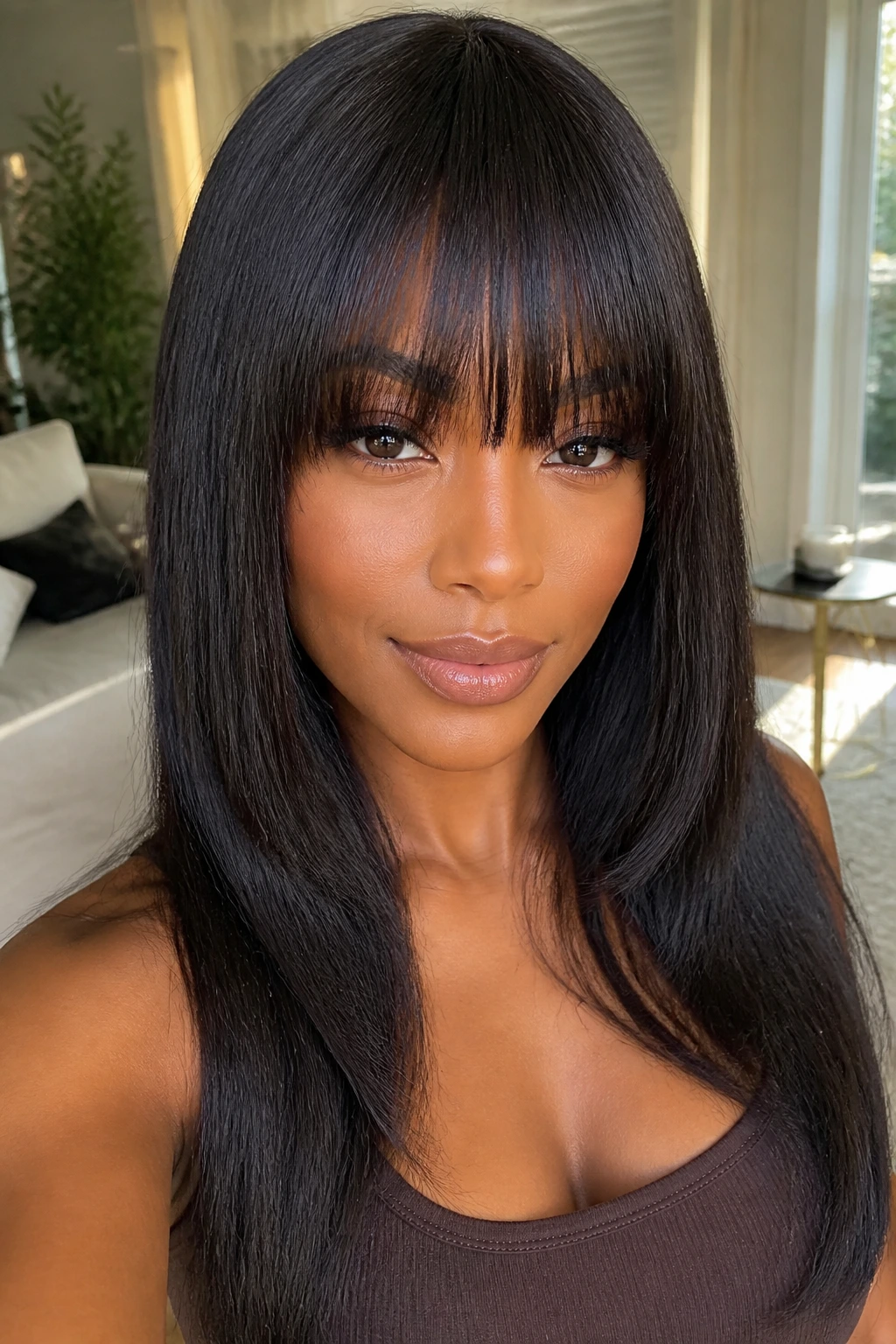
Thick, brow-grazing bangs on yaki straight hair hit a sweet spot: enough body to disguise tracks, enough swing to keep the front from looking stiff. Yaki texture gives the install a blowout look instead of the shiny, almost too-sleek finish that can make straight styles feel fake.
That texture matters more than people think. Yaki hair sits closer to a pressed natural look, which makes the bangs read as part of the head rather than a separate add-on. The fringe should graze the brows, not cover the eyes. Too long and the style drags. Too short and it looks choppy.
Keep this in mind
- Use a light hand with heat; yaki hair already has texture.
- Flat wrap the bangs at night so they do not kink at the center.
- Keep a small amount of serum on the ends only. The roots do not need shine.
I like this look for clients who want a polished front but refuse to babysit it all day. It has enough structure to hold shape and enough texture to look believable from a few feet away. That is a useful balance.
9. Flip-Over Sew-In With Swoop Bangs
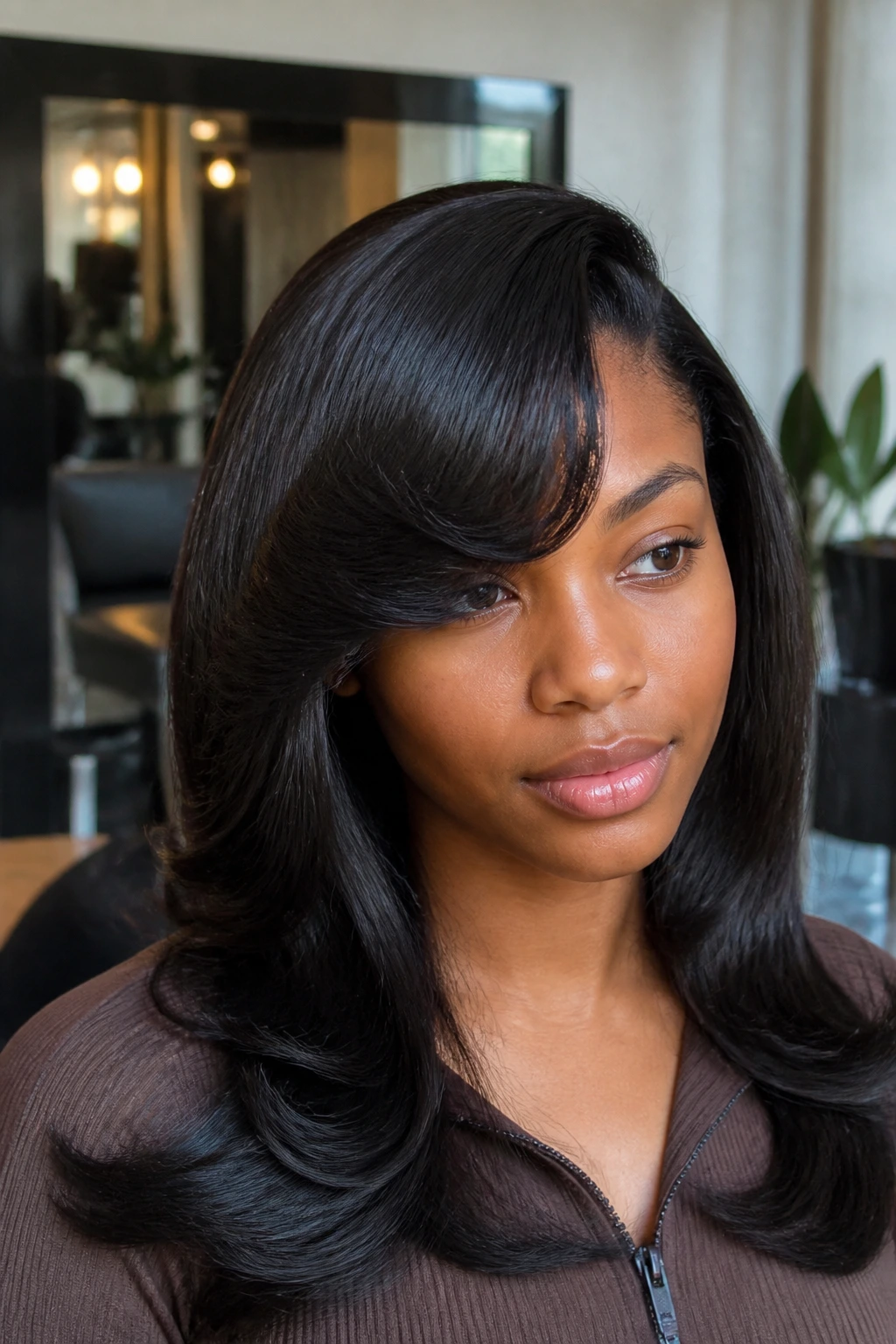
Flip-over sew-ins are built for motion, and the bangs should act like a soft punctuation mark, not the main event. The hair can flip to either side, but the swoop bang gives the front a clear point of focus. It says the install has intent, even when the part changes.
The bang here usually works best on a 13×4 frontal, because the sweep needs room to sit low and curve across the forehead. You do not want the bang fighting the flip-over texture. You want it to guide the eye. Think of it as a soft border, not a hard frame.
This is a smart style if you get bored easily. One day the flip is fuller on the left, the next day it leans right. The bang helps the style stay recognizable even when the part shifts around. It is also forgiving if you like a little volume near the crown. Not too much. Just enough to keep the hair from lying flat like a sheet.
10. Water Wave Mid-Back Sew-In With Airy Curtain Bangs
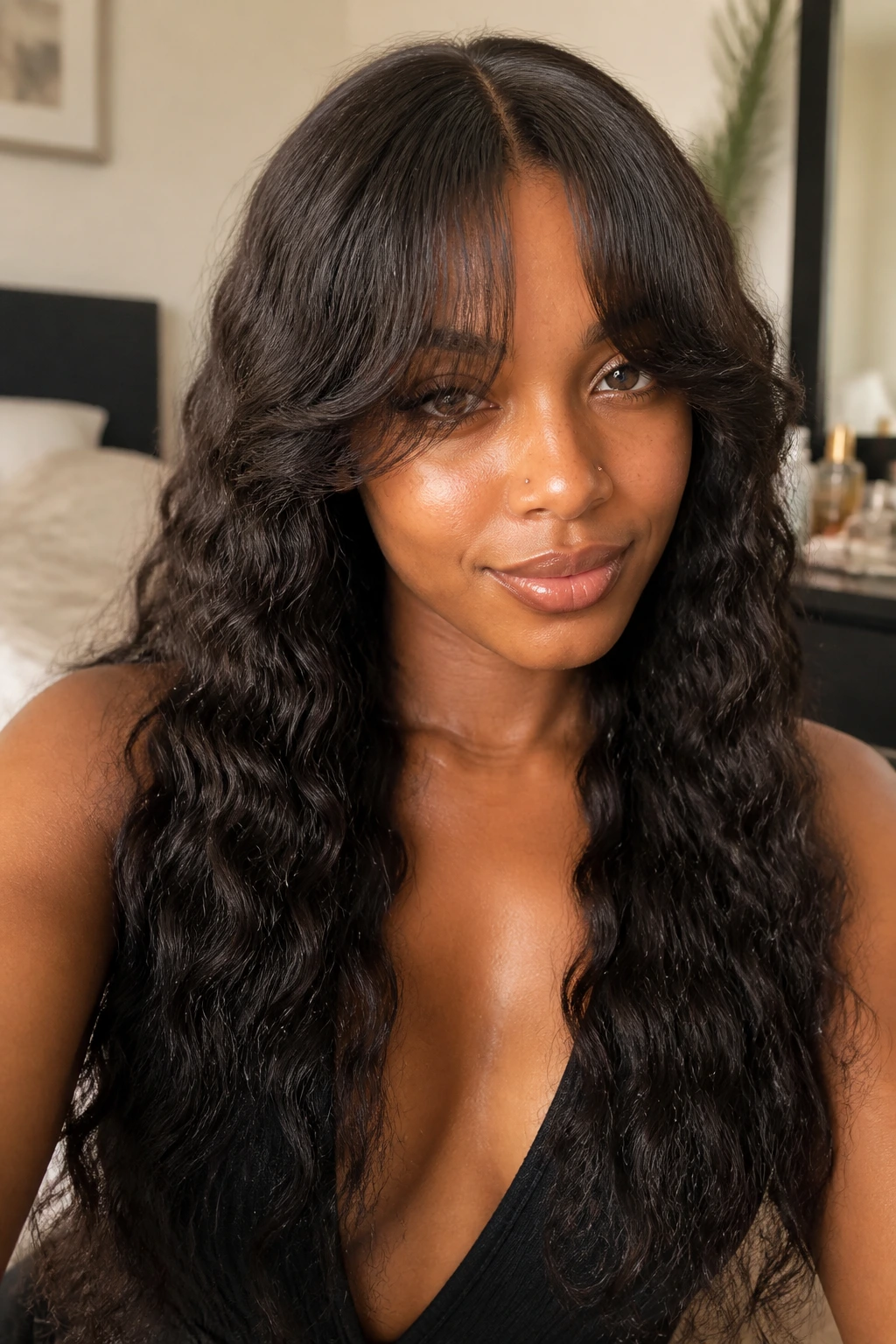
Water wave texture turns into a different animal once the bangs are cut in. The front can look almost cloudlike when the fringe is parted slightly and the waves are brushed just enough to open them up. That’s the sweet spot: airy, not frizzy.
A 5×5 closure usually gives enough space for this because curtain bangs need a gentle center opening. The fringe should start a little longer than you think. Water-wave hair can shrink visually once it dries, and the front loses length faster than the back does. Cutting too much is the classic regret here.
A little mousse and a wide-tooth comb are your friends. Pull the bangs apart with your fingers, not a fine comb, or you’ll separate the wave into fluff. That is the difference between romantic texture and bedhead. Small difference. Big mood shift.
11. Collarbone C-Cut With Bottleneck Bangs
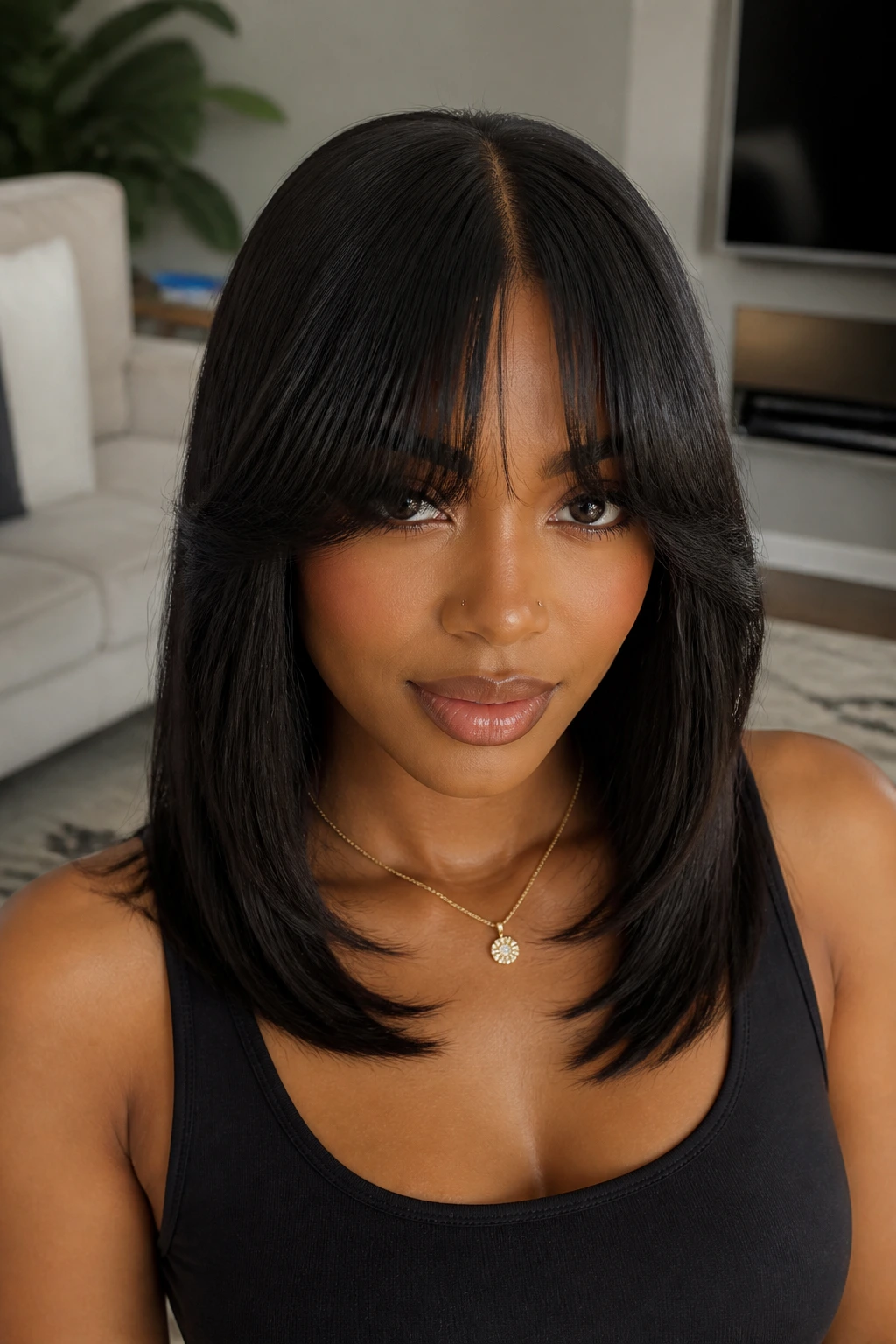
Bottleneck bangs are the quietest way to make a collarbone-length sew-in look finished. They start narrower near the center of the forehead, then open out around the temples, which gives the face a soft frame without taking over the whole front.
This shape is one of my favorites for a 6×6 closure because it needs a little width to breathe. A C-cut through the lengths keeps the ends moving toward the collarbone, and the bangs echo that curve. The result feels balanced, not crowded.
Why people keep coming back to it
It flatters more face shapes than a straight blunt fringe because the center is light and the sides do the shaping. The eyes stay open, the brow line stays visible, and the install has a softer finish than a hard bang line.
Bottleneck bangs also hide a bad part better than people expect. If the first inch of the front is not perfect, the shape forgives that. Not all bangs do. Some stare back at every mistake.
12. Kinky Straight Blowout With Rounded Full Bangs
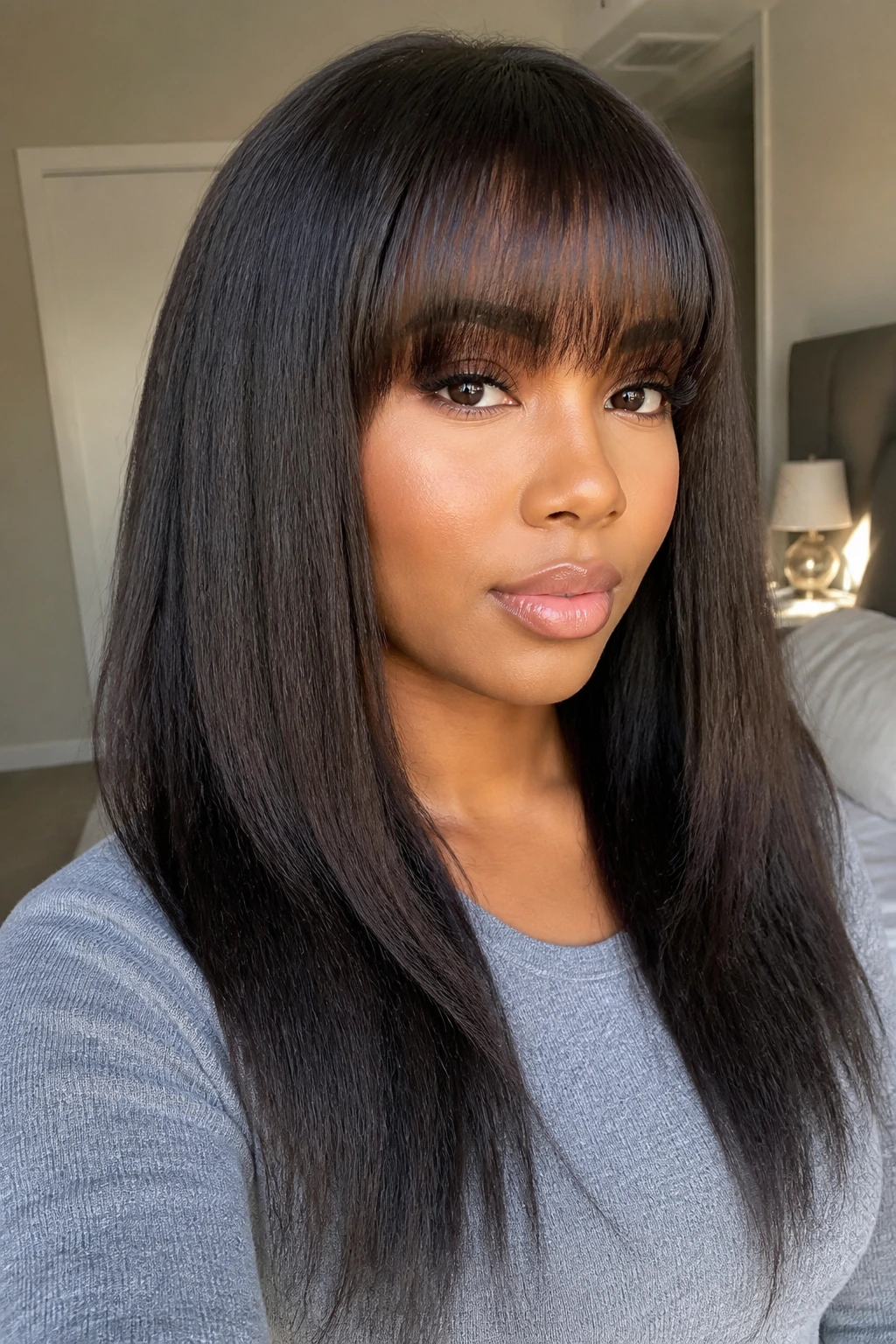
Kinky straight hair changes the bang conversation entirely because the fringe has to respect bend and shrinkage. This texture gives you a fuller, more natural-looking install that sits somewhere between pressed hair and blown-out coils. When the bangs are rounded to match the forehead, the whole style feels cohesive.
This one is not about sleekness. It is about believable volume. The front should follow the brow line in a soft arc, and the ends should stay dense enough to look intentional. A fringe that is too thin gets swallowed by the texture. A fringe that is too blunt looks stiff against the body of the hair.
I like this style on a closure install because the front can stay clean without needing leave-out to sell the look. It is especially good if you want your sew-in to feel like your own hair on a strong blowout day. That is the illusion, really. Not perfection. Familiarity.
13. Half-Up Glam Sew-In With Face-Framing Bangs
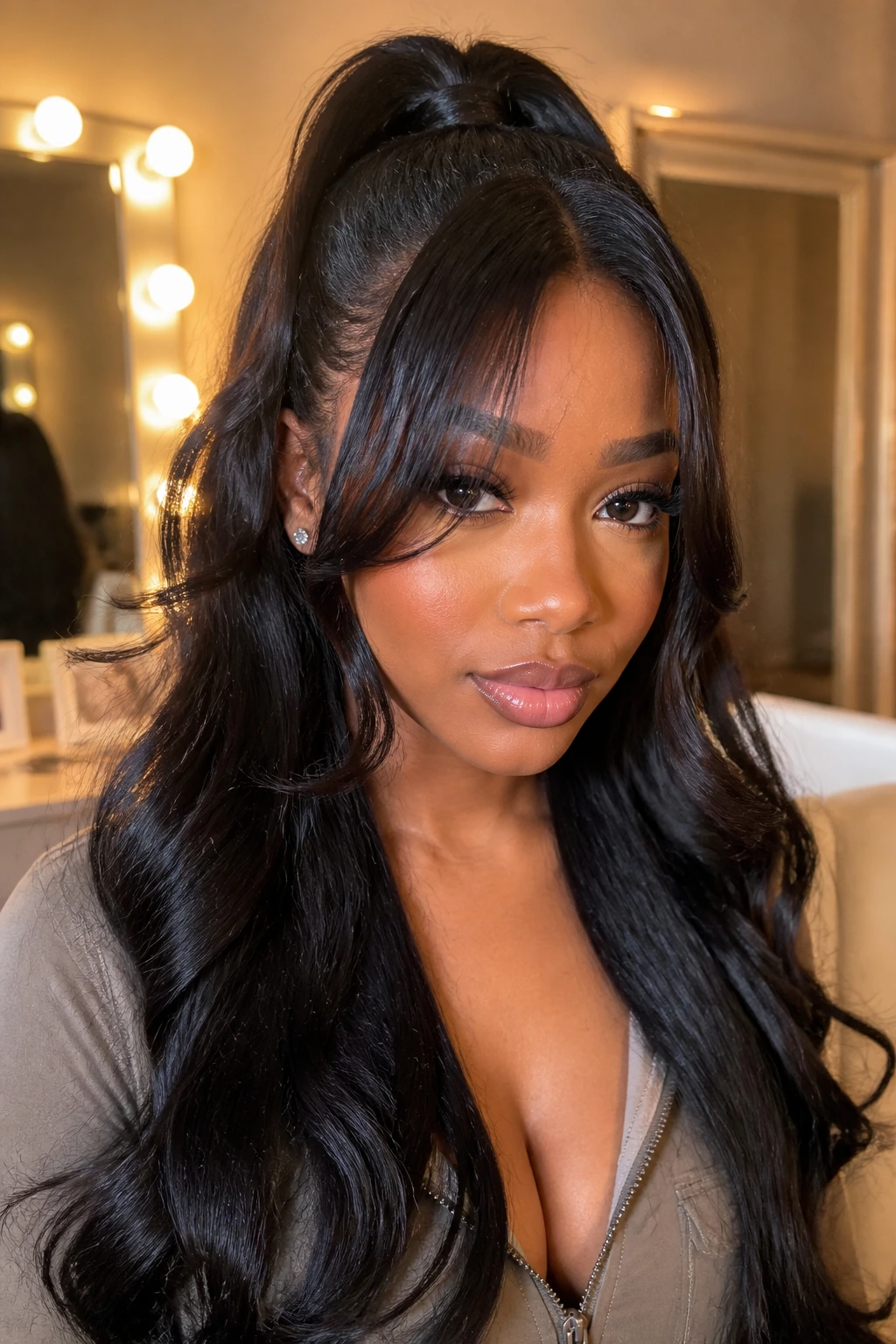
A half-up sew-in can go straight into glam territory the minute the bangs are shaped with intent. Pulling the top section back gives the style height, and the fringe keeps the front from looking too severe. Without the bangs, the half-up shape can feel a little exposed. With them, it suddenly has polish.
This works with either a closure or a frontal, but a frontal gives you more freedom if you want the front to sweep into a pony or clip. The bang pieces should be long enough to brush the cheekbones. Shorter than that and the style loses softness.
The best version has a slight curl under at the ends and a bit of lift at the roots. That lift is not optional. It keeps the front from collapsing once the top section is gathered. If the bangs go flat, the whole look gets tired fast. If they stay airy, the style reads expensive in that quiet, useful way.
14. Micro-Bang Bob With Tucked Ends
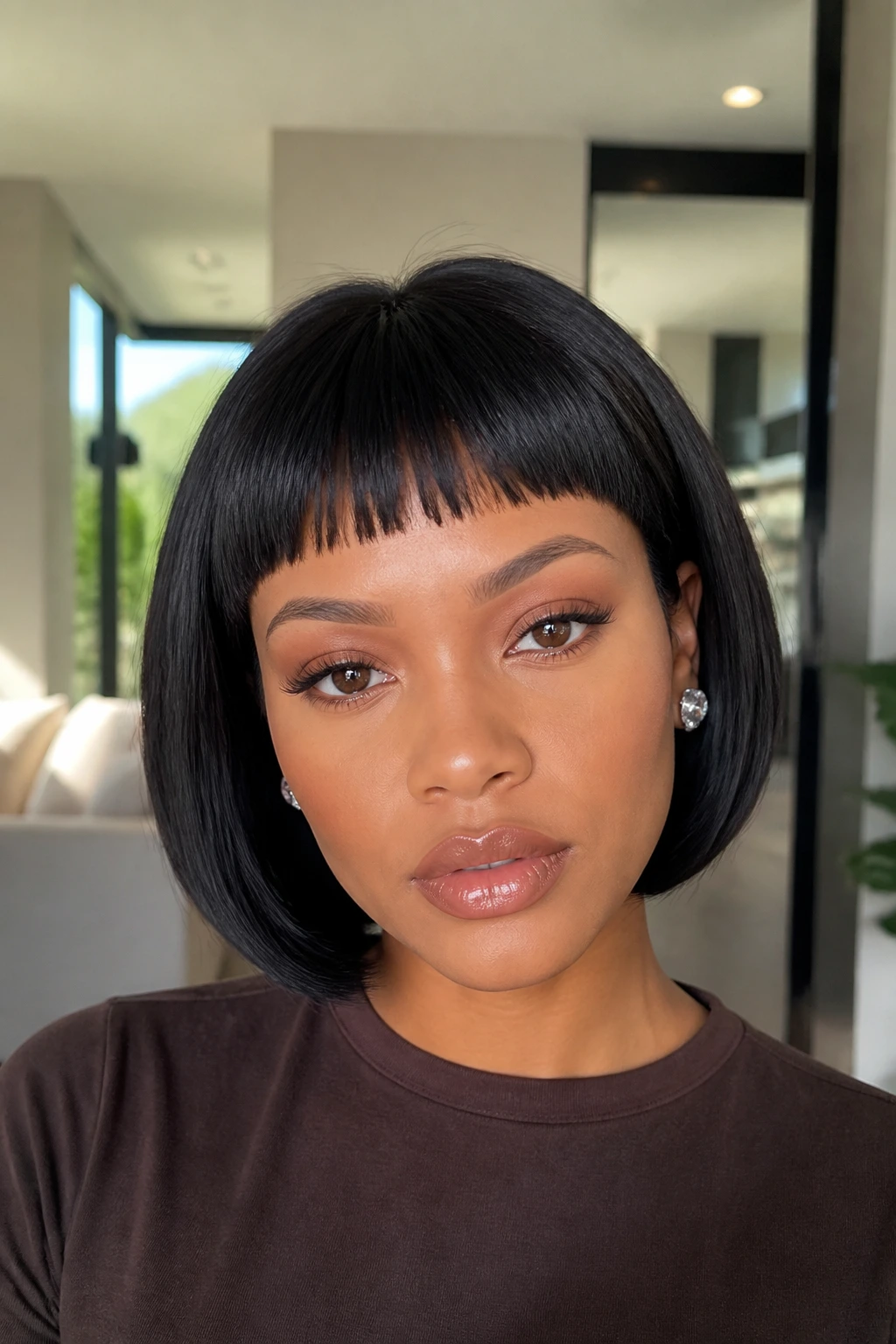
Micro bangs are the style most people think about for five seconds and then back away from, which is exactly why they work so well on a bob install. They make the face look graphic and clean. The bob stays short and tucked, and the bangs sit high enough to show the brows.
This look needs precision. A 4×4 or 5×5 closure can handle it if the hairline is flat and the density is not too bulky. A frontal can give a little more flexibility, but the bang must be cut carefully or it overwhelms the face. Tiny bangs do not leave room for sloppy shaping. They punish laziness.
Best for
- Straight or softly textured bundles.
- People who like a bold finish with very little length.
- Faces that can handle a lot of forehead exposure.
The ends should tuck in slightly toward the neck so the bob feels intentional instead of boxy. And yes, this is a high-attention style. But it has a strong point of view, which is more than can be said for a lot of flat sew-ins.
15. Deep Side Part Waves With Peekaboo Fringe
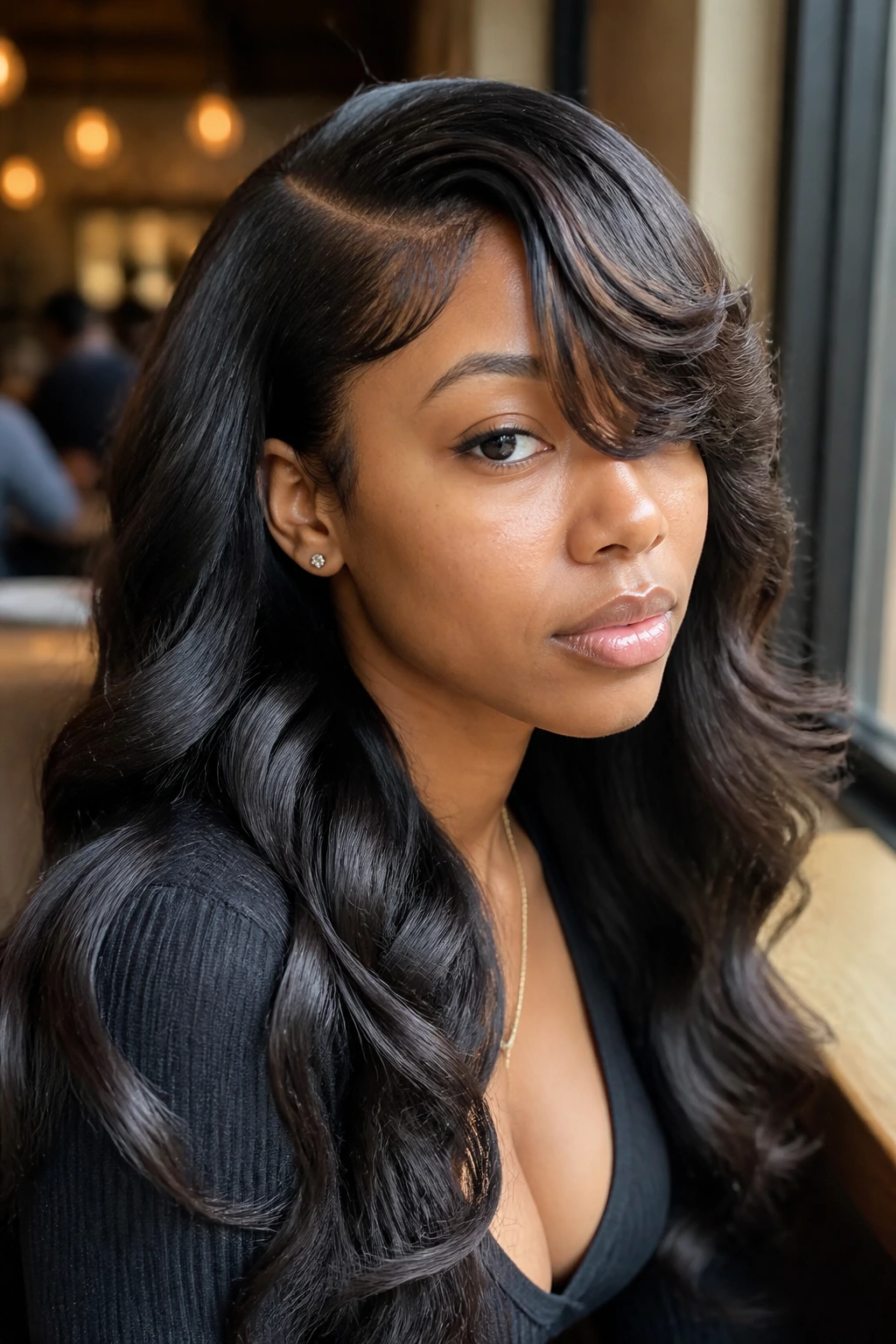
Deep side parts need a fringe that doesn’t fight the sweep, and peekaboo bangs are the easiest way to keep that line soft. The bangs sit longer and looser, barely grazing the forehead, so they almost disappear until the hair moves. Then they show up. Quietly. Which is the right move here.
A 13×4 frontal gives this style the space it needs because the part travels deep and the front has to bend around it. The waves should be broad, not tight, with the front section brushed away from the face. If the bangs are too short or too thick, the style loses that half-hidden glamour.
This is one of those styles that feels expensive because of restraint. Nothing is shouting. The part is deep, the waves are soft, and the fringe slips in and out of view. That tiny bit of mystery does more work than over-styling ever could.
16. Rounded Mushroom Bob With Arched Bangs
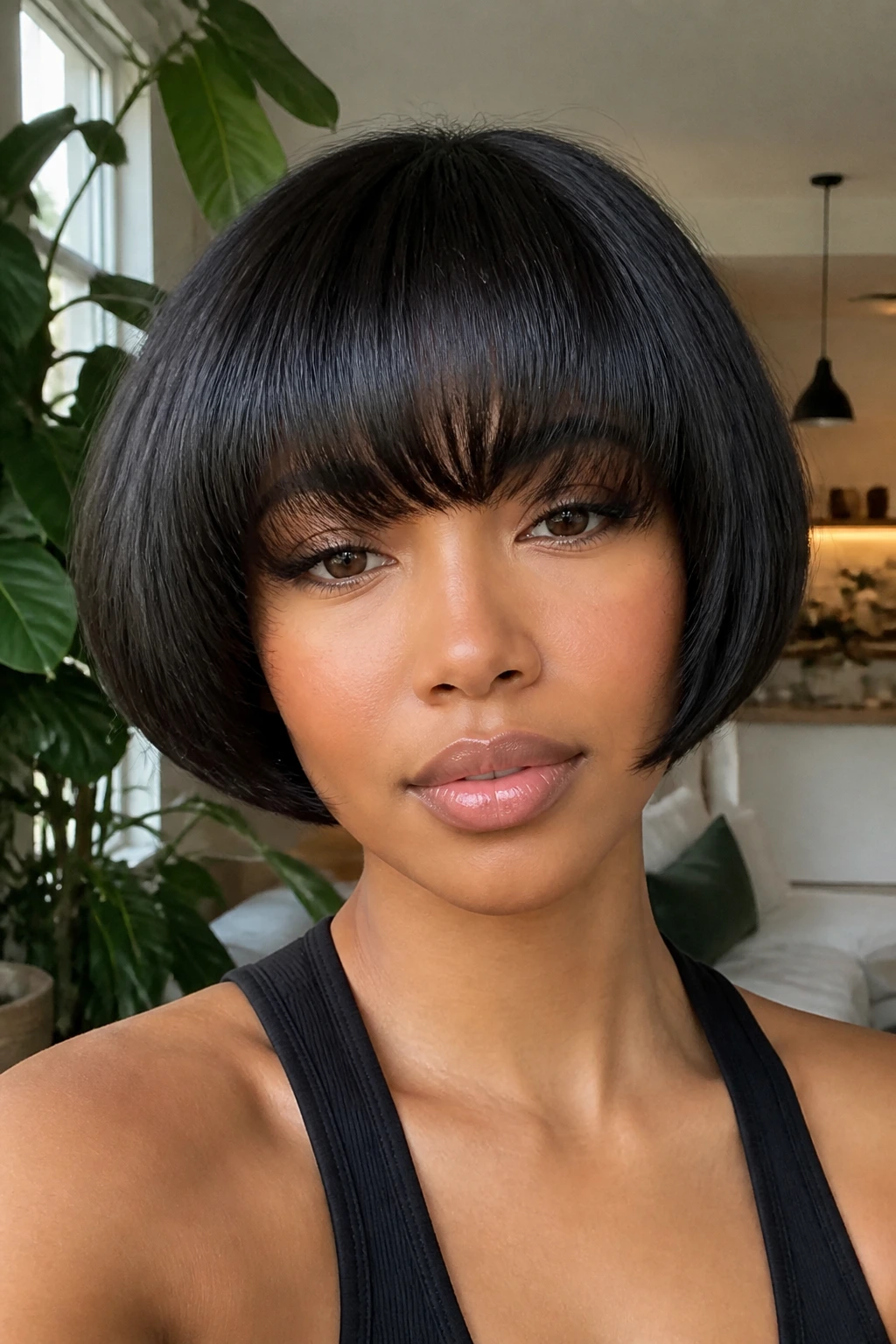
Rounded mushroom bobs live or die by the curve at the cheekbones, and the bang line is what keeps them from looking like a helmet. The shape sits fuller around the head, then tapers just enough at the edges to keep the silhouette soft. Arched bangs fit that architecture better than a straight line.
This is a cut that likes density. Not excessive bulk, but enough hair to hold the rounded shape. A blunt fringe would make it too hard. Arched bangs open the face and echo the curve of the bob, which helps the whole style feel deliberate instead of retro by accident.
You need a stylist who is comfortable shaping the front while the hair is dry and fully settled. If the arch sits too high, the eyes look bare. If it sits too low, the look collapses inward. It is a narrow lane, but that’s why it reads so clean when done well.
17. Layered Silk-Press Look With Long Side Bangs
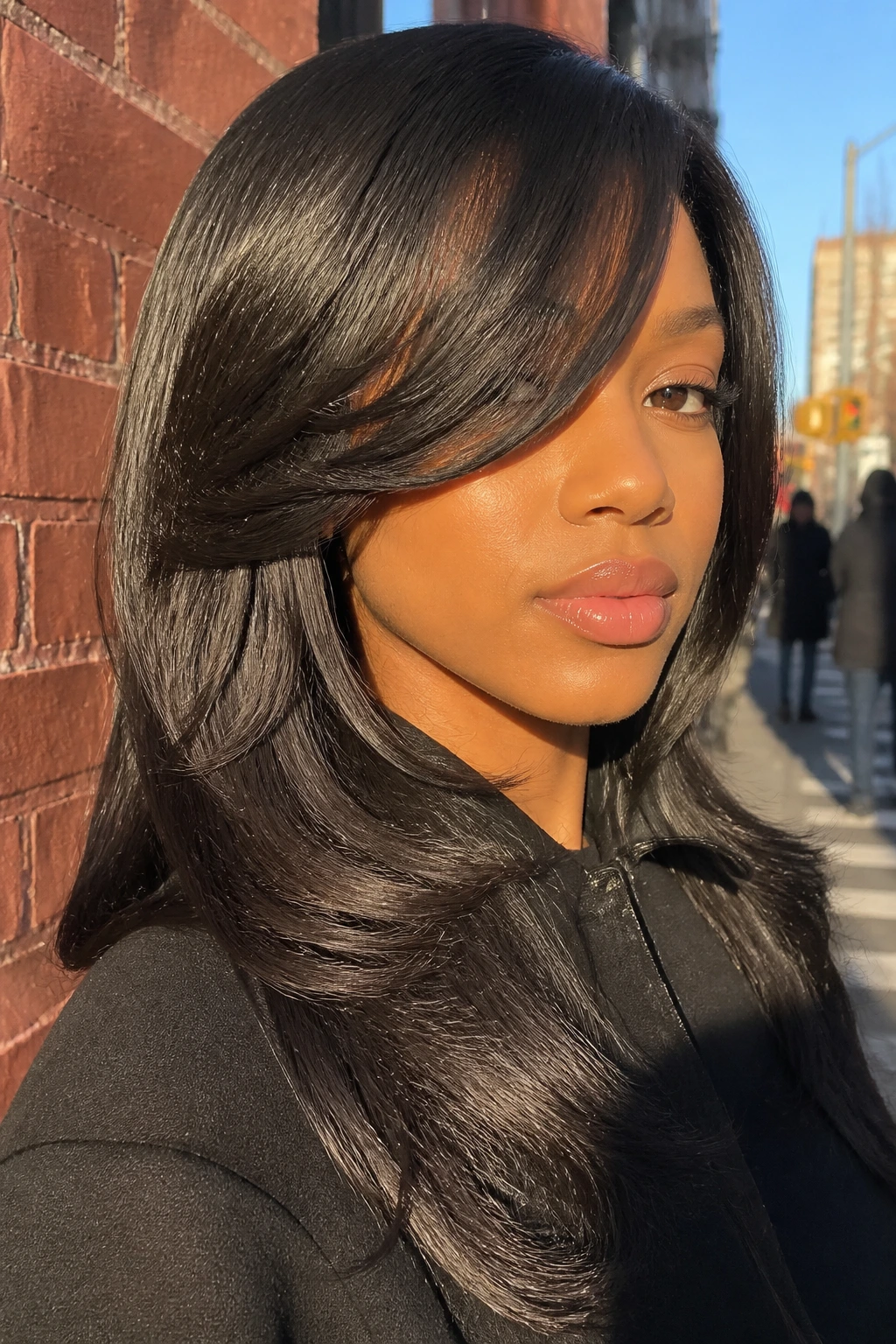
A layered silk-press look with long side bangs has a very specific mood: polished, touchable, and a little dramatic when the wind catches it. The layers keep the length from feeling heavy, and the side bang gives the front a point of movement. It is the closest thing to a soft blowout aesthetic without leaving hair out.
This style tends to look best with a 13×4 frontal because the side bang needs room to sweep and settle. The front should not be stiff. A little bend, a little lift, and a clean slide toward the cheekbone make it work. If the bang is too short, it starts to fight the long layers.
I like this one for anyone who wants straight hair but doesn’t want the front to lie flat like a ruler. The bang keeps the face alive. The layers do the rest. Simple idea. Strong payoff.
18. Bra Strap Length Layered Sew-In With Soft Tapered Fringe
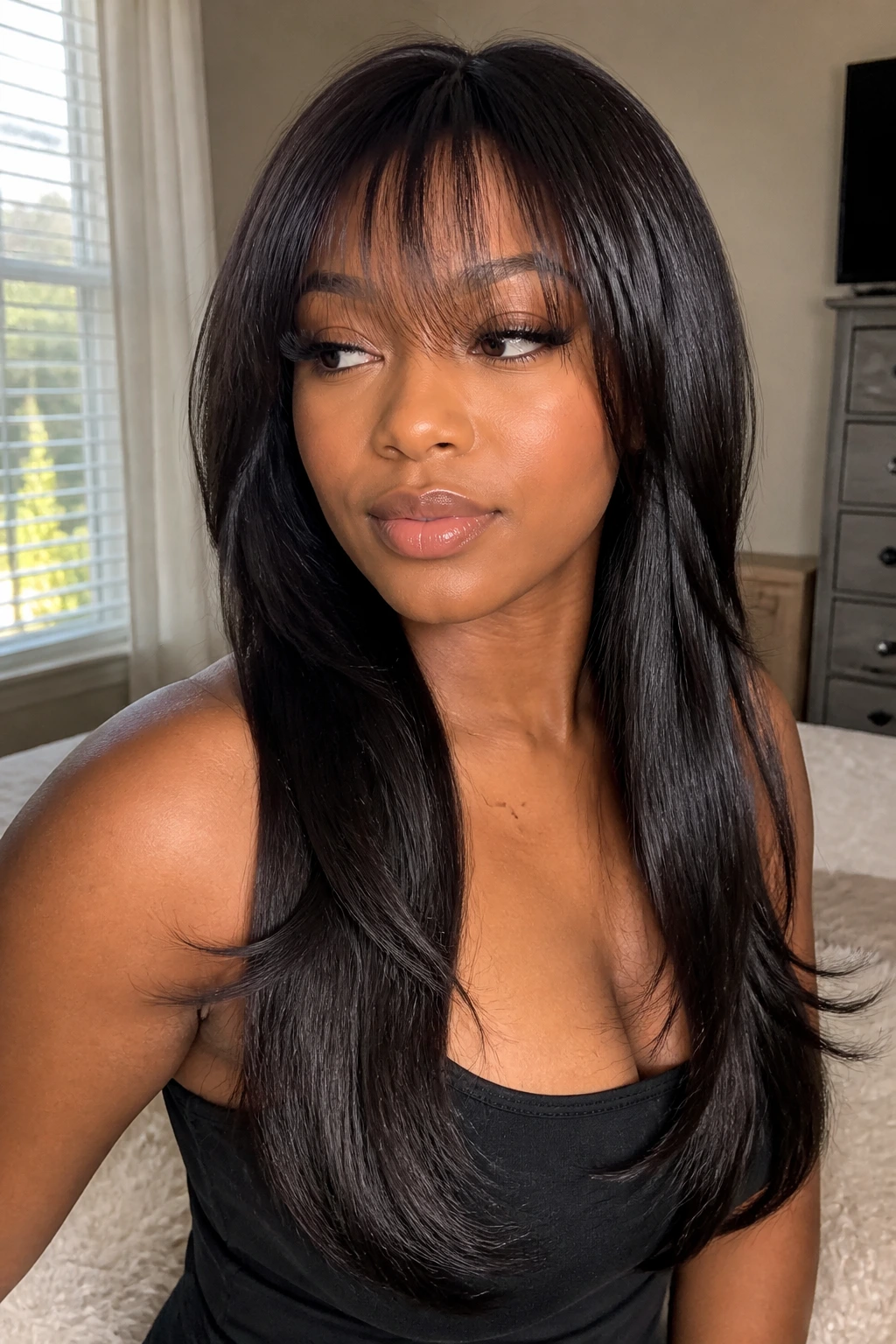
If you want length but hate the flatness that can come with it, a bra-strap sew-in with a soft tapered fringe keeps the front from feeling heavy. The layers break up the weight, and the fringe tapers from the center toward the sides instead of sitting in one hard line. It is a gentler way to wear bangs on long hair.
A 5×5 or 6×6 closure is usually enough here because the fringe does not need a huge parting area. The bang should blend into the longer front layers so it looks like part of the cut, not a separate section sewn on top. That blending is what makes the style feel easy.
This is probably the most wearable look in the whole group if you ask me. It gives you length, softness, and enough front detail to keep the install from going blank. You can wear it straight, curled, or lightly waved, and the fringe still makes sense.
Why a Full Weave Without Leave Out Makes Bangs Easier To Live With
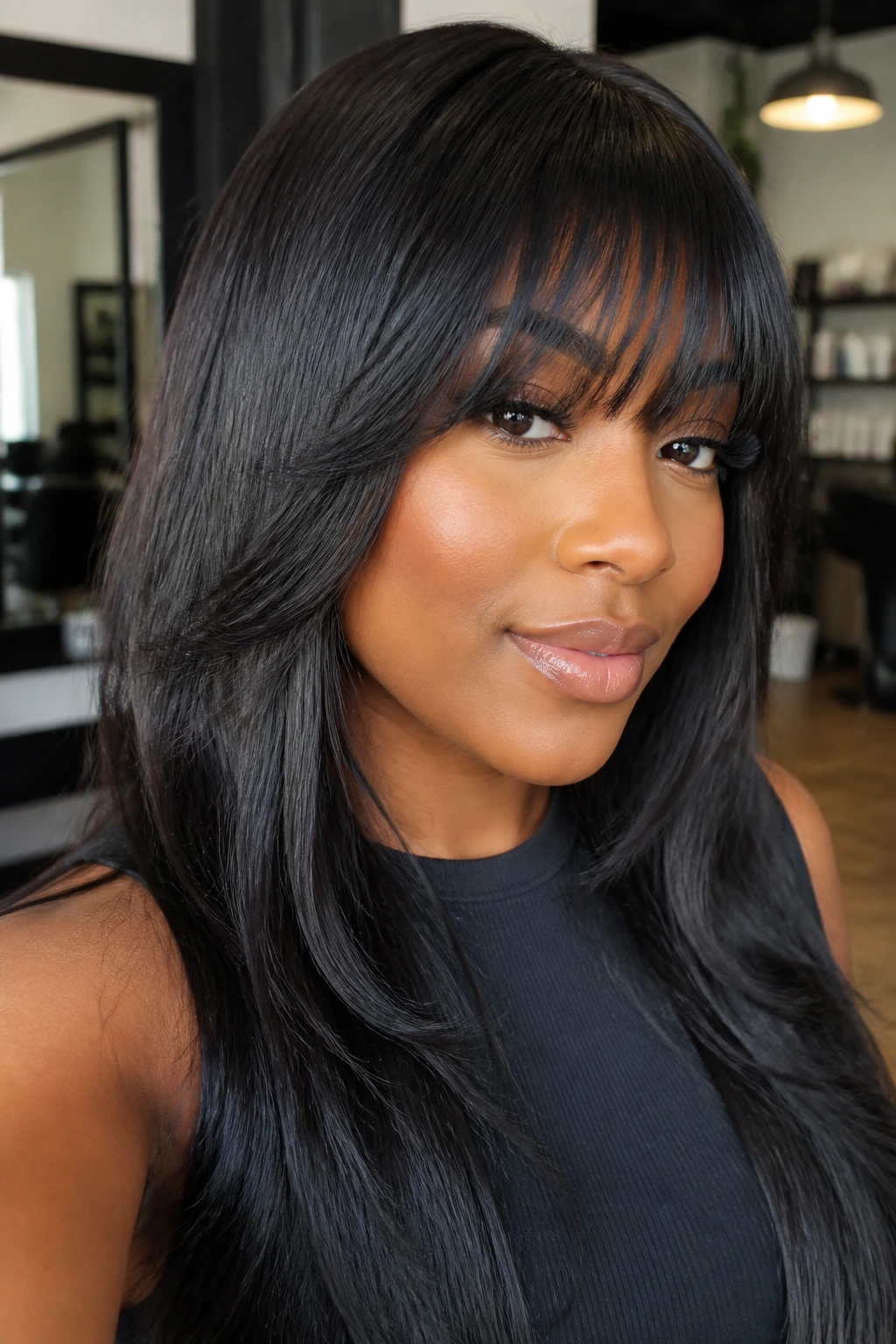
The biggest advantage of a full weave no leave out sew-in is not glamour. It is relief. You are not trying to blend your natural hair texture into bundle hair every day, and that matters even more when bangs are involved, because the front is where mistakes show first. A tiny mismatch at the hairline can ruin a whole style.
A closure or frontal also gives the bang more control. You can keep the front sleek without pushing heat onto your own hairline, which is one of those small wins that adds up over time. If you have edges that need a break, or a texture that frizzes the moment humidity looks at it, this setup is the safer bet. It is also easier to keep consistent after a shower, after a workout, or after a long day in dry indoor air.
And yes, the style choice matters. A blunt fringe on a 4×4 closure behaves differently from a side-swept bang on a 13×4 frontal. The first one is compact and clean. The second one gives you room to move. If you choose the wrong base, you spend the whole install fighting the shape instead of wearing it.
The Tools That Make These Sew-In Looks Look Clean
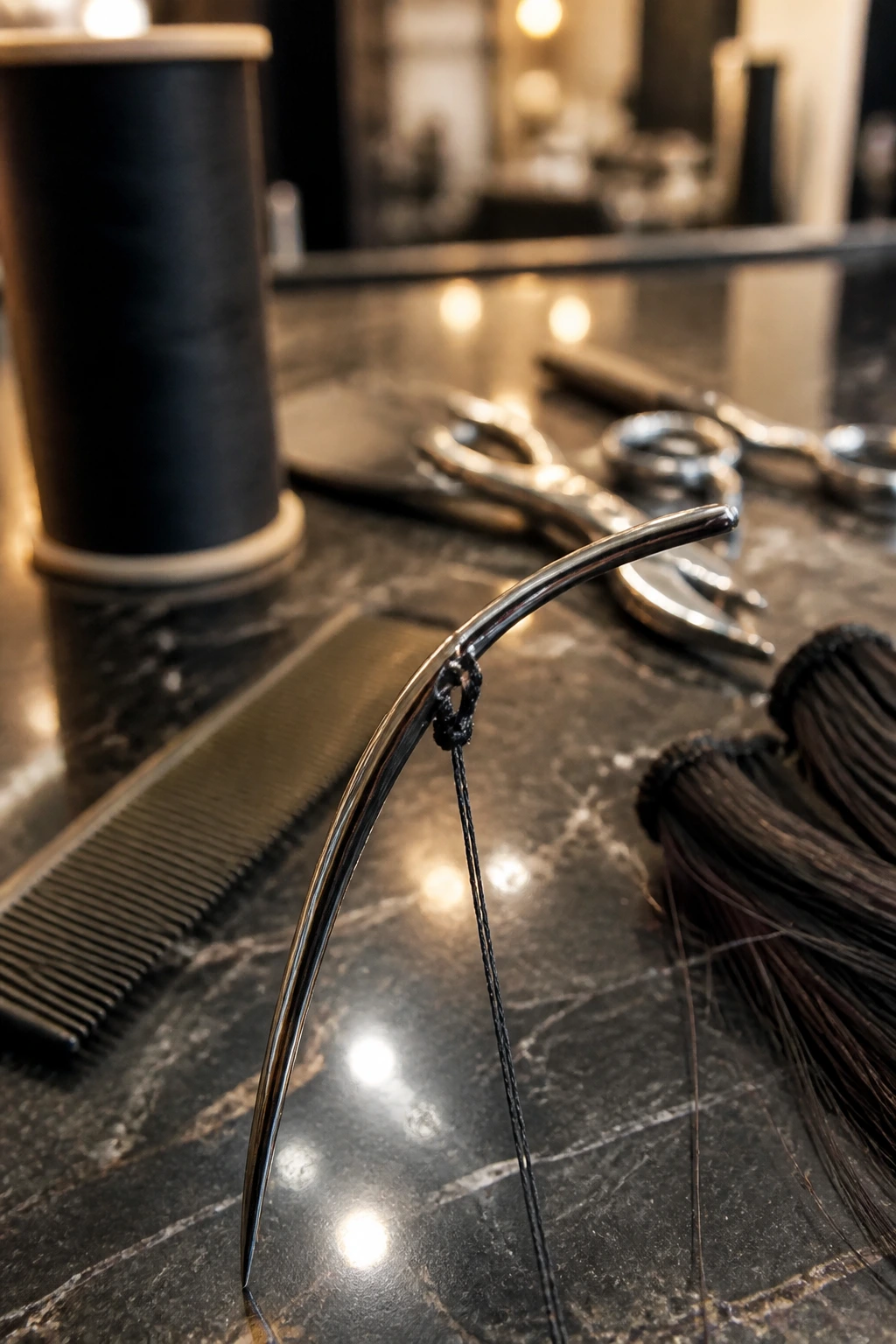
- 5×5, 6×6, or 13×4 lace closure/frontal: The lace base decides how much bang room you get, so choose it before you fall in love with a fringe shape.
- Human hair bundles that match the texture you want: Straight, body wave, yaki straight, kinky straight, or curly hair all change how the bangs sit.
- Weaving thread and curved needle: Standard sew-in tools, and the curved needle keeps the stitching neat near the front.
- Rat-tail comb: For precise parting, sectioning, and setting the bang line.
- Hot comb or flat iron: Useful for flattening the front and refining blunt or side-swept bangs.
- Mousse or wrap foam: Helps curtain, curtain-like, or textured bangs hold shape without crunchy buildup.
- Lace tint spray, powder, or matching concealer: Optional, but useful if the closure needs a softer scalp match.
- Razor comb or sharp hair scissors: Best handled by a stylist for fringe shaping; a dull pair makes the cut look chewed.
- Satin scarf and bonnet: Night protection, plain and simple.
- Flexi rods or a medium roller: Handy for keeping curtain bangs curved instead of bent.
How to Pick the Right Bang Shape Before the Hair Is Sewn Down
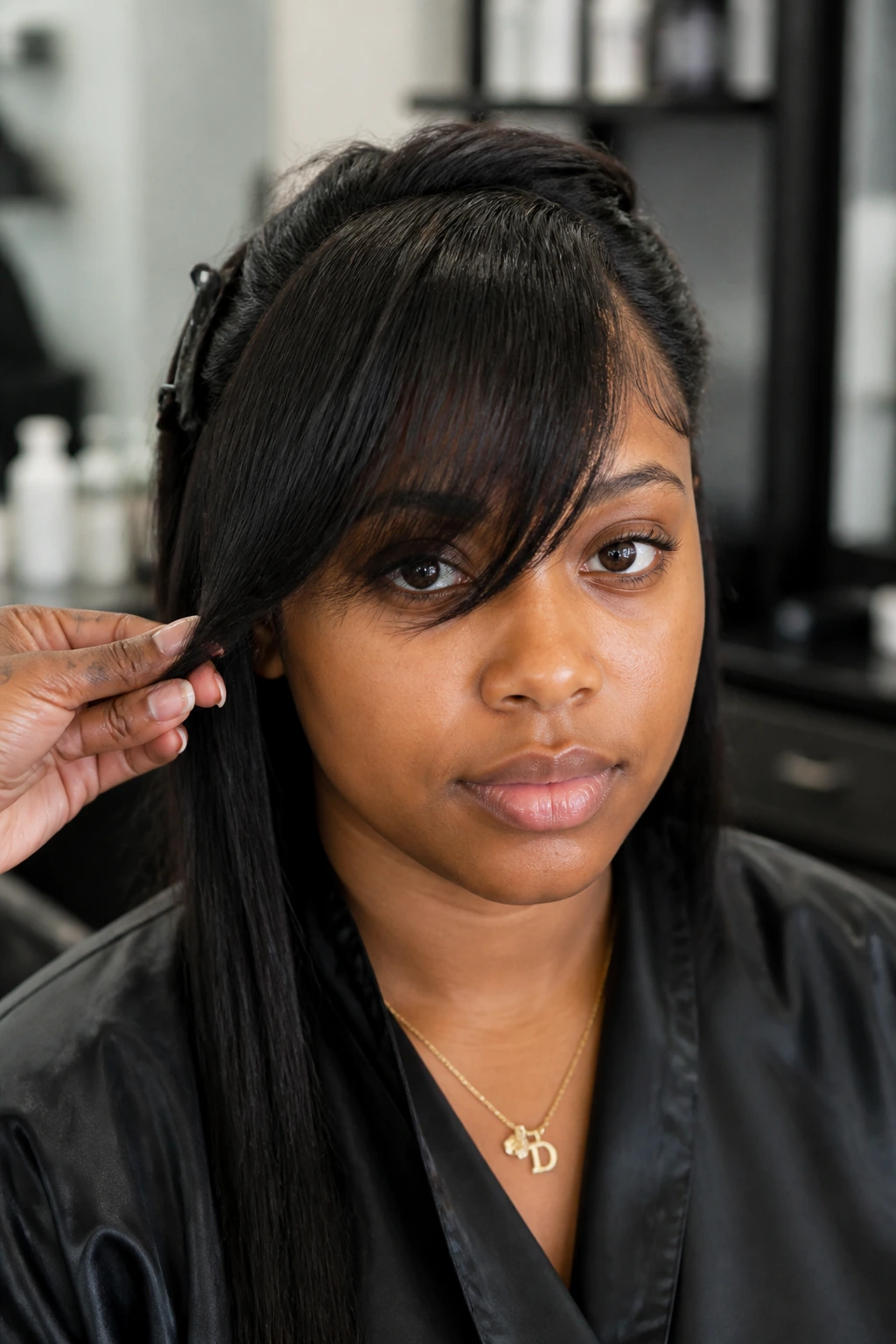
The bang should be chosen with the closure or frontal in mind, not the other way around. A tiny closure can handle a blunt fringe or a short wispy bang. It cannot fake a wide, dramatic curtain bang without looking cramped. That’s where a lot of people get irritated with their install and blame the stylist when the base was wrong from the start.
Face shape matters, but it is not a law. A round face usually looks better with diagonals, bottleneck bangs, or longer curtain bangs because those lines add some vertical movement. Square jaws soften up with rounded fringe or piecey layers near the temples. If your forehead is short, micro bangs or blunt bangs can eat the available space fast, so go a little longer than your first instinct.
Texture matters too. Straight hair shows every cut line. Curly and wavy hair hide small imperfections, which is nice until the bangs dry and shrink more than you wanted. If the hair has any curl at all, cut the fringe longer than you think you need, then refine it in tiny passes. I would rather trim twice than spend six weeks pretending the bang was supposed to sit there.
What Usually Goes Wrong With Bangs on a Sew-In
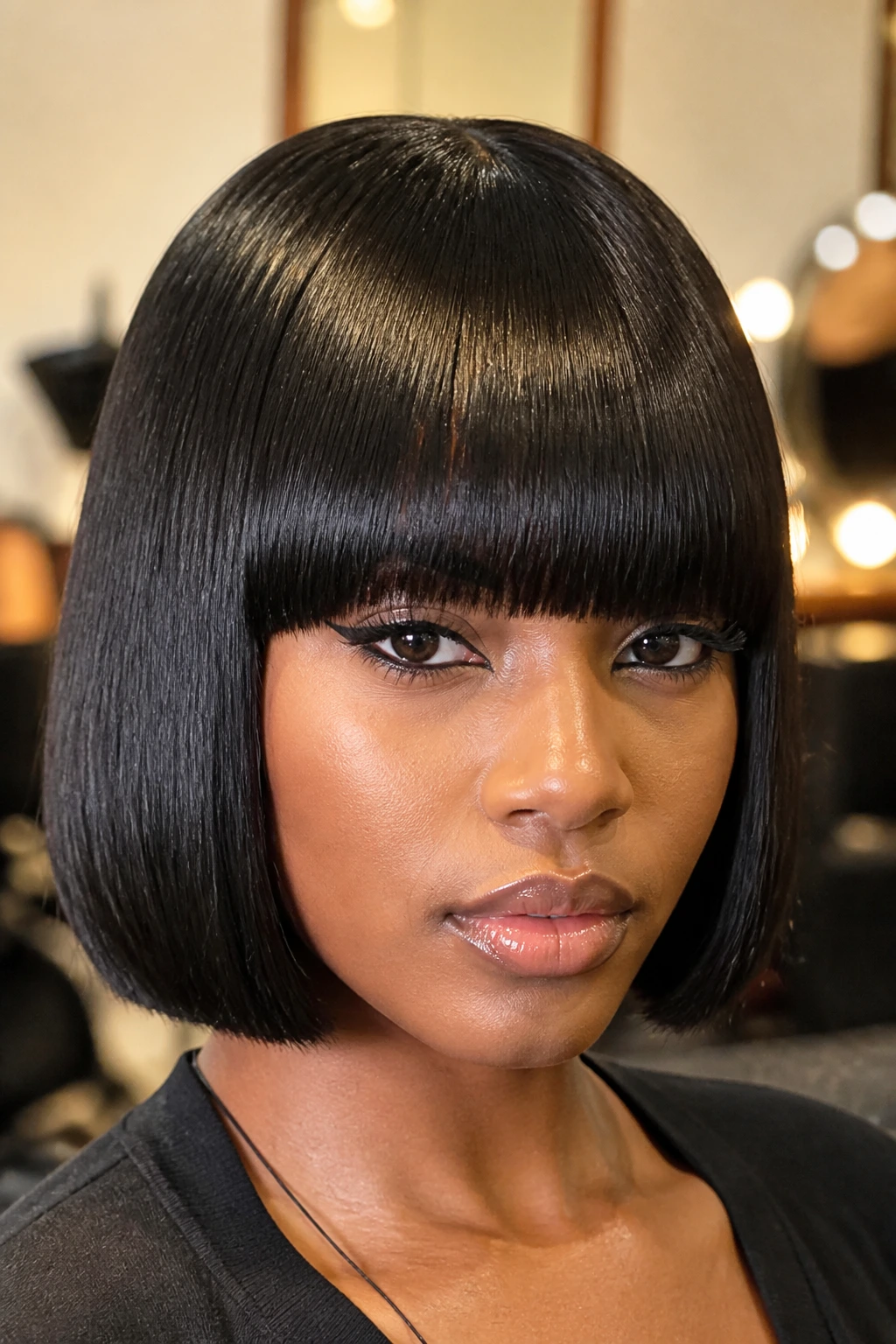
The most common mistake is cutting the bangs too short while the hair is wet or freshly pressed. Once the hair settles, the fringe jumps up, and suddenly you are staring at brows that have been invaded. The fix is boring but real: shape the bang dry, trim a little at a time, and stop as soon as it sits where you want.
The second problem is using the wrong lace size for the look. A 4×4 closure is neat, but it is not built for a wide, draped curtain fringe. If the front starts looking squeezed, the style is telling you the closure is too small. Use a 5×5, 6×6, or frontal when the bang needs room to breathe.
Then there is the greasy-front problem. Too much oil or edge control near the bang area makes lace shiny and hair separate into greasy strings. That is a terrible look in daylight. Use only what the front actually needs. Usually less than people think.
A fourth mistake? Ignoring density. Bangs that are too thick sit like a slab. Bangs that are too thin vanish into the rest of the install. The fix is light point-cutting and patience. No hacks. Just restraint.
Fresh Ways to Twist the Same Idea
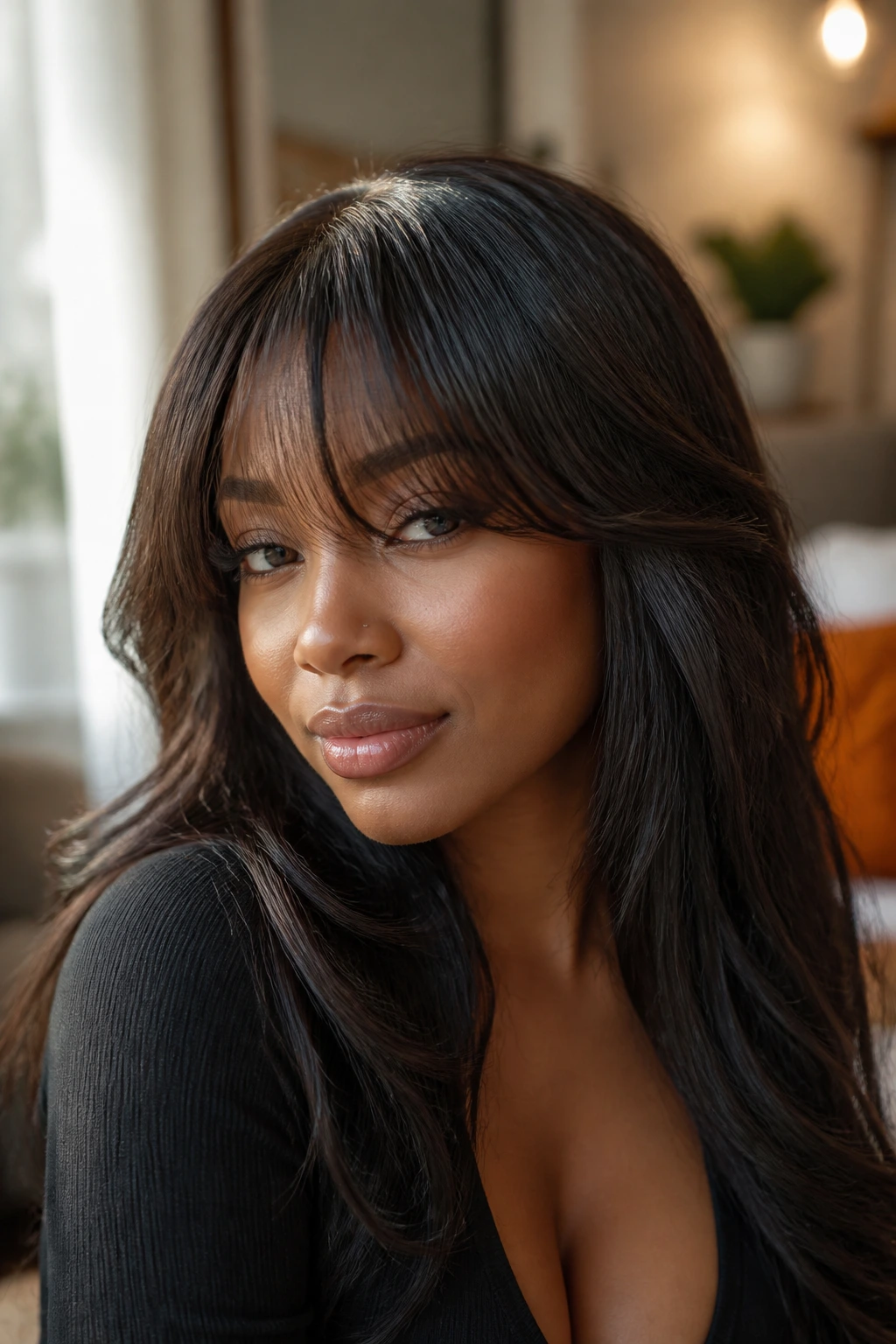
Closure-Only Soft Life: Keep it on a 5×5 or 6×6 closure and choose curtain, bottleneck, or wispy bangs. This version is lower maintenance because the front stays compact and easy to flatten at night.
Frontal Sweep Version: Use a 13×4 frontal if you want side-swept bangs, deep parting, or a face-framing bang that travels across the forehead. This gives more styling freedom, but the lace needs a cleaner melt and more daily attention.
Texture-Matched Version: Match the bang shape to the bundle texture instead of forcing a universal fringe. Curly fringe on curly hair, rounded fringe on kinky straight, and airy curtain bangs on body wave all look more believable than fighting the texture.
Color-Frame Edition: Add subtle highlights, a soft ombré, or a darker root with lighter ends near the front. A little color around the bang area can make the fringe look fuller and give the whole install more dimension without needing extra length.
Low-Heat Wear: Choose body wave or water wave, cut the bangs with a softer curve, and set them with mousse instead of daily flat iron passes. This is the version for people who like shape but do not want to babysit it every morning.
Keeping the Style Fresh Between Appointments
A sew-in with bangs lasts best when the front is treated like the headline and the rest of the hair like the supporting cast. At night, wrap the bangs flat with a silk scarf if they are blunt or side-swept, or roll them on a medium flexi rod if they need curve. That one habit keeps the front from forming weird dents by morning.
Scalp care matters even when no leave-out is involved. Use an applicator bottle to clean the parting between braids every 1 to 2 weeks, depending on how much product you use and how active you are. You do not need to flood the braids. You need the scalp to stay clean enough that the install does not start smelling like old mousse and sweat, which is the kind of thing nobody wants to pretend about.
For the fringe itself, refresh with a light mist of water, a touch of foam, and a quick comb-through. If the bangs are straight, use a warm comb or flat iron on a low pass to reset the curve. If they are curly or wavy, finger-shape them while damp and let them dry with a bit of air. The whole point is to keep the front from looking tired long before the rest of the style is ready to come down.
Most full sew-ins need to be taken out before the braids get itchy and the lace starts lifting. For many heads, that lands somewhere around 6 to 8 weeks. Some installs can go a little longer with excellent care, but hair and scalp usually tell on themselves before the calendar does.
Questions People Ask Before Booking This Style
Can you really get bangs on a full weave with no leave out?
Yes. The bangs come from the installed hair, not from blending your own hair in front. A closure or frontal gives the stylist enough surface to shape the fringe cleanly.
Is a closure or a frontal better for bangs?
A closure is easier to care for and usually better for blunt, wispy, or compact fringe. A frontal gives more room for deep parts, side-swept bangs, swoops, and styles that need the hairline to travel farther.
What bang shape is easiest to maintain?
Curtain bangs and soft bottleneck bangs are probably the least fussy because they forgive minor shifts in parting and do not need perfect symmetry. Blunt and micro bangs need more daily smoothing.
Can curly or kinky straight hair still have bangs without looking bulky?
Yes, if the bang is cut dry and layered with the texture in mind. Curly bangs need shape, not flattening. Kinky straight bangs usually look better with a soft round line than a hard straight edge.
How short should bangs be on a sew-in?
Short enough to show the style, long enough to avoid regret. That sounds flippant, but it is true. For curly or textured hair, start longer and trim gradually. For straight hair, cut dry and stop when the fringe sits just above or at the brows.
What if the bangs start separating or sticking up?
Mist it lightly with water, add a small amount of foam, and smooth with a fine-tooth comb or brush. If the roots are puffing up, a low-heat flat iron or warm comb can reset the front without flattening the whole style.
Can you wear glasses with these bangs?
Absolutely, but the bang shape matters. Brow-grazing or side-swept bangs usually sit better with frames than a thick blunt fringe, which can crowd the bridge and rub when you move your head.
How do I keep the lace from showing under the bangs?
Pick a fringe with enough density to cover the front and match the closure color to your scalp tone as closely as possible. A tiny amount of powder at the parting can help, but a well-placed bang should do most of the work.
The Bang Shape That Holds Its Line
The best full weave no leave out sew-in with bangs is the one that gives you a front shape you do not have to negotiate with every morning. That might be a blunt bob, a soft curtain fringe, a curly rounded bang, or a side sweep that slips across the forehead and leaves the rest of the style alone. The right choice is the one that suits the lace base, the texture, and the amount of maintenance you’re willing to live with.
I like bangs on sew-ins because they turn a protective install into a real haircut. Not a costume. Not a workaround. A haircut with a scalp-friendly plan underneath it.
Choose the fringe shape first, then choose the closure or frontal that can support it. That order saves a lot of grief later, and it leaves you with something much better than a sew-in that merely sits there. It gives you a style that actually has a point of view.