



Long shaggy haircuts for thick hair with lowlights solve a problem most blunt cuts only hide for a day: all that hair wants to sit in one heavy block, and one flat color makes the block look even wider. A good shag breaks the mass into movement. Lowlights do the rest, slipping darker tone between the layers so the whole shape reads deeper, softer, and far less puffy.
That’s the real trick. Thick hair does not need more drama; it needs structure that lets the weight fall where you want it. When the layers are carved in the right places — around the cheekbones, under the occipital bone, through the interior of the mid-lengths — the cut starts moving with the head instead of fighting it. And when the color is handled with a few shades of shadow, the hair stops looking like one solid sheet.
I like long shags because they can be messy without looking unfinished. I like lowlights because they make thick hair look expensive in the practical sense: less triangle, less visual bulk, more shape. The best versions feel lived-in the first week and still hold up after the third shampoo, which is more than I can say for a lot of “easy” haircuts.
Why This Collection Works So Well for Thick Hair
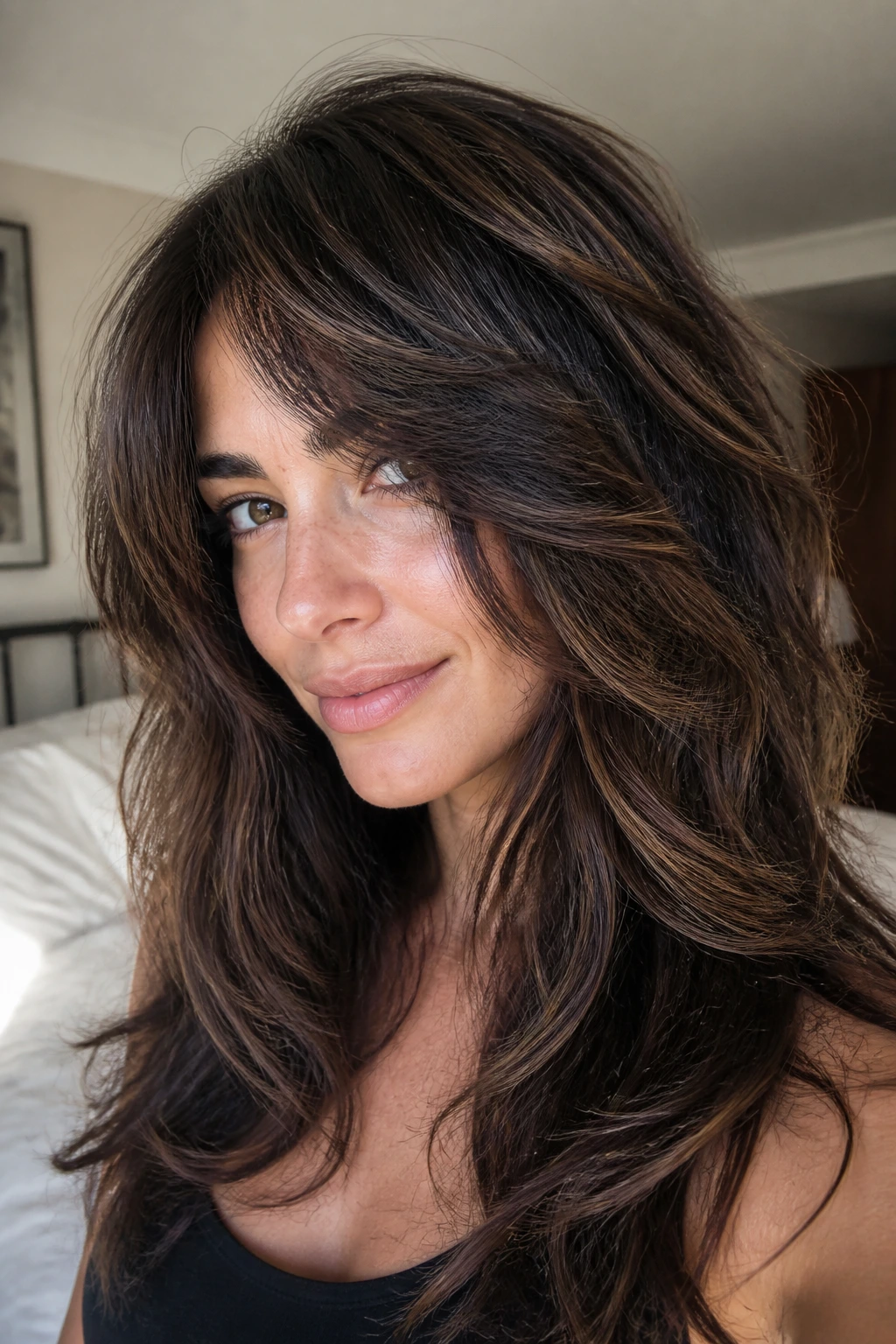
- Weight gets broken up: Long shag layers remove bulk where thick hair tends to balloon — around the sides, the crown, and the lower back of the head.
- Lowlights add shadow: Darker pieces placed under the top layer keep the cut from looking fluffy or one-note, especially in bright light.
- The grow-out is forgiving: Shags keep their shape even after a few weeks, because the line is already broken up by layers and fringe.
- You get movement without losing length: The front can stay collarbone-long or longer while the interior gets carved away.
- Styling is less precious: A bend from a 1.25-inch iron, a diffuser, or even a rough blow-dry usually gives enough shape.
- The color wears hard-working, not loud: With lowlights 1-2 levels deeper than your base, thick hair gets dimension without stripey contrast.
1. Razor-Sharp Shag with Cocoa Lowlights
A razor-cut shag on thick hair has a very specific look: the ends feather out instead of stacking up, and the whole haircut feels lighter before you even touch a styling tool. Cocoa lowlights thread through the interior so the movement doesn’t wash out in the daylight. The result is soft at the edges, but never limp.
Why It Works
Razor-cutting takes some of the density off the perimeter, which matters when the hair grows outward faster than it grows down. The cocoa lowlights give the top layers a darker base to sit on, so the texture reads in slices instead of one bright helmet. Keep the shortest face frame around the cheekbone; that’s where the shape opens up.
- Best when your hair is coarse and a little stubborn.
- Ask for lowlights focused under the top canopy, not stripey through the part.
- A light mousse at the roots keeps the crown from collapsing.
My take: this one looks best when the ends are a little imperfect. Perfect is boring here.
2. Butterfly Shag with Chestnut Face Frames
This is the one for people who want length to stay long and still need the weight moved out. The butterfly shape keeps the outer perimeter long, while shorter internal layers lift around the face and crown. Chestnut lowlights near the front and underlayer keep the bright pieces from turning too airy.
The cut works because it creates two jobs for the hair at once. The long outer veil gives the illusion of fullness, while the hidden layers take out the bulk that thick hair loves to collect near the shoulders. Chestnut lowlights are a smart choice if your base sits in the medium brunette range — they look blended, not painted on.
Use this if you like a blowout with a little bend at the ends. It’s less punk, more polished, but still has that shaggy swing when you move.
3. Soft Wolf Shag with Espresso Shadowing
Why does the wolf cut work so well on dense hair? Because it is willing to be a little wild in the crown and a little loose at the ends. Espresso shadowing under the top layer keeps all that texture from reading as frizz. The darker pieces anchor the shape.
This version is for someone who wants edge without a mullet silhouette. Ask for the front to stay long enough to graze the chin, then let the layers climb higher toward the crown. That contrast matters. If everything is cut at the same angle, you lose the shape that makes a wolf shag look intentional instead of hacked at.
Best for
- Wavy hair that poofs when it gets too blunt.
- Dense hair with a lot of body at the top.
- Anyone who likes a diffuser and a bit of scrunching.
Espresso lowlights are one shade deeper than “rich brunette” and that’s usually enough. You do not need a black stripe to create depth. That would be too harsh, and thick hair already does enough on its own.
4. Boho Shag with Caramel Veils
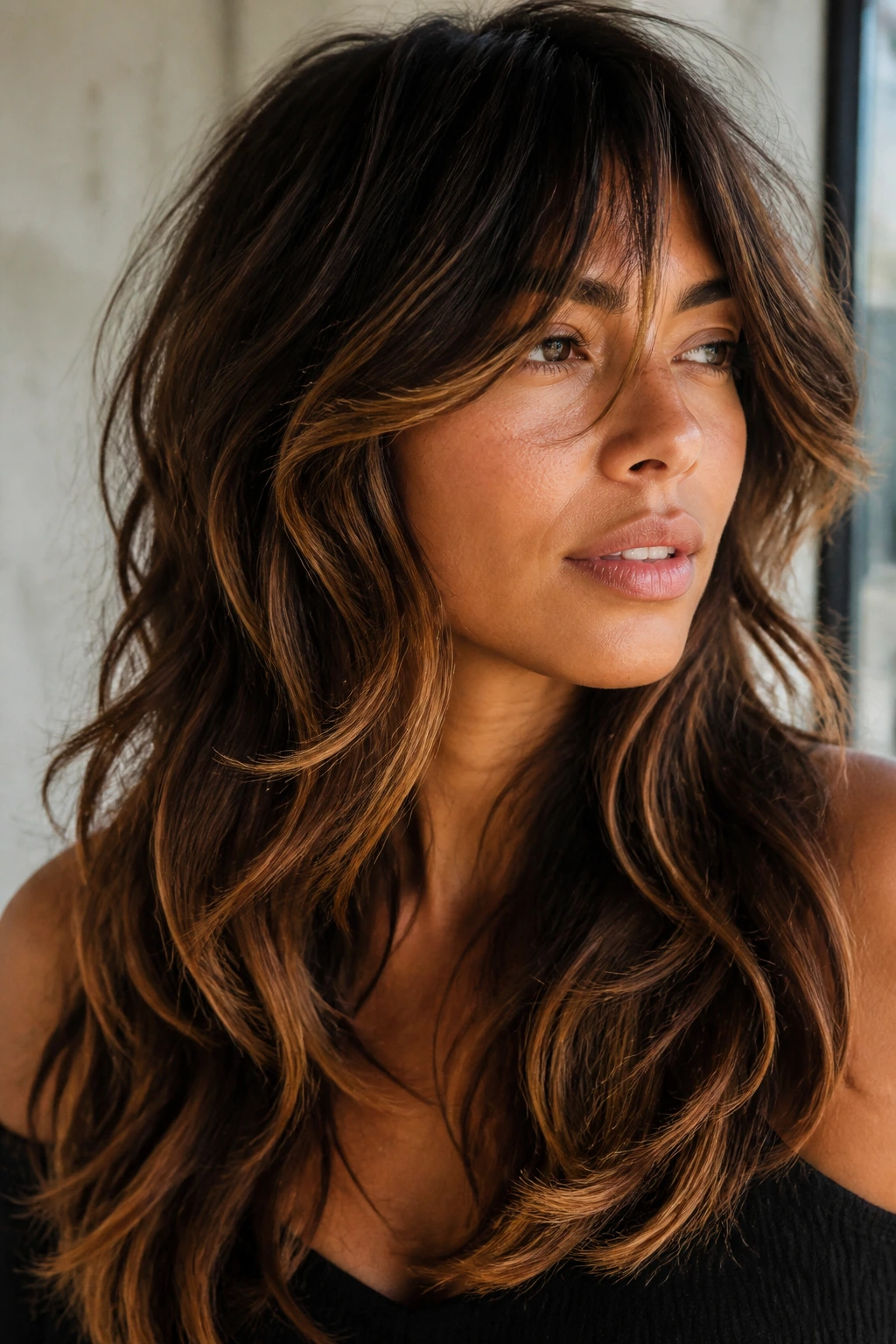
A boho shag should feel like the hair has been air-dried in a good way, not left to fend for itself. Caramel veils placed beneath the top layer soften the silhouette and keep the layers from disappearing into each other. Thick hair loves this cut because the longer lengths stop it from feeling too chopped.
The face frame is the thing to watch. Keep the shortest pieces around the mouth or collarbone, not up near the temple, unless you want the cut to look more aggressive. Caramel lowlights are useful when the hair is naturally lighter brown or dark blonde; they give the ends a bit of gravity.
If you want a salon photo that still behaves at home, this is a dependable choice. It looks even better when the ends are a little bent instead of blown pin-straight.
5. V-Shaped Shag with Mushroom Brown Depth
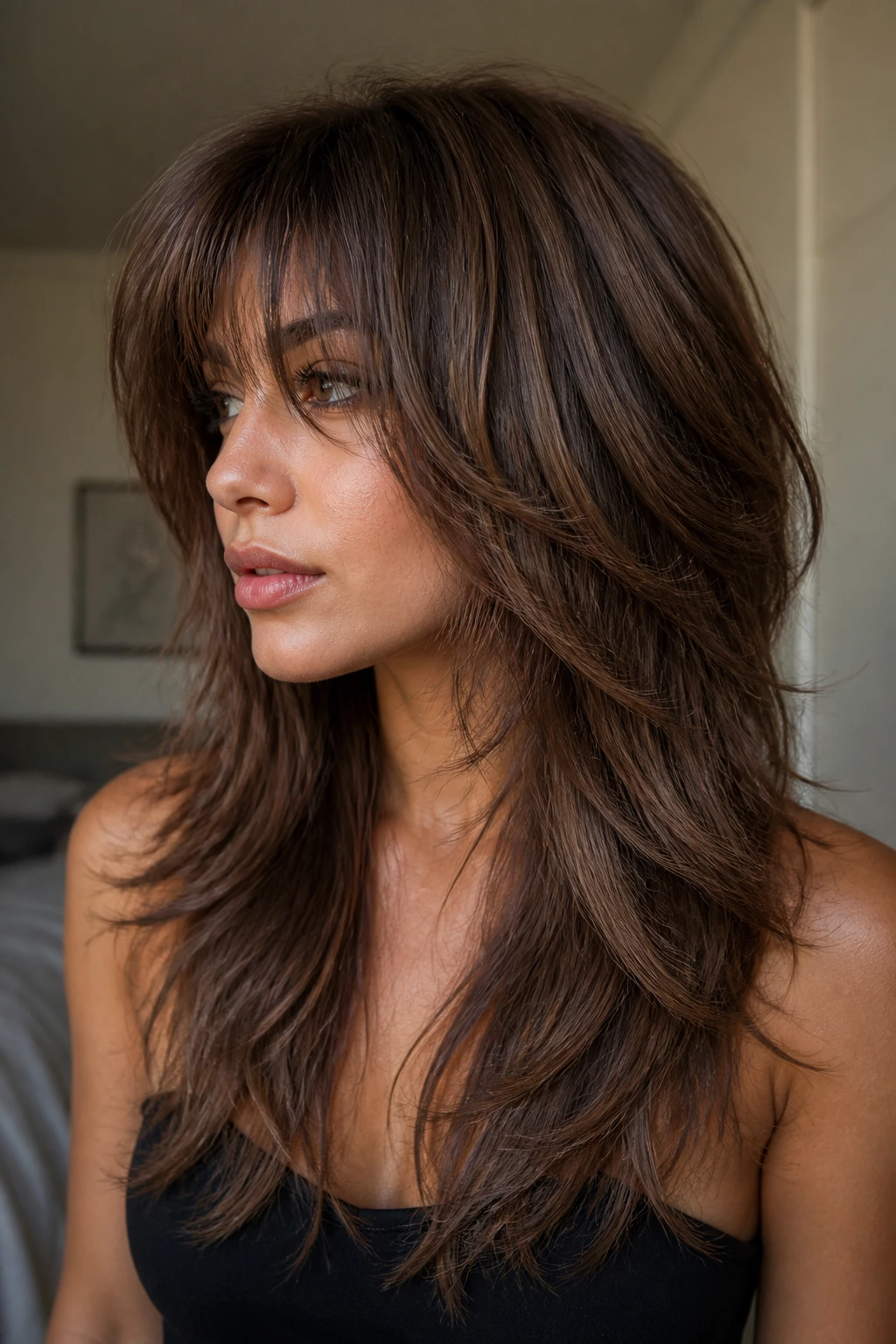
Unlike a blunt U-shape, a V-shaped shag lets the back taper without losing length on the sides. That matters when thick hair spreads out at the hemline. Mushroom brown lowlights cool down the color and make the layers read as carved, not puffy.
I like this version on hair that has a lot of natural volume but not a lot of obvious wave. The V keeps the bottom from becoming a shelf, and the shag layers stop the point from looking too severe. It is one of the few cuts that can feel sleek and undone in the same breath.
If your stylist likes to thin aggressively with shears, slow them down. This cut needs internal removal, not a butchered perimeter.
6. Bottleneck Bang Shag with Walnut Framing
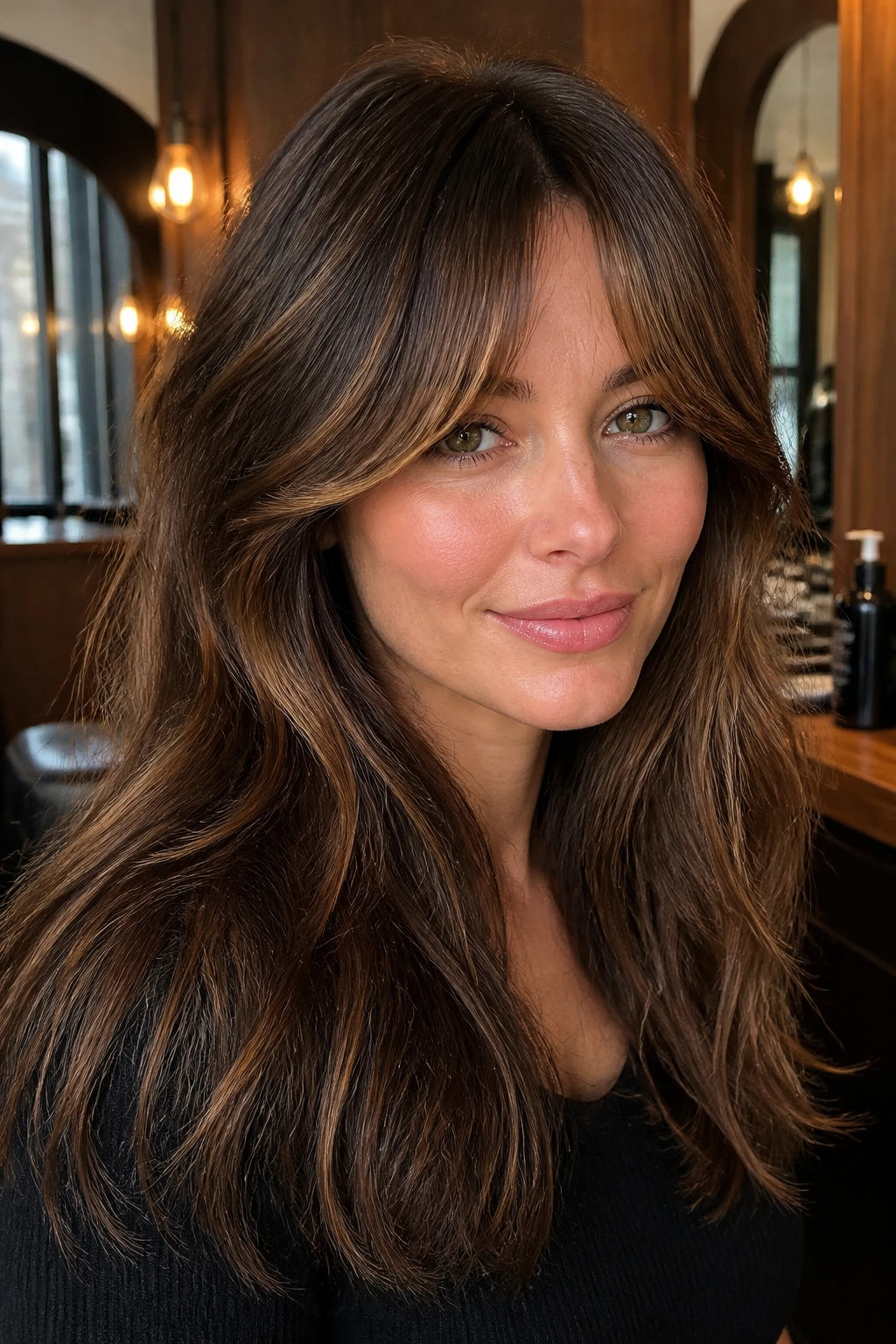
A bottleneck fringe opens in the center and feathers out at the sides, which makes it a better fit for thick hair than a heavy straight bang. Walnut lowlights around the temples and under the fringe add shape where the hair tends to pile up. The bangs soften the forehead; the long layers keep the rest of the cut grounded.
The trick here is balance. Too much fringe and the top half looks dense. Too little and the shag loses personality. Keep the bottleneck pieces long enough to brush the eyelashes in front and slide into the cheekbones at the sides.
How to wear it
Air-dry the fringe first if you can. Bangs on thick hair can bounce around like they have their own opinions, and it is easier to train them early than fix them later.
7. Feathered ’70s Shag with Ash Brown Lowlights
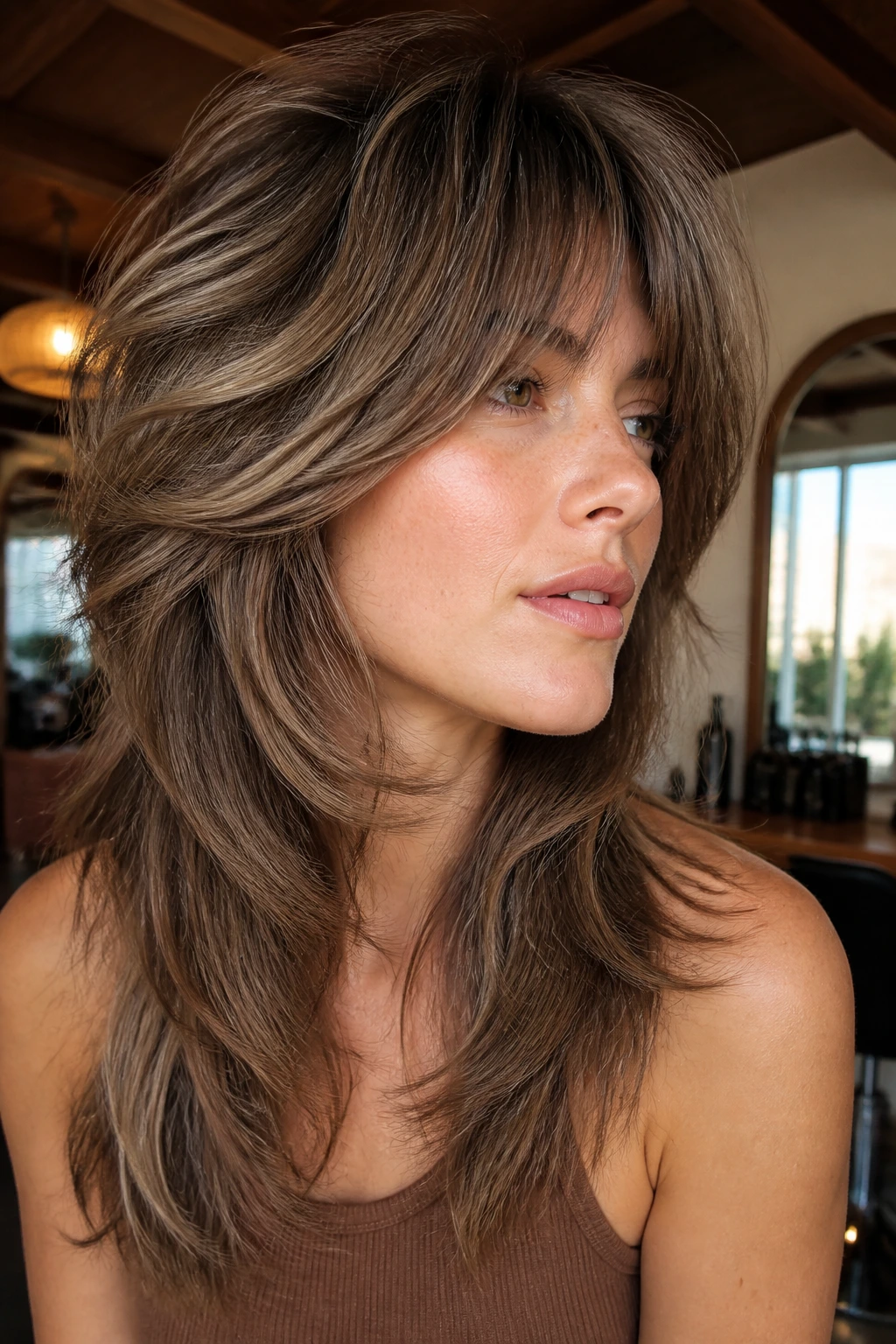
A feathered shag on thick hair has movement built in from the root down. The layers should flick away from the face and soften at the ends, not stack into heavy shelves. Ash brown lowlights keep the whole thing from drifting too warm or too bright.
This is a good cut if your hair naturally turns volume into bulk. The feathering takes away the square look that dense hair gets after a blunt trim. Ask for the layers to start somewhere between the chin and collarbone, not right under the ears, unless your hair is very long and very full.
It’s a nostalgic haircut, yes, but it works because the mechanics are sound. Hair falls better when it has air between the sections. Simple.
8. Center-Part Layered Shag with Toffee Slices
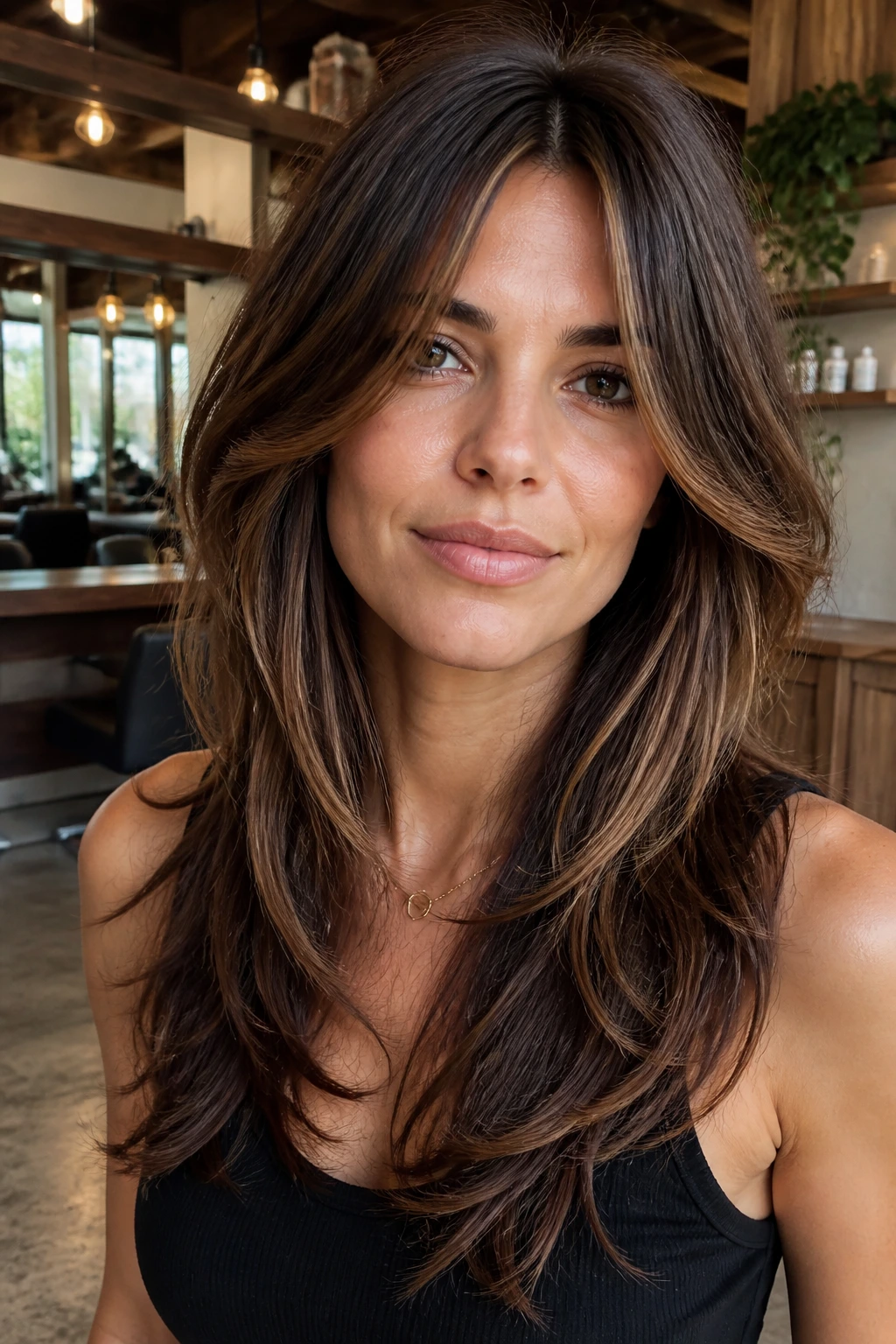
A center part changes the whole personality of a shag. Suddenly the haircut feels longer, leaner, and a little more deliberate. Toffee slices placed through the lower interior keep the symmetry from looking flat, which is the danger with thick hair parted down the middle.
This version is especially useful if your face frame is already balanced and you do not want bangs. The long layers start low, the lowlights sit in soft ribbons, and the perimeter stays plush. Nothing should look chopped to pieces. The goal is movement with a clean line underneath.
If your hair tends to separate down the middle on its own, this cut will feel easy. You are not fighting the pattern. You are shaping it.
9. Choppy U-Shaped Shag with Mocha Underlayers
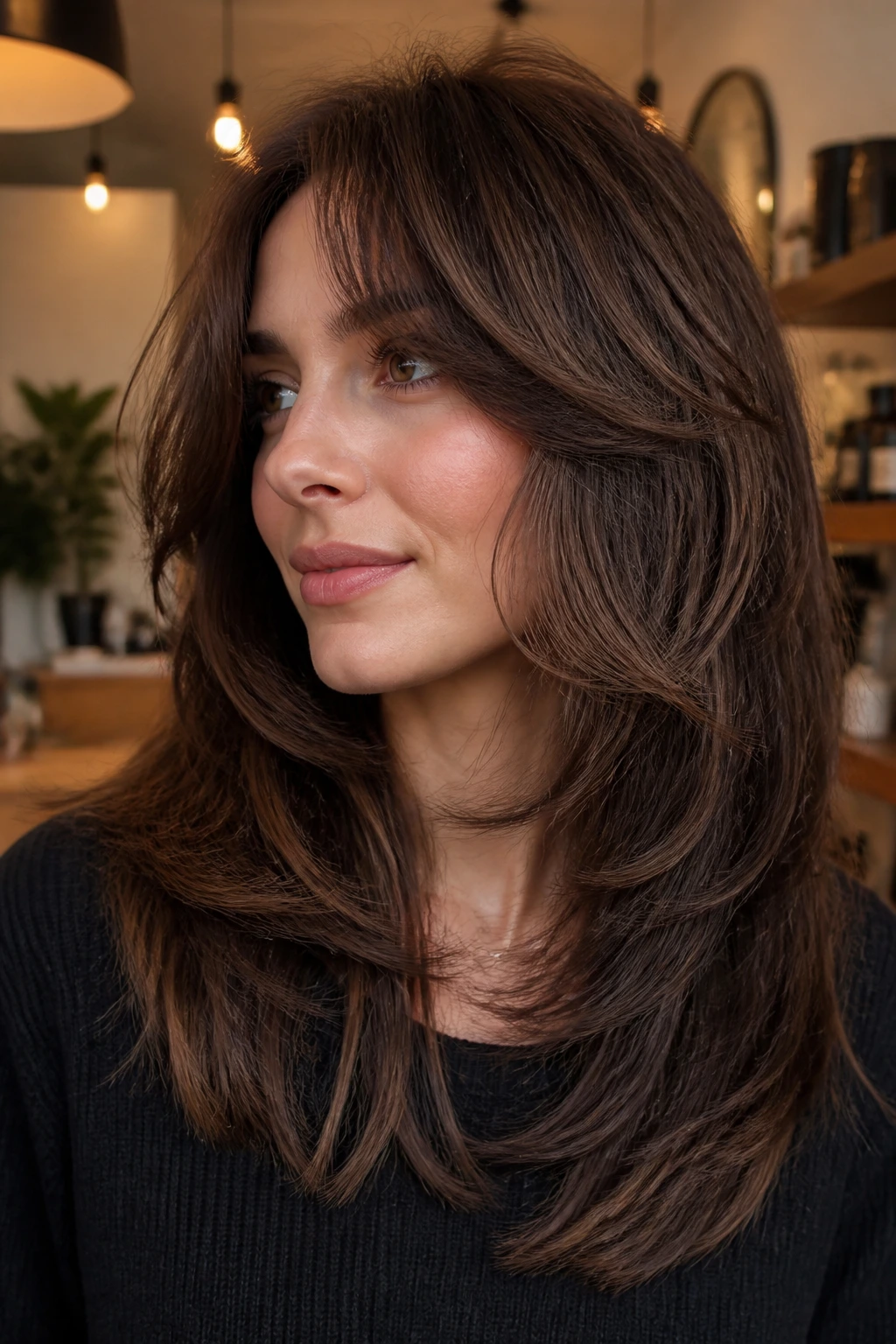
A U-shaped shag keeps the outline round and full, which is useful when you want the ends to sit softly over the shoulders instead of kicking out. Mocha underlayers add depth without taking the brightness out of the surface. Thick hair reads less bulky when the darkest color lives beneath the top panel.
I like this on people who wear their hair down more than up. The U-shape holds together nicely in a loose ponytail too, which is one of those small things that matter more than salon vocabulary. If the layers are too short, the ponytail turns into a fountain. Nobody asked for that.
This cut sits in the sweet spot between polished and carefree. It has structure, but it does not look stiff.
10. Curly Shag with Dark Chocolate Panels
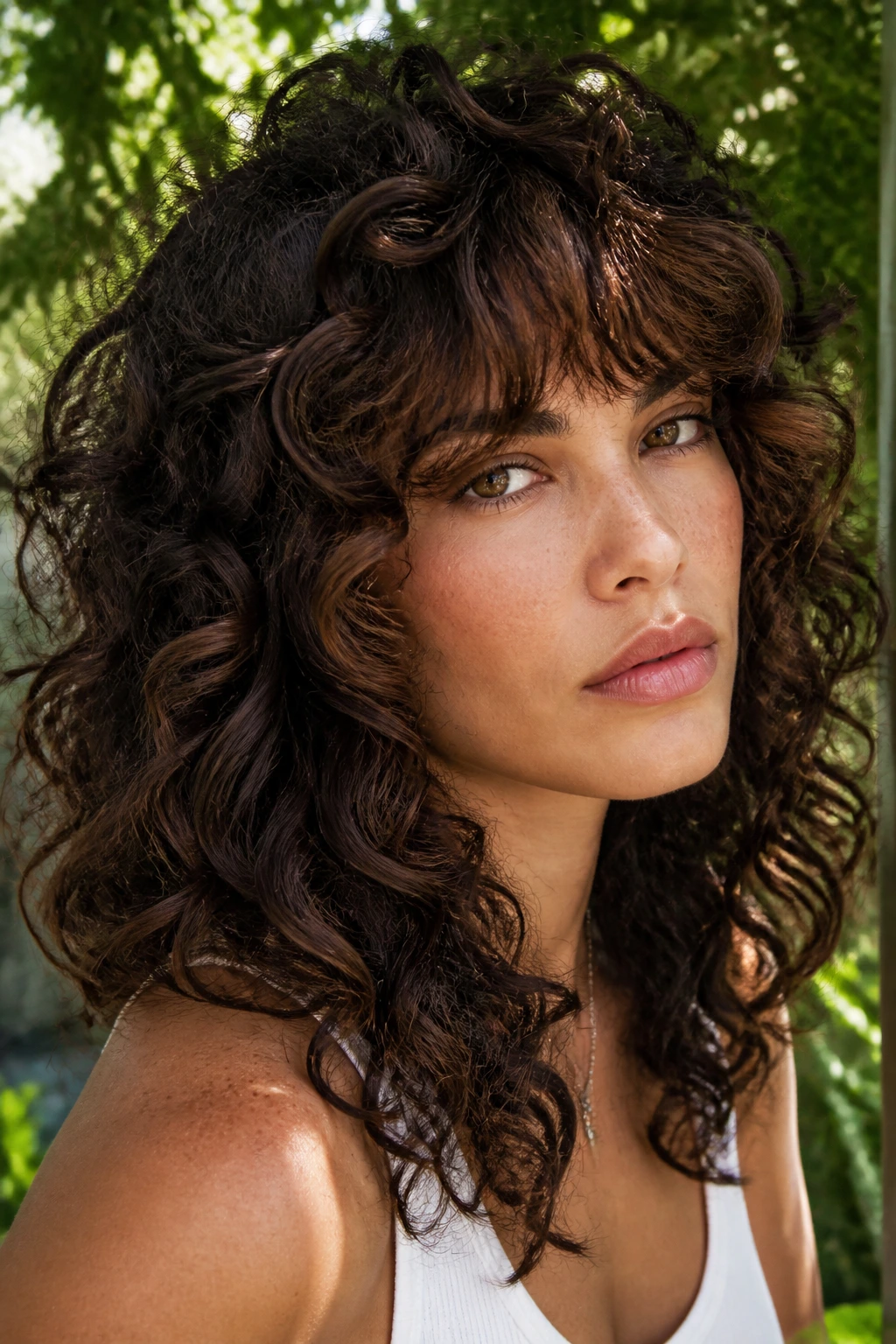
Curly thick hair can handle a shag beautifully, but only if the layers respect the curl pattern. Dark chocolate panels deepen the interior so the curl clumps stay visible instead of exploding outward. The shape should be cut curl by curl, or at least curl family by curl family, not carved into a generic outline.
The best version starts with the curl’s natural spring length. A curl that lands at the collarbone when wet may bounce up several inches once it dries, and the layers need to account for that. Keep the lowlights low and inside the cut so they peek through when the curls stack.
If your hair is curly and dense, this is one of the few shapes that gives you room to breathe. No helmet. No pyramid. That alone is worth something.
11. Straight-Textured Shag with Smoky Brunette Dimension
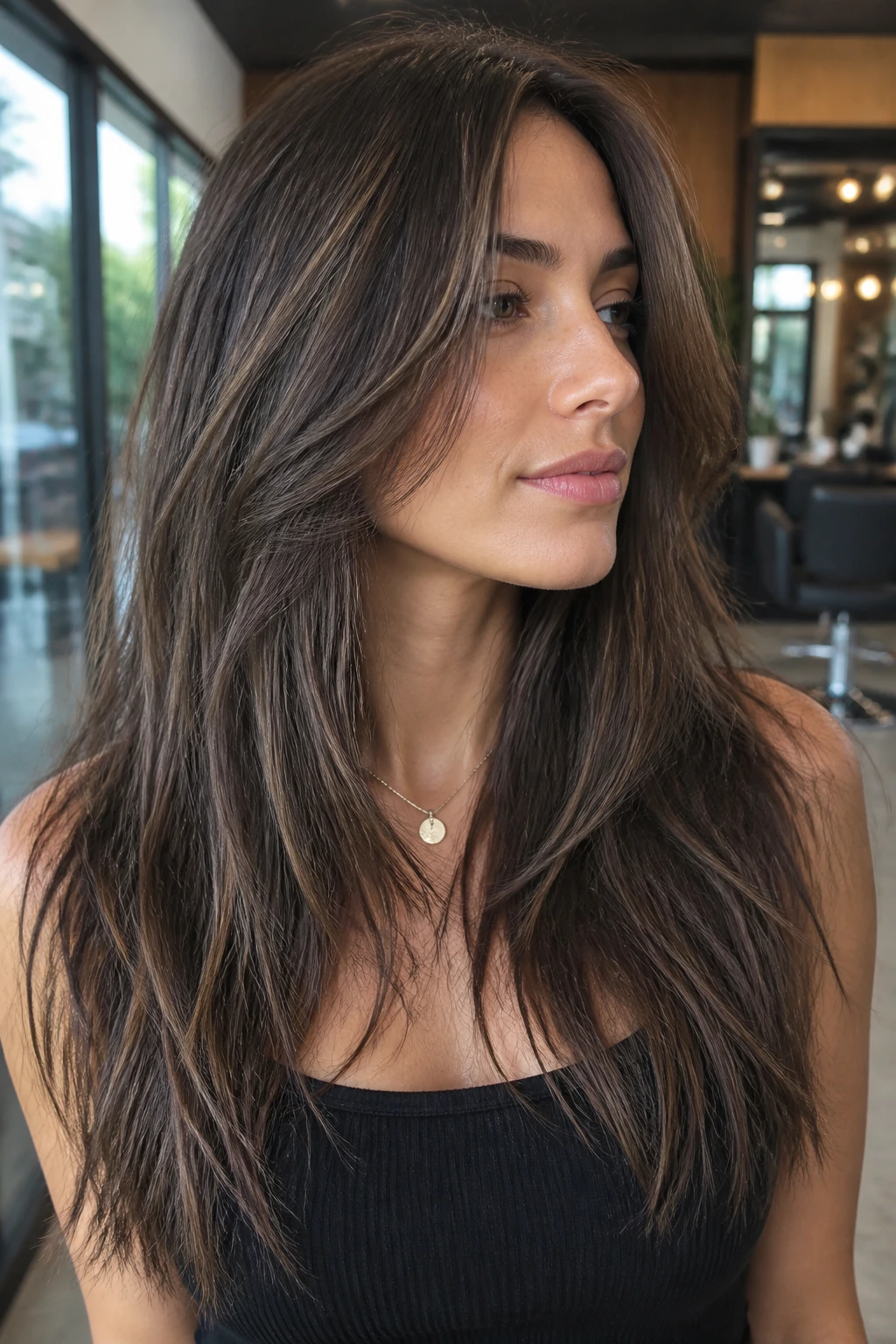
Straight thick hair needs texture that shows up even when the hair falls flat against the shoulders. A straight-textured shag gets there with internal layering, point-cut ends, and smoky brunette lowlights that break up the surface. The lowlights matter more than people think; without them, straight thick hair can look like a single curtain.
This is a good choice if you hate curlers and want a cut that still has life when blown smooth. Ask for shorter face-framing pieces around the lips or jaw, then let the rest taper down. That contrast keeps the profile from looking boxy.
The color should be soft, not streaky. Smoky brunette reads best when it blends into the natural base instead of announcing itself from across the room.
12. Copper-Brown Shag with Auburn Lowlights
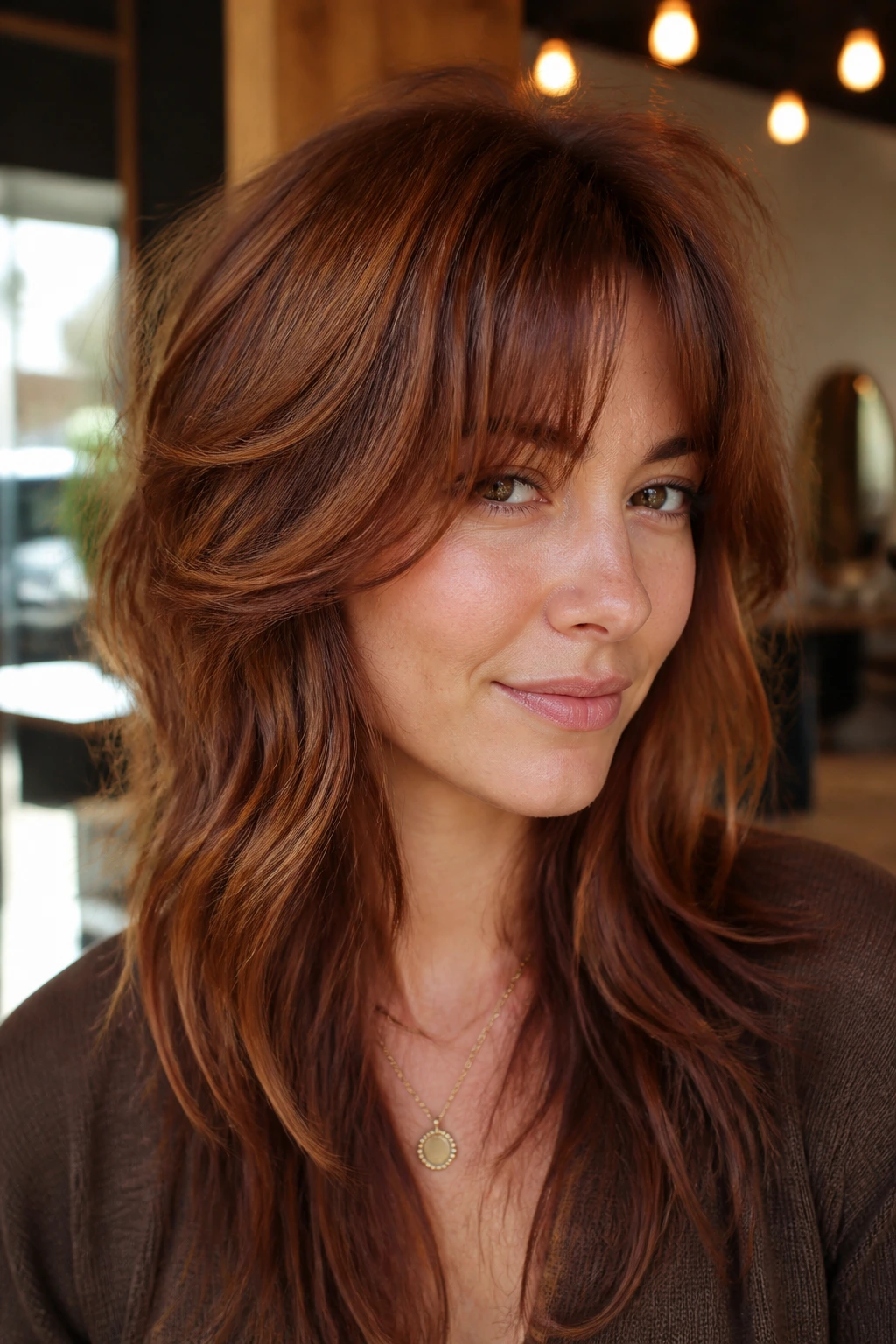
Copper-brown hair with auburn lowlights has a richer, warmer feel than a plain brunette shag. The darker auburn pieces create a kind of ember effect through the layers, which is useful when thick hair needs more visual separation. The haircut itself should stay airy, because the color is doing part of the heavy lifting.
This works especially well if your natural tone leans warm already. If you push the red too high, the cut can start to look loud in a bad way, and thick hair rarely needs more volume in the color story. Keep the lowlights a shade or two deeper than the copper base and let the shine do the rest.
A little gloss on the mids and ends helps this one read expensive. Not fancy. Just cared for.
13. Face-Frame Heavy Shag with Hazelnut Pieces
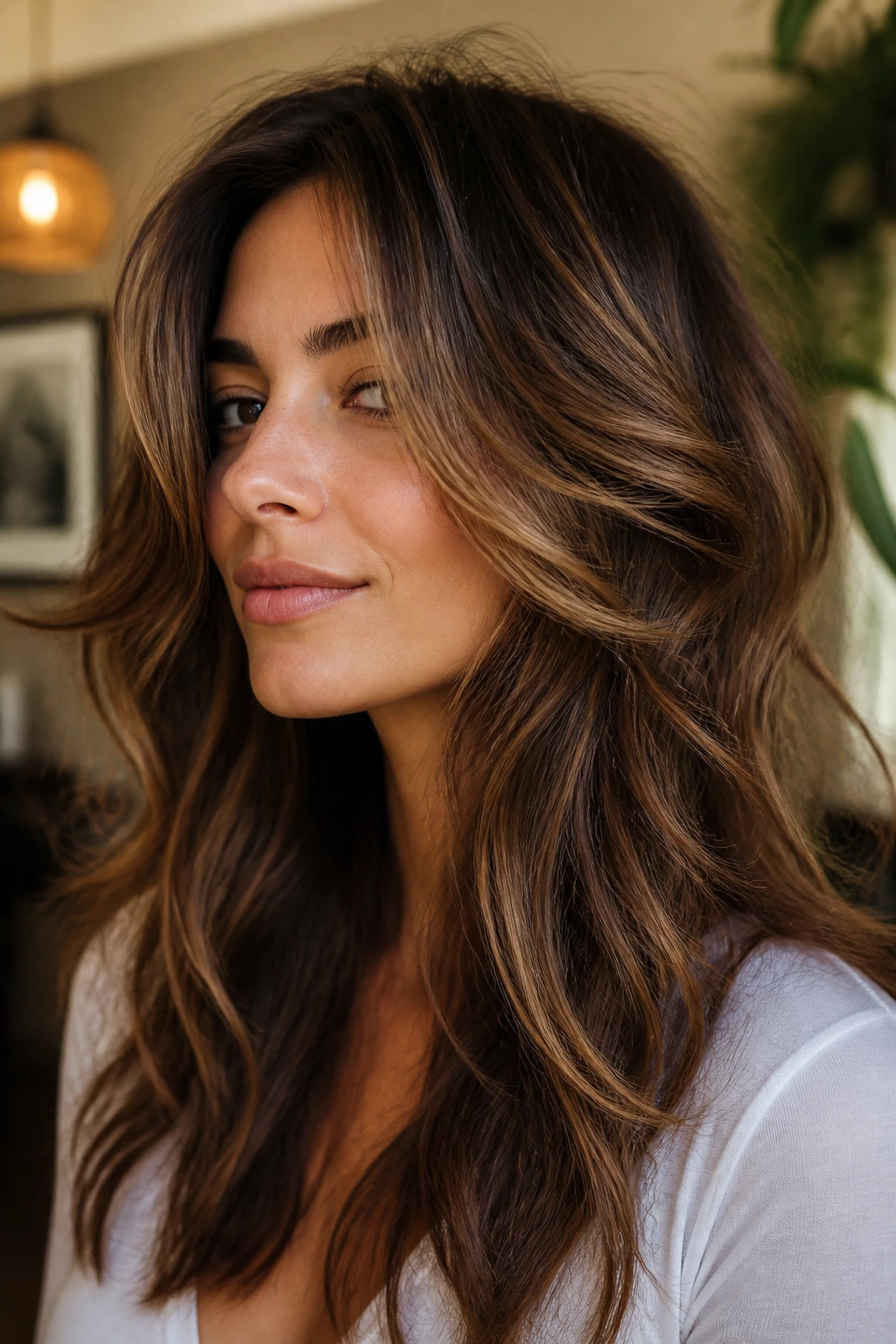
When the front matters more than the back, this is the cut to ask about. The face-framing layers should start at the cheekbone and fall into the collarbone, with hazelnut pieces threading the front so the shape opens up without going too bright. Thick hair often hides the face if the front is cut too long and too blunt.
The rest of the haircut can stay longer and more relaxed. That’s the point. You don’t need a full head of short layers to get movement where it counts. A few well-placed pieces around the face and a soft weight line in the back usually do more than aggressive thinning.
I’d choose this for round or square faces, or for anyone who wants the haircut to do some contouring without looking styled to death.
14. Midback Shag with Invisible Internal Layers
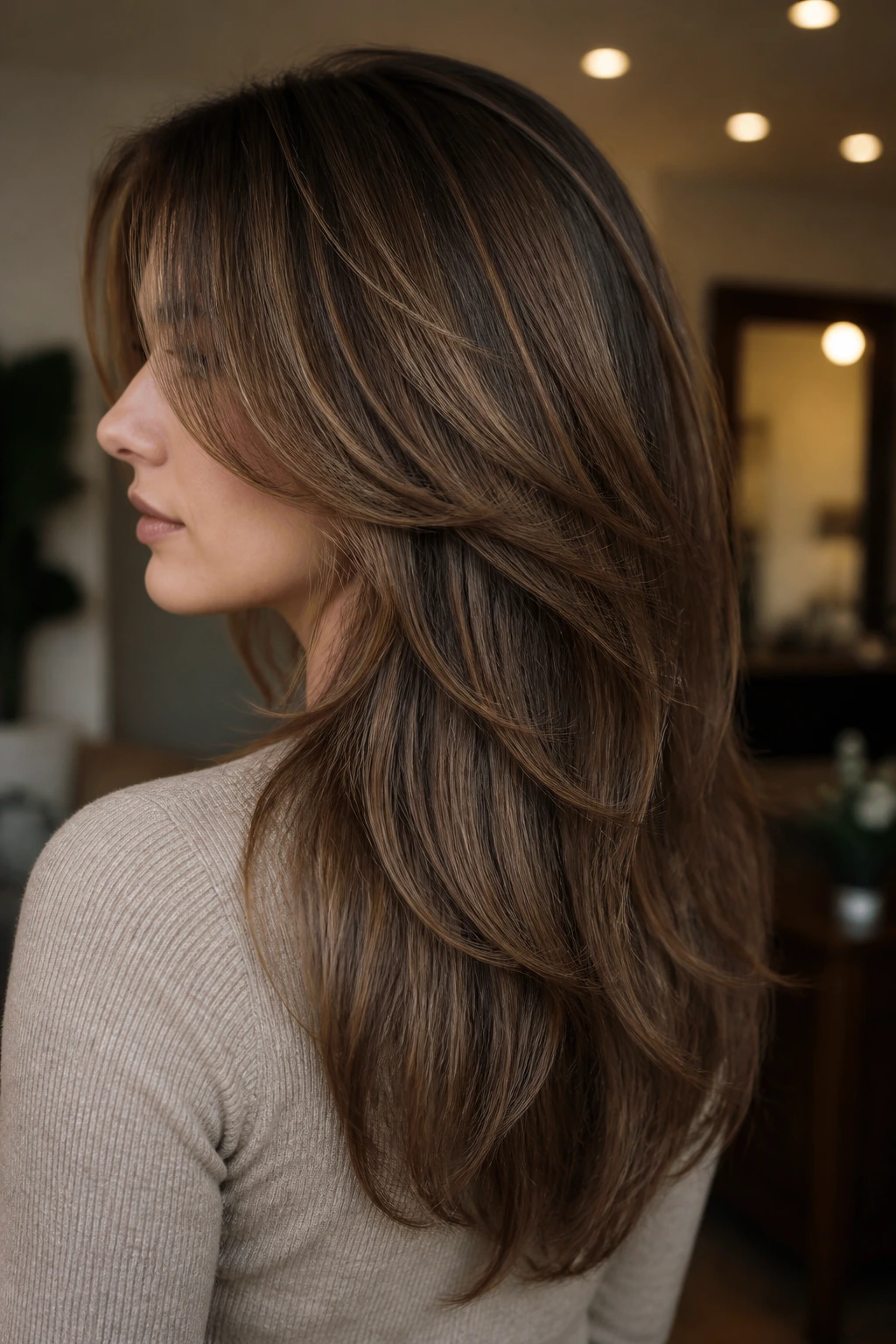
Here’s the cleanest long-shag option of the bunch: midback length, quiet layers, and lowlights so subtle they almost disappear until the light shifts. Invisible internal layers are a smart move for thick hair that you want to keep glamorous rather than choppy.
The haircut does its best work from the side. Front pieces slide away from the face, while the hidden layers keep the back from feeling like one giant sheet. Ask the stylist not to overcut the top. Too much removal at the crown and the whole head starts to puff.
This is the version for people who like long hair but are tired of carrying every ounce of it. The lowlights make the ends feel denser in a good way, not heavy.
15. Max-Length Shag with Cinnamon Ends
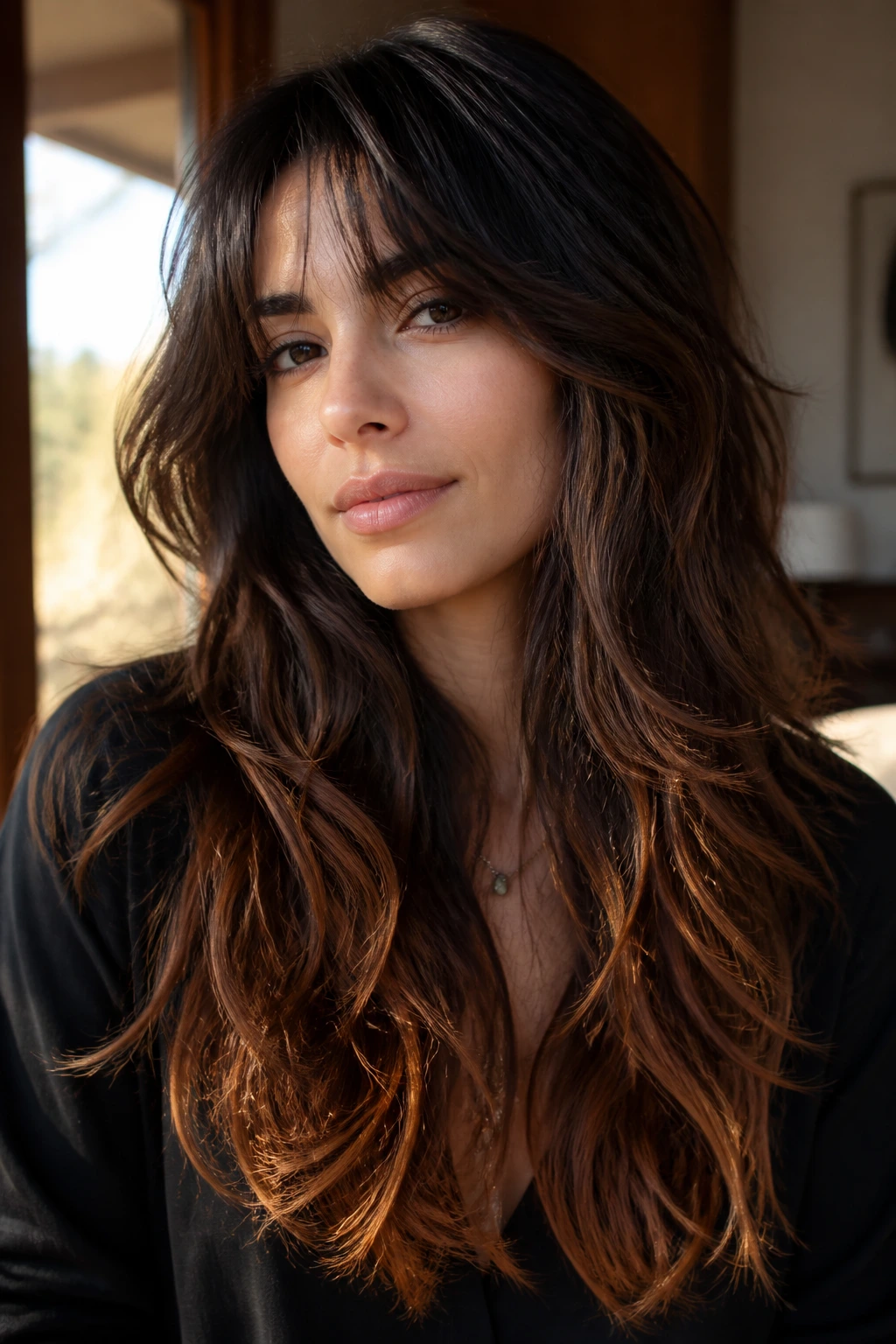
A max-length shag keeps the overall length dramatic while still taking weight off the midsection. Cinnamon lowlights near the ends pull the eye downward and make the lower half feel more dimensional. That matters on thick hair, where the bottom can go fuzzy or blunt fast.
The haircut should keep the longest pieces at the back and sides, with layers that begin low enough to protect the length. If the shortest layers are too high, you lose the long, glossy effect that makes this cut work. Cinnamon lowlights are a good match for darker brunettes who want warmth without obvious red.
This is one of my favorites for people who are not ready to give up the feeling of long hair but need the shape to stop sitting like a block.
16. Glam Long Shag with Balanced Brunette Ribbons
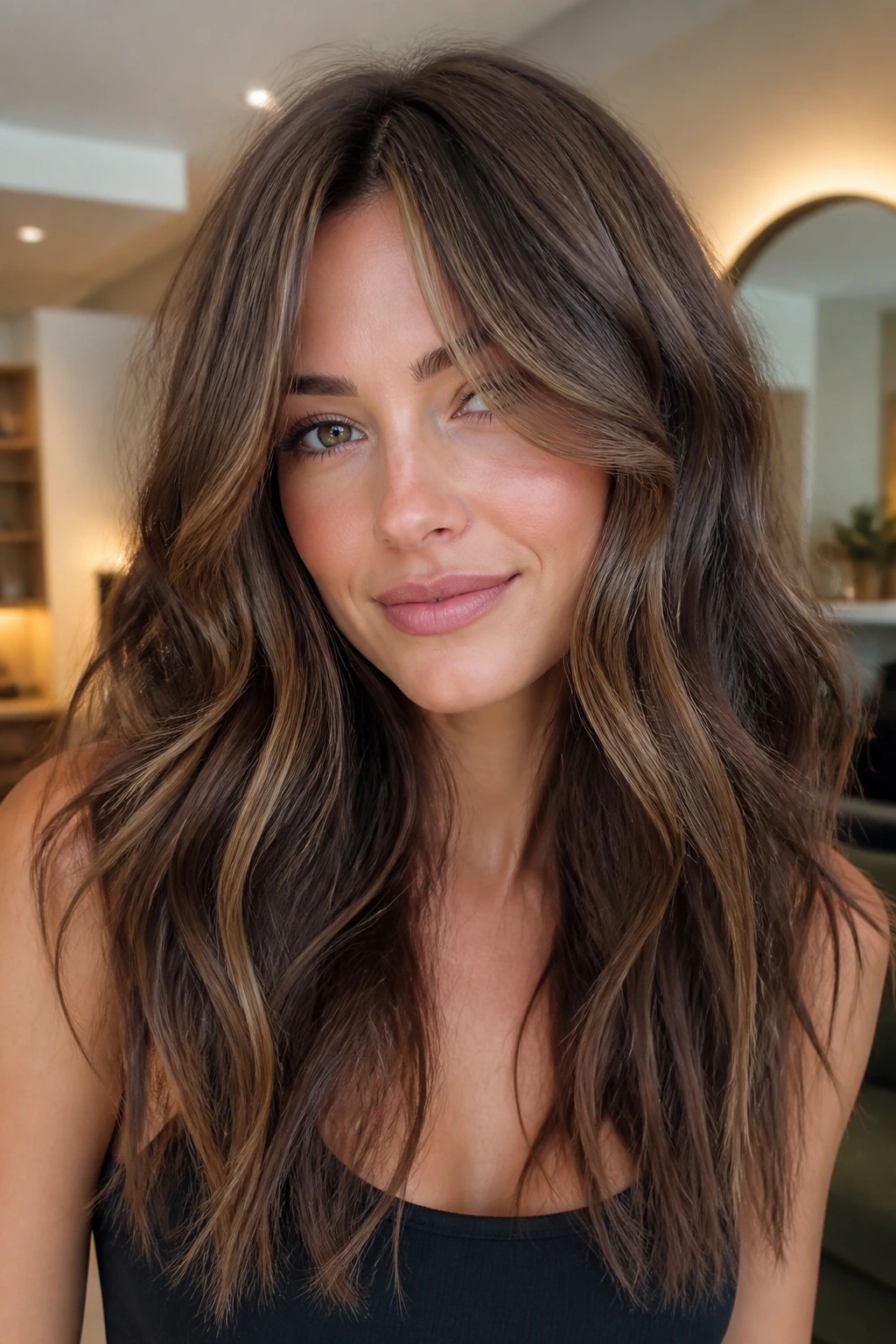
Unlike an ultra-choppy wolf cut, a glam shag keeps the edges cleaner and the movement more controlled. Balanced brunette ribbons run through the mid-lengths so the haircut looks dimensional when it swings, especially under indoor light. Thick hair benefits from that kind of measured contrast.
Ask for soft layers rather than shredded ones. The difference is noticeable. Soft layers let the hair swing; shredded ends can make dense hair look dry even when it is healthy. Keep the lowlights thin enough that they read as part of the fabric, not separate lines.
This version works if you still want a bit of polish. It’s shaggy, but not punk. There’s room for a round brush here if you want it.
17. Airy Wavy Shag with Sandalwood Shadow
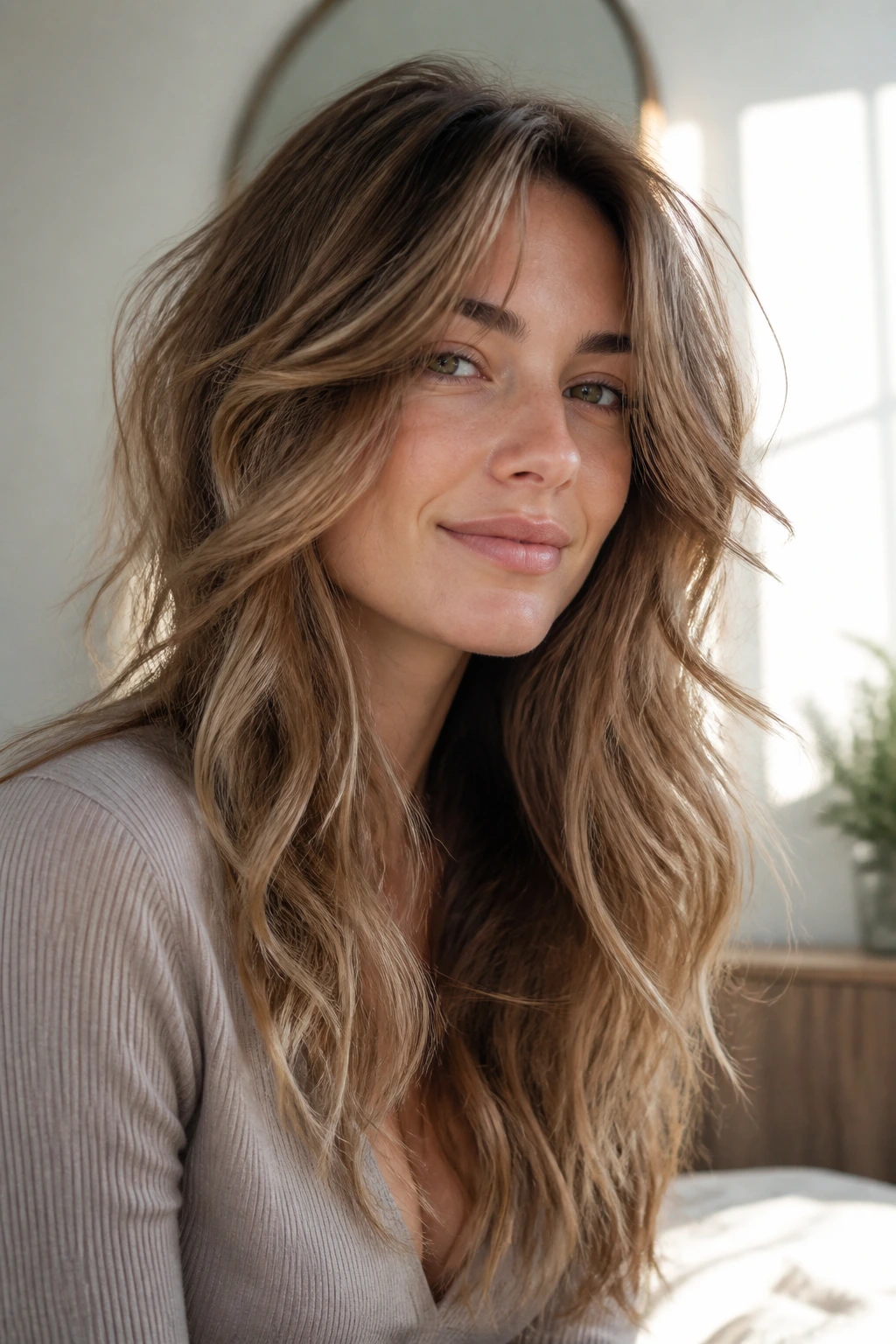
What makes an airy wavy shag feel expensive in real life? The answer is probably the lowlights. Sandalwood shadow under the outer layer gives waves a place to sit, so they don’t spread into a broad cloud. Thick hair with a wave pattern tends to hold volume in the midsection, and this shape breaks that up.
The wave should be encouraged, not forced. A bit of salt spray through damp hair, a quick scrunch, and a diffused dry is usually enough. If you overbrush it, the whole thing loses the separation that makes the shag read as soft instead of frizzy.
This is a low-argument haircut. It behaves, mostly. That’s the appeal.
18. Long Fringe Shag with Maple Brown Contrast
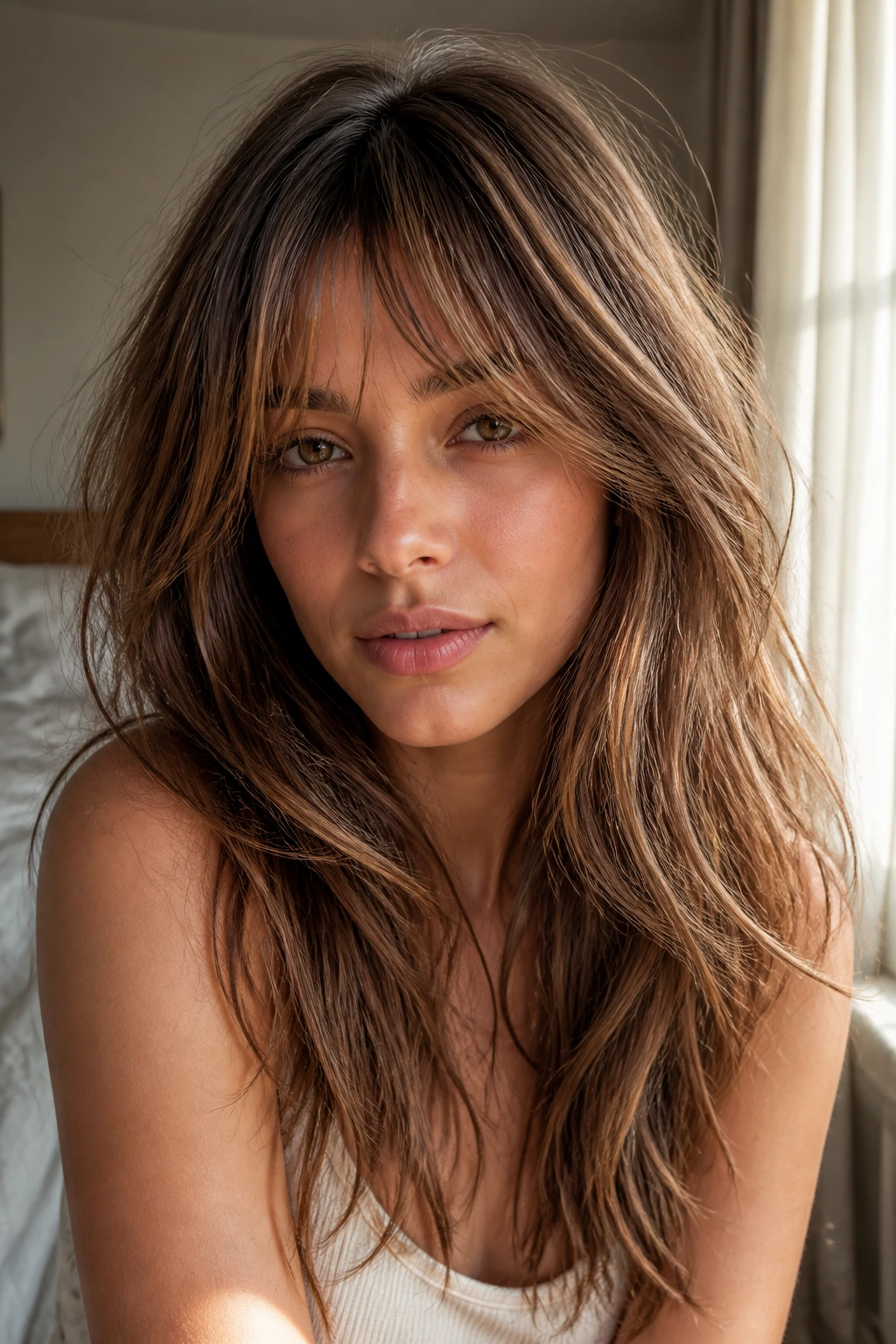
A long fringe changes the whole face shape without chopping the haircut into pieces. Maple brown lowlights beneath the fringe and through the crown add contrast, which keeps the front from becoming a dark curtain. Thick hair especially needs this kind of breathing room at the eyes and cheeks.
The fringe should be long enough to tuck behind the ears on bad days. That tiny detail matters more than most people think. If the bangs are too short, they become high-maintenance immediately. If they’re a touch longer, they can slide, split, or sit center-parted and still look intentional.
This is a good pick when you want something a little romantic but not fussy. Long fringe, soft layers, and color that moves with the cut. Easy to live with, which is the whole point.
19. Soft-Blunt-End Shag with Espresso Veil
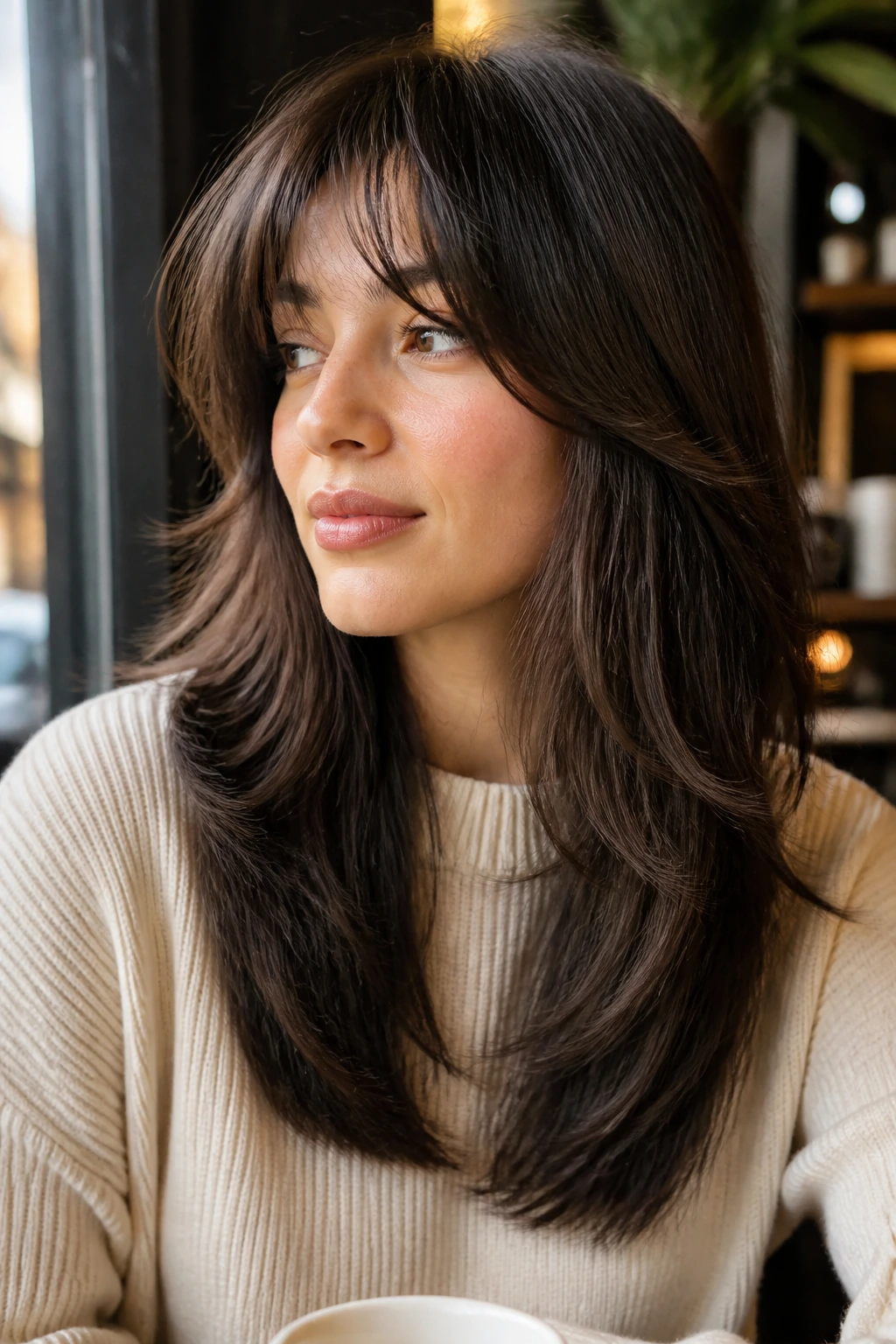
A soft-blunt-end shag is useful when you want the haircut to keep some density at the bottom while still losing weight through the interior. Espresso veil lowlights deepen the underside so the perimeter looks full, not heavy. The ends should be trimmed with a bit of point cutting so they don’t form a hard shelf.
This is one of the better options for people who get nervous around razors. You still get the shag shape, but the finish feels cleaner. Thick hair that’s prone to fraying at the ends usually looks best with this kind of controlled texture.
If your hair has any tendency to puff in humidity, keep the surface layers slightly longer. Short face pieces plus a blunt-ish bottom can get weird fast.
20. Tousled Mermaid Shag with Cocoa and Chestnut Mix
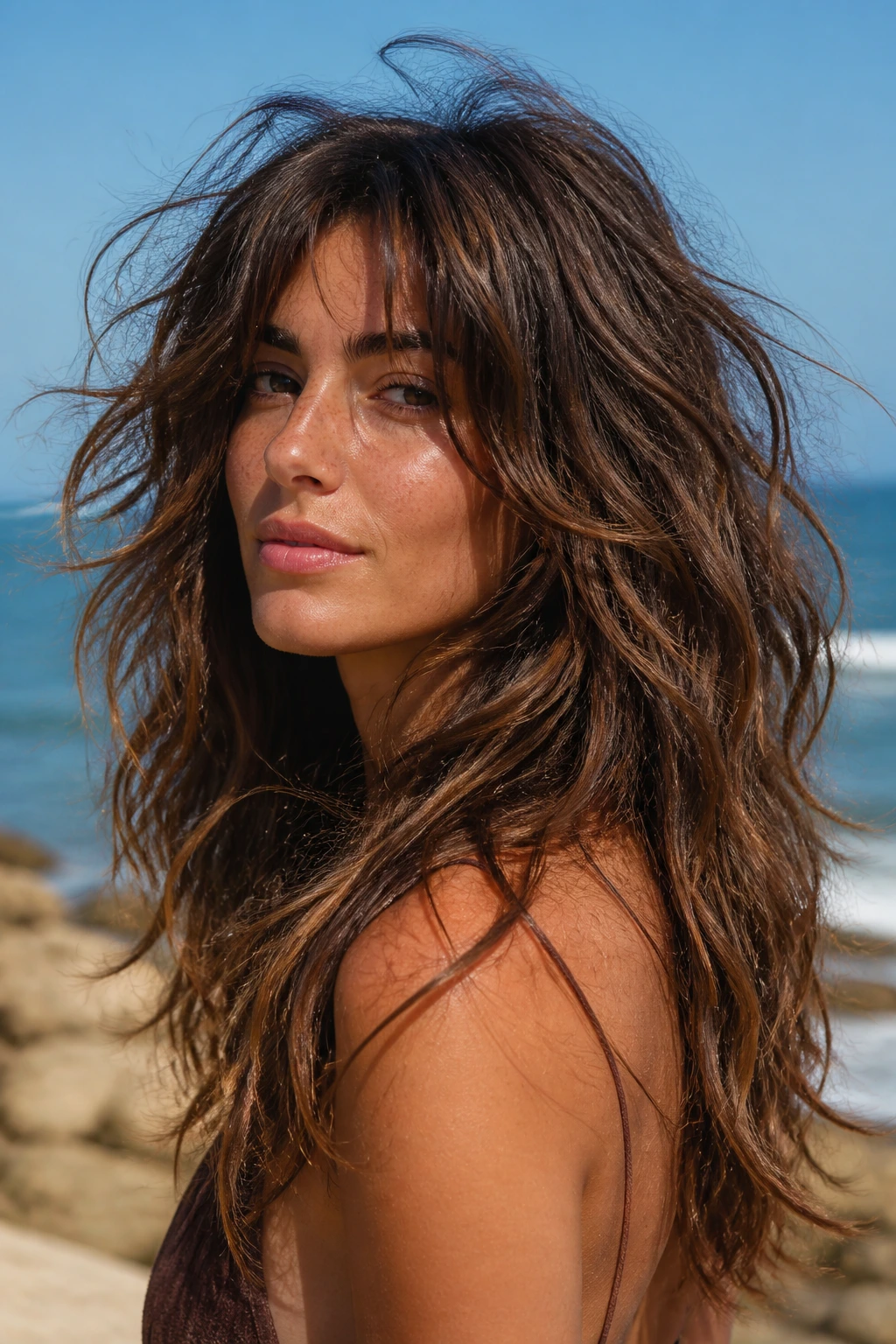
The word “mermaid” gets tossed around too casually, but here it fits. This version keeps the length flowing past the shoulders while the interior layers and mixed cocoa-chestnut lowlights keep the mass from looking like one heavy wave. Thick hair needs both the motion and the shadow.
The color mix matters. Using two close lowlight tones is smarter than one dramatic dark stripe, because the blend looks more natural when the hair moves. Ask for the darkest pieces underneath and the softer chestnut bits near the sides. That keeps the surface alive without making the whole head look busy.
This cut looks best when it’s been touched by the wind a little. Not salon-perfect. Better.
21. Low-Maintenance Shag with Dark Walnut Lowlights
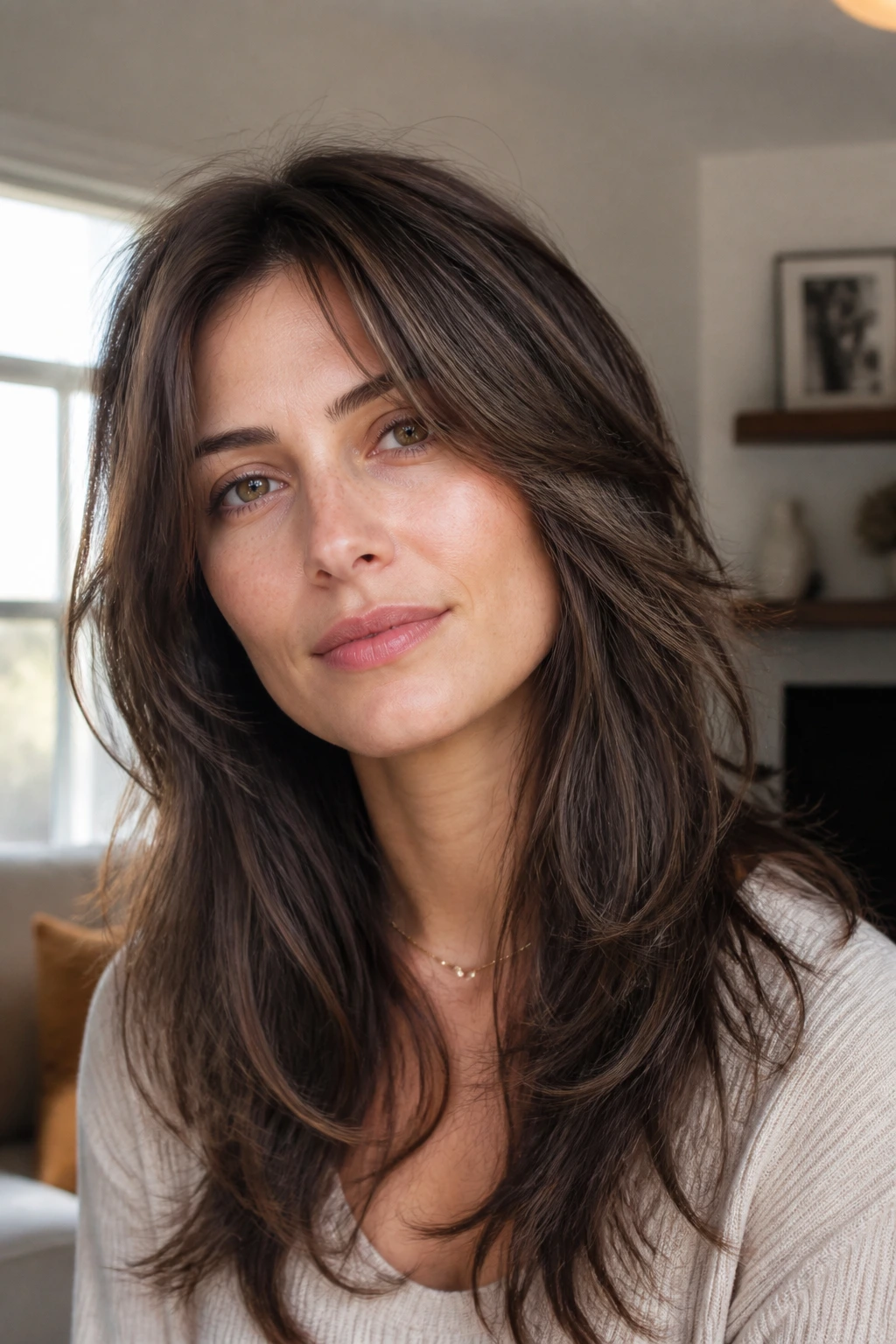
If you want the haircut to grow out without yelling at you every morning, start here. Dark walnut lowlights make thick hair look intentional even when the layers have softened out a bit. The shag structure should be built with longer layers and a loose face frame so the shape survives a few weeks of real life.
This is not the most dramatic version, and that’s why it works. The hair still moves, but the silhouette stays calm. Ask for the lowlights to be concentrated where the hair tends to swell: around the nape, under the crown, and behind the ears.
For anyone who wants a cut that looks decent in a claw clip and still falls well at dinner, this is the practical choice.
22. Full-Length Shag with Seamless Brunette Gradient
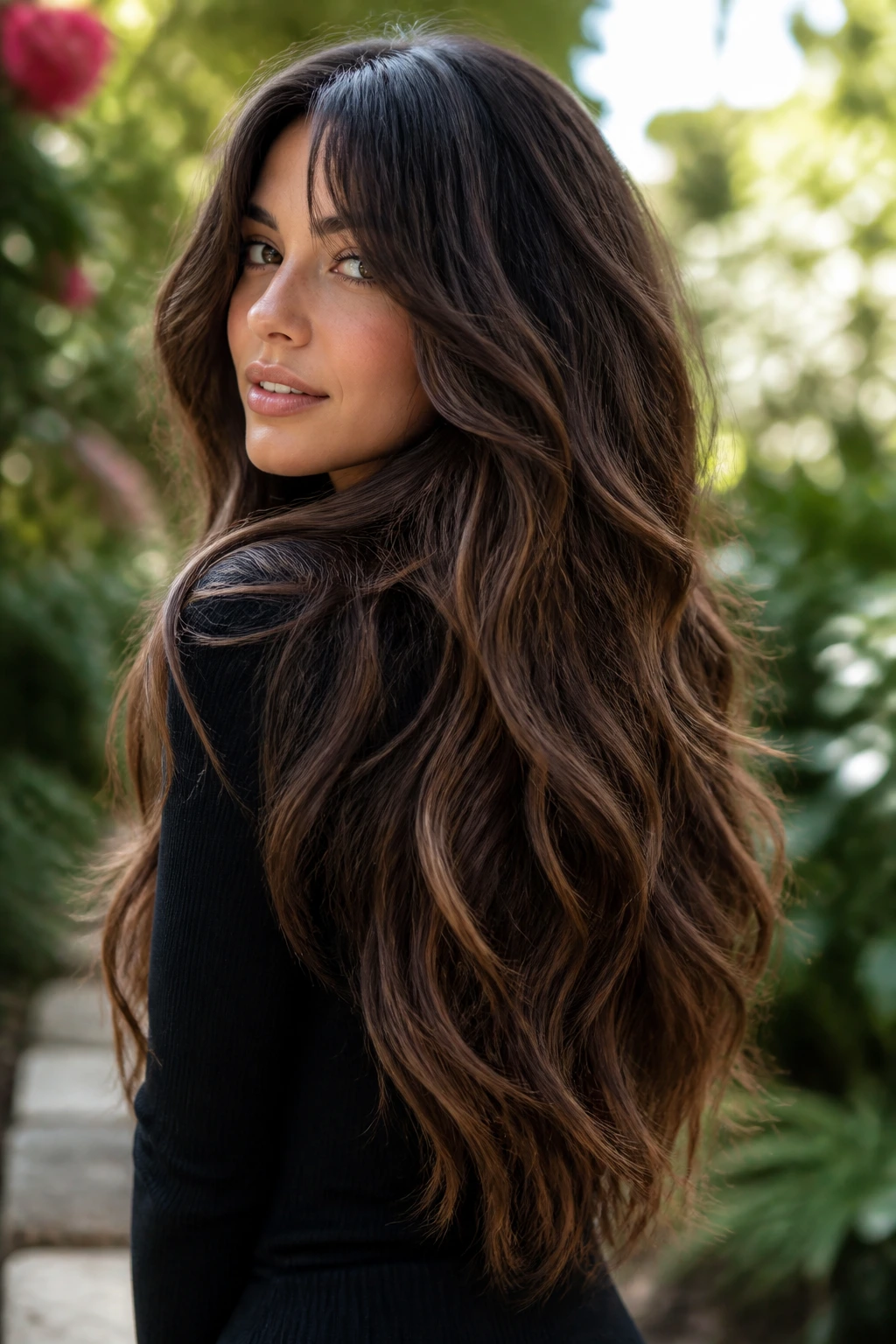
A full-length shag with a seamless brunette gradient is the quietest, smartest version of the whole group. The layers are long enough to protect the length, and the lowlights fade through the mid-lengths so the color reads like depth, not contrast. On thick hair, that can be the difference between “long” and “long but heavy.”
The silhouette should feel continuous from root to end. No hard step between the top and bottom sections. If your stylist likes to over-separate the layers, pull them back toward softness. The gradient should help the cut look expensive in the plainest way: it looks like the hair naturally decided to sit this well.
If you want one haircut that can survive air-drying, soft waves, and a round-brush blowout, this is the one I’d put money on.
Why Long Shag Layers and Lowlights Work So Well Together
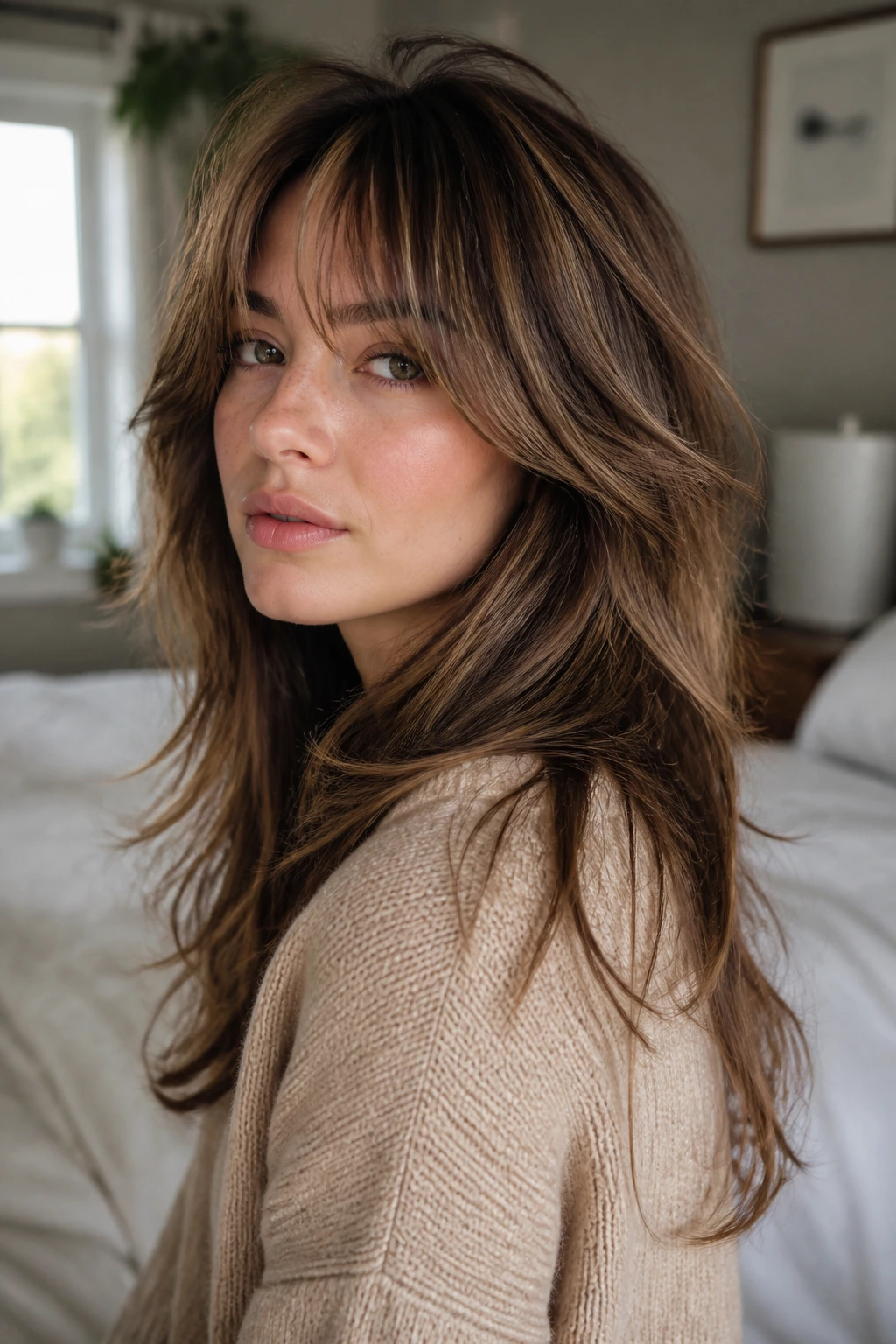
Thick hair usually fails in one of two ways: it gets too wide at the sides, or it turns into a blunt sheet with no movement. Long shag layers solve the shape problem by removing weight in places the eye notices first — around the crown, the cheek line, and the outer perimeter. Lowlights solve the color problem by giving those layers shadow, which makes each section read separately instead of merging into a single block.
That shadow matters more than people think. A shag without lowlights can look airy in the salon and flat in daylight, especially if the hair is naturally dark or very dense. A few strategically placed darker ribbons under the top layer add depth around the neckline and through the back, where thick hair tends to bulk up. The result is not louder color. It’s smarter color.
If your hair is already dark, ask for lowlights only one level deeper than your base and keep them fine. If your hair runs medium brown or dark blonde, a chestnut or caramel-brown lowlight often looks better than anything almost black. The goal is to create contrast that you feel when the hair moves, not stripes you can count from across the room.
What to Ask Your Stylist Before the First Snip
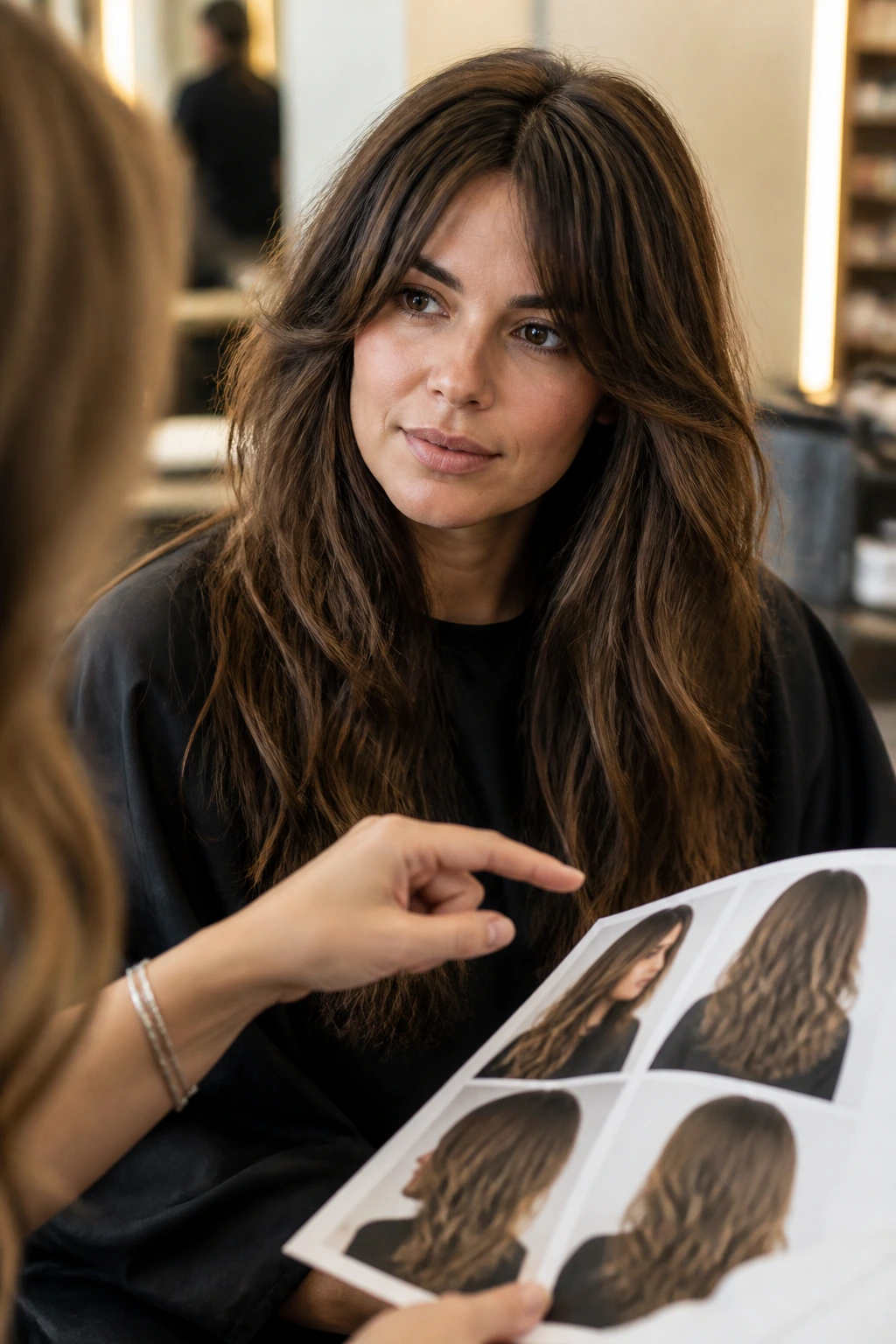
Bring pictures, yes, but bring words too. Say where you want the shortest layers to begin — chin, cheekbone, collarbone — because that one choice changes the whole haircut. On thick hair, that starting point controls how much bulk comes off the body of the cut.
Ask for internal layering or debulking rather than just thinning the ends. There’s a big difference. Internal layering takes weight out from inside the shape; random thinning shears can leave the perimeter frayed and the ends weak. If your hair is coarse, this distinction matters even more because coarse strands can look hacked apart when they’re over-thinned.
For the color, request lowlights placed mostly under the top canopy, around the nape, and through the mid-lengths. Those are the places that need shadow. Face-framing pieces can stay a touch lighter so the cut doesn’t sink into the face.
Styling Moves That Keep Thick Hair from Puffing Up
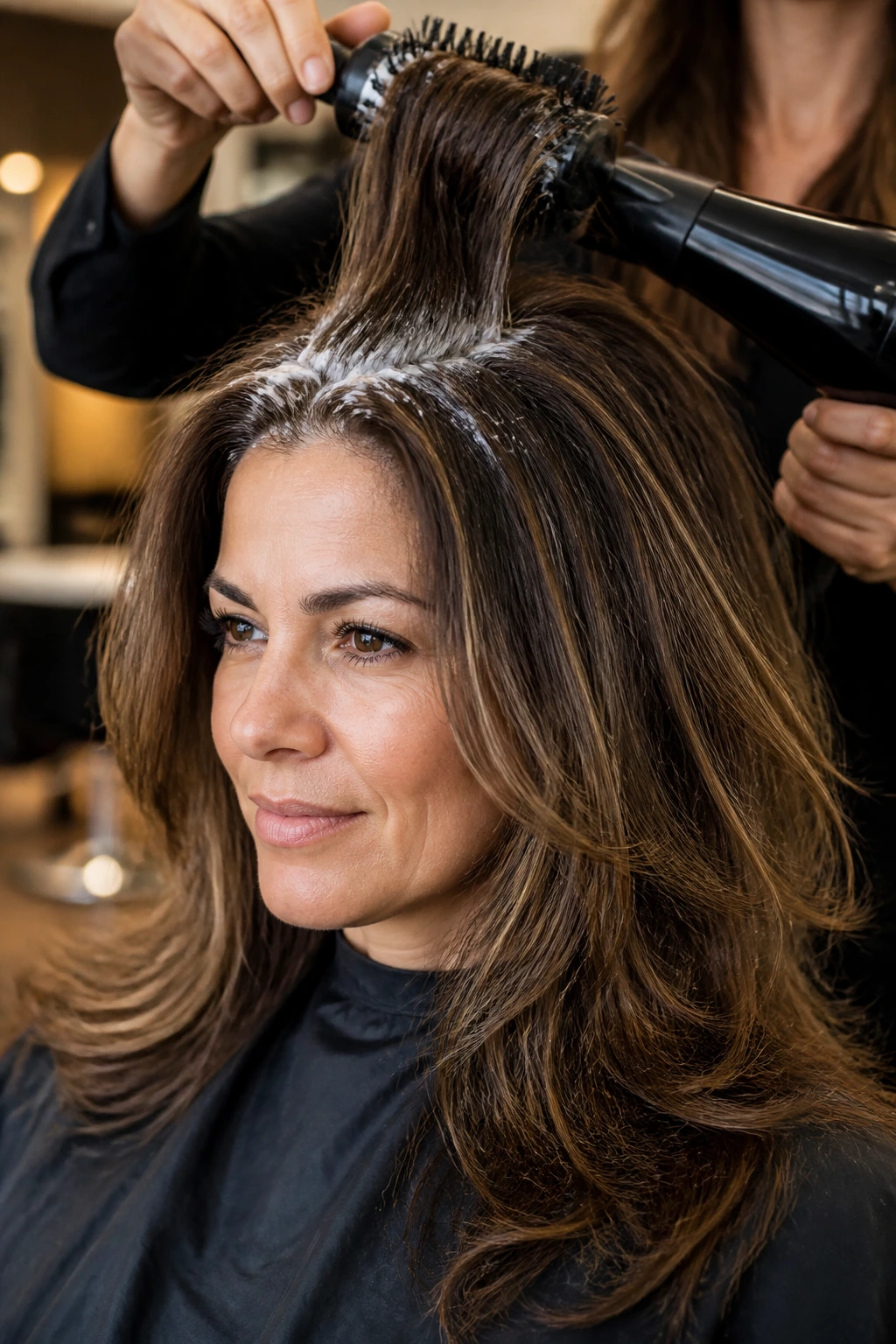
Root Lift: Start with a small amount of mousse at the roots, especially at the crown and around the temples. Rough-dry until the hair is about 70% dry before you start shaping anything with a brush.
Bend, Not Curl: Use a 1 to 1.25-inch iron or wand and wrap only the mid-lengths, leaving the last inch or two out. Thick hair looks better with a bend than a curl that turns springy and overdone.
Finish the Ends Last: A pea-size amount of serum, worked just through the bottom 2 to 3 inches, keeps the cut from frizzing out. If you put that serum near the roots, the whole shag collapses.
Reset the Next Day: Mist the hair lightly with water, add a touch of leave-in, and scrunch the layers back into place. Five minutes is usually enough. More than that and you start fighting the cut again.
Tiny Upgrades That Change the Whole Look
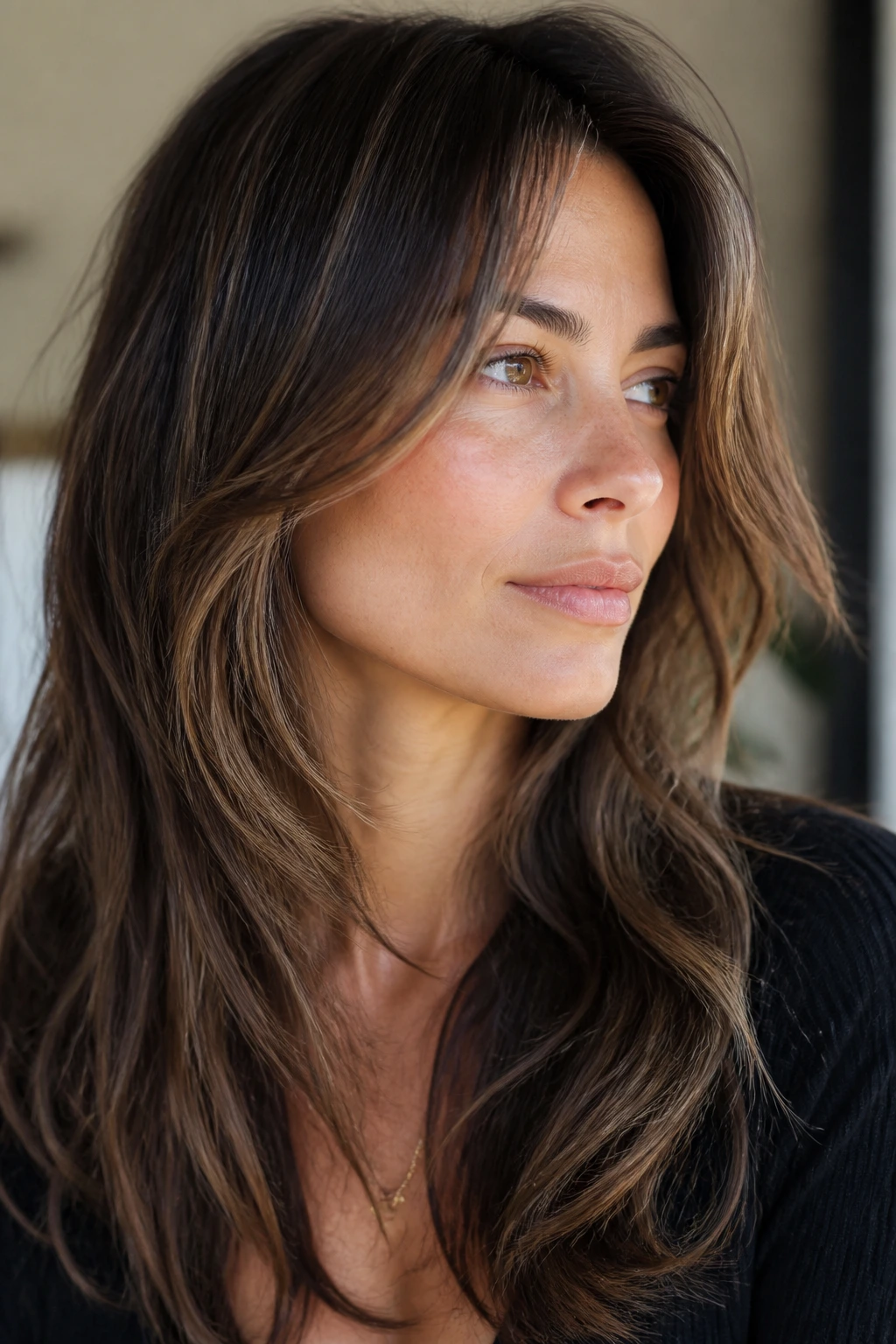
Shape Booster: Ask for the shortest face-framing piece to hit at the cheekbone or just below it. That one measurement can make the haircut feel lifted instead of bottom-heavy.
Color Booster: Keep the darkest lowlights under the top layer and around the nape. When the hair moves, the color will flick through the shape instead of sitting on top like a dye job.
Shine Booster: Use a lightweight glossing cream on the mid-lengths before a blowout. Thick hair can eat product fast, so keep the amount small — about a dime-size dollop for each side.
Low-Maintenance Move: If you hate frequent salon visits, choose a cut with longer layers and softer lowlights. It will grow out more gracefully than a very short, highly textured version.
Mistakes That Make a Thick Shag Look Boxy
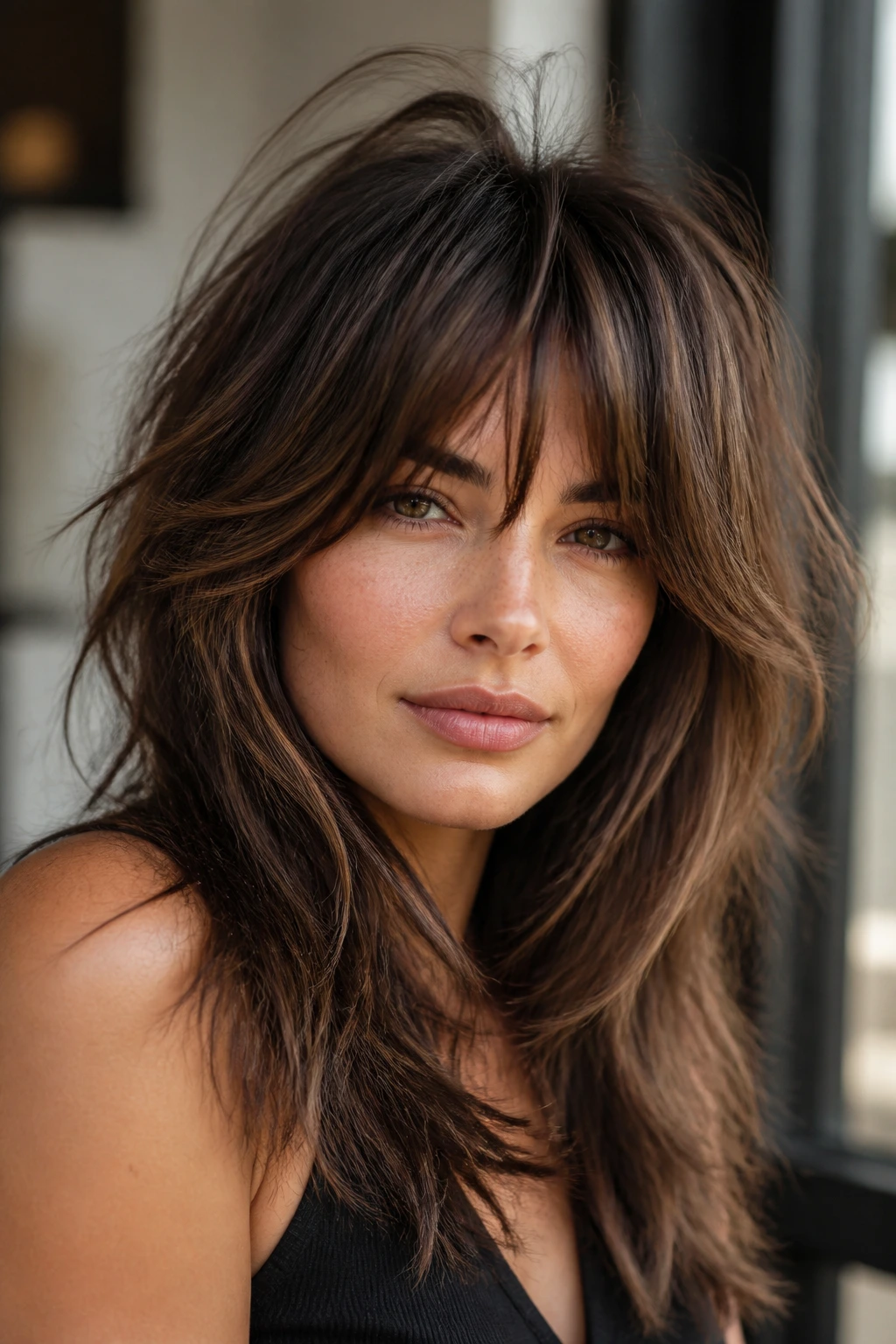
The first mistake is cutting the perimeter too blunt. Thick hair already carries its own weight; a hard bottom line makes it look wider, especially when it air-dries. The fix is softer ends and a little internal removal so the line can breathe.
The second mistake is putting the shortest layers too high at the crown. That usually creates a puffed top and a hollow middle, which is not a flattering trade. Keep the short layers lower unless you want a true wolf-cut shape.
Another common problem is chunky lowlights. Thick hair can hide a lot, but it cannot hide stripey color placement. Ask for fine ribbons and shadowed underlayers instead of chunky panels.
Heat is the fourth trouble spot. Thick shaggy hair can take a lot of styling, but not endless high heat without protection. If the ends start to look fuzzy or translucent, scale back the iron temperature and use a protectant every time.
Variations and Adaptations to Try
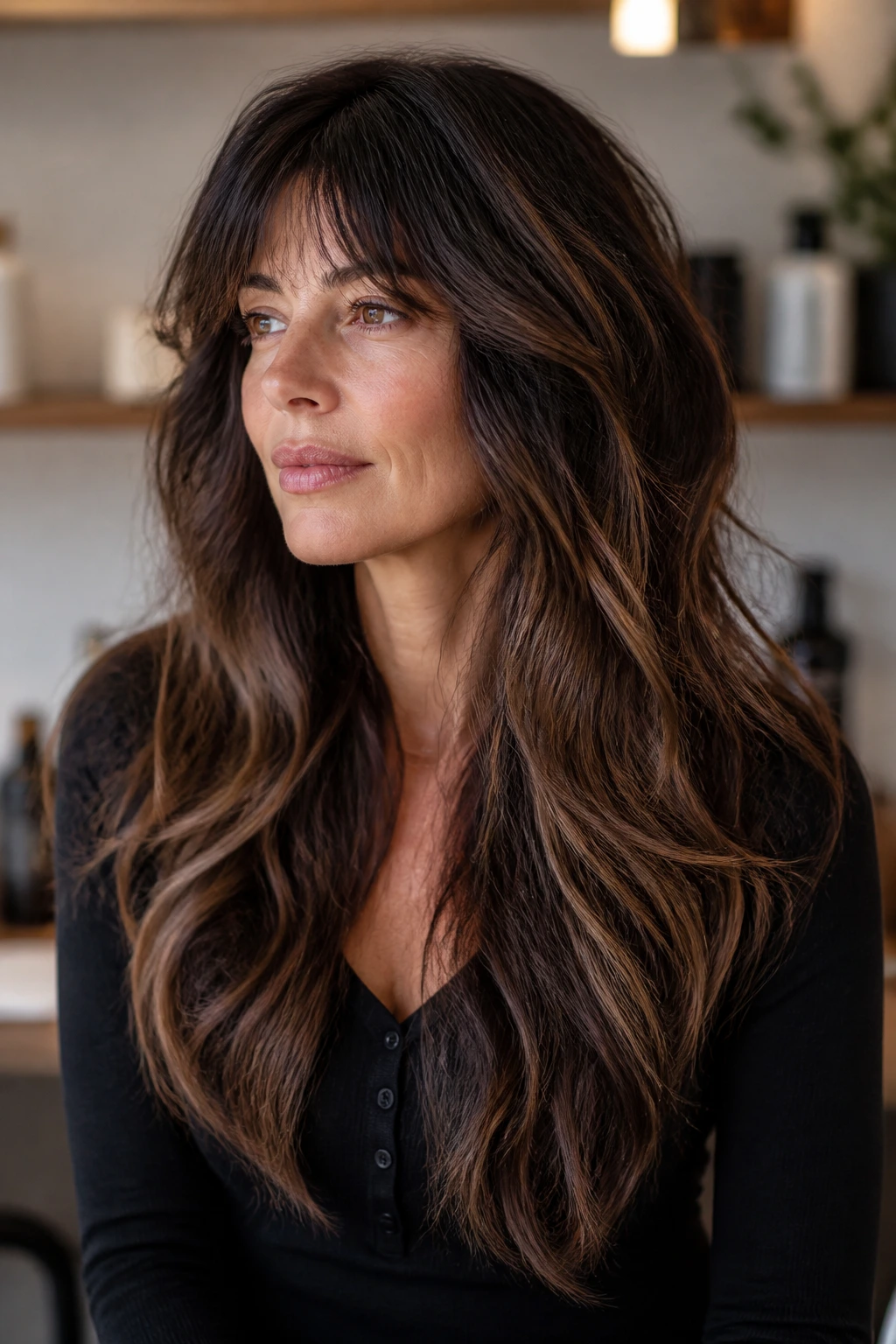
Curly-Hair Embrace: If your hair curls up hard when it dries, keep the layers longer and let the curl pattern dictate the shortest pieces. The lowlights should sit inside the curl mass so they peek through instead of getting lost.
Straight-and-Sleek Version: For straight thick hair, ask for more point cutting and a slightly tighter face frame. You’ll get the shag movement without having to rely on waves or curls.
Gray-Blending Shag: Gray hair takes lowlights beautifully when the color is soft and cool. A smoky brown or taupe-brown ribbon can blur the transition line and keep the gray from looking flat.
Low-Contrast Brunette: If you want less drama, choose lowlights only one shade darker than your natural color. The haircut will still read dimensional, just quieter.
High-Texture Weekend Cut: For people who style with a diffuser or twist-set waves, ask for more separation through the ends and a little extra layer around the crown. This version has more movement but needs a touch more product.
Tools That Make Styling Thick Hair Less Annoying
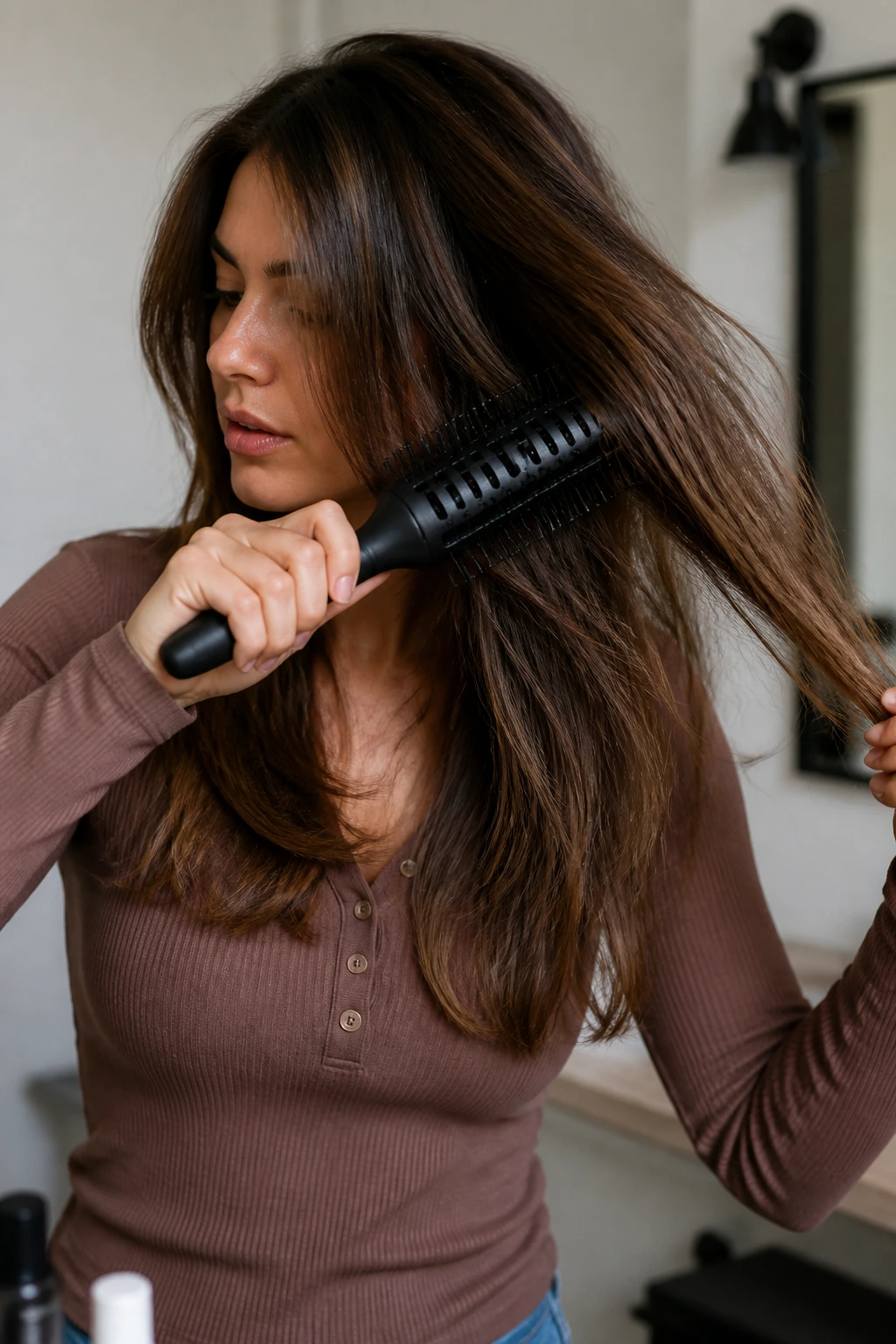
- Wide-tooth comb: Helps detangle thick strands without pulling the layers flat.
- Vent brush or round brush: A vent brush speeds up rough-drying; a round brush gives the front pieces a little bend.
- Blow dryer with a nozzle: Keeps airflow directed so the cut doesn’t frizz while you dry it.
- 1 to 1.25-inch curling iron or wand: Best for loose bends through the mid-lengths.
- Heat protectant spray: Non-negotiable if you use hot tools more than once a week.
- Lightweight mousse: Gives root lift without the sticky feel of heavy gels.
- Texture spray: Useful on day two when the cut needs separation more than volume.
- Dry shampoo: Helps the crown stay airy instead of collapsing after one shampoo cycle.
What to Ask for in the Salon Chair
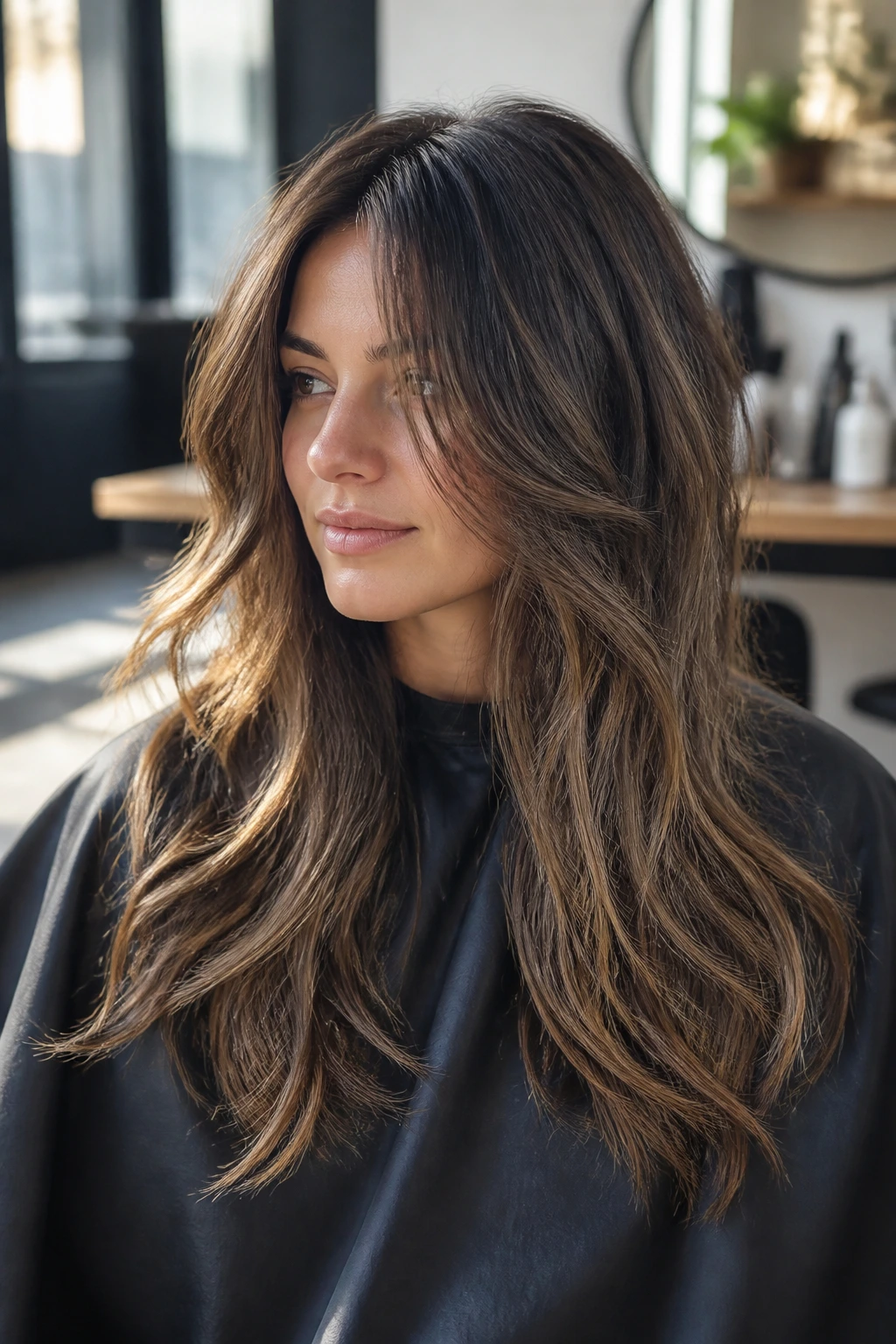
You’ll get a better result if you describe the haircut in pieces. Say where you want the longest layer to sit, how much face framing you can live with, and whether you want the shape to feel soft, edgy, or polished. Those are not the same haircut.
Tell your stylist whether your thick hair is coarse, fine-but-dense, or wavy. That detail matters because the scissors behave differently on each. Coarse hair usually needs cleaner, heavier removal. Fine-but-dense hair needs the weight moved without making the ends see-through.
For the color, ask for lowlights that sit 1-2 levels deeper than your base, not a dramatic stripe. If you want brightness around the face, say so. A few lighter face pieces around the fringe can keep the whole look from feeling too dark, especially if your natural base is already deep brunette.
Wash, Trim, and Color Refresh Guidance
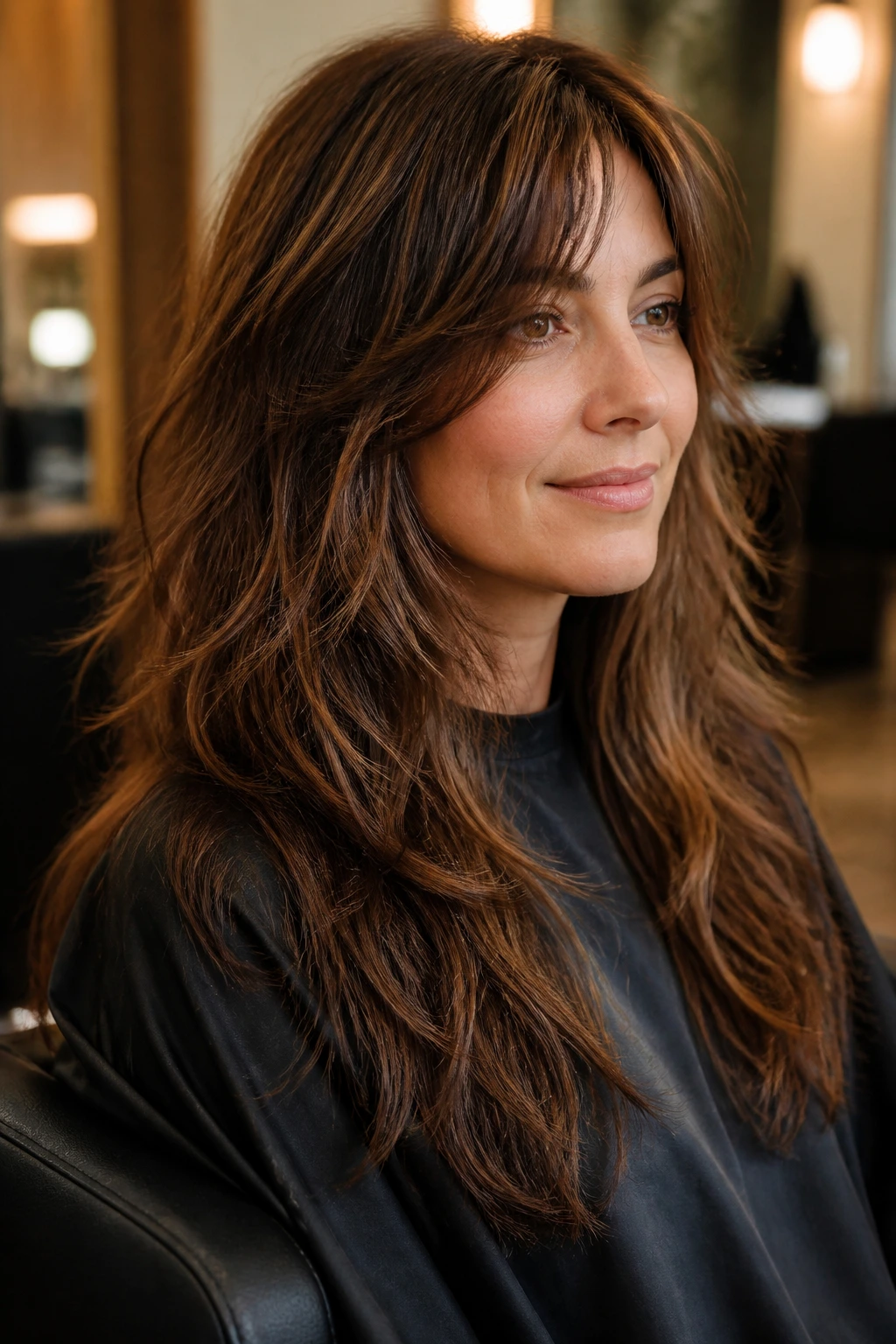
Thick shaggy hair usually looks best when it is not overwashed. Two to three shampoos a week is a good working range for most people, with dry shampoo or a light texture spray in between if the roots start to get soft. If your scalp is oily, clean it; if your ends are dry, keep the shampoo mostly at the roots.
Plan on a trim every 8 to 10 weeks if you want the shape to stay crisp. You can stretch that longer if the layers are soft and the haircut is meant to grow out, but the face frame tends to lose its shape first. That’s usually the part that starts looking tired.
Lowlights can last longer than the cut itself, but they still need refreshing. A gloss or toner every 6 to 12 weeks keeps the brunette depth clean, especially if your hair turns warm in the sun or under hot styling tools. If your lowlights are ash-based, use a blue or blue-violet shampoo only as needed; too much can make the color dull.
Common Mistakes to Avoid
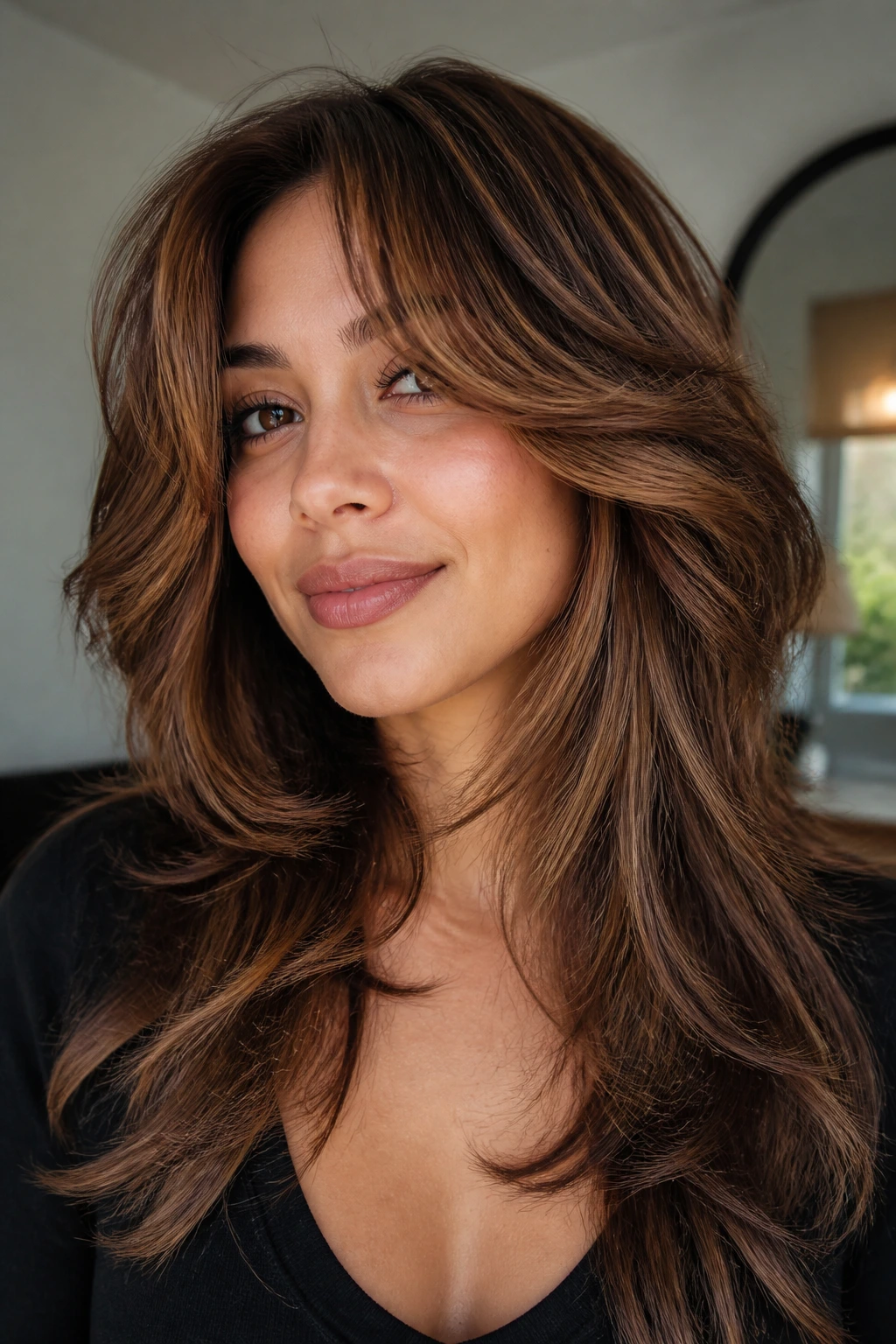
Over-thinning the ends: Thick hair can be tempting to thin aggressively, but that usually leaves the ends wispy and frayed. Ask for interior weight removal instead.
Making the fringe too short: Short bangs on dense hair can spring up and lose the shag shape fast. Longer fringe is easier to style and less likely to stick straight out.
Choosing lowlights that are too dark: Near-black ribbons in brunette hair can look harsh and chunky. Stay close to your base unless you want a very defined contrast.
Ignoring your natural texture: A cut that looks great blown smooth may fall apart if your hair wants wave or curl. Pick a shag that matches how you actually wear it, not how it looked once in a photo.
Styling only the top layer: If you curl the surface and leave the underside untouched, thick hair can look puffy underneath and polished on top. That mismatch shows.
Frequently Asked Questions
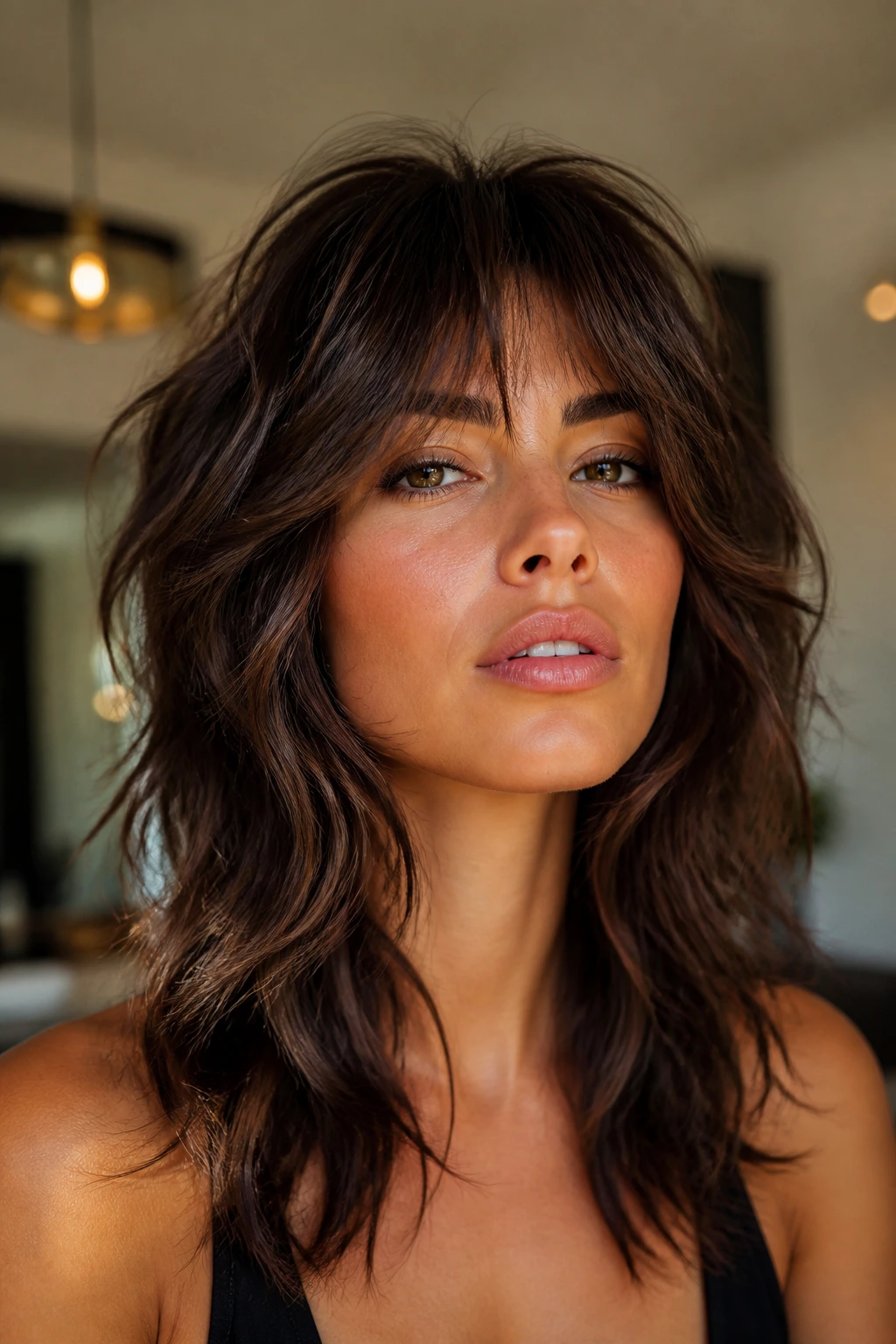
How short should the shortest layers be in a long shag for thick hair?
For most people, chin to cheekbone is the sweet spot. Shorter than that, and the top can start to balloon; longer than that, and the cut may lose the movement that makes it a shag.
Are lowlights better than highlights for thick hair?
They do a different job. Lowlights add depth and reduce the “one big block” effect, while highlights brighten. On very dense hair, lowlights often do more to improve the shape, and a few lighter face pieces can still keep it from feeling too dark.
Will a shag make my thick hair frizzier?
Not if it’s cut well. Frizz usually comes from too much bulk removed in the wrong spots, plus too much heat and rough drying. A shag with soft internal layers can actually make thick hair easier to smooth.
Can this style work on straight hair that has no wave at all?
Yes, but the styling matters. Straight thick hair needs point-cut ends, careful face framing, and some kind of bend from a brush, iron, or large rollers so the layers don’t just hang there.
What if my hair is curly and thick?
Ask for a curl-specific shag. That means the layers follow your curl pattern and the lowlights are placed where the curls clump, not sliced through every visible strand.
How often do the lowlights need to be redone?
Usually every 6 to 12 weeks, depending on how much contrast you want and how fast your hair grows. A gloss between color services can keep the shade from looking muddy.
Can I air-dry this cut and still look put together?
Yes, if the layers are balanced. Use a little leave-in and curl cream or mousse, then scrunch and leave the hair alone while it dries. Touching it too much is what usually creates the frizz.
What should I say if I want a lower-maintenance version?
Ask for longer layers, softer face framing, and subtle lowlights placed under the top layer. That combo grows out better than a very short, highly textured version with heavy contrast.
A Cut That Keeps Its Shape
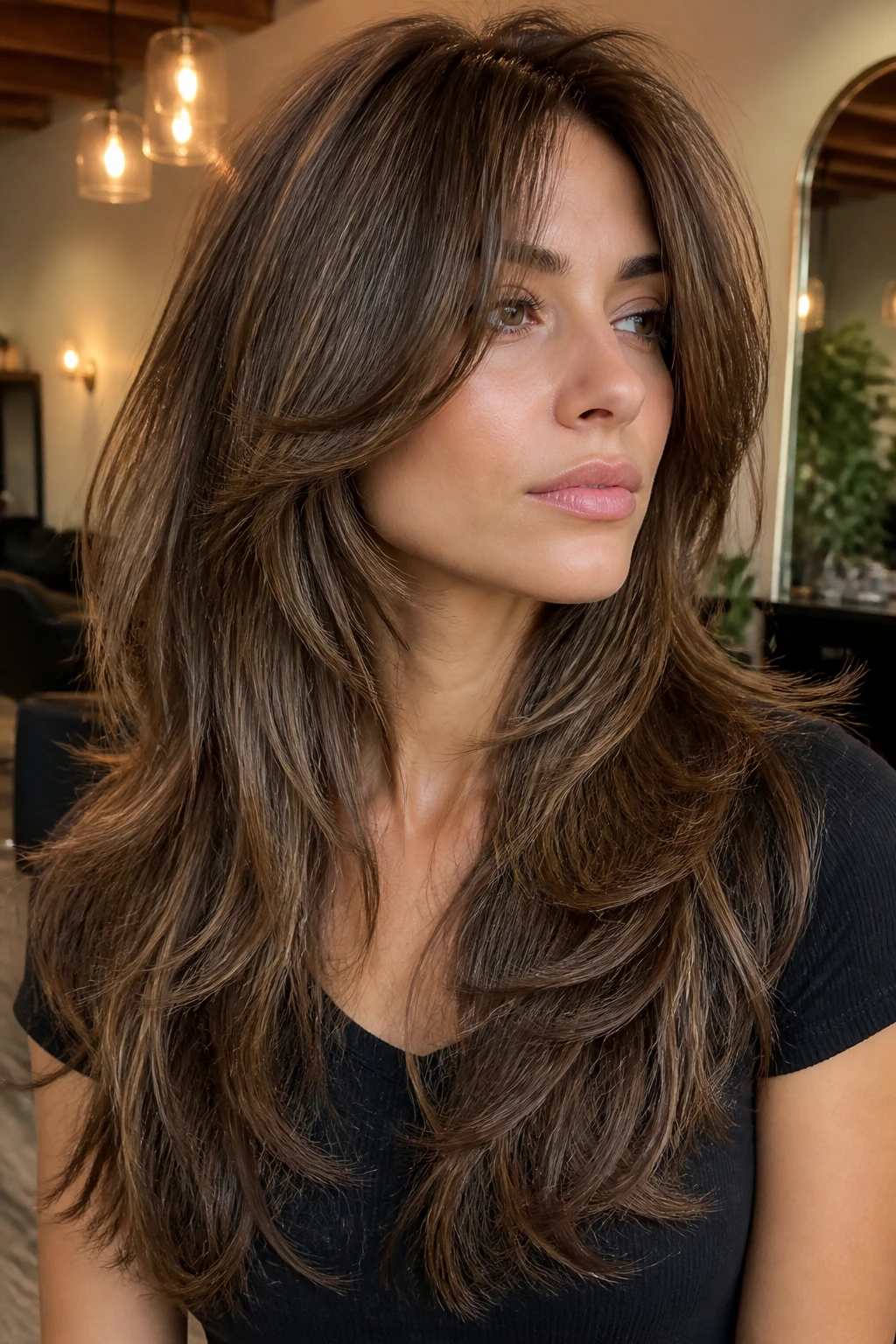
Long shaggy haircuts for thick hair with lowlights work because they solve two problems at once. The layers take the weight out of the shape; the color gives the haircut depth so the movement is visible instead of lost in a wall of hair. When those two things are balanced, thick hair stops feeling like something you have to tame every morning.
The best part is how flexible these cuts are. You can push them toward boho, wolfish, polished, curly, straight, soft, or sharp, and they still make sense. That’s why they keep showing up in salon chairs: they do real work, and they look good while doing it.