



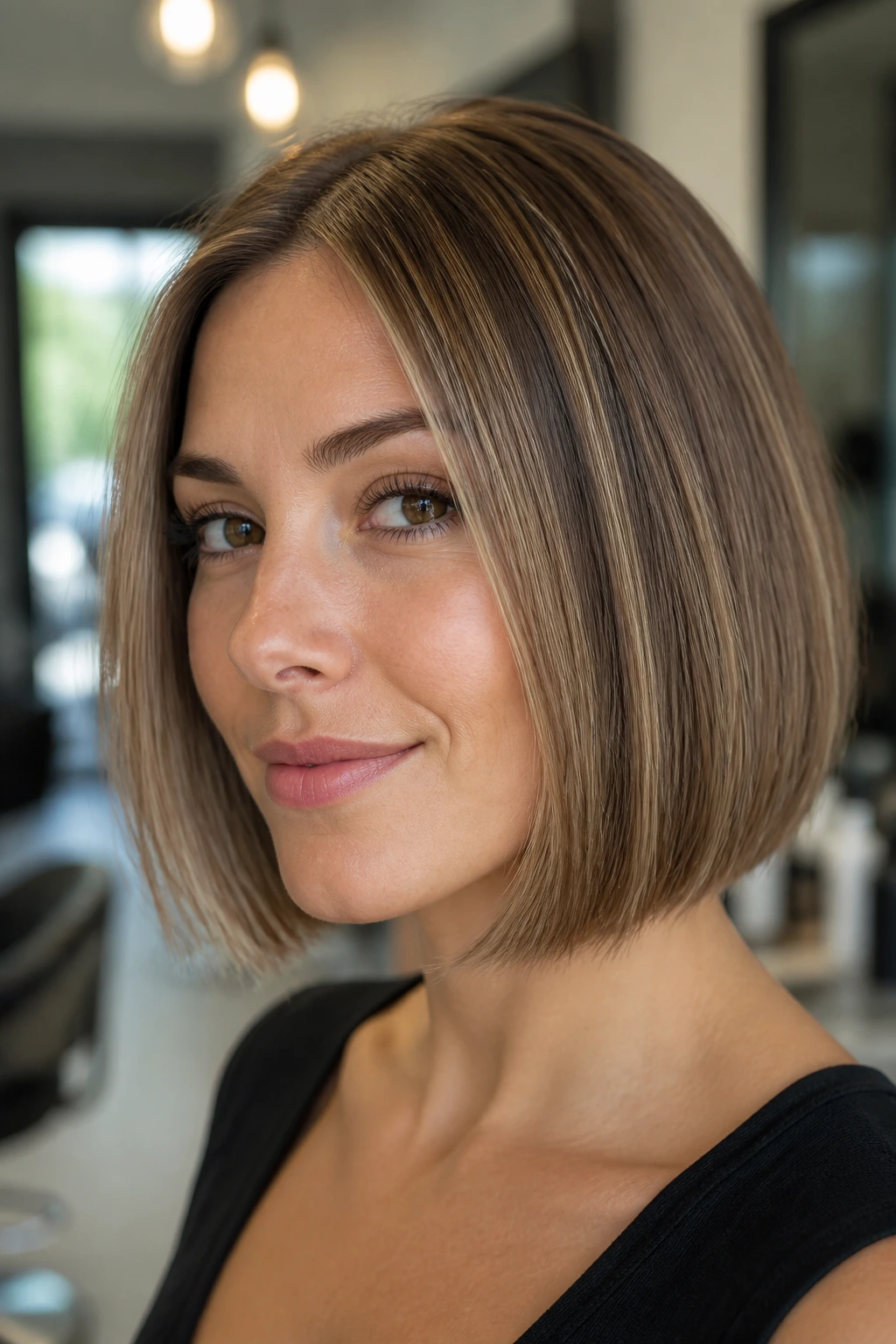
Straight hair is brutally honest. A bob either lands with a clean edge and a little shine, or it exposes every uneven snip, every dry end, every color panel that was placed too wide. Babylights fix the second part. They thread tiny ribbons of light through the cut so the outline still reads sharp, but the surface gets enough movement that it doesn’t collapse into one flat sheet.
That’s why polished bobs for straight hair with babylights keep showing up in good salons: the haircut carries the shape, and the color carries the detail. On straight strands, that matters more than people think. A curl can hide a lot. A straight line cannot. If the perimeter is off by even a fraction, or the highlights are chunky in the wrong place, the whole thing looks louder than it should.
I’m a fan of babylights here for a simple reason: they read like light, not like stripes. On straight hair, thick highlights can look a little blunt and obvious. Fine babylights sit closer to the cut line, catch on the crown, and keep the bob looking deliberate instead of decorated. Once you start seeing the difference, it’s hard to go back.
Why These Polished Bobs Earn Their Keep
-
Straight hair shows every edge: A clean bob line matters more here than on wavier hair, because there’s no bend to blur a sloppy finish.
-
Babylights add movement without noise: Thin highlights break up a solid block of color, but they do it with a soft hand that suits sleek hair.
-
The length does the heavy lifting: Jaw-length, chin-length, and collarbone-length bobs all change the mood fast; you’re not stuck with one look.
-
The cut and the color can work together: When the babylights follow the silhouette, the whole style looks more expensive in the plain-English sense — sharper, cleaner, more intentional.
-
Maintenance stays predictable: Most of these bobs keep their shape best with trims every 5 to 8 weeks, and babylights grow out more gently than chunky foil stripes.
-
They can be styled fast: A quick blow-dry with a nozzle, a flat iron bend at the ends, and one drop of shine serum usually does the job.
1. Jaw-Length Blunt Bob With Beige Babylights
A jaw-length blunt bob leaves nowhere to hide, and that’s exactly why it works. On straight hair, the line lands like a clean brushstroke. Beige babylights keep that shape from reading as one hard block, especially if the highlights are tucked into the top layer and around the face instead of scattered everywhere.
Why it works on straight hair
The blunt edge gives fine or medium hair the feeling of density. Straight strands love that. They sit neatly against each other, so when the bottom line is cut with precision, the whole shape looks thicker than it is. Beige babylights add just enough softness to stop the bob from feeling stern.
Keep the color fine. That’s the rule here. If the highlights are too wide, the jaw-length perimeter starts to look broken up, and the clean geometry gets muddy fast.
Styling note
Use a blow dryer with a concentrator and a small round brush to curve the ends under just a touch. You do not want a puffy mushroom. You want a quiet bevel that looks like the hair naturally settled there. A flat iron at a low setting — around 300 to 325°F for fine hair — can sharpen the ends in seconds.
This cut looks especially good when the part is a little off center. It breaks the symmetry just enough to keep the bob from feeling severe.
2. Chin-Skimming French Bob With Soft Sand Babylights
Want short hair that still reads polished instead of severe? This is the one I’d point to first. A chin-skimming French bob has that clipped, confident line around the face, and soft sand babylights keep the shape from looking like a helmet. On straight hair, the difference between “chic” and “too sharp” is often a few carefully placed lighter strands.
The babylights belong near the hairline, crown, and the first inch or so around the part. That’s where straight hair shows motion. Put them too low and the color disappears under the rest of the cut. Put them too wide and the whole bob starts wearing you instead of the other way around.
A soft fringe or a slight bend at the ends gives this shape a little less bite. I like it with a cleaner cheekbone-skimming finish than a chunky bang. It feels grown-up without feeling stiff. If you wear glasses, this length is especially good because it keeps the frame and the hair from fighting for space.
3. Collarbone Bob With Money-Piece Babylights
Picture the front pieces brushing the collarbone while the back stays just a hair shorter. That’s the sweet spot here. A collarbone bob is long enough to tuck, twist, and pin, but short enough to keep the outline tidy. Money-piece babylights brighten the front so the face doesn’t get swallowed by all that straight length.
This is the easiest entry point if you’re nervous about going too short. It grows out gracefully, and the babylights can be softened over time without making the cut look unfinished. On straight hair, the face-framing light does a lot of visual work. It lifts the whole style even when the rest of the color stays close to the base.
If you want the bob to feel polished, keep the perimeter blunt and ask for the lightest pieces to stay around the temples and top layer. Don’t drag the brightness too far down the length. That’s how the style starts to look busy. A slight inward bend at the ends keeps the collarbone line tidy and helps the cut sit instead of flip.
4. Sleek A-Line Bob With Pearl Babylights
This is the bob for people who want an angle, not a blunt wall. The A-line shape is shorter in the back and gradually longer in the front, which helps straight hair look more sculpted. Pearl babylights are a smart match because they echo that clean, cool line without screaming for attention.
On straight hair, an A-line bob works because the eye follows the diagonal. That gives the cut motion even before you style it. The babylights should follow the direction of the angle, not cross it in chunky bands. When they’re placed correctly, they make the front pieces glow and leave the back looking sleek and dense.
Best for
- Round faces that want a little length through the front
- Fine hair that needs more shape than layers
- Anyone who likes a sharp neckline but softer front movement
Keep the finish smooth. Blow-dry the back downward first, then bring the front sections forward and curve them under with a flat brush or round brush. Too much bend kills the geometry. The point is a polished slope, not a flip.
5. Rounded Bob With Smoky Mushroom Babylights
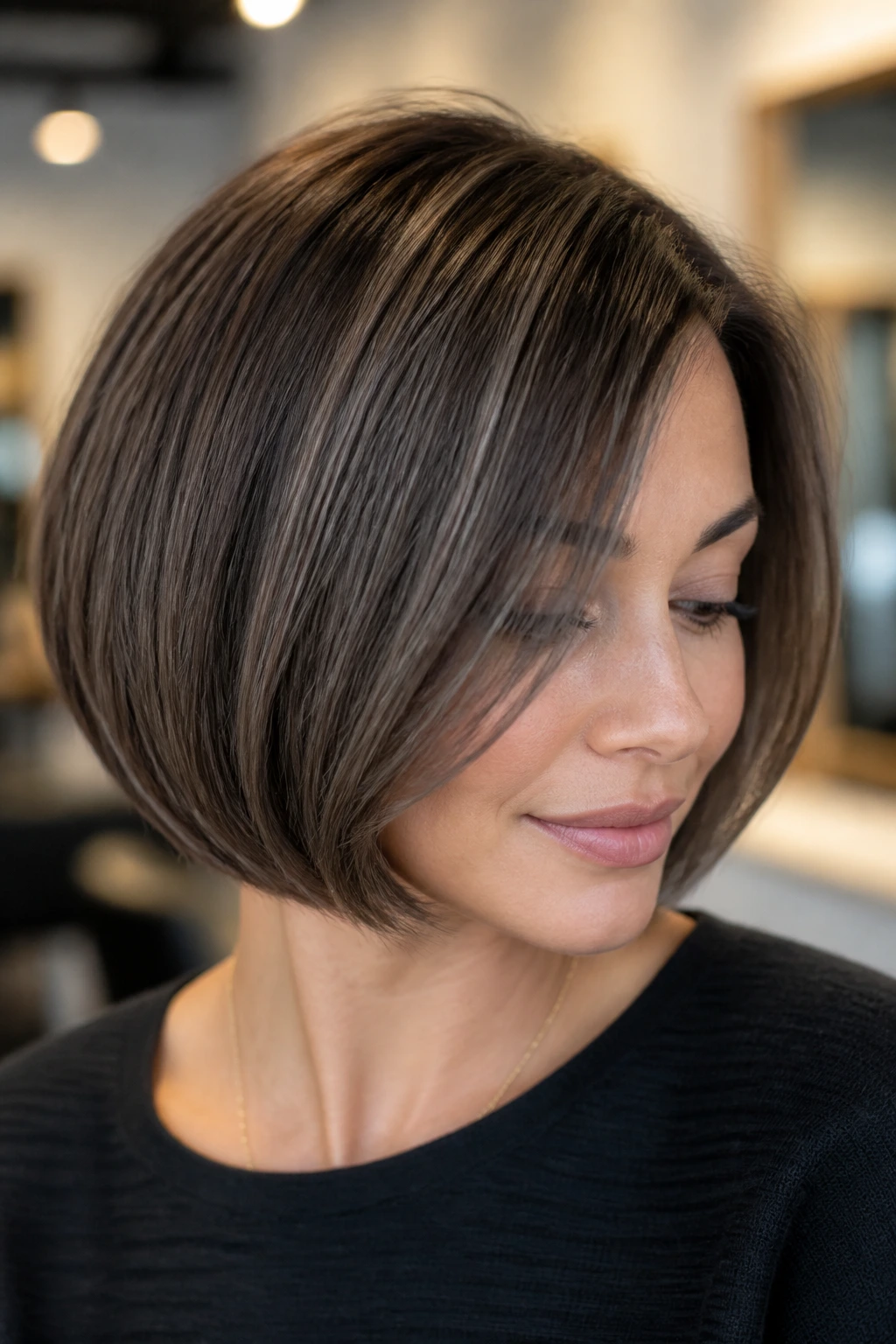
Round bobs can go wrong fast on straight hair. They either puff at the sides or drop like a solid bowl. The fix is a rounded shape with enough internal balance that the curve looks designed, not accidental. Smoky mushroom babylights help because they add depth without bright contrast, which keeps the silhouette soft.
I like this cut on thicker straight hair. The roundness tames width around the jaw, and the cool-toned babylights keep the dark base from reading flat. If your hair tends to sit hard and straight at the ends, a rounded bob gives it a gentler edge. That’s the whole trick.
Ask for a subtle undercurve and very light texturizing only where the ends need to move. Too much thinning will make the bob fray. A round brush and a cool shot at the end of the blow-dry help the curve hold without looking built up. This one is elegant in a quiet way, but it needs discipline.
6. Micro Bob With Platinum Ribbons
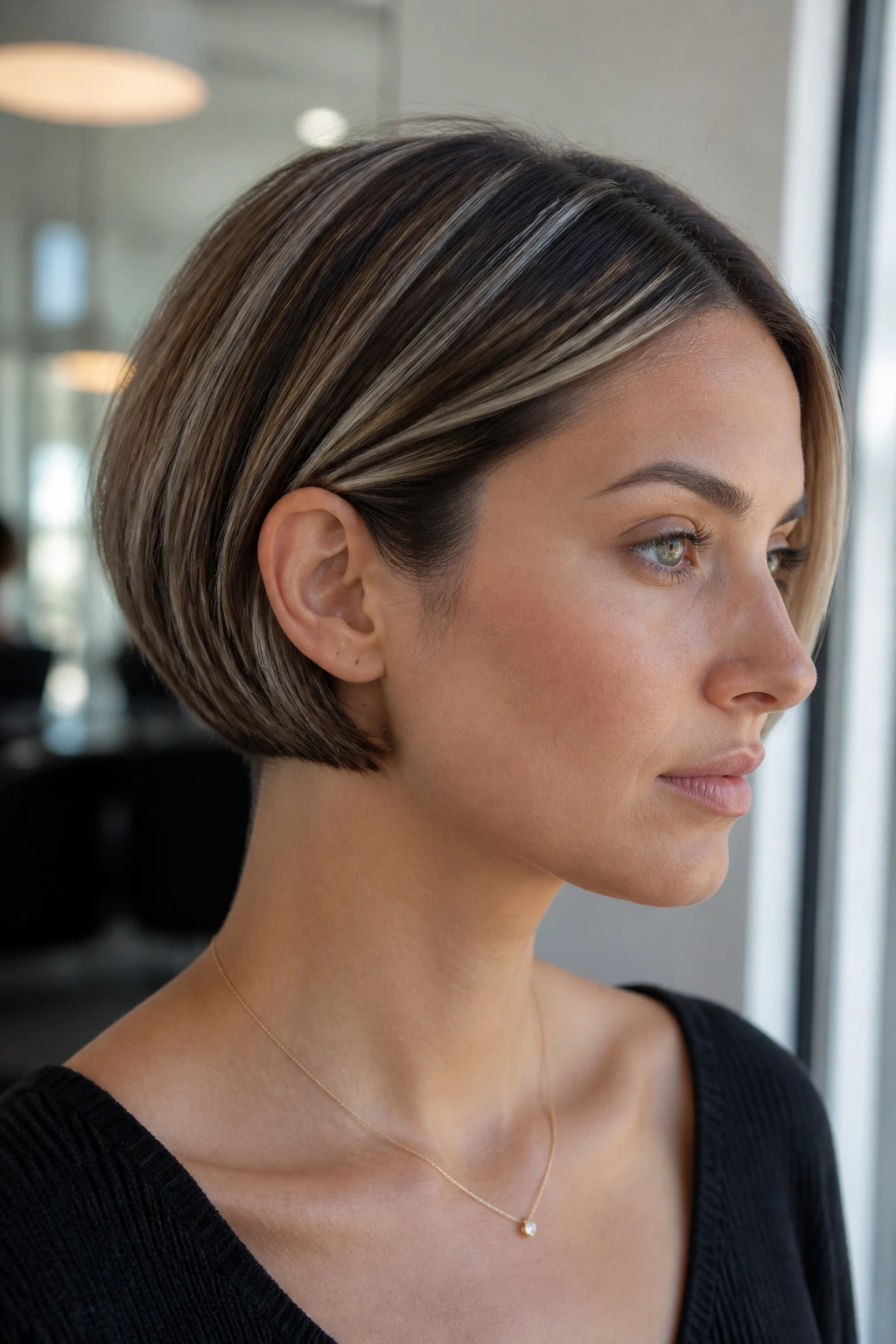
The micro bob is the boldest shape in the group. It sits at or just below the ear, which means the neck becomes part of the haircut. On straight hair, that kind of short length looks crisp fast. Platinum ribbons keep the cut from looking like one dark cap, but they need to be tiny. Anything chunky up here starts to feel loud.
This is not a “set it and forget it” shape. It asks for precise trimming and very deliberate styling. The best version has a neat nape, a clean side line, and just enough babylight brightness near the crown to catch movement when you turn your head. If the color is too heavy, the whole cut can look frosted in a dated way. Keep the ribbons fine and sparse.
It’s a sharp look on strong features. If you like earrings, high necklines, and a clean collarbone, the micro bob does a lot of the framing for you. But it needs more salon maintenance than the longer options below, and that’s the price of the payoff.
7. Box Bob With Caramel Veil Babylights
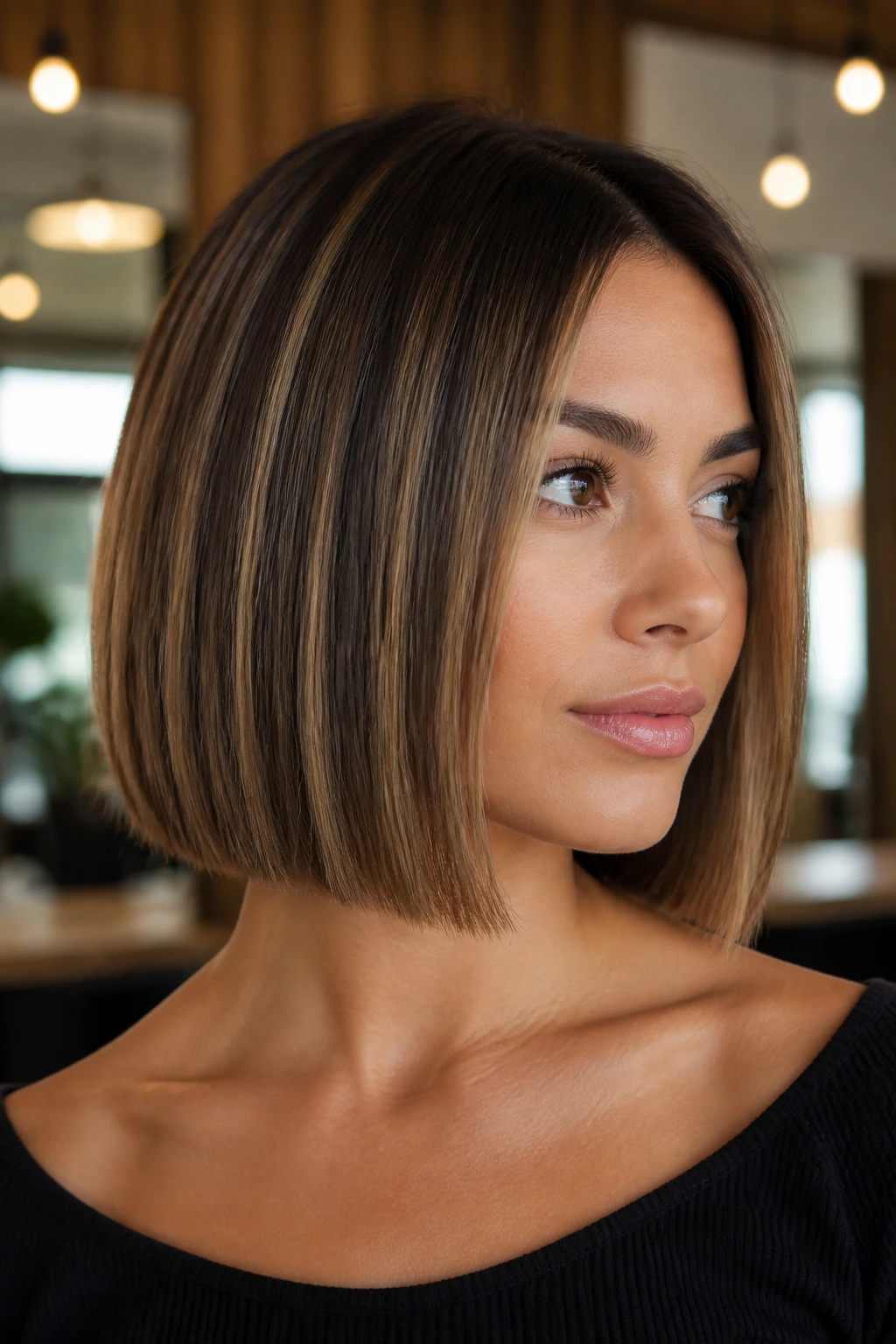
Caramel babylights take a box bob out of flat-dark territory. The shape itself is geometric: blunt sides, blunt bottom, very little softness at the edge. That’s the point. Straight hair can wear a box bob beautifully because the hair already wants to sit in tidy planes.
The babylights here should feel like a veil, not streaks. They belong through the top layer and around the outer contour, with the darkest mass kept underneath so the cut still feels dense. If you have medium to thick brown hair, caramel is an easy way to bring warmth without forcing the color into a blonde place it doesn’t need to go.
This is one of those styles that looks expensive when it’s cut right, and ordinary when it isn’t. The line has to be straight. The ends have to be even. If one side flicks out more than the other, you’ll see it immediately because there’s nothing in the hair pattern to hide the mistake.
8. Side-Part Glass Bob With Champagne Threads
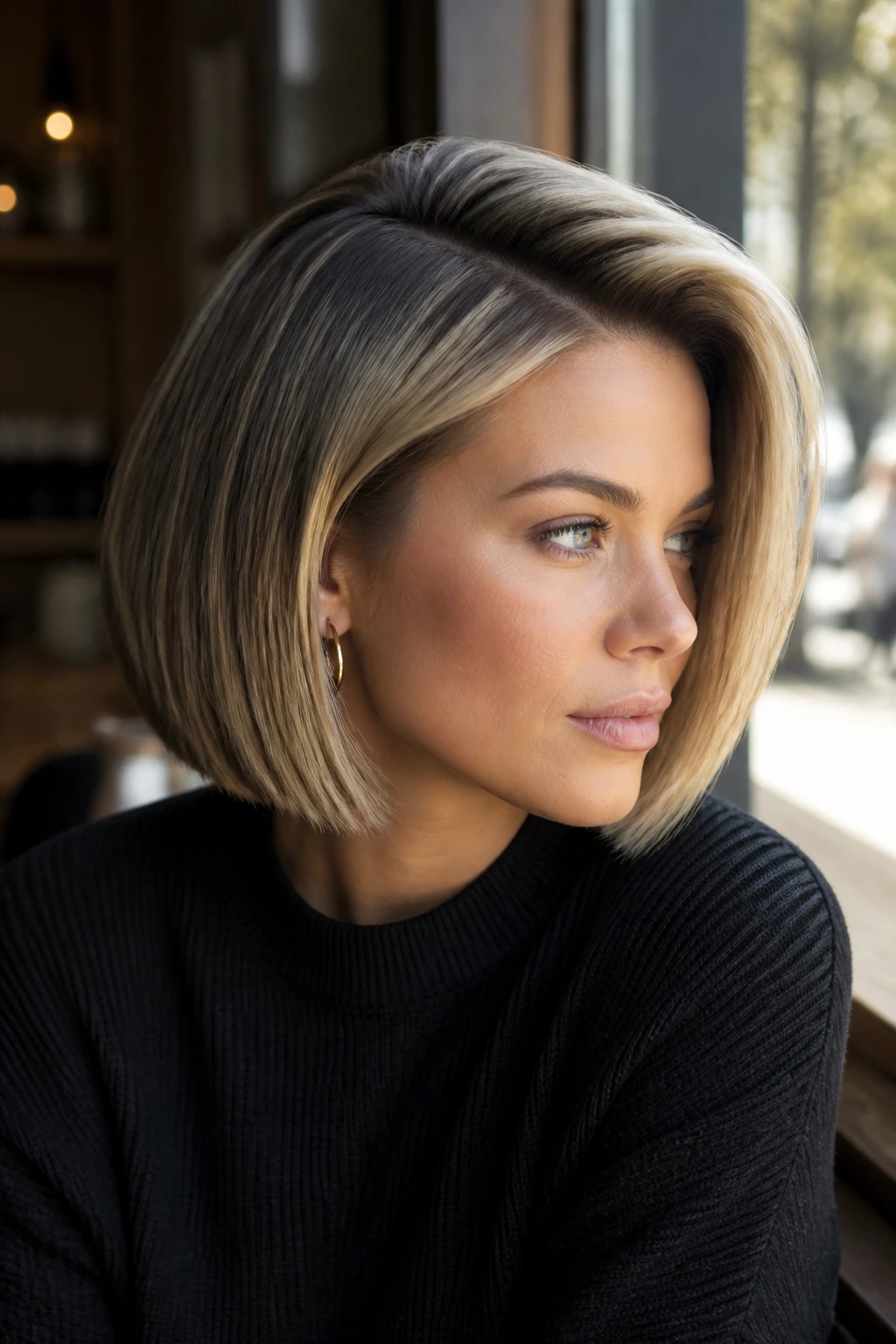
Side parts do more work than people give them credit for. On a straight bob, a deep side part shifts the weight, gives the crown a little lift, and changes the whole mood from neat to polished. Champagne babylights running along the part and front edge make the shine obvious in the best way.
The glass finish matters here. Straight hair gives you a smooth surface to begin with, so the cut should be tidied with a paddle brush or a flat brush and finished with a very small amount of shine serum. Too much product, though, and the bob goes limp. Two drops in your palms, then press lightly through the ends. That’s enough.
This style is especially good if your crown lies flat or your face shape likes a little asymmetry. The side part creates a diagonal that babylights can follow, which makes the color feel like part of the haircut. I prefer this one on medium-length bobs where the front can sit against the jaw without losing movement.
9. Center-Part Minimal Bob With Barely-There Babylights
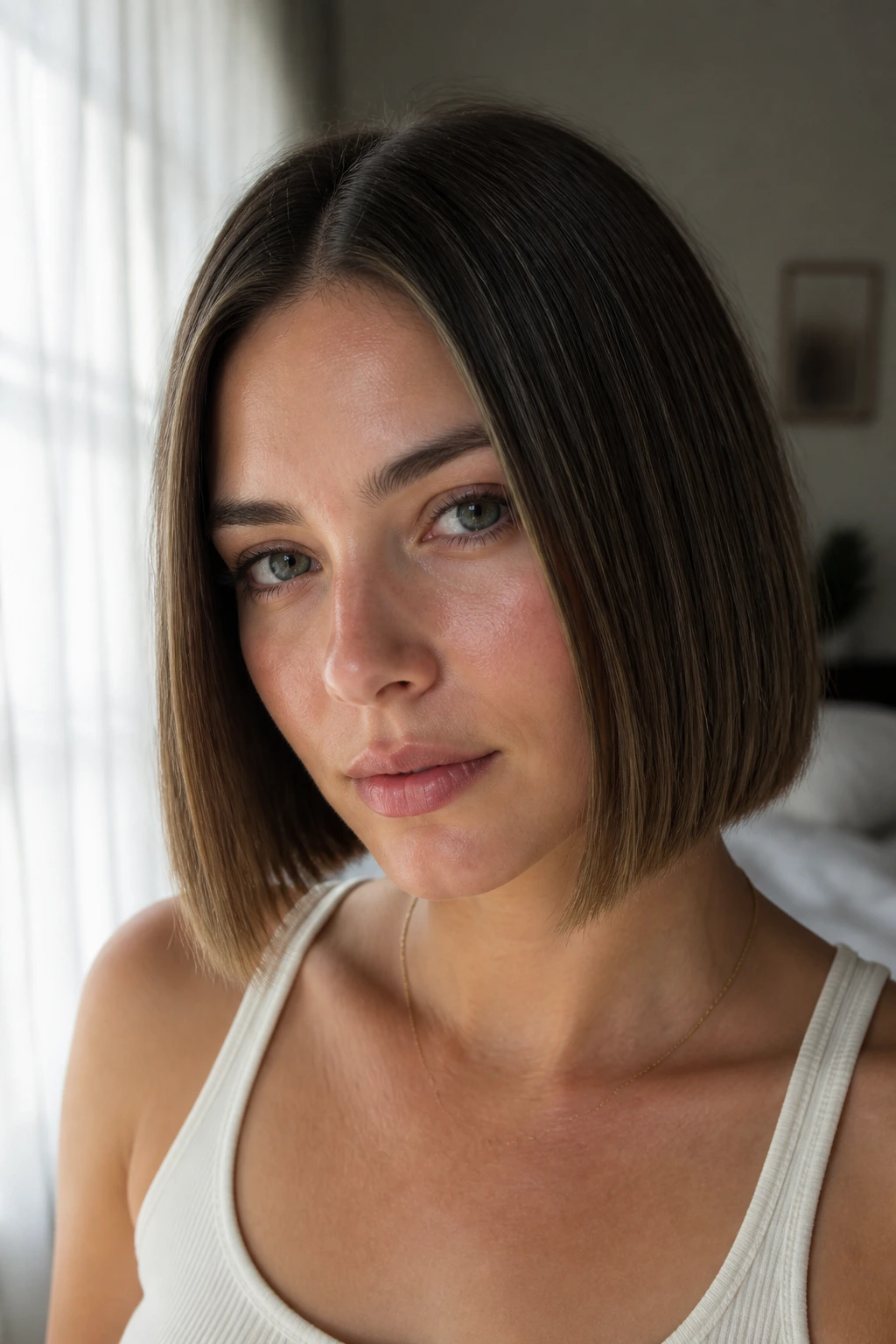
The center-part minimal bob is for people who want the cut first and the color second. Everything about it is spare: a clean middle part, a straight perimeter, babylights so thin they almost disappear until the light hits them. On straight hair, that restraint reads as control.
This look lives or dies on subtlety. If the babylights are too obvious, the whole point gets lost. The goal is to create a slight change in texture across the top layer so the bob doesn’t become one flat slab of color. It should look like the hair has depth, not decoration.
I like this version on naturally shiny hair, because shine and tiny highlights work together instead of competing. If your hair is a bit dull, a gloss service or a clear shine treatment makes a real difference. The cut itself should stay blunt and neat. No chunky layers. No broken ends. Just a clean line with a little light in it.
10. Angled Bob With Vanilla Cream Strips
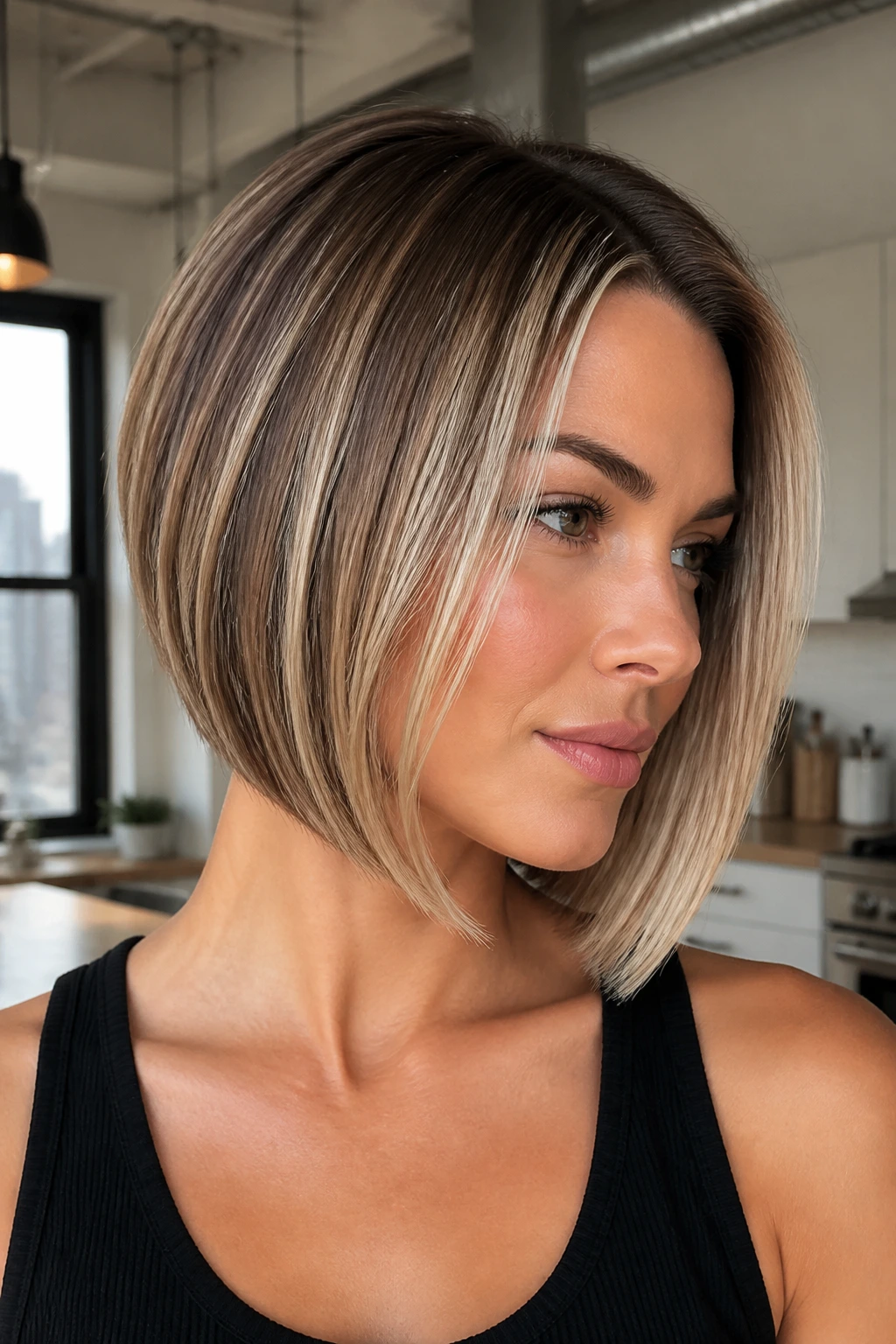
If you like a line that looks drawn with a ruler, this is your bob. An angled cut gives the eye a path to follow: shorter in back, longer in front, with the shape sloping down in a way that flatters straight hair. Vanilla cream babylights sharpen that angle instead of softening it into mush.
The lightest pieces should sit where the front length catches the most attention — around the cheekbones, the outer edge of the jaw, and just under the part. That placement makes the angle read clearly. It also helps if the back is kept tidy and compact, because too much bulk back there will fight the line.
Styling tip
Blow-dry the top section forward first, then direct the front pieces down and slightly under. A 1-inch flat iron can refine the ends if your hair wants to kick out. The finish should still look like hair, not a board. That little bend matters more than people think.
11. Tucked-Behind-Ears Bob With Honey Babylights

Tucked behind the ears, this bob changes personality. Suddenly the jawline shows up. So do the earrings, the neckline, the glasses, the whole frame of the face. Honey babylights around the sideburn area and the panels that sit near the ears keep the look warm and alive when the hair is tucked back.
This is a smart option if you actually wear your bob that way half the time. No point asking for babylights that only look good when every strand is forward. On straight hair, the tucked version needs the side sections to be clean and the ends to lie flat. A little anti-frizz cream near the temples can help, but don’t overload it.
I also like this on hair that tends to split at the side when tucked. The lighter threads distract the eye and make the whole side view feel intentional. The cut can be jaw-length or slightly longer, but the perimeter should stay crisp enough that it doesn’t puff out near the ear.
12. Shoulder-Grazing Bob With Ribbon Babylights
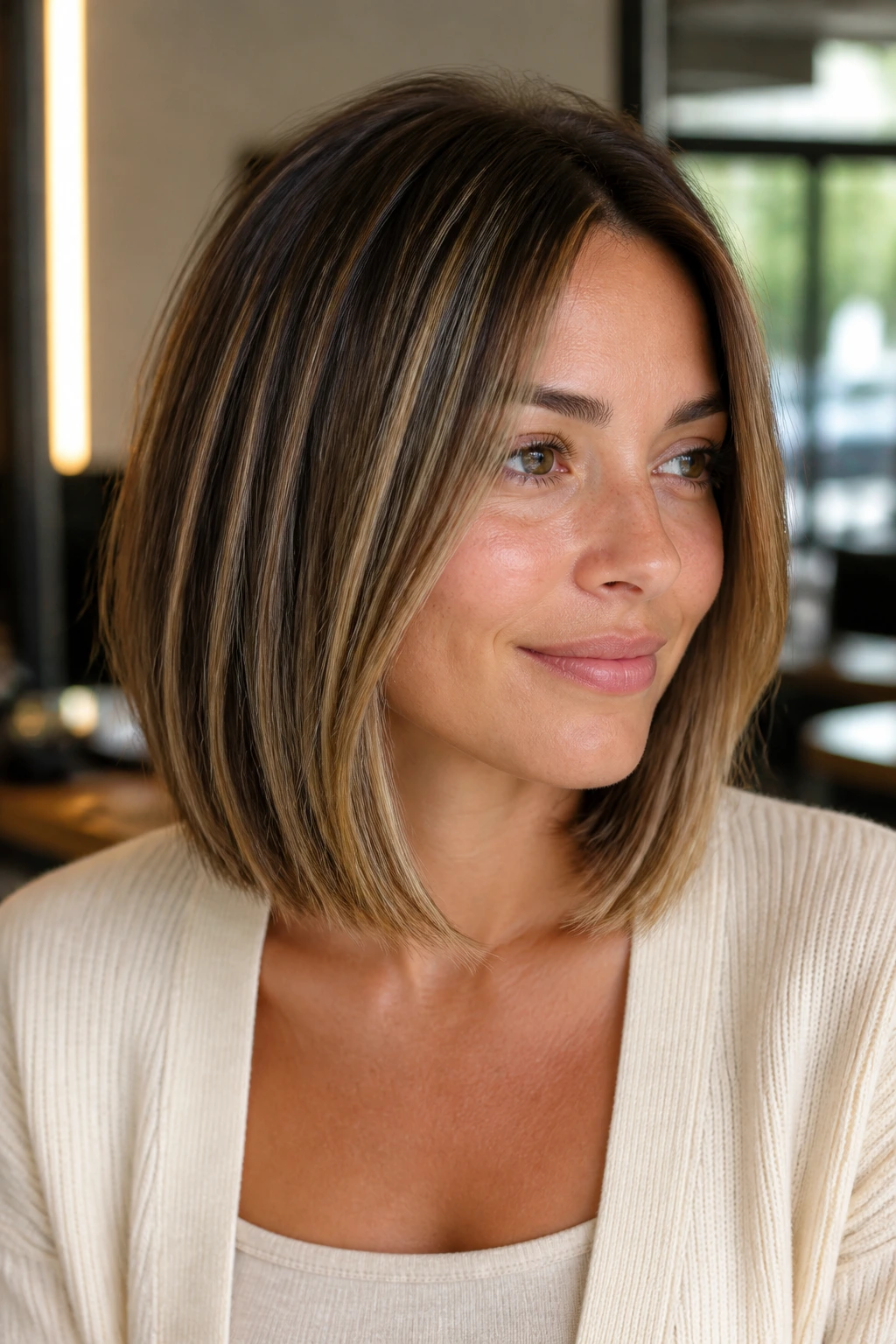
Longer bobs need a different kind of restraint. Once the hair passes the jaw, straight strands can start to look heavy if the cut loses its line. A shoulder-grazing bob keeps the length useful, while ribbon babylights add enough movement that the style doesn’t fall limp at midday.
The babylights should run in soft ribbons through the top layer and around the perimeter, not in thick slices. Because the hair is longer, those lighter pieces stay visible without shouting. That’s the advantage here. You get dimension without the maintenance headache that comes with more obvious highlight patterns.
This cut works well if you like to wear your hair down most days but still want it to feel polished when you tuck it behind one ear or pull it into a low clip. Straight hair at this length needs a blunt finish, or the ends go stringy. A slight bevel keeps the whole thing neat.
13. Layerless Power Bob With Taupe Babylights
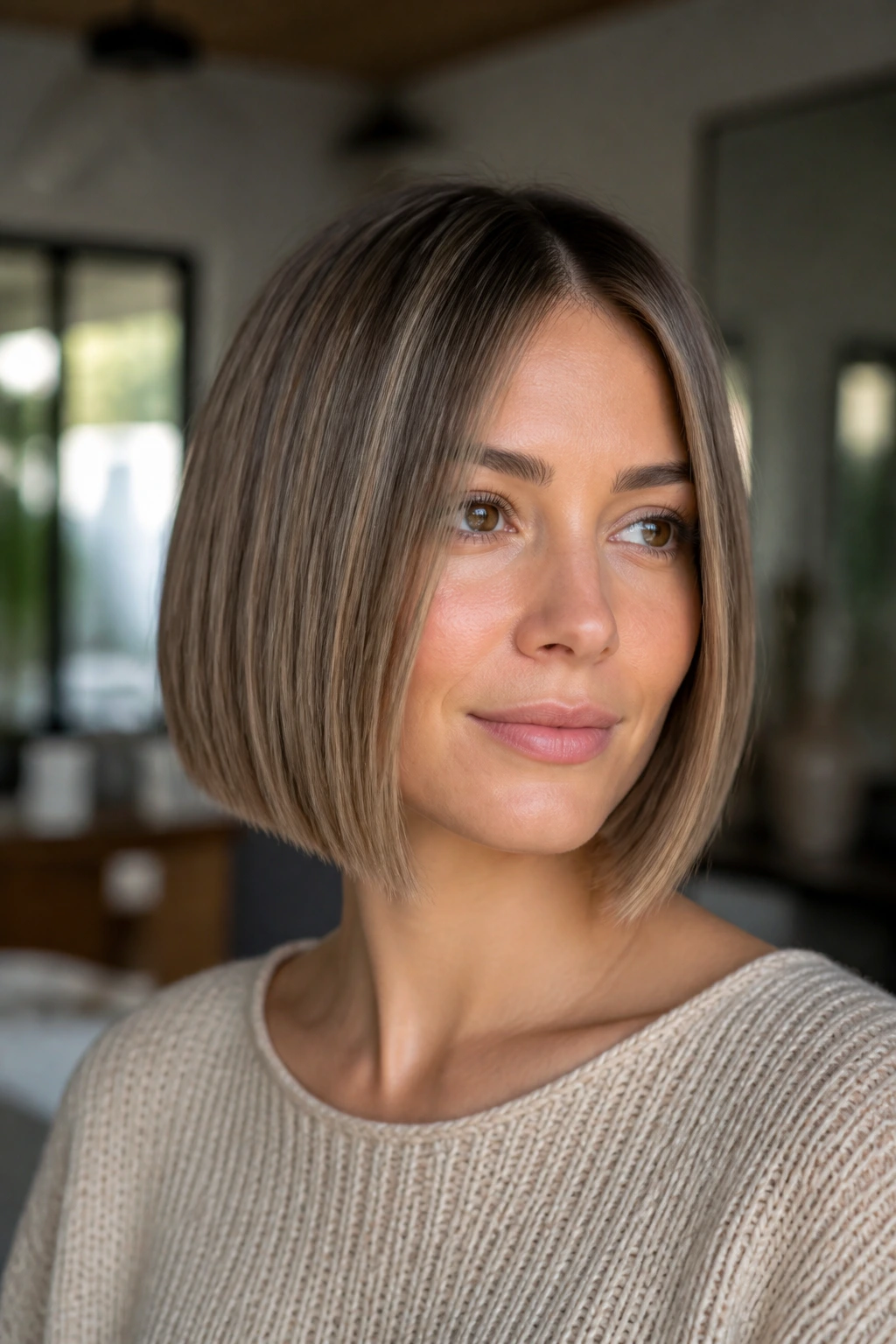
No layers. That’s the whole point. A layerless bob creates a solid, clean curtain of hair that straight textures can wear beautifully because the ends all land together. Taupe babylights stop the shape from reading like one dark block, but they stay close enough to the base that the effect feels controlled.
This cut is especially good for finer straight hair, because layers can chew up the line and make the ends look skimpy. A single-length bob keeps the density where you want it. The babylights should be soft and blended, placed mostly through the top and outer surface, not underneath where they’ll disappear.
If your hair tends to separate at the ends, this shape usually helps. The weight line holds everything down. I’d pair it with a middle part or a slightly off-center part, depending on how much lift you want at the crown. It is not a flashy haircut. It is a strong one.
14. Soft Undercut Bob With Frosted Babylights
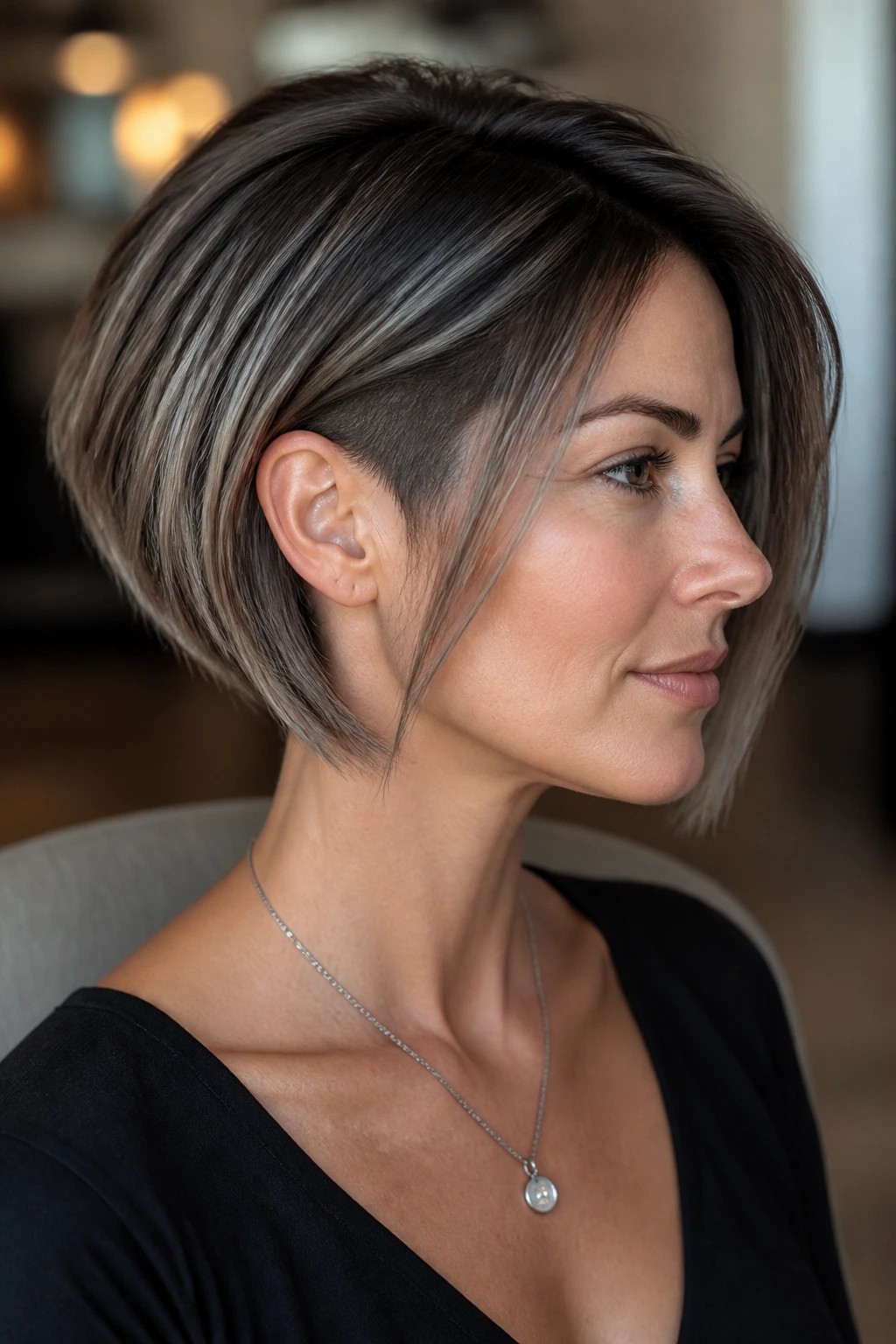
A hidden undercut is the closest thing to a secret weapon in bob cutting. It removes bulk where straight hair often gets wide — at the nape and under the lower layers — while leaving the top looking full and smooth. Frosted babylights on the surface keep the shape from going flat.
This is the bob I’d suggest for thick, straight hair that wants to spread out. The undercut lets the hair hug the head more closely, which makes the polished finish easier to keep. The babylights should live on the top layers and around the edges where light naturally hits. Keep them cool-toned if the base is dark brown or black; warm frosted pieces can clash.
You won’t see the undercut much in the mirror, but you’ll feel it every morning. Less puff at the nape. Less bulk under the collar. Less fighting with the brush. That matters. A bob can look refined only if the shape underneath behaves.
15. Sculpted Bob With Hidden Interior Babylights
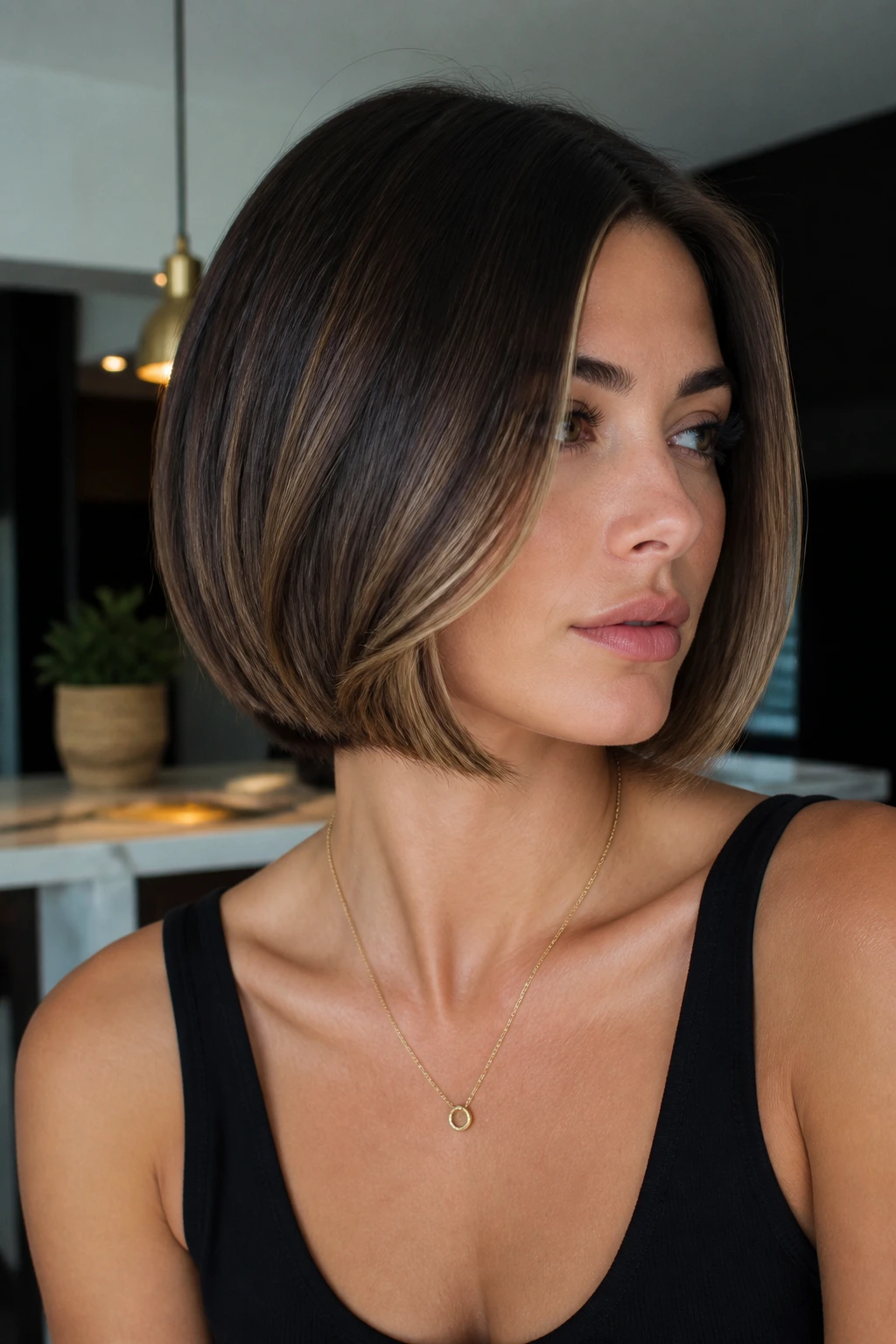
Interior babylights are for people who like color that reveals itself slowly. Instead of spreading the light all over the outside, the color sits inside the cut and flashes when the hair moves, parts, or tucks. On straight hair, that gives you depth without obvious streaks.
The haircut itself should be sculpted and precise, with a strong outer line. That’s what makes the hidden light interesting. If the perimeter is messy, the color loses its surprise. A straight bob with concealed babylights feels quieter than a full-highlight look, but it’s not flat. There’s a little shift when you turn your head, and that shift is the whole charm.
This style is nice if you need a more conservative color read at work but still want something beyond a single shade. The exterior stays calm. The interior does the talking. Ask your colorist to keep the placement subtle and to avoid over-lightening the lower interior, because straight hair will expose anything too stripy.
16. Long Bob With Ash-Blonde Babylights
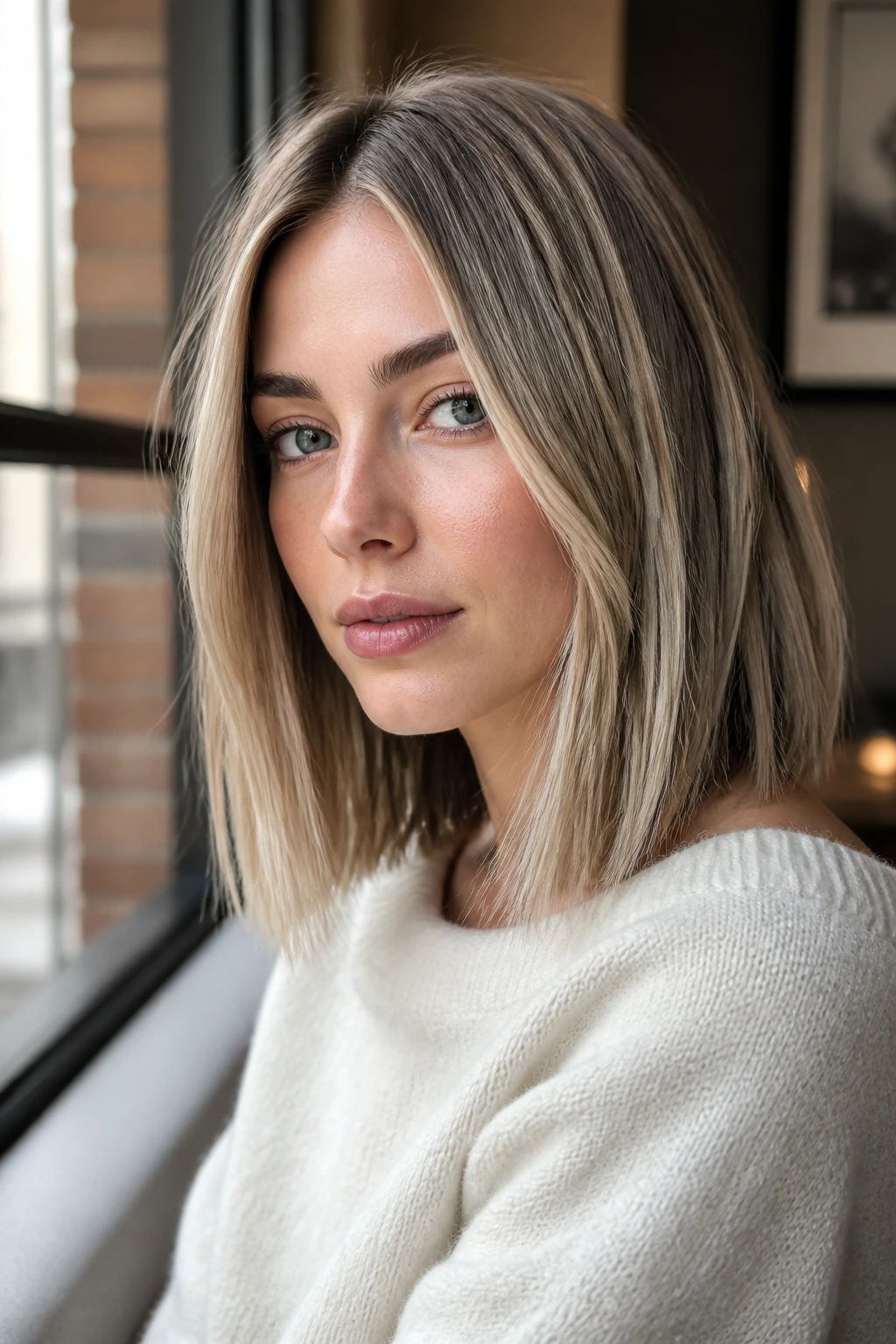
A long bob is usually the safest place to start, and I mean that in the best way. It gives you enough length to tuck behind the ear or wear in a low knot, but it still keeps the ends clean. Ash-blonde babylights are a neat match because they cool the surface down and stop brunette bases from looking heavy.
Straight hair at lob length can go limp if the cut gets too soft. So keep the ends blunt and let the babylights do the work of adding depth. The contrast should stay modest. If the blonde jumps too far from the base, the regrowth line will show faster and the bob will start feeling less polished between visits.
This is one of the easiest versions to live with. It can be worn smooth, slightly beveled, or with the faintest bend. It also gives you room to adjust the part without the whole shape collapsing. If someone wants polished but not precious, I send them here first.
17. Sleek Bob With Chunk-Free Face Framing
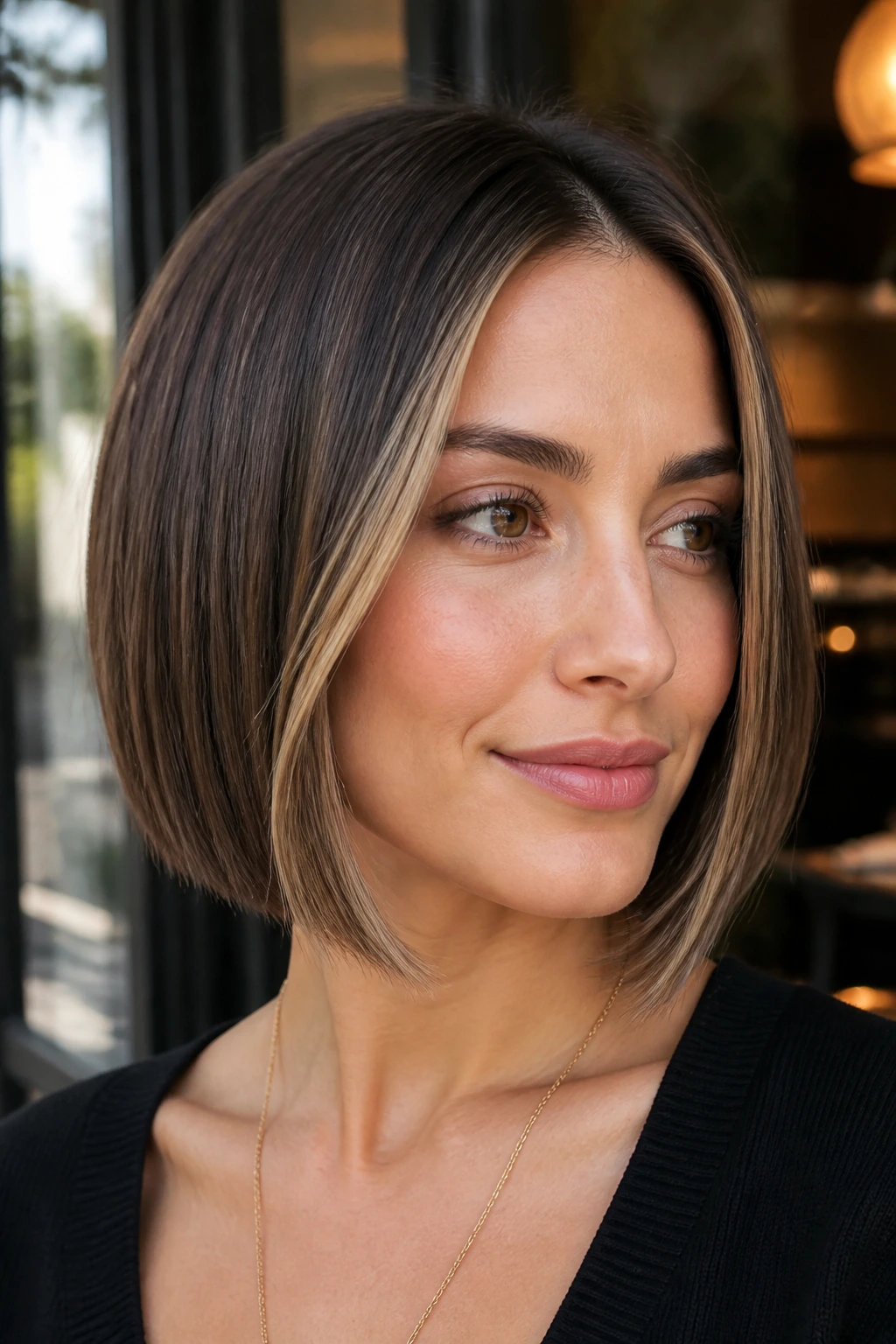
Chunky face-framing pieces look dated fast on straight hair. There, I said it. The better version is a sleek bob with face-framing babylights so fine they melt into the rest of the cut. You still get brightness around the cheekbones, but the finish stays refined.
This approach works because it respects the bob’s perimeter. The face framing should support the shape, not steal from it. When the pieces are too wide or too light, the eye goes straight to the front and ignores the actual cut. That’s a bad trade on straight hair, where the line is the whole point.
I like this look when the front is just a little longer than the back and the hair is worn mostly straight with a soft bend under the ends. The babylights should be concentrated near the outer face line and broken up by your part. That makes the lift look natural instead of sliced on.
18. Rounded C-Curve Bob With Biscotti Babylights
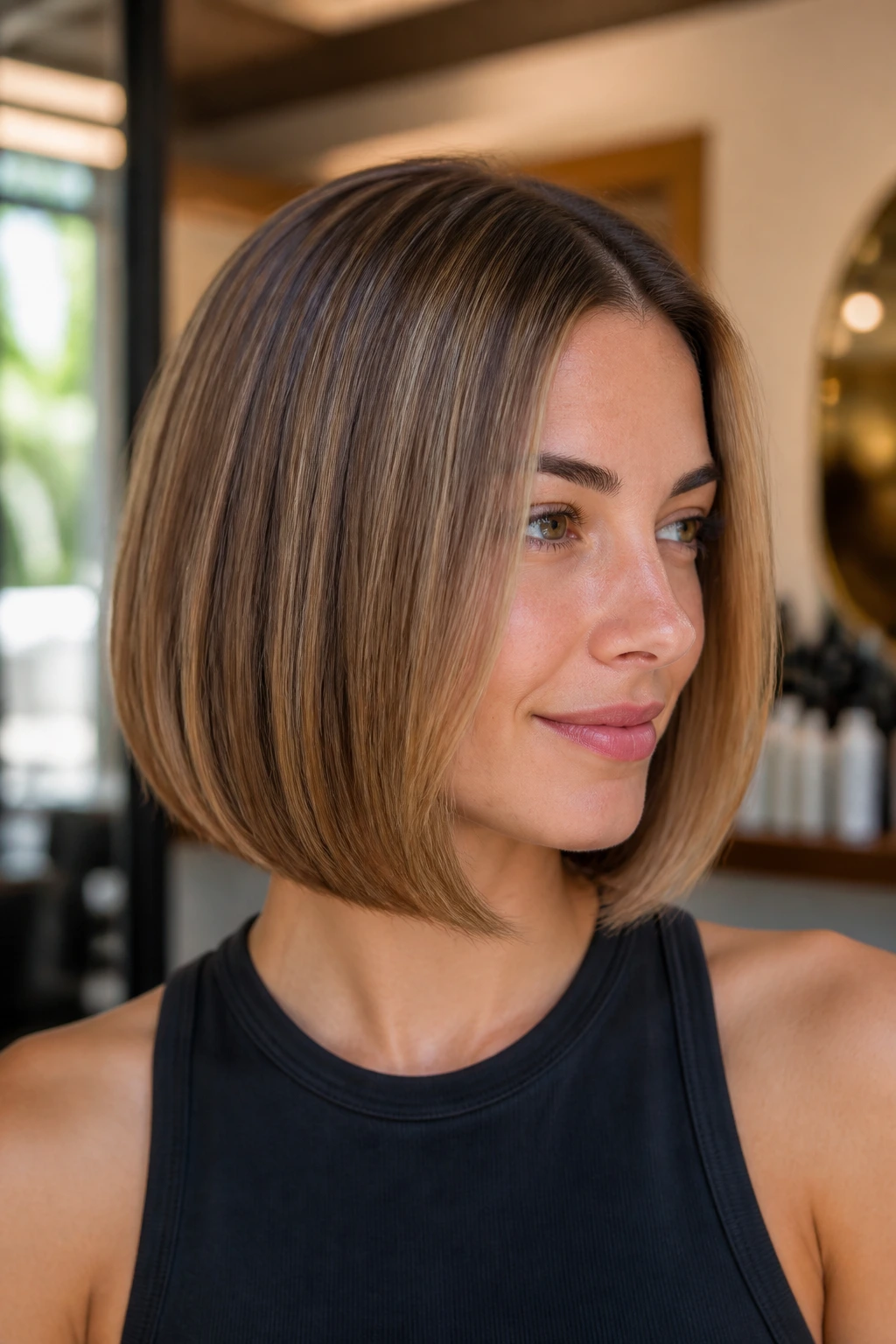
The C-curve bob is what happens when a blunt cut gets a soft spine. The ends turn under in a smooth arc, which straight hair can hold with a round brush or a quick flat-iron bevel. Biscotti babylights — warm, neutral, a little toasty — keep the shape from looking too severe.
This one is especially nice on hair that resists volume at the crown but wants to push out at the ends. The curved perimeter pulls everything back into place. The babylights add warmth without making the hair look yellow or brassy, which is the wrong direction for a polished bob.
A C-curve should feel tidy, not overstyled. If you can see the brush pattern too clearly, the finish has gone too far. Keep the movement gentle. The line at the bottom should still read as one deliberate shape, not a fussy blowout.
19. Deep Side-Part Bob With Toffee Babylights
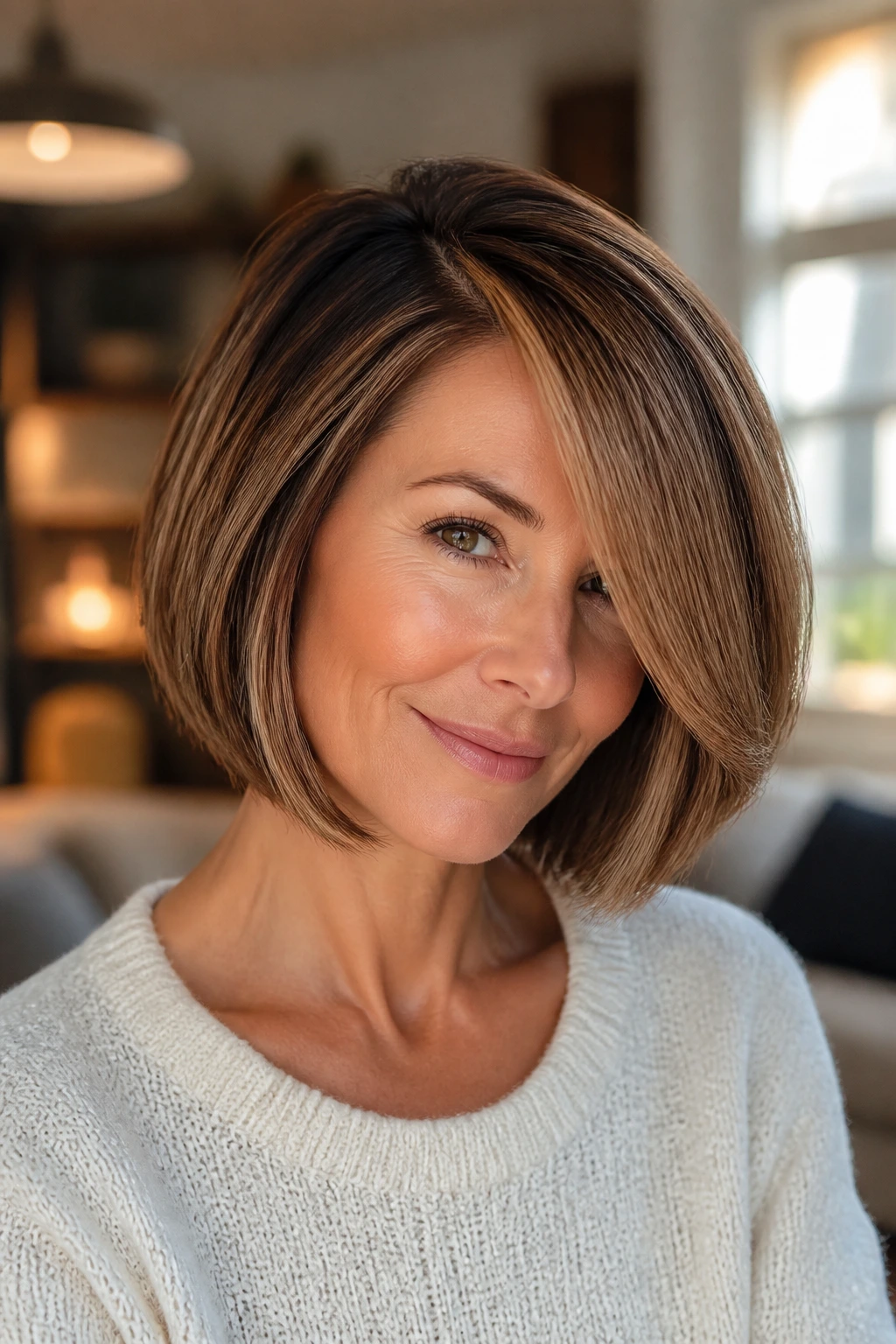
Deep side parts can make a bob feel heavier on purpose, and that weight shift is useful. It gives straight hair a little lift at the crown and a little drama over one eye. Toffee babylights add warmth and keep the shaded side from going dull.
This style is a good fix for angular faces or anyone who wants a more asymmetric shape without a full angle cut. The side part changes how the bob falls, which means the babylights should be planned around that sweep. Concentrate a few lighter threads where the hair crosses the forehead and at the front edge of the heavier side.
I like this bob when the hair has enough density to hold the part. If it’s too fine, the side can collapse by lunchtime. A root-lifting spray at the part and a quick blast with the dryer help. Then the bob keeps that intentional bend instead of falling back into a center-part default.
20. Air-Dried-But-Polished Bob With Soft Glaze Babylights
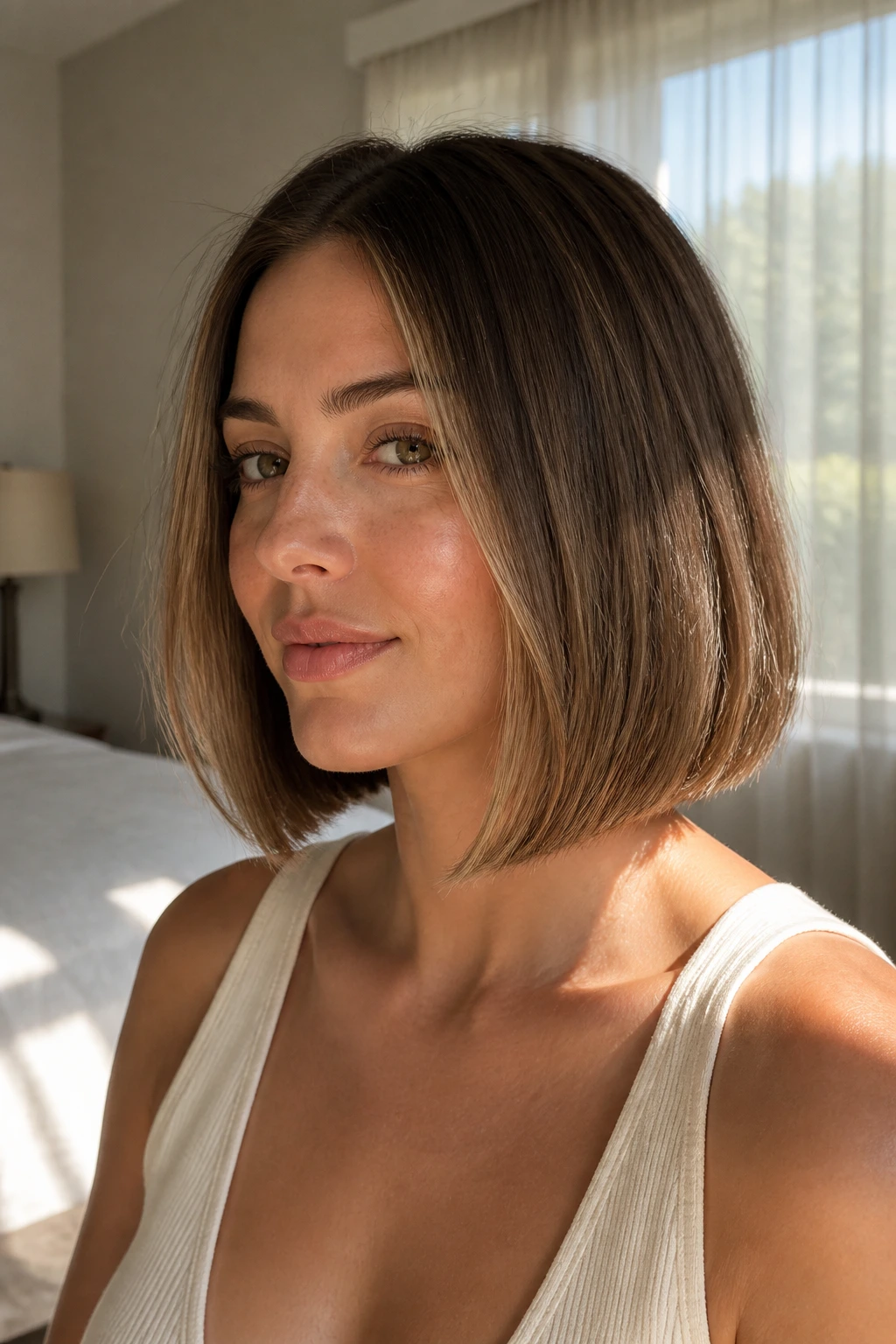
Air-dried straight hair can still look polished if the cut is doing enough of the work. That’s the truth people often skip. A blunt or lightly beveled bob, paired with soft glaze babylights, can dry neatly with very little heat if the hair is naturally straight and not too frizzy.
The key is to keep the babylights subtle and the tone glossy. A gloss or clear glaze makes the light catch more cleanly, which matters when you’re not using a blowout to manufacture shine. A smoothing cream on damp hair, combed through evenly, helps the ends settle in the right direction.
This version is for people who want the bob to behave with minimal effort, not zero effort. You may still need to smooth the front pieces or run a flat iron over the bottom inch. But you should not have to fight the whole head. A good air-dried bob looks tidy because the cut already knows where it wants to land.
21. Parisian Collarbone Bob With Beige-Butter Babylights
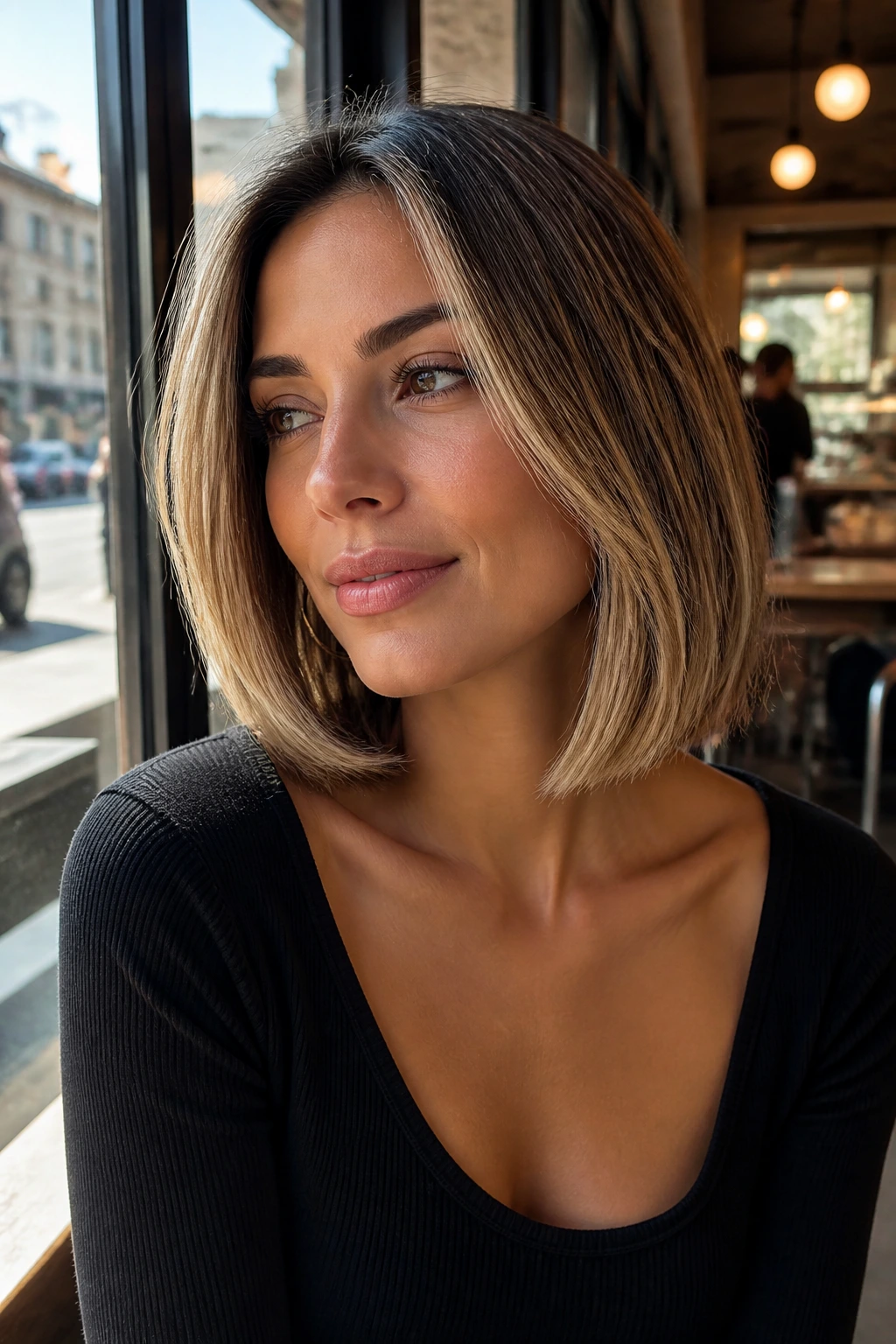
The collarbone is where this bob wants to sit. Not exactly on the shoulder, not too far above the jaw. That in-between length gives straight hair room to move while keeping the outline neat. Beige-butter babylights soften the surface with a warm, creamy tone that stays calm rather than flashy.
This shape works best with a soft off-center part and a blunt bottom. If the layers creep in too much, the ends start to fray, and the whole thing loses that clipped elegance. The babylights should follow the outer contour and the top layer. A little brightness near the front keeps the cut from disappearing against the neck.
It’s the kind of bob that looks better when the ends are tucked slightly under and the surface has a clean gloss. Not frozen. Not stiff. Just controlled. Straight hair at this length can drift into “I forgot to finish my blow-dry” territory fast, so the line has to be honest.
22. Sharp Micro-Inverted Bob With Silver Babylights
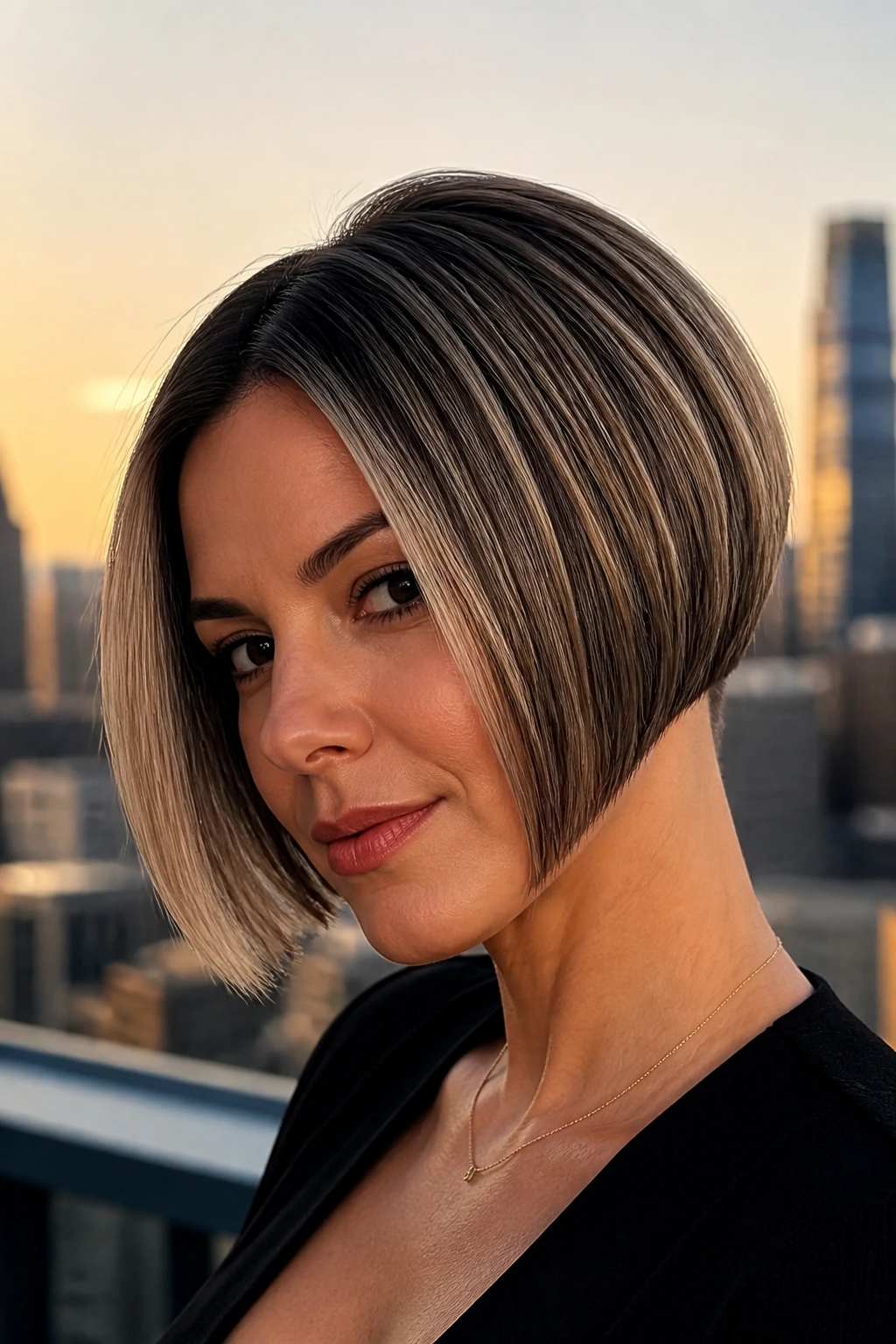
A micro-inverted bob has a sharper neck line than most people expect. The back sits close and compact, while the front angles down just enough to frame the jaw. Silver babylights make that geometry stand out, especially on darker straight hair where the contrast is clean.
This is a strong shape. It suits people who like hair that feels architectural. The babylights should be cool and fine, mostly near the front and upper crown, so they echo the cut instead of crowding it. Too much silver can look frosty; too little disappears into the dark base. The sweet spot is a faint metallic thread, not a stripe.
Maintenance matters here. A little extra growth in the back changes the whole line. If you choose this shape, you’re choosing precision. The upside is that it looks deliberate even when the rest of your outfit is plain. The haircut carries the mood.
23. Luxe Blunt Bob With Ribboned Champagne Highlights
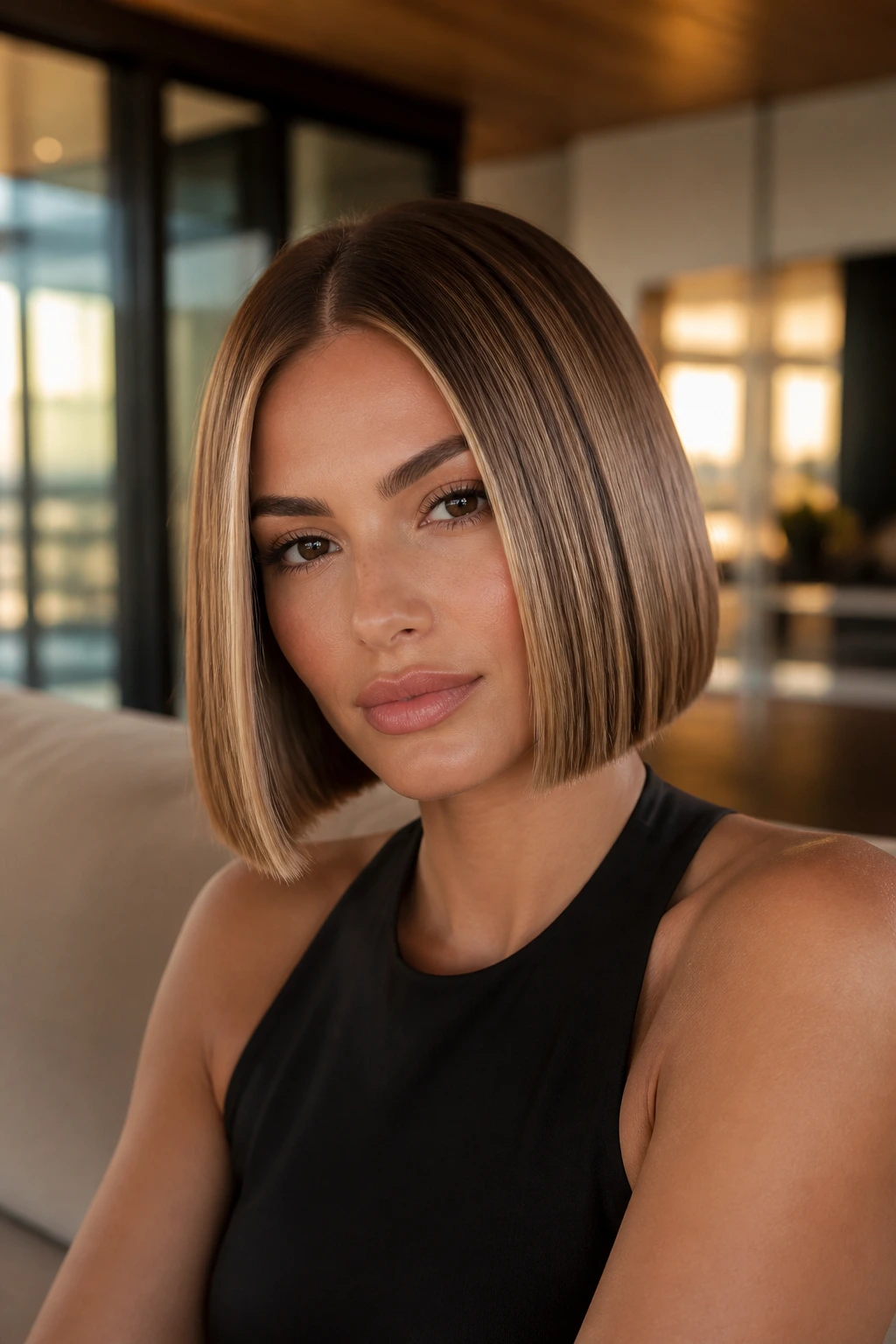
Thick hair and a blunt line are natural allies. The hair has enough weight to sit cleanly, and the blunt edge creates a dense-looking finish that straight strands wear well. Ribboned champagne babylights add movement, but because the cut is blunt, the lighter pieces can be a touch more visible without wrecking the shape.
This is one of the better choices if you want a polished bob that still has some warmth and brightness around the face. The ribbons should stay fine through the top layer and front sections. Keep the underside richer so the bob doesn’t lose depth. Straight hair can take a little more visible contrast here because the perimeter is strong enough to handle it.
The finish should be glossy. Think smooth surface, slightly beveled ends, no roughness at the bottom. A blunt bob with champagne babylights can look rich and controlled when the tone is right and the ends are clean. When either piece is off, the whole thing slips.
24. Minimalist Italian Bob With Warm Wheat Babylights
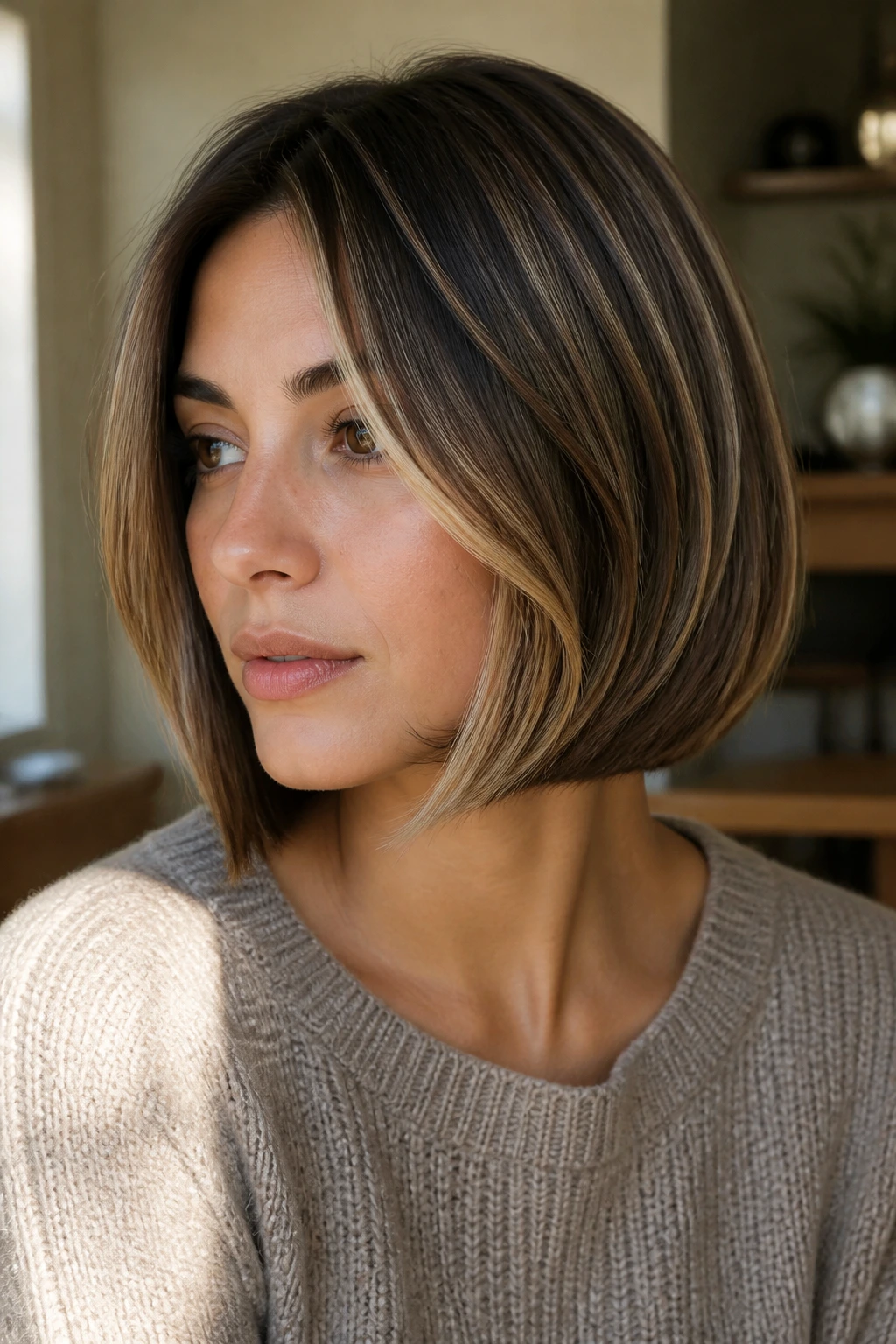
Italian bobs work because they avoid fuss. The length usually lands around the jaw or just below it, the edges stay solid, and the hair has a little airy movement without losing the line. Warm wheat babylights are a good fit because they soften straight hair without making the color too pale or too icy.
This is a nice bob if you want shape more than drama. The color should feel like a quiet lift, not a transformation. The babylights are best when they’re blended through the top and outer pieces, with maybe a few brighter threads around the face. The result is calm, not flat.
A natural bend at the ends helps the Italian bob live up to its name. It should look like the hair settled well, not like it was forced into position. That tiny distinction is what keeps the style from feeling stiff. And on straight hair, stiffness shows quickly.
25. Super-Sleek Glass Bob With Whisper-Light Babylights
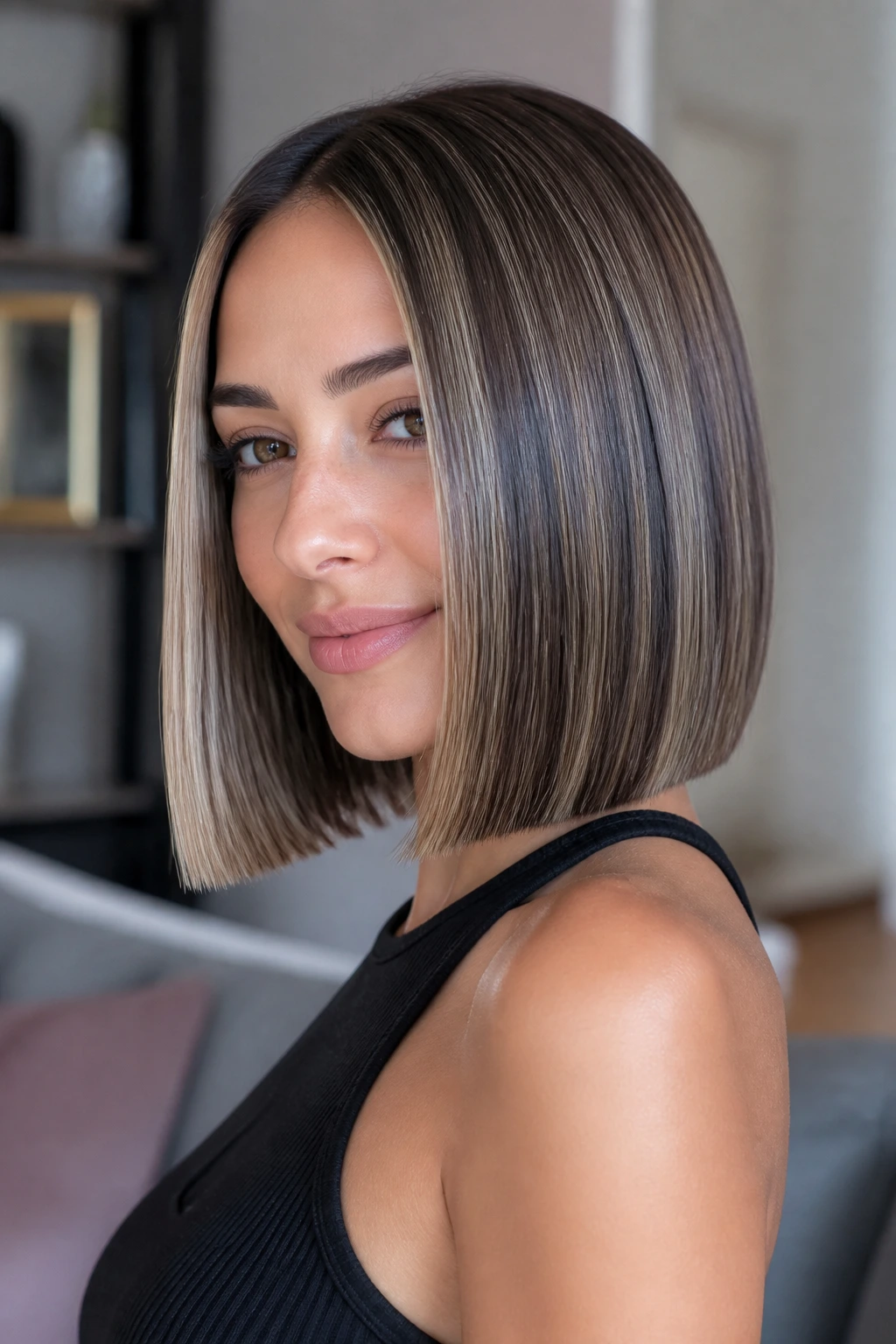
A glass bob lives and dies on the condition of the ends. They have to be clean. The surface needs to be smooth enough to reflect light without puffing or fraying. Whisper-light babylights are the right call because they give the eye just enough variation to keep the sleekness from feeling blank.
This is the quietest style in the set, and maybe the most exacting. The color should barely announce itself unless the hair moves. That means the babylights sit close to the base and stay very fine around the crown, part, and front edge. Straight hair makes this look possible; the cut just has to be disciplined.
Use heat protectant, keep the flat iron at a sensible temperature, and finish with a tiny amount of serum pressed onto the last inch or two. Not the roots. Never the roots. The point is mirror shine with a whisper of dimension, not grease. When it works, it looks almost too simple, which is usually a sign that somebody did the hard part well.
How Babylights Change the Shape on Straight Hair
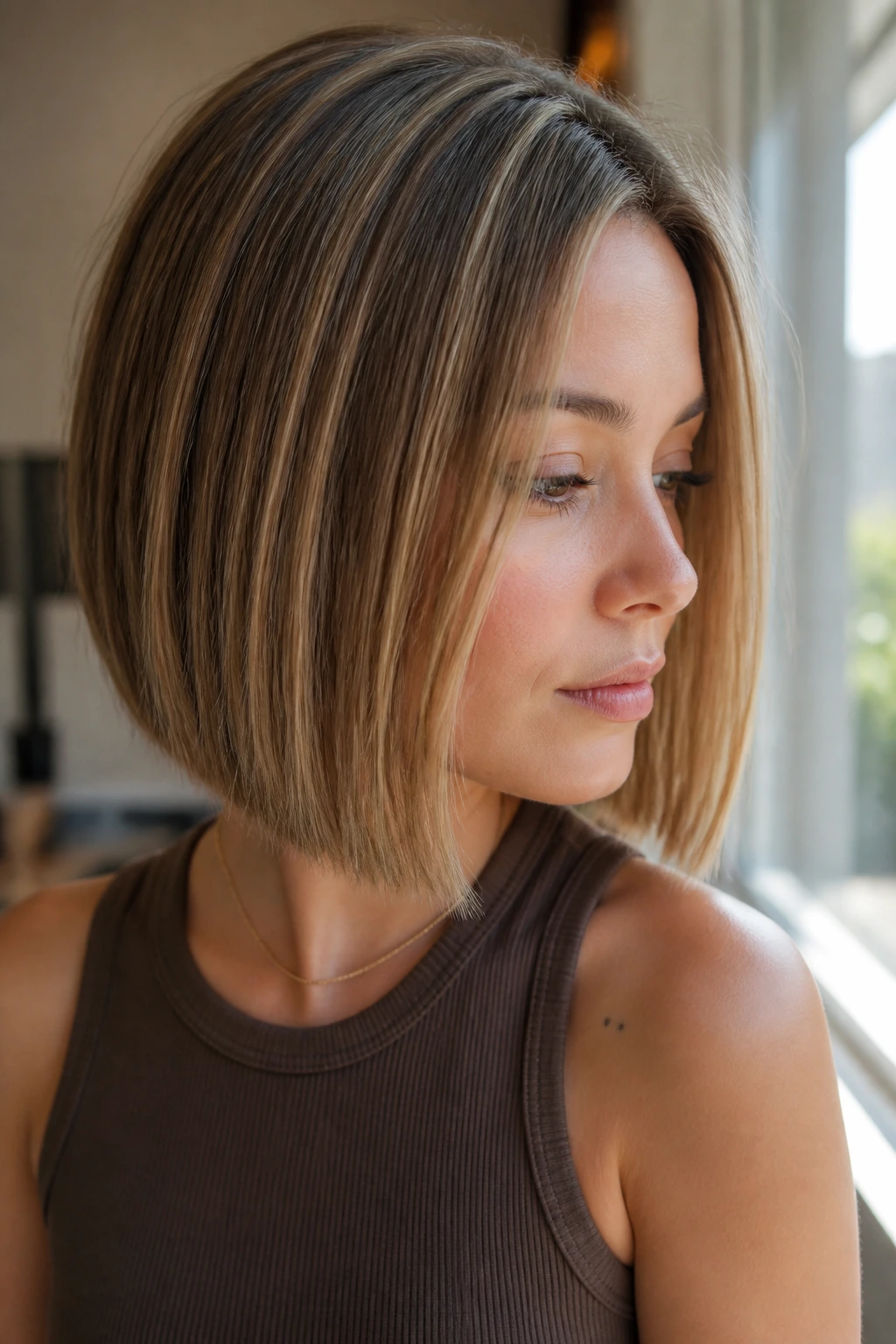
Straight hair doesn’t blur color the way waves do. Every placement decision is visible, which is why babylights matter so much here. Thin highlights act like fine lines across a drawing: they can show contour, pull attention to the part, brighten the face, and keep a blunt bob from turning into one solid block.
Where the light sits matters more than how much light you add. On straight hair, babylights near the crown and part give lift. Babylights along the front edge soften the face. Babylights buried too deep can vanish, and babylights placed too widely can make the whole head look stripy instead of dimensional. That’s the balancing act.
Tone matters too. Beige, pearl, sand, honey, mushroom, ash — each one changes the mood of the cut. Cool tones tend to make a straight bob look cleaner and more graphic. Warm tones make it feel softer and a little fuller. I like to think of babylights less as “extra color” and more as a tool for steering how the bob reads from across the room.
A gloss or toner is the last piece people skip. Bad move. Straight hair shows dullness fast, especially if the cut is precise. A fresh gloss keeps the babylights from turning chalky, and it makes the outline of the bob look sharper because the shine holds together from root to end.
What to Ask for at the Salon Chair
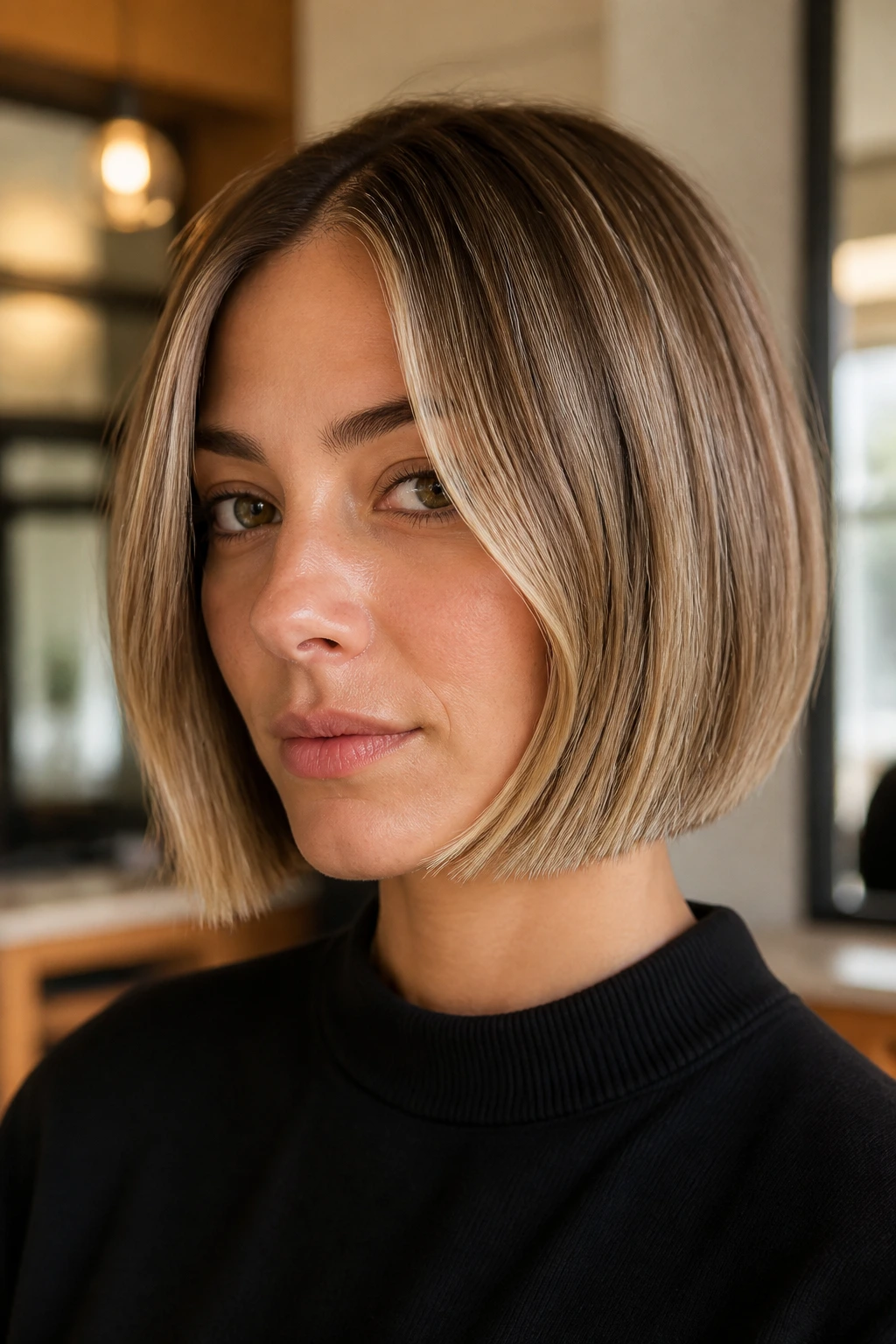
The easiest way to get a polished bob is to ask for the shape in plain words. Say where you want the length to land — jaw, chin, collarbone, or just above the shoulders. Then say whether you want the line blunt, slightly angled, or softly rounded under. Those three choices change the whole haircut.
Speak in landmarks
Mention your jawline, cheekbones, collarbone, or neck length instead of vague words like “short but not too short.” A good stylist can work with that. If your hair is very straight, ask them to preserve weight at the perimeter so the bob doesn’t thin out and wobble at the ends.
Separate the cut from the color
Babylights should be discussed on their own. Ask for very fine weaving, with light concentration around the part, hairline, and face-framing sections. If you want a subtle effect, say you do not want chunky ribbons or strong block highlights. If you want more contrast, say so, but keep the lights fine. Width is the part that dates a look fastest.
Mention how you actually style it
If you wear your hair tucked, part it down the middle, or heat-style it every morning, say that. A bob that looks good in a salon mirror can behave differently at home. A stylist who knows your routine can leave enough length in the front, keep the nape tight, or soften the angle to match how you live with the cut.
And one more thing: ask for the finish you care about most. Glossy? Air-dryable? Sharp and glassy? The answer changes the amount of layering, texturizing, and babylight contrast you should get.
The Styling Kit That Keeps a Bob Crisp
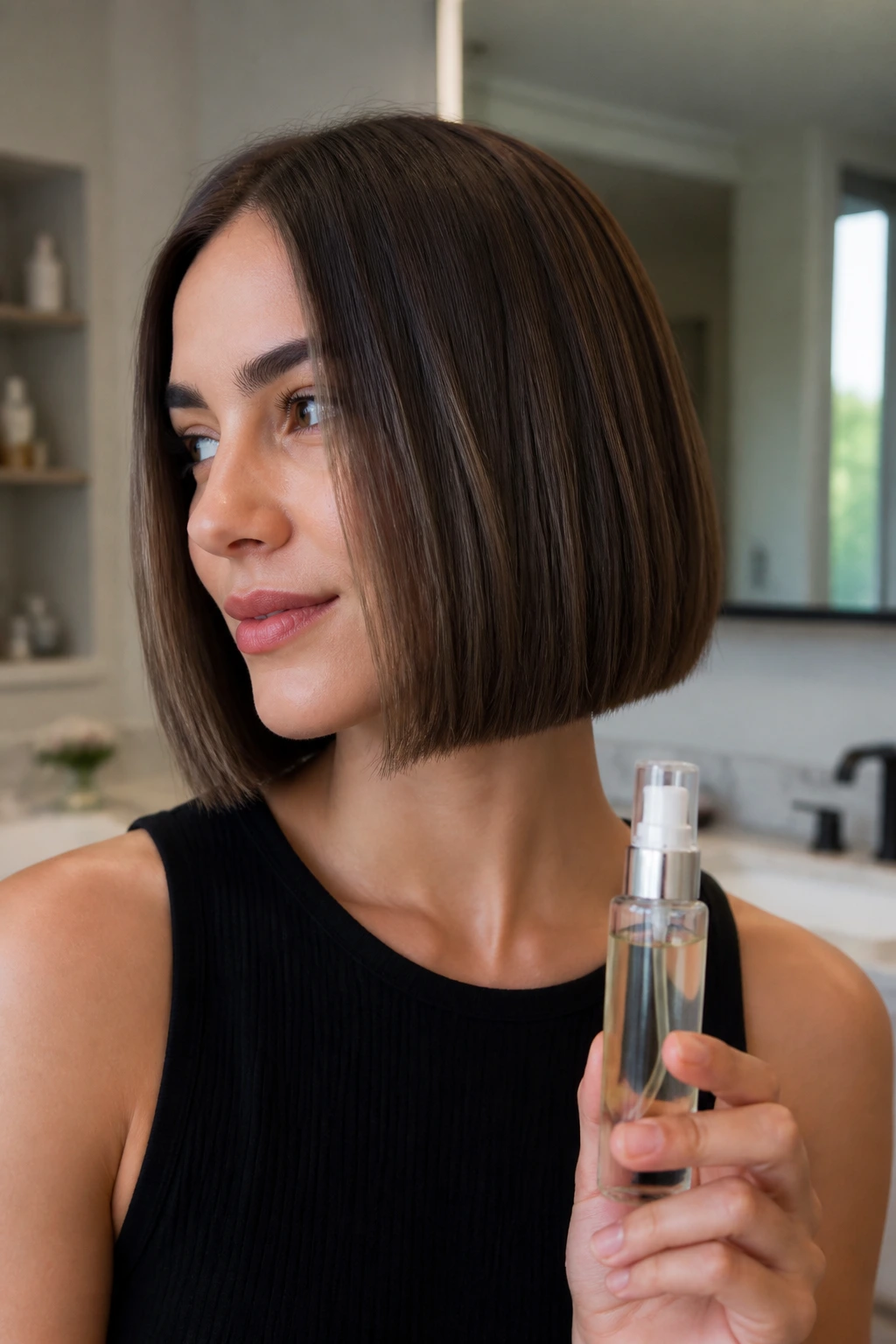
If a straight bob misbehaves, the culprit is often the tool kit, not the haircut. A polished finish depends on being able to smooth the cut without flattening it into nothing. These are the things that earn their space on the bathroom shelf.
-
Blow dryer with a nozzle concentrator: Directs air down the hair shaft so the cuticle lies flatter and the ends stay neat.
-
1-inch flat iron: Small enough to bend a bob without creating a hard crease near the bottom.
-
Small round brush, 1 to 1.25 inches: Useful for jaw-length and chin-length bobs when you want a slight undercurve.
-
Paddle brush: Fast smoothing for longer bobs and lobs; also useful for day-two touchups.
-
Tail comb: Makes clean parts and neat sectioning, which matters a lot when the color placement is subtle.
-
Sectioning clips: Keep the top layer out of the way while you smooth the underneath sections.
-
Heat protectant spray: Use it every time you blow-dry or flat iron. Straight hair shows heat damage fast, especially on the ends.
-
Lightweight shine serum or oil: One or two drops on mid-lengths and ends. The crown should stay clean.
-
Color-safe shampoo and conditioner: Helps the babylights stay bright instead of muddy.
-
Dry shampoo: Handy when the roots get oily before the ends do, which is a common problem with polished bobs.
-
Silk or satin pillowcase: Reduces friction overnight, so the shape doesn’t wake up frayed.
How to Keep the Cut and Color Fresh
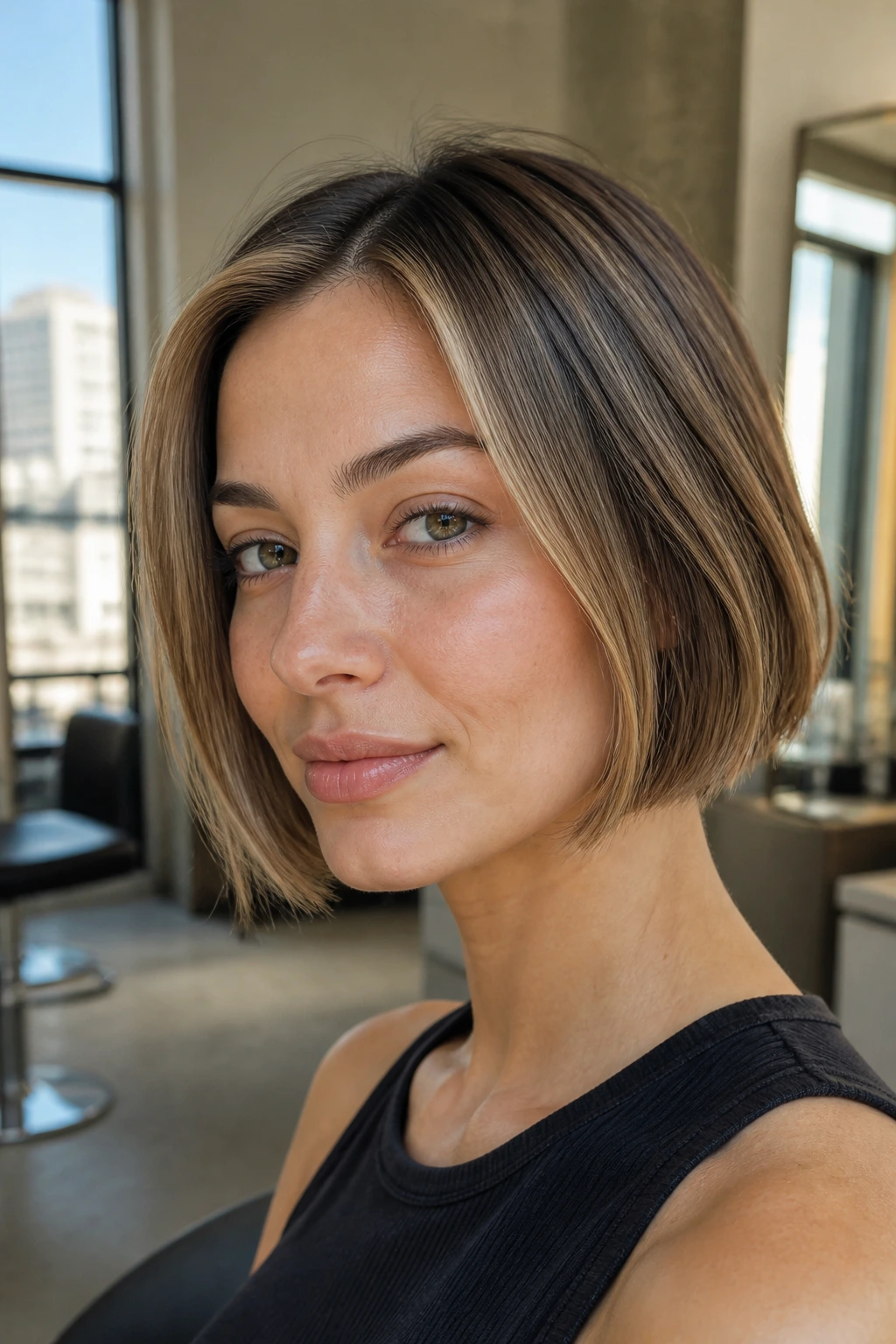
A polished bob only looks polished if the line stays intentional. For chin-length and micro bobs, I’d plan on trims every 5 to 6 weeks. For collarbone lengths and lobs, 6 to 8 weeks usually keeps the edges from sagging past the shape you paid for. Let it go much longer, and the perimeter starts to lose its edge.
Babylights need a separate rhythm. If the tones are cool — ash, pearl, silver, mushroom — a gloss or toner refresh every 6 to 8 weeks keeps brass from creeping in. Warmer blondes and beiges can sometimes stretch a little longer, especially if the base is soft. What matters is whether the color still reads as clean against the cut.
Wash schedule matters too. Straight hair usually shows oil at the roots before the ends look dirty, so 2 to 4 washes a week is a common range, depending on your scalp. A dry shampoo at the root on day two can buy you time, but don’t cake it on. That powdery buildup makes the bob feel dusty instead of sleek.
Heat settings deserve respect. Fine straight hair usually does better under 325°F. Coarser straight hair can take more, but there’s no prize for blasting it. A little heat protectant before every tool pass keeps the finish smoother and helps the babylights shine instead of looking scorched. At night, a silk pillowcase and a loose tuck behind the ears are often enough to protect the shape.
Common Mistakes That Flatten a Straight Bob
-
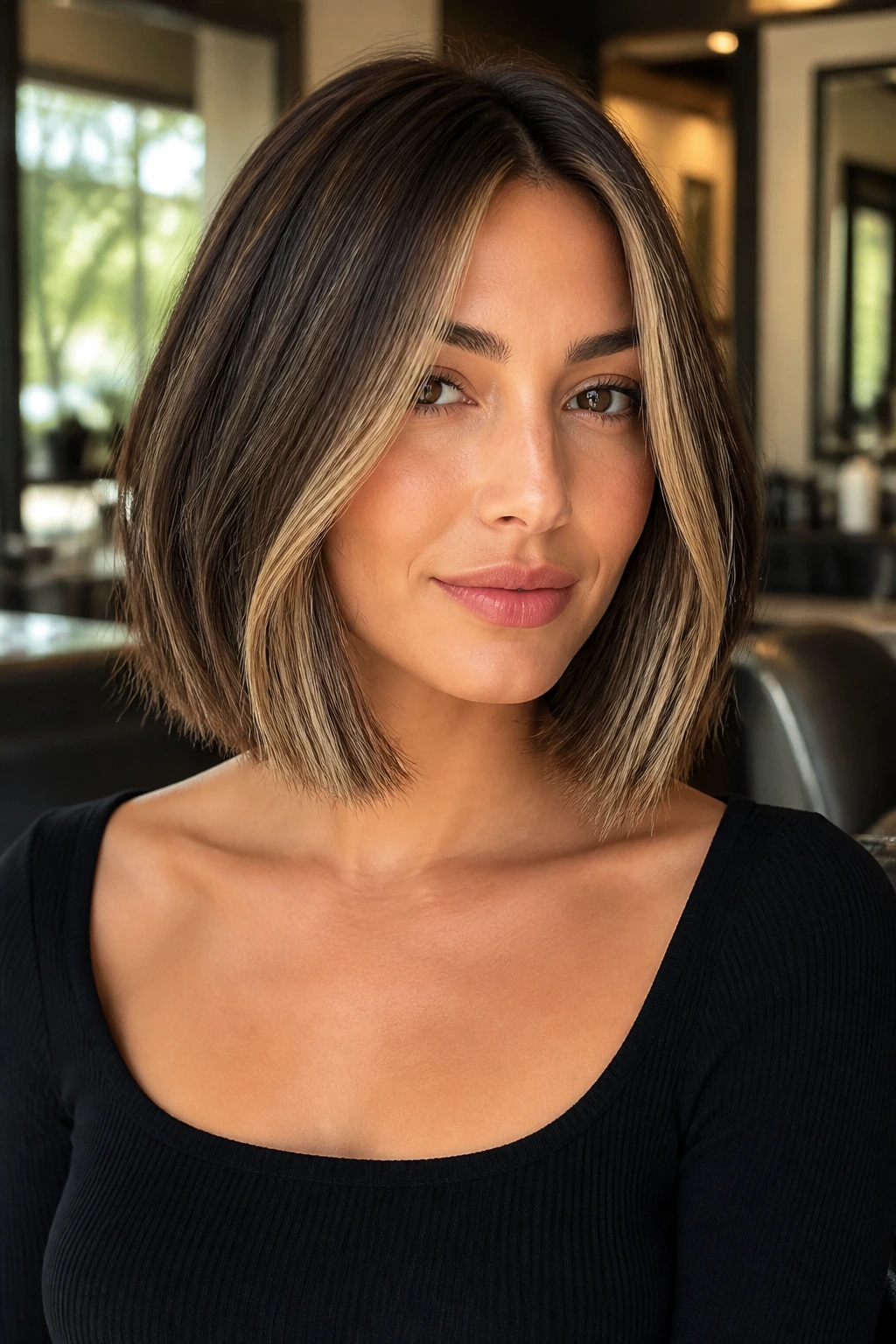
Making the babylights too chunky: The symptom is stripey color that looks like obvious foils instead of fine dimension. Fix it by asking for micro-weaving and softer placement near the part and hairline.
-
Over-thinning the perimeter: The ends go wispy and the bob loses its dense, polished line. Keep weight at the bottom unless the cut is intentionally meant to be airy.
-
Choosing a tone that fights the base: Too-bright blonde on dark hair can look brassy or disconnected, while too-cool ash on a warm base can read muddy. Stay closer to your base unless you want obvious contrast.
-
Skipping the bevel at the ends: Straight hair can look harsh if the bottom is cut perfectly flat and left untouched. A small undercurve or C-shape usually keeps the line refined.
-
Using too much serum or oil: The crown collapses, the roots separate, and the bob starts looking greasy by noon. Keep the product on the mid-lengths and ends only.
-
Letting trims slide for too long: The shape drifts, the front starts to hang, and the whole cut feels tired. A bob is not a haircut you can ignore for months and expect to look crisp.
Variations and Alternatives to Try
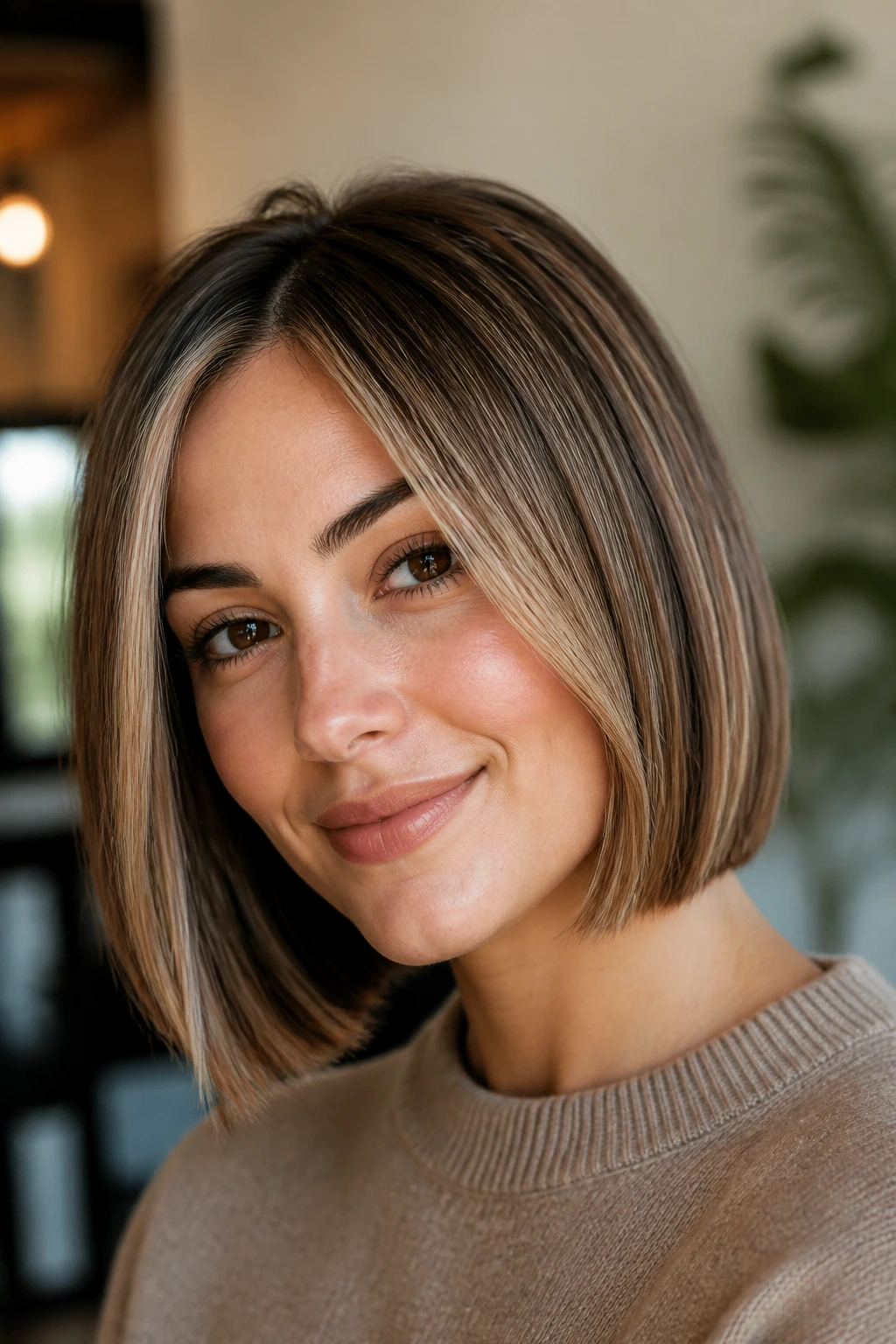
The Low-Contrast Grow-Out: Keep the babylights within one shade of your base and let them stay concentrated near the top layer. This is the version for people who hate obvious regrowth lines and want the cut to outlast the color conversation.
The Cool Smoke Edit: Use ash, pearl, or mushroom tones over a brown or dark blonde base. The result feels cleaner and more modern, especially on super-straight hair that can make warmer tones look louder than intended.
The Honey Lift: Ask for beige and honey babylights instead of pale blonde ribbons. It softens the face, works well on brunette bases, and keeps the bob from looking flat under indoor light.
The High-Drama Frame: Keep the cut sleek and add brighter babylights just around the face and part. This is the move if you want the bob to feel a little bolder without turning the entire head into a highlight project.
The Longer Safety Net: If you’re nervous about short hair, move the whole look to collarbone length and keep the babylights fine. You still get the polished outline, but the grow-out is gentler and the styling mistakes are less dramatic.
Frequently Asked Questions
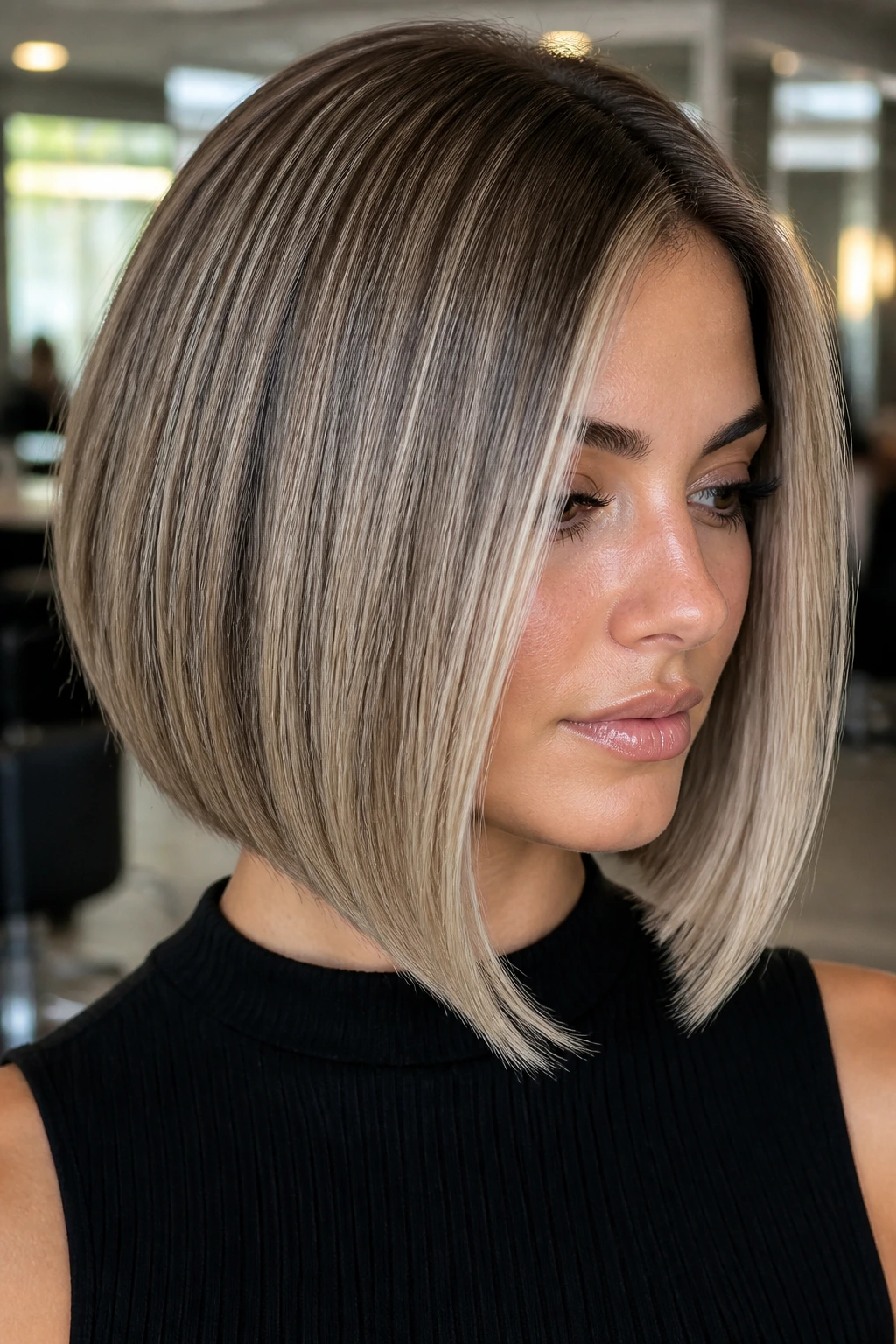
Do babylights work on very straight hair?
Yes, and in some ways they work better there because the fine color placement stays visible instead of disappearing into bends and curls. The key is keeping the babylights tiny and close to the haircut’s line so the result looks soft, not striped.
What bob length is easiest to maintain if my hair grows fast?
A collarbone bob usually buys you the most wiggle room. It keeps the polished shape while giving the color more time to grow out without looking chopped or awkward.
Should I ask for babylights or balayage on straight hair?
Babylights are usually the cleaner choice when you want a polished bob. Balayage can be lovely, but on straight hair the painted pieces can look broader and less precise unless the colorist keeps the placement very fine.
How do I stop a straight bob from looking helmet-like?
Avoid a too-wide highlight pattern, and ask for just a slight bevel at the ends instead of a heavy round brush blowout. A bob looks stiff when the shape is all surface and no movement.
Can fine hair wear these styles without looking thin?
Yes, especially the blunt, layerless, or jaw-length versions. Fine hair usually looks fuller when the perimeter stays solid and the babylights are subtle enough that they don’t break the line.
What if my ends flip out no matter what I do?
That usually means the cut or the styling direction is fighting your natural bend. Ask for a cleaner bevel, use a small round brush or flat iron on the bottom inch, and avoid over-drying the ends, which makes them spring outward.
How often should the color be toned?
Cool blondes and ash tones usually need refreshing every 6 to 8 weeks if you want them to stay crisp. Warmer tones can stretch a bit longer, but the moment they start looking dull or brassy, a gloss is worth it.
Can I wear a polished bob if I like air-drying?
Yes, as long as the cut is blunt enough to hold its line on its own. A smoothing cream, a quick comb-through, and maybe one pass on the ends are often enough. You do not need a full blowout every time.
The Shape That Stays Sharp
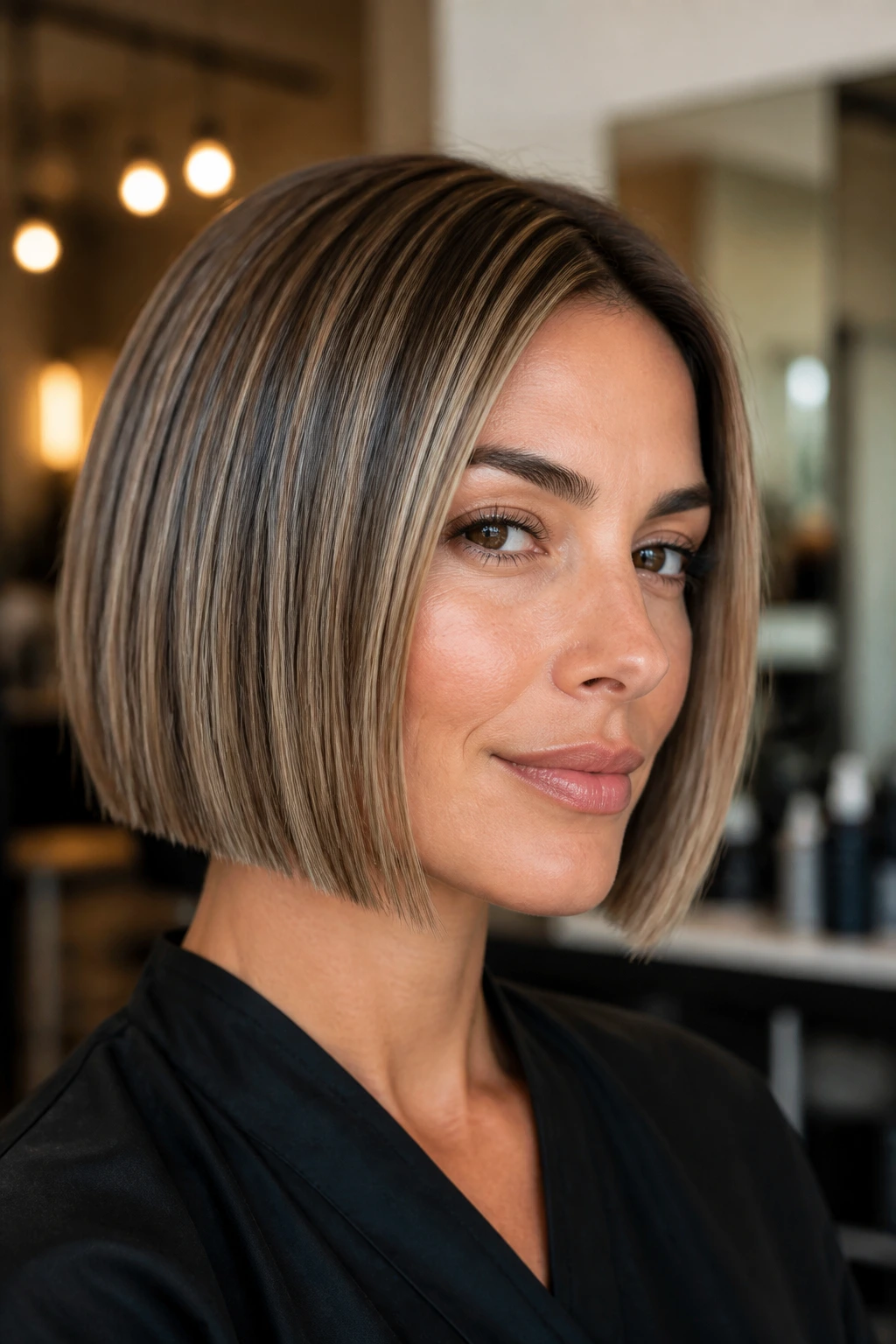
The best bobs on straight hair don’t depend on tricks. They depend on line, weight, and color placed with a steady hand. Babylights are the quiet part of that equation, and on straight strands, quiet is usually smarter than loud. A thin ribbon of light can do more for a bob than a whole panel of blonde if the placement is right.
What I like most about these styles is that they don’t fight the hair you already have. They work with it. Straight hair gives you the clean canvas; babylights give it dimension; the bob itself decides whether the whole thing feels strict, soft, sharp, or a little romantic.
Bring a photo of the shape you want, not just the color. That one choice saves a lot of confusion in the chair, and it’s the fastest way to end up with a bob that still looks good when you leave the salon and when you’re halfway through a normal Tuesday.