



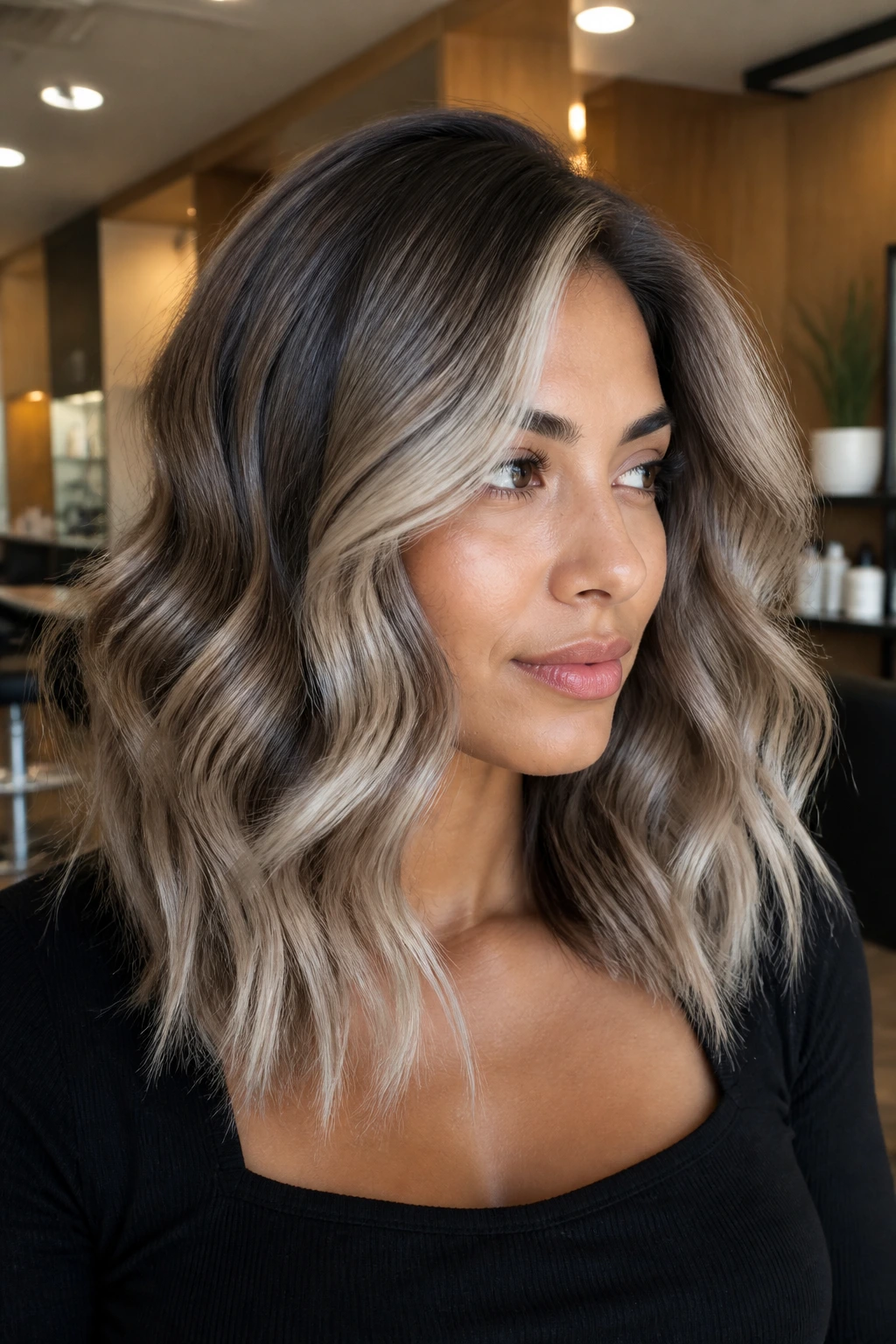
Blonde ashy balayage for medium skin tones works best when the blonde stays smoky, not chalky. Push it too pale and too silver, and the face can start to look flat. Keep a little beige and depth in the root, and the color suddenly feels expensive in the quiet, believable way — like it grew out of your own hair with a better lighting setup.
That narrow sweet spot is why this look matters so much. Medium skin can carry cool blonde beautifully, but it usually needs a smarter map than a one-note platinum strip. The best versions borrow from mushroom blonde, pearl, champagne, and ash-beige rather than leaning all the way into white. There’s a reason the good ones look soft from across the room and detailed up close.
The difference lives in placement as much as tone. A root shadow that stays one to two levels deeper than the lightest ribbons keeps the skin from getting washed out, and a few brighter face-framing pieces stop the whole thing from sinking into mud. Once you notice that balance, you start seeing why some ash balayage feels sleek and some just looks tired. The shades below sit in that useful middle ground.
Why These Shades Earn Their Keep
-
Cooler Blonde, Less Brass: Ash tones mute the orange and gold that often show up when brunette hair is lifted, so the blonde stays cleaner between salon visits.
-
Medium Skin Needs Depth: A rooted finish with level 5 to 7 shadow near the scalp keeps the hair from floating away from the face.
-
Beige Beats Pure Silver: Beige-ash and mushroom tones usually flatter medium skin better than stark icy blonde, which can go gray fast.
-
Balayage Grows Out Softly: Painted placement leaves a blurred line, so the regrowth looks intentional instead of harsh.
-
Texture Changes Everything: Waves, bends, and layered cuts let the ash ribbons catch the eye instead of disappearing into one flat blonde sheet.
-
Easy to Tune Up or Down: You can ask for more beige, more smoke, or more brightness around the face without rebuilding the whole color.
How to Choose the Right Ash for Your Undertone
Medium skin is not one thing, and ash blonde gets that wrong all the time. A golden medium complexion usually needs beige ash, not icy ash. Neutral skin can take mushroom, champagne, and pearl tones with less drama, while olive skin often looks best when the root stays deeper and the blonde lives more in the midlengths and ends.
A good consultation starts with where your hair is now. If your base is dark brown, ask what level the stylist plans to lift you to first. For most ashy balayage looks, level 7 or 8 gives enough light for tone without turning the hair gummy from overprocessing. If someone talks about pure white blonde from a level 4 base in one visit, I’d slow the conversation down. That’s how ends get tired.
What to say at the chair
Bring 3 to 5 photos, but also point out what you like in each one. Maybe it’s the root depth in one photo, the face-framing brightness in another, and the beige finish in the third. That is much more useful than waving around a screenshot and saying “something like this.”
Ask for cool beige or mushroom toning, a soft shadow root, and dimension through the midlengths. Those three phrases steer the result toward ash without pushing it into flat gray.
1. Smoky Beige Ash Balayage
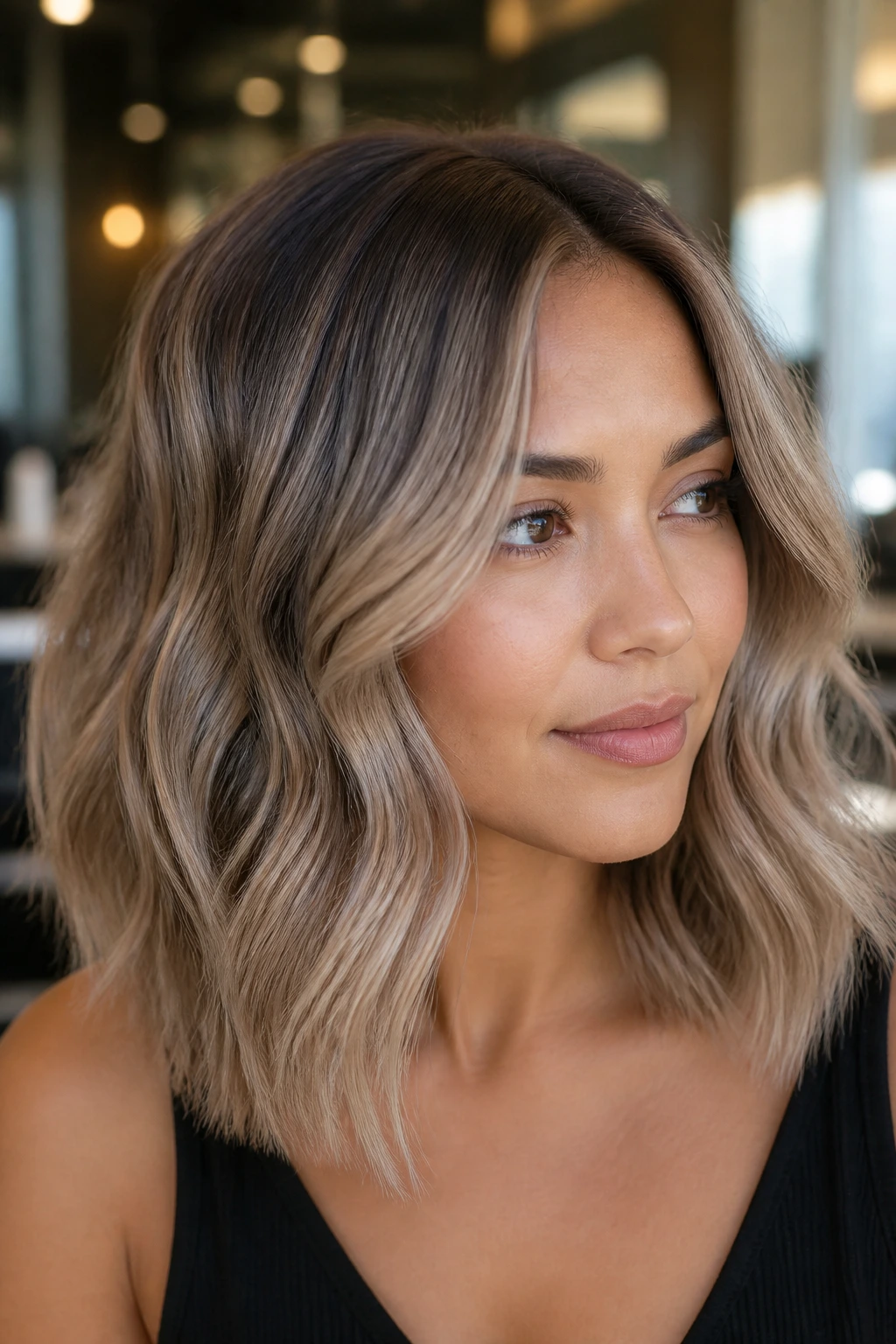
Smoky beige ash balayage is the safest entry point for medium skin, and I mean that in the best way. The blonde sits in that in-between zone where it reads cool, but not frosty; light, but not washed out. On medium skin with warm or neutral undertones, the beige keeps the color from turning stark against the face.
Why It Works on Medium Skin
The root stays a notch deeper — usually a soft level 6 or 7 — which gives the blonde room to breathe. Then the lighter ribbons land mostly through the midlengths and ends, where they can move without fighting the skin tone.
- Ask for beige toner with a smoky base, not silver toner all over.
- Keep the face frame one shade brighter than the back for soft contrast.
- Best on shoulder-length cuts, long layers, and loose waves.
- Refresh with a gloss every 6 to 8 weeks.
One-line tip: if your skin runs golden, a beige ash finish will usually look better than a true icy blonde.
2. Mushroom Blonde Melt
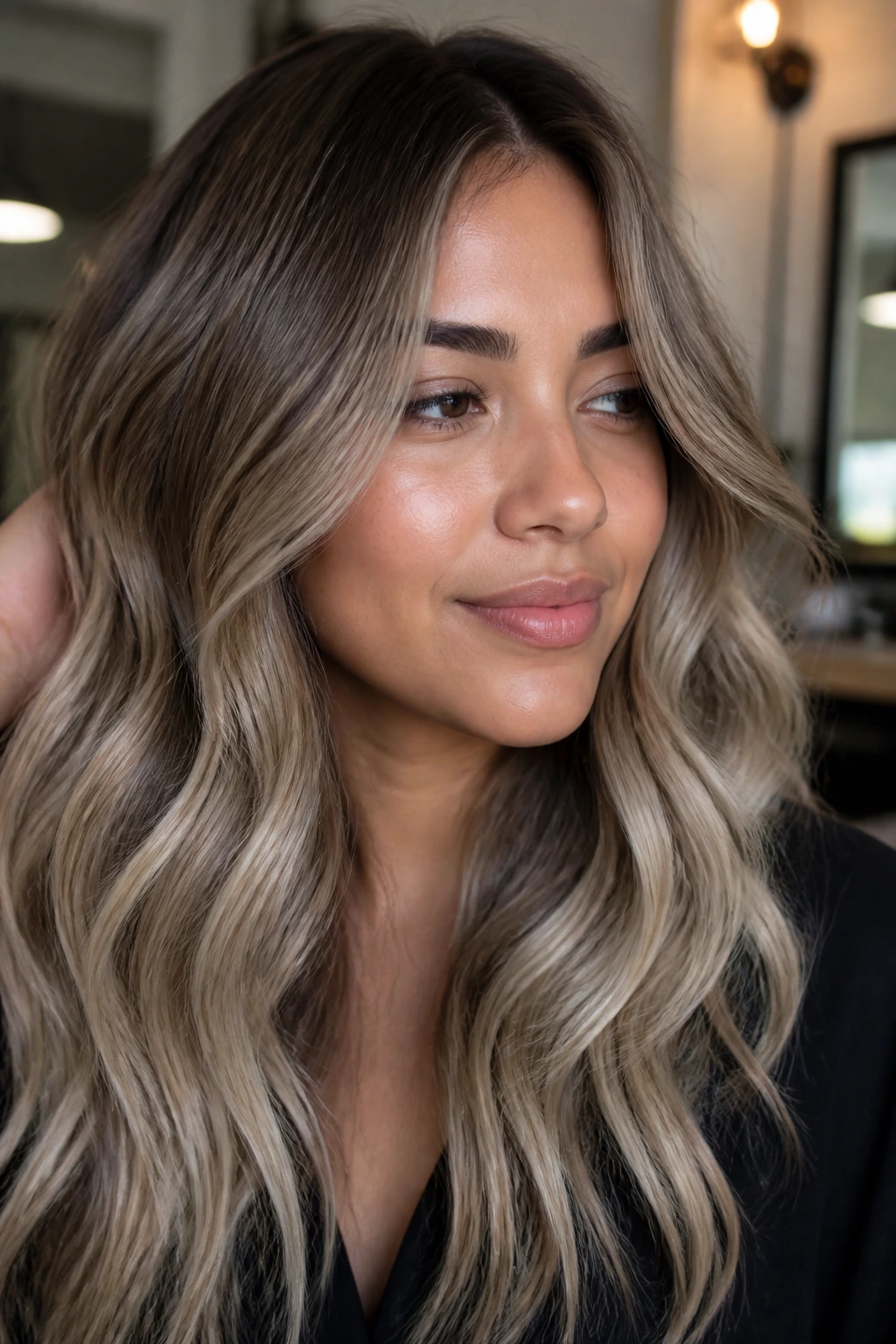
Mushroom blonde melt is the shade that stops ash balayage from looking too polished and starts it looking expensive in the good, lived-in sense. The color sits between taupe, beige, and muted sand, with a root that melts cleanly into cooler ends. On medium skin, that middle-ground tone keeps the hair from stealing the whole show.
It works because mushroom blonde handles undertones instead of fighting them. If your complexion leans neutral or olive, this is one of the easiest ways to wear blonde without the hair going yellow or the face going sallow. Ask for a soft root shadow, low-contrast painting through the midlengths, and toner that leans beige rather than flat gray.
The finish is especially strong on blunt lobs and softly layered mid-length cuts. Straight hair shows the melt clearly; wavy hair makes it look even softer. Either way, the color has a calm, smoky depth that most bright blondes never quite reach.
3. Champagne Ash Face Frame
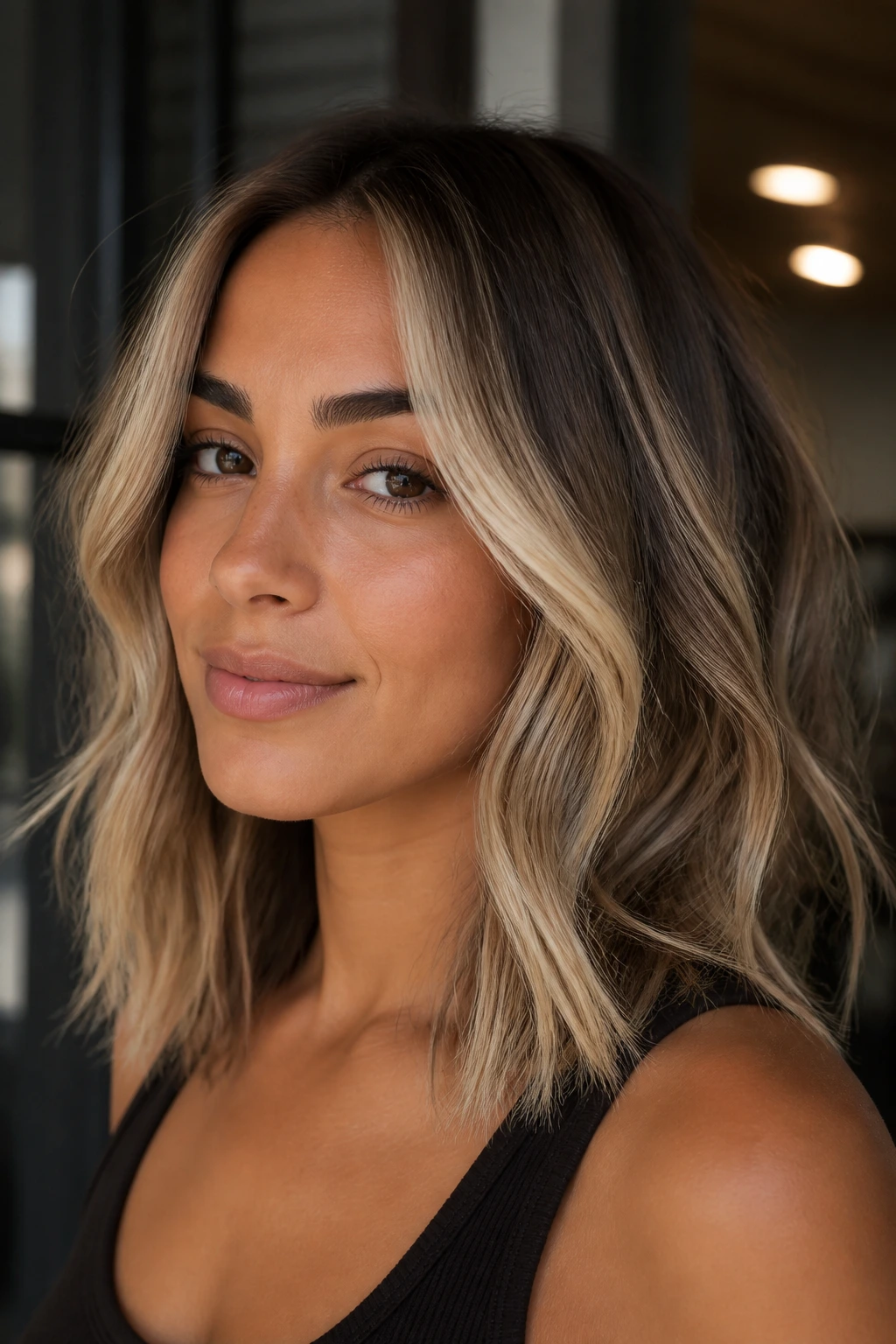
What if you want brightness near the face without turning the whole head pale? Champagne ash face framing does that job cleanly. The front pieces are lifted lighter than the rest, then toned into a cool champagne beige that still has some warmth under the ash. The result feels lifted around the cheekbones without looking stripey.
What to Ask For
Have the stylist keep the money pieces soft, not thick. A thick front streak can look dated fast, especially on medium skin where too much contrast near the hairline can harden the face. Two slimmer panels, feathered backward into the temple area, usually do the trick.
This style is a good fit if your base color is brown and you do not want to spend all day toning at home. The rest of the hair can stay dimensionally darker, which makes the champagne front pieces look brighter by comparison. That contrast is the whole point.
4. Sand-Dune Balayage
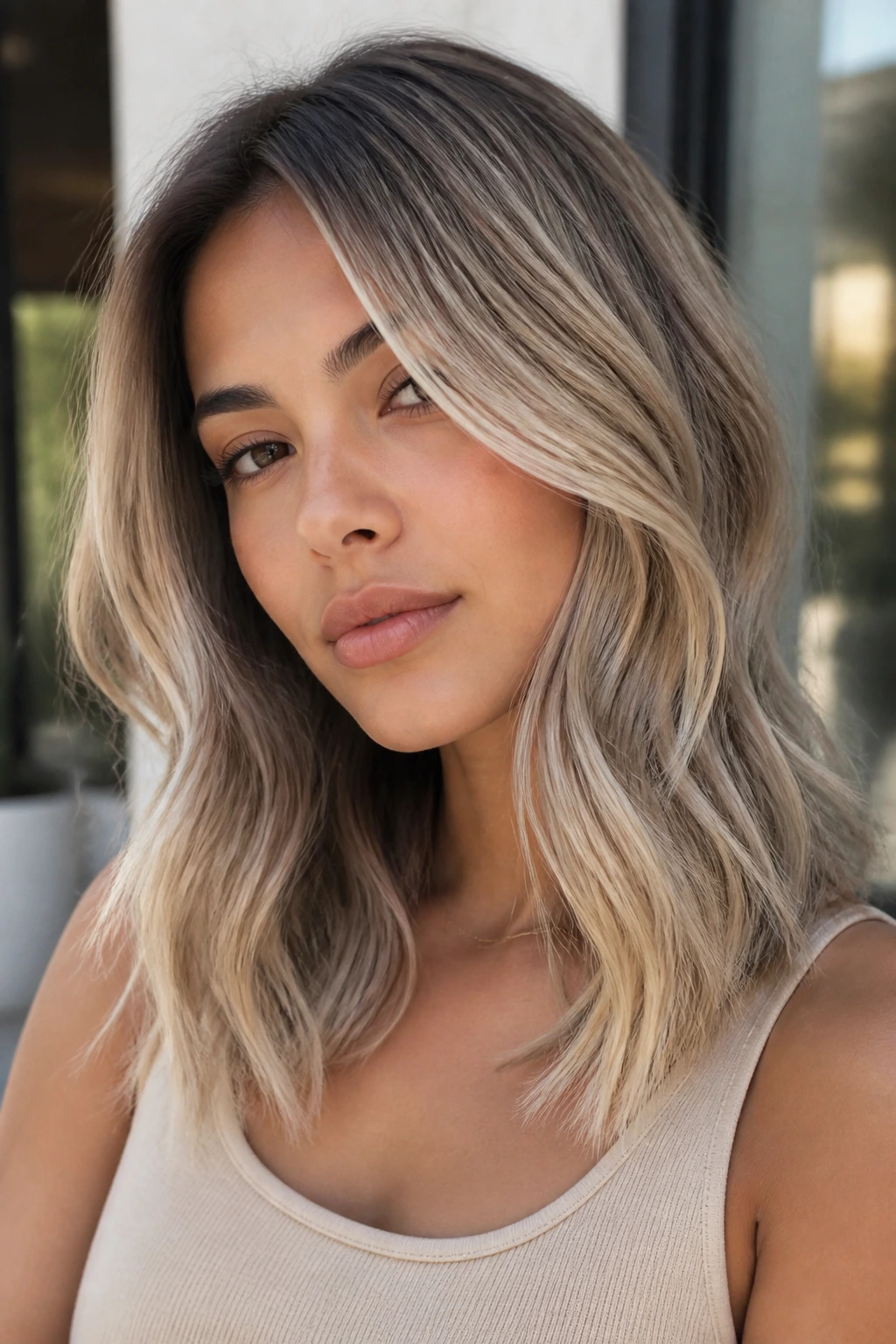
Sand-dune balayage has a drier, more muted feel than champagne or pearl. Think soft beige, a hint of ash, and just enough cream to keep the color from going dull. On medium skin, that sandy tone often looks more natural than a very cool blonde, especially if your undertone leans warm.
A good sand-dune finish starts with a shadow root that preserves depth at the scalp. From there, the painterly pieces should be wider near the ends and finer around the crown. That spacing keeps the hair from reading chunky.
- Best for medium skin with warm, olive, or neutral undertones.
- Works well on wavy hair because the painted pieces break up the surface.
- Ask for a toner that reads beige ash, not silver.
- Avoid lifting every section to the same level or the color turns flat.
A little grit is the charm here. It should look like your hair spent time in good light, not under a bleach cap.
5. Pearl Root Melt
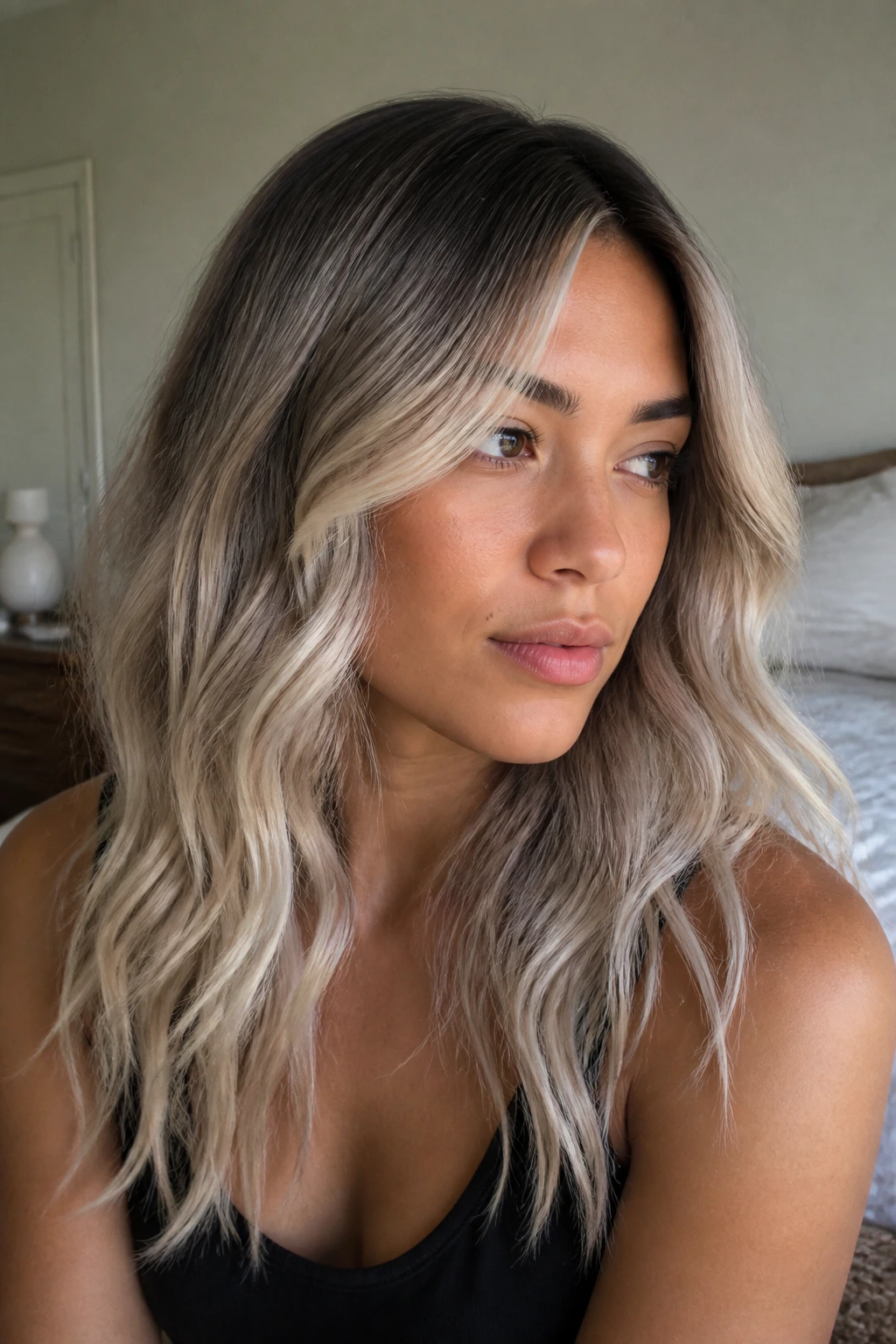
Pearl root melt is for the person who wants a cooler finish but not a harsh one. The root stays soft and smoky, then dissolves into pale pearl blonde through the lengths. On medium skin, the pearl gives enough brightness to wake up the face while the rooted top keeps the color grounded.
This is one of those looks that benefits from a careful hand with toning. Too much purple toner and the blonde goes flat. Too little, and the warm underlayer starts flashing through after the first wash. The sweet spot is a clean pearl with a beige undertone, not a white-blonde shell.
It looks especially good on layered cuts that move. Every time the hair bends, the pearl pieces catch a little more light, which is what makes the whole thing read dimensional instead of chalky.
6. Silver Money Piece
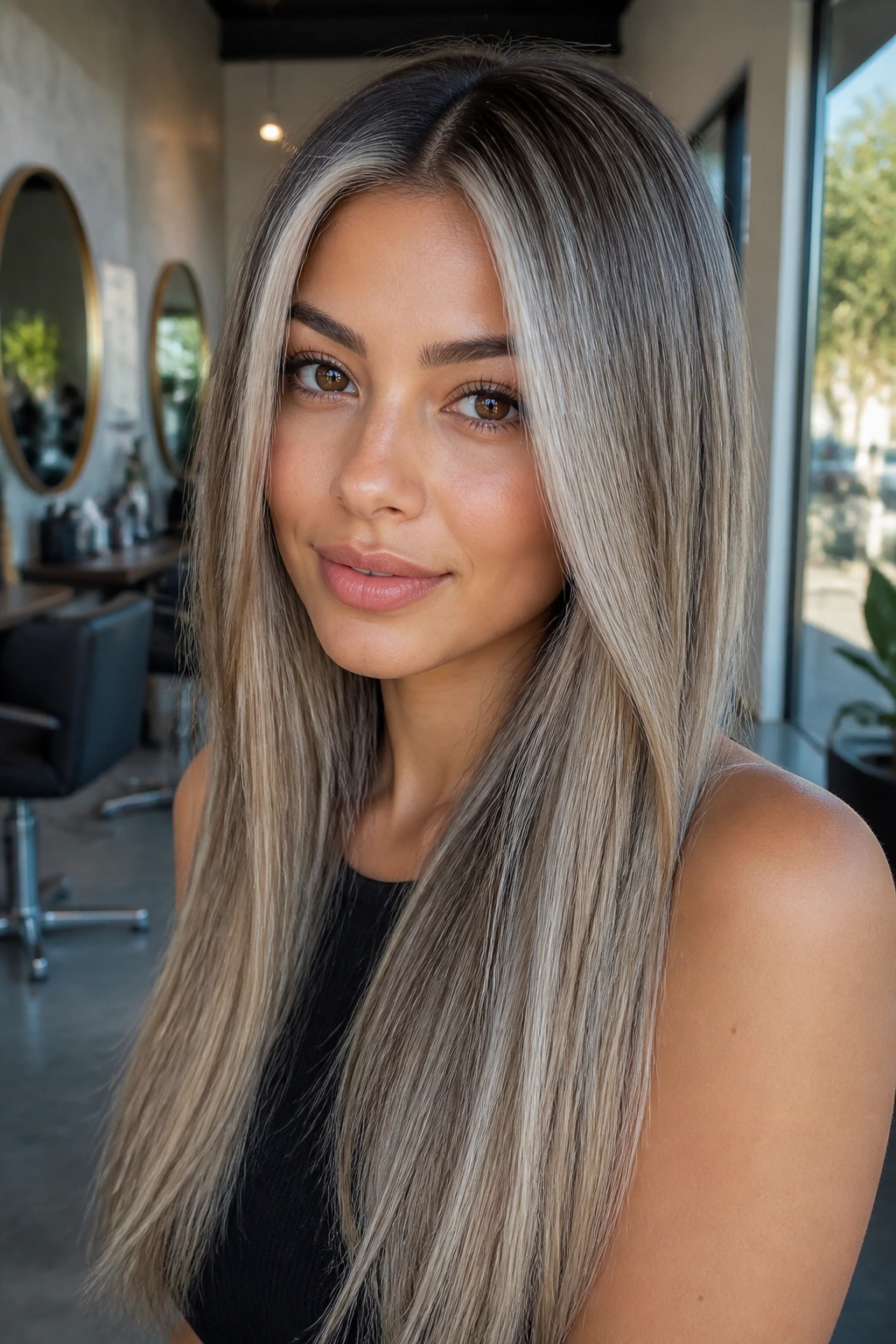
Silver money pieces are sharp, but they need restraint on medium skin. The bright front section gives the face structure, while the rest of the balayage stays shadowed and cool. Done well, it looks modern and deliberate; done badly, it looks like a stripe sitting on top of the hair.
That’s why I prefer this version on medium skin when the silver is limited to a narrow frame and the rest stays beige ash. The contrast should feel edited, not loud. If the stylist lifts the front pieces to level 9 or 10 and leaves the body of the hair at level 6 or 7, the face gets lift without losing depth.
This works best on straight styles and polished waves. You want the front streaks visible from a distance and the cooler ends to support them, not compete.
7. Ash Bronde Sweep
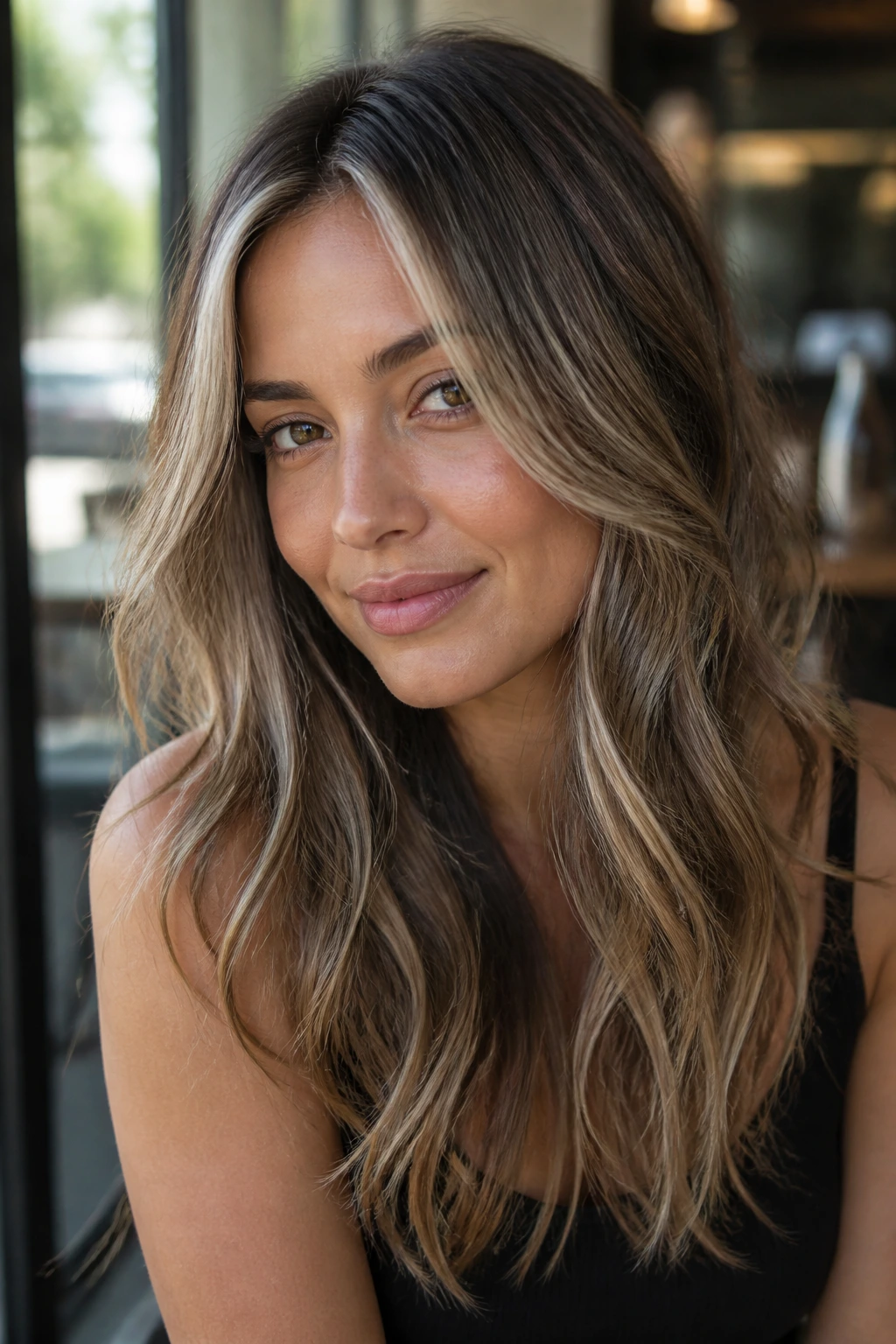
Ash bronde sweep is the one I reach for when someone says, “I want blonde, but I do not want to look fully blonde.” That’s the point. The base remains brunette, the highlights sit in ash-beige territory, and the result is less contrast than a classic blonde balayage.
For medium skin, bronde is often the least fussy route. It keeps enough brown near the scalp and through the lower layers to avoid washing out the complexion. The ash tones soften any brass, while the brown keeps the finish rich.
A good bronde sweep uses ribbons, not blocks. Think long, narrow painted pieces with a few brighter accents around the face. If you like hair that still looks brown from a distance and blonde up close, this is the lane.
8. Vanilla Bean Ends
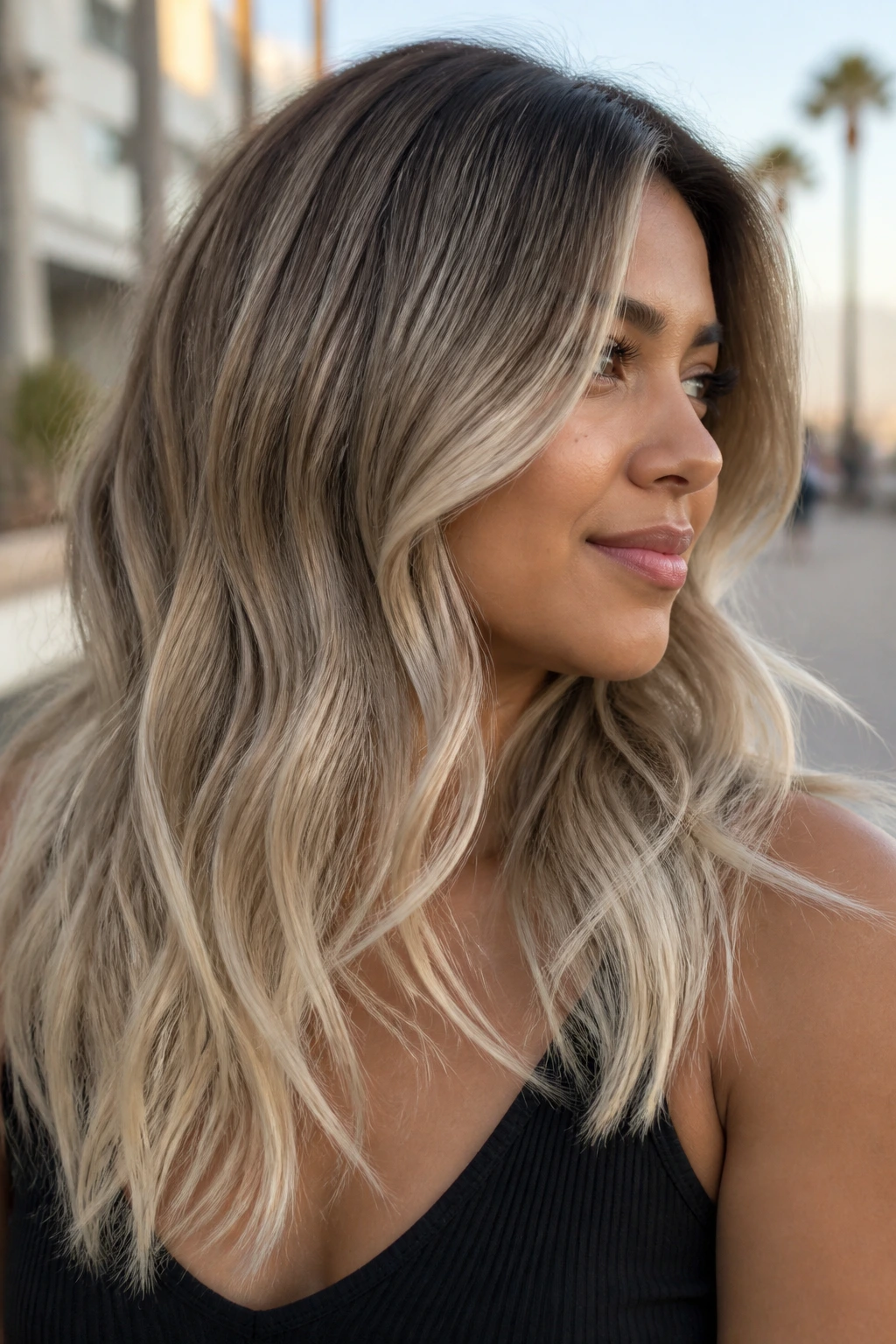
Vanilla bean ends feel sweeter and lighter than the smoky looks above, but they still sit on the ash side of the fence. The base fades into a creamy, cool vanilla tone that avoids the yellow cast you sometimes get with warmer blondes. On medium skin, that creaminess keeps the lighter ends from looking hard.
This style is especially flattering when the haircut has movement through the bottom third. Long layers, soft shags, and textured lobs all give those ends a place to show off. If the hair is one-length and heavy, the vanilla can get swallowed.
A stylist should keep the top half grounded with a shadow root and let the ends carry most of the brightness. That keeps the grow-out easy and stops the color from looking like a block of bleach at the bottom.
9. Smoky Honey Ash
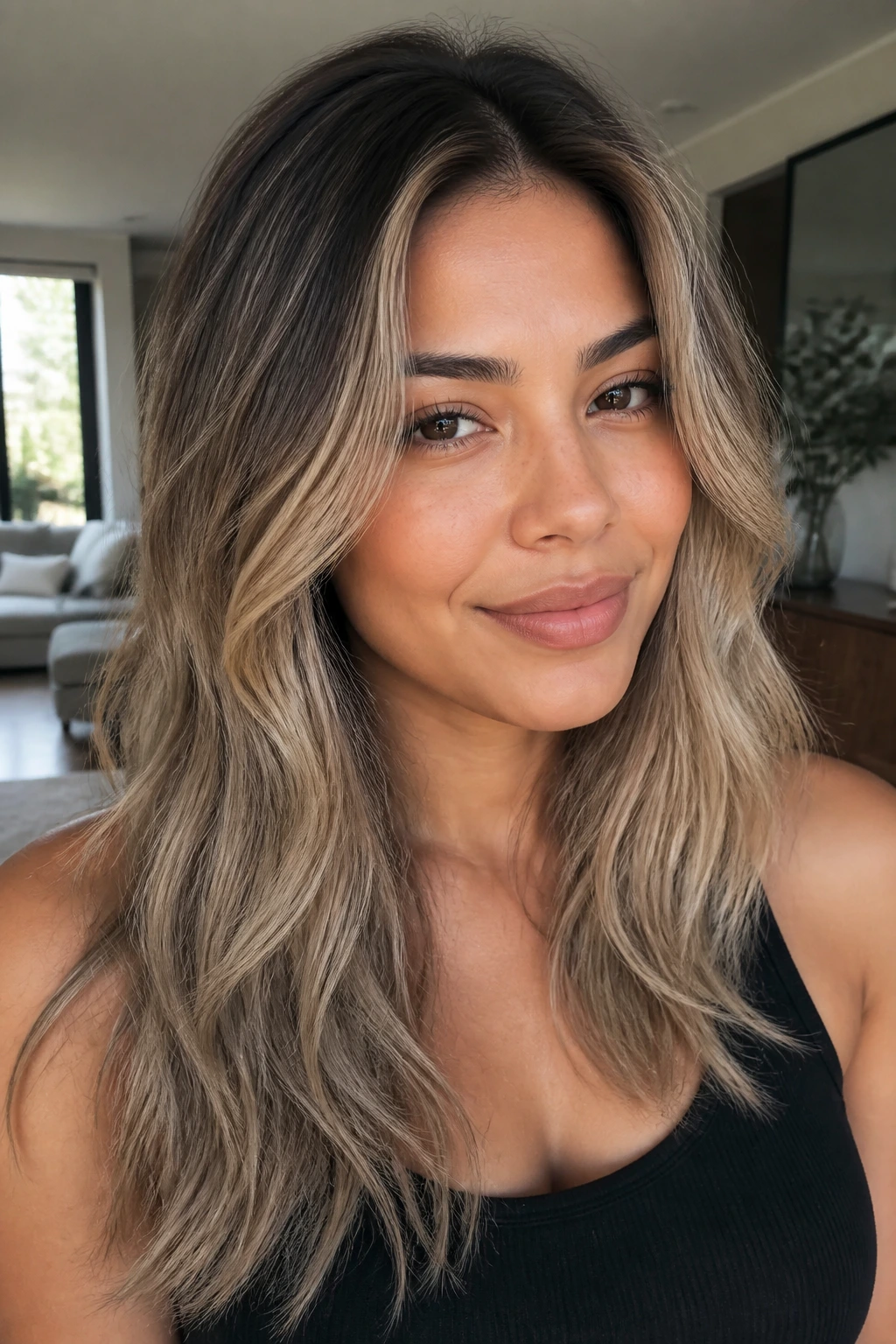
Smoky honey ash is a smart compromise for anyone with medium skin who still likes a whisper of warmth. The honey keeps the blonde readable and soft; the ash keeps it from turning orange. It’s a useful mix if your natural hair lifts warm no matter what anyone does.
The trick is balance. Too much honey and you’re back in brassy territory. Too much ash and the color can look drained. A good formula usually keeps the lightest pieces around the face and the ends, then softens the rest with muted beige lowlights.
This one feels especially good on thicker hair because the warm-cool mix stops the color from getting too flat across a heavy surface. It gives the eye somewhere to go.
10. Icy Front Streaks
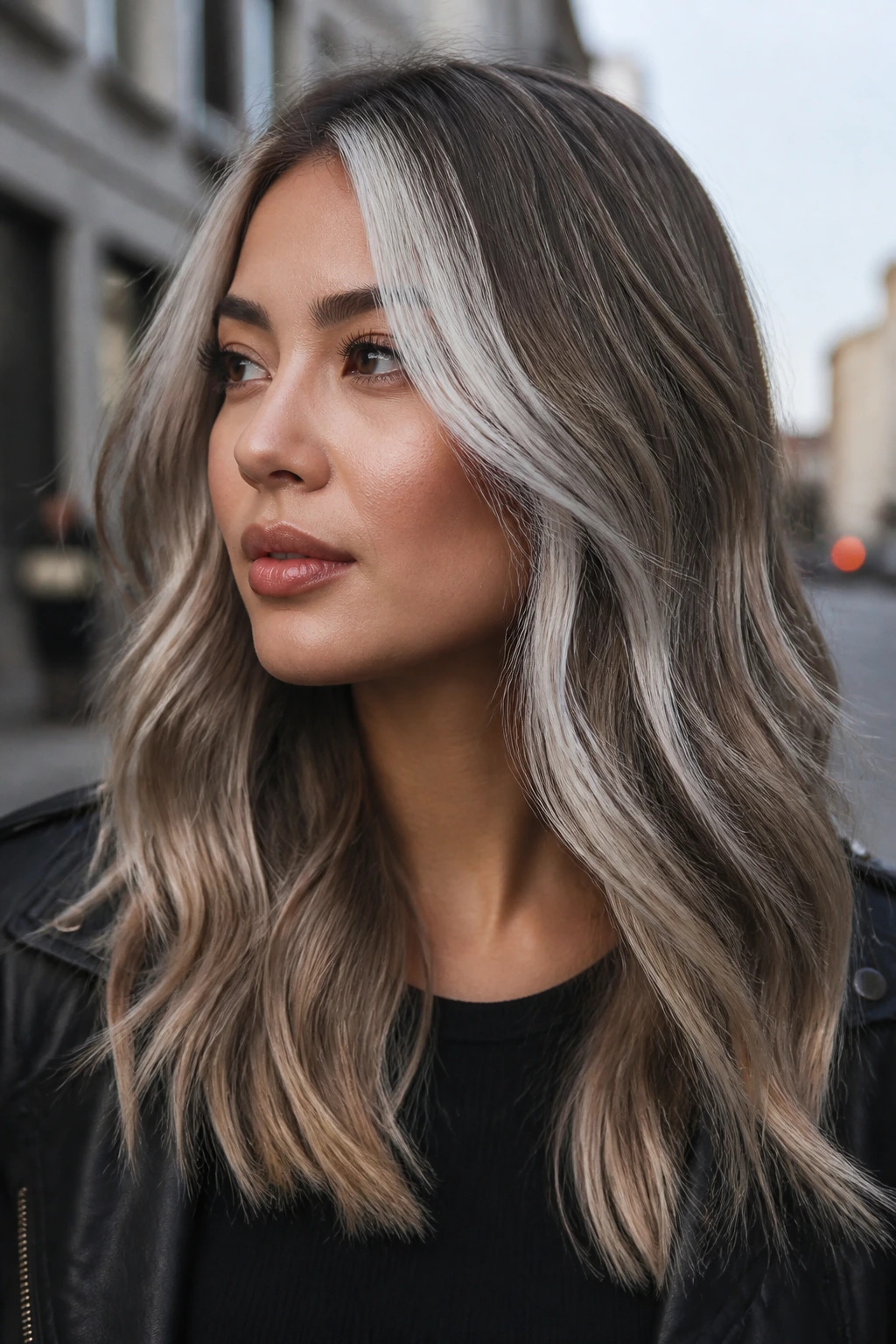
Icy front streaks are a bolder choice, and they work because the rest of the balayage stays quiet. The front pieces go pale and cool, almost frosted, while the body of the hair holds ash-beige depth. On medium skin, that contrast can look striking if the skin has enough warmth underneath it.
The important part is placement. Keep the icy pieces thin and tapered, not chunky and blunt. A hard money piece can be unforgiving, especially around the temples. Softening the back edge of those streaks makes them feel woven into the hair instead of pasted on.
This is the look for someone who wants a little edge without committing to a fully platinum head. It’s sharp, but not loud. Different thing.
11. Scandinavian Beige Blonde
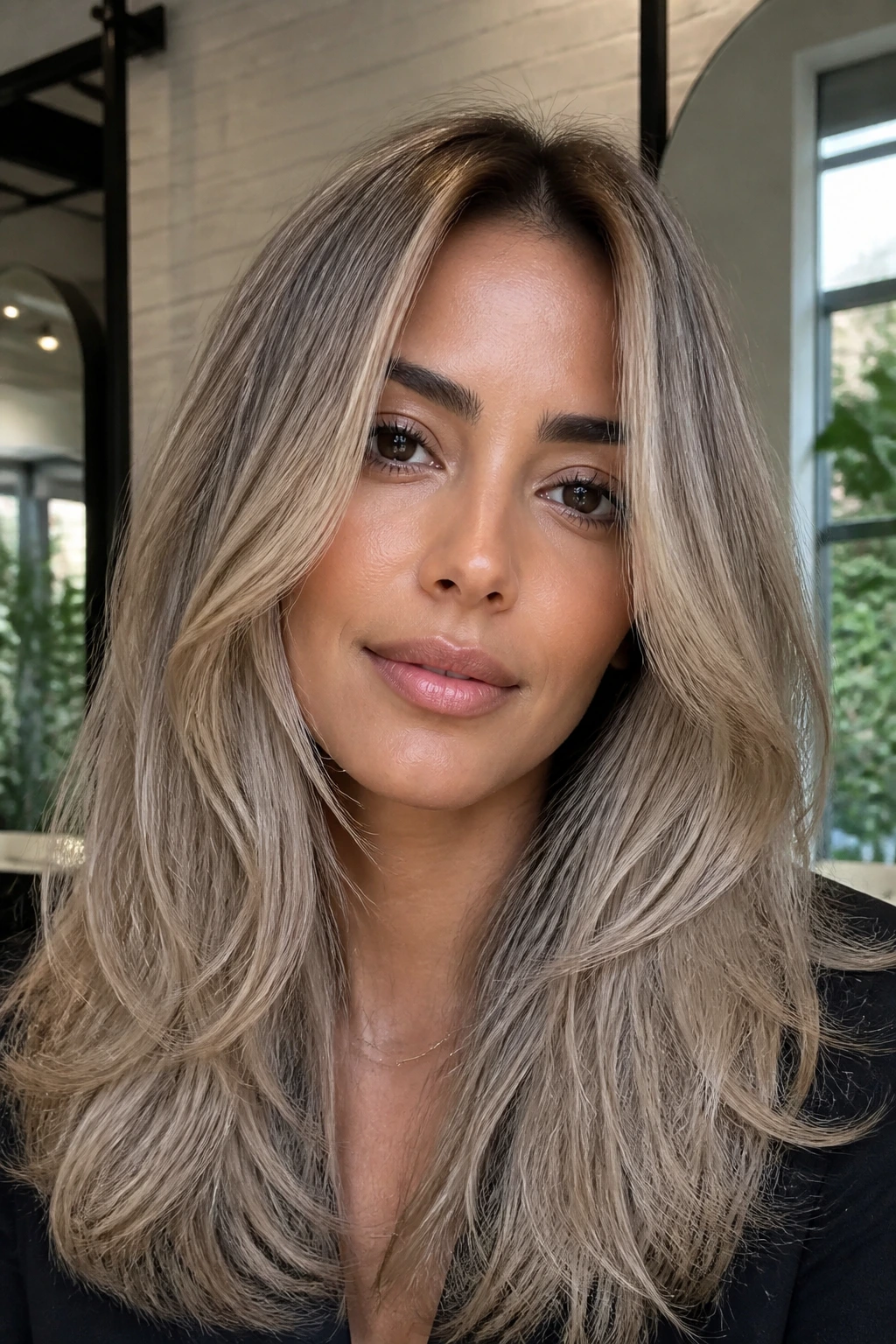
Scandinavian beige blonde sounds colder than it usually wears. The real magic is that it lands in a pale beige zone with just enough ash to dull the brass. On medium skin, the beige keeps the complexion from going gray while the ash keeps the blonde from drifting yellow.
This shade loves clean lines and airy texture. If your haircut has face-framing layers, the beige blonde pieces can follow them and make the whole cut feel lighter. If the hair is very dark underneath, ask for a gradual lift so the blonde doesn’t appear as a hard panel.
I like this more on neutral or cool medium skin than on very golden skin. The beige helps, but it still lives on the cooler side of the fence.
12. Charcoal Shadow Melt
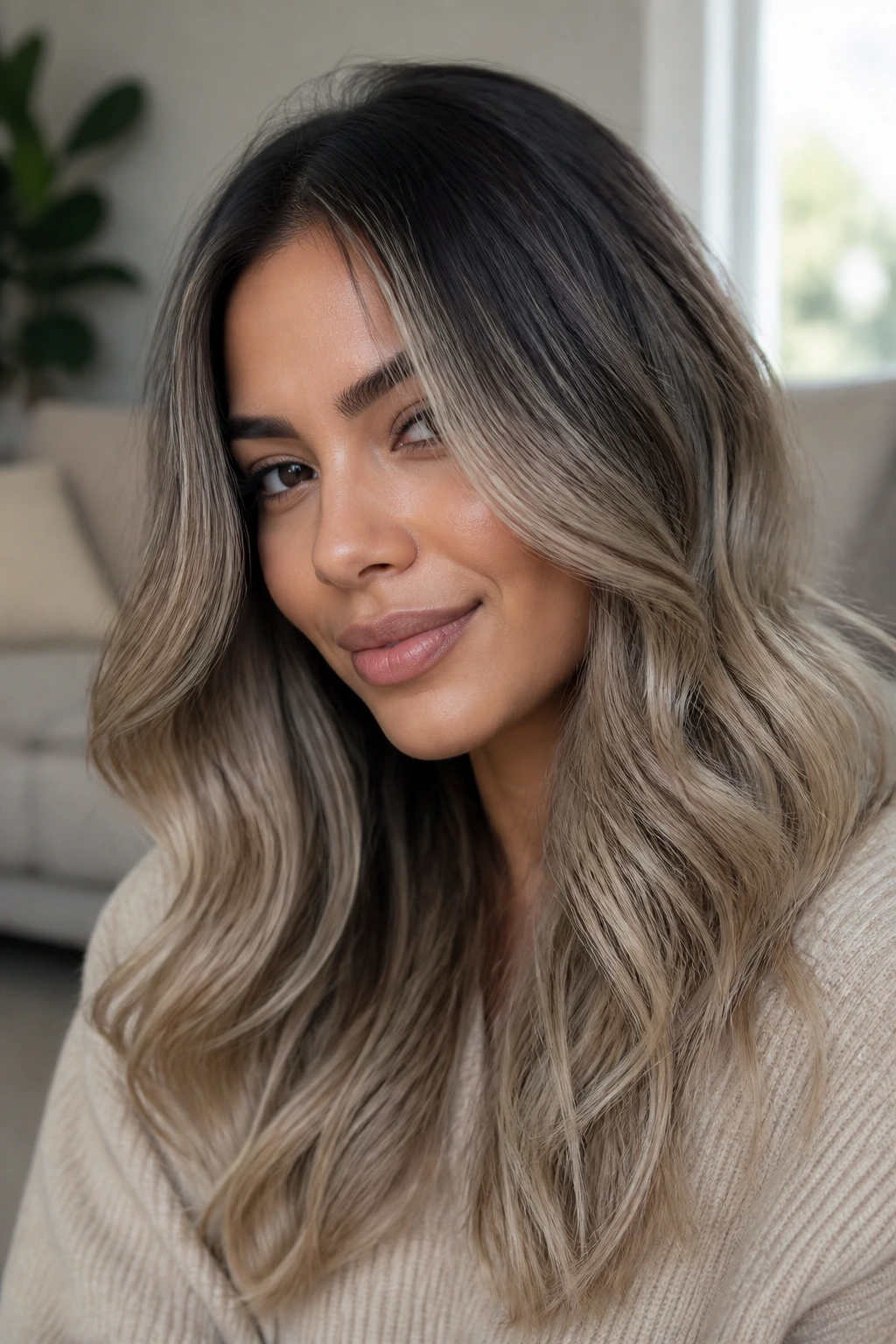
Charcoal shadow melt is for anyone who wants the ash to stay dark at the root. The top quarter of the hair sits in a smoky charcoal brown, then melts into muted blonde through the midlengths and ends. On medium skin, that dark anchor usually makes the lighter pieces look richer.
This is a strong option if your natural hair is already dark brown and you do not want a lot of damage from heavy lifting. The shadow root lets the balayage do the visual work without bleaching the scalp area to death. It also grows out in a way that looks deliberate for months.
The look is best when the blonde stays dimensional, not solid. You want a few pieces to pop through the charcoal haze, not a single flat gradient.
13. Beige Brunette Panels
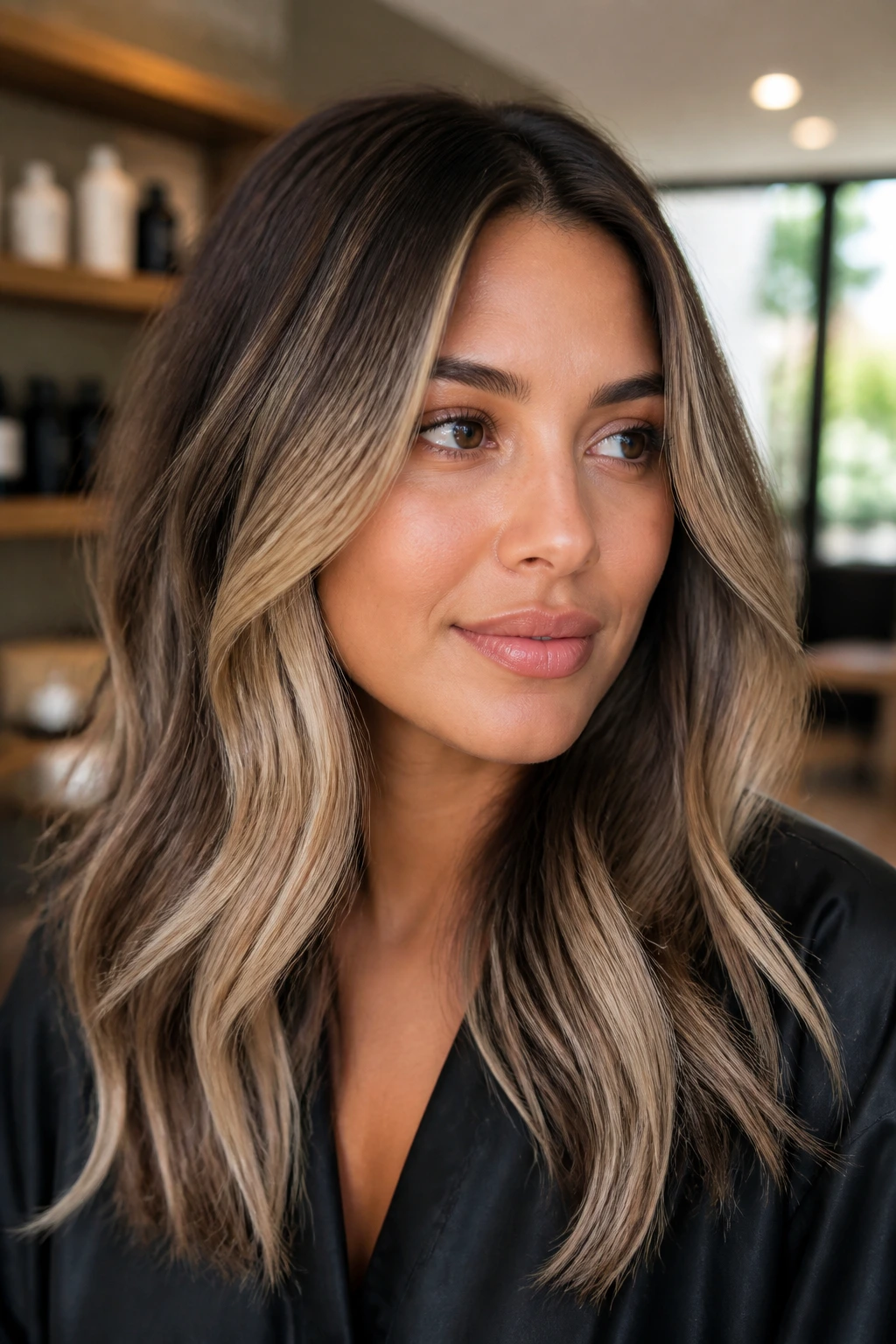
Beige brunette panels are basically balayage with more brunette left in the mix. The lighter pieces are broader and softer, painted in a way that lets the medium-brown base show through. On medium skin, that matters because the darker ribbons keep the complexion looking grounded.
This style feels calmer than the brighter blondes, and that is not a drawback. The beige pieces still brighten the face, but they do it without erasing the natural depth that makes the color wearable. If you work in a setting where full blonde would feel too high-contrast, this is a smart middle path.
Ask for panels around the face, through the top layer, and at the ends. That’s enough light to see movement when the hair swings.
14. Frosted Caramel Ash
Frosted caramel ash walks a narrow line between sweet and smoky. The caramel note keeps the blonde from turning flat gray, while the ash cools the warmer pigment that can appear after lightening. On medium skin, that mix is especially forgiving if you like a little softness near the face.
The finish works best when the caramel is muted rather than golden. Think brushed sugar instead of toffee. If the stylist lifts the pieces to a pale caramel first, then glazes over with ash-beige toner, the result usually stays cleaner than trying to force the ash in one step.
This is a good choice for layered hair because the lighter pieces break up nicely at the ends. The movement keeps the caramel from reading heavy.
15. Toasted Almond Ash
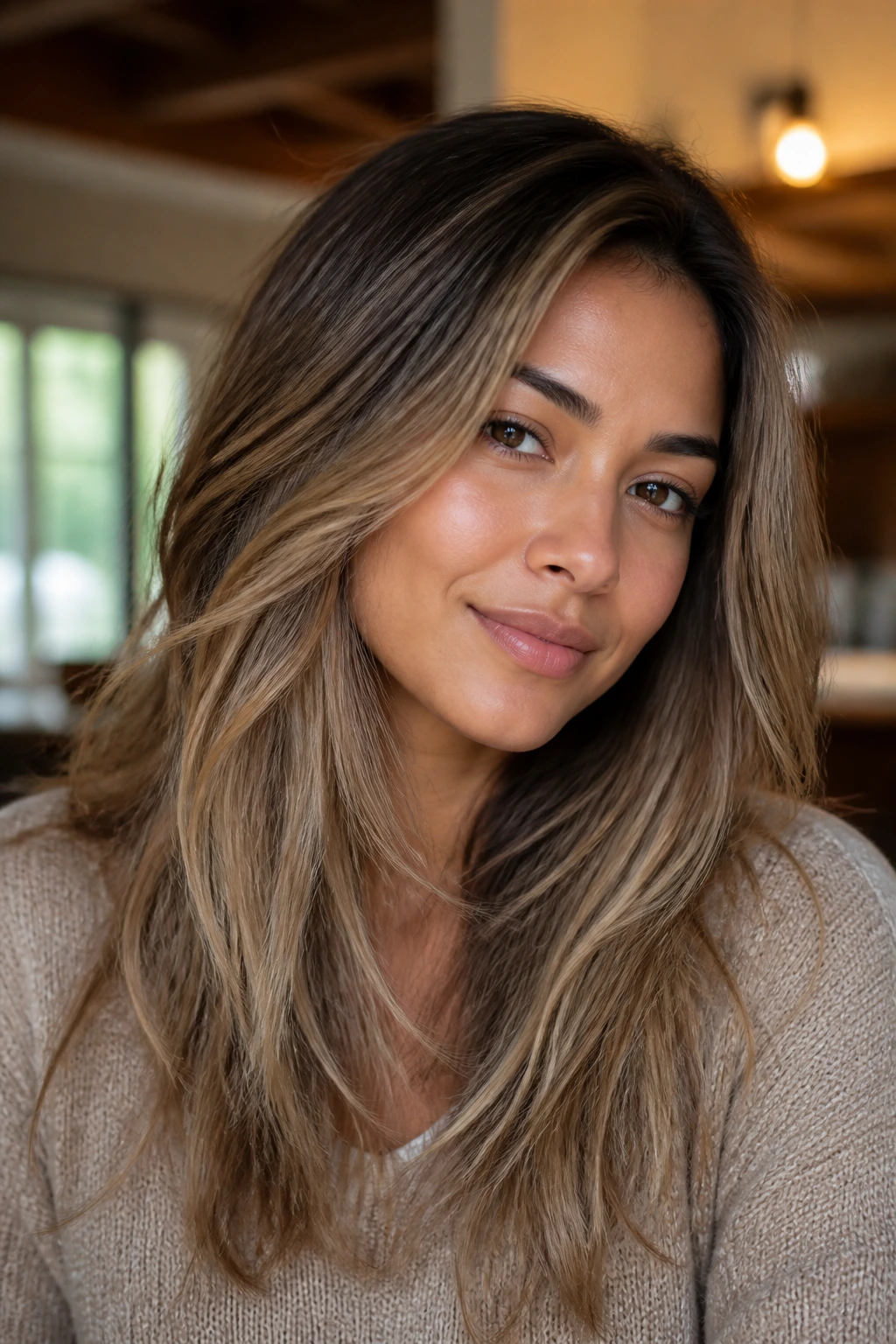
Toasted almond ash sounds warmer than it wears, and that’s the appeal. The base remains a muted brunette, then the light pieces come through in a toasted almond tone with a cool finish. Medium skin tends to like this because the color keeps some richness near the scalp.
It’s a practical shade for people who want a blonde-adjacent look without the maintenance of a pale lift. The ash keeps the brighter pieces from warming up too much, especially around the temples and part line. If your skin has golden undertones, this can be one of the easiest colors to wear without looking washed out.
A textured cut helps here. The almond pieces show best when the hair bends and separates a little.
16. Feathered Layered Blonde
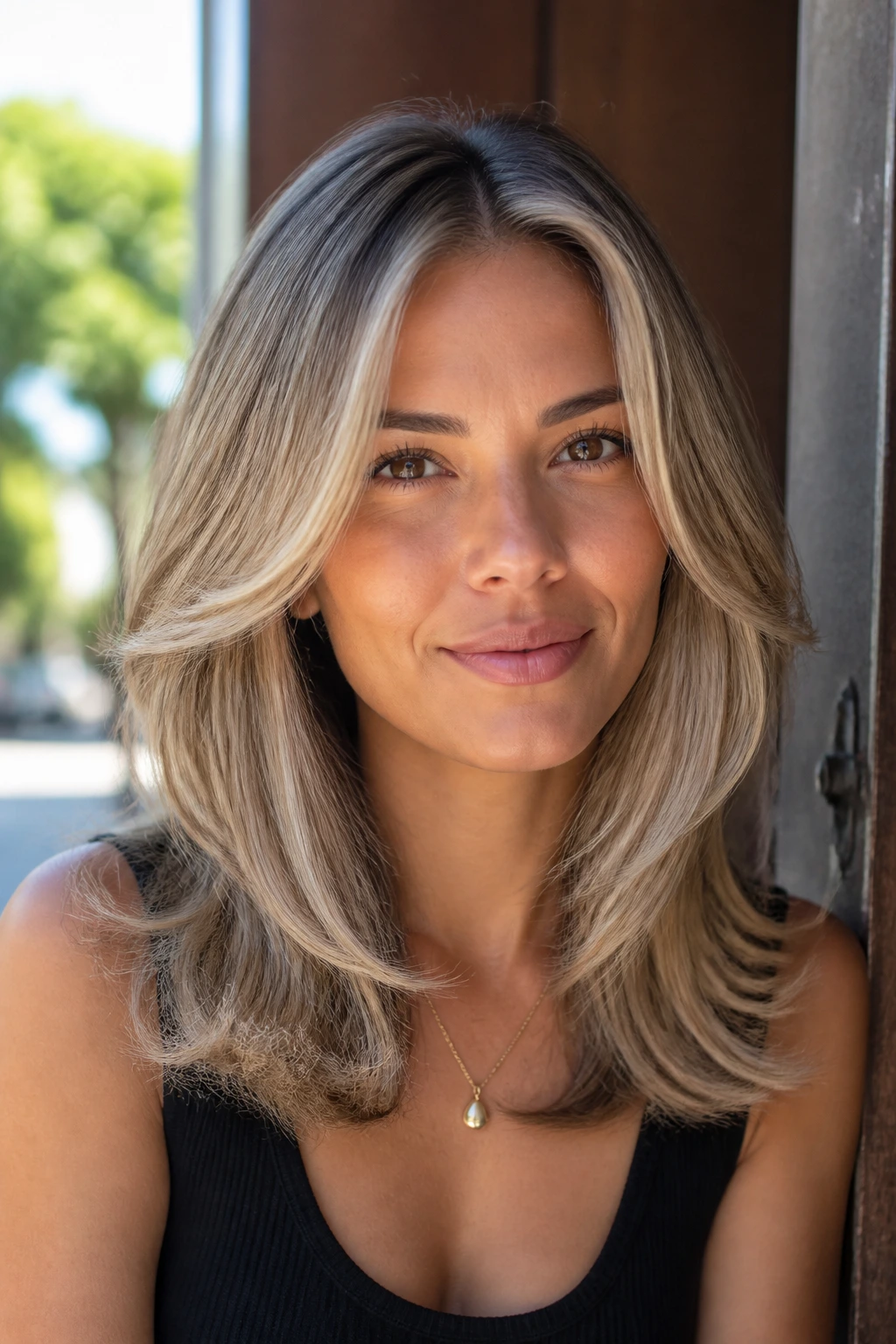
Feathered layered blonde is less about one exact tone and more about how the color lands on the cut. The ashy blonde pieces should follow the layers, not sit on top of them. On medium skin, that feathered placement stops the face from looking boxed in.
This style shines on shoulder-length cuts and long shags. The lighter threads skim the outer layers, which means the hair moves and the blonde moves with it. That movement matters. A single heavy blonde slab can look flat, but feathered balayage gives you little flashes of light every time you turn your head.
If the hair is thick, ask for more internal dimension so the layers do the work. If it’s fine, keep the brightest pieces around the top layer only.
17. Curly Ribbon Balayage
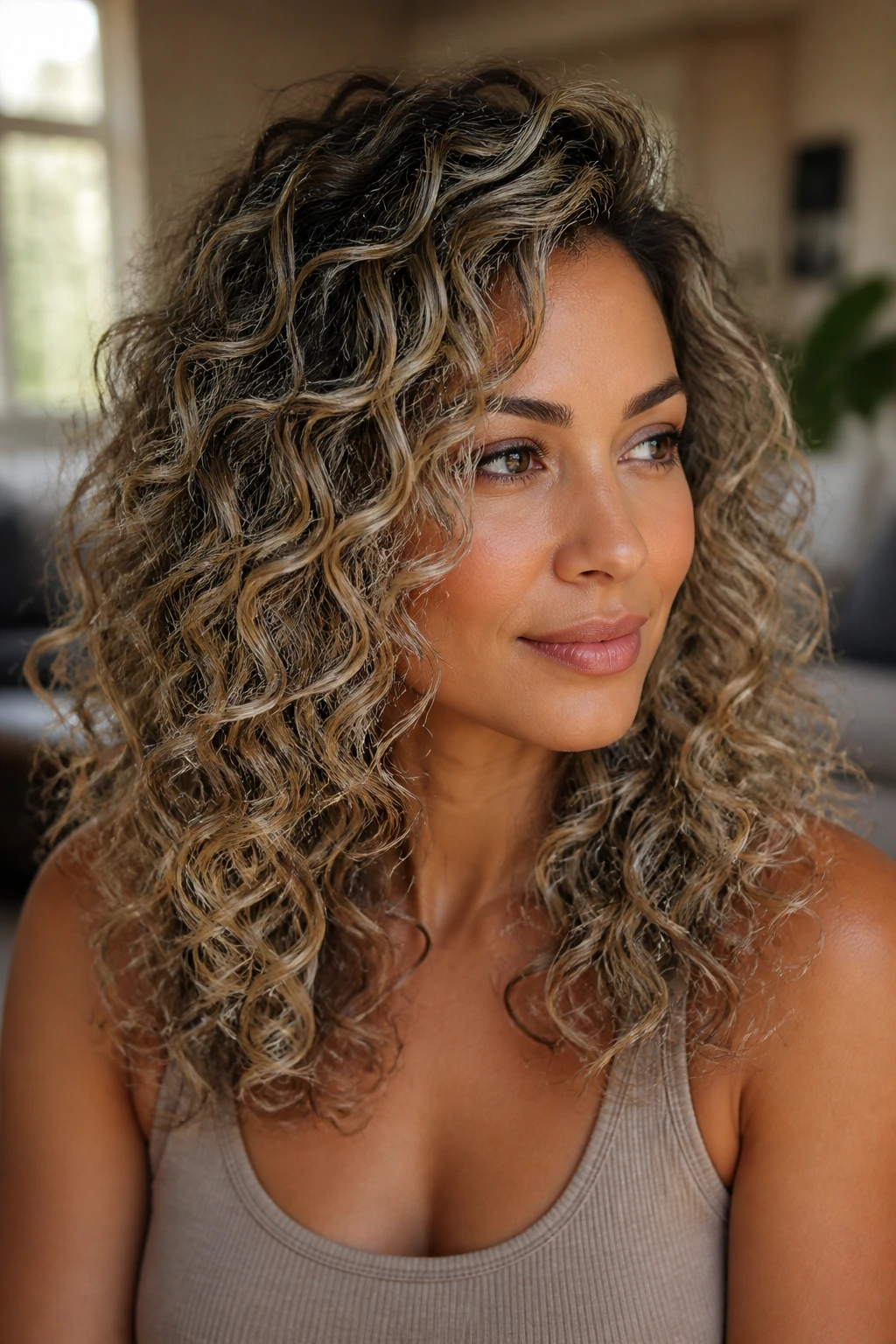
Curly ribbon balayage is one of the best ways to make ash blonde read alive on medium skin. The painted ribbons weave through the curls instead of sitting as a single block of color, so the blonde appears and disappears as the hair moves. That motion keeps the ash from looking dull.
The placement matters more than the exact shade. Curls need brightness on the outside curve and a little depth underneath, or the whole pattern gets lost. Ask for ribbons through the front, crown, and upper mids, then leave some darker space between them. That contrast is what makes the curls pop.
A curl-friendly ash blonde should never look striped when dry. If it does, the pieces were painted too uniformly.
18. Champagne Smoke Lob
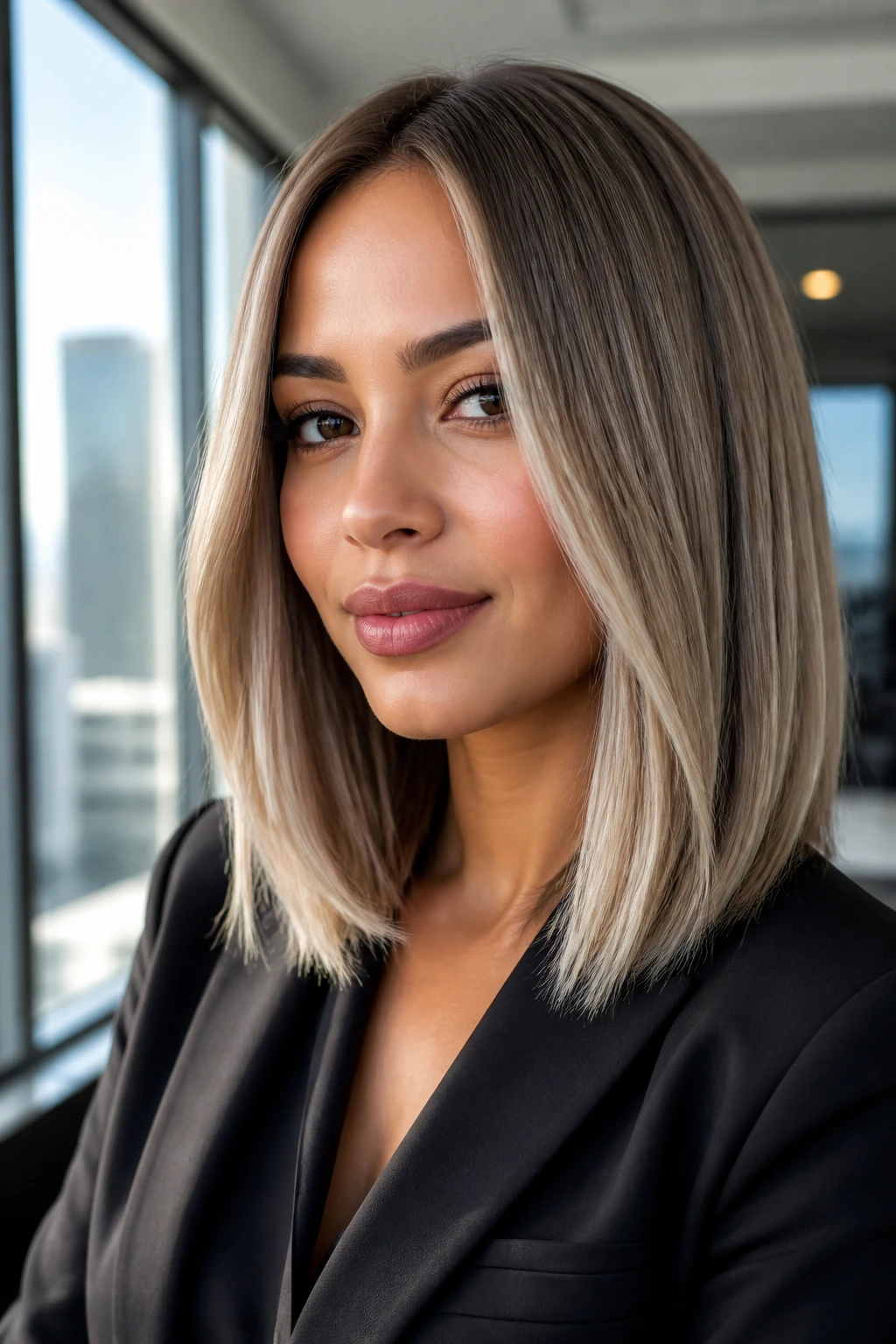
A champagne smoke lob gives you just enough brightness to keep a blunt cut from looking heavy. The blonde sits cool and soft at the same time, which is useful on medium skin because it lightens the face without erasing contour. The lob length also makes the color feel modern and tidy.
I like this shade when the hair is worn straight or bent with a flat iron. The ends catch the smoke-toned champagne pieces in a clean line, and the overall finish looks polished without being severe. If the part is center, the symmetry makes the tone read even cooler.
This is one of the more office-friendly options in the group. Not boring. Just controlled.
19. Platinum Veil Balayage
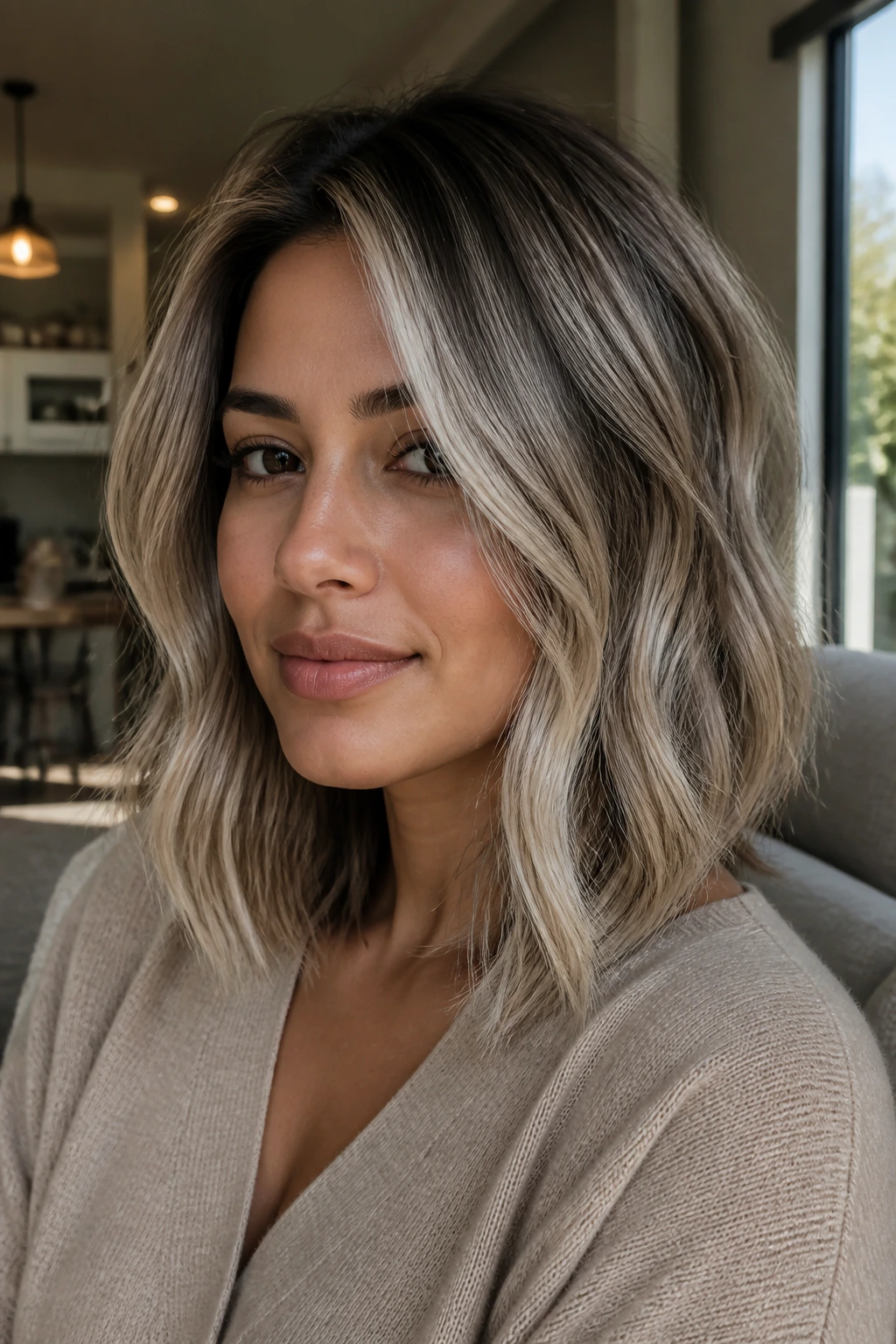
Platinum veil balayage is the closest thing here to full brightness, but it still behaves because the platinum is softened by a veil of ash and beige. On medium skin, the veil matters. It keeps the pale pieces from sitting too stark against the face.
The best version leaves a deep enough root that the platinum never touches the scalp in a hard line. You want the lightest pieces through the surface layers and around the ends, with a few brighter streaks around the front if the face needs lift. That keeps the color airy instead of helmet-like.
This is the choice for someone who likes high contrast but wants the grow-out to stay graceful. It needs more toner upkeep than the darker looks above. No surprise there.
20. Muted Buttercream Blonde
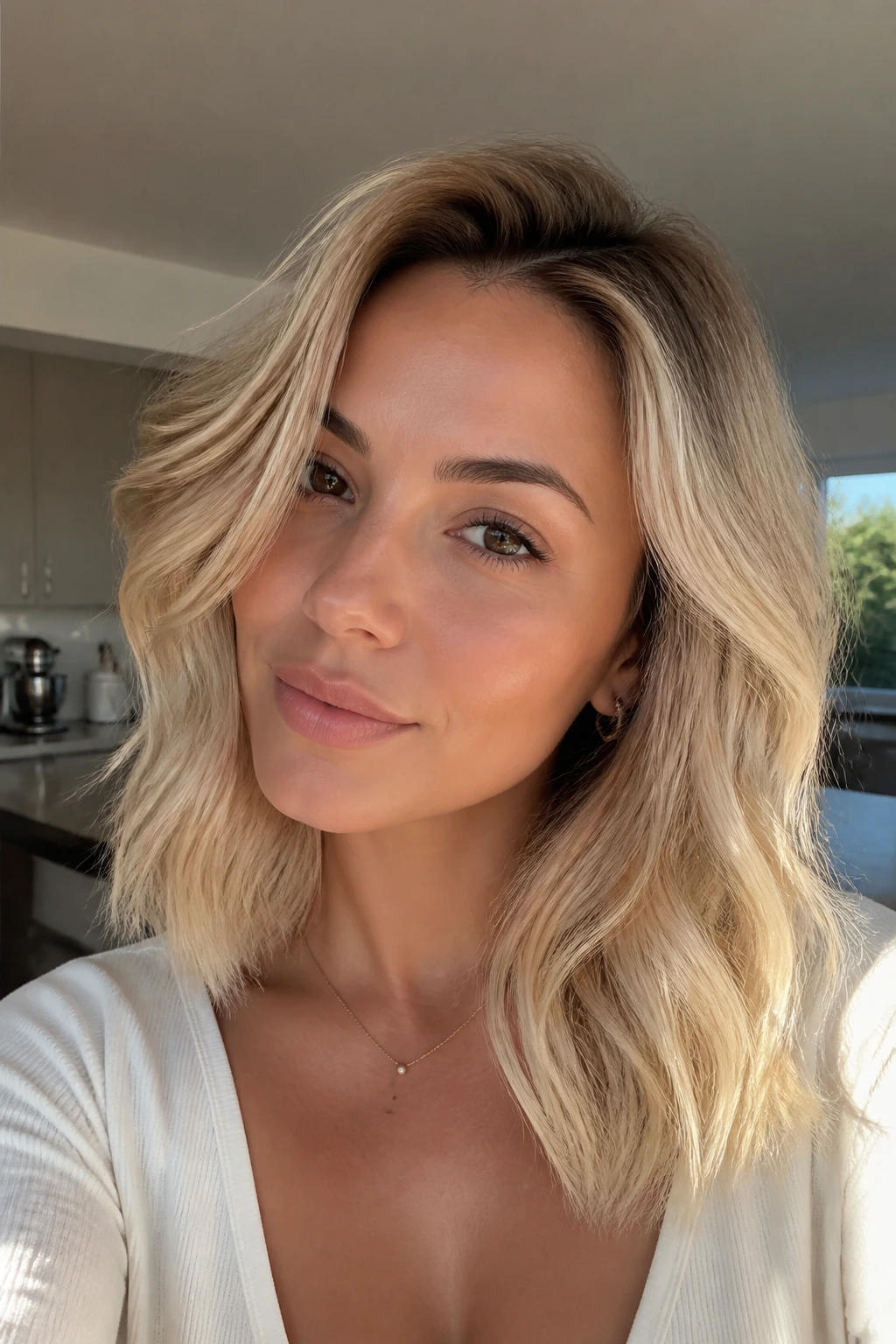
Muted buttercream blonde is softer than platinum and less beige than mushroom. The tone feels creamy, slightly warm, and still restrained enough to count as ash-friendly. On medium skin, that restraint matters because the color gives light without turning yellow.
It works especially well when the hair is fine or medium density. A buttery tone can make the hair look fuller than a stark cool blonde, which sometimes exposes too much scalp. Keep the root slightly shadowed, and the buttercream through the mids and ends will look intentional rather than overprocessed.
This is a good photo-friendly color for soft waves. The creaminess catches the light nicely, but it still reads calm.
21. Snowy Mid-Length Sweep
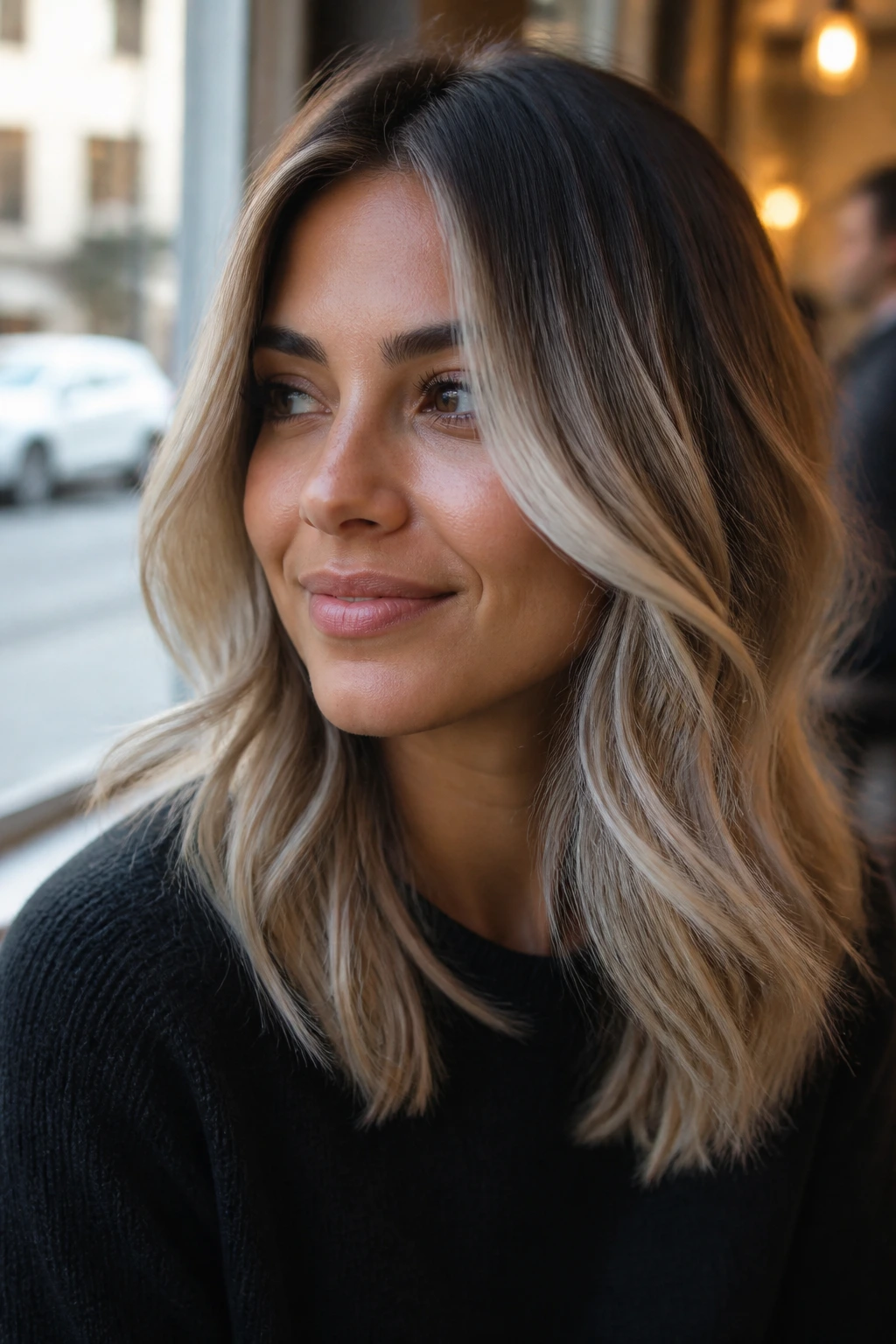
Snowy mid-length sweep is a cool, bright option for medium skin that can carry lightness without looking stripped out. The blonde starts around the cheekbone or chin area and sweeps down in soft ribbons, leaving the top darker. That placement keeps the face balanced.
The reason it works is simple: the eye reads the darker root first, then the blonde as movement. That small delay keeps the color from overpowering the skin. If the lift starts too high, the look can get harsh fast.
I’d especially recommend this for medium-length cuts with some bend in the ends. The sweep needs space to show itself.
22. Soft Ombré Ends
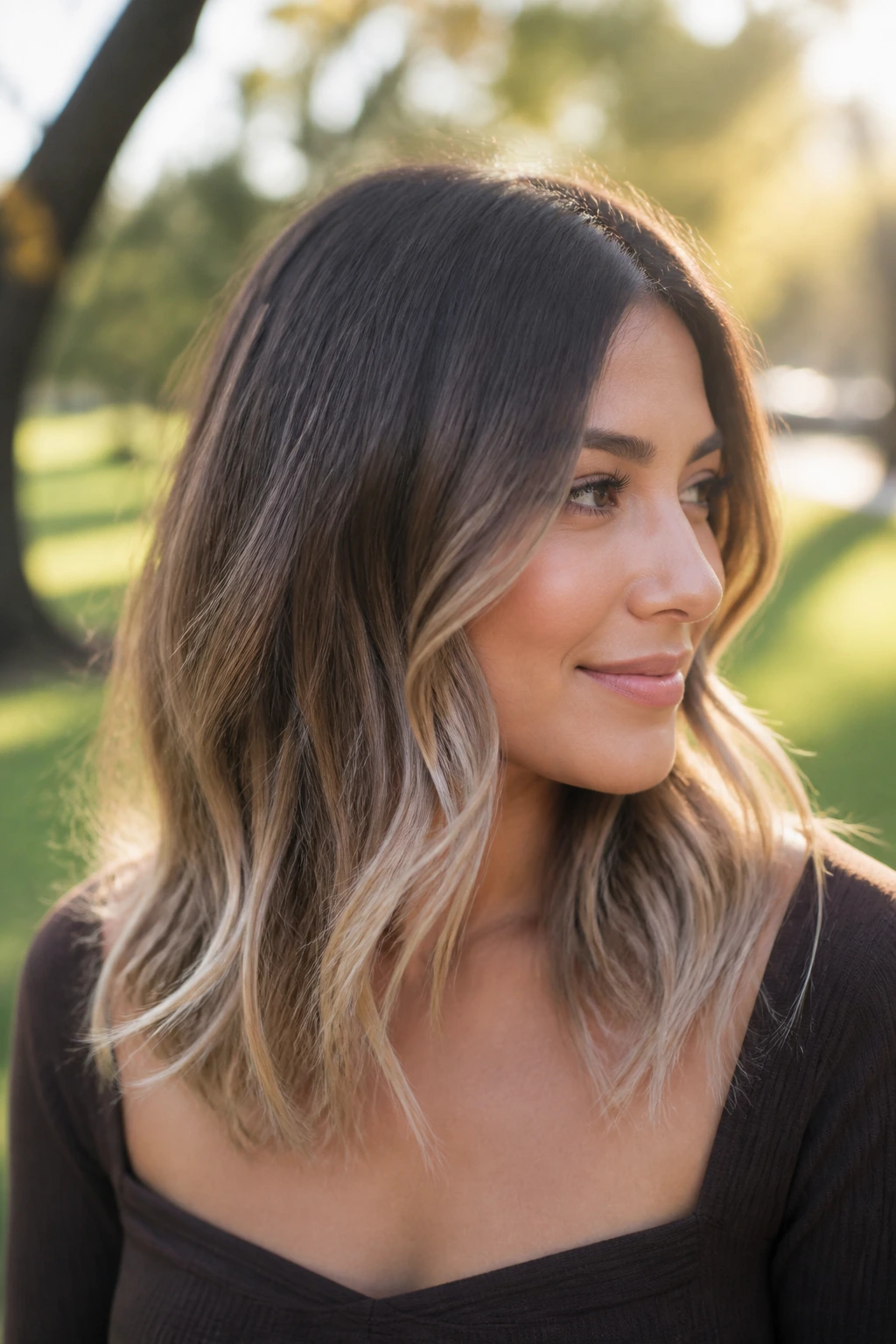
Soft ombré ends are the quiet cousin of balayage. The blonde concentrates toward the lower half of the hair and melts slowly upward, with the ash tone keeping the transition muted. On medium skin, that slower shift can look elegant because it preserves fullness at the top.
This is a smart pick if you want less upkeep around the roots. The grow-out is forgiving, and the darker crown keeps the skin looking warm enough. The ends can still be quite light, but the shift needs to be gradual. A hard ombré line will ruin the whole thing.
Use this when you want the ends to feel sunlit and the top to stay grounded.
23. Cool Vanilla Crown
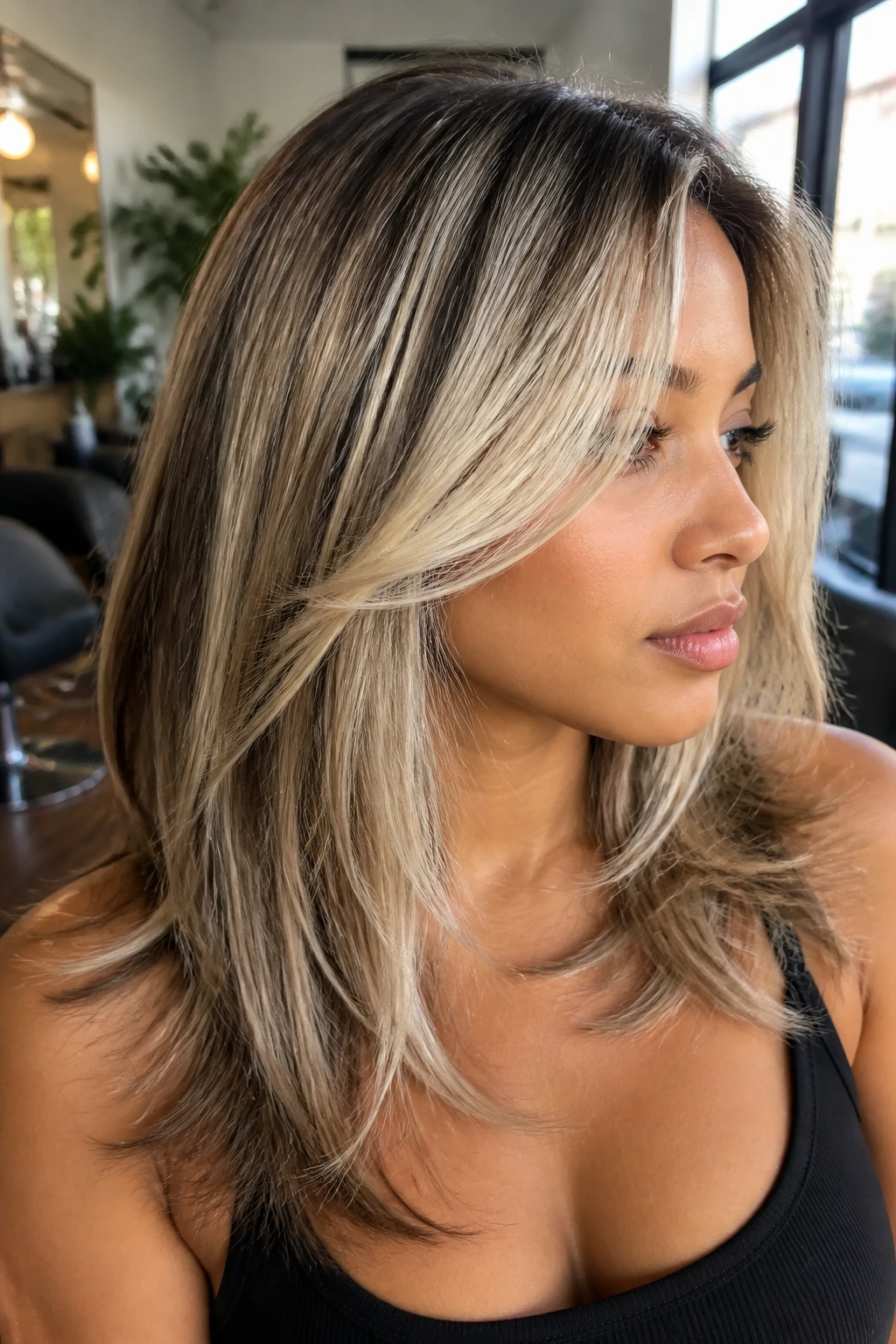
Cool vanilla crown is all about brightness on the top layer without bleaching every strand to the same level. The crown gets a cooler vanilla tone, while the lower layers stay slightly deeper. On medium skin, that keeps the face bright but not drained.
It works best on layered cuts because the top layer can catch the light separately from the underneath pieces. That creates dimension even when the hair is straight. If you like volume at the crown, this shade also helps the hair look a little fuller up top.
The finish should feel fresh, not icy. If it drifts too white, it loses the softness that makes it wearable.
24. Beige Ash Lob with Curtain Bangs
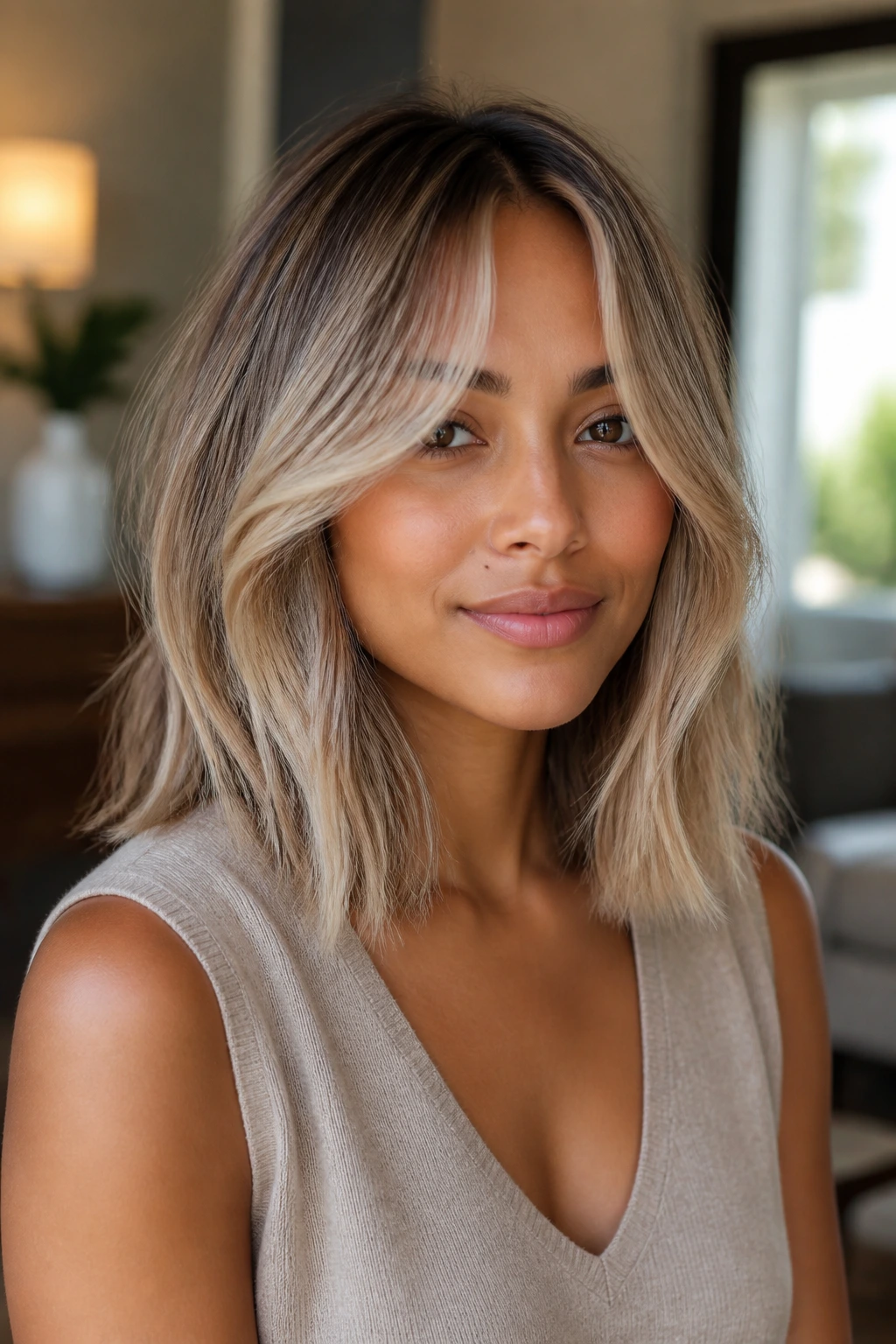
A beige ash lob with curtain bangs is one of the easiest flattering combos in the whole set. The bangs frame the face with lighter pieces, while the lob keeps enough length for the balayage to breathe. On medium skin, the beige ash tone softens the brightness so the fringe does not feel too severe.
This look depends on placement around the eyes and cheekbones. You want the lightest pieces to bend away from the center part and blend into the sides. That prevents the bangs from looking chopped off from the rest of the color.
It’s practical, too. A lob is easy to keep polished, and curtain bangs make the ashy pieces feel intentional even on a low-effort hair day.
25. Dusty Blonde Melt
Dusty blonde melt is the understated finish that sneaks up on you. The blonde is muted, a little powdery, and lightly cool, with a root that fades slowly into softer ends. On medium skin, that dusty tone avoids the high-gloss yellow that can fight with natural warmth.
This is a good final option because it feels lived-in from day one. The melt should be gradual enough that the viewer notices dimension before they notice “blonde.” That’s a better result than a loud stripey lift, and it wears nicely as the toner softens.
If you want a blonde that looks calm in daylight and even better after a few washes, this is the one I’d pick.
Why Ashy Blonde Balayage Flatters Medium Skin Tones
Medium skin has enough pigment to carry cool blonde, but it usually needs a little depth left in the base. That’s the big secret. When the root stays shadowed and the ash lives in the midlengths and ends, the face keeps its warmth while the hair gets that smoky, polished finish people usually chase with too much toner.
A full head of bright blonde can flatten medium skin faster than many stylists expect. Ashy balayage avoids that by mixing cool and warm notes in the same head of hair. Beige ash, mushroom blonde, and smoky champagne all cool the brass without erasing the natural color of the skin. The result looks more deliberate because the blonde is doing more than one job.
Placement matters just as much as tone. If the brightest ribbons sit around the face, the eye goes there first. If the ends are slightly lighter than the crown, the hair looks longer and fuller. That little bit of contrast keeps the style from sinking into a one-shade haze, which is the enemy of good ash blonde.
Medium skin with olive undertones often likes a deeper root and a softer beige ash. Golden skin usually looks better with creamy ash instead of silver. Neutral skin can wear the widest range, but even there, a touch of depth makes the whole color look more expensive and less forced.
What to Bring to the Salon Chair
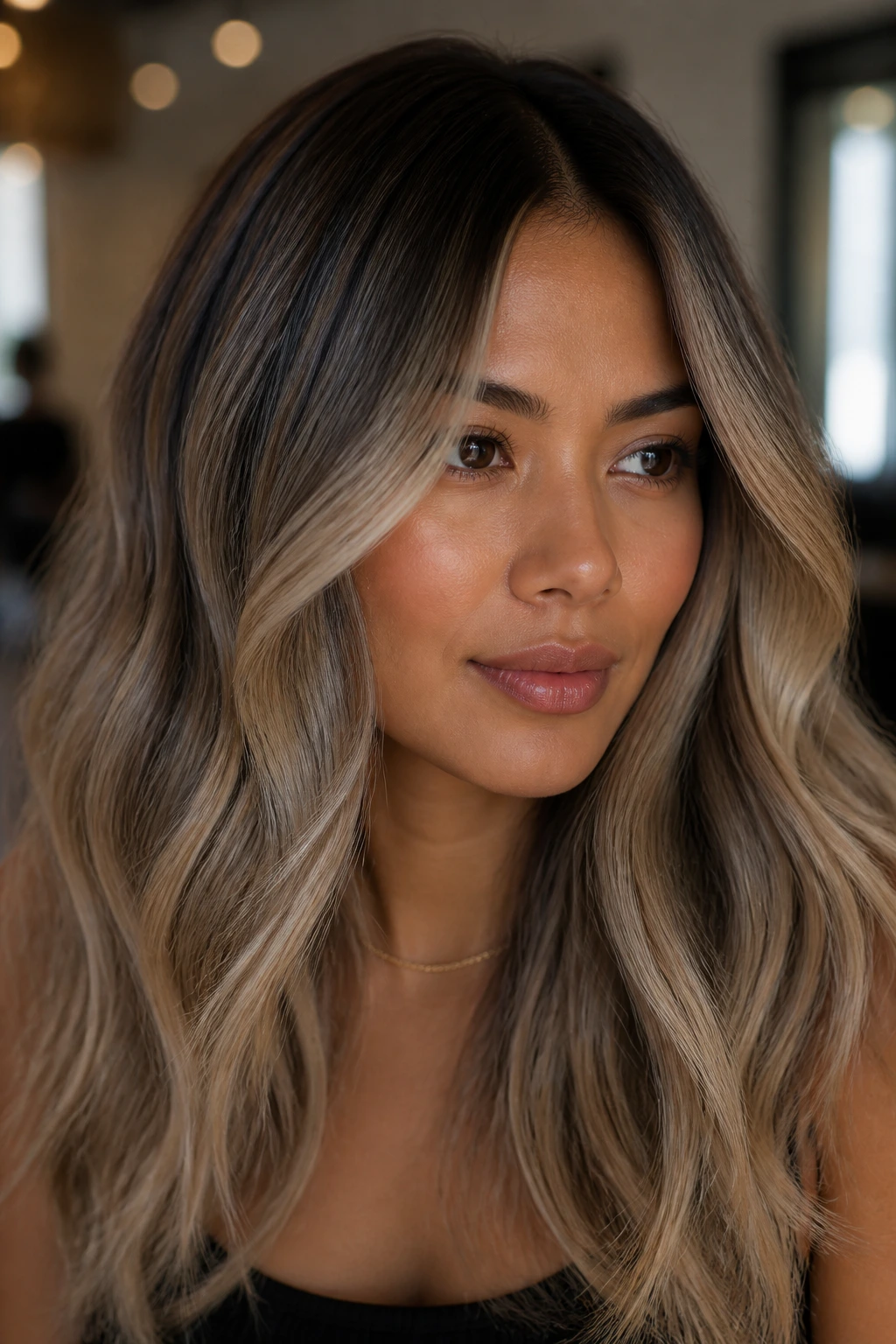
You do not need ten identical reference photos. You need a handful of useful ones. Bring images that show the root depth, the brightness around the face, and the tone at the ends. That gives your colorist three separate decisions instead of one vague mood board.
- 3 to 5 photos in daylight: Indoor photos can hide brass or make ash look grayer than it really is.
- Your hair history: Box dye, henna, previous highlights, and keratin treatments all change the lift level.
- A note on your undertone: Tell the stylist whether your skin runs golden, neutral, or olive.
- A backup photo: Bring one look that is slightly darker than your first choice and one slightly lighter.
- Hair clips or a tie for the appointment: Handy if you want to show where your part sits and how you wear your hair.
- A list of products you already use: Purple shampoo, gloss sprays, and heat tools affect tone and texture.
A good consultation sounds boring, and that’s a compliment. The more specific the words, the less likely you are to end up with a blonde that fights your skin.
How to Style the Color So the Ribbons Show
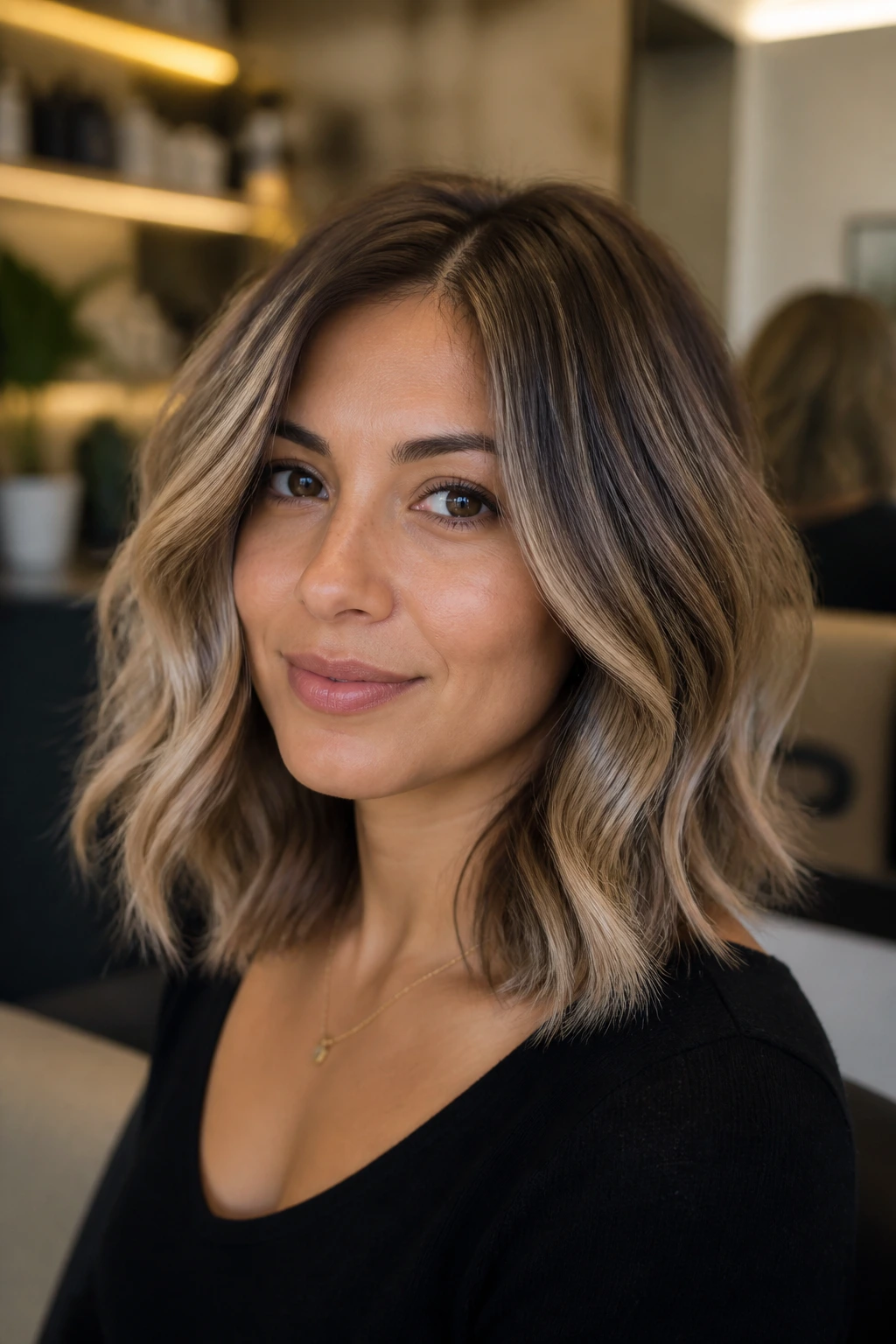
Ashy balayage needs movement. Straight hair can look sleek and expensive, but waves and bends are what make the painted pieces show up. A 1.25-inch curling iron or a flat iron bend through the mids and ends is usually enough. You do not need tight curls. Those can hide the melt.
Loose bends are the easiest styling partner for medium skin because they break up the blonde into smaller flashes. That keeps the lighter pieces from sitting in one bright band around the head. If you want the color to read cooler, brush the waves out a little so the ash looks softer and less shiny.
Center parts tend to show off symmetry and brightness at the face, while off-center parts add lift at the crown. Curtain bangs, if you have them, should be styled away from the face so the lighter money pieces can do their job. And yes, a little shine spray helps, but keep it light. Too much gloss can make ash tones look warmer than they are.
Additional Tips and Shade Boosters
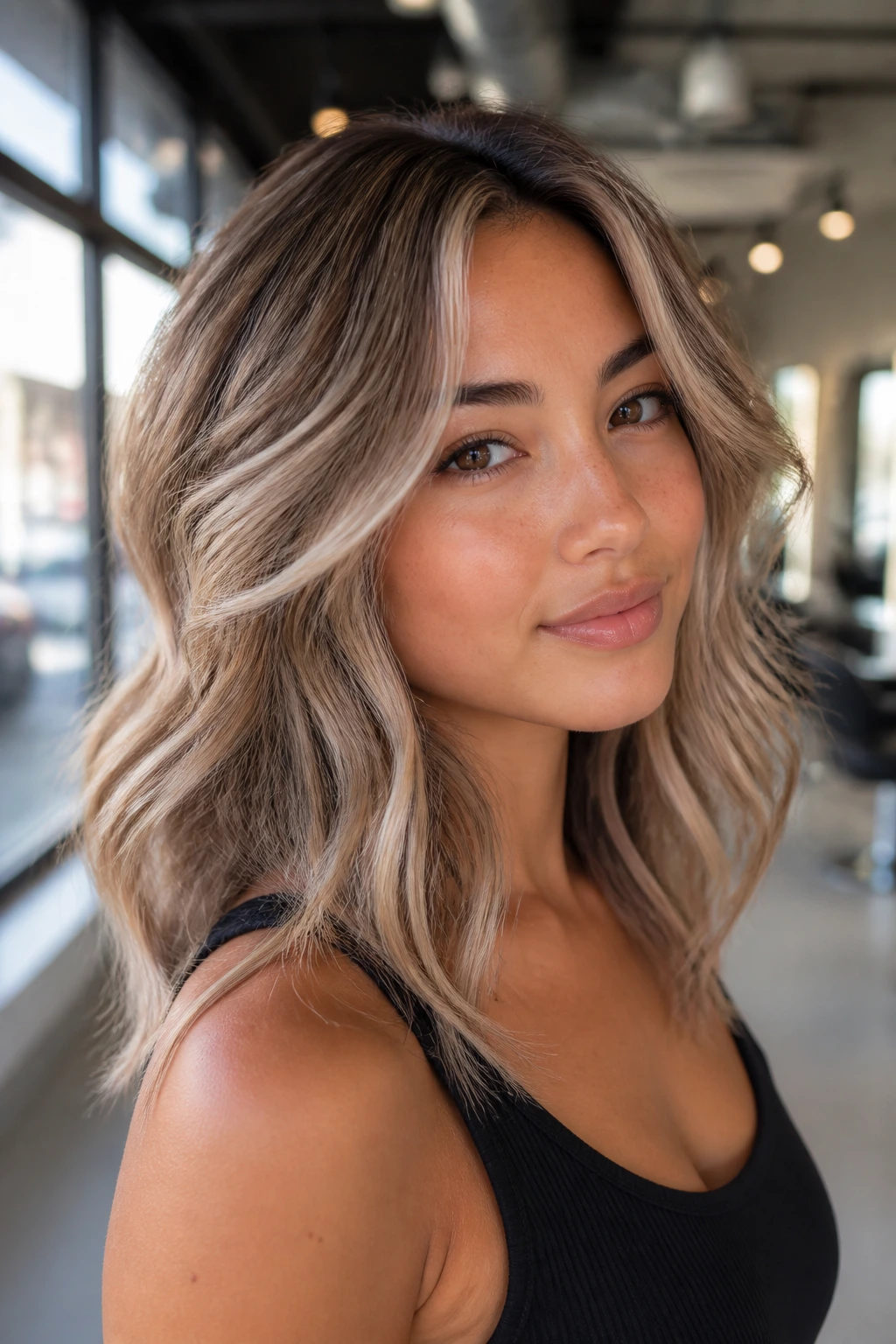
Tone with purpose: If the blonde pulls yellow, use purple shampoo once a week. If it pulls orange, a blue-toned shampoo is the better match. The wrong toner at home can muddy a clean salon color fast.
Keep the root soft: A shadow root one to two levels deeper than the lightest blonde keeps the color wearable on medium skin. That depth is not a mistake. It’s what stops the face from going flat.
Use a gloss between appointments: A demi-permanent gloss every 6 to 8 weeks brings the ash back without another full lightening session. That matters if your hair gets dry easily.
Make it yours: For warmer medium skin, add beige and cream. For olive skin, keep the blonde slightly cooler and deeper. For a sharper look, brighten the money piece by half a level and leave the rest softer.
Common Mistakes That Turn Ash Blonde Flat
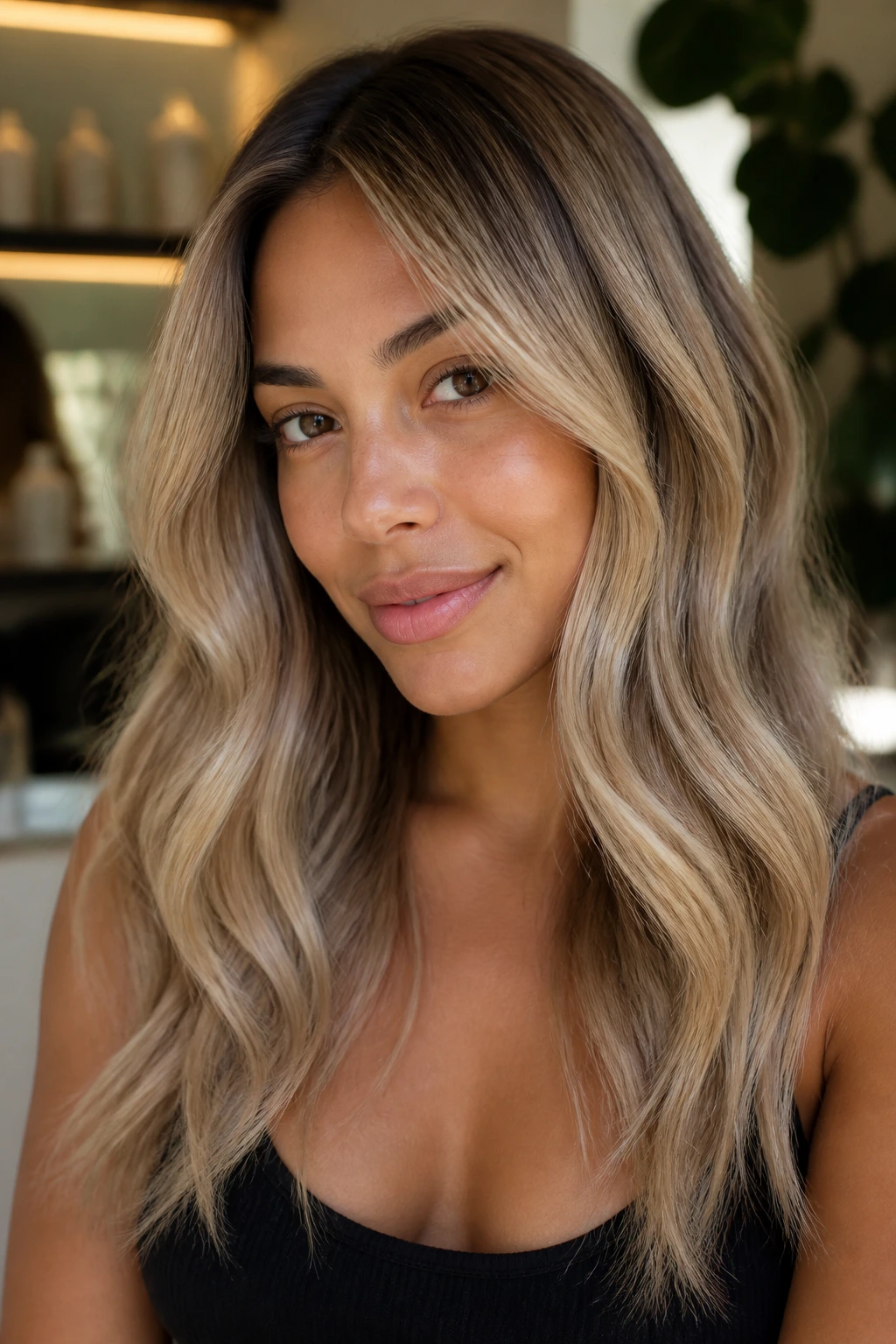
Over-toning to gray: Hair that looks slate-colored in the chair usually looks dull at home. The fix is a beige or pearl toner, not more silver. Ash should cool the blonde, not erase it.
Lifting too far too fast: Dark hair pushed to pale blonde in one go can feel stretched and gummy. If your base is dark brown or deeper, a safer target is level 7 or 8 with tonal depth left in the root.
Ignoring undertone: A cool ash that looks good on one medium complexion can look chalky on another. Golden skin usually needs beige ash; olive skin usually needs more smoke and less white.
Making every highlight the same width: Uniform pieces look striped. Balayage needs some narrow ribbons, some wider sweeps, and some untouched depth between them.
Skipping maintenance: Ash fades. If you never gloss, never mask, and never use heat protection, the color turns warm and dry fast. That is not a flaw in ash blonde. It’s just what lifted hair does when it gets neglected.
Variations and Adaptations to Try
Beige-Heavy Ash: Shift the toner toward beige and cream if your skin is golden or peachy. The result still reads cool, but it won’t fight your undertone.
Mushroom Brunette Blend: Keep more brunette in the base and limit the brightest pieces to the face and ends. This is the easiest low-maintenance version if you do not want frequent salon upkeep.
Curly Ribbon Finish: Paint the lightest pieces along the outer curve of curls and leave deeper space underneath. That keeps the pattern visible without turning the curl pattern into a stripe.
Brighter Front Frame: Lift the money piece half a shade lighter than the rest of the balayage. Good if your face needs lift, especially with a center part or curtain bangs.
Soft Platinum Tips: Keep the root and mids smoky, then fade into pale ends. This suits people who want a little edge without committing to a full platinum head.
Keeping the Tone Cool Between Appointments
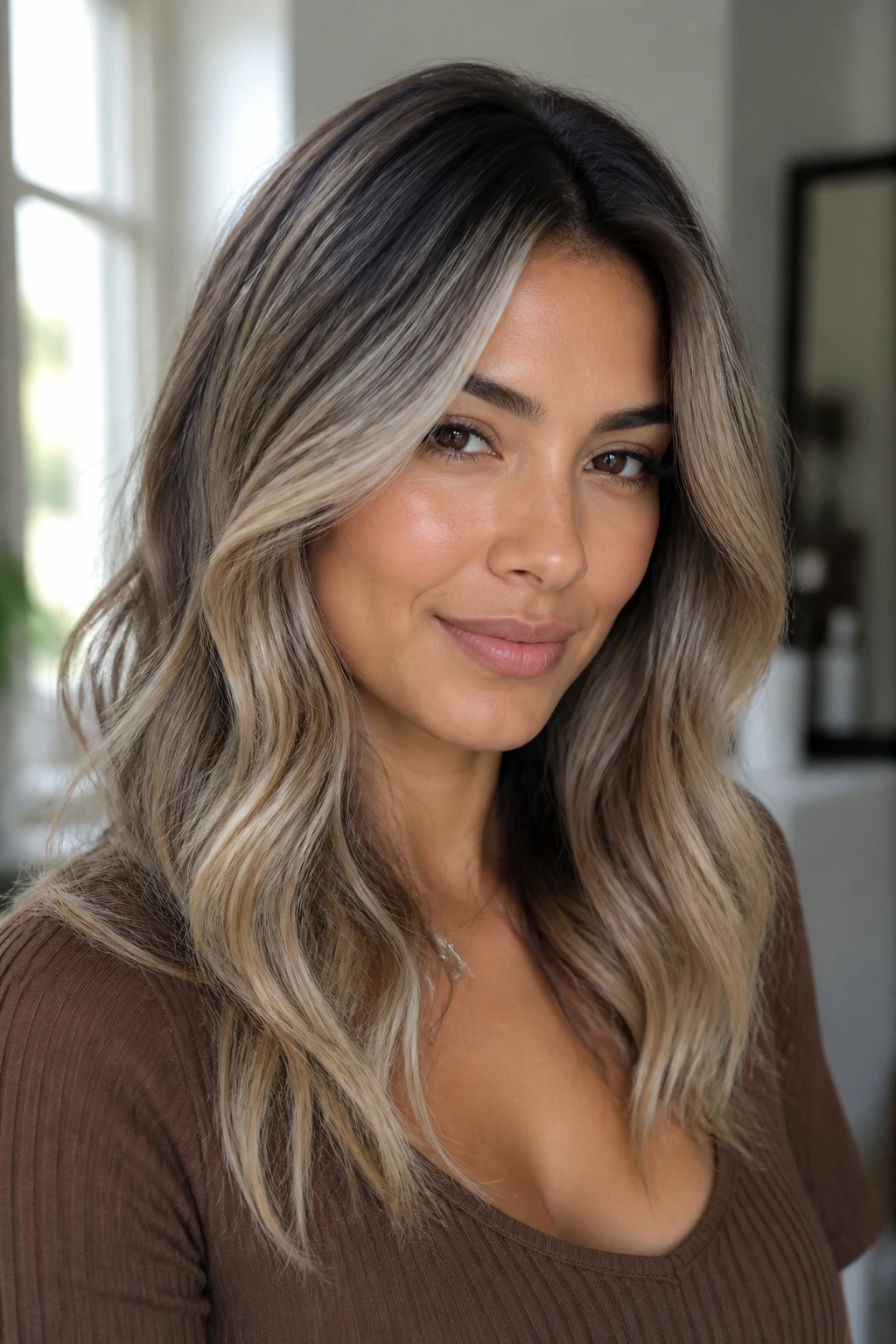
Ash blonde stays cleaner when you treat it like it needs maintenance, because it does. Purple shampoo once every 7 to 10 days is usually enough for yellowing blondes. Leave it on for 2 to 4 minutes, no more, unless your stylist tells you otherwise. If your hair is porous, a shorter contact time is often smarter.
Heat styling is where a lot of ash balayage gets ruined. Try to stay below 380°F on lightened sections, and always use a heat protectant with each pass of the iron. Flat irons and curling wands can make the blonde look shinier for a day, but too much heat strips the tone out and leaves the hair thirsty.
A deep conditioning mask once a week helps the ash sit smoother on the strand. If you swim, rinse the hair before the pool and after it; chlorine can push blonde toward greenish beige in a way nobody wants. Gloss every 6 to 8 weeks if you want the smoke and beige to stay clean. Root touch-ups or balayage refreshes usually land somewhere around 10 to 14 weeks, depending on how fast your hair grows and how much contrast you like.
Frequently Asked Questions
Will ashy balayage wash out medium skin?
Not if the root stays deep enough and the blonde includes some beige, pearl, or mushroom tone. The wash-out problem usually comes from lifting too high around the face with no shadow underneath.
What undertones suit ash blonde best?
Neutral and olive undertones usually take ash well, but warm golden skin can wear it too if the blonde stays beige instead of icy. The more warmth your skin has, the less you want stark silver near the face.
Can dark brown hair get this look in one appointment?
Sometimes, but not cleanly. If your base is very dark, a colorist may need to lift you gradually and tone afterward rather than force pale blonde in one sitting.
Is balayage better than foils for this color?
Balayage gives a softer grow-out and usually suits ash tones better when you want the color to blur. Foils can build brightness faster, which helps if you need more lift, but the finish can look sharper.
How often does ash blonde need toning?
Most people need a gloss every 6 to 8 weeks and occasional purple shampoo at home. If your hair is porous or you wash often, the tone fades faster.
Why does my blonde look greenish after toning?
That usually means the toner was too cool for the amount of warmth left in the hair, or the hair grabbed pigment because it was porous. The fix is a beige gloss or a gentler toner next time, not more purple shampoo.
Can I wear this look on curly hair?
Absolutely. Curly hair often shows ash balayage even better because the ribbons move and separate naturally. The key is keeping some depth underneath so the pattern doesn’t disappear.
What should I ask for if I want ash without gray?
Say you want a beige ash or mushroom blonde with a soft shadow root. Those words steer the result away from flat gray and toward a cooler, more wearable blonde.
The Cooler Side of Blonde
The best blonde ashy balayage for medium skin tones is never the palest thing in the room. It’s the color that lets the skin stay alive while the hair picks up soft smoke, beige, pearl, or a little champagne around the edges. That’s the sweet spot: enough coolness to kill brass, enough depth to keep the face from going blank.
If you’re choosing a shade from this list, start with your undertone, then decide how much brightness you want near the face. The smarter the placement, the longer the color feels good after the salon chair. And that’s the real win here — not just a blonde that looks nice on day one, but one that still has shape, depth, and a little attitude when it grows out.