



Brown bronze highlights can go muddy fast on cool skin tones. Bring in too much orange, and the hair starts fighting the face instead of framing it. Keep the bronze smoky, though, and the whole look changes: the brunette looks richer, the skin looks fresher, and the color sits there with that polished, expensive feel that doesn’t need to shout.
That’s the trick with brown bronze highlights for cool skin tones. Brown comes first. Bronze follows. If the bronze is built from mushroom, cocoa, ash, pewter, or a muted metallic gloss, it flatters pink, blue, and cool-olive undertones without making the face look ruddy or flat. No copper penny nonsense. No traffic-cone shine. Just depth, reflection, and enough warmth to keep the brown from reading dull.
I’ve always preferred bronze that looks like brushed metal in low light and soft caramel in daylight. It should shift, not flash. That’s why placement matters so much here, and why the difference between babylights, money pieces, ribbons, lowlights, and a full bronze melt can be the difference between “expensive brunette” and “why does this look brassy under fluorescent bulbs?”
Why These Shades Work When Bronze Usually Fails
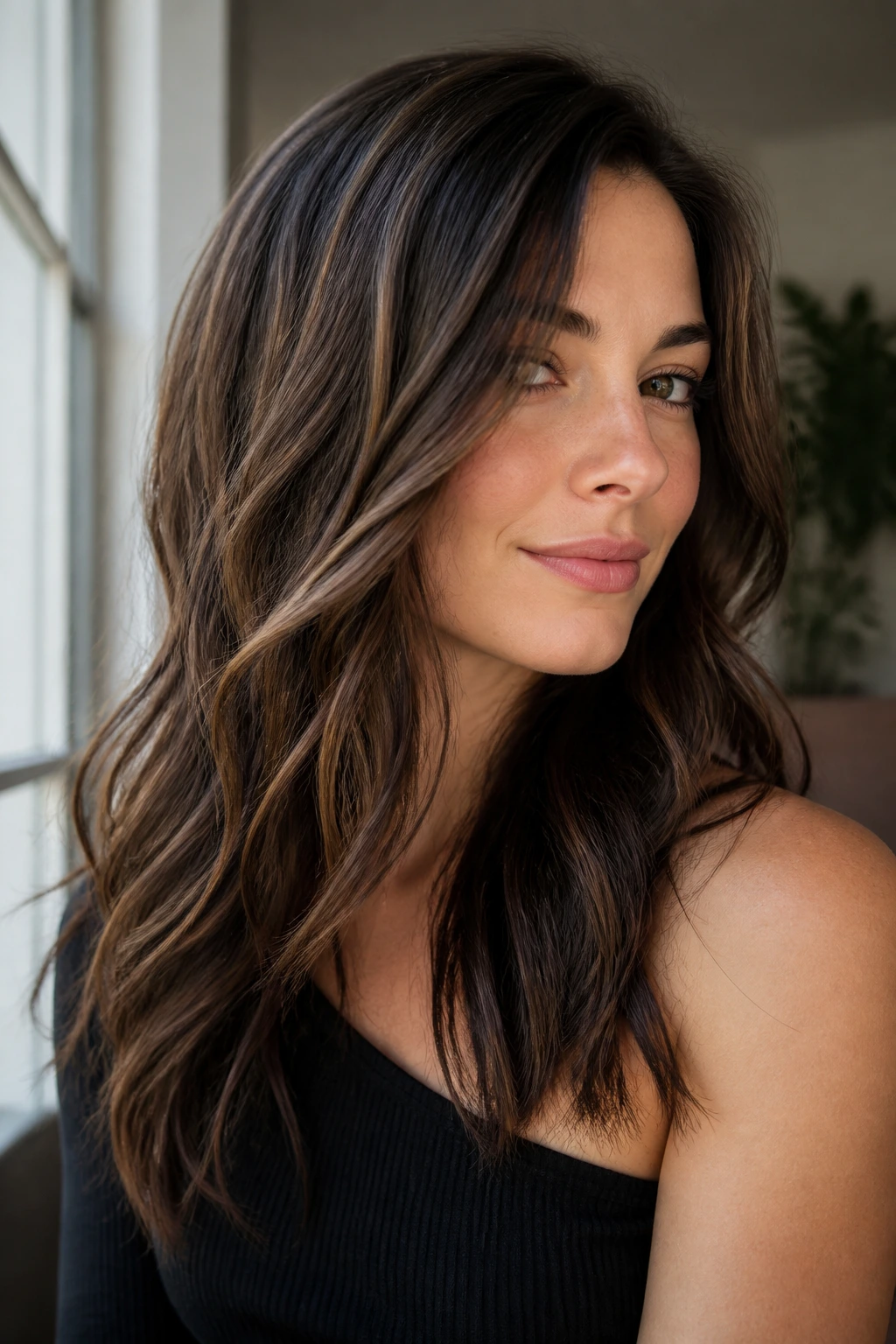
Cool undertones need bronze with restraint. The best versions lean brown first, so the warmth shows up as sheen rather than orange. That keeps the color from colliding with pink or blue skin.
Placement changes everything. Thin babylights, face-framing pieces, and soft ribbons let the bronze flicker instead of dominate, which matters more on cool skin than most people realize.
The grow-out is kinder than a full blonde lift. These shades sit closer to brunette territory, so the line at the roots softens instead of turning into a harsh stripe.
Texture gets a real job here. Waves, curls, shags, and layered cuts all catch bronze in different ways, which makes the color look alive instead of flat.
You can go subtle or bold without leaving the lane. A few cool-bronze threads around the face can be enough, or you can build a full dimensional brunette with depth at the roots and reflective ends.
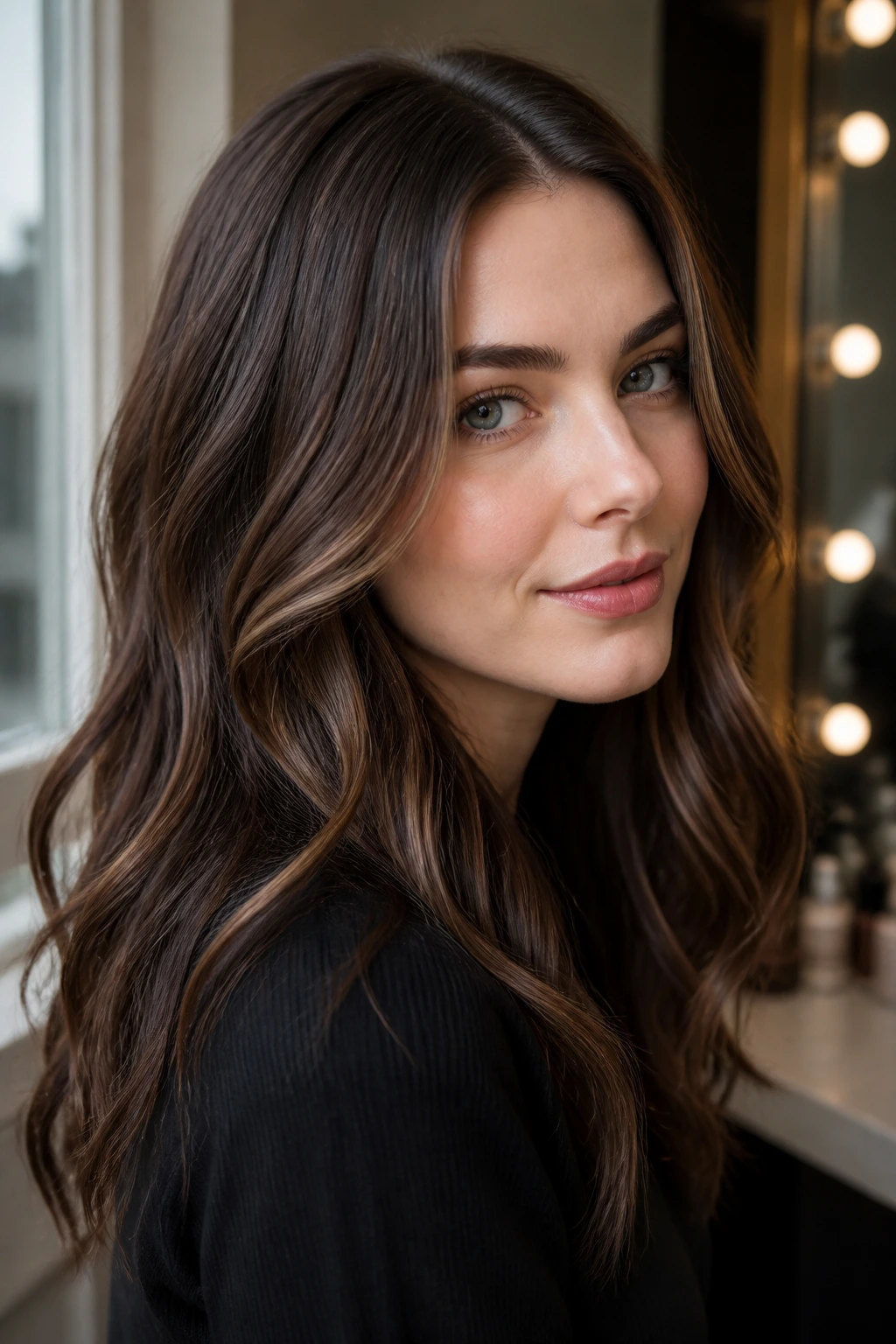
1. Smoky Bronze Babylights on Espresso Brown
These are the quiet ones, and I mean that as a compliment. Tiny babylights threaded through an espresso base give you a soft, smoky bronze effect that reads like light bouncing off polished wood.
The key is restraint. Ask for fine babylights in a level 6 to 7 bronze-beige family, not chunky caramel streaks. On cool skin, the small weave keeps the warmth from sitting on top of the hair like frosting.
A straight blowout shows the shimmer. Loose bends show the dimension. Either way, this is the version I’d call the safest starting point if you’re nervous about bronze looking too warm.
2. Mushroom Brown with Bronze Ribbons
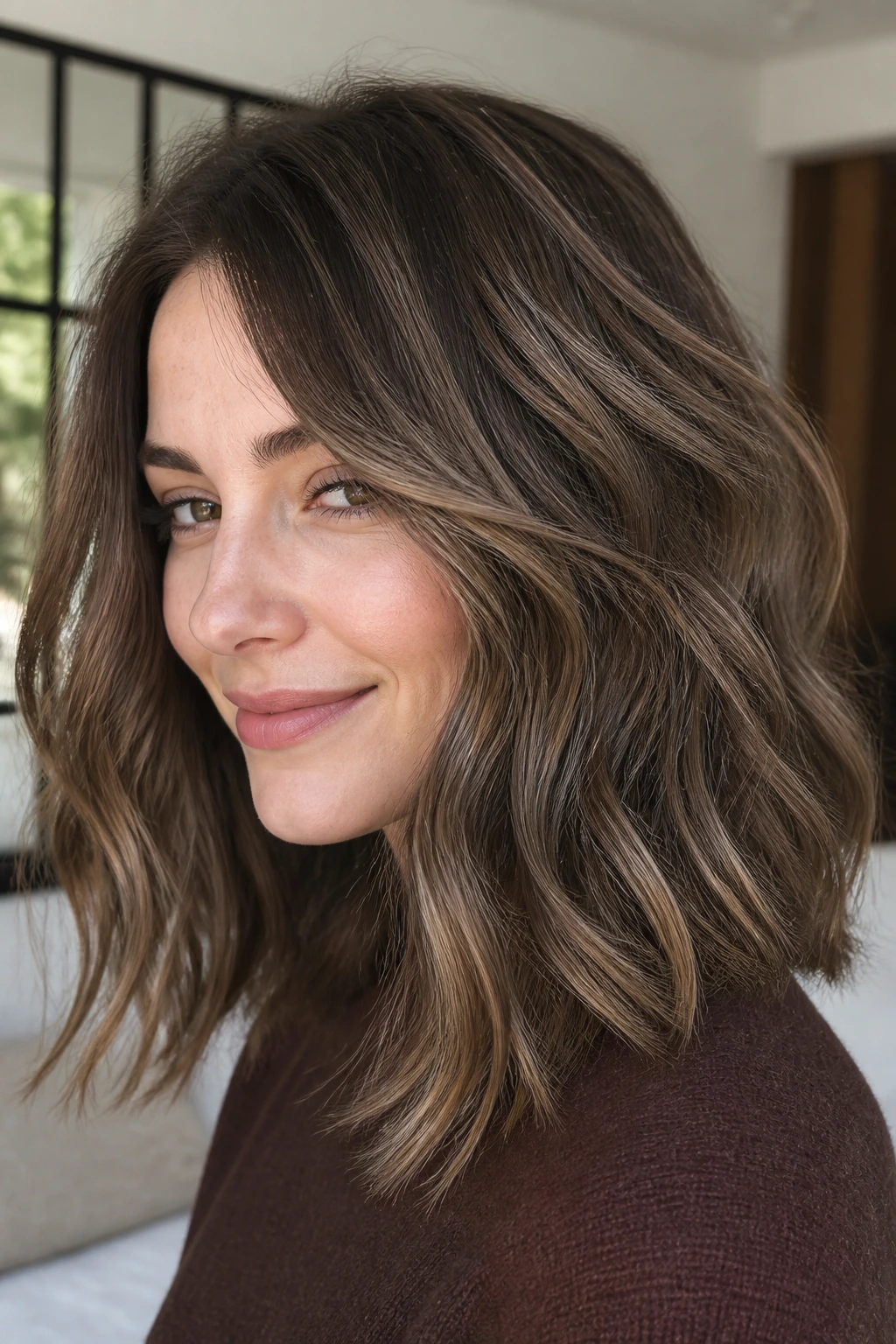
Mushroom brown and bronze sound like cousins, which is exactly why they work together. The mushroom base brings in ash and taupe, while the bronze ribboning adds a faint metallic glow through the mids.
This one looks especially good on medium-length hair with a slight wave. The ribbons should be wide enough to see in motion, but not so thick that they read as stripes. If you can trace them with your eye but not count them from across the room, you’re in the right zone.
Ask your colorist for muted bronze ribbons over a cool brunette glaze. That phrasing matters. It keeps the bronze from drifting gold.
3. A Face-Framing Money Piece That Stays Bronze, Not Orange
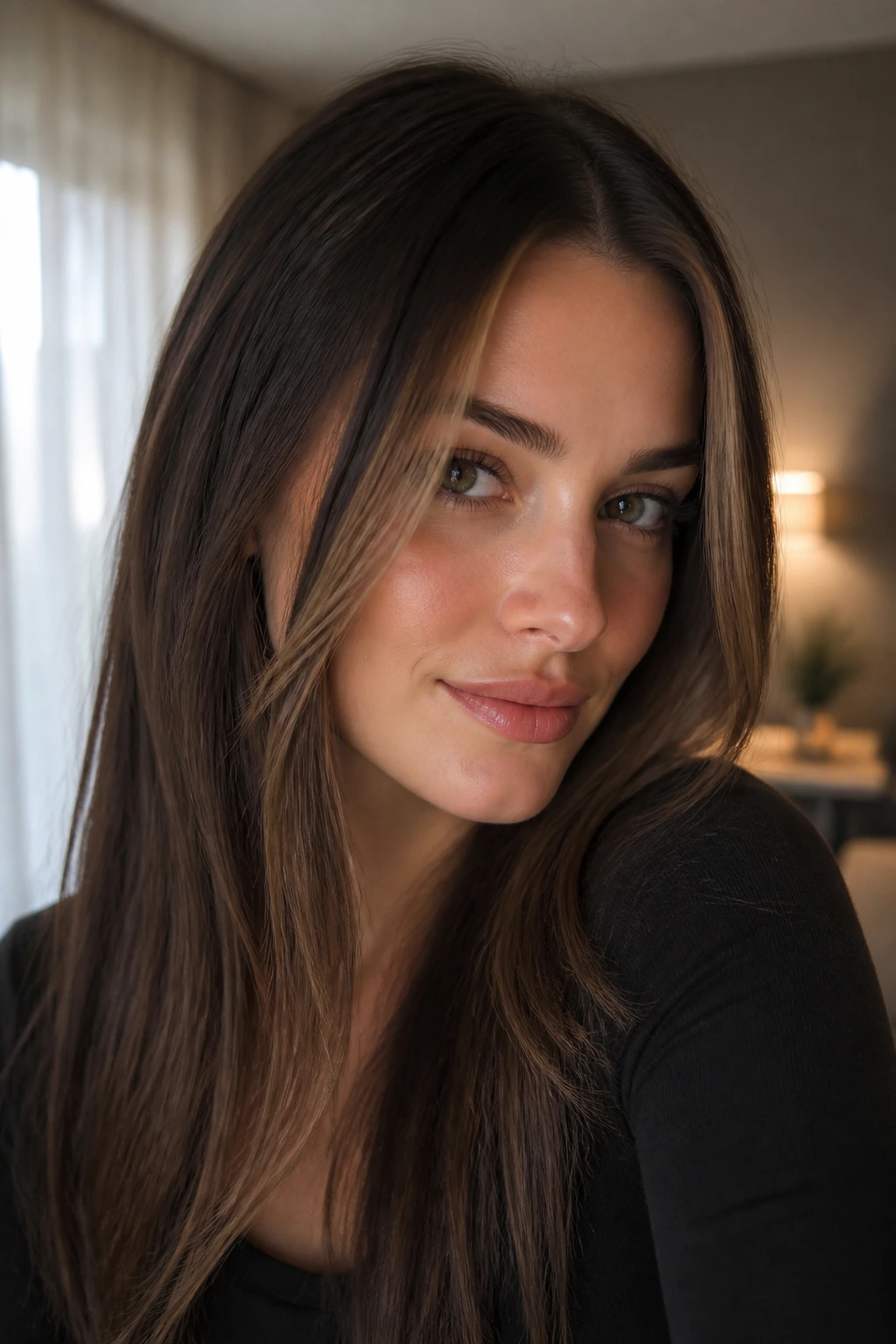
The money piece can go wrong in a hurry. Too light, too warm, and it looks like a stripe borrowed from another head. Done with a cool bronze tone, though, it wakes up the whole face.
This is the one I’d choose for someone who wears a center part and likes a little brightness near the cheekbones. Keep the contrast medium, not extreme. A level 7 bronze money piece against a level 4 or 5 brunette base is usually enough.
Best for: straight hair, blowouts, and anyone who wants the color to show up even when the rest of the hair is tucked behind the ears.
4. Lived-In Bronze Balayage on a Long Lob
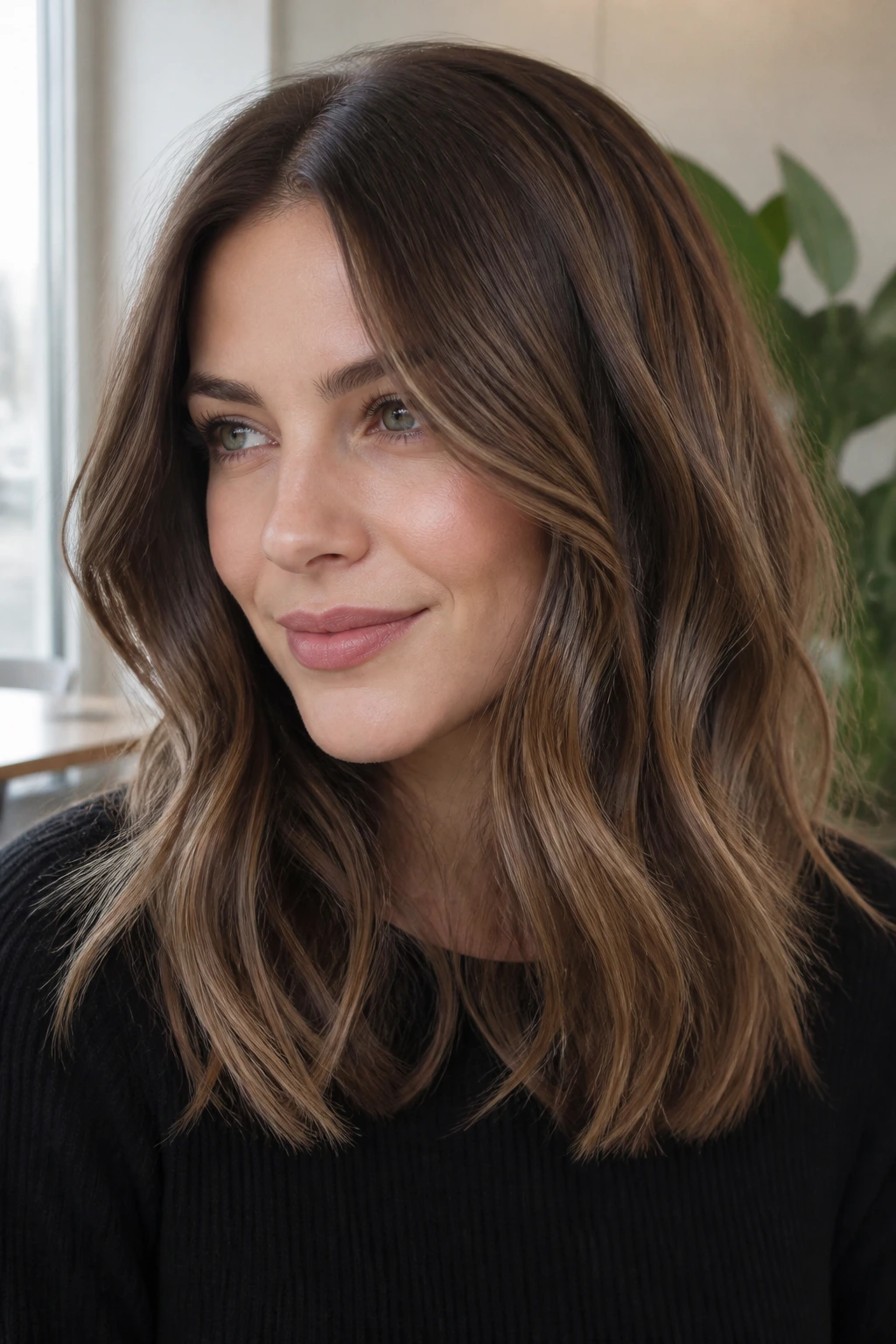
A long lob gives bronze room to breathe. Balayage painted through the mid-lengths and ends creates a softer melt, especially when the root area stays a shade or two darker.
What makes this version work on cool skin is the fade. The bronze should dissolve into the base instead of sitting in obvious blocks. That means fewer hard edges, more hand-painted sections, and a gloss at the end that tilts smoky.
If you like hair that still looks good after a long day and a few bad weather moments, this is one of the better choices. It doesn’t depend on perfect styling. It just keeps doing its job.
5. Ash Mocha with a Bronze Veil
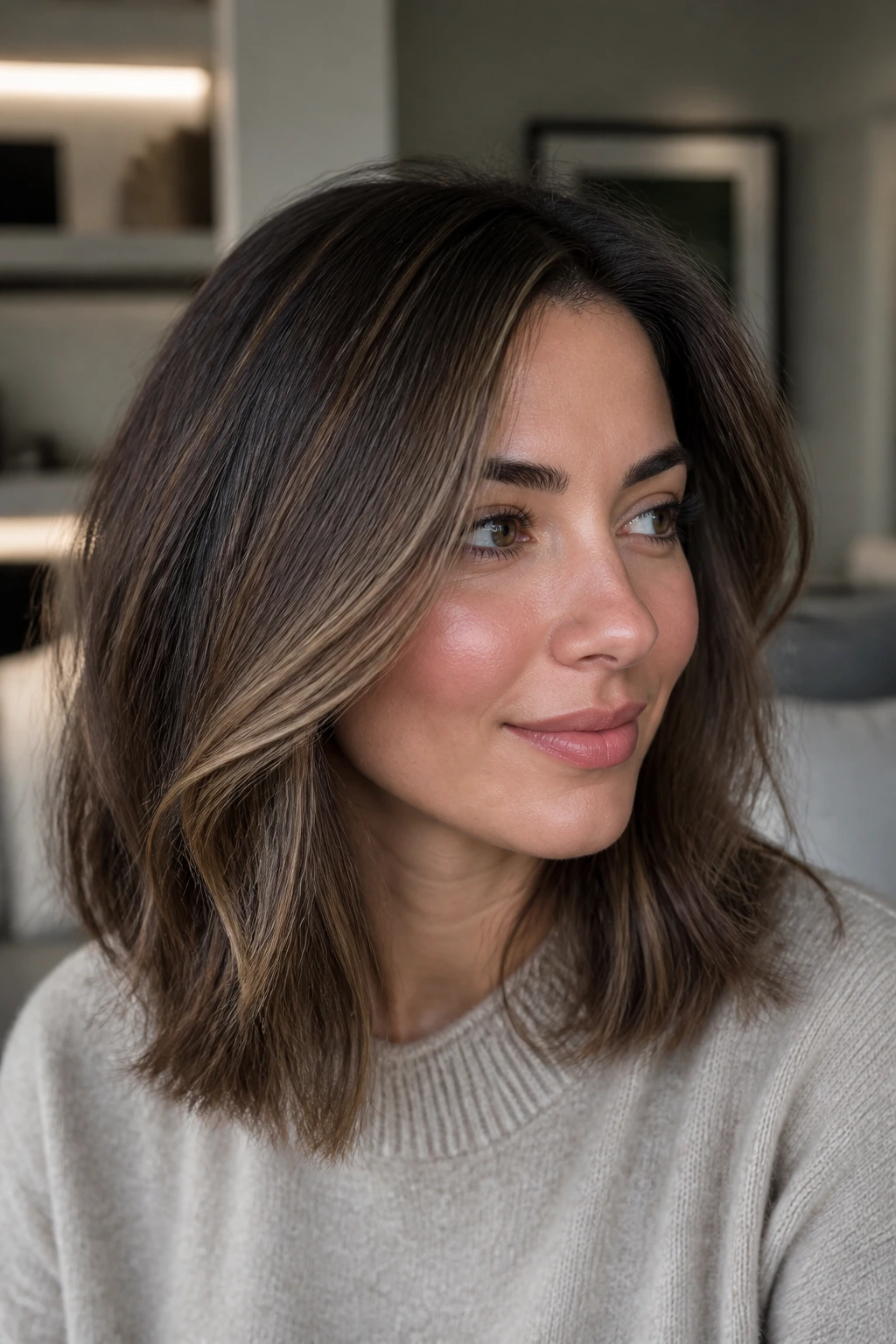
This is one for people who want to whisper, not announce. Ash mocha already has that coffee-and-cocoa depth, and a bronze veil adds a sheen that catches light when you move.
No chunky highlights here. The bronze sits lightly over the surface, almost like a glaze on top of the mocha base. That keeps the overall look cool enough for fair skin with pink undertones, but not so flat that it disappears.
I like this on shoulder-length cuts, especially when the ends are blunt. The strong line at the bottom makes the bronze reflect more clearly.
6. Chestnut Brown with Muted Bronze Lowlights
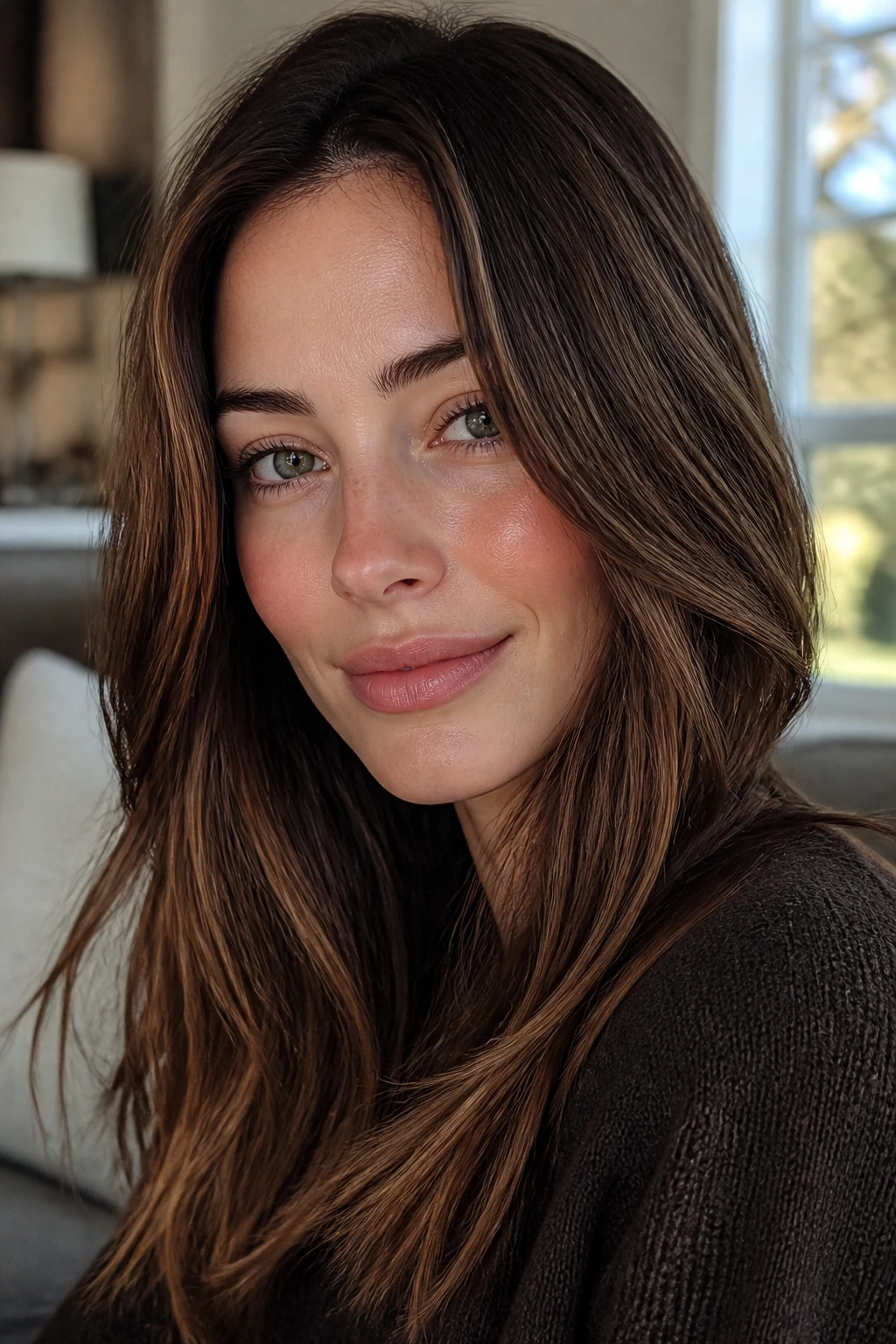
Most people think of highlights first, but lowlights can do the cleaner job. Chestnut brown with muted bronze lowlights gives dimension from the inside out, which is useful if your hair is naturally medium brown and you don’t want obvious brightness.
The bronze here should be subdued, almost dusty. Not shiny brass. More like soft metal after a bit of wear. On cool skin, that contrast keeps the face from feeling warmed over.
This works especially well if your hair tends to look one-note in winter or under indoor light. The lowlights break up the mass and give the style a little more body.
7. Bronze Contour Highlights Around the Cheekbones
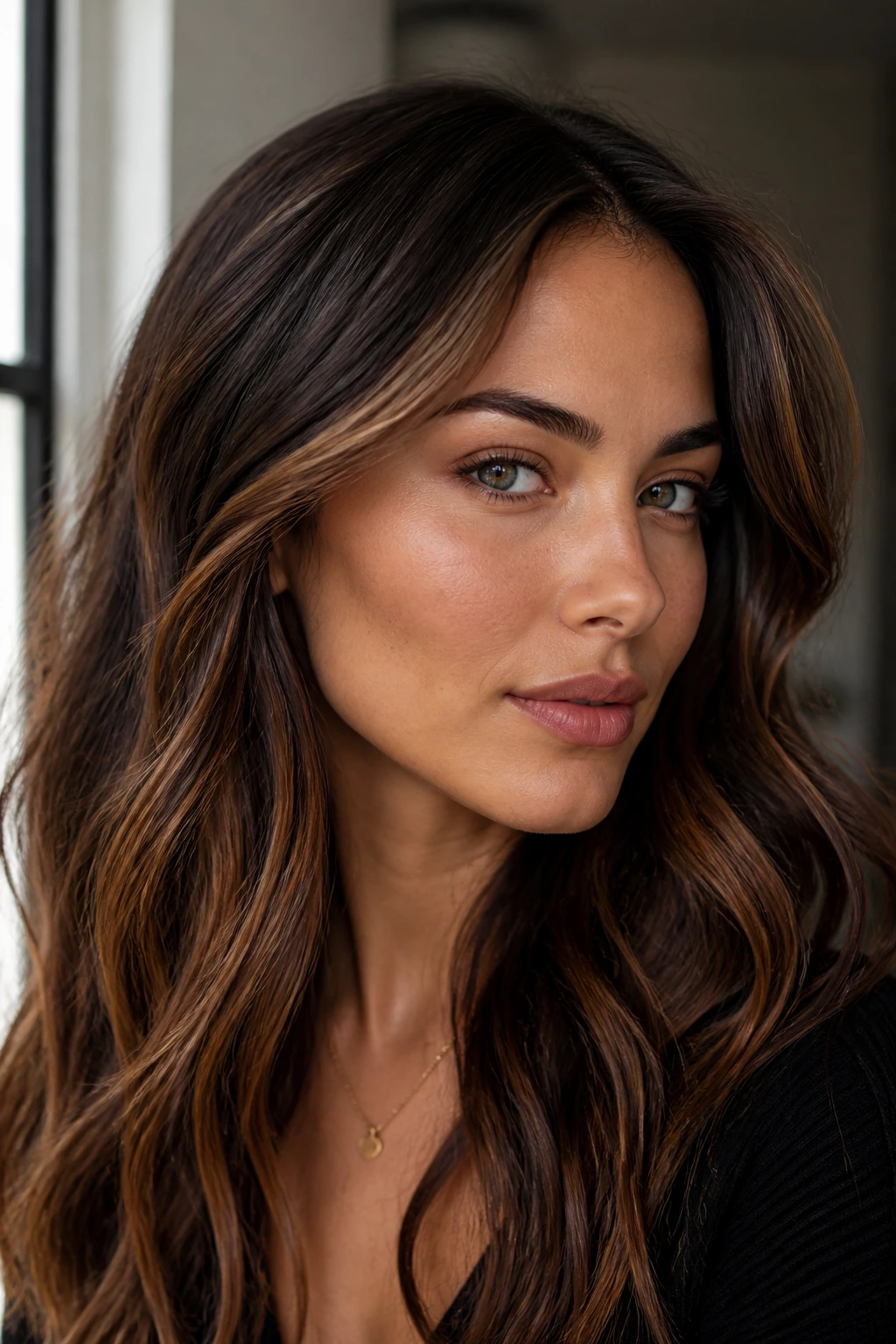
Contour highlights are the hair version of good makeup placement. Brightness lands where the face needs lift, usually around the cheekbones, temples, and jawline.
For cool skin tones, the bronze should sit in narrow slices that follow the shape of the face. Think strategic, not scattered. A few carefully placed panels can slim a wide cheek area, sharpen a soft jaw, or pull focus upward if your hair is cut in layers.
This look is strongest when the rest of the head stays darker. It gives you drama without turning the whole head into a bronze block.
8. Bronzed Curtain Bangs on a Soft Shag
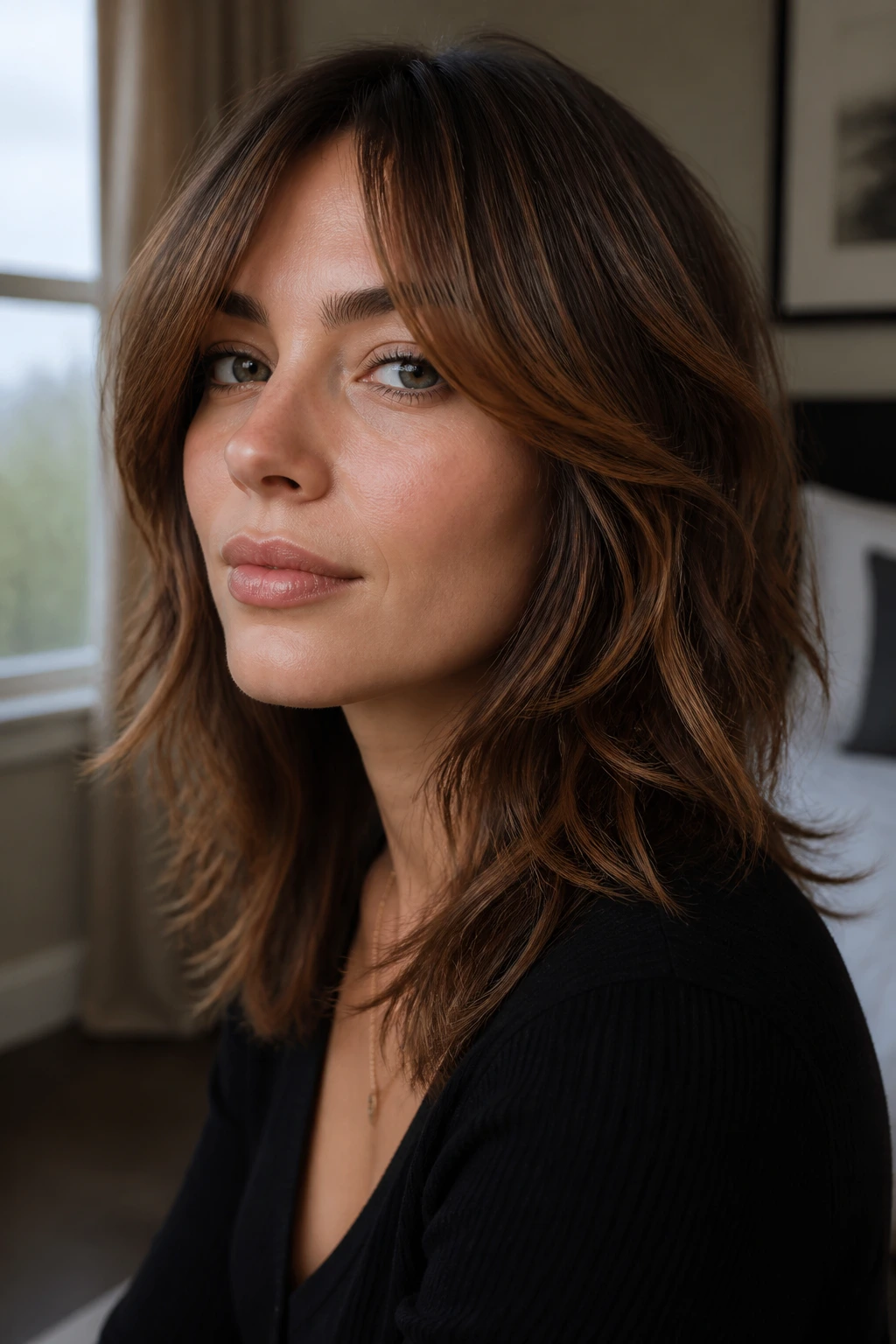
Curtain bangs love dimension. Bronze threading through the fringe makes the bangs separate into soft, face-framing pieces instead of collapsing into one dark curtain.
The shag keeps the color moving. Every layer catches a different amount of light, and that matters because cool skin usually looks best when the color changes a little as you turn your head. This version never feels stiff.
Ask for lighter pieces just through the bang area and a few echo pieces around the crown. Too much brightness at the front can make the look loud. A little goes farther than people expect.
9. Foilyage Ends on Layered Brunette Hair
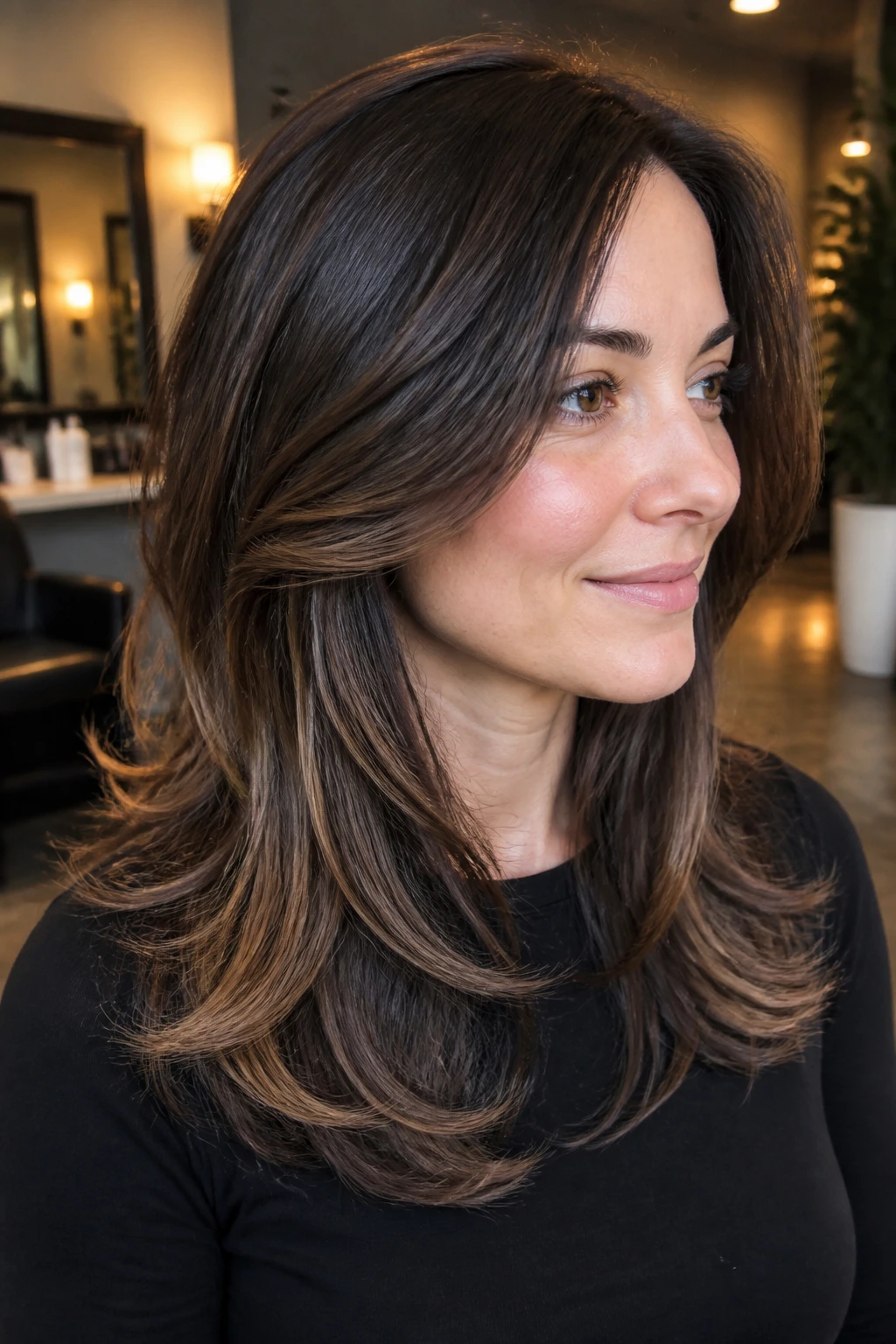
Foilyage gives you a stronger lift than freehand balayage, which is useful when your base is deep brown and you want the bronze to actually show. Concentrating the lightness on the ends keeps the roots calm and the grow-out softer.
Layered hair helps here because the ends stack and separate. The bronze lands on each tier a little differently, so the color doesn’t look flat from the back. That’s a nice bonus if your hair is thick and tends to hide its own dimension.
On cool skin, keep the bronze in the cinnamon-free zone. If you can see copper in the bowl, it’s probably too warm.
10. Smoky Bronze Ombré for a Seamless Grow-Out
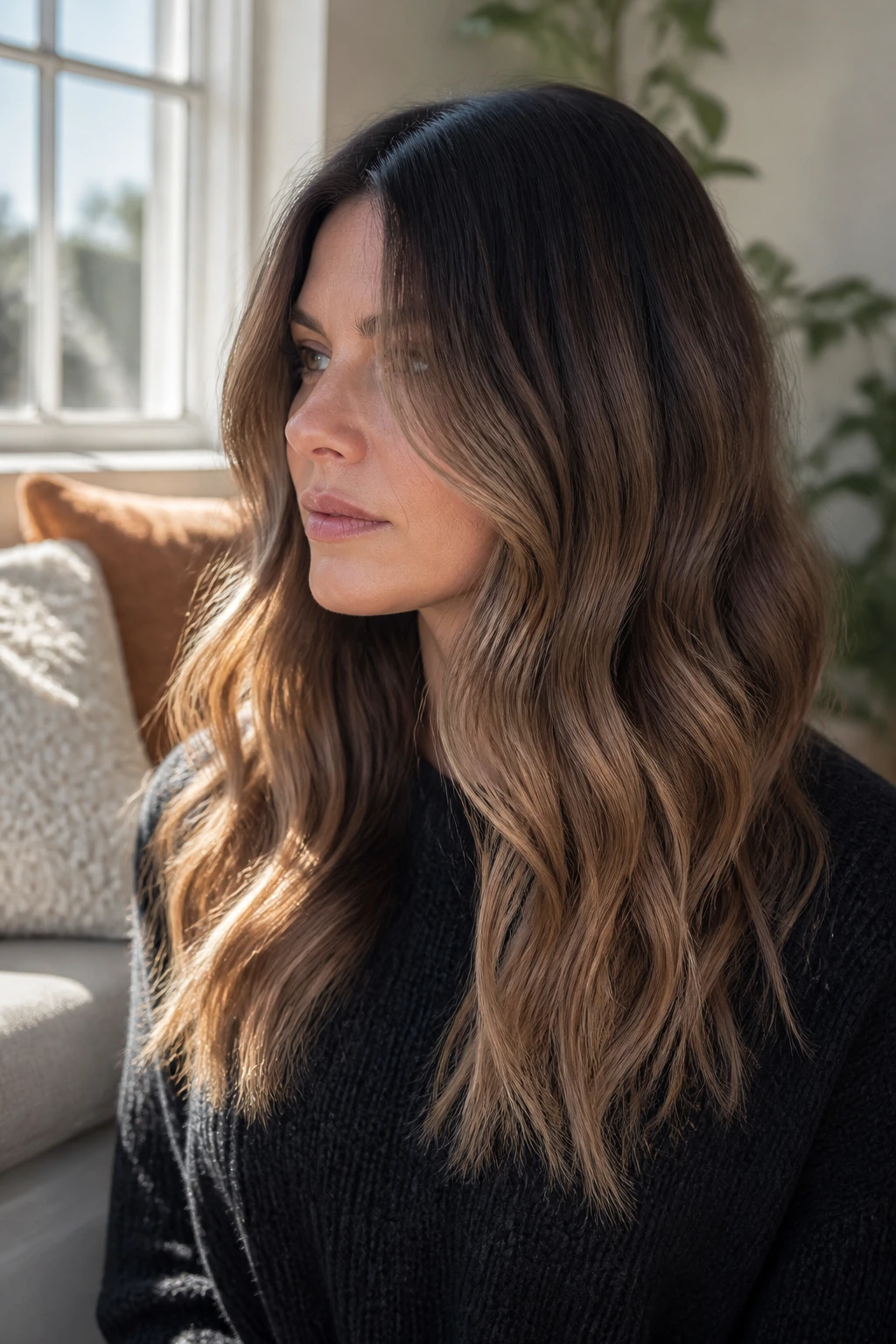
Ombré gets a bad rap because people remember the stripey versions. A smoky bronze ombré done right is much softer: dark roots, bronzed mids, and a lighter, reflective finish near the ends.
The gradient matters. The transition should be gradual enough that the eye slides down the hair instead of stopping at a line. That makes this a strong choice if you hate regular salon touch-ups.
One thing I like here is how forgiving it is on slightly damaged ends. The bronze sheen hides a little roughness better than a pale blonde would.
11. Peekaboo Bronze Panels Under Dark Brown Hair
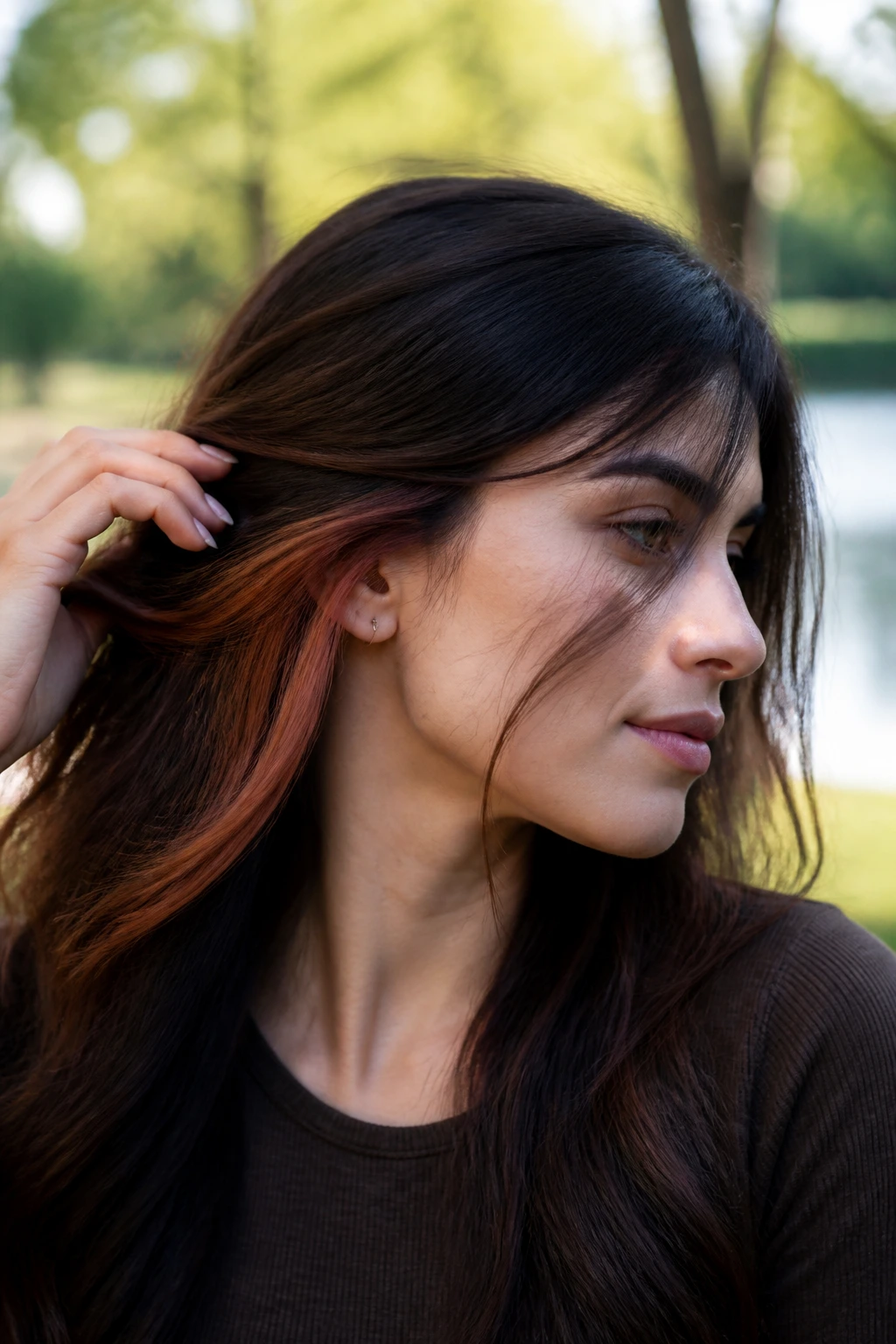
Peekaboo color is for people who want a secret. Bronze panels hidden beneath dark brown hair show when you tuck hair behind the ear, twist it up, or catch a breeze.
This is a smart move for cool skin because the bronze never sits in your face all day. You get the payoff without committing to brightness everywhere. It also keeps the roots looking deeper, which can be cleaner if your natural color is espresso or almost-black brown.
I’d choose this if you wear your hair up often or need a look that can flip from conservative to playful in ten seconds.
12. Ribbon Highlights for Curly Hair
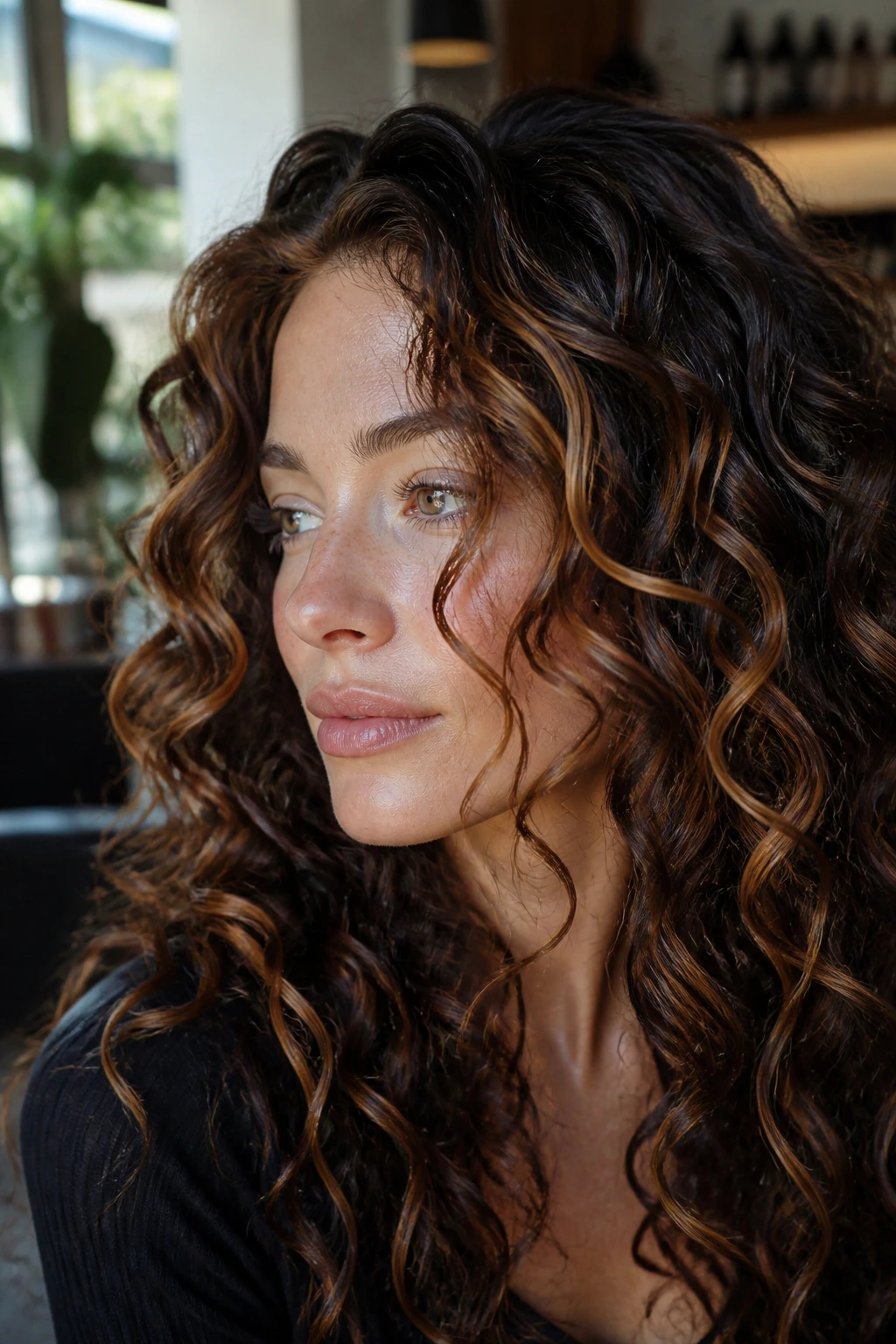
Curly hair does not need the same highlighting plan as straight hair. Bronze ribbons threaded through curls follow the coil pattern, which means the color appears in flashes instead of lines.
That flash is the magic. Cool skin tones usually benefit when highlights break up into small pieces, because the contrast stays soft even when the curls bounce. Ask for hand-painted ribbons, not uniform foils packed too tightly together.
Moisture matters here, too. Curly bronze looks far better when the hair has slip and shine, because dry curls make warm tones look dusty.
13. Micro-Bronze Highlights on a Short Bob
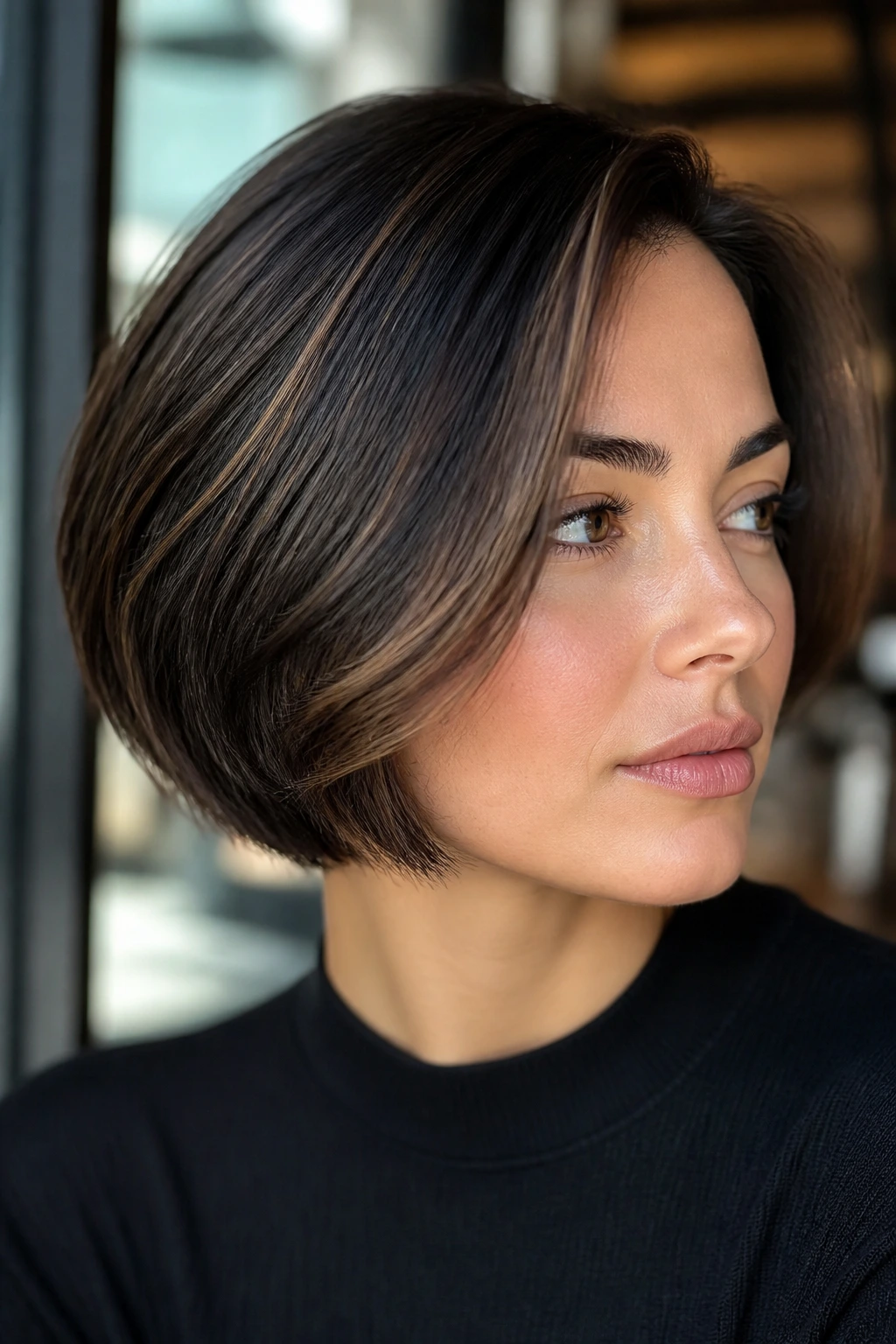
Short bobs can look dense if the color is too solid. Micro-highlights solve that by adding tiny slivers of bronze through the top layer and around the face.
This is the version for someone who wants polish, not drama. The pieces should be delicate enough that the bob still reads sleek, but bright enough to catch light along the jawline and temple. That little bit of movement makes a short cut feel more expensive.
If your bob is blunt, the bronze line at the ends can sharpen the shape even more. If it’s slightly layered, the highlights will separate and show off the texture.
14. Walnut Brown with a Pewter-Bronze Sheen
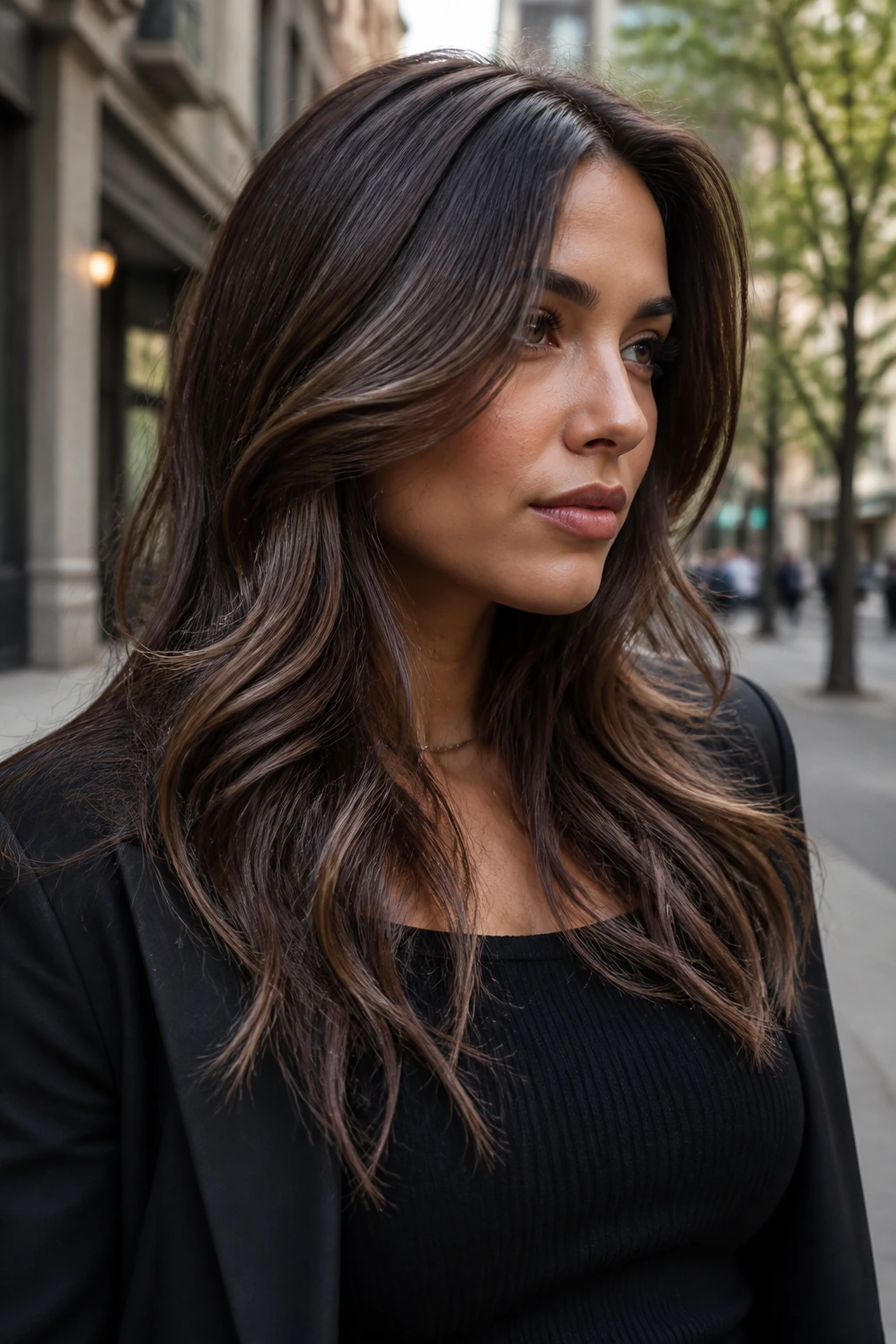
Pewter-bronze sounds odd until you see it next to cool skin. The metallic edge cools the warmth down and gives the brown a slight steeliness that plays nicely with pink undertones.
Walnut brown is a good base because it’s already muted. Add a bronze sheen that leans smoky rather than golden, and you get a color that feels deep, refined, and not at all sugary.
I’d call this one a sleeper hit for people who want a subtle change that still looks intentional. It works especially well with silver jewelry and darker clothes.
15. A Rooted Bronze Melt for Low Maintenance Color
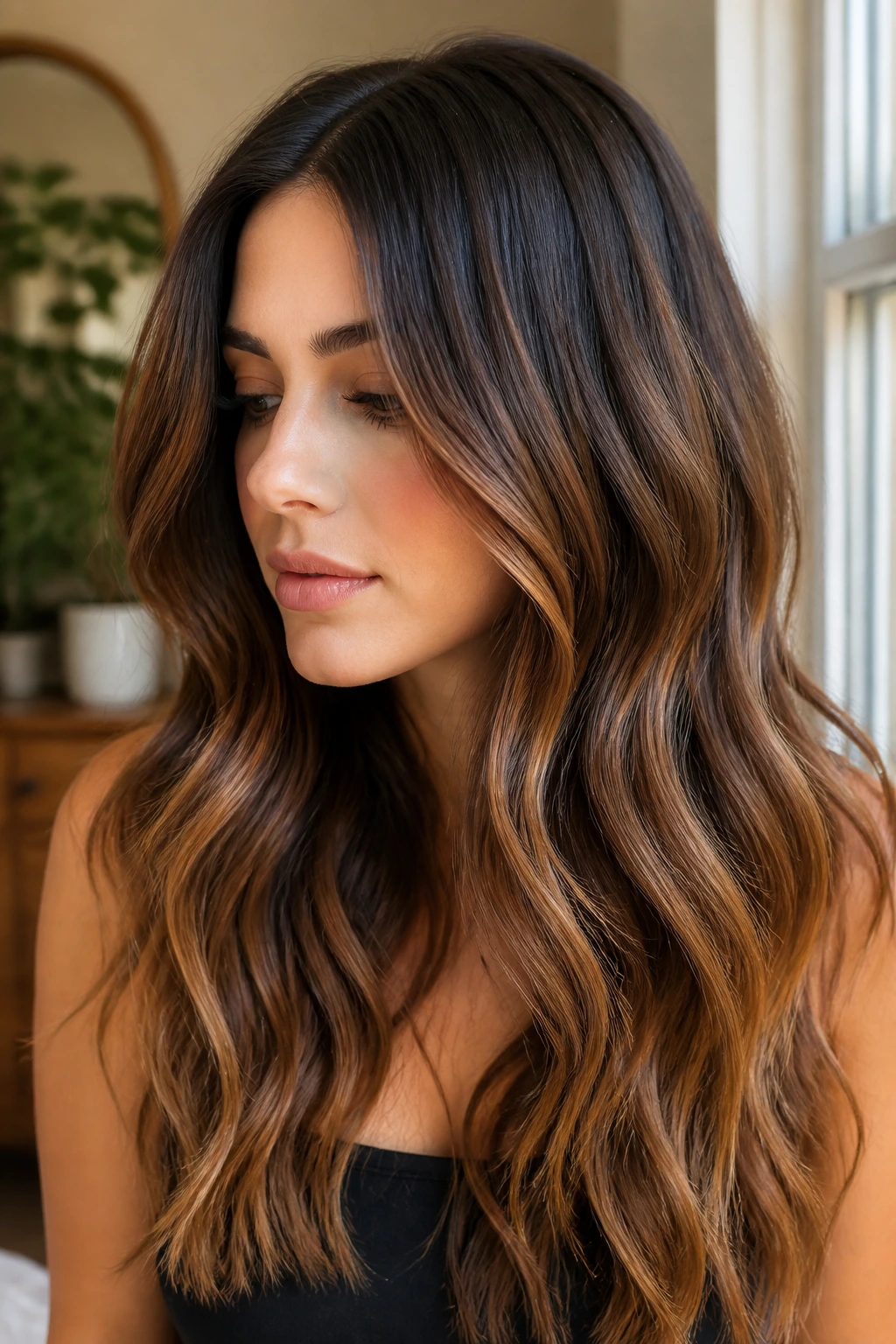
Root shadow is your friend if you don’t want an obvious grow-out line. A rooted bronze melt keeps the top darker and softens the bronze through the mids and ends, so the color shifts rather than stops.
What you’re asking for is a brown base that stays close to your natural root level, with bronze woven in below it. The transition should be soft enough that you can go a long time between full refreshes. Nice bonus: it makes the hair look thicker at the root.
For cool skin tones, this is one of the easiest ways to keep bronze from feeling too bright. The darker top acts like a filter.
16. Bronze Shag Haircut with Piecey Texture
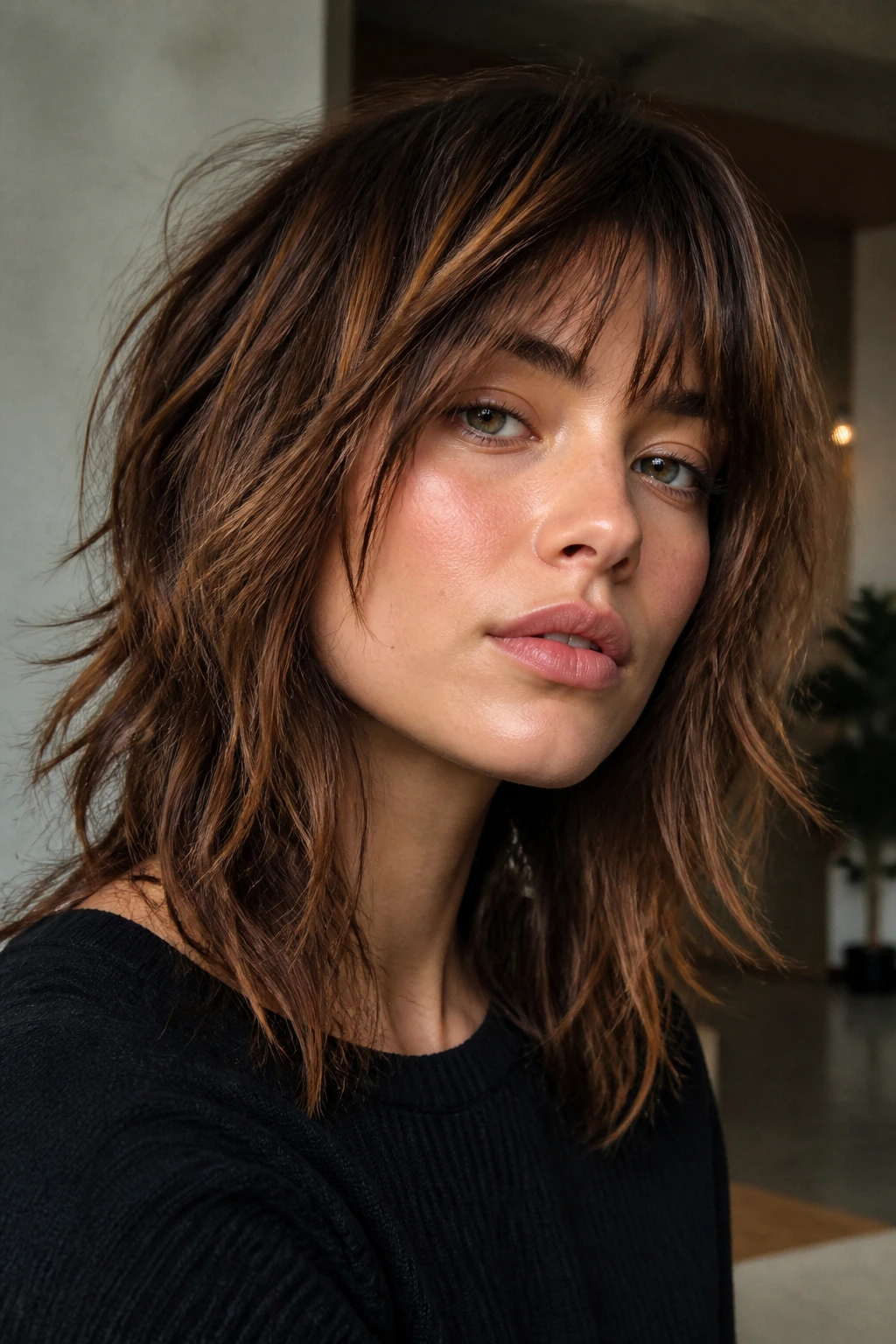
The shag loves disruption. Bronze highlights placed through the choppy layers make the hair look lived-in in the best possible sense, because the cut already breaks the light into bits.
This is not the place for a perfect, smooth highlight map. You want irregularity. A brighter piece near the fringe, a quieter section near the crown, and some bronze through the ends is enough to make the whole cut move.
If your hair is medium to thick, this can remove the heavy look that brunettes sometimes get. The shape does half the work.
17. Satin Bronze Veil on Cacao Brown
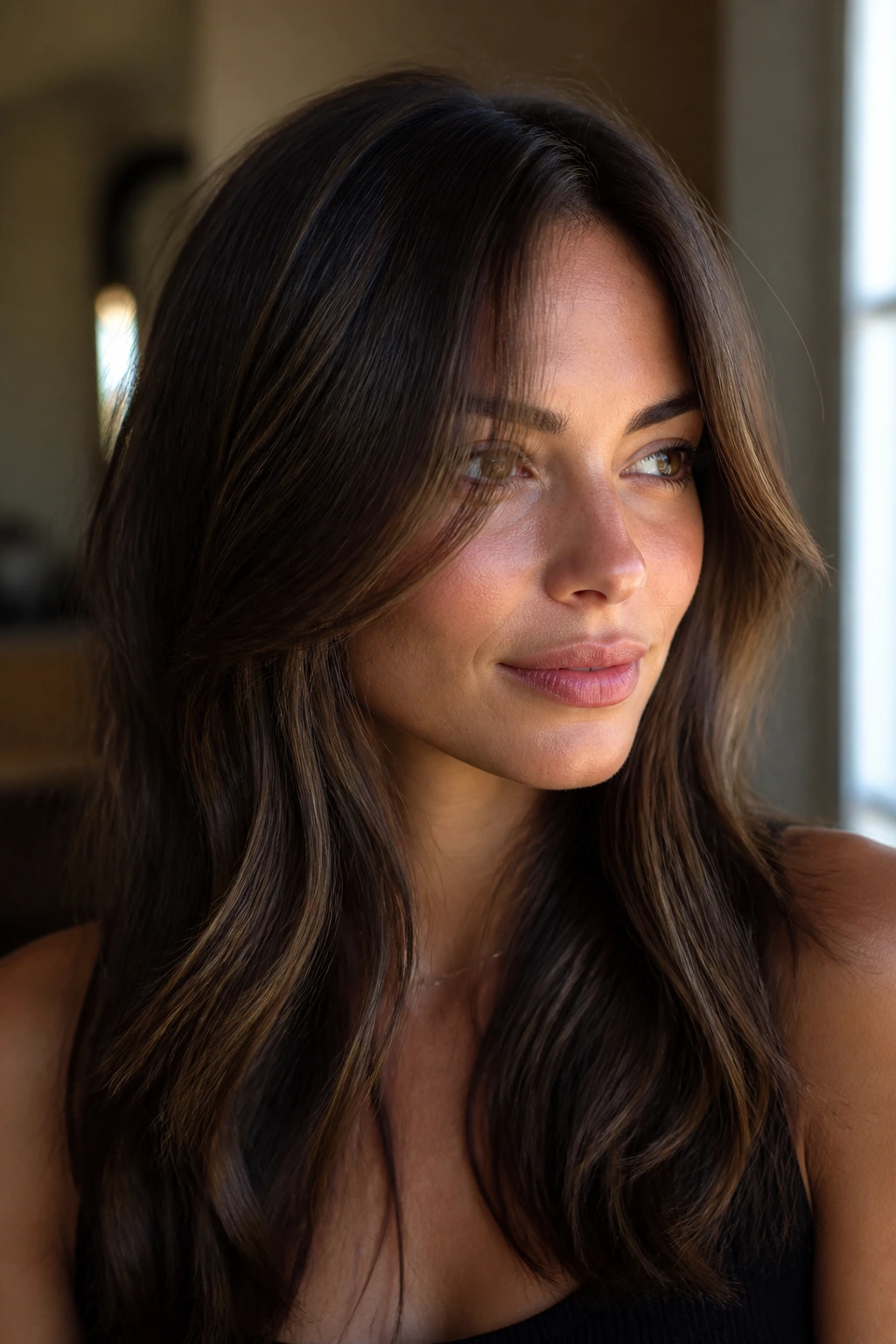
Cacao brown has a deep, almost bitter richness that cool skin often handles well. Add a satin bronze veil and the color gets a gentle reflection, more like fabric than metal.
This one is all about the finish. The bronze should feel soft and matte-glossy, not mirror-shiny. That sounds fussy, but it matters: high-shine bronze can drift warm fast, while a satin finish stays elegant and muted.
I like this on longer hair because the veil can stretch from top to bottom. On shorter cuts, you may lose some of the effect unless the styling is very smooth.
18. Dark Chocolate Hair with Bronze Ends
When the base is dark chocolate, bronze works best when it stays concentrated toward the ends. That keeps the top rich and cool, while the lower half picks up movement and light.
The trick is not to overlighten the ends. You want enough shift to register, but not so much that the hair starts looking ombré in a dramatic way. A warm-neutral bronze lifted only a little above the base usually does the job.
This style looks especially good with long layers, because each layer reveals a different bit of the finish. It’s quietly dramatic. My favorite kind.
19. Ash Brown Depth with Soft Bronze Lowlights
People often forget that bronze can live in the darker pieces, not only the bright ones. Soft bronze lowlights laid into ash brown hair add depth without messing with the cool base.
This is useful if your hair is fine and tends to look see-through at the ends. The lowlights give the hair a little shadow and stop the color from floating away in bright light.
Because the base is already ash brown, the bronze must stay very muted. If the lowlights turn copper, the whole point is gone. You want dimension, not heat.
20. Halo Bronze Around the Crown
A halo placement puts brightness around the top and upper sides of the head, which can lift the face in a way that feels soft rather than harsh. It’s a nice choice if your hair is layered and you like volume at the crown.
For cool skin, the bronze should be thin and airy. Concentrating the color near the crown gives the illusion of light without dragging warmth through the lower lengths. That can be a smart move if your ends are already lighter from old color.
The halo effect is especially pretty in half-up styles. A loose twist or clip lets the bronze flicker from above and behind.
21. A Deep Side Part with Bronzed Sweep
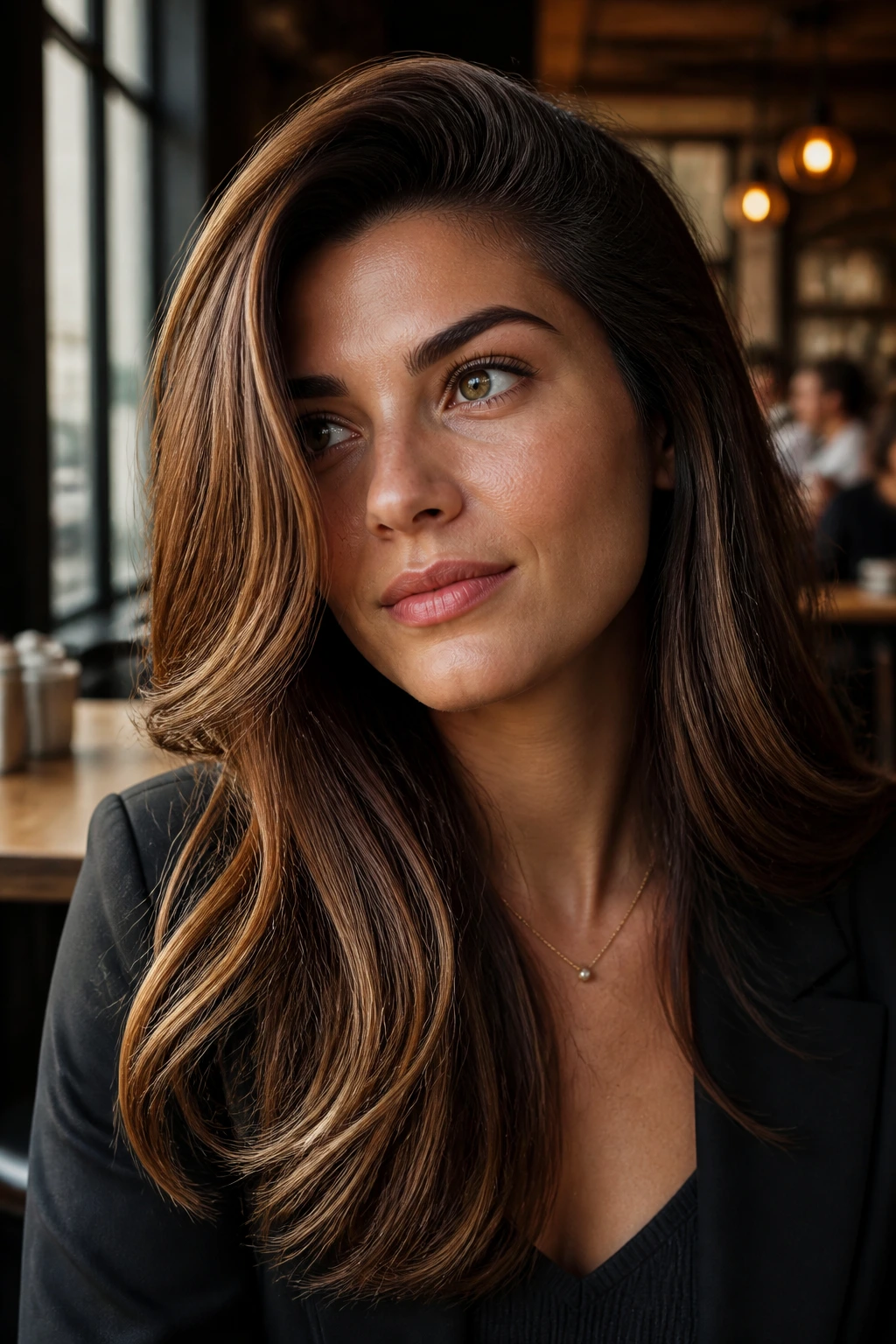
Sometimes the placement is the haircut. A deep side part pushes one bronzed section forward and lets the rest of the hair fall darker, which creates a strong but still wearable contrast.
This works best when the bronzed sweep starts near the part and continues through the front layers. The result is more interesting than a standard face frame because the color appears to move as you change angles.
If your face is round or heart-shaped, this can be a good way to soften one side without lightening the whole head. It’s shape work, not just color.
22. Sleek Blunt Cut with Linear Bronze
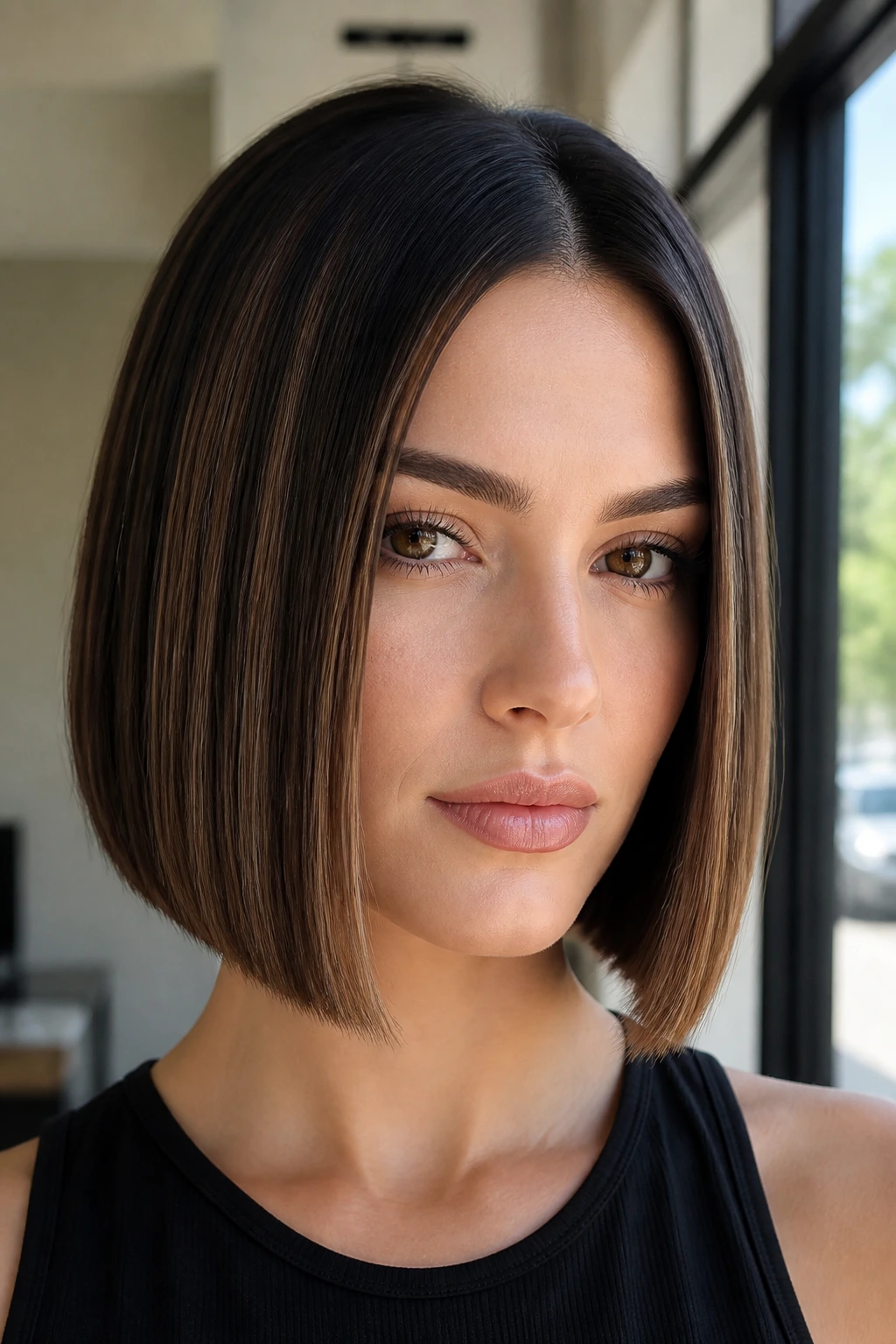
A blunt cut and bronze highlights can look almost graphic when the placement is controlled. Thin linear pieces across the mids and ends create crisp lines that show up best on straight hair or a polished blowout.
The bronze here should be narrow, cool, and deliberate. Wide panels can break the clean shape of the cut. But a few restrained pieces, especially near the perimeter, make the line of the bob or lob look sharper.
This is the one for people who like structure. It’s less soft-focus, more tailored.
23. Bronze Gray-Blending for First Silvers
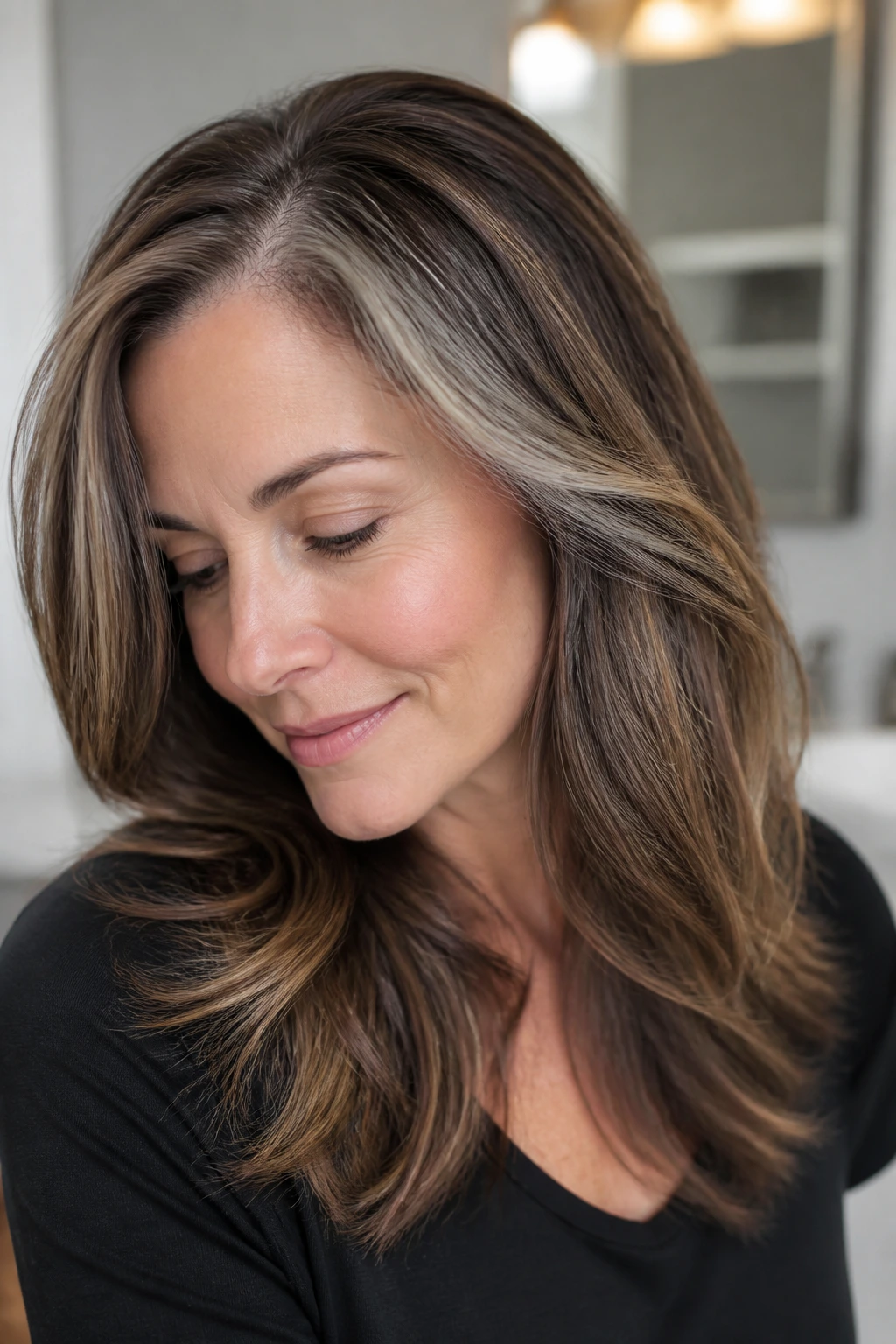
If you’re seeing the first silver strands, bronze can be a smarter choice than trying to hide everything. A bronze-blending placement helps the grays fold into the brunette base instead of standing out like wires.
This works because the bronze is warmer than gray but not so warm that it turns the whole head orange. On cool skin, that balance matters even more. You want a lifted, mixed finish that keeps the silver from looking stark.
Ask for fine weaves around the part line and temples. Those are the spots that show first.
24. Cool Olive Skin with Muted Bronze Depth
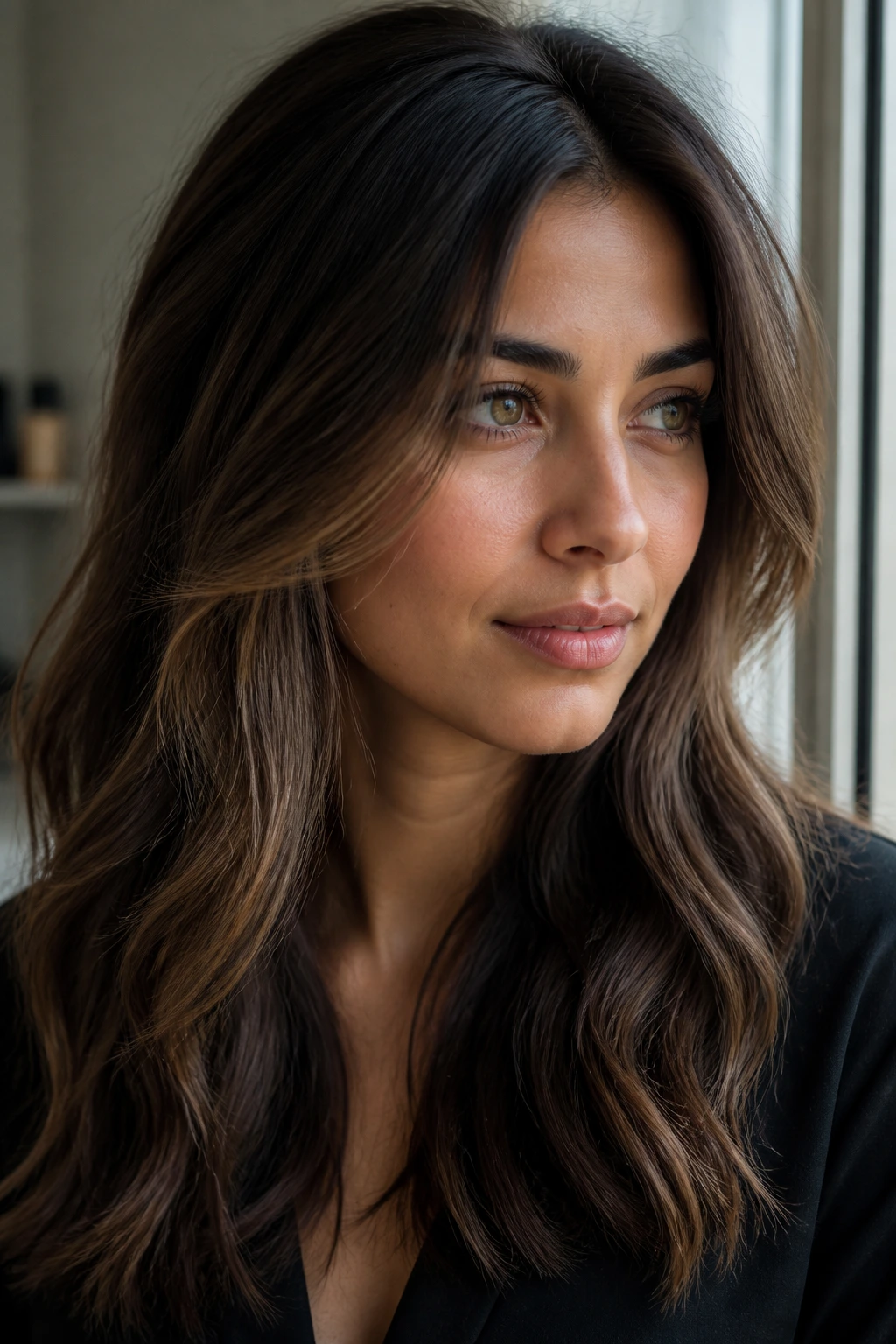
Cool olive skin can be tricky because it doesn’t always behave like classic pink undertones. Muted bronze works here when the warmth stays dusty and the brown base holds most of the weight.
I’d avoid anything that leans pumpkin or gold. Instead, ask for bronze with mushroom, taupe, or cocoa notes. That keeps the face from going sallow while still adding dimension.
This is one of those shades that looks better when you stand near a window than under harsh overhead light. The texture of the color matters more than the brightness.
25. Lived-In Babylights with a Shadow Root
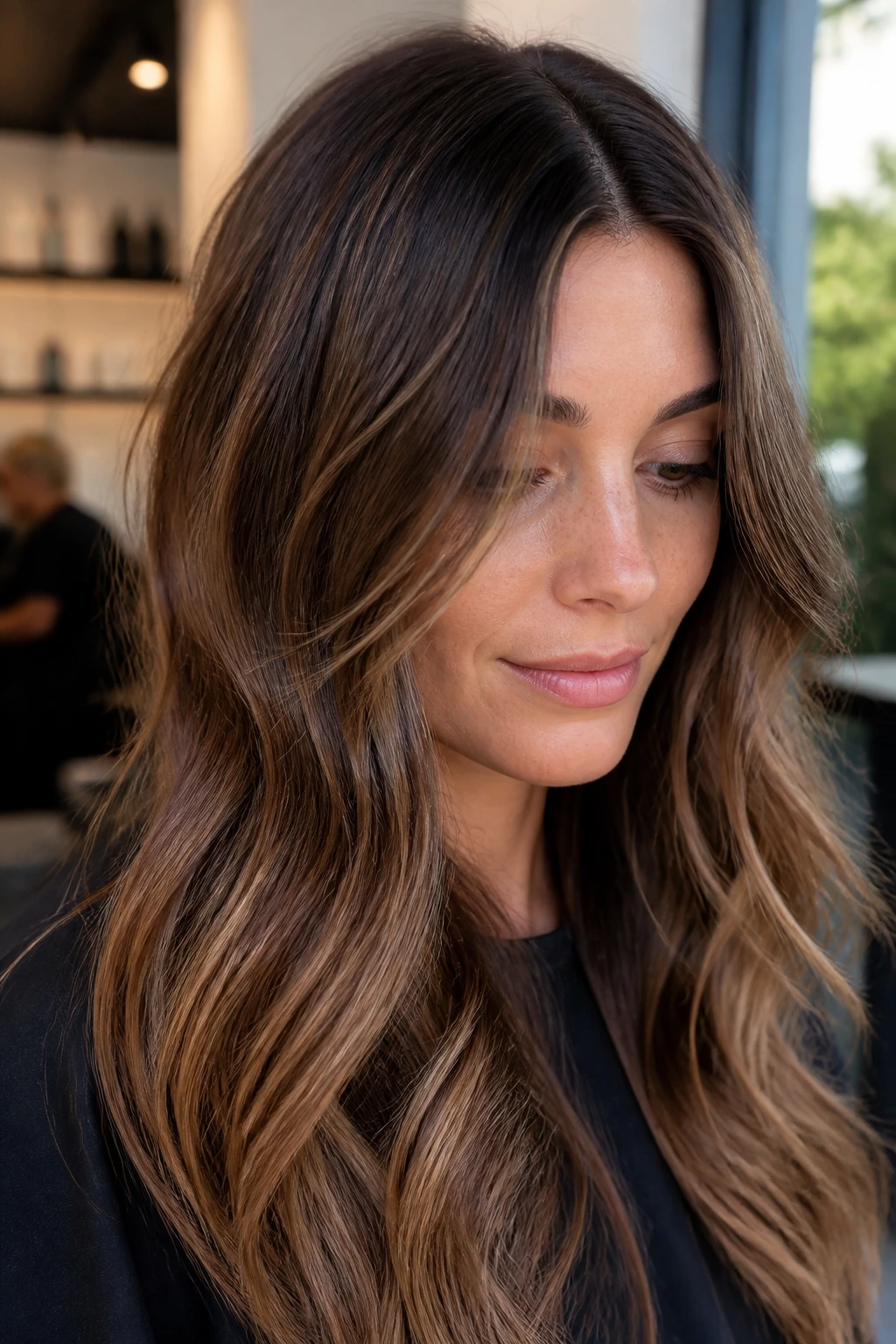
A shadow root makes everything calmer. Pair it with lived-in bronze babylights, and the color grows out in a way that feels soft from day one.
The highlights should be thin, scattered, and slightly irregular. That’s what gives the bronze its movement. The shadow root keeps the scalp area darker, which is a nice contrast for cool skin because it stops the warmth from sitting right against the face.
This is a good salon ask if you want dimension but don’t want to spend your life chasing the next appointment.
26. Fine Hair Bronze That Keeps Depth
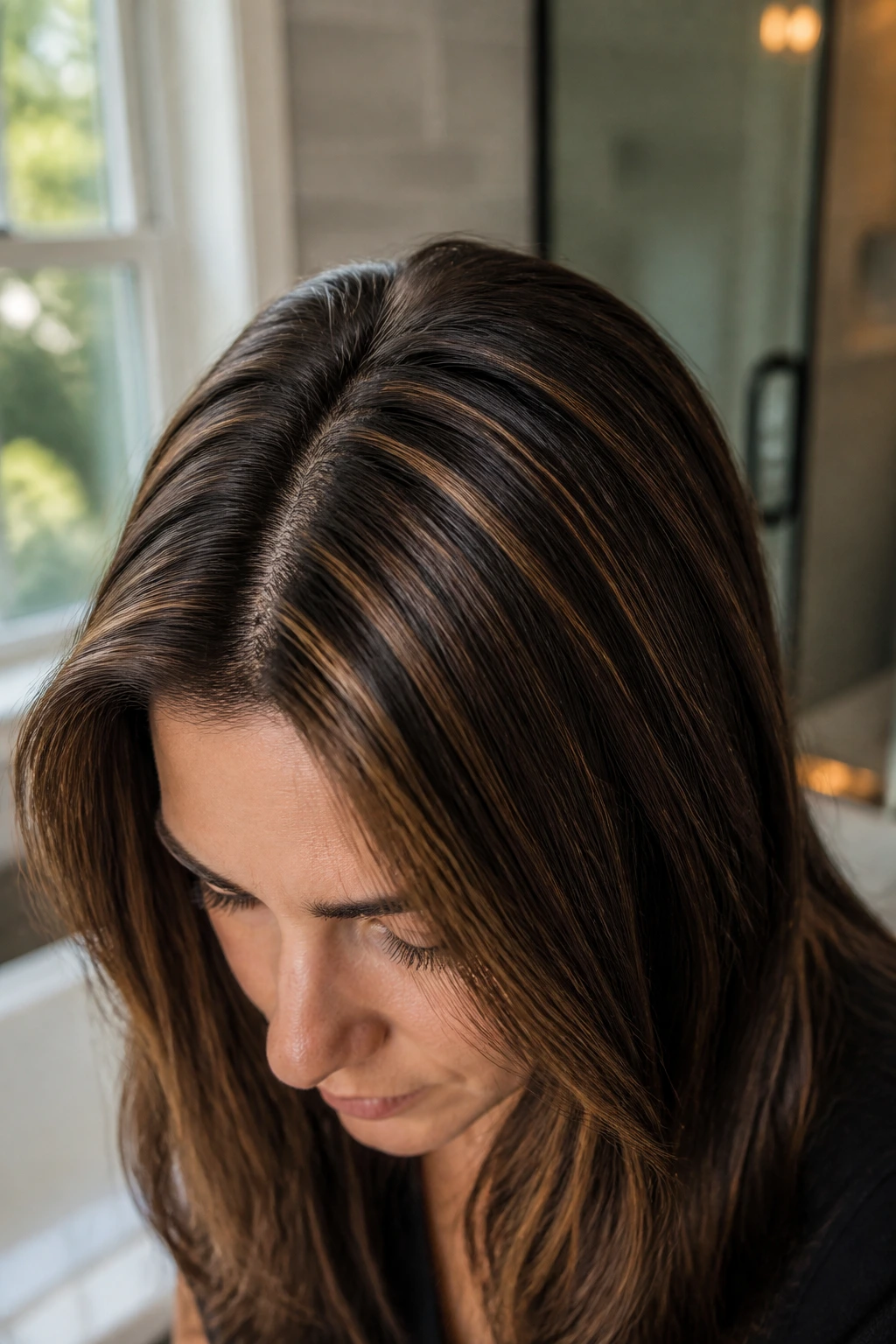
Fine hair can lose its shape when highlights get too pale. Bronze is kinder because it adds reflection without stripping out all the depth.
The best version uses fewer but more strategic pieces. Leave plenty of brunette base so the hair still looks full, then add bronze where the light hits naturally: the top layer, around the part, and through the mids. Too many highlights can make fine hair look airy in a bad way.
A gloss at the end helps a lot here. Fine hair often looks better with shine than with raw lift.
27. Curly Ringlets with Toned Bronze Ends
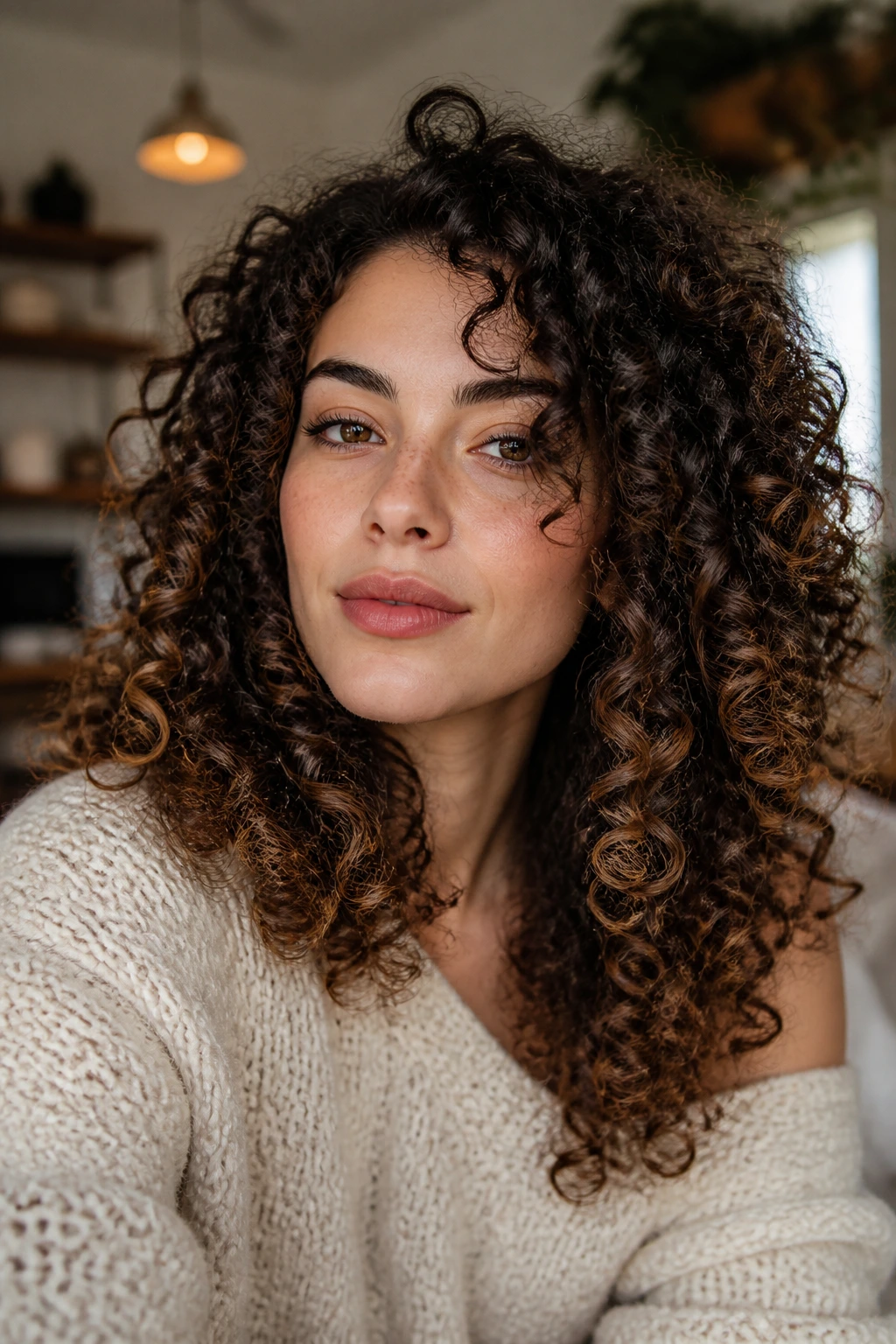
On curls, bronze reads differently at the ends than at the root. Toned ends can give ringlets a lighter, more defined finish without turning the whole curl pattern bright.
This is a useful move if your curls are dense and you want them to separate a little more. The bronze should sit on the outer curve of the curl, not inside every coil. That gives the color breathing room.
Hydration is non-negotiable here. Dry bronze on curls can look rough fast, while moisturized curls make the same shade look soft and dimensional.
28. Bronze Pixie Crop with Soft Edge
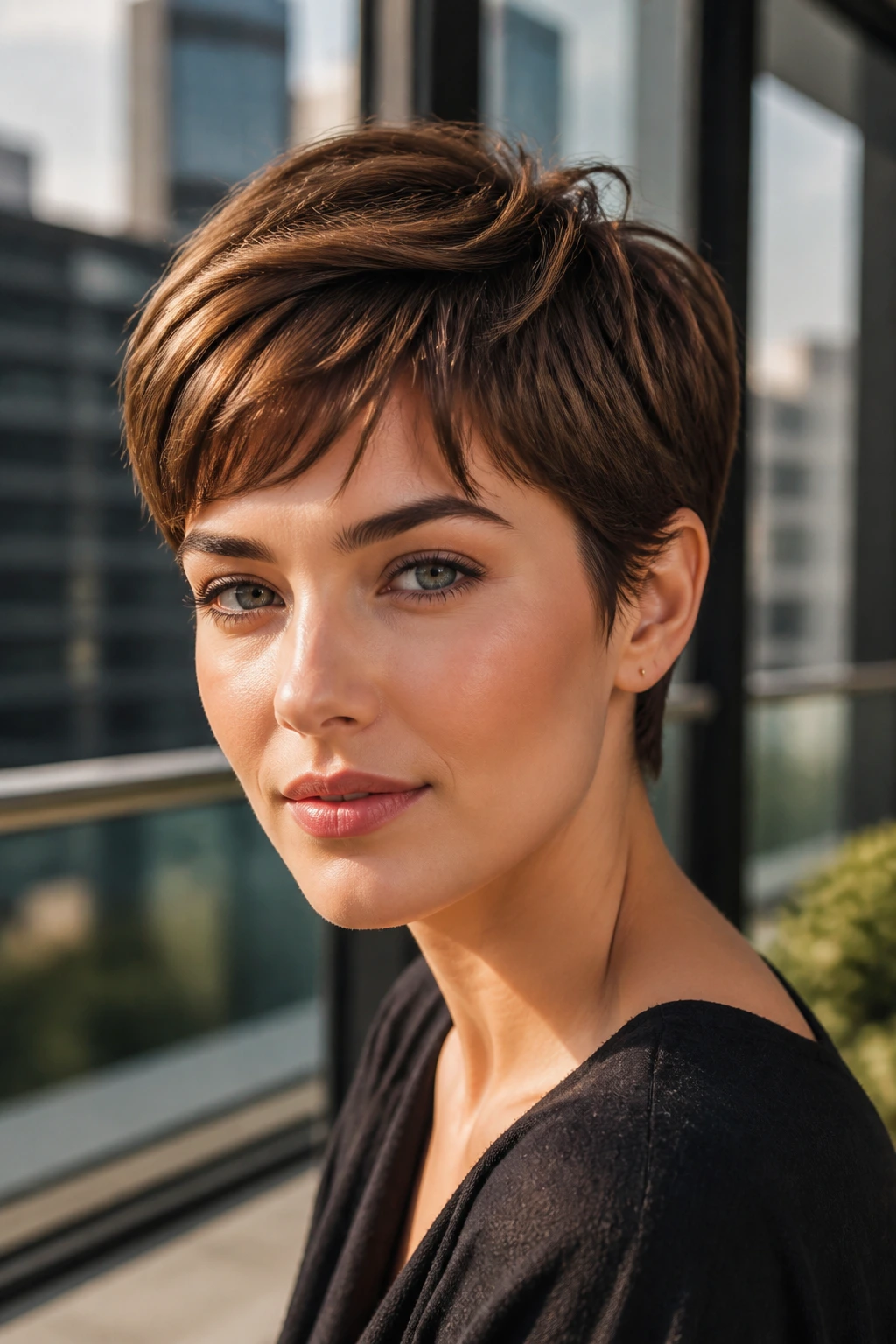
Short hair deserves dimension too. A bronze pixie crop with soft edge highlights can make the texture pop around the temples, crown, and fringe without turning the cut busy.
Because the haircut is short, the bronze has to be deliberate. A few tiny pieces at the front, some soft lightness at the top, and a slightly deeper brown at the sides keeps the shape clean. That’s enough.
This is a great option if you want cool-bronze color but hate long maintenance routines. The grow-out stays easy, and the haircut does most of the visual work.
Why Brown Bronze Looks Better Than Copper on Cool Undertones
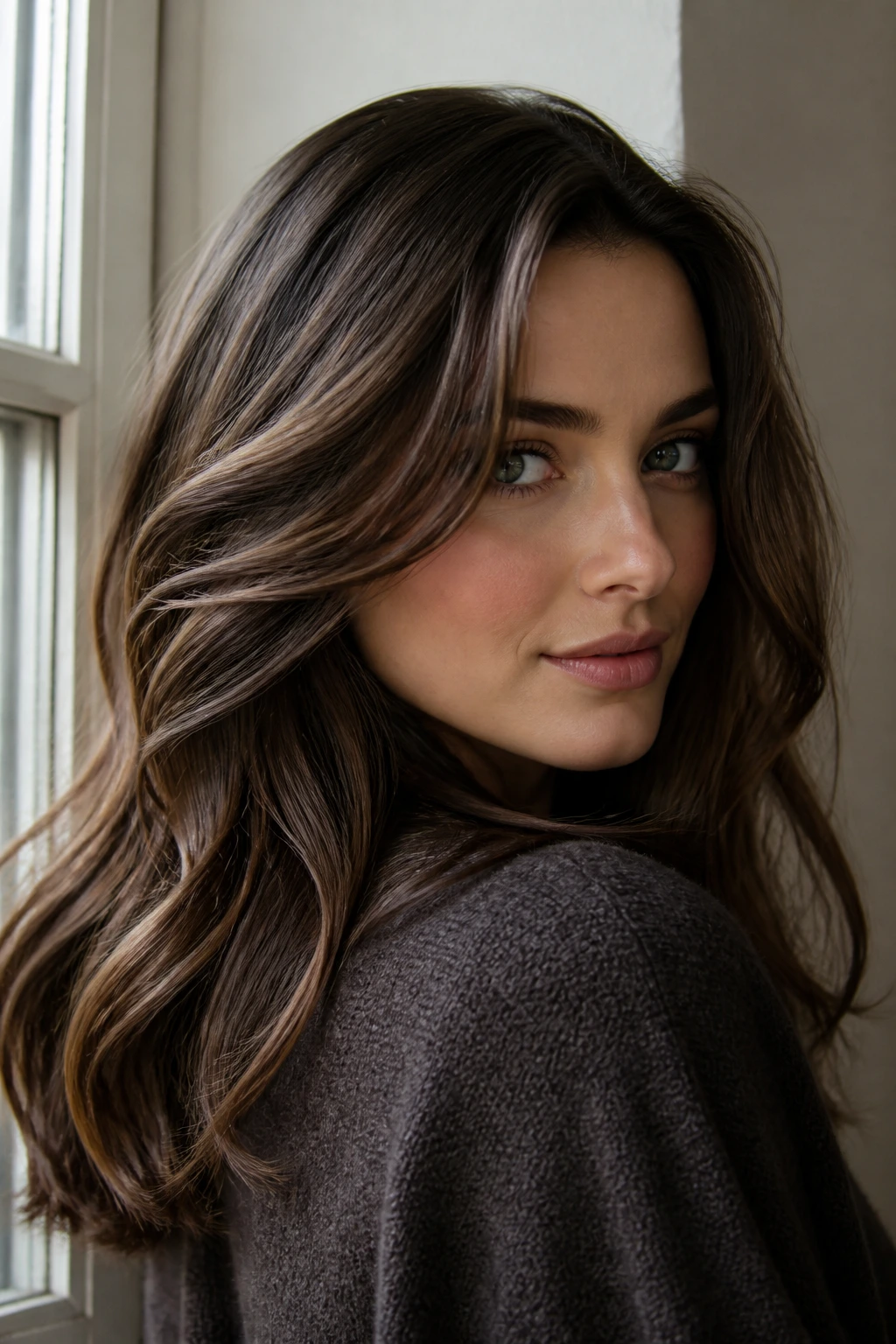
The difference between flattering bronze and orange bronze is smaller than people think, but your skin will notice it immediately. Cool undertones usually look better when the hair has brown depth first and warmth second. That means the highlights should feel grounded, not fiery.
Copper throws heat straight at the face. Brown bronze reflects light back more softly. The result is less contrast with pink or blue skin, which keeps the complexion from going red or washed out. If you wear silver jewelry, charcoal clothes, mauve lipstick, or a cool red lip, the right bronze will sit beside those colors without argument.
There’s also a practical side. Cooler bronze shades are easier to stretch between appointments because they fade toward beige-brown instead of neon gold. That matters once your hair starts seeing shampoo, sun, and heat styling. The shade still changes, but it changes in a usable direction.
What to Bring to a Color Appointment
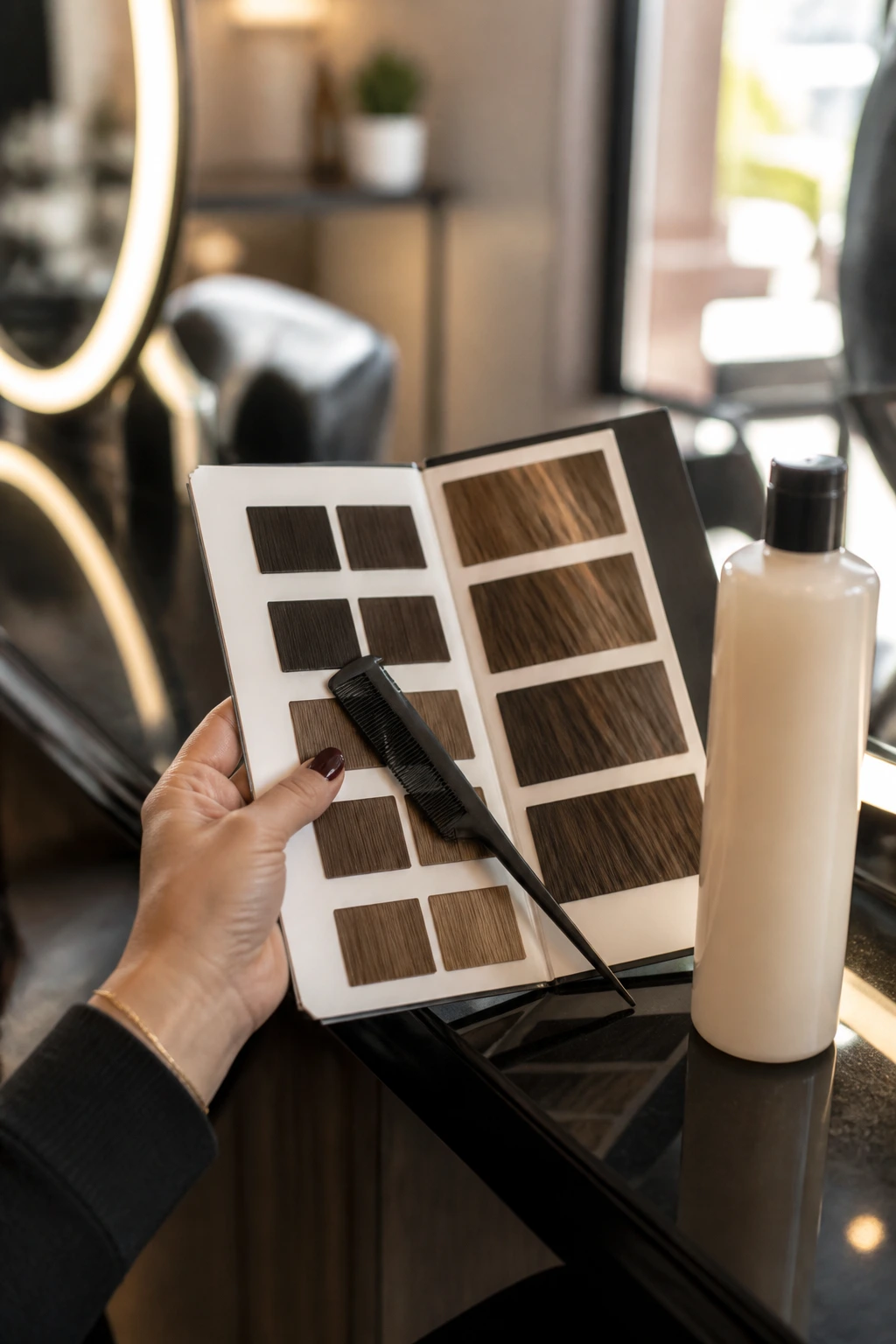
A photo helps, but not just any photo. Bring two or three images that show the same bronze family from different lighting angles, because bronze shifts a lot between bathroom light, daylight, and a camera flash.
- Reference photos: Bring examples with cool-brown bronze, not copper or golden caramel. One good photo in daylight is worth five filtered ones.
- Section clips: Handy if you’re discussing placement on the spot, especially for face-framing pieces or peekaboo panels.
- A tail comb: Useful for showing exactly where you want brightness around the part or hairline.
- Bond repair treatment: If lightening is involved, ask whether the salon uses a bond-building additive or recommends a take-home formula.
- Color-safe shampoo and conditioner: You’ll need them anyway, and it helps to hear what your colorist prefers before you leave the chair.
- Heat protectant: Bronze shows shine best when the hair is protected from the flat iron and curling wand.
- A clear or smoky gloss swatch note: If your hair pulls warm, ask for a gloss that cools it down a notch rather than adding more warmth.
One thing I’d say bluntly: don’t walk in asking for “just some bronze.” That phrase is too loose. Bronze has a dozen personalities, and the wrong one can look cheap in ten minutes.
Smart Shade-Picking and Consultation Tips
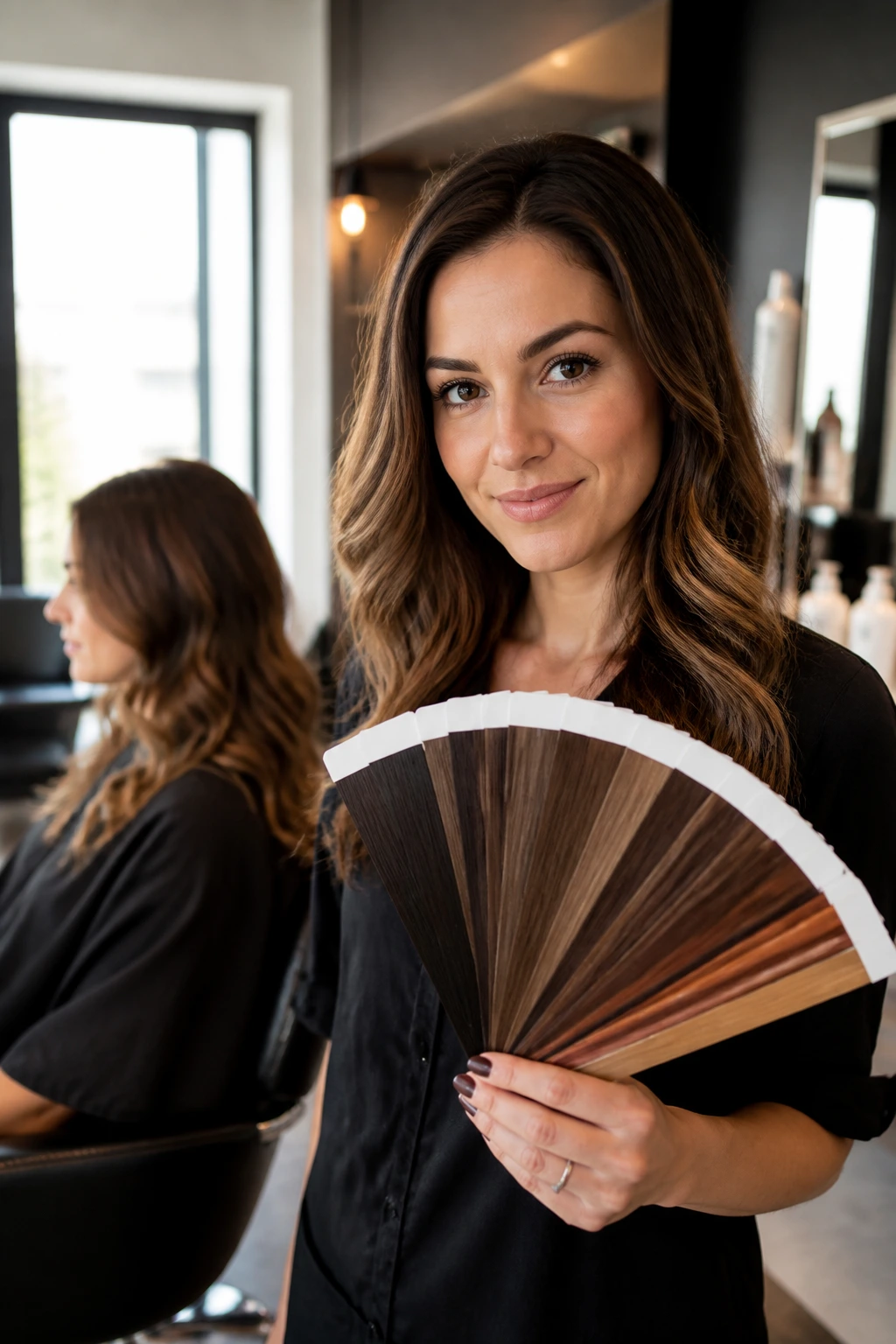
Start with your base level. A level 4 espresso brunette needs a different bronze than a level 6 medium brown. If your hair is darker, the highlights may need foils or foilyage to lift enough for the bronze to show. If your hair is already lighter, a gloss or low-volume tonal service may be enough.
Say the words smoky, muted, mushroom, cocoa, ash, or pewter when you talk about bronze. Those cues keep the colorist away from copper and into the cooler brown-bronze lane. If you love a shiny finish, ask for gloss, not warmth. That tiny distinction saves you from the orange trap.
Also talk about upkeep. Babylights, shadow roots, and balayage grow out differently, and the salon plan should match your tolerance for appointments. If you want a low-maintenance look, say so early. If you want brightness around the face and don’t care about a more obvious line, that changes the map.
How to Wear and Style the Color
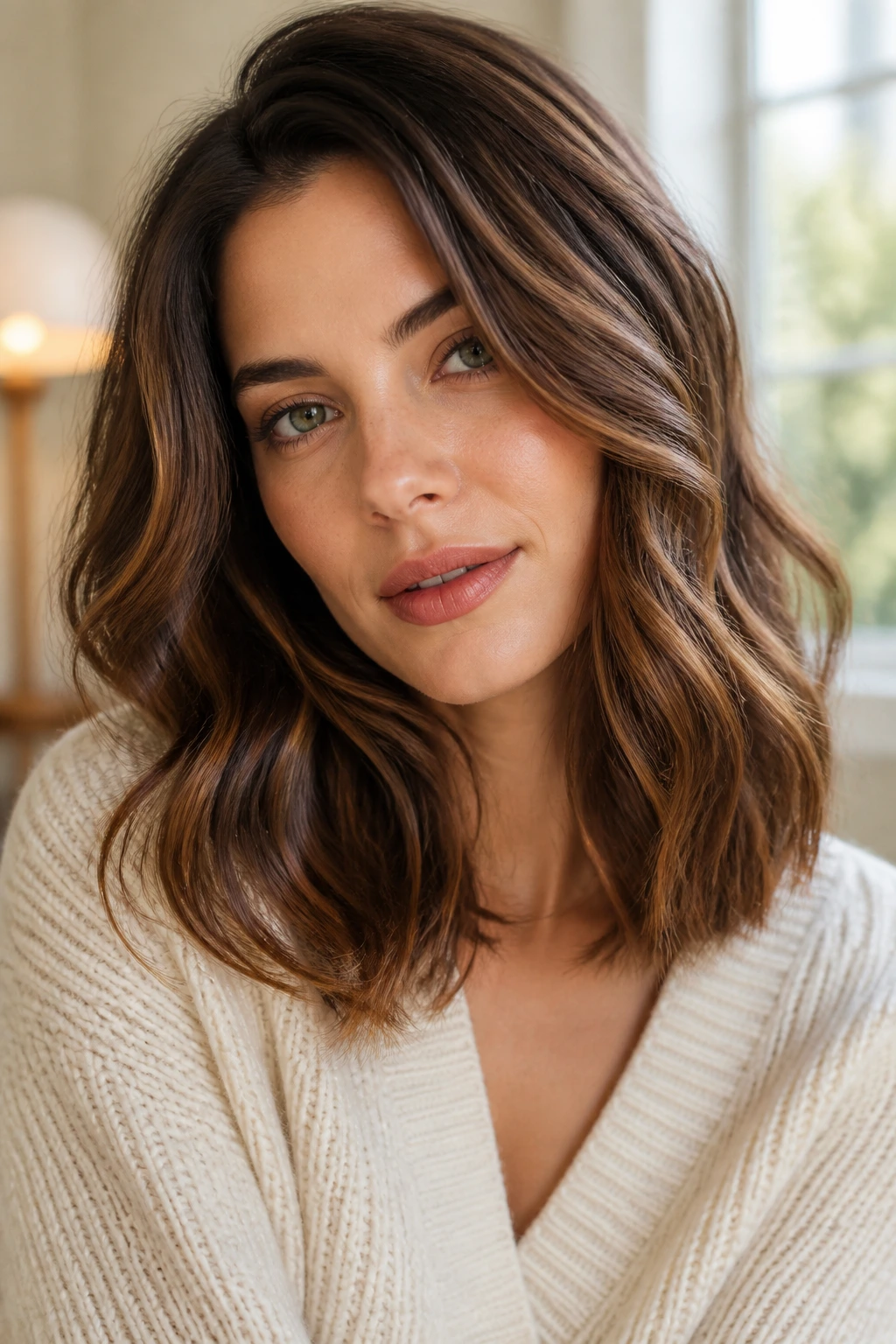
Presentation: Loose bends show bronze ribbons best. Straight hair shows off money pieces, while a round-brush blowout makes the whole head look glossy and controlled. If you want the highlights to read cooler, a side part or soft center part works better than a flat, severe part.
Accompaniments: Pair the hair with taupe eye shadow, berry blush, soft rose lips, and silver hoops. Charcoal, navy, black, and deep plum clothing usually flatter bronze on cool skin more than beige or mustard.
Portions: If you want subtle, keep the bronze concentrated in the front sections and upper layers. If you want stronger contrast, carry it through the mids and ends, but stop short of a light, full-head blonde effect.
Beverage Pairing: Fine, I’ll make this useful rather than silly: a cool-toned bronze reads best next to other cool things. Think black glasses, silver clips, a slate sweater, or a muted scarf—not bright orange lipstick, pumpkin knits, or anything that pushes the whole look warm.
Extra Tone Boosters and Personal Tweaks
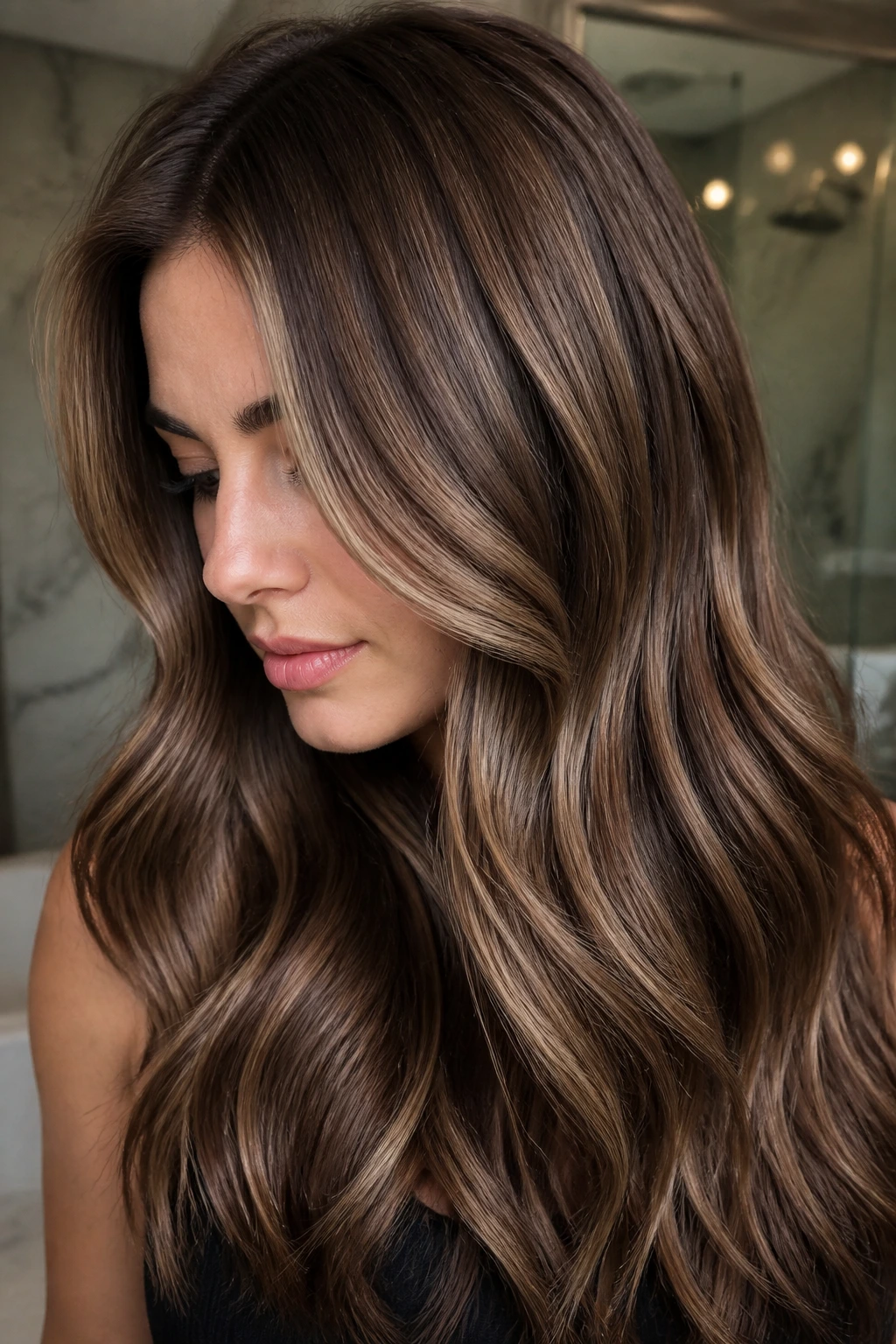
Tone Enhancement: Ask for a gloss that sits a half-shade cooler than the highlights themselves. That stops the bronze from drifting gold after the first few washes.
Customization: If you like more movement, add one money piece near the front and keep the rest as ribbons. If you prefer softness, mix bronze babylights with deeper brown lowlights for a more mottled, natural finish.
Serving Suggestions: Wear the color with a slightly textured finish. A bend through the mids, a tucked-behind-the-ear side, or a loose clip-up shows the dimension better than stiff, over-polished hair.
Make-It-Yours: Fine hair usually needs fewer pieces and more gloss. Curly hair benefits from hand-painted ribbons that follow the pattern. Gray blending wants delicate weaves around the temples and part, while a bolder brunette can handle stronger foilyage at the ends.
Maintenance, Toning, and Grow-Out
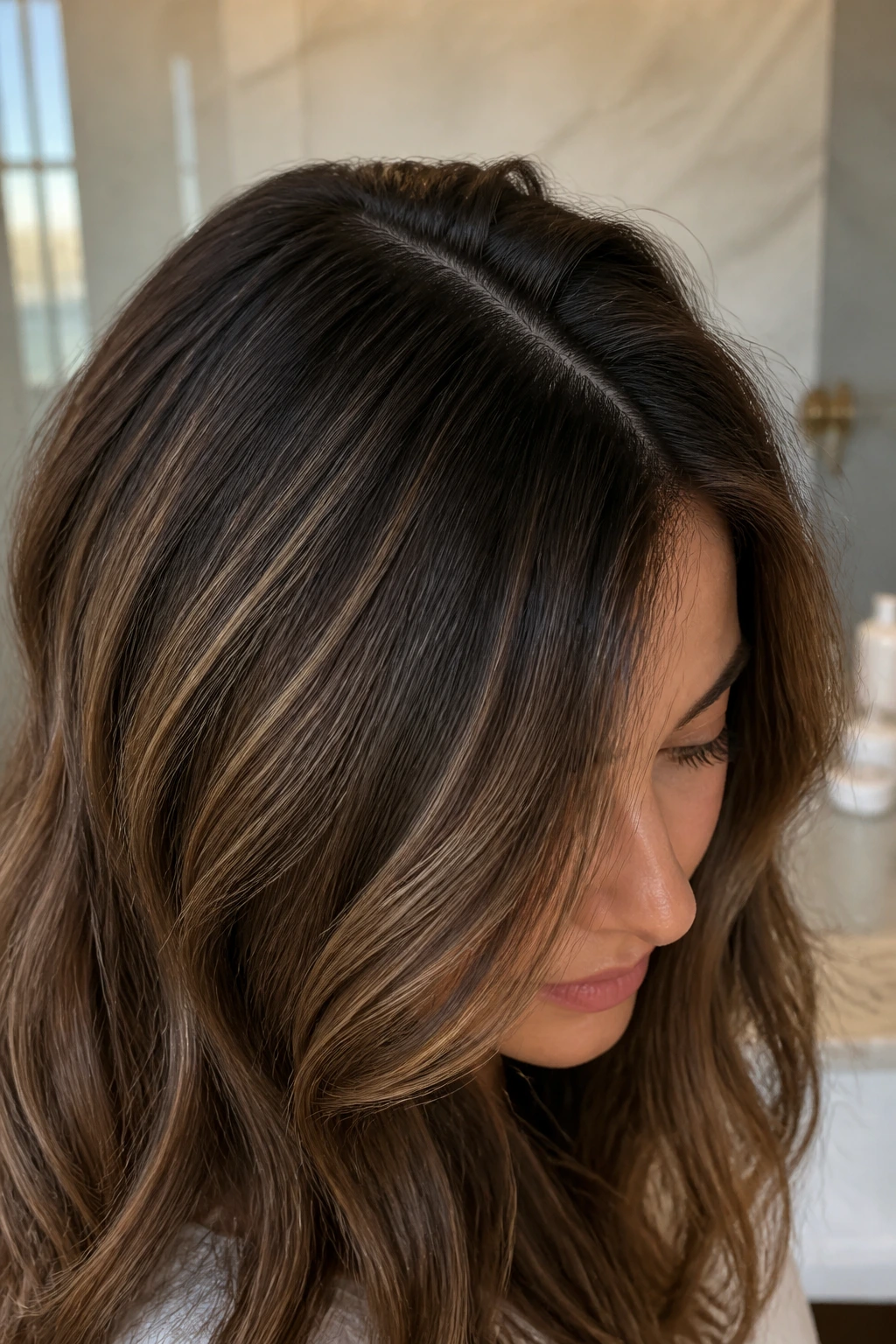
Brown bronze is easier than blonde, but it still needs a plan. Wash two or three times a week if you can, and use sulfate-free shampoo so the bronze doesn’t bleed out too fast. If your color leans a touch warm after a few washes, a blue or blue-violet shampoo once every one or two weeks can keep it from turning too orange. Don’t overdo that, though. Too much toning can make bronze look dull and flat.
If you had highlights or lightening done, give the hair a bond mask once a week for the first month, then every other week after that if the ends feel dry. Heat protectant matters every single time you use a blow dryer, wand, or flat iron. Bronze reflects best on smooth cuticle layers, and fried ends swallow light.
Gloss services usually hold for around six to eight weeks, depending on porosity and washing habits. Root touch-ups can stretch to eight to twelve weeks if you chose a rooted or balayage finish. If your pieces are concentrated around the face, you may want a mini refresh sooner because those sections fade first.
Variations and Adaptations to Try
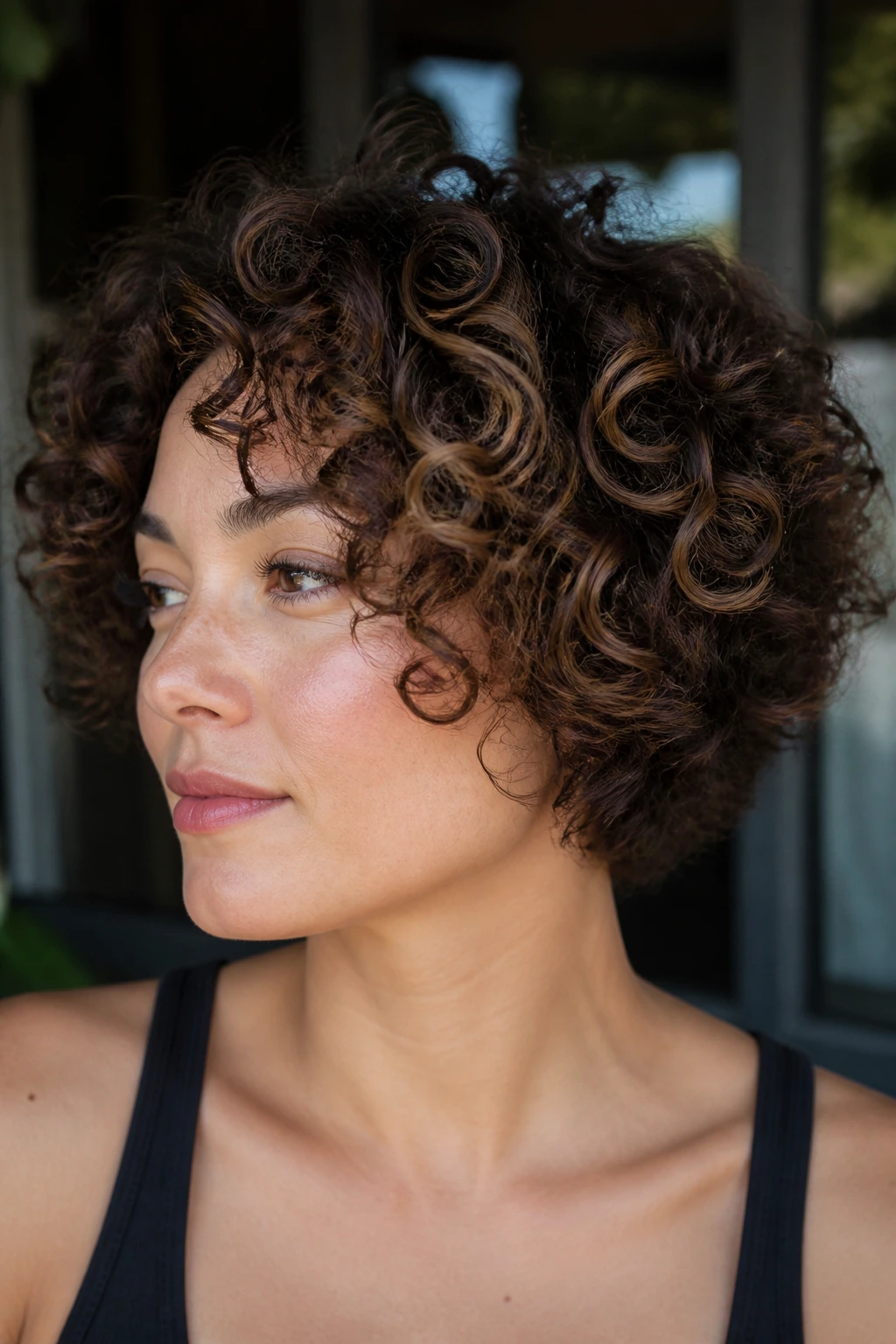
Smoky Bronze Melt: Blend a dark root into bronze mids and cocoa ends for a soft gradient that grows out with almost no hard line. It’s the best option if you hate obvious salon stripes.
Mushroom Bronze Ribboning: Start with a mushroom brown base and weave in thin bronze ribbons for a cooler, more earthy finish. This version sits especially well on fair cool skin and silver jewelry.
Bronze Money Piece Pop: Keep the rest of the head subdued and brighten only the front panels. It gives you the most face-framing payoff with the least overall commitment.
Curly Halo Bronze: Place the bronze around the outer crown and front curls so the light catches every coil. This works best when you want movement without over-lightening the whole head.
Soft Gray-Blending Bronze: Mix fine bronze weaves with your natural brunette so grays disappear into the pattern. It’s a good bridge look if you’re not ready for full coverage but don’t want obvious silver streaks either.
Bronzed Pixie Texture: Use tiny, strategic pieces through a short crop to show off texture. Short hair can handle more contrast than people think, but it needs precision or it looks busy.
Common Mistakes to Avoid
-
Choosing copper instead of bronze. The symptom is a bright orange cast around the face, especially in daylight. The fix is to ask for smoky, ash-leaning bronze with brown depth at the root.
-
Lifting the hair too high. If the highlights go too pale, cool skin can look washed out and the bronze turns brassy fast. Stop at a muted bronze level rather than chasing blonde.
-
Placing highlights too evenly. Uniform strips make the color look dated and chunky. Use babylights, ribbons, or contour pieces so the brown stays dimensional.
-
Skipping a gloss. Raw highlight lift often looks too sharp on cool undertones. A tonal gloss softens the shift and gives the bronze that polished finish.
-
Using purple shampoo like it’s a cure-all. Purple can dull bronze and leave it grayish. Blue-toned products are usually the better match when the issue is orange, and even then, use them sparingly.
Frequently Asked Questions
Are brown bronze highlights good for fair cool skin?
Yes, if the bronze stays smoky and brown-heavy. Fair cool skin usually looks best with babylights, face-framing pieces, or a soft gloss rather than thick, bright streaks.
What’s the difference between bronze and caramel on hair?
Caramel usually leans sweeter and warmer, with more gold. Bronze is deeper and more metallic-looking, which makes it easier to cool down for pink or blue undertones.
Should I ask for balayage or foils?
Balayage gives a softer, lived-in effect, while foils give more lift and stronger brightness. If your base is dark and you want the bronze to really show, foils or foilyage may be necessary.
Can I get this look on dark brown or almost-black hair?
Yes, but the hair may need careful lightening first or the bronze will disappear. On very dark hair, the safest route is usually subtle contouring, a money piece, or a rooted melt.
How often will I need to tone brown bronze highlights?
Gloss or toner refreshes usually make sense every six to eight weeks, though some people stretch longer if the base is close to the target shade. If the color starts pulling orange, schedule a refresh before it gets too far off.
What if my bronze turns brassy?
Use a blue-toned shampoo sparingly, then book a gloss that cools the warmth instead of adding more lift. If the brass is strong, the color may need professional toning, not just a home product.
Do bronze highlights work on curly hair?
They do, and often better than on straight hair, because curls break the color into little flashes. The key is to place the bronze where the curls naturally move, not in rigid stripes.
Can bronze help blend gray hair?
Yes, especially when the highlights are fine and mixed with lowlights. Bronze doesn’t erase gray the way permanent color can, but it softens the contrast so the silver threads look intentional.
A Bronze That Stays Cool
The best brown bronze for cool skin doesn’t look freshly poured. It looks brushed, softened, lived-in. That’s the version that flatters instead of fighting, and it’s why the placement, base depth, and gloss matter more than the label on the box.
If you take one thing from all 28 looks, make it this: keep the bronze smoky, keep the brown in charge, and keep the orange out of the room. Do that, and the color will sit next to your skin the way good jewelry does—present, flattering, and never trying too hard.