



Blonde long shag haircuts for oval faces have a useful trick up their sleeve: they can look loose and air-dried, but the shape still sits on the face with intent. That balance is hard to fake. Too many layered cuts either collapse into limp lengths or flare out around the crown like a helmet. The good ones move, lift, and skim the cheekbones without stealing the clean proportions that make an oval face so easy to frame.
That’s why these cuts keep coming back in salons: they don’t need to fight the face shape. An oval face already gives you room to play, which means the haircut can spend its energy on texture, fringe placement, and blonde dimension instead of trying to “correct” anything. A long shag with the right front pieces can sharpen cheekbones, soften a forehead, or add width where the face needs a little more presence. And because blonde shows every layer, the cut reads more clearly than it would in a single dark shade.
The bad versions are easy to spot. The top gets too short, the ends get too thin, and suddenly the whole head looks puffed at the crown and stringy at the bottom. The better versions keep weight in the perimeter, use the fringe like a frame rather than a curtain wall, and let the color do some of the work. A rooty beige blonde, a buttery ribbon highlight, or a sunlit balayage can make the layers look more expensive without making them look done to death.
Why These Shags Sit So Well on Oval Faces
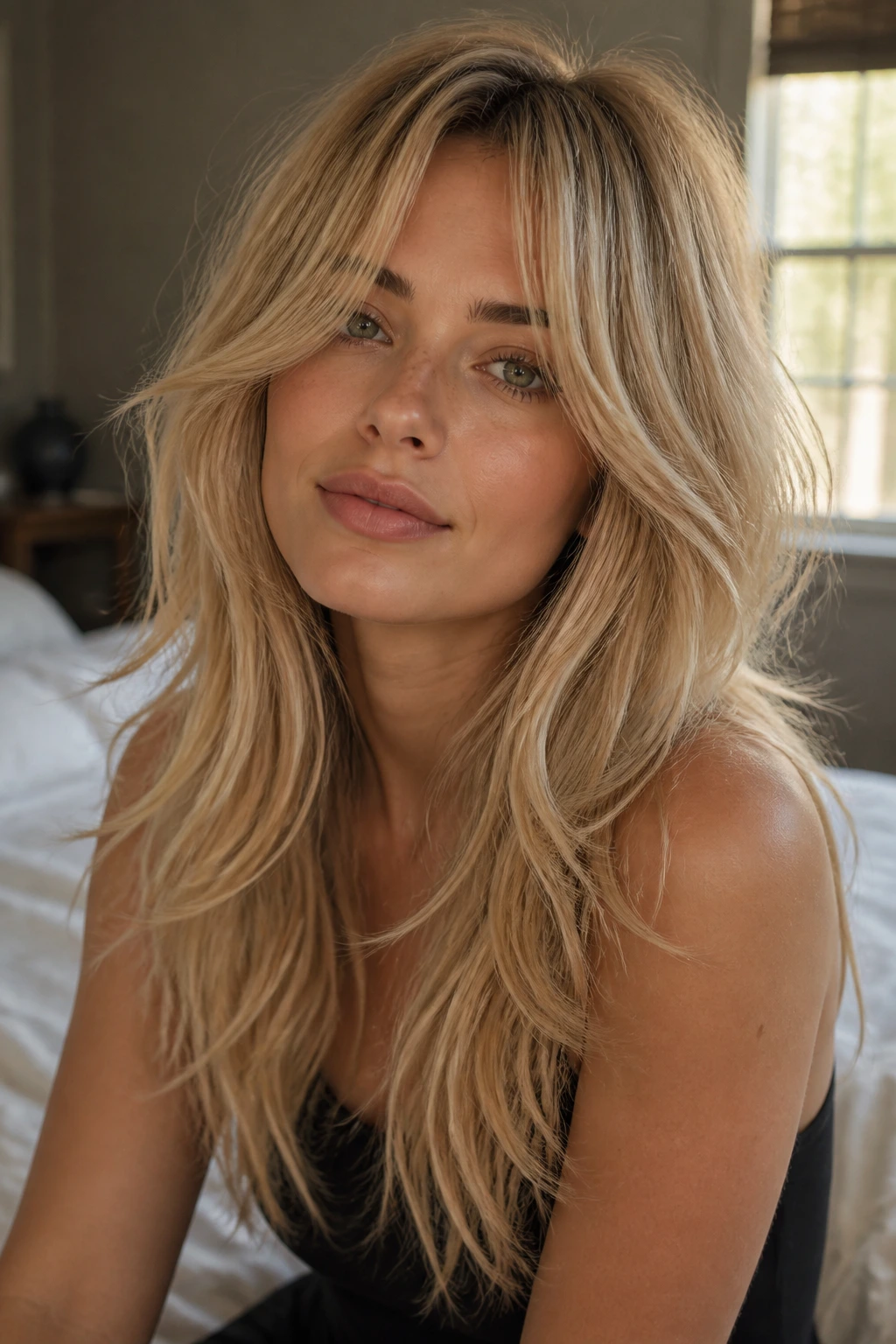
Balance is the secret ingredient here. An oval face doesn’t need heavy shaping, so the haircut can work with the face instead of battling it. Long shag layers can sit at the cheekbone, lip, or jaw and still look intentional because the proportions underneath are already stable.
The blonde tone matters more than people think. Lightness around the front can widen the face a touch, while a deeper root keeps the top from looking flat and over-lifted. If the blonde is all one note, the layer pattern disappears. Add a little dimension and the whole cut wakes up.
The fringe is doing real work. Curtain bangs, bottleneck bangs, and long wispy fringe all shorten the forehead just enough without closing the face in. On an oval shape, that’s usually enough. No need to overbuild the front.
- Layer placement: Keep the shortest face-framing pieces around cheekbone level if you want softness without extra width.
- Perimeter weight: Leave enough length at the ends so the haircut still swings instead of fraying.
- Color placement: Ask for lighter ribbons where the layers move, not just around the hairline.
- Texture level: A little bend is better than rigid curl or poker-straight hair; both extremes flatten the shape.
1. Sunlit Curtain Shag with Feathered Ends
This is the one I’d hand to someone who wants movement without drama. The curtain bangs part near the middle, slip past the eyebrows, and melt into feathered layers that start around the cheekbone. On an oval face, that keeps the center open while giving the sides enough softness to feel framed rather than exposed.
What to Ask For
Ask for soft curtain bangs that hit somewhere between the brow and the cheekbone, then ask your stylist to keep the longest face-framing pieces at the collarbone. The feathers should be light, not shredded. If the ends are too wispy, the whole cut loses its spine.
A beige or buttery blonde works especially well because it shows the bends without looking stripy. I like a root shadow one shade deeper than the mids here. It makes the layers look more expensive and less like they were carved with a ruler.
- Ask for layers that start below the eye line.
- Keep the ends blunt enough to hold weight.
- Style with a 1.25-inch curling iron, then brush the waves out.
2. Butter Blonde Razor Shag with Airy Fringe
Razor cutting changes the whole attitude of this look. Instead of chunky steps, you get a softer edge and a little swing through the ends. That matters on an oval face because the cut can stay narrow at the top and still feel full around the lower half.
The fringe should stay airy, almost see-through at the tips. Too much density in the front makes blonde hair look flat, and flat blonde hair can expose every blunt line in a bad way. A razor shag avoids that by breaking the shape just enough.
This version is best on hair that already has some bend or a little natural texture. Straight hair can wear it, but it needs a round brush or a bend from a wand to keep the layers from collapsing into one shape. I’d avoid going too short at the crown. The crown should lift, not spike.
3. Butterfly-Layer Blonde Shag
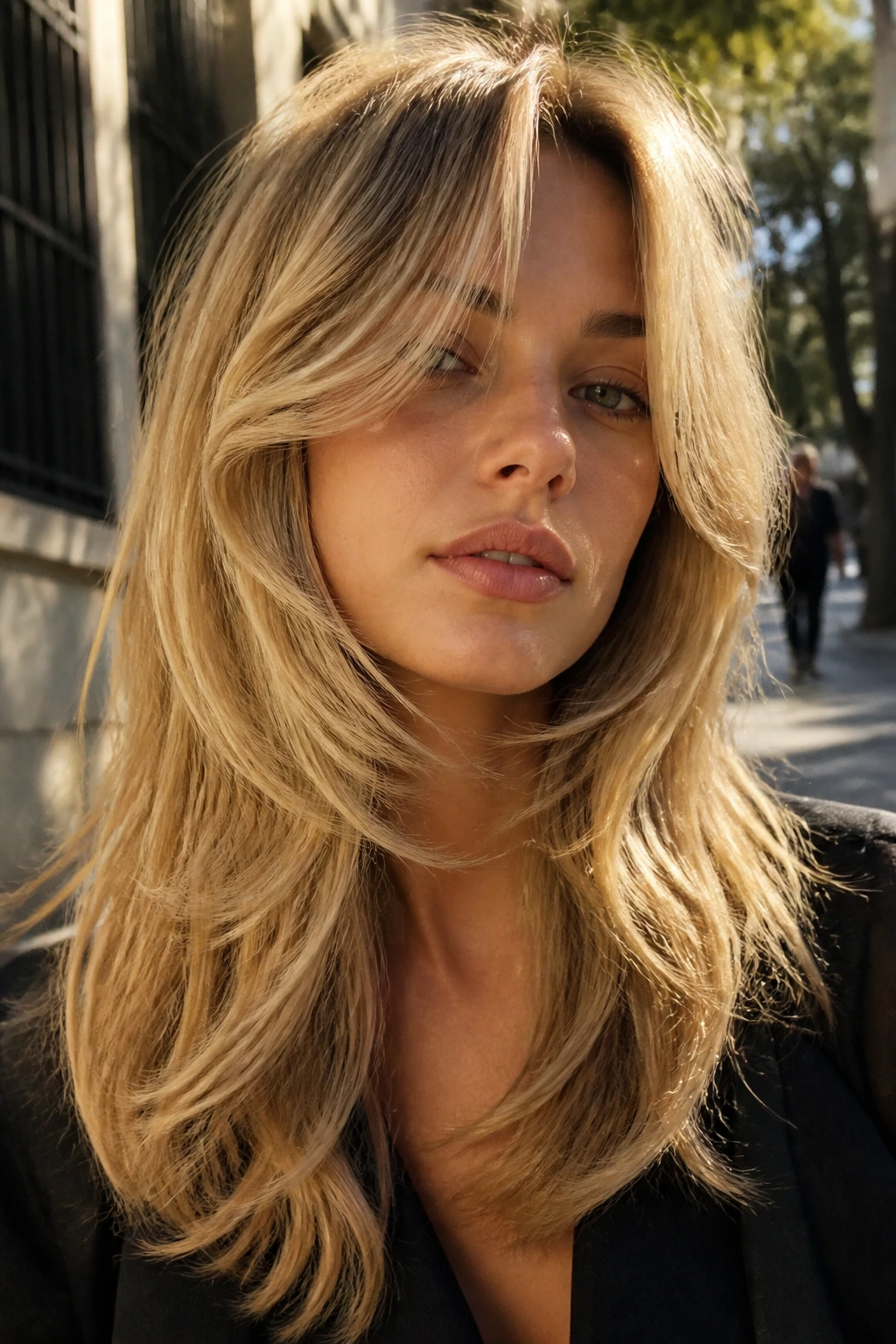
Why does this one keep showing up in long-shag conversations? Because it gives you the airy face-framing of a shag without giving up the bulk of the length. The butterfly layer sits high enough to create lift, then drops into longer pieces that keep the haircut from turning into a halo.
On an oval face, that placement is gold. The top stays open, the cheeks get a little framing, and the jawline still has room to breathe. If your face leans slightly longer within the oval family, ask for the shortest face pieces to stay near the cheekbone rather than the temple.
How It Wears
It’s a nice choice if you like to blow-dry with a round brush. The shortest layers bounce away from the face, which makes the whole cut look lighter. A cool beige blonde or soft champagne blonde helps the separation show up.
- Keep the internal layers soft, not aggressively thinned.
- Use a volumizing mousse at the roots.
- Bend the front away from the face for a lifted frame.
4. Honey Blonde Wolf Shag with Long Tails
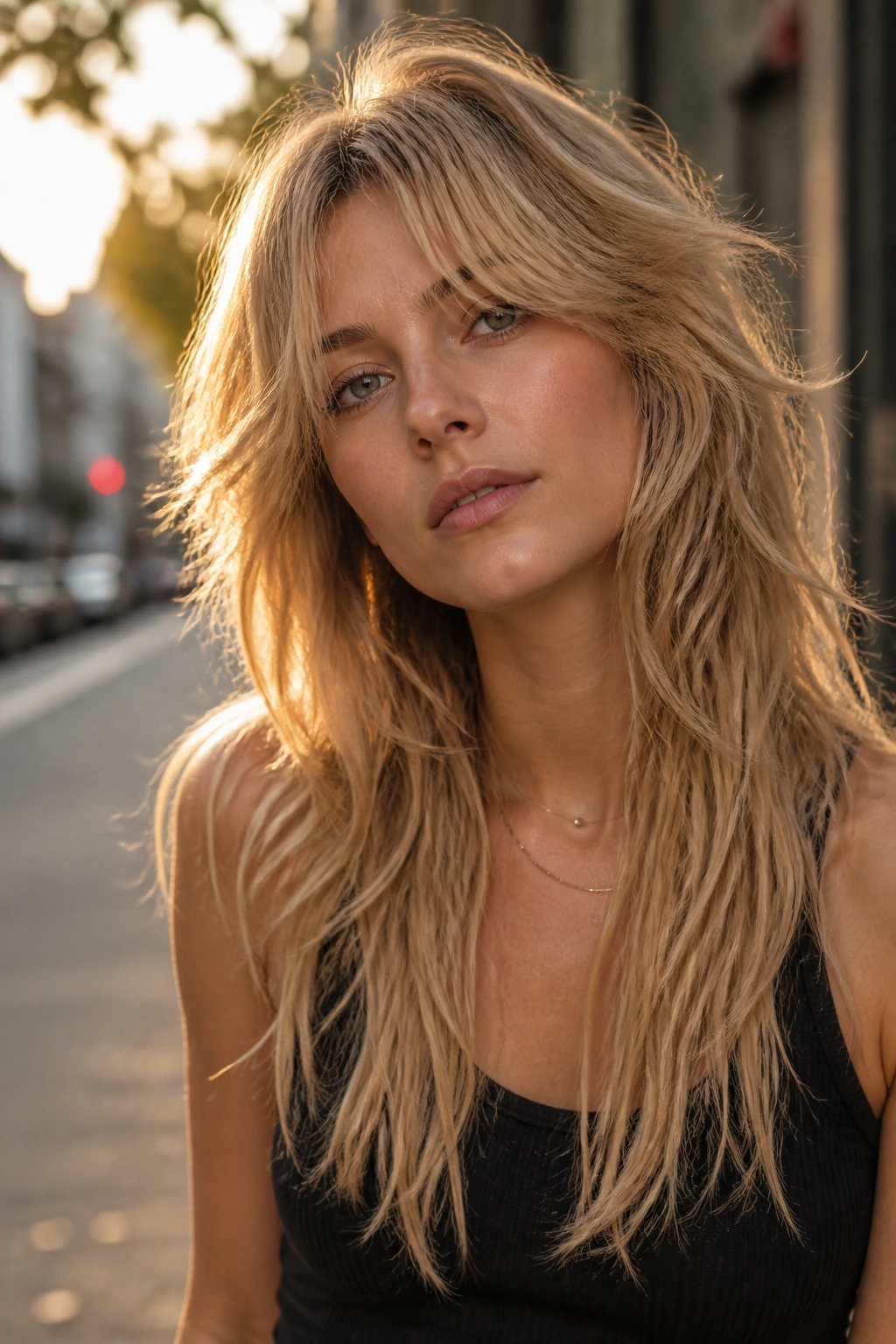
If you like a haircut that looks like it has some attitude even when you do almost nothing to it, this is the one. The crown carries a little more height, the middle has a messier texture, and the long tails keep the length intact. It sits between a shag and a wolf cut, which is exactly where a lot of people land when they want edge without a full chop.
Oval faces can wear the extra crown volume well, but there’s a catch: the sides need to stay mobile. If the layers at the cheeks are too puffed, the face can start to look broader than it is. Keep the face-framing pieces loose and let the bottom length stay heavy enough to pull the eye downward.
This looks especially good in honey blonde because the warmth softens the choppiness. Dark roots help too. They anchor the top, which keeps the style from floating away.
5. Platinum Piecey Shag with Broken Ends
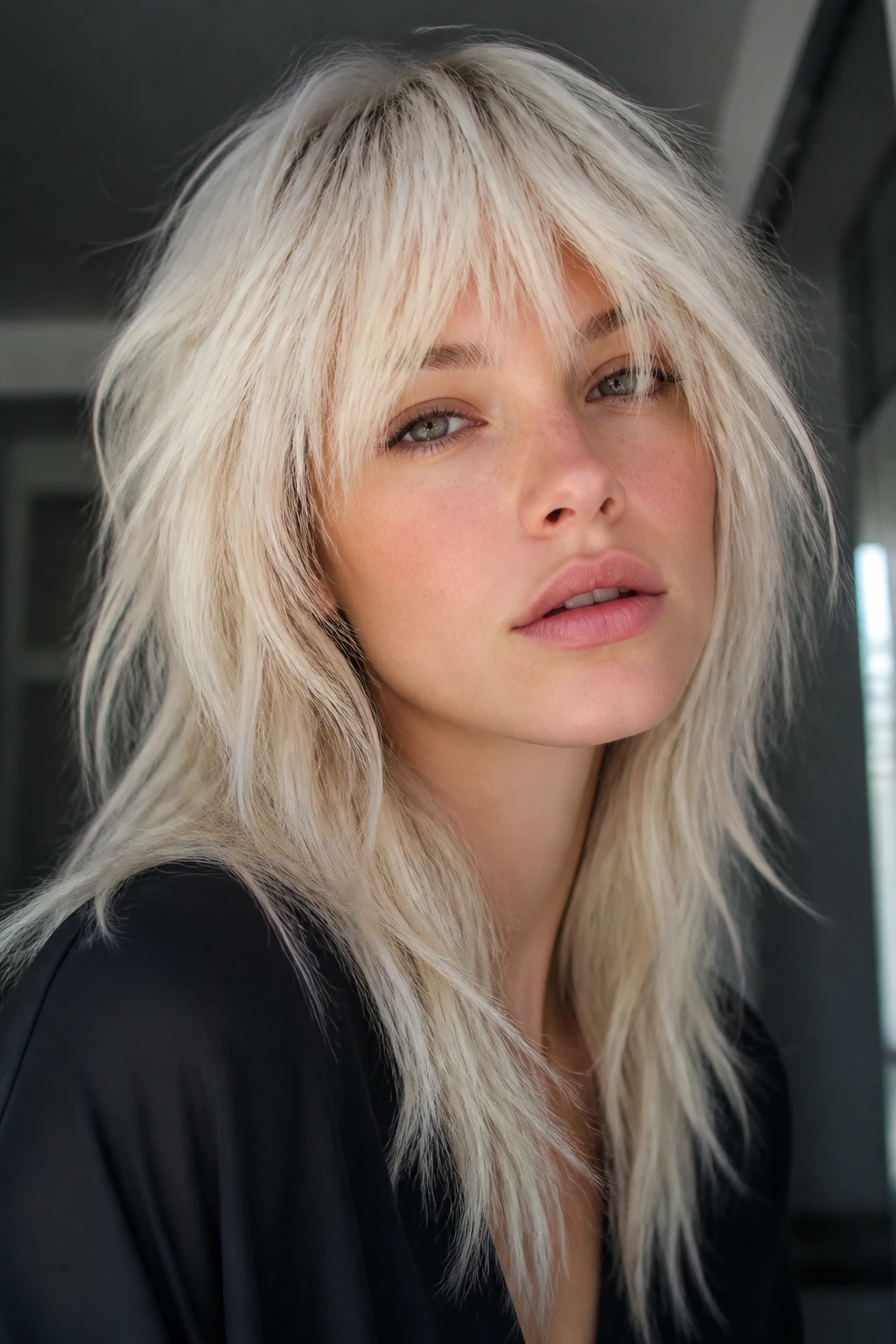
Platinum changes the whole conversation. Every layer shows, every split in the texture shows, and every blunt mistake gets magnified. That’s why the cut has to be cleaner than it looks. The broken ends are what make it interesting, but they still need a shape underneath.
On an oval face, piecey platinum can be striking because the brightness pulls attention forward while the cut keeps the face open. I’d keep the fringe long and separated, not heavy and blocky. A short, thick fringe in platinum can look harsh fast.
The best version of this cut has a slightly darker root and a few lighter pieces around the cheekbones. That contrast gives the style depth. Without it, platinum can flatten the face and make the layers disappear into one bright sheet.
6. Beige Blonde Soft Mullet with Swooped Bangs
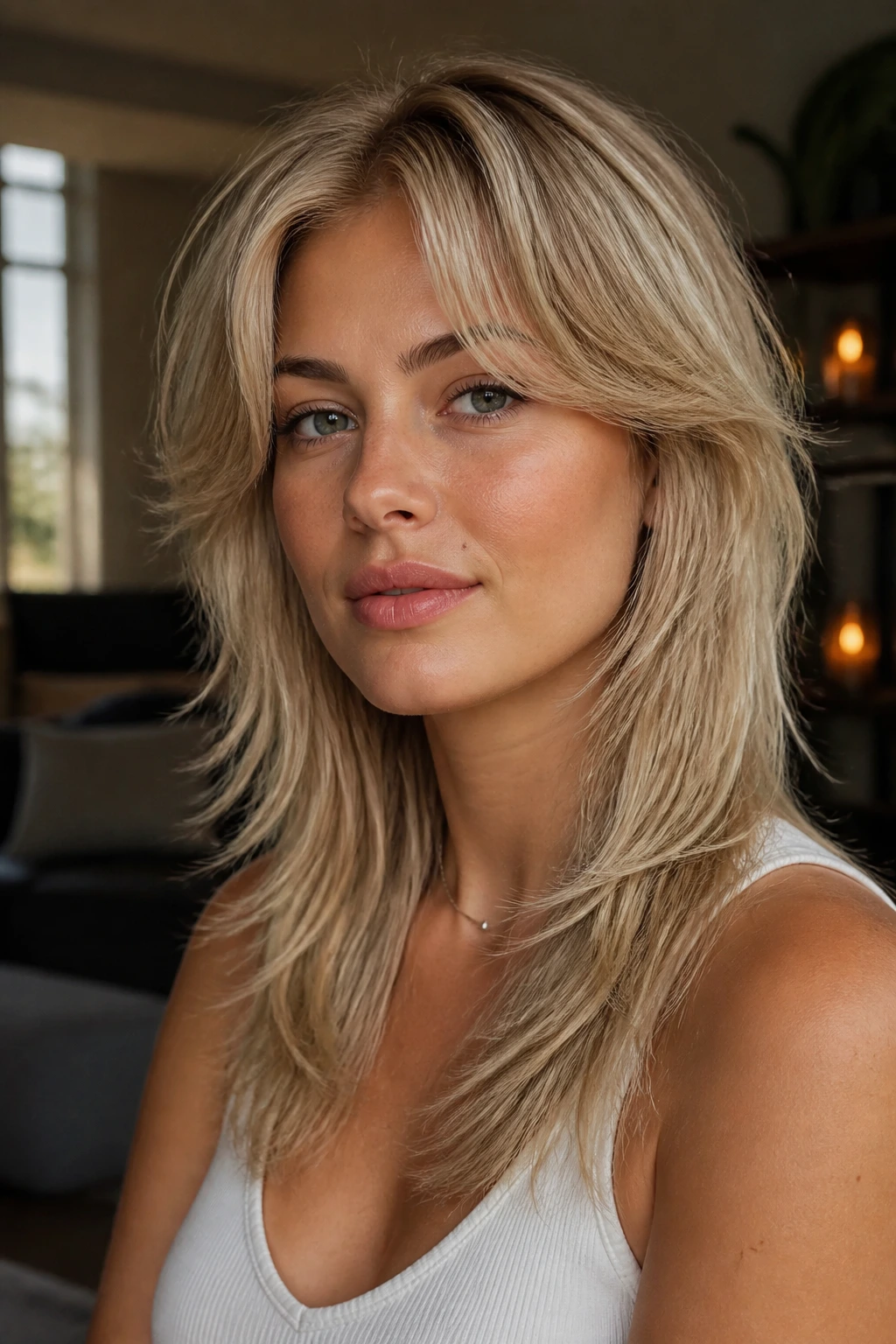
Compared with a classic shag, this version keeps a little more length in the back and a little more swing in the front. It has a soft mullet edge, but not the hard contrast people sometimes picture. The swooped bangs sweep away from the forehead, then fold into the sides instead of landing as a straight fringe.
That works on an oval face because the shape stays balanced. You get width around the cheek area, length through the back, and a front that doesn’t box the face in. If your features are fine or delicate, this is a smart move because it adds structure without making the haircut loud.
I’d ask for a beige blonde base with a muted root and very light front pieces. Too much brightness on the front can make the swoop look disconnected from the rest of the cut.
7. Golden Collarbone Shag with Bottleneck Bangs
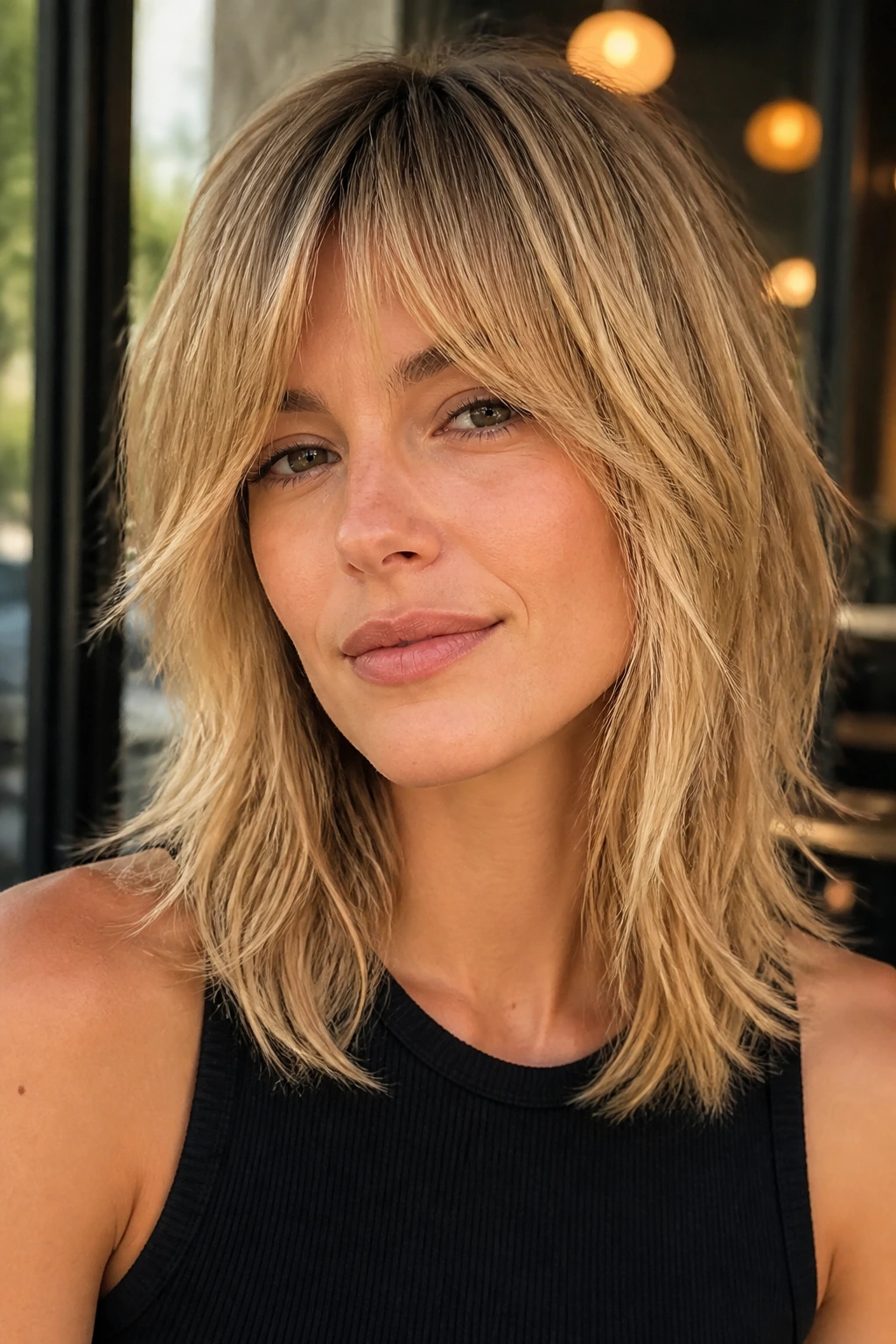
The Framing Trick
Bottleneck bangs are one of the easiest fringe choices for an oval face. They start narrower in the center, open up around the brows, then widen again near the cheekbones. That shape makes the forehead look a touch shorter without covering half the face.
This version of a long shag keeps the layers around the collarbone, which is where the cut gets its swing. Golden blonde is a smart color here because the warmth softens the layers and makes the whole style read sunny instead of choppy. If the hair is dense, ask for internal texture rather than heavy thinning.
What I’d Ask Your Stylist For
- A bottleneck fringe that can tuck behind the ears if you need it to.
- Collarbone-length face pieces that graze the jaw.
- A warm golden blonde with subtle highlight ribbons through the mids.
A quick round-brush bend at the front is enough. You do not need a polished blowout every time. A little lift at the root and a soft curve at the ends is enough to keep this cut alive.
8. Strawberry Blonde Long Shag with Face Curls
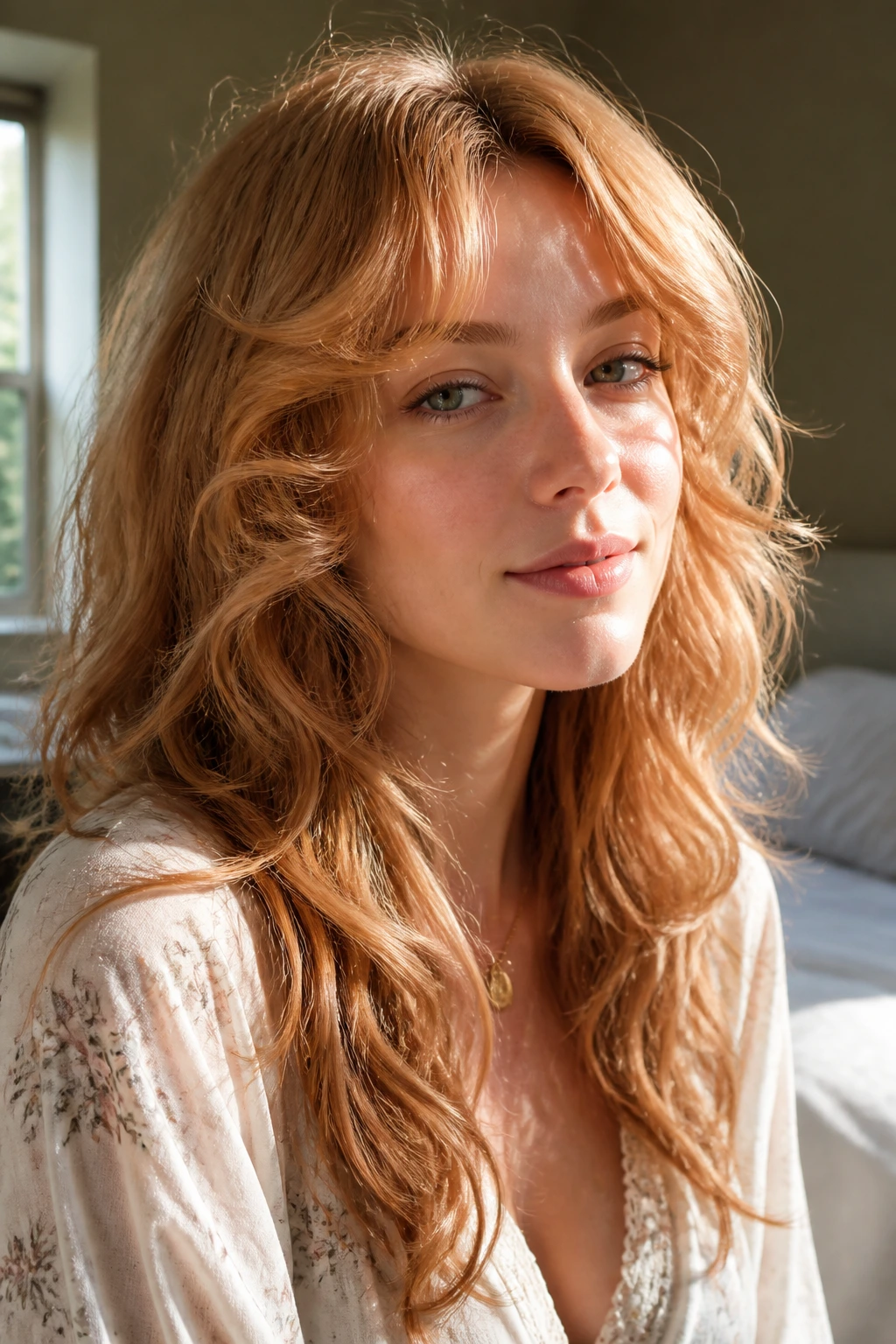
This one has a gentler mood. Strawberry blonde carries warmth without going copper-heavy, and that warmth softens the edges of a shag in a way cooler blondes can’t quite copy. The face curls are the key. They don’t need to be ringlets; they just need enough bend to sit around the cheekbones and jaw.
That matters on an oval face because the shape already gives you symmetry. The curl placement becomes the focal point instead of the face itself. I like this cut when the goal is to make the hair look a little romantic without making it precious.
If your hair is naturally wavy, this cut is easy. If it’s straight, ask for face-framing pieces that can hold a bend from a wand. The shorter front layers should hit below the brow line so they don’t fight your eyes.
9. Pearl Blonde Layered Shag
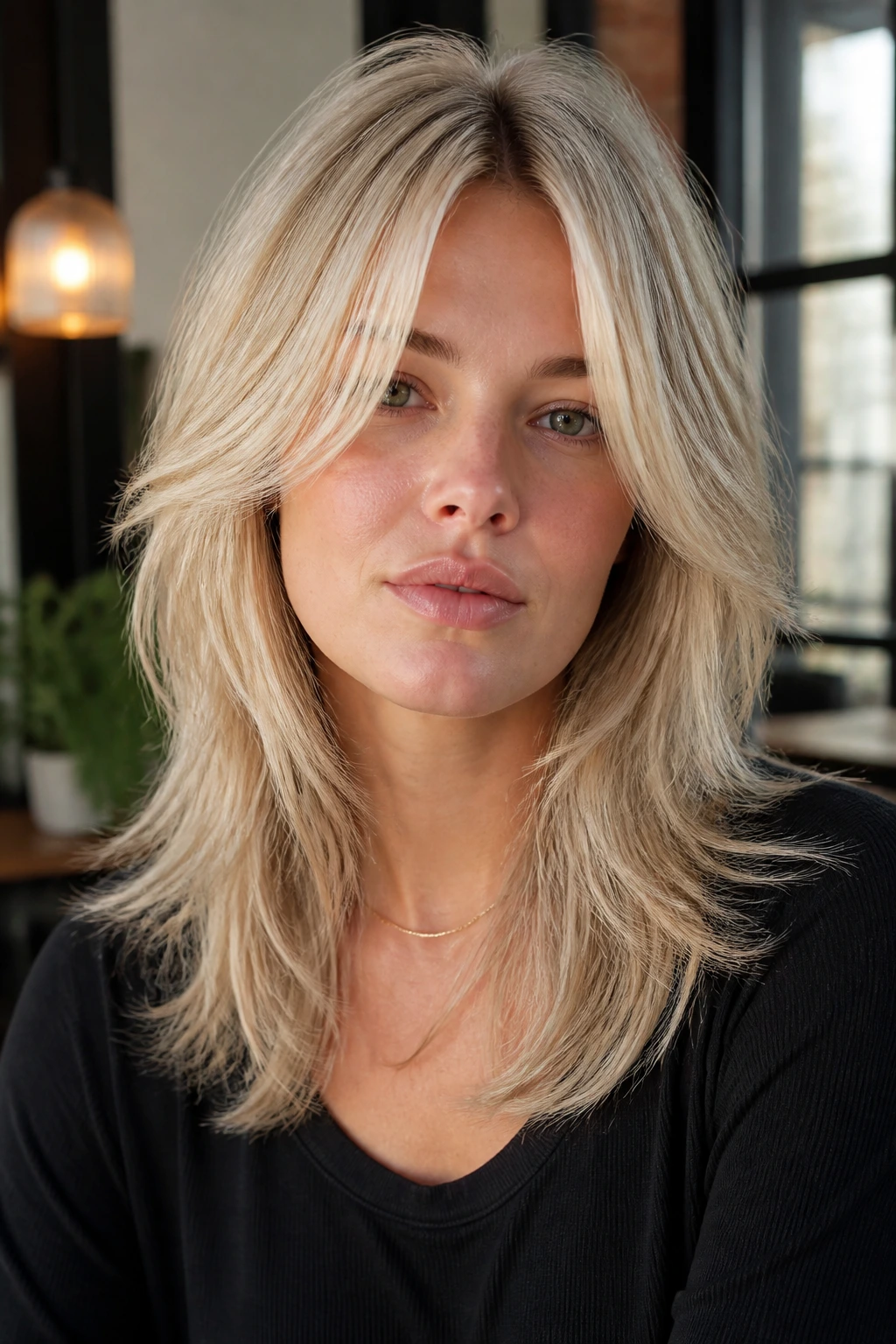
Why does pearl blonde work so well with layers? Because the color has a soft sheen, not a hard flash. That sheen shows movement in the hair without shouting. On a layered shag, that’s the difference between “interesting” and “busy.”
Oval faces handle a center part or a soft off-center part nicely, and pearl blonde can wear both. I prefer the center part here because it keeps the face open while the longer front pieces curve back toward the jaw. The cut feels polished without losing the shag shape.
Styling Note
A light glossing cream on damp hair helps this version stay smooth. Too much oil, though, and the layers disappear. The ends should move. They should not fuse into one slippery sheet.
This is a good choice for straight or slightly wavy hair that needs dimension more than rough texture. The haircut is doing the work; the color is simply making the work visible.
10. Rooty Blonde Shag with Cheekbone Fringe
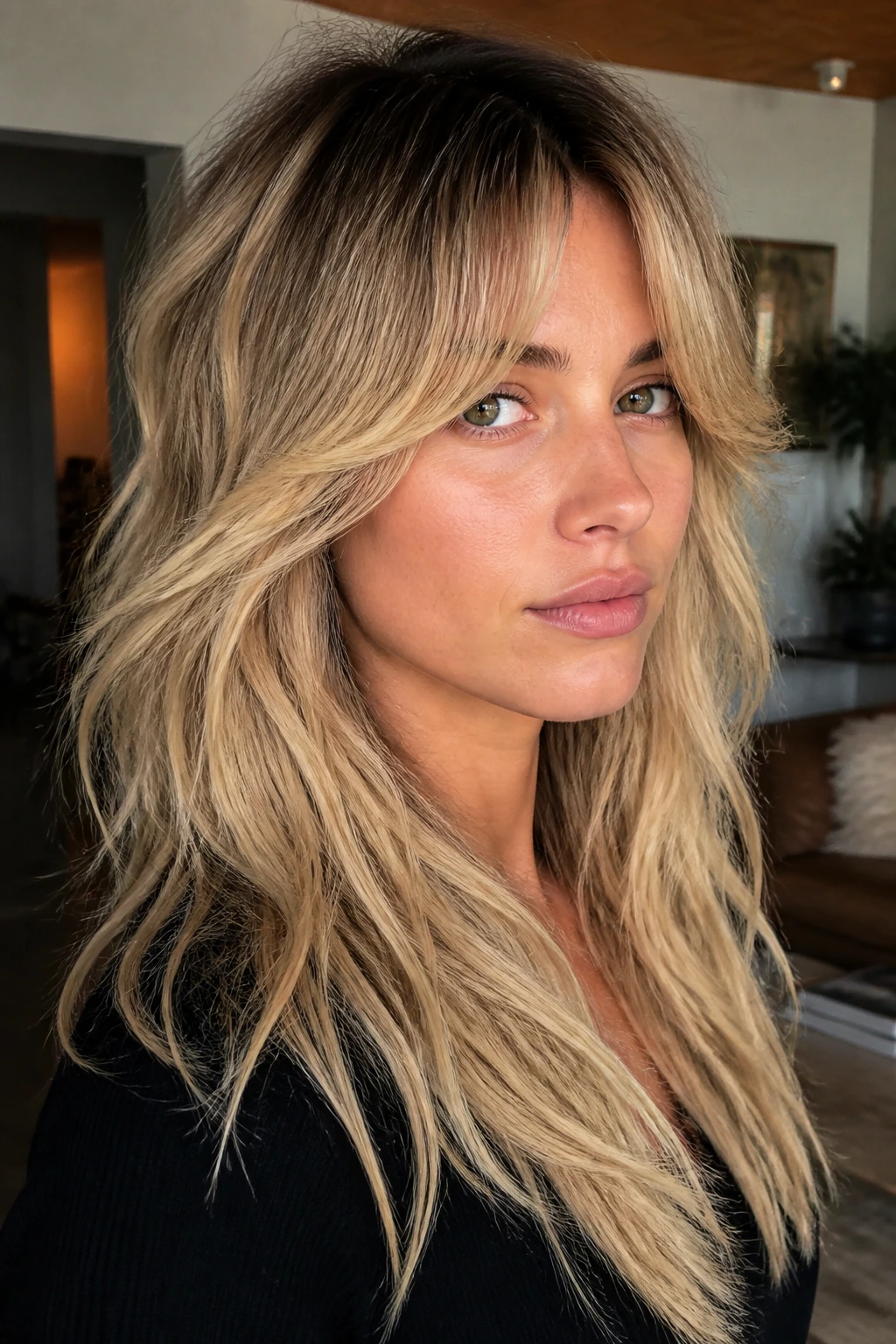
If you want the easiest grow-out in the bunch, start here. A rooty blonde shag lets the deeper base do some visual heavy lifting, so the front pieces can stay bright without looking harsh. The cheekbone fringe is the real shape-maker. It lands exactly where an oval face can use a little side framing.
That fringe placement has a contour effect. It draws the eye across the widest part of the face, then down into the longer layers. It’s subtle. That’s why it works.
I’d ask for a root that’s at least one shade deeper than the mids and ends. Not dark. Just enough depth so the cut doesn’t read as one flat blonde block. The style looks cleaner when the roots are intentionally soft rather than grown out by accident.
11. Beachy Surf Shag with Mid-Length Pieces
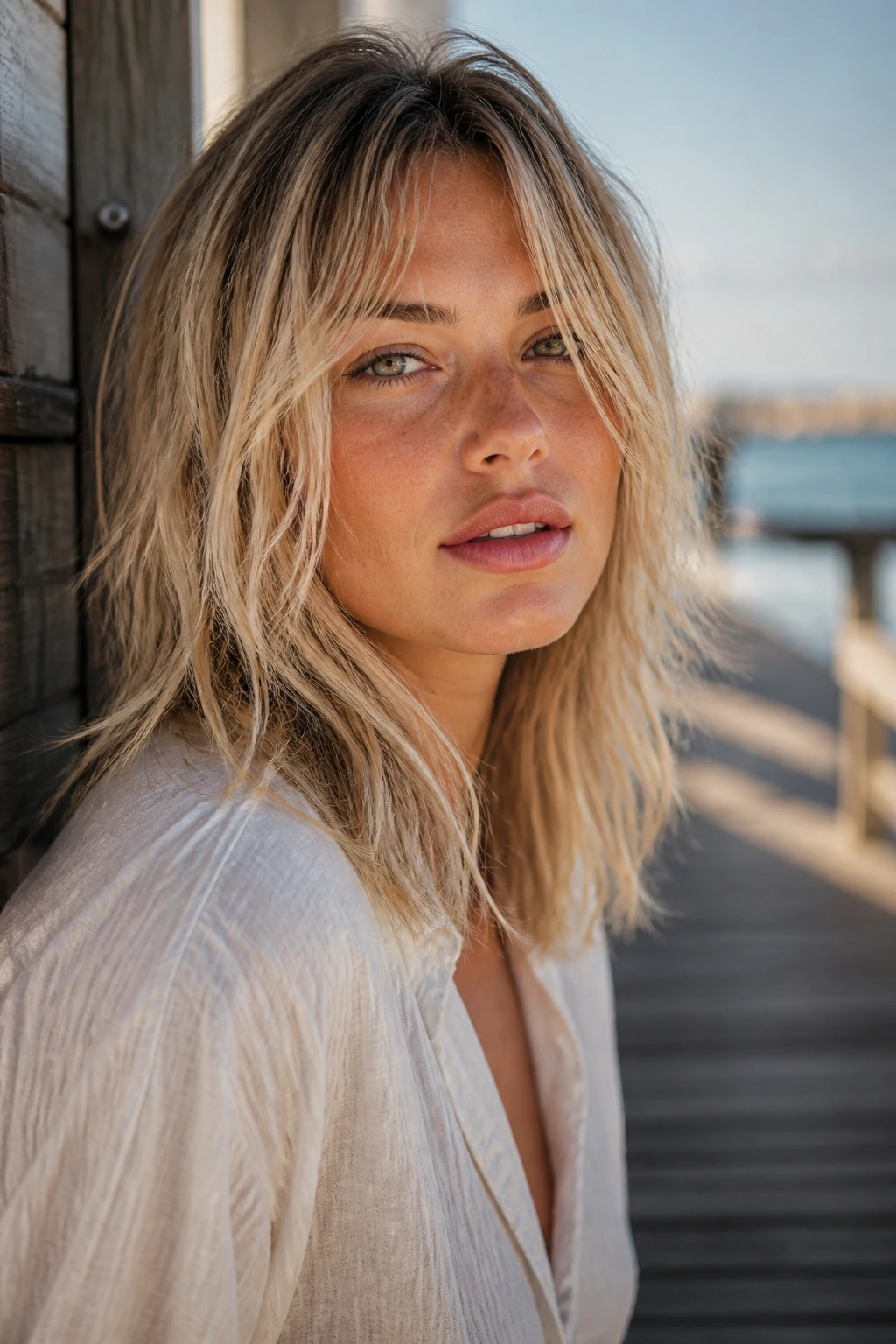
This is the one for hair that already wants to wave on its own. The layers sit a little looser, the shape is less exact, and the finish feels more lived-in than polished. On an oval face, that loose motion is useful because it keeps the face from looking too long or too neatly outlined.
The mid-length pieces are the part that makes it work. They land between the cheekbone and the shoulder, which adds a soft horizontal line without cutting the face in half. That’s a small thing, but it changes how the whole haircut reads.
A sandy blonde balayage fits this style best. The lighter ribbons should catch the bends, not just the top layer. If you use sea-salt spray, go easy. Too much and the ends turn rough in a hurry.
12. Dark Root Melt Shag in Creamy Blonde
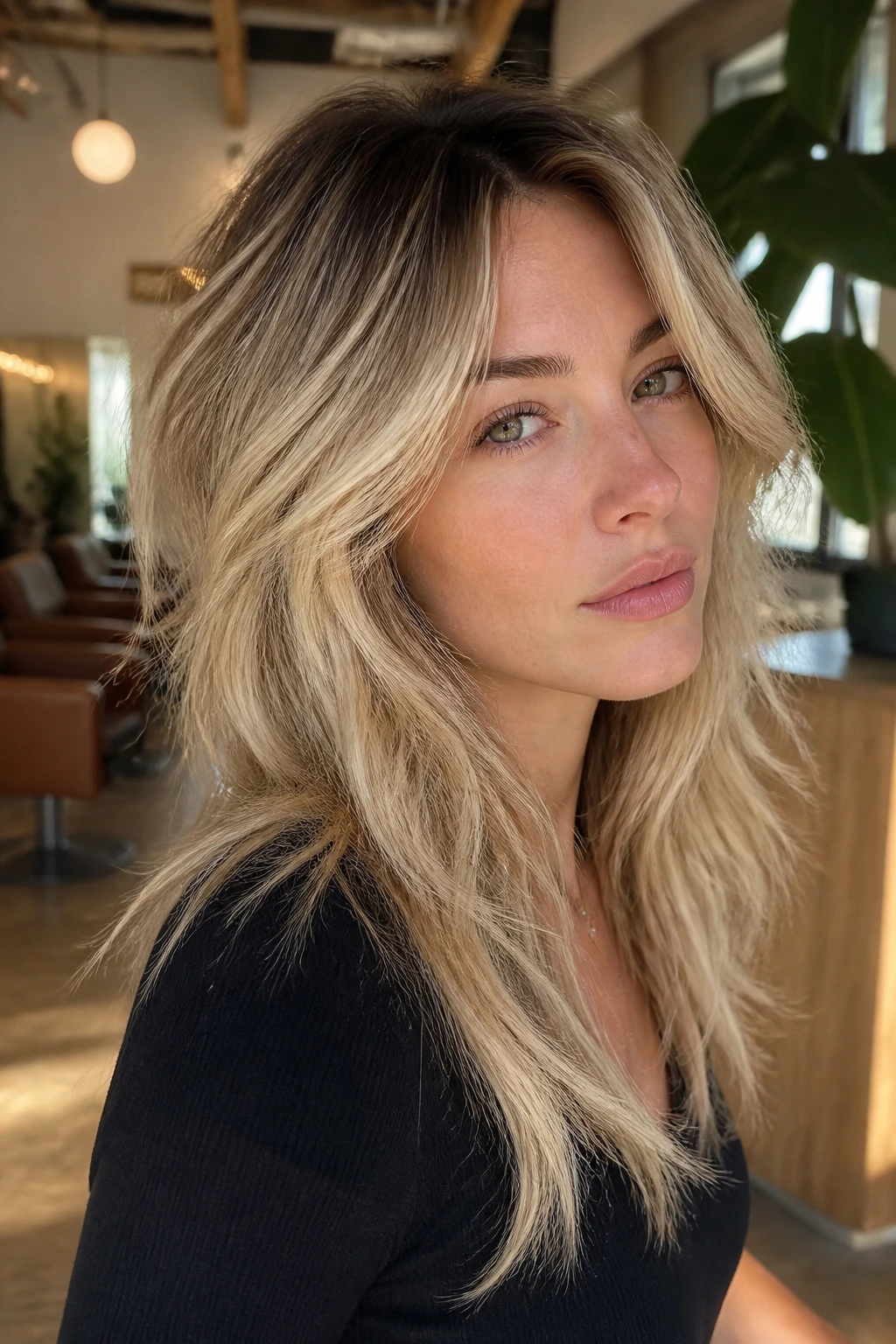
This cut is about contrast control. The darker root keeps the top from looking washed out, while the creamy blonde mids and ends make the layers soft and readable. That combination is especially good on an oval face because it stops the haircut from stretching vertically too much.
If you’ve ever had blonde hair that looked a little too bright on top, you know the problem. The face starts to look longer. A root melt fixes that by grounding the front and letting the blonde live where the movement is.
I’d keep the layers long and slightly internal, not carved to pieces. The shape should bend, not splinter. This is one of those cuts that looks expensive when it moves and ordinary when it doesn’t, so a bit of styling goes a long way.
13. Caramel Blonde Feathery Shag
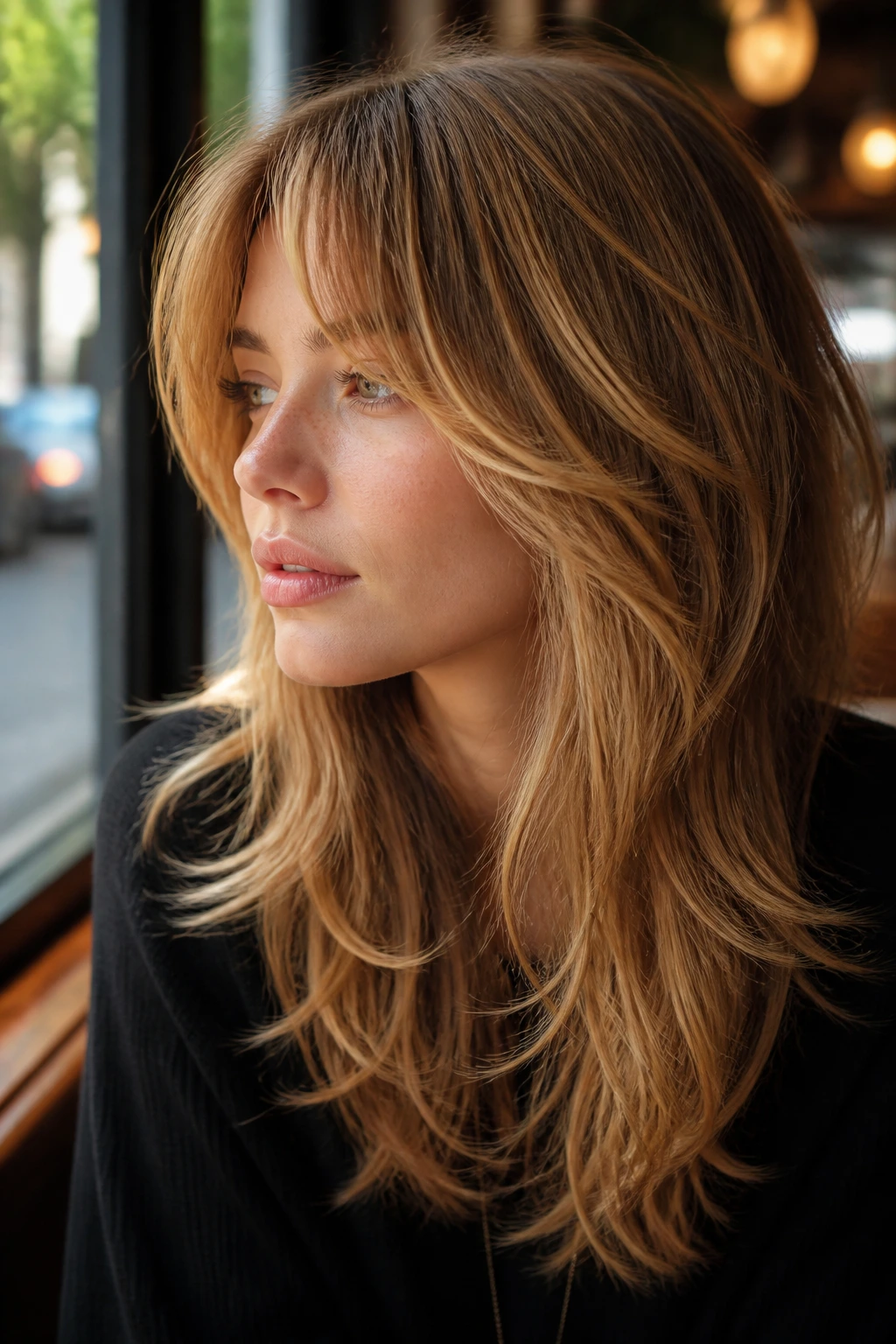
Why It Softens the Whole Look
Caramel blonde has a warmth that smooths out sharp layer lines. In a feathery shag, that warmth makes the haircut feel softer around the cheeks and jaw. On an oval face, that’s useful because you can add presence without adding bulk.
The feathery ends should be sliced lightly, not shredded. There’s a difference. Shredded ends can look thin at the ends of a long style, especially if the hair is already fine. Feathering keeps the swing while preserving some weight.
A Few Good Details
- Ask for a soft face frame that starts at the cheekbone.
- Keep the longest layers around the collarbone or below.
- Use a mousse or light volume spray before blow-drying.
This version is especially kind to medium-density hair. It doesn’t need a lot of product to show shape, and the color depth helps every bend show up.
14. Center-Parted Glam Shag with Long Curtain Pieces
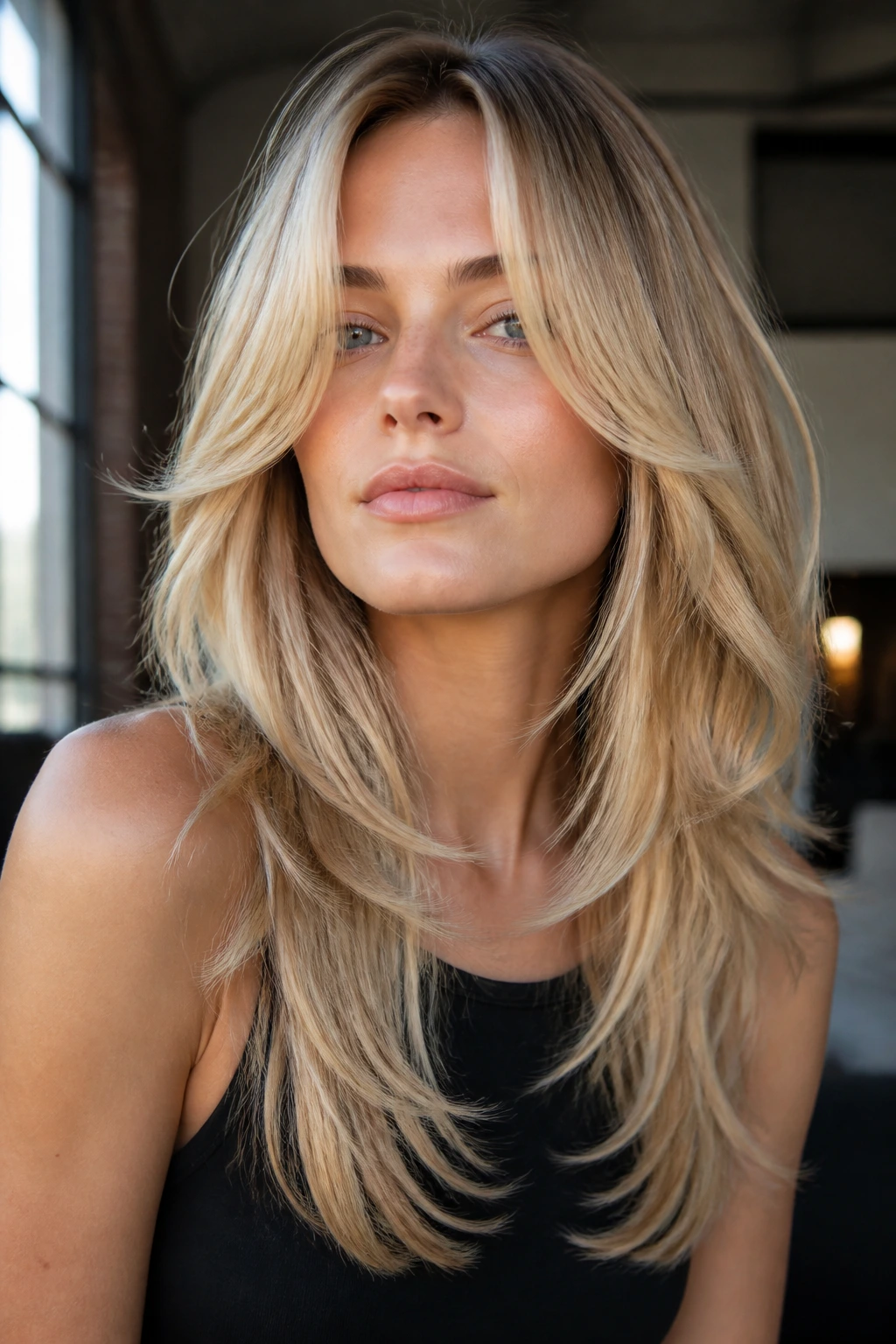
Center parts can work beautifully on an oval face, but only if the front pieces are doing more than sitting there. In this cut, the long curtain pieces fall from the temples and open toward the cheekbones, which keeps the face from reading too long. The glam part comes from the smooth bend, not from big volume.
This is the shag for someone who likes a little polish. You can rough-dry it, sure, but it also looks excellent with a round brush and a soft bevel at the ends. The blonde should lean creamy or champagne so the shape looks luminous rather than flat.
I’d avoid very short crown layers here. The whole point is length with movement. If the crown gets too short, the center part can start to pull the eye up in a weird way.
15. Choppy Wolf Cut with Waist-Length Ends
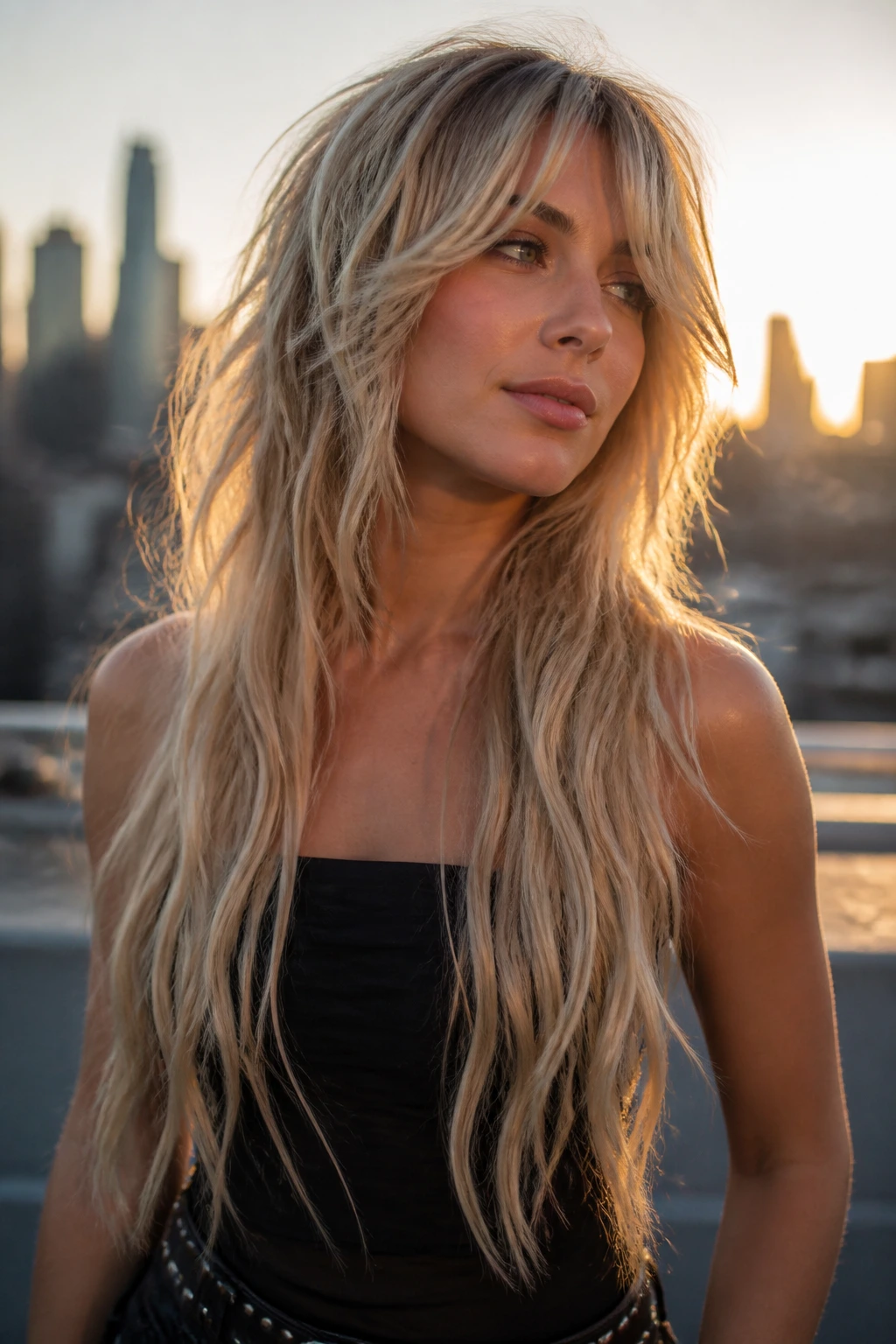
Why keep the length all the way to the waist? Because the long tail stops the cut from feeling too rebellious. The top can be choppy, the crown can be lifted, and the ends still hang on to the length that makes an oval face look balanced.
This works best if you actually like texture. Not neat texture. Messy texture. The type that looks better after you’ve slept on it once. A buttery blonde balayage makes the choppiness easier to read, especially if you place lighter pieces through the crown and the front.
The one thing I’d watch is the top length. If the layers get too high, the face starts to look overexposed. Keep enough length around the cheeks that the haircut can frame rather than spike.
16. Sunkissed Razor Shag with Wispy Texture
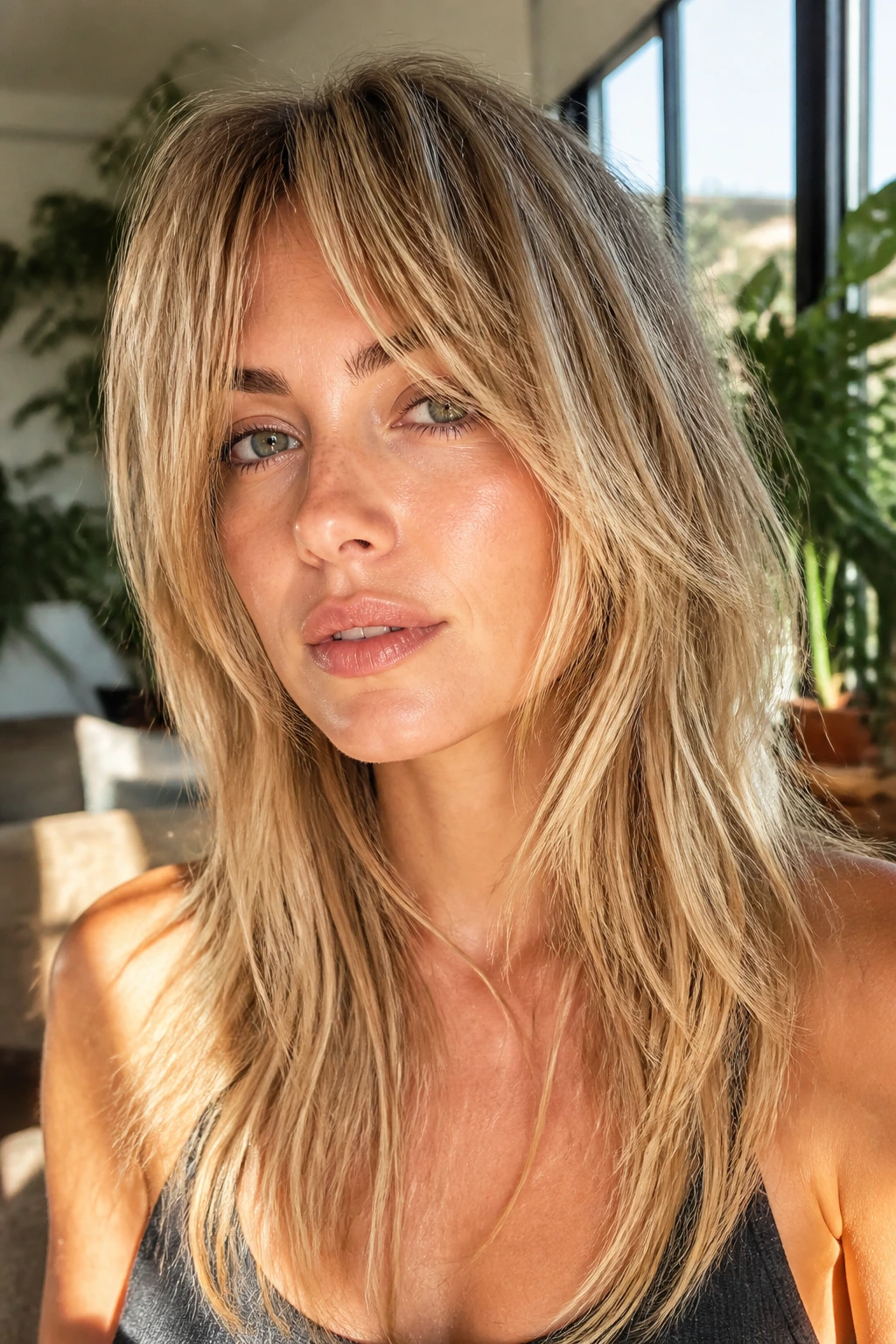
This is a lighter, airier version of the shag family. Razor work creates soft breaks in the ends, so the cut looks sun-faded rather than heavy. On an oval face, that wispy texture gives the jawline space and keeps the face from looking over-framed.
It’s a smart choice for finer hair, but only if the stylist knows when to stop. Too much texturizing and the ends go see-through in a bad way. I’d rather see a few strategic soft layers than a head full of thinned-out dust.
Sunkissed blonde highlights help because they break up the layers and keep the movement obvious. Think of this cut as the opposite of a dense, blocky lob. It wants air. It wants a little swing when you turn your head.
17. Long Shag with Curved Cheekbone Layers
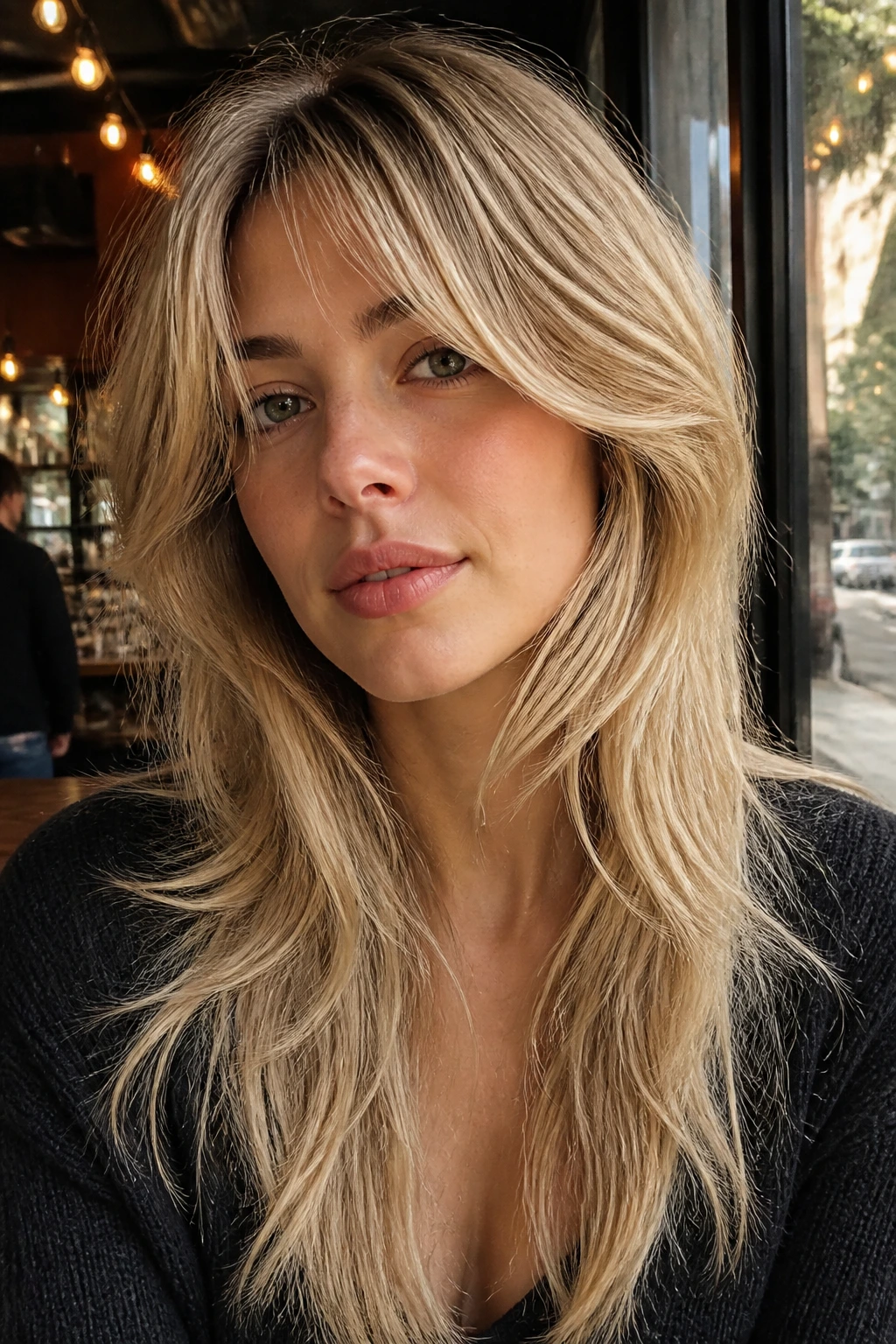
This is one of my favorite shapes for an oval face because it’s quiet about what it’s doing. The curved layers bend inward at the cheekbone and then fall away at the jaw, which gives the face a little contour without turning the haircut into a frame helmet.
The best blonde for this is a soft neutral shade with subtle dimension. You do not need a dramatic contrast. The curve of the layers is what does the work here, and too much color noise can muddy that line.
It’s a good cut for someone who wants to wear hair down often without constant styling. A quick blow-dry with a medium round brush gets enough bend. If you air-dry, twist the front pieces while damp and clip them away from the face until they set.
18. Champagne Blonde Tousled Shag
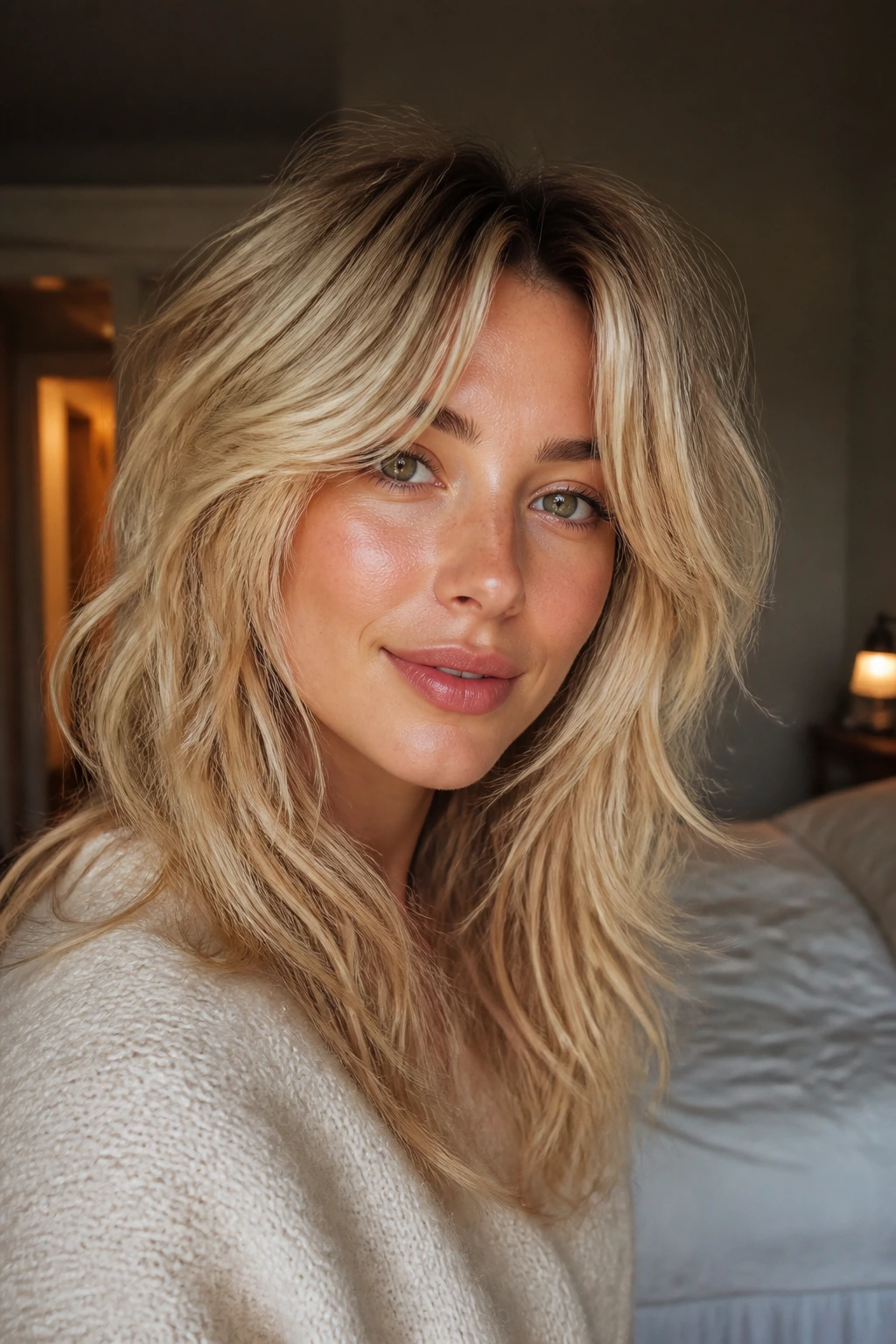
Champagne blonde has a pale glow that flatters layered hair without making it icy. In a tousled shag, that means the texture looks soft and light instead of rough. The ends should be broken up just enough to move, but not so much that they read frayed.
An oval face can wear the tousled finish because the balanced shape gives the haircut room to stay a little imperfect. The key is keeping the side pieces full enough that the face doesn’t look elongated. I like a part slightly off center here. It keeps the cut relaxed.
Use a small amount of texture cream and rough-dry most of the hair before you start shaping the front. That keeps the layers from overexpanding. If the hair is too clean and too smooth, the cut loses its shag identity.
19. Bottleneck Fringe Shag with Soft Body
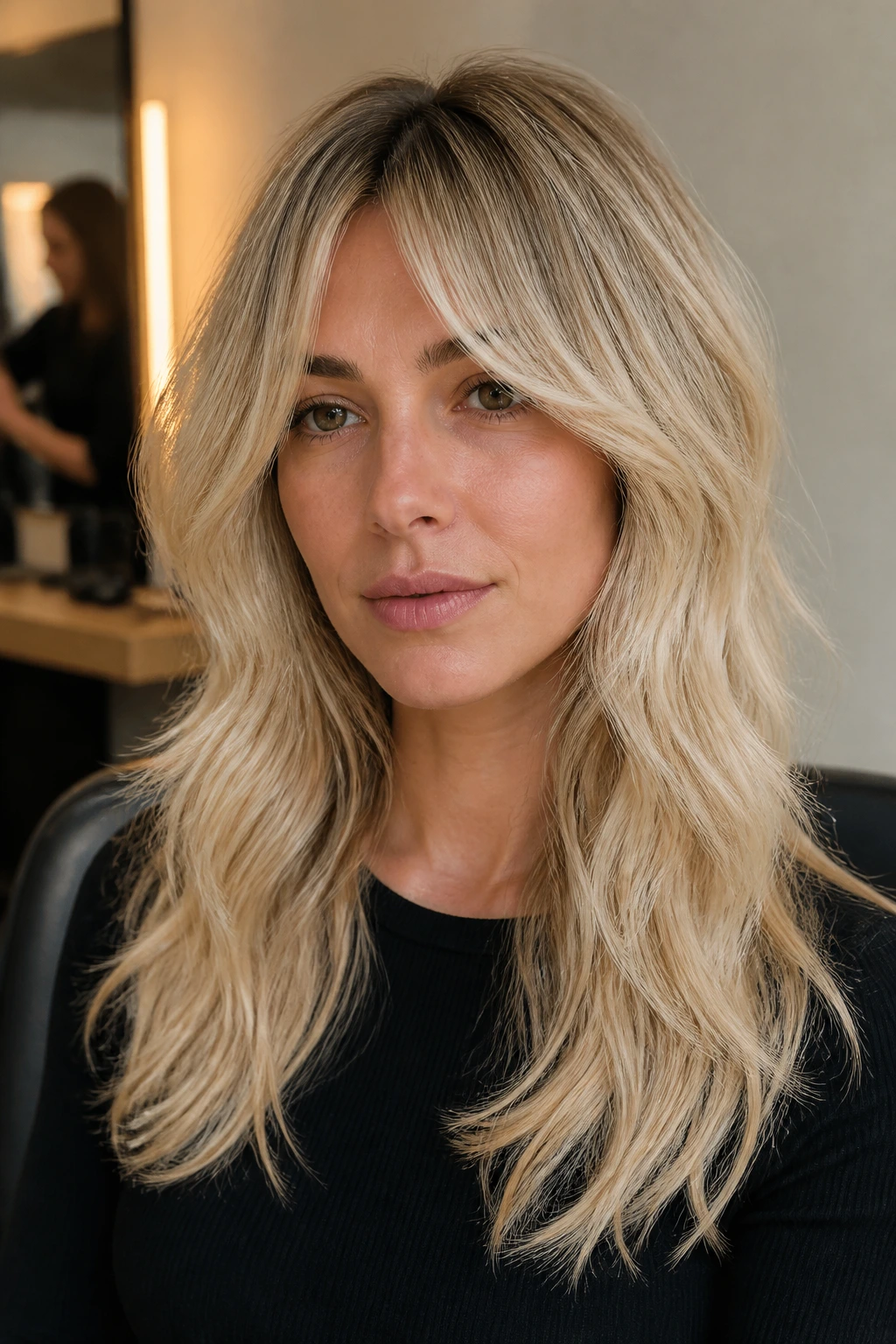
The Fringe Is the Frame
Bottleneck fringe is clever. It starts narrow in the middle, spreads a bit at the brows, then opens out toward the cheeks. That shape is especially kind to oval faces because it adds a little forehead coverage without making the front feel heavy.
The rest of the cut should keep soft body through the mid-lengths. Not huge volume. Just enough movement that the layers don’t lie flat against the head. I’d ask for a creamy blonde with a root smudge so the fringe doesn’t look like a separate object.
Good Details to Request
- Fringe long enough to tuck to the side when needed.
- Layers that begin below the eye line.
- Weight kept in the ends for swing.
This is a nice salon photo to bring if you want the haircut to feel modern but not severe. It has structure, but it still lets the face breathe.
20. Soft Rocker Shag with Air-Dried Waves
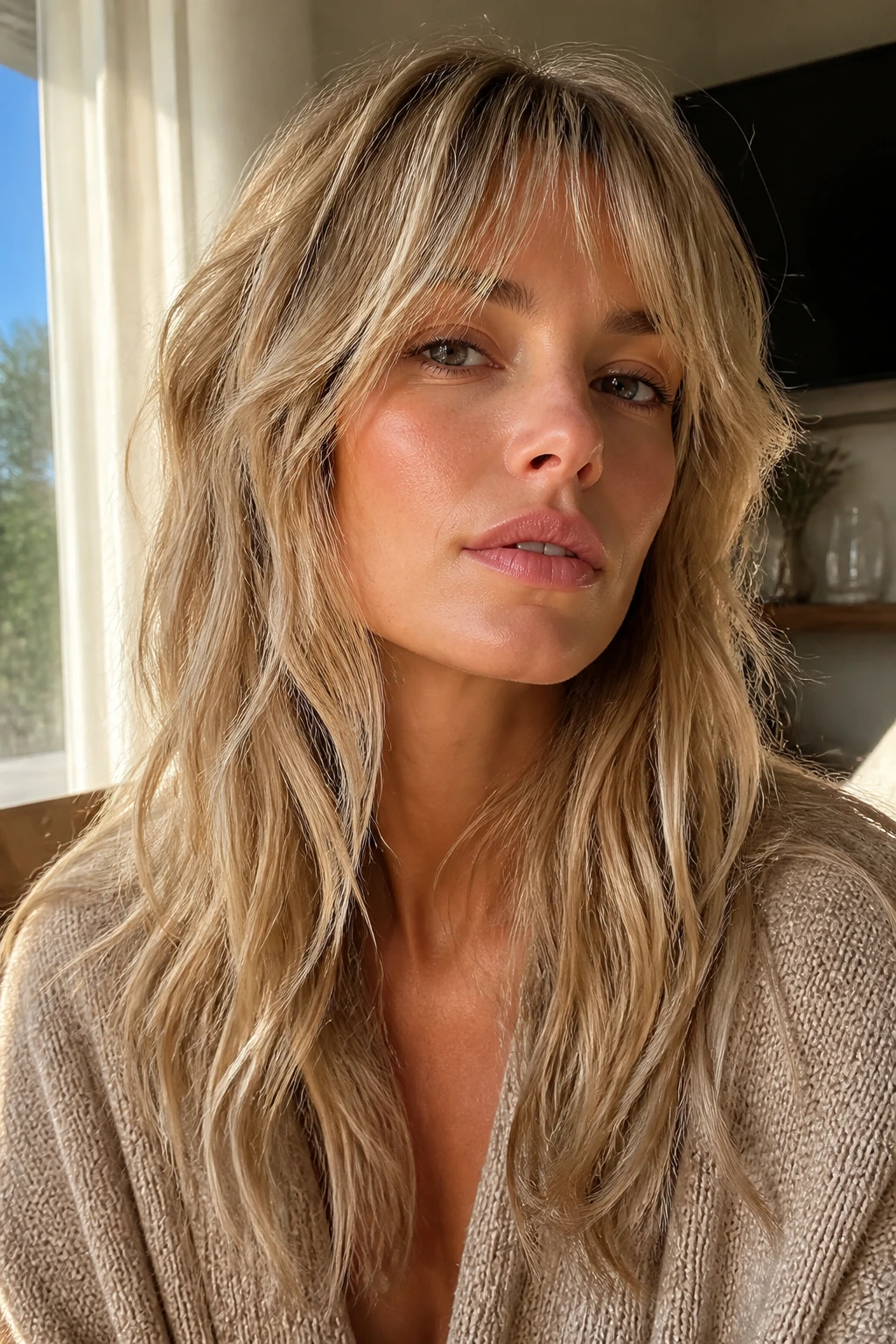
This is the laid-back version of the whole category. It has enough layering to show off texture, but not so much that you need a brush every morning. On an oval face, that balance matters because the haircut can frame the face while still looking easy.
Air-dried waves are the point here. If your hair naturally bends, let it. If it doesn’t, scrunch in a little mousse and diffuse only until the roots are dry. Leave the ends a bit loose. That unfinished edge is what keeps the cut from reading too polished.
A neutral blonde with subtle ribbon highlights keeps this from going flat. You want separation, not stripes. The cut is less about precision and more about movement that looks like it happened by accident, even when it didn’t.
21. Mushroom Blonde Long Shag
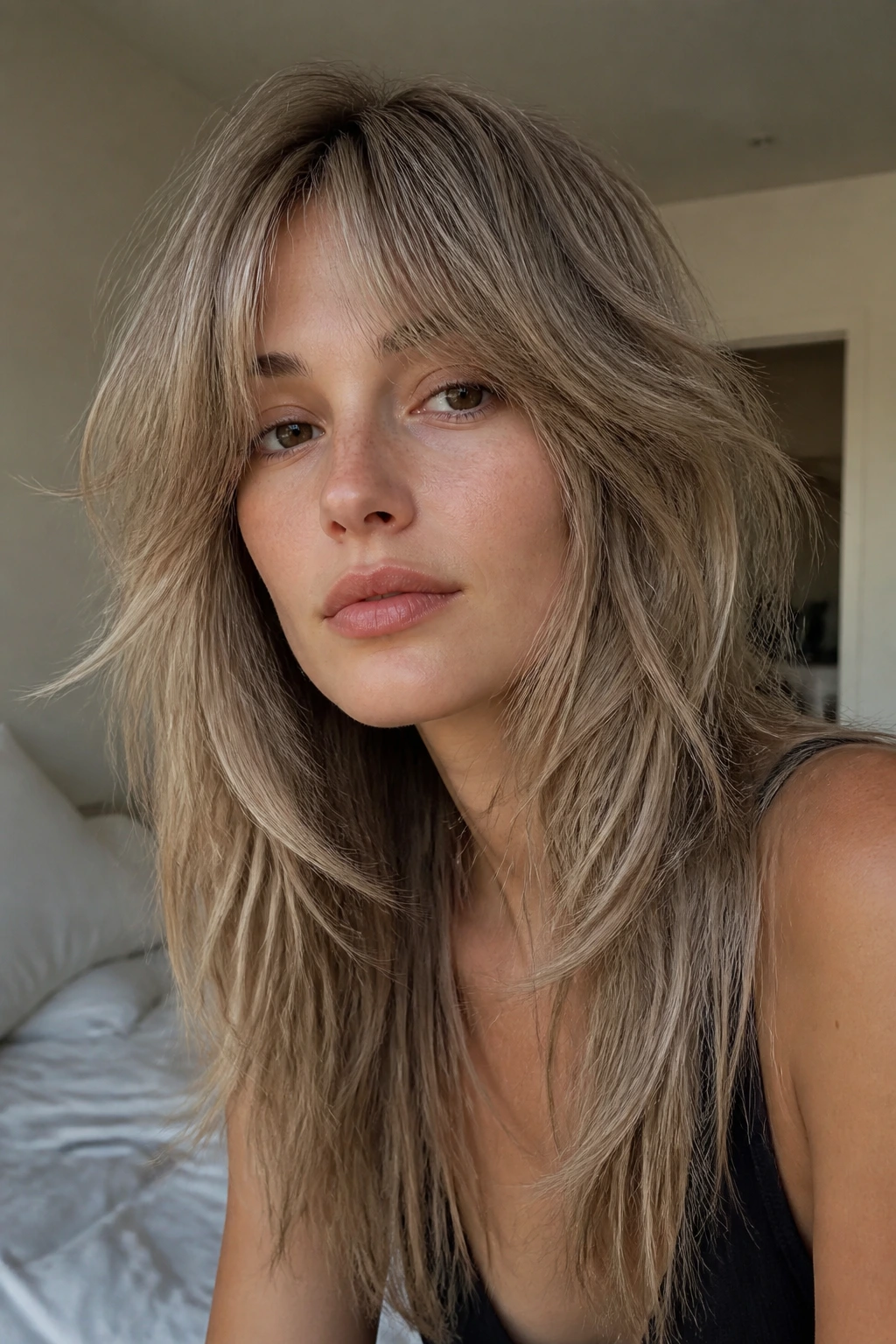
Why does mushroom blonde work here? Because the cool, muted tone calms down the layers. This color has a soft beige-gray cast that keeps the haircut looking grounded instead of bright and fluffy. On an oval face, that grounding helps the outline stay balanced.
The long shag shape should remain loose through the sides. Do not overstack the crown. The whole point is to let the color and the layer placement sit in the same quiet register. If the cut gets too aggressive, the mushroom tone can start to look heavy.
I like this version on straight or softly wavy hair. It gives the face enough frame without stealing attention from the features. It’s understated in a way that still looks intentional, which is harder to pull off than it sounds.
22. Vanilla Blonde Layered Mullet
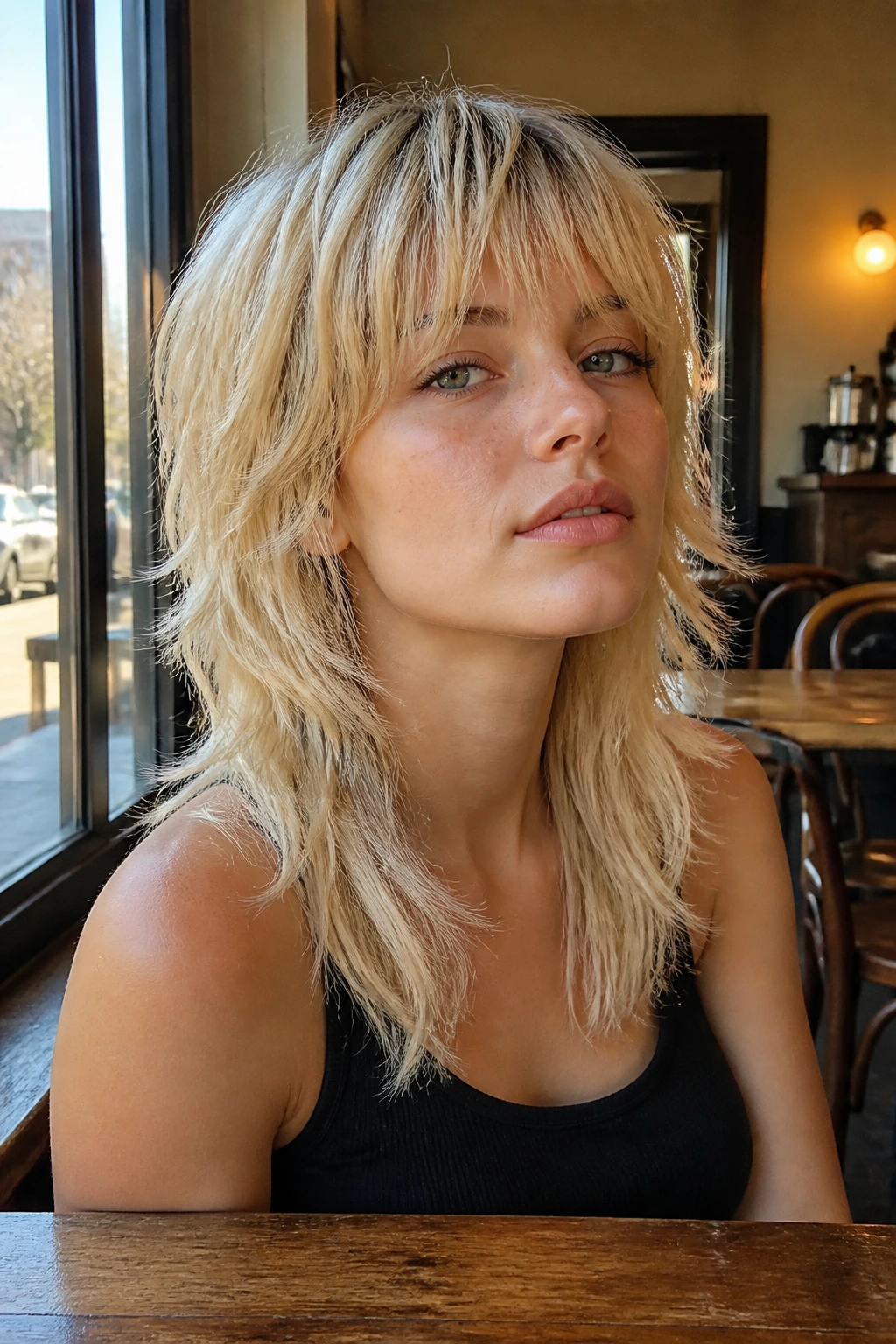
This is the in-between cut for people who like a little edge but do not want the full wolf-cut bite. The front stays wearable, the back holds onto length, and the layers sit in a way that feels slightly rebellious without turning the head into a shape experiment.
Vanilla blonde softens the mullet edges. That helps an oval face because the color keeps the haircut light around the front, while the longer back line keeps the silhouette long and sleek. If the hair is thick, this shape can be a relief. It removes weight without making the ends vanish.
Ask for a soft perimeter and a visible but not extreme transition from front to back. The best versions look like they were cut with intention, not by someone trying to shock the room.
23. C-Shaped Layer Shag
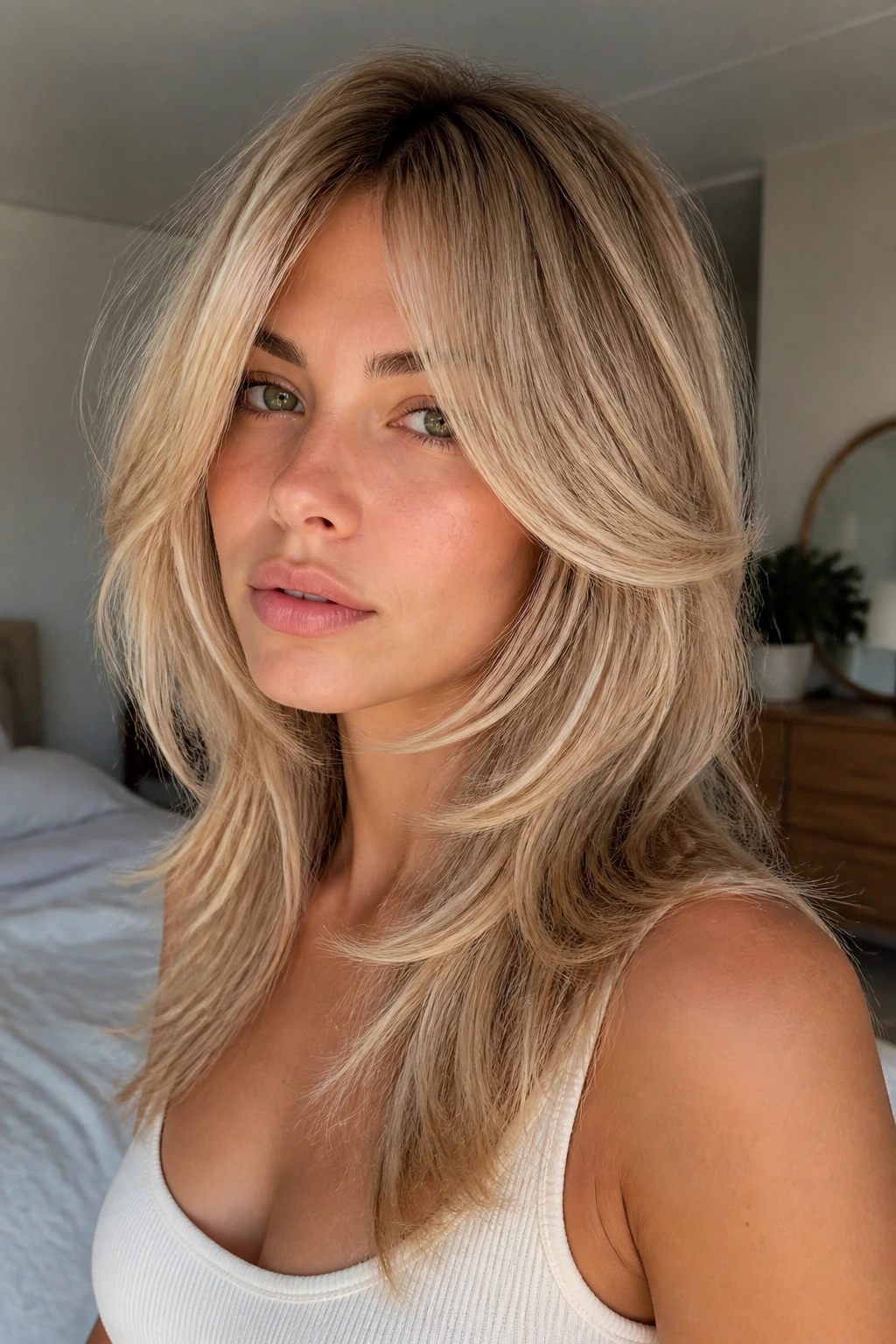
The C-shape is all about curve. The layers bend inward near the face, then arc back out as they drop toward the shoulders. That motion suits an oval face because it adds a little contour without changing the basic balance of the shape.
Unlike a jagged shag, this cut feels smoother. The blonde should be multi-tonal, with a few lighter pieces placed where the C-curve turns. That lets the eye follow the movement. If the hair is darker at the roots and brighter around the face, the curve becomes even easier to see.
I’d choose this if you want something softer than a wolf cut but more interesting than a basic long layer cut. It’s flattering in a quiet way. The kind of cut that looks better every time it gets a little bit messy.
24. Piecey Balayage Shag with Ribbon Highlights
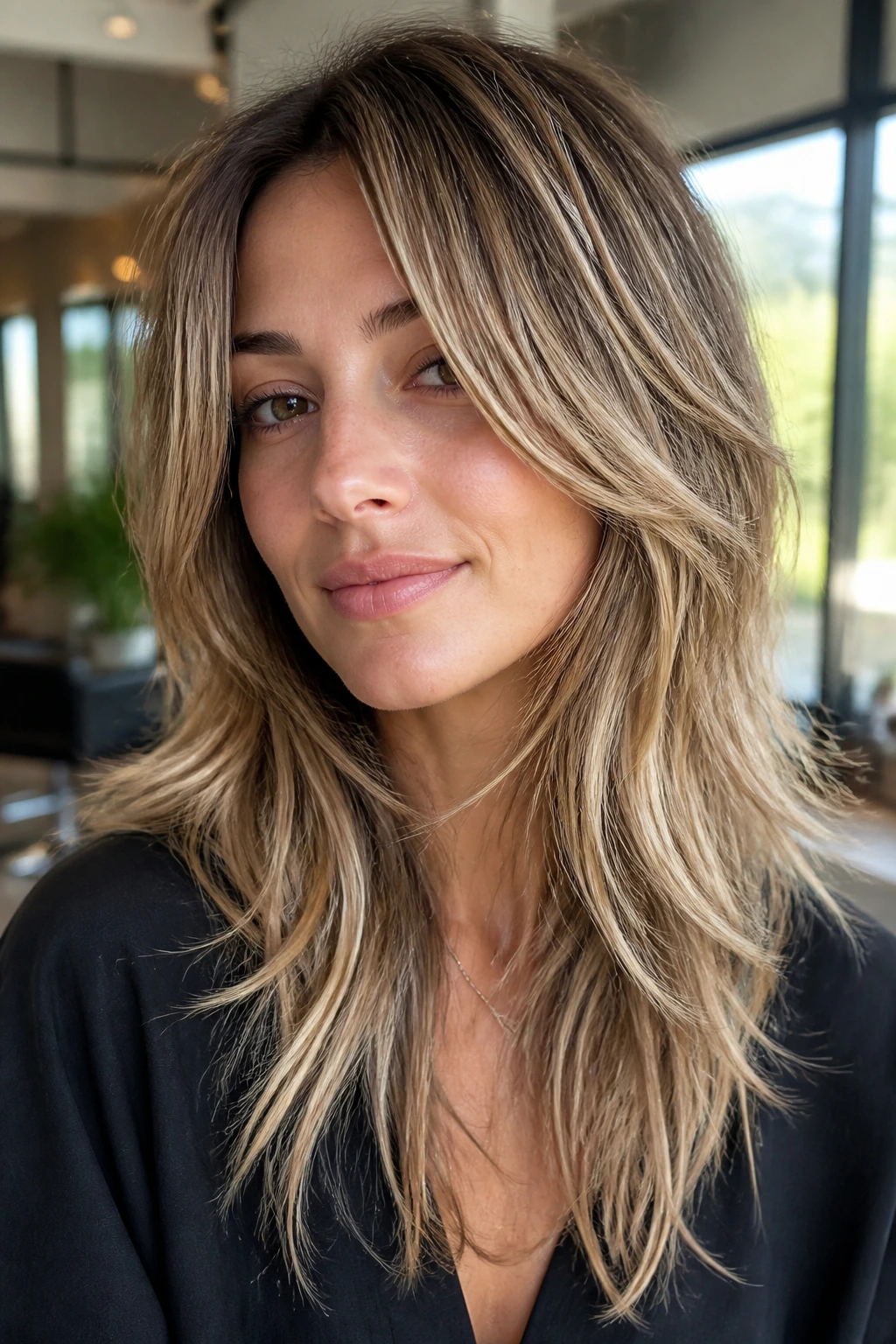
Piecey layers and ribbon highlights are a good pair because each one helps the other show up. The layers give the highlights somewhere to land, and the highlights make the layers easier to read. On an oval face, that means you can place brightness around the cheekbone and jaw without needing harsh contouring.
The trick is not to overdo the ribbons. A few well-placed lighter sections around the front and through the moving layers are enough. Too many streaks and the style starts to look busy. The cut itself should stay relaxed, with enough softness at the ends to keep the whole shape from stiffening up.
This is a smart choice if you like your hair to look dimensional in daylight and indoors. The balayage does a lot of the visual heavy lifting.
25. French Shag with Long Fringe
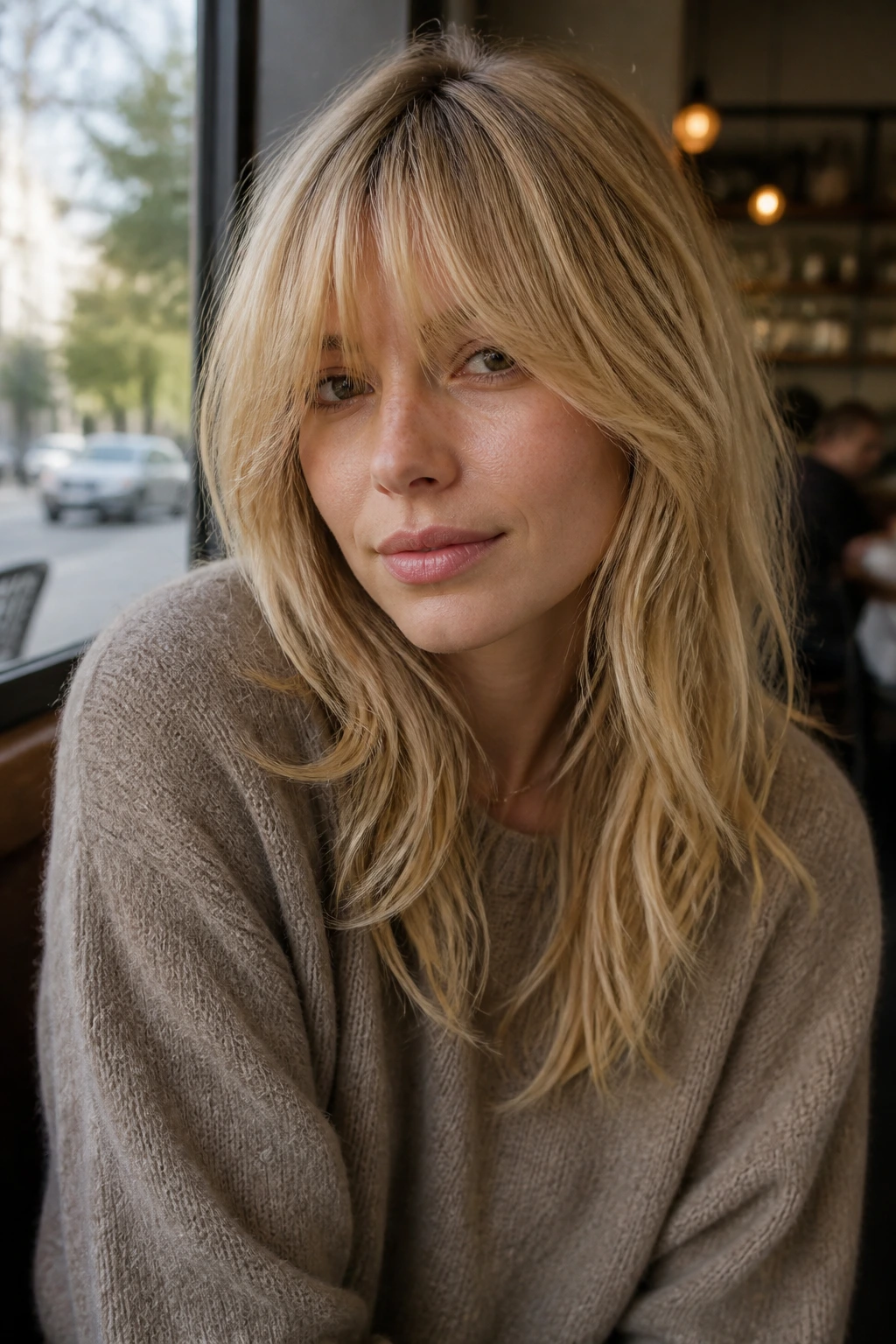
Why It Feels Easy to Wear
The French shag has a softer, slightly undone polish. The long fringe skims the lashes, the layers fall with less aggression, and the finish tends to look casual even when it’s been styled. On an oval face, that long fringe gives the forehead a little restraint without shrinking the face.
The blonde should stay creamy and delicate here. Harsh brightness can fight the softness of the fringe. I like this cut on hair that has a little natural wave, because the fringe and the lengths can keep their own shape without much coaxing.
What to Tell Your Stylist
- Keep the fringe long enough to part easily.
- Let the layers start around the cheekbone.
- Avoid over-thinning the ends.
It’s a nice option if you want the shag idea, but not the punkier edges that can come with a wolf cut. The mood is softer. More lived-in, less chopped up.
26. Fine-Hair Long Shag with Light Layers
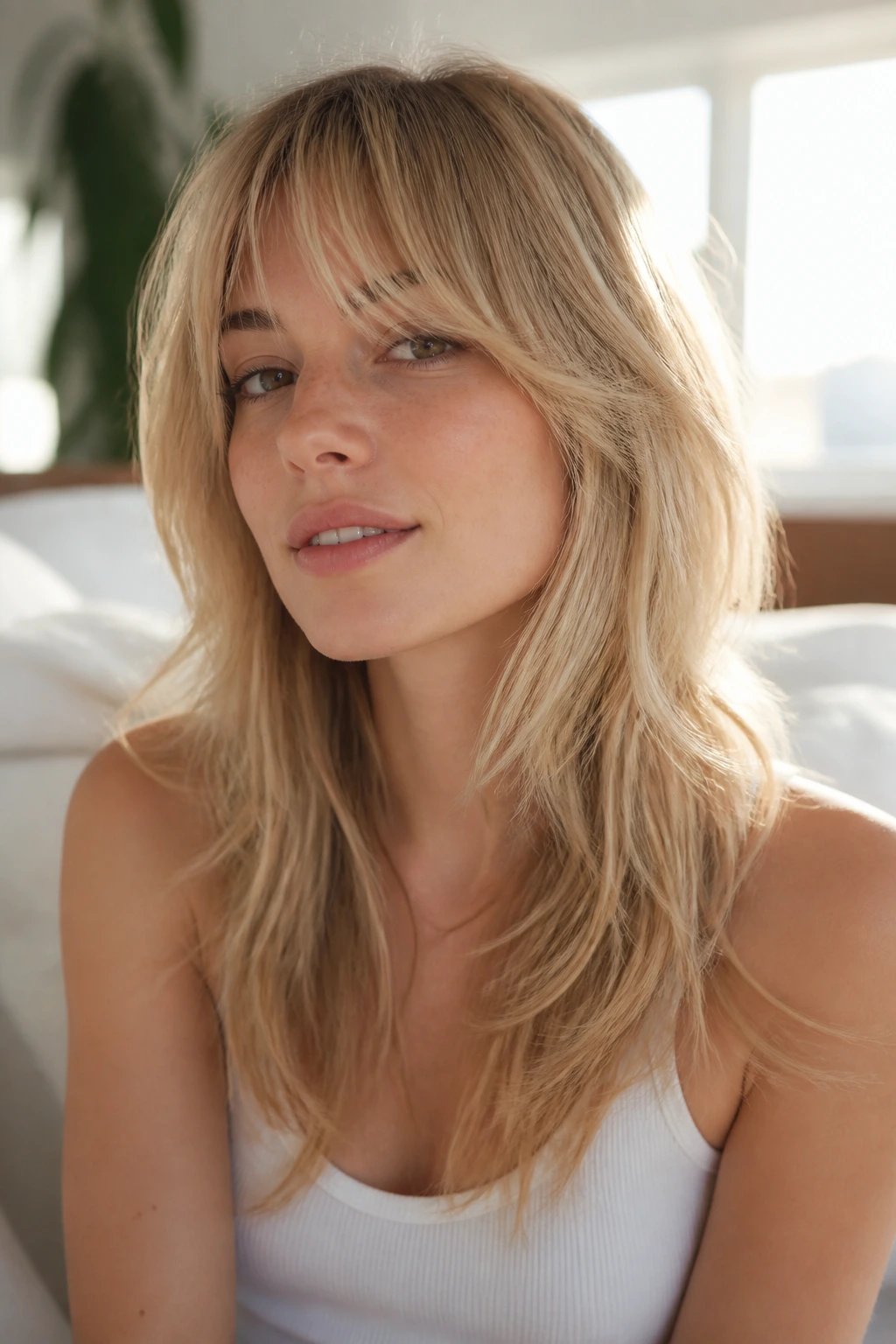
Heavy layering is a trap for fine hair. It sounds like a way to add volume, but it often does the opposite: the ends go thin, the top gets puffy, and the haircut stops holding a shape. Light layers are the better move. They keep the perimeter intact while giving the hair enough movement to look alive.
On an oval face, that restraint is useful. You don’t need the haircut to create width from scratch. You need it to keep the hair from looking flat and one-note. A soft blonde with a few brighter face pieces can do more than a stack of choppy layers.
I’d ask for soft internal layering and avoid aggressive texturizing shears unless your stylist is careful with them. The goal is lift, not subtraction for its own sake.
27. Thick-Hair Razor Shag with Internal Debulk
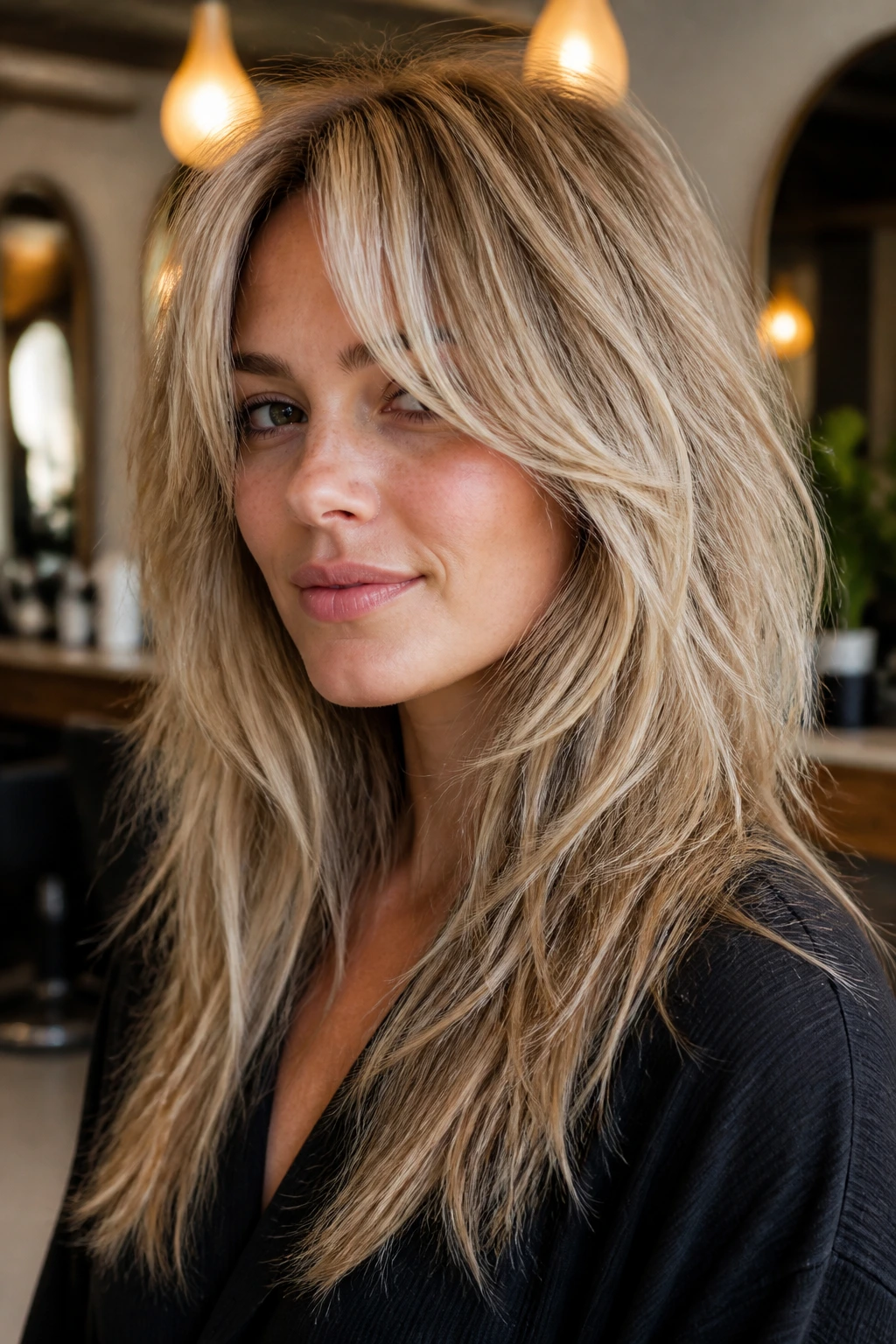
Why does thick hair need a different answer? Because surface layers alone won’t solve the bulk. You need internal debulking so the shape can move without exploding at the sides. A razor shag can work beautifully here, but only if the stylist knows how to remove weight without creating holes.
Oval faces can wear the extra body, but again, placement matters. Keep the front pieces long enough to frame the cheeks and jaw. If the interior gets cut too high, the sides can puff wider than the face itself, which nobody asked for.
Ask For This
- Internal layers that remove weight below the crown.
- Long face-framing pieces that stay connected to the length.
- Soft ends instead of chopped, see-through tips.
Warm blonde balayage helps thick hair look less massive because the ribbons break up the bulk. That’s not cosmetic fluff. It changes how the eye reads the cut.
28. Gradient Shag from Collarbone to Waist
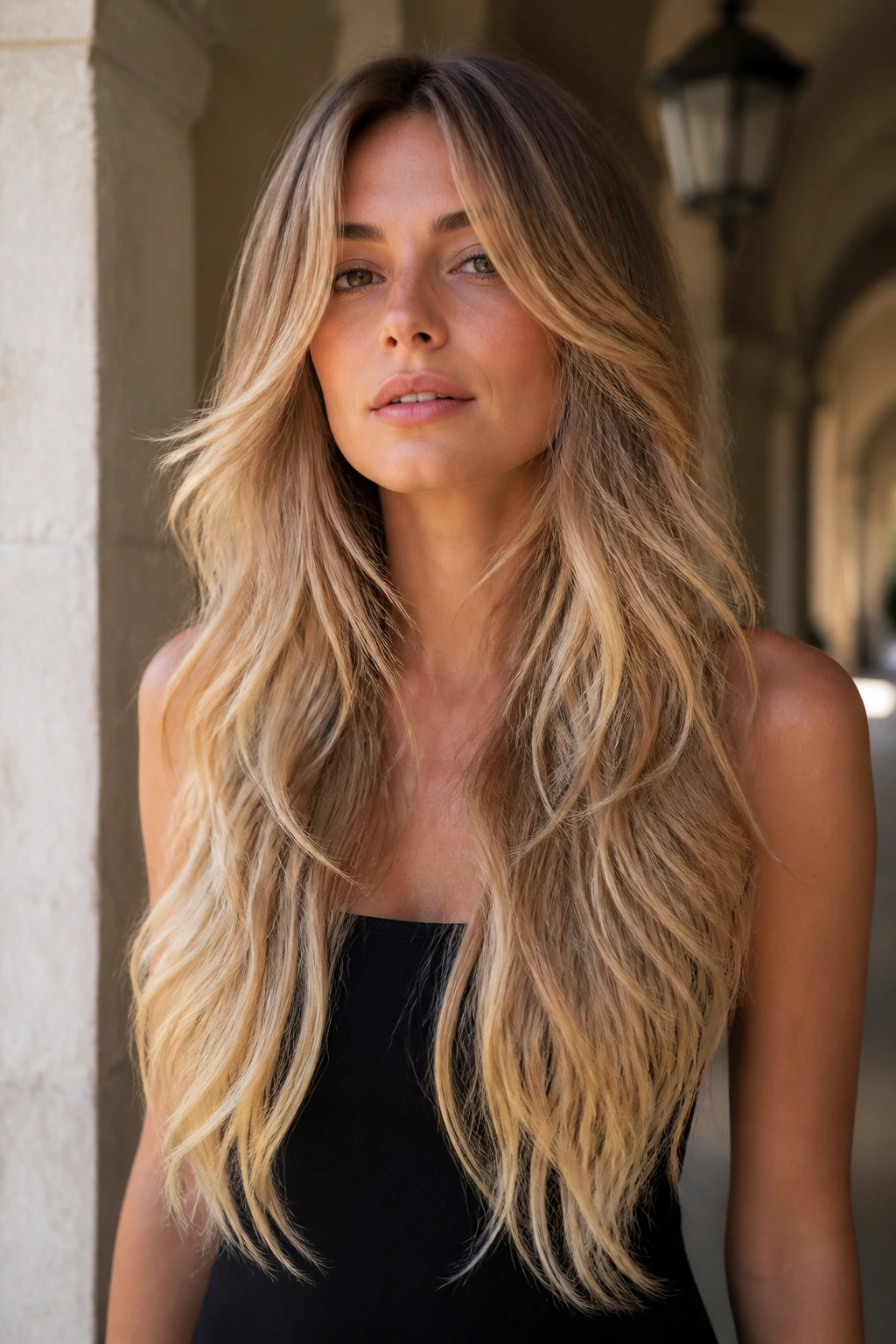
This one is for length lovers. The layers step down gradually from the collarbone into the waist length, so the haircut keeps its drama while still having motion. On an oval face, the gradient keeps the face from getting swallowed by one long curtain of hair.
The key is keeping the front pieces lively. If they hang straight and heavy, the length can make the face look longer than it is. A soft blonde gradient — deeper at the roots, lighter at the mid-lengths, brightest near the ends — helps the whole style feel intentional.
I like this cut if you want a lot of hair and not a lot of fuss around the crown. It’s dramatic, but it doesn’t have to be loud.
29. Retro 70s Blonde Shag with Farrah Energy
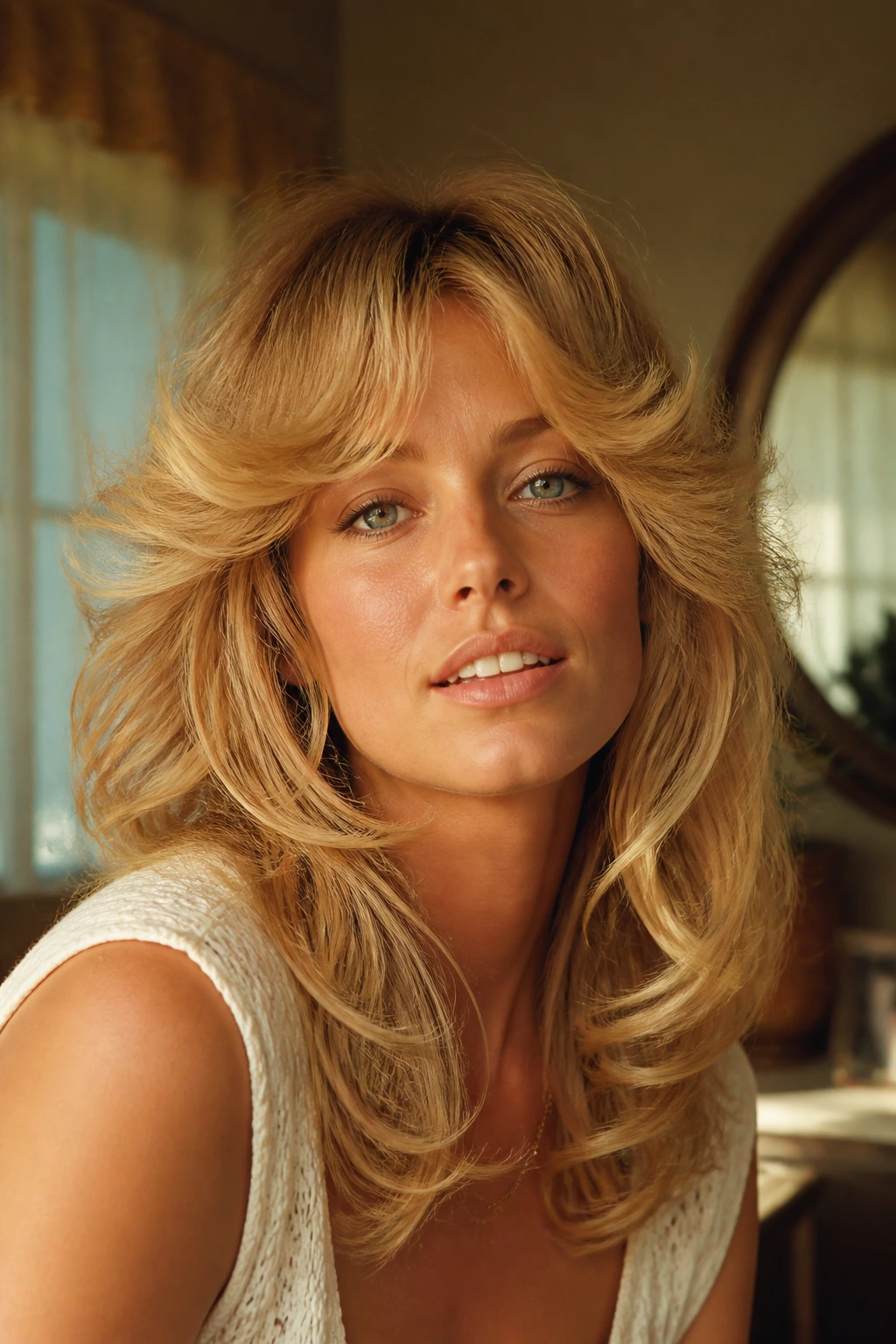
This is the loudest smile in the room. Big curtain fringe, flipped layers, soft blonde shine, and enough movement around the face to make the whole cut look airy. Oval faces fit this shape well because the balanced proportions can handle the volume without the cut taking over.
The important bit is the bend. The fringe should move away from the center, the sides should feather out near the cheeks, and the ends should curve rather than cling. If the style goes too stiff, it loses the 70s feel fast.
Use a round brush or large rollers if you want that lifted shape. A little mousse at the roots and a flexible hairspray at the end is enough. I’d avoid crunchy texture sprays here; they fight the softness this look depends on.
30. Low-Maintenance Blonde Shag with Soft Ends
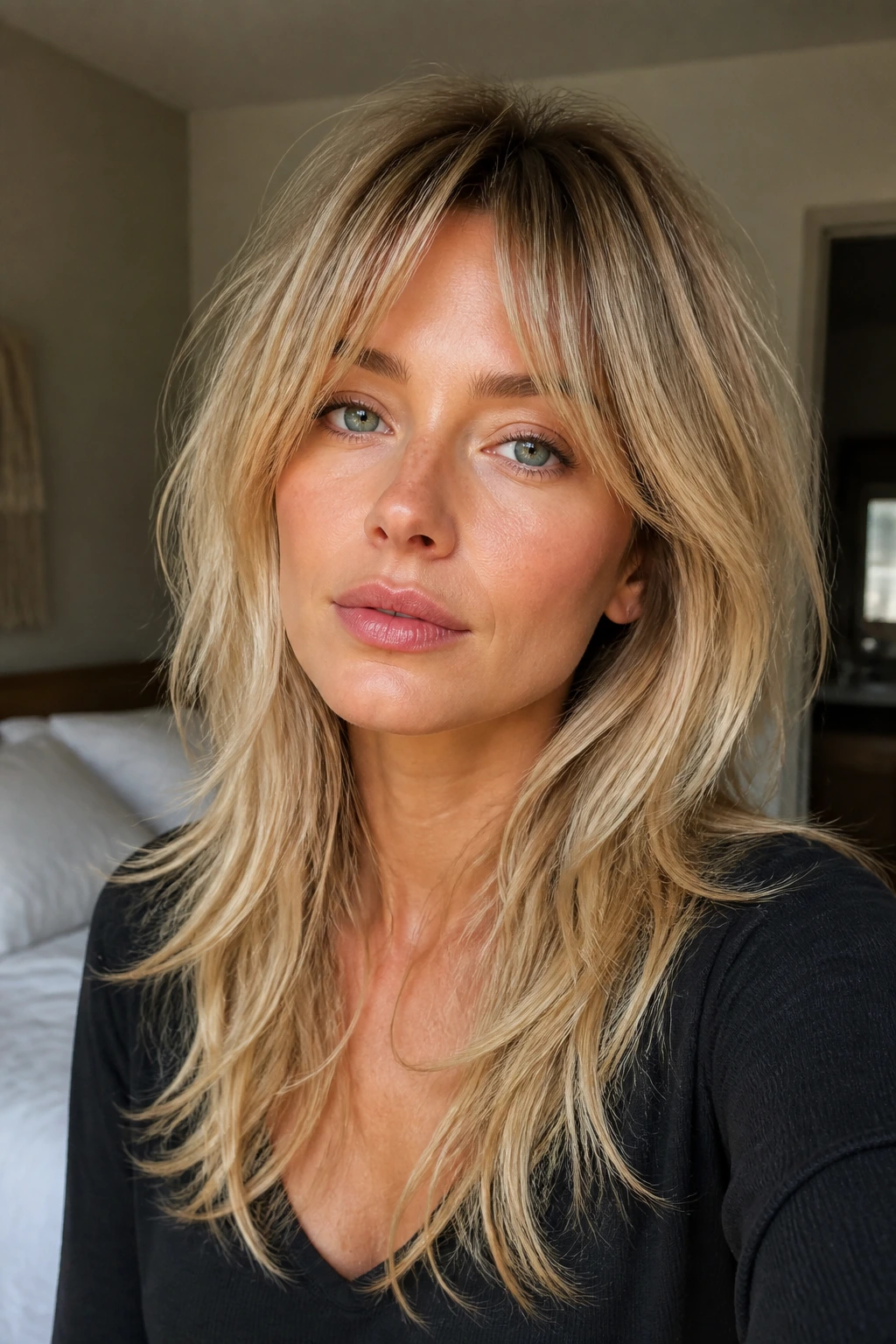
This is the version for people who want the shag shape without turning styling into a part-time job. The layers start lower, the fringe stays long and flexible, and the ends keep enough weight to fall on their own. On an oval face, that softness works because the face already has balance. The haircut only needs to nudge it.
A neutral blonde with a root shadow keeps the grow-out calm. The soft ends mean you can go a little longer between trims, and the cut still reads as intentional. I’d choose this if you want something that air-dries decently, takes a bit of styling well, and doesn’t fall apart if you skip a wash.
It’s the last one on the list, but not the boring one. It’s the practical one. There’s a difference.
Why This Cut Family Works So Well on Oval Faces
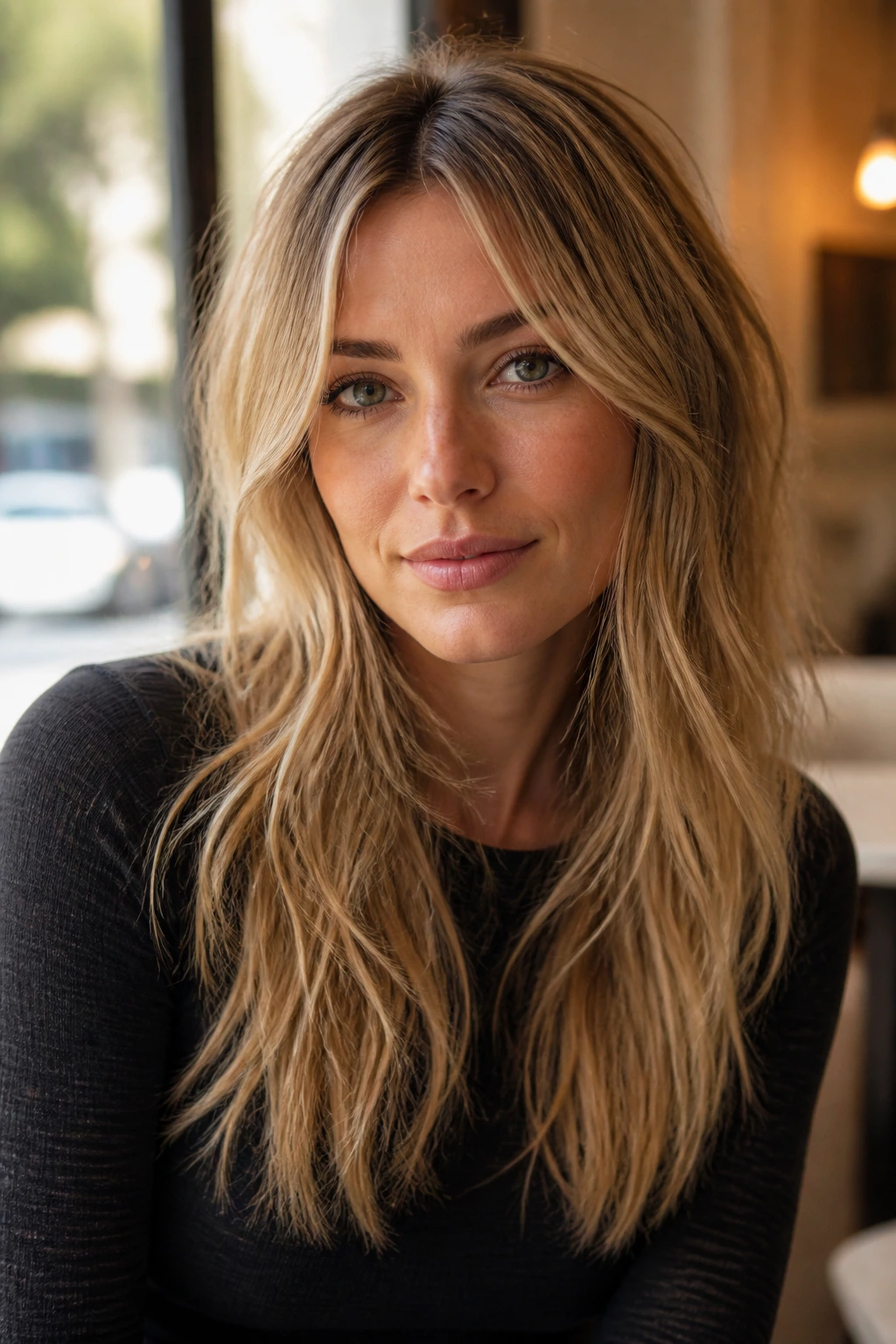
An oval face gives you room to make choices that other face shapes have to think twice about. You can wear a center part, a curtain fringe, or a bottleneck bang without fighting the proportions. That freedom is exactly why a long shag works: the haircut can focus on texture and movement instead of correction.
The most useful thing to remember is where the eye goes. Layers at the cheekbone add softness. Layers that start too high can make the face feel longer. Bright blonde pieces near the front bring attention outward, while a deeper root keeps the crown from climbing too high. Small placement choices like that do more than big, dramatic changes.
The Blonde Part Matters Too
Blonde is not one thing. A creamy beige blonde makes the layers feel soft and blended. A platinum tone makes every line sharper. A rooty balayage adds depth, while a single-process blonde can flatten the movement. If your stylist is planning the cut and color separately, that’s a missed opportunity.
The best pairings let the color and shape do each other a favor. Light catches the bends. Shadows keep the crown under control. The face looks framed, not squeezed.
How to Ask for the Cut and Style It on Day One
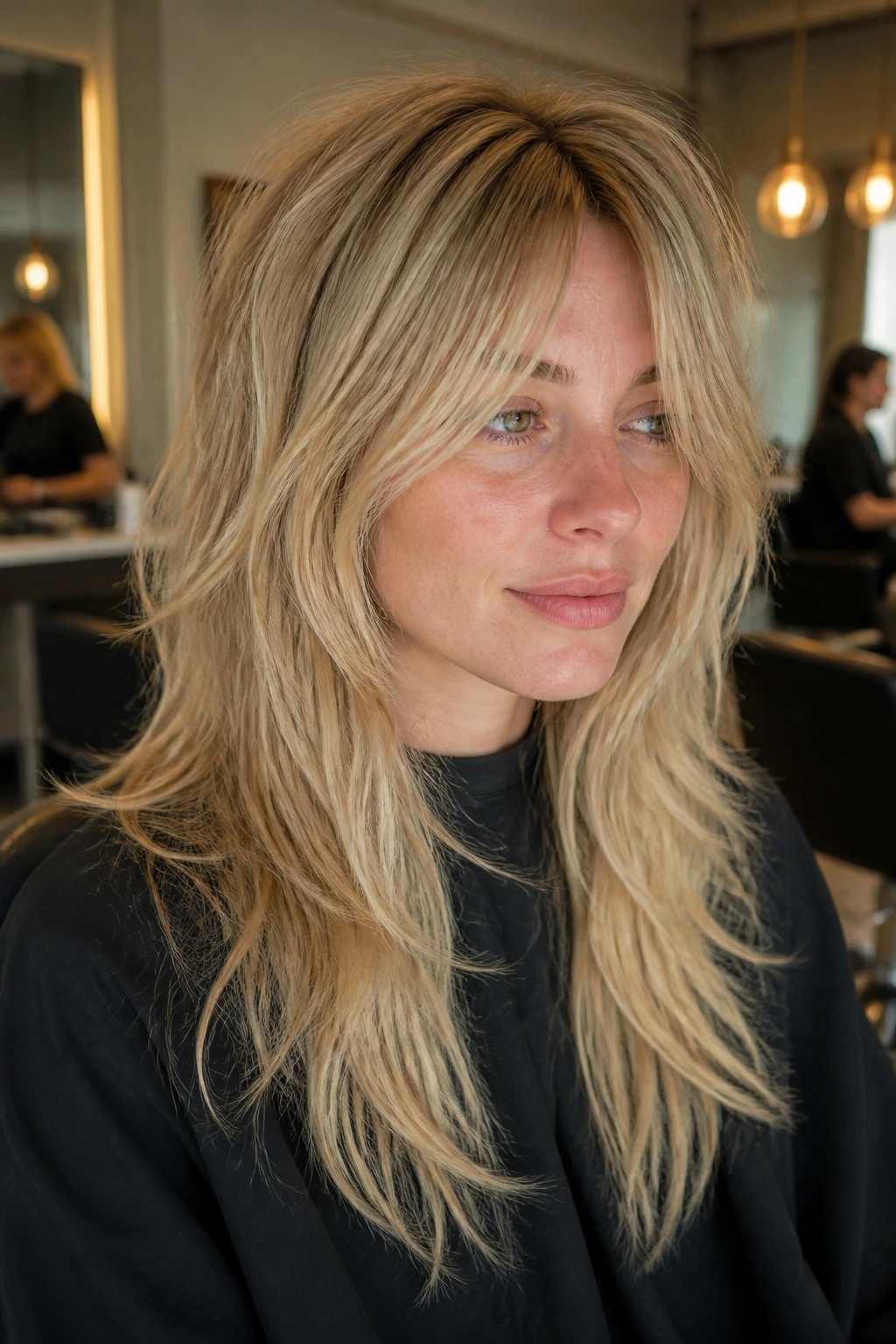
Bring a photo, yes, but bring one with the right texture. A shag on pin-straight hair does not behave like a shag on loose waves, and a screen grab from a curled model can send the whole appointment sideways. Tell your stylist whether you air-dry, rough-dry, or round-brush your hair most of the time. That matters more than a dozen adjectives.
Use plain language at the chair. Say where you want the shortest face-framing pieces to land — cheekbone, lip, or jaw. Say whether you want the fringe to part in the middle or stay flexible enough to sweep aside. If your hair is fine, ask for light internal layering and a heavier perimeter. If your hair is thick, ask where the bulk should come out. The difference between those two requests is huge.
Styling day one should not require a ceremony. A little mousse at the roots, a heat protectant through the mids and ends, then a rough-dry until the hair is about 80% dry. After that, shape the front with a round brush or a 1.25-inch iron. The goal is bend, not curl. If the ends start looking too polished, brush them out. Shags usually look better after you mess with them a little.
Tools and Products That Make the Shape Easier
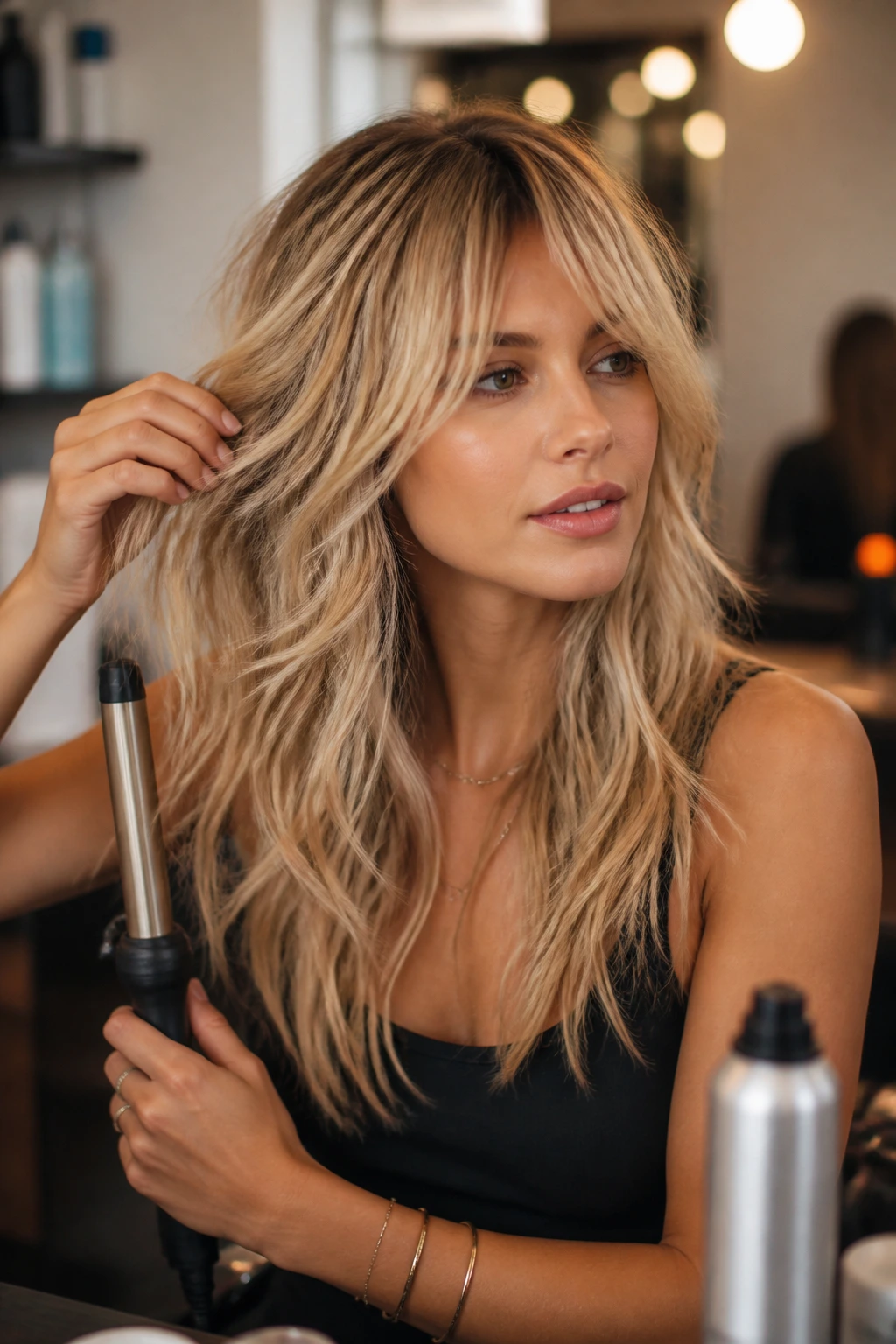
- Heat protectant spray — Use this before any blow-dry or iron work; blonde ends burn faster than darker hair.
- 1.25-inch curling iron or wand — Best for shaping the front pieces and giving the layers a loose bend.
- Round brush, medium barrel — Helps the fringe sweep away from the face without making it stiff.
- Blow dryer with a nozzle — Keeps the air focused so the cut doesn’t fluff out at the crown.
- Lightweight mousse — Good for root lift and for giving air-dried waves a little backbone.
- Texturizing spray — Use sparingly on the mids and ends; too much makes blonde hair look dusty.
- Dry shampoo — Useful at the roots on day two or three, especially if the fringe gets oily.
- Purple shampoo or toning mask — Keep this on hand if the blonde skews cool, platinum, or beige.
- Wide-tooth comb — Better than a brush for loosening waves without ripping out the movement.
- Sectioning clips — Small thing, big help. They keep the fringe and front pieces separate while you style.
Keeping the Shape Between Salon Visits
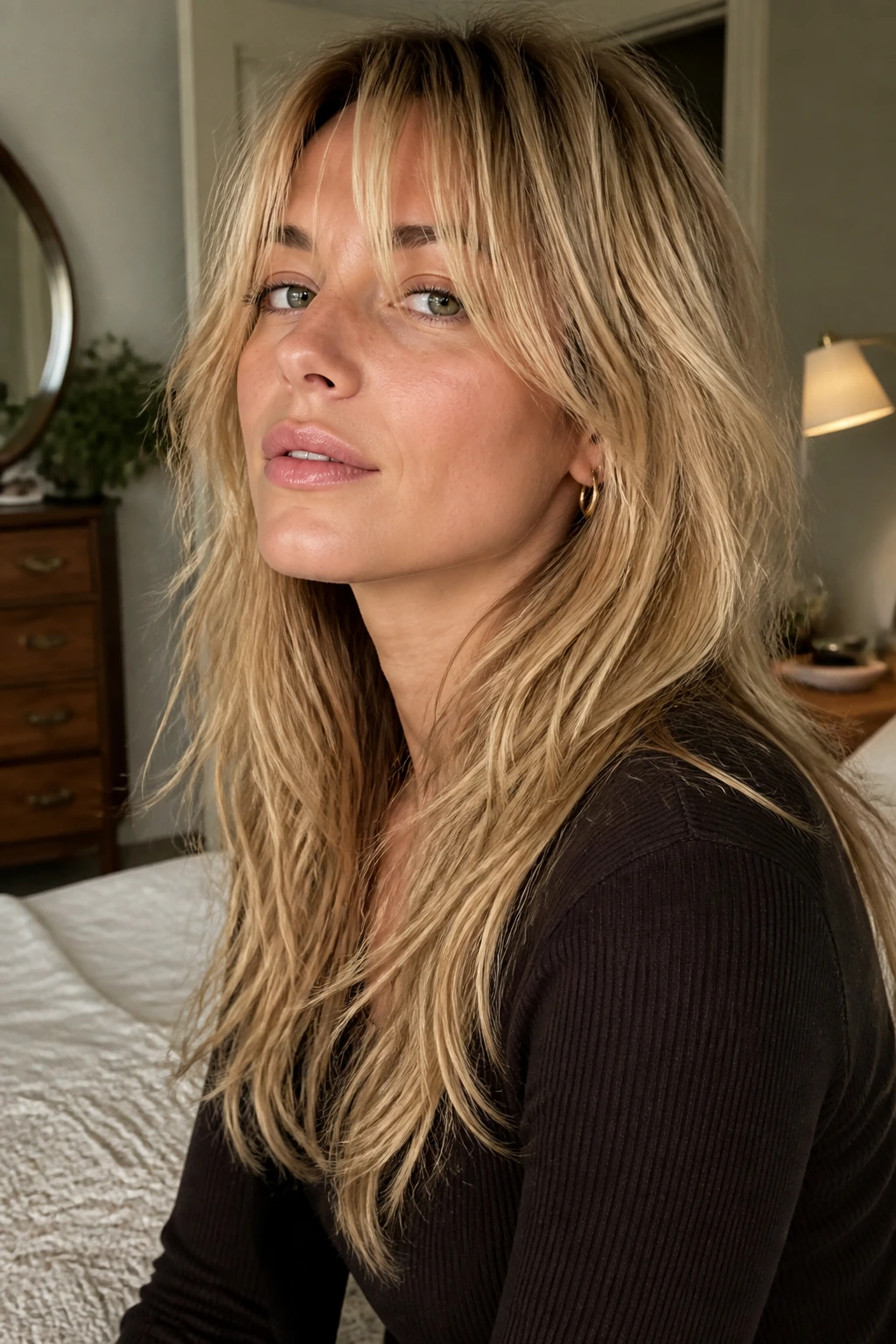
A long shag holds up better than a blunt cut, but it still needs some maintenance. The layer pattern loses its edge once the ends get too heavy or the fringe starts hanging in the eyes. I’d plan on a trim every 8 to 12 weeks if you want the silhouette to stay clear. If you keep bangs, the fringe often needs a cleanup sooner — around 4 to 6 weeks — or it starts dominating the face.
Blonde care matters too. Lightened hair likes weekly moisture, especially if the ends are razored or feathered. A rich conditioner once a week is a good baseline, and a bond-building mask can help if you heat-style often. For cool blondes, purple shampoo every 1 to 2 washes keeps brass from creeping in. Warm blondes usually need less toning and more shine.
On off days, dry shampoo at the roots buys you time, but don’t pile it on the mids. That’s where shag layers start to look dusty. At night, a loose braid or a silk pillowcase keeps the front pieces from turning into a frizzy knot. If you air-dry, scrunch the hair gently when it’s almost dry, not soaking wet. That’s the point where shape starts to stick.
Common Mistakes That Flatten the Shape
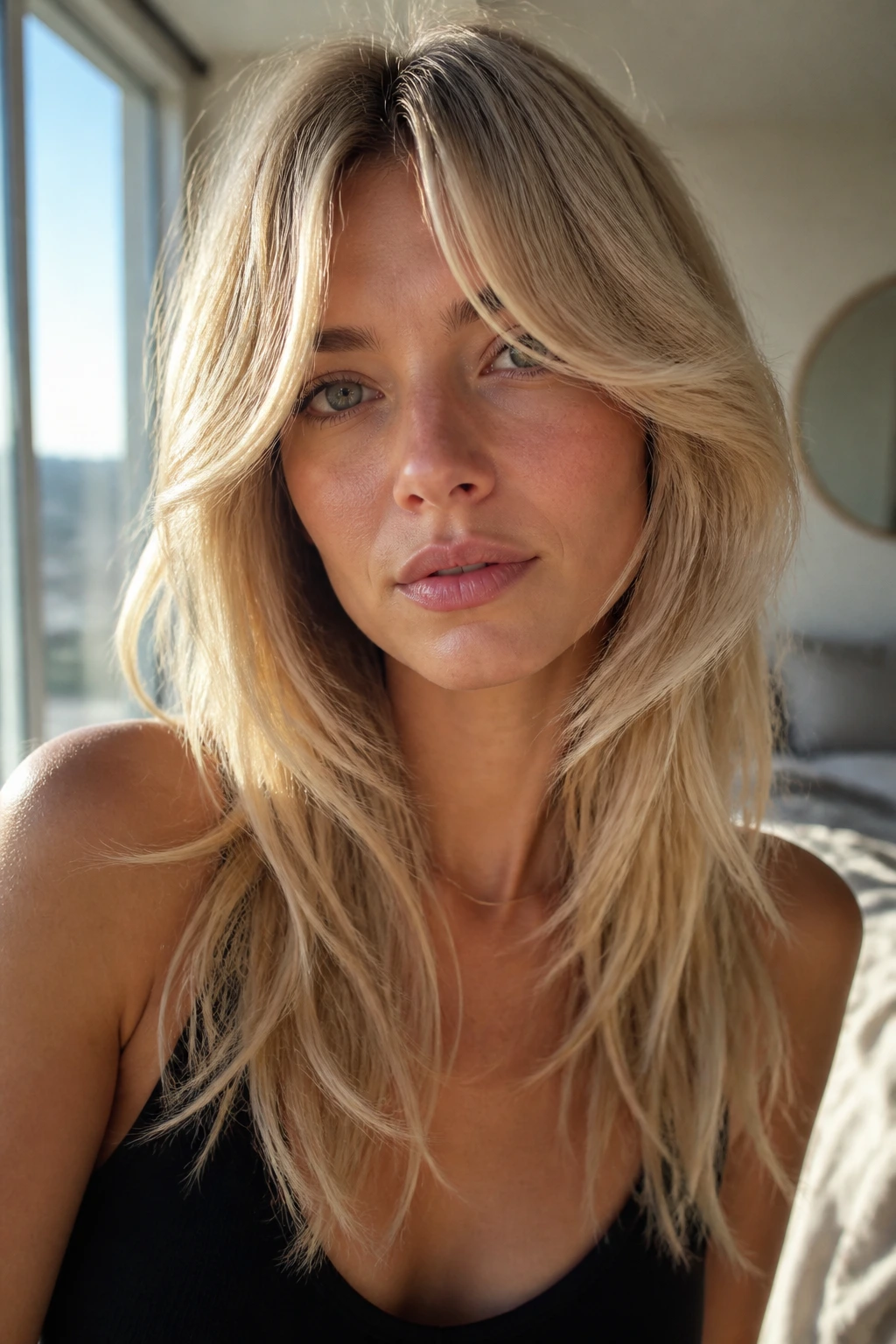
Cutting the layers too high is the easiest way to ruin the line. The hair gets puffy at the top and thin at the bottom, and the oval face suddenly looks longer because all the movement sits above the cheekbone. The fix is simple: keep the first visible face-framing layer lower and preserve weight through the ends.
Over-thinning fine hair is another one. It seems like a smart way to add movement, but fine hair often needs more perimeter than people think. If the ends look wispy and the scalp starts showing through at the crown, the layers went too far. Ask for softer, longer layers instead.
Ignoring the fringe length can make the face feel off. Short bangs can work, but on an oval face they need to be placed with care. If the fringe lands too high, the face opens too much and can look stretched. A cheekbone or brow-skimming fringe usually behaves better.
Using too much texture product can make blonde hair look chalky. A shag should move, not turn crunchy. A little spray at the mids is enough. If your hair feels sticky, you’ve gone past the point of helping it.
Skipping the toner or gloss is a sneaky mistake with blonde shags. Layered hair needs dimension, and brass or flatness hides the whole cut. Even a soft gloss can make the layers look cleaner and more intentional.
Variations and Alternatives to Try
The Fine-Hair Whisper
Keep the layers longer and lighter, with just enough face framing to bend the shape. This version is best if your hair goes flat by noon and you want movement without sacrificing the ends.
The Thick-Hair Shatter
Use internal debulking and a razor-soft finish to remove bulk from the crown and mids. It’s the best answer for dense hair that turns triangle-shaped if left alone.
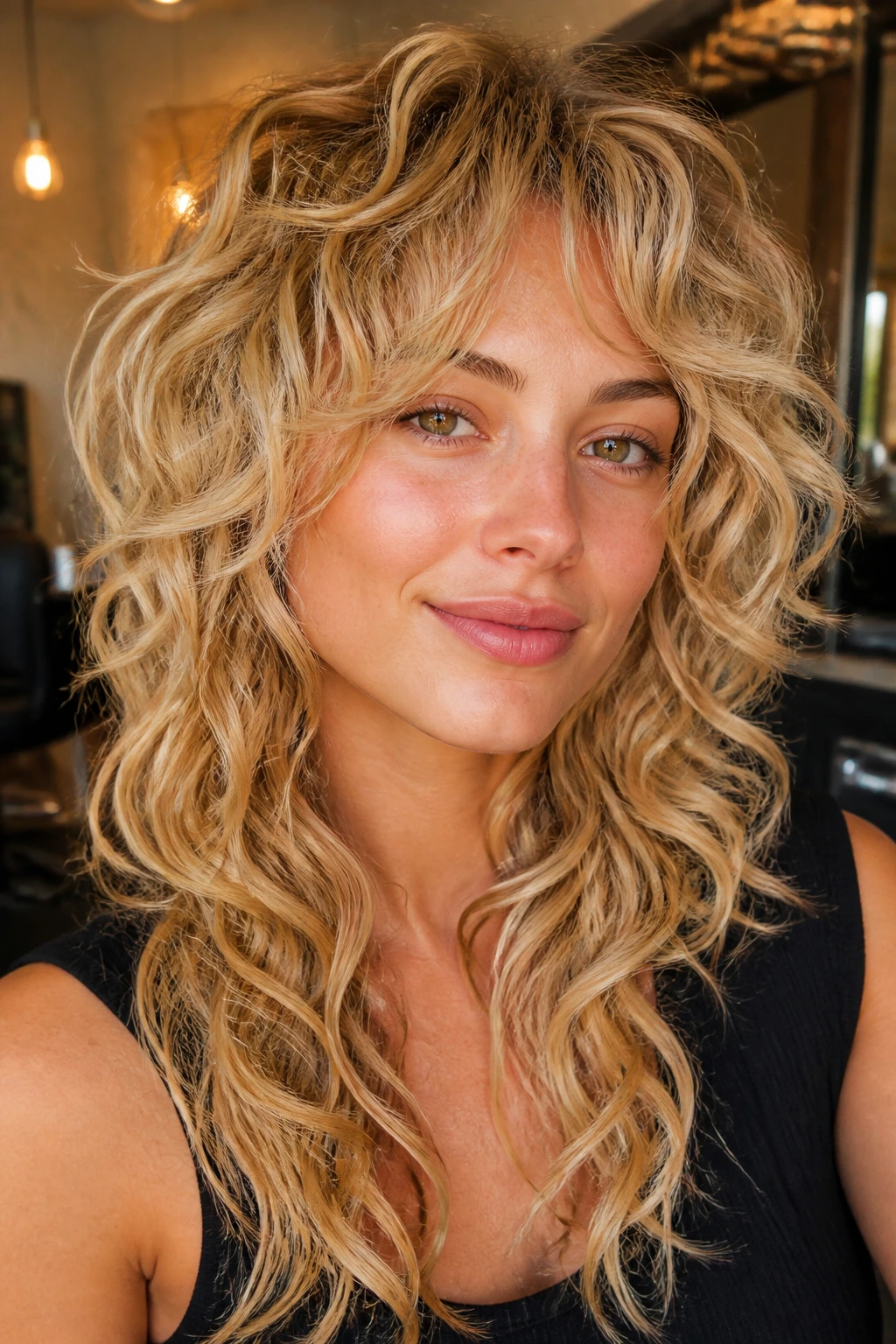
The Curl-Friendly Halo
Let the shag follow the natural curl pattern instead of fighting it. The layers should be cut so the curls stack around the face in a loose halo, not a mushroom cloud.
The Straight-Hair Bend
Ask for longer, smoother layers that can be styled with a round brush or soft iron bend. This version keeps the outline cleaner and is easier if your hair never wants to wave on its own.
The Grow-Out Safe Fringe
Choose curtain bangs or bottleneck bangs that can merge into the sides as they grow. It’s the easiest route if you don’t want to trim fringe every few weeks.
Frequently Asked Questions
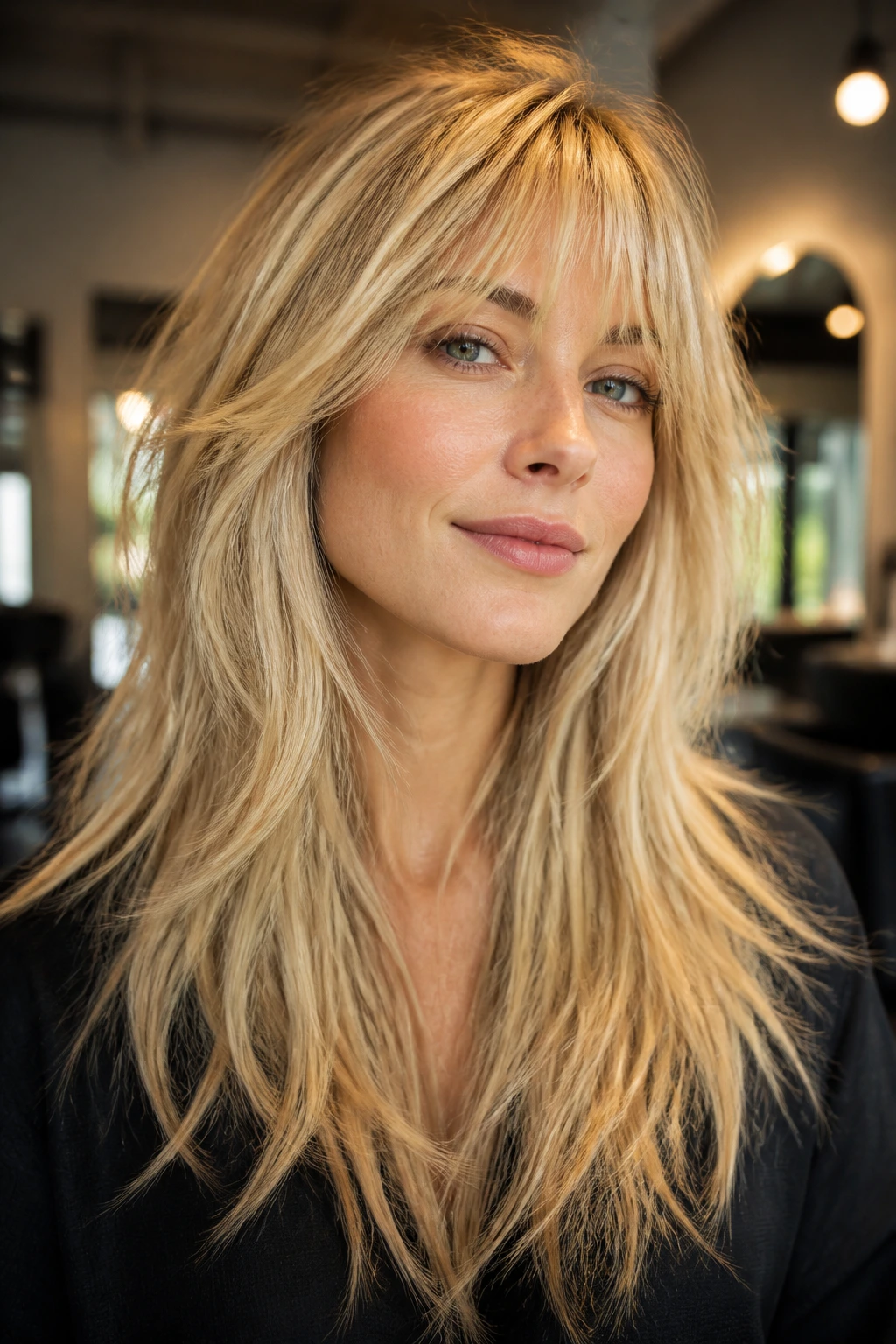
Will a long shag make an oval face look longer?
It can, if the shortest layers sit too high and the front is left bare. Keep face-framing pieces around the cheekbone or lip line, and add a little width at the sides so the eye doesn’t shoot straight down the center.
Are curtain bangs or bottleneck bangs better for oval faces?
Both work. Curtain bangs feel softer and easier to grow out, while bottleneck bangs add a little more forehead coverage and can shorten the face slightly if that’s what you want.
Can fine hair handle a blonde long shag?
Yes, but it needs restraint. Ask for light layers and keep enough weight in the perimeter so the ends don’t go see-through. Too much thinning is where fine hair gets into trouble.
What if my hair is pin-straight and won’t hold texture?
Choose a version with longer, smoother layers and plan on a round brush or a soft bend iron. You do not need beach waves for the cut to work. A clean bevel at the ends can do the job.
How often should I trim a shag like this?
Most long shags stay in shape with trims every 8 to 12 weeks. If you wear fringe, the front may need a small cleanup sooner so it doesn’t hang over the eyes and flatten the whole look.
Does blonde color matter as much as the cut?
Yes. Dimension shows the layers, and the wrong blonde can hide them. A root shadow, balayage, or ribbon highlights make the movement easier to read than a single flat tone.
Is this cut hard to grow out?
A well-cut long shag grows out better than a blunt cut because the layers are already blended into length. If the top is cut too short, though, the grow-out gets awkward fast, so placement matters from the start.
Can I air-dry a long shag and still get shape?
You can, especially with wavy hair. Use a little mousse, scrunch the mids, and keep the front pieces clipped away from your face while they set. Straight hair usually needs a bit more help from a brush or a wand.
The Shape That Stays Interesting
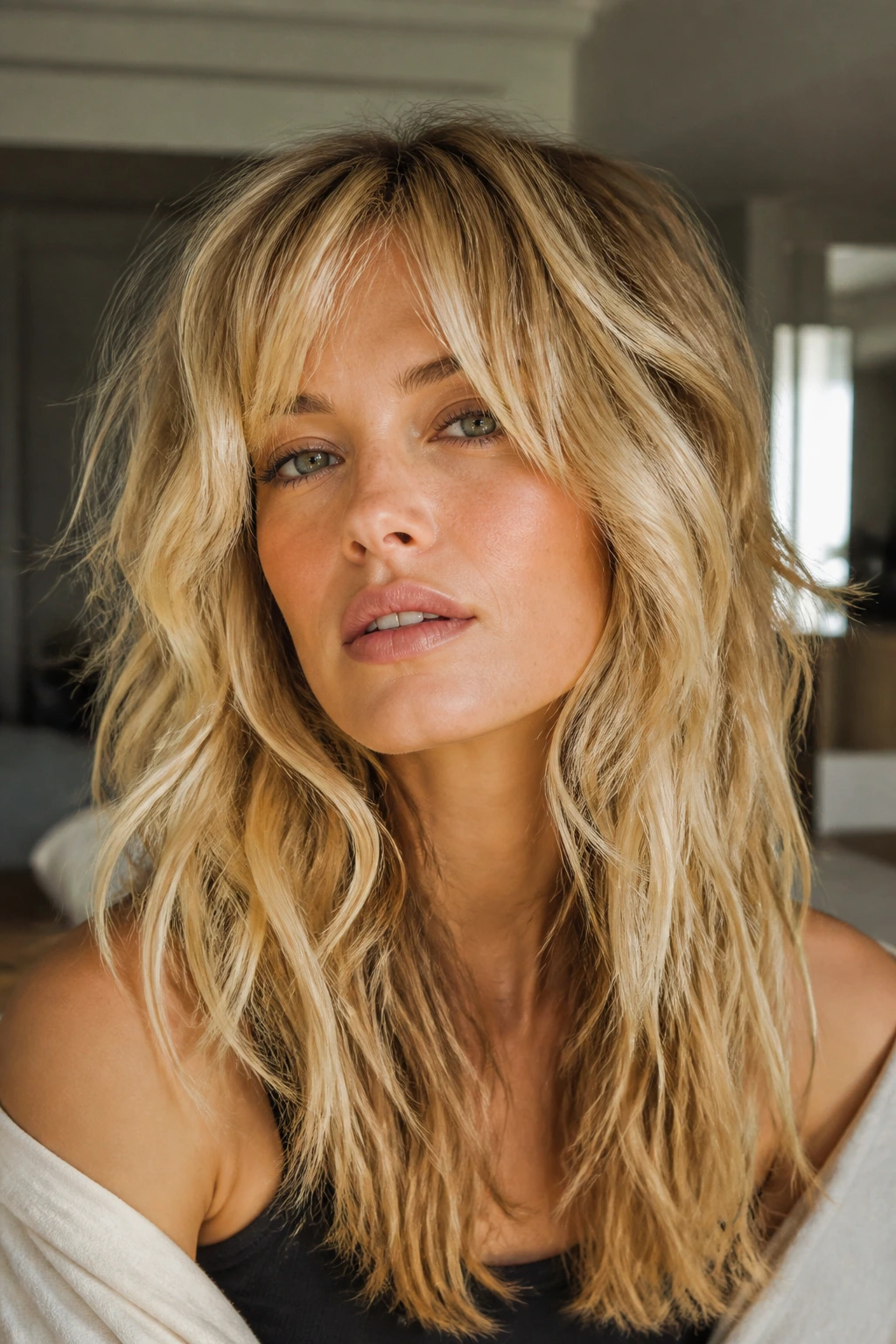
The best blonde long shag haircuts for oval faces do something rare: they keep changing as they grow. A little extra length doesn’t ruin them. A day-old wave often makes them better. And because the face shape already has balance, the cut gets to be playful without becoming fussy.
That’s the version worth bringing to the chair — not the most dramatic one, just the one with the right layers in the right place. If you get the fringe, weight, and color placement right, the haircut will do that lovely shag thing where it looks like it happened naturally, even though every good inch of it was planned.