



A square face can wear a shag beautifully, but only when the layers are placed with some discipline. The best medium shag haircuts with bangs for square faces do not stop right on the jaw and call attention to the corners; they start breaking the line above or below that point, then move the eye through the cheekbones instead. That difference sounds small on paper. On a head, it changes everything.
Medium length is the sweet spot because it gives the hair room to swing without hanging heavy. At chin length, a shag can get boxy fast. At long length, the shape can sag and lose the bounce that makes bangs feel alive. Collarbone-to-shoulder territory keeps the movement visible, and it gives curtain bangs, bottleneck fringe, and side-swept pieces enough length to bend instead of sit flat. I like that balance a lot — a little rock-and-roll, a little restraint.
And yes, bangs matter. A blunt line across the forehead can make a square face feel firmer than it needs to be, while a split fringe, curved fringe, or long feathery bang can soften the whole thing in one glance. The first few cuts below show how much range there is inside one haircut family, and the differences are not subtle when you see them in motion.
Why These 22 Shag Cuts Work on Square Faces

-
Jawline softening: The shortest face-framing pieces sit around the cheekbones or just below them, so the jaw stays part of the shape instead of becoming the whole story.
-
Bangs with options: Curtain fringe, bottleneck bangs, side sweeps, and piecey full bangs all break up width without laying a hard horizontal line across the forehead.
-
Medium length is practical: A collarbone or shoulder-grazing cut still ties back, tucks behind the ears, and air-dries faster than longer layered hair.
-
Texture does the heavy lifting: These shags rely on movement, so they work with straight, wavy, curly, fine, and dense hair when the cut and styling match the texture.
-
Grow-out is easier: A soft perimeter and layered fringe can look intentional for 8–12 weeks, even when the shape starts to loosen.
-
Color loves this cut: Balayage, money pieces, and lowlights show off the layers instead of disappearing into one flat sheet.
How the Right Layer Map Softens a Strong Jawline
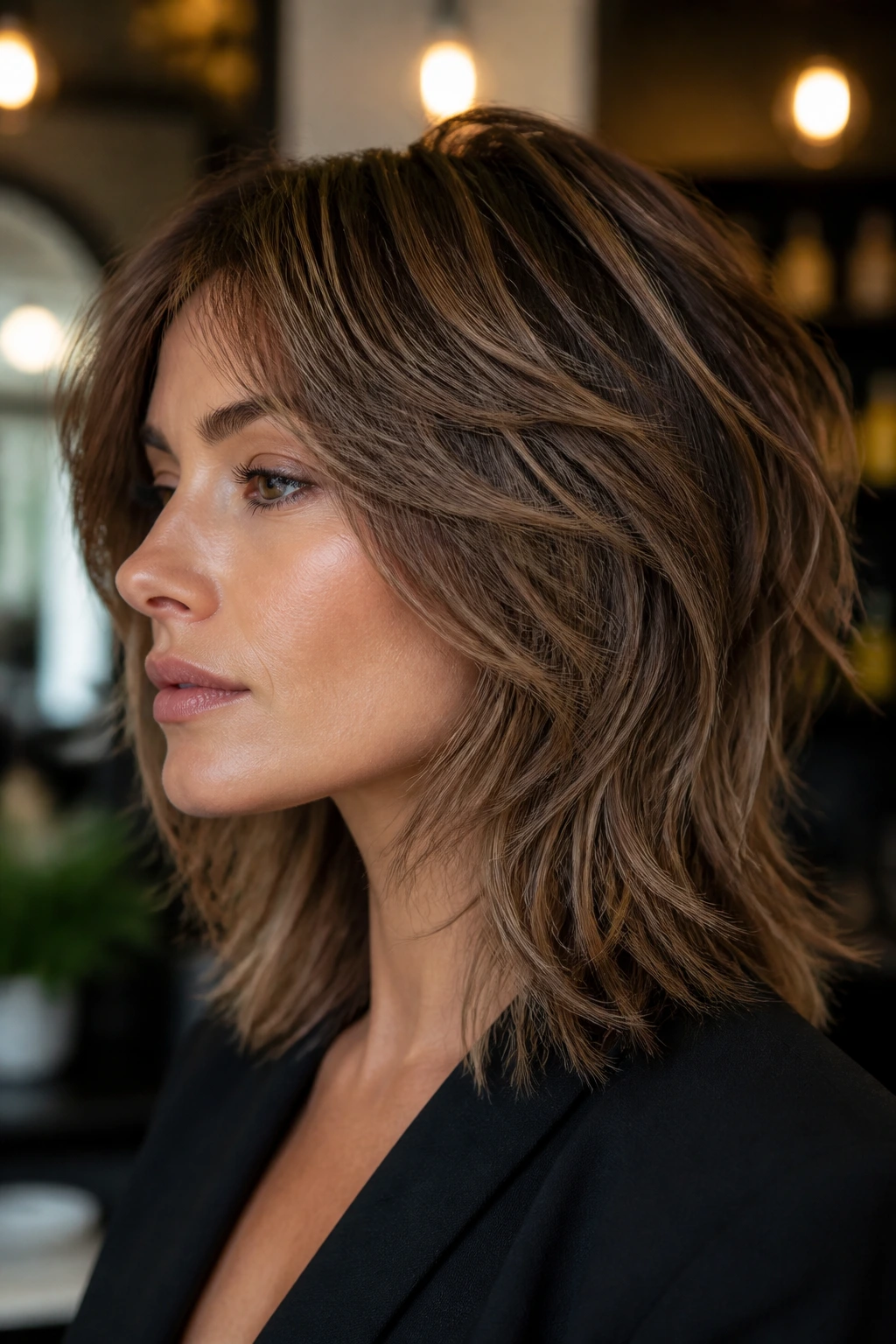
A square face usually has a broad forehead, a straight side plane, and a jaw that carries real presence. That’s not a flaw. It’s structure. The job of a shag is not to hide that structure behind a curtain of hair; it’s to break up the hard edges so the face reads softer and more oval from a distance.
The key is placement. When the shortest face-framing piece lands exactly at jaw level, it can hook right into the corners and make the face look wider. When those same pieces fall at cheekbone level or a little below, the eye travels upward before it settles, and that changes the whole outline. Small move. Big payoff.
Keep the Shortest Pieces Away from the Jaw Corners
The old mistake is cutting the front layers to the exact width of the jaw. It sounds neat. It looks boxy. A better shag leaves the shortest point of the frame higher or lower than the jaw corners, then uses tapering ends to guide the eye down instead of out.
Let the Fringe Split, Sweep, or Curve
Bangs matter less when they’re heavy and straight, more when they bend. Curtain bangs, bottleneck fringe, and side-swept pieces interrupt the width of the forehead without creating a hard shelf. If you like full bangs, a soft arc or piecey texture keeps them from turning the face into a rectangle.
Leave Some Weight at the Perimeter
A shag can go wrong when the stylist thins every inch of hair to the point where the ends look see-through. That often makes thick hair puff and fine hair fray. A better cut keeps a little weight at the bottom so the hair has a shape to sit on. Movement. Not fluff.
1. Collarbone Curtain Shag
The collarbone curtain shag is the one I’d hand to someone who wants a safe starting point without looking boring. The fringe splits around the bridge of the nose, the sides fall open over the cheekbones, and the ends graze the collarbone instead of stopping at the jaw. On a square face, that line is kind. It draws the eye down and out in soft diagonals.
What makes it work is the proportion. The front feels light, but the cut still has enough length to move when you turn your head. Blow it out with a round brush or rough-dry it with a dab of mousse, and the layers take on that easy, slightly undone swing that makes a shag feel alive instead of chopped.
2. Razor-Swept Side-Fringe Shag
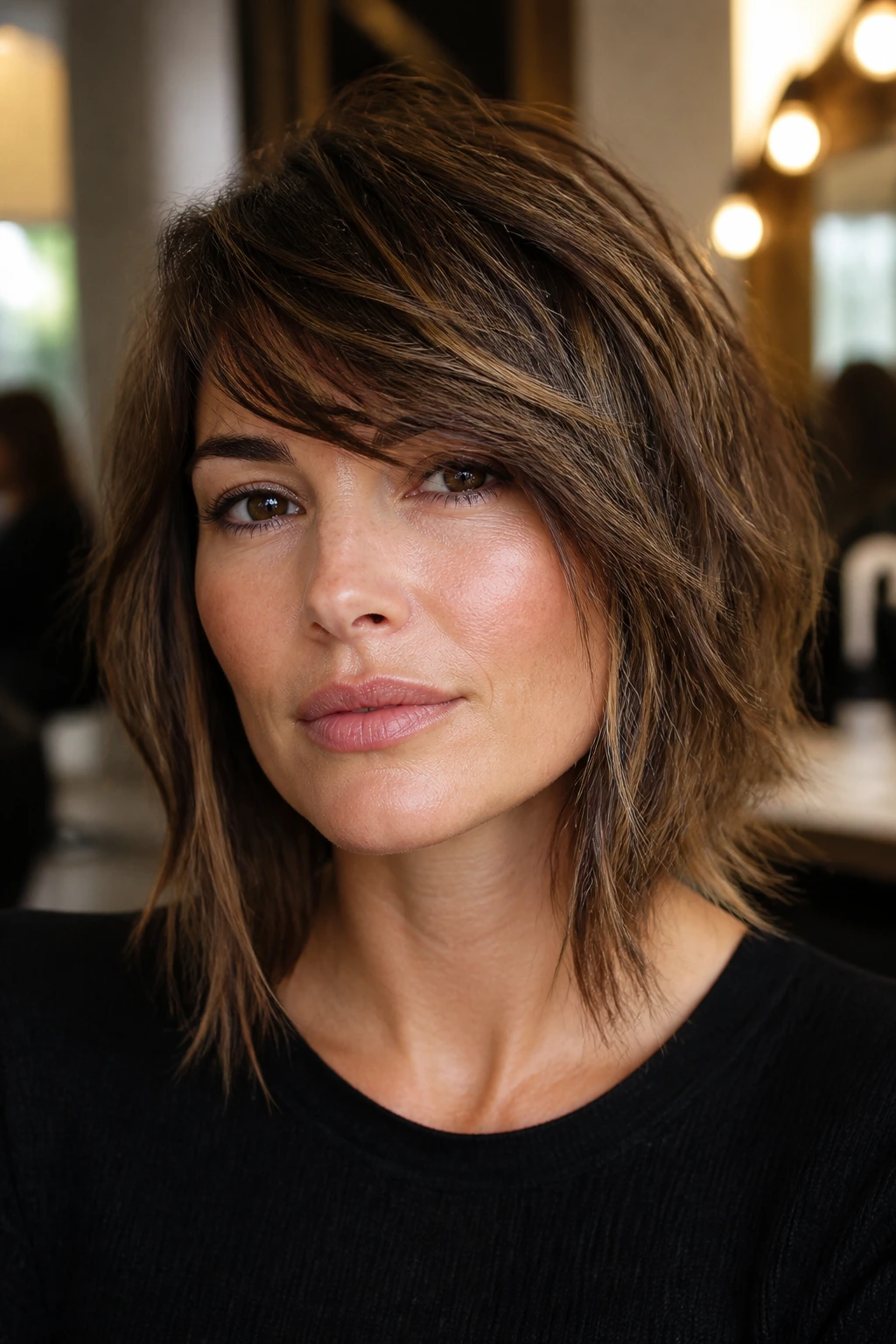
Why does a side-swept fringe work so well here? Because asymmetry is one of the cleanest ways to soften a square jaw. A deep side part cuts across the forehead on a diagonal, which keeps the face from reading as wide and even at every point. That alone changes the mood.
This version is especially good if your hair is straight or only mildly wavy, because the razor-cut ends keep the edge from feeling too stiff. Ask for a long side fringe that blends into cheekbone-length layers, not a separate bang that sits on top like a helmet. If you like a little attitude in your haircut, this one has it.
3. Bottleneck Breeze Shag

Bottleneck bangs are the sneaky best choice when you want fringe but don’t want a heavy bar across the forehead. The bang starts narrow near the center, then opens wider toward the cheeks, which is exactly the kind of shape a square face likes. Narrow up top, softer on the sides. That’s the whole trick.
This shag usually looks best when the perimeter sits somewhere between the top of the shoulders and the collarbone. Too short and it gets too playful. Too long and the bang loses its contrast. Keep the ends a little piecey with a texture spray, and the whole cut gets this airy, almost windblown look that still feels controlled.
4. Wavy Wolf-Lean Shag

If you want a little more bite, this is the lane. The wavy wolf-lean shag borrows the longer crown and tapered nape from a wolf cut, but it keeps the overall length in medium territory so the shape doesn’t wander off into full mullet land. That matters on a square face, because the extra length in back pulls the silhouette downward instead of letting everything sit at the jaw.
Long, split bangs keep the front from getting too severe. They can be pushed apart, tucked behind one ear, or left to fall over the brows in a loose curtain. I like this version on hair that already has some bend in it; the texture makes the layers look intentional instead of overdesigned.
5. Feathered Cloud Shag

Fine hair often needs a little kindness, not a lot of chopping. The feathered cloud shag keeps the layers soft and light, with a wispy fringe that brushes the eyebrows instead of landing in a blunt block. The effect is airy, not skeletal, which is a real distinction. Over-thinning fine hair makes it limp. Feathering it leaves movement behind.
Why It Flatters a Square Face
- The crown gets lift, which lengthens the face visually.
- The fringe breaks the forehead line without hiding it.
- The ends stay soft around the shoulders, so the jaw corners don’t become the focal point.
Use a lightweight mousse at the roots and a small round brush if you blow-dry. Heavy cream will flatten this cut fast. A little grit is better than too much polish here.
6. Curved Curl Shag
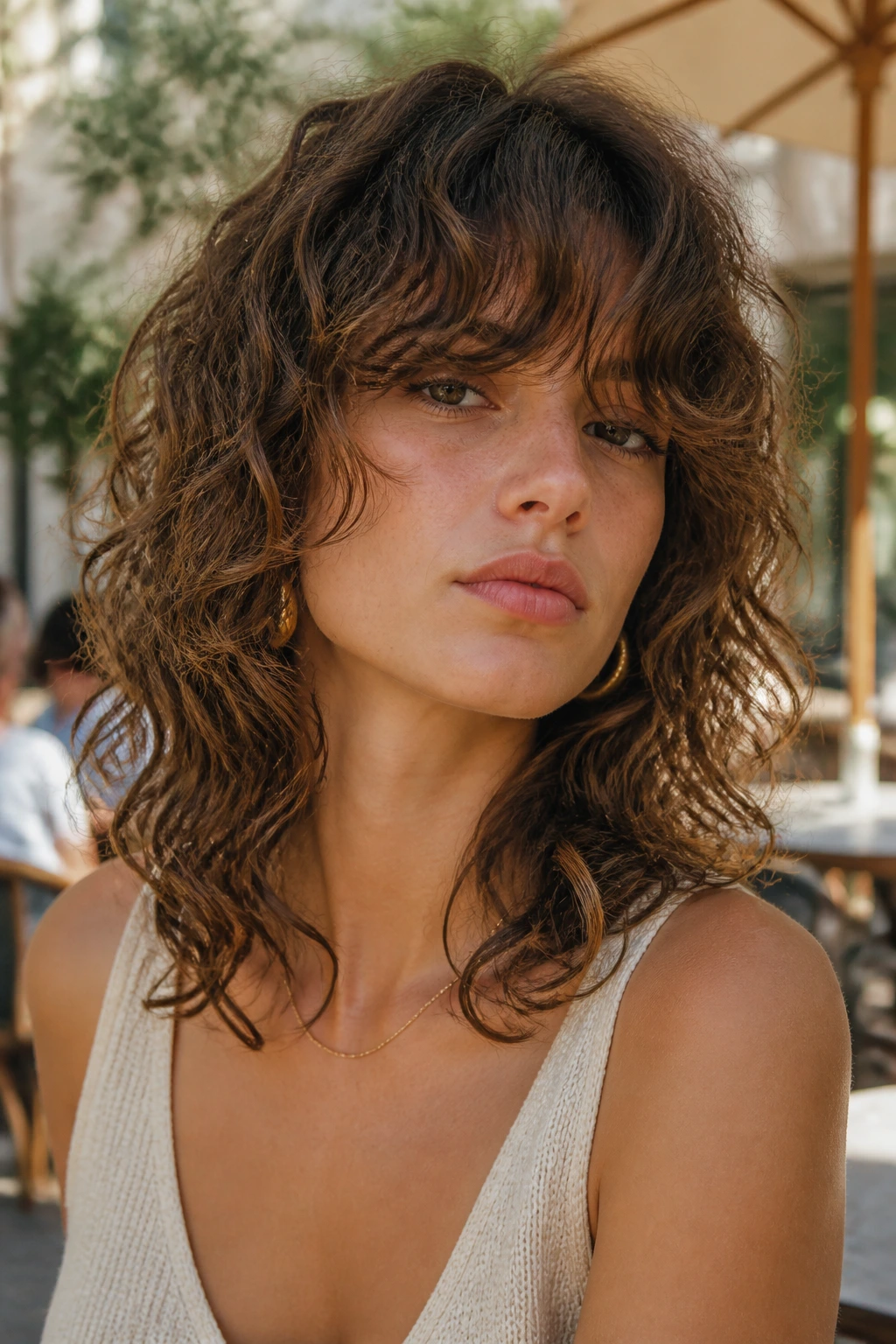
Curly hair changes the whole conversation, because the shape lives in the curl pattern, not just the scissors. A curved curl shag keeps the fringe longer than you might expect, then lets it bend naturally into the face frame. The result is softer around the jaw and fuller near the cheekbones, which is exactly where a square face benefits from movement.
The one thing I’d insist on is a dry or mostly dry cut. Curls shrink. Some coil up a full inch or more when they dry, and fringe that looks perfect wet can disappear above the brows once it springs. Ask your stylist to leave the bangs long enough to graze the lashes when dry, then shape the side pieces so they sweep away from the jaw instead of stopping at it.
7. Arched Full-Bang Shag

A full fringe can work on a square face if it has curve. That’s the important bit. The arched full-bang shag keeps more density across the forehead, but the center sits a touch shorter and the sides angle longer, so the line feels rounded instead of flat. That little arc keeps the face from looking sealed off at the top.
This is the version I’d suggest for thicker hair that naturally holds a bang well. You get substance without bluntness. A quick round-brush pass under the fringe and a bend through the front layers is enough to make the shape read as soft instead of severe. If your hair likes to keep its form, this one has staying power.
8. French-Girl Fringe Shag

The French-girl fringe shag sits in that sweet spot between polished and tousled. The bangs are fuller than curtain fringe, but they stay piecey and slightly separated at the ends. That texture is what keeps the cut from crowding a square face. A dense, one-length fringe would pull the eye into a single hard band. This version keeps the line broken.
The rest of the haircut should feel easy, not overworked. Think shoulder-skimming layers, subtle bends, and ends that move when you shake them out. It’s a good choice if you like a haircut that can look neat with a blazer and slightly messy with a sweater. Oddly enough, that’s where the cut gets its charm.
9. Split-Bang Textured Lob
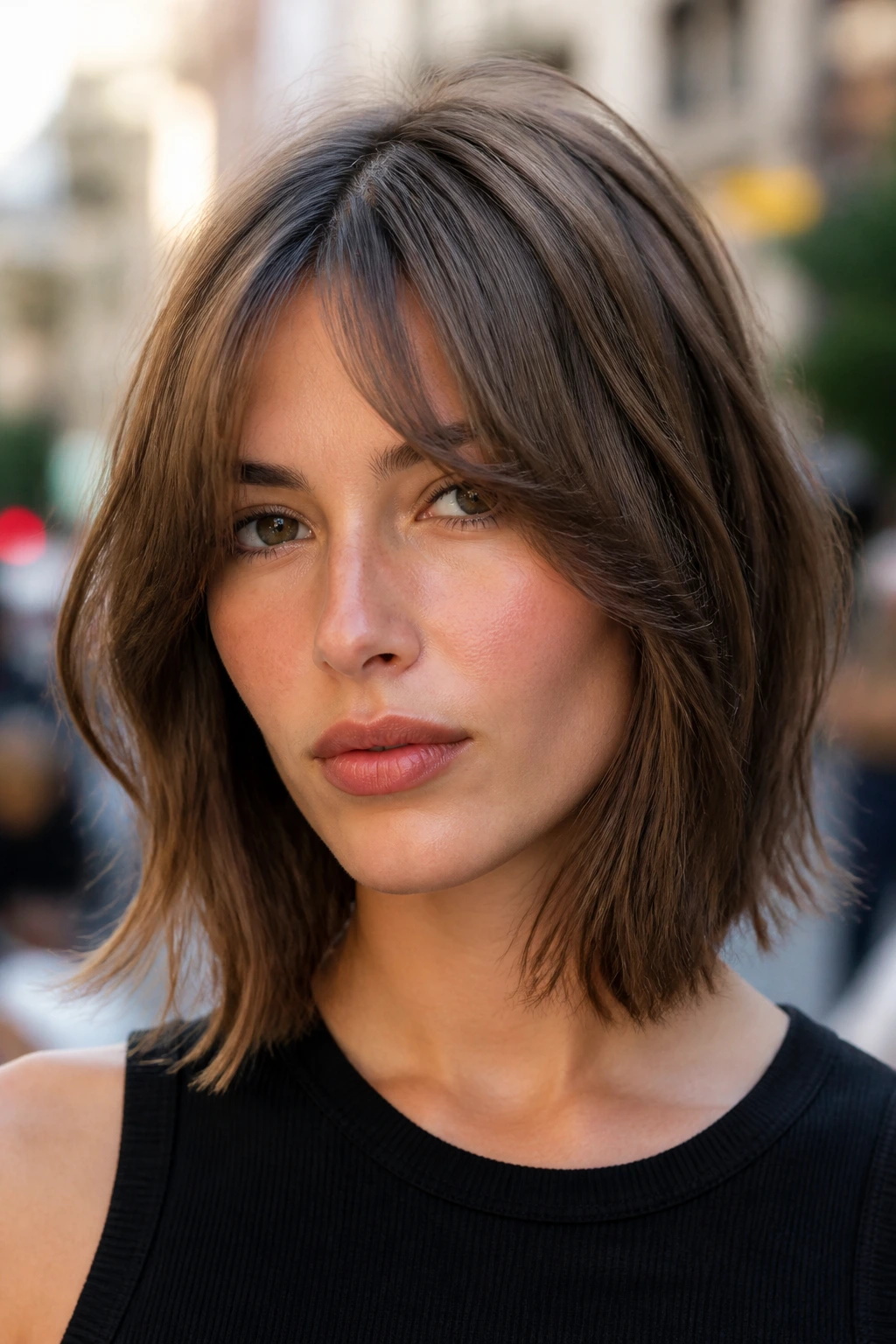
A lob with a shag’s internal movement can be a very clean answer for a square face. The split bang opens in the center, then drapes to either side like two soft curtains. That keeps the forehead from feeling boxed in while the collarbone length adds a bit of vertical line.
What to Ask for
- A collarbone-length perimeter with soft, broken ends.
- A center split or very soft off-center part.
- Face-framing pieces that start around the cheekbone, not the jaw.
- Enough texture through the mids so the lob doesn’t sit like one smooth sheet.
This is a good cut if you want less chaos than a wolf-lean shag but more shape than a plain blunt lob. It feels tidy in daylight and a little cooler after dark, which is a nice range to have.
10. Rounded Retro Shag
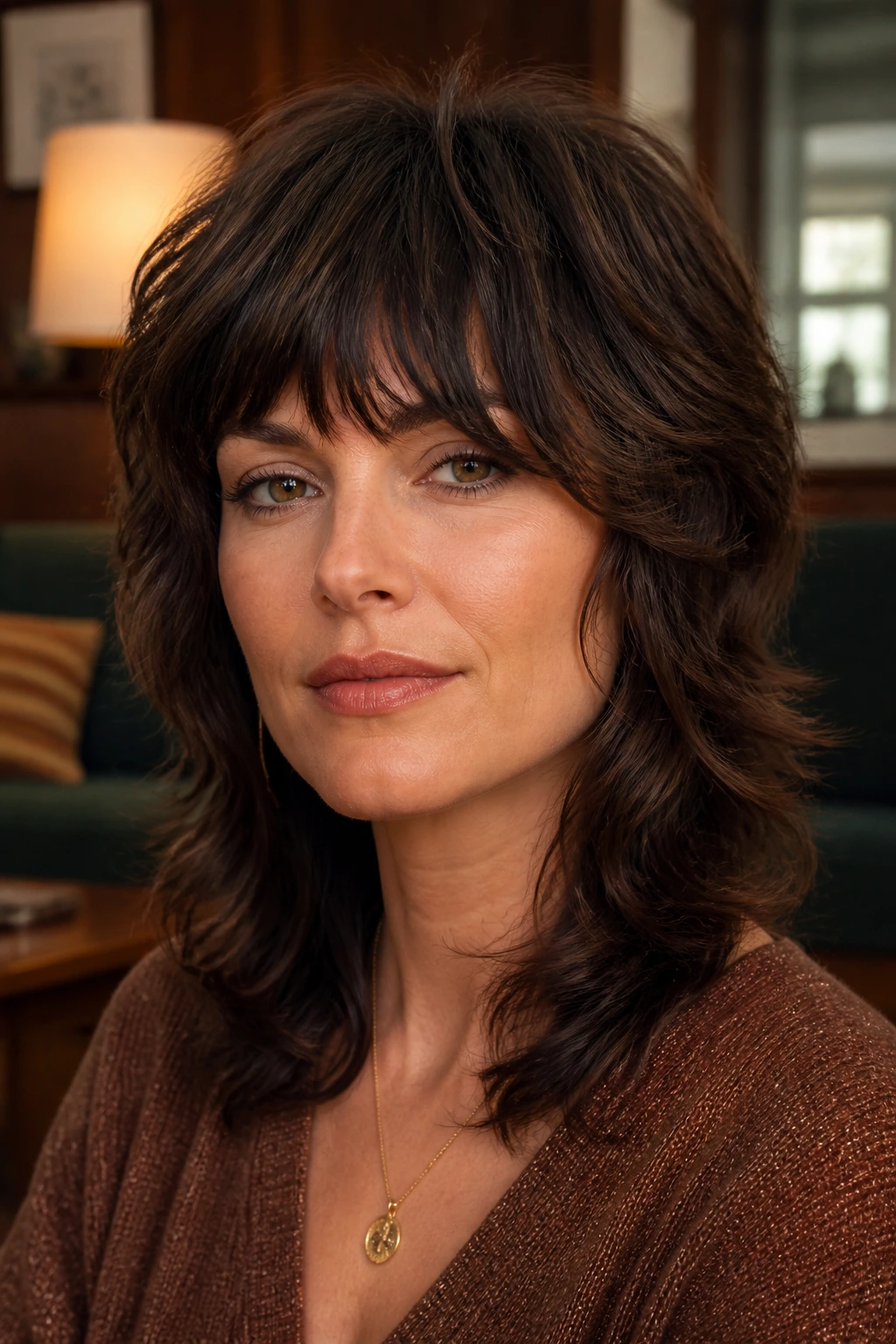
There’s a reason the rounded retro shag keeps coming back: roundness flatters angular bone structure. The crown has lift, the sides curve gently, and the bangs follow a soft arch instead of a ruler-straight line. On a square face, that combination is almost stubbornly effective.
The trick is not to over-volume it. A giant puffy blowout can make the head look wider, which is the opposite of what you want. Instead, aim for brushed-out movement with a bend at the ends and a little fullness at the crown. The shape should feel buoyant, not inflated.
11. Diagonal Bang Shag
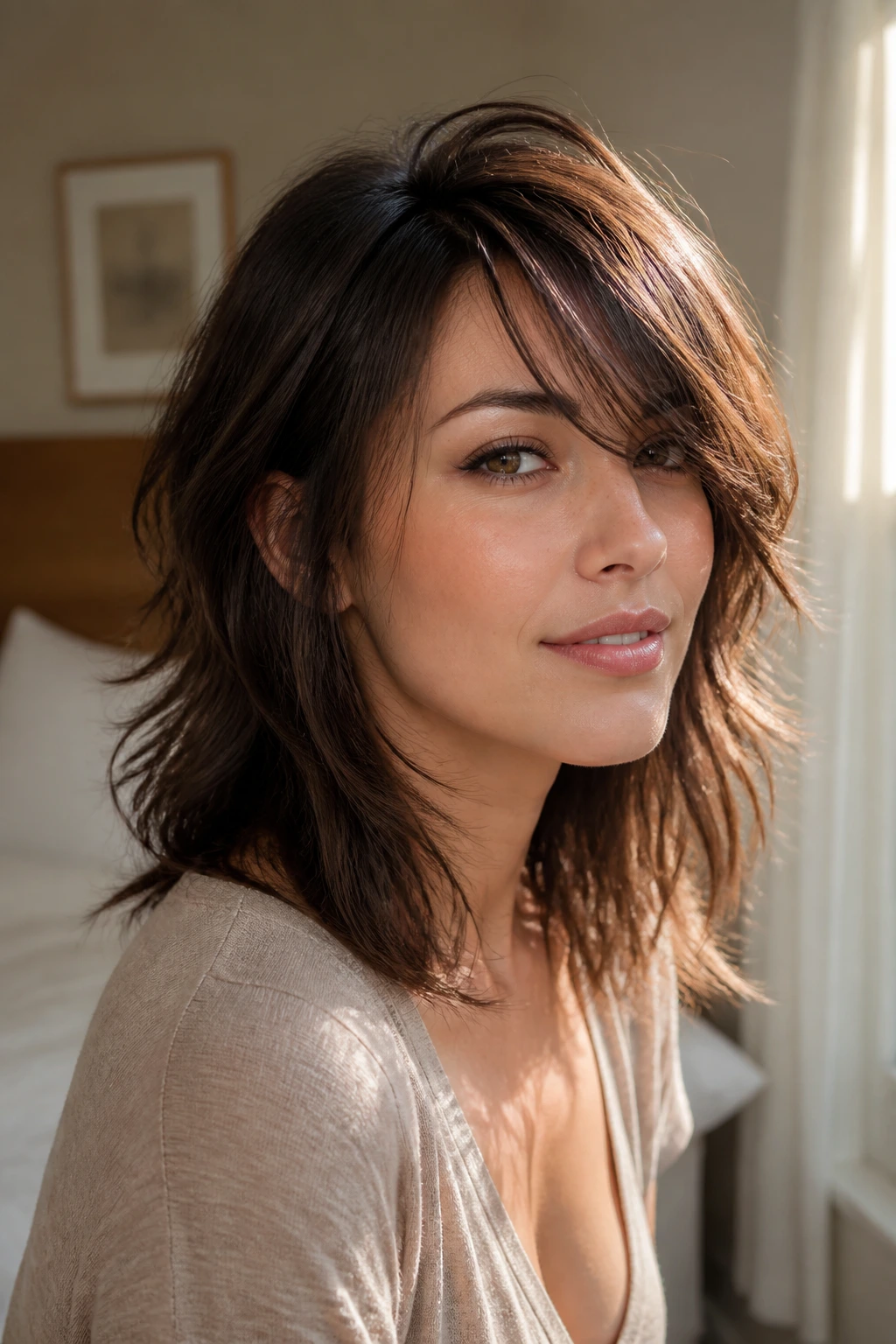
A deep side part changes everything. The diagonal bang shag uses that angle to steer the eye across the face rather than straight down the center, which makes the jaw feel less squared off. If you’ve ever looked in the mirror and thought, my face is all lines, this is one of the easiest ways to break them up.
The rest of the cut should echo that diagonal energy. Keep the layers feathered, not chunked, and let the front pieces fall at different lengths so the hair doesn’t stack into one wall. This is one of those styles that looks casual but is secretly doing a lot of work.
12. Air-Dry Whisper Shag

Not every shag needs a round brush and a half-hour of your life. The air-dry whisper shag is built for low effort: soft layers, a light fringe, and enough internal movement that the hair still looks shaped when you leave it alone. Square faces tend to like this cut when the bangs are long enough to split naturally and the ends are broken up just enough to avoid a boxy silhouette.
Use a small amount of mousse or foam through damp hair, scrunch the mids, and twist the front pieces once or twice while they dry. That tiny bit of coaxing keeps the fringe from drying into a flat curtain across the forehead. Don’t overload it with product. The cut needs air, not weight.
13. Thick-Hair Shag with Thinned Bangs
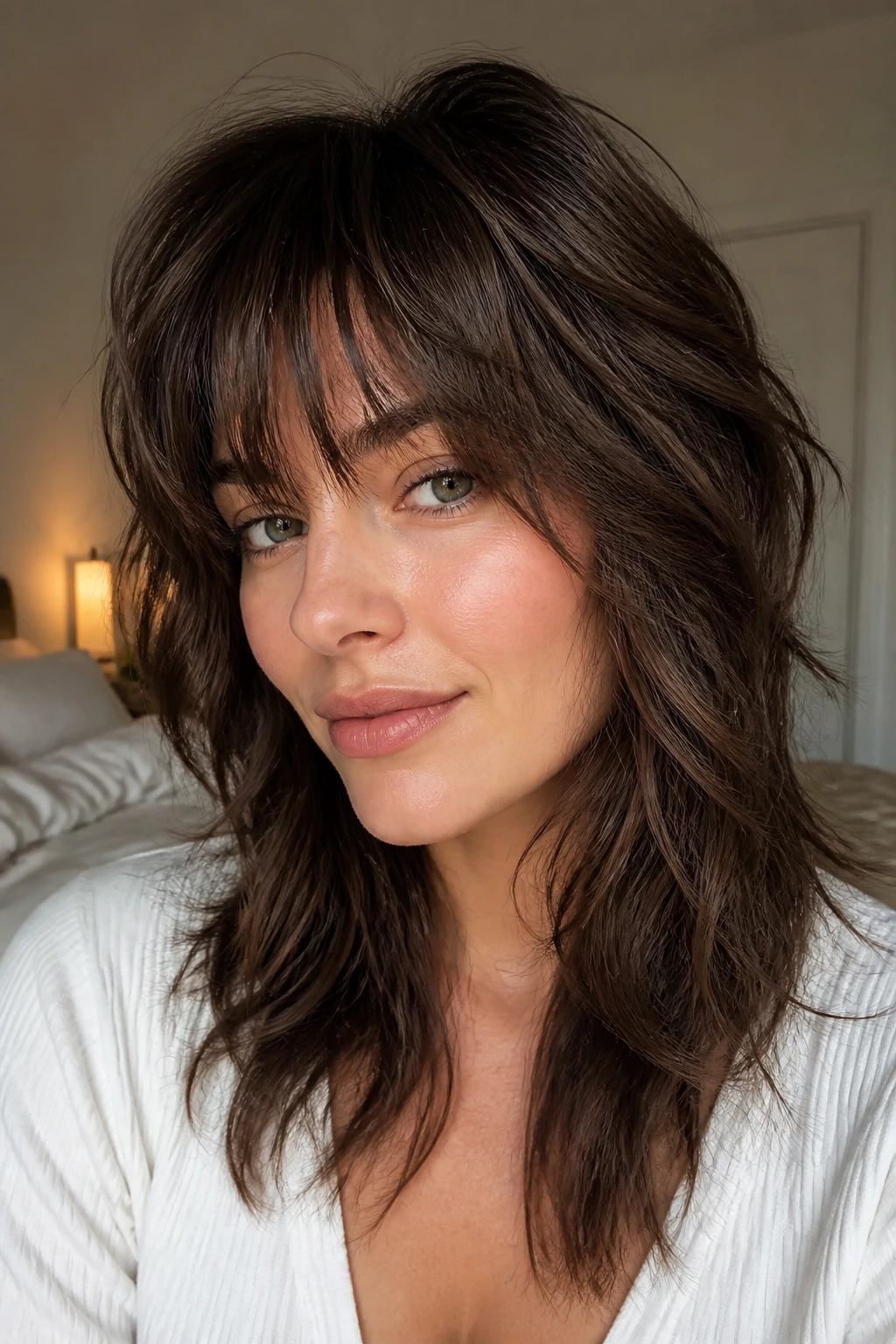
Thick hair can wear bangs beautifully, but the bangs have to be managed with a light hand. A thick-hair shag with thinned bangs keeps the body of the haircut controlled through the interior, then softens the fringe so it doesn’t sit like a solid block across the brow. On a square face, that matters because a heavy bang can echo the jawline too loudly.
The key is selective removal, not aggressive thinning everywhere. You want enough bulk left in the perimeter so the cut doesn’t frizz into a halo by midday. Ask for internal layers and point cutting, then keep the fringe piecey rather than blunt. The result is less “big hair wall” and more “controlled movement.”
14. Root-Lift Shag for Fine Hair

Fine hair can look flat fast, which is why the root-lift shag is such a useful option. The layers start high enough to create crown lift, but not so high that the ends go wispy and sad. A square face benefits from that lift because it adds length through the top half of the head and keeps attention away from the jaw corners.
A small root spray, a quick blow-dry at the crown, and a narrow round brush are enough to bring this one to life. Keep the bangs light and a little longer than you think you need. Fine hair that sits too short at the forehead can vanish into the face instead of framing it.
15. Straight-Hair Piecey Shag

Straight hair tells on a bad cut. Every blunt edge shows. That’s why a piecey shag is such a smart move if your hair tends to fall flat and glossy. The interior layers are cut to move, the ends are point-cut so they break apart a little, and the bangs stay separated instead of welded into one solid strip.
This is a good version if you like a haircut that still looks intentional when you do almost nothing to it. A bit of texture spray on dry mids, a finger twist around the front pieces, and you’re done. I’d avoid making the bangs too short here; straight hair has a habit of making short fringe look harsher than expected.
16. Swoopy Wolf-Cut Shag
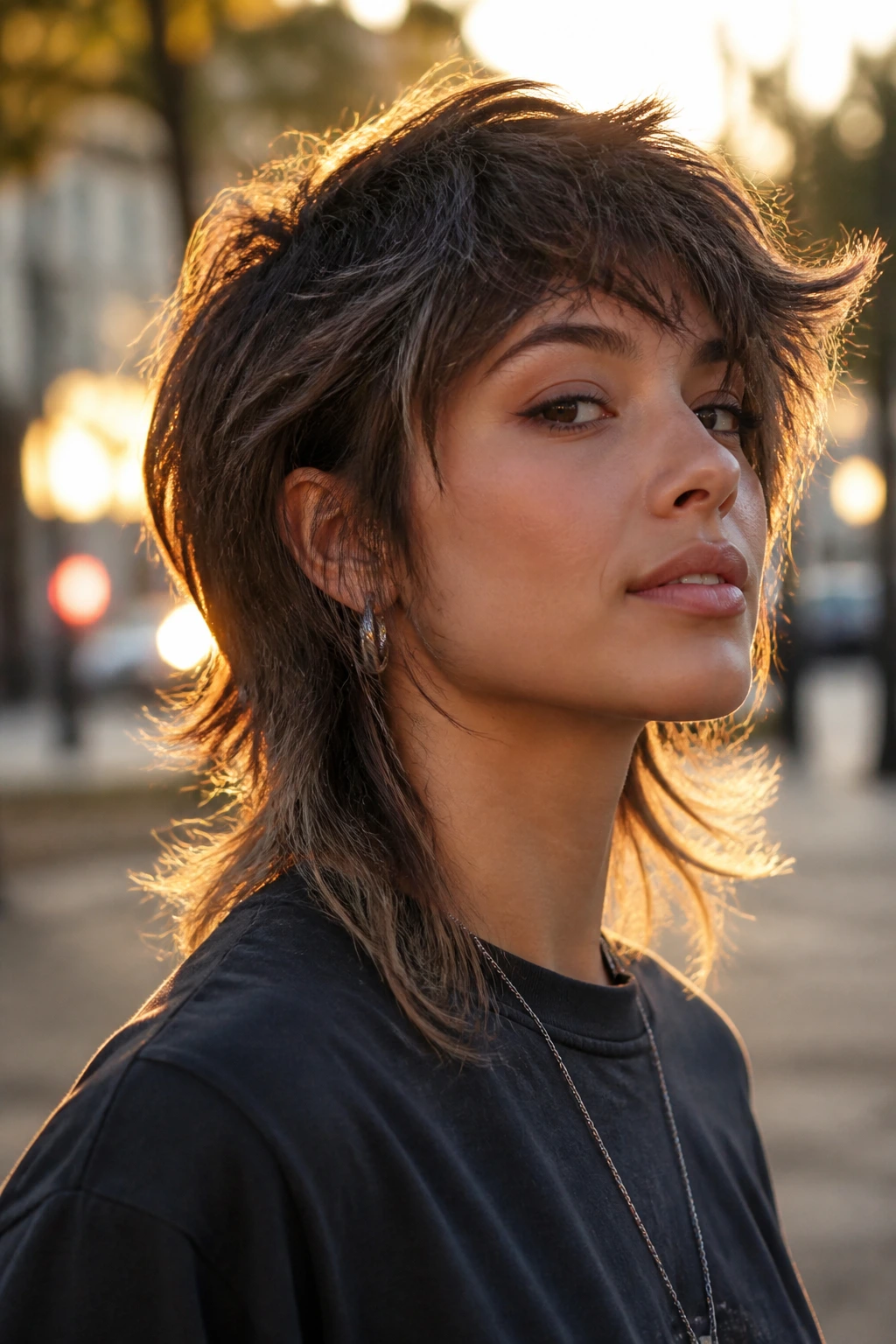
This one leans more playful. The swoopy wolf-cut shag keeps the back a bit longer and more tapered while the top and bangs sweep forward in a loose, almost windswept line. On a square face, that forward-back contrast helps stretch the shape vertically and keeps the jaw from feeling like the widest point in the haircut.
The bang should be long enough to move, not sit. You want swing. That means there’s usually more value in bend and separation than in neatness. If you like a cut that looks a little wild in the best way, this one has enough edge to matter without turning into a costume.
17. Blowout Glam Shag
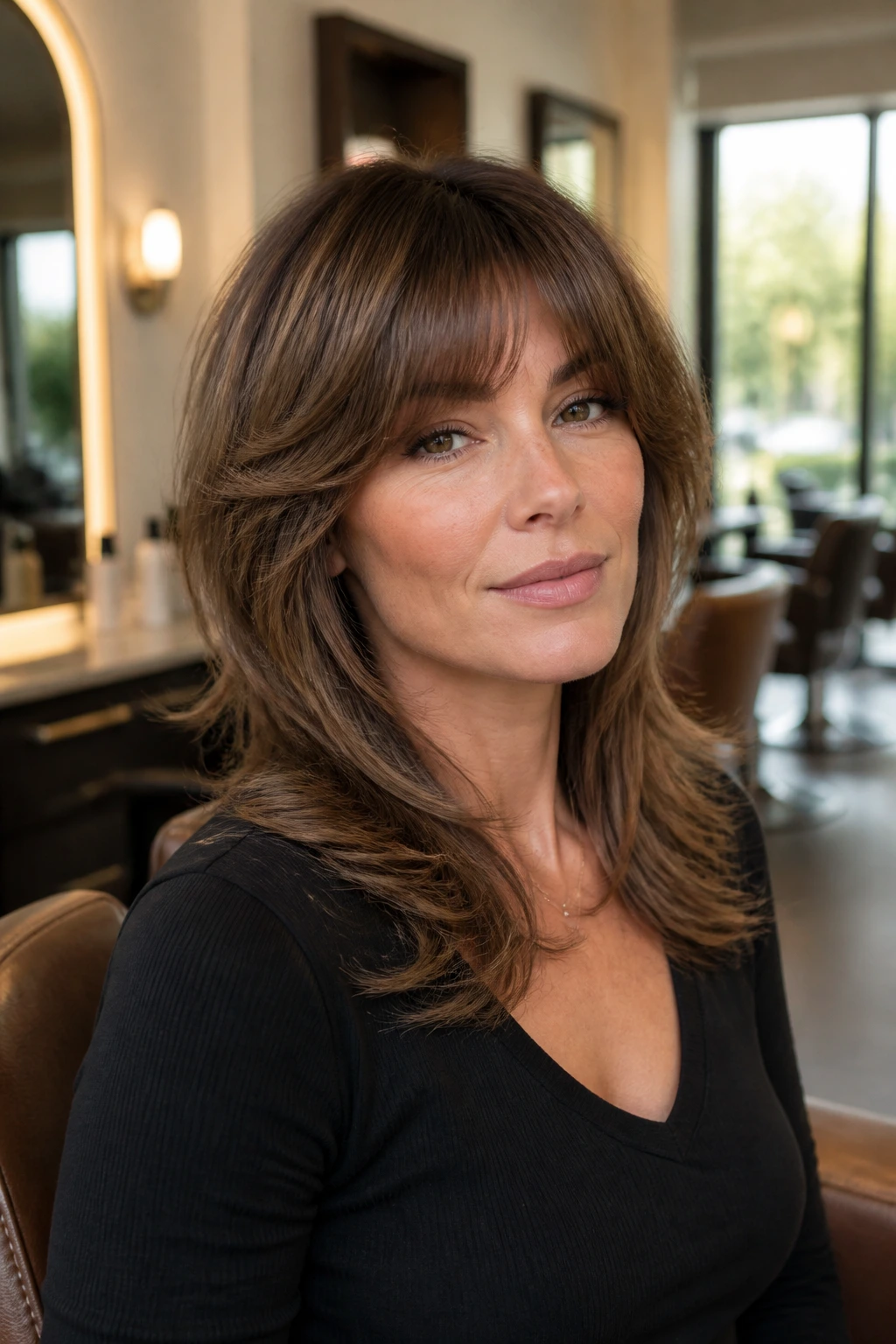
A square face does not need to be flattened by a shag. Sometimes it needs bounce. The blowout glam shag is the polished version: soft layers, a rounded fringe, and a smooth bend through the mids that makes the haircut feel full rather than shaggy in the messy sense.
The shape should curve around the face, not balloon out from it. That’s the distinction that keeps it flattering. Use a round brush, a dryer with a nozzle, and a light finishing cream on the ends only. The goal is movement with polish. If the hair flips under at the jaw, the cut is probably too short or too blunt.
18. Soft Mullet with Curtain Bangs

A soft mullet sounds like a bolder choice than it really is. In medium length, with curtain bangs and a gentle taper at the nape, it can read more modern than rebellious. The longer back gives the silhouette some vertical length, while the front opens the face instead of closing it off.
This works especially well on wavy hair because the texture keeps the transition between short and long pieces from feeling abrupt. Keep the top layers soft and the bangs split enough to reveal some forehead. You want the shape to look deliberate, not chopped by accident.
19. Invisible-Layer Shag

Not everyone wants to look like they walked out of a rock photo shoot. Fair enough. The invisible-layer shag keeps the movement subtle, with layers buried inside the cut so the outer shape stays smooth. That makes it a strong choice for square faces that want softness without a visibly choppy finish.
The bangs are long, light, and easy to tuck or split. Nothing about the cut should scream for attention. Instead, the structure works quietly: a little lift at the crown, a little break around the cheekbones, and enough texture that the hair doesn’t read as one heavy block. It’s understated, which is underrated.
20. Dense-Hair Shag with Internal Layers
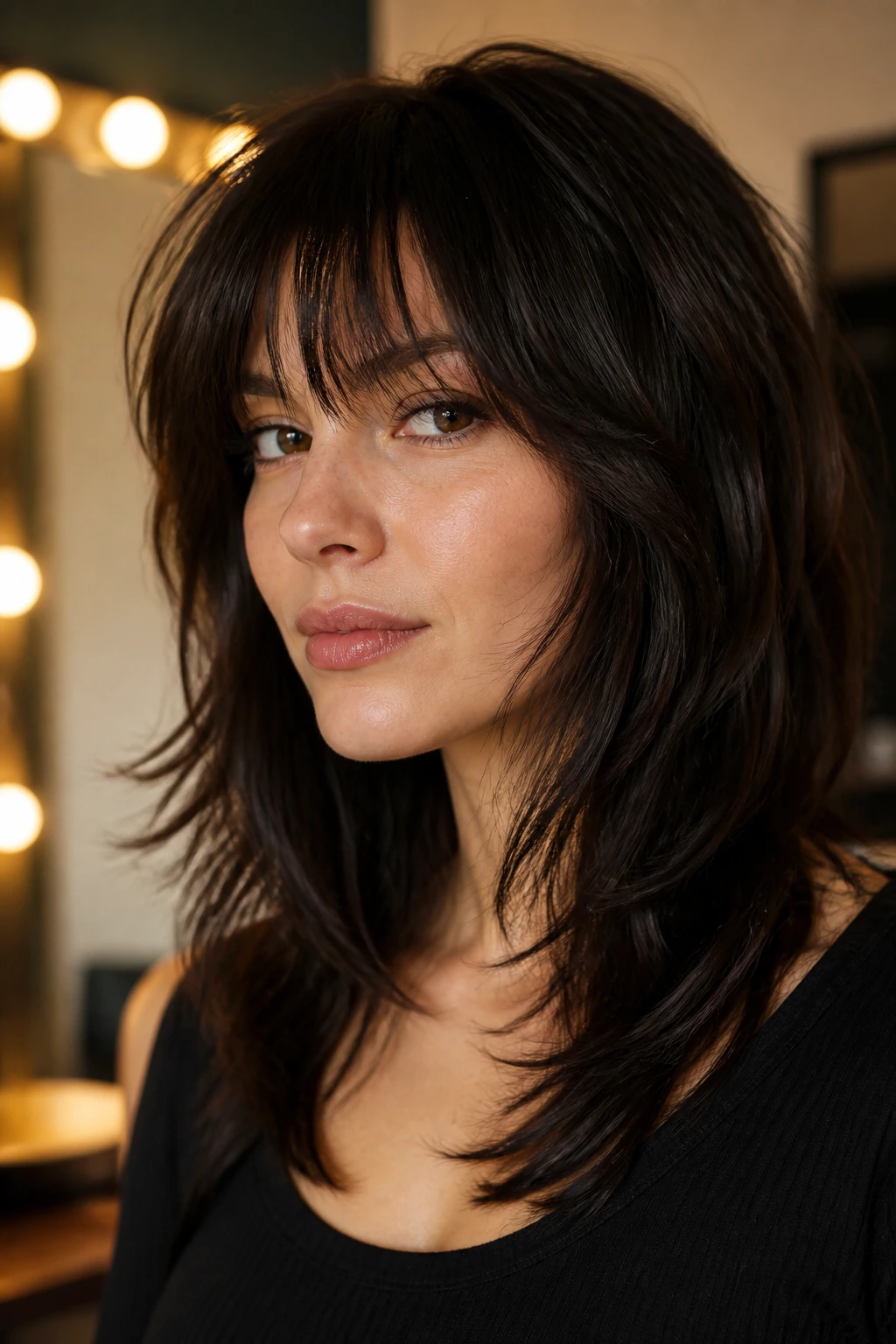
Heavy hair needs room to breathe. If the weight sits all in one place, the haircut swells at the bottom and gives the face a boxier outline than you want. A dense-hair shag with internal layers removes bulk from the inside while leaving enough shape at the perimeter to keep the cut from puffing into a triangle.
The bangs should still have some substance, but they need softness around the ends. Thick, square faces do well with this because the haircut creates movement without making the forehead feel crowded. A little rough-dry, a little bend with a brush, and it settles nicely. Don’t thin the ends too much. That’s how you get frizz instead of shape.
21. Cheekbone-Frame Shag

If you want the most face-specific option on this list, this is it. The cheekbone-frame shag places the shortest front layers right where the bone structure starts to open, which gives the face a softer outline without hiding its natural angles. The bangs can be curtain-style, split, or slightly side-swept, but they should all seem to flow into the cheekbone area.
That framing is doing real work. It pulls attention toward the center of the face and away from the widest part of the jaw. I like this cut on people who want their features to look more lifted than softened. It does both, if the layering is clean.
22. Low-Effort Tousled Shag

The last cut on the list is the one for people who want the shag to look good after a rushed morning and a strange nap in the car. The low-effort tousled shag keeps the layers flexible, the bangs long enough to fall naturally, and the overall shape loose enough to survive second-day hair with minimal fuss.
A square face usually likes this version when the front pieces are broken up and the length sits between the collarbone and the top of the shoulders. That gives you movement without a heavy outline. A mist of water, a squeeze of texture spray, and a finger twist through the fringe are often enough. It’s the closest thing here to a truly easy cut.
How to Brief Your Stylist for a Square-Face Shag
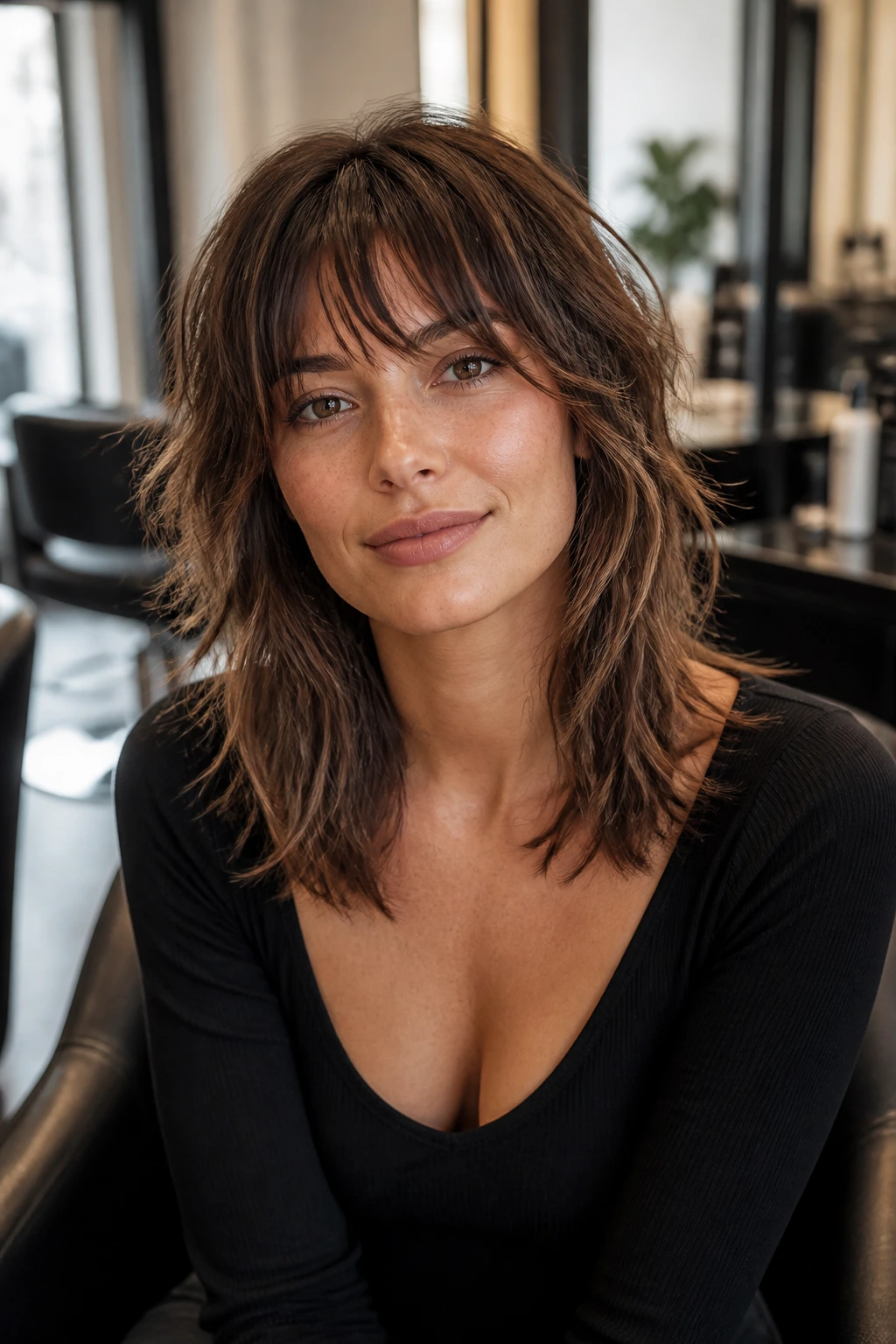
The salon conversation gets easier when you stop talking about “something shaggy” and start talking about placement. Hairdressers can work with that. Tell them where you want the length to sit, where you want the shortest face-framing pieces to begin, and how much styling you’re willing to do each morning. That last part matters more than people think.
Bring the Right Photos
Bring at least two photos that show the front and side of the haircut. One image on a perfect model is not enough, because the same cut can look very different once it hits your texture, density, and hairline. If you have a square face, look for photos where the fringe opens rather than seals the forehead shut.
Say These Things Out Loud
- Length: “I want it around the collarbone or slightly below.”
- Face frame: “Keep the shortest front pieces around the cheekbone, not the jaw.”
- Fringe: “I want bangs that can split, sweep, or bend softly.”
- Texture: “Please leave enough weight at the bottom so it doesn’t get too puffy.”
Mention How You Style Your Hair
If you air-dry, say so. If you use a diffuser, say that. If you blow-dry with a round brush on good days and leave it alone on bad ones, say that too. A shag that looks gorgeous with a full blowout can behave differently when it’s left to dry on its own, and a good stylist will adjust the layers for that.
Essential Tools for Styling These Medium Shags
-
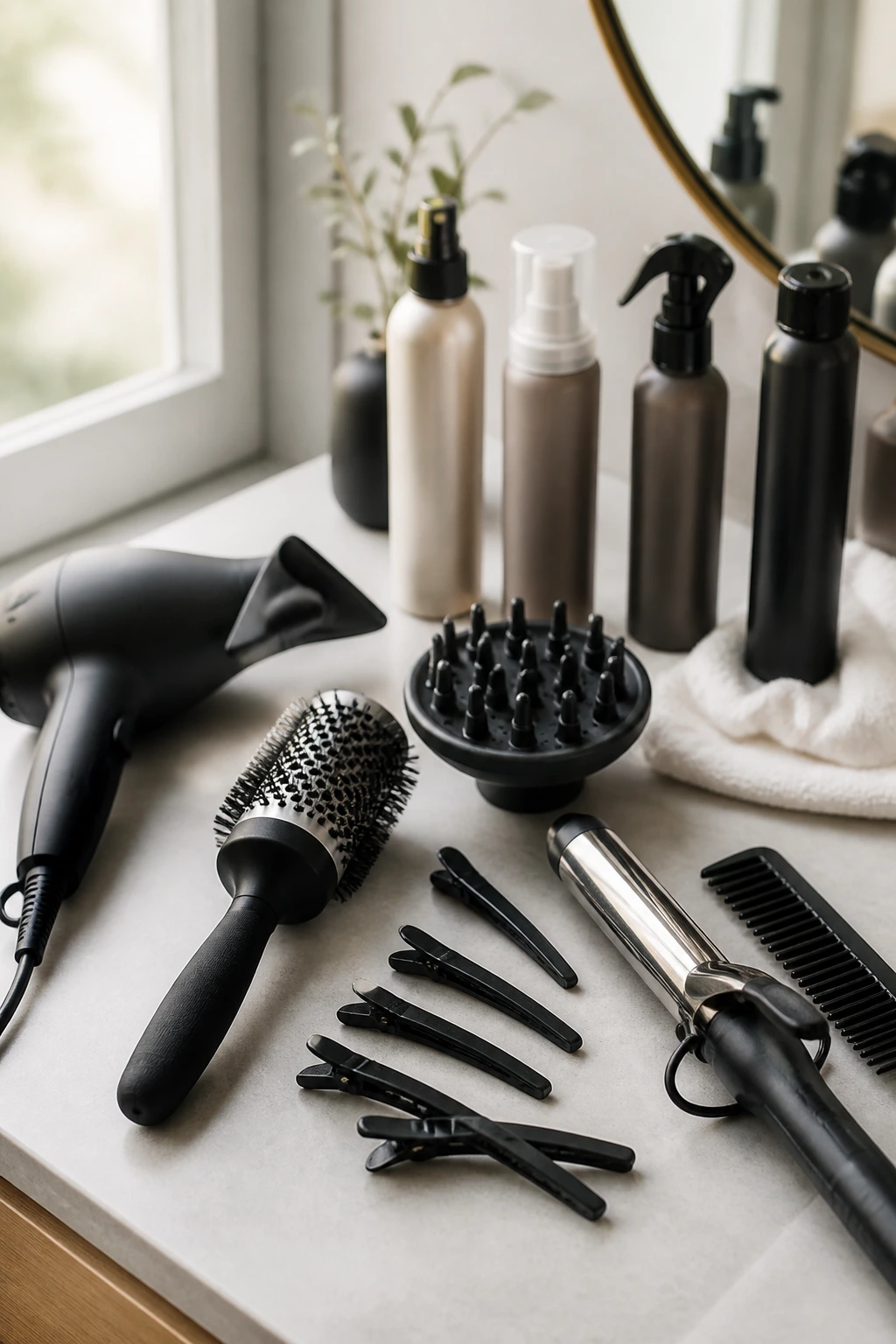
Hair dryer with a nozzle attachment: The nozzle keeps the airflow directed so the fringe and crown don’t frizz out sideways.
-
1-inch to 1.25-inch round brush: This size gives the face-framing layers a soft bend without creating old-school barrel curls.
-
Diffuser: Useful for wavy and curly textures, especially when you want volume without blasting the pattern apart.
-
Heat protectant spray: Shags depend on healthy ends and movement, and fried layers lose that swing fast.
-
Lightweight mousse or root-lift foam: Great for keeping the crown from collapsing on fine or straight hair.
-
Texture spray: A small amount at the mids and ends gives the piecey finish that makes a shag look deliberate.
-
Dry shampoo: Helps the fringe stay fresh and gives the roots some grip on day two or day three.
-
Sectioning clips: Not glamorous. Very useful. They make the crown and fringe easier to dry in clean sections.
-
Curling iron or flat iron: Either tool can create a soft bend in the front pieces; use the one you handle more comfortably.
-
Wide-tooth comb or fingers: Better than overbrushing once the style is set. You want movement, not fluff.
How to Keep the Shape Between Salon Visits

A medium shag can stay flattering longer than a blunt cut, but only if you trim the right parts on time. Bangs grow faster than the rest of the haircut, and once they start falling into your eyes, the whole face shape changes. Fringes that sit at or above the brow often need a trim every 3–5 weeks. Longer curtain or bottleneck bangs can stretch to 5–7 weeks.
The layers usually need a dusting or reshape every 8–12 weeks, depending on how aggressively they were cut. If the front starts collapsing and the ends begin flipping outward in a weird way, that’s your sign. Don’t wait until the whole cut feels heavy.
At home, keep the roots clean and the mids light. Heavy creams near the face can make the fringe separate in greasy little strings. A quick refresh with water at the front, a round brush, and a little heat usually revives the shape better than piling on more product. And if you sleep on your hair with the fringe loose, it will show in the morning. A soft clip or a tiny topknot can save you a lot of annoyance.
Smart Shag Choices for Fine, Thick, Straight, and Curly Hair
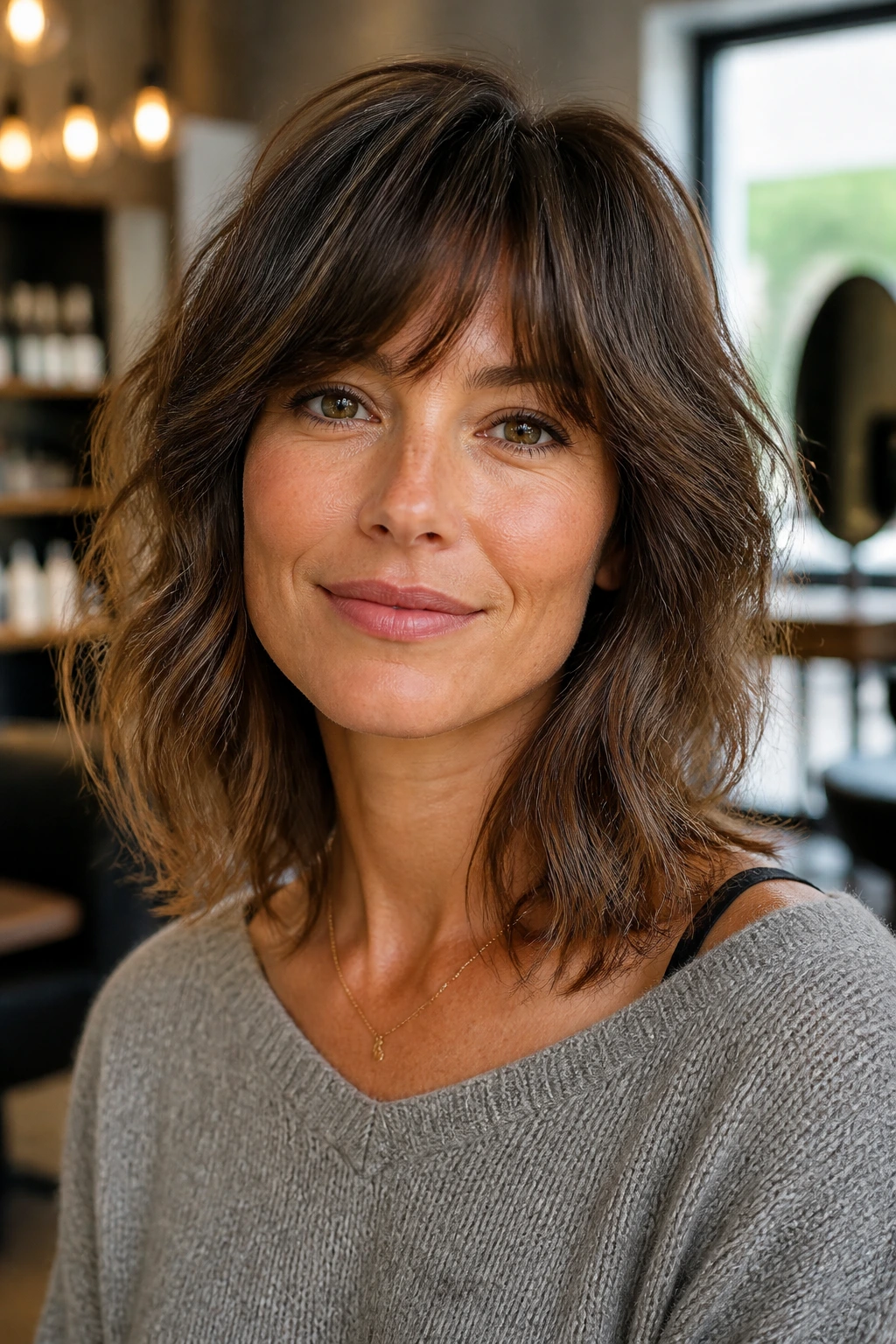
Square faces can wear almost any texture, but the cut has to respect what the hair already wants to do. That’s the part people skip. A shag is not a blank slate. Fine hair, thick hair, straight hair, and curly hair all need different kinds of movement, and the bang choice shifts with that.
Fine Hair
Keep the layers longer and fewer. Too much chopping makes the hair look thin at the ends and flat at the crown. Wispy bangs, a bit of root lift, and a collarbone length are usually enough to keep the style from disappearing.
Thick Hair
Use internal layers instead of endless surface thinning. You want bulk removed from the inside so the shape can move, but the perimeter should still have enough weight to stop the hair from puffing out. A thinned bang helps, but don’t shred the fringe until it frizzes.
Straight Hair
Straight hair needs the cut to do most of the work. Point cutting and razor-soft ends help the layers separate instead of falling like one sheet. Side-swept, curtain, or split bangs usually look better than a heavy blunt line.
Curly Hair
Curly shags are best shaped around the curl pattern, not against it. Bangs should usually be longer than you think at first, because shrinkage is real and not forgiving. A dry cut helps the stylist see where the curls actually settle.
How to Style a Medium Shag Without Overworking It

There are two ways people ruin a shag: they do too little, or they try to force every piece into place. The sweet spot sits in the middle. You need just enough product and direction to keep the haircut from looking accidental, but not so much that the layers freeze into a helmet.
Air-Dry Route
Work a small amount of mousse or foam through damp roots and mids, then twist the front pieces once or twice while they’re still pliable. Let the rest dry on its own. If the fringe wants to split weirdly, pin it lightly in the direction you want while it sets. That tiny bit of control makes a big difference.
Blowout Route
Rough-dry the hair about 70 percent first, then use a round brush on the crown, fringe, and face frame. Focus on bend, not curl. The face-framing layers only need enough shape to curve away from the jaw and settle softly against the cheekbones.
Second-Day Refresh
Mist the roots lightly with water, hit them with a little heat, and re-bend the front pieces. Dry shampoo at the crown gives the shag some grip, while texture spray through the mids restores separation. Don’t re-curl every section. That’s how the haircut starts looking overdone by noon.
The Product Rule
Use one product that builds shape and one product that finishes it. More than that usually makes the layers sticky or heavy. A shag likes movement. It does not like to be lacquered into obedience.
The Mistakes That Make a Shag Look Boxy
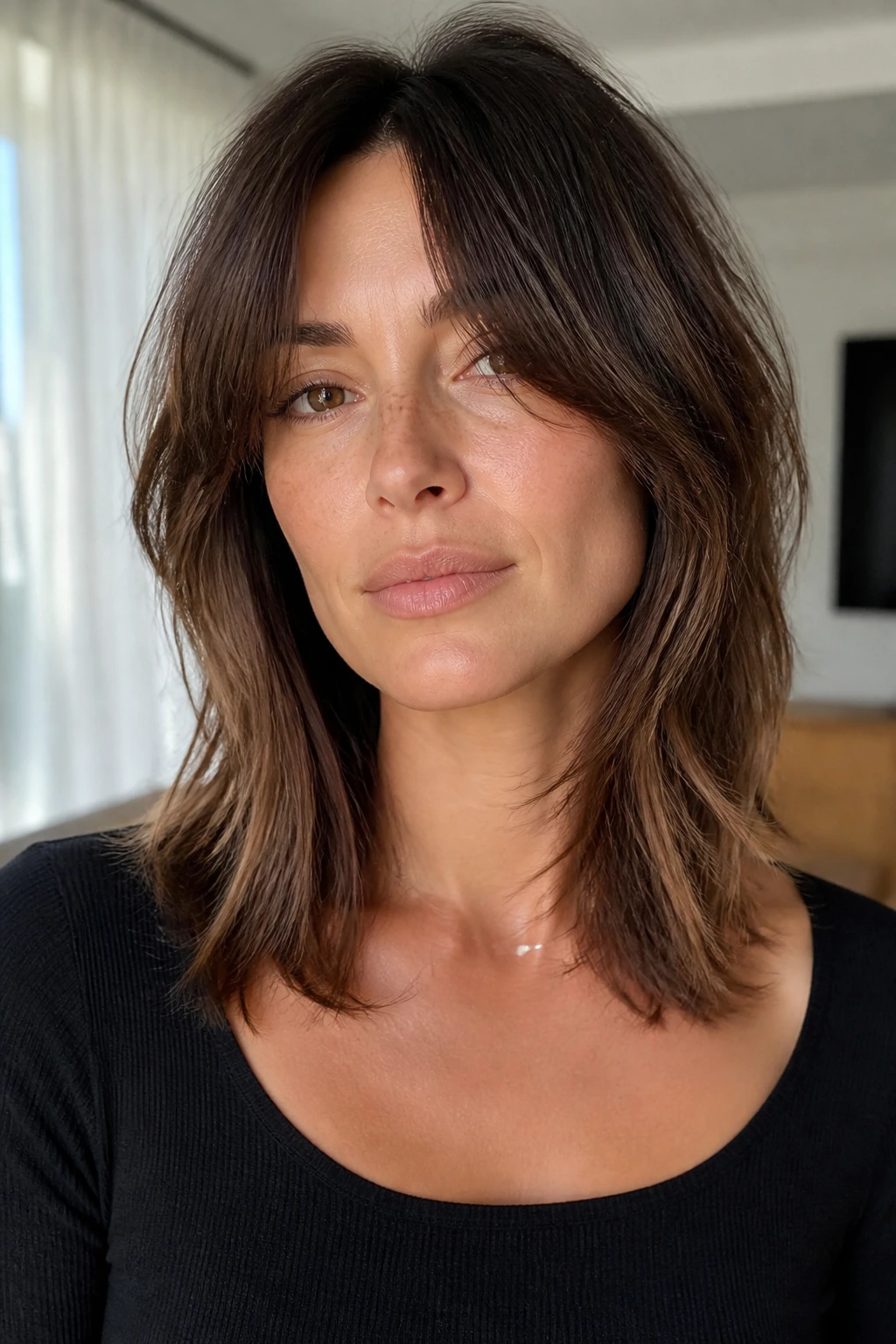
The first mistake is the easiest to spot: bangs that end in a hard line across the forehead. On a square face, that line competes with the jaw and makes the whole shape feel squared off. The fix is a fringe that splits, curves, or sweeps so the forehead stays open in the middle.
Another common problem is placing the shortest face-framing layers right at the jaw corners. That sounds precise. It isn’t flattering. The haircut ends up mirroring the width of the face instead of softening it. Push those shortest pieces up toward the cheekbone or down below the jaw so the outline feels more broken.
Over-thinning is another trap. Hair that has been shredded too much at the ends puffs, frizzes, and loses its shape by midday. Ask for internal texture instead of stripping the perimeter bare. The cut should have air in it, not holes.
The last one is styling every layer inward toward the face. That can make the jawline feel louder, not softer. A few pieces should flip away, some should sit straight, and a few should curve in. Broken movement looks more natural and does a better job on angular bone structure.
Variations and Adaptations Worth Trying

Office-Friendly Soft Shag: Keep the layers less choppy and the fringe longer so the haircut reads polished under a blazer or at a desk. This is the quieter version of the shag, and it still softens a square face without looking too editorial.
Curly Halo Shag: Let the curls form a rounded halo around the head with longer bang pieces that blend into the face frame. It’s a good choice if you want volume up top and softness around the jaw without flattening the pattern.
Grow-Out Shag: Ask for longer fringe and slightly lower layers so the cut stays wearable even as it grows. This version is useful if you don’t want a harsh maintenance schedule and prefer a shape that stays decent for months, not weeks.
Blowout-Ready Shag: Add more bend through the mids and a more polished fringe, then style it with a round brush. This works well if you like a smoother finish and want the shag to feel less undone, more glossy.
Edgier Wolf-Lean Shag: Push the crown a little shorter and the nape a little longer for a stronger wolf-cut influence. Keep the front soft enough to avoid a blocky frame; the idea is movement, not costume.
Frequently Asked Questions About Medium Shag Haircuts with Bangs for Square Faces
Will bangs make a square face look wider?
They can, if the bangs are blunt, dense, and cut in a hard horizontal line. Curtain fringe, bottleneck bangs, side sweeps, and split bangs break that line up and usually make the face look softer instead of wider.
Should a square face avoid blunt bangs completely?
Not completely, but blunt bangs need curve or texture to work. A softly arched line or a piecey finish keeps the forehead from looking boxed in. A hard, straight fringe is the version most likely to fight the face shape.
Is a shag better than a wolf cut for a square face?
A shag is usually easier if you want softness first and edge second. A wolf cut brings more contrast at the crown and nape, which can be great, but the front has to stay light so the jaw doesn’t look even more pronounced.
Can this haircut work if my hair is straight and flat?
Yes, but ask for point-cut ends, a lifted crown, and a styling plan that uses root spray or mousse. Straight hair shows every line, so the haircut needs texture in the right places to keep from looking like one flat sheet.
How often do the bangs need trimming?
Short fringe usually needs attention every 3–5 weeks. Longer curtain or bottleneck bangs can stretch farther, around 5–7 weeks, before they start falling into the eyes and losing their shape.
What if my hair is thick and puffy?
Ask for internal layers instead of heavy surface thinning. That removes bulk from the inside while keeping enough weight at the perimeter to stop the haircut from puffing into a triangle.
Can I keep most of my length and still get a shag?
Yes. Tell the stylist you want a medium shag with a preserved perimeter, then ask for movement mainly through the interior and around the face. You do not need a big chop to get the shape.
What should I do if the cut looks triangular after styling?
That usually means the bottom is too heavy or the crown is too flat. Add root lift at the top, soften the face frame a little more at the next trim, and avoid overloading the mids with cream.
A Shape That Keeps Moving

A good shag does not fight a square face. It gives it motion. That’s the whole point here. The right layers make the jaw feel intentional instead of boxy, and the right bangs keep the forehead from turning into a hard line.
What I like most about medium shags is how much room they leave for personality. You can go soft, sharp, airy, polished, messy, or wolfish without leaving the basic structure behind. The length stays useful, the fringe keeps things interesting, and the grow-out is kinder than a blunt cut ever is.
Bring clear length notes to your stylist, ask where the face-framing pieces should start, and choose the version that matches your texture instead of fighting it. The cut will do more work for you that way, and it will keep looking good long after the first styling session.