



Loose curls can make a blunt bob look like it was cut in a hurry. The outline swells, the bottom gets heavy, and the whole shape starts acting like a shelf instead of a haircut. Shaggy layered bobs for long hair with loose curls solve that problem by keeping the perimeter soft and the inside moving.
What makes this combination work is the way the layers interrupt the bulk. When the front pieces graze the cheekbones, the crown has a little lift, and the ends are point-cut instead of chopped into one hard line, the hair bends in sections instead of locking into a block. That matters on long hair, because the extra length gives loose curls room to fall without losing the bob shape completely.
And yes, the difference shows up fast in real life. A good shag bob still tucks behind the ear, still lifts off the shoulders, still looks decent after sleeping on it, and still has enough length to feel like your hair, not a dramatic haircut wearing you. Some versions lean soft and romantic. Others feel a little sharper. The fun part is that all of them can work if the length, layer placement, and curl pattern are handled with a bit of restraint.
Why These 22 Cuts Keep Showing Up in Real Salons
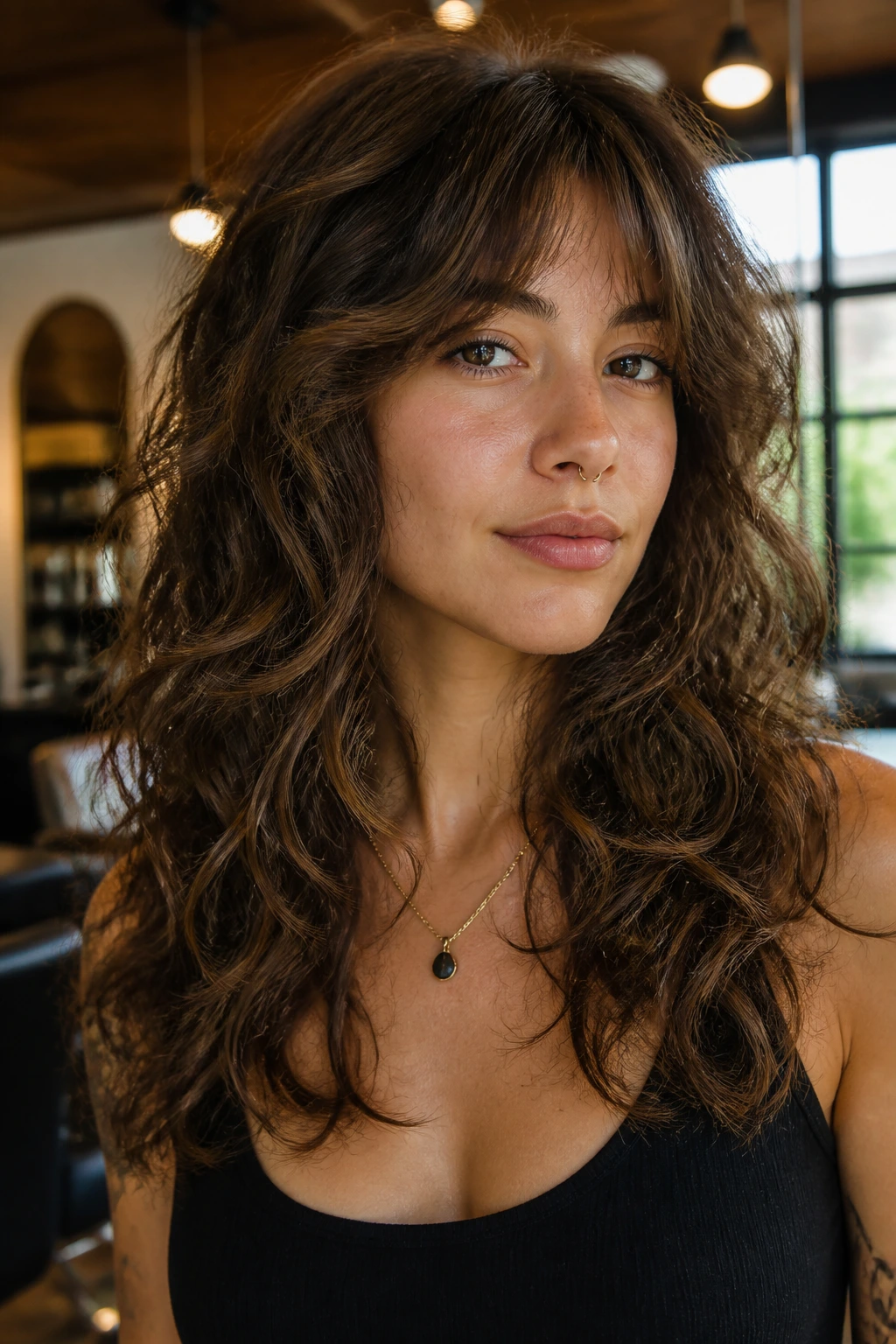
- Movement: The layers break up the heavy triangle shape loose curls can create at the bottom, so the hair swings instead of sitting like a block.
- Length: Keeping the bob long enough to hit the collarbone or shoulders gives you room for bend, tuck, and grow-out without losing the cut’s shape.
- Face Framing: Longer front pieces soften the cheek and jaw area, which is a useful trick when curls puff up after drying.
- Low Drama: These cuts usually grow out better than a blunt bob because the edge is already broken up, so your trim doesn’t go from fresh to awkward in a week.
- Style Range: You can air-dry, diffuse, or wrap a few face-framing pieces around a wand, and the haircut still reads as intentional.
- Texture Control: Shaggy layers let you decide how piecey or soft you want the finish to look instead of forcing every curl into the same pattern.
1. Collarbone Curtain Shag Bob
The collarbone curtain shag bob is the version I’d hand to someone who wants movement without losing too much length. It falls right where the neck starts to open up, which means the loose curls can bounce instead of stacking up at the jaw. The curtain pieces in front soften the whole line and make the cut feel lighter than it really is.
Why it works
The front stays long enough to drape, while the interior layers do the real work of removing bulk. That combination keeps the bob from puffing outward when the curls dry. If your hair has a little spring to it, the collarbone length also gives you a safer margin than a chin-length chop.
What to ask for
- Keep the front pieces long enough to graze the collarbone.
- Start the shortest layers below the cheekbone, not at the brow.
- Leave the ends soft and broken, not blunt.
- Ask for a center part or a loose off-center part if you want the fringe to split cleanly.
Tiny tip: if your curls shrink a lot, ask for the front pieces to be cut about half an inch longer than the target length.
2. Cheekbone Razor Bob
This is the sharper, airier option. A cheekbone razor bob puts the focus right where the face starts to narrow, and the razor finish keeps the ends feather-light instead of chunky. On loose curls, that matters. Thick ends can make the whole cut look bottom-heavy in a heartbeat.
The shape feels a little more lived-in than polished. That’s the point. The razored ends let the curls break apart in fine ribbons, so you get movement without a fuzzy outline. I like this version on hair that tends to balloon around the perimeter, because the texture does some of the slimming work for you.
Wear it with a little lift at the roots and a soft bend through the mid-lengths. If you press every wave into a neat pattern, you lose the charm. This cut wants a little mess.
3. Deep Side-Part Tousled Bob
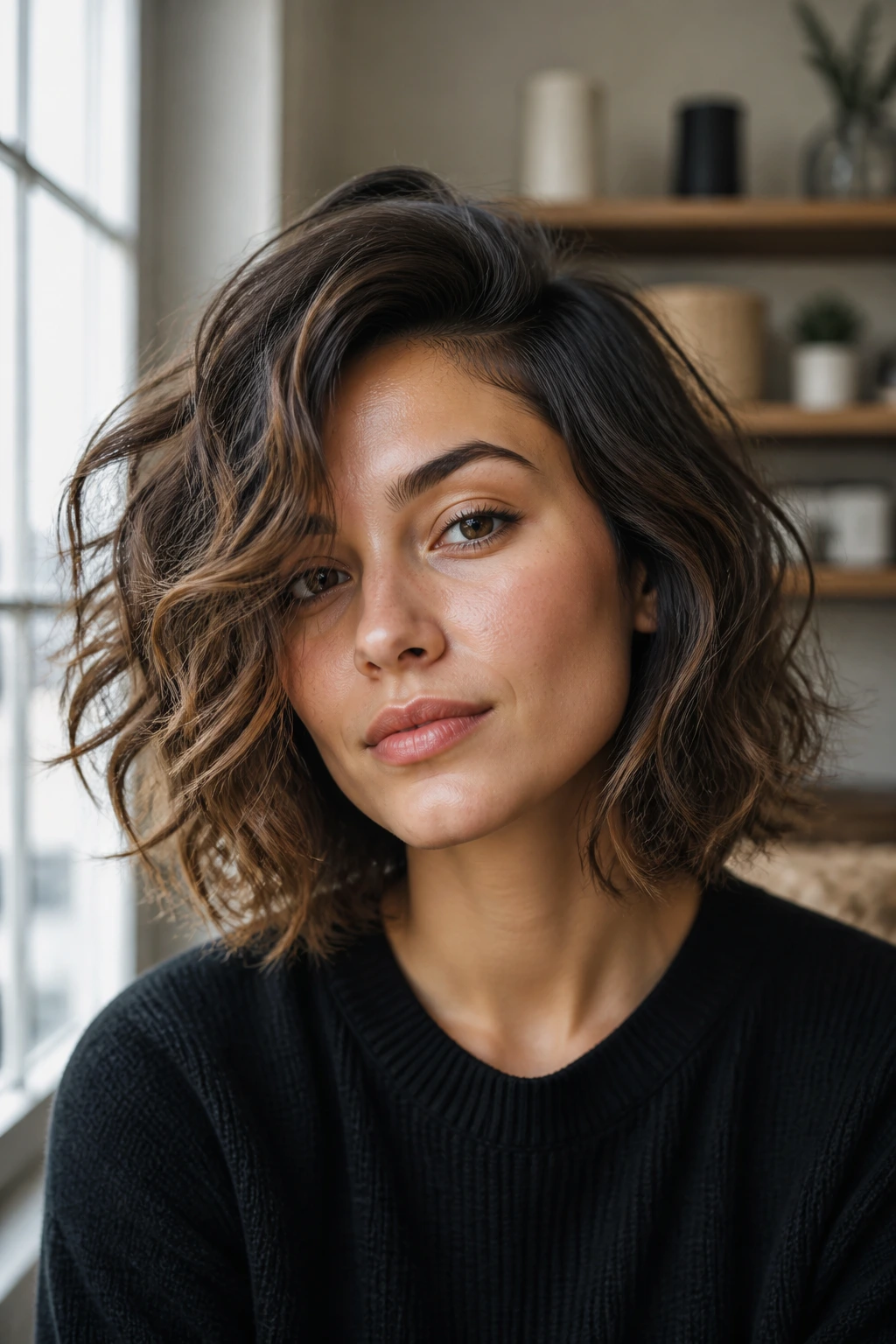
Why does a side part change everything here? Because loose curls often need a direction before they need more product. A deep side part gives the crown some lift and lets one side fall a little longer across the cheek, which keeps the bob from looking too square.
The shape is especially useful if one side of your hair wants to collapse faster than the other. The longer sweep disguises that imbalance and turns it into a feature. The cut looks softer, but it also looks more deliberate than a center-part version on days when your curls are doing the least.
How to wear it
- Flip the part while the hair is still damp.
- Clip the taller side at the root for 10 to 15 minutes.
- Scrunch a small amount of mousse into the ends only.
- Let the front pieces fall where they want instead of forcing symmetry.
4. Rounded S-Curve Bob
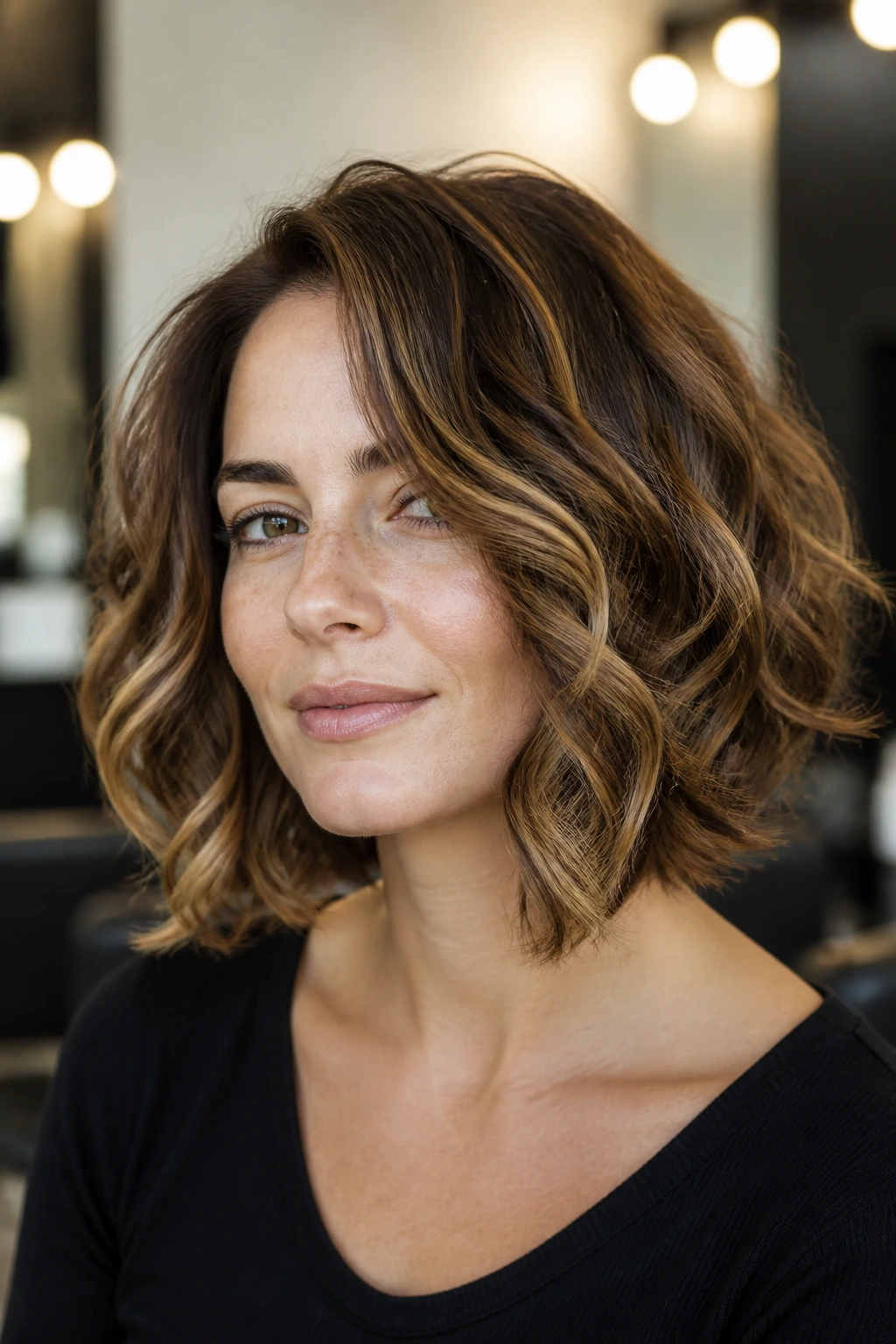
Picture a bob that follows the curve of the head instead of floating out from it. That’s the rounded S-curve version. It is a good choice when loose curls want to widen at the sides, because the silhouette stays tucked in closer to the neck and cheek line.
The trick is in the layering. The top stays a little shorter for lift, but the bottom pieces are kept soft enough to swing back toward the face rather than sticking straight out. You end up with a shape that feels balanced, especially if your hair has enough density to create its own width.
- Best for medium to thick hair
- Better with a diffuser than a heavy brush-out
- Works well when the front pieces are left a touch longer than the back
One sentence advice: keep the crown airy and the perimeter soft, or the whole thing turns square.
5. Wolf-Lite Bob
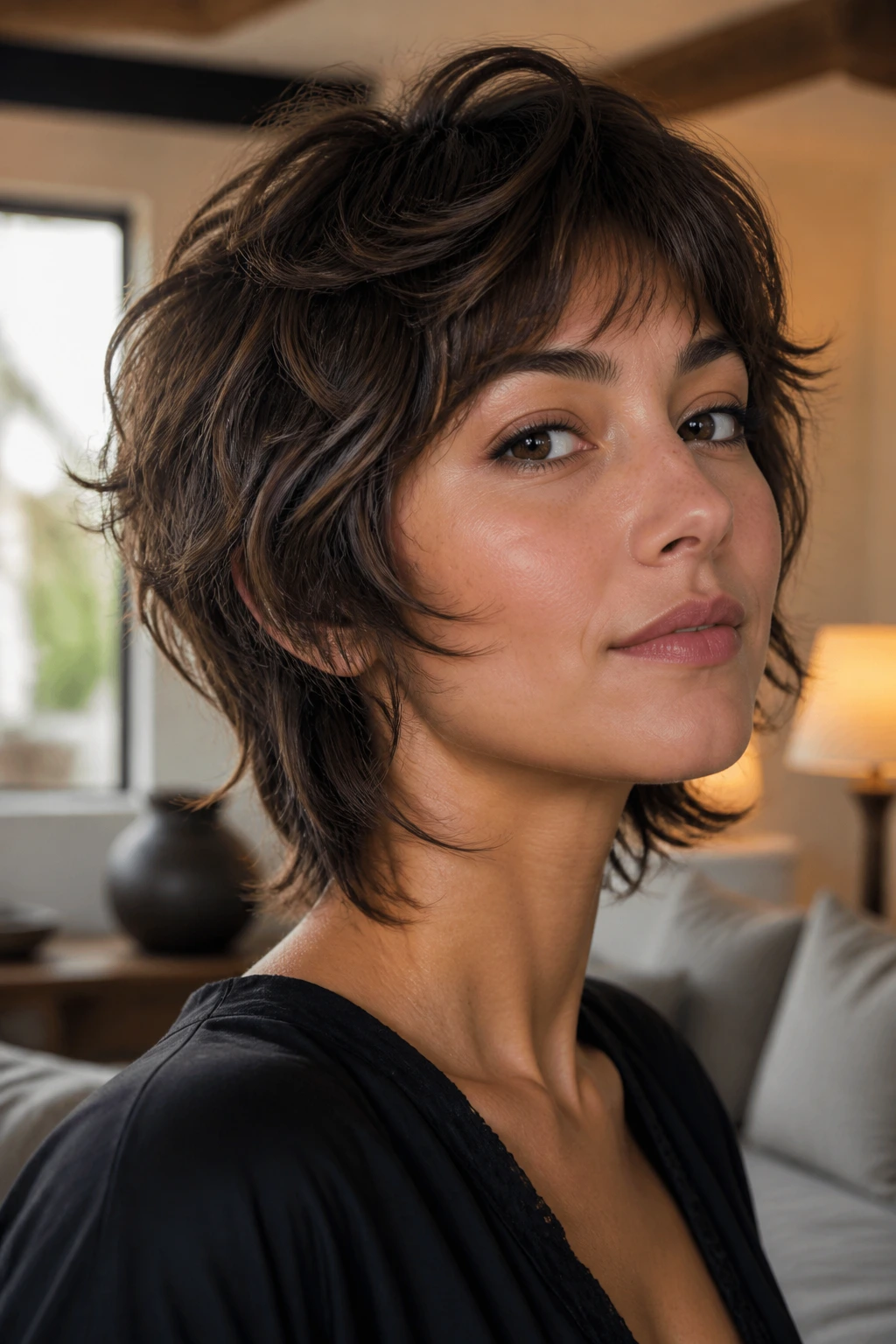
The wolf-lite bob is for people who like edge but don’t want the haircut to shout over the rest of their face. It borrows the lifted crown and longer nape feeling from a wolf cut, then softens the whole thing into something wearable on long hair with loose curls. The result has a little bite without crossing into costume territory.
What makes this version especially good on loose curls is the unevenness. The top layers sit higher, the middle layers move, and the bottom isn’t over-cut. That means the hair can breathe without losing its outline. If your hair is dense, this is one of the easiest ways to remove weight without going too short.
I’d keep the ends slightly piecey and avoid over-smoothing the top. The charm is in the imbalance. A perfect blowout kills it.
6. Air-Dried Beach Bob
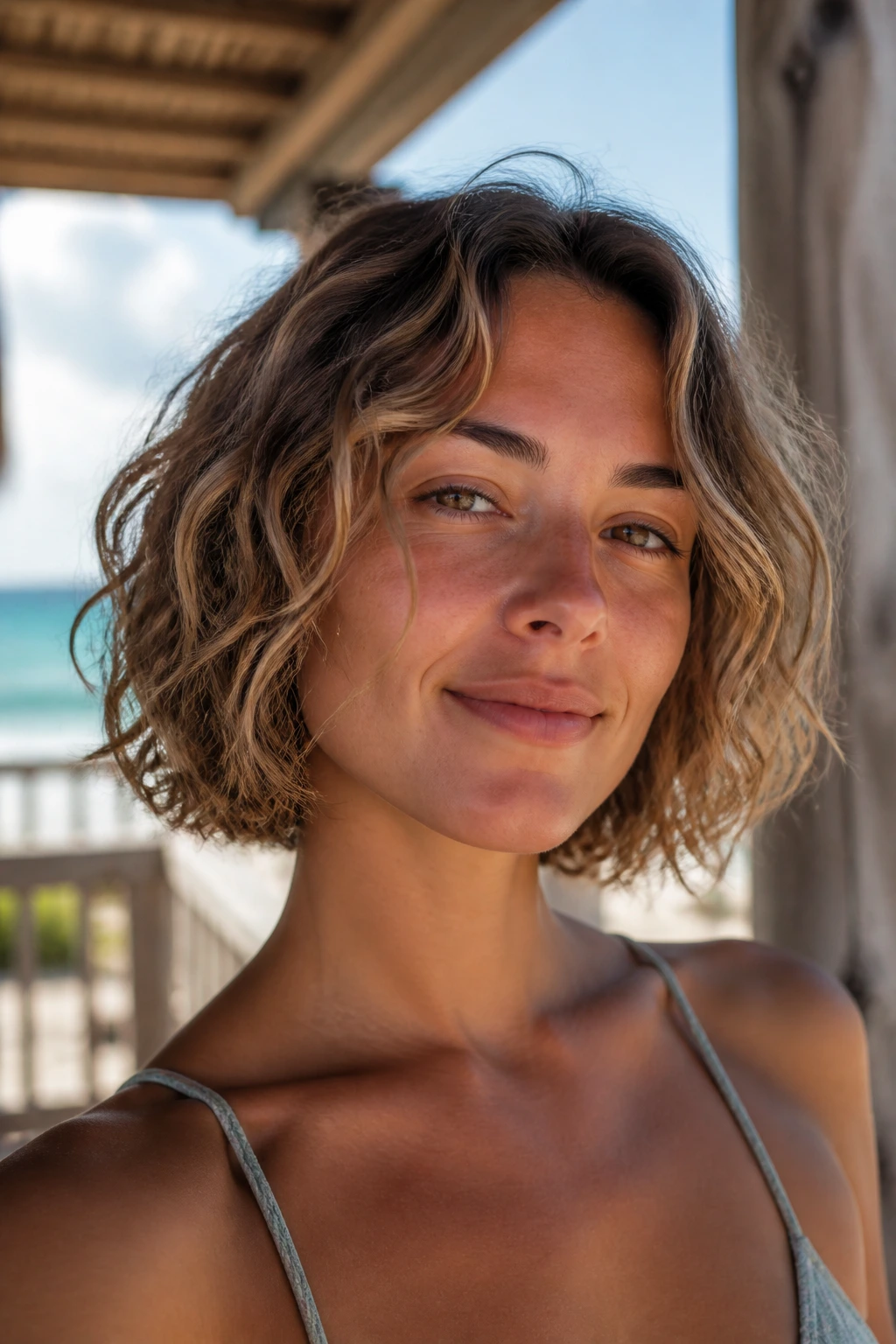
Unlike a polished bob that needs a round brush and a lot of patience, the air-dried beach bob works because it accepts a little chaos. The layers are placed so the curl pattern can dry into soft bends instead of fighting for one neat shape. That makes it a strong choice if you want a cut that can survive a rushed morning.
The finish should look relaxed, not crunchy. A little mousse or curl cream through damp hair is enough; too much product turns the ends stringy and the crown limp. I prefer this version when the hair has a bit of natural wave already, because the cut simply nudges the texture in a better direction.
It’s also the kind of bob that looks better once it has settled. Freshly dried, it may feel too fluffy. Give it an hour. The shape usually drops into place.
7. Full Fringe Shag Bob
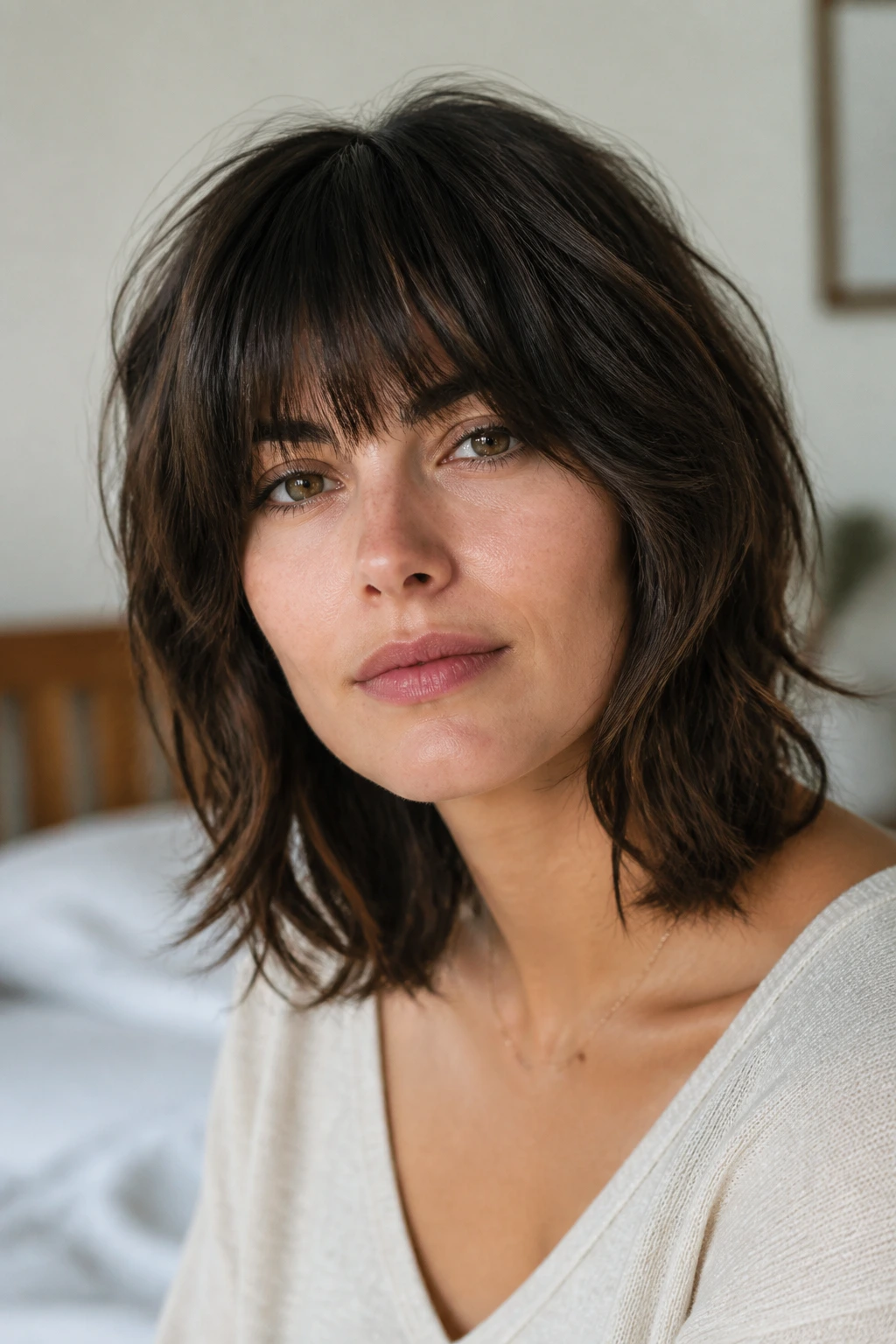
A full fringe changes the mood fast. With loose curls, it brings the focus forward and makes the cut feel denser around the eyes, which can be lovely if you want softness with a little attitude. The shaggy layers around the sides keep the fringe from looking like a hard curtain.
What to watch for
- Keep the fringe longer than you think if your curls spring up.
- Ask for texture at the ends of the bangs so they split rather than sit in one solid line.
- Pair the fringe with longer face-framing pieces so the front doesn’t feel boxed in.
The danger here is obvious: cut the fringe too short, and it starts doing its own thing. Better to leave it a touch long and trim it after you see how your hair dries.
8. Off-Center Piecey Bob
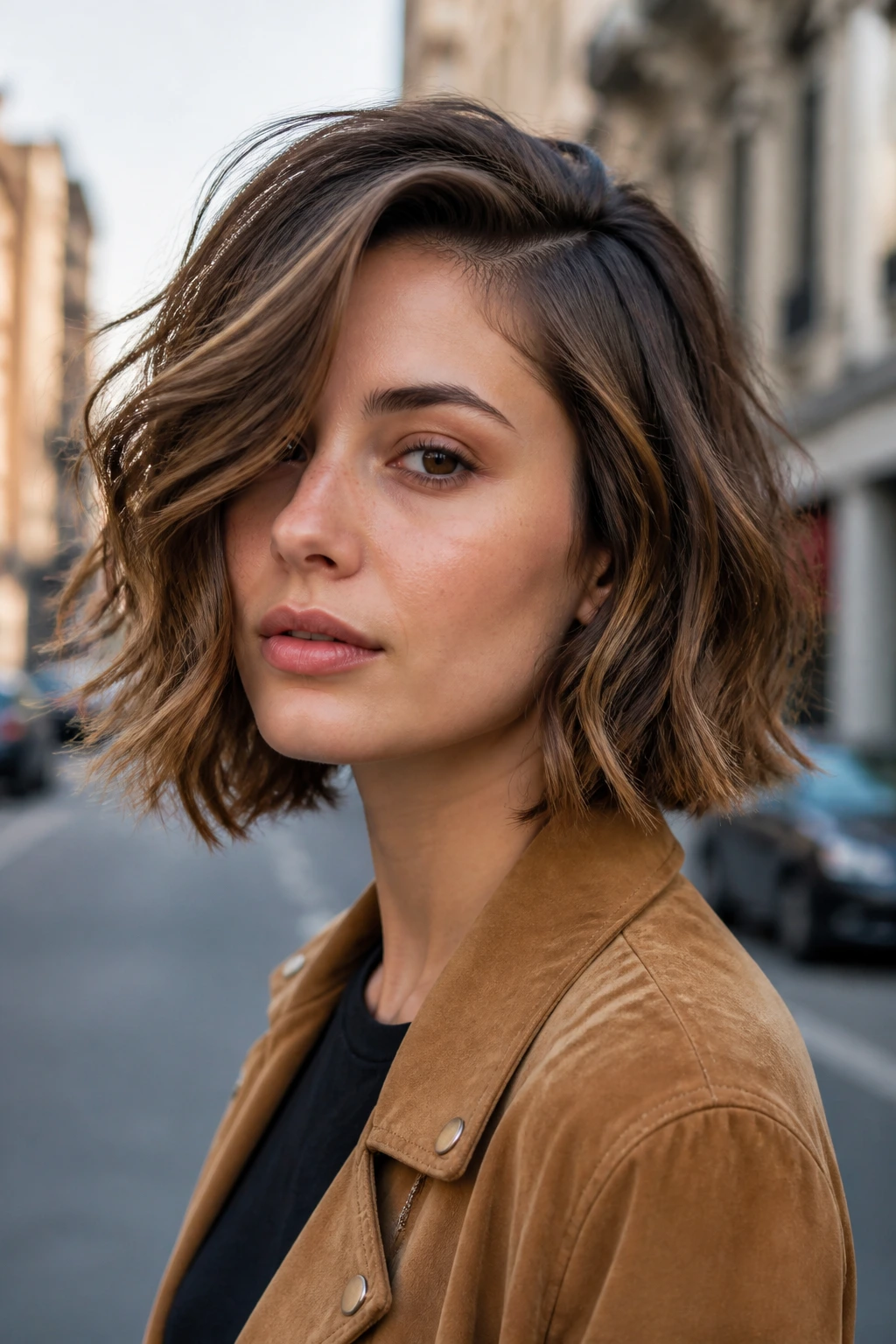
An off-center part does more for this cut than three extra styling products. It changes the fall of the curls, breaks the symmetry, and keeps the bob from sitting flat over the forehead. The piecey finish makes the layers visible, which is useful if you want the haircut itself to do the talking.
This is one of the better options for finer hair, because the asymmetry creates the impression of fullness without adding actual bulk. The front pieces should stay soft and separated, not combed into a tidy helmet. A little wax or texture spray at the ends goes a long way.
The look reads modern without trying too hard. That’s the appeal. It has structure, but not stiffness.
9. Hidden-Layer Volume Bob
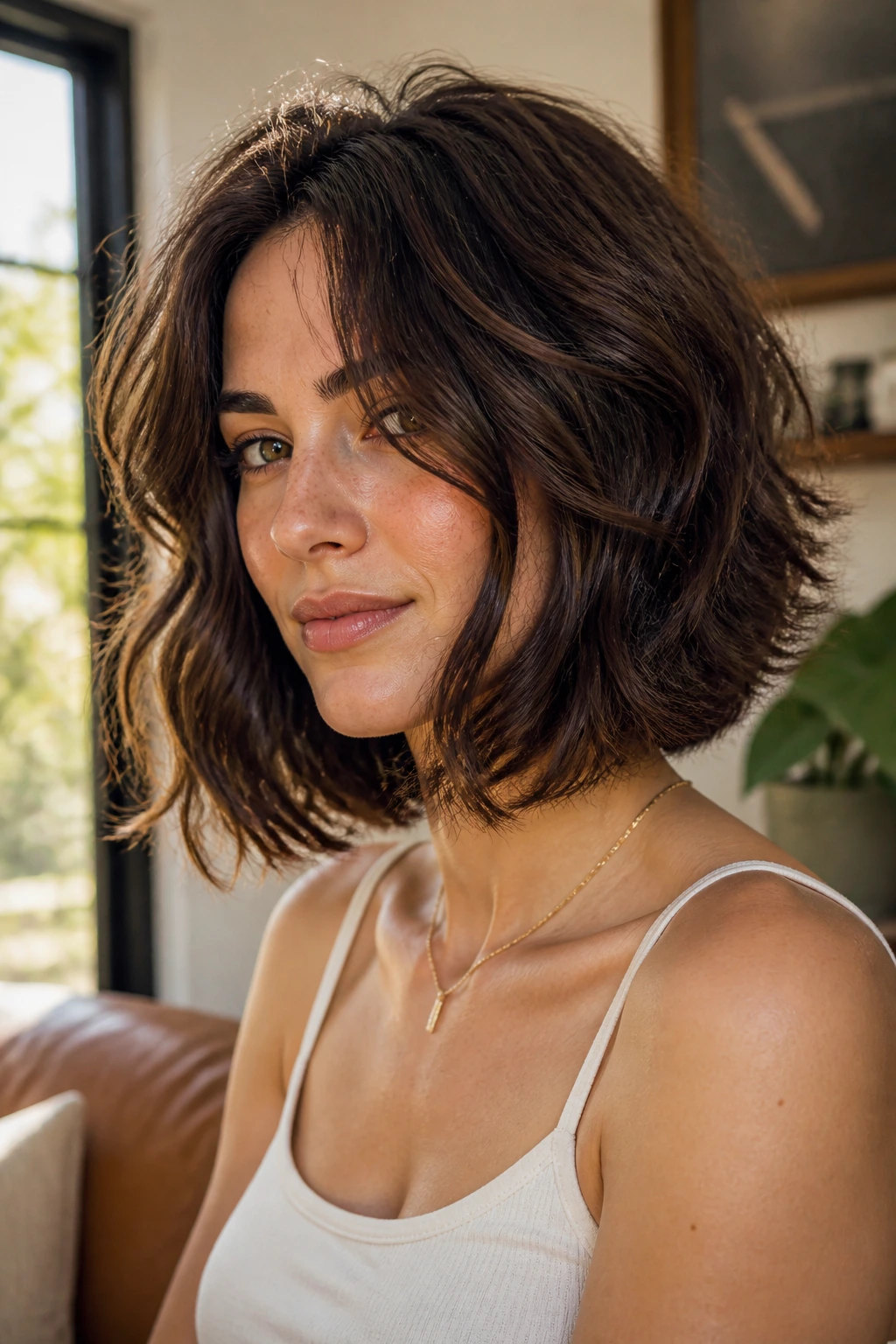
Can a bob look full without showing off every layer? Yes. That is exactly what hidden-layer volume does. The haircut keeps the outside line smooth enough to feel tidy, while the weight inside gets removed so the hair lifts from beneath instead of puffing on top.
This version is especially good for thick hair that feels heavy by midday. The top still looks sleek, but the underlayers are cut with enough space to let the curl pattern breathe. The silhouette stays controlled around the jaw and neck, which stops the haircut from looking oversized.
A small note: this is not the place to over-texturize the ends. Too much slicing makes the cut fuzzy. The best result is soft volume, not shredded volume.
10. Crown-Lift Shag Bob
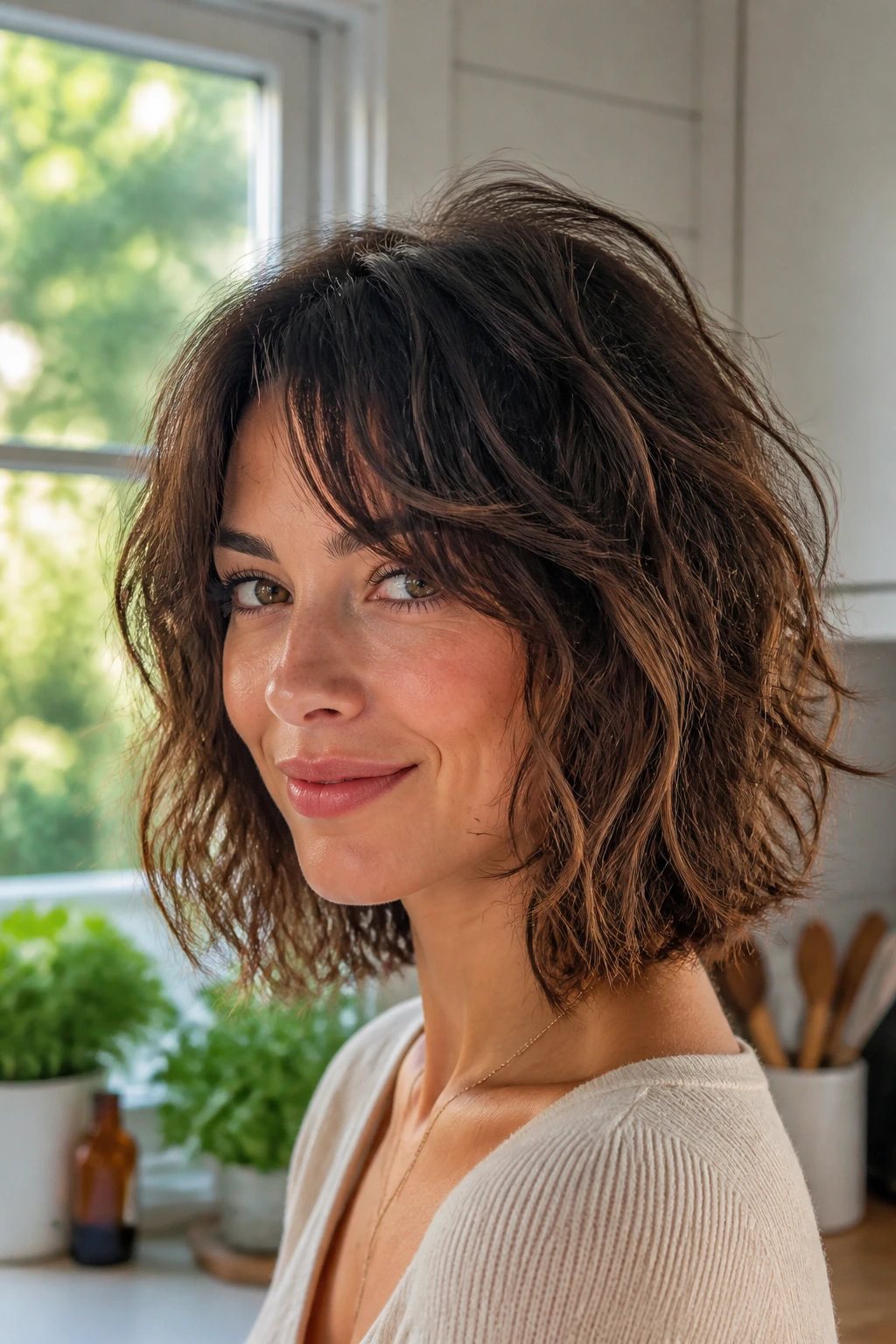
If your hair goes flat at the roots the minute it dries, the crown-lift shag bob is worth a closer look. The shorter layers at the top create a little vertical lift, so the shape doesn’t collapse into the scalp. With loose curls, that lift makes the whole haircut look fresher.
I like this cut for people who complain that their bob feels “all bottom.” That usually means the weight has drifted downward, and the crown has nothing to support it. Shorter top layers fix that, especially when you set the roots with clips while the hair cools.
Simple styling move
- Dry the roots first.
- Clip the crown up while it’s still warm.
- Let the hair cool before you shake it out.
That cooling step matters. Warm hair remembers the shape you give it.
11. Shoulder-Skimming Curly Lob
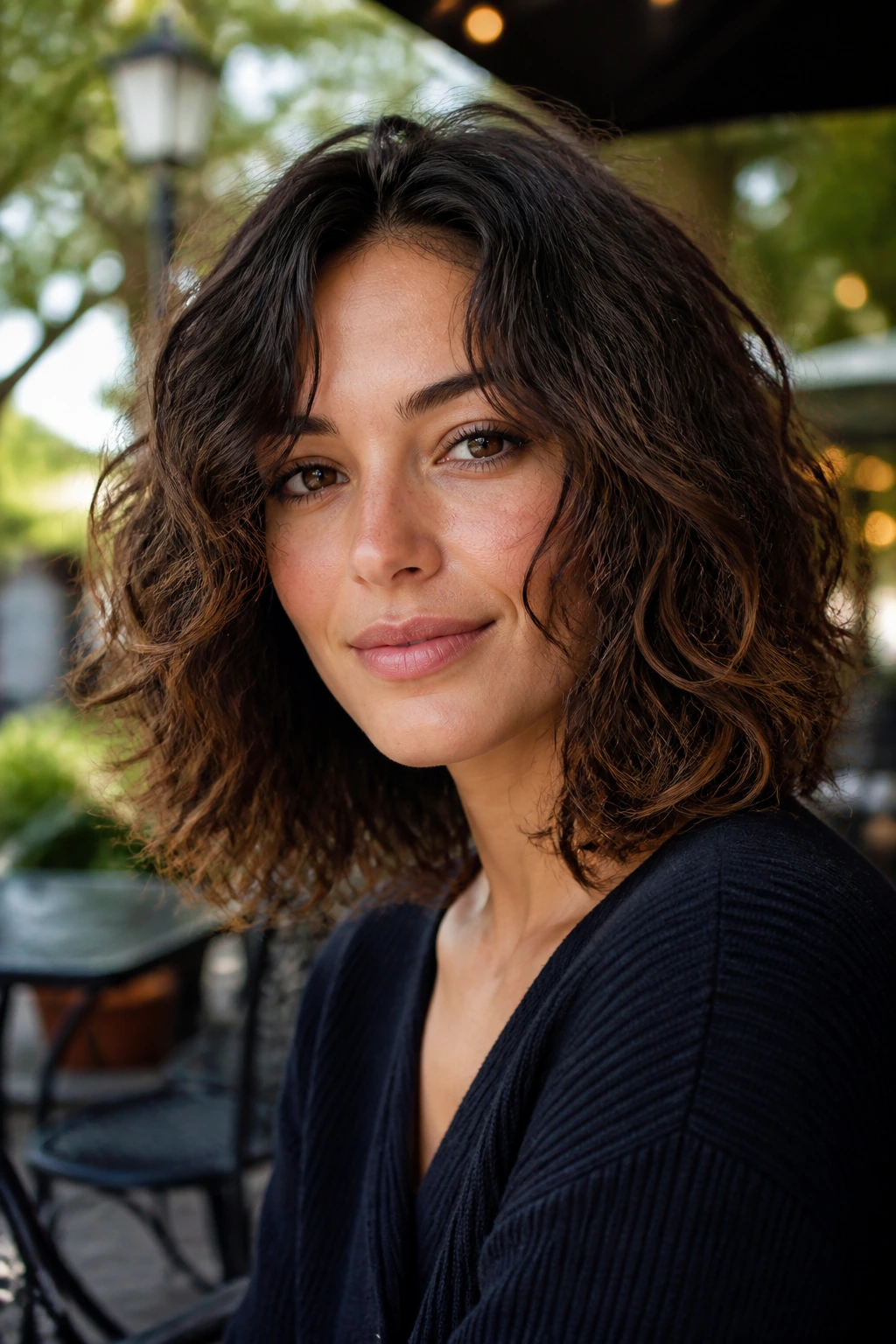
The shoulder-skimming lob is the calmest version in the bunch. It keeps enough length to feel soft and feminine, but the ends still sit near the shoulder line, where loose curls can bounce instead of hanging. If you’re nervous about going too short, this is the safe middle ground.
The shaggy layers matter more here than people expect. On longer hair, loose curls can get stringy at the bottom if the cut is too blunt. Internal layering fixes that by spreading the movement through the middle of the hair rather than dumping it all at the ends.
This is also one of the easiest cuts to grow out. A trim can stretch a little longer, and the haircut still looks deliberate. That is not trivial.
12. Face-Framing Razor Bob
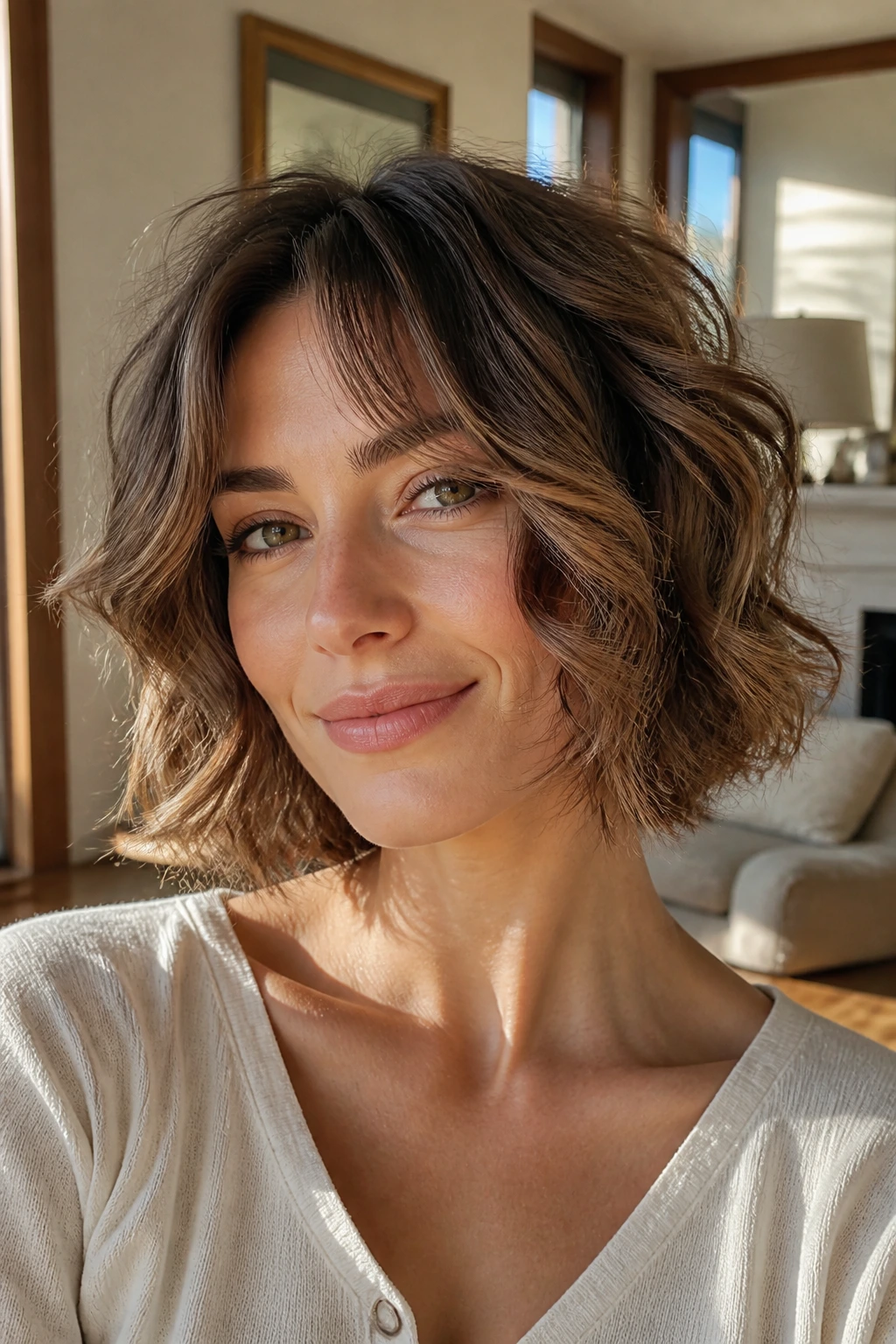
A face-framing razor bob gives you the prettiest kind of movement: the kind that happens right around the eyes, cheekbones, and jaw. The ends are softly razored, so the front pieces swing instead of sitting still. Loose curls pick up that movement fast.
Compared with a blunt perimeter, this version feels lighter and more tailored. It doesn’t need extreme layering to work; it just needs the front pieces to be carved with some care. The result is a bob that can hide softness where you want it and open space where you do not.
It’s a good match for glasses too, because the front pieces can bend around the frames instead of crashing into them. Small detail. Big difference.
13. Asymmetrical Shag Bob

A little asymmetry gives the haircut a pulse. One side can skim the chin while the other rests closer to the collarbone, and that slight mismatch keeps loose curls from reading too predictable. It also helps if your part never sits perfectly centered anyway.
This is a strong pick for people who want the shape to feel modern without leaning hard into anything dramatic. The asymmetry should look accidental at first glance, then intentional when you look again. That’s the sweet spot. Too much difference and the cut starts to feel fussy.
Wear one side tucked behind the ear and let the longer side fall forward. It shows off the line of the haircut without making you style every strand into place.
14. Retro Flip-End Bob
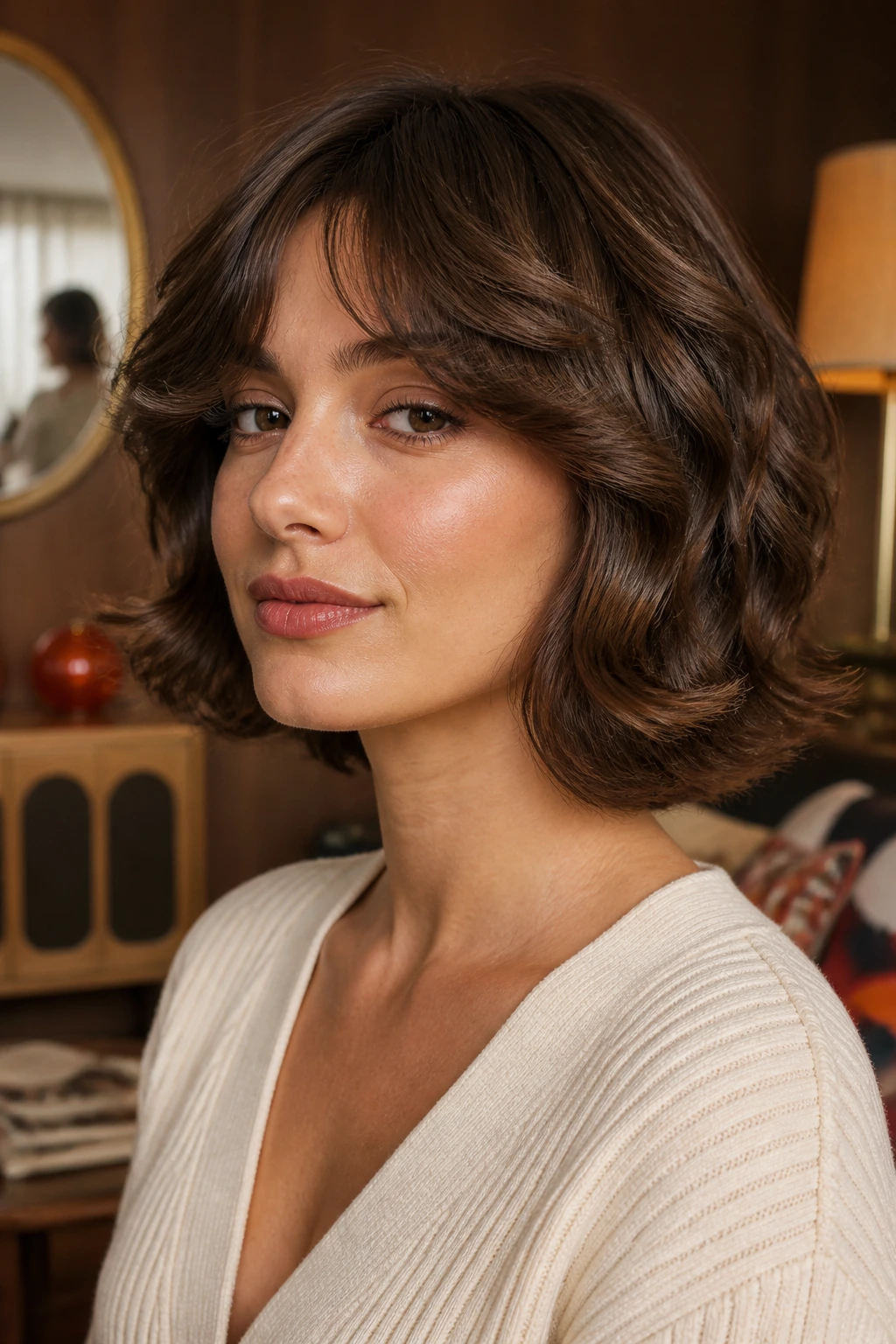
Can a shag bob nod to old-school flip ends without looking dated? Absolutely, if the layers stay soft. The retro flip-end bob uses a rounded brush or a quick wand bend to turn the ends outward just a little, which gives loose curls a playful edge.
The key is restraint. You want a whisper of flip, not a hard curl under the chin. The shag layers keep the top from going stiff, while the bottom pieces flick out enough to frame the neck. On long hair, that little outward movement looks lively instead of severe.
I like this version on days when you want the cut to feel more styled than casual. It takes about five minutes with the right brush, and it changes the whole mood of the haircut.
15. Minimalist Glossy Shag Bob
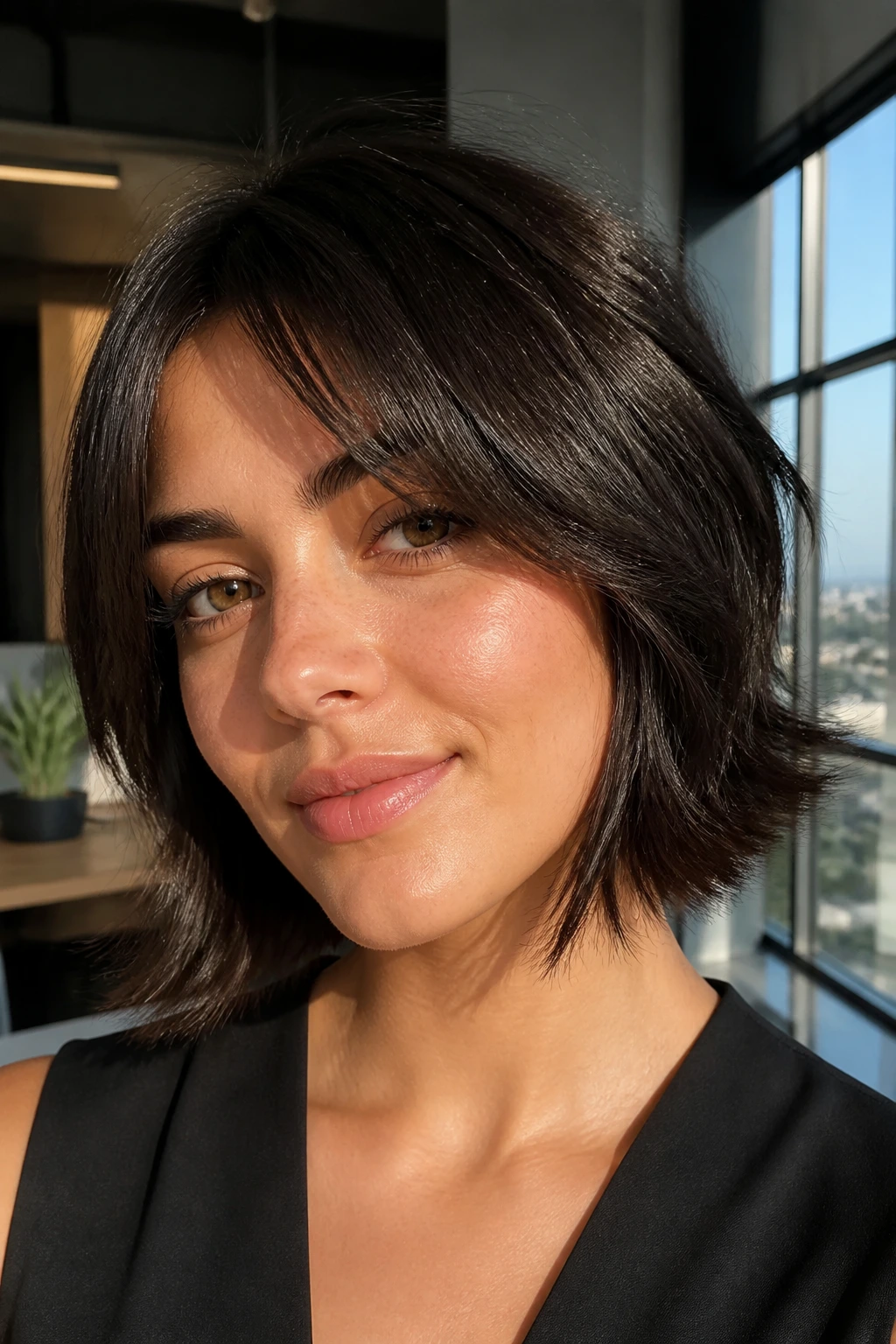
Some people want movement, not drama. The minimalist glossy shag bob is for them. The layers are there, but they’re quieter; the finish is smoother; the ends sit together in soft ribbons instead of a full cloud of texture. It reads cleaner than most shaggy shapes.
That makes it useful for work settings or anyone who likes a neater outline. Loose curls still get to do their thing, but the surface stays controlled with a touch of light serum and a careful blow-dry. The haircut feels expensive in the simplest sense: nothing looks overdone.
This is one of the few shag versions I’d pair with a fairly polished outfit. Crisp shirt, clean neckline, hair with movement. Easy win.
16. Tapered Nape Bob
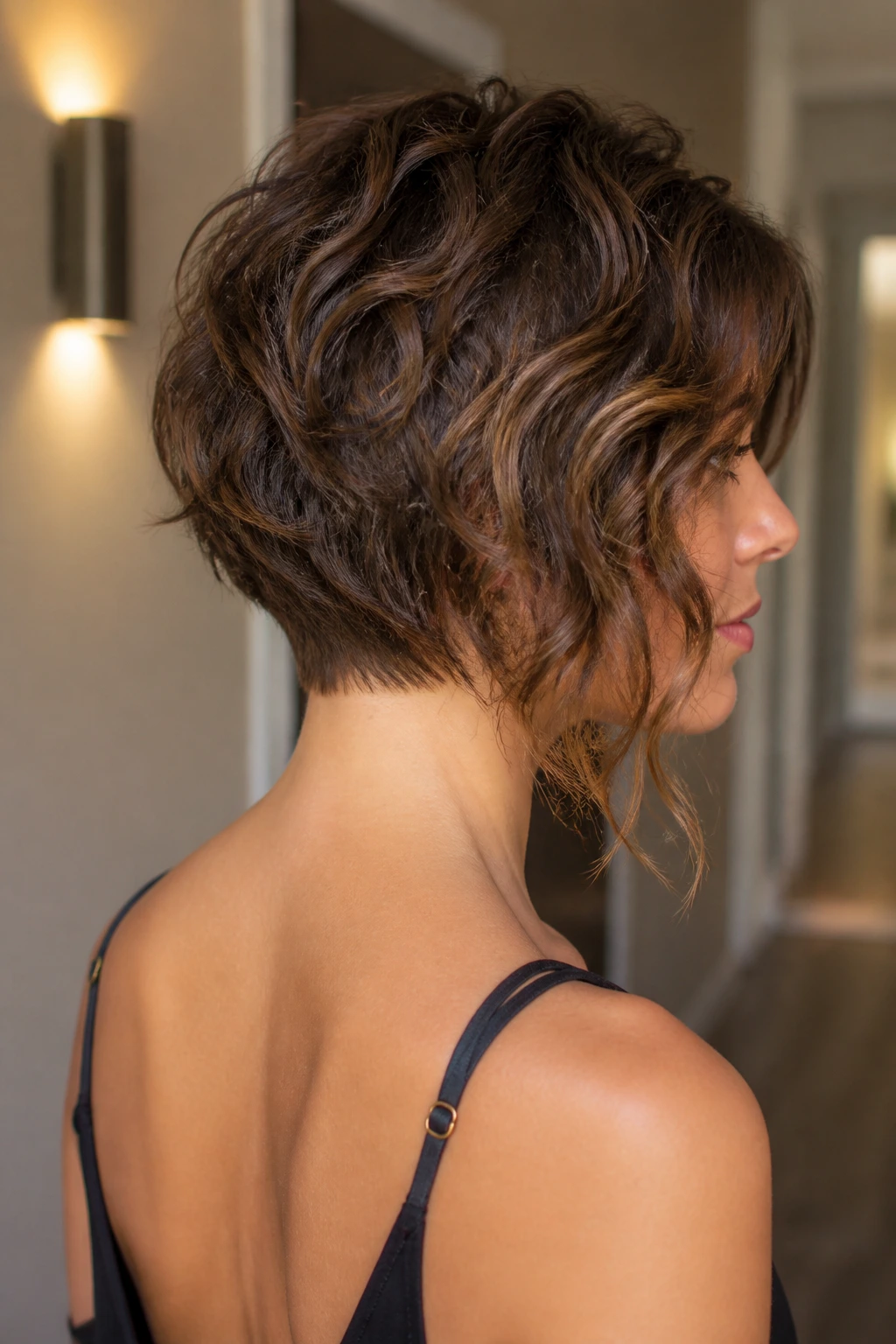
The tapered nape bob does a nice job of slimming the back without stripping the front of length. The nape sits shorter and cleaner, so the neck area feels open, while the front pieces stay long enough to show off the loose curl pattern. The shape is tidy from behind and soft from the front.
That contrast matters if your hair tends to get bulky near the neckline. A little taper removes the trapped volume that makes some bobs feel boxy. The haircut also works well under collars and jackets because it doesn’t fight the fabric.
If you wear your hair up half the time anyway, this is a smart version. The back stays neat, and the front still has enough length to make a low ponytail look intentional.
17. Curtain-Bang Lob
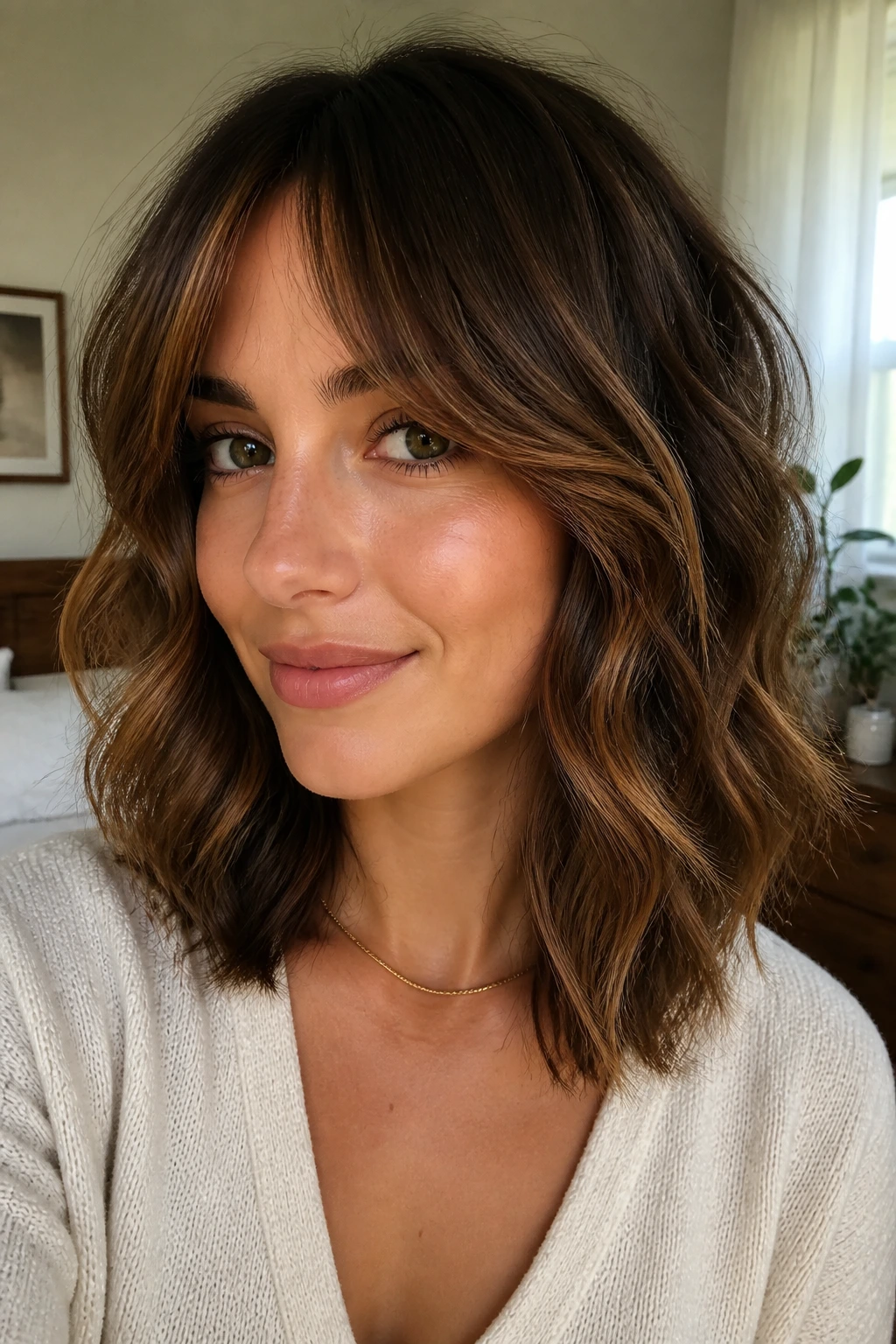
Do you want bangs without committing to a blunt fringe? Curtain bangs are the easier answer. A curtain-bang lob uses longer, split bangs that blend into the side layers, so the loose curls have room to frame the face instead of sitting in one hard band.
The beauty of this cut is the transition. The bangs flow into the bob instead of sitting on top of it. That means the haircut looks softer as it grows, and it keeps working even when you skip a trim by a few weeks.
Best styling note
Let the fringe dry first, then guide it with a small round brush or a quick bend from a wand. If you style the rest of the hair before the bangs, the front often ends up forgotten and puffier than you want.
18. Soft Mullet Bob
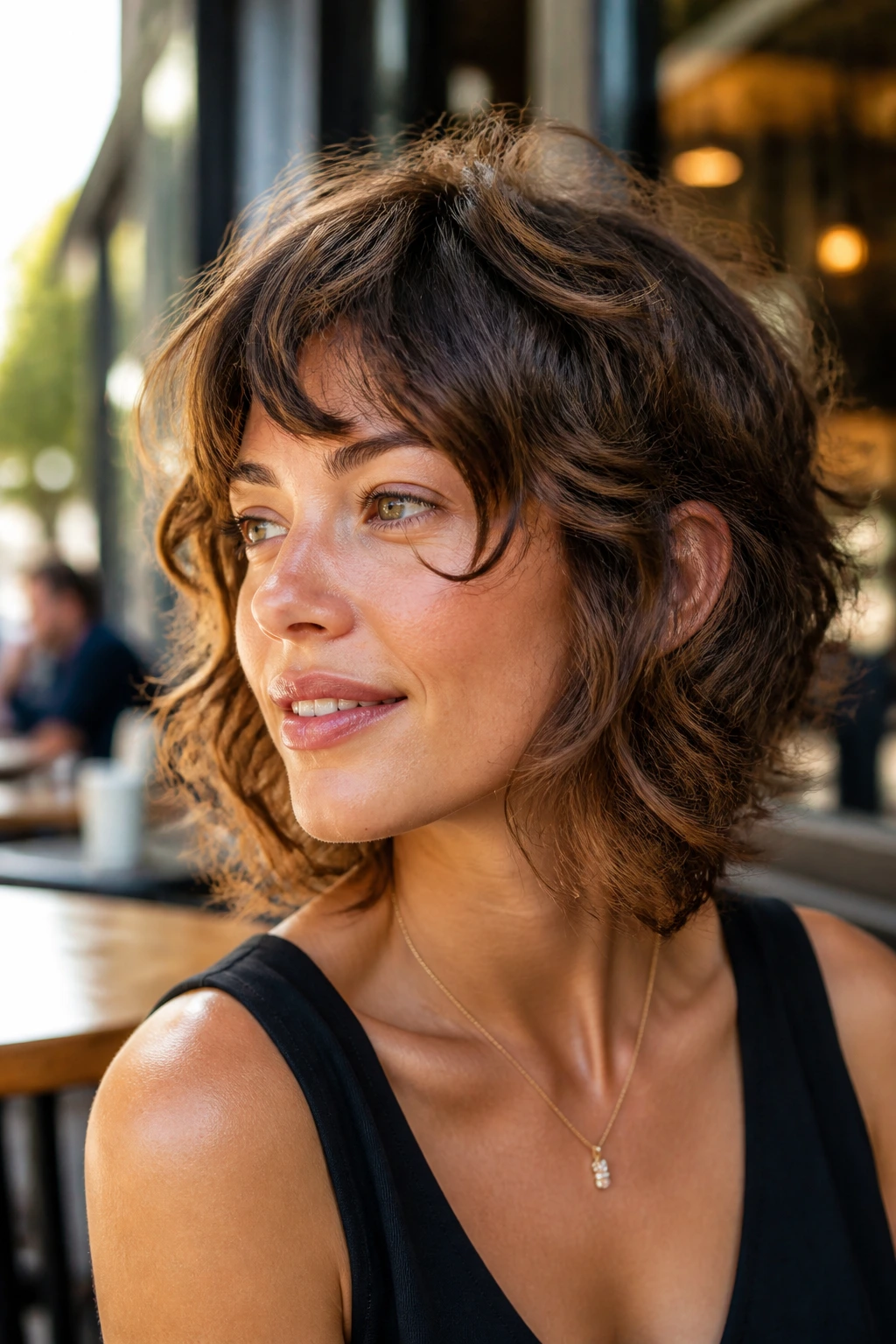
A soft mullet bob sounds braver than it feels. The front and sides stay long enough to keep the shape wearable, while the back gets a touch more lift and separation. On loose curls, that creates a slightly edgy outline without pushing into costume territory.
This is the cut for someone who likes hair with some attitude. The crown can sit a little shorter, the nape a little lighter, and the face-framing pieces can stay soft. The whole thing moves when you turn your head. It has energy.
Keep the texture loose, though. If you define every curl too tightly, the shape starts looking too literal. The charm here lives in softness.
19. Shattered Layer Bob
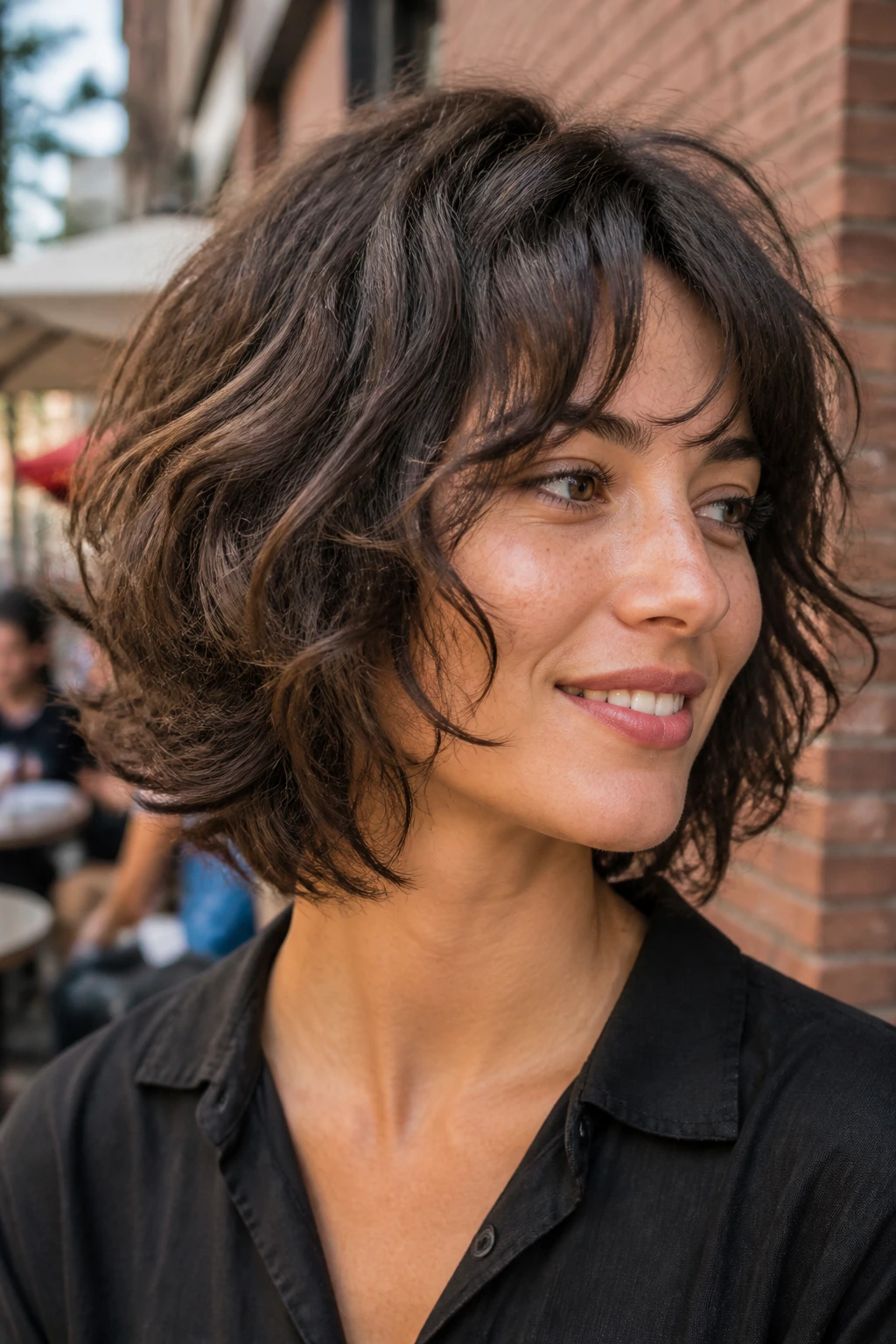
The shattered layer bob is built for movement first. The ends are broken up, the layers are irregular, and the whole cut has a slightly feathered finish that makes loose curls look more separated. It is not a neat haircut. That’s what gives it life.
This version works well when your hair falls into flat sections and needs a little breakup. The shattered texture stops the ends from forming one obvious edge, which can happen when long hair is cut into a straight bob but left too full. A little pieceiness changes the whole read of the cut.
If you use texturizing spray, use less than you think. Too much and the hair gets dry and dusty. You want separation, not crust.
20. Humidity-Friendly Bob
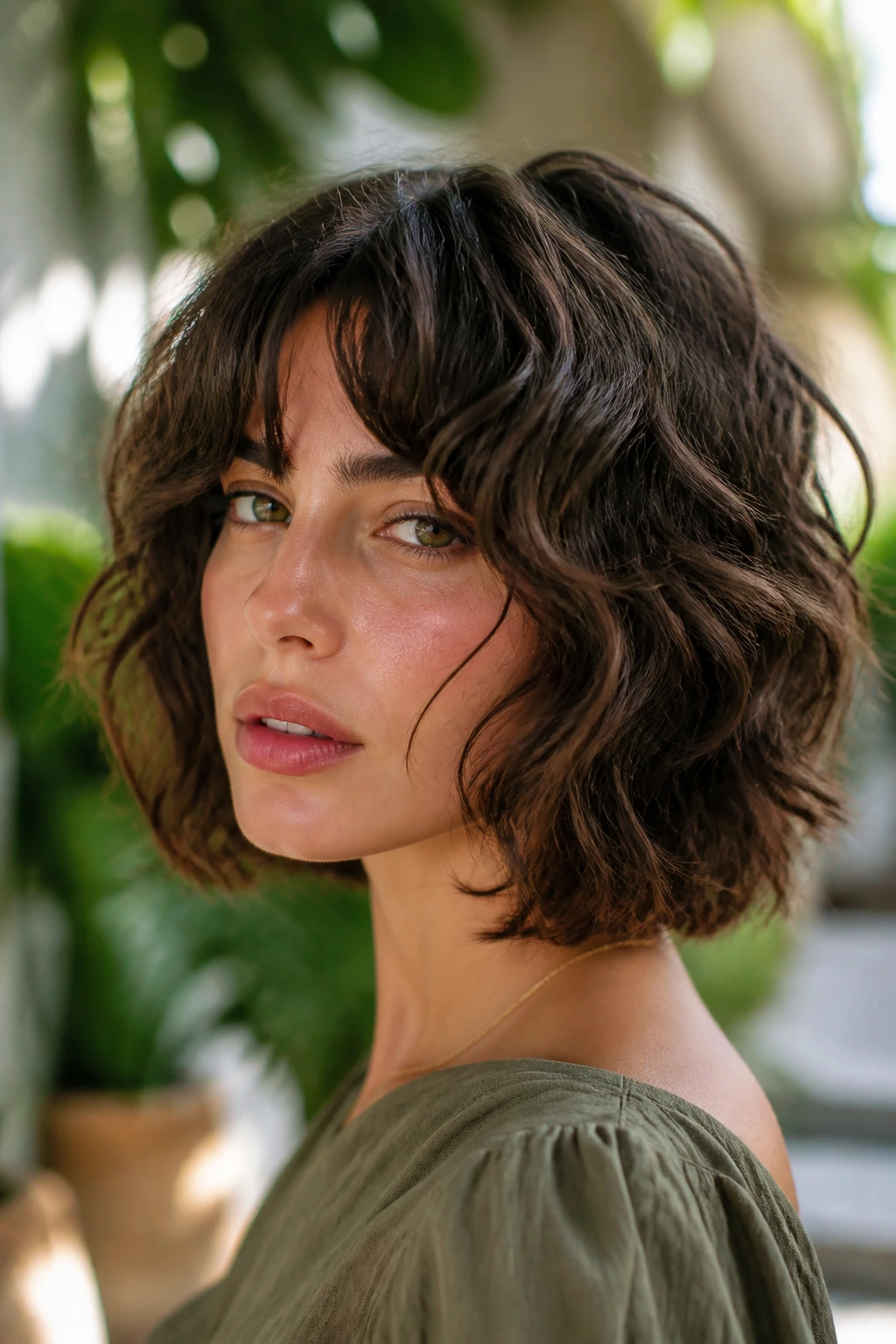
Humidity does not have to ruin the shape. A humidity-friendly bob leans into soft, controlled texture instead of trying to iron every wave into submission. That makes the haircut look more relaxed on damp days, because the curl pattern has room to expand without exploding.
The secret is in the balance between product and air. Too much cream makes the hair collapse. Too little leaves the ends open and frizzy. A light mousse, a diffuser, and a gentle finishing spray are usually enough to keep the cut readable.
This version is practical, which is underrated. If your hair lives in climates where the air has opinions, fighting every bend is exhausting. Better to choose a cut that still looks like itself when the weather gets sticky.
21. Side-Swept Romantic Bob
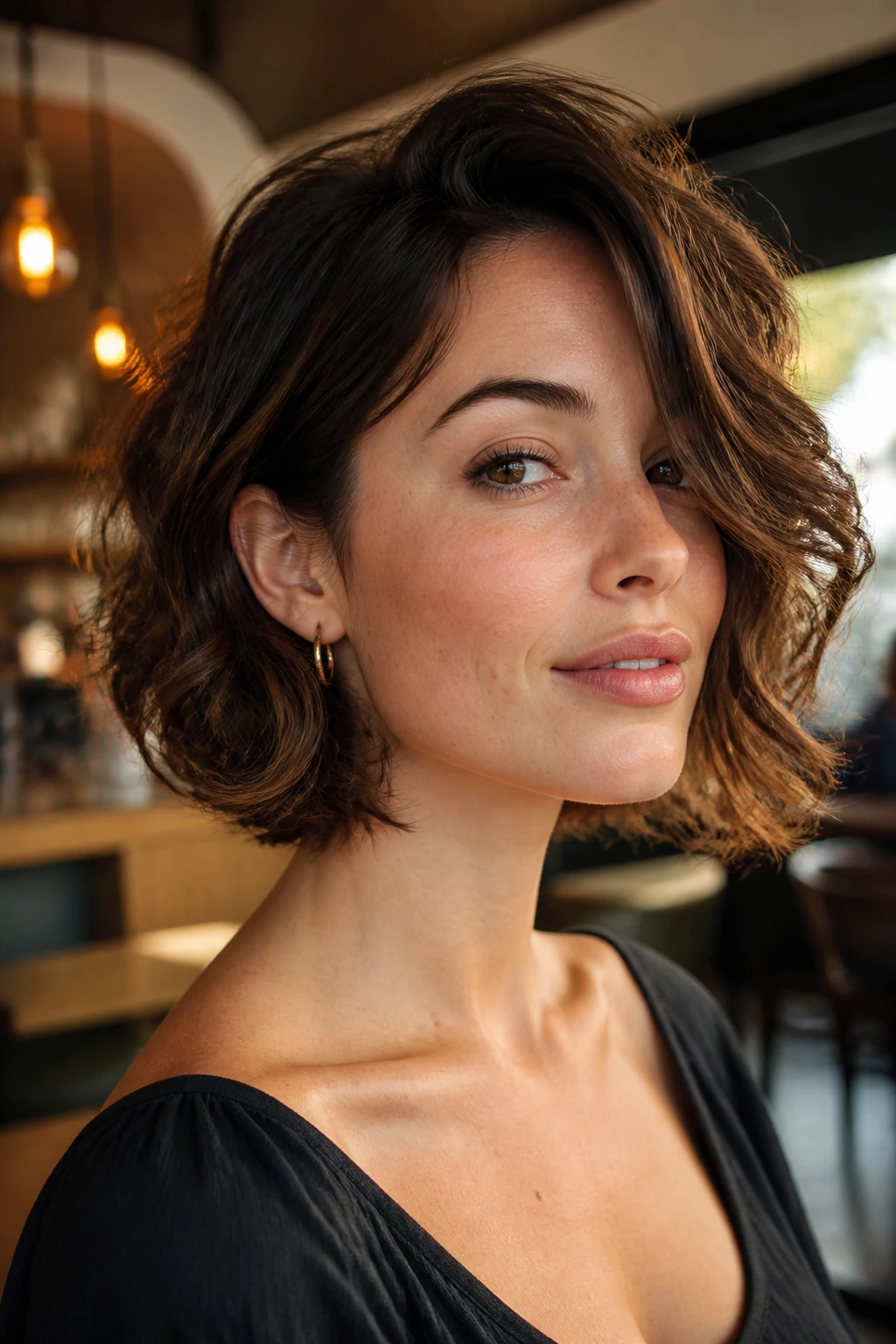
A side-swept romantic bob softens the face in a way that feels almost old-world, but not fussy. One side is tucked away, the other drapes forward in a loose curl pattern that skims the cheek and jaw. The shag layers keep the shape from getting too polished.
This one is lovely with earrings, soft necklines, or any outfit that leaves the collarbone visible. The hair becomes part of the frame instead of fighting it. It’s a gentler version of the shag bob, and that makes it useful when you want movement without edge.
The trick is to keep the sweep loose. If you pin everything too tightly, you lose the charm. A few flyaway pieces help.
22. Grow-Out Friendly Shag Bob
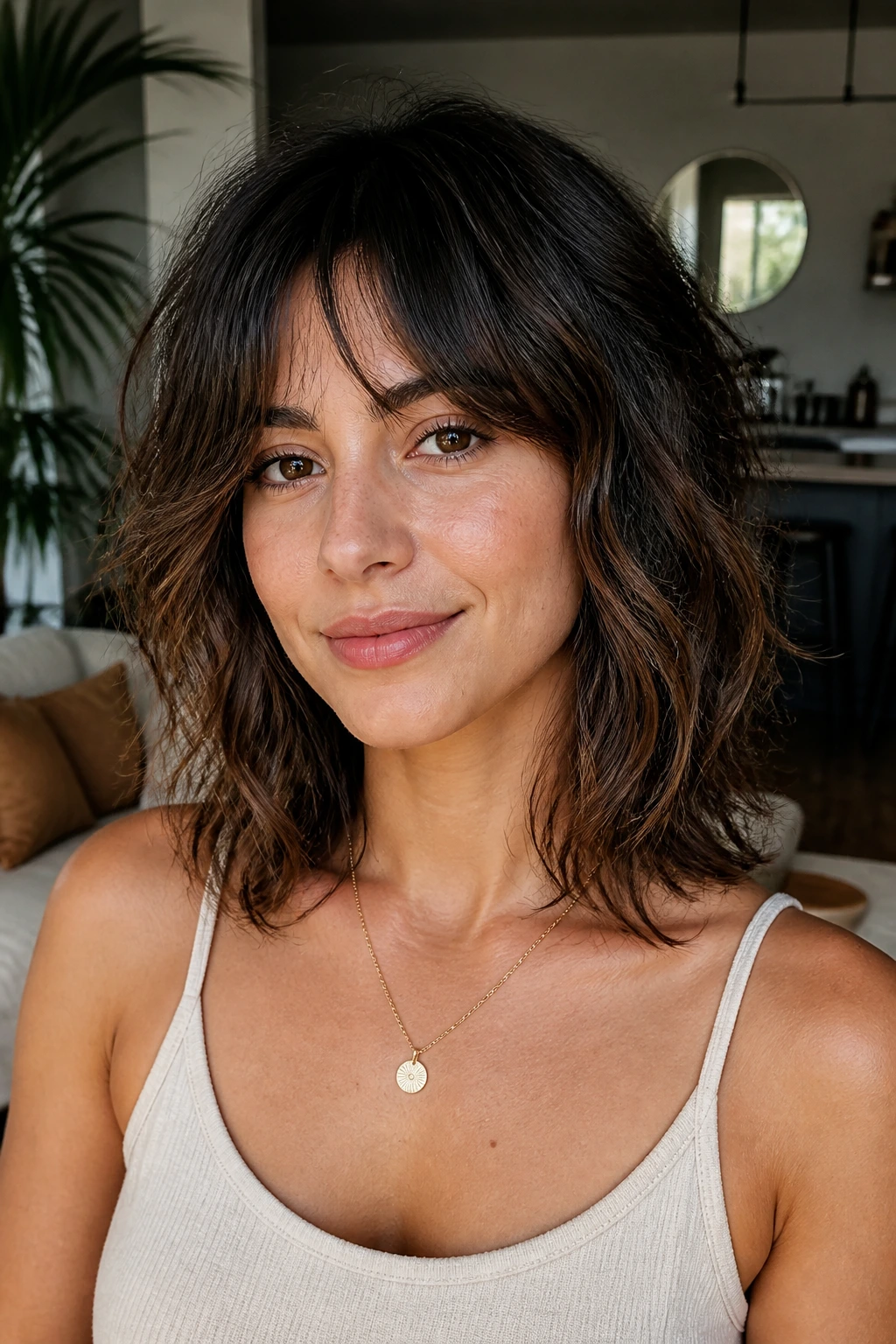
This is the version I’d pick for someone who hates the awkward middle stage of a haircut. The grow-out friendly shag bob keeps the longest pieces just below the collarbone and blends the layers enough that they still make sense after a few weeks of growth. Loose curls help, because they soften the lines as the cut stretches.
It’s a quietly smart shape. You can trim the front, skip a tiny bit of maintenance, and still look like you meant to wear it that way. The back won’t suddenly go square. The front won’t collapse into curtains. It just settles.
If you want one cut from this whole list that can live in the real world with the least drama, this is the one.
Why Shaggy Layered Bobs for Long Hair with Loose Curls Work So Well

A blunt bob asks loose curls to obey one line. That is usually where the trouble starts. Curls bend at different points, swell at different rates, and change shape depending on how much water is left in the hair. A shaggy cut gives those curls more than one place to live, which is why the shape stays softer and reads better from every angle.
The length matters just as much as the layers. Long hair with curls needs enough weight to hang, but not so much weight that it drags the curl pattern down into stringy ends. Collarbone and shoulder-grazing lengths hit that middle zone well. They let the hair move, but they do not force you into a strict short-bob maintenance schedule.
Internal layering is the real engine here. When the shorter pieces sit under the longer ones, the haircut gains lift without losing the outline. Point-cutting and razor-softening keep the ends from acting like a shelf. And because the shape is already broken up, it looks less stressed on day two, which is the day most real people live in.
There’s a practical side too. These cuts work with air-drying, a diffuser, or a quick bend from a curling wand. You are not locked into one styling routine, and that flexibility is half the appeal.
Tools That Make These Cuts Easier to Wear
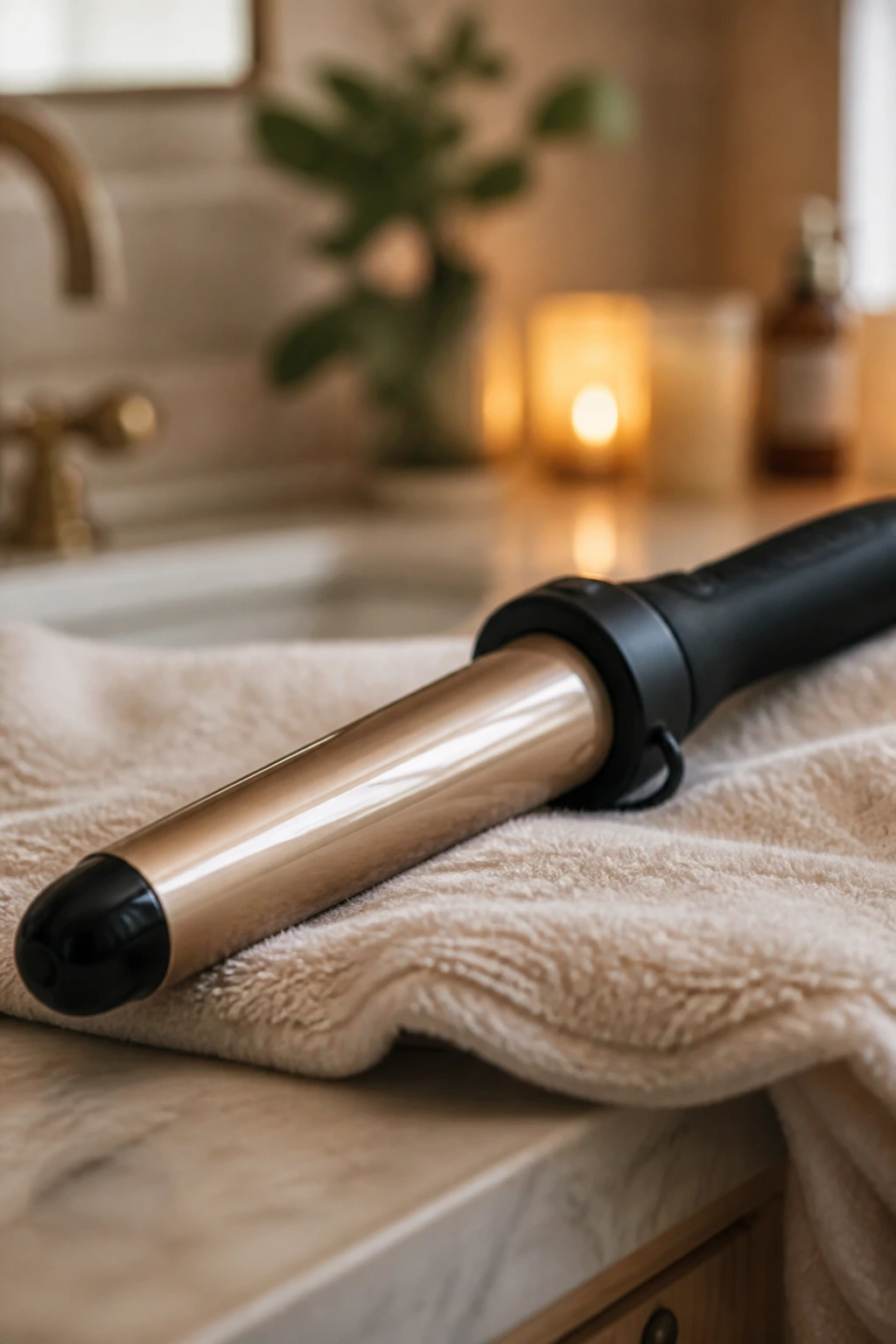
- 1-inch curling wand or iron: The size that makes loose bends instead of tight ringlets, which suits shaggy bobs better than tiny spirals.
- Diffuser attachment: Useful when you want to keep the curl pattern intact and encourage root lift without blasting the hair flat.
- Light mousse: Gives the crown some support and keeps the ends from going limp.
- Heat protectant spray: Non-negotiable if you touch the front pieces with hot tools.
- Texturizing spray: Best for the mid-lengths when the layers need a little grip and separation.
- Wide-tooth comb: Better than a brush when you want to loosen curls without stretching them into frizz.
- Duckbill clips or root clips: Handy for setting the crown while the hair cools.
- Small round brush: Optional, but useful for the fringe and face-framing pieces.
- Microfiber towel or soft T-shirt: Better for scrunching than a rough bath towel.
- Satin pillowcase or bonnet: Keeps the shape from getting crushed overnight.
How to Ask for the Right Version at the Salon

Bring photos, but bring the right photos. A picture of a gorgeous shag bob on pin-straight hair won’t tell your stylist much if your own hair bends into loose curls and expands at the sides. Show front, side, and back views if you can, and point out the parts you actually want: the fringe length, the collarbone line, the amount of texture around the face.
Say where you want the shortest layers to start. That one detail changes the whole haircut. If the layers start too high, loose curls can puff up near the temples and make the top look choppy. If they start too low, the cut keeps too much weight and loses the shag effect. Most people with long hair do better when the shortest face-framing pieces sit somewhere around the cheekbone or lower.
Also say how your hair behaves when it dries. Shrinkage, puffiness, and flattening all matter here. If your curls spring up a lot, the stylist should leave more length on the front and keep the perimeter soft. If your hair is dense and slow to move, ask for more internal removal so the bottom does not feel packed.
One more thing: ask what technique they prefer for your texture. Point-cutting can keep the ends softer. Razor work can add airy separation. Neither one is magic, and neither one is right for every head of hair.
How to Wear and Style These Cuts in Real Life
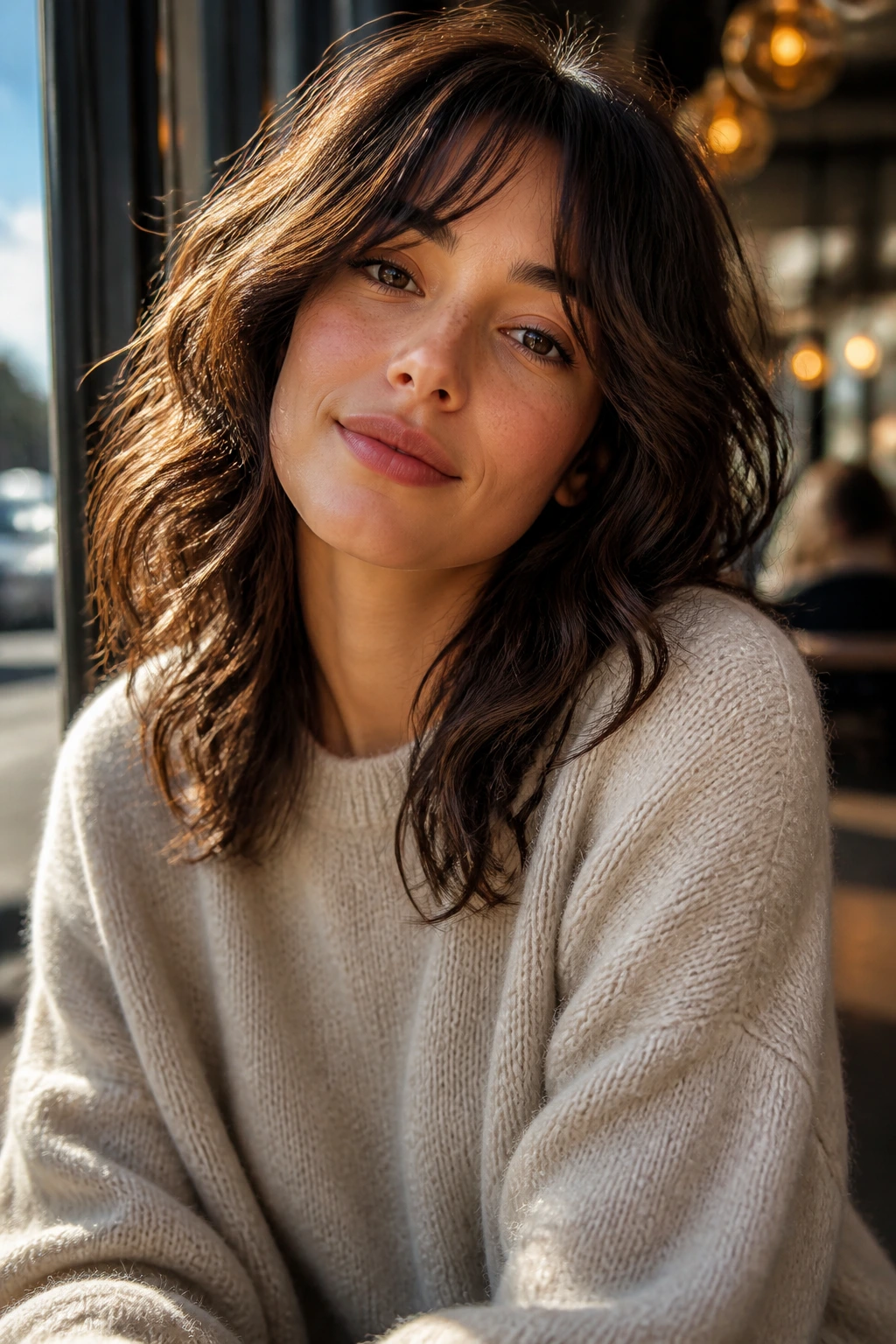
Parting: A center part gives curtain pieces a softer fall, while a deep side part creates instant lift at the crown. If your hair usually goes flat on top, start with the side part and see how much shape it gives back.
Finish: A matte, piecey finish makes the cut look more relaxed; a light gloss on the outer layer makes it look cleaner and a bit more refined. I would not load the ends with oil, though. That usually kills the movement the haircut is trying to give you.
Accessories: Small hoops, claw clips, and barrettes all work well because the haircut leaves enough length to tuck pieces away without losing the shape. If you wear glasses, keep the side pieces a touch longer so the line doesn’t snag at the temples.
Best clothes to pair with it: Open necklines show off the collarbone length, while high collars and crewnecks make the layers flare around the face. Both can work. The haircut just reads differently depending on what sits under it.
A small styling note: the hair usually looks best when it is not over-managed. Let the front pieces land where they want. That looseness is part of the point.
Small Tweaks That Change the Whole Haircut
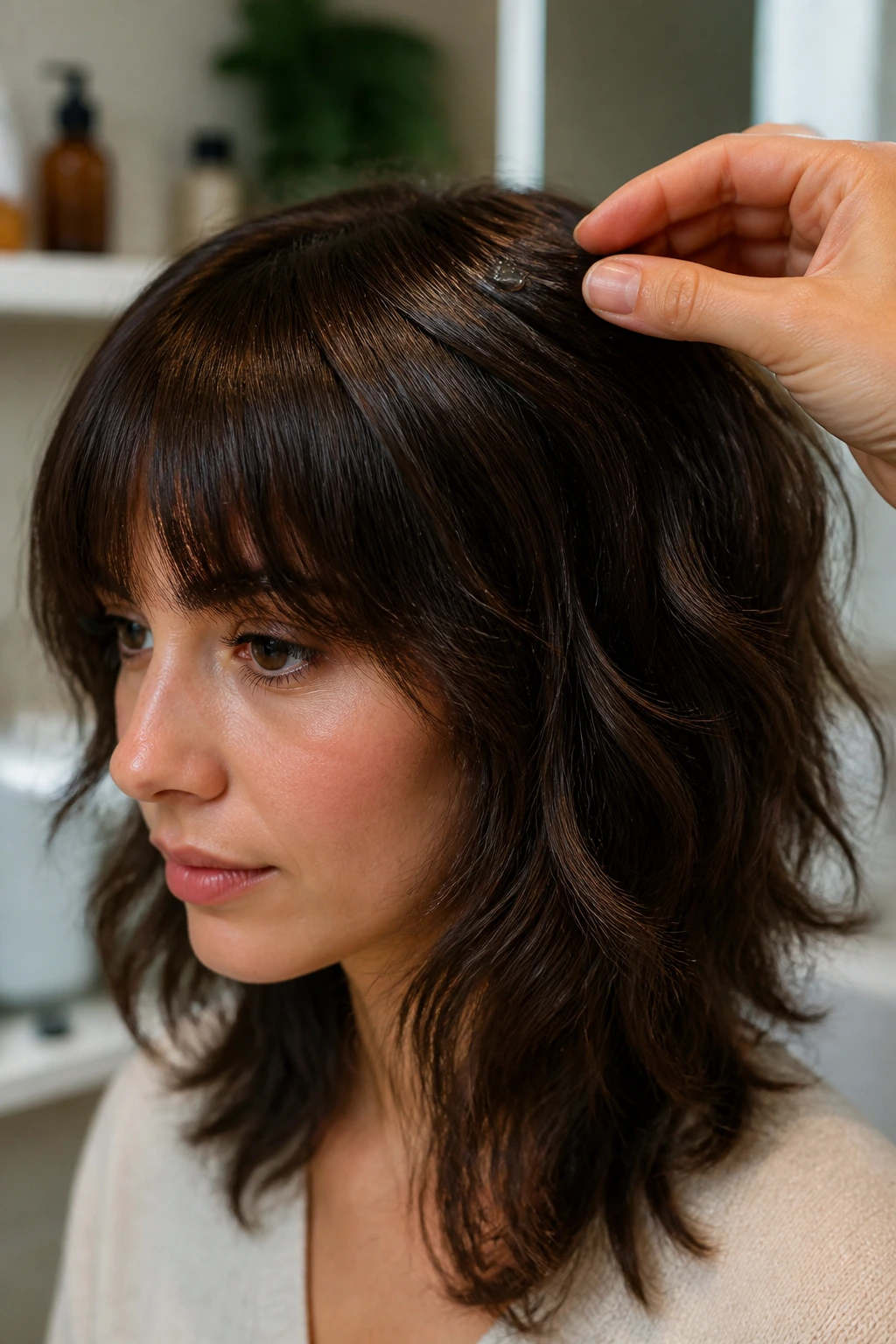
Gloss Boost: A pea-size drop of lightweight serum on the outer layer gives the cut a cleaner finish without turning the ends greasy. Put it on your palms first, then press it over the top layer only.
Lift Boost: Root clips at the crown for 10 to 15 minutes can rescue a bob that feels too flat. This works especially well if you diffuse the hair until it is mostly dry, then let the clips do the last bit of shaping.
Texture Boost: If the layers look too soft, mist a little texturizing spray into the mid-lengths and scrunch once. Don’t soak the ends. A little grit helps. A lot of it looks dusty.
Make-It-Yours: Fine hair usually needs fewer short layers and a softer perimeter. Thick hair usually needs more internal removal and longer face-framing pieces. If your hair is very loose-wave and not quite curly, keep the top layers longer so the cut does not balloon.
Keeping the Shape Between Washes

Day one is rarely the best version of this haircut. Day two often is. Once the loose curls settle and the product calms down, the layers start showing their shape without the fresh-wash fluff. That is one of the nicest things about shaggy layered bobs for long hair with loose curls: they usually soften into themselves instead of going stale.
At night, protect the shape. A satin pillowcase helps, and so does a loose pineapple or a couple of very gentle twists secured at the top of the head. Do not tie the hair down tightly. You’ll just flatten the crown and leave dents where the elastic sat.
If the front pieces go weird the next morning, mist them with water or a light leave-in spray and re-shape only those sections. You do not need to restart the whole head. In fact, over-wetting the full bob usually makes the ends frizz and the roots collapse. A quick refresh at the face line is enough most days.
Dry shampoo can help if the roots start looking heavy, but use it lightly and keep it at the scalp, not the lengths. The mid-lengths need movement more than powder. For trims, most shaggy bobs stay cleanest with a shape check every 8 to 10 weeks. If you are growing it out, 12 weeks can work, but the fringe and face-framing pieces may need a touch-up sooner.
The Mistakes That Flatten or Puff Out the Shape
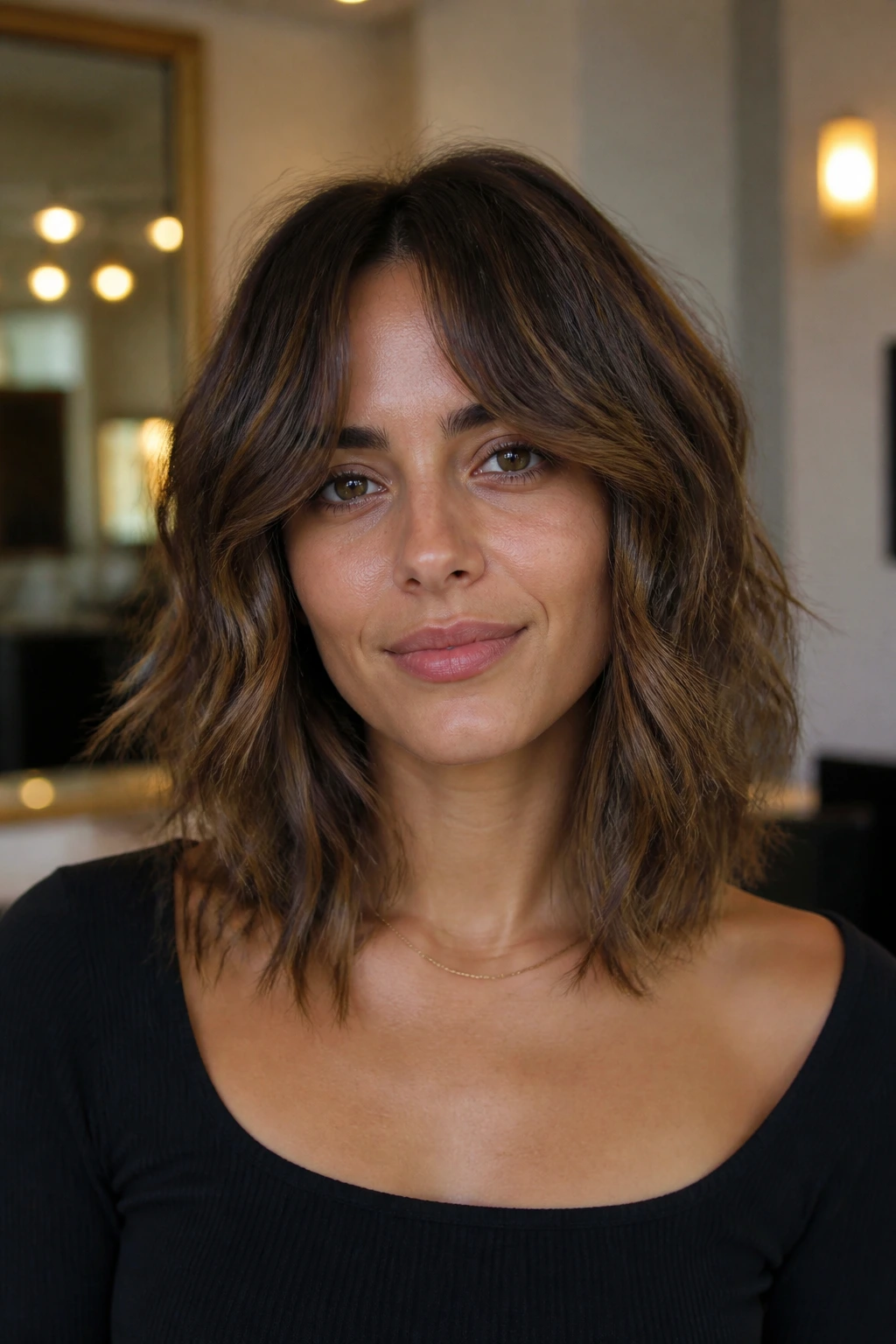
- Cutting the top layers too short: The crown lifts for a few hours, then the loose curls spring up and the haircut starts looking mushroom-like. Keep the shortest layers long enough to bend, not stand up.
- Loading the ends with heavy cream or oil: The lower half clumps together, the roots drop, and the hair loses the broken-up texture that makes the cut work. Use lighter product and keep most of it away from the perimeter.
- Styling every curl into the same direction: The haircut turns too neat and loses the shag effect. Let some pieces flip, some fall, and some separate.
- Skipping root support: If the crown goes flat, the whole shape looks tired. Clip or diffuse the roots so the top can hold its own.
- Trimming the front into a hard line: That erases the softness around the face and makes the bob feel boxy. Point-cut or soften the front instead.
- Brushing it dry: That usually turns loose curls into frizz and makes the layers blur into one puff. Use your fingers or a wide-tooth comb when you need to rearrange it.
Variations and Alternatives to Try
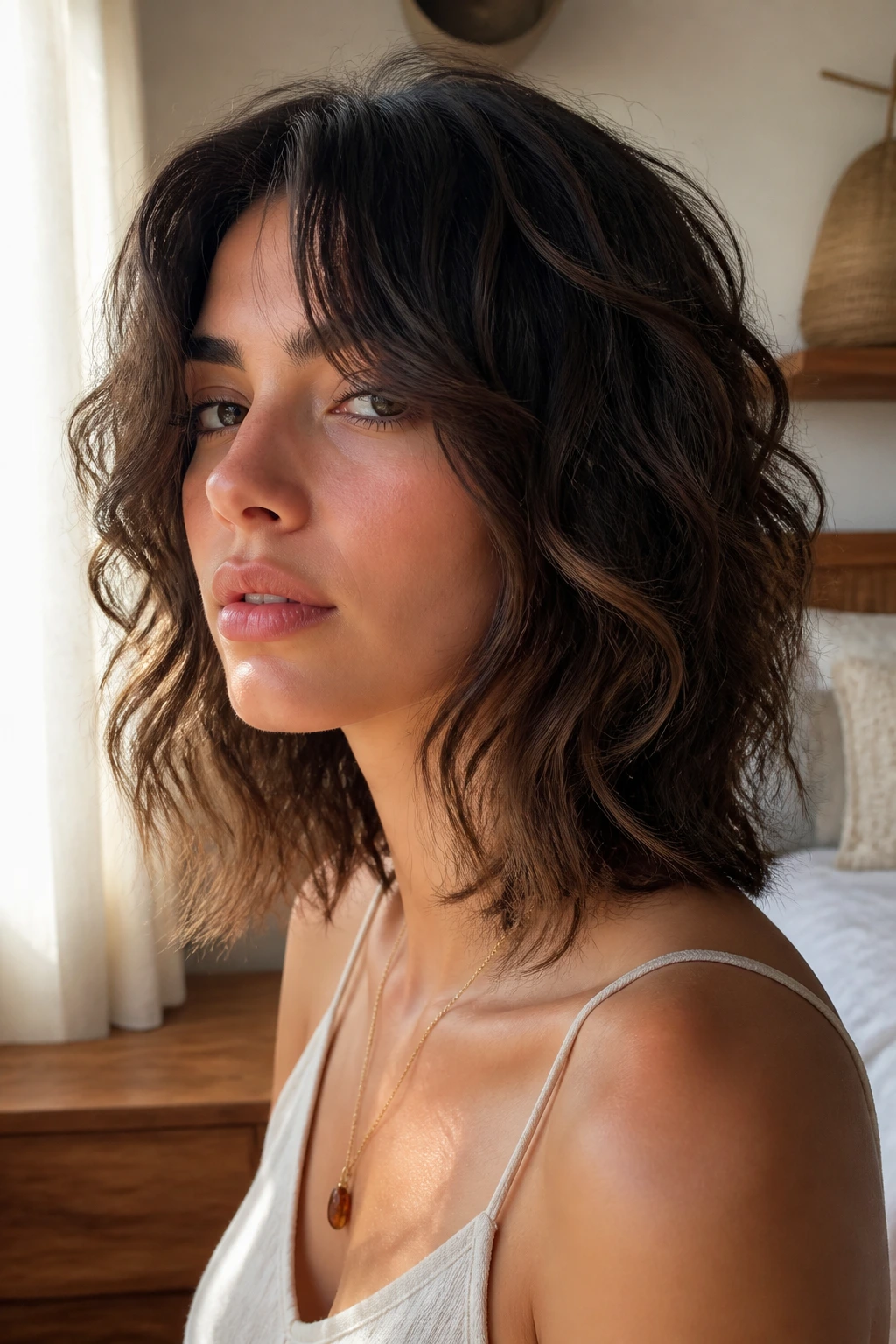
Soft-Edge Version: Keep the perimeter long and the layers gentle if you want the haircut to read as polished first and shaggy second. This works well for people who need the bob to fit a dressier wardrobe.
Extra-Texture Version: Ask for more piecey ends and finish with mousse plus texturizing spray. This gives the loose curls more separation and a slightly cooler, undone feel.
No-Fringe Version: If you don’t like bangs at all, keep the front pieces long enough to sweep away from the face and let the side layers do the framing. The cut still has movement, just less forehead focus.
Thick-Hair Release Version: For dense hair, ask for internal weight removal under the top layer so the outline stays smooth. That stops the bob from turning into a heavy wedge.
Soft Grow-Out Version: Keep the layers blended and the corners rounded so the haircut still looks decent after several weeks. This is the version I’d pick if you only want to visit the salon a few times a year.
Questions People Ask Before They Try This Cut
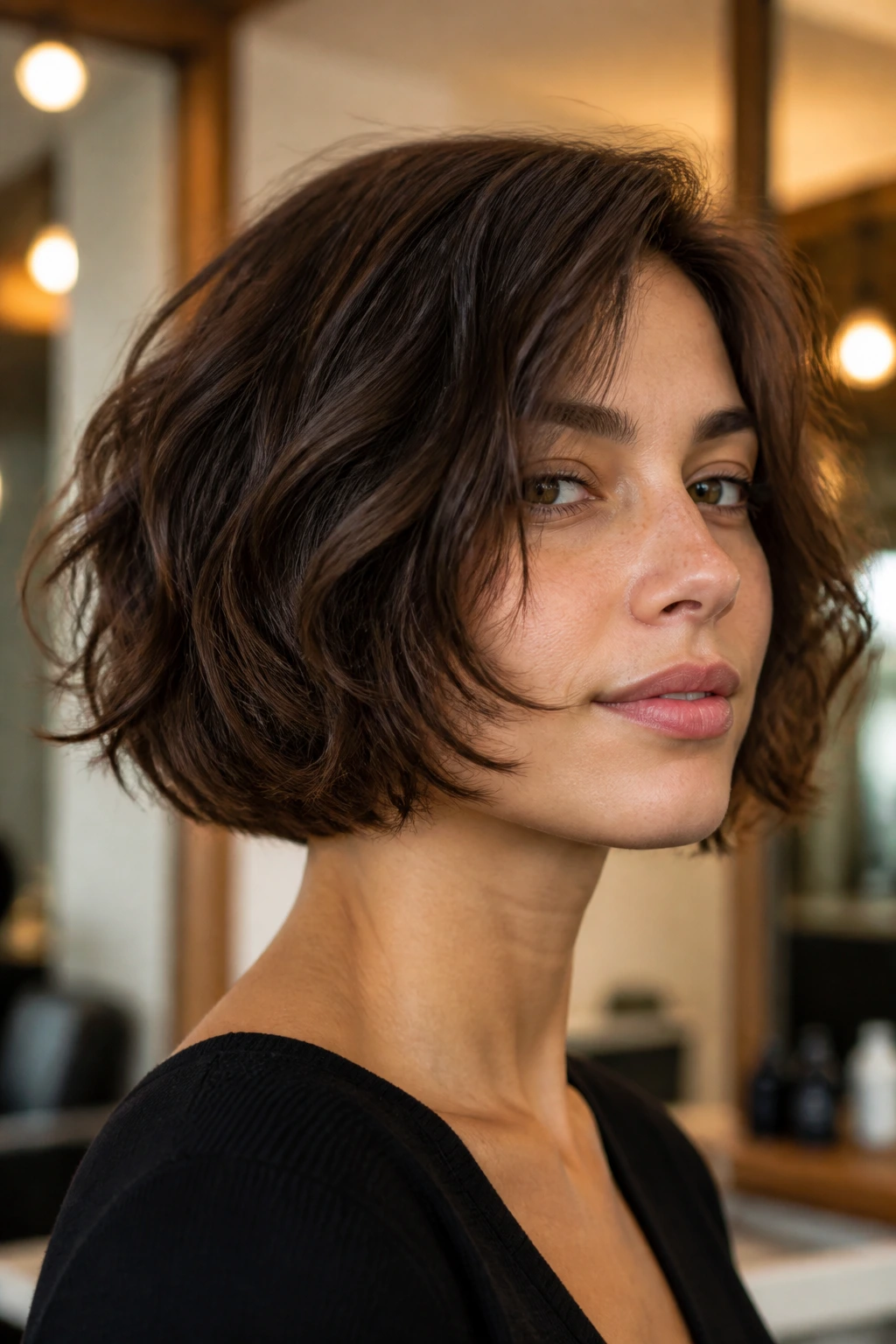
Will this work on fine hair?
Yes, but the version matters. Fine hair usually does better with fewer short layers and a softer, longer perimeter so the ends do not get wispy. Ask for crown lift and face-framing movement instead of heavy texturizing all over.
What if my loose curls puff up when they dry?
That usually means the shortest layers sit too high or the product is too heavy at the ends. Keep the top layers longer, use a light mousse, and let the curls dry with some room to move before you decide the shape is wrong.
Do I need bangs for this haircut to look good?
No. Curtain bangs and full fringe are both options, not requirements. Long front pieces can do the framing work on their own if you want less maintenance around the forehead.
How short can the bob go without losing the shag feeling?
Chin-length is possible, but collarbone and shoulder-skimming lengths are easier to manage on loose curls. Once you go too short, the curl pattern has less room to fall and the cut can start to puff outward.
Can I air-dry it, or do I need hot tools?
You can air-dry it if your wave pattern already has some bend. Hot tools are only there to refine the front pieces or add shape on days when the curl pattern dries unevenly.
How often should I trim it?
Most versions stay sharp for about 8 to 10 weeks. If you are growing it out and want a softer shape, you can stretch that a bit, but the fringe and face-framing pieces may need a cleanup sooner.
What if my hair is thick and triangular?
Then you want more internal weight removal and less bluntness at the bottom. Keep the perimeter soft, ask for the top to stay airy, and avoid letting all the bulk sit right at the jaw.
Can this cut still look good if I wear it half-up a lot?
Yes, and that is one of its better tricks. The front pieces stay long enough to frame the face while the shorter layers at the crown keep the half-up shape from looking flat.
A Shape That Still Moves
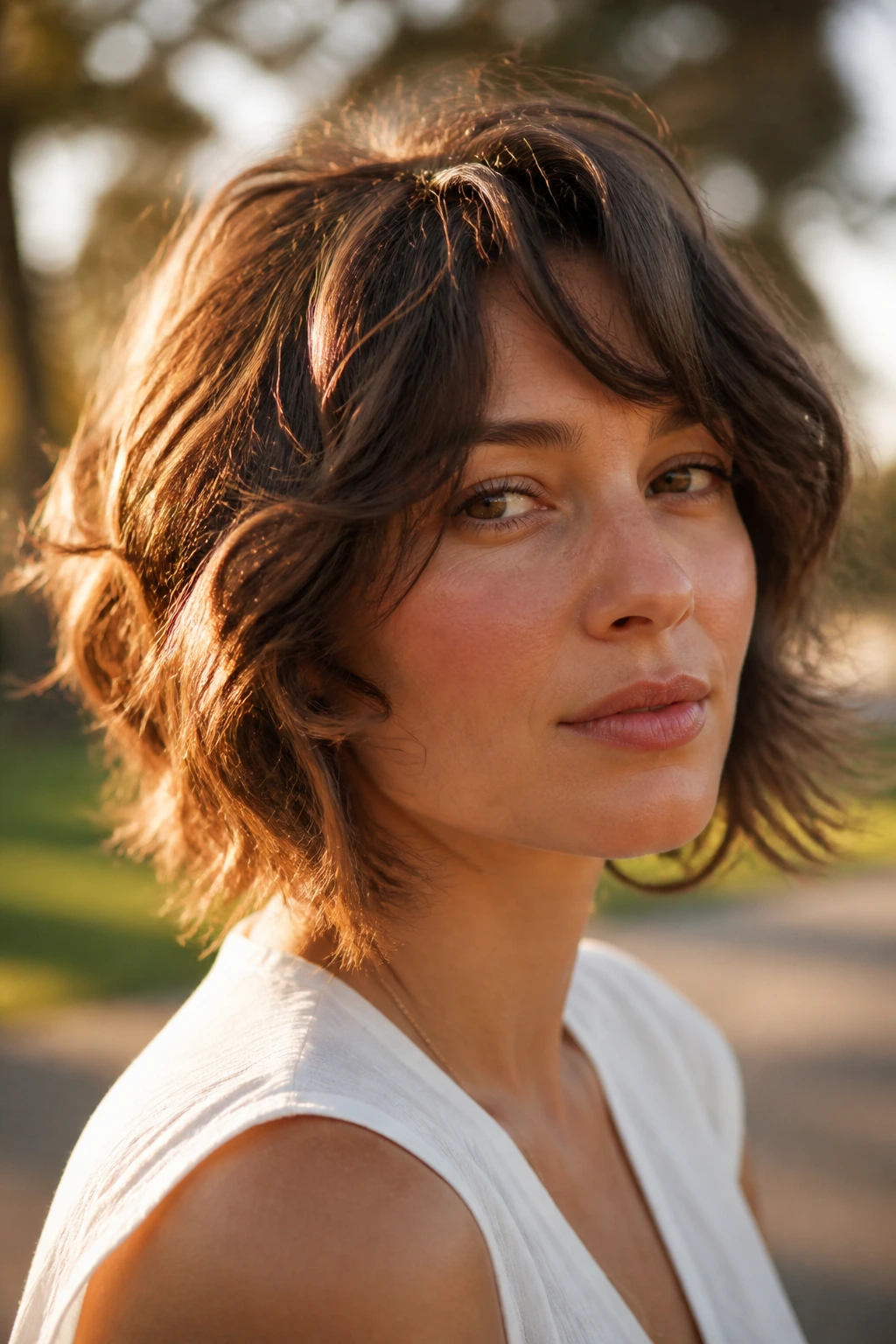
The best shaggy bob is not the one that looks the most dramatic in a photo. It is the one that still makes sense after a night of sleep, a bit of humidity, and a rushed morning in front of the mirror. Loose curls need room to bend, and this kind of cut gives them that space without surrendering the outline.
If you want one idea to take to the salon, make it this: keep the front long enough to frame, keep the crown light enough to lift, and keep the ends soft enough to move. That balance is where these cuts live.
Bring one photo with a front view and one with a side view, then ask for the layers to start a little lower than your first instinct says. Hair like this usually needs less force than people think.