



Thick hair and a blunt line can turn into a triangle by noon. Short layered shag haircuts for thick hair solve that by moving weight around instead of just hacking the bottom off and hoping for the best.
The trick is placement. A good shag isn’t random choppiness; it’s a map. The shortest pieces usually sit around the crown, cheekbones, jaw, or nape, and the longer bits hold the shape together so the cut doesn’t puff out like a mushroom the second humidity shows up.
That’s why this haircut family stays interesting. The same basic structure can look soft, edgy, messy, sleek, curly, or almost pixie-short depending on where the layers land and how much perimeter you keep. Some versions let your hair air-dry and behave. Others need a little round-brush work or a quick pass with a curling wand. The point is control, not chaos. And that difference matters a lot when your hair has enough density to eat a styling cream for breakfast.
Why These Cuts Work on Thick Hair
Weight comes off the right places: Thick hair needs internal removal, not just shorter ends. These cuts take bulk out of the crown, midlengths, and nape so the outline still looks intentional.
The shape stays visible: A blunt bob on dense hair can turn boxy fast. Shag layers keep the silhouette moving, especially when the top pieces are cut to hit around the cheekbone or lip line.
Styling gets faster: Shorter layered shapes dry faster than long heavy cuts because there’s less water trapped in the midsection and less weight pulling the hair flat.
Texture looks like a feature, not a problem: Waves, bends, and even a few frizzier bits read as part of the haircut when the layers are placed well. That’s not an accident. It’s the whole point.
The grow-out is kinder: A good shag grows into a softer, more lived-in shape instead of a hard shelf. That buys you a few extra weeks between trims.
It works with more than one texture: Straight dense hair, coarse wavy hair, and curly hair all benefit, but they need slightly different cutting techniques and different product choices.
1. Chin-Length Curtain Shag That Lifts Thick Hair Off the Jaw
A chin-length curtain shag is one of those cuts that looks casual until you notice how much work it’s doing. The shortest pieces skim the cheekbones, the fringe opens in the center, and the ends land right at the jaw, which keeps thick hair from building a heavy wall around the face.
This shape is smart for dense hair because it takes pressure off the bottom without making the haircut too airy. You still have enough length to tuck one side behind the ear or bend the ends under with a round brush. That matters. Too many short shags on thick hair get over-layered and lose their outline. This one keeps the perimeter strong.
What to Ask For
Ask for a chin-length base with soft layers starting at the cheekbone, not random short pieces all over the head. If your hair is coarse, mention that you want the ends “lightened, not shredded.” That’s a real difference.
The curtain fringe should graze the bridge of the nose when dry, because thick hair tends to shrink a little as it settles. If the bangs are cut too short, they’ll spring up and sit stubbornly above the brows.
Styling Note
A small round brush or a flat brush with a quick bend at the ends is enough. You’re aiming for movement at the front and a little swing through the bottom, not full blowout drama.
2. Bixie Shag With Feathered Sides and a Clean Nape
Want pixie-short hair without the helmet effect? A bixie shag gives you that in a shape thick hair can actually live inside. The nape is tighter, the sides are feathered, and the top carries enough length to keep the cut from looking clipped to the scalp.
Thick hair likes this version because the density sits where it can be managed. The bulk comes off the back and around the ears, which is where a lot of short cuts go puffy or bulky. The top still has room to move, so the haircut doesn’t flatten into a cap.
Why It Works on Dense Hair
The clean nape prevents that stacked “too much hair in the back” feeling. The feathered sides soften the transition into the top layers, which matters if your hair grows straight out from the head or has a strong cowlick near the temple.
This is also one of the easier shags to keep neat. A quick blast with a dryer and a dab of matte cream at the ends usually does it. No one needs to spend twenty minutes wrestling it into shape.
Best For
People who want short hair that still reads feminine, edgy, or polished depending on how it’s styled. If you like earrings, glasses, or strong brows, this cut leaves all of that visible.
3. Razor Pixie Shag for Dense Hair That Wants Movement
A razor pixie shag sounds aggressive, and sometimes it is. The best versions are sharp at the edges, broken up through the interior, and light enough to move when you shake your head. Thick hair can wear this shape beautifully, but only if the stylist knows when to stop.
This cut is strongest on dense straight or slightly wavy hair that tends to sit heavy around the temples. The razor takes away that blocky finish and gives the strands a softer fall. The result should look piecey, not frayed.
What Makes It Different
The magic is in the contrast. The nape and sides stay close, while the top keeps a little height and the fringe can fall forward or split apart. That contrast gives thick hair direction. Without it, short dense hair often ends up looking more like a bowl than a shag.
A warning, though: if your hair is coarse or very curly, a heavy razor pass can create a fuzzy halo. In that case, ask for scissors and point cutting instead. Same idea. Less risk.
Styling It
Use a pea-sized amount of texture paste on dry hair and pinch the ends open with your fingers. That’s usually enough. Too much product collapses the airy finish and makes the hair look greasy by lunchtime.
4. Jaw-Grazing Wolf Cut With Piecey Ends
The wolf cut works because it leaves the top a little longer than the sides and leans into that difference instead of hiding it. On thick hair, that matters. You get volume at the crown, movement around the face, and ends that don’t feel like they’re carrying the whole haircut on their backs.
A jaw-grazing version keeps the drama without wandering into full mullet territory. The front pieces hit around the chin, the crown stays choppy, and the neck area gets enough removal to stop the back from mushrooming out under collars.
A Cut That Likes Wavy Hair
If your thick hair bends on its own, this shape can look almost unfairly easy. Scrunch in a little mousse, diffuse until 80 percent dry, and let the layers do what they were cut to do. Straight thick hair can wear it too, but it usually needs a few bends with a 1-inch iron to wake the layers up.
The key is not to over-polish it. A wolf cut should have some separation. If every strand is smoothed into place, the shape loses its point and starts looking like an unplanned shag bob.
Ask for This
Use the phrase “stronger texture through the top, lightness through the back, and face-framing pieces that land at the jaw.” That tells the stylist exactly where the movement should live.
5. French Shag With Eyebrow-Length Fringe
French shags live or die by the fringe. If the bangs are too blunt, the whole cut feels heavy. If they’re too wispy, the shape loses its punch. The sweet spot is a soft, eyebrow-skimming fringe with longer sides that melt into the cheekbones.
For thick hair, this cut is a small miracle. It breaks up the forehead line, lifts the face, and keeps the weight from stacking at the bottom. The bangs matter here because they steal some visual bulk from the rest of the haircut. That’s why it works even when the rest of the hair is still fairly full.
What to Watch For
The fringe should not be cut too short at the center. Thick hair often shrinks a little as it dries, and a fringe that seems “safe” wet can end up hovering awkwardly above the brows. Leave room.
The sides should have a soft, swept shape rather than a hard line. That’s what keeps the cut from looking like a pageboy with attitude.
Styling Note
This one looks best with a round brush or a quick bend from a blow-dryer brush. The fringe needs a little direction, but not a perfect blowout. Slight separation at the ends makes it better, not worse.
6. Collarbone Shag That Keeps the Weight Under Control
Not everyone wants to go chin-short, and honestly, thick hair often behaves better when you leave a little more length in the front. A collarbone shag gives you the movement of layered hair without making you feel like you lost half your ponytail.
The long-ish length helps thick hair because it keeps the shape from going too wide. The layers can start around the cheekbone or mouth, then drop into a softer collarbone line. That keeps the haircut light enough to move but not so short that it balloons around the ears.
Why It’s a Safe Bet
This is the cut I’d hand to someone nervous about a dramatic change. It still reads as a shag, still gives you texture, still shortens dry time, but it leaves you options. You can bend the front pieces, wear it tucked behind one ear, or let it air-dry into a loose, face-framing shape.
Thick hair usually likes that flexibility. It hates being boxed into one silhouette.
Best For
People who wear their hair up part of the week and down the rest. The length at the collarbone makes the grow-out easier, too. When it starts getting shaggy in the wrong spots, it usually still looks intentional.
7. Rounded Shag Bob With Soft Feathering
A rounded shag bob is for thick hair that wants shape, not sharp angles. The ends curve inward a little, the crown gets light texture, and the overall outline stays softly rounded rather than square. On dense hair, that roundness keeps the head from looking too wide at the bottom.
The feathering matters. You don’t want the ends chopped into tiny bits all around the perimeter; that can make the bob poof out. Instead, the stylist should soften the interior and let the outline do the work.
What Makes It Different
A blunt bob with internal layers is one thing. A rounded shag bob is another. The first can still sit heavy. The second has air built into it from the start. That makes it easier to wear with a side part, a center part, or a slight bend at the front.
If your face is narrow, this cut adds fullness where you want it. If your face is broader, keep the length a touch below the jaw so the roundness doesn’t crowd the cheeks.
Tiny but Useful Detail
This cut looks better when the ends are not all the same length. Slight irregularity keeps the shape alive. Perfection is not the goal here. Movement is.
8. Side-Parted Shag Bob for a Little More Polish
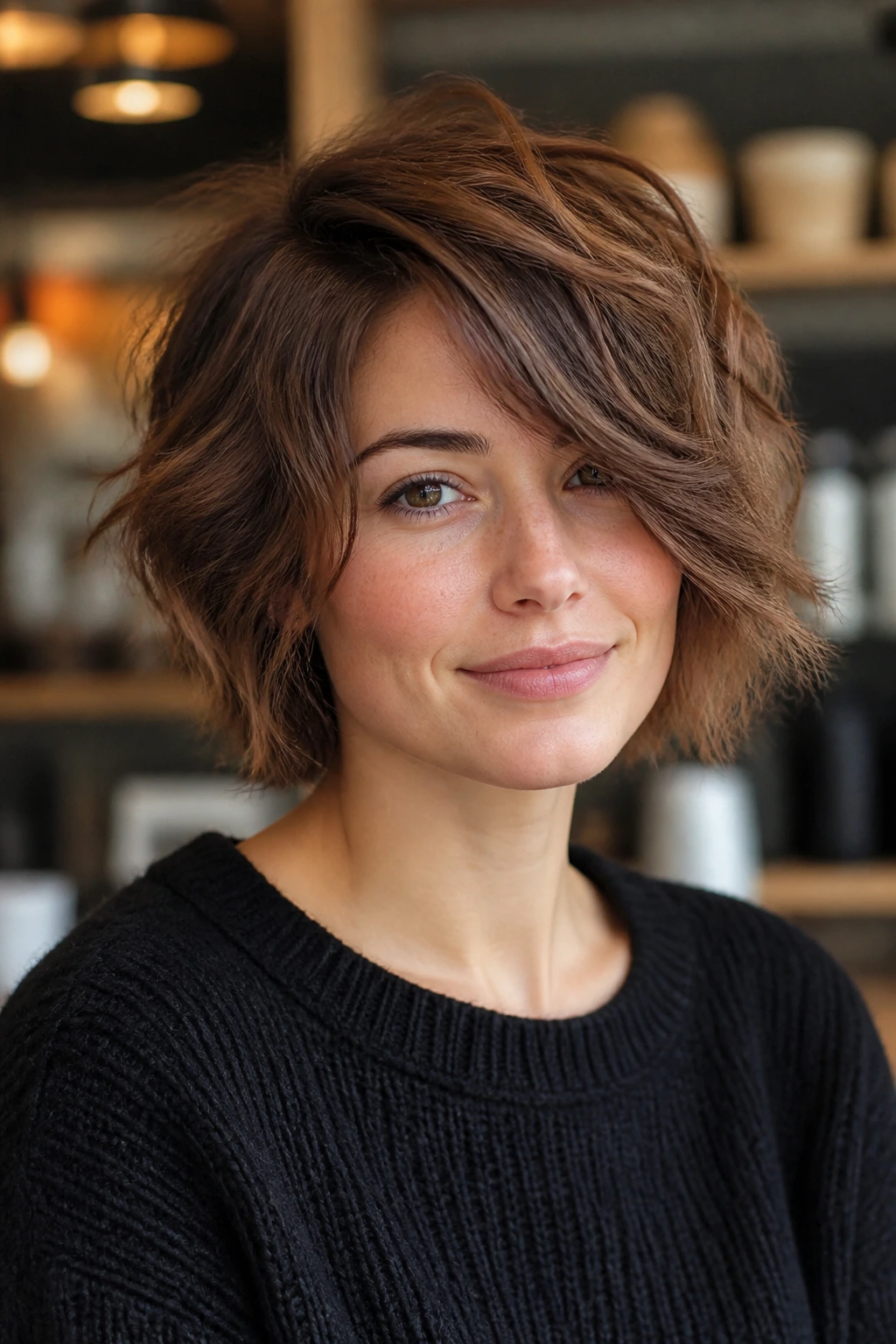
A side part changes the whole mood of a shag bob. The volume shifts off-center, the front falls diagonally across the forehead, and thick hair stops looking like it’s trying to occupy every inch of the room at once.
This version is good for people who like a haircut with a little more polish than a straight-up wolf cut. The layering is still there, but the side part gives it structure. You can tuck one side, clip back the front, or let the heavier side skim the cheekbone.
Why It Works
Dense hair often gains visual calm from asymmetry. A side part breaks the bulk into two different shapes instead of one big block. That’s a small trick, but on thick hair it changes the way the haircut settles around the face and the neck.
It also helps if one side grows faster or one temple has a stronger cowlick. A side part gives the cut somewhere to go instead of fighting the hair’s natural pattern.
Styling Tip
Flip the part while the hair is still warm from the dryer. The roots will remember the bend a little better, which helps the layers sit with some lift instead of collapsing flat.
9. Curly Shag That Removes Bulk Without Puffing Out

Curly thick hair needs a different kind of shag. You can’t just hack at the surface and call it done. The best curly shag respects the curl pattern, removes bulk underneath, and leaves enough length for the curls to clump instead of frizzing into a halo.
Dry cutting often works well here because curls shrink in their own strange, stubborn way. A cut that looks balanced wet can end up lopsided once it dries. The stylist should watch the curls form and trim where the shape needs room.
What to Ask For
Say you want internal removal, not aggressive thinning. That’s a key phrase for curly dense hair. Thinning shears can create too much fuzz if they’re used with a heavy hand, especially at the crown.
Keep the longest pieces around the chin or lips if you want the cut to stay short but not poofy. Around the nape, a little tighter shape helps the curls stack better and keeps the back from feeling heavy under the collar.
Styling Note
Use mousse or gel on soaking-wet hair, then diffuse with the bowl of the diffuser pointed up into the curl clumps. Don’t touch it until it’s at least 80 percent dry. Thick curls need patience more than they need more product.
10. Micro-Fringe Shag for a Sharper Edge

A micro fringe on thick hair is a statement, plain and simple. The short bangs pull attention upward, the shag layers keep the rest from feeling too serious, and the whole cut lands somewhere between retro and slightly rebellious.
This works best if your thick hair is straight or only lightly wavy. The short fringe gives the forehead area real breathing room, which helps balance out a lot of density in the sides and back. But there’s a catch: the bangs need regular trims, or they’ll lose their shape fast.
What Makes It Click
The contrast is the point. A tiny fringe against thick, layered hair looks deliberate. Without that contrast, the cut can get muddy. The layers through the sides should stay soft enough to keep the face open; otherwise, the fringe ends up fighting a heavy frame.
If you wear glasses, this cut can look particularly good because the fringe sits above the frames instead of crashing into them. That little gap changes the whole read of the haircut.
Maintenance Note
Plan on bang trims every 3 to 4 weeks if you want the micro fringe to stay clean. That’s not glamorous, but it’s the cost of the look.
11. Mullet-Edge Shag With a Tapered Neckline
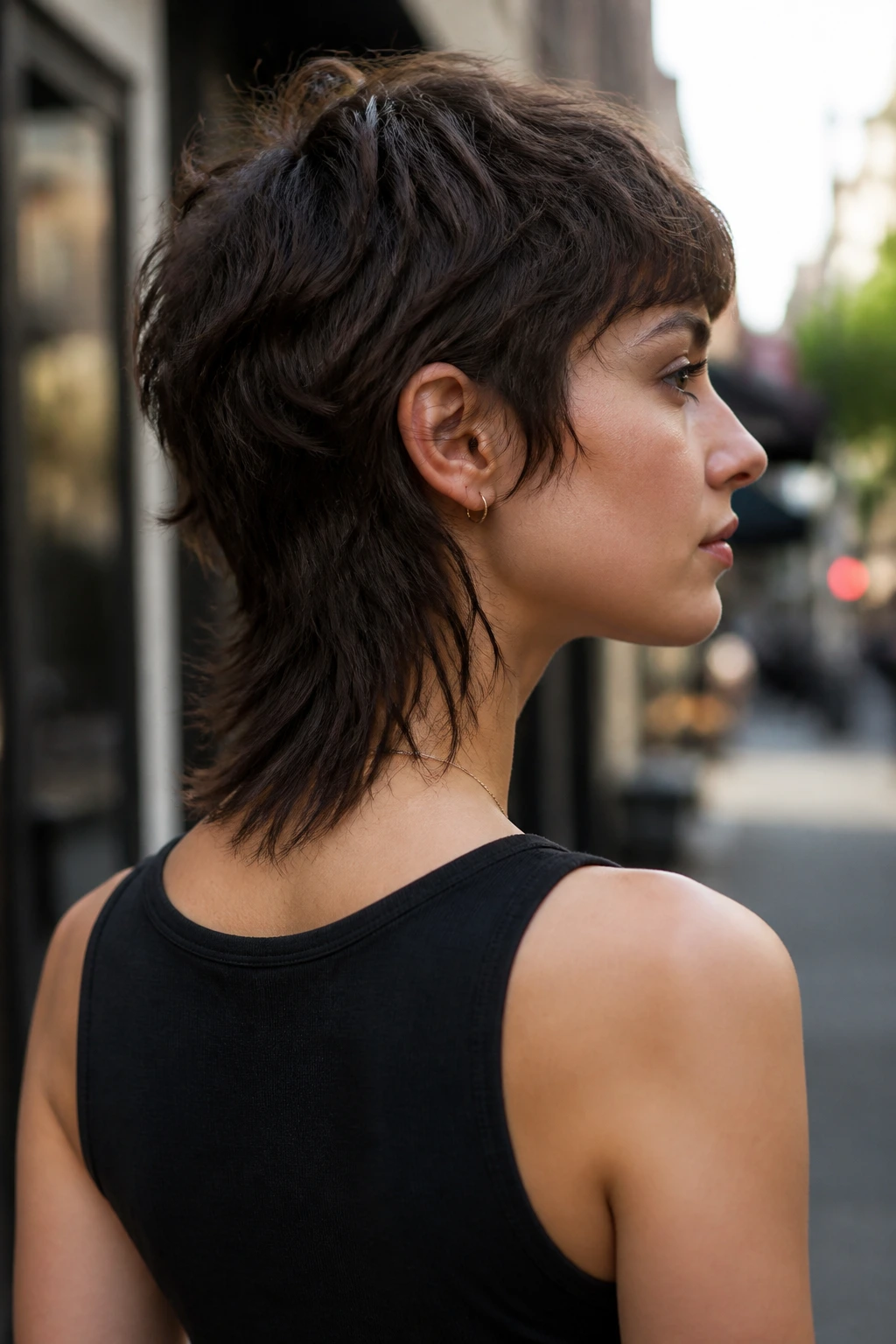
The mullet-edge shag is for people who want the back to feel intentionally longer, not just accidentally neglected. The neckline tapers, the crown stays textured, and the sides carry enough length to make the whole shape feel controlled.
Thick hair suits this cut because it can hold the contrast. Thin hair often disappears in a mullet shape. Dense hair, though, gives you the body you need to make the difference between top and back visible. That’s what makes it interesting.
Why It Doesn’t Look Costume-y
The best version keeps the transition soft. The back is longer, yes, but it shouldn’t look like a hard tail. There should be gradation through the nape and around the ear so the haircut still works when you tuck it behind a coat collar or wear it loose.
If your hair grows wide at the neckline, this cut can be a lifesaver. A tapered nape pulls the shape inward and keeps the back from flaring out.
Best For
Anyone who wants a little edge but still needs a cut that can be worn with a simple T-shirt or a sharper jacket. The shape does the talking. You don’t need much else.
12. Mushroom Shag That Looks Intentional, Not Helmety
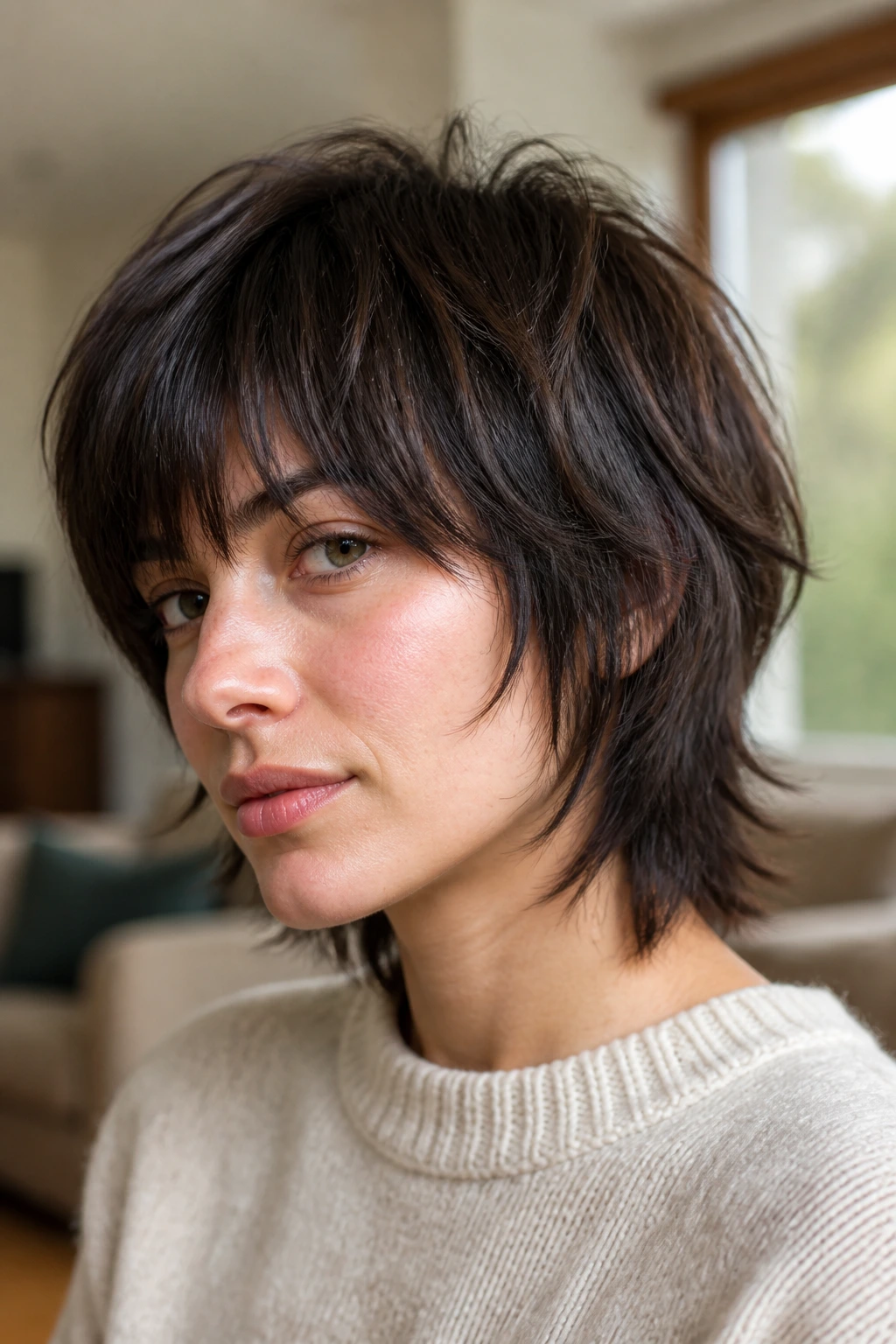
A mushroom shag can go wrong fast. Done badly, it looks like a bowl with opinions. Done well, it gives thick hair a round, playful shape with lightness built into the crown and enough texture at the ends to keep it from feeling stiff.
The secret is internal layering. You need the top to hold some body, while the lower layers are cut away just enough to prevent the classic dense-hair puff. The silhouette should feel rounded, not rigid.
Who It Suits
This is a strong choice for straight thick hair that tends to stick out at the sides after a haircut. The rounded top helps the head shape read softer, especially if you keep a fringe that arcs gently across the forehead.
It also works if you like a slightly retro look. There’s a lot of 70s energy in a mushroom shag, but the shag layers keep it modern. Without the layers, it can look dated in a hurry. With them, it looks like a choice.
Tiny Styling Trick
A small amount of smoothing cream on the outer layer and a little root lift at the crown can keep the shape from sitting flat. That balance matters more than perfect blow-drying.
13. Asymmetrical Shag Bob With One Longer Side
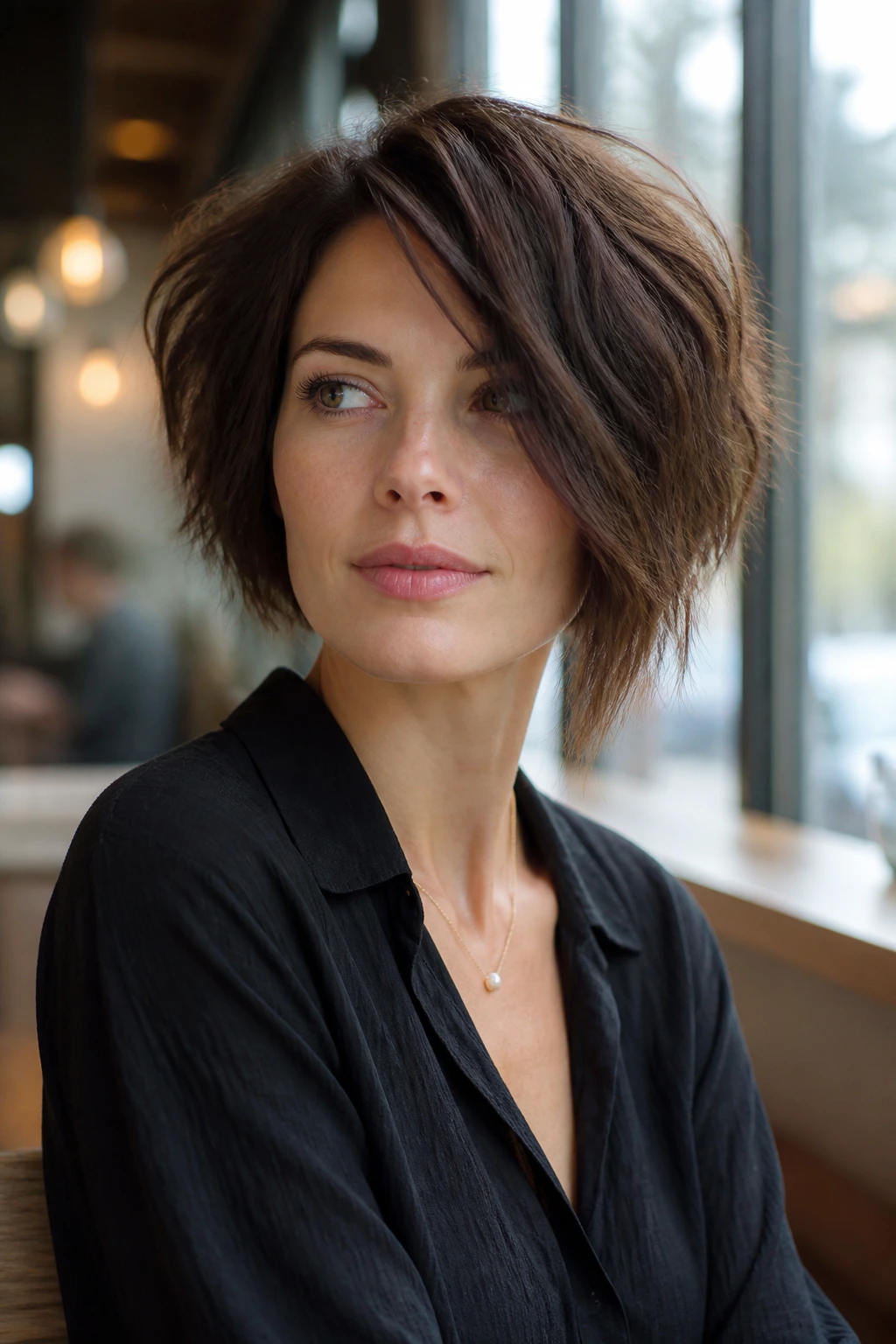
An asymmetrical shag bob is one of the easiest ways to make thick hair feel lighter without sacrificing presence. One side hangs a little longer, the part is usually off-center, and the uneven length keeps the eye moving instead of locking onto a single heavy edge.
This cut is especially useful if your hair is dense enough to make symmetrical shapes look bulky. The asymmetry breaks that up. It also gives the stylist room to work with cowlicks, strong growth patterns, or a face that feels better with one side softened more than the other.
What It Fixes
A lot of thick-hair bobs fail because both sides get the exact same treatment. That’s tidy on paper and dull in real life. An asymmetrical shag bob lets the heavier side carry a little more length while the shorter side creates lift and openness around the face.
If your jaw is square, this is a nice way to soften it without hiding it. If your face is round, keep the longer side just below the jaw so the line still lengthens the face a bit.
Styling Note
Tuck the shorter side behind the ear and let the longer side swing forward. That one move tells the haircut where to sit.
14. Bottleneck Bang Shag for Soft Forehead Coverage

Bottleneck bangs are a smart choice for thick hair because they start narrow in the middle and open wider near the cheekbones. That shape keeps the forehead covered without creating a hard block of fringe across the face.
On a shag, that fringe works like a hinge. It connects the top layers to the sides, which keeps the haircut from feeling chopped into separate pieces. Thick hair often benefits from that kind of visual bridge.
Why It Flatters Dense Hair
The bangs reduce bulk where the hair would otherwise sit heavy around the brow. Then the wider sides soften into the rest of the haircut. That transition is the whole reason the style works; there’s no abrupt jump from fringe to side layers.
This cut is especially good if your hairline is strong or your forehead feels like the thing you want to balance first. It gives coverage without hiding the face.
How to Style It
A small brush and a quick bend away from the face is enough. Do not overwork the fringe. Bottleneck bangs look best when they fall a little loose and separate at the ends.
15. Air-Dry Shag Built for Natural Wave

An air-dry shag is one of the few cuts that actually respects thick hair’s natural shape instead of trying to beat it into submission. The layers are cut to follow the wave pattern, the perimeter stays soft, and the whole thing is designed to settle into place with minimal help.
This is the cut for people who know their hair is never going to look like a silky salon blowout every day, and frankly, that’s fine. Thick waves look better when they move. The haircut should help that movement happen instead of fighting it.
What to Ask For
Mention that you want the shortest layers to work with your natural bend, not against it. If the hair has a strong wave at the temple or nape, the stylist should cut with that in mind. A dry refinement at the end can help the layers sit where they’ll live once the hair is fully dry.
A good air-dry shag usually needs mousse, a bit of cream on the ends, and a hands-off drying process. That’s it. If you have to use six products every time, the cut is not pulling its weight.
Best For
Busy mornings, humid weather, and anyone who hates standing under a dryer. This cut makes peace with the texture instead of demanding a full styling session.
16. Face-Framing Shag With Longer Front Pieces

Sometimes the smartest move is to keep the back shorter and let the front pieces do more of the talking. A face-framing shag with longer front layers gives thick hair movement around the face without taking away too much length where you still want control.
The front should start around the cheekbone or lip line, then taper down toward the collarbone. That diagonal shape makes thick hair feel lighter immediately. It also works well if you like to tuck the sides behind your ears but want a little drama when the hair falls forward.
Why It’s So Flexible
The longer front pieces soften the transition into the rest of the haircut. That means the cut grows out nicely and can be worn straight, curved under, or bent away from the face. You are not locked into one styling mood.
If your hair is very dense around the cheeks, this shape can make the face look less boxed in. That’s a small thing, but it changes how the whole haircut feels.
Small Detail, Big Difference
Ask for the front pieces to be cut so they hit at different points, not all at one exact level. That slight mismatch keeps the finish from looking too tidy.
17. Tapered Nape Shag That Keeps the Back Light
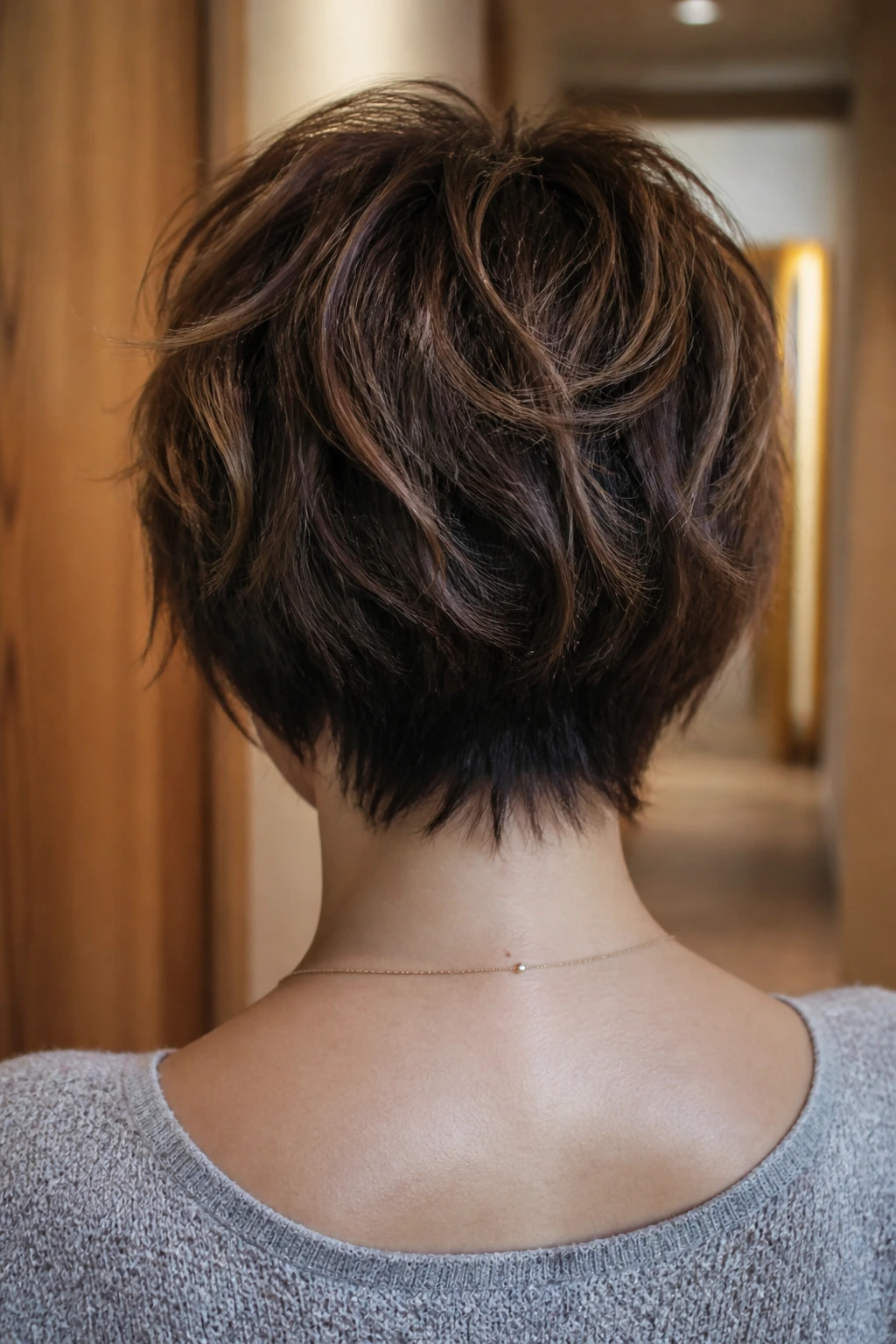
Thick hair often reveals its biggest problem at the neck. The back gets heavy, the collar fights it, and the haircut starts looking puffed out from behind. A tapered nape shag fixes that by removing bulk where the hair stacks the most.
This cut can be subtle or a little more dramatic. Either way, the nape should be shorter and cleaner than the top and sides. That gives the haircut room to breathe when you move, tie it up, or wear it under a jacket.
Why It Works
The nape is the sneaky part of a thick haircut. A lot of people look in the mirror and think the front is the issue, when the real bulk is sitting at the back of the neck. Tapering that area changes the silhouette instantly.
If you have straight thick hair, this can be especially useful. Straight hair shows every heavy corner. A tapered nape removes the worst of that blocky feeling.
Styling Note
A vent brush and a dryer nozzle are your friends here. Aim the airflow downward at the nape so the hair lays flatter and cleaner against the neck. Small effort. Big payoff.
18. Soft Rocker Shag With Choppy Crown Layers

A soft rocker shag has that slightly undone feel without tipping into full punk territory. The crown is choppy, the sides are broken up, and the ends aren’t meant to sit in a neat line. Thick hair holds this shape nicely because the density keeps the cut from disappearing.
The top layers matter most here. They should create lift without looking spiky. If the crown is too short, the style starts standing straight up. If it’s too long, the haircut loses its shape. The middle ground is where this lives.
What Makes It Good
It looks intentional even when you do almost nothing to it. A little texture spray at the roots and a finger twist through the ends is often enough. That’s the appeal. Not fussy. Just shaped.
This version works well if you like jackets, boots, hoops, strong makeup, or anything else that gives the haircut a bit of attitude. The hair should match that energy without looking costume-y.
Best For
People who want a shag that feels edgy but still grown-up. The softness keeps it wearable, which is more useful than trying to look like you stepped out of a music video.
19. Piecey Crop Shag for Coarse, Thick Hair
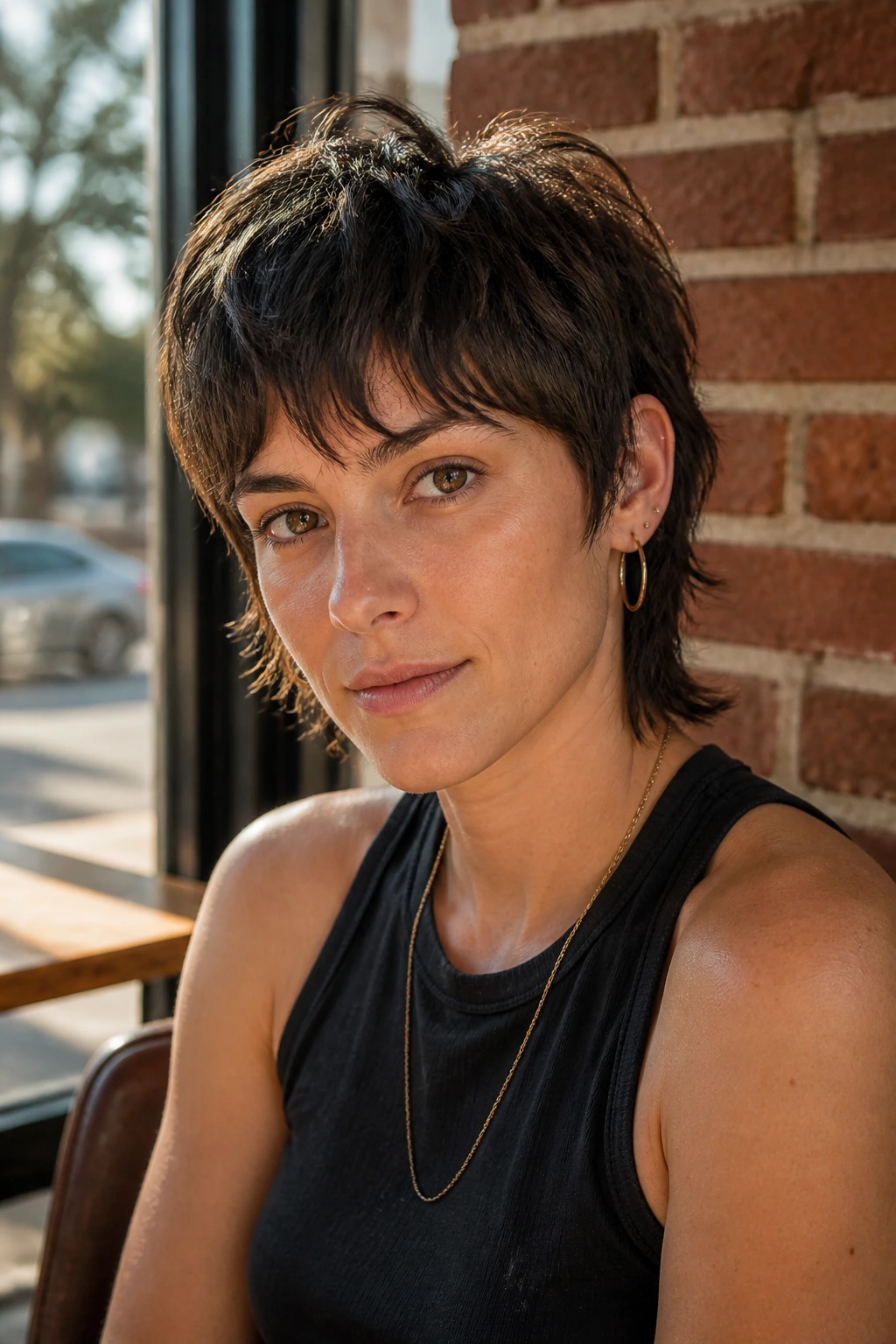
Coarse thick hair needs a specific kind of respect. It doesn’t want to be over-thinned, and it usually looks best when the layers are clean, purposeful, and separated just enough to show movement. A piecey crop shag does that well.
The crop keeps the length short enough to control the bulk, while the shag layers stop the cut from feeling square. The finish should be piecey, not feathery to the point of fuzz. That distinction matters. Coarse hair can go fuzzy quickly if the ends are chewed up too much.
Why It’s Smart
This cut lets the hair keep its body. You don’t want to erase coarse texture; you want to direct it. The result is compact, sharp, and easy to shape with a matte paste or a little pomade.
If you’ve been told your hair is “too thick for short hair,” this is the kind of cut that proves the opposite. The trick is to remove bulk with restraint, then leave enough structure for the hair to sit neatly.
Styling Note
Use product sparingly. Coarse hair can take more than fine hair, but a little goes a long way in a short crop. Start with less than you think, then add a touch only where the ends need separation.
20. Cloudy Textured Shag With Broken-Up Ends

A cloudy textured shag is airy on purpose. The layers break up the outline, the ends are softened, and the whole cut feels lighter than a more precise bob or crop. On thick hair, that broken finish can be a relief.
This style suits hair that has natural bend or a slight wave. It lets the movement show without forcing a crisp shape. The density is still there, but it’s spread through the cut instead of sitting in one heavy block.
What to Look For
The stylist should avoid making every layer the same length. That’s what creates the flat, over-planned look. A few longer bits in the front and a lighter crown area keep the haircut alive.
This is also a good choice if you like texture spray more than round brushes. The cut does a lot of the work. A dry mist and a shake at the roots are often enough to wake it up.
Where It Fits
If your wardrobe leans relaxed—tee shirts, knits, denim, soft jackets—this shape sits right at home. It doesn’t need perfection. It needs movement and a little attitude.
21. Undercut-Optional Shag for Heavy Density
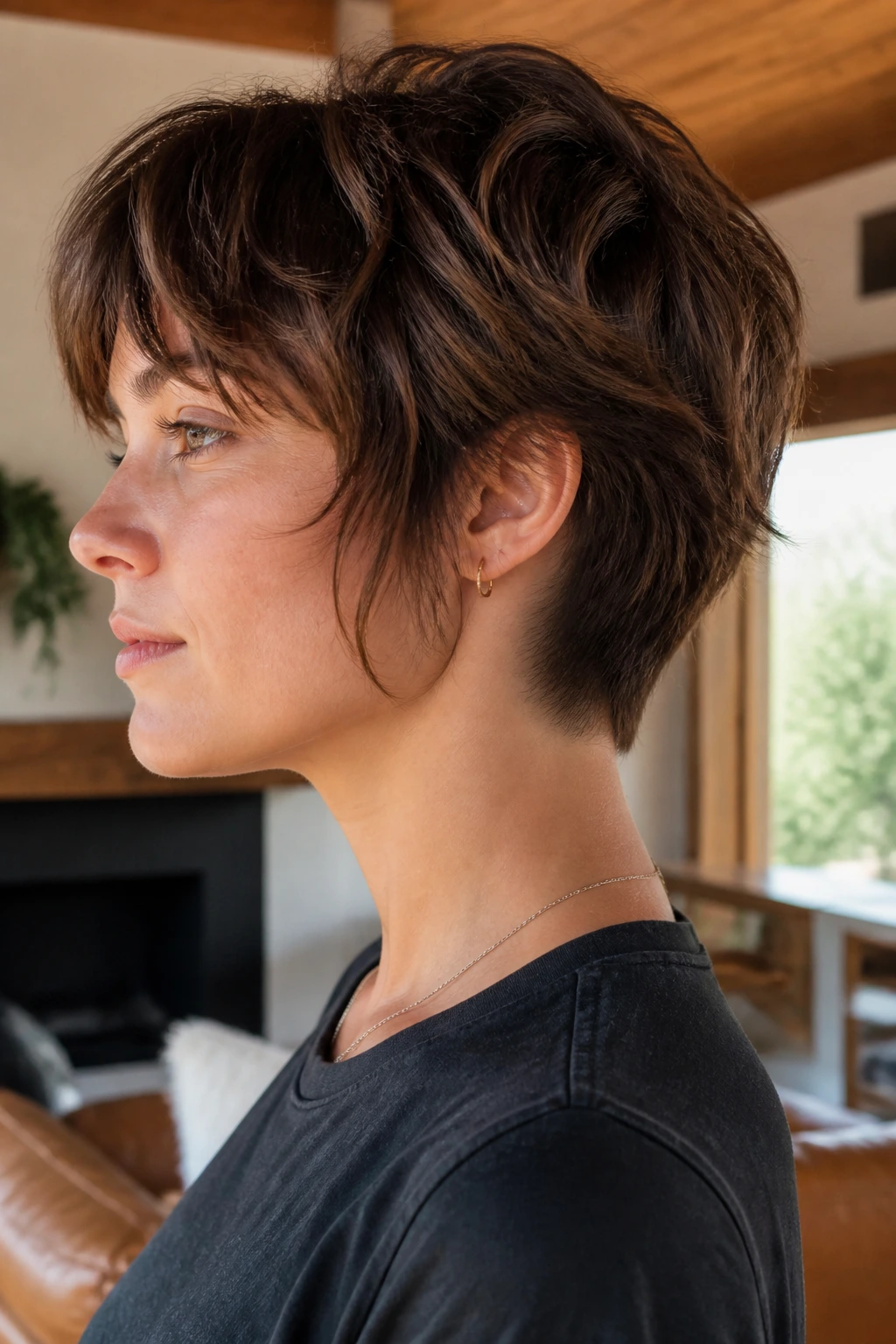
Sometimes thick hair needs a hidden escape hatch. An undercut-optional shag keeps the top and sides looking like a normal layered cut, while the nape or lower interior gets a discreet reduction in bulk. You do not have to shave half your head to make this work.
This is the cut for people whose hair is so dense it feels like a helmet from the back. A small undercut under the top layers can take a surprising amount of weight away. The haircut still looks soft on the outside, but it behaves much better underneath.
Why It’s Useful
The undercut lives where the hair hides it. That means you get comfort, lighter drying time, and less neck bulk without advertising the trick. When the top hair falls over it, the shape looks like a regular shag with better engineering.
If you’re nervous, start with a narrow undercut at the nape only. You can always expand it later. You cannot un-cut it, so subtle first is the safer call.
Styling Note
This option works especially well if you wear your hair up part of the time. A high ponytail or clip will expose the reduction underneath, and that can make the whole style feel far less heavy.
22. Sleek-to-Tousled Shag That Stays Workable Every Day
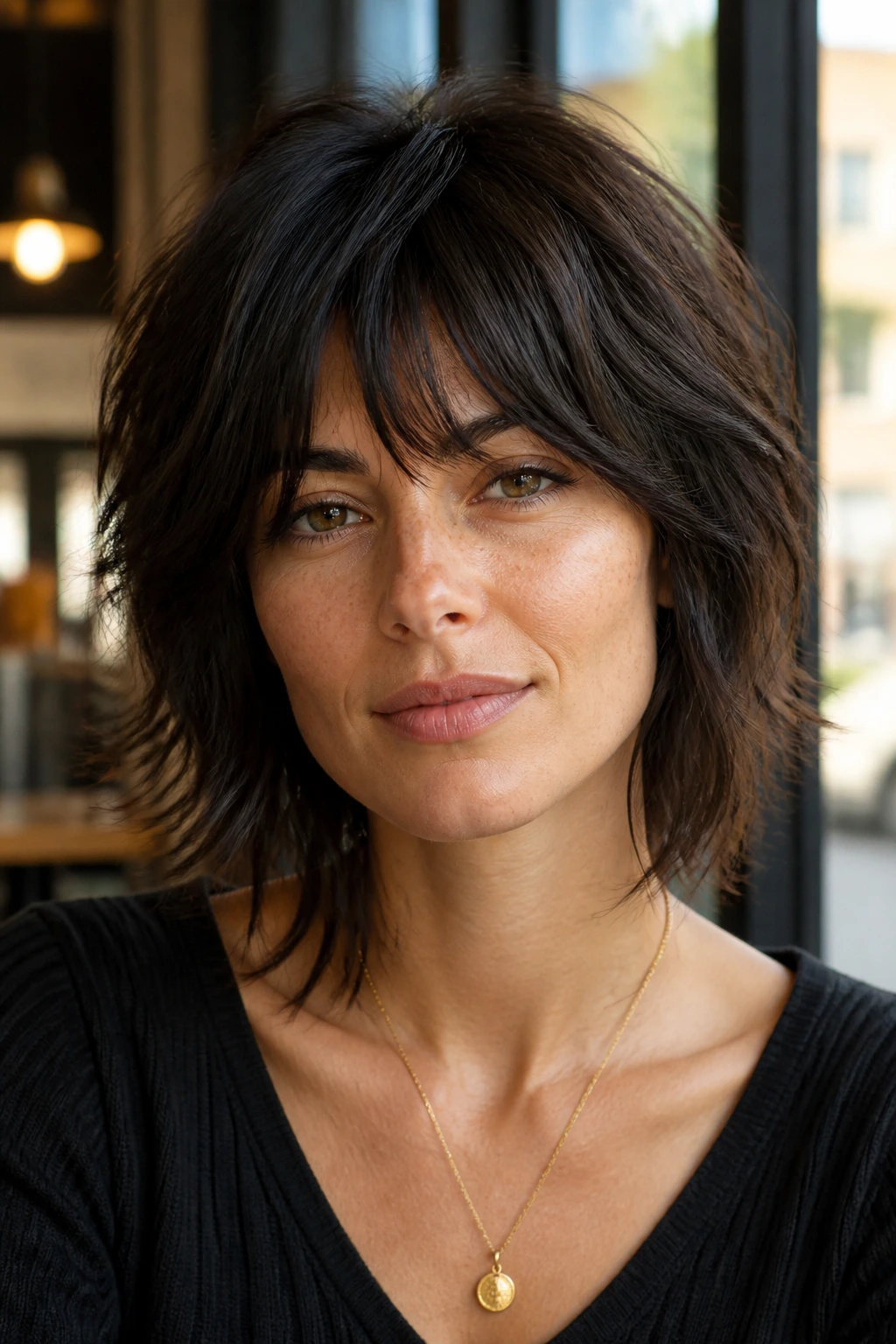
A sleek-to-tousled shag is the most practical version of the bunch. It can be blown smooth for work, then roughened up with texture spray or a finger twist for evening. Thick hair likes that kind of flexibility because the same haircut can do two jobs.
The layers need to be balanced carefully. Too many short pieces and the sleek version falls apart. Too few and the tousled version looks flat. The sweet spot is a cut that holds its outline when brushed but still breaks up nicely when scrunched.
Why It’s Worth Considering
This is the one I’d suggest if your life changes from day to day. You can wear it neat, with the ends curved under and the fringe tidy, or go messier and let the crown lift. The cut doesn’t punish you for changing your mind.
It also grows out gracefully. That matters more than people admit. A cut you can live with for eight weeks beats a trendy shape that only works for ten days.
Best For
Anyone who wants one haircut to cover office hours, weekend errands, and a dinner out without needing a complete restyle. Thick hair can absolutely do that. It just needs the shape built in from the start.
What Makes a Short Shag Actually Work on Thick Hair
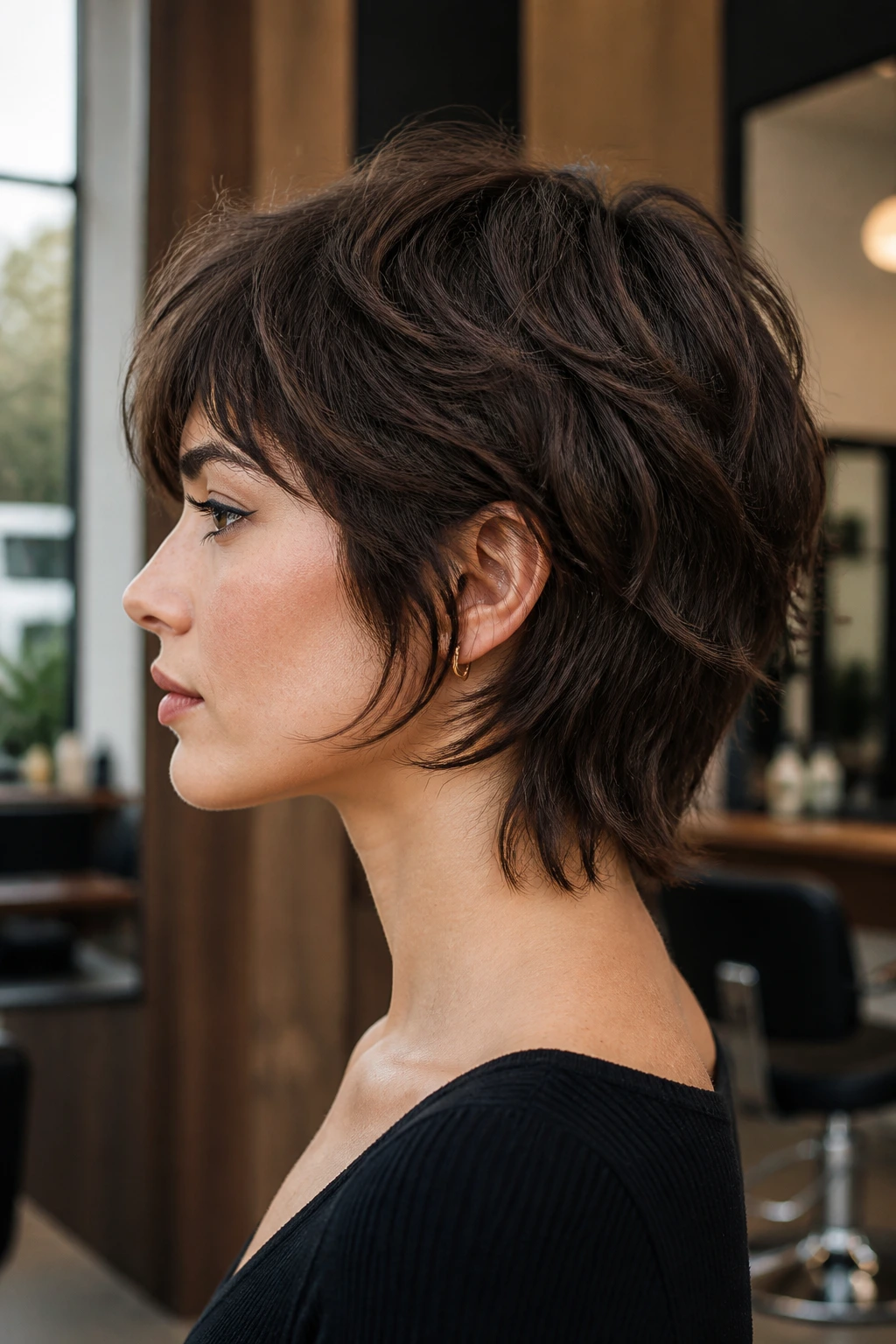
The difference between a good shag and a big, puffy regret usually comes down to weight distribution. Thick hair does not need random thinning. It needs the bulk moved to specific places so the silhouette stays clean.
The best short layered shag haircuts for thick hair usually keep some strength at the perimeter, then cut internal layers to stop the bottom from building into a shelf. That’s the part a lot of people miss. If you remove too much from the surface and leave the underneath untouched, the haircut can look fluffy at the top and heavy at the bottom. Ugly little triangle. Been there.
Density and strand thickness are not the same thing, either. Dense hair means there’s a lot of it. Coarse hair means each strand is thicker. A great shag on dense straight hair may need sharper layering, while coarse or curly hair often looks better with softer sectioning and less aggressive texturizing. Those are different problems.
The best stylists usually think in zones: crown, parietal ridge, sides, nape, fringe. That sounds technical because it is. But it translates to something simple. The haircut should feel lighter where the hair naturally piles up, and stronger where you still need shape.
How to Ask for the Cut Without Getting the Wrong Shape
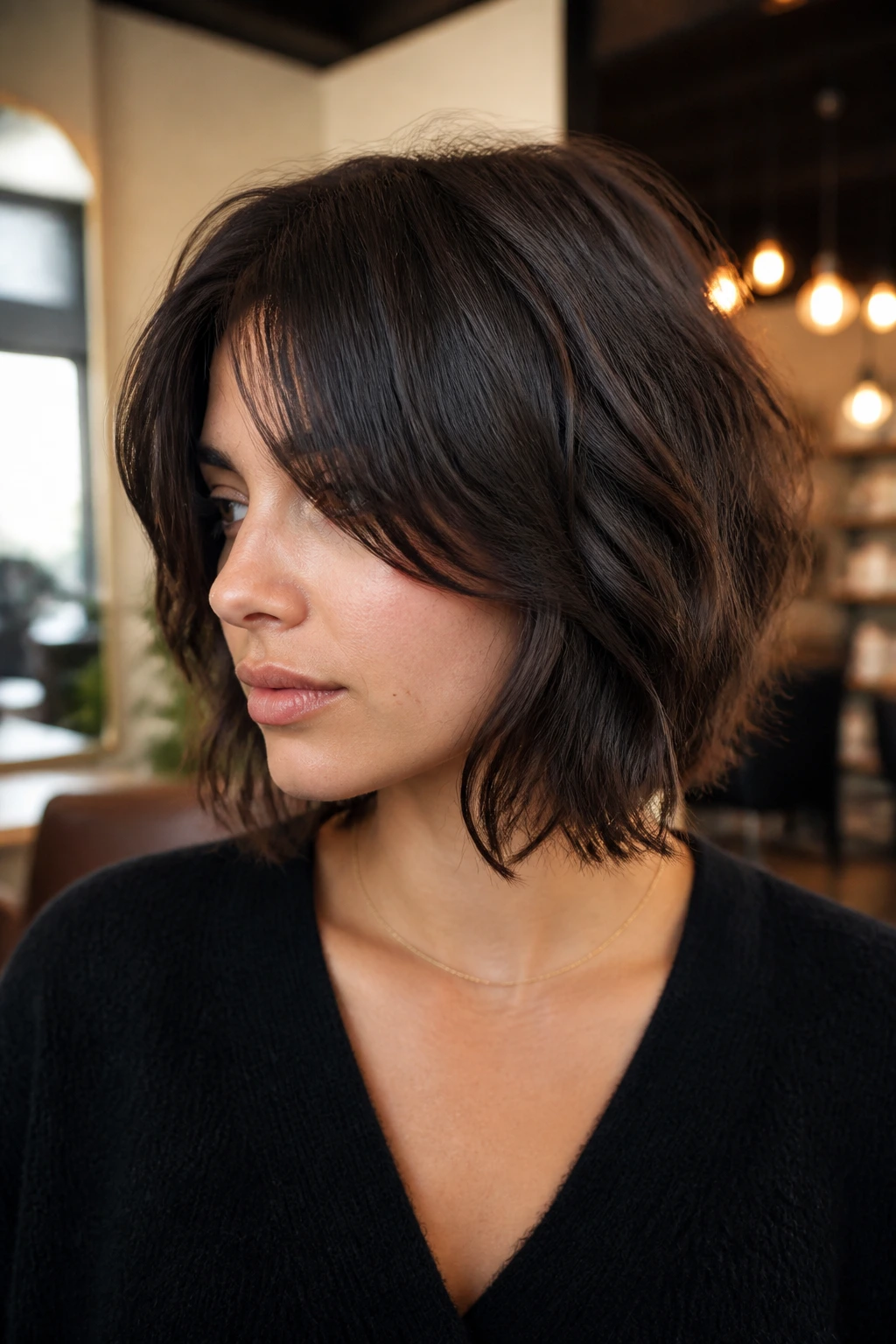
The fastest way to get a bad shag is to ask for “lots of layers.” That can mean almost anything, which is exactly the problem.
Bring a photo, yes, but also bring a sentence. Say where you want the shortest layers to land. Say whether you want the neck lighter. Say whether you care more about volume at the crown or softness around the face. Thick hair needs that kind of direction because the wrong layer placement can make the cut puff at the ears or collapse at the top.
A useful phrase is: “I want weight removed inside the haircut, but I want to keep the outline strong.” That tells the stylist not to hollow the whole head out. If your hair is coarse, add: “Please don’t over-texturize the ends.” If your hair is curly, ask for the shape to be checked in your natural pattern, not only when it’s wet and stretched.
One more thing. Be honest about how much styling you’ll actually do. If your morning routine stops at air-drying and a diffuser, say so. A shag cut for thick hair should match the way you live, not the way a salon blowout photographs.
The Tools That Make Styling Easier
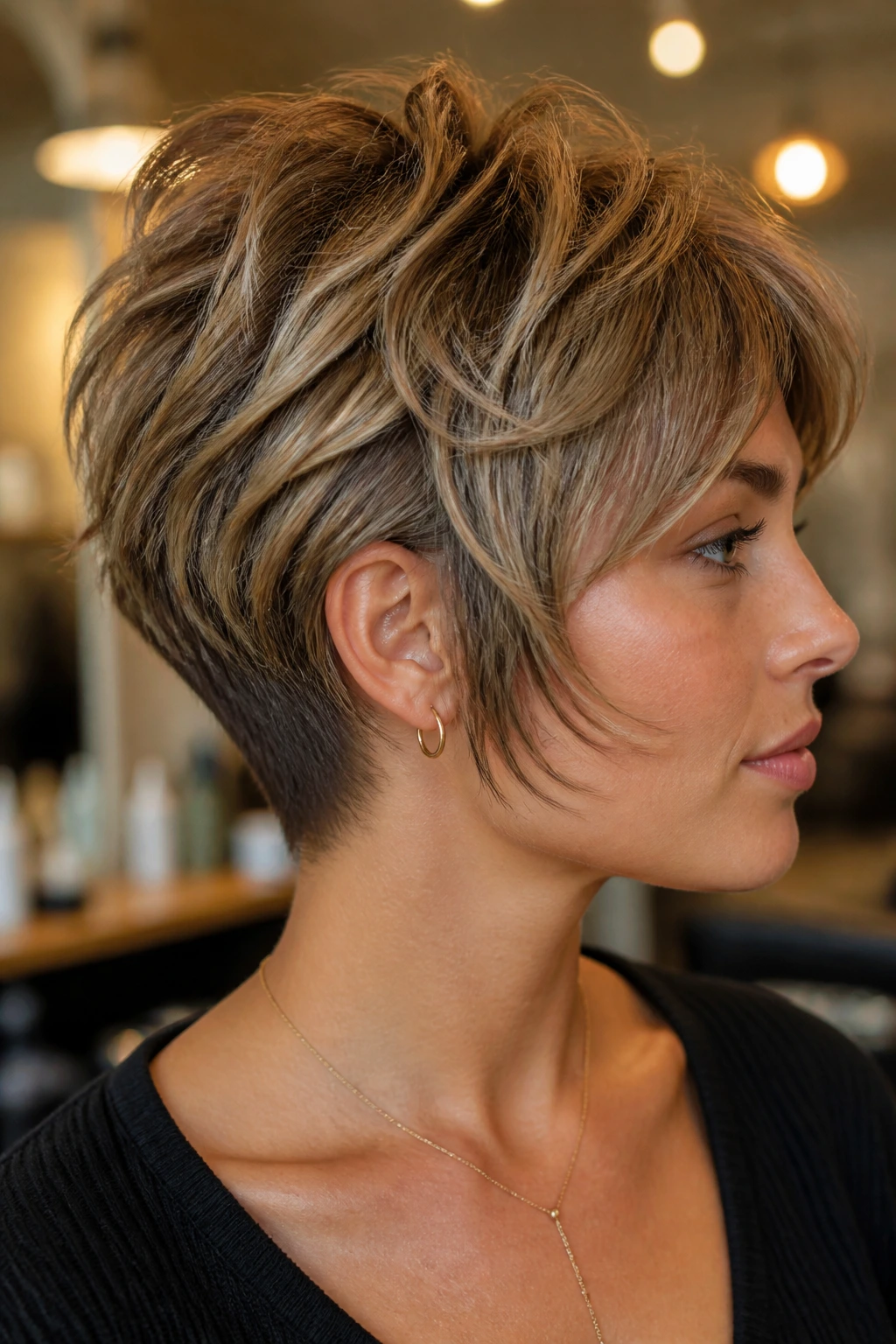
- A blow dryer with a narrow nozzle: This keeps the airflow targeted so you can smooth the nape and lift the roots without blasting the whole shape apart.
- A 1-inch to 1¼-inch curling iron or wand: Small enough to bend the ends and break up thick hair without making tight ringlets.
- A vent brush: Good for rough-drying dense hair fast. It lets air move through the layers instead of trapping heat.
- A small round brush: Best for curtain bangs, fringe, and front pieces that need a soft bend.
- A diffuser: Non-negotiable if your thick hair is wavy or curly and you want the shag shape to stay piecey.
- Light mousse or foam: Better than heavy cream for root lift on thick hair that goes flat easily.
- Texture spray or dry finishing spray: Use this on dry hair when you want the layers to separate a bit more.
- A heat protectant: Especially useful if the cut depends on a quick bend with a hot tool.
- Section clips: Thick hair fights back when you skip sectioning. Don’t skip it.
How to Style a Thick Shag Without Fighting It

The easiest way to ruin a shag is to smother it in product. Thick hair already has enough presence. You’re trying to shape it, not glue it down.
For air-drying, start with mousse at the roots and a small amount of cream only on the mids and ends. Scrunch the hair, then leave the crown alone while it dries. Touching it too much creates frizz and separates the layers in a messy, accidental way. If you want a little more bend, twist two-inch sections around your fingers while the hair is damp.
For blow-drying, rough-dry first until the hair is about 70 percent dry. Then use the nozzle to direct the roots backward at the crown and sideways at the front. That gives lift without making the whole cut poof out. A quick bend under at the ends is often enough. You do not need every layer curled.
Curly and wavy shags usually look best when you stop chasing symmetry. Let the curl clumps settle. Let the bangs split a little. Let the ends do their thing. The more you try to make thick hair behave like fine hair, the less interesting the cut becomes.
Common Mistakes That Make Thick Hair Look Bigger
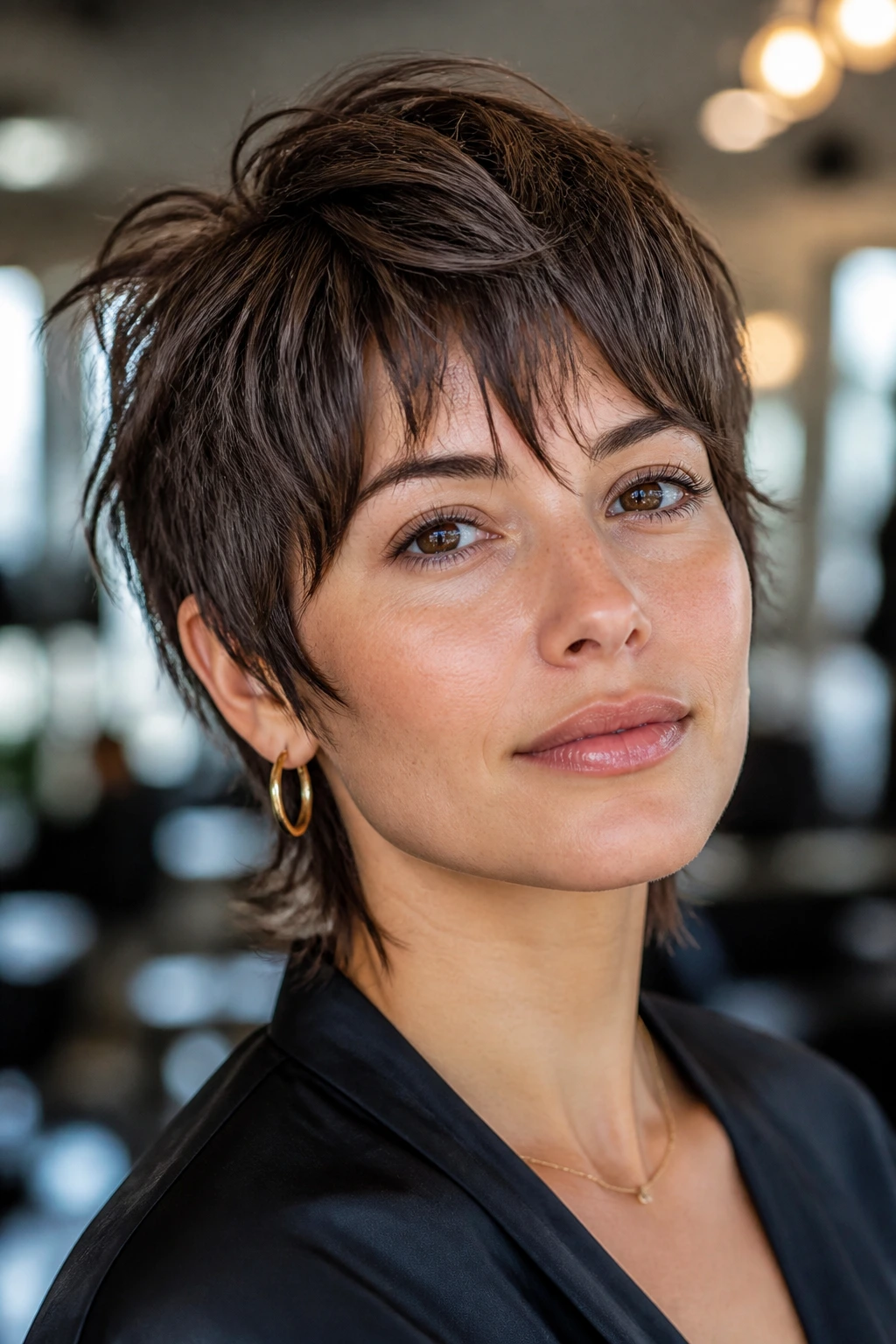
- Cutting the layers too high all over: The symptom is a haircut that balloons at the crown while the ends look stringy. The fix is to leave some weight in the perimeter and concentrate the short pieces where the hair actually piles up.
- Over-thinning coarse or curly hair: The surface looks airy for a day, then turns fuzzy and uneven. Ask for controlled point cutting or softer layering instead of aggressive texturizing shears.
- Ignoring the nape: Thick hair at the neck can create a shelf in back. A tapered nape or slight undercut fixes the shape without changing the whole haircut.
- Using too much heavy cream or oil: The layers collapse and the top goes flat. Start with mousse or foam, then add a tiny amount of cream only where the ends feel dry.
- Choosing blunt bangs with a very dense crown: That combination can make the face feel boxed in. Curtain, bottleneck, or feathered fringe usually plays better with thick hair.
- Skipping regular trims: Shags grow out fast in the wrong places. The crown can lose shape while the bottom stays too full, which is how the cut starts looking sloppy instead of lived-in.
Variations and Alternatives to Try
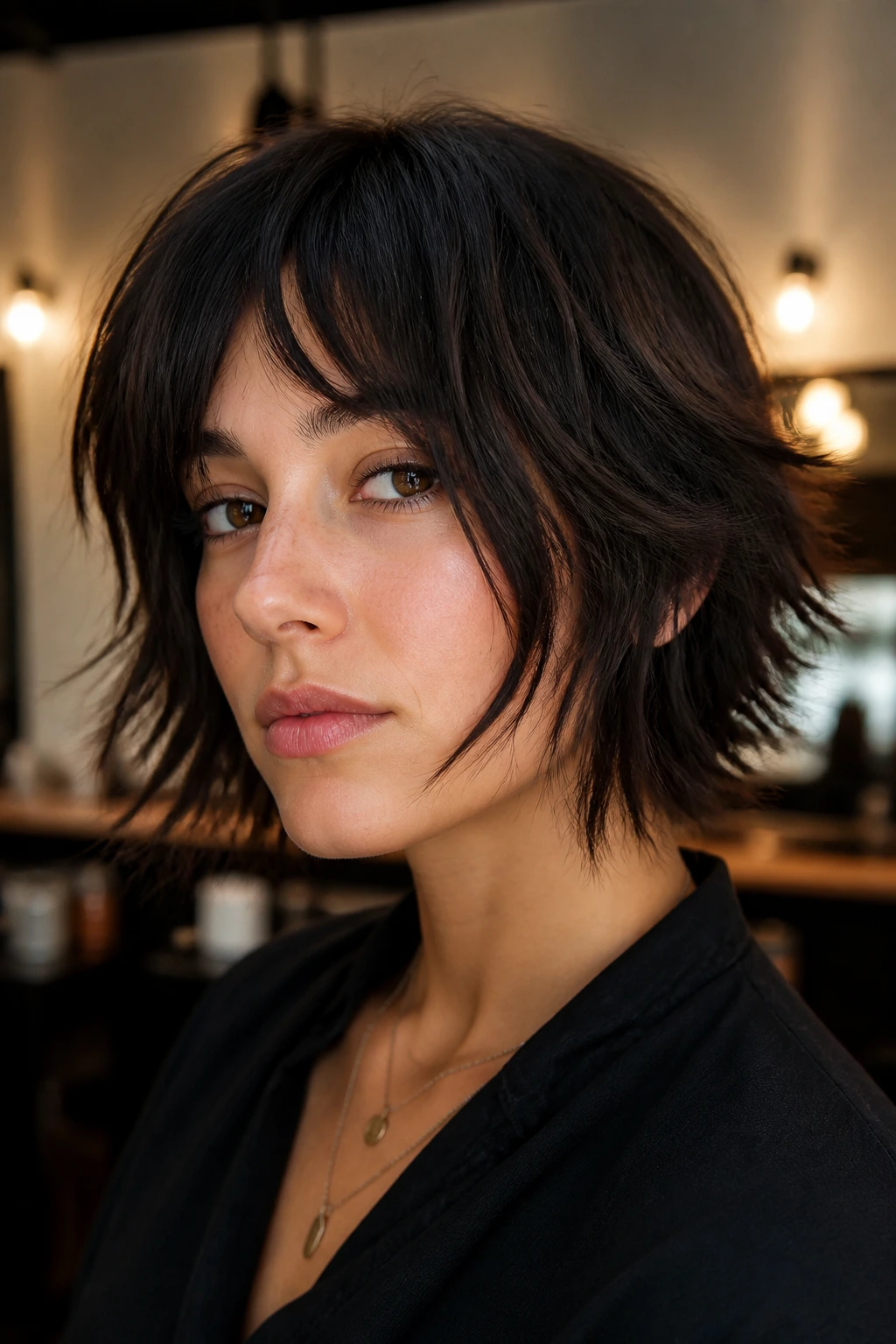
Soft Corporate Shag: Keep the fringe longer, make the face-framing pieces smoother, and avoid extreme contrast at the crown. This works if you want the texture but need the haircut to read polished in a work setting.
Rock-Edge Wolf Cut: Push the crown shorter, keep the nape tapered, and let the top look a little more broken up. It’s a good choice if you want visible texture and don’t mind styling spray.
Curly Halo Shag: Leave the longest curls around the chin or collarbone and focus the bulk removal underneath. That keeps the shape round and springy without blowing the curl pattern apart.
Low-Maintenance Air-Dry Shag: Skip micro bangs, keep the layers softer, and let the cut fall around your natural wave pattern. This is the one to pick if you want the haircut to do most of the work.
Hidden Undercut Shag: Add a discreet undercut at the nape or behind the ears if your hair is extremely dense. It’s a practical move, not a dramatic one, and it can change how the whole haircut sits.
Longer Grow-Out Shag: If you’re between lengths, keep the front pieces around the collarbone and the back a touch shorter. That gives you room to grow without losing the shag shape.
Keeping the Shape Sharp Between Haircuts
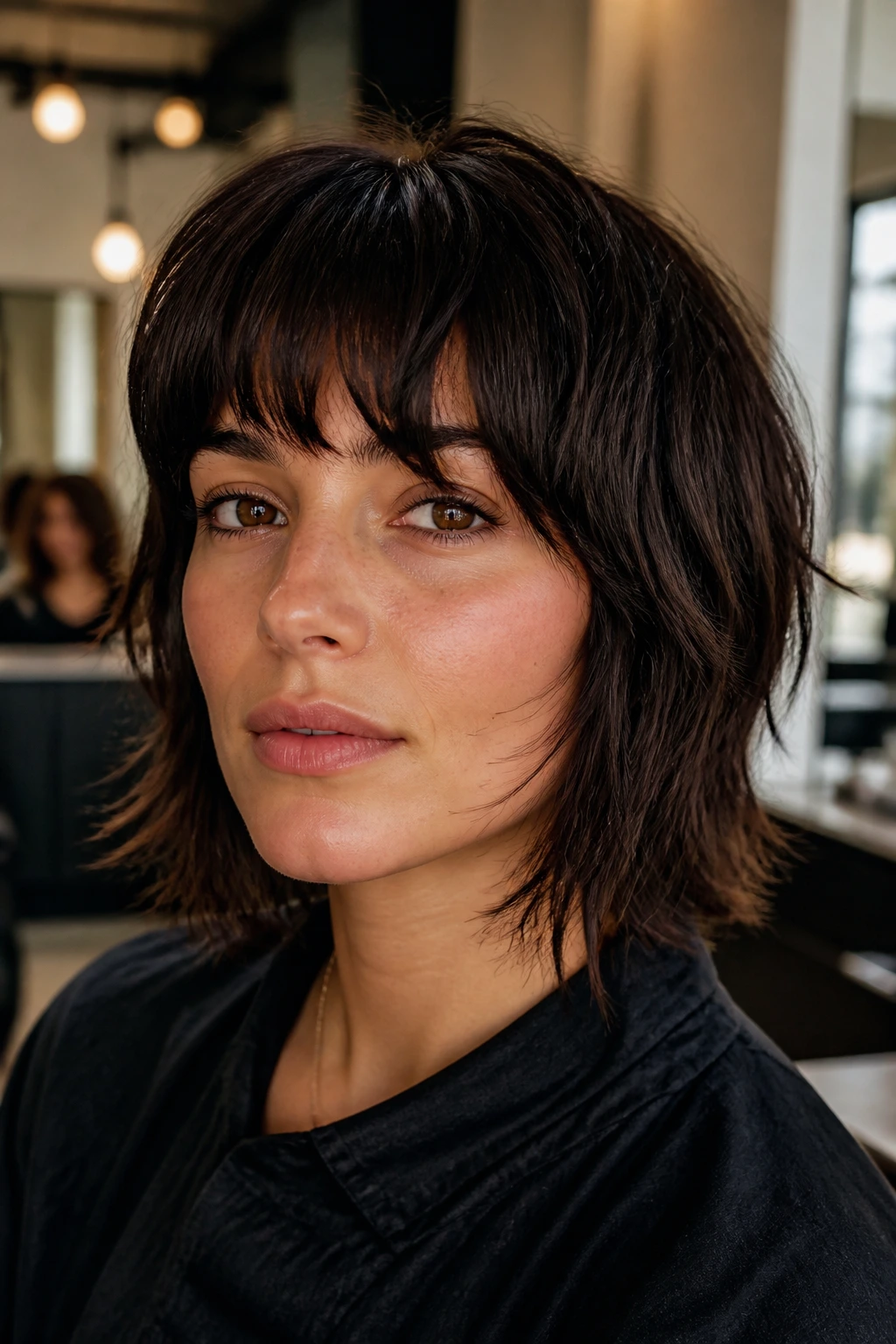
Thick hair can hide a lot, which is a blessing and a curse. You may not notice the cut going soft until one day the nape feels bulky and the fringe starts splitting in annoying places.
A good trim schedule depends on the shape. Tight bixies and micro-fringe shags usually want a cleanup every 4 to 6 weeks. Softer collarbone shags can go 8 to 10 weeks if the layers still fall where they should. Bangs often need a touch-up sooner than the rest of the haircut.
Dry shampoo helps at the roots, but don’t cake it on. A light mist at the crown can revive the lift without making the hair dusty. If the back starts flipping out under collars, a quick blow-dry with the nozzle aimed downward usually resets it.
Night care matters too. A loose clip or a soft silk pillowcase keeps thick layers from getting bent into weird angles overnight. That tiny habit saves you a lot of morning brute force.
Questions People Ask Before Getting a Thick-Hair Shag

Will a shag make thick hair look thinner?
It can make it look lighter and less bulky, which is usually the goal. It does not erase density, and it should not. The best versions keep the hair full enough to feel healthy while removing the heavy, boxy parts.
Is a shag better than a bob for thick hair?
If your hair tends to puff out at the ends, a shag usually behaves better than a blunt bob. A bob can work, but it needs more precision at the perimeter. A shag gives the hair more room to move.
Can curly thick hair wear a short shag?
Yes, and it can look excellent. The trick is to cut the shape around the curl pattern and avoid over-thinning the surface. Dry refinement often helps more than aggressive wet cutting.
How short can thick hair go before it gets too wide?
That depends on your growth pattern and texture, but chin length or just below the jaw is often the safest short zone. Going shorter can still work if the nape is tapered and the crown is handled carefully.
Do bangs make thick shag hair harder to style?
They add maintenance, but they also help balance the face and redirect some of the density. Curtain and bottleneck bangs are usually easier than blunt, straight-across fringe.
What if my hair flips out at the neck?
Ask for more taper at the nape and fewer blunt layers at the bottom. A little downward blow-drying after a wash can keep the back from kicking out every time your collar touches it.
Should I use a razor or scissors for thick hair?
That depends on strand texture. Scissors or point cutting are safer for coarse hair, while a razor can create soft movement on straighter, denser hair. A good stylist should know when the razor helps and when it makes the ends frizzy.
How often should I trim a short shag?
Most short shag shapes need a refresh every 6 to 8 weeks. If you have short bangs or a tight nape, plan on slightly sooner. Let it go too long and the shag turns into a heavy, uneven bob.
The Cut That Keeps Its Shape
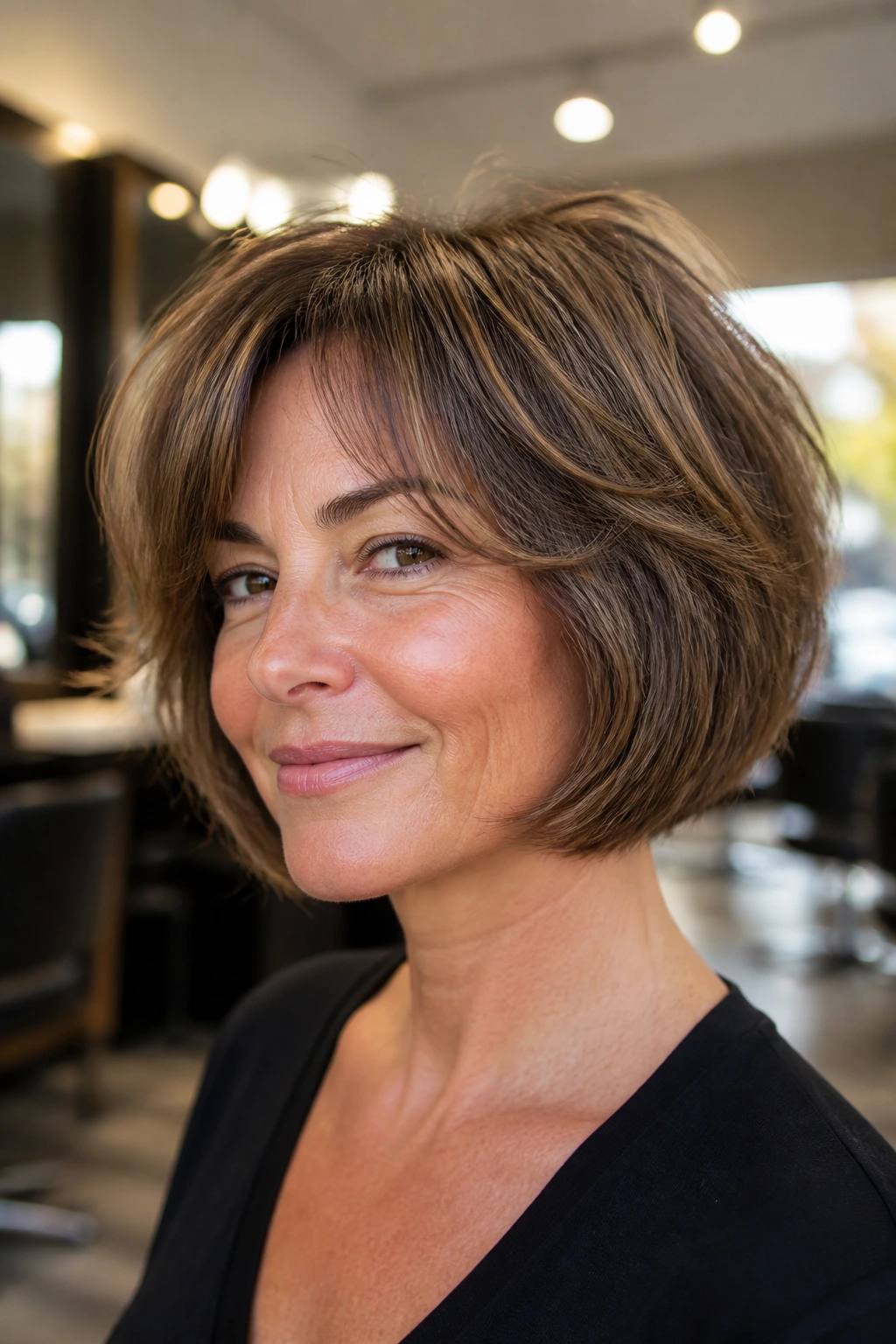
The best short layered shag haircuts for thick hair don’t fight the hair’s natural density. They use it. They move bulk away from the places that turn heavy, leave enough outline to keep the shape readable, and make room for texture instead of pretending texture is a problem.
That’s why a good shag can feel so much better than a blunt cut on thick hair. It doesn’t ask your hair to behave like something else. It just gives it a smarter path.
Bring that idea to the chair, be precise about where you want the weight removed, and do not let anyone talk you into “more layers” without explaining where those layers live. The difference is the whole haircut.