



Beach waves for medium hair and heart-shaped faces work because the shape gives you room to play without letting the style swallow your features. That’s the sweet spot. Medium-length hair has enough weight to sit in those loose bends without looking stringy, and a heart-shaped face gives you cheekbones worth showing off, as long as the wave doesn’t get too tall at the crown or too tight at the temples.
The mistake I see most often is overdoing the top half. Too much lift near the part and too much curl near the forehead makes the face look wider up top and narrower at the chin, which is the opposite of what you want. The better versions put the bend lower, around the cheekbone, lip line, or jaw, then let the ends soften out. That shift changes the whole balance.
A good beach wave on this face shape should look relaxed, not lazy. You want movement that can catch air when you turn your head, a little separation at the ends, and enough structure that it still looks intentional after lunch. The styles below cover side parts, curtain bangs, brushed-out gloss, air-dried texture, and a few low-fuss versions that behave on real medium hair, not just in a salon chair.
Why This Collection Works on Medium Hair and Heart-Shaped Faces
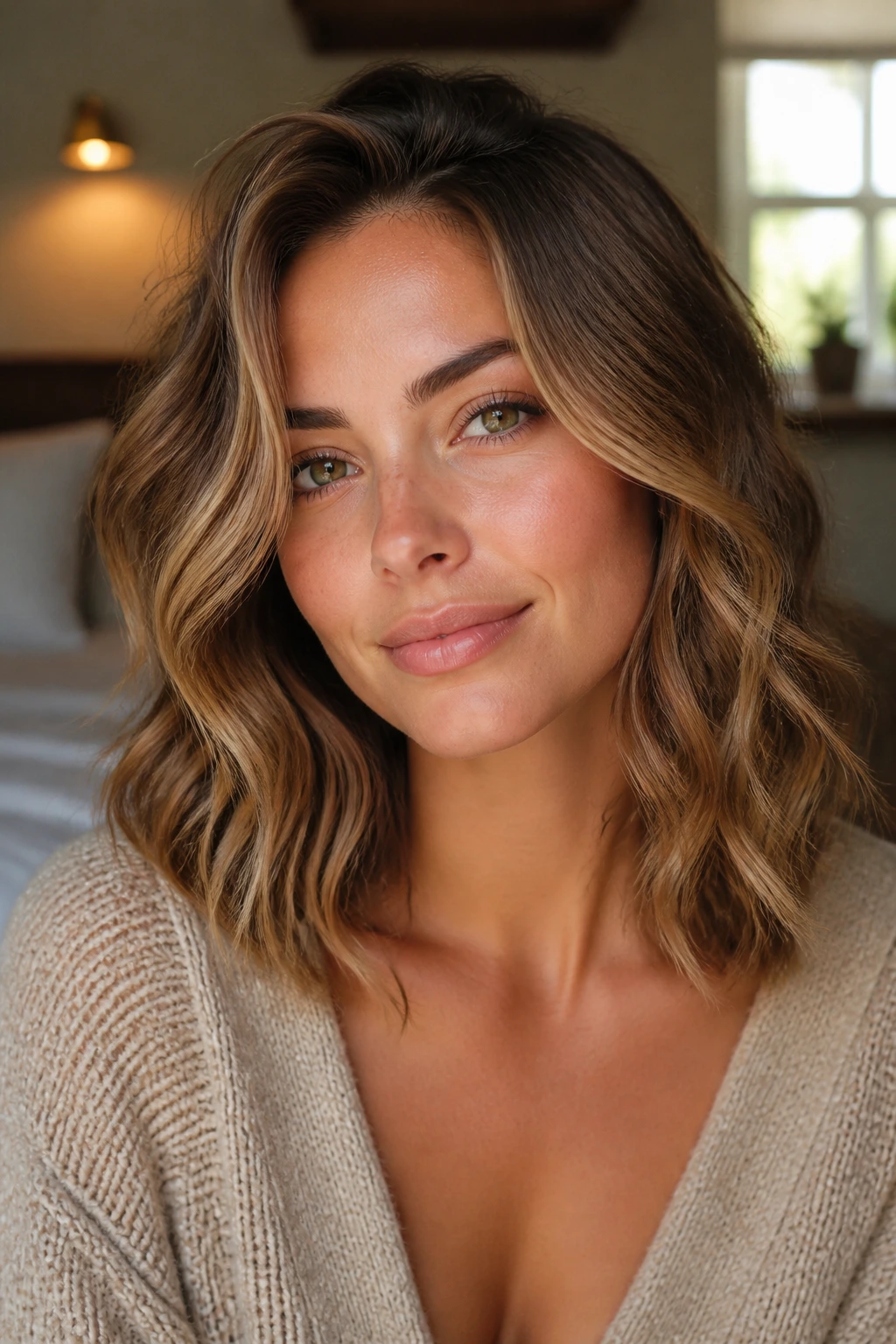
-
The volume lands in the right place: These styles build width around the cheekbones or jawline instead of stacking everything at the temples, which keeps a heart-shaped face looking balanced.
-
Medium length gives the wave enough weight: Hair that sits around the collarbone or shoulder holds a bend better than longer lengths, so the texture stays visible instead of falling into one flat sheet.
-
The front pieces do the softening: Curtain bangs, side-swept sections, and face-framing layers make the forehead feel less dominant without hiding your face.
-
You can go polished or undone: A few of these styles look brushed-out and glossy; others lean piecey and air-dried. Same face shape. Different mood.
-
They work with real texture: Fine hair, thick hair, and hair that frizzes at the first hint of humidity each need a different approach. There’s something here for all three.
-
Nothing depends on perfect curling: That matters more than people admit. Beach waves are supposed to move and loosen a little, which gives medium hair room to look soft instead of staged.
1. Collarbone Waves with a Deep Side Part
This is the one I reach for when the forehead feels a little too prominent and the hair needs a shape that doesn’t try too hard. A deep side part shifts the visual weight off the center line, and collarbone-length waves let the ends sit where the face starts to narrow. It’s simple, but not boring.
Why It Flatters the Face
- The side part breaks up the width across the top of a heart-shaped face.
- Waves that start around the cheekbone keep the style from puffing at the temples.
- Collarbone length gives the ends enough swing to balance a narrower chin.
Wrap the front sections away from the face with a 1.25-inch wand, then leave the last inch or so straighter than the rest. That little stretch at the bottom keeps medium hair from looking too round. A soft mist of flexible hairspray at the end is enough; if the hair feels stiff, you used too much.
Best move: tuck the heavier side behind one ear for five minutes while the hair cools. It sets the bend without making the whole side collapse.
2. Curtain Bang Waves That Soften a Heart-Shaped Face
Why do curtain bangs work so well here? Because they take the eye off the forehead without building a wall across it. The center opens slightly, the sides sweep down, and the wave takes over at cheek level instead of starting right at the hairline.
The trick is to keep the bang area light and bendy, not bulky. A round brush or a 1-inch iron can give the fringe a soft curve, but the ends should point away from the face and then relax. If the bang clings to the forehead, it loses that airy split that makes the shape work.
Medium hair helps a lot because the rest of the cut carries the movement. You get the softness at the front and the loose body through the lengths. Nothing feels overbuilt. That’s the point.
How to style the fringe
Start with dry hair and a small amount of heat protectant. Bend the curtain pieces away from the face for two to three seconds each, then release before the curl tightens into a ring. A dab of lightweight cream on the ends keeps the fringe from frizzing into separate little twigs.
3. S-Bend Waves on a Blunt Lob
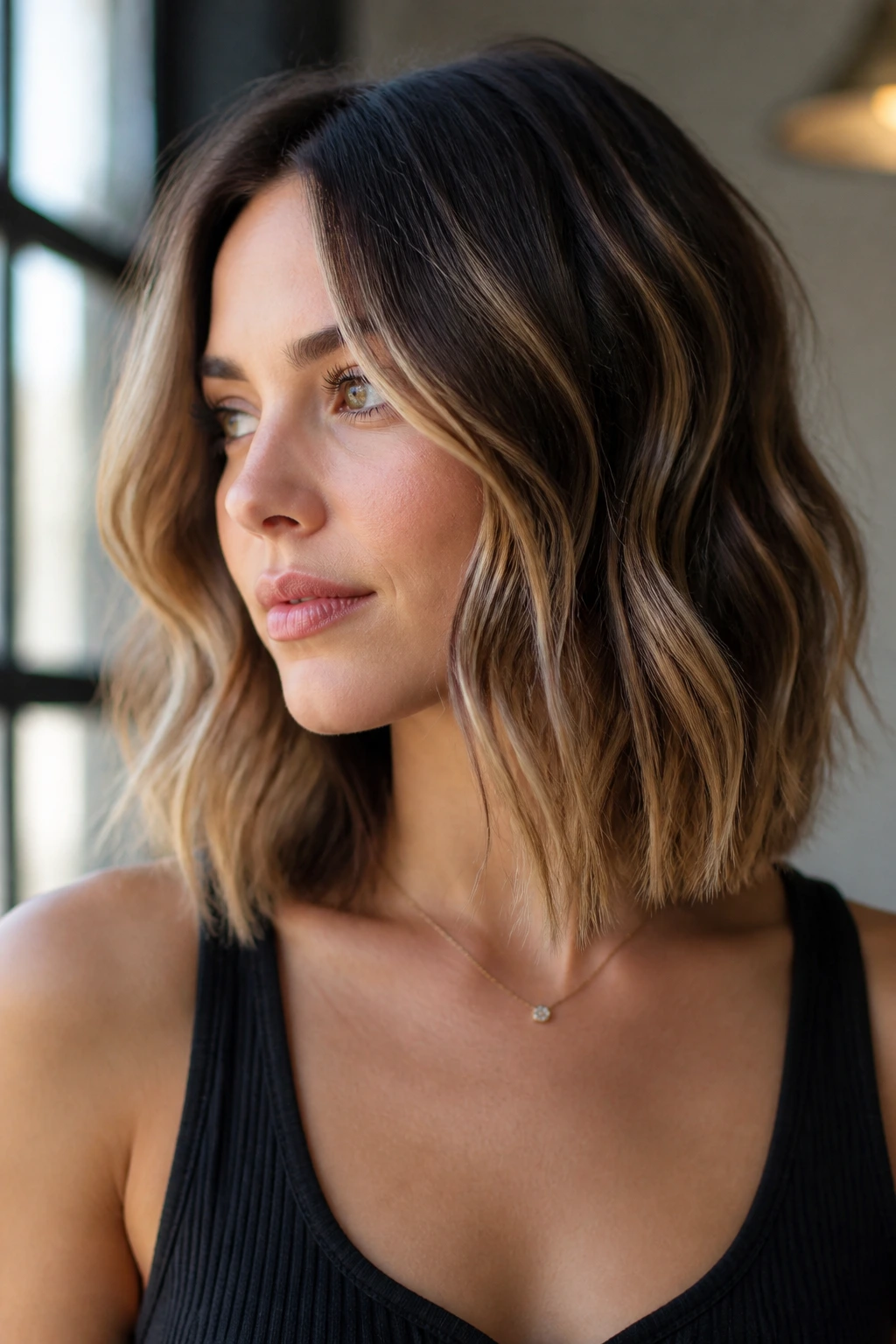
A blunt lob with S-bend waves has a sharper look than a full curl, and that sharpness is useful on a heart-shaped face. The wave sits in the middle of the hair shaft, which pushes width lower on the face and leaves the top looking clean. It feels a little modern, a little undone, and a lot more controlled than loose barrel curls.
The best version keeps the ends mostly straight. That one detail matters. If you bend the ends too, medium hair can flare outward and make the jaw look smaller than it is. Leaving the bottom section calm gives the eye a place to rest.
Use a flat iron, not a wand, and make one smooth bend in one direction, then the opposite bend a few inches lower. Think long S’s, not zigzags. The more even the motion, the less the style starts to look crimped.
4. Tousled Layers with Choppy Ends
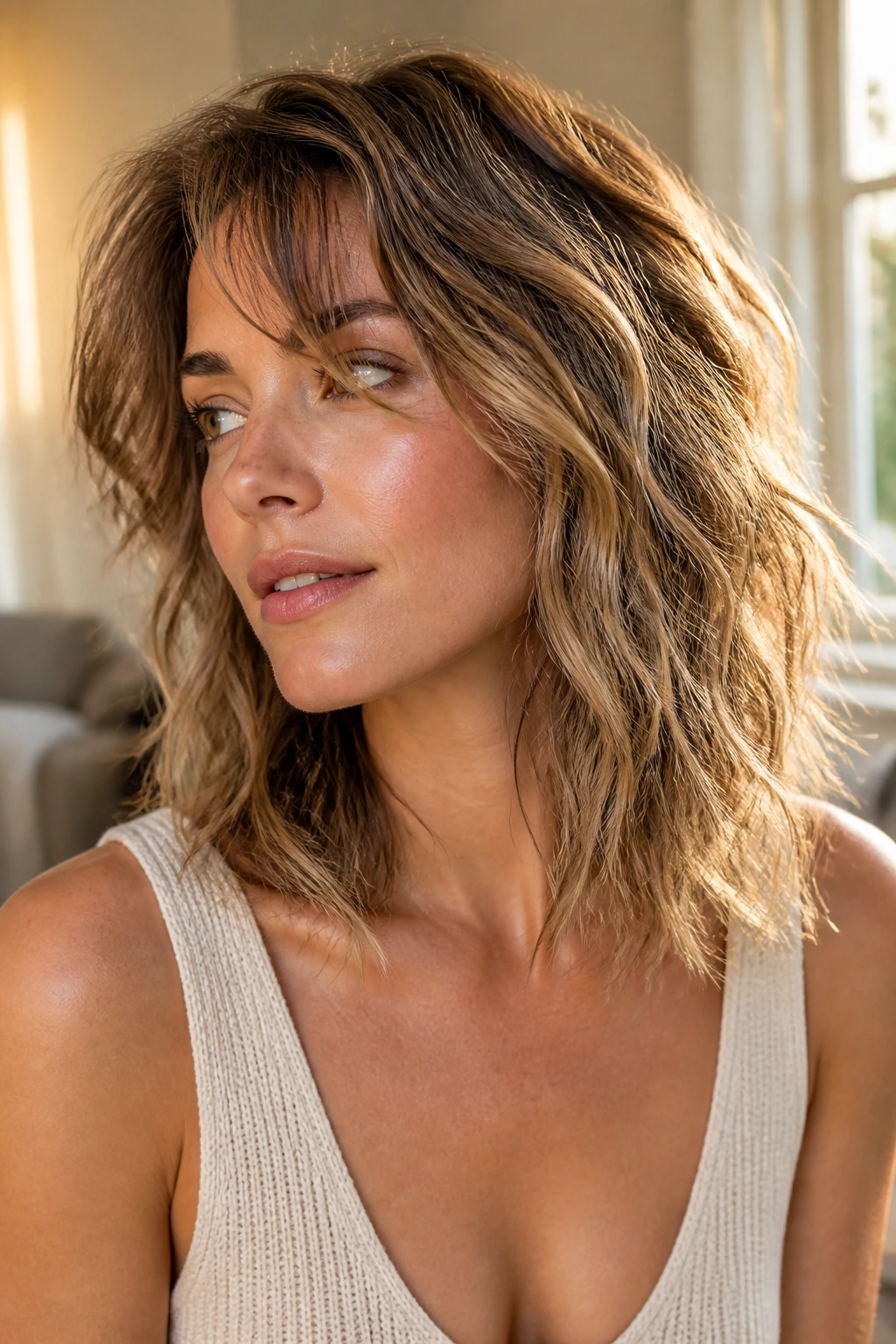
When medium hair feels boxy, layers fix the problem faster than any styling product. Choppy ends create movement right where a heart-shaped face needs it, near the lower half of the face, and they stop the wave from clumping into a blunt block.
This is one of those styles that looks better a little imperfect. The layers should hit around the cheekbone, lip line, or just below the jaw, not all at the same height. That staggered shape keeps the sides soft and gives the hair a breeze through it.
I like this cut with a salt spray and a rough-dry. If you smooth every strand, the whole thing loses the edge that makes it good. Scrunch the mids, twist a few pieces around your finger, and leave the ends a touch separated.
Quick details that matter
- Ask for layers that stay visible when the hair is wavy, not layers that disappear when it’s straight.
- Keep the shortest pieces below the temples.
- Use a pea-sized amount of paste on the ends if they need grip.
5. Half-Up Beach Waves with Crown Lift
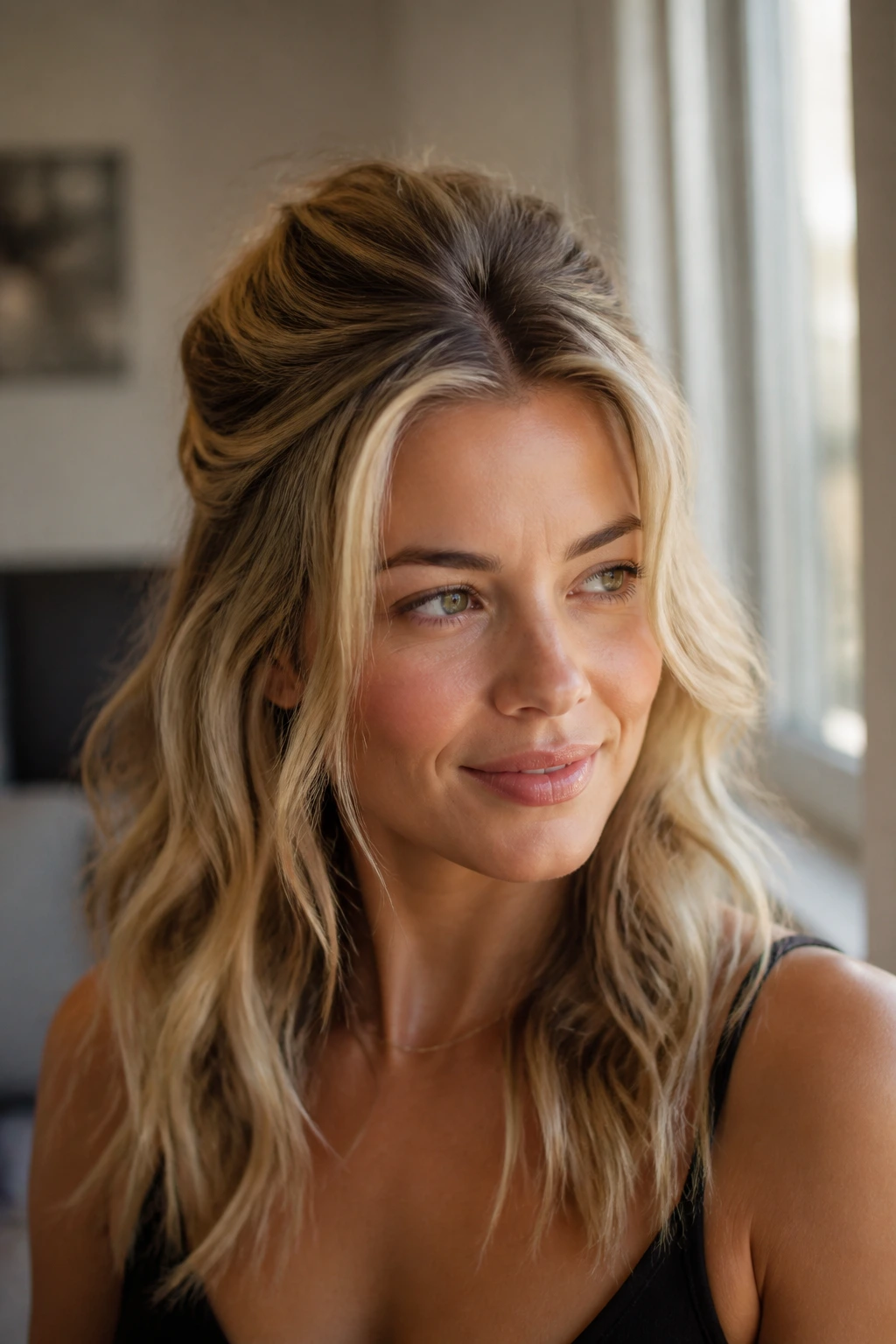
Half-up waves solve a real problem for heart-shaped faces: too much hair in the front can crowd the forehead, but pulling everything back can make the face feel bare. The half-up shape gives you height without exposing every inch of the hairline.
The lift belongs at the crown, not at the temples. That’s a subtle distinction, but it changes the silhouette. A little height at the top adds shape; too much puffs the upper third of the face and throws the balance off. Keep the sides loose and let the front pieces fall in soft ribbons.
This version works especially well on medium hair because the weight of the loose half keeps the style from floating away. A small clip or a thin elastic can hold the top section, and a few bends around the face keep it from looking severe.
One small trick: leave a thin section out on each side before you secure the back. Those two pieces frame the cheekbones better than a fully pulled-back half-up style ever will.
6. Honey Highlight Waves with a Face-Framing Money Piece
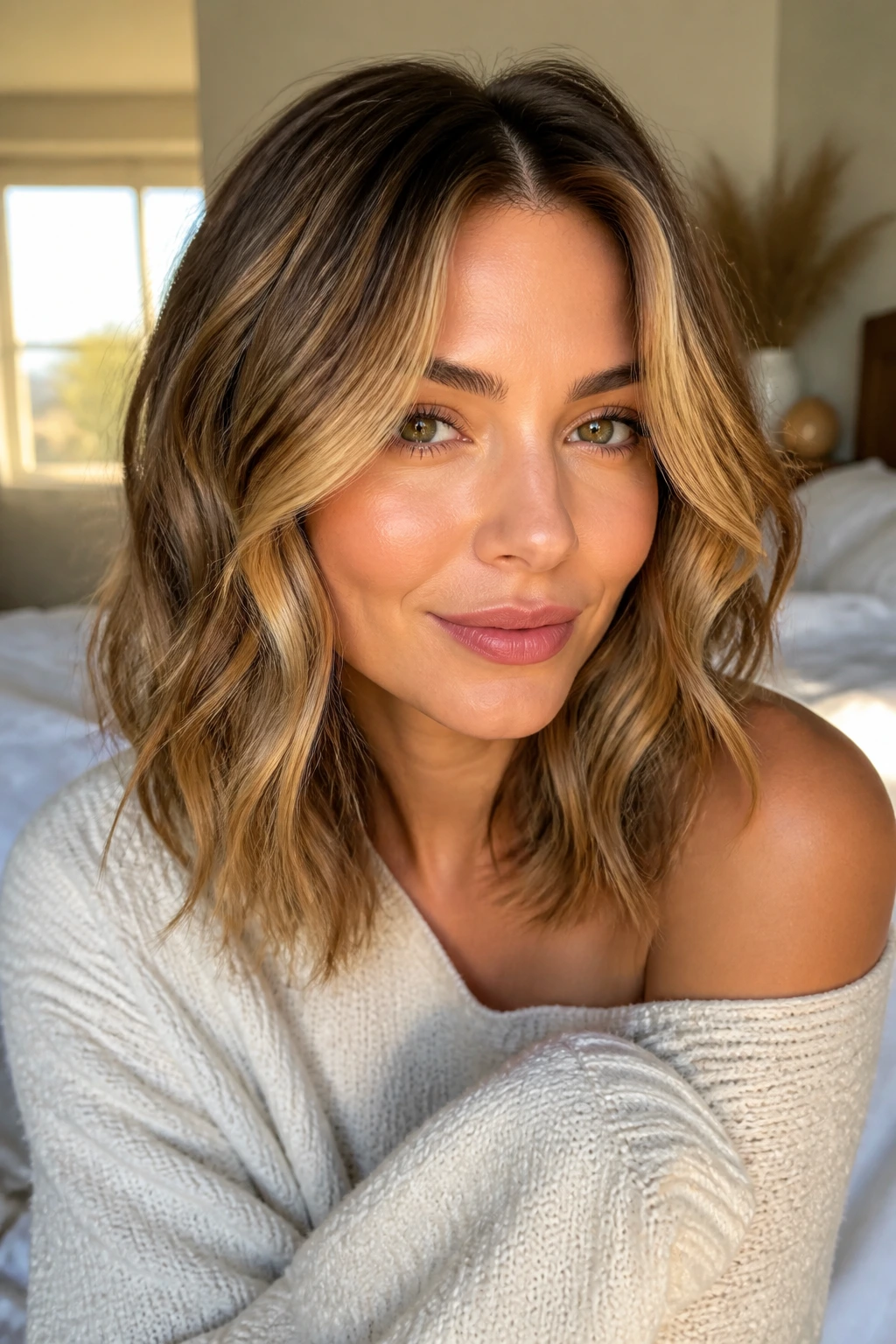
Color can do some of the balancing work for you. A warm money piece around the front lightens the area near the cheekbones and pulls the eye lower, which is exactly where a heart-shaped face looks strongest. On medium hair, the contrast shows up without disappearing into too much length.
The money piece should start around the cheekbone or slightly above it, not right at the root line where it can make the forehead look wider. The rest of the highlights can be woven through the mid-lengths and ends so the wave has depth instead of one flat color band.
This is one of the few styles where I’d say the cut and color really need each other. If the layers are too short and the highlights too high, the top starts shouting for attention. Keep the front soft, keep the root shadow a touch deeper, and the whole thing reads more expensive than complicated.
7. Air-Dried Salt Spray Waves
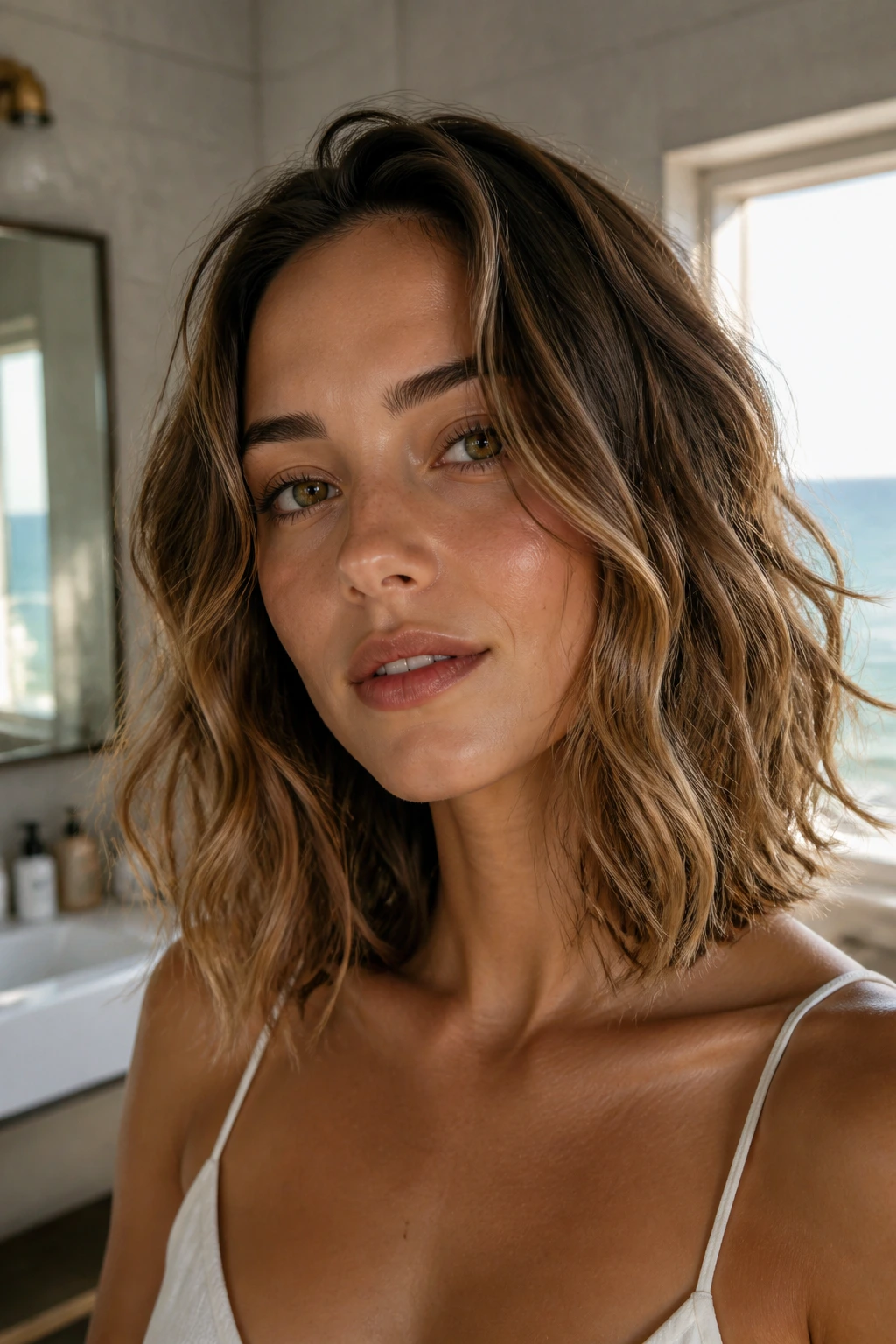
Air-dried waves are the least fussy option in the bunch, and that’s not a bad thing. On medium hair, a salt spray adds enough grit for the bends to hold, while the natural bend keeps the ends from looking overstyled. For a heart-shaped face, the looseness matters; you want softness around the sides, not a halo of volume at the temples.
Start with damp hair, not dripping hair. Scrunch in a light texture spray or a diluted salt mist, then twist two or three sections away from the face. Let the hair dry without touching it until it’s almost finished, then break up the sections with your fingers. That last step keeps it from drying into a shell.
If your hair is dry or color-treated, don’t drown it in salt spray. You’ll get texture, yes, but also that rough, brittle feel that makes the ends look tired. A cream-texture spray can give a softer version with less crunch.
8. Flat-Iron Wave Lob with Straight Ends
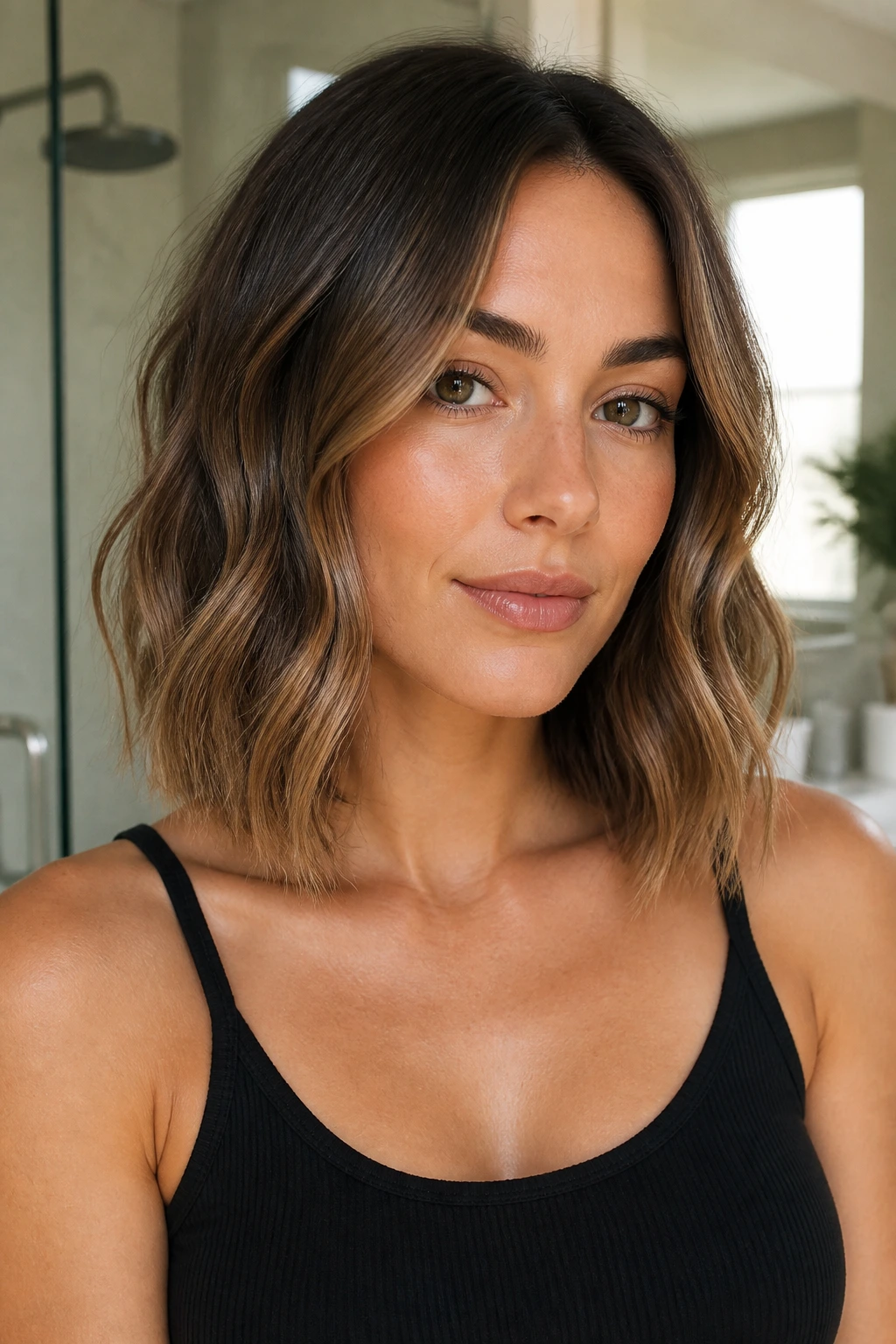
This look is for the person who wants beach waves without looking like she slept in them. A flat iron wave on medium hair gives you control over the shape, and the straight ends keep the style from ballooning around the jaw. That’s especially useful on heart-shaped faces, where the lower half of the face already needs a little visual help.
The motion is easy once you get it. Clamp a section, bend it one way, glide a few inches, bend it the other way. Leave the last inch or two straighter than the rest. The result is softer than a ringlet and tidier than a full-wave set.
I prefer this style when the hair is freshly blown out and still has a little slip. Dirty hair can work, but too much natural oil makes the flat iron drag. If the iron catches, the wave gets jagged. That’s not the look.
Best for: medium hair that tends to puff when curled too tightly.
9. Brushed-Out Soft Waves with a Glossy Finish
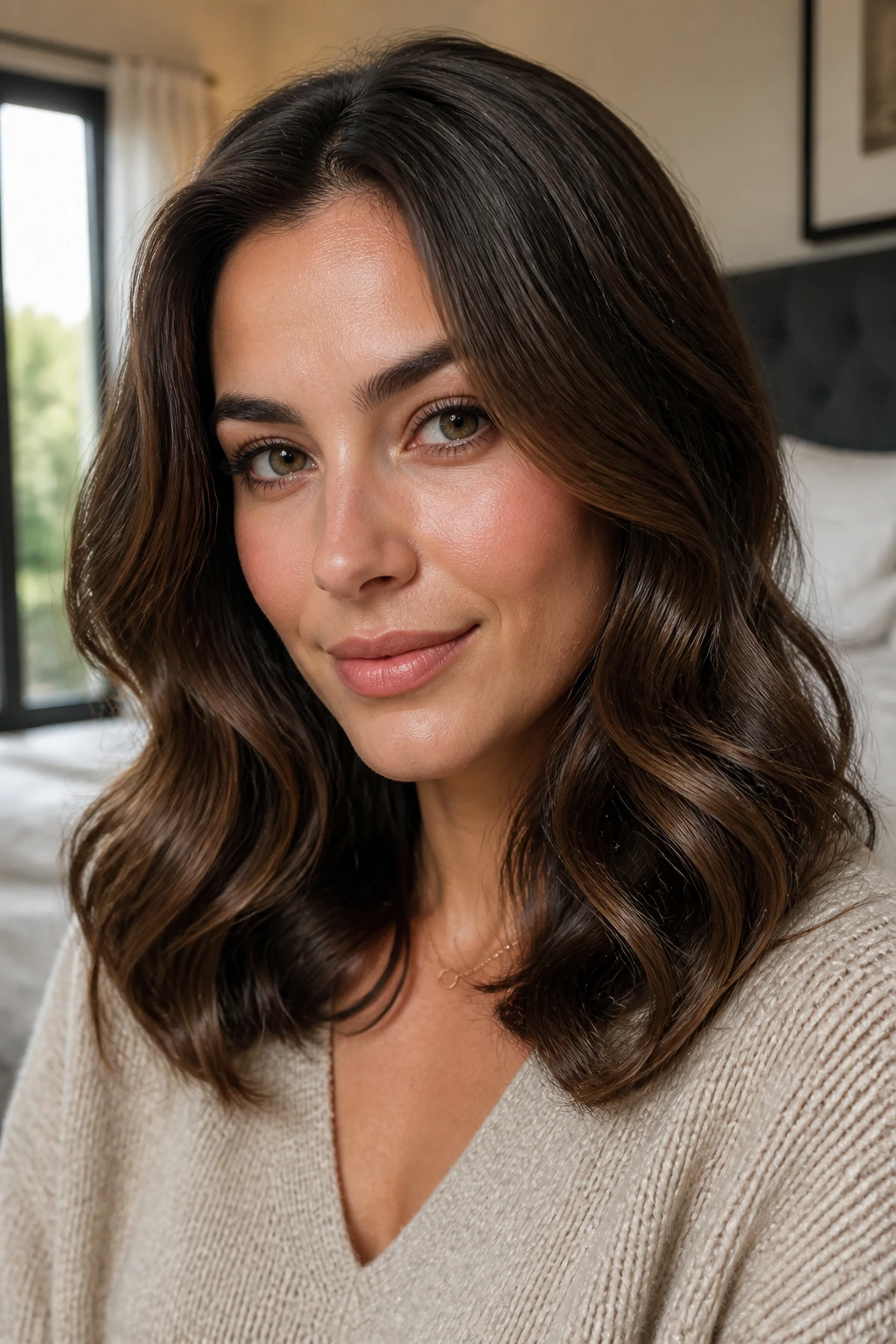
There’s something clean about brushed-out waves. They keep the beach texture, but the finish is smoother, more polished, and better suited to medium hair that can turn a little too piecey if left alone. On a heart-shaped face, the softness helps the lower half of the face feel fuller without making the top heavy.
The key is cooling. Let the curls set first. Then brush them out with a boar bristle brush or a wide paddle brush, starting only when the hair is completely cool. If you rush this step, the wave falls too fast and the shape disappears in minutes.
A light shine spray on the mid-lengths makes the movement look deliberate instead of fuzzy. Skip the roots. That’s where glossy products start to flatten the face.
This style sits in a sweet spot between casual and dressed up. It looks good with a soft side part, but it also holds a center part if the front sections are cut long enough.
10. Bedhead Waves with a Long Curtain Fringe
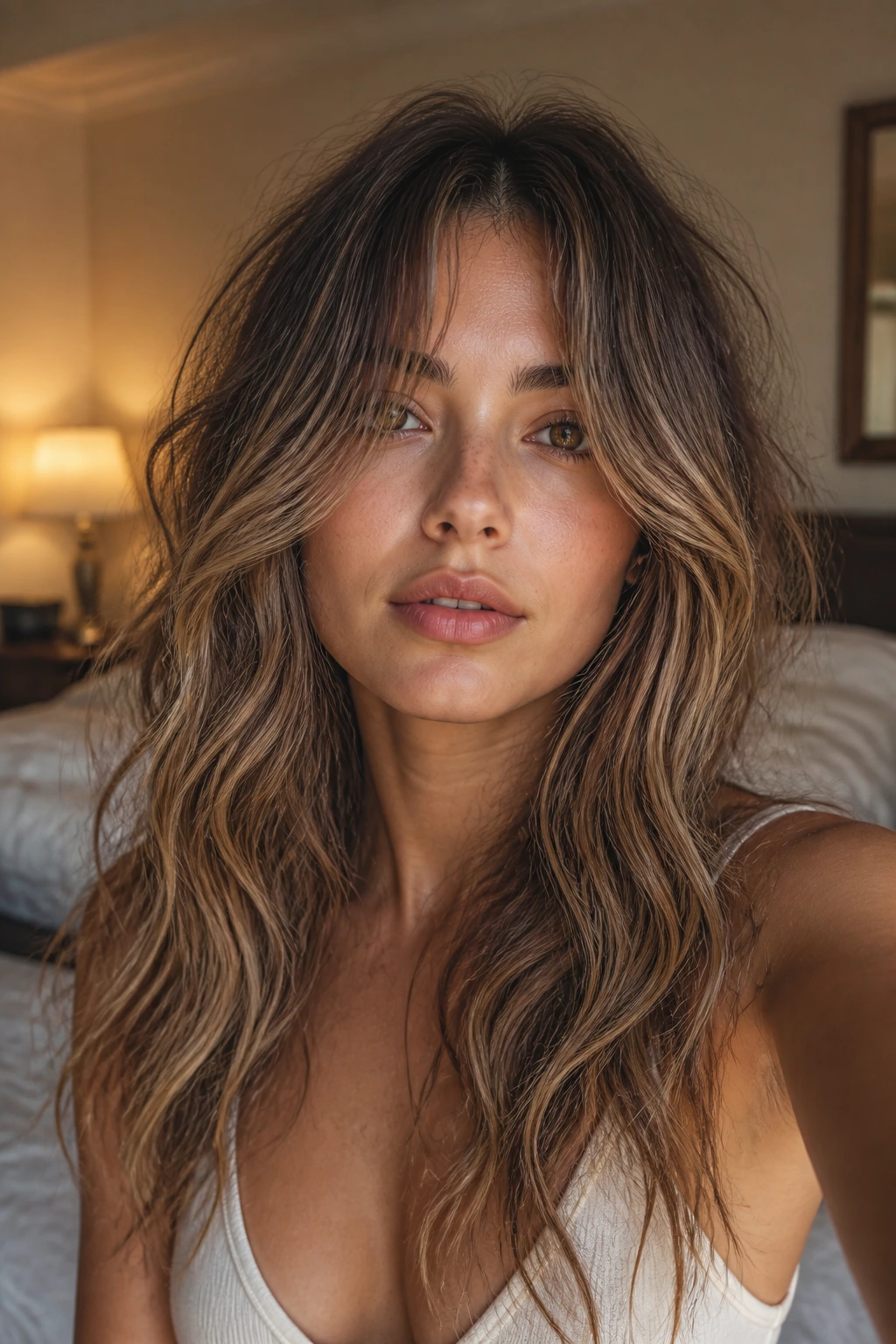
Bedhead waves can look sloppy or they can look expensive. The difference is whether the fringe and the front pieces are cut with enough length to soften the face. On heart-shaped faces, a long curtain fringe works because it breaks up the forehead and lets the rest of the wave fall around the cheeks and jaw.
The night-before method is easy: loose braids, a rough twist, or a large-barrel iron with no attempt at precision. The next morning, shake everything out, then break up the front with your fingers. Don’t brush it into neatness. That usually kills the shape.
This is one of those looks that likes a little disagreement. The top can be slightly flatter, the sides slightly fuller, and the ends a little undone. That unevenness is what makes it feel lived-in instead of overfinished.
If your bangs or fringe are shorter than chin length, keep them light. Heavy fringe plus messy waves can make the whole front section sit too wide.
11. Side-Swept Waves Tucked Behind One Ear
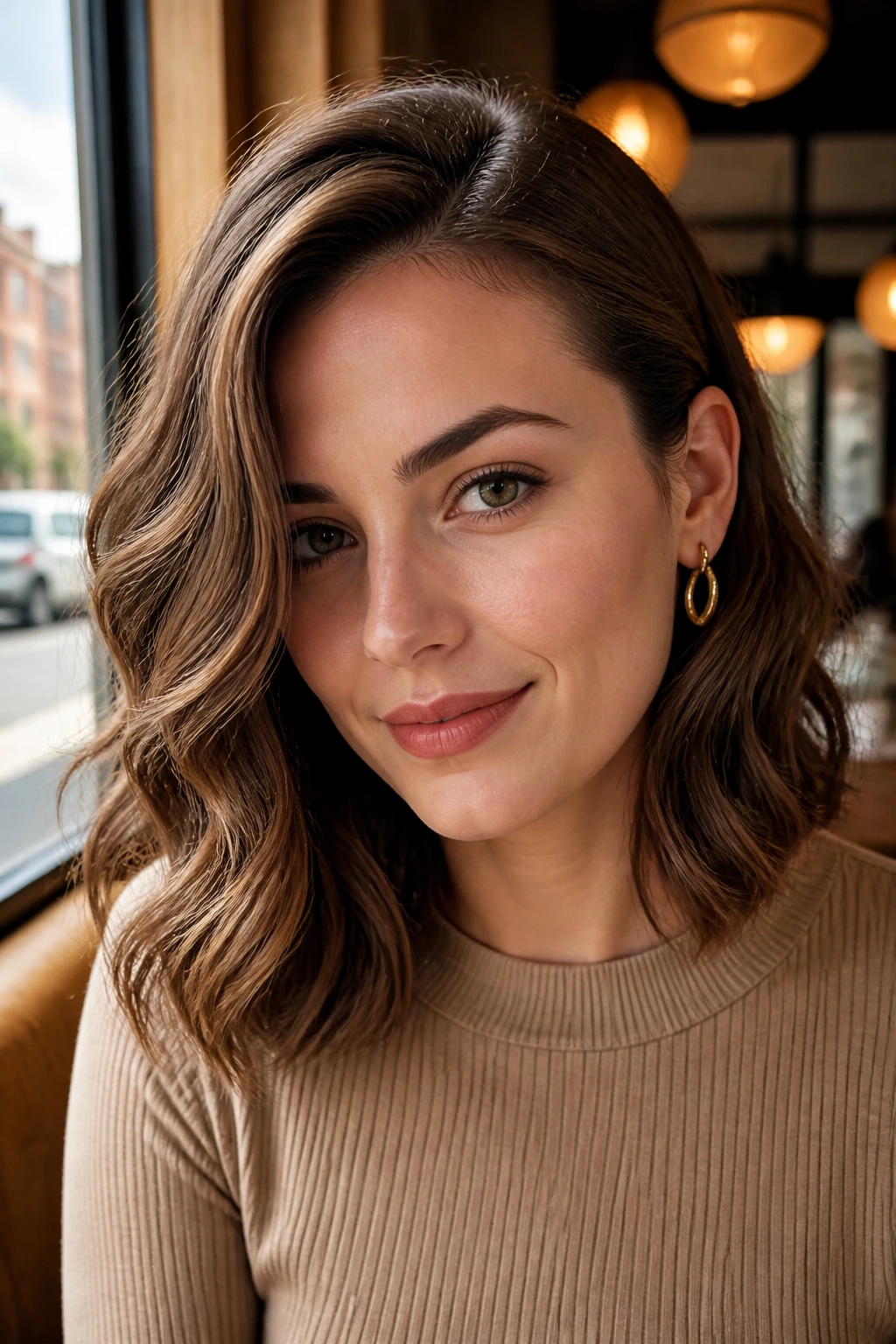
A side-swept tuck changes the balance fast. It opens one side of the face, lets the cheekbone show, and stretches the eye line diagonally instead of straight across. For a heart-shaped face, that diagonal pull is gold.
The style works best when the wave is loose enough to move but not so soft that it slips out of the tuck. A little root spray on the tucked side helps hold the bend without turning the hair sticky. Keep the opposite side fuller, and the whole shape feels intentional rather than lopsided.
I like this look for medium hair that has a little natural bend already. You’re not fighting the texture; you’re steering it. That’s a much better use of time.
A small earring on the tucked side can make the structure feel finished. Not necessary. Just nice.
12. Piecey Waves with a Root Shadow
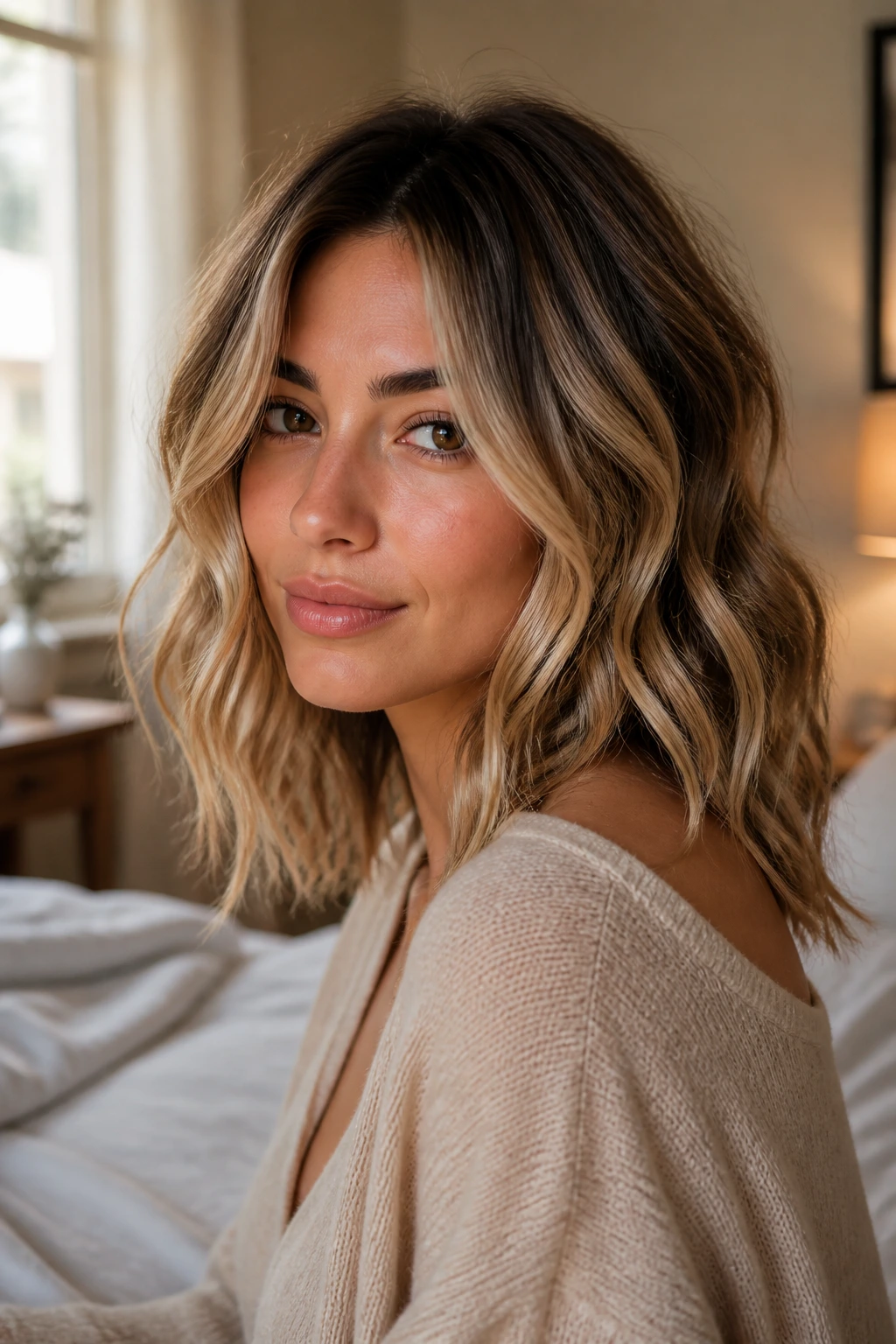
Root shadow does more than hide grow-out. On medium hair, it gives the wave a darker base, which makes the lighter bends pop and keeps the top from looking too wide. That matters for heart-shaped faces because a strong light color right at the root can make the forehead dominate the whole style.
The best root shadow is only a shade or two deeper than the mids. If it gets too dark, the hair loses that airy beach feeling and starts looking heavy. The contrast should read in motion, not as a hard stripe.
This works especially well if the ends are a little lighter and the pieces around the face are separated with a touch of styling cream. The wave looks sun-softened, not salon-stiff. That’s the whole point.
13. Root-Lift Waves with Controlled Volume
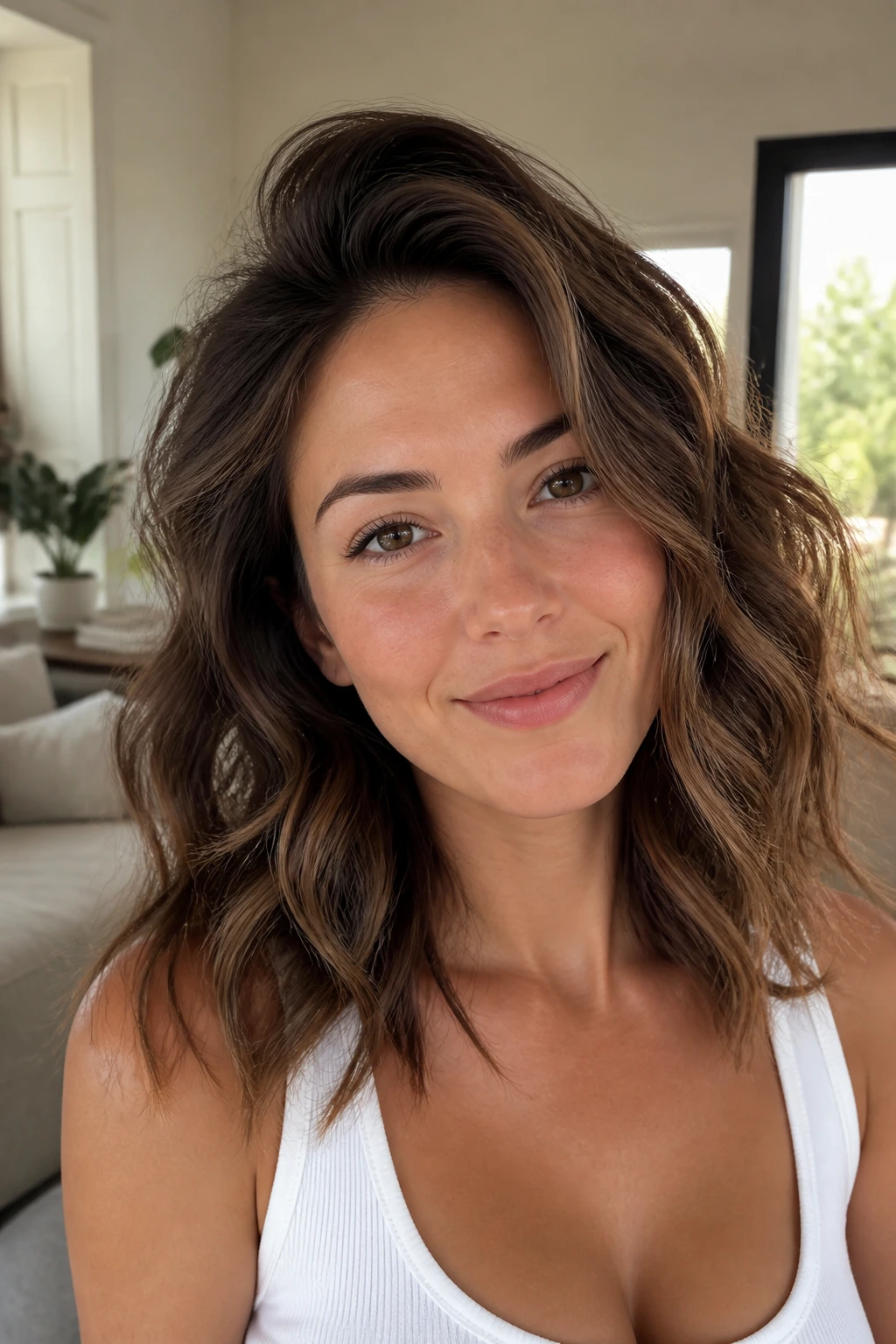
A little lift at the root can help a heart-shaped face, but uncontrolled volume can be a mess. The difference is placement. You want height through the crown, yes, but the sides should stay soft and the temple area should not puff out like a triangle.
Start with mousse at the roots and blow-dry the hair with a round brush or your fingers until it’s about 80 percent dry. Clip the crown for five to ten minutes while it cools. That cooling step locks the lift in place better than hot air does. People skip it all the time, then wonder why the volume collapses by noon.
The wave itself should stay loose and medium-sized. Too much curl plus too much root lift turns the style into pageant hair, and that is not what this face shape needs.
Where to place the lift
- At the crown, not the temples.
- At the roots above the ears only if the hair is very flat.
- Never right at the forehead line.
14. Braided-Then-Raked Waves
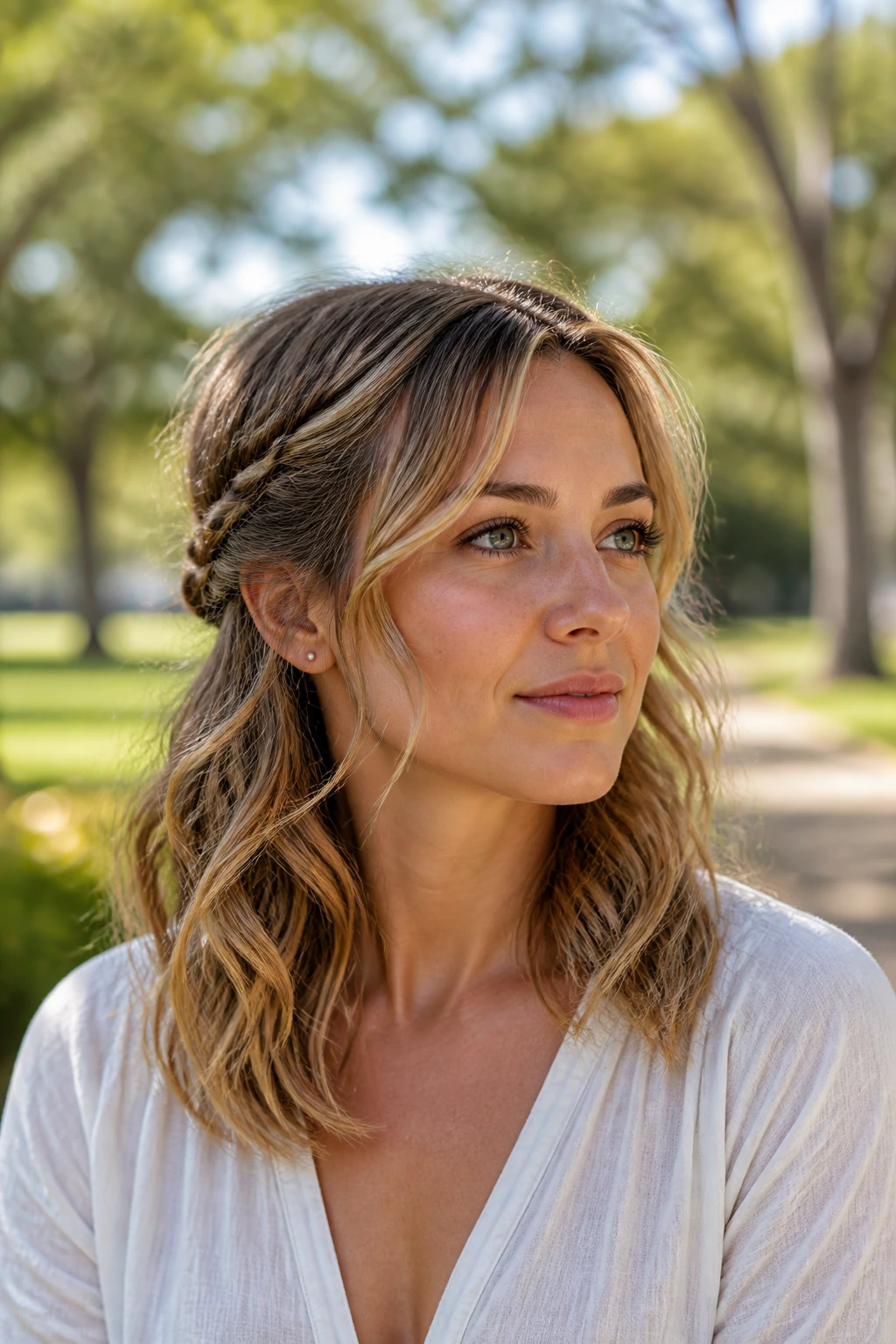
Braids are a useful cheat, but only if you braid with enough slack. Tight braids near the scalp can widen the upper face and make a heart shape look top-heavy. Loose braids starting lower, around the ear or just below, give you soft waves without that helmet effect.
This style is especially nice on medium hair because the wave pattern comes out obvious but not exaggerated. Two braids usually give a softer result than four tiny ones. When the hair dries, pull the braids apart gently with your fingers, then rake through just enough to separate the lengths.
A little leave-in conditioner on the ends keeps the shape from turning fuzzy. I’d skip heavy oils at the root. They weigh the wave down before the style has a chance to settle.
The final look isn’t polished. That’s what makes it work.
15. Wand-Wrapped Waves with Straight Ends
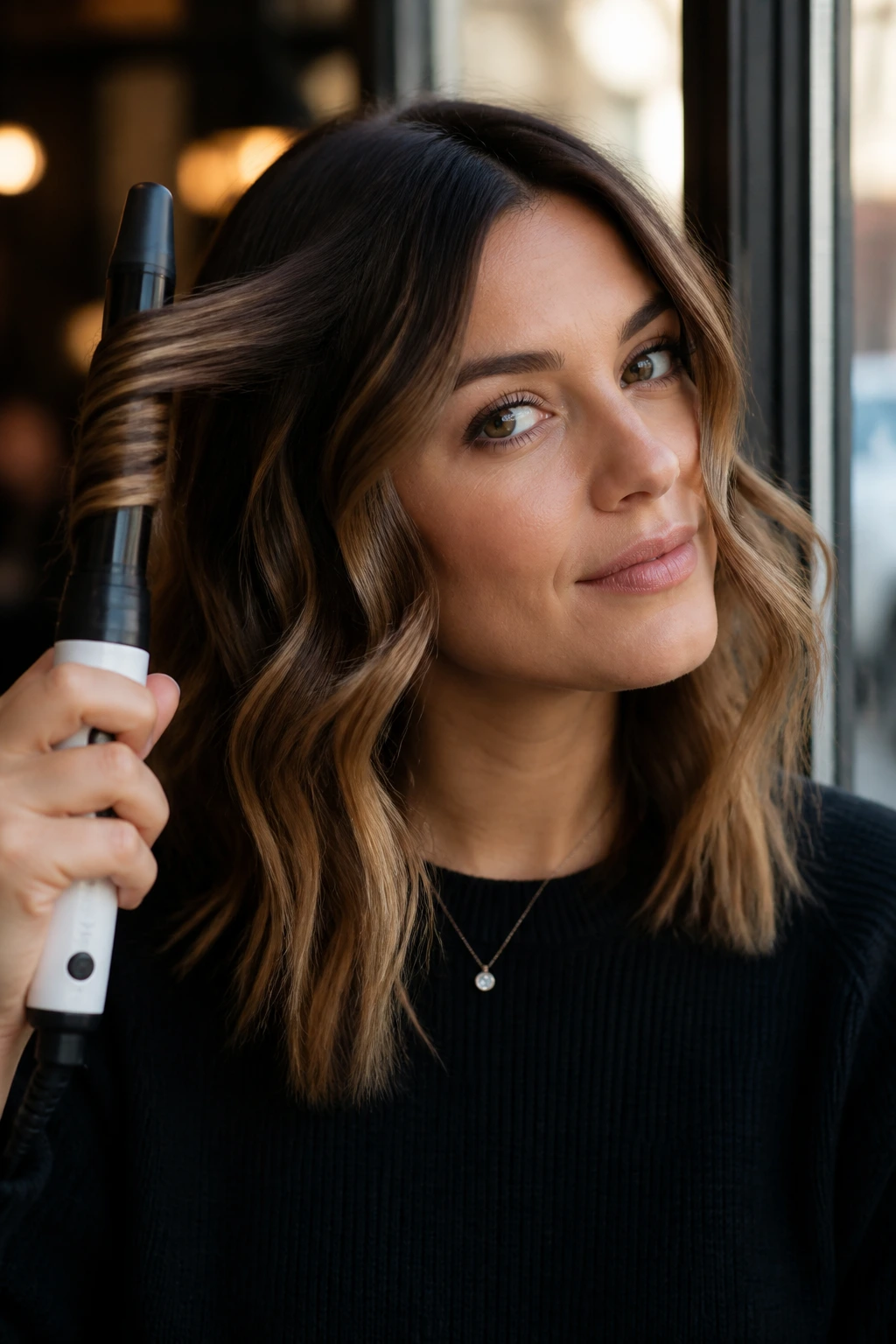
This is the classic beach-wave move, and the reason it stays popular is simple: it works on medium hair without making the bottom feel thick. Wrap each section around a 1-inch wand, leave the ends out for the last inch or two, and alternate the direction as you move around the head. Those straight ends are what keep the style from turning too round.
On a heart-shaped face, the loose mid-lengths help widen the look below the cheekbones. The straight ends give the jaw a little room. If you curl all the way to the tips, the whole style can look like a blob of motion instead of actual shape.
Let the curls cool before you touch them. If you shake them out too soon, the wave collapses and the curl pattern gets messy in a flat, not-chic way. Once they’re cool, a few finger passes are enough.
I like this version when the hair needs a little drama but not a lot of polish. It’s casual, but not careless.
16. Messy Shag Waves
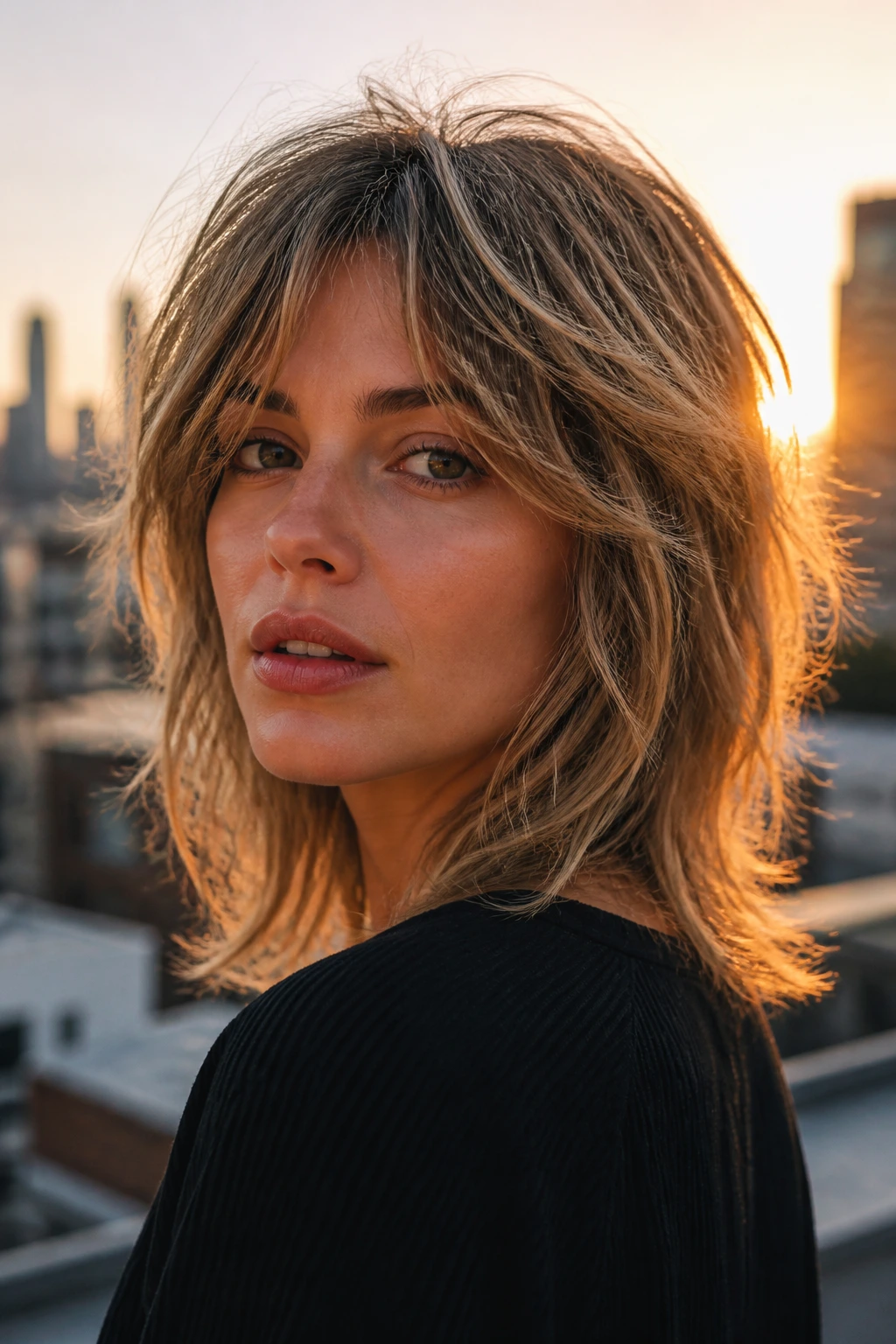
A shag cut changes the game because the layers do half the styling for you. On medium hair, shag waves sit lighter around the face and fuller through the ends, which can be ideal on a heart-shaped face if the shortest layers stay below the cheekbone. The shape wants movement, not bulk.
This is one of the more textured looks in the bunch. You can rough-dry it, scrunch it, and use a bit of paste on the tips to separate the pieces. If the front gets too fluffy, press the crown with your palms after it cools to bring the volume back under control.
The shag has a slightly rebellious feel. Good. A face with strong cheekbones can carry that energy, and the loose wave keeps it from getting harsh.
If your hair is fine, don’t pile on product. Use enough to define the layers, then stop.
17. Glossy Waves with a Subtle Flip-Out
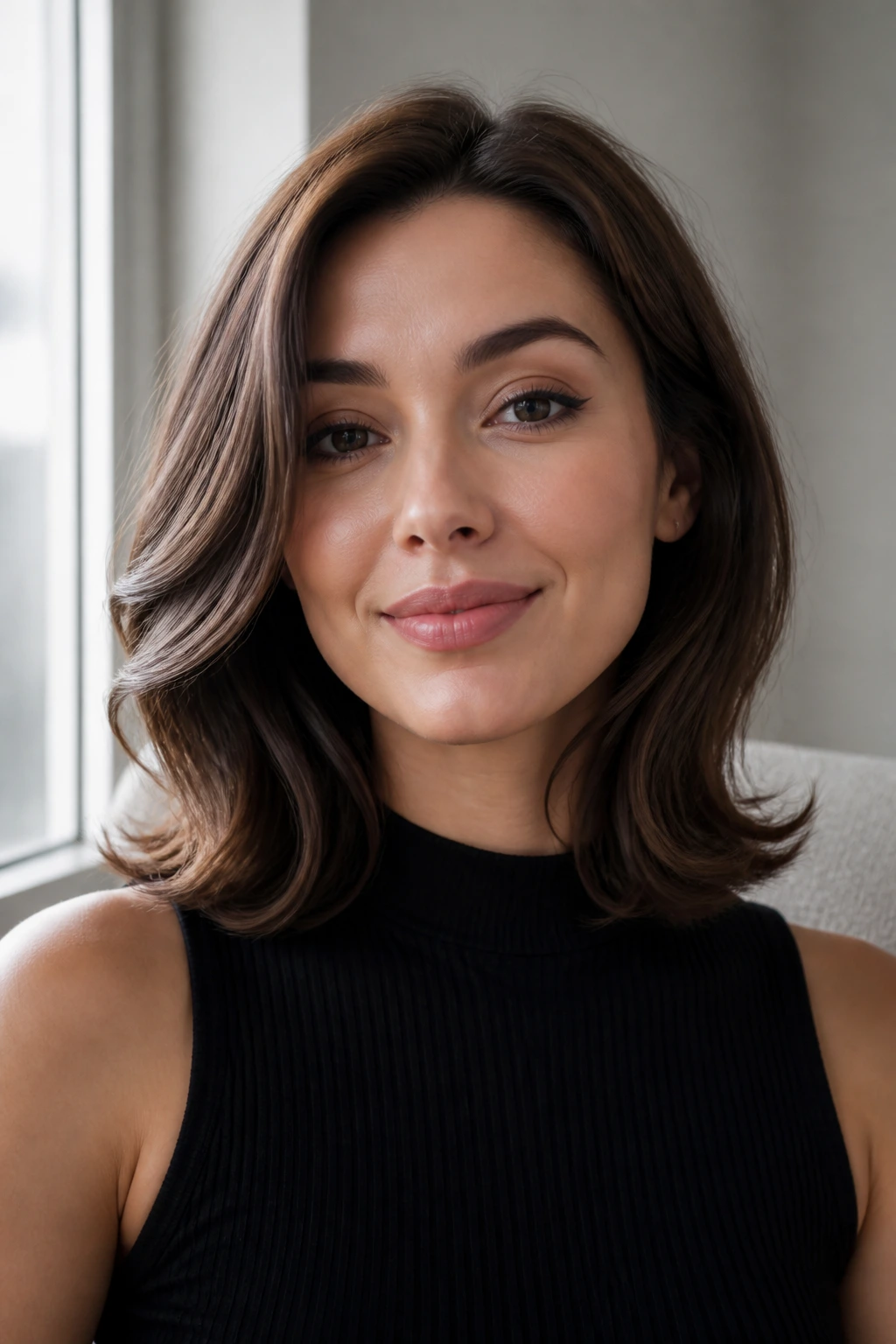
Most beach waves lean matte and piecey. This version goes the other way. A subtle flip-out at the ends gives medium hair a little movement below the jaw, and the gloss makes the whole style feel smoother around the face. That’s useful if your heart-shaped face needs softness more than grit.
The flip-out should be gentle, not retro-cartoon. A brush and a quick bend with a flat iron or blow-dryer nozzle is enough. Keep the root smooth, keep the mid-lengths loose, and let the ends turn away just a little. That tiny outward motion widens the lower half of the face in a nice, quiet way.
A drop of serum on the ends sells the finish. If the hair starts looking oily, you put the serum too high. Mid-lengths down only.
This is one of my favorites for a dinner-out look because it sits between polished and relaxed without trying to prove anything.
18. Low Ponytail Waves with Face-Framing Tendrils
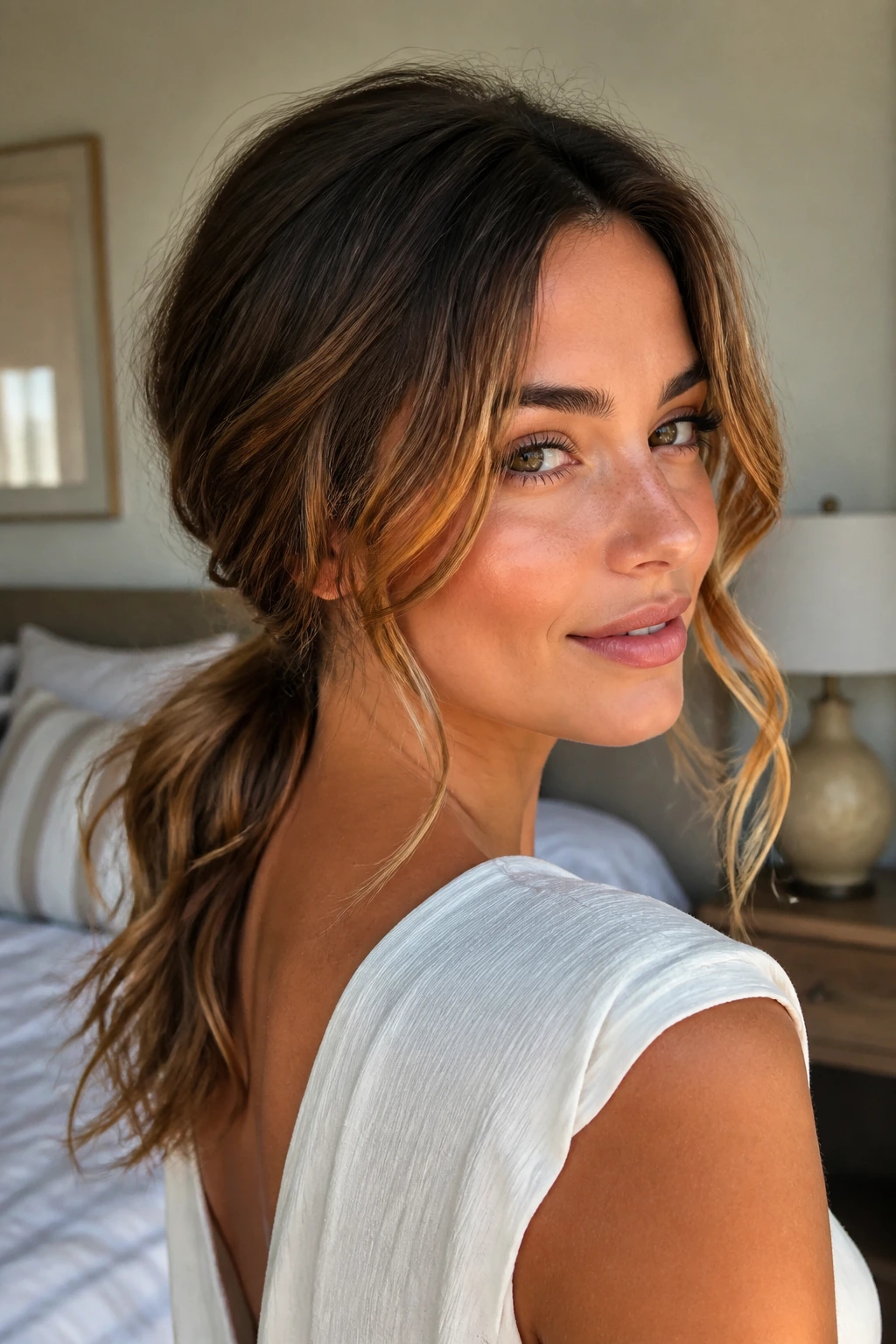
A low ponytail can still count as a wave style if the lengths are textured and the front pieces are doing their job. For a heart-shaped face, the face-framing tendrils matter most. They soften the forehead and keep the pulled-back shape from making the chin feel too narrow.
This works especially well when the ponytail sits at the nape and the waves are left loose through the tail. Don’t over-tighten the elastic. A flat, slick ponytail loses the texture that makes this look useful. Keep the sides a little soft, then pinch a few sections free around the ears.
I like this style for second-day hair because the wave is already there. You’re not forcing anything. You’re just gathering it in a way that keeps the shape clean.
A tiny spray of hairspray on the tendrils is enough. They should move.
19. Diffused Waves for Fine Medium Hair
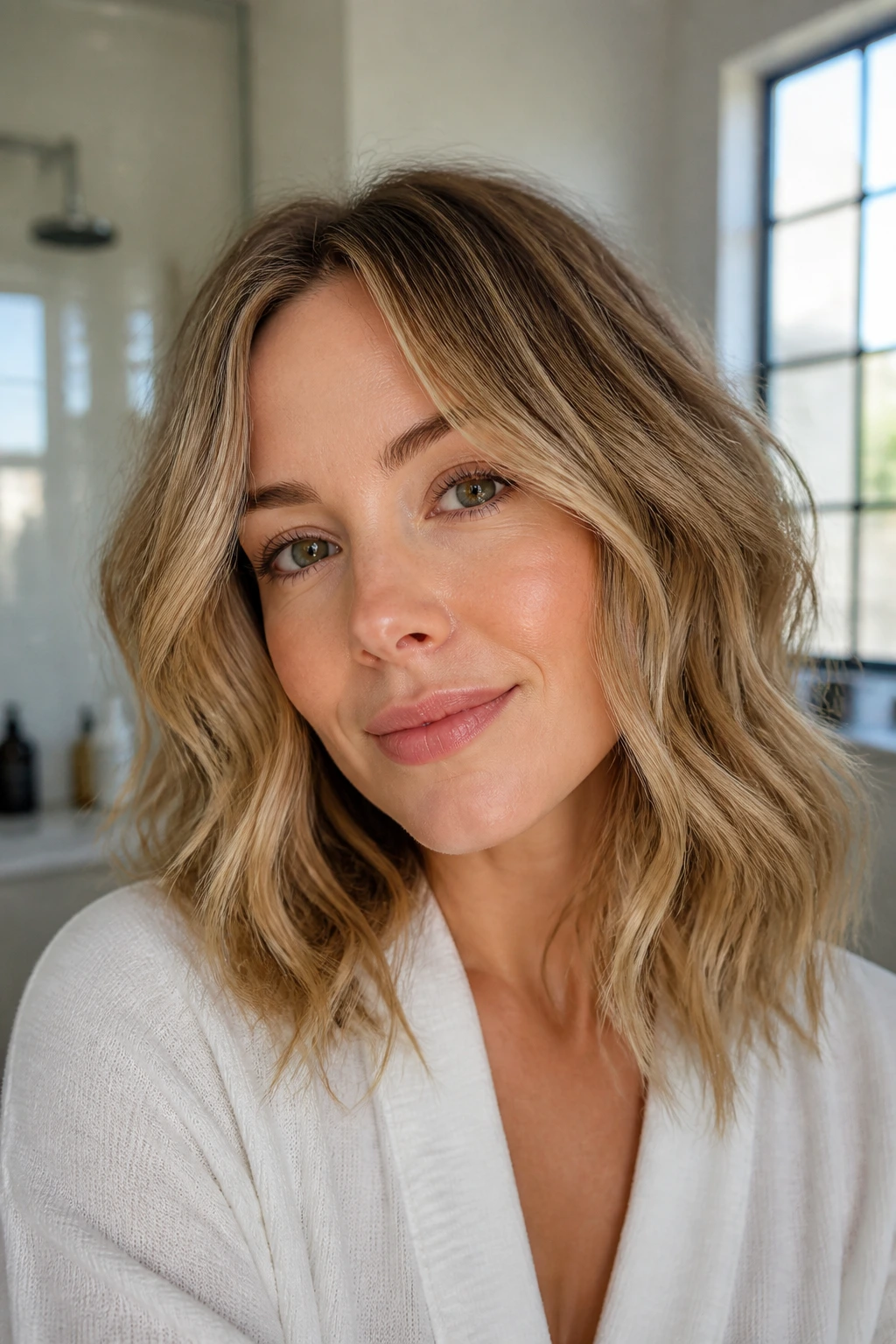
Fine hair needs a different kind of wave. Heavy cream and too much oil will flatten it, and then the face shape ends up looking wider at the top than it should. A diffuser gives fine medium hair lift at the roots and a loose, airy bend through the lengths without crushing the texture.
The key is low heat and low speed. Cup the hair in the diffuser, hold for a few seconds, then move. Don’t blast it. That creates frizz before the wave can set. Once the hair is dry, clip the crown for a few minutes if you want a bit more lift.
On a heart-shaped face, fine hair looks best when the volume is spread out instead of concentrated in one big puff. That means soft roots, piecey mids, and ends that still move. Not much else.
A light volumizing mousse before drying gives the wave something to hold onto. Skip the heavy sea salt spray unless your hair really tolerates it.
20. Thick-Hair Waves with Thinned Ends
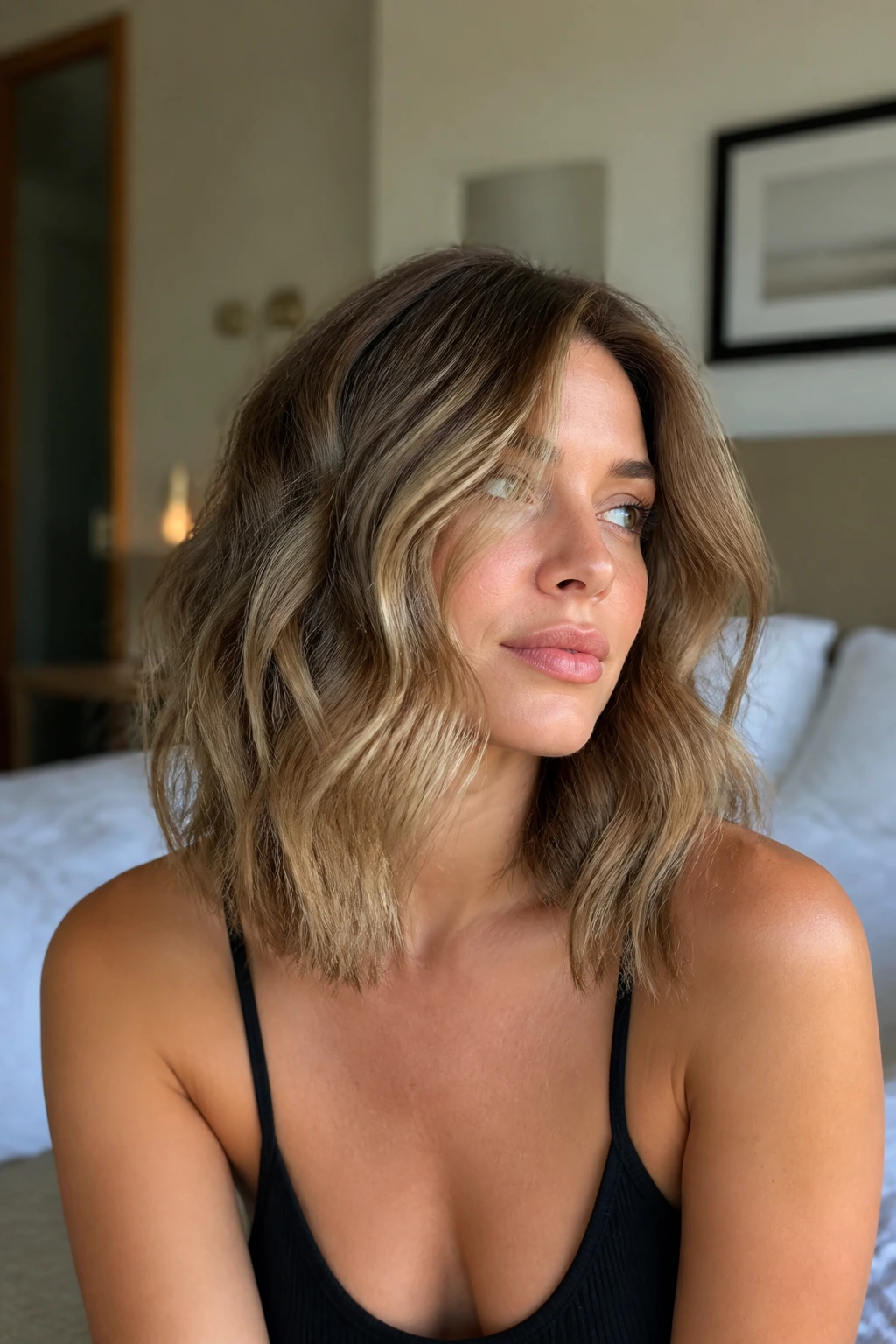
Thick hair can wear beach waves beautifully, but only if the ends are thinned and the layers are placed with care. Otherwise the style turns triangular: too much bulk at the bottom, too much mass near the temples, and not enough shape around the face. That is not flattering on any face shape, and especially not on a heart-shaped one.
The fix is strategic layering. Ask for internal weight removal or soft thinning through the ends so the wave can separate. Then style with a larger barrel, around 1.25 inches, so the bend stays loose enough to skim the face instead of hugging it.
I’d use a cream-texture protectant here rather than a gritty spray. Thick hair often needs slip more than roughness. The goal is control, not crunch.
What thick hair needs
- Less product at the root.
- More separation through the mids.
- A bigger wand or iron.
- A stronger clip or pin if the hair takes a long time to cool.
21. Grown-Out Bang Waves for a Heart-Shaped Face
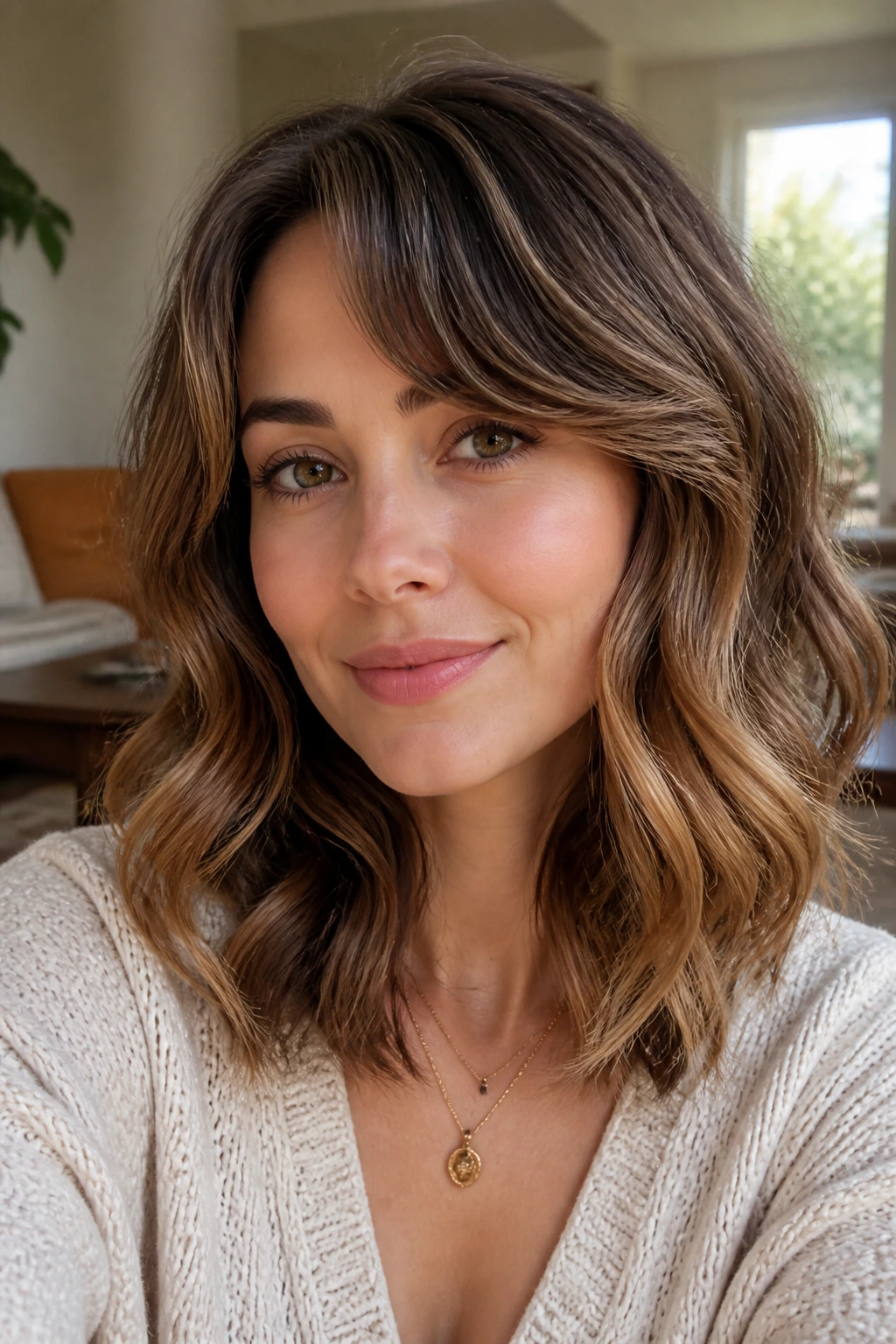
Grown-out bangs sit in a really useful middle ground. They’re long enough to sweep away from the forehead, but short enough to keep the front of the style interesting. On a heart-shaped face, that means you get softness across the top without losing the frame around the eyes and cheekbones.
The trick is to bend the bangs off-center rather than straight down. If they split in the middle and then fall softly to each side, the forehead feels balanced, not hidden. Let the rest of the wave stay loose and slightly undone.
This is a good choice if curtain bangs feel too deliberate and a full fringe feels too heavy. Grown-out bangs are less tidy, which is exactly why they look good here. They don’t fight the rest of the style.
Use a tiny round brush or a straightener on low heat to shape the front. A little goes a long way.
22. Soft Mermaid Waves with a Center Part
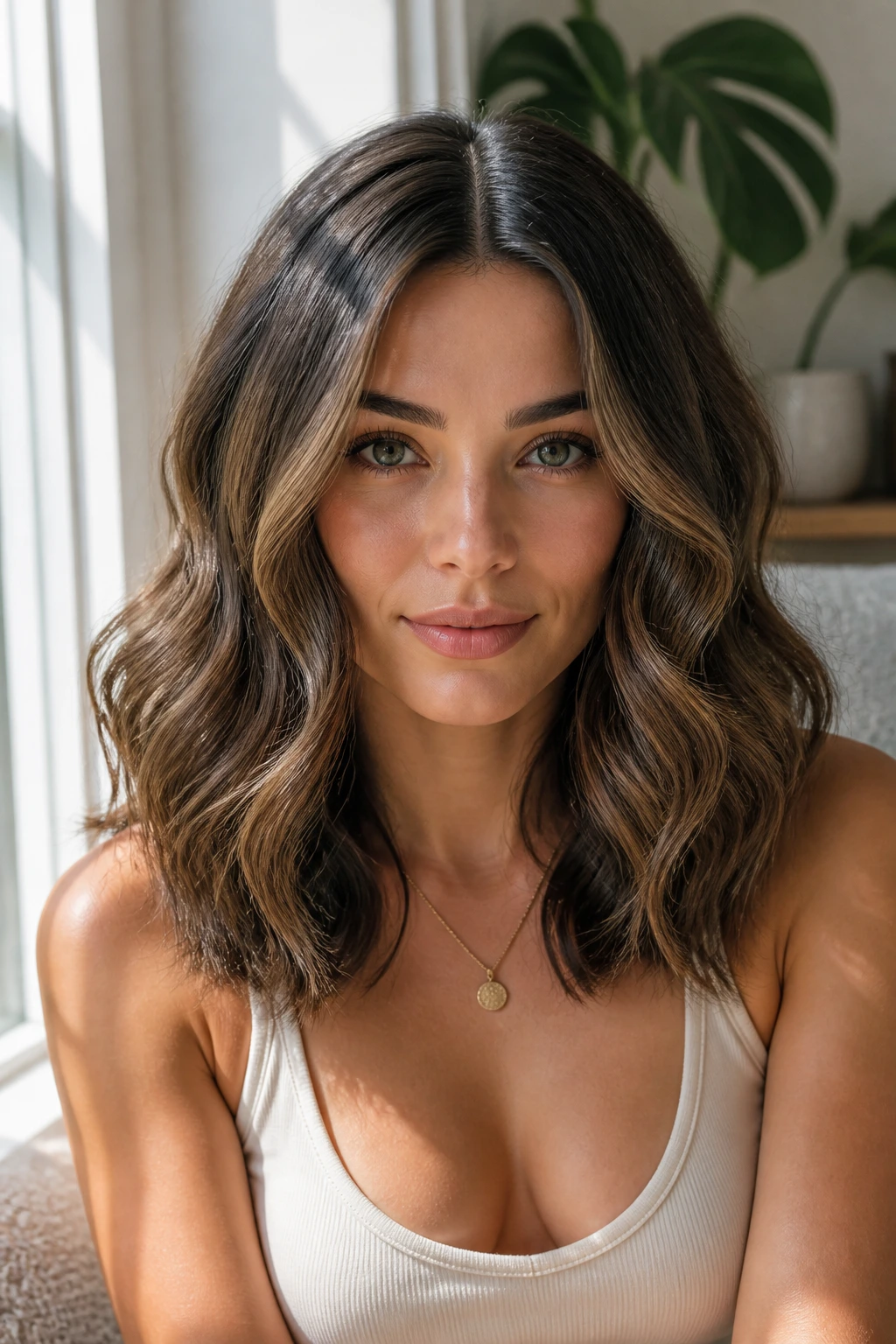
A center part can work on a heart-shaped face, but only when the wave is soft enough to bend the eye down toward the jaw. That means no tiny curls, no hard root lift, and no front pieces stuck flat against the scalp. The wave should start lower, around the cheekbone or chin, and move in big, loose curves.
Medium hair gives mermaid waves enough weight to stay calm. If the hair is too long, the style can drag; if it’s too short, the wave can look overly bouncy. This length is the middle path, which is why it works.
I’d use a large iron or a loose braid set, then break the pattern apart with your fingers. A little shine spray on the ends keeps the style from looking dry. The result should feel soft, almost floating, but not flimsy.
The center part is the bold choice here. It works because the wave does the balancing work.
Why Beach Waves and Heart-Shaped Faces Sit So Well Together
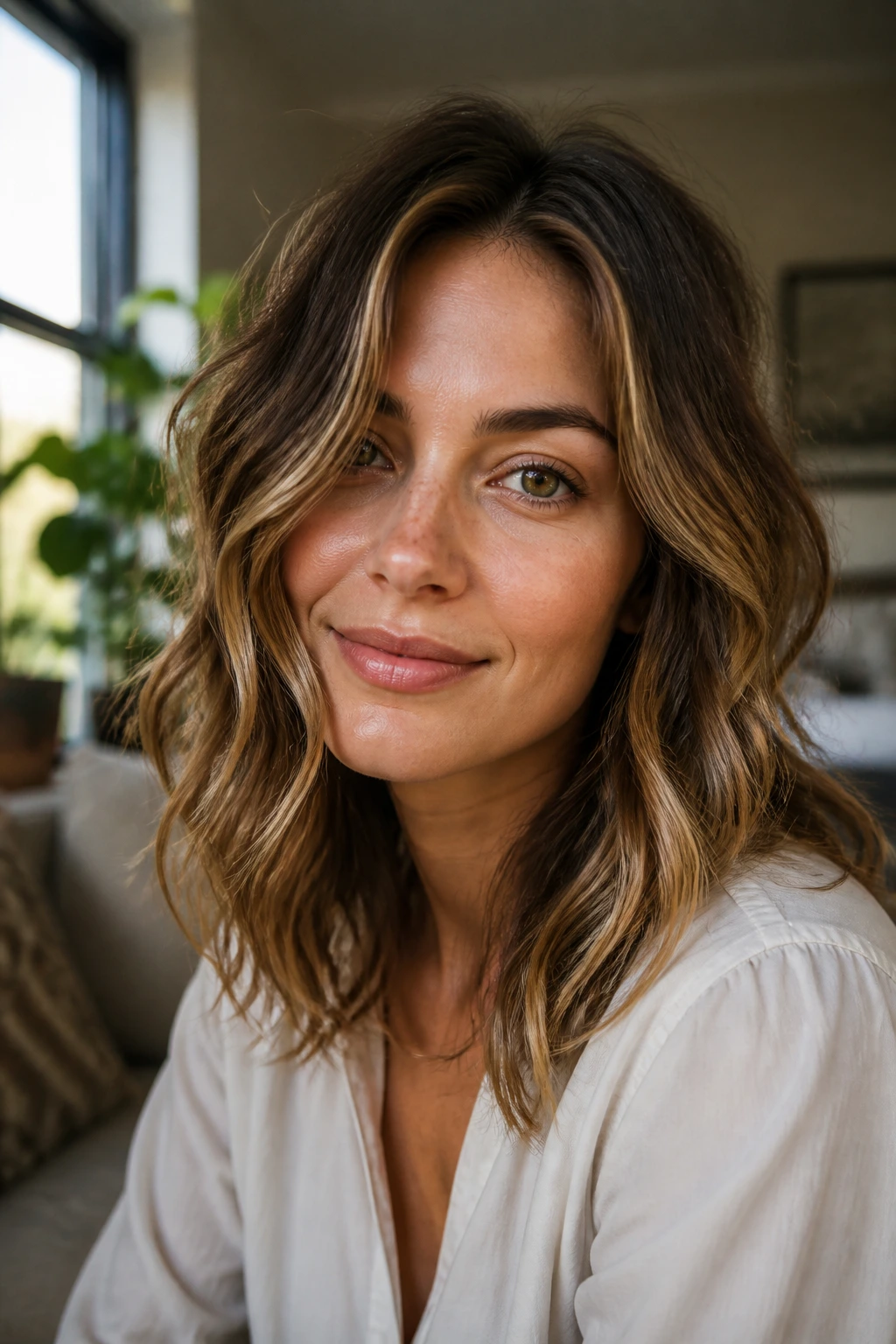
A heart-shaped face usually has a wider forehead, prominent cheekbones, and a narrower chin. Beach waves are good at changing the visual weight of a face because they don’t create one solid outline. They break it up. That matters more than people think.
On medium hair, the wave has enough length to sit under the cheekbones without dragging past the jaw in a heavy curtain. That’s the part that makes this length so useful. Shorter hair can feel too floaty. Longer hair can lose the shape. Medium hair lands in the middle, which means the bend can live where it helps most.
The styles that win here usually do one of three things: move the part off-center, frame the forehead with softness, or add texture below the cheekbones. When all three happen at once, the face looks balanced without looking like you tried to redraw it.
And yes, some versions can look a little too full at the crown if you’re not careful. That’s the catch. Put the body too high and the face starts feeling wider up top. Keep the movement lower, and the whole thing settles into place.
Essential Tools for Medium-Hair Beach Waves
-
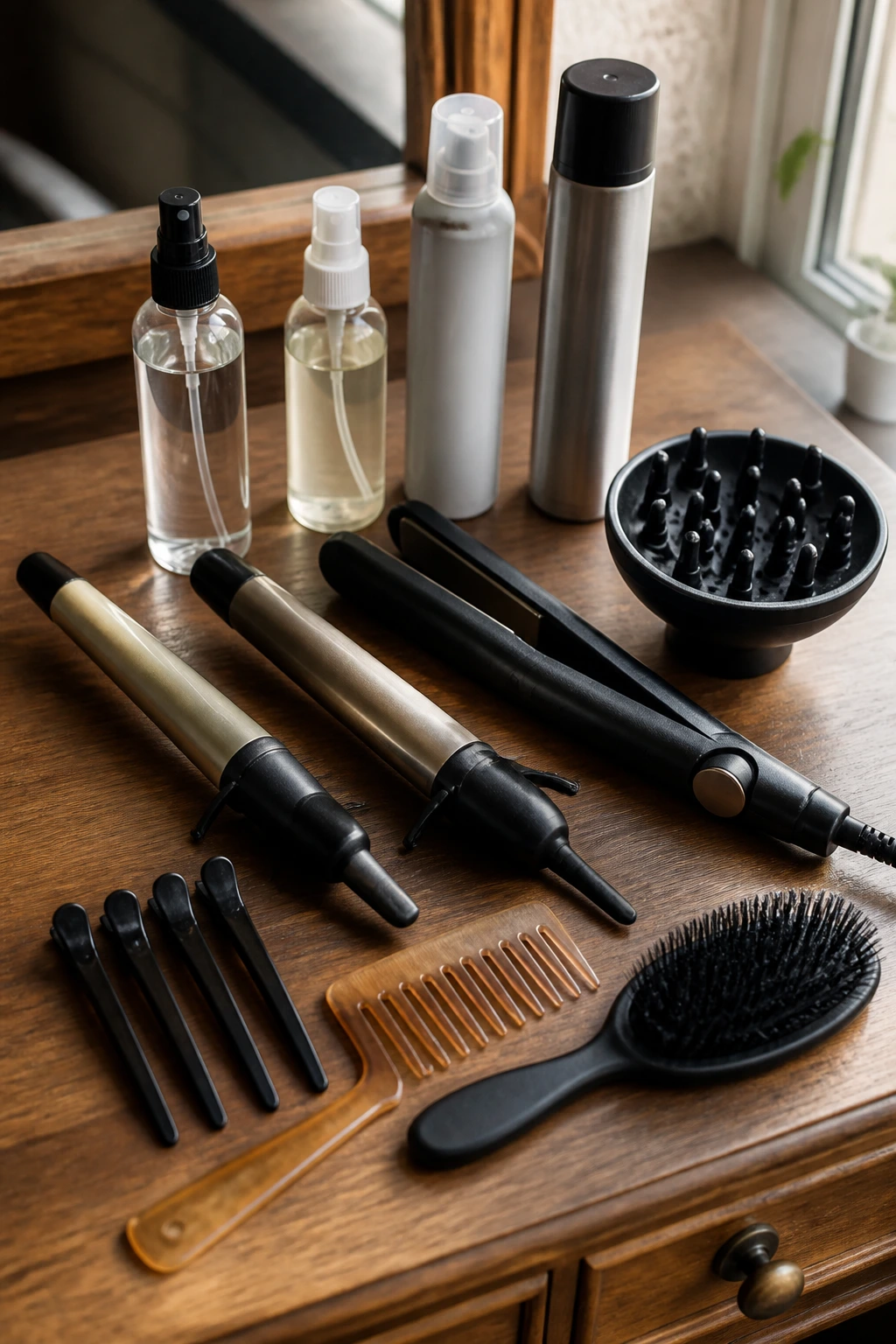
1-inch curling wand: Best for classic beach waves and softer bends; it gives medium hair enough shape without making the curls too tight.
-
1.25-inch curling wand or iron: Use this when you want looser, brushed-out waves that sit well on the collarbone.
-
Flat iron with smooth plates: Ideal for S-bends, subtle flip-outs, and wave styles where straight ends matter.
-
Heat protectant spray: Choose one that sprays evenly and dries fast so the hair doesn’t feel damp before styling.
-
Sea salt spray or texture spray: Good for air-dried, tousled, or braided waves, especially if the hair tends to fall flat.
-
Light mousse or root lift foam: Helps fine or slippery medium hair keep some grip at the roots.
-
Sectioning clips: Four to six clips make a big difference. They keep the top layers out of the way while you work.
-
Wide-tooth comb and soft brush: The comb separates waves without wrecking them; the brush is for the brushed-out looks only after the hair cools.
-
Flexible-hold hairspray: You want hold without shellacked ends. If the spray locks the hair into place like plastic, skip it.
-
Diffuser attachment: Useful for fine hair, frizz-prone hair, or any air-dry style that needs more shape near the root.
Choosing the Right Products for Soft, Bendable Waves
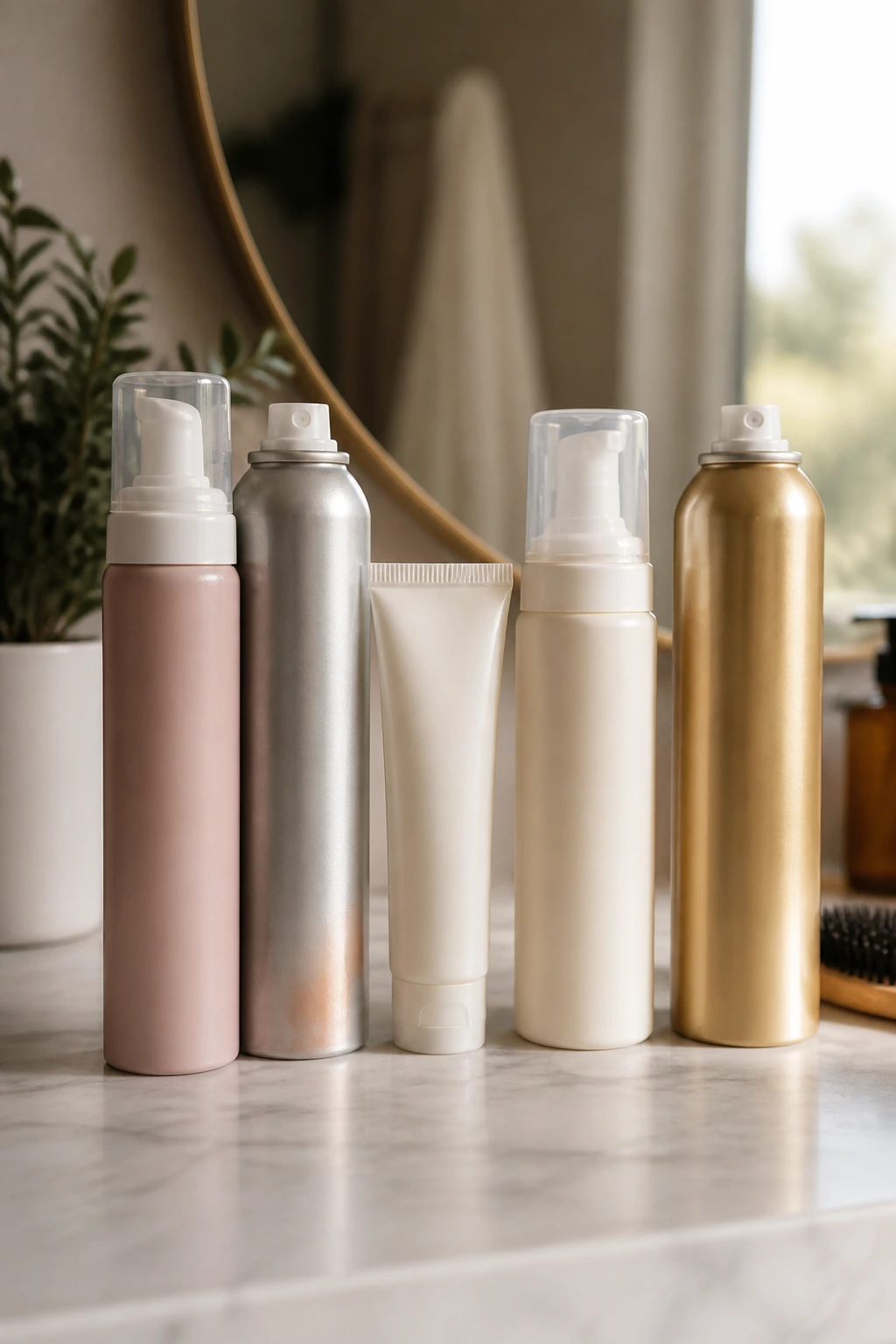
Product choice matters more on medium hair than people expect. The same hair can look airy, puffy, or limp depending on whether you started with a mousse, a salt spray, or a cream. If the hair is fine, reach for lightweight volume first and texture second. A root mousse plus a dry texture spray usually gives more control than one heavy beach spray that makes the ends stick together.
Thicker hair needs slip. A cream-based protectant, a medium-hold mousse, and a flexible hairspray will usually behave better than a pile of gritty products. Thick strands already bring their own weight, so you don’t need to bully them into shape. You need to persuade them.
Color-treated or dry hair needs the most care around the ends. I’d use a heat protectant with a little smoothing slip, then keep salt sprays away from the driest sections unless the look is meant to be rough. Salt can be useful. It can also make hair feel like straw if you overdo it.
If you only buy one finishing product, make it a flexible-hold spray. That’s the piece that keeps the wave touchable instead of frozen. For heart-shaped faces, touchable is better. Stiff hair exaggerates angles; soft hair blurs them.
How to Wear These Waves on a Heart-Shaped Face
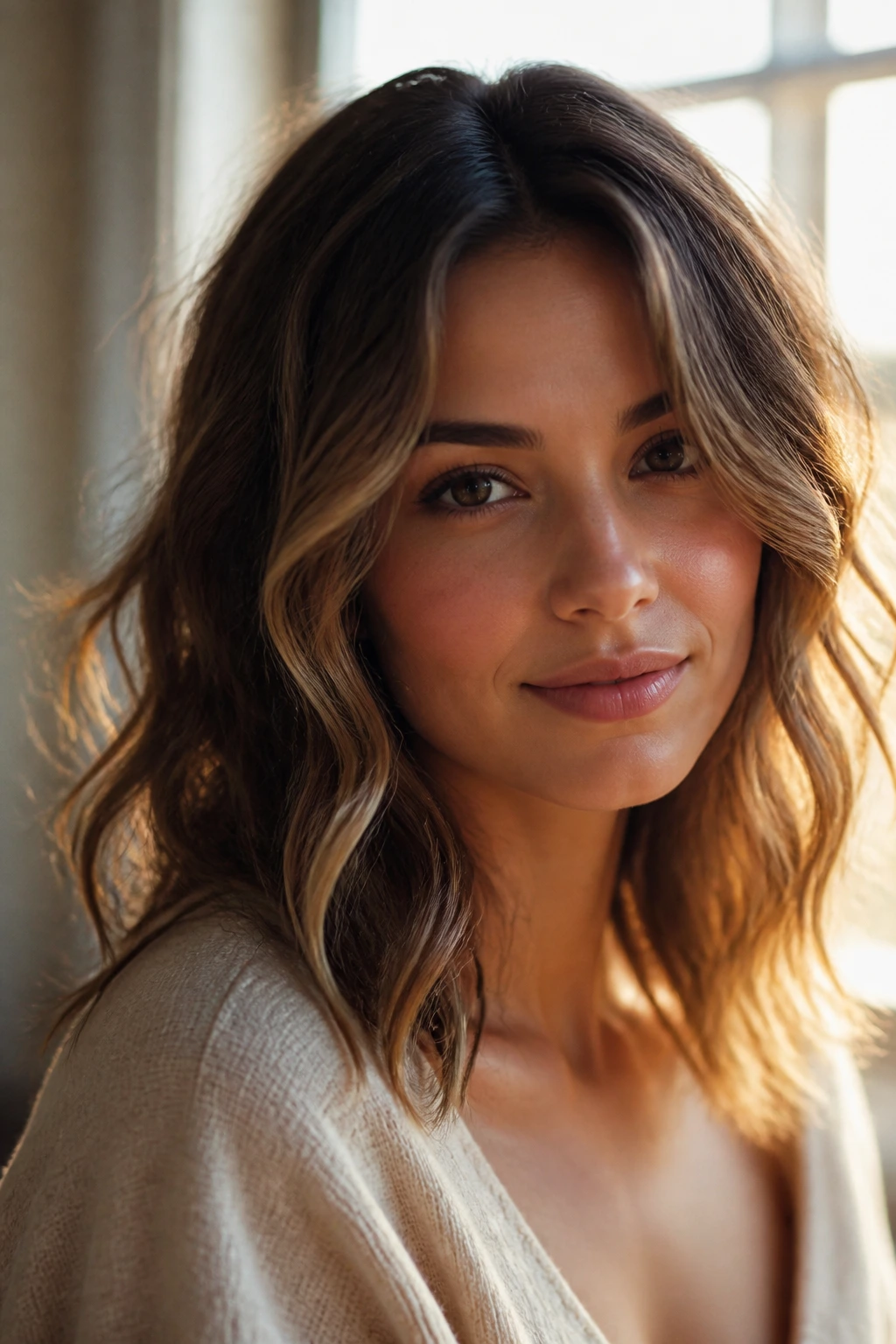
Face-Framing: Keep the shortest pieces around the cheekbone, lip line, or just below the jaw. Those are the points that soften a wider forehead and stop the style from getting top-heavy.
Parting: A soft side part or off-center part is the easiest way to calm the upper half of the face. A center part can still work, but only if the front pieces are loose enough to bend around the face instead of hanging flat.
Volume Placement: Put the lift in the crown only when the sides stay calm. If the temples puff out, the face can read wider where it already has width. Shift the body lower and the silhouette gets friendlier.
Outfit Pairings: Open necklines, scoop necks, v-necks, and simple collars all work well because they leave room for the wave to fall naturally. High necklines can still work, but they need softer front pieces so the hair doesn’t disappear into the fabric.
Extra Polish and Texture Boosters
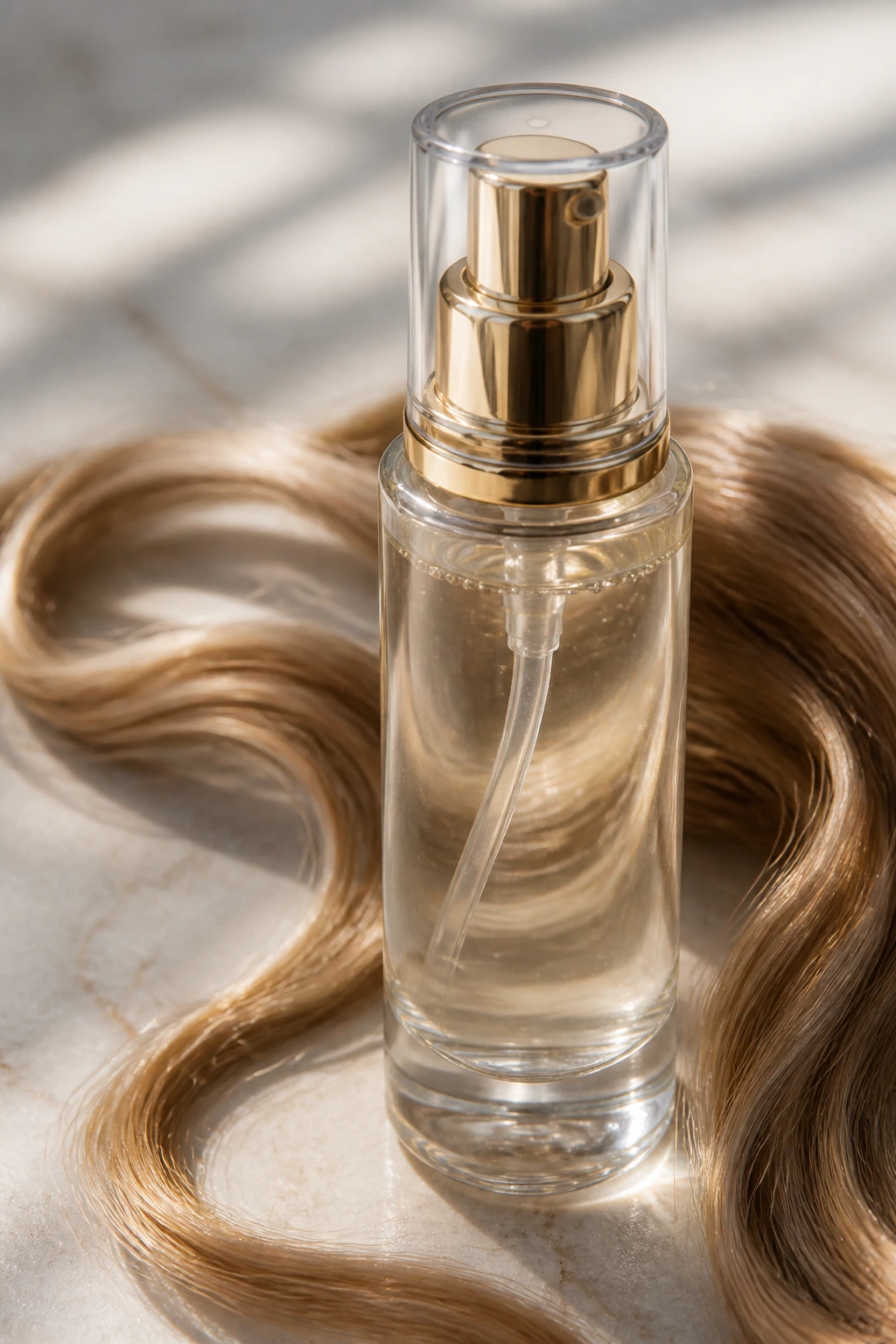
Texture Enhancement: Alternate the curl direction as you work through the head, then leave the first and last sections near the face a little looser. That breaks up the pattern and keeps the style from looking too uniform.
Time-Saver: Set the top half in clips while you style the bottom half. Medium hair cools faster than long hair, and that cooling time is what helps the wave last.
Shine Control: Use one drop of serum on the ends only. Not two. Not a palmful. Just enough to tame frizz without flattening the movement.
Make-It-Yours: If you want more polish, brush the waves once they’re cool. If you want more grit, scrunch them and stop touching them. The difference is tiny in steps and big in result.
Keeping Beach Waves Fresh Between Washes
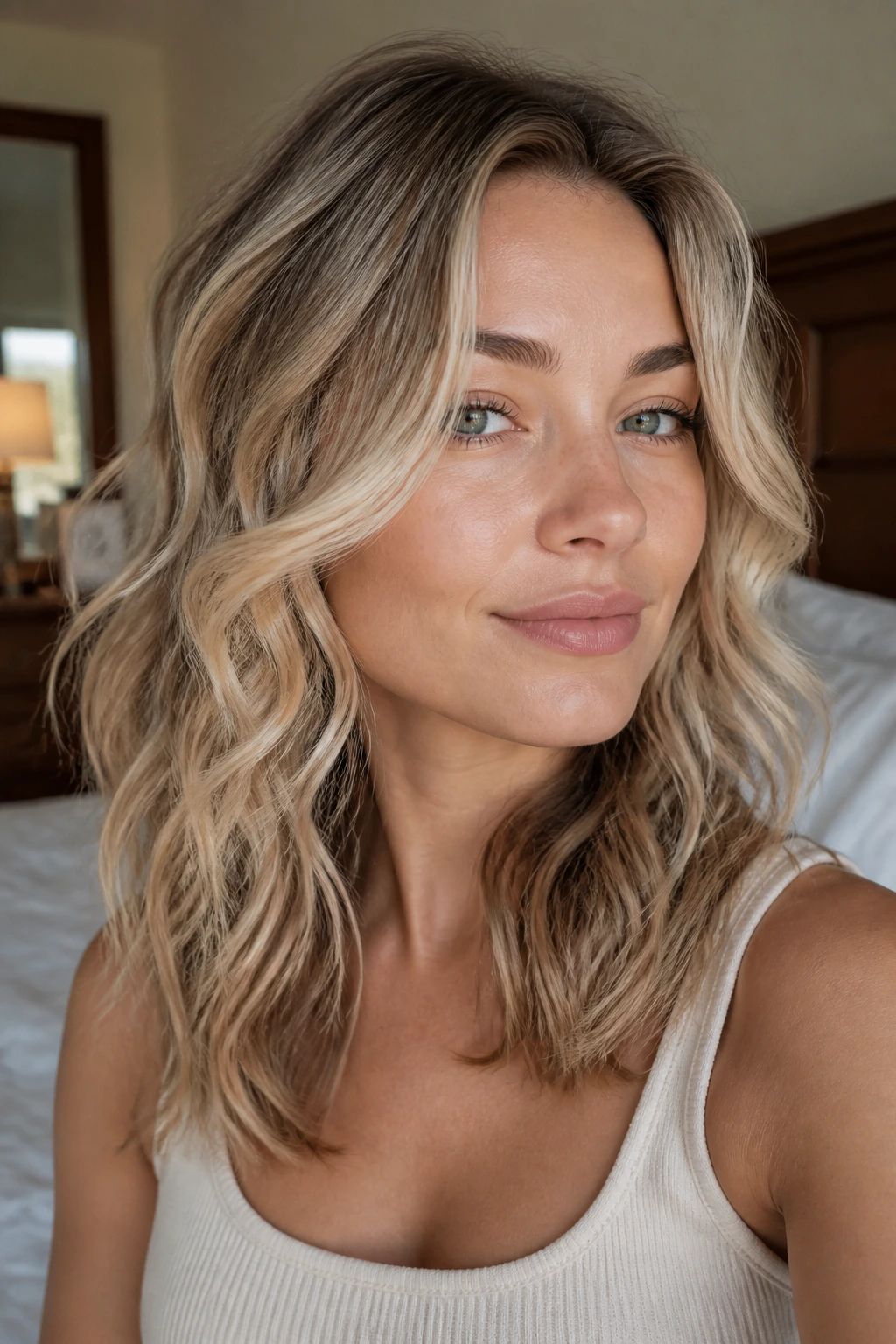
Beach waves on medium hair usually look best on day one or day two, when the hair has enough grip to hold shape. On a heart-shaped face, that second-day softness can be useful because the wave relaxes a little and falls closer to the jaw. The trick is keeping the roots from getting greasy while the mid-lengths keep their bend.
Before bed, either gather the hair into a loose pineapple on the top of the head or twist it into a very soft topknot. Use a silk or satin pillowcase if you have one. It cuts down on friction, and that means fewer frizzy pieces around the temples in the morning.
In the morning, refresh the roots with dry shampoo from about 8 to 10 inches away. Let it sit for a minute, then massage it in. If the front pieces have gone flat, re-bend only those sections with a wand for 20 to 30 seconds each. You do not need to restyle the entire head.
After two to three days, most medium hair starts to lose the shape around the face, especially if it’s fine. At that point, either reset the style from damp hair or wash and start over. There’s no prize for stretching it to the point where the ends look dusty.
Variations and Adaptations to Try
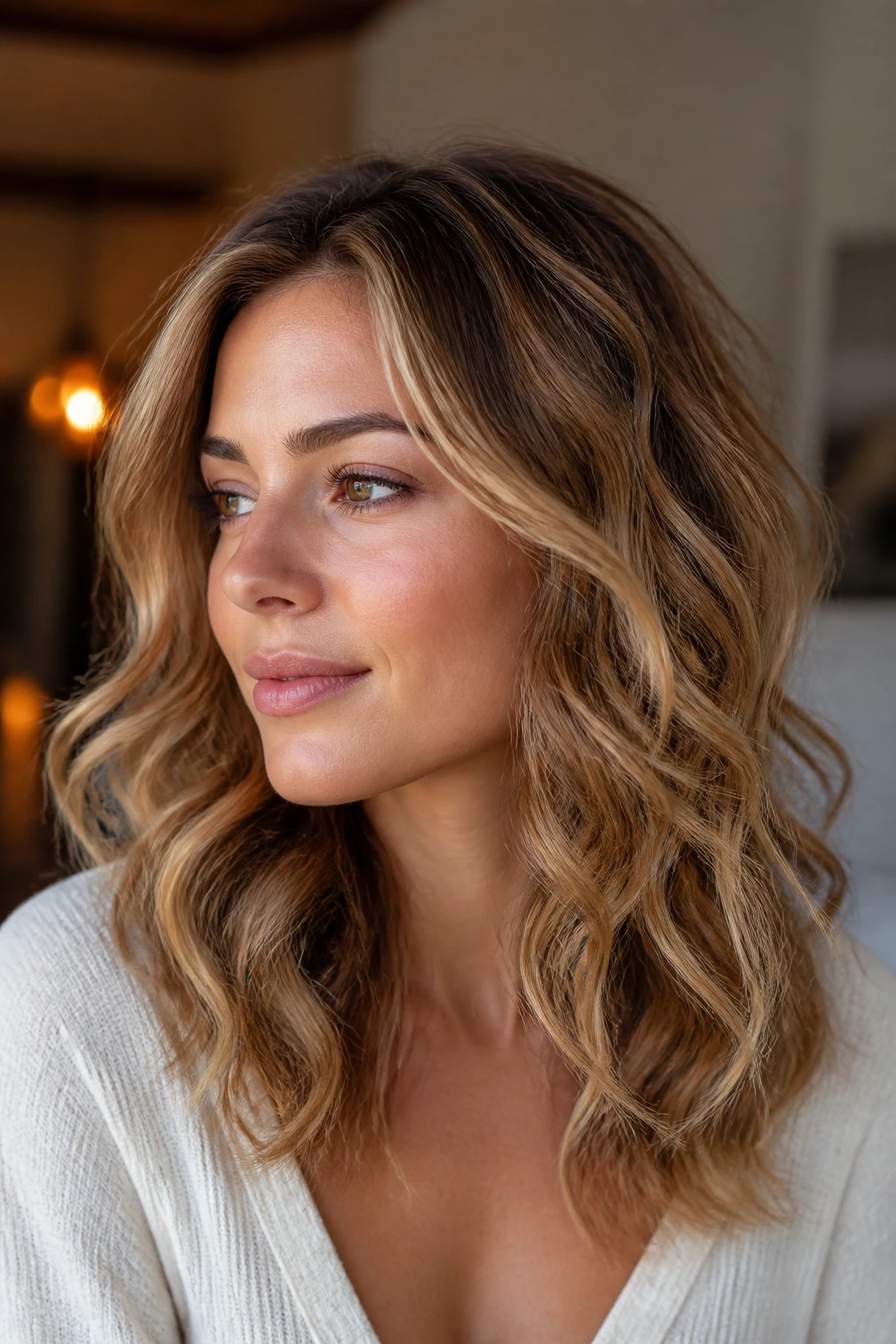
Heat-Free Salt-Wave Set: Skip the hot tools and braid damp hair into two or three loose sections before bed. It’s the cleanest option when you want texture without heat damage, and it works best on hair that already has a little wave.
Humidity-Ready Waves: Use a smoothing cream under your texture spray and finish with a stronger flexible-hold hairspray. This version keeps the front from puffing when the air gets sticky.
Fine-Hair Lift Waves: Start with mousse at the roots, blow-dry upside down, then use a small wand only on the mids. Fine hair needs air and grip, not heavy curl.
Thick-Hair Airy Waves: Remove bulk through layering and keep the wave size large. The goal is movement, not mass.
Glossy Evening Waves: Brush the waves out completely and finish with a shine mist. This is the most dressed-up version here, and it looks best with a side part.
Low-Key Office Waves: Keep the bend soft, keep the part clean, and let the front pieces sit closer to the face. It reads neat without turning formal.
Common Mistakes to Avoid
-
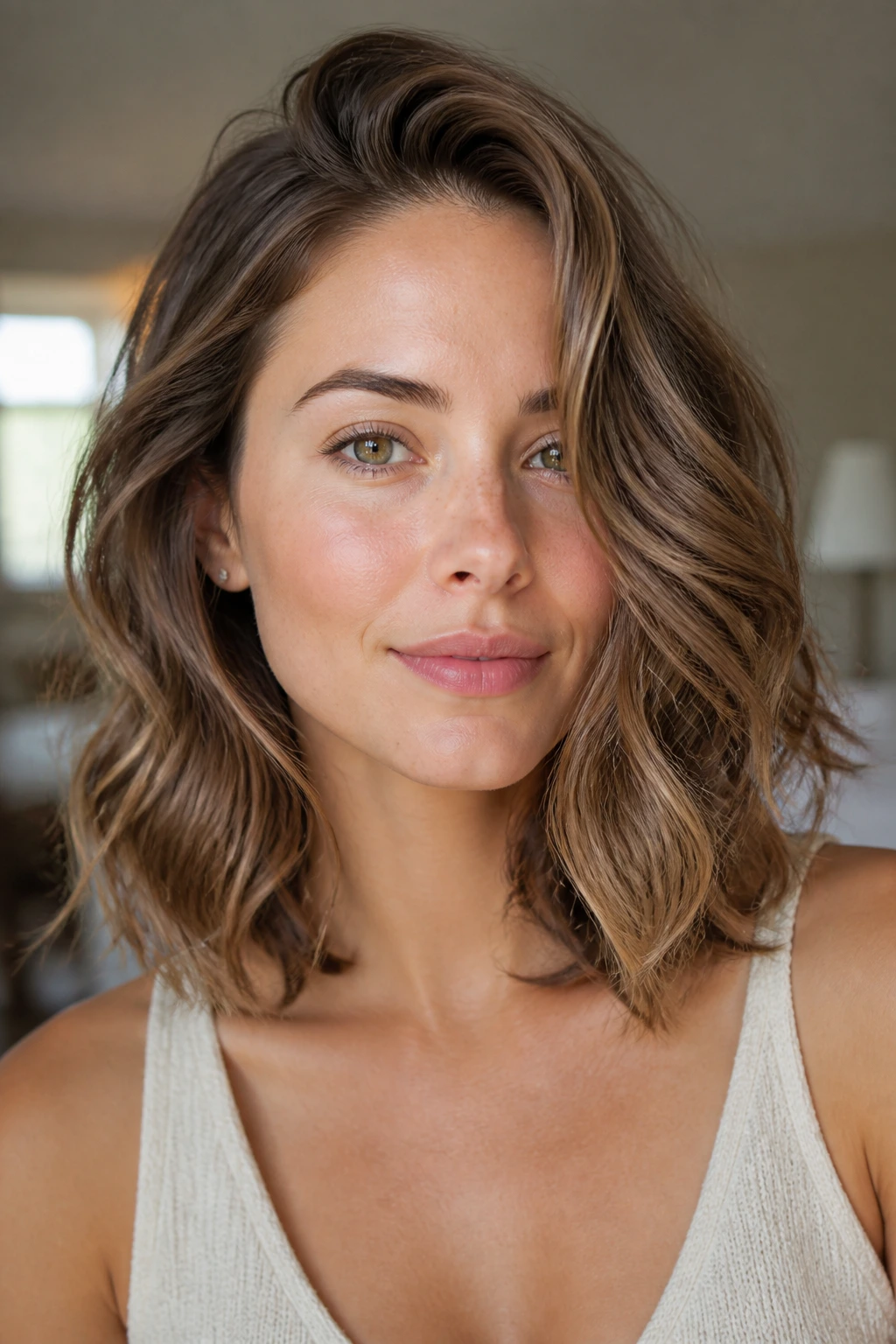
Curling too high at the temples: The style starts to balloon around the top of the face. Move the bend lower, closer to the cheekbone or jaw.
-
Making every wave the same direction: That creates one giant pattern and can make medium hair look stiff. Alternate directions for a looser result.
-
Using too much salt spray: The texture gets rough and the ends look thirsty. Start with less than you think you need.
-
Brushing before the hair cools: The wave falls apart fast and frizz creeps in. Let the sections cool all the way down first.
-
Leaving the ends too curled: The style turns round instead of airy. Keep the tips straighter for a cleaner outline.
-
Loading product near the forehead: That flattens the face-framing pieces and makes the style look heavy. Keep creams and oils below the cheekbone line.
Frequently Asked Questions
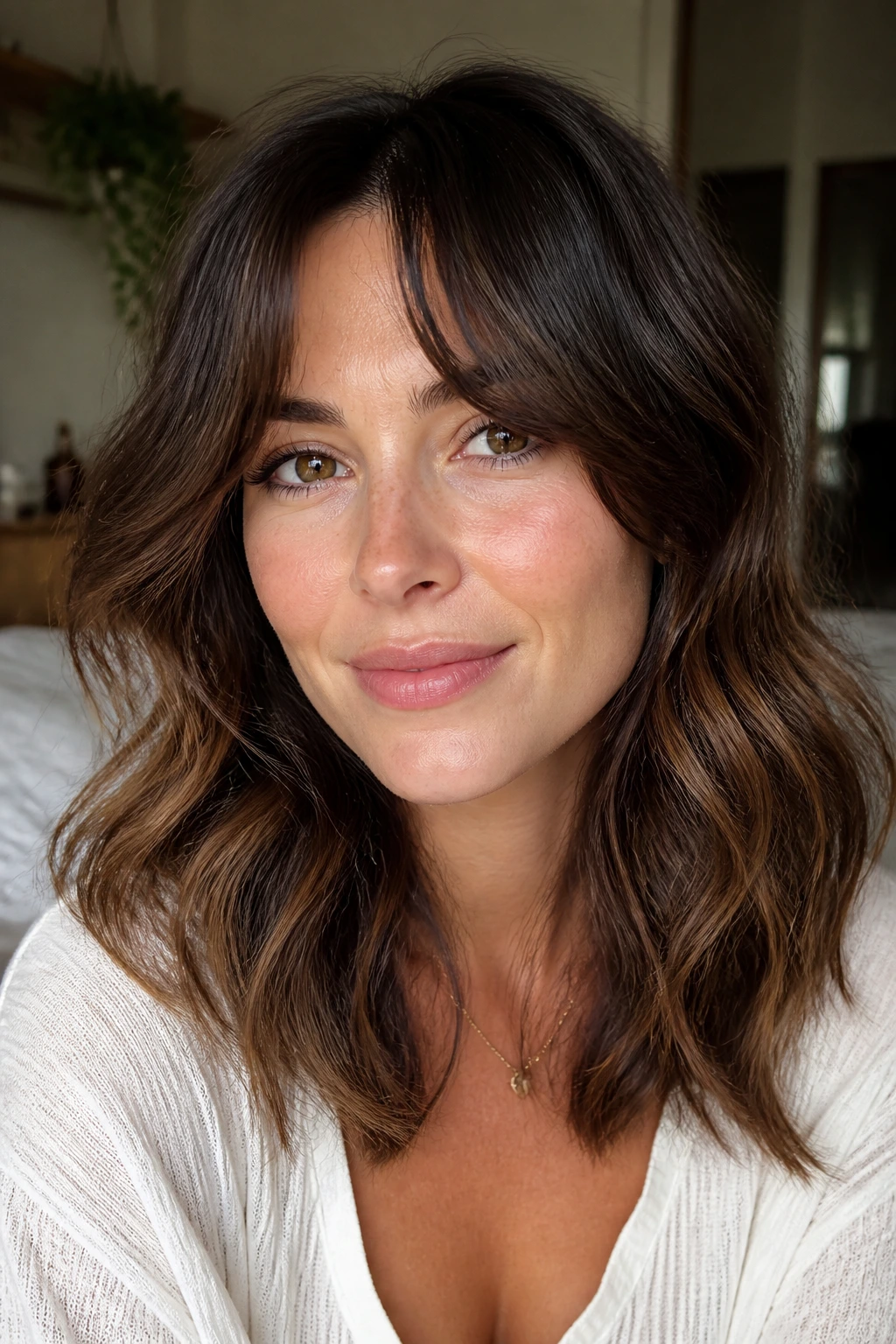
Are beach waves flattering on a heart-shaped face?
Yes, when the wave is placed with some care. The best versions soften the forehead, build a little width around the cheekbones or jaw, and avoid a lot of volume right at the temples.
What part works best for a heart-shaped face?
A soft side part or off-center part is usually the easiest win. A center part can still work if the front pieces are long and the wave starts lower on the face.
Should medium hair be layered for beach waves?
A little layering helps, especially through the front and mids. Too many short layers can make the hair puff outward, so ask for movement rather than a chopped-up shape.
Can I do these styles without heat?
Yes. Loose braids, twists, salt sprays, and overnight sets all give workable texture. The result is softer and less controlled, which some people prefer.
How do I keep the top from going flat?
Use mousse or root spray before styling, then clip the crown while the hair cools. That cooldown step matters more than another blast of hairspray.
What if my hair is fine and waves fall out fast?
Start with less conditioner at the roots, use mousse before drying, and make the waves a little tighter than you want them to end up. Fine hair drops fast, so you have to leave some room for the wave to relax.
What if my hair is thick and the waves look bulky?
Add weight removal through layers or thinning at the ends, then use a larger barrel and less product. Thick hair needs shape control, not more texture piled on top.
Can I wear beach waves to a formal event?
Absolutely. Brush them out, add shine, and choose a cleaner part. The same basic wave can look casual or dressed up depending on how polished the finish is.
A Shape That Stays Soft
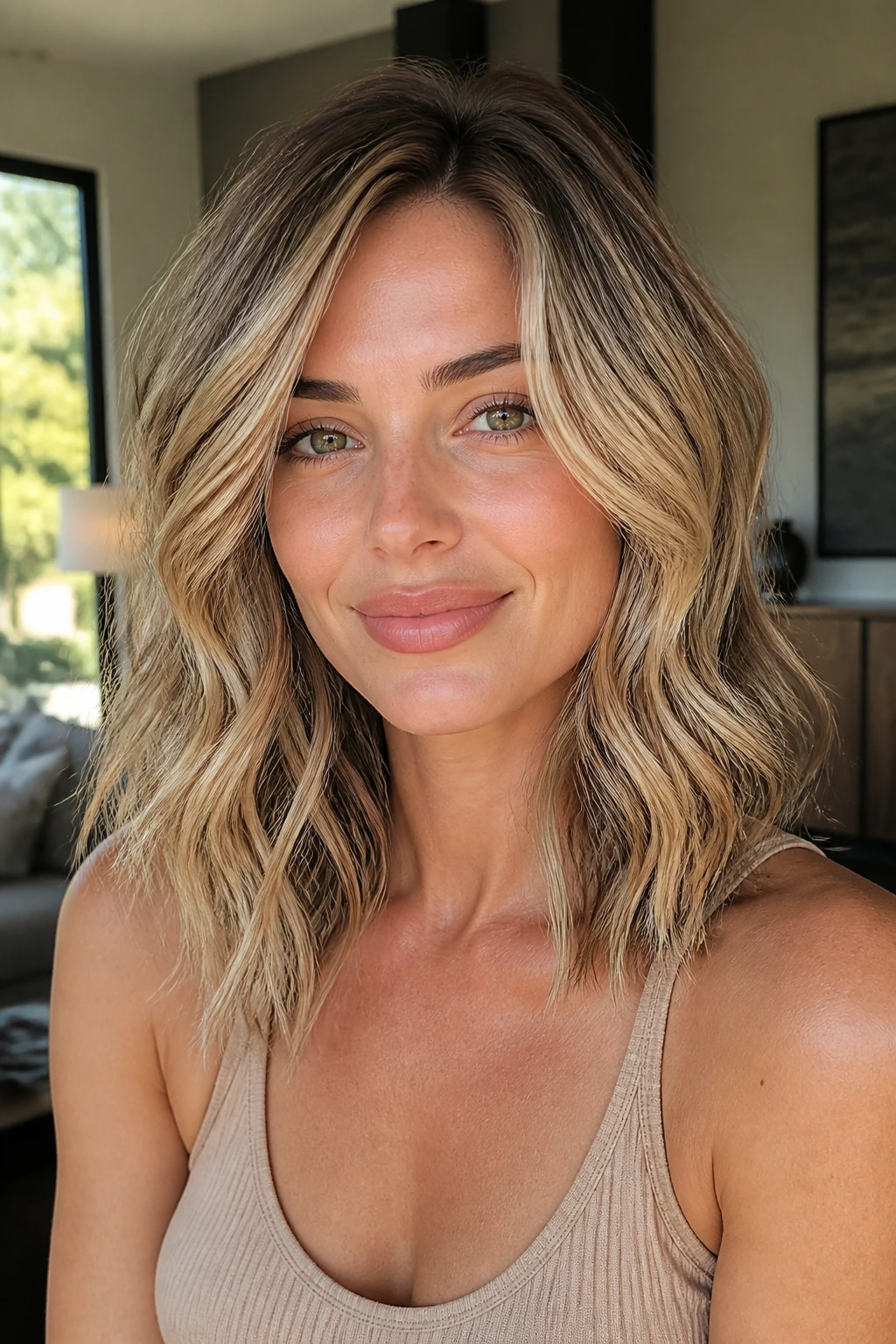
The best part of these looks is that they don’t fight the face shape. They work with it. Medium hair gives the wave enough body to settle in the right places, and a heart-shaped face gives you built-in angles that look better when the wave softens them a little instead of covering them.
If you remember one thing, keep it simple: put the movement lower, keep the crown calm, and let the front pieces do the framing. That three-part rule is why some waves look flattering while others just look big.
Start with the version that matches your texture, not the one that looks best on a mannequin head. The right one will show itself fast.