



The fastest way to make blonde brown highlights for deep skin tones look flat is to chase the lightest blonde on the swatch ring. Depth matters. So does warmth.
On deep skin, the shine has to sit somewhere. Honey, caramel, beige, bronze, and smoky champagne all land differently, and the difference shows up most when the hair moves — in curls, in a silk press, in braids, even in a ponytail with a few face-framing pieces falling loose.
A naked stripe of pale blonde can look disconnected against rich brown hair. Put that same brightness inside a brown melt, leave a shadow root, and suddenly the color feels deliberate instead of loud.
Some of the looks below are soft enough to fool people into thinking the light just hit your hair a certain way. Others go bolder with a money piece or chunky slice. Both can work. The trick is choosing the shade family and placement that suit your undertone, your texture, and how much maintenance you’re willing to live with.
Why These Shades Work So Well on Deep Skin
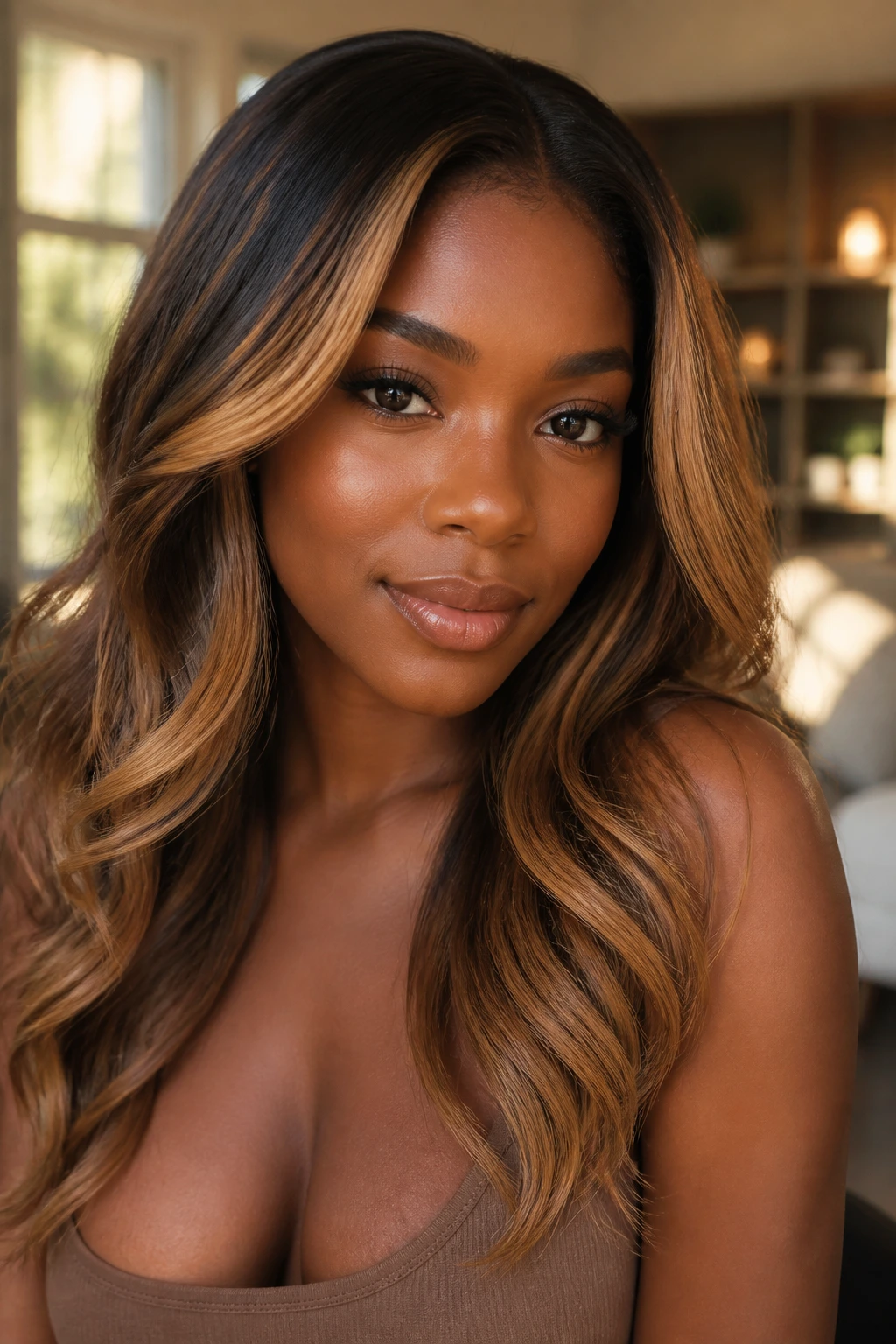
- Warm light lands softly: Honey, caramel, butterscotch, and bronze bounce off deeper complexions in a way that reads glossy instead of chalky.
- Depth at the root keeps the color anchored: Leaving 1-2 levels of darkness near the scalp stops the blonde from looking pasted on.
- Placement controls the mood: A narrow face frame changes the whole look faster than scattered pieces, while a halo or balayage stays softer.
- Texture changes the finish: Curls and coils blur color in a flattering way; straight styles show every line, so the placement has to be cleaner.
- Maintenance can be reasonable: Shadow roots, glosses, and babylights keep the regrowth line from turning into a hard stripe.
How to Read Undertone Before You Pick a Shade
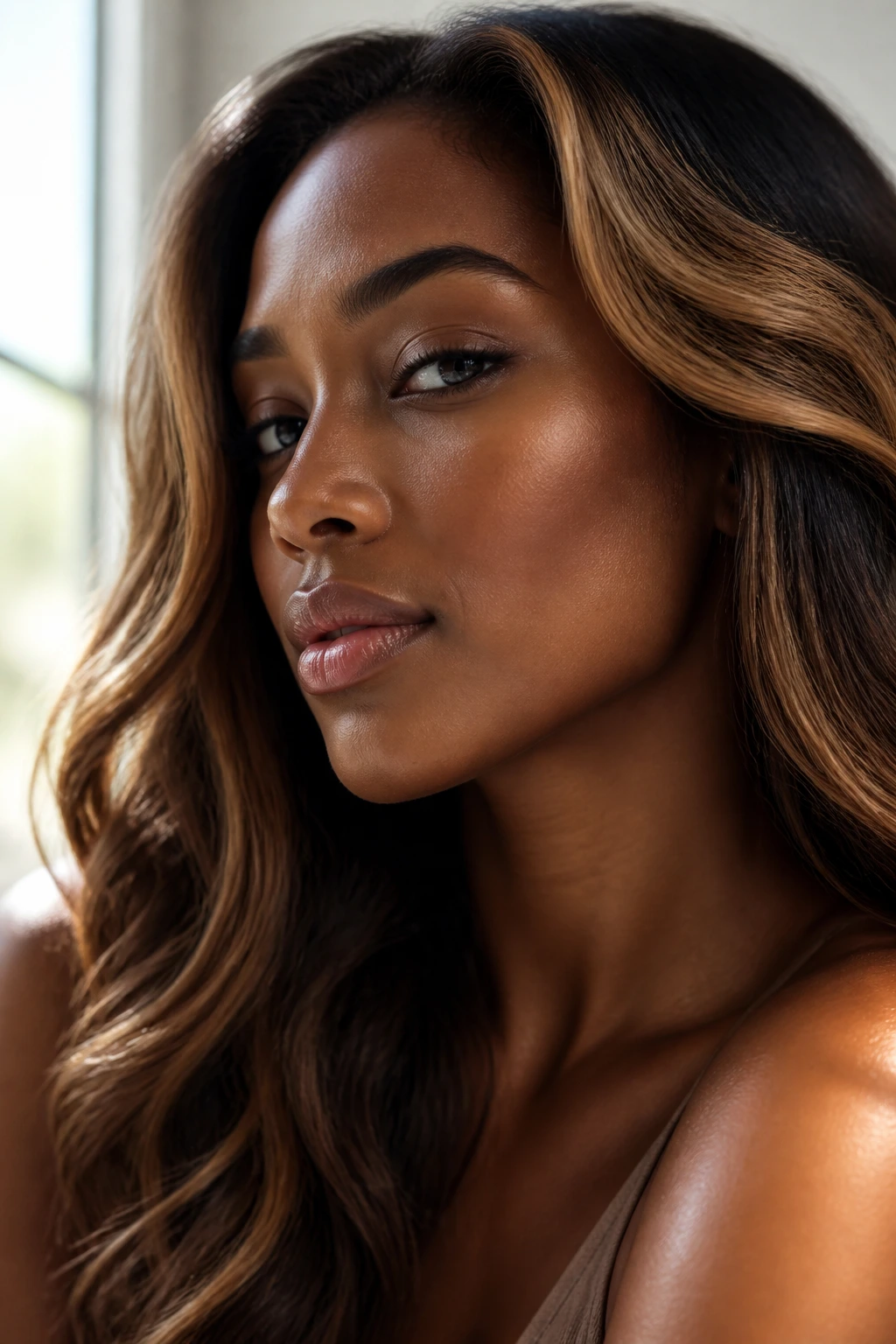
Deep skin is not one note. Some complexions lean golden, some pull olive, some have a red-brown warmth, and some sit cool with a blue or neutral cast. That matters more than people like to admit, because the same blonde can look buttery on one person and a little dusty on another.
If gold jewelry makes your skin look alive, caramel, honey, and butterscotch usually sit in the sweet spot. If silver still feels easy on you, beige blonde, mushroom bronde, and smoky champagne can read cleaner. In a mirror, in daylight, look at the way the light sits on your cheek and jaw. That’s the clue.
Hair texture matters too. Tight curls and coils blur color in a way that softens the contrast, so you can sometimes go a touch brighter without the highlight looking harsh. Straight hair shows the line of every foil or painted section, which means the width of the highlight and the distance from the root need more care.
One more thing. Don’t choose a shade only because the photo is pretty. A gorgeous blonde on a pale base can lie to you if the undertone is wrong. The same formula on deep skin usually looks better when it keeps a brown backbone and only lifts where the eye naturally falls.
1. Honey Veil Balayage
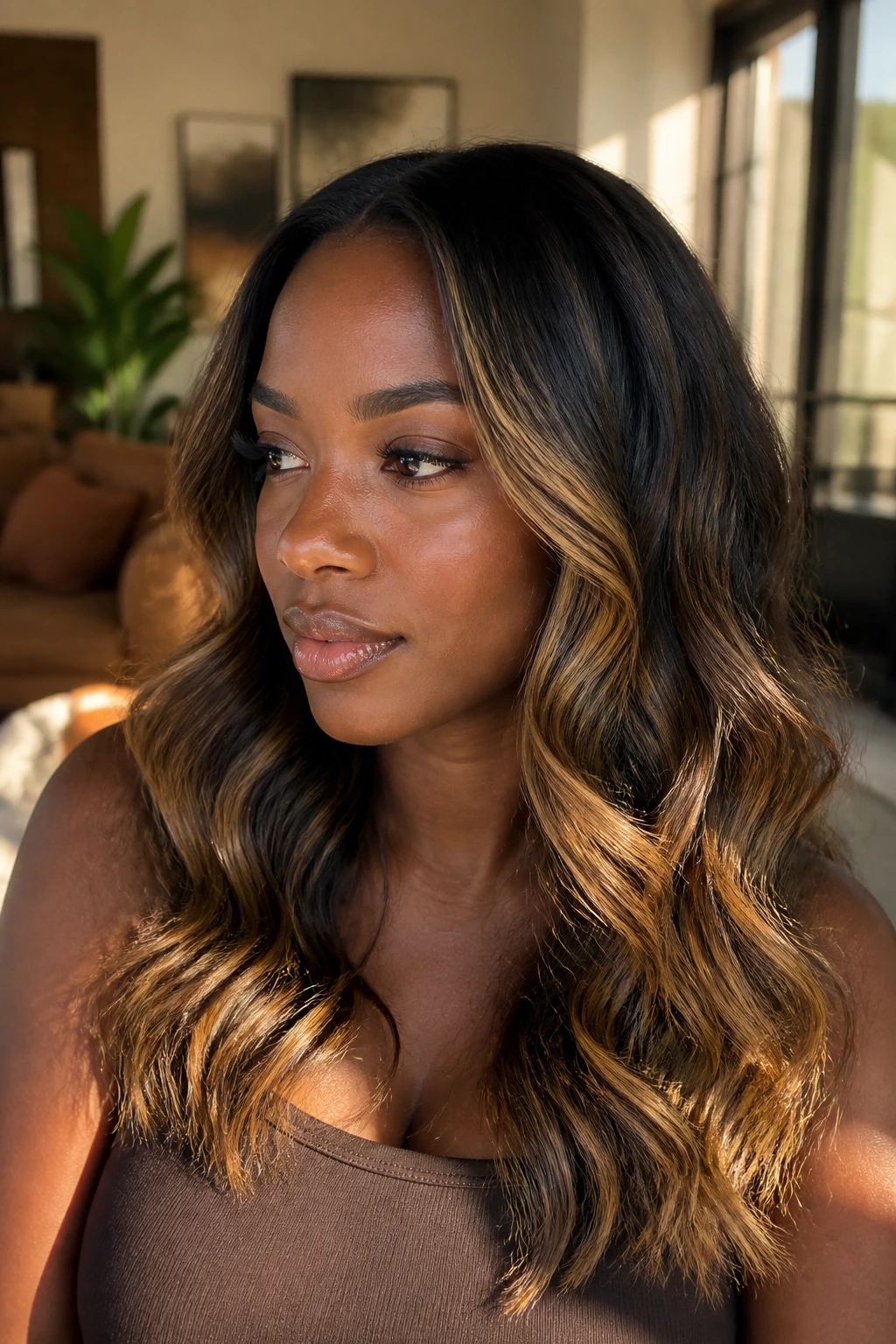
Honey Veil Balayage is the kind of color that looks like sunlight found your hair on its own. The warm blonde stays soft, the brown base stays present, and the blend gives deep skin a gentle glow instead of a hard contrast line. It’s especially nice on curls and waves, where each bend catches a different slice of color.
Why It Works on Deep Skin
The honey tone sits in the warm lane, so it reflects gold instead of white. That matters. White-leaning blonde can look stark on deeper complexions, while honey keeps the whole thing rich and glossy.
- Base depth: Best on level 3-5 brunette hair.
- Highlight tone: Ask for level 7 honey with a beige glaze.
- Placement: Painted through mid-lengths and ends, not packed at the root.
- Best texture: Loose curls, twist-outs, layered waves.
- Touch-up window: About 8-10 weeks if the shadow root is kept soft.
Pro tip: Keep the ends slightly deeper than the mids. That small choice makes the balayage read dimensional instead of washed out.
2. Caramel Ribbon Lights
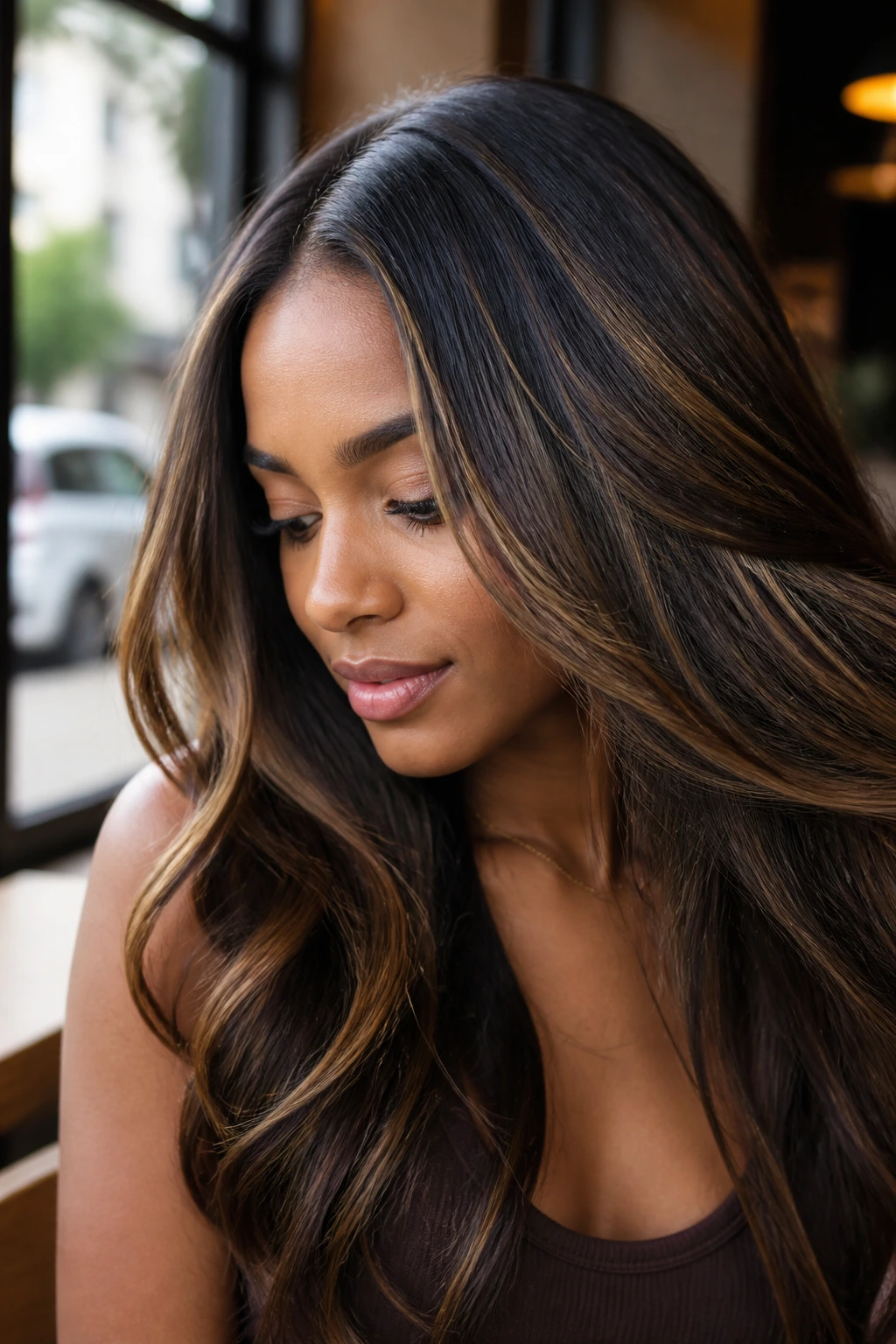
Not every blonde needs to shout. Caramel Ribbon Lights work because they move through the hair in slim, deliberate streaks, almost like threads woven into dark fabric. On deep skin, that narrow width keeps the color from taking over the whole head.
The look is especially good if your hair has long layers or a lot of movement. The ribbons show when the hair sways, then disappear into the base when it rests. That little shift is the whole point. It feels easier than a full blonde transformation, and it usually grows out with less drama.
3. Toasted Almond Face Frame
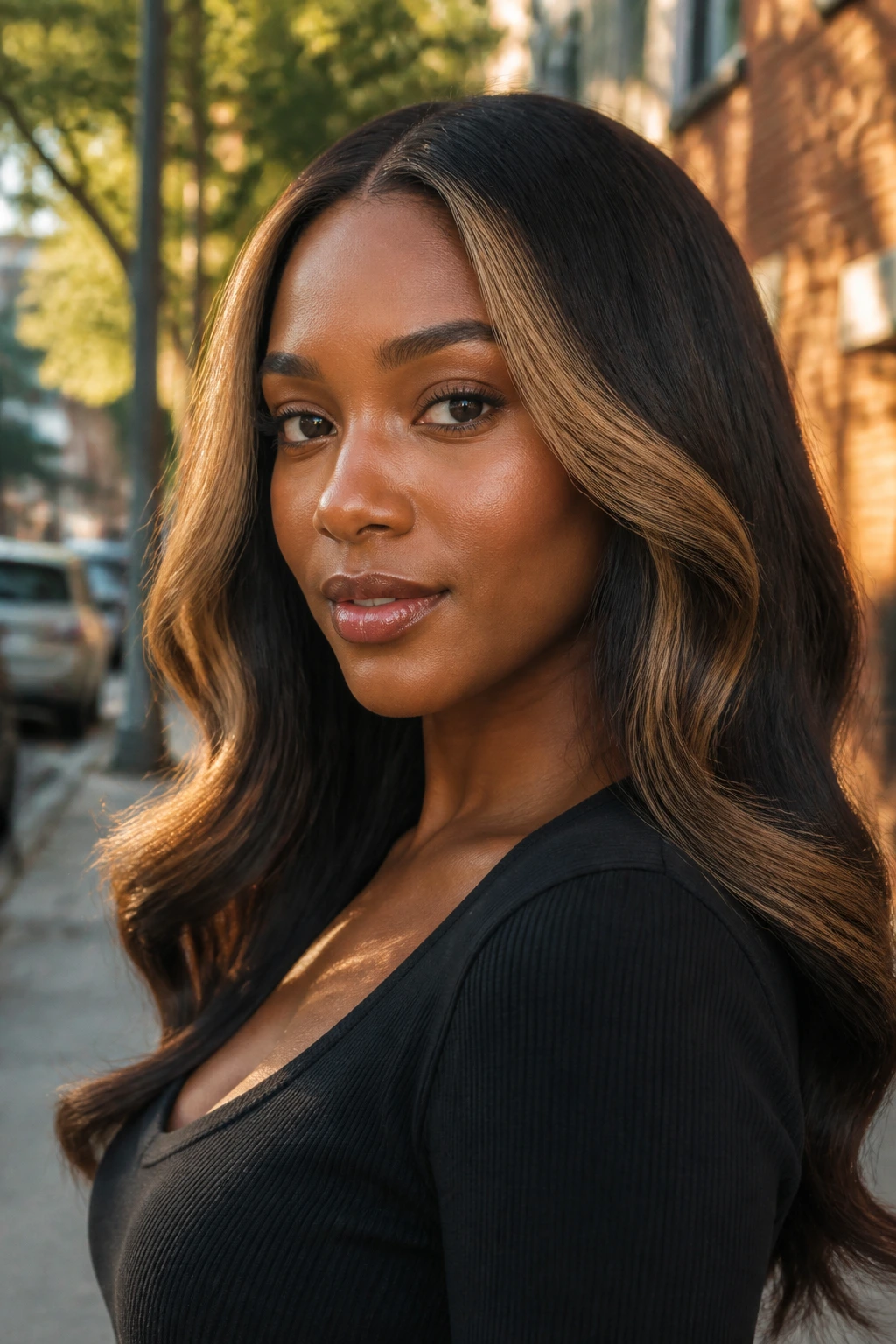
What if you want brightness without lighting up your whole head? Toasted Almond Face Frame is the answer I keep coming back to. A few almond-beige pieces around the temples, cheekbones, and front layers can wake up deep skin fast, especially if the rest of the hair stays brown and glossy.
Best Placement
Keep the lightest part close to the face and soften the blend as it moves backward. If the front pieces are too chunky, they can look like separate panels. If they’re too thin, the effect disappears the second you tuck your hair behind your ears.
This one flatters round, oval, and heart-shaped faces because it opens the front without flattening the rest of the color story. It also plays nicely with side parts and curtain bangs. If you wear glasses, even better — the warm almond edge can sit right around the frame and make the whole look feel intentional.
4. Cocoa-to-Honey Color Melt
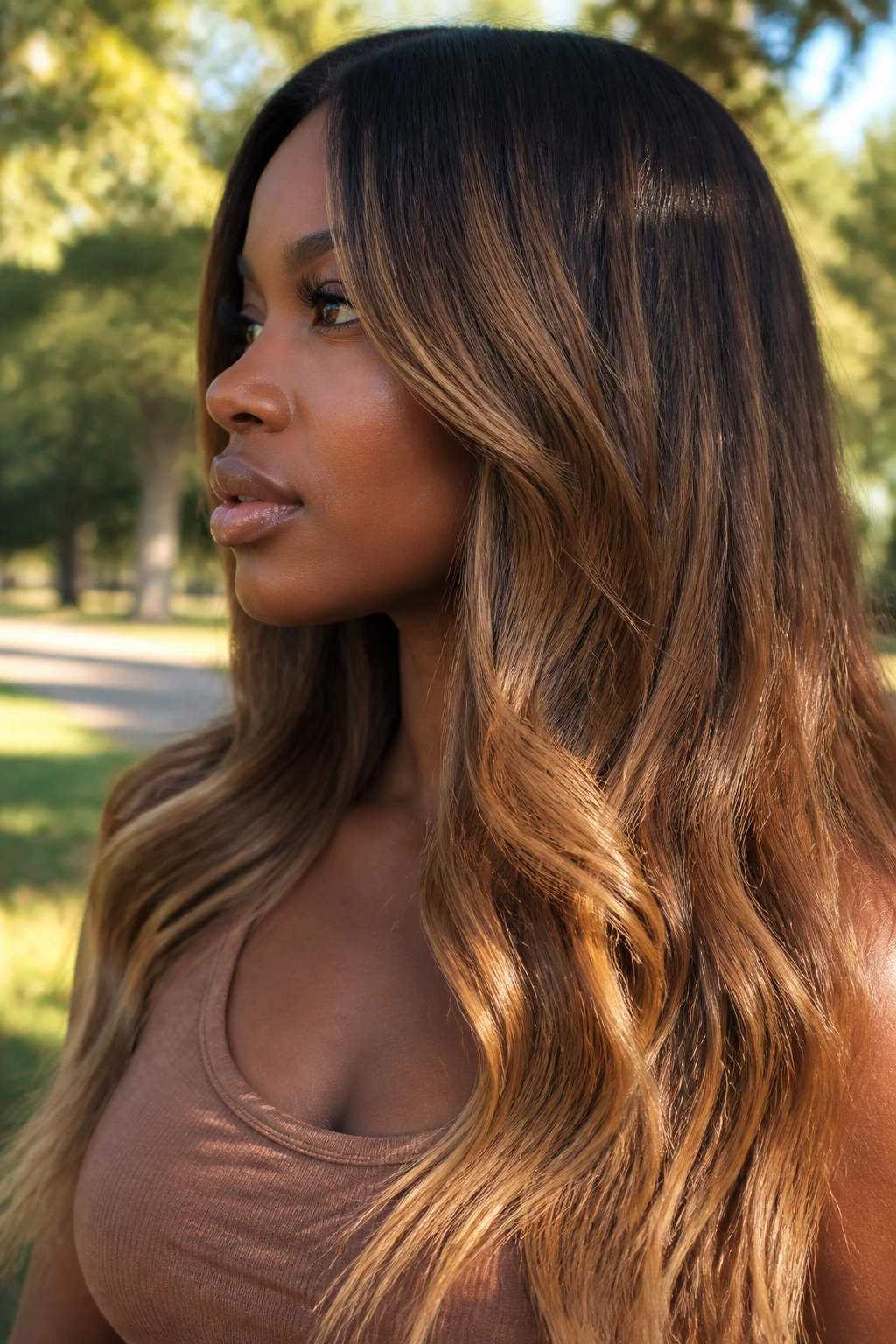
A good color melt does one job very well: it hides the seam between dark and light. Cocoa-to-Honey is built for that. The roots stay deep, the mids turn warm brown, and the ends drift into honey-blonde so gradually that your eye doesn’t catch a line anywhere.
What to Ask For
- Root shadow: Keep the top close to your natural base.
- Mid-length lift: Lift the middle sections one to two levels lighter.
- End brightness: Let the ends reach a soft honey-blonde.
- Gloss: Finish with a warm beige or gold glaze.
- Maintenance: Refresh with a gloss every 6-8 weeks.
This is a smart choice if you wear your hair up a lot. A bun or low ponytail still shows the gradient, which is half the charm. And if your hair is thick, the melt keeps it from looking heavy at the bottom.
5. Bronze Bronde Babylights
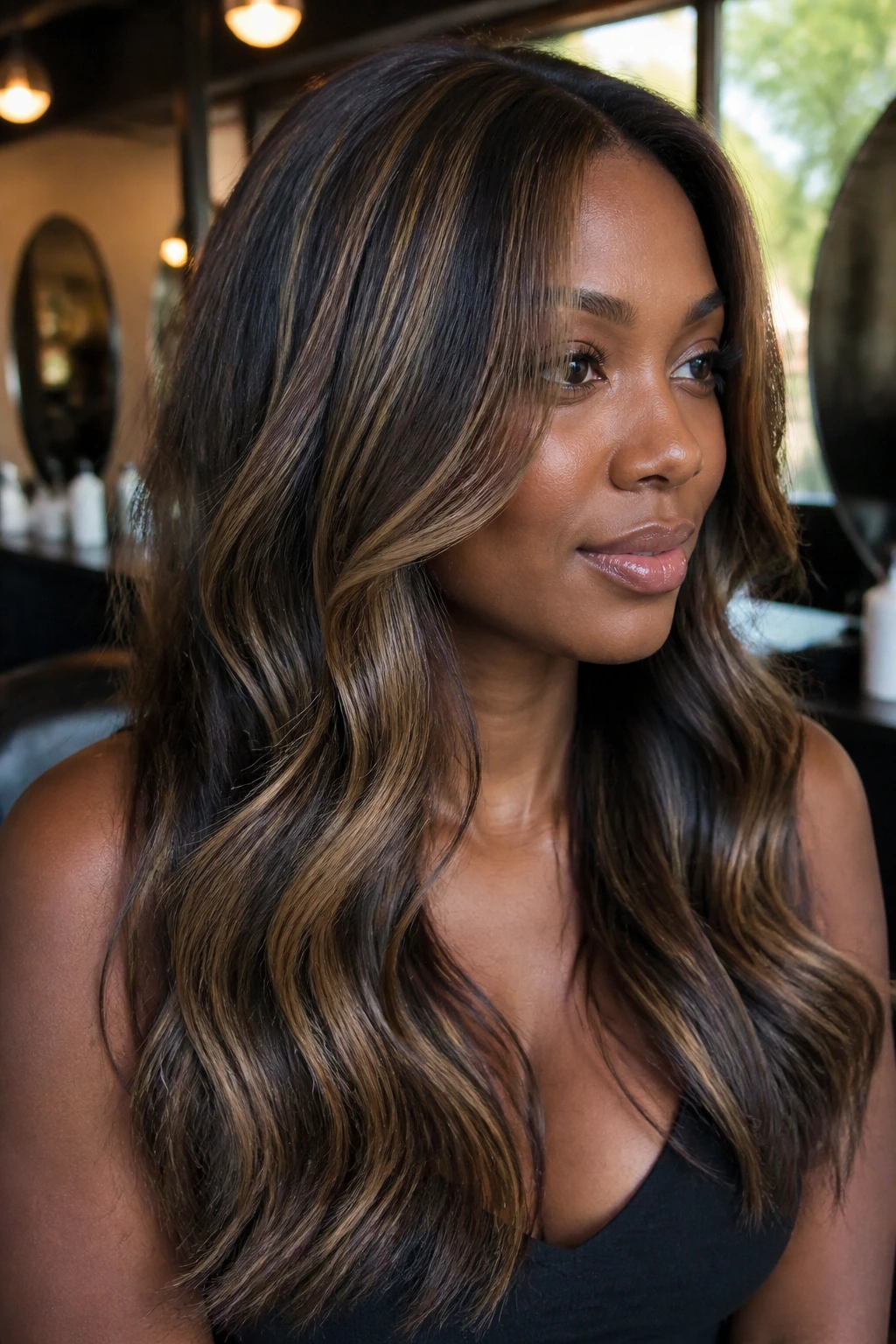
Bronze Bronde Babylights are for people who want dimension before they want drama. The highlights are so fine they look more like shimmer than streaks, and the bronze tone keeps them from reading pale against deep skin. On dense hair, that kind of tiny weaving matters. Big pieces can disappear inside the bulk; babylights catch light from the surface without fighting the base.
This is one of the better choices if you’re nervous about color that looks stripey. It’s subtle on purpose. The payoff shows up in motion, where the hair picks up a soft bronze sheen that sits somewhere between brunette and blonde.
6. Butterscotch Money Piece
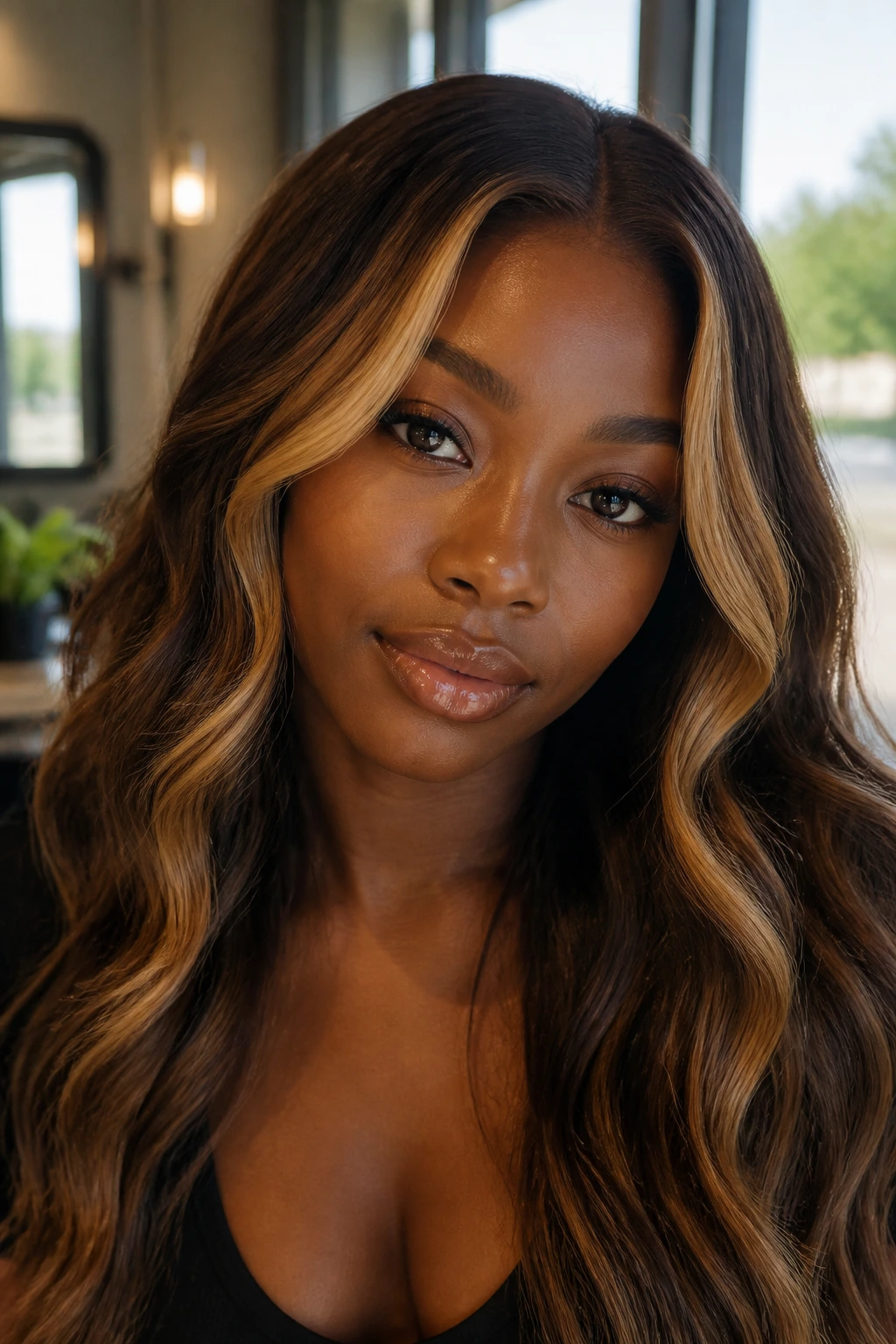
A bold front piece can work beautifully on deep skin when the tone is right. Butterscotch Money Piece is exactly that: a warm, golden-blonde strip around the hairline, with the rest of the hair left brown enough to keep the contrast grounded. The result is bright around the face without bleaching the whole head into submission.
It looks especially good with a high ponytail, a half-up style, or big side sweeps. The money piece shows first, which is the point. If you want the front to pop, ask your colorist for a piece that starts soft at the root, gets brighter near the cheekbone, and doesn’t widen so much that it swallows the haircut.
7. Espresso and Champagne Slices
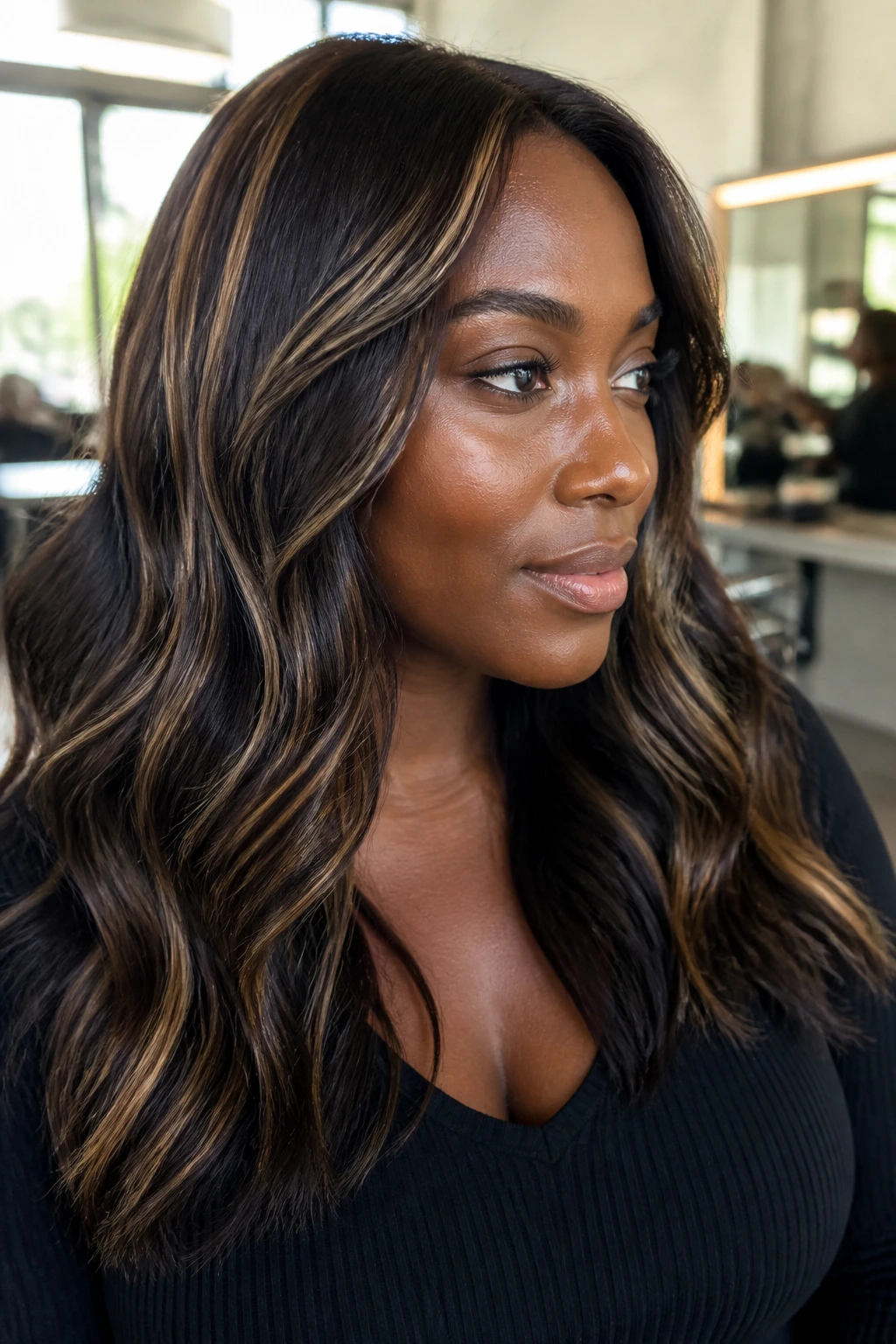
Can champagne blonde work on deep skin? Yes — but only if it isn’t bullying the rest of the hair. Espresso and Champagne Slices keep the slices thin, cool enough to read champagne, and tucked into a darker espresso base. The contrast is there, but it never turns harsh.
How to Wear It
Wear this with loose waves if you want the slices to scatter light through the top layer. Wear it straight if you want a cleaner, sharper line. Either way, ask for the champagne pieces to stay slightly rooted so they don’t float on top like disconnected strips.
This is the kind of look that rewards precision. A few perfectly placed slices do more than a full head of medium-light blonde.
8. Golden Chestnut Halo
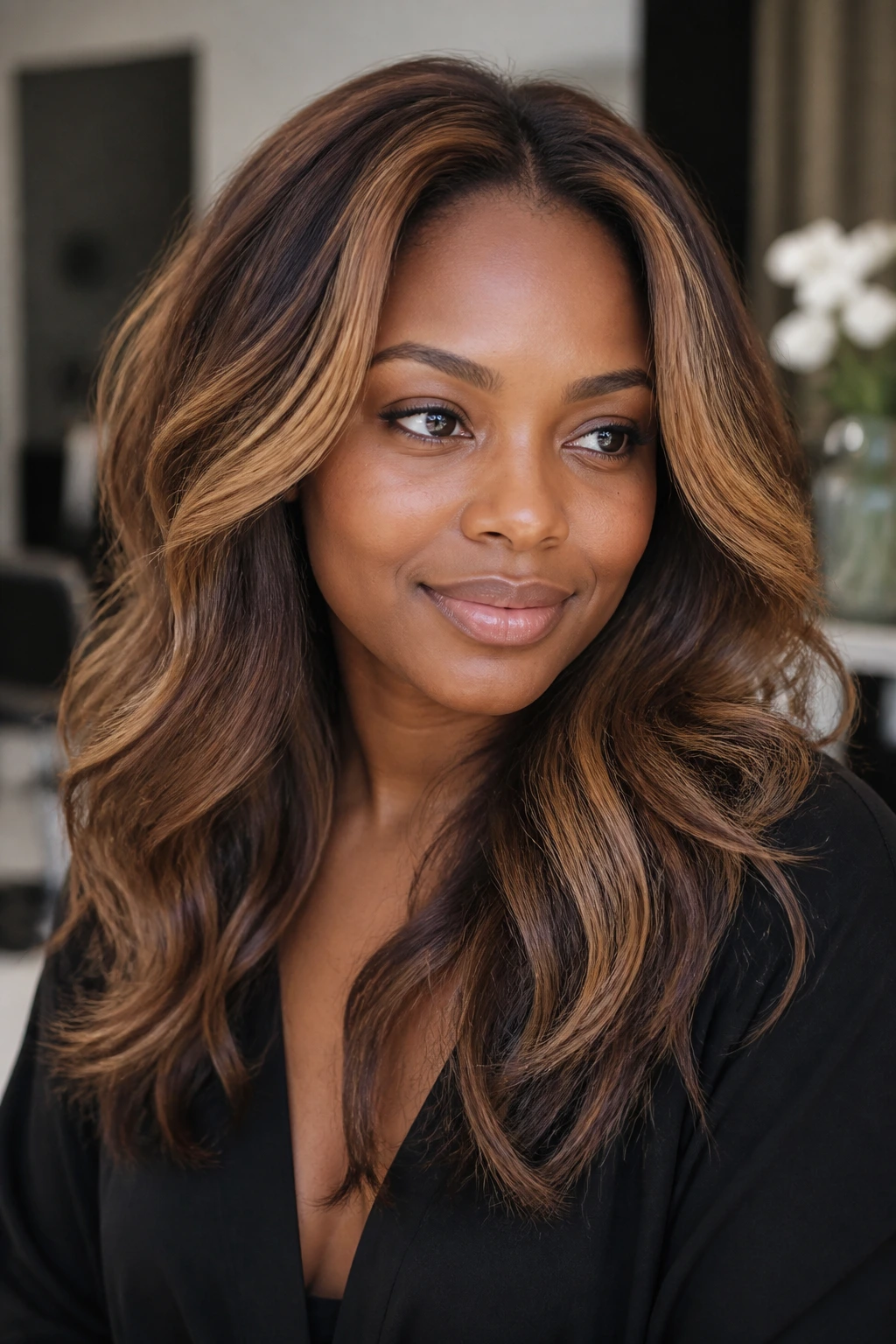
A halo placement is one of my favorite tricks for deep skin because it changes the whole mood without loading the entire head with light. Golden Chestnut Halo keeps the brightness around the crown, perimeter, and outer curves of the hair, so when you turn your head, the color flashes like it’s been sitting there all along.
- Crown focus: Brighten the top first if you wear your hair down often.
- Perimeter glow: Add a few pieces around the edges so the outline doesn’t disappear.
- Texture fit: Works especially well on curls, coils, and voluminous blowouts.
- Face effect: Opens the face without relying on a heavy money piece.
- Best upkeep: Fresh gloss every 6-8 weeks keeps the gold from turning flat.
The halo idea is sneaky in a good way. It gives you brightness where the eye goes first, and it leaves the rest of the hair to do its deeper, richer job.
9. Sandy Bronde Mid-Length Sweep
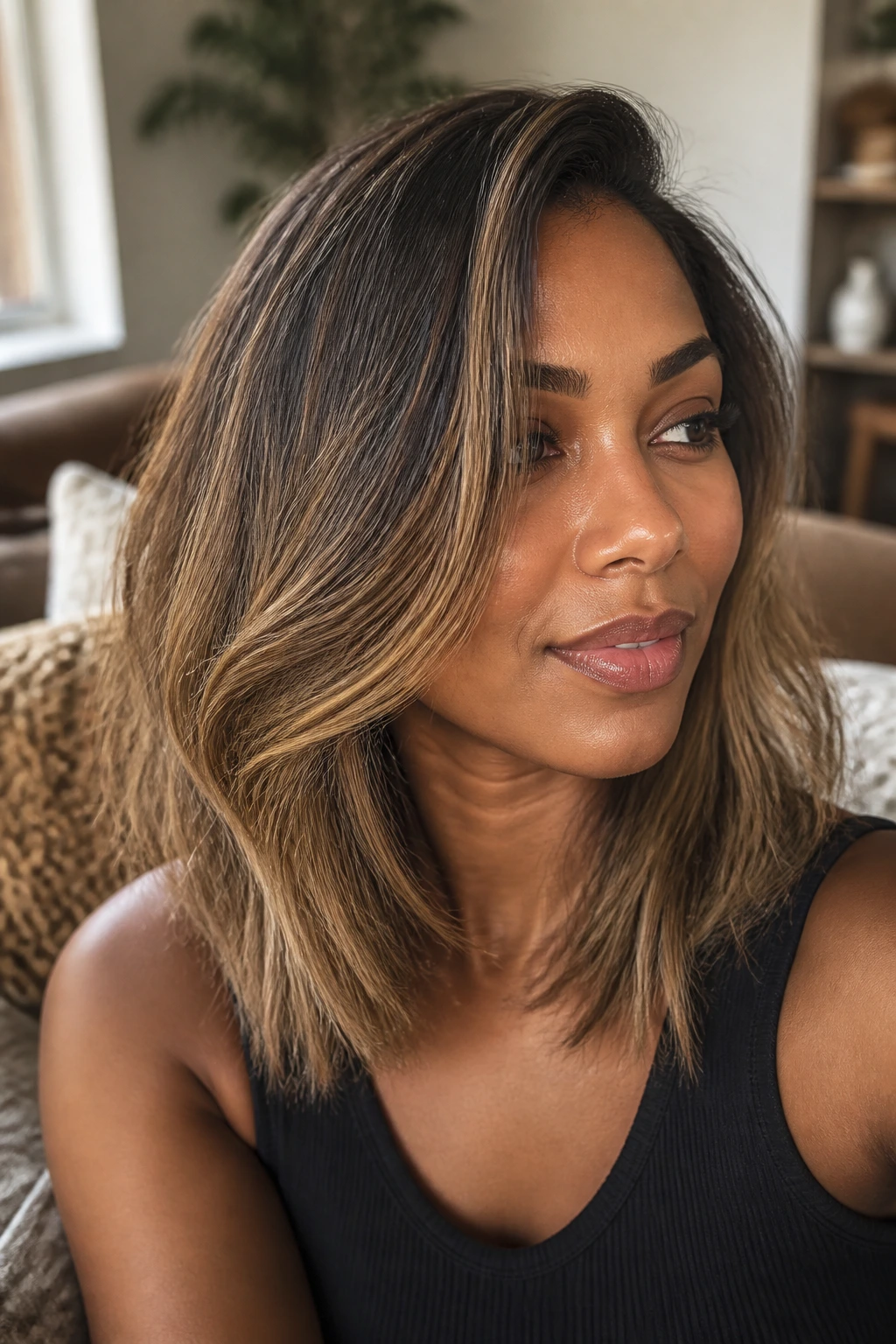
Sandy Bronde Mid-Length Sweep is what happens when you want lightness, but you don’t want sweetness. Caramel reads warmer and rounder. Sandy bronde sits a little cooler, a little dustier, and a lot quieter. On deep skin with neutral or olive undertones, that can look cleaner than a gold-heavy highlight.
This is a smart choice if your hair is shoulder-length or longer, because the sweep of color from mid-shaft to ends gives the cut movement without pulling attention away from your face. If your closet leans muted neutrals, this shade family tends to sit in the same lane.
10. Maple Glaze Layers
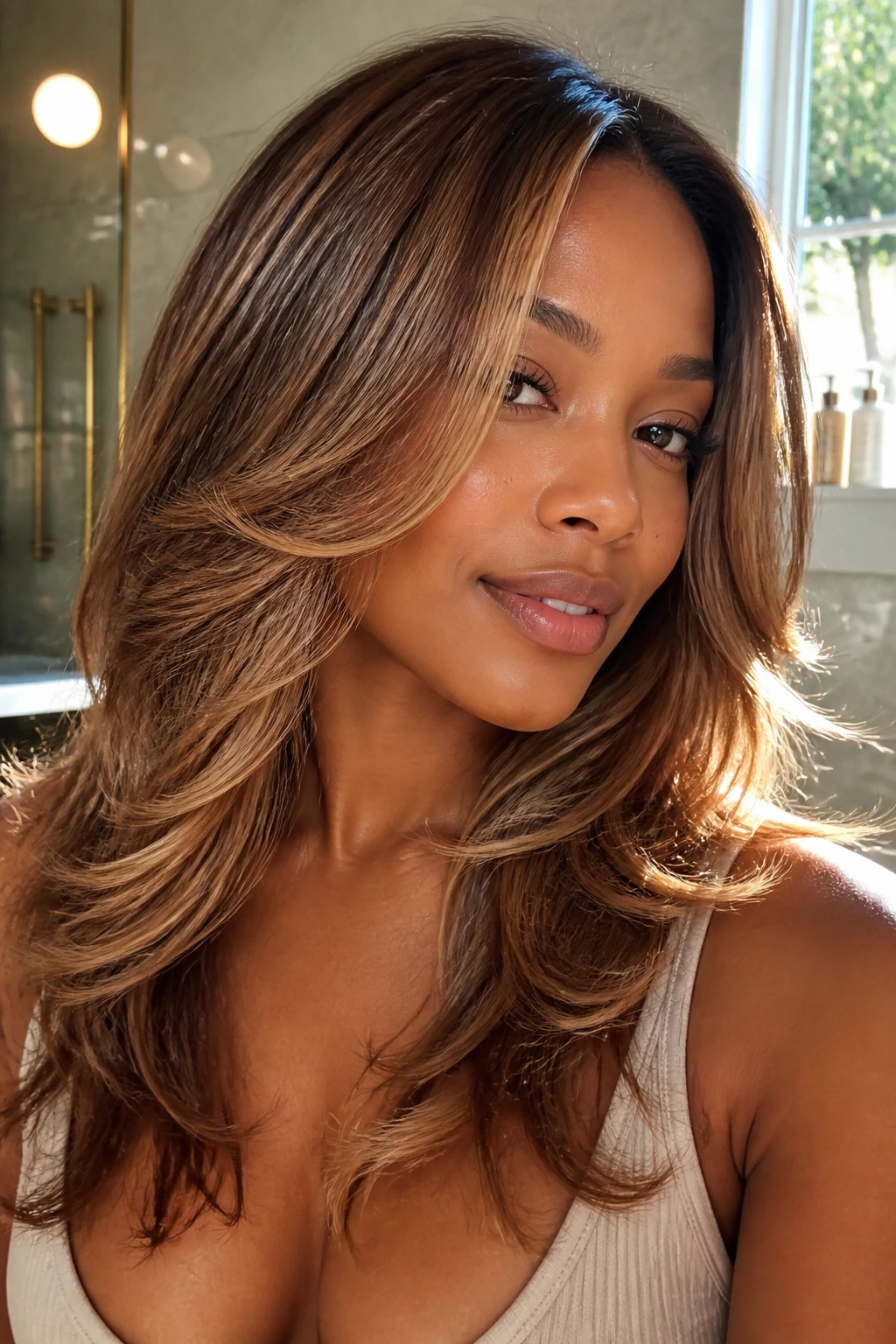
Layered cuts love color that follows the shape of the haircut, not color that sits on top of it. Maple Glaze Layers do that well. The warmth sits somewhere between amber, brown sugar, and soft blonde, so the light shifts as the layers flip and settle.
This one feels especially good on thick hair. Layers can get heavy if the color is flat, but a maple glaze catches the edge of each piece and keeps the haircut from reading like one solid block. A gloss with a maple or honey tone can also make the finish look shinier after every wash, which is a nice thing when the ends start getting dry.
11. Mocha Latte Foilayage
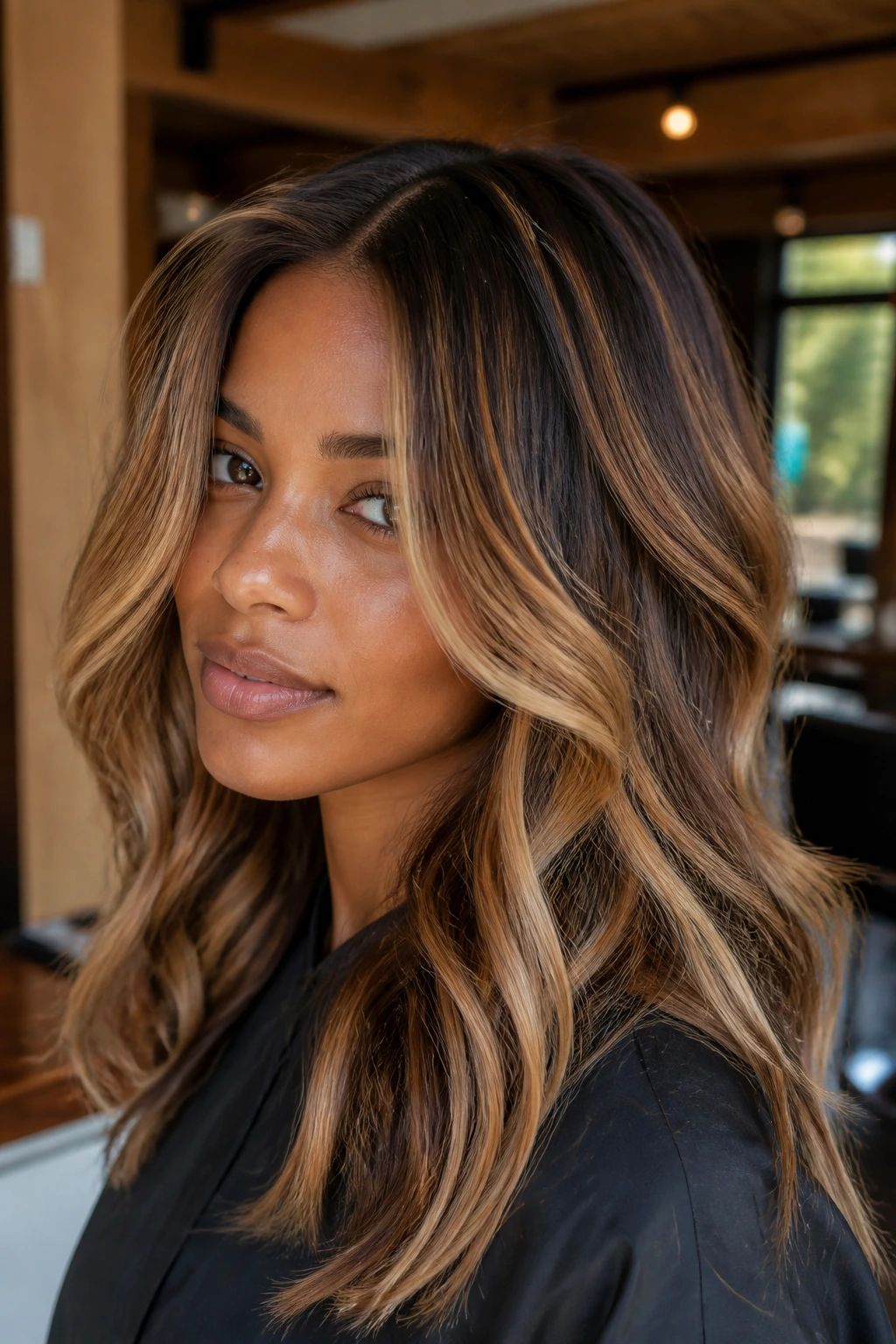
Foilayage sits in that useful middle ground between hand-painted softness and foil brightness. On deep skin, Mocha Latte Foilayage gives you enough lift to see the blonde, but not so much that the result turns washed out. The mocha root stays rich, the latte pieces brighten the surface, and the whole thing feels balanced.
Why This Method Earns Its Keep
Foils give a cleaner lift than open-air painting, which helps if your hair is thick or resistant. The hand-painted edges keep the line from looking too severe. That mix is why this style works on a lot of textures — coarser strands, dense curls, or straight hair that needs clear but not chunky placement.
If you want a salon color that looks polished for a long stretch, this is one of the better bets.
12. Warm Beige Peekaboo Panels
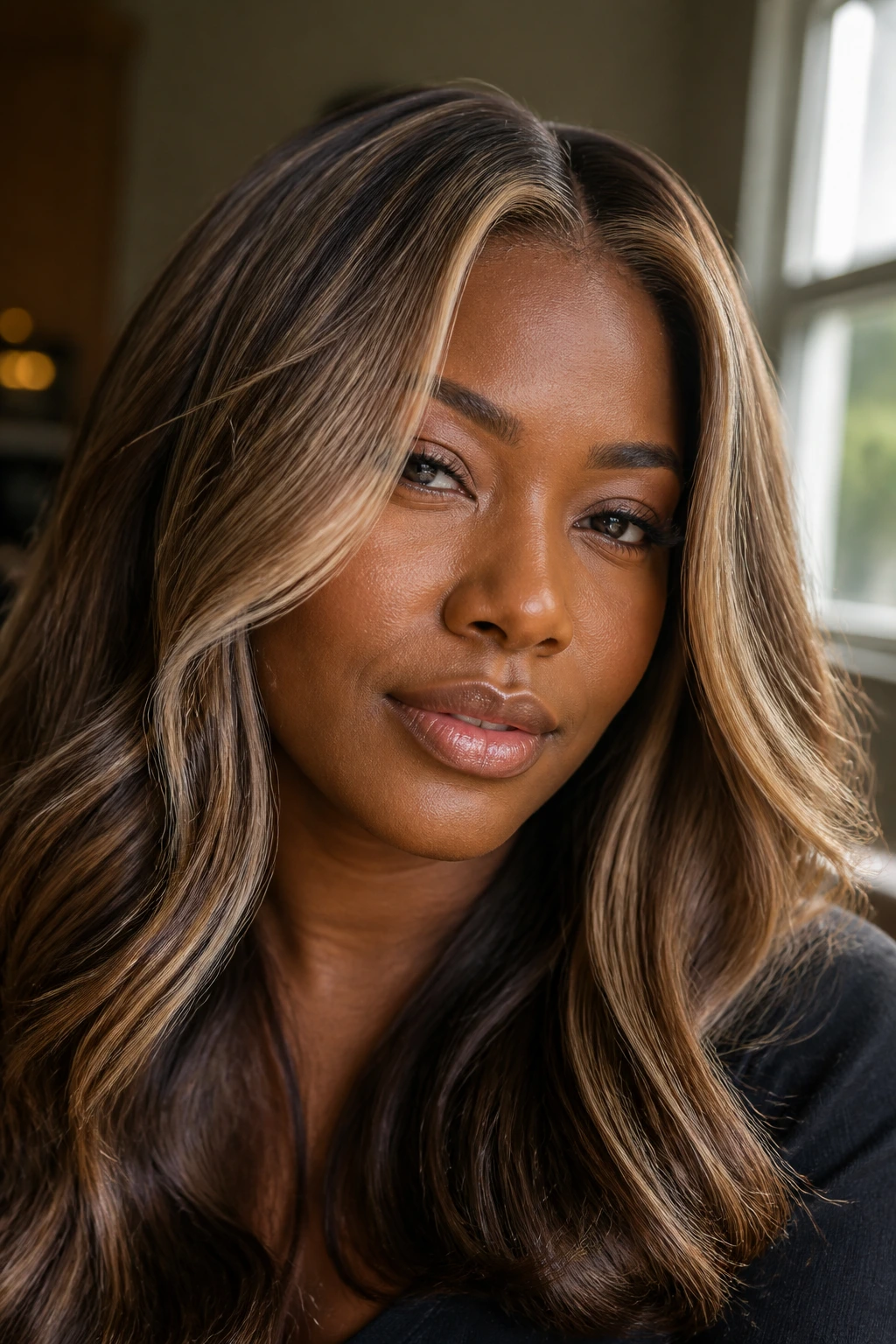
Peekaboo color is for the person who likes a little surprise. Warm Beige Panels sit under the top layer, so the blonde shows when the hair moves, lifts, or gets tucked back. On deep skin, the beige tone keeps the look soft instead of icy.
This style works especially well if your work life calls for something more restrained on top. Wear it down and most people see brown with dimension. Pull it into a bun, half-up, or braid, and the beige panels wake up. That kind of hidden brightness has real charm because it feels personal rather than loud.
13. Cinnamon Honey Ribbons on Curls
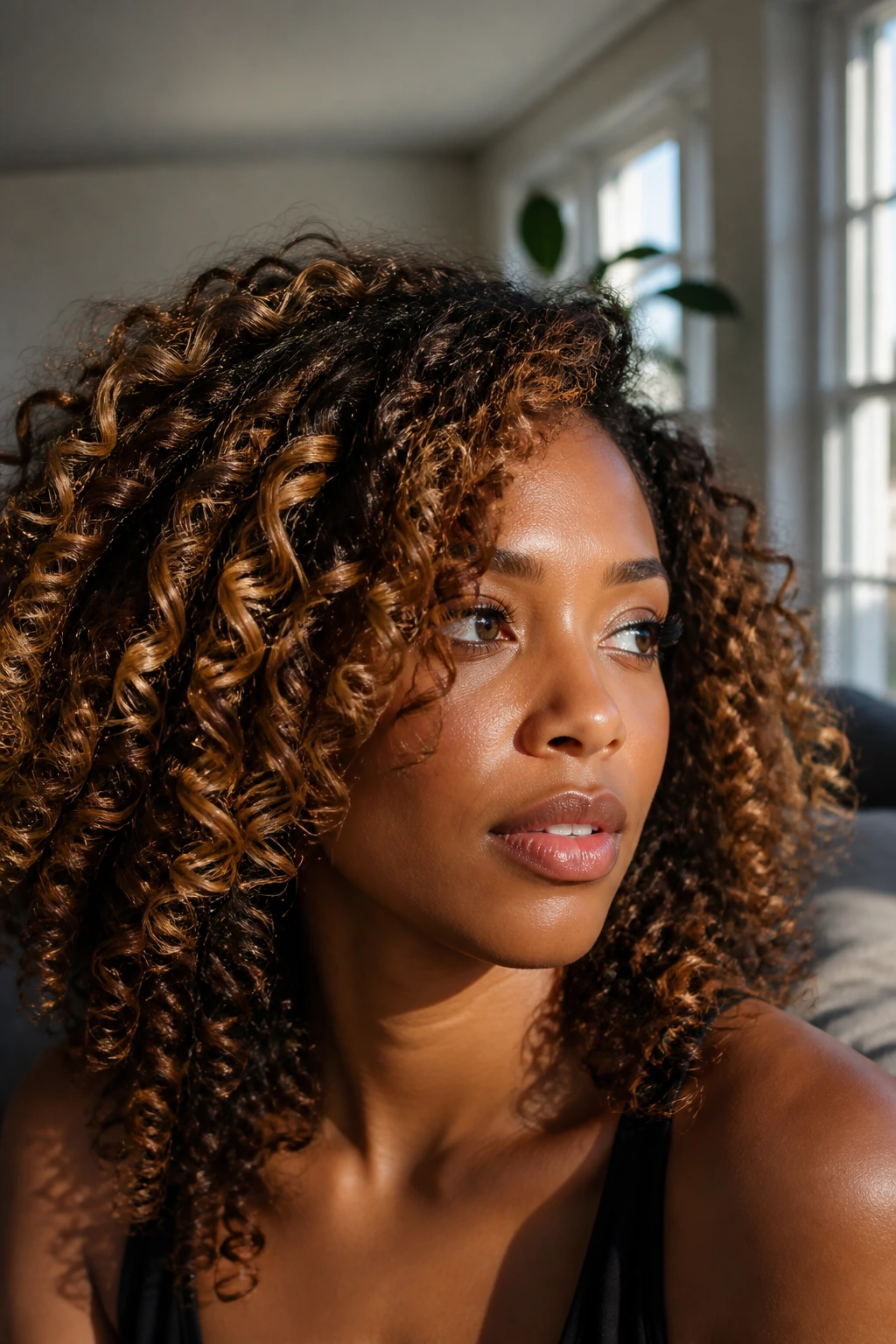
Why do curls look so good with ribboned highlights? Because the curl itself does part of the work. Cinnamon Honey Ribbons follow the bend of the coil or wave, so the color shows in arcs instead of straight lines. That keeps the pattern soft.
How to Keep the Curl Pattern Happy
Ask for wider painted ribbons that land on the outer curve of the curls, not tiny foils packed too close together. Too many narrow streaks can make curls look busy. A few warmer cinnamon-honey pieces through the top and front will usually do more for deep skin than a full head of light blonde ever could.
This is a strong choice if you wear wash-and-go styles, twist-outs, or stretched curls. The highlight lives with the texture instead of fighting it.
14. Smoky Mushroom Bronde
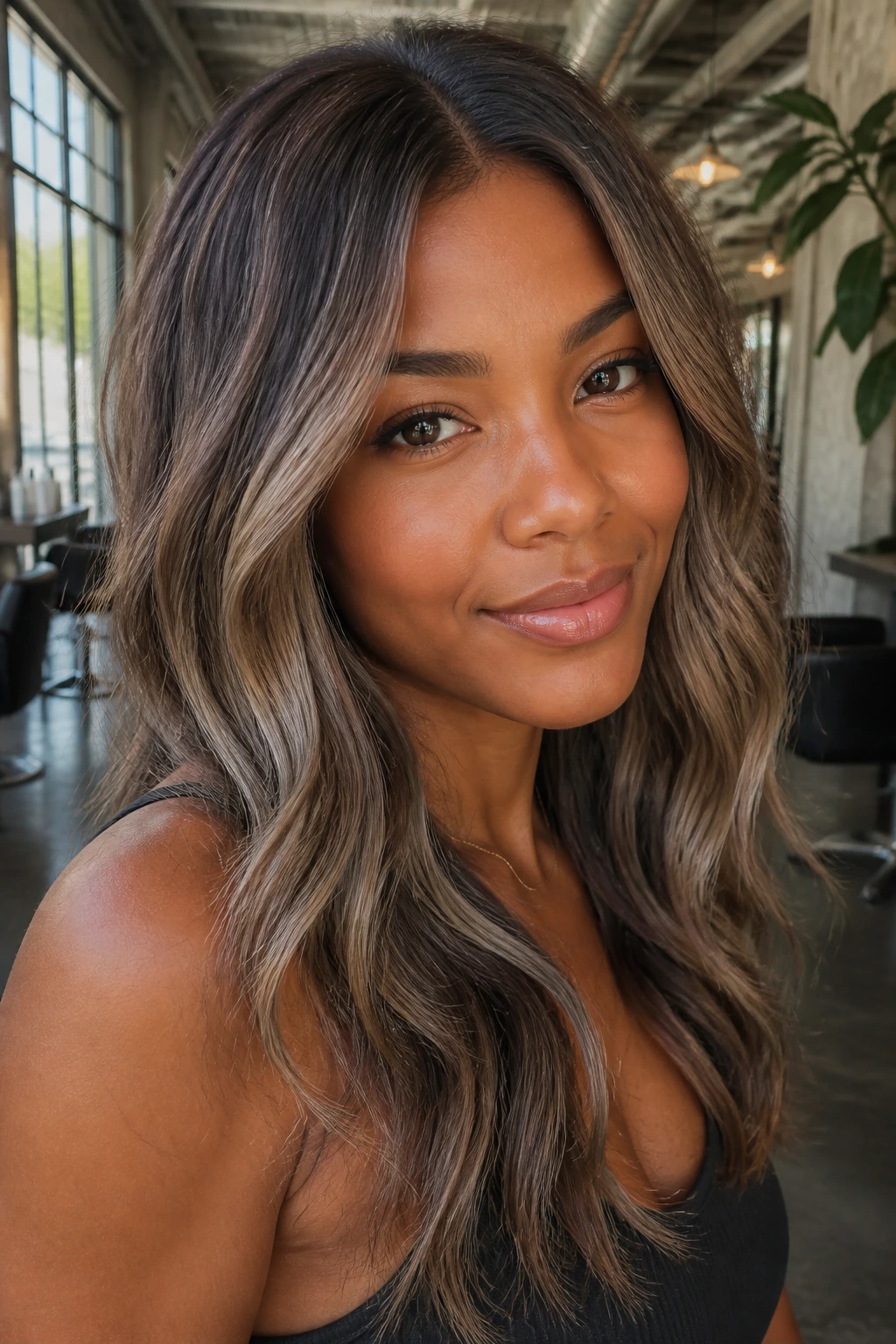
Deep skin does not have to mean warm gold only. Smoky Mushroom Bronde is for the cooler end of the spectrum, where beige, taupe, and muted ash tones sit more cleanly on the hair. If your skin has a neutral or cool undertone, this can look sleek and modern without going flat.
The trick is keeping the mushroom tone soft, not gray. A shadow root and a beige toner help the color stay dimensional. On deep skin, that slight smoke reads expensive in the practical sense — less yellow, less brass, more tone control. If you lean warm in your clothes and makeup, you might want a little gold mixed in; if not, this shade can hold its own.
15. Walnut Swirl Highlights
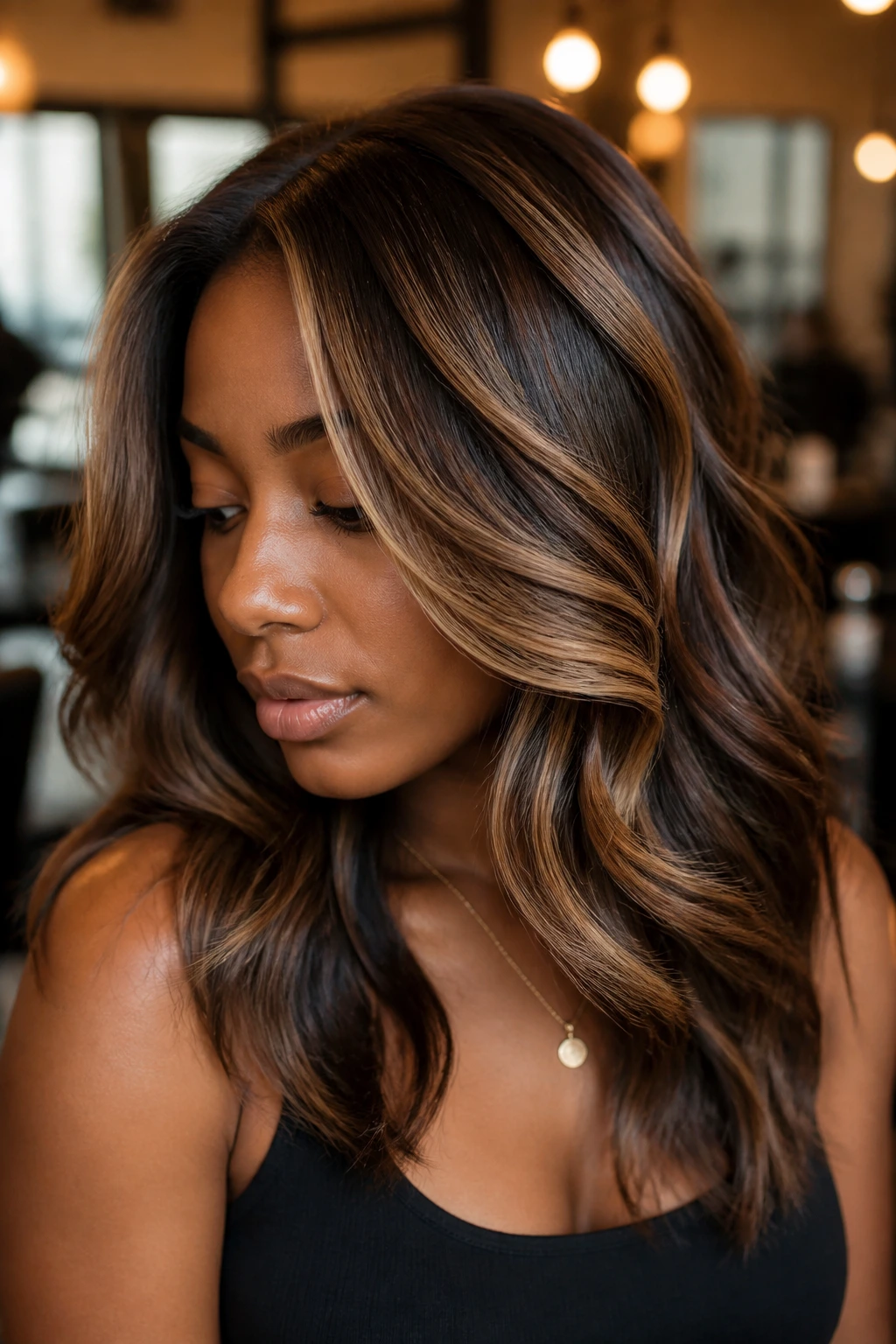
Walnut Swirl Highlights are what I recommend when someone wants dimension without a full brightness jump. The base stays walnut-dark, and the lighter pieces thread through it in curved, swirled lines. On deep skin, that combination looks especially good because the contrast is soft enough to stay natural but clear enough to matter.
This works on bobs, long layers, and curly cuts that need movement. It’s one of the easier styles to live with because the grow-out line never announces itself. You notice shine first, then shape, then color. That order is why it stays useful long after the first salon day.
16. Amber Root Melt
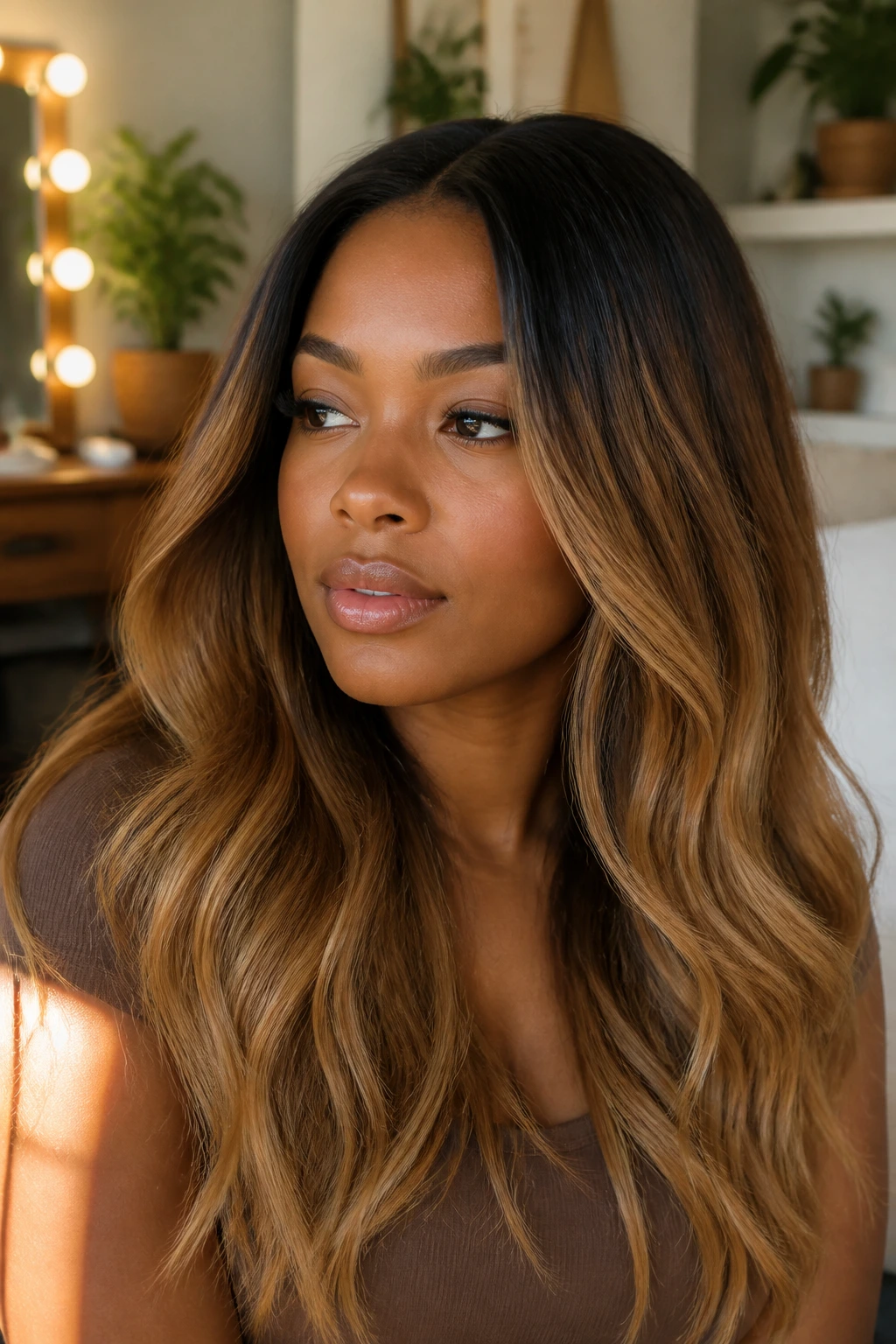
Amber Root Melt starts dark and warms up slowly. The root stays espresso or deep brown, the mids turn amber-brown, and the ends pick up a lighter honey cast. The result is one of the easiest ways to get blonde-brown dimension without the color sitting too high or too bright around the face.
It’s a good choice if your hair grows fast or if you hate a hard root line. The melt keeps the grow-out soft. It also works on long hair that gets pulled into buns, because the color still reads through the bend of the ponytail or twist. If your ends are already porous, keep the amber a touch deeper so they don’t go too pale.
17. Toffee Streaks on a Silk Press
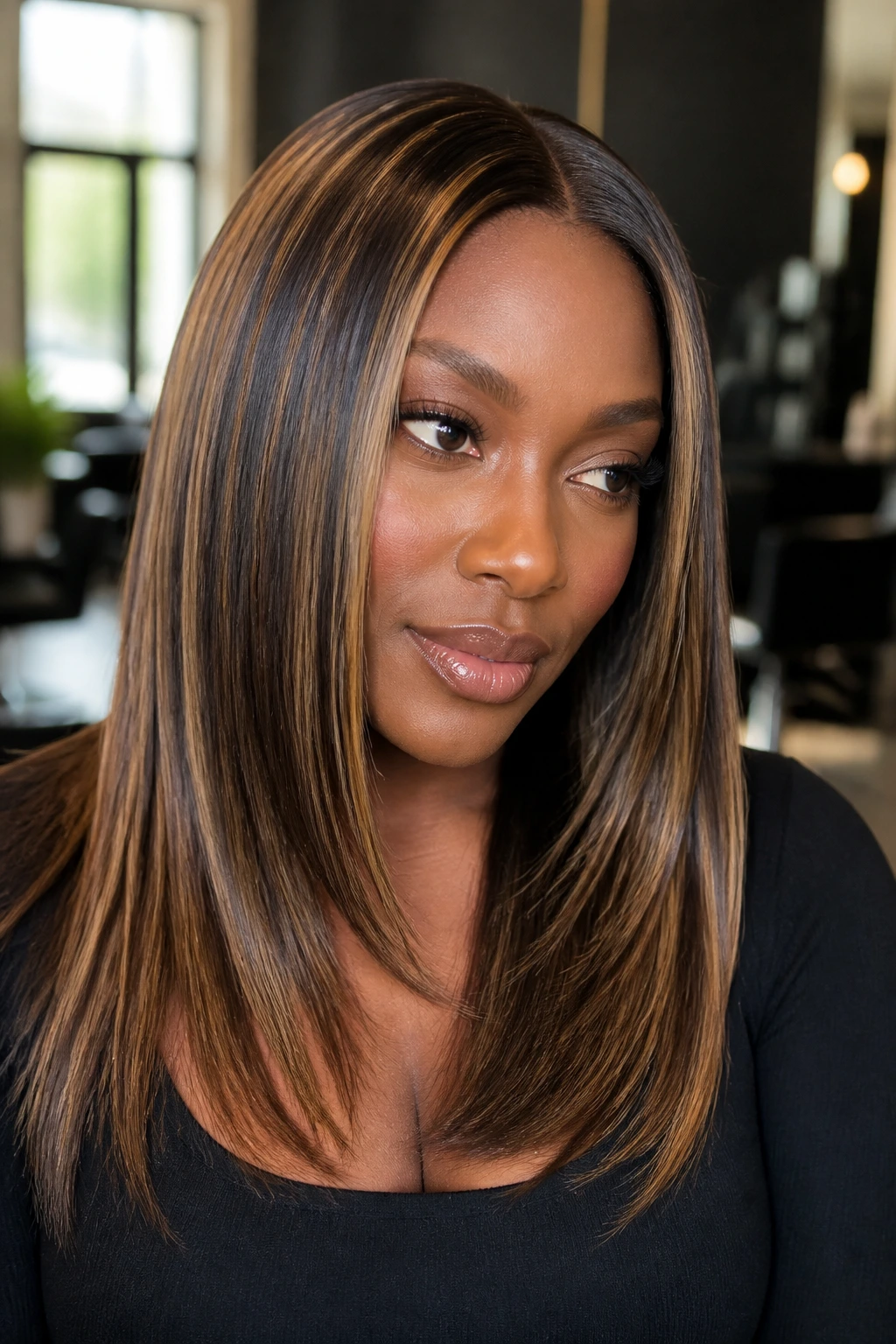
Straight hair tells the truth. Every line shows. That’s why Toffee Streaks on a Silk Press need to be finer and more intentional than the same color on curls. On a silk press, the toffee tone should look sleek, not striped, and the pieces should sit under a clean part or sweep into the front layers.
This style works best when the highlight width stays narrow — about the size of a pencil or a little wider in the front, thinner through the back. The toffee tone gives deep skin a warm glow without the shock of platinum. If you wear your hair straight most of the time, this is one of the few color choices that keeps the finish polished rather than harsh.
18. Champagne Caramel Ends
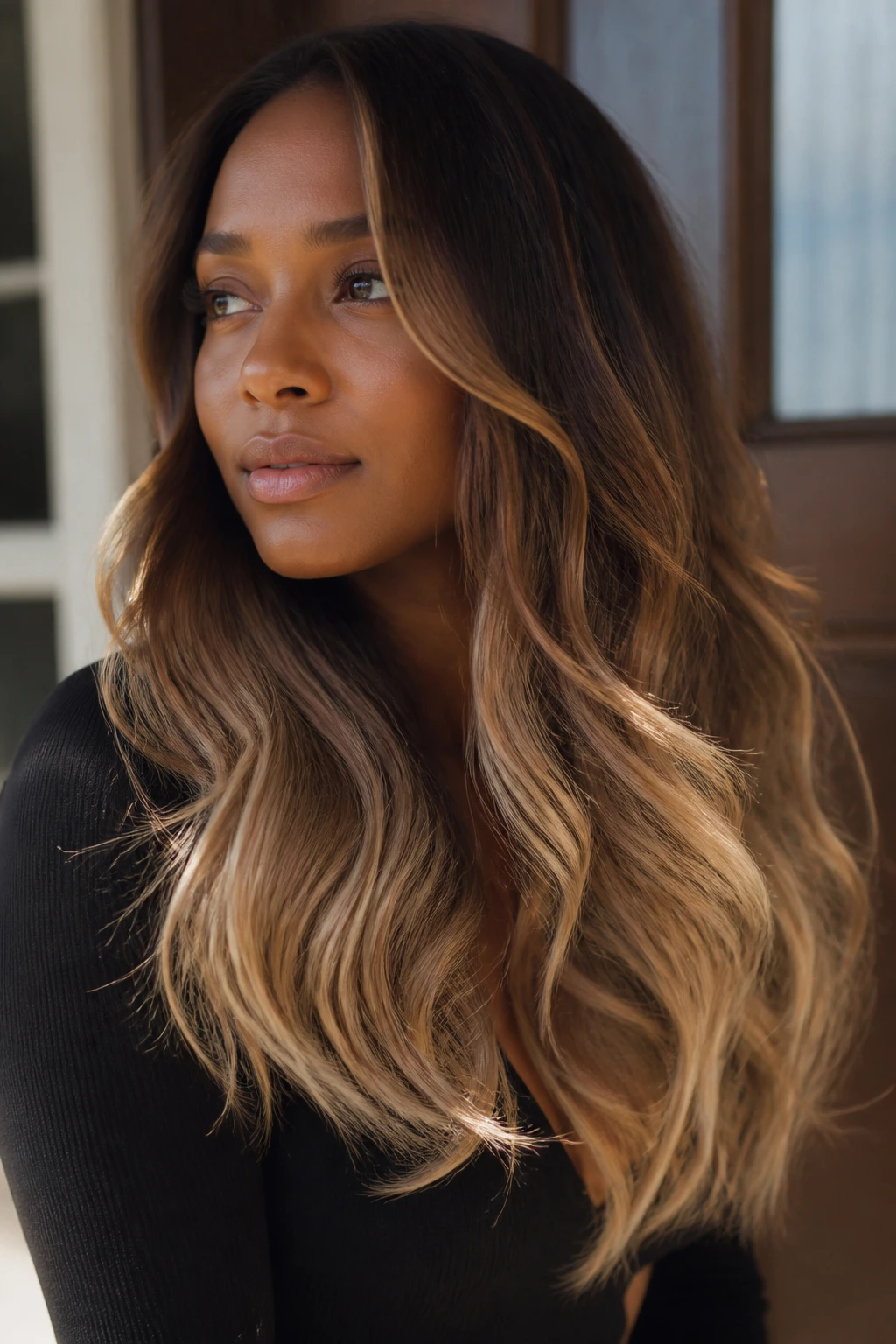
Champagne Caramel Ends are a softer take on ombré. The top stays brown, the mid-lengths turn caramel, and the last few inches pick up a champagne-beige glow. Because the brightness is kept low, the ends catch light without looking like they were dipped in a different hair story.
This is especially nice on long waves and layered cuts that flip at the ends. The bright finish appears when the hair moves, which is when the color looks best anyway. If you’re nervous about cooler blonde, ask for a beige-champagne mix instead of a very icy tone. That keeps the look in the same family as the brown base.
19. Sunlit Almond Contour
Highlight placement can shape the face the same way a good haircut does. Sunlit Almond Contour puts the brightest almond pieces at the hairline, temple, cheekbone area, and just ahead of the ears so the eye gets guided where you want it to go.
Where It Hits Best
- High cheekbones: Brighten just below the brow line to emphasize lift.
- Round faces: Keep the front pieces vertical and a little longer.
- Curtain bangs: Blend the contour into the bang for a soft frame.
- Updos: Let a few pieces stay loose around the edges so the contour still shows.
- Maintenance: Refresh the front first, since that area fades fastest.
This one gives you a lot of control. You can keep the rest of the hair darker and still get the bright, fresh effect right where people look first.
20. Chestnut Babylights with a Shadow Root
If you want the most low-key version in this whole list, Chestnut Babylights with a Shadow Root is probably it. The babylights are so fine they blur into the brown, and the shadow root keeps the base from looking overly processed. On deep skin, that kind of restraint can be beautiful.
This style is useful when you need color that behaves in professional spaces, or when you simply don’t want to live under a toner schedule. It gives movement, shine, and a little blonde-brown flicker without screaming for attention. On a middle part, the delicate color sits like a soft filter through the top layer. On curls, it becomes even gentler.
21. Honey Brunette Braids
Braids don’t have to stay one flat brown. Honey Brunette Braids use mixed extension shades or braided hair colors to create the highlight effect without bleach at all. That’s a major plus if your hair is resting, short on tolerance, or tucked away for a while.
The best versions keep the honey strands spread through the braid pattern instead of lumped into one chunky section. Knotless braids, feed-ins, and faux locs all handle this well. On deep skin, the honey strand should sit warm, not pale, so the braids still feel like part of your natural palette rather than a separate accessory.
22. Sandy Cocoa Waves
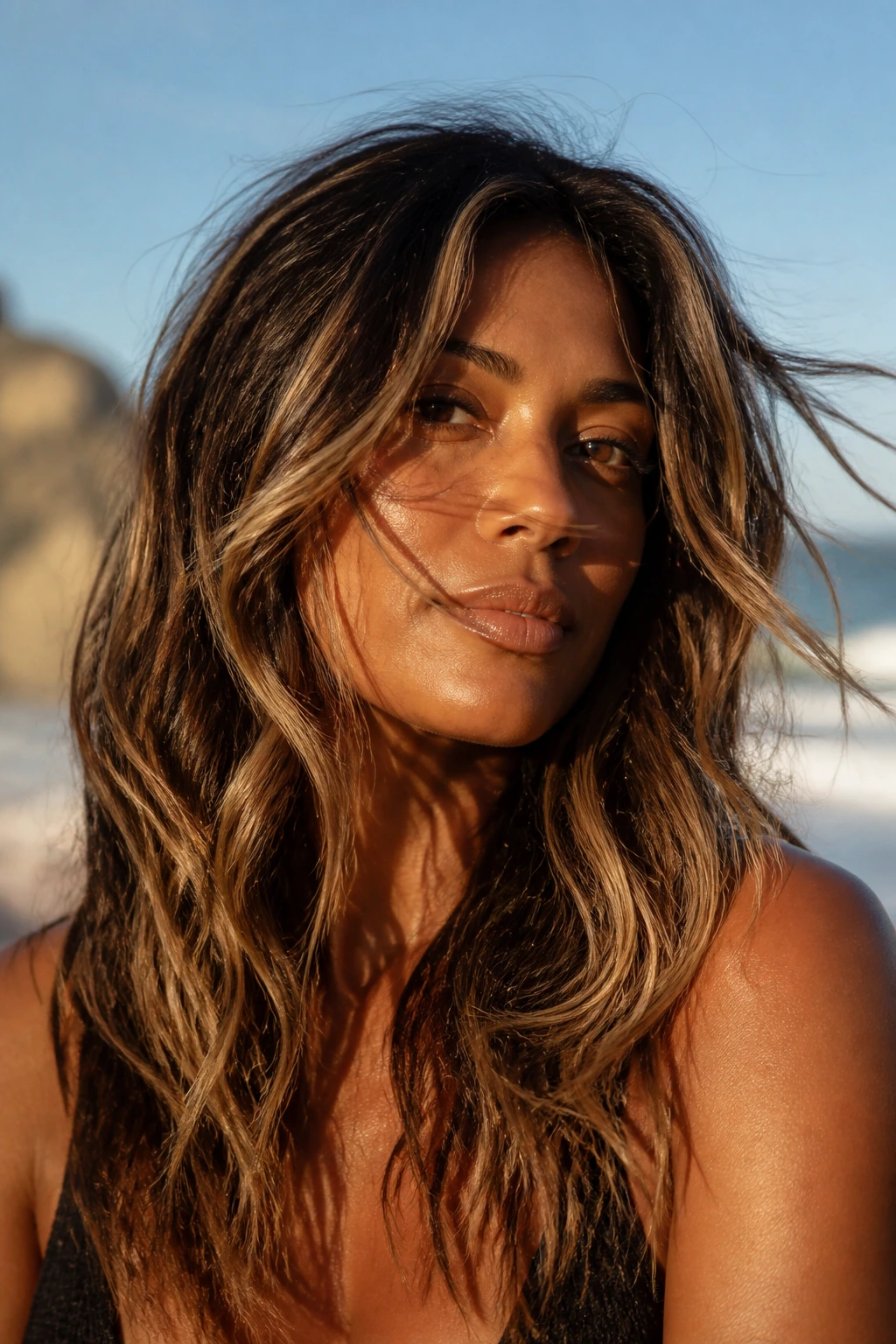
Sandy Cocoa Waves sit between beachy and earthy, which is a combination I like more than the word “sun-kissed” suggests. The cocoa base stays deep, while sandy blonde pieces soften the top layer and the ends. On deep skin, the sand tone works when it’s held in check by brown underneath.
This style looks best in loose bends or soft waves because the movement breaks the color up. On a pin-straight blowout, the contrast can feel sharper than you want. A curl or bend gives the sandy pieces room to scatter light instead of landing in one flat line.
23. Soft Platinum Ribboning with Warm Base
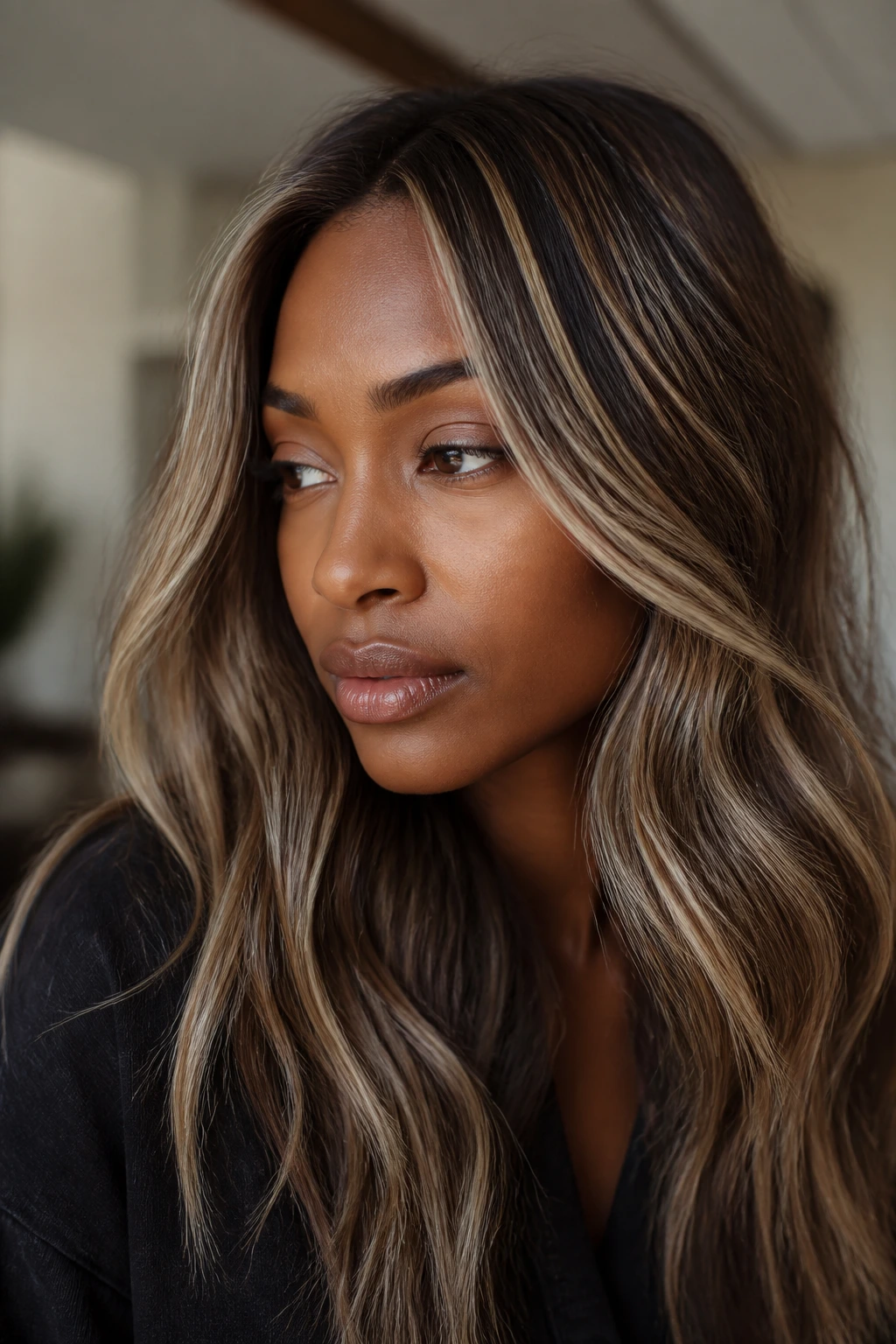
Yes, deep skin can wear platinum. The catch is that it works best as a small accent, not a full head takeover. Soft Platinum Ribboning with Warm Base keeps the blonde ribbons thin and sparse, then wraps them in brown depth so the coolness feels edgy instead of icy.
This is the look for someone who likes contrast and can keep up with toner. It’s brighter than honey, cooler than caramel, and more striking than beige. If your undertone runs neutral and your style leans sharp or minimal, a few platinum ribbons can look clean in a way that warm blonde never quite will.
24. Golden Sable Chunky Highlights
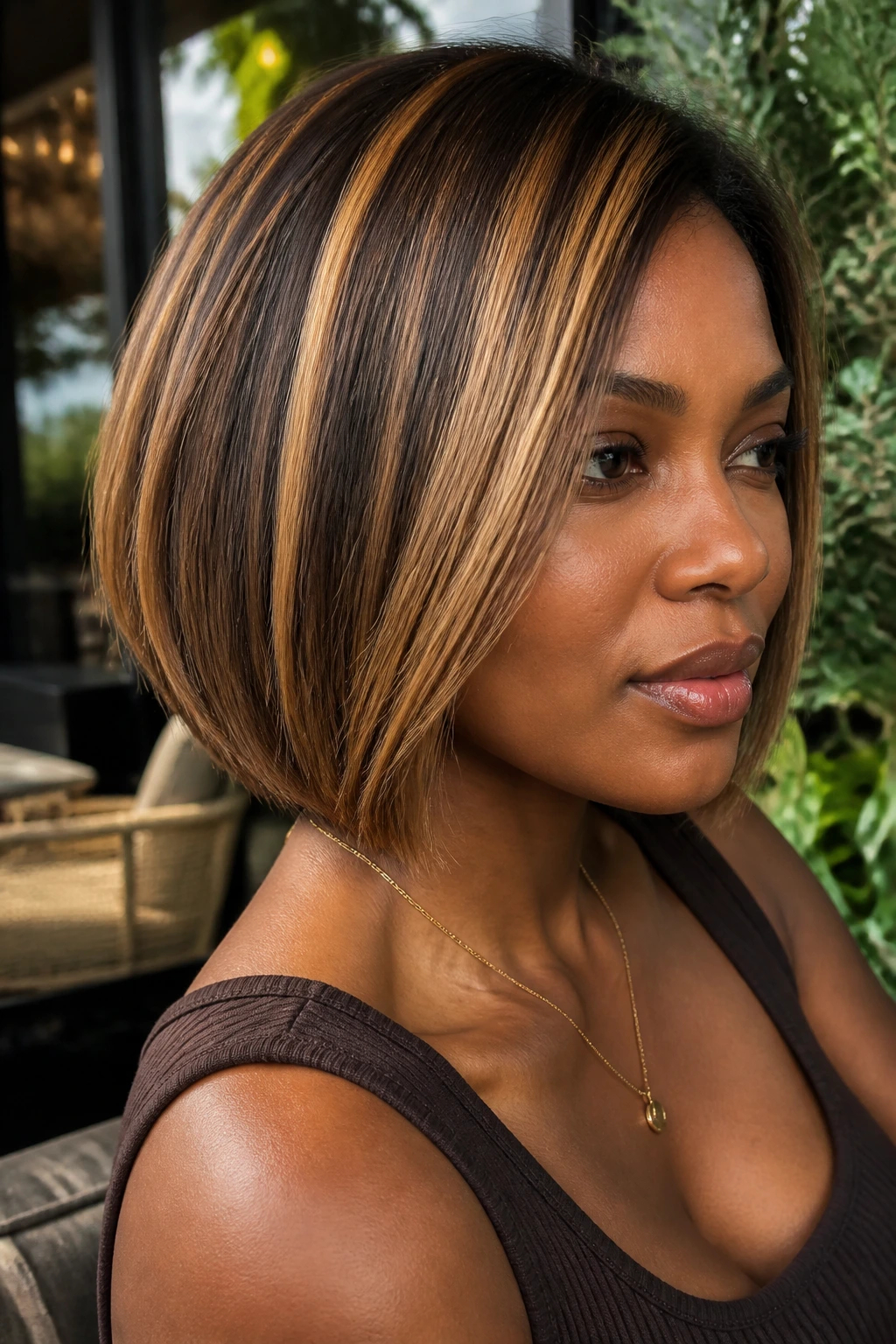
Chunky highlights are back when they’re done with restraint. Golden Sable works because the stripes are visible, but the gold tone keeps them from looking cheap or stripy. On deep skin, that thicker placement can be a feature, not a flaw — especially if the haircut is blunt, curly, or short enough to handle strong contrast.
- Best on: Bobs, lobs, and thick curls.
- Color lane: Golden-beige, not pale yellow.
- Placement: Fewer, wider pieces through the top and sides.
- Mood: More obvious than babylights, less loud than full blonde.
- Wear it with: Sharp parts, glossy finish, or big defined curls.
This is for someone who wants the highlights to announce themselves. Quiet hair was not the assignment.
25. Brown Sugar Foilyage
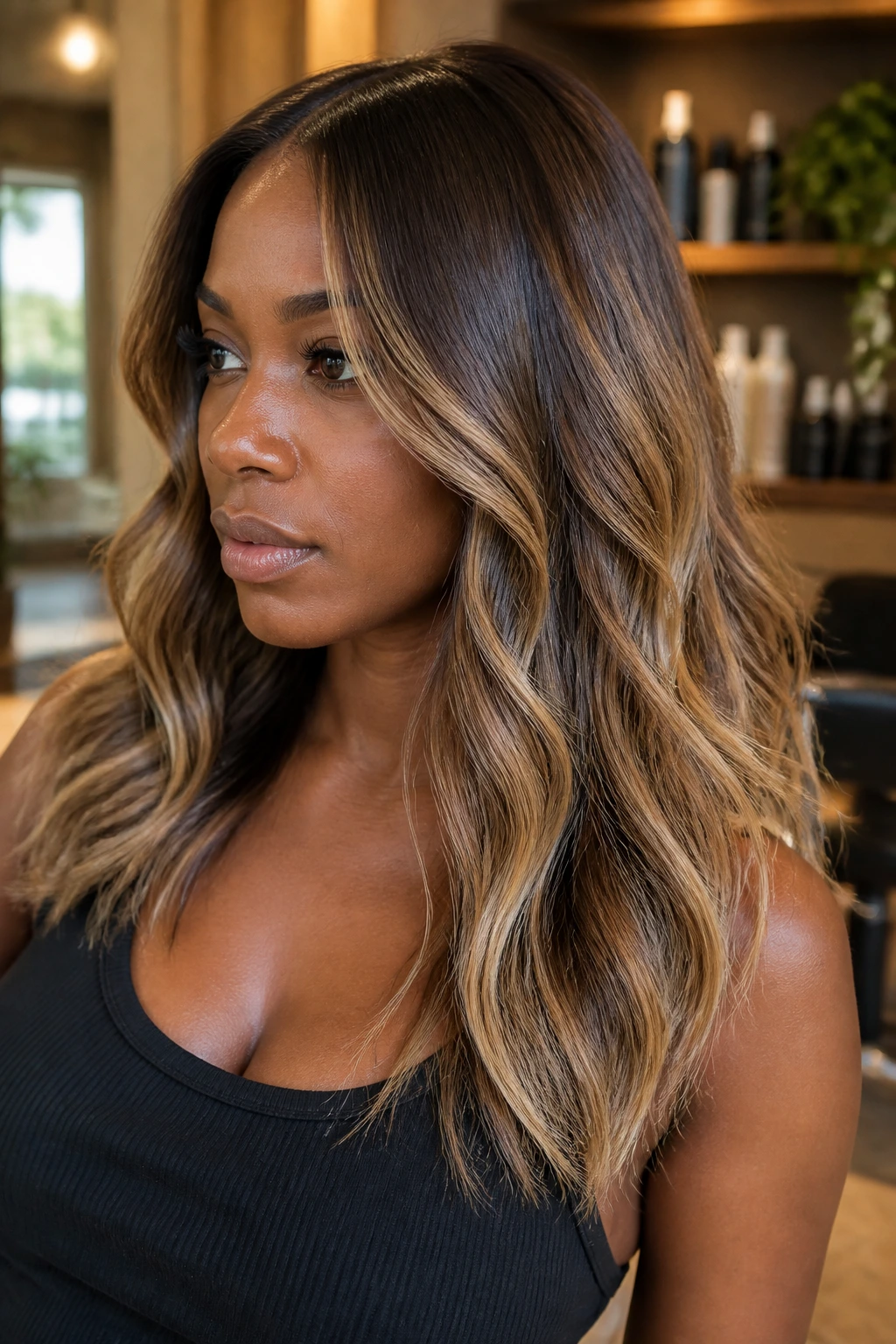
Brown Sugar Foilyage is one of those colors that looks expensive because it understands restraint. The roots stay brown sugar-dark, the mids lift enough to show the blonde, and the ends stay soft rather than fried-looking. Foilyage helps the lifted pieces catch a little more brightness than open-air painting would.
It’s a nice choice if you want a warmer result than sandy bronde but still want movement. The color sits nicely on medium and long lengths, especially if you like to wear your hair in loose bends or big barrel curls. The blonde never takes over. It just keeps the brown from sitting too still.
26. Toasted Coconut Face Framing
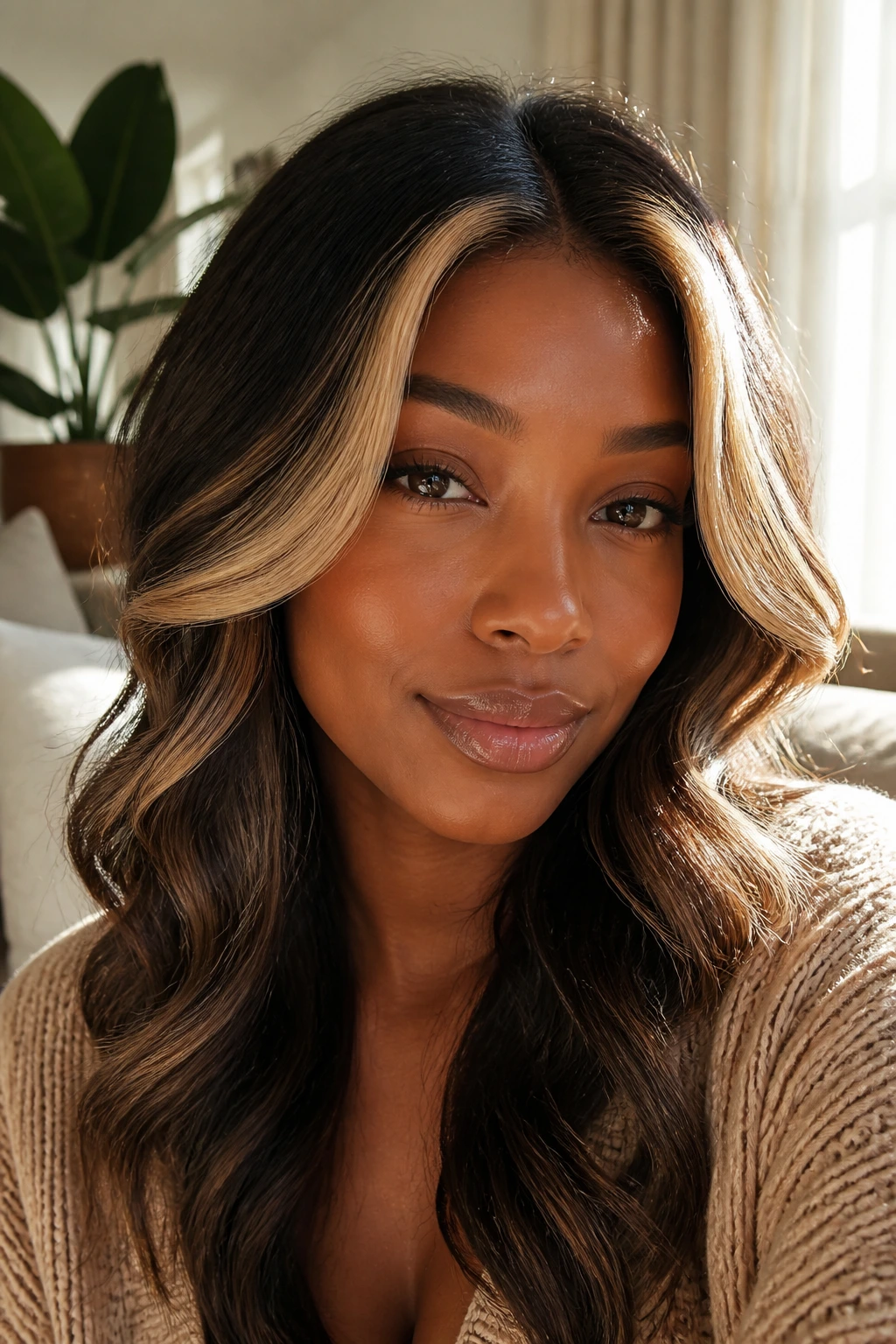
Toasted Coconut Face Framing gives you that creamy beige edge around the face without letting the rest of the hair drift too light. It works because the coconut tone keeps a little warmth, which deep skin usually needs unless you’re intentionally chasing a cooler finish.
This look is a favorite with curtain bangs, soft layers, and textured blowouts. The face frame brightens the eyes and cheekbones, then the darker lengths take over again. If you tuck the front behind your ears or pin one side back, the color shifts from subtle to noticeable in a few seconds. I like that kind of change. It feels alive.
27. Caramel Halo Highlights on a Pixie
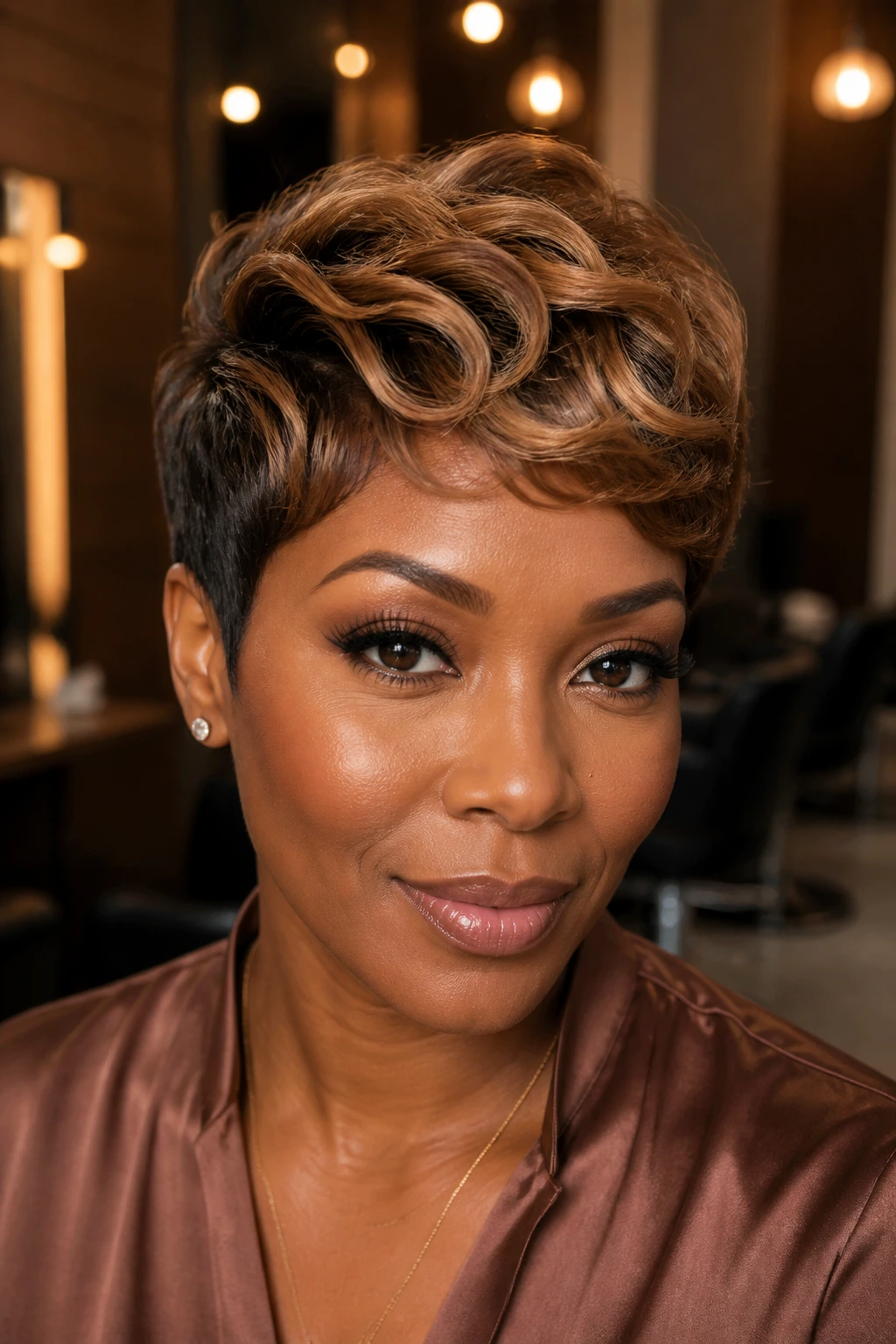
Short hair needs different color rules. Caramel Halo Highlights on a Pixie puts the light on top, at the fringe, and around the crown so the cut doesn’t collapse into one dark shape. On deep skin, that warm caramel lift gives the pixie shape and energy.
The trick is not overloading the sides. Short cuts get muddy fast when too many light pieces creep down near the ears and nape. Keep the halo on the upper layers and let the base stay darker underneath. That gives the hair height and texture without making it look frosted.
28. Bronze Melt on Coily Hair
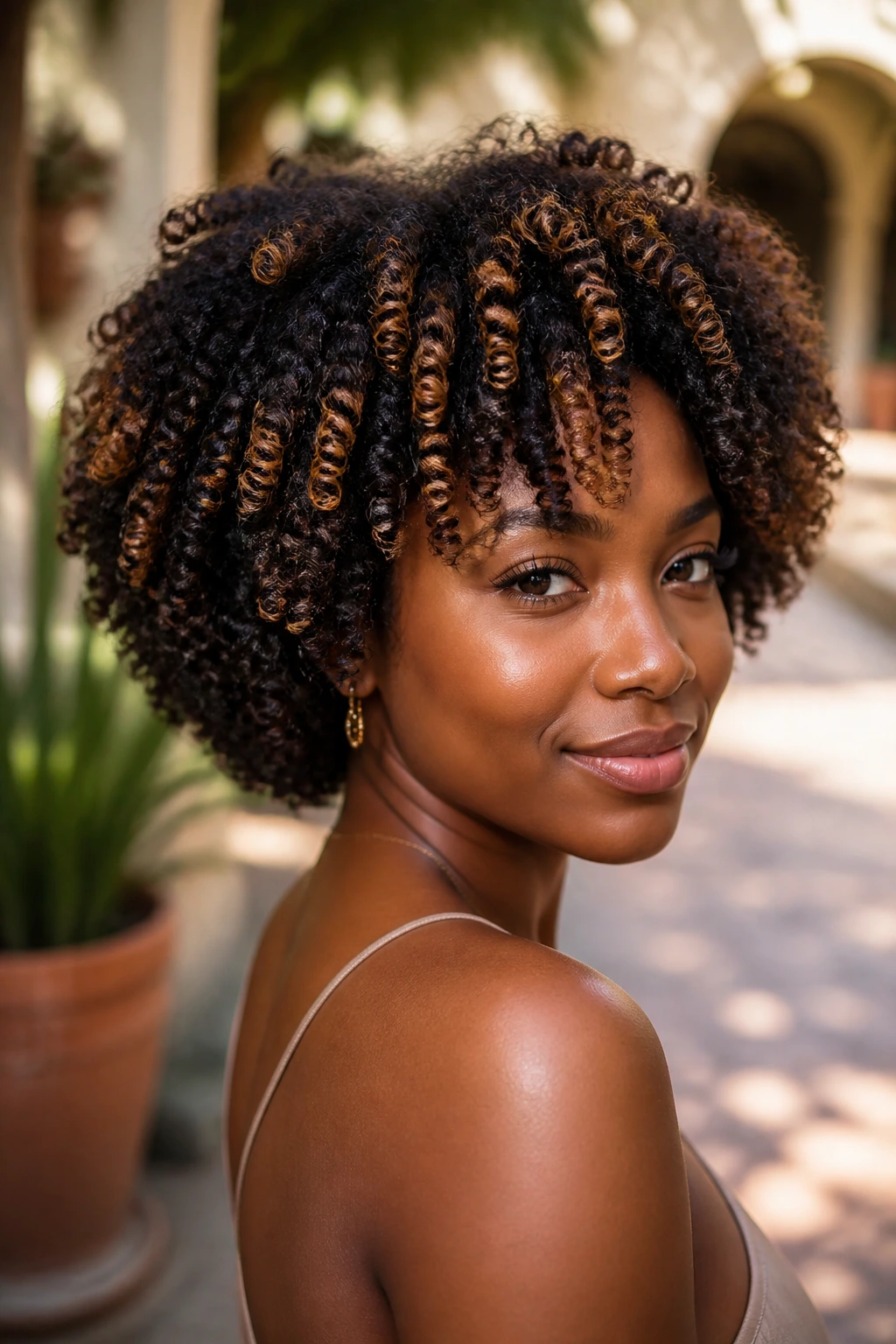
How do you make highlights show on coily hair without flattening the pattern? Bronze Melt is a strong answer. The bronze pieces should sit where the coil bends and where the hair naturally expands, not packed into tiny uniform streaks that disappear once the curls shrink back.
What Helps the Color Read
- Stretch first: Color placement is easier to see on stretched coils or a blown-out base.
- Paint the outer curve: That’s where light lands first.
- Keep the bronze warm: Cool ash can look distant against deep skin here.
- Use gloss wisely: A bronze glaze keeps the blonde-brown blend rich between appointments.
This look rewards movement. Once the curls fluff back up, the bronze pieces thread through the shape instead of sitting on top of it.
29. Buttered Biscuit Ombré
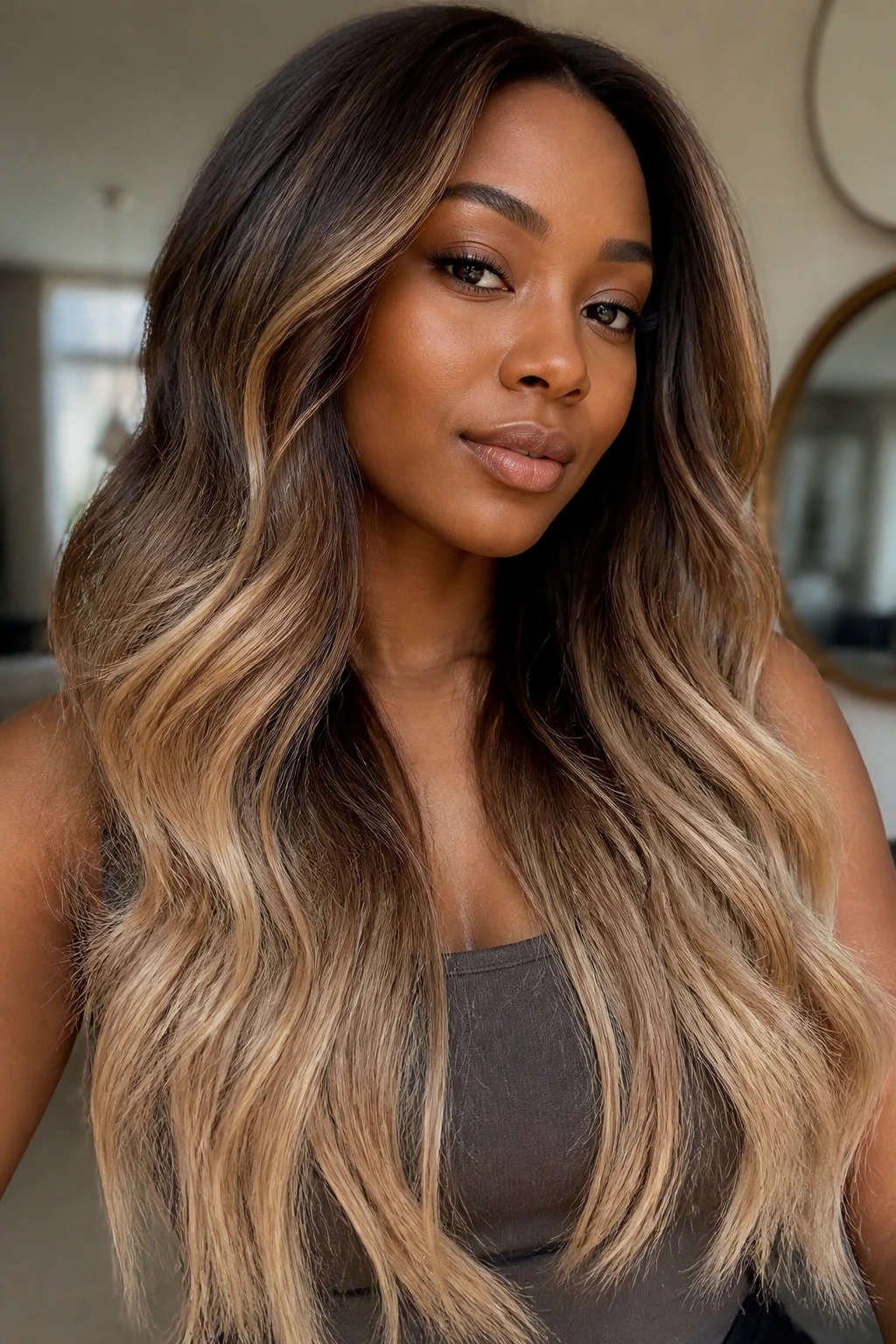
Buttered Biscuit Ombré is softer than it sounds. The roots stay brown, the mids move through caramel, and the ends lighten to a creamy biscuit beige that still carries warmth. On deep skin, that warmth is the reason the look works. It avoids the flat, dusty finish that pale blonde can bring when it sits too close to the face.
This is a good choice if you like long hair and want the lightness concentrated at the bottom. The ombré keeps maintenance easier, and the ends look bright when they swing. If your hair is already layered, the biscuit ends can give the cut a bit of lift without demanding a heavy face frame.
30. Cocoa Champagne Curtain Highlights
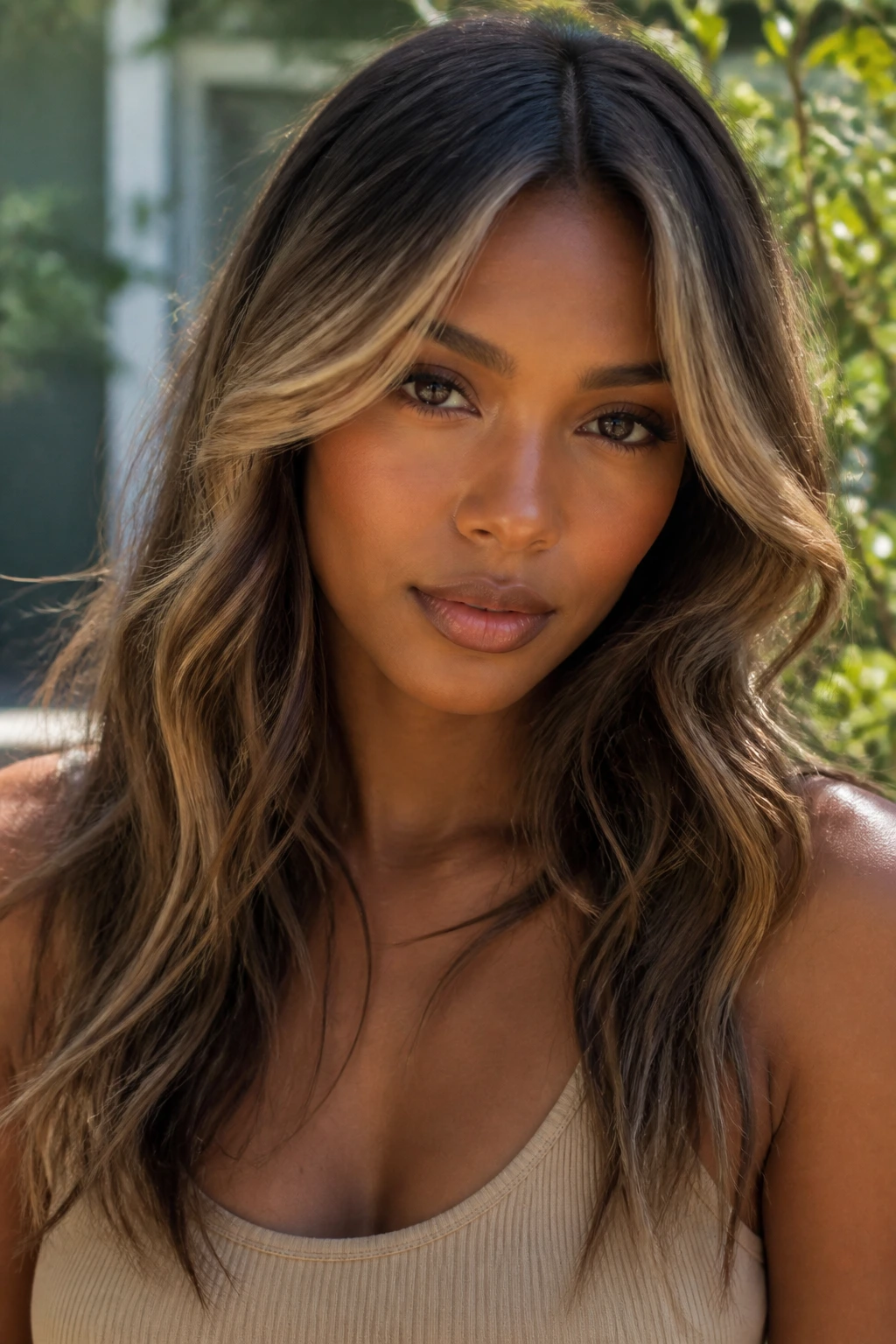
The last look pulls a lot of the best ideas together. Cocoa Champagne Curtain Highlights keep the base deep, place brighter pieces around the part and face, and use champagne light where the hair naturally falls open. On deep skin, that mix works because it gives you both warmth and brightness without pushing the whole head into one tone.
Curtain placement is smart if you wear a middle part or a soft off-center part. The highlights frame the face, then drop back into cocoa through the lengths so the hair doesn’t lose its depth. If you want one style that feels visible in photos, easy to wear, and not too precious to maintain, this is hard to beat.
Why Leaving Depth at the Root Changes Everything
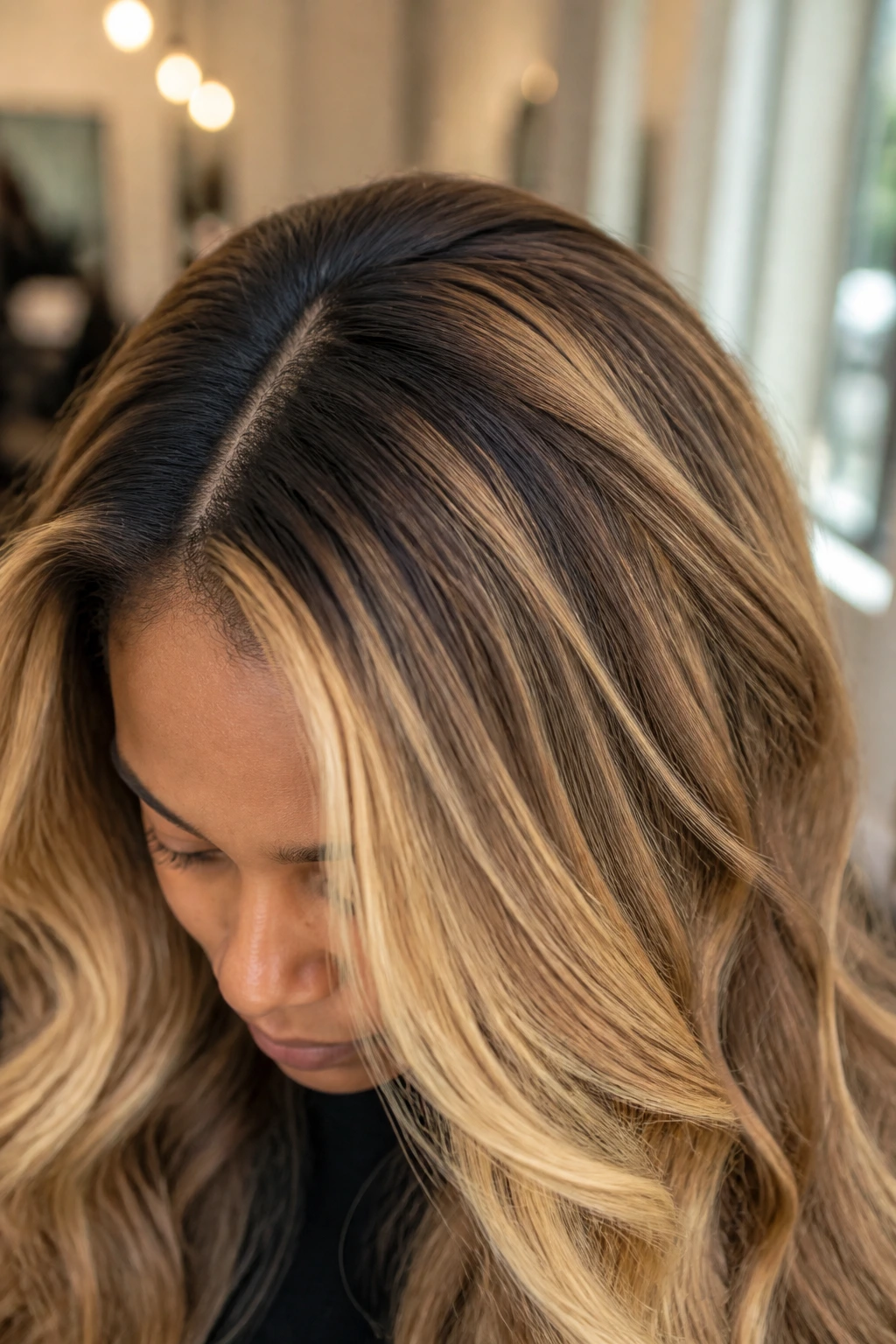
A lot of highlight color fails because the root gets overworked. The eye needs a place to rest. On deep skin, that darker anchor is what lets the blonde feel like part of the haircut instead of a separate add-on.
Shadow roots are useful for another reason, too. They make regrowth less annoying. If the first inch or two stays deeper, you buy yourself a softer grow-out line and fewer emergency salon visits. That matters a lot if your highlights are bright around the face or if your natural hair is dark enough to show every new millimeter of growth.
The other thing root depth does is protect the richness of the result. When every strand gets pushed light, the hair can lose that brown-blonde conversation and start reading one-note. The darker base keeps the whole look anchored.
Essential Tools and Salon Notes
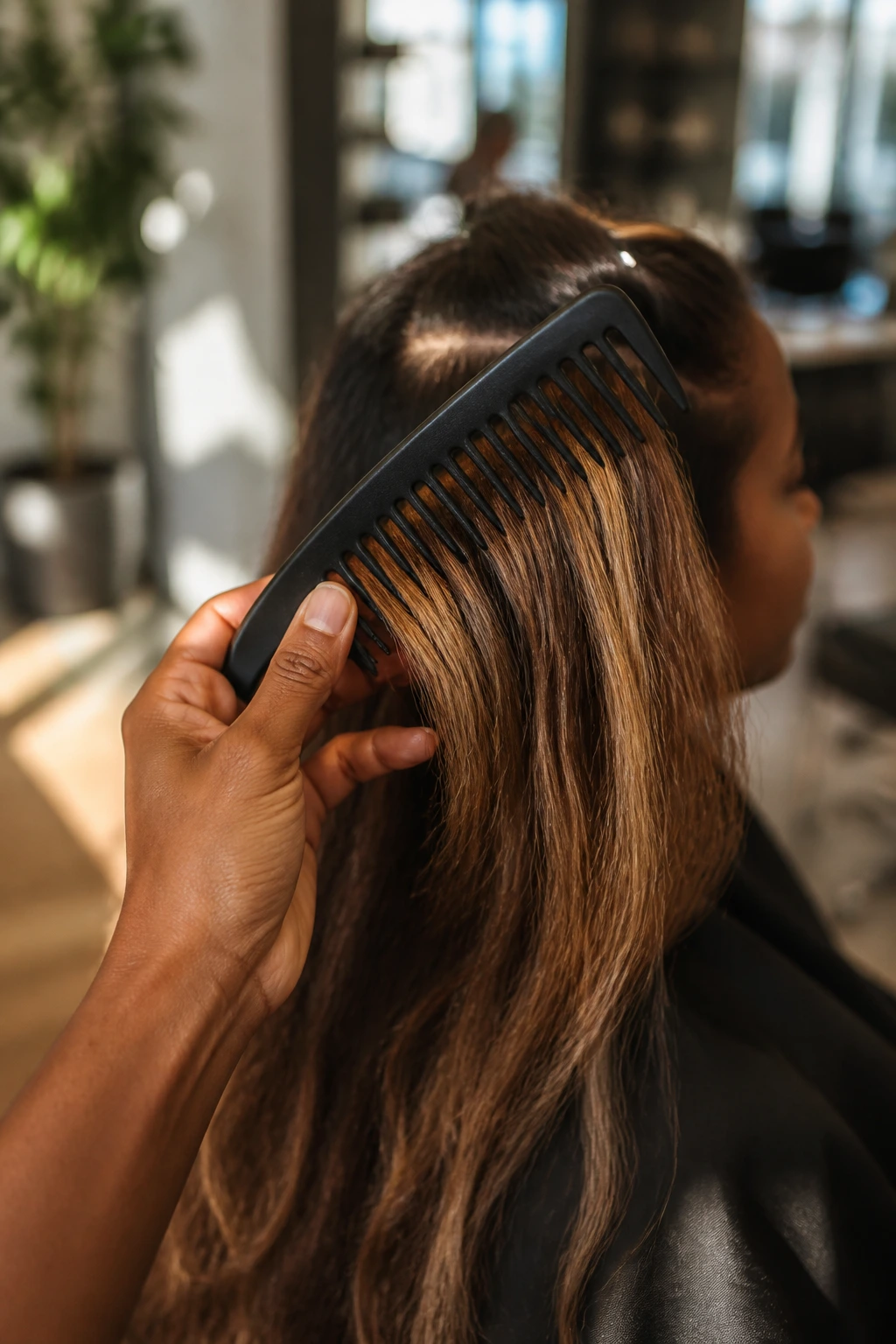
- Reference photos in daylight: Bring photos taken outside or near a window; indoor lighting hides brass and changes how beige or honey the color actually looks.
- A photo of your hair unstyled: Straight, curly, or stretched hair all show color differently, so your stylist needs the real texture, not just the blowout version.
- Sulfate-free shampoo: This slows down toner fade and keeps the blonde pieces from turning dull too fast.
- Moisture mask: Lightened dark hair gets thirsty, and a weekly mask helps the ends stay soft instead of stiff.
- Heat protectant spray or cream: If you curl, straighten, or blow-dry, this is not optional.
- Wide-tooth comb: It’s gentler on highlighted curls, coils, and fragile ends than a brush.
- Satin bonnet or scarf: Keeps the lighter pieces from rubbing dry overnight.
- Bond-building treatment: Helpful if you’re lifting more than a couple of levels or if your hair has seen bleach before.
- Tail comb and clips: Useful for sectioning and for showing your stylist exactly where you want the face frame or money piece.
- Purple or blue shampoo: Keep it on hand only if your blonde leans yellow or orange; warm caramel shades do not need constant toning.
Smart Shade Selection for Warm, Neutral, and Cool Undertones
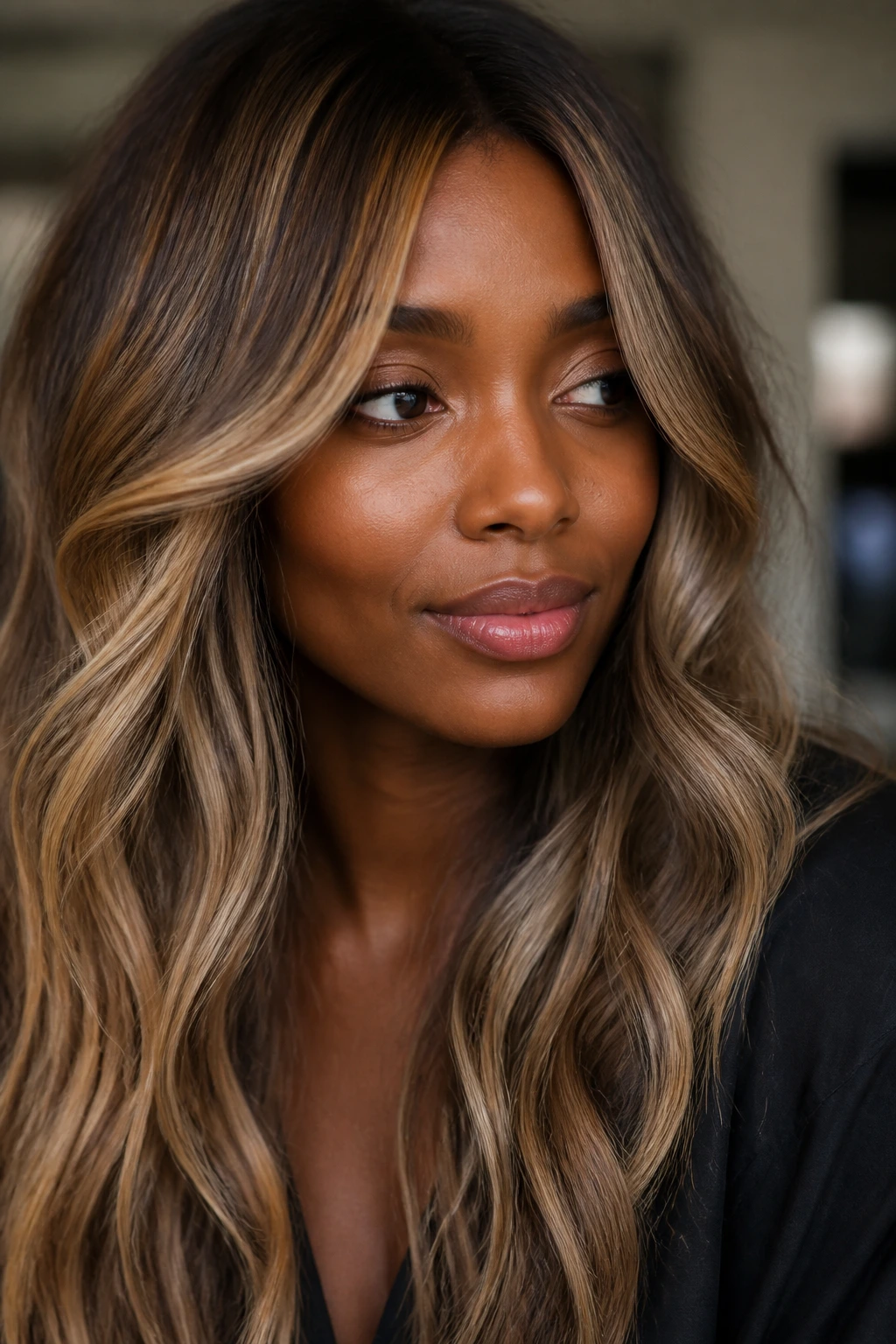
Warm undertones usually take honey, caramel, butterscotch, and maple very well. Those shades echo the skin instead of competing with it. If gold jewelry looks better on you than silver, that’s a useful clue, though it isn’t the whole story.
Neutral undertones can move in either direction, which is nice because you can choose what mood you want. Beige blonde and bronde often sit here beautifully. They give enough light to show dimension without drifting so yellow that the color gets louder than the haircut.
Cool undertones need more care. Mushroom, smoky champagne, and soft beige can look sharp and polished on deep cool skin, but too much ash can drain the color. A tiny amount of warmth in the gloss often saves the finish from turning flat.
Texture changes the choice again. Dense coils blur the pieces, so you can usually live with a touch more brightness. Straight or relaxed hair exposes every highlight line, which means the shade has to be cleaner and the placement has to be tighter. If you’re not sure, ask for the brightest pieces at the front and crown, then keep the rest one or two shades deeper.
How to Style the Highlights So They Show Up in Real Life
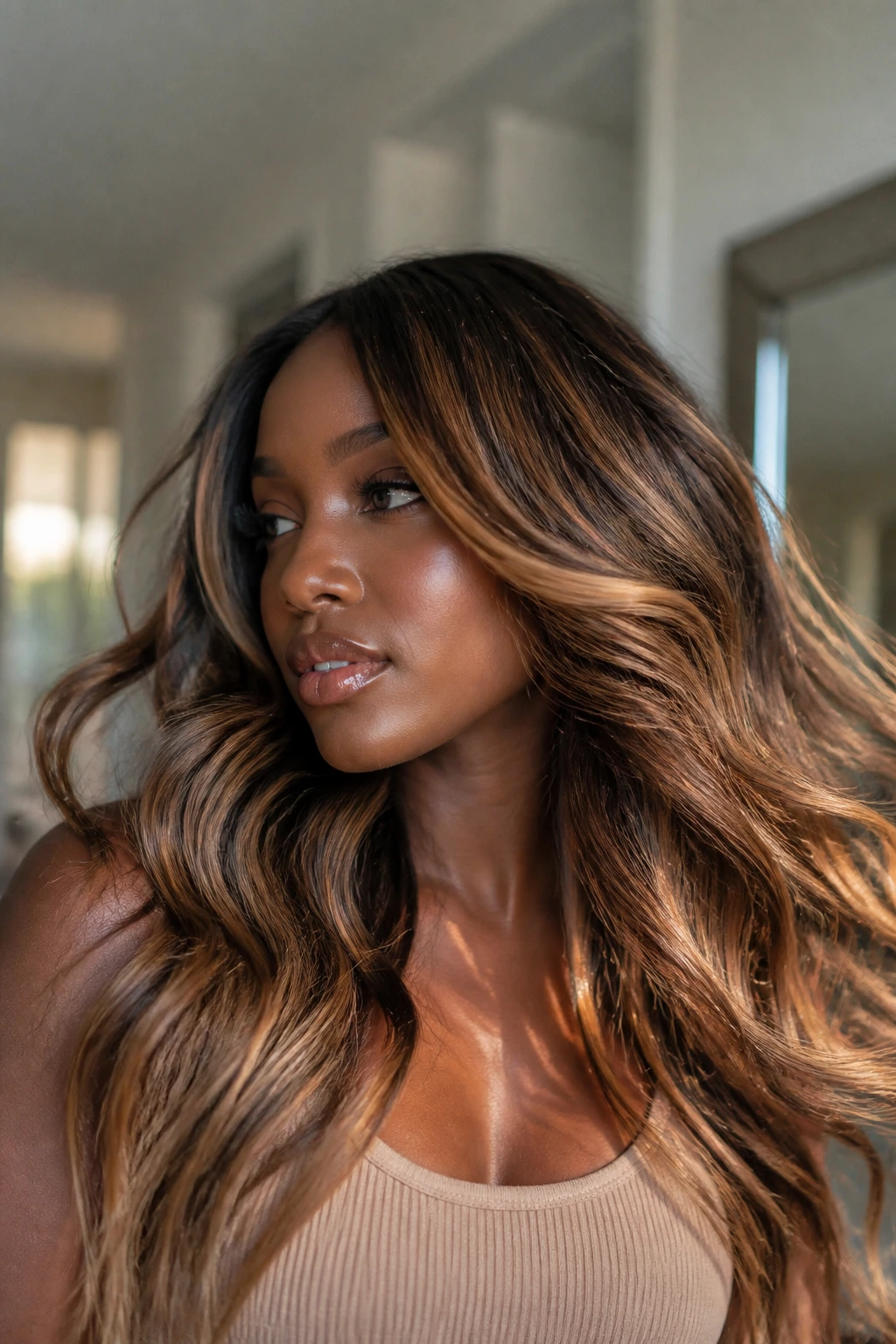
Loose waves: This is the easiest way to make blonde-brown dimension visible. A soft bend pulls the light through the ribboning, which is why balayage, foilayage, and ombré all look better with movement than pinned-flat hair.
Defined curls and coils: Use a curl cream or mousse that keeps clumping intact. If the curls are too separated, the highlight pattern can look busy instead of blended. A few highlight pieces around the top layer and front is usually enough.
Straight styles and silk presses: Keep the part clean and let the face frame do the work. Straight hair shows the geometry of the color, so the spacing has to be deliberate. A shine spray can help the blonde pieces reflect without looking greasy.
Updos and half-up styles: Peekaboo panels, halo highlights, and money pieces all show off here. A bun or claw-clip style will reveal layers you don’t see when the hair hangs down.
Braids and twists: Mixed extension colors, honey accents, and brunette-blonde blends read best when they’re woven through the pattern rather than placed in one heavy stripe. That keeps the braid looking dimensional.
Additional Tips and Tone Boosters
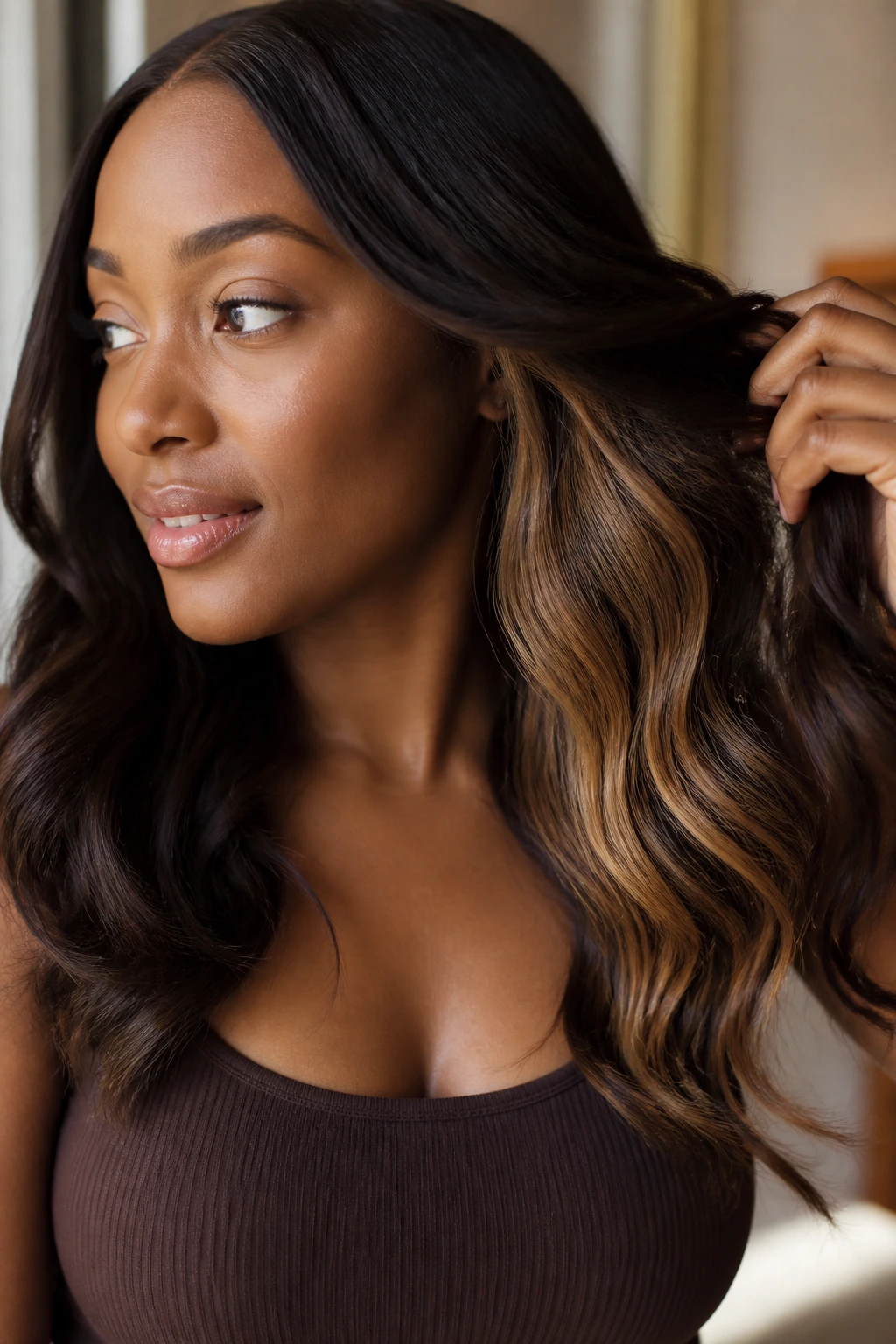
Color Enhancement: Ask for a gloss, not just a lift. A beige-gold gloss can keep honey and caramel highlights from turning orange, while a smoky beige toner helps cooler blonde stay clean on deep skin.
Customization: If you want the look softer, keep the front piece thin and let the brightness live mostly on the mids and ends. If you want drama, widen the money piece by a half inch and let the crown pieces sit one step brighter than the rest.
Serving Suggestions: Pair the color with a middle part for symmetry, a deep side part for a glam sweep, or big bends if you want the highlights to flash more obviously. A small edge of shine oil on the ends is enough; too much and the lighter pieces can look greasy.
Make-It-Yours: For low maintenance, choose balayage or a melt with a shadow root. For a bolder look, choose a champagne front frame or chunky golden highlights. For curls, keep the pieces broader and painted along the curl group. For braids or locs, use mixed extension shades instead of bleach so the dimension stays built in.
Maintenance, Toning, and Grow-Out Care
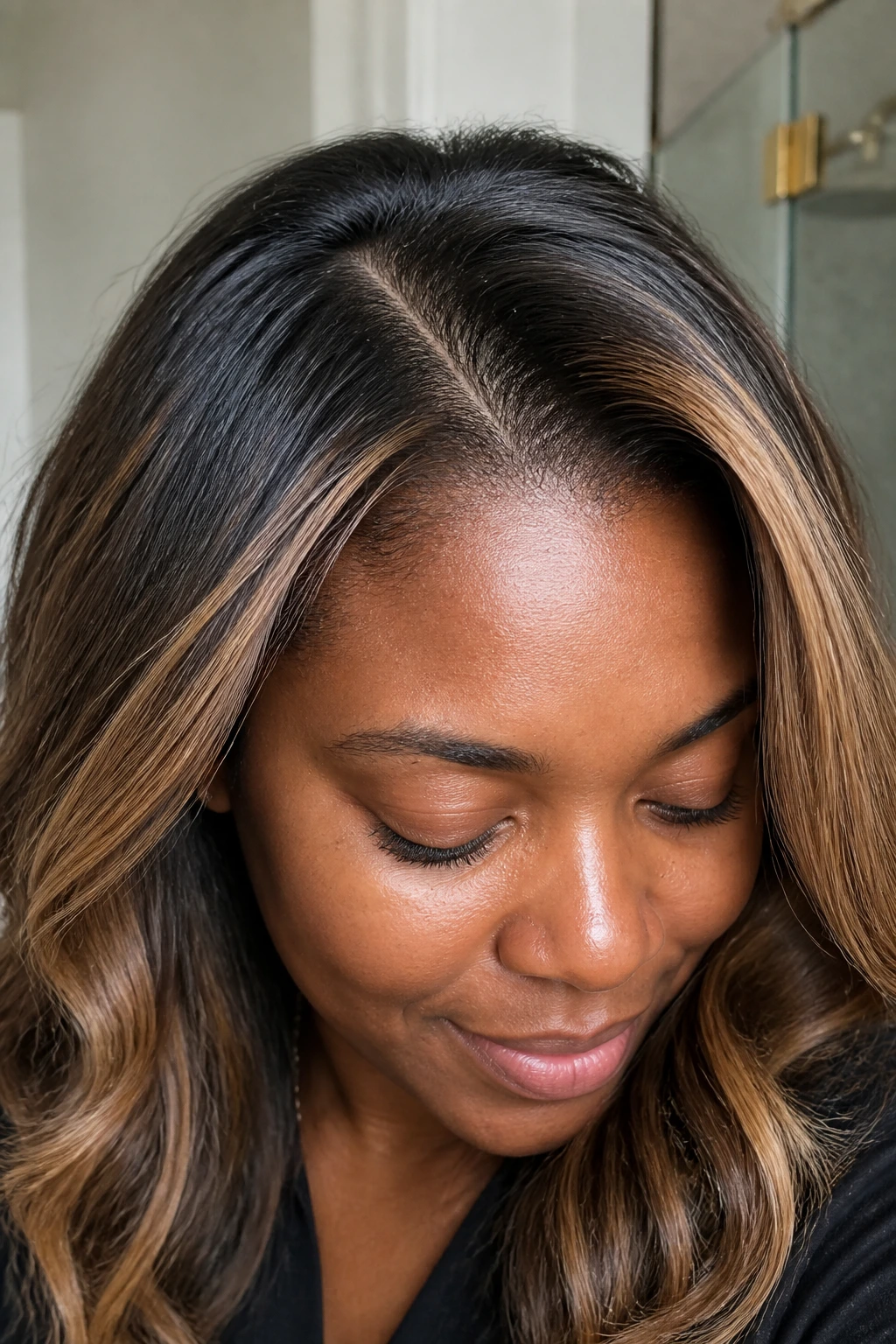
Most blonde-brown highlight looks on deep skin hold up best when the first touch-up is about 6-10 weeks out, depending on how bright the front pieces are. A soft balayage or melt can stretch longer. A bold money piece or champagne slice usually wants attention sooner because the regrowth line shows faster.
Wash with lukewarm water if you can stand it. Hot water strips toner fast, and dry hair shows brass sooner than healthy hair does. For warm looks like honey, caramel, and butterscotch, a purple shampoo once every 1-2 weeks is enough if the blonde starts to yellow. For cooler beige or champagne tones, use purple a little more often, but not every wash — that can dull the shine and make the color look gray.
If the blonde goes orange, you need blue-based correction. If it goes yellow, purple is the fix. Those two problems are not the same, and using the wrong shampoo just wastes a wash day. A gloss every 6-8 weeks helps keep the tone family steady, and a deep conditioner once a week keeps the ends from getting scratchy or see-through.
Trim the ends before they start to fray. Highlights expose split ends faster than solid brown hair does. That’s one of those annoyances that sounds small until you see it in a mirror. Then it’s all you can see.
Variations and Adaptations to Try
Warm Honey Edit: Keep everything in the honey-caramel lane and skip ashy toner entirely. This version is easy on warm undertones and looks especially good on curly and coily textures.
Cool Beige Edit: Shift the blonde toward beige, mushroom, and soft champagne. It suits neutral or cool undertones best and gives a cleaner, softer finish than bright gold.
Braided Accent Version: Swap bleach for mixed braiding hair shades in honey, caramel, and brunette. The result is lower stress on your natural hair and still gives visible depth.
Silk Press Spotlight: Use very fine toffee or beige pieces around the face and crown only. Straight styles show the color line more, so this variation keeps the brightness narrow and controlled.
Short Cut Pop: Concentrate the blonde at the fringe, temple, and crown if you’re wearing a pixie or cropped cut. Short hair needs a different map, or the color disappears into the shape.
Low-Maintenance Shadow Melt: Keep the root deep and let the ends brighten just one or two shades more than your base. This is the cleanest option if you want dimension without a strict toner schedule.
Common Mistakes to Avoid
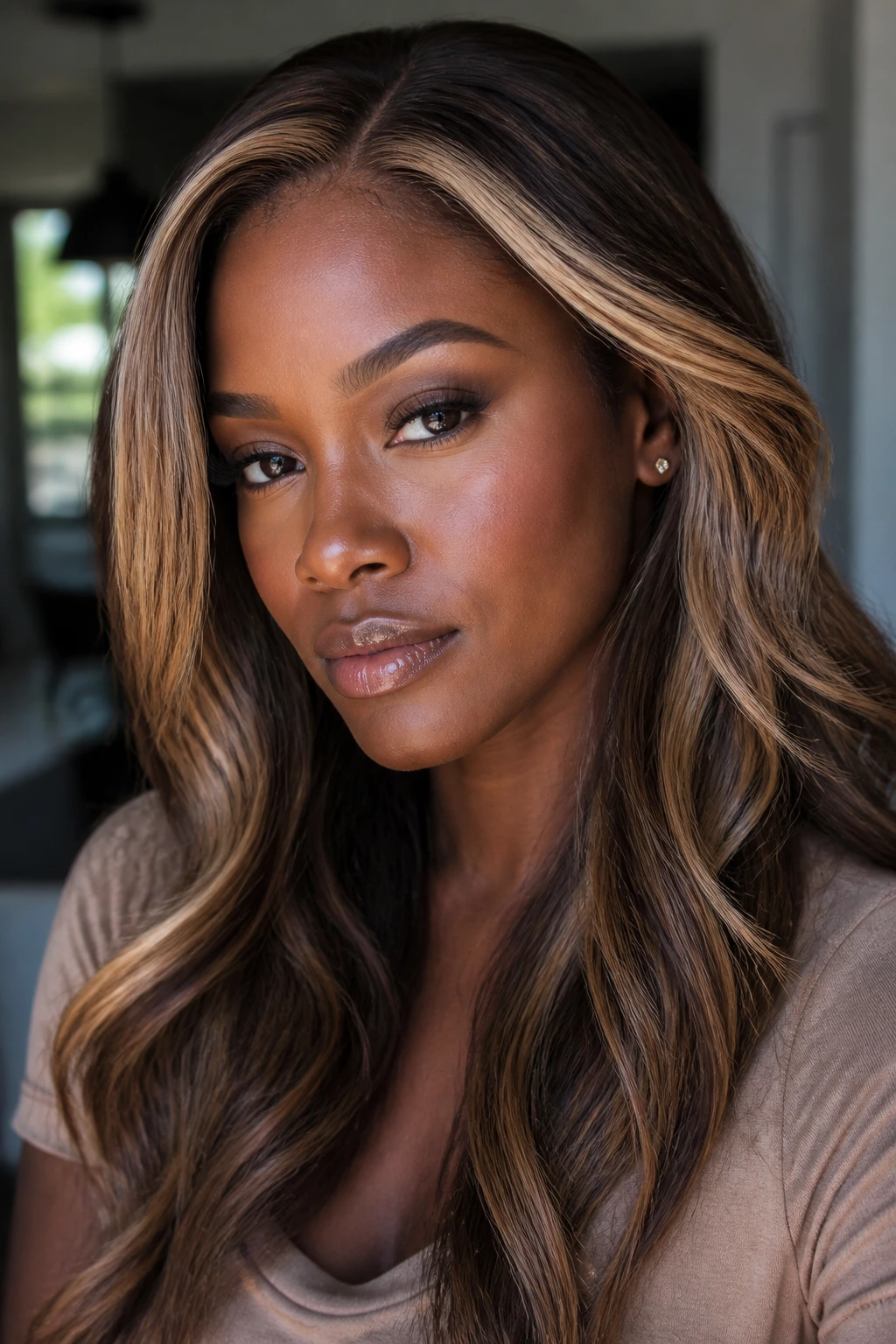
- Going too pale too fast: A light blonde that ignores your base can look disconnected on deep skin. Fix it by keeping some warmth in the gloss and leaving the root darker.
- Using one tone everywhere: Hair that is all honey or all ash can look flat. Blend two shades — for example, caramel plus beige — so the color has movement.
- Ignoring your texture: Straight hair exposes stripes, while curls blur them. If your hair is silky or fine, ask for finer pieces. If it’s dense or coily, you can use broader ribbons.
- Skipping toner: Raw lightener often looks yellow or orange. A gloss is what turns the lift into an actual wearable shade.
- Overdoing purple shampoo: Used too often, it can make warm blondes look dusty. Reserve it for when the color starts drifting yellow.
- Placing brightness too low or too high: If highlights sit only at the ends, the face can look dark. If they sit only at the root, they can look streaky. Spread the color where your haircut moves.
Frequently Asked Questions
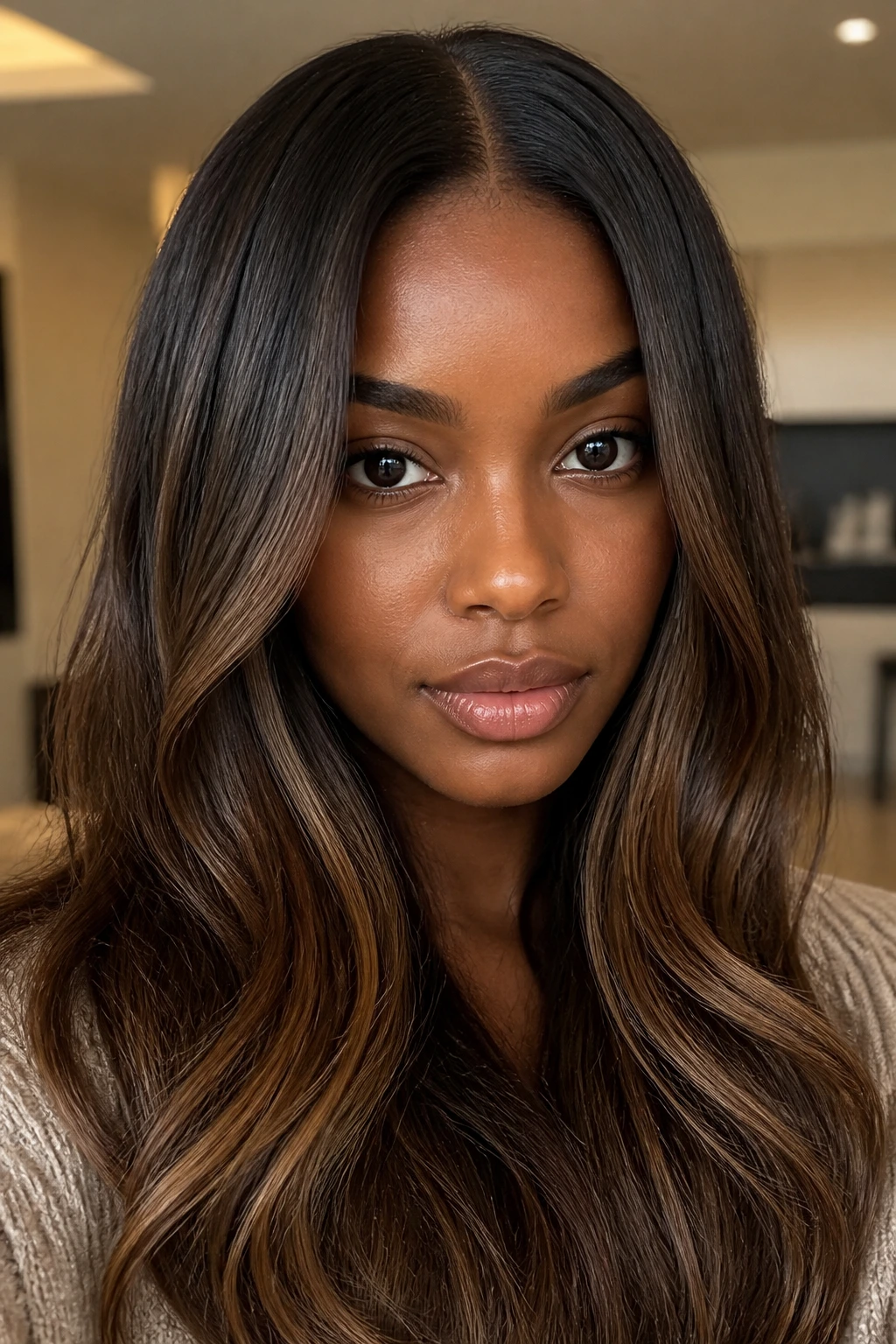
What blonde shades look best on deep skin tones?
Honey, caramel, beige, bronze, butterscotch, and smoky champagne are the most dependable starting points. The right one depends on whether your undertone leans warm, neutral, or cool, and on how much contrast you want against your natural brown base.
Can deep skin wear platinum blonde highlights?
Yes, but platinum works best in small doses on deep skin. A few fine ribbons or a controlled money piece usually looks stronger than a full head of icy blonde, which can wipe out the richness of the base.
Should I choose balayage or foils?
Balayage gives a softer, more lived-in blend, while foils create cleaner lift and brighter contrast. If you want a gentle melt, balayage is easier to wear. If you want a sharper face frame or a brighter champagne result, foils are the better tool.
How often do these highlights need toning?
Warm honey and caramel tones can go 6-8 weeks between glosses if you’re gentle with washing. Cooler beige, champagne, or ash-leaning shades may need toning a little sooner, especially if your water is hard or you use heat a lot.
Do blonde brown highlights work on curly and coily hair?
They do, and texture actually helps soften the look. The trick is to paint in broader ribbons or halo placement so the color follows the curl pattern instead of cutting across it in straight stripes.
What if my highlights turn orange?
That usually means the toner has faded and the underlying pigment is showing through. A blue-based shampoo or gloss can help if the orange is strong, while a warmer beige toner can calm softer brass without overcooling the hair.
Can I get this look without bleaching my whole head?
Absolutely. Balayage, face-framing pieces, halo highlights, peekaboo panels, and mixed braiding hair all create the effect without a full blonding service. That’s often the smarter move on deep skin anyway, because it keeps the color richer.
How do I keep the blonde from looking dry?
Treat the ends like they need more care than the roots, because they do. A weekly mask, a heat protectant before styling, and a satin bonnet at night go a long way toward keeping the light pieces smooth instead of rough.
What’s the easiest low-maintenance option on this list?
A soft balayage or shadow melt will usually be the easiest to live with. The grow-out line stays blurred, and you can stretch the salon visits farther than you can with a bright front money piece.
The Last Word on Blonde Brown Highlights for Deep Skin Tones
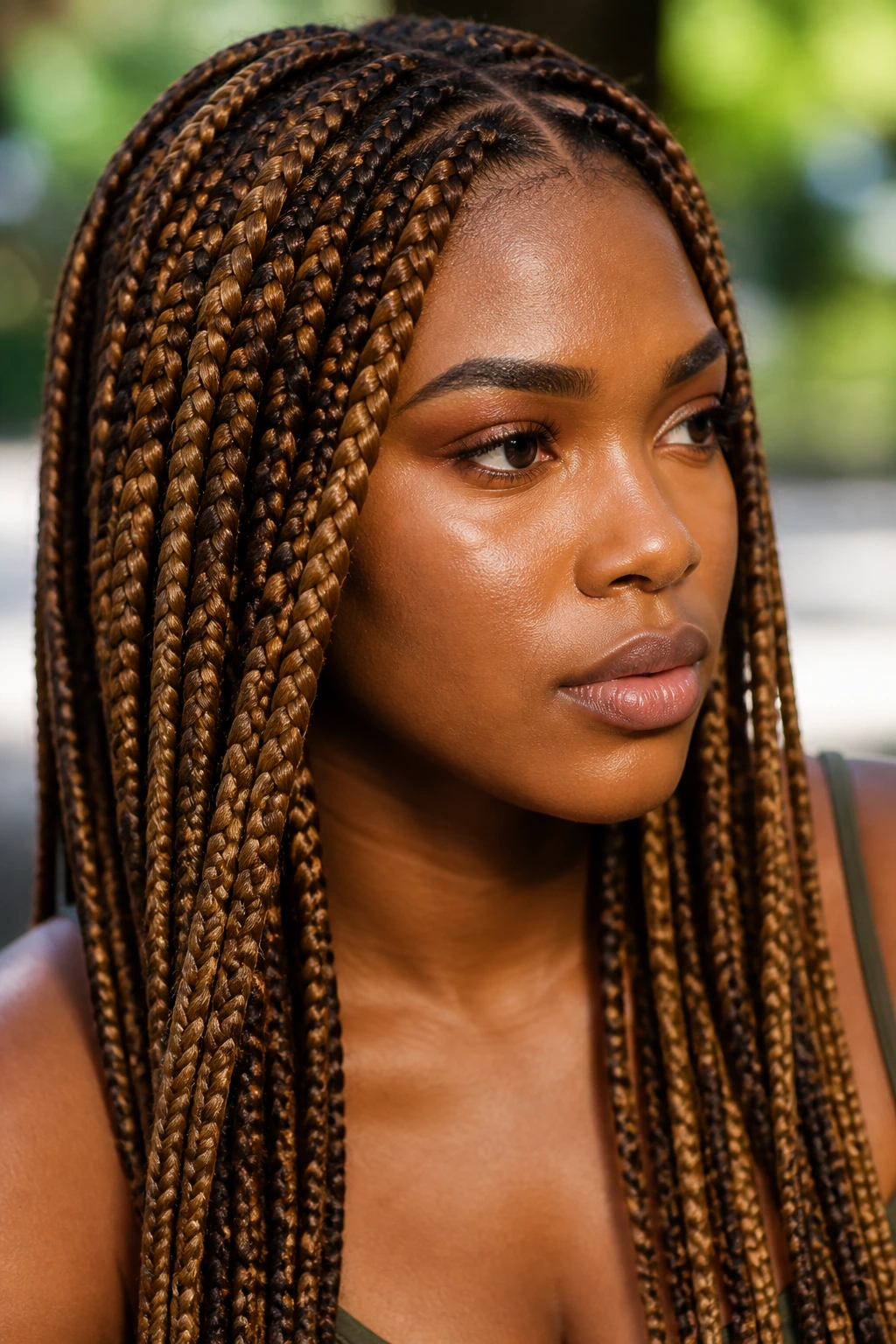
The best blonde brown highlights for deep skin tones do not fight the richness of the base. They sit inside it. Honey, caramel, beige, bronze, and champagne all work when they’re placed with some restraint and toned with a little judgment.
That’s the part too many highlight photos miss. The color should move with the hair, not sit on it like a sticker. Keep the root deep, choose a tone that respects your undertone, and let the highlight live where the haircut already wants to shine.