



A square face does not need to be hidden. It needs color that moves.
The best balayage for pale skin and square faces bends the eye upward around the cheekbones, then lets the light fall away before it camps out at the jaw. That’s the whole trick. If the brightest pieces stop dead at chin level, the face can start to look boxy; if the tone is too yellow on very light skin, the color can turn loud in the wrong way. One small placement choice changes the whole read.
That’s why the strongest looks below lean on curved ribbons, blurred roots, and tones that sit somewhere between clean and lived-in. Champagne beige, mushroom brown, pearl blonde, copper, rose gold—each one does a different job, and some are calmer while others bring more contrast. None of them are random. The good ones know where to begin and, more important, where to stop.
Why These Balayage Ideas Work on Pale Skin and Square Faces
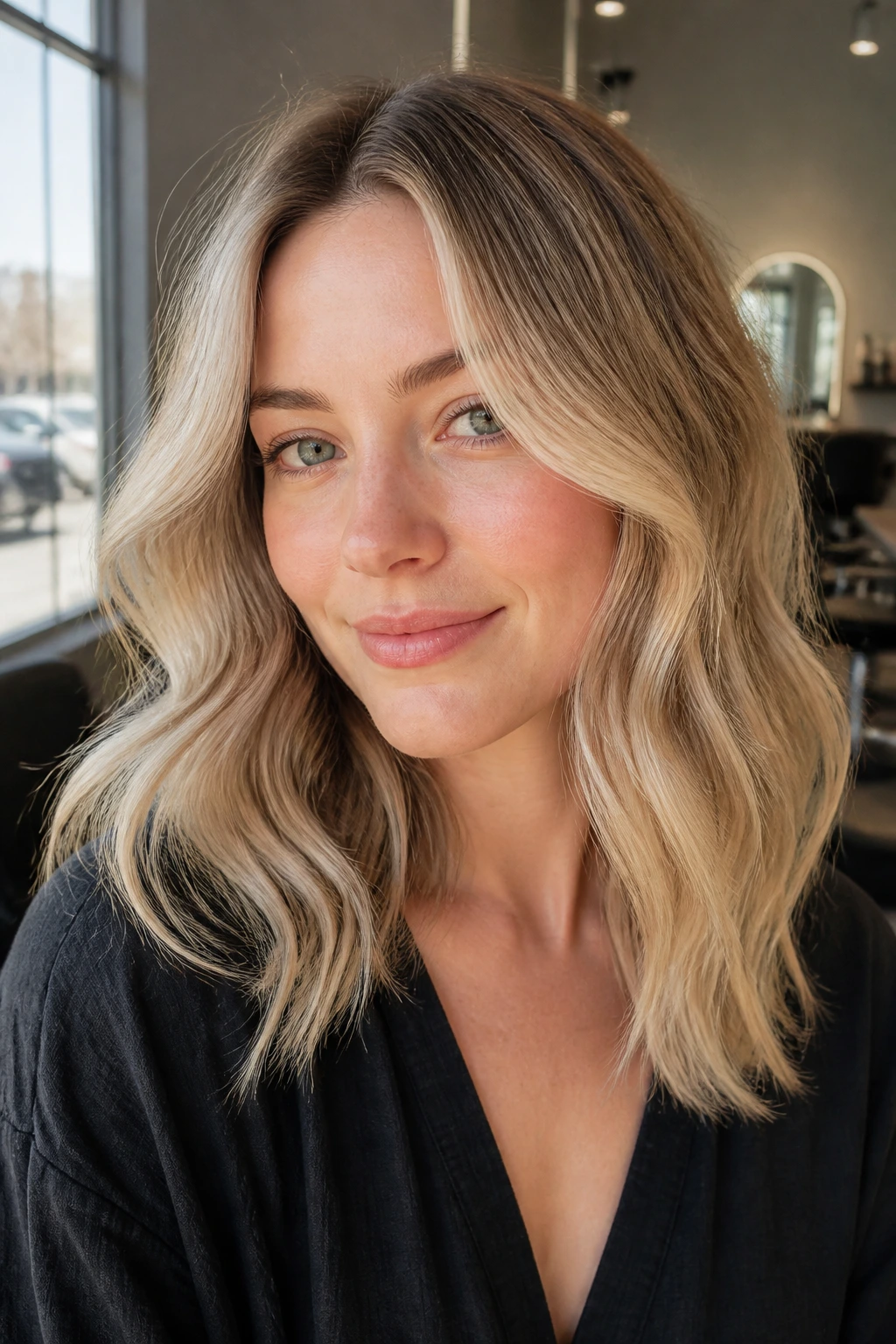
- Cheekbone lift, not jawline punch: The lighter ribbons sit higher on the face, so the eye goes up and out instead of landing on the corners of the jaw.
- Tone matters as much as brightness: Beige, mushroom, pearl, and muted copper behave better on pale skin than harsh yellow blonde or a flat ash that can make the complexion look drained.
- Soft grow-out buys you time: Hand-painted placement and blurred roots keep the color looking intentional after the first few weeks of regrowth.
- Movement shows the dimension: Waves, bends, and layers let the color shift as you move; a pin-straight sheet of hair can hide half the point.
- You can steer the mood warm or cool: A gloss change can push the same placement toward champagne, honey, beige, or smoky blonde without rebuilding the whole look.
- Square faces benefit from curve: Curtain fringe, side parts, and diagonal ribbons all help break up the straight lines around the forehead and jaw.
1. Champagne Beige Balayage
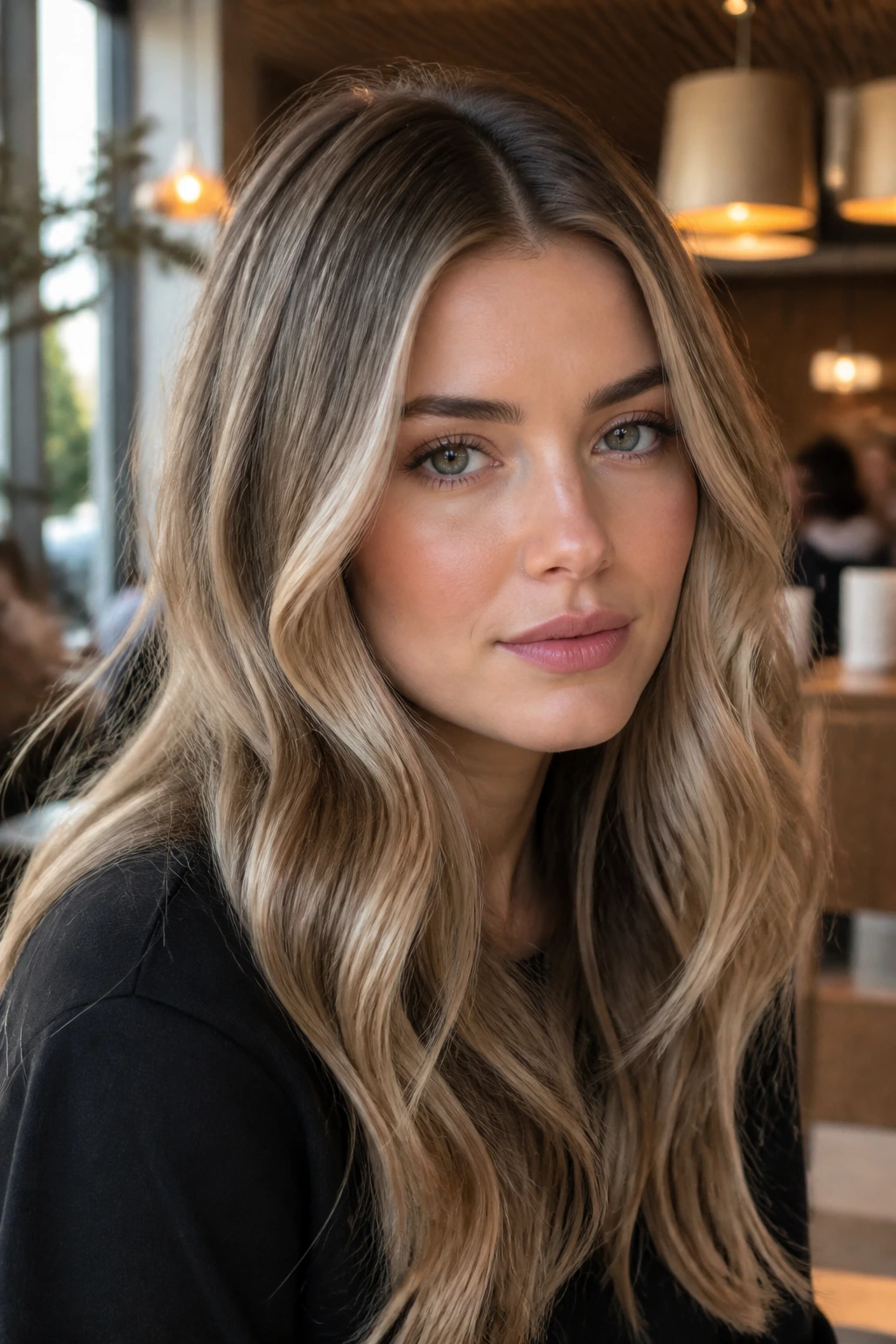
Champagne beige is the safe bet that never feels boring. It has a pale gold softness, but the beige keeps it from reading brassy, which is exactly why it works so well on pale skin that goes pink or porcelain. On a square face, I like the brightest pieces to begin around the outer cheekbone and fade before the chin. That little bit of restraint keeps the jaw from looking heavier than it is.
Ask for a level 8 beige blonde with a soft level 6 or 7 root shadow. If your hair is naturally darker, keep the contrast gentle; a jump that’s too big can look stripey on a square cut. Wavy shoulder-length layers make this shade look expensive without trying too hard. Straight hair can wear it, sure, but the bends are where it really opens up.
The best version is glossy, not frosted. You want the hair to look like it caught late afternoon light, not like it spent an hour in a toner cap.
2. Mushroom Brown Melt
Mushroom brown is one of my favorite answers for pale skin when blonde feels too bright. It sits in that cool-beige zone where brunette depth meets a smoky glaze, and it doesn’t fight a pink or neutral complexion. On a square face, the shadow at the root and mid-lengths softens the edges near the temples and jawline. That matters more than people think.
Why It Flatters a Square Jaw
The darker root keeps the face from widening visually at the corners, while the lighter ends pull the eye downward in a softer line. It is not loud. That is the point.
- Best base: Medium to light brown
- Best finish: Neutral or ash-beige gloss
- Best cut: Long layers or a collarbone lob
- Best styling move: A loose bend from ear level down
If you want dimension without a heavy blonde streak, this is the one to try. It looks especially good when the front pieces are only one or two shades lighter than the base.
3. Pearl Blonde Face Frame
Pearl blonde is clean, cool, and a little reflective in a way that flatters pale skin without washing it out. It works because the tone isn’t screaming yellow, and it isn’t stark white either. There’s a softness to it that keeps the face from looking chalky. On square faces, the face frame should stay thin and airy at the temples, then feather down toward the cheek.
What I like here is the restraint. Too many pearl blondes get overdone at the front, and then the face looks wider instead of softer. Keep the brightest strands narrow, and let the rest of the color melt into a pale beige canvas. A center part with soft curtain pieces is especially good if your jawline is strong.
This is a shade that wants gloss. If the ends look dry, the whole thing can turn flat fast, so a shine spray or serum makes a real difference.
4. Caramel Ribbon Balayage
Caramel ribbon balayage is warmer, richer, and less delicate than the paler blondes above. On pale skin, the caramel should be muted—not orange, not sticky-looking, just a warm thread through the hair. That warm note keeps light complexions from going ghostly, especially when the weather or lighting makes skin look extra fair. For square faces, the ribbons should sweep diagonally through the mid-lengths rather than sit in a blunt band.
This is one of those looks that becomes smarter when the cut has movement. A blunt straight line can make caramel read heavy, but layered ends and a soft bend break it up. If your skin leans rosy, keep the caramel closer to toffee than honey. That small adjustment keeps the hair and skin from competing.
It’s a good option if you want visible dimension without a dramatic blonde transformation.
5. Ash Bronde With Shadow Root
Bronde is the middle ground I keep coming back to when someone wants neither full blonde nor obvious brunette. In ash bronde, the brown stays present, the blonde stays muted, and the whole thing feels quietly dimensional. Pale skin can wear it beautifully because the ash cuts the warmth before it gets brassy. The shadow root also helps a square face by keeping the top part of the head visually softer and less wide.
What Makes It Different
The transition is more important than the color itself. If the root is blurred and the mid-lengths are painted in soft ribbons, the face looks longer and less angular. If the blonde starts too high or too thick, it loses the point.
This look is especially strong on long bobs and medium layers. I’d skip ultra-chunky pieces here. Fine, broken ribbons look far better.
6. Strawberry Cream Balayage
Can pale skin wear pink-toned blonde without looking cartoonish? Yes, if the color is diluted enough. Strawberry cream lives in that softened space between peach, rose, and vanilla, so it feels bright without screaming “fashion color.” On square faces, the soft warmth works best when it’s concentrated around the upper cheek and temple area, then faded through the ends.
This shade is a little more temperamental than beige or mushroom. If your skin flushes easily, too much pink can echo that redness. The fix is easy: ask for more cream than strawberry, and keep the rose tone as a whisper rather than the whole story. Loose waves help a lot, because they keep the color from reading like one flat panel.
It’s a lovely choice if you want something sweeter and softer than champagne blonde.
7. Soft Copper Balayage
Soft copper brings warmth to pale skin without the harshness of bright ginger. The best version is muted, almost glazed, with copper sitting on top of a darker base like a thin layer of paint rather than a full color block. On a square face, copper works best when the brighter pieces travel in curved lines around the cheekbones and stop before the jaw gets too much attention.
Styling It So It Doesn’t Go Loud
Keep the finish loose. A round-brush blowout or a soft wave helps the copper catch light in pieces instead of all at once. If the hair is pin-straight, copper can look heavier and a little more obvious than you may want.
This is a good shade if your pale skin has some peach or neutral warmth. If your complexion is very pink, ask for a brown-copper mix instead of a true copper.
8. Beige Blonde Curtain-Frame
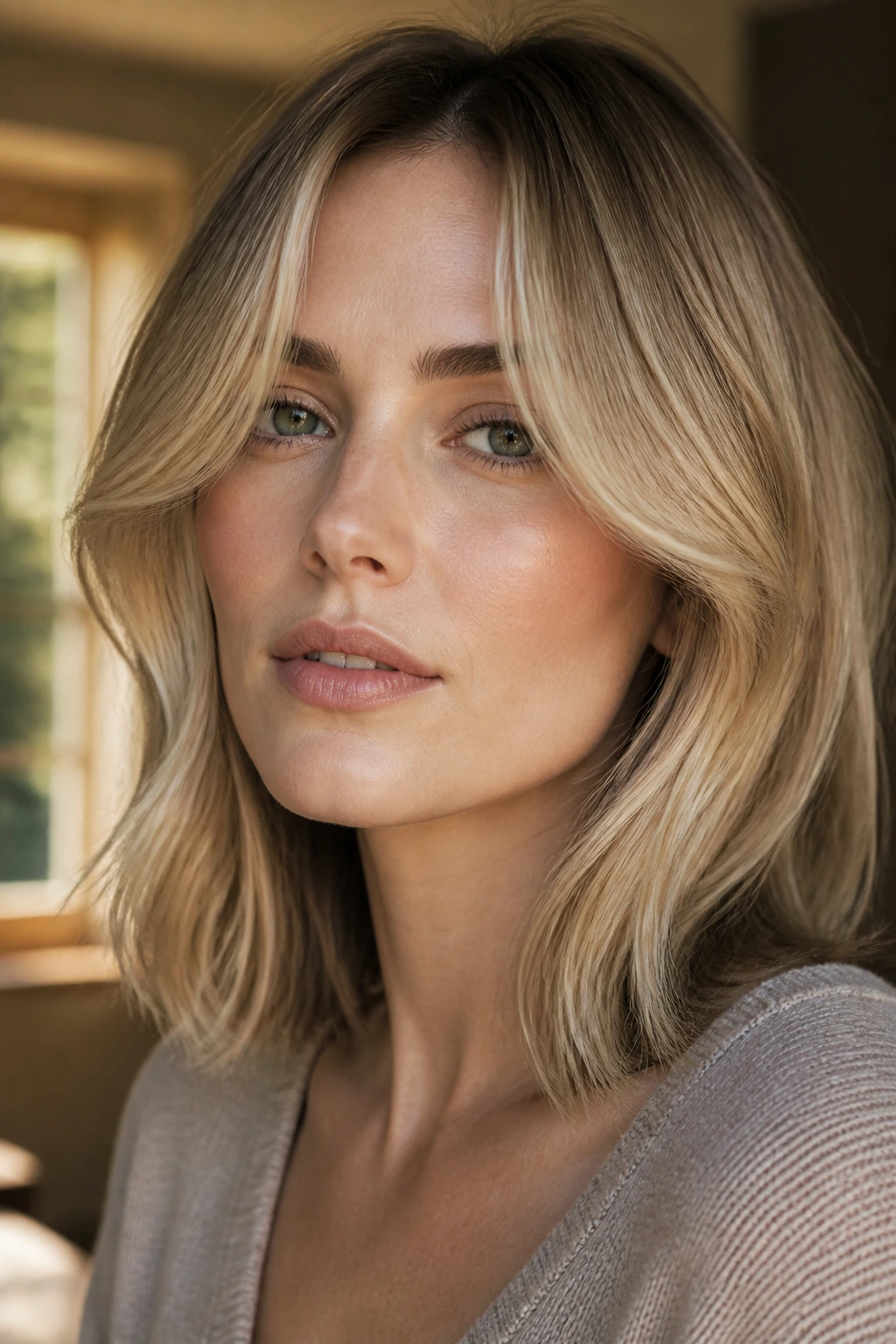
A beige blonde curtain-frame does a lot of the heavy lifting for square faces. The curtain pieces split the forehead, and the beige blonde keeps the front from looking too stark against pale skin. This is one of those looks that feels easy because the haircut and the color are working together instead of fighting for attention.
The lightest pieces should sit where the hair naturally falls away from the face—temple, cheekbone, and just below the eye line. That creates a soft diagonal, which is better than a hard bright stripe. Keep the ends slightly lighter than the root zone, but don’t chase the palest blonde possible. Beige is doing the real work here.
I like this on long bobs, layered mids, and anything with a bend around the face. It makes the jaw look gentler without hiding it.
9. Smoky Taupe Ombre
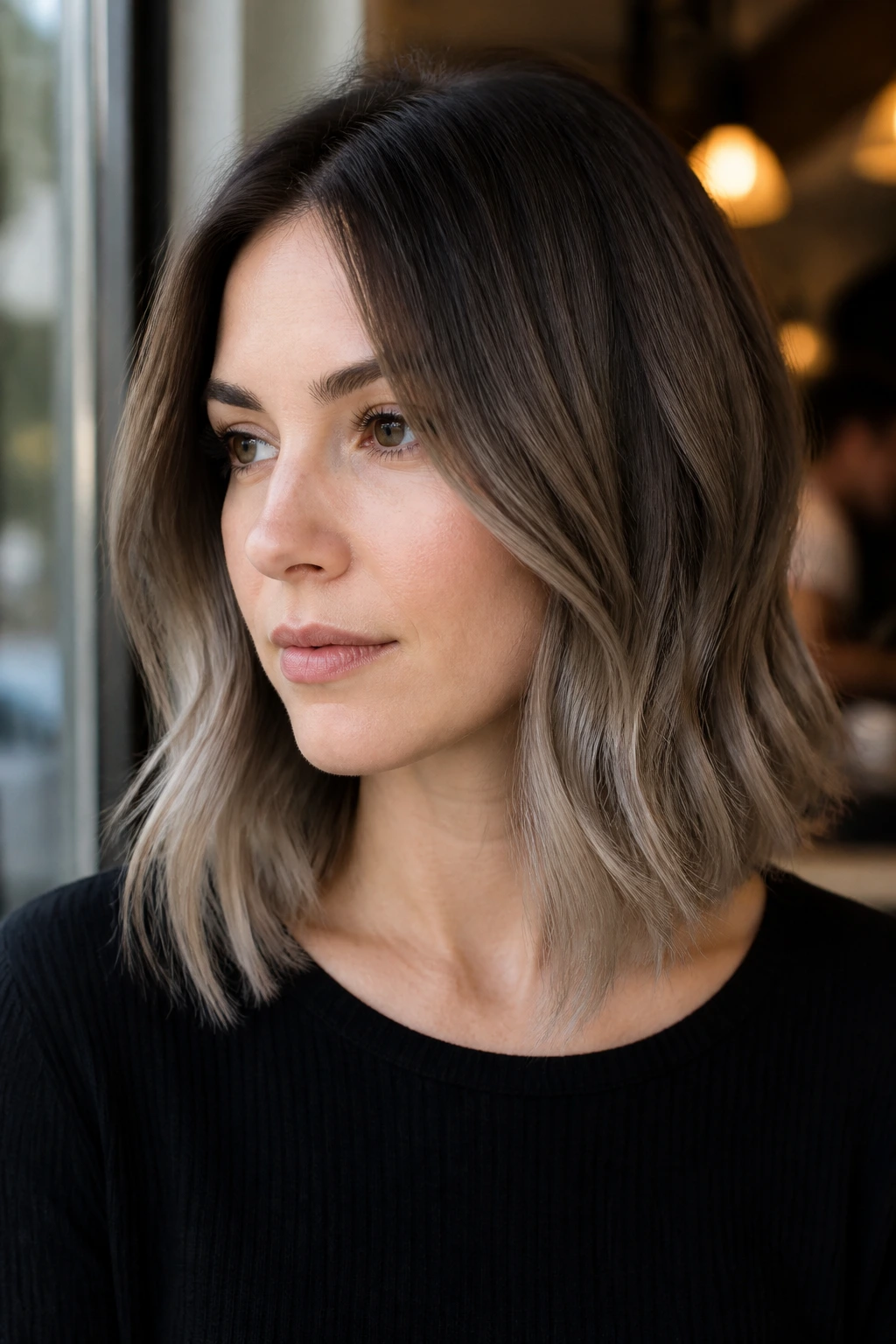
Smoky taupe ombre leans cooler and more fashion-forward than classic balayage, but it still behaves well on pale skin because the tone stays muted. The darker root area slides into taupe ends with a hazy transition, which means the eye doesn’t get stuck at the jawline. That’s useful on square faces, where a blunt color break can feel too geometric.
If you want low maintenance and you dislike obvious blonde, this is a strong choice. It looks especially good on straight-to-wavy hair with a clean edge. A bob or shoulder-length cut lets the taupe ends skim the collarbone without building width at the lower face.
The key is keeping the ombre soft. A sharp line kills the effect. A smoky melt makes it work.
10. Honey-Toffee Balayage
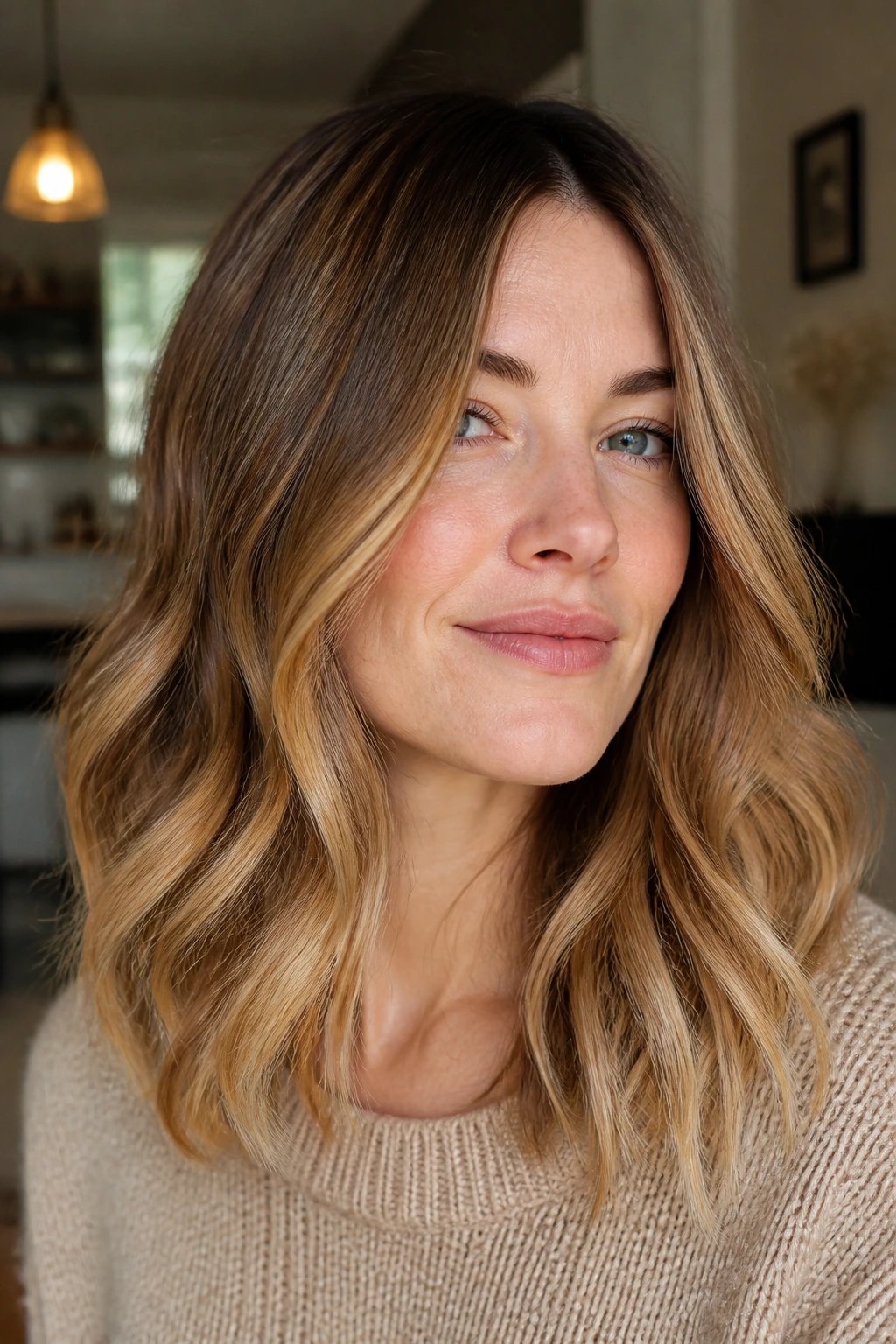
Honey-toffee balayage is warmer than champagne and softer than gold. On pale skin, that middle ground matters, because too much yellow can start looking like dye rather than light. The toffee depth near the root and the honey warmth through the ends create dimension that suits square faces, especially when the color is painted on a diagonal.
This is one of the friendliest shades for layered cuts. The lighter pieces peek out as the hair moves, which keeps the style from feeling heavy. If your skin has neutral undertones, it can be especially flattering. If you’re very pink, keep the honey muted and let the toffee do more of the talking.
A loose wave or a half-bend with a flat iron is enough. No need to over-style it.
11. Rose Gold Melt
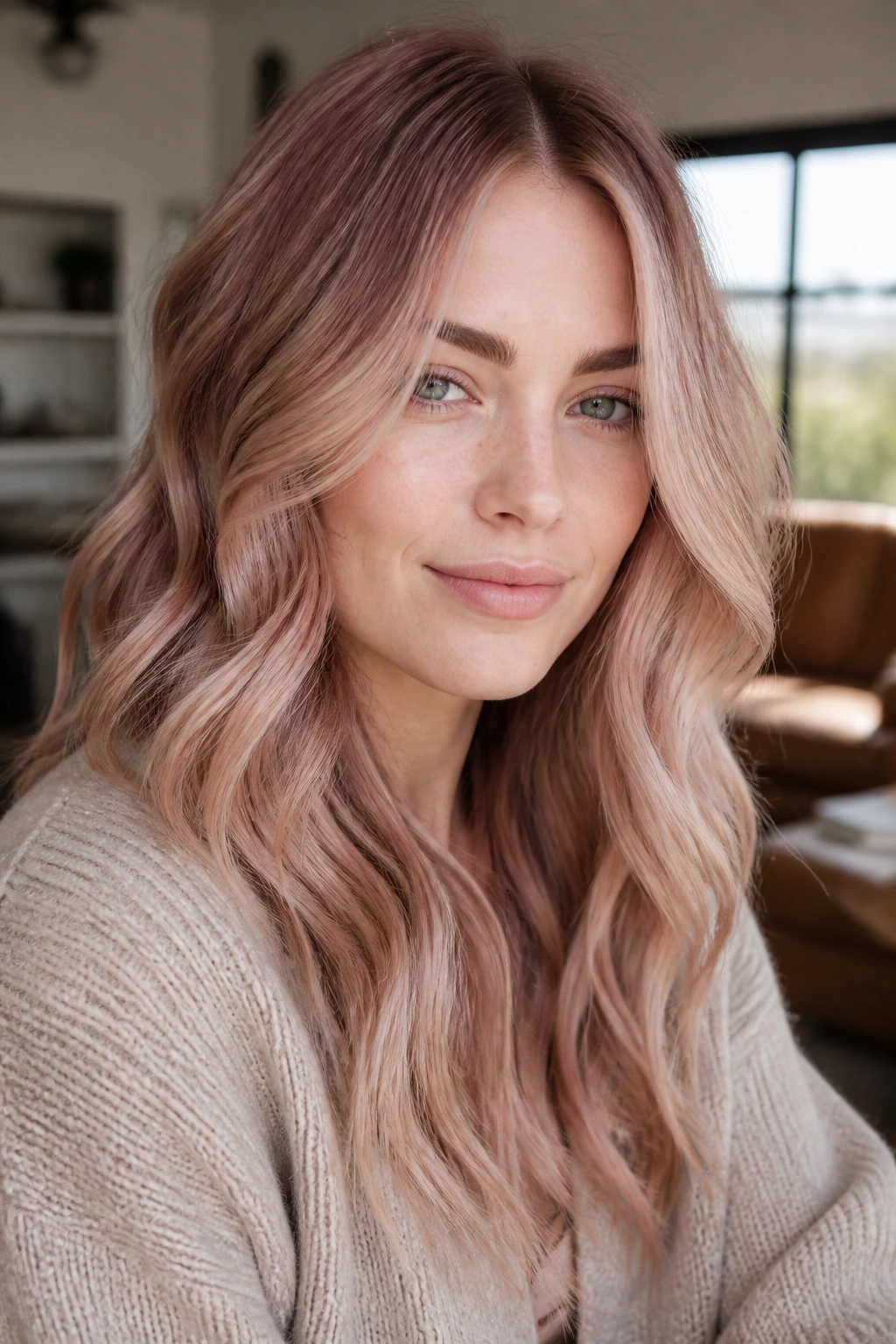
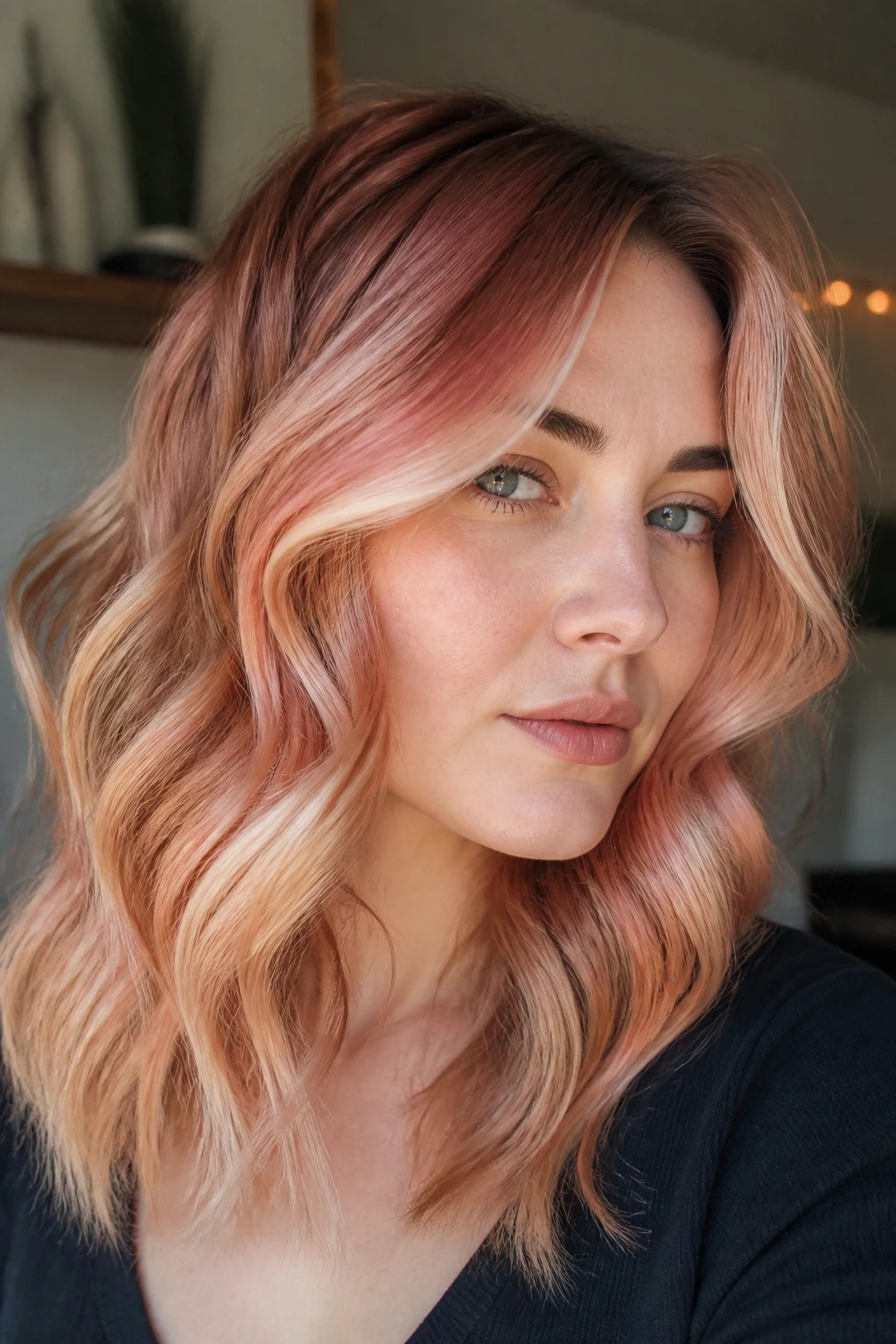
Rose gold can go wrong fast. Too much pink and it looks like a costume color; too much gold and it loses the point. The version that works on pale skin is softened, almost dusty, with a beige base underneath. On a square face, the melt should be smooth enough that the eye reads shimmer first and pigment second.
The Part That Matters
The front pieces should be the lightest, but not the brightest. That distinction saves the look. Bright pink at the jawline is a shortcut to emphasizing the widest part of the face, and that’s exactly what you do not want.
- Best undertones: Neutral or cool-neutral
- Best haircut: Long layers or a soft lob
- Best finish: Loose bends, not tight curls
- Best upkeep: Tone refresh every 4 to 6 weeks
This is a fun choice if you want a little personality without giving up wearability.
12. Mocha and Cream Balayage
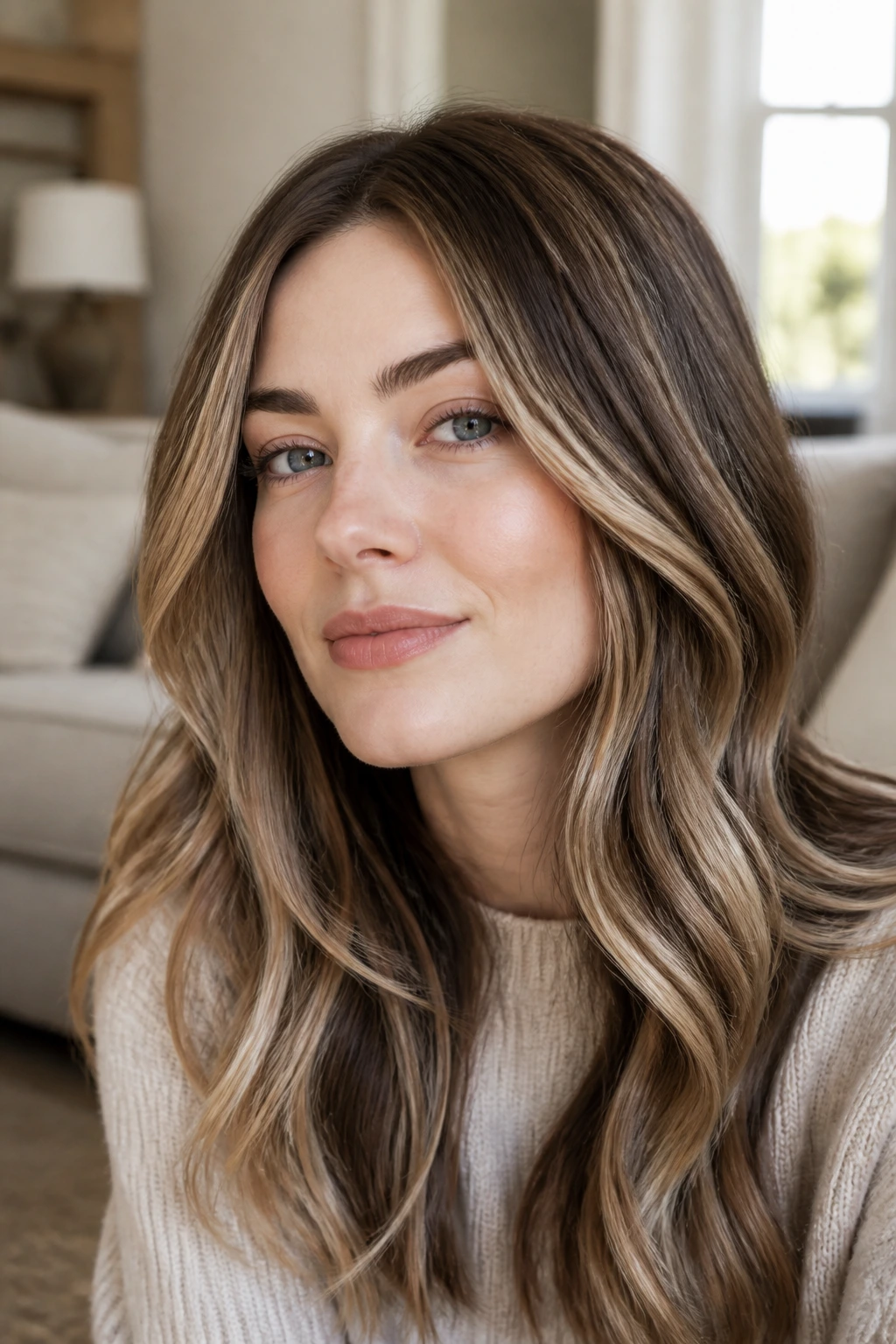
Can high contrast still soften a square face? Yes, if the cream is broken up instead of dropped in thick stripes. Mocha and cream balayage uses a rich brunette base to give the pale blonde ribbons something to live against. The result is dimensional, not busy. On pale skin, the mocha prevents the blonde from looking washed out; on square faces, the irregular placement keeps the jaw from reading too rigidly.
I like this best when the face frame is softened around the temples and the front sections don’t all lighten to the same degree. That unevenness is good. It makes the color look hand-painted, which is the whole point. A softly waved blowout gives the contrast a chance to show without looking striped.
If you wear a lot of black, this is a smart one. The color has enough depth to hold its own.
13. Icy Beige Bob Balayage
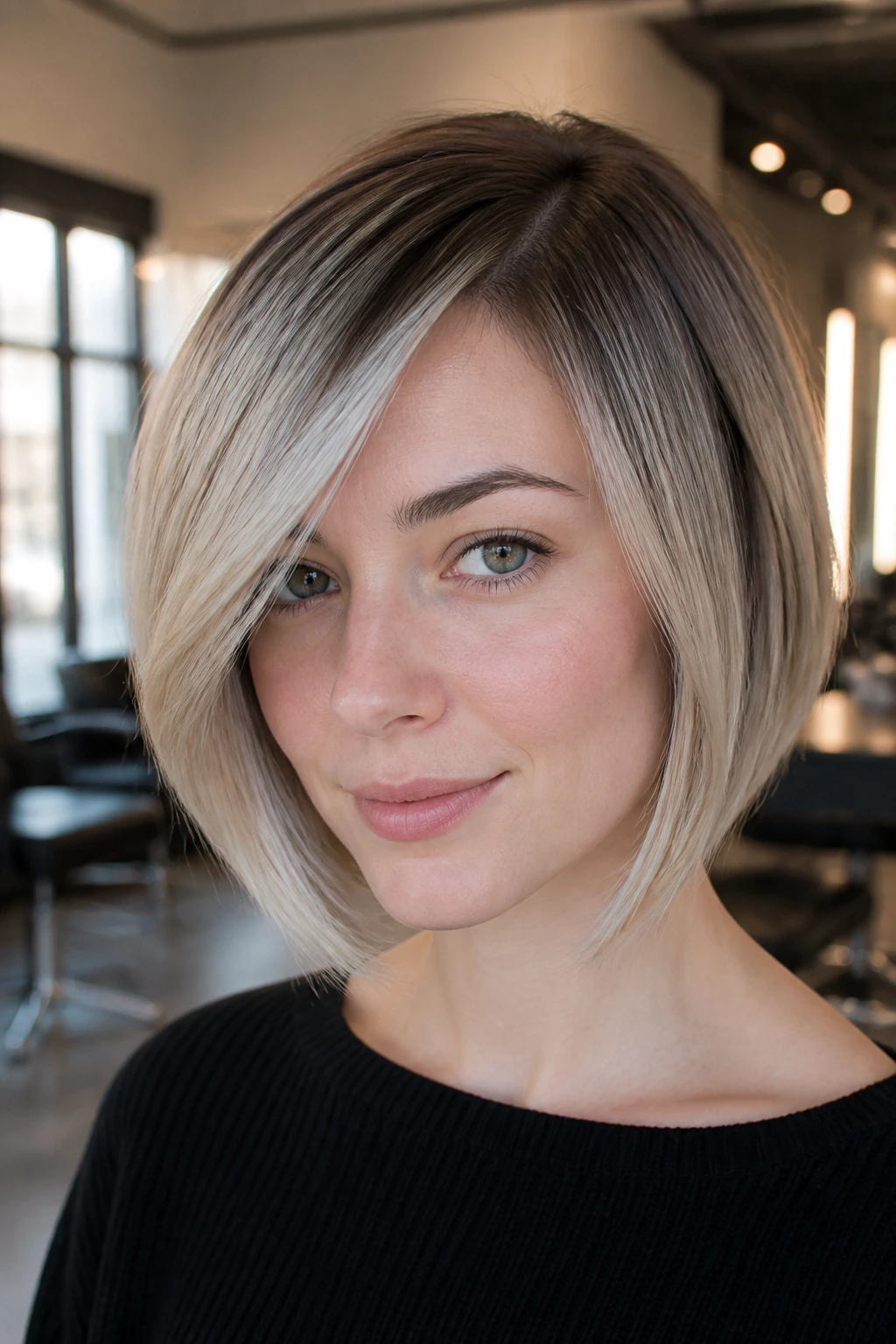
Short hair changes the game, because there’s less length for the color to travel. On a bob, icy beige balayage has to be subtle and carefully placed, or it turns into chunky spots that fight the haircut. Pale skin loves the beige part of the formula; the icy edge keeps it crisp. For square faces, the trick is to keep brightness just off the corners of the jaw and a touch lighter through the top layers.
A side part helps here. So does a slight curve under the ends. Straight across bobs can look boxy with the wrong highlights, but a little bend at the ends softens the line. I would not use very thick face-framing panels on this cut.
It’s tidy, polished, and much less icy than the name sounds.
14. Cinnamon Glaze Balayage
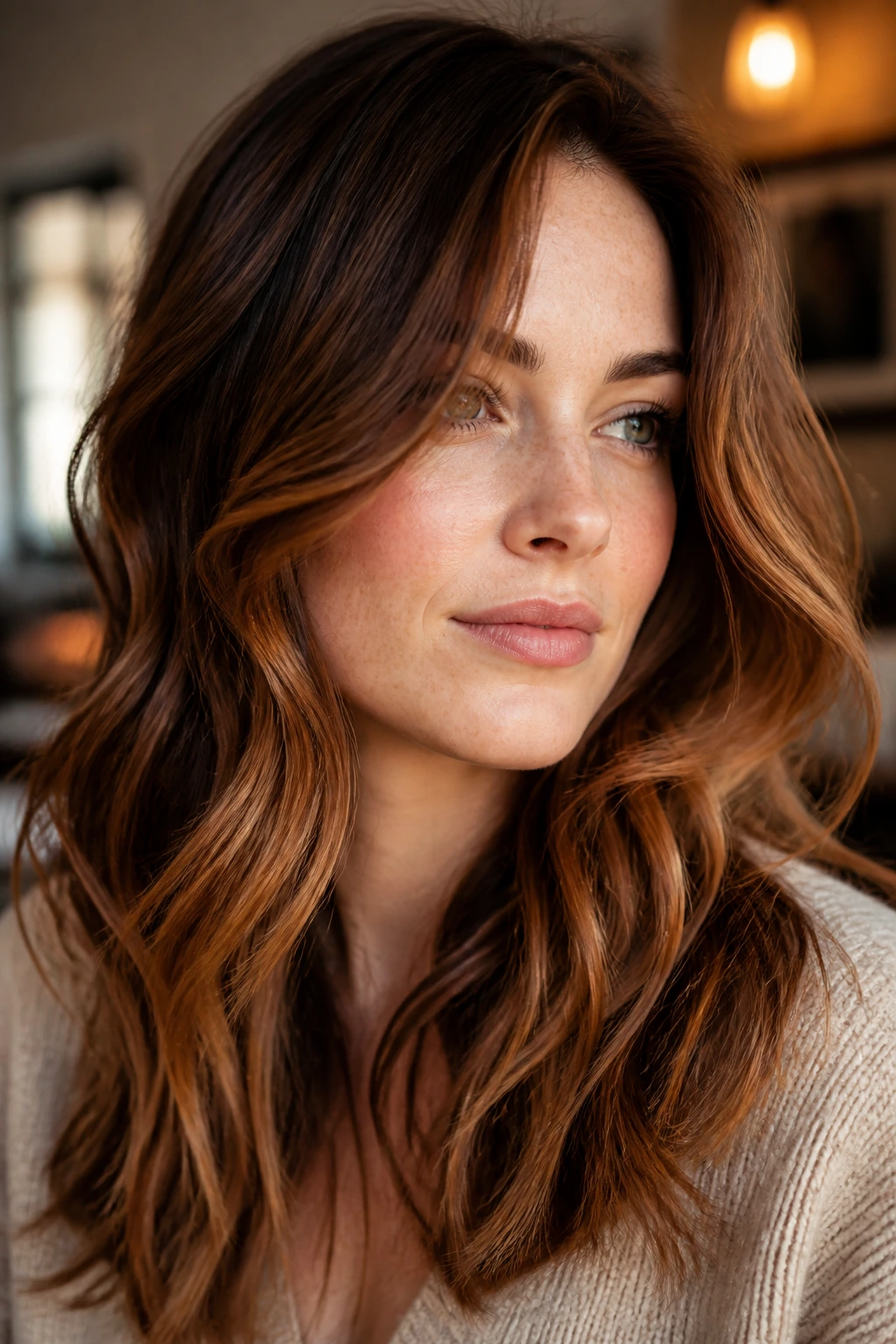
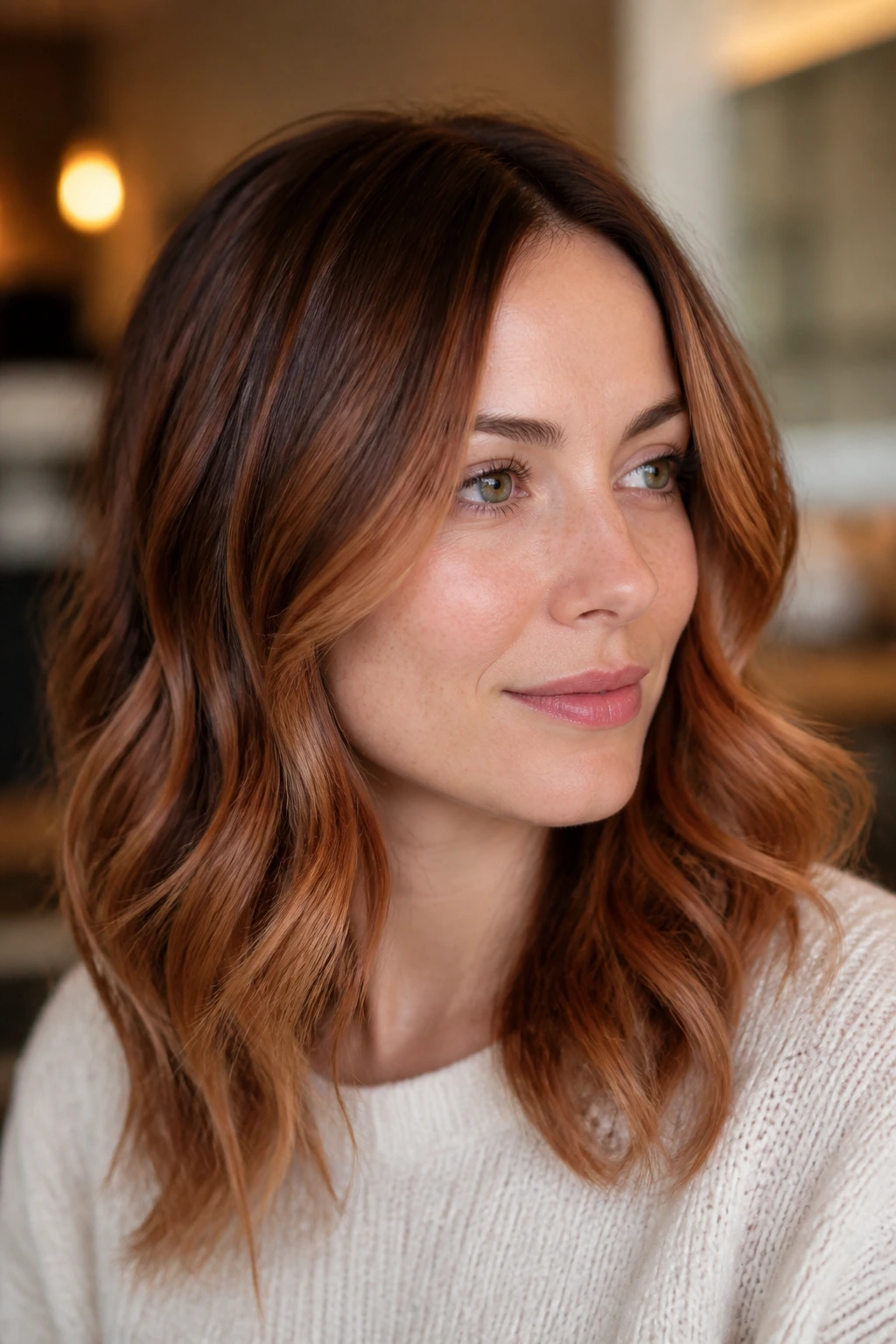
Cinnamon glaze is warmer and deeper than copper, with a brown base that keeps it grounded. On pale skin, the cinnamon should read as spice, not red. That’s the difference between flattering and flashy. Square faces get a lift from the curved placement, especially when the color blooms through the mid-lengths and leaves the root soft.
How to Wear It Without Going Orange
Ask for a brown-cinnamon glaze first, then a copper note only if the hair can hold it. That order matters. The glaze should deepen the color rather than brighten it into pumpkin territory.
This shade looks strongest on layered cuts with a slightly undone finish. If you love a polished blowout, the cinnamon can feel too even. A loose wave gives it the texture it needs.
15. Almond Milk Blonde
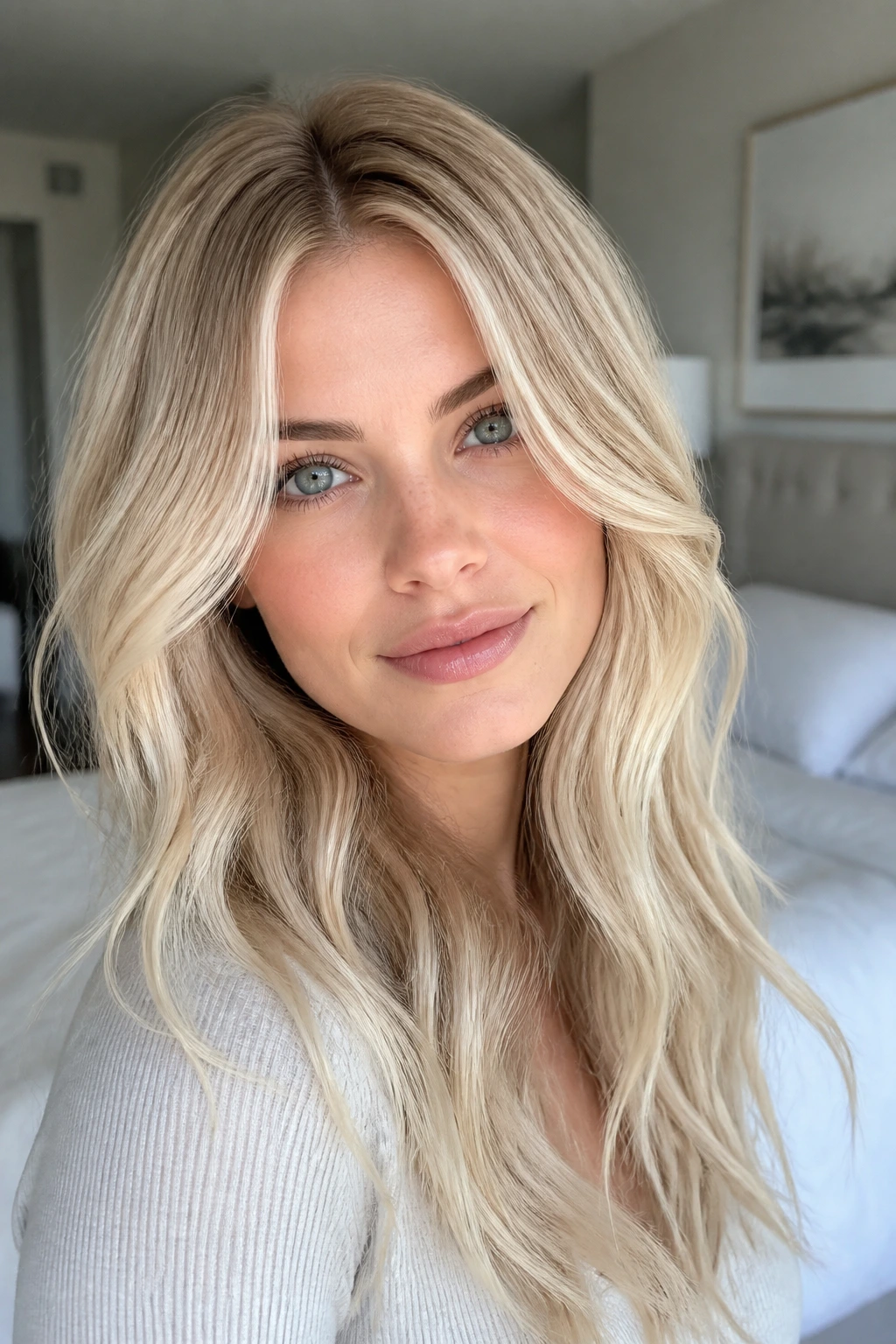
Almond milk blonde is one of the cleanest choices for pale skin because it stays neutral and milky rather than pushing yellow. It’s pale enough to look bright, but not so pale that it erases the face. On a square face, the best placement keeps the front pieces soft and diffused, not carved out like blocks.
I reach for this when someone wants blonde but hates brassiness. The finish should feel creamy, almost airy. If the ends start looking dry or porous, the shade loses its elegance fast, so bond care and moisture matter here. Long layers or curtain bangs are ideal because they keep the color from sitting in one straight line.
If your natural base is already light brown or dark blonde, this can be gorgeous with very little drama.
16. Dimensional Chestnut Ombre
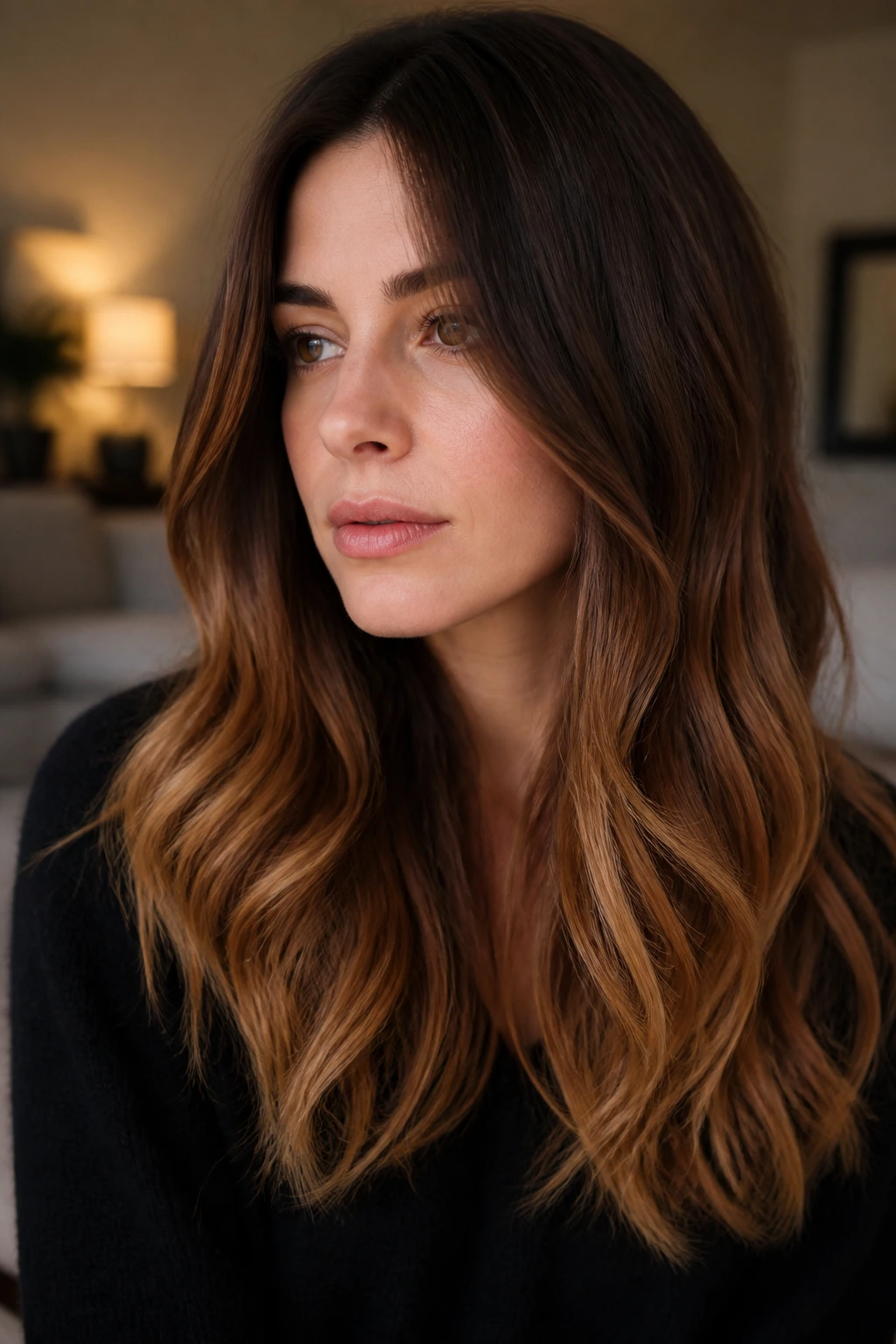
Chestnut ombre is for the brunette who wants movement without surrendering the deeper base. On pale skin, chestnut can bring just enough warmth to stop the color from feeling flat. For square faces, the ombre lengthens the silhouette because the eye follows the transition downward. That’s a useful trick when the jawline feels strong.
I like this most when the ends are lighter chestnut rather than pale blonde. The point is dimension, not contrast for its own sake. A center part with soft volume at the crown can also keep the face from reading too wide.
This is one of the easier shades to live with, especially if you don’t enjoy high-maintenance blonding.
17. Sandy Brunette Sweep
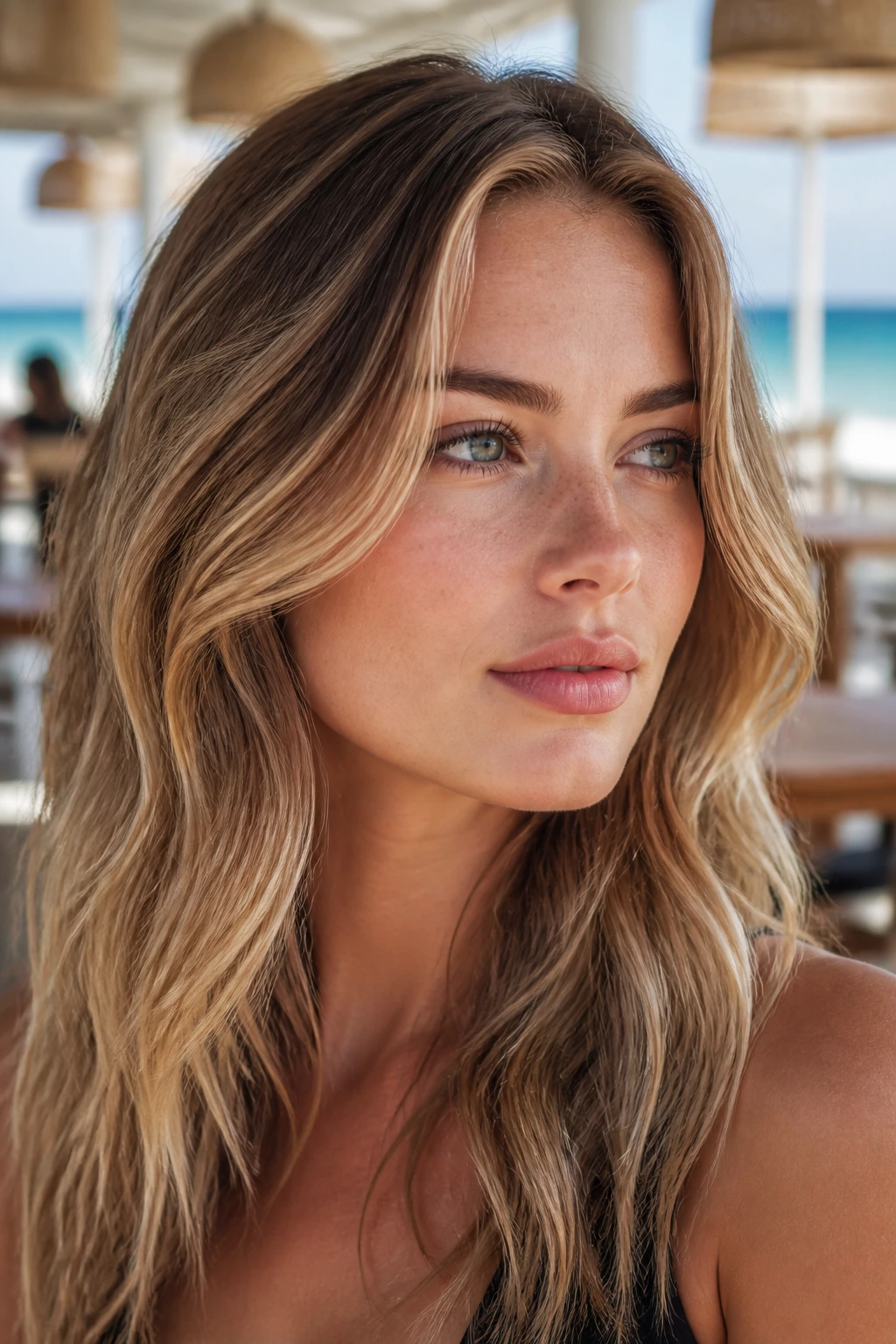
Sandy brunette is brunette with a beach-soft edge, minus the overly yellow highlight streaks that ruin so many “sun-kissed” looks. On pale skin, the sandy tone keeps the hair from looking too heavy. On square faces, a sweep of lighter ribbons through the front and upper lengths softens the edges without drawing a hard frame around the jaw.
- Good for: Medium brunettes who want lightness without becoming blonde
- Best placement: Around the temples and through the top layers
- Best styling: Loose, brushed-out waves
- Best tone: Beige-sand, not gold
I prefer this on hair with some natural texture. The movement helps the lighter strands break up the shape of the face. If the hair is dead-straight, the sandy bits can flatten out and lose their charm.
18. Frosted Cocoa Balayage
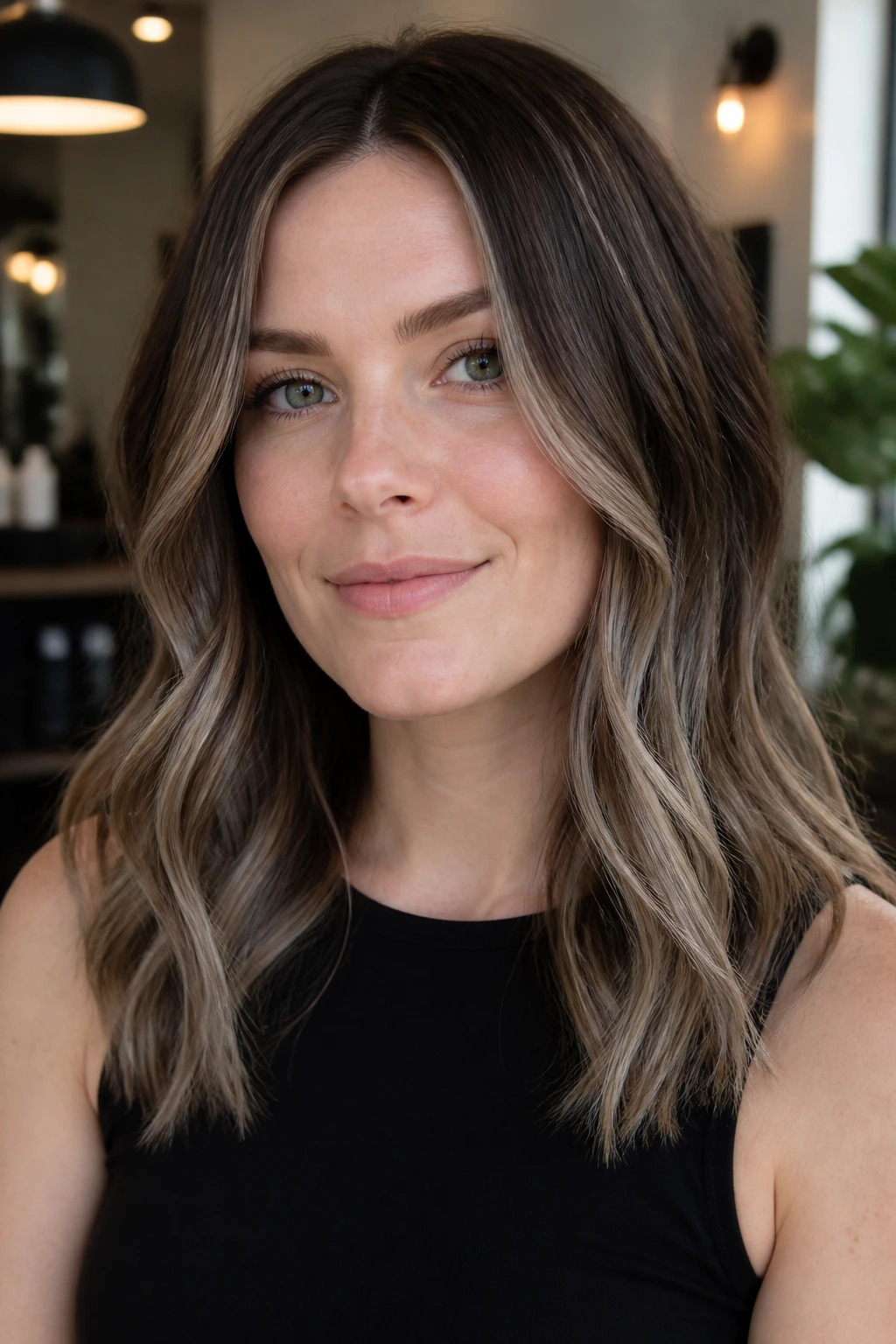
Frosted cocoa is a cool brunette look that suits pale skin far better than people expect. The cocoa base keeps the hair rich, while the frosted ribbons give just enough lift to show dimension. On a square face, the cool contrast softens the width at the lower face because the eye stays busy in the mid-lengths and ends.
What to Ask For
Keep the highlights thin. That is the whole game. Thick blond chunks will make the look harsher, and they can make the face feel wider instead of softer.
This shade is especially good if your skin runs pink or cool-neutral. The cocoa balances the complexion and the frosted pieces stop it from feeling heavy.
19. Peach Tea Balayage
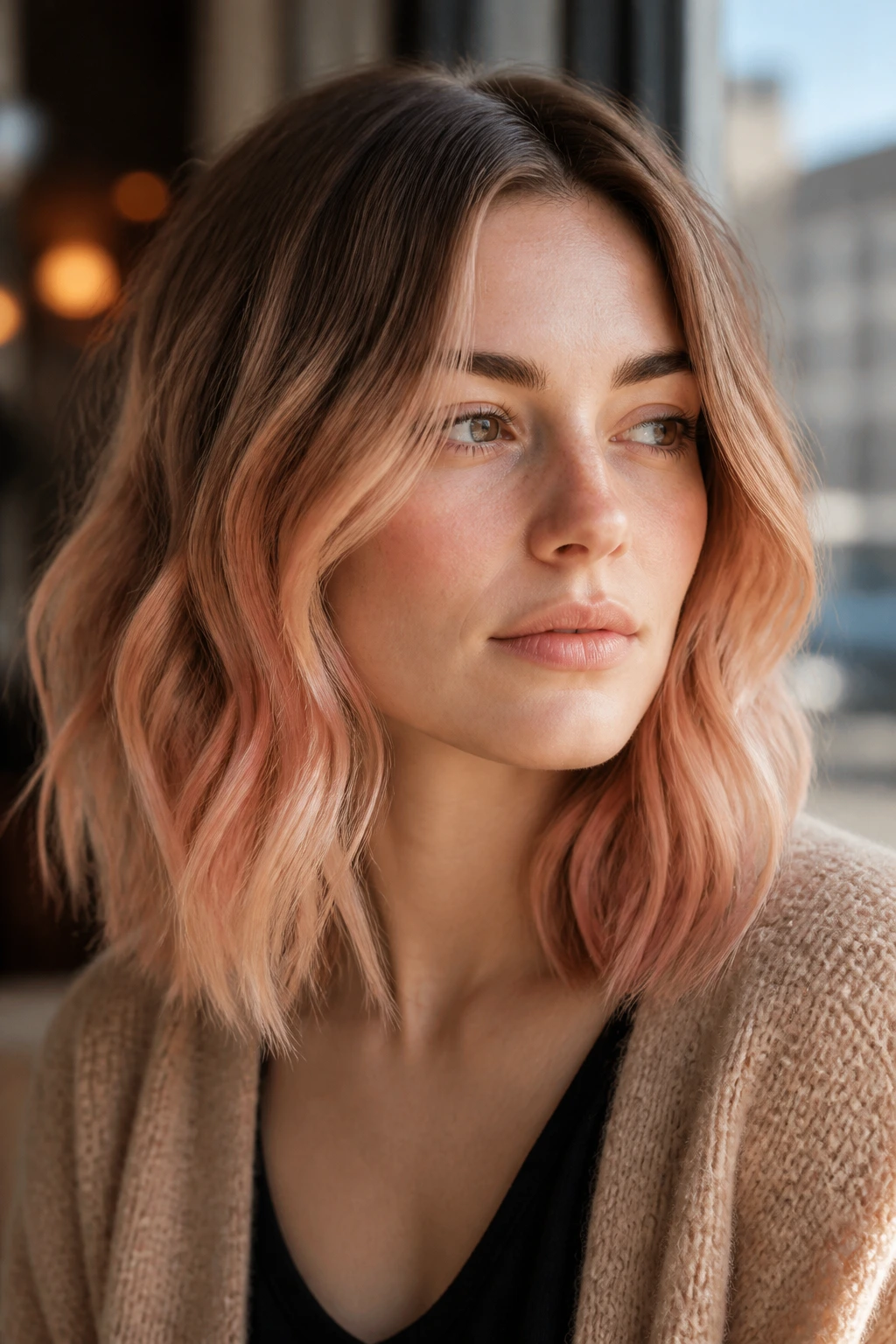
Peach tea balayage is quieter than rose gold and a touch warmer than beige. It gives pale skin a soft flush, almost like the color came from within instead of from dye. On square faces, it’s best when the peach is concentrated above the jawline and softened through the ends. You want warmth in motion, not a bright line.
This shade is a nice fit if you want something playful but still grown-up. It looks best when the peach is muted with beige or soft gold. Too much saturation, and the whole thing can veer into pastel candy. A lightly layered cut helps the color breathe.
If your complexion tends to go flat under cool lighting, peach tea can wake it up without shouting.
20. Cream Soda Blonde
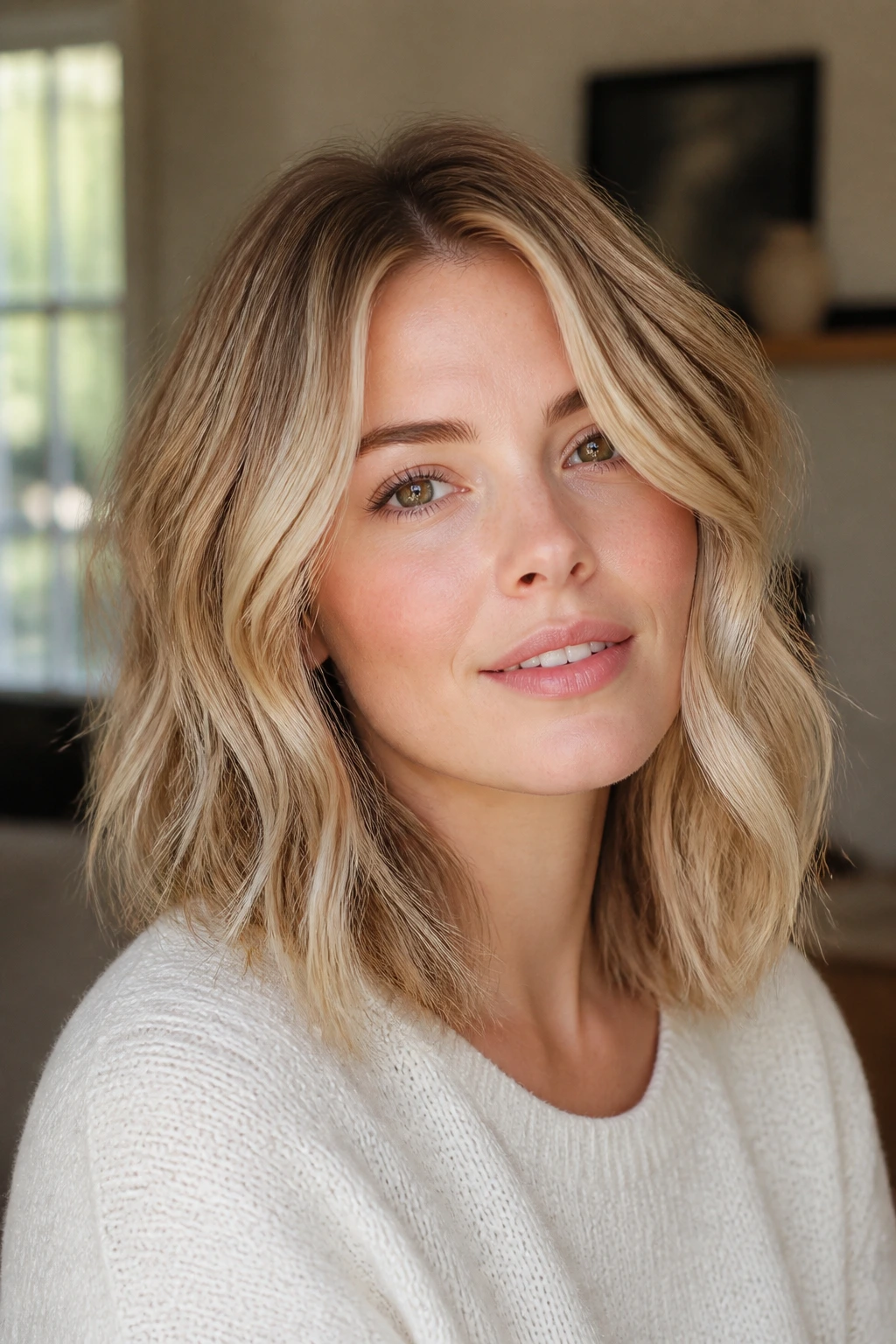
Cream soda blonde is warmer than almond milk, but still soft enough for pale skin. It has that pale vanilla-gold tone that feels friendly rather than icy. On square faces, the color placement should stay broken and curved. If the front is too bright and too even, the face starts to look more angular.
A shoulder-length cut with movement is ideal here. Long, blunt hair can make cream soda feel heavy. Loose bends, airy ends, and a bit of root shadow keep it from turning into one block of color.
This is the shade I’d recommend to someone who wants brightness but doesn’t love cool blonde. It has enough warmth to flatter, not enough gold to overpower.
21. Lavender Beige Balayage
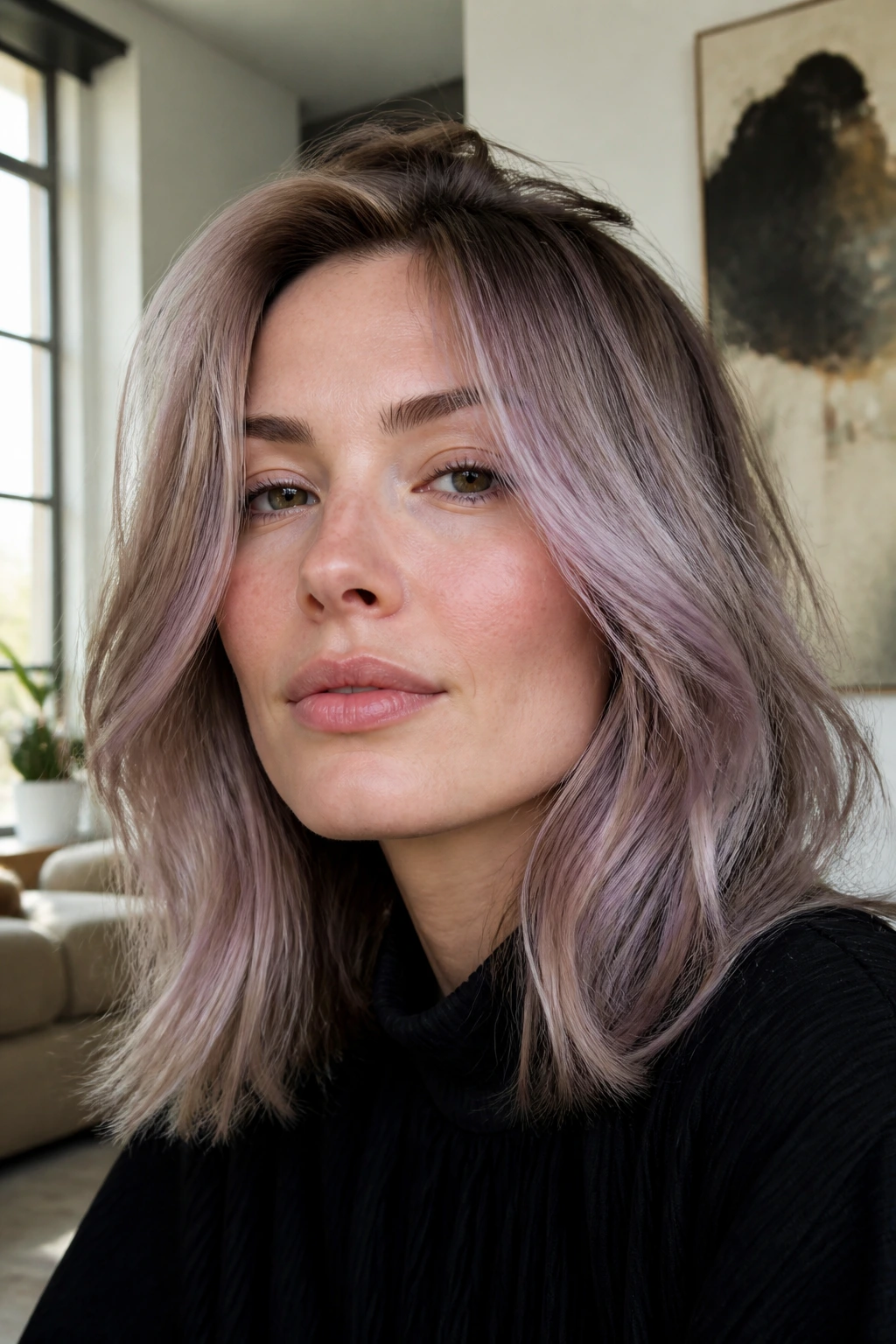
Lavender beige is for the pale-skinned client who wants something a little more artistic, but still wearable. The lavender should be dusty and soft, not neon. Beige keeps it grounded so the color doesn’t float off the face. On square faces, the best placement is around the top half of the hair and along the outer face frame, where the soft tone can blur the edges.
Why It Works on Square Features
Lavender has a kind of visual haze to it. That haze is useful. It softens hard lines better than a sharp blonde stripe ever could.
If your hair is dark, this may need pre-lightening and a toner or glaze to keep the lavender from turning muddy. On lighter bases, it can stay whisper-light and still make a point.
22. Walnut Smoke Balayage
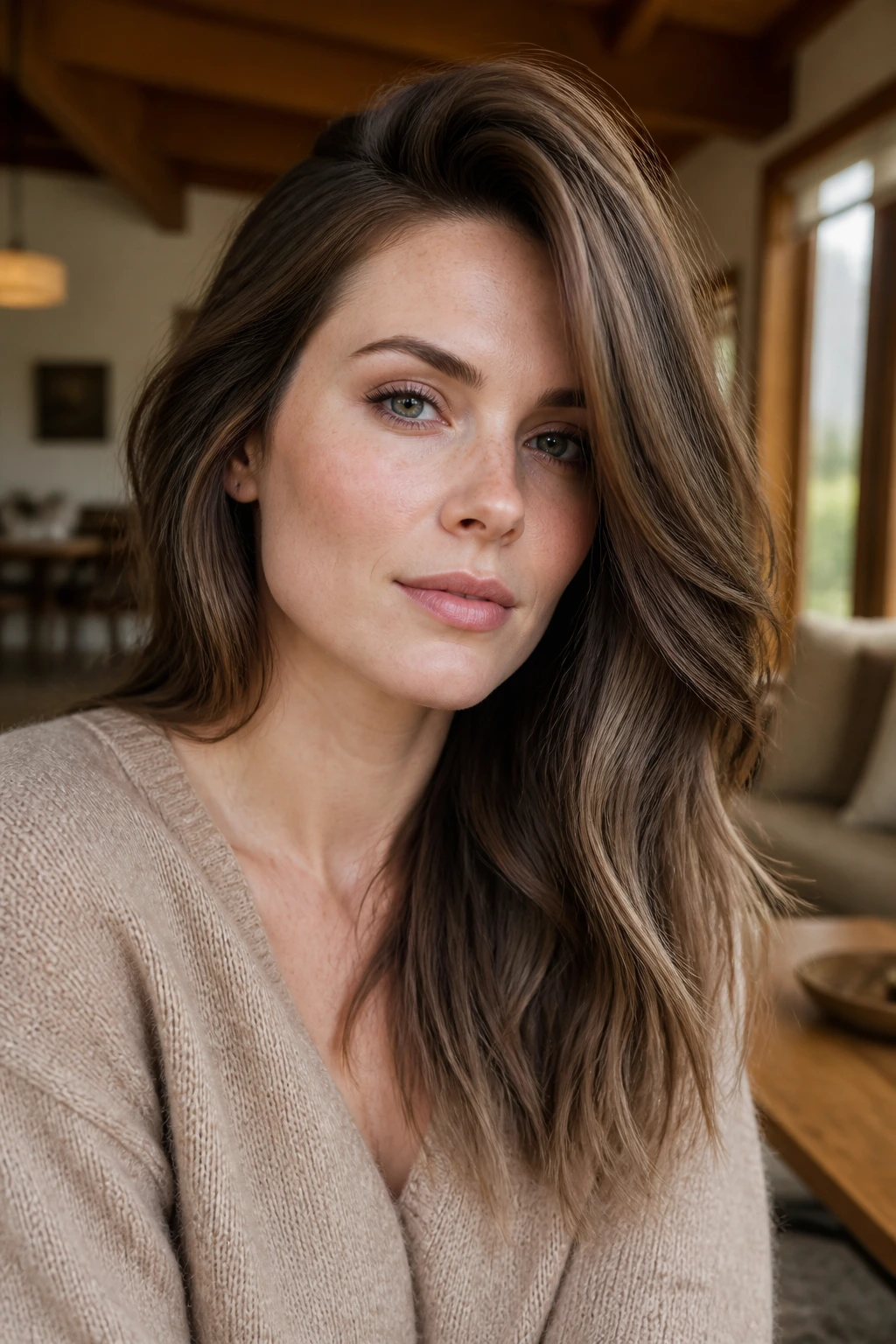
Walnut smoke is deep, dark, and cleaner than flat espresso. It gives pale skin a rich frame without swallowing the face. On square faces, the smoky ribbons should sit just off the outer edges of the face so the jawline doesn’t get boxed in. That subtle transparency is what keeps the look soft.
I like this option for someone who wants brunette depth with a little movement. It’s not a dramatic blonde, and that’s precisely why it works. The smoke tone keeps the walnuts from going too red or too warm, which can happen fast under indoor light.
This shade wears well with side-swept styling, especially if you want the face to look a touch longer.
23. Burnt Sugar Balayage
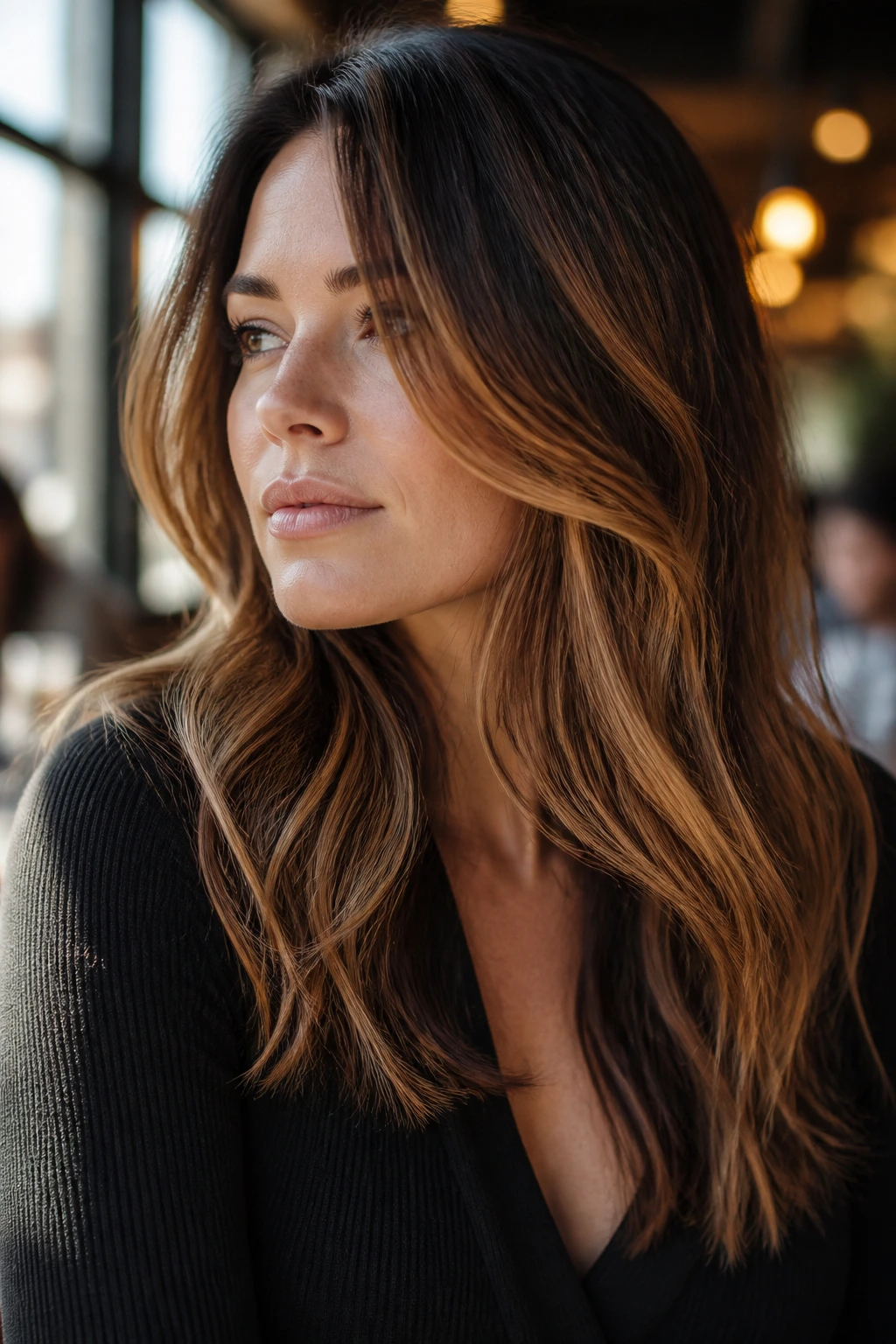
Burnt sugar is richer than honey and less red than copper. Think toasted caramel with a darker base beneath it. On pale skin, it gives warmth without looking like the hair was dipped in gold syrup. On square faces, the curved ribbons and softened ends matter more than the shade name; the color needs to glide, not sit in a band.
Best On Hair That Has Some Bend
This shade looks best when the hair has movement. The color catches unevenly on waves, which makes the whole thing feel natural instead of painted. If you wear it straight all the time, the dimension can flatten out a bit.
Burnt sugar is a strong choice if you want warmth but do not want the maintenance of true copper.
24. Soft Apricot Balayage
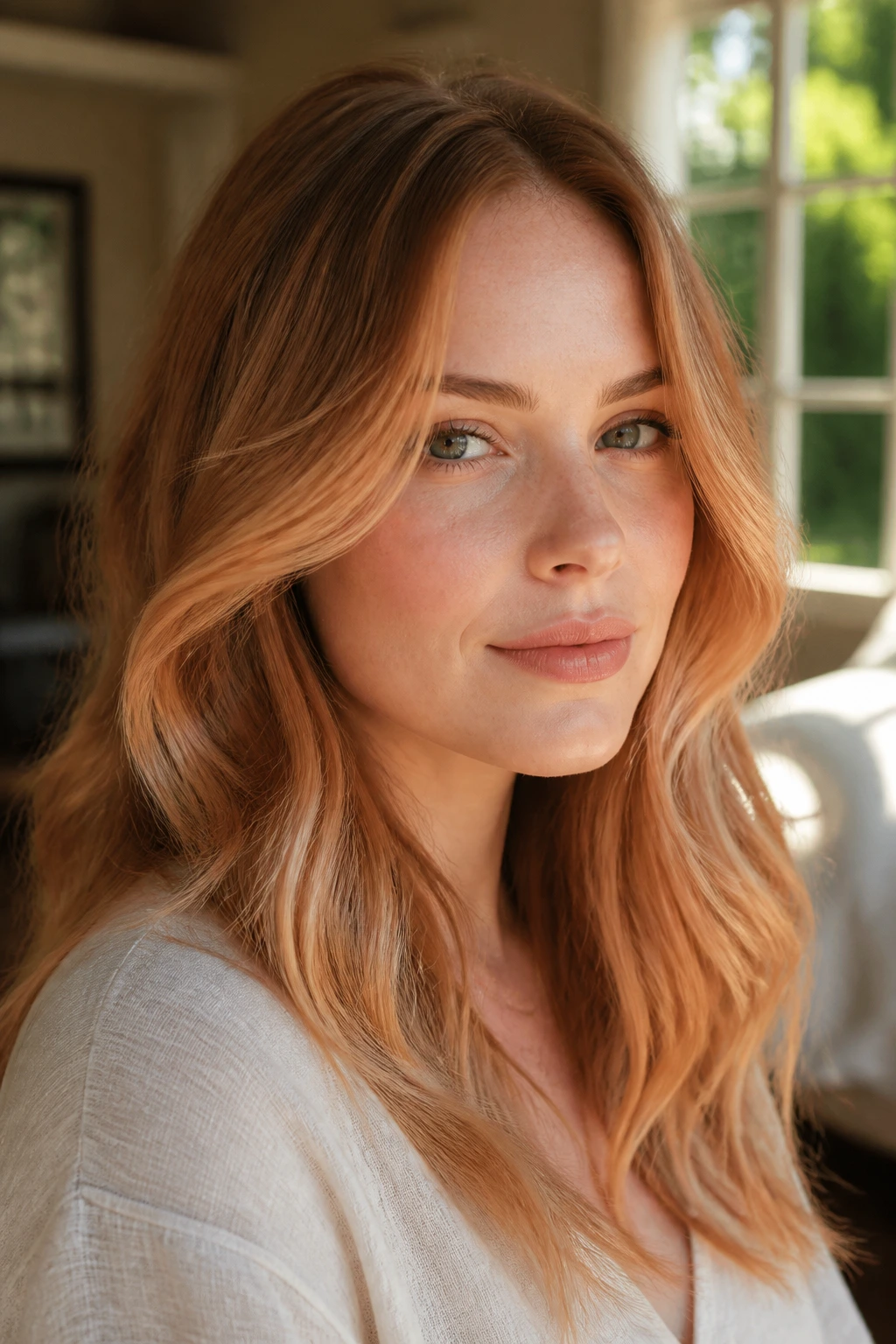
Soft apricot is warmer and brighter than peach tea, but it still needs to stay muted if you want it to flatter pale skin. The apricot note gives the complexion a little life. On a square face, keep the brightest pieces toward the cheekbone and temple area, then fade the color before the jaw gets too much attention.
This is one of the few warm looks that can read playful without feeling loud. The secret is dilution. Apricot should look like a glaze, not a warning sign. If your skin leans warm, this can be lovely; if it leans cool, you may want more beige blended in.
Loose waves are your friend here. They stop the tone from looking flat or overly sweet.
25. Vanilla Smoke Balayage
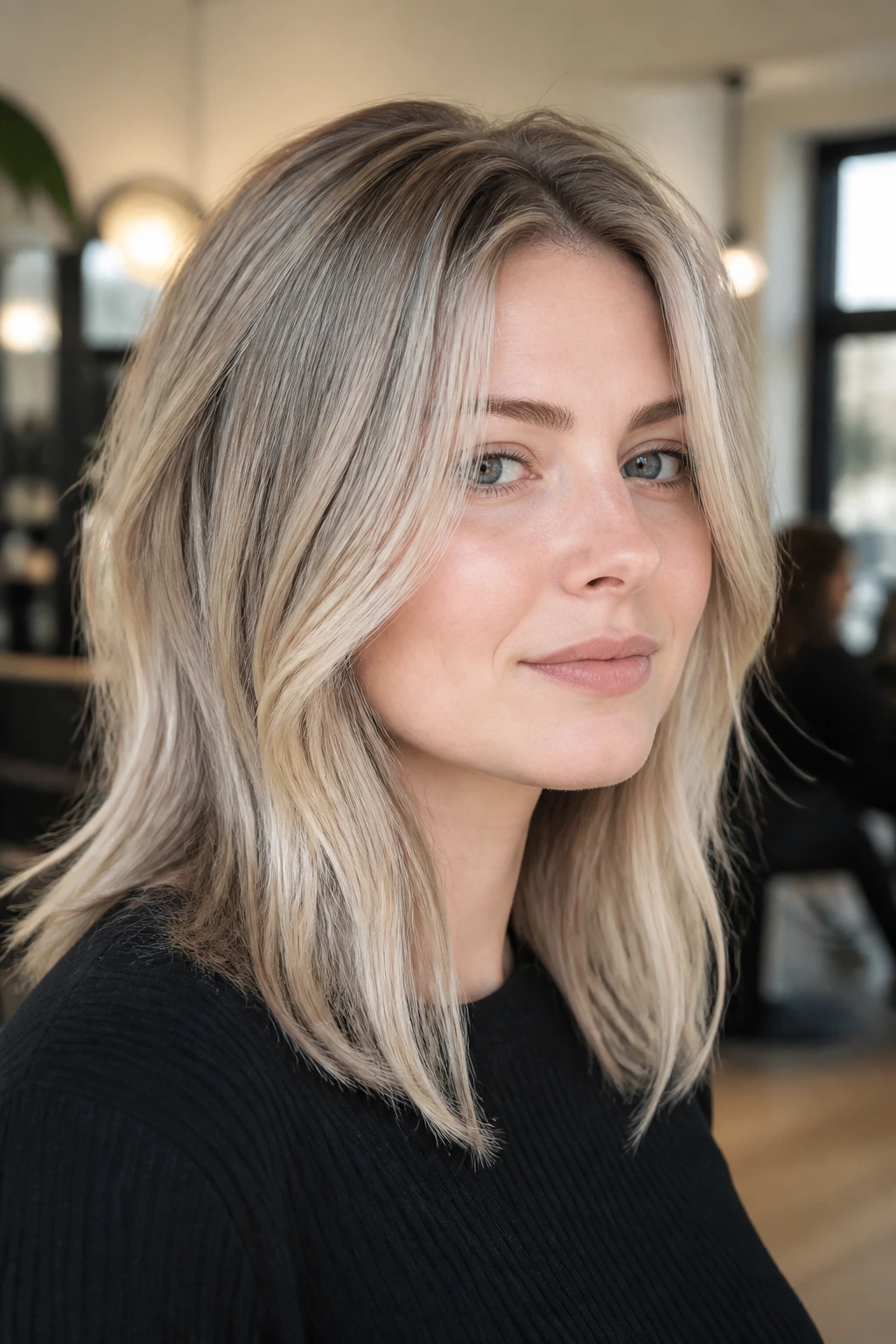
Vanilla smoke is the final mood I’d hand to someone who wants softness first. It’s creamy at the top, smoky at the edges, and just dimensional enough to keep pale skin from going flat. On square faces, the blurred root and pale mid-lengths keep the line of the face from feeling too exact. The color almost edits the geometry for you.
This one works because it doesn’t try to be a bright blonde or a dark brunette. It sits in the middle and lets the placement do the talking. If the hair is cut with light layers, the vanilla smoke pieces fall in a way that looks airy rather than blunt. That’s the real win.
It’s elegant without being precious. And that’s a rare combination.
Why Balayage Placement Matters for Pale Skin and Square Faces
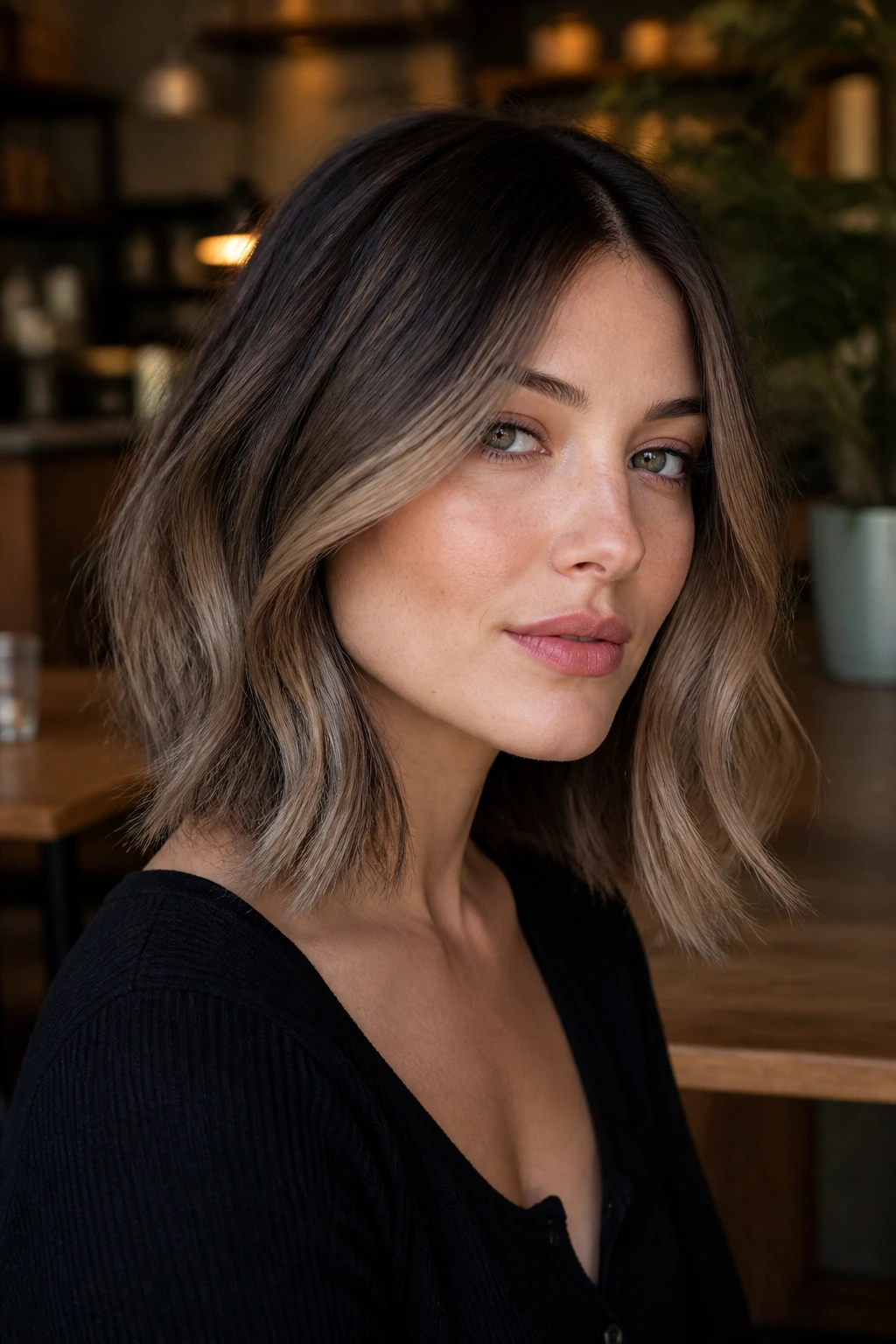
Tone gets attention, but placement does a lot of the actual work. On a square face, the eye naturally catches the corners of the forehead and jaw, so you want the lightest sections to travel in arcs, not straight lines. A brighter strip that ends exactly where the jaw starts can make the lower half of the face look wider. A softer ribbon that begins near the temple and fades toward the collarbone has the opposite effect.
Pale skin adds another layer. Very light complexions can go flat if the tone is too cool and too matte, but they can also go yellow if the blonde is too warm. The sweet spot tends to be beige, champagne, muted honey, mushroom, or a softened copper. Those shades keep the color alive without looking loud next to a porcelain face.
The haircut matters too. Layers, curtain fringe, loose bends, and a soft middle or side part all help the balayage move. A blunt one-length cut can still work, but it needs cleaner placement and a more thoughtful tone. I’d choose the color and the cut together, not separately, because one without the other often feels unfinished.
What to Bring Up With Your Colorist Before the Foil Comes Out
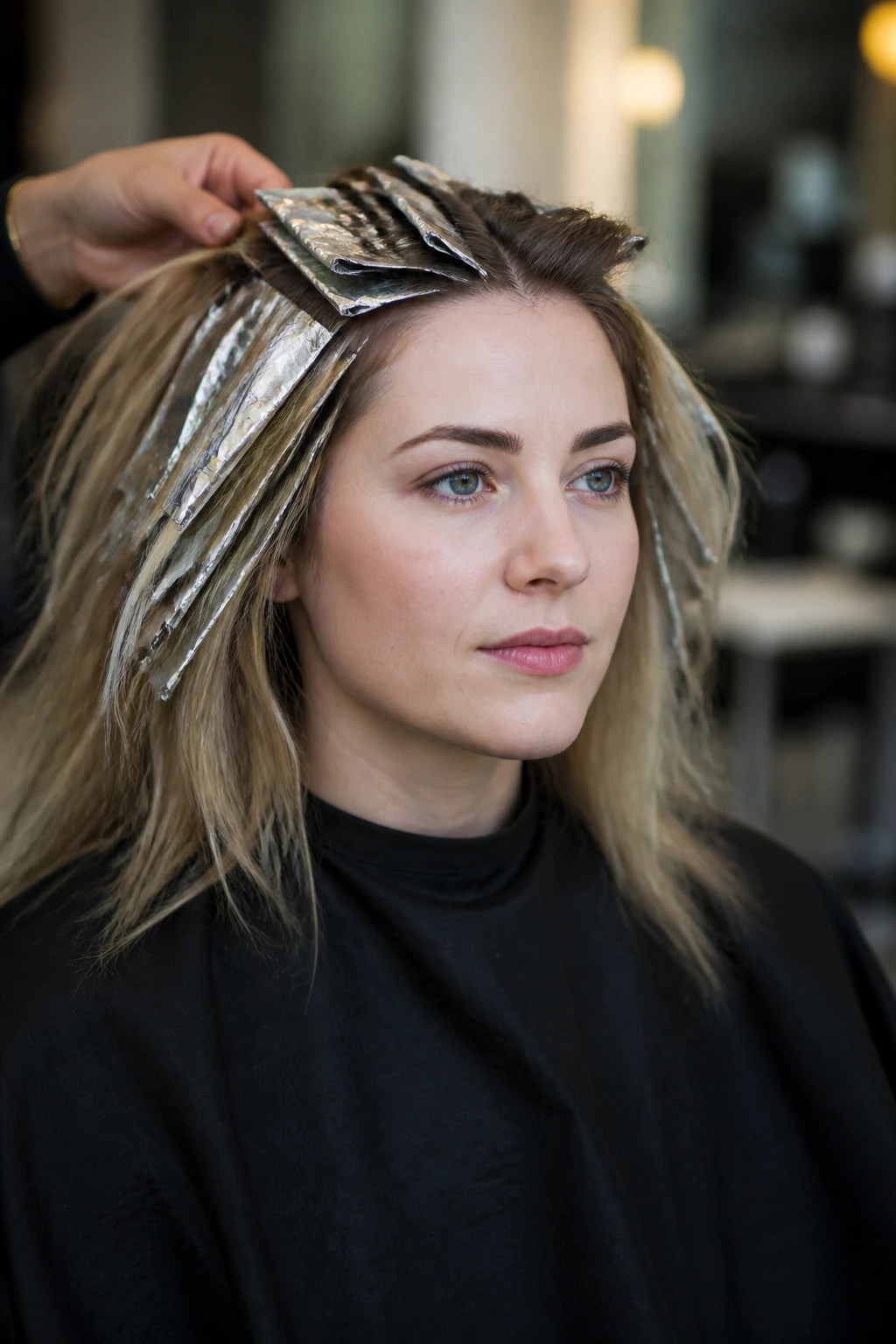
A good consultation saves a lot of fixing later. Bring at least two reference photos: one for the tone and one for the placement. Those are not the same thing, and colorists can tell when a client is showing a shade from one head of hair and a face frame from another.
Say where you part your hair most days, whether you wear it straight or wavy, and how often you want to come back for upkeep. That last part matters more than people admit. A very pale blonde with a tight root shadow is a different maintenance world from a mushroom brunette melt. If your skin is pink or easily flushed, mention that. If you hate yellow in your blonde, say it plainly.
Use placement words. Ask for brightness around the cheekbones, softened near the jaw, and blurred at the root. If you have a square face, that instruction is not fussy. It’s the whole point.
Tools That Keep the Color Looking Intentional
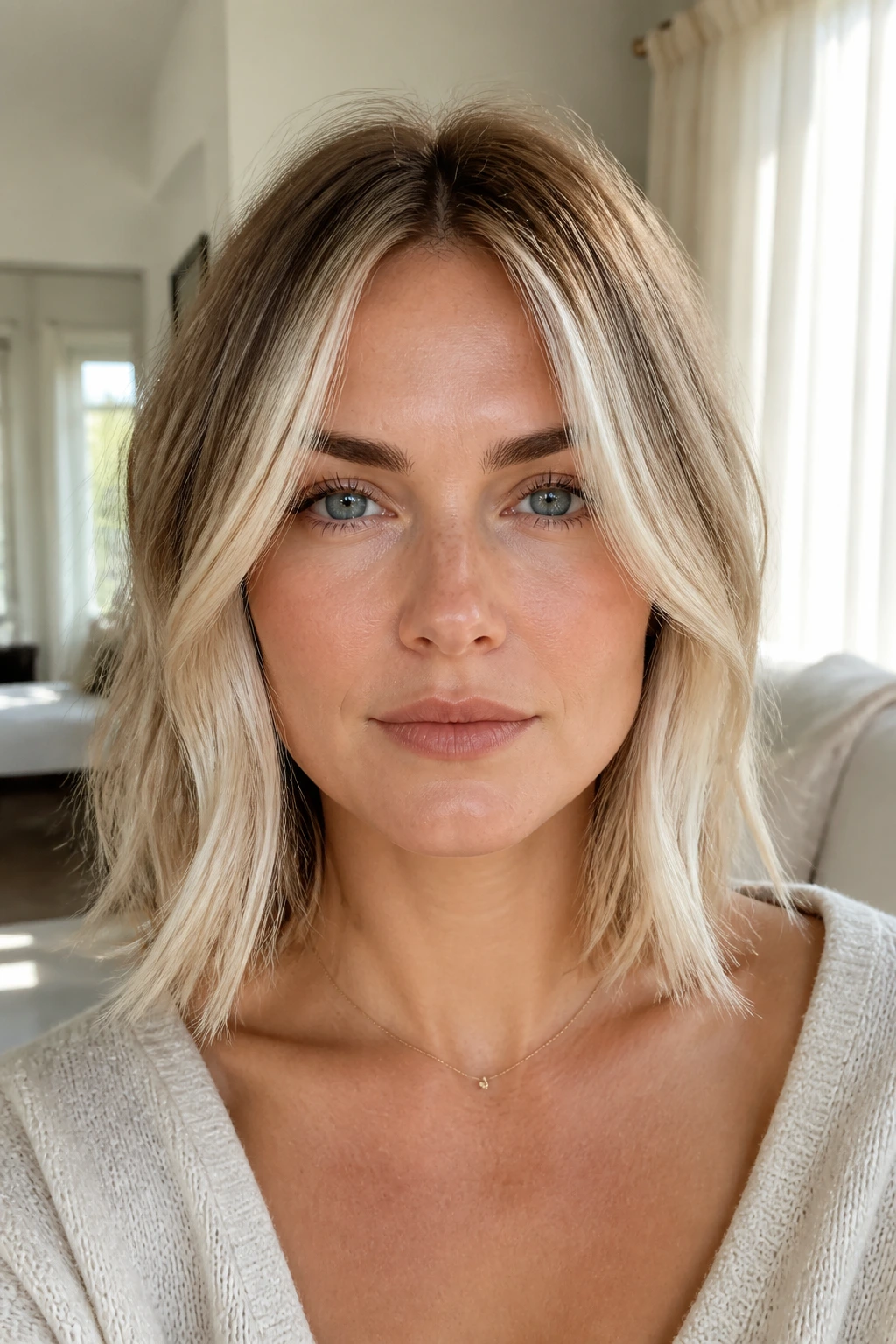
- Color-safe shampoo: Helps the toner last longer and keeps highlights from getting rough at the ends.
- Purple shampoo or blue shampoo: Purple is better for blondes; blue is safer for darker brunettes with brass.
- Weekly moisture mask: Highlighted ends dry out faster than the rest of the hair, especially after lightening.
- Heat protectant spray: Use it before blow-drying or curling, and keep the heat under 400°F when you can.
- 1.25-inch curling iron or wand: Loose bends show balayage ribbons better than tight curls.
- Wide-tooth comb: Easier on wet, lightened hair and less likely to snag fragile ends.
- Root clips or duckbill clips: Useful for setting the front pieces while they cool in the shape you want.
- Gloss or toning treatment: Handy for keeping champagne, beige, or mushroom tones from drifting brassy.
- Satin pillowcase: Not glamorous, but it cuts down on friction and helps the ends stay smoother.
How to Brief Your Colorist Without Overexplaining
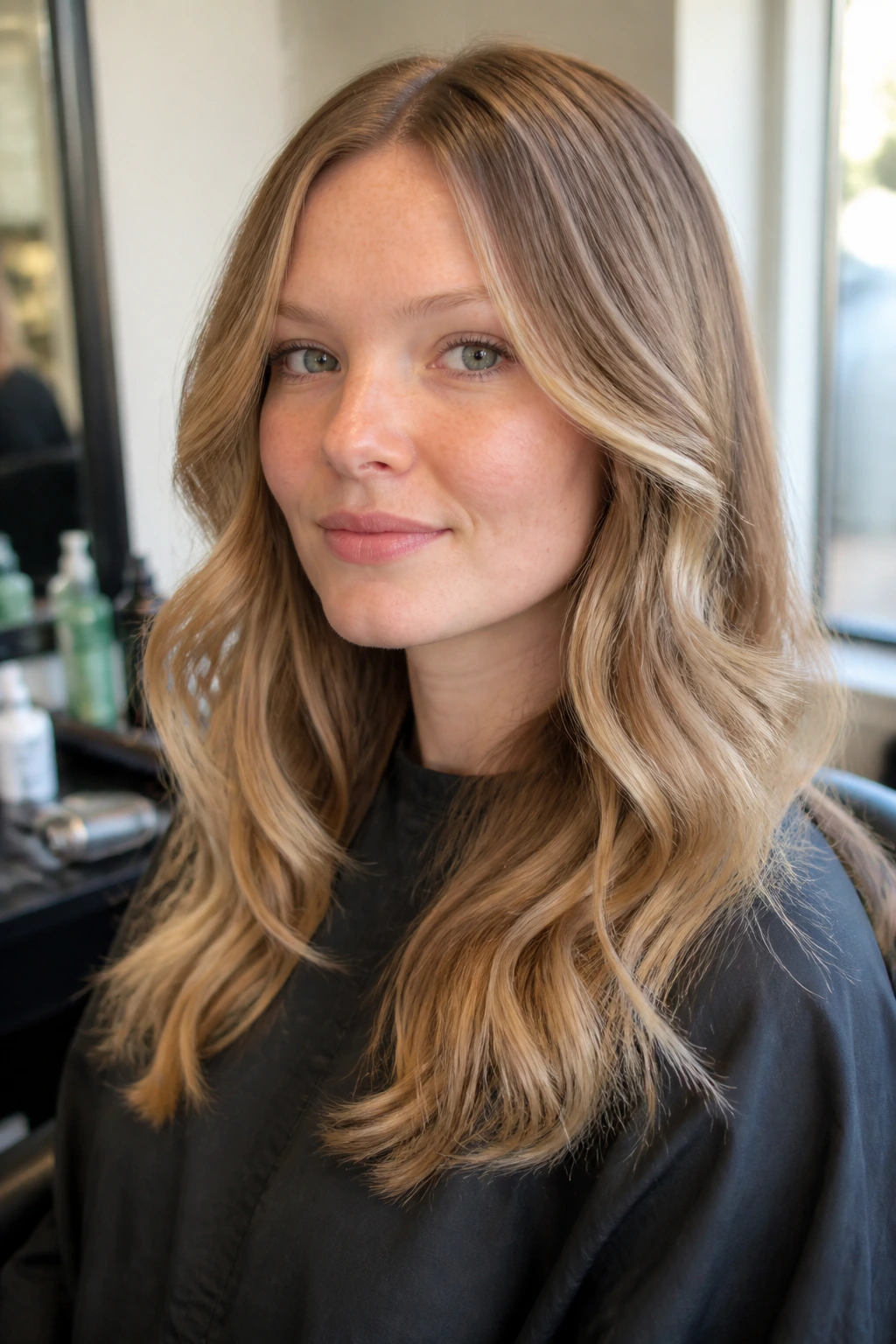
The cleanest way to ask for balayage on pale skin and a square face is to name the job the color needs to do. Say you want softness around the jaw, brightness around the cheekbones, and a grow-out that doesn’t turn stripey. That is much better than saying you want “something natural,” because natural means different things to different people.
Talk about undertone first. If your skin leans pink, cool beige, mushroom, pearl, and smoky taupe are easier bets than strong gold. If your skin has more peach or neutral warmth, caramel, honey, apricot, and soft copper can look lively without pushing orange. The wrong warmth is louder than the right brightness. That part is easy to miss in the salon mirror.
Ask for a root that is blurred, not lined, and for face-framing pieces that start higher than the chin. If you wear your hair wavy, say that. If you flat iron it every day, say that too. Color placed for curls looks different from color placed for glass-straight hair, and the colorist needs to know which surface they’re painting.
Common Mistakes That Make the Face Look Wider or the Color Turn Muddy
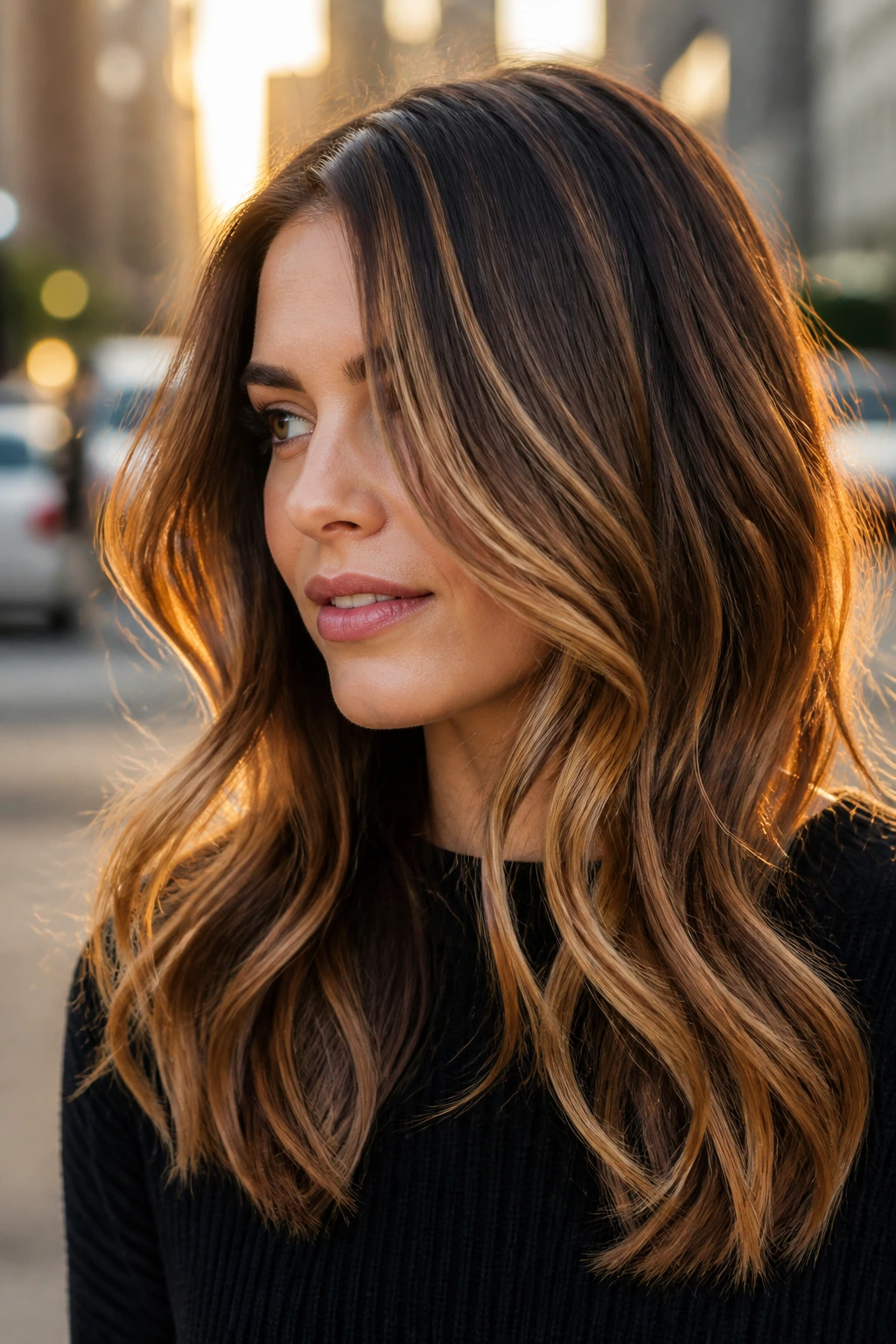
The first mistake is putting the brightest pieces at jaw level. It seems harmless in the chair, then the hair grows out and the lower face starts to look square-er than it is. The fix is simple: keep the lightest strands higher and softer, then let the ends melt.
The second mistake is choosing the wrong warmth for pale skin. Too much gold can turn brassy, while too much ash can make the complexion look washed out. Beige, champagne, mushroom, and muted honey are easier to live with because they sit between those extremes.
The third mistake is making the contrast too sharp too soon. A black-to-platinum leap can look edgy on social media and harsh in daylight. If your base is dark, better to build dimension in two steps.
The fourth mistake is judging the color only when the hair is straight. Straight hair can hide the ribboning and make the placement seem heavier. Try it with bends before you decide it’s “too much.”
The fifth mistake is over-toning warm shades into gray. That can flatten soft copper, caramel, and apricot until they lose all life. Warm tones need a light hand, not a punishment.
Five Ways to Adapt These Looks
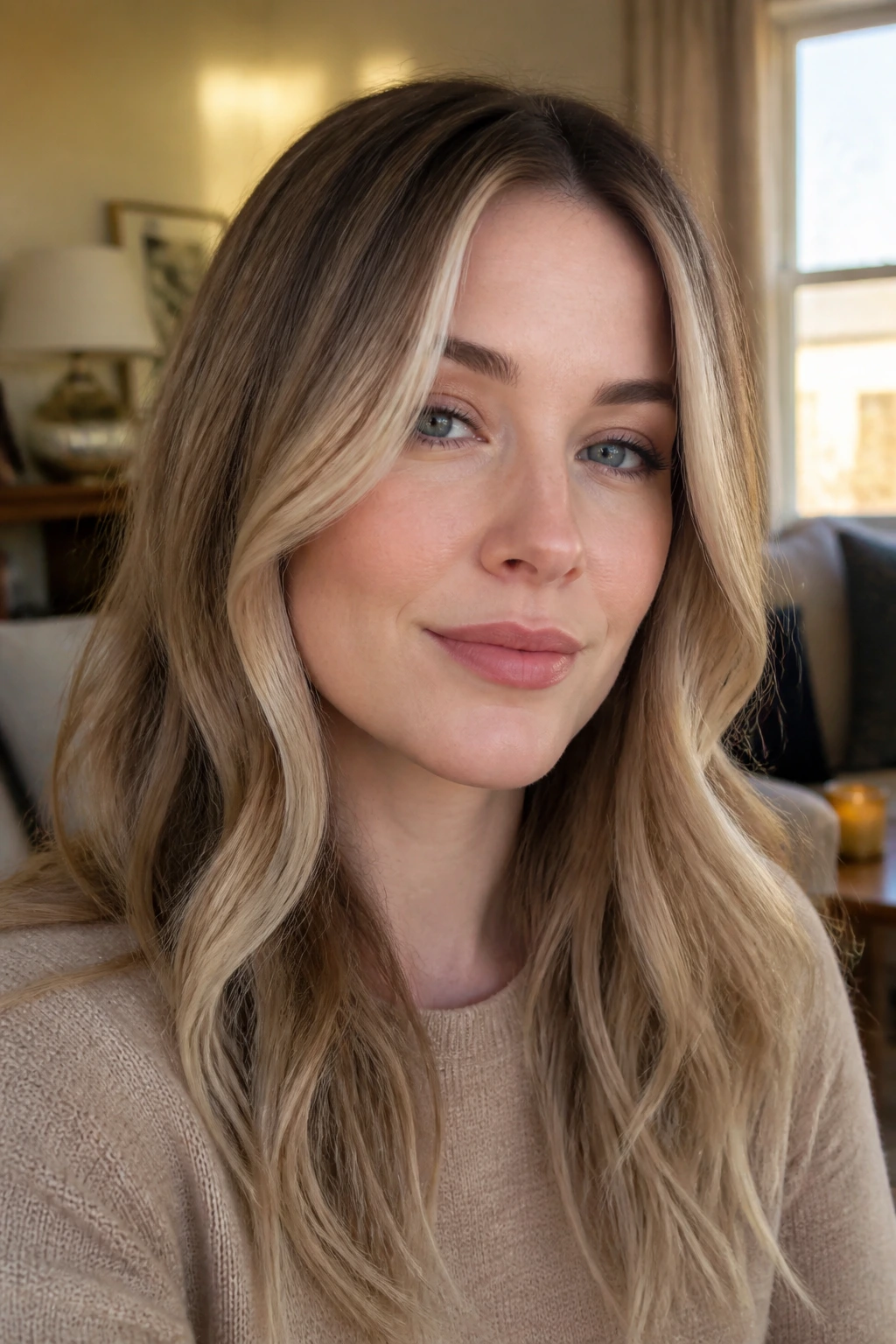
Cool-Glass Finish: Keep the palette in beige, ash, taupe, and pearl. This works well if your skin is pink or neutral and you want a polished, clean look without golden warmth.
Warm Glow Edit: Shift the color toward honey, caramel, toffee, or apricot. This is the easiest route if pale skin tends to look tired in cool lighting and you want a little more life around the face.
Low-Maintenance Melt: Stretch the root shadow farther and keep the brightest pieces away from the scalp. It grows out softly and suits anyone who does not want a salon visit every few weeks.
Curly Ribbon Placement: Put the lightest strands where curls naturally clump, not on every single section. That gives the face a soft halo instead of a striped effect.
Bold Money Piece Balance: Keep the front pieces brighter, but offset them with darker lowlights through the mid-lengths. This can soften a square face if the contrast is controlled and the cut has movement.
Make the Most of the Color Between Salon Visits
Flavor Enhancement: A clear or beige gloss can refresh champagne, mushroom, and vanilla tones without pushing the hair into a weirdly flat finish.
Customization: If the shade feels too cool, ask for a warmer glaze. If it goes too gold, shift it back with a neutral toner rather than a heavy ash correction.
Serving Suggestions: Loose waves, a side part, or curtain bangs usually show the dimension better than a stiff blowout. Even a small bend through the front pieces changes the whole read.
Make-It-Yours: If you wear very little makeup, choose a softer tone like almond milk, beige blonde, or sandy brunette. If you like bolder makeup, mochas, coppers, rose gold, and burnt sugar can hold their own without disappearing.
Keeping the Tone Soft, Not Straw-Dry
Highlighted hair asks for a little more care, and the schedule matters. Most balayage grows out well for several weeks, but the tone itself can shift faster than the placement. If you want champagne, beige, pearl, or mushroom to stay clean, a gloss every 4 to 6 weeks is a smart move. If you lean warm, you may only need a refresh when the shine drops or the ends start looking dull.
Purple shampoo is useful, but it is easy to overdo. Once a week is enough for many blondes; two washes a week can be too much unless brass is a real problem. Blue shampoo helps darker brunettes that pull orange. Use a moisture mask once a week, especially on the ends, and keep heat tools on the lower side whenever the style allows it.
Most balayage can be worn for 8 to 12 weeks before a salon refresh, sometimes longer if the grow-out is soft and the cut is layered. If the face frame starts losing definition, ask for a gloss or a small placement update instead of a full redo.
Questions People Ask Before Booking
Will balayage make a square face look wider?
Not if the placement is done well. The issue is usually where the brightness lands, not balayage itself. Keep the lighter pieces above the jawline and let them fade softly.
What colors are safest for pale skin?
Beige blonde, champagne, mushroom brown, pearl, muted honey, and soft copper are the easiest places to start. They give light without the harsh yellow that can clash with very fair skin.
Is balayage better than ombre for a square face?
Balayage usually gives more control around the face. Ombre can work, but if the color line sits too low and too blunt, it can emphasize the jaw instead of softening it.
Can I wear a center part with balayage and a square face?
Yes, especially if the front pieces are cut to soften the cheeks. Curtain bangs or face-framing layers help the middle part feel less severe.
What if my hair is dark brown and I want one of these lighter shades?
Go in stages. A dark base can wear mocha, walnut smoke, or chestnut ombre first, then move lighter later. Pushing to pale blonde in one round often looks overworked.
Does balayage work on straight hair?
It does, but the placement has to be cleaner because straight hair shows every line. A soft bend, even a slight one, helps the color read the way it was meant to.
How often should I tone it?
Most pale blondes need toning every 4 to 6 weeks. Brunette blends can go longer, especially if the goal is smoke or beige rather than icy blonde.
What if I hate brass?
Say that before the first bowl comes out. Your colorist can keep the toner cooler and choose beige or mushroom over honey, which saves a lot of fixing later.
Soft Edges
The best color for a square face does not fight the geometry. It moves with it.
That is why these balayage ideas work so well on pale skin: they soften the jaw without erasing it, and they give light enough variation to keep fair complexions from looking flat. A good placement, a sane toner, and a cut with a little movement can do more than a dramatic color change ever will. And once the color starts to grow out, the softer choices usually age better than the flashy ones.
Bring the brightest pieces up around the cheekbones, keep the jawline quiet, and choose a tone that agrees with your skin instead of arguing with it. That’s the version worth asking for next time you sit in the chair.