



The best blonde hair color ideas for curly hair with babylights are the ones that let the curl pattern stay visible. That sounds obvious until you’ve seen what happens when blonde is applied in chunky ribbons to a springy curl: the shape gets split up, the light lands in blunt stripes, and the hair starts looking more painted than textured. Babylights fix that. They’re tiny, thread-fine, and much closer to the way sunlight would naturally flicker through curls if you spent all day under a bright window.
On curls, the placement matters almost more than the shade. A champagne tone can look soft and expensive on one head and loud on another if it’s pushed too high at the root or packed too densely into the crown. Curly hair also shrinks as it dries, which changes where the blonde actually shows. The lights have to live where the curls bend, not where the strands lie flat in the salon chair.
That’s why the best versions are dimensional, not stripey; bright, but not fried; and specific about tone, because beige reads differently from pearl, and honey behaves very differently from ash once a curl dries into its natural spring.
Why These Babylight Ideas Stay Soft on Curls
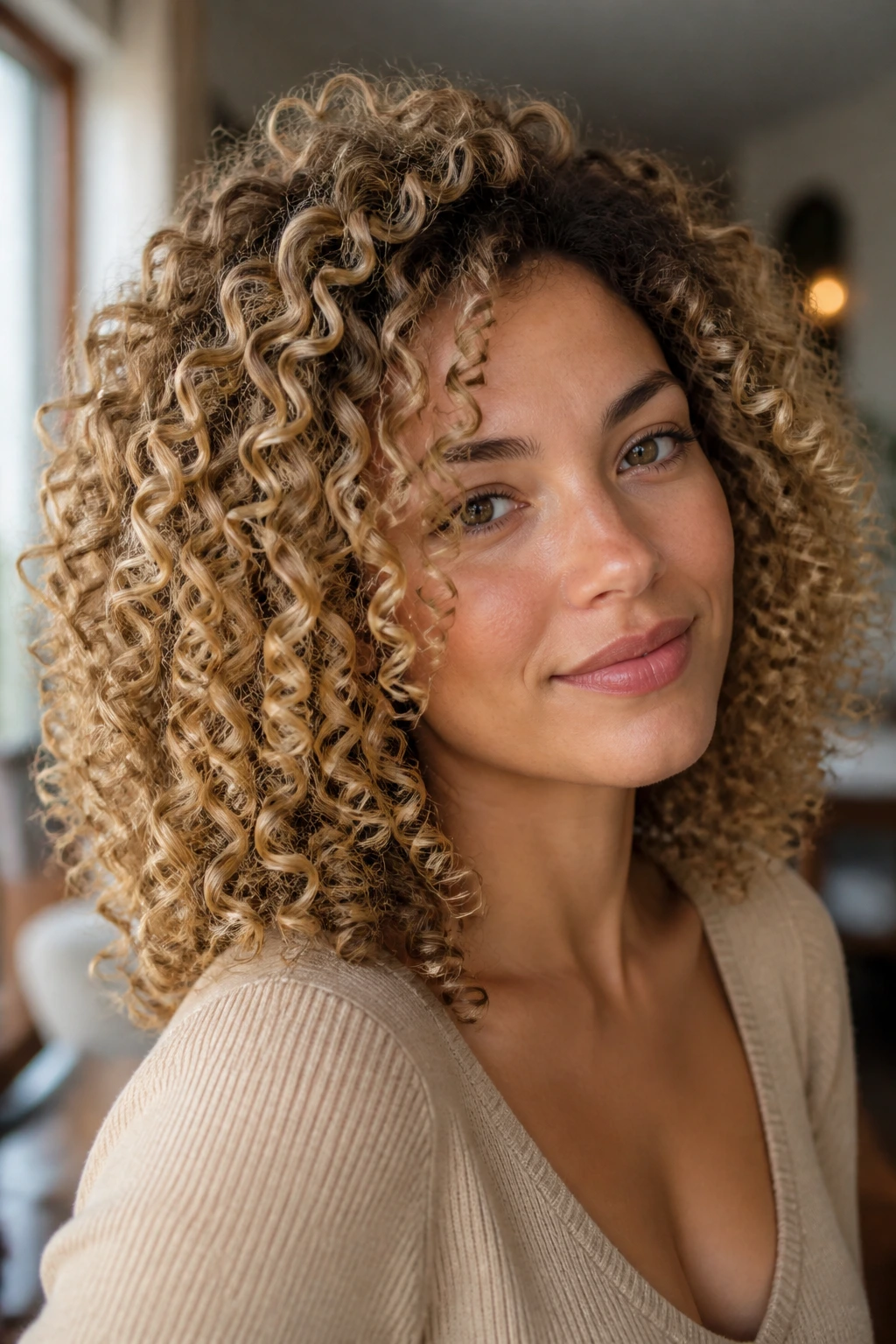
Babylights preserve the curl map. Tiny weaves let you brighten the hair without chopping the curl clumps into obvious blocks, which is what makes the finish look natural instead of staged.
The grow-out is gentler. A root shadow or a softer lift at the scalp means you’re not stuck with a hard line the moment your hair grows half an inch.
Tone changes everything. Champagne, honey, beige, pearl, ash, and mushroom blonde all read differently once they’re broken up by curls, so the same placement can look warm, cool, or icy depending on the gloss.
Placement beats volume. A few well-placed babylights around the face, crown, and outer curves of the curls do more than a heavy foiling job that nobody asked for.
It works across curl types. Loose 2C waves, springy 3B spirals, and denser 3C or 4A textures all benefit from finer lightening, because the detail shows up when the hair moves.
1. Champagne Ribbon Babylights on Espresso Ringlets
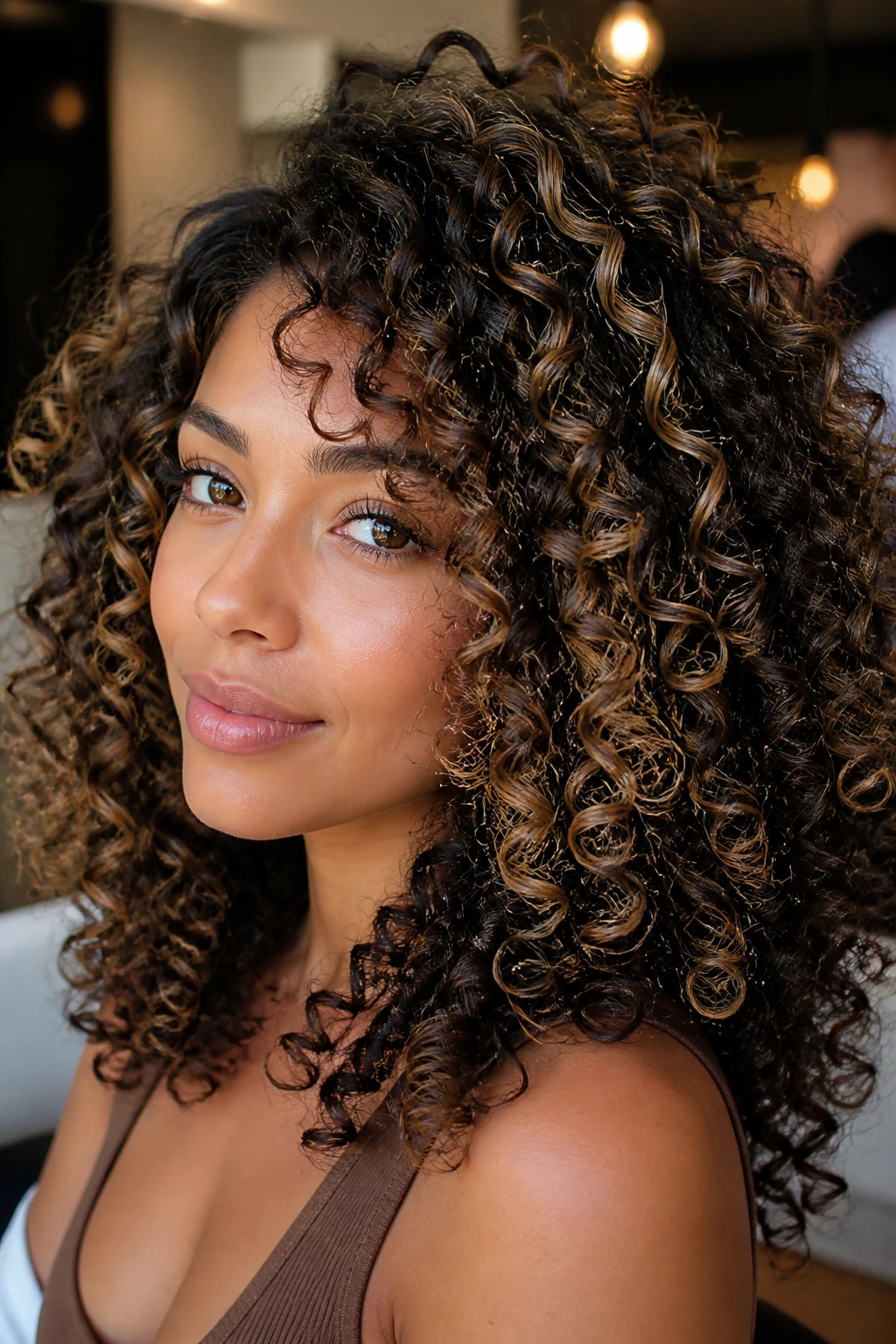
Champagne on espresso curls has a clean, bright look that doesn’t tip into yellow. The tone sits between beige and soft gold, so the curls pick up light without losing the depth underneath. On tight ringlets, that contrast is the whole point.
Ask for micro-weaves through the top layer and a few brighter ribbons around the part. Keep the root area soft—about a half inch of depth is usually enough—so the curls don’t look banded when they spring up. This one shines when the ringlets are defined and the surface of the hair has a little sheen, not a lot of frizz.
2. Honey Butter Babylights on 3B Curls
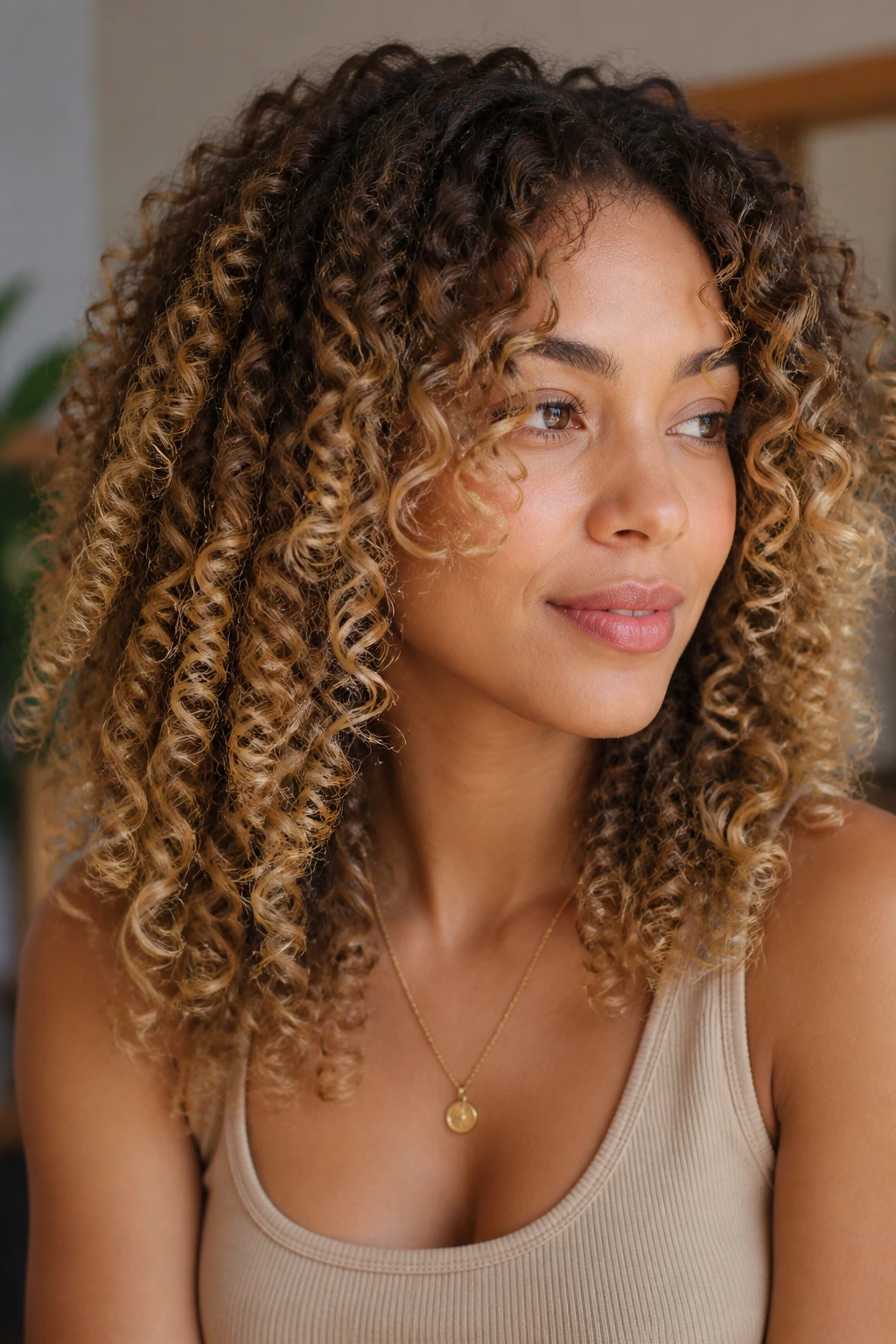
Want warmth without brass? Honey butter is the easy answer. It gives 3B curls a sunlit look that still feels rich at the root, which matters when the curls are dense and the shape needs a little lift.
Why it flatters this curl pattern
The curl bends break up the blonde, so even a warm tone reads as soft and dimensional. Ask for babylights that start mostly at midlength and drift lighter toward the ends; that keeps the crown from puffing out visually. A beige-gold gloss usually keeps the honey from going orange.
3. Creamy Beige Babylights on Layered Lob Curls
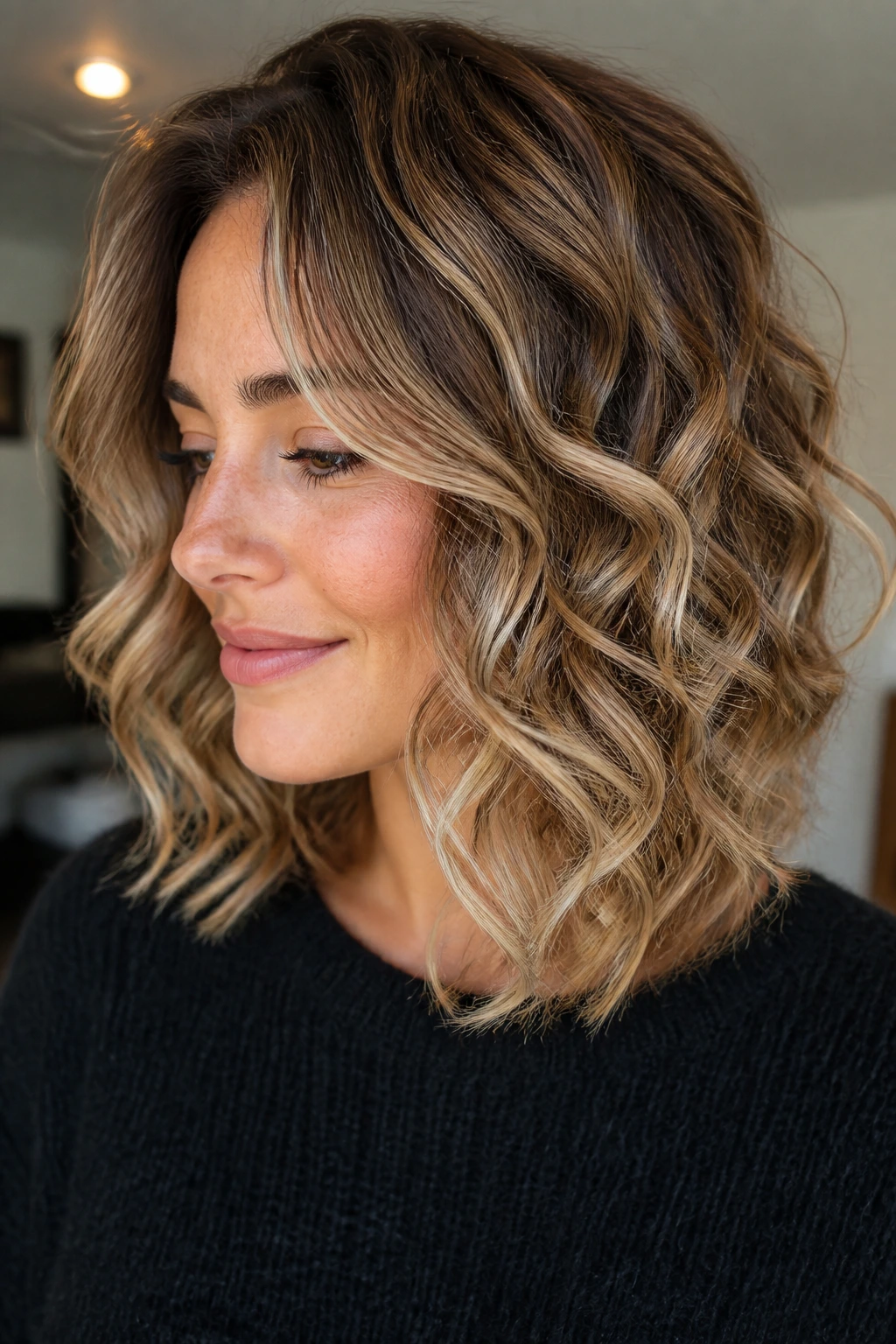
Creamy beige is one of those shades that looks calm in a good way. It doesn’t shout. On a layered lob, the babylights travel with the curls and give the cut movement around the ends instead of loading all the brightness at the top.
This is a smart choice if you wear your curls shoulder length or just above the collarbone. The shorter shape tends to shrink, and beige lights stop it from looking too dark at the perimeter. Keep the pieces fine and scattered; one blunt blonde stripe on a lob is all it takes to ruin the softness.
4. Pearl Blonde Micro-Lights on Cool Brown Coils
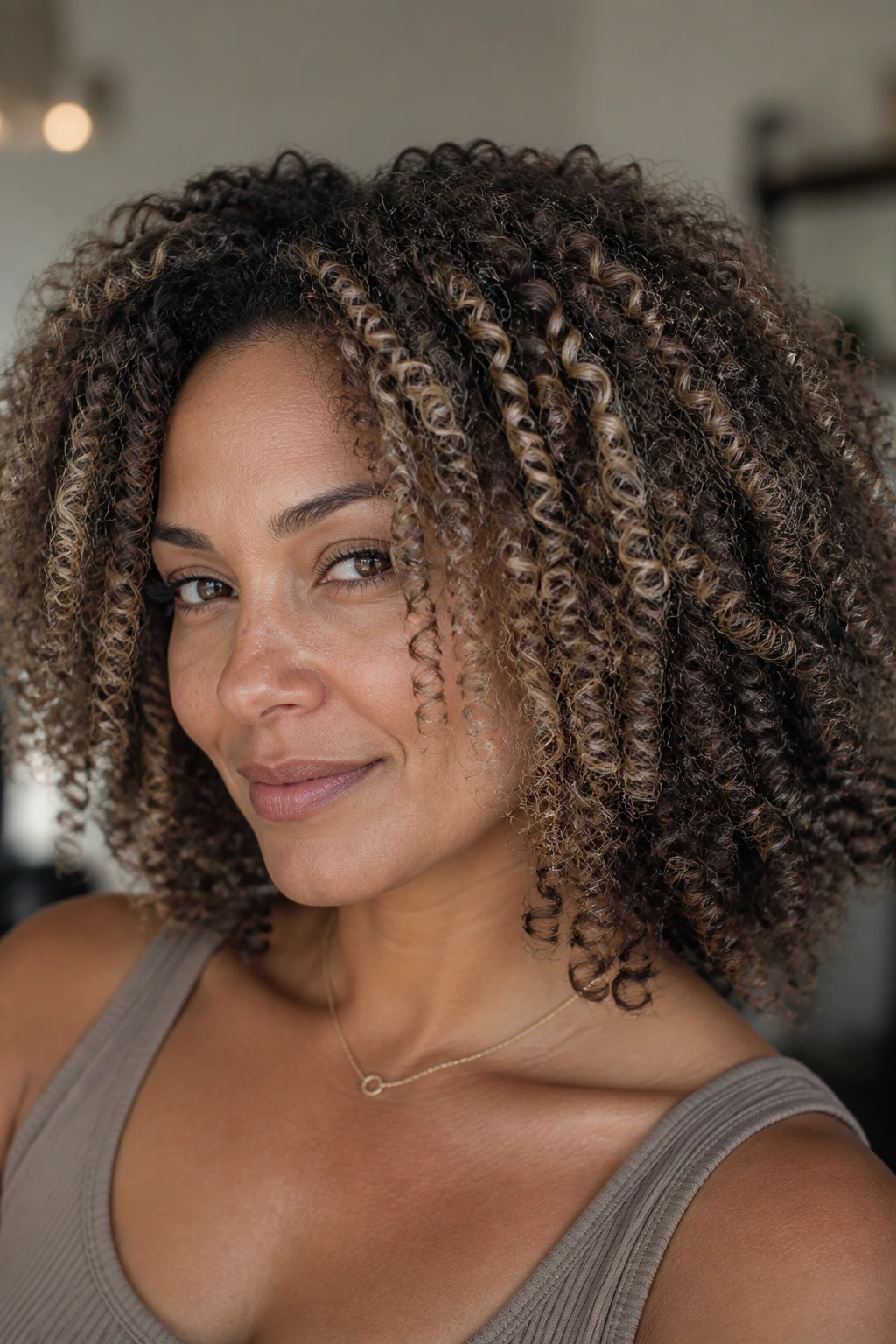
Pearl blonde is cooler and cleaner than honey, with a faint silvery cast that looks sharp on cool brown coils. The trick is restraint. Too much pearl on a dark base can go flat or chalky, but in micro-lights it gives the coils a polished edge.
Use this idea when you want the hair to read luminous rather than warm. It works best with a gloss that cancels yellow, not one that adds gold. If your coils are high-density, keep the brightest pieces on the visible outer surface and leave the inner mass deeper. That keeps the shape from looking washed out.
5. Buttery Face-Framing Babylights on Soft Spirals
Buttery babylights around the face do what contour makeup does, only with hair. They catch cheekbone height, open up the eyes, and keep the rest of the spirals grounded so the blonde doesn’t take over the whole head.
The best version is narrow and strategic. Brighten the front pieces, then thread a few lights into the crown and ends so the face frame doesn’t look pasted on. If your spirals are fine, keep the lift soft and creamy rather than high-contrast. A pale butter tone can look harsh on a delicate curl pattern if it’s overdone.
6. Mushroom Blonde Babylights on Dense Waves
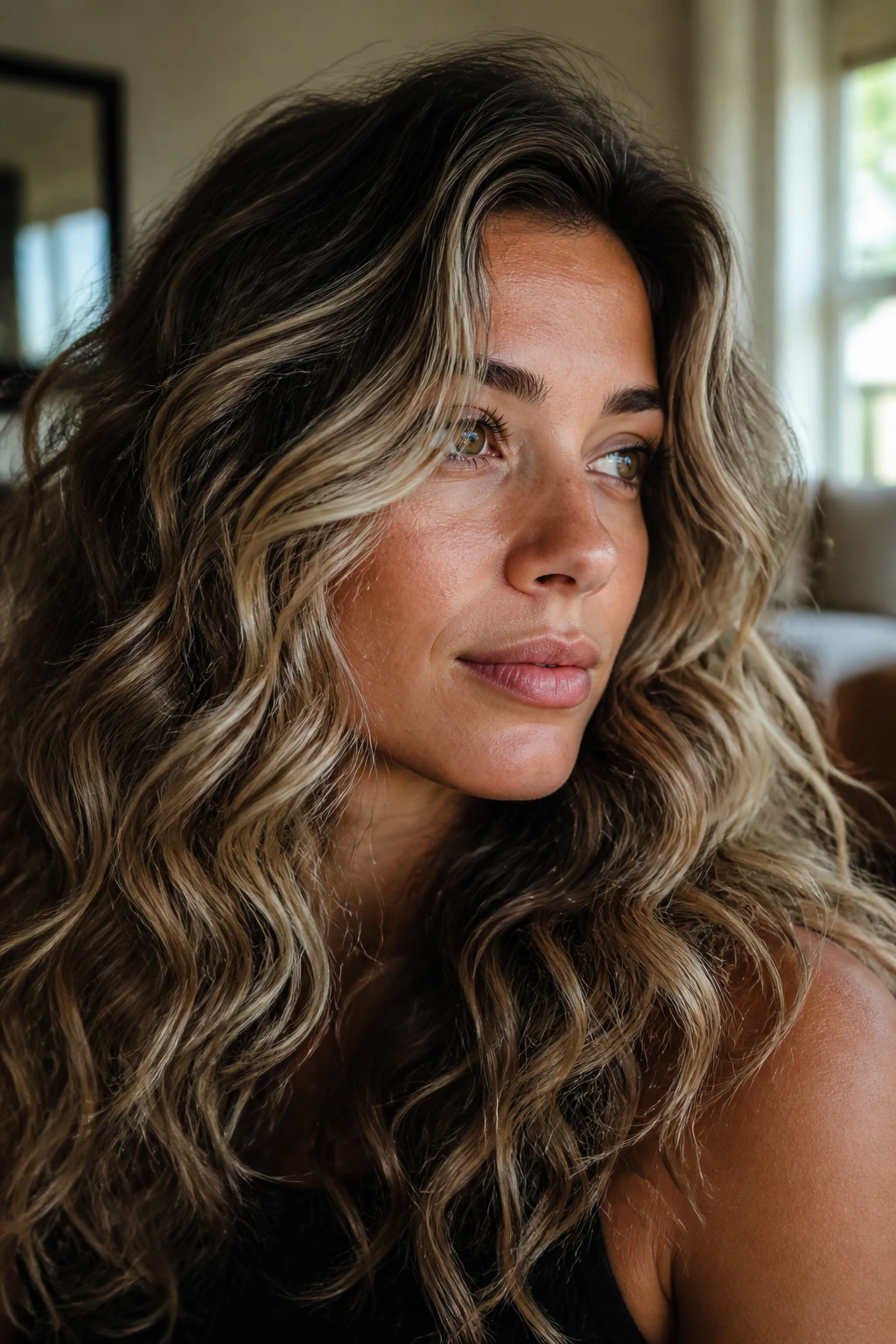
Mushroom blonde is smoky, beige, and slightly cool, which makes it a good fit for dense waves that need dimension more than brightness. The color gives movement to heavy hair without turning it yellow or brassy two weeks later.
The cool part of this shade is that it keeps the blonde believable on a darker base. A broad weave would make mushroom blonde look muddy, but babylights keep it clean. Think fine lines over a deep root, especially around the face and outer bends of the waves. It’s quietly expensive-looking. Yes, that phrase gets used too much. Here, it actually fits.
7. Caramel-to-Blonde Melt with Thread-Fine Lights
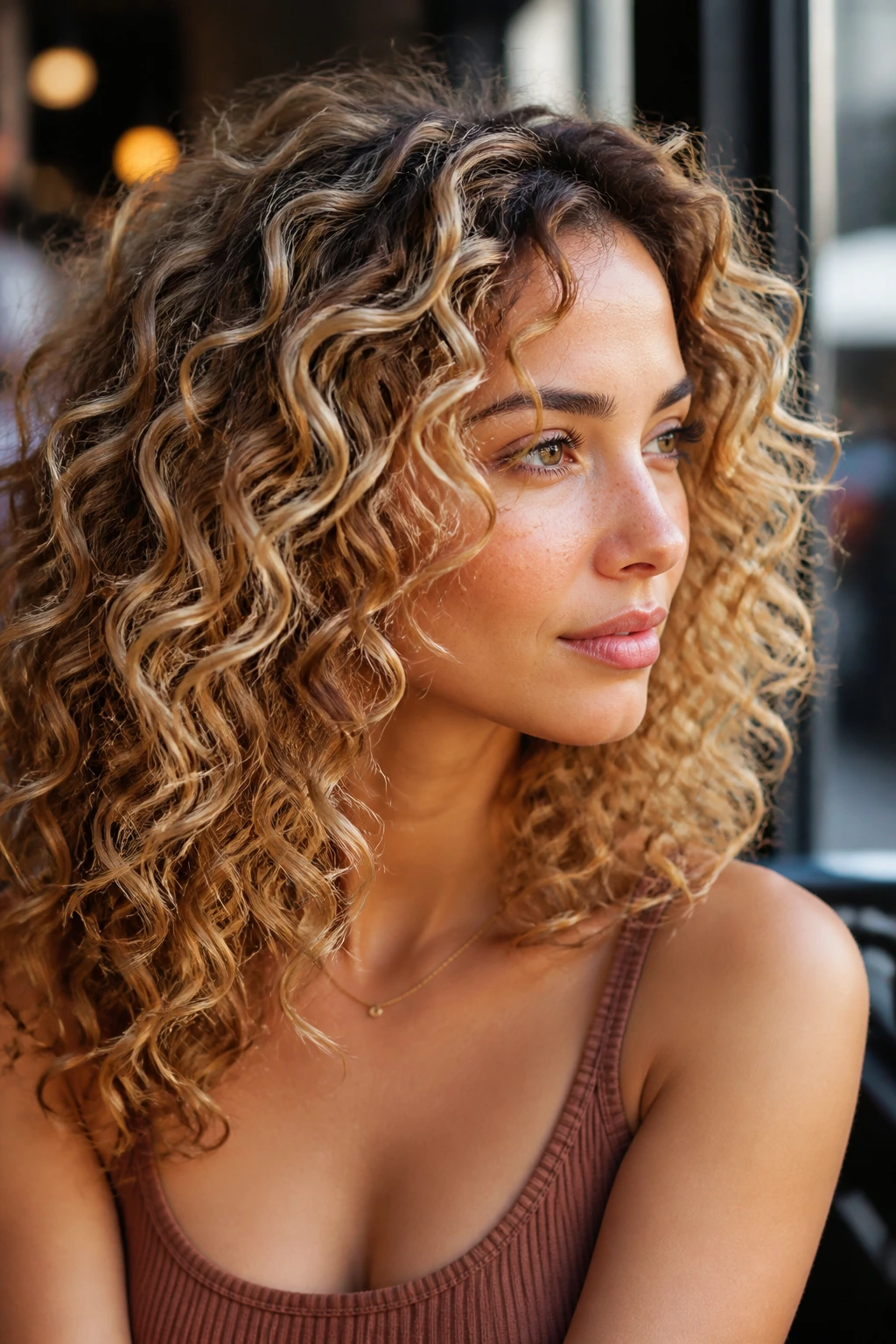
A caramel-to-blonde melt works when you want the color to fade upward instead of sitting in one obvious stripe. On curls, that gradient looks especially good because the eye already reads the hair in layers of shadow and light.
Start with caramel near the roots and midlengths, then let the babylights get lighter toward the ends. The important part is keeping the transition soft; if the blonde is packed too low in a hard line, the curls will look sliced. Long curls handle this best, especially when the ends are healthy enough to hold a lighter tone without looking ragged.
8. Frosted Beige Babylights on a Curly Bob
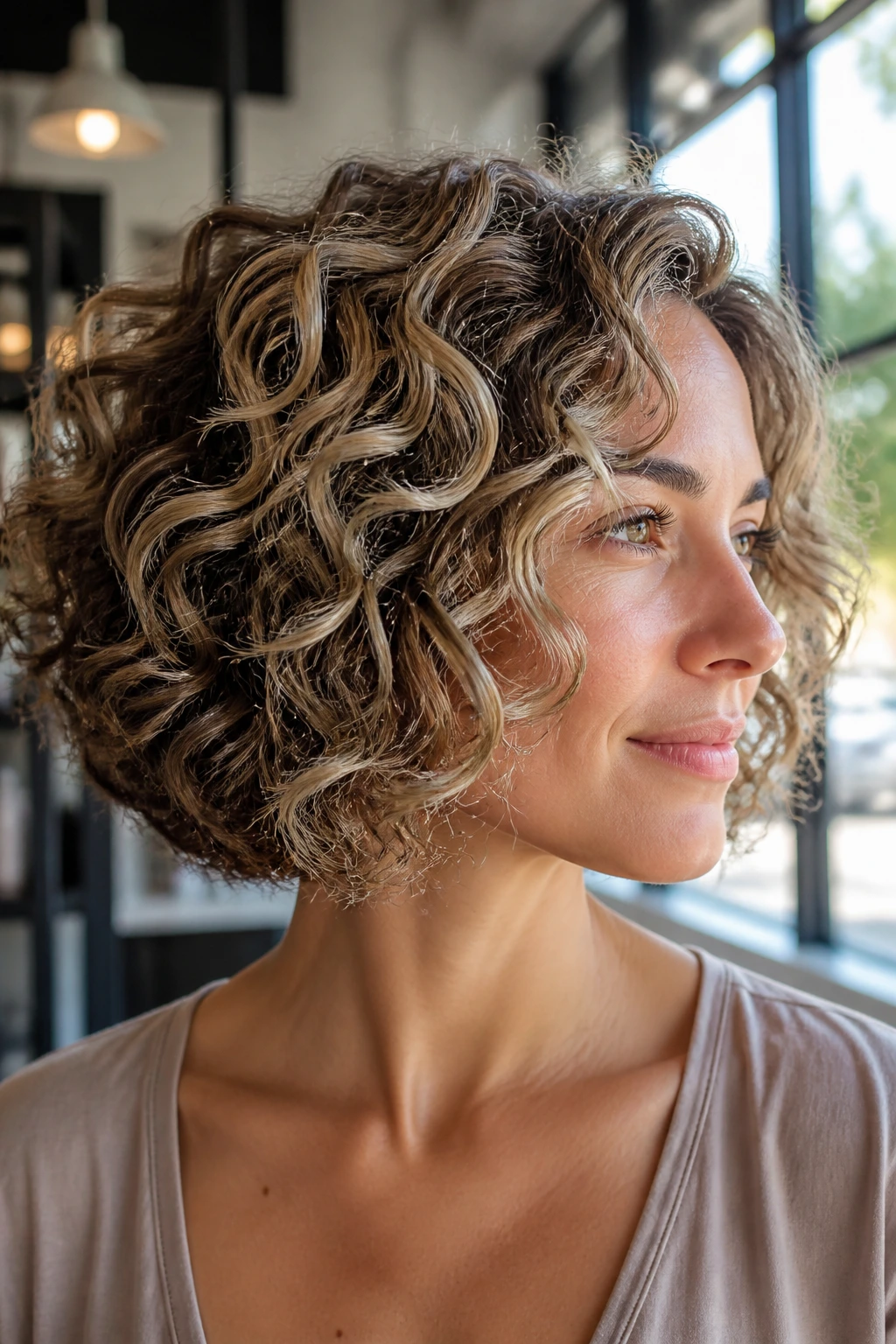
A curly bob can look weighted if the color is too dark from root to tip. Frosted beige babylights fix that by bringing light to the top curve of the curl and the outer edge of the bob, where the shape is most visible.
This is one of the better choices if you want the cut to feel lighter without going dramatically blonde. Keep the brightest pieces on the side part and around the fringe, then let the rest stay softer. Too many blonde pieces under the ear can make a bob puff out in the wrong places. Less is more here.
9. Golden Oat Babylights on Loose Curls
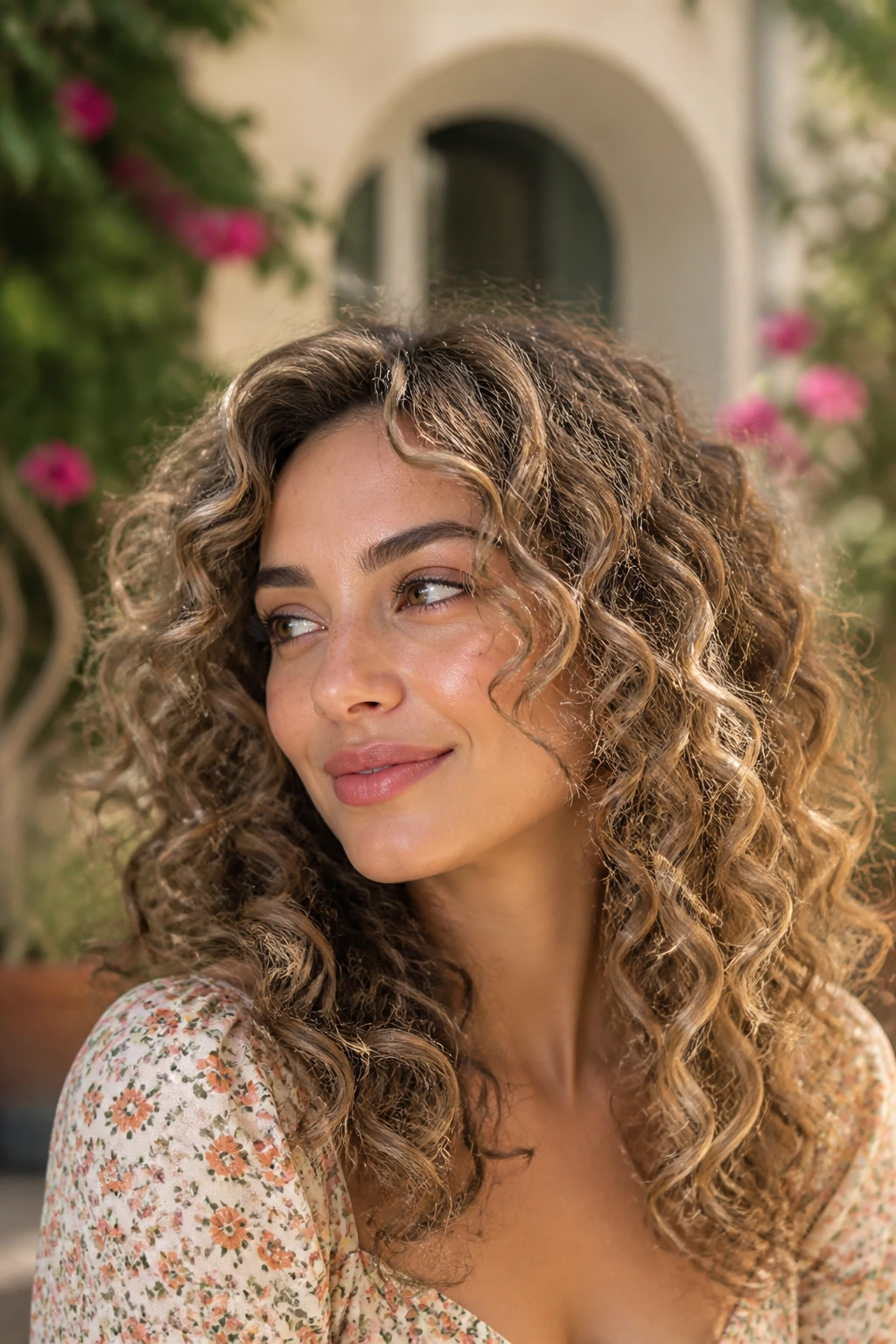
Golden oat sits in that flattering middle ground between blonde and warm brunette. On loose curls, it looks like the sun found the top layer and stayed there for a minute.
The reason it works is simple: loose curls expose more of the strand at once, so a warm blonde gets seen more easily than it does on a tighter coil. Thread-fine babylights keep the shade from turning streaky. This is a good match for people who like warmth but hate anything that veers pumpkin or copper.
10. Rooted Platinum Babylights on Long Spirals
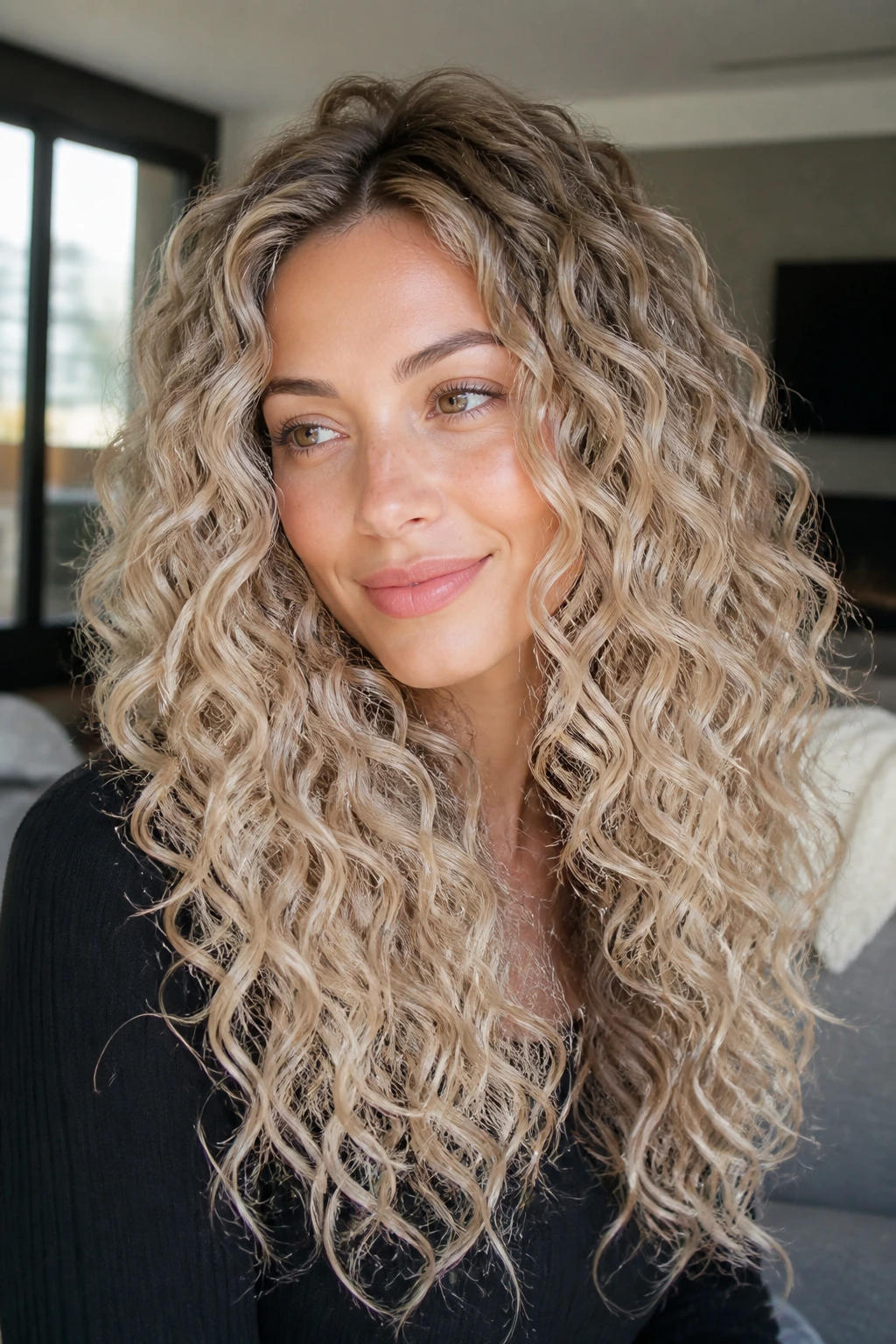
Platinum on curls sounds dramatic because it is. But when it’s rooted and broken up with babylights, it can look refined instead of flat-out bleachy. The darker root gives the spirals a base to spring from, and the pale pieces show off every bend.
This one needs a careful hand. Platinum can turn porous ends crunchy fast if the lightener is pushed too far, so the brightest pieces should live on the healthiest sections of the hair. If your long spirals already feel fragile, keep the platinum to the face frame and a few outer ribbons. The rest can stay a little softer.
11. Ash Blonde Ribbons on Deep Brown Curls
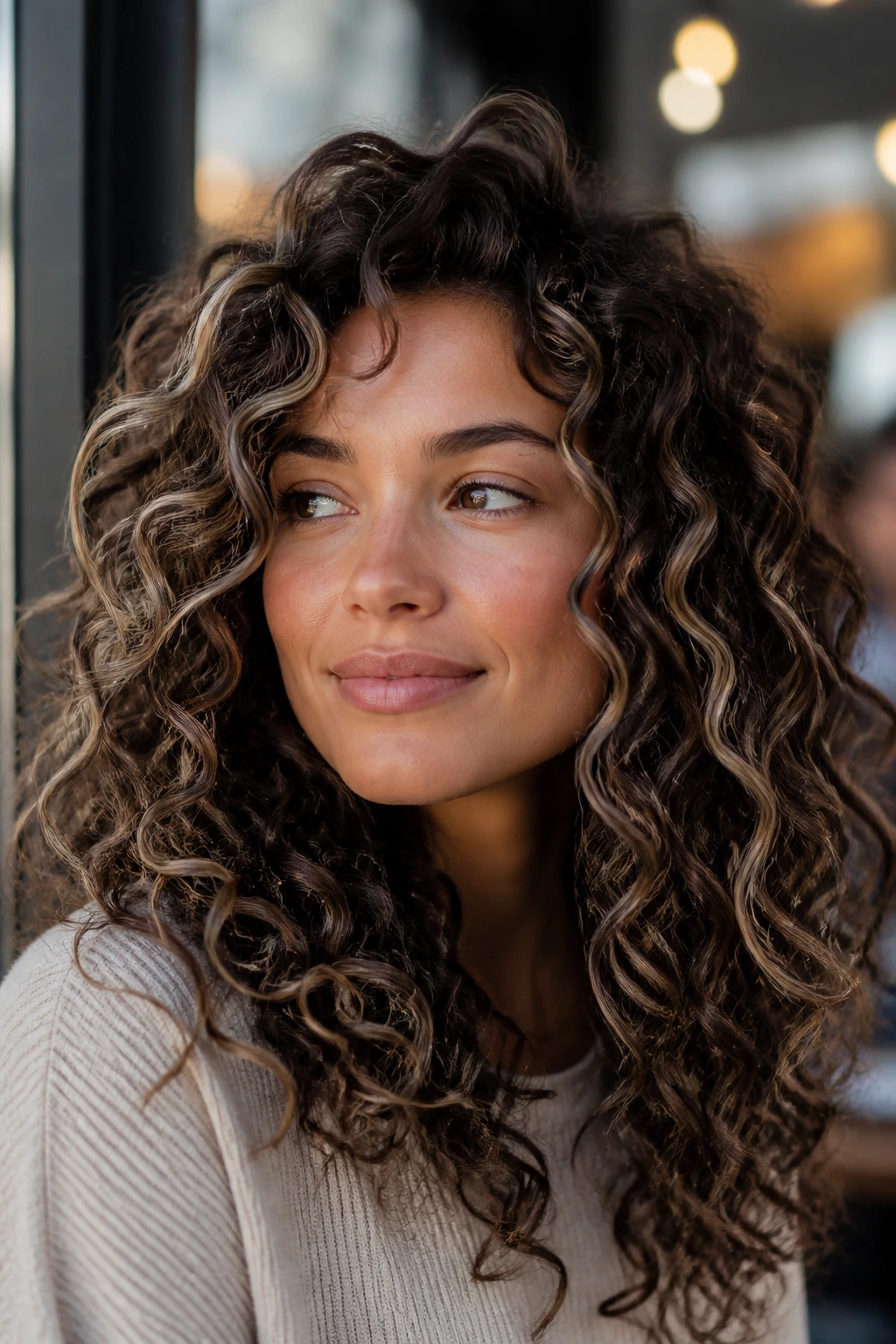
Ash blonde on deep brown curls has a smoky, cool finish that looks sharper than honey or beige. It works best when you want the blonde to feel deliberate, not sun-kissed.
The key is keeping the ribbons thin enough that the ash doesn’t turn dull. On curls, the darker base underneath keeps the cool tone from reading flat. If your skin leans cool or neutral, this can be one of the most flattering options in the whole bunch. A warm gloss will fight it. Don’t do that.
12. Vanilla Money Piece with Scattered Babylights
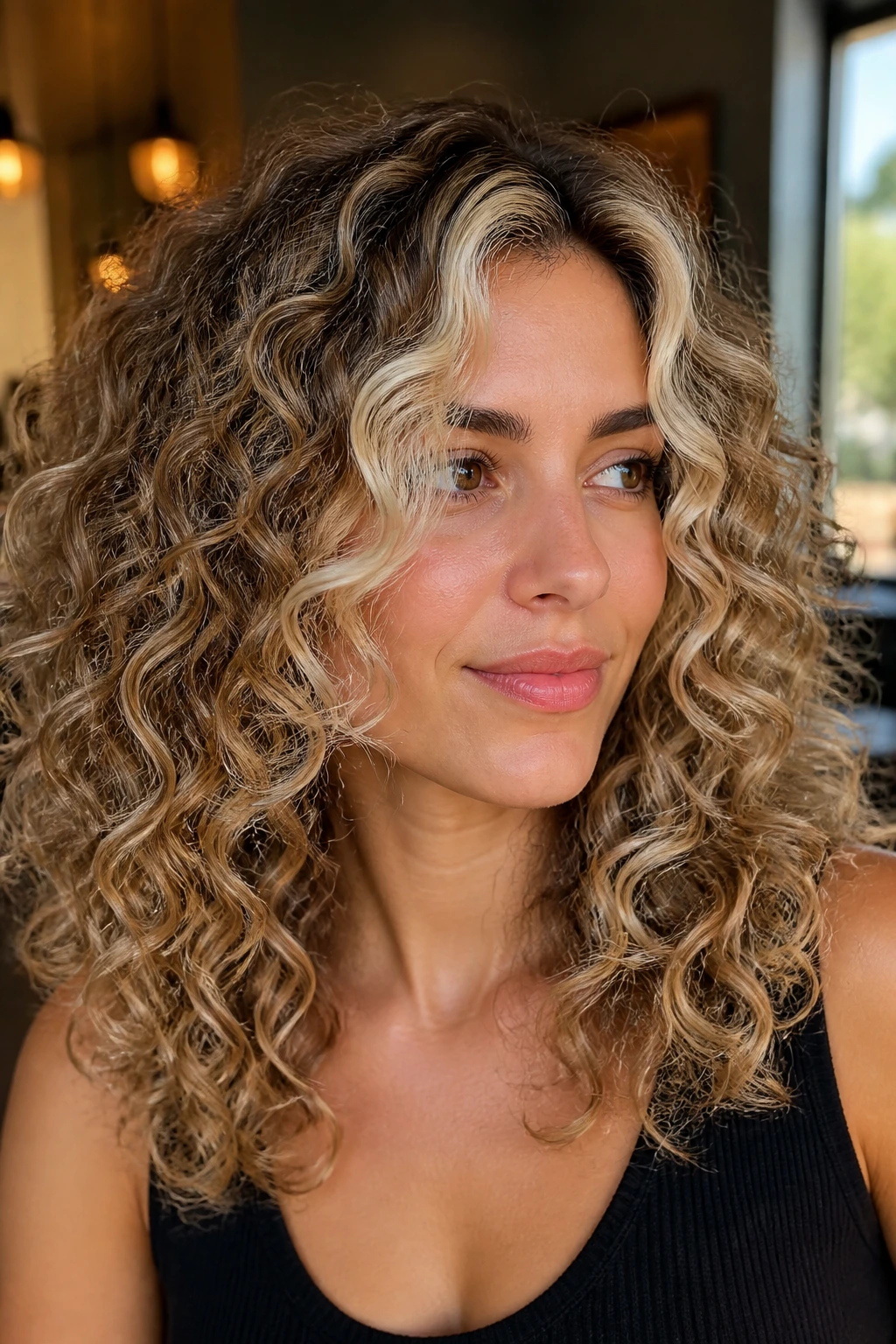
A vanilla money piece gives you a clear visual hit at the front, while scattered babylights keep the rest of the head from looking unfinished. It’s a good middle ground if you want to notice the blonde right away without committing to a full head of lightening.
The money piece should be soft, not blocky. Ask for narrow face-framing sections that melt into the curl pattern instead of sitting on top of it. Then let the babylights trail through the crown and sides. This looks especially good on layered curls, where the brighter front pieces can fall into the cut instead of fighting it.
13. Beige-Blonde Halo Lights on Shoulder-Length Coils
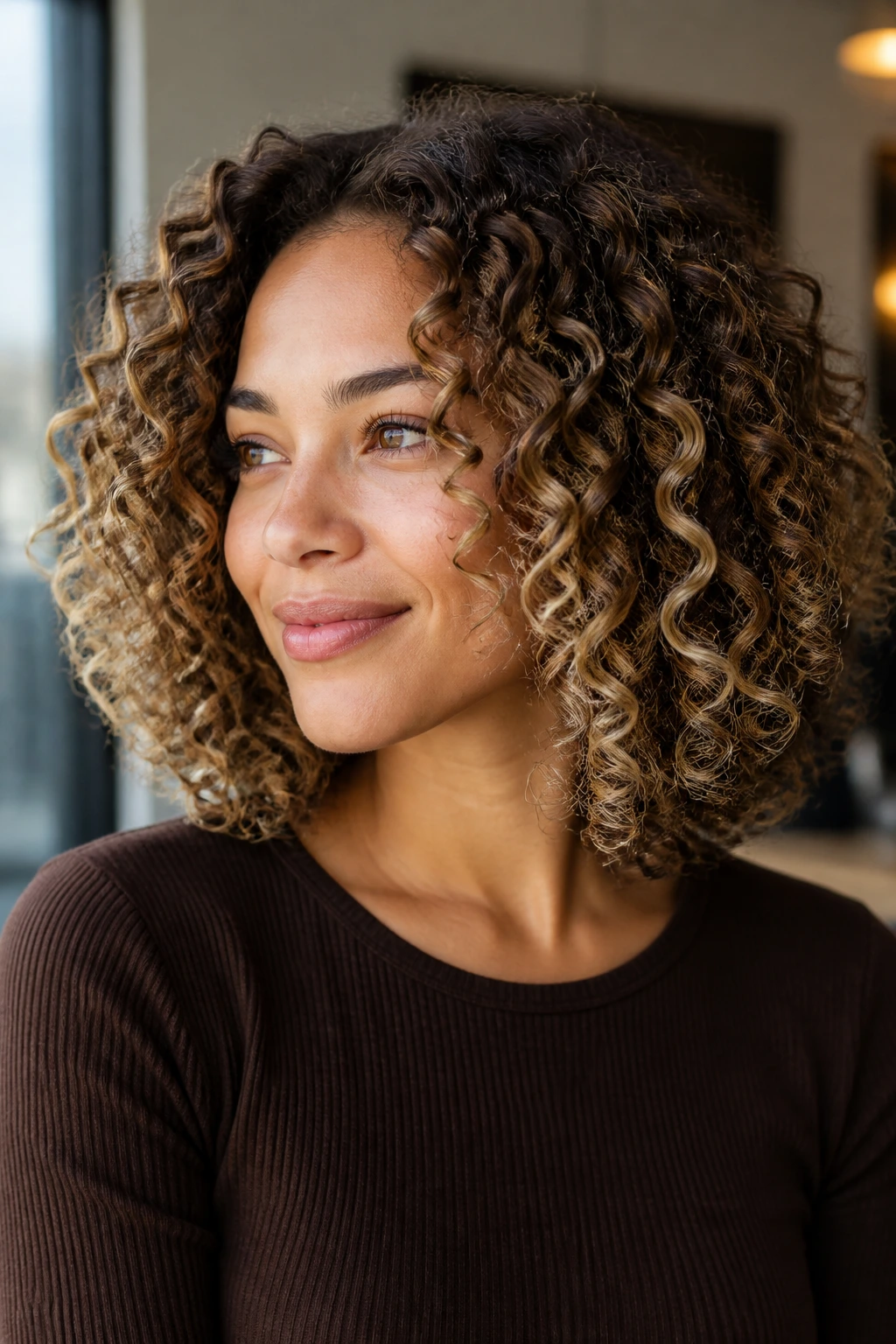
Halo lights follow the outer perimeter of the hair, which is exactly where shoulder-length coils show their shape best. The effect is almost like a ring of brightness around the head, but softer and more broken up.
That placement keeps the center of the style deeper and fuller, which matters when the curls are dense. Beige-blonde is the safest tone here because it doesn’t fight the natural depth of coils. If you try to make the whole head uniformly bright, the shape goes puffy and the curl definition starts to blur. A halo is smarter.
14. Smoky Champagne Babylights on Thick 3C Curls
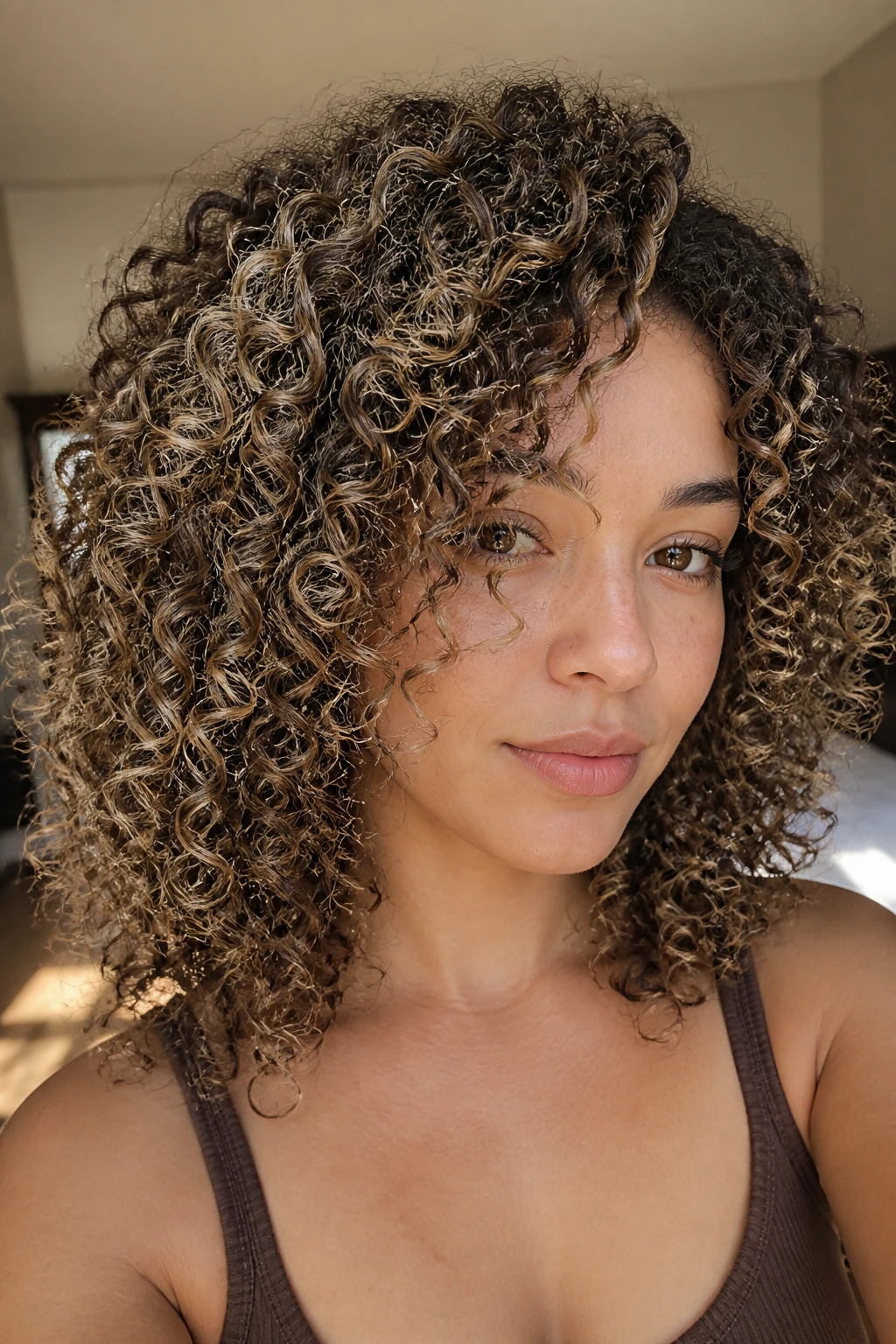
Thick 3C curls can hold a lot of color without looking striped, which makes smoky champagne a strong choice. The shade has enough warmth to stay flattering, but the smoky note keeps it from getting too gold.
This is one of those looks that benefits from a little shadow at the root and a brighter run through the top layer. If the curls are dense, the light pieces have to be placed where they’ll actually show after drying. Otherwise the blonde disappears into the mass of hair and you’ve done all that work for nothing.
15. Strawberry Blonde Babylights on Coppery Curls
If your hair already lives in the copper family, strawberry blonde babylights can make it look richer instead of lighter in a hard way. The trick is to lean peachy, not red-red. That keeps the result from veering into jewel-tone territory.
This is a nice choice when you want warmth with a bit of sparkle. The curl texture catches the rose-gold edge of the blonde, especially on the outer bend of each spiral. A clear gloss works better than a heavy toner here. Too much coolness will fight the copper base and make the blonde muddy.
16. Biscuit Blonde Lights on a Curly Shag
Biscuit blonde is warm-neutral, which is a fancy way of saying it behaves. On a curly shag, that matters. The layers already create movement, so the color needs to support the cut instead of competing with it.
The best version uses irregular placement—heavier through the crown, lighter at the nape, and a few brighter pieces around the fringe. A shag can look a little flat if every layer is colored the same. Biscuit blonde fixes that by following the haircut’s natural messiness, which is actually a compliment. Shags need a little mess.
17. Dimensional Bronde with Pale Babylights
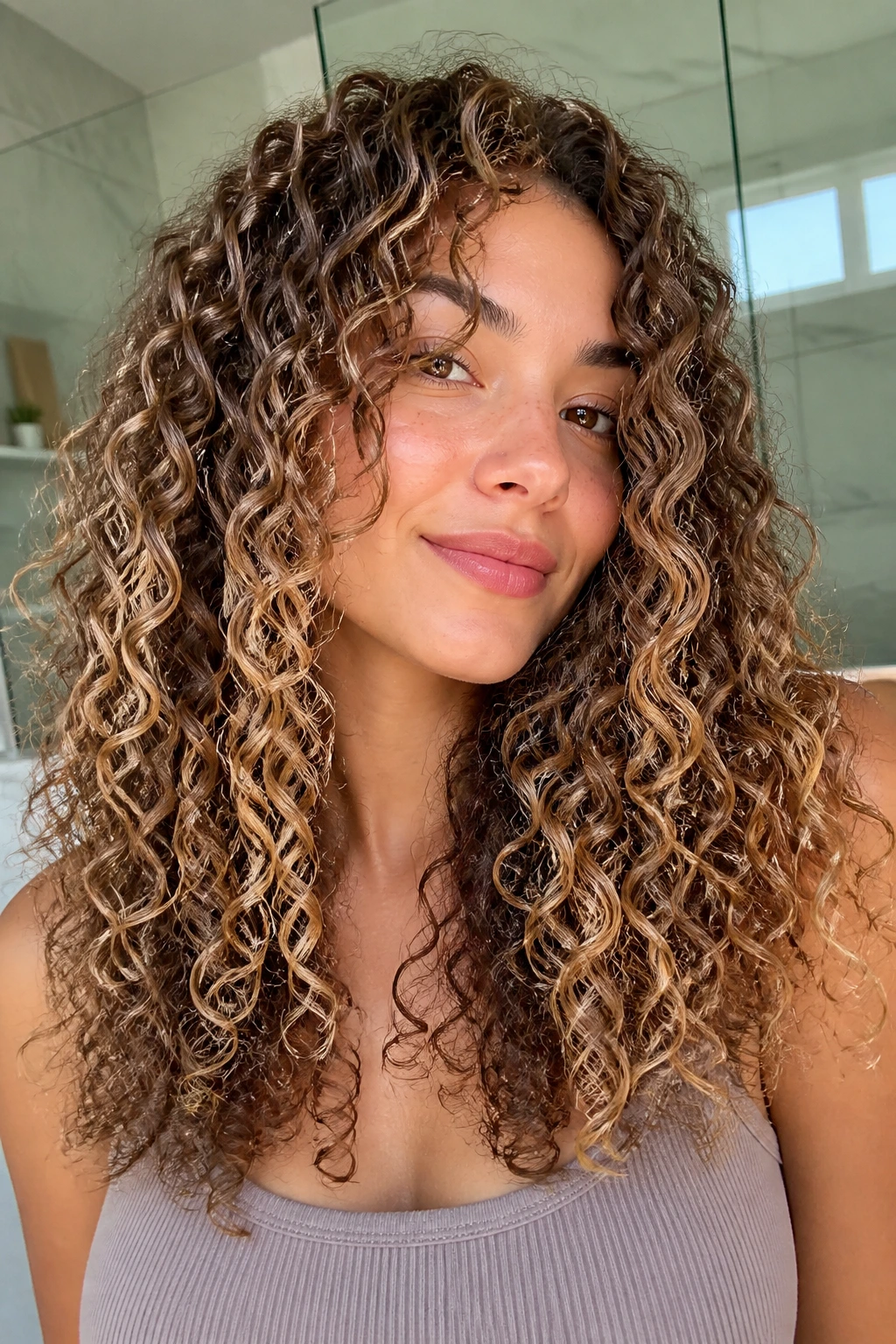
Bronde is for people who want to flirt with blonde without throwing their brunette base away. Pale babylights threaded through a bronde base give the curls depth first and brightness second.
This approach works well on medium-brown hair because the lighter pieces don’t have to do all the work. The base color handles the bulk of the definition, and the babylights act like a shimmer layer on top. If you’re unsure about going lighter, this is a good halfway point. It’s less dramatic, which is not a flaw if you like wearing your hair often and not babysitting it.
18. Buttercream Crown Lights for High-Volume Curls
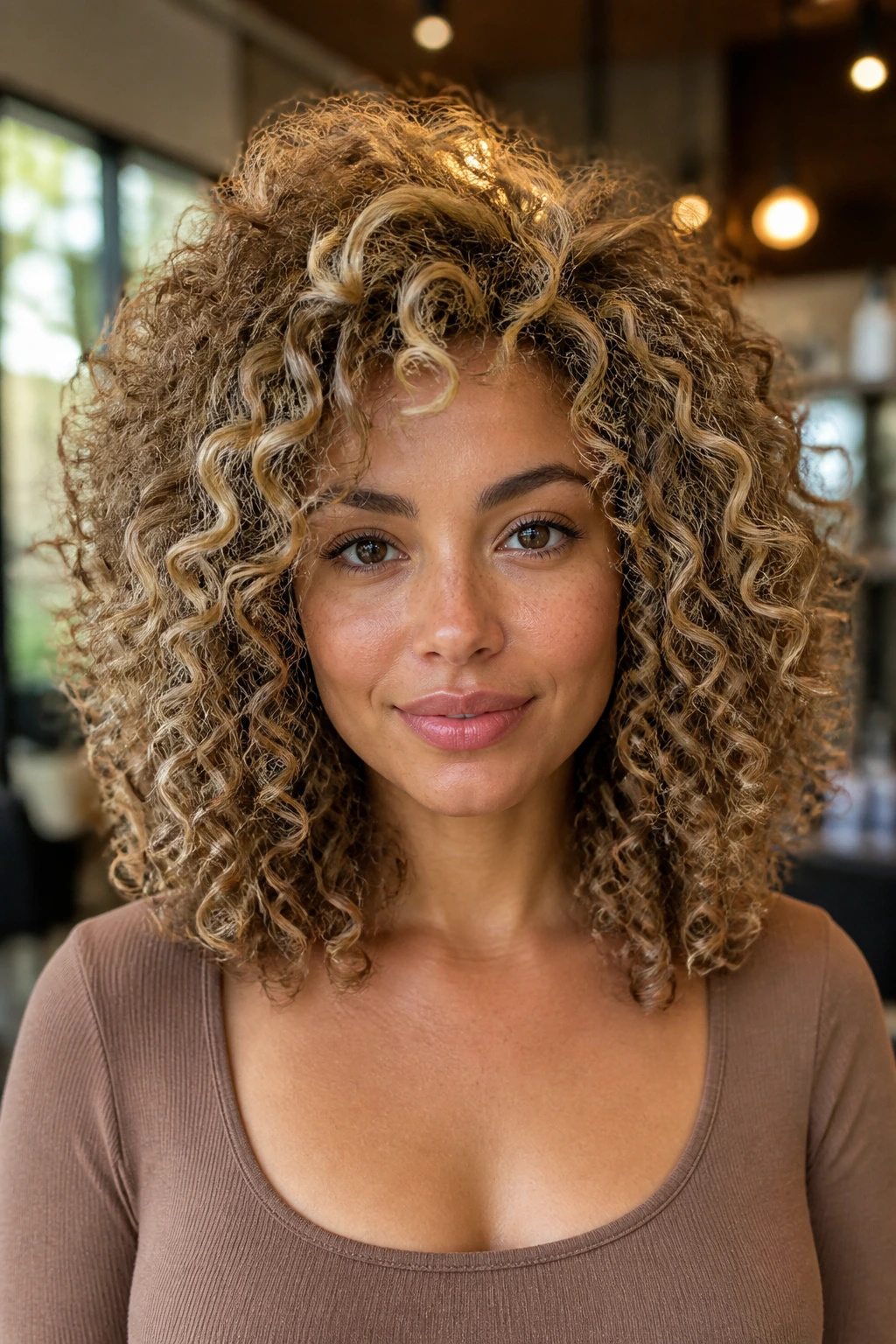
High-volume curls can swallow blonde if the placement is too spread out. Buttercream crown lights solve that by concentrating brightness where the volume actually lives: the top and upper sides.
The crown brightening breaks up the heaviness that dense curls can create near the roots. Keep the ends a touch deeper so the shape doesn’t balloon out. If your hair is long and heavy, this kind of placement gives you lift without adding bulk. It also photographs well from the front, which sounds superficial until you realize that’s where most people see your hair first.
19. Sandy Blonde Babylights on a Curly Pixie
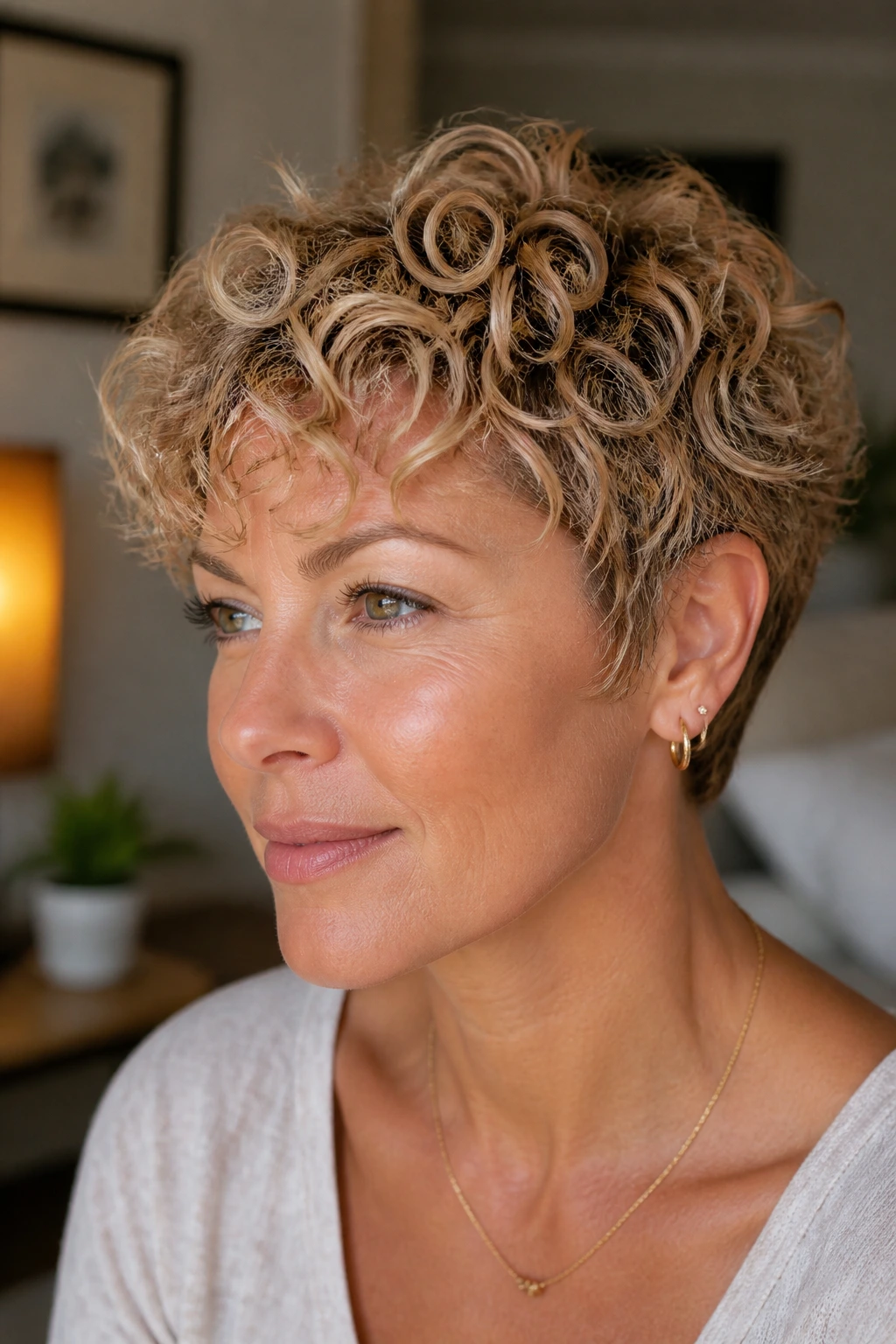
A curly pixie needs fine light, not chunky contrast. Sandy blonde babylights give short curls a sun-faded look that keeps the cut from feeling too dark or helmet-like.
Because the hair is short, every light piece matters. The fringe, top ridge, and sideburn area are the places to brighten. If you go too pale all over, the cut can lose its shape fast. Sandy blonde is soft enough to avoid that problem, but still bright enough to keep the pixie from vanishing into a single color block.
20. Ice-and-Cream Contrast on Bouncy Ringlets
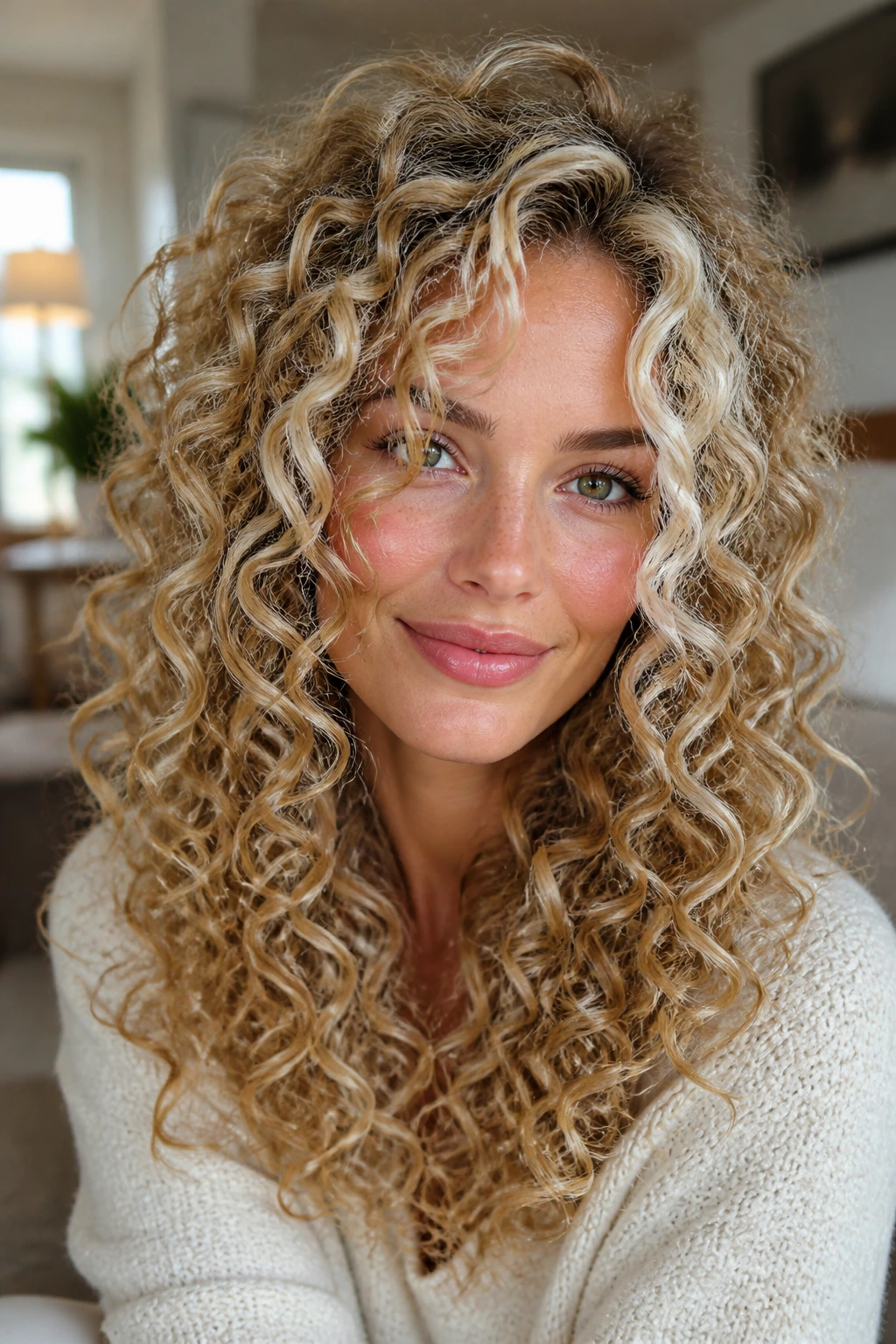
This is the bolder one. Ice-and-cream contrast pairs cooler pale pieces with softer creamier blonde so the ringlets have visible variation from one bend to the next.
It works because ringlets already stack light and shadow in a neat pattern. If the blonde is too even, the curl structure disappears. If it’s too random, it looks messy. A narrow contrast keeps the texture crisp. This is a strong pick for someone who likes seeing the curl definition from across the room. Not subtle. Very effective.
21. Honey-Gold Babylights on Curly Bobs
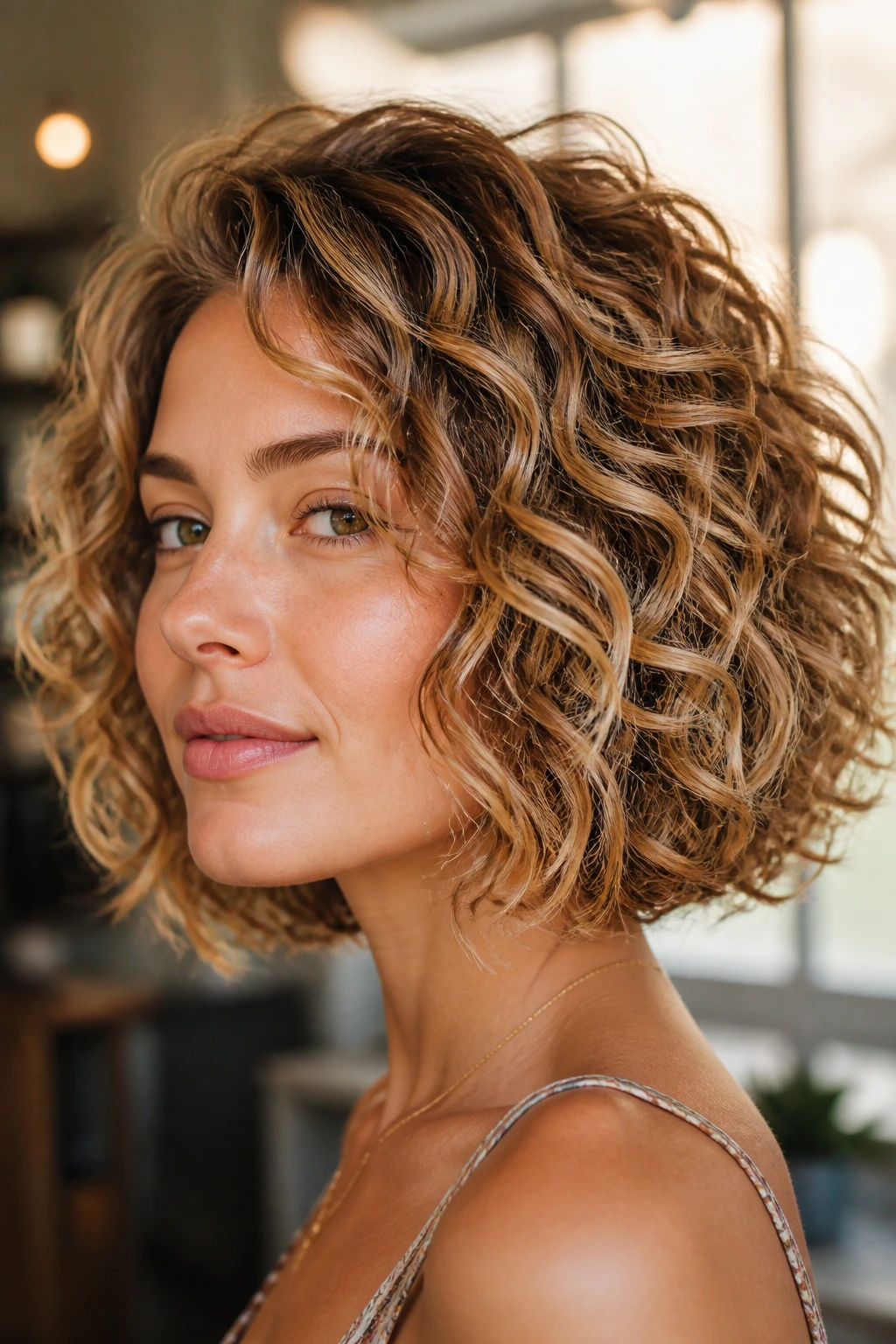
Honey-gold is warm, approachable, and easier to live with than icy blonde on a bob. The shorter length means the color sits close to the face, so a golden tone tends to feel brighter and friendlier without being loud.
The best placement hugs the top surface of the curls and the pieces that flip outward near the jaw. That’s where the movement lives. Keep the interior a little deeper so the bob still has shape. A bob with honey-gold babylights should look like the curls are catching the light as they move, not like someone stripe-painted the top.
22. Toasted Almond Babylights on Long Layers
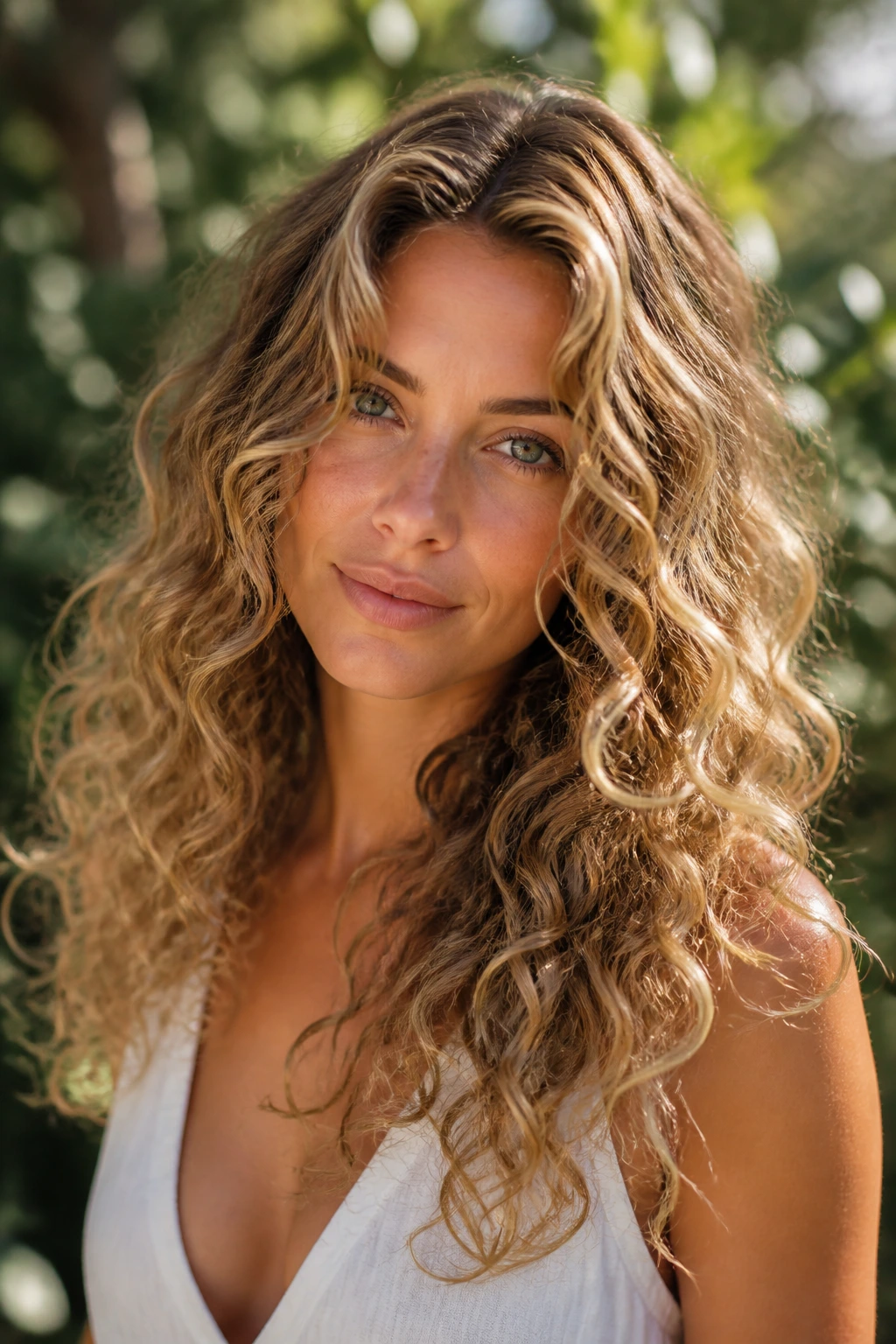
Toasted almond is a mellow blonde with a warm, nutty finish that looks especially good on long layered curls. It gives you a softer lift than platinum or ash, which is why it works so well when the haircut already has plenty going on.
Long layers need dimension more than brightness. Thread-fine babylights in toasted almond do exactly that. Ask for the lighter pieces to be concentrated where the layers separate, especially around the face and the ends. The result feels sunny, but not yellow, and it grows out without a fight.
23. Soft Pearl Ends with Rooted Babylights
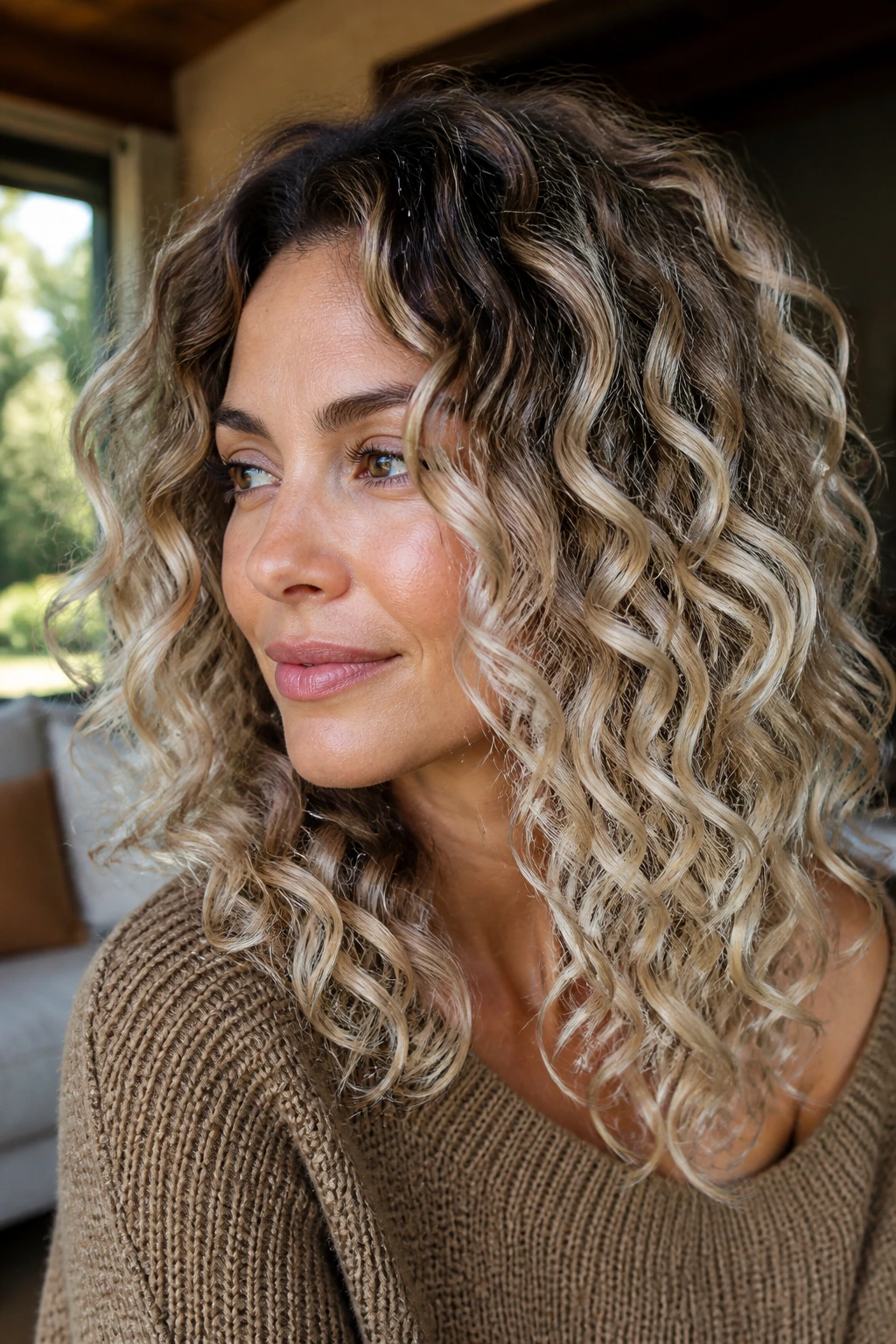
This idea keeps the top grounded and lets the ends do the bright work. Rooted babylights create a shaded base, and the pearl-toned ends give the curls a clean, lighter finish.
It’s a good move when the hair has gone a little too warm or a little too flat from old color. The rooted section gives the style structure, while the pearl ends refresh the whole shape. If your curls are porous, keep the pearl tone on the healthiest ends only. Overlightened tips can turn dry fast, and pearl blonde will show that dryness in a hurry.
24. Sunflower Blonde Threading for Tight Spirals
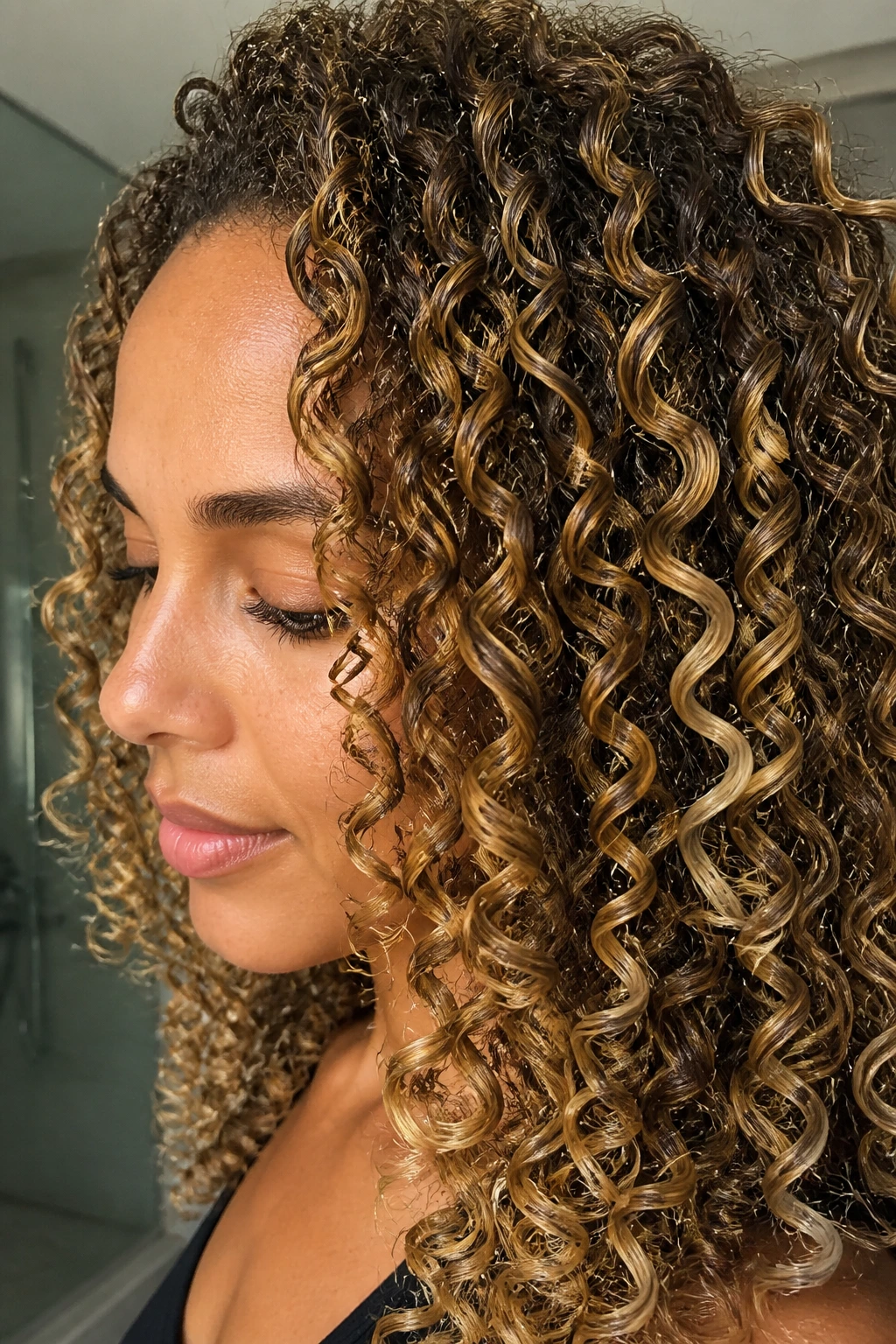
Tight spirals can handle brightness, but they need it in very fine threads. Sunflower blonde is a vivid, sunny tone that works when the placement is narrow and intentional, never blocky.
The color shows best on the outermost parts of the spiral where the light can actually catch. That’s why thread-thin babylights matter here. If the pieces are too wide, the curl pattern gets lost. Keep the roots deeper and the blonde concentrated where the hair naturally shows movement. This is the kind of blonde that looks best when the spirals are freshly defined.
25. Cream Soda Blonde Babylights with a Soft Shadow Root
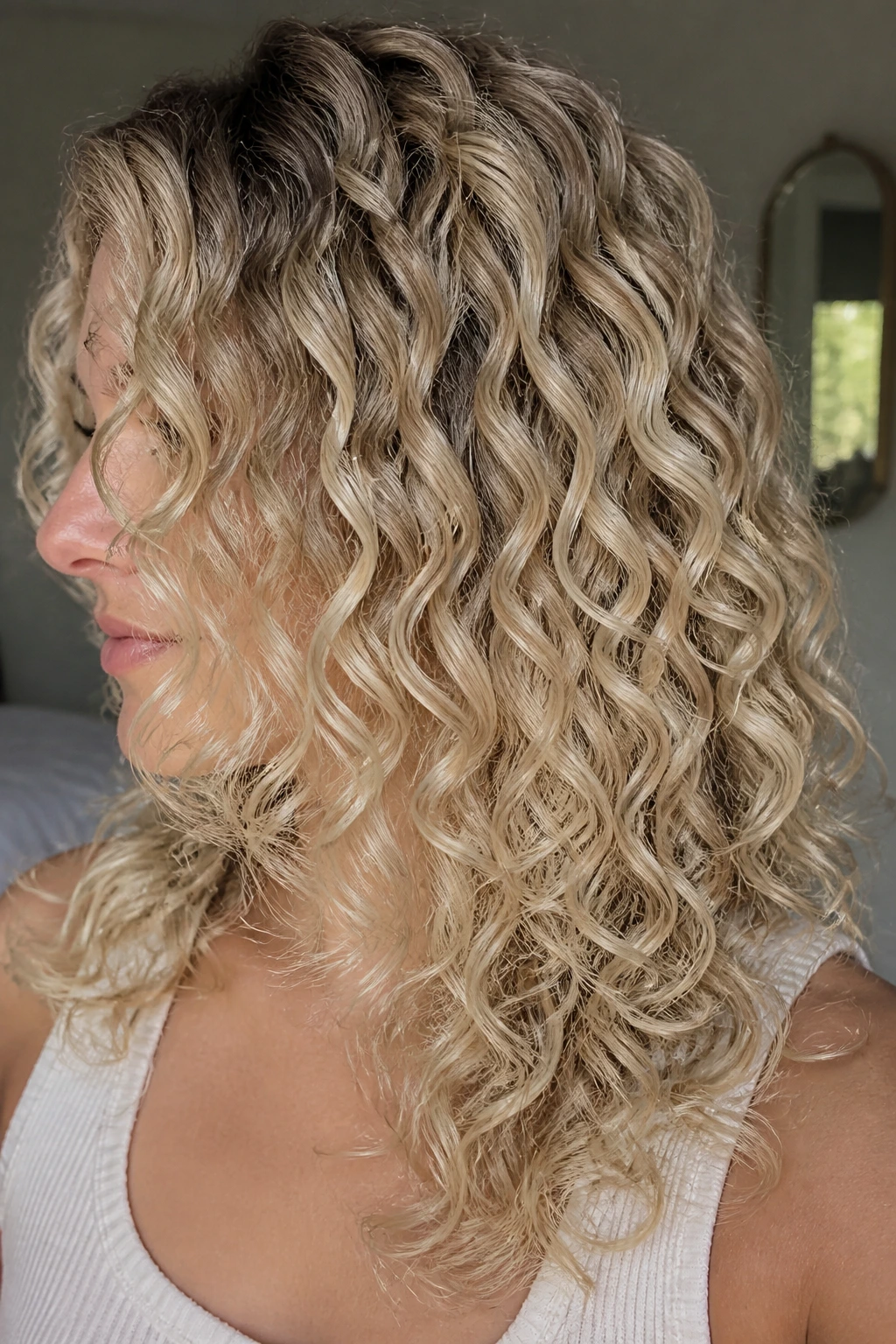
Cream soda blonde is the easy final answer when you want something soft, bright, and not overcomplicated. A shadow root keeps the grow-out gentle, while the cream soda tone gives the curls a pale vanilla finish that still feels warm enough to wear every day.
This is one of the most forgiving blonde hair color ideas for curly hair with babylights because it doesn’t depend on a perfect finish to look good. The shadow root helps with maintenance, and the babylights keep the color moving through the curls instead of sitting as one flat layer. If you want blonde that still looks like hair, not highlight foil, start here.
Why Babylights Behave Differently on Curly Hair
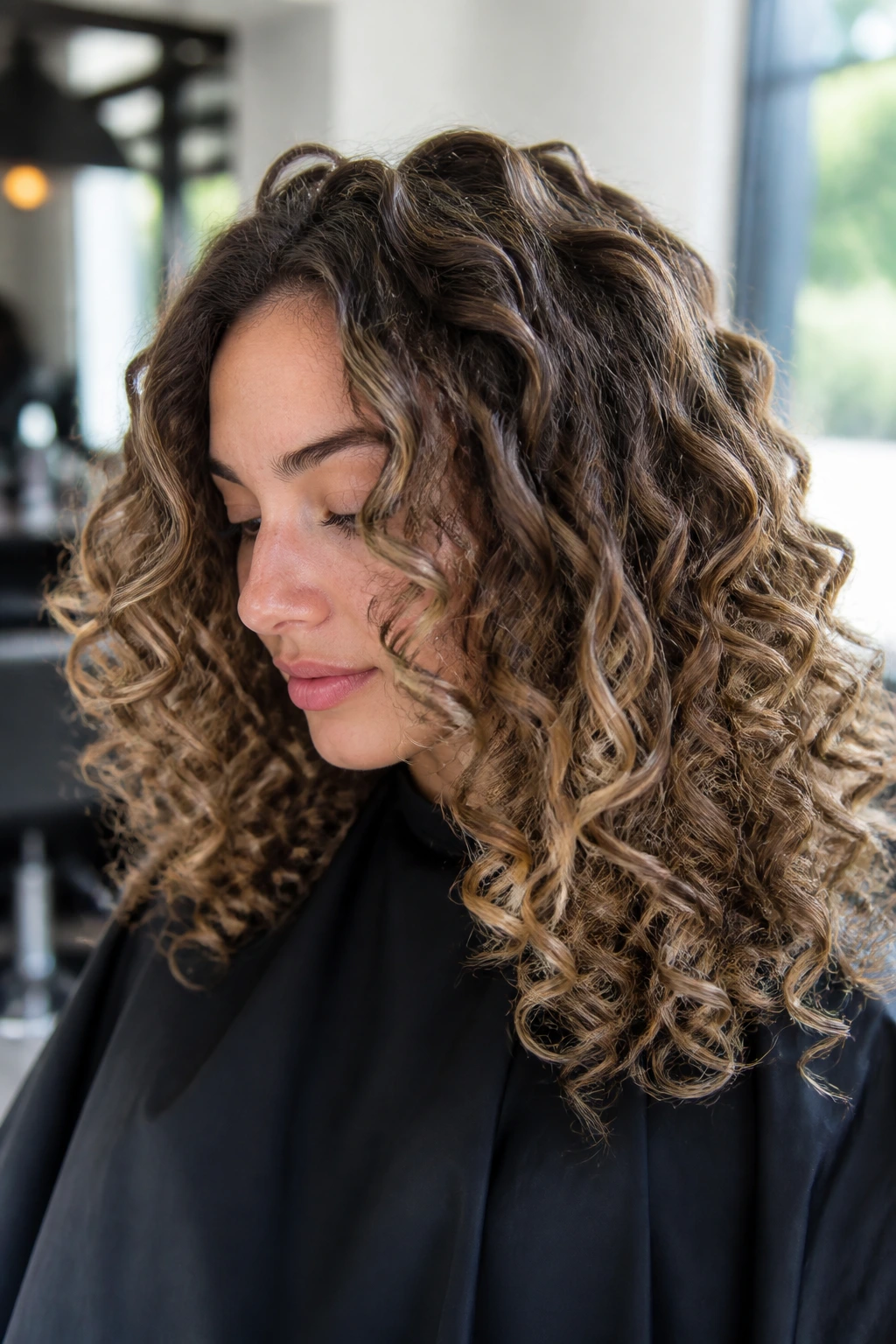
Curly hair changes the rules. A highlight pattern that looks balanced on straight hair can look scattered, hidden, or strangely stripey once curls spring back to life. That’s why babylights are such a smart fit: they work with the curl’s natural bend, not against it.
The other thing people forget is shrinkage. A curl can jump up an inch or two after drying, which means the blonde has to be placed lower than you think if you want it to show where the eye lands. A stylist who understands curls will usually weave light through the outer surface and leave the inside of the curl mass deeper for shadow. That keeps the shape full.
Porosity matters too. Curly ends often grab lightener and toner faster than the midlengths, so the lightest blonde should not always live at the very tips. That’s how you end up with dry, pale ends and darker mids that look disconnected. The good babylight jobs are balanced, not everywhere at once.
Essential Tools and Products for Curly Blonde Maintenance
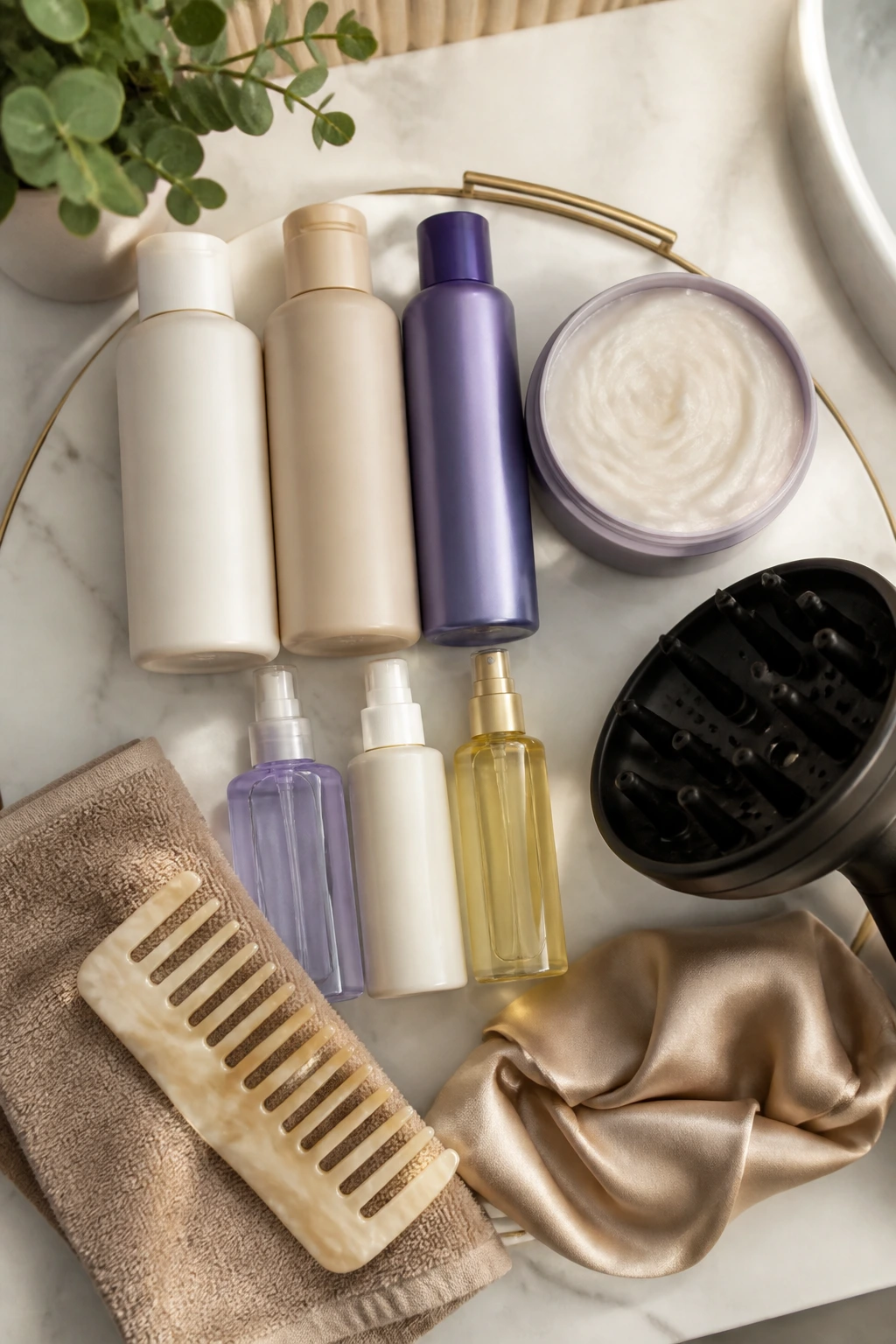
- Sulfate-free shampoo: Keeps the blonde from dulling out fast and helps curls hold their moisture.
- Color-safe conditioner: Softens lightened curls after every wash so the babylights don’t look crunchy.
- Purple or blue shampoo: Use sparingly, because curly hair can get dry fast if you overdo the toning.
- Deep conditioning mask: One heavy-duty moisture treatment a week helps porous blonde pieces feel less rough.
- Leave-in conditioner: A light leave-in keeps the curl clumps smooth without coating the blonde pieces too much.
- Heat protectant: Needed any time you diffuse, smooth, or stretch the curls with heat.
- Microfiber towel or cotton T-shirt: Cuts down on frizz and protects the highlight pattern from getting puffed up.
- Wide-tooth comb or detangling brush: Lets you distribute conditioner without pulling the curl pattern apart.
- Diffuser: The fastest way to dry curls while keeping the lighter pieces visible and the frizz under control.
- Silk or satin pillowcase: Reduces friction, which matters more once the hair has been lightened.
How to Choose the Right Blonde Tone for Your Curl Pattern
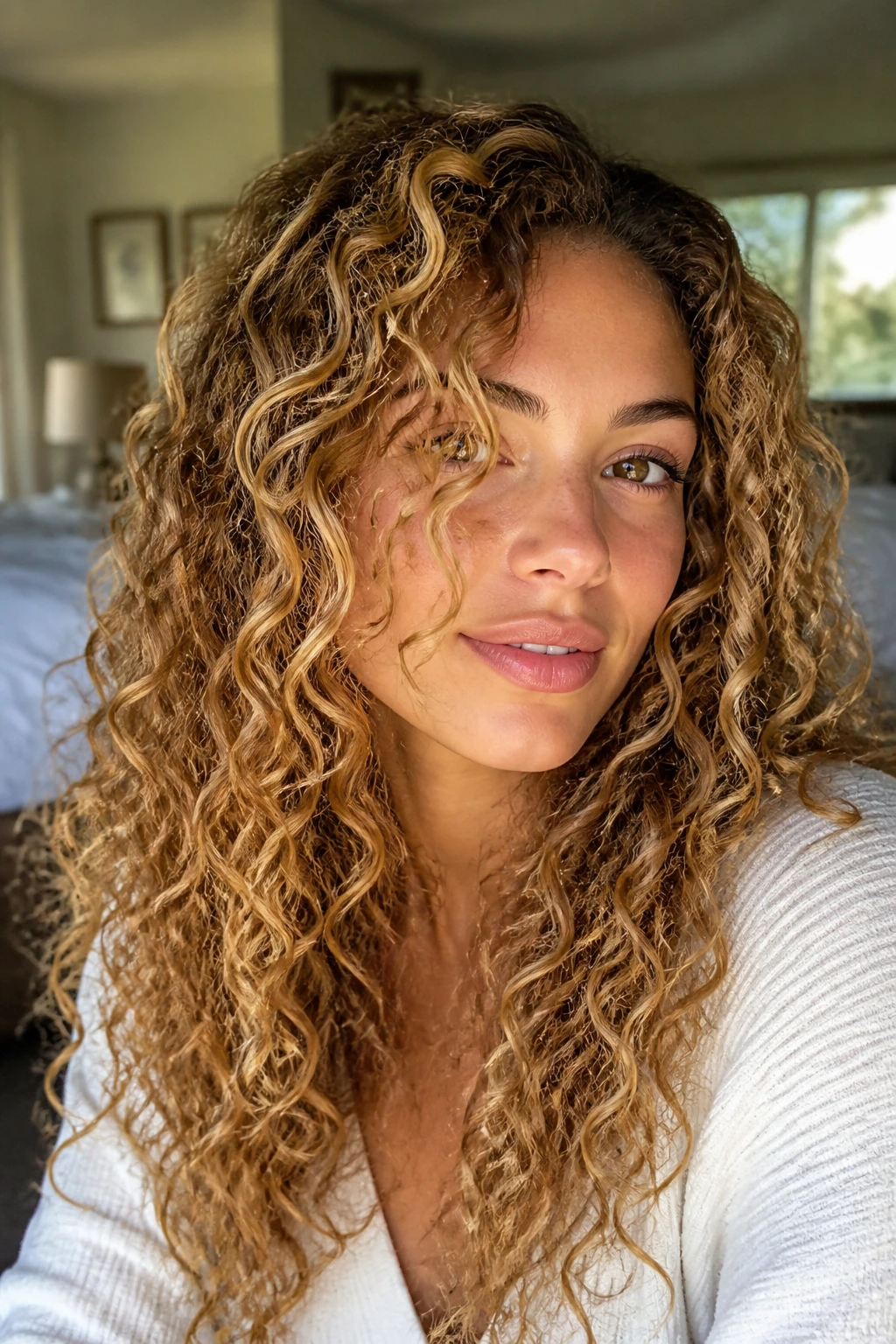
The easiest way to choose a blonde tone is to start with your base and then ask how much contrast you want to see on day one and day thirty. That part matters. A warm honey blonde can look soft and flattering on a level 4 base, while a pearl or ash tone usually needs more deliberate maintenance and a little more confidence on the wearer’s side.
Warm base, warm blonde: If your hair already has gold, caramel, or copper in it, honey, buttercream, toasted almond, and cream soda usually blend better than icy tones. They soften the grow-out and make the color look part of the curl, not pasted onto it.
Cool base, cool blonde: If your natural shade leans ash or neutral brown, pearl, beige, mushroom, and smoky champagne tend to look cleaner. They keep the blonde from going orange as it fades.
Dense curls need placement more than lift: Thick hair can swallow color. In that case, ask for brighter face-framing pieces, crown lights, or a halo shape so the blonde can actually be seen once the curls dry.
Porous ends need less punishment: Older highlights, previous dye, and rough ends grab light too fast. If the ends are already stressed, keep the lightest blonde off the very tips and lean on a gloss instead of more bleach.
Styling Moves That Keep Babylights Visible
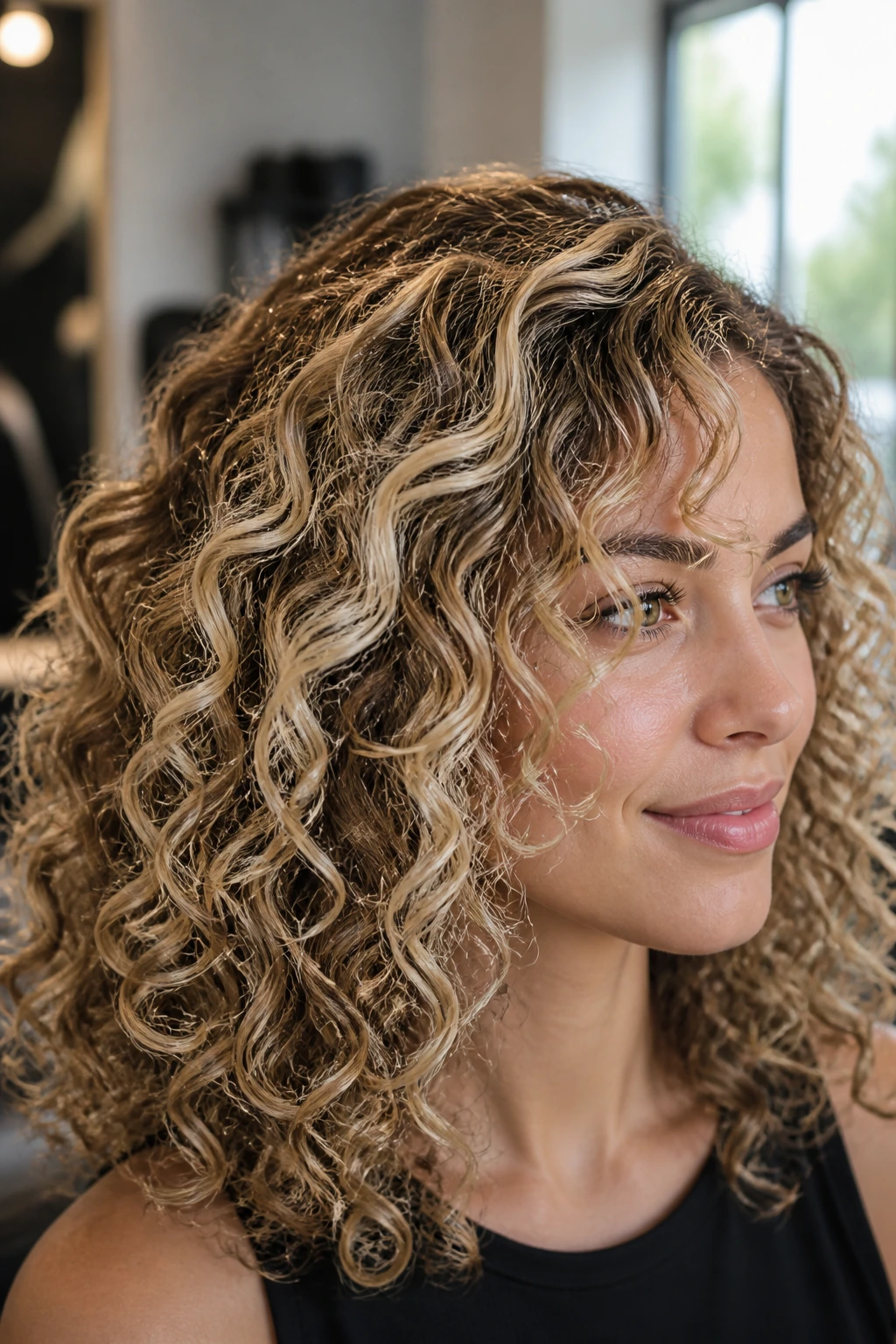
Babylights can disappear under the wrong styling routine. Heavy creams, tight twists, and too much product at the crown can bury the blonde under a layer of coating. The fix isn’t complicated. It’s mostly about where you let the light sit.
Diffusion: Dry the hair with a diffuser on low to medium heat and stop when the curls are about 85% dry. If you blast them dry, the outer layer frizzes up and the fine blonde pieces lose definition.
Product load: Use enough cream to shape the curls, not so much that the light pieces turn waxy. Lightened hair shows buildup faster than virgin curls, especially around the face.
Part changes: Flip the part once the hair is dry or almost dry. That one move can bring hidden babylights to the surface without adding more color.
Second-day revival: A mist of water, a little leave-in, and a few scrunches will wake up the blonde more than heavy re-wetting. You want the curls back in shape, not drenched.
Gloss over grit: If the blonde starts looking tired, a clear or lightly tinted gloss is usually better than piling on purple shampoo. Shampoo fixes tone; gloss fixes shine.
Common Mistakes That Make Curly Blonde Look Stripey or Dull
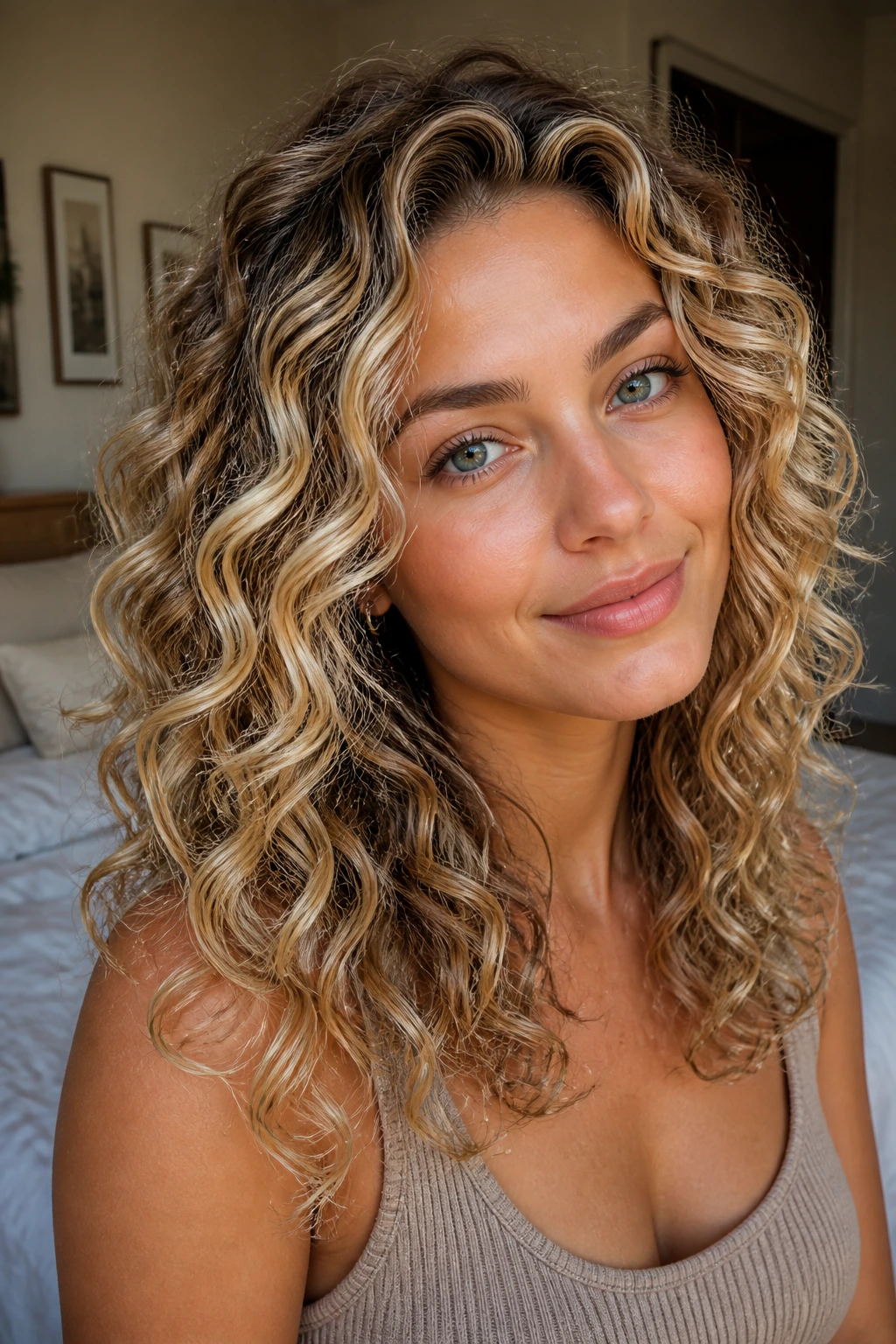
- Using highlights that are too thick: The symptom is a zebra effect when the curls separate. The fix is narrower weaves and more pieces, not bigger pieces.
- Placing lights too close to the root on springy curls: Once the hair dries, the highlight can look higher than planned and expose a hard line. Keep the root softer and let the light start lower.
- Over-toning the hair: If the blonde turns gray, muddy, or flat, the toner went too far. A gentler gloss or less frequent toning usually solves it.
- Skipping moisture after lightening: Dry curls make babylights look dull, even when the tone is good. Use a weekly mask and a leave-in after every wash.
- Using purple shampoo like a daily cleanser: That’s how curls get thirsty and rough. Treat it like a toner, not a shampoo you reach for every wash day.
- Ignoring curl shrinkage during placement: If the lights are placed where the hair sits wet instead of where it lives dry, the result can look oddly high or disconnected. Curl-aware placement fixes that.
Variations and Personal Twists to Try
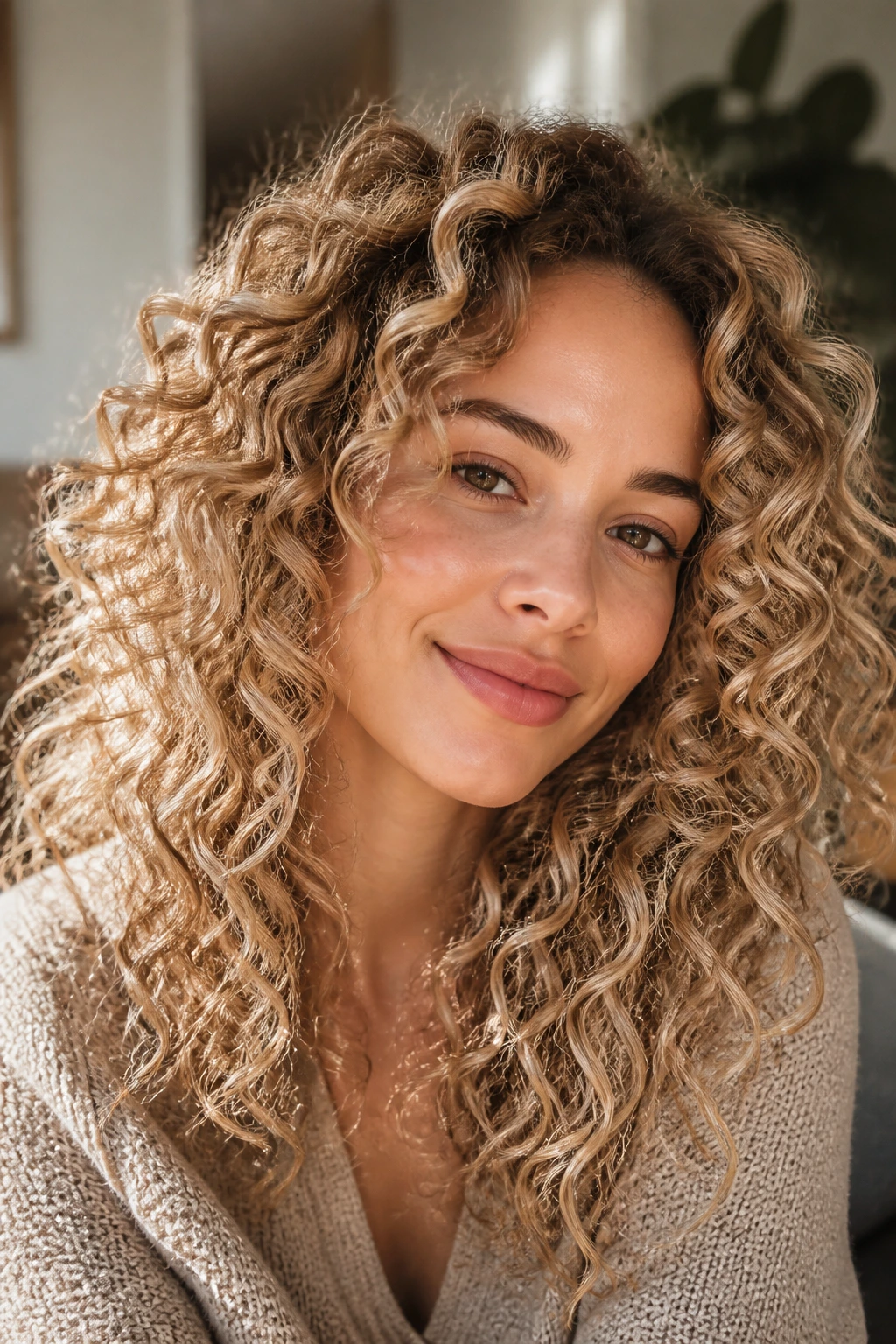
Soft Glow Minimalism
Keep the babylights sparse and focus on a clean gloss in beige or cream soda. This suits people who want just enough brightness to lift the curls without changing the overall color story.
Honeyed Warmth
Lean into honey, butter, and toasted almond tones if your skin looks better next to warm hair color. This version is easier to maintain than ash or pearl and usually fades in a more forgiving way.
Cool Champagne Refresh
Choose champagne, pearl, and a soft ash gloss if your curls already lean neutral or cool. The result reads clean and modern without looking icy all over.
High-Contrast Halo
Brighten the face frame and crown more aggressively, then leave the underneath darker. This works when you want the curls to look bigger and more dimensional from the front.
Low-Maintenance Shadow Root
Leave more depth at the root and concentrate the blonde from midlength to the ends. That buys you a longer grow-out and keeps the curl shape from feeling overexposed.
Care, Toning, and Grow-Out Between Appointments
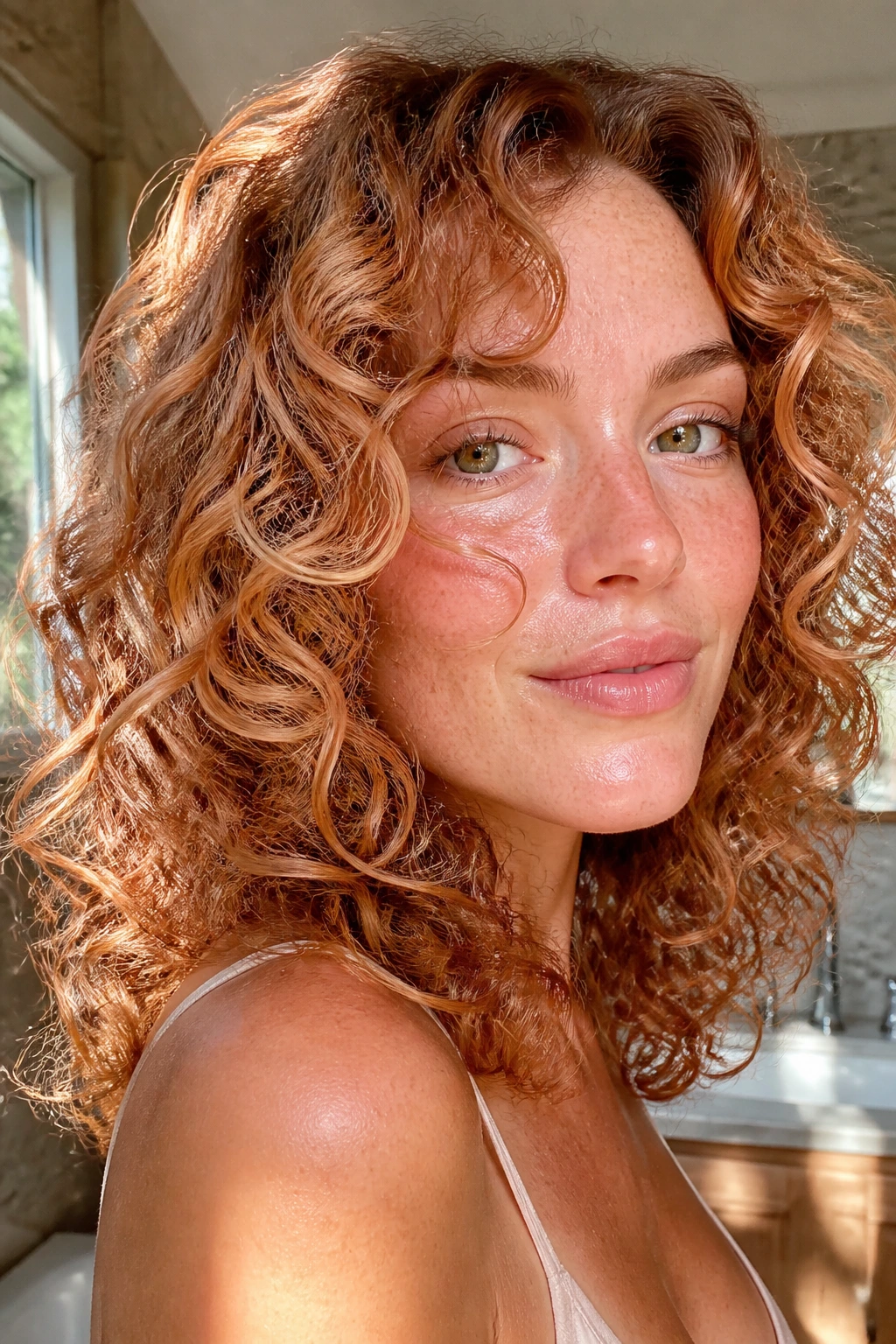
Blonde curls stay prettier when you stop treating them like straight blonde hair. They need moisture first, tone second, and heat as a last resort. A lightened curl that’s dry at the ends will always look weaker than a slightly warmer curl that still has a springy shape.
Wash 1 to 3 times a week, depending on how much product you use. Too much washing strips toner fast and makes the babylights feel brassy. Use purple shampoo every 1 to 2 weeks if the blonde starts to yellow, but don’t leave it on so long that the curls turn chalky or purple-gray. Five minutes is usually enough. Less if the hair is porous.
A deep-conditioning mask once a week keeps the lighter pieces from going rough at the cuticle. If the hair has been heavily lightened, a bond-building treatment can help it hold its bend better after styling. Trims every 8 to 12 weeks keep the ends from fraying, and that matters more on curls because frayed ends make the blonde look ragged faster.
Gloss appointments usually work well every 4 to 8 weeks, depending on how fast your tone fades. The softest blondes—beige, honey, cream soda—tend to survive grow-out better than icy shades. That’s not a moral judgment. It’s just how hair behaves.
Frequently Asked Questions
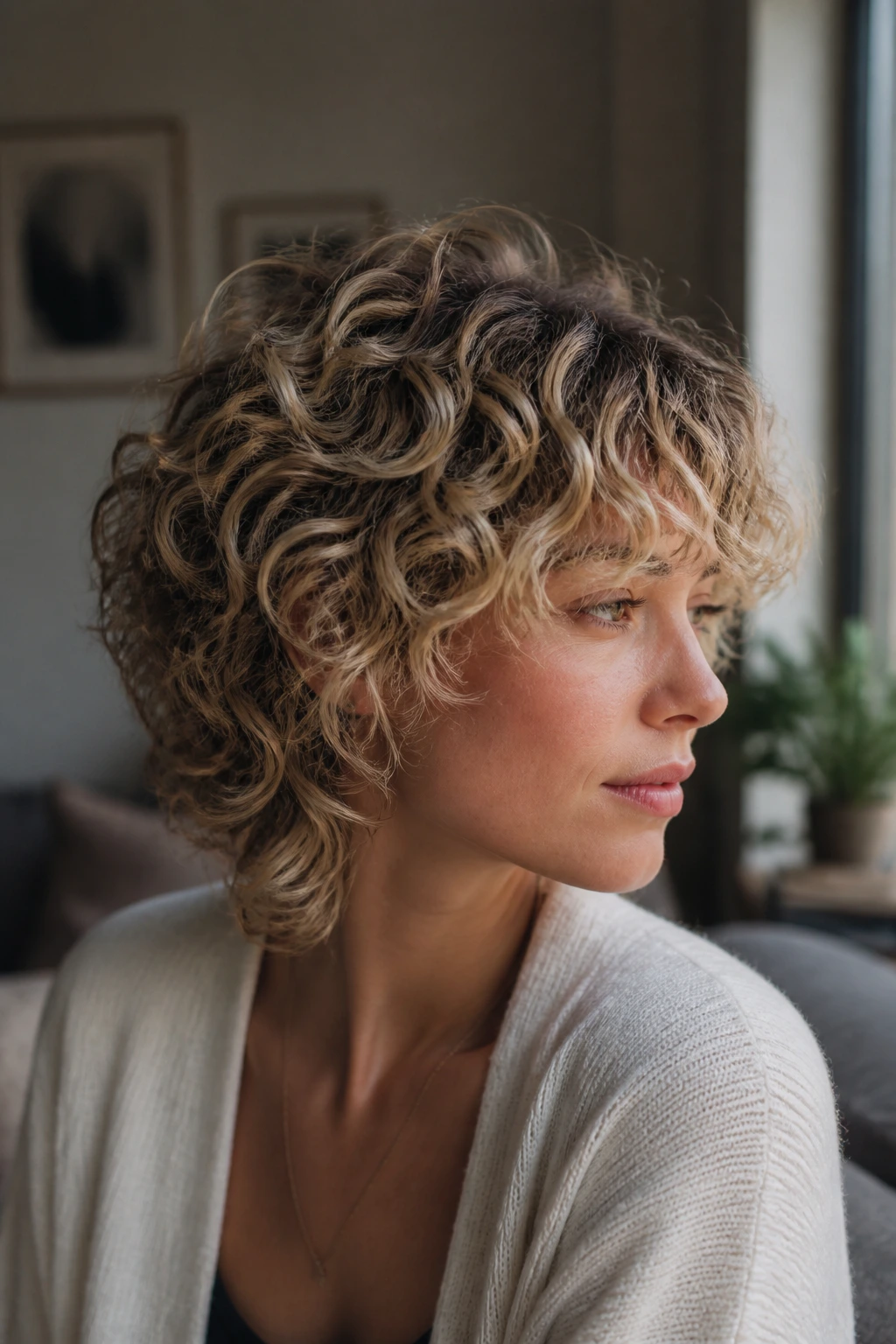
Do babylights work on tight curls?
Yes, but the placement has to be finer and more deliberate. On tight curls, the blonde should sit on the outer surface and around the visible curves, not buried deep in the interior where nobody can see it.
Will blonde babylights make curly hair look frizzy?
They can if the hair is overprocessed or if you skip moisture afterward. The color itself isn’t the enemy; rough, thirsty ends are. A good mask and a careful tone help a lot.
Which blonde shade is easiest to maintain on curls?
Honey, beige, cream soda, and other rooted warm-blonde shades are usually the easiest. They fade in a softer way and don’t show regrowth as sharply as platinum or icy ash.
Can I get babylights on previously colored curly hair?
Usually yes, but the hair needs a strand test if there’s old dye, henna, or a lot of box color involved. Curly hair that’s already been colored can lift unevenly, so the plan has to respect the porosity first.
How often should curly blonde hair be toned?
Most people land somewhere between 4 and 8 weeks, depending on water quality, wash frequency, and how cool the blonde is supposed to stay. If the hair starts looking flat before it looks yellow, a gloss may be better than more toner.
What’s the difference between babylights and balayage on curls?
Babylights are much finer and more blended. Balayage paints larger surface pieces, which can look beautiful, but babylights usually read softer on curls because they follow the curl pattern instead of sitting as broad color blocks.
Can I ask for babylights if my curls are dense and thick?
Yes, and dense curls are often the best candidates. Thick hair can handle more detail, but the bright pieces should be concentrated where the curls are most visible—around the face, crown, and outer layer.
Is purple shampoo safe for curly blonde hair?
It is, if you use it sparingly. Curly hair dries out faster than straight hair, so one short toning wash every week or two is usually enough. If the curls start feeling squeaky or stiff, back off.
The Blonde That Still Lets the Curl Speak
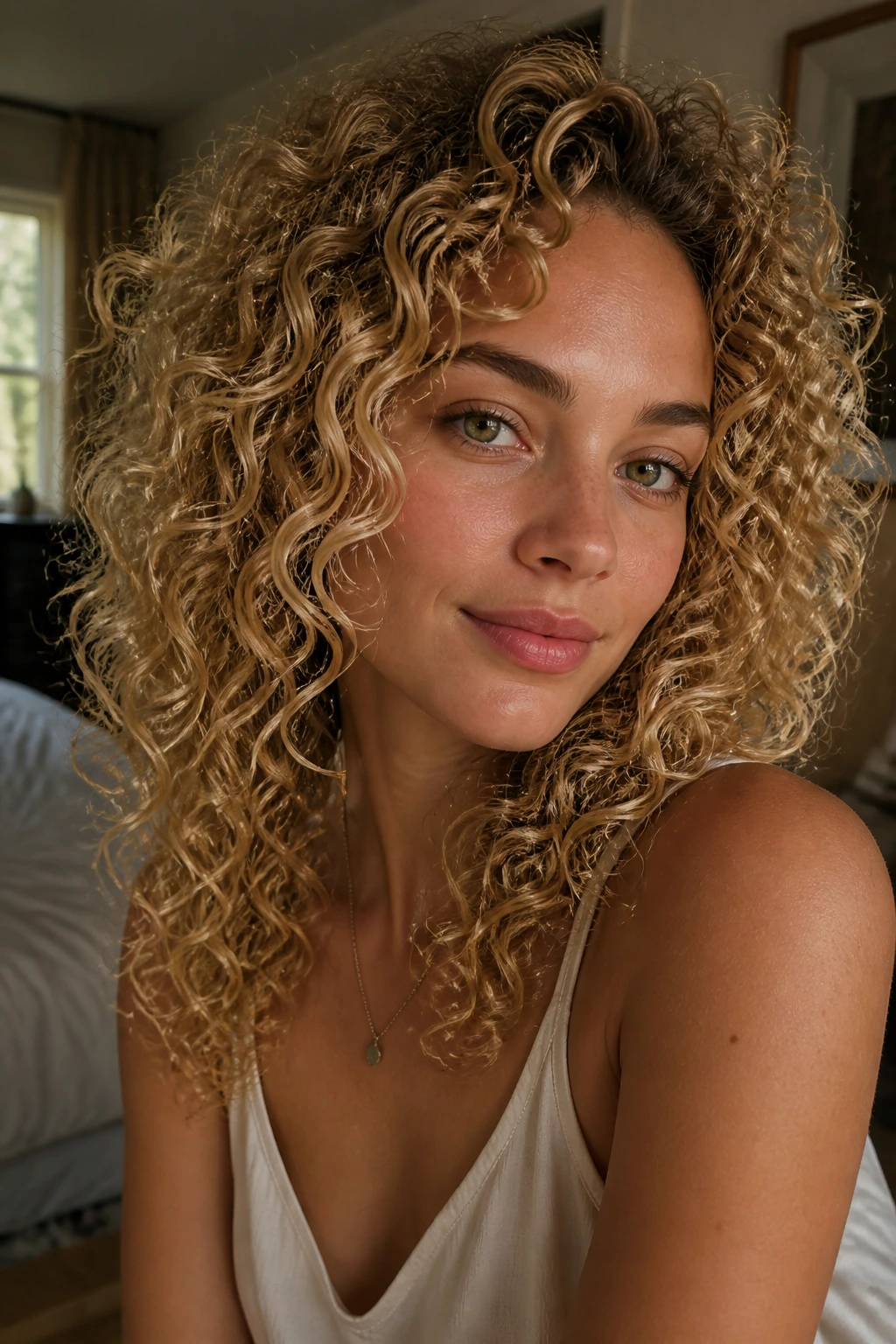
The cleanest blonde on curly hair is rarely the loudest one. The shades that last in real life are the ones that let shadow stay in the hair, keep the root a little deeper, and place brightness where the curls actually show movement.
That’s why babylights keep winning. They give you shimmer instead of stripes, shape instead of bulk, and enough softness that the curl pattern still feels like the main event. If you walk into a salon with one photo in hand, make it one that shows fine placement and a root that still breathes. The curls will thank you for it.