



The fastest way to make brunette hair look flat is to bleach it until every strand shouts the same note. The better move is older and smarter: keep some darkness in the picture. Blond hair color ideas for brunettes with lowlights work because the blonde gets to sparkle against something deeper, so the whole head keeps shape, shadow, and movement instead of turning into a single pale sheet.
That darker thread does more than “add dimension,” which is a phrase people toss around without saying why. On brunette hair, lowlights break up the light pieces, anchor the crown, and stop blonde ribbons from looking stripy once they grow out. A good lowlight also changes how the blonde reads in real life. Under bathroom light, a caramel ribbon can look warm and glossy. In daylight, the same hair can read beige, toasted, or even sandy, depending on how the colorist placed the pieces.
The sweet spot is not one single shade. It is a range: honey, beige, champagne, mushroom, butter, vanilla, oat, sand, biscuit, pearl. Some lean warm enough to flatter golden skin. Others stay cool so they do not fight olive or pink undertones. And the brunette base matters just as much as the blonde itself. Level 4 hair can carry a very different blonde than a level 6, and a smart lowlight plan keeps both looking intentional instead of accidental.
Why These Shades Make Brunette Hair Look Richer
-
Contrast does the heavy lifting: A level or two of depth underneath the blonde keeps the light pieces from turning muddy or washed out, especially on long layers and curls.
-
Grow-out stays softer: When the root area and a few lowlight panels remain darker, regrowth looks blended instead of like a hard stripe at the scalp.
-
Brass gets less control: Beige, ash, and smoky blondes sit better on brunettes when lowlights interrupt the orange-y zones that can show up after lifting.
-
Texture reads better: Waves, curls, and layered cuts look fuller when the light catches both pale and deeper strands in the same section.
-
You can go brighter without going all-over blonde: Face-frame pieces, top layers, and ends can be lifted more aggressively while the underneath keeps the brunette story intact.
-
The finish looks more expensive in real life: Not because the hair is “fancier,” but because mixed tones move better when you turn your head, tie it back, or throw it into a clip.
1. Caramel Ribbon Blonde
Caramel is where a lot of brunettes should start, and I mean that in the nicest possible way. It gives you blonde visibility without the jolt of going too pale too fast. On a medium brunette base, caramel ribbons with mocha lowlights around the underside make the whole look feel soft, not streaky.
Why it flatters dark hair
Caramel sits in that warm middle ground where the blonde pieces catch light and the lowlights keep the base from disappearing. If your hair is a level 4 or 5, this shade usually grows out with less drama than a cooler, brighter blonde.
Quick details
- Best on: warm or neutral brunettes
- Placement: face frame, mid-length ribbons, and ends
- Lowlight partner: mocha, espresso, or chestnut
- Maintenance: moderate; a gloss every 4-6 weeks helps
Best move: Ask for thinner highlight slices near the part and slightly deeper lowlights under the top layer. That keeps the caramel from looking chunky.
2. Beige Bronde Melt
Beige bronde is the shade I reach for when someone says, “I want blonde, but I do not want it to look yellow.” It sits between brunette and blonde without making you choose sides. The lowlights here should be smoky brown or mushroom brown, not black.
The magic is in the melt. You want the root to stay deeper, the mids to soften into beige, and the ends to brighten just enough to move. On straight hair, it reads polished. On wavy hair, it looks almost like the color is shifting from one strand to the next.
3. Mushroom Blonde Shimmer
Want something cool, muted, and a little expensive-looking? Mushroom blonde is the sleeper hit. It uses taupe, beige-gray, and soft brown lowlights so the blonde never turns brassy or loud.
What makes it different
It is not icy platinum. It is not warm caramel either. Mushroom blonde works best when the brunette base stays visible at the crown, then fades into smoky beige pieces through the mids and ends.
How to wear it
- Best for cool or olive undertones
- Works beautifully on lobs and long layers
- Ask for ultra-fine lowlights so the color stays airy
- Use a blue or purple shampoo only when brass starts showing
My take: This is one of the prettiest options for people who love soft makeup, crisp shirts, and hair that looks calm rather than flashy.
4. Honey Butter Balayage
Honey butter is warmer than beige and more forgiving than platinum. It gives brunette hair that golden, sunlit feel without turning orange if the lowlights are placed well. The darker pieces belong under the crown, through the interior, and along the nape.
The reason this one works is simple: honey blonde loves contrast. On its own, it can look too yellow. With espresso or walnut lowlights tucked underneath, it reads rich and dimensional instead of bright in a generic way.
5. Champagne Face-Frame
Champagne around the face does a lot of work with very little hair lightening. If you want to keep the brunette base but still see a clear blonde effect, this is the move. The front pieces lift brighter, while the rest of the head keeps lowlights and soft depth.
That contrast is flattering because it brightens the eyes and cheekbones without demanding a full-head transformation. I like this on shoulder-length cuts, curtain bangs, and layered hair that needs a little lift right where it matters.
6. Cream Soda Ends
Cream soda blonde is for the person who wants the ends to look lighter than the roots, but not white-blond or stripey. The tone is creamy beige with a little softness, almost like the color of whipped vanilla with a touch of warmth. Lowlights at the crown keep the top from floating away.
This looks especially good on bobs and long lobs. The ends catch the eye first, which is the point. Keep the root shadow soft and the lowlights thin, or the whole thing can start to read heavy.
7. Ash Beige Babylights
Ash beige babylights are tiny, fine highlights that do the least damage to the brunette base and the most to the mood of the hair. They are the opposite of chunky striping. With lowlights woven between them, the blonde reads subtle, cool, and expensive in a quiet way.
The fine-detail version
- Good for: fine hair, straight hair, or anyone who hates obvious regrowth
- Tone: ash beige, not silver
- Lowlights: cool brown, mushroom brown, or smoke brown
- Finish: best with a smooth blowout or soft bend
Pro tip: If your hair tends to pull orange, ask your colorist to keep the highlight pieces thin and to avoid lifting every section to the same level.
8. Toffee-Laced Brunette
Toffee-laced brunette keeps more brown in the story than most blonde looks, and that is why it works. The blonde pieces land in the mids and around the face, but the deeper toffee and chestnut lowlights stop the lift from going too bright.
This one is a good fit if you like warmth but do not want gold that borders on orange. The effect is almost like poured caramel over coffee. Not loud. Just glossy.
9. Sandy Smoke Blonde
Sandy smoke blonde sits in a calm middle zone: lighter than brunette, softer than gold, cooler than honey. The lowlights matter a lot here because they prevent the sand tone from going flat. Think of them as the shadow under the dune.
It looks especially good on straight or softly waved hair, where the color can read as a smooth gradient. On very curly textures, you may want a few brighter face-framing pieces so the softness does not disappear.
10. Buttery Contour Highlights
Buttery contour highlights are all about placement. They brighten the front, skim the cheekbones, and lift the crown without bleaching every inch of the hair. If you like makeup contouring, this is the hair version: lighter where you want shape, darker where you want depth.
The lowlights should sit just behind those lighter panels so the butter blonde does not look pasted on. This is a strong choice for brunettes who wear their hair in loose waves or round-brush blowouts, because the curves show the contrast beautifully.
11. Golden Oat Balayage
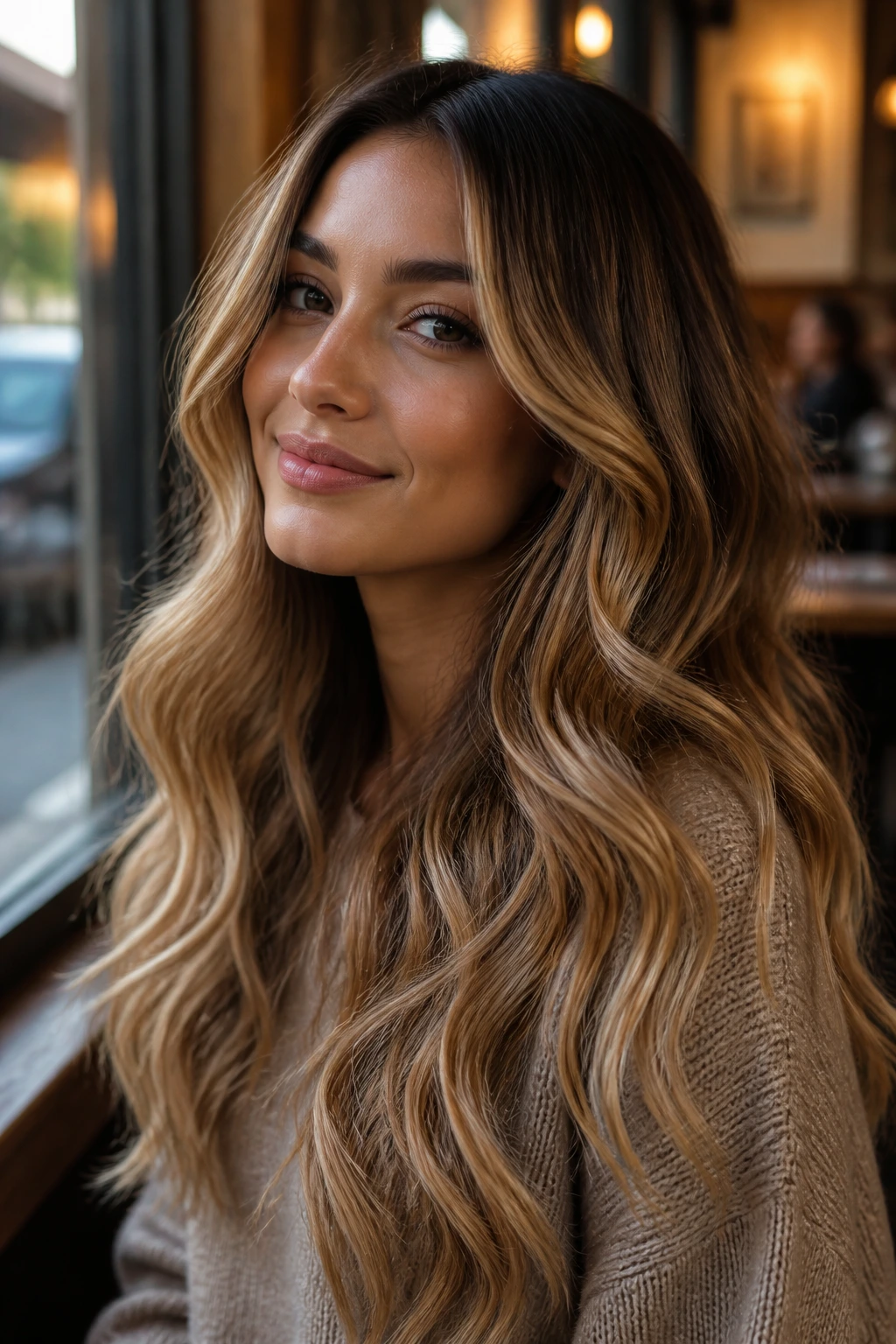
Golden oat is warmer than beige and softer than honey. It has that pale toasted look, like the inside of cereal flakes or the color of oats with milk. The brunette lowlights keep it from sliding into one flat golden sheet.
Why it works
A brunette base with golden oat balayage has enough warmth to feel bright, but not so much that it starts fighting your skin tone. If your natural hair is medium brown, this can be one of the easiest ways to go blonde without looking over-processed.
Best use cases
- Long layers
- Soft curls
- Natural warm undertones
- Hair that already has some dimension from prior color
12. Walnut-Wheat Dimension
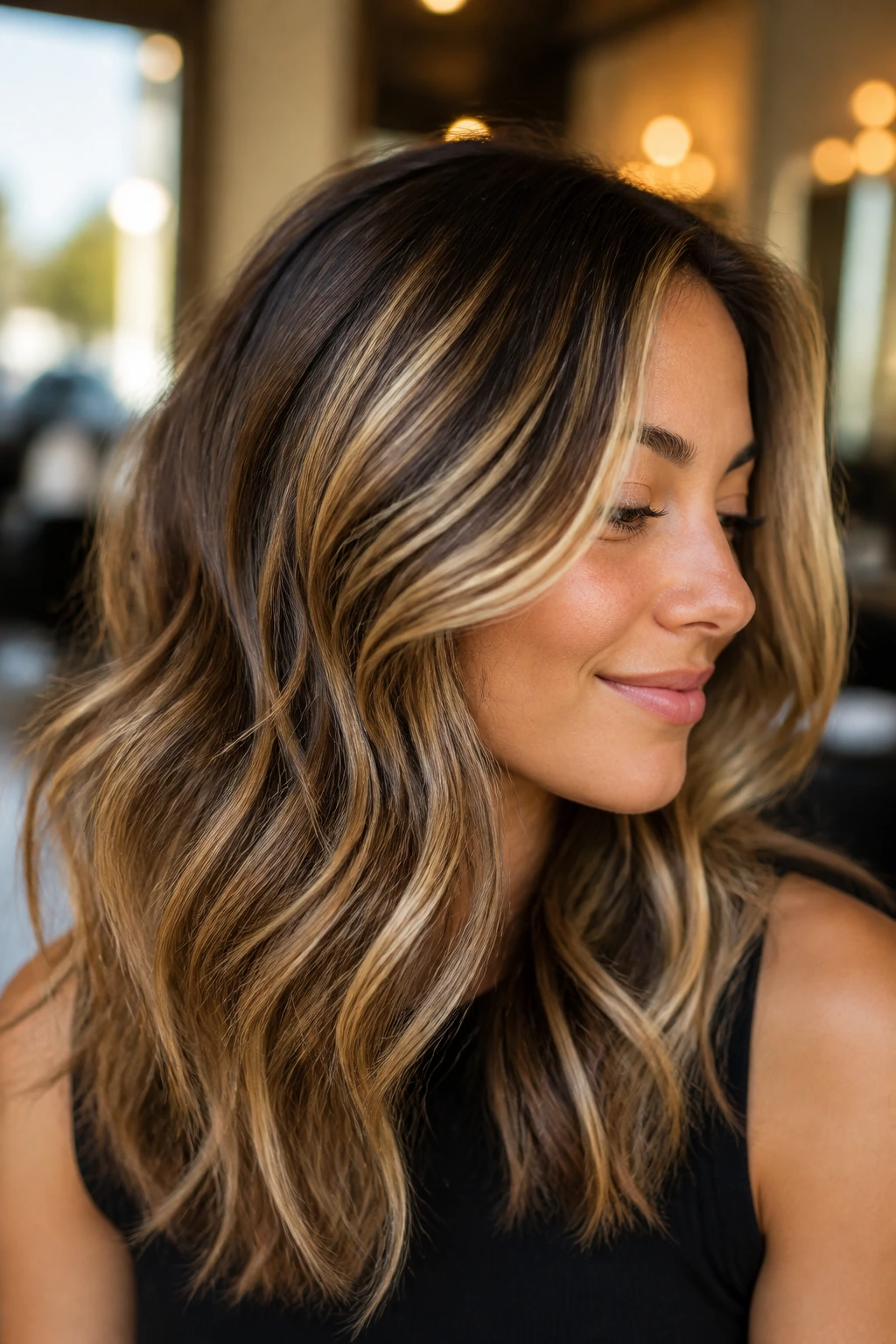
Walnut and wheat is one of those combinations that sounds simple and ends up looking far more thoughtful in person. Wheat blonde carries the lightness, walnut lowlights keep the depth, and the brunette base does the framing work.
This is a particularly good option for thick hair. Thin highlights can get lost in dense strands, so a slightly chunkier wheat placement with deeper walnut panels underneath gives the hair some visible movement. It is not loud. It just has structure.
13. Pearl Blonde Money Piece
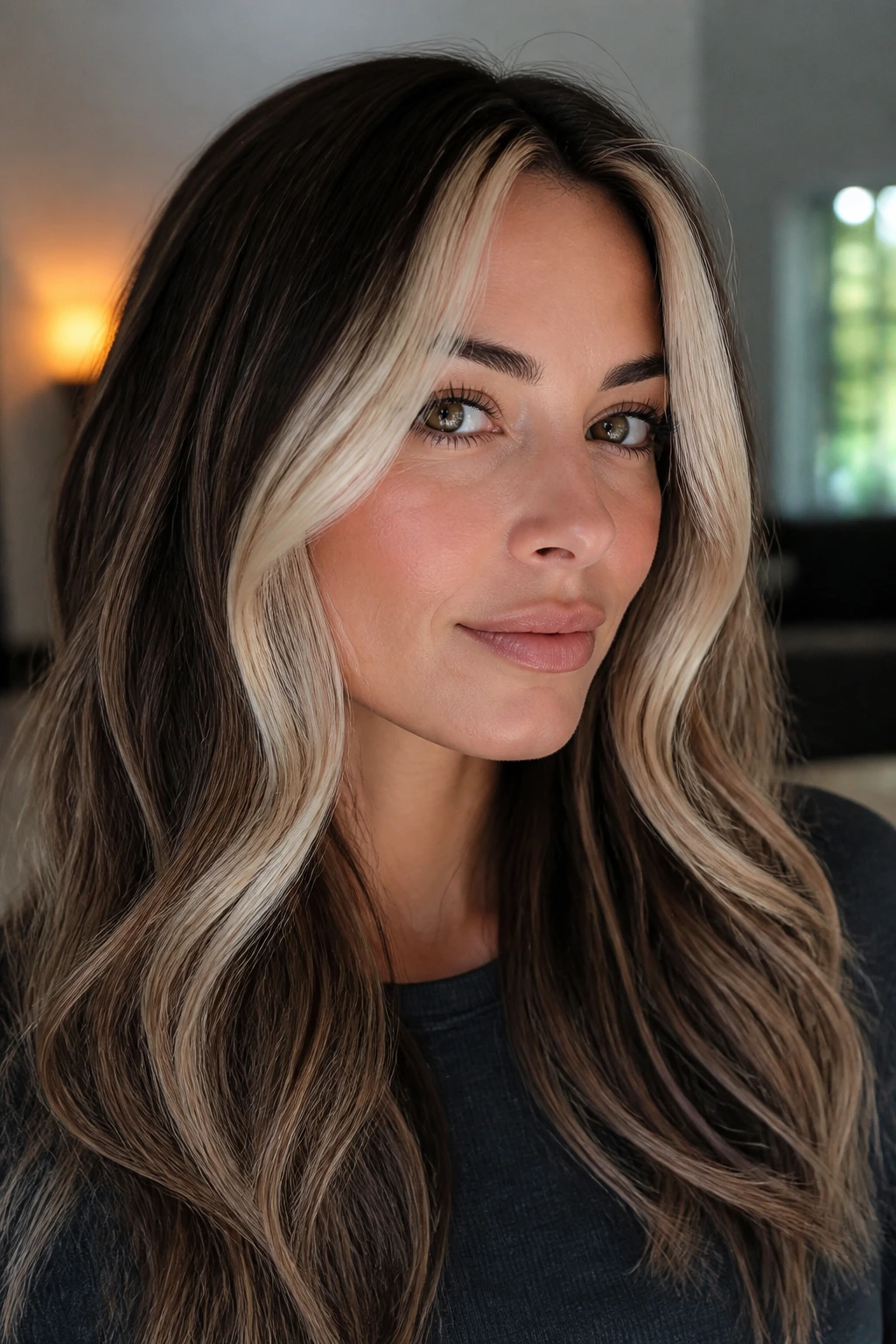
Pearl blonde around the face gives brunette hair a real pop without turning the whole head into a high-maintenance project. The rest of the hair can stay deeper, with pearl-beige lowlights scattered through the crown and underlayers. The result is bright in front and grounded everywhere else.
It is a strong choice if you wear your hair tucked behind your ears, half up, or pulled into a low clip. The front stays luminous even when the back is hiding under a sweater or collar.
14. Cinnamon-Glaze Bronde
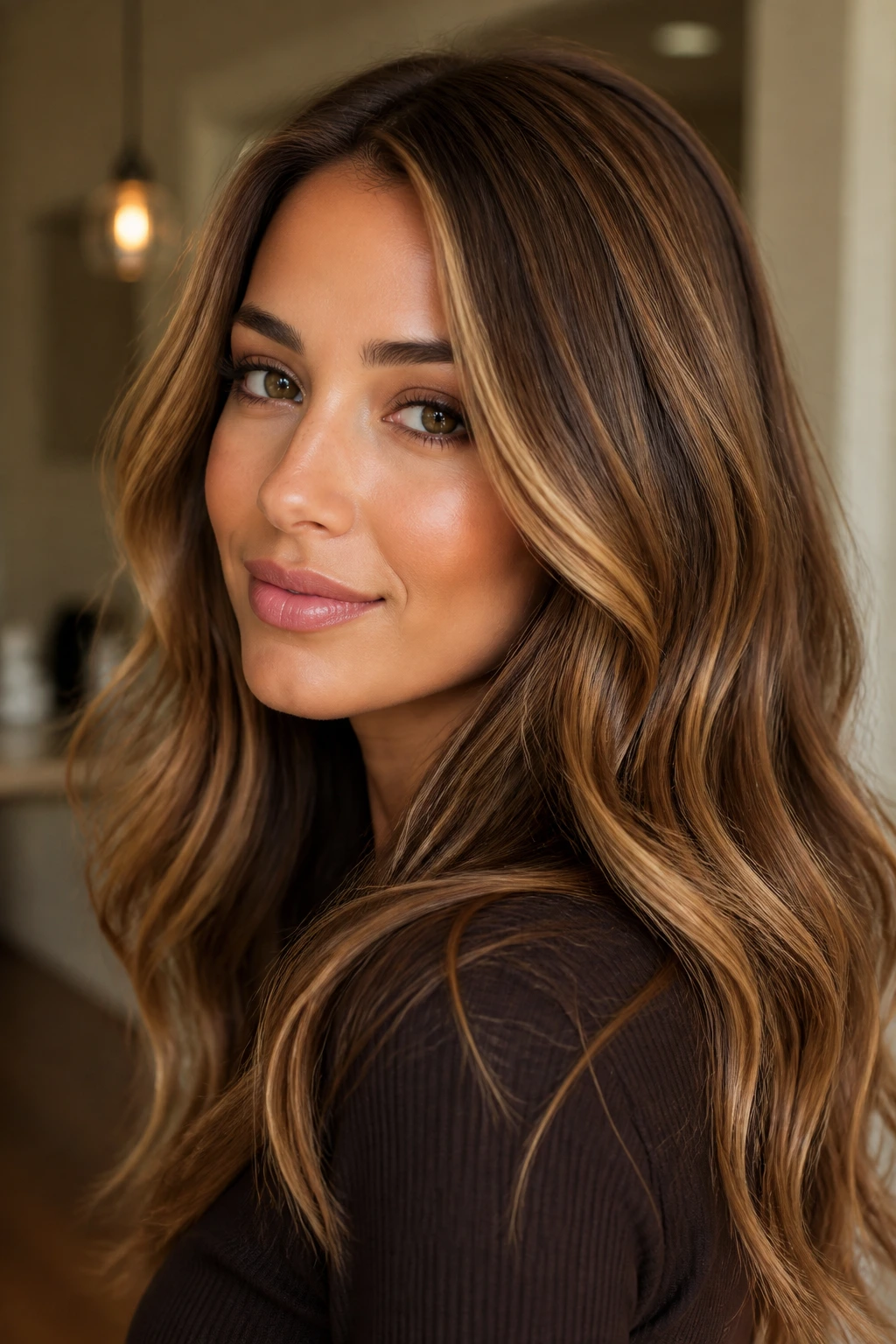
Cinnamon-glaze bronde is the warm cousin of beige bronde. It has enough copper-brown warmth to flatter deeper brunettes, and enough blonde pieces to keep the hair from sinking into one color. Lowlights here should be chestnut or warm espresso.
This shade reads especially well in indoor light, which matters more than people think. A lot of blonde looks good in a salon mirror and dulls out at home. Cinnamon-glaze bronde tends to keep its glow because the warmth is built into the tone, not pasted on top.
15. Sandstone Foilayage
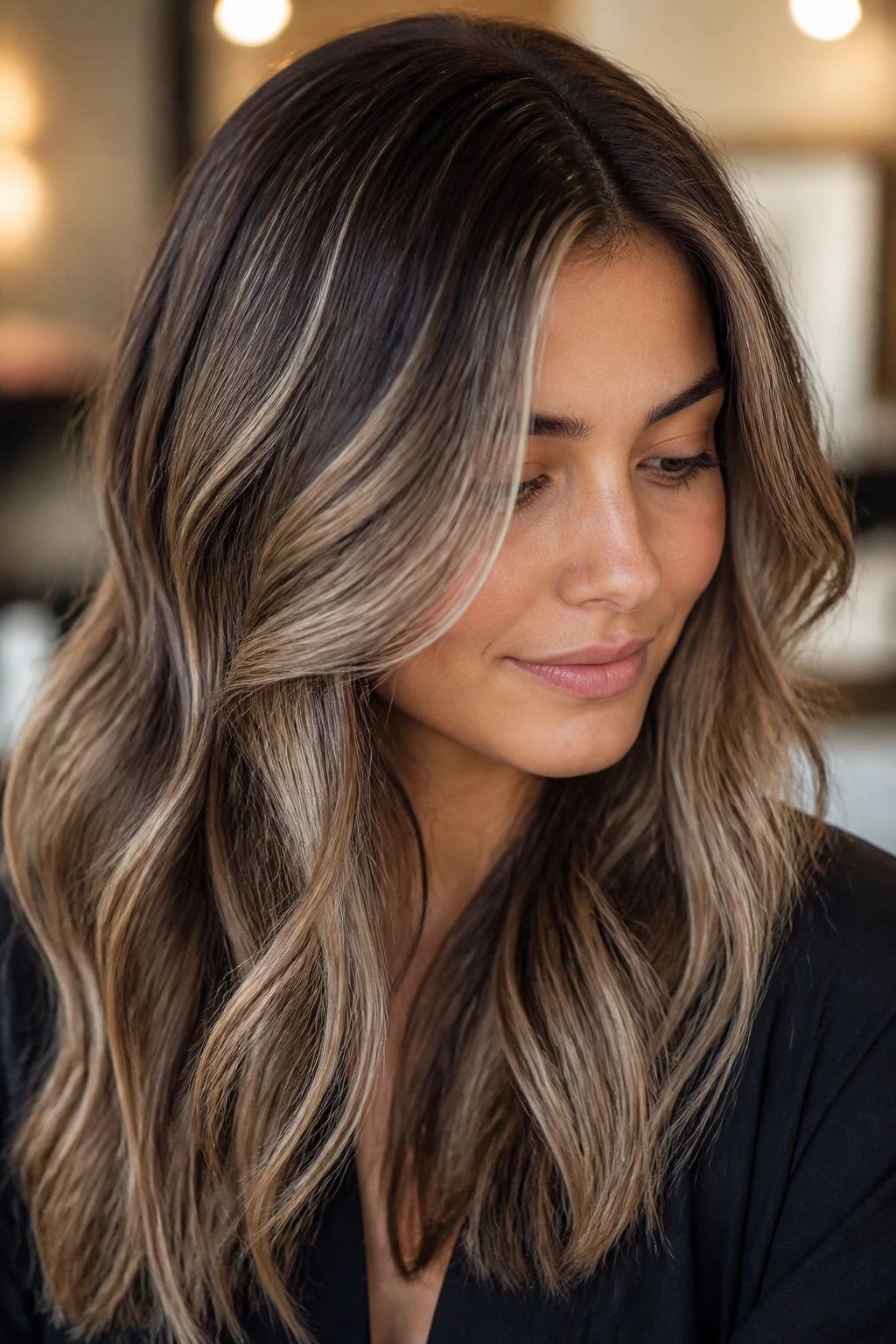
Sandstone foilayage is a good pick when you want a brighter result but still need the brunette base to breathe. It combines the softness of balayage with the lift of foils, so the blonde comes through cleaner. The lowlights soften the seams and keep the ends from going too blonde too fast.
This one works well on medium to long hair with layers. The light can move through the length in a way that looks deliberate instead of random. And that matters. Messy placement can make even a nice blonde feel noisy.
16. Biscotti Blonde
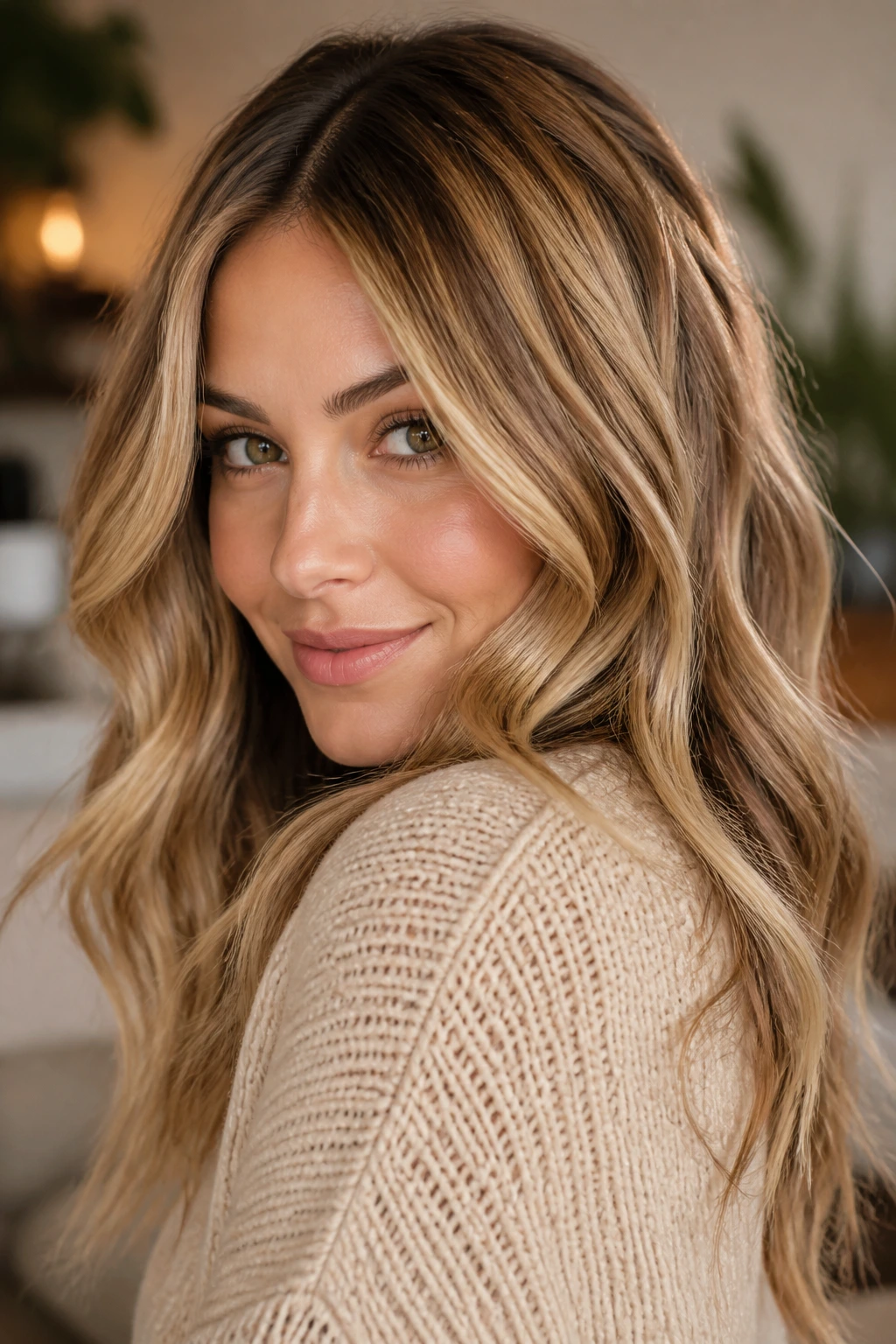
Biscotti blonde lives between toasted and creamy. It has the color of baked almond, milk foam, and a little bit of warm cookie edge. On brunettes, the trick is keeping the blonde pieces soft enough that the hair still looks like it belongs to the same head.
The lowlights should be espresso-toned, not black. That tiny choice changes everything. Black lowlights can harden the look, while espresso keeps the blonde warm and believable.
17. Tawny Bronze-to-Blonde Melt
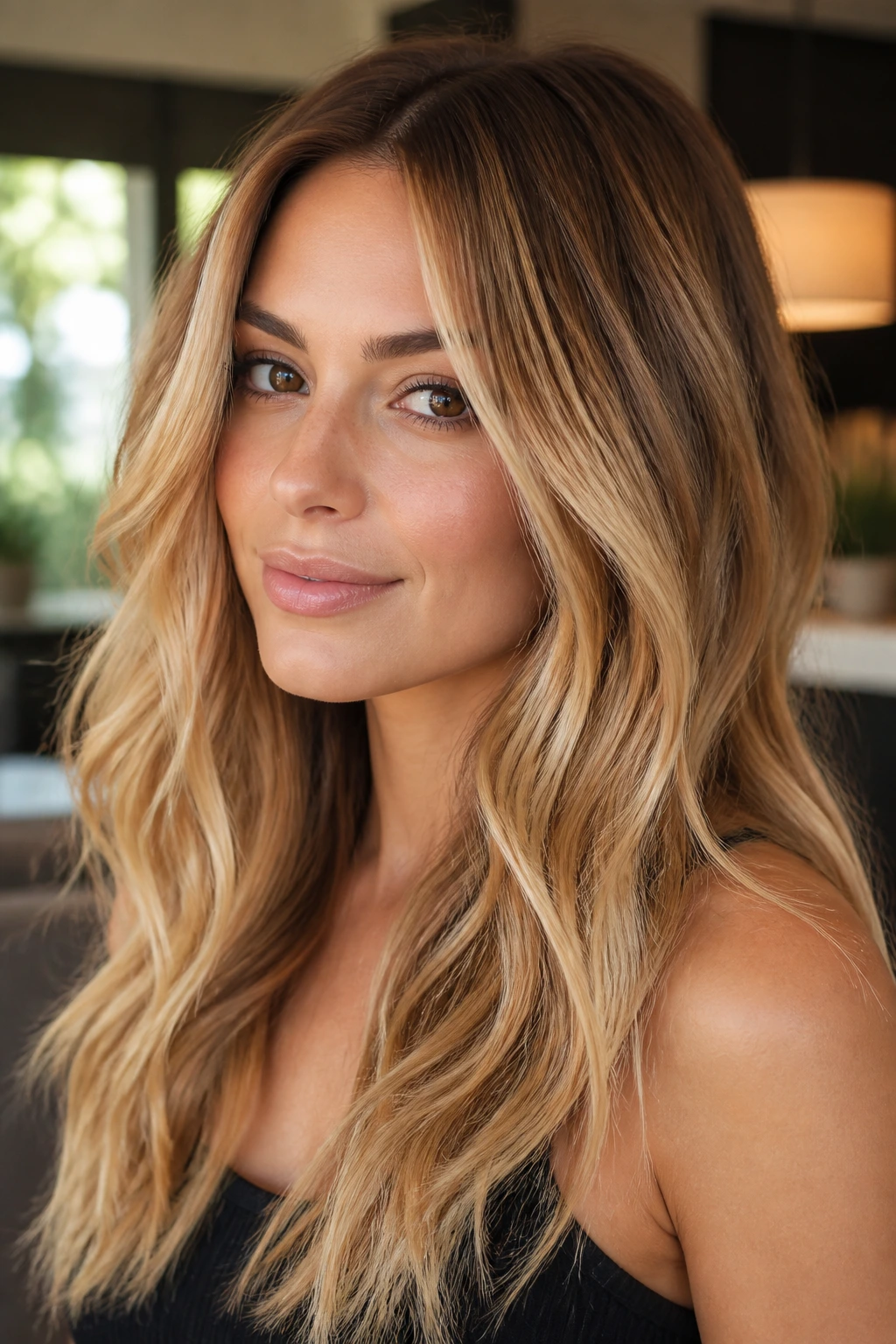
Tawny bronze is the bridge shade that makes blonding brunettes feel less abrupt. It starts with bronze warmth near the roots and moves into blonde through the mids and ends. Lowlights reinforce the transition so the color does not look banded.
This is one of the best options for someone who wants blonde but hates the idea of high-contrast upkeep. The grow-out is softer because the bronze root zone blends naturally into the blonde pieces.
18. Soft Vanilla Veil
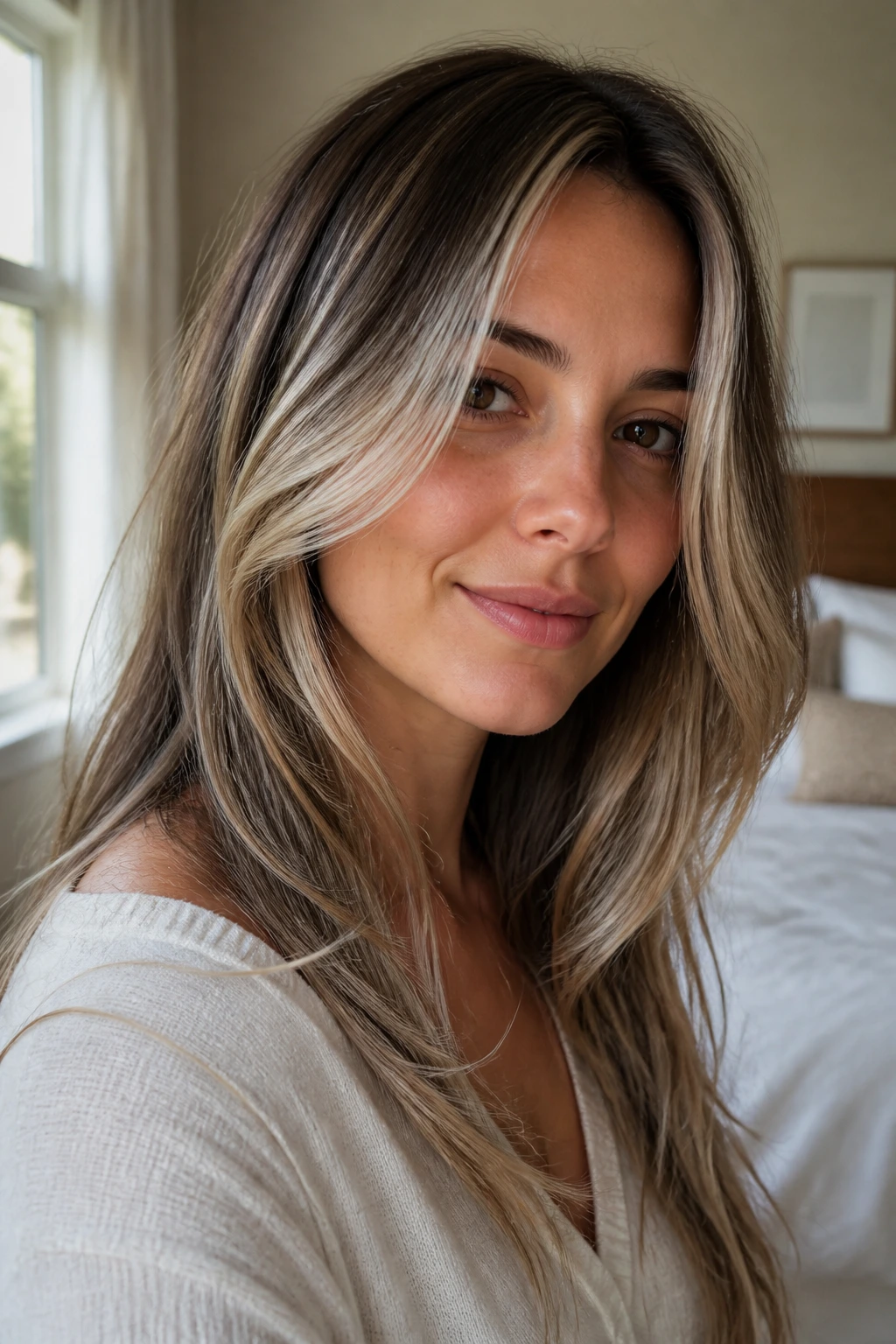
Soft vanilla veil sounds delicate because it is. The blonde is pale enough to brighten brunette hair, but the veil effect keeps it diffused rather than stark. The darker lowlights sit beneath the surface and let the vanilla pieces float.
This is a pretty choice for fine hair, because very light pieces can disappear when they are too sparse. Here, the vanilla sits in a soft curtain over the brunette base, so the brightness shows even when the hair is not perfectly styled.
19. Chestnut Latte Highlights
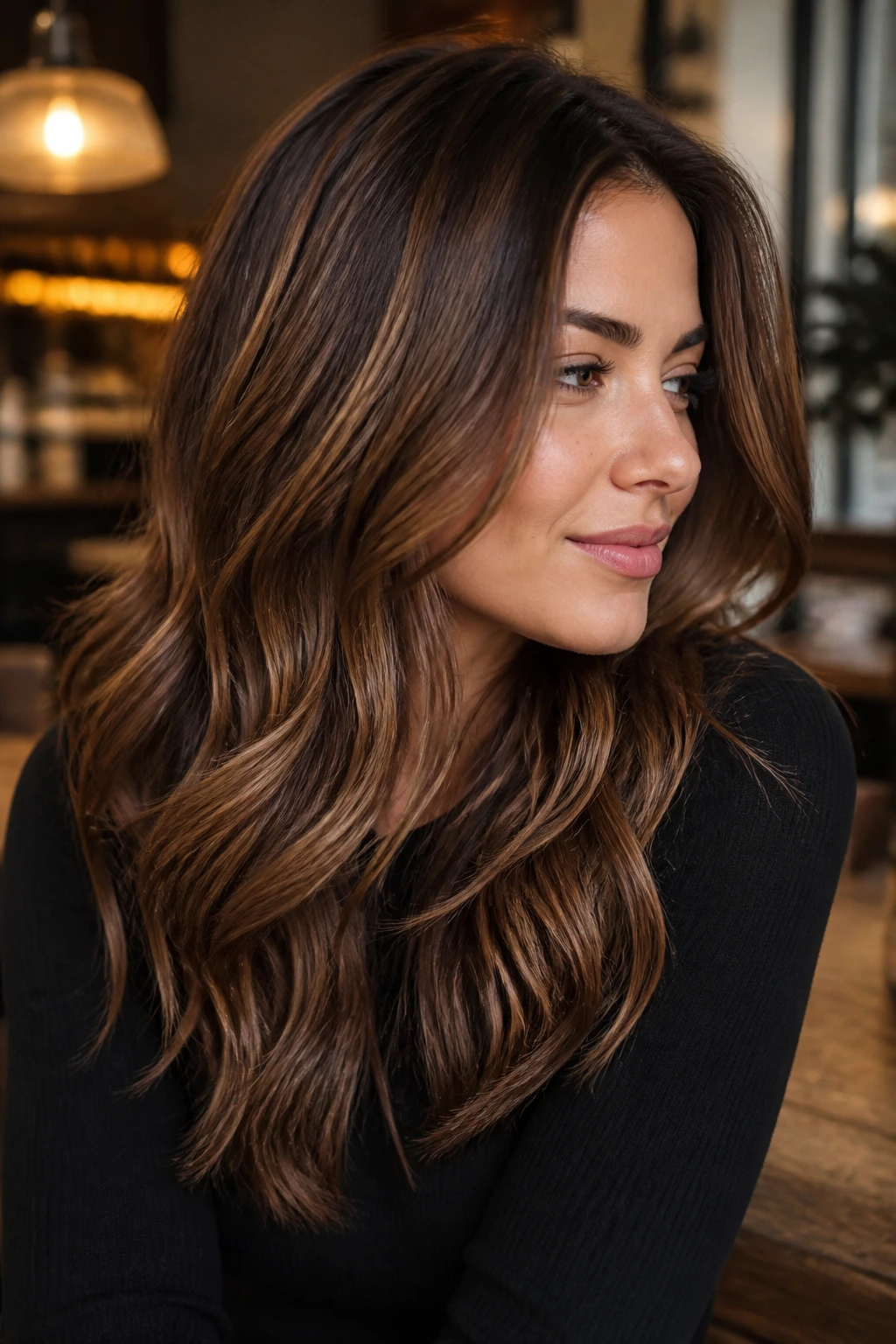
Chestnut latte is warm, cozy, and a little more brown than gold. It works when you want to see blonde movement without giving up the brunette warmth that makes hair look full. The lowlights should be chestnut or mocha, not cool brown, or the whole thing loses its softness.
It is especially nice on layered cuts that need body at the ends. The latte pieces catch light, the chestnut lowlights give shape, and the base keeps the look grounded. That balance is why this shade keeps showing up in good color work.
20. Smoked Honey Balayage
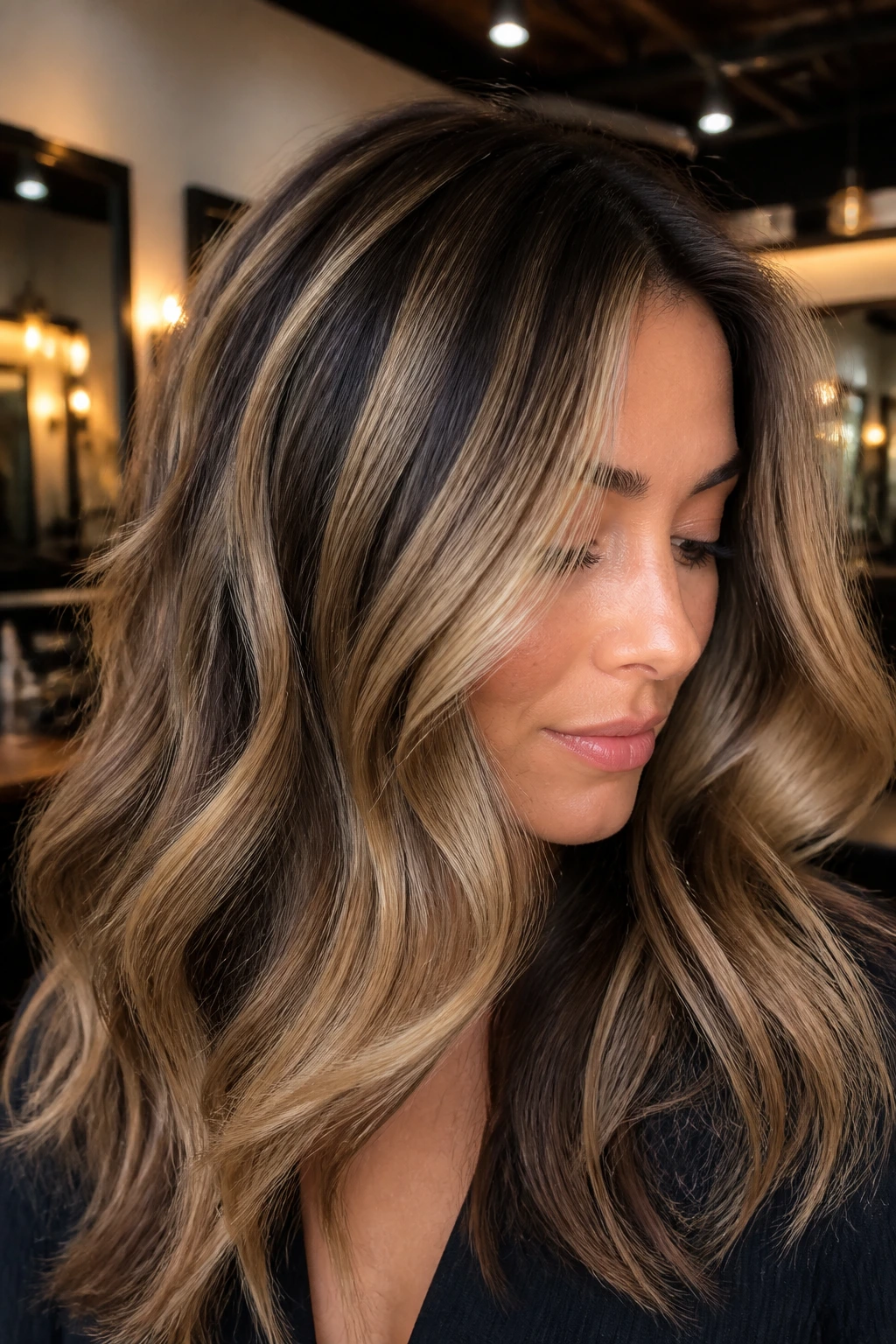
Smoked honey takes honey blonde and tones down the sweetness with darker, smoky lowlights. That one small shift makes the color feel more grown-up and less sunny. It is still warm, but it has edges.
If your hair tends to lift orange, this is a smart direction because the smoky depth keeps the honey from turning too bright. It looks especially good when the highlights are painted in soft ribbons instead of neat stripes.
21. Beige Blonde Curly Pop
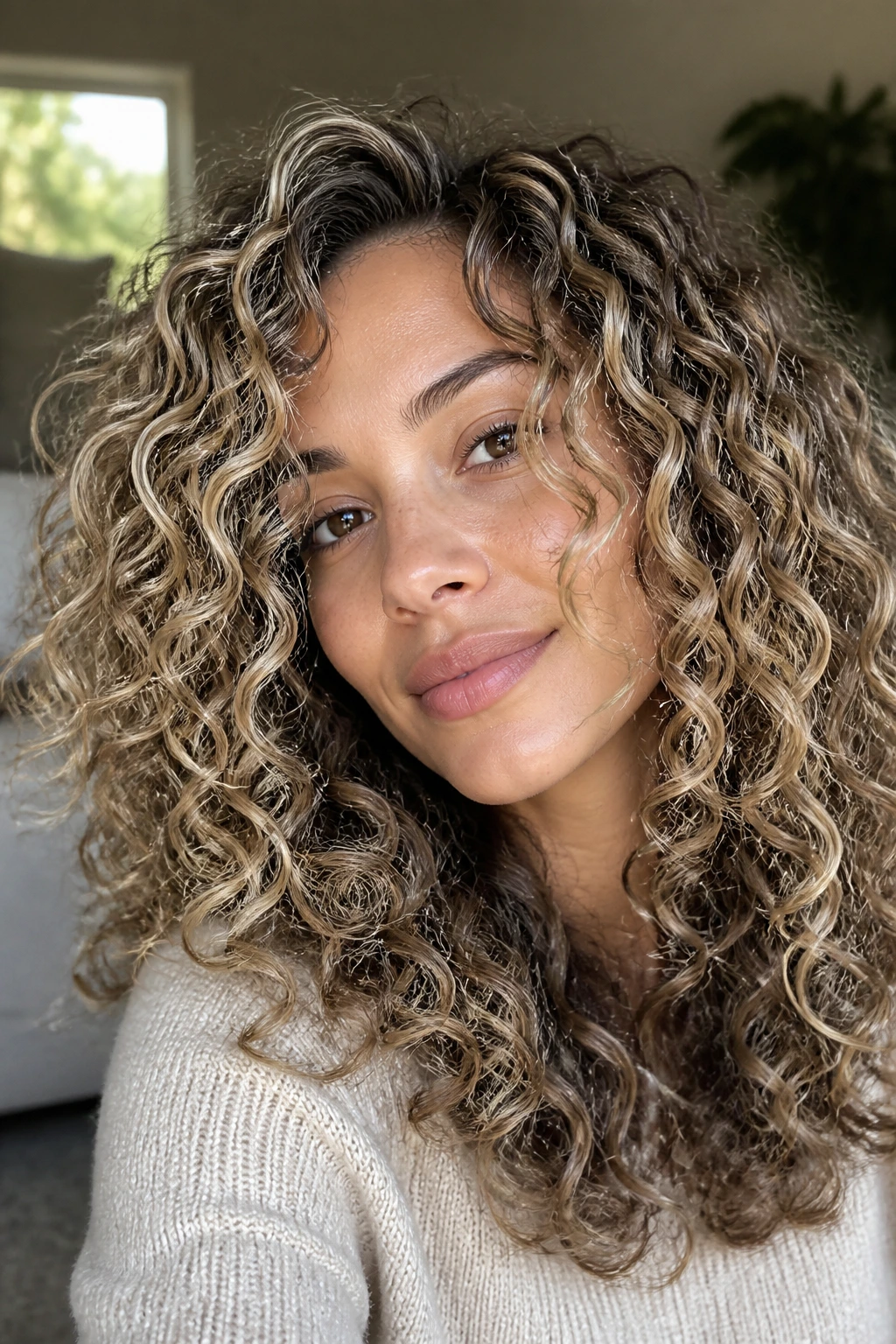
Curly hair needs different placement than straight hair, and this is where beige blonde can shine. The lighter pieces should sit where the curl bends and catches light, while lowlights should tuck into the underside and the shadowed layers. That keeps the shape readable instead of fuzzy.
A curly cut with beige blonde and lowlights looks fuller because the contrast works with the curl pattern, not against it. If your curls are loose, a soft diffuser finish shows the color best. Tight curls need the light pieces placed a little wider so they do not vanish into the coil.
22. Rooty Butter Blonde
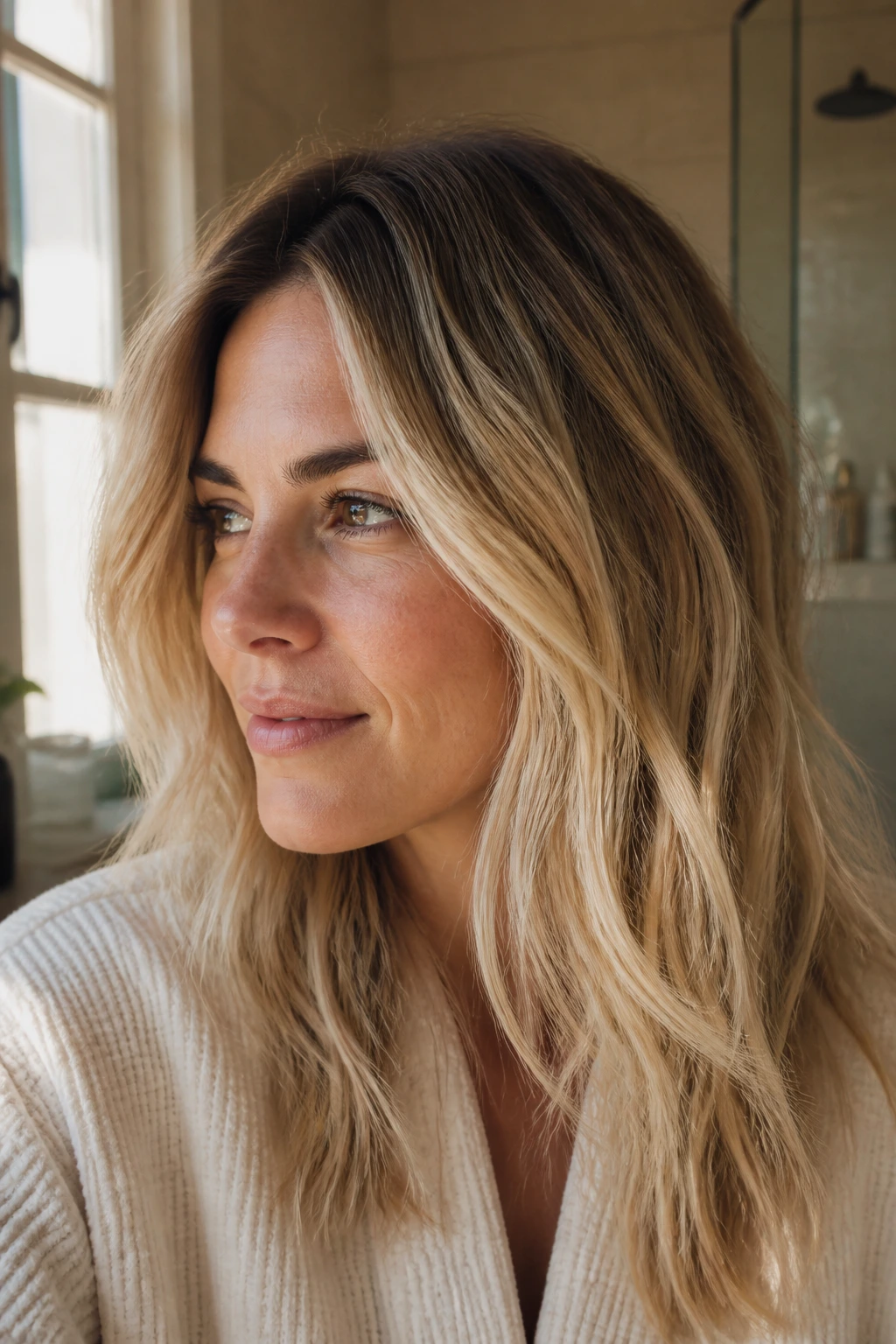
Rooty butter blonde is one of the easiest ideas to live with if you do not want constant salon visits. The root stays deeper, often close to your natural brunette, and the blonde builds through the mids in warm buttery tones. Lowlights keep the root from feeling like a hard block of color.
This look has a relaxed, expensive grow-out. That matters. If you color hair often enough, you learn that a good root is not lazy. It is strategic.
23. Frosted Almond Highlights
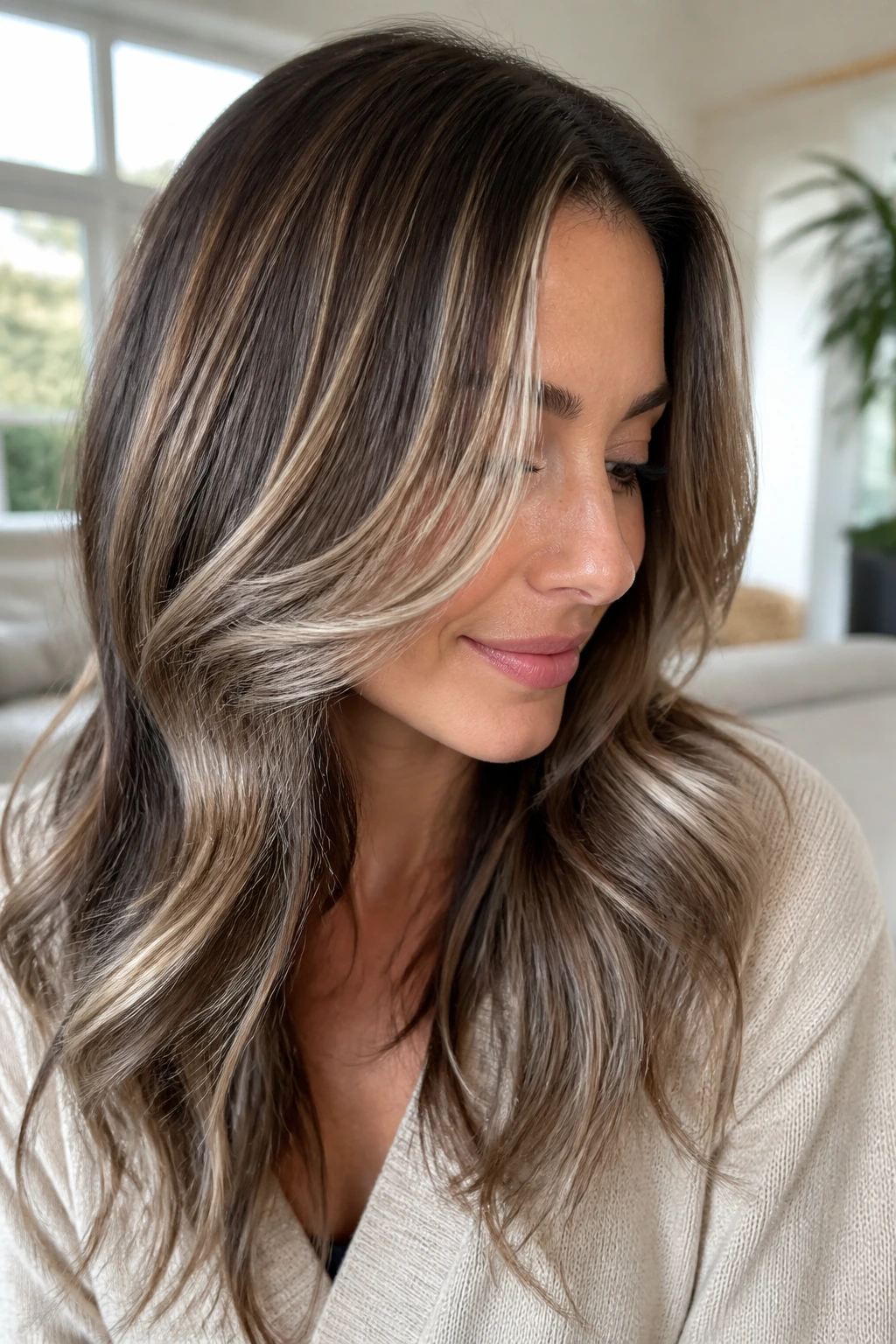
Frosted almond is cooler than butter but softer than platinum. It gives brunette hair a crisp, pale lift without going full icy blonde. The lowlights should be soft brown or ash brown to keep the almond tone clean.
How to make it read right
- Keep the brightest pieces near the face and top layers
- Use finer highlights in the back
- Ask for a gloss if the almond starts to turn yellow
- Pair it with a smooth blowout if you want the tone to look polished
Worth saying: This tone gets prettier when it is not overdone. A few carefully placed pale pieces do more than a whole head of bright foil.
24. Biscuit Blonde Face Frame
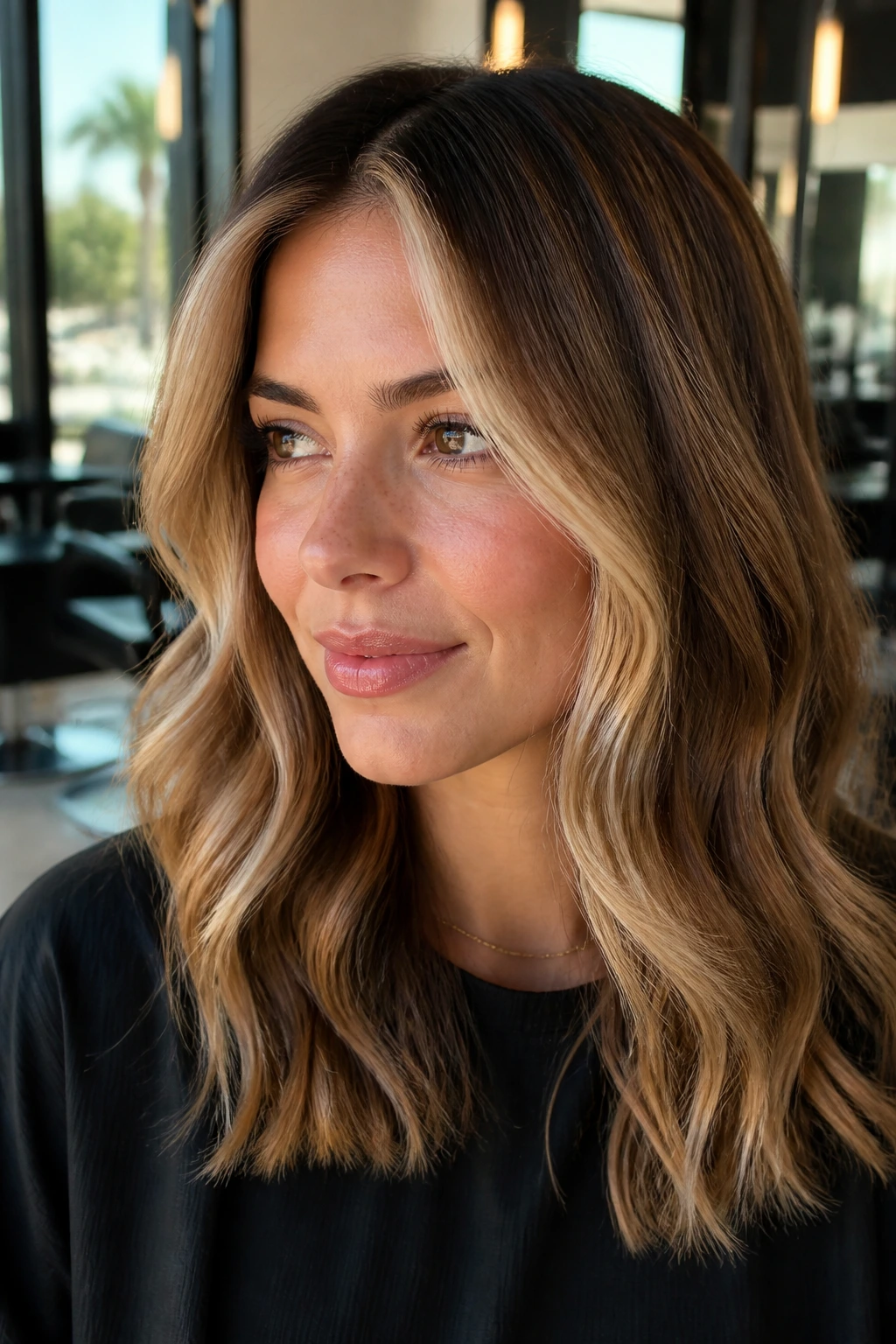
Biscuit blonde is warm, soft, and lightly toasted, which makes it friendly to brunettes who want brightness without a hard lift. The face frame should be lighter than the rest, and the lowlights should sit behind it so the brightness has somewhere to land.
This shade flatters layered hair because the lighter pieces move as the hair swings. If you wear your hair straight, the biscuit tone looks neat and modern. If you curl it, the warmth reads softer and more dimensional.
25. Pearl Beige Bob Blend
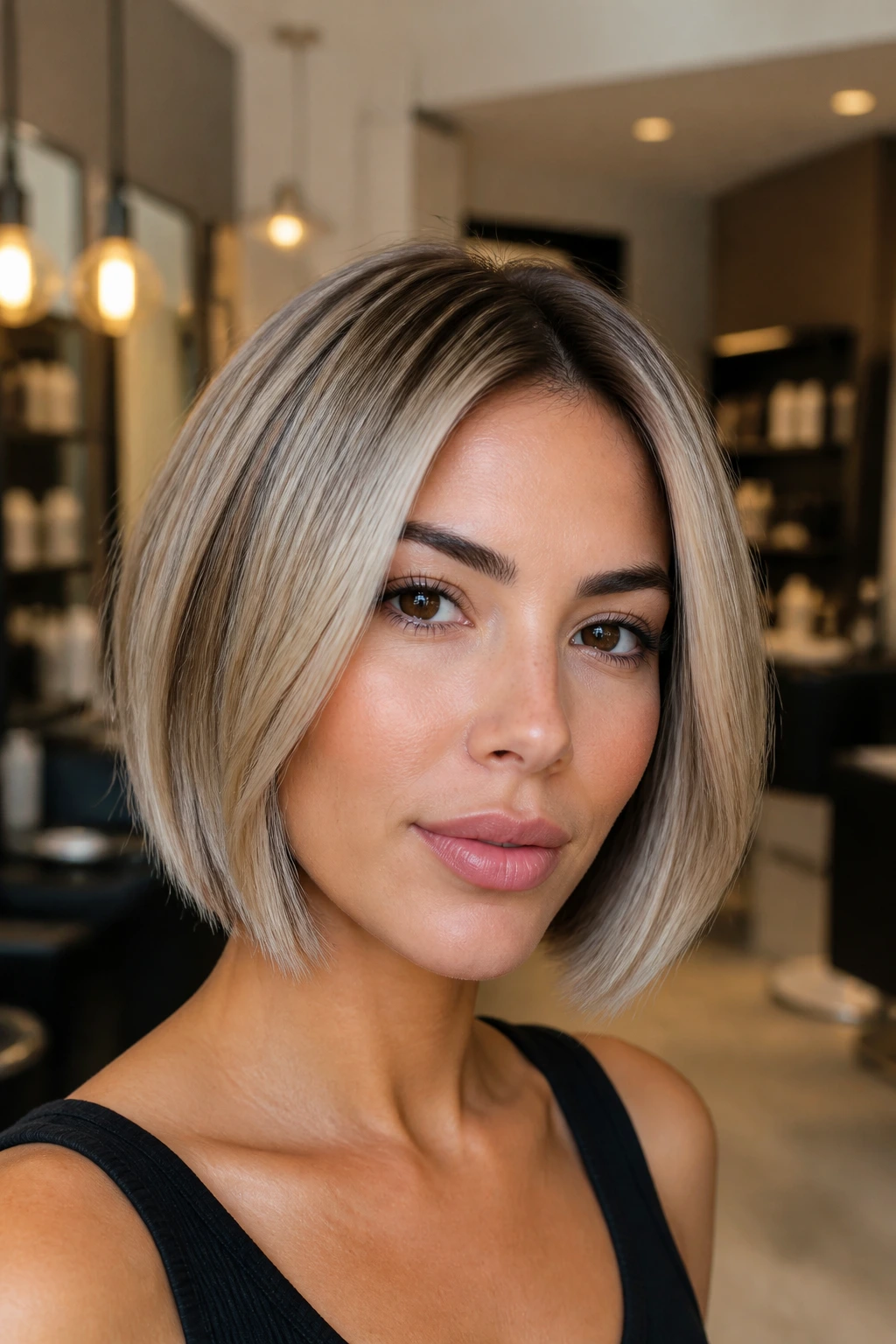
A bob can carry more contrast than people expect. Pearl beige on a bob looks sharp because the cut already has shape, so the color just needs to support it. The lowlights should be woven through the interior and nape to stop the finish from looking too airy.
This works especially well when the bob is blunt or slightly layered. The pearl pieces catch around the jawline, which gives the cut a little lift. If the hair is fine, avoid overly thick highlights; they can make the bob feel patchy.
26. Dimensional Wheat Blonde
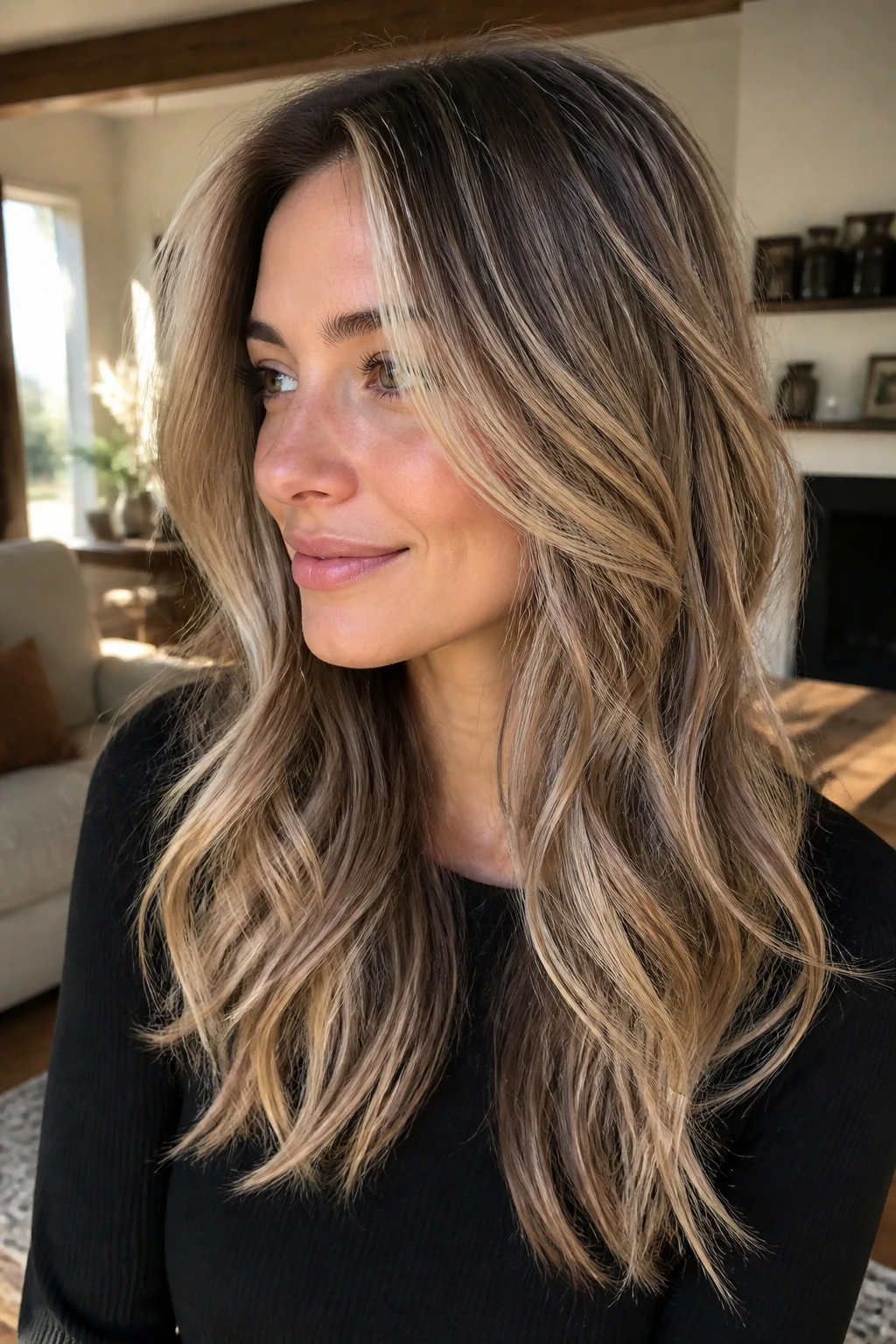
Wheat blonde is not one-note yellow. Good wheat blonde has a dry, soft, grainy quality that sits beautifully over a brunette base. Add lowlights in walnut or ash brown, and the whole thing gets shape.
The best version uses different thicknesses of blonde pieces. Some should be thin enough to blur into the brunette base. Others can be slightly broader so the eye has a few brighter places to land. That mix is what makes the style feel real.
27. Vanilla Chai Lowlight Blend
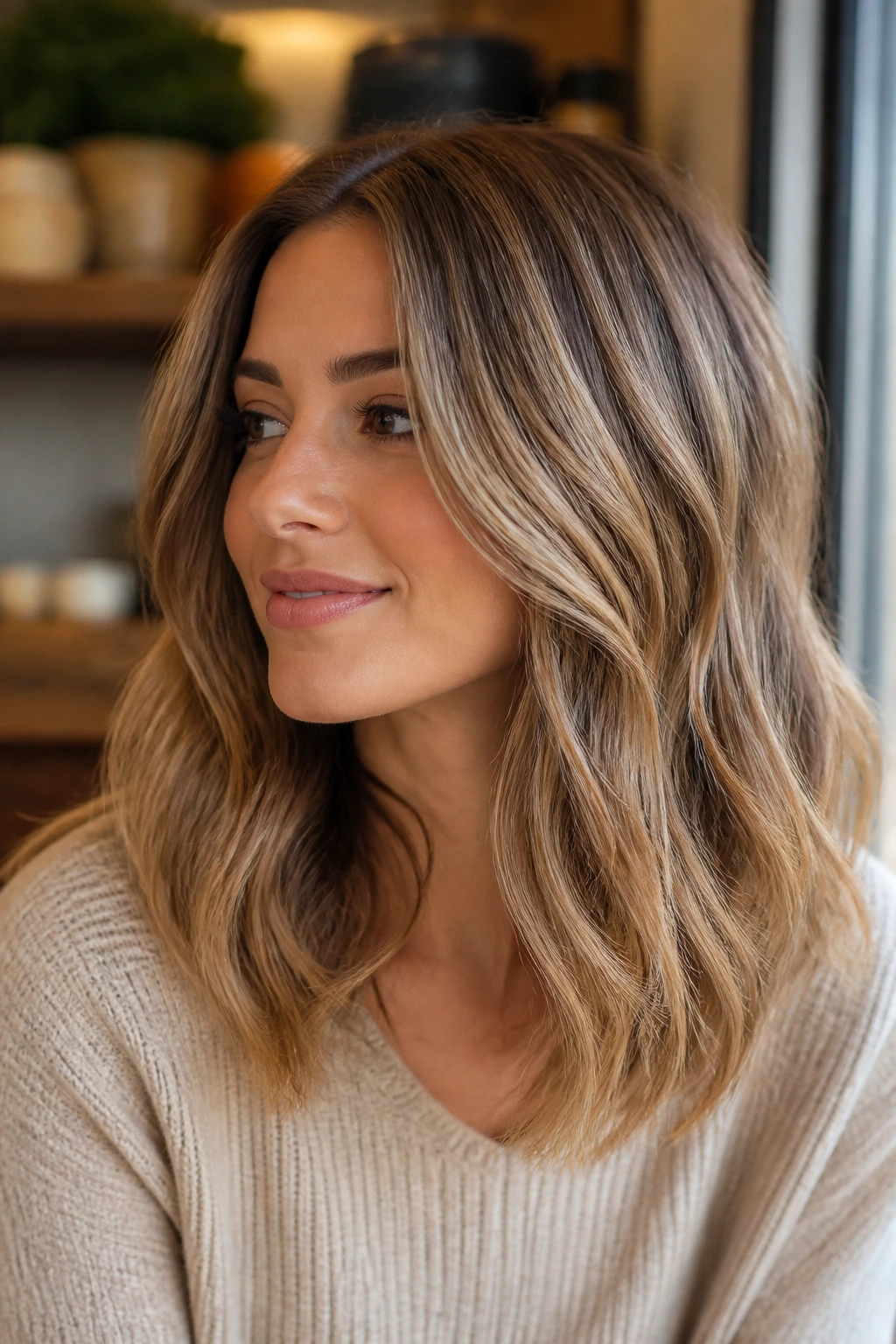
Vanilla chai sounds sweet, but the color should not be sugary at all. It is a warm blonde softened by chai-toned lowlights, which pull in brown spice instead of gold glare. On brunettes, that keeps the look cozy and balanced.
This is a strong choice if you want to avoid the starkness that comes with very bright blonde. The vanilla pieces brighten, the chai lowlights add depth, and the brunette base stays part of the conversation. It is a nice middle path.
28. Honey-Drifted Bronde
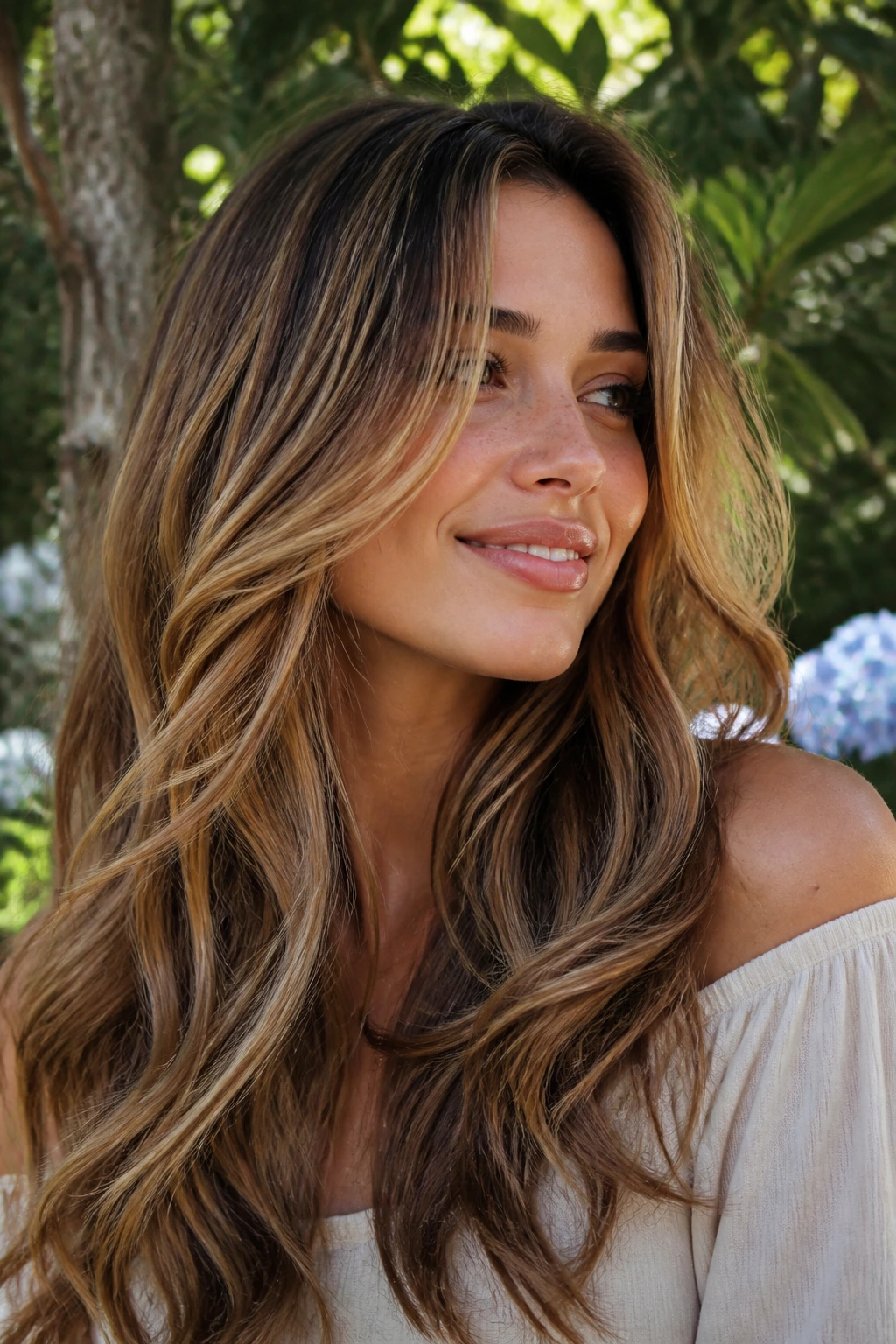
Honey-drifted bronde is for people who want blonde to feel like it is moving through brown hair instead of sitting on top of it. The highlight placement should be loose and diffused, with lowlights tucked between the warmer strands. No hard line. No stripe effect.
It tends to look best on hair with layers or a soft bend. The blonde catches at the mid-lengths, the brown underneath gives the eye a place to rest, and the whole thing grows out without a loud root line.
29. Soft Straw Blonde with Cocoa Lowlights
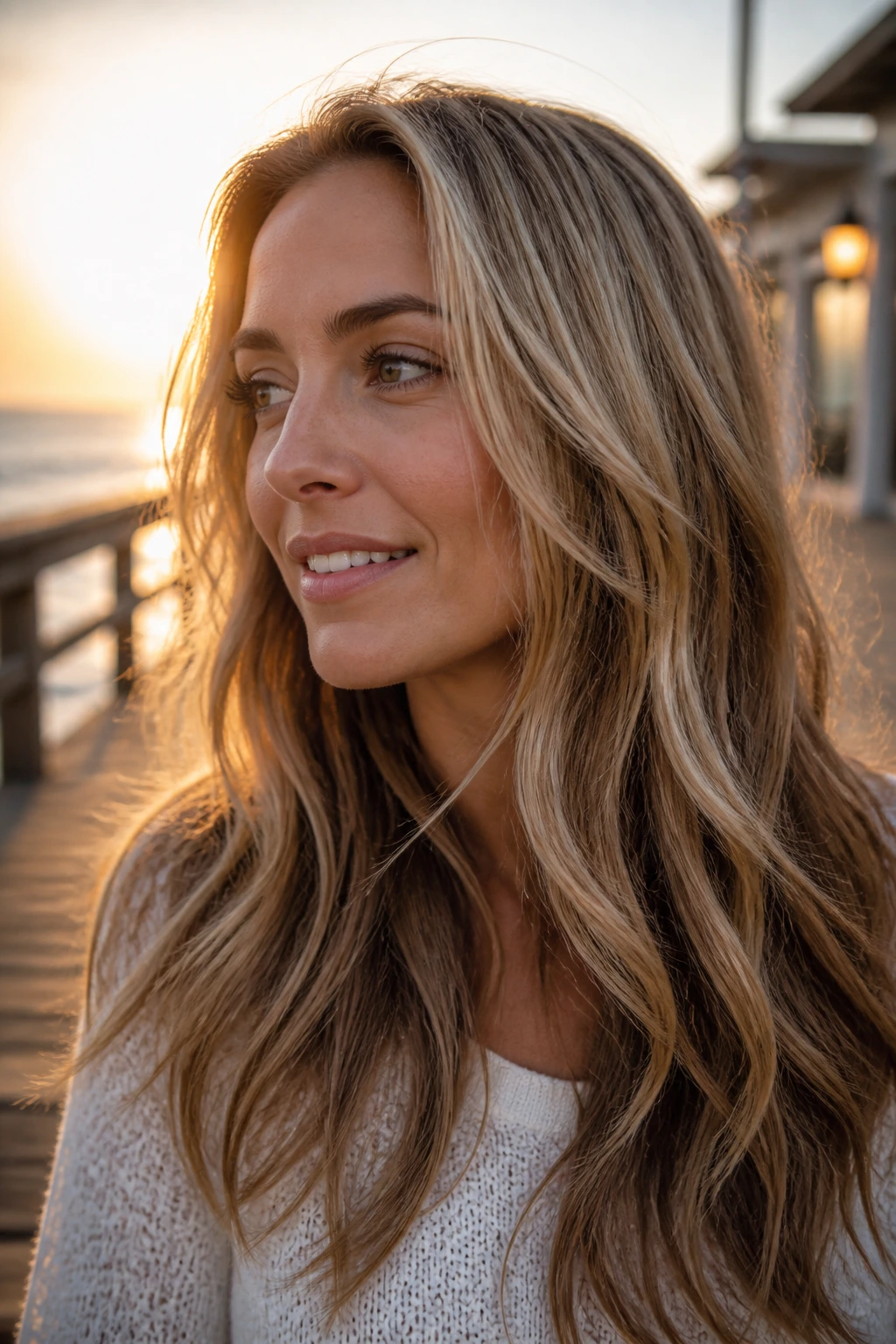
Soft straw blonde is pale, airy, and just warm enough to avoid looking chalky. Cocoa lowlights underneath bring the brunette story back into focus. The contrast is gentle, but you still get visible movement.
This is the shade I would choose for someone who likes quiet color rather than a bright statement. It works well on longer hair, especially when the ends are textured. A little wave makes the straw pieces and cocoa shadows do their best work.
30. Sandalwood Blonde Melt
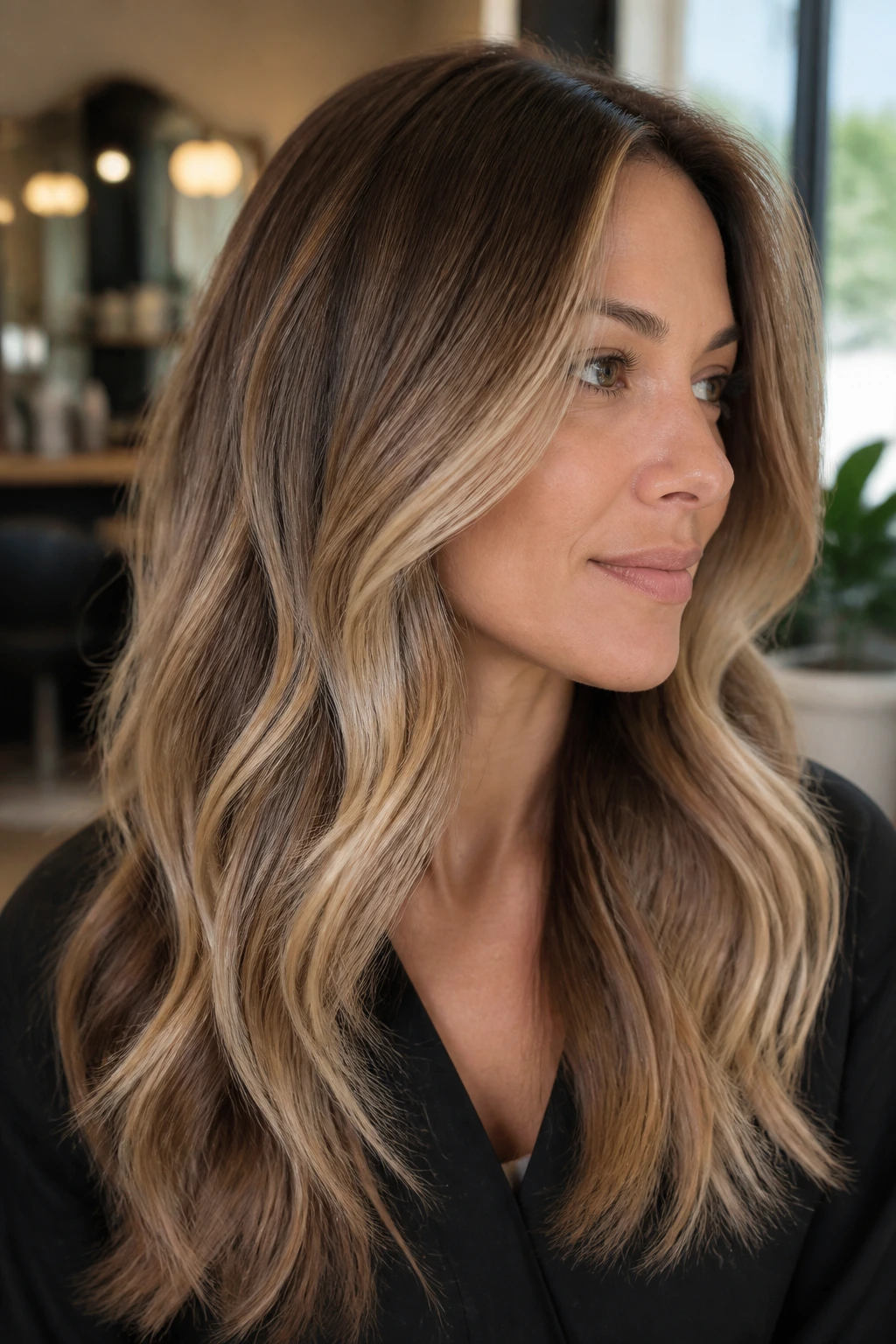
Sandalwood blonde is smooth, beige, and slightly woody in the nicest way. It suits brunettes who want a refined blonde look that does not drift too warm or too cool. The lowlights should be soft, muted, and close to your natural base so the melt stays believable.
The finish is all about softness. If the blonde is too bright, sandalwood loses its calm. If the lowlights are too dark, it gets heavy. The sweet spot sits right between, with a clean root fade and light ends that still feel attached to the rest of the hair.
Why Lowlights Keep Blonde From Looking Flat on Brunettes
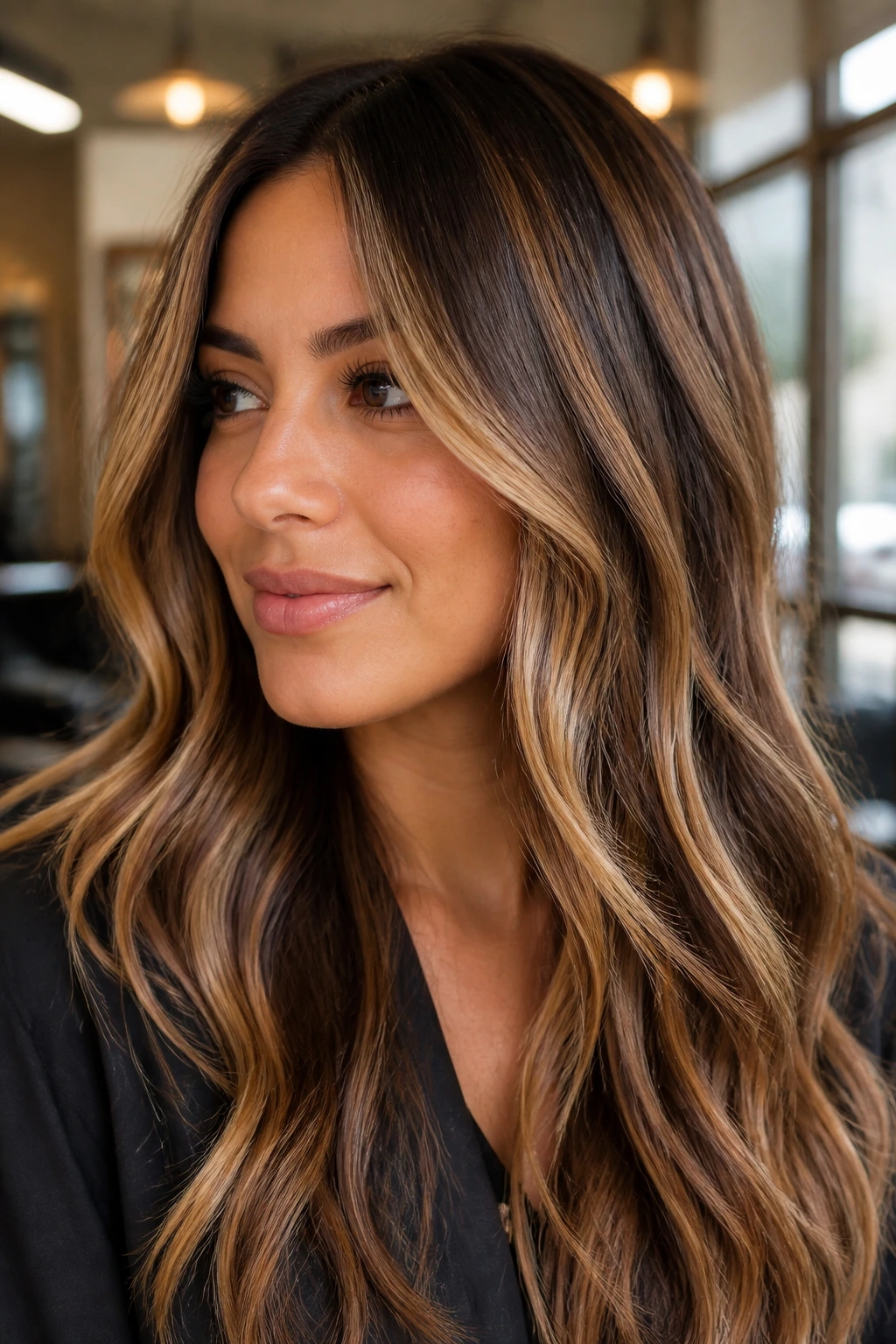
Brunette-to-blonde color lives or dies on contrast. A few carefully chosen lowlights give the lighter pieces a border, and that border is what makes the blonde pop. Without it, pale strands can blend into one another and lose the tiny shifts that make hair look expensive and textured.
There is also the grow-out problem, which is really a shape problem. When every strand is lifted in the same way, the regrowth line can feel harsh and the mids can look hollow. Lowlights solve that by keeping some depth at the crown, around the face frame, and in the interior layers. Even when the color fades a little, the structure stays visible.
The smartest lowlights are not jet black. They are one or two levels deeper than the brunette base, sometimes a little warmer, sometimes smoke-toned. That small choice keeps the hair from looking striped. It also helps the blonde read brighter, because the eye compares it against something softer and darker.
If your hair is curly or heavily layered, this matters even more. Movement exposes the underside of the color, and that is where lowlights prevent the whole style from looking puffy or over-lightened. The best blonde-on-brunette work usually looks understated up close and dimensional from a few feet away. That is the goal. Not drama for its own sake.
What to Bring to the Salon and Save on Your Phone
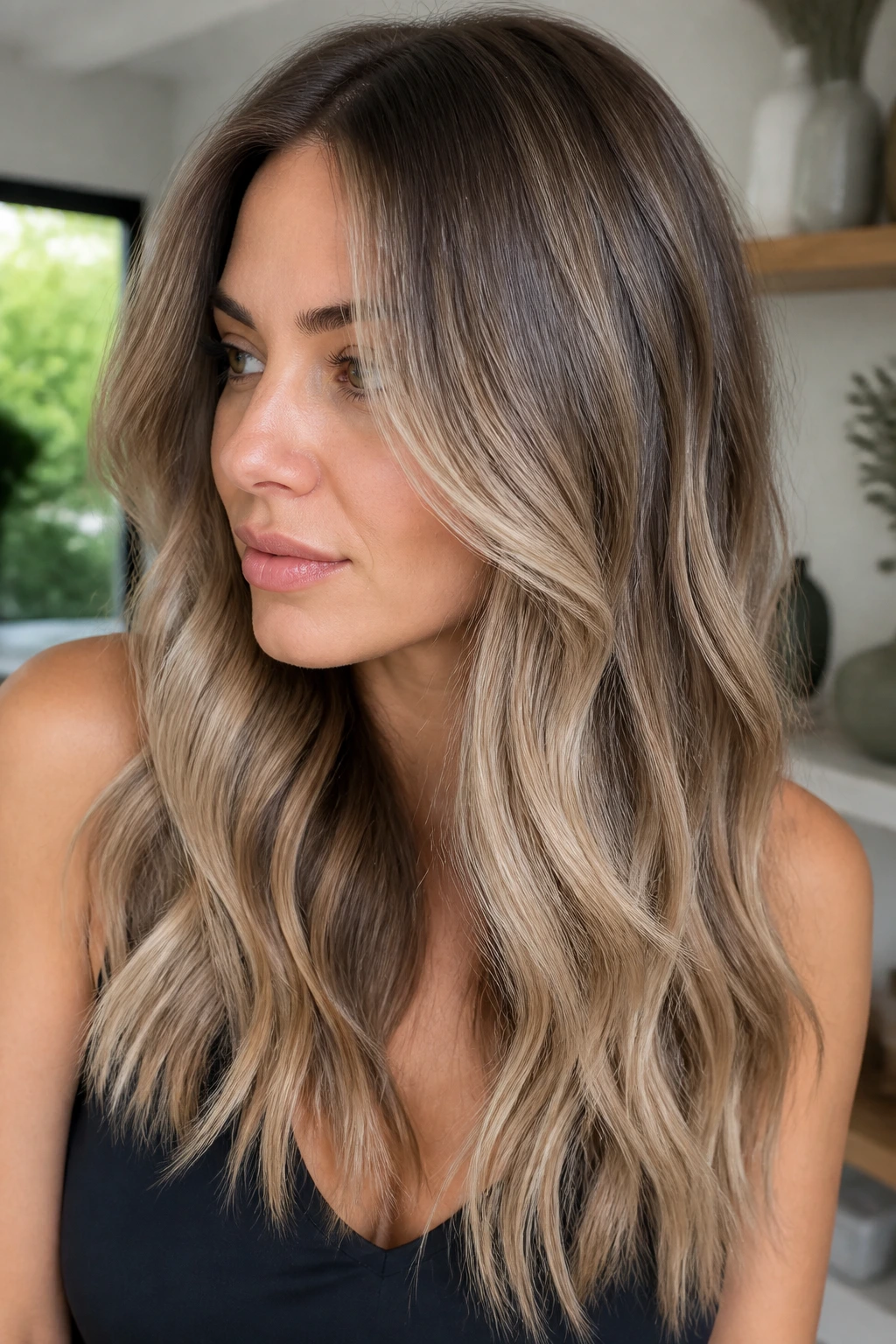
A good consultation starts with evidence. Bring 3 to 5 photos, and make sure at least one is taken in natural daylight, one indoors, and one from the back or side. Hair color can look wildly different under bathroom bulbs, and your stylist needs to see the tone you actually like, not the one that happened to photograph well.
- A photo of your current hair: This helps the colorist judge how far they need to lift and where the previous color might still be hanging on.
- Your natural base level: If you know you sit around a level 4, 5, or 6 brunette, say so. That helps set realistic blonde options.
- A list of past services: Box dye, henna, keratin treatments, bleach, glosses, and permanent dark color all change the plan.
- Undertone notes: Warm, cool, olive, pink, or neutral skin tones all affect which blondes look believable next to your face.
- Your maintenance ceiling: Be honest about whether you can come back every 6 weeks or whether 10-12 weeks is more realistic.
- A reference for lowlight depth: If you love soft contrast, say you want the lowlights just a shade or two deeper, not very dark.
- A cut reference too: Layers, curtain bangs, a blunt lob, and long curls all show color differently.
- A clean, dry head of hair if possible: That makes sectioning easier and helps the stylist see your true starting point.
How to Choose the Right Blonde Tone for Your Brunette Base
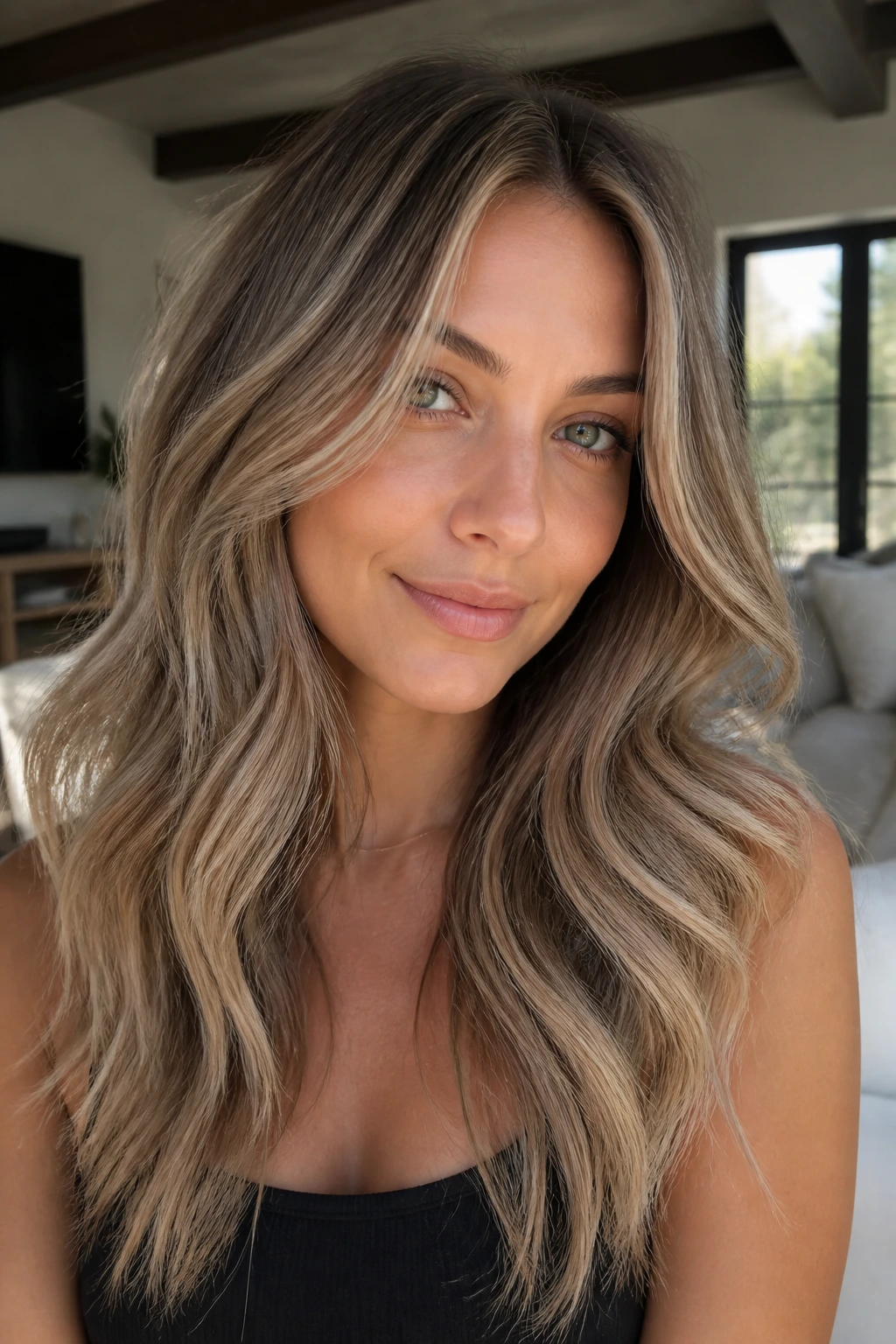
A warm brunette base usually takes caramel, honey, toffee, biscuit, and golden oat more naturally than icy pearl tones. If your hair already throws gold in the sun, asking for a beige or smoky blonde with darker lowlights usually gives a cleaner result than pushing the hair into a very cool direction. Cool hair can fight back.
Cool or ash-leaning brunettes tend to shine with mushroom blonde, ash beige, pearl beige, and frosted almond. Those shades keep the finish from turning orange or coppery. If your skin tone is also cool or olive, this family often looks calmer against the face than a bright yellow blonde would.
Thickness changes the story too. Fine hair does better with babylights, contouring, and soft root smudges, because chunky panels can make the hair look thinner. Thick hair can carry broader ribbons and more visible lowlights, which helps the color show up instead of vanishing into the density. Curly hair needs strategic placement around the bend of the curl, not just on the top layer.
Maintenance matters more than people admit. If you want a blonde look that can survive a busy schedule, stay closer to bronde, beige, honey, or rooty butter. If you like a more polished salon finish and can come back on time, pearl, champagne, and cream soda shades can go brighter. There is no moral prize for choosing the highest lift. Pick the version you can actually live with.
How to Wear These Shades So the Dimension Shows
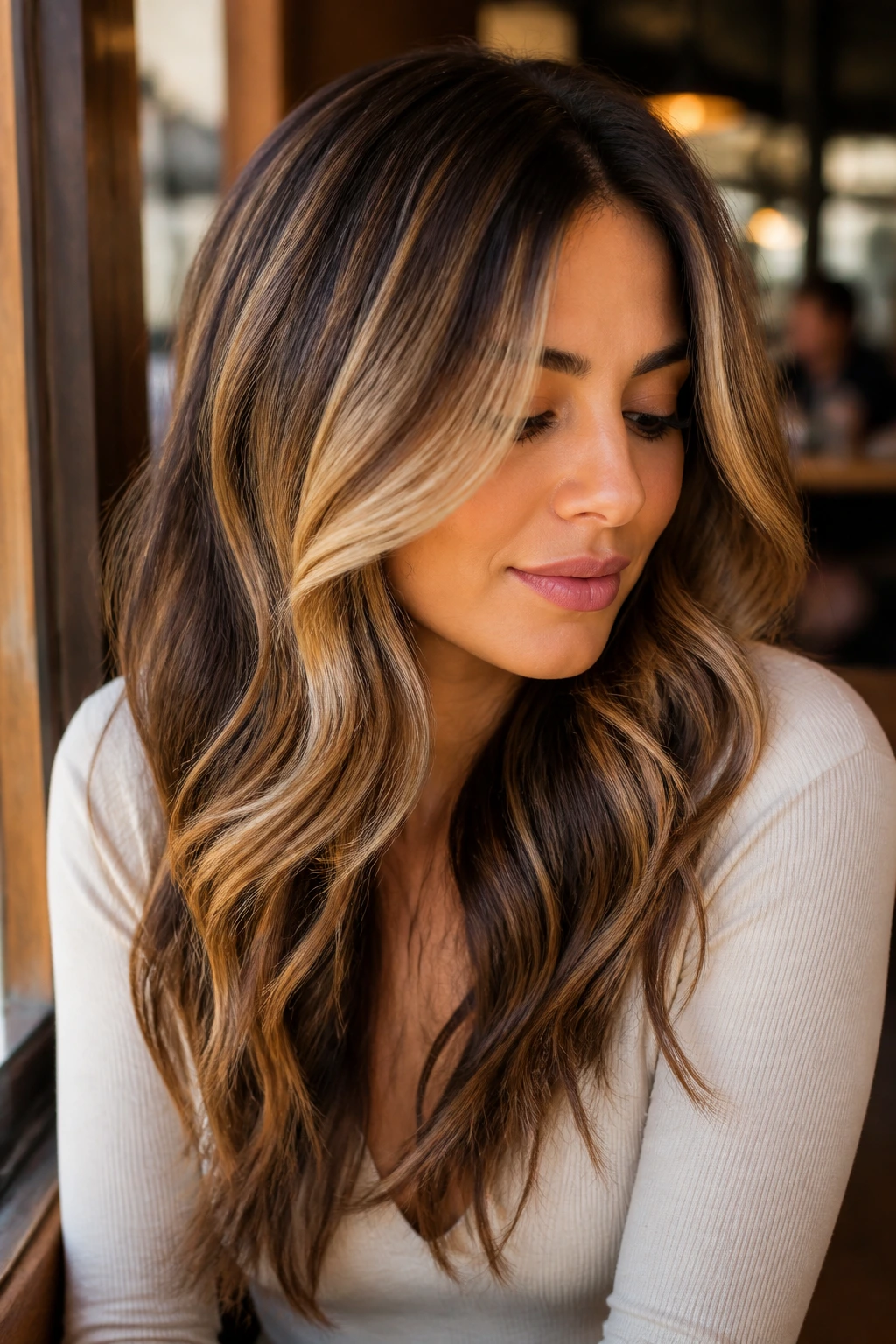
Loose waves: A one-inch curling iron, left out through the ends, shows off ribbons of caramel, beige, and honey better than pin-straight hair does. The lowlights peek through the bends and keep the style from looking puffy.
Straight and glossy: This is where bronde, mushroom blonde, and pearl beige look sharp. A smooth blowout or a flat iron pass reveals placement, which is useful if your colorist worked in fine babylights or contour pieces.
Curly or coily texture: Ask for color painted where the curl bends outward, not just on the very top. That makes the blonde visible when the hair shrinks, which it will. Lowlights on the underside keep the shape from looking broad and washed out.
Bobs and lobs: Shorter cuts can handle bolder face-framing pieces because the cut itself already creates structure. Pearl money pieces, biscuit blonde, and champagne front panels are especially good here.
Long layers: This is where foilayage, ribbon highlights, and rooty melts really shine. The cut gives the blonde space to move, and the lowlights stop the ends from becoming a pale blur.
Extra Shine, Better Tone, and Softer Grow-Out
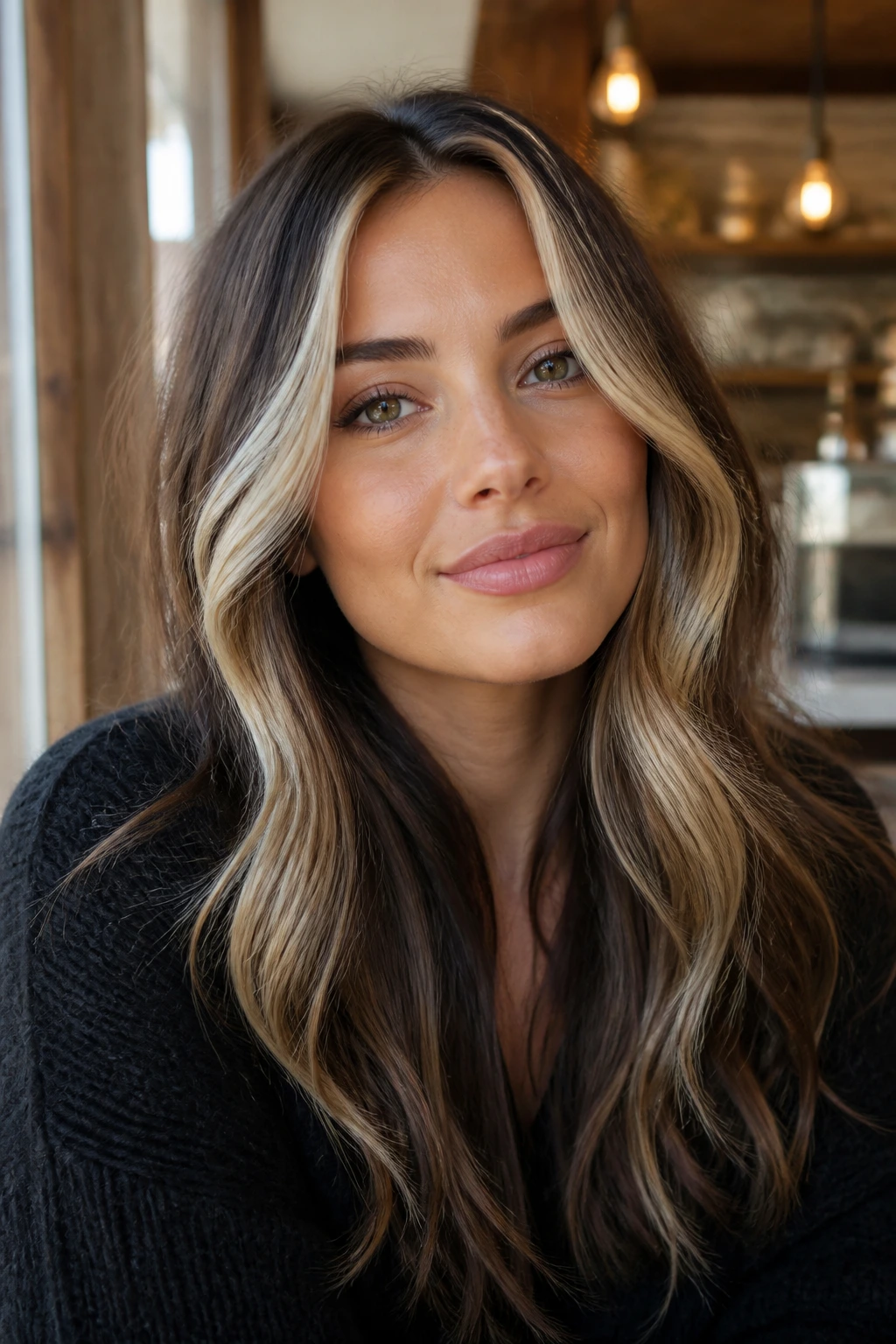
Glossing: A clear or beige gloss every 4 to 6 weeks keeps blonde pieces from drying out and helps the lowlights stay readable. If the blonde starts to feel dull, a gloss is usually smarter than another lightening session.
Root shadow: A soft root smudge that is just one shade deeper than the brunette base keeps regrowth from looking harsh. It also makes champagne, butter, and vanilla shades blend into the hair instead of sitting on top of it.
Tone control: Purple shampoo works best on blondes that lean yellow. Blue shampoo is better when brunette hair turns orange during the lift. Use either one sparingly, because overdoing it can dull the lighter pieces and make porous ends grab color unevenly.
Finish choice: A smooth blowout makes beige and mushroom shades look cleaner. Soft waves make caramel, honey, and biscuit shades look richer. The same color can read two different ways, and styling is part of the look, not an afterthought.
Make-it-yours: If you want lower maintenance, keep the brightest pieces around the face and crown only. If you want more drama, add brighter ends and deeper interior lowlights so the contrast shows when hair moves.
Keeping the Color Fresh Between Appointments
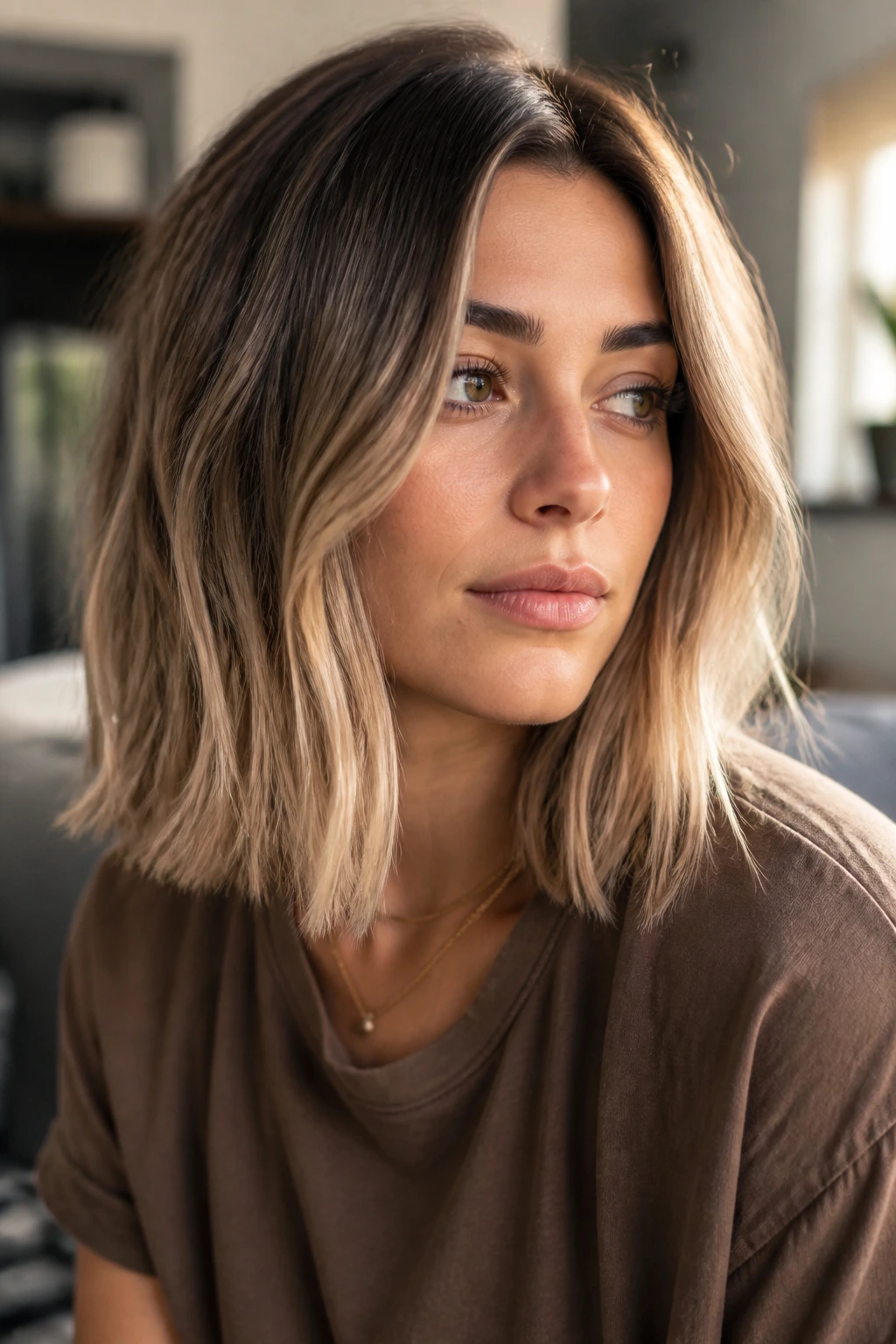
For most brunettes with lowlights, the maintenance rhythm is less about panic and more about keeping brass, dryness, and root lines under control. A light refresh every 4 to 6 weeks can mean a gloss, toner, or a trim, not always a full color service. That is often enough to keep the blonde looking clean without dragging the hair through repeated lightening.
Wash schedules matter. Two to three shampoo days a week is kinder to blonde pieces than daily washing, especially if the hair was lifted with foils or balayage. Use lukewarm water, not hot water, because hot water can rough up the cuticle and make tone fade faster. If your blonde is ash, pearl, or beige, purple shampoo once every 3rd or 4th wash is plenty. If you push it harder, the lightest pieces can start to look dull or slightly violet.
Heat is another quiet culprit. Blow-dryers and irons are fine, but they should not run wild. A heat protectant before every hot tool session is non-negotiable, and keeping the tool below 375°F usually gives enough shape without chewing up the tone. If your hair was lifted several levels, add a weekly mask or bond-building treatment. Bleached hair can feel okay for a while and then suddenly get rough. That slip happens fast.
Root touch-ups depend on the placement. A rooty melt can go 8 to 12 weeks with grace. A brighter money piece or champagne front frame may want attention closer to 6 to 8 weeks. If you like a lived-in look, ask for more depth near the scalp and lower-maintenance highlights through the mids. If you want crisp brightness, be ready to come back sooner. There is no free version of very light blonde. Somebody has to maintain it.
Variations Worth Asking For at the Chair
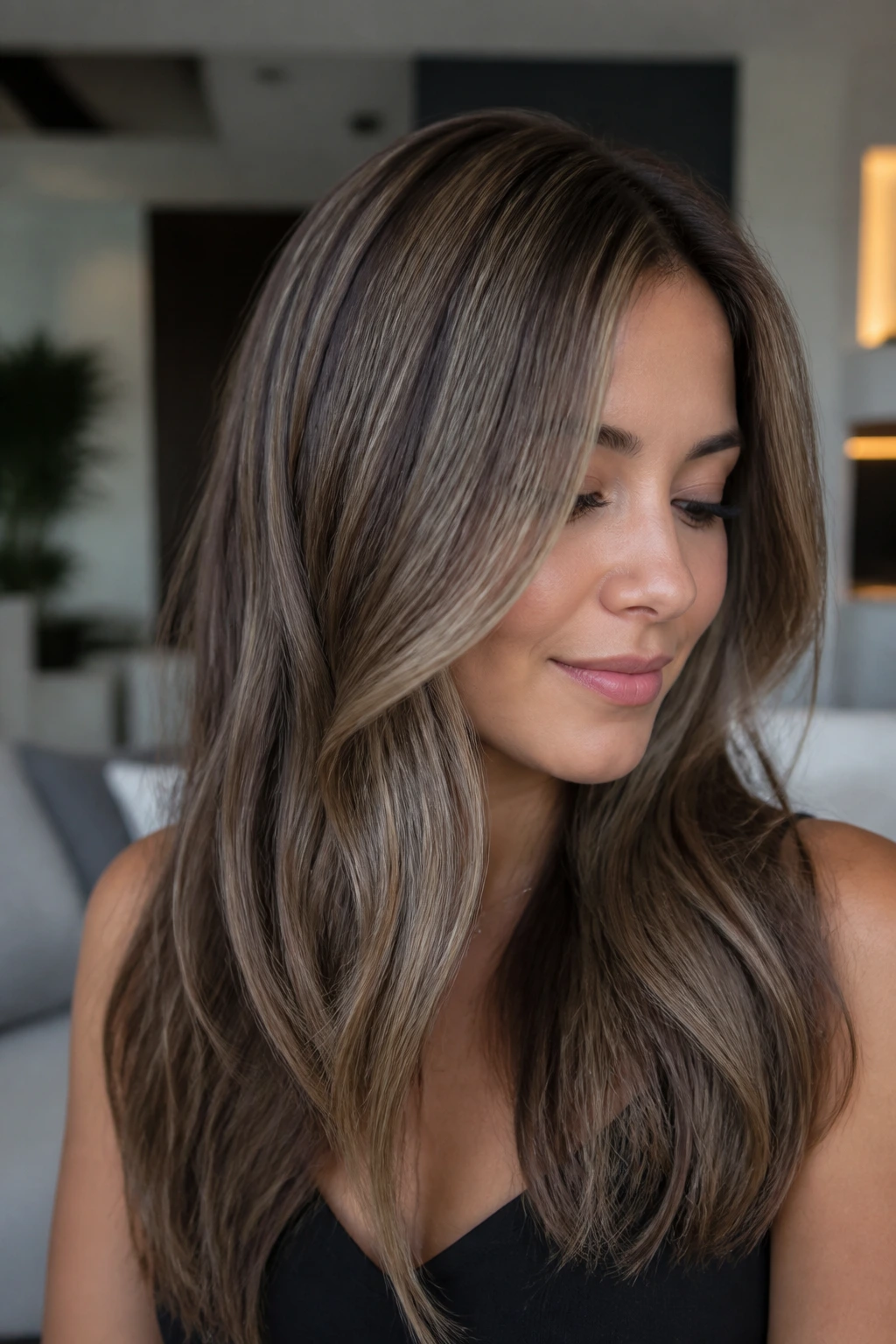
Sunlit Caramel Softening: Keep the caramel family but lighten the face frame one step more than the rest. This gives brunette hair brightness without losing the warm base. It is a friendly choice if your current color is already halfway there.
Smoky Beige Bronde: Shift the blonde pieces toward taupe and mushroom, then deepen the lowlights slightly. The effect is quieter, cooler, and better if your skin tone fights gold. It also holds up well when the blonde starts to fade.
High-Contrast Money Piece: Brighten only the front, keep the crown and interior darker, and let the rest of the blonde stay muted. This is a smart way to get a noticeable change without committing to a full-head lift.
Curly Ribbon Placement: Instead of thin highlights all over, paint thicker ribbons where curls open up. The lowlights should sit underneath the bend so the texture stays defined. Curly hair usually needs fewer light pieces than straight hair does.
Low-Lift Grow-Out Blend: Keep the brunette base mostly intact and lift the mids and ends only one or two levels. This version is for people who want a softer schedule, not a dramatic transformation.
Mistakes That Flatten Brunette-and-Blond Color
-
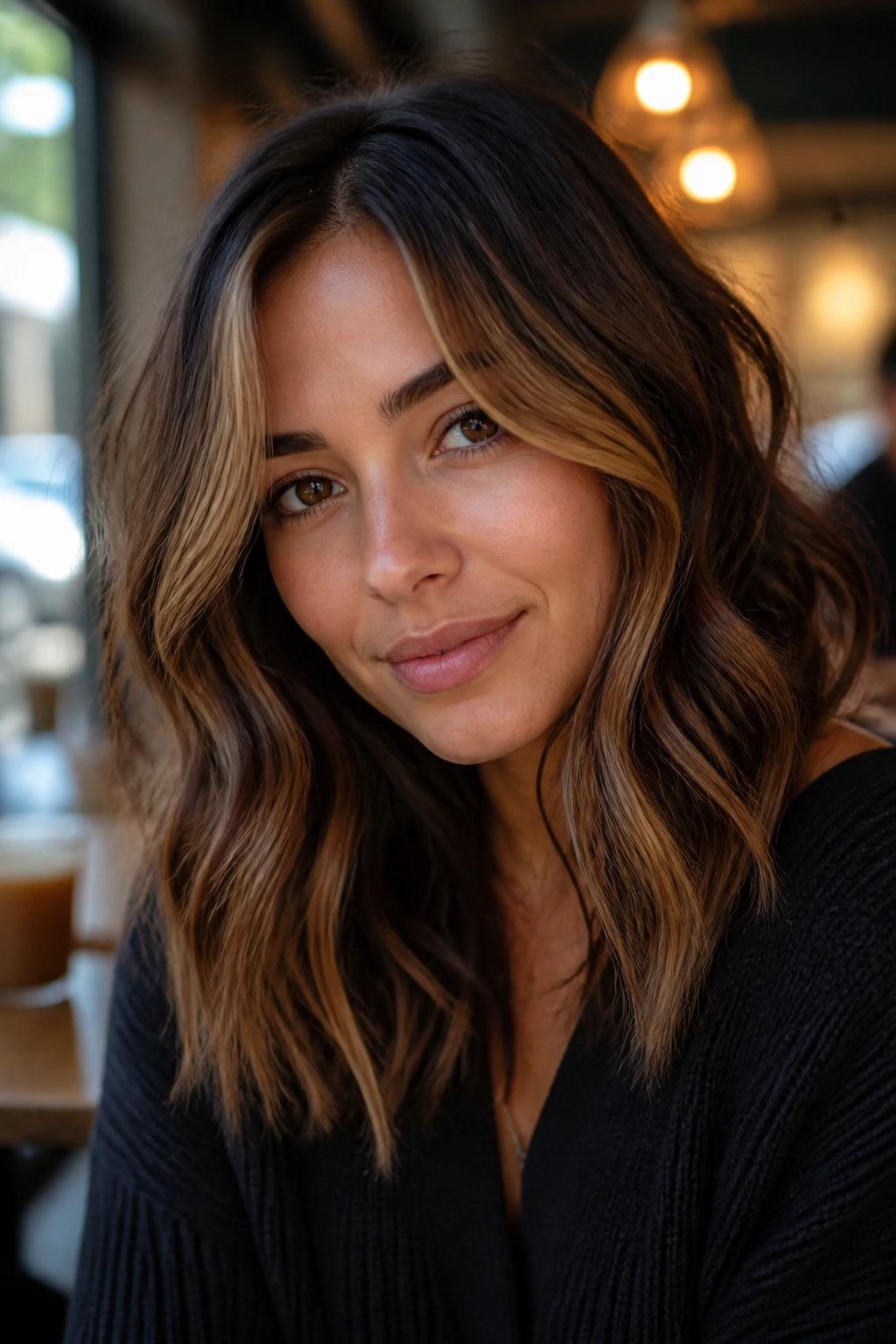
Going too blonde too fast: If the lift is pushed past what your brunette base can hold, the hair can turn yellow, dry, or patchy. Ask for a staged plan if your starting color is dark.
-
Using lowlights that are too black: Jet-black streaks can harden the look and make the blonde feel disconnected. Choose a lowlight that sits just below your natural brunette, not several shades darker.
-
Putting all the brightness on the top layer: That can create a helmet effect. The underside and interior need some lightness and some depth too, or the hair looks painted on.
-
Skipping toner or gloss after lifting: Blonde on brunette almost always needs tone control. Without it, caramel can go orange, beige can go yellow, and pearl can look flat.
-
Ignoring hair texture: Thick hair can handle broader ribbons. Fine hair usually needs micro-highlights and softer lowlights. The same pattern does not fit every head.
-
Treating maintenance like an afterthought: Very light blonde and dark brunette roots do not stay polite forever. If you want the contrast, plan the upkeep.
Common Questions About Brunette Hair With Blonde and Lowlights
Can brunettes really go blonde without losing depth?
Yes, if the colorist leaves some darker panels in the mix. Lowlights, root shadow, and interior depth are what keep the blonde from looking bleached-out and one-dimensional.
Which blonde shades are easiest to live with on brunette hair?
Beige bronde, honey balayage, caramel ribbon blonde, and rooty butter blonde are among the easier ones because they blend into the natural base and grow out softer than very pale blondes.
Do lowlights make blonde look less brassier?
They can help a lot. Lowlights do not remove brass by themselves, but they interrupt the warmth visually and make beige, ash, or honey pieces look more controlled.
How often will I need to touch it up?
That depends on how bright you go. A soft bronde can stretch 8 to 12 weeks, while a champagne face frame or brighter money piece may need a refresh closer to 6 to 8 weeks.
Will this damage my hair badly?
Lightening always changes the hair, especially if you lift more than two levels. The damage stays more manageable when the blonde is placed strategically, the lowlights reduce the need for every strand to be lifted, and you stick with bond care and heat protection.
What if my hair is very dark brown or almost black?
You may need more than one appointment to reach a clean blonde. In that case, caramel, toffee, biscuit, and bronze-blonde blends are usually safer than trying to jump straight to pearl or platinum.
Can curly hair pull off blonde with lowlights?
Absolutely, but the placement has to follow the curl pattern. Painted ribbons and face-framing lightness usually work better than uniform striping, because curls hide and reveal color as they move.
How do I keep ash or beige blonde from turning yellow?
Use a blue or purple shampoo sparingly, keep heat under control, and book a gloss when the tone starts to warm up. Overusing toning shampoo can make the hair dull, so a little goes a long way.
The Shade Sweet Spot
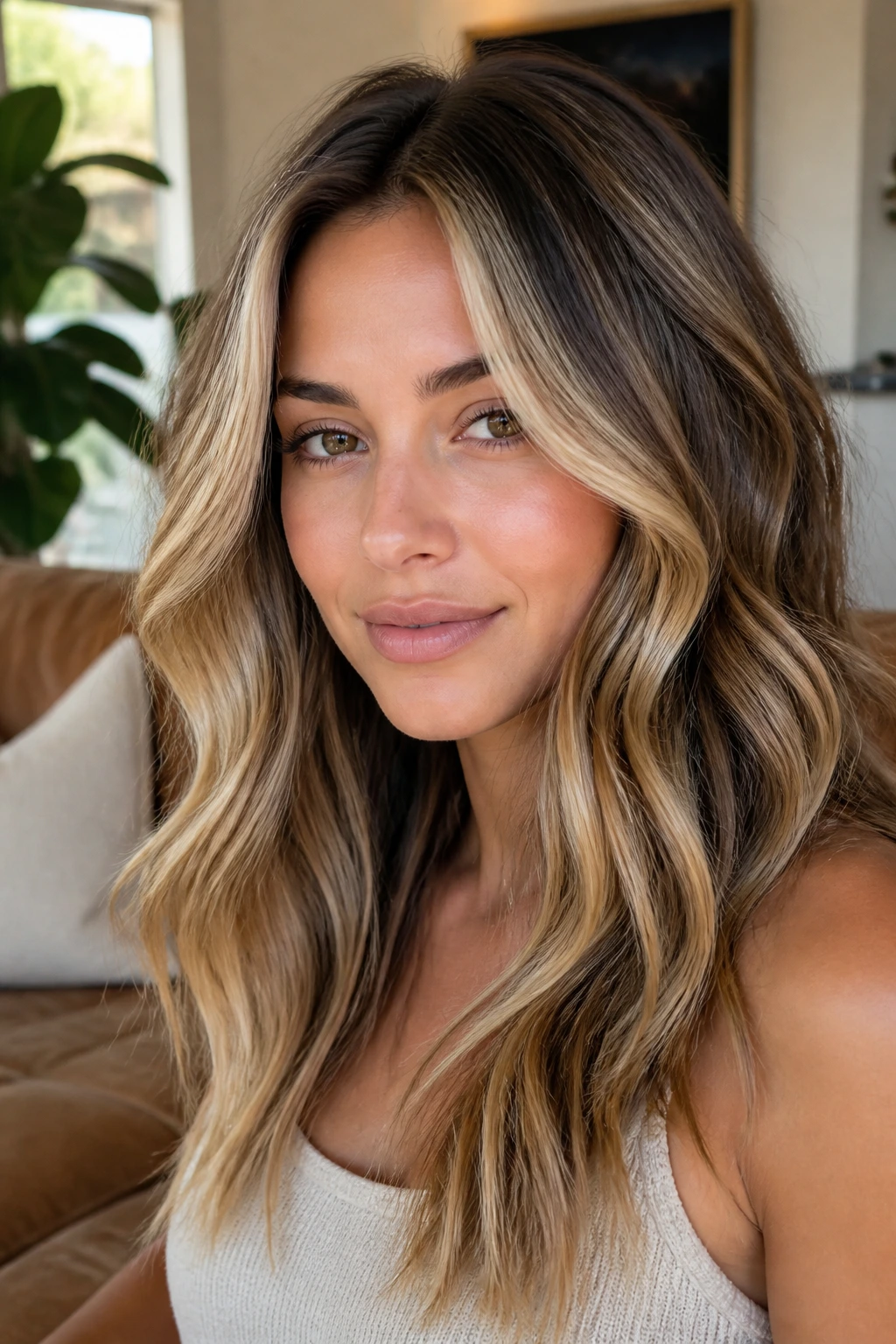
The prettiest blondes on brunettes do not erase the brunette base. They lean on it. That is the whole trick, and it is why lowlights matter so much: they let the blonde look bright without making the hair lose its shape or its history.
If you want the safest bet, start with caramel, beige, honey, or rooty butter. If you want something cooler and more polished, mushroom, ash beige, or pearl beige will take you there. Either way, the best result comes from contrast that feels planned, not pasted on. That is the difference between hair that looks colored and hair that looks considered.
Pick the tone that fits your base, your texture, and your patience. The right brunette-blonde blend should look good on day one, and still make sense when the roots start to show through.