



Olive skin can make a hair color look expensive or muddy in about two inches of bad placement. That’s the annoying part, and also the fun part. The same warm caramel ribbon that flatters one face can pull orange next to another; the same ash blonde that looks cool on a pale complexion can make olive skin look flat and tired. So the game is not “go lighter.” The game is contrast, placement, and tone.
Layers are what keep natural highlights from looking pasted on. A blunt cut can hold color, sure, but layers let light move. They catch a few brighter pieces near the cheekbones, soften the ends, and make a color melt instead of a stripe. If you’ve ever looked at a gorgeous balayage and thought, “Why does that look easy on her and expensive on everyone else?” the answer is usually the cut working with the color.
The best looks for olive skin do one of two things: they either warm the complexion just enough with honey, caramel, bronze, and chestnut, or they use beige and smoky tones to keep things clean without going chalky. The trick is not to drown the hair in one flat family of color. A few darker ribbons underneath, some brightness around the face, and layers that actually show movement — that’s where the good stuff happens.
Why These 25 Looks Work on Olive Skin
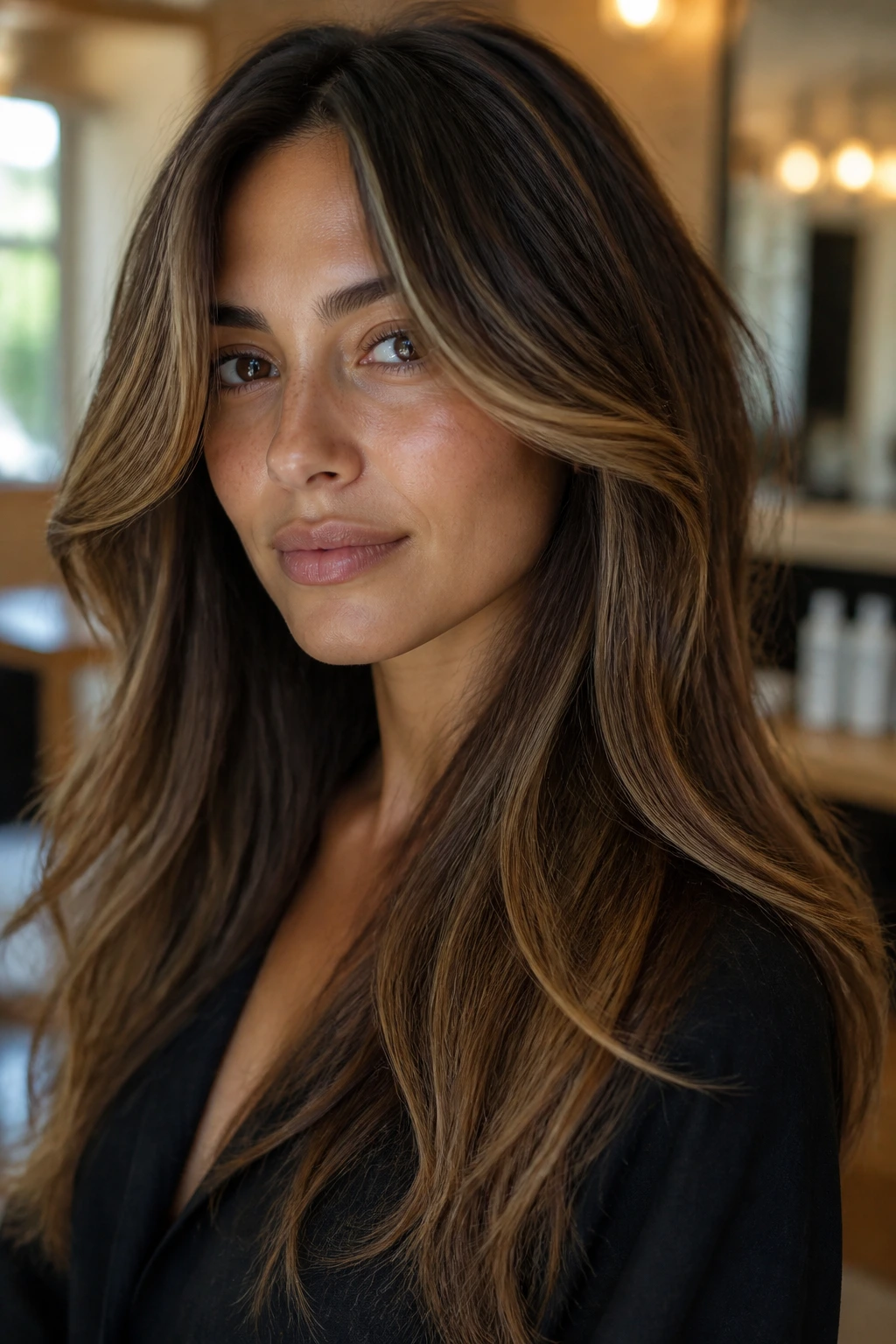
- Undertone balance: Olive skin often has green, golden, or neutral-gold undertones, so the right highlight shade has to sit beside that base without turning brassy or gray.
- Layer-first placement: Layers let color fall in visible ribbons instead of one heavy block, which keeps natural highlights from looking harsh.
- Grow-out that behaves: Root shadows and soft balayage lines are easier to wear on olive skin because the regrowth doesn’t scream for attention after three weeks.
- Brighter face, softer ends: Face-framing pieces can lift the complexion while the mid-lengths and ends stay deeper, which is usually the sweetest spot for olive undertones.
- Salon-friendly realism: These looks work on straight, wavy, curly, long, and shorter cuts without needing a full bleach-out.
- More depth, less bleach drama: A good layered highlight plan uses dimension, not just lightness, so the hair still looks like hair and not a sheet of beige.
Olive skin is a chameleon, but not in the lazy, flattering-everything sense people like to claim. It changes depending on what sits next to it. A cool silver-beige can look crisp and chic, or it can look a little dusty if the base is too dark and the layers are too blunt. A honey ribbon can look sunlit, or it can look orange if the toner is sloppy. So the shade formula matters, but placement matters just as much.
How Olive Skin Changes the Way Highlights Read
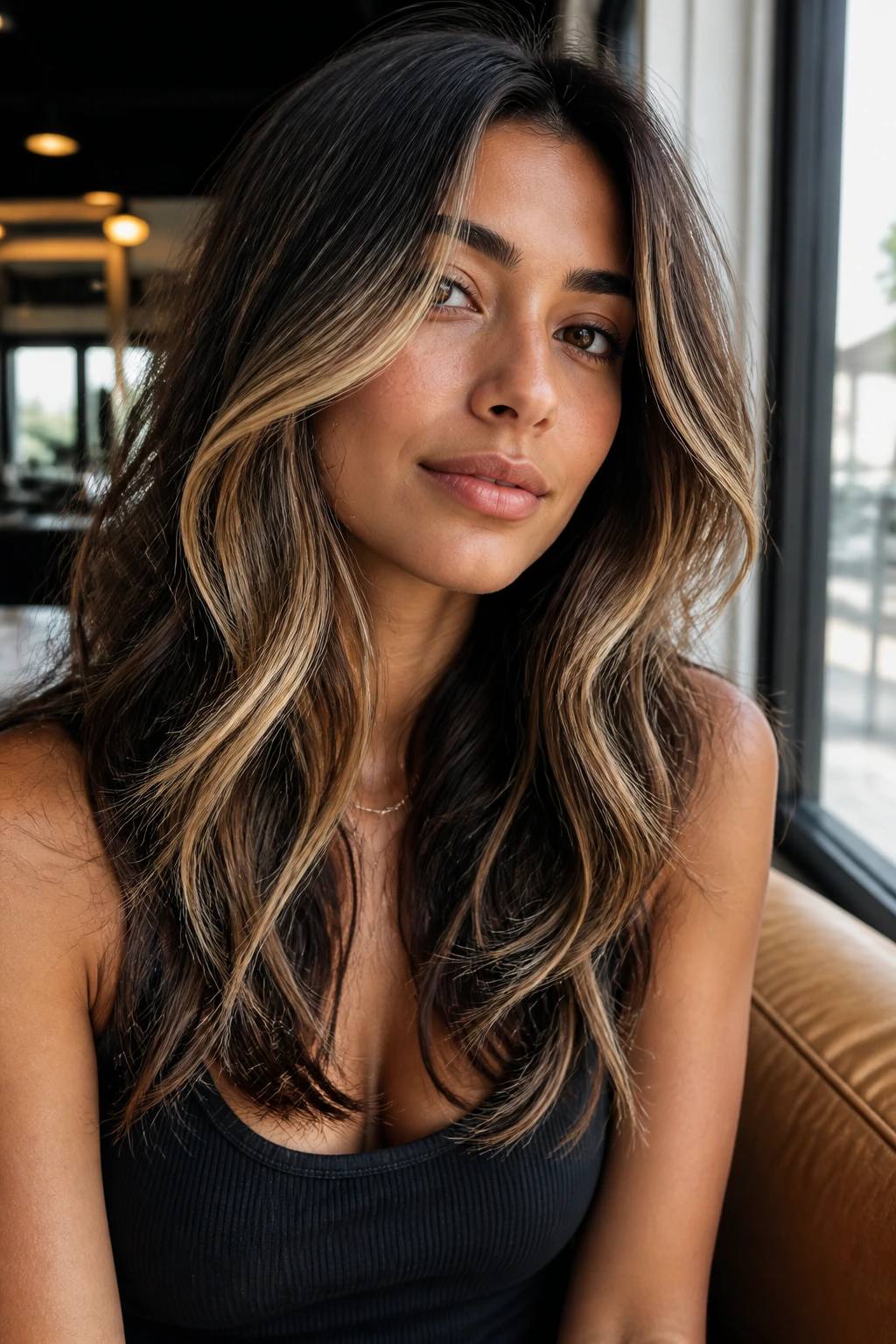
Olive skin usually carries some mix of green, gold, and neutral undertones. That’s why one hair color can make the skin glow and another can make it look slightly sallow. The face does not read color in isolation; it reads contrast. A layered cut changes that contrast every time the hair moves, and that movement is the whole point.
Warm, Cool, and Neutral All Need Different Ribbons
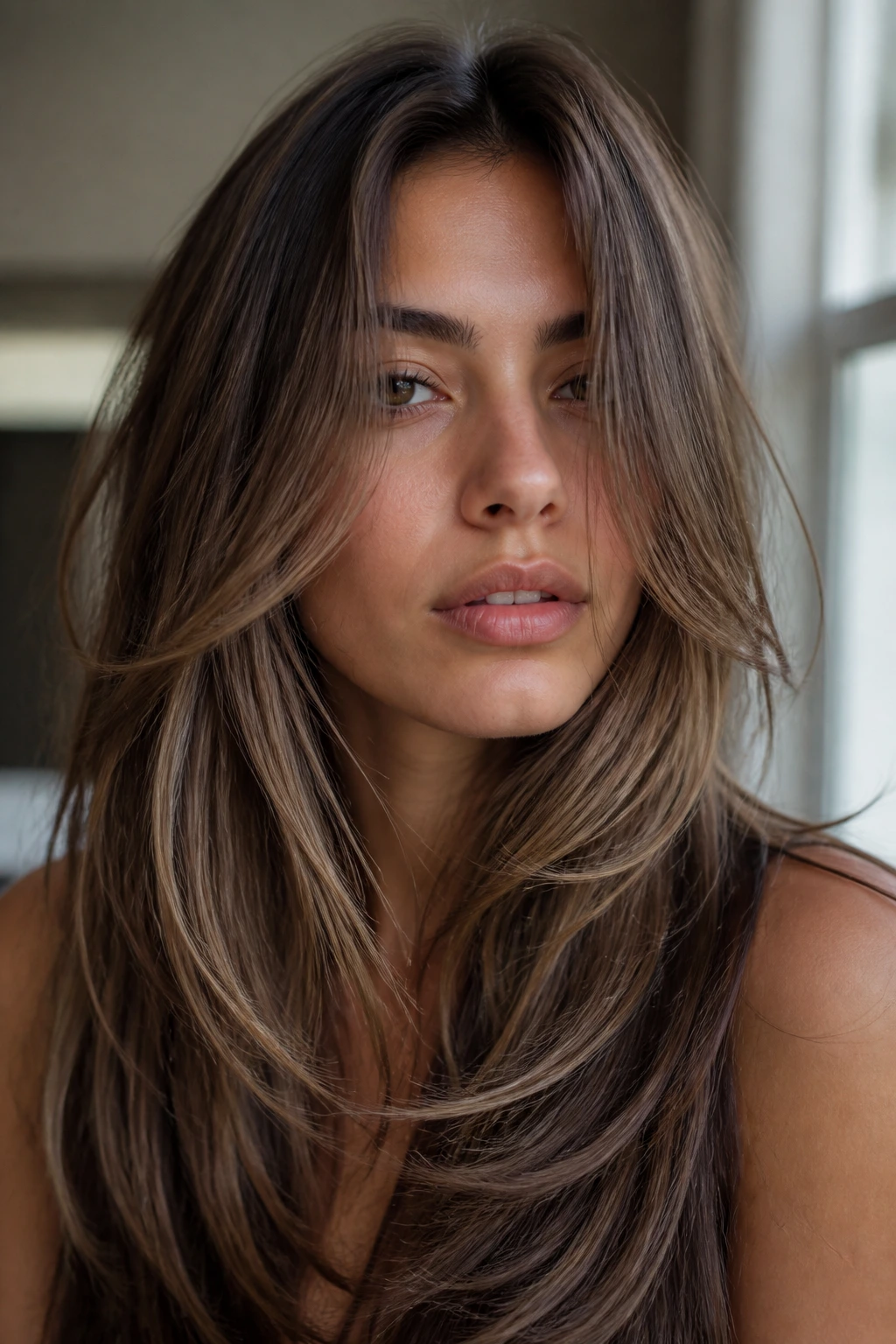
If your olive skin leans golden, caramel, honey, bronze, beige blonde, and warm chestnut tend to feel natural. If your skin leans greener or more neutral, smoky bronde, mushroom brown, taupe, and ash-beige pieces often look cleaner. The mistake people make is treating “olive” like one shade. It isn’t.
Layers Make the Color Look Intentional
A single-tone highlight job on olive skin can fall flat fast. Layers break the color into planes, so the lighter pieces land where the eye expects them — around the cheekbones, through the crown, and at the ends. That gives you the sense of movement that makes soft highlighting feel believable instead of stripey.
Toner Is Not a Tiny Detail
A good toner can save a highlight. A lazy toner can ruin one. On olive skin, highlights that are too yellow can turn brassy, while ash-heavy highlights can go dull and greenish. The middle ground usually lives in beige, neutral-gold, soft caramel, or mushroom-brown territory. That’s the sweet spot most people are actually after, even when they ask for “natural.”
1. Soft Caramel Ribbon Layers
These are the kind of highlights that look like they’ve been painted by sunlight, not a foiled helmet. On olive skin, soft caramel ribbons keep the warmth close to the hair’s natural brown family, which is why the whole look feels believable instead of loud. The layers matter here because the caramel shows up best when it bends around the face and disappears into the ends.
Why it works
Caramel sits in that sweet zone between gold and brown. It adds warmth without the orange edge that can fight with olive undertones. Ask for fine ribbons through the mid-lengths and a few brighter pieces around the cheekbone area, then keep the root area a shade deeper so the grow-out stays soft.
- Best on medium to dark brunettes
- Ask for a level 6 or 7 caramel, not a pale blonde
- Layers should be long and slightly feathered at the ends
- Works well with loose waves or a smooth blowout
Pro tip: Keep the brightest caramel pieces 1–2 inches away from the hairline if your skin runs very golden; that keeps the face bright without making the color read brassy.
2. Honey Bronde with Face-Framing Pieces
Honey bronde does a nice job of giving olive skin a little glow without tipping into full blonde territory. It’s the safer choice when you want brightness but do not want your hair to look like it spent the afternoon in a chlorine pool. The face-framing pieces are the part that sells it — they sit right where the complexion needs a lift.
This is a strong pick for layered cuts because the honey pieces can be concentrated on the front and crown while the back stays more muted. If the layers are long and blended, the hair moves in a soft gradient instead of a color block. That’s the difference between “fresh” and “done.”
Ask for a bronde base with honey highlights about two levels lighter than your natural brown. Too much lift, and the honey starts shouting. Too little, and the effect disappears in indoor light.
3. Mushroom Brown with Airy Ends
Mushroom brown is one of those shades that gets misunderstood because it sounds drab on paper. On olive skin, though, it can look very clean. The cool-beige tone calms down green undertones and gives layered hair a silky, lived-in look that doesn’t fight the face.
What makes it different
Instead of bright streaks, this look uses soft tonal variation. The lighter pieces stay muted, almost smoky, while the ends have just enough lift to keep the haircut from looking heavy. The result is subtle, but not boring. There’s a difference.
How to wear it
- Best if your base is naturally dark blonde or light brown
- Ask for beige low-contrast highlights, not icy blonde
- A shag or soft layered lob helps the tone move
- Style with a loose bend, not stiff curls
If you like your color to look polished in daylight and office light, this is a strong one. It’s also good if your hair tends to turn orange quickly, because mushroom brown gives the toner less room to misbehave.
4. Chestnut Balayage on Shoulder-Length Layers
Chestnut balayage has a little more body than caramel, which is why it flatters olive skin that needs depth. The color lands in that rich brown-red-brown zone without going overtly auburn, so it reads as warmth rather than copper. On shoulder-length layers, the chestnut pieces catch light on the bends and stay darker underneath.
This look is a nice bridge for someone who wants natural highlights but thinks blonde would be too much. It’s especially good if your skin has a golden-olive cast and your eyes are dark brown or hazel. The chestnut makes those tones feel connected.
A center part with layered ends can make the balayage appear more intentional, while a side part pushes the brighter pieces into a stronger frame. I prefer the side part if the haircut is medium-density, because it gives the chestnut a little more lift.
5. Beige Blonde Money Pieces
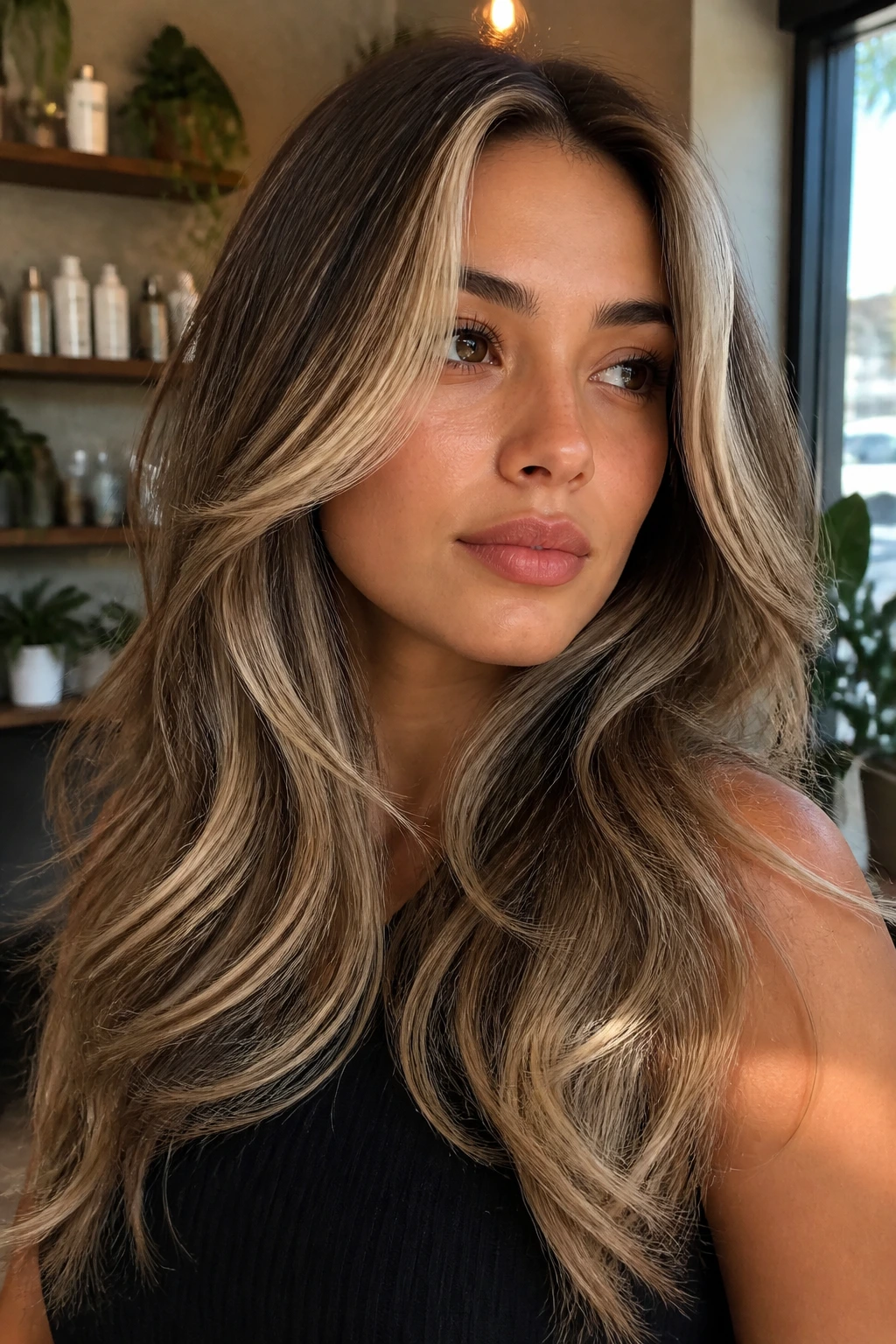
Beige blonde money pieces are for people who want the front of the hair to wake up the face without turning the whole head into a high-maintenance project. Olive skin likes this better than stark platinum because beige has enough softness to avoid a chalky edge. The key is keeping the money pieces narrow and blended into longer layers.
The front pieces should be bright, but not white. If they get too pale, the contrast can make the rest of the hair look dull by comparison. A beige gloss on top keeps the finish creamy, which is the whole point.
This one works best on layered lobs, long bobs, and collarbone cuts. When the shorter front layers hit around the cheekbone and jawline, the beige pieces act like built-in contour. It’s subtle. Still noticeable.
6. Cinnamon Glaze on Mid-Length Shag Layers
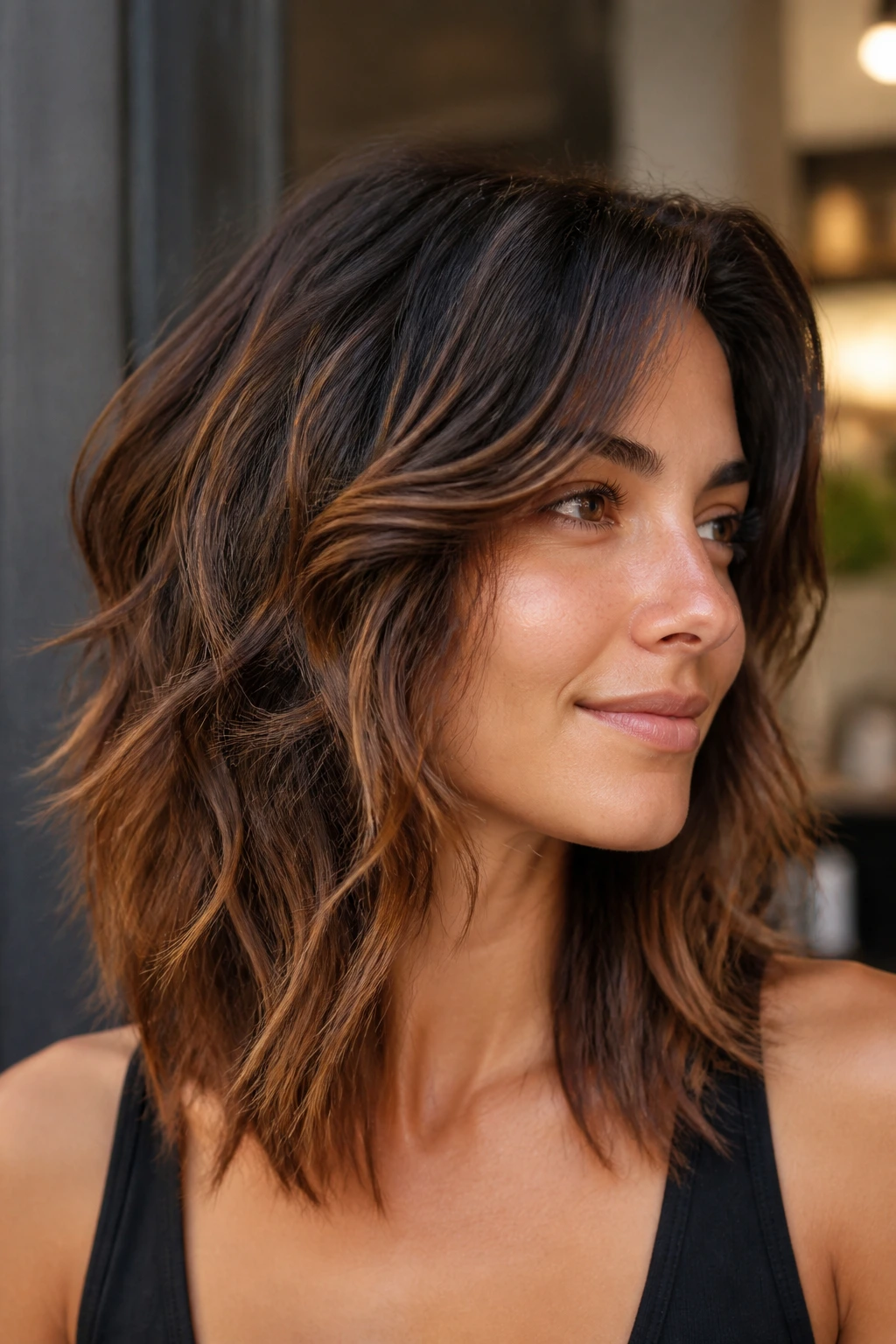
Cinnamon can go red fast, so it needs a light hand. On olive skin, though, a softened cinnamon glaze gives layered hair some life in a way flat brown never can. The shag cut is the natural partner here because the choppy layers let the color break up into texture instead of one smooth sheet.
The best version keeps the cinnamon closer to the mid-lengths and ends, with only a whisper of warmth near the top. Too much red at the root can look costume-like, especially if the complexion is more neutral than golden. A gloss rather than heavy color deposit is usually enough.
This look is especially nice on wavy hair, where each bend picks up a slightly different tone. The result feels very lived-in, almost like the hair has its own shadow and light built into it.
7. Espresso Roots with Toffee Ends
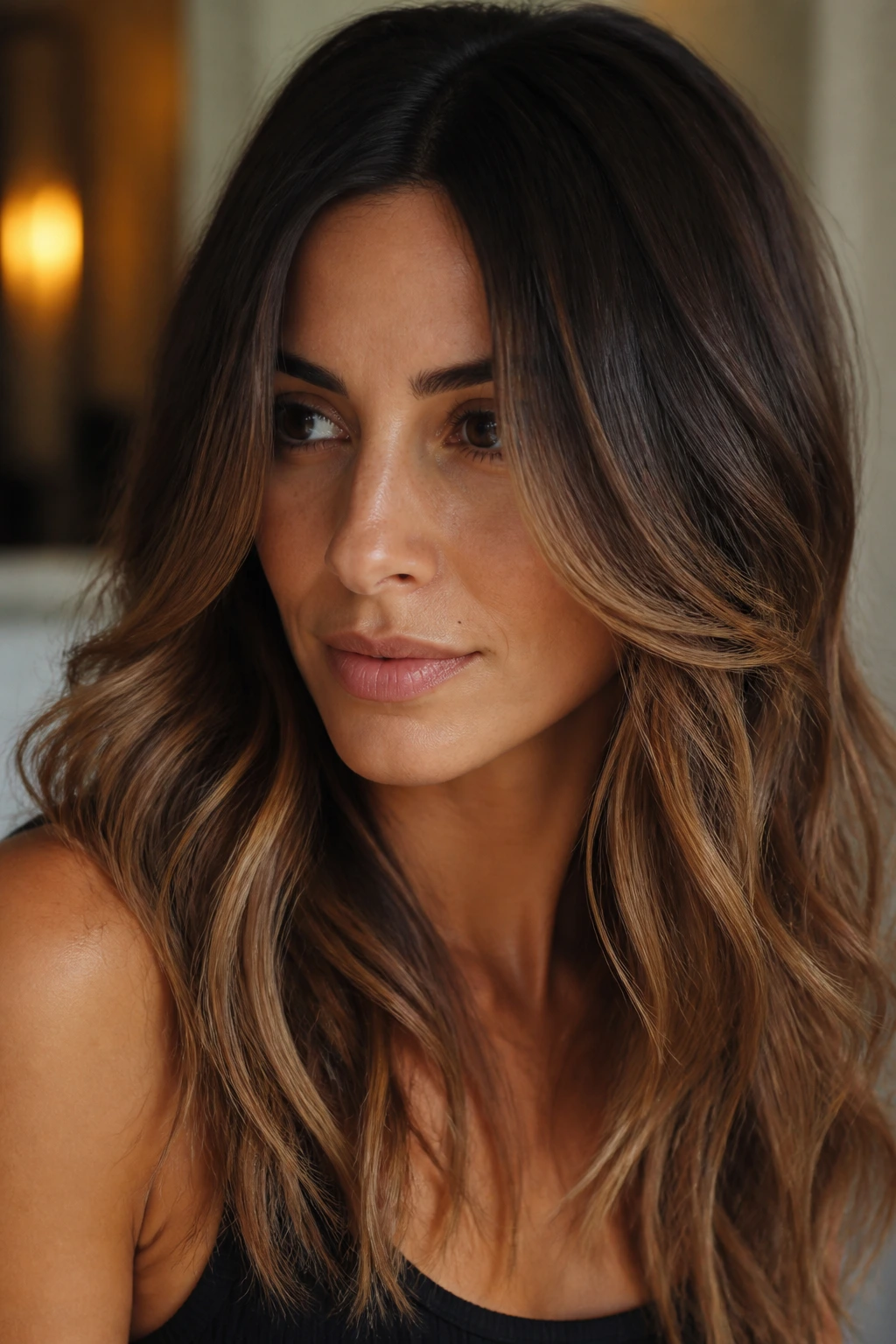
This is a classic dark-to-light melt, but the placement is what makes it interesting. Espresso roots keep olive skin from looking washed out, while toffee ends give the hair a soft, edible warmth. The layers let the transition happen gradually, which keeps the whole thing from looking like dip-dye from a few years ago.
If your hair is naturally dark, this is one of the easiest natural highlight ideas to wear. You keep the richness at the top and only lighten the lower half enough to catch movement. That’s a smart move for anyone who likes dimension but hates obvious regrowth.
Best for: thick hair, long layers, and anyone who wants an easier grow-out.
Skip if: your hair is already very porous and fragile, because repeated lightening on the ends can get dry fast.
Ask for: a deep espresso base with toffee balayage focused on the bottom third.
8. Copper Brown with Wispy Layers
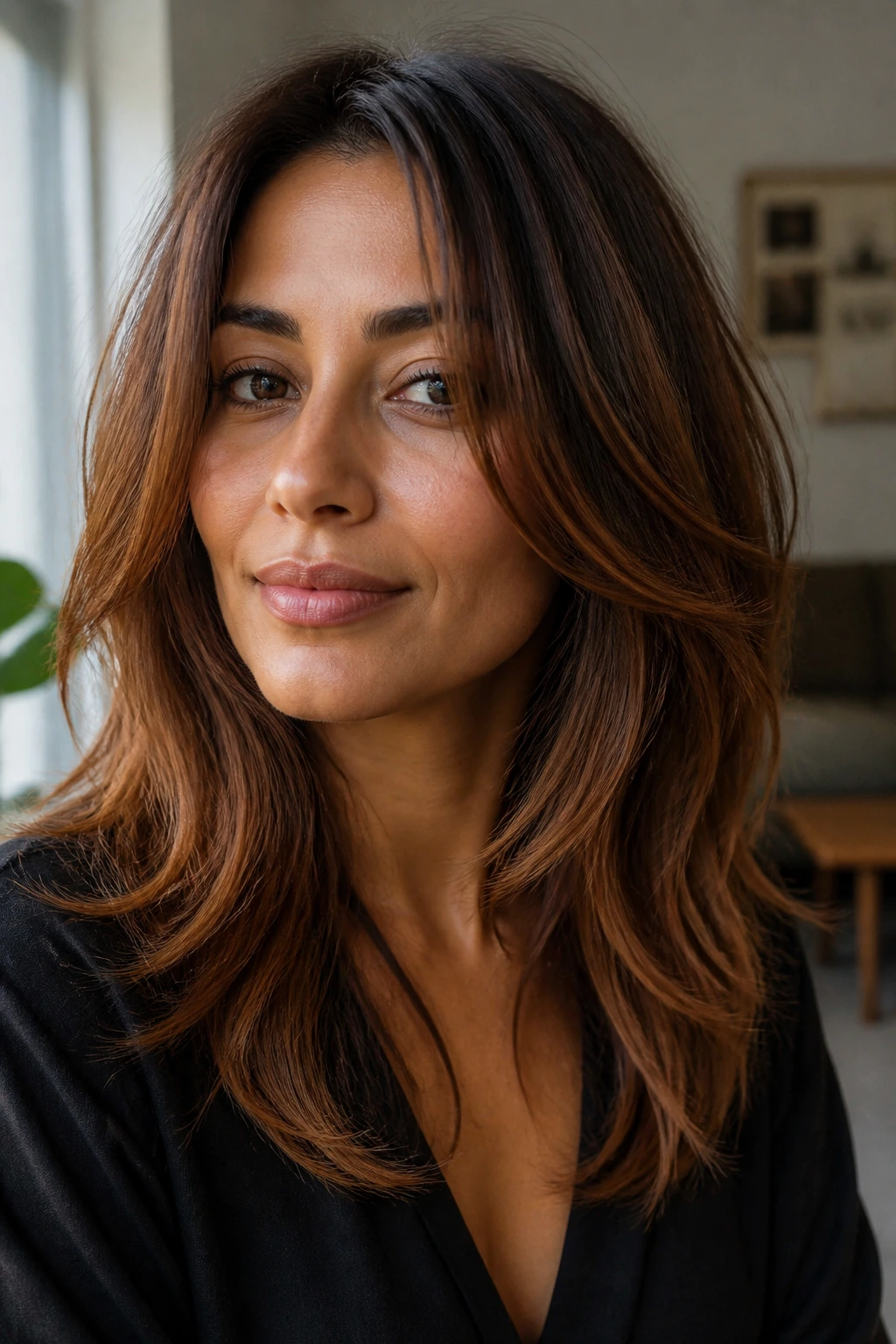
Copper brown can be gorgeous on olive skin, but only if it stays brown enough. The wispy layers help because they thin the visual weight of the red tones. On a blunt cut, copper can feel a little blunt too. On airy layers, it looks softer and less intense.
The best version has a brown base with copper ribbons placed through the outer layers. That way, the light hits only some sections at a time. You get motion, not a full red curtain. That matters more than people realize.
If your olive skin leans warm, this look can make the complexion look almost lit from within. If your skin leans greener or cooler, keep the copper muted and let brown do most of the work. That balance keeps the hair wearable.
9. Sandy Brunette with Curtain Bangs
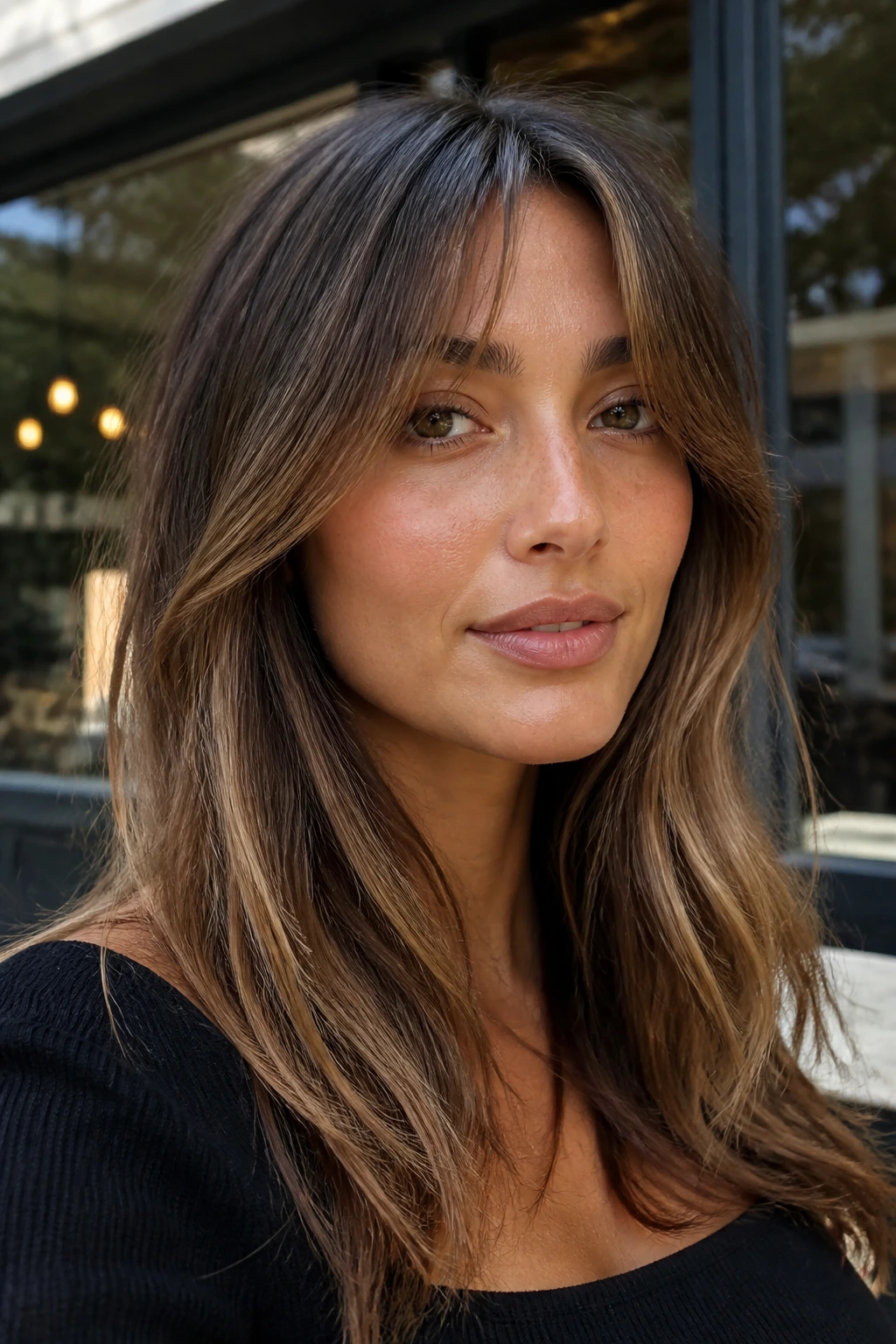
Sandy brunette is what happens when brown is lightened just enough to feel sun-touched, then cooled slightly so it doesn’t go orange. On olive skin, it can be a useful middle ground because it adds brightness without screaming blonde. Curtain bangs make the whole thing even better by putting the lightest pieces right where the face needs them.
The soft split in the front breaks up the forehead area and lets the layers frame the cheeks. That gives the color a purpose beyond “lighter hair.” It shapes the face a little. Very useful.
If you wear your hair wavy, the sandier pieces will show up as soft bands. If you wear it straight, the curtain bangs become the main event. Either way, this is one of those low-drama looks that still feels finished.
10. Bronze Melt with a Soft V-Cut
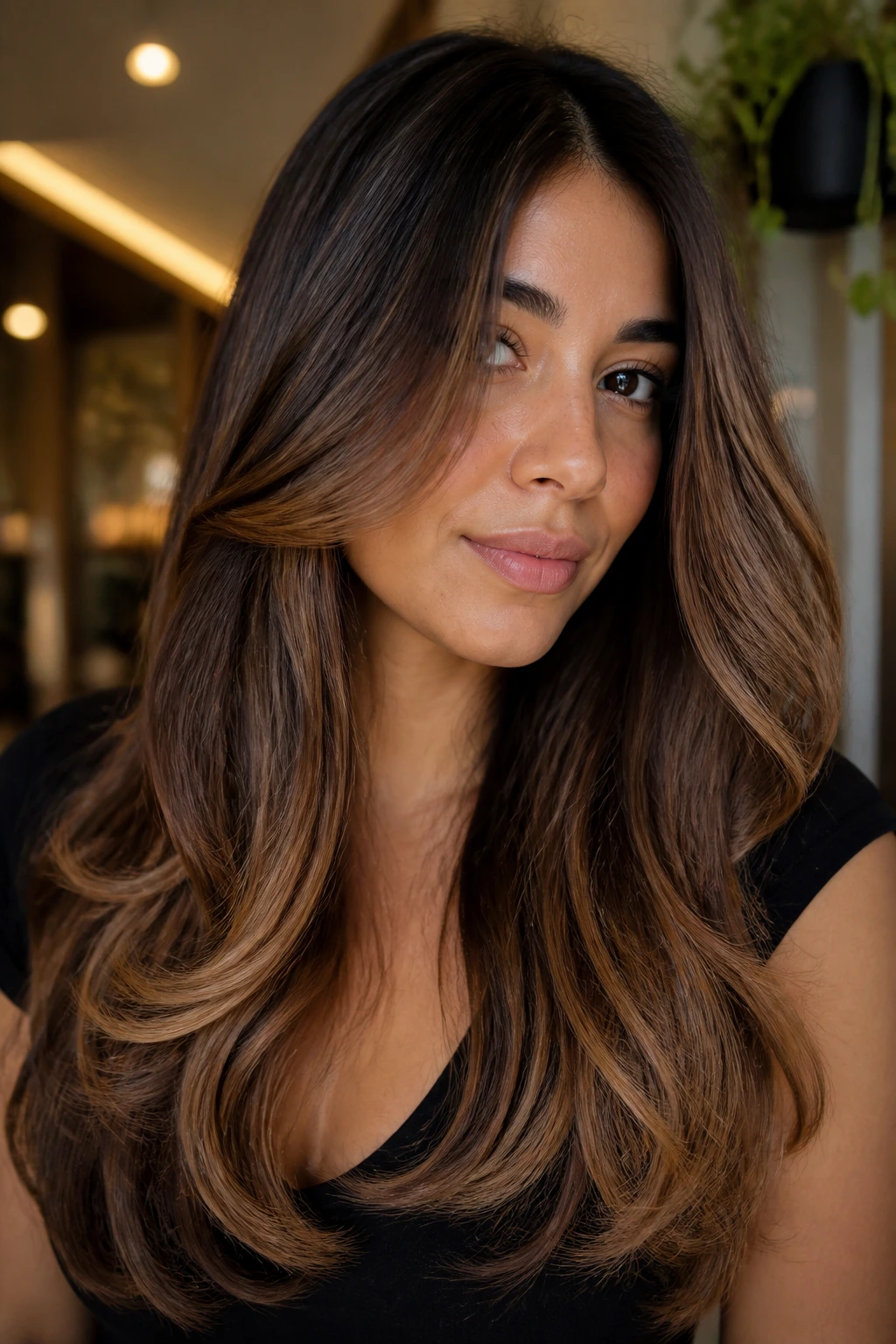
Bronze is one of those shades that rarely gets enough credit. It carries enough warmth to flatter olive skin, but it still lives in the brown family, so it doesn’t flip into orange the way copper can. A soft V-cut gives the bronze room to melt down the back in a gentle point, which is a nicer shape than a blunt line if you want movement.
This style works well on dense hair because the V-cut removes some of the heaviness at the bottom. The bronze then appears in layers instead of one flat sheet. It looks especially good with loose waves that start below the ears, not tight curls.
If you’ve been stuck between brunette and caramel, bronze is the answer people skip too fast. It’s rich, a little shiny, and easier to live with than brighter gold tones.
11. Ashy Caramel Lob Layers
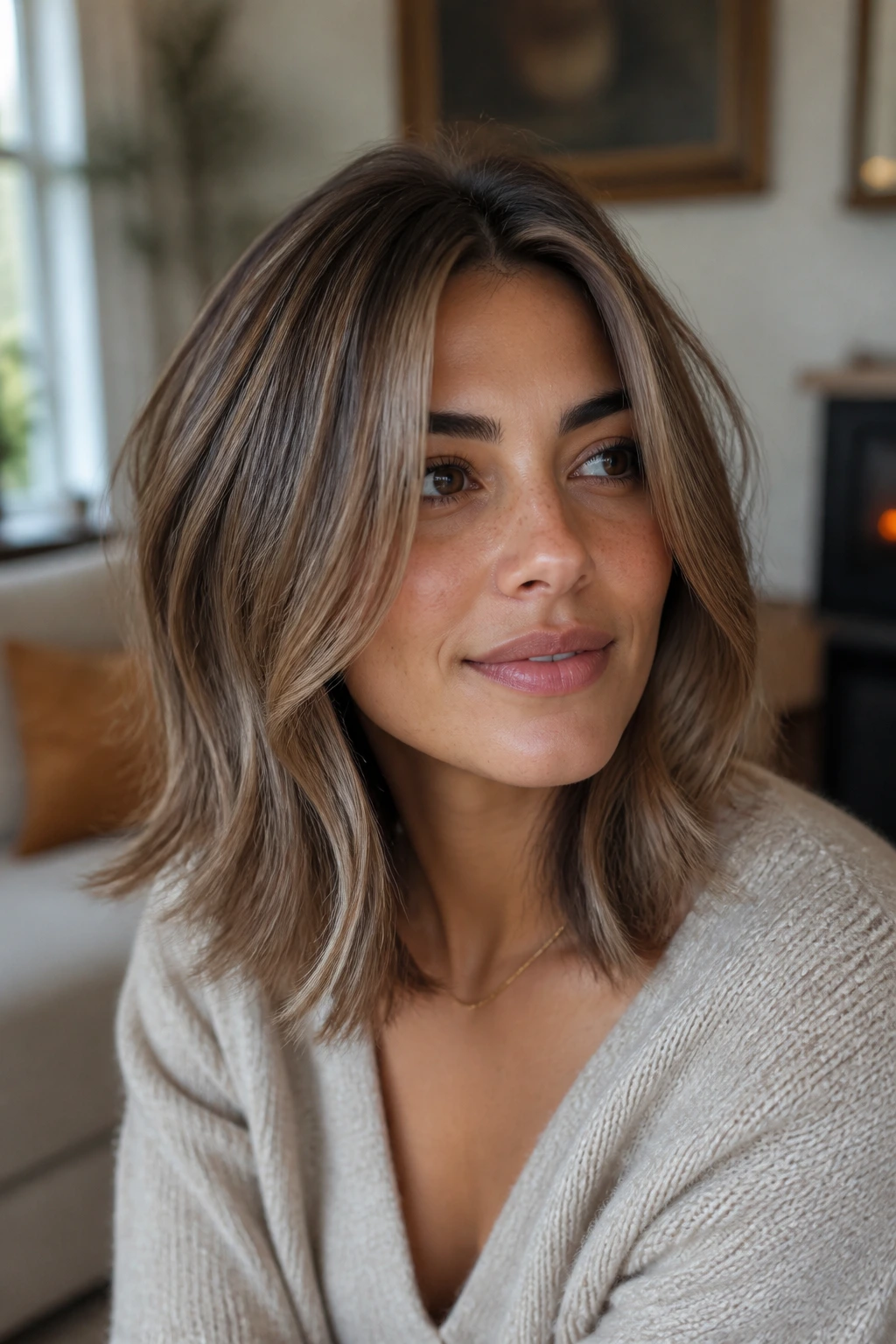
Ashy caramel sounds contradictory, and that’s why it works. The caramel brings warmth, but the ash keeps the look from turning brassy. On olive skin, this balance can be excellent if your undertone leans neutral or slightly green. The lob gives the color a clean, modern frame without much fuss.
What to ask for
A base that stays close to your natural brunette level, with caramel highlights toned beige-ash rather than yellow-gold. Keep the pieces fine and mixed through the top layers so the color looks woven in, not streaked on.
Where it shines
- Best on straight or softly waved lobs
- Good if you want dimension with less obvious blonde
- Helps fine hair look thicker because the variation creates shadow
- Needs toner maintenance when warmth starts to show
The ashy edge can go muddy if the hair is too dark or too flat, so you want enough brightness to keep the color alive. A little sheen spray helps more than a heavy oil here.
12. Walnut Brown with Peekaboo Highlights
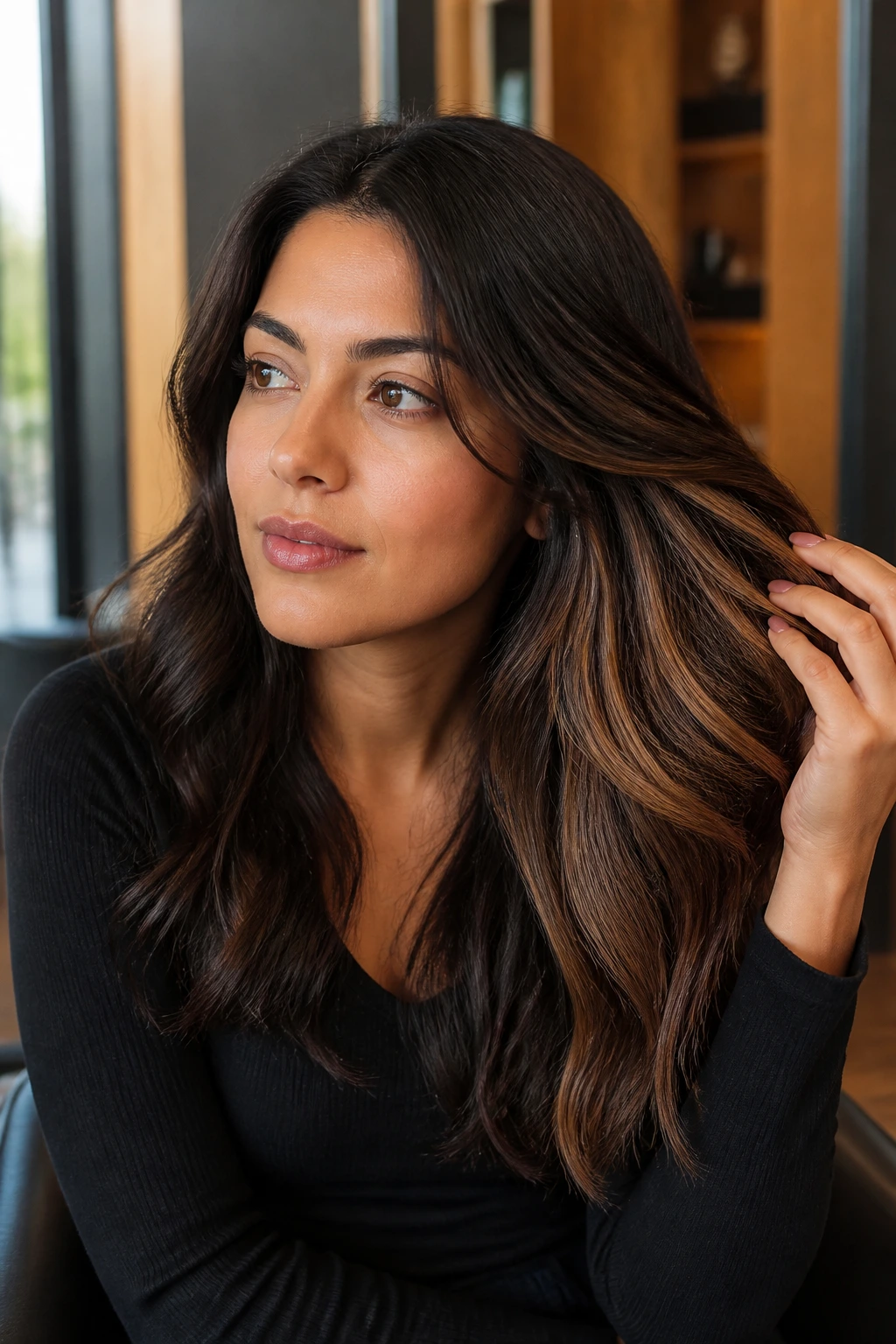
Walnut brown is the quiet cousin of chestnut, and I mean that as a compliment. It’s earthy, deep, and slightly cool, which makes it a nice match for olive skin that doesn’t want extra warmth. Peekaboo highlights keep the brightness hidden under the top layer, so the color only flashes when the hair moves.
That hidden placement is smart for anyone who wants dimension without a visible stripe pattern. The top stays rich walnut; the underneath pieces carry the lighter tone. When the layers flip, the contrast shows. When the hair lies flat, the look stays clean.
This is a good choice if you spend a lot of time tying your hair back. Even a ponytail shows a little of the lighter underneath color. Small detail, big payoff.
13. Sunlit Mocha with Sliced Layers
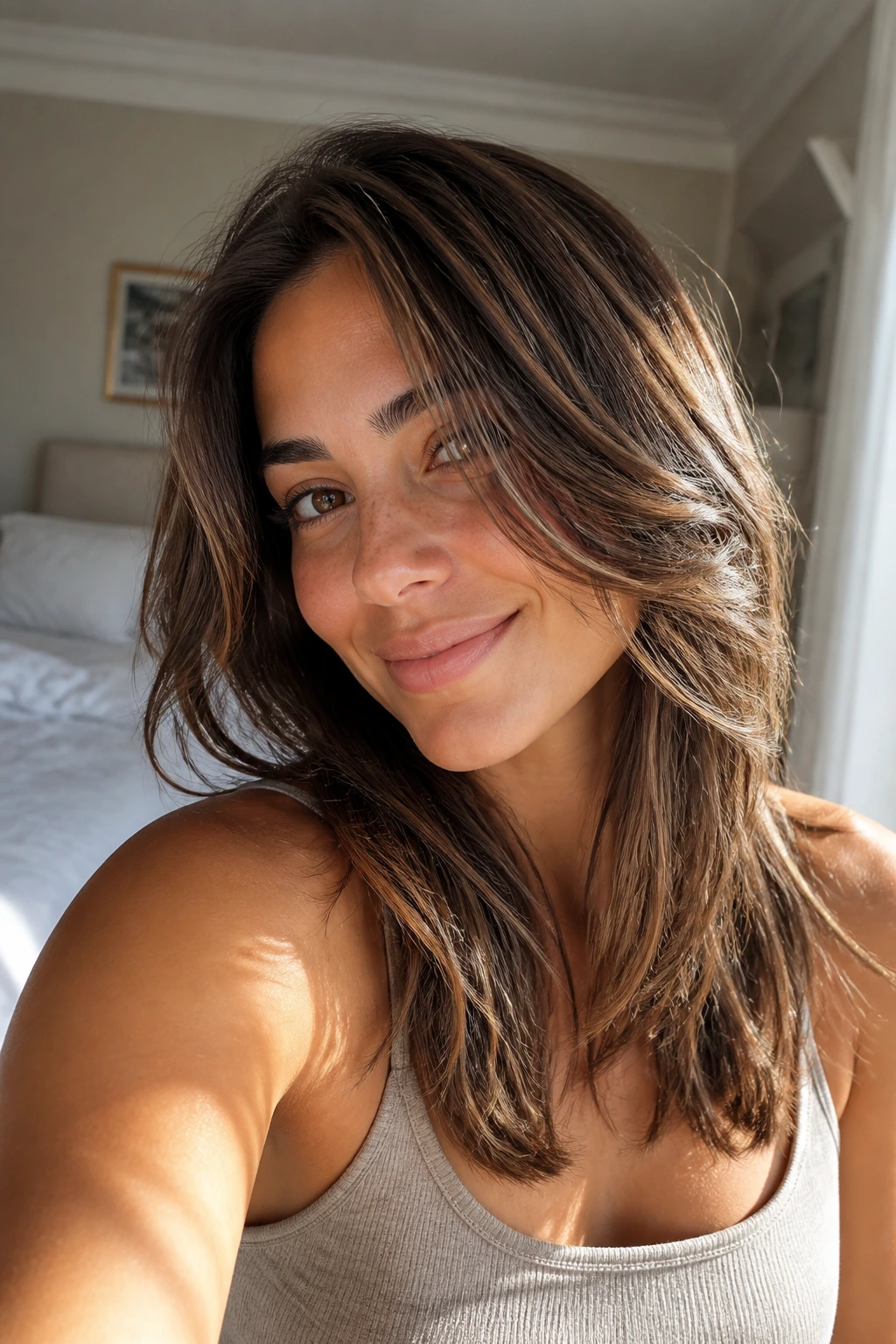
Sunlit mocha is one of my favorite phrases for a color that looks natural but not dull. The mocha base keeps olive skin grounded, and the sliced highlights — thin, deliberate pieces rather than chunky streaks — give the layers a fine, airy finish. It’s a restrained look, which is exactly why it works.
The sliced placement matters because olive skin can lose the benefit of highlighting if the pieces are too wide. Thin slices let light move through the hair without taking over the whole style. On layered cuts, that movement feels expensive even when the color is subtle.
This is a strong option for someone who wants to look polished with minimal styling. A medium round brush blowout or a quick bend with a flat iron is enough to bring out the ribbons.
14. Golden Beige Highlights on a Butterfly Cut
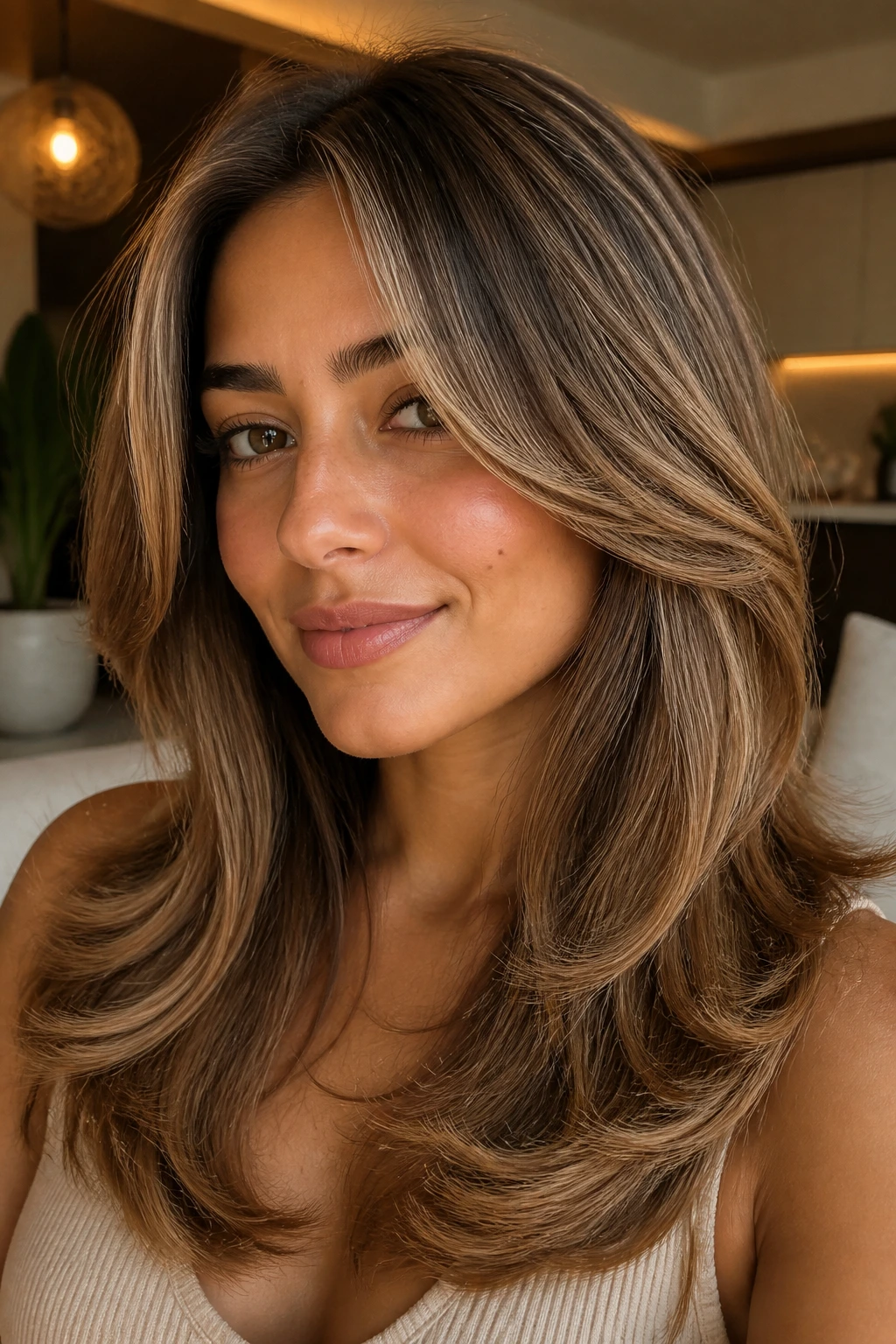
Butterfly cuts have those airy face-framing layers that create a lot of motion around the cheekbones and chin. Golden beige highlights were made for that shape. They catch on the lifted front layers and spread softly through the longer back layers, which gives olive skin a warm, glowing look without going too yellow.
The golden part needs to stay controlled. Too much gold and the skin can look tired. Enough beige and the whole thing looks soft and creamy. That balance is the difference between flattering and frantic.
This cut also gives you a lot of styling flexibility. Wear it with a smooth blowout and the highlights look refined. Wear it wavy and the layers get softer, almost like sunlit fabric.
15. Soft Auburn Ribbons with Long Layers
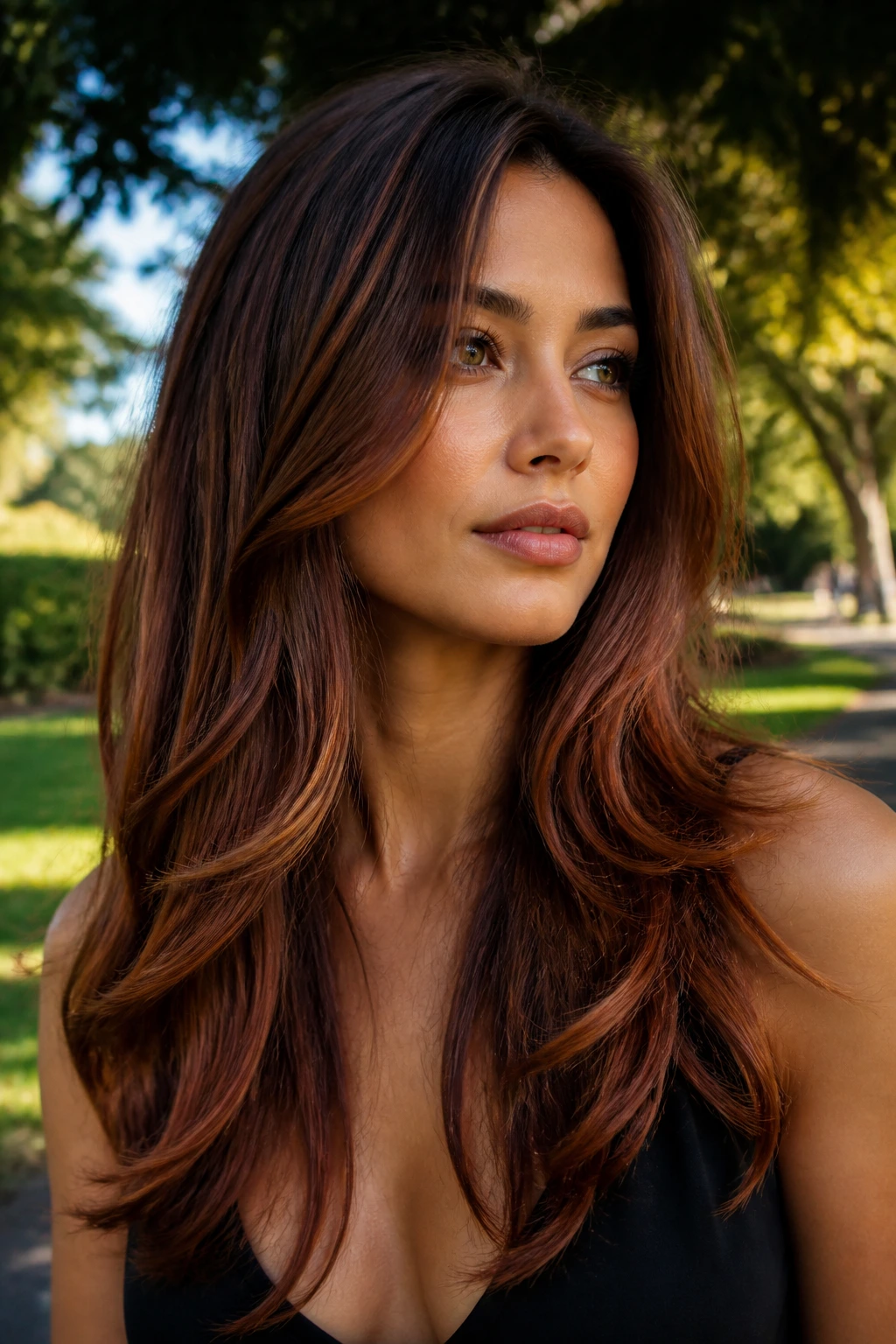
Soft auburn is for olive skin that can handle a little red without turning tomato-bright. The long layers keep the auburn ribbons from sitting too heavily around the face, which matters because red tones are naturally more attention-grabbing. In long hair, they can look rich instead of overpowering.
The best version is not bright copper. It’s deeper, more brown-red, with the auburn placed in bands that follow the haircut. A few brighter pieces around the front help the complexion, but the rest should stay grounded in brunette depth.
This look has a nice autumnal feel without needing to be seasonal about it. It also grows out with some grace because the auburn fades toward warm brown rather than a weird orange line.
16. Smoky Bronde with Textured Ends
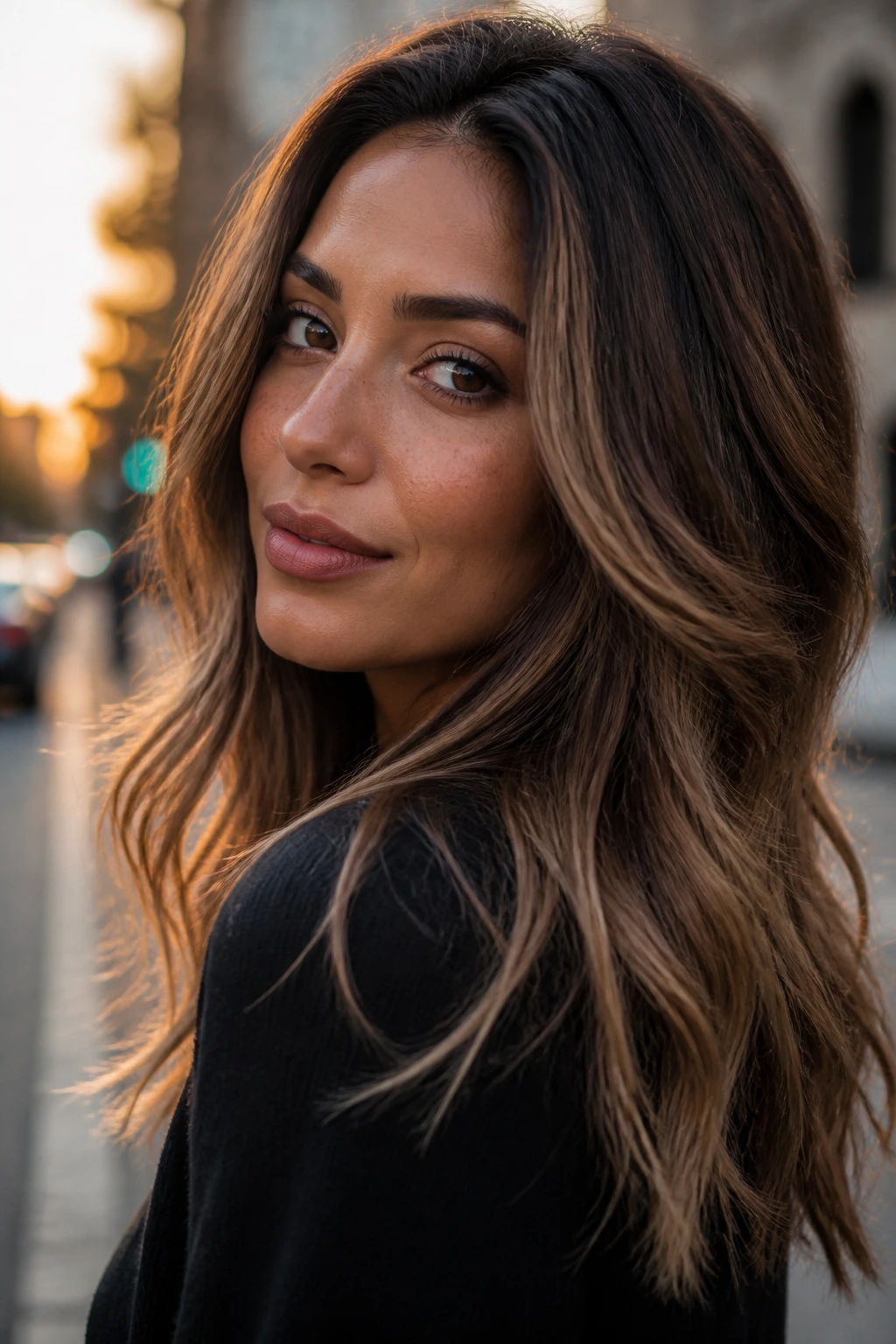
Smoky bronde is what you reach for when you want the sophistication of cool tones but still need enough softness for olive skin. The smoky piece keeps the hair from going too golden; the bronde keeps it from going flat. Textured ends are the final touch, because they stop the color from reading as a solid mass.
If your hair is medium density and a little naturally wavy, this can be a beautiful low-effort choice. The texture at the bottom makes the light and dark pieces separate just enough to show dimension. That separation is the whole trick.
It’s also a good fix if your current balayage feels too warm. A smoky gloss over the lighter strands can pull the whole look back into balance without another full lightening session.
17. Vanilla Chai Balayage on Wavy Layers
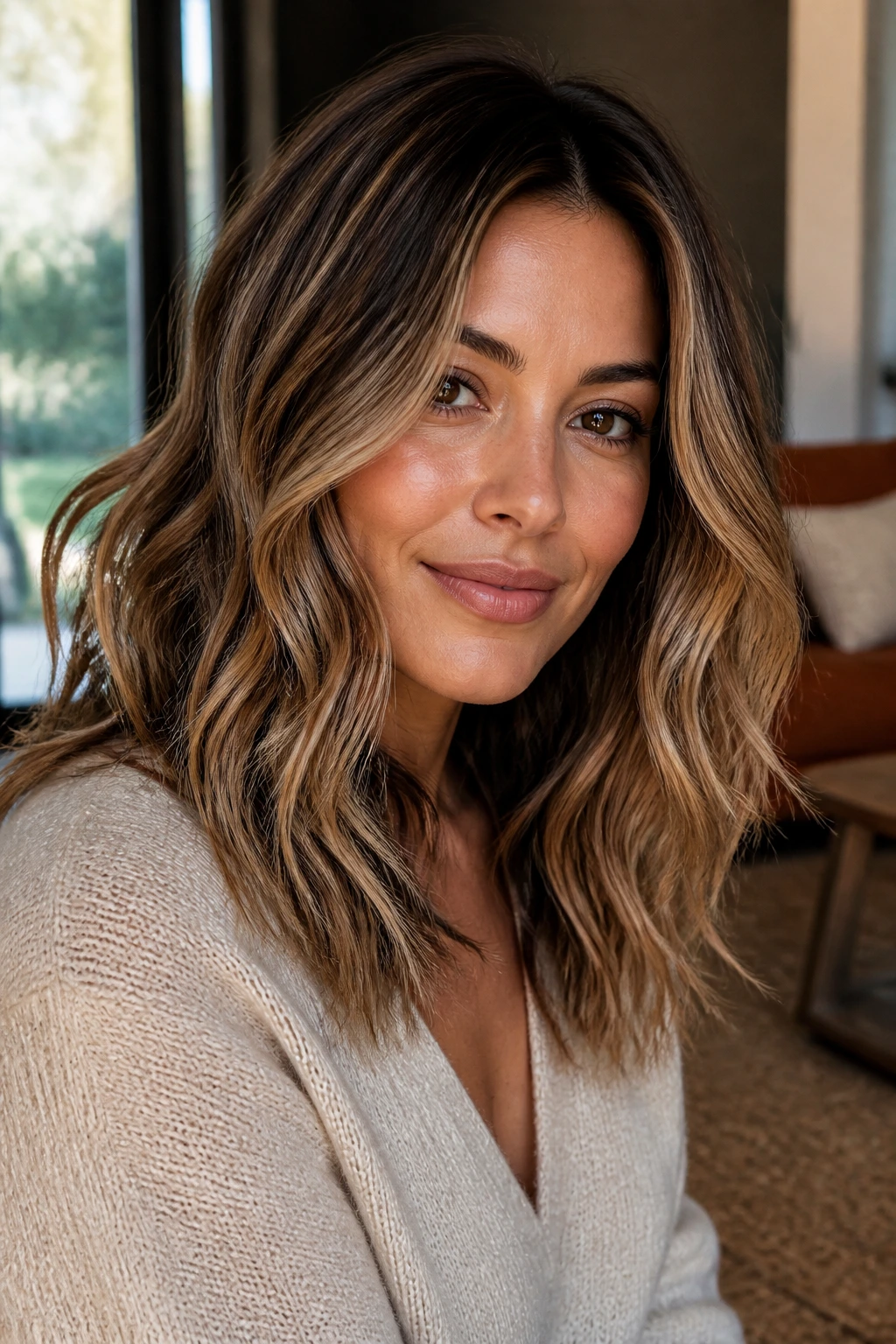
Vanilla chai sounds sweet, but the color should be more nuanced than dessert. Think beige, soft gold, and a hint of cinnamon in the shadows. On olive skin, that mix can look fresh because it adds warmth while keeping the lighter pieces creamy instead of brassy.
Wavy layers make this color shine, not in a flashy way — in a soft, believable one. The bends catch the beige ribbons, and the darker base keeps the whole style from going pale. It feels cozy, if hair can do that.
Best when
- You want lightness without icy blonde
- Your skin has warm-olive or neutral-olive undertones
- Your hair already has some natural wave
- You like low-contrast color that still moves
A center part makes the lighter front pieces feel delicate. A slightly off-center part gives the balayage more shape around the face. I’d choose the latter if the haircut has lots of layers.
18. Maple Brown with Internal Lowlights
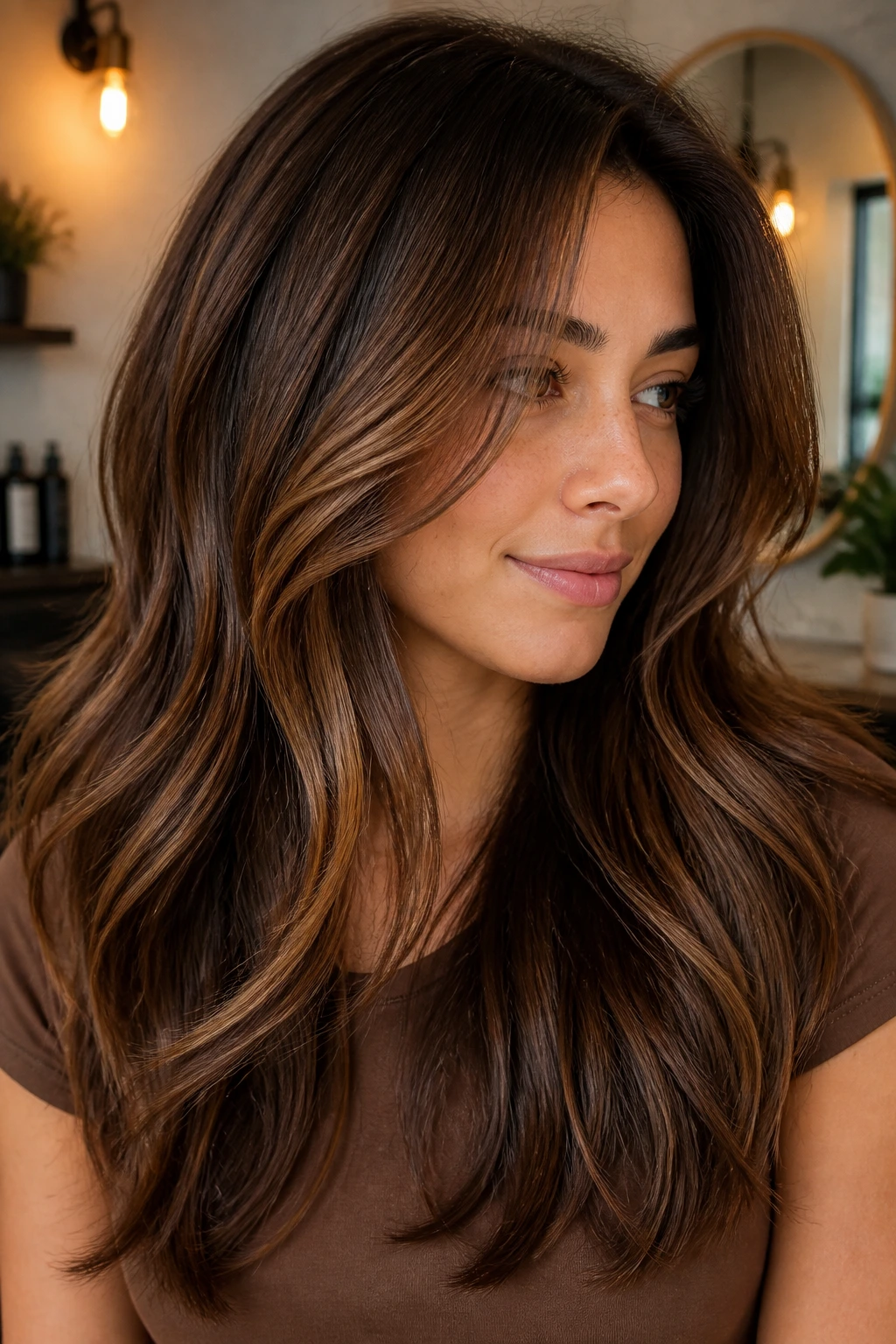
Maple brown is deeper than caramel and softer than auburn, which is why it sits so nicely on olive skin. The interesting part here is the internal lowlights. Instead of brightening the outside of the hair, you darken some of the inner sections so the brighter pieces look brighter by comparison.
That sounds subtle because it is subtle. But it changes the whole haircut. The layers get depth when you move, and the top layer doesn’t have to do all the work.
This is a clever option for finer hair that needs the illusion of fullness. Darker internal ribbons make the outer layers look thicker, especially when the hair is blown out with a bit of lift at the crown. It’s not flashy. It’s smarter than flashy.
19. Cocoa and Honey Dimension on a Layered Bob
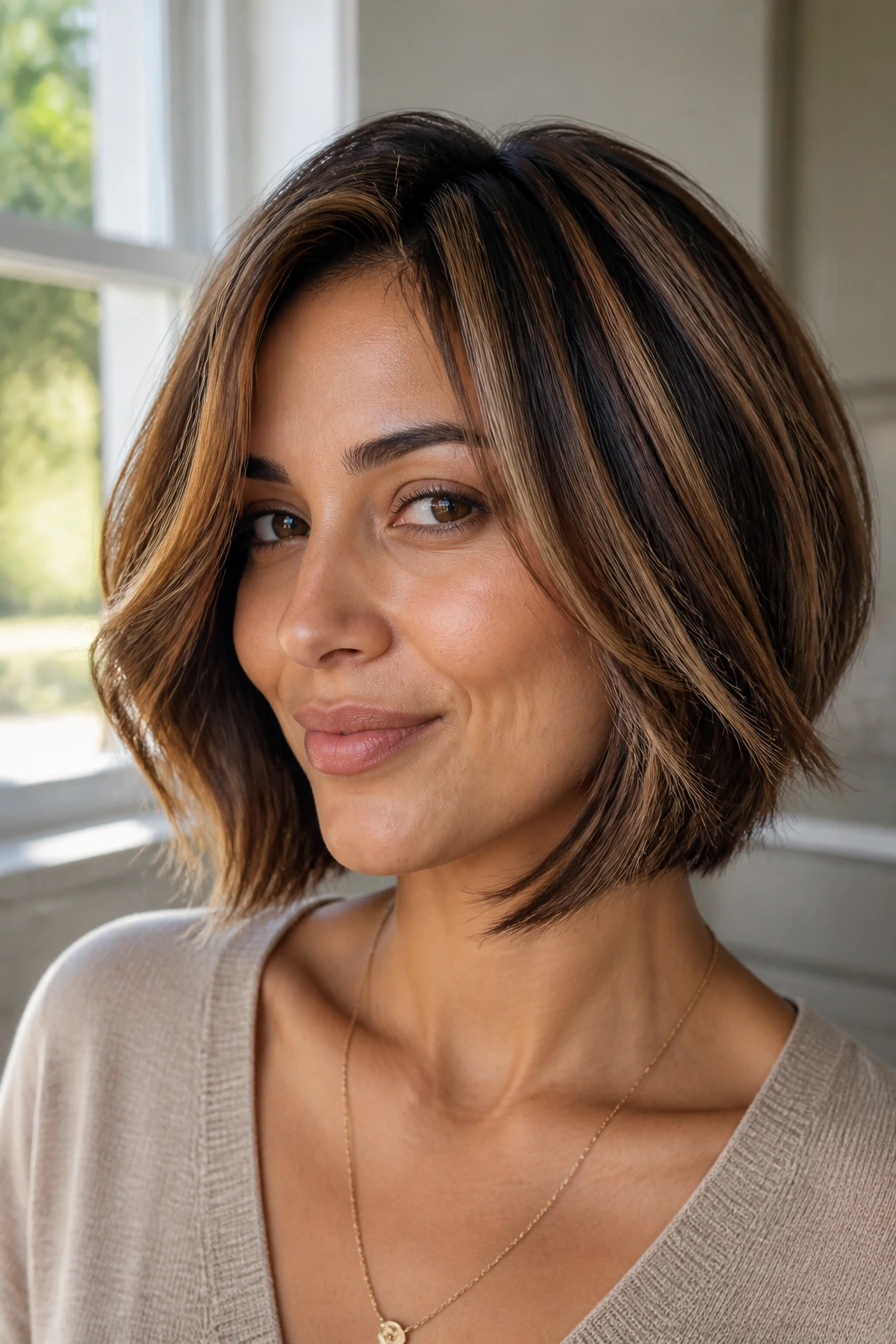
A layered bob with cocoa and honey tones can look far more expensive than a single all-over brunette ever will. Cocoa anchors the hair near the face, while honey is placed in tiny ribbons through the top and sides. Olive skin gets a nice hit of brightness without losing the grounded brown base.
The bob length helps because the color doesn’t have too much room to spread. Every placement matters more, which is useful when you want the highlights to look deliberate. The layers keep the bob from turning helmet-like, which is always the danger with shorter cuts.
If you wear glasses, this one can be excellent. The honey pieces show around the temples and soften the frame line. Small thing, but it changes how the whole face reads.
20. Brushed Copper with Feathered Layers
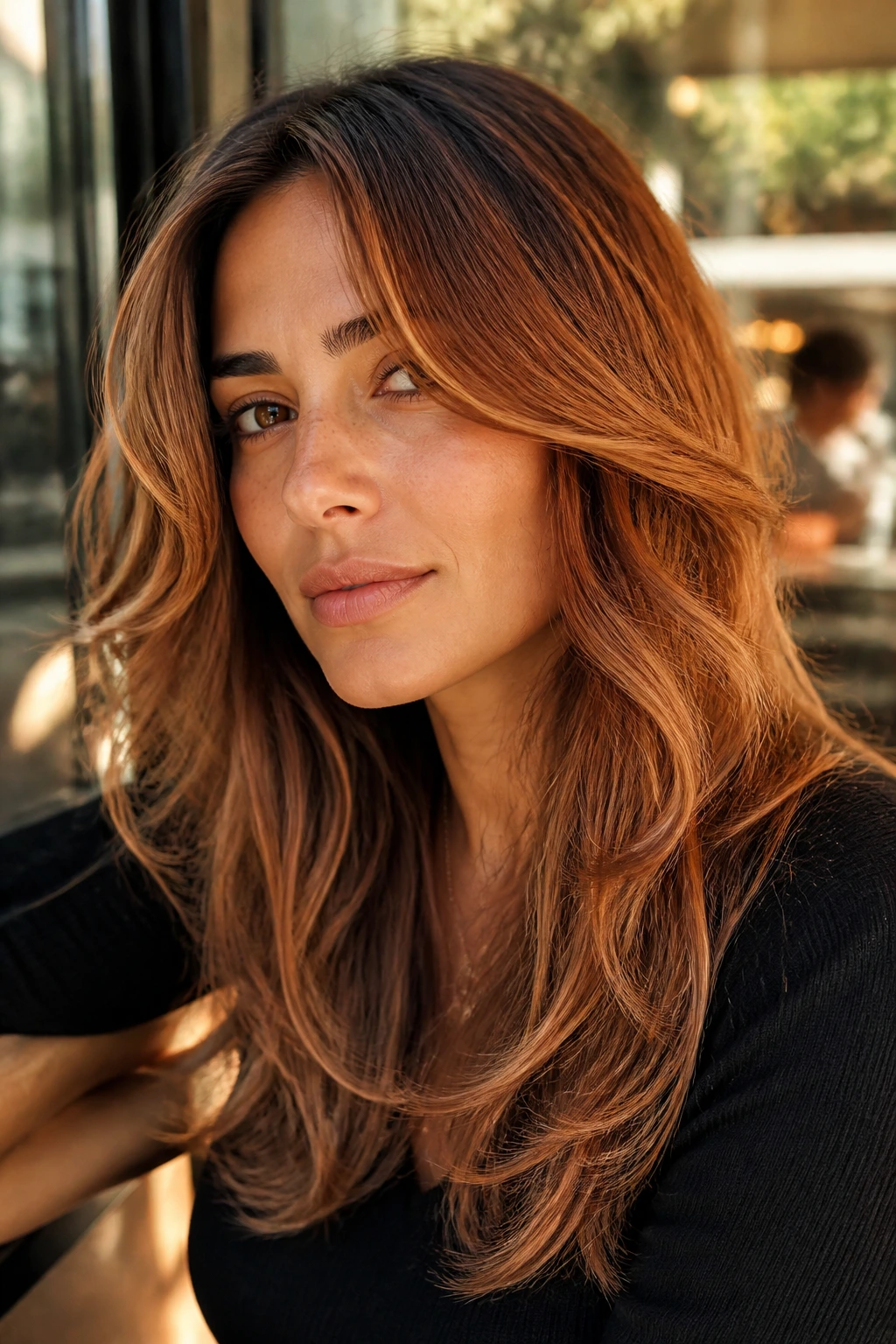
Brushed copper is not for someone who wants to hide. It is for someone who wants warmth but still needs the cut to stay soft enough for olive skin. Feathered layers help because they break up the copper, so the color doesn’t sit in one hard block.
The “brushed” part matters. You want a color that feels combed through and softened, not saturated to the point of looking synthetic. On olive skin, that controlled copper glow can be gorgeous if the base remains brown enough to anchor it.
This look is especially flattering on layered shoulder-length hair with a bit of bend at the ends. It moves well. It has personality. And it avoids the trap of turning the whole head into one bright note.
21. Taupe Brown with Face-Framing Brightness
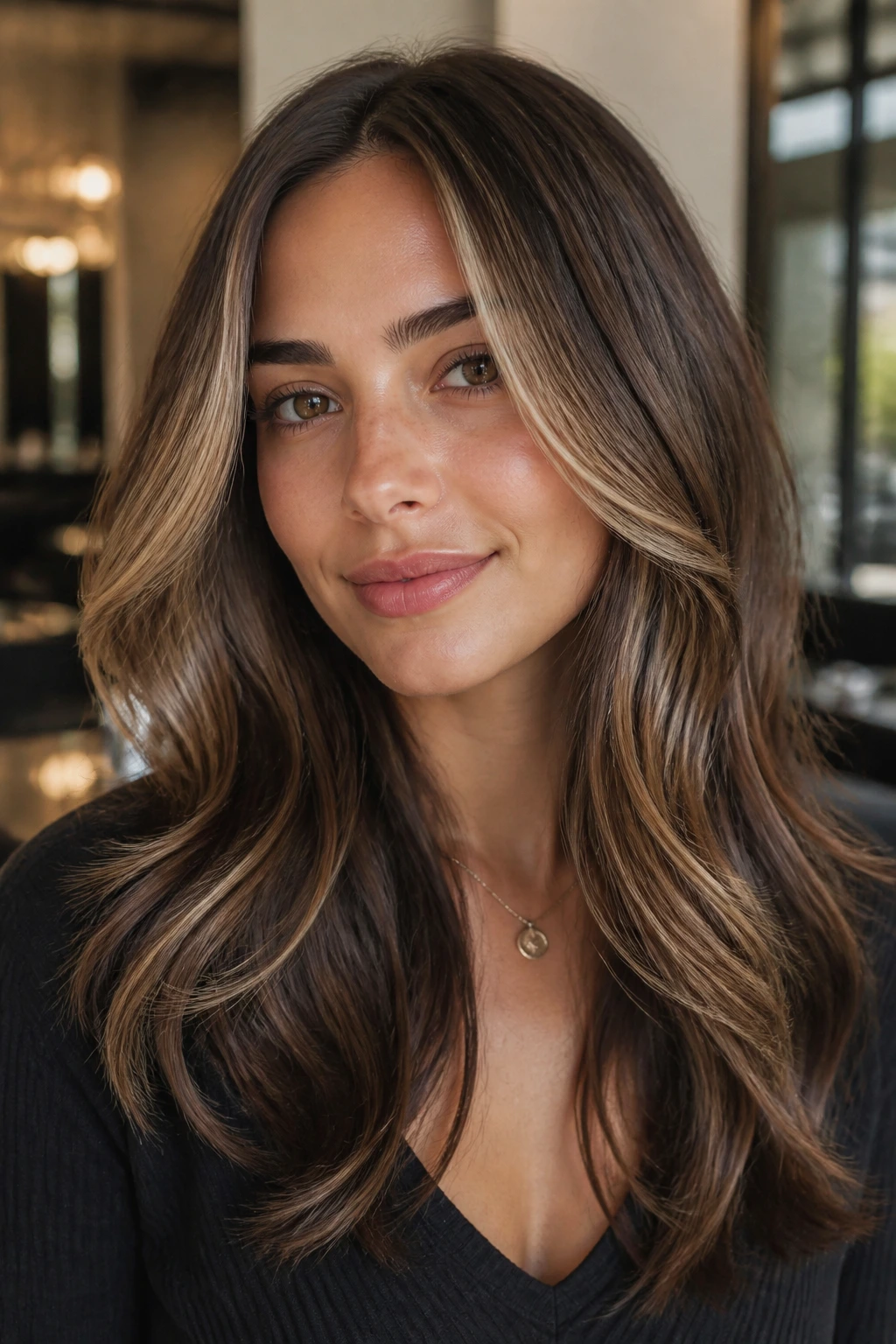
Taupe brown is a quiet color, almost smoky, and that makes it one of the better choices for olive skin that leans cool-neutral. It avoids both the gold that can go brassy and the ash that can go flat. Add a few brighter face-framing pieces, and the whole look comes alive.
The brightness should stay narrow. A wide front highlight on taupe brown can look disconnected. Keep it soft, almost like a halo that fades into the layers. That way the hair still reads as one finished shape.
This is a good salon request if you want subtlety but not dullness. The face gets the lift. The rest of the hair stays elegant without demanding maintenance every month.
22. Iced Latte Highlights on a Collarbone Cut
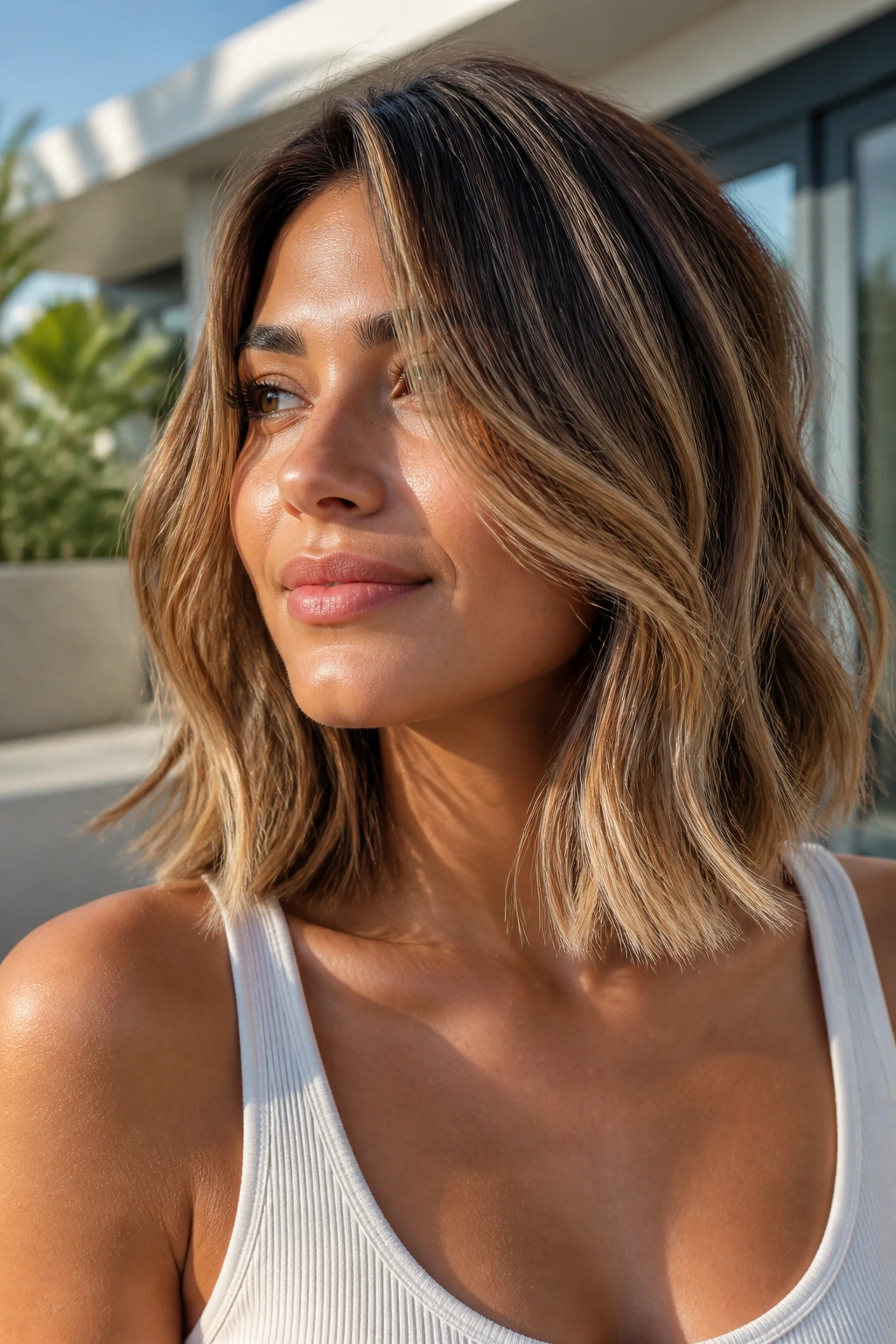
Iced latte highlights sound cooler than they need to be, and that’s the appeal. They sit in a beige-brown family that can flatter olive skin without making it look ruddy. On a collarbone cut, the lighter pieces skim the shoulders and front layers, which keeps the color visible even when the hair is tucked behind the ears.
The collarbone length is a sweet spot because it gives the highlights enough surface area to show movement but doesn’t require the upkeep of very long hair. If the ends are slightly piecey, the whole cut looks lighter. If they’re blunt, the color can feel more like a stripe. So keep the layering soft.
This one tends to work well for people who spend a lot of time in natural light. Beige tones can go a little invisible indoors, but outside they give that soft, creamy lift that reads as healthy rather than dyed.
23. Warm Chestnut with Hidden Panels
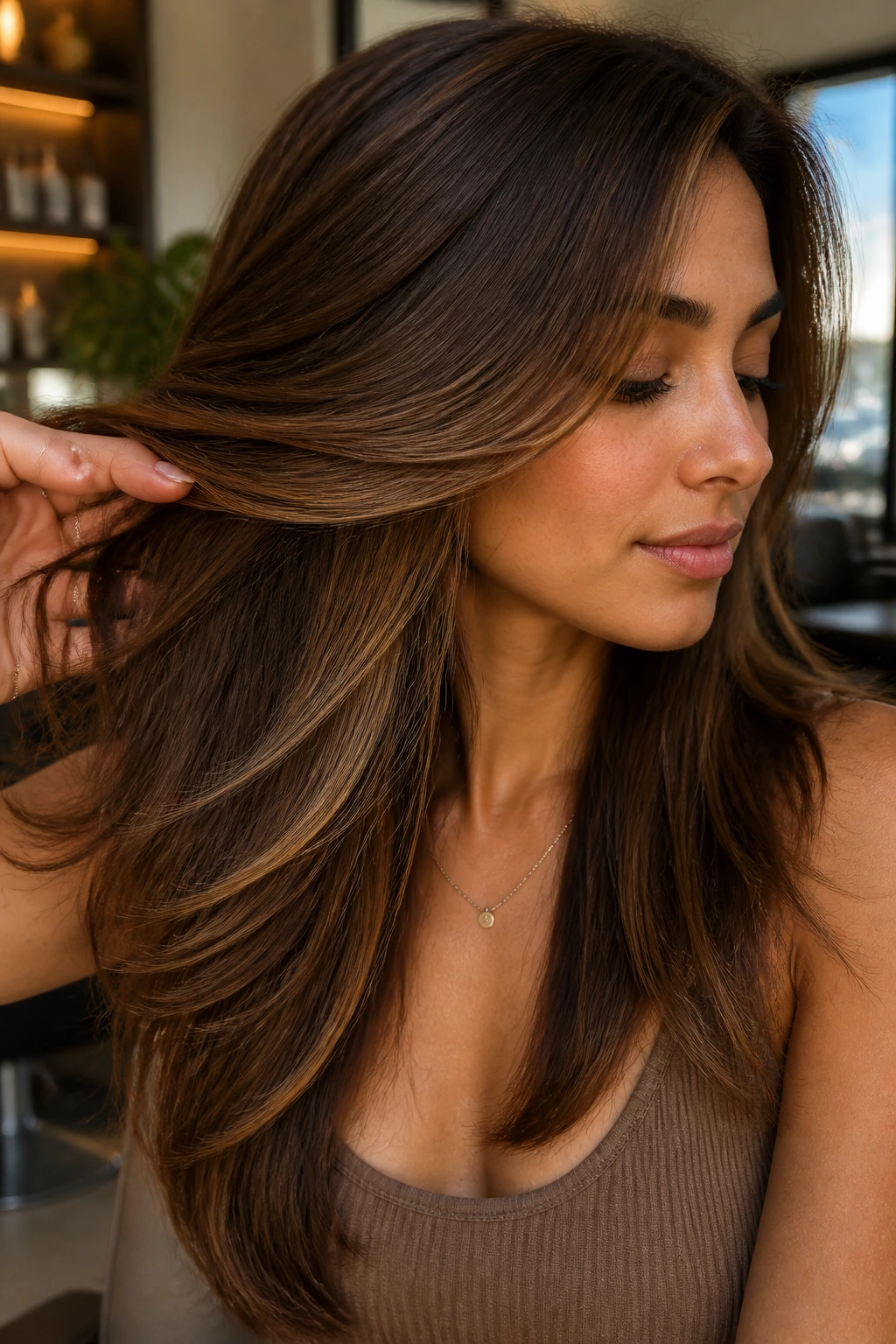
Warm chestnut can be deeply flattering on olive skin because it gives richness without the rigidity of one flat color. The hidden panels are the fun part: lighter chestnut or soft caramel is tucked under the top layers, so it only shows when the hair shifts.
That hidden placement is ideal if you like a more conservative front view. At rest, the hair looks like a polished chestnut brown. In motion, the lighter panels appear, and the whole thing starts to breathe. Layers are what make the movement visible.
If you work in a setting where hair has to look restrained, this is a clever compromise. You get dimension without an obvious streaky finish. The color behaves politely until it moves.
24. Sandy Honey with a U-Cut
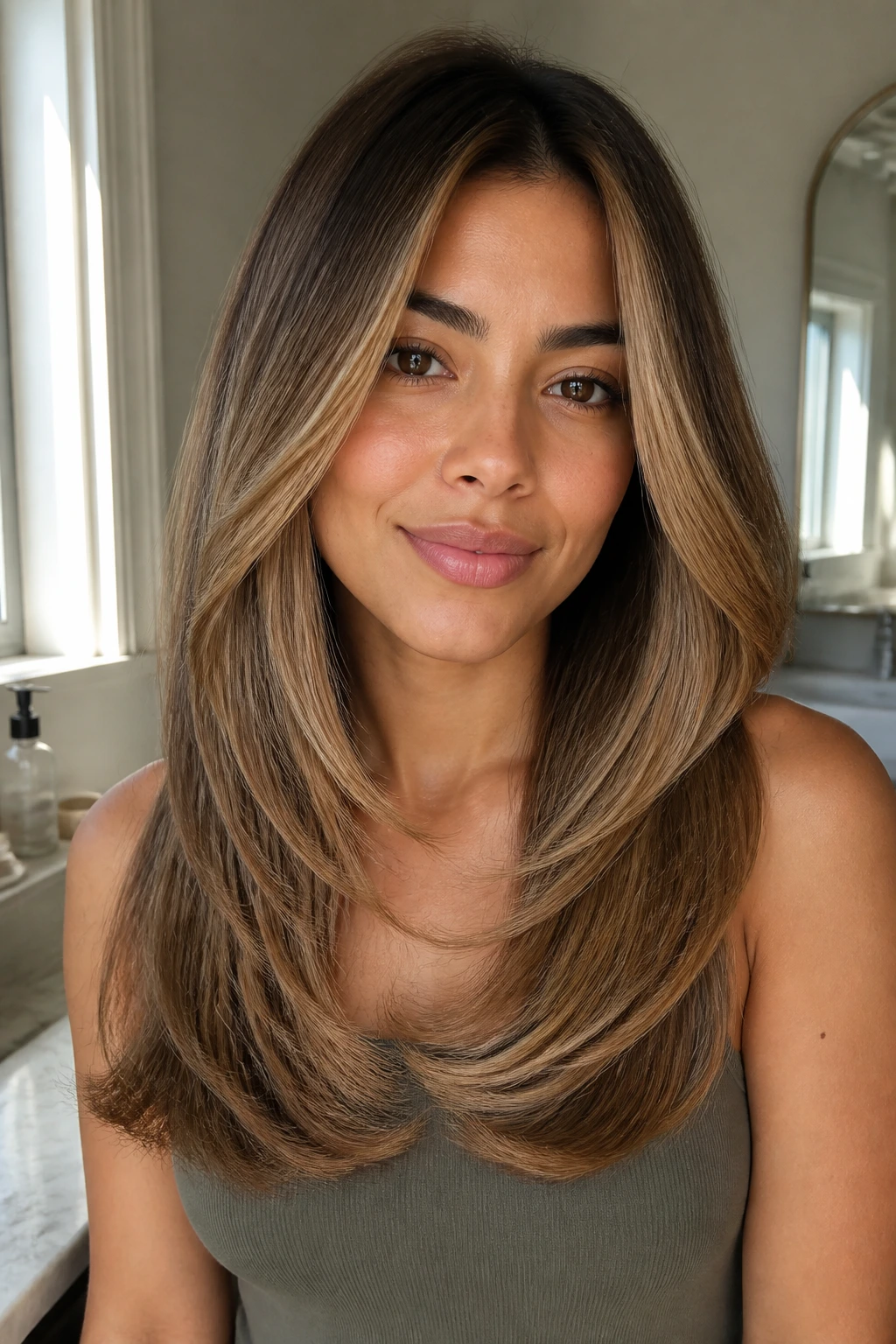
Sandy honey has enough softness to work on olive skin without drifting too golden. The U-cut adds a rounded shape at the bottom, which is useful because it keeps the highlights flowing instead of ending in a hard line. The side pieces can be a touch brighter than the back, and that makes the face feel gently lit.
This is a nice option for long hair that tends to look heavy at the ends. The U-shape removes some weight and lets the sandy honey pieces drape better. It also grows out in a less obvious way than sharper geometric cuts, which is a real advantage if you prefer to stretch salon visits.
The color itself should lean beige-honey rather than sun-yellow. That keeps it friendly to olive skin and stops the ends from looking dry.
25. Dimensional Bronde with Soft Layers
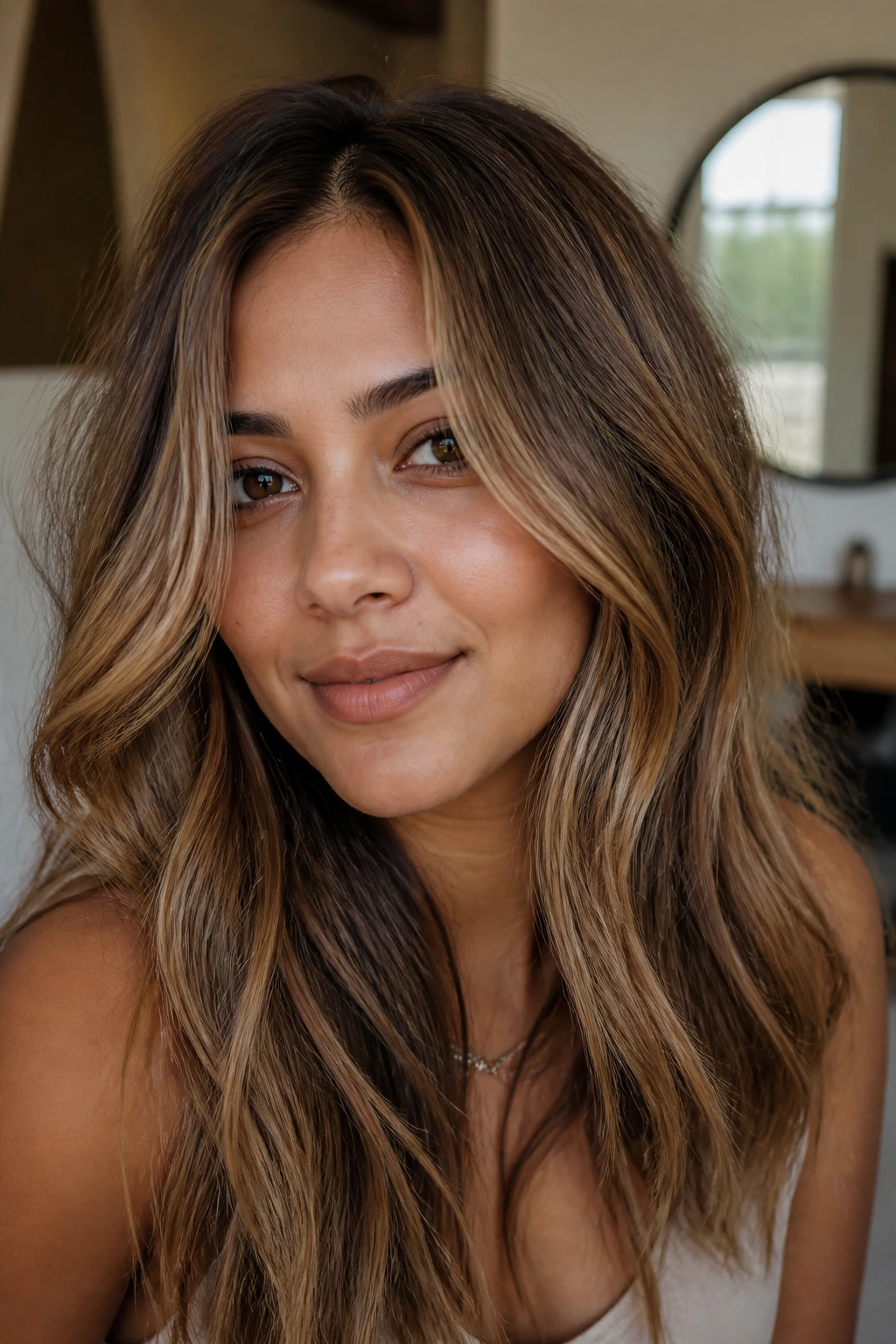
Dimensional bronde is the big umbrella look, and honestly, it earns the last spot because it can be adjusted to nearly every olive skin tone. The layers make the brunette and blonde pieces alternate in a way that feels natural, not staged. Soft layers keep the brightness from looking chopped up.
This is the choice I’d make for someone who wants the least risk. You can keep the brunette darker, brighten the face, and use a few blonde ribbons only where the haircut can support them. That means the color works harder without looking loud.
If you want one look that can lean warmer with honey, cooler with beige, or richer with caramel, this is the one to keep in your back pocket. It’s flexible. It behaves. And on olive skin, that combination is worth a lot.
Practical Booking Notes for Better Placement
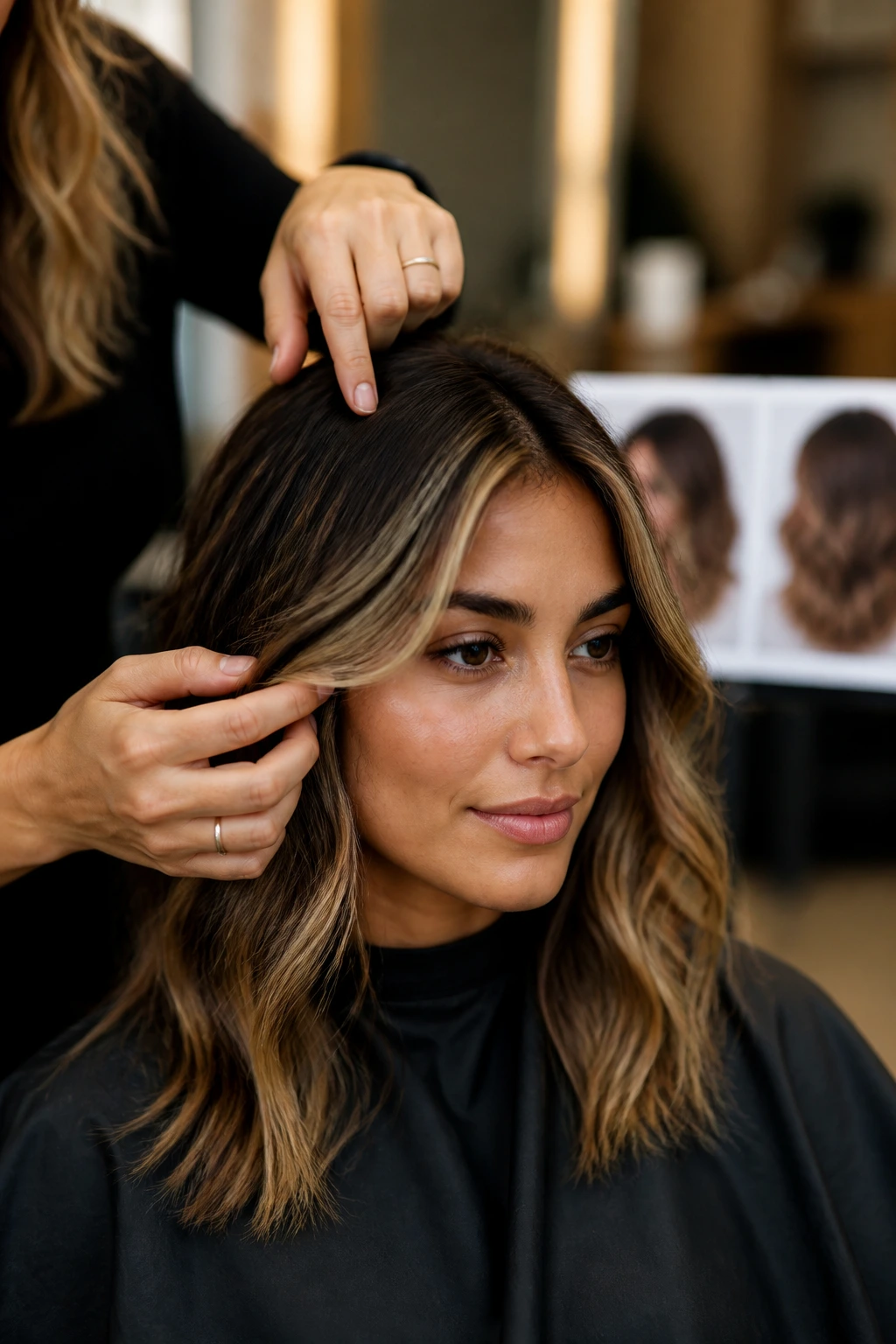
The fastest way to improve any layered highlight request is to talk about placement before tone. Tone gets all the attention, but placement is what makes the cut move. Ask for a mix of fine babylights, a few face-framing ribbons, and deeper pieces underneath so the hair doesn’t turn into one flat sheet after the first blowout.
Bring two reference photos if you can. One should show the color you want. The other should show the cut shape you want. That sounds fussy, but color photos often hide the haircut, and haircut photos often hide the tone. Your stylist needs both.
Tell them where your hair part lives, because that changes everything around the face. A strong side part wants brighter pieces on the exposed side. A center part usually needs more even framing. And if your hair is very dark, ask how much lightening the ends can take before they start feeling fragile. That question saves regret later.
Essential Tools and Salon Resources
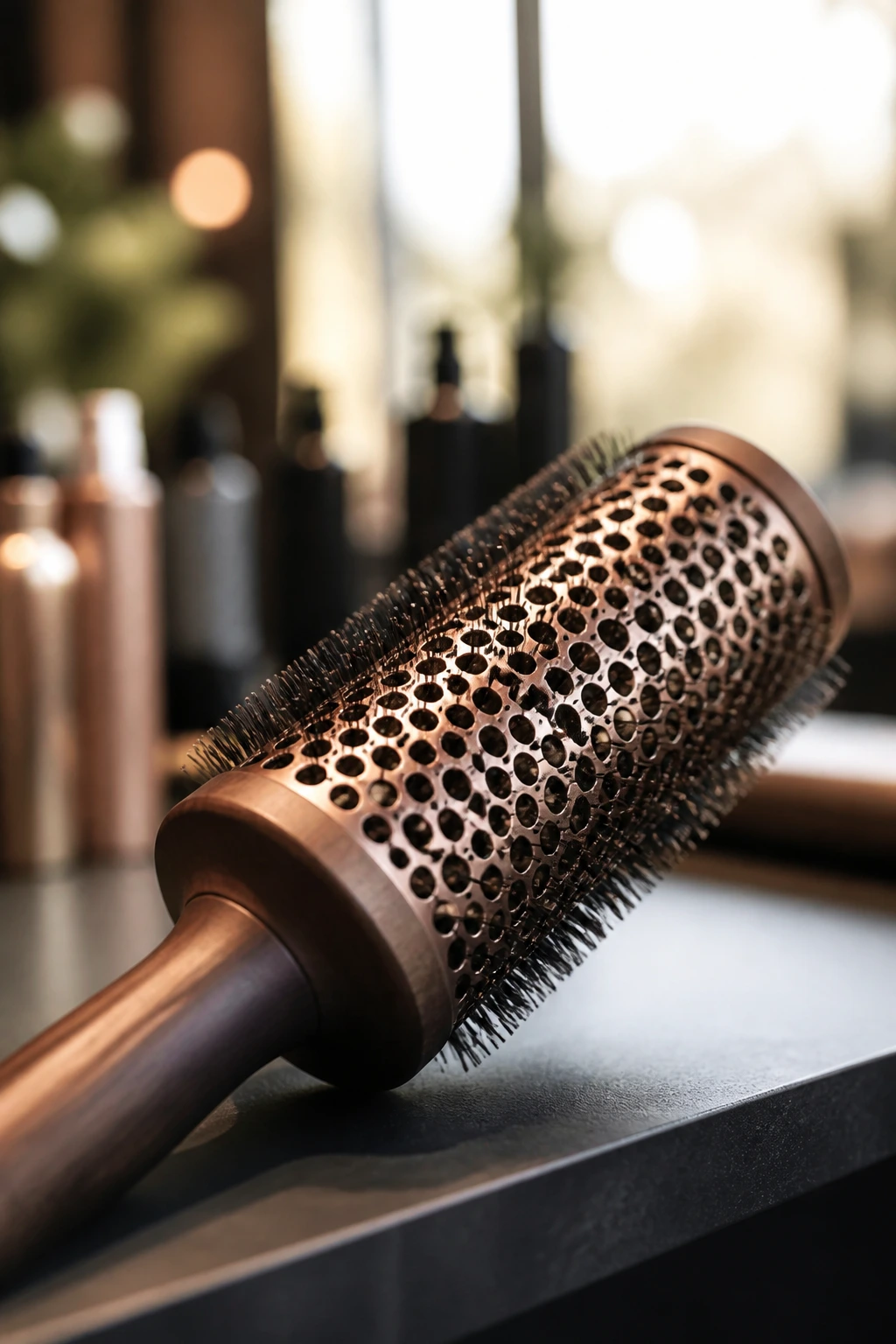
- Color-safe shampoo: Keeps toner from slipping out too fast and helps the highlights stay clean between salon visits.
- Deep conditioner or mask: Use it once a week if your layers are lightened, especially on the ends where hair gets older and drier.
- Heat protectant spray: Flat irons and blow dryers can flatten the shine on caramel, beige, and bronzed shades if you skip this.
- Wide-tooth comb: Helps you detangle layered hair without snapping the lighter, more porous pieces.
- Round brush or blow-dry brush: Useful if you want the layers to show their shape instead of hanging in one curtain.
- Gloss or toning conditioner: Good for refreshing beige, honey, or smoky pieces when the color starts to look tired.
- Salon photos on your phone: Bring several, because your stylist needs to see the placement, not just the general mood.
- Silk or satin pillowcase: Optional, but it helps preserve the smoothness of highlighted ends, especially if you sleep hot or toss around a lot.
Common Mistakes That Make Olive Skin Look Off
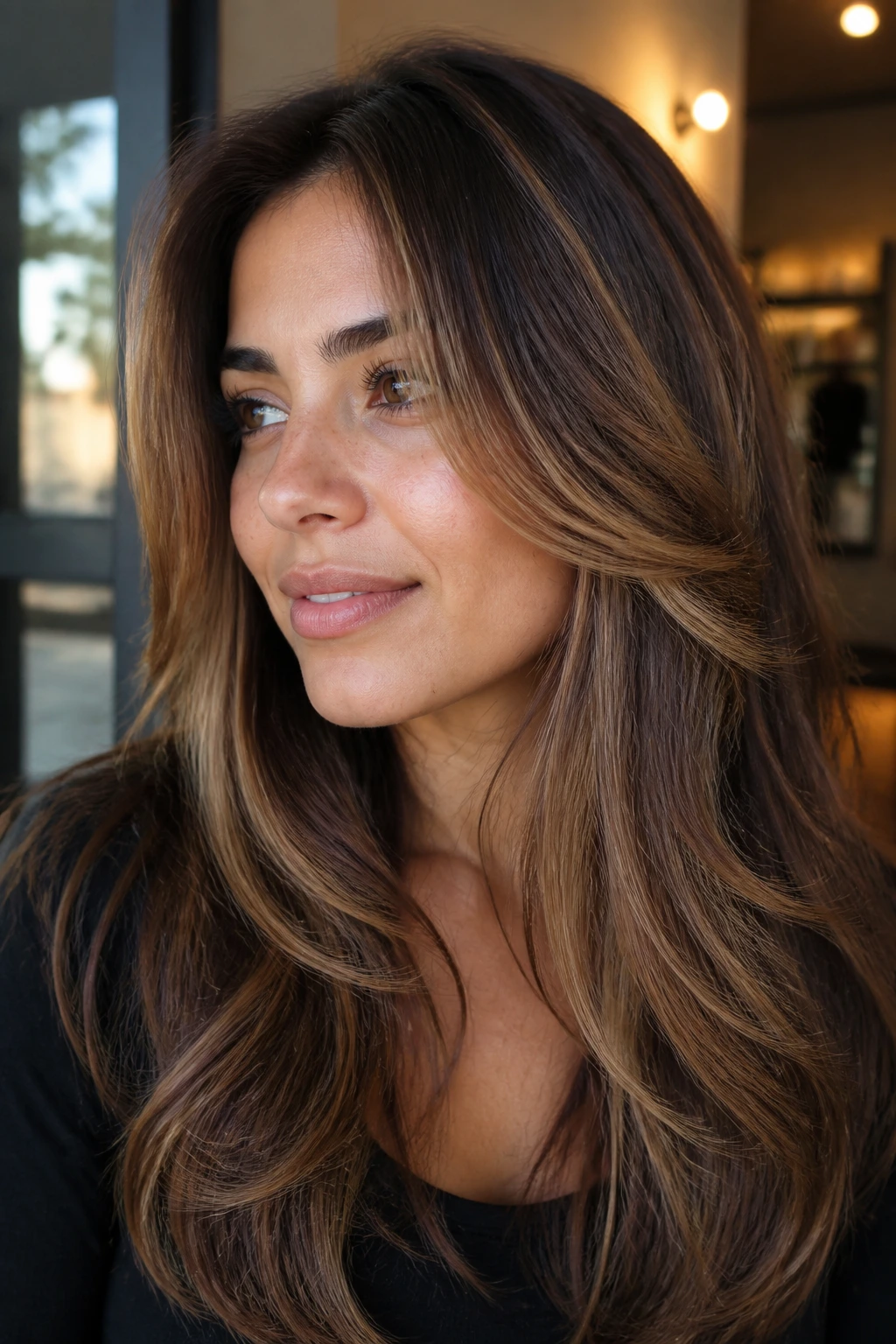
Too much yellow is the first trap. Olive skin can handle warmth, but bright yellow blonde near the face often turns brassy faster than people expect. If the highlights make your skin look sallow or the hair starts reading like a highlighter marker, the tone is too warm and needs beige or ash correction.
The second mistake is chunky placement. Wide stripes can look harsh on layered hair because they ignore the haircut’s movement. Fine ribbons, sliced pieces, and soft face-framing sections usually flatter olive skin better because they follow the lines of the cut.
Another one: going too cool too fast. Silver ash and near-gray beige can look chic on paper, but on olive skin they can also look flat or muddy if there isn’t enough lightness in the formula. The fix is not “add more ash.” It’s “add better balance” — a cleaner beige tone, a deeper root, or a little honey around the front.
Finally, people often forget maintenance. Highlights on layered hair live or die by the ends. If the ends get dry and fuzzy, even a beautiful caramel melt can start looking dull. Trim the layers regularly and use a mask before the ends start looking thirsty.
Variations and Alternatives to Try
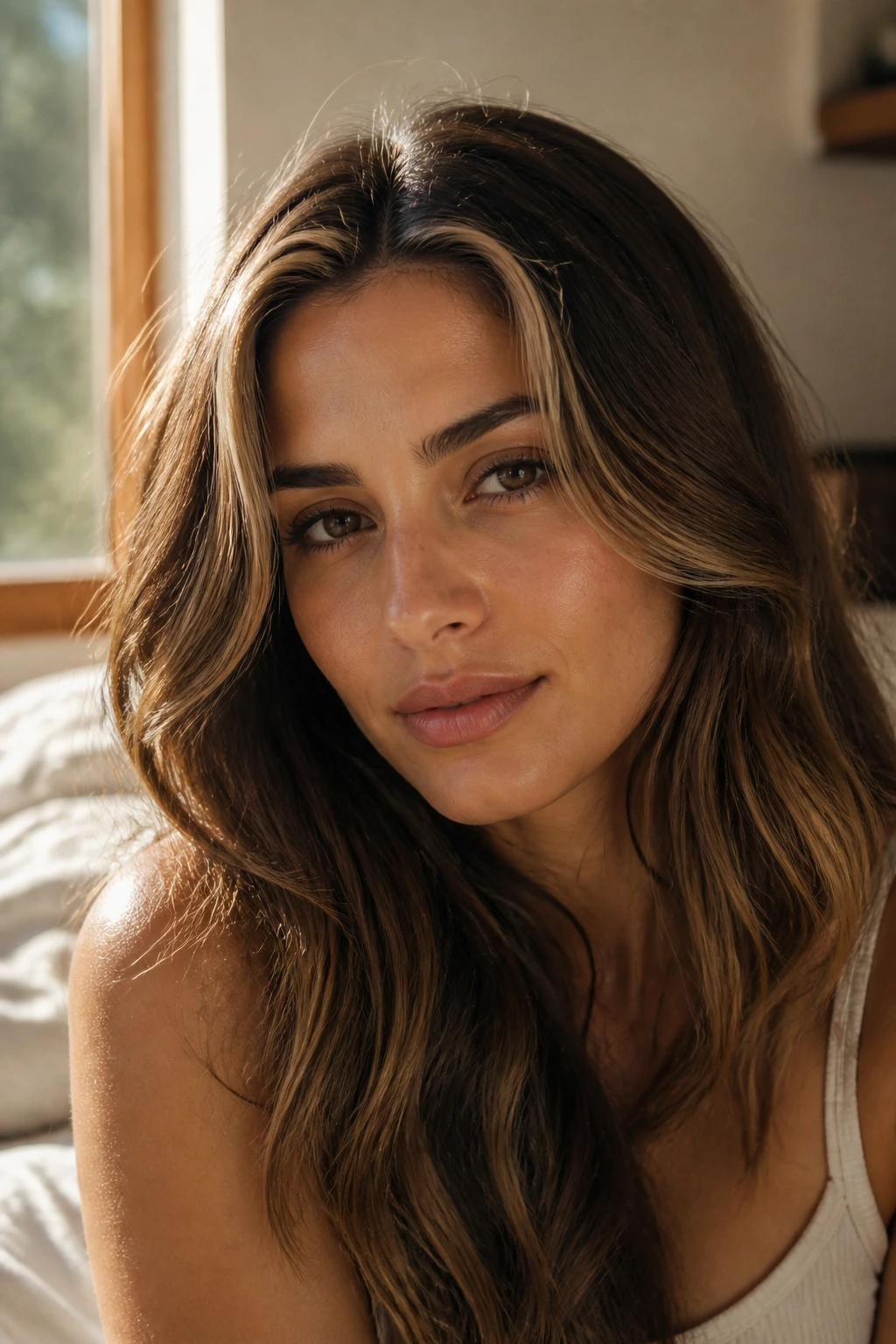
The Golden Olive Glow: Keep the base brunette and place honey-gold pieces only around the face and top layer. This suits warm olive skin that can take sunlight tones without drifting orange.
The Cool Beige Edit: Swap caramel for mushroom brown and beige blonde. It’s a good fit for neutral or green-leaning olive skin that looks better in soft, smoky tones than in gold.
The Curly Ribbon Version: Ask for highlights that follow the curl pattern instead of straight foil lines. Curly layers show dimension best when the lighter pieces sit where the curl opens and closes.
The Short Lob Switch: If your hair is collarbone length or shorter, keep the brightest pieces near the front and the crown. Short layers don’t need as much contrast to show movement.
The Rooty Bronde Grow-Out: Leave the top darker and let the lighter pieces begin lower on the head. This is the friendliest version if you don’t want to be in the salon every few weeks.
The Auburn Warm-Up: For olive skin with a golden cast, add a muted auburn gloss over chestnut or cocoa. It gives warmth without crossing into obvious red.
Keeping the Color Fresh and the Layers Soft
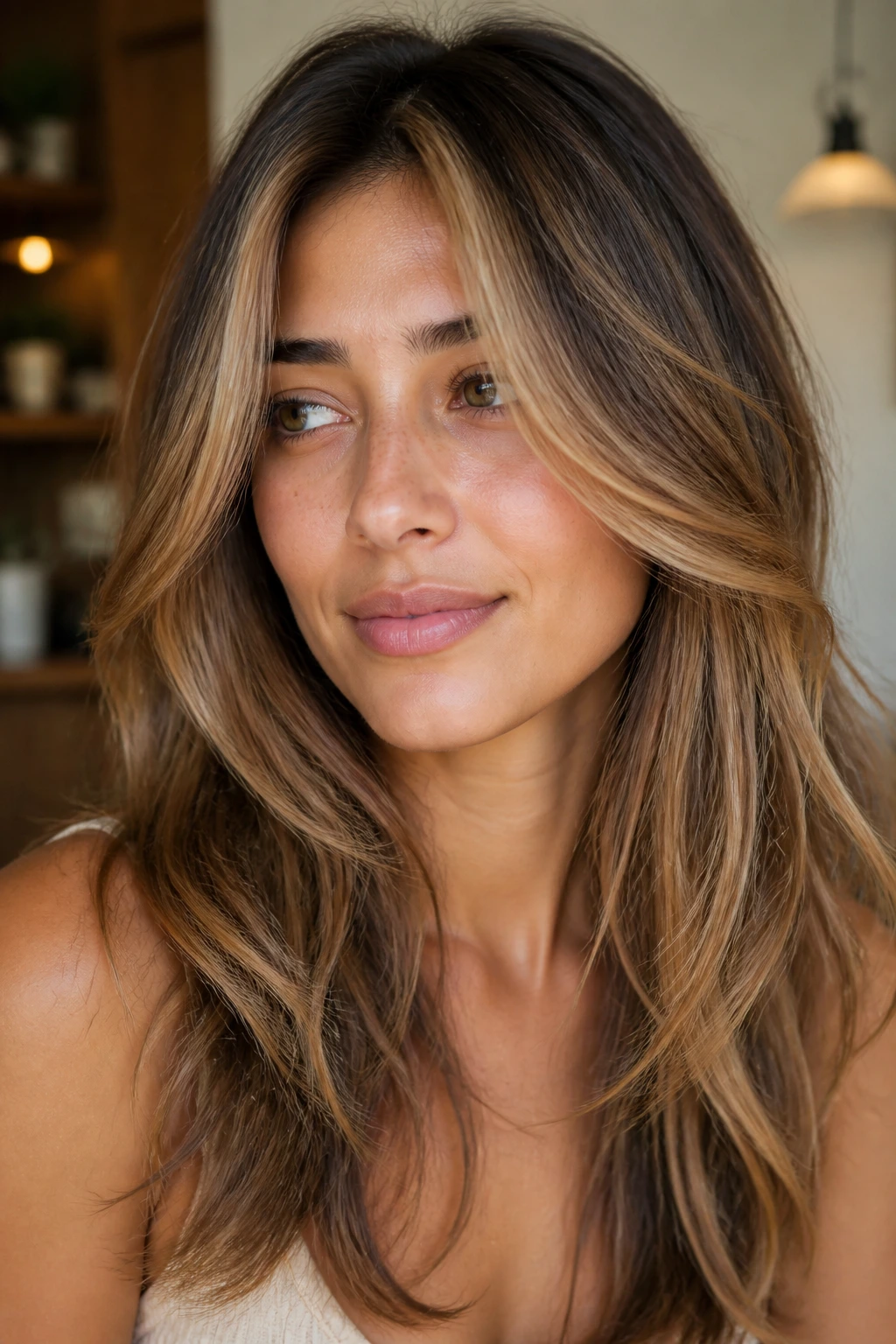
Lightened hair asks for a little discipline. Not much. Just enough. If you wash too often, the gloss fades faster and the highlighted pieces lose their clean edge. Two or three washes a week is a nice target for many hair types, especially if you use a color-safe cleanser and lukewarm water instead of hot water.
A toner refresh every 6 to 8 weeks is a useful rhythm for most beige, caramel, and bronde looks. If the highlights start looking yellow, gold in the wrong way, or slightly muddy, that’s your cue. Purple shampoo can help on blonde-heavy looks, but it should not become a religion. Too much of it can make the hair look chalky on olive skin.
Trim the layers every 8 to 12 weeks if the ends start to fray. That’s not a vanity schedule; it keeps the highlight pattern readable. Dry ends swallow light. Healthy ends reflect it.
Frequently Asked Questions
What highlight shade looks most natural on olive skin?
Caramel, honey-bronde, beige brown, and soft chestnut usually look the most believable because they stay close to the brown family. The exact winner depends on whether your olive undertone leans golden or green.
Should olive skin wear warm or cool highlights?
Both can work, but not in the same way. Warm olive skin usually likes honey, bronze, and chestnut, while neutral or greener olive skin often looks cleaner in beige, taupe, or mushroom tones.
Do layers really matter that much with highlights?
Yes, because layers control where the light lands. Without layers, even a pretty color can sit too evenly across the head and lose the movement that makes natural highlights feel soft.
Can you go blonde on olive skin without looking washed out?
You can, but it usually works better with beige or bronde blonde than with pale icy blonde. The deeper root and the face-framing placement matter just as much as the blonde itself.
How do I stop highlights from turning brassy?
Ask for the right toner at the salon, then use color-safe shampoo, cooler water, and the occasional gloss refresh. Brassy usually means the toner has faded, not that the whole idea was wrong.
What if my hair is dark and thick?
That’s actually a good canvas for dimensional highlights, because the darker base keeps the contrast grounded. Ask for ribbons, not blanket lightening, so the layers still look rich.
Are balayage and babylights both good for olive skin?
Yes, and they often work best together. Balayage gives the soft sweep of brightness, while babylights add the fine movement that keeps the color from looking chunky.
Do these colors work on curly hair?
They do, but the placement needs to follow the curl pattern. Curly layers show color in flashes, so the lighter pieces should be placed where the curls open up and frame the face.
Final Thoughts
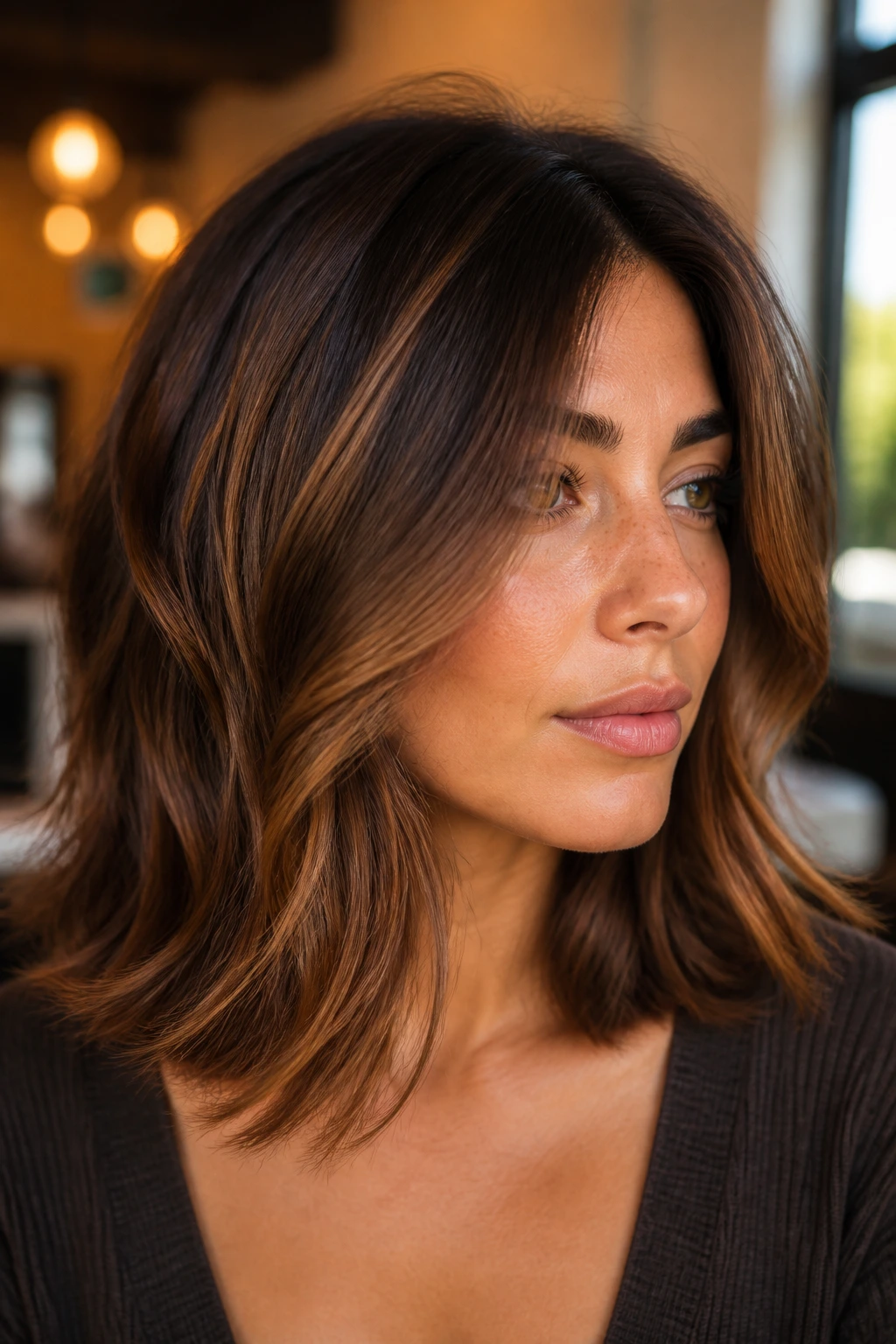
The best natural highlights for olive skin are rarely the brightest ones in the room. They’re the ones that make the face look rested, the haircut look lived-in, and the color look like it belongs there instead of fighting for attention. Layers make that easier, because they give every ribbon of color a chance to move.
If you’re choosing between warm and cool, start with the undertone you already have and the amount of contrast you actually wear well. That usually gets you closer than chasing the palest blonde or the iciest ash. A good layered highlight job should look better on day one, and still make sense when it grows out a few inches later.