



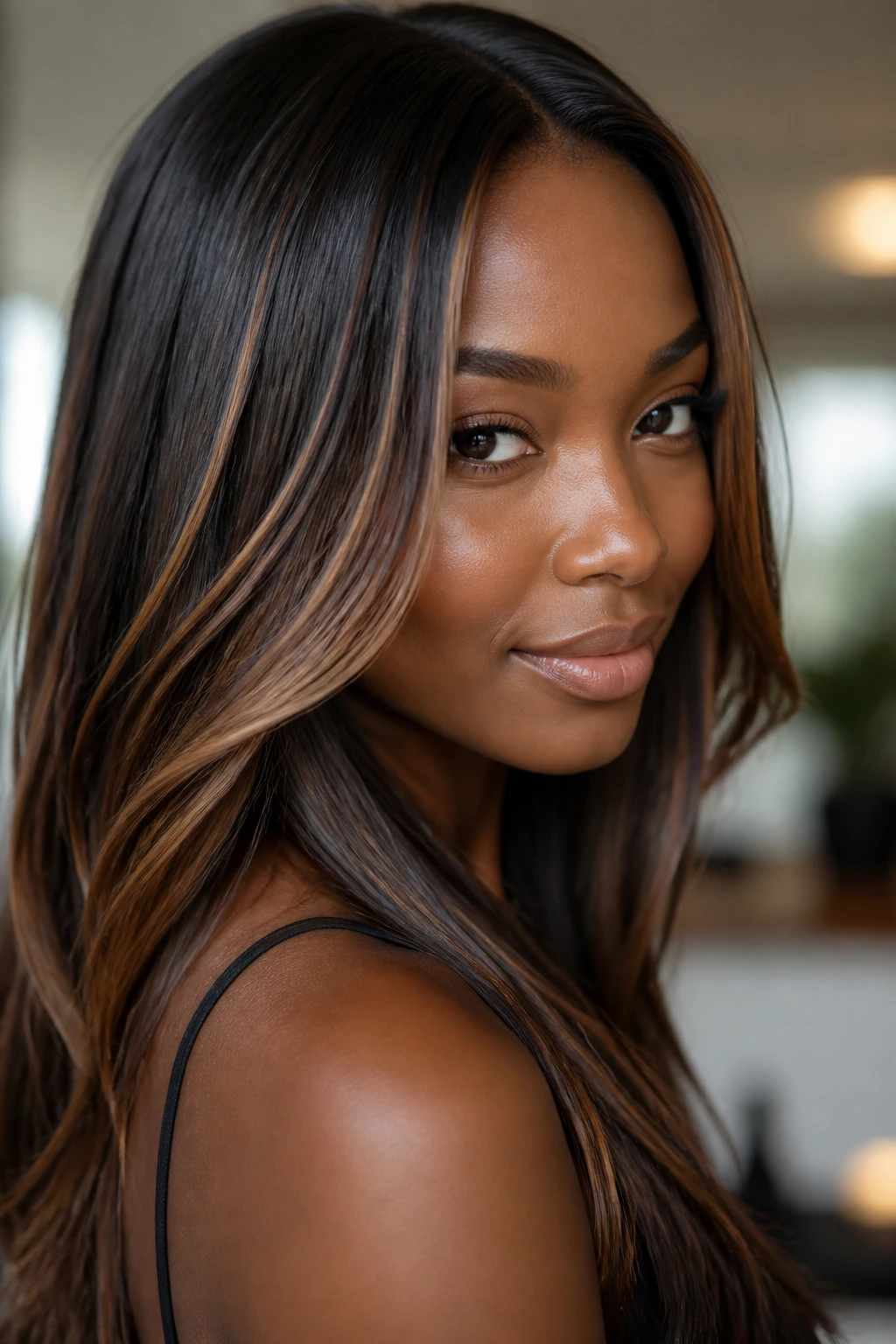
If your hair is thin, the worst thing you can do is ask for a hard, high-contrast ombré that dumps bright blonde onto the last few inches. The ends start looking airy in daylight, the line of color gets obvious fast, and the whole style can lose the soft movement you probably wanted in the first place. A subtler fade does the opposite: it keeps the root depth, lets the mid-lengths do the blending, and uses caramel, bronze, mocha, honey, and chestnut tones to add dimension without making the hair look sparse.
That matters even more on deep skin tones. Pale, icy blonde can sit strangely against rich undertones, while warm or smoky shades tend to look like they belong there from the start. The sweet spot is not drama. It’s control. A good subtle ombre for deep skin tones with thin hair should look expensive in the way a well-cut blazer looks expensive: clean lines, smart proportions, nothing fighting for attention.
I like ombré when it behaves like a shadow that slowly wakes up into light. Not a streak. Not a stripe. A gradual shift, usually only one or two levels lighter at the ends, with enough softness that you can wear it straight on a Monday and wavy on a Saturday without the whole thing turning fussy. That’s the lane these looks live in, and the details matter.
Why This Collection Works for Thin Hair on Deep Skin Tones
-
The root stays in charge: Keeping deeper color near the scalp gives the hair a thicker outline, which matters more on low-density hair than most people realize.
-
The lightness is controlled: These looks use small lifts, warm beige glosses, and smoky caramel tones instead of bright, stark blonde that can make ends look see-through.
-
Deep skin tones get the right temperature: Rich browns, bronze, toffee, mahogany, and copper-brown shades echo the undertones already in deep complexions instead of sitting on top of them.
-
The grow-out is soft: A shadow root and a gradual fade mean you do not get that blunt line of demarcation that makes fine hair look like two separate colors.
-
Texture does some of the work: Soft waves, curls, and bends catch the lighter pieces, so the color reads dimensional without needing heavy saturation.
-
These looks are easy to scale: You can wear them on a lob, a bob, long layers, curls, or a pixie bob, and the placement changes more than the whole idea does.
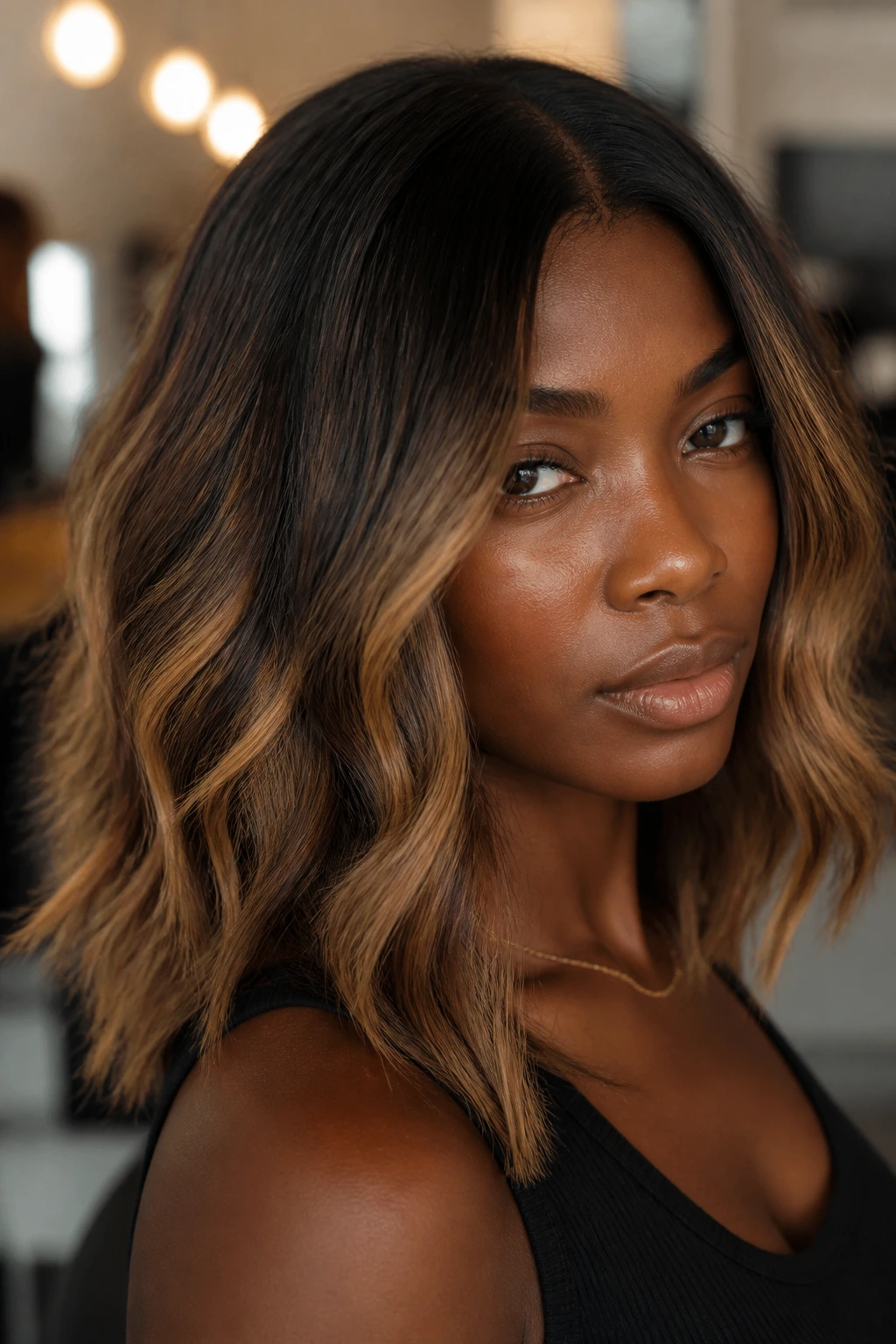
1. Cocoa Melt With Soft Caramel Ends
A cocoa melt is the safest place to start if you want color that looks polished without shouting. The root stays espresso or dark chocolate, the mid-lengths soften into milk-chocolate brown, and the ends stop at a caramel that still feels brown at a glance. On thin hair, that last detail matters. Pale ends can make the tail of the hair look wispy in a way that is hard to undo.
Why It Works
The darker base keeps the outline of the hair intact, which makes the whole style read denser. Caramel at the ends adds motion, but because it stays warm and close to the natural depth, it does not carve the hemline into pieces.
- Best for: deep warm or neutral skin tones.
- Best cut pairings: lob, long layers, soft U-shape.
- Ask for: a shadow root, micro-balayage through the mids, and a beige-caramel gloss on the ends.
Small but useful detail: keep the lightest pieces below the cheekbone if your hair is fine at the front. That front zone is where thin hair shows first.
2. Espresso Roots and Toffee Ribbons
This one works because the contrast stays narrow. The root remains espresso, but the lighter pieces come in as slim toffee ribbons through the top layer and around the hairline. They catch light the way satin does. Not loud. Just enough.
Thin hair usually looks worse when the color is painted in big panels. Those panels separate the strands and make the lower half look thinner than it actually is. Narrow ribbons leave most of the base alone, which keeps the visual weight where you want it.
I like this on straight hair and loose bends. On deep skin tones, the toffee should lean toasted, not pale. If it starts drifting toward beige-blonde, the softness starts to disappear.
3. Chestnut Bob With Whisper-Light Tips
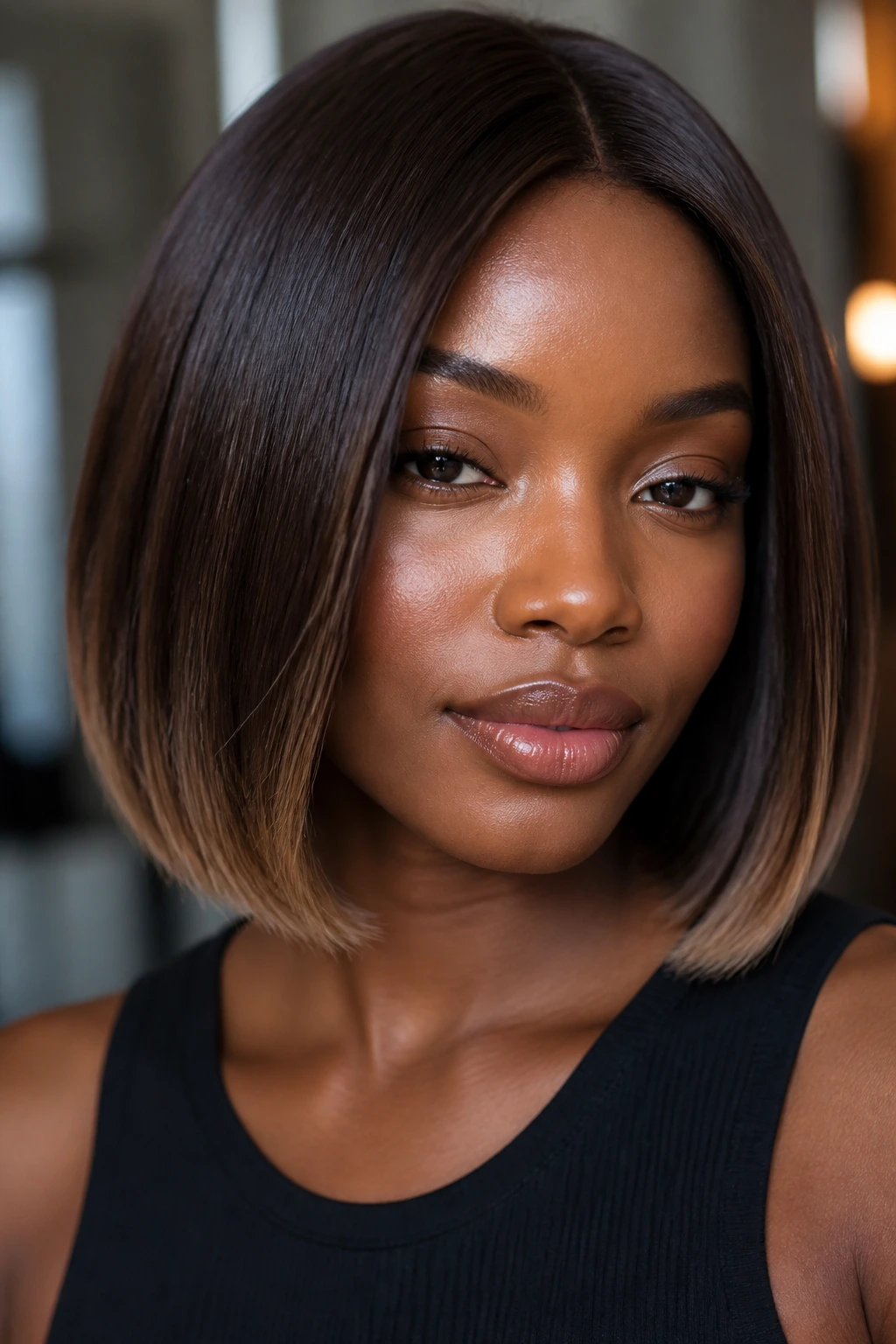
Why does a bob need even less contrast than longer hair? Because the cut already creates shape. A chin-length or shoulder-skimming bob can take a tiny lift at the tips and still feel full, while a heavy fade can make the line look choppy.
What to Ask For
Ask for chestnut through the body of the bob and only a whisper of lightness at the ends — nothing chunky, nothing stripey. A soft gloss in chestnut or light cocoa helps the shape look finished instead of faded.
- Works best on: blunt bobs, tucked-under bobs, softly curved bobs.
- Skip: pale blonde tips if your ends are already delicate.
- Best finish: one-inch bends with a flat iron, not tight curls.
The point here is to make the bob look denser at the edge. The color should help that, not fight it.
4. Honey Face Frame on a Deep Base
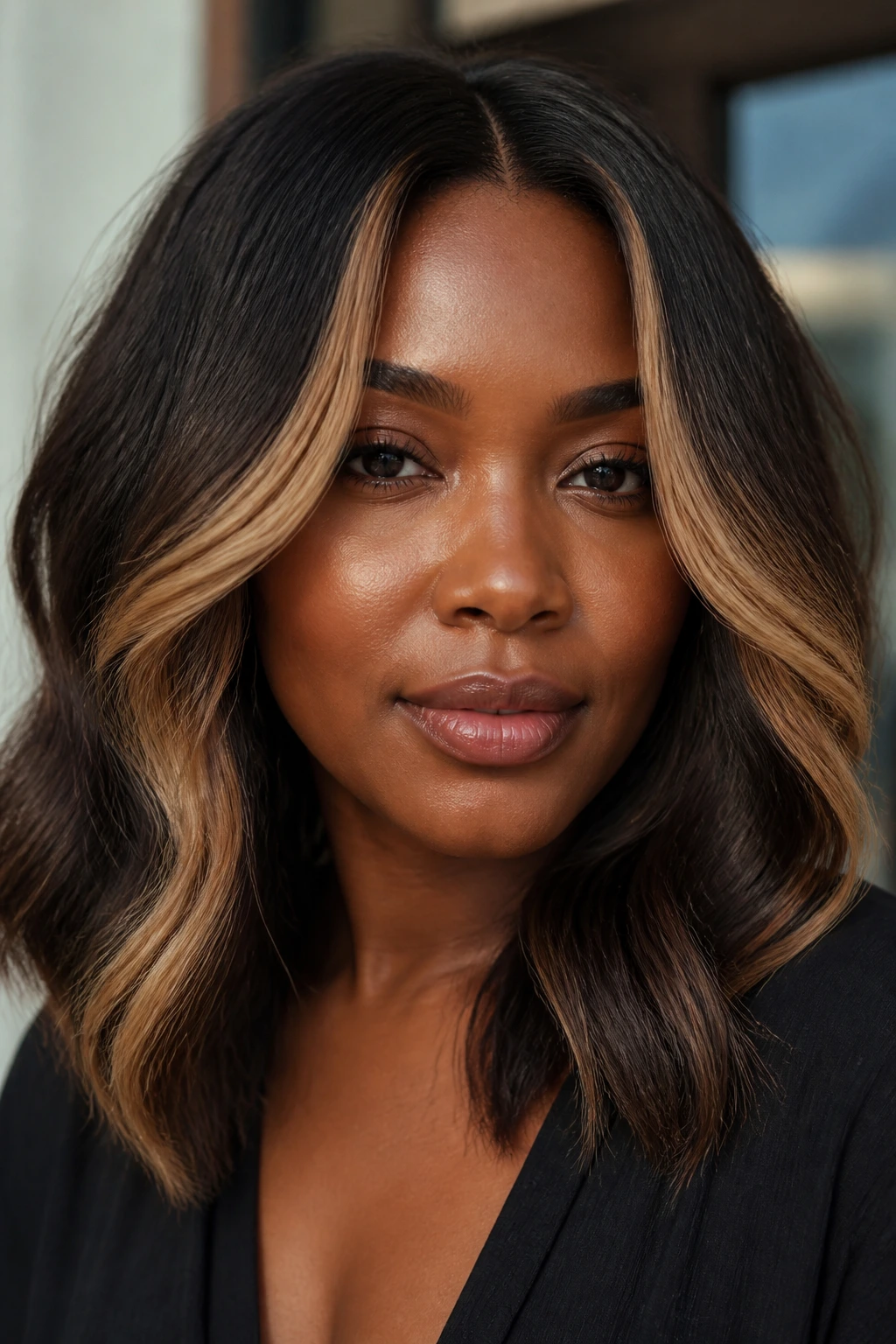
This is the look I’d hand to someone who wants brightness but does not want to sacrifice the ends. Keep the base deep, then place honey-toned pieces only around the face, starting near the cheekbones and easing down the front layers. The rest of the hair stays darker, which keeps the overall shape looking grounded.
On deep skin tones, honey works when it leans golden and warm rather than yellow. The pieces should look like they belong to the same family as your complexion, not a separate category. Thin hair benefits because the brightness sits where the eye looks first, so you get lift without over-lightening the whole head.
If your hair is very fine at the temples, make the face frame narrow. A wide frame can feel obvious on sparse hair. Narrow is usually smarter.
5. Bronze Smoke on Loose Waves
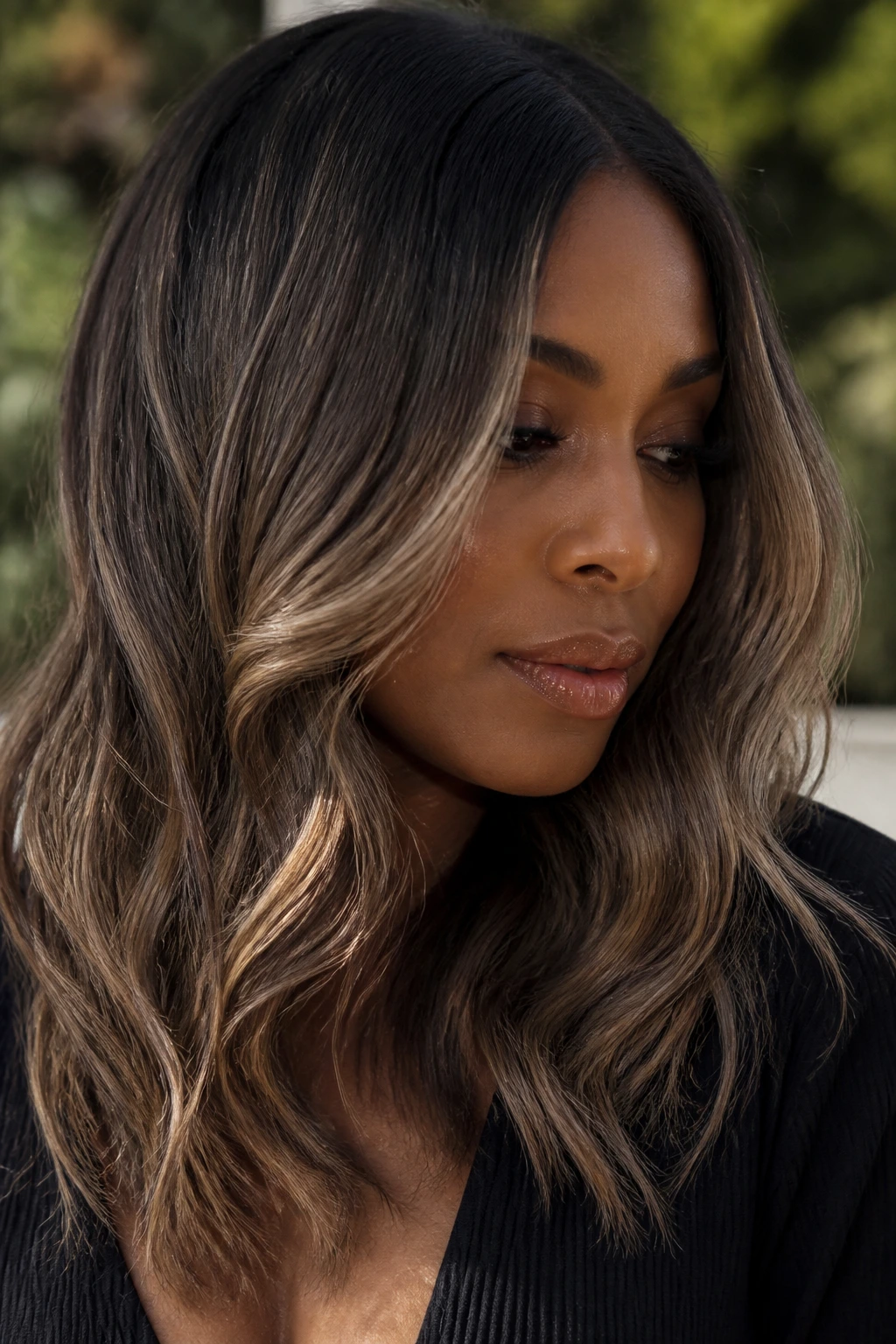
Bronze smoke is for the person who likes a cooler finish but still needs warmth against deep skin. It sits between bronze, mushroom brown, and a muted caramel, so the color moves without turning orange. On thin hair, that softness keeps the wave pattern visible instead of exposing every strand.
The best part is how forgiving it is. Bronze smoke does not need perfect curl pattern or perfect parting. A loose wave, a bend at the ends, even a low ponytail with a few pieces pulled loose around the face — it all still reads intentional.
I’d choose this if brassiness is your main worry. The smoky base keeps the tone from going too coppery while still giving you enough glow to avoid a flat brown helmet.
6. Cinnamon Veil on Long Layers
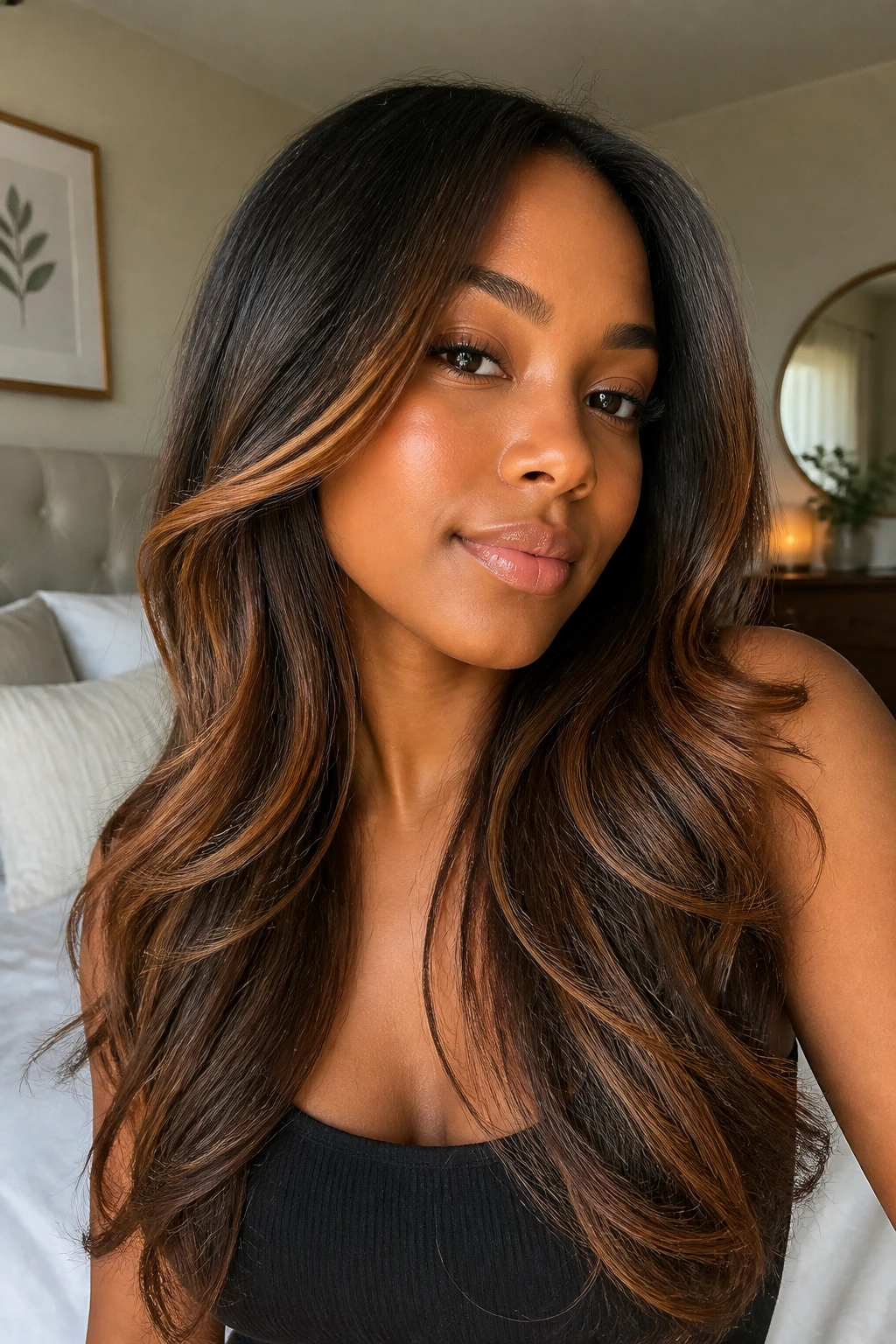
Long layers can swallow color if the fade is too abrupt, so a cinnamon veil keeps the movement visible. The root stays a rich brown, the mids pick up a cinnamon glaze, and the lightest pieces never go so far that they lose their warmth. It’s a soft glow, not a flip into ginger territory.
The Texture That Helps Most
A blowout with a round brush is good here, but soft curls are better. The light catches the bends in the layers and makes the veil read as depth instead of streaks.
If your hair is thin and long, this is one of the safer warmer options because the color lives in the surface, not in big chunks. Ask your colorist to keep the ends translucent only in the gloss sense — shiny — not in the actual density sense. That distinction saves a lot of disappointment.
7. Mocha Glow on a Blunt Lob
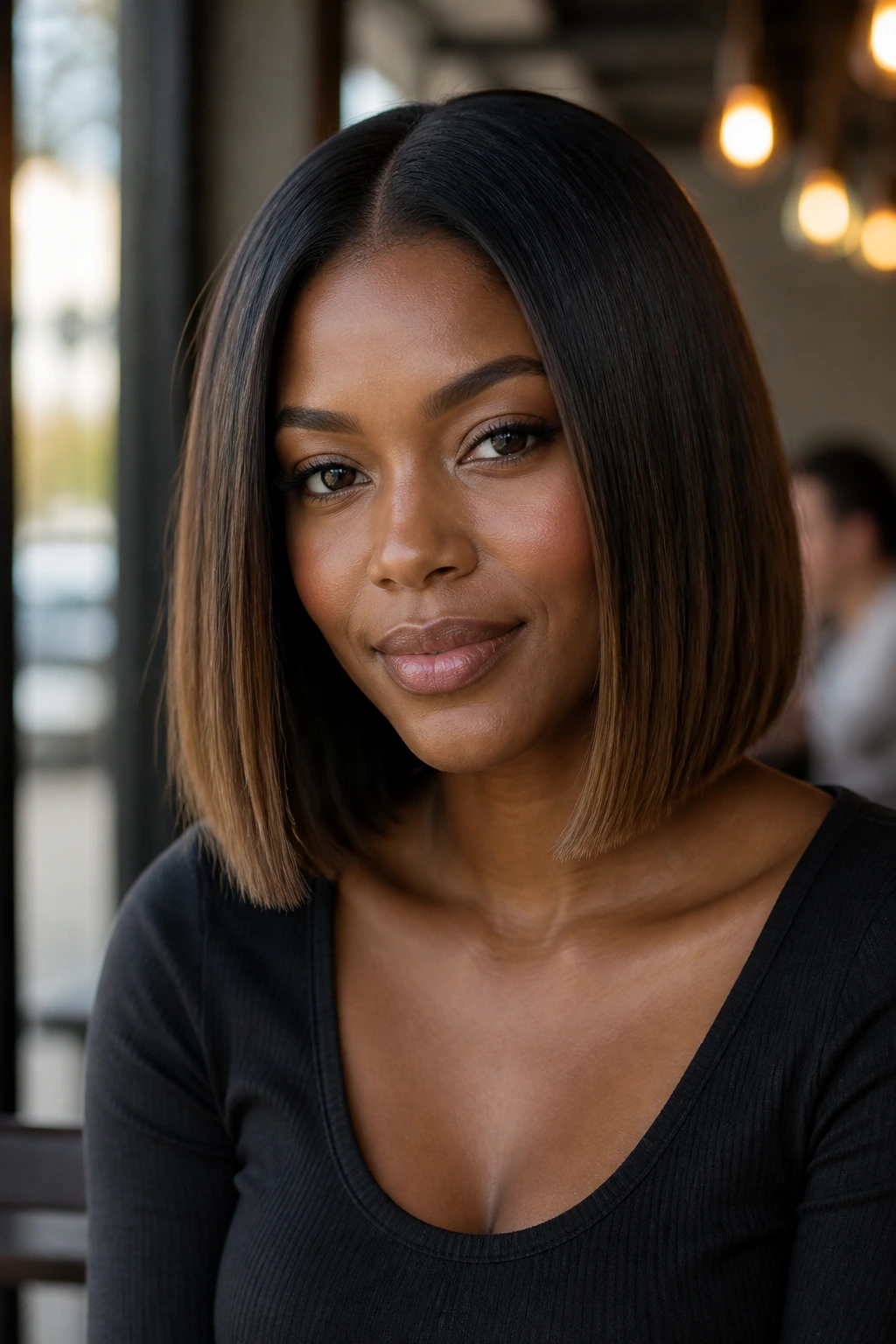
A blunt lob is a blunt lob. It already brings structure, so the color can stay quieter. That’s why mocha glow works. The fade is subtle, the ends remain full-looking, and the lightness shows up more as sheen than as a visible jump in color.
On deep skin tones, mocha is one of those shades that just sits well. It has enough brown to stay rich, and enough softness to keep the hair from looking heavy. For thin hair, that balance matters because a blunt cut can look heavy in the wrong way if the color gets too dark and flat.
I like a center part here, but an off-center part can do more if your face is narrower. The whole point is to let the cut stay clean while the gloss does the talking.
8. Mahogany Tint With Auburn Hints
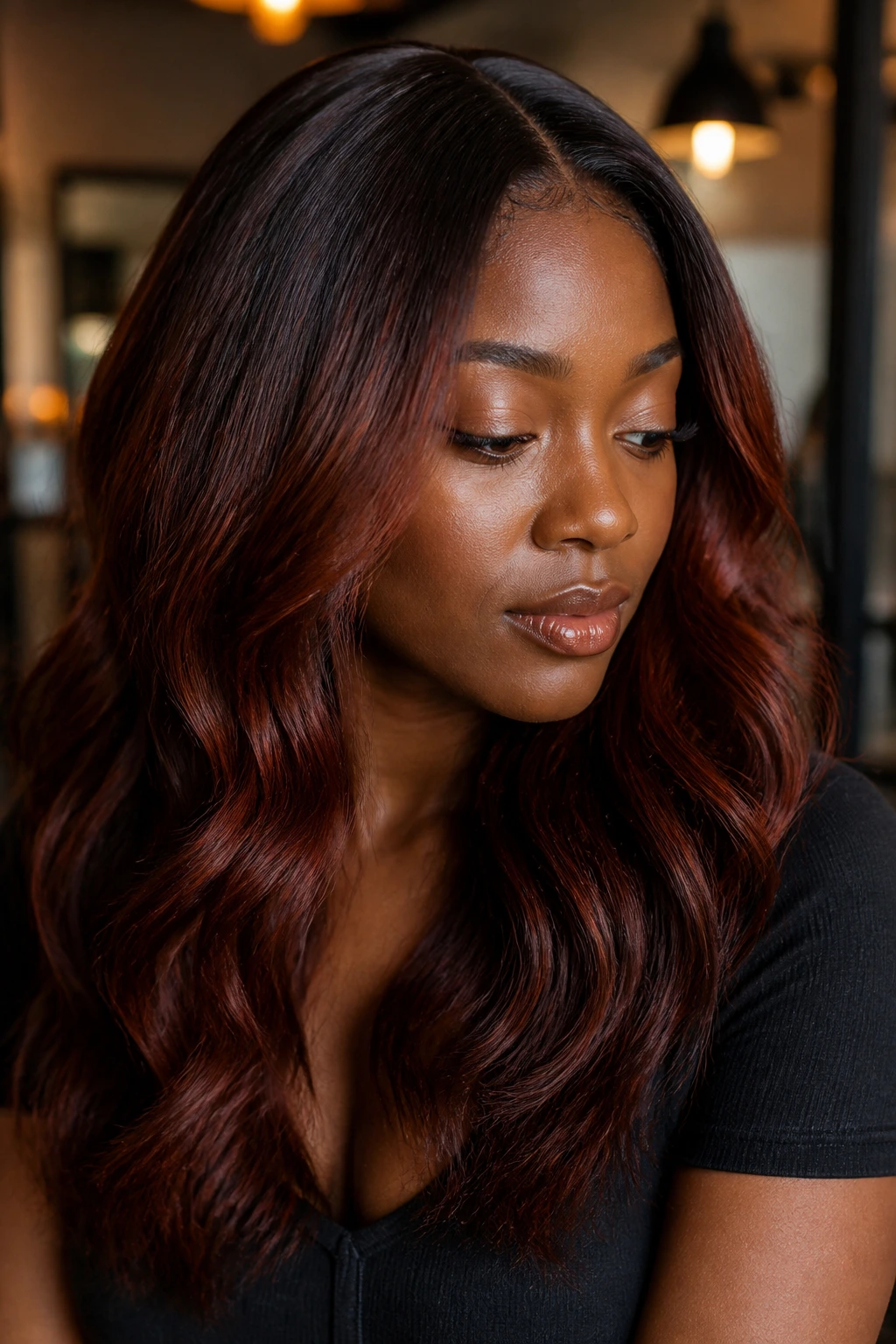
Mahogany is the move when you want warmth without classic blonde ombré. A mahogany tint with auburn hints gives deep hair a red-brown shimmer that catches light on curves, coils, and waves. It also flatters rich skin beautifully because the undertones stay deep and saturated.
Best for
- Warm undertones: mahogany leans lush and full, not flashy.
- Fine hair: red-brown reflection can make strands look denser than very light blonde.
- Low-maintenance color lovers: a gloss refresh can keep this looking fresh longer than pale ends.
The trick is restraint. If the auburn gets too bright, the look stops being subtle. Keep it in the brown-red zone, and the result feels expensive in a quiet way.
9. Walnut Shadow Root and Tan Ends
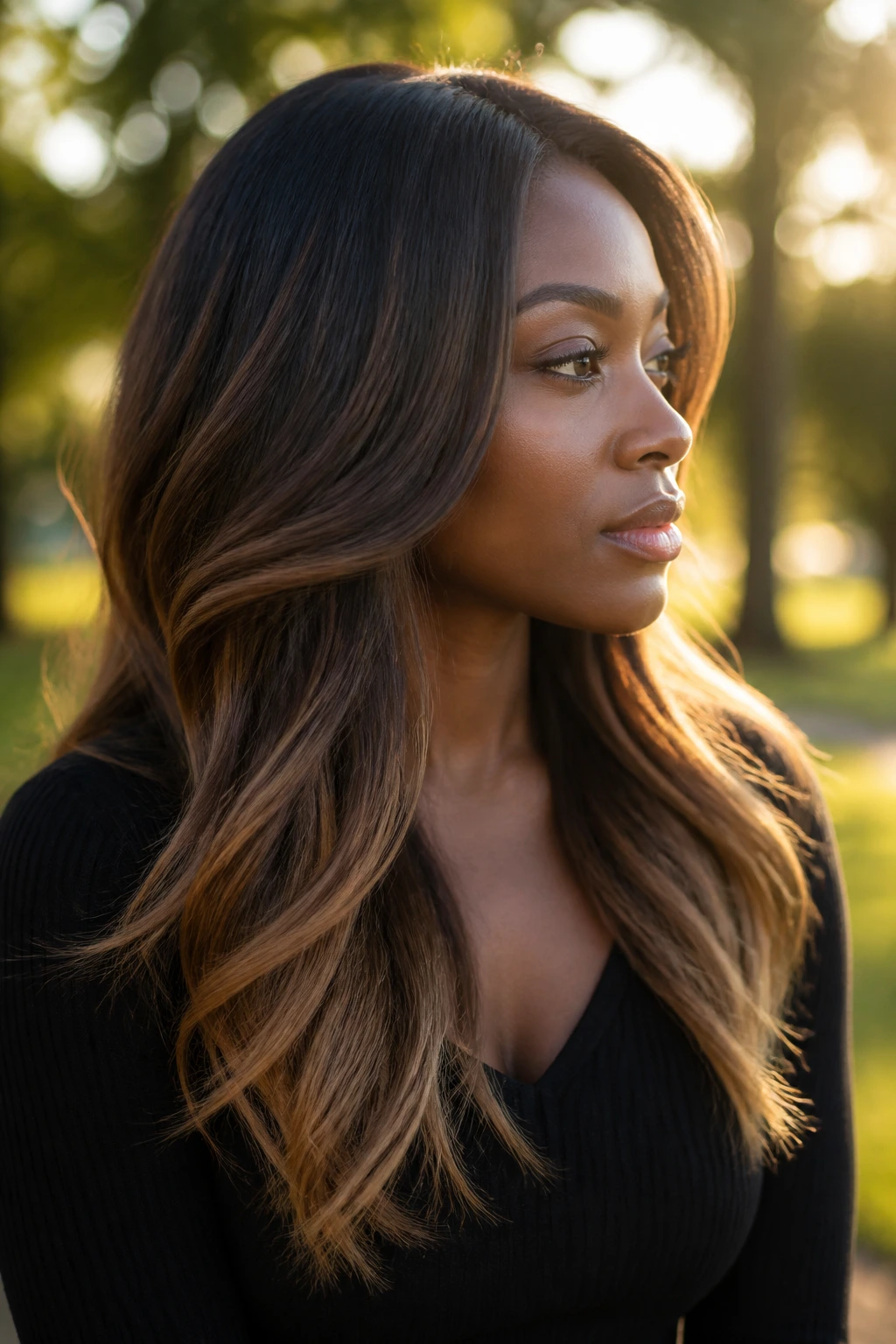
This one is for anyone who wants the ombré to feel almost hidden. Walnut at the root gives a neutral-cool depth, then the ends drift toward tan, not blonde. The transition is soft enough that you notice movement before you notice the color shift.
On deep skin tones, walnut can be a nice answer when golden tones are too warm. It has a grounded, slightly smoky feel that keeps the whole look balanced. Thin hair benefits because the shadow root creates an unbroken base, which makes the ponytail and the ends read fuller than they would with a hard fade.
If your hair lifts quickly, ask for a slow change in tone. Do not rush this one. The whole charm is in the quiet middle section.
10. Maple Brown on a Curved Bob
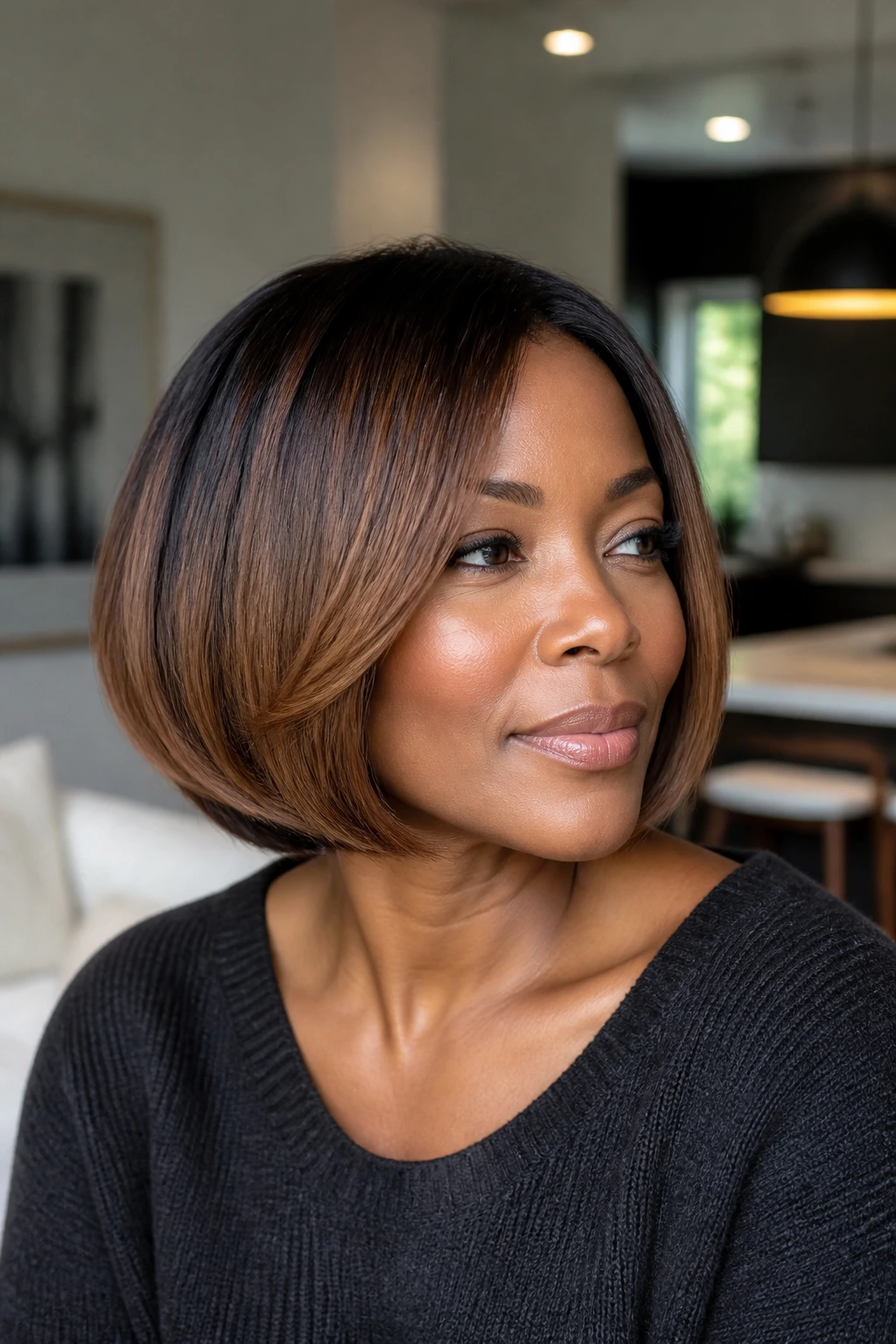
A curved bob can do more with color than people expect. Maple brown works because it adds warmth at the perimeter without washing out the shape. The ends are a touch lighter, but the curve of the cut keeps the line looking plush.
This is one of my favorites for deep skin tones that lean golden or neutral. Maple brown has enough warmth to flatter, but it stops short of anything copper-heavy. Thin hair gets a little optical help from the curve: the bend around the jaw makes the finish look thicker, and the subtle fade gives it polish.
I’d keep the front a bit brighter than the back so the face picks up more light. That tiny difference matters more than a dramatic ombré on this cut.
11. Toffee Halo on Curtain Bangs
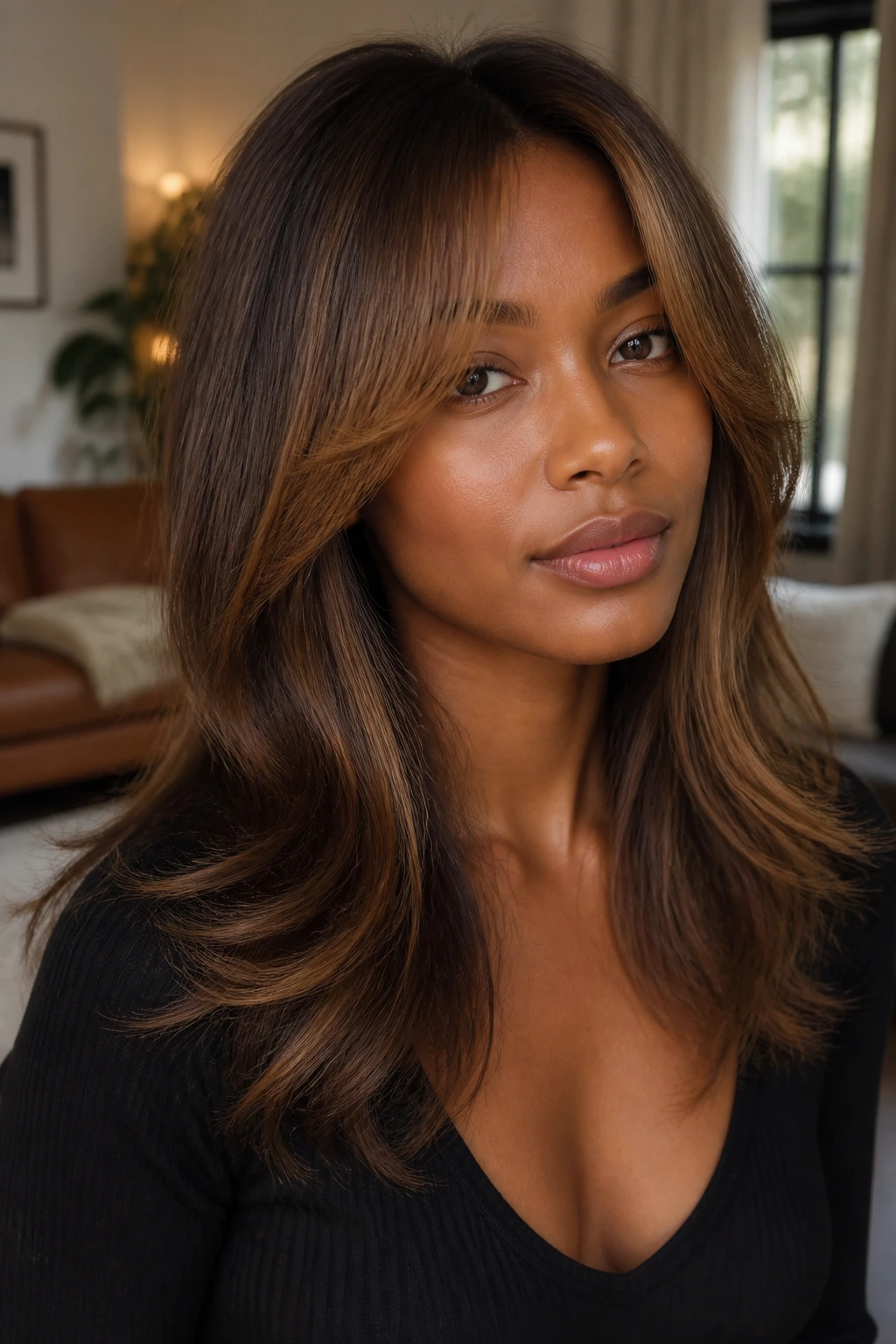
Curtain bangs can get lost if the color is too uniform, so a toffee halo keeps the front alive. The roots stay deep, the curtain fringe gets a narrow halo of warmth, and the ends of the layers soften into toffee brown rather than pale gold. It’s a good trick for thin hair because the eye goes straight to the face.
The halo should sit around the bangs and the front layers, not spread across the whole crown. That keeps the density up where the hair is most visible. On deep skin tones, toffee is friendly as long as it stays toasted and creamy, not yellow.
If you wear your hair in a half-up style often, this is a smart pick. The front pieces will still do their job when the rest is pulled back.
12. Copper Kiss on a Shoulder-Length Cut
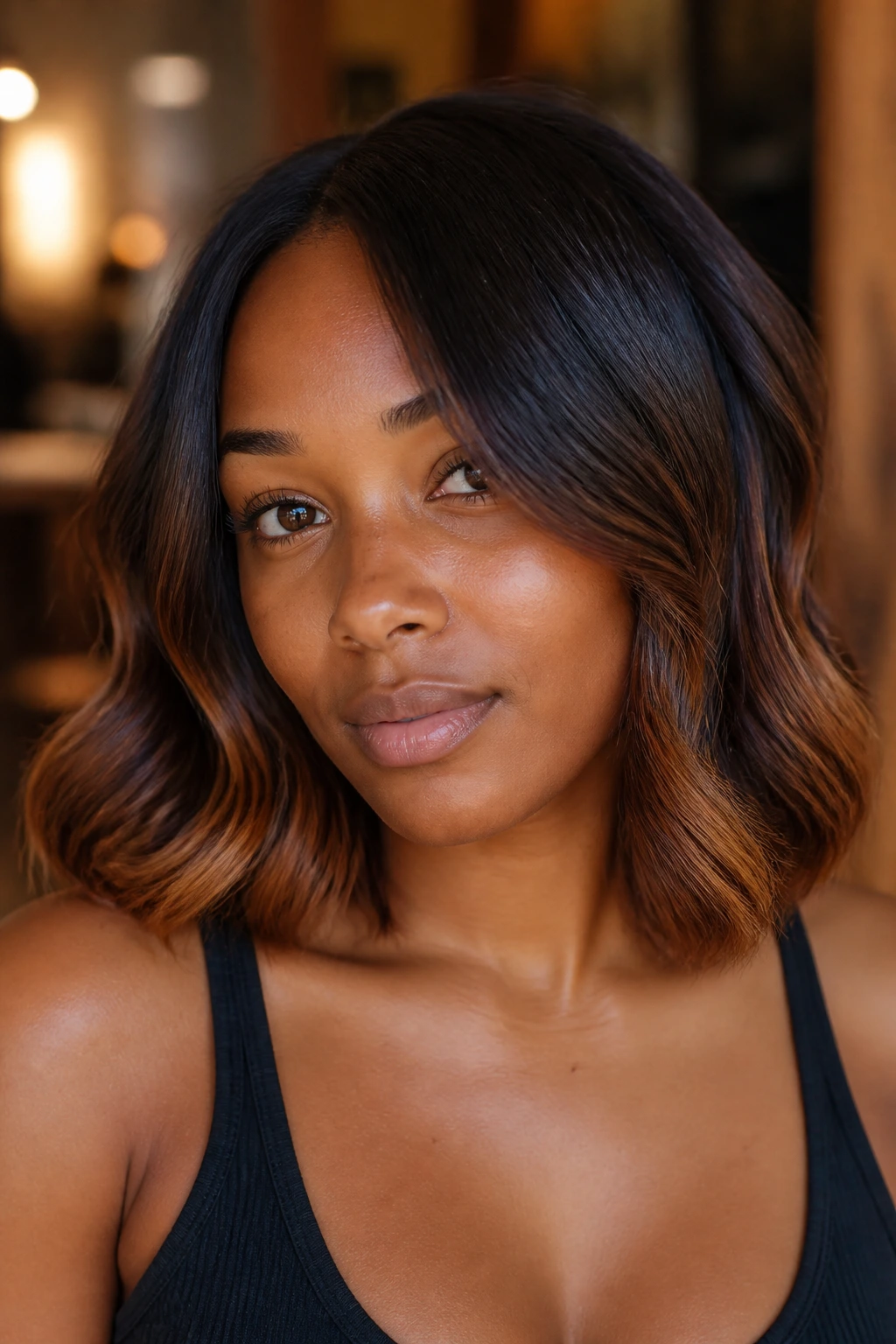
Copper can go loud fast, so the word here is kiss. A copper kiss means a soft copper-brown glaze, usually over a dark brunette base, with the brightest tone tucked into the mids and ends rather than blasted across the whole head. That keeps the result wearable on thin hair.
Deep skin tones can handle copper better than many people think, especially when it stays in the brown-red family. The warmth gives the skin a little glow back. The hair gets a richer look instead of a bleached one.
If you’re nervous, ask for a copper-brown gloss first. It’s easier to deepen the tone later than to undo a bright orange result that turned up louder than you wanted.
13. Smoky Bronze on a Side Part
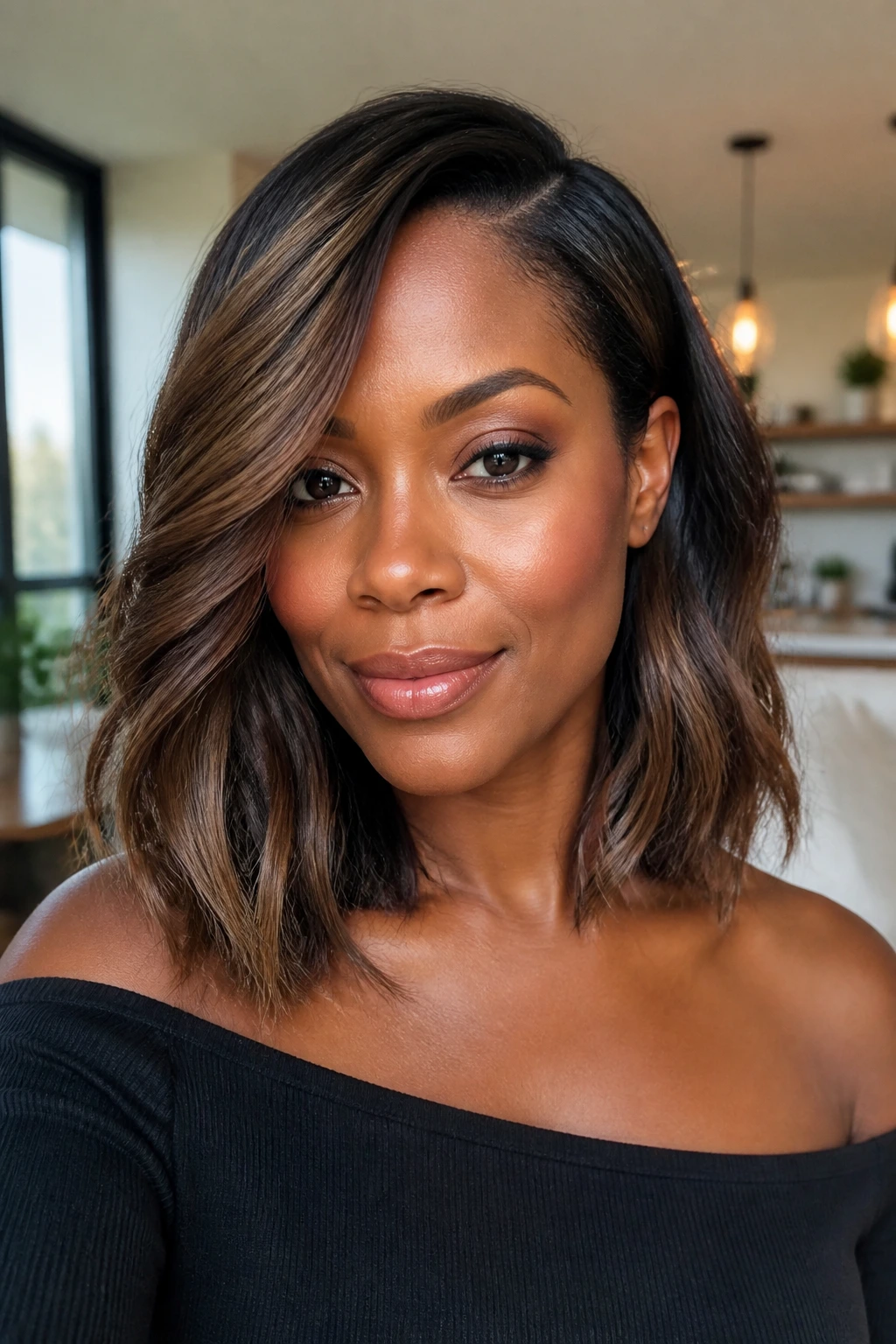
A side part gives thin hair a little drama for free. Add smoky bronze, and you get a style that looks fuller at the crown because the part shifts the weight, while the color keeps the edges soft and dimensional. It’s a clean trick, and it works.
This is a nice option for deep skin tones with neutral or cool undertones. The bronze keeps warmth in the hair, while the smoky finish stops it from turning brassy. The result is softer than golden blonde and less predictable than plain brown.
If your crown is flat, this is one of the better choices in the whole set. The side part creates height, and the subtle fade gives the roots somewhere to disappear into.
14. Almond Glaze on Coily Layers
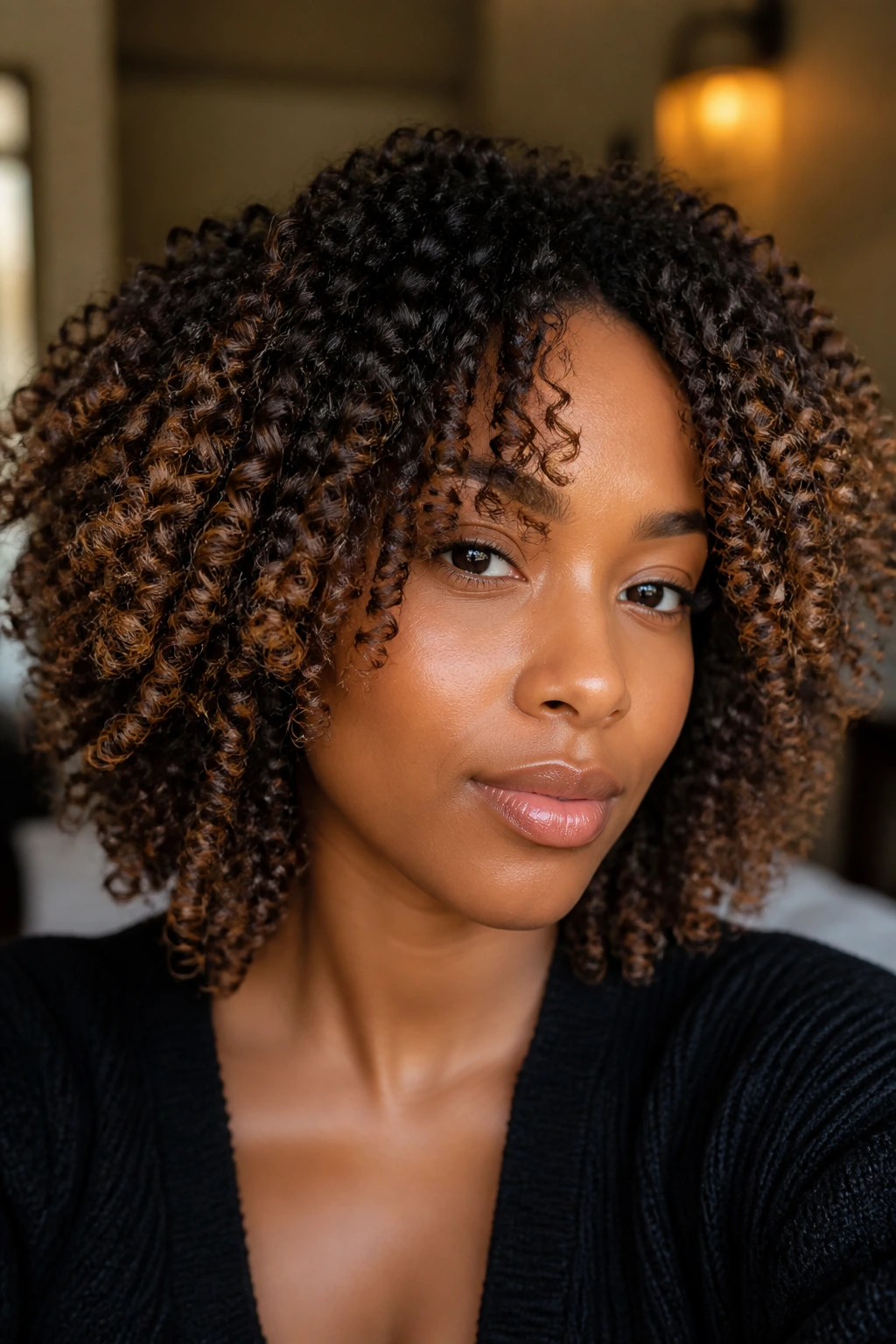
Coily hair does not need dramatic contrast to show dimension. In fact, a tiny shift can look richer than a big color leap because every coil catches light on its own curve. An almond glaze gives you that soft shift: a warm neutral brown that brightens the outer ring of the coils without erasing the depth underneath.
Why It Flatters
The darker interior keeps the shape dense. The lighter outer layer gives movement, especially on layered coils where the ends stack instead of hanging flat.
This one is especially kind to thin or low-density coily hair because it never relies on blunt blonde ends. Ask for a gloss or demi-permanent tone that can sit on the surface rather than a heavy lightening job. That’s where the depth comes from.
15. Sable-to-Caramel Shag
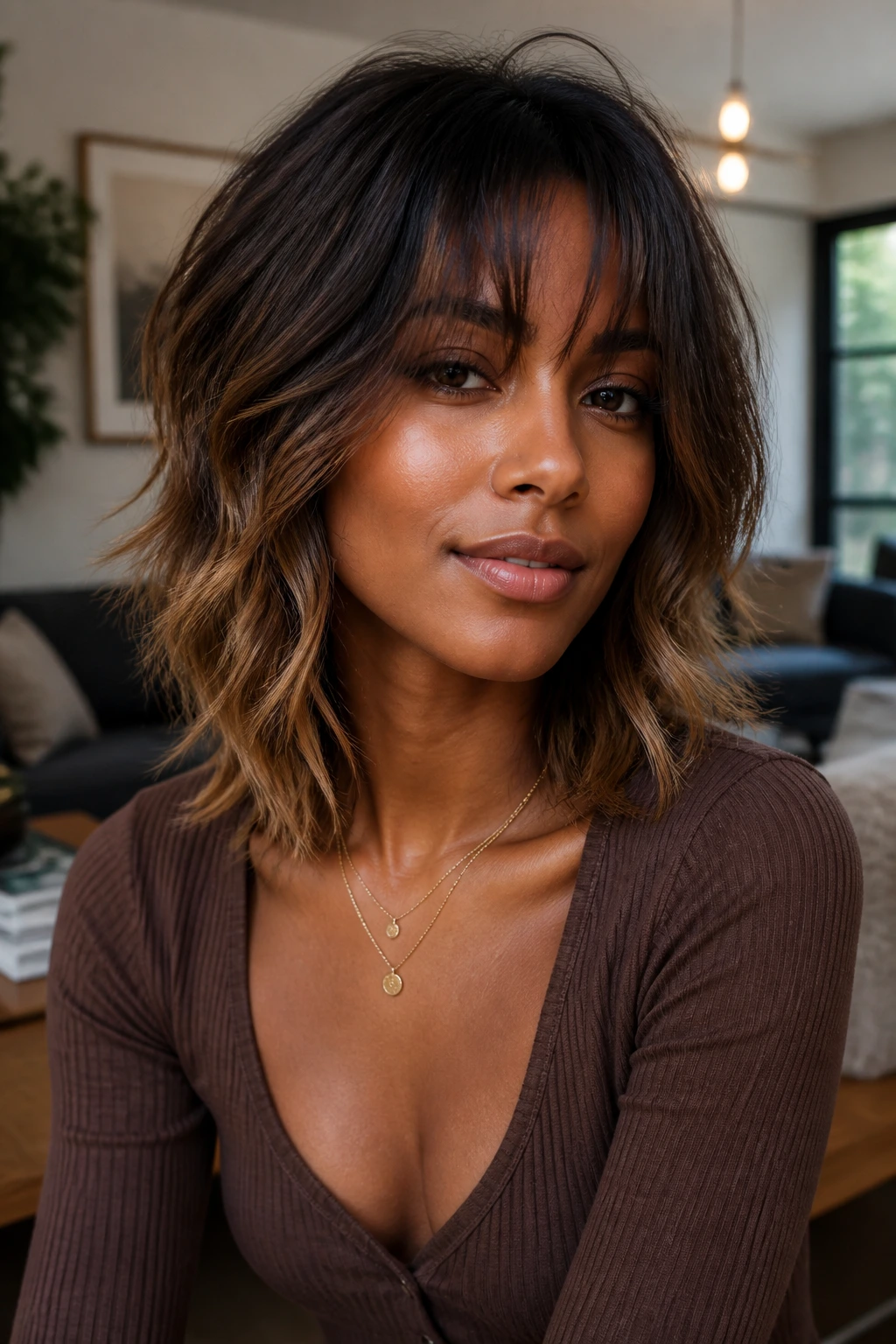
A shag already brings texture, so the color should behave like texture too. Sable at the root, caramel through the feathered ends, and a barely-there lift through the top layers — that’s enough. Too much contrast, and the shag starts looking frayed instead of airy.
The cut does a lot of the work here. Thin hair can look fuller in a shag because the layers create movement and the ends do not sit in one solid line. A subtle ombré keeps that movement from disappearing into darkness.
I’d choose this for someone who likes a little edge without losing softness. It’s not a loud color, and that’s the point. The shape already has personality.
16. Amber Ribbon on a Pixie Bob
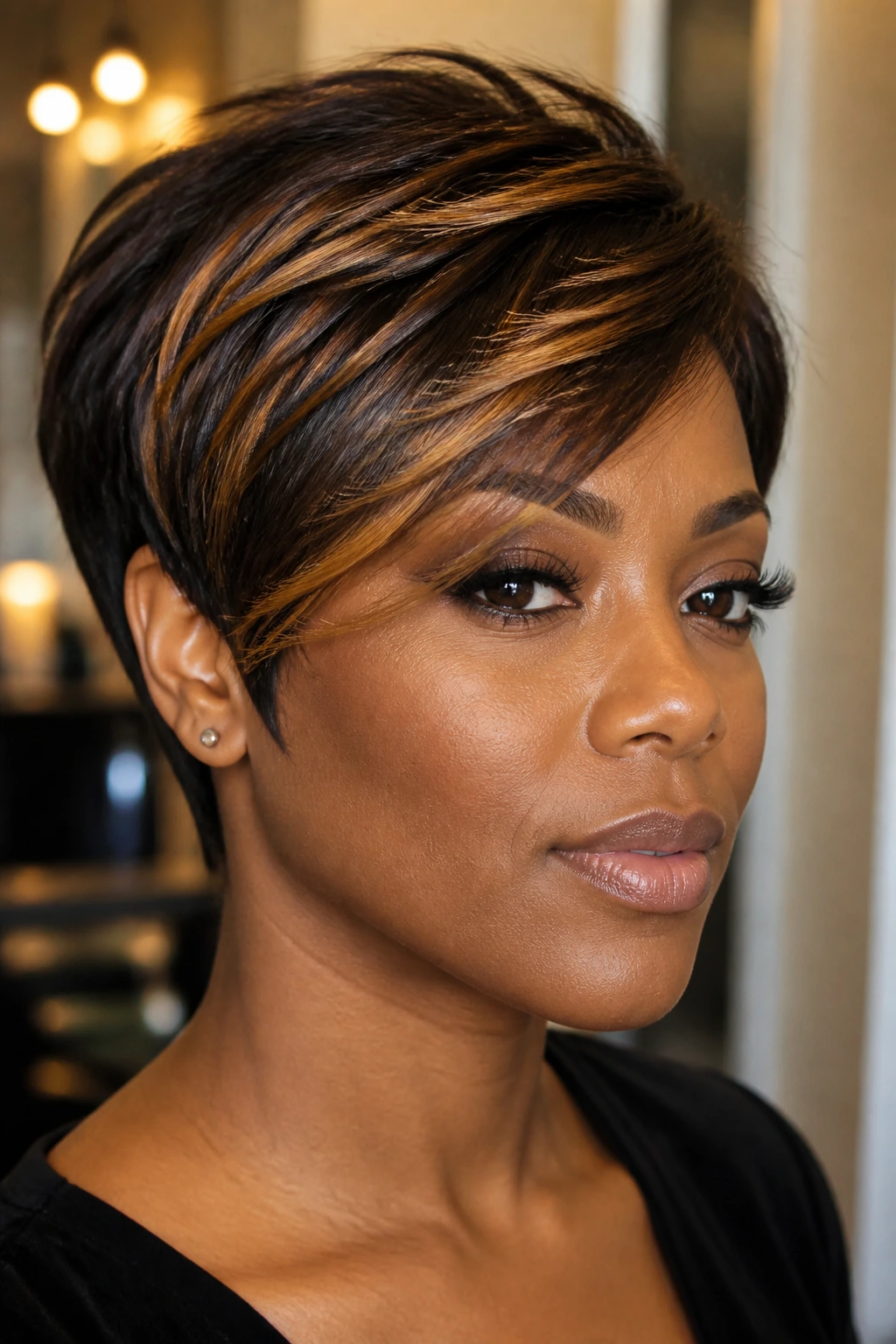
Short hair needs a different hand. A pixie bob does not have room for a long fade, so an amber ribbon placement makes more sense than a traditional ombré. Think a few warm ribbons along the top and around the face, with the base kept deep and neat.
The result is useful on thin hair because short cuts can look flatter than you want at the crown. The amber pieces break that up and make the top layer look lifted. On deep skin tones, amber should stay rich and brown-based, not bright orange.
If you like to tuck one side behind the ear or wear small curls at the front, this one pops in a good way. The color lives where the eye goes first.
17. Latte Ends on Straight Midlength Hair
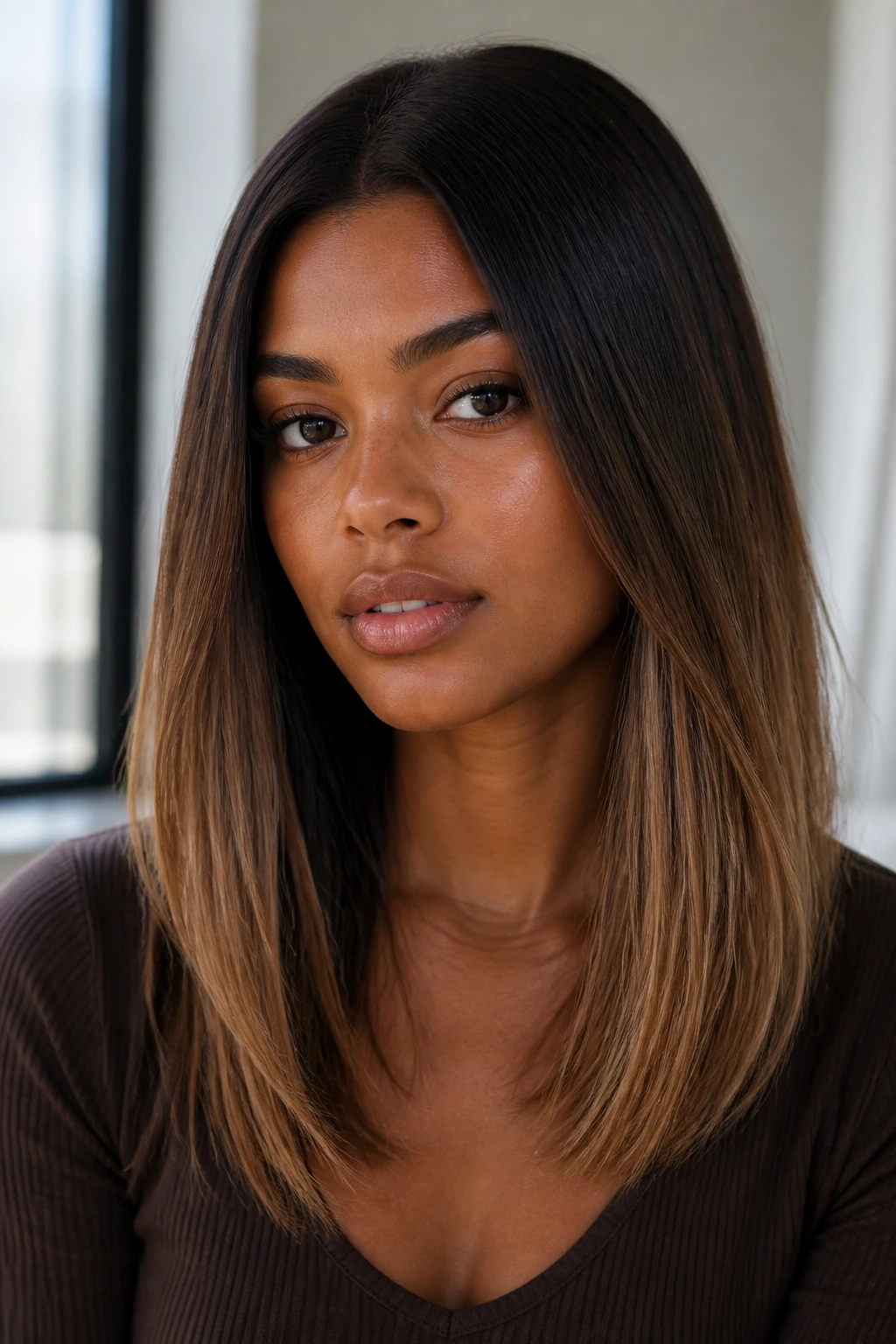
Straight hair shows every color line, so a soft fade matters more here than anywhere else. Latte ends keep the shift muted: a deep brown root, a warm beige-brown midsection, and ends that are lighter but not pale. The whole effect reads smooth instead of striped.
For deep skin tones, latte works best when it leans creamy rather than ashy. Thin straight hair can look stringy if the ends get too light, so keep the transition narrow and the gloss rich. A blunt midlength cut is a nice partner because the shape helps keep the line feeling full.
I’d tell a colorist to think “melt,” not “highlight.” That one word changes the whole result.
18. Chestnut Sheen on a Curly Lob
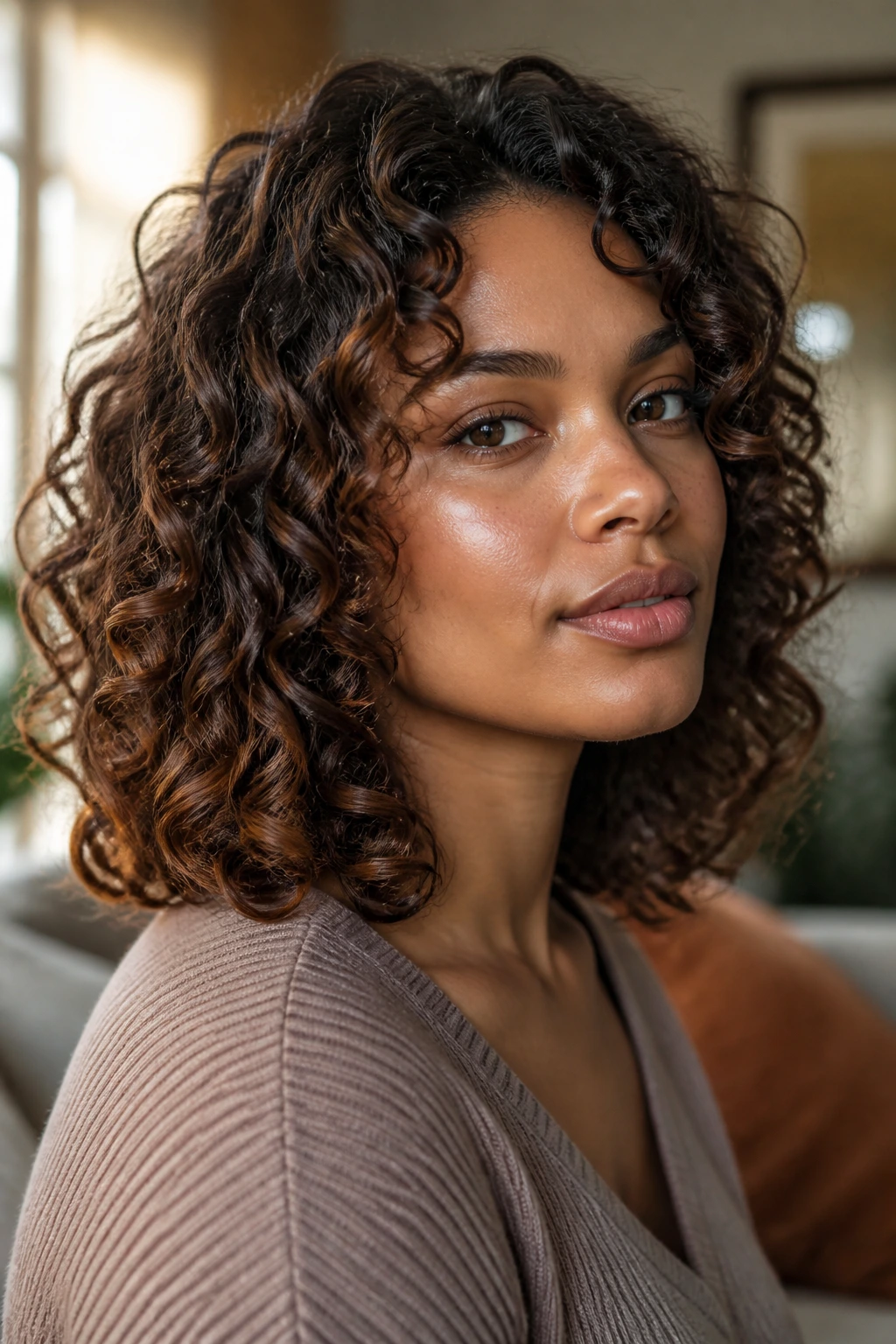
Curly hair can hide color in a good way. A chestnut sheen catches the ridges of each curl, so you get depth without needing aggressive lightening. On a curly lob, the silhouette stays full, and the color gives the surface a warm gloss that moves when the curls move.
Deep skin tones usually take chestnut easily because it stays rich and grounded. Thin curls, though, need a gentle touch. Too much lift can make the ends puffier without adding real fullness.
A curl-by-curl placement around the face and over the top layer is often enough. You do not need to color the whole head to make it read dimensional.
19. Bronze Dust on a Feathered Cut
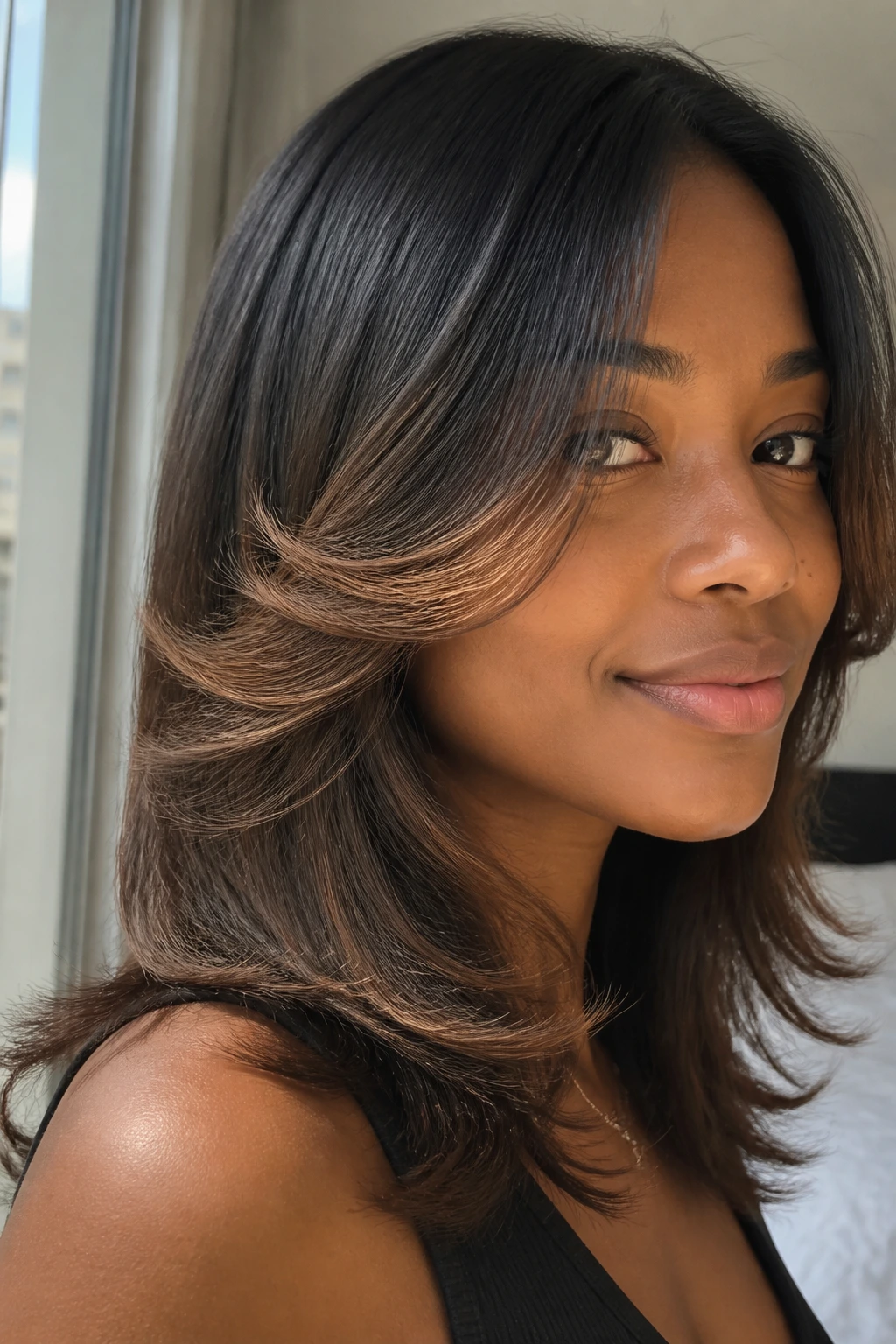
Bronze dust is tiny-lightness, not major change. That’s exactly why it works on feathered cuts. Feathered ends already create movement, so a light bronze glaze through the outer layer just enough to catch the edges gives shape without breaking the silhouette.
This is a strong pick for deep skin tones that want warmth but not copper. The bronze stays earthy, which keeps the finish believable. On thin hair, the feathering and the soft bronze work together: one creates motion, the other keeps the motion visible.
If you wear your hair blown back or swept away from the face, this look shows well. It has a little shine without needing much contrast.
20. Auburn Melt on Twist-Out Texture
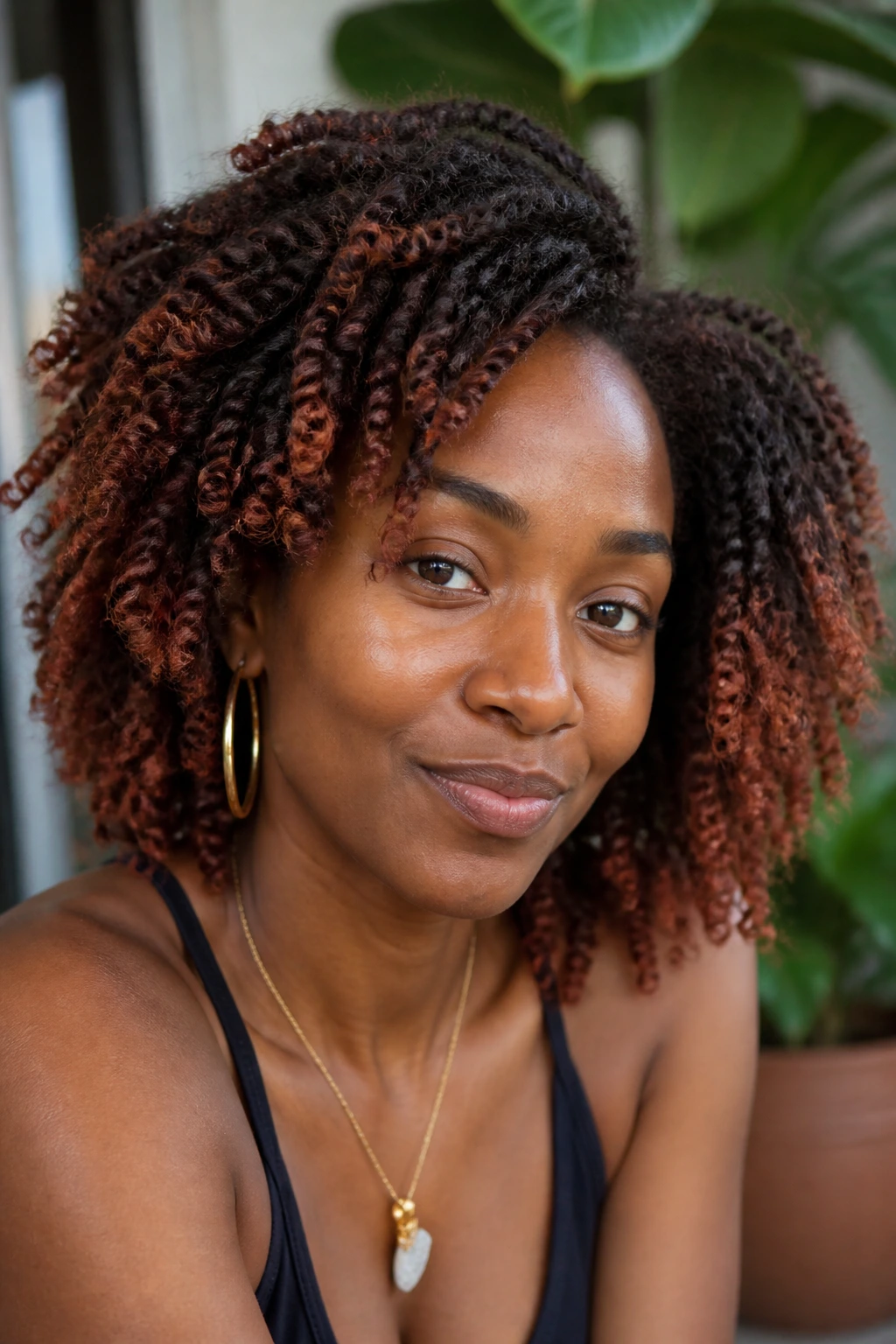
A twist-out gives you natural separation, which means subtle color can travel further than it does on straighter hair. An auburn melt gives that texture a warm brown-red glow while the roots stay deep and the ends only pick up a gentle lift.
The biggest mistake with textured hair is chasing a bright ombré that sits only on the tips. That can make the style look patchy. A melt through the outer layers of the twist pattern reads better and keeps the density intact.
On deep skin tones, auburn works best when it stays grounded in brown. Too much orange and the finish starts to feel loud in a way that fights the softness of the texture.
21. Soft Honey on Face-Framing Layers
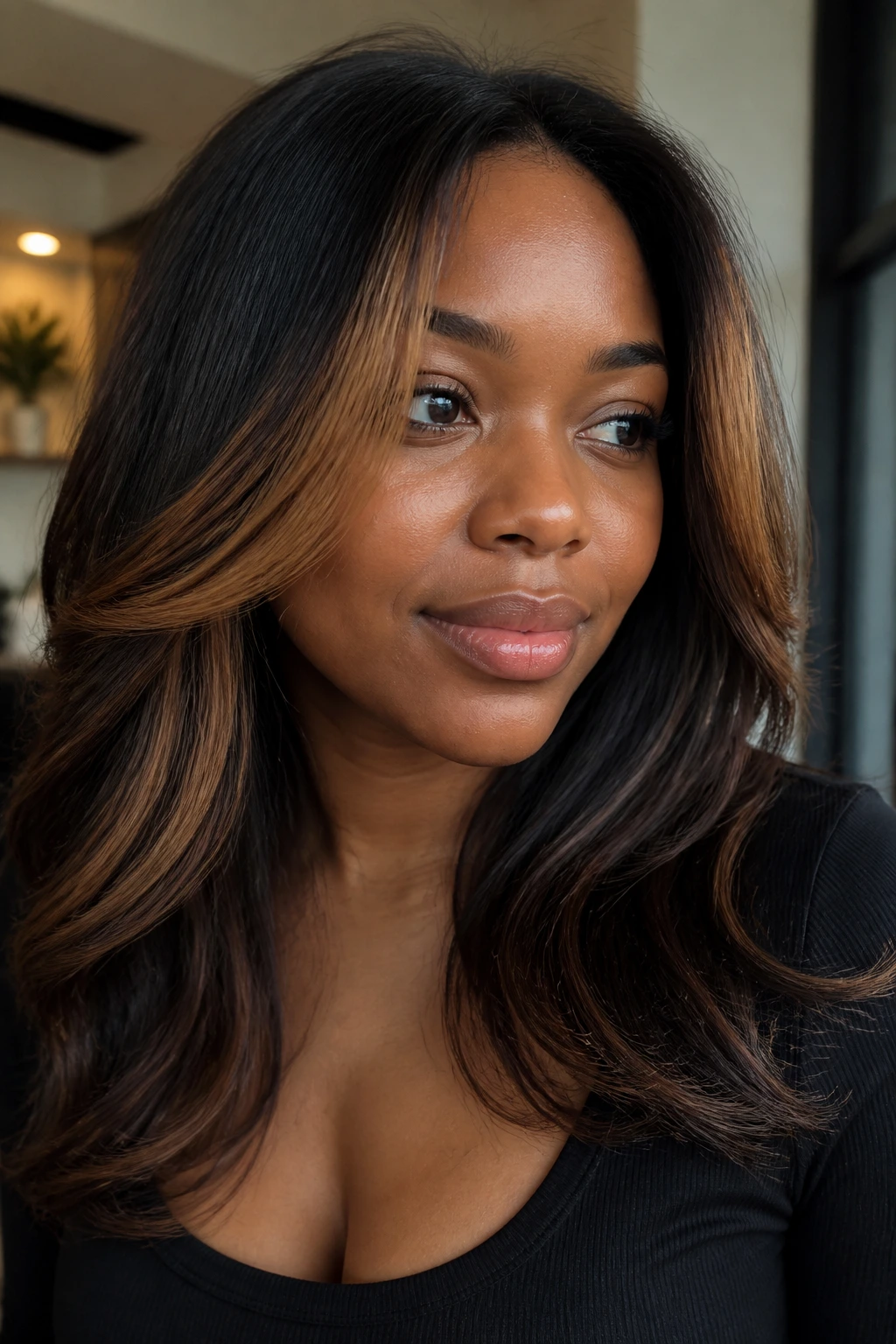
Want brightness without sacrificing fullness? Put it around the face and stop there. Soft honey on face-framing layers gives deep skin a warm glow right where it counts, and the rest of the hair stays dark enough to hold its shape. Thin hair usually looks better with that kind of restraint.
The honey should be narrow, not wide. A slim panel near the cheekbones and collarbone can do more than a heavy fade through the ends. This is especially useful if you wear a middle part, because the front pieces carry most of the visual work.
It’s the sort of color that looks easy, but only because the placement is tight. Wide placement would ruin it.
22. Deep Mocha With Barely-There Gold
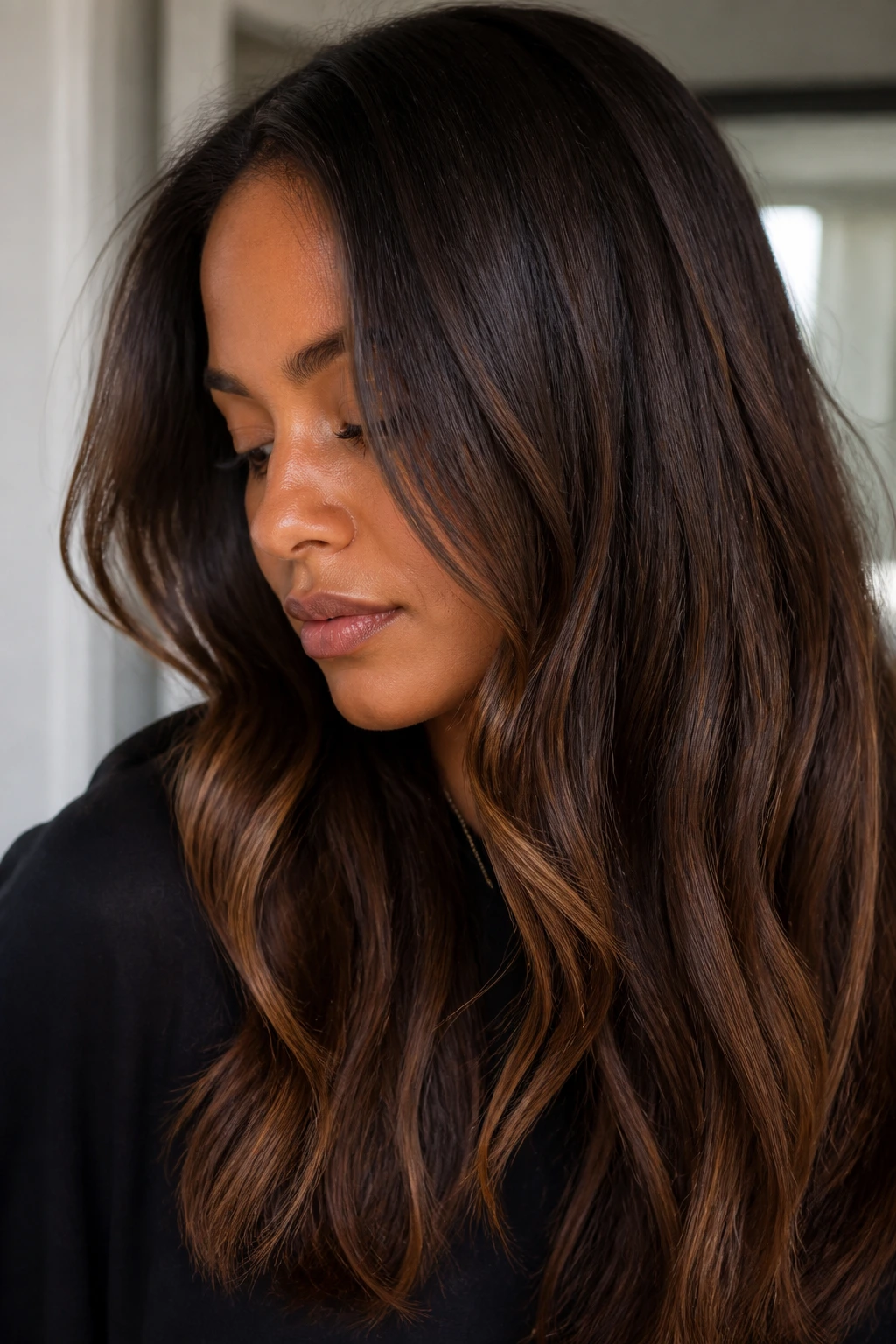
This is the quietest look in the bunch, and maybe the smartest if you want your hair to look fuller rather than lighter. Deep mocha keeps the base rich, while a barely-there gold glaze on the mids and ends gives the smallest possible shift. You notice the shine before you notice the color. Good. That’s the point.
For deep skin tones, deep mocha is a safe anchor because it stays in the brown family. The hint of gold prevents the result from going flat, but it never jumps into obvious blonde territory. Thin hair benefits because the surface catches light without exposing the scalp or thinning out the ends.
If you like polished hair that can survive a simple blowout, this one is hard to beat. It holds its shape and leaves room for the cut to matter.
Why Subtle Ombre Reads Fuller on Thin Hair
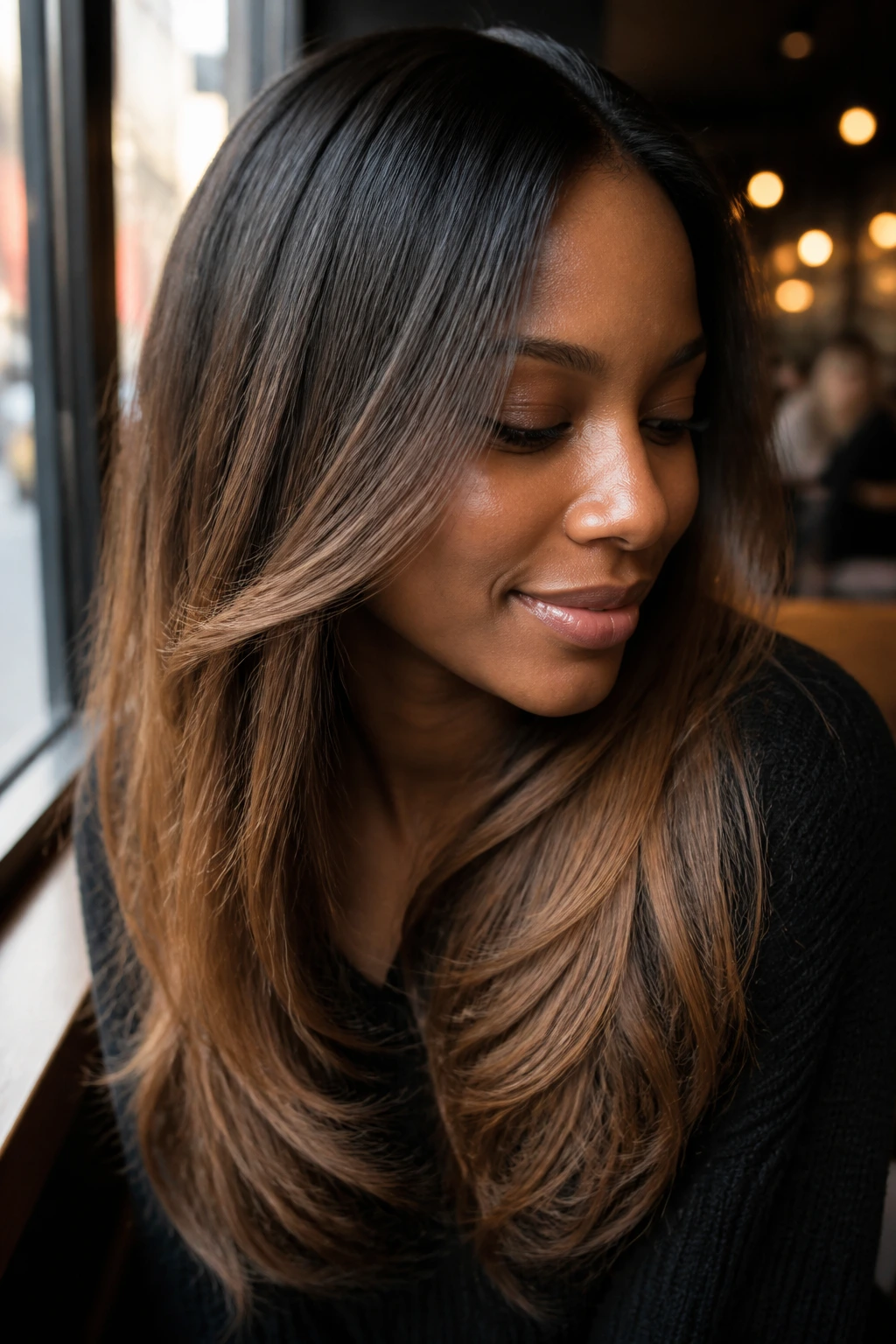
A blunt ombré line is easy to spot on fine hair. That’s the problem. The eye goes straight to the transition, and once it sees a hard break, it starts reading the bottom half as lighter, thinner, and sometimes drier than it really is.
Soft ombré does something more useful. It keeps the root and mid-lengths darker, which gives the hair a stronger visual frame. Then it eases into a lighter tone only where the hair can handle it — usually the last few inches, or a few face-framing strands, or a narrow veil through the top layer. The result looks like depth, not separation.
On deep skin tones, warm and smoky shades also reflect light better than pale blonde. Caramel, bronze, chestnut, toffee, cocoa, and mahogany all sit comfortably against rich undertones. They don’t fight the complexion, and they don’t make the hair look as if it was pushed too far in one sitting. That matters when the strands are fine. Over-lightening is where the ends go from soft to fragile-looking fast.
The Salon Language That Prevents Over-Lightening
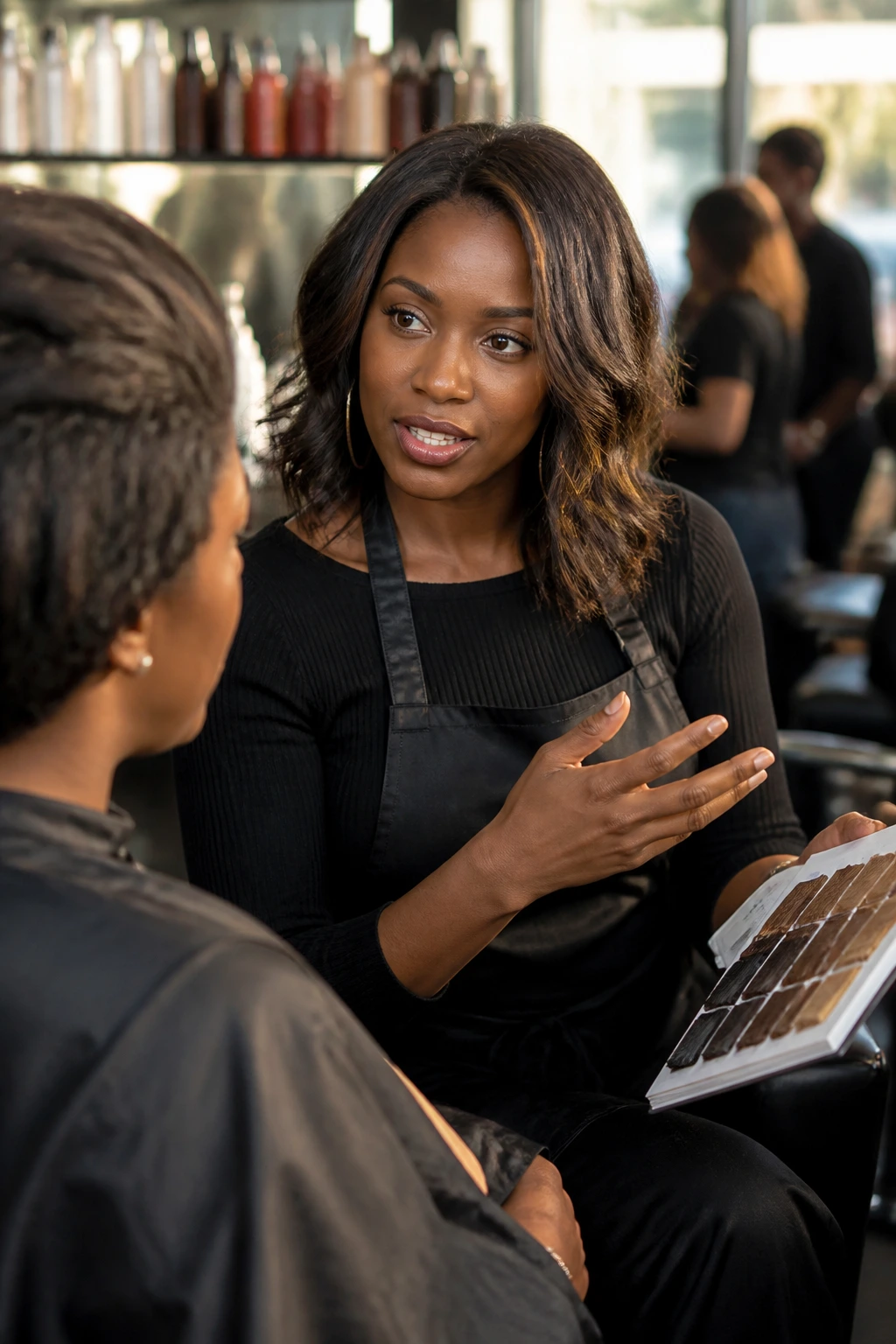
Bring pictures, yes, but bring words too. A good colorist can read an image, yet a few precise phrases make the whole appointment smoother. I’d use terms like shadow root, root smudge, micro-balayage, babylights, demi-permanent gloss, and warm level 6 or 7 caramel if that’s the range you want. Those phrases give real direction.
If your hair is thin or fine, say that plainly. Tell them you want the ends to keep their fullness and you do not want the lightest pieces pushed too high or too wide. That one sentence changes placement. It tends to keep brightness around the surface instead of digging into the entire lower half.
A few useful booking notes:
- Ask for a soft melt, not a hard fade. Hard fades show every line.
- Request beige, caramel, bronze, chestnut, or mocha tones. These flatter deep skin better than stark ash or pale blonde.
- If your hair is fragile, split the lightening into two sessions. There is no prize for doing it all in one day.
- Get a gloss after lightening. That’s where the shine and tone settle in.
Tools and Products That Help the Blend Stay Soft
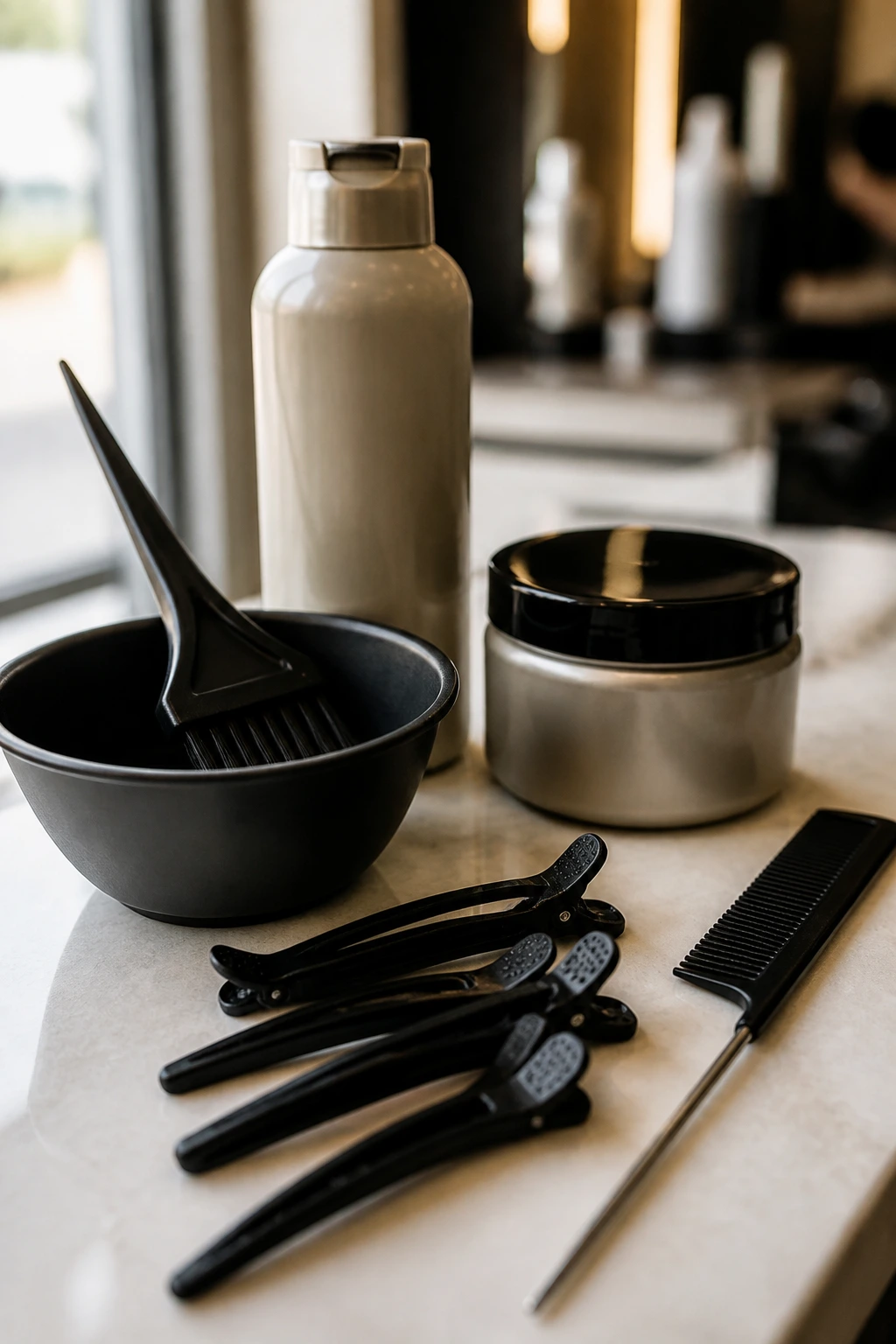
You do not need a giant cart of hair gear. A few specific things matter more than a shelf full of bottles.
-
Sectioning clips: Keep the hair organized so color placement stays narrow instead of drifting too far down the ends.
-
Tail comb: Useful for clean parting and for showing your colorist exactly where you want the blend to start.
-
Tint brush and mixing bowl: Needed if you’re doing a gloss or root smudge at home; wide brushes make placement sloppy.
-
Color-safe shampoo: A sulfate-free wash helps keep warm caramel and bronze tones from fading too fast.
-
Deep conditioner or mask: Fine hair still needs moisture after lightening, but choose a lighter formula so the ends don’t go limp.
-
Heat protectant spray: If you blow-dry or flat-iron, this is not optional. Thin hair shows heat damage quickly.
-
Microfiber towel or soft T-shirt: Reduces roughing up the cuticle, which keeps the glossy finish smoother.
-
Wide-tooth comb: Better than a brush when the hair is wet and fragile.
-
Gloss or toner: The fastest way to refresh the shade between appointments without re-lightening.
How to Wear the Color So It Doesn’t Get Lost
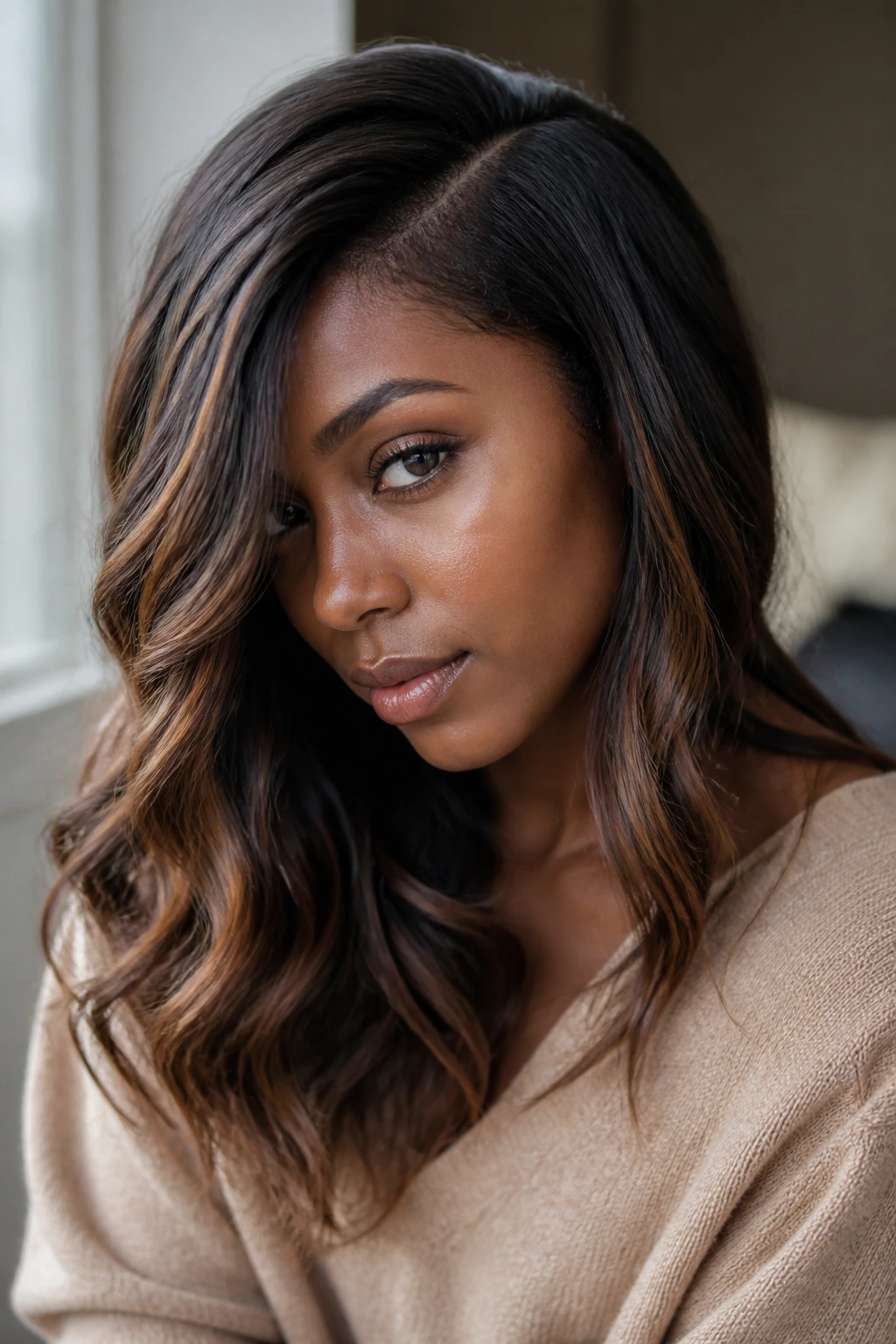
Parting: A deep side part gives thin hair a little lift at the crown, while a soft center part shows off a narrow face frame. If the blend is very subtle, move the part an inch or two and the color will suddenly read much clearer.
Texture: Soft bends are your friend. A 1.25-inch curling iron, a round brush blowout, or a diffused curl pattern gives the lighter pieces a place to catch light. Poker-straight hair can look sleek, but it also hides subtle dimension unless the gloss is rich.
Finish: Keep serum or oil on the mids and ends only. Heavy product near the root makes fine hair collapse, and once that happens, the ombré loses the lifted look you paid for.
Accessories: Small gold hoops, tortoiseshell clips, and satin scarves do a nice job of echoing warm ombré tones without crowding the hair. Large, shiny barrettes can compete with the softness.
Ways to Tweak the Tone Without Losing the Softness
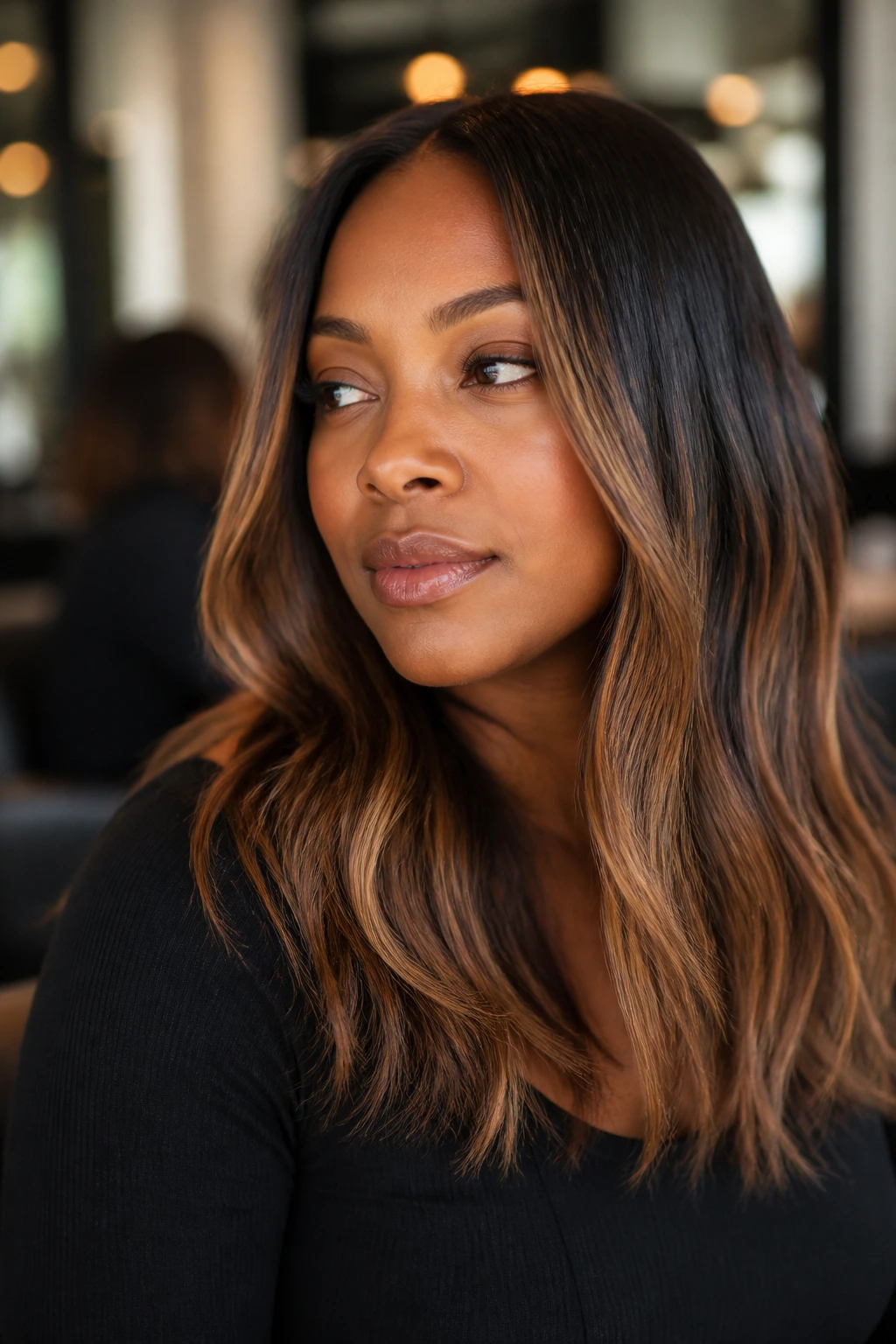
Warm Caramel Drift: Push the ends a little warmer if your skin has golden undertones and your hair tends to look flat in cooler shades. A caramel gloss every few weeks keeps it rich.
Smoky Bronze Shift: Add a cooler bronze glaze if your hair pulls orange easily or if you like a muted finish. This is useful on deep neutral and cool skin tones, especially with straight styles.
Mahogany Bias: Ask for more red-brown if you want the hair to look thicker and fuller in low light. That tiny red reflection can add life without making the look loud.
Face-Frame Brightening: If the ends stay subtle, you can still brighten around the temples and cheekbones. That gives lift where people look first and keeps the back of the hair visually dense.
Texture-Specific Placement: On curls and coils, place brightness on the outer curve of the pattern. On straight hair, keep the lightest pieces narrower and closer to the surface. Same color family. Different placement.
Maintenance, Regrowth, and Re-Toning
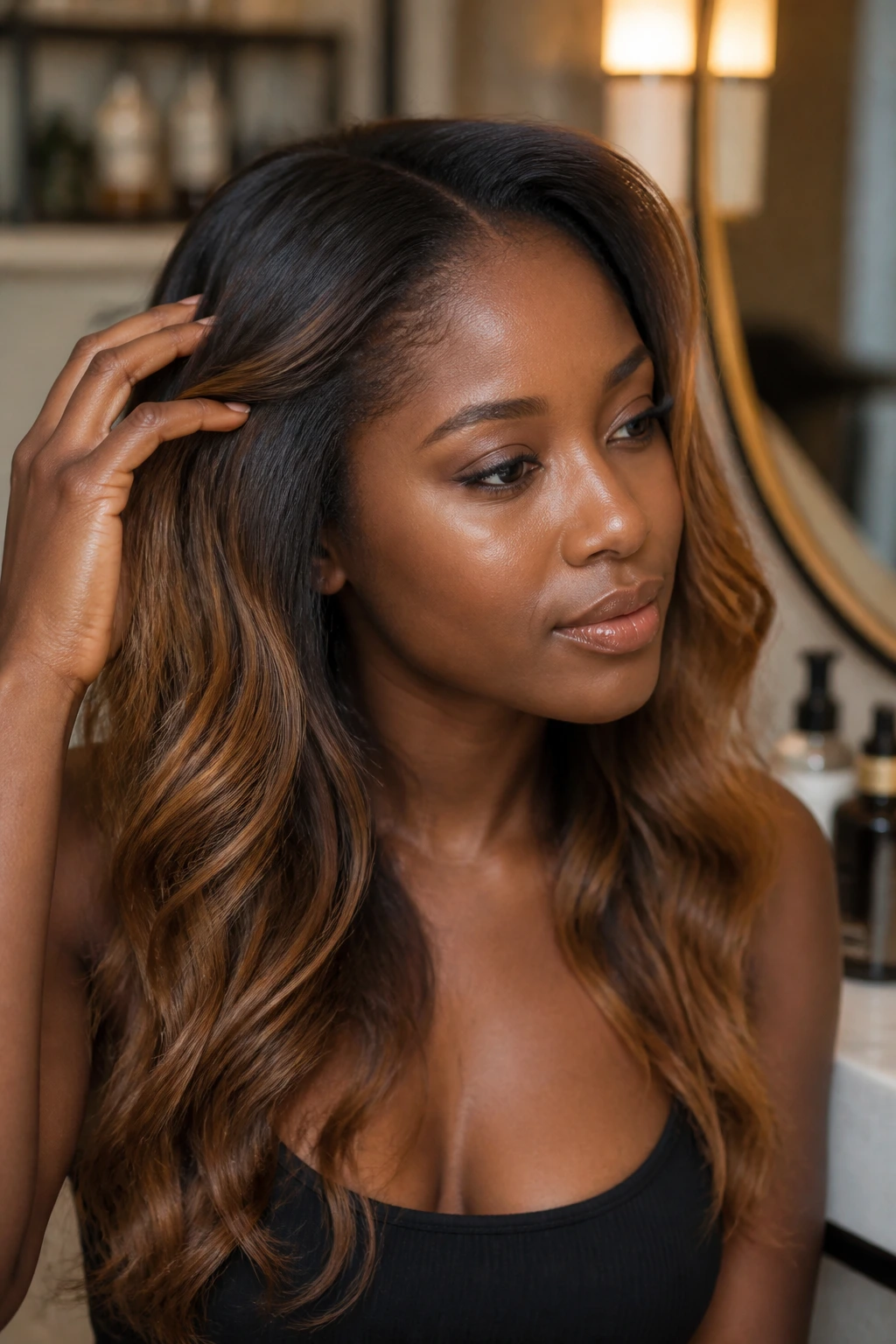
Subtle ombré is kind to the grow-out line, but it still needs care. Plan on a gloss refresh every 4 to 6 weeks if you want the tone to stay clean and shiny. If you’re using richer brunette-to-caramel shades, a gloss keeps the color from drifting dull or muddy.
For lightening work, many people can stretch partial touch-ups to 10 to 14 weeks, especially if the fade stays close to your natural depth. If you chose brighter face-framing pieces, you may want a refresh a little sooner because those pieces show wear first. Thin hair also benefits from regular trims, usually every 8 to 10 weeks, so the ends stay blunt enough to look full.
Use a color-safe shampoo 2 to 3 times a week, not daily unless your scalp needs it. Warm tones like caramel and copper can fade fast in hot water, so keep rinse water lukewarm and finish with a cooler splash if you can handle it. If you wear smoky bronze or ashier shades, a blue or violet-depositing conditioner once every 1 to 2 weeks is enough. More than that can dull the softness.
Common Mistakes That Make Thin Hair Look Sparse
-
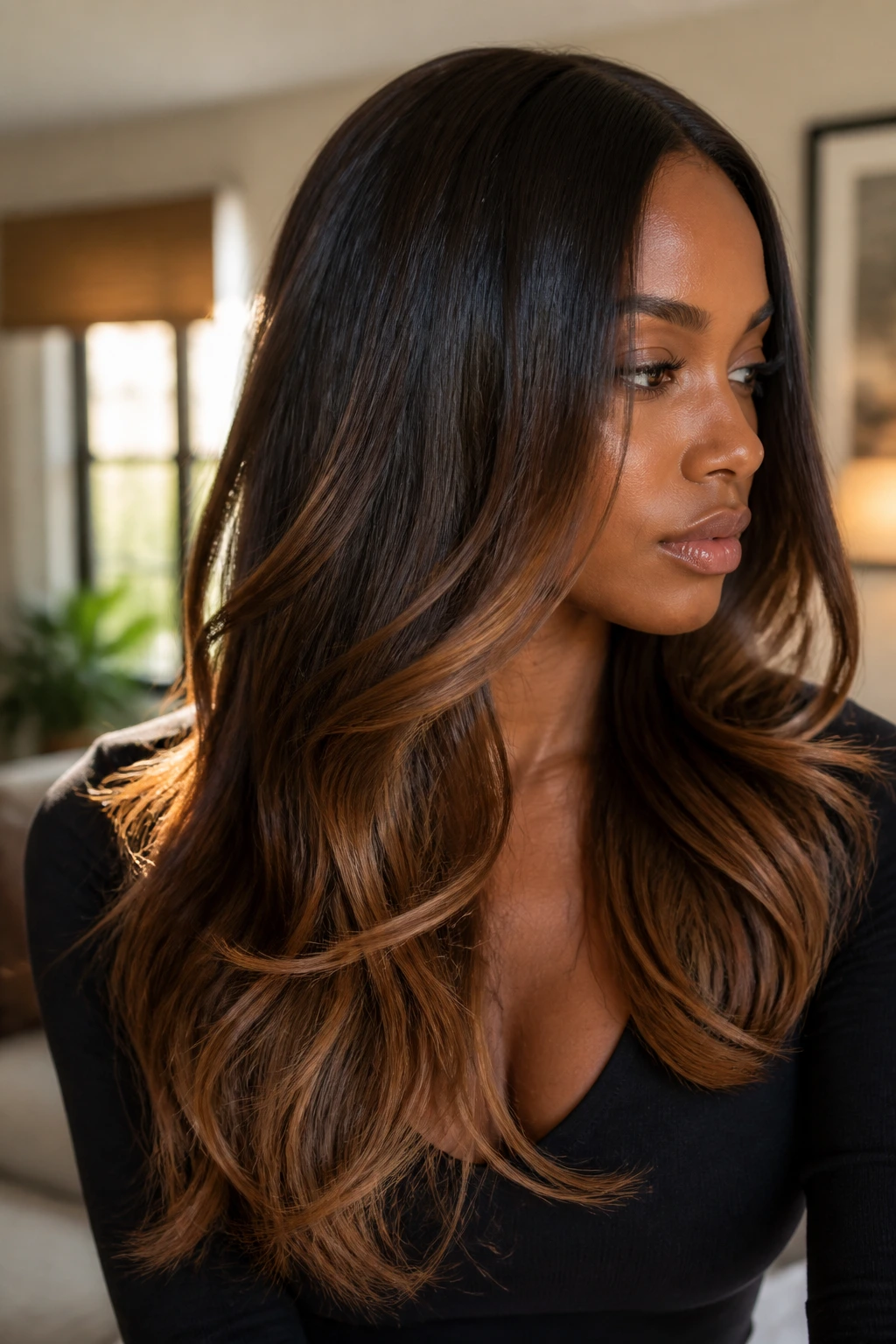
Going too light too fast: Ends that jump straight to pale blonde can look airy and damaged. Fix it with a smaller lift and a warmer gloss.
-
Starting the fade too low: If the transition only begins at the very tips, the color line looks obvious and the hair below it can seem even thinner. Move the blend higher through the mids.
-
Choosing the wrong undertone: Ashy beige on warm deep skin can look flat; copper-orange on cool skin can look loud. Match the tone to the complexion, not to a photo you saved three years ago.
-
Skipping the gloss: Lightened hair without a toner or glaze often reads dry and patchy. A gloss is where the softness comes back.
-
Using too much purple shampoo: On warm brunettes, it can mute the glow and leave the hair looking dull. Use it only when the shade actually needs cooling.
-
Letting the ends fray: Thin hair needs trims. If the ends split, the ombré loses the density that makes it flattering.
Questions People Ask Before They Book
Will subtle ombre make thin hair look thinner?
Not if it’s placed well. A soft fade that keeps the root darker and the lighter pieces narrow usually makes thin hair look fuller, because the outline stays intact.
What ombre shade looks best on deep skin tones?
Caramel, bronze, chestnut, mocha, honey-brown, and mahogany are the safest bets. They stay rich against deep complexions and avoid the chalky look that some pale blondes create.
Can I get ombre on black hair without bleach?
You can sometimes add a tinted gloss or very soft lift, but true ombré usually needs some lightening for the ends to show. If you want to keep damage low, aim for a warm brown shift instead of blonde.
How much contrast is too much for thin hair?
If the ends look two full color steps lighter than the root, the fade may be too sharp. One to two levels of lift is usually enough for a subtle result.
Is ombre good on curls and coils?
Yes, but placement matters more than brightness. Color should follow the curl pattern and sit on the outer curve, or it can look spotty instead of dimensional.
Should I ask for balayage or ombre?
For thin hair, a blended balayage-ombré mix is often better than a strict ombré line. It gives you the fade you want without a hard start point.
How do I stop warm ombre from turning brassy?
Use a color-safe shampoo, keep heat low, and refresh with a beige or bronze gloss instead of re-lightening too often. Brass usually shows up when warm hair gets overwashed or overheated.
Can I wear subtle ombre with a blunt cut?
Absolutely. A blunt bob or lob often benefits the most because the cut gives the hair structure while the soft tone shift adds movement at the edge.
Soft Edges, Fuller Shape
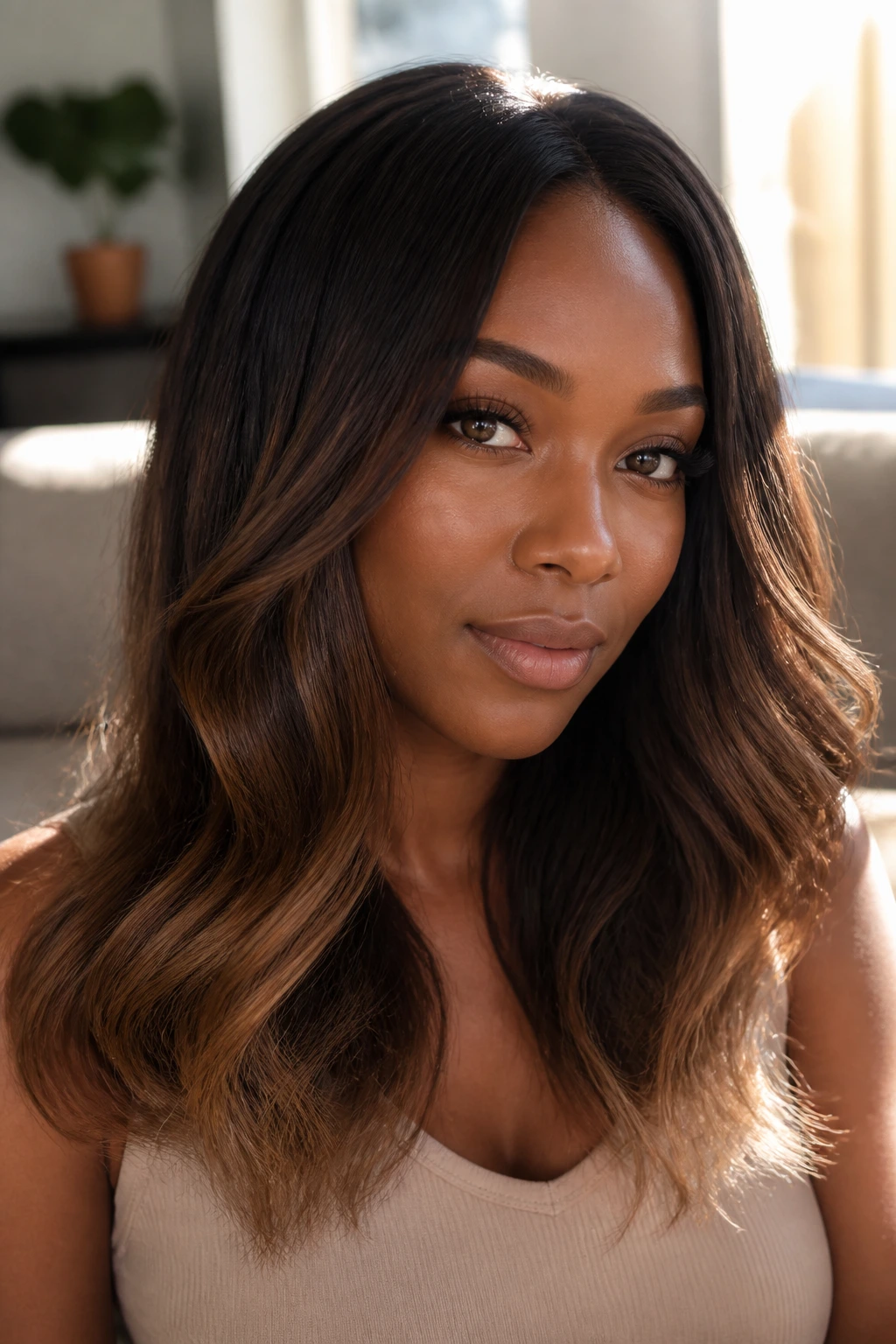
The nicest thing about these looks is that they do not fight the hair you have. They work with fine density, not against it. The root stays strong, the fade stays soft, and the final result keeps enough depth that the ends still look like they belong to the head of hair, not to a different photo.
That’s the real payoff with subtle ombré on deep skin tones and thin hair: the color gives you glow, but the shape keeps its weight. If you bring one thing to your color appointment, bring that idea. The best version will look calm, grown-in, and full enough to survive a ponytail, a blowout, and a bad fluorescent bathroom light without falling apart.