



Short natural hair has a way of telling on a style. If the front is too dense, it looks heavy. If it’s too thin, it looks unfinished. A weave bang solves both problems when it’s shaped well, and lowlights do the part people often miss: they keep the fringe from reading like one solid dark sheet across the forehead.
That’s the real reason this pairing works. A bang changes the face frame in one move, but the lowlights give it depth, especially on short natural hair where shrinkage, taper, and texture can make the front look flatter than the rest of the style. A few ribbons of chestnut, espresso, cocoa, or auburn break up the surface so the hair moves when you turn your head. It stops looking pasted on. Good. That’s the whole point.
The styles below range from soft and side-swept to cropped and sharp, because the best bang for short natural hair depends on your texture, your forehead, and how much heat you want to use. Some of these are easy clip-in looks. Some want a quick weave, a sewn bang piece, or a bang unit with a little bend. The common thread is simple: keep the shape intentional, keep the lowlights deliberate, and the front of the style starts doing real work instead of just sitting there.
Why These Bangs and Lowlights Work So Well on Short Natural Hair
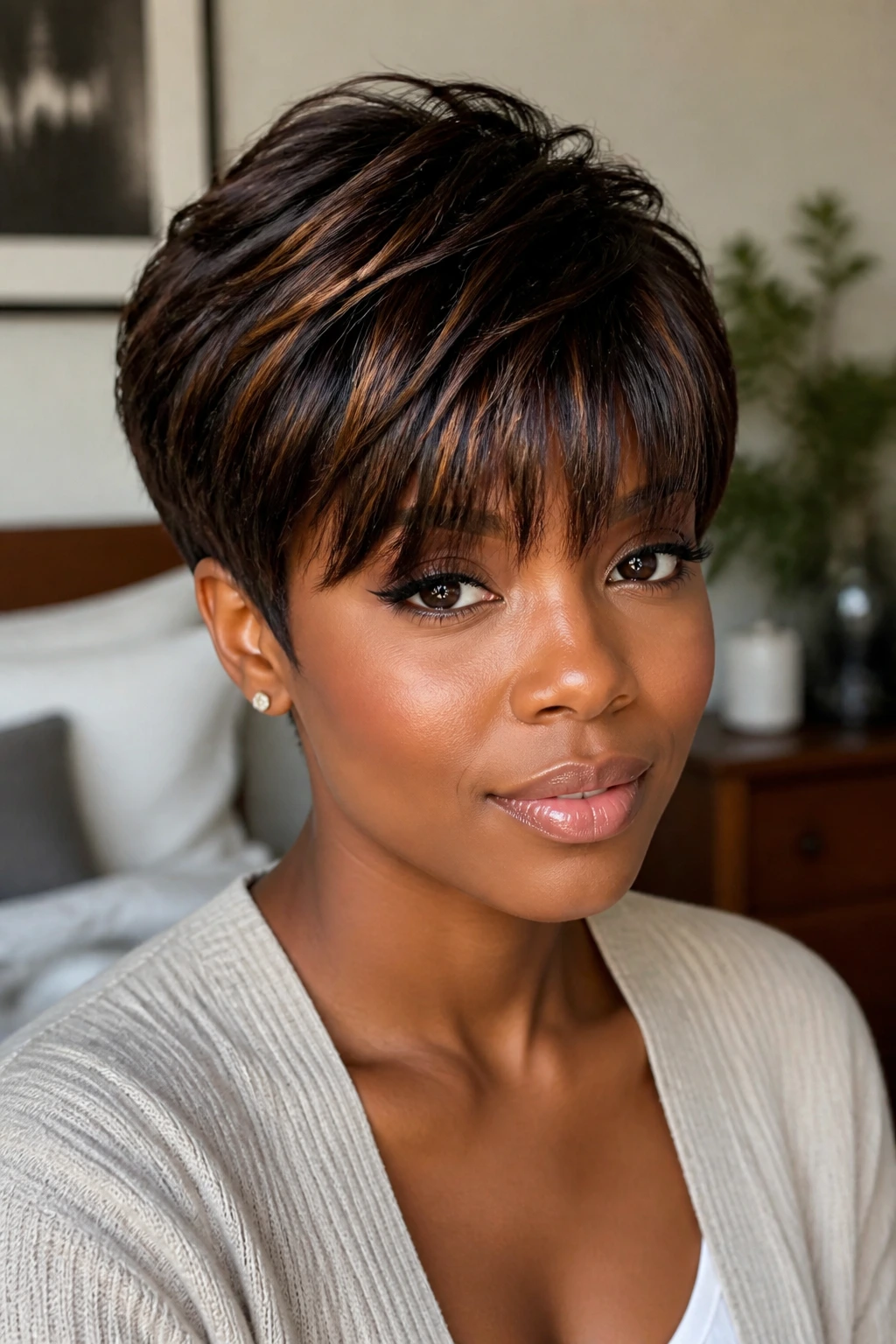
Color depth matters: A bang with lowlights one or two shades deeper than the base color has more movement in daylight and under indoor light. Solid dark fringe can look flat fast, while espresso or chestnut ribbons give the eye something to track.
Short hair needs a clean front line: On cropped natural hair, the fringe is doing most of the visual heavy lifting. A bang that lands at the brow, skims the cheekbone, or sweeps diagonally can make the cut look fuller without forcing you into a lot of heat styling.
Texture matching keeps the style believable: When the weave bang mimics your stretched curl pattern, twist-out pattern, or pressed finish, the seam disappears faster. That matters more than the exact cut length.
Lowlights hide the join: If your natural roots, leave-out, and bang piece are all one flat color, every edge shows. A few darker ribbons blur the line and make the install look less obvious.
You can shift the mood without changing the whole style: The same short natural base can read soft, sharp, edgy, or polished just by changing the fringe shape. That’s a small change with a big visual payoff.
1. Soft Side-Swept Feather Bang
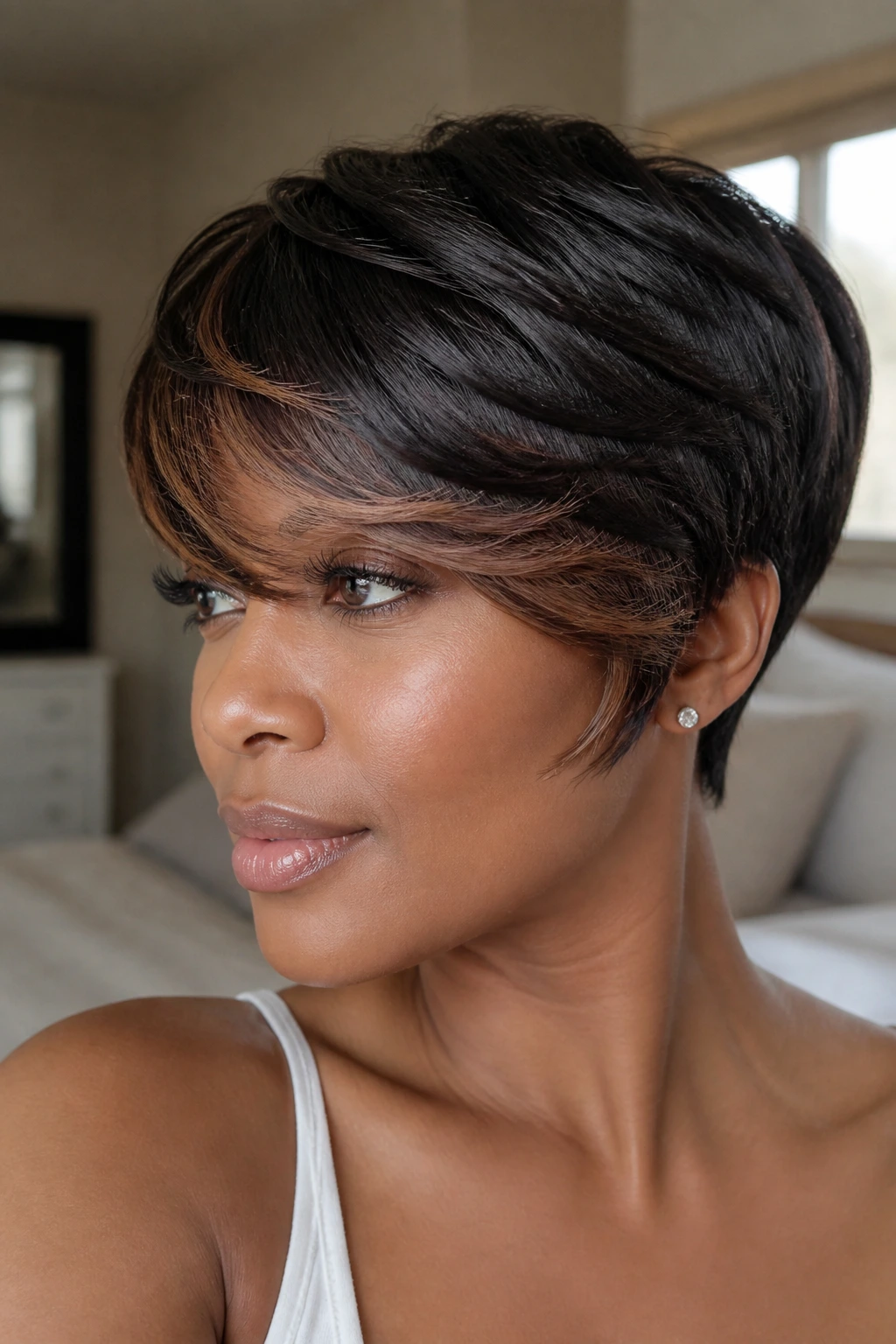
A feathered side sweep is the easiest place to start because it forgives short natural hair that doesn’t lay the same from root to tip. The bang falls diagonally across the forehead, so the whole shape feels lighter than a blunt line. Chestnut lowlights near the ends keep it from reading like one dark ribbon.
Why the lowlights matter
The darker strands break up the feathering and make the edges look softer. I like this shape when the rest of the hair is short on the sides but has a little stretch at the crown.
- Best for oval, round, and heart-shaped faces.
- Works with a side part set about 2 inches off center.
- A loose bend from a 1-inch curling wand helps the ends stay airy.
Tip: Trim the longest point just below the brow, not across the middle of it. That tiny bit of extra length keeps the fringe from looking chopped.
2. Blunt Brow-Skimming Fringe
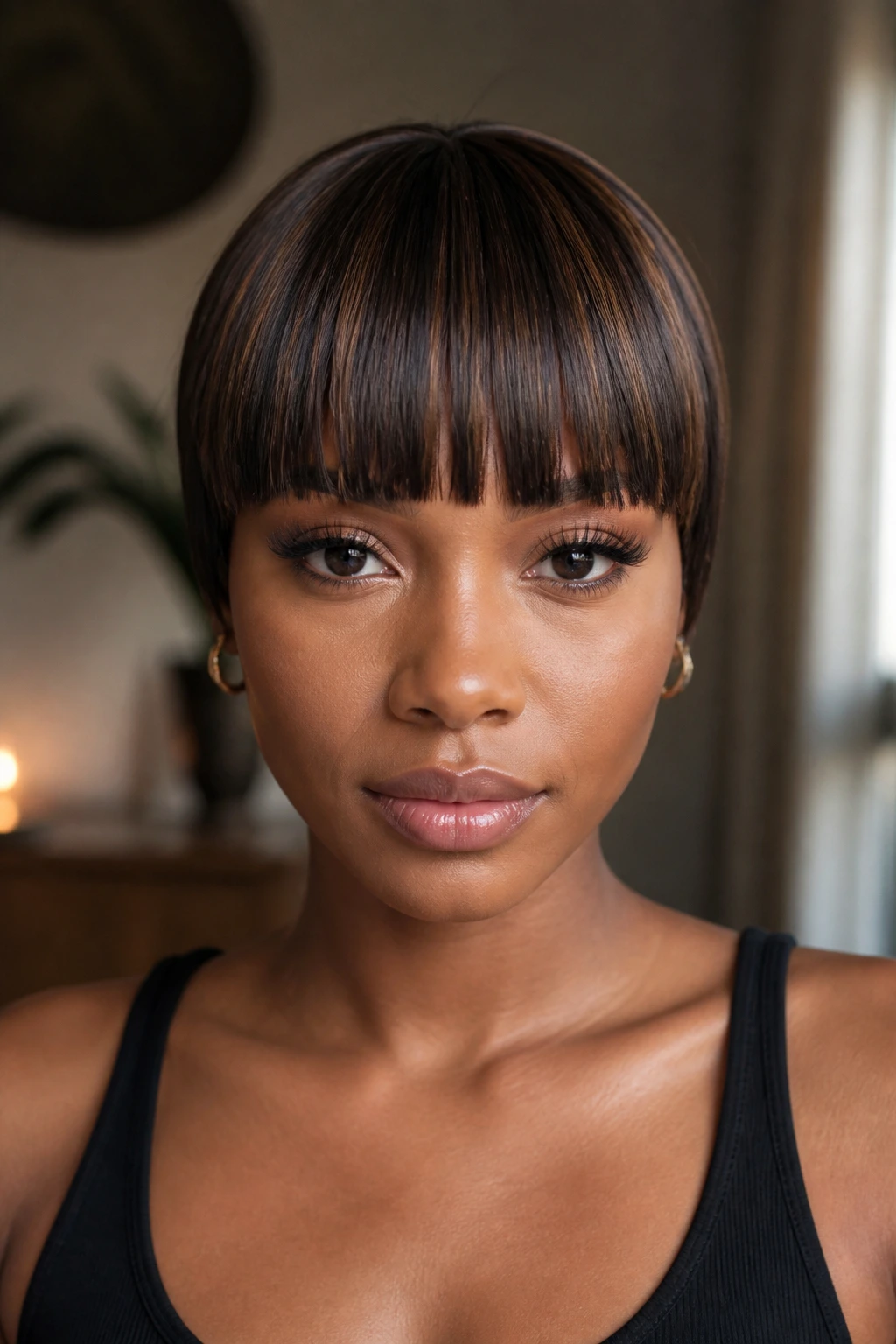
This is the sharpest look in the group. A blunt bang that stops right at the brow line gives short natural hair a clean front edge, and espresso lowlights stop the surface from turning into a flat dark wall. It has a little attitude. Not loud, just decisive.
For this one, the density matters more than the curl pattern. If the bang piece is too thin, the blunt line looks stringy. If it’s too thick, the whole front feels heavy by noon. I’d reach for this when the rest of the style is tucked, cropped, or close enough to the head that the fringe can take center stage without competing.
The best version lays smooth at the root and keeps the ends blunt but soft. A light press around 300°F works for human hair extensions; if the hair is synthetic, don’t force heat on it. Shape it with the cut itself and a little wrap setting instead.
3. Curly Curtain Bang
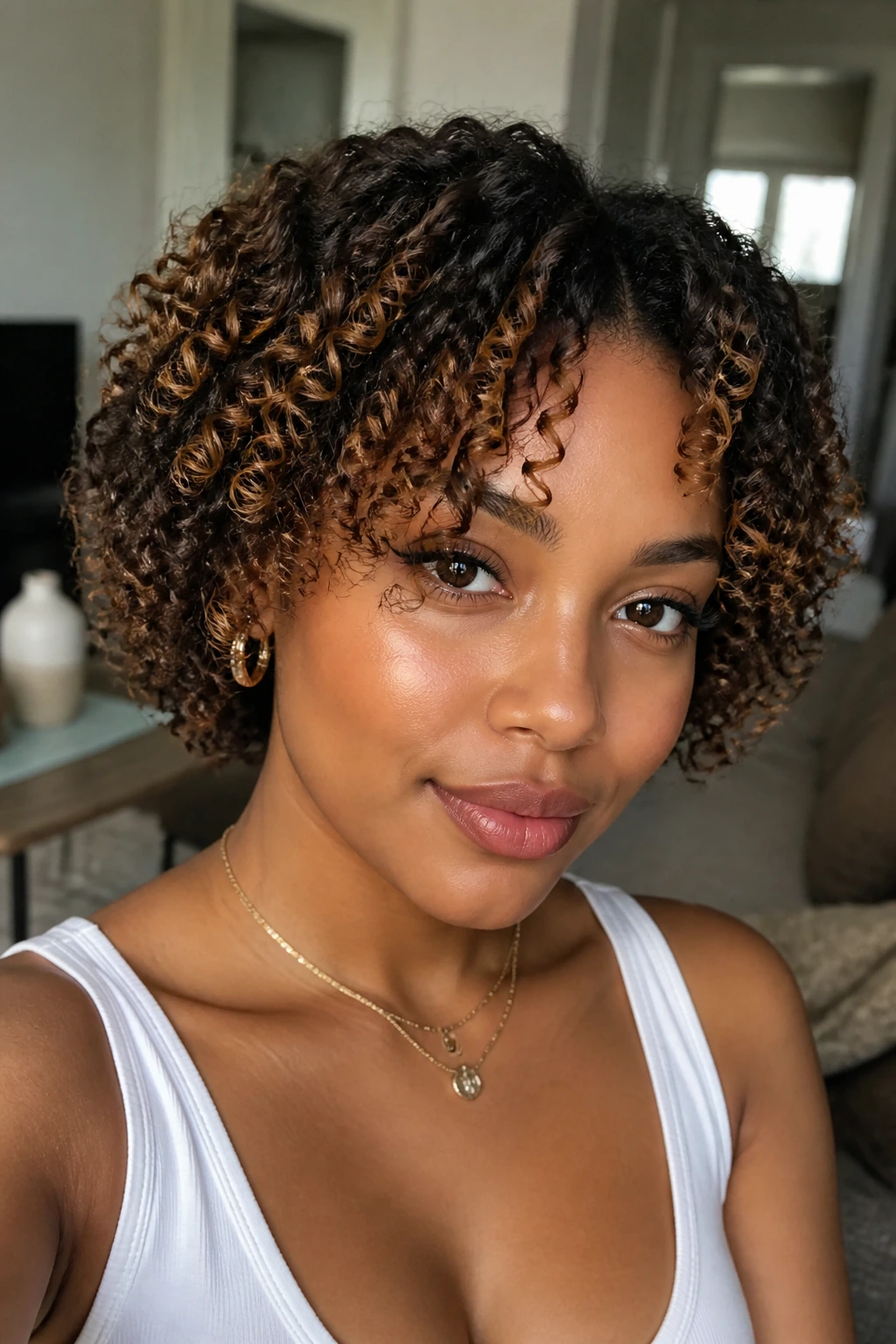
Why does a curly curtain bang work so well? Because the middle split lets your texture do the framing instead of fighting it. The two sides open away from the face, and caramel lowlights make each curl clump look more defined.
This style is one of my favorites on short natural hair because it doesn’t demand perfect symmetry. The left side can sit a touch fuller than the right, and it still reads right. That little messiness is part of the charm.
How to style it
Set the bang with flexi rods or small perm rods, let it cool fully, then separate the curls with oiled fingertips only once. If you keep fluffing, the lowlights lose their ribbon effect and the whole front gets fuzzy. A clean middle part makes the style look softer, while a slightly off-center part gives it a more casual feel.
4. Asymmetrical Pixie Bang
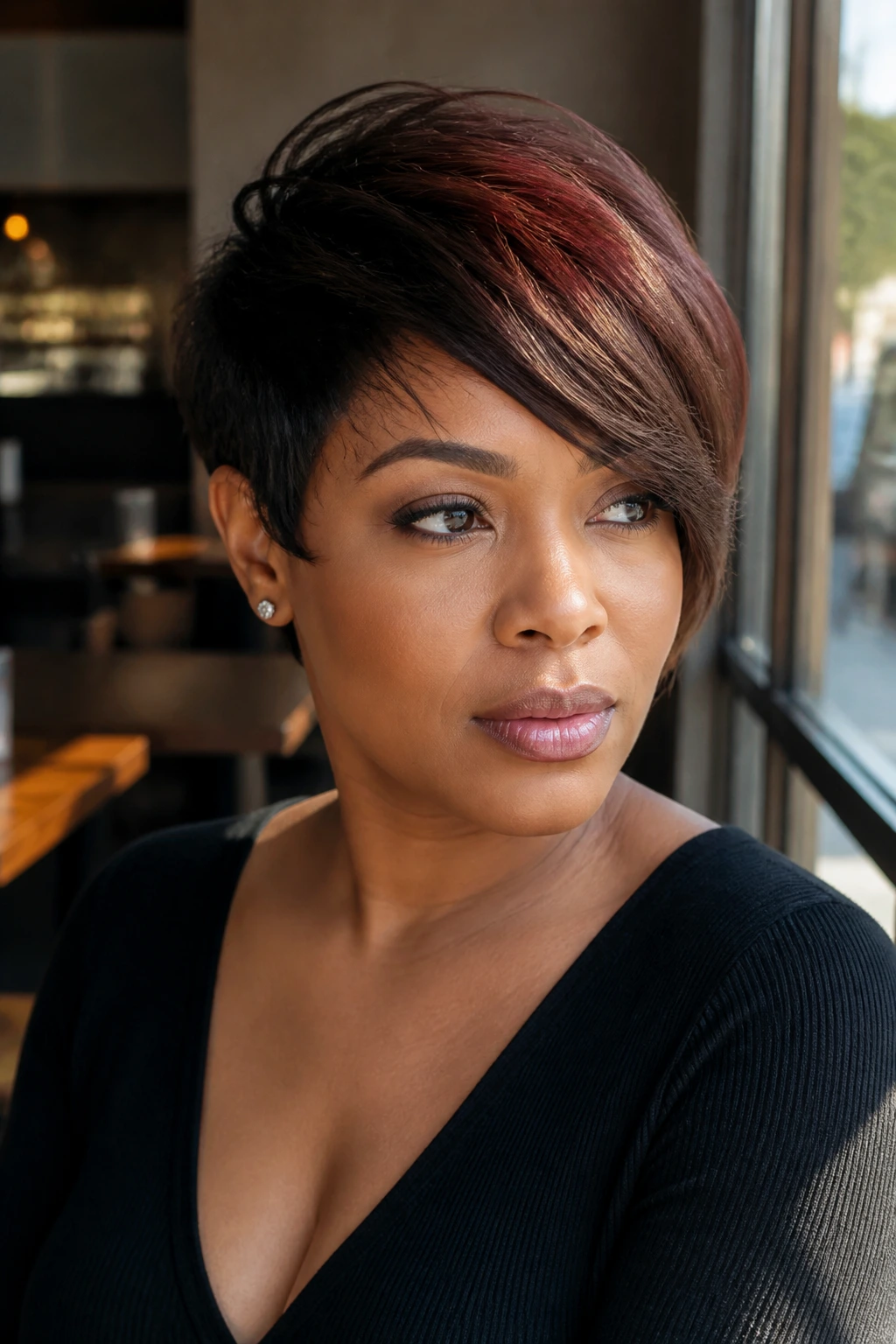
You know that moment when a short cut needs edge, not length? This is that shape. One side stays shorter, the other side sweeps longer across the brow or toward the cheekbone, and mahogany lowlights make the angle visible instead of muddy.
- Short side: about 1 to 1.5 inches shorter than the long side.
- Long side: just enough to graze the outer brow.
- Best when the sides of the natural hair are closely cropped.
That diagonal line does a lot of work. It creates motion even if the rest of the hair is tight to the head. I’d pick this for someone who likes structure, hates a heavy forehead, and doesn’t want a bang that sits politely. This one has a little bite.
5. Wispy Micro Bang
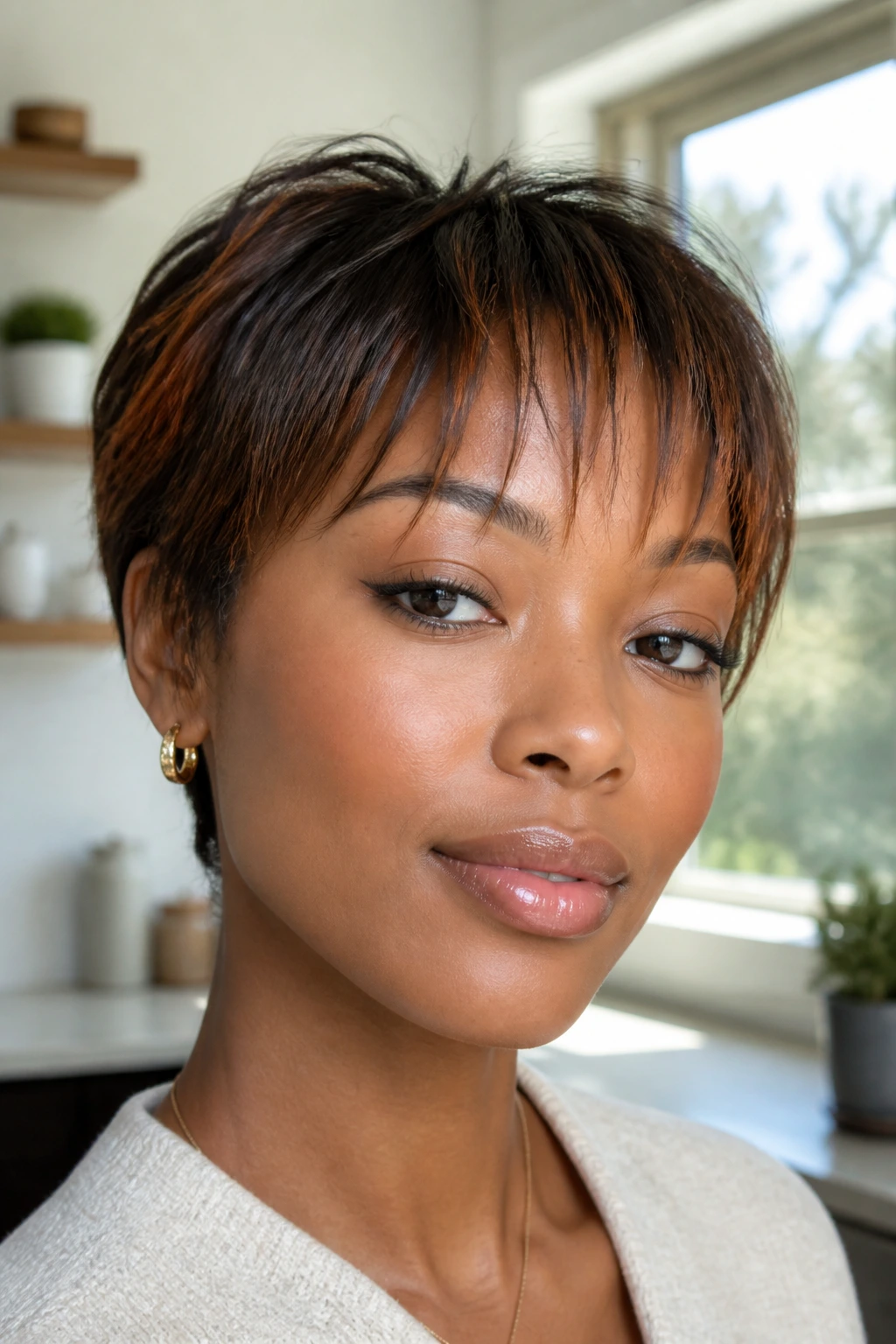
A wispy micro bang is for the reader who wants forehead visible and fringe present at the same time. It sits short, light, and piecey, with auburn lowlights threaded through the ends so the cut doesn’t disappear against the skin.
The trick here is restraint. You want tiny separations, not a dense curtain. On short natural hair, that lightness keeps the style from crowding the face or making the crown look too busy. It’s especially useful if you wear glasses, because the shorter fringe leaves room for the frame line.
This is one of those styles that looks easy and is not quite as easy as it seems. The bang needs a soft texture, a clean trim, and a little bit of direction at the root. Too much product, and it clumps. Too little, and it flicks every which way.
6. Layered Shag Bang
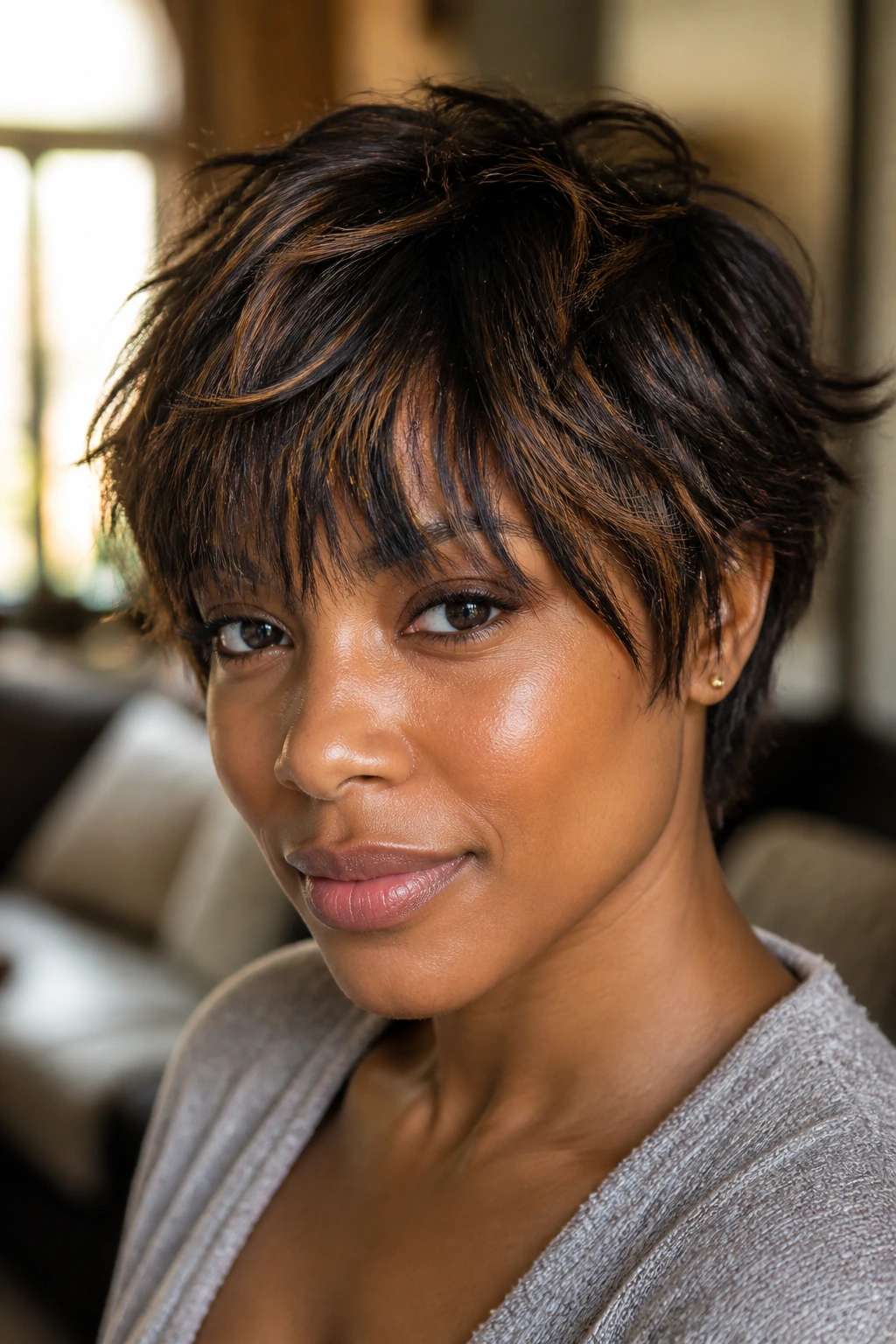
The shag bang is the least neat thing here, and that is the point. It uses broken layers, uneven ends, and cinnamon lowlights to make the front look lived-in instead of carved. On short natural hair, that roughness can be flattering because it hides where density rises and falls.
If you like your hair with a little air in it, this one makes sense. The bang should fall in small, uneven pieces that move when you shake your head. It’s the opposite of the blunt fringe above. Same forehead, different personality.
I’d style this with a bit of mousse and a diffuser or with a soft blowout and finger separation. Don’t over-flatten it. The texture is the selling point.
7. Rolled-Under Bang
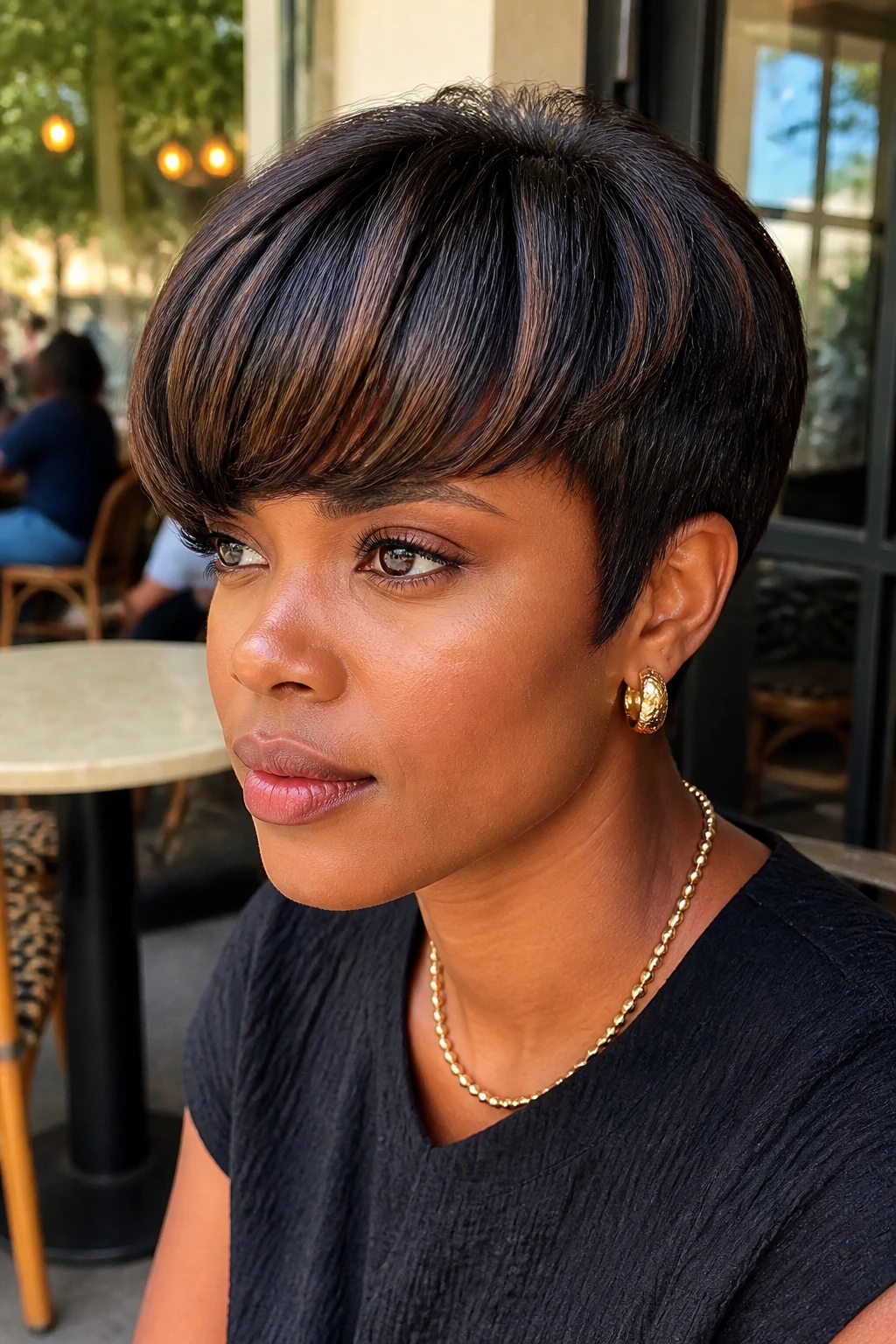
A rolled-under bang has that neat, tucked finish that makes the whole style feel deliberate. The ends curve inward toward the brow line, and chocolate lowlights help the curve show instead of going dark and blank.
This one works especially well if the rest of your hair is short and close-cropped. The bang becomes the polished part, while the sides stay simpler. I like it on square or long faces because the rounded edge softens the lines around the eyes.
If you use a round brush or a roller set, let the bang cool completely before taking it down. Warm hair forgets the shape fast. Cold hair remembers.
8. Deep Side-Part Sweep
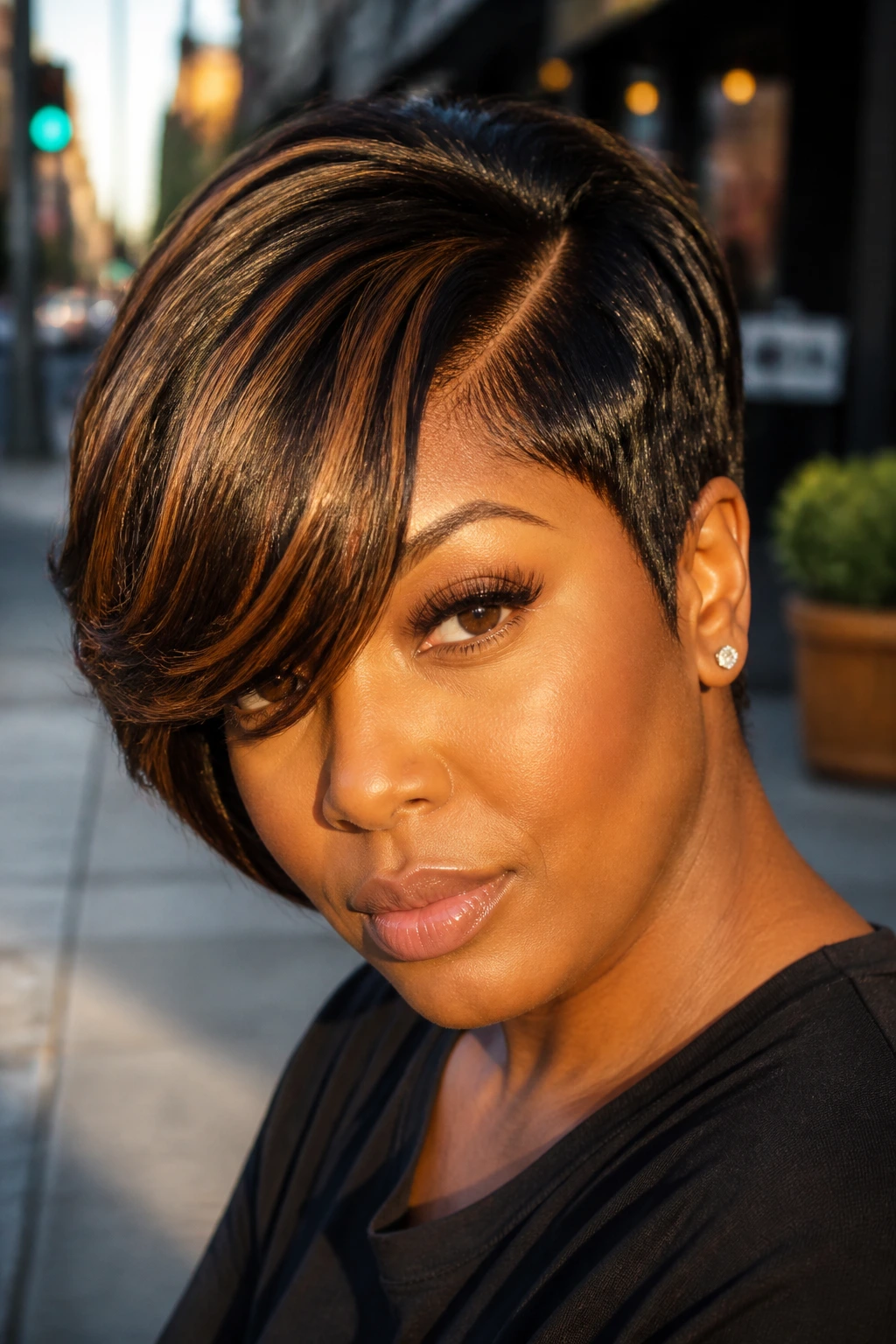
A deep side part gives short natural hair a little drama without making the front heavy. The bang sweeps from the part across the forehead, and mocha lowlights help the arc stand out. It feels easy, but only if the part is set cleanly.
This style is a good answer when your hairline is uneven or your leave-out doesn’t match one side perfectly. The sweep hides a lot. It also makes the forehead look smaller without cutting off the face. That’s useful if you want frame without compression.
I’d keep the longest strand just under cheekbone length, not much longer. Once the sweep drops too low, the style starts reading like a side curtain instead of a bang.
9. Rounded Full Fringe
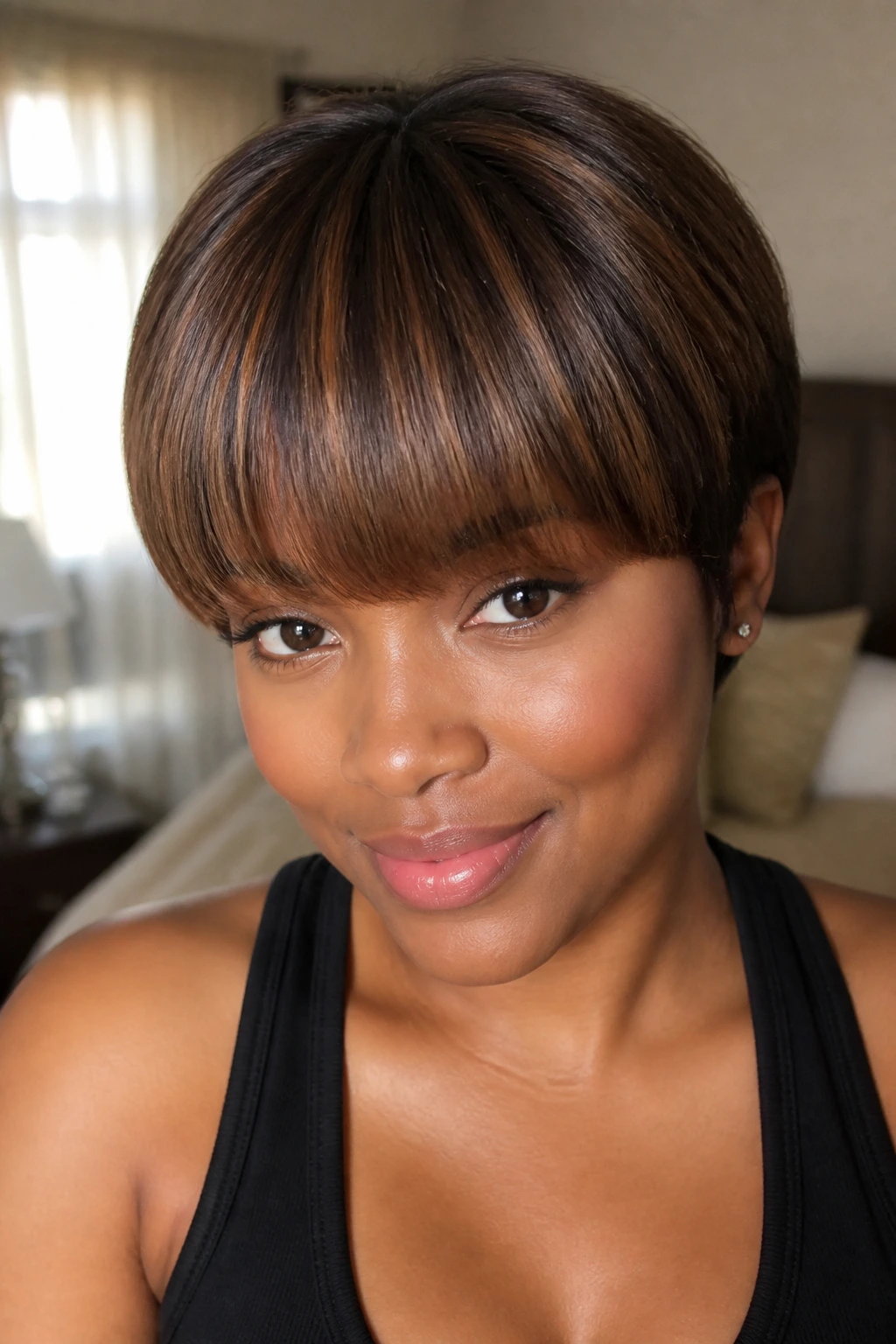
If you want fullness, start here. A rounded full fringe curves softly across the brow and carries more density through the center, which makes short natural hair look thicker up front. Honey-brown lowlights keep that fullness from reading as a single heavy block.
The shape is especially good if your natural hair is tightly coiled and you want the weave piece to look like it belongs to the same family. The rounded edge mirrors the natural roundness many coil patterns already have. It doesn’t fight the texture. It leans into it.
Use this one when you want the front to be the statement. Keep the bangs trimmed in a gentle arc, not a sharp straight line. That curve is what makes the style feel soft instead of rigid.
10. Tapered Afro Bang
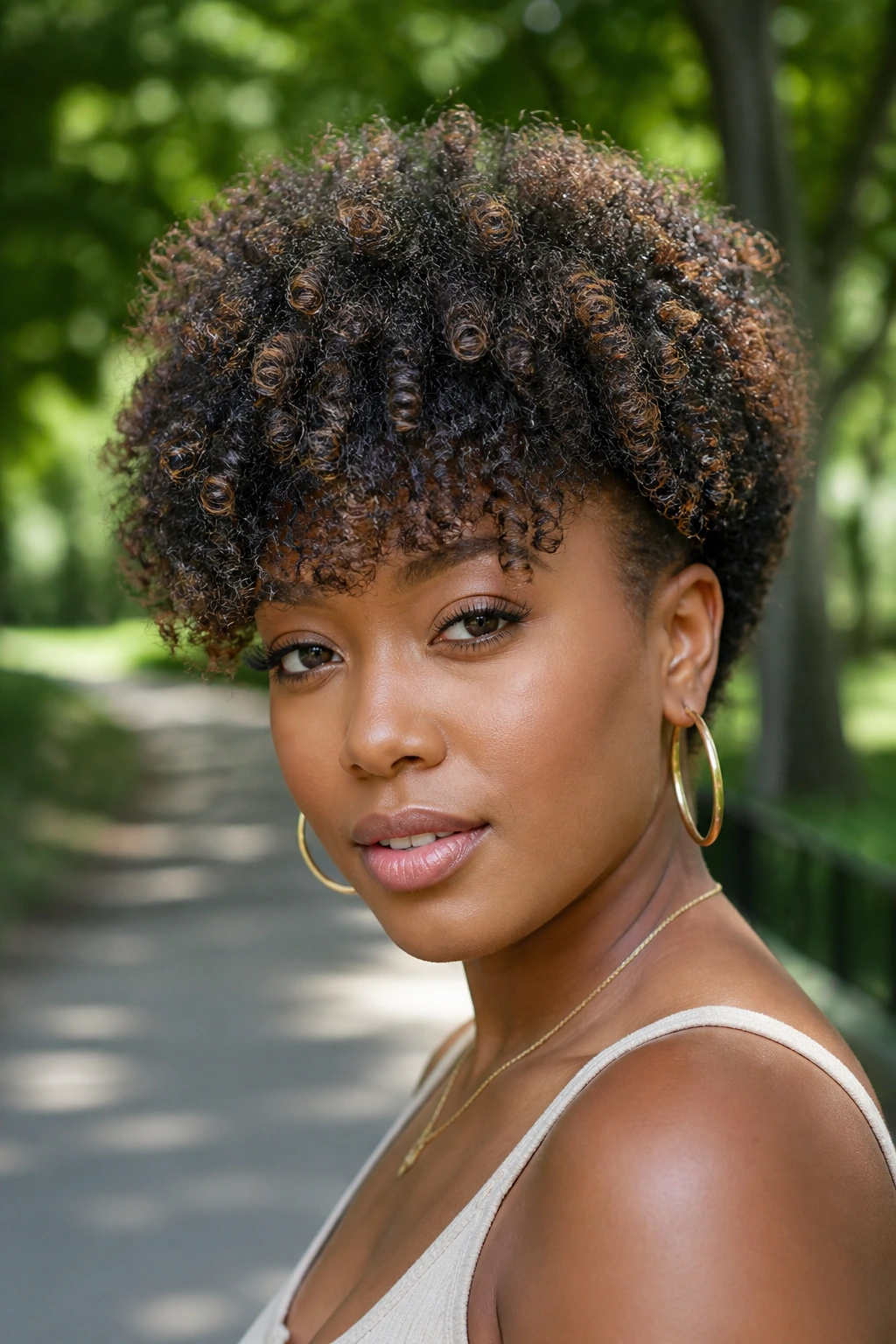
A tapered afro bang is the closest thing here to a natural-texture halo in fringe form. It starts fuller near the center, then tapers toward the temples so the shape doesn’t box in the face. Deep brown lowlights tucked through the coil pattern make the volume easier to read.
This style sits nicely on short natural hair because it respects shrinkage instead of pretending it doesn’t exist. The bang can puff a little, and that puff is part of the look. The lowlights just help the curls separate enough to show it.
I’d reach for this if your own texture is the star and the weave is there to sharpen the front, not erase it. It’s a smart style when you want softness around the face but not a completely straight fringe.
11. Vintage Swoop Bang
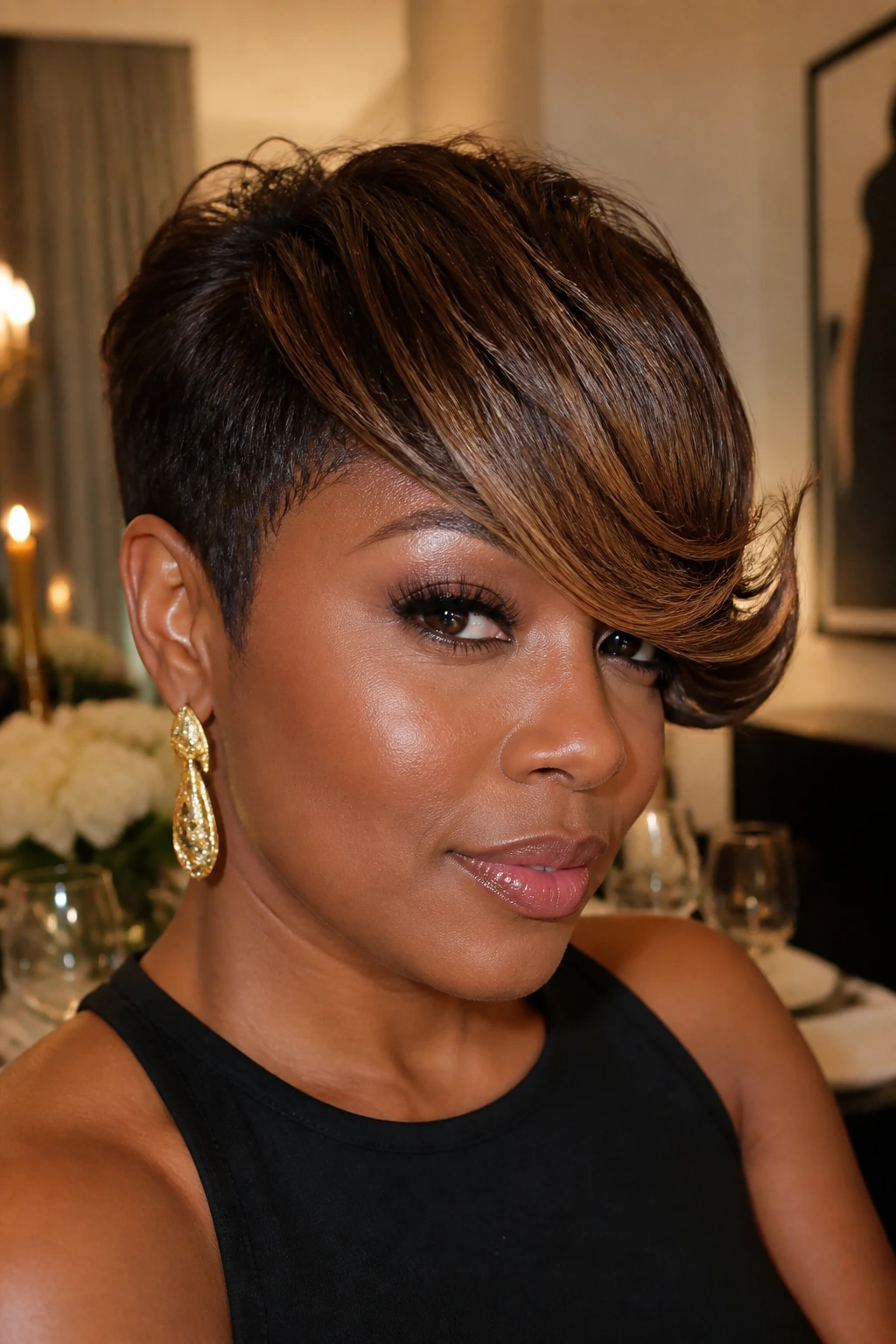
A vintage swoop bang takes the side sweep and gives it a longer, more dramatic arc. It feels a little old-Hollywood, but not costume-y, especially when toasted almond lowlights thread through the bend. The curve across the forehead is wide, smooth, and very face-framing.
This one looks best when the bang piece has enough length to drape without fighting itself. On short natural hair, that means the base should be neat and stretched. If the roots are too bulky, the swoop loses its clean line.
I like this style for dinner plans, events, or any day when you want the front of the hair to do the talking. A soft side tuck behind one ear helps the asymmetry land properly.
12. Faux-Hawk Fringe
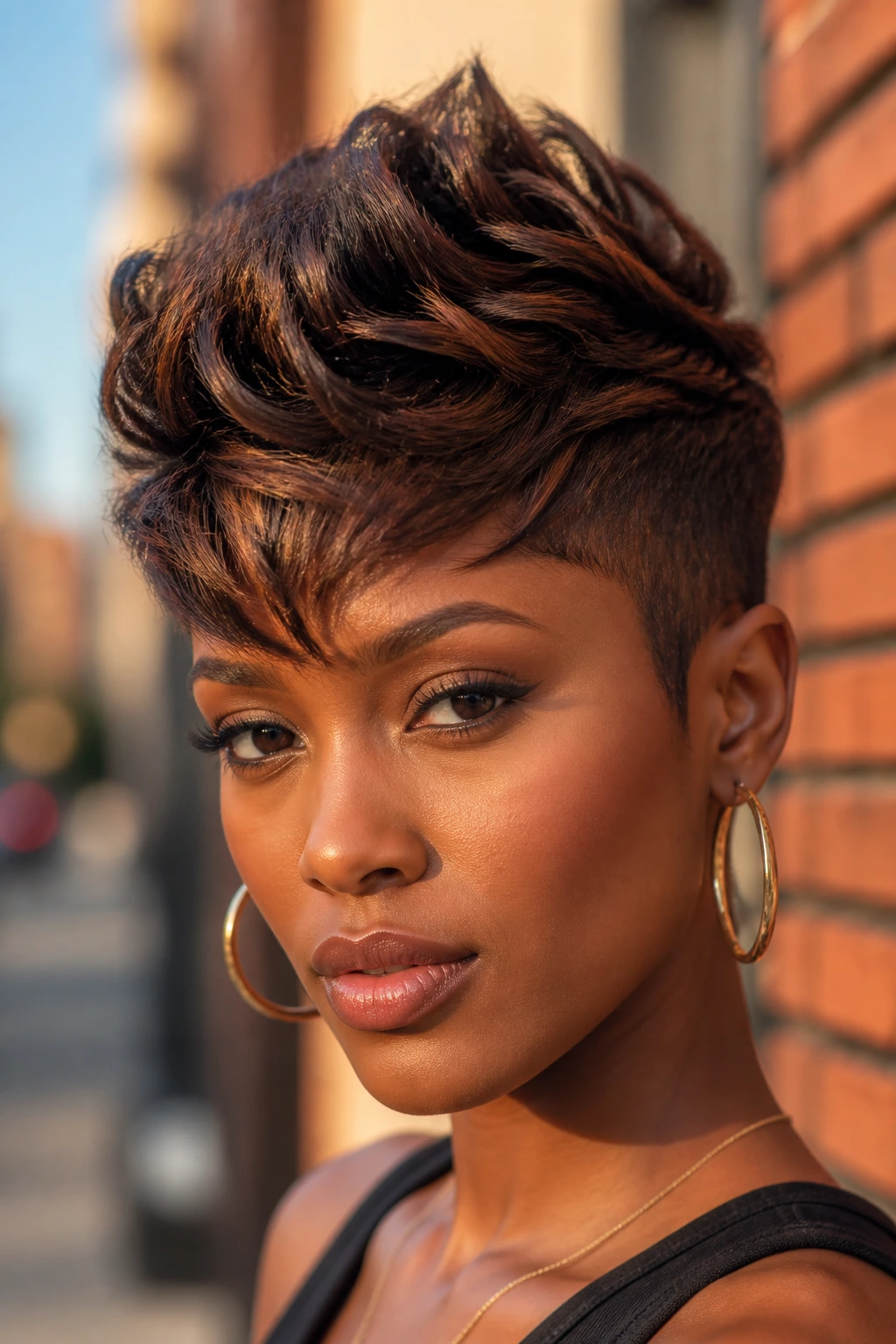
This is the edgy one. The front is lifted a bit at the center and tighter at the sides, so the bang looks like it’s pulling the eye upward instead of across. Espresso lowlights create that ridge-and-shadow effect that makes the shape pop.
It’s a strong fit for short natural hair because the taper on the sides already echoes the faux-hawk line. You don’t need much length. You need direction. A small amount of mousse at the root and a careful finger lift are usually enough.
I’d choose this if you want movement without softness. It reads sharper than a curtain bang and more modern than a rounded fringe. Not every front piece needs to behave.
13. Twist-Out Bang
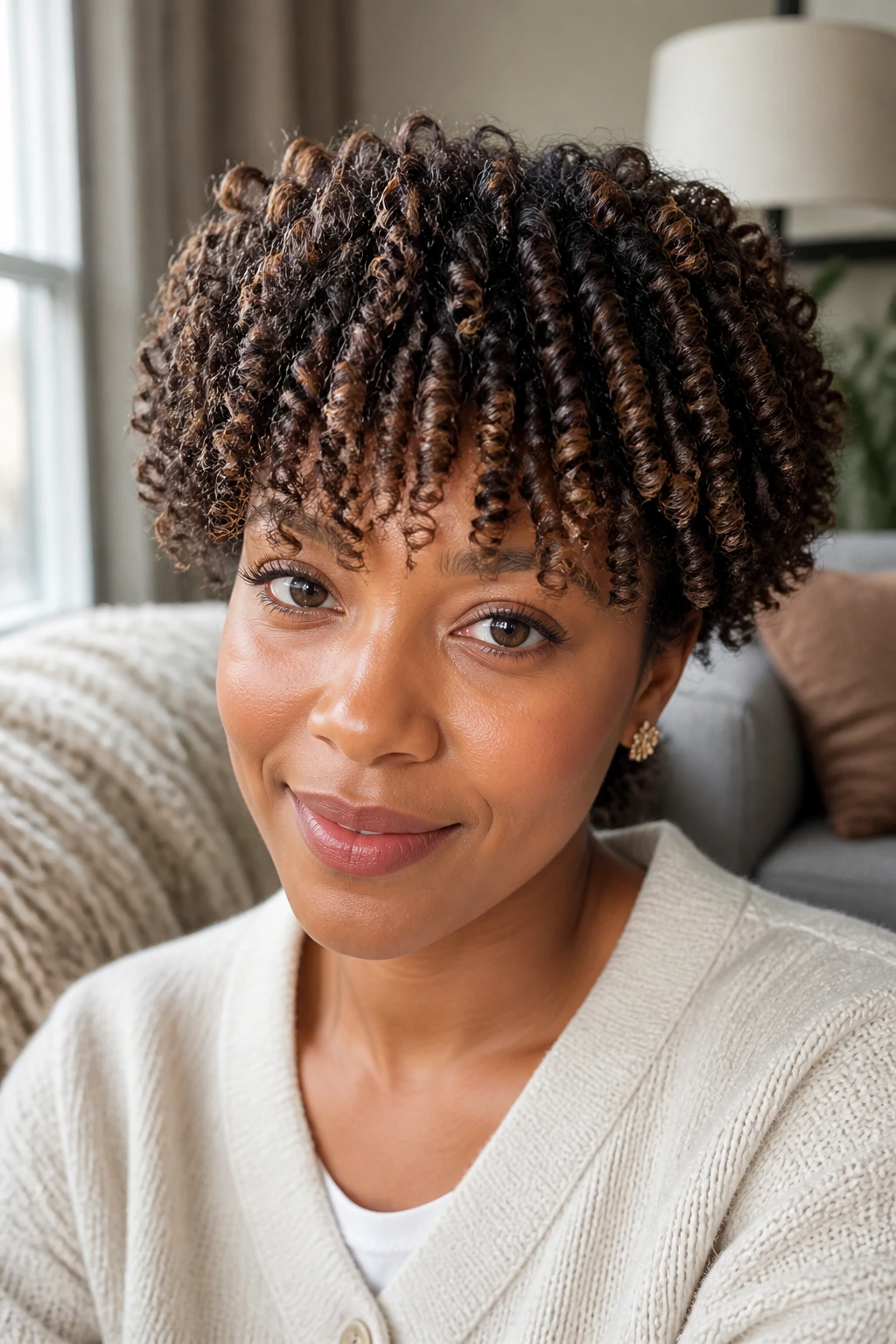
A twist-out bang has a lived-in curl pattern that feels familiar on short natural hair, and hazelnut lowlights make the twist definition show better. The separate strands catch light at different angles, which keeps the fringe from looking like a single block.
This style is especially friendly if you already wear twist-outs on your own hair. The texture line makes sense immediately. Set the weave bang in twists, dry fully, and separate only when the coil pattern is set.
Best way to use it
Let the front stay slightly fuller near the middle and shorter at the sides. That keeps the shape soft around the eyes. If the lowlights are too close to the base color, the twist pattern disappears; if they’re one shade deeper, the curls show cleaner.
14. Pin-Curled Bang
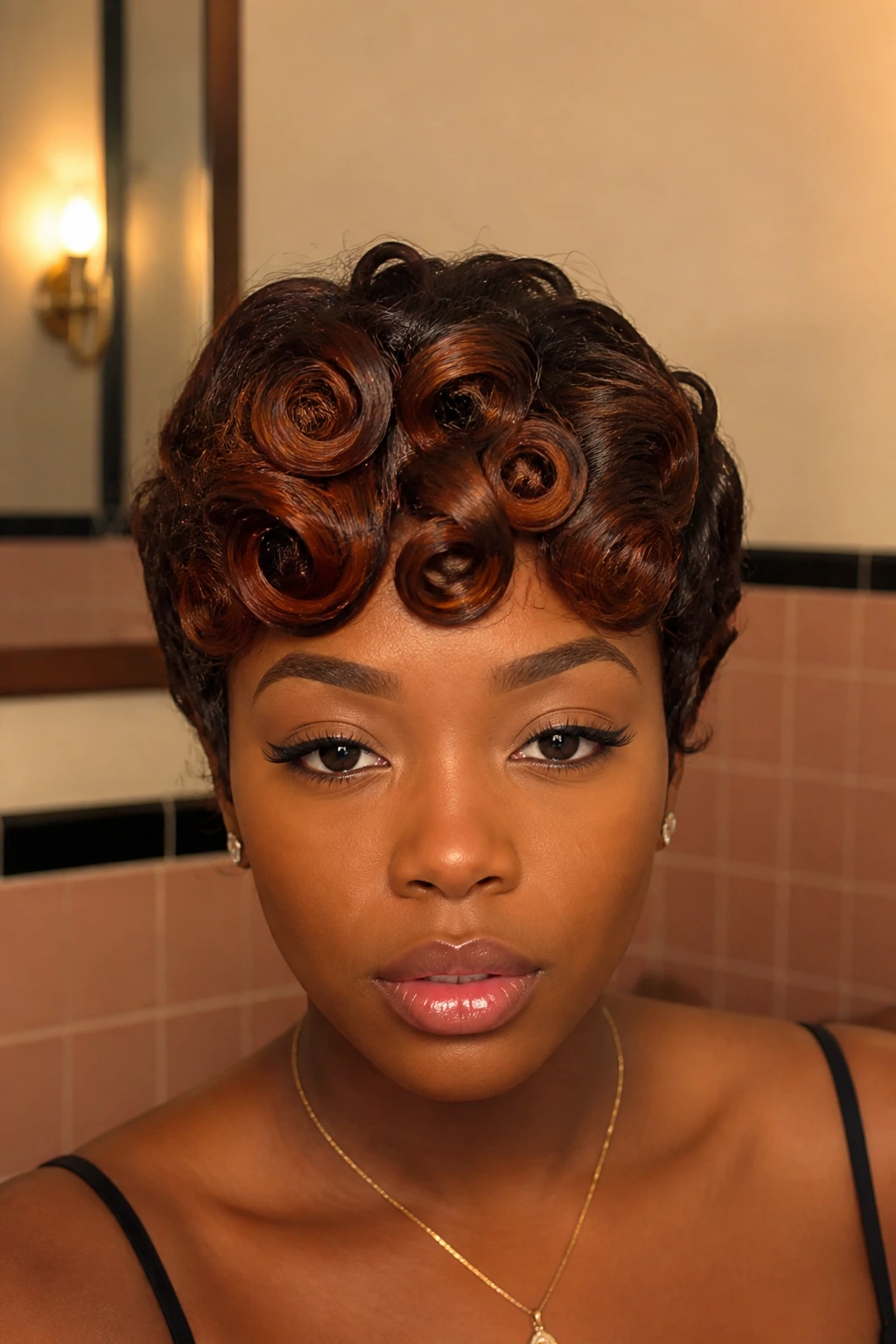
A pin-curled bang gives you shape without a hard edge. The curls sit in little loops or soft bends, and auburn lowlights give the loops enough contrast to show. It’s a tidy style, but not stiff.
The reason it works on short natural hair is simple: the front doesn’t need to be bone straight to be neat. A pin curl set keeps the bang organized while leaving some movement at the ends. That’s better than forcing a sleek finish on hair that wants a little bend.
I’d keep the curls medium-sized, not tiny. Too many small curls and the front starts looking busy. Two or three clear bends are enough.
15. Sleek Silky Bang
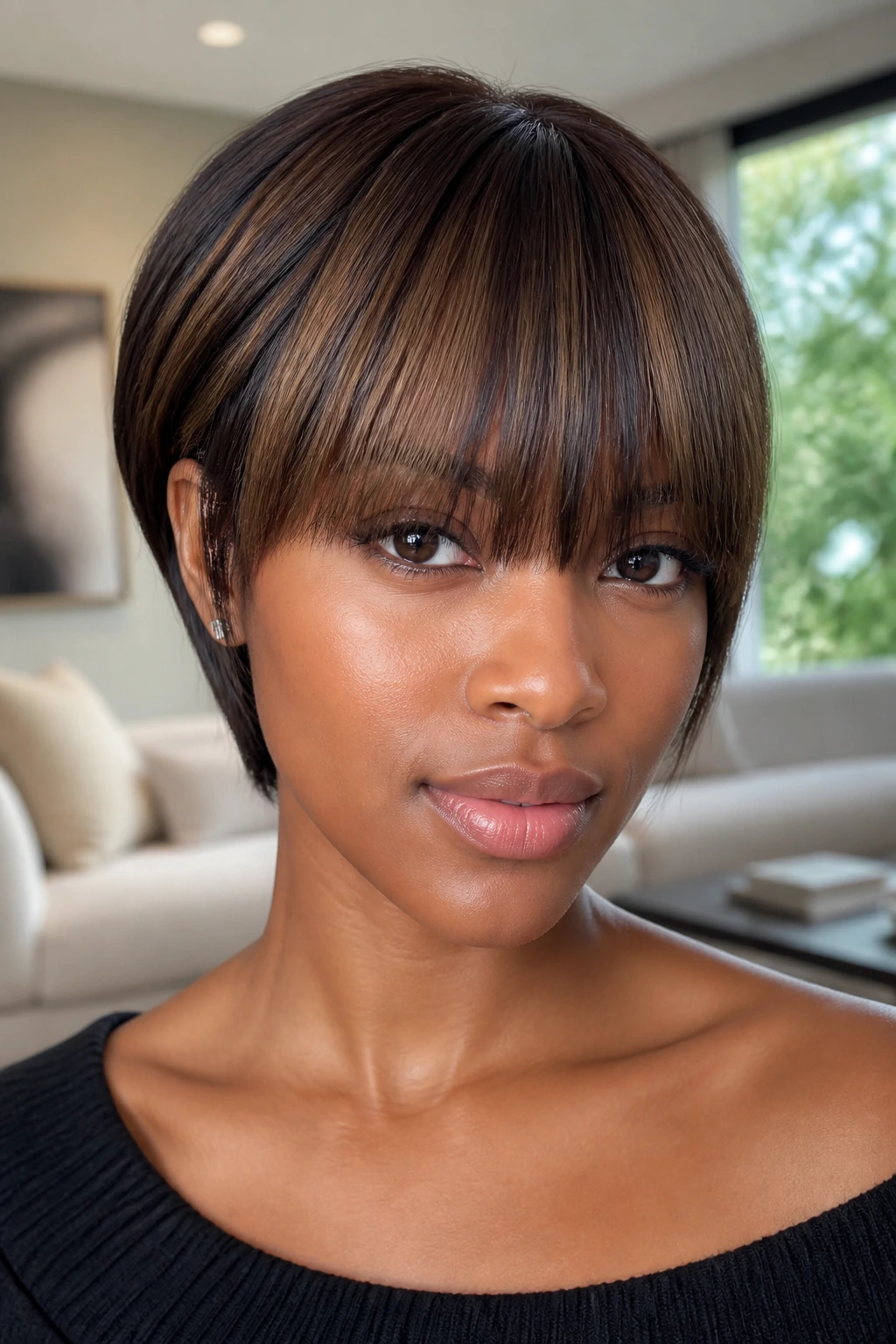
A sleek silky bang is the cleanest straight option in the group. It sits smooth, brushes the brow, and lets neutral brown lowlights add depth without changing the overall finish. The color shift is subtle, which is exactly why it works.
This style is good when the rest of your short natural hair is blended or tucked away and you want the fringe to feel refined. The shine should be controlled, not greasy. A light serum on the ends and a careful wrap set are usually enough.
The danger here is going too flat. A little bend at the very tips keeps the bang from looking pasted on. That tiny movement is what makes the style feel like hair, not a strip.
16. Piecey Tousled Bang
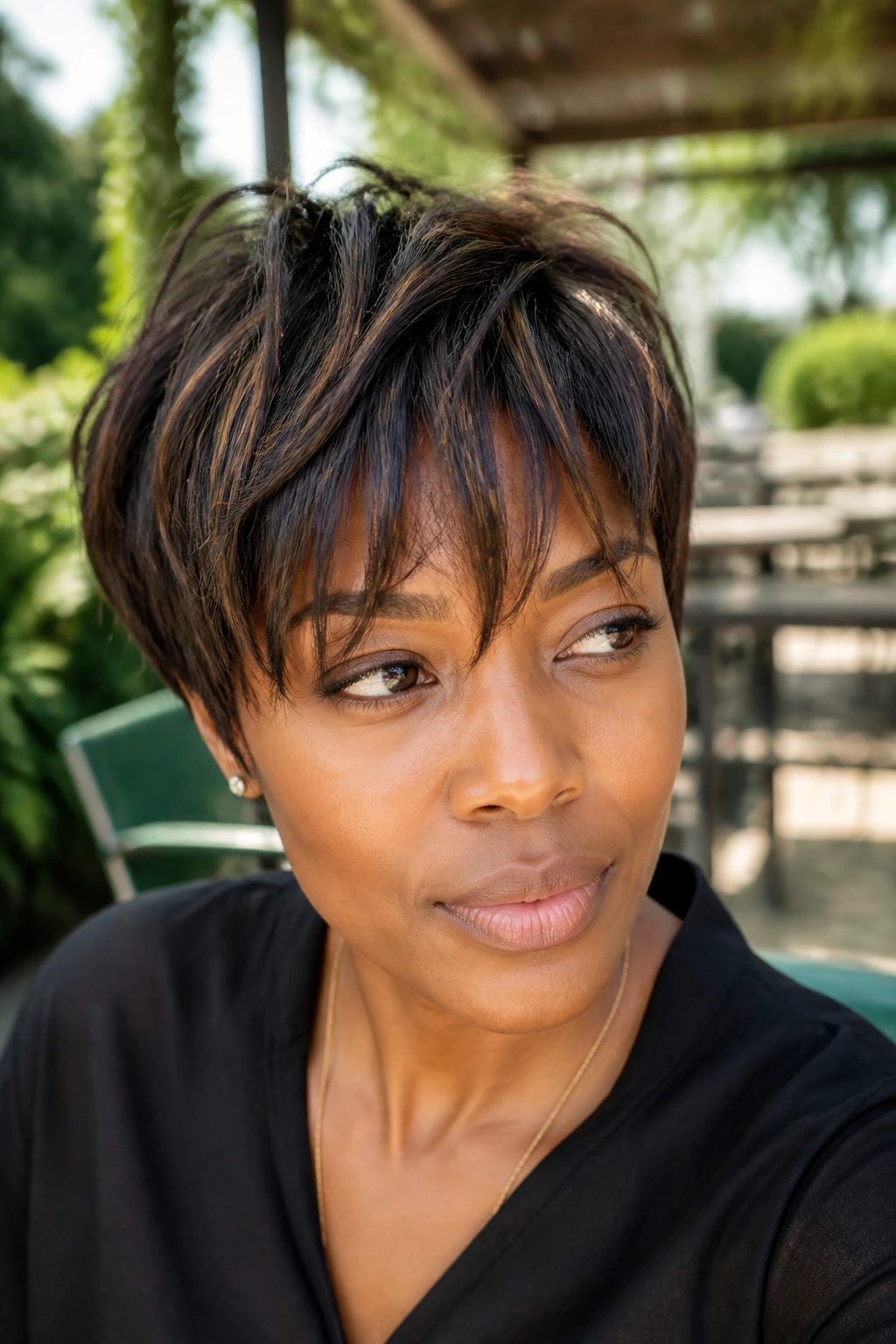
This is my pick for people who hate overstyled hair. The pieces fall in small, irregular sections, and walnut lowlights make the separation look intentional. On short natural hair, that broken shape is useful because it hides density changes and gives the fringe some air.
You do not want a perfect line with this one. You want a little shake, a little movement, a little grit. It’s the kind of bang that still looks good after a long day because it was built to loosen up.
A texturizing spray or a very light mousse helps, but don’t load it up. The pieces should move, not freeze. If you can run your fingers through it and still see the lowlights, you’ve done it right.
17. Halo-Framed Bang
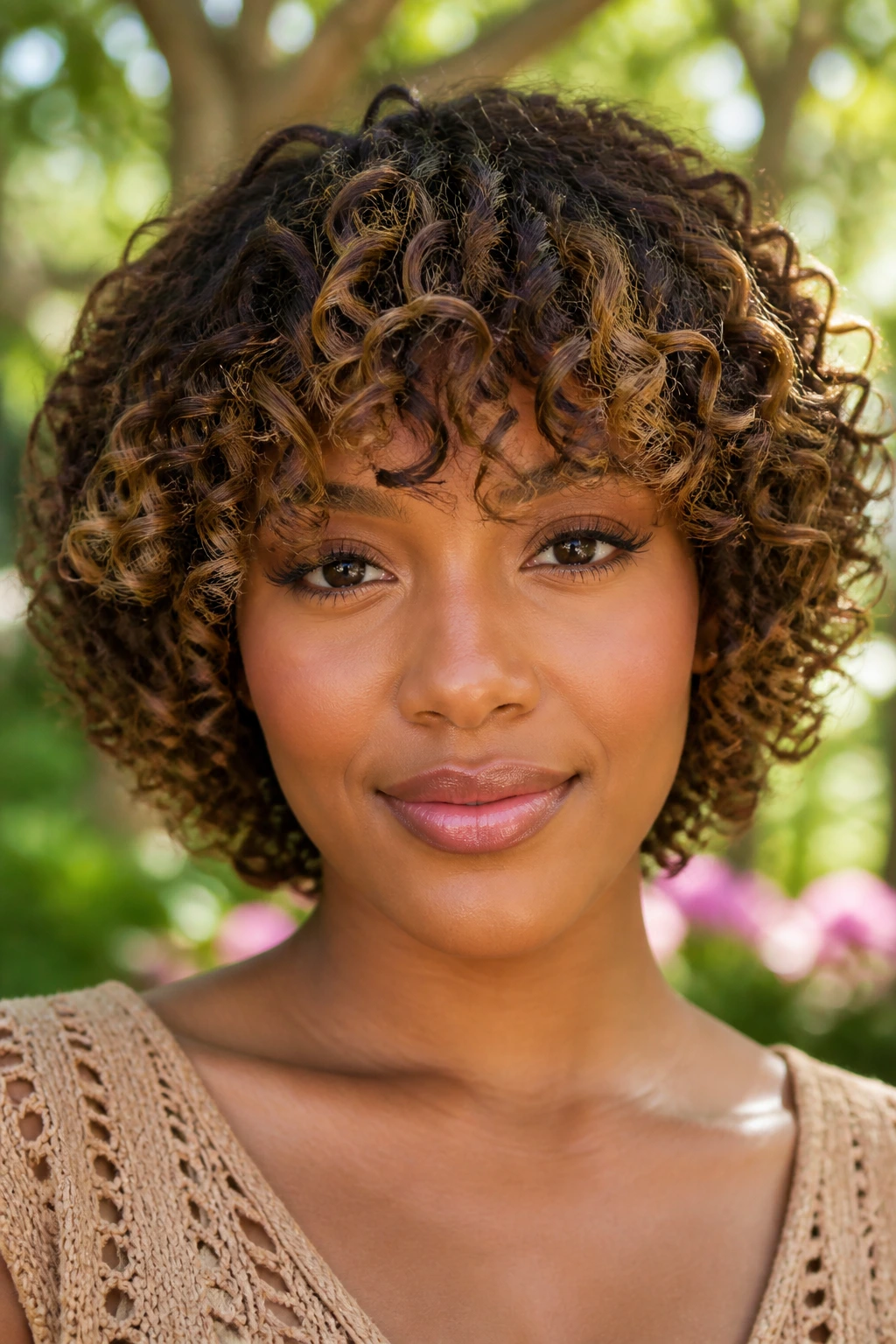
A halo-framed bang blends into curls all around the front and temple area, so the face gets a soft border instead of a hard fringe. Golden brown lowlights make the whole shape glow a bit more and keep the curls readable.
This one fits short natural hair because the top and front can stay close to the head while the bang area opens around the face. It’s a gentler option than a blunt fringe and easier than trying to force a straight bang on dense curls.
I like this when the rest of the style has volume and the front needs to echo it. The front line should feel rounded, not chopped. That’s where the halo effect comes from.
18. Side-Tucked Bang
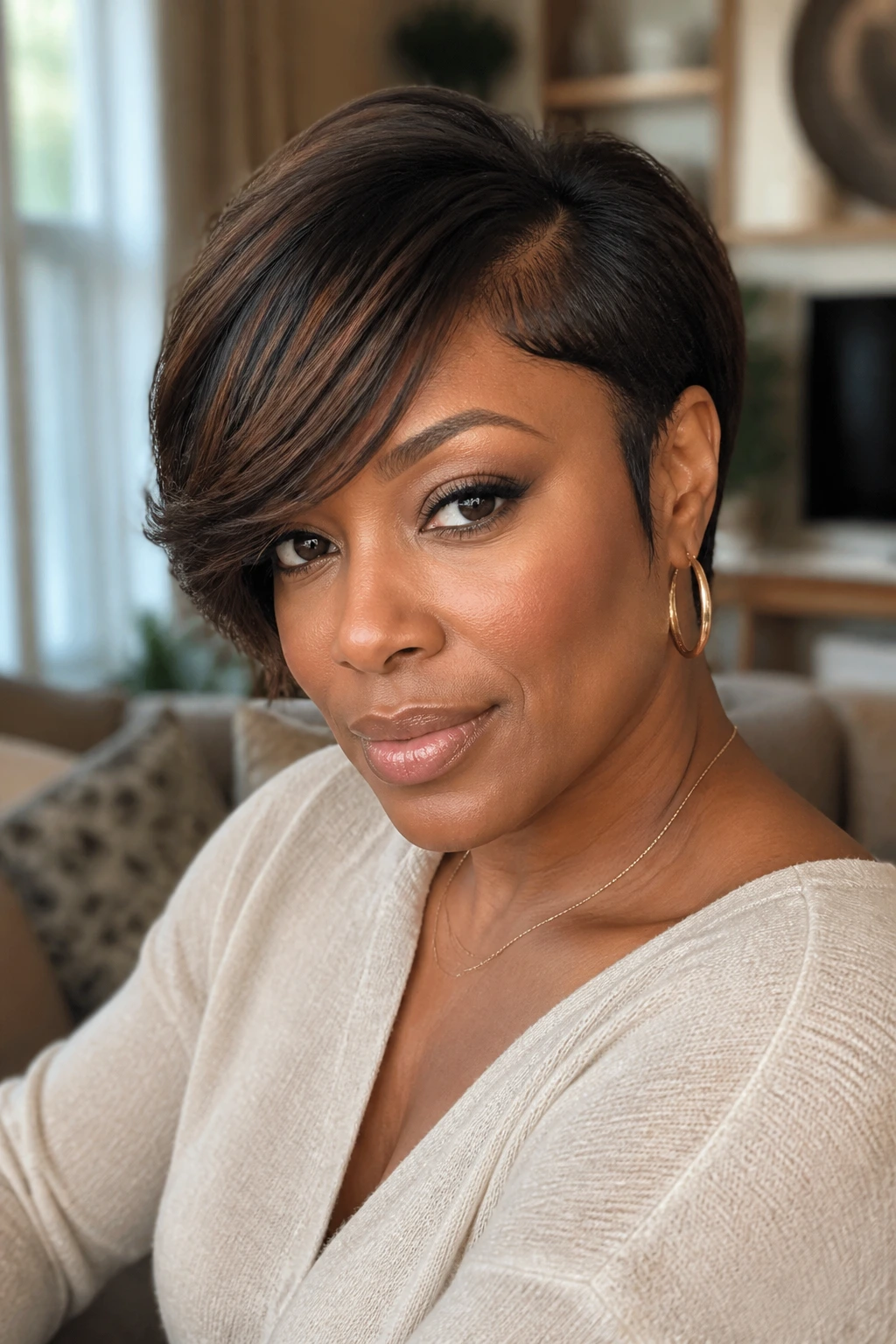
A side-tucked bang gives you a clean front on one side and an open face on the other. Dark cocoa lowlights make the tucked edge show as a separate shape instead of merging into the rest of the hair.
This is a smart choice if you wear earrings, glasses, or anything you want the hair to frame rather than cover. Short natural hair tends to look neat with a side tuck because the line around the ear stays visible. It feels controlled, but not severe.
The key is to keep the tucked side smooth at the root. If it puffs up, the whole thing loses the clean line. A small bobby pin hidden under the front layer is often enough.
19. Coily Mini-Bang
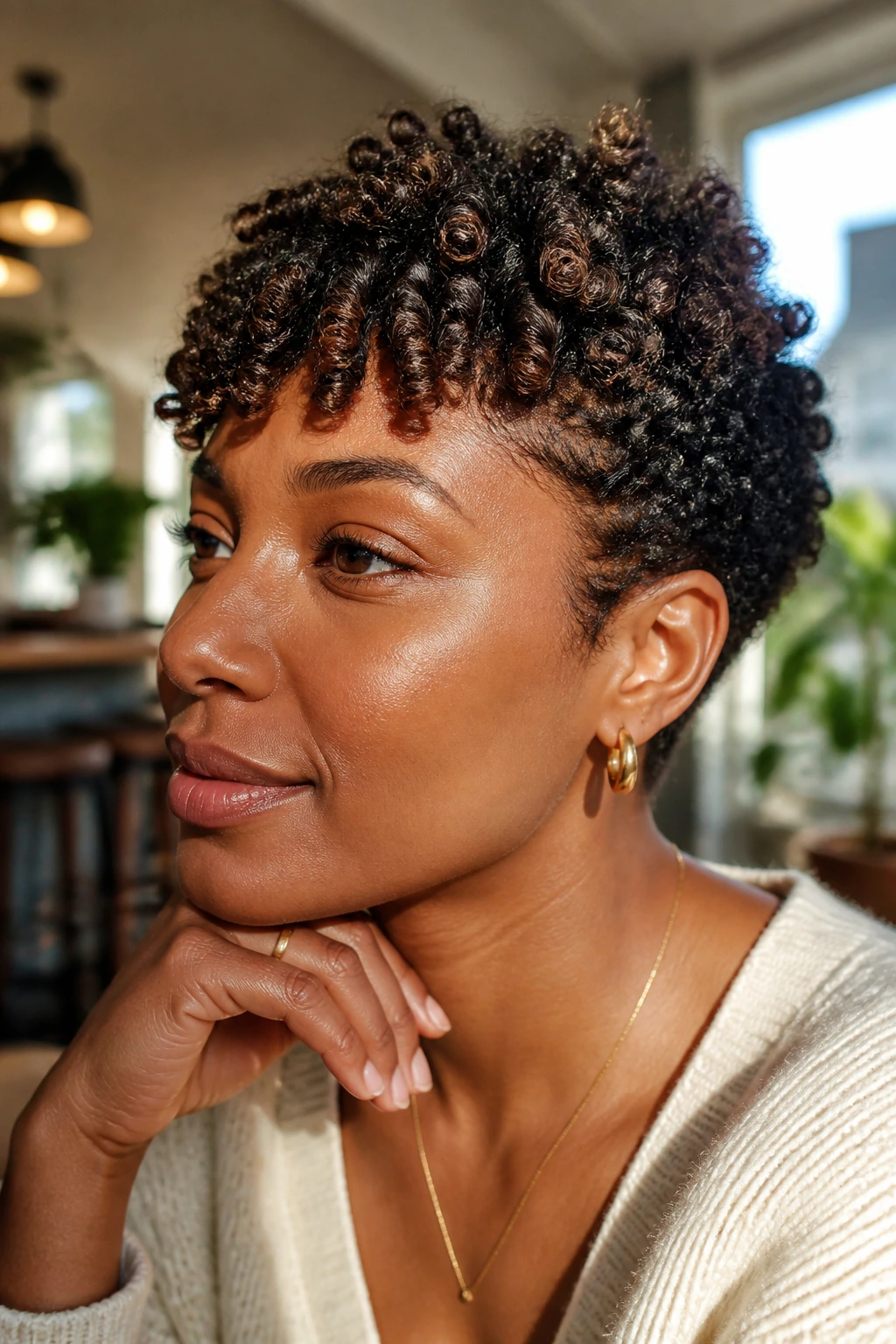
A coily mini-bang leans into tight texture and keeps the fringe short enough to stay lively. Mocha lowlights help the little coils separate so they don’t collapse into one dark shape.
This style belongs on short natural hair because it honors shrinkage instead of stretching it out of sight. The bang can sit above the brow or just touch it, depending on how much forehead you want to show. Either way, the coils should look springy, not packed down.
I’d ask for a shape-up around the edges and leave the center a little fuller. That keeps the fringe from going triangular. Small shape changes matter a lot here.
20. U-Part Blend Bang
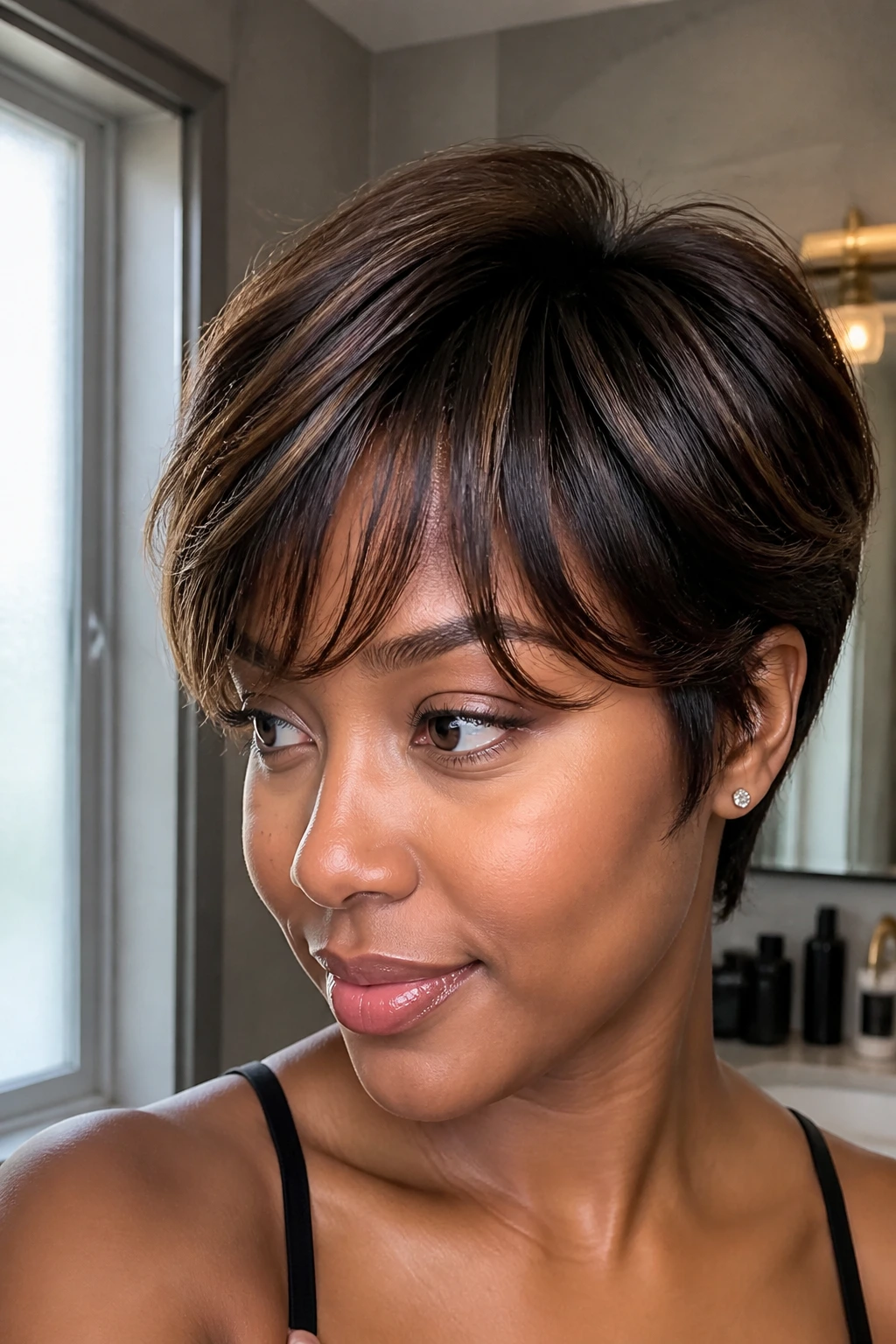
A U-part blend bang is for people who want the front to disappear into their own hairline as much as possible. The lowlights should echo the natural root shadow and leave-out, so the seam softens instead of flashing. It’s one of the best options when your short natural hair is stretched and blended.
This style needs the texture match to be close. If your leave-out is coily and the bang piece is too silky, the difference shows immediately. The best version has a little root lift and a front piece that doesn’t fight your own texture.
Use this when you want a believable front and don’t want to fuss with a full frontal look. It’s clean, practical, and less obvious than a lot of bang installs.
21. Feathered Curly Bang
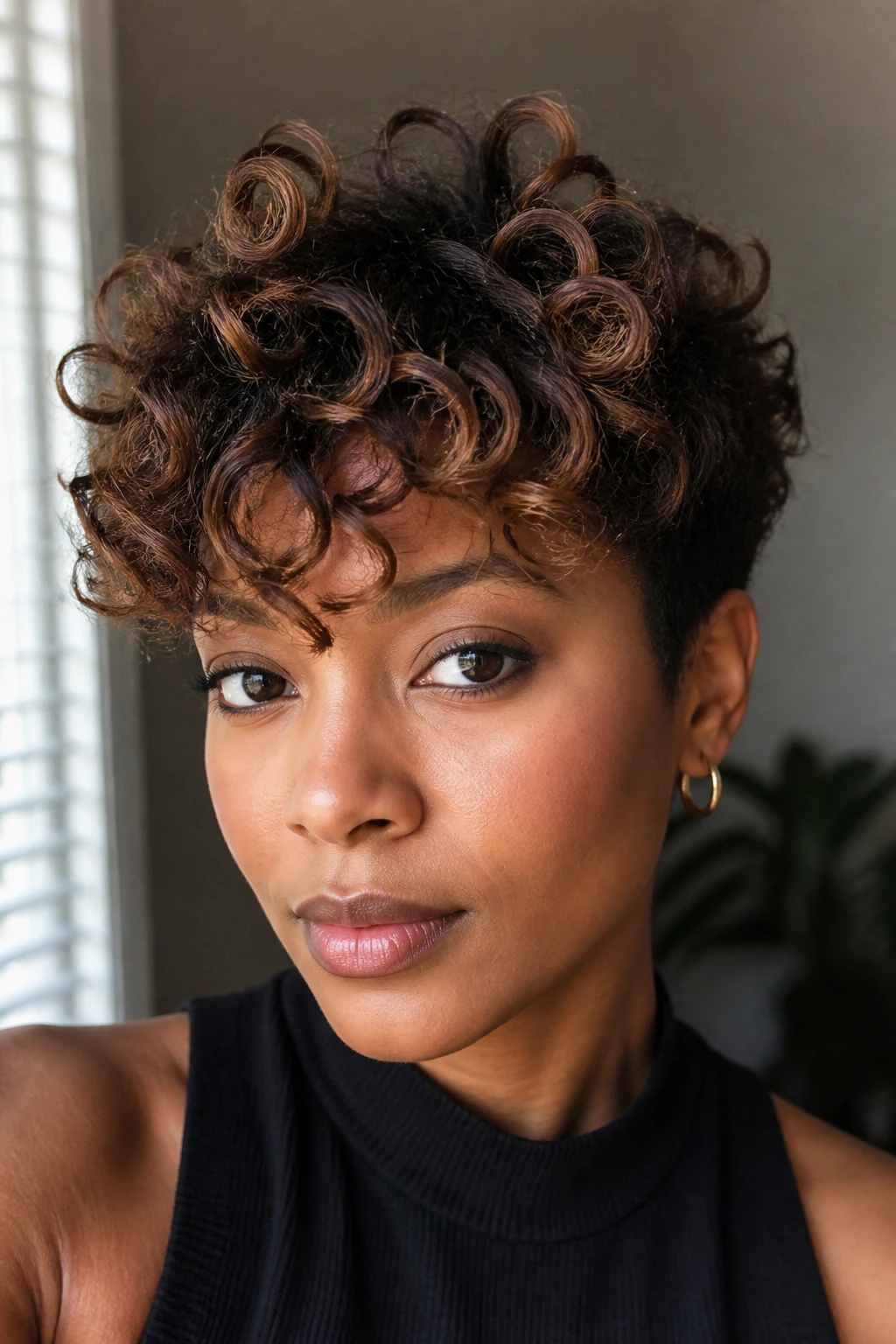
A feathered curly bang sits between a curtain bang and a full curl fringe. The curls are shaped, but the ends stay light enough to move, and chestnut plus bronze lowlights add depth without turning the whole front heavy.
This works on short natural hair because it keeps the face open while still giving you texture. The layers matter. If the curls are all the same length, the fringe looks dense. If they’re feathered, they break apart in a better way.
Let the front dry in the shape you want it to keep. That matters more than most people think. Once the curl pattern is set, the lowlights do their job and the shape takes care of itself.
22. Crown-Lift Bang
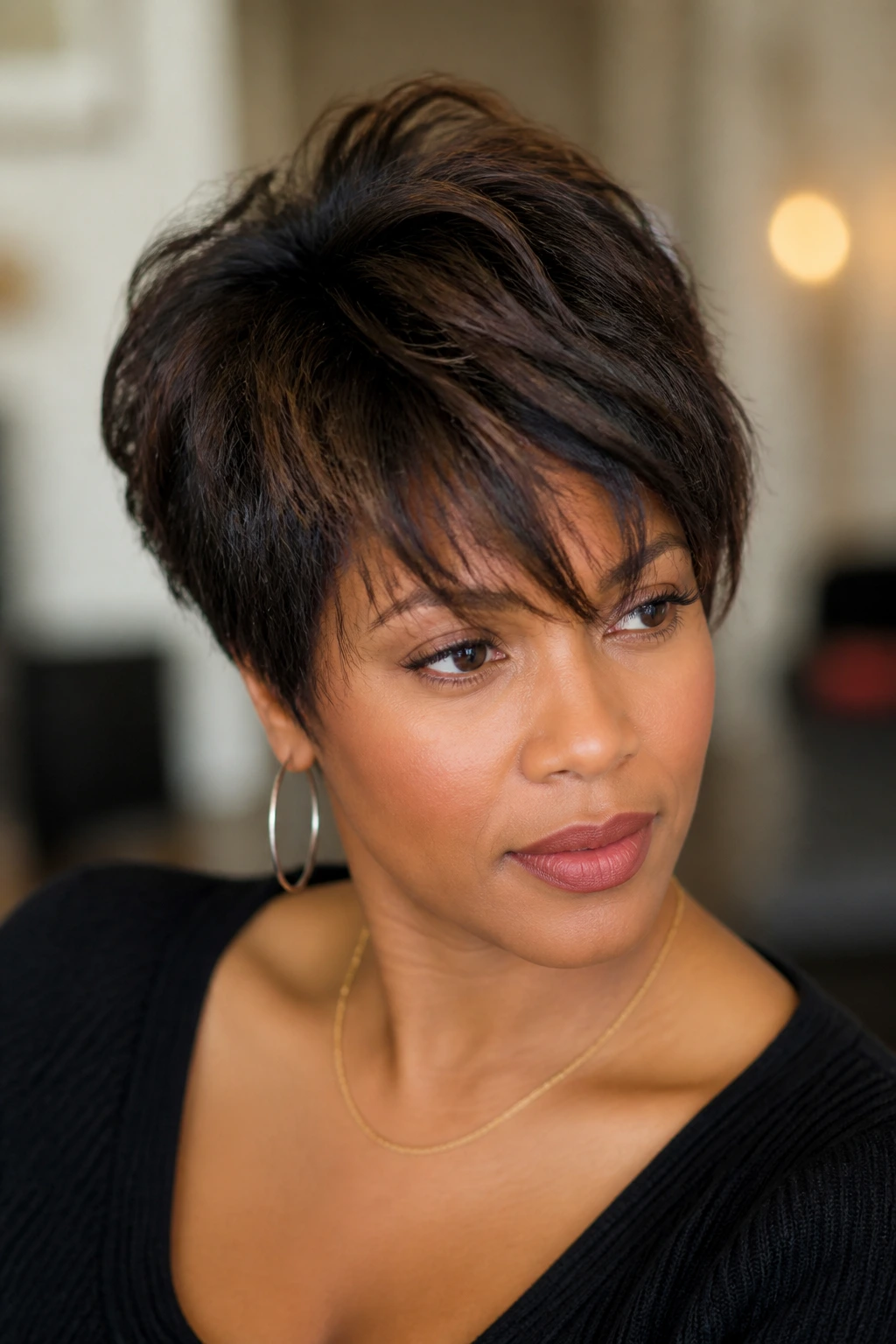
A crown-lift bang starts with volume near the root and falls forward just enough to frame the face. Espresso-rooted lowlights make the lifted area visible, which matters because lift without depth can look like accidental fluff.
This style is good when short natural hair needs a little height up top. The lift opens the face and keeps the fringe from crowding the brows. I’d choose it for someone who wants softness with a bit of structure.
The finish should be airy, not teased into a nest. A round brush, a little mousse, and a careful cool-down are usually enough. If the root sits well, the rest of the style behaves.
Why Weave Bangs and Lowlights Work So Well on Short Natural Hair
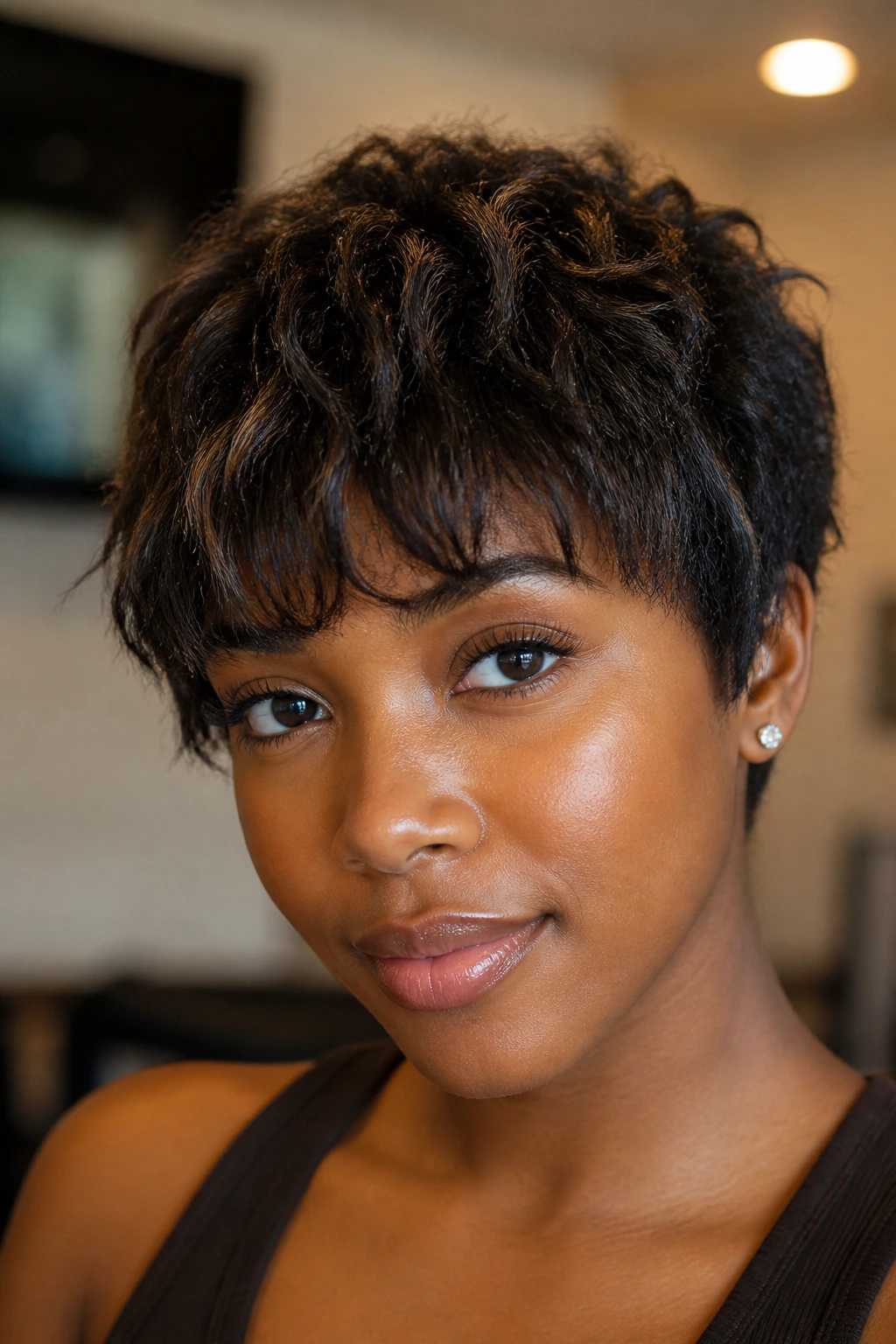
Short natural hair can be gorgeous on its own, but it does not always give you the front line you want on a low-effort day. A weave bang fills that gap. It creates shape where shrinkage, density, or taper might leave the front too sparse, and lowlights stop the added hair from looking like a single, flat panel.
The smartest versions respect texture instead of fighting it. If your hair is coily, a bang with a little bend or coil reads better than a glass-straight fringe. If your own hair is stretched, a soft swept bang blends faster. The lowlights do the quiet blending work: one shade deeper near the roots, a warmer ribbon near the ends, maybe a few scattered strands through the middle. That little bit of variation gives the eye texture even when the haircut is simple.
There’s another reason this pairing works. On short natural hair, the forehead and hairline are visible enough to expose every seam. A darker ribbon of color, especially in espresso, cocoa, chestnut, or auburn, softens that seam without making the style look highlighted to death. It’s color with a job to do.
The Tools You Actually Need
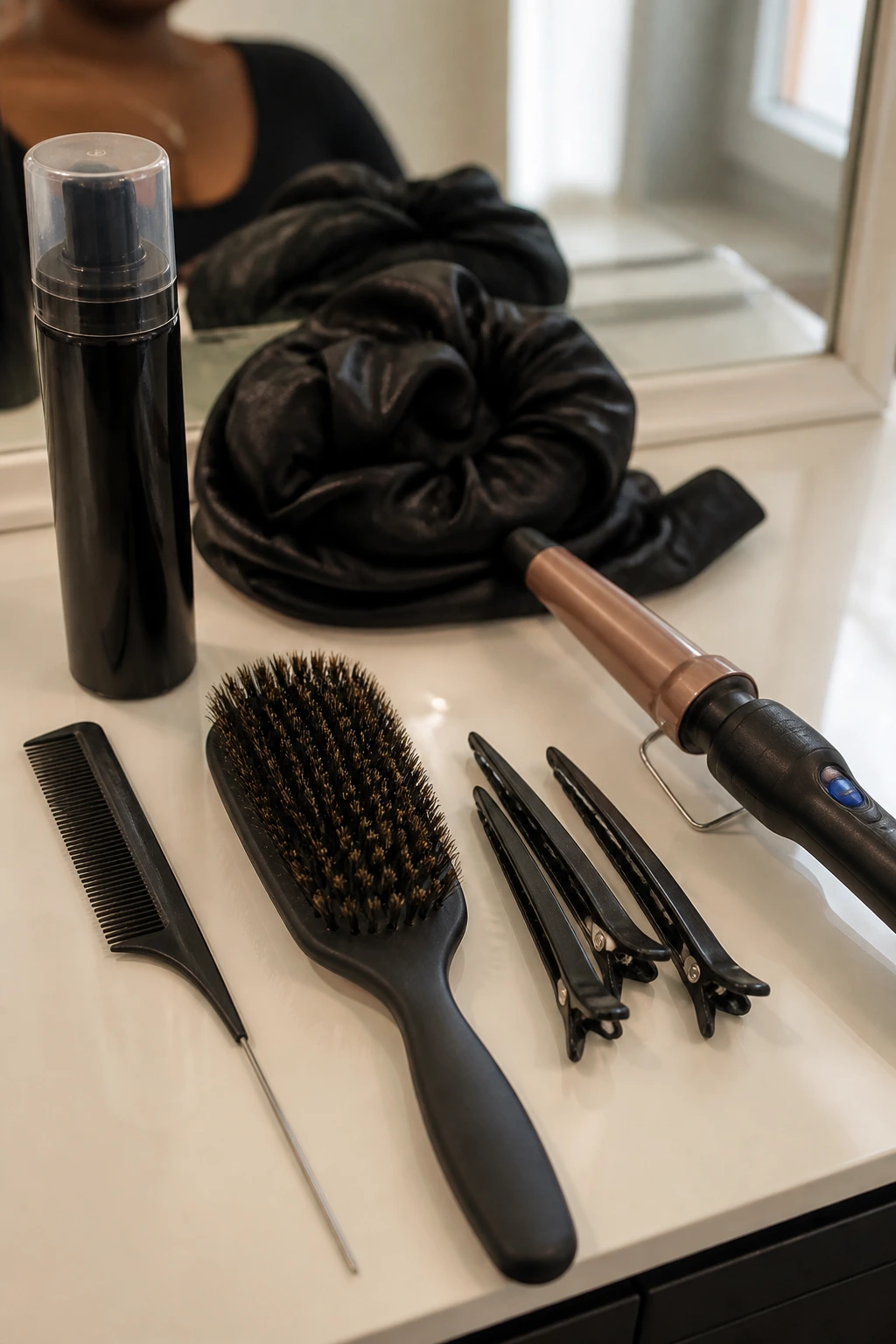
- Rat-tail comb: Clean parts matter more than people think, especially with a side-swept or U-part bang.
- Duckbill clips: They hold the bang out of the way while you set the rest of the style.
- Boar-bristle or paddle brush: Useful for smoother fringe styles and for blending leave-out.
- 1-inch curling wand or flat iron: Handy for soft bends, feathered ends, and rolled-under finishes.
- Blow dryer with concentrator nozzle: Helps stretched natural hair and human-hair bangs lie in the same direction.
- Mousse or setting foam: Good for curl definition, twist-out bangs, and pin-curl sets.
- Light serum or oil: Use a tiny amount on the ends so the lowlights don’t look dry.
- Satin scarf or wrap strip: Keeps the front neat overnight and protects the install.
- Bobby pins: Essential for side-tucked shapes and hidden seam control.
- Clip-in bang piece, quick weave hair, or sewn fringe unit: Choose the install method that matches your routine and patience.
- Wide-tooth comb: Safer than a fine comb on curly or coily fringe pieces.
- Small trim scissors: Only if you already know how to cut bangs in tiny sections. If not, leave the shaping to a stylist.
Shopping for Hair, Texture, and Lowlight Shades
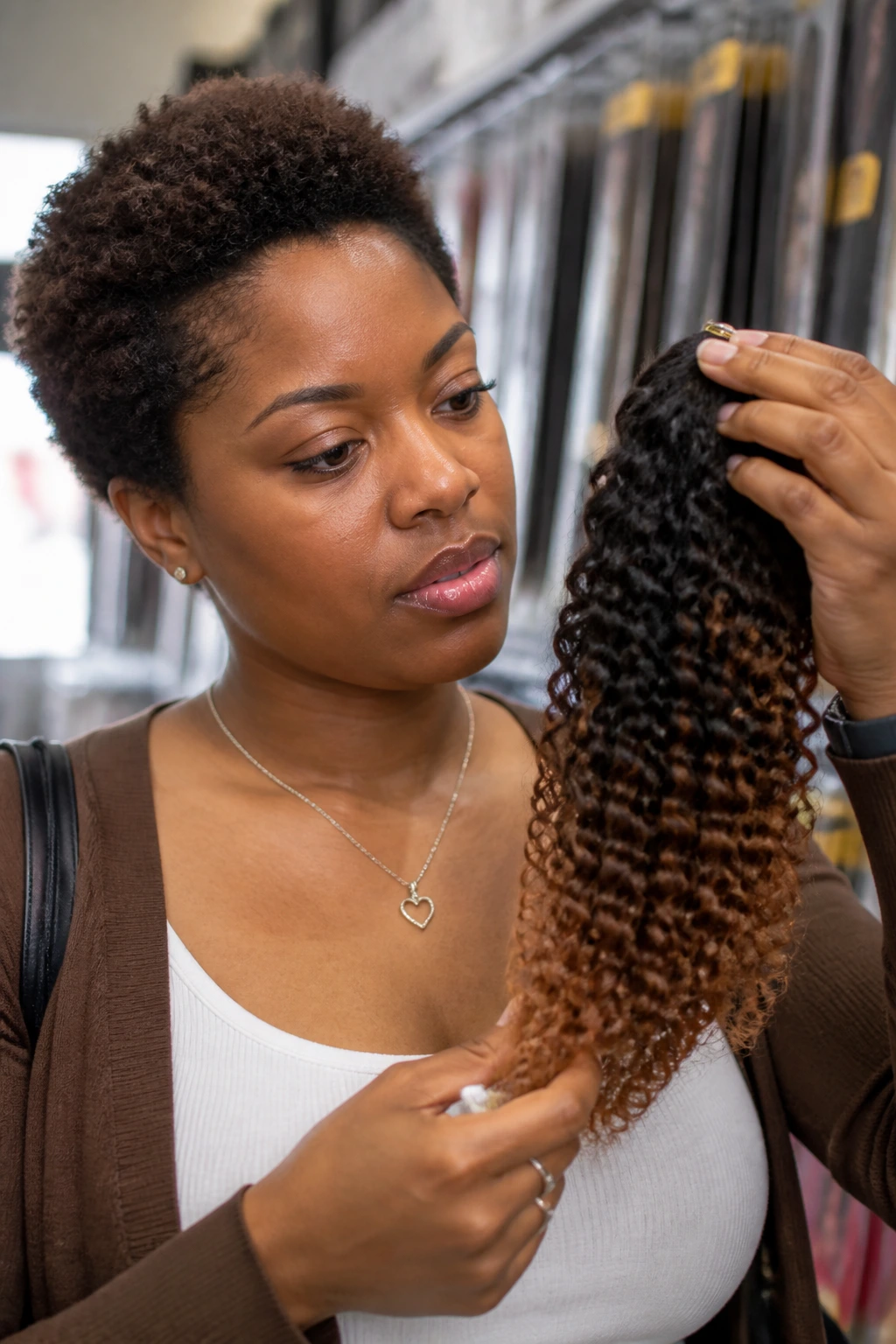
Start with texture, not color. A bang that matches your natural pattern or your stretched finish will blend faster than a pretty shade that sits wrong on the face. If your hair shrinks tightly, look for a bang piece with body and some coil memory. If you usually wear a blowout or stretched twist-out, a smoother finish makes more sense.
For the lowlights, think one or two shades deeper than the base color. That’s the sweet spot. Too close, and the dimension disappears. Too far, and the fringe can look striped. Espresso, cocoa, chestnut, auburn, mocha, and walnut are all useful because they sit in that middle zone where the eye sees depth without screaming for attention.
Human hair gives you the most flexibility because you can bend, lightly press, or set it with rollers. Synthetic hair can work for a style that never needs heat, but it asks for more careful purchasing. Check whether the fiber tolerates steam, whether the piece has a dense root, and whether the color blend is already built in. A bang piece with 2 or 3 color ribbons usually looks more natural than a single-tone one.
Length matters too. For short natural hair, a bang that is too long can swallow the face, while one that is too short can sit like a shelf. Look for a piece that can be trimmed in tiny increments after it’s installed or set. That gives you room to adjust to your forehead, not someone else’s.
How to Wear These Bangs Without Fighting Your Face Shape
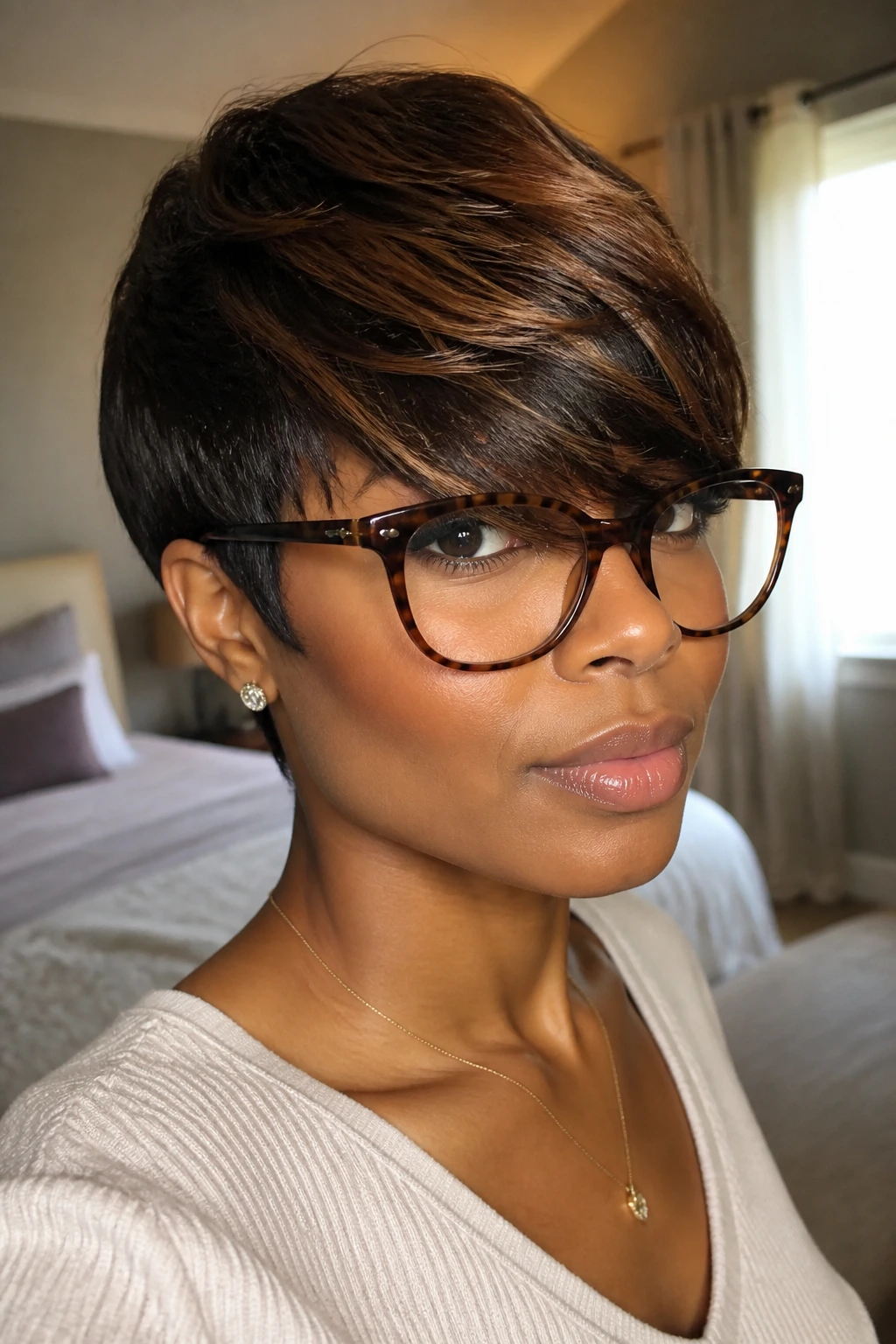
Face shape changes the whole conversation. A round face usually likes a side sweep, curtain bang, or asymmetrical line because those shapes add angle. A longer face often looks better with a fuller fringe or a rounded bang that shortens the visible forehead a bit. Square faces usually benefit from feathered or curly shapes that soften the corners near the temples.
Glasses need breathing room. If you wear frames, keep the shortest point of the bang just above or just beside the top rim, not mashed into it. Wispy micro bangs, side-swept feather bangs, and piecey textures tend to play nicest with eyewear. Blunt fringe can work too, but it needs a cleaner trim and less bulk at the root.
Outfit balance matters more than people admit. If the bang is full and rounded, a simple neckline keeps the front from feeling crowded. If the bang is narrow or wispy, a high collar or strong earring can help balance the face. Hair and clothes don’t need to match in mood, but they do need to share space.
Makeup can echo the shape. A blunt fringe looks cleaner with a sharper brow or liner. A curly curtain bang loves a softer blush and a little movement around the eye. You do not have to copy the hair, but the face and the fringe should agree on the same general idea.
Extra Tips for a Cleaner Finish
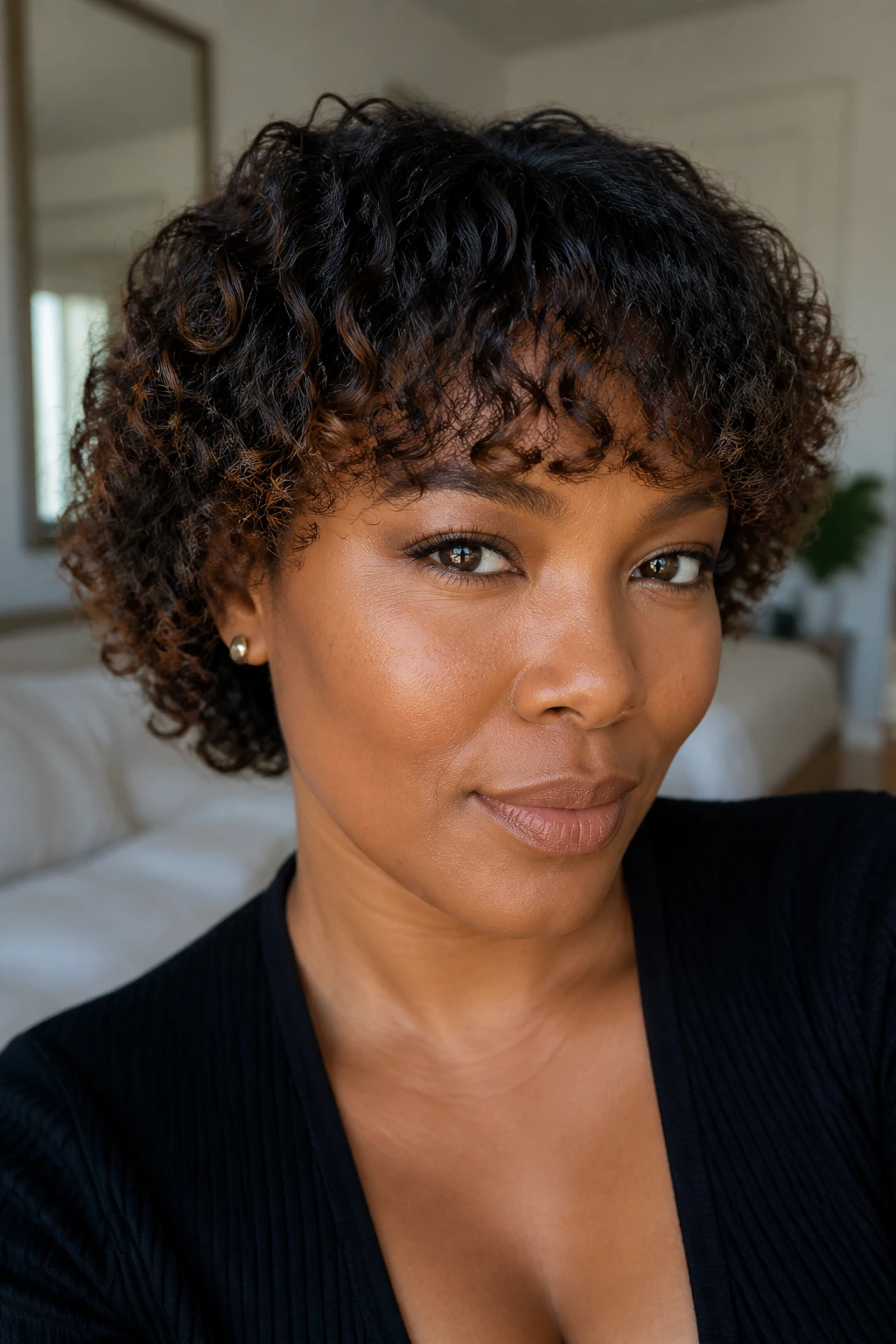
Texture trick: Set the bang in the shape you plan to wear it. A curly fringe should be dried as curls, not flattened and then rescued later.
Color move: Ask for lowlights that sit one shade deeper at the roots and slightly warmer at the ends. That tiny shift keeps the front from looking dyed in one pass.
Shape fix: If the bang feels too bulky, take out weight in tiny vertical sections from underneath. Do not carve across the top in a straight line unless you want a hard shelf.
Finish note: Use the lightest possible amount of serum or styling cream. Too much product makes lowlights blend into a single dark shine, which defeats the whole point.
I also like a small bend at the end of almost every straight bang. It keeps the fringe from laying like a paper strip. A little curve is enough. You don’t need a full curl unless that’s the style.
Night Care, Storage, and Refresh Timing
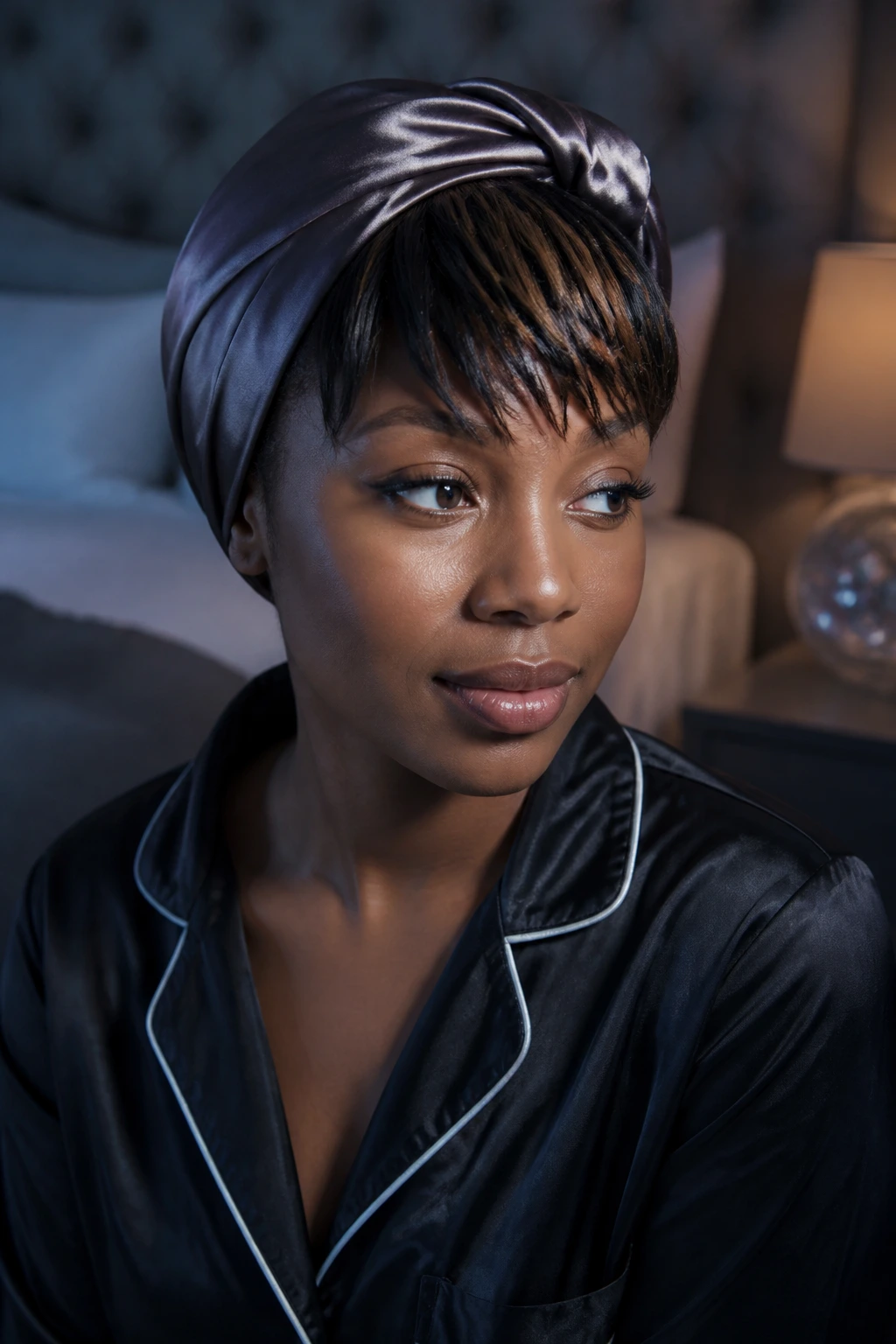
Clip-in bangs should come out at night if you can manage it. Detangle them gently, let them dry completely if they picked up moisture, and store them flat in a satin bag or on a hanger with tissue around the base. That keeps the color blend and cut from getting crushed.
For sewn-in, glued, or quick-weave bangs, the nightly routine is simpler but more important. Wrap the front with a satin scarf or strip, smooth the bang into place with your hands, and sleep with the fringe laid in the direction you want it to wake up in. If the style has a curl set, keep the curls pinned or wrapped until they cool and settle.
Wash timing depends on the hair type and install method, but a human-hair bang usually handles a gentle cleanse every 1 to 2 weeks if you’re wearing it often. Refresh the front with a light mist and re-shape every few days, especially if humidity sits heavy in the room. A quick blow-dry on low heat can rescue the root if it starts to bend the wrong way.
If the fringe is glued, sewn, or tightly installed, watch the hairline for lifting and schedule a refresh before it starts pulling. Once the front lifts, the whole style looks tired fast. Better to adjust early.
Easy Variations and Adaptations to Try
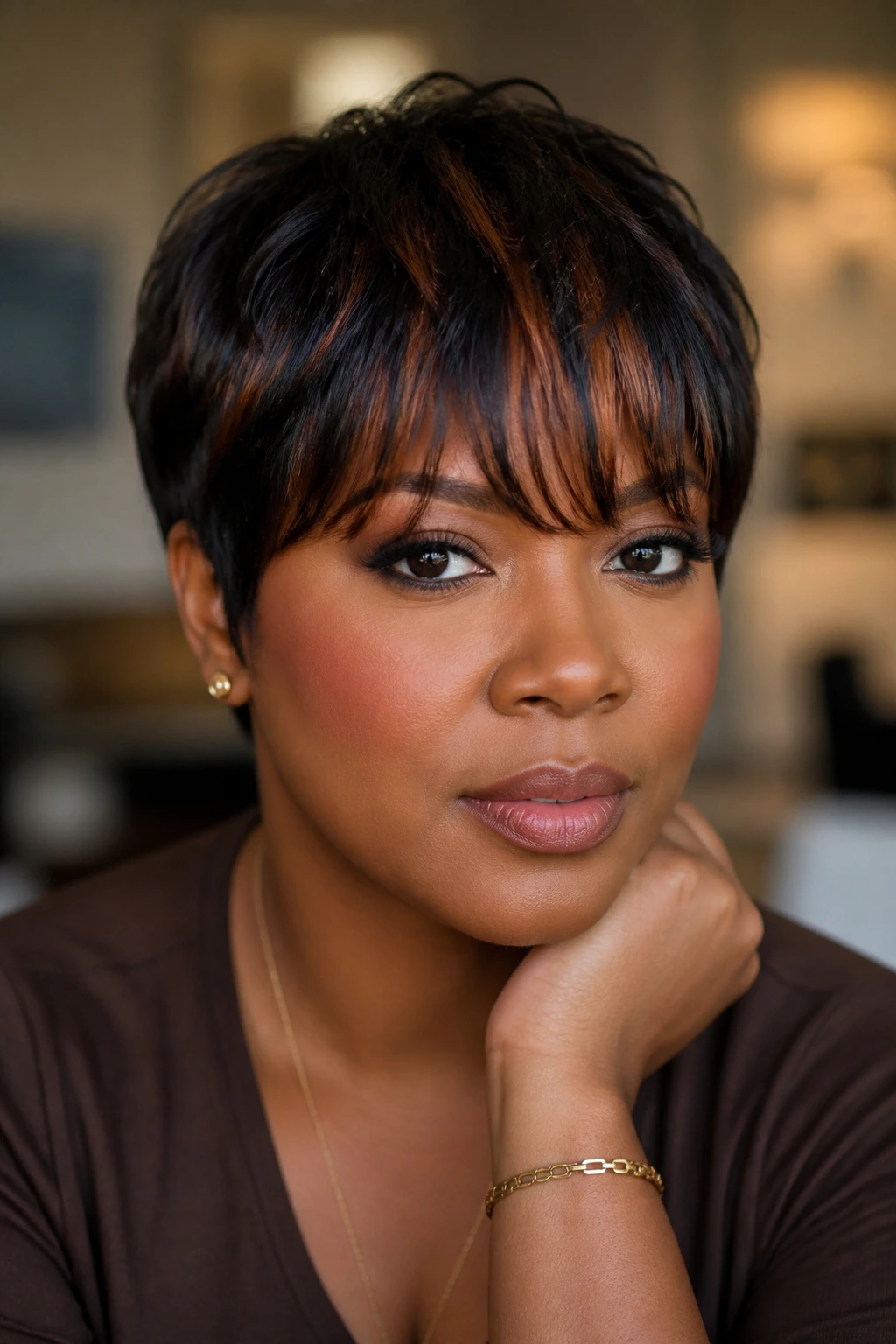
Heat-Free Coil Set: Swap any straight or brushed-out fringe for a flexi-rod or pin-curled version. It keeps the front soft and reduces heat use, which is a smart move if your natural hair already likes a stretched style.
Copper Kiss Lowlights: Trade espresso ribbons for warm copper or auburn strands. The style feels brighter without becoming loud, and it can wake up deeper skin tones fast.
Glasses-Friendly Whisper Fringe: Ask for a lighter, shorter bang with more separation at the brow. This works well if you wear frames and do not want the fringe to sit on top of them.
Protective Base Blend: Keep most of your short natural hair tucked away and let the bang do the visual work. This is a clean choice when you want less daily handling around the edges.
High-Contrast Front Piece: Use a slightly deeper lowlight against a lighter base for a more visible stripe of dimension. This fits blunt or rounded bangs better than wispy styles, where contrast can look choppy.
Common Mistakes to Avoid
-
Too much density at the front: If the bang looks like a shelf, it usually means the piece is too thick for your forehead and hairline. Ask for light internal layering or choose a narrower front.
-
Lowlights that are too close to the base color: When the shade difference is tiny, the fringe can look muddy instead of dimensional. Go one shade deeper, not five.
-
Cutting the bang before the texture is set: Curly, coily, or wavy fringe shrinks after drying. Trim it in the finish pattern, or it will end up too short.
-
Ignoring the seam at the temples: Short natural hair shows joins fast. Blend the side edges with a little leave-out, pin placement, or a deeper lowlight at the edge.
-
Using too much product: Heavy cream or oil makes the front collapse and wipes out the ribbon effect from the lowlights. Start with a pea-size amount and stop there.
-
Skipping nightly wrapping: Bangs live or die by the first 8 hours after you style them. A satin wrap keeps the front from kinking, puffing, or splitting apart.
Frequently Asked Questions
Can weave bangs work on very short natural hair?
Yes, as long as the install method fits the length you have. A bang piece, quick weave, or clip-in fringe can sit on a short base if the anchor points are secure and the front is blended with care.
What lowlight shades look best on natural hair bangs?
Espresso, chocolate, chestnut, mocha, auburn, and walnut are the safest bets. They give depth without making the fringe look muddy, and they tend to blend well with a wide range of black and brown hair colors.
Are clip-in bangs better than sewn-in bangs?
Clip-ins are easier to remove and adjust, which is useful if you like changing your style often. Sewn-in bangs lay flatter and feel more permanent, but they need more planning around upkeep.
How do I keep the bang from separating from my natural hair texture?
Match the finish first. If your own hair is stretched or curled, set the bang to a similar texture and avoid over-smoothing the root. The less the fringe fights your leave-out, the easier the blend.
Can I wear these bangs with glasses?
Absolutely. Wispy, side-swept, and curtain shapes usually sit best with frames because they leave space at the brow line. Blunt bangs can still work, but they need a careful trim.
How often should I trim the fringe?
A bang piece usually needs a small shape check every 2 to 4 weeks if you wear it often. If the style is curly or coily, trim less aggressively; shrinkage does part of the shaping for you.
What if the bang looks too heavy after installation?
Take out a little density from underneath or soften the edge with a lighter part and a small amount of movement at the ends. Most heavy bangs need less hair, not more product.
Can I color the extension hair to add lowlights?
Human hair can usually be toned or colored by someone who knows extension hair well. Synthetic hair should not be dyed the same way; buy a piece that already has the lowlight blend built in.
The Fringe That Changes the Whole Cut
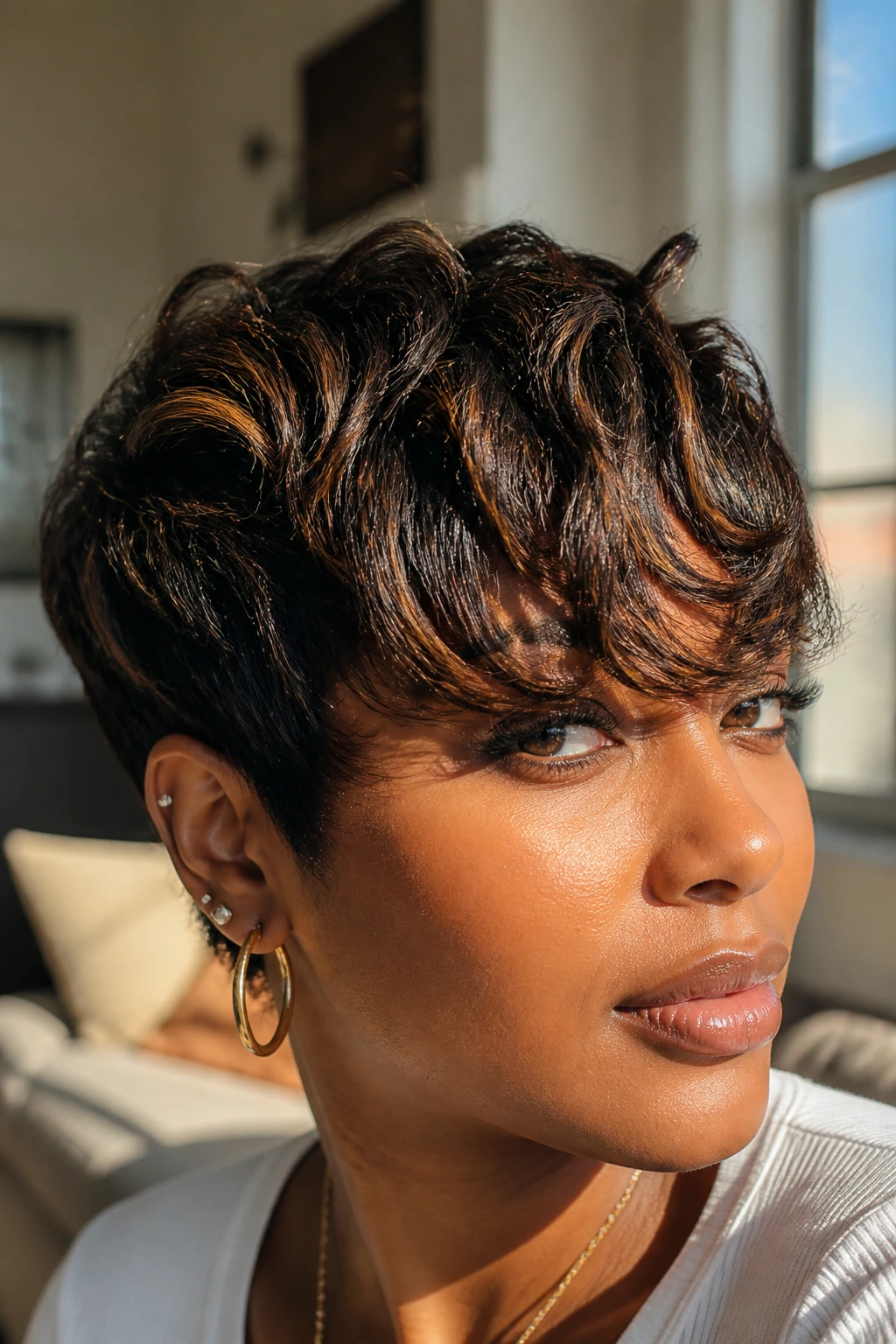
A good weave bang can make short natural hair look sharper, fuller, or softer without touching the rest of the style. The lowlights are what keep it from going flat. They break up the front, shadow the roots, and give the fringe a little movement even when the cut itself stays simple.
Pick the shape that fits your morning routine, not the one that only looks good in a still photo. A blunt fringe asks for more polish. A curtain bang forgives more. A coily mini-bang and a textured shag sit somewhere in the middle, which is probably why they stay useful.
Choose the lowlights with the same care you’d give the cut. Just a shade or two of depth can change everything.