



Dark hair can wear all-over blonde beautifully, but only when the lift is clean enough to let the shade breathe. If the base is dragged through orange and stopped at a muddy yellow, the whole look goes flat fast. If the lift is even and the cut is doing some of the visual work, blonde on dark hair has a crisp, expensive-looking clarity that a lot of people chase and a lot of people miss by rushing the process.
That’s the part most people underestimate. All-over blonde hairstyles for dark hair are not just about choosing “blonde” and calling it a day. A level 2 brunette and a level 5 dark brown do not lift the same way. Curly hair reflects light differently from poker-straight hair. A blunt bob can make the same toner read cooler, while a shag can make it feel softer and warmer. The cut and the color are arguing with each other all the time, and the good looks happen when they stop fighting.
The styles below lean into that reality. Some are blunt and polished, some are airy and undone, and some are built for people who want the blonde to feel bold without looking brittle. If you’ve been saving screenshots and wondering which blonde actually belongs on your dark hair, the answer is usually hiding in the shape as much as the shade.
Why These Looks Stand Out on Dark Hair
- Shade Range: You’ll see creamy beige, honey gold, pearl, ash, and icy blondes, which matters because the wrong undertone can make dark hair look brassy instead of bright.
- Cut Variety: Bobs, lobs, pixies, shags, curls, and long waves all change how blonde reads in the mirror, not just in photos.
- Real Grow-Out Logic: Several of these styles lean on texture, root blur, or shape, so they don’t turn into a crisis four weeks later.
- Texture-Smart: Straight hair, wavy hair, curly hair, and coily hair all catch blonde in different ways; these ideas respect that instead of pretending one formula fits everyone.
- Salon-Ready Language: The names are specific enough to show a stylist, and the notes help you ask for the right lift level, tone, and finish.
- Low-Drama Options: Not every blonde has to be ice-white and high maintenance. Some of the best versions for dark hair live in the butter, beige, and champagne range.
Why All-Over Blonde Hairstyles for Dark Hair Need a Cleaner Lift
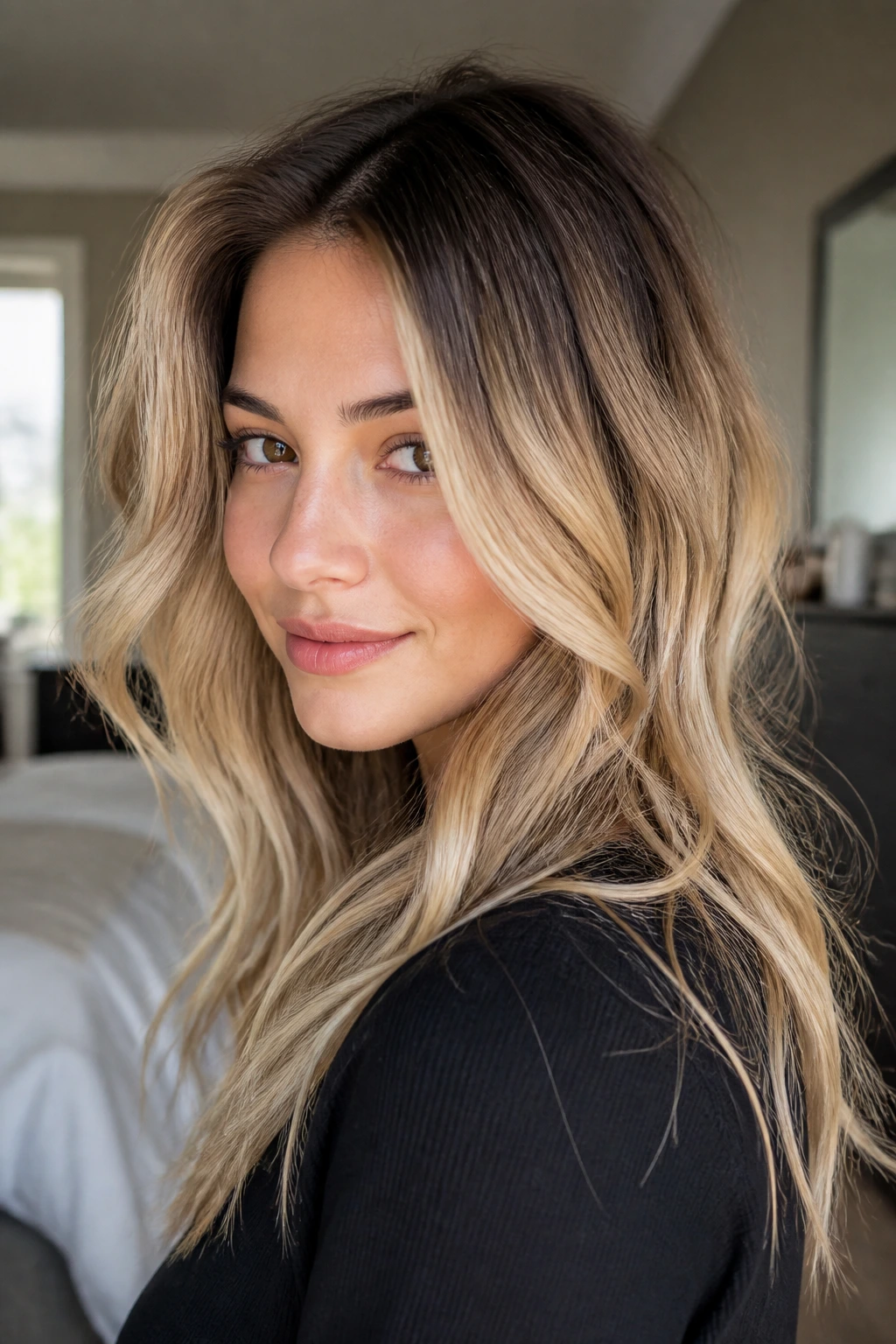
Dark hair has a strong memory. Even after it’s lightened, the underlying warmth keeps trying to show up, which is why a rushed blonde often lands somewhere between pumpkin and lemon peel. The cleanest all-over blonde on dark hair usually comes from patient lifting, careful toning, and a cut that doesn’t expose every uneven patch of color at once.
That’s the part a lot of people skip. They bring in a glossy blondie photo and forget that dark bases usually reveal red, orange, then yellow before they ever reach pale blonde. If your hair is coarse or dense, that journey takes longer because the lightener has to work through more pigment. If your hair is porous from previous color, the toner can grab too hard and go dull. Both situations need a hand that knows when to stop.
The cut matters just as much. A blunt bob shows every millimeter of the lift, so the tone needs to be even. A shag hides a bit more of the transition, which gives you some breathing room if you want a softer beige or sandy blonde instead of an icy finish. On curls, the blonde reads deeper in the bend of each curl, so the eye sees movement rather than a flat color sheet. That’s useful. It means the right hairstyle can make the blonde feel richer without making the lightening process any less real.
1. Creamy Blunt Bob
A chin-grazing blunt bob is one of my favorite ways to put blonde on a dark base without letting the cut get messy. The hard edge makes the color look intentional, and a creamy beige toner keeps it from drifting into a harsh, over-processed yellow. On dark hair, that contrast at the jawline gives the style a sharp little frame.
Ask for a one-length bob with barely beveled ends and a lift that lands around level 9, then tone it creamy rather than icy. This works best when the hair is blown smooth with a round brush and tucked behind one ear. Clean lines. No fuss.
2. Butter Blonde Collarbone Lob
Can a collarbone lob carry a buttery blonde on dark hair without looking stripey? Yes, if the length lands right at that sweet spot where the hair swings instead of hanging flat. Butter tones soften the overall effect and keep the blonde from feeling too bleached against a brunette root history.
Why It Flatters Dark Hair
The collarbone length gives you enough surface area for the blonde to show, but not so much that every uneven tone gets magnified. I like this cut for people who want lightness around the face without the upkeep of waist-length blonde. A soft bend from a 1-inch iron keeps the ends from looking heavy.
3. Platinum Pixie Crop
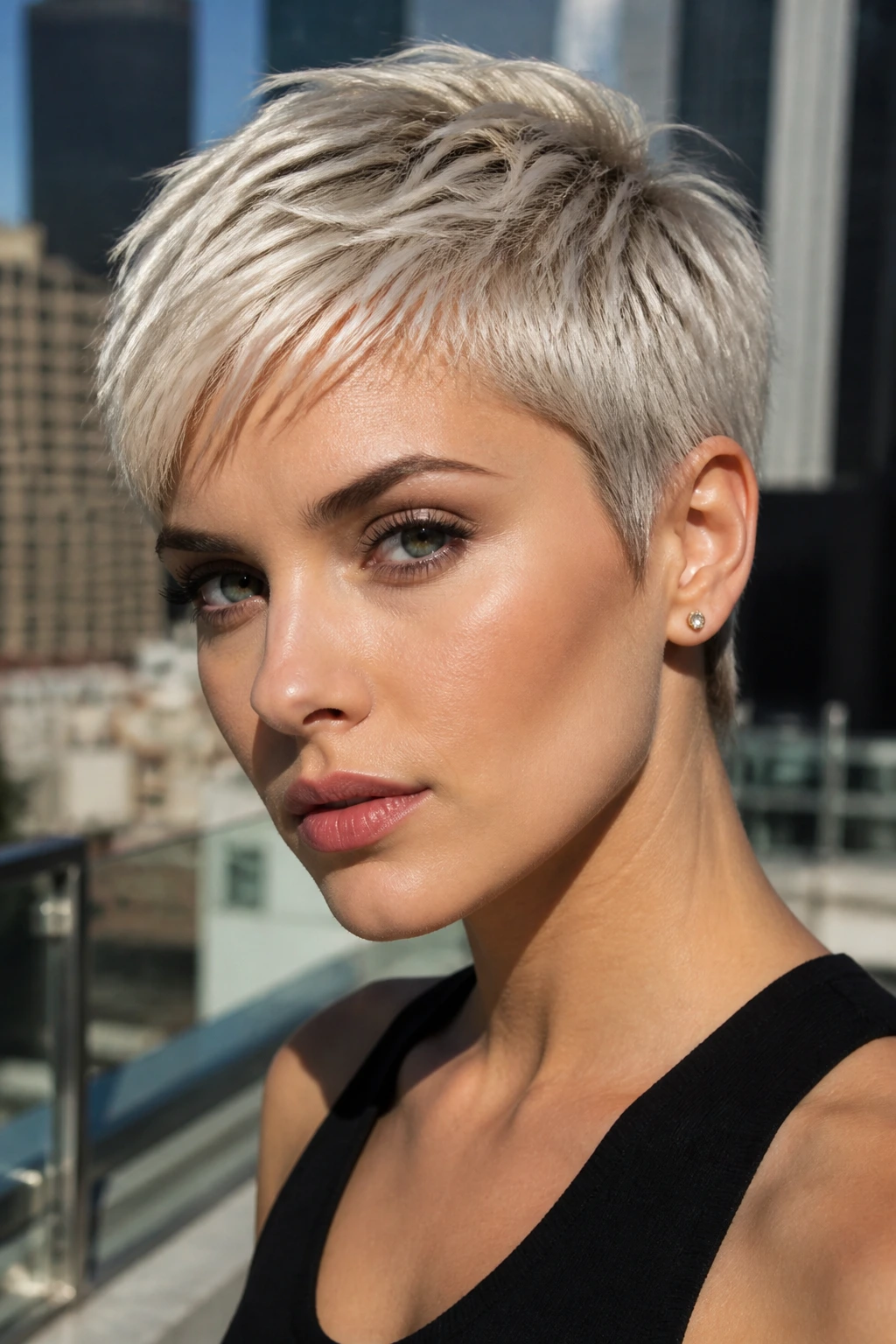
A platinum pixie is not subtle. That’s the appeal. With dark hair, the short length makes the lift easier to keep even, and the whole head turns into this bright, cropped shape that shows off cheekbones and brows without hiding behind layers.
If your stylist keeps a soft shadow at the root, the grow-out looks less abrupt, which is a small mercy with a pale blonde like this. I’d ask for textured top layers and a cool platinum toner that lands clean, not silver-blue. Works best on straight to slightly wavy hair. Curls can do it too, but the shape needs a stronger outline.
4. Honey Blonde Long Layers
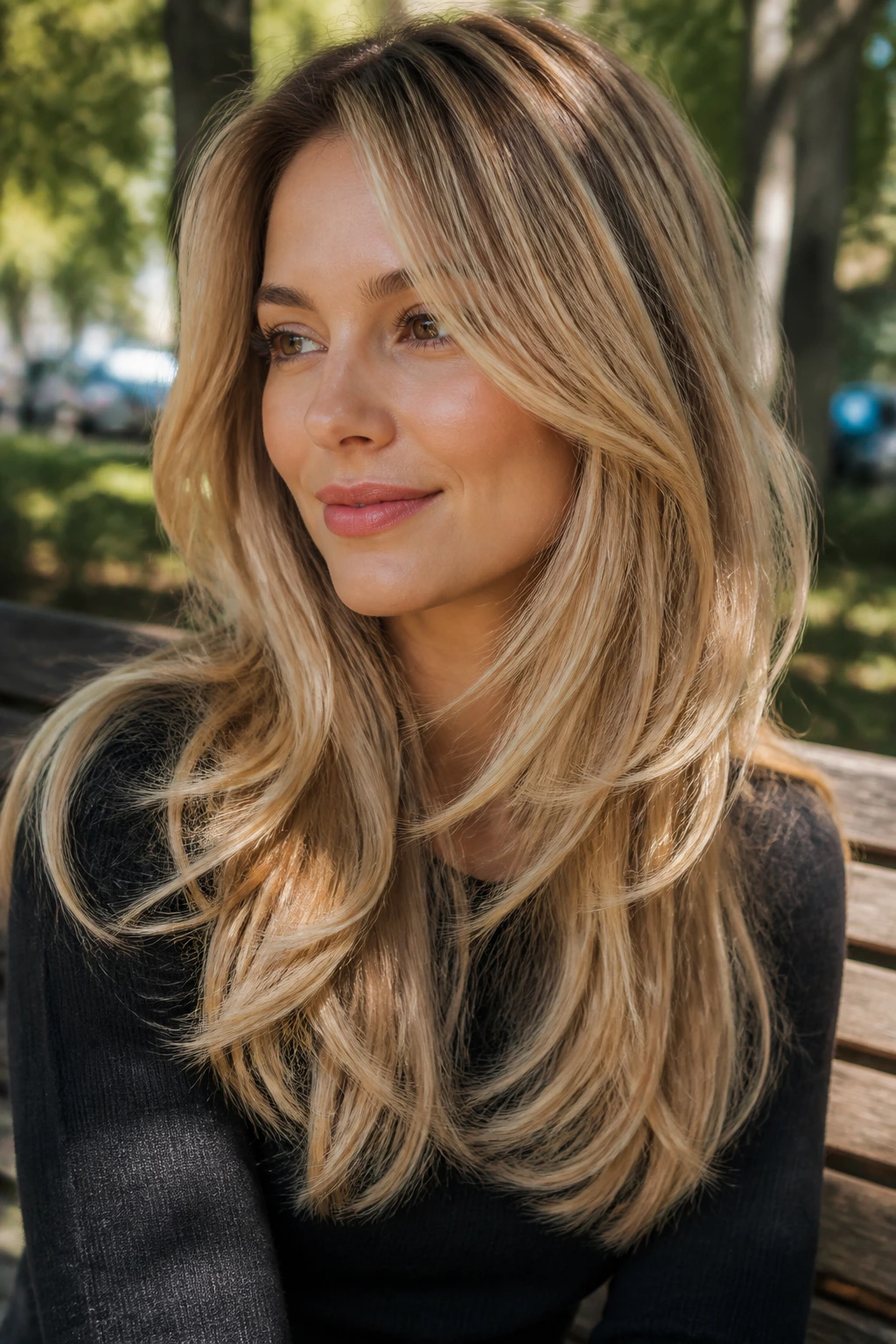
Long layers and honey blonde get along because neither one tries to be too neat. The layers give the color movement, and the warm tone keeps dark hair from looking drained. When the light hits the ends, the whole thing catches with a soft gold glow that feels easy to wear.
This is the style I’d hand to someone who wants blonde but does not want to spend every weekend in the salon chair. You can wear it loose, braid it, or rough-dry it with a bit of mousse and still have the color look alive. On thick hair, ask for internal shaping so the blonde doesn’t just sit as one heavy curtain.
5. Beige Blonde Curtain Bangs
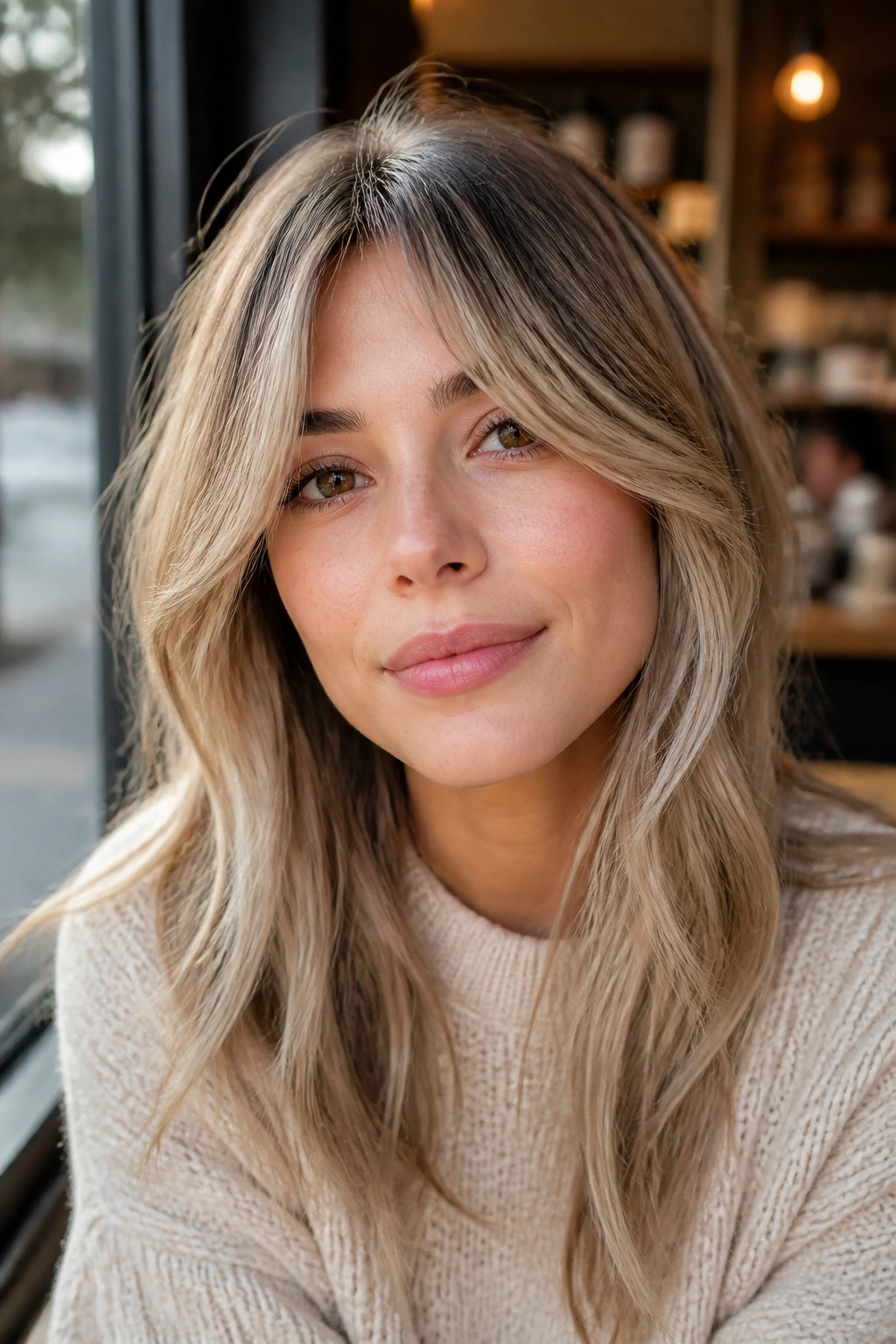
Curtain bangs are useful because they put the lightest color right where the face needs it most. On dark hair, a beige blonde fringe softens the shift between deep roots and a lighter body, so the look feels blended even when the overall color is solid blonde.
What Makes It Work
Beige sits in that middle lane between warm and cool, which saves you from the sharpness that icy blonde can bring to very dark hair. It’s a good choice if your skin leans neutral or if you wear a lot of gold jewelry. Keep the bangs a little longer at the cheekbone, not chopped too short, so they fold into the rest of the cut instead of sitting there like a separate piece.
6. Sandy Blonde Wolf Cut
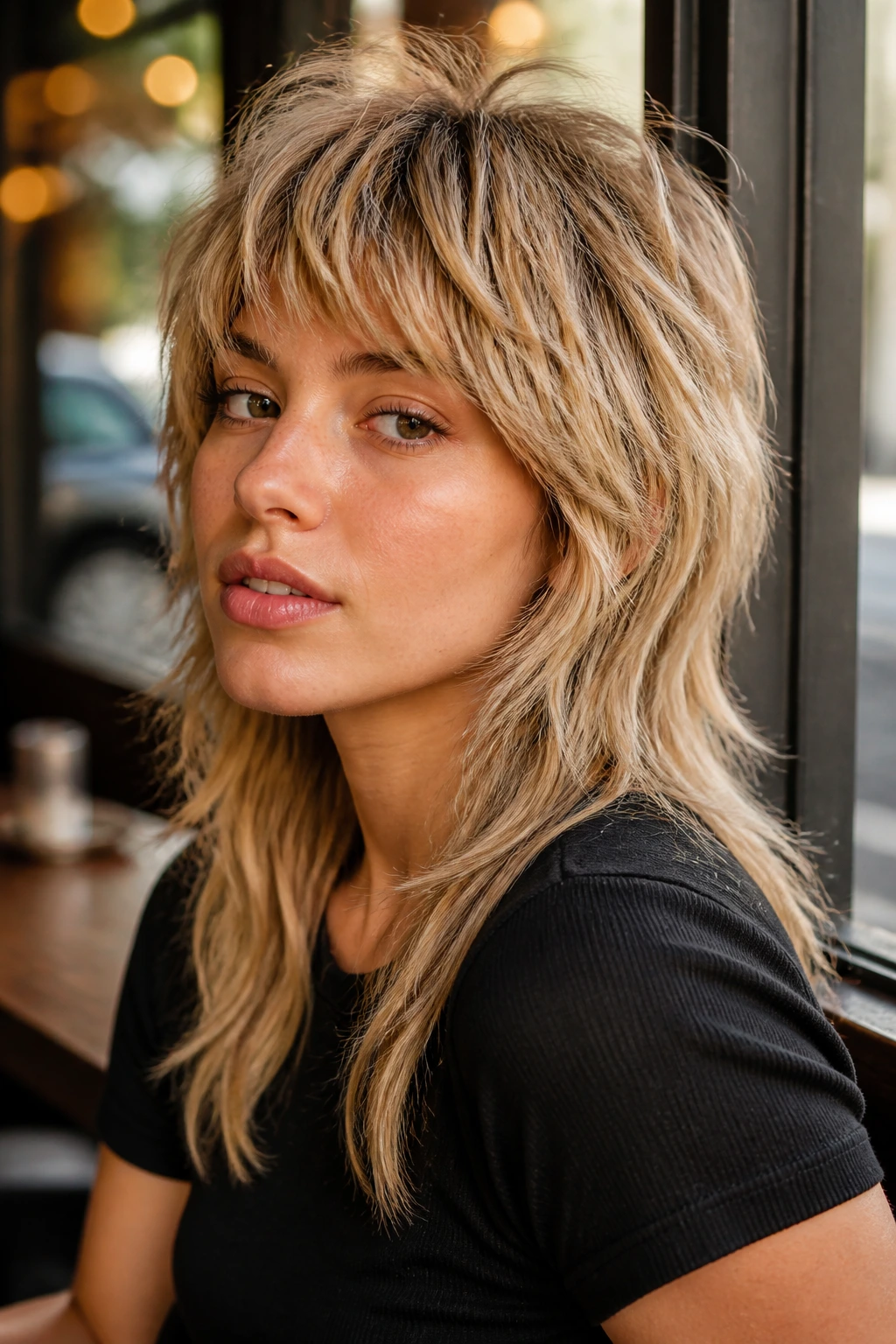
The wolf cut is made for hair that wants some attitude. Add sandy blonde, and the whole thing turns into a choppy, lived-in shape that doesn’t need every strand to be perfect. Dark hair under this style can look incredible because the texture breaks up the light and gives the blonde a rough, cool edge.
A wolf cut is one of the better choices if your hair is thick or naturally wavy. The shorter crown layers create lift, while the longer ends keep the blonde from looking boxy. Ask for sandy beige tones rather than bright gold if you want the cut to feel modern and a little gritty.
7. Champagne Shag
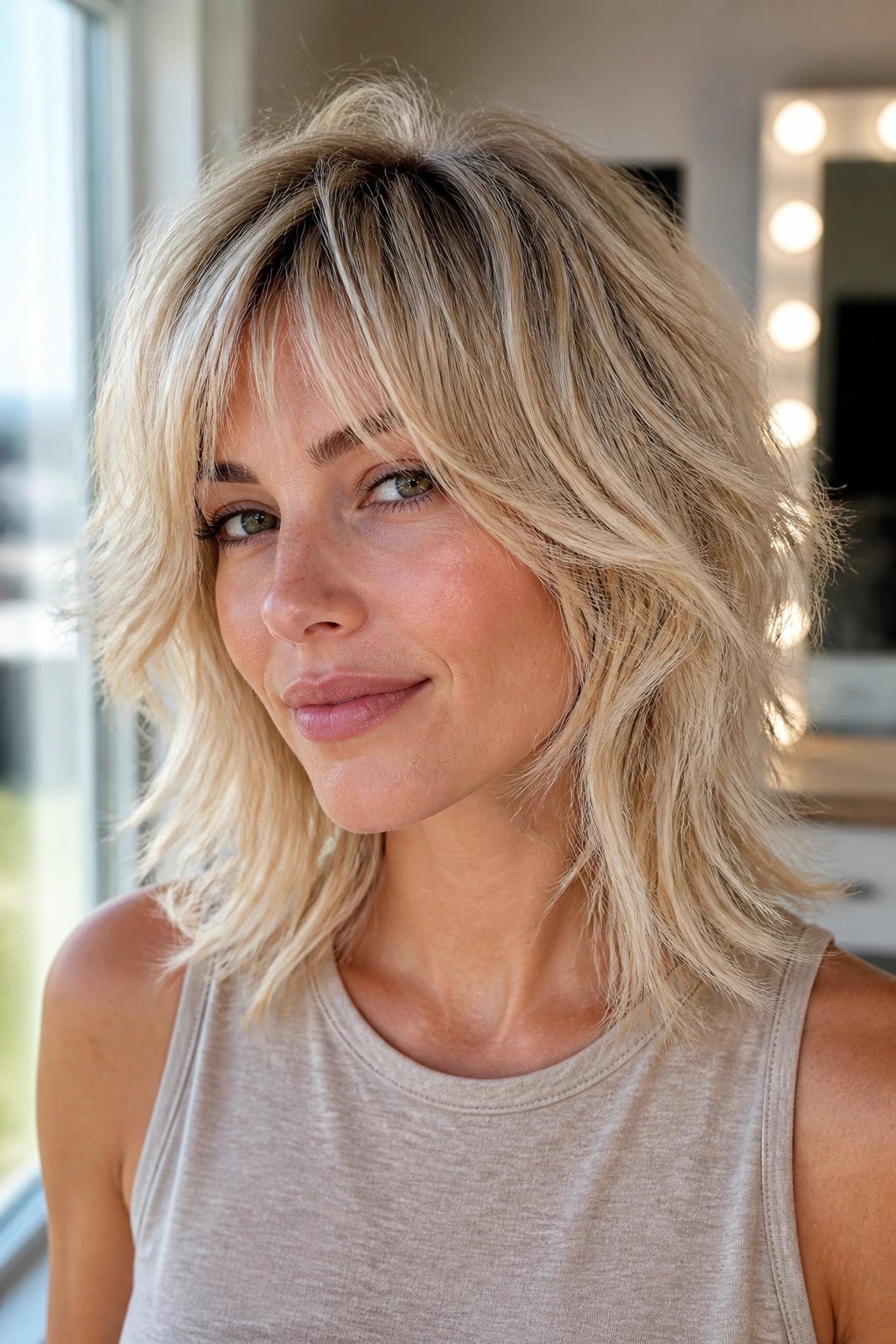
Champagne blonde on a shag gives you that airy, slightly rumpled finish that makes people think you spent less time on your hair than you did. It’s flattering on dark hair because the tone sits softly between pearl and gold, which keeps the lift from feeling stark.
How to Get the Most From It
A shag needs movement, so don’t flatten it with a heavy cream or a giant round-brush blowout every time. A quick blow-dry with a diffuser or a bend from a curling iron looks better here. If the hair is fine, keep the layers soft around the crown so you don’t lose density. The blonde should move with the cut, not fight it.
8. Golden Beach Waves
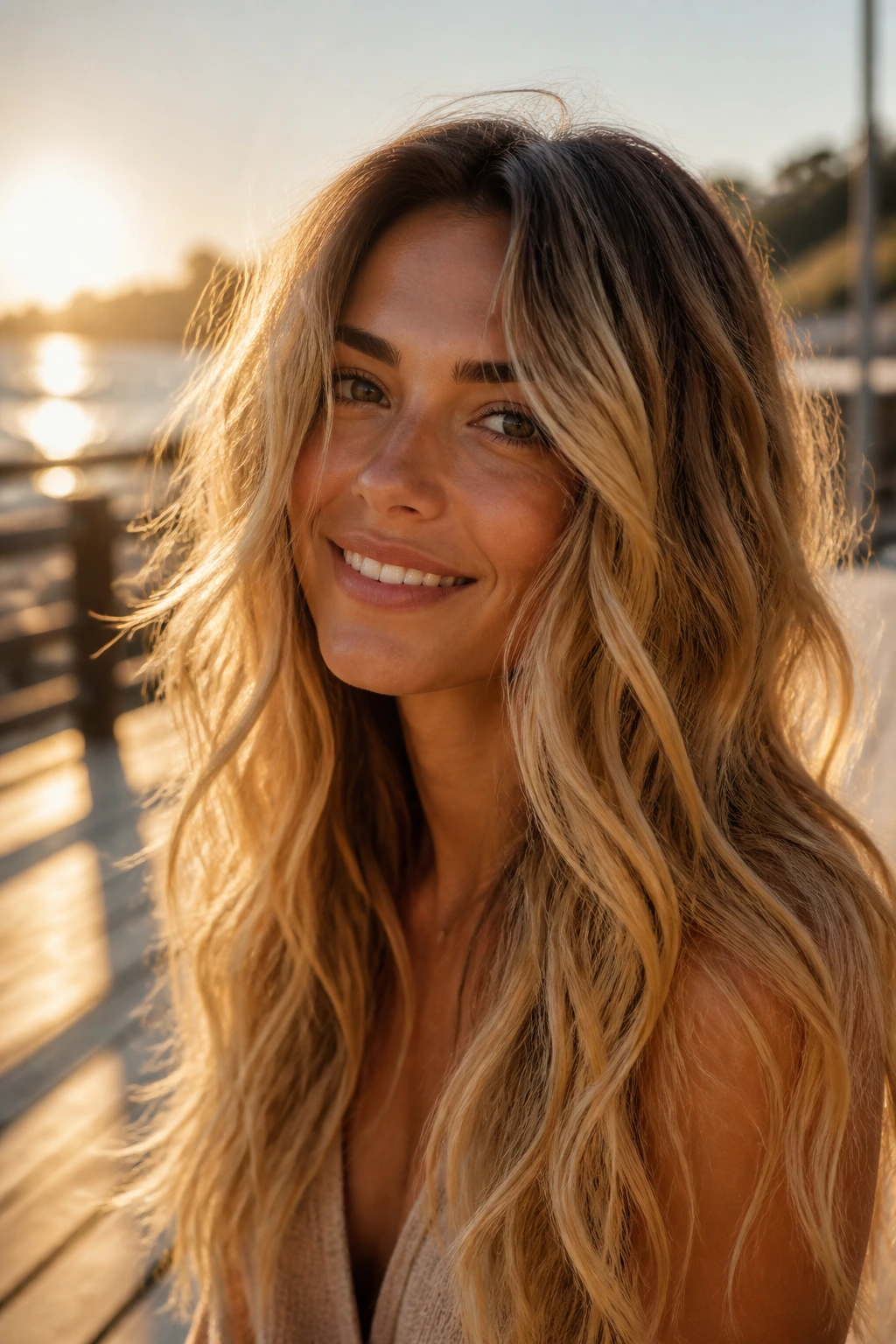
This is the style for someone who wants blonde to look sunny rather than icy. Golden beach waves on dark hair have a classic pull because the warm tone echoes the natural depth underneath instead of pretending it never existed. The result feels bright, but not brittle.
A 1.25-inch curling iron, brushed out with your fingers, gives the waves that loose, washed-out shape. I like this better when the blonde is lifted evenly to a warm level 9 and then toned to a soft gold. Long hair helps, but shoulder length works too if the ends are trimmed blunt enough to hold the wave.
9. Pearl Sleek Midi
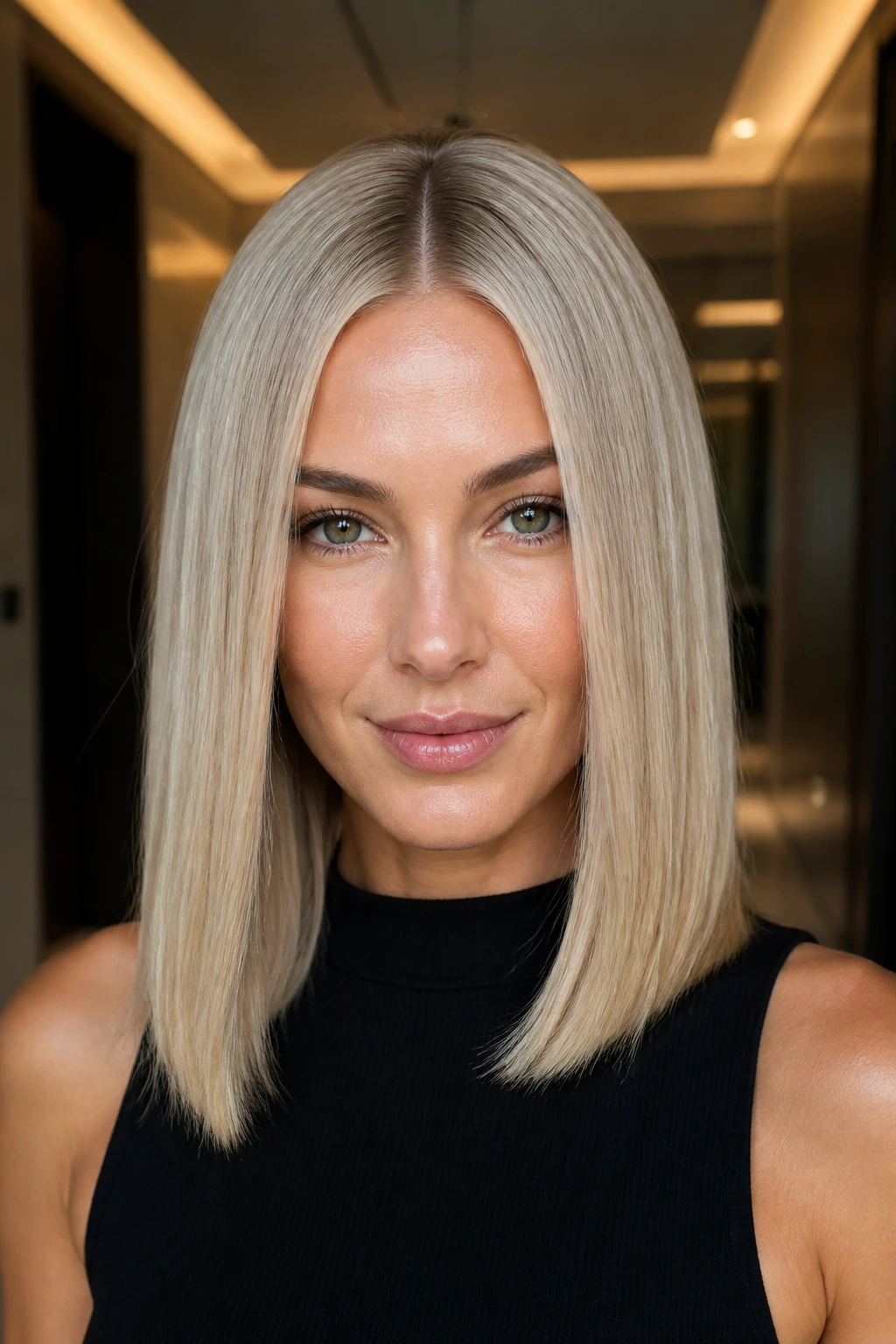
Pearl blonde on a sleek midi cut is the sort of look that makes dark hair seem almost architectural. The smooth surface lets the pale tone read as clean rather than flat, and the midi length keeps the whole thing wearable instead of severe.
If you want this style to land well, the lift has to be even. Pearl doesn’t hide patchiness. It shows it. That’s why this cut is best when the hair has already been lightened carefully and the toner is kept cool but not chalky. A center part makes it sharper; a deep side part softens the whole line.
10. Rooted Vanilla Curls
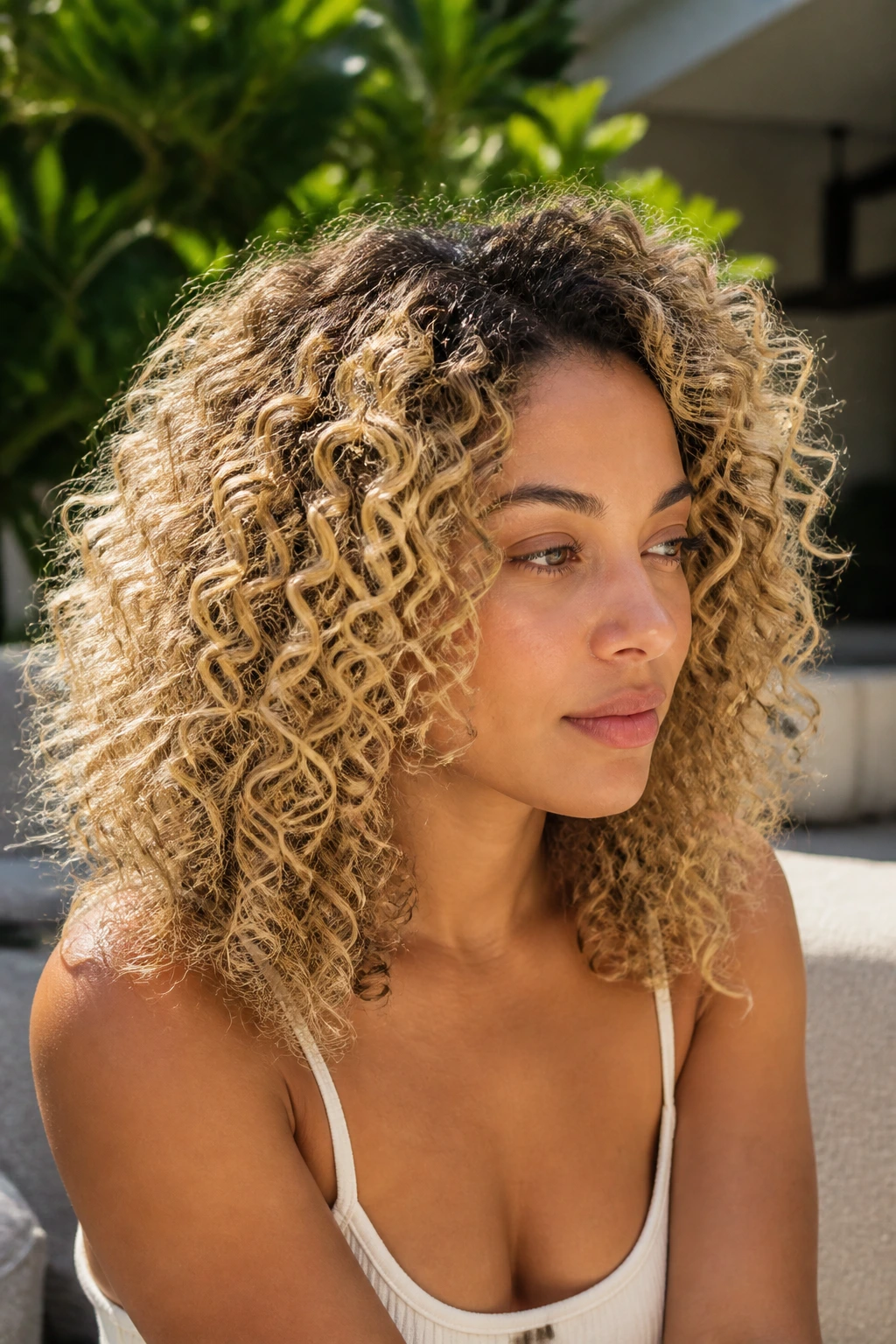
Curly hair with rooted vanilla blonde is one of the smartest blonde-on-dark-hair choices around. The curl pattern gives the color dimension on its own, so the blonde doesn’t have to do every bit of the visual work. A soft root makes the grow-out look intentional, not neglected.
The key is keeping the blonde creamy and evenly lifted, then preserving the curl shape with a diffuser and a lightweight gel. Too much product will drag the curls down and make the blonde look dull. Too little, and the frizz eats the shine. Vanilla is a good middle lane because it stays bright without turning harsh.
11. Ash Blonde Long Pixie
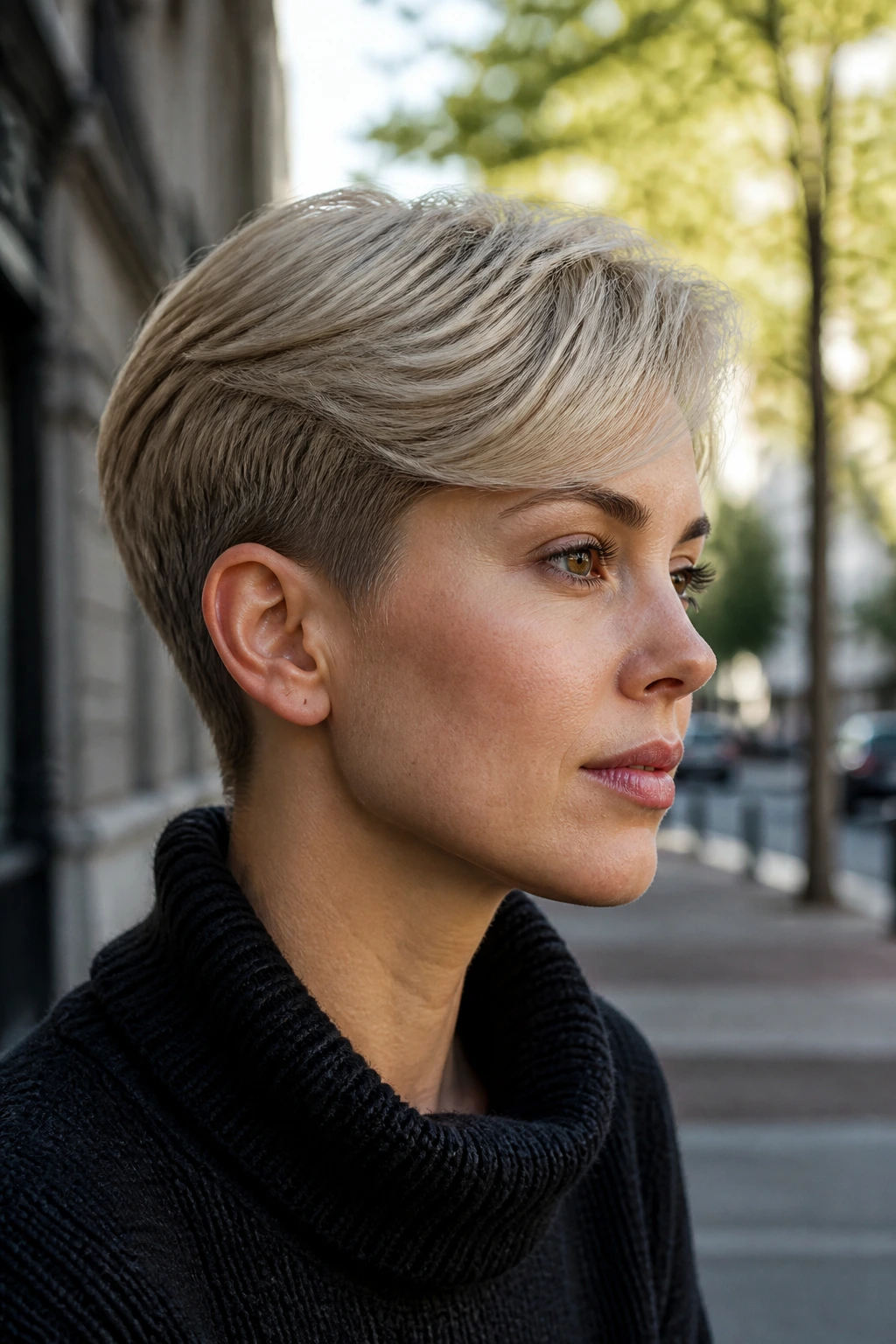
Ash blonde on a long pixie gives dark hair a cooler, sharper edge than honey or beige ever will. I like it because the short shape keeps the cool tone from reading flat. The side-swept top adds a little softness, which matters when the blonde itself is on the icy side.
This cut needs regular trimming, usually every 4 to 6 weeks, or the shape starts to lose its clean lines. If your hair tends to pull warm, ask for a toner that sits a shade cooler than you think you need. Ash can go muddy if it’s pushed too far, so keep the finish crisp, not gray.
12. Frosted Straight Lob
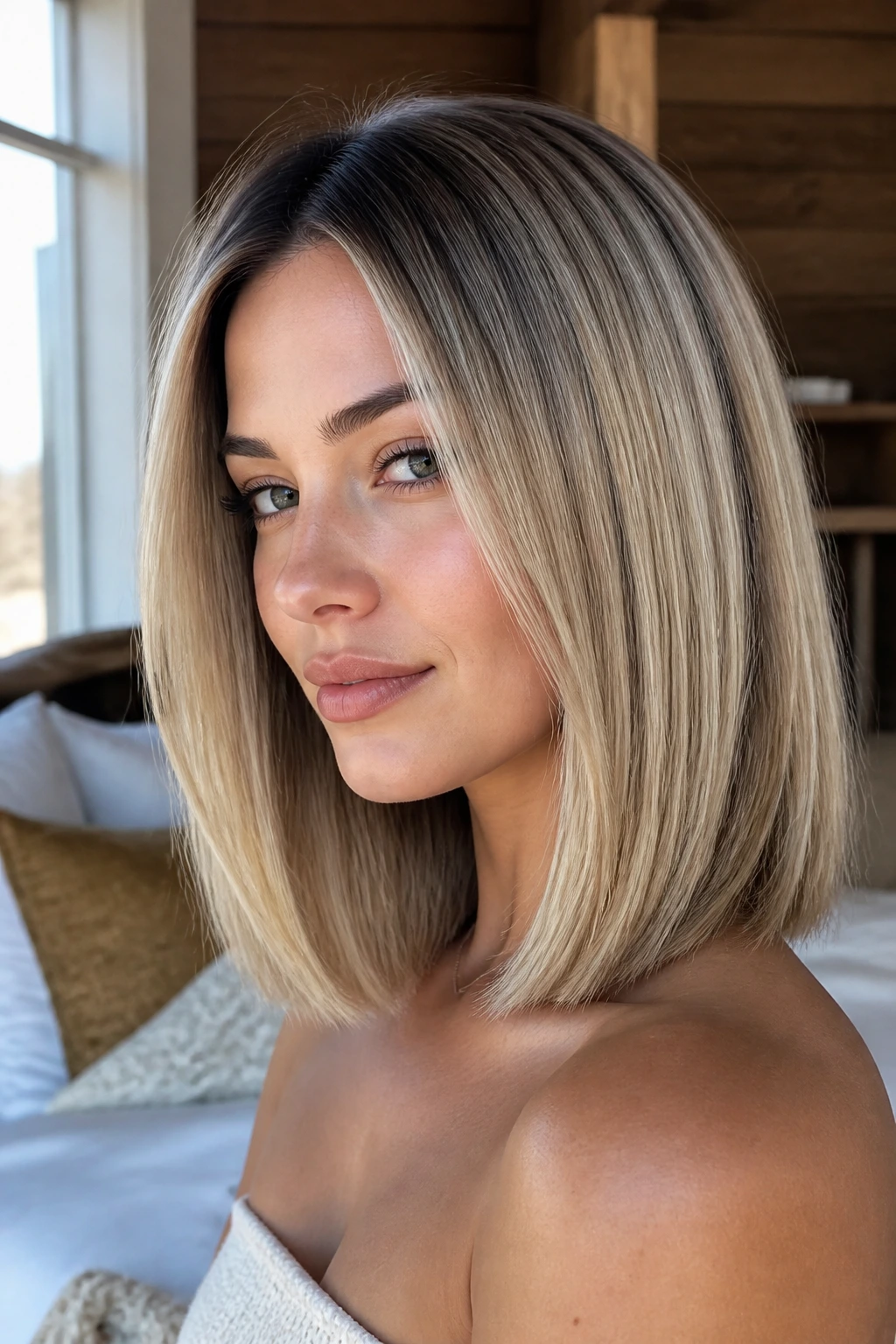
A straight lob with a frosted blonde finish is all about control. Dark hair can make a pale lob look dramatic in the best way, but only if the tone is even from root to tip and the ends are trimmed clean. Any unevenness shows fast in this style.
What to Watch For
If your hair has a lot of porosity, a frosted toner can grab too much and look dull. A gloss over the toner often fixes that. Keep the blowout smooth, not pin-straight and stiff; the slightest bend at the ends keeps the lob from looking like a helmet. It’s a precise style, but not a fussy one once the color is right.
13. Toasted Almond Butterfly Cut
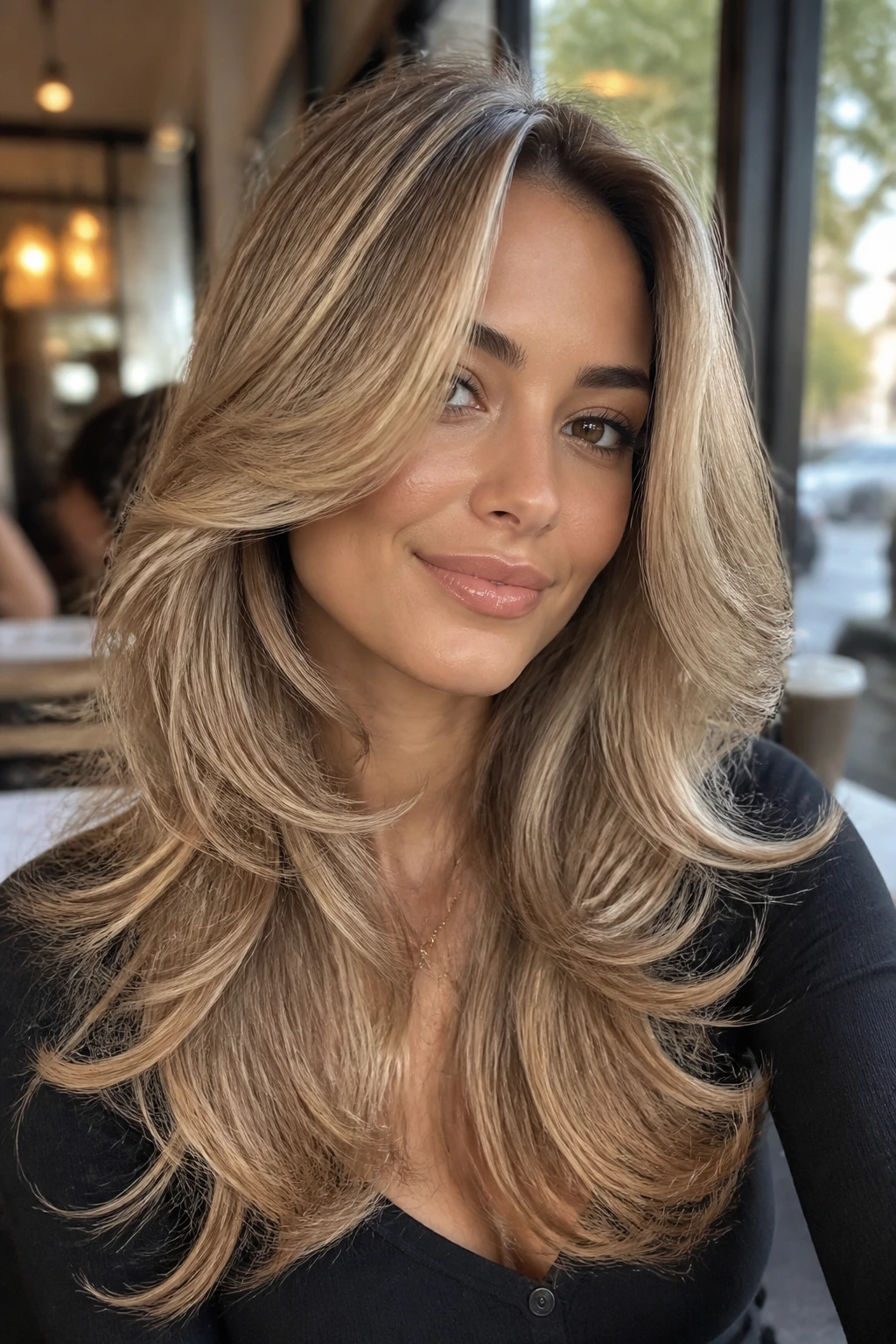
The butterfly cut already gives you face-framing layers and a long, airy body. Add toasted almond blonde, and the whole shape feels softer and warmer, which is useful on dark hair because it keeps the lift from looking stark around the face.
This style works especially well if you want to keep length but still want the movement people usually chase in shorter hair. The front layers sweep back beautifully with a round brush, and the almond tone sits nicely between honey and beige. On thick hair, ask your stylist to remove bulk from the mid-lengths so the blonde doesn’t sit in one heavy sheet.
14. Scandinavian Blonde Bob
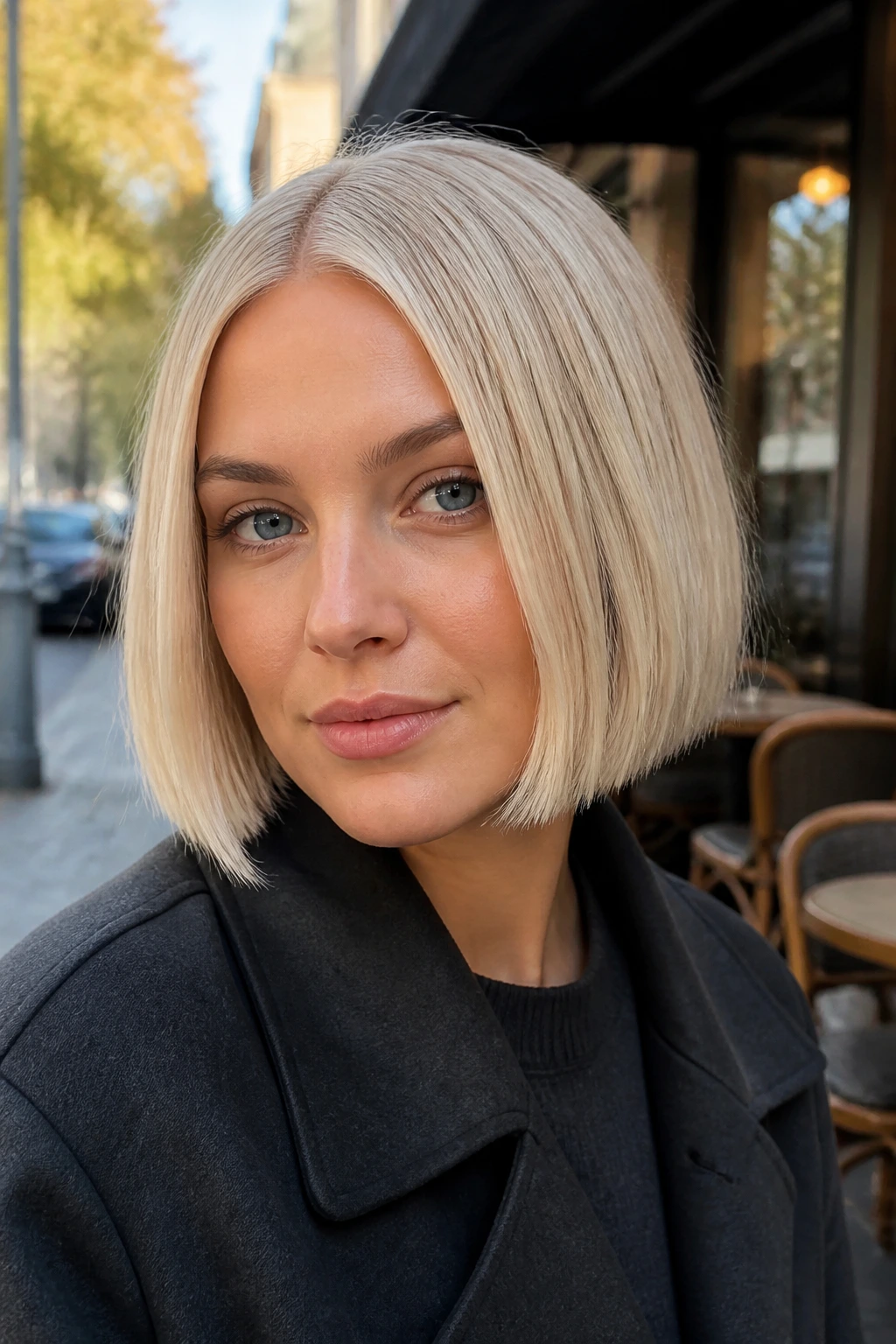
Scandinavian blonde on a bob is severe in a good way. It’s pale, bright, and honest about what it is, which is part of the appeal when you’re starting from a dark base. The bob keeps all that lightness grounded.
I prefer this cut when the ends are blunt and the shape stops right at the jaw or slightly below it. The clean line stops the pale blonde from looking wispy. If you wear minimal makeup, this style can still carry the whole look. If you like a bolder face, a dark liner or a berry lip gives it contrast fast.
15. Mushroom Blonde Soft Mullet
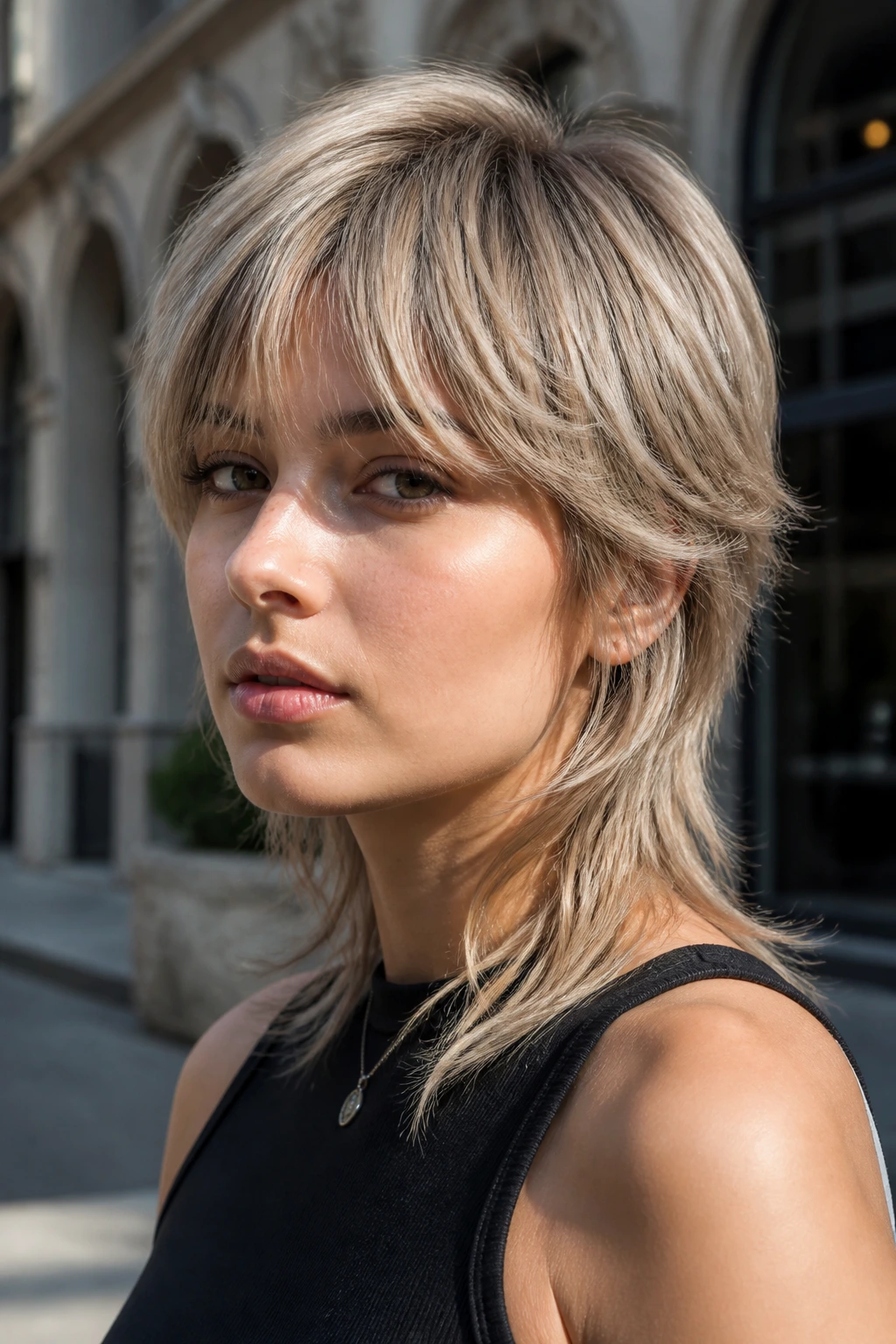
A soft mullet sounds edgy because it is. Mushroom blonde keeps it wearable. The cool beige-taupe blonde tones down the choppiness so the cut feels modern rather than punk, and dark hair underneath gives the style more depth as it moves.
This is a good choice if you like your hair a little shaggy and don’t want it to look over-styled. The shorter crown pieces bring lift, while the longer back keeps the silhouette interesting. I’d keep the texture soft with a light styling cream and a rough dry. Too much polish kills the whole point.
16. Linen Blonde Hollywood Waves
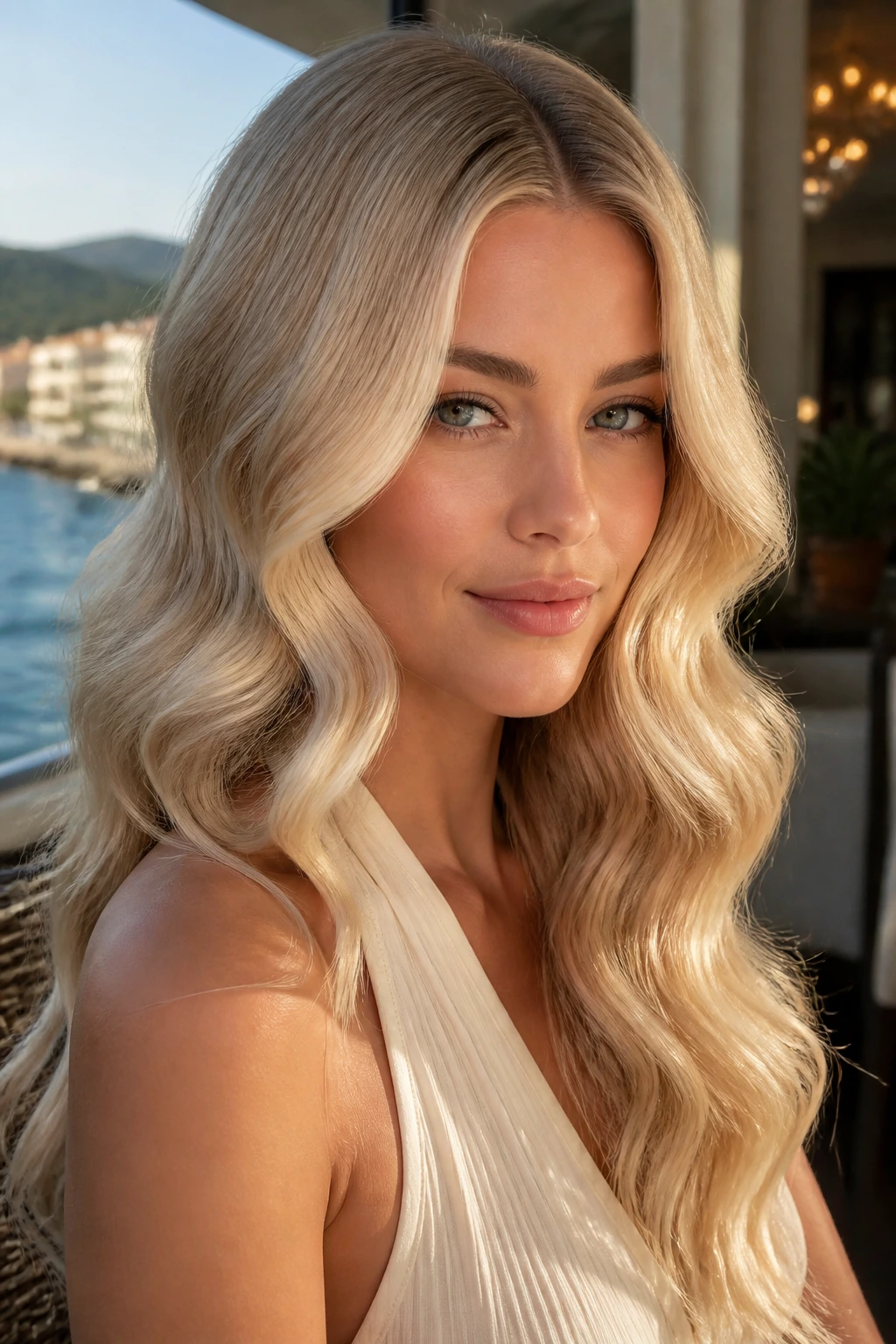
If you want blonde to feel polished rather than beachy, linen blonde Hollywood waves are the lane. The waves give the color a smooth, old-school shape, and the linen tone stays soft enough to work on dark hair without screaming for attention.
The trick here is setting the hair in large, even sections and brushing the waves into one continuous bend. Dark hair takes on a nice brightness when the blonde is creamy instead of yellow, so don’t push this style too golden. It looks especially good on medium to long lengths where the wave can actually travel.
17. Beige Butterfly Cut
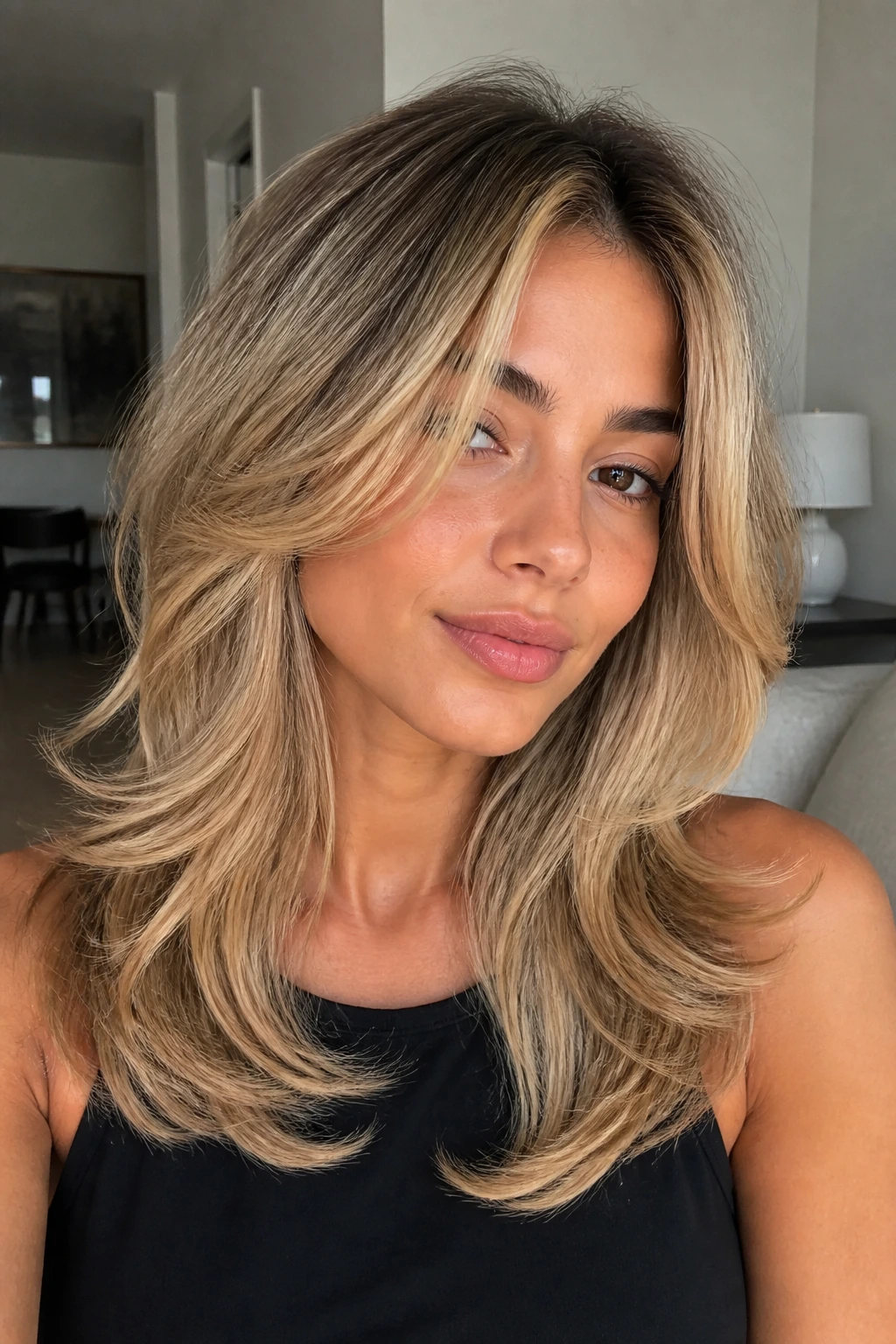
Beige blonde and the butterfly cut are a clean match because both lean on softness. The layered front pieces frame the face, and the beige tone keeps the overall look from going flat against a dark base. It’s bright, but not shouty.
This is one of those styles that can look expensive even when the styling is minimal. A bit of bounce at the ends and a center part are enough. If your hair is dense, ask for weight removal under the crown so the layers move. The blonde needs air around it, or the whole shape collapses.
18. Silver-Butter Soft Crop
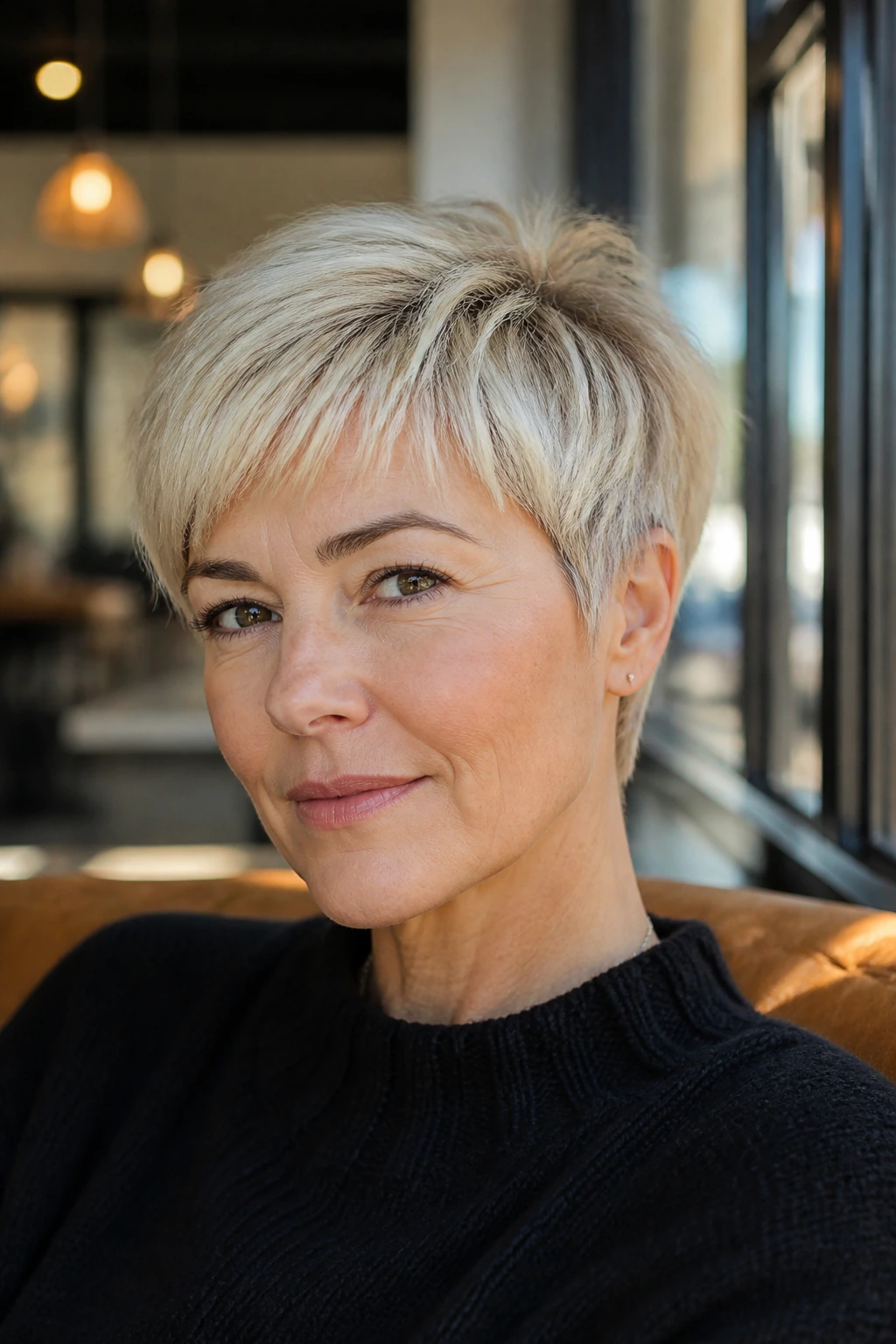
Silver-butter blonde sounds contradictory, and that’s what makes it interesting. The cool silver edge keeps the crop modern, while the tiny hint of butter keeps it from looking chalky on dark hair. Short styles like this can handle a surprising amount of tone because the shape does so much of the work.
This is a strong option for fine hair. The shorter length makes the strands appear fuller, and the mixed tone gives the surface some depth. Keep the crop softly textured on top and neat around the ears. If the toner gets too cool, the whole thing can go dull fast, so a gloss matters here.
19. Wheat Blonde Collarbone Flip
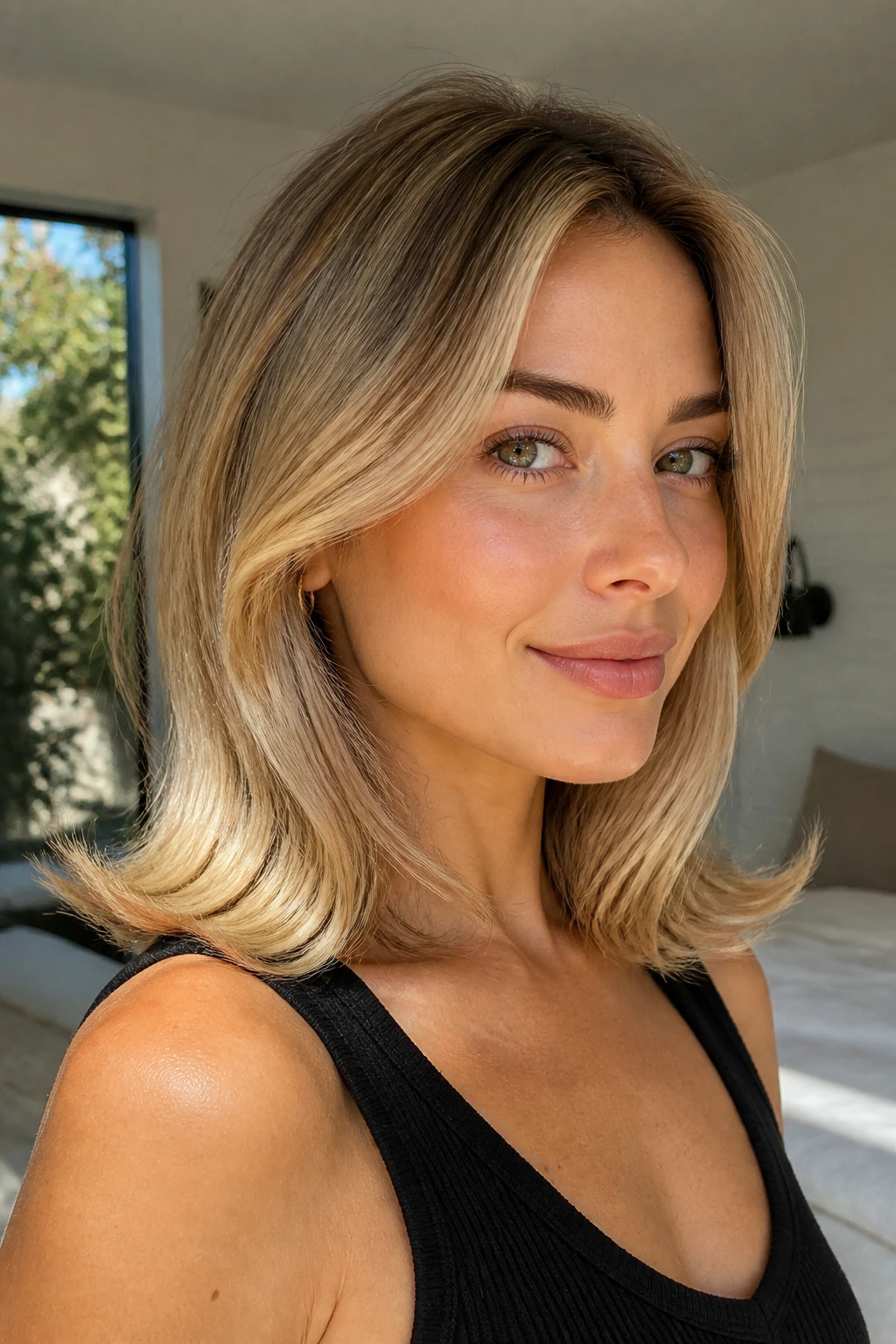
A collarbone cut with flipped ends has a little retro energy, and wheat blonde suits it better than you’d expect. Wheat sits warmer than beige but quieter than honey, which helps dark hair look lighter without turning brassy.
The flip at the ends keeps the shape from hanging straight down, which matters if your hair is medium density and tends to collapse. A round brush or a flat iron bend is enough. I like this on people who want something softer than a bob but less dramatic than long waves. It’s easy to wear and easier to grow out.
20. Honeyed Ringlet Bob
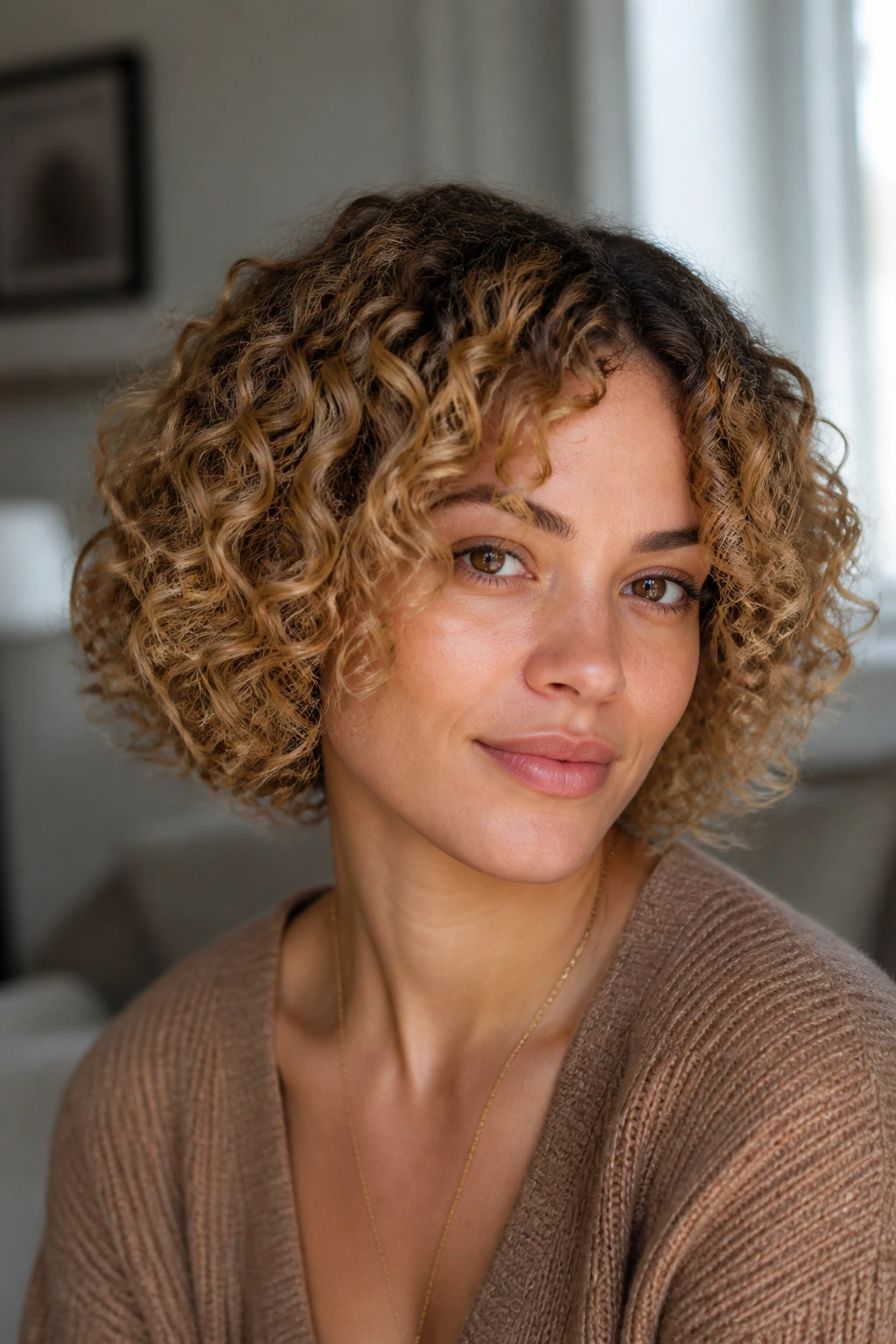
Ringlets plus honey blonde can look almost glowing when the cut is right. On dark hair, the curl pattern creates its own shadow, so the honey tone lands in those peaks and valleys in a way that feels dimensional rather than flat.
Ask for a bob that respects the curl spring, not one that chops through it. The blonde should be even, but the shape can stay playful. A curl cream and a diffuser will keep the ringlets separate; heavy oils will just flatten the whole thing. This is one of the more forgiving blonde styles on dark hair because the curl hides small tonal shifts.
21. Oyster Blonde Sleek Bun
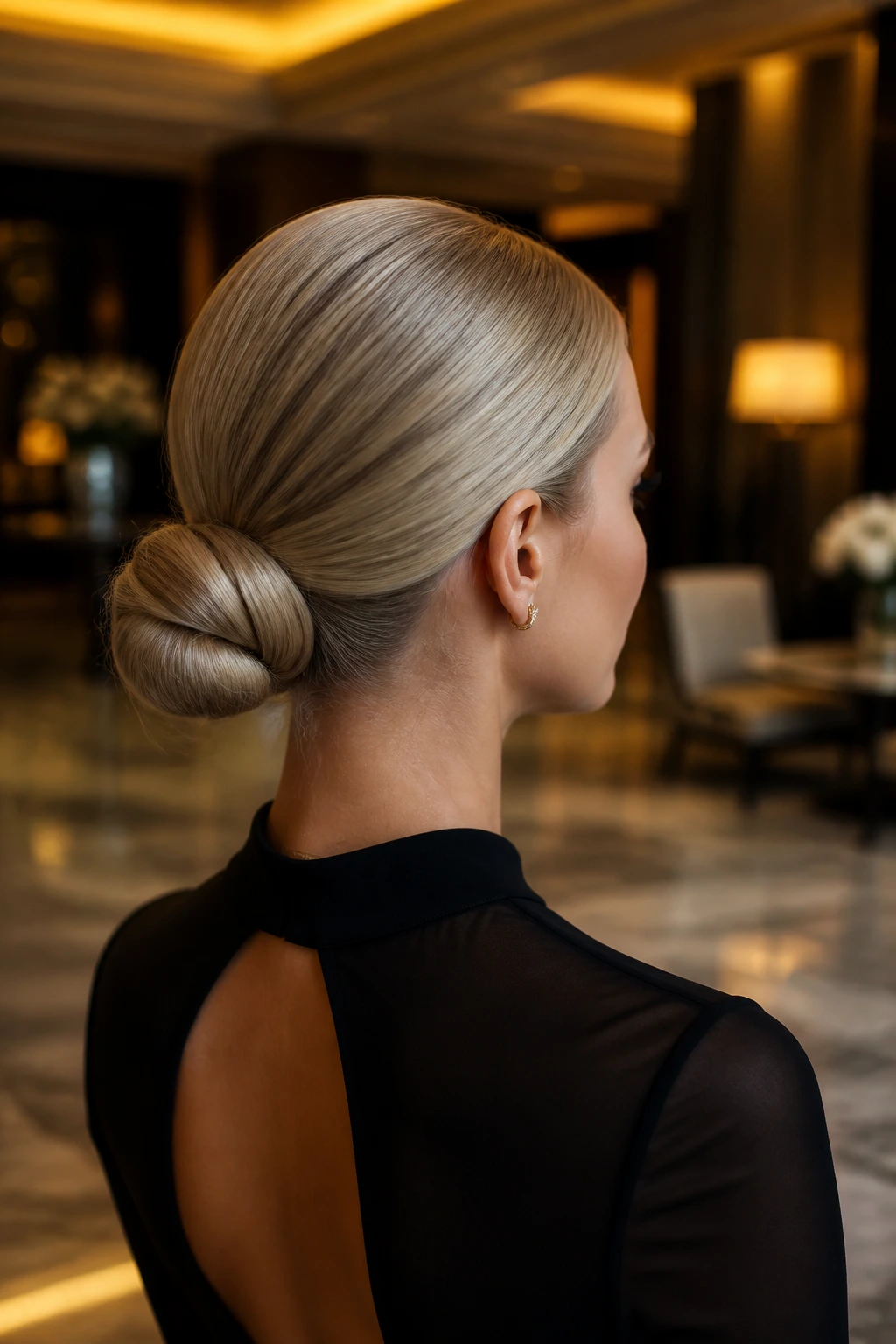
A sleek bun in oyster blonde is the kind of style that makes people notice the color first and the hairline second. That’s useful on dark hair, because the pulled-back shape lets the blonde reflect light around the face and along the twist of the bun.
Why It Works
Oyster blonde sits in a pale neutral range, so it doesn’t fight the polished finish. Keep the part clean and the bun compact, then smooth the top with a lightweight serum. This is a smart event style if you want all-over blonde to look deliberate instead of loose and beachy. It also exposes color accuracy in a way loose styles don’t.
22. Vanilla Soft Shag
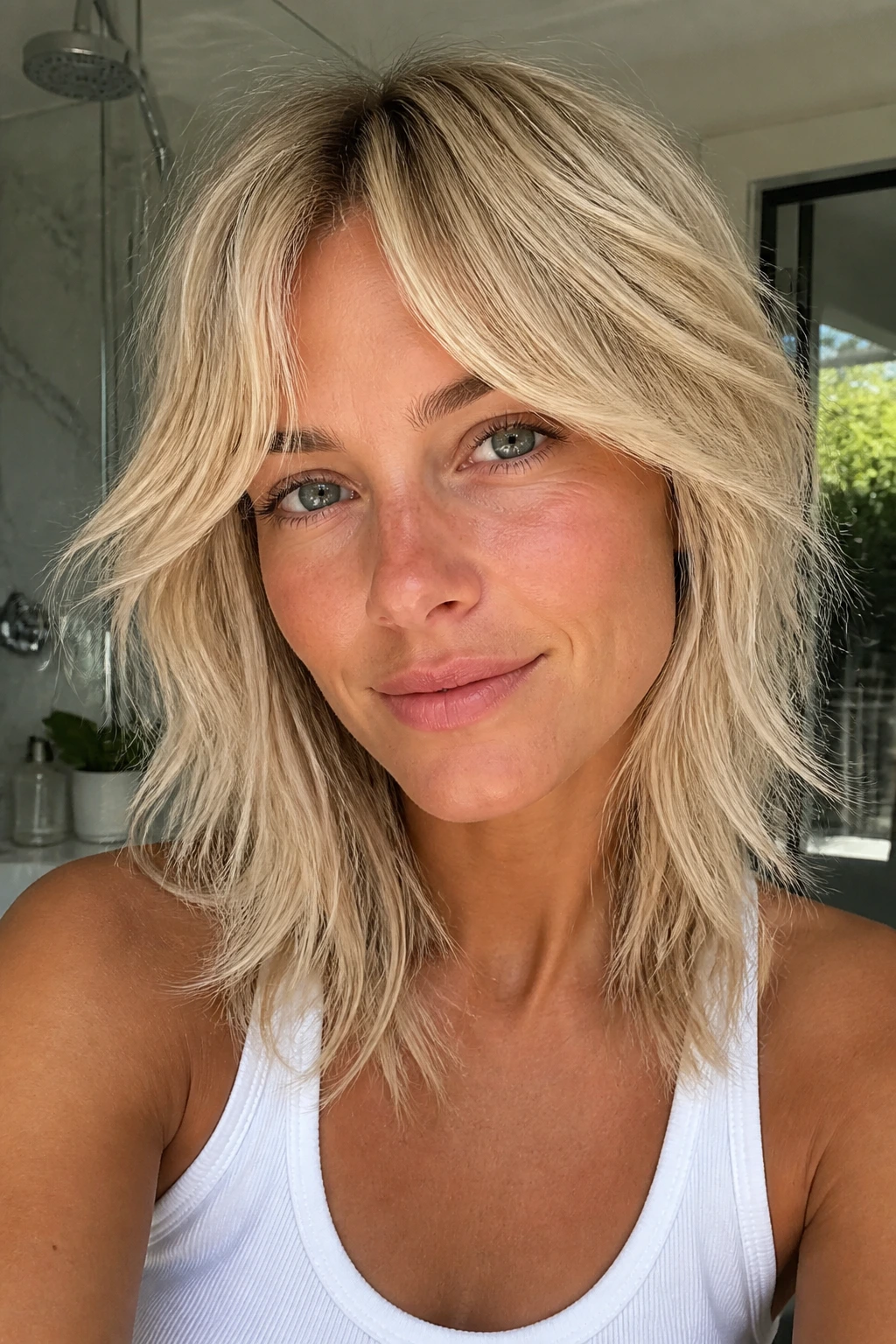
A soft shag in vanilla blonde has just enough texture to stay easy, but not so much that it starts to look ragged. The vanilla tone keeps the brightness gentle on dark hair, which helps if you don’t want a high-contrast finish.
This cut works best when the layers are a little feathered around the cheekbones and neck. The blonde should be even, but the styling can stay messy on purpose. A quick rough dry and a few bends with a curling wand are enough. If you have naturally wavy hair, this is one of the easiest blonde styles to keep looking good between washes.
23. Cream-to-Pearl Midlength
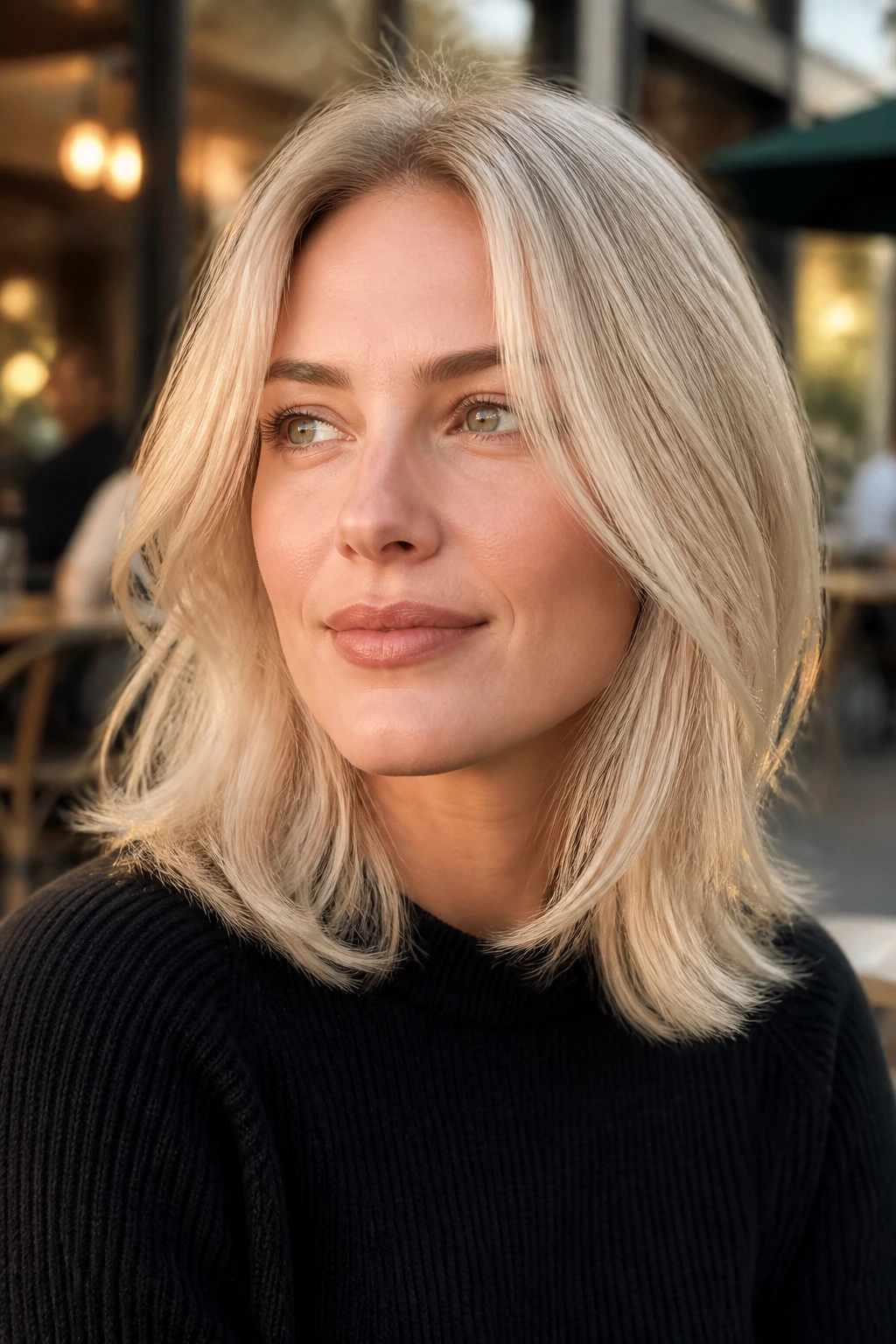
A midlength cut in cream-to-pearl blonde sits in that sweet zone between soft and bright. On dark hair, the blend reads clean if the lift is even and the ends are kept full. Midlength hair gives the color enough room to show, but not so much room that the maintenance feels endless.
I like this for people who want a blonde that feels polished on weekdays and a little more dressed up on weekends. A center part makes it elegant; a side part makes it softer. The biggest mistake here is thinning the ends too much. Blonde hair looks finer than brunette hair, so the cut needs enough weight to hold its shape.
24. Arctic Pinned-Back Pixie
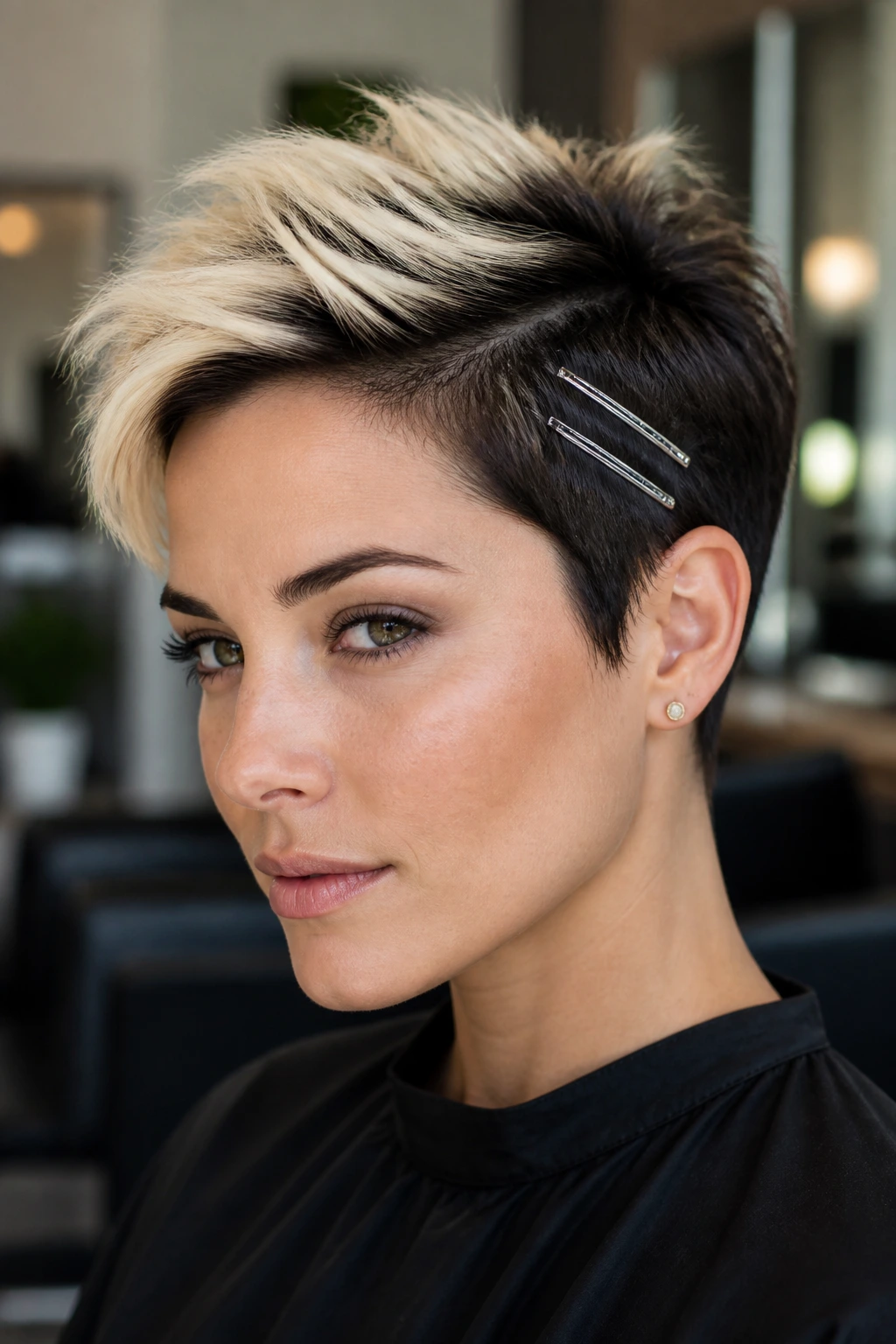
An arctic pixie pinned back at the sides is sharp, almost graphic. On dark hair, the pale tone does the heavy lifting, while the pins keep the style from feeling too exposed. It’s one of the best short options if you want the color front and center.
This look needs a strong haircut first and a bright, cool toner second. If the cut is mushy, the blonde won’t save it. I’d keep the top just long enough to sweep back with a little pomade, then pin the sides cleanly. A tiny pearl earring or a metal barrette fits the shape without crowding it.
25. Sunlit Blowout Layers
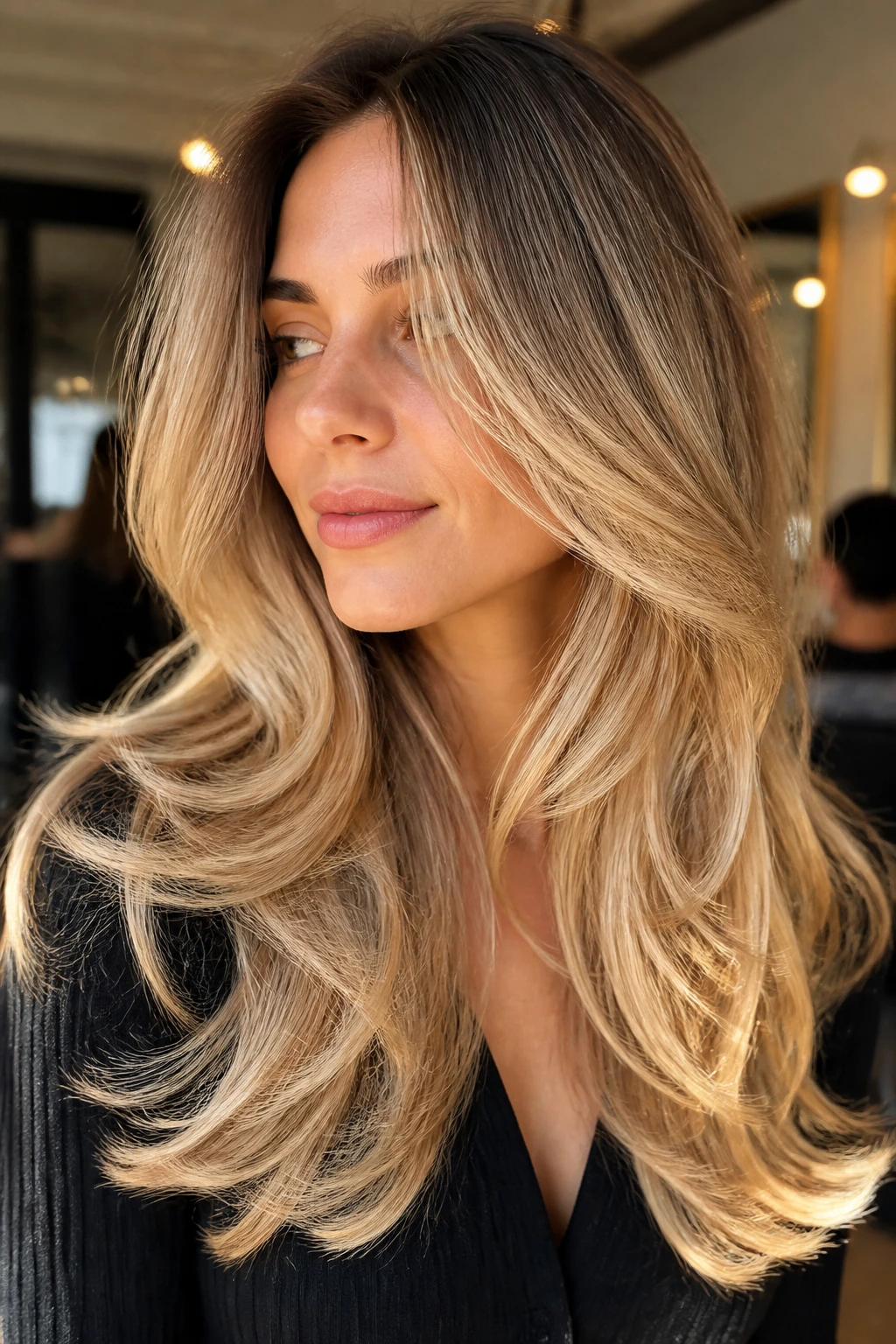
This is the blonde for people who like movement. Sunlit blonde layered into a blowout gives dark hair that glossy, lifted finish you get from a good round brush and enough patience to set the bend properly. The color should be warm enough to feel natural, but not gold-heavy.
Layers matter here because they let the blonde flick around the face and shoulders instead of just hanging there. A big blowout shows off the dimension in the tone, especially if the mid-lengths are a touch lighter than the ends. If your hair is thick, keep the layers long so the style doesn’t lose body.
26. Almond French Bob
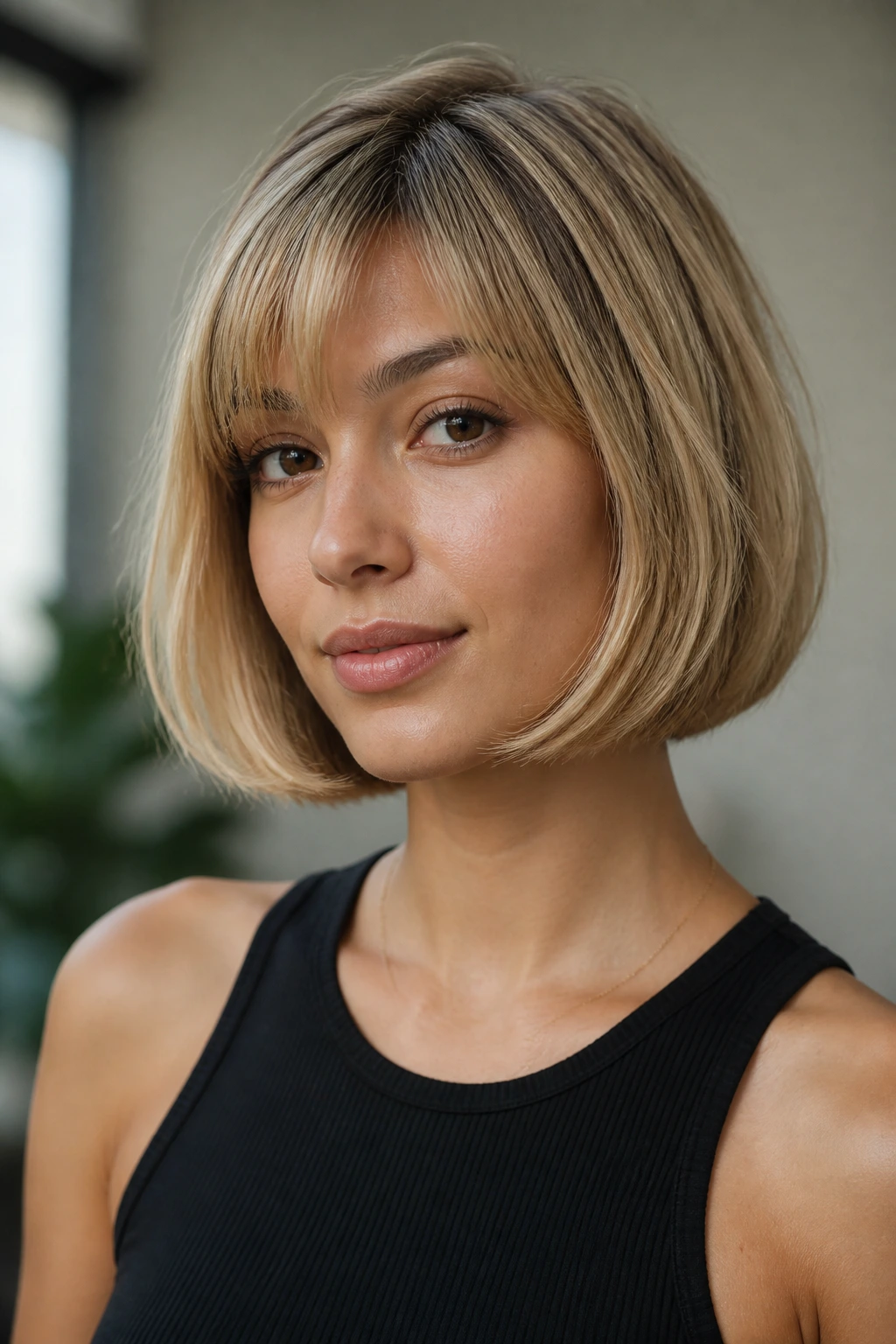
The French bob already has a little attitude. Add almond blonde, and it turns into something crisp and charming at the same time. On dark hair, the shorter length keeps the blonde from feeling too expansive, which is handy if you like shape more than length.
This style is best when the ends are just below the jaw and the fringe grazes the brows or sits off to one side. Almond is warm enough to flatter darker undertones without becoming orange. I’d keep the finish slightly bent, not pin-straight. That tiny bit of softness is what stops the cut from feeling severe.
27. Pearled Curls
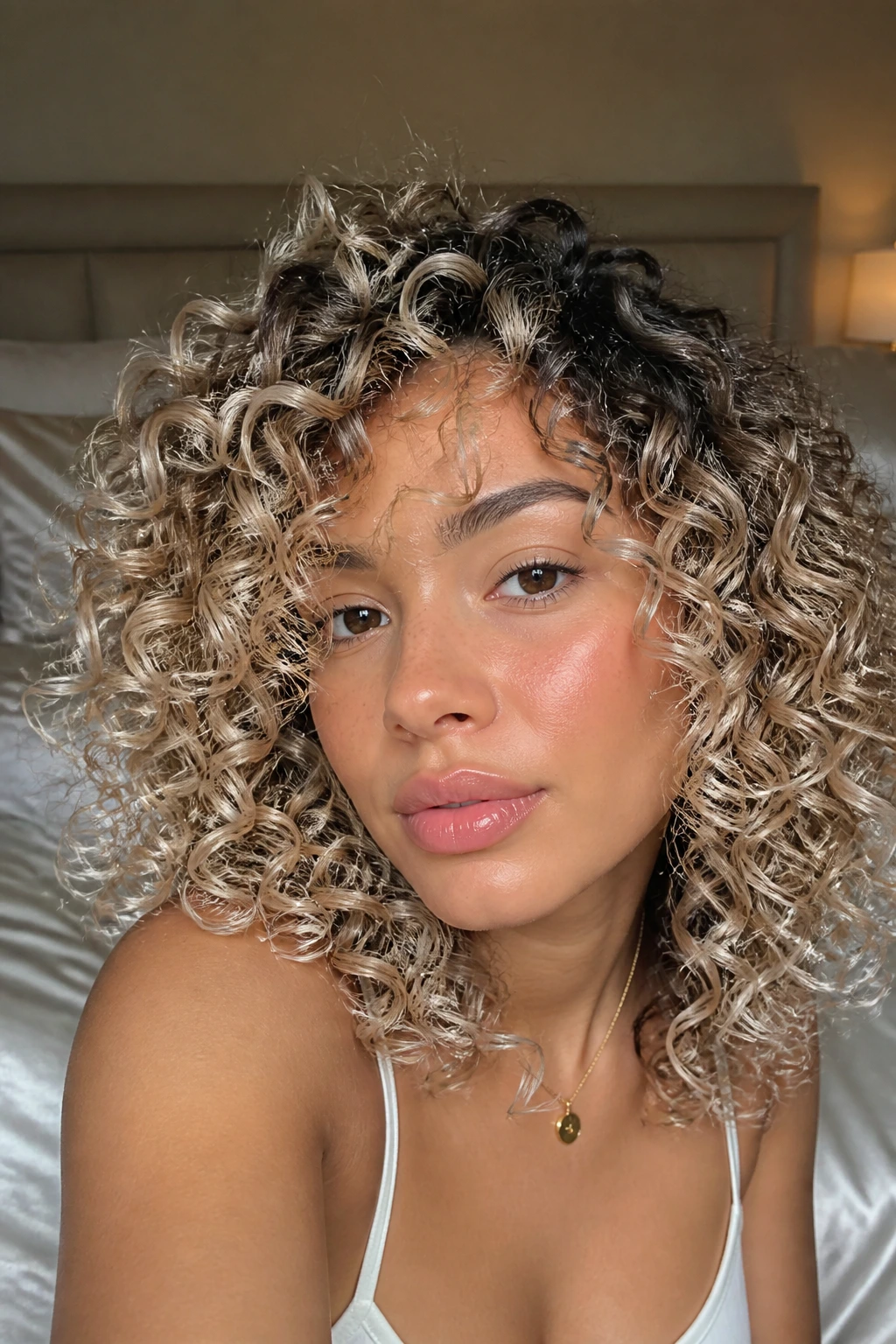
Pearled curls are one of those styles that looks more expensive than it should, mostly because the curl pattern does half the work. Dark hair lifted to a pearly tone gives the curls a clean rim of light, and the shape keeps the blonde from looking one-note.
The Best Way to Wear It
A curl-defining cream, a diffuser, and a satin pillowcase are the unglamorous part of the equation. Worth it. If the curls are too stretched, the blonde loses some of its sparkle; if they’re too overloaded with product, they go heavy and dull. Keep the tone cool, but not flat. A pearly finish needs a little softness to stay wearable.
28. Soft-Root Champagne Lob
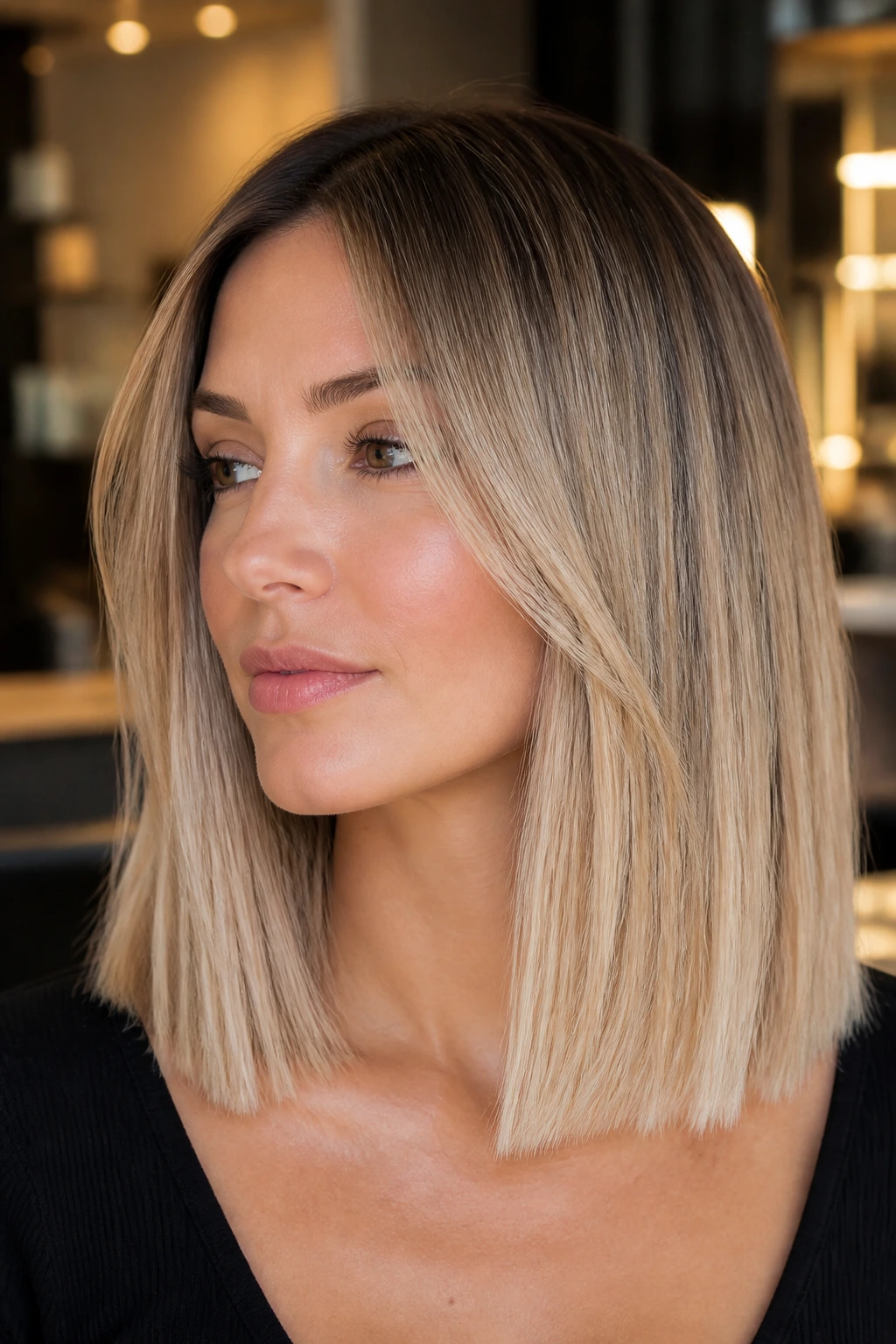
A soft-root champagne lob is the low-drama blonde in this whole group, and I mean that as a compliment. The root blur makes the grow-out less obvious on dark hair, while the champagne tone keeps the blonde polished enough to look intentional.
If you want a style that can survive a packed schedule, this is the one. The lob length is easy to tie back, and the soft root buys you a little time between glosses. I’d keep the ends blunt enough to hold the shape and avoid over-layering. Too many layers can make the blonde look patchy.
29. Cream Puff V-Cut
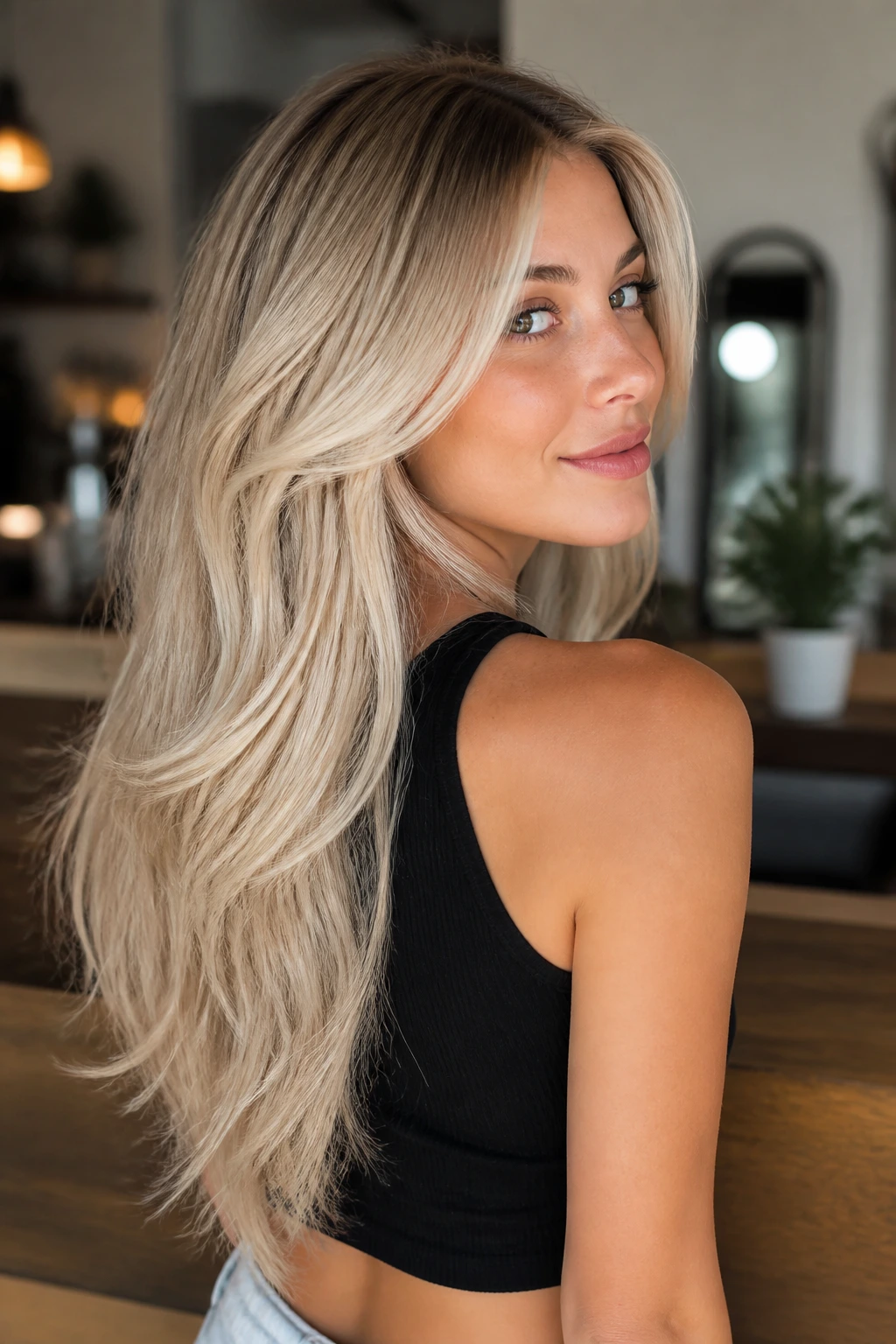
Long hair in a V-cut can hold all-over blonde in a way that feels fluid instead of heavy. Cream puff blonde keeps the long lengths soft and bright without going icy, and the V shape stops the ends from looking blunt and wide.
This cut is useful on dense hair because the point at the back creates movement. The blonde catches along the longest pieces and at the face framing, which helps the color feel dimensional even when it’s all-over. If your hair is fine, keep the V subtle. Too sharp a point can make the ends look thin.
30. Icy Beige Waist-Length Waves
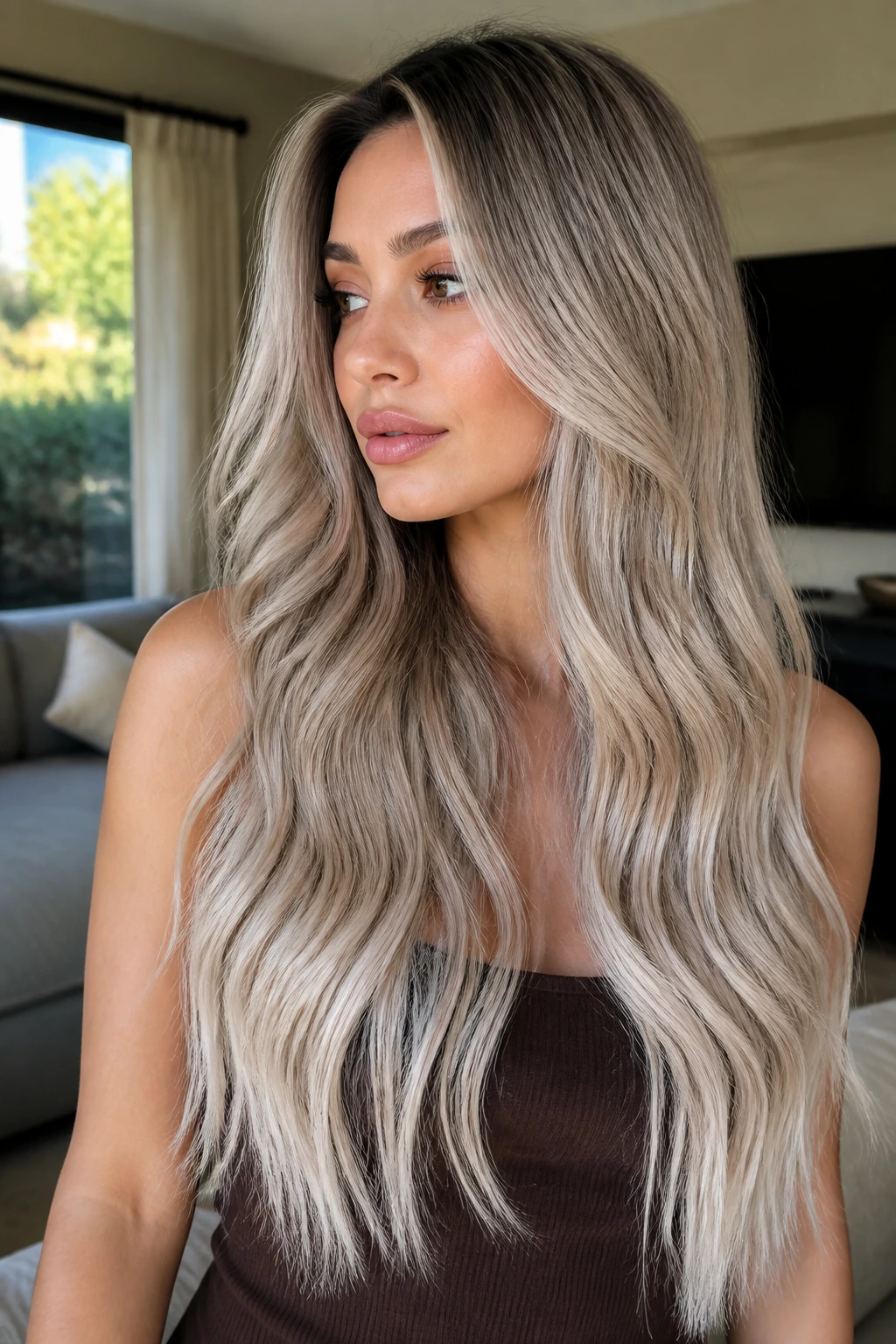
Waist-length waves in icy beige are not for the faint of heart. They make dark hair look dramatically lighter, but the beige undertone keeps the icy finish from becoming harsh. That balance matters when the hair is long, because any brassiness has more space to show.
This style needs the cleanest lift in the set, plus regular glossing to keep the tone from drifting yellow. Loose waves work better than tight ones because they let the color fall in soft planes. If you want blonde that feels cinematic on dark hair, this is one of the strongest ways to do it — provided you’re willing to keep up with the maintenance.
Why the Lift Matters More Than the Tone
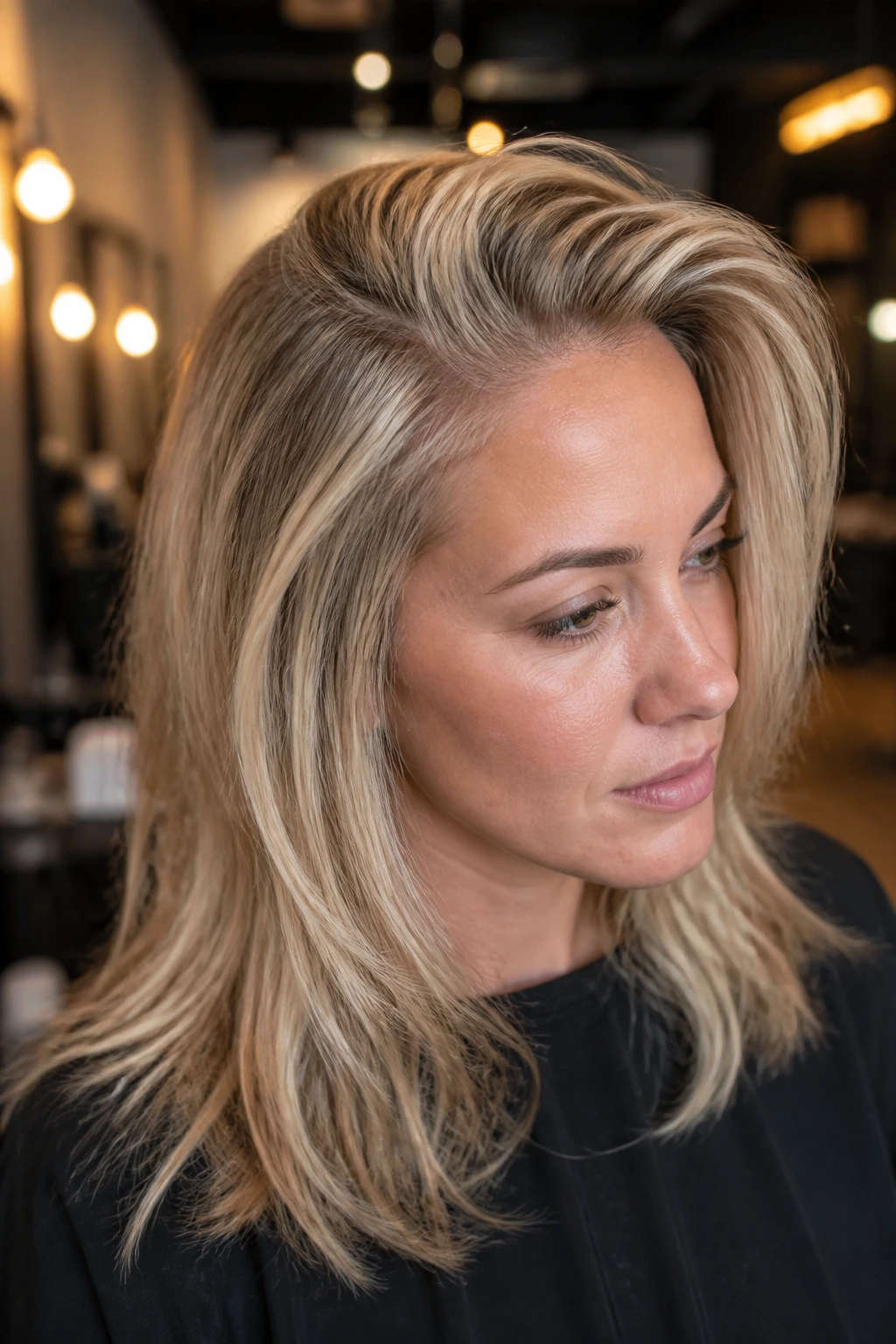
The best blonde on dark hair starts with the lift, not the toner. If the lightening step leaves the hair patchy, no beige gloss or pearl toner can fix that cleanly. The toner can refine warmth. It cannot erase uneven lifting, and that’s the part people hate hearing until they see it in the mirror.
Dark hair also changes texture after lightening. It can feel puffier, drier, and a little louder in the hands, which is why the cut has to work with the new texture instead of pretending the hair is still brunette. A blunt bob can hide that shift. A shag can make it part of the design. Long waves need more moisture and more careful heat control. The blonde is only half the picture.
Essential Tools for Coloring and Styling These Looks
- Sectioning clips — Useful for clean partings during blow-drying, curling, or salon coloring; they keep dense hair from collapsing on itself.
- Tail comb — Best for crisp center parts and tidy sections, especially on bobs, lobs, and pixies.
- Tint brush and bowl — If you color at home or do gloss work, these give more control than squeezing product on by hand.
- Nitrile gloves — Bleach, toner, and purple pigment stain fast; gloves keep the process cleaner and safer.
- Bond-building treatment — Helpful for hair that’s been lifted from dark to blonde, because it can cut down on breakage during styling.
- Sulfate-free color shampoo — Slower fading, less dryness, and less toner stripping than harsher cleansers.
- Purple shampoo — Best used sparingly on pale yellow or brassy blonde; overuse can make the hair look dull and smoky.
- Deep-conditioning mask — A weekly mask helps keep lightened ends from feeling coarse, especially on long hair.
- Heat protectant — Non-negotiable before blow-drying, curling, or straightening; blonde hair burns faster than dark hair.
- 1-inch curling iron or wand — A reliable size for most of these looks, from beach waves to soft bends.
- Flat iron with rounded edges — Handy for lobs, French bobs, and polished wave work.
- Microfiber towel or cotton T-shirt — Less friction on fragile blonde hair after washing.
Smart Shade and Product Tips for Blonde on Dark Hair
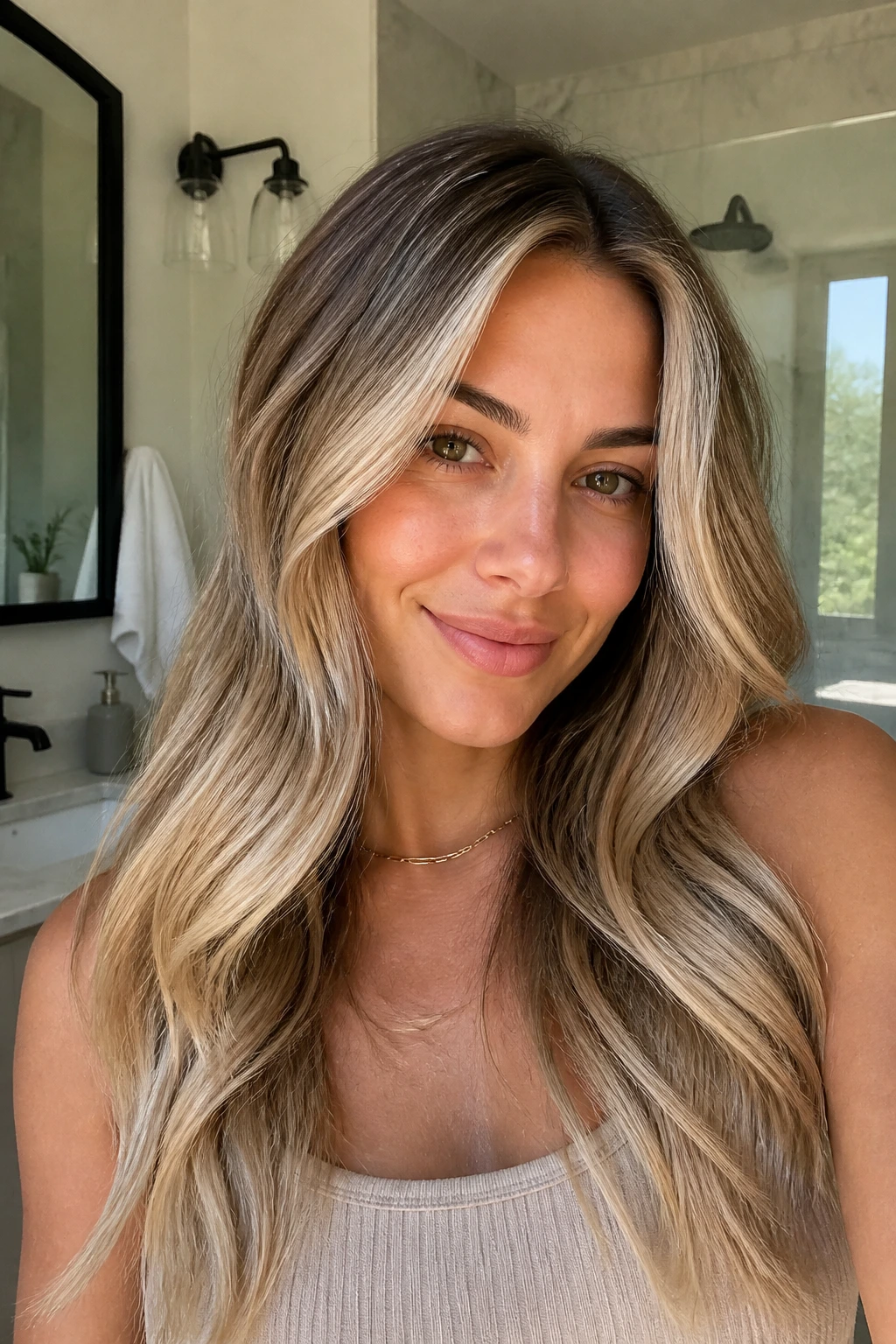
The smartest blonde choices for dark hair usually live one tone softer than the photo you’re staring at. Beige, champagne, butter, and cream are easier to wear because they leave a little warmth in the hair. That warmth is not a flaw; it’s often what keeps the blonde from looking washed out against deep eyebrows and a darker complexion.
If your natural hair is very dark, ask your stylist how many lightening sessions they expect before toning. A level 2 base will usually need more patience than a level 4 chestnut base. Cool blondes like ash, pearl, and silver look clean only when the canvas underneath is pale enough to support them. If not, they can go gray-green or flat. Nobody wants that surprise.
For products, I’d spend money on bond care and glossing before I’d spend it on a pile of styling creams. One good bond-builder, one gentle shampoo, one deep mask, and one dependable heat protectant go farther than a drawer full of bottles. If you’re trying to keep the blonde fresh, a gloss every 4 to 6 weeks does more than people expect. It re-tightens the tone and buys you time between color appointments.
How to Wear and Finish These Blonde Looks
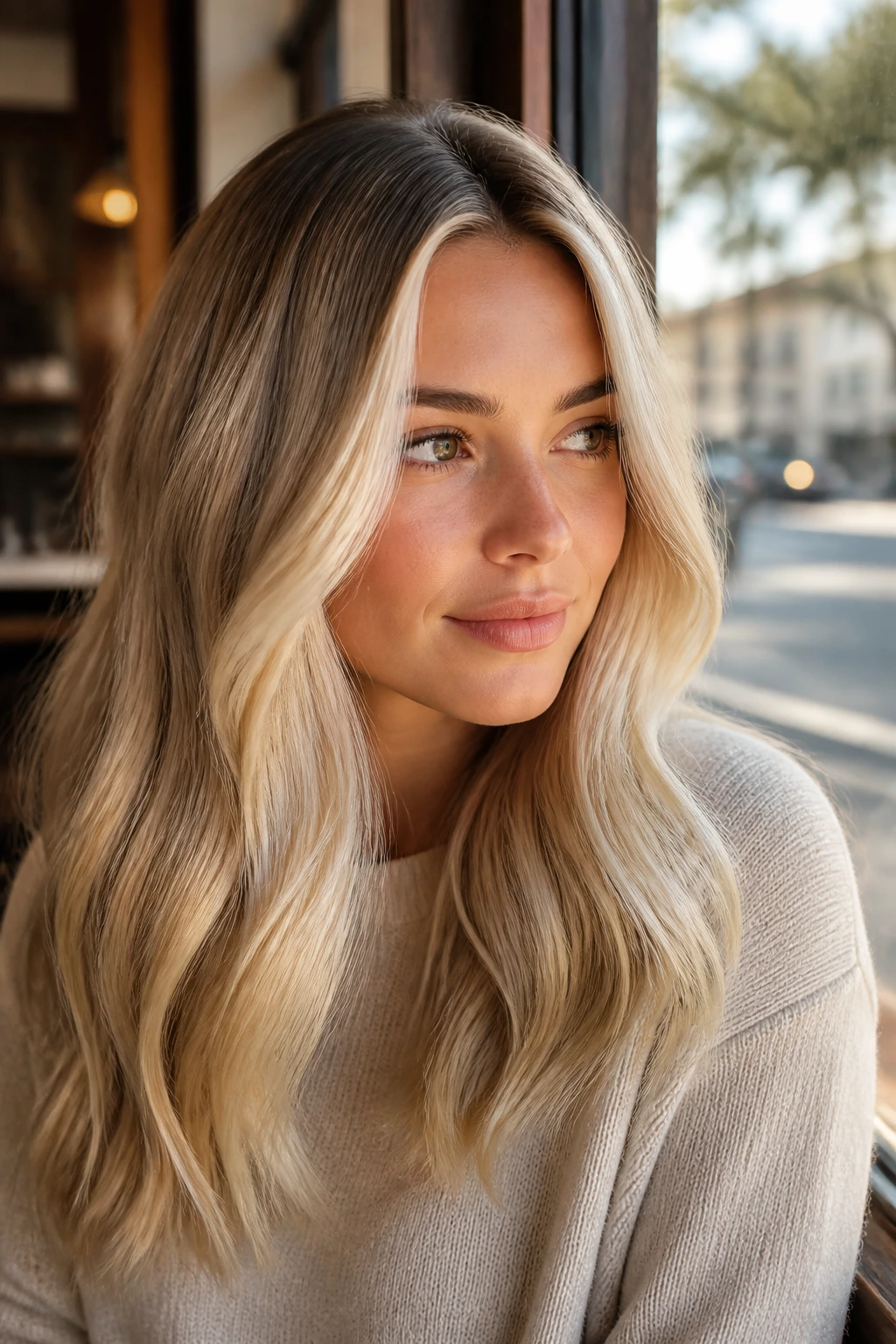
Framing: Center parts sharpen blunt bobs, pearled curls, and sleek lobs. Slight off-center parts soften pixies, shags, and butterfly cuts, especially if your face is angular.
Texture: Smooth finishes show off tonal precision, which is useful for pearl, platinum, and frosted blondes. Air-dried texture is kinder to beige, honey, and sandy tones because it breaks up any tiny color shift you’d rather not spotlight.
Accessories: Small hoops, slim clips, satin headbands, and simple pins tend to work best. Heavy accessories can swallow the brightness of pale blonde hair, especially on short cuts.
Scale: Fine hair usually looks fuller with blunt lines and minimal layering. Thick hair can carry more movement, more bend, and more texture without losing shape. If your hair is long, keep the ends healthy and trimmed, or the blonde starts to read stringy at the bottom.
Practical Tips for Keeping Blonde Bright
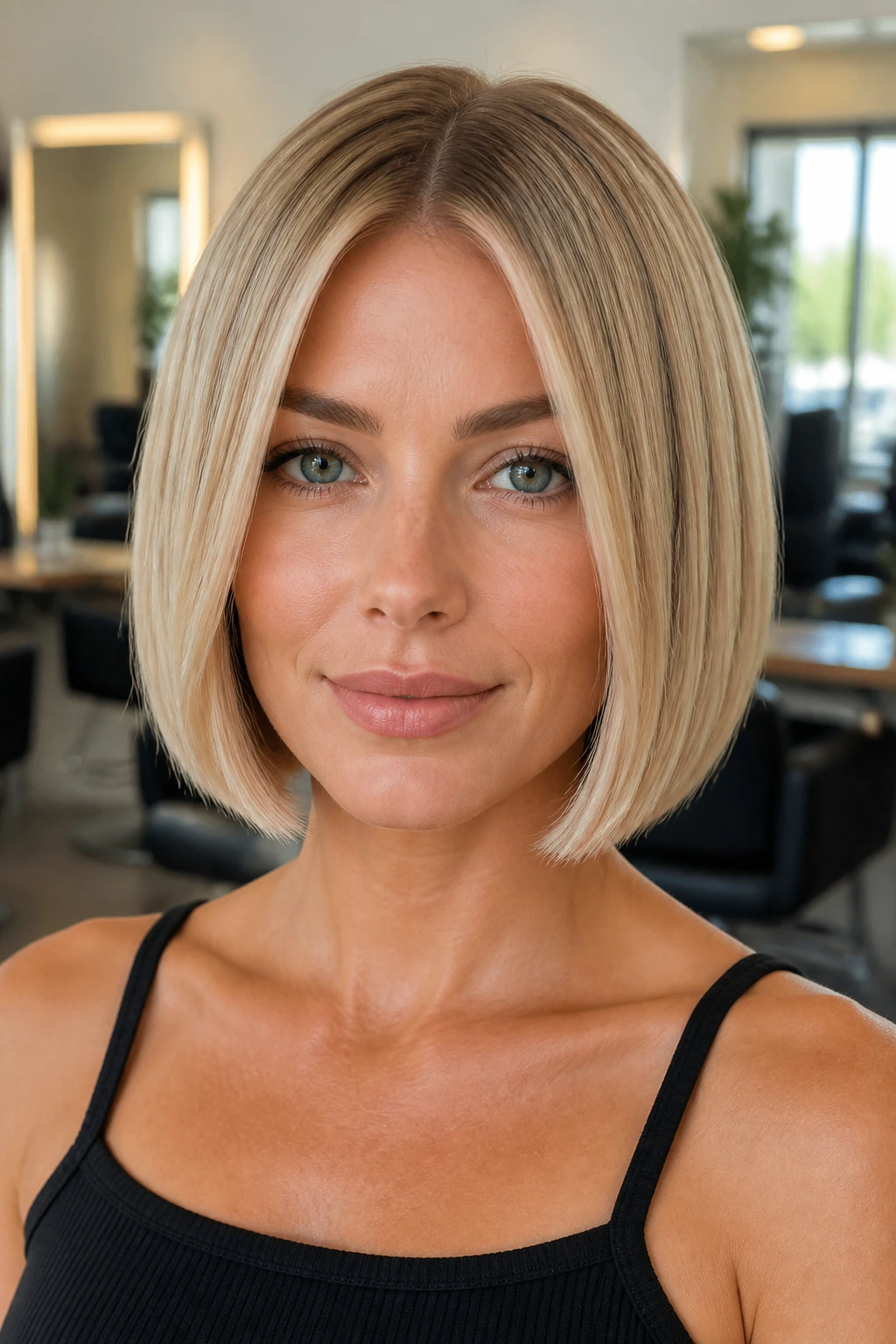
Gloss First: A clear or lightly toned gloss every 4 to 6 weeks keeps the shade from slipping yellow or muddy, and it’s easier on the hair than constant over-toning.
Wash Less: Blonde hair loses its edge fast when it’s shampooed too often. Two or three washes a week is usually plenty if your scalp allows it.
Tone Lightly: Purple shampoo is not a daily habit. Use it once every 1 to 2 weeks on pale blonde, and leave it on only as long as the bottle says.
Heat with Care: A low-to-medium heat setting and a real heat protectant matter more on blonde hair because the cuticle has already been opened during lightening.
Trim Often: Split ends make blonde look dry no matter how good the tone is. A trim every 8 to 12 weeks keeps the shape honest.
What Goes Wrong With Blonde on Dark Hair
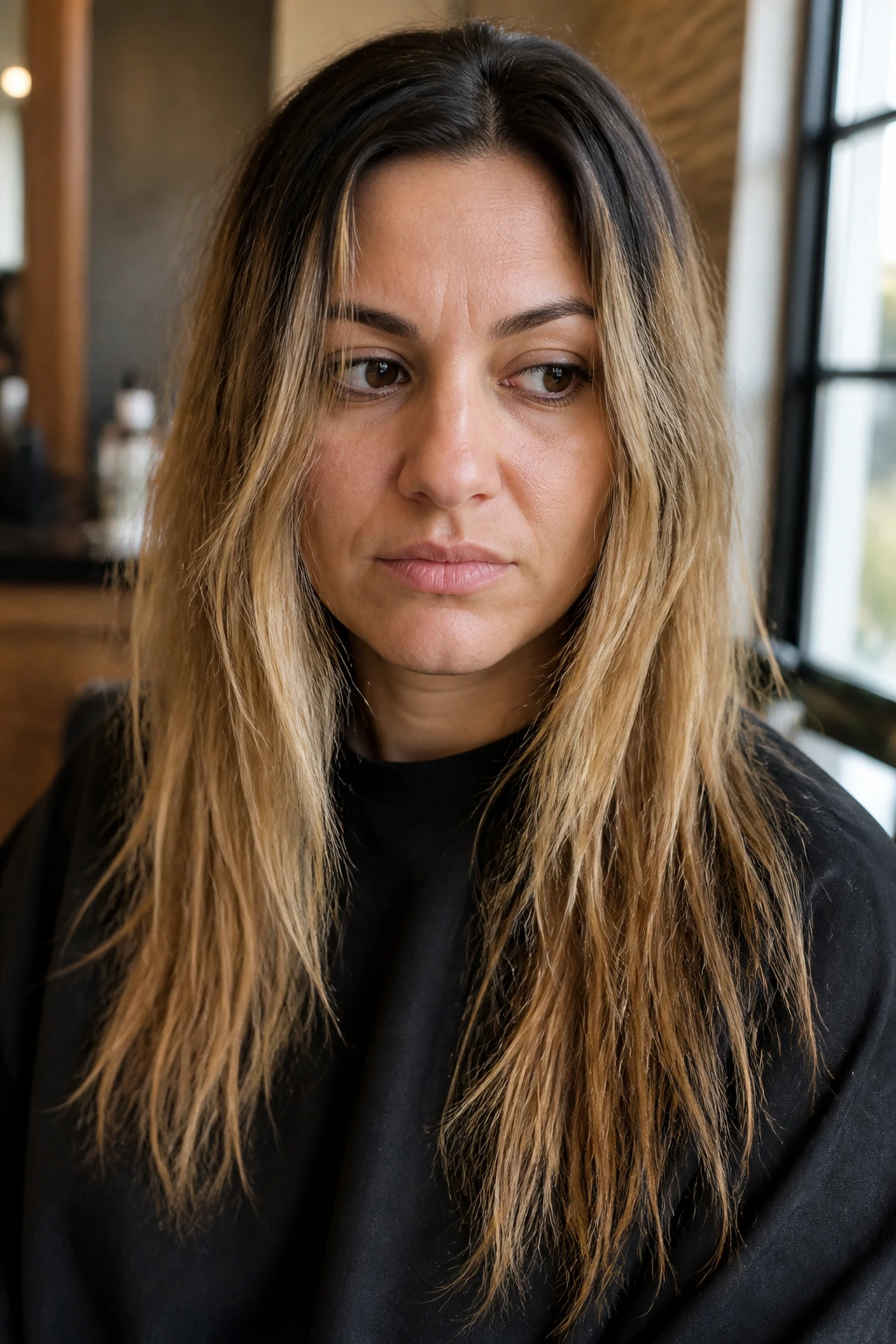
Over-lightening in one sitting is the fastest way to get fried ends and uneven tone. If the hair is not lifting evenly, the answer is usually another controlled session, not more heat and more patience with bleach sitting too long.
Choosing the wrong undertone can make the blonde look dirty. Ash on a warm canvas can go gray. Honey on a very cool complexion can pull brassy. If you’re unsure, beige and champagne are the safest middle ground.
Using too much purple shampoo is a sneaky problem. The hair starts to look flat and dusty, which people often mistake for “toned.” It usually just needs a gentler wash and a moisturizing mask.
Ignoring porosity is another one. Porous ends soak up toner fast, then go murky. A good colorist will adjust the formula or glaze the ends separately. If you’re doing maintenance at home, treat the ends like they’re a different head of hair. In a way, they are.
Variations and Adaptations to Try
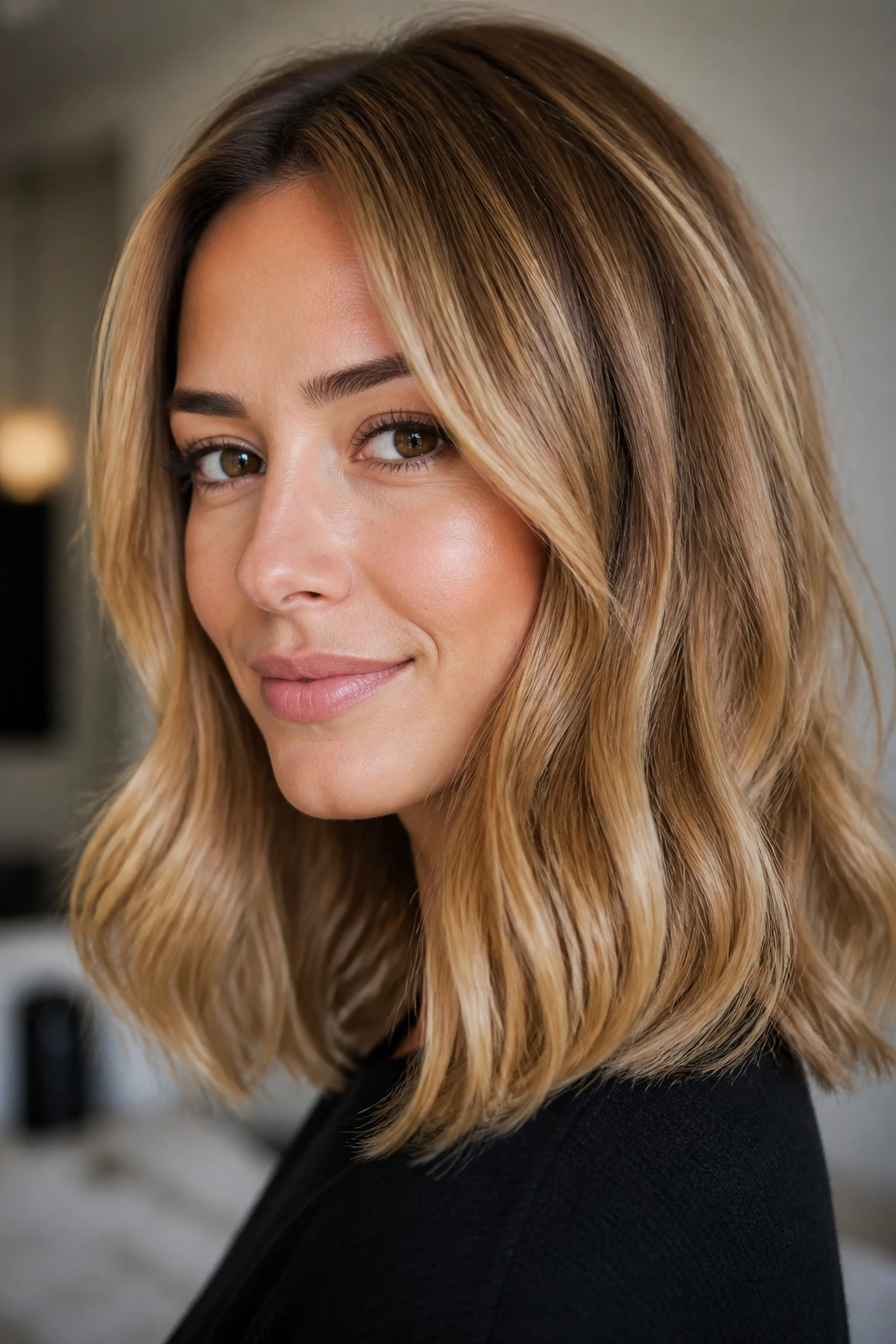
Warm Honey Edit: If you want less contrast against a dark base, push the blonde into honey and butter territory. It’s softer on darker skin tones and easier to maintain because it won’t show every tiny brass shift.
Cool Pearl Edit: If your style leans modern and crisp, ask for pearl or pale beige blonde. This works best on hair that can lift cleanly and on cuts with a strong outline, like bobs or pixies.
Curly-First Version: Keep the curl pattern intact and let the blonde ride the shape instead of forcing it straight. This is the best move for ringlets, coils, and waves that look better with movement than polish.
Short-Cut Version: Pixies, crops, and French bobs make all-over blonde easier to maintain because the hair is shorter and the regrowth is less dramatic. If you want a bold look with less product load, start here.
Low-Drama Root Blur: A soft shadow at the roots gives you breathing room between appointments and makes the grow-out much less jarring. This is the version I’d choose for people who love blonde but hate strict maintenance.
Extra-Sleek Finish: If you like your hair polished, choose blunt cuts and regular glosses over heavy layers. Pale blonde reads sharper when the silhouette is clean and the ends are tidy.
Make-Ahead, Maintenance, and Grow-Out Rhythm
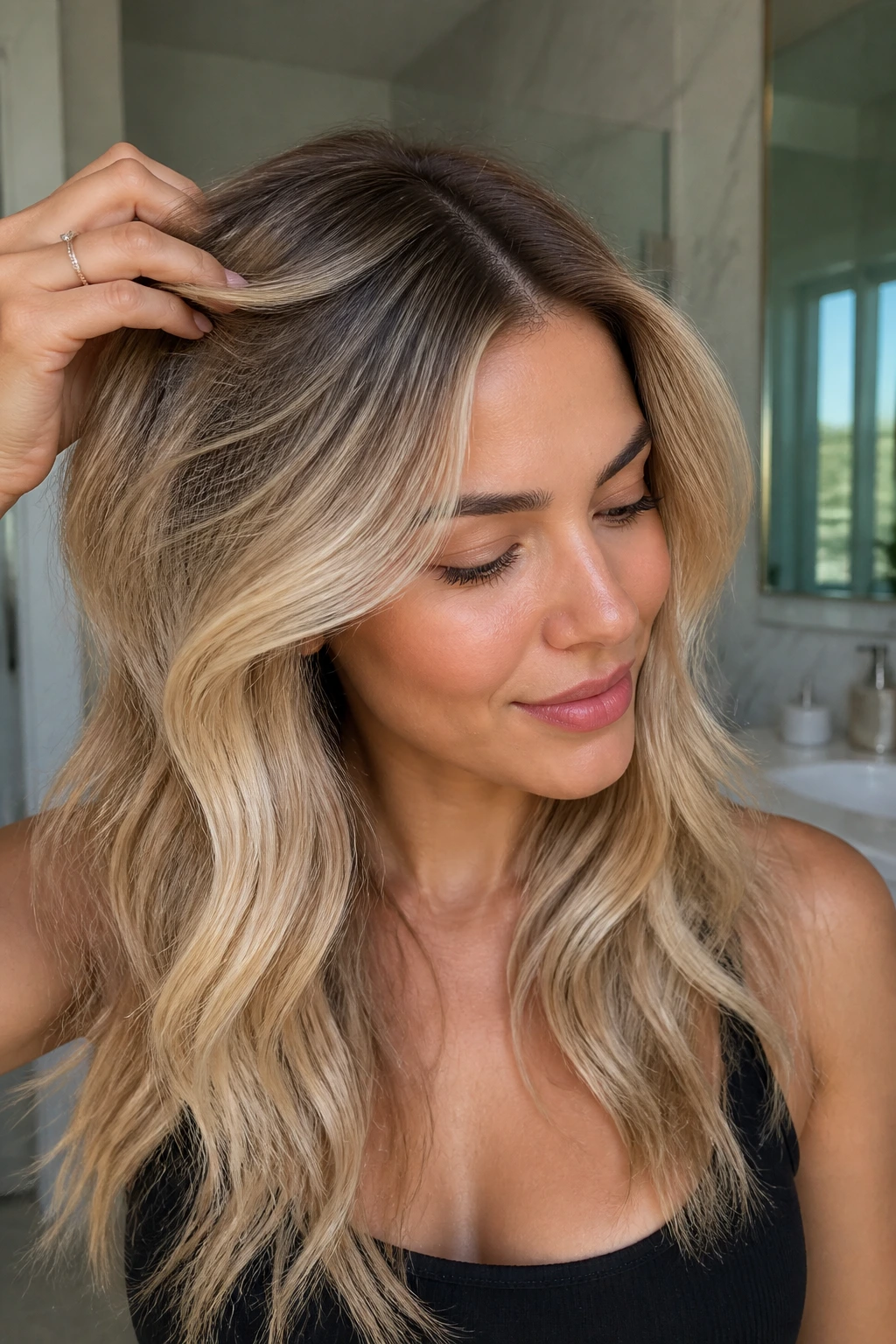
Blonde hair does not behave like dark hair once it’s been lifted. It needs more moisture, more heat protection, and more honest trims. If you’ve gone all-over blonde on dark hair, expect root maintenance every 4 to 6 weeks for very light shades, and 6 to 8 weeks for softer beige or honey blondes. Longer styles can sometimes stretch a little farther, but only if the ends stay healthy.
A weekly deep-conditioning mask is the difference between blonde that feels soft and blonde that feels like straw. Leave it on for 10 to 15 minutes after shampooing, then rinse well so the hair doesn’t go limp. Purple shampoo can be used every 7 to 14 days, but keep it light. If the tone starts looking smoky or dull, back off.
For heat styling, use the lowest setting that still gives you the shape you want. A 1-inch iron on medium heat is enough for most waves and bends. If you’re wearing a pixie, a small amount of pomade or styling paste can hold the shape without making the blonde look greasy. Long hair needs trims every 8 to 12 weeks to keep the ends from getting see-through. That part is boring. Still necessary.
Frequently Asked Questions About All-Over Blonde on Dark Hair
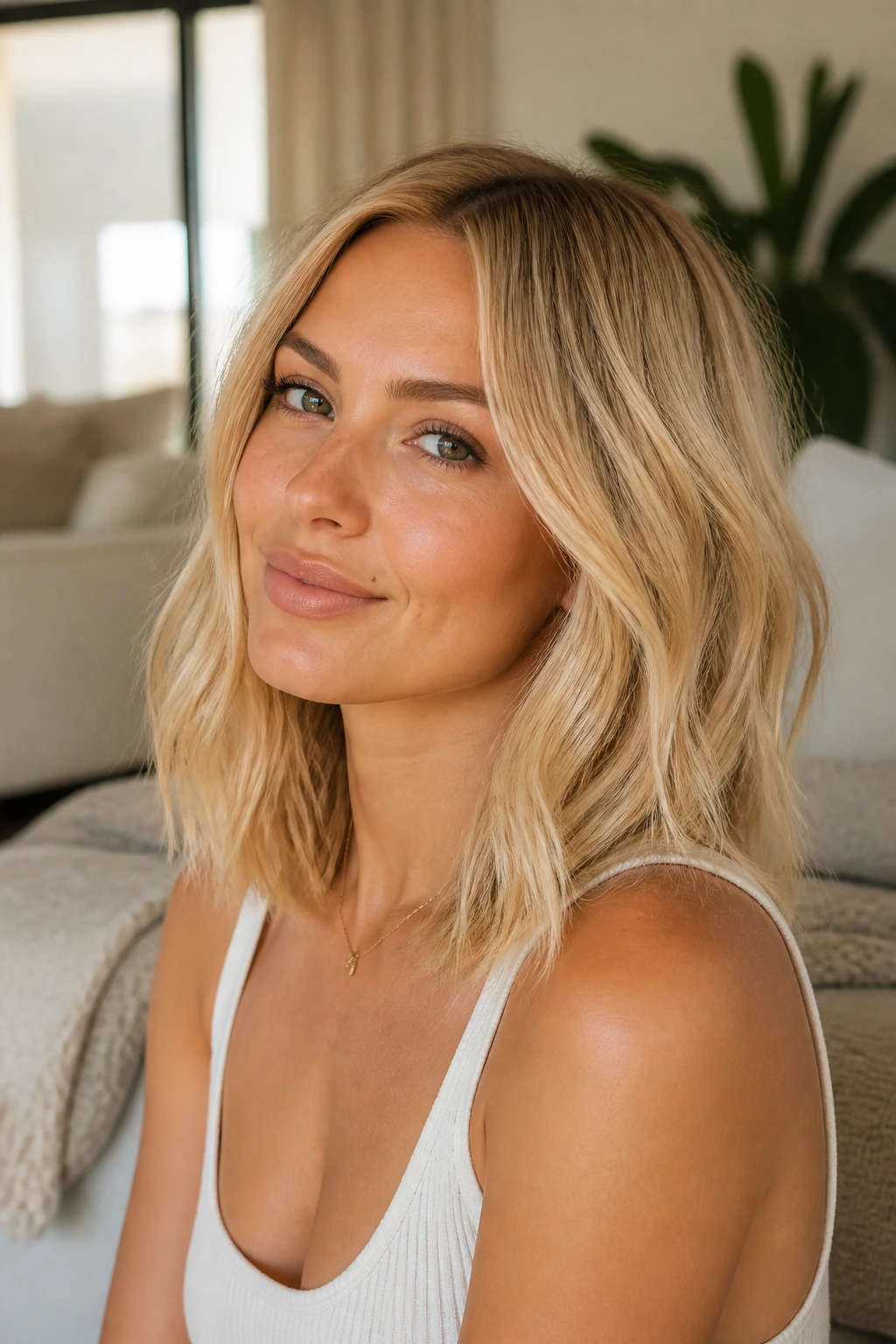
Can dark hair really go all-over blonde in one appointment?
Sometimes, but not safely for every head of hair. If the hair is very dark, coarse, or previously colored, a single session can leave the lift uneven or too stressed. A good stylist will tell you when to split it into stages.
Which blonde tone is easiest to wear on dark hair?
Beige blonde is usually the easiest place to start. It sits between warm and cool, so it doesn’t fight the underlying warmth that dark hair naturally wants to show.
Does blonde hair need more upkeep than brunette hair?
Yes. Lightened hair shows brassiness, dryness, and split ends faster. The tradeoff is that a good toner and a clean cut keep it looking fresh longer than people expect.
What if my hair turns orange during the lift?
That usually means it has not reached a pale enough level yet. Orange is part of the lift path for dark hair, not a failure signal. The fix is usually more controlled lightening or a corrective toner, depending on where the hair is in the process.
Is platinum a bad idea for dark hair?
Not bad, just demanding. Platinum needs the cleanest lift and the most maintenance. If you want something easier, pearl, champagne, or beige usually give you a better balance.
Can curly hair pull off all-over blonde?
Absolutely. Curly hair often looks better blonde when the curl pattern is left intact because the shape adds dimension. The main issue is dryness, so moisture and bond care matter even more.
How do I stop blonde from looking brassy?
Use a gentle shampoo, limit heat, and keep up with glosses or toners. Brassiness often shows up when the hair is dry, faded, or washed too aggressively.
What’s the safest way to go blonde from dark brown hair?
Slowly. Ask for a realistic lift plan, use bond protection, and aim for a tone that works with your current level rather than fighting it. Beige and honey are friendlier starting points than icy blonde.
Do I need different styling products after going blonde?
Usually, yes. Lightened hair tends to feel drier and rougher, so a better leave-in, a heat protectant, and a lightweight serum become more important than they were before the color change.
The Blonde That Fits Your Hair
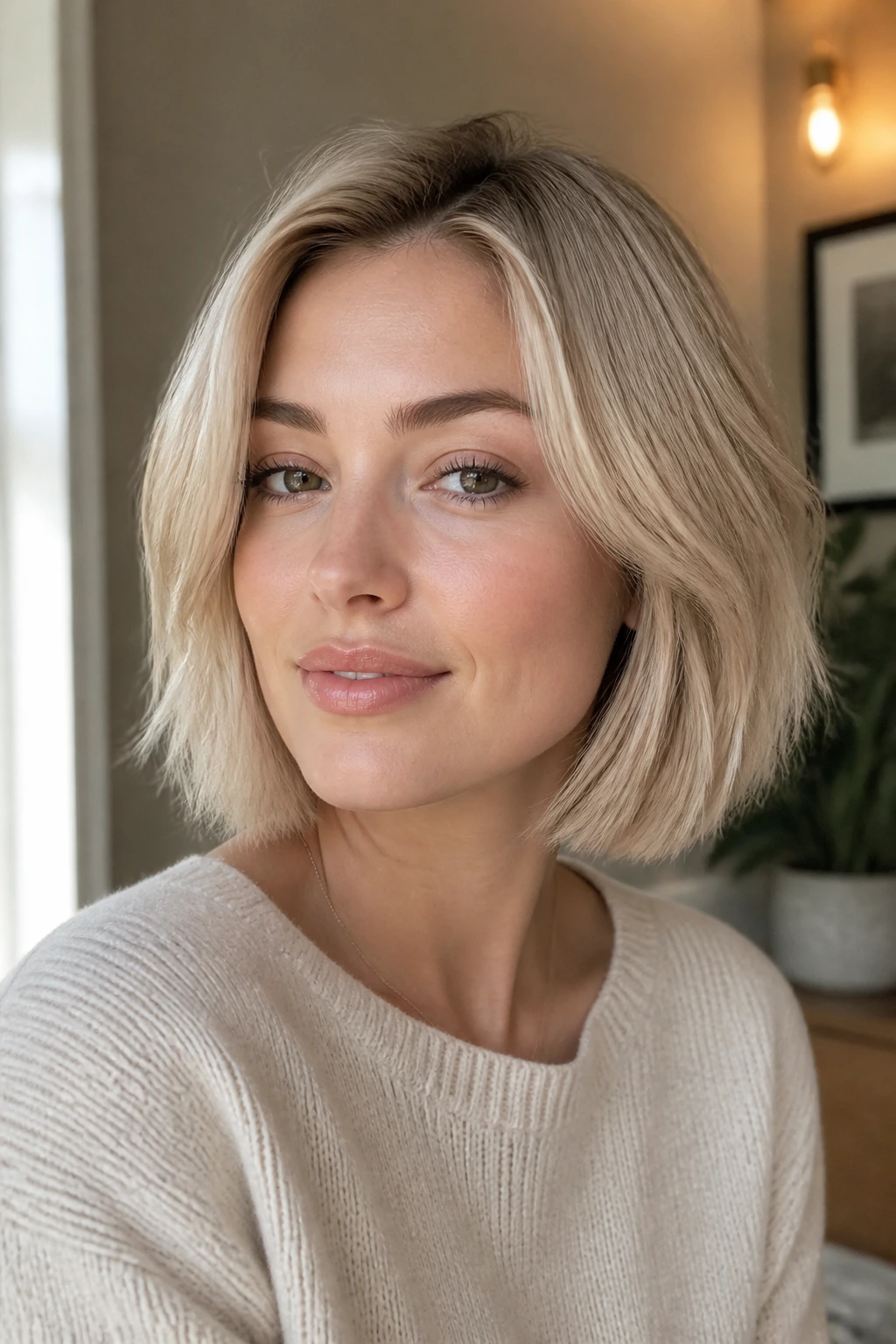
The best all-over blonde on dark hair is not the palest one on the mood board. It’s the one that survives real life: the wash day you forgot, the windy walk to work, the week when you did not have time for a perfect blowout. A creamy bob, a honey lob, a pearl pixie, or a soft champagne shag can all look better than a high-drama platinum that never gets the care it needs.
That’s the part worth remembering. Blonde is strongest when the shade, the cut, and the maintenance plan are all speaking the same language. Pick the level of brightness your hair can actually support, then let the shape do some of the work. The result feels more polished than a forced transformation ever does, and it tends to stay that way longer.