



Textured hairstyles for cool skin tones work best when the cut gives the face some lift, then steps back and lets the undertone do its thing. Too much bulk near the cheeks can make cool skin look a little flat; a bit of bend, separation, and movement does the opposite. The face looks clearer. The hair looks lighter. It’s a small shift, but it changes the whole read of the style.
Cool undertones tend to like clean lines, smoky depth, and finishes that don’t drift too warm. That doesn’t mean you’re locked into icy blonde or blue-black forever. It means the shape, the texture, and the color need to speak the same language. A choppy lob in ash brown. A shag with a cool beige gloss. A pixie with piecey ends and a graphite root shadow. Those combinations keep the eye moving without fighting the skin.
And texture matters more than people think. A blunt cut can look sharp in the salon chair, then go strangely heavy at home. A little broken-up layering changes the light, especially around the jaw, cheekbones, and neck. That’s where cool skin usually looks best anyway. The styles below lean into that idea from every angle.
Why These Textured Styles Feel Right on Cool Undertones
Light catches the edges, not the bulk. Cool skin tends to look fresher when hair has airy movement at the perimeter instead of one solid, heavy block.
Ashy, smoky shades stay in the same family. If you wear a cool brunette, platinum, pearl blonde, or blue-black, texture reads crisp instead of muddy.
The face gets framed instead of flooded. A few face-framing pieces near the temples or jawline can make a big difference on cool undertones, especially when the rest of the cut stays broken up.
These shapes work with real life. Most of them look better when they’re touched with a curling iron, diffuser, or texture spray and then left alone. That little messiness is the point.
They play nicely with makeup and accessories. Silver jewelry, berry lipstick, and black eyeliner tend to feel at home with these styles because the hair doesn’t fight the same cool register.
There’s room to cheat. If your natural color runs warmer than you’d like, a smoky gloss, ash toner, or neutral beige glaze can pull the whole look back into balance without a full color overhaul.
1. Soft French Bob with Broken Ends
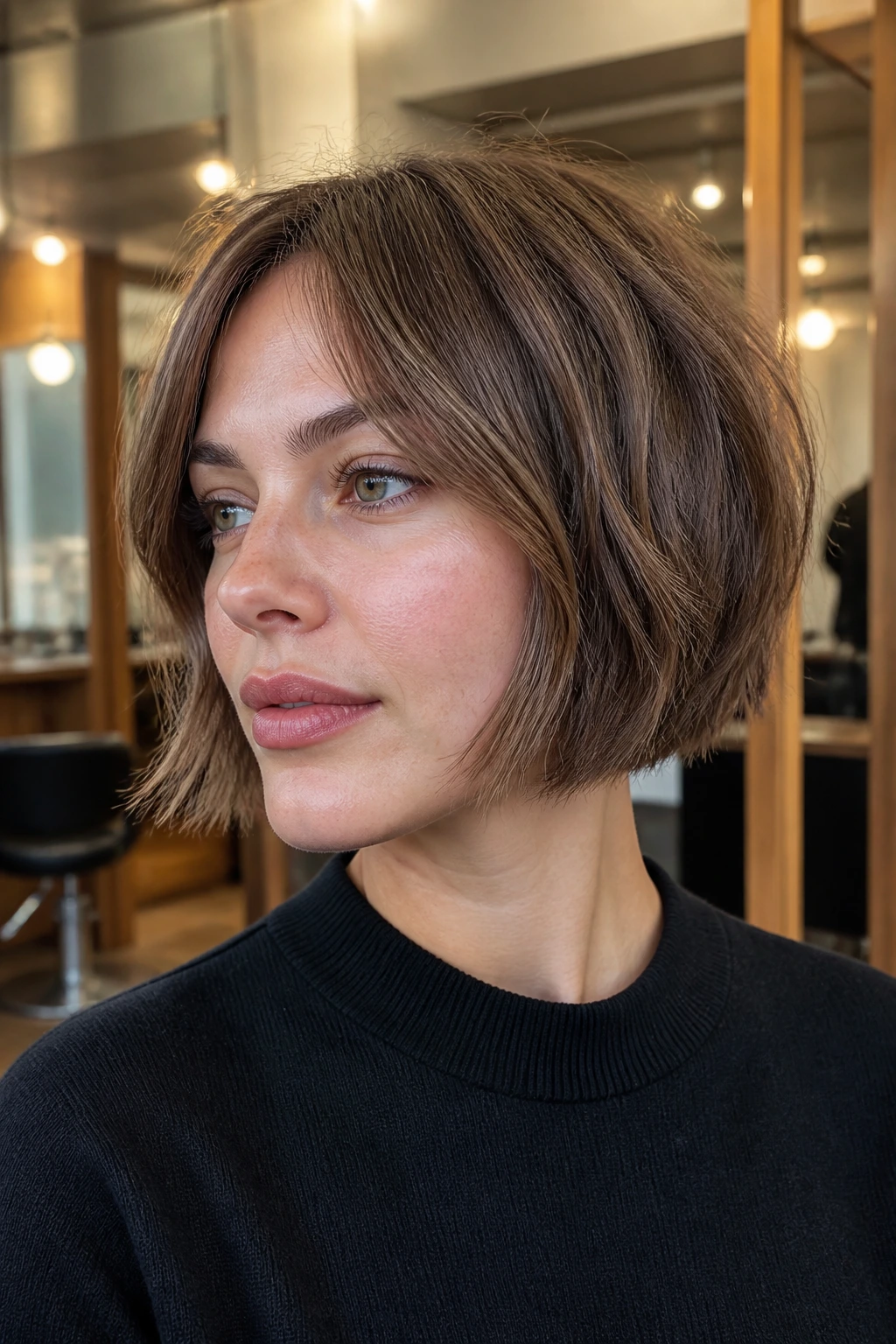
A French bob can look severe in the wrong hands. Add a little breakup at the ends, though, and it turns into something much better: a chin-skimming cut that moves when you turn your head and never looks frozen in place. On cool skin tones, that softness keeps the face from feeling boxed in.
The trick is the edge. Ask for a clean baseline with point-cut ends, not a razor-heavy finish that frays too much. Pair it with a cool espresso, pearl blonde, or muted mushroom brown if you color your hair. That little cool shift lets the texture read intentional instead of fuzzy. I like this cut best when the front sits just below the jaw and the nape is tucked in tight.
2. Choppy Collarbone Lob with Hidden Layers
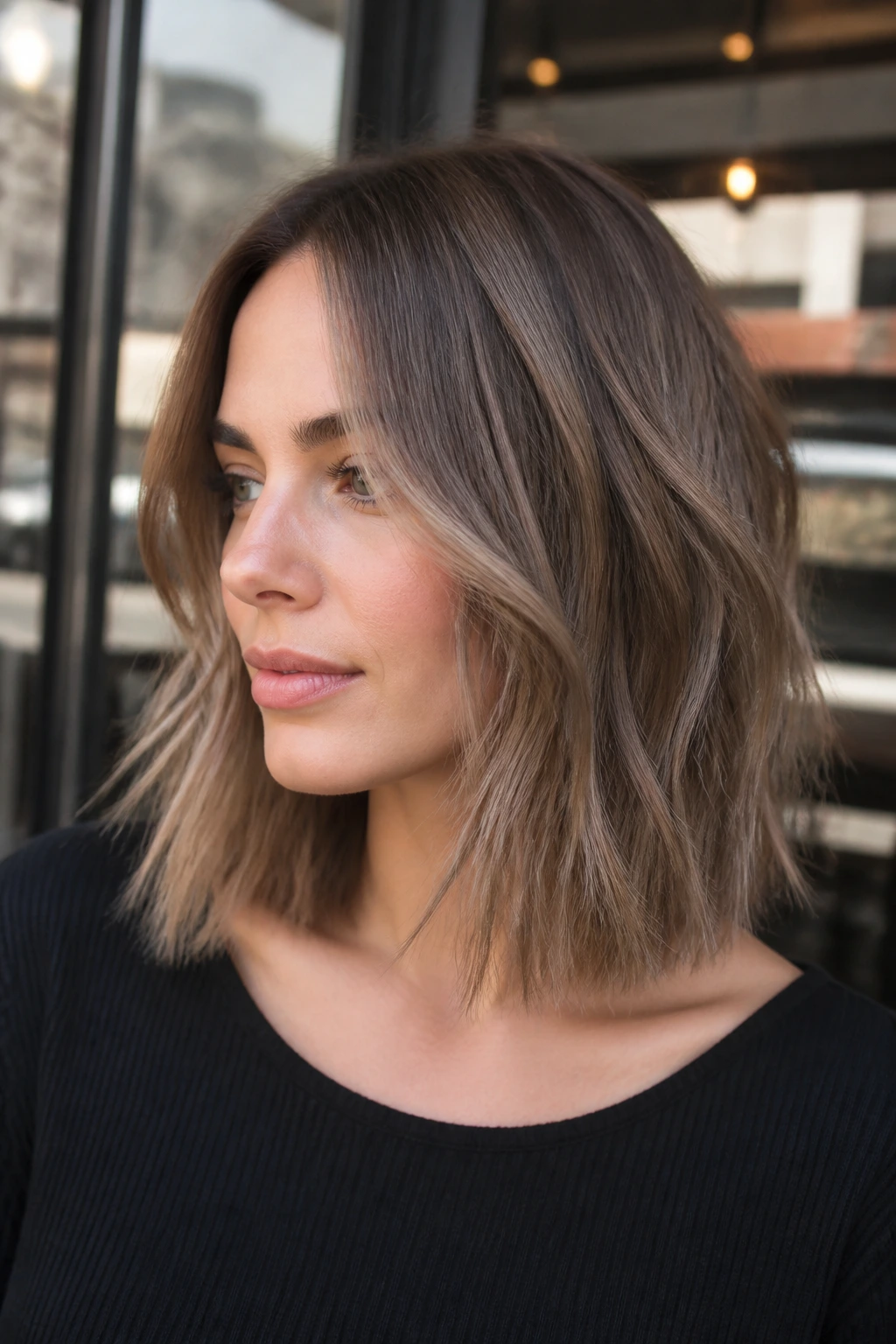
The collarbone lob is one of those cuts that keeps earning its place because it solves a lot of problems at once. It’s long enough to tuck behind the ears, short enough to feel light, and choppy enough to avoid that helmet shape you get from a one-length cut on thick hair.
Hidden layers matter here. They keep the texture inside the shape instead of blowing the whole outline apart. On cool skin, a lob like this looks clean with ash brown, cool beige blonde, or even a soft black glaze. If your hair tends to puff at the ends, keep the wave loose and low—just one bend through the mid-lengths is enough.
3. Curtain Bangs and Loose Waves
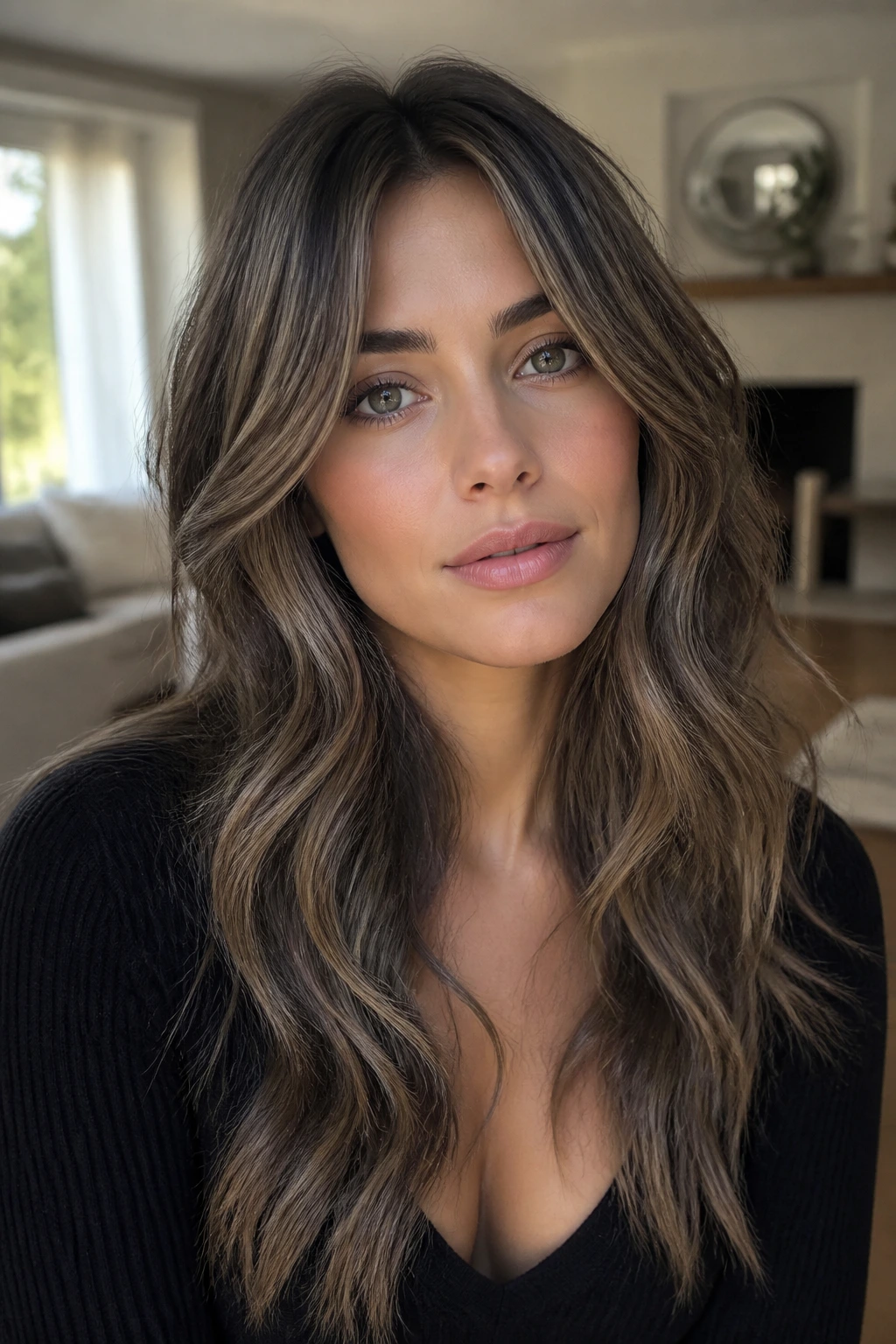
Curtain bangs are almost cheating for cool skin tones. They open up the face in the center, then slide away at the cheekbones, which is exactly where a lot of cool-toned faces look best. The effect is soft, but not blurry.
What Makes This Pairing Work
The bang line breaks up the forehead without swallowing it. That matters more than people realize. When the rest of the hair falls in loose, brushed-out waves, the whole style keeps that airy movement that cool undertones usually wear well. If you color your hair, smoky brunette or icy caramel-lowlight combinations look cleaner than a strong orange-gold highlight.
A flat iron bend through the front pieces is enough. Don’t overcurl the bangs; they should sit like a curtain, not like a comma.
4. Layered Pixie with Piecey Crown
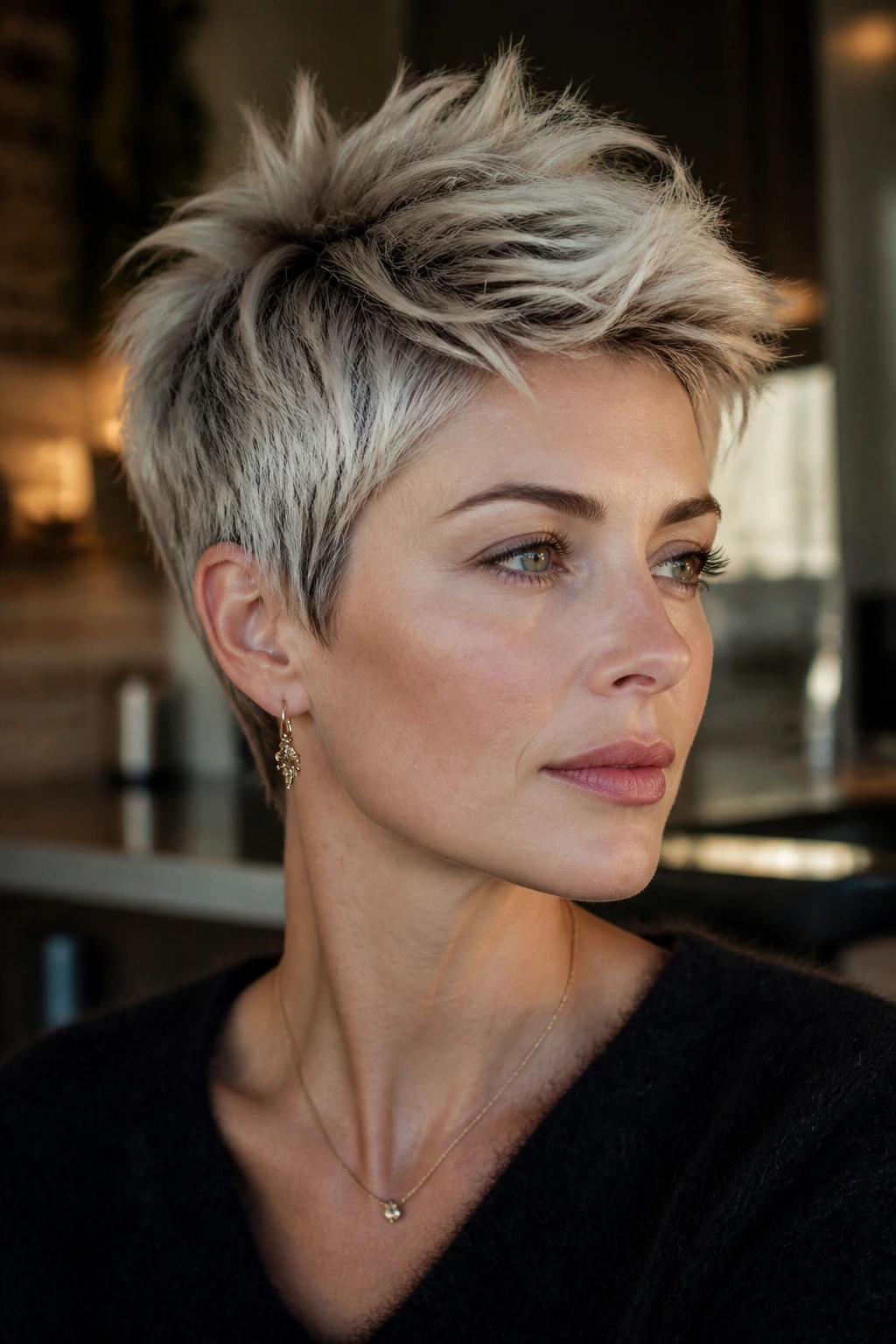
A pixie is never boring when the crown has a little separation. Short hair can look very sharp on cool skin, and that’s the point here: a crisp shape with tiny broken pieces around the top and temple area. It gives the face some architecture.
This style loves blue-black, silver blonde, cool graphite, and platinum beige. The shorter the cut, the more every tone shows. Use a matte paste or soft wax, not a glossy pomade that clumps everything together. You want the ends to look separated, almost feathered, so the light lands in small places instead of one shiny mass.
5. Shaggy Midi Cut with Face Frames
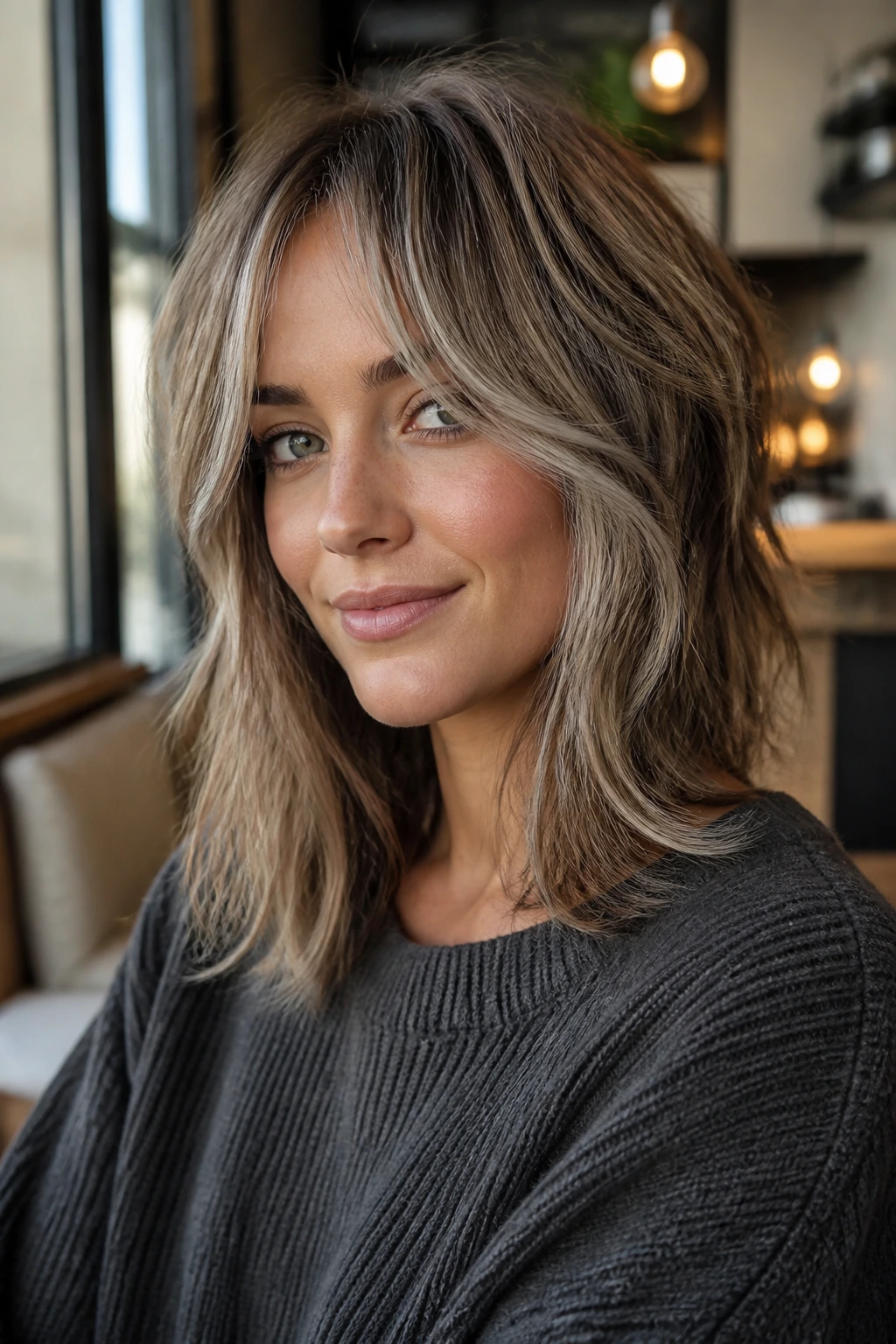
The midi shag sits in that sweet spot where the cut looks casual but still has enough structure to hold its shape. It works especially well on cool skin because the face-framing pieces can be kept a touch lighter or cooler than the rest of the hair, which creates a very clean line around the face.
I’d ask for soft, not aggressive, layers. Too much chopping can make the ends kick out in a way that feels dated. A good shag should move when you shake it out, not look like it was attacked by thinning shears. Cool brown, smoky beige blonde, and muted silver streaks all make this style feel expensive without trying too hard.
6. Long Layers with Bend-Only Waves
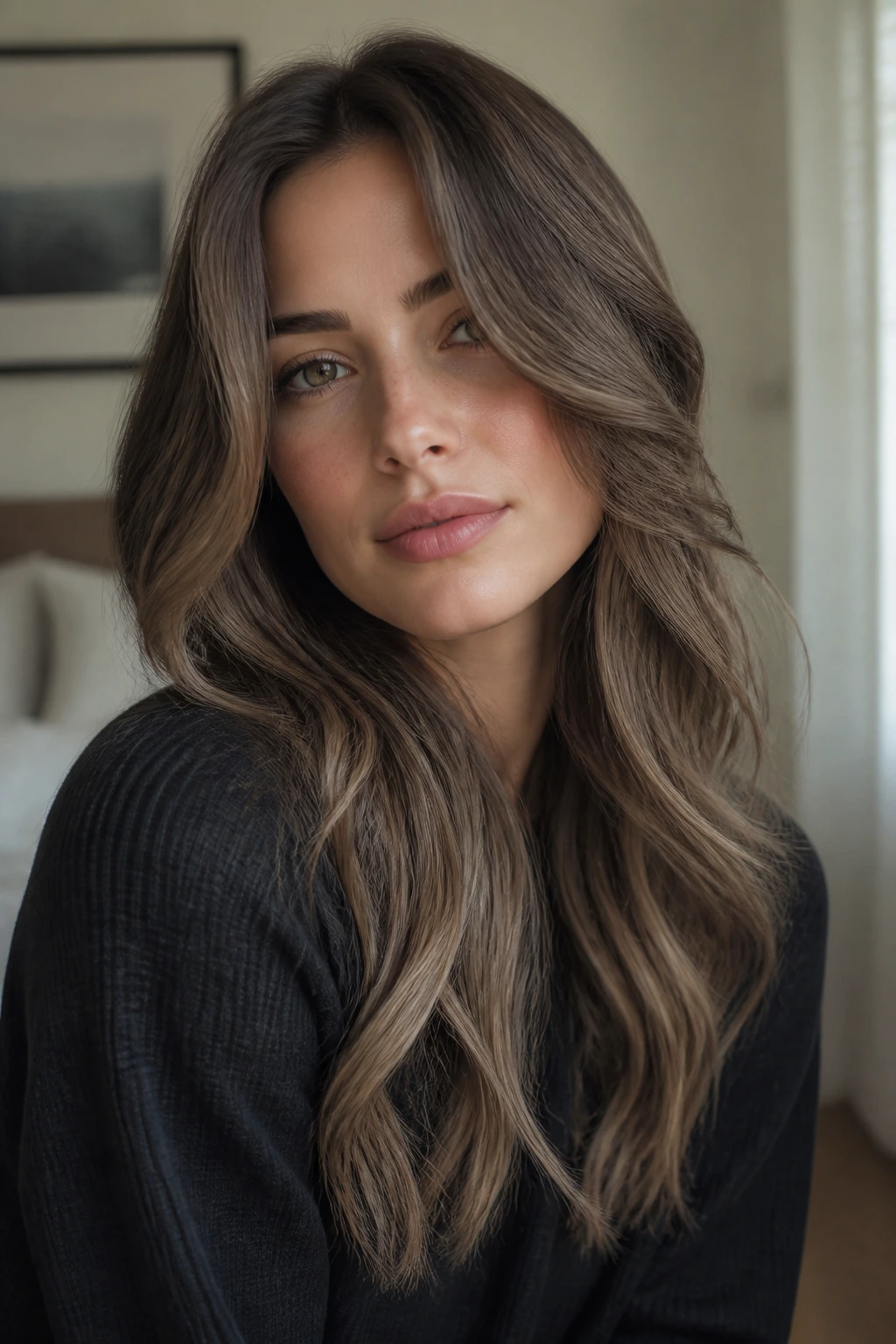
If you keep your hair long, texture has to be controlled or it turns into a curtain. Long layers with bend-only waves solve that problem. You get movement around the face and through the lower half, but the length still reads sleek.
This is one of the best choices for cool skin that likes polish. The shape stays clean, while the wave pattern keeps the hair from looking flat under indoor light. I’d reach for a cool chestnut, blue-based brunette, or pale ash blonde if you’re coloring. The goal is contrast without warmth. Wrap the hair around a 1-inch iron for just half a turn, then brush lightly once it cools. That bend is enough.
7. Textured Blunt Bob with Tucked Ends
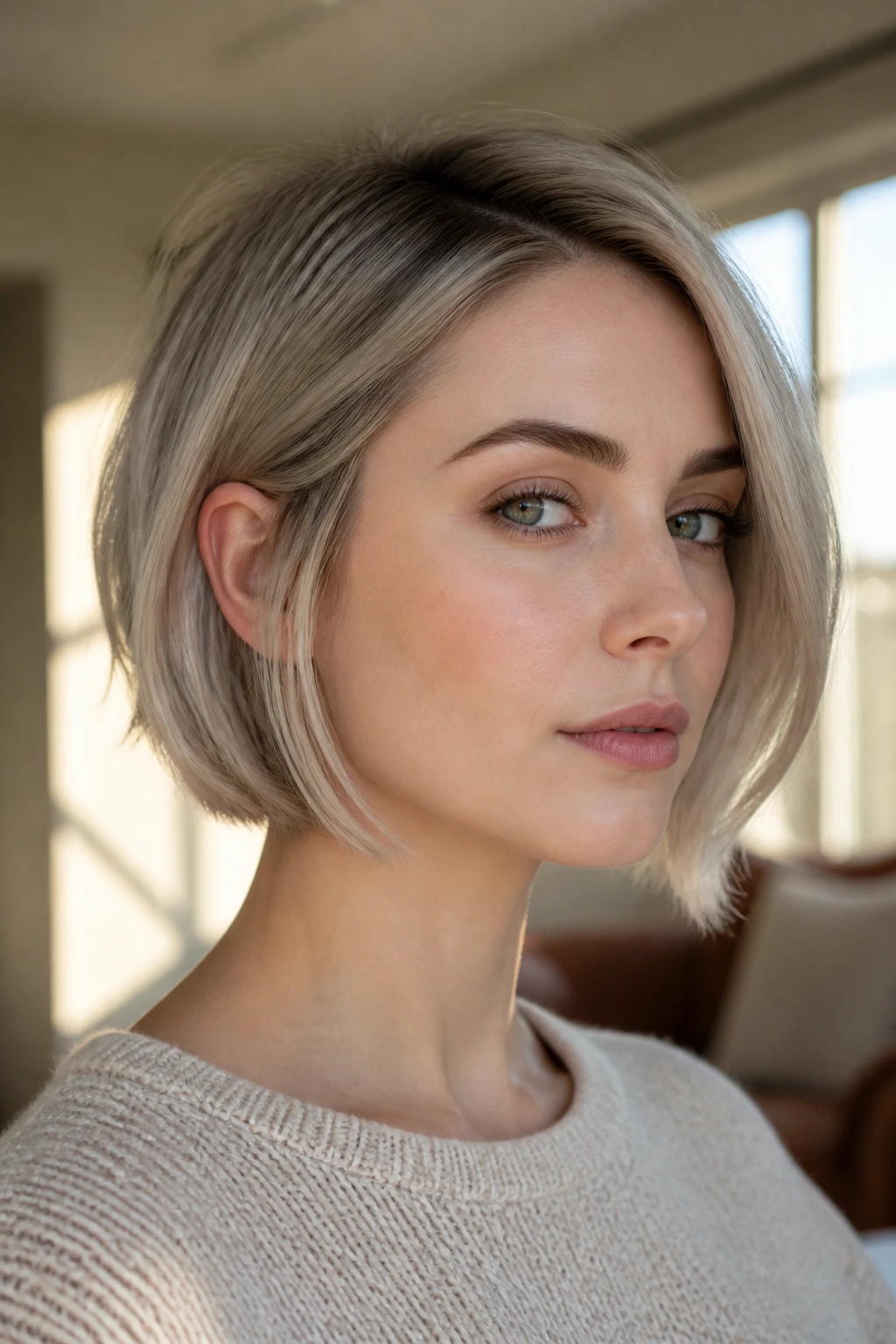
A blunt bob with texture at the surface sounds contradictory. It isn’t. The strong line at the perimeter gives the style its bite, while the top layers and tucked ends keep it from looking stiff.
That contrast looks especially good on cool undertones because cool skin often handles geometry better than softness for softness’s sake. The bob makes the jaw feel sharper; the texture keeps it from going severe. Ask for a cool blonde toner, icy brown gloss, or a graphite glaze if your hair is dark. Then tuck one side behind the ear. That little asymmetry changes everything.
8. Wispy Wolf Cut for Fine Hair
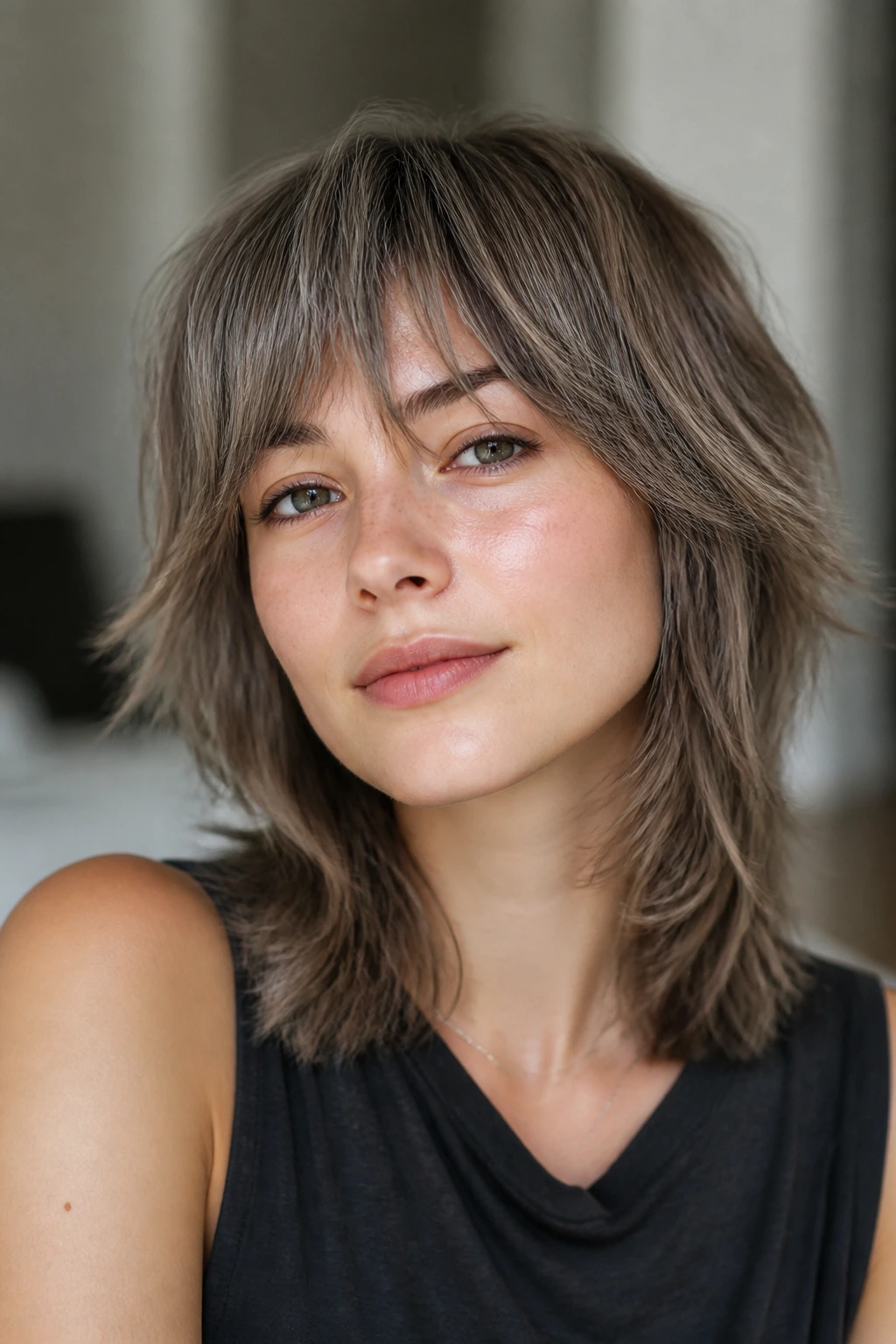
Fine hair and the wolf cut can be a mess if the layers are too hungry. The wispy version is gentler. It keeps the crown light, lets the fringe fall softly, and leaves enough length at the bottom so the whole cut still feels wearable.
How to Keep It from Getting Too Wild
On cool skin, a wolf cut needs to stay smoky, not brassy. Ash brunette, cool beige blonde, or a muted silver brown gloss all help the shape read intentional. I’d avoid overloading the top with powdery texture; that can make fine hair look dry in a bad way. A small amount of mousse at the roots and a pea-sized bit of cream on the ends usually does the job.
If your hair is straight, bend the last 2 inches only. If it’s wavy, scrunch and let it air-dry halfway, then finish with a diffuser.
9. Shoulder-Grazing Flip with Feathered Layers
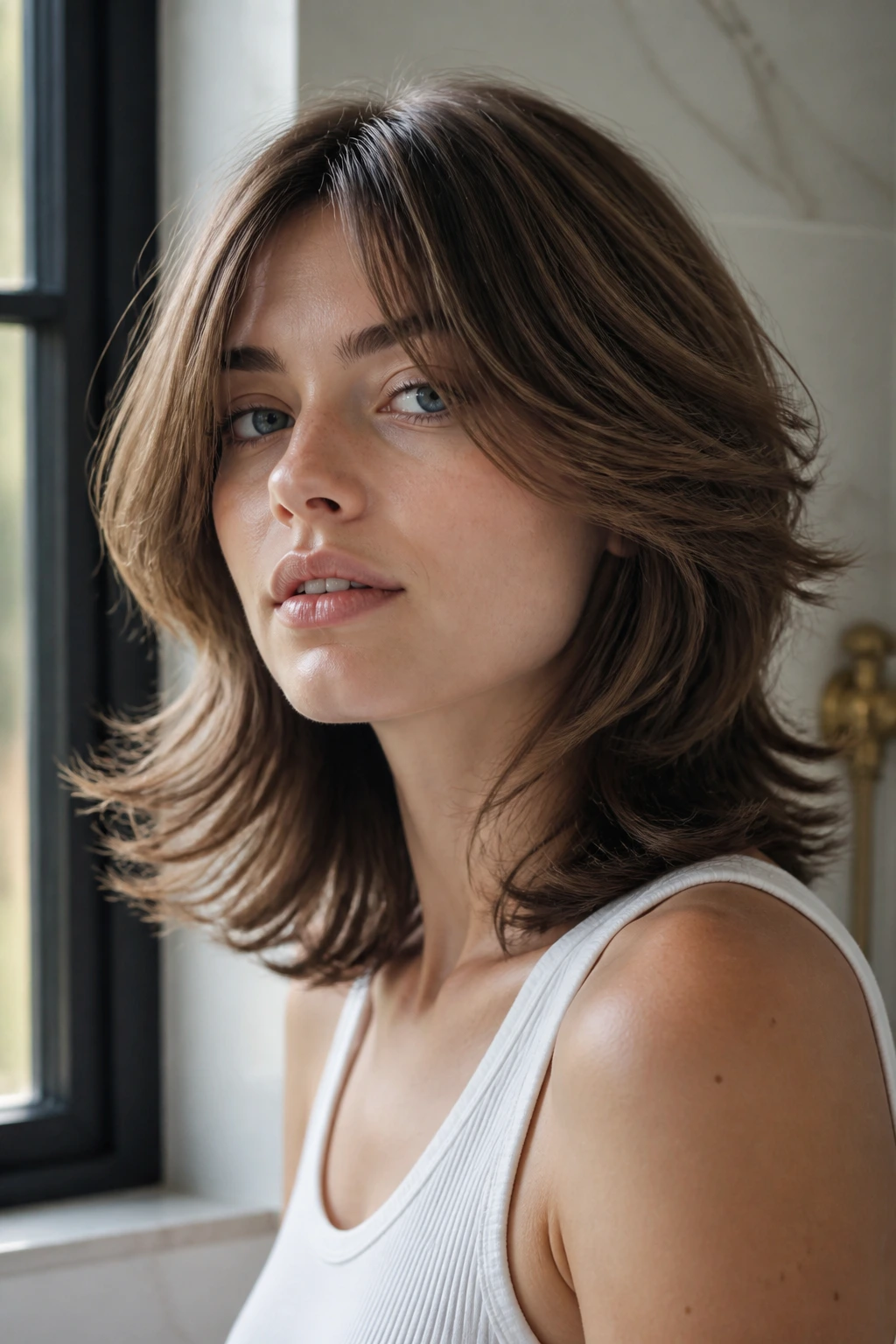
This cut has a little nostalgia in it, but that’s half the fun. The shoulder-grazing length gives the flip room to move, and the feathered layers stop the ends from hanging dead. On cool skin tones, the style can look almost tailored when the finish is soft and the root is kept clean.
It’s especially nice with smoky mocha, cool auburn glazed down to a brown-red, or beige blonde with low-contrast highlights. The flip at the ends draws the eye outward, which can brighten the face without needing obvious volume at the crown. A round brush and a quick blast from the dryer are enough. No need to make it perfect. Imperfect is better here.
10. Glossy Curls with Ribbon Ends
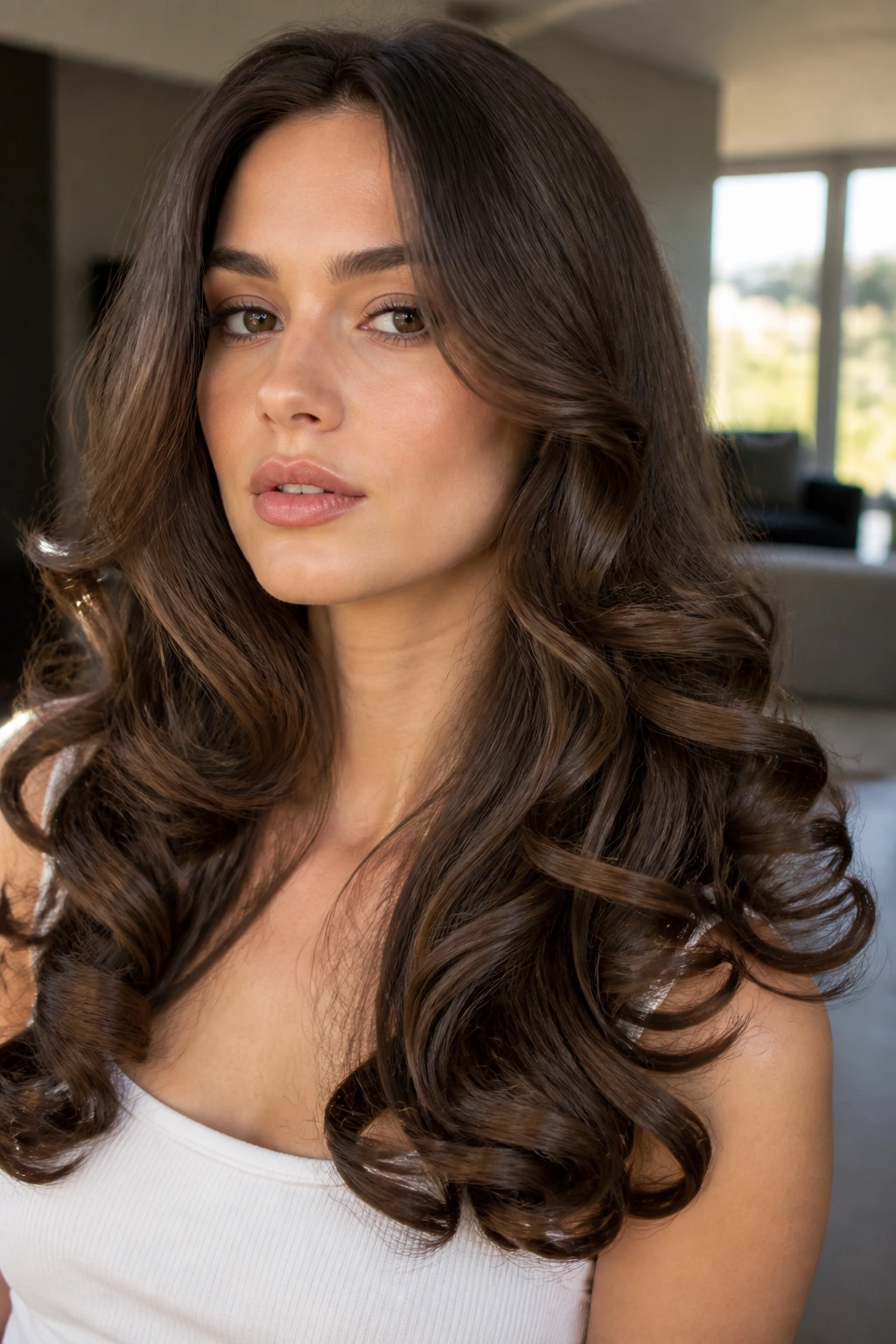
Gloss matters here. Big, springy curls can swallow cool skin if they’re dry or fuzzy, but when the finish is glossy and the ends stay a little ribbon-like, the whole look turns elegant instead of heavy.
This is a strong choice for medium to long hair that holds curl well. Use a curling iron in the ¾- to 1-inch range, then brush out only the top half if you want those cleaner S-shapes. Blue-black, silver brunette, and cool champagne blonde all work beautifully with this shape because the shine stays crisp. If the hair gets puffy at the ends, stop curling an inch before the tips and let them stay loose.
11. Sleek Roots, Rumpled Mid-Lengths
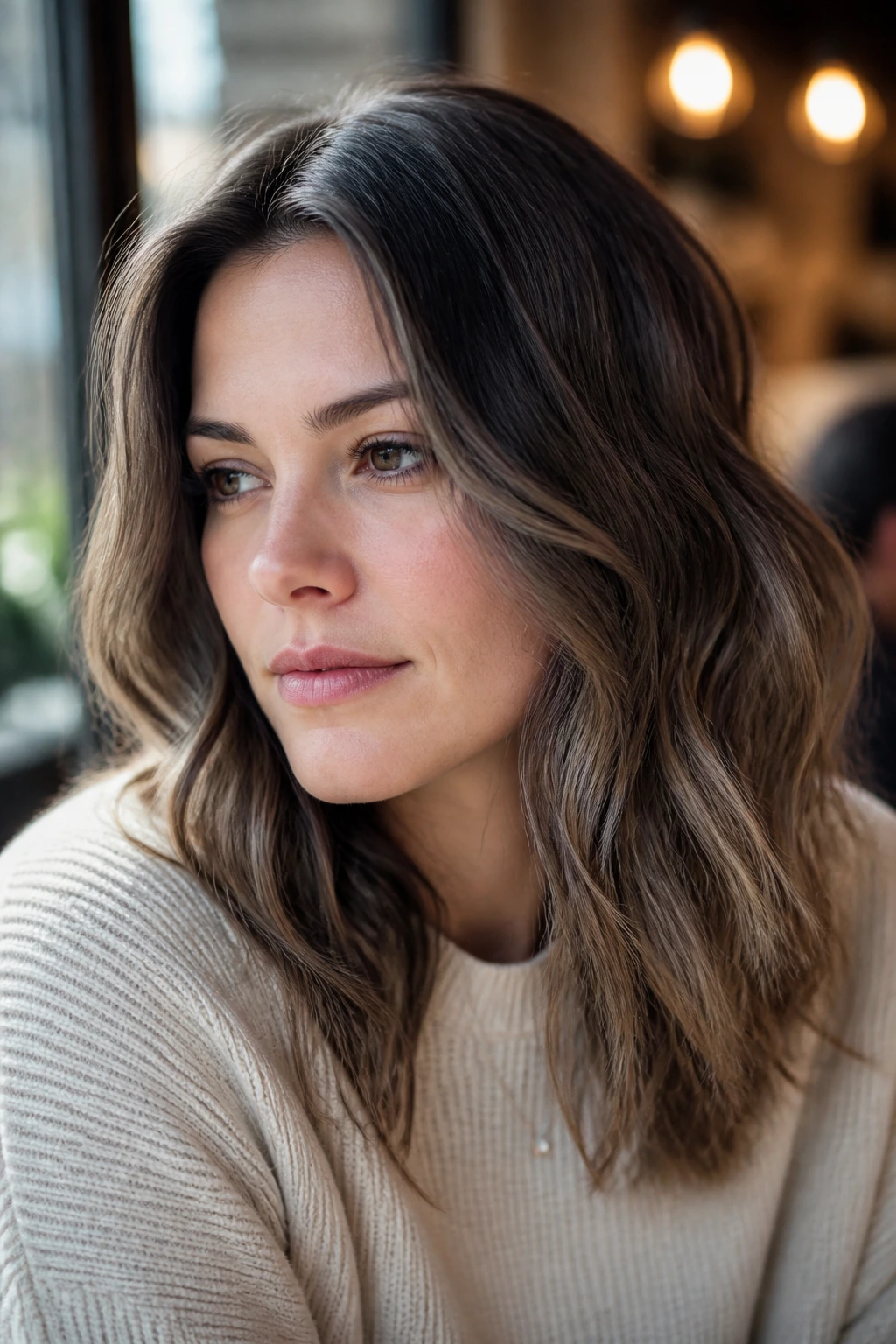
This is one of my favorite contrasts for cool undertones. The roots stay smooth and a little polished, then the mid-lengths and ends get that soft, irregular bend that keeps the style from looking too formal. It’s the kind of texture that makes sense on a day when your clothes are clean and simple and your hair should follow suit.
A cool brown root shadow or smoky balayage makes this cut sing. The smooth top gives the face a neat frame, while the textured lower half adds movement. That combination is especially good if your skin has a pink or blue cast, because it keeps the eye near the face instead of sending it everywhere at once.
12. Tousled High Ponytail with Wrapped Base
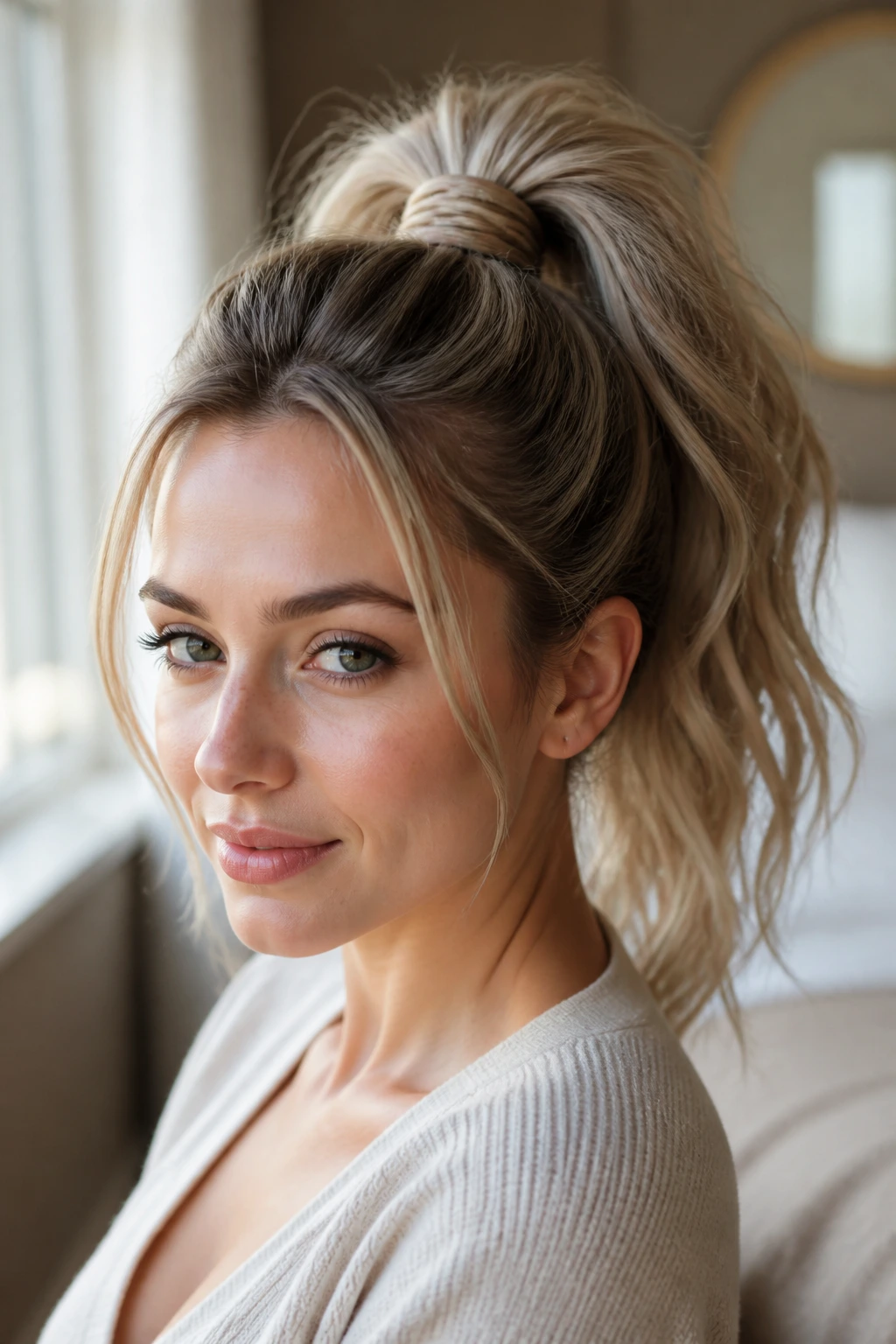
A high ponytail can look strict. Not this one. Leave the crown a little lifted, wrap a small section of hair around the elastic, and tease the tail just enough to create some slack. Now it reads casual, not gym-only.
Cool skin tends to like this because the style opens the face and lets the cheekbones do the work. If you wear makeup, this ponytail gives you room for a bolder lip or a sharp liner without the hair competing for attention. I’d keep the texture on the tail soft and piecey, not fluffy. Ash brown, silver blonde, and inky black all look especially clean with this shape.
13. Low Textured Bun with Loose Tendrils
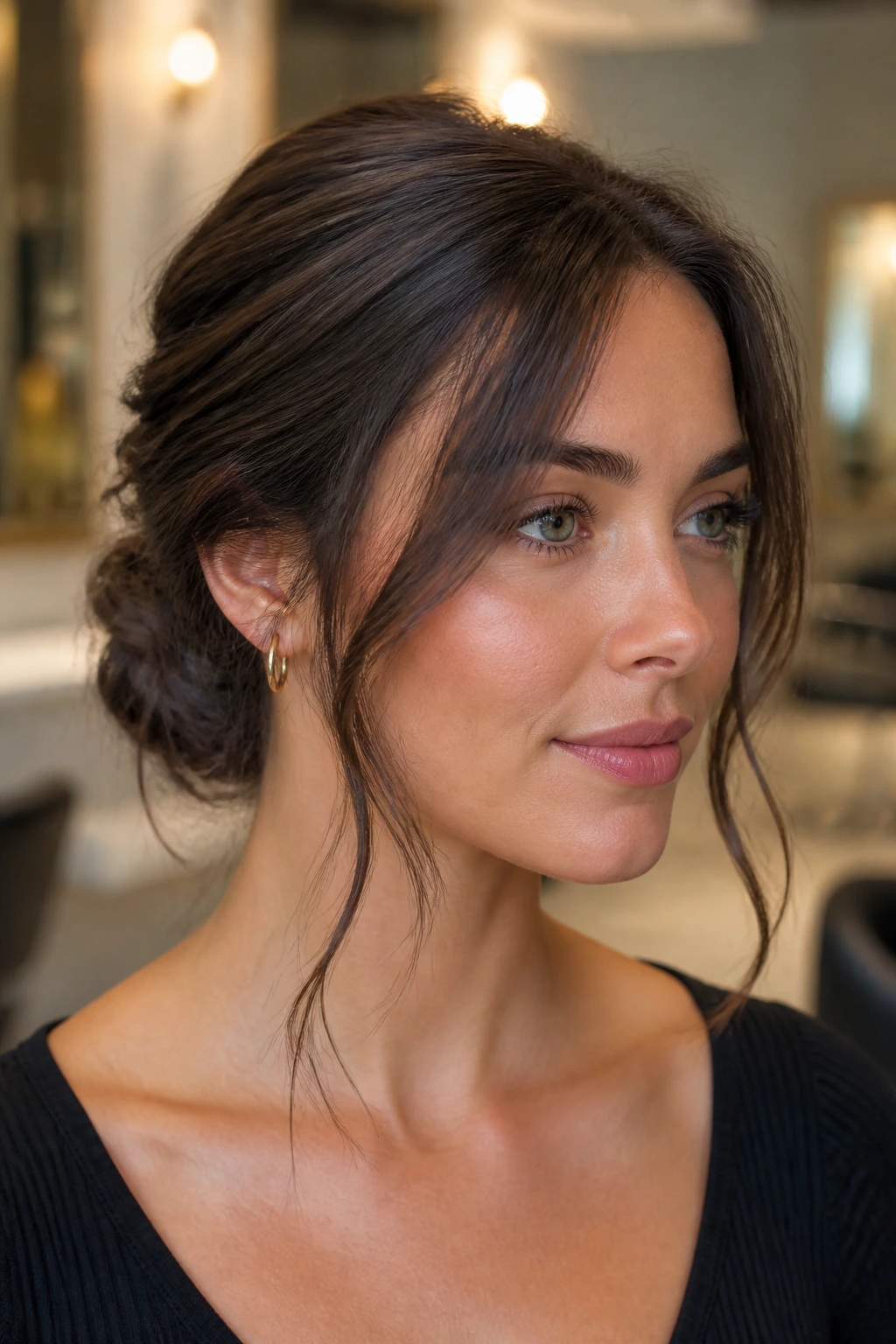
The low bun is a classic for a reason: it gives you structure, keeps the neck open, and leaves just enough softness around the face to avoid a hard line. Cool skin often looks best when the bun sits low and the tendrils are kept thin, not stringy.
A cool brunette with a satin finish looks especially good here. If your hair is highlighted, keep the lighter pieces near the face and the bun itself a little deeper in tone. That creates depth without warmth. Pull a few strands free at the temples and just under the ears. That tiny bit of looseness keeps the style from feeling severe.
14. Half-Up Knot with Soft Volume
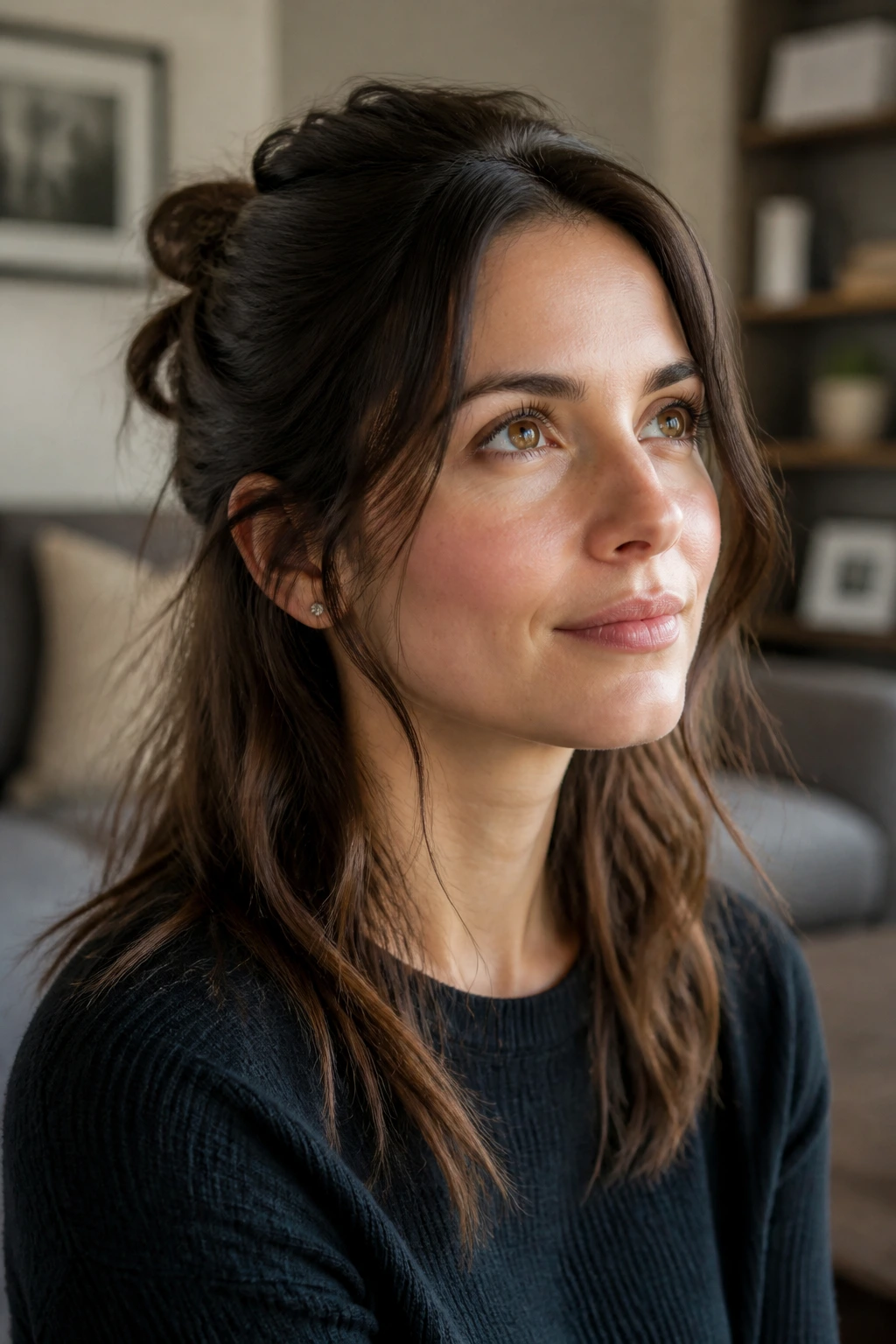
Half-up styles can go childish fast, but a soft knot at the back with a little lift at the crown keeps this one grown-up. It’s especially useful when your hair feels flat but you still want length visible around the shoulders.
Best if Your Hair Gets Limp by Noon
Cool undertones like the open face shape here. The top knot creates height, while the rest of the hair stays loose and textured enough to frame the jaw. Use a neutral or ash gloss rather than a golden one if you color your hair; the top half-up section is where harsh warmth shows first.
For styling, rough-dry the roots with mousse, then twist only the top section into a knot. Leave the lower half in soft bends or natural texture.
15. Braided Crown with Uneven Texture
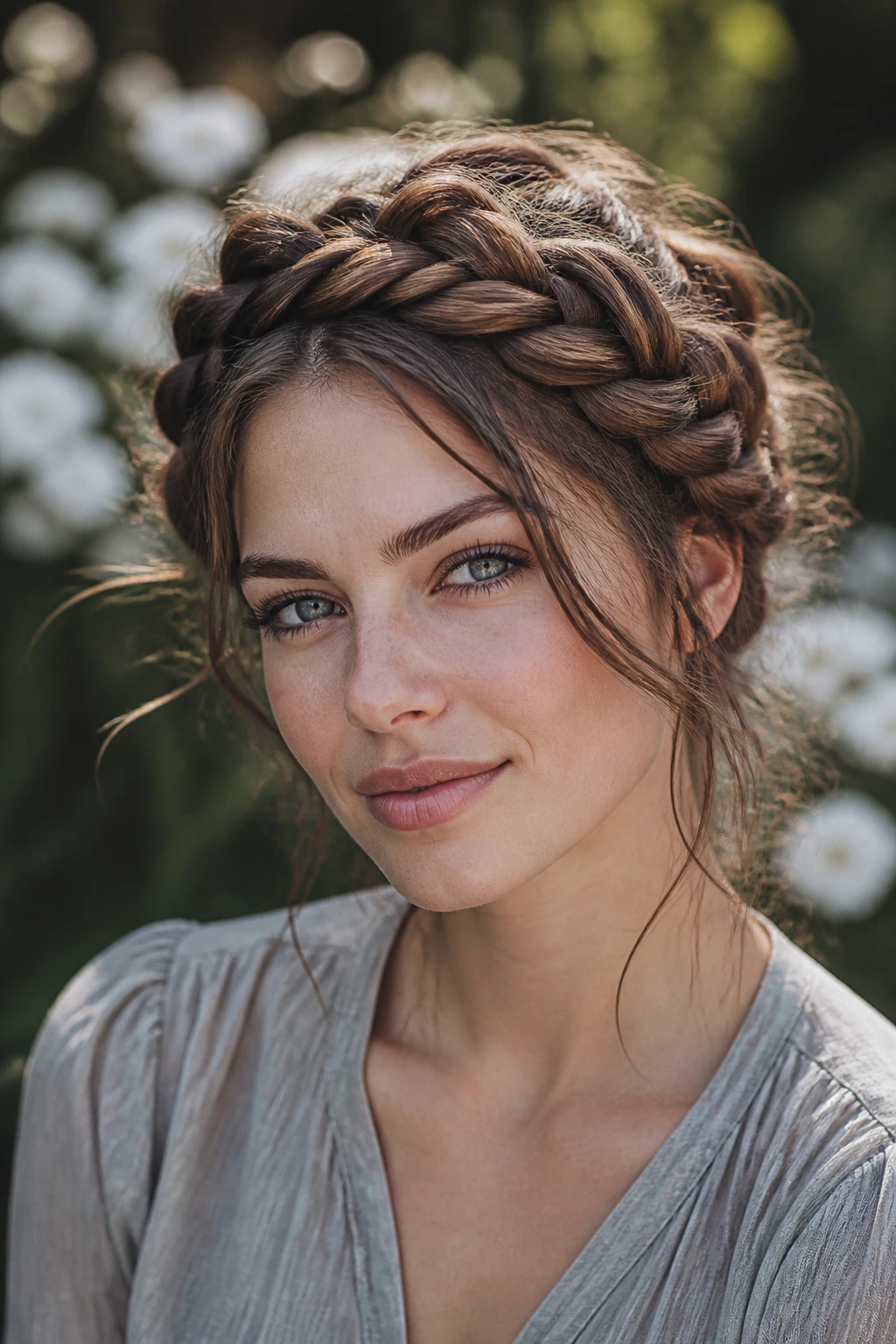
Braids can look too polished on cool skin if every strand is pulled tight. A crown braid with a few uneven pieces gives the style life. You want the braid to feel hand-done, not lacquered into place.
Ash blonde, pearl brunette, and smoky silver streaks all look especially pretty woven into a braid because the different tones show off the pattern. If your hair is very smooth, add texture spray before braiding so the strands grip each other instead of slipping apart. Pull the braid apart gently after it’s secured. Not a lot. Just enough to widen it and soften the edges.
16. Side-Parted Waves with a Tucked Ear
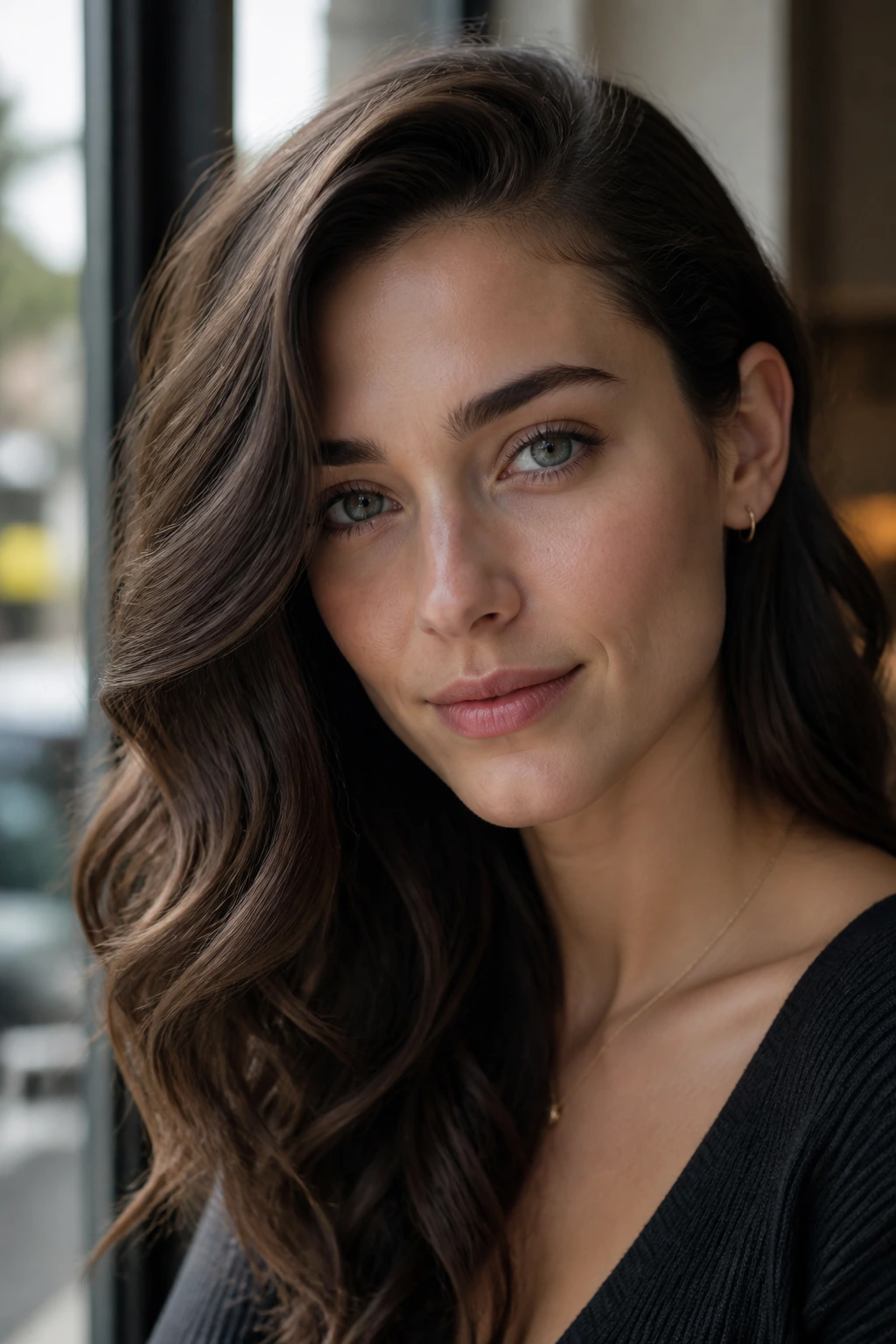
A deep side part changes the whole face. On cool skin tones, it adds asymmetry in a way that can make the features look more sculpted, especially if one side is tucked behind the ear and the other falls forward in waves.
This style loves cool brunette, dark ash blonde, or blue-black because the side part creates strong shadow and shine. The tucked side shows earrings. The loose side gives movement around the cheek. It’s simple, but the balance is doing a lot of work. If your hair is fine, keep the waves broad and shallow rather than tight and ringy.
17. Modern Mullet with Soft Feathering
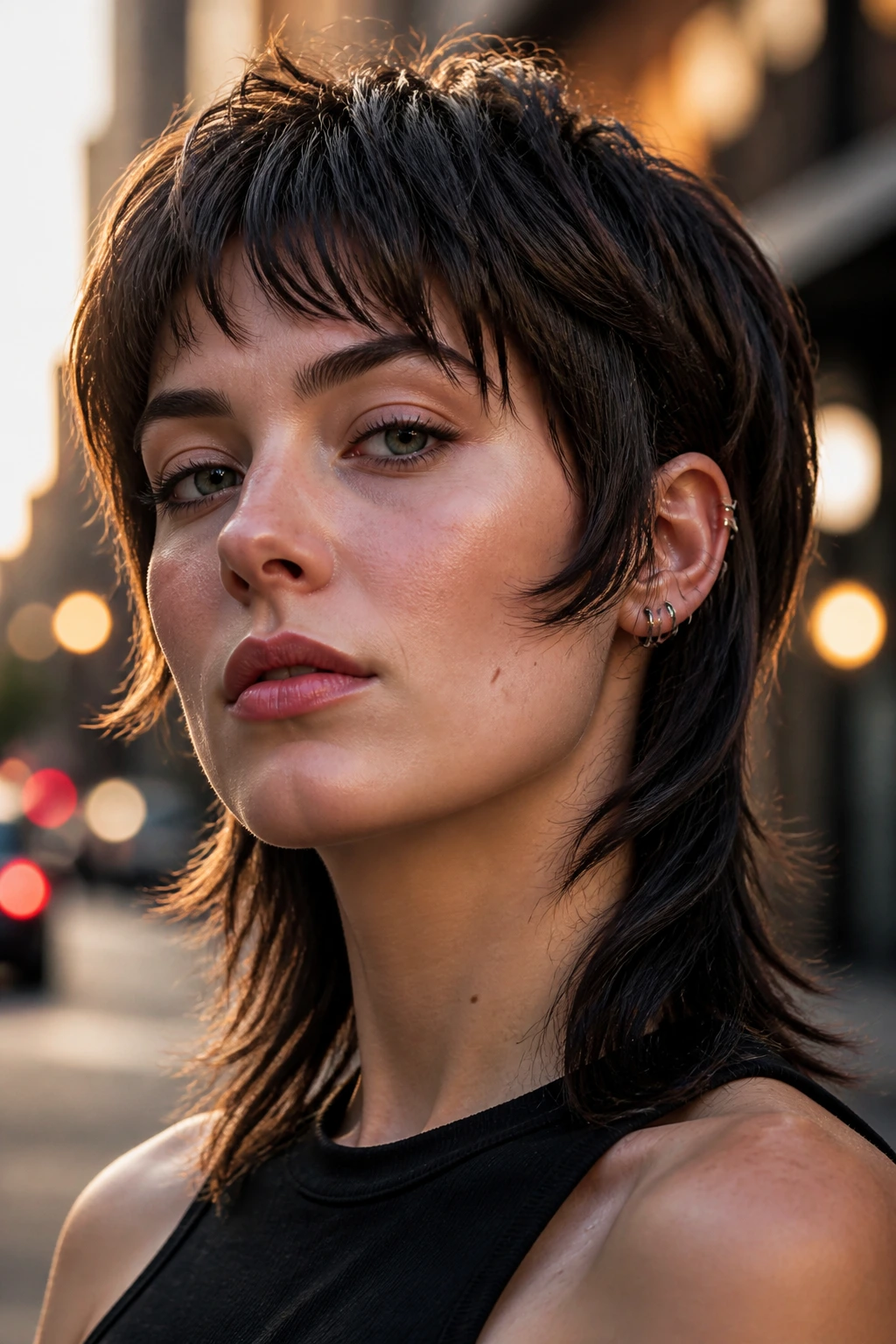
The modern mullet has a much better reputation when the edges are softened. A cool-toned face can handle the shape because the cut has attitude, and cool undertones tend to look good next to strong lines as long as the texture isn’t too heavy.
Feathering is what makes this version wearable. The top stays short and lively, the back keeps a bit of length, and the sides soften into the cheek area instead of puffing out. I’d pair it with blue-black, charcoal brown, or a smoky platinum glaze if you want the texture to look deliberate. This cut does not need sweetness. It needs control.
18. Curly Shag with Airy Fringe
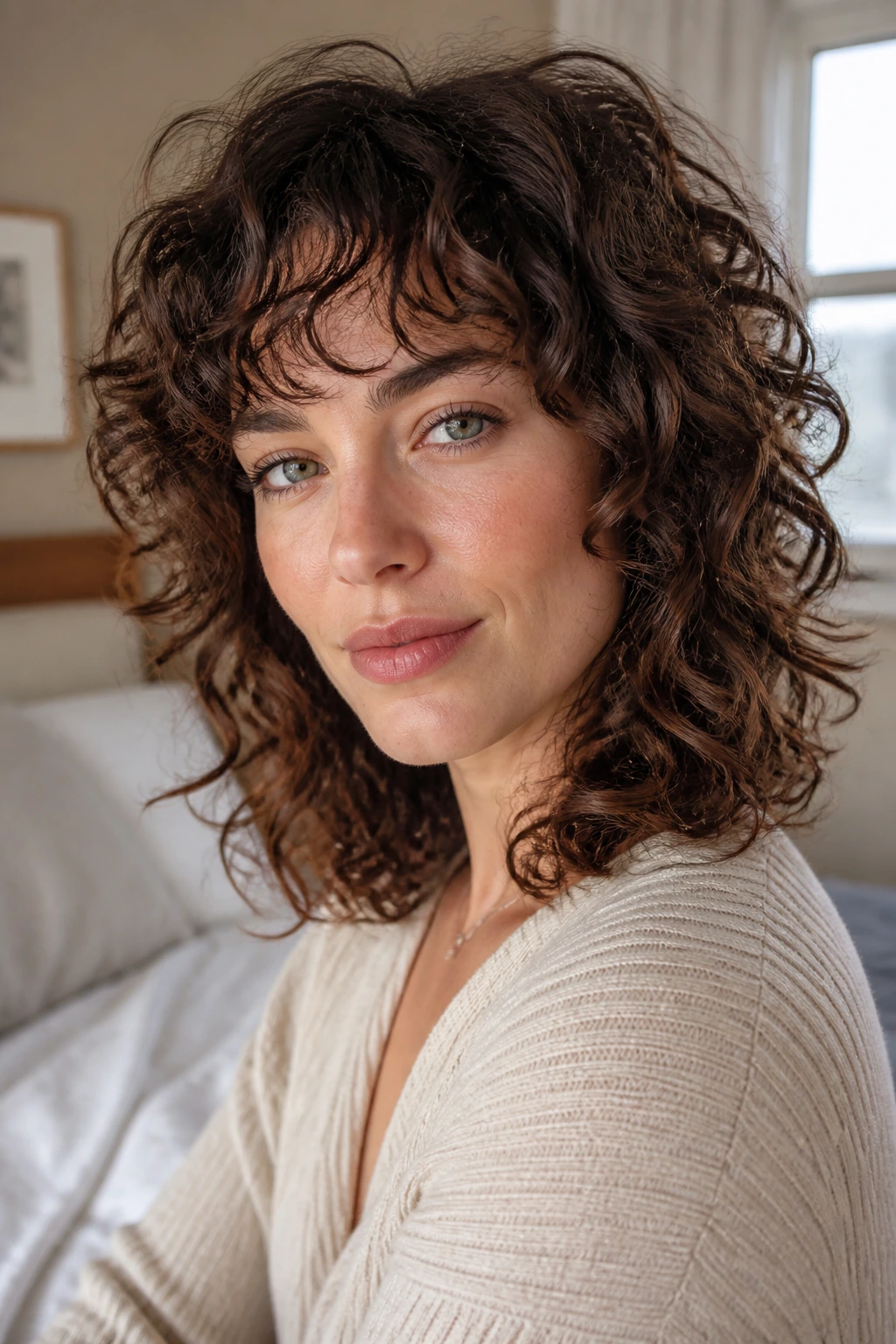
Natural curls and a shag cut are a strong match when the layers are cut to keep the curl pattern alive. For cool skin tones, the airy fringe matters because it opens the forehead without creating a hard shelf of hair.
The shape works best when the curls are hydrated, defined, and left with a little separation. That separation is what gives the style movement. Cool brown, black, ash mahogany, and silver-flecked highlights all work well because they keep the eye on the curl shape instead of warm tones. A diffuser on low heat helps. High heat usually makes the fringe frizz and loses the whole point.
19. Twist-Out Lob with Defined Ends
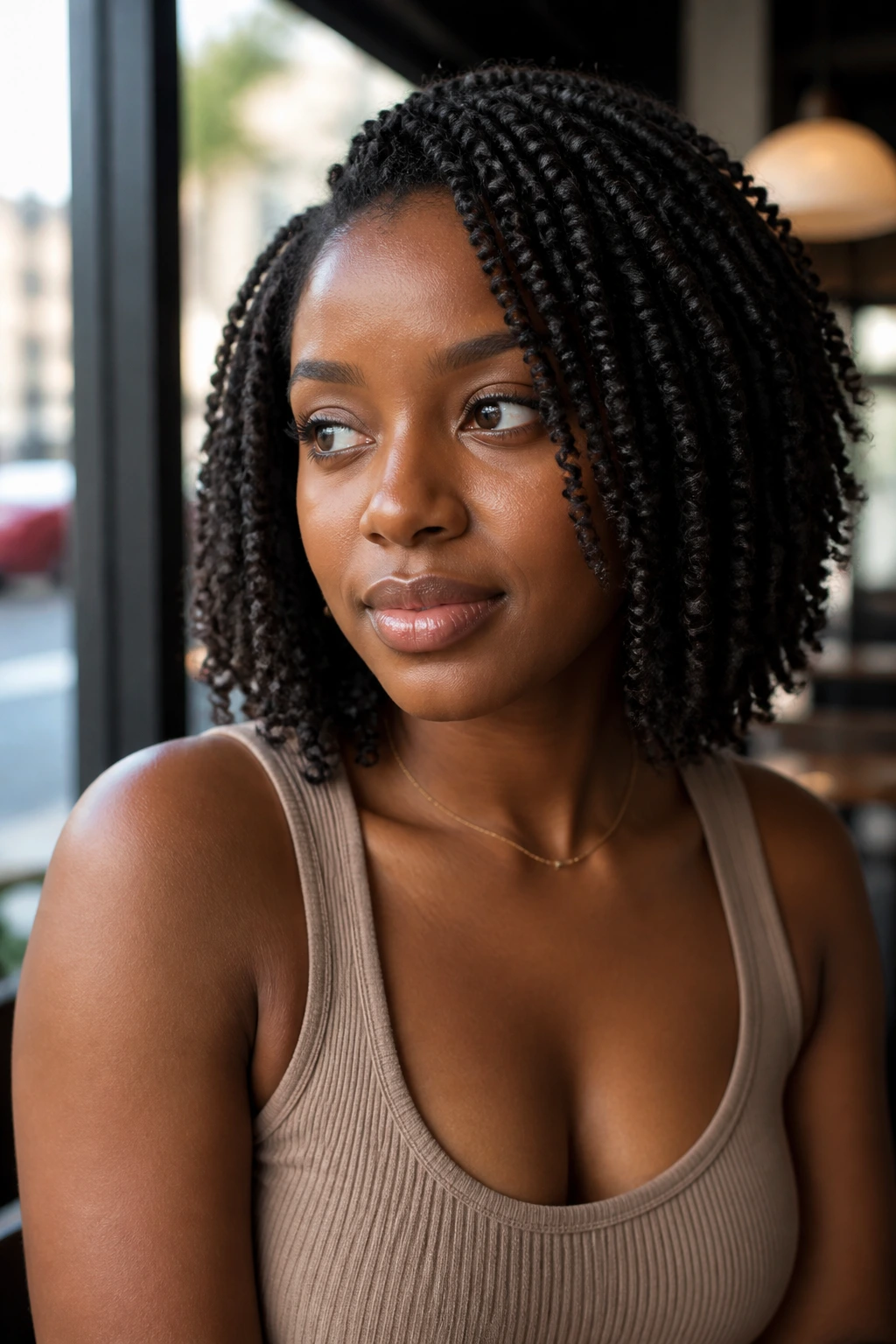
A twist-out on a lob is one of those styles that can read soft or sharp depending on the finish. For cool skin, sharper usually wins. Defined ends, a clean outline, and enough movement through the mids keep the cut looking fresh.
This is especially nice on coils and tight curls that need shape but not a lot of extra volume at the top. Ask for a cool brown, espresso, or plum-black gloss if your hair is colored. The definition lets the texture show; the cooler shade keeps the overall look from drifting muddy. A bit of shine cream on the ends goes a long way here.
20. Deep Side Wave with Sculpted S-Bends
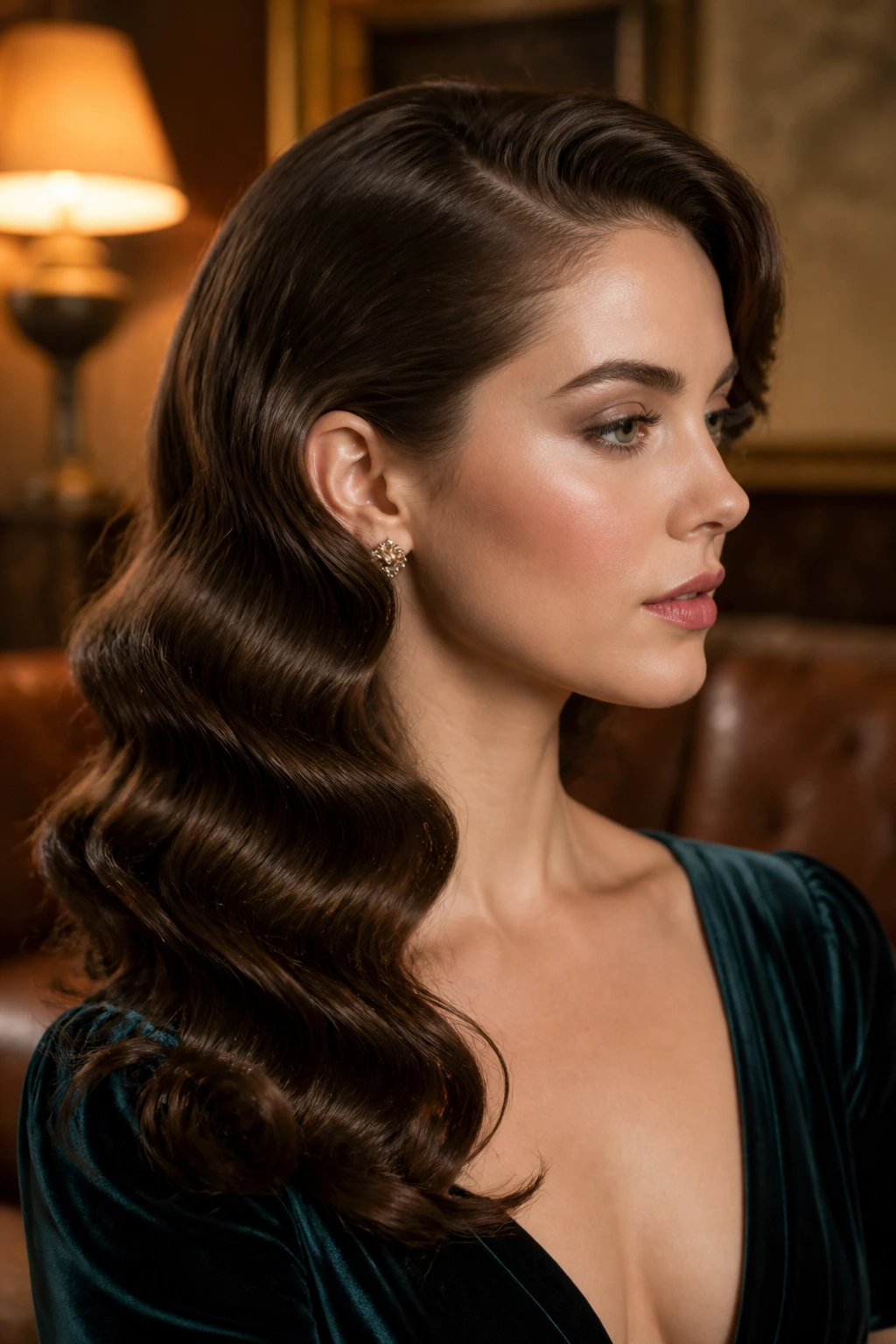
This one feels old-Hollywood without sliding into costume. The deep side part gives structure, and the sculpted S-bends keep the waves controlled enough for cool skin to look polished rather than overwhelmed.
It shines most when the hair has a reflective finish—think blue-black, cool chocolate, or silver blonde with low-contrast highlights. If you’re styling at home, clamp the iron in loose waves and let each curve cool before touching it. That cooling time is what keeps the pattern from falling apart. One brush-through at the end, and stop there. Overworking it ruins the line.
21. Messy Top Knot with Face Framing
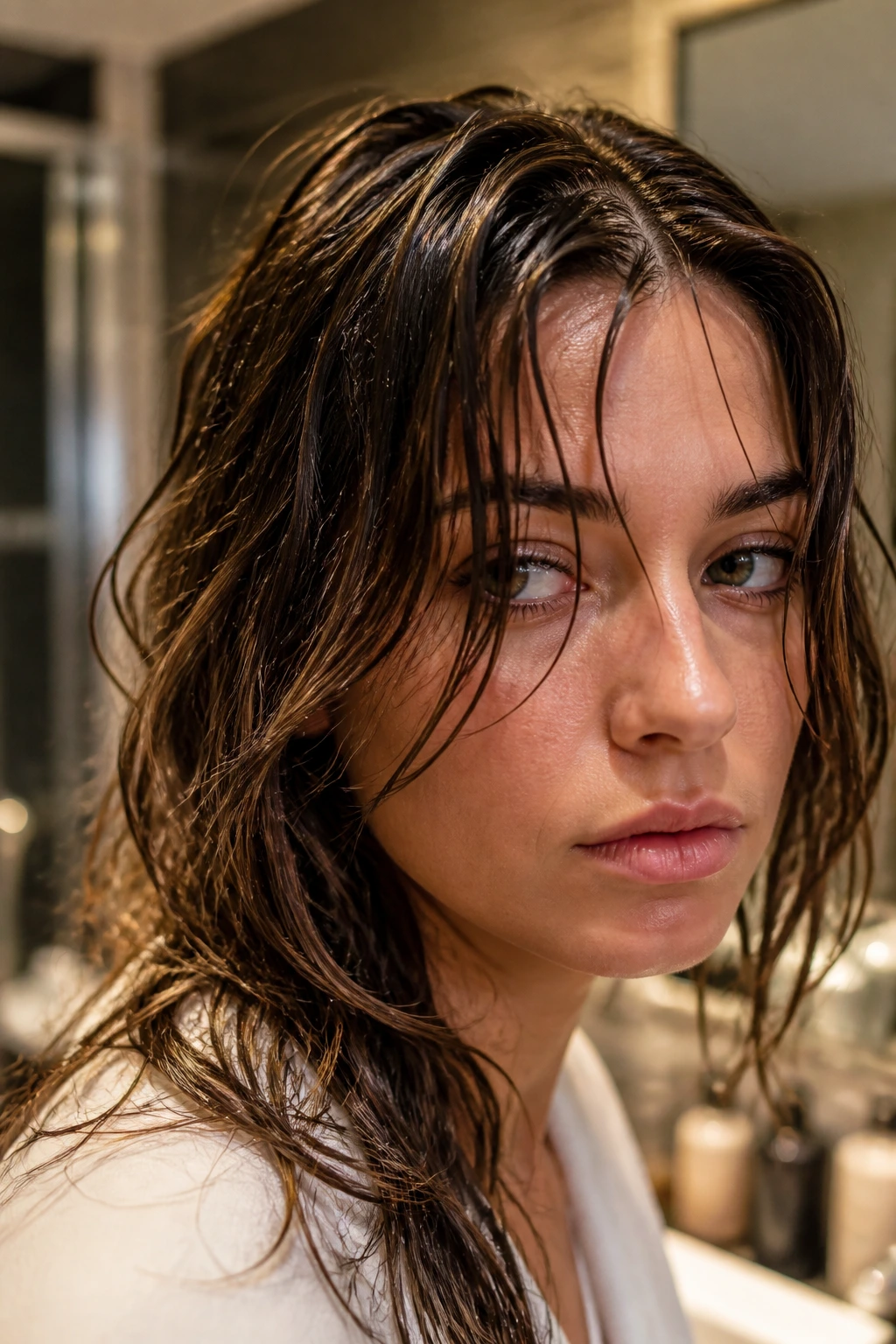
A messy top knot can be lazy, or it can be smart. The difference is in the front pieces. Leave a couple of soft strands around the temples and jaw, and the whole style gets a face-flattering shape that works especially well on cool undertones.
It’s a good match for neutral or ash blonde hair, cool brunette, and black hair with a matte texture. The lifted knot gives height, while the loose framing pieces keep the skin from looking too bare. If your hair tends to slip, rough it up with dry shampoo before twisting. Clean hair makes this knot collapse faster than people expect.
22. Micro-Bob with a Ruffled Finish
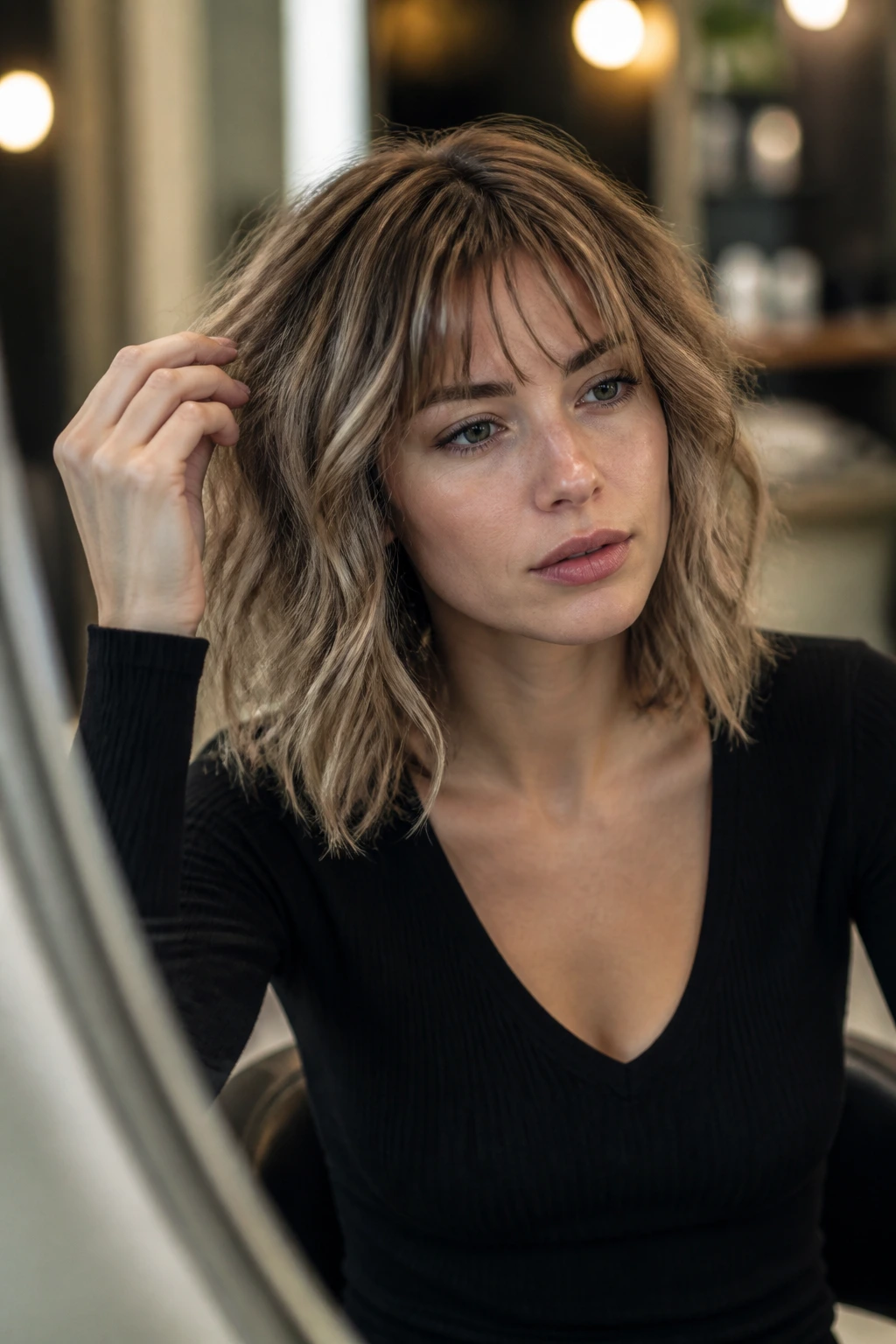
The micro-bob is short enough to make a statement on its own. Add a ruffled finish and it gains movement, which matters for cool skin tones because the style stays crisp instead of flat.
This cut is at its best when the ends are blunt but the surface is broken up with a little finger styling or a quick pass of texture spray. I’d pair it with platinum, silver beige, or inky brunette. The tiny length shows off the neck and jaw in a way that can look very clean on cool undertones. If your hair grows fast, this is the cut that will remind you to book trims on time.
23. Long Curls with Invisible Layers
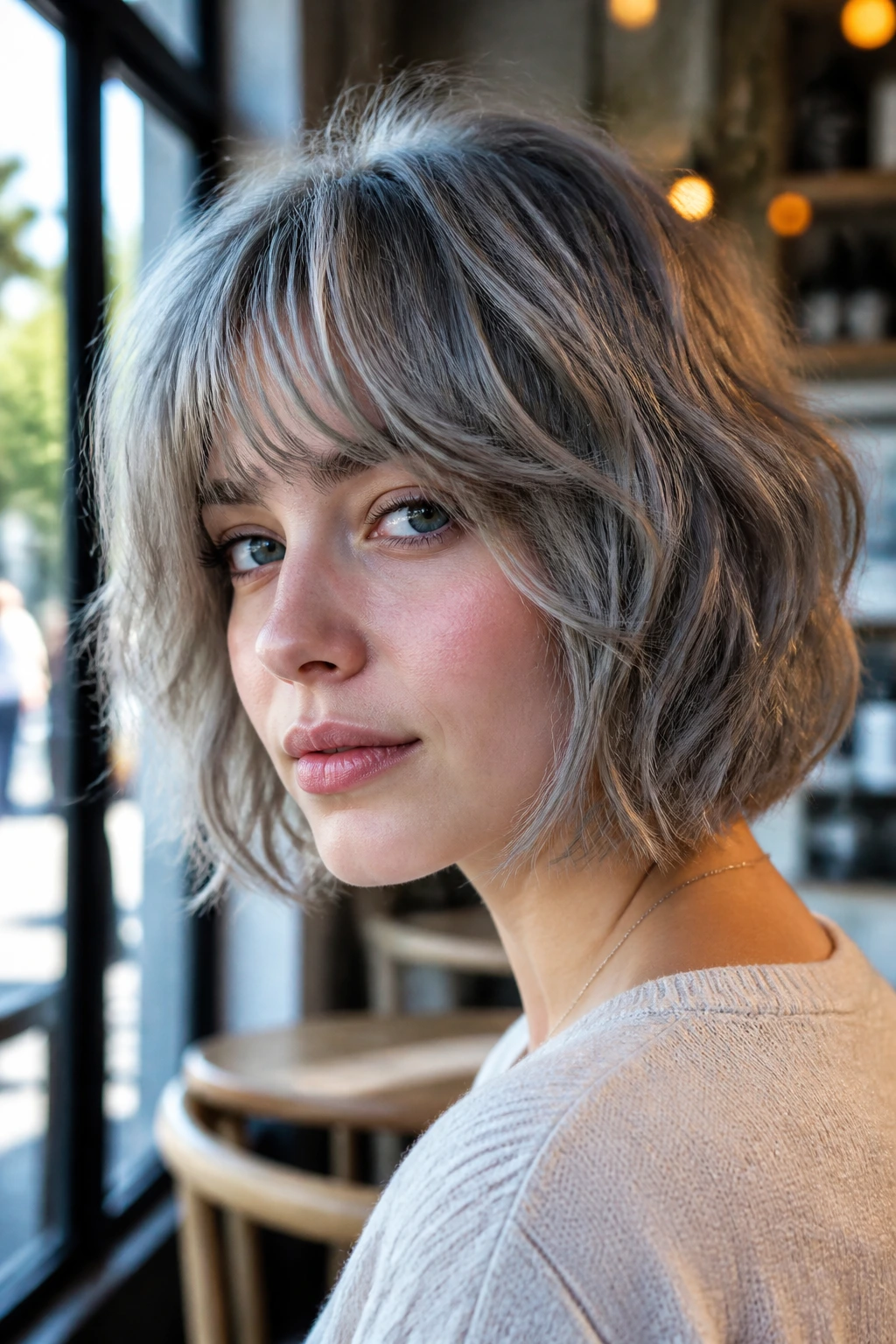
Long curls can get bottom-heavy fast. Invisible layers fix that by removing weight without making the shape look obviously chopped. On cool skin, the result is especially nice because the curls can move freely while the face stays framed in a soft, controlled way.
This is where gloss matters. Cool brown, black with a blue sheen, or a pale ash blonde all help the curl pattern look clear. If your hair is thick, ask for the layers to start lower, around the cheekbone or collarbone, so the top doesn’t frizz out. A curl cream with a light hold is usually enough. Heavy gels can make the curl line look stiff.
24. Textured Pigtail Braids for Adults
Pigtail braids get underestimated because people picture school pictures and nothing else. Give them texture, loosen the braid a little, and they turn into a polished, modern style with a playful edge.
Cool skin tones benefit from the openness around the face. The braids pull the eye outward, especially when the part is clean and the crown has a bit of lift. Ash blonde, smoky brunette, and even muted silver streaks look very good here because the braid pattern becomes more visible. Keep the roots smooth and the lengths a little rough. That contrast keeps it from looking costume-like.
25. Faux Blowout with Light Ends
A faux blowout gives you that bouncy, airy shape without requiring a full round-brush marathon. The roots stay lifted, the mid-lengths curve outward, and the ends stay soft enough to move. On cool skin, the shape adds life without adding warmth.
This style is especially useful if your hair falls flat around the crown. It makes the face look more open, and the light ends keep the whole look from getting too dense. I’d wear it with cool mocha, beige brunette, or pearl blonde. The shine should be obvious but not greasy. A light spray at the ends is enough. Too much product turns the blowout into a helmet.
26. Crimped Waves with Soft Shine
Crimped waves have a strong shape, which is exactly why they can look so good on cool skin tones. The pattern is graphic, almost architectural, so the undertone never gets lost under a blur of motion.
The key is softness in the finish. If the crimp is too stiff, it can look dated. If it’s brushed lightly and topped with a shine spray, it feels current and deliberate. Silver blonde, blue-black, and cool ash brown make the texture look especially clean. This is one of those styles where the color and shape need to agree, or the whole thing goes noisy.
27. Undone Updo with Sculpted Nape
Formal updos can be too tight for cool skin, especially when every strand is pulled back flat. An undone version with texture at the nape and a few loose pieces around the face keeps the look softer and more flattering.
This style is strong with cool brunette, black, or silver-tinged blonde because the texture catches the light in small sections. The nape should look sculpted, not messy. That distinction matters. You want a shape that feels planned, then a few pieces that escape on purpose. A matte pin or two is better than a dozen shiny bobby pins flashing everywhere.
28. Slicked Roots, Textured Ends
This is the most modern-looking contrast in the bunch. Smooth roots give you a strong line at the scalp, and textured ends keep the rest of the hair from feeling too rigid. On cool skin tones, that contrast is almost tailor-made.
It works especially well with onyx black, cool espresso, steel brown, or icy blonde ends if you’re feeling bold. The slick root area puts the face front and center, while the textured ends move around the shoulders and collarbone. I like this look when the scalp area is clean and the length gets all the personality. If the roots are greasy instead of slick, though, the whole effect falls apart. There’s a difference.
Why Texture Changes the Whole Look on Cool Skin
Texture does more than add volume. It changes how light lands on the face.
Cool skin tones tend to show contrast quickly. A flat, one-note style can make the face look pale or a little tired, especially if the hair is all one shade and the shape is too solid. Texture breaks that up. A bent end, a feathered fringe, a loose wave, or a piecey crown gives the eye small places to rest. That’s why these styles look so at home with ash brunettes, smoky blondes, icy silver tones, and blue-based dark shades.
The other piece is movement near the face. Cool skin often looks nicest when the hair doesn’t sit like a wall beside it. A few loose strands at the temples, a side part, or a layer that flips near the jaw can sharpen the whole expression. I’ve always thought the best cool-toned hairstyle is the one that keeps the face open without going bare. Not hidden. Not drowned. Open.
If you color your hair, the texture gets even more mileage from the shade. Cool glosses, pearl toners, blue-black dye, mushroom brown, and beige blondes with ash overlay all make the cut look cleaner. Warm copper or gold can still work, but the texture has to be very controlled or the whole thing starts to lean busy. That’s the tradeoff. I’d rather have a cut that stays calm and crisp than one that shouts from every angle.
Tools That Make These Styles Easier
- 1-inch curling iron or wand — Best for creating loose waves, bend-only ends, and ribbon curls without overbuilding the shape.
- Flat iron with smooth plates — Handy for S-waves, face bends, and root polish on blunt styles.
- Diffuser attachment — Useful for curly shags, twist-outs, and any style where you want volume without frizz.
- Tail comb — Makes clean parts and neat sectioning much easier, especially for side parts and slicked roots.
- Sectioning clips — Keep the top layer out of the way while you work through the lower sections.
- Texture spray — Gives piecey separation to bobs, shags, pixies, and lob styles.
- Light mousse or root lift spray — Helps fine hair hold shape without turning stiff.
- Heat protectant — Non-negotiable if you’re using hot tools; cool-toned styles look best when the finish stays smooth.
- Shine spray or light serum — Good for glossy curls, faux blowouts, and slicked-root styles.
- Soft boar-bristle brush — Smooths the surface without ruining too much texture.
- Microfiber towel or cotton T-shirt — Better than a rough bath towel for curls and wave sets.
- Silk or satin pillowcase — Keeps overnight texture from getting crushed.
Smart Product and Shade Choices for Cool Skin Tones
Pick products that help the hair look clean, not dusty. That matters more than people think. Texture on cool skin looks best when it has shape and shine, even if the finish is intentionally undone. A dull matte spray can be useful on a pixie or shag, but if you use it everywhere, the hair starts to look chalky.
If you color your hair, lean toward ash brown, smoky beige blonde, pearl blonde, blue-black, graphite brunette, or cool mushroom tones. Those shades keep the texture from fighting your skin. The moment the color goes too orange or too golden, the movement can start to look louder than it should. A cool gloss or toner every few weeks helps keep that from drifting.
For fine hair, lightweight mousse and dry texture spray usually work better than heavy creams. For thick hair, a softening cream through the mids can stop the cut from puffing out. Curly hair often needs a leave-in with slip, then a gel or foam that dries clean. Straight hair usually needs more grip at the roots and less product through the ends. Don’t pile everything on at once. That’s the fastest way to kill the shape.
How to Wear These Styles in Real Life
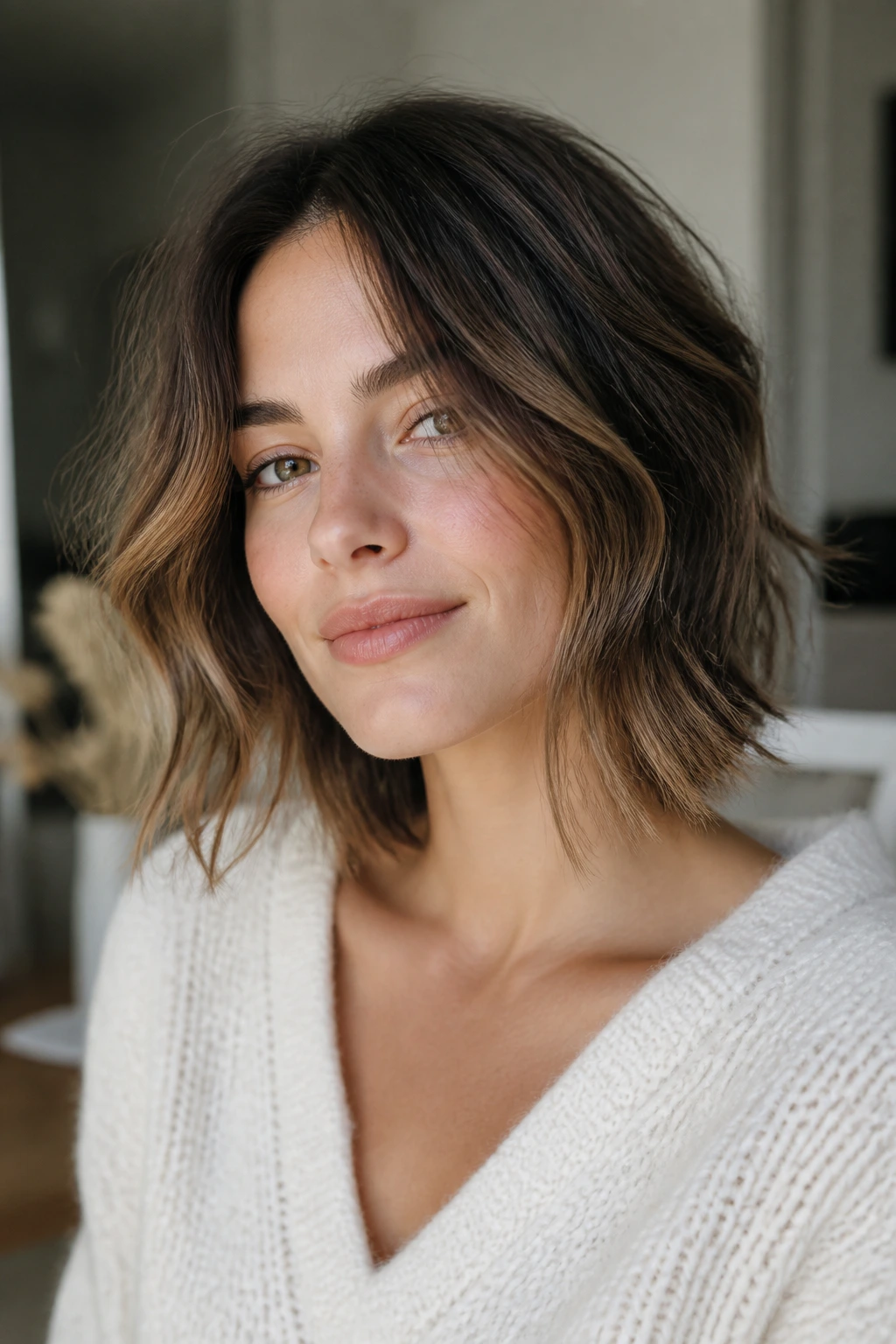
Presentation: Keep the front of the style doing the work. If the cut has face-framing pieces, let them sit where they actually help the jaw, cheekbones, or temples instead of pinning everything back for the sake of neatness.
Neckline Pairing: Shorter textured cuts look sharp with clean necklines, turtlenecks, crew necks, and structured jackets. Longer waves and loose shags play well with V-necks, scoop necks, and off-shoulder tops because they keep the silhouette open.
Accessories: Silver hoops, pearl pins, matte clips, and black headbands usually sit comfortably beside cool undertones. If the style is already busy, skip the extra sparkle and let the texture stay the focus.
Event Fit: Messier cuts like shags, wolf cuts, and textured ponytails can handle a casual day without extra effort. More sculpted looks—micro-bobs, faux blowouts, S-waves, slicked-root styles—read better when you want the hair to look planned. Different tool, different mood. That’s the real story here.
Extra Ways to Make the Texture Read Better
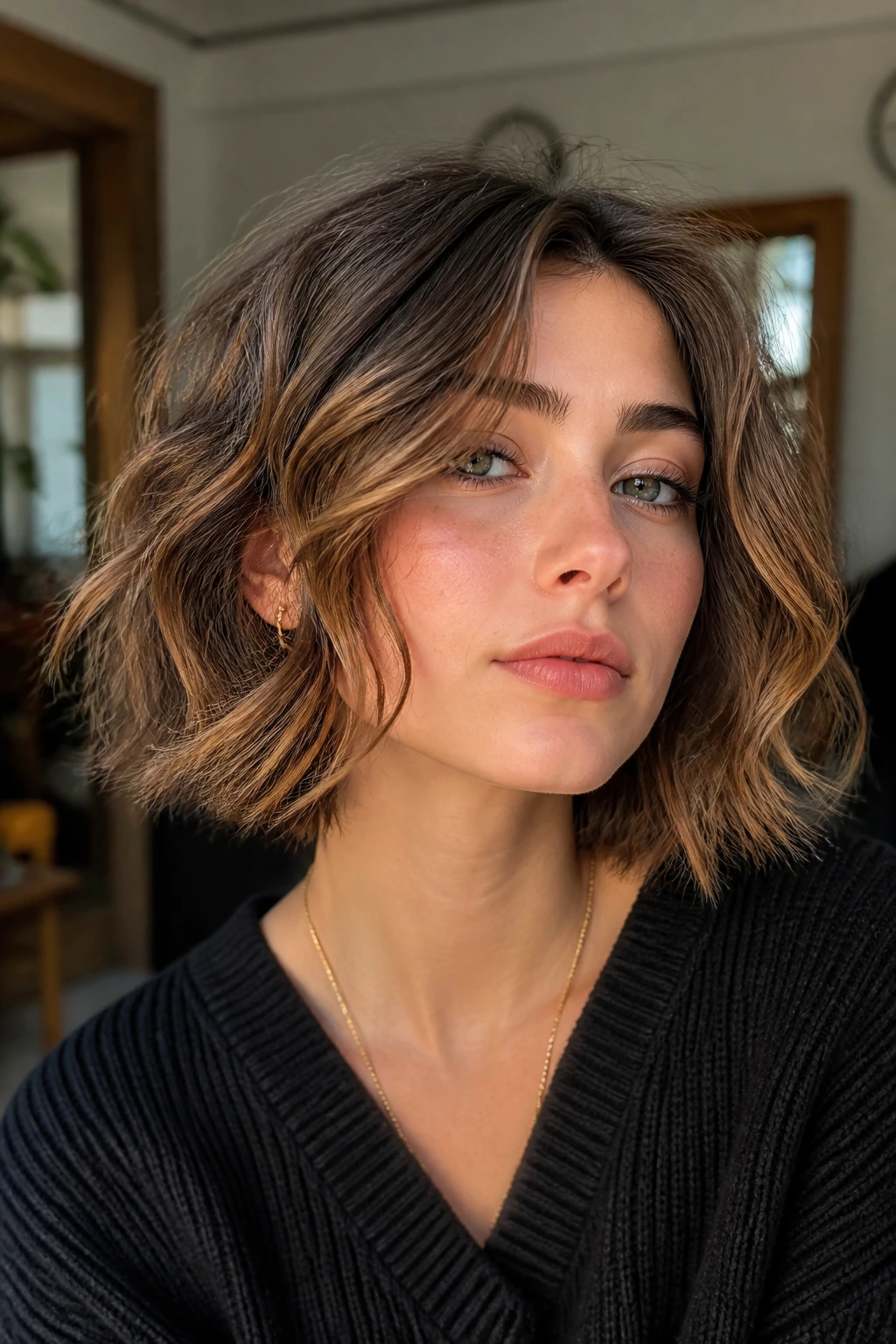
Color Contrast: If your natural shade is warm, ask for a cooler gloss around the face and a slightly deeper lowlight underneath. That soft contrast helps the cut look more deliberate.
Finish: A tiny amount of shine spray on the mids and ends can make waves, braids, and curls look cleaner without flattening them. Skip the roots if the hair tends to get oily fast.
Customization: Side parts add drama. Center parts make curtain bangs and long layers look softer. A tucked ear changes the whole line of a bob. Small things, big difference.
Make-It-Yours: Fine hair usually needs root lift and less cream. Thick hair usually needs more smoothing in the mid-lengths. Curly hair needs hydration first, then shape. Straight hair needs grip. There isn’t a single texture trick that does everything, and that’s fine.
Making the Style Last Past Day One
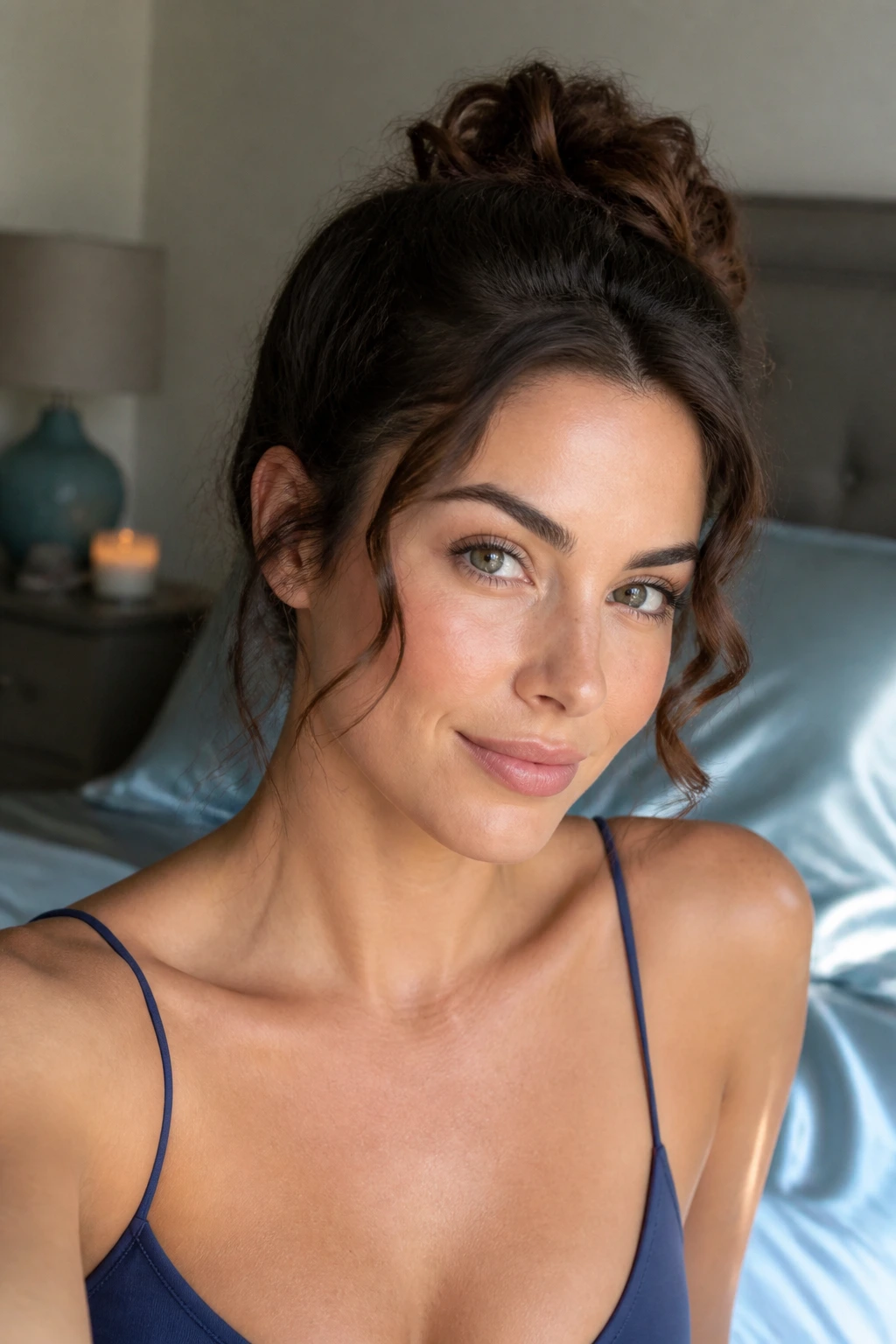
Textured hair usually looks best the day it’s styled, but a few tricks keep it from collapsing overnight. For loose waves, let the hair cool completely before you touch it. That cooling time is what locks the bend in place. Once it’s cool, sleep on a silk pillowcase or loosely wrap the hair in a silk scarf.
Braids, buns, and updos can usually last 2 to 3 days if you keep the roots from getting crushed. A few hidden pins, a light mist of hairspray, and a small touch of dry shampoo at the roots in the morning are often enough. For bobs and lobs, pinning the front sections away from the face before bed helps preserve the shape around the cheekbones.
If you’re refreshing curls or waves, don’t restart from zero. Mist the hair lightly with water, add a pea-sized amount of leave-in to the ends if needed, then re-bend only the pieces that flattened. A full re-curl on every strand wastes time and burns the hair out faster than people expect. For slicked-root styles, a damp toothbrush or edge brush and a drop of styling gel usually does the trick. Clean the brush afterward. Gel buildup gets gross quickly.
When Cool Skin and Texture Need a Little Adjustment
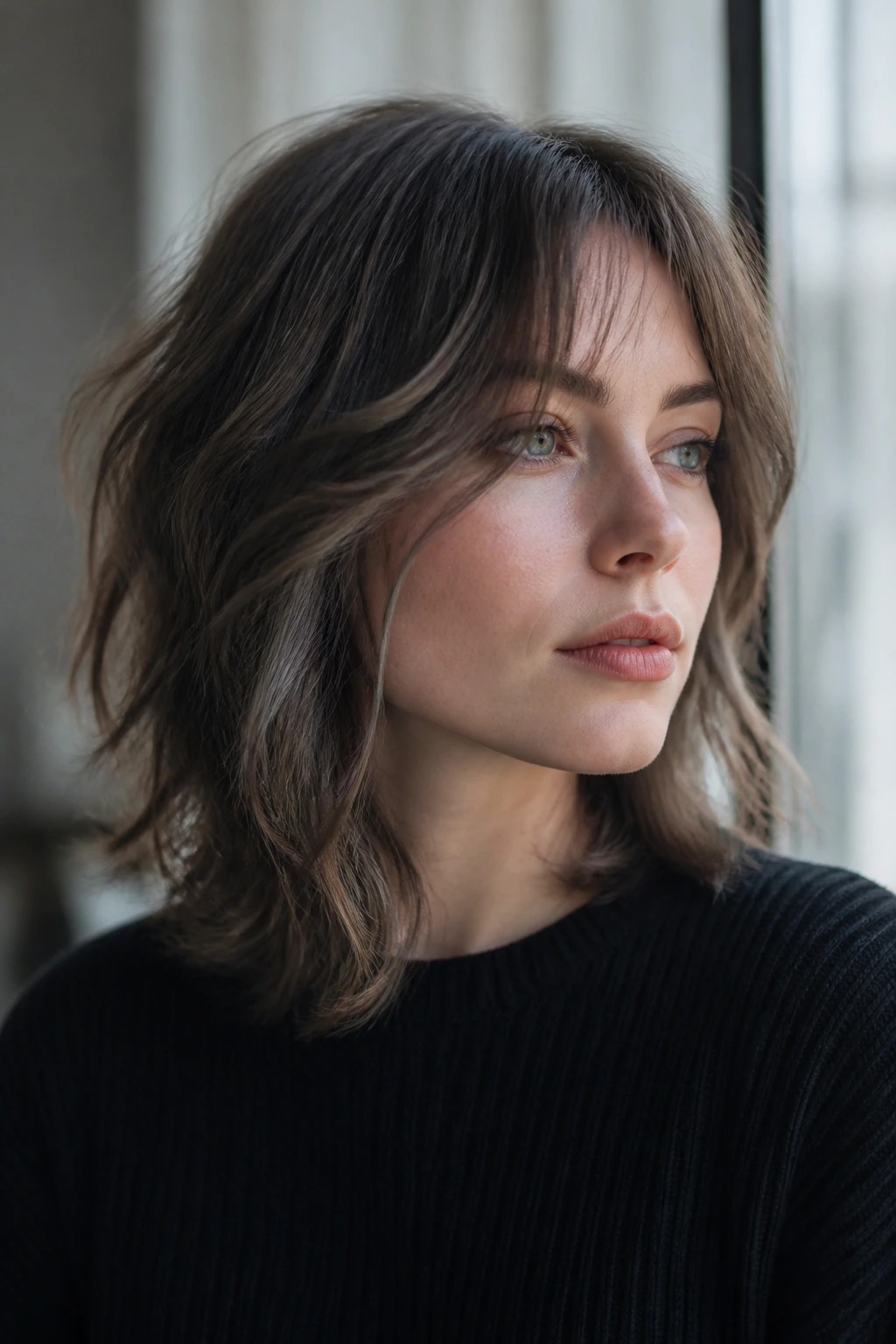
Fine Hair That Falls Flat: Go for the bob, faux blowout, pixie, or collarbone lob. Keep layers light and root-focused so the cut doesn’t disappear by noon.
Thick Hair That Puffs Out: Choose styles with weight removal in the right places—long layers, shaggy mids, or textured lobs. Too many short layers can make thick hair look triangular.
Curly and Coily Hair: Curly shag, twist-out lob, and long curls with invisible layers are the strongest picks. They keep the pattern alive without forcing it into a shape that fights the curl.
Very Short Hair: The pixie, micro-bob, slicked roots with textured ends, and modern mullet all work well. Short hair can carry a lot of personality when the edges are clean.
Hair That Runs Warm in Color: Keep the texture, but cool the tone with glosses, ash toners, or deeper roots. A warm shade with a very broken-up cut can look busy if the face already has cool coloring.
Low-Maintenance Hair: Textured ponytails, low buns, messy top knots, and pigtail braids are the easiest to live with. They don’t need daily heat styling to look on purpose.
Mistakes That Make These Styles Look Off
Overloading the hair with product. The hair goes stringy at the roots and sticky at the ends. Start with half as much as you think you need, then add only where the style actually collapses.
Curling every section the same direction. The result can look too round and a little dated. Alternate directions or leave the front pieces looser so the movement stays natural.
Ignoring the color. A cut can be perfect and still look off if the shade is too golden against cool skin. If the hair keeps reading brassy, the texture will not save it.
Cutting too many short layers into fine hair. It sounds like a volume fix, but it usually makes the hair float away from the head. The better move is subtle layering with stronger shaping at the front.
Brushing out curls too early. If the hair hasn’t cooled, the curl collapses and frizzes. Wait until the heat is gone, then separate with your fingers or a wide-tooth comb.
Making the finish too perfect. Cool skin often looks best with texture that has a little irregularity. A shape that’s too glossy, too round, or too frozen can fight the whole point.
Questions People Ask Before Trying These Looks
What hair color shades flatter cool skin tones with texture?
Ash brown, mushroom brown, blue-black, platinum blonde, pearl blonde, and smoky beige shades all keep texture looking clean. If your hair runs warm, a gloss or toner can pull it back into cooler territory without changing the cut.
Can textured hairstyles work on fine hair?
Yes, but the shape needs restraint. Fine hair usually looks best in a French bob, pixie, collarbone lob, or faux blowout, where the texture is light and the root lift does most of the work.
Do cool skin tones have to avoid warm hair colors?
No, but warmth needs balance. A little copper or gold can work if the cut is soft and the makeup is cool, but strong warmth near the face can make the skin look flatter than it is.
What’s the easiest textured style to maintain?
A messy top knot, low textured bun, or textured ponytail is the easiest route. These styles can be reset fast with dry shampoo, a brush, and a little hand shaping.
Can a blunt bob still count as textured?
Absolutely. The perimeter can stay blunt while the surface gets movement from waves, bend, or piecey styling. That contrast is what makes it interesting on cool skin.
How do I keep waves from turning frizzy?
Let the curls cool fully, use a heat protectant, and keep brushing to a minimum. A light serum on the ends helps, but too much product will make the texture limp.
Which part is best for cool skin tones: center or side?
Both work. A center part feels clean and modern, while a side part adds shape and can sharpen the face. Pick the one that helps the hair frame your features instead of hiding them.
Are these styles good for short hair too?
Very much so. Pixies, micro-bobs, slicked-root crops, and feathered mullets all bring texture into short cuts without needing much length to work with.
The Styles That Keep Cool Undertones Looking Clear
The nicest thing about textured hairstyles for cool skin tones is that they don’t need to be fussy to look good. A little movement near the face, a shade that stays in the ash or smoky family, and a shape that avoids extra bulk—that’s the whole trick. Simple, but not boring.
If I had to pick the thread running through all 28 looks here, it would be this: texture should help the face come forward, not cover it up. The styles that do that best are the ones with clean edges, broken ends, and enough air between the strands to let the light in.
Pick the version that matches your hair type and your routine, then adjust the color if you need to. That’s where the style starts to feel like yours, and the mirror stops feeling like a negotiation.