



Warm skin tones do not need icy dye to look polished. In fact, cool ash and smoked-out beige often do the opposite: they flatten the face, drain the cheeks, and make the hair look like it’s trying to cancel out the skin instead of sitting beside it.
That mismatch tends to show up more in the 40s. Hair often gets drier, a little more porous, and a little less forgiving about one-note color. A warm shade with dimension—honey, caramel, copper, chestnut, amber—usually looks better because it gives the eye something to follow instead of leaving a hard, flat block of color.
These hair color ideas for warm skin tones lean into that idea. Some are soft enough for someone who wants low-maintenance grow-out. Some are bolder, especially if red is already part of your wardrobe or makeup. The common thread is simple: the right warmth should look like it belongs on your face, not like it was pasted on top of it.
Why This Collection Works So Well
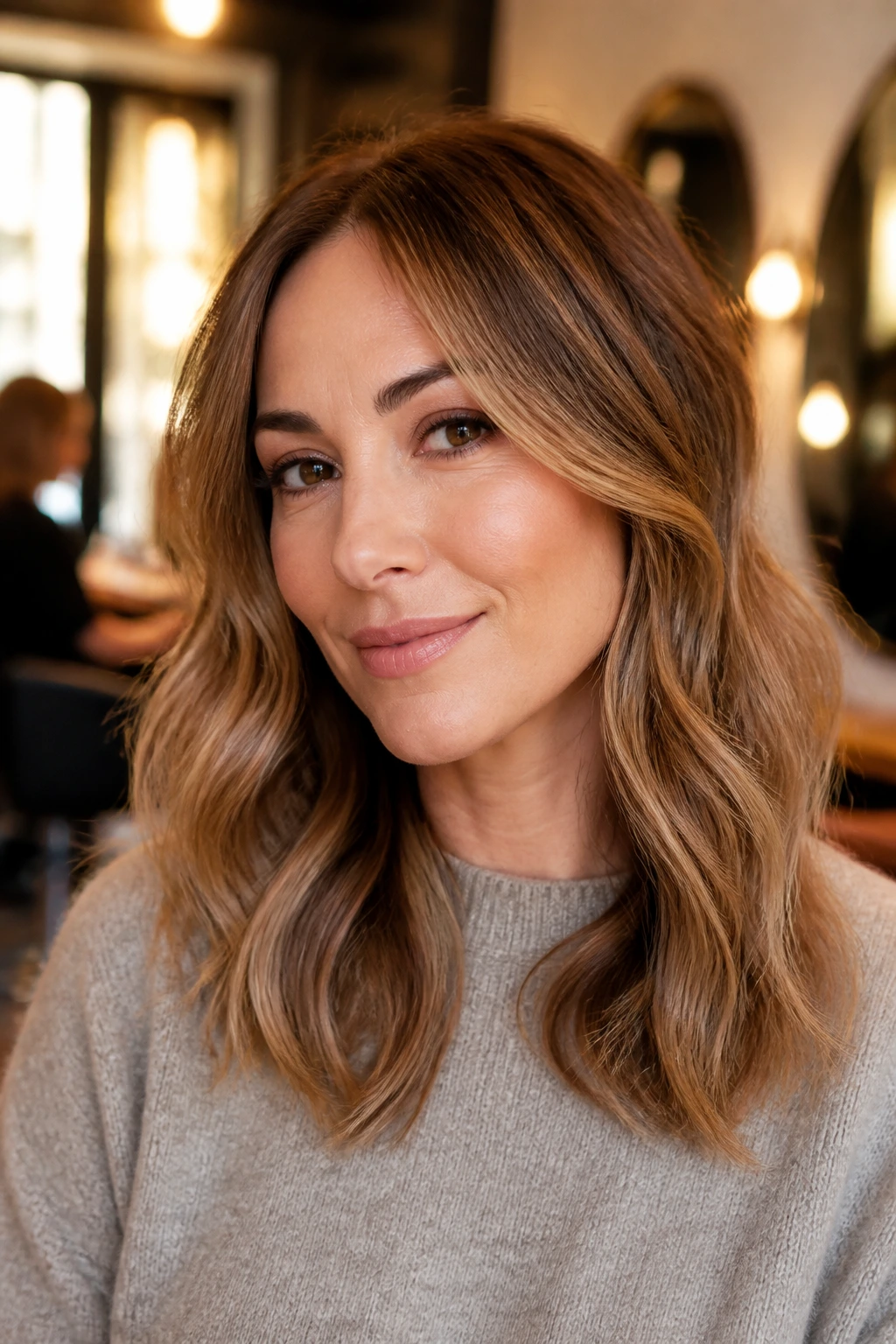
- Warmth that echoes the skin: Honey, caramel, copper, and chestnut repeat the same golden or peachy notes already in warm undertones, so the whole face reads more even.
- Dimension instead of helmet hair: Several of these looks use balayage, gloss, or lowlights, which keeps the color from sitting like one solid sheet.
- Gray blending built in: A few shades are chosen specifically because they blur silver strands instead of fighting them with heavy, opaque dye.
- Better shine on mature texture: Warm glosses and slightly deeper roots tend to make dry or porous hair look smoother than flat, pale blonde ever will.
- Easy to scale up or down: Most of these ideas can be worn as a whisper of warmth or pushed into a richer, more dramatic finish.
- Less harsh grow-out: Root shadows, melts, and ribbons buy you extra weeks before everything looks overdue.
1. Honey Blonde
Honey blonde is the easiest bright blonde to wear on warm skin because it keeps the face soft. Ask for a level 8 or 9 base with beige-gold ribbons, not a lemony toner that turns the whole thing stiff. A small root shadow helps a lot, especially if you have silver at the temples.
I like this shade on shoulder-length hair because the movement keeps it from looking like a solid block. If your hair feels dry after coloring, a clear gloss every 6 weeks matters more than chasing one shade lighter.
2. Caramel Balayage
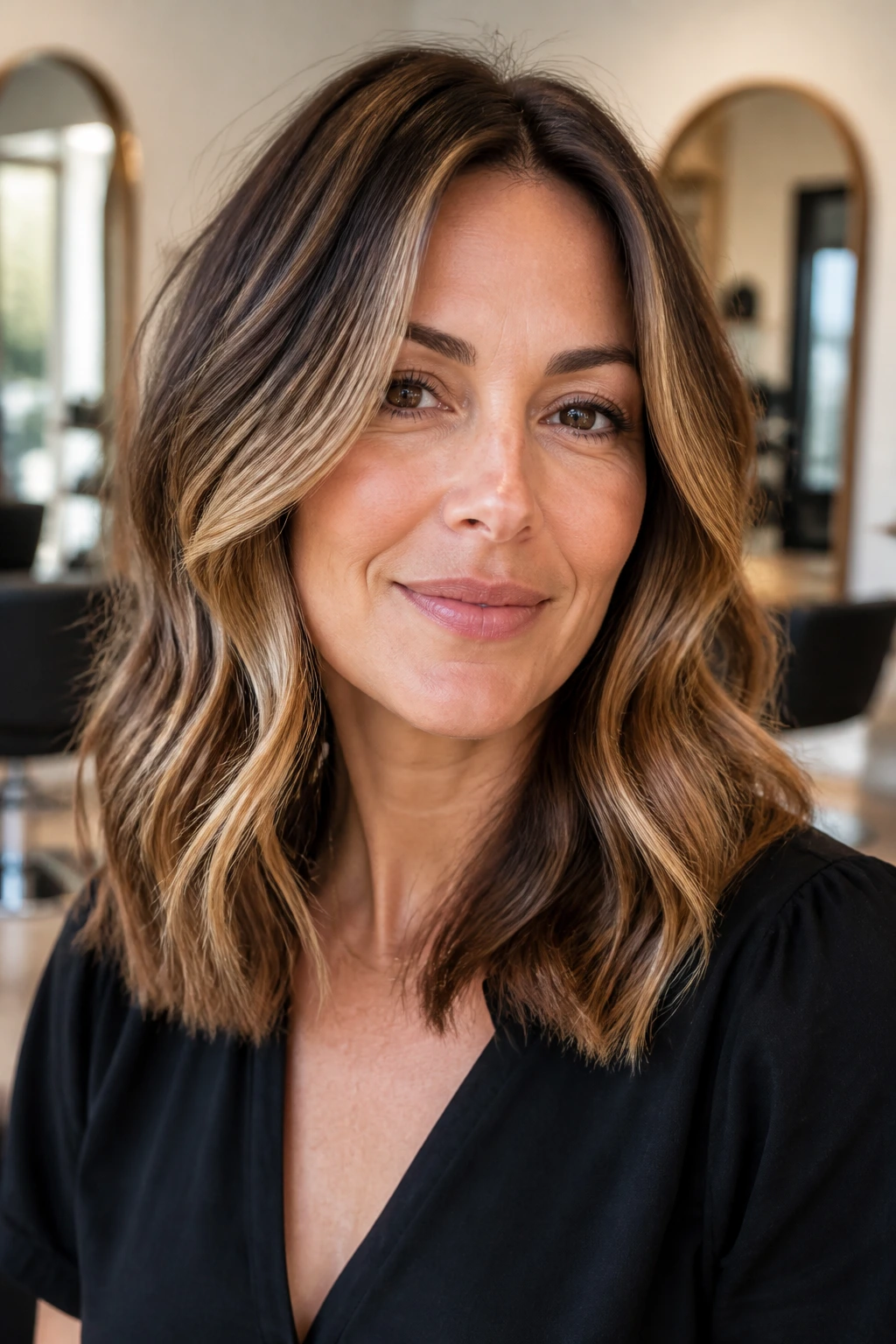
Caramel balayage is the low-drama answer when you want warmth without a big maintenance bill. The painted pieces sit a little off the scalp, so grow-out stays softer and the color looks like it lives in the hair instead of sitting on top of it.
This one is especially good if your base is medium brown or dark blonde. On very dark hair, caramel needs to be lifted with care, or it can slide into orange. Keep the ribbons narrow near the face and a bit wider through the mids if you want that gentle, sun-warmed look.
3. Golden Chestnut
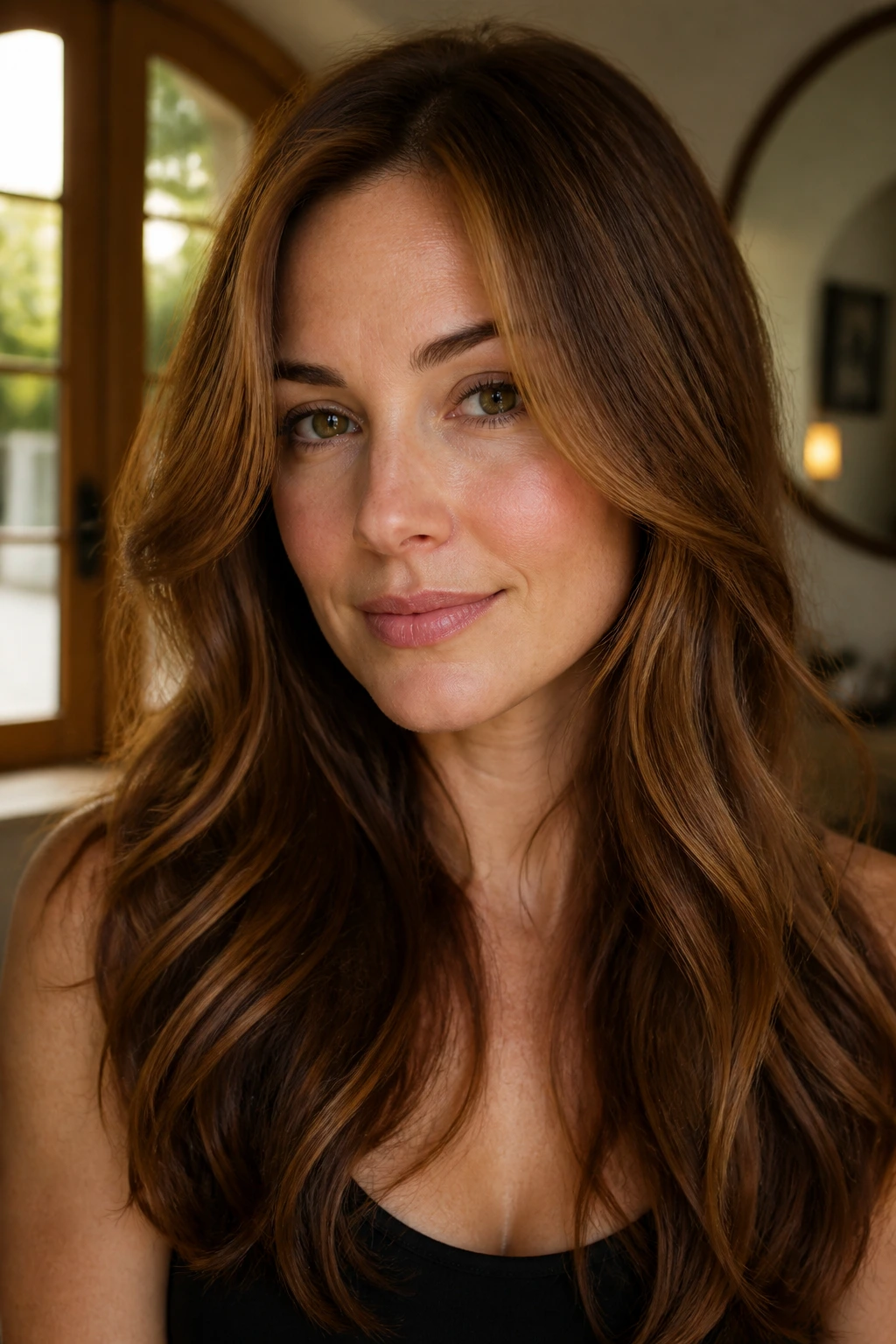
Golden chestnut is the brunette shade that never looks dull in daylight. The chestnut gives the depth, and the gold keeps the color from sinking into brown mud. On warm skin, that balance matters more than people think.
What to Ask For
- What to use: A level 5 or 6 chestnut base with fine golden lowlights.
- Preparation: Bring one photo of the depth you want and one photo of the warmth you want.
- Substitutions: If you have more gray, ask for chestnut permanent roots with a demi-permanent gloss through the ends.
- Tips: The gold should look soft, not coppery; too much red can push the shade louder than you planned.
4. Copper Auburn
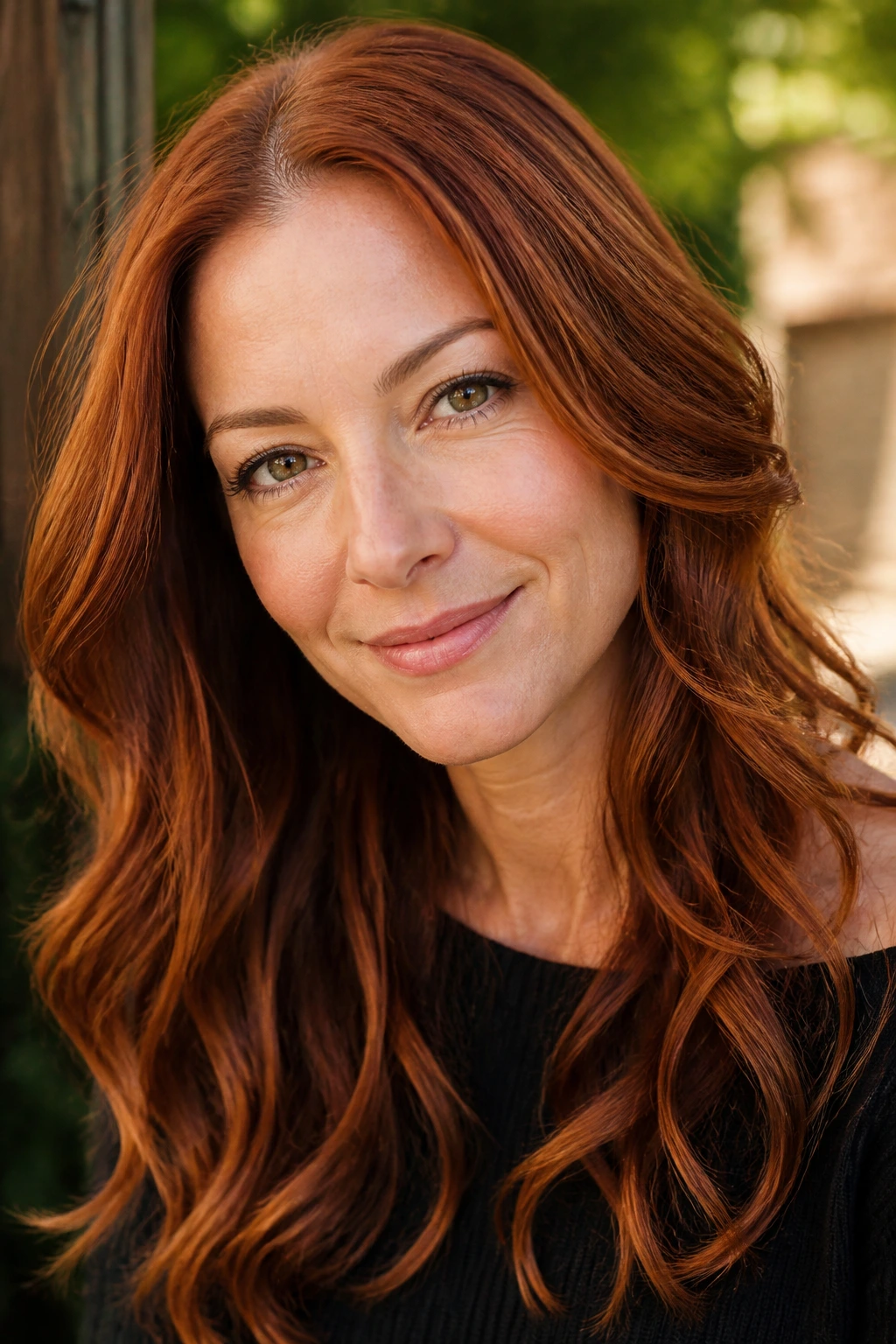
Copper auburn is the bold one, and warm skin usually wears it better than cool skin does. The red-orange edge mirrors the complexion instead of fighting it, which is why this shade can look lively rather than costume-y.
Keep some brown in the formula if you want it to last. Pure copper can be gorgeous for about five minutes and then ask for extra gloss appointments every few weeks. Auburn gives you the same heat, but with a deeper base that grows out more cleanly.
5. Cinnamon Brunette
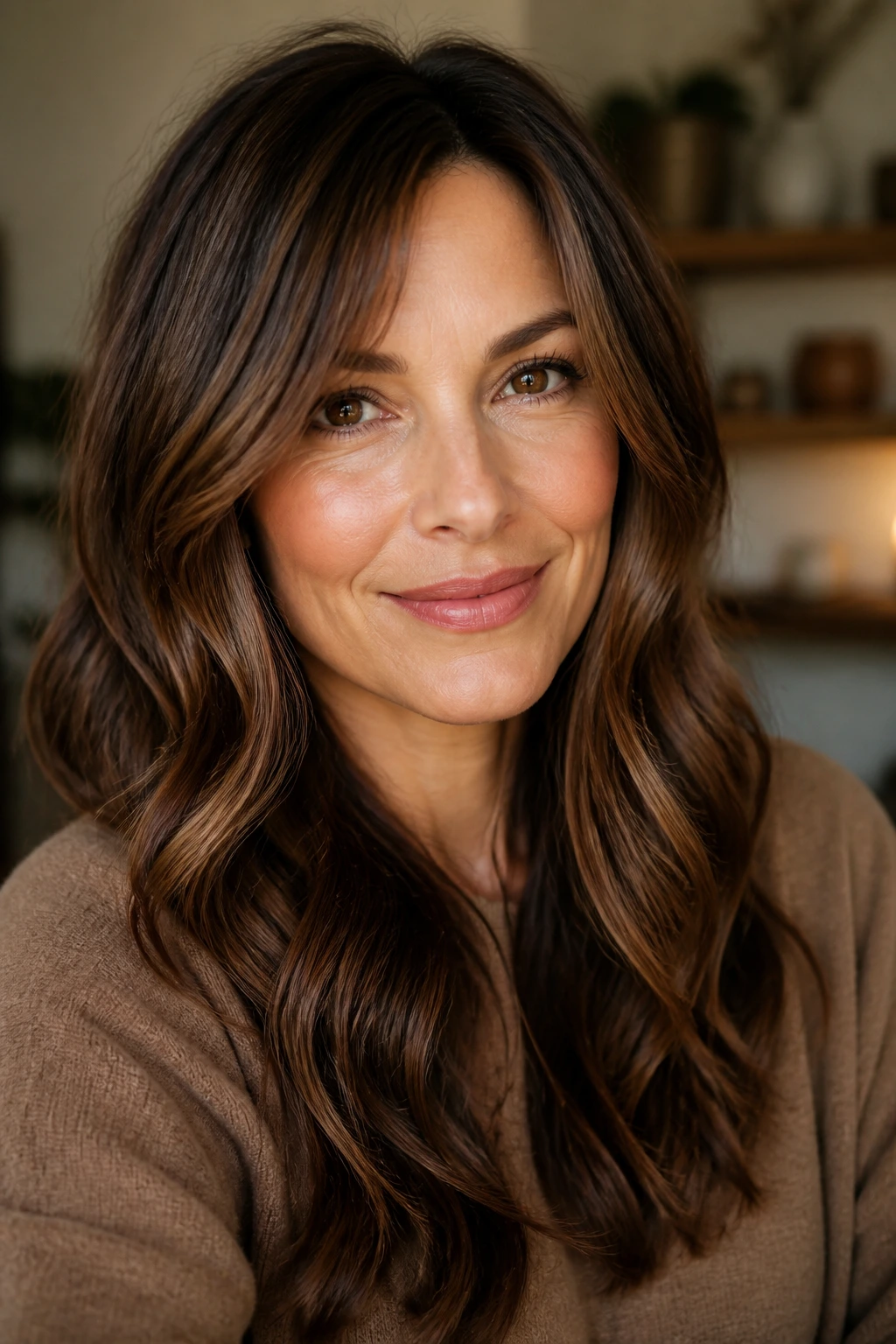
Cinnamon brunette sits between brown and red, which is exactly why it works. It adds spice without turning the whole head red, and it tends to make warm skin look clearer around the jaw and cheekbones.
If you’re nervous about red, this is a good place to start. Ask for a brunette base with cinnamon lowlights through the mids, not bright streaks. On layered hair, the movement keeps the color soft; on a blunt bob, keep the ends a touch lighter so the whole thing doesn’t feel heavy.
6. Buttercream Beige Blonde
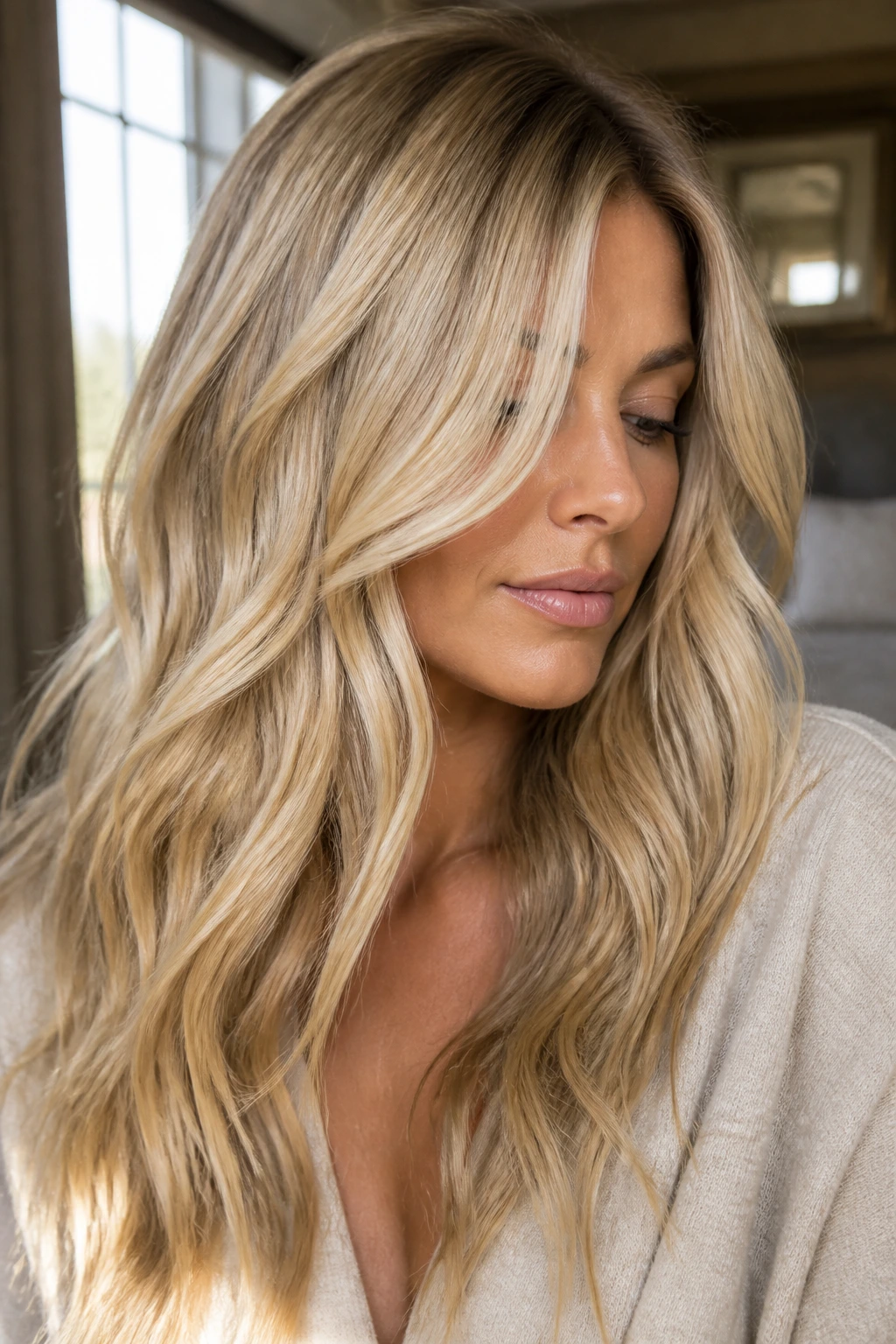
Want blonde without the icy edge? Buttercream beige blonde is the answer I reach for first. It has enough creaminess to flatter warm skin, but it stays pale enough to feel bright.
Beige matters here. If the toner leans too ash, the shade gets flat fast; if it leans too yellow, it can look brassy. A pale beige-gold gloss keeps the tone in the middle, which is where this color looks expensive instead of loud.
7. Toasted Almond Brown
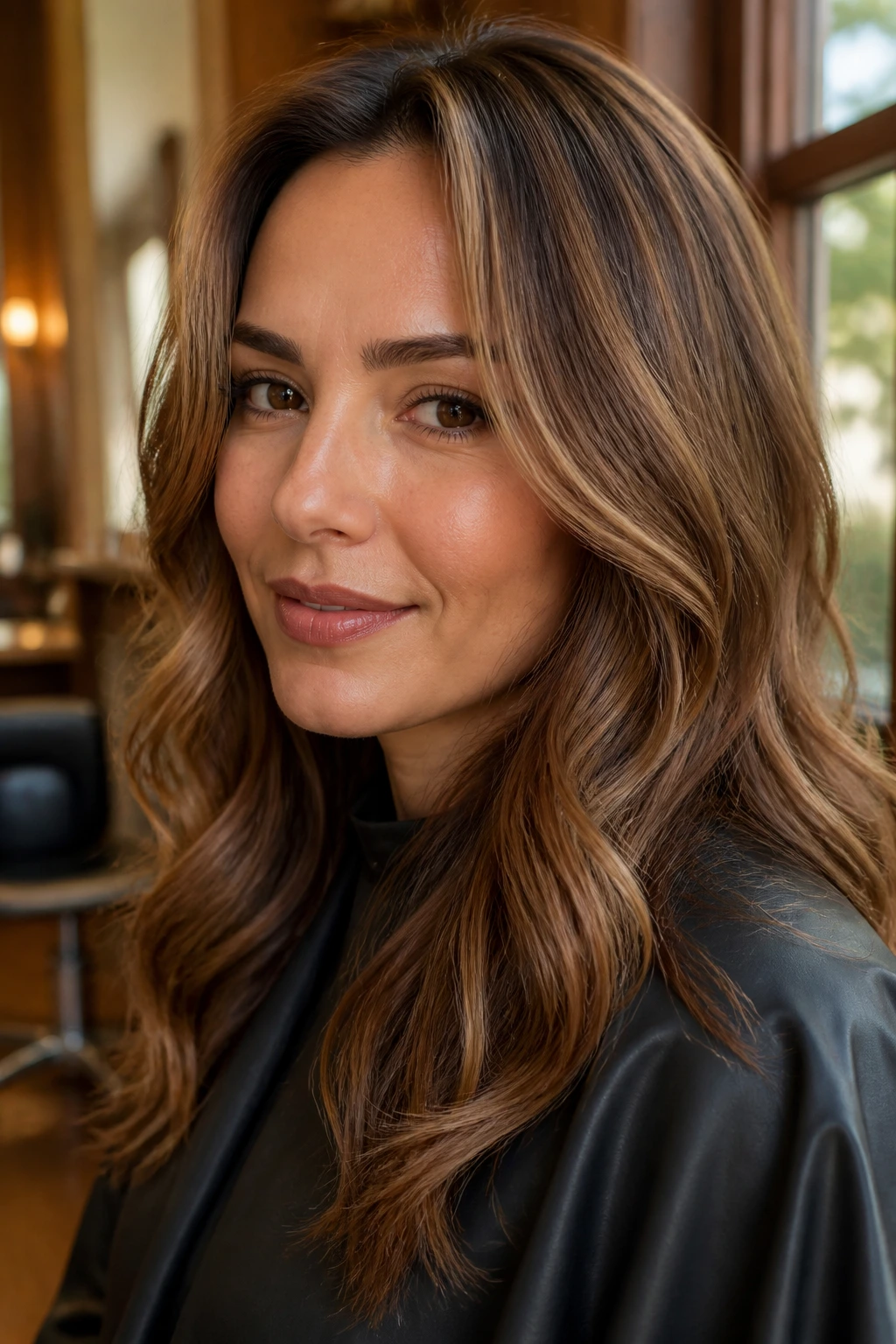
Toasted almond brown is the quiet shade that gets better the longer you look at it. It’s brown, yes, but the almond finish gives it a soft glow that keeps it from reading flat next to warm skin.
Quick Notes
- Best base: Level 5 to 7 natural brown.
- Placement: Fine highlights around the crown and temple area.
- Maintenance: Gloss every 6 to 8 weeks.
- Why it works: The almond warmth lightens the look of the hair without making it blonde.
This is a good pick if you want something polished for work and low-effort on weekends. It looks especially nice on hair with a little wave, because the lighter pieces catch the bends instead of sitting in one line.
8. Amber Gloss
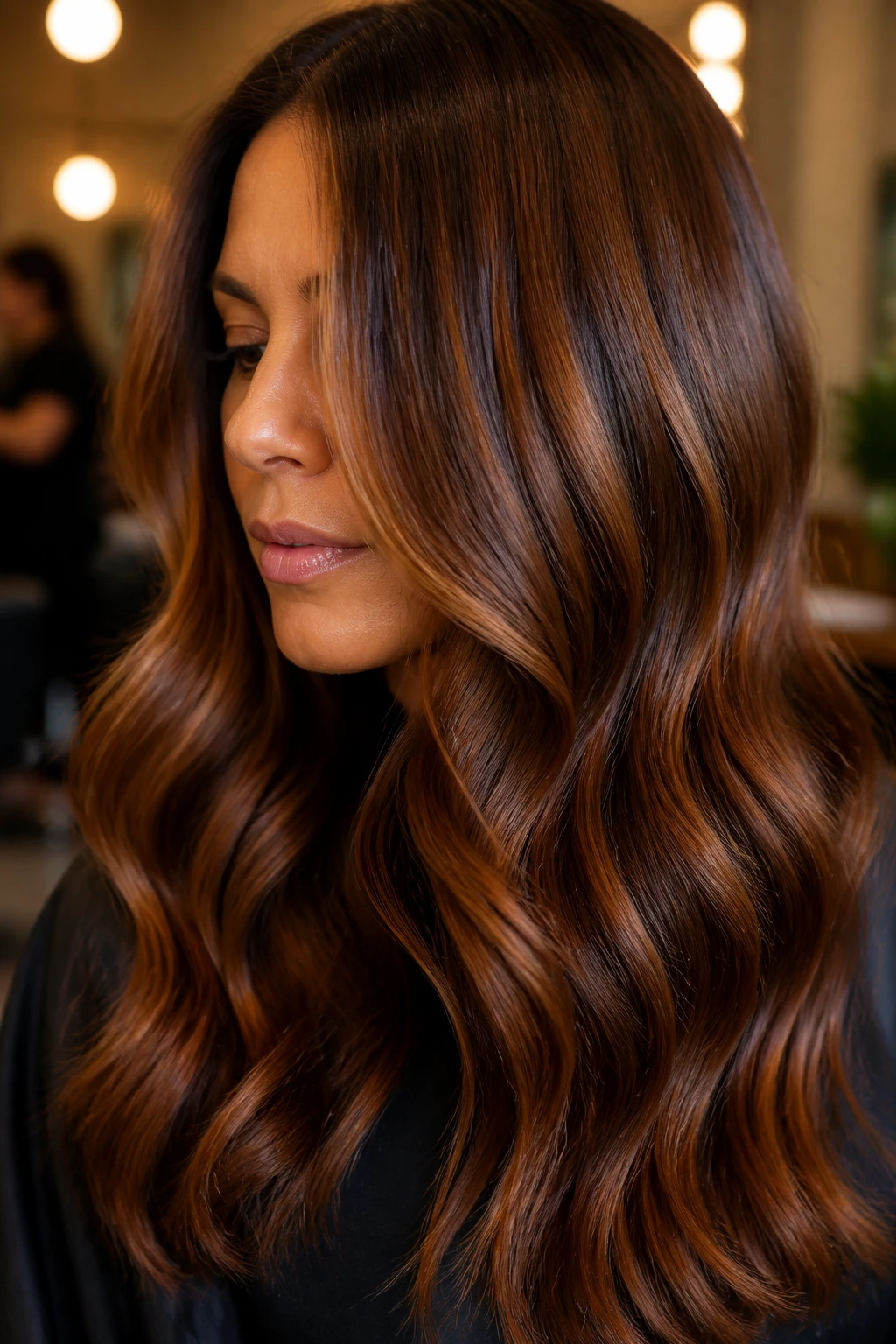
Amber gloss is less of a full color change and more of a shine treatment with attitude. A translucent amber glaze can turn flat brown hair into something that looks richer in one appointment.
I like this one for anyone who has some gray and wants the strands to blend instead of disappear under opaque dye. A gloss catches light differently on silver, so the result can look softer and more natural than heavy permanent color. It’s also one of the easiest ways to refresh a tired brunette without lightening anything.
9. Maple Brown
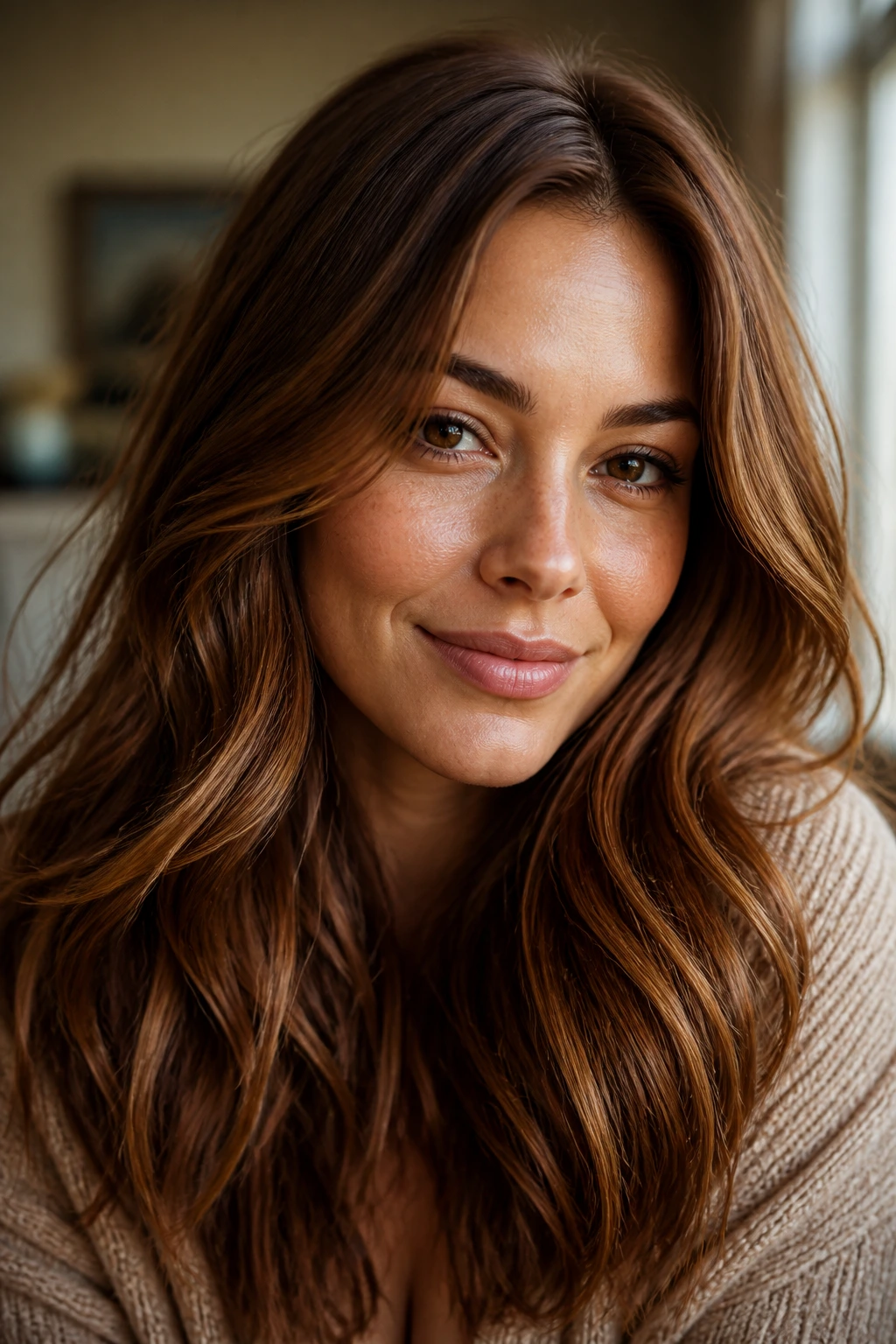
Maple brown gives you sweetness without leaning sugary. The shade sits in that caramel-to-chestnut zone where warm skin gets a little lift but the hair still looks grounded.
This works well if you want one solid color with a little life in it. Ask your colorist for a medium brown base with amber and maple undertones, then keep the ends slightly translucent with a gloss. If your hair is fine, the warmth can make it look thicker than a cooler brown ever does.
10. Strawberry Blonde
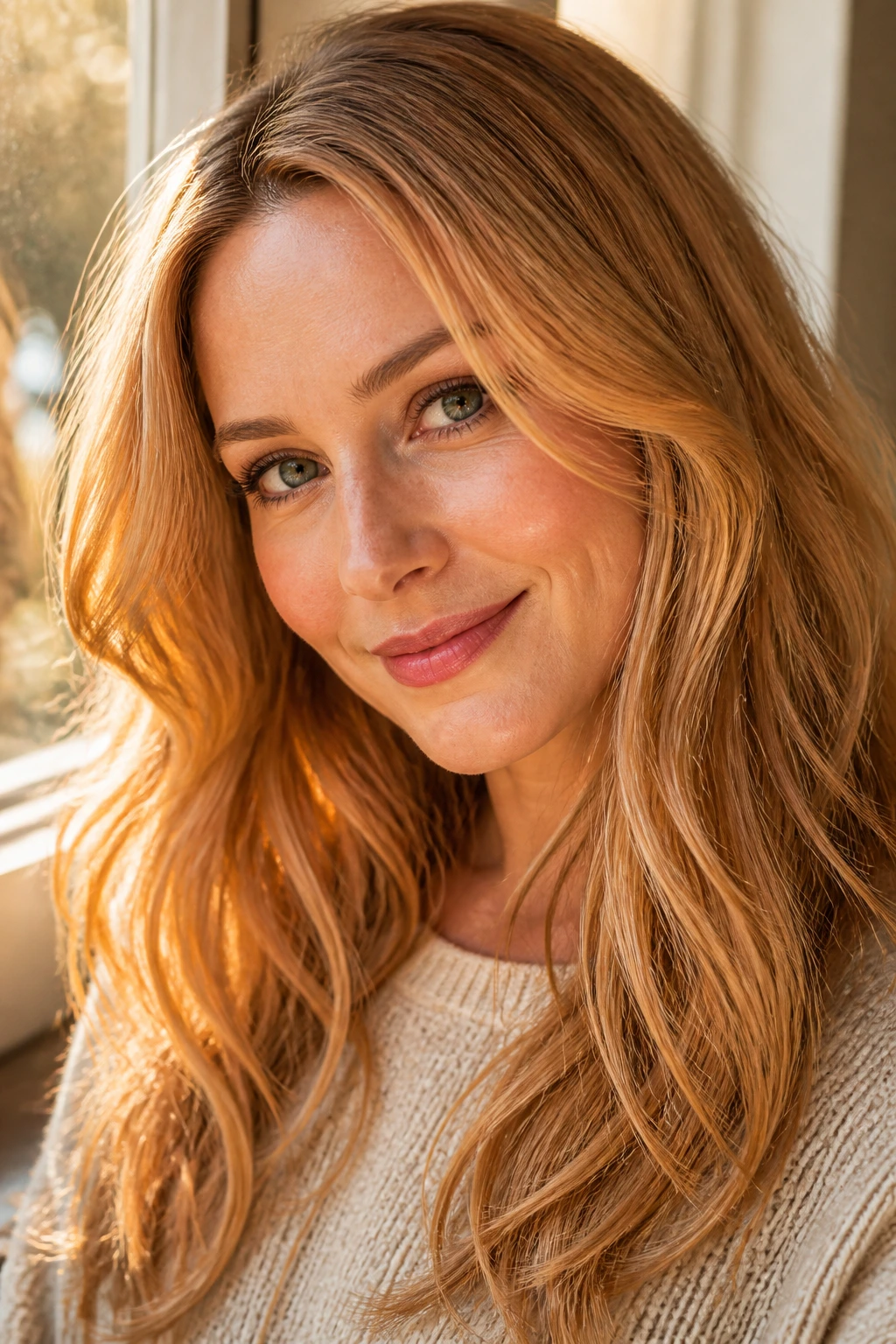
Strawberry blonde works on warm skin when it stays gold-forward instead of pink-heavy. That’s the key. Too much rose and the shade starts fighting the complexion; too much gold and it slides into basic blonde.
The prettiest version is soft, almost peach-tinted, with a sandy root and a glowing mid-length. If your natural base is already light, this can be a lovely way to add color without a dramatic change. If your hair is darker, be honest about upkeep, because this shade likes to fade fast if you don’t keep a toner or gloss in rotation.
11. Bronde With Honey Ribbons
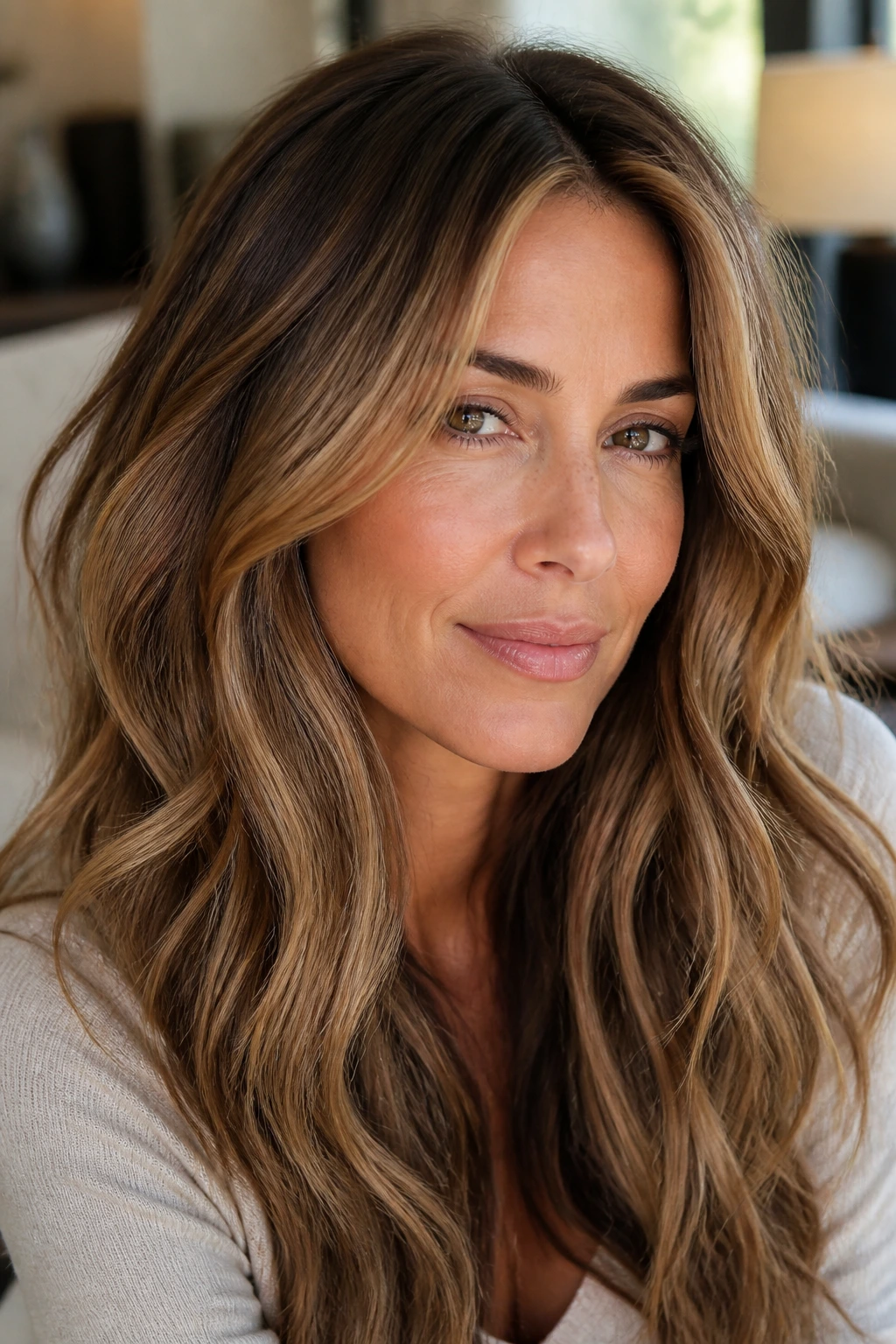
Bronde is still one of the smartest choices for warm skin because it keeps both the blonde and brunette sides alive. The honey ribbons bring brightness; the deeper base gives the face a frame.
This one is especially good if you want dimension without a hard line at the root. Ask for a root that’s about one to two levels deeper than the lightest pieces, then keep the honey ribbons concentrated around the face and crown. That mix tends to look more expensive than all-over blonde, and it grows out without shouting.
12. Cinnamon Latte Brown
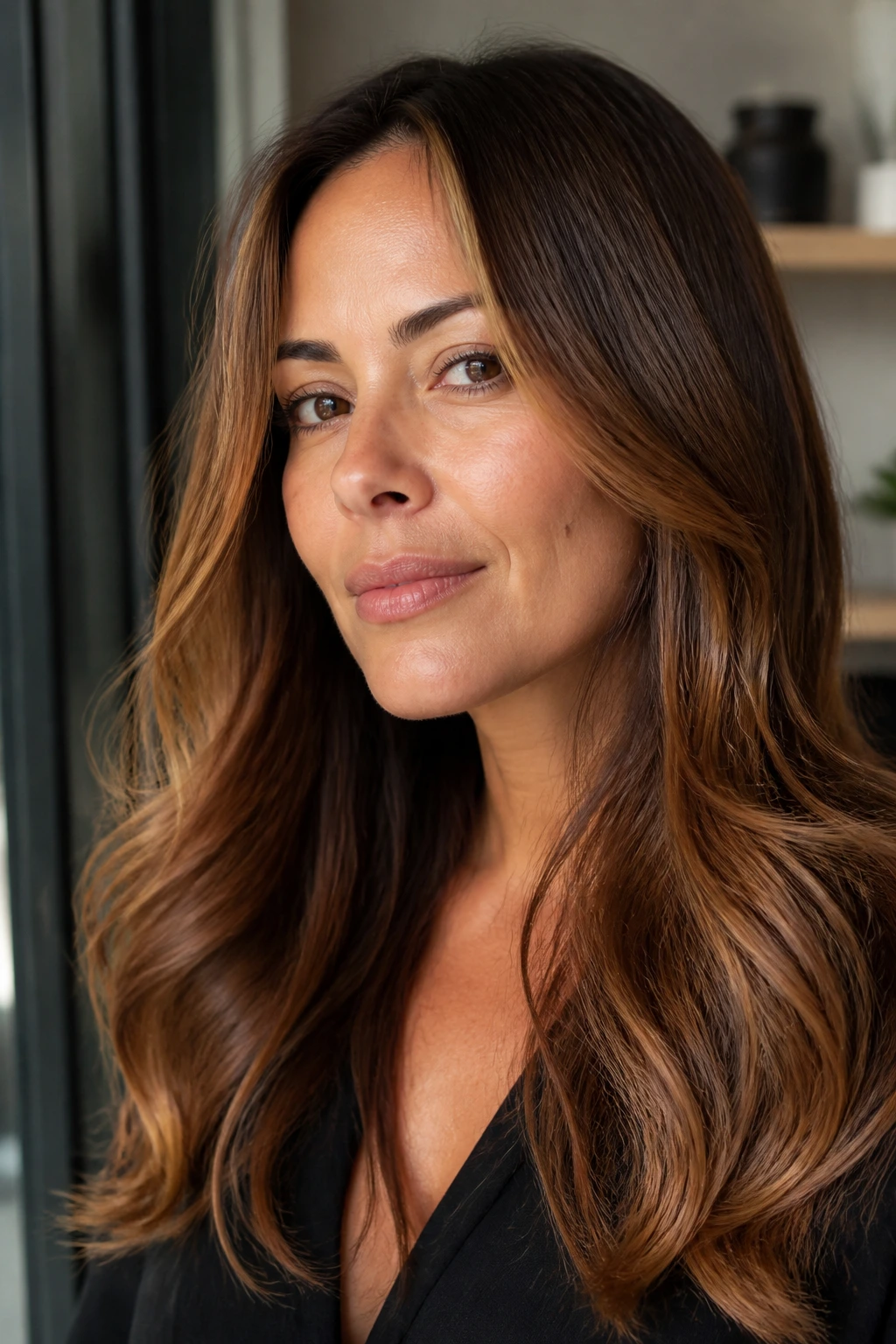
Cinnamon latte brown is what happens when mocha gets a little warmer and a little more interesting. The base stays brunette, but the cinnamon sheen keeps the color from going flat or muddy on warm skin.
Best Fit
- What to use: A medium brown base with cinnamon gloss through the mids and ends.
- Preparation: Ask for the warmth to be strongest near the face, then softer through the back.
- Substitutions: If you prefer less red, swap cinnamon for toasted caramel.
- Tips: This shade looks best when the finish is shiny, not matte. A dull brown kills the whole point.
I’d pick this one for someone who wants brown hair with a little personality. It’s subtle in the office and prettier in daylight than most flat brunettes ever manage.
13. Chocolate Caramel
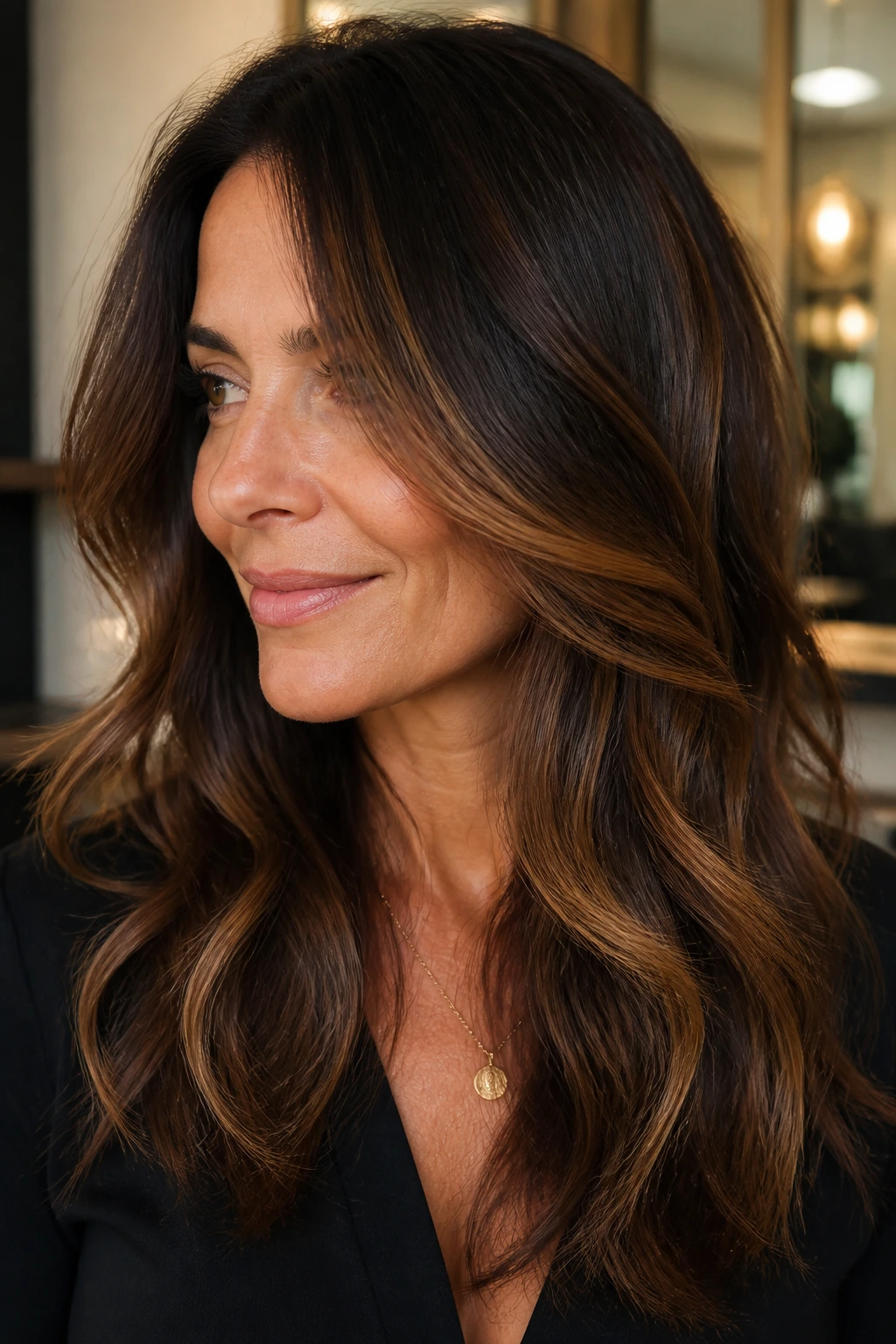
Chocolate caramel is a dependable brunette with enough softness to keep warm skin from looking harsh. The chocolate base gives depth, and the caramel pieces stop the whole thing from sinking into one dark mass.
This is one of my favorite options for thicker hair, because dimension helps it feel lighter around the face. Keep the caramel hand-painted and slightly uneven rather than striped. That irregular placement is what makes the color read modern instead of dated.
14. Butterscotch Highlights
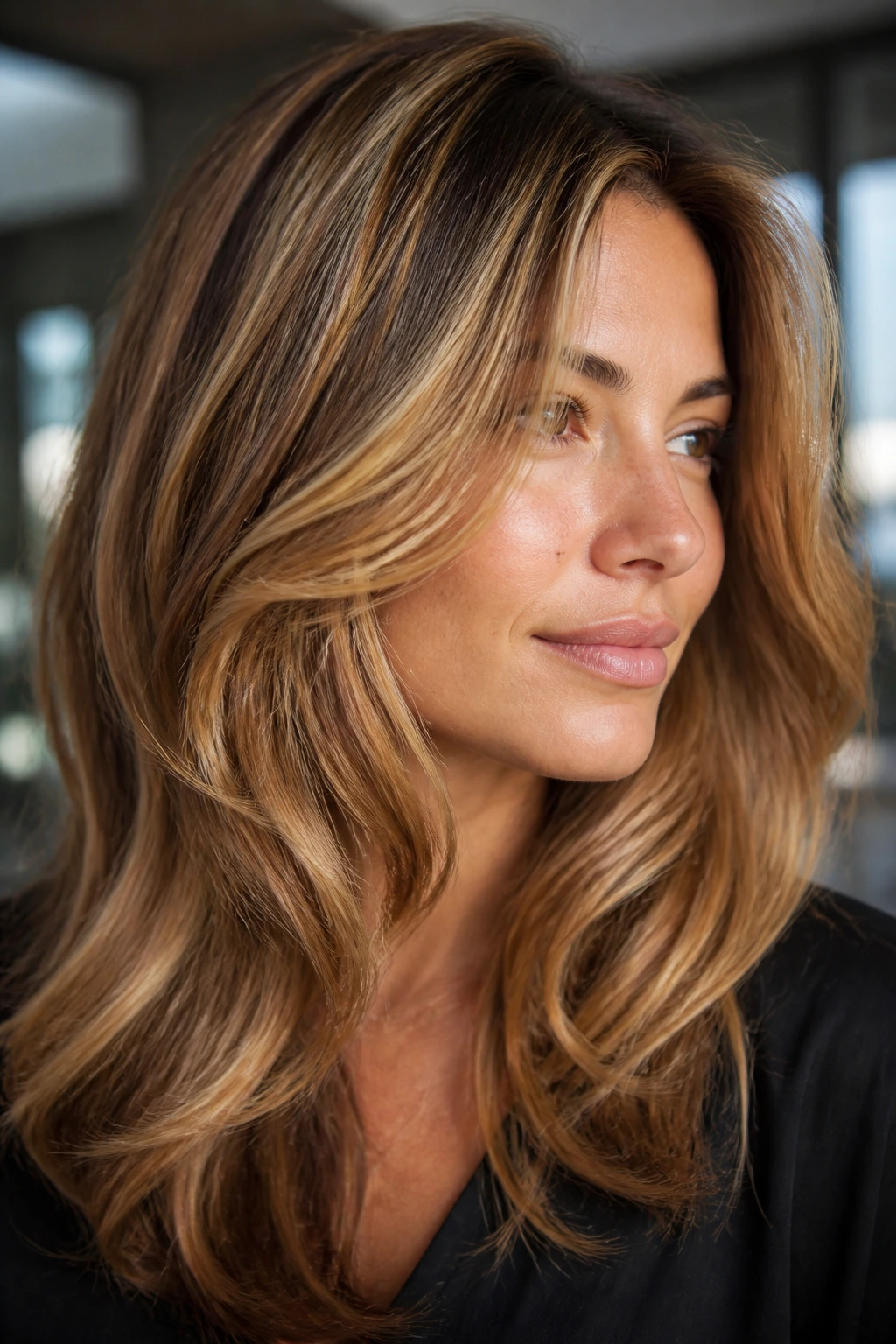
Butterscotch highlights are a good choice when full blonde feels too bright and full brunette feels too safe. The shade sits in that warm, buttery zone that catches light fast on golden skin.
Go wider with the placement if you want the color to show. Baby lights can disappear in darker hair, but butterscotch pieces that are a shade or two lighter than the base make the warmth visible right away. They look especially clean around a layered cut or a long bob.
15. Warm Mocha
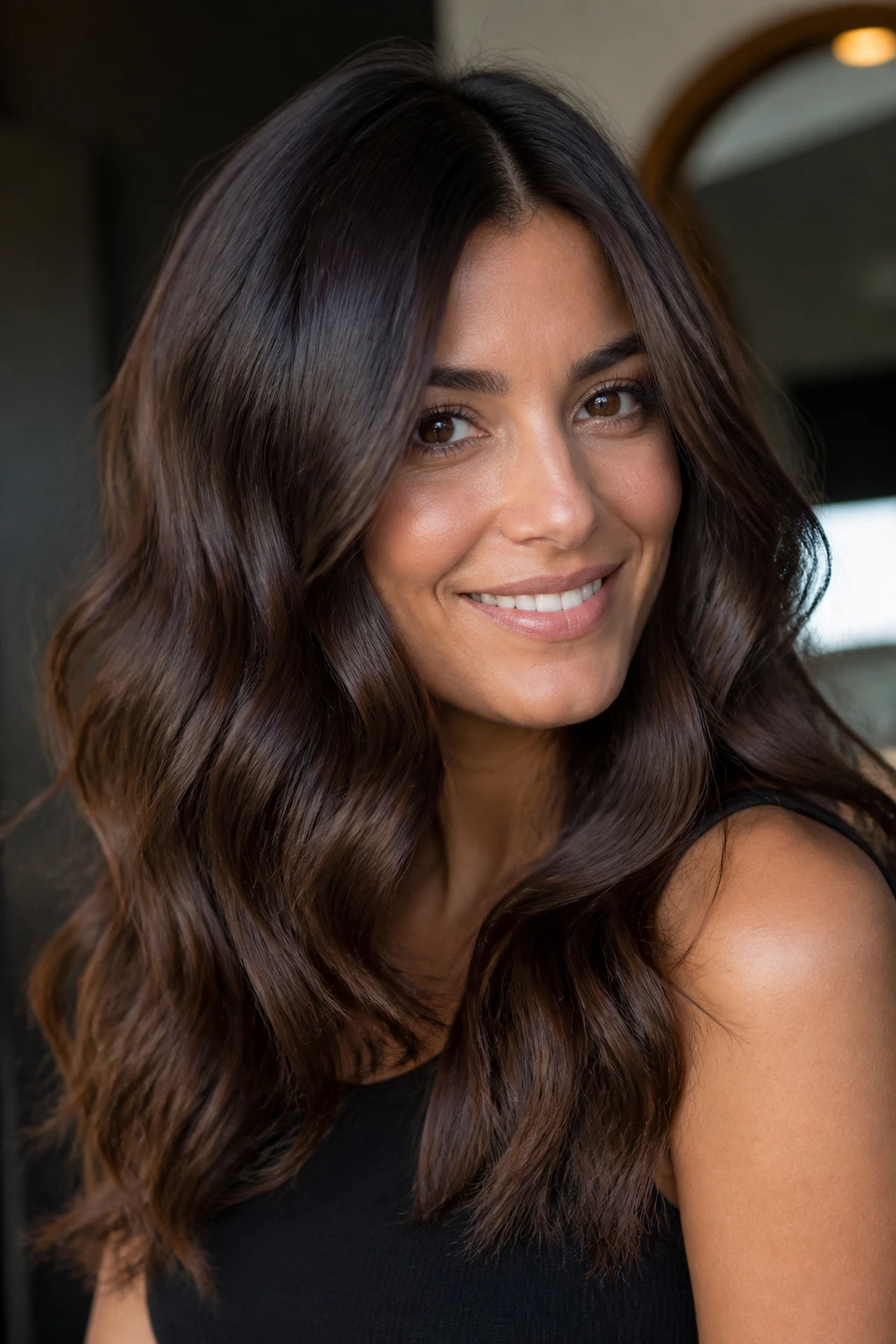
Warm mocha is for anyone who wants brown, not red, but refuses to go dull. It has just enough golden or chestnut warmth to keep the skin from looking washed out.
A Clean Way to Wear It
- What to use: A deep brunette base with a warm mocha gloss.
- Preparation: Keep the roots close to your natural level so regrowth doesn’t look abrupt.
- Substitutions: If you want less depth, ask for soft mocha lowlights instead of an all-over color.
- Tips: Warm mocha usually looks best with shine. A flat finish can make the shade feel heavy.
This is one of the easier colors to live with if you’re not chasing a dramatic change. It’s calm, grown-up, and a lot more interesting than plain brown.
16. Rose Gold Copper
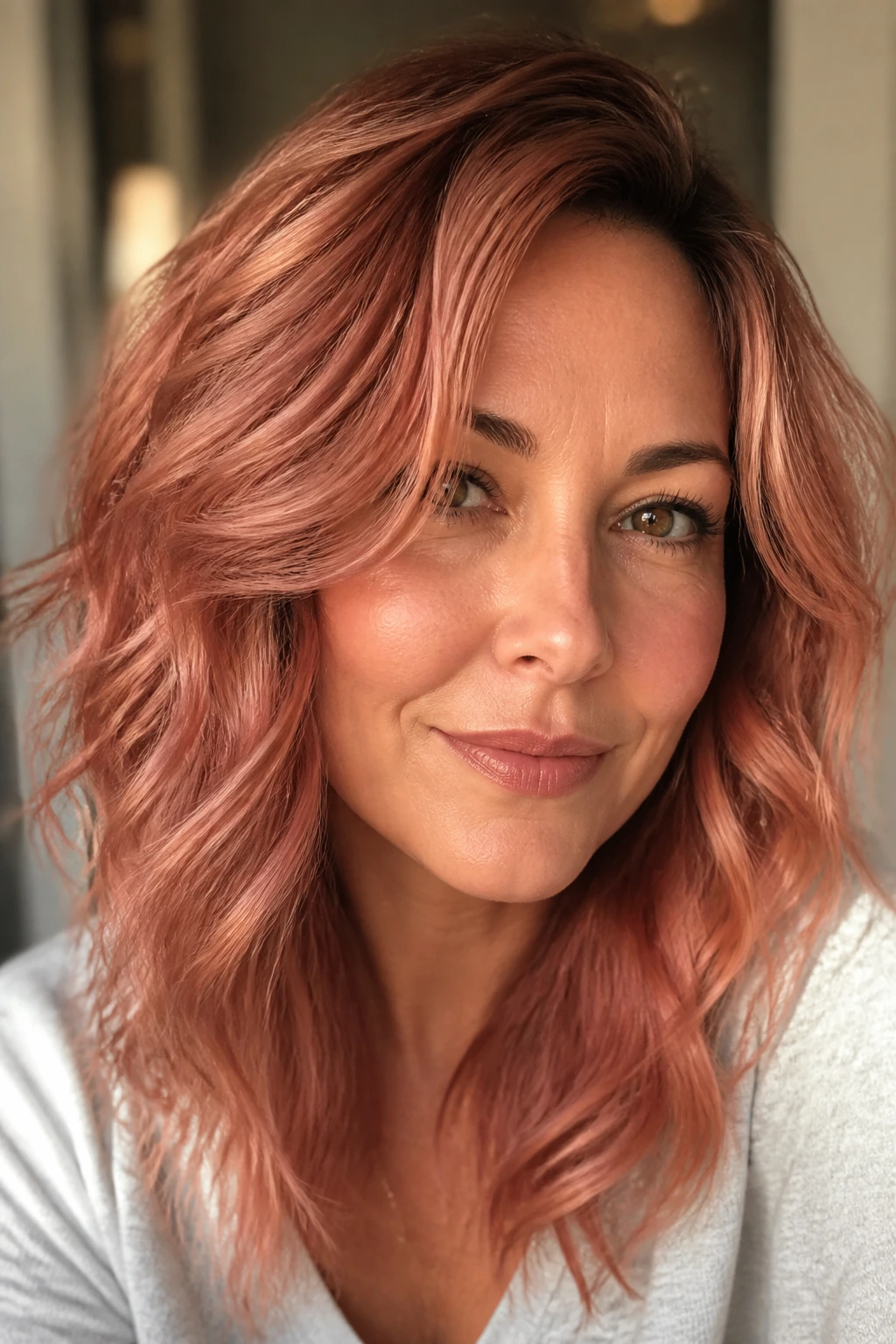
Rose gold copper brings a softer, more polished edge to red hair. It’s warmer than a pink pastel and gentler than a bright orange copper, which makes it wearable on skin that already leans gold or peach.
The trick is depth. Rose gold works best when the base is still grounded in copper or strawberry brown, not pale blonde. Keep the shade close to the cheekbones and around the crown, and it starts to look tailored instead of trendy-for-the-sake-of-it.
17. Sandy Golden Brown
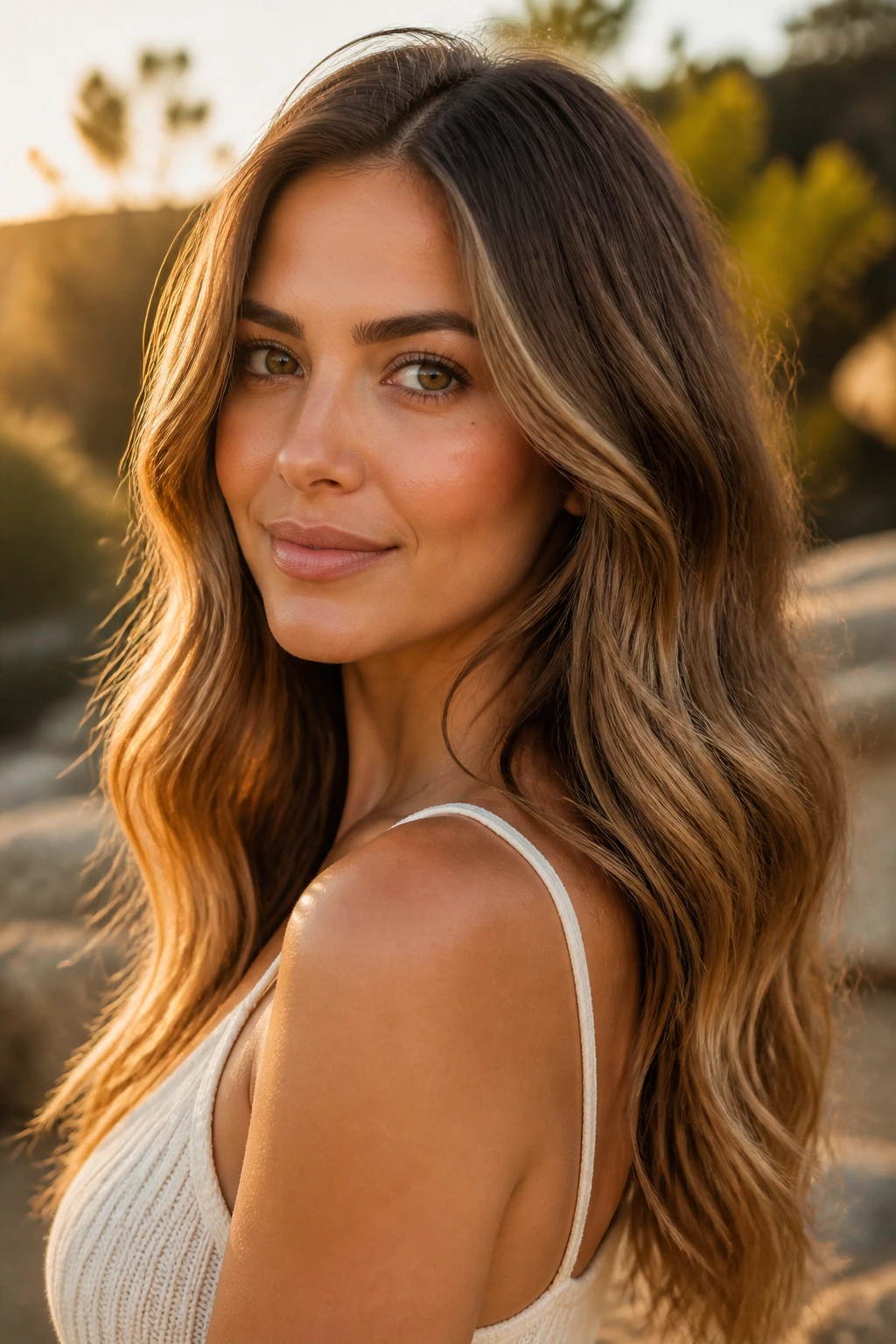
Sandy golden brown is the light, airy option for people who want warmth but not obvious red or orange. It reads natural, especially on warm skin that likes creamier makeup and gold jewelry.
This shade is a good match for fine hair because the golden reflect can make each strand look fuller. Ask for a neutral brown base with sandy gold balayage through the mids. It should feel sunlit, not striped.
18. Chestnut With Apricot Face Frame
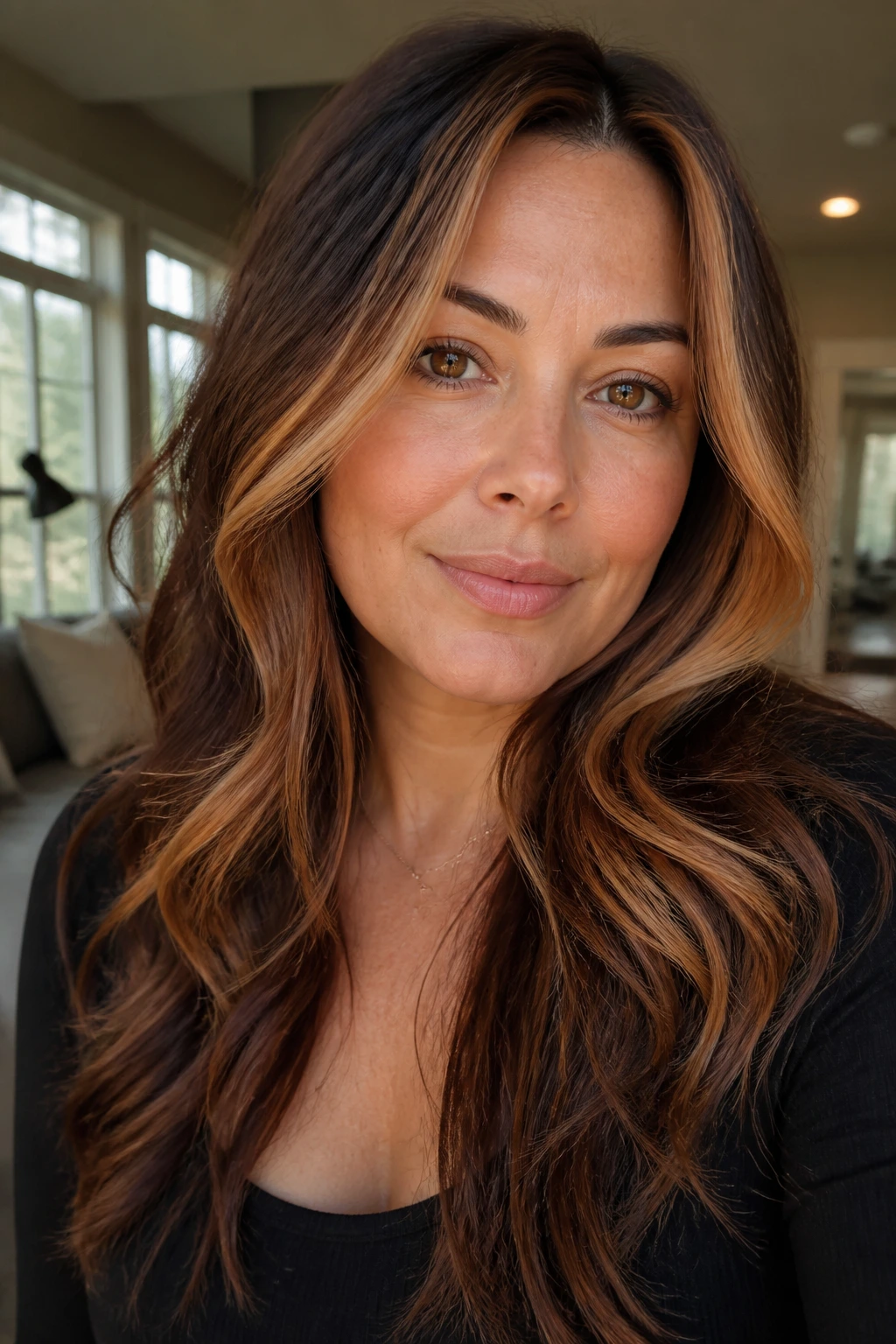
Chestnut with an apricot face frame does a lot with a little. The chestnut keeps the hair grounded, while the apricot pieces around the face brighten the skin without forcing a full blonde overhaul.
I like this when someone wants the eye to go straight to the face. A soft apricot frame around the cheekbone area can wake up warm skin in a way that a full set of highlights sometimes doesn’t. Keep the rest of the color richer so the brightness has something to sit against.
19. Auburn Brown

Auburn brown is the classic red-brown that never really left the room. It flatters warm skin because it keeps the red earthy, not neon, and it gives the hair enough depth to look polished.
This is a good one if you want a noticeable change without going all the way into copper. Ask for auburn that stays closer to brown at the root and warms up through the mids. That shape makes the color easier to wear and easier to grow out.
20. Spiced Bronde
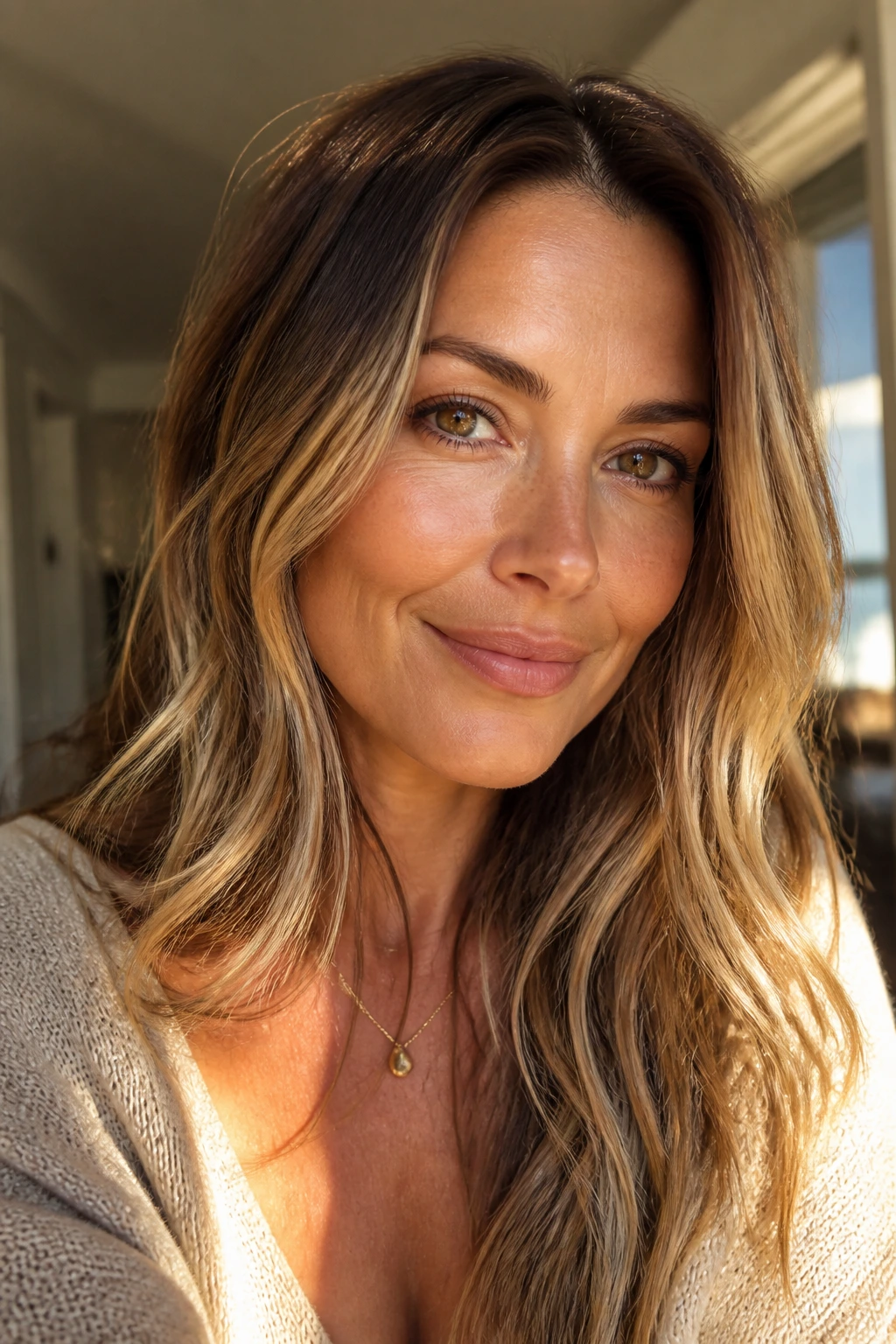
Spiced bronde sits right between blonde and brunette, but the spice keeps it from feeling bland. Warm skin tends to like that middle ground because it gives brightness without a sharp contrast line.
If you like low-maintenance color, this is worth a serious look. The root can stay deeper, the mids can hold soft caramel, and the ends can stay lighter without looking overdone. It’s the kind of shade that works on straight hair, waves, and loose curls without needing a different formula for each one.
21. Golden Espresso
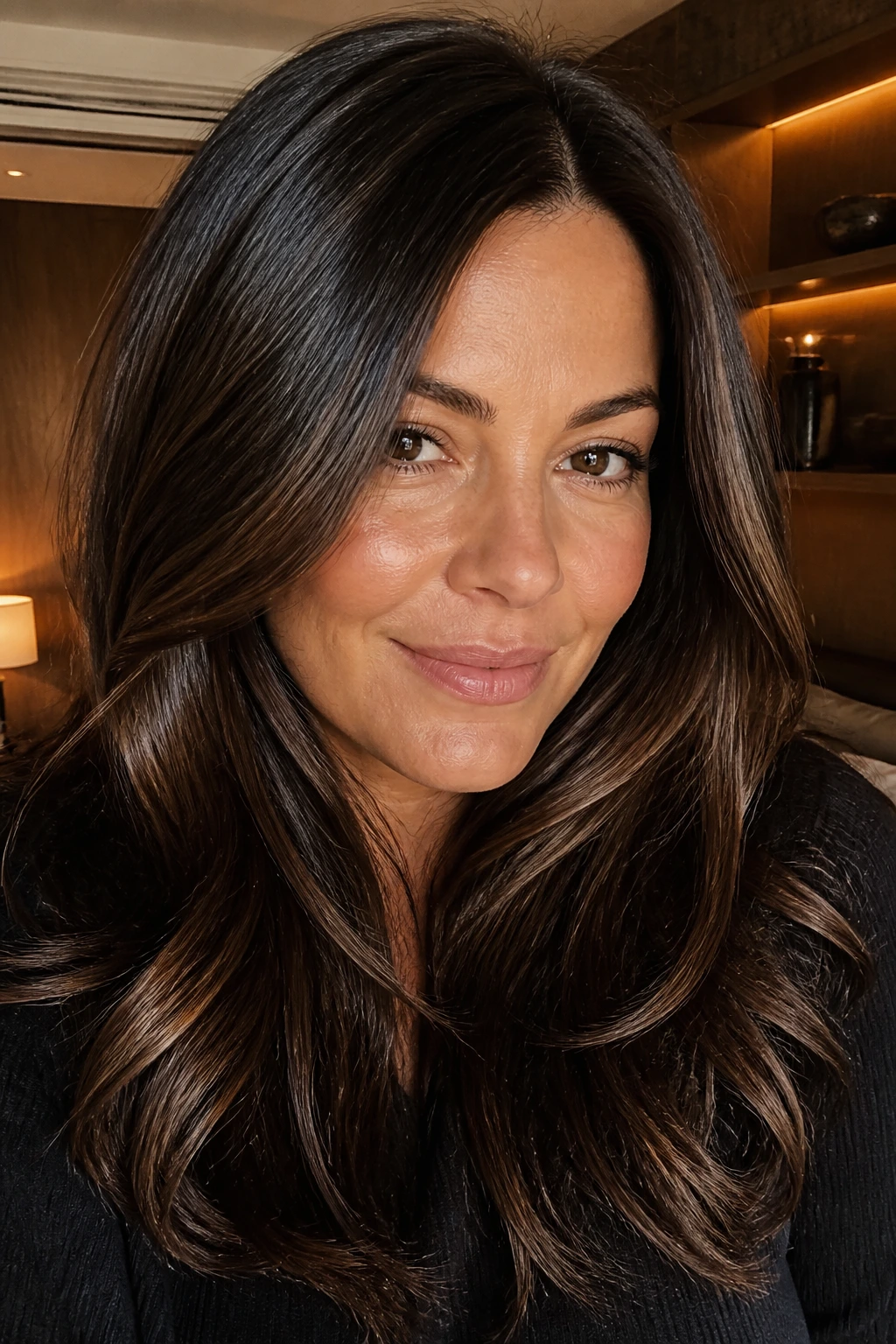
Golden espresso is deep, dark, and reflective in a way flat black hair usually isn’t. The gold reflection is subtle, but that tiny bit of warmth matters when your skin already has golden or bronze undertones.
This shade is a good choice if you want richness more than brightness. It makes the hair look glossy and dense, which is useful if your strands have thinned a little. Ask for a deep espresso base with a warm gloss rather than a cool brown-black dye that can read harsh at the hairline.
22. Terracotta Red
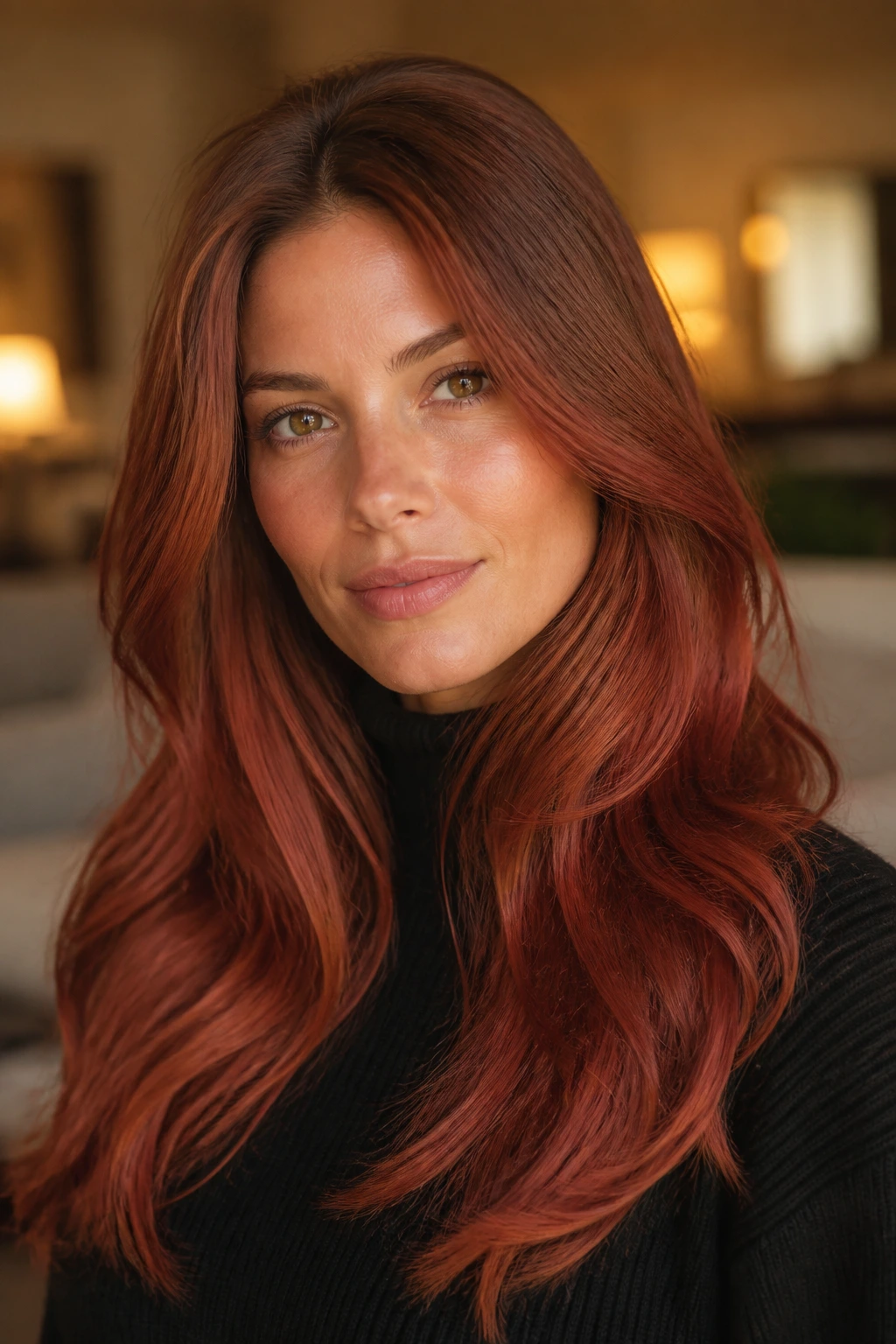
Terracotta red is earthy red, not candy red. That matters. Warm skin can handle a strong red when the color feels baked, muted, and grounded in brown.
What Makes It Different
- What to use: A brown-red base with terracotta warmth through the mids.
- Preparation: Keep the top a little deeper so the face doesn’t get flooded with red.
- Substitutions: If the red feels too strong, soften it with auburn or cinnamon.
- Tips: This shade needs shine. Without gloss, terracotta can turn dusty fast.
I’d choose this for someone who already wears warm lip colors and rust-toned clothes. It’s the boldest red in the group, but it still feels grown and wearable.
23. Walnut Brown With Gold Babylights
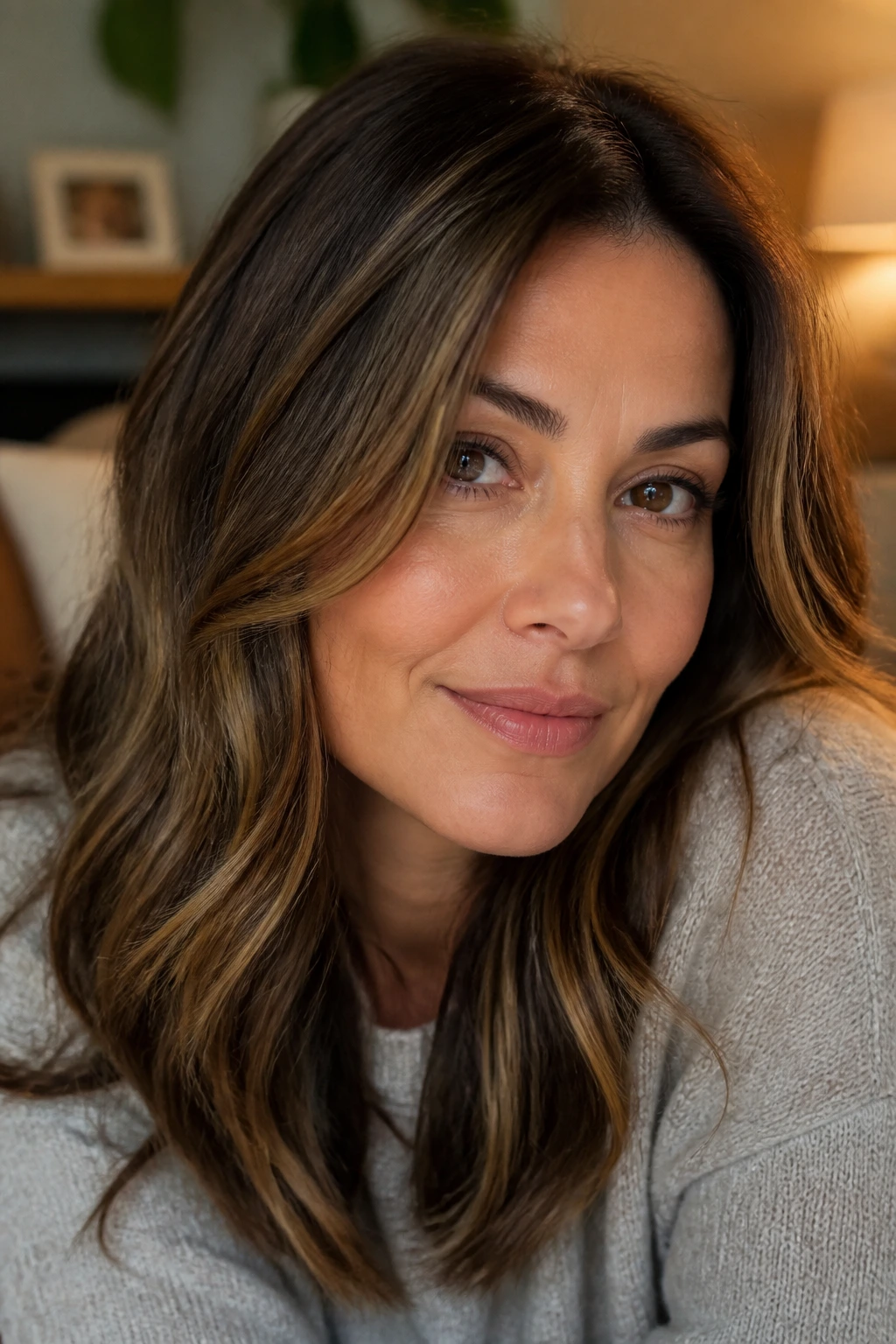
Walnut brown with gold babylights is for people who want barely-there brightness. The walnut base gives polish, and the tiny gold strands keep the color from looking too heavy on warm skin.
This is one of the best choices if you like your hair to look expensive rather than obvious. Babylights are thin enough to blend into the base, but the gold still wakes up the surface. It’s a smart pick for fine hair, because the lighter threads can make the whole head feel more textured.
24. Sunlit Beige Brunette
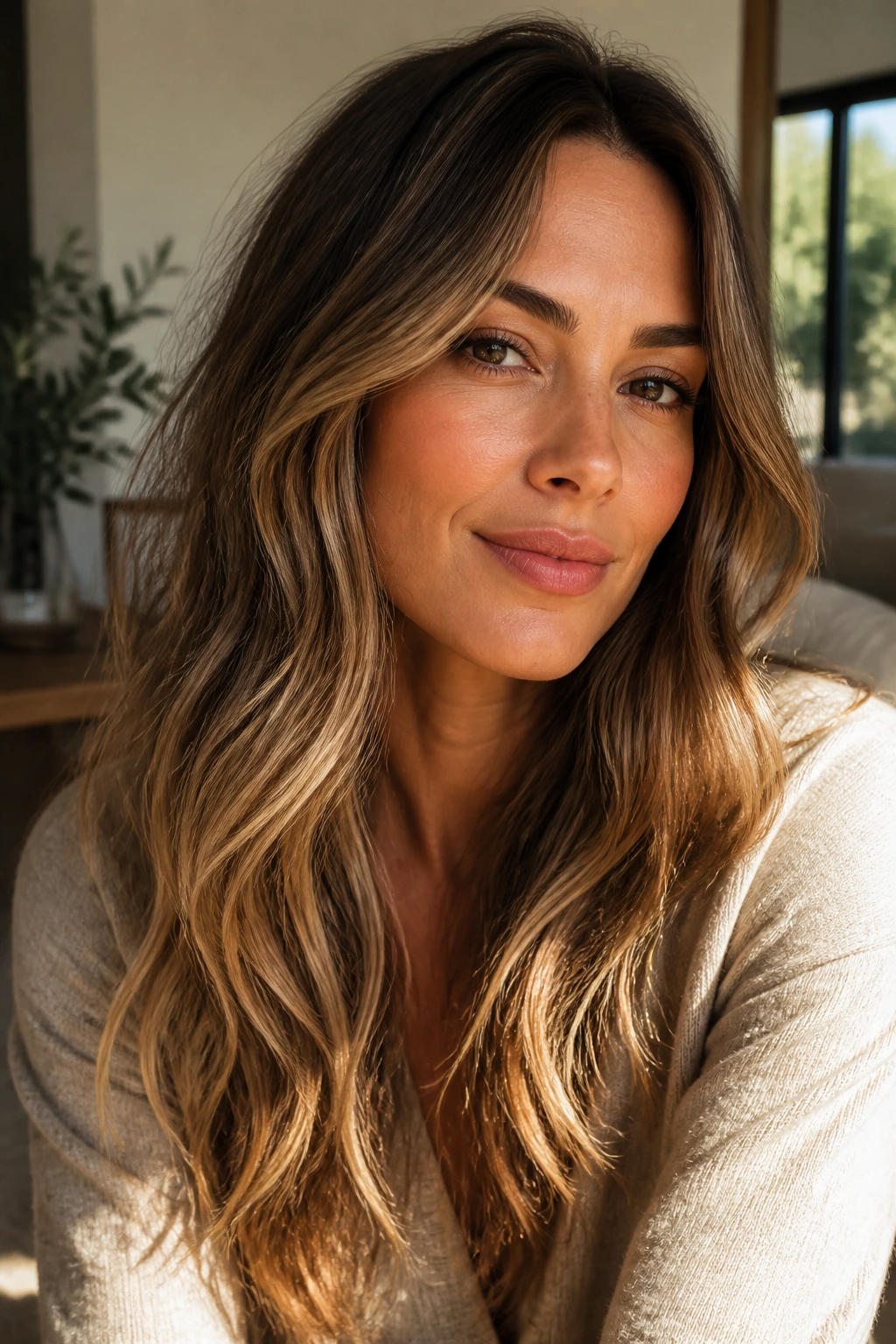
Sunlit beige brunette is the shade that makes brunette hair feel lighter without actually going blonde. Beige keeps it soft; brunette keeps it grounded. On warm skin, that combination is usually safer than anything ash-heavy.
This color works well if you want something that looks believable at every angle. Ask for beige-brown ribbons around the face and a soft root shadow through the part. It’s the kind of shade that sits nicely with everyday makeup and doesn’t demand a new wardrobe.
25. Cinnamon Honey Ombre
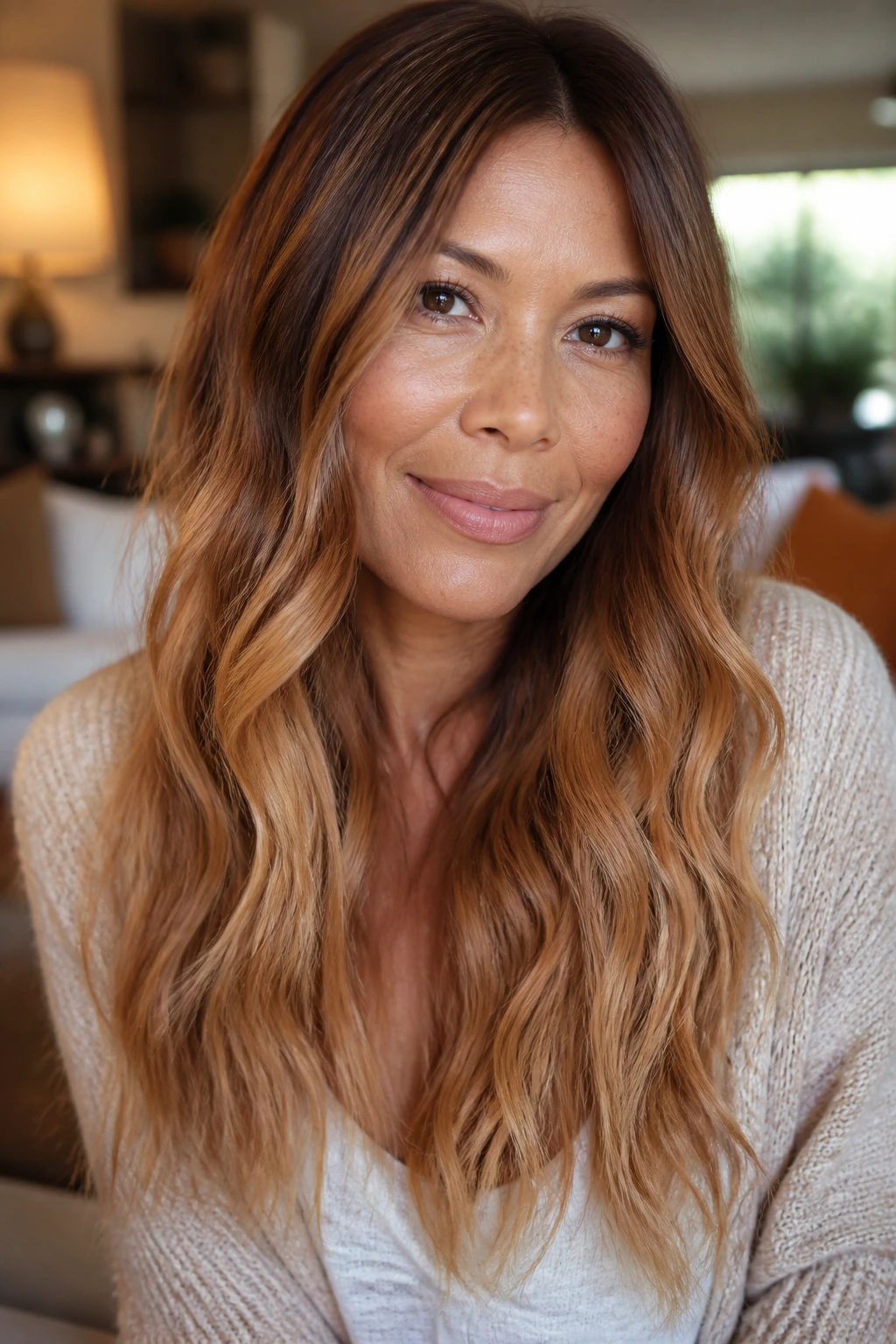
Cinnamon honey ombre lets the warmth build slowly from root to end. The root stays deeper and more cinnamon-based, then the mids and ends move into honey, so the transition feels soft instead of obvious.
Good If You Want
- Lower maintenance: The darker root disguises regrowth for longer.
- More movement: The lighter ends keep the style from feeling heavy.
- Flexible tone: You can push it redder or blonder depending on your comfort level.
- Tip: Keep the fade gradual. A sharp ombre line is too harsh for this palette.
This is a nice choice if you want warmth without committing every inch of hair to one tone.
26. Mahogany With Gold Shine
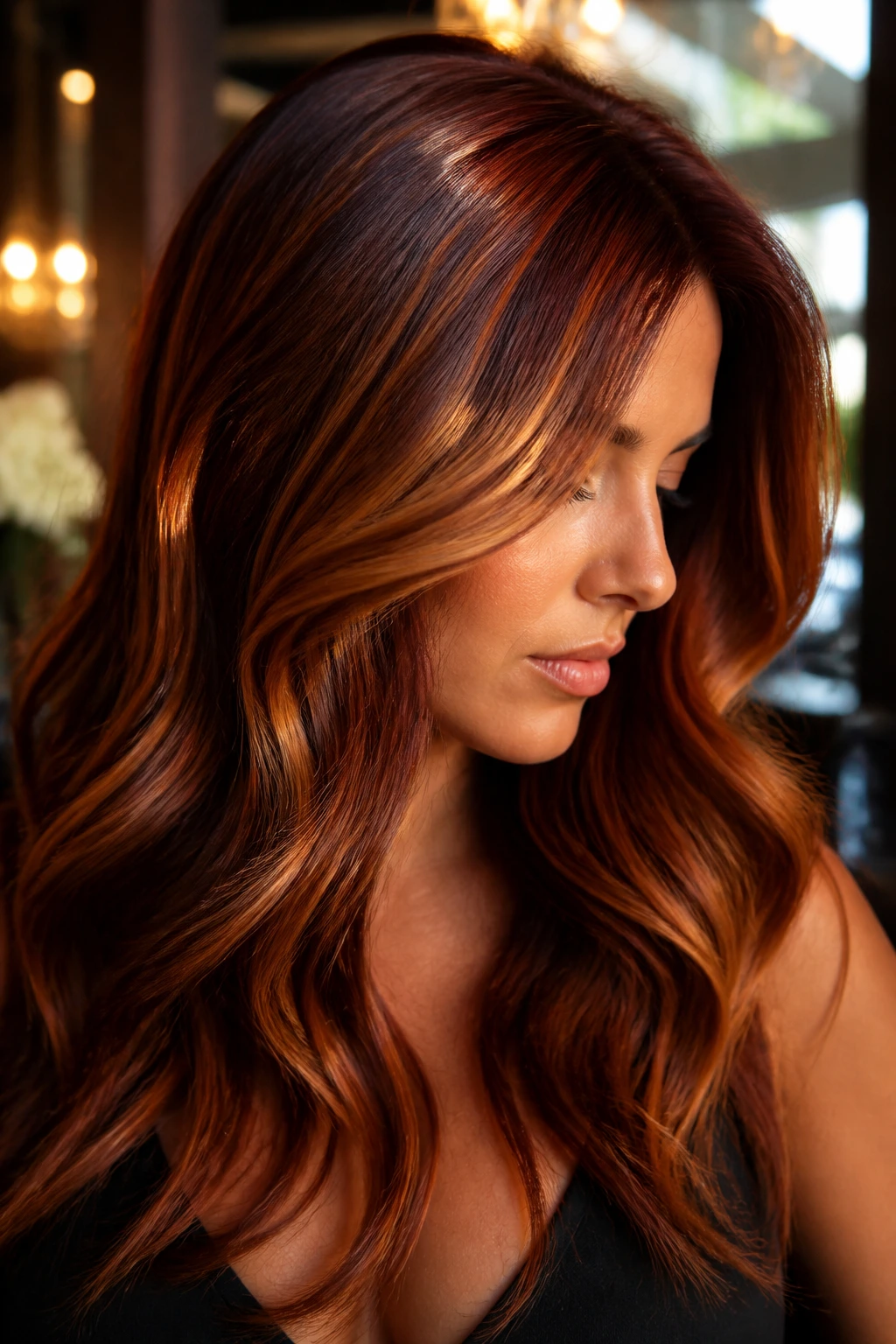
Mahogany with gold shine brings depth and a little drama, but it stays flattering because the gold keeps the red from going wine-dark. On warm skin, that reflective finish matters more than the shade name.
This is one of the richest colors in the list. It works best if you like a little contrast around the face and don’t mind a stronger statement. A clear gloss on top can make the mahogany look almost lacquered, which is exactly what keeps it from reading flat.
27. Bronze Brown
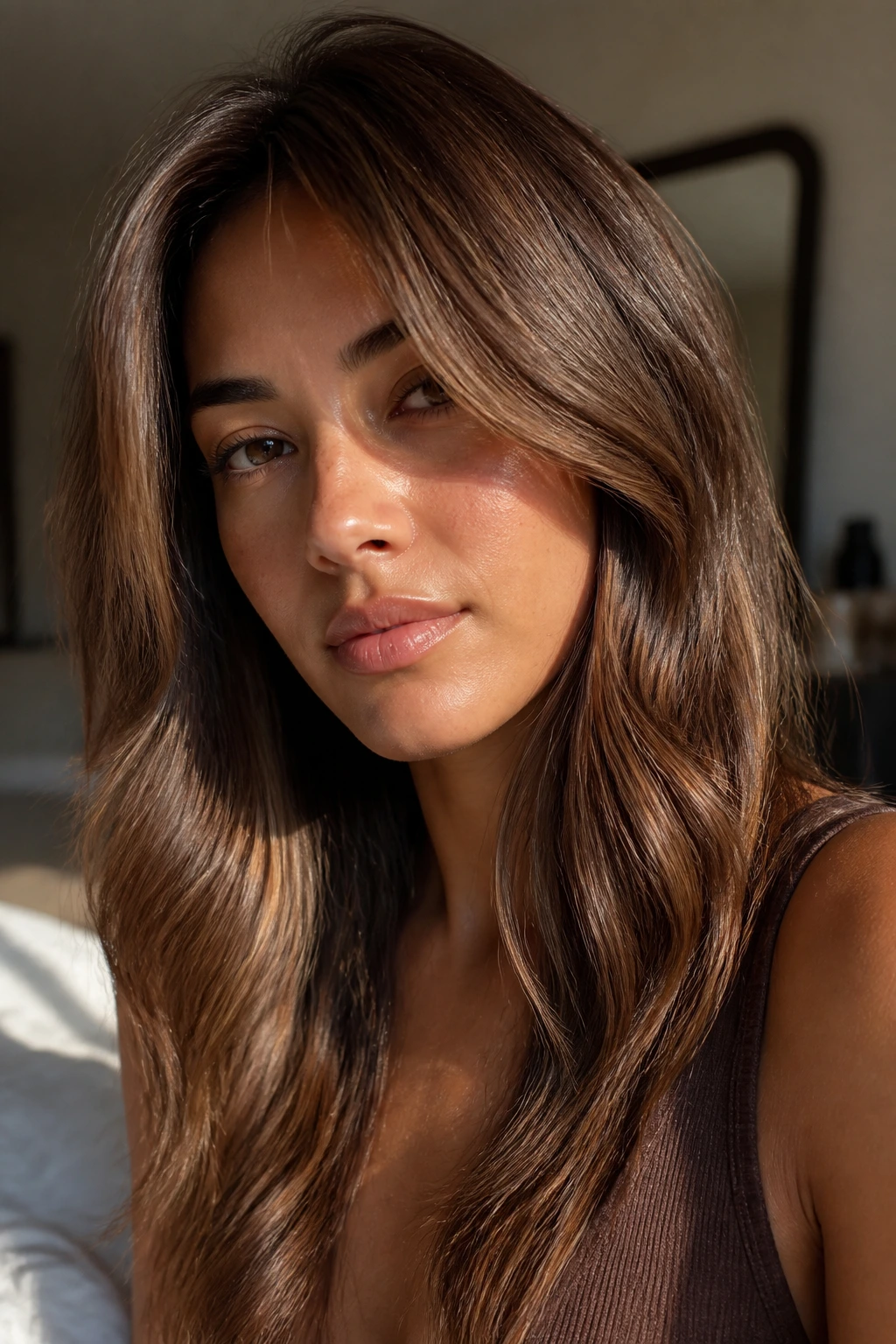
Bronze brown is all about reflectivity. It gives brown hair a metallic warmth that looks especially good on skin with bronze or golden undertones.
The shade works best when it’s layered in light, narrow ribbons rather than heavy blocks. That keeps it from looking brassy. If your hair tends to catch the sun strongly, bronze brown can look different hour to hour, which is part of the appeal.
28. Apricot Blonde
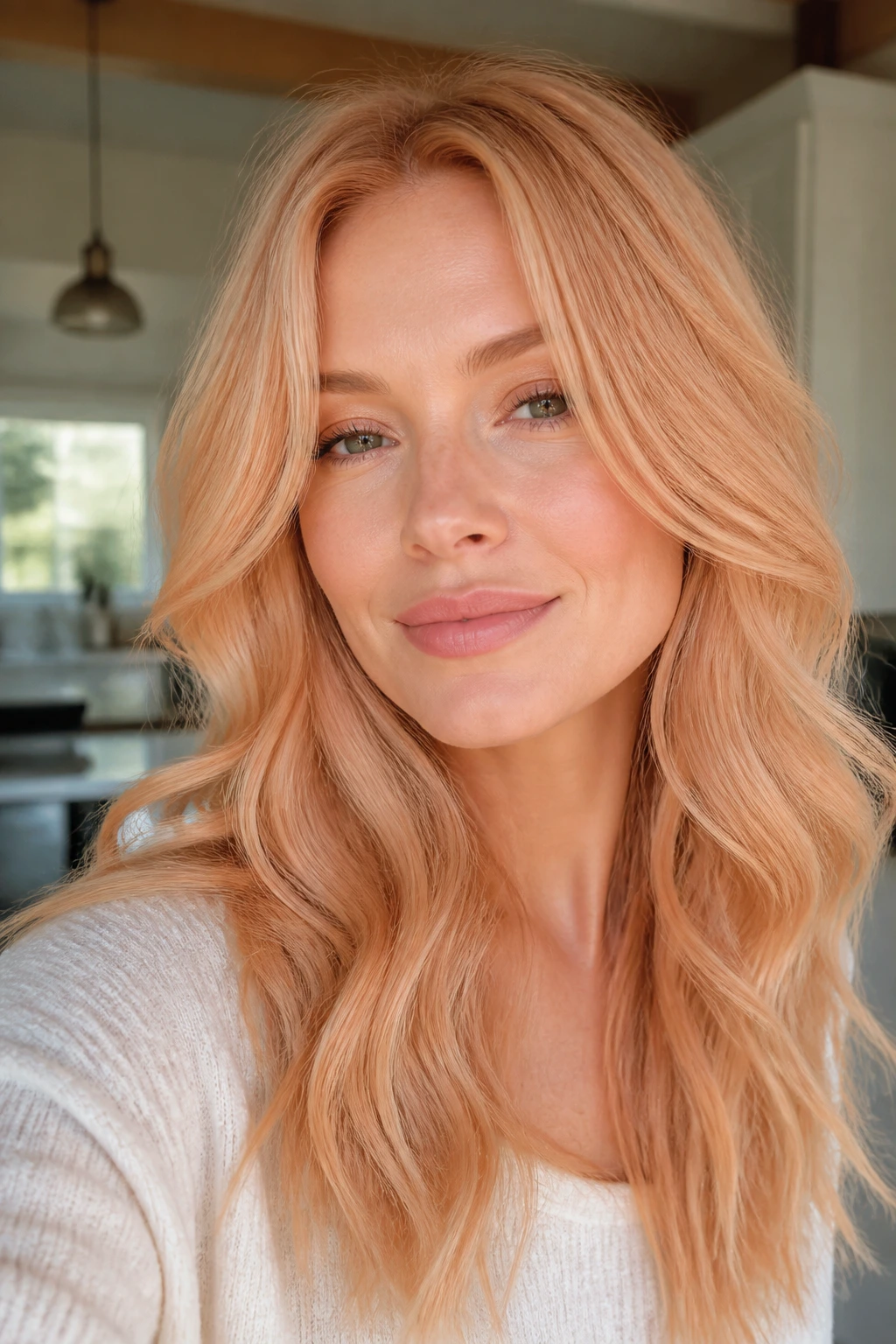
Apricot blonde is softer and warmer than strawberry blonde, and that distinction matters. Apricot brings a peach-gold note that suits warm skin with a little more pink in it.
This is not the shade for someone who wants an icy, high-contrast blonde. It works best with a creamy base and a translucent finish, almost like the color is hovering instead of sitting in solid pieces. If your natural hair is light already, this can be a very pretty way to add warmth without going dark.
29. Toffee Melt
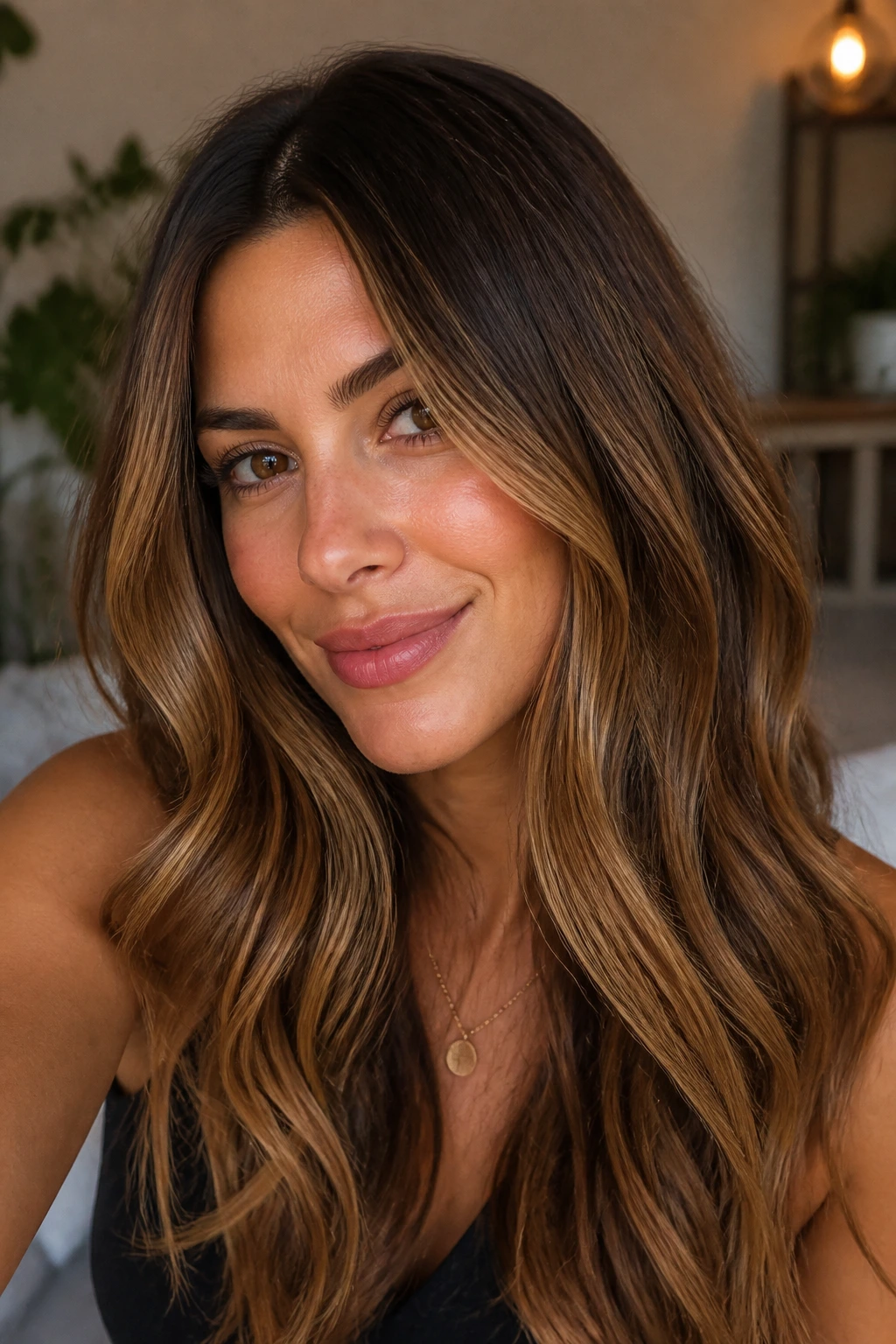
Toffee melt is one of the easiest warm shades to wear because it blends rather than shouts. The root stays deeper, the mids soften into caramel, and the ends finish with a toffee glow.
Quick Wins
- What to use: A root shadow one to two levels deeper than the mids.
- Preparation: Blend the transition while the hair is still damp and in sections.
- Substitutions: If you want more blonde, keep the ends lighter and the root slightly cooler.
- Tips: Toffee melts look best when you avoid chunky highlights. The whole point is flow.
This is the shade I’d recommend to anyone who wants warm color that can survive a busy schedule.
30. Glossed Mahogany Brown
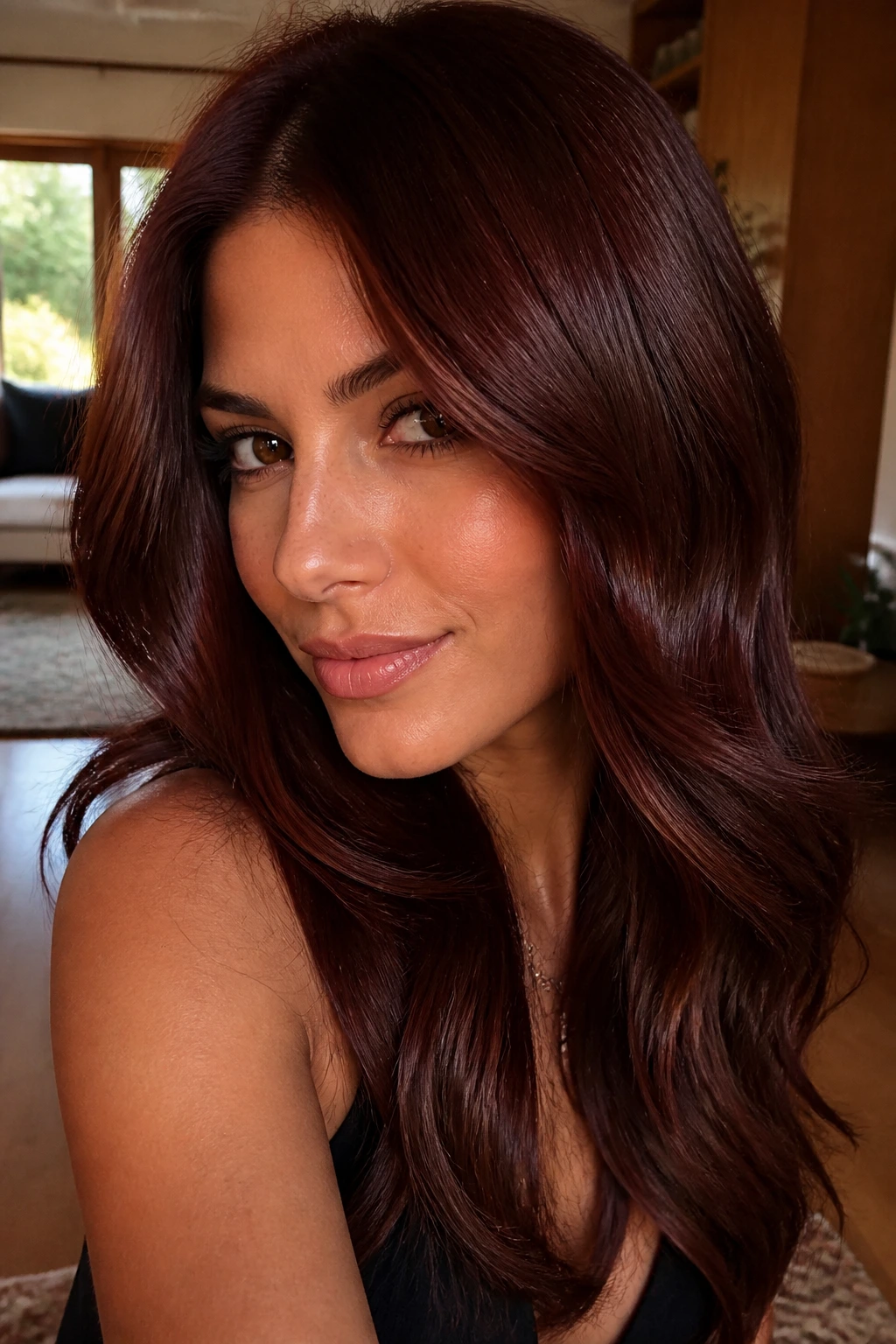
Glossed mahogany brown closes the list on a strong note. It’s deep, reflective, and just warm enough to keep warm skin from looking muted. The gloss is what saves it; without that shiny finish, mahogany can feel a little heavy.
This shade is a good fit if you want your hair to look rich from three feet away and even better up close. It pairs nicely with a softer cut—layers, a long bob, or face-framing pieces—because the movement keeps the depth from reading like a block. A refresh every 6 to 8 weeks usually keeps the warmth intact.
Why Warm, Lived-In Color Reads So Well Here
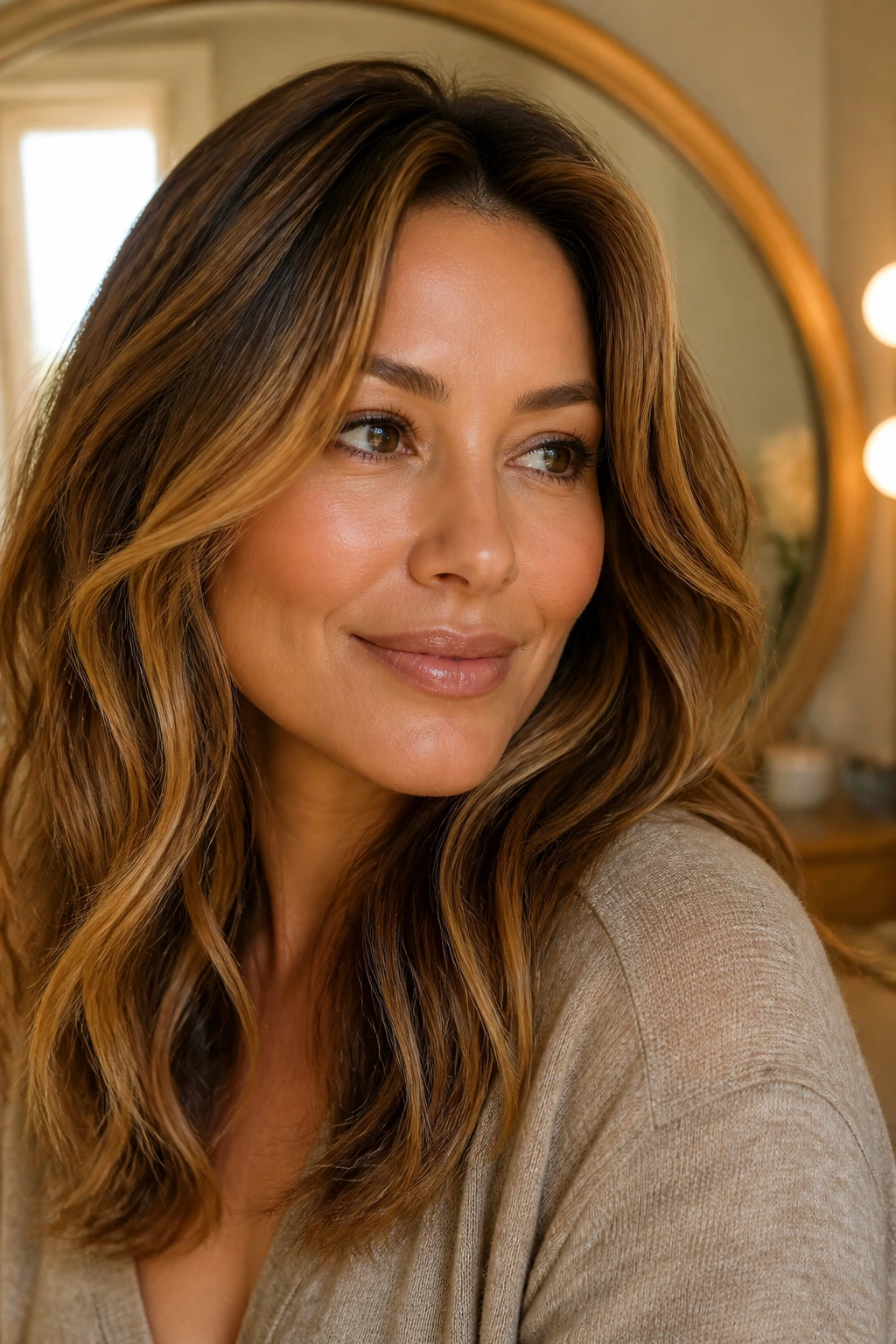
Warm skin already carries some gold, peach, or bronze in the undertone, so hair color that echoes those notes tends to look more natural. The eye reads harmony faster than contrast. That’s the real reason honey, caramel, copper, and chestnut keep showing up in flattering color work.
Hair in the 40s often needs a little more visual help. Some strands lose pigment, some get drier, and some start reflecting light unevenly, which is why a flat single-process dye can look harsher than it used to. A root shadow, a glaze, or a few hand-painted ribbons gives the color shape. Shape matters.
Flat color is the enemy here. Not because it’s “bad,” but because it leaves nothing for the light to catch.
The Tools and Products That Make These Shades Easier to Live With
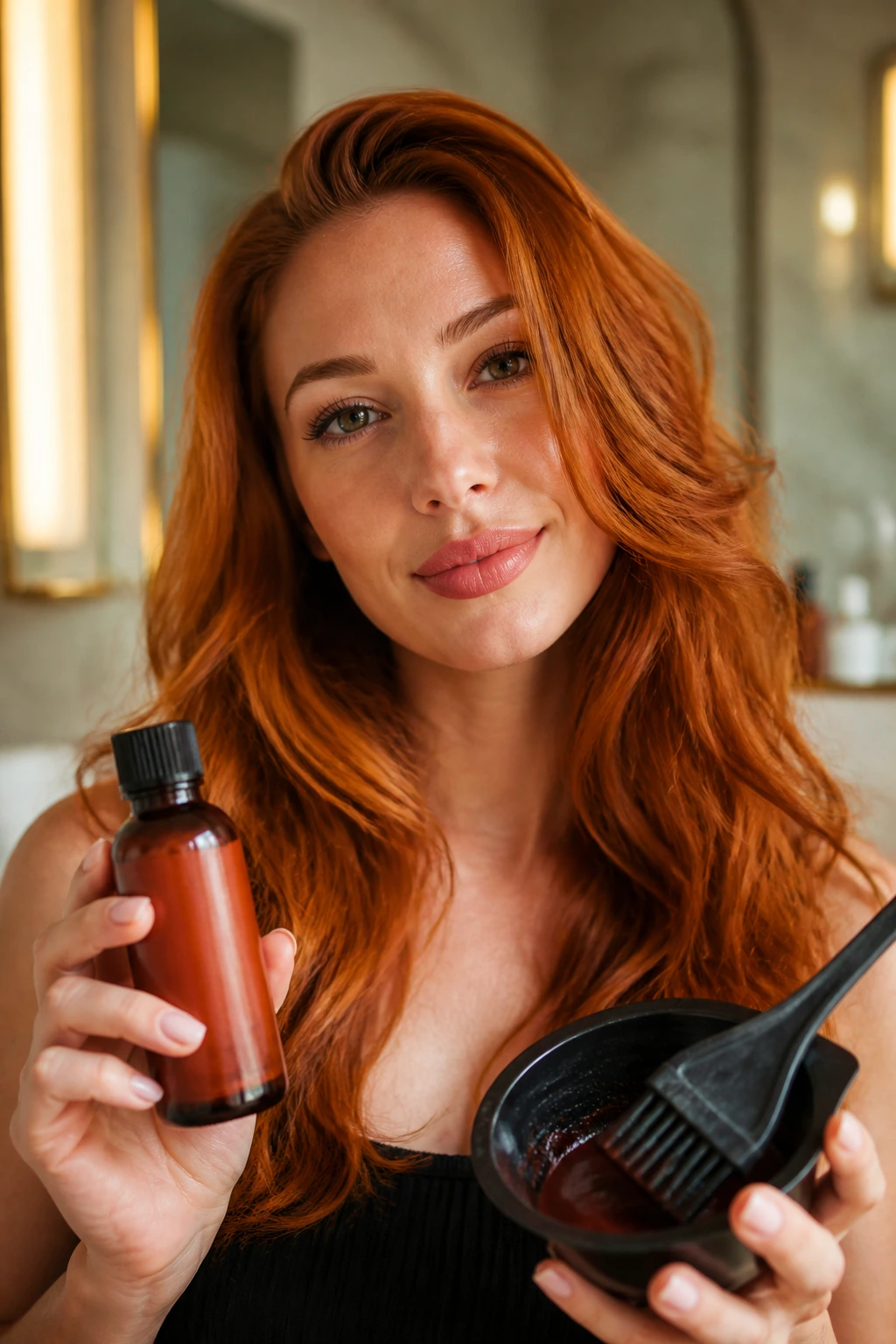
- Color-safe shampoo: Pick one that’s made for dyed hair, especially if you’re wearing copper, blonde, or red tones.
- Color-safe conditioner: A richer conditioner keeps the mids from looking rough, which can make warm color seem dull.
- Heat protectant spray: Use it before blow-drying, flat-ironing, or curling; warm tones show heat damage fast.
- Clear gloss or color-depositing mask: Great for keeping honey, caramel, or copper from fading into nothing.
- Wide-tooth comb: Helps wet highlighted hair stay intact instead of snapping or frizzing up.
- Tint brush and bowl: Handy if you refresh color at home with a glaze or semi-permanent gloss.
- Shower filter: Worth it if your water is hard or mineral-heavy; those minerals can make warm blondes look tired.
- Satin pillowcase: Not glamorous. Useful, though. It cuts down on friction and keeps the ends smoother.
How to Pick the Right Shade Before You Sit in the Chair
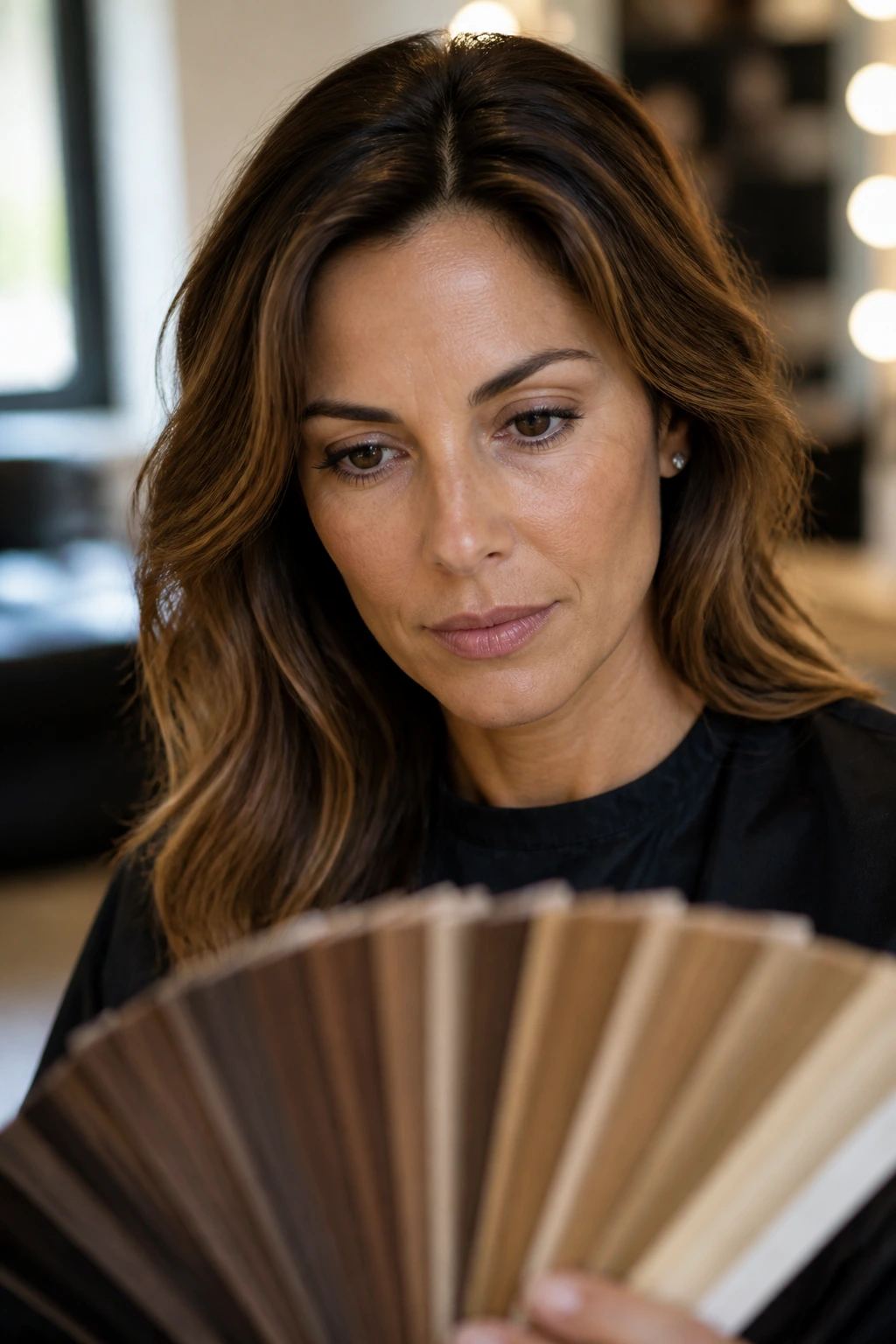
Bring more than one photo. One photo should show the color you like; the other should show the depth you want at the root. Those two things are not the same, and mixing them up is how people end up with color that’s pretty on the mood board and wrong on the head.
Say what you want in levels, not only names. “Honey blonde” can mean three very different things to three different colorists. “Level 8 honey with a soft level 7 root” gives a cleaner picture. If you cover gray, say how much gray you have. Twenty percent gray and seventy percent gray need different formulas.
Ask how the color will fade. That question saves regret later.
How to Wear Warm Color So It Looks Finished
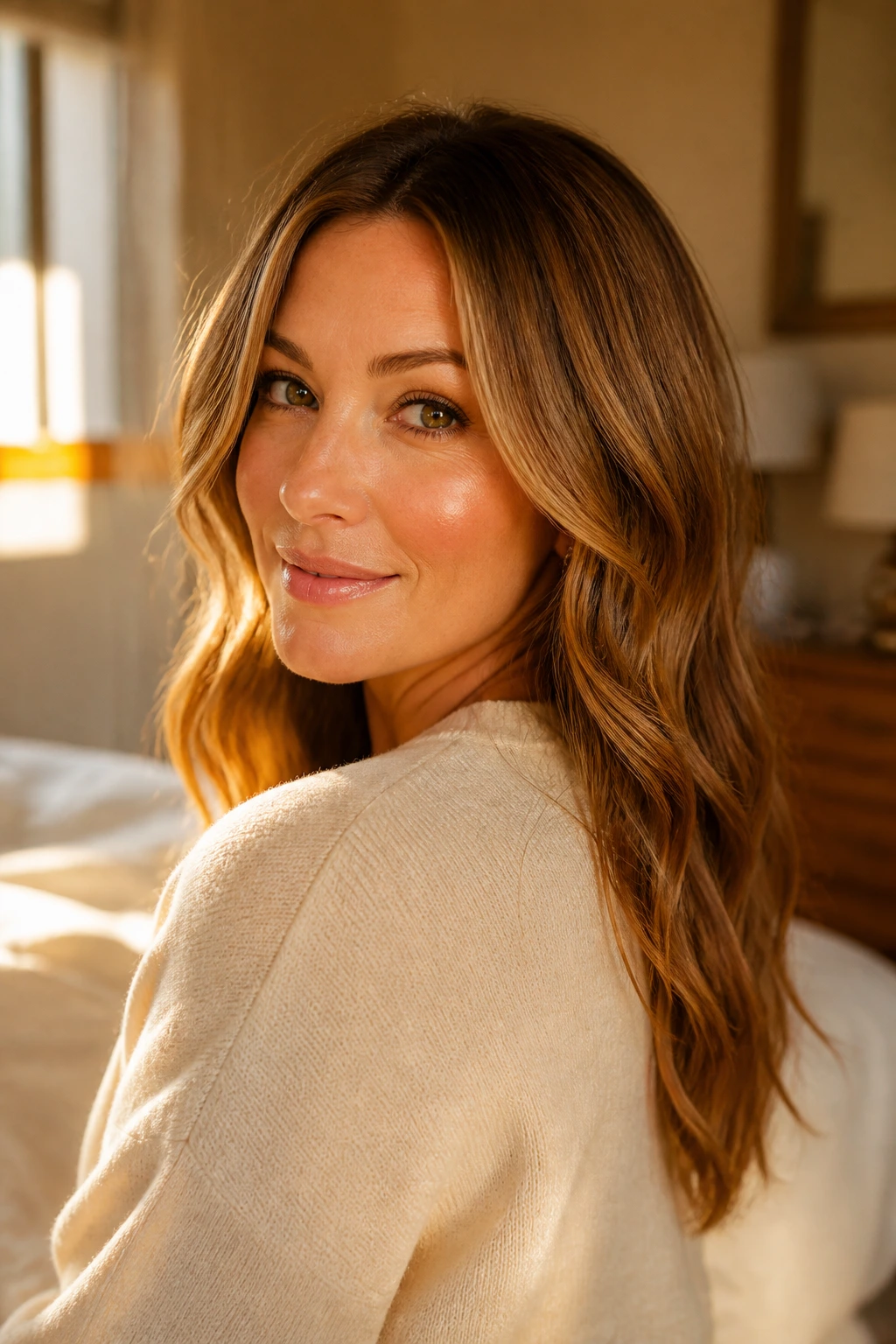
Cut Pairing: Layers, curtain bangs, long bobs, and soft waves show warm dimension better than a blunt, one-length cut. A blunt cut can still work, but the color needs more contrast to stay interesting.
Makeup Pairing: Warm hair likes peach blush, bronze, terracotta, brown mascara, and creamy highlighter more than icy pink. You do not need a full makeup overhaul. Just stop fighting the warmth with cool lipstick unless that contrast is on purpose.
Wardrobe Pairing: Cream, camel, olive, rust, chocolate, and dark denim usually sit nicely beside these shades. If you love black, keep the color deep enough to handle it—Golden Espresso and Glossed Mahogany Brown can take it.
Maintenance Rhythm: Most caramel and brunette blends stay tidy with a gloss every 6 to 8 weeks. Blonde and copper shades usually ask for a faster refresh, especially if you use hot tools often. Rooted balayage can stretch farther than all-over color, and that’s the whole appeal.
Keeping the Warmth Rich Between Appointments
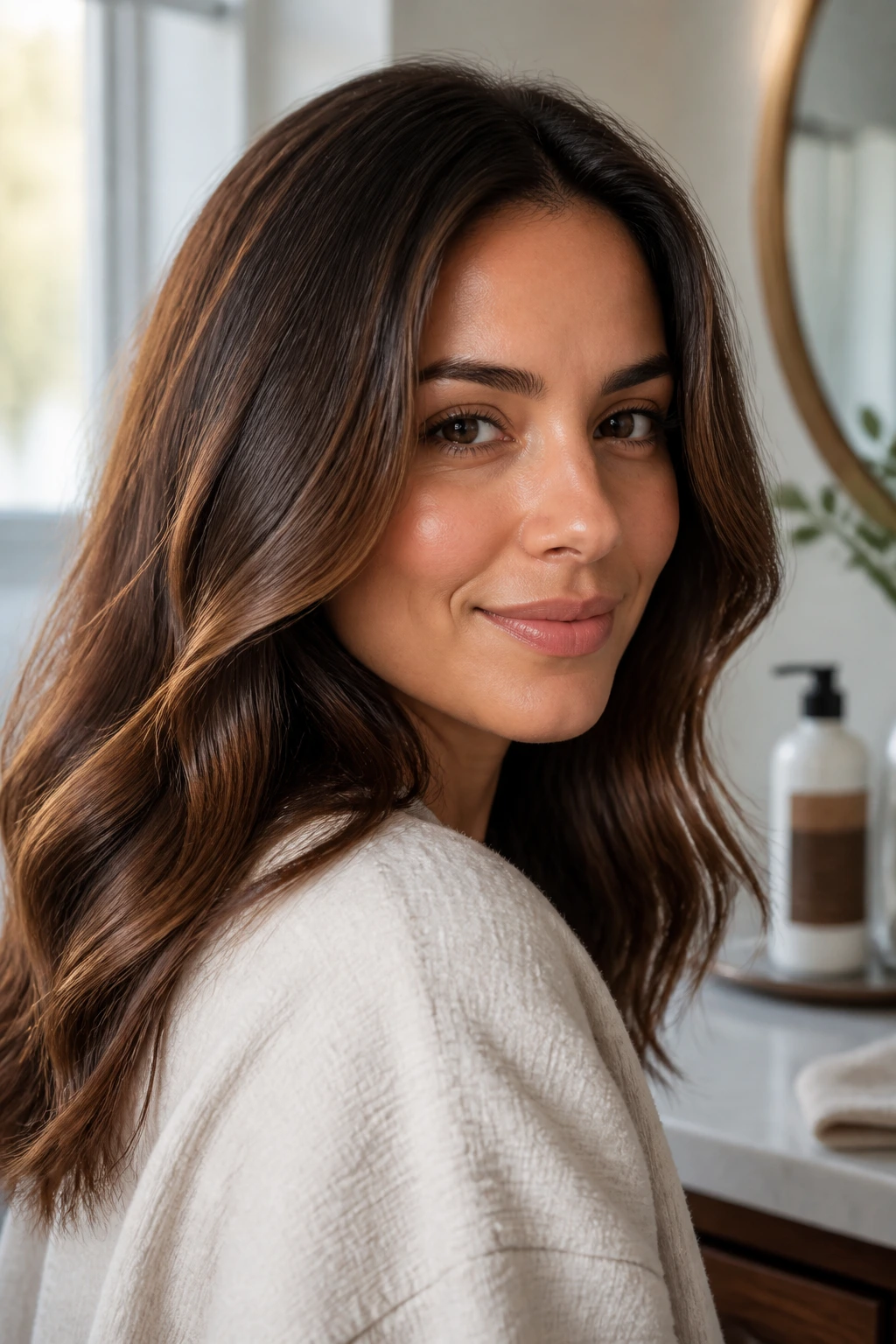
Warm shades fade in a specific way. Blonde can go pale and tired. Copper can go peachy and weak. Brunette can lose its shine and start looking dusty. None of that is mysterious, but it does mean the shampoo shelf matters.
Use purple shampoo sparingly if you want to keep warmth. One light wash every couple of weeks is enough for many blondes; more than that can start muting the honey and beige you paid for. For copper and red, a color-depositing conditioner once a week can keep the mids from looking washed out. Brunettes usually need shine more than pigment, so a clear gloss or a nourishing mask can do more than a lot of toner.
Heat and sun are rough on warm color. A heat protectant before styling and a UV spray on bright days make a bigger difference than people expect. If your water is hard, a shower filter can keep brassiness and dull film from building up on the hair shaft.
Additional Tips and Color Boosters
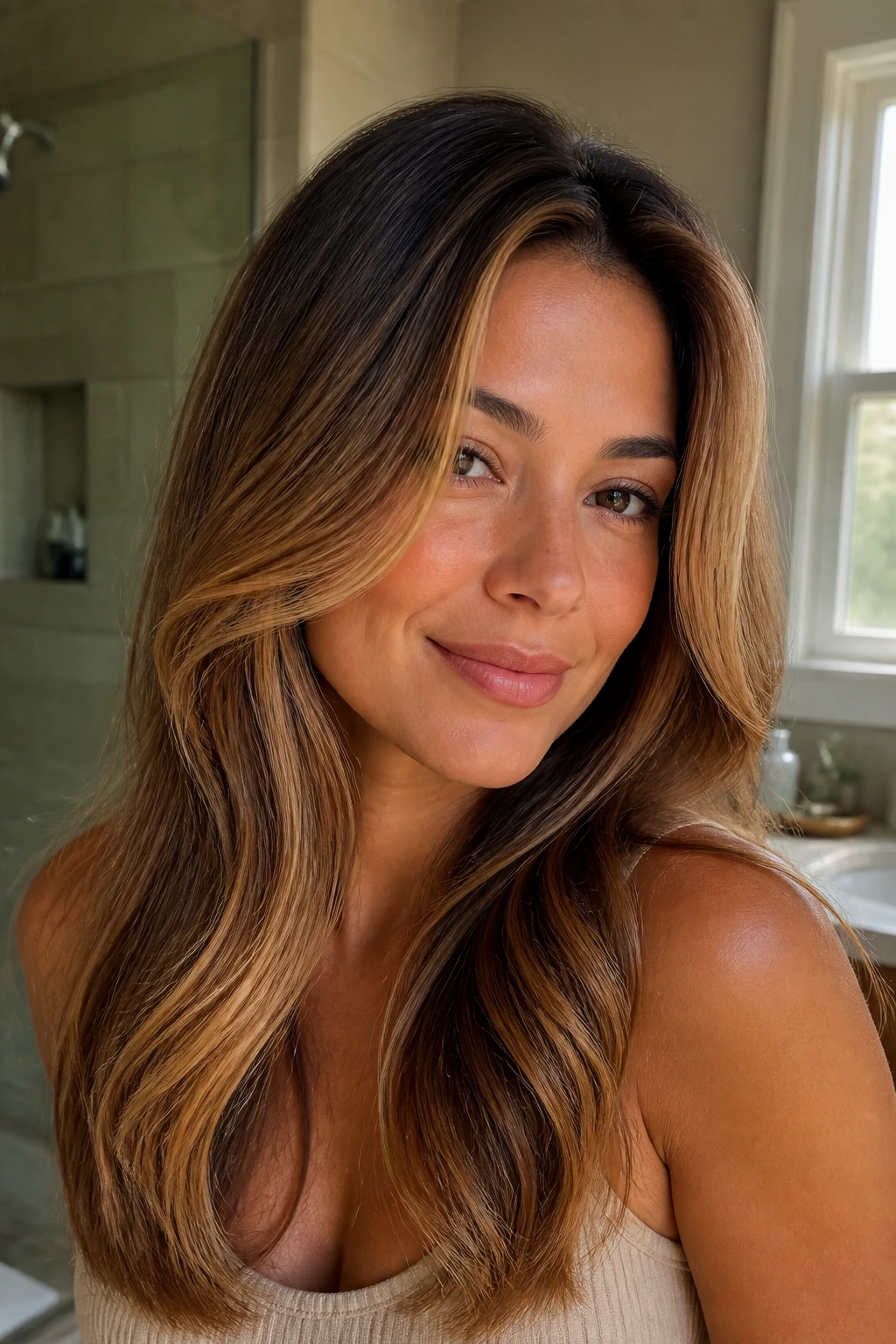
Face-Frame Brightness: Ask for the first pieces around the face to be one level lighter than the rest. That tiny shift can wake up the whole face without turning the color loud.
Root Shadow: A soft root at level 6 or 7 makes grow-out gentler and helps cover gray sparkle near the part. It also keeps blonde shades from feeling too bright at the scalp.
Gloss Layer: A clear or tinted gloss every 4 to 8 weeks keeps warm shades shiny. I’d rather see a slightly deeper shade with good shine than a pale one that looks thirsty.
Make-It-Yours: If your hair is fine, keep the contrast small. If your hair is thick, you can handle more visible ribbons and a little extra depth at the root. Red shades look better with a bit of brown in them; blonde shades look better with a bit of beige in them.
Common Mistakes to Avoid
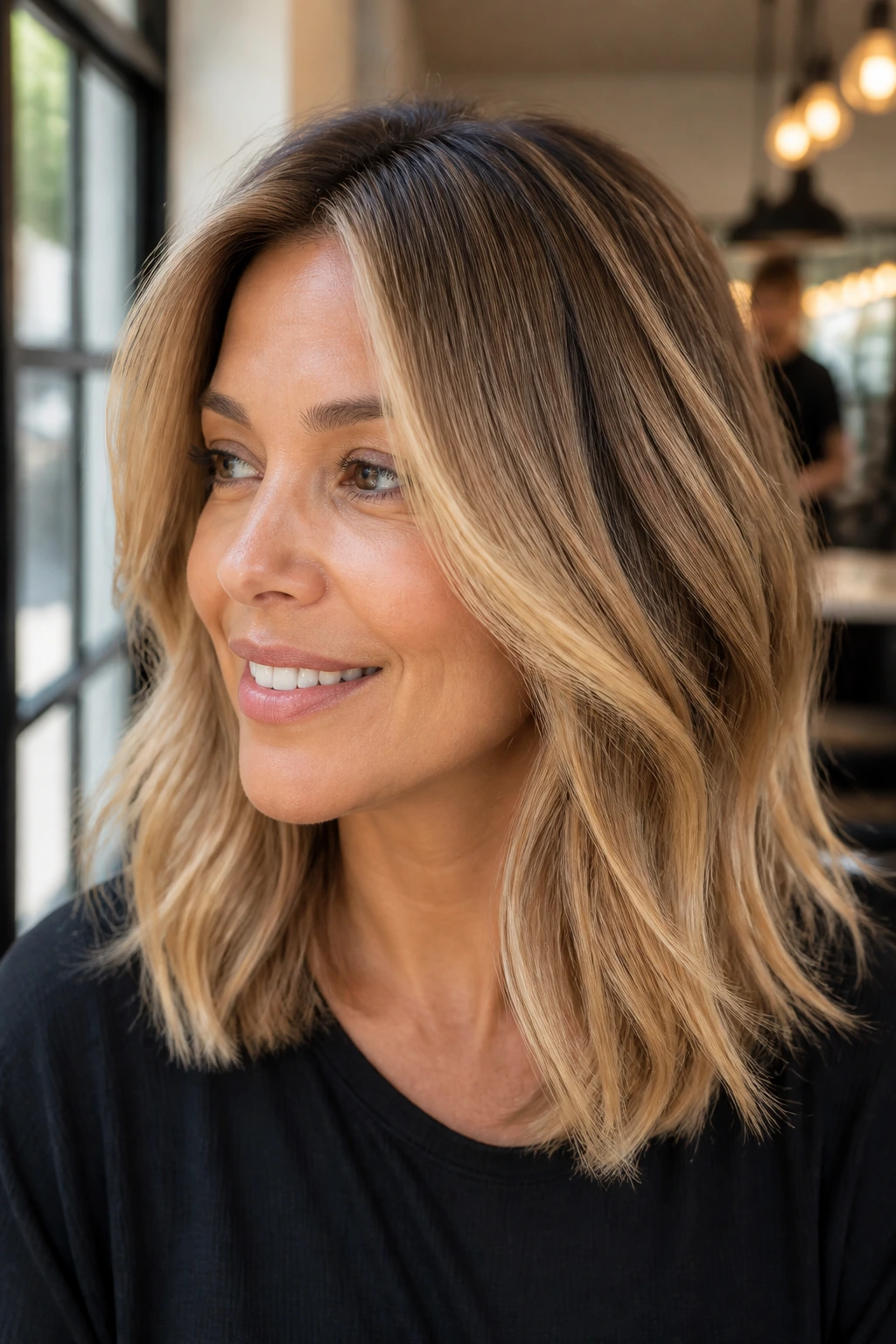
- Choosing ash because you’re afraid of brass: Ash can make warm skin look sallow and flat. If you want to calm brass, ask for beige or neutral-warm instead of smoky cool tones.
- Lightening too far in one appointment: Jumping from dark brown to pale blonde usually leaves the ends stressed and the root too bright. A slower shift with balayage or a gloss looks cleaner and grows out better.
- Ignoring gray percentage: A shade that barely tints silver strands is not the same as a shade that covers them. If you have meaningful gray at the part line, ask about permanent root color plus a demi gloss on the lengths.
- Letting copper fade without a plan: Red and copper lose pigment fast. If you want them to stay rich, schedule a gloss or use a depositing conditioner before the color turns weak and peachy.
- Picking a shade from a screen only: Phone photos lie. Always compare the color in daylight and ask the colorist to hold swatches near your face.
- Skipping shine: Warm shades need reflection. Dry ends or matte styling products can make even a beautiful chestnut look tired.
Variations and Adaptations to Try
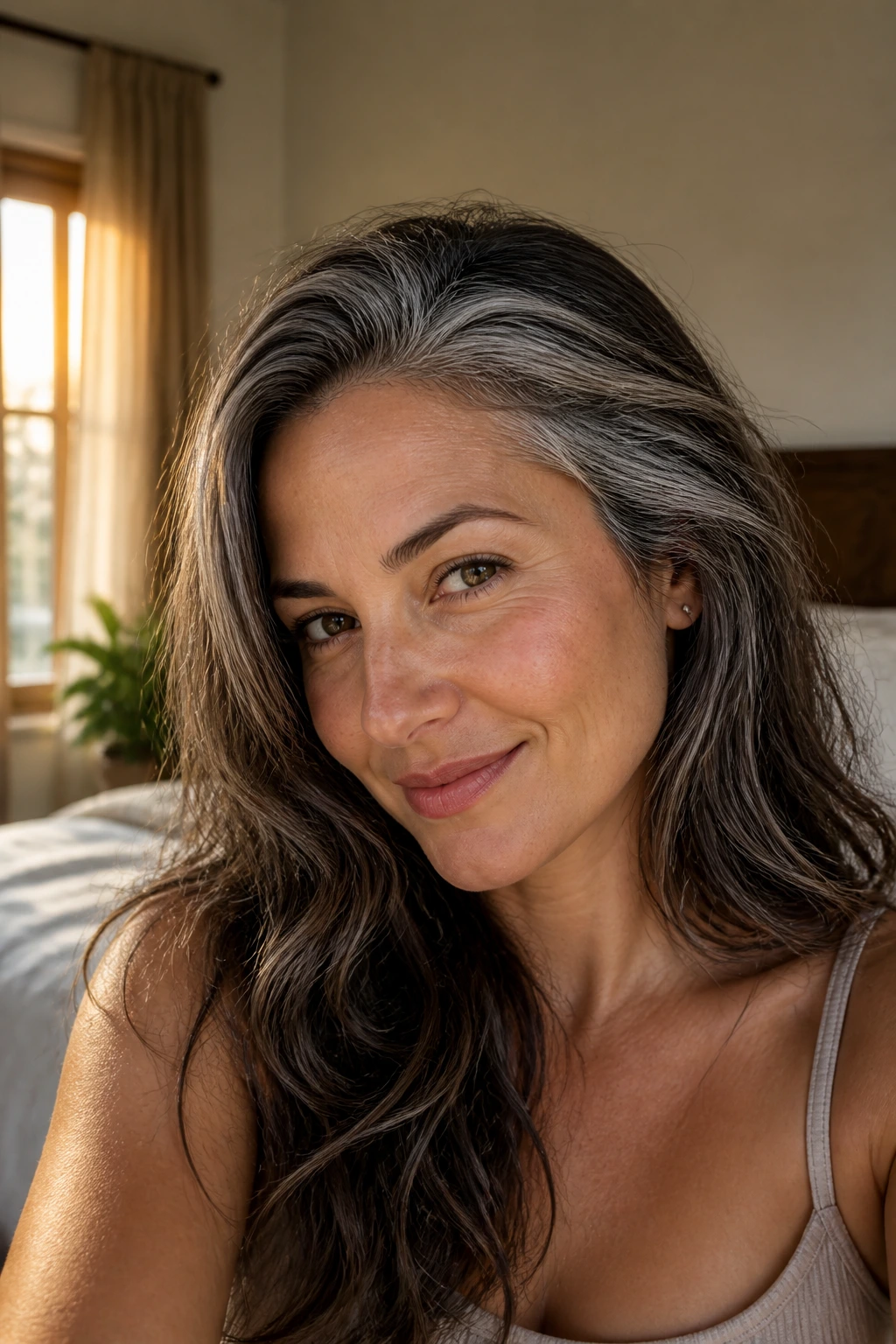
Soft Gray Blend: If you want low upkeep, ask for fine highlights and lowlights that blur silver instead of covering every strand. The result looks less like “coverage” and more like movement. It’s especially good on hair that grows fast around the temples.
Brighter Money Piece: Keep the base rich and add a lighter, warmer frame around the face. This is the move when you want brightness without opening up the whole head of hair. A honey or apricot money piece can do a lot of visual work.
Copper With Brown Roots: Copper is easier to wear when the roots stay deeper. The brown root keeps regrowth calm and stops the red from feeling too loud. It’s one of the smarter ways to wear a warm red if you still need a normal life between appointments.
Demi-Only Refresh: If your hair is already in the right level, use a demi-permanent gloss instead of changing the base again. That keeps the tone soft and lets you adjust warmth every few weeks without hammering the cuticle.
Brunette First, Warmth Second: Start with chestnut, mocha, walnut, or espresso, then add the warmth in ribbons or gloss. This version is the most forgiving if you work in an office, cover some gray, or just don’t want your hair to announce itself from across a room.
Frequently Asked Questions
How do I know if my skin tone is warm?
Warm skin often looks better in cream, camel, rust, and gold than in stark white or icy silver. Gold jewelry usually looks at home on it, and the skin often carries peach, golden, or olive notes rather than pink.
Can warm skin wear blonde?
Yes, but the blonde usually looks better when it leans honey, beige, butterscotch, or apricot instead of platinum. The brighter the blonde, the more careful you need to be about toner and root depth.
What’s the easiest shade to maintain from this list?
Caramel balayage, golden chestnut, warm mocha, and walnut brown with gold babylights are some of the easier ones to live with. They grow out softly and can usually be refreshed with a gloss rather than a full recolor.
Will copper make my face look red?
It can if the copper is too bright or too orange. A brown-based auburn or cinnamon copper usually sits better on warm skin because it adds glow without pushing the complexion into a flushed look.
How often should I refresh warm hair color?
Glosses often need a refresh every 4 to 8 weeks, while rooted balayage can stretch to around 10 to 12 weeks. Red and copper shades usually need attention sooner than brunette shades.
Can I go from ash brown to a warm color in one appointment?
Sometimes, but not always safely. If the hair is already dark or previously cool-toned, a good colorist may need to soften the base first and build warmth in stages so the result does not turn muddy or uneven.
What if I have a lot of gray?
Then coverage and blending are not the same goal. You might need permanent root color for the stubborn grays and a demi-permanent gloss on the lengths so the whole head still feels soft and warm.
Is box dye a good idea for these shades?
For subtle brunette warmth, sometimes. For honey blondes, copper auburns, or anything that needs careful placement, box dye tends to go blunt fast and can be hard to correct later.
Why does my warm color look brassy after a few washes?
Usually it’s a mix of fading pigment, mineral-heavy water, and too much heat styling. A color-depositing conditioner, a gentler shampoo, and less frequent hot-tool use usually slow that down.
Warm Shades I’d Book First
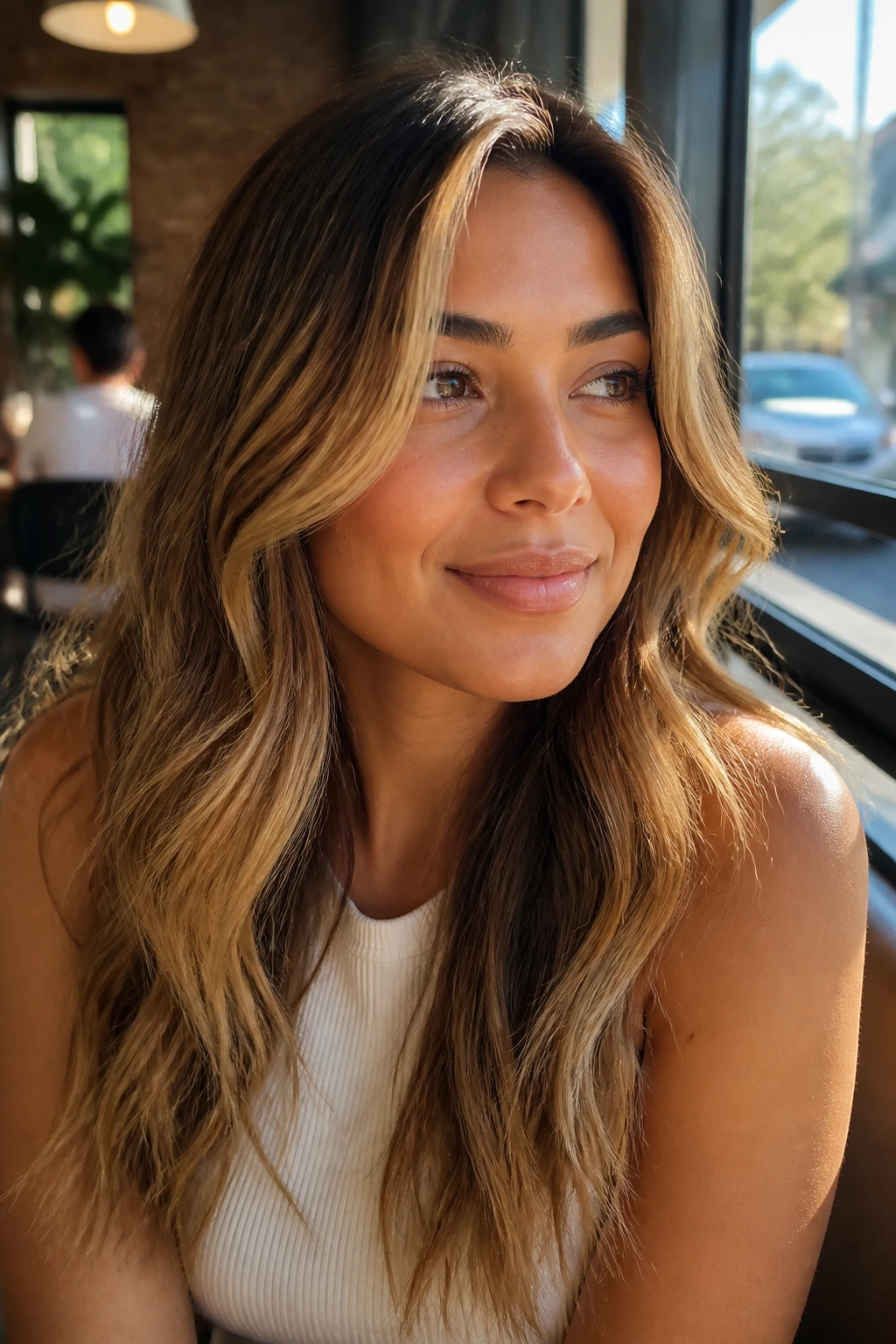
If you want the safest place to start, pick the shade that stays closest to your natural depth and add warmth around the face. That gives you the flattering part without turning maintenance into a second job. Honey blonde, caramel balayage, golden chestnut, and warm mocha are usually the most forgiving first choices.
The bolder reds and copper finishes can be beautiful, but they ask for more gloss, more patience, and a little more honesty about upkeep. Worth it if you love the color. Annoying if you don’t.
The smartest warm shade is the one that still looks good six weeks later, not just the day you leave the chair.