



Platinum blonde hairstyles for fair skin can look razor-sharp or strangely flat, and the haircut is usually what decides which one you get. On a very fair complexion, the color sits close to the skin, so every line matters: the part, the fringe, the weight at the ends, the shape around the cheekbones. When it’s done well, the effect is crisp and luminous. When it’s not, the hair can start to blend into the face in a way that feels unfinished.
That’s why I like treating platinum as a shape problem as much as a color problem. A clean bob, a lived-in wave, a tight bun, a shag with broken ends — each one changes how the light hits the hair and how your features read against it. Fair skin doesn’t need “softening” by default. It needs contrast that feels intentional, and sometimes that means a blunt edge, sometimes a wispy bang, sometimes a little shadow at the root so the whole look doesn’t float away.
There’s also a practical side people skip. Platinum hair is demanding. The cut has to do some of the visual heavy lifting because the color itself is already busy, especially once toner fades and the ends start showing different tones. A good platinum style on fair skin isn’t just pretty in a photo. It holds up under daylight, looks sane on day three, and still makes sense when you haven’t curled it in the morning.
Why This Set of Platinum Looks Earns Its Keep
-
Shape does the flattering here: Fair skin and platinum both sit in a pale range, so a strong cut line — blunt, layered, braided, or swept to one side — keeps the face from disappearing into the hair.
-
Contrast can be subtle: You do not need dark roots or heavy makeup to make platinum work. A soft root shadow, fuller brow shape, or a cheekbone-grazing bang is often enough.
-
Texture matters more than shine alone: Smooth hair can look chic, but a little bend, wave, or fringe gives the eye something to read, which matters when color and skin are close in depth.
-
Short styles protect fragile lengths: Bleached hair tends to dry out at the ends first. Bobs, pixies, and updos give the illusion of polish without asking the oldest part of the hair to do all the work.
-
Fair skin changes how tone reads: Blue-white platinum can look icy on cool undertones, while a pearl or soft silver finish can be kinder if your skin leans pink or slightly peach.
-
The right style buys you time: A good cut stretches the life of the color between salon appointments because the shape stays interesting even when the toner starts slipping.
How Platinum Blonde Reads on Fair Skin
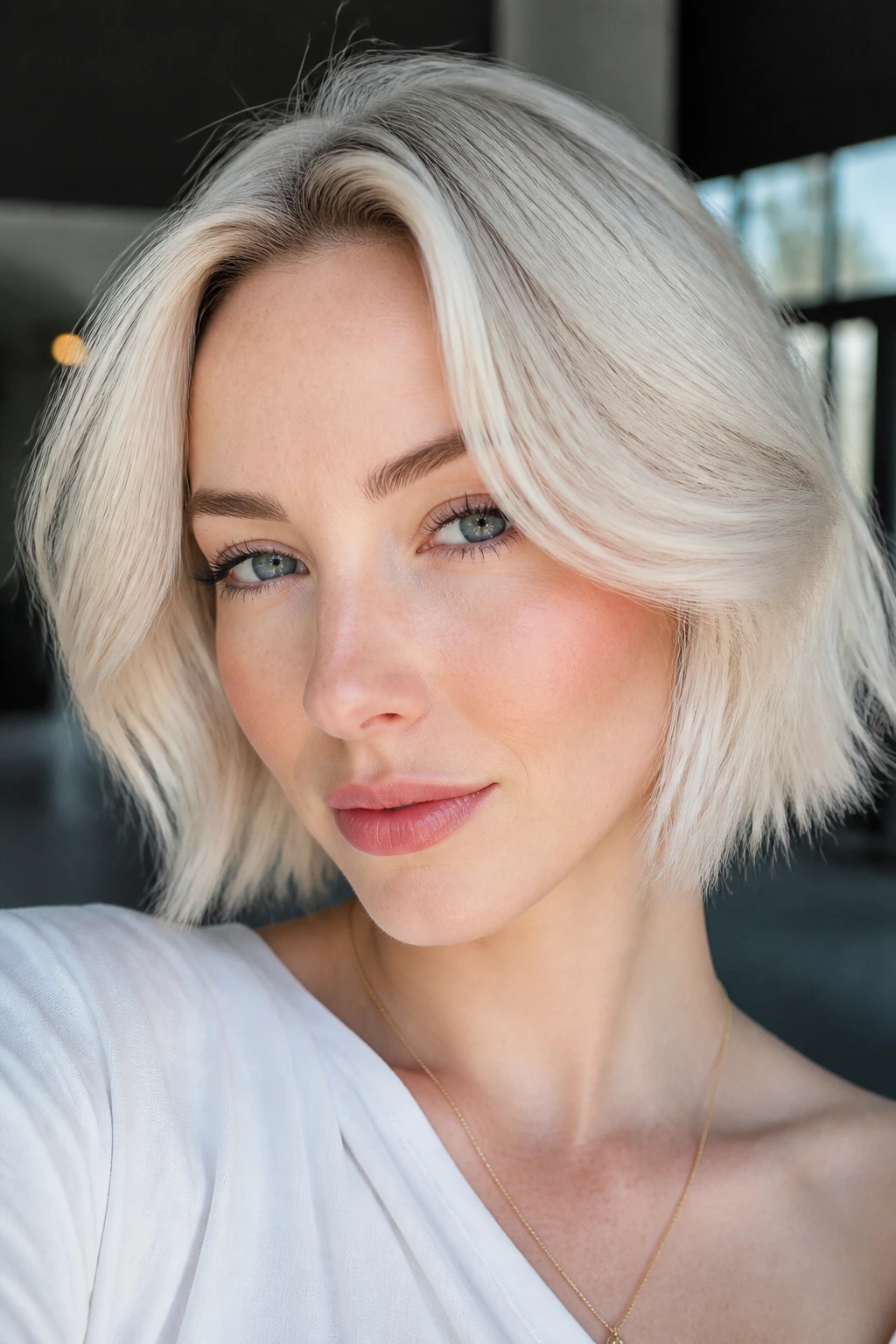
Platinum on fair skin can go two ways: it can look clean and expensive, or it can look a little like the hair is wearing the face instead of framing it. The difference is not mystery. It’s usually about contrast, and contrast comes from the cut, the part, the brow line, and the finish at the roots.
A straight, one-length sheet of ultra-light blonde tends to feel strongest when there’s some structure elsewhere — a bold lip, a defined brow, a sharp neckline, or a blunt perimeter that gives the eye something solid to land on. If everything is pale and feathered, the look can drift. That’s especially true in bright daylight, where harsh platinum shows every tone shift from root to ends.
I prefer a tiny bit of shadow at the root on fair skin, even if it’s only a soft smudge for half an inch. It keeps the color from looking pasted on and gives the hair a little depth near the scalp. Not dark. Just enough to stop the whole head from reading like one flat sheet of white-blonde.
And then there’s the face framing. A cheekbone-length curtain bang, a side part, or a few broken pieces around the jaw can change the whole vibe. On fair skin, those small breaks in the line matter. They stop the blonde from swallowing your features and make the style look chosen rather than simply bleached.
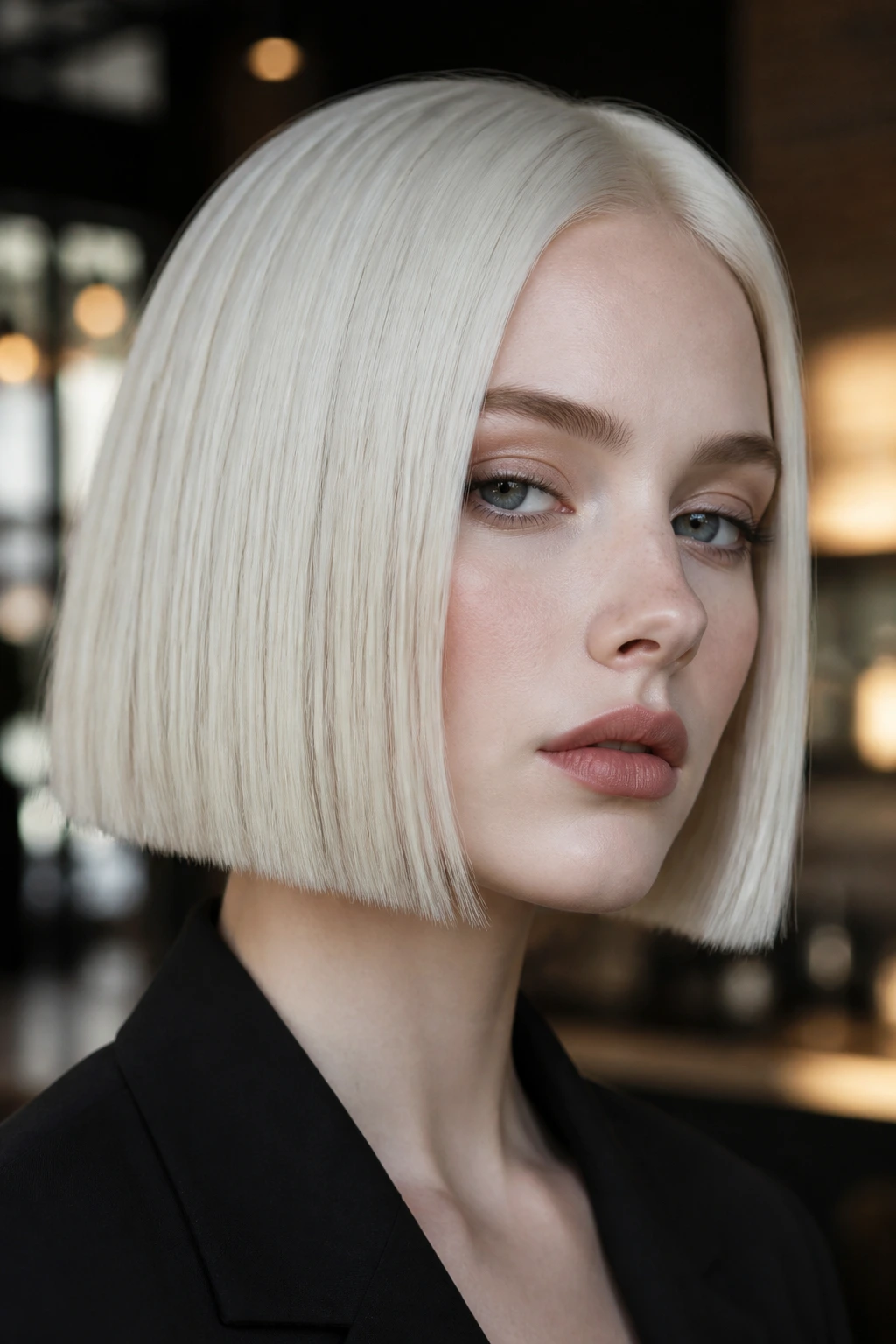
1. Icy Blunt Bob
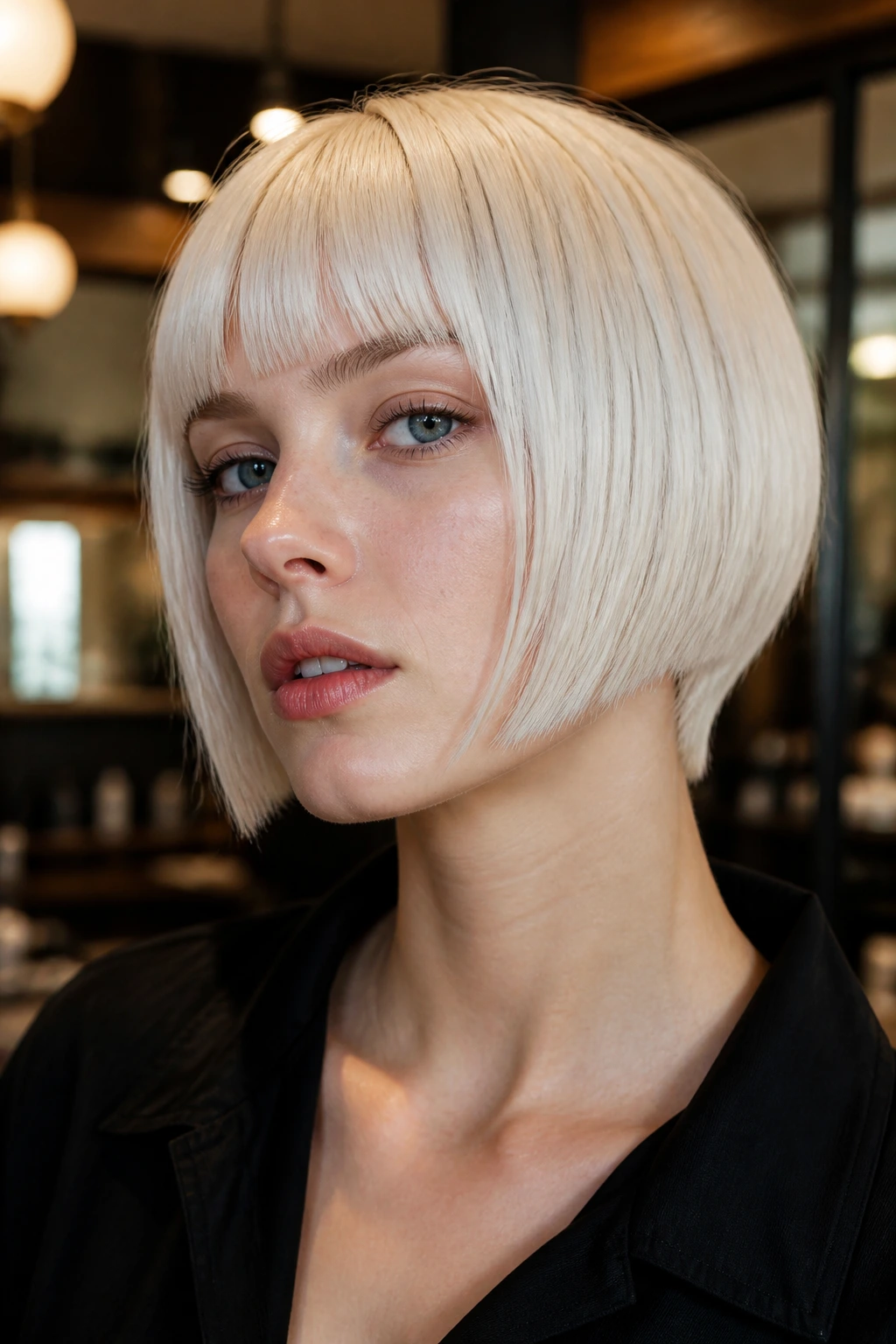
A blunt bob is the easiest way to make platinum look deliberate instead of airy. The hard edge at the jawline or just below it gives fair skin a clean frame, and the contrast between the smooth line and the pale color feels sharp in the best way. I like this cut when the hair is fine or straight, because the geometry does most of the styling work for you.
Why It Reads So Well on Fair Skin
The blunt edge keeps the eye from drifting past the face. On a very light complexion, that matters more than people expect. The bob creates a neat visual border, which makes the platinum feel polished rather than washed out.
Best Details to Ask For
- A one-length line with only a slight bevel at the ends
- A center or soft off-center part
- A root shadow if your natural color is pale but not platinum
- A glassy finish with a flat iron and heat protectant
This cut is especially good if your brows are defined. The face needs a few strong anchors when the hair is this light. If you want the look to feel colder, keep the toner in the pearl-to-silver range instead of drifting beige.
2. Center-Parted Glass-Hair Lob
The lob — collarbone length, center parted, and smoothed almost to a mirror finish — is one of my favorite platinum looks for fair skin because it feels calm, not fussy. The length gives the color more room to move, and the straight center part keeps the face symmetrical, which is useful when the blonde itself already carries a lot of visual weight.
What Makes It Work
A lob sits in that useful middle zone where the hair still looks full, but it does not drag the face down. On fair skin, that balance keeps the whole look from feeling too severe. The trick is shine. Not greasy shine. A precise, light-catching gloss that makes the blonde look expensive and clean.
Styling Notes
- Blow-dry with a concentrator nozzle and a round brush
- Finish with a flat iron only on the top layer if the ends need polish
- Use a pea-sized amount of serum, not a heavy oil
- Tuck one side behind the ear if you want the jawline to show
This is the style I’d hand to someone who wants platinum but doesn’t want the color to scream first and talk later.
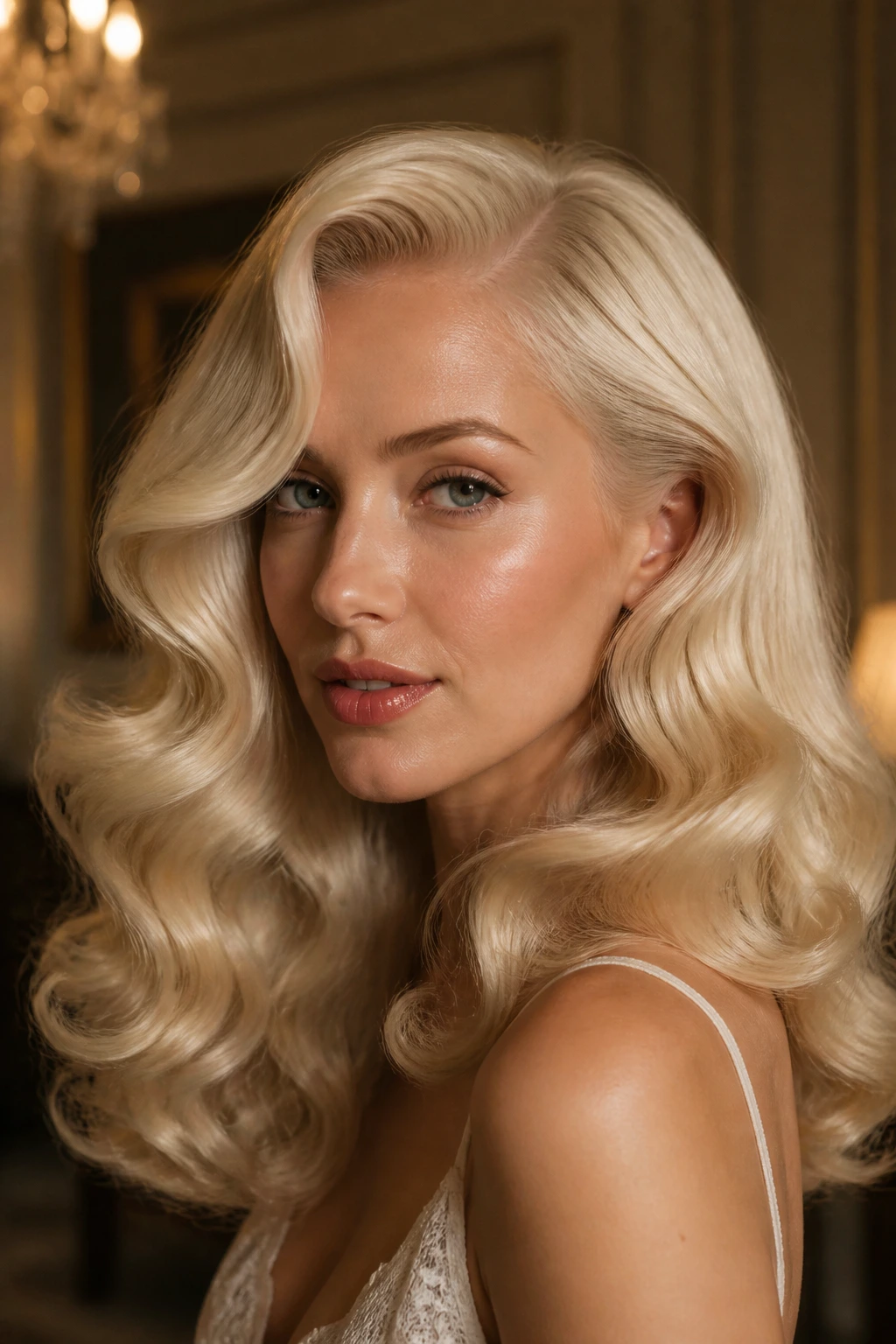
3. Soft Hollywood Waves
Soft Hollywood waves give platinum a kind of old-film drama that works beautifully on fair skin because the movement breaks up the brightness. The wave pattern adds shadow in the bends and a little lift at the crown, so the color has places to live instead of becoming one continuous sheet of light.
A 1.25-inch curling iron, set around 325°F to 350°F, usually gives the best shape on medium-length hair. Curl away from the face on one side, toward the face on the other, then let the curls cool completely before brushing them out. That cooling step matters. Skip it and the wave collapses faster.
This style is lovely for formal nights, but it also has a sneaky advantage on second-day hair. The loose wave keeps platinum from showing every flat spot. A mist of flexible hairspray and a light brush-through at the ends is usually enough.
4. Curtain Bangs with Long Layers
Curtain bangs can save platinum on fair skin when the color feels a little too uniform. They break the front edge of the hair, soften the forehead area, and pull attention toward the eyes and cheekbones. Long layers behind them keep the shape from getting too heavy at the bottom.
The nice part is the way curtain bangs move. They do not sit there like a helmet fringe. They fall open, then close again, which gives a pale blonde style a more relaxed rhythm. If your fair skin leans pink, this shape is especially kind because it creates softness without making the whole look fuzzy.
Ask for the shortest pieces to land around the top of the cheekbone, not the middle of the nose. That placement matters. Too short and the fringe can feel dated. Too long and you lose the frame that makes the style useful.
5. Feathered Pixie Crop
A feathered pixie crop is one of the strongest answers to platinum on fair skin because the cut itself brings the personality. The texture at the crown, the soft taper around the ears, and the slightly longer top keep the style from feeling severe even when the color is as pale as it gets.
The Useful Part
Short hair shows off the tone beautifully, but it also shows damage fast. A pixie solves that by removing the weakest ends from the equation. You’re left with a style that looks intentional even on days when your hair refuses to behave.
What to Tell Your Stylist
- Leave enough length on top to sweep forward or slightly sideways
- Keep the sides close, but not shaved tight unless you want a harder look
- Use a matte paste or light cream, not a greasy pomade
- Keep the fringe soft so the face still has movement
On fair skin, this cut works especially well with a defined brow and a little blush on the high cheek. It keeps the face from going too pale at the edges.
6. Sleek High Ponytail
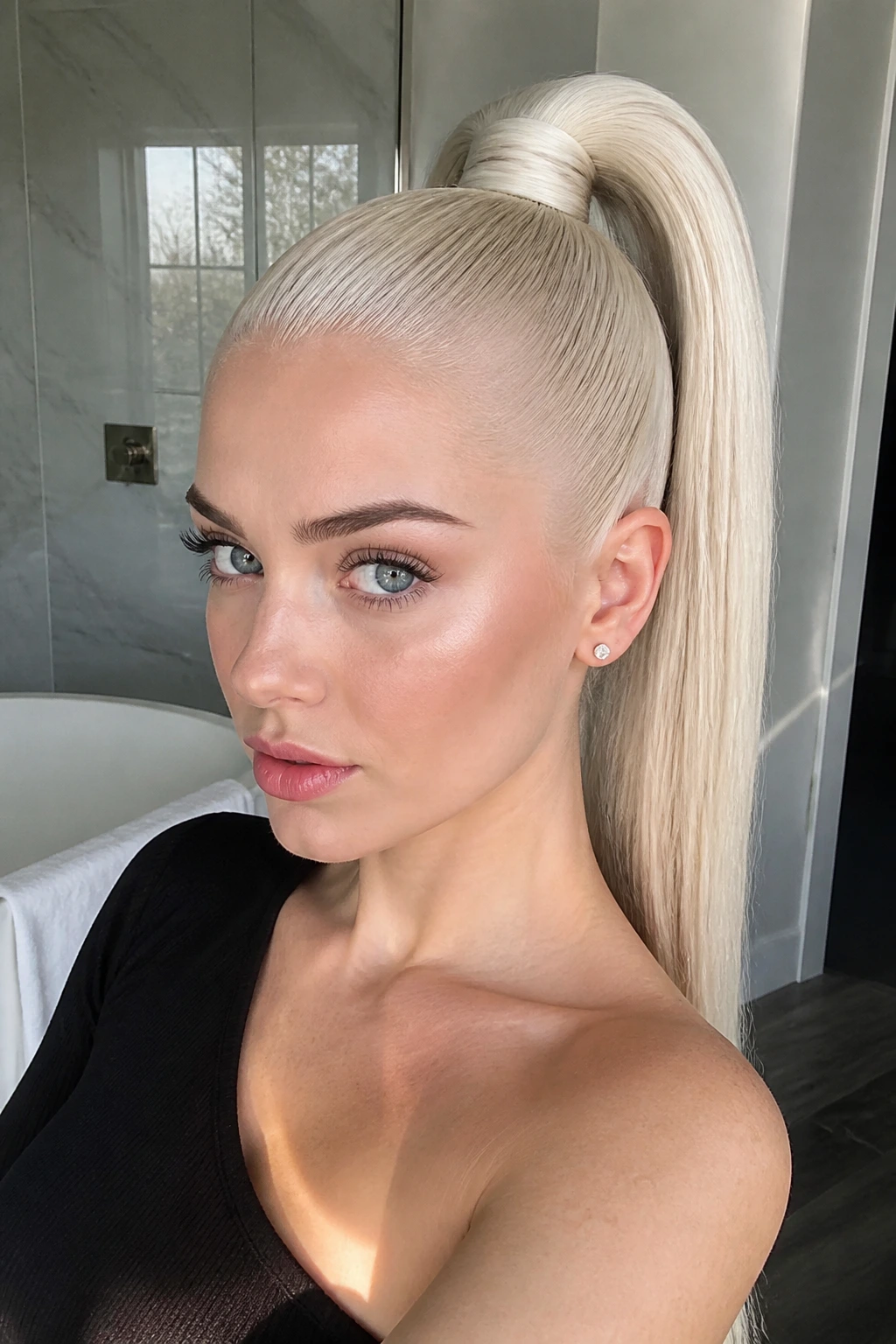
A sleek high ponytail does something useful for platinum: it makes the color feel graphic. The lifted base clears the face, exposes the neck, and puts the blonde front and center without needing curls or layers to create interest. On fair skin, that clean exposure can look striking because the contrast is all in the shape.
This is not the ponytail you throw together with day-three frizz. It needs a smooth crown, a secure elastic, and a wrapped section of hair around the base so the style looks finished. A little gel at the hairline helps, but use enough to tame flyaways and no more. Heavy gel can make light blonde hair look dull at the roots.
If your hair is fine, tease a small section underneath before you pull it up. Tiny detail. Big difference. It keeps the crown from collapsing by lunchtime.
7. Tousled Shag with Broken Ends
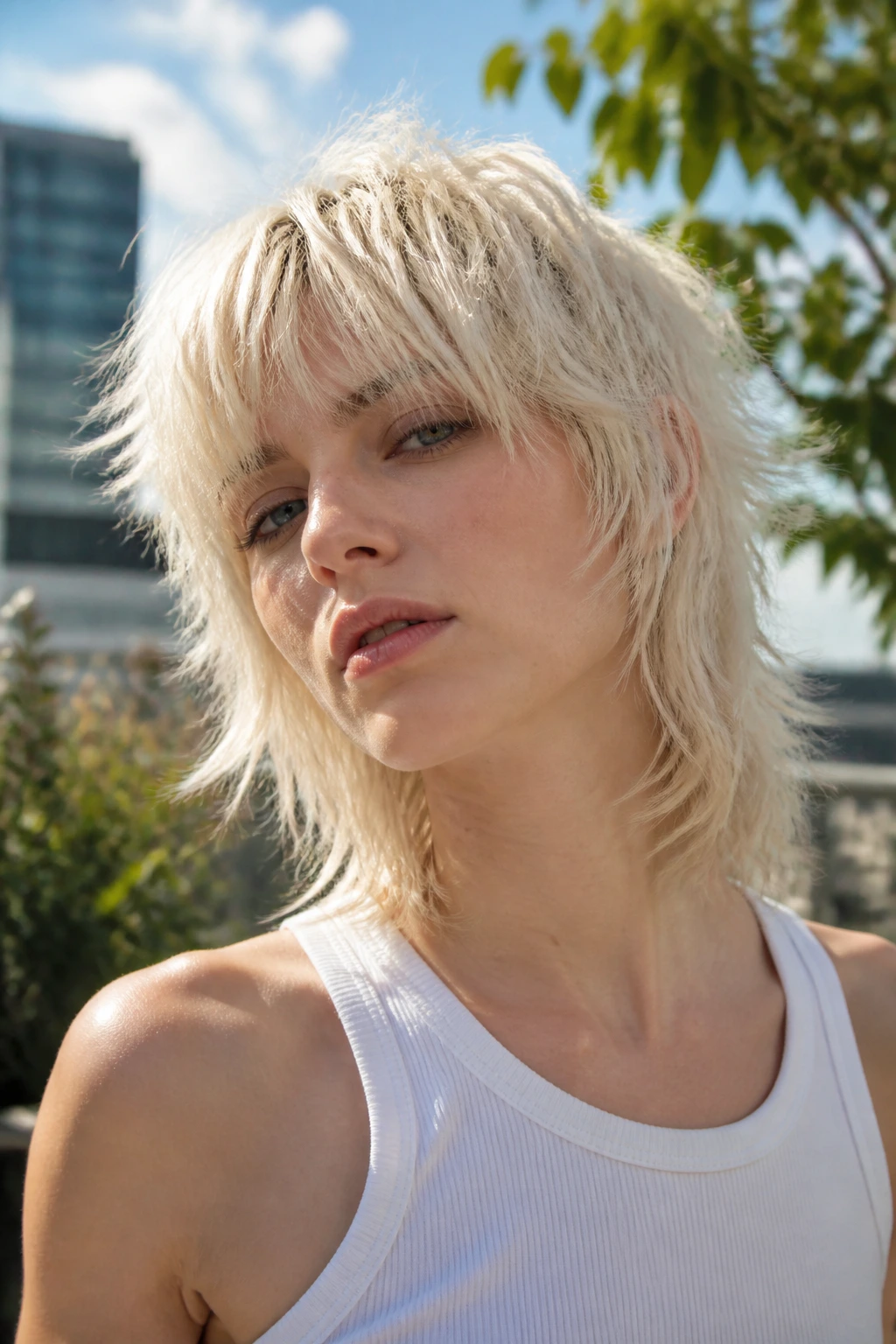
The shag gives platinum some grit, and fair skin usually benefits from that. The broken layers, choppy ends, and face-framing pieces create enough shadow that the blonde no longer reads as one pale block. The result feels lived-in without looking lazy.
Why I Keep Reaching for This Cut
Because it solves the “too much light in one place” problem. A shag spreads that brightness out through movement, and movement is where platinum starts looking dimensional instead of flat.
Useful Styling Pieces
- A razor or point-cut finish for the ends
- Light mousse at the roots
- Sea salt spray or dry texture spray through the mid-lengths
- Air-drying or a rough blow-dry with a diffuser
This style tends to look best when the toner is not overdone. If the blonde is too gray or too violet, the whole cut can turn muddy. A clean pearly tone keeps the texture readable.
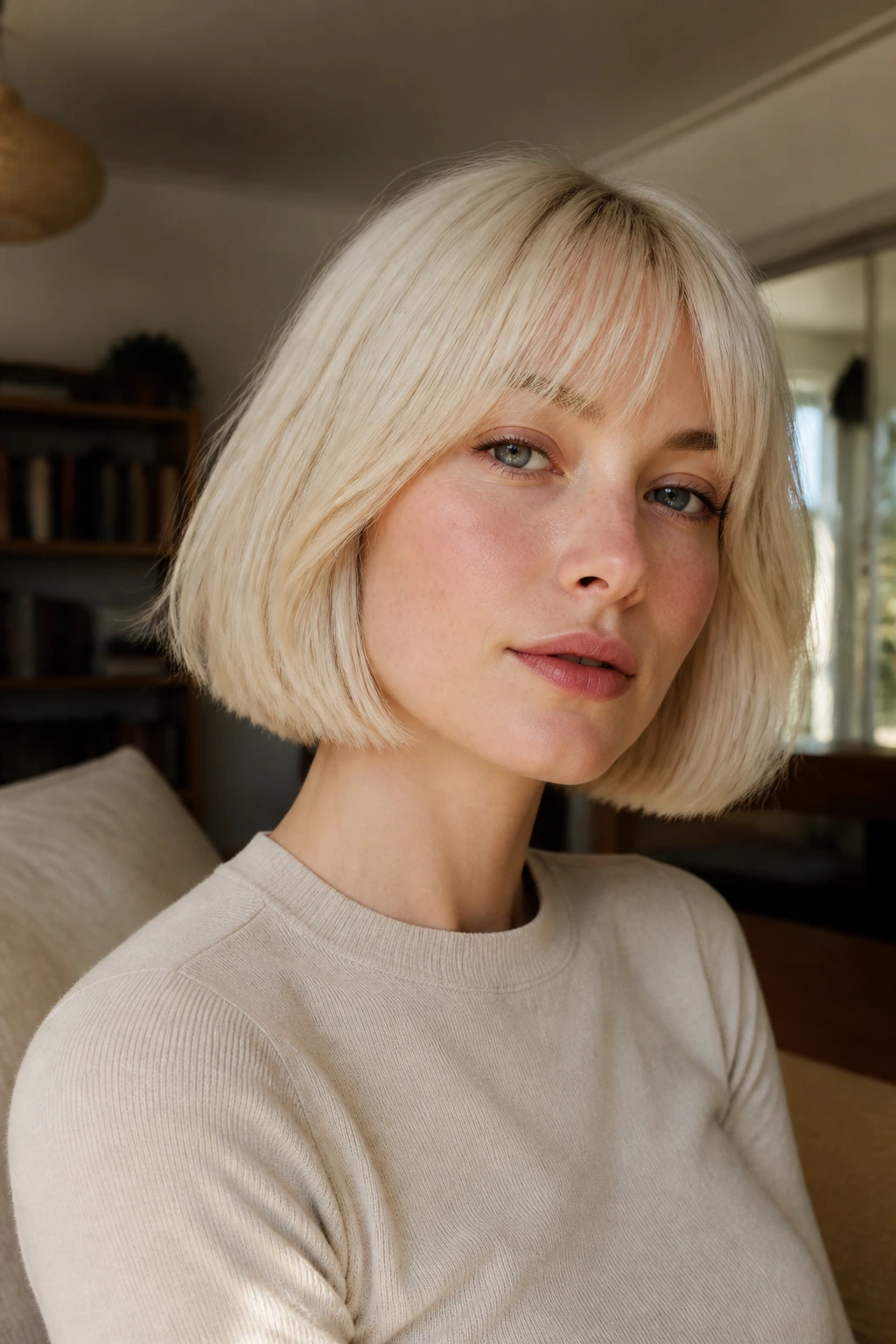
8. French Bob with Micro Fringe
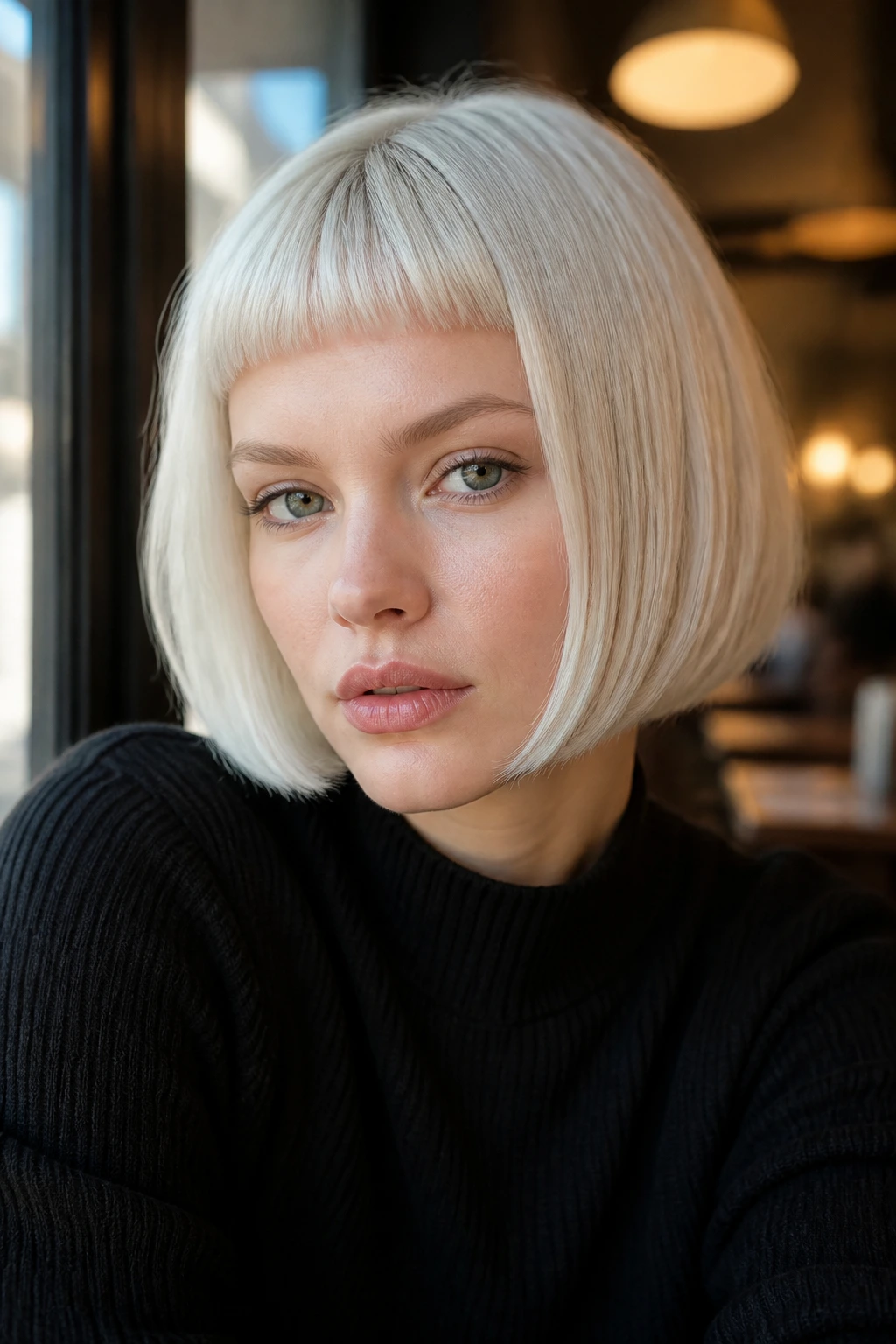
The French bob is neat, short, and a little cheeky, which is exactly why it works on fair skin. The chin-skimming shape draws attention to the mouth and eyes, while the tiny fringe gives the forehead a hard border that keeps the platinum from spreading too softly across the face.
It’s a confident cut. Not loud. Confident.
The micro fringe is the part people either love or avoid, and I get it. It’s precise. If you have a broad forehead or strong brows, it can look sharp. If your brows are already fine and pale, it may need a little help from brow gel or pencil so the top half of the face does not disappear.
This is one of those styles that looks best with either bare skin and clean mascara or a very strong red lip. Middle ground is possible, but the cut likes a point of view.
9. Braided Crown
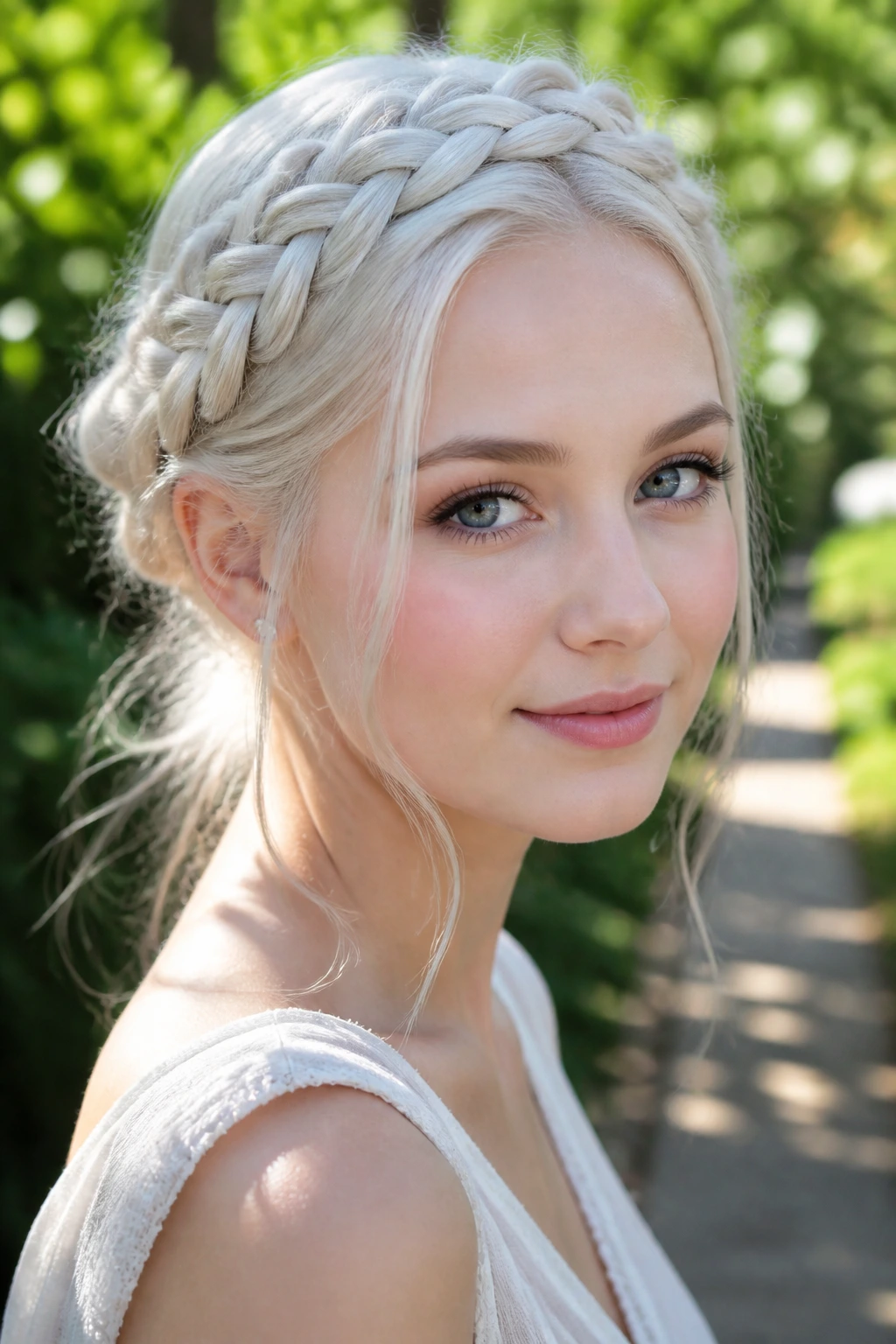
A braided crown on platinum hair can look almost silver in motion, especially on fair skin, where the braid sits close to the complexion and picks up every bit of light. The nice thing about this style is that the braid pattern gives the hair built-in detail. You do not need curls or layers for the look to have texture.
I like this for shoulder-length hair and longer, but the braid needs enough fullness to read clearly. If the hair is very fine, stretch the braid gently after securing it so it looks broader. If it’s too tight, the crown can feel severe and pull the face backward.
A few loose pieces around the hairline help. Not a mess. Just enough softness to keep the style from feeling theatrical.
10. Half-Up Twist with Loose Lengths
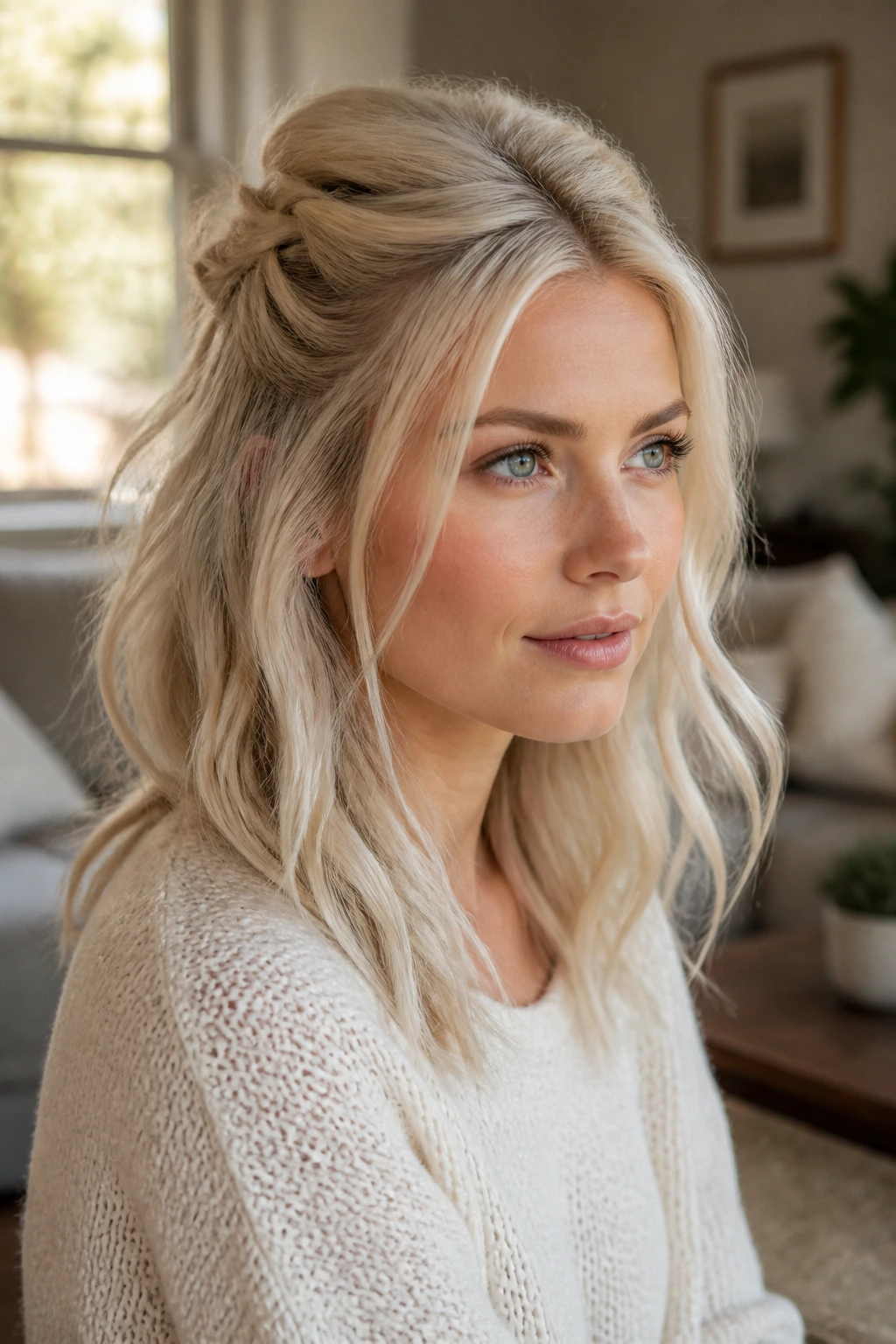
Half-up styles are useful on platinum because they show off the color while giving the face a little room. The twist at the back adds shape, and the loose lengths keep the look from becoming too formal. On fair skin, that mix is flattering because it creates movement around the cheek and jaw without hiding the hair.
The Part That Matters
The top section should sit high enough to lift the crown, but not so high that it turns into a pseudo-bouffant. A small clip, a pair of twisted sections from the temples, or a simple knot at the back usually does the job.
Good Situations for It
- Workdays when you want hair off your face
- Dinner plans after a long day
- Days when the ends need a break from heat styling
- Times when you want length without full-updo energy
This style also hides root regrowth well, which is a small mercy if you keep a platinum shade on the cool side.
11. Side-Swept Pixie
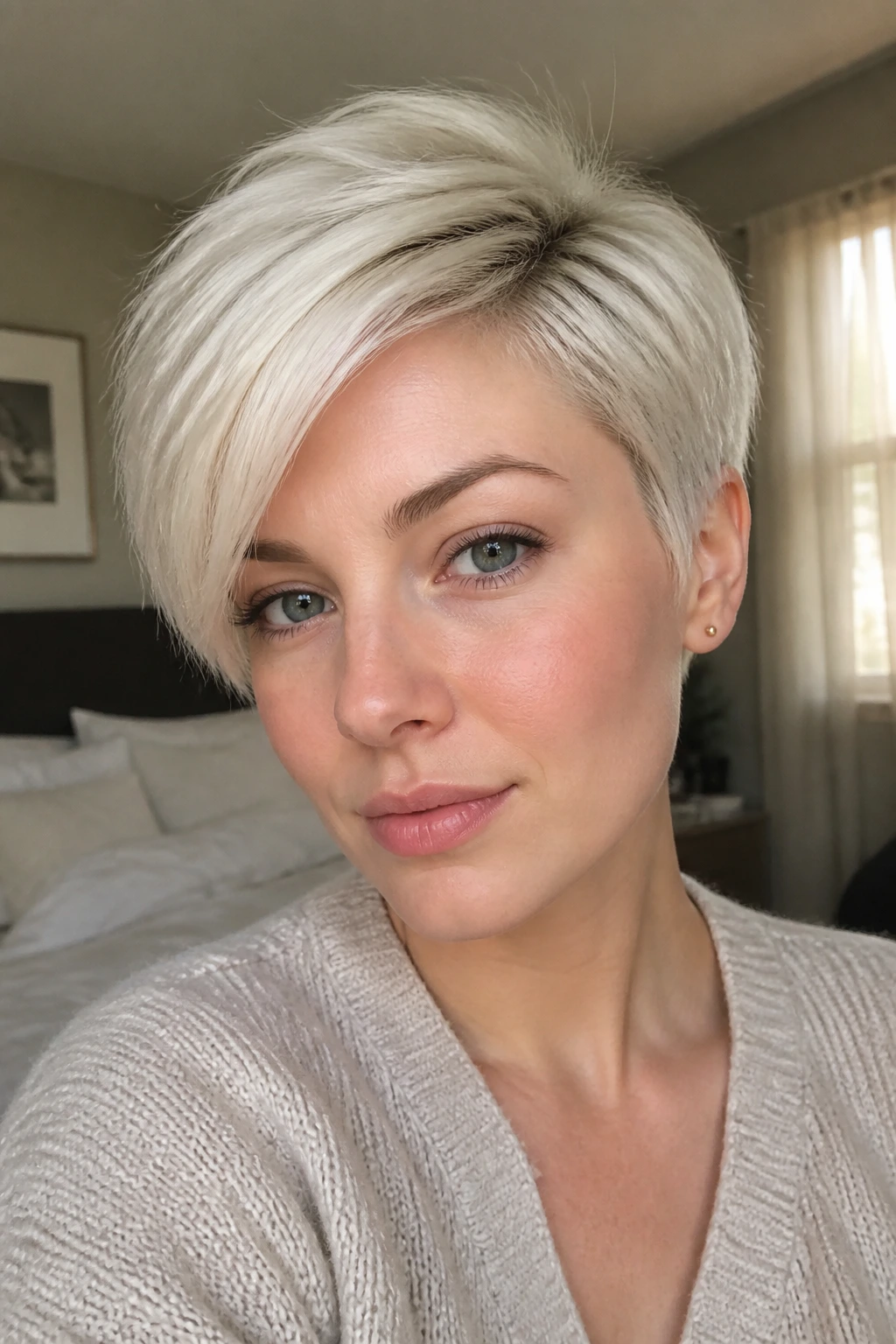
A side-swept pixie has a softer edge than the fully cropped version, and that softness helps on fair skin. The longer sweep across the forehead gives the face a diagonal line, which is useful when the color is very light and the features need a little movement around them.
This cut looks best when the longer top has enough length to bend, not spike. A little cream or paste, worked through damp hair and then roughed up with fingers, keeps the shape from going helmet-stiff. If your hair is naturally straight, a quick pass with a round brush at the front can create that side sweep without much effort.
It’s a nice style if you want platinum to read chic rather than delicate. The asymmetry does a lot of the work.
12. Beach Waves on Long Hair
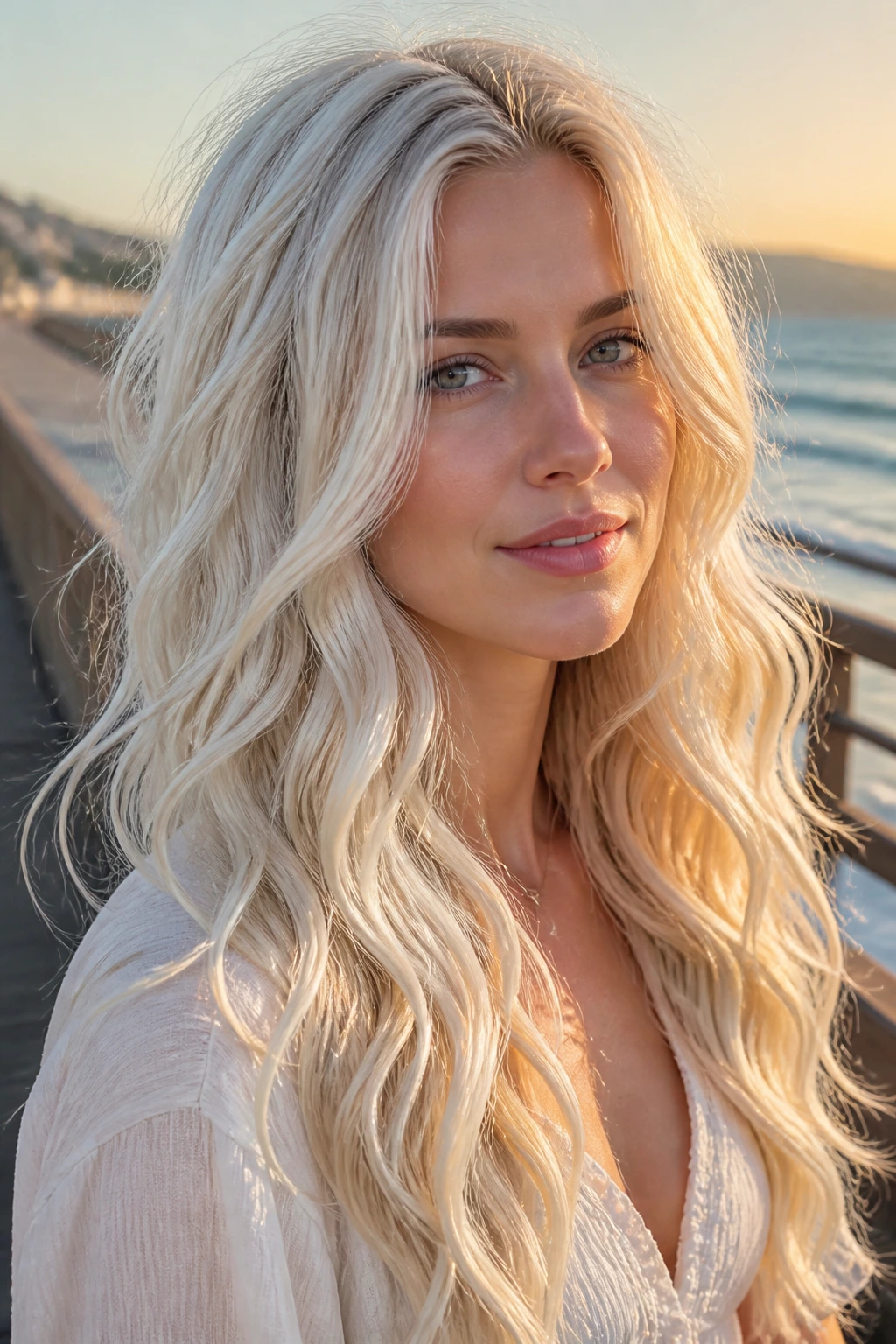
Beach waves on long platinum hair can go wrong fast if every curl is the same size. When they’re done with some mess in them — different directions, a few straighter pieces, a soft bend at the ends — they make fair skin look fresh because the texture breaks up all that light.
A 1-inch or 1.25-inch iron is enough if you alternate curl direction and leave the bottom inch out on a few sections. That little inconsistency matters. It keeps the look from becoming a pageant wave. I also like a salt-free texture spray here, because true salt spray can roughen already porous blonde ends.
This style is best when the hair still has some shine. Platinum does not need to look dry to look beachy. That’s a bad trade.
13. Low Chignon
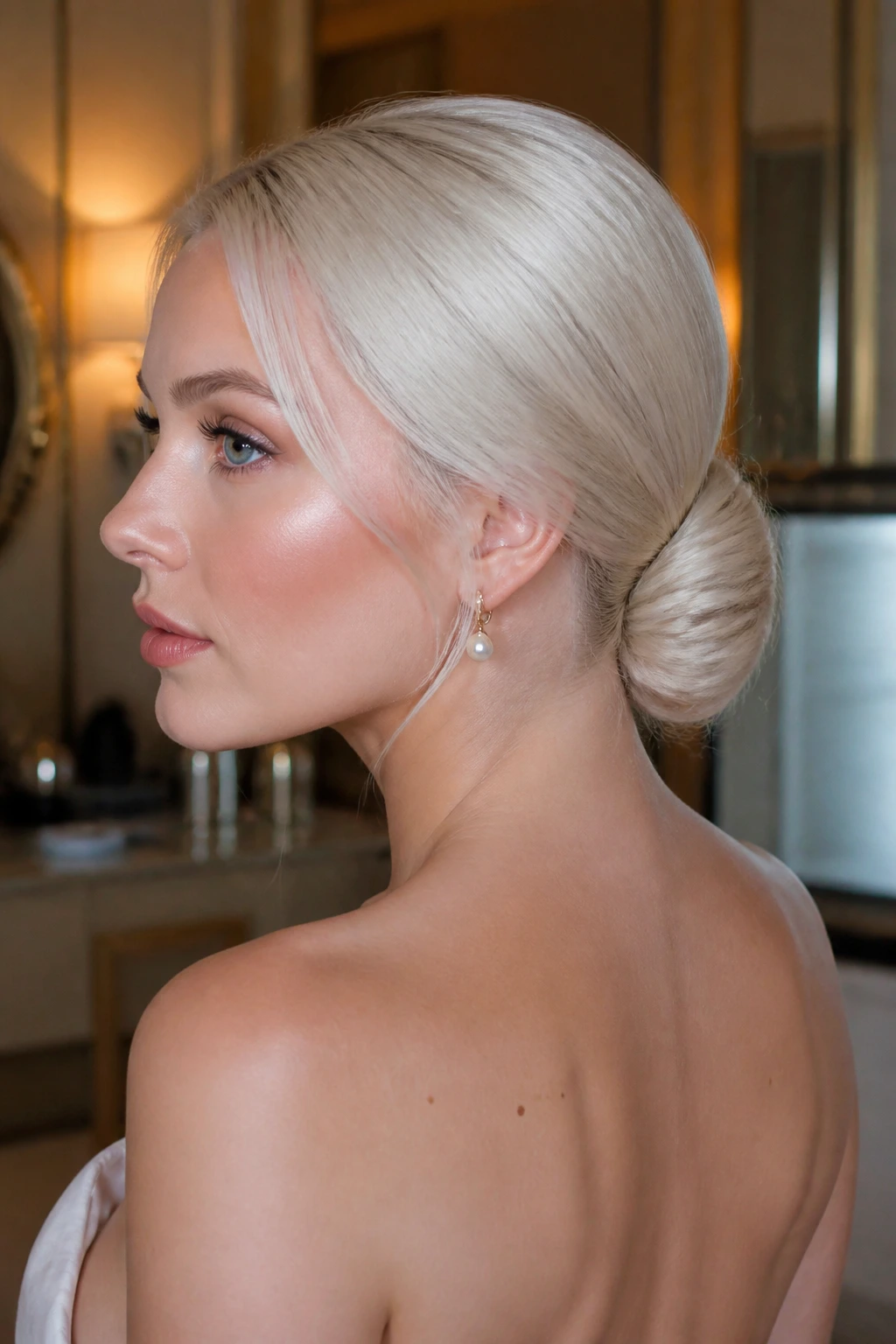
A low chignon is the quietest look in this group, and maybe the most elegant when the platinum is very pale. Pulling the hair back to the nape exposes the face, the neck, and usually the earrings, which gives fair skin a clean frame and keeps the blonde from overwhelming the features.
It’s also forgiving. If the ends are not perfect, they disappear into the knot. If the hair has some old toner left in it, no one cares. The shape carries the look.
Leave a few narrow pieces around the temples if your face needs softness, or keep it slick if you want a sharper line. Either way, this style likes a touch of shine spray at the finish. Too much and it goes greasy; too little and the blonde can look dusty.
14. Textured Shoulder-Length Lob
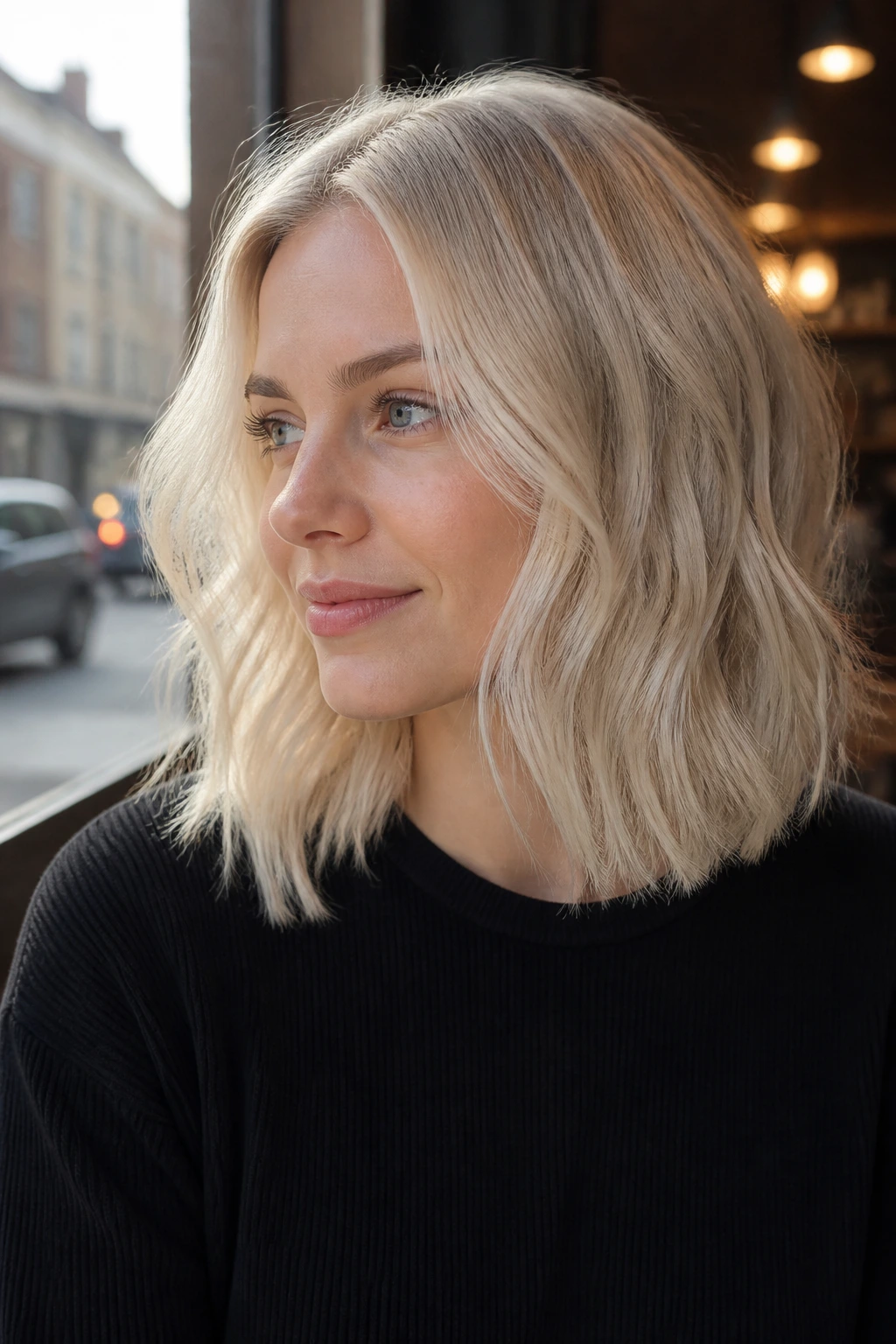
The textured lob sits in the sweet spot between polished and casual. It’s long enough to pull into a clip or a low tie, but short enough that the ends still look healthy if you keep up with trims. On fair skin, the textured edge stops the platinum from feeling too severe.
I like this cut with invisible layers and a soft bend through the mid-lengths. Not ringlets. Not poker straight. Just enough movement that the hair catches a little shadow. A wide-tooth comb, a few scrunches of mousse, and a low-heat blow-dry often give you more than enough shape.
It’s one of the easiest platinum styles to live with because it doesn’t demand perfection. That matters when your hair has already been through bleach, toner, and a couple of rounds of purple shampoo.
15. Bubble Ponytail
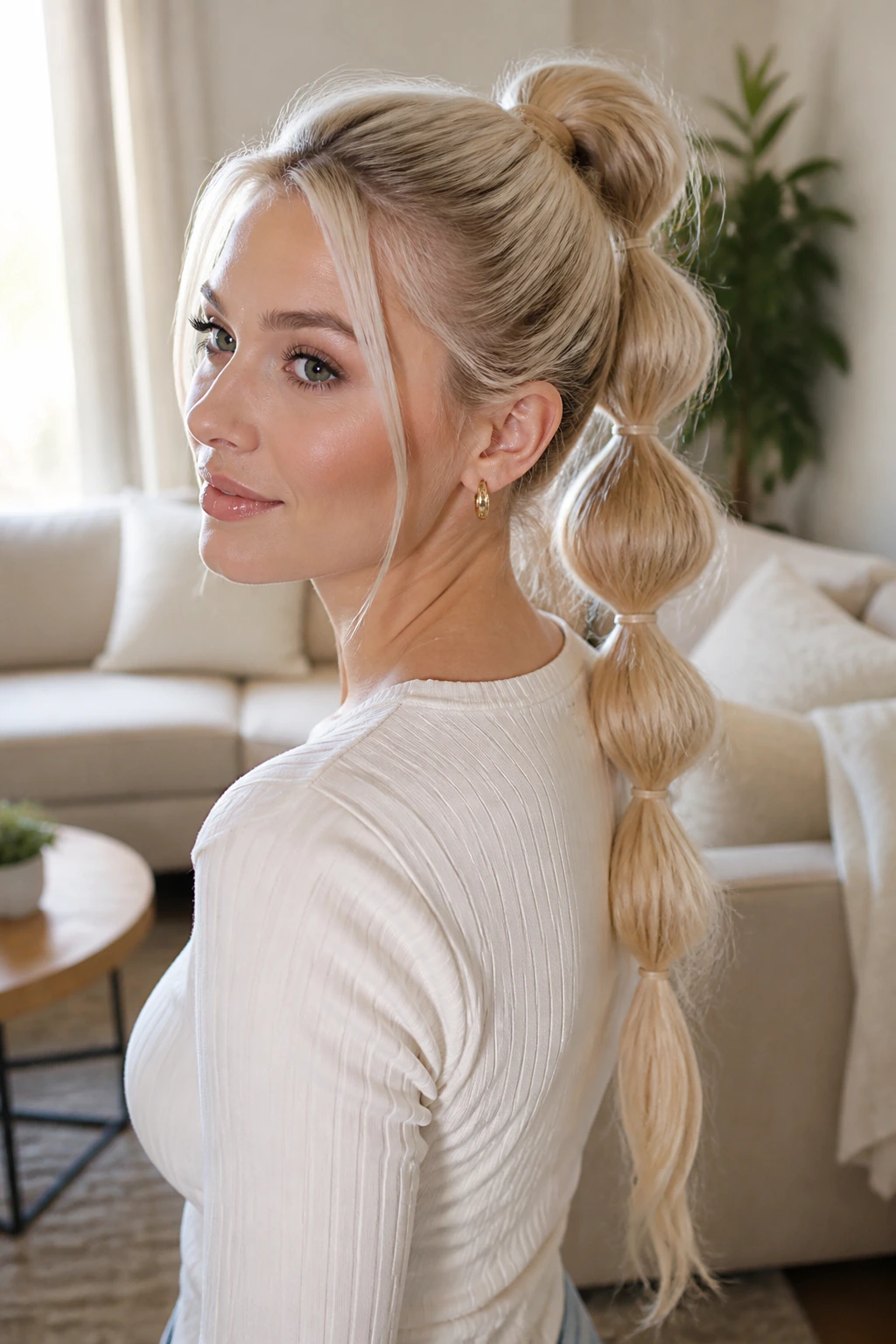
A bubble ponytail sounds playful because it is playful, but it also solves a real problem: it breaks a long pale pony into separate sections, which gives platinum more rhythm. On fair skin, those rounded “bubbles” create small bands of shadow and light, so the style doesn’t flatten out in the same way a plain ponytail can.
Use clear elastics every 2 to 3 inches, then gently tug each section so it rounds out. The key is not to make every bubble the same size. Slight irregularity looks better. Too perfect and the whole thing turns stiff.
This is a strong choice if you want something youthful without going full costume. Keep a few face-framing pieces loose, especially if your complexion is very light and you want the style to feel softer.
16. Messy Top Knot
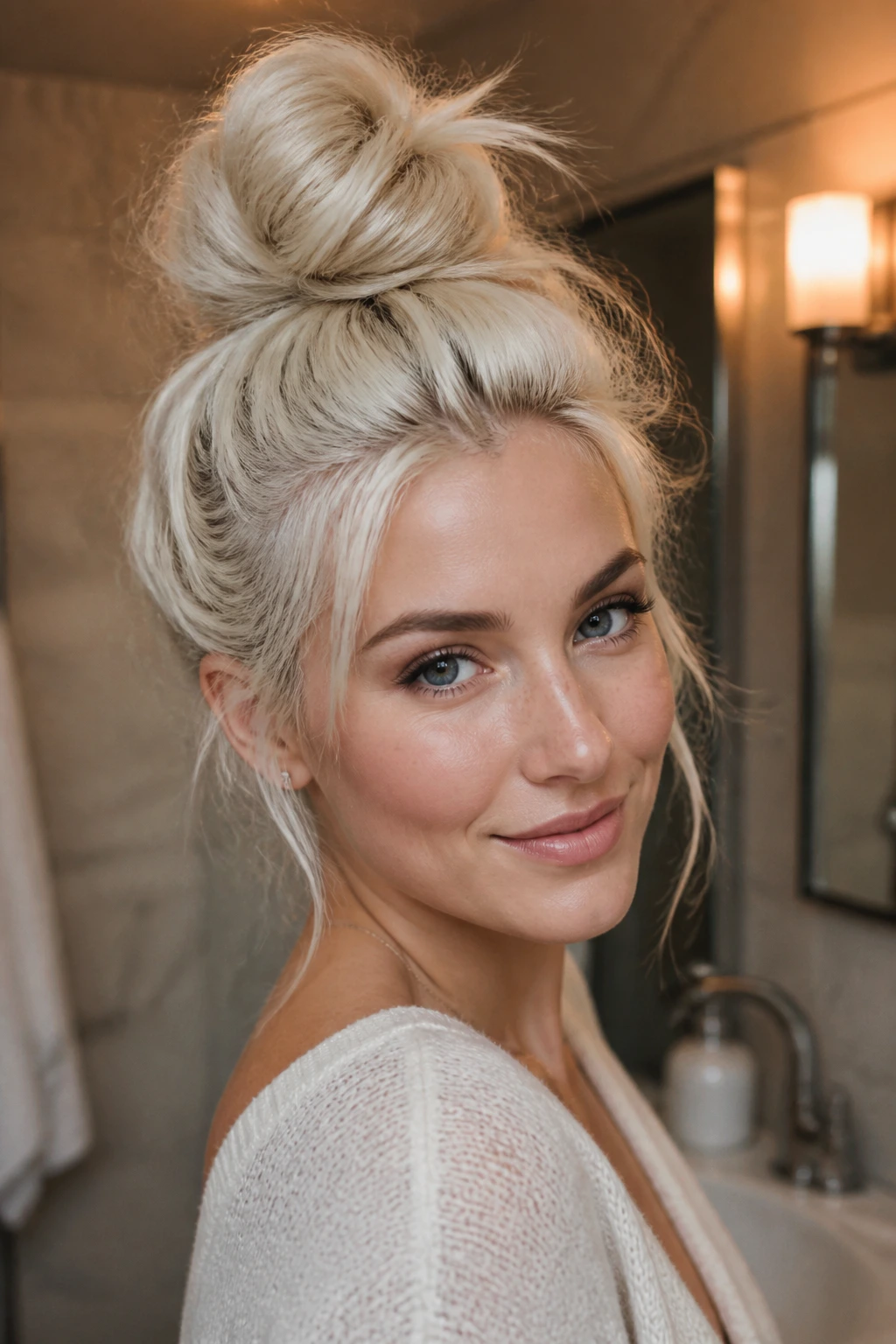
A messy top knot can be the easiest way to wear platinum when the lengths are due for a wash or the ends are a little cranky. The lifted knot gives the face room, and the loose pieces around the hairline stop the overall effect from becoming severe.
Fair skin can make a very tight top knot look stark. So I’d leave this one imperfect on purpose. Pull a few fine strands forward, let the bun sit high but not ballooning, and keep the crown slightly soft. Dry shampoo at the roots helps the style hold, but don’t overdo it or you’ll get a chalky cast that fights the color.
This is one of those styles that depends on makeup a bit more than people admit. A little brow definition and cheek color keep the look from disappearing into itself.
17. Face-Framing Layered Cut
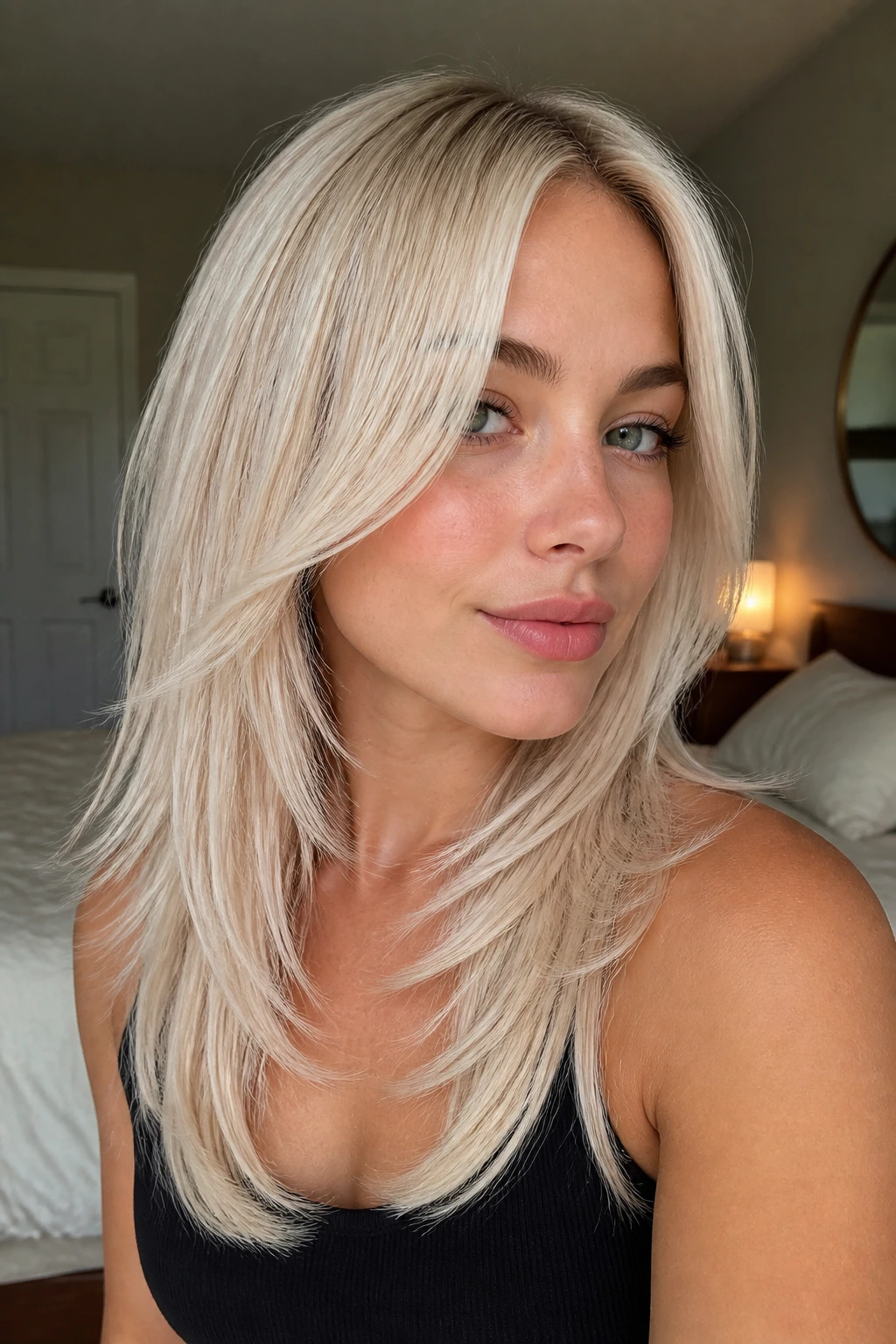
If you want platinum to look flattering on fair skin with the least drama, face-framing layers are probably the safest bet. The layers start around the cheekbones or jaw and break up the bright edge that otherwise sits right beside the skin. That means the color feels softer without losing its brightness.
The value here is shape. Long, pale hair without front pieces can go limp visually, especially in smooth light. Layers around the face give the eye a path to follow. They also work with both straight and wavy styling, which makes them one of the least fussy options in the lineup.
Ask your stylist to cut the shortest pieces where your face needs movement most — cheekbone, jawline, or just below the chin. That placement changes the whole mood.
18. Wavy Wolf Cut
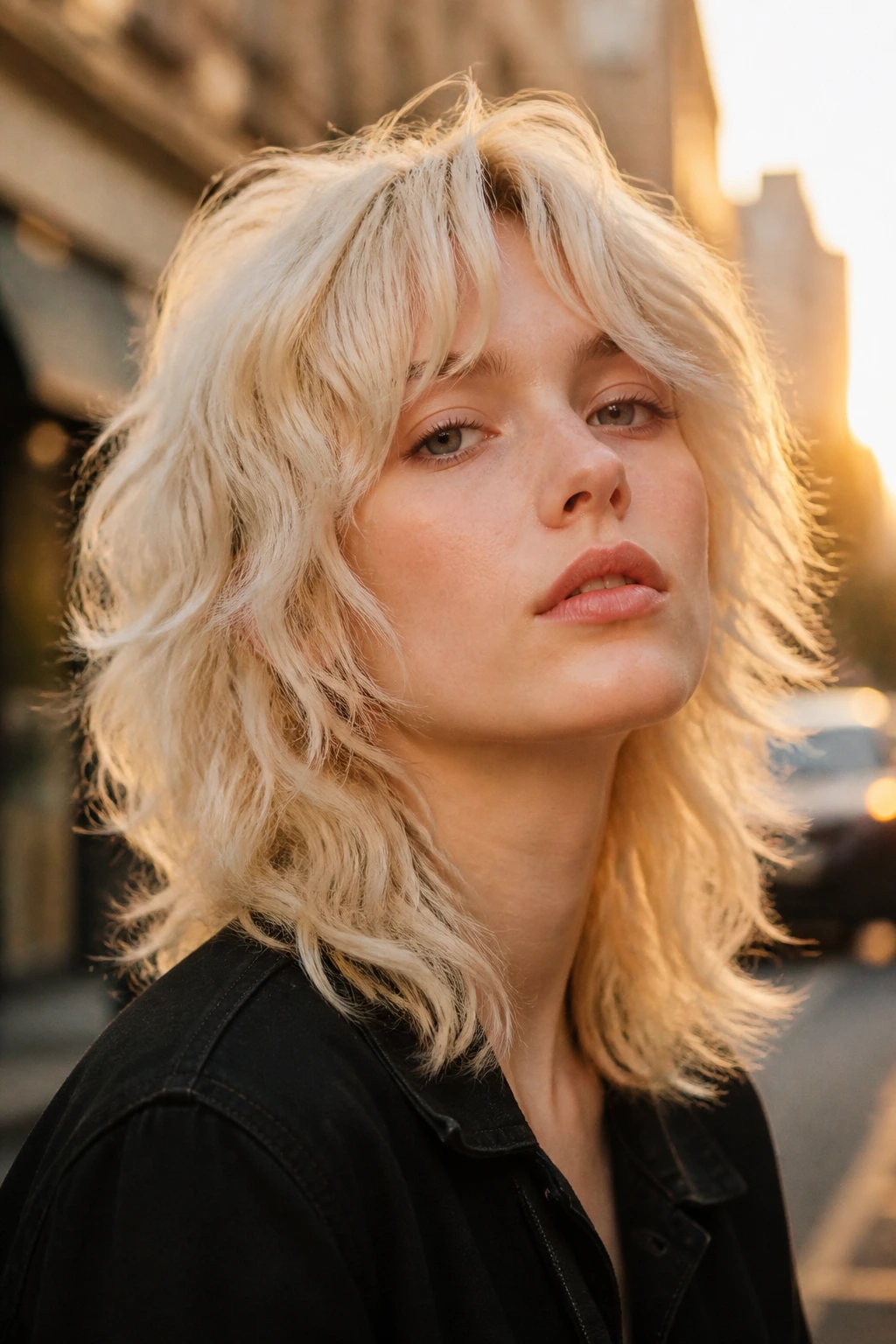
The wolf cut is not for someone who wants tidy. It’s for someone who likes edge, volume, and a little controlled mess. On platinum hair, the chunkier layers and rough texture create enough visual interruption that fair skin doesn’t get swallowed by the brightness.
This cut works especially well if your hair has some natural wave or if you don’t mind using a diffuser. Air-drying with mousse and scrunching the crown up with your fingers is usually enough. The shape should feel a little wild, but not puffy at the sides.
A wolf cut can be a relief for very fine hair because the shorter layers give the illusion of density. If the ends are too wispy, though, it can tip into thinness fast. Keep the perimeter blunt enough to hold the shape.
19. Slicked-Back Bun
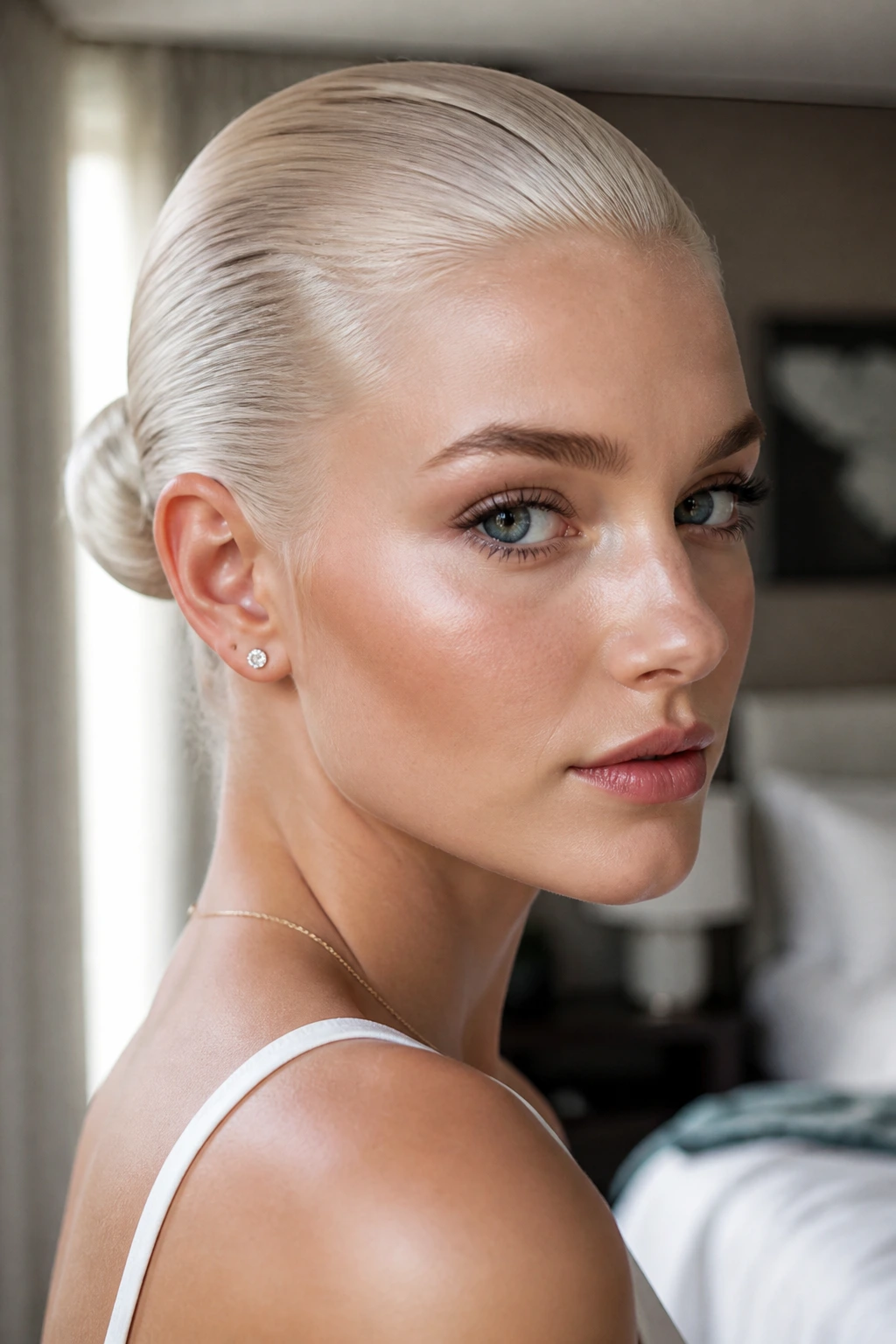
A slicked-back bun is almost severe, and that’s why it looks so good with platinum on fair skin. The face becomes the star. The hair becomes a frame. When the color is this light, the slicked-back shape gives it a clean, deliberate role instead of letting it wander around the face.
Use a strong hold gel or styling cream on damp hair, brush everything back smoothly, and secure the bun low or mid-back depending on the mood. A small amount of shine spray on the top layer gives the look a wet-gloss finish, but don’t drown it. Pale hair can turn stringy fast if the product is too heavy.
This style is good when you want your bones, not your hair, to carry the outfit.
20. Fishtail Braid
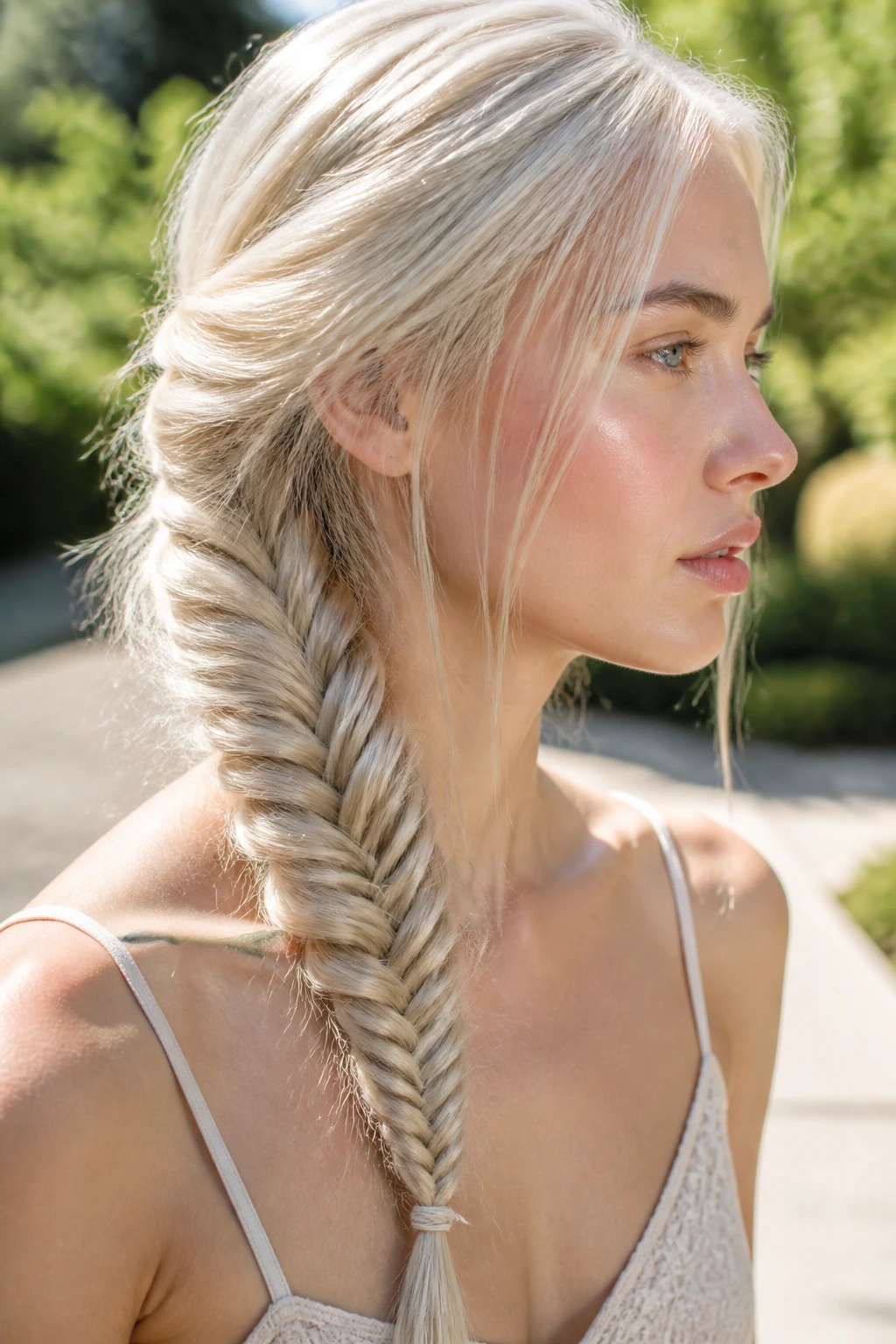
A fishtail braid gives platinum a woven, reflective surface that’s hard to beat on fair skin. Every small strand catches light differently, so the braid itself becomes the detail. It’s one of the few styles that can make very pale blonde look richly textured even when the color is just a touch dry.
Why It Feels Different From a Regular Braid
A fishtail has more visible pattern. The narrow crossing sections make the whole style feel detailed without needing accessories. On fair skin, that helps because the texture keeps the hair from melting into the complexion.
Best Use Case
- Long hair that needs a polished but not stiff style
- Hair with a little grip from second-day texture
- Outfits with open necklines or simple collars
- Times when you want a style that lasts
A soft pull-apart at the end makes the braid look fuller. Don’t skip that part unless you enjoy a thin, stringy braid that looks better in theory than in the mirror.
21. Chin-Length Crop with Side Part
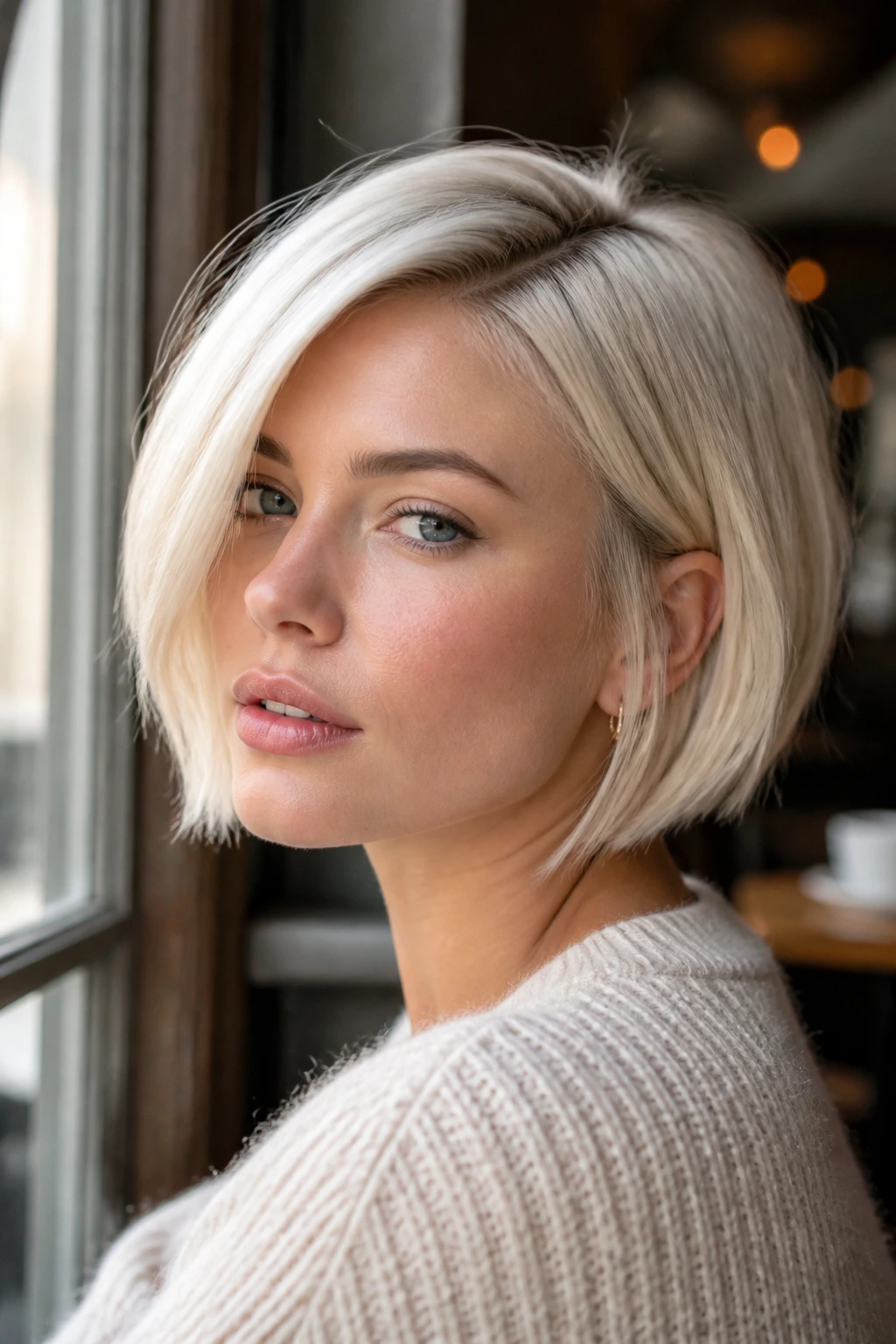
A chin-length crop with a side part has a strong little personality. The side part shifts the weight of the hair and gives fair skin a diagonal line to work with, which usually feels more flattering than a perfect center on this particular shape. The cut also sits close to the face, so the platinum looks crisp without overwhelming the features.
This one is especially nice if you have fine hair and want it to look denser. The shorter length makes the ends feel thicker, and the side part keeps the style from going helmet-flat. A round brush at the crown and a touch of dry texture spray are usually enough.
If your jawline is sharp, the cut can emphasize it. If you like that, perfect. If not, ask for softer ends around the chin so the edge doesn’t feel too boxy.
22. Voluminous Blowout
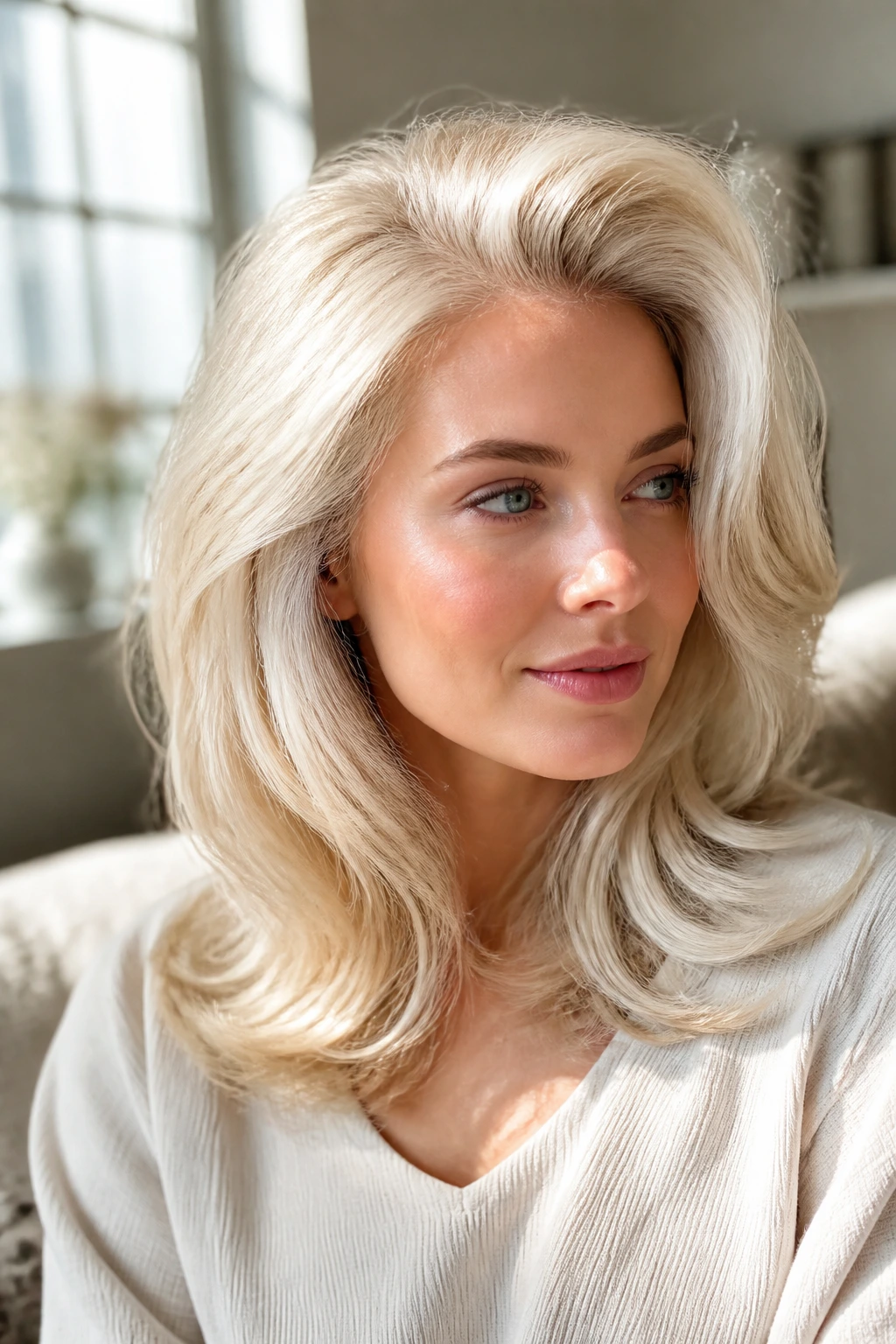
A big blowout gives platinum blonde a bounce that fair skin often needs. The lift at the roots, the curve through the mid-lengths, and the soft-outward ends all keep the color from reading as one flat sheet. That matters when the shade is almost white and the complexion is already light.
I’m partial to a round brush blowout with a large barrel brush or velcro rollers at the top after drying. That extra set at the crown keeps the style from collapsing an hour later. A smoothing cream before drying helps, but don’t load the hair with oil or you lose the lift.
This is the kind of style that looks polished even when the color is a little overdue for a gloss. The shape carries a lot of that burden.
23. Space Buns
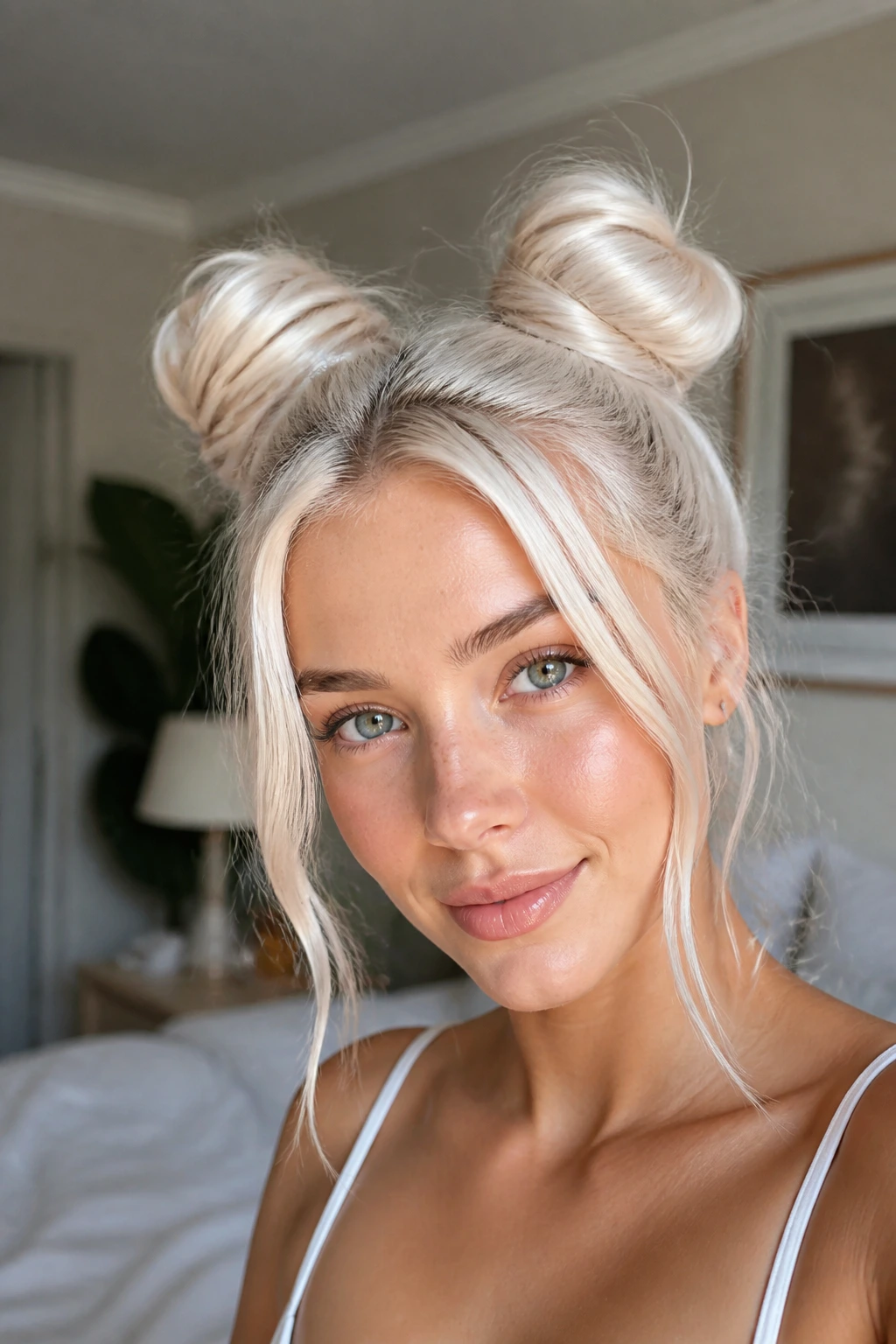
Space buns are fun, yes, but they also solve a real visual problem: they break platinum into two compact shapes instead of one broad field. On fair skin, that can keep the look lively and youthful without needing a lot of extra styling. The hair around the face stays open, and the buns pull attention upward.
They work best when the buns are not too round and perfect. A little looseness keeps them from feeling costume-like. Leave two face-framing pieces and keep the top section clean so the style still feels intentional.
This is one of the better options if your hair is slightly damaged and you need it out of the way. The bun placement can hide rough ends while still showing off the color.
24. Soft Asymmetrical Bob
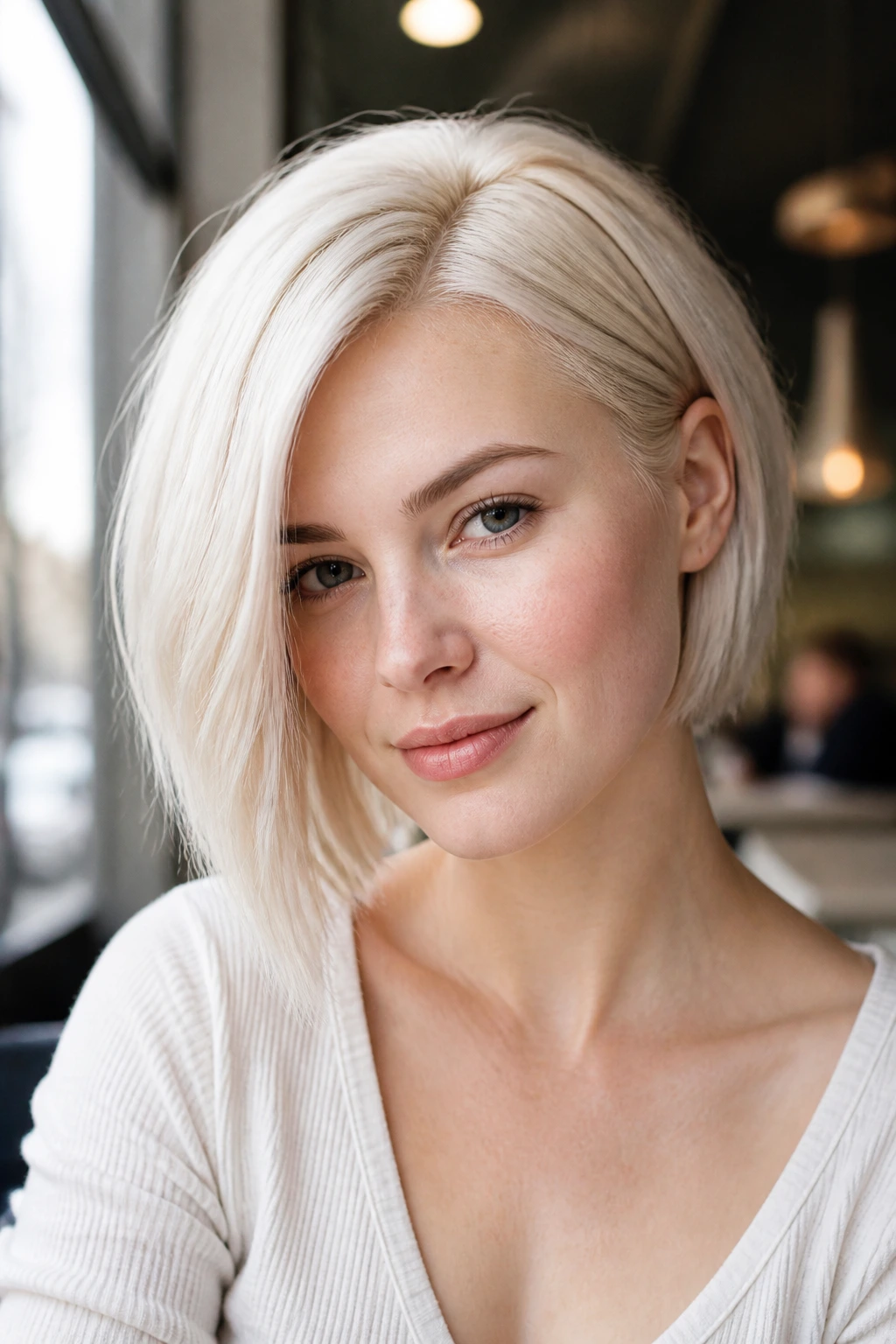
A soft asymmetrical bob gives platinum a little movement without sacrificing the clean line that works so well on fair skin. One side sits a touch longer, which creates a diagonal shape that feels modern without getting fussy. The asymmetry also helps the color catch the light differently from side to side.
I like this cut when a blunt bob feels too boxy but layers feel too soft. It sits right in the middle. A center part can work, but a slightly off-center part often makes the shape easier to wear because it nudges the hair away from the face on one side and gives the other side a little swing.
If you want the style to read polished, keep the ends neat. If you want it to feel more relaxed, bend the front pieces with a flat iron so they do not sit like rulers.
25. Long Straight Length with Blunt Ends
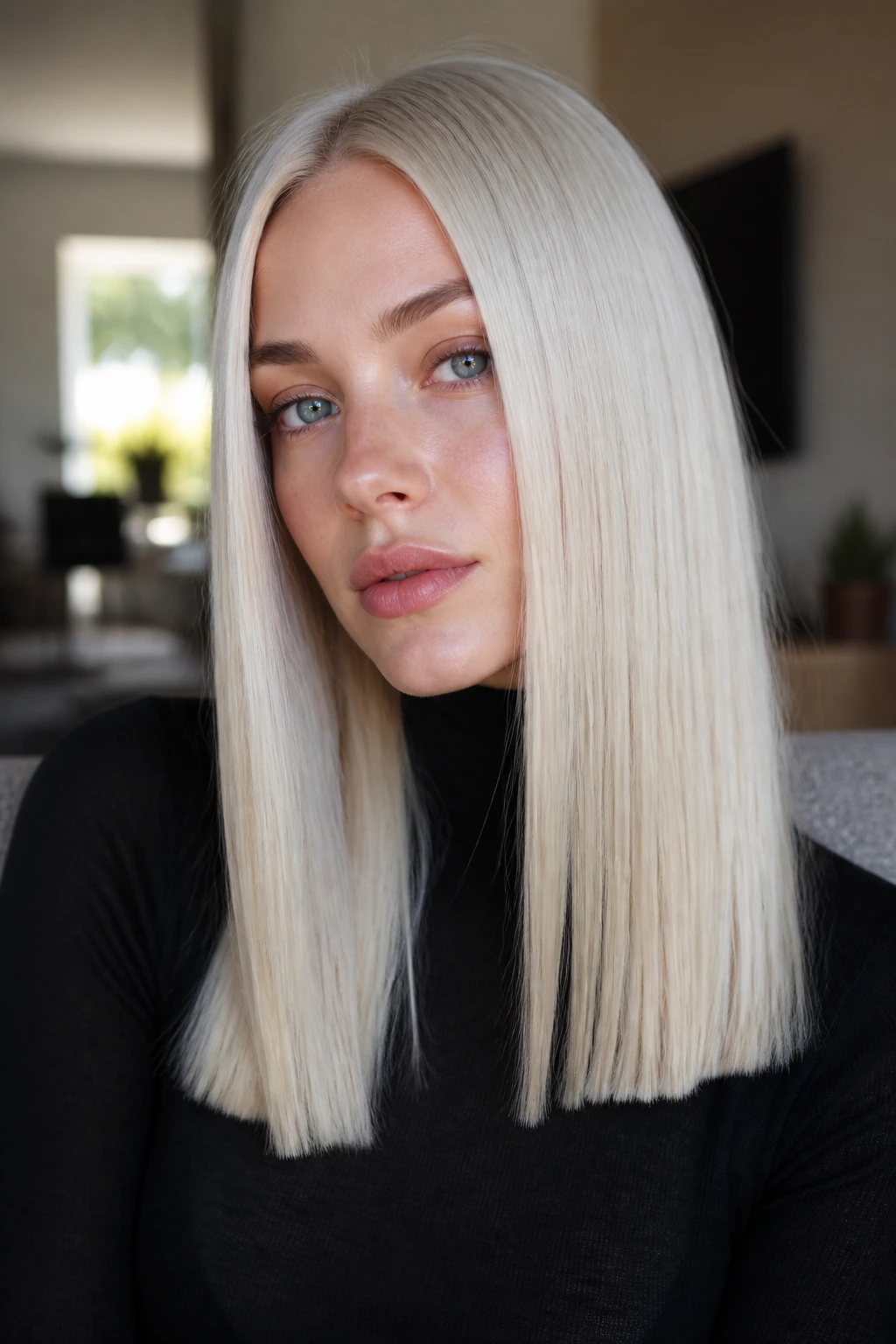
Long, straight platinum with blunt ends is the cleanest version of all. It’s also the most demanding. On fair skin, the look can be stunning because the line is so exact — but it only works if the hair is healthy enough to hold a smooth surface and the ends are trimmed often enough to stay solid.
The blunt finish is what saves it from looking thin. If the ends feather out too much, the style loses its power fast. Keep the length glossy, use a heat protectant every time you straighten, and be honest about split ends. Platinum shows damage faster than almost any other shade.
This look is best for someone who likes precision. No shrugging. No hiding. Just long, pale hair with a firm edge.
The Styling Logic Behind the Shade
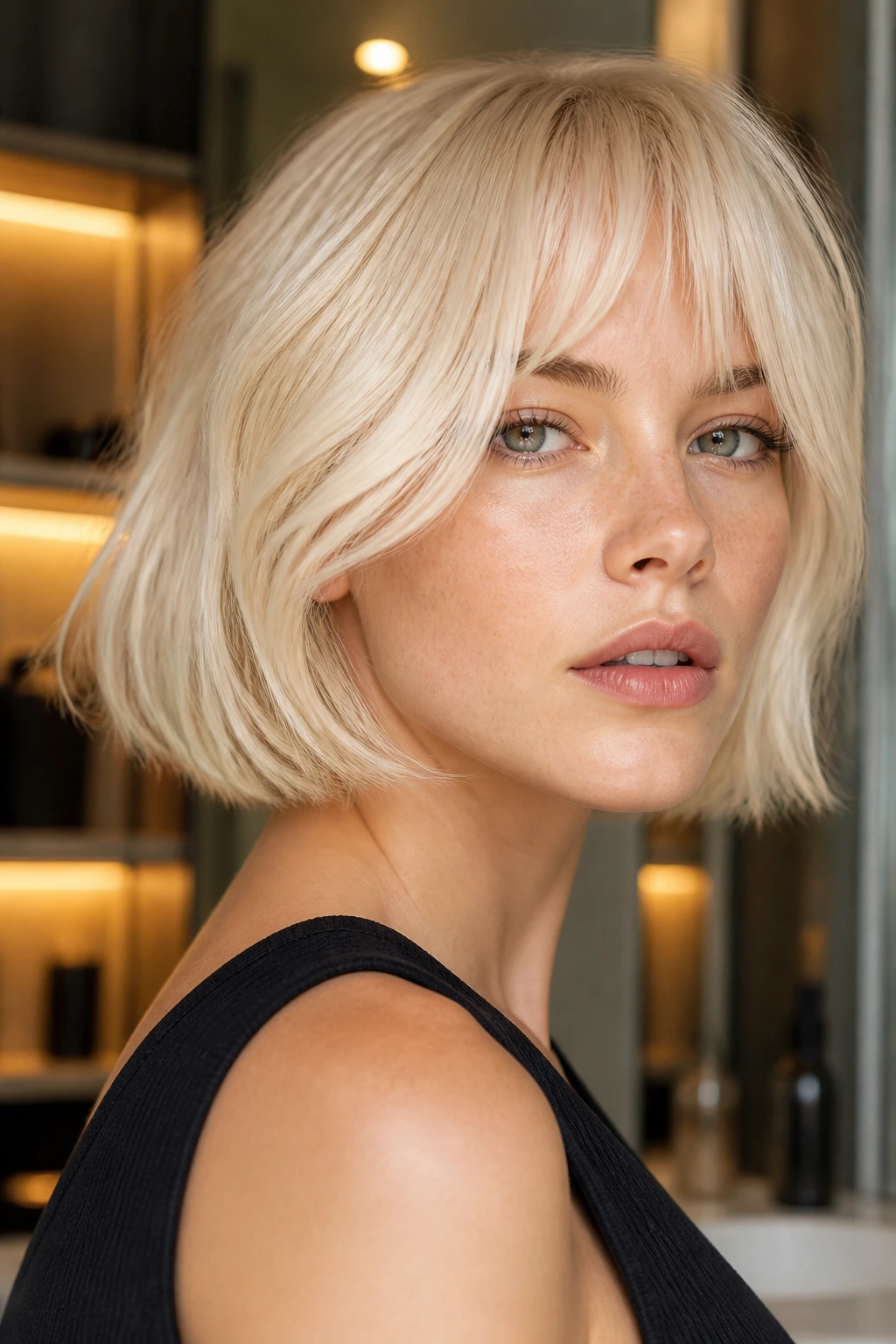
Platinum blonde on fair skin is happiest when the hair has some kind of structure. That structure can be a blunt line, a wave, a braid, a bun, or a fringe. It does not need to be severe, and in fact severe can get boring fast. It just needs shape.
The reason is simple. Fair skin and platinum live in the same bright neighborhood, so if the haircut is too airy, the features lose contrast. A little movement near the face, a stronger perimeter at the ends, or a darker root shadow gives the eye a place to settle. That’s the trick most people are reaching for even if they do not name it.
The better cuts also buy you flexibility. A bob can be sleek one day and tucked behind the ears the next. A shag can air-dry and still look deliberate. A ponytail can read polished or playful depending on how tight you pull it. That’s the kind of versatility that matters when the color itself is high-maintenance.
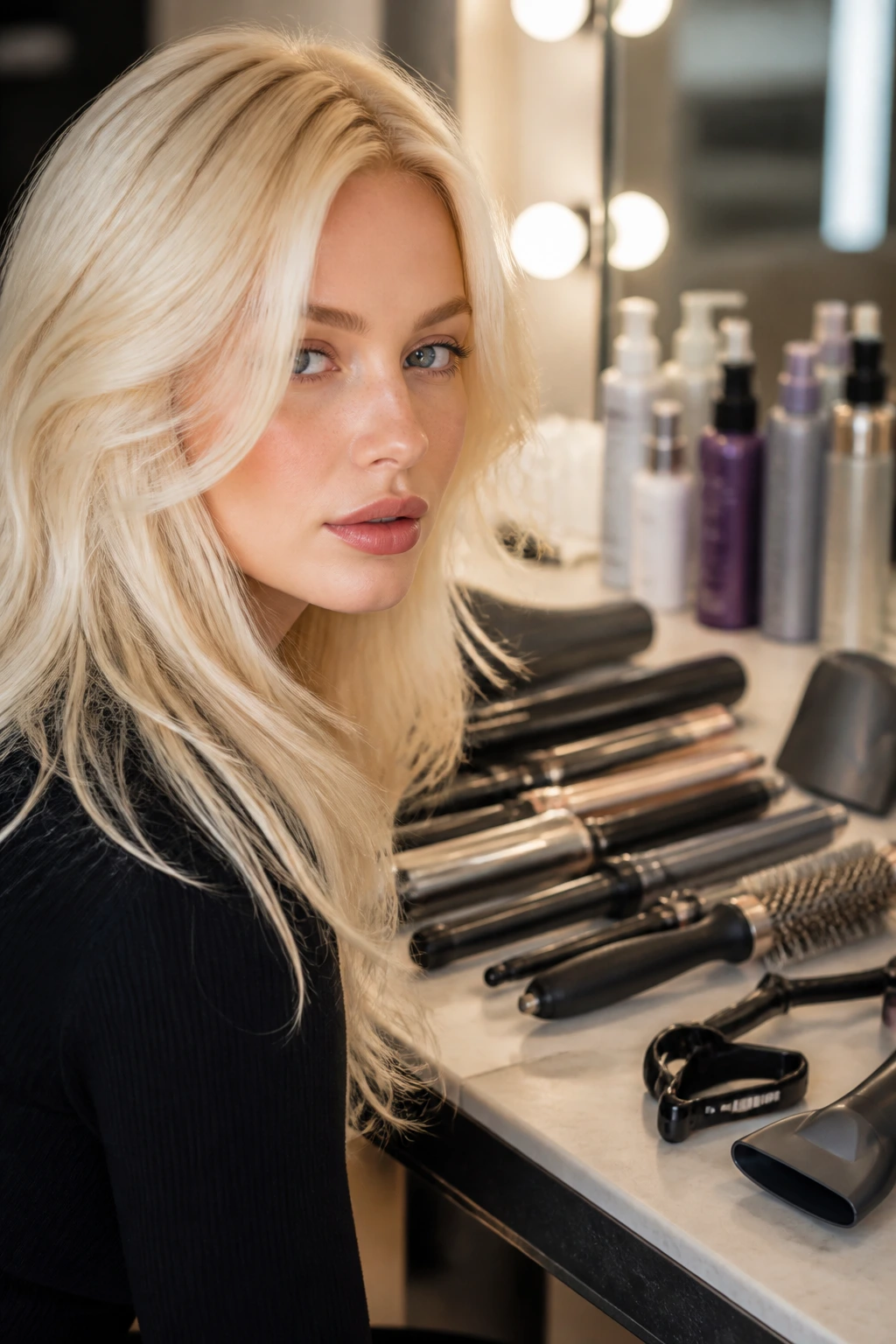
Essential Tools and Styling Kit
-
1-inch and 1.25-inch curling irons: These give you two different wave sizes, which matters more on platinum than on darker hair because the texture shows clearly.
-
Flat iron with rounded edges: A sharp-edged straightener can leave creases in bobs and lobs; rounded plates bend better for face-framing pieces.
-
Blow dryer with a concentrator nozzle: The nozzle helps polish the cuticle and reduce frizz, especially on porous bleached hair.
-
Round brush, 1.5 to 2 inches: This is the workhorse for blowouts, curtain bangs, and root lift.
-
Duckbill clips: Use them to set waves, hold sections while blow-drying, or pin fringe out of the way during makeup.
-
Heat protectant spray: Non-negotiable. Bleached hair gets brittle faster, and the spray matters more than the brand name on the bottle.
-
Purple shampoo and conditioner: Use these to keep brass from showing through, but do not let them become your whole routine.
-
Lightweight serum or gloss spray: A little shine is enough. Heavy oils can make platinum look stringy near the roots.
-
Texturizing spray or mousse: Useful for shags, waves, and braids when the hair needs grip without looking dusty.
-
Silk or satin pillowcase: Not a styling tool exactly, but it lowers friction, which helps the cut hold its shape and reduces tangling at the ends.
Smart Shopping and Product Tips
If you’re building a platinum blonde routine around fair skin, the real shopping mistake is buying products by hype instead of by hair condition. Bleached hair has a memory. It remembers dryness, heat, and rough brushing, and it punishes you later if you ignore that. So start with what your hair actually needs, not with what looks pretty on a shelf.
For shampoo, look for something sulfate-free if your hair feels dry or squeaky after washing. That stripped feeling is not a badge of honor. It usually means the hair cuticle is already open and losing moisture. If your scalp runs oily, you can still use a gentle cleanser most wash days and a stronger clarifying shampoo only once every couple of weeks.
Purple shampoo deserves discipline. Use it once a week or every other week depending on how fast brass shows up. Leave it on for 2 to 5 minutes, not 20, unless you enjoy a violet cast that makes the blonde look dull. If your hair is porous, start on the lower end of that time.
For styling, buy a heat protectant that sprays evenly and dries down fast. Thick creams can gum up fine platinum hair and make short styles collapse. On the other hand, very fine mist sprays are better for lobs, pixies, and blunt bobs because they coat without weighing anything down.
Toner and gloss matter too. If your fair skin leans pink, a pearl or soft silver finish often reads cleaner than a harsh blue-white tone. If your skin is more neutral, the cooler end of platinum can look striking without fighting your complexion. If your complexion is pale but not cool, a tiny beige note in the toner can stop the hair from looking flat or too chalky.
How to Wear These Looks in Real Life
Face Shape: A blunt bob or asymmetrical cut gives rounder faces more edge, while curtain bangs and face-framing layers are kinder to longer faces because they break up vertical length. If your face is very angular, waves and feathering soften the lines without making the style fluffy.
Wardrobe Pairings: Platinum reads best with clean necklines — crew necks, square necks, open collars, or a plain black tee if you want the hair to do the talking. Heavy ruffles can fight the lightness of the color and turn the look crowded. Simple shapes let the blonde breathe.
Makeup Balance: On fair skin, brows are not optional with platinum. Even a tiny bit of brow tint or pencil helps the style hold its place. A bit of blush on the high cheek and a lip color with some depth — rose, berry, or a soft red — keeps the face from going pale beside the hair.
Best Settings: Slick buns, French bobs, and blunt lobs feel sharp enough for dressier spaces. Waves, shags, and braids feel better on ordinary days because they move with you. I’d match the cut to how much time you want to spend in the mirror, not to some imaginary “occasion” rule.
Additional Tips and Color Boosters
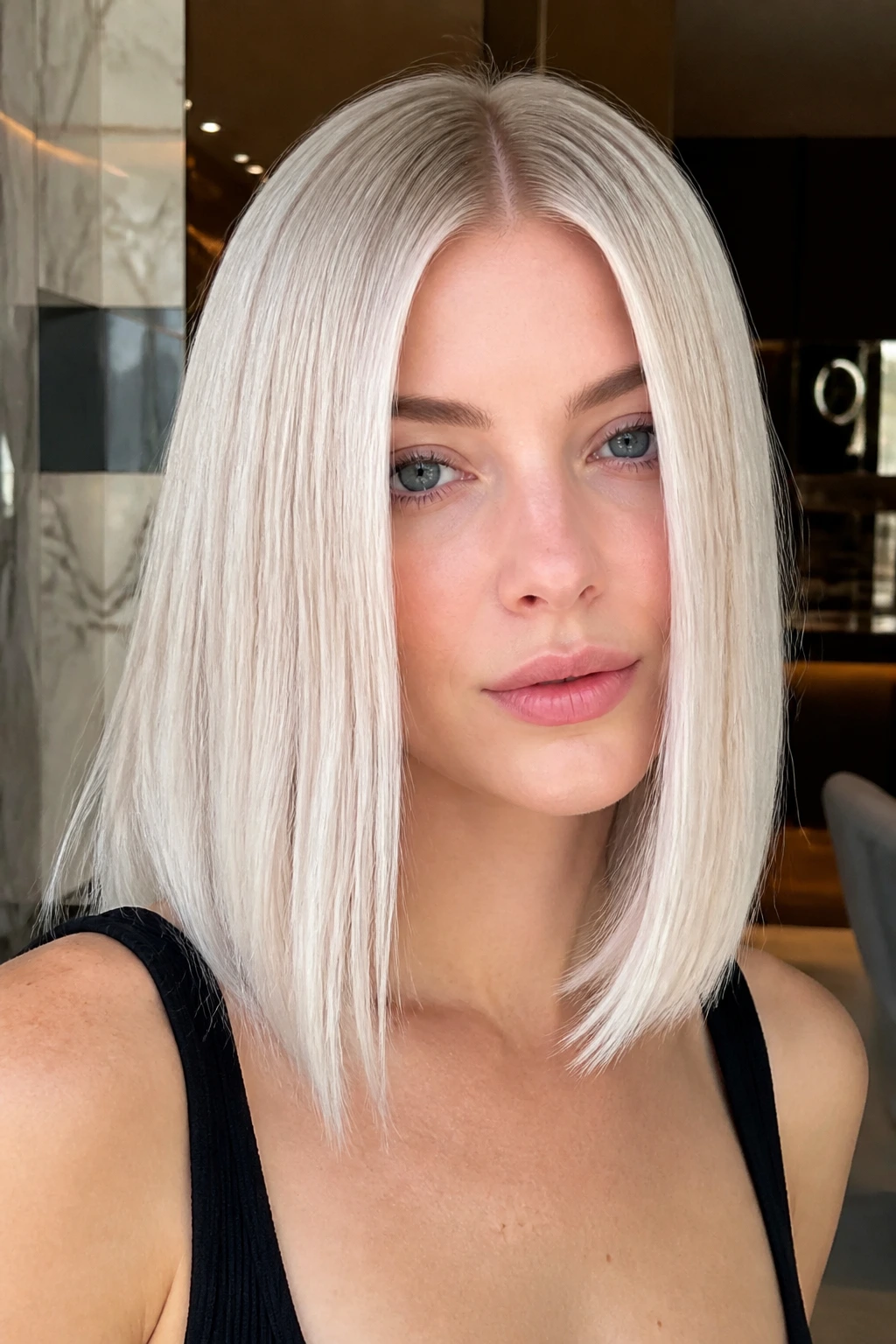
Root Shadow: A soft root shadow about half an inch deep can make platinum look richer on fair skin without turning it darker. The goal is not a big contrast. It’s a tiny anchor so the hair has a place to start.
Tone Refresh: If the blonde starts slipping yellow, book a gloss or use a violet mask for one wash cycle. If it starts looking gray, you may be over-toning. Back off for a week and let some warmth return.
Texture Boost: Very pale hair can look smaller than it is when it’s too smooth. A pinch of dry texture spray at the mid-lengths gives waves, braids, and ponytails more shape, especially on fine hair.
Brow Balance: If your brows are pale, a slightly darker brow gel or pencil creates the contrast platinum hair needs. Match the brows to your hair color only if you want a washed-out effect. Most people do not.
Damage Control: Keep one deep-conditioning wash in the week and save hot tools for the styles that need them. Air-dried waves, braids, and buns are not “lazy” here; they’re the reason the ends stay alive.
Make-Ahead, Wash-Day, and Maintenance Guidance
Platinum hair on fair skin usually looks best when the style is planned around the hair’s condition, not just around the calendar. If you know a braid, bun, or wave set is coming, prep the hair the night before with a light leave-in and a loose braid or twist. That gives the cut a little memory and keeps the ends from fluffing out first thing in the morning.
For heat-styled waves, pin them in place until they cool. That cooling time is not optional if you want the shape to last past lunch. A wave that’s brushed out too early falls flat faster, and pale hair shows that collapse more than darker hair does.
Wash frequency depends on scalp and texture, but most platinum styles hold best when you wash 2 to 3 times a week instead of daily. If your hair gets oily faster, use dry shampoo at the roots, then brush it through before it gets powdery. On very light hair, white dry shampoo residue can show up in bright light, so use less than you think.
Trims matter too. Blunt bobs and lobes usually need a dusting every 6 to 8 weeks to keep the edge solid. Pixies and fringes often need closer attention, sometimes every 3 to 5 weeks, because even a half-inch of growth changes the line. Braids and buns hide a lot, but they don’t hide split ends forever.
If your hair is fragile, alternate between one styling day and one recovery day. That means a smoother style one day, then a braid or clip-up the next. The hair gets a break, and the color stays brighter because you’re not frying the same ends over and over.
Common Mistakes That Make Platinum Look Tired
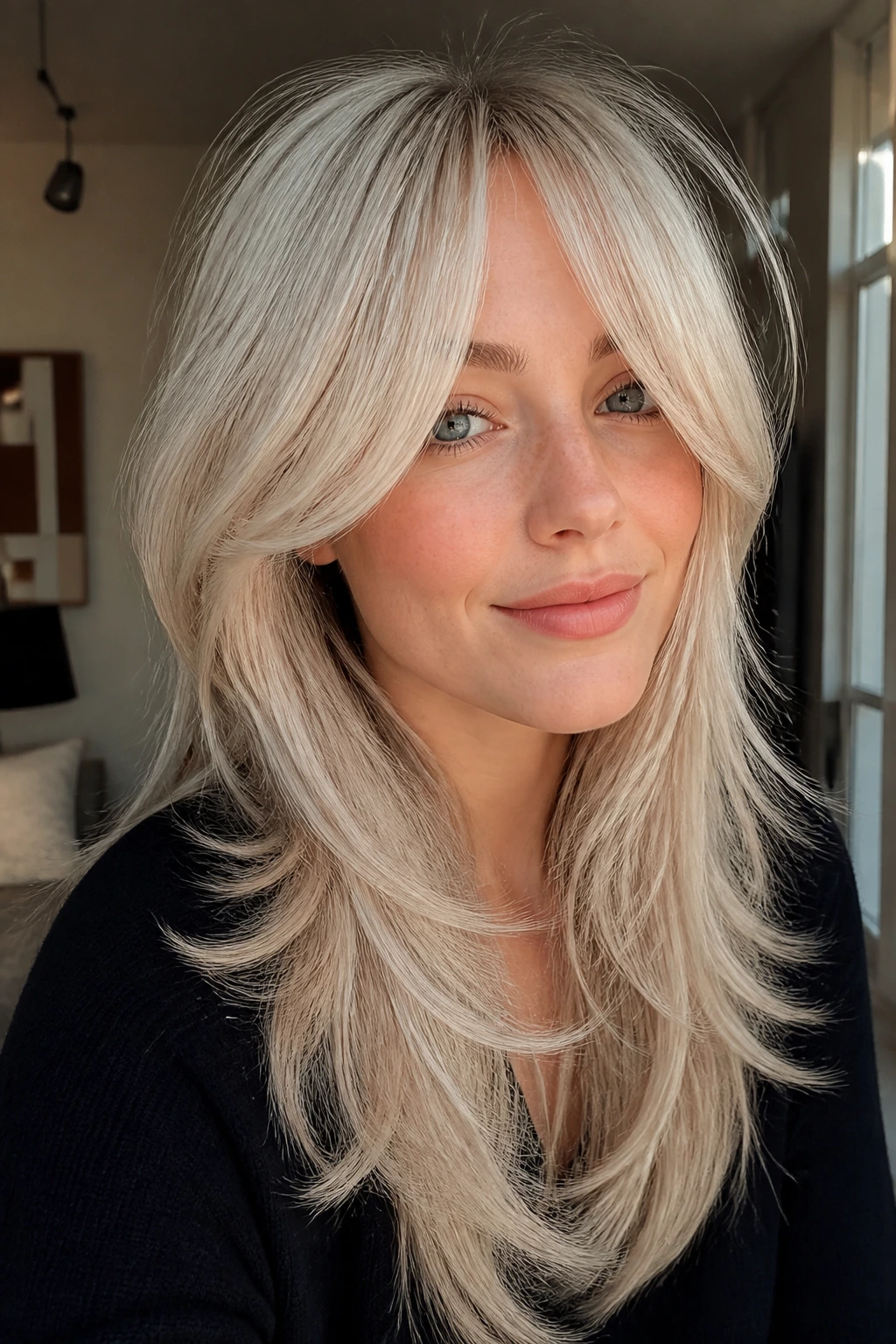
One of the easiest ways to flatten platinum on fair skin is to go too white, too fast, with no shape around the face. The hair stops looking like a style and starts looking like a blank surface. The fix is simple: keep a fringe, a side part, a blunt edge, or a little root depth so the face has a frame.
Another trap is over-toning until the blonde turns gray, greenish, or dusty. That can look trendy in a bottle and dull in daylight. If the hair stops reading bright, give it a break from purple shampoo and use a gloss that adds a touch of warmth back into the color.
People also forget that pale brows matter. A platinum bob with invisible brows can look unfinished on fair skin, even if the cut is excellent. A little brow definition changes the whole balance. You do not need dramatic makeup. You need enough contrast that the face doesn’t vanish into the hair.
Heavy oils are another problem, especially on fine hair. A slick of serum at the ends is fine. A full coat near the scalp makes platinum look greasy and thin in the same breath. Use less product than you think and add only where the hair actually feels rough.
Finally, some styles are asked to do too much on damaged hair. Long, straight platinum with split ends is a mercy to no one. If the ends are frayed, switch to a bob, lob, braid, or bun until the cut can catch up. That is not a downgrade. It’s maintenance with better manners.
Variations and Adaptations to Try
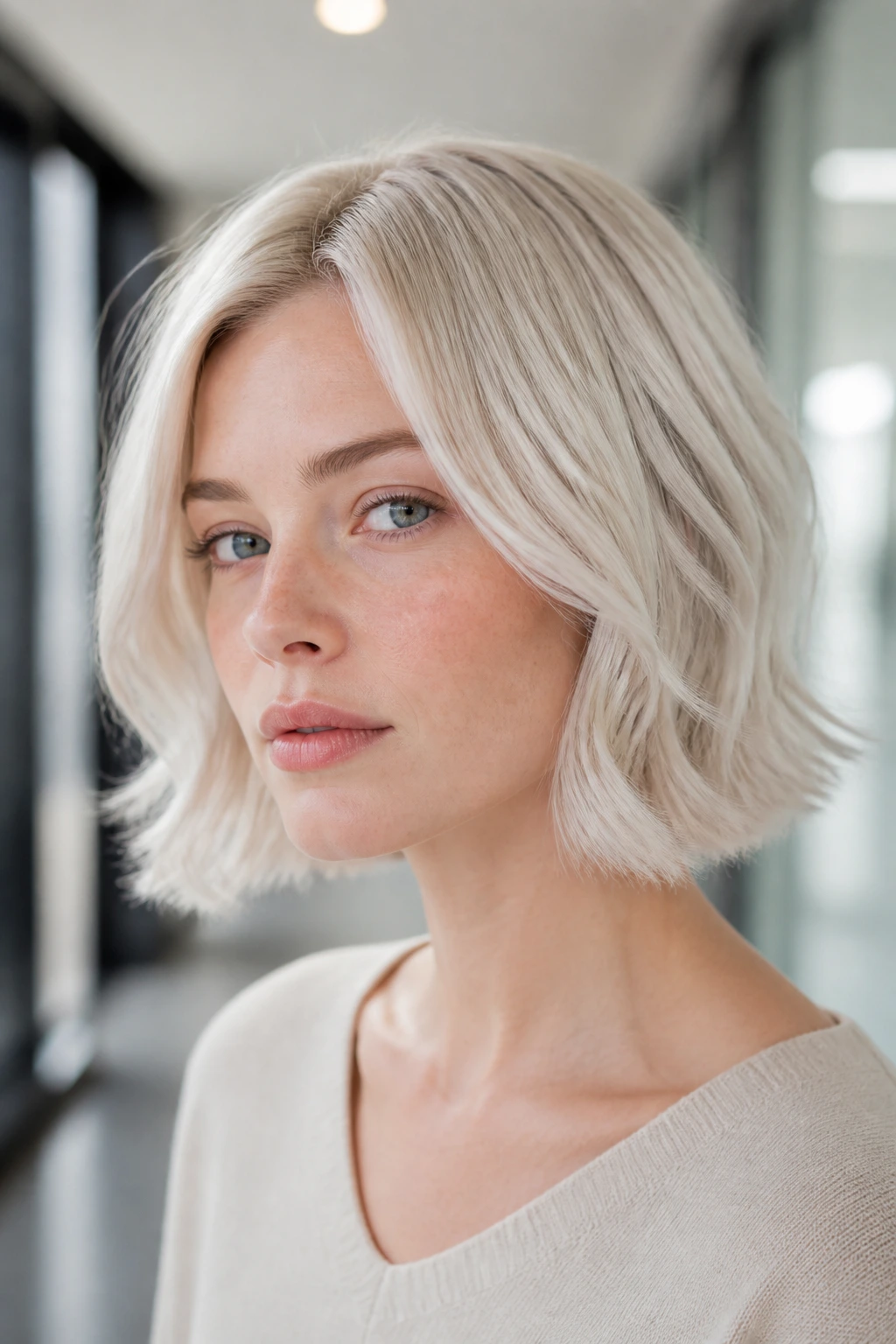
Pearl Platinum Shift: If pure ice blonde feels harsh against your fair skin, ask for a pearl finish instead of a stark white tone. It keeps the brightness but softens the edge a little, which is often kinder on pink or easily flushed complexions.
Rooted Ice Blonde: A soft shadow root gives platinum more depth and makes it easier to live with between salon visits. The style still looks light, but the grow-out is less brutal and the hair doesn’t sit so flat against the scalp.
Soft Silver Crop: For pixies, bobs, or short lobs, a silver-leaning toner can make the cut feel sharper and more modern. This works best if your brows and lashes already bring some contrast to the face.
Curled Platinum Texture: If your hair is naturally wavy or curly, keep some dimension in the cut and avoid making the color too one-note. A little bend, a little shadow, and a little movement keep the style from turning into a bright puff.
Dimensional Beige-Ice Blend: This is the version for people who want platinum but do not want the color to glare. A tiny beige note in the toner, plus face-framing layers, gives fair skin a softer surround while keeping the blonde high and clear.
Frequently Asked Questions
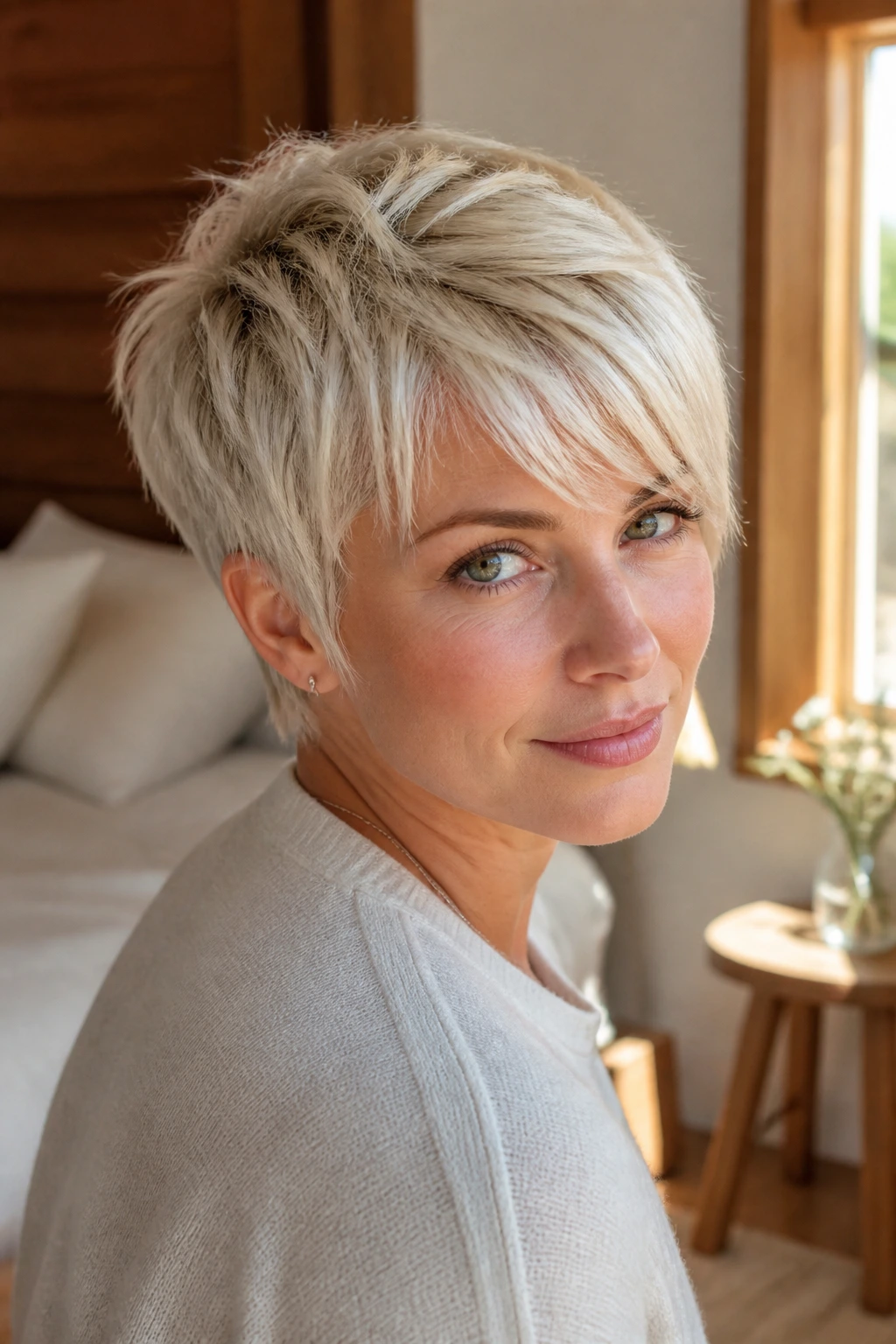
Does platinum blonde wash out fair skin?
It can, but only when the cut is too soft or the brows are too bare. Fair skin usually needs some kind of frame — a blunt line, a fringe, a side part, or a deeper root shadow — so the blonde looks intentional instead of faded.
What platinum shade works best if my fair skin is pink-toned?
A pearl or soft silver platinum usually plays nicer than a hard blue-white tone. You want brightness with a little softness, not a chalky finish that makes redness stand out.
Are short styles easier to maintain than long platinum hair?
Usually, yes. Bobs, pixies, and shoulder-length lobs trim away the oldest, driest ends, so the hair holds shape more easily and breaks less at the bottom. Long hair can still work, but it needs more careful conditioning and trimming.
How do I keep platinum from turning yellow?
Use purple shampoo sparingly, not obsessively, and pair it with a toning gloss when the color starts drifting. Heat protection matters too, because hot tools can make pale blonde look dull and warm faster than people expect.
Can I wear platinum if my brows are naturally very light?
Yes, but you’ll probably want to define them a little. Even a soft brow gel or light pencil gives the face some contrast so the hair doesn’t erase your features.
What if my hair is fine and fragile after bleaching?
Choose a cut that removes weight from the ends — a bob, lob, pixie, or layered shag — and take a break from daily heat styling. Fine platinum hair looks better with shape and a little texture than with repeated straightening.
Do waves or straight styles suit fair skin better?
Both can work. Straight styles feel sharper and more graphic, while waves soften the overall look and give platinum more movement. If your face is very pale, waves often help the hair read as a frame instead of a sheet.
How often should I refresh toner?
That depends on porosity and water quality, but many people need a gloss or toner refresh every 4 to 8 weeks. If the blonde starts looking dull before that, the toner may be too strong, or the hair may need moisture more than color.
Can I pull platinum hair up every day without ruining it?
You can, but use soft scrunchies, vary the placement, and avoid the same tight tension line day after day. Constant pulling can snap fragile ends and thin out the front pieces first.
A Clean Final Look
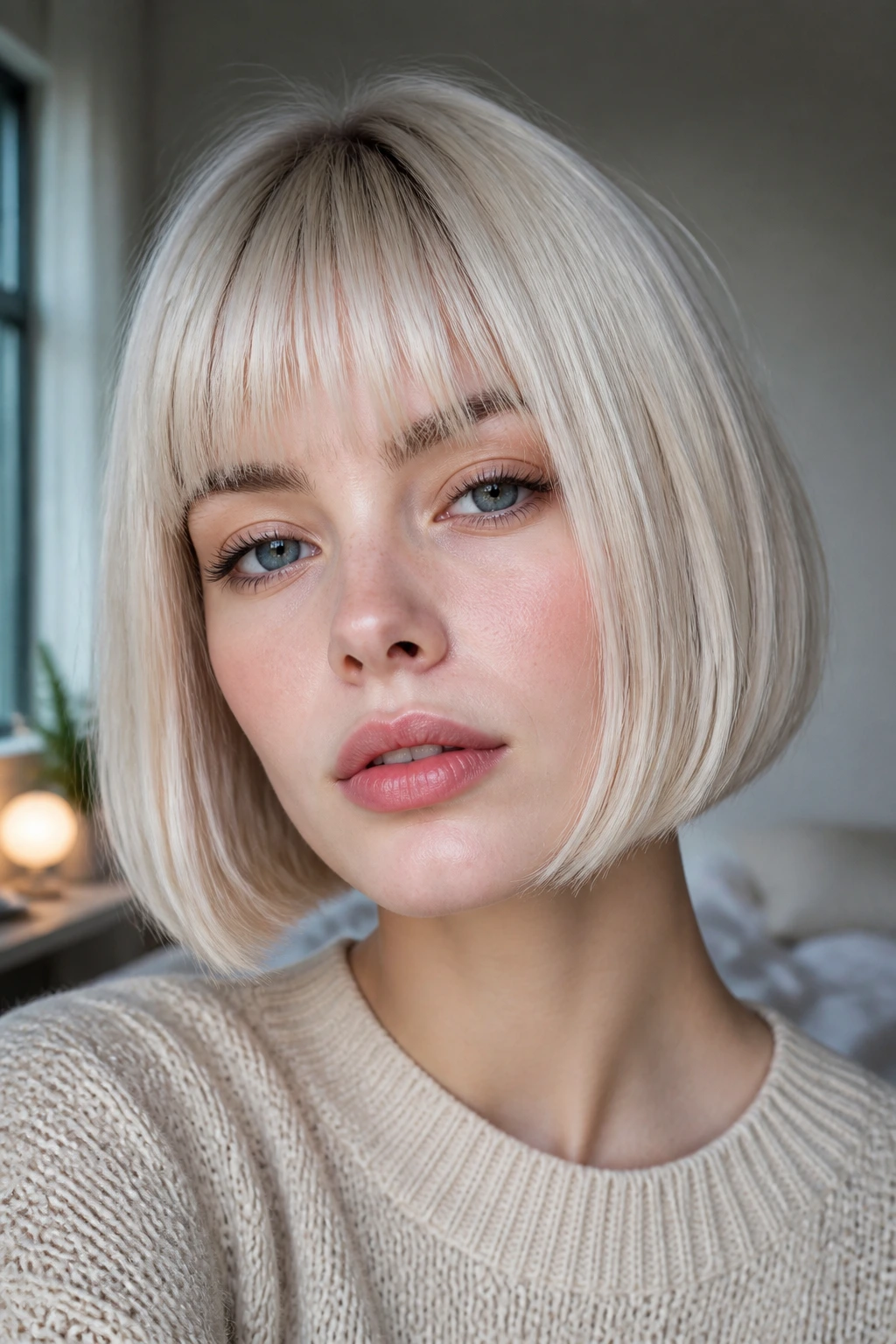
Platinum blonde on fair skin works best when the cut does some of the talking. That can mean a blunt bob, a loose wave, a braid with visible texture, or a simple bun that shows off the face. The color is only half the equation. The shape is what keeps it from drifting into pale noise.
The styles that last are usually the ones with a little contrast built in — a shadow root, a fringe, a diagonal part, a firm edge, or a few loose pieces around the face. Get that part right, and platinum stops feeling delicate in the wrong way. It starts feeling sharp, clean, and fully yours.