



Gray roots on long hair don’t show up politely. They usually arrive at the part first, then sneak along the temples, then catch the light the minute the crown goes flat and shiny.
The best warm hairstyles that cover gray roots for long hair do one thing well: they break that hard silver line before it turns into a spotlight. A side sweep, a braid, a loose wave, or a twist across the crown changes where the eye lands, and warm tones like chestnut, caramel, honey, copper, and auburn soften the contrast in a way ash shades often don’t. I’m not against cool tones, but they can make regrowth read sharper when the gray is strong.
Long hair gives you room to work. You can pin, fold, braid, puff, twist, and redirect without losing length. That’s the real advantage here. The trick is picking shapes that give the crown some texture and let the face-framing pieces do the distracting.
Why These 25 Styles Work on Real Roots
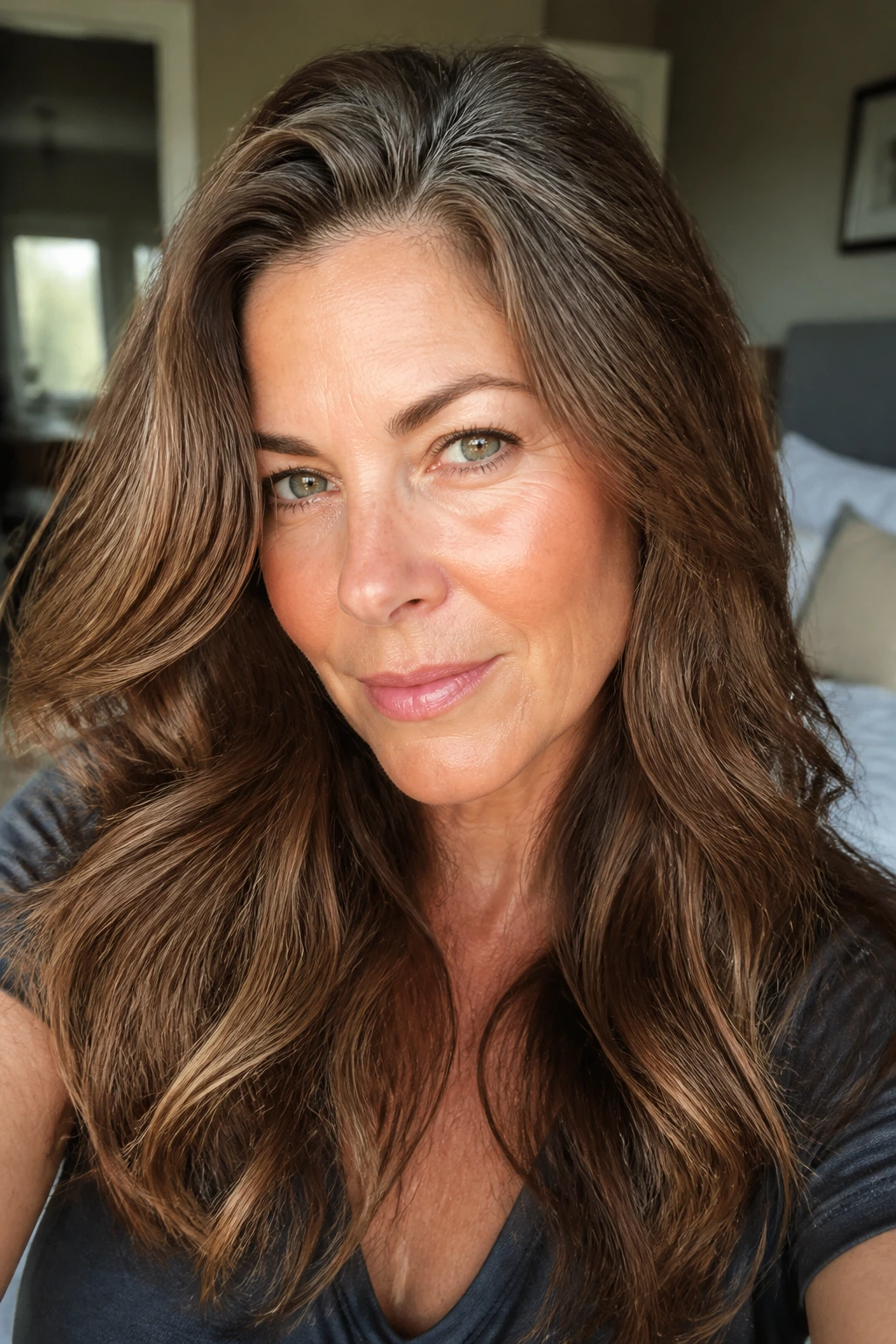
Root lines lose power when they’re not straight: A center part on smooth hair can make gray regrowth look like a ruler line; a side part, braid, or wave breaks that line into smaller pieces.
Warm tones soften the contrast: Chestnut, caramel, toffee, copper, honey, and auburn sit closer to the warm side of the color wheel, so silver strands don’t shout as loudly against them.
Long hair gives you coverage options: There’s enough length to create height at the crown, hide the temples, or pull the top section back while leaving movement through the ends.
Texture does half the camouflage: Loose bends, braids, and twists scatter light instead of bouncing it back in one flat sheet, which keeps the root area from looking too sharp.
These styles stretch a color appointment: A good braid or wave won’t erase gray forever, but it can buy you a few extra days without the hairline announcing itself every time you walk past a mirror.
1. Deep Side-Parted Waves in Chestnut Brown
A deep side part is old-school for a reason. It moves the root line off center, which is already enough to make gray regrowth look less obvious, and the waves do the rest by breaking up the shiny strip at the crown.
Chestnut brown is the right kind of warm here: rich, a little red, never flat. If the length has a few caramel ribbons through it, even better. The point is contrast, but not the harsh kind.
Why it hides gray so well
A side part gives the eye a crooked path to follow. Loose waves then scatter the light so the silver at the top doesn’t sit there like a bright band.
- Use a 1.25-inch curling iron.
- Let each curl cool before brushing it out.
- Finish with a light mist of flexible hairspray, not helmet spray.
Best for: medium to thick long hair that tends to lie too flat at the crown.
2. Soft Blowout Layers with Honey Highlights
This one looks polished without being stiff. The crown has lift, the layers bend away from the scalp, and honey highlights near the face keep the eye busy where you want it.
If gray growth is strongest at the hairline, this style helps because the round-brush shape softens the whole top section. You’re not hiding the roots with volume alone. You’re changing the silhouette.
A small amount of mousse at the roots, then a large round brush and a medium heat setting, is enough. Don’t overdo the shine serum. Too much gloss near the crown can work against you.
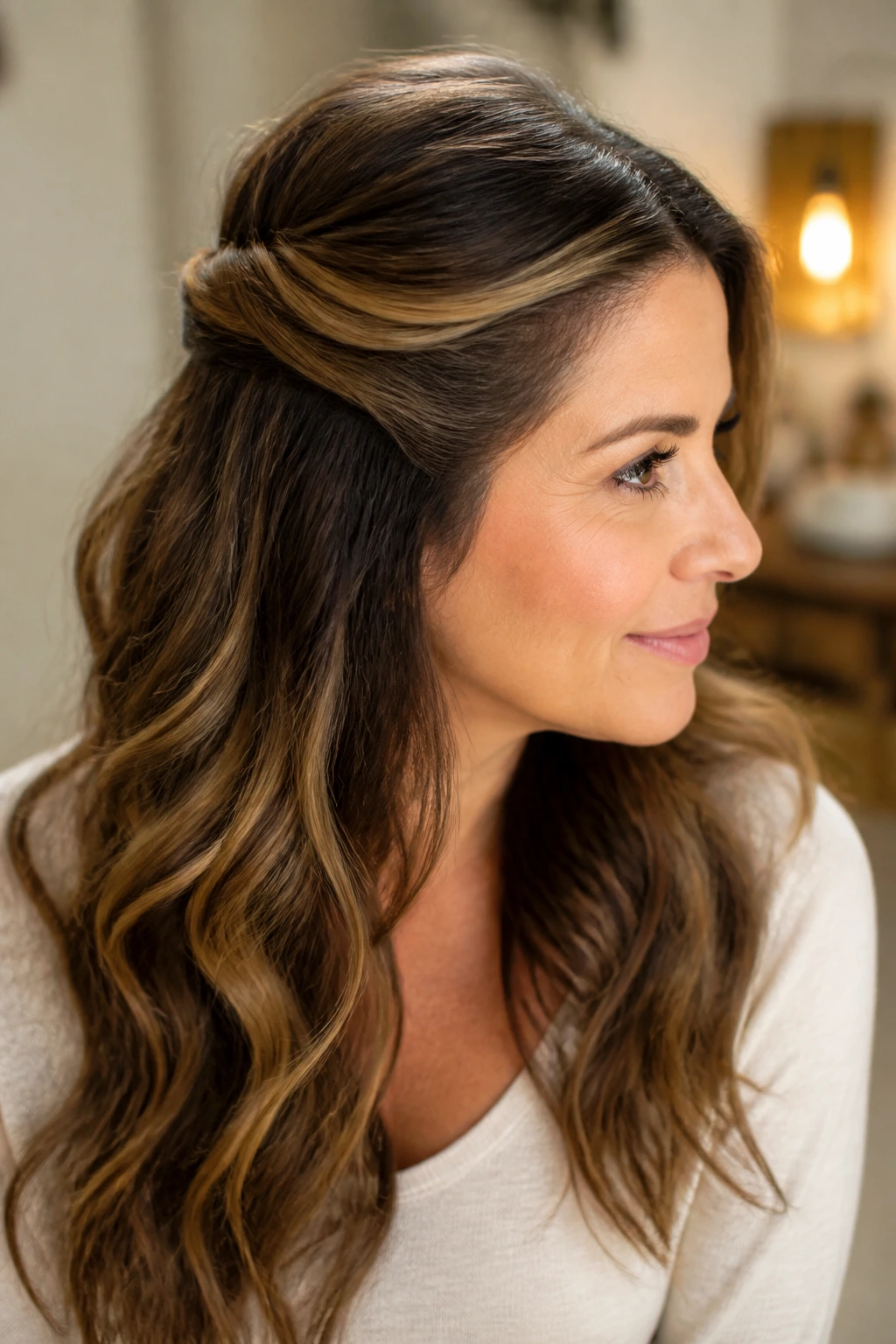
3. Half-Up Twist with Caramel Ribbons
Can a half-up style hide gray roots and still look soft? Yes, if the twist starts at the temples and lifts the top section just enough to cover the part line.
Caramel ribbons do the color work here. They lighten the lengths without washing out the base, so the gray at the root doesn’t meet a hard wall of pale color. That softer blend is the whole trick.
How to wear it Pull back the top third of the hair, twist both sides toward the back, and pin them low enough to keep the crown from puffing out too much. Leave the bottom layer loose and bent with a large iron or a few overnight braids. The style reads gentle, but it still does a decent job of tucking the first inch or two of regrowth out of sight.
4. Low Textured Ponytail with Cinnamon Dimension
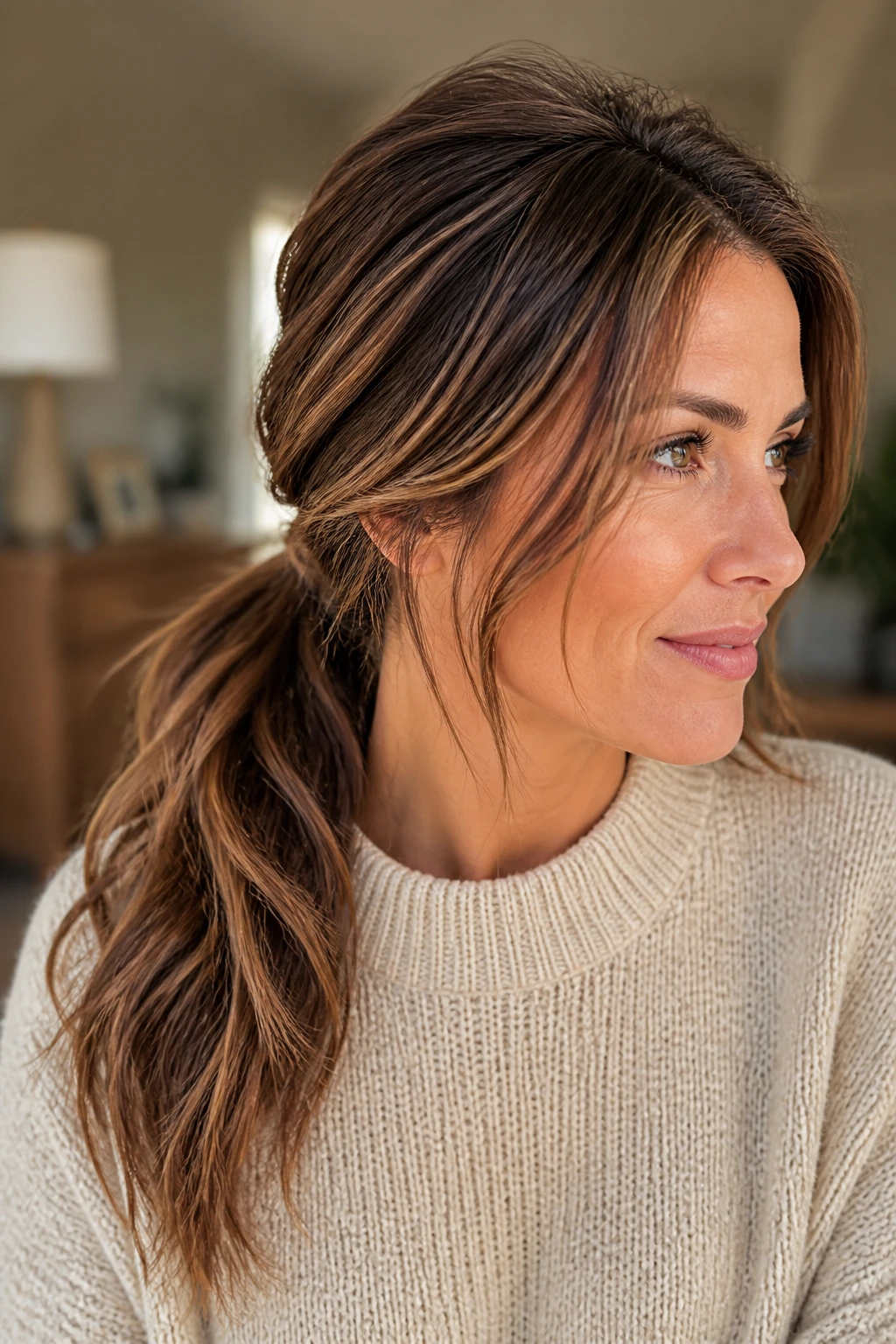
On mornings when the roots look loud and the clock is rude, a low textured ponytail is the move. The trick is not making it sleek. Sleek ponytails can expose everything.
A little lift at the crown, a few loose bends through the tail, and cinnamon dimension through the lengths make the whole style feel intentional. I’d rather see a ponytail with shape than a stiff one with every silver strand lined up in formation.
What makes it work
- Tease the crown lightly with a fine comb.
- Wrap a small section of hair around the elastic.
- Pull out two face-framing pieces and curl them away from the face.
That tiny bit of mess is doing more camouflage than most people realize.
5. Crown Braid with Golden Bronde Ends
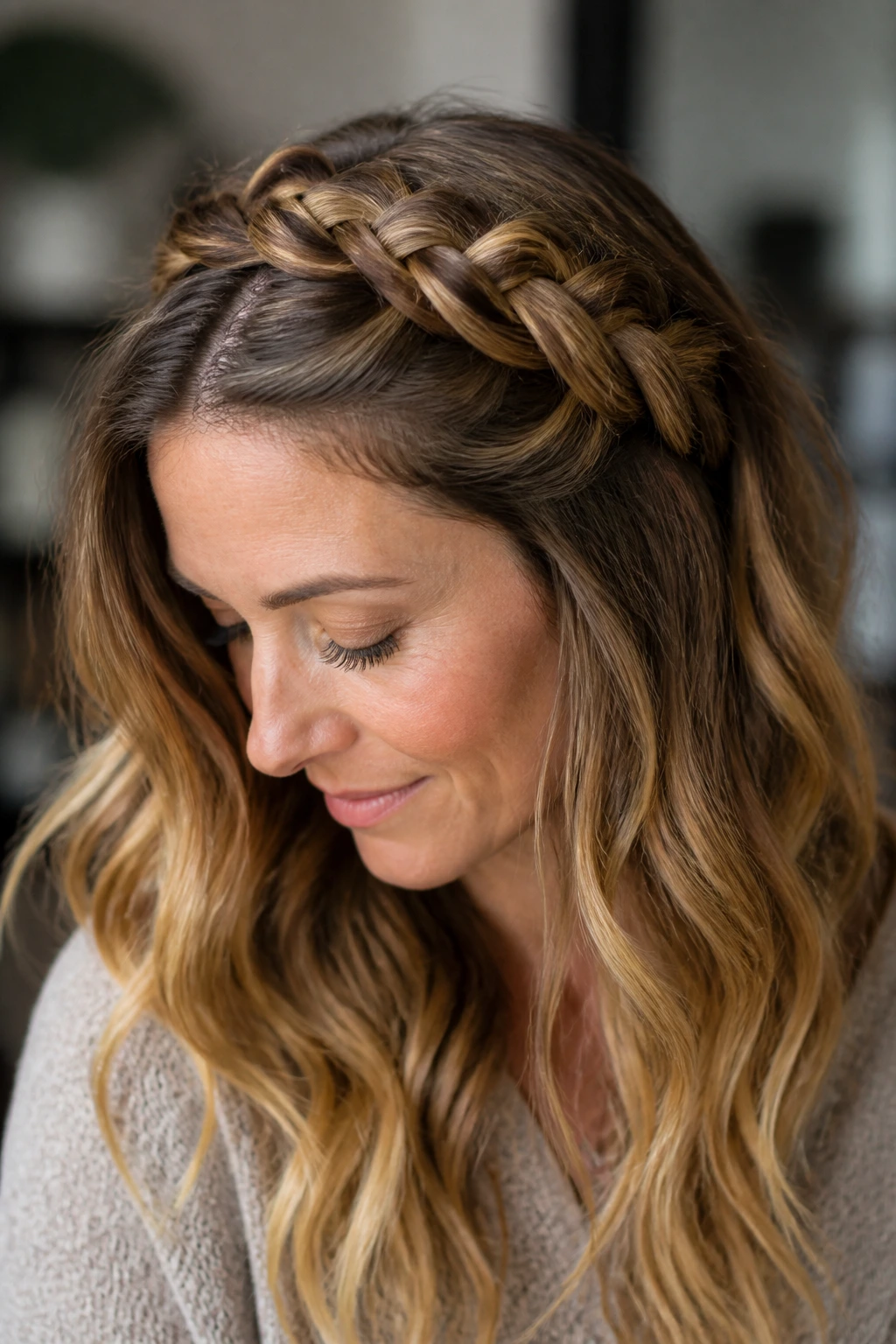
A braid that runs along the crown acts like built-in coverage. It physically sits over the root area, which means the gray line at the part and temples gets interrupted before it can dominate the style.
Golden bronde ends keep it warm without pushing the hair into one flat brown block. That matters. A braid against flat, one-note color can still look obvious; a braid against mixed warm tones looks softer and more expensive, frankly.
This one loves second-day hair. The tiny bit of grit gives the braid grip, and grip makes the pattern cleaner. If your hair is slippery, a puff of dry shampoo at the roots before braiding makes a bigger difference than people expect.
6. Loose Barrel Curls with a Soft Side Sweep
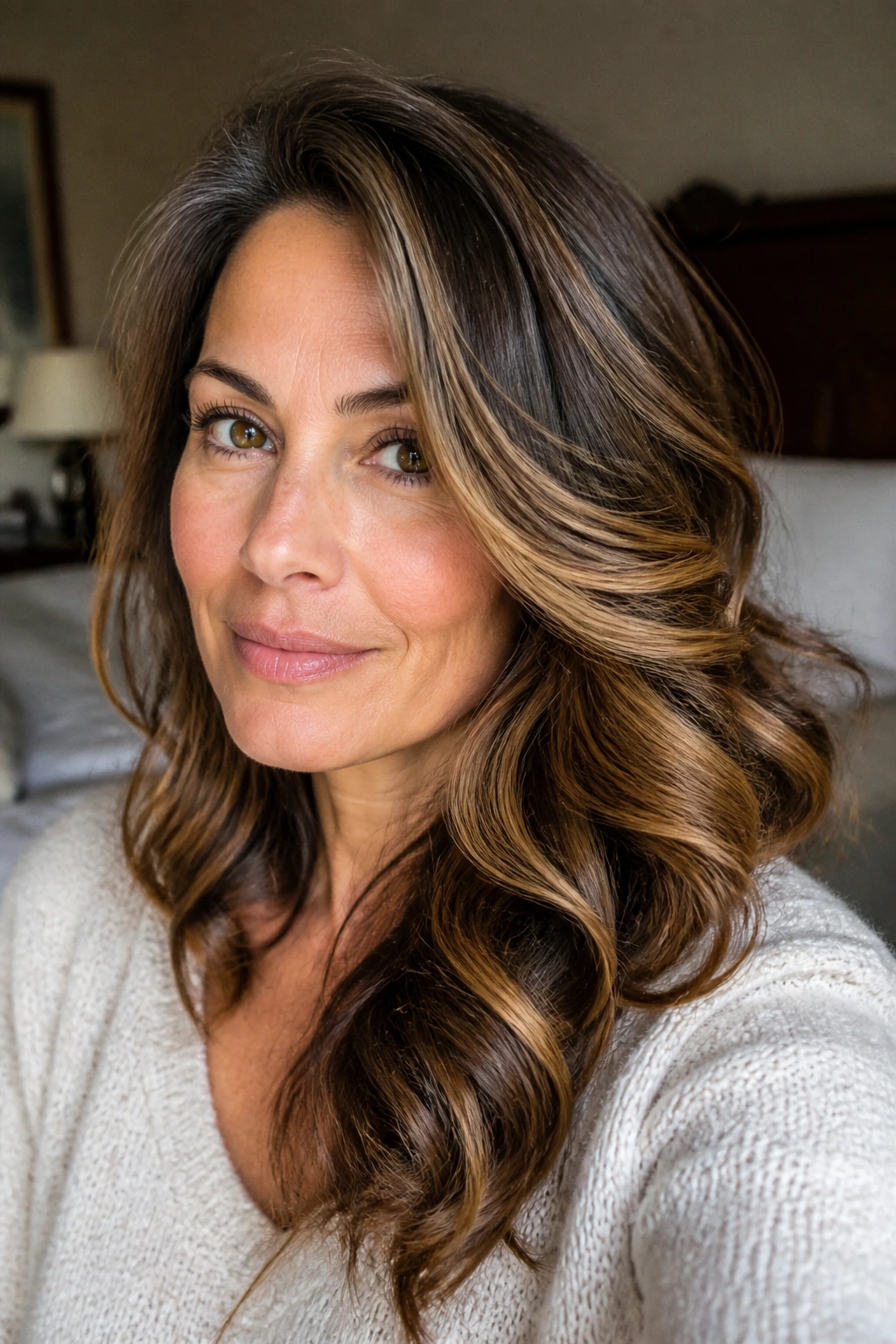
Loose barrel curls are the opposite of a neat blow-dry, and that’s why they work. They bend the hair enough to blur the scalp line, then drop into a side sweep that pulls attention off the center.
Toffee streaks through a deeper base keep the curls dimensional. The warm mix matters because gray roots against a warm brunette or bronde read as softer than gray against a cool beige blonde.
Use a 1.5-inch barrel, not a tiny one. You want movement, not a tight curl pattern that opens up and exposes the crown later. Brush the curls out while they’re cool, then let the side sweep fall naturally. No need to force it.
7. Bubble Ponytail with Mocha Lowlights
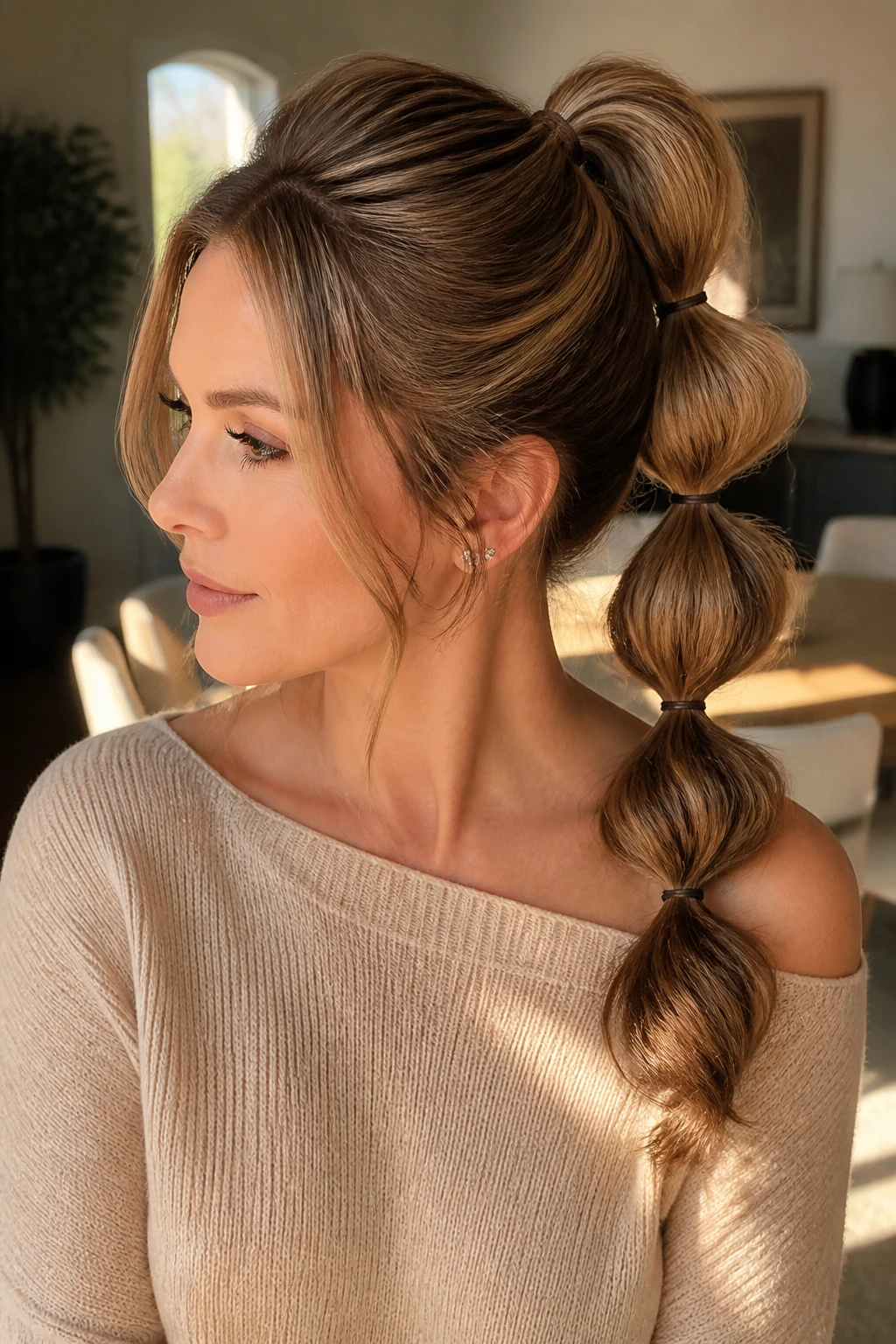
A bubble ponytail sounds playful, which it is, but it also breaks the long line that usually makes roots obvious. Each bubble interrupts the eye, and that interruption helps at the crown more than most people assume.
Mocha lowlights deepen the top section and give the style more shadow around the scalp. That shadow is useful. The whole ponytail feels fuller, and fuller hair makes gray regrowth less stark by default.
The style works best when the bubbles are spaced evenly and the elastics are hidden with small wraps of hair. Keep the top a little lifted. If the crown is too flat, the gray at the part will still show through.
8. Braided Half-Crown on Auburn Lengths
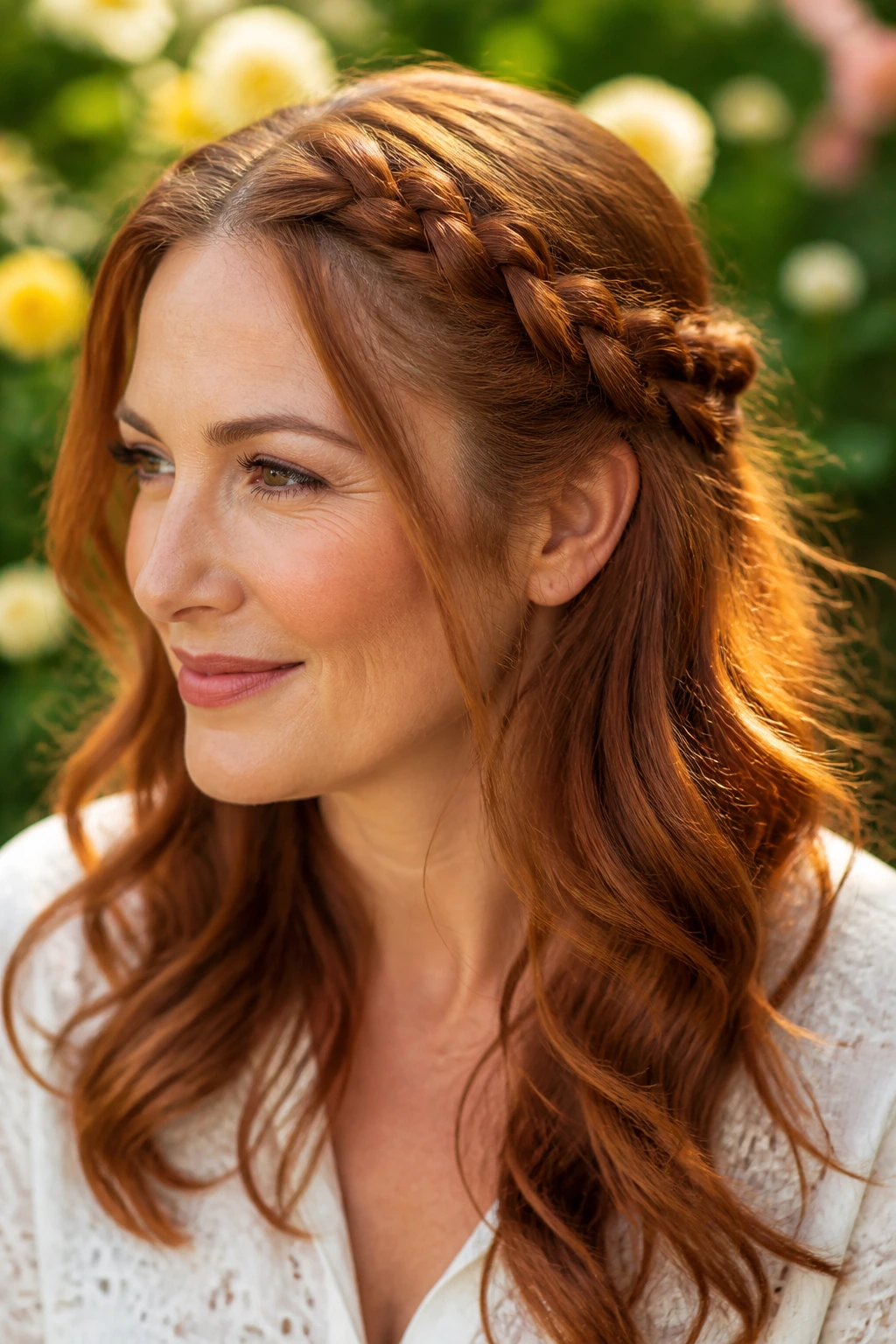
Need something romantic that doesn’t expose the hairline? A braided half-crown is one of the smartest answers.
It covers the temples, which are often the first places gray becomes visible, and the auburn length underneath keeps the whole thing warm and soft. The braid itself doesn’t have to be tight. In fact, a slightly loosened braid looks better here because it gives the crown more width.
This is a good style for layered long hair. If the front pieces are short, they can be tucked into the braid or left loose around the face. Either way, the root area stays quieter than it would in a simple middle-parted wave.
9. Messy Low Bun with Face-Framing Waves
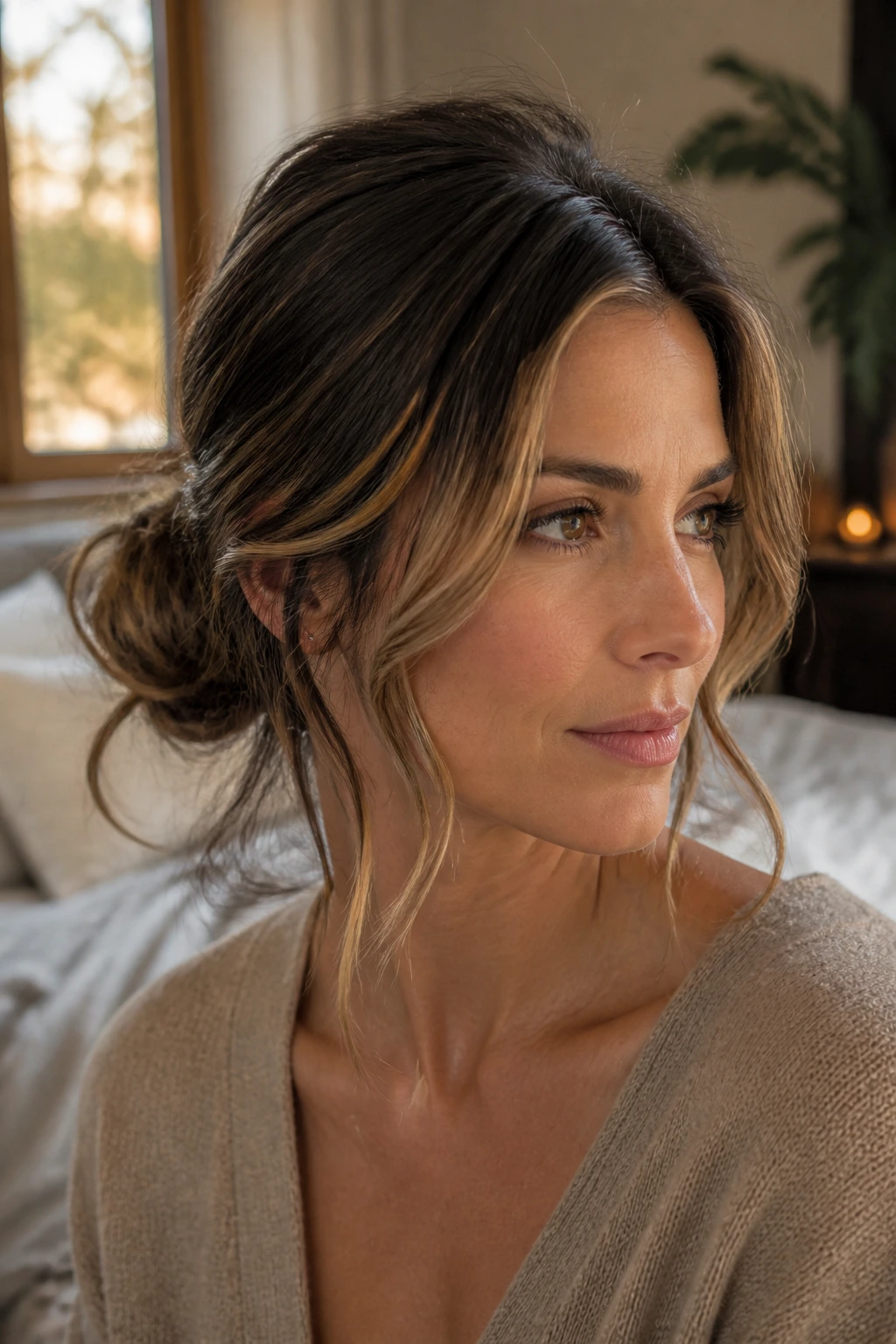
A low bun at the nape keeps the attention away from the top of the head, which is exactly where gray roots tend to stand out first. Add a couple of soft waves near the face, and the whole style suddenly looks deliberate instead of rushed.
Caramel pieces around the cheekbones help because they pull the eye forward. The bun can stay loose and a little imperfect. That’s not a flaw; it’s the point.
This is one of those styles that looks better after a minute or two of fussing and then stopping. Overworking the bun makes the crown too tight, and tightness is what you’re avoiding.
10. Side-Swept Fishtail Braid with Toffee Streaks
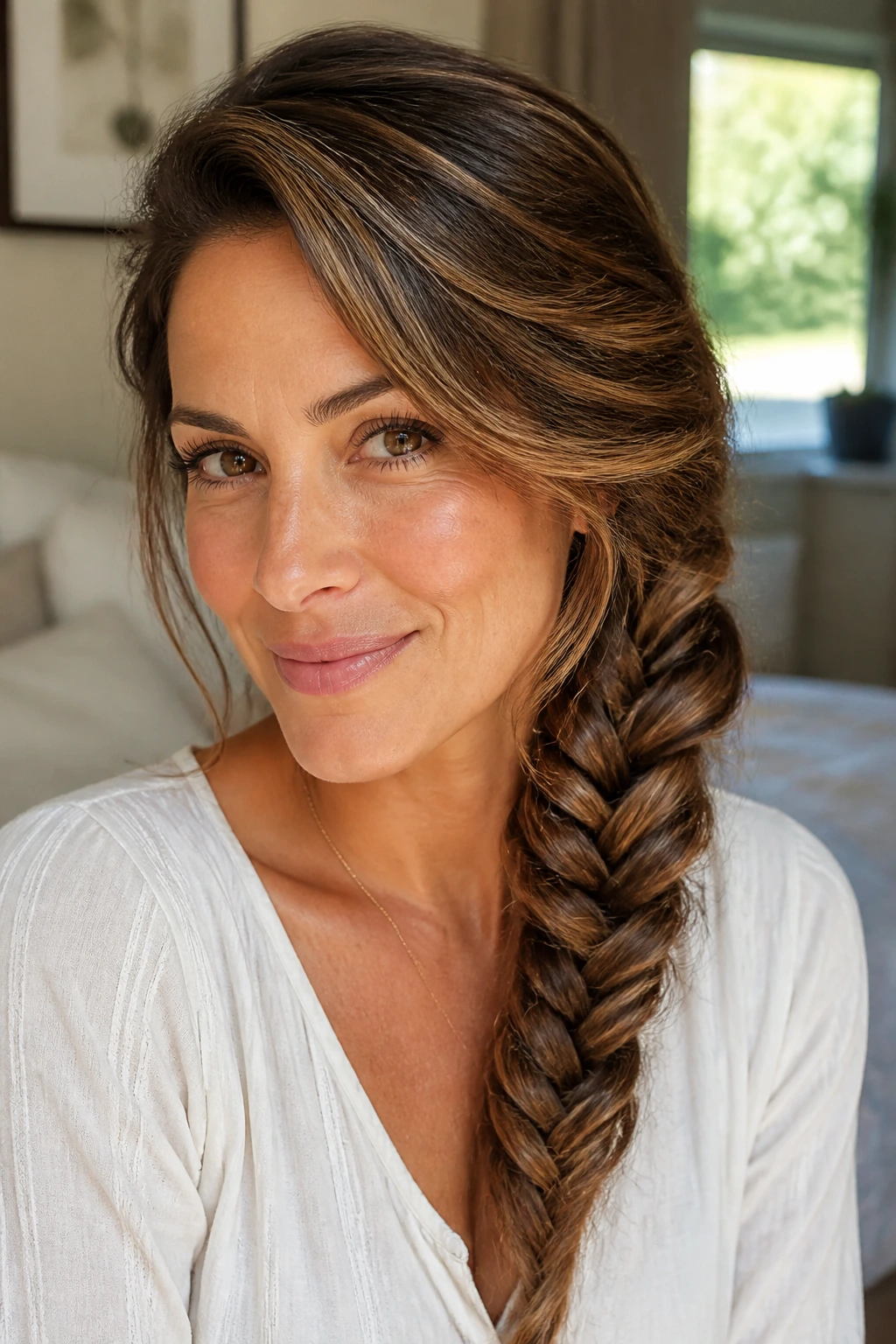
A fishtail braid is dense in a way a three-strand braid isn’t. That density helps cover the root line because the woven pattern breaks up the scalp more thoroughly.
Side-sweeping it makes the whole style even kinder to gray regrowth. The part shifts, the braid lands off-center, and the eye follows the braid instead of the roots. Toffee streaks through the length keep it warm and prevent the braid from looking dull.
It’s also a good braid for hair that has a little grit and thickness. Very silky hair can slip apart, so a tiny bit of texture spray at the mid-lengths helps the braid stay close and neat.
11. Curtain Bangs and a Round Brush Blowout
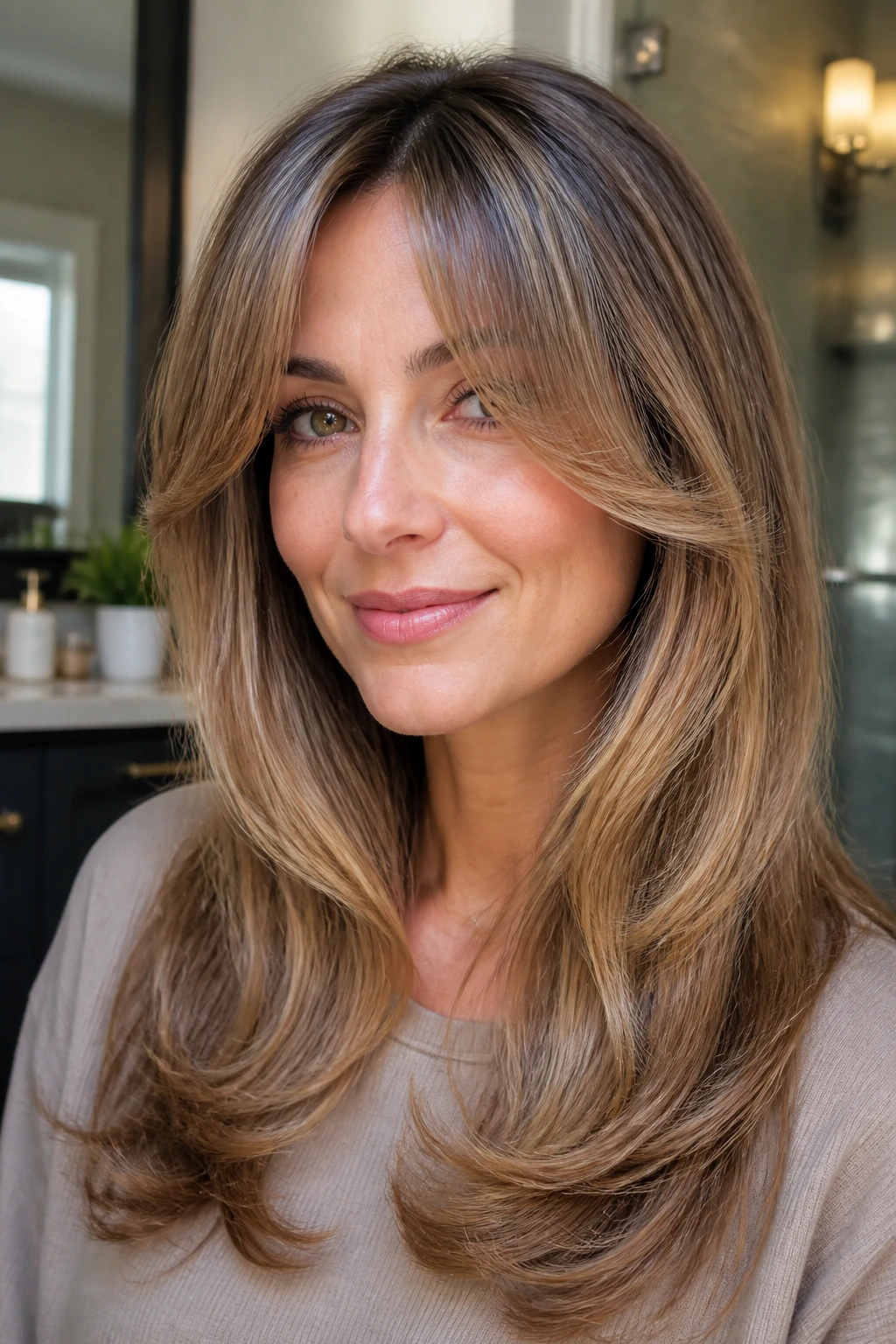
Curtain bangs are sneaky in the best way. They break up the forehead area, which is where root regrowth can look most obvious on long hair when the front section is pulled back or flattened.
A warm bronde blowout keeps the top soft, not heavy. The shape matters more than the exact shade here. A round brush gives the front pieces a curve away from the face, and that curve makes the root line less severe.
If you wear glasses, this is even better. The bangs and frames do a little visual work together, which sounds minor until you see how much calmer the hairline looks.
12. Waterfall Braid with Warm Balayage
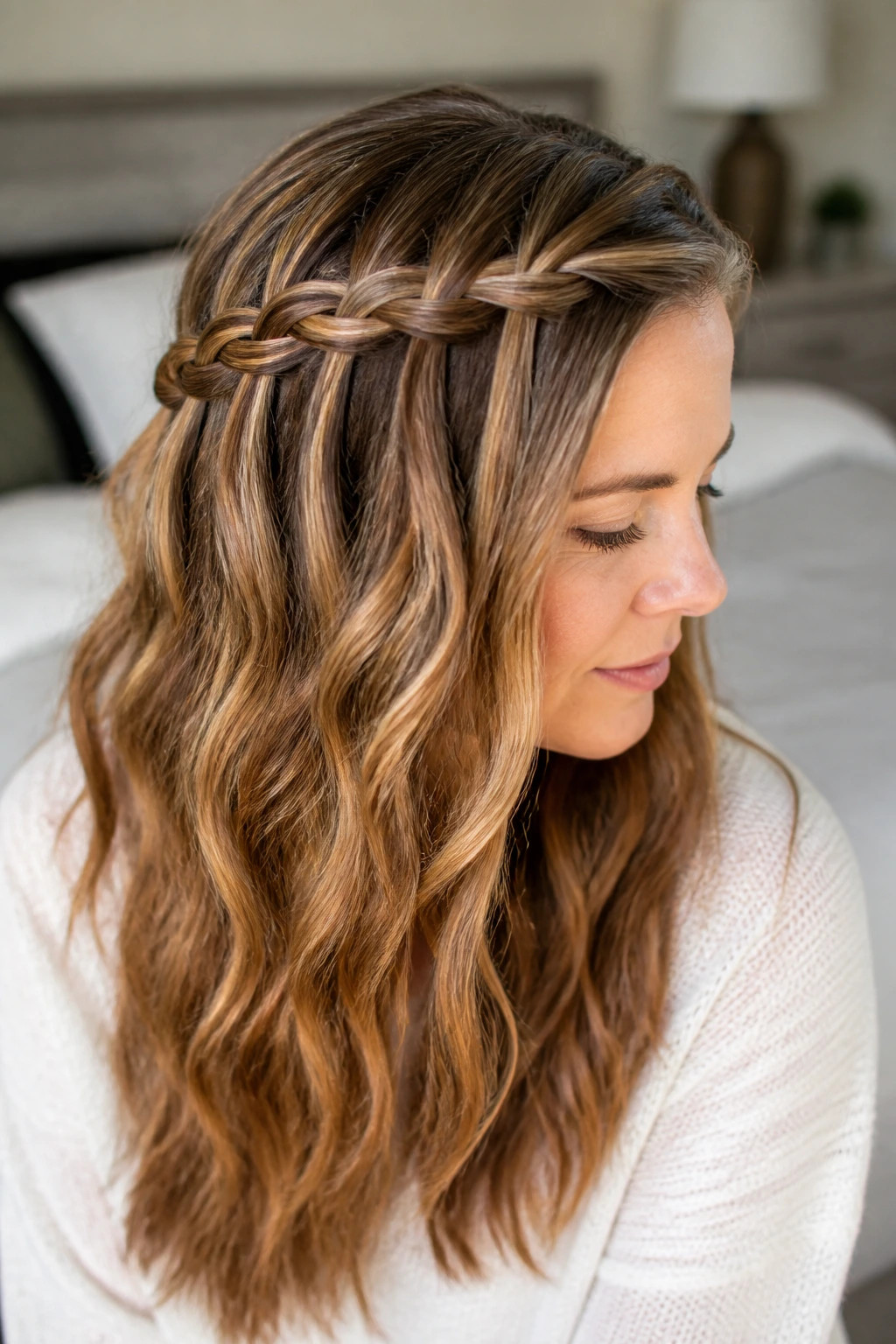
A waterfall braid leaves some hair flowing through while the braid itself drapes across the crown. That layered effect is excellent for hiding gray roots because the scalp is never fully exposed in one straight line.
Warm balayage through the lengths keeps the braid from feeling too heavy or too dark. Caramel, gold, and light copper pieces look especially good when they move through the braid and fall into loose waves underneath.
This style has a softer feel than a full crown braid. If you like a little motion around the face but still want the top covered, it lands in a useful middle ground.
13. Rope-Twist Ponytail with Copper Shine
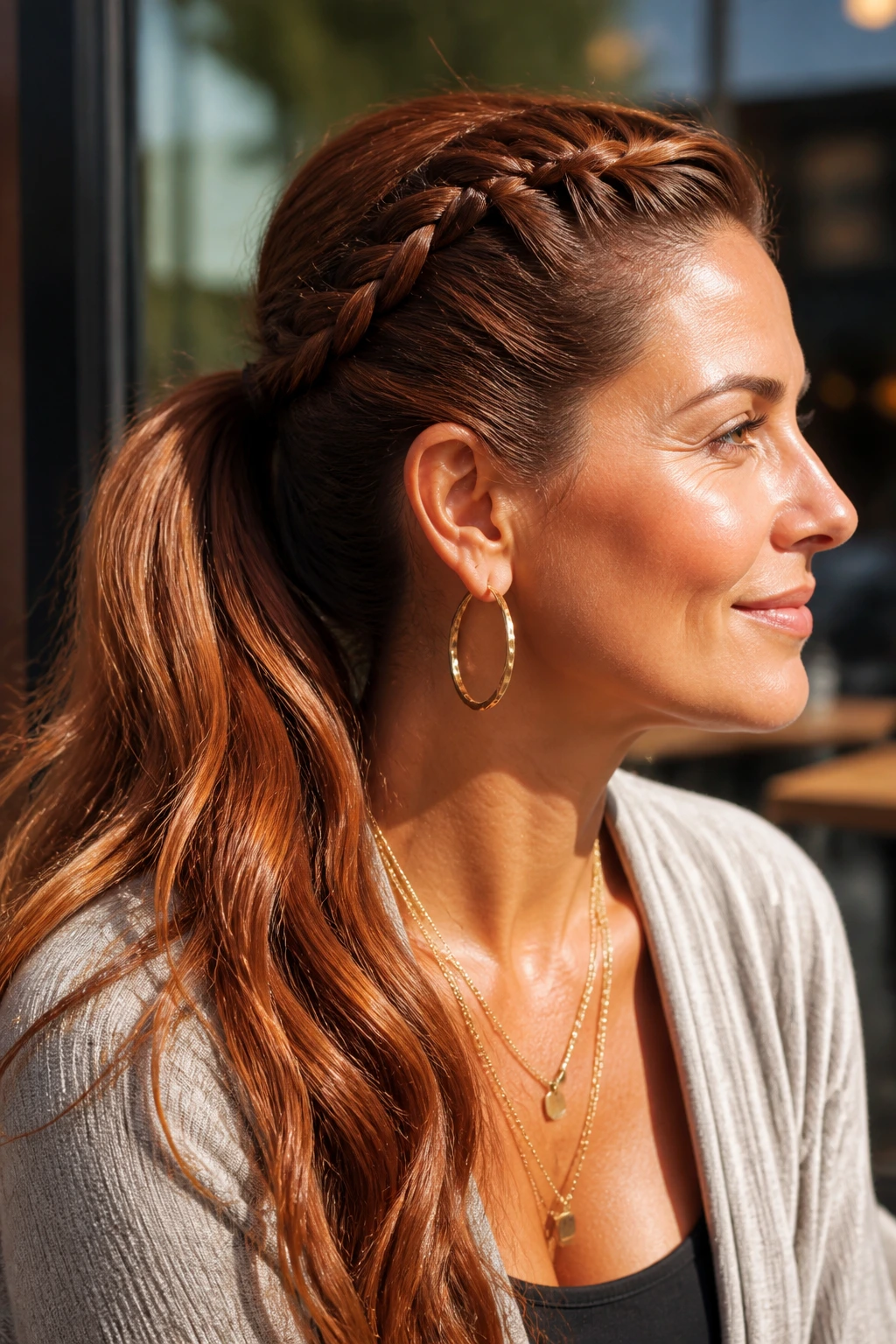
Rope twists create a thicker, cleaner line than a loose braid, and that thickness is useful around the root area. The twist pulls hair back from the crown without exposing every strand at the scalp.
Copper shine through the mid-lengths and ends gives the style warmth that flat brown can’t quite match. If the hair is dull, copper wakes it up fast. If the hair is already glossy, even better.
A rope-twist ponytail is especially nice for long straight hair that tends to show regrowth every time the top section falls flat. The twist gives the crown a little architecture. Hair likes that.
14. Voluminous Top Knot with Loose Lengths
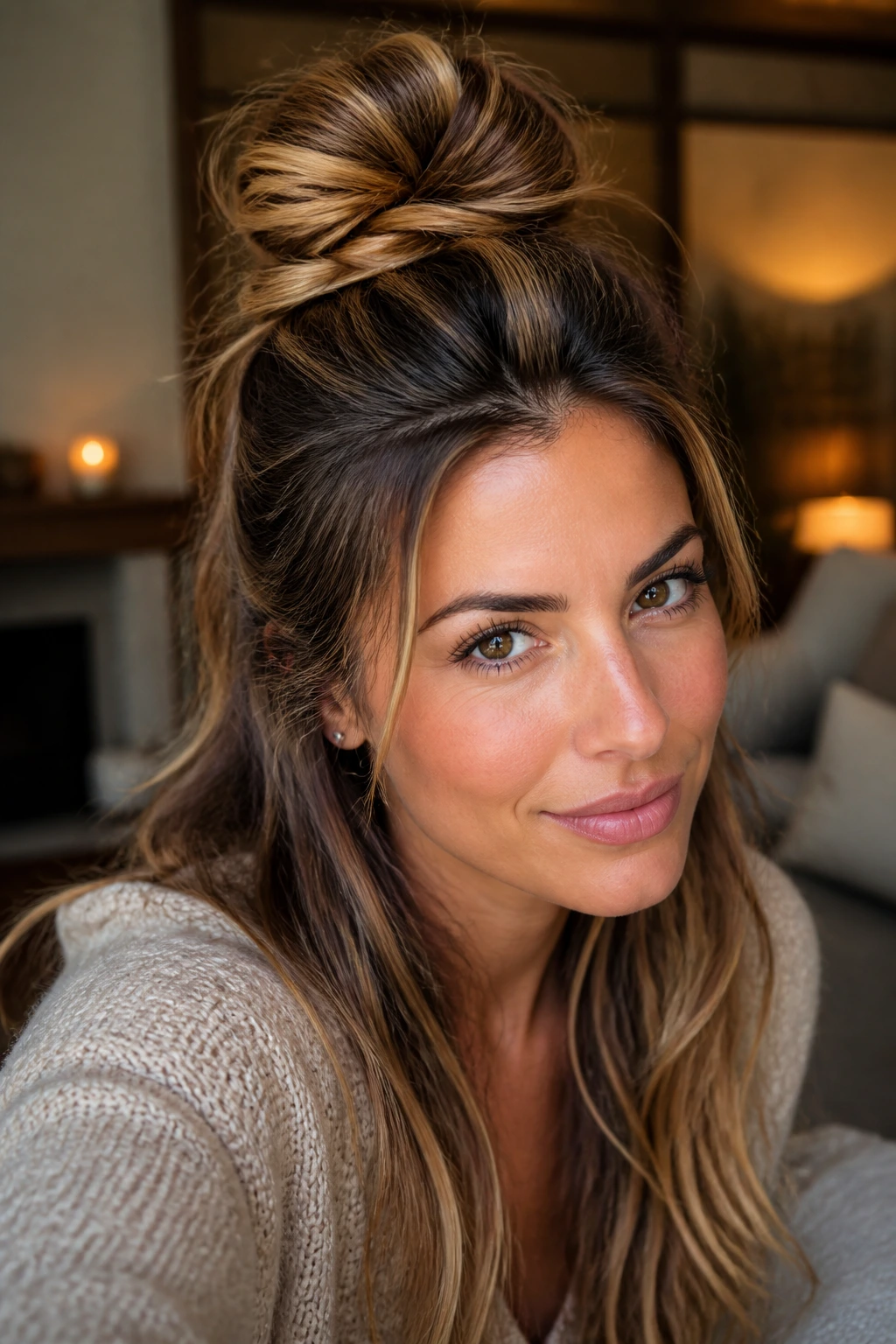
When the crown is the problem, height is your friend. A voluminous top knot shifts the focus upward and leaves the lower lengths free, which is handy when the top section is the place you most want to hide.
The knot should not sit like a hard bun. Build it with a little lift first, then wrap the hair loosely so the shape stays soft. Loose lengths hanging out at the back make the look less severe and keep it from reading as gym hair.
Warm mocha at the roots and a few caramel pieces through the ends help the knot blend rather than contrast. A smooth, dark base under a knot is still visible if the hair is too glossy, so a touch of texture spray around the crown helps.
15. Dutch Braid Crown with Honeyed Ends
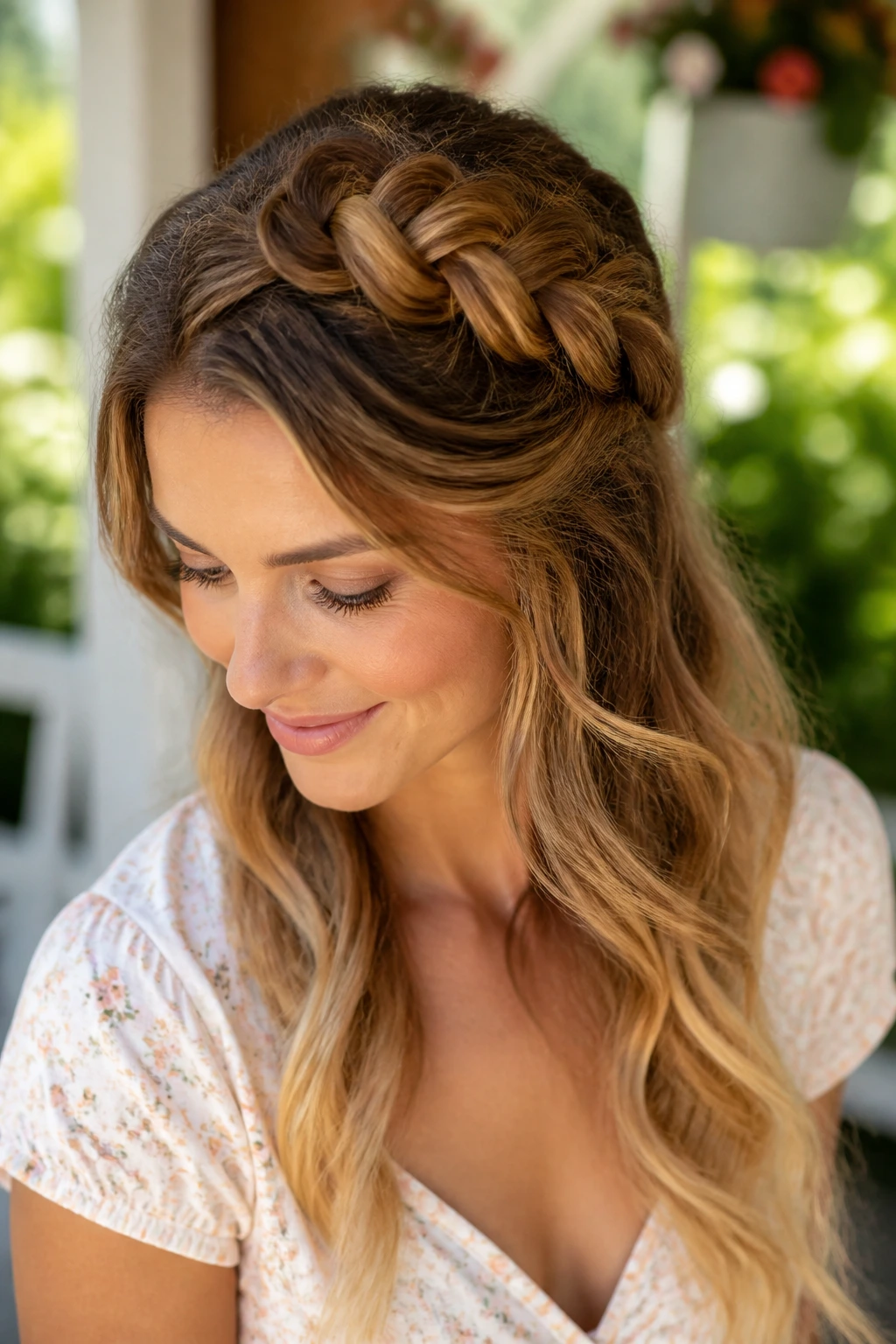
A Dutch braid sits on top of the hair instead of sinking into it, which gives the braid more shape and more coverage. That shape is handy when the gray line is strongest around the part and hairline.
Honeyed ends keep the braid from looking heavy. The warmth at the bottom balances the stronger structure up top, so the whole style feels softer than a straight-up school braid. Long hair makes this easier because there’s enough length to build the braid and still leave a nice tail.
If your hair is layered, pin the shorter front pieces under the braid as you go. It takes a minute. Worth it.
16. Old-Hollywood Brush-Out with a Deep Side Part
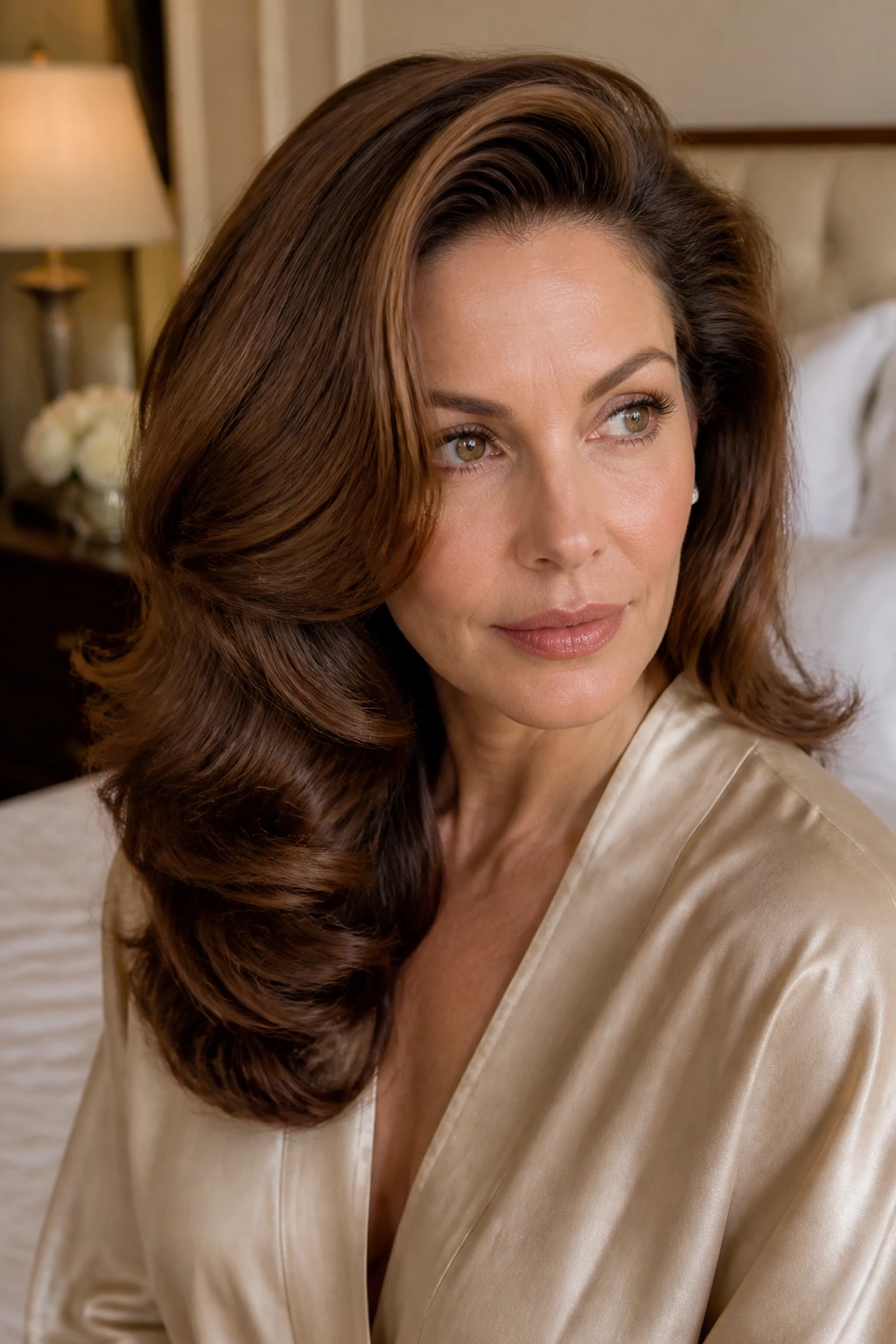
This one has a bit of drama, and I mean that in a good way. The deep side part moves the root line off center, while the brushed-out wave pattern turns the surface of the hair into soft curves instead of one flat shine.
Chestnut gloss works especially well here because it gives the style depth without turning it muddy. The brush-out should feel smooth, almost velvety, not stiff. If the hair still holds a few curled bends instead of a full wave, that’s fine. It often looks better that way.
This style shines on thick long hair. Fine hair can do it too, but it usually needs root lift first or the front will collapse by lunchtime.
17. Low Chignon Wrapped with a Curling Tendril
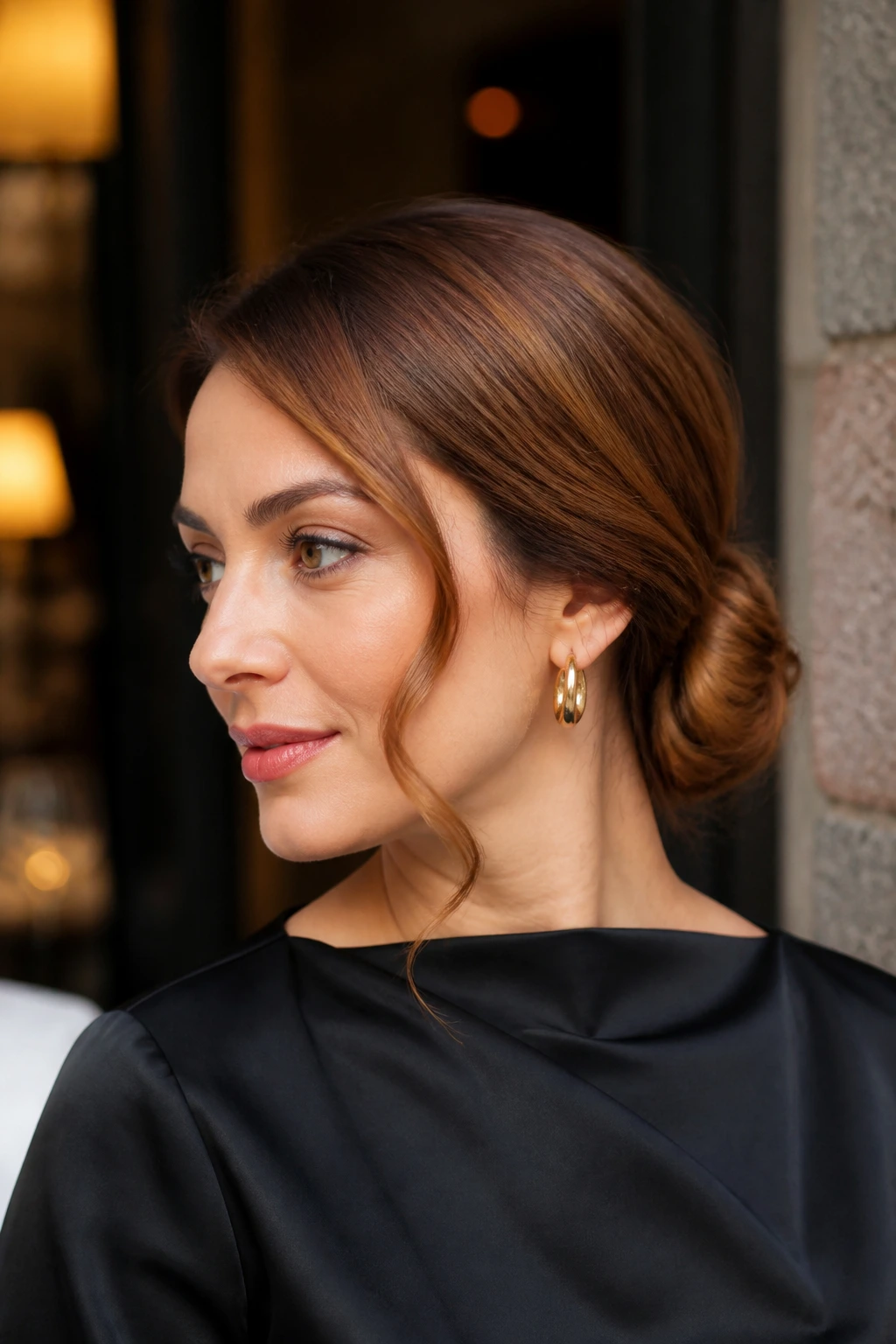
A low chignon hides a lot because it keeps the hair gathered near the nape, away from the place where gray roots are most visible. Wrap one tendril around the face or temple, and the style suddenly looks softer and less severe.
Auburn glaze through the lengths gives the bun a warm edge, which matters more than people think. Gray against an auburn base reads gentler than gray against flat espresso brown.
The good version of this style is tidy at the back and loose around the face. The bad version is slick and over-pinned. You want secure, not tight.
18. Scarf-Wrapped Ponytail with Bronze Ends
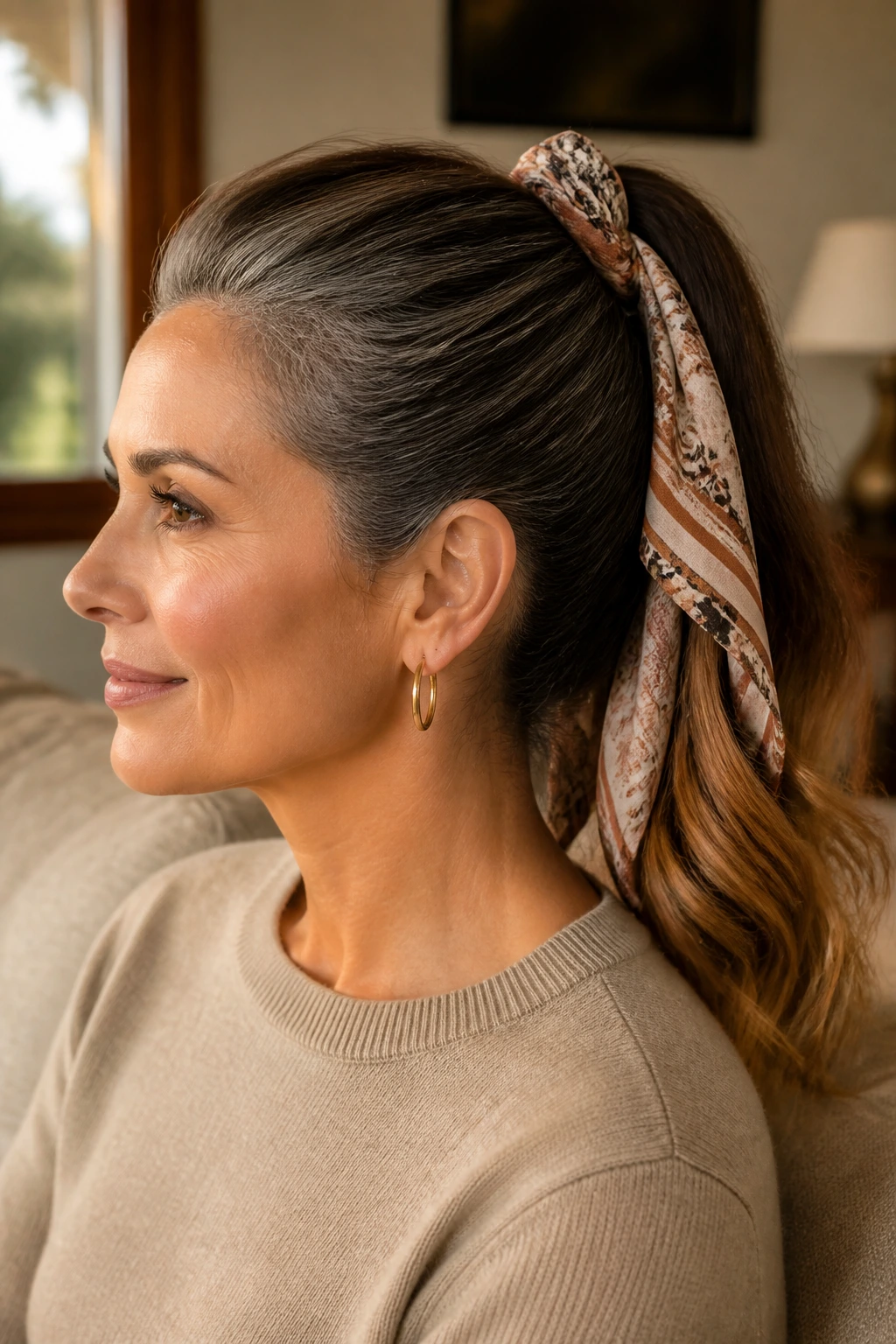
A scarf is not cheating. It’s a smart way to camouflage the crown while adding a little color near the face and nape.
Wrapped at the ponytail base, the scarf hides the exact spot where roots usually flash first. Bronze ends peeking below it keep the style warm and bright. If the scarf has a golden, rust, or cinnamon tone, even better.
This is one of the easiest options on the list for no-fuss mornings. Pull the hair back loosely, tie the scarf, and let a few strands fall near the temples. Done. The softness is doing the work.
19. Side Braid into Curled Long Tail
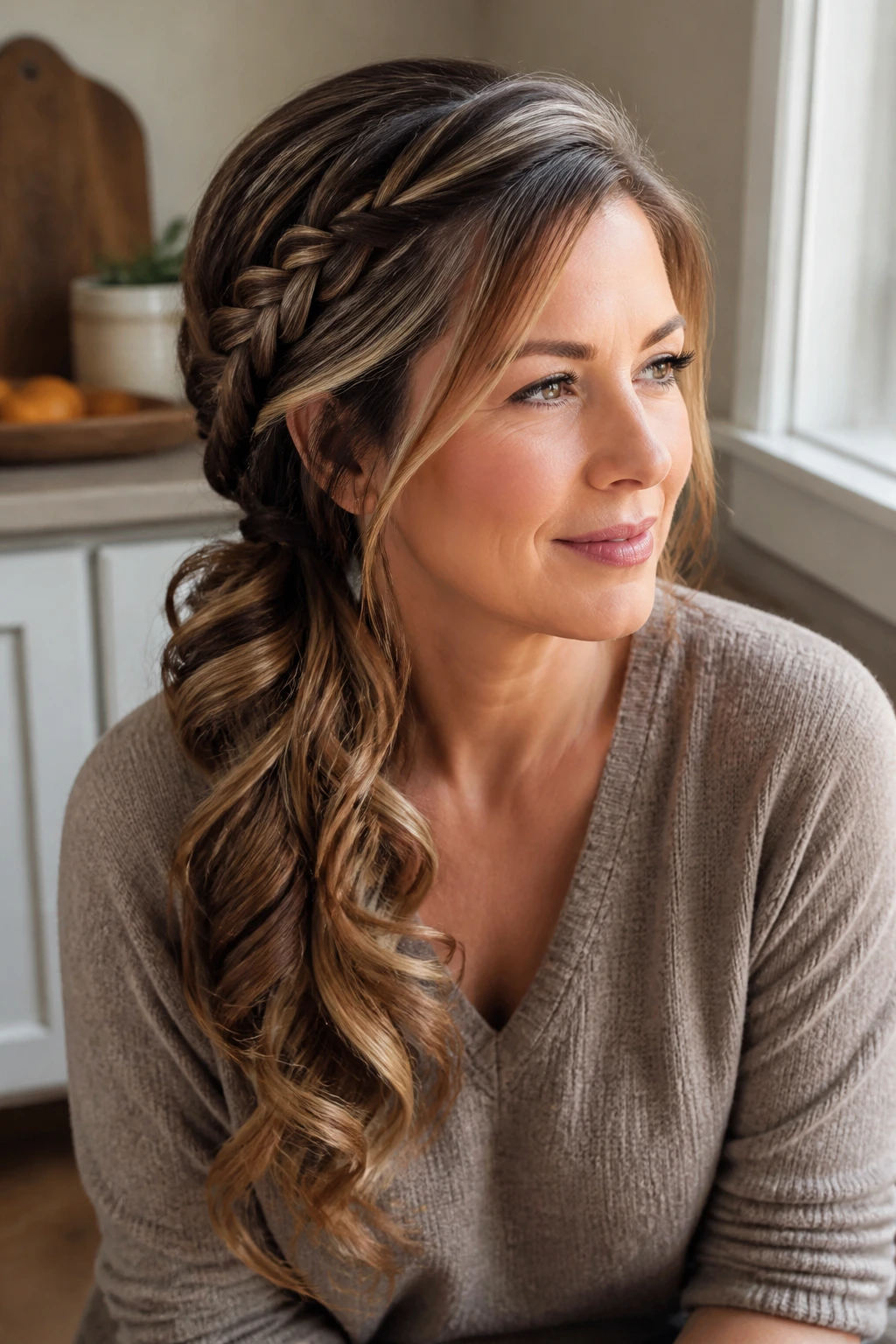
A side braid starts the camouflage before the eye reaches the crown. It pulls hair away from one side of the head, which interrupts the root line, and the curled tail keeps the style from feeling too sportsy.
Caramel highlights through the tail are useful because they keep the length light and dimensional. You don’t want the braid to be the only thing people notice. The curls at the end pull the attention downward.
If your hair is layered, keep the braid a little loose. A tight braid on layered hair can pop open and expose the part underneath, which is the exact opposite of the goal.
20. Twisted Half-Up Crown with Chestnut Waves
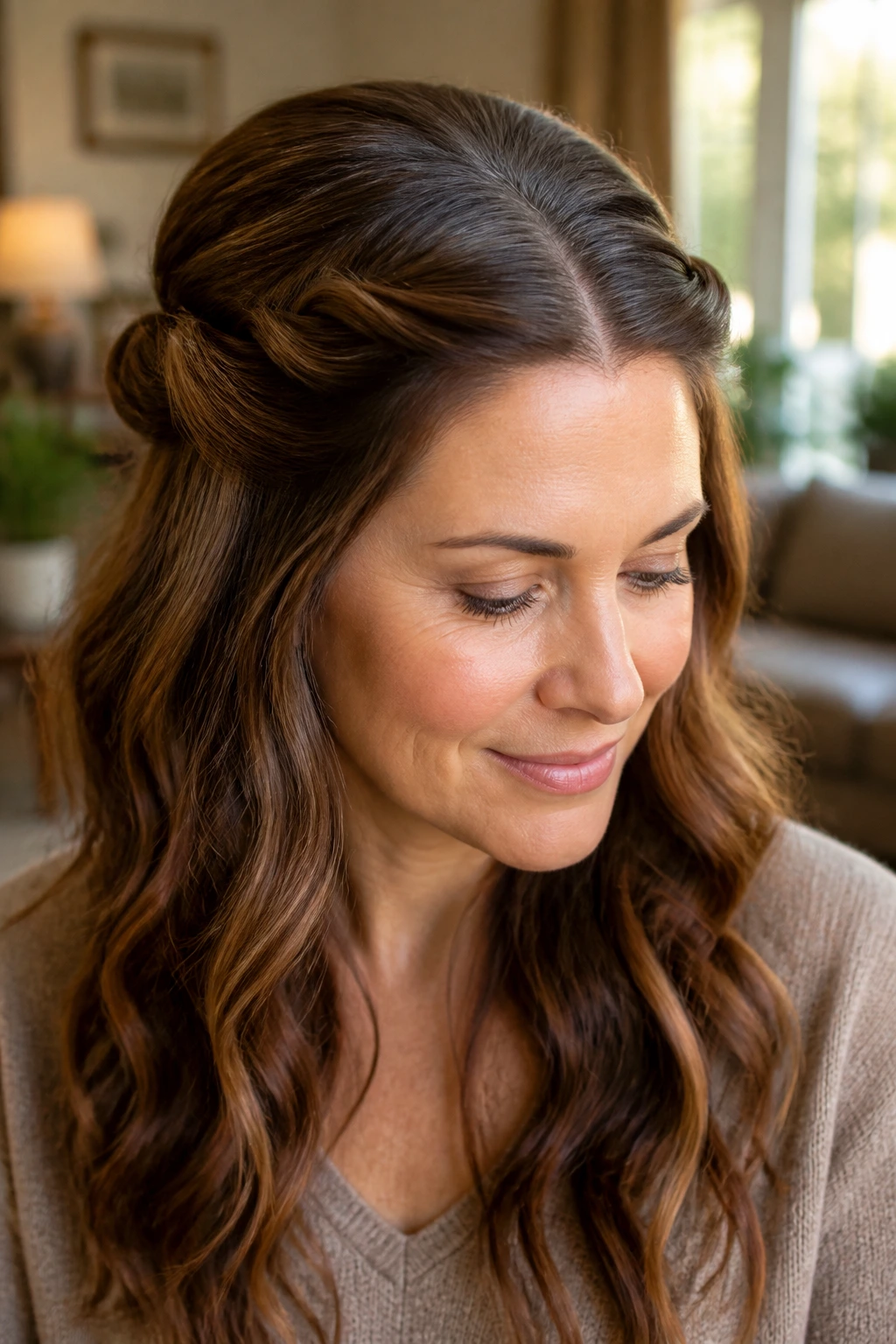
Two simple twists pinned back from the temples can hide more root area than a lot of people expect. The twist creates a soft band over the top section, and the waves below keep the length moving.
Chestnut waves are a strong match here because the warm base feels rich instead of flat. That matters when the top section is being hidden and the rest of the hair is left visible. You want the whole shape to look connected.
This is a good option when you want something pretty without crossing into formal updo territory. It’s also one of the easier styles to adjust on the fly if one side collapses a little.
21. High Ponytail with Wrapped Base and Gold Ribbons
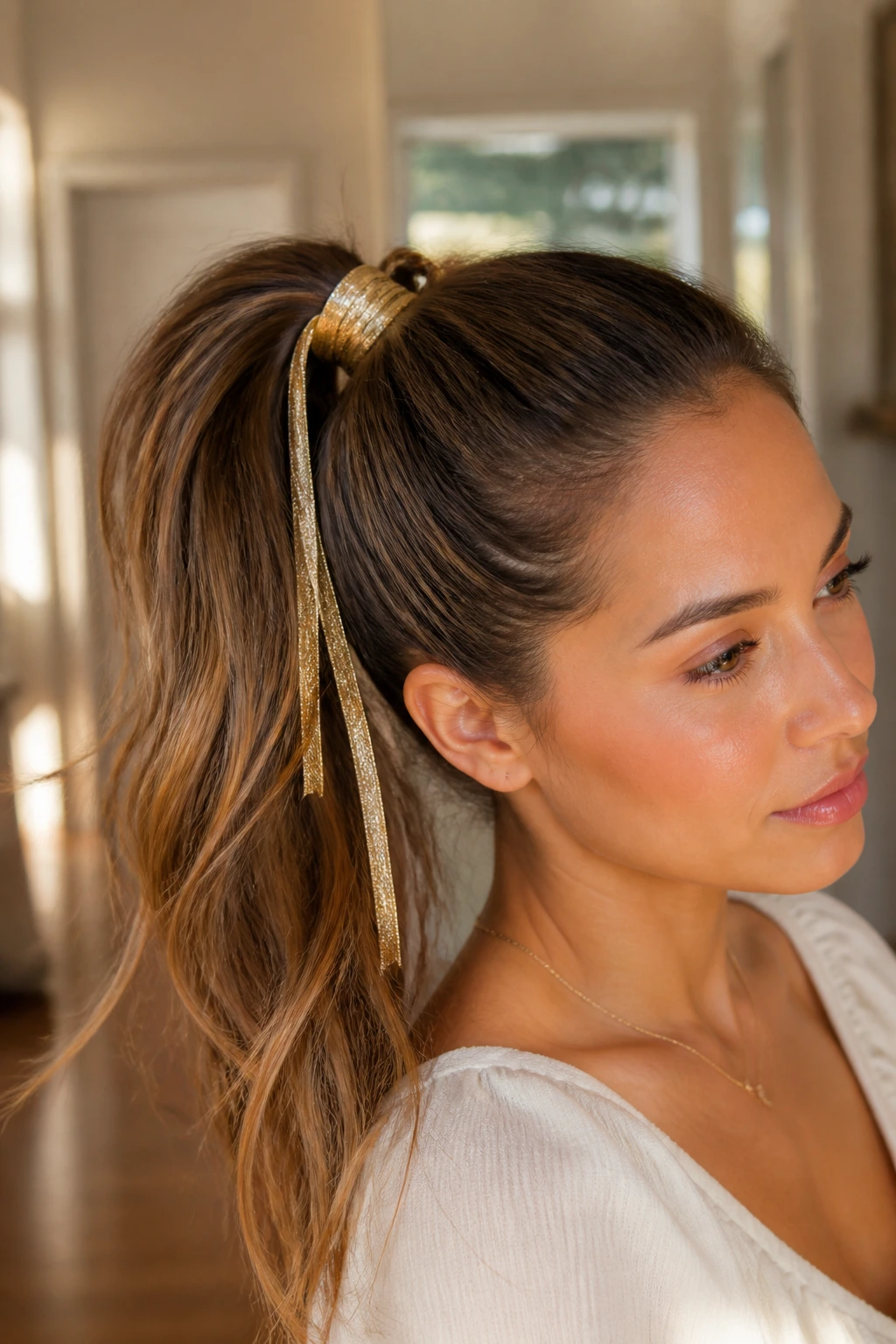
A high ponytail can expose roots if it’s slicked too tightly, so the trick is volume first, then height. Lift the crown before you secure it, wrap the base with a strand of hair, and add gold ribbons or a warm accessory to soften the top.
That little extra height pulls the eye upward and away from the root line. The wrapped base keeps the elastic from breaking up the shape, and the ribbons add warmth near the face.
This style works well on long hair that has enough weight to swing. If the ponytail is too thin, the regrowth at the crown will still be visible. In that case, a fuller low ponytail is the better call.
22. Long Layered Shag with Flipped Ends
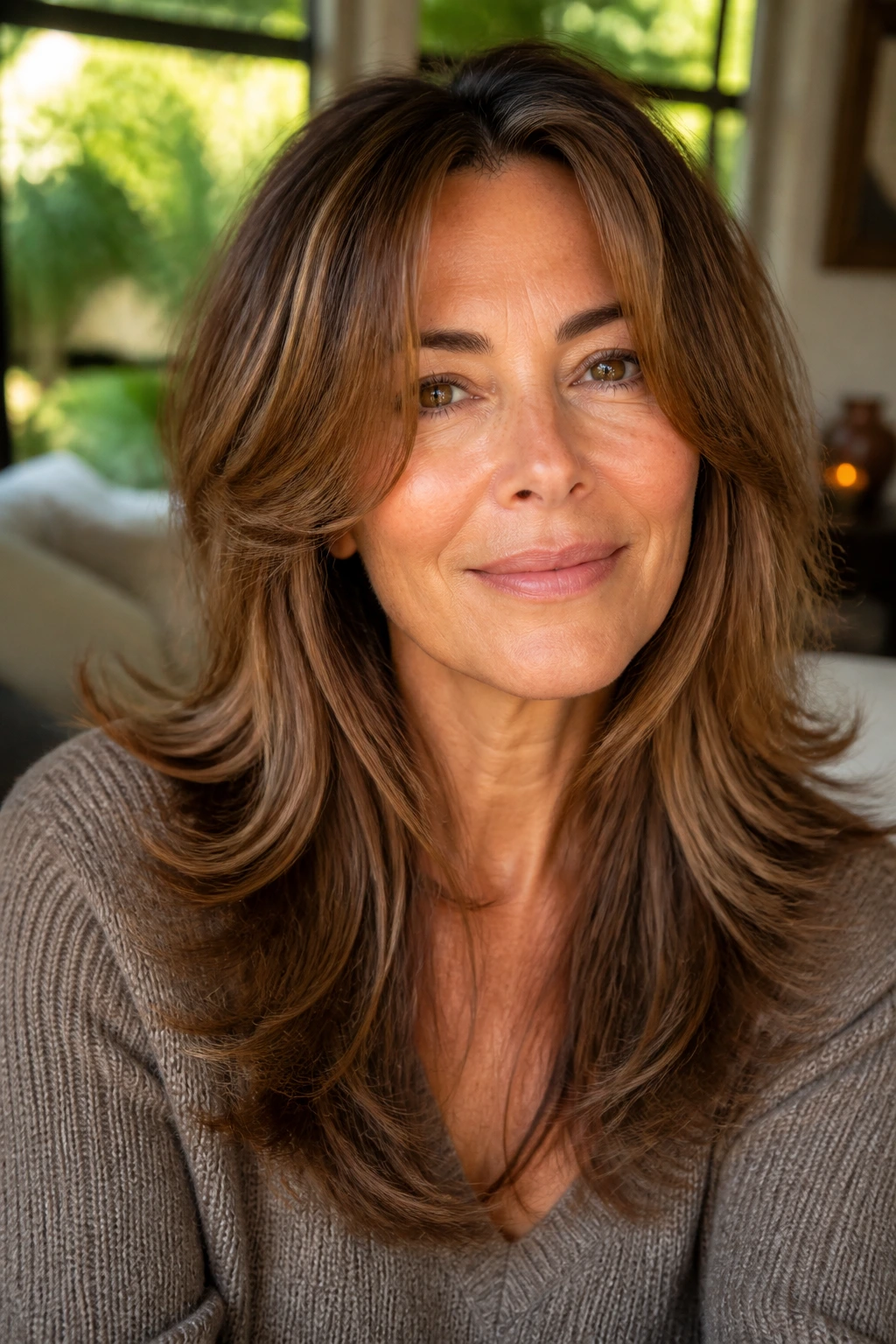
Sometimes the haircut does the camouflage better than the styling. A long layered shag creates movement at the crown and through the lengths, which keeps gray regrowth from settling into one obvious band.
Flipped ends help because they give the bottom half of the hair some attitude and a little bounce. Warm cinnamon or chestnut color across the layers adds shadow, which is useful when the root area needs help blending.
This cut is especially good if you hate feeling boxed into one hairstyle. Air-dry it, blow it out, curl it, pin it back — the layers keep the root area from looking too neat, which is exactly what you want.
23. Loose French Twist with a Soft Tail
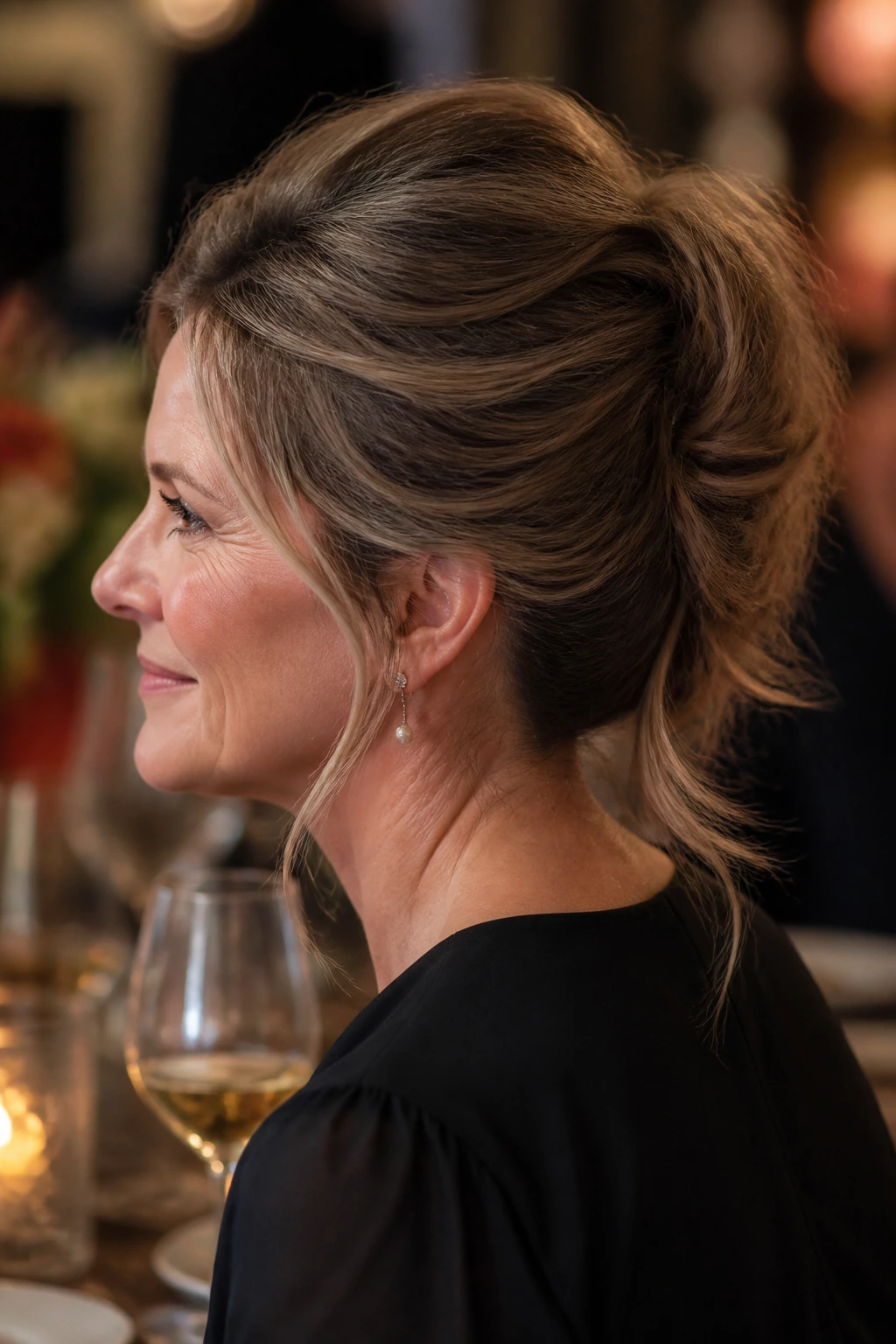
A French twist sounds severe, but it doesn’t have to be. The loose version gathers the hair upward and inward, which hides a lot of the crown, then leaves a soft tail or loose ends for movement.
The effect is elegant without being stiff. More important, the root area is tucked away instead of being laid bare. If the gray is strongest at the temples, leave one or two soft pieces out there and let them curve.
This is a good dinner style, a good event style, and a better-than-you-think everyday style if your hair is long enough to hold a shape. Secure it with pins, not a single giant clip. That gives you more control.
24. Braided Low Ponytail with Warm Auburn Tones
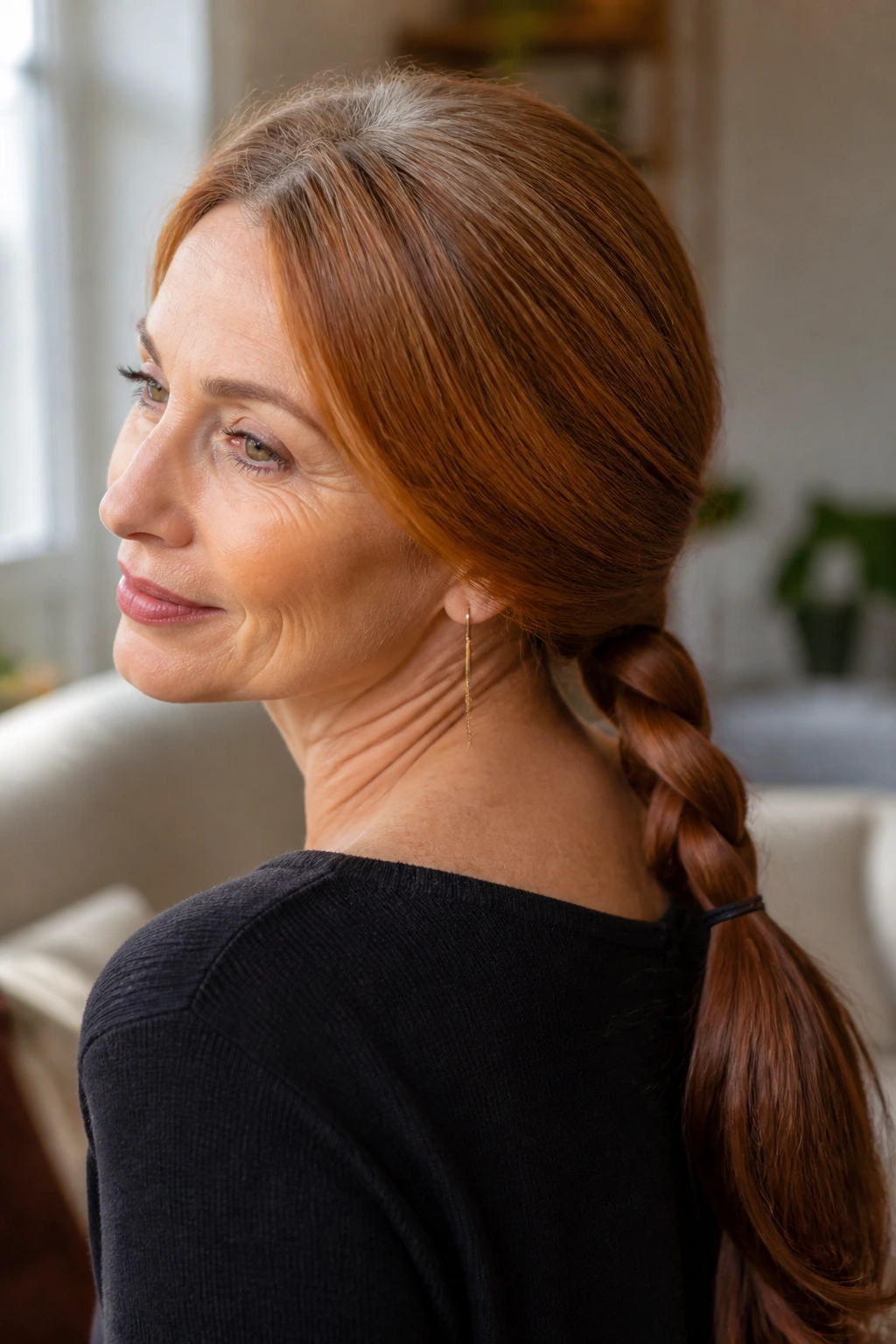
A low ponytail becomes much better when you braid the tail. The braid pulls attention away from the scalp and gives the length a pattern, which helps hide any root grow-out at the crown.
Warm auburn tones are especially useful here because they keep the braid rich and dimensional. Silver strands near the top blend more naturally into that warmth than they do into a cool, pale blonde or an ashy brown.
This is a reliable weekday style. It’s tidy enough for meetings, soft enough for dinner, and easy to refresh with a quick pass of dry shampoo at the roots before you start.
25. Soft Rolled Updo with a Curled Back Section

A soft rolled updo is one of the best ways to tuck the crown away without looking dated. The roll hides the root area, and the curled section at the back gives the style enough softness to keep it from feeling too severe.
Caramel or honey glaze through the lengths makes the whole updo feel warmer and more blended. If the top section is strongly gray, add a little lift before you roll the hair. Flat roots are the enemy here.
This is the style I’d reach for when I need the root line to disappear and the hair to still look like hair, not a helmet. Secure it well, leave a little curve around the face, and stop before it gets overworked.
Why Warm Shades and Texture Make Gray Roots Less Obvious
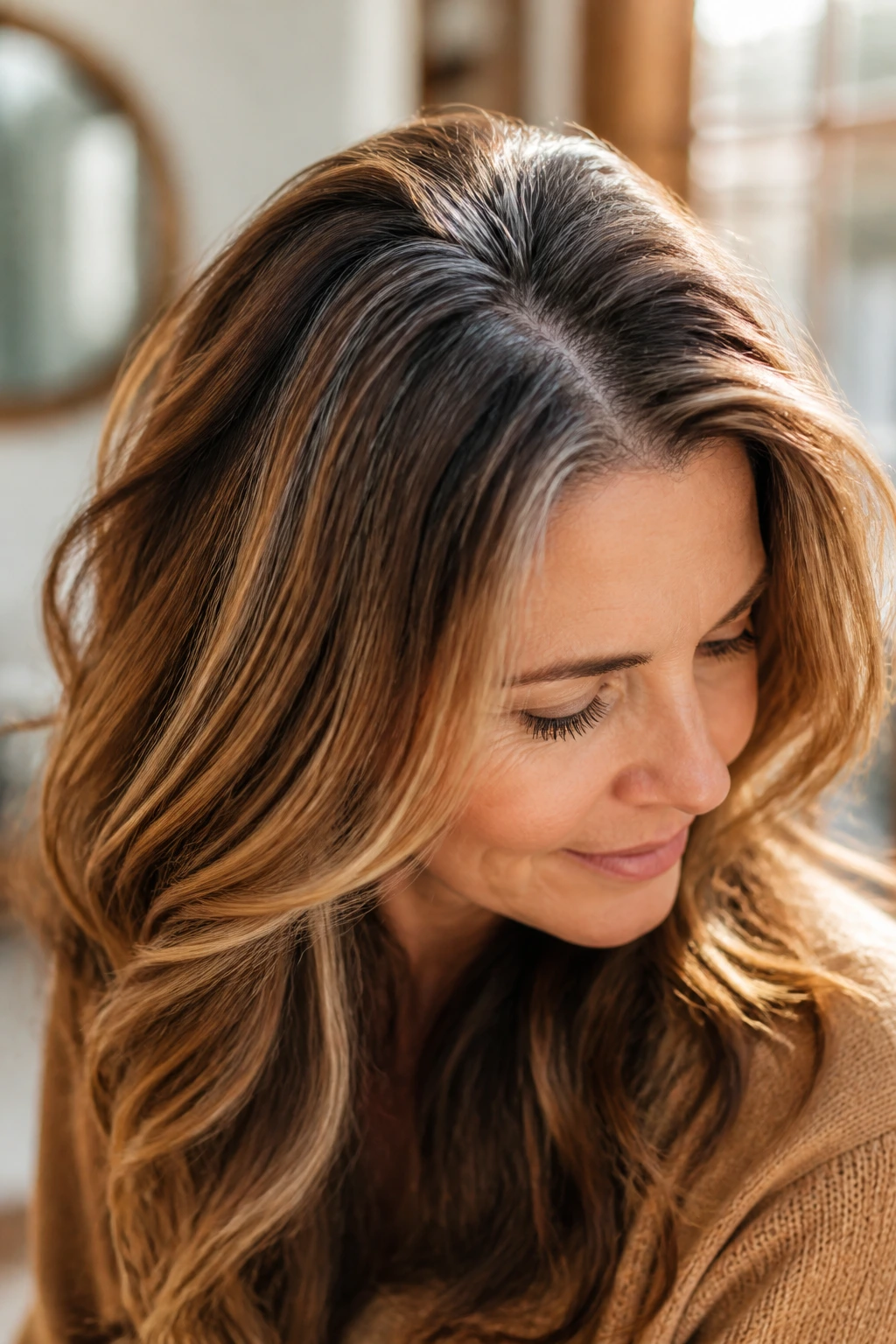
Gray roots are most visible when three things happen at once: the part is clean, the hair lies flat, and the color contrast is sharp. Warm tones help with the contrast. Texture helps with the line. A little volume helps with both.
Chestnut, caramel, copper, honey, and auburn all carry enough warmth to soften the look of new regrowth. They don’t erase gray, and that’s not the goal anyway. They blur the boundary so the eye sees movement instead of a bright stripe at the scalp.
Texture matters just as much. Flat-ironed hair acts like a mirror. Waves, braids, twists, and loose curls break the reflection into smaller pieces, which means the root area doesn’t get the same harsh spotlight. If you’ve ever noticed that your gray seems louder on wash day than on day two, that’s why. A little grit is useful.
Essential Tools for These Long-Hair Styles
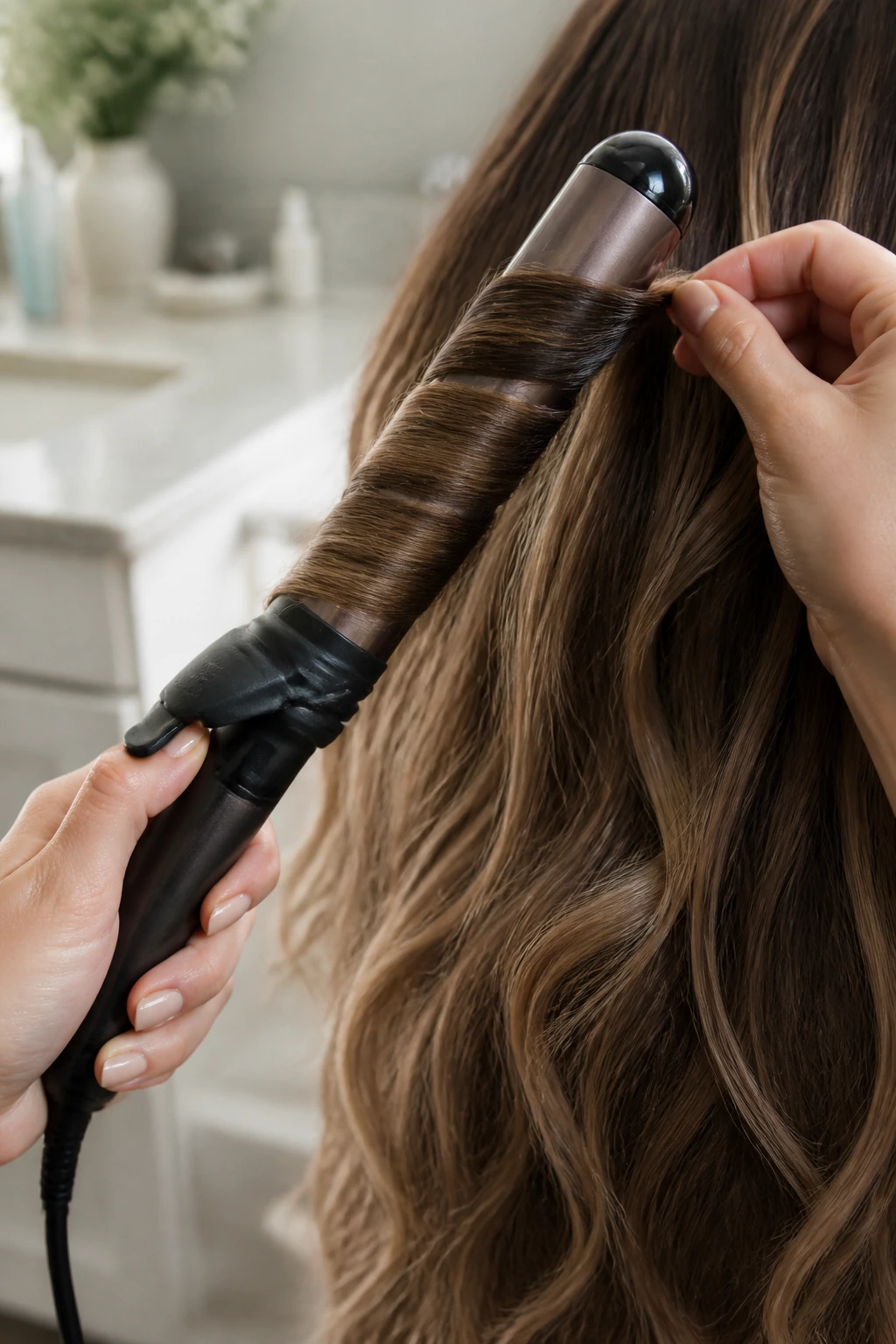
- 1.25-inch curling iron or wand: Best for soft waves, side sweeps, and brushed-out bends.
- 1.5-inch curling iron: Better for loose barrel curls that don’t shrink too much.
- Tail comb: Helpful for clean parts, teasing the crown, and sectioning braids.
- Boar-bristle brush: Smooths the top without making the hair look glassy.
- Duckbill clips: Keep sections out of the way while you build volume or twist the crown.
- Bobby pins in two shades: Match them to your hair so they disappear.
- Clear elastics: Useful for ponytails, bubbles, and braid bases.
- Texturizing spray: Gives grip to slippery long hair and helps braids hold.
- Dry shampoo: Great at the roots when the crown needs lift and oil control.
- Heat protectant: Non-negotiable if you’re curling or blow-drying.
- Silk scarf or ribbon: Works as both an accessory and a quick root distraction.
- Small hand mirror: Handy for checking the back of buns and braids before you walk out.
Smart Color and Product Picks for Root Coverage
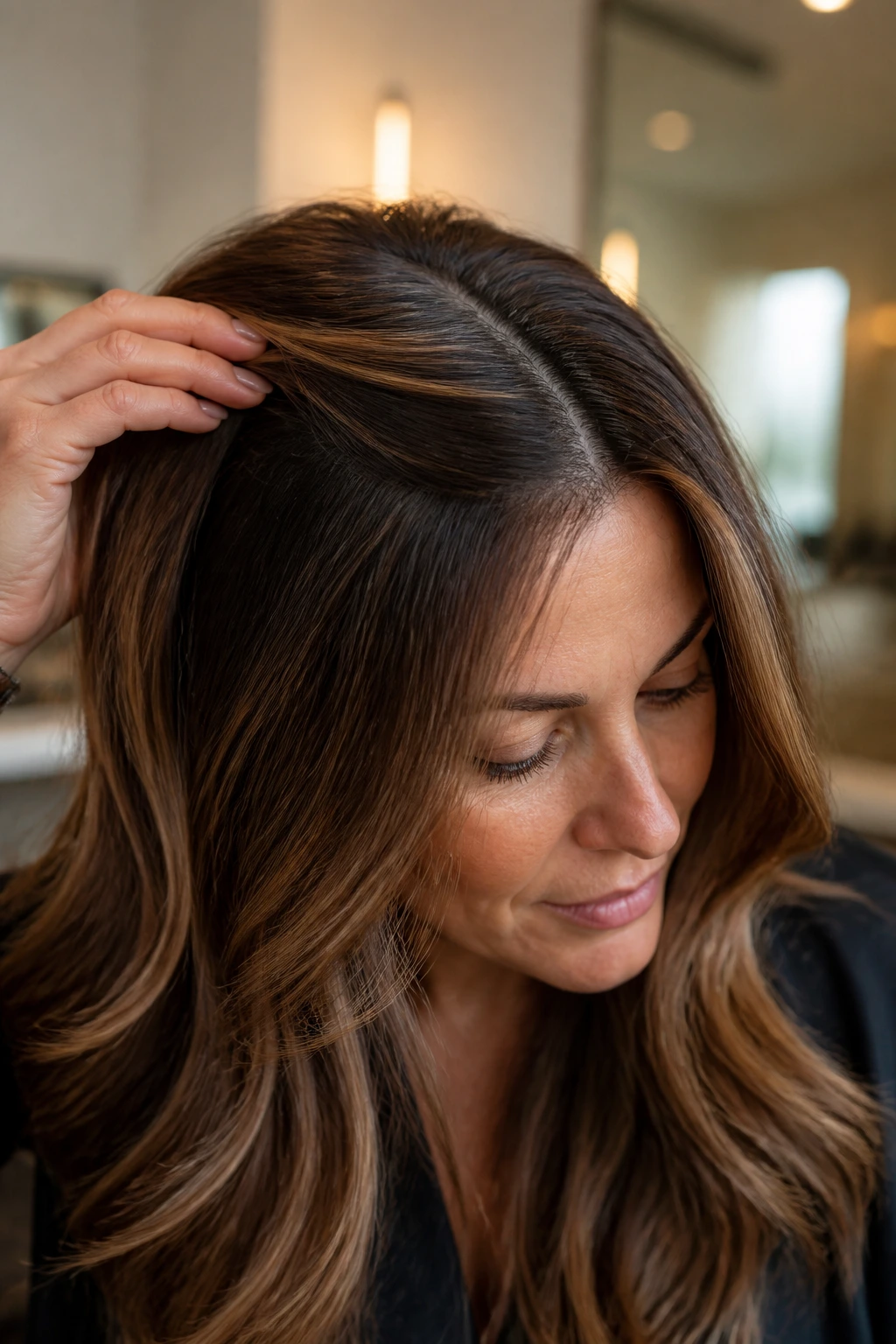
Warm root coverage starts with color, not styling. If the base is too cool, the gray regrowth tends to look brighter. A root shadow one shade deeper than the mids usually softens the line without making the hair look heavy, and a warm gloss can keep the lengths from drifting into ash territory.
Ask for chestnut, caramel, honey, copper, or auburn accents if you’re coloring the hair. Bronde is useful too, especially when the goal is to keep the lengths light but not pale. The best version of this look usually has depth near the scalp and warmer lightness through the mid-lengths.
Products matter just as much. A root-lifting mousse at the crown, a flexible hairspray, and a texturizing spray can do more for gray blending than a pile of oil ever will. Save the serum for the ends. If you put shine-heavy products on the roots, they can make the gray flash more obviously.
How to Style These Looks So the Crown Stays Soft
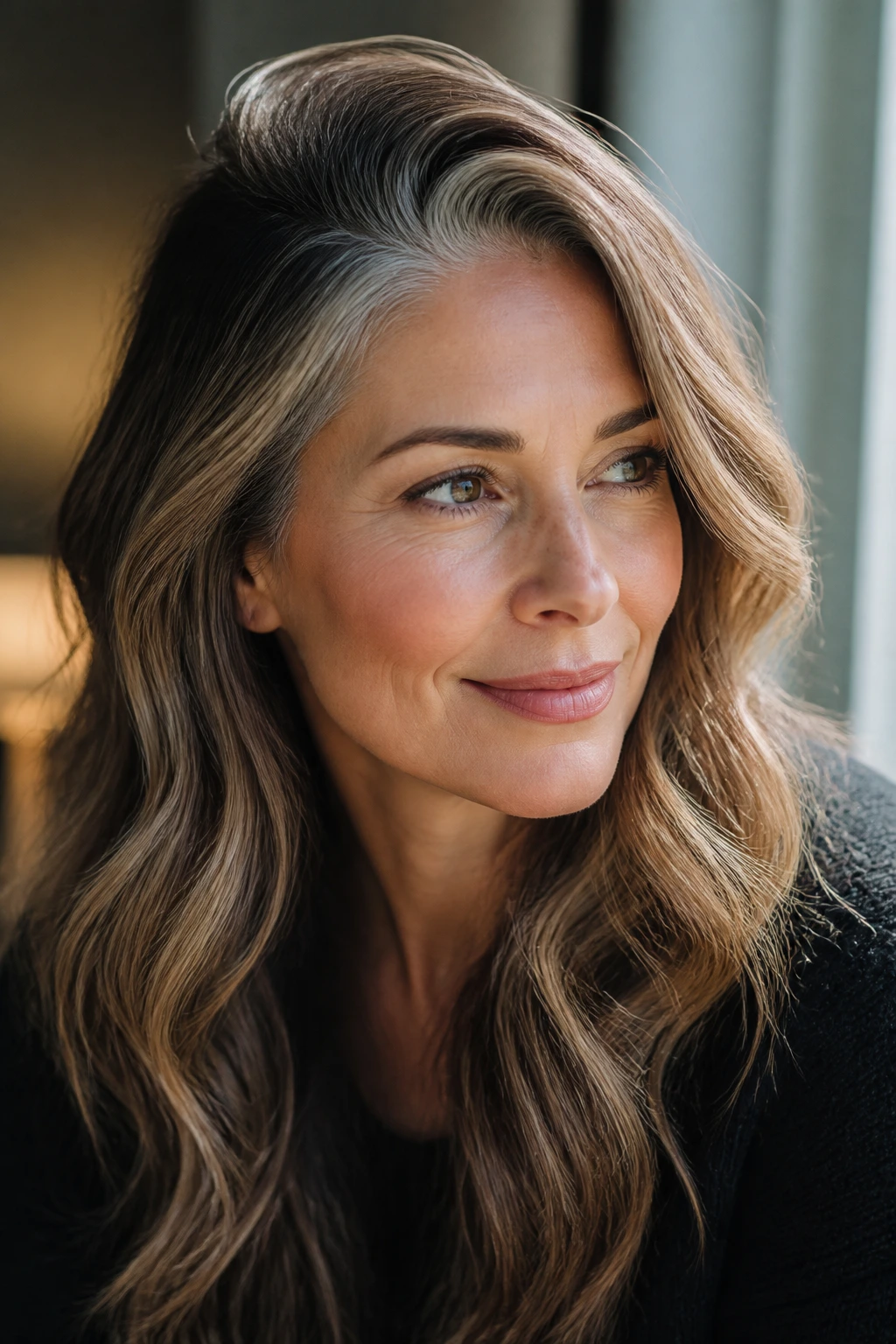
Parting: Keep the part off center when the gray is strongest at the roots. A side part, zigzag part, or softly shifted part breaks the line without looking fussy.
Texture: Build movement near the crown before you smooth the ends. Hair that has a little grip at the roots holds shape better and hides regrowth better.
Volume: Lift the top section with mousse, dry shampoo, or a tiny bit of teasing. You do not need big 1980s hair. You need enough height to keep the scalp from showing through.
Pinning: Place pins low and inward so the crown doesn’t collapse. If the top goes flat, the gray line returns fast.
Finish: Use warmth and movement near the face. That’s where the eye lands first, and it takes pressure off the root area immediately.
Extra Tips for Lift, Shine, and Staying Power
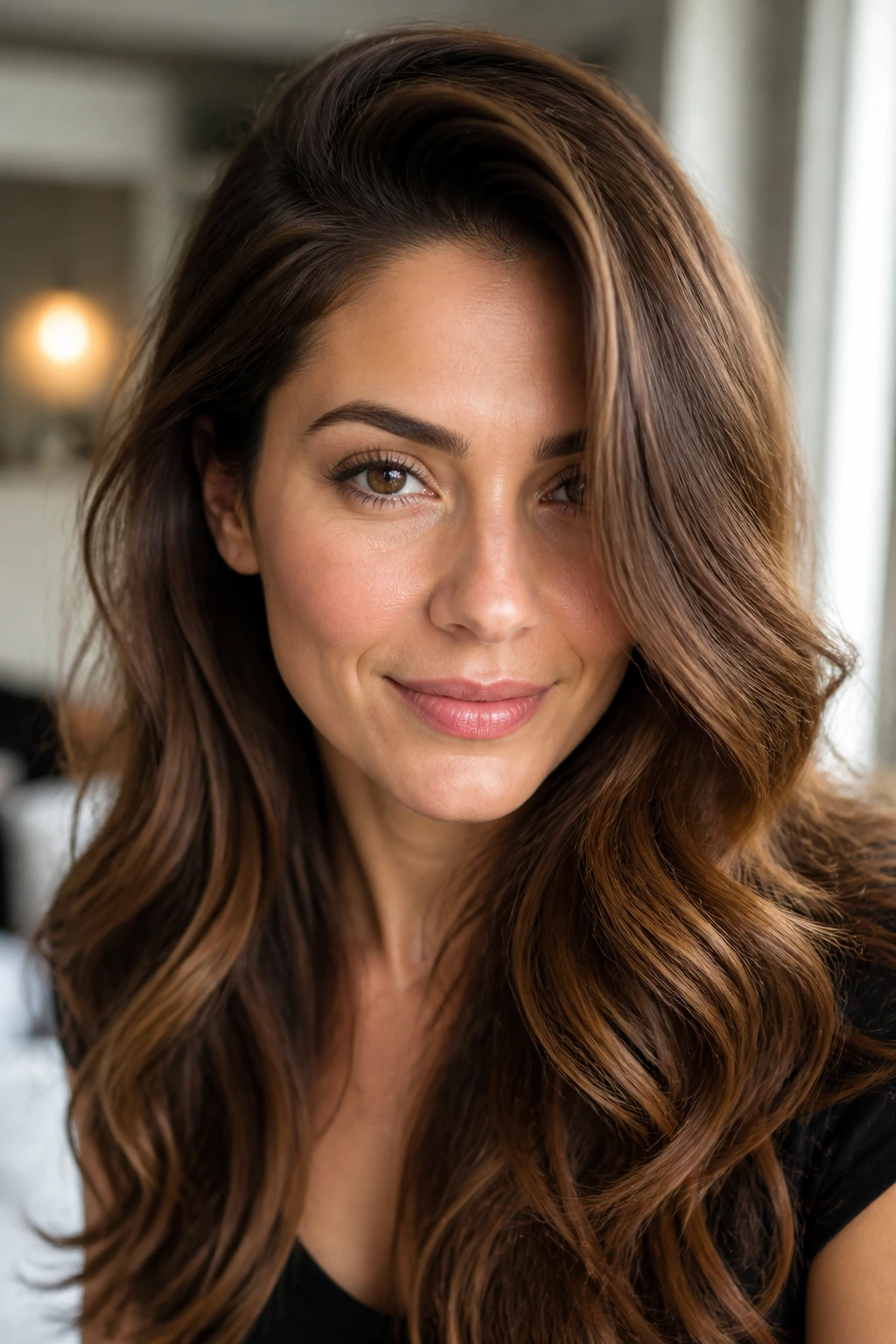
A little root powder at the temples can make a huge difference on the second or third day. It’s not a full dye job, and it doesn’t need to be. Just tap it onto the most visible silver and blend with your fingertips.
If you’re curling long hair, let the curls cool completely before brushing them out. Warm curls fall flat too fast, and flat hair exposes the roots. Pinning the curls up for ten minutes while they cool can buy you a lot of shape.
Pro move: mist the roots with dry shampoo before the hair gets oily, not after. It gives the crown grip before the regrowth becomes shiny.
Common Mistakes That Make Gray Roots Pop
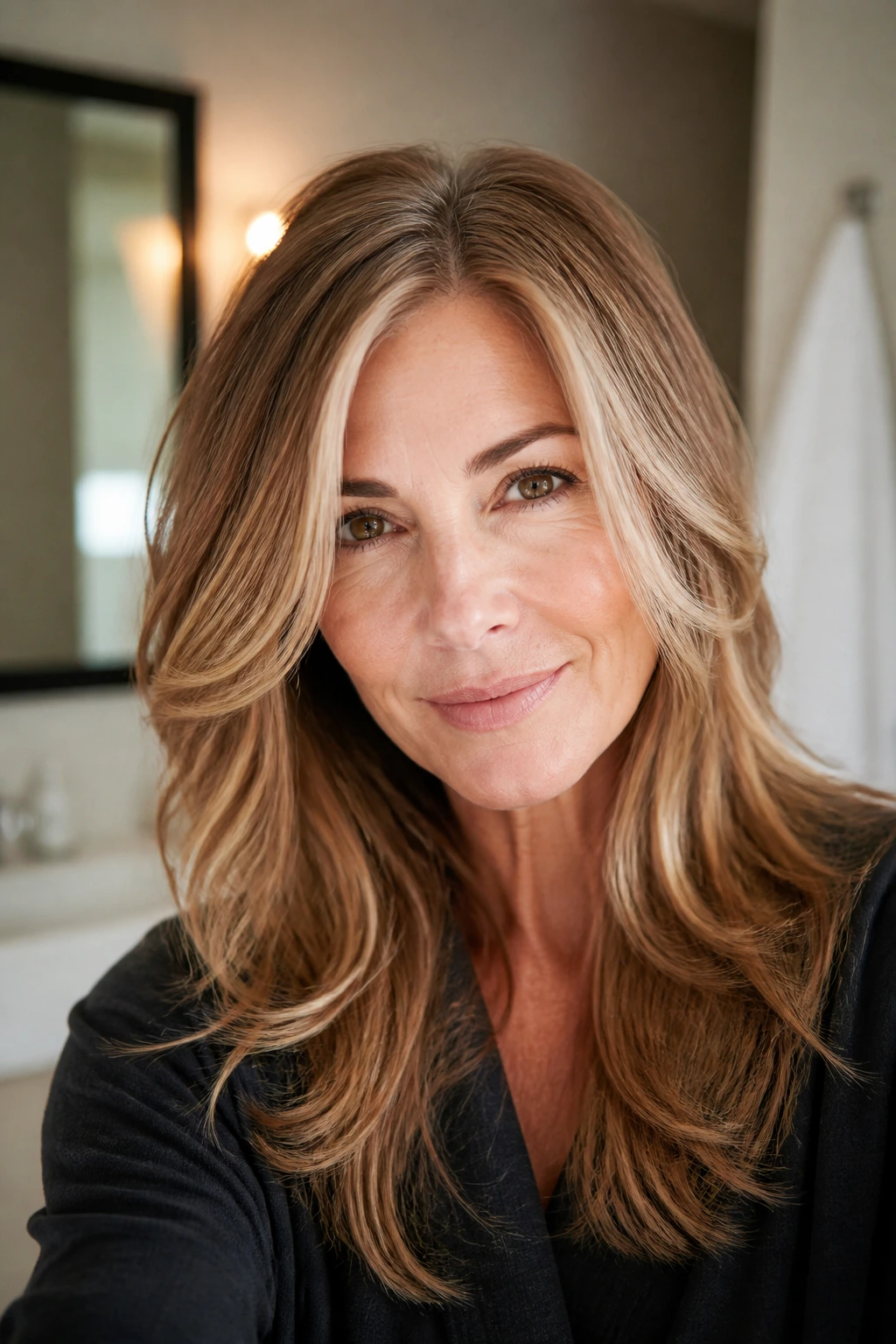
Sleeking the crown too much: A flat, polished top section makes gray regrowth look like a bright stripe. Add lift first, then smooth only what needs smoothing.
Using one flat color from scalp to ends: Solid color can look harsh on long hair with new gray growth. A root shadow or warm dimension is softer and usually easier to live with.
Choosing a center part every day: Center parts can be unforgiving if the gray is concentrated right at the scalp line. Switch the part a little off center or break it with texture.
Putting shine serum too high: A glossy crown reflects more light, which makes the silver flash. Keep the shine products on the mids and ends.
Skipping texture on clean hair: Freshly washed hair can be too slippery for braids, twists, and curls. A bit of dry shampoo or texturizing spray gives the style something to hold onto.
Variations and Adaptations to Try
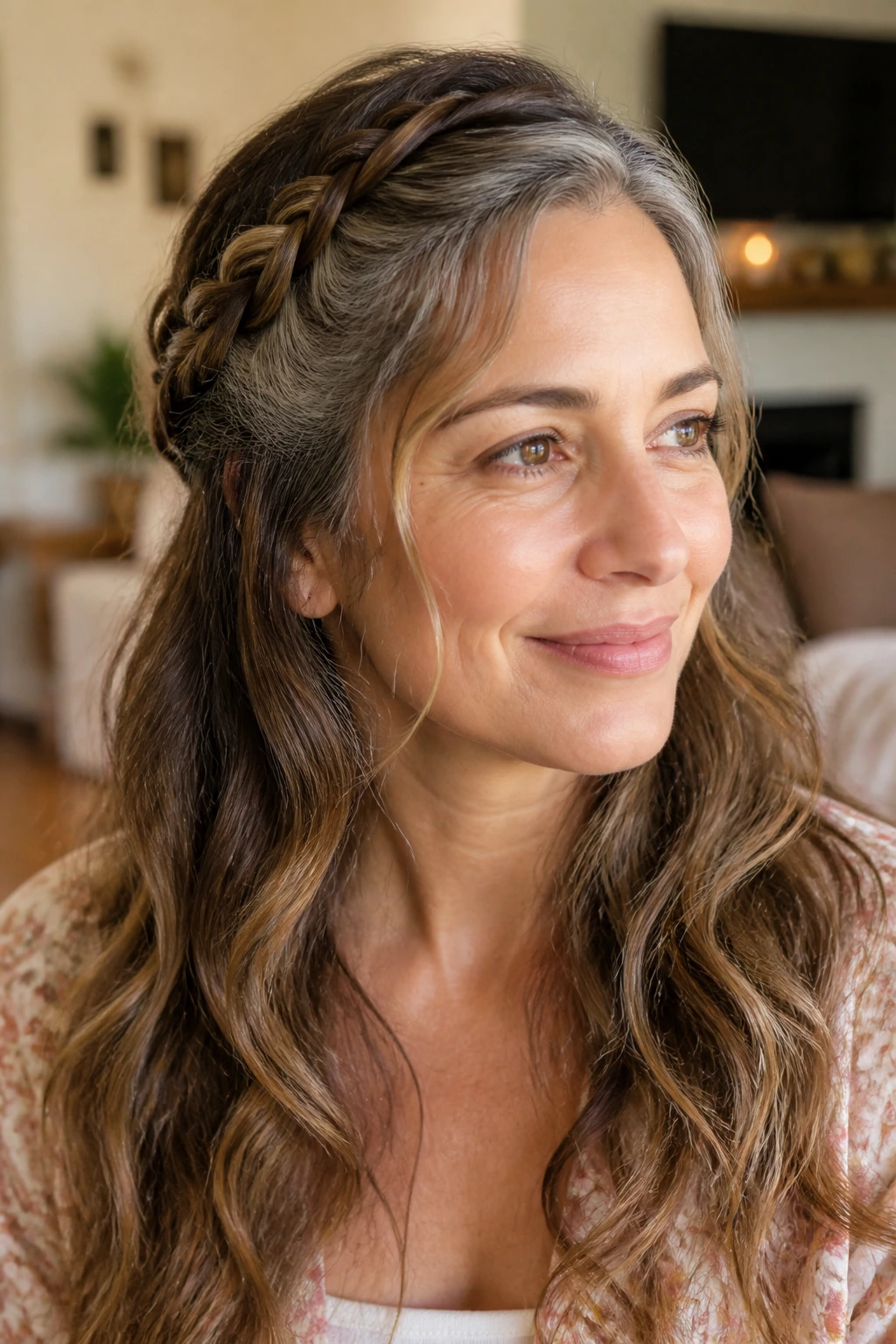
Fine-Hair Lift: If your long hair is fine, choose styles with smaller sections and more root lift — soft waves, a loose twist, or a low ponytail with crown teasing. Heavy braids can drag the hair down and expose the roots faster.
Curly-Texture Version: Natural curls already hide a lot of root detail because the pattern breaks the line. Keep the crown moisturized, use a diffuser, and let a warm gloss do the color blending instead of forcing the curls into a sleek shape.
Heat-Free Week: Overnight braids, twist sets, and scarf-wrapped ponytails work well when you want to skip curling irons. The goal is still texture and part disruption, just without heat.
Event-Ready Polish: For weddings, dinners, or photos, use a root-lifting mousse, a warm gloss on the lengths, and one structured style — a chignon, French twist, or crown braid. That combination looks intentional and keeps the gray line quiet.
Gray-Grow-Out Mode: If you’re letting the silver come through more, ask for a softer root shadow and more warmth through the mids. The styles in this list still work; they just look better when the color blend is gentler.
Make-Ahead, Wash-Day, and Refreshing Between Styles
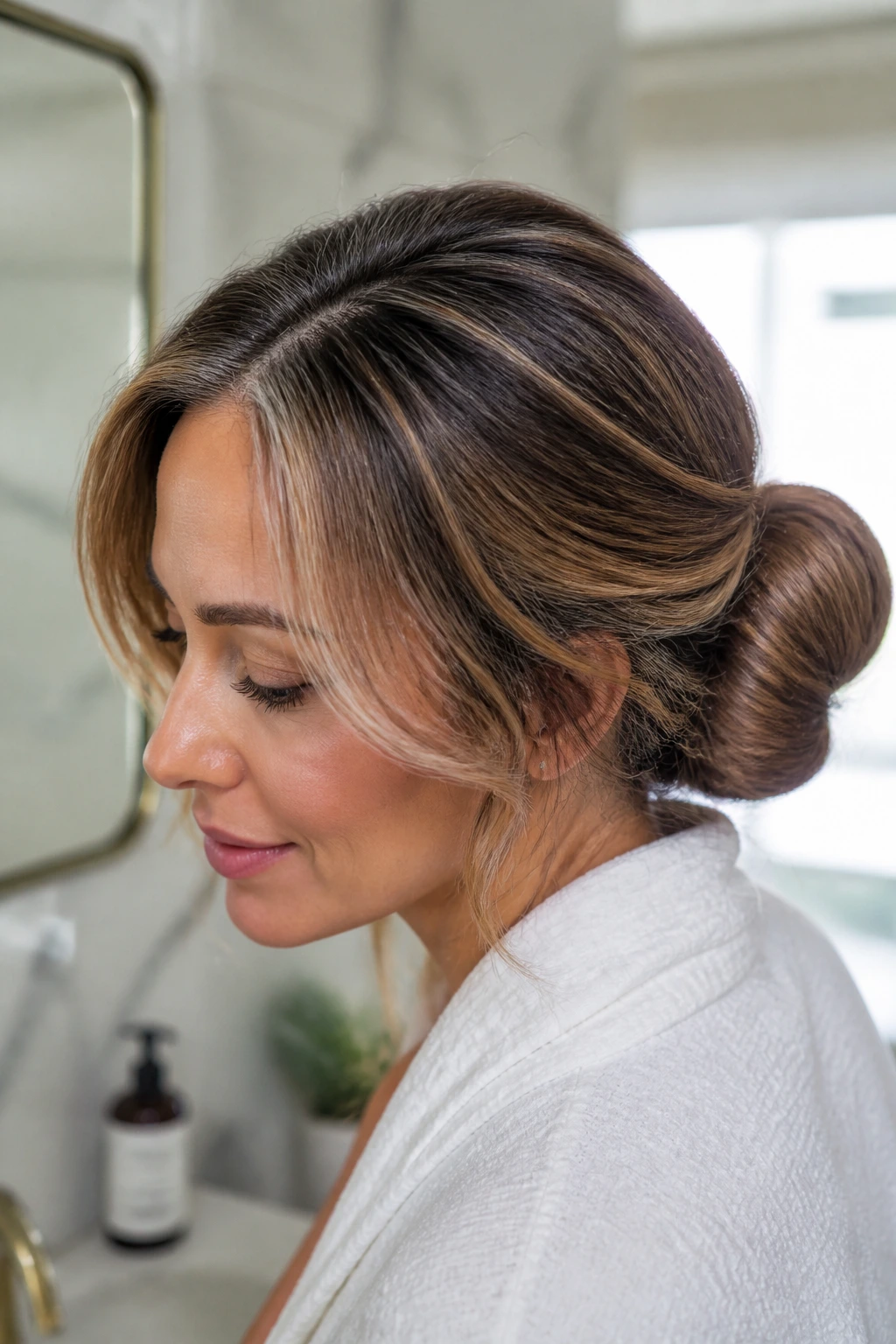
Braids, twists, and low buns usually hold the longest — often two to three days if you sleep on a silk pillowcase or wrap the hair loosely. Loose curls and blowouts tend to last one to two days before the crown starts to flatten and the root line gets louder.
If you want a style to last, prep the roots before the hair gets too soft. Dry shampoo, a little mousse, and a cool shot from the dryer can keep the crown from collapsing. In the morning, a quick re-bend on the front pieces is often enough.
For refreshing, aim for the temples and part first. That’s where gray usually shows. A tiny touch of root powder or spray there can buy another day without needing to redo the whole head.
Frequently Asked Questions
Which hairstyles hide gray roots best on long hair?
Side parts, crown braids, low textured buns, loose waves, and half-up twists tend to hide gray the best because they break the part line and create movement near the crown. The flatter and sleeker the style, the more likely the root line will show.
Are warm hair colors better than ash colors for covering gray roots?
Warm shades usually blend gray more softly because they have gold, copper, or red undertones. Ash colors can work, but when the regrowth is strong, they can make silver strands look brighter against the base.
Can I hide gray roots without coloring my hair?
Yes. Texture, part changes, root powders, and smart styling can do a lot. You’ll still see gray up close, but the eye won’t lock onto it as quickly when the style has volume and movement.
What if my part is the main problem area?
Shift it slightly off center, add root lift, and avoid pinning the top too tightly. A zigzag part can also soften the line if the scalp contrast is especially strong.
Do braids make gray roots more noticeable?
Tight braids can, because they expose the scalp in a very clean pattern. Softer braids with a little volume around the crown usually hide gray better, especially when the braid starts a bit lower and isn’t pulled to the bone.
What’s the best choice for fine long hair?
Soft waves, a low textured ponytail, or a half-up twist usually work better than heavy buns or thick crown braids. Fine hair needs lift first and grip second, or the roots will show through as the style settles.
How often should I refresh warm color if I’m blending gray?
A warm gloss or toner every few weeks can keep the tone from turning dull or brassy. Root touch-up products can be used between color appointments, especially at the temples and hairline.
Will these styles still work if my gray is mostly at the temples?
Yes, and that’s where they help most. Styles that bring hair forward, like side sweeps, curtain bangs, and loose face-framing pieces, are especially useful because they cover the exact spots that tend to give the game away.
A Softer Way to Grow Out Gray at the Roots
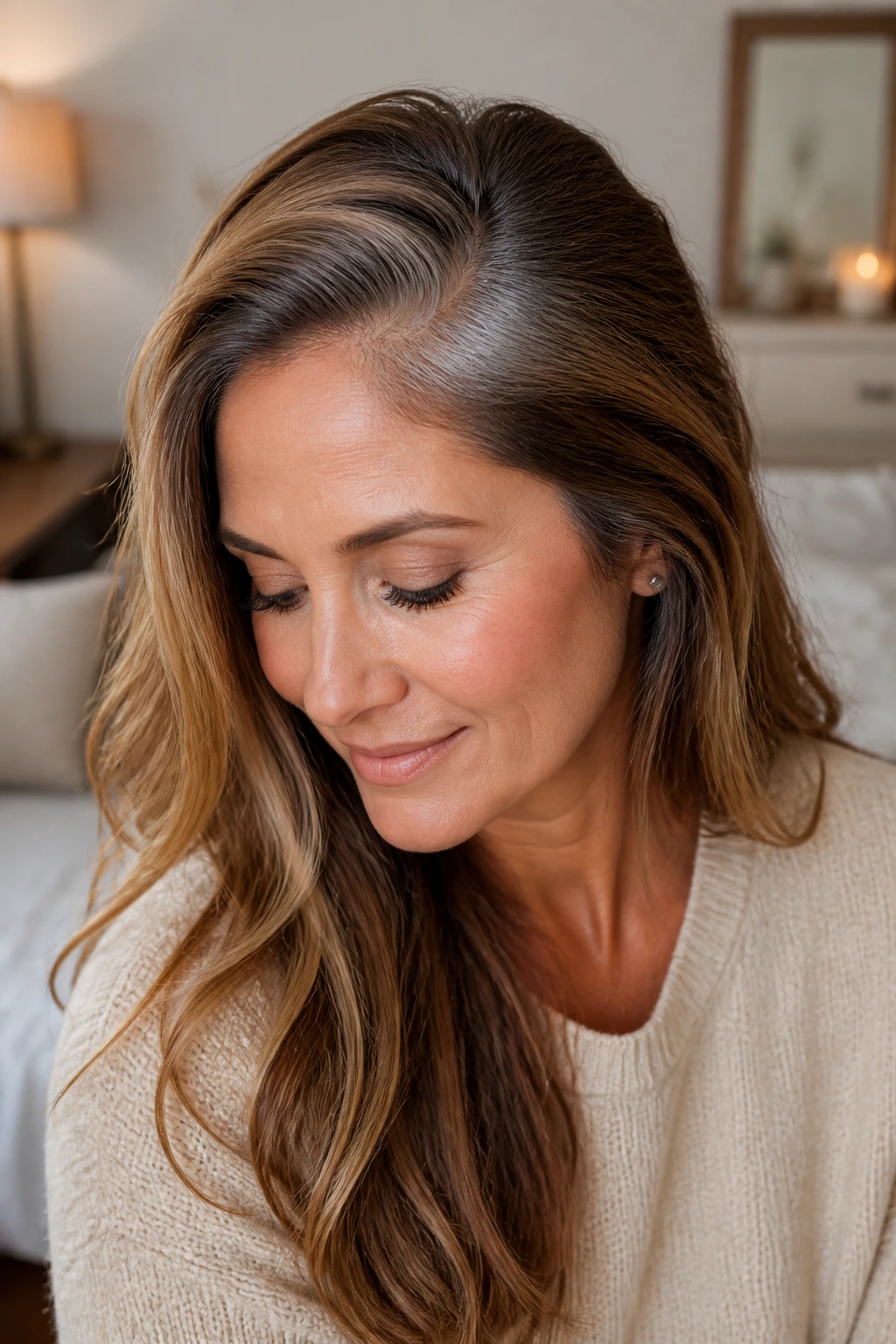
Long hair is forgiving when you give it shape. A side part, a braid, a warm gloss, or a soft twist can change the whole read of the hair without turning the process into a chore.
What I like about these styles is that they don’t pretend gray doesn’t exist. They just move it into better company. Warm color, texture, and a little strategic volume do the quiet work, and that usually looks better than trying to fight every silver strand into submission.
The next time the root line starts to feel louder than the rest of your hair, reach for movement first. Then color. Then polish. In that order, the whole head looks calmer.