



Round faces and tight curls can make a gorgeous pair, but only when the shape is doing some work. If the cut lands in the wrong spot, the whole style can bloom straight out at the cheeks and stop there. If the shape is smarter, the eye moves up, then down, then back in again — and the face reads longer without losing a single bit of curl.
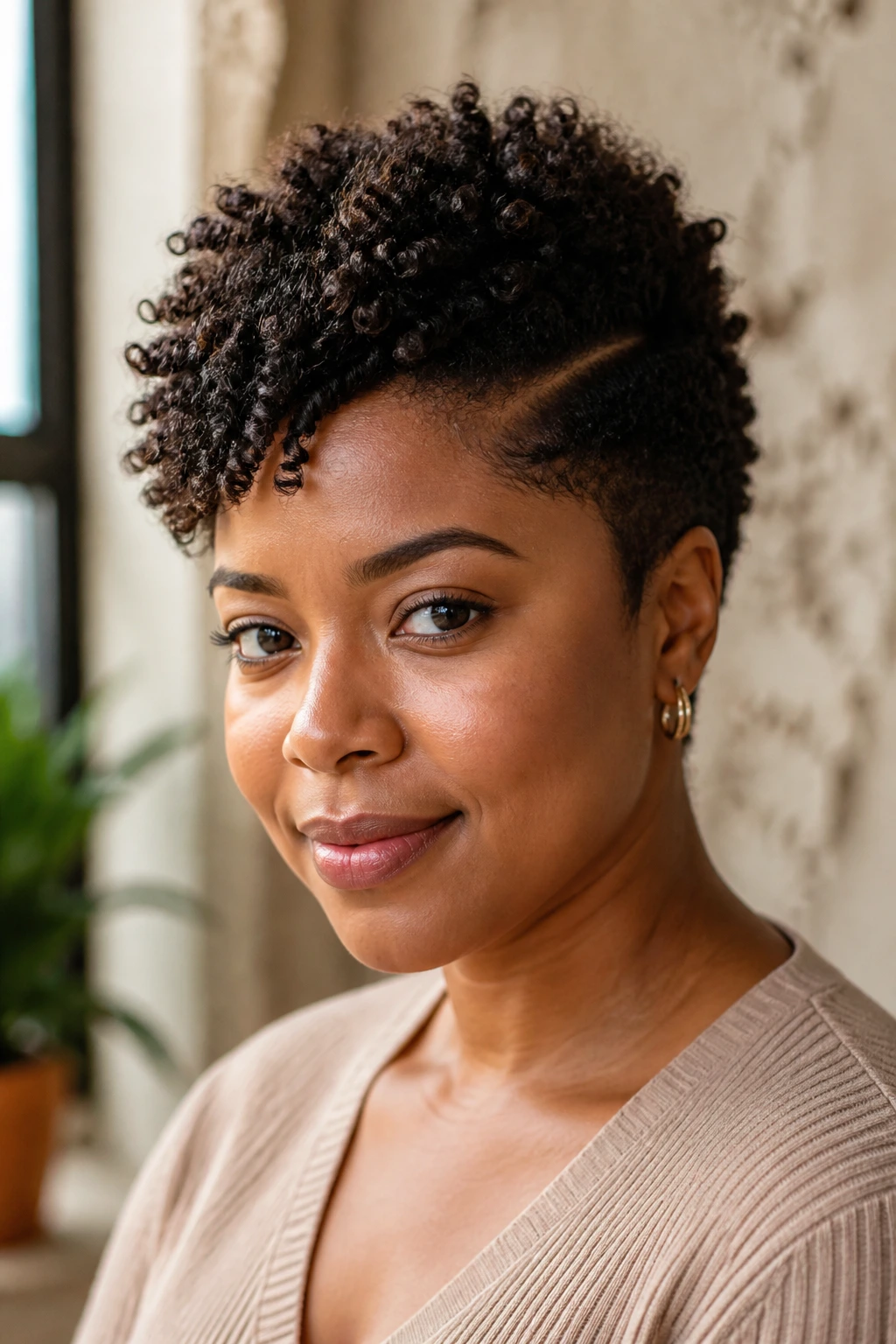
That’s the part people miss. Tight curls for Black hair and round faces are not about shrinking the hair into submission or hiding your features under a curtain. They’re about placing volume where it helps, keeping weight out of the widest point, and letting shrinkage work for you instead of against you. A style that looks chin-length when wet can spring up several inches once it dries, and if nobody planned for that, you end up with a puff sitting right on the jaw. No thanks.
The styles below lean into the texture, the lift, the diagonal lines, the little pieces that soften the cheeks without making the whole head look flat. Some are short and crisp. Some are big and airy. Some ask for a clean side part, some for a high crown, some for a bit of asymmetry that breaks up the circle. All of them are built with Black hair in mind, which means they respect density, shrinkage, and the fact that a curl pattern can change the silhouette in a way straight-hair haircuts just don’t have to think about.
Why These Shapes Work So Well on Round Faces
-
Height matters more than length: A little lift at the crown changes the outline faster than another inch at the ends, which is why so many of these styles push volume upward instead of outward.
-
Angles beat symmetry: Side parts, diagonal fringes, and off-center shapes keep the face from looking boxed in. Straight-across cuts can work, but they need help.
-
Shrinkage is part of the design: Tight coils can spring up fast once dry, so these styles leave room for that bounce instead of pretending it won’t happen.
-
The cheeks need breathing room: The best versions here avoid placing the widest part of the hair right beside the widest part of the face.
-
Black hair texture is the feature, not the problem: Dense coils and curls bring structure all on their own. The trick is cutting and styling with that structure in mind, not fighting it.
1. The Crown-Lift Tapered Afro
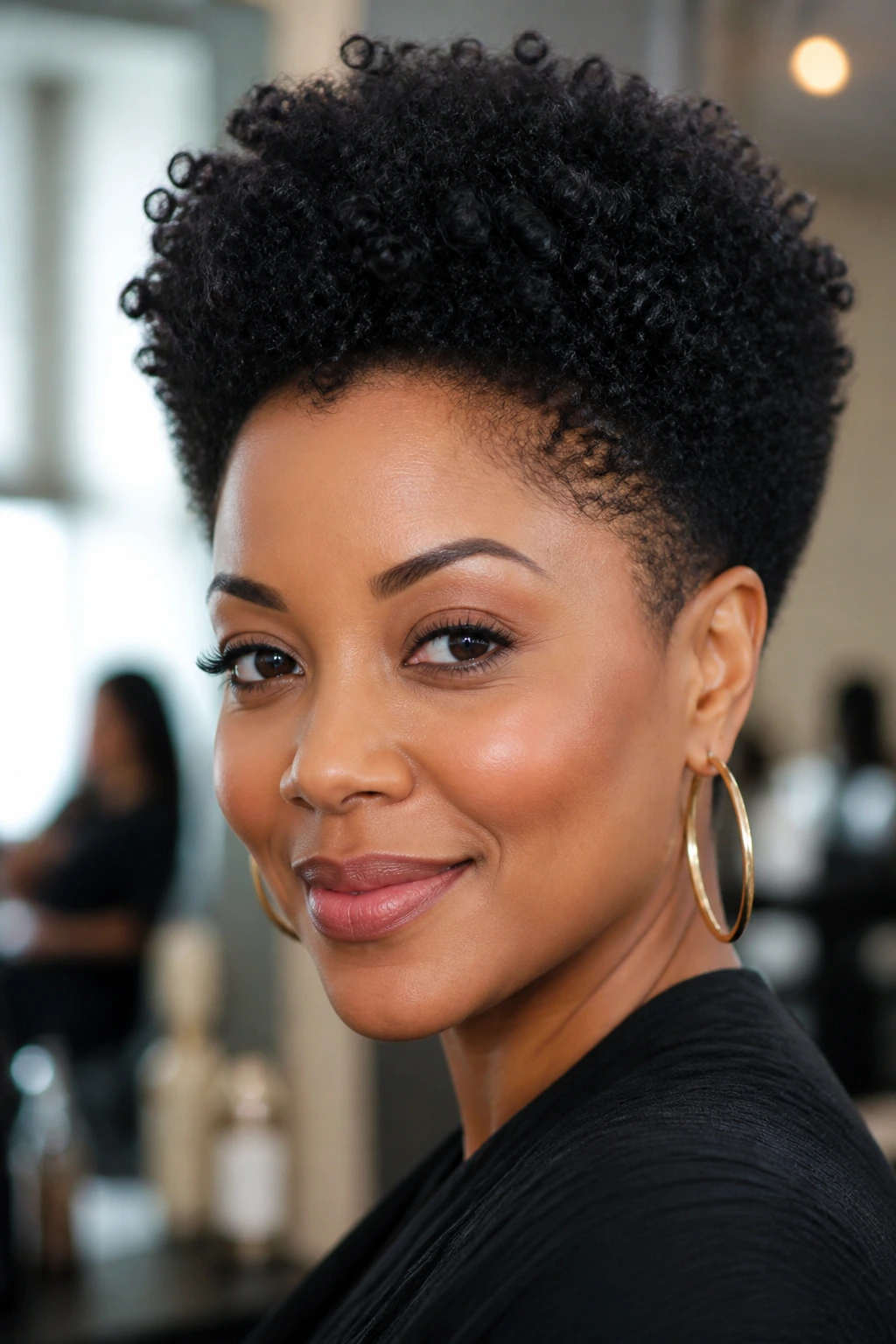
This is the style I recommend first when someone wants tight curls that feel bold but not boxy. The sides stay tapered and neat, while the top keeps enough length to rise above the cheek line and form a soft oval instead of a perfect circle. It’s the kind of shape that makes round faces look a little longer without turning the hair into a helmet.
Ask for the taper to stay gentle around the temples and nape, not shaved so low that the contrast gets harsh. A good stylist will check the shape dry, because a tapered afro can look balanced when wet and a little too wide once the curls spring up. That dry-check matters. You want the top to carry the silhouette, not the sides.
If you wear your curls in their natural coil pattern, a bit of root lifting with a pick at the crown gives the style its backbone. Don’t rake through the ends. That’s how you get frizz without height. Keep the ends defined, keep the roots airy, and the whole shape stays clean.
2. The Cheek-Skimming Side-Part Bob
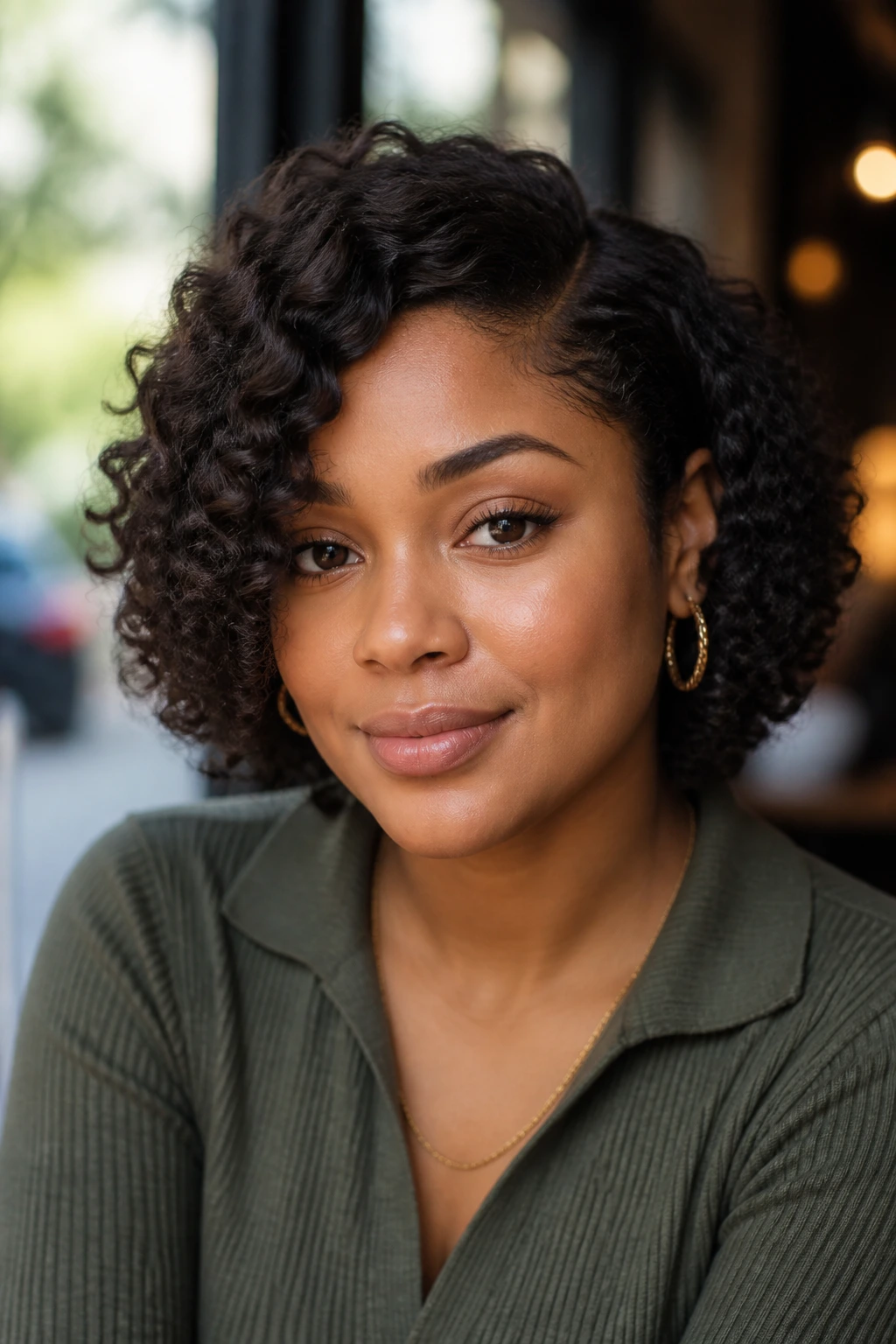
A bob on a round face only works when it knows where to stop. This one lands just below the chin or brushes the top of the collarbone, so it never ends right at the cheekiest part of the face. The deep side part is the real hero here — it breaks the roundness and gives the curls a diagonal line to follow.
What I like about this shape is that it looks polished even when the curls aren’t perfect. The side with more hair can tuck forward and soften the jaw, while the lighter side opens up the face. That push-pull effect keeps the style from feeling too neat. Too much neatness can make a bob go flat and wide.
For tight curls, cut it with shrinkage in mind and ask for the front to be a touch longer than the back. If your hair is dense, internal layers keep it from puffing into a triangle. If it’s finer, keep the ends blunt enough to hold a little weight. Either way, this is the bob that understands texture instead of just sitting on top of it.
3. The Shoulder-Length Coil Cut
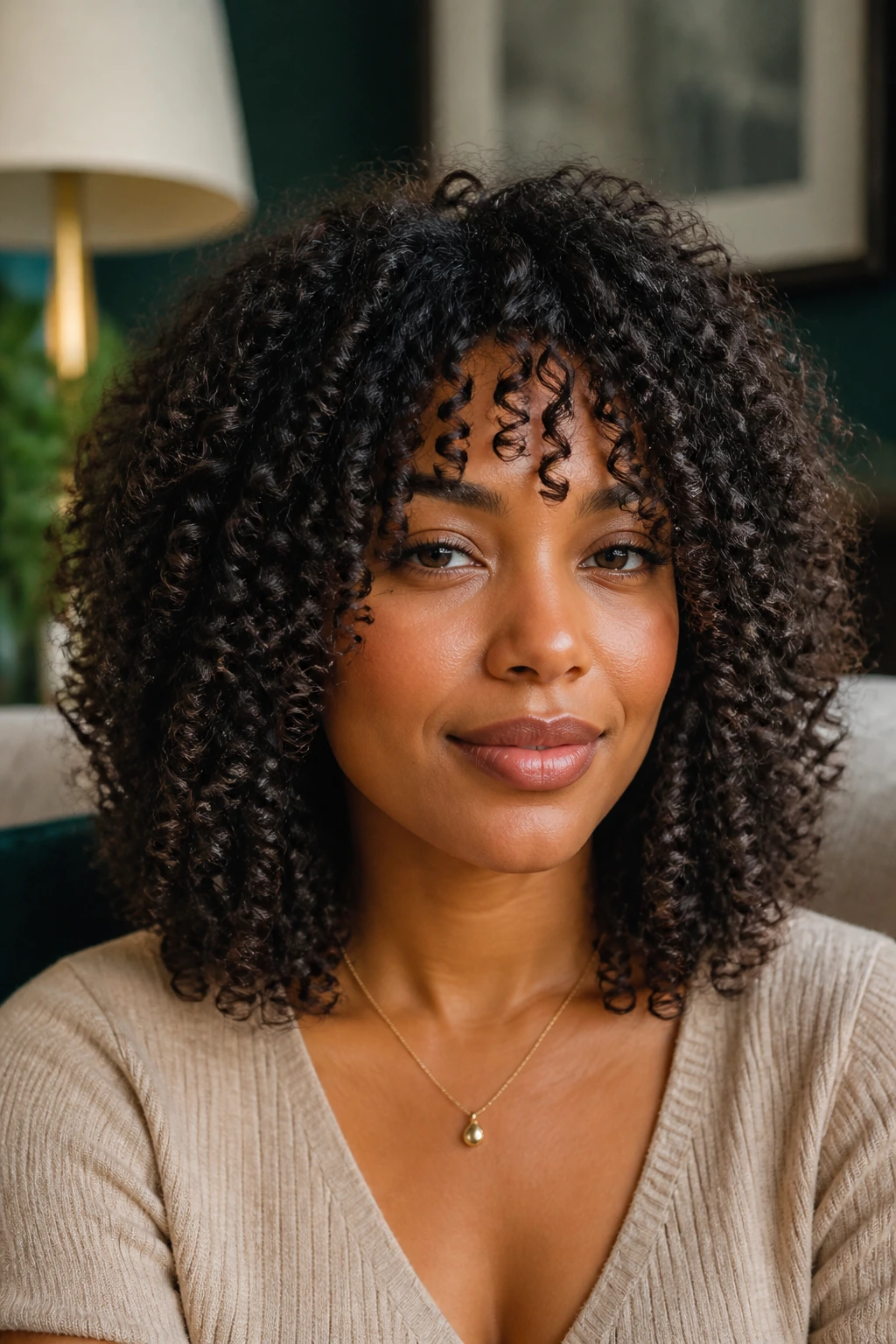
Shoulder length is a sweet spot for a lot of Black hair textures because it gives the curls room to drop without collapsing the face shape. The length keeps the silhouette from flaring out at the cheeks, and the coils still have enough spring to move. It’s a more relaxed choice than a tapered cut, but it can still work beautifully on a round face when the layers are placed well.
The magic is in the layers. You want long internal layers that take bulk out of the middle without carving the ends to bits. That way the hair bends around the face instead of building a shelf beside it. A one-length shoulder cut can balloon outward if the density is high, and that’s exactly the mistake to avoid here.
This is one of the best styles for people who like wash-and-go routines but do not want to be in the salon every other week. Diffuse just enough to set the shape, then let the curls do what they do. A little root clipping at the crown while drying can lift the top without forcing the rest of the hair to stand away from the face.
4. The Curly Pixie With a Tall Top
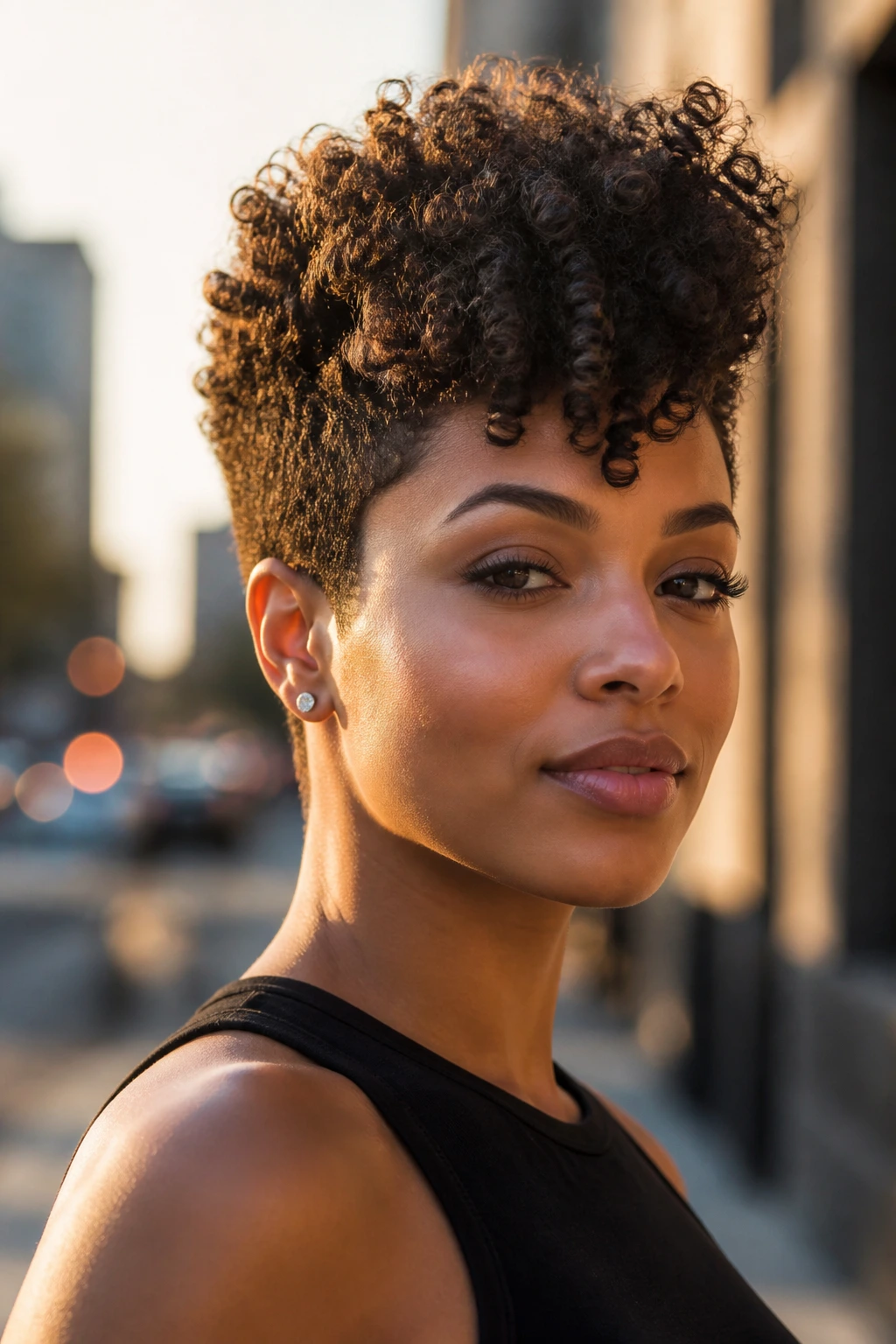
Short hair on a round face can be a sharp move if the height is in the right place. This pixie keeps the sides close and lets the top stay longer, so the eye goes up first. That vertical line is everything. Without it, a short cut can make the face look wider than it is.
The best version of this cut is not flat and clipped to the skull all the way around. It has a little lift at the front and a soft curve over the crown, which keeps it from feeling severe. If you’re working with tight coils, finger coils or a small curl sponge on the top can help the shape hold for several days without much effort.
One thing people underestimate: earrings look fantastic with this cut. So do a clean brow and a sharp neckline. The face is more visible here, which means the details matter more. If you like showing off your features instead of hiding them, this is a very good place to live.
5. The Frohawk With Clean Sides
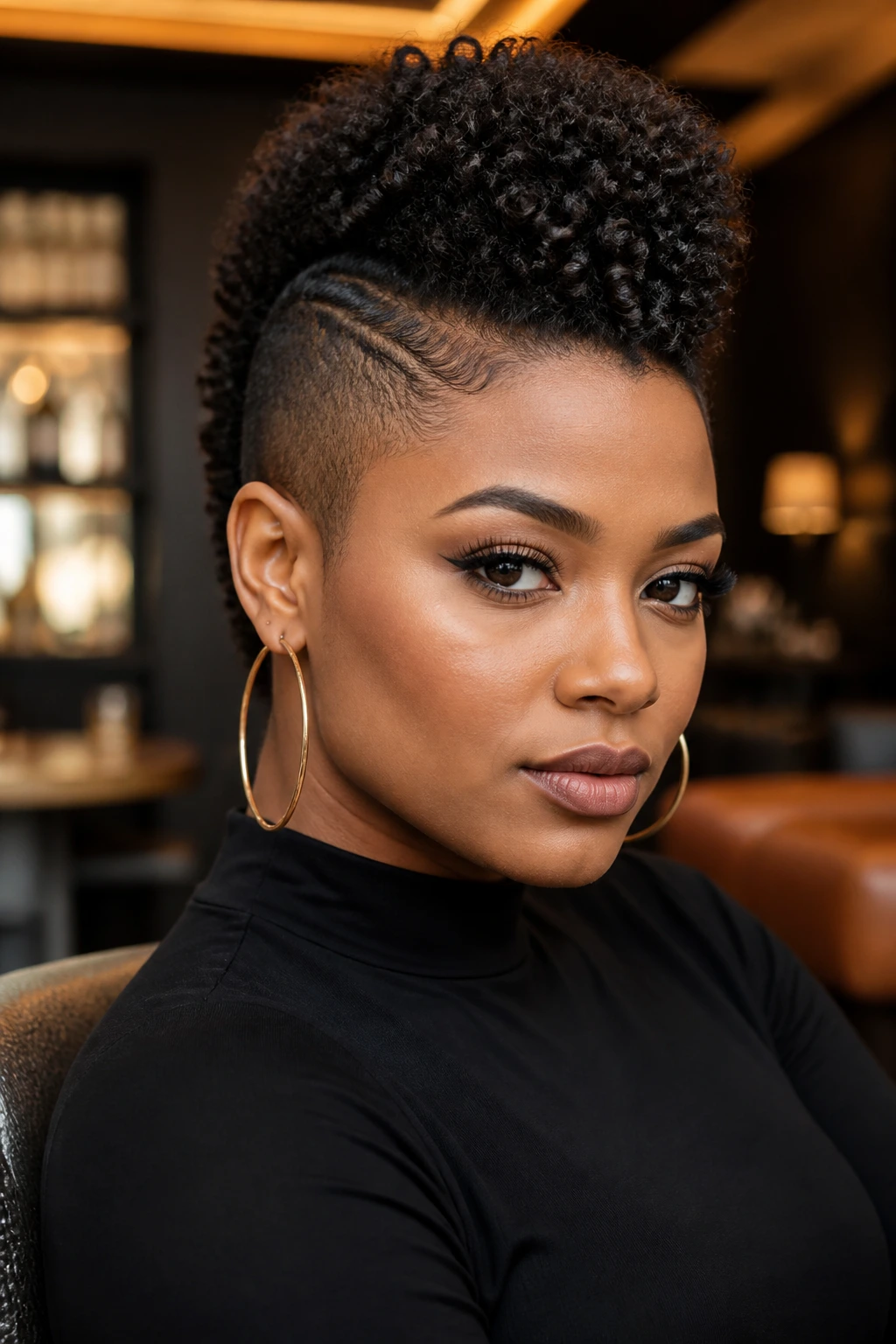
The frohawk is one of those styles that sounds loud and ends up looking strangely elegant when it’s done right. The sides are smoothed down or tapered, and the curls stay concentrated in a wide strip from forehead to nape. That center band gives round faces a strong vertical frame, which is exactly what you want when cheek width is the thing you’re balancing.
You can build it from a cut, a twist-out, or a styled-up wash-and-go. The key is making sure the sides really are side-swept or slicked, not just “kind of” flattened. If the curls spill too far toward the temples, the shape loses its edge and starts reading wide again. A strong hold gel on the sides and a softer definition up top usually solves that.
This style also has a nice practical side. It keeps hair off the cheeks and jawline while still giving you a lot of body where it counts. If you need a style that works for a night out and still survives the next morning, the frohawk is a solid bet.
6. The Bottleneck-Bang Curly Shag
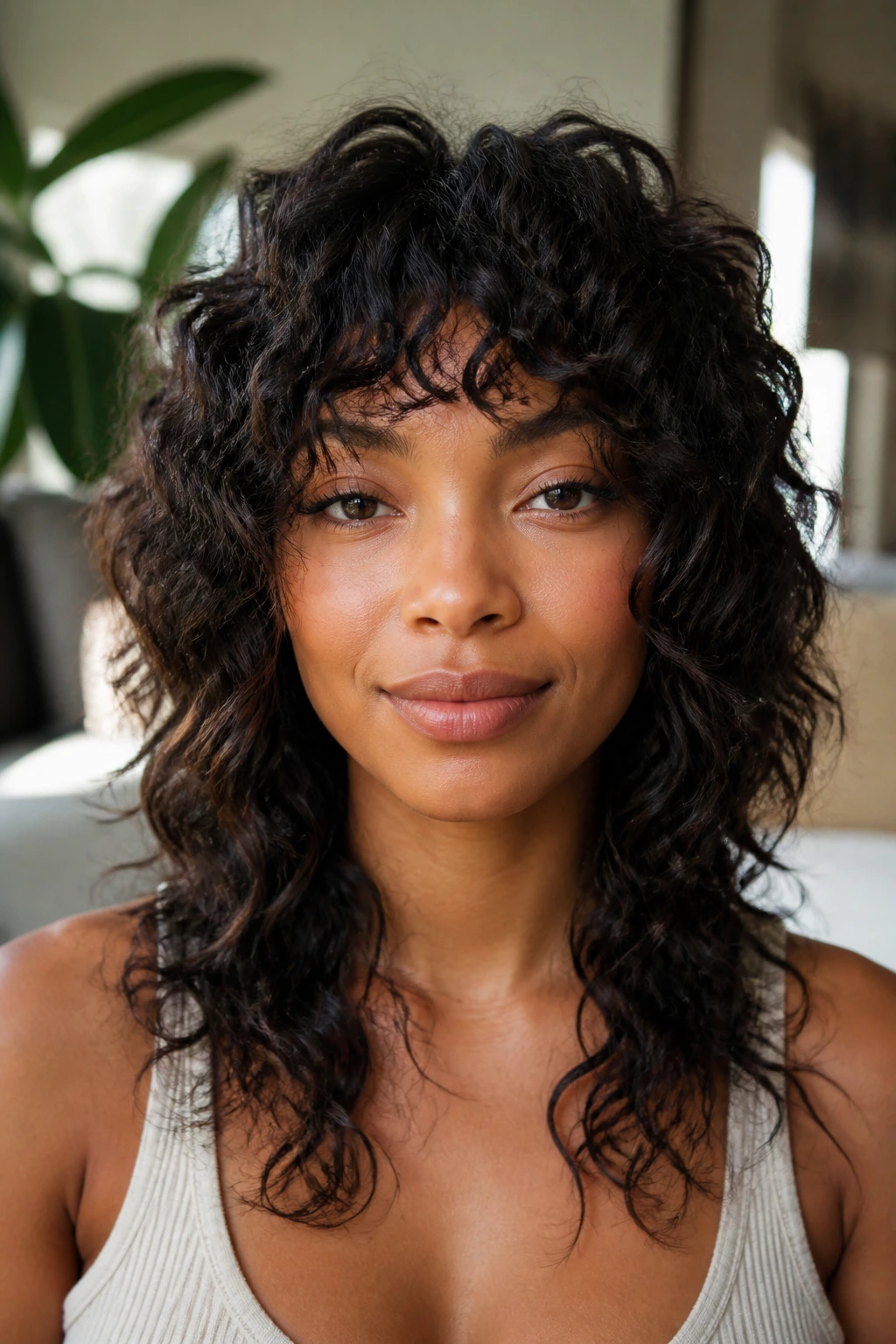
Bottleneck bangs are one of the best tools for round faces because they do something blunt bangs never manage: they soften without cutting the face in half. The center of the fringe sits a little shorter, then the sides lengthen toward the temples, so the eye slides diagonally instead of stopping at a straight line. On tight curls, that matters a lot.
The shag layers keep the whole shape loose and airy. They stop the curls from puffing into a solid orb, which is the one thing you do not want. Ask for face-framing pieces that start below the cheekbone, not right at it. If they hit the widest point of the face, the cut can feel busy in the wrong place.
This is a great cut if you like a little mess, but the controlled kind. The kind that looks better with movement. A diffuser on low heat helps the bangs keep their shape, and a light gel cast keeps the front from frizzing out before the rest of the hair has settled. It’s a little more work than a puff, but the payoff is a face shape that looks longer and softer at the same time.
7. The Angled Lob With Forward Weight
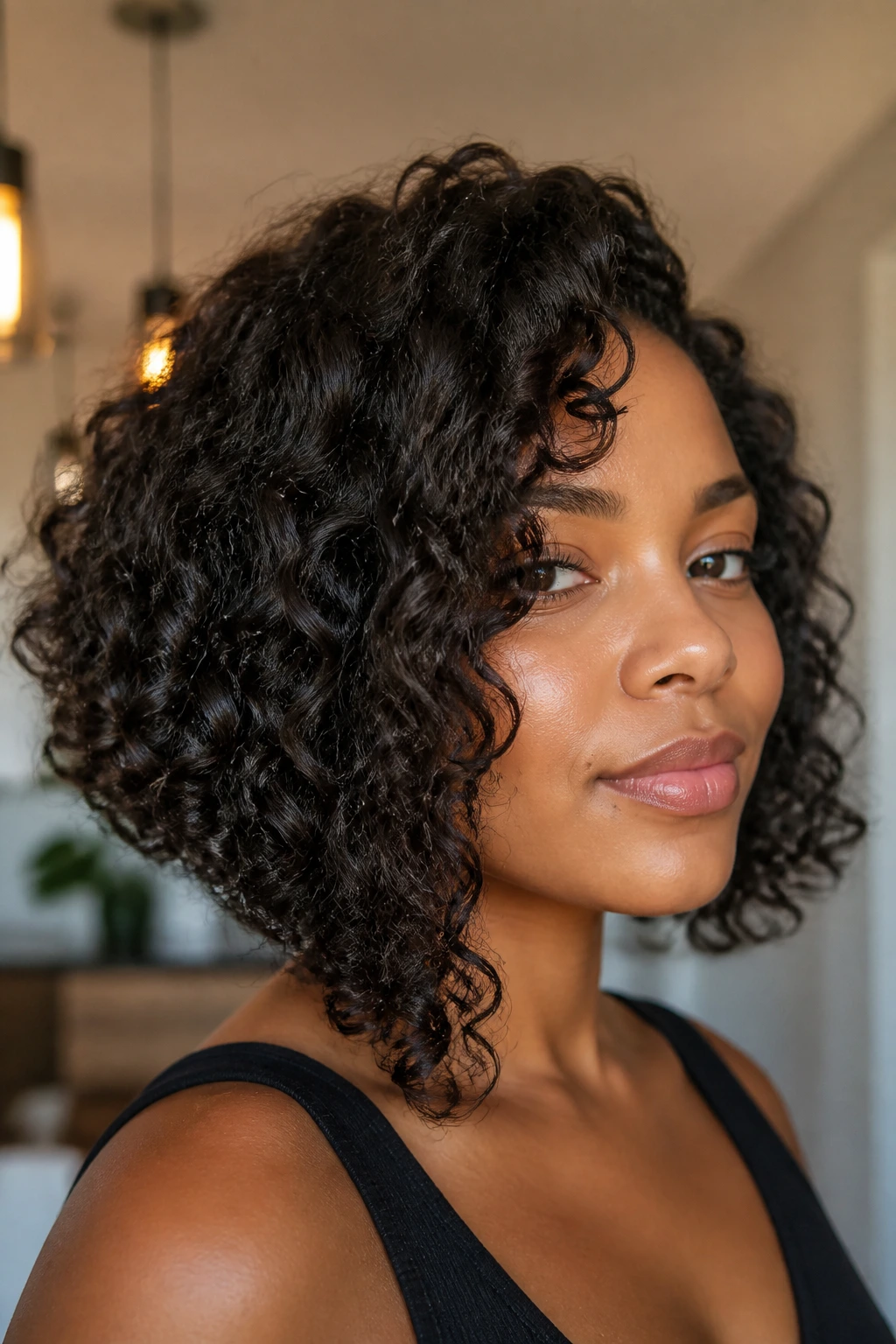
An angled lob is a sneaky-good choice for round faces because the front pieces are a touch longer than the back. That slight slant pulls the eye downward and forward, which makes the cheeks read less dominant. With tight curls, the angle should be obvious enough to matter, but not so dramatic that it feels like a fashion stunt.
The best versions brush the collarbone in front and sit a bit higher in back. That keeps the hair moving around the jaw instead of stopping on it. A center part can work if the front is long enough; a side part usually gives the shape even more help. Either way, you want the curls to hang in a line that’s not perfectly horizontal.
This is one of my favorite shapes for people who want a little length but hate hair getting in the way. It’s wearable, which sounds boring until you realize how many good-looking cuts fail on that exact point. A lob that flatters a round face and still gets tucked behind the ear without fuss is worth keeping.
8. The High Puff With Soft Tendrils
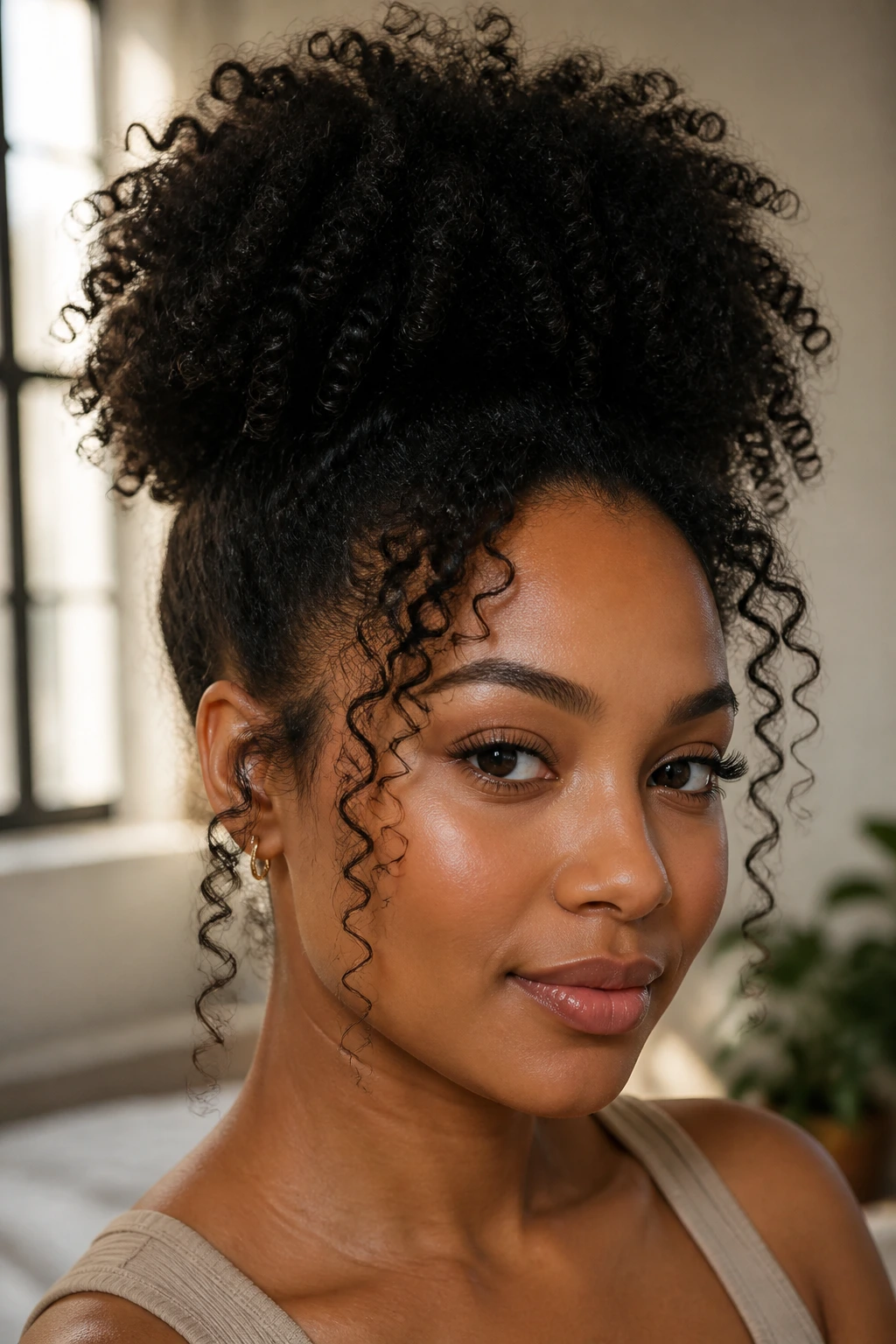
A high puff is one of the fastest ways to change the silhouette of a round face. Pull the curls upward, not backward, and you get instant height at the crown. That alone lengthens the face more than most people expect. The trick is keeping a few soft tendrils at the temples or along the front hairline so the style doesn’t turn severe.
I like this style when the curls are day-two or day-three and the root area has a little memory left. A satin scrunchie or a loose puff cuff works better than a tight band because it keeps the top from flattening into a hard line. If your hair is dense, gather the puff a little higher than you think you need to. It will settle.
The shape works especially well with bold earrings or a simple neckline. It leaves the face open and clean while still making the hair feel full. And if the curls at the front are a little loose or fuzzy, leave them alone. A little imperfection around the face keeps the puff from looking too stiff.
9. The Twist-Out Bob
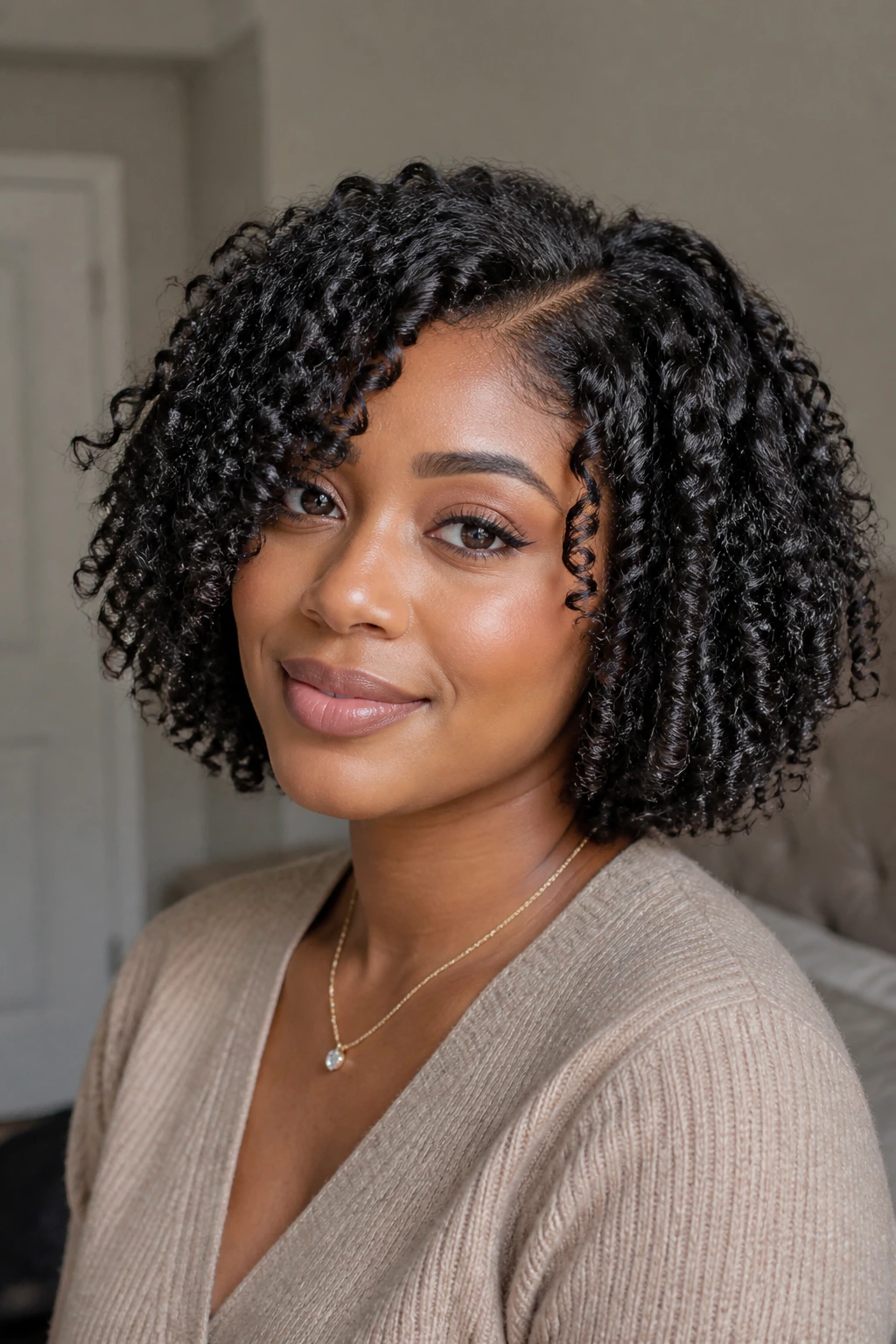
A twist-out bob gives you structure without heat and without the puffiness that can come from leaving coils completely untouched. The twists define the curls, the bob length keeps the outline neat, and the finished shape sits nicely below the cheeks. It’s especially useful if your natural curl pattern wants to spread wide when it dries.
The size of the twists changes the final look. Smaller twists create tighter definition and a narrower silhouette, while medium twists give more fluff and movement. For a round face, I’d keep the perimeter slightly longer and let the top and sides be the star. That way the cut doesn’t puff outward at exactly cheek level.
This is a good “middle ground” style. It feels polished enough for work but doesn’t scream that you spent three hours getting it there. If you want a bob that still has a soft, textured edge instead of a hard salon line, twist-outs do that better than most other methods.
10. The Side-Swept Curly Crop
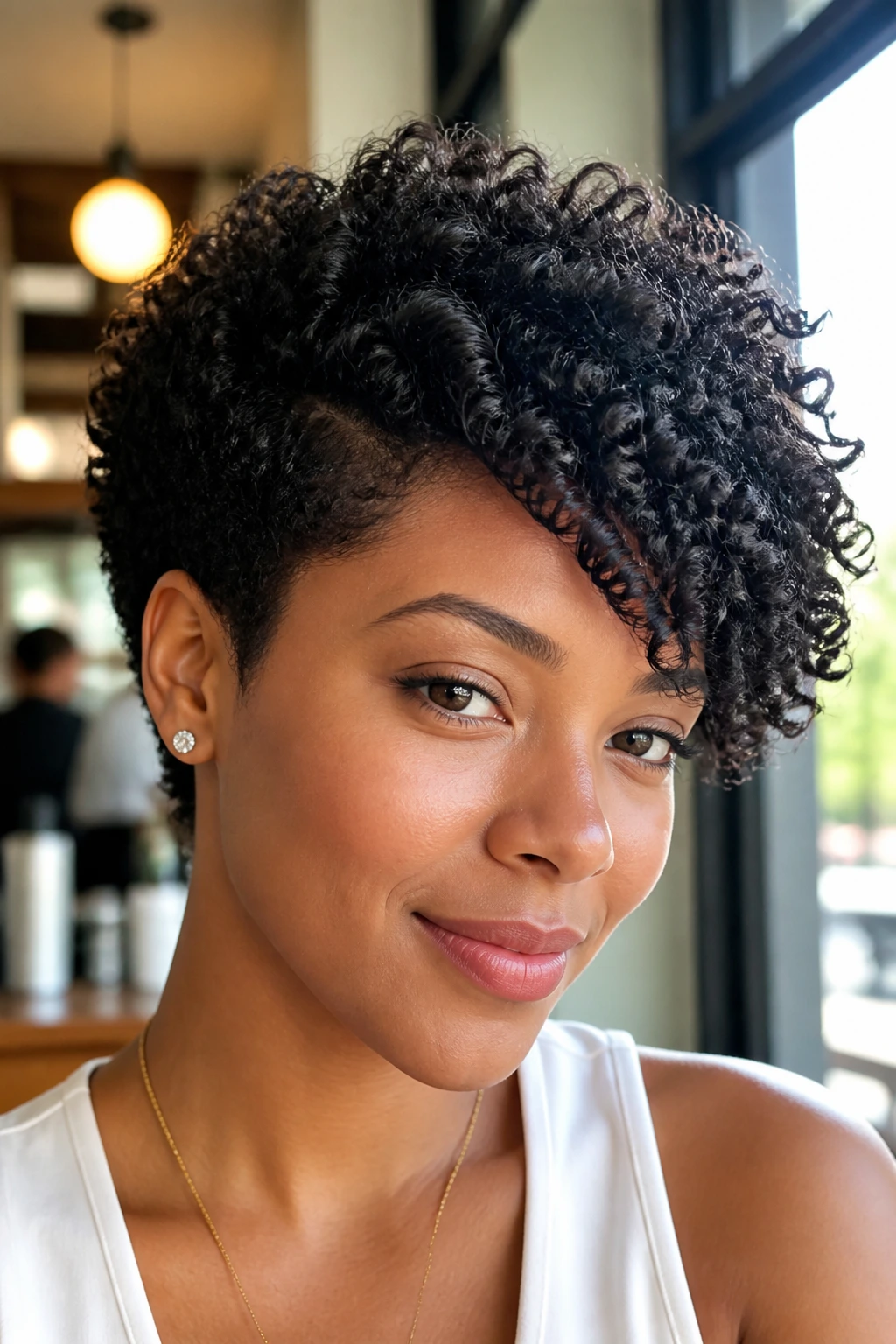
This cut is all about the diagonal line. One side sweeps forward, the other side can sit shorter or be tucked behind the ear, and the asymmetry keeps the face from reading too round. It’s a tiny change with a big payoff. Round faces like movement, and this gives them movement in the right direction.
A side-swept crop can be short enough to feel easy but long enough to keep the curl pattern visible. I like it best when the front section lands near the brow or upper cheek, while the back stays neat and tapered. That mix keeps the style sharp without making it severe. If the front is too short, the shape loses its lengthening effect.
This is a very good cut for someone who wants texture without a lot of hair hanging around the jaw. It also plays nicely with glasses, because the side-swept front creates a bit of balance near the frame. You get a little drama, but not too much. That’s the sweet spot.
11. The Bantu-Knot-Out Halo
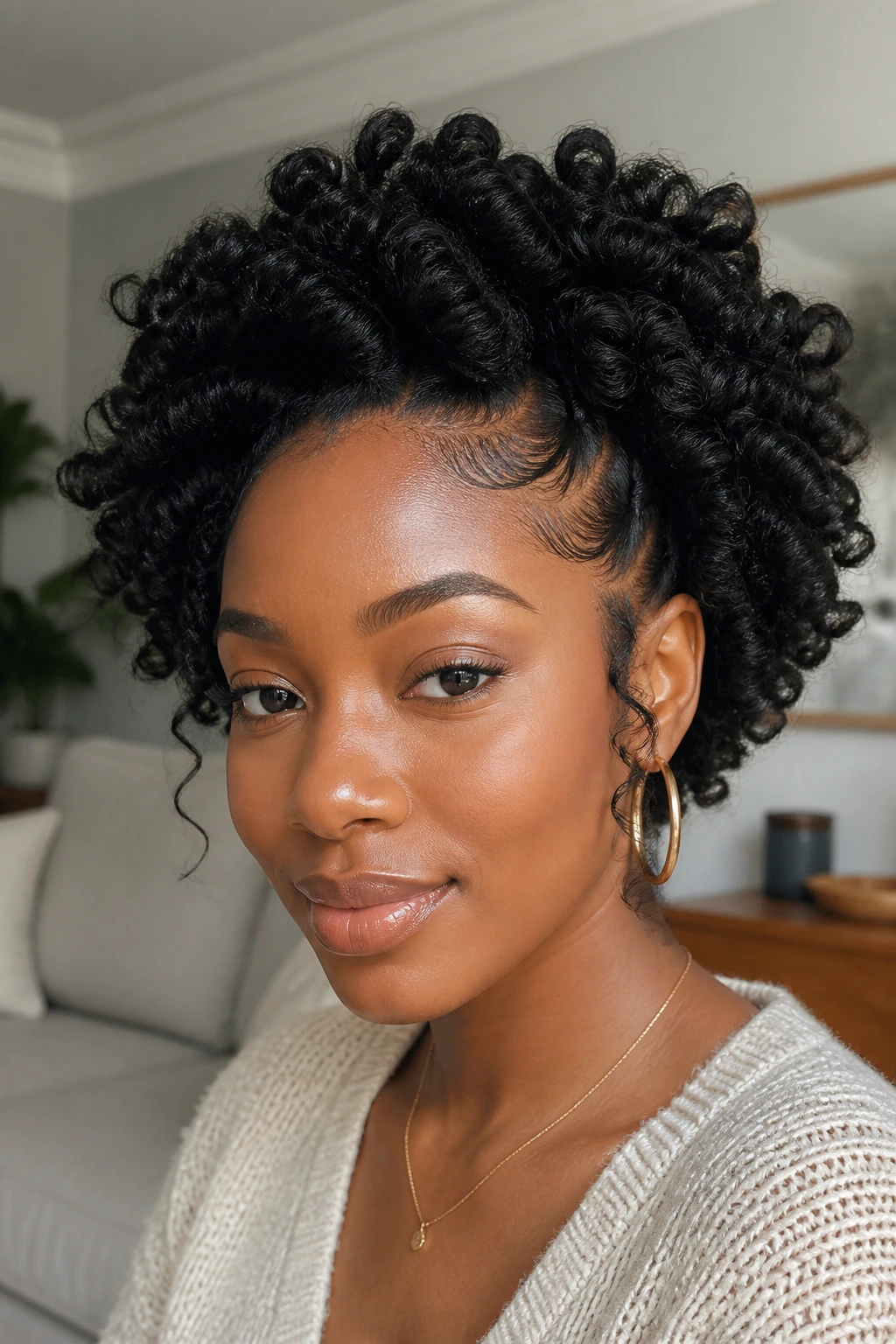
A Bantu-knot-out can make tight curls look airy and sculpted all at once. The knot pattern creates defined ringlets, and once the knots come down, the hair forms a halo with a bit of lift at the crown. On a round face, that crown lift is doing some quiet, important work.
The shape matters more than the texture here. If the curls get too full at the temples, the halo can widen the face instead of lengthening it. I’d keep the perimeter pieces a touch more controlled and make the top section the fullest. That way the eye rises before it moves outward.
This style tends to hold its definition well if you let every knot dry all the way. Half-dry knots are a mess. A little setting mousse or foam helps the pattern stay clean, and separating the curls only after they’re completely dry keeps the halo soft instead of fuzzy. It’s a bit of work, but the finish is worth it.
12. The Jaw-Grazing Layered Cut
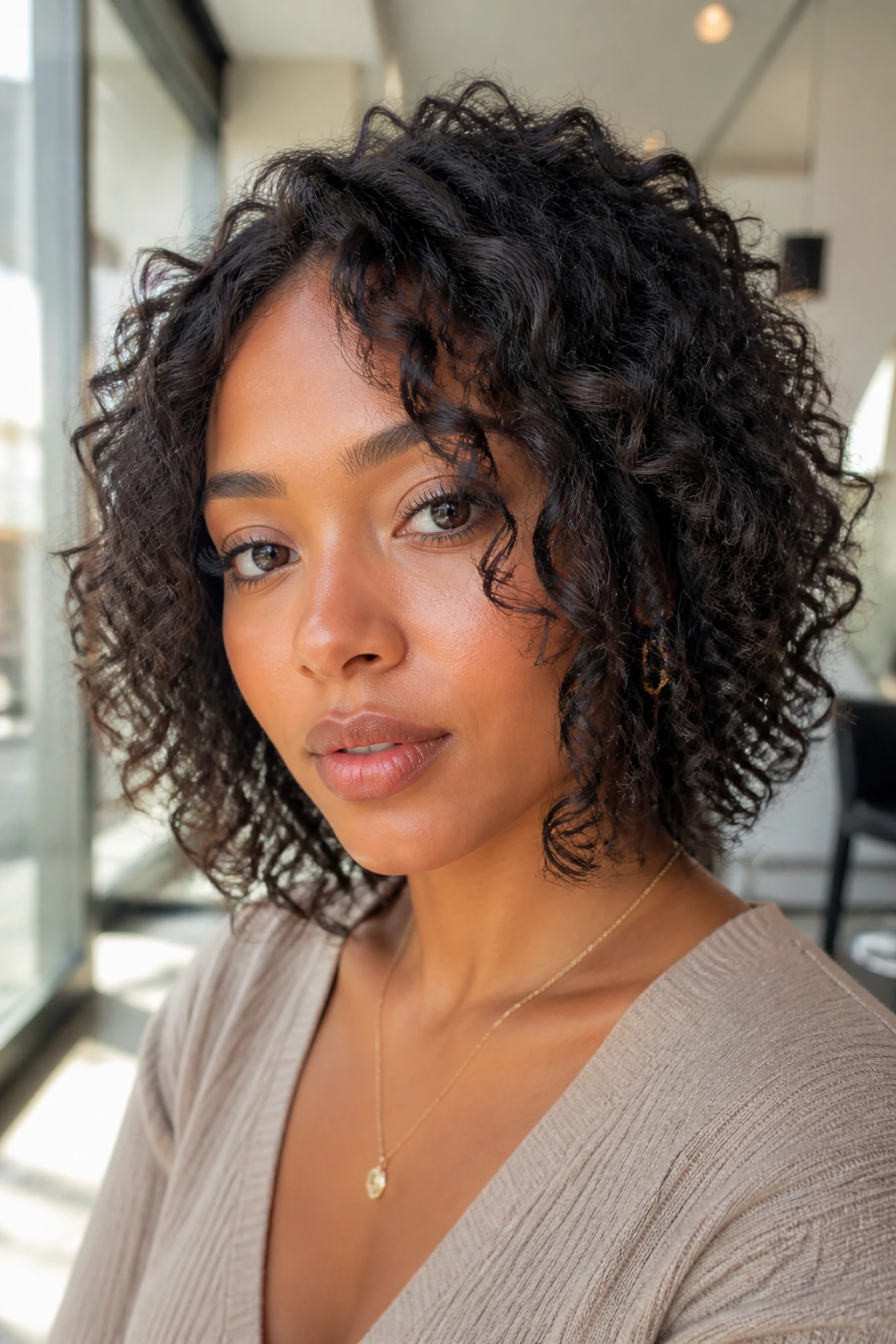
Jaw-grazing sounds risky for a round face, and honestly, it can be if the cut is blunt and heavy. But when the layers are right, it becomes one of the most flattering short shapes around. The goal is not to create a hard line at the jaw. The goal is to let the front pieces fall just past it while the interior layers remove bulk.
That shift changes everything. The hair still sits short enough to feel easy, but the shape no longer lands exactly where the face is fullest. A side part helps, and so does a little length in front of the ears. If your stylist cuts tight curls wet, ask them to check the finished shape dry. Shrinkage can turn a jaw-grazing cut into a cheek-grazing one fast.
This is the cut for someone who wants short hair but not a classic pixie. It gives a little more softness, a little more curl, and a lot more room for shape. If the layers are done well, you get movement without a boxy outline. That’s the whole game.
13. The Mid-Length Wash-and-Go
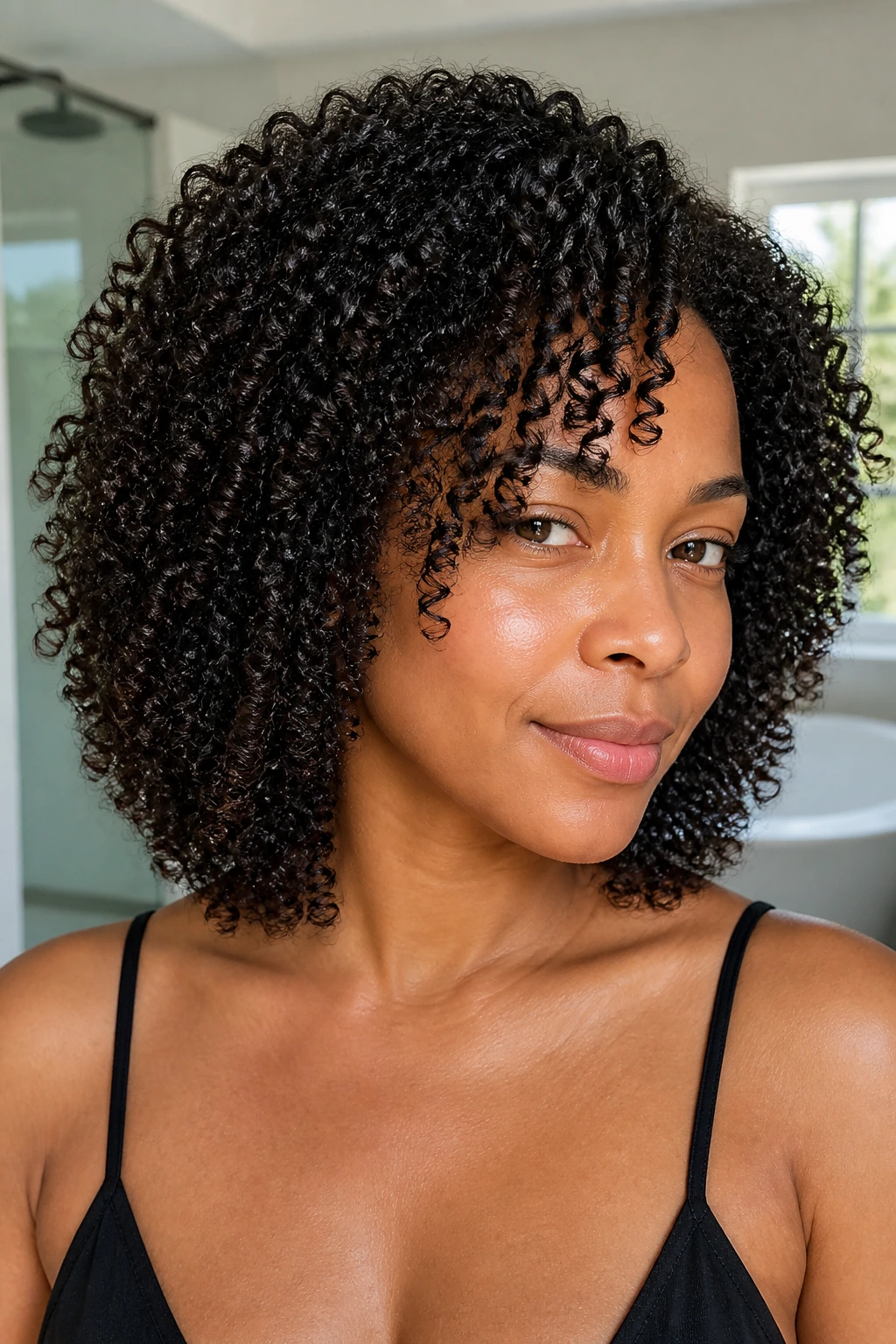
A good wash-and-go on a round face is less about volume everywhere and more about controlled lift. You want the crown to rise, the sides to stay defined, and the ends to curl instead of flare. Mid-length is useful because it gives enough weight to keep the shape from floating away, but not so much that the curls drag the face down.
This style lives or dies by product placement. Put most of the definition near the front and crown, then use less on the underlayers so they don’t clump into a triangle. A brush for the top and fingers for the sides is a nice compromise. It keeps the silhouette cleaner than running the same tool through everything.
The real advantage here is predictability. Once you know how your curls fall, this style is easy to repeat. That matters more than people admit. A flattering shape you can recreate in ten minutes is better than a gorgeous one you can never get back.
14. The Flat-Twist Updo With Curly Ends
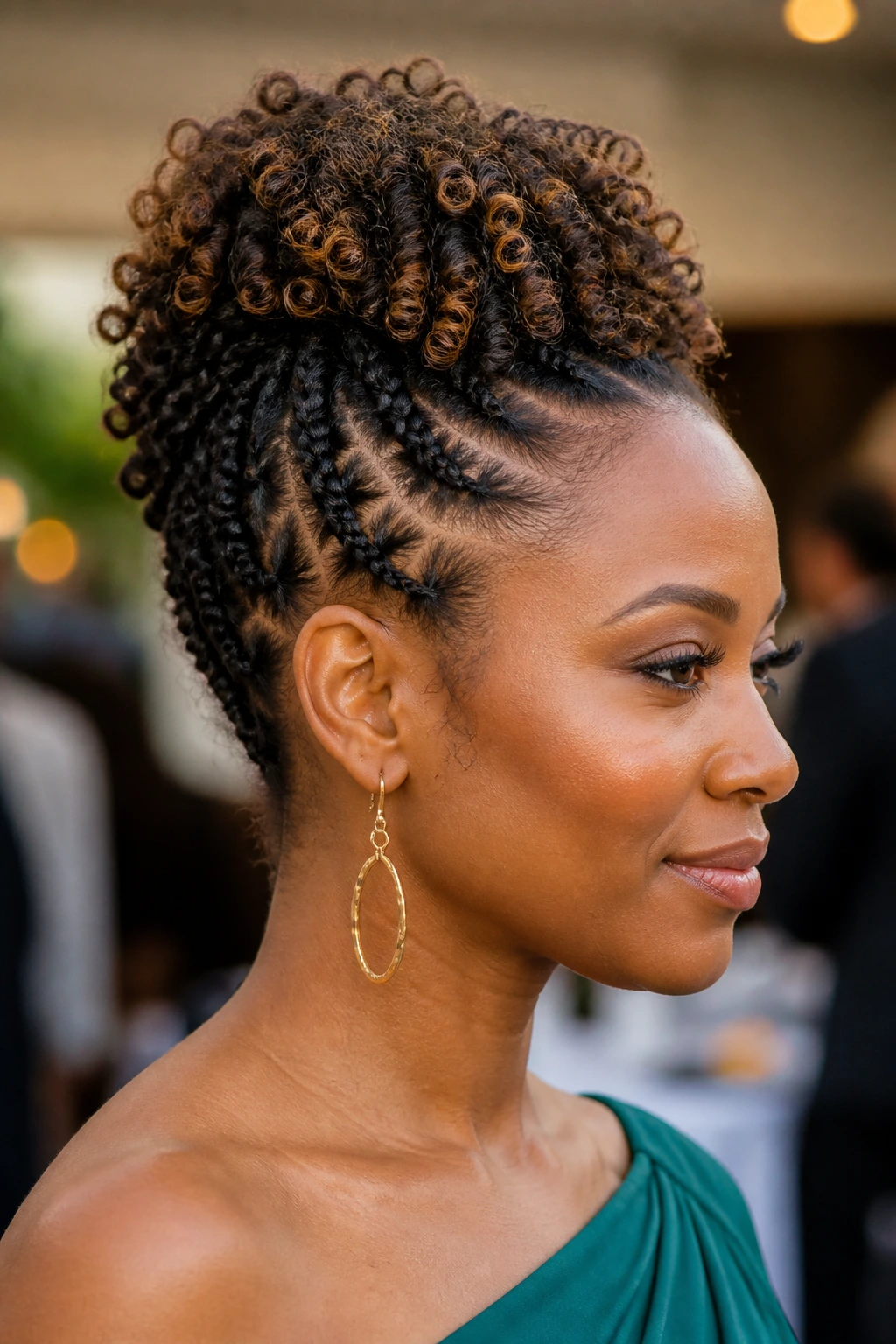
Flat twists are one of the smartest ways to build height without heat. They pull the hair upward and back, which naturally lengthens a round face, then they leave room for curly ends to soften the whole look. That combination — structure plus softness — is where this style shines.
The placement is everything. Don’t twist the hair straight back from the temples. Start the twists with a slight diagonal angle so the front line doesn’t get too severe. When the ends are left free, they can sit at the top or back of the head and add movement without adding width beside the cheeks.
This is a style that can work for office days, weddings, church, or any moment when you want your face to stay open. It’s also very kind to your hair if you need a break from daily styling. Pin it well, wrap it at night, and the shape can last longer than you’d expect.
15. The Defined Coil Afro
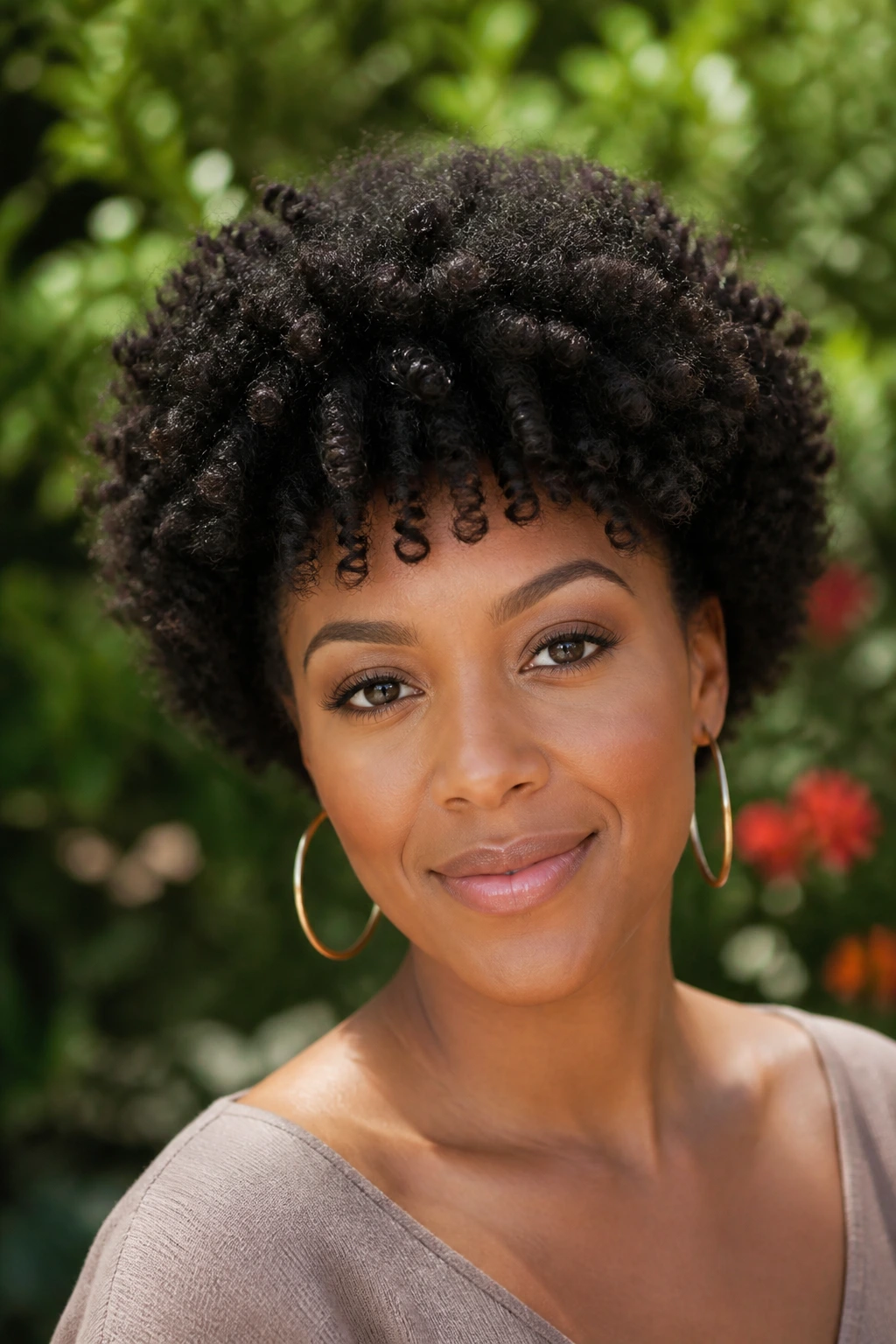
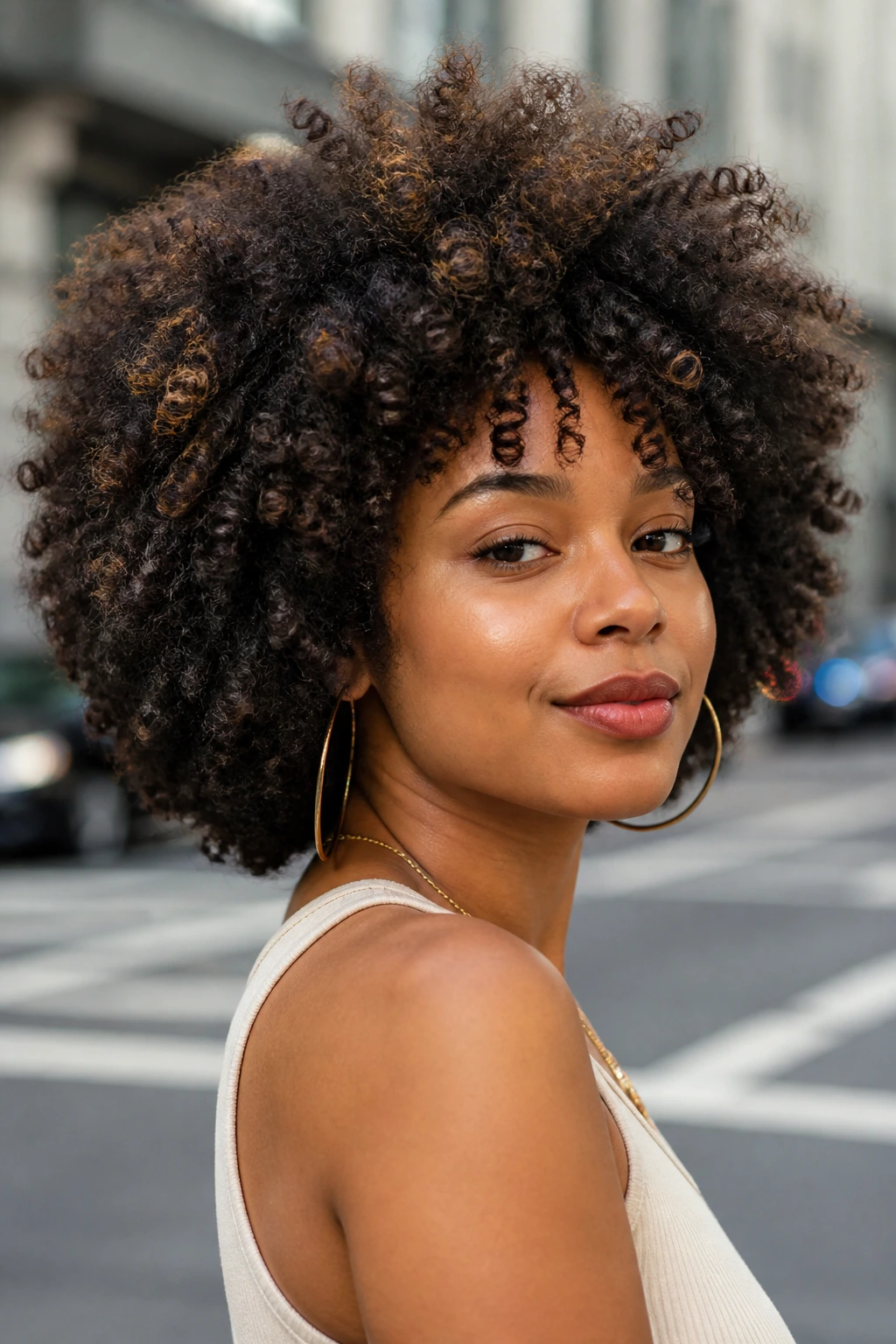
Here’s the difference between a tapered afro and a defined coil afro: this one keeps more fullness through the body, but the outline is still deliberate. The coils are defined enough to show texture, yet the shape is rounded into an oval rather than puffed into a sphere. On a round face, that subtle oval matters.
The secret is restraint at the sides. Let the top and upper crown carry the body, while the widest part stays just above the cheek line. If the hair is highly dense, internal layers help the shape breathe. If you have finer coils, definition and a little root fluff are enough.
I like this style because it gives you volume without the “wide at every angle” problem. You still get the big-hair feeling, just with a plan. It’s the kind of cut that looks especially good when the curl pattern is clean and the silhouette has been shaped with a hand mirror, not just a hopeful guess.
16. The Asymmetrical Curl Bob
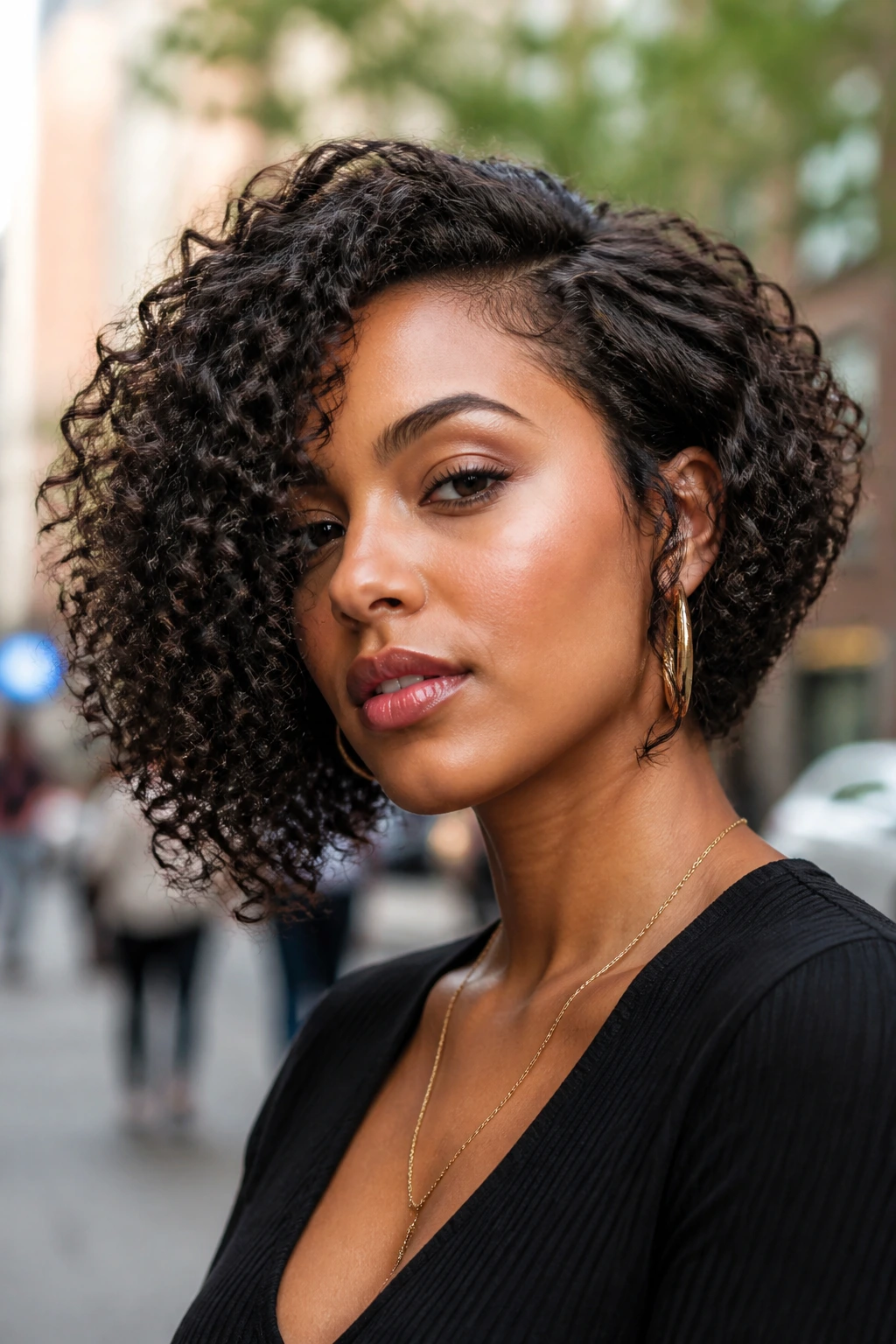
A truly asymmetrical bob is one of the easiest ways to fake length on a round face. One side sits longer, sometimes by only an inch or two, and that tiny difference makes the whole shape feel more angular. The face follows the line of the hair instead of sitting inside a perfect circle.
This cut works especially well with tight curls because the texture softens the geometry. You get the clean shape of the bob, but the curl pattern keeps it from looking sharp or severe. If your hair is very dense, the shorter side should still have enough length to curl, not just bend. Otherwise the contrast gets choppy in a bad way.
Wear it with a deep side part or tuck the shorter side behind one ear. That creates a little asymmetry even on days when the cut has settled down. It’s a strong choice if you want a shape that says you meant it.
17. The Finger-Coil Fringe
A fringe can work on a round face if it’s not blunt and if it doesn’t sit too straight across the forehead. Finger coils solve that problem nicely. The coils break up the line, land softly at the brow or upper cheek, and give the front of the face some texture without making it heavy.
This style is especially good when the rest of the hair is short or shoulder length, because the fringe gives the cut a point of interest. You can keep the coils slightly longer at the temples and shorter in the center to build that bottleneck effect again. It’s a small detail, but small details do a lot of work here.
The key is patience while the coils dry. If you separate them too early, they puff and lose the shape that makes them useful. Once they’re dry, a bit of light oil on the fingertips helps keep the definition crisp. Not greasy. Crisp.
18. The Soft Curly Mullet
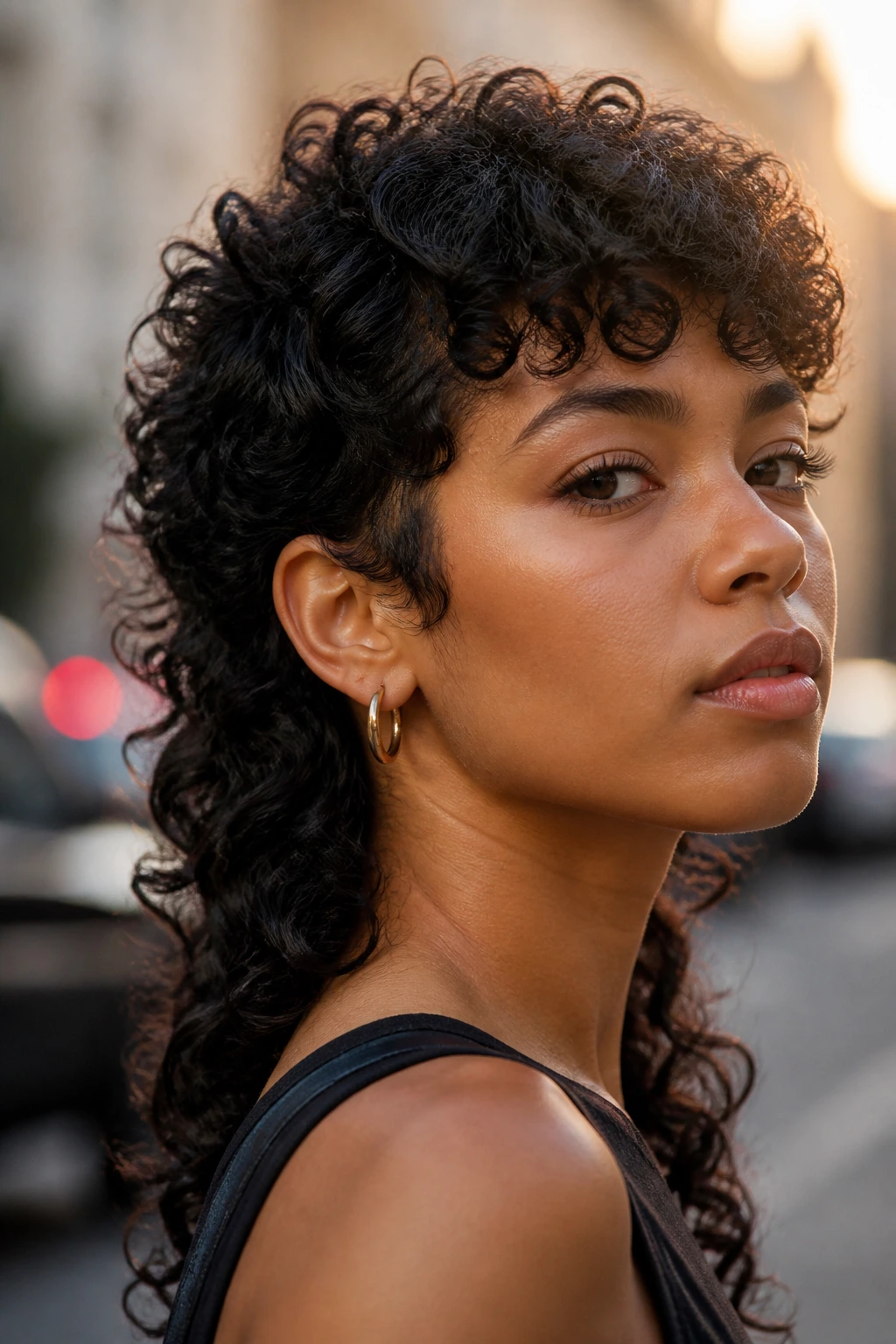
A curly mullet sounds like a dare, and sometimes it is. But on tight curls, the longer back and shorter crown can be a smart way to move width away from the cheeks. The shape keeps the volume lower in the back and more controlled around the face, which is exactly where round faces need the help.
This is not the crunchy, 1980s version people picture. A soft curly mullet has layered sides, a lifted crown, and enough length in back to feel intentional. If the temples are too wide, it stops reading edgy and starts reading accidental. So keep the side bulk in check. That’s the whole point.
It suits someone who likes a little attitude in their hair. It also photographs well from the side, which is a useful bonus if you wear your hair parted and slightly turned. Not every flattering cut has to be polite.
19. The Center-Part Halo Fro
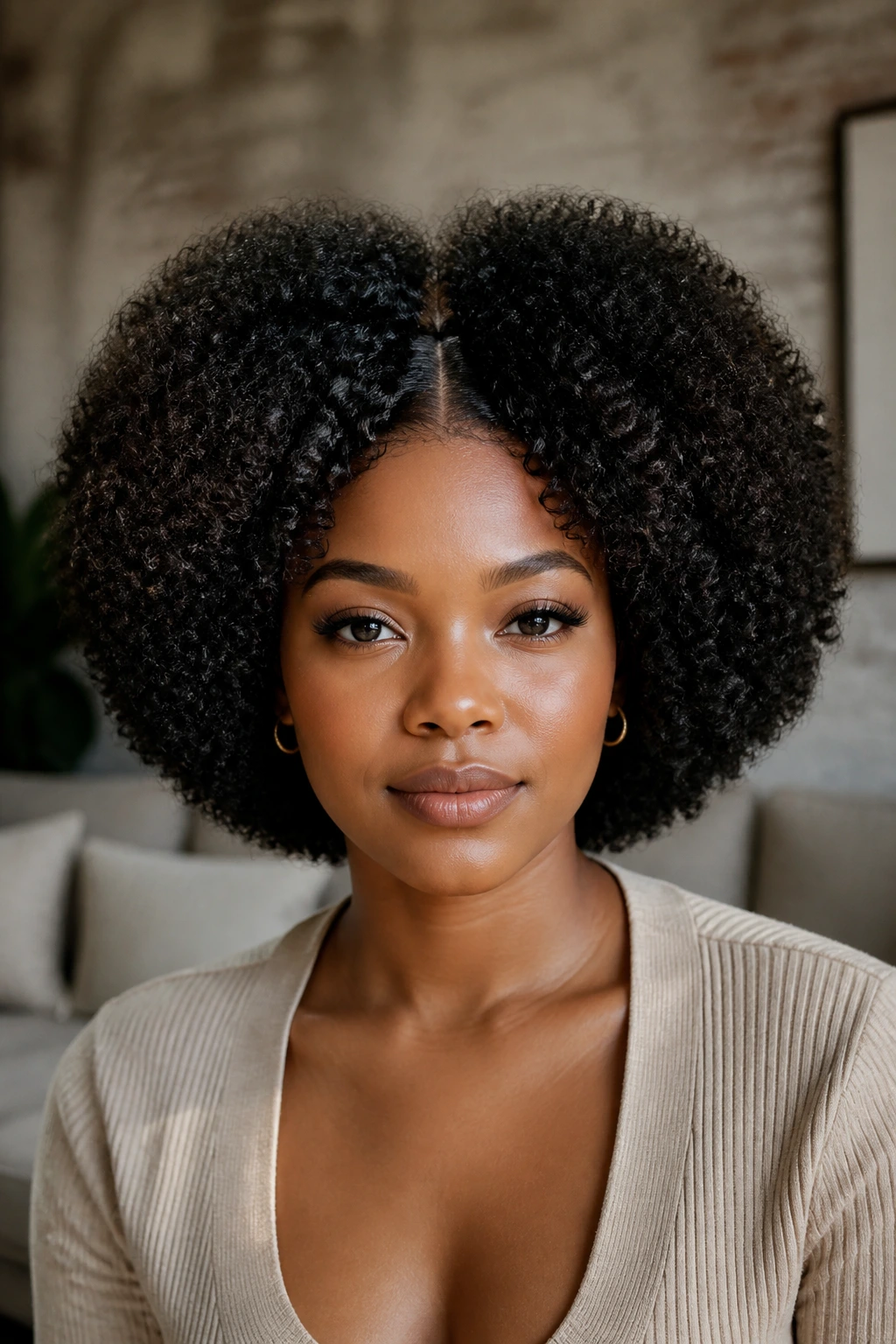
A center part can be tricky on a round face, but a halo fro with real height can make it work. The part creates symmetry, and the height above the ears keeps the style from spreading sideways like a cloud. The result is more structured than a freeform fro and a little more dramatic too.
The danger here is letting the widest point sit right at the cheeks. To avoid that, ask for the perimeter to be shaped into a gentle oval, not a perfect circle. That can mean trimming a little more off the sides while leaving the top and upper back fuller. It sounds subtle, and it is. But subtle is what makes the cut look thoughtful.
I like this style when the curls are well-moisturized and the root area has been lifted with a pick. A clean part and a fresh shape around the forehead can make it feel almost architectural. Almost. But not stiff. Never stiff.
20. The Half-Up Puff With Loose Length
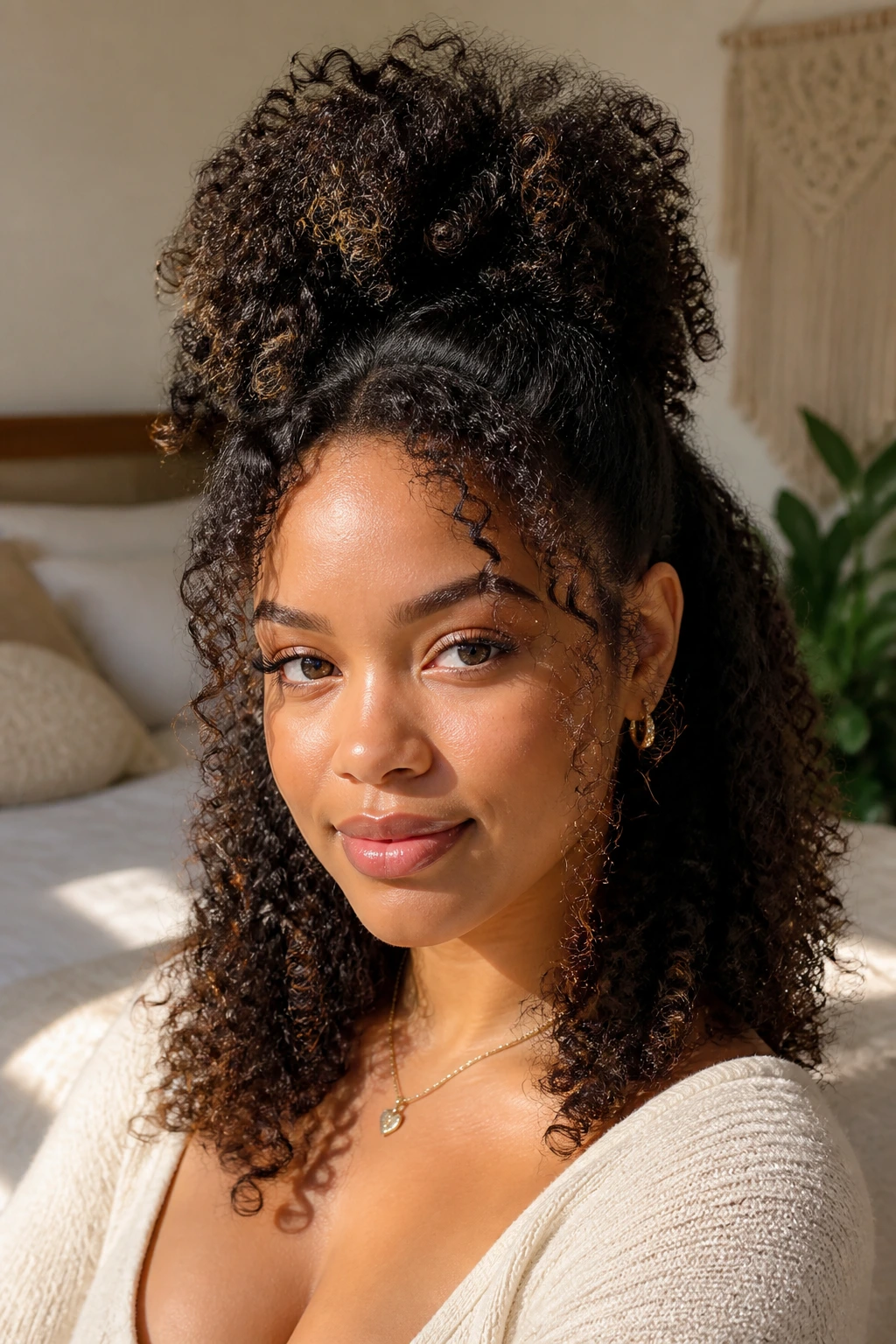
A half-up puff gives you the best kind of compromise: height at the top, softness at the bottom. The crown gets lifted away from the face, while the loose length below keeps the style from feeling too top-heavy. On a round face, that split is useful because it creates two visual zones instead of one wide one.
The parting line should sit high enough that the puff owns the crown, not the temples. If you pull the half-up section too low, the face can feel boxed in. Leave a few front curls out around the hairline or temples if you want extra softness. That makes the style feel less pulled-back and more shaped.
This is one of those looks that works on both stretched and shrunken texture. On stretched hair, the bottom hangs longer; on tight coils, the contrast between top and bottom gets more obvious. Either way, the face stays open, which is the real point.
21. The Sculpted TWA
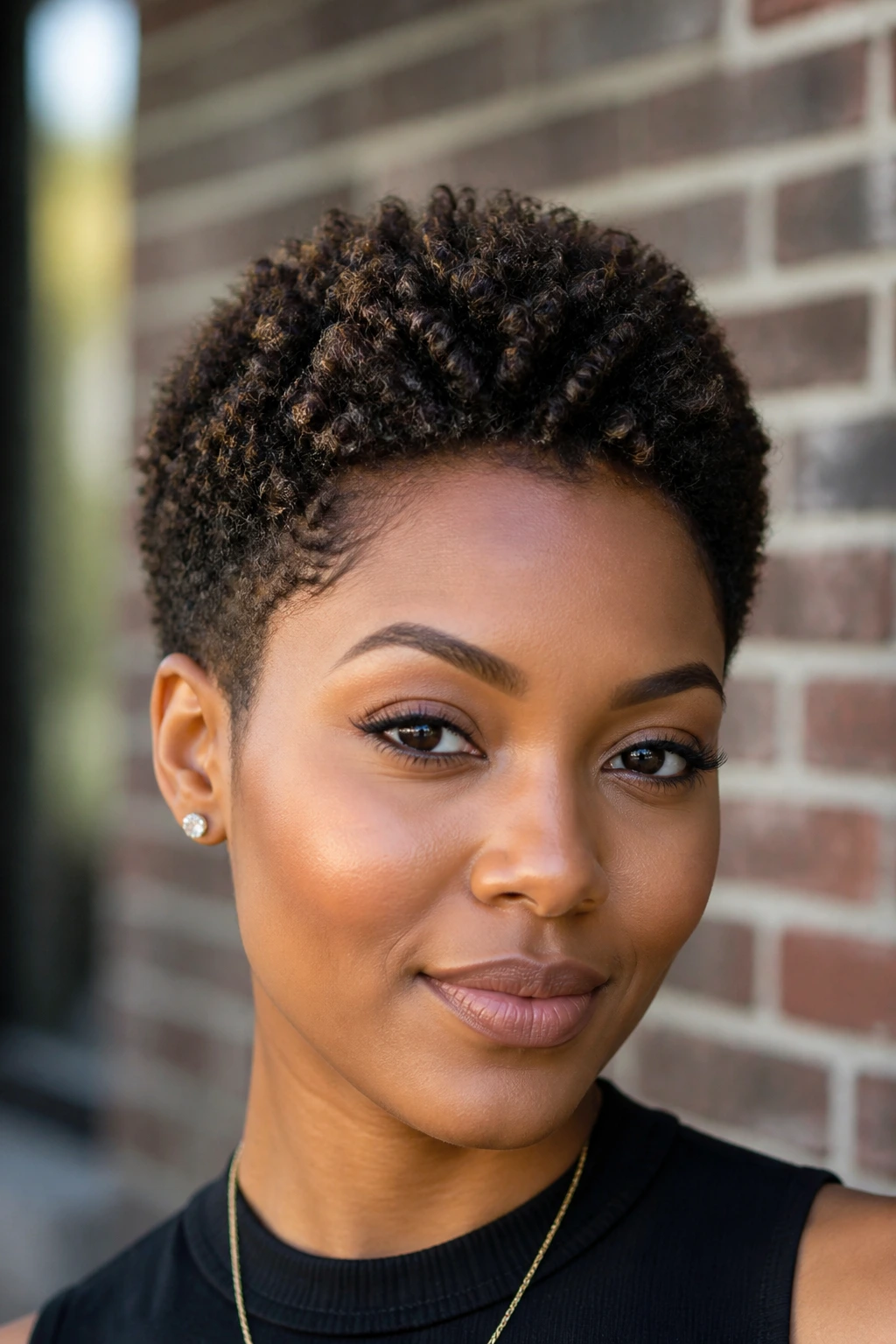
A sculpted TWA — tiny, tapered, and shaped close to the head — can be one of the most flattering short looks for a round face. The trick is not to keep everything the same length. A little more height through the center top and slightly closer sides create a gentle oval instead of a wide puff.
This cut is for people who like seeing their face, not hiding it. It puts the emphasis on brows, eyes, earrings, and the neckline. If the curls are finger-coiled or sponge-defined, the shape feels even cleaner. And because the hair is short, the style tends to keep its form with less daily fuss.
I’d ask for a dry shape-up if possible. Tightly coiled hair can shrink hard, and a cut that looks balanced wet may sit much shorter once it dries. That’s the difference between a great TWA and one that feels too round. The line of the cut has to be planned, not guessed.
22. The Side-Bang Coil Cut
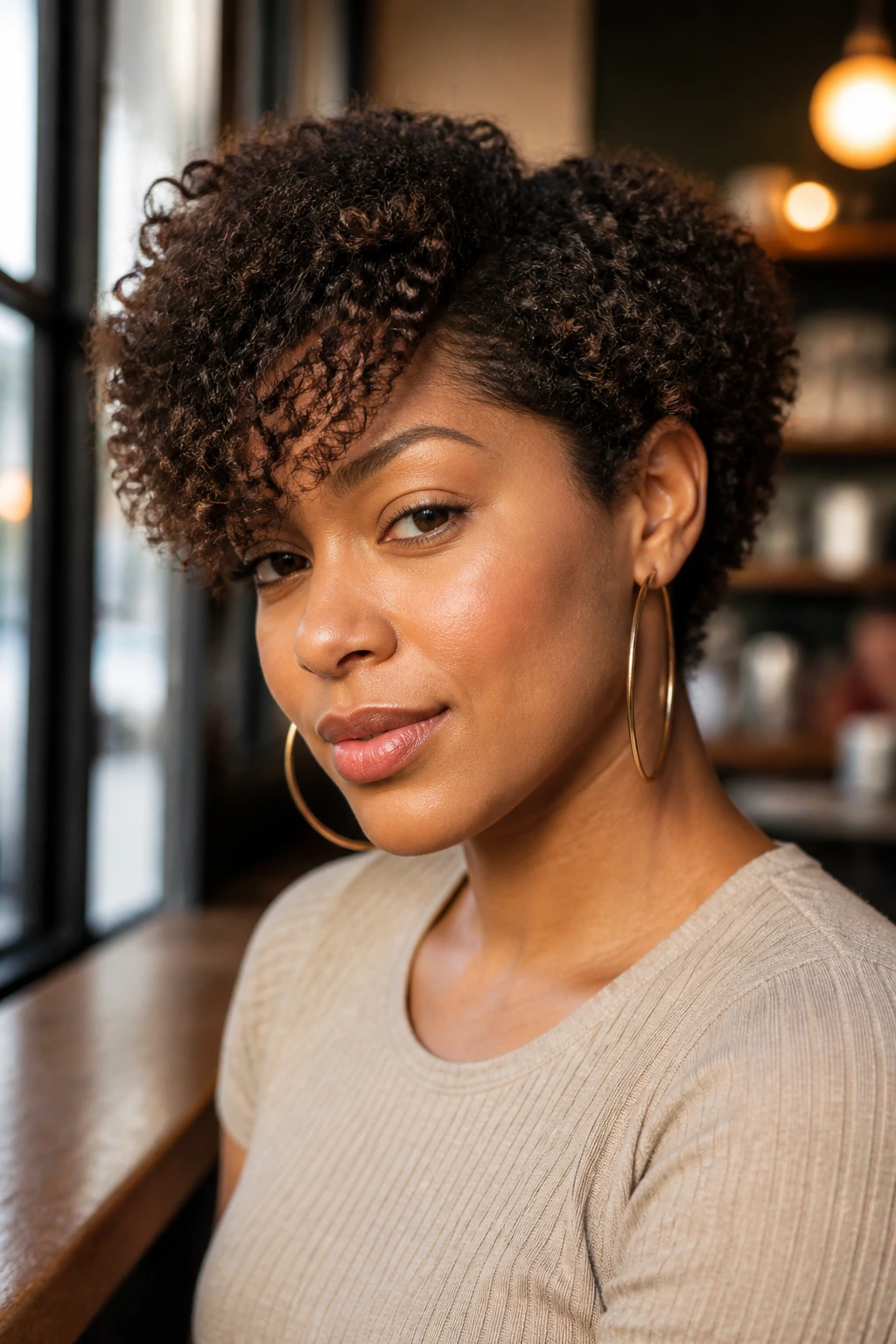
Side bangs are one of the easiest ways to break up a round face shape without hiding it. They send the eye diagonally across the forehead, which softens the width at the cheeks and adds movement right where the face can use it. On tight curls, the bangs should be cut with shrinkage in mind and left a bit longer than you think.
I prefer side bangs that touch the brow, skim the temple, or land near the upper cheek. That range keeps them useful. If they stop too high, they can feel accidental; if they stop too low, they can crowd the face. The side angle also means the bangs can be refreshed separately on wash day, which is handy when the rest of the style is still fine.
This cut works nicely with collarbone length or a short bob. The bangs become the bridge between the face and the rest of the hair. That bridge matters. Without it, the shape can feel disconnected.
23. The Shoulder-Grazing Wolf Cut
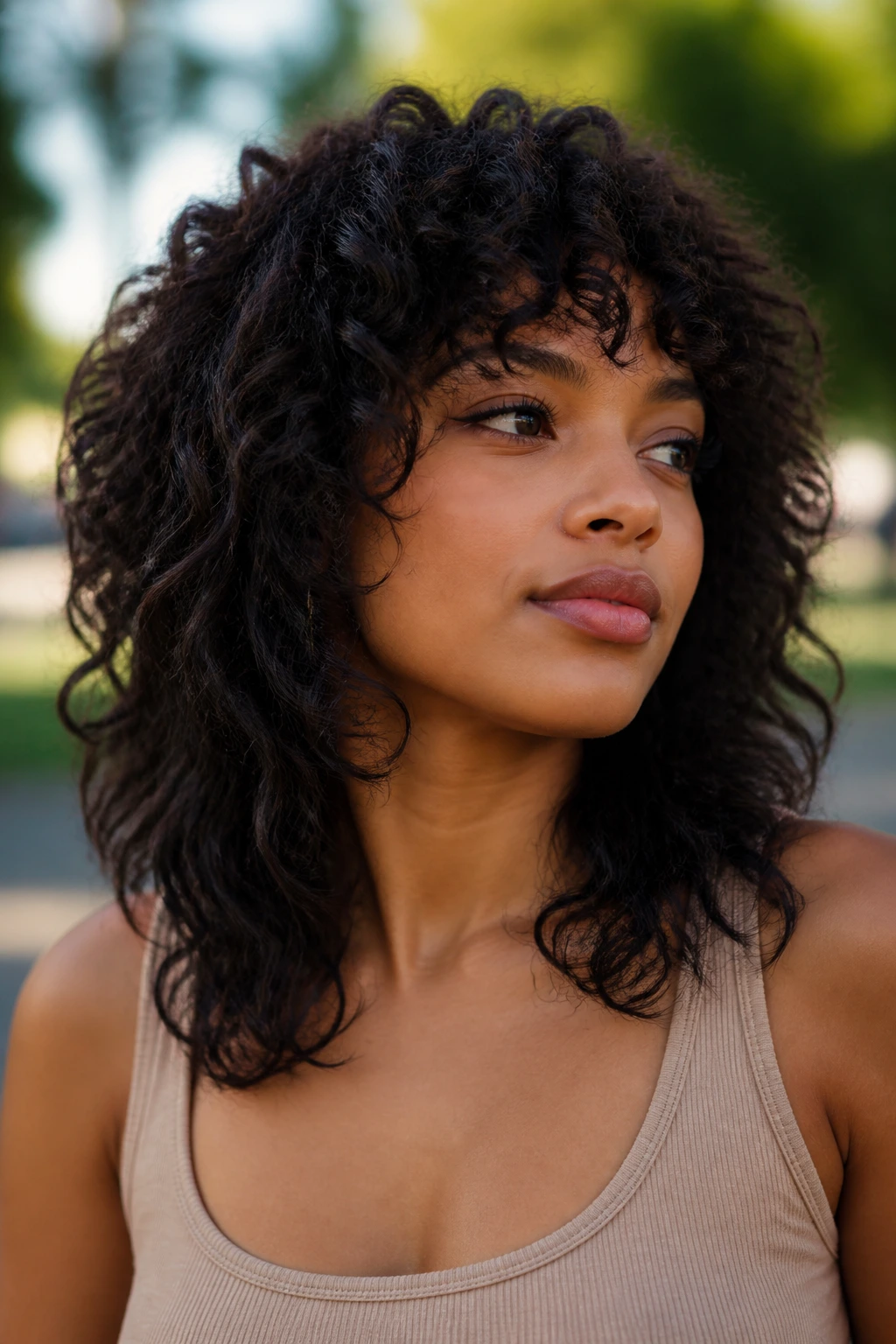
The wolf cut is not for everyone, and I’m glad about that. It has attitude. With tight curls, though, the layered top and longer bottom can keep the widest volume away from the cheeks while still giving you a lot of motion. That motion is what saves it on a round face.
A good curly wolf cut has short crown layers, longer perimeter pieces, and enough shape around the face to avoid the dreaded triangle. It should look piece-y, not shaggy in a lazy way. The difference is in how the layers are blended. You want separation, yes, but you do not want disconnected chunks that create width at the exact wrong spot.
This cut works best when the curls are defined but not over-scrunched. A little loft at the crown and some loose movement around the jawline keep it from reading too heavy. If your hair is low density, ask for lighter internal layers instead of aggressive thinning. Too much removal can make the top collapse.
24. The Crown-Heavy Twist-Out
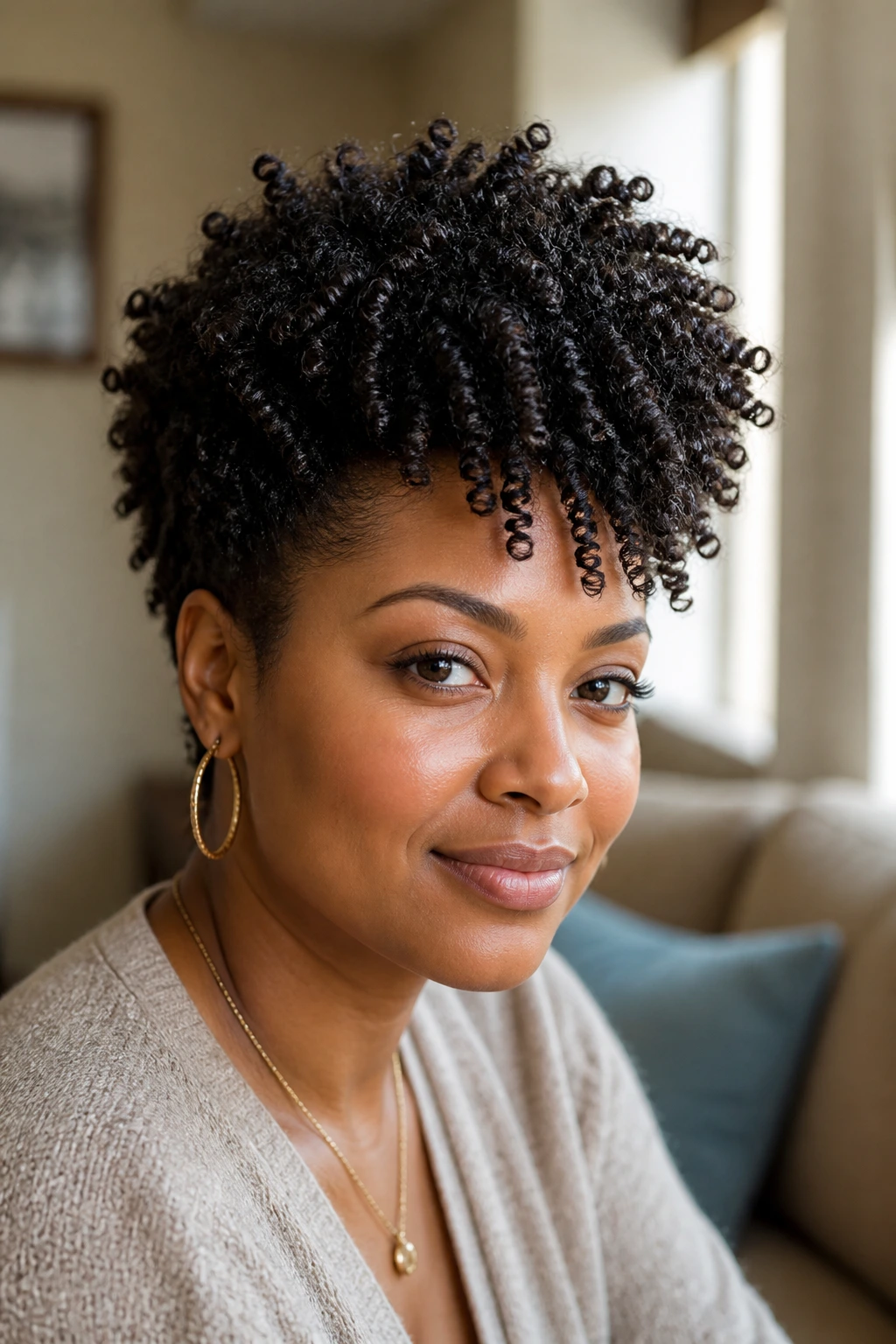
Some twist-outs are all about volume everywhere. This one is not. The crown-heavy version places the lift on top and keeps the sides a bit calmer, which is a smarter move for round faces. It gives the face room while still keeping the hair full and textured.
To get this shape, use smaller twists through the top section and slightly larger ones around the sides and back. That changes where the fluff lands after takedown. During separation, pull the curls upward and back at the crown, then leave the sides alone unless they’re sticking out at the temple line. A little restraint there goes a long way.
This is the kind of style that can look casual or polished depending on how clean the parting is. If you want it to feel more refined, do a neat middle or side part before twisting. If you want it looser, let the part wander. The core idea stays the same: height first, width second.
25. The Wet-Look Coil Set
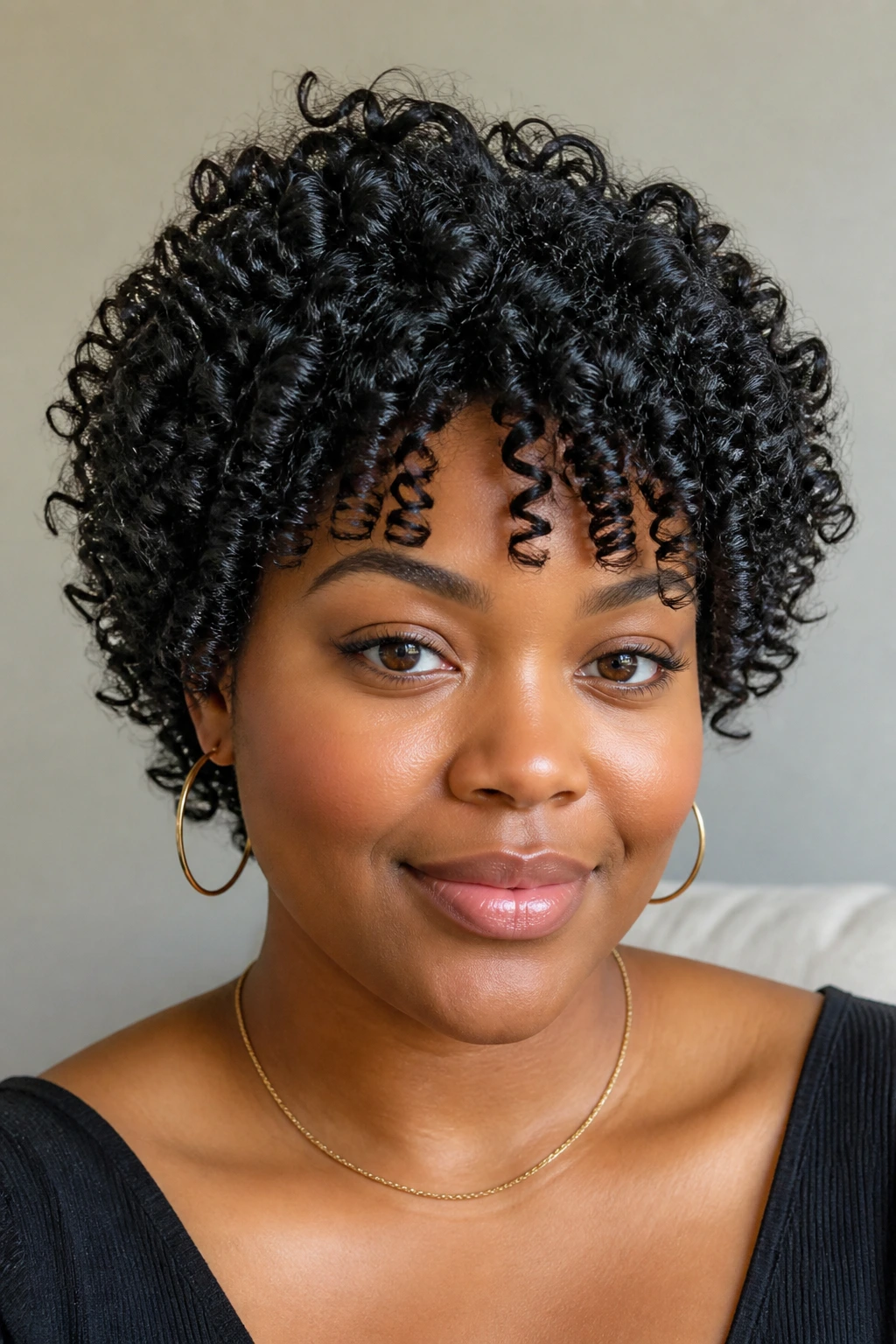
A wet-look coil set gives a round face a sleek frame instead of a fluffy halo. The coils are defined, the finish is shiny, and the silhouette stays compact enough to avoid extra width at the cheeks. This is one of the rare styles that can feel both controlled and soft at the same time.
The style works best when the coils are uniform in size and set with a gel that dries clean, not sticky. If the product leaves flakes or doesn’t hold the pattern, the whole look loses its polish. Let the coils set all the way before touching them. That part feels boring, but it is the difference between sculpted and sad.
I like this one for dressier days or whenever you want the face to stay the focus. The hair frames, rather than competes. If your natural pattern is loose at the ends, a small rod set at the front can help keep the line tidy.
26. The Pineapple Updo With Bangs
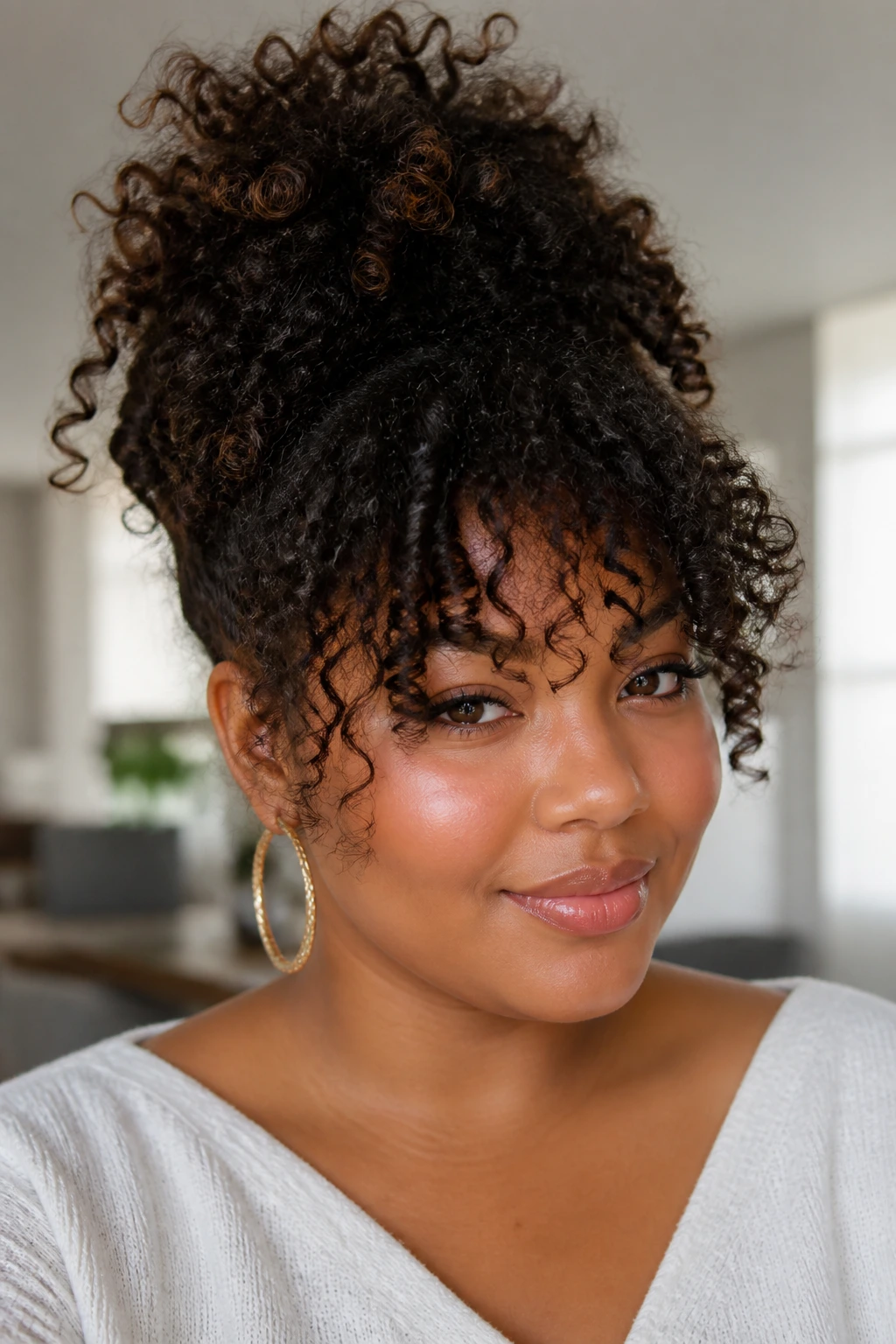
The pineapple is often treated like a sleep style, but it can be a real daytime shape too. When the curls are gathered high and the front is left out as bangs or loose tendrils, the result adds height without pulling everything away from the face. On a round face, that front softness matters.
The trick is not to smooth the hair back too tightly. Leave a little body at the front and crown so the puff has shape. If your hair is very dense, a two-band pineapple can keep the lift from sliding down during the day. The bangs or fringe should stay loose enough to move. They’re what keep the style from looking like a gym updo.
This is a good option when you want quick styling and a visible curl pattern. It also lets you show off earrings and necklines without sacrificing texture. The pineapple gets dismissed as too casual a lot, but styled on purpose, it can look very clean.
27. The Tapered Long-Top Cut
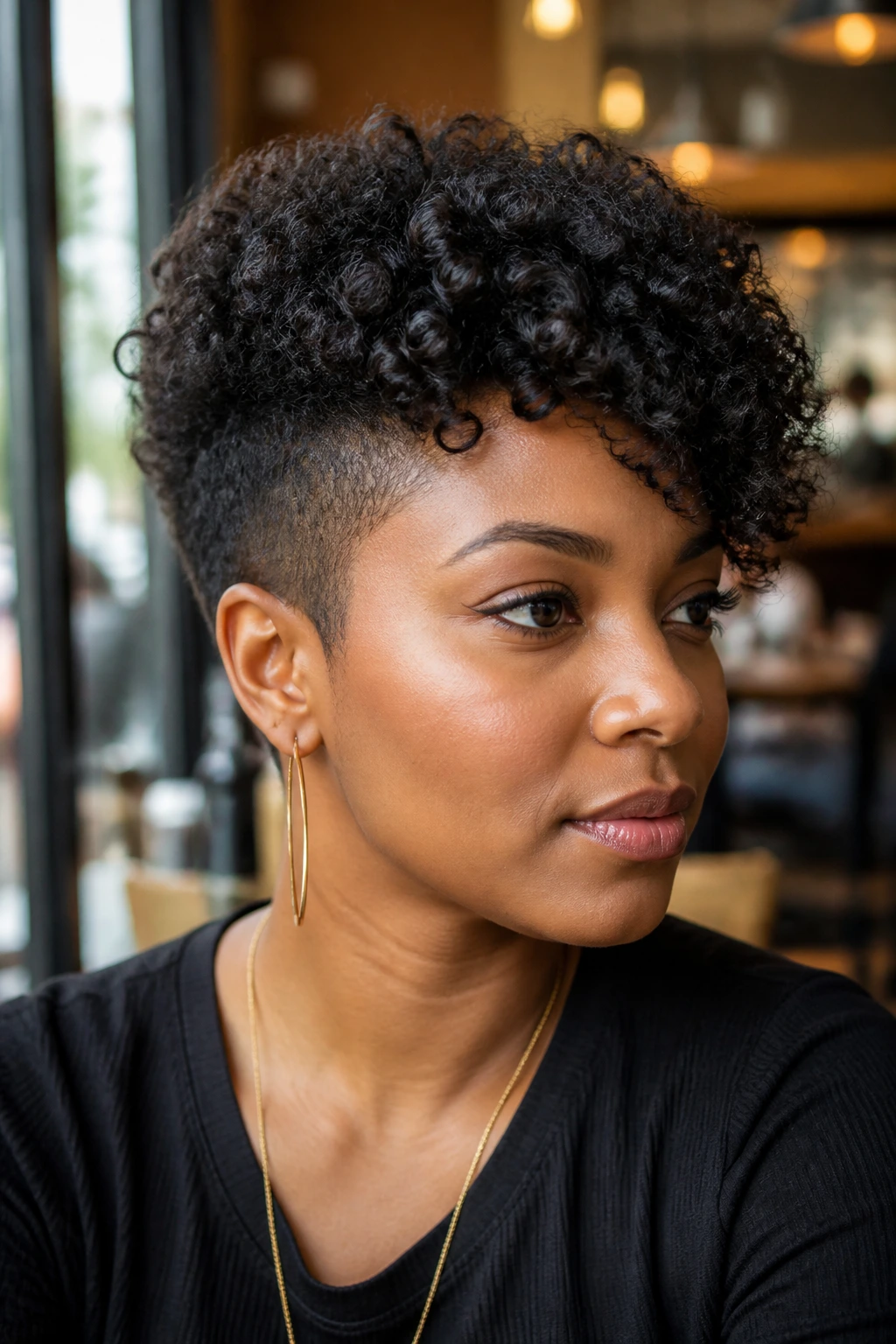
This cut keeps the sides closer and lets the top carry more length, which gives the face a vertical line without going full frohawk. The long top can be worn forward, upward, or slightly to the side, so it has more range than a lot of short cuts. For round faces, that flexibility is a gift.
The taper on the sides should be soft enough that it does not create a hard shelf. You want the top to feel like it rises out of the cut, not sits on top of it. If the hair is dense, a little shaping around the temples helps avoid the mushroom effect. If it’s more delicate, the longer top can be left a bit looser and still hold form.
I like this look because it is easy to refresh. A bit of water, a little curl cream, maybe a pick at the roots, and it comes back to life fast. It’s one of the most forgiving cuts on this list.
28. The Long Side-Swept Fro
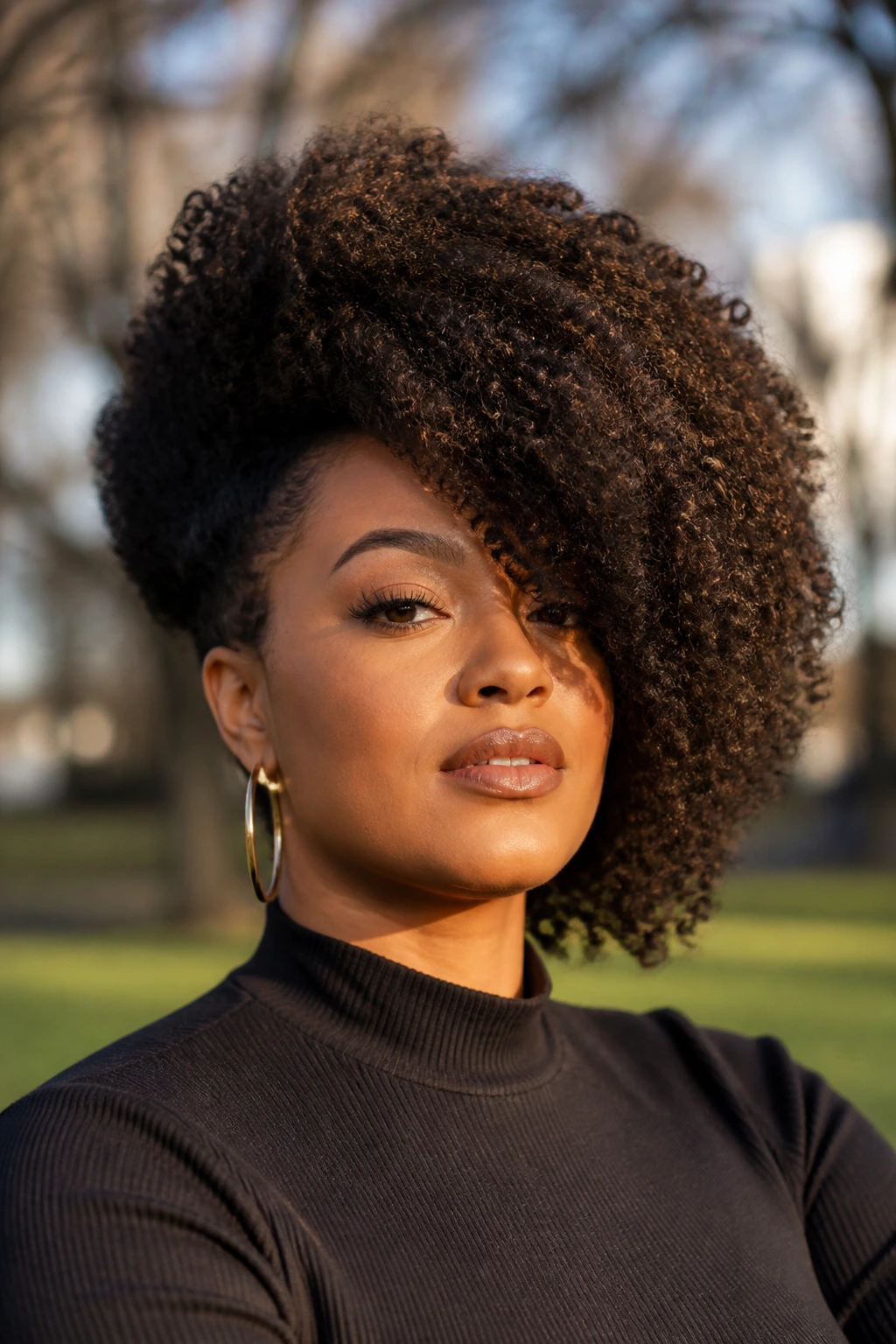
A long side-swept fro is all about controlled drama. The fuller side drapes past the cheek and can even brush the collarbone, while the shorter side stays tucked back or slightly closer to the head. That asymmetry makes the face read longer and keeps the hair from forming one big round cloud.
The cut works best when the side part is deep enough to matter. Not a polite little part. A real one. The fuller side should have enough length to curl down and forward, and the opposite side should stay neat so the shape doesn’t drift into chaos. If you want more polish, pin the shorter side behind the ear with a simple clip.
This is a strong final choice because it gives you fullness without the same-width-all-the-way-around problem. It also works with a lot of textures, from tighter coils to soft ringlets, as long as the parting and shaping are intentional. And that’s the theme here, really. Not less hair. Better placement.
Why the Shape Placement Matters More Than the Curl Pattern
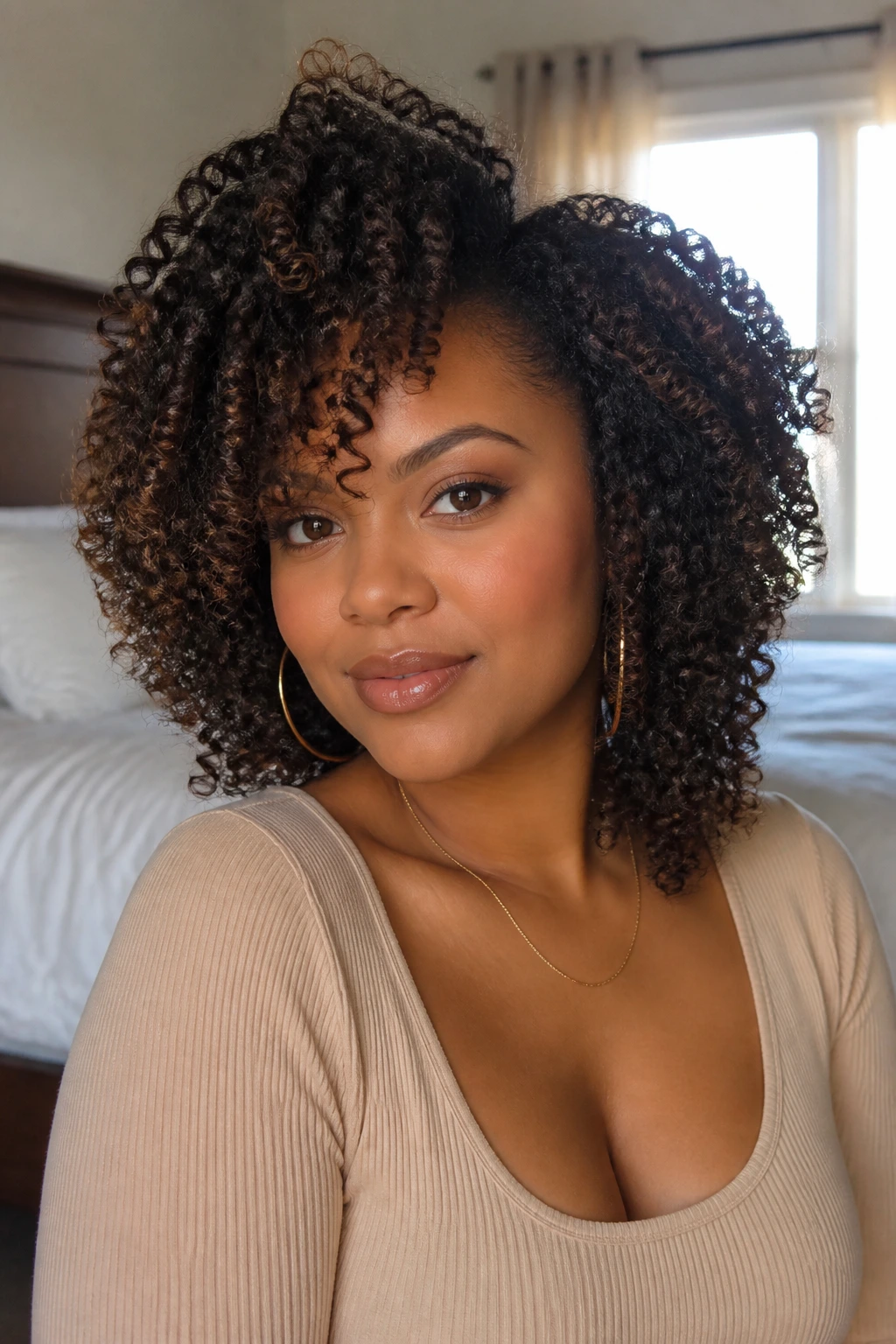
A round face can absolutely wear tight curls. The mistake is thinking the answer lives in curl type alone. It doesn’t. The answer lives in where the hair sits, where it lifts, and where it stops. That’s the part stylists who cut textured hair dry are always trying to protect, because wet curls lie to you. They sag, stretch, and then spring up into something else entirely.
Tight curls bring shrinkage, density, and a lot of visual texture. Good. Use that. Let the height sit above the cheeks, let the fronts fall on a diagonal, and let the ends land somewhere useful — below the widest point, or above it, but not parked right on it. That one rule solves more bad hair days than most product shelves.
Essential Tools for These Looks
-
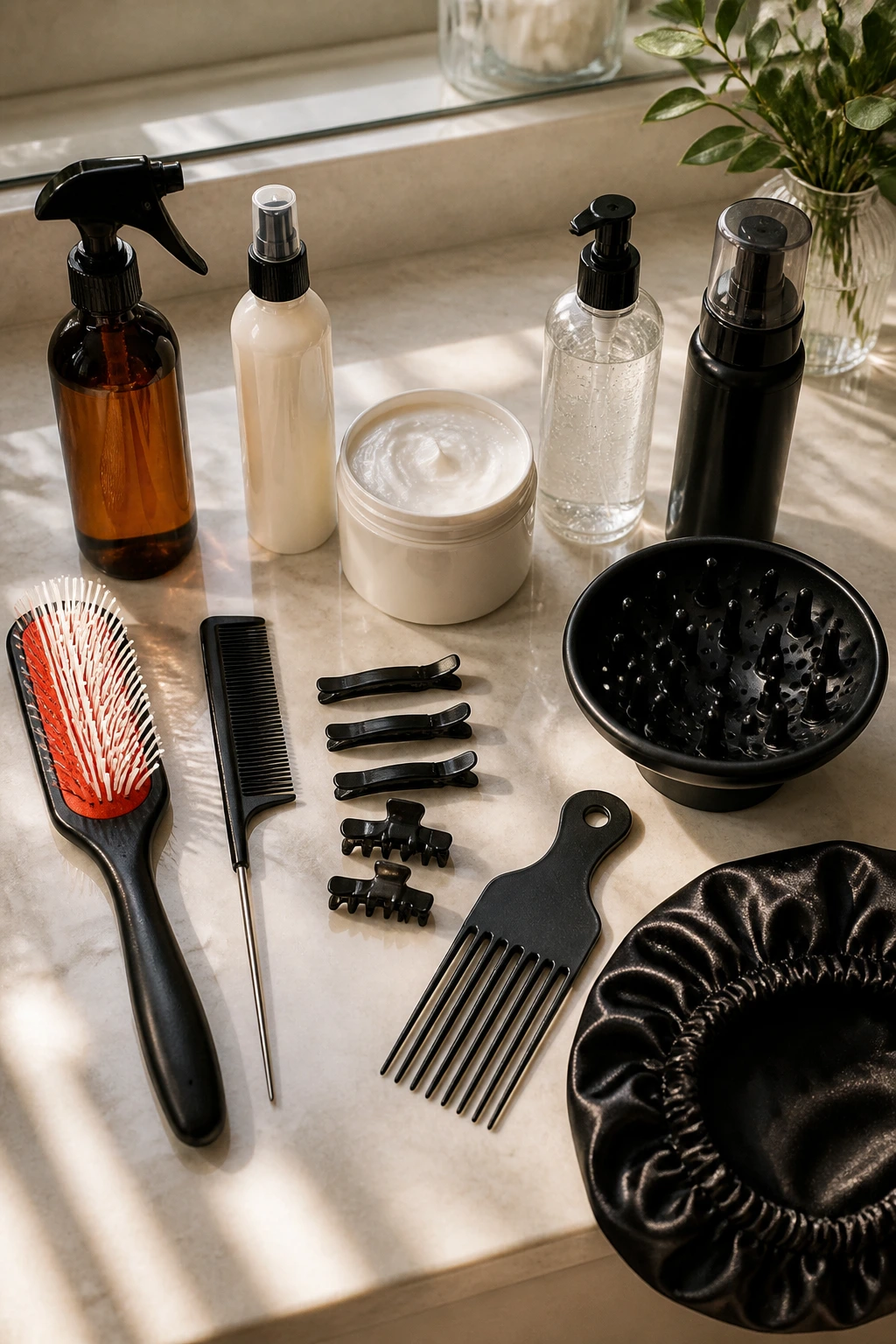
Spray bottle with water: Keeps curls workable without soaking the whole head again.
-
Leave-in conditioner: Gives the hair slip so you can detangle and define without ripping at the coil pattern.
-
Curl cream or custard: Helps with softness and shape when you want a fuller, more touchable finish.
-
Firm-hold gel or foam: Good for wash-and-gos, side parts, and any style that needs the curls to stay put once dry.
-
Small denman brush or curl brush: Handy for clumping definition, especially on the crown or fringe.
-
Rat-tail comb: Makes clean parts fast, which matters more than people think when you’re working with asymmetry.
-
Duckbill clips or small sectioning clips: Useful for keeping the crown lifted while hair dries.
-
Diffuser: The best shortcut for keeping definition while adding height at the roots.
-
Pick or afro comb: Use this at the roots only. Touch the ends with it and you’ll lose the shape.
-
Satin bonnet or scarf: Non-negotiable for keeping the style from roughing up overnight.
Smart Product Shopping and Curl-Care Notes
The product aisle can get noisy fast, so I like to keep this simple: choose products that match the job. If you want tight curls with definition, you need something that can hold a curl clump without turning the hair stiff and dusty. That usually means a leave-in plus a gel or foam, not a heavy butter layered on top of a heavy cream layered on top of another oil. Hair like this already has enough texture. You do not need to bury it.
Look at the ingredient lists with a plain eye. Water should be near the top. Humectants like glycerin or aloe can help with moisture, though in very damp climates they can also encourage puffiness if the hold is too soft. Film-forming ingredients in gels and foams help curls dry in place, which matters if you want a round-face-friendly silhouette instead of a wide halo. And if your hair feels mushy or over-soft after styling, a little protein in your routine may help the curls hold shape better.
I’m also a fan of having two cleansers on hand: a gentle shampoo for regular washing and a clarifying shampoo for buildup. Tight curls often get coated faster than people realize, especially if you use creams, oils, edge control, and refresh sprays. When the roots go dull and the shape stops sitting where it should, buildup is often the hidden reason. Strip too hard and you’ll dry the hair out; never clarify and you’ll lose lift. Balance, annoyingly, still wins.
How to Wear These Looks Without Flattening the Face
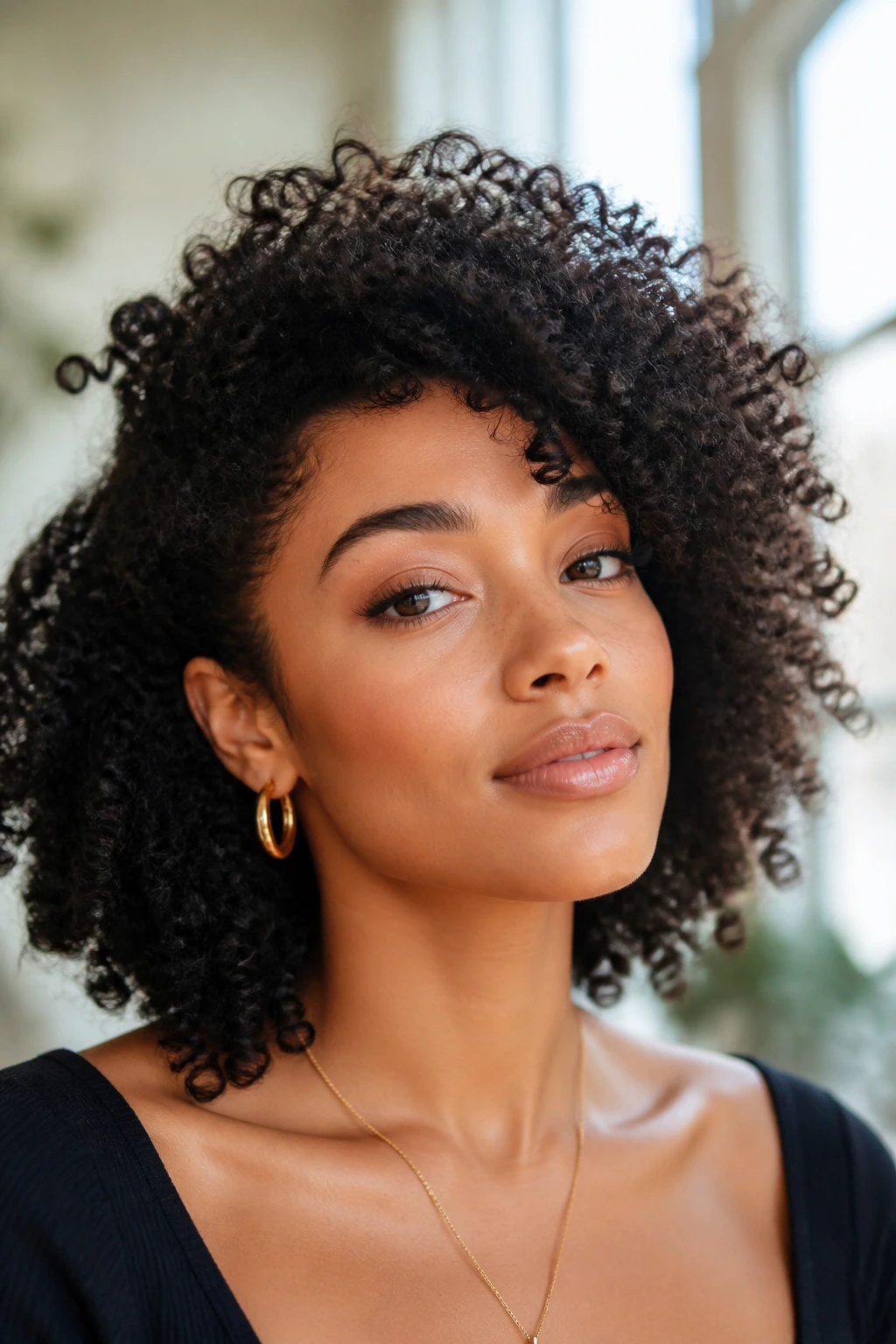
Shape: Keep the fullest part of the style above the cheek line or below the jaw, not parked right beside the cheeks. That one placement choice changes the whole profile.
Parting: Deep side parts and soft off-center parts do more for round faces than a strict center part in most cases. A center part can still work, but it needs height to keep the face from looking wider.
Accessories: Narrow headbands, slim clips, and one good pair of earrings tend to play nicer with these shapes than bulky accessories that fight the silhouette. If you wear glasses, use the hair to frame above or below the frames, not right into them.
Occasion: The more height or asymmetry the style has, the more polished it tends to look in photos and on dressier days. The more compact the shape, the easier it usually is to wear every day without fuss.
Finish: A tiny bit of sheen on the ends is enough. Too much product around the temples can make the face look heavier. Keep that area light and let the top carry the style.
Small Tweaks That Make the Curl Shape Look Intentional
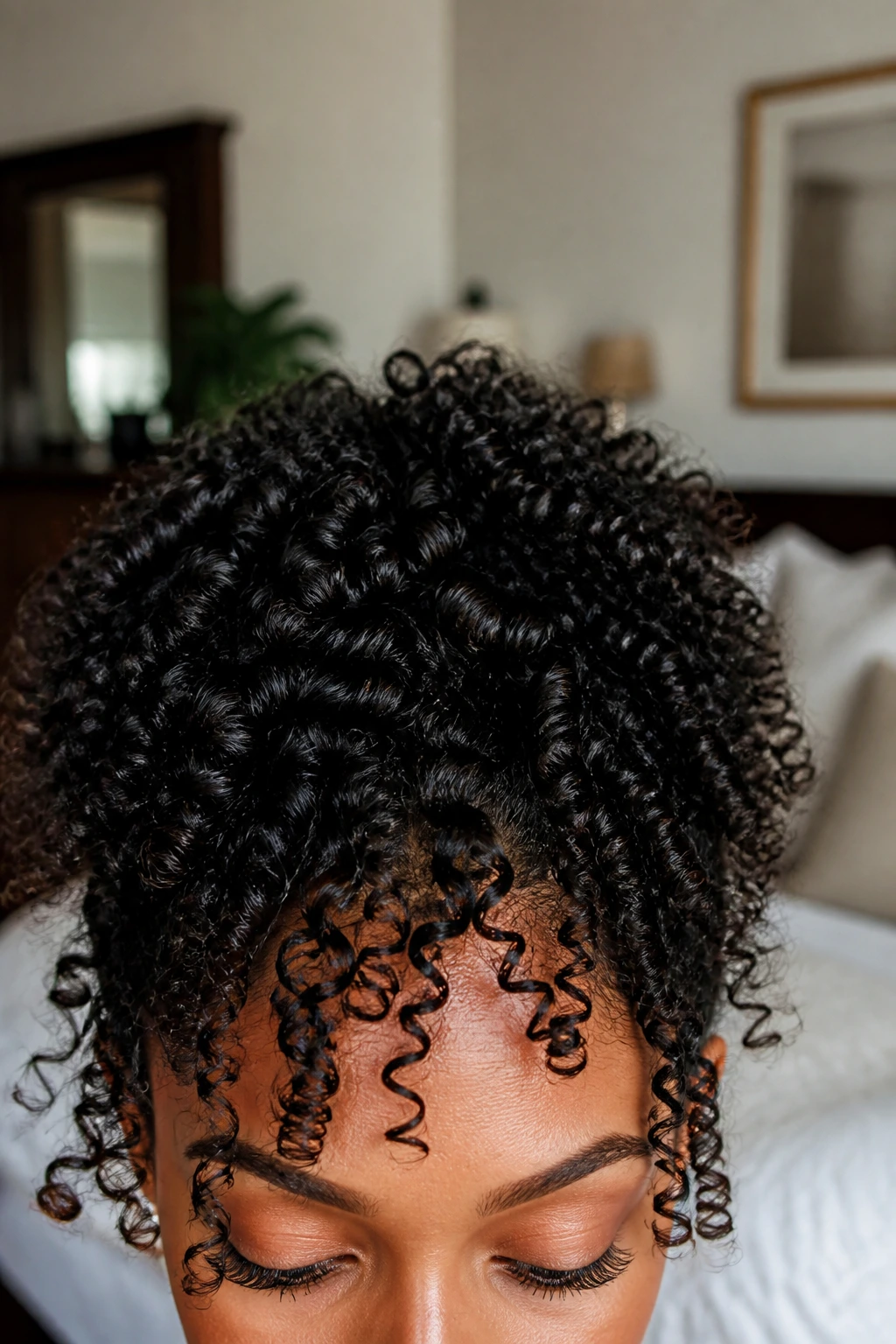
Moisture Boost: Start with hair that’s damp, not dripping, and smooth in leave-in before your styler. On tight curls, the product needs water to spread cleanly, or you end up coating only the outside of the coil.
Definition Boost: Use the brush on the crown and fringe, then switch to fingers at the ends. That gives you clean shape where the eye lands first and more freedom everywhere else.
Stretching Trick: If a style is reading too wide, banding, twisting, or softly stretching the roots overnight can pull length into the silhouette without killing the curl pattern. It’s a simple fix that saves a lot of frustration.
Shape Fix: If your cheek line is the widest part of the face, keep the heaviest curls either above it or below it. That is the whole game in one sentence.
Make-It-Yours: For low-density hair, ask for layers that build the illusion of fullness at the crown. For high-density hair, ask for internal shaping so the sides do not balloon out like a triangle by day two.
Common Mistakes That Make the Face Read Wider
-
Ending the cut at the cheekbone: The symptom is a bob or curl shape that seems to sit right on the widest part of the face. The fix is to move the length a little lower, a little higher, or angle it forward.
-
Letting the sides get too fluffy: If the hair expands beside the temples, the face feels rounder. Tighten the side shape with gel, a better part, or a cut that removes bulk there.
-
Ignoring shrinkage: Wet hair always looks longer. Always. If you cut or style without checking the dry shape, the final look can sit much higher than expected.
-
Overloading product near the roots: Heavy cream or oil at the crown flattens height and makes the style droop. Keep the root area lighter and save richer products for the ends.
-
Using one part all the time: A straight middle part can emphasize symmetry in a way that works against a round face. Try a deep side part, a soft zigzag, or an off-center split and see how fast the line changes.
-
Smoothing everything flat: A face can look wider when the hair lies too close to the sides of it. You need some lift. Not a lot. Just enough to leave breathing room.
Ways to Adapt These Cuts for Different Routines
The Ten-Minute Wash-and-Go: Use one leave-in, one strong gel, and a diffuser on low heat. Best for people who want shape without a long styling session.
The Stretch-It-Out Version: Band the hair overnight, do a loose twist set, or lightly blow-dry on warm before finishing. This adds visible length and helps round faces read a little narrower.
The Protective-Style Bridge: Flat twists, mini twists, and twist-outs keep the curl pattern visible while cutting down on daily manipulation. Good when you want a break but don’t want to lose the shape.
The Big-Volume Weekend Look: Pick the roots, separate the curl clumps, and let the sides live a little freer. This version suits a frohawk, a halo fro, or a defined coil afro.
The Soft-Edge Office Style: Keep the sides smoother, leave the fringe controlled, and pick one clean accessory — a barrette, a headband, or a single pin. It reads polished without turning stiff.
Night Wraps, Refresh Days, and How to Keep the Shape Past Day Two
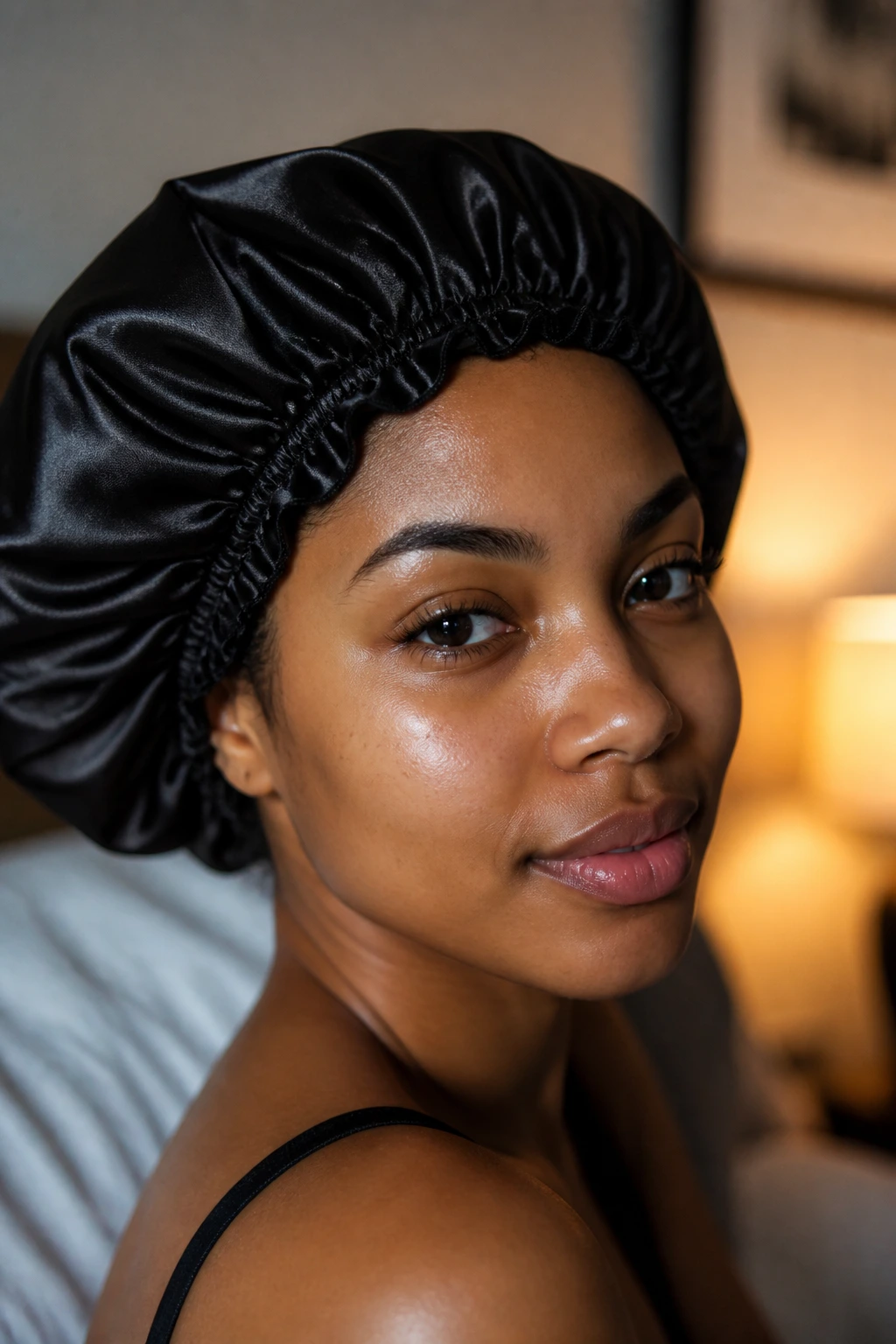
Tight curls can hold a shape longer than people give them credit for, but only if you treat the night routine like part of the style. A satin bonnet works well for shorter cuts and TWAs. A loose pineapple, secured high enough to keep the crown lifted, works better for bob-length and shoulder-length styles. If the style depends on a side part, clip the part lightly before wrapping so the line doesn’t disappear overnight.
Refresh days should be small, not dramatic. Mist the hair lightly with water, smooth a little leave-in onto the areas that feel dry, and re-define only the curls that actually need it. The temptation is to wet the whole head and start over. That usually creates more frizz than shape. Better to wake up the front, revive the crown, and leave the ends alone unless they’ve gone flat.
If the roots start to sink, a pick at the base can bring the height back in seconds. Use it gently. You’re lifting the roots, not combing through the whole structure. For bobs and lobs, a little re-twisting at the front pieces can keep the face-framing shape intact another day or two. For puffs, retie the scrunchie a touch higher if the style has settled downward. That tiny adjustment makes the face look longer again, which is the whole point.
Frequently Asked Questions
Which tight-curly style is most flattering for a round face?
Usually the styles with crown height and side control win: tapered afros, frohawks, angled bobs, and high puffs. They change the outline of the hair in a way that works with the face instead of sitting beside it.
Is a middle part bad for round faces?
No, but it needs help. A middle part can work if the style has enough height at the crown or enough length past the cheeks. Without that, it can make the face read wider and more symmetrical than you want.
Can I wear bangs if my face is round?
Yes, but blunt bangs are the risky version. Side bangs, bottleneck bangs, and curly fringe that falls softly at the brow or temple usually work better because they break up the forehead without creating a hard line.
Should I get my curl cut wet or dry?
For tight curls, dry cutting or cutting with the curl’s shrinkage fully in mind is usually safer. Wet hair can stretch a lot, and the final shape may come back much shorter and wider than expected.
How do I stop my curly bob from puffing out at the cheeks?
Move the length a little lower, add a side part, and keep bulk out of the side sections. A bob that ends exactly at the cheekbone is the one most likely to widen the face.
Do these styles work on 4C hair?
Yes. Some of them are especially good on 4C hair because they respect shrinkage and density instead of trying to erase it. Tapered afros, twist-outs, high puffs, and sculpted TWAs are all strong options.
How often should I trim these shapes?
Shorter, shaped cuts often need a cleanup every 4 to 8 weeks, depending on growth and how precise the silhouette needs to stay. Longer layered styles can go a little longer, but once the sides lose their shape, the face-framing effect fades fast.
What if my curls shrink too much after styling?
Stretch them a little before styling, or choose a cut with extra length in the front and crown. Banding, twist-outs, and diffusing can all help preserve more visible length without flattening the curl pattern.
Can I make these looks work with heat-free styling only?
Absolutely. In fact, many of them look better heat-free because the natural coil pattern stays intact. The key is using the right amount of hold so the shape dries where you want it.
The Shapes Worth Repeating
The best styles for tight curls on round faces are not the ones that chase a smaller face. They’re the ones that give the curls a smarter outline. Height at the crown, length past the widest point, and side-to-side balance do most of the heavy lifting. Everything else is detail.
That’s the good news: you do not need to fight your texture to get there. You need a shape plan. Bring that to the stylist, check the dry finish, and let the curls keep what makes them interesting. The right cut will do more for your face than any amount of flattening ever could.