



Curly hair and square faces can be a gorgeous match, but only when the shape does a bit of work. A curl pattern that widens at the cheeks plus a blunt cut that lands right at the jaw can make the whole face feel boxy in the mirror, even when the individual curls are behaving themselves. The fix is not to hide your face. It’s to steer the eye with curves, diagonals, and a little height where it counts.
That’s where the right curly hairstyle changes everything. Side parts, cheekbone layers, soft fringes, rounded silhouettes, and lengths that either float above the jaw or move well below it can take a square face from heavy to balanced without making the curls look forced. Shrinkage matters here. So does density. A cut that looks airy when wet can puff out at the sides once it dries, and a style that looks too full in the salon chair may settle into something much better after the first diffusion.
Some of the best options are soft and easy. Some are sharper. A few lean into asymmetry or crown lift, which is usually more interesting than trying to erase every angle on the face. The styles below cover short, mid-length, long, and pinned-up looks, because square faces don’t need one single “correct” shape and neither do curls.
Why These Styles Keep Curves Around the Face
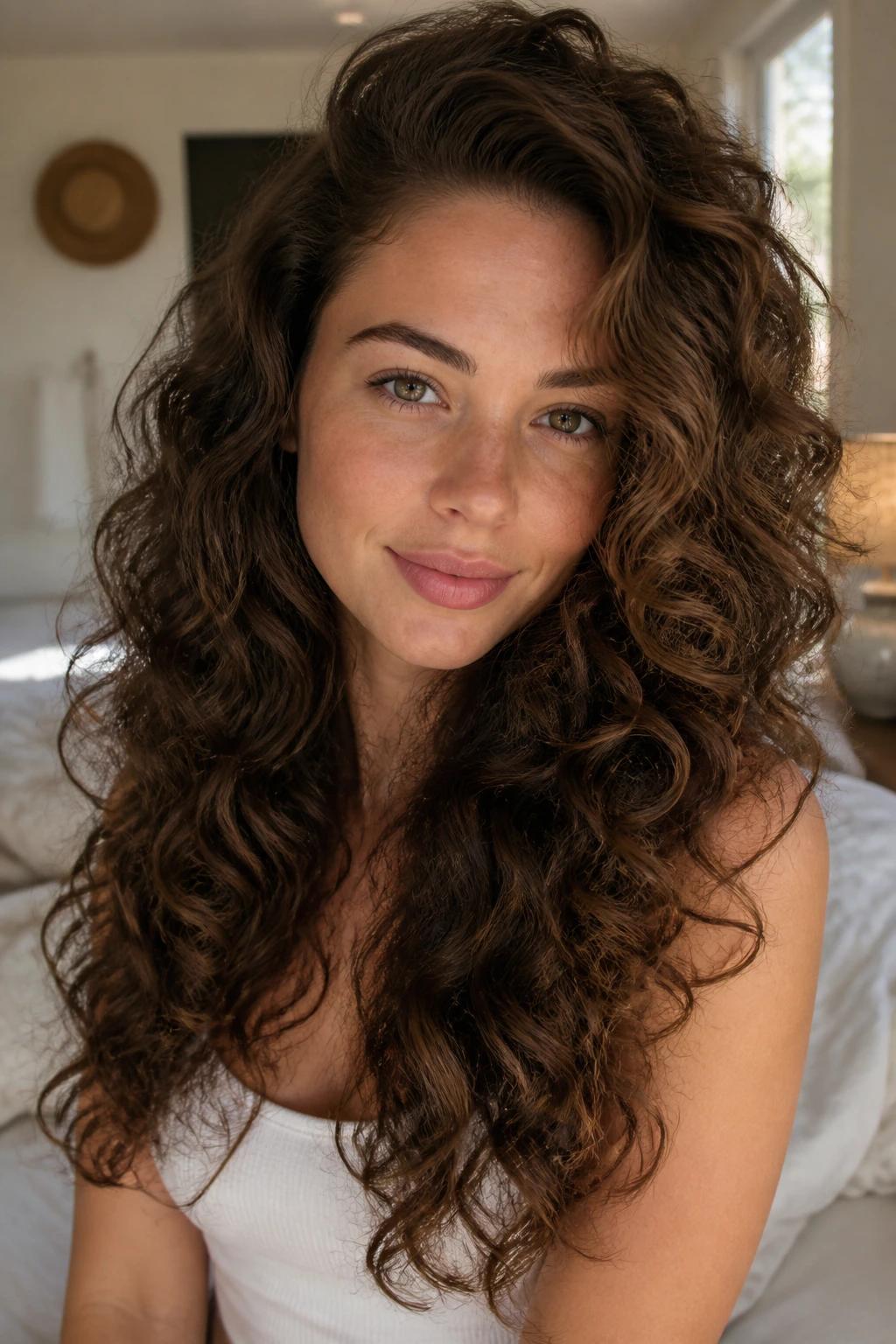
- Softening the jawline: Most of these styles keep the eye moving instead of letting it stop at a blunt edge right on the jaw.
- Working with shrinkage: Curly hair changes length as it dries, so these shapes account for the curl pattern instead of fighting it.
- Building vertical movement: Crown lift, side parts, and longer front pieces help a square face read a little longer and a little less wide.
- Leaving room for texture: These are not stiff, helmet-like styles. The curl itself gets to do the interesting part.
- Giving you range: There are short cuts, long layers, and easy pinned-back options, so you’re not locked into one look just because your face is square.
1. Long Layered Curls with a Soft Side Part
Long layers are a reliable starting point for square faces, but only if the layers are placed with some care. I like them best when the shortest pieces begin below the cheekbones, not right at the jaw, because that keeps the width from gathering in the exact spot you’re trying to soften. A soft side part helps even more. It breaks the symmetry, pulls a little attention upward, and keeps the whole shape from feeling too rigid.
This cut works especially well when your curls have enough spring to hold their own shape after a diffused dry. The ends stay long enough to create a vertical line, and the layers keep the mass from turning into one big triangle. If your curls are thick, ask for internal weight removal rather than aggressive thinning. That keeps the surface smooth without making the ends frizzy and uneven.
My preference here is a gentle bend, not a dramatic flip. You want movement around the face, not a curtain that hides everything.
2. Curly Shag with Crown Height
A shag can be magic on a square face if the layers are done with restraint. The trick is to keep lift at the crown and movement around the temples while letting the lower perimeter stay a little softer. When the top has some height, the face reads longer; when the sides are too bulky, the jaw starts looking wider than it really is.
Why It Flatters the Face
The shag works because it scatters the shape. Instead of one hard outline, you get shorter pieces around the crown, cheekbone-skimming texture, and a looser edge at the bottom. That broken line is a gift for square faces. It keeps the profile from looking boxed in.
Ask your stylist for layers that start around the upper cheek and then taper down. If they’re reaching for a razor and your curls are fine, slow them down. Fine curls can frizz fast with too much blade work. A curl-by-curl or dry cut usually gives a cleaner result.
- Best for: medium to thick curls with a bit of natural lift.
- Avoid if: you hate volume near the crown or prefer a polished, compact shape.
- Styling cue: diffuse upside down for 30 to 60 seconds, then finish upright so the sides don’t explode outward.
3. Mid-Length U-Shaped Cut
A U-shaped cut is one of those quietly smart choices that doesn’t beg for attention but fixes a lot of problems. The rounded hemline keeps the hair from ending in a square block, which is the last thing a square face needs. You get length down the back and sides that taper in a softer arc.
What I like about this shape is that it behaves well with curls that expand. A blunt mid-length cut can widen the face at the exact level of the jaw or chin. A U-shape gives the eye a curve to follow, and curves are your friend here. The silhouette feels smoother even when the curls are big.
If your curls are dense, ask for the outer shape to stay rounded and the interior to be lightened only where the bulk builds up. That keeps the cut from turning pyramid-shaped. A little side part helps, but this cut also holds a soft middle part if your face already has some length.
4. Side-Swept Curly Bob
A curly bob can work on a square face, but I’ll be blunt: it needs to be angled with purpose. A bob that hits exactly at the jaw and sits evenly on both sides can look too boxy. A side-swept version solves that by creating a diagonal line across the face. Diagonals are what you want. They break the square.
This is a good pick if you like shorter hair but don’t want a pixie. Keep the length just below the jaw or slightly above it, then let one side fall a touch longer. That little difference gives the style movement. It also keeps the curls from landing in one wide shelf around the face.
A bob like this looks best with a loose, touchable finish. I’d avoid cranking the hold product so high that the curls freeze into a round ball. Let a few pieces fall naturally around the cheekbones. That is where the style earns its shape.
5. Curtain Bangs and Long Curls
Do curtain bangs work on square faces? Yes, if they’re cut with enough softness. The split front pieces help disguise a broad forehead and guide the eye downward along the cheek. That matters. Square faces often look best when the upper third of the face gets a little break from all the straight lines.
Ask Your Stylist For This
Tell them you want curtain bangs that graze the cheekbones or just skim the top of the lip when stretched. On curly hair, that usually means cutting them longer than you think you need. Curl shrinkage is real, and bangs that look generous when wet can bounce right up to the eyebrows once dry.
The best versions of this style are not thick, heavy bangs. They’re airy, bendy, and piecey. I like them with longer curls because the fringe acts like a soft frame instead of a hard line. If your hair is very springy, keep a clip nearby for the first week so you can steer the bangs where they want to live.
6. Rounded Shoulder-Length Lob
The shoulder-length lob gets a lot of praise, and most of it is deserved. For a square face, though, the shape has to stay rounded. A straight-across lob can feel too blunt, especially when the curls puff out and land right near the jaw. A rounded perimeter changes that. It gives the style a softer edge and keeps the hair from looking like a horizontal line.
This is one of my favorite options for people who want a clean shape without losing too much length. The hair still brushes the shoulders, which gives you enough weight to keep the curls from expanding too much at the sides. Add a little interior layering, and the whole cut starts to move instead of sitting like a block.
If you air-dry, tuck the ends under with your fingers while they’re still damp so the perimeter curves inward a bit. That subtle bend matters more than most people think.
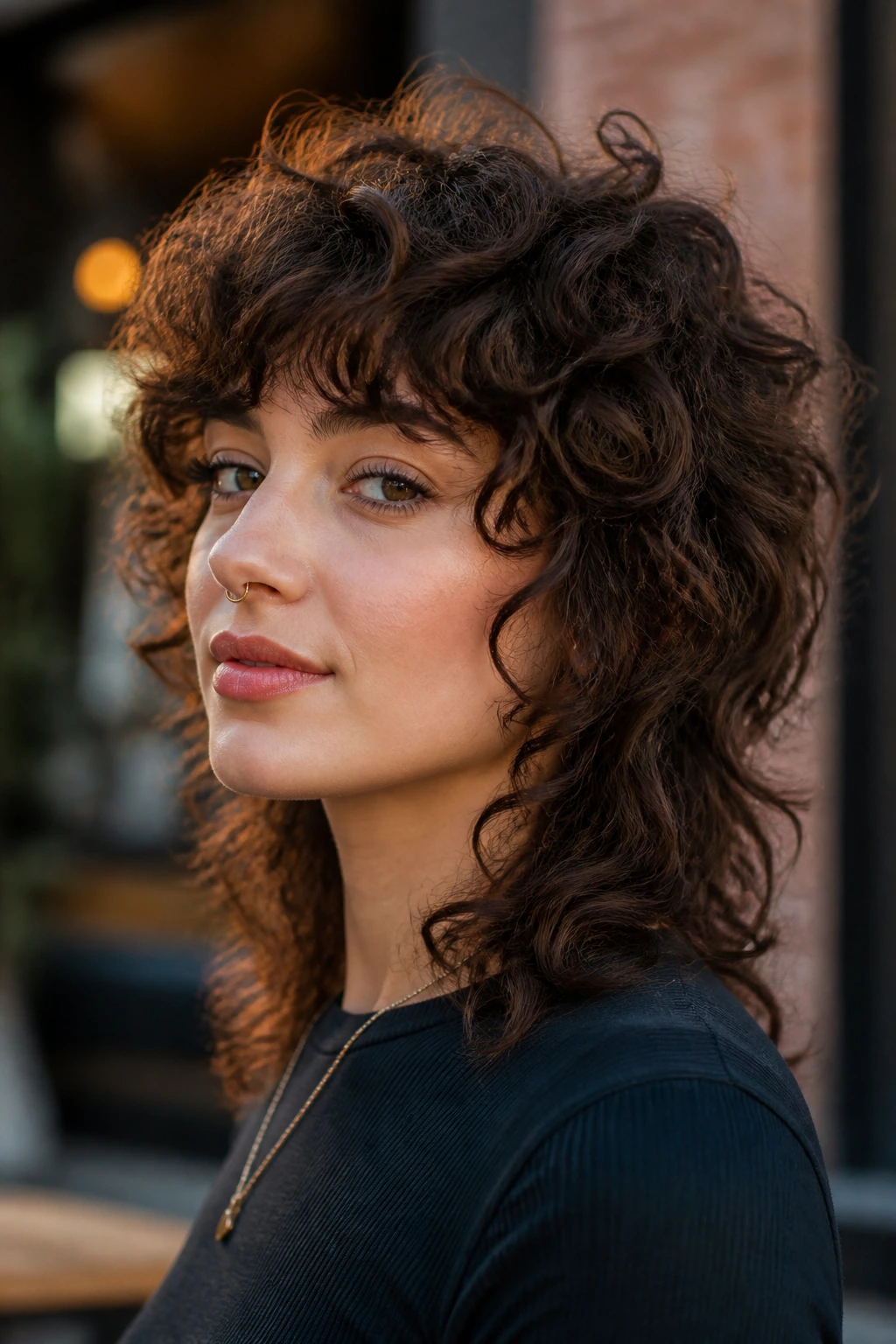
7. Curly Wolf Cut
The wolf cut is basically the shag’s wilder cousin, and it can be excellent on a square face if you want edge and lift. The short top layers build volume up high, while the longer bottom keeps the silhouette from turning into a triangle. On curly hair, that contrast can look lively rather than messy.
What Makes It Different
A wolf cut is more dramatic than a standard shag. The crown and upper layers are shorter, the front is often choppier, and the ends stay longer. That structure helps square faces because it sends attention upward and away from the jawline. It also gives curls room to separate instead of clumping into one heavy shape.
You do need a stylist who understands curl behavior. If the layers are cut too high on a dense curl pattern, the top can puff out like a halo you did not ask for. Keep the shortest pieces controlled around the temples and crown, then leave the lower curls longer so the shape still feels deliberate.
This one suits people who like some mess in the finish. Clean and tidy is not the goal here. Movement is.
8. Face-Framing Layers Starting at the Cheekbones
This is the haircut equivalent of good lighting. When the first real layer begins at the cheekbones, it softens the square outline without adding bulk right on the jaw. That placement is the whole trick. Layers that start too low can make the face wider, and layers that start too high can make the top look thin while the bottom stays heavy.
The Consultation Sentence to Use
Say this to your stylist: “I want my shortest face-framing layers to start at the cheekbones, and I don’t want the bulk concentrated at the jaw.” That’s plain language, and it matters. You’re giving them a map, not a guess.
These layers work on short curls, long curls, and everything in between. They’re especially useful if you wear your hair down a lot and want a shape that does some work without relying on styling every morning. A side part or off-center part makes the front pieces fall even more softly. One small move. Big payoff.
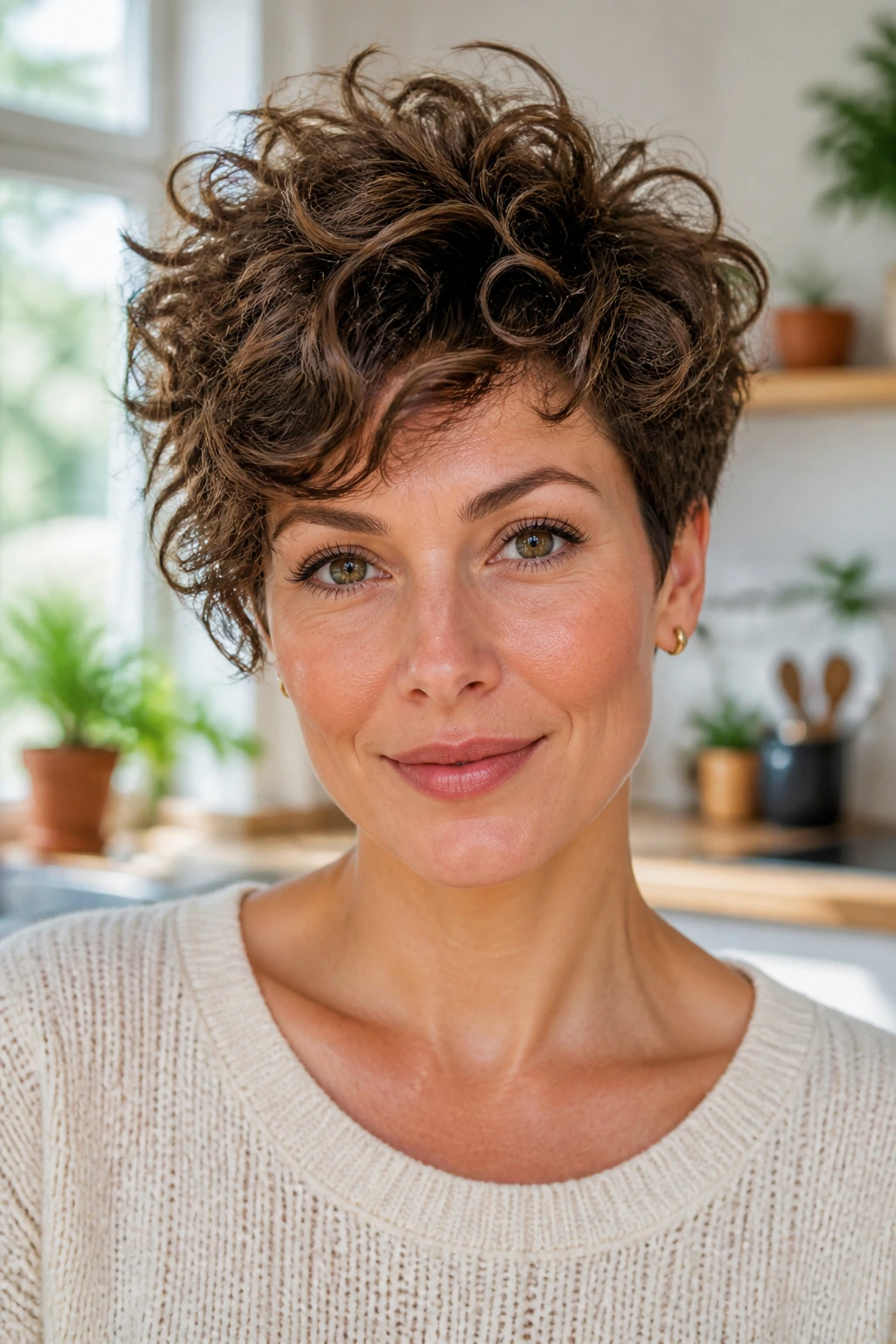
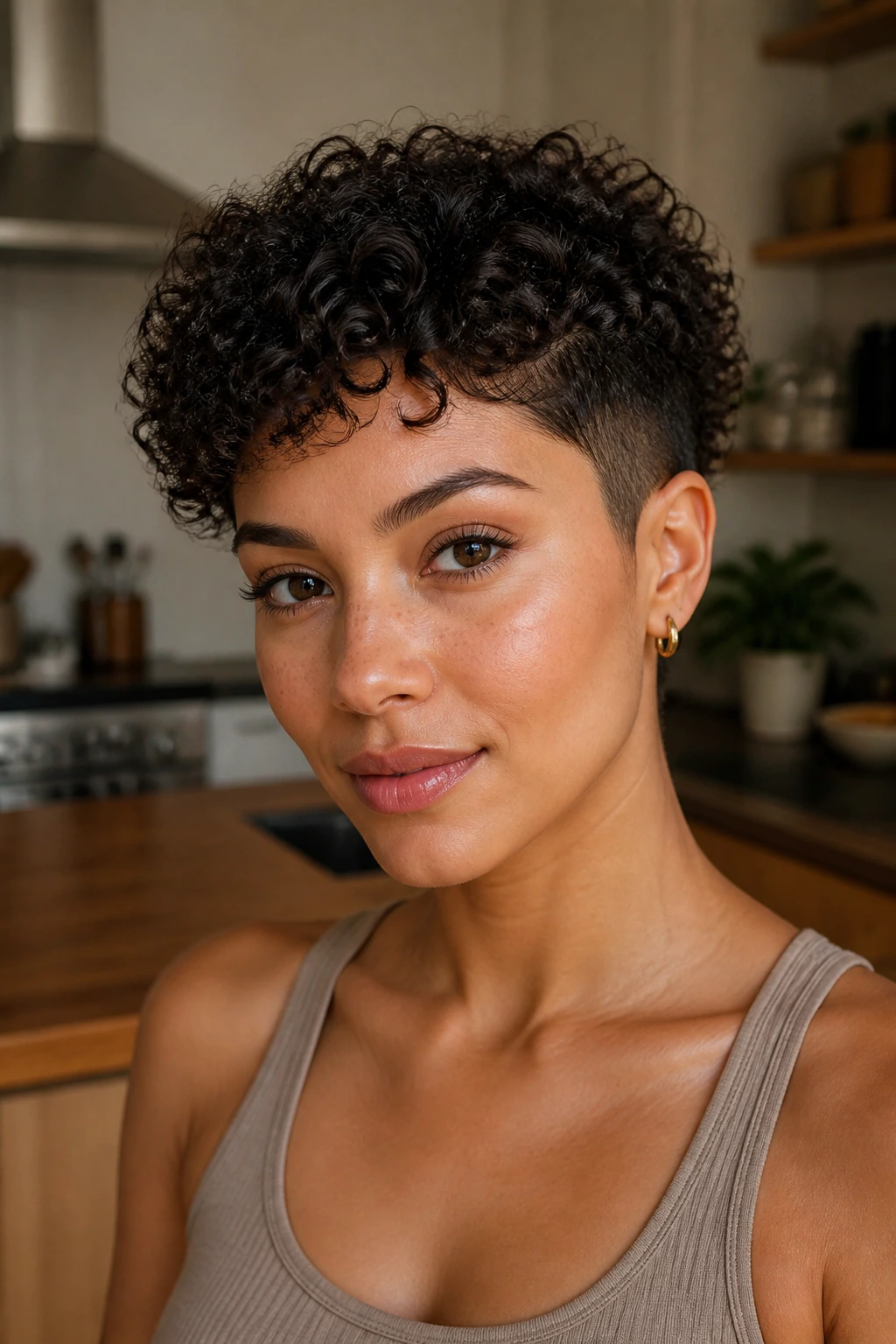
9. Soft Curly Pixie with Lifted Crown
A pixie can be a strong choice for a square face, but only if the top stays soft and the sides don’t get too severe. A hard, flat pixie can make the jaw look wider by comparison. A curly pixie with lift at the crown and a little softness near the temples does the opposite. It opens the face and gives the curls a chance to curve instead of clamp down.
The best version of this cut keeps length on top and around the fringe, with the nape tapered just enough to show the neck. That creates a nice vertical line. It also means you can play with direction: push the top forward for texture, sweep it to the side for softness, or let it sit a little messy if that’s your thing.
This is a very face-forward haircut. If you like hiding behind your hair, skip it. If you like seeing your features clearly, it’s a sharp, confident look.
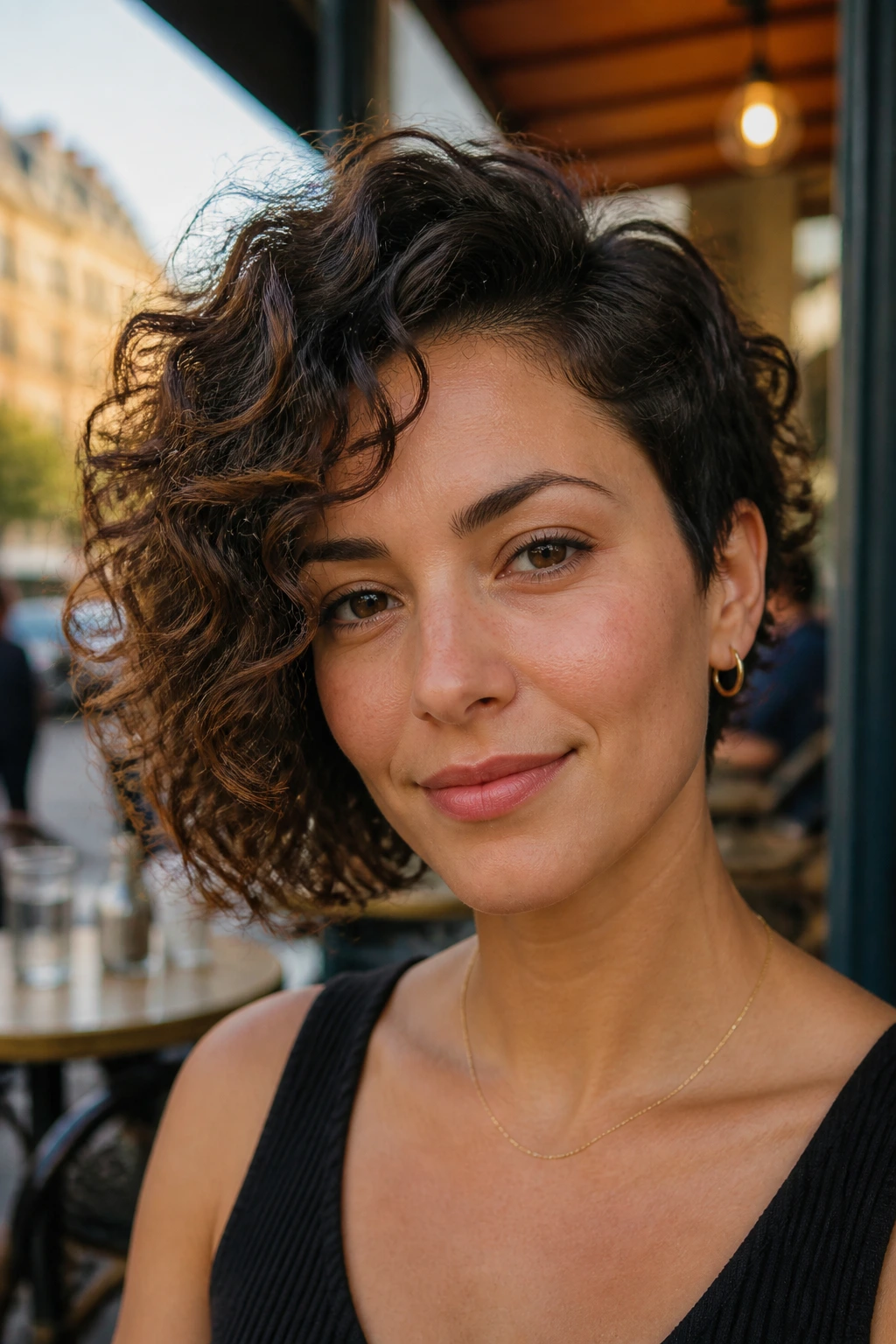
10. Asymmetrical Curly Bob
Asymmetry is a square face’s best friend when it’s handled with restraint. A bob that’s slightly longer on one side breaks the straight visual line around the jaw and keeps the style from reading too fixed. It’s a small difference, but the eye notices it right away.
I prefer this on curls that hold shape with some definition. The longer side can skim the jaw while the shorter side opens the neck a little more. That contrast is what makes the cut feel alive. It also keeps the face from looking too evenly framed, which can be the problem with a symmetrical bob on a square shape.
Don’t let the asymmetry get extreme unless you want a bold fashion cut. A half-inch to an inch can be enough. The point is movement, not drama.
11. Tapered Curly Crop
A tapered crop is a smart answer for tighter curls and coils, especially when you want to reduce width at the sides. The taper removes bulk around the perimeter while leaving room for the top to stay expressive. That means the curls can rise upward instead of spreading outward, which tends to flatter a square face.
This style is neat, but not stiff. The best crop still has texture at the crown and a little softness around the hairline. If the taper is too sharp, the head shape can start to look severe. If it’s too soft, the sides can puff right back out. The sweet spot is somewhere in between.
A crop like this needs regular shaping. That’s the tradeoff. The good news is that a trim every 4 to 6 weeks keeps the outline clean, and a tiny amount of cream or gel is enough to revive it on busy mornings.
12. Pineapple Puff with Tendrils
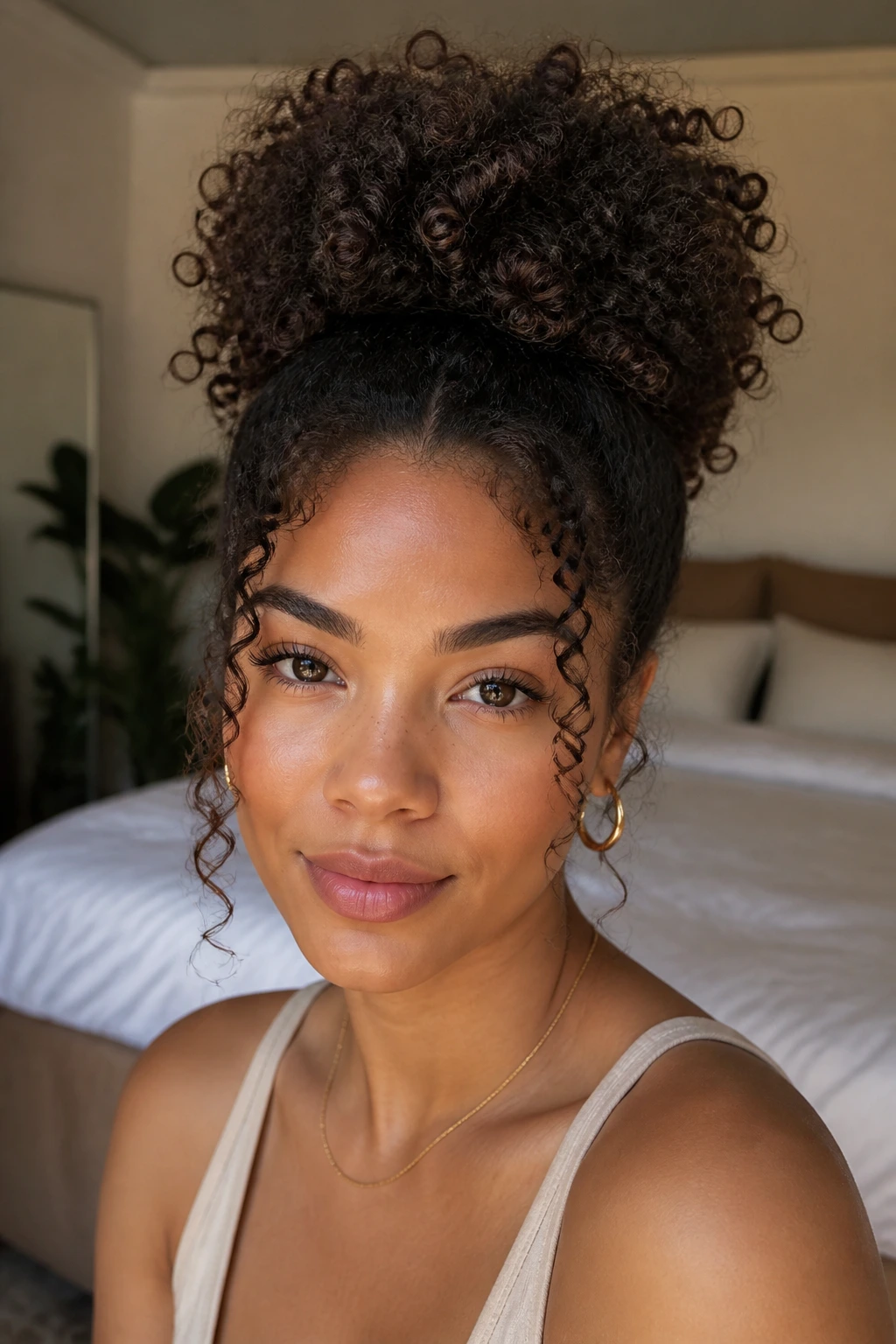
If you need a quick style that lifts the face and doesn’t fight the curl pattern, the pineapple puff is hard to beat. Gathering the hair high on the head stretches the silhouette upward, which is useful on a square face because it pulls the eye away from the jaw. The tendrils matter too. Leave a few pieces around the temples and cheekbones, and the whole look softens fast.
This is a great second-day style. It works when the curls are still defined but not fresh enough to wear completely loose. I like it with a satin scrunchie so the elastic doesn’t leave a hard dent in the crown. If your hair is dense, don’t try to slick it flat. Let the puff stay full. That height is the point.
A tiny edge brush or a few finger-smoothed baby hairs can make the hairline look tidy without flattening the shape.
13. High Half-Up Curly Ponytail
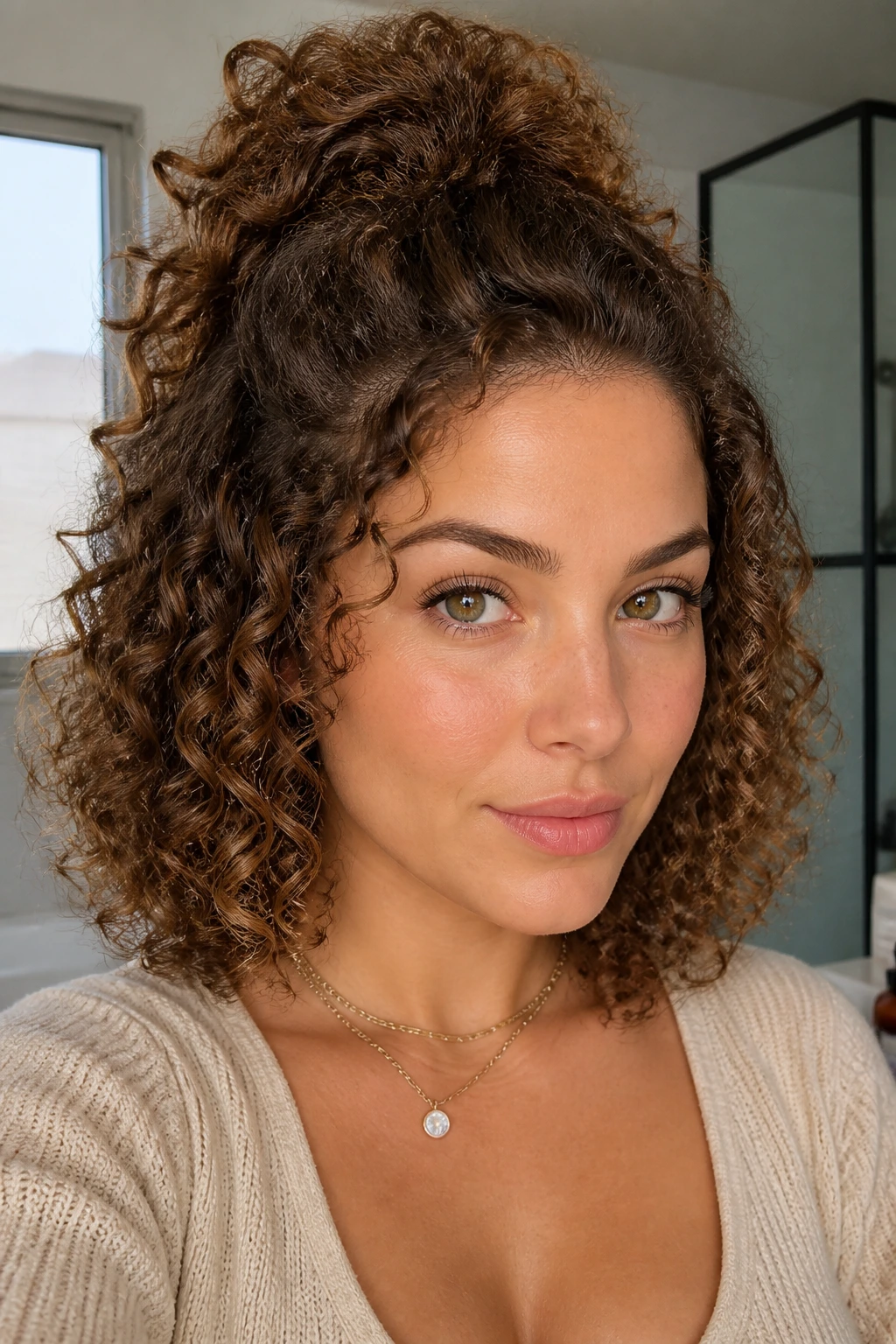
A high half-up ponytail gives you a little crown lift and keeps the sides from swelling too much around the face. That’s why it works. You get the height of an updo without losing all the curls around the shoulders. For square faces, that balance is excellent.
The key is not pulling the front too tight. Keep some softness near the temples, and let a few curls fall loose near the jaw. If everything is pinned straight back, the face can feel bare in a harsh way. A little looseness is more flattering and usually more comfortable.
This style looks better when the top section is lifted slightly before securing it. I like to gently tug the roots after tying it off so the crown doesn’t sit flat. Flat crown, wider jaw. Lifted crown, better proportions.
14. Low Curly Ponytail with Volume at the Crown
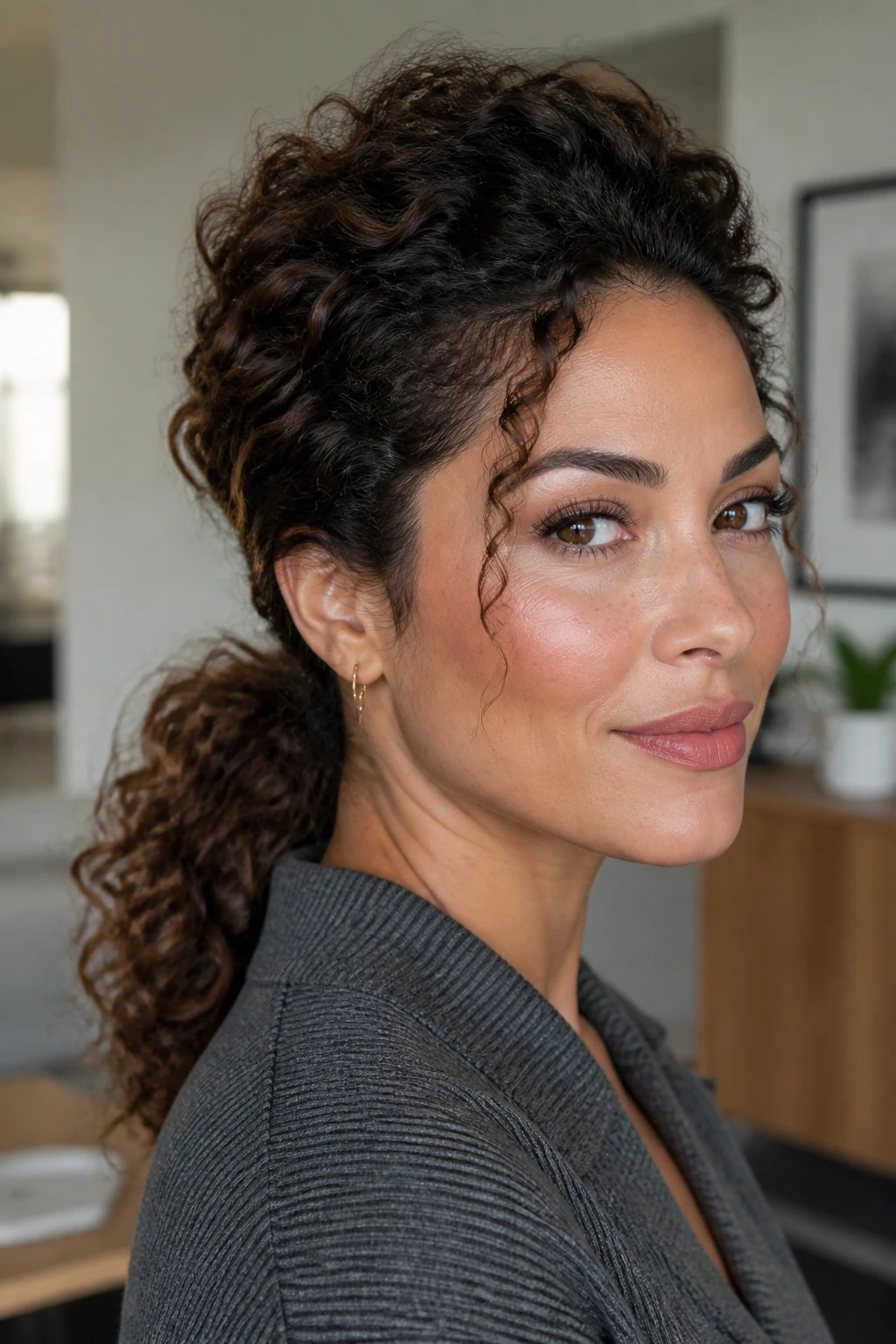
A low ponytail sounds simple, and it is, but the shape matters. On a square face, keep volume at the crown and around the top rather than at the sides. That keeps the silhouette from widening at the jawline. The pony itself should sit low and soft, not pulled tight and sleek all the way down.
This is the style I reach for when I want polished without looking severe. A side part helps. So does wrapping a small piece of hair around the elastic if you want the finish to look cleaner. Still, leave the front a little loose. You want the face to keep some curve, not a frozen frame.
It’s a good office style, a good dinner style, and a good “I need my hair off my neck but I still want it to look intentional” style. Rare combo. Useful one.
15. Braided Crown with Loose Curls
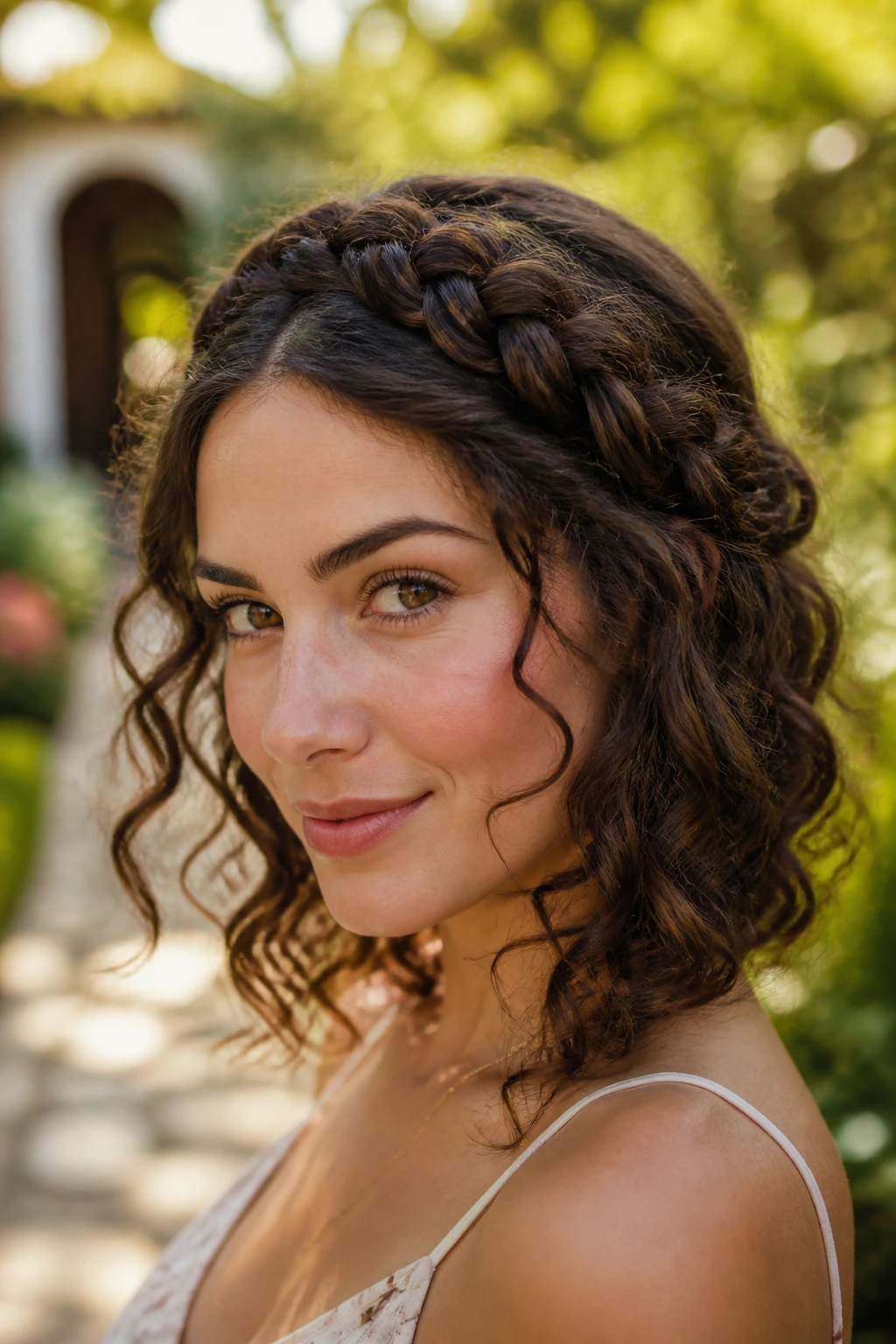
A braided crown gives a square face a curved line across the head, which sounds small until you see it in a mirror and realize how much difference it makes. Braids naturally draw the eye in an arc, and that arc softens the straightness of the forehead and jaw. Leave the curls loose below, and the whole look stays relaxed.
This style shines on medium to long curls. You can braid from one temple to the other, or take two smaller braids and pin them back like a crown. Either way, the front edge should stay soft. I like a few narrow curls falling at the cheekbones so the face doesn’t get sealed off.
It’s a useful option for events, but it’s not precious. A slightly messy braid actually helps here. Too neat and it can look a bit stern.
16. Defined Side-Part Glam Waves
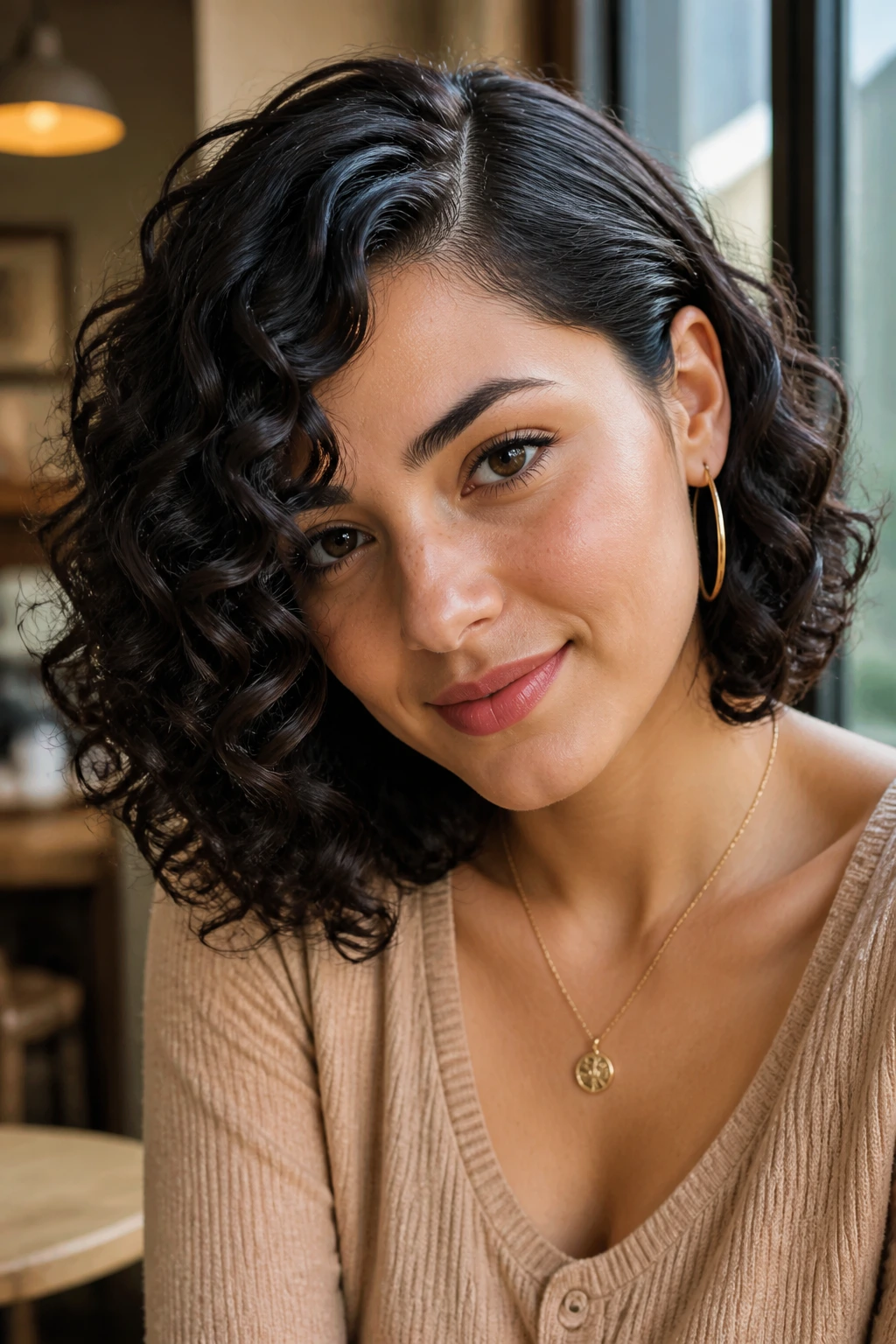
This is the polished one. The side part plus defined waves create a diagonal sweep across the face, which is exactly the sort of line a square shape needs when you want a dressed-up finish. The side is doing the heavy lifting. The gloss is just the finish on top.
Why the Side Part Wins
A middle part can work on some square faces, but a side part usually gives you more room to soften the forehead and move attention away from the jaw. On curly or waved hair, the part line also creates a natural lift at the root. That tiny bit of lift matters more than it sounds like it should.
If your curls are loose enough to brush into waves, use a medium-hold mousse or a curl foam and direct the front sections away from the face while they dry. If you want a more formal result, clip the front section at the root while it sets. You’re building shape, not just texture.
This one looks especially good when one ear is tucked and the other side falls forward. Uneven. Better.
17. Rounded Afro with Soft Perimeter
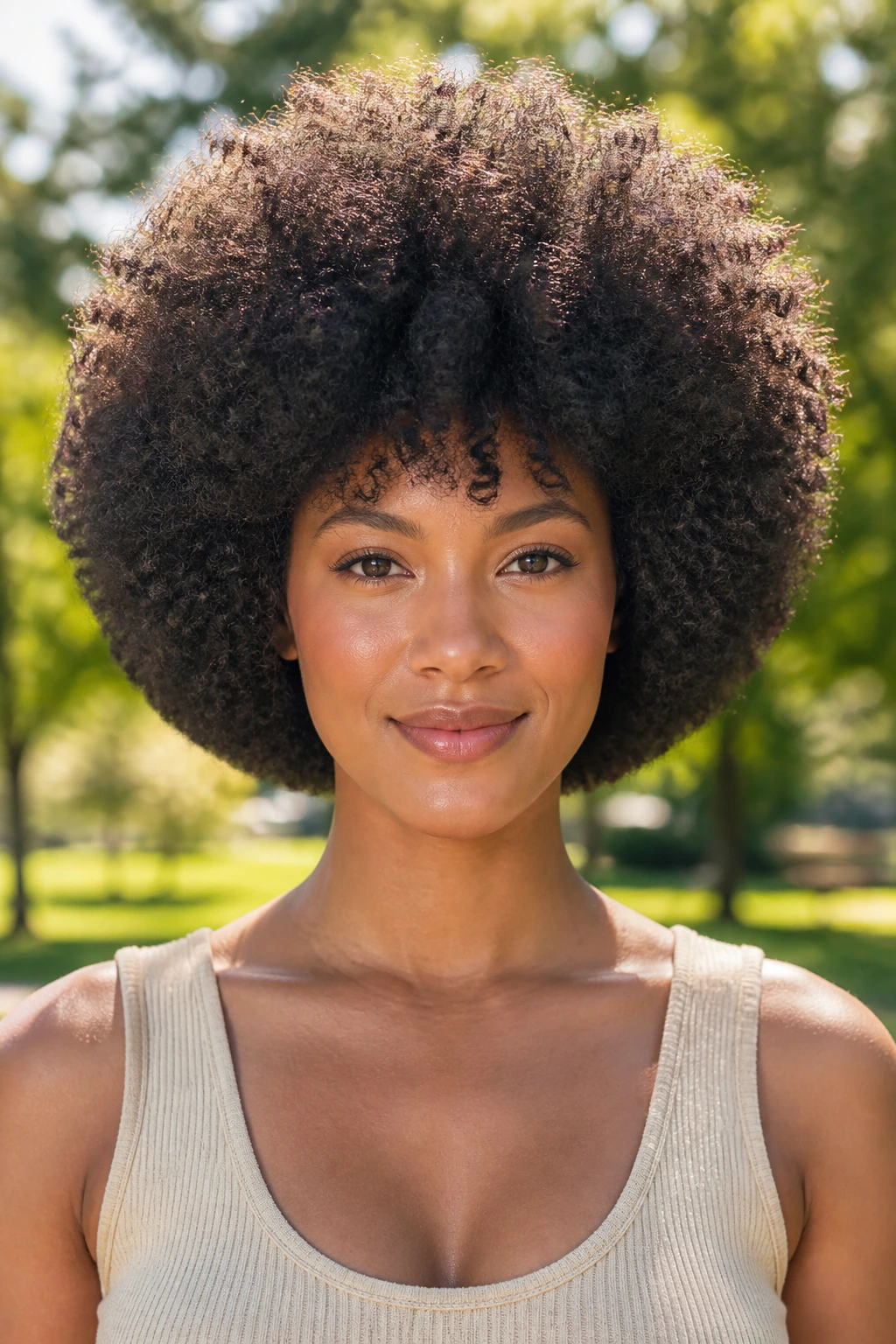
A rounded afro is a beautiful answer for square faces because it creates shape without harsh corners. The goal is not to flatten the sides or force the hair into a tiny halo. It’s to keep the perimeter soft and curved so the face sits inside the shape rather than competing with it.
The best rounded afro has height, but not a hard top. The silhouette should feel balanced from front to back and side to side, with the edge kept clean enough that it doesn’t balloon into a box. A good trim here matters a lot. Tiny shape changes show up fast.
If your coils are dense, ask your stylist to cut the shape dry or mostly dry so the natural volume is visible. That lets them see where the hair expands, especially at the temples and chin line. The cut should follow the curl, not fight it.
18. Bixie with Wispy Fringe
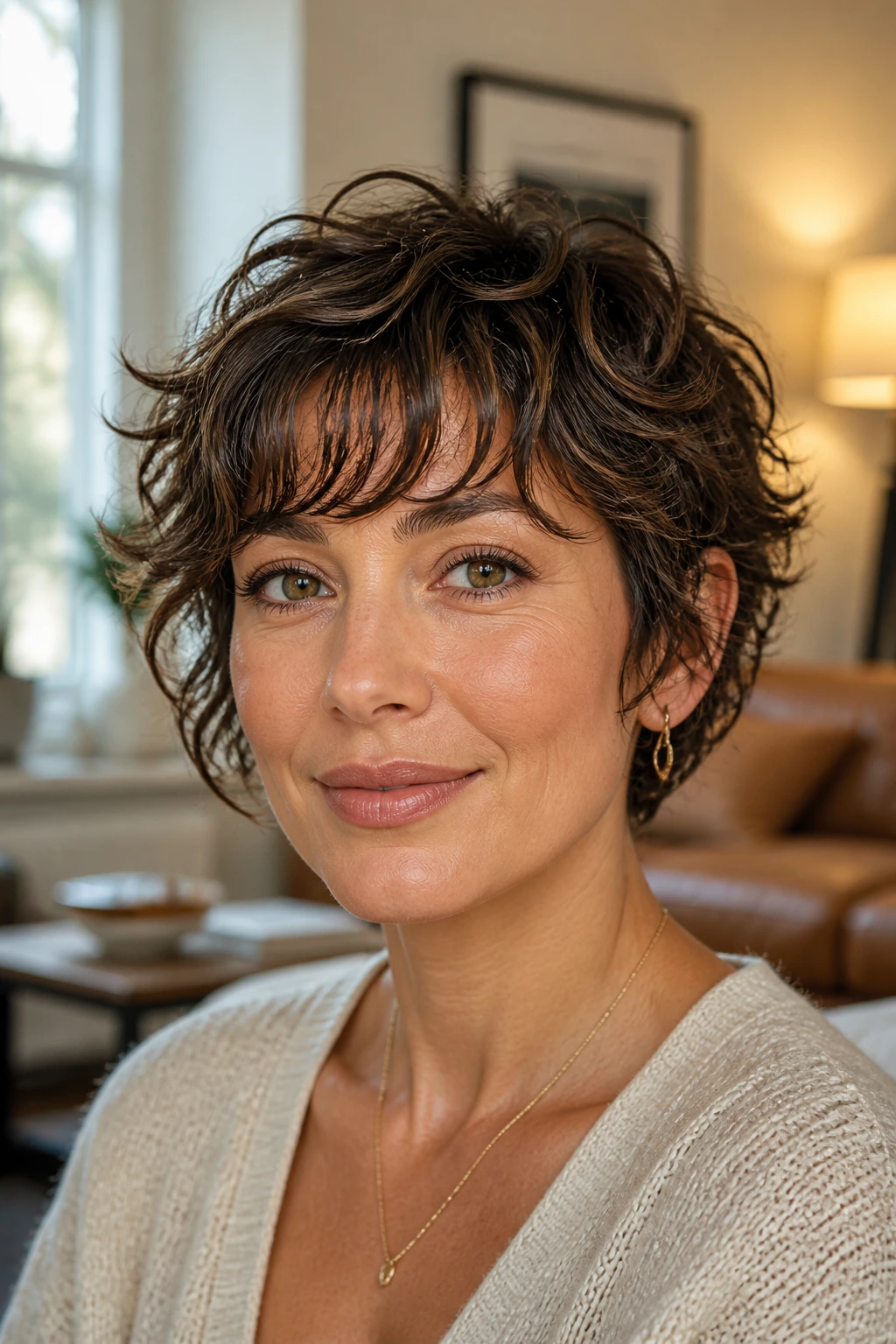
A bixie sits between a bob and a pixie, which makes it a useful compromise if you want short hair without going all the way in. On a square face, it works best when the fringe stays soft and the sides are not too tight. Wispy pieces around the forehead and cheeks take the edge off the face shape fast.
Who This Suit Fits
If your curls are loose to medium and your hair has some natural spring, this cut can look playful without becoming fussy. It also works if you don’t want the maintenance of a full pixie but still like the feeling of short hair around the neck and ears. The fringe should be light, not blunt. Blunt plus square face usually means more visual straightness than you want.
I like a bixie best when the crown has a bit of lift and the nape is tucked in just enough to keep the profile neat. That contrast is what makes it feel modern instead of dated. It also grows out in a fairly forgiving way, which is nice if you’re not trimming every month.
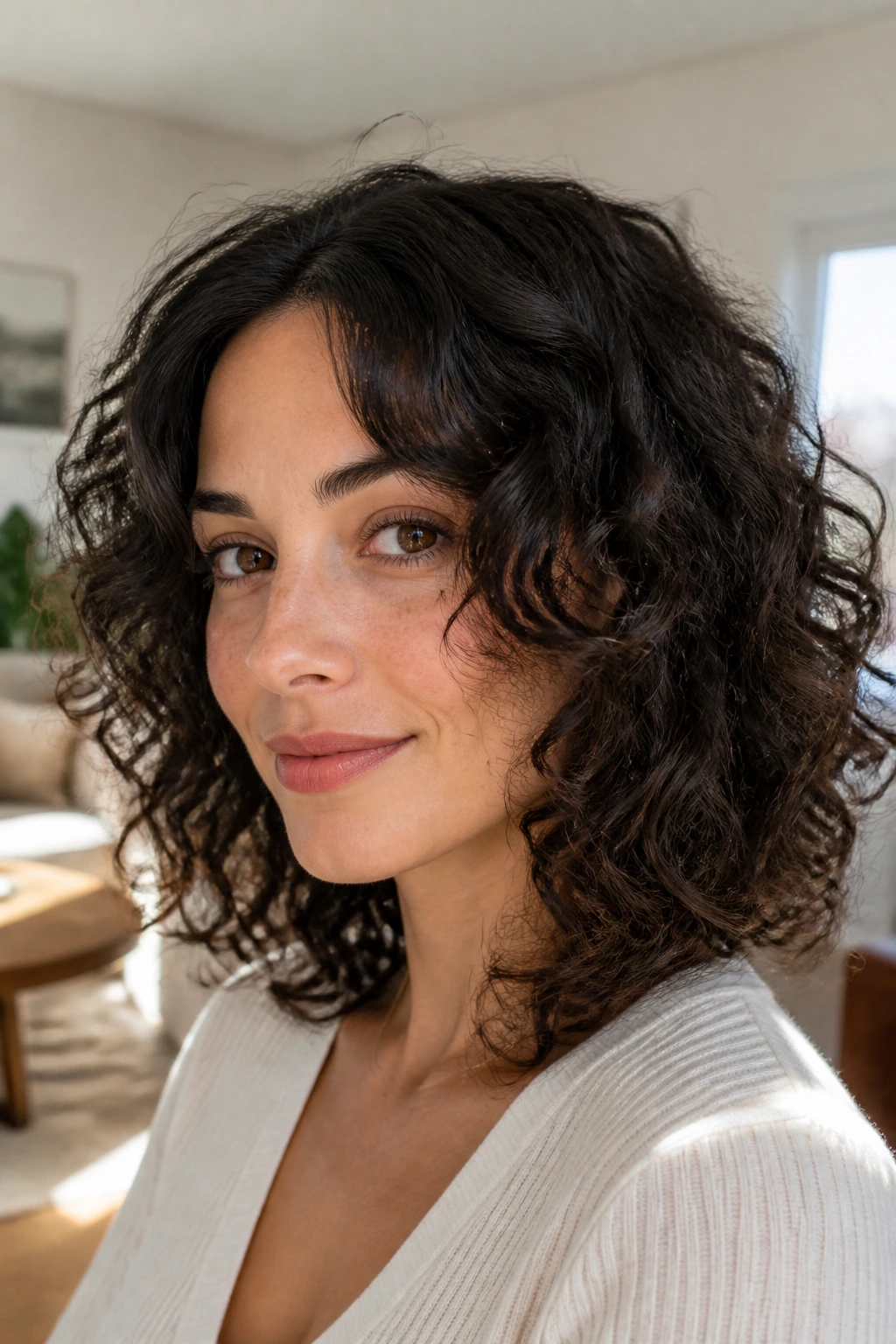
19. Waterfall Layers on Long Spirals
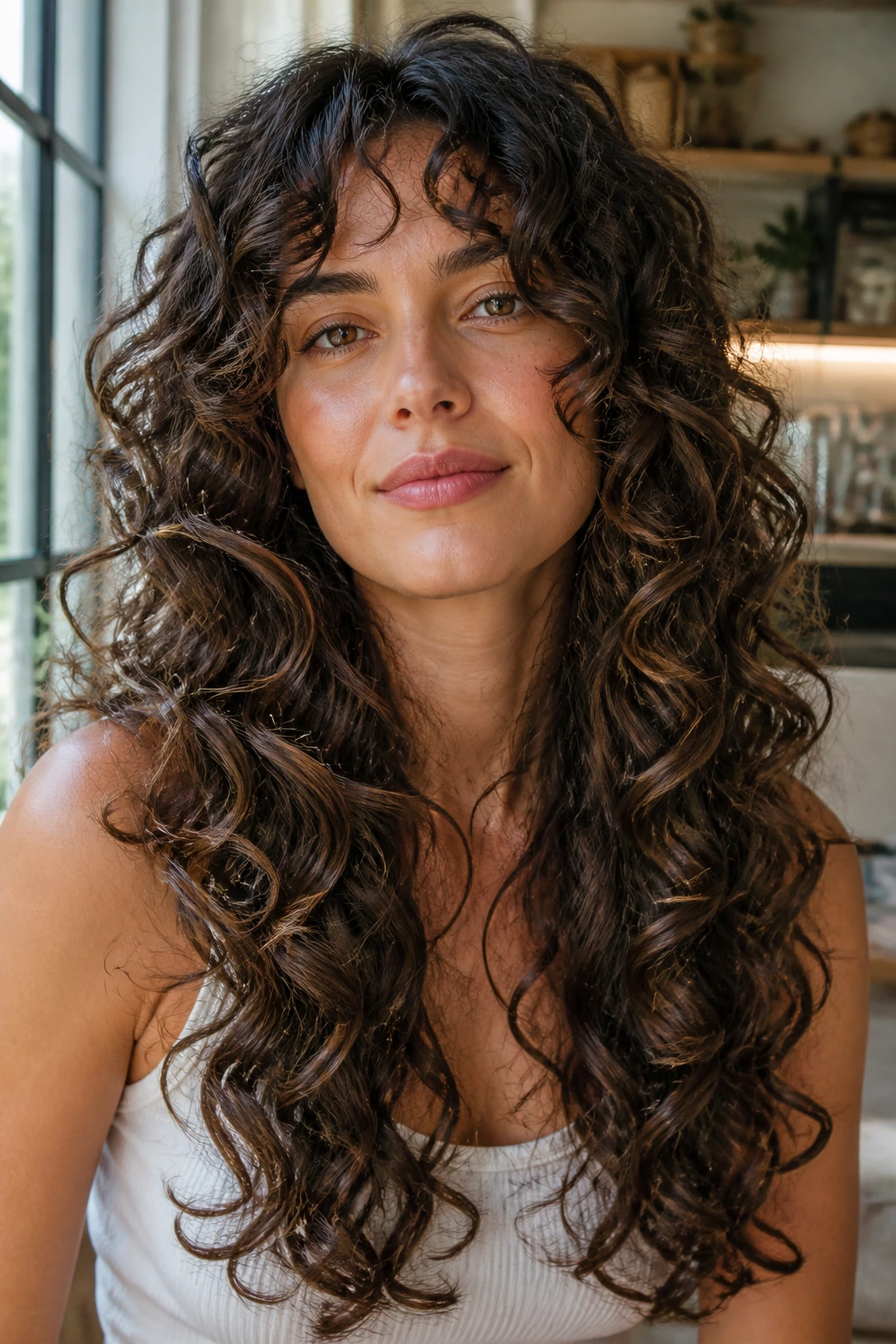
Waterfall layers sound romantic, and the name fits. The idea is to let the curls drop in different lengths so the outline feels cascaded rather than blocky. On a square face, that matters because a single hard line can make the lower half of the face look too heavy. Layers that fall in steps soften the whole thing.
This shape is especially good for long, spiraled curls that like to show off their bounce. The layers should start lower than the cheekbones if you want to keep the side width under control. If they start too high, the volume can spread outward and make the face look broader. A slightly deeper side part can help the layers fall into a more flattering diagonal.
This is one of those cuts that looks best with enough length to move. Shorter curls can do it, but long spirals really make the waterfall effect visible.
20. Shoulder-Grazing Cut with Invisible Layers
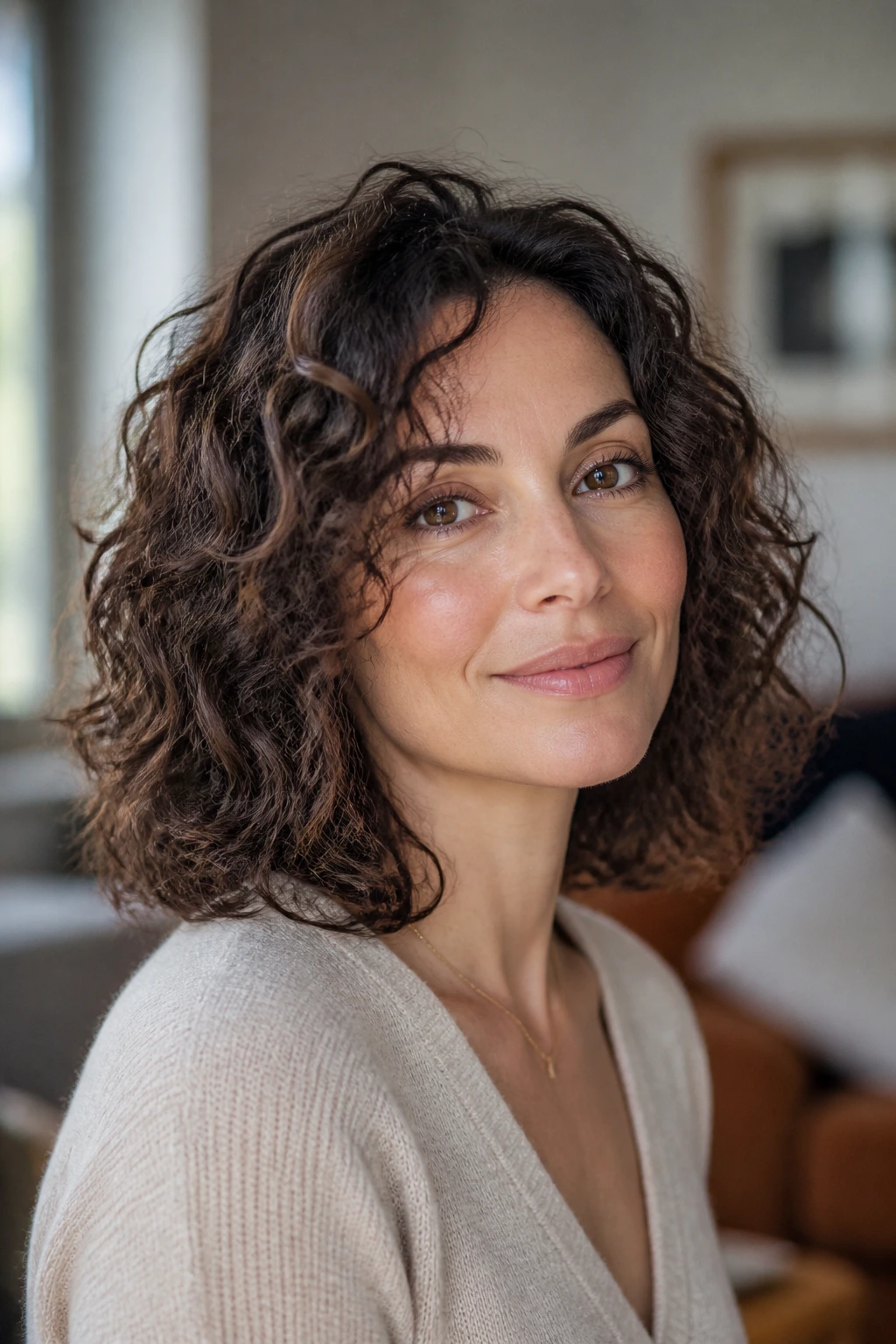
Invisible layers are the answer for people who want softness without obvious choppiness. The cut still has shape, but the layers are tucked inside the outline so the ends look smooth. For square faces, that is useful because it keeps the perimeter from turning into a hard box around the jaw and shoulders.
This style sits in a sweet spot: long enough to elongate, short enough to keep the hair from overwhelming the face. The shoulder-grazing length also means the curls won’t all pile up right at the jaw, which is where many square faces start to look widest. Invisible layers keep the bulk moving, not sitting still.
I like this cut for people who work in offices or don’t want a “big hair” moment every day. It can be casual, but it still feels pulled together when the curl pattern is good.
21. Twisted Half-Up Style with Curtain Pieces
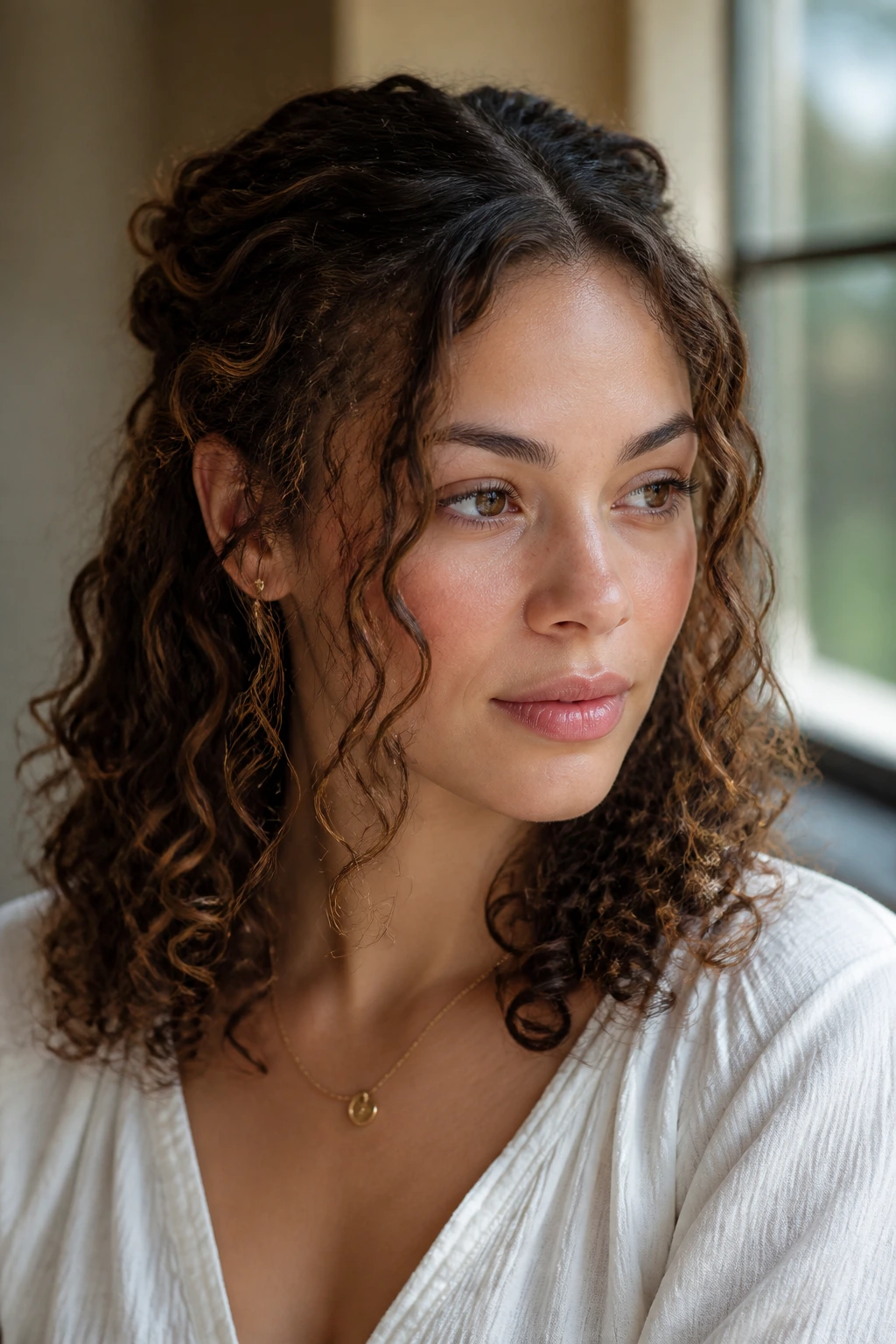
A twisted half-up is the kind of style you reach for when you need to look awake in ten minutes. Pull two sections from the temples, twist them back, pin them high enough to lift the crown, and leave the front pieces soft. Those front pieces matter. They stop the face from looking too open and keep the square edges from reading hard.
This style is especially useful on day-two curls or on wash days when the top has a little frizz but the mids and ends still look fine. The twist hides a messy root line without flattening the whole head. I’d keep the pins tucked under the curls so the finish looks loose, not like a school assembly hairstyle from a bad memory.
A tiny bit of texture spray at the crown can help if your hair slips. Not much. Too much and the twists get crunchy.
22. Diffused Side-Flip Layered Cut
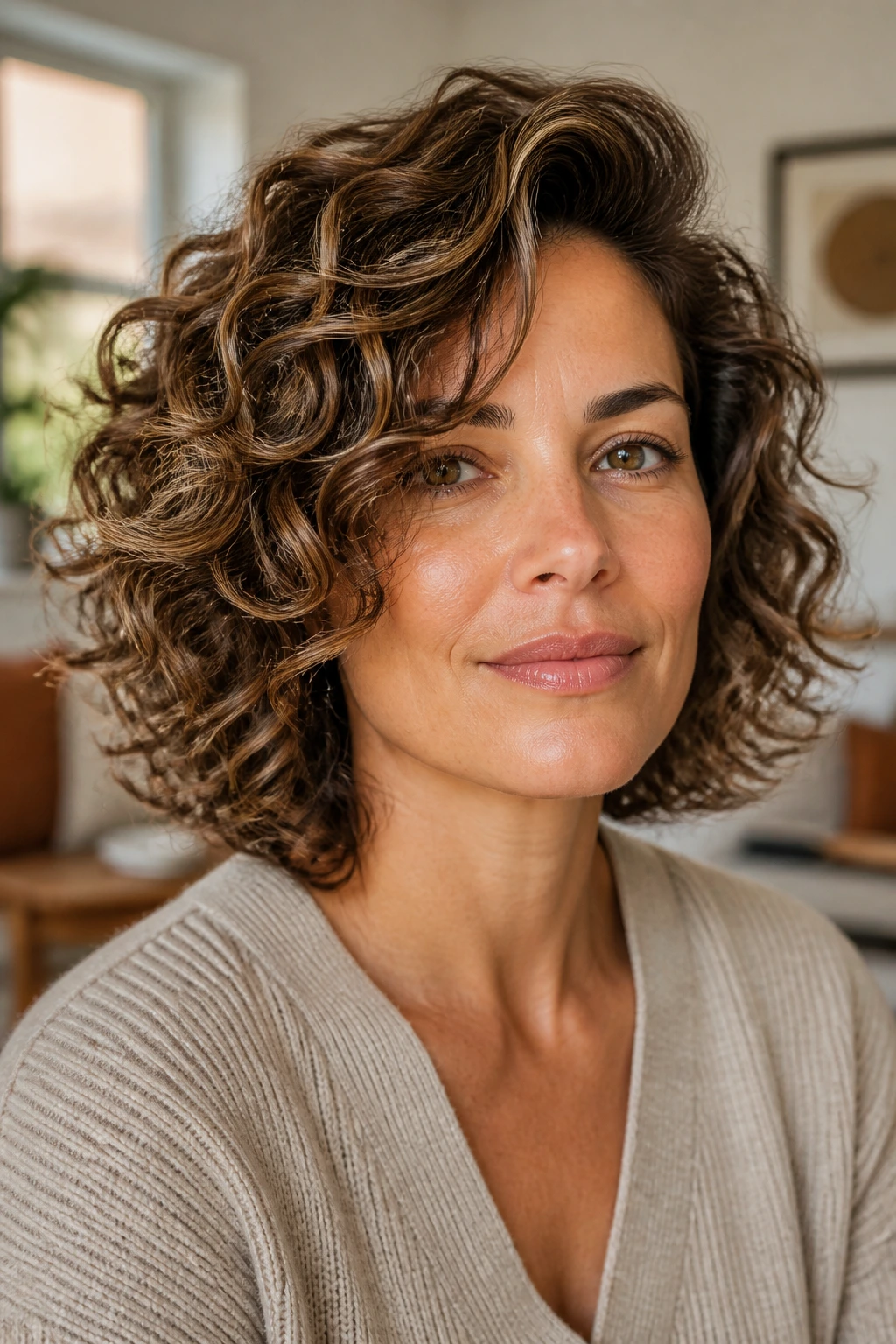
If your curls tend to collapse in the middle and puff at the sides, a side-flip layered cut can be a nice correction. The side part gives the hair a direction, the layers keep the curls from building too much width, and the diffuser helps the roots lift away from the cheek line instead of sitting on it. That combination is more useful than people think.
This is one of my favorite shapes for square faces that also need a little volume because it solves two things at once: it adds movement, and it stops the sides from sitting in one heavy wall. Ask for face-framing layers that are long enough to tuck behind the ear or sweep across the cheek. The overall effect should feel easy, not styled within an inch of its life.
If you’ve been fighting a middle part and a blunt edge, this is often the turn that makes the whole haircut make sense.
Why Curly Layers and Face Shape Work Better When They’re Placed on Purpose

A square face does not need to be hidden. It needs a shape that doesn’t stop abruptly at the jaw and call attention to itself. Curly hair can help with that, but only when the cut understands where curls swell, where they fall flat, and where they spring out with a little too much enthusiasm. That’s the part people miss.
The best curly hairstyles for square faces usually do one of three things. They break up symmetry with a side part or asymmetrical front. They move the visual weight up toward the crown or down below the jaw. Or they soften the edges with fringe, layers, or a rounded perimeter so the face keeps its structure without looking boxy.
I’ve always thought the worst advice here is “just add layers.” Layers are not magic. Place them badly and you can make the sides wider. Place them thoughtfully and the whole face opens up. That is the difference between a haircut that looks pretty in the chair and one that still works after you’ve slept on it.
Essential Tools for Curly Styling
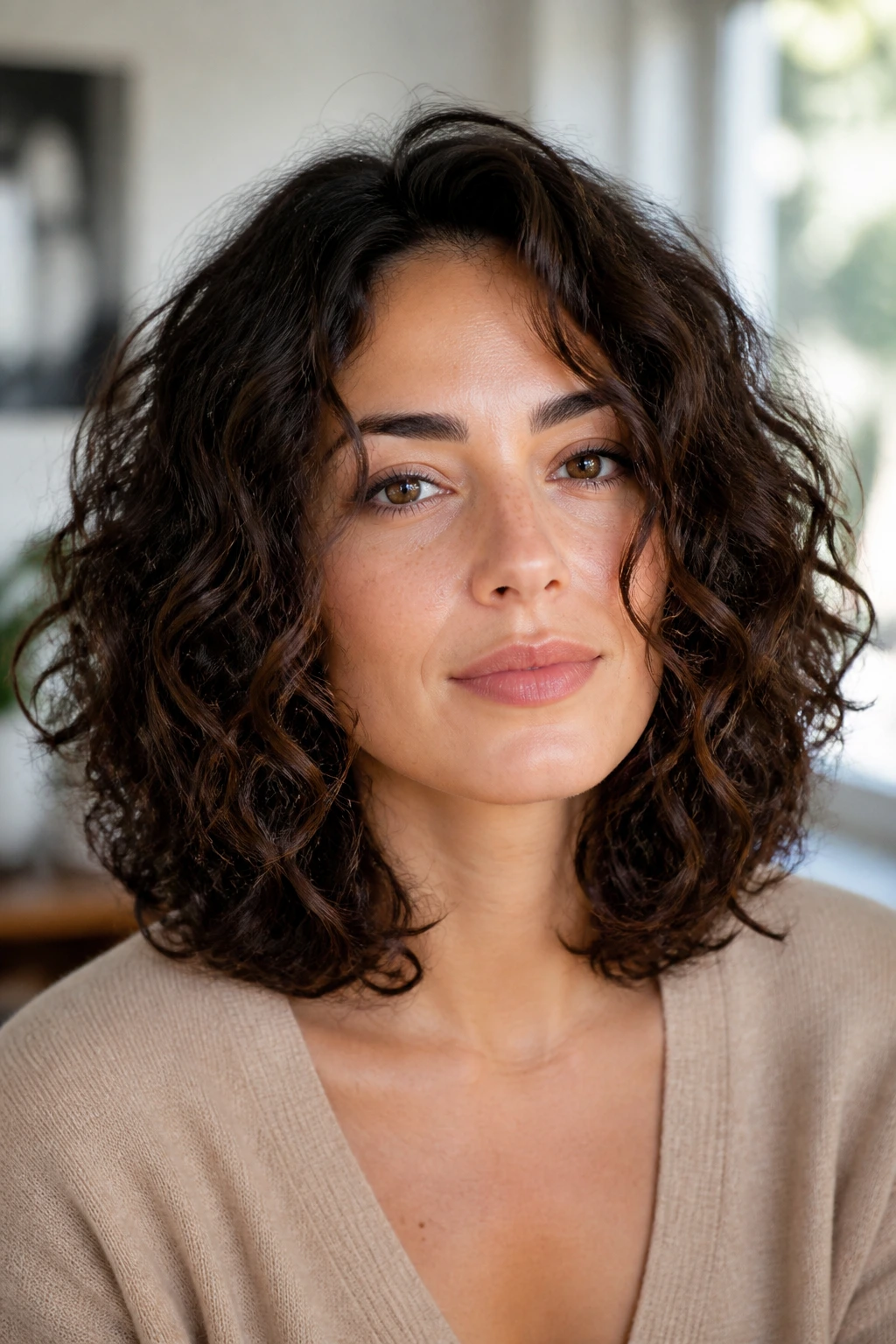
- Wide-tooth comb: Good for detangling wet curls without ripping apart the natural clumps.
- Spray bottle with water: Useful for reshaping bangs, roots, and face-framing pieces on day two.
- Curl cream or leave-in conditioner: Helps smooth the mid-lengths so the shape doesn’t puff out around the jaw.
- Mousse: Best when you need lift at the crown without heavy weight near the sides.
- Flexible-hold gel: Keeps definition in place, especially for shags, bobs, and side-parted styles.
- Diffuser attachment: A must if you want root lift and less frizz around the cheek line.
- Duckbill clips or small jaw clips: Handy for lifting the crown while hair dries or setting a side part.
- Satin scrunchie or silk elastic: Better for half-ups and ponytails because it leaves fewer dents and less breakage.
- Microfiber towel or cotton T-shirt: Helps remove water without roughing up the curl pattern.
- Rat-tail comb: Useful for clean parting and for placing face-framing pieces exactly where you want them.
What to Ask For at the Salon and How to Pick the Right Products
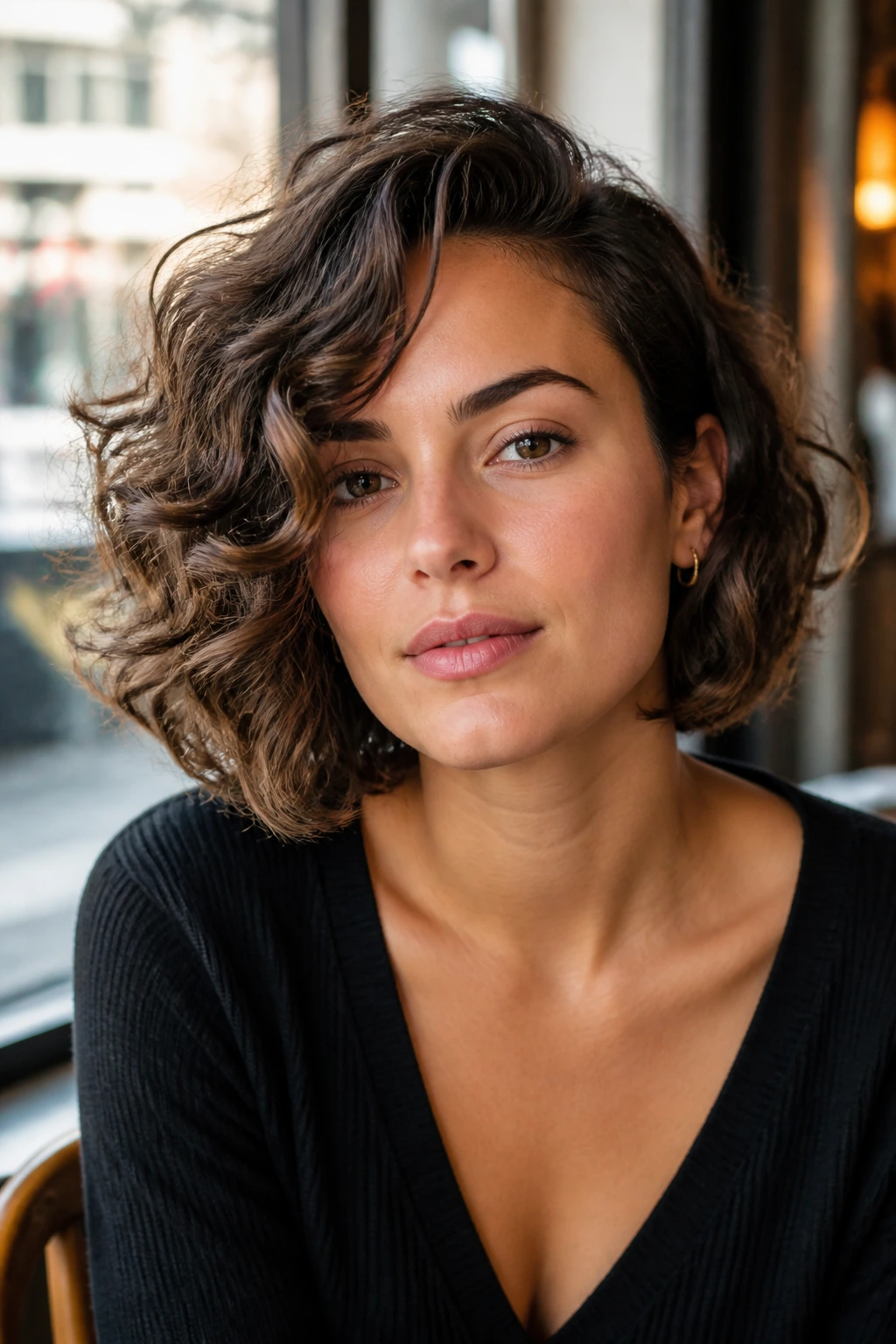
A good curly cut starts with a conversation, not a guess. Bring a photo of your hair when it is dry and in its natural shape, not just a model with a similar curl type. Wet curl photos can be misleading, because the length and width shift so much once the hair dries. If your hair shrinks two inches or more, say that out loud. A stylist cannot work around shrinkage they do not know exists.
The haircut details matter more than the trend name. Tell them where you want the first layer to fall, whether the side should stay soft or compact, and how much volume you’re comfortable wearing at the crown. On square faces, I usually steer people toward a side part, a cheekbone-framing front piece, or a perimeter that curves instead of stopping flat at the jaw.
Product choice should match the job. Fine curls often need mousse and a light gel. Thick curls usually need more cream, then a medium hold gel to keep the shape from widening out. If the hair tends to puff at the sides, look for products that give hold without too much oil. Heavy creams can make a square face look wider simply because the curls lose definition and spread.
One more thing: if the cut is short, your product needs to support shape, not add softness for softness’s sake. A pixie or bixie can go limp fast if the styling layer is too rich. A bob or lob can take more moisture. That’s where a good stylist notes the difference, and why I always trust a person who talks about weight and direction as much as they talk about curl type.
How to Wear These Styles in Daily Life
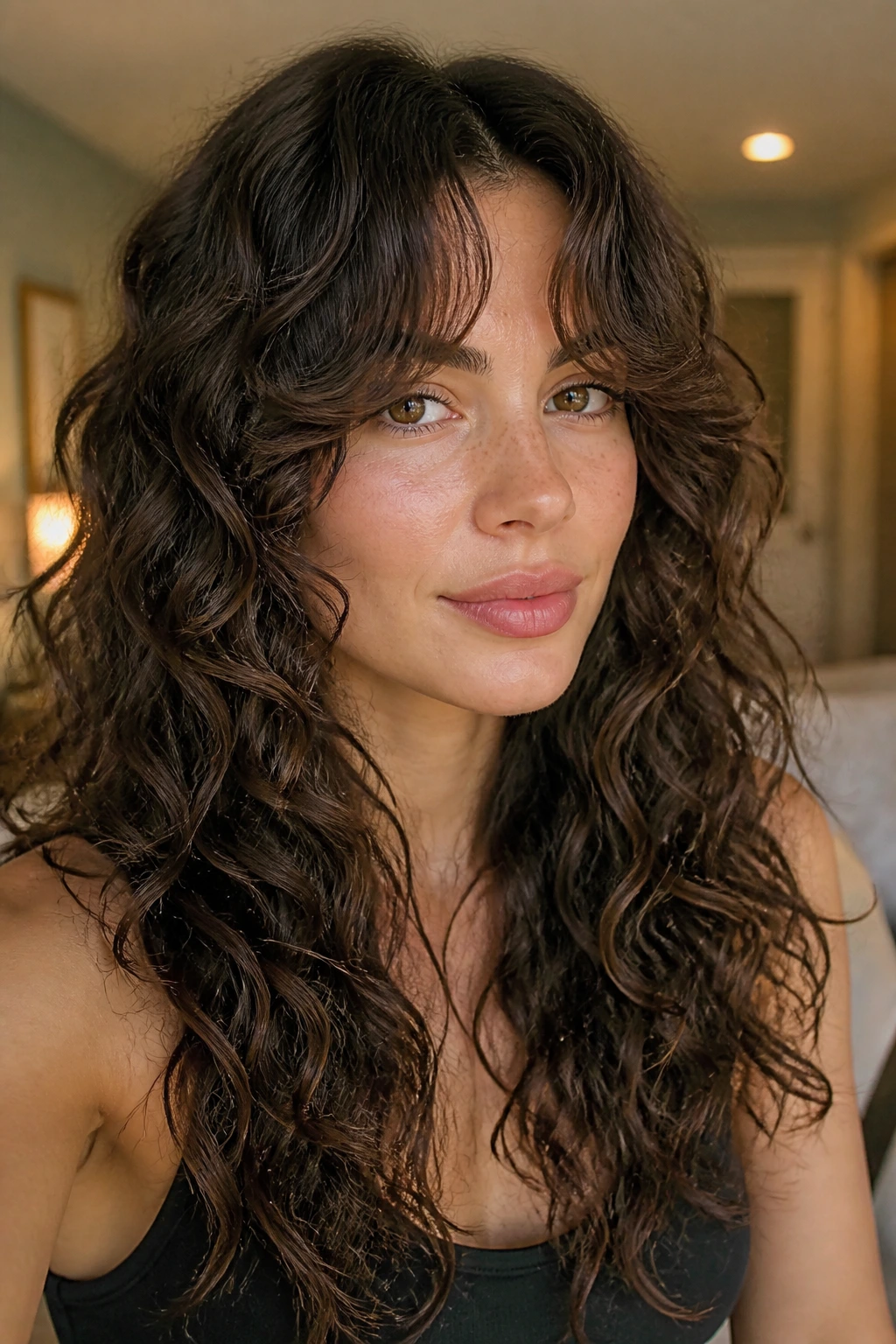
Shape: Keep the eye moving. Side parts, diagonal bangs, twisted front pieces, and one tucked side all help a square face look less static. A perfectly centered curtain every day can be a little too neat for some faces, while a looser off-center shape usually feels softer.
Finish: Decide whether you want the curls defined or loose. Defined works well for bobs, lobs, and shags because the structure stays visible. Loose, brushed-out texture is better for glam waves and longer layered cuts, where a little softness around the jaw is the whole point.
Accessories: Clips and pins can do more than decorate. A small side clip on the heavier side of the part, a satin scrunchie on a pineapple puff, or a headband that sits behind the hairline can change the proportions of the face without changing the haircut itself.
Day-to-day scale: If the lower face feels wide, keep volume above the cheekbone or below the collarbone. If the hair is short, keep the crown lifted and the sides soft. That one rule shows up again and again because it works.
Small Styling Moves That Change the Whole Silhouette
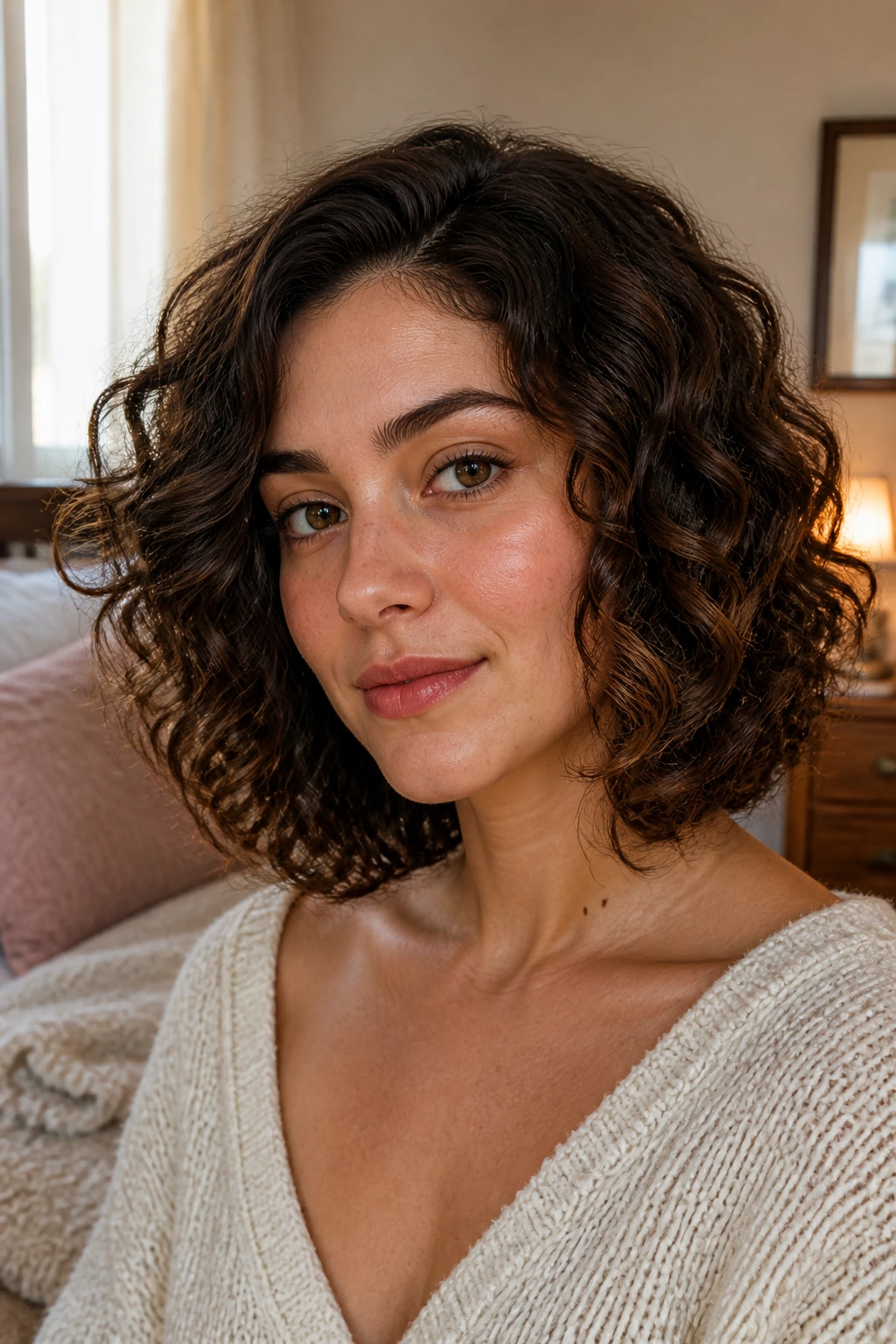
Root lift first. A square face looks sharper when the roots are flat and the sides are wide. Clip the crown up while diffusing, or dry the roots in the opposite direction of your part for the first few minutes. That gives the style height before the curls settle.
Face-framing pieces need intention. Don’t let them land wherever they land. Guide them with a finger while wet, or clip them forward and slightly away from the cheeks so they dry into a soft bend instead of a straight line.
Keep the jawline light. If a section is getting too bulky right at the jaw, finger-comb a little gel through it and encourage it to separate. You want the hair to skim, not sit in one heavy wall.
Use one accessory, not five. A single clip, pin, or scarf usually looks cleaner than stacking too many things around the face. The style is already doing work. Let it breathe.
Common Mistakes to Avoid
- Blunt ends at jaw level: This is the fastest way to make a square face look wider. If you love shorter hair, ask for a rounded or asymmetrical perimeter instead.
- Too much side width and no crown lift: Hair that sits broad at the cheeks and flat at the top creates a boxy outline. Use clips, a diffuser, or a different part to rebalance it.
- Cutting bangs too short for shrinkage: Curly bangs bounce upward. If they’re cut at eyebrow level when wet, they can end up far too short once dry.
- Over-thinning thick curls near the temples: That often makes the hair frizz, not slim down. The shape looks airy in the chair and puffy at home.
- Choosing a middle part by default: Middle parts are not banned, but on a square face they can leave the angles too exposed if the curls are wide. A slight side part usually softens the whole line.
- Using heavy cream where you need hold: Soft product can collapse the shape and let the curls spread outward. If that happens, add a gel or mousse on top of the cream, not more cream.
Variations and Adaptations to Try
The Soft Side-Part Remix: Keep any of the longer styles above, but push the part just off center and clip one side behind the ear. It’s a simple adjustment that adds diagonal movement without changing the cut. Good when you want the face to look a little longer.
The Tight-Curl Taper: For coils or very dense curls, use a tapered crop, rounded afro, or short layered shape with controlled sides. This version keeps volume higher on the head and lighter around the jaw. It reads neat without getting severe.
The Bang-Free Version: If fringe never sits well on your forehead, skip the bangs and lean on cheekbone layers instead. You still get softness near the face, but without the daily battle of redistributing a curly fringe after every wash.
The Event-Ready Polish: Take a shag, lob, or long layered cut and smooth the front with a side part, then pin one side back. This keeps the face open and adds enough structure for dresses, jackets, or anything that benefits from a cleaner line.
The Low-Maintenance Wash-and-Go: Choose shoulder-grazing layers, a rounded perimeter, and enough internal texture to let the curls fall where they want. Pair it with mousse and gel, then stop touching it. That’s the whole point.
Keeping the Shape Fresh Between Washes
Curly styles for square faces usually look best when the shape stays soft, not stiff. Between washes, a spray bottle and a little leave-in can reset the front pieces without soaking the whole head. Focus the water on the fringe, crown, and jawline sections first. Those are the spots that lose shape fastest.
Sleeping habits matter more than most people admit. A satin pillowcase or bonnet cuts down on frizz and keeps the curls from crushing flat on one side. For half-ups and pineapples, a loose satin scrunchie works better than a tight elastic because it leaves less of a ridge at the crown. If you wear a short crop or bixie, a quick re-fluff with damp hands in the morning is usually enough.
Trims are part of maintenance too. Shorter shapes like pixies, bobs, and bixies usually need reshaping every 4 to 6 weeks if you want the outline to stay clean. Longer layers can go 8 to 12 weeks before they start losing the face-framing effect. Once the layers drift too far, the style stops helping the face and starts hanging there.
Frequently Asked Questions
What part looks best on a square face with curly hair?
A soft side part is usually the safest bet because it breaks up the symmetry and makes the face feel a little longer. A middle part can work if the cut has enough length, crown lift, or front softness to avoid exposing the jaw too much.
Are bangs a bad idea for square faces?
Not at all. Curly bangs can be lovely when they’re cut long enough to account for shrinkage and kept light instead of blunt. Curtain bangs or wispy fringe usually soften the forehead and blend better with curls than a heavy straight-across bang.
Can a blunt bob ever work?
It can, but it needs shape help. A blunt bob that ends right at the jaw is the version that tends to look boxy. If you want a bob, ask for slight asymmetry, a rounded edge, or a length that sits either a bit above or below the jaw.
What if my curls are very thick and puffy?
Then the cut matters even more than the product. Ask for internal weight removal and a shape that keeps the width from building around the cheeks. Styling-wise, a stronger hold gel and a diffuser can help the curls stay defined instead of expanding outward.
What if my curls are fine and flat at the crown?
Choose layers that add lift without removing too much bulk from the bottom. Mousse at the roots, a diffuser, and a side part usually help more than piling on cream. Fine curls need support, not heavy softness.
How do I ask for a flattering curly cut at the salon?
Give three things: your shrinkage, where you want the first face-framing layer, and whether you want the silhouette to stay rounded or more angular. If you can, bring a photo of your hair in its natural dry state. That tells the stylist more than a model shot ever will.
How often should I trim a style like this?
Shorter cuts need more frequent reshaping, often every 4 to 6 weeks. Longer layered styles can usually wait 8 to 12 weeks. If the jawline starts looking wider because the layers have drifted, it’s probably time.
Can I wear my hair pulled back without emphasizing the jaw?
Yes. A high half-up, pineapple puff, or low pony with crown lift tends to work better than a sleek, low-pulled style with no softness around the face. Leave a few tendrils or a side piece out so the face keeps some curve.
Soft Angles, Strong Curls
Square faces look best when the hair respects the angles instead of copying them. That’s the whole game. The right cut or style adds softness at the cheeks, lift at the crown, or movement across the face so the jaw can stay strong without becoming the only thing you see.
The nice part is that you have options at every length. You can go short and cropped, keep things shoulder-grazing, wear the curls long, or pin them up when you need speed. Start with the shape your hair already wants to make, then nudge it in a direction that gives the face a little more curve and a little less box.
If you’re stuck between two choices, I’d pick the one with the better front angle almost every time. That little detail—where the part falls, where the first layer lands, which side gets the tuck—usually matters more than the headline of the haircut itself.