



Messy waves can do a lot of quiet rescue work for a square face. They blur a strong jawline, soften the corners near the temples, and keep frizz from looking like a problem that needs fixing. On the right haircut, with the right part and a little restraint at the ends, those waves stop reading as accidental puff and start reading as texture.
That matters because frizzy hair already has volume. If you flatten it into obedience, it tends to fight back by springing out in all the wrong places. If you shape it instead, you get lift at the crown, movement through the mid-lengths, and a softer frame around the face. That’s the sweet spot here. Not sleek. Not stiff. A little undone, but still deliberate.
Square faces need that softness more than most shapes do. The trick is not to hide the jaw completely. It’s to interrupt the straight lines with bend, sweep, and a little asymmetry so the face feels less boxy and more open. Some of these looks are built with heat, some are air-dried, and some rely on the kind of frizz that usually gets fought with a brush. Let it work for you for once.
Why These Waves Work So Well on Square Faces
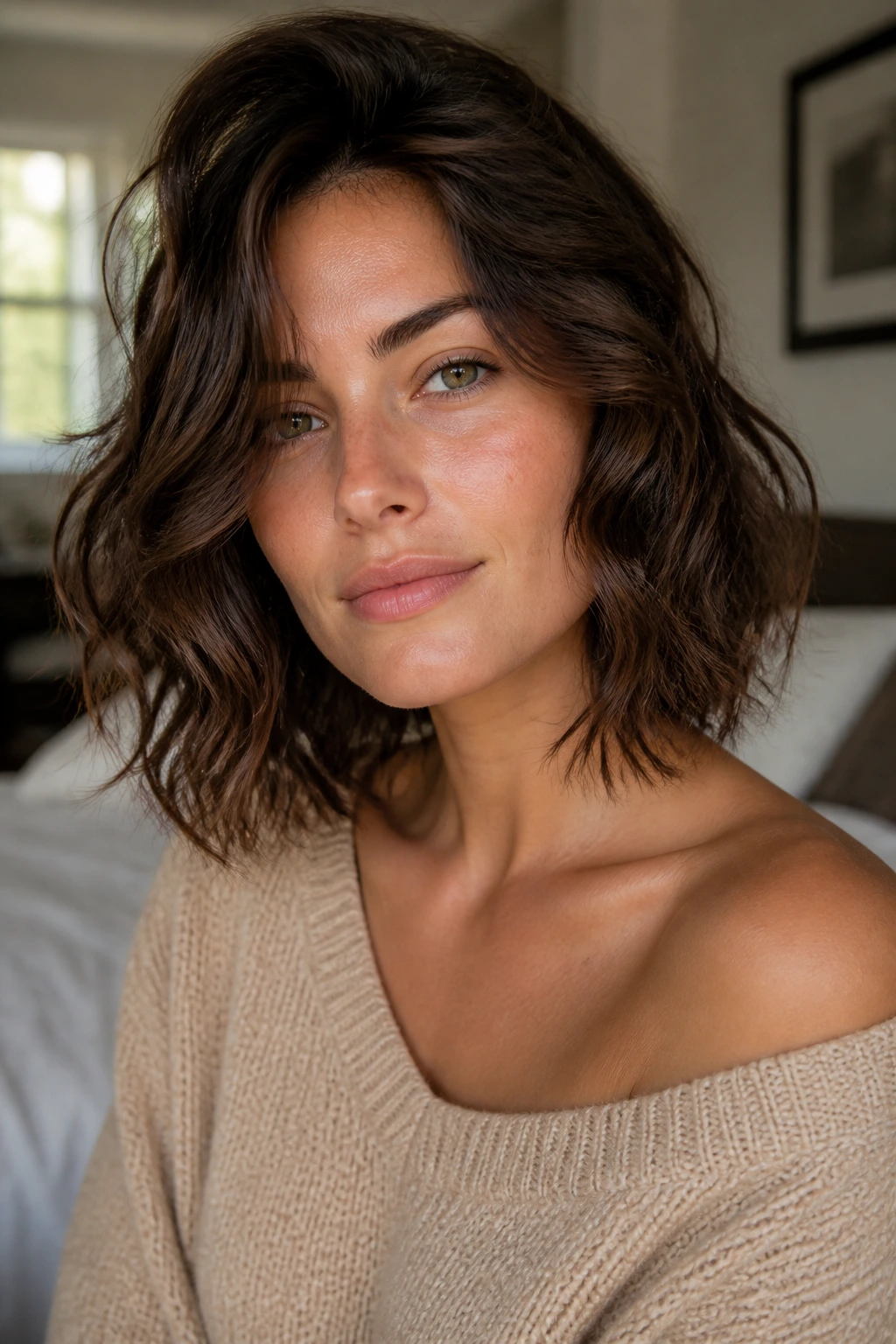
Soft bends beat hard lines. A square face already gives you clear angles at the forehead, cheeks, and jaw, so a wave pattern that bends around those points takes the edge off without making the face look wider.
Frizz adds body where flat hair falls short. Frizzy strands have lift, and lift matters here. When you aim that volume upward and outward instead of straight across the jaw, the shape feels lighter and less rigid.
Side parts do real work. Even a small shift off center breaks up the symmetry that can make a square face look more geometric. A deep side part pushes more hair over one temple and narrows the visual width across the face.
Layers matter more than curl size. Long, blunt waves at chin level can make the jaw look sharper. Long layers, broken ends, and face-framing pieces near the cheekbone do the opposite.
Messy does not mean random. The best messy waves here have a plan: volume at the crown, movement through the mid-lengths, and ends that stay soft instead of puffing outward in a triangle.
If you like rules, keep this one: the widest part of the style should sit above the jaw, not right on it.
1. Deep Side-Part Curtain Waves
A deep side part gives square faces a little drama in the best way. The heavier side spills across the forehead and cheekbone, while the opposite side opens up enough space to keep the face from feeling boxed in. On frizzy hair, this looks especially good when the top is smoothed just enough to lie down, but the lengths are left loose and airy.
Why It Works
The front pieces act like soft curtains instead of a hard frame. That matters because curtain placement near the cheekbone cuts across the angles of a square face, and the side part steals some width from the forehead.
Quick Shape Notes
- Best on shoulder-length to long hair
- Works with 1-inch to 1.25-inch curling iron bends
- Keep the root at the heavy side flat, not sleek
- Finish with a light mist of flexible-hold spray
My favorite detail: leave the last 2 inches of the front sections straighter than the rest. It keeps the wave from ballooning right where the jaw starts.
2. Collarbone Shag Waves
This is the haircut-and-style combo that frizzy hair often wants anyway. Collarbone-grazing length keeps the weight off the bottom, and the shag layers stop the whole shape from turning into a block. On a square face, those choppy layers soften the perimeter without making the style look overworked.
The best version has a little mess at the ends and a little lift at the crown. Not too much. Too much crown volume can start to widen the face again, and that’s the part people get wrong.
If you’re asking for this at a salon, ask for long, blended layers that start below the cheekbone. That keeps the face open and avoids a shelf effect at the jaw.
3. Air-Dried Bend With Broken Ends
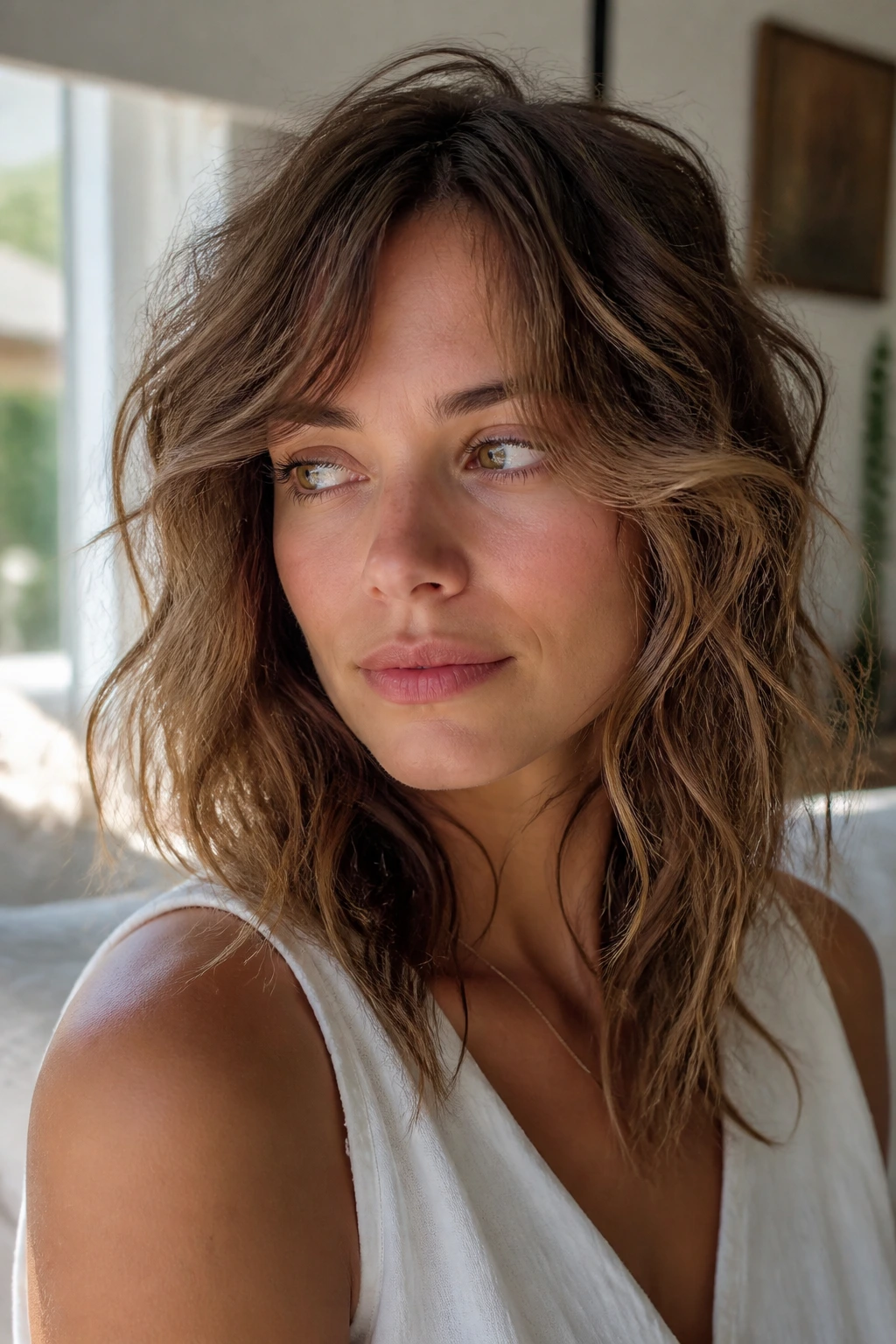
Why fight your texture if your hair already wants to wave? Air-dried bend is one of the smartest looks for frizzy hair because it turns that loose halo into shape instead of trying to erase it. The key is to guide the front and crown while letting the rest dry with some freedom.
How to Style It
- Work a leave-in cream through damp hair, but keep it light.
- Twist the front sections away from the face and clip them for 10 to 15 minutes.
- Scrunch the mid-lengths once or twice, then stop touching it.
- Let it dry without brushing.
- When it’s dry, separate only the thickest clumps with oiled fingertips.
The ends should look a little uneven. That’s the point. Even ends make frizz look blunt; broken ends make it look lived-in.
4. Diffused Twist-Out Waves
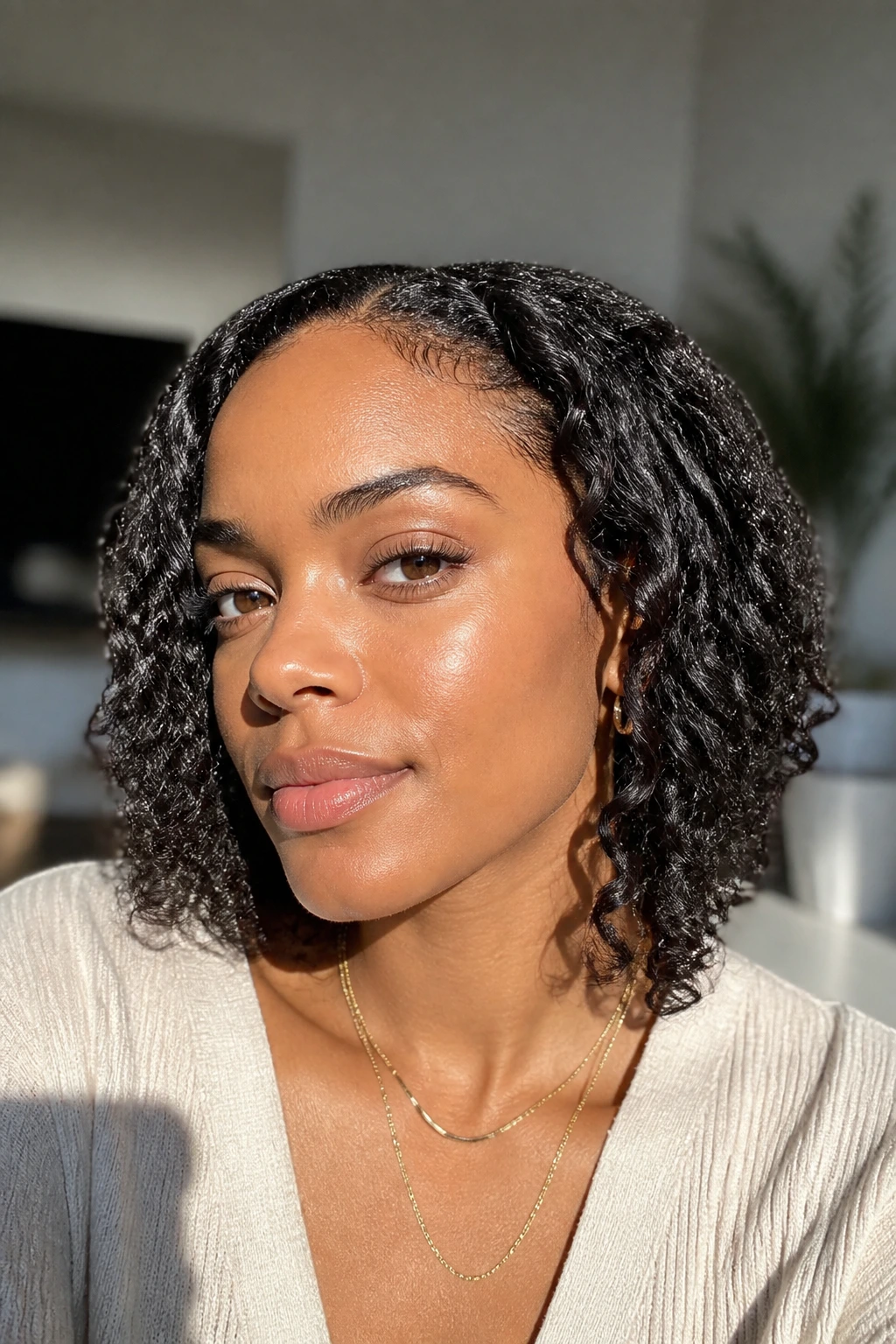
Twist-outs aren’t only for tight curls. On frizzy, wavy hair, a loose twist-out can make soft S-bends that last longer than an air-dry alone. Square faces benefit because the twist pattern usually starts a little lower on the head, which keeps the widest wave away from the jaw.
A diffuser changes the whole result. Low heat, low airflow, and a bowl-like attachment help the wave set without blasting the cuticle open. High heat and high speed will leave you with halo frizz and a flattened root. Not worth it.
- Twist 4 to 6 damp sections
- Use a pea-sized amount of cream per section
- Diffuse on low for 8 to 12 minutes
- Unravel only when the hair is fully cool
That last part matters more than people think. Warm hair falls apart faster.
5. Claw-Clip Tousled Waves
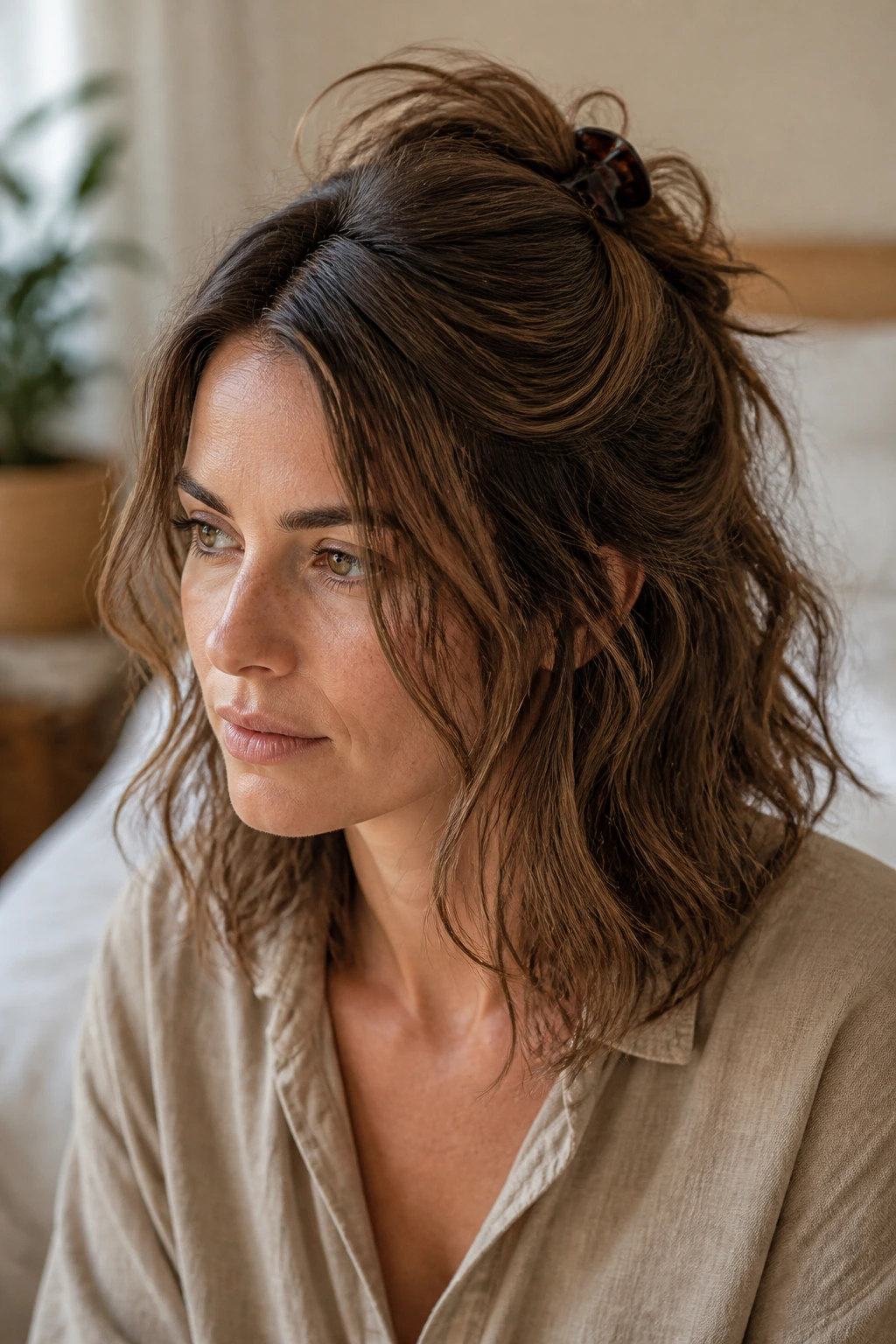
Claw-clip waves are made for the kind of hair that goes flat at the roots and puffier at the ends by lunchtime. The clip gives the top a bend, the mid-lengths stay loose, and the side pieces can be arranged to soften the face. On square faces, I like this one because it gives height without a helmet effect.
The trick is placement. Clip the top half of the hair loosely at the back of the crown, not at the exact center of the head. If you pin it too tight, you flatten the wave pattern and end up with a dent instead of movement.
This works best on second-day hair. A mist of dry texture spray at the roots helps the clip hold without sliding.
6. Long Layers With Cheekbone Pieces
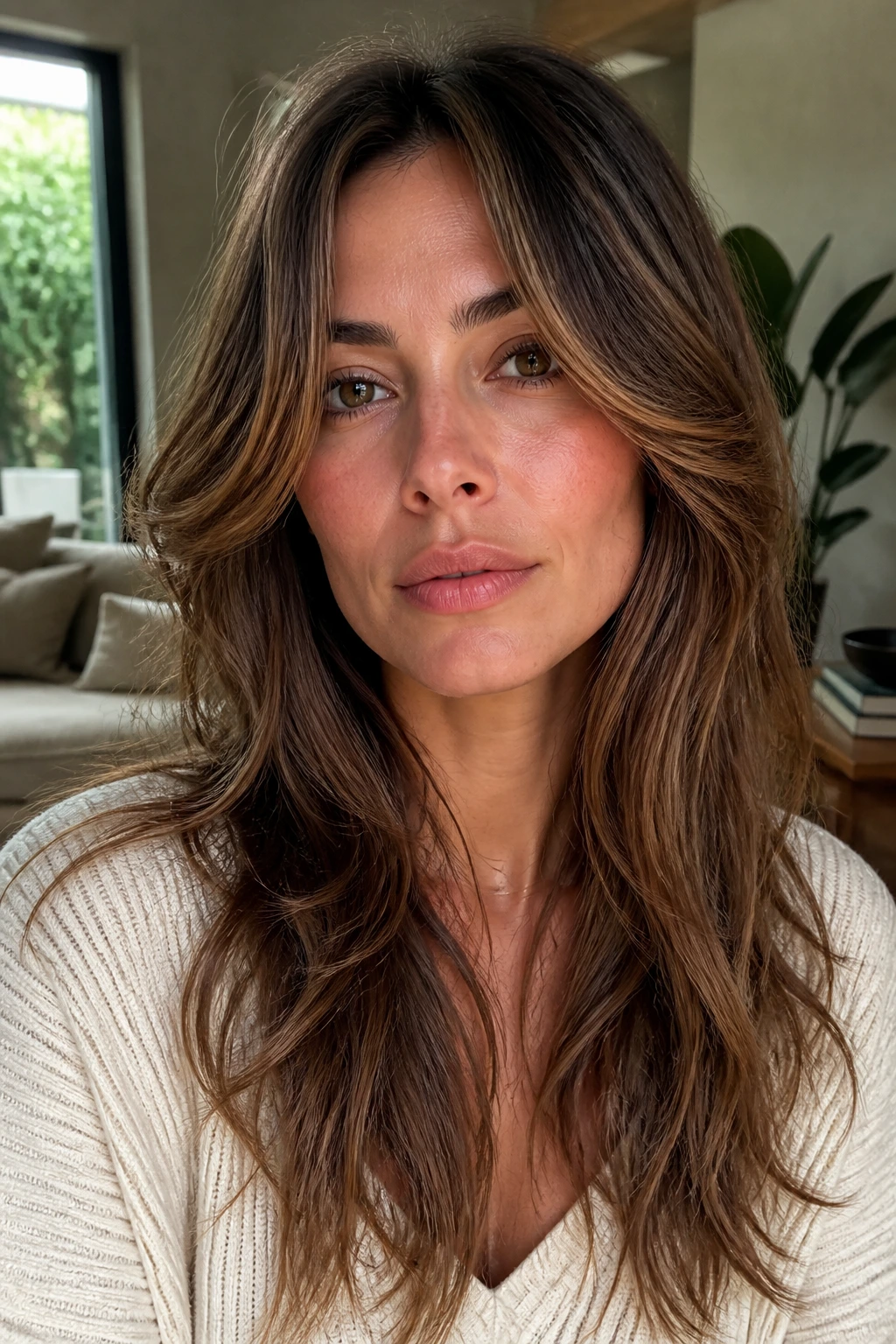
Long layers are the quiet hero of square-face waves. You keep the length, but the cut removes the blunt edge that can make frizz feel heavy. Face-framing pieces near the cheekbone are the real payoff here, because they break the straight line from forehead to jaw.
Unlike a uniform wave all the way down, this version uses different lengths to create motion. The shortest front pieces catch at the cheekbone. The longest ones move below the shoulder. That difference is what softens the square shape.
Best For
- Thick hair that puffs at the bottom
- Hair that looks better with movement than with curls
- People who want shape without losing length
Ask for the shortest face-framing pieces to land somewhere between the nose and cheekbone. Shorter than that can get choppy fast.
7. Off-Center Braid Waves

A loose braid set is one of the easiest ways to tame frizz into soft waves without heat. The off-center part matters because it keeps the shape from feeling too symmetrical, and symmetry is not your friend on a square face unless you soften it somewhere else.
Braid damp hair into one or two loose braids, not tight ones. Tight braids create a crimp that can feel too orderly. Leave the last 2 to 3 inches out if your ends are extra dry; they’ll wave enough on their own.
- Use a satin scrunchie, not a rubber band
- Let the braids dry fully, or the wave collapses
- Separate with fingertips, not a brush
A little frizz at the crown is fine here. A little. Too much, and the braid pattern disappears into puff.
8. Invisible-Layer Lob Waves
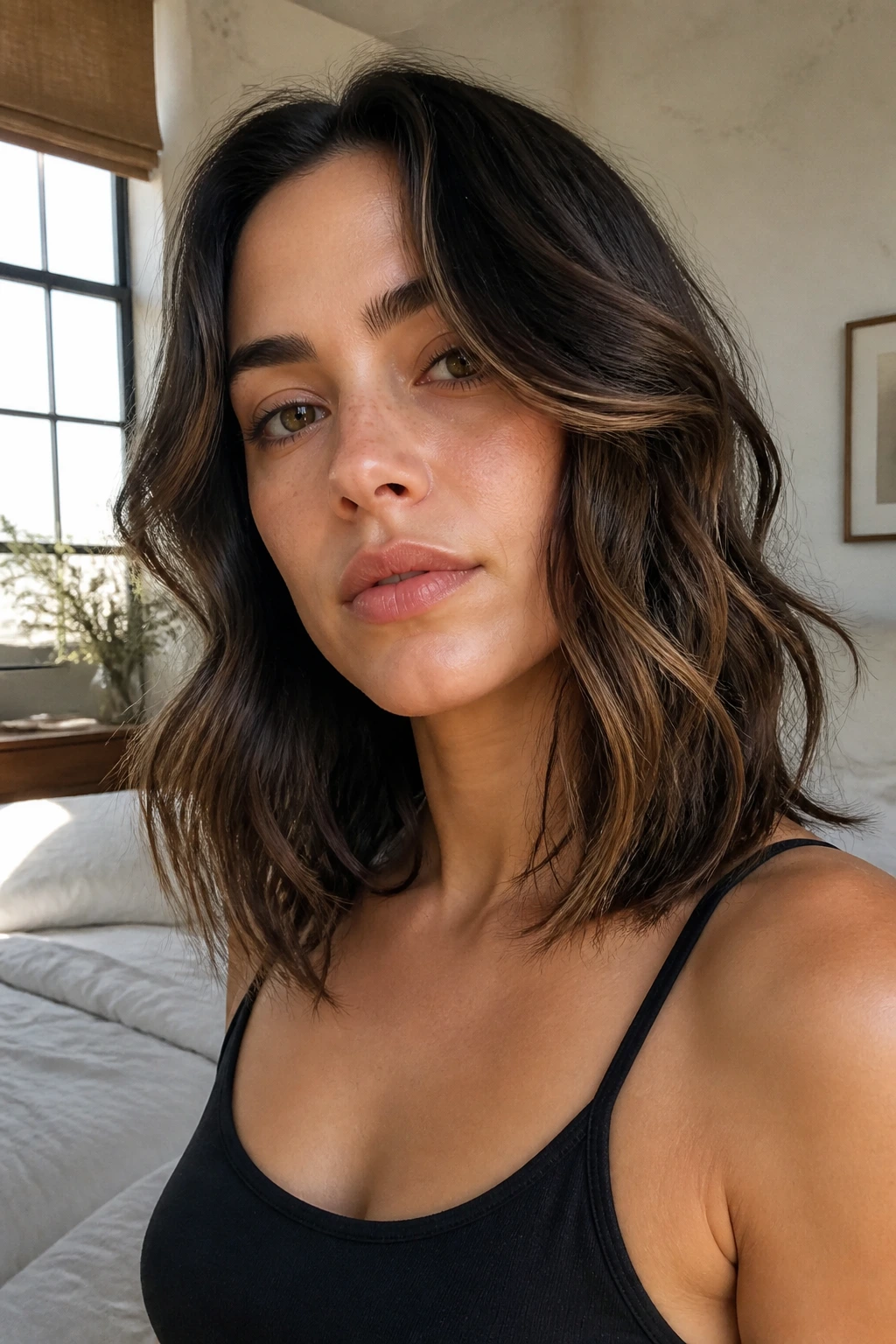
This one sounds fussy, but it isn’t. An invisible-layer lob keeps the outside line of the haircut looking clean while hiding shorter pieces underneath so the wave can move. For square faces, it’s a smart compromise: the lob length brushes the jaw, but the internal layers stop it from sitting there like a shelf.
The wave should bend away from the face at the front and settle more loosely in the back. That gives the style a gentle diagonal line, which makes the face look longer. Square faces usually like that.
If your hair is coarse, use a cream on the mid-lengths and a little mousse at the roots. If it’s finer, skip the cream and stick with mousse plus a light spray.
9. Mermaid Waves With Frayed Ends
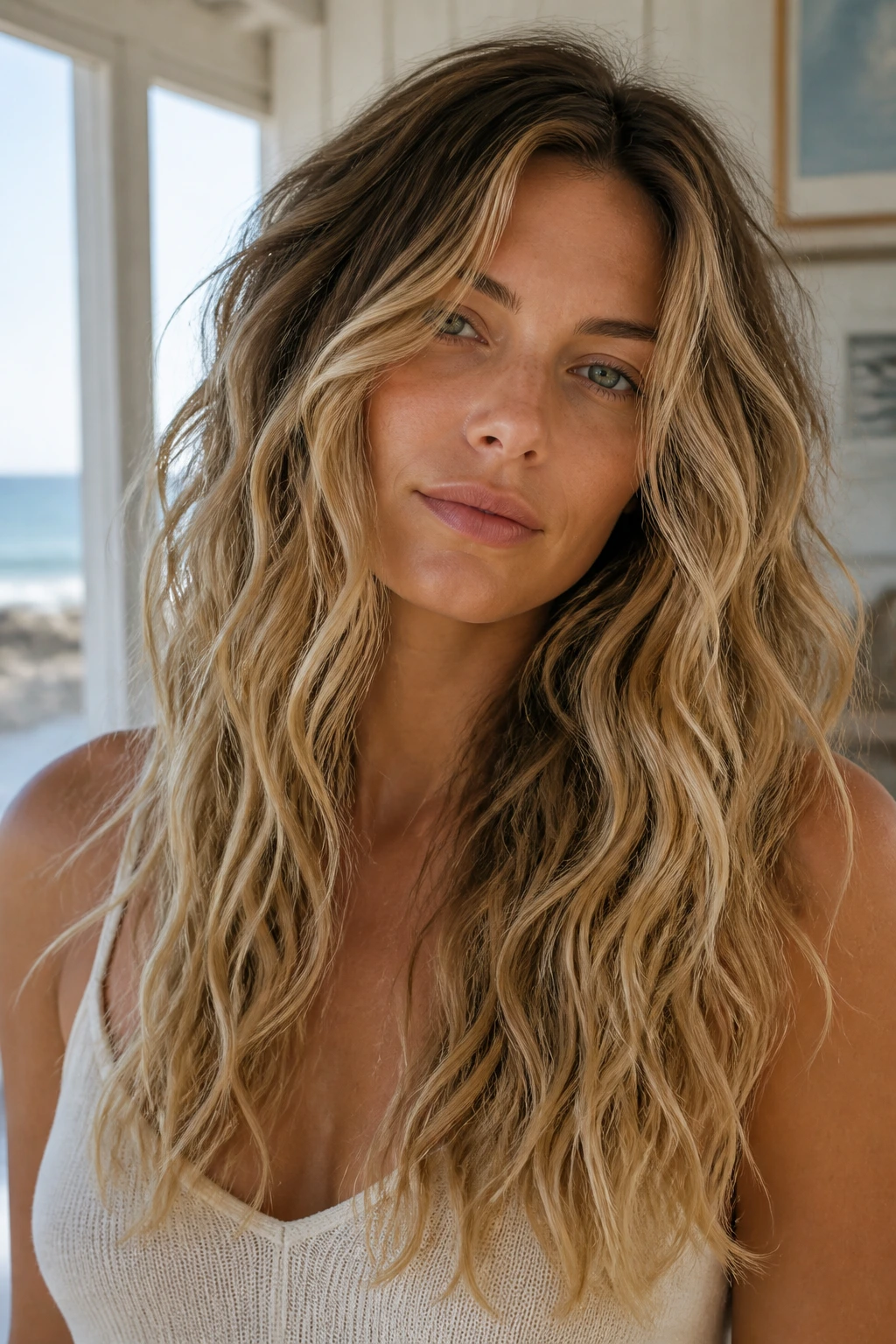
Long hair can handle bigger, softer waves, and square faces often look better with that extra length below the jaw. Mermaid waves work here because they create a slow, long bend instead of a tight curl that stops right at the cheek.
The frayed ends are the detail that keeps the style from looking too neat. I like the ends a little ragged, especially on frizzy hair. They catch the light unevenly and make the whole style feel softer.
What to Watch For
- Don’t curl every strand to the same exact point
- Leave 1 to 2 inches out at the very bottom
- Alternate wave direction every section
If you want the face to look narrower, keep the fullest part of the wave below the cheekbone. That’s the cleanest way to use length as a soft frame.
10. Side-Swept Volume Waves
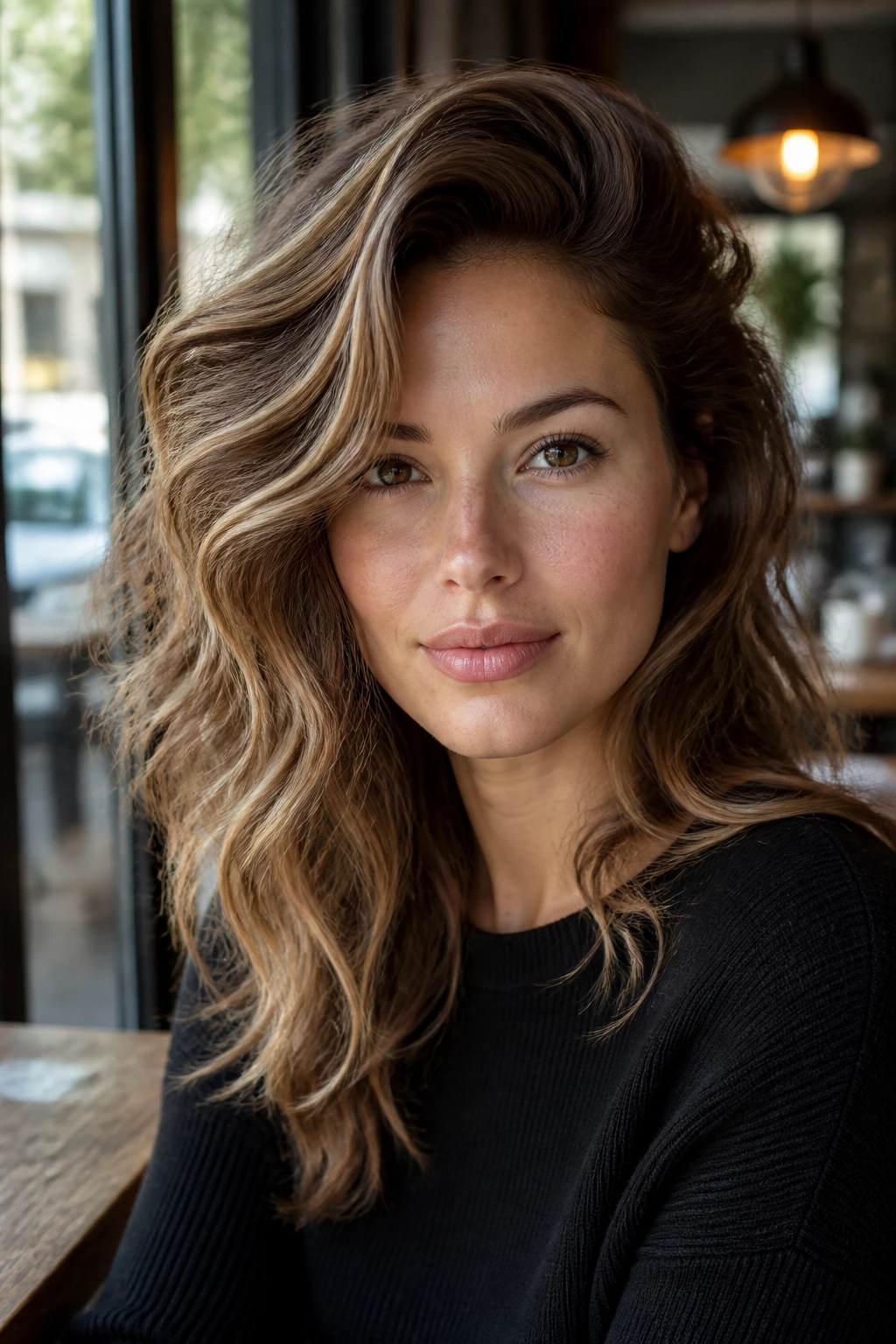
This style leans into height, and height is useful when you want to balance a square jaw. The hair sweeps to one side with a lifted root, then falls in loose, messy waves across the forehead and cheek. It feels a little old-school in the best possible way.
The big mistake is making the wave too tidy. If every piece is polished into place, the style starts to look formal and a bit stiff. You want the front to move. A lot.
Use a round brush at the root for just a few seconds if you need lift, then stop. The mid-lengths and ends should keep that frizzy, broken texture that gives the style life.
11. Half-Up Wave Sweep
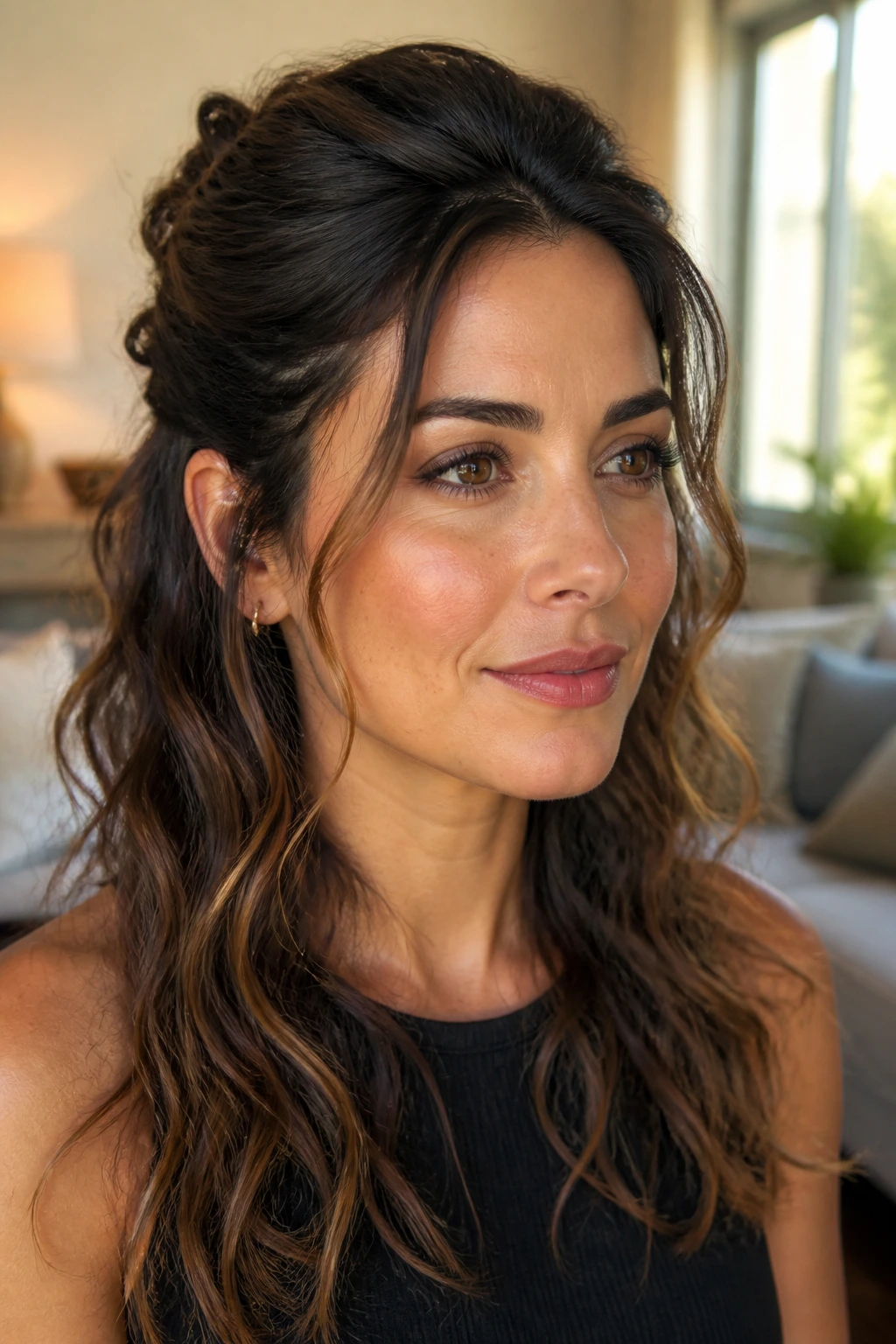
A half-up style opens the face while keeping enough hair down to soften the jawline. On a square face, that matters because the top half can create vertical line and the loose lower half can blur the angles below.
The best version is loose, not slick. Pull the top section back with your fingers, twist it once, and secure it with a clip or small elastic. Then pull two thin pieces out around the temples. Those pieces do more for face shape than another inch of volume ever will.
- Great for day-to-day wear
- Works on medium to long hair
- Lets frizz sit where texture helps most
If the crown gets too flat, pinch the roots lightly and lift them with a dry texture spray. Don’t backcomb unless you enjoy tangles.
12. Razor-Cut Wavy Shag

A razor-cut shag can be a blessing or a mess, depending on the hands that cut it. When it’s done well, the blade creates soft, uneven ends that frizzy hair turns into movement instead of bulk. Square faces like the shag because it breaks up every hard line the face naturally gives you.
This style usually looks best with a little grit. Air-dried texture, a dab of curl cream, maybe a small pass with a diffuser if the weather is mean. The shag does the framing, so you do not need much else.
Best For People Who Want
- A low-precision wave pattern
- More shape around the cheekbones
- A cut that still looks decent on a rushed morning
Keep the top layers short enough to build lift, but not so short they puff into a triangle. That’s the line.
13. Salt-Spray Scrunched Waves
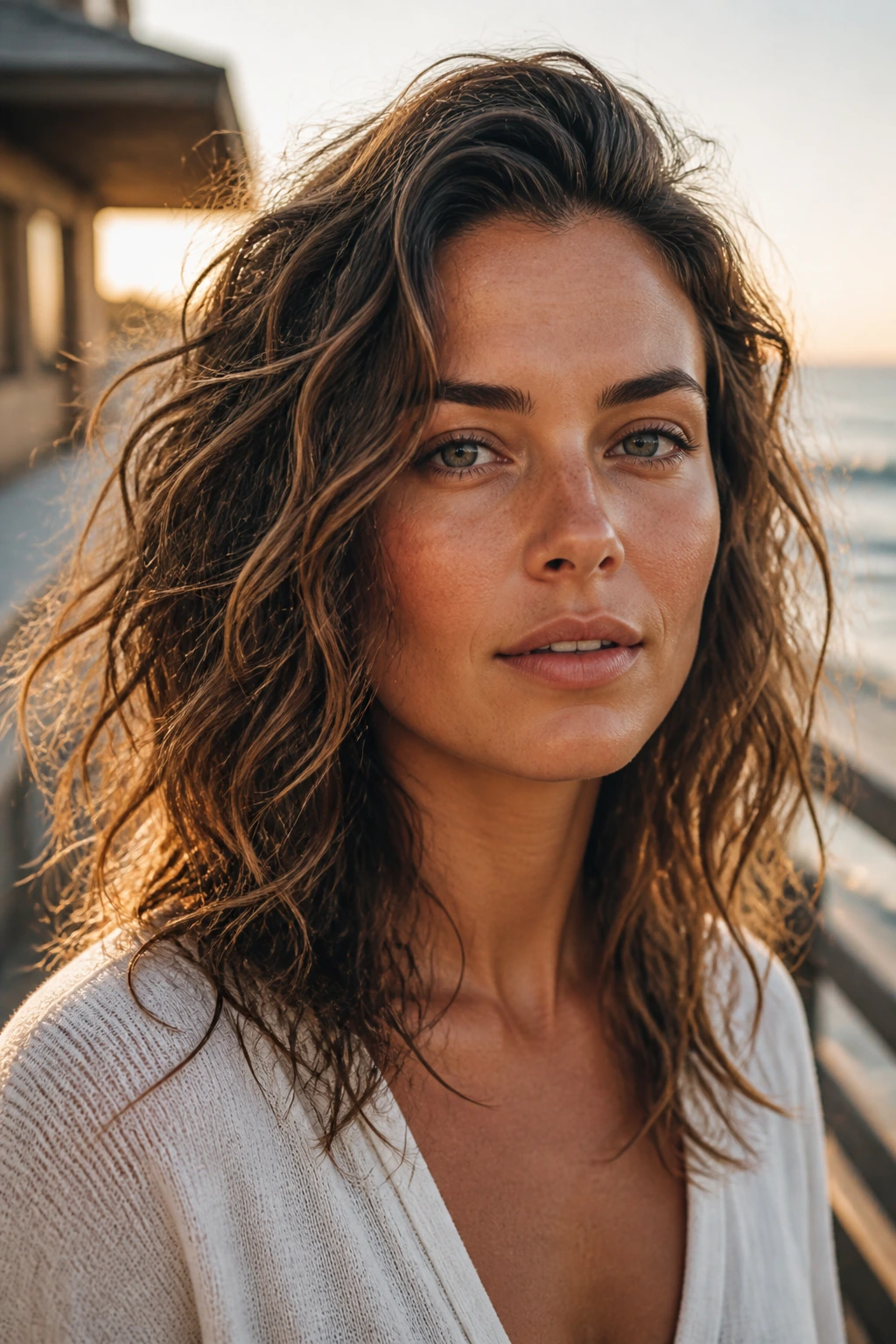
Salt spray can be overused, and when it’s overused, hair goes from textured to crispy. But a light mist on damp frizzy hair gives you grip, and grip keeps waves from falling straight and limp.
The square-face advantage here is in the roughness. Scrunched waves create irregular bends that interrupt a strong jawline. They also pair nicely with a side part or a gentle tuck behind one ear.
Use It Like This
- Mist from mid-length to ends, not roots
- Scrunch once, then let it sit
- Add a small dab of cream only if the hair feels dry
A good salt-spray wave should feel touchable, not sticky. If your fingers drag, you used too much.
14. Soft Flip-Out Waves at the Ends
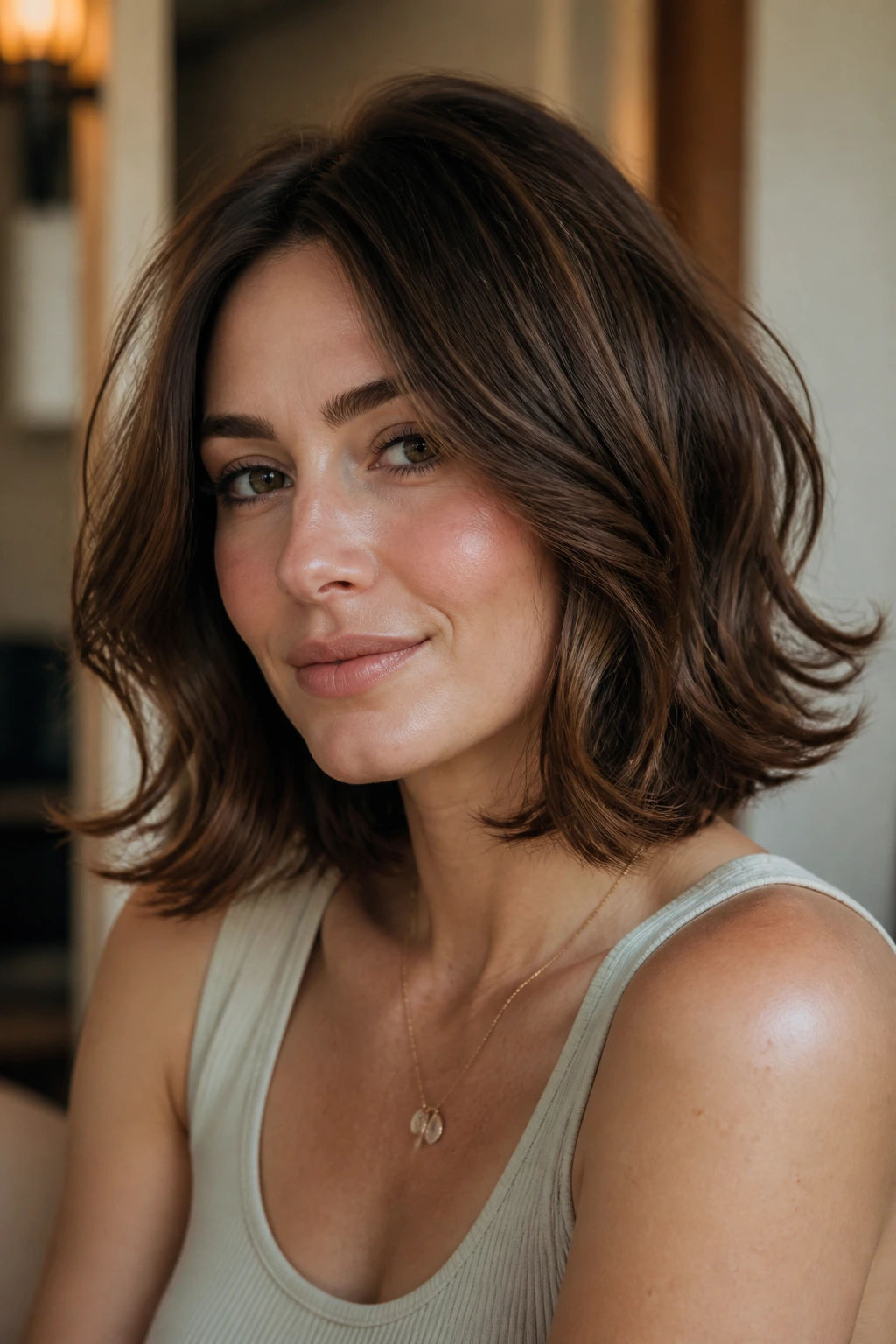
This one is more playful than most of the others. Instead of bending every section inward, you flip the ends slightly outward so the whole cut feels lighter. On square faces, that outward motion can keep the jaw from looking too boxed in by the hair.
The style works best on collarbone length or slightly longer hair. Too short, and the flip looks accidental. Too long, and the shape gets lost.
I like this look when the top is a little smoother than the ends. It gives you contrast. Clean roots, messy finish. That contrast reads as intentional even when the hair is doing its own thing.
15. Pin-Curl Set Waves
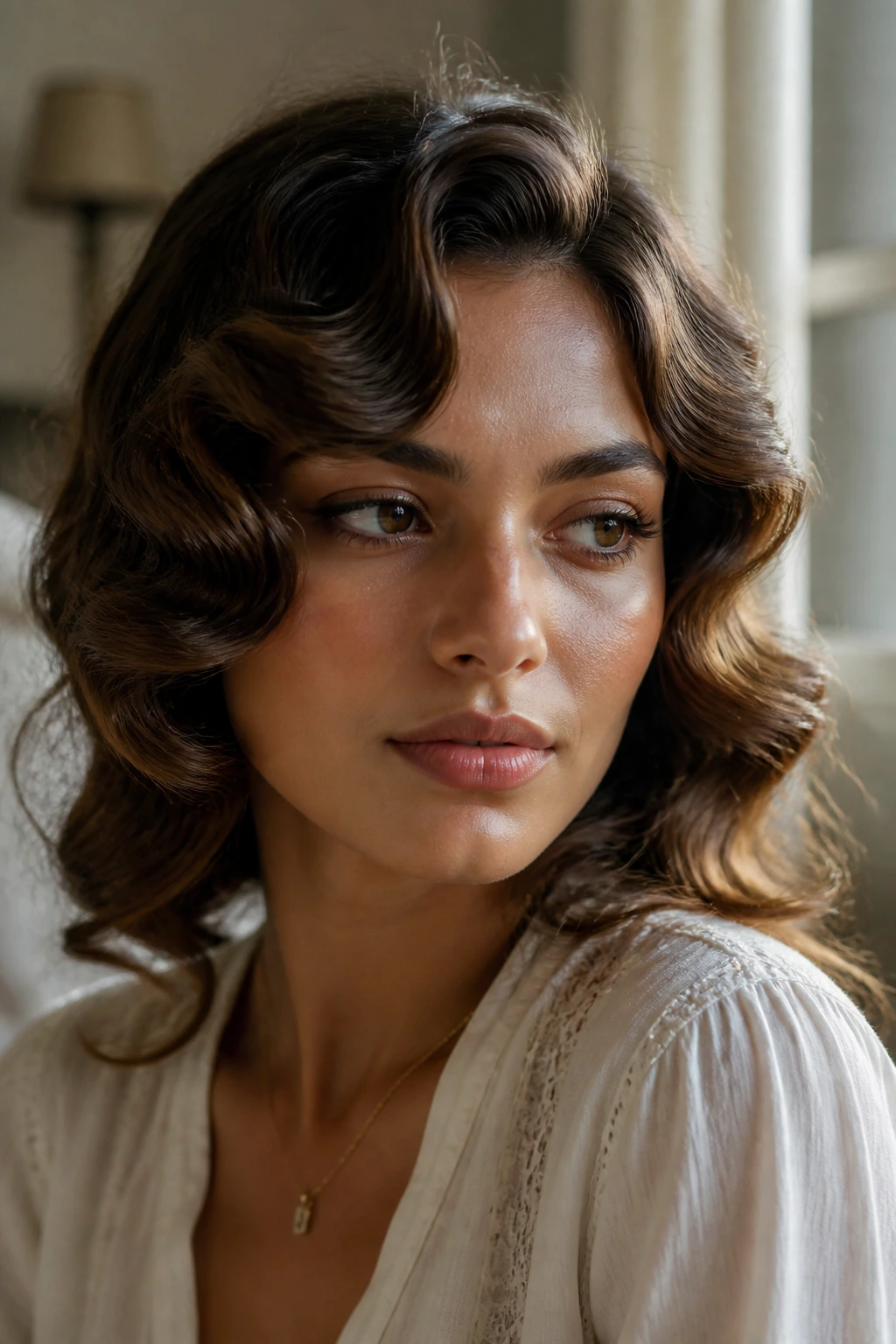
Pin curls give frizzy hair a wave that stays put longer than most heatless tricks. They’re also kinder to square faces than tight ringlets because the set opens up into a soft S-shape instead of a spiral that can crowd the jaw.
The hair should be damp, not wet. Wet pin curls take forever to dry and often collapse in the middle. Wrap each section around two fingers, pin it flat, and let it dry completely before taking anything down.
The Best Part
You can place the front curls to fall away from the face, which makes the cheekbones look a little higher. That’s a tiny detail, but it changes the whole feel.
16. Heatless Robe-Belt Waves
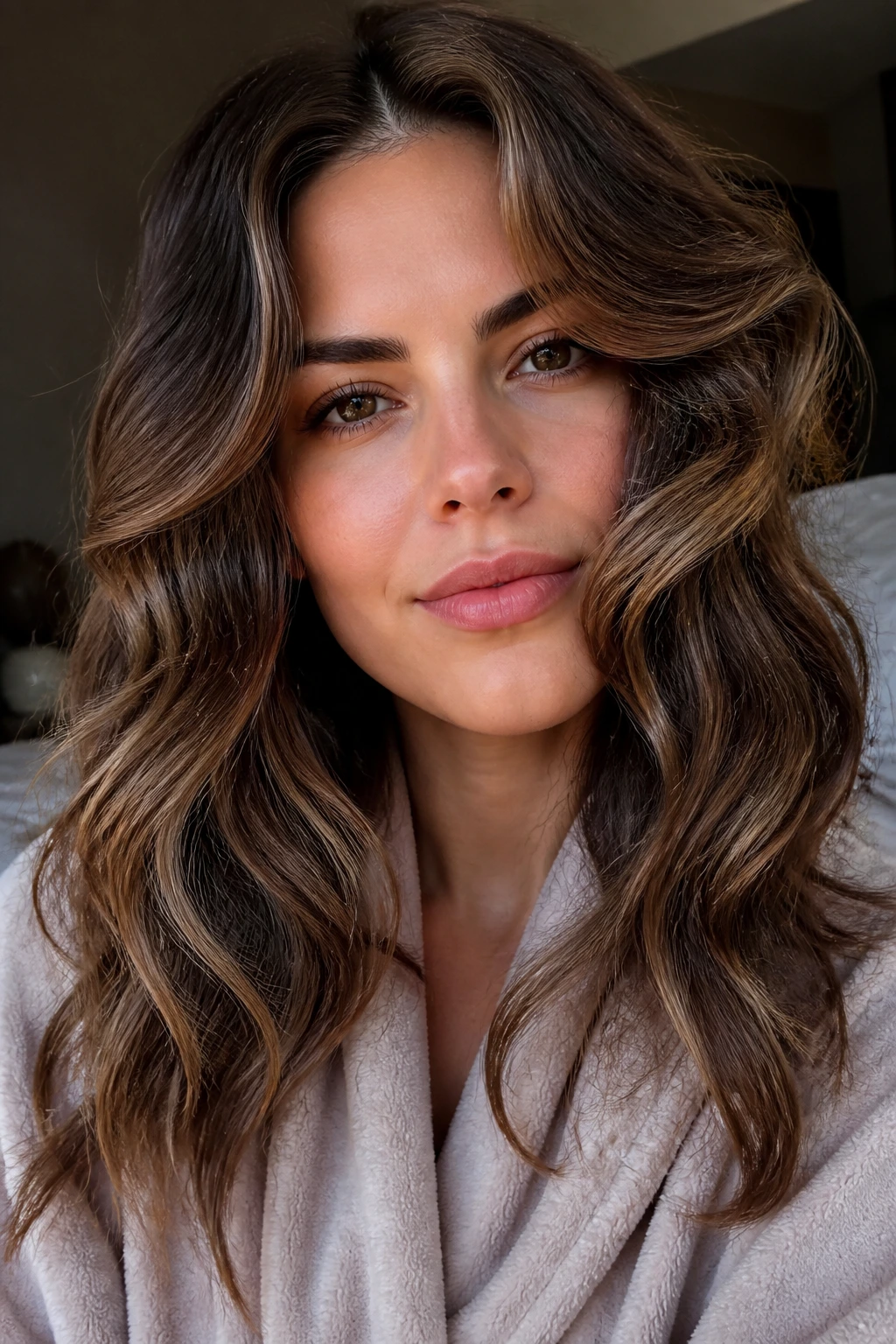
Robe-belt waves are popular for a reason: they make big, soft bends without frying the hair. On frizzy hair, they can be a bit wild if you over-wrap them, so keep the tension loose and the sections fairly even.
For square faces, the nice part is the shape you get around the temples and cheekbones. The wave usually starts higher than a curling iron wave does, so the volume sits where it can soften the face instead of hanging below it.
Use a styling cream first, then smooth the hair around the belt with your fingers. If the strands are damp in the morning, give them 10 to 15 minutes to finish drying before you separate them.
17. Polished Messy Waves With Serums
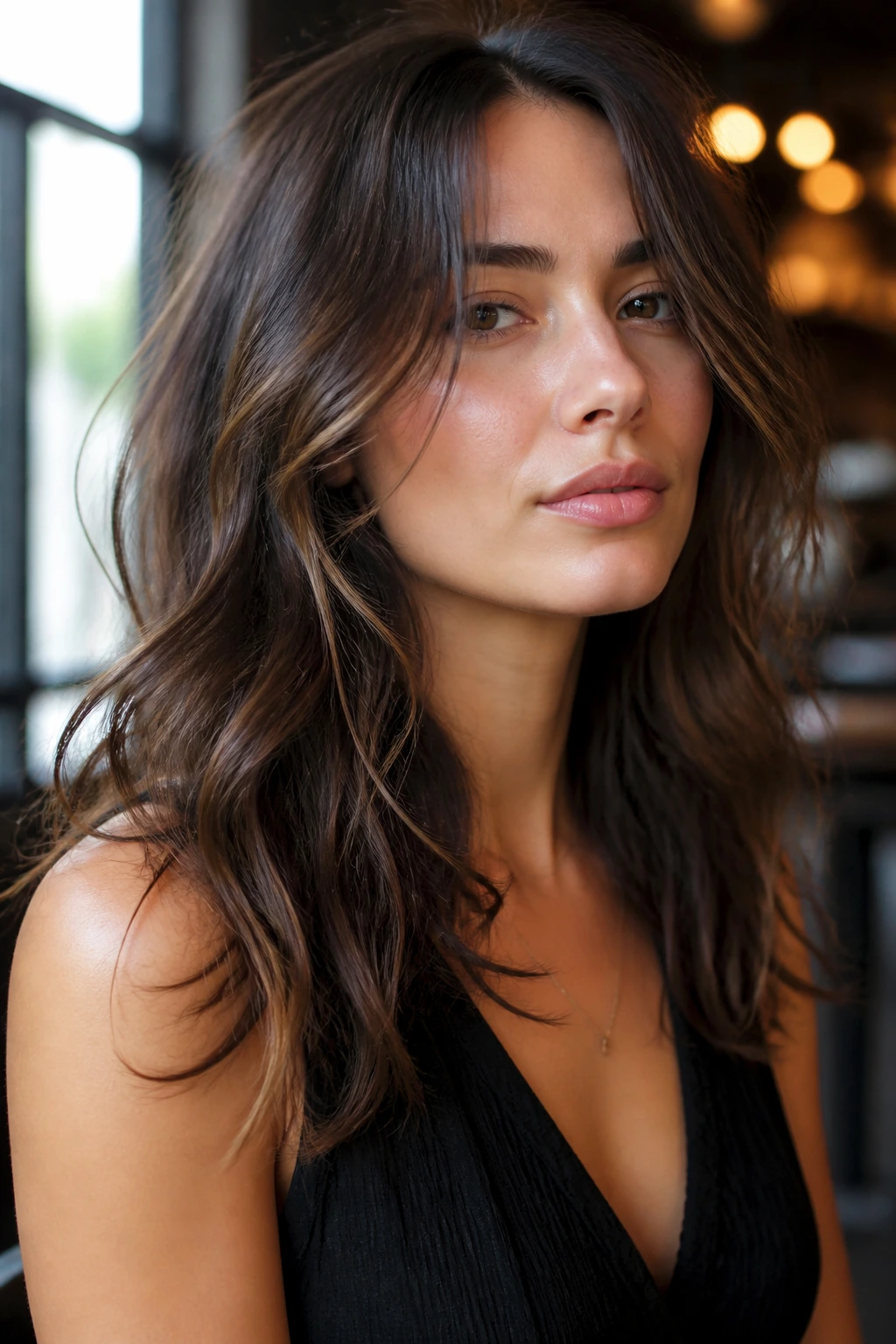
Not every messy wave has to be airy and salty. If your frizz is coarse, a little serum at the ends can tame the roughest parts while keeping the body intact. The result is still messy, but with a more refined edge.
This works because the shine lands mostly on the outer layer of hair. The wave pattern underneath stays loose. On a square face, that combination keeps the silhouette soft without making the style look fuzzy in bad lighting.
A tiny amount goes a long way. Start with one drop. Rub it between your palms until it disappears, then press it only into the mid-lengths and ends.
18. Grown-Out Bang Waves
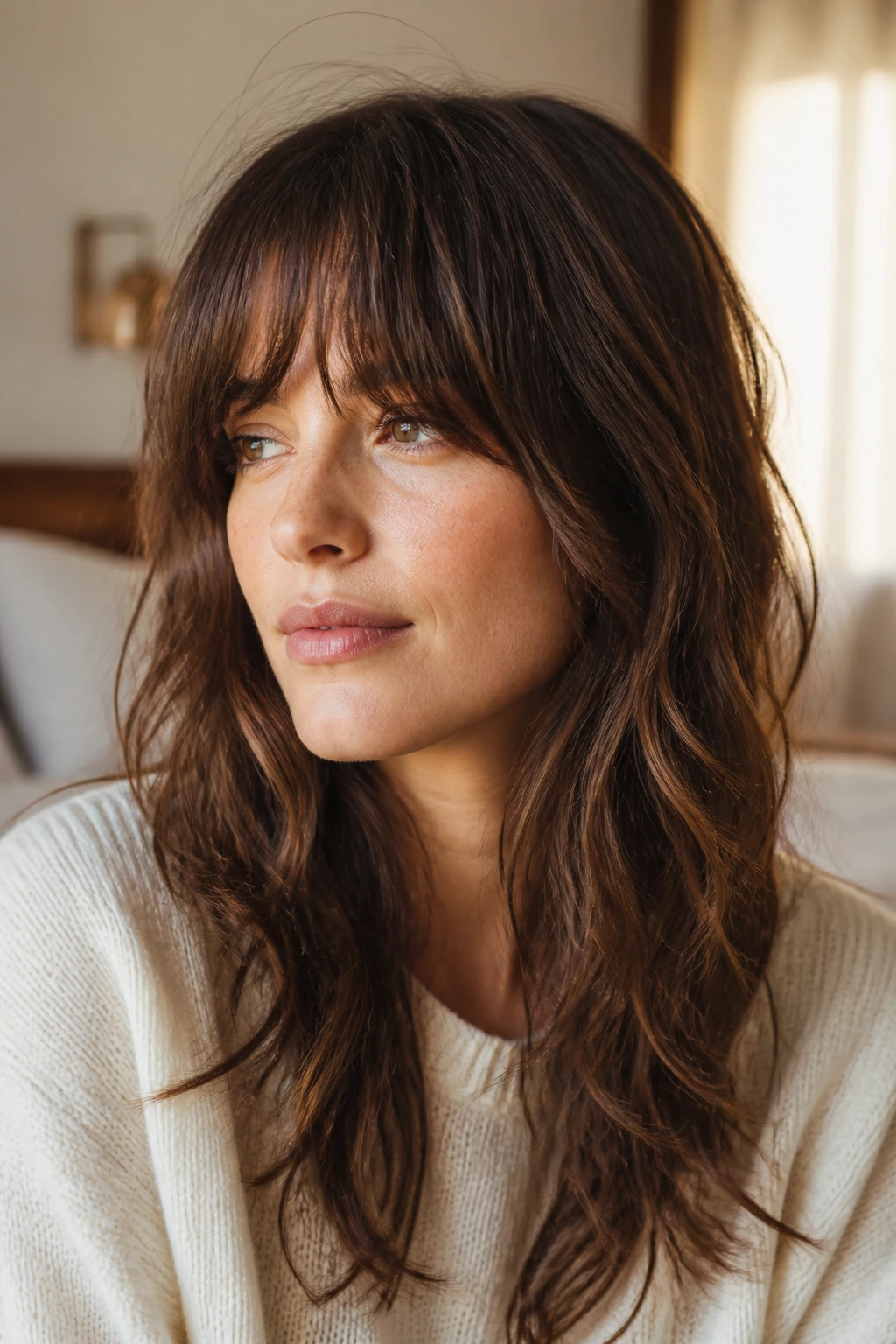
Bangs can be tricky on square faces, but grown-out bangs are a different story. When they’re long enough to sweep into the wave pattern, they soften the forehead and lead the eye diagonally, which is flattering on a face with strong corners.
The hair around the bangs should not be too polished. A little bend and separation makes the fringe feel part of the wave, not pasted onto it. If the bangs are too straight, the contrast gets harsh.
- Best with side-swept or curtain-style fringe
- Use a round brush only at the root
- Keep the ends loose
If you have a cowlick, don’t fight it too hard. Work with its direction and let the wave absorb it.
19. Wet-Root, Dry-End Waves
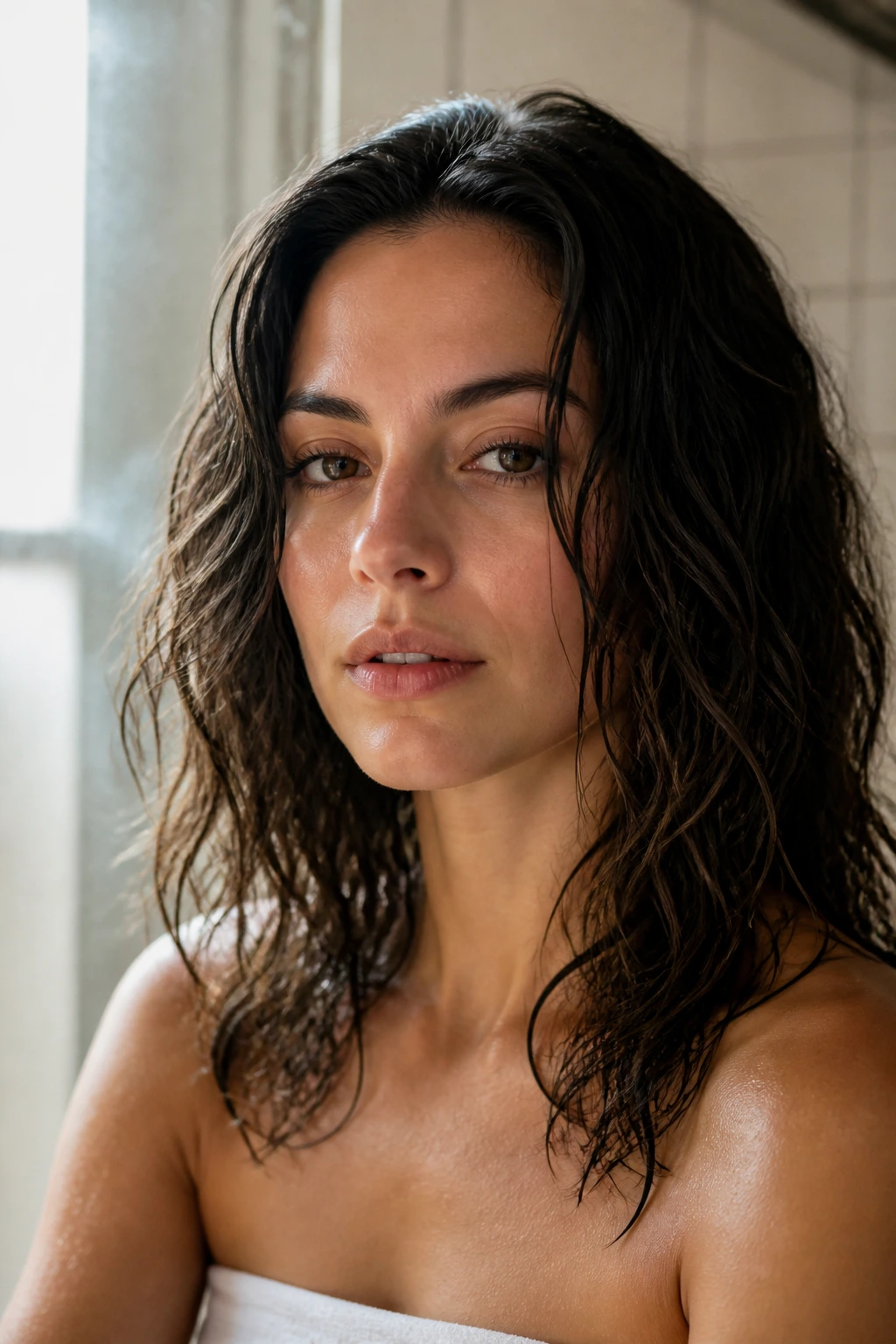
This is a practical style for humid weather and unruly frizz. The roots get a smoothing product and a controlled dry, while the ends stay more textured and open. That difference keeps the top from expanding like a puffball.
Square faces benefit because the controlled root helps the head shape look narrower, and the messy ends provide the softness lower down. It’s a smart contrast. Clean at the top, loose at the bottom.
Use a blow dryer with a nozzle or a diffuser just at the roots. Stop once they’re about 90% dry. Let the ends air-dry. If you over-dry the whole head, you lose the contrast that makes this one work.
20. Casual Updo Waves With Tendrils

Sometimes the best way to wear waves on a square face is to pull most of the hair back and leave the soft pieces to do the face-framing. A low twist, loose bun, or clipped-up wave can keep the shape from widening at the jaw while the tendrils soften the front.
The tendrils should be purposeful. Leave one near each cheekbone, and if your hair is long enough, another thin piece near the nape. Too many loose bits and the look goes fuzzy. Two or three is enough.
This is the one I’d pick for days when frizz is doing too much. You keep the texture, but you stop it from taking over the face.
21. Airy Wedge Waves for Shorter Lengths
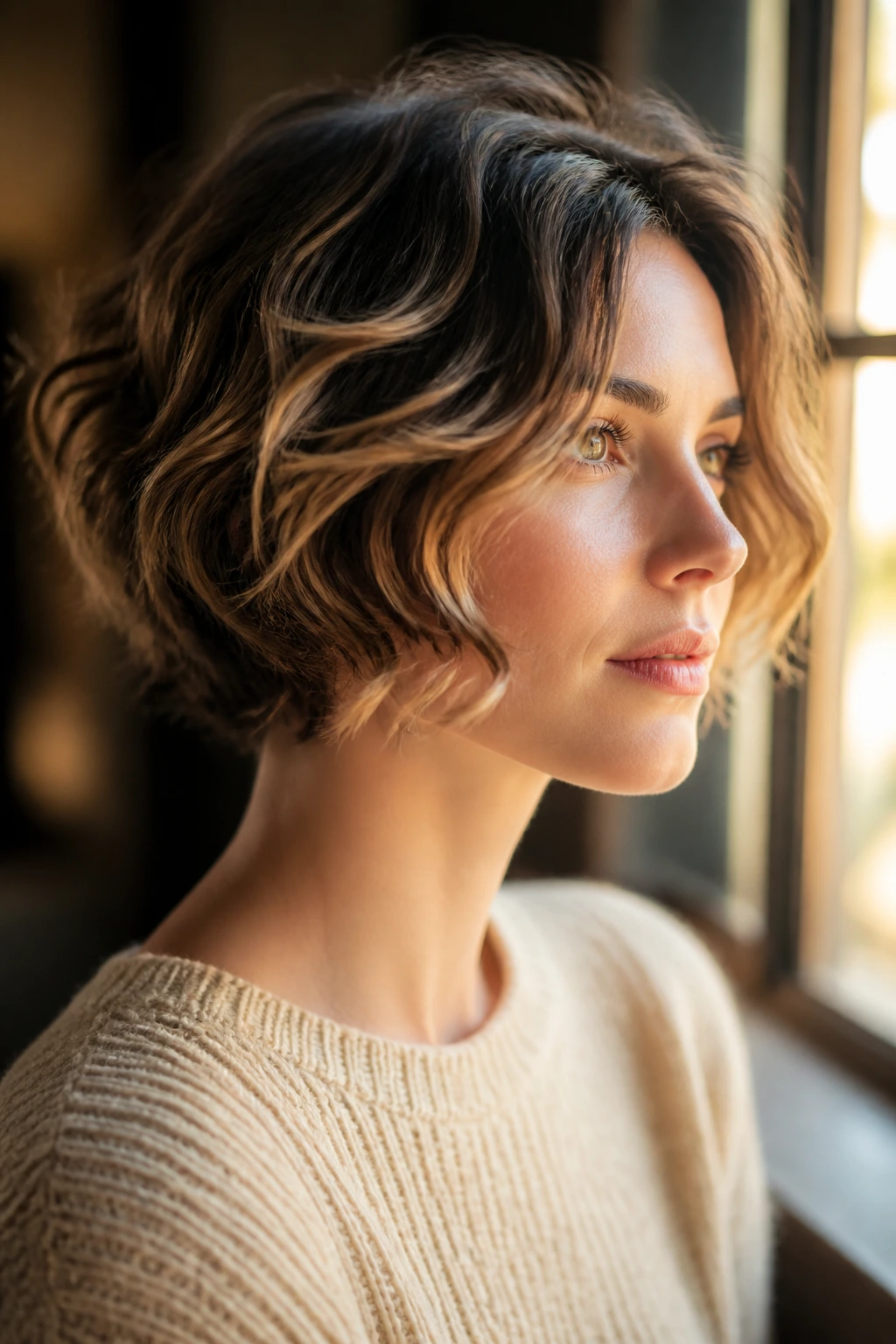
Short hair can still do messy waves, and on square faces a wedge shape can be especially flattering if the volume is placed carefully. The back stays a touch shorter and fuller, while the front pieces stay longer and softer so the jawline doesn’t look boxed in.
The wave should not be uniform from root to tip. Start the bend mid-shaft and let the ends flick a little. That gives the style air. It also keeps short frizzy hair from collapsing into a triangle.
A 3/4-inch iron or a small flat iron bend works well here. Keep the pieces vertical, not horizontal, if you want movement instead of puffs.
22. Face-Softening Layered Long Waves
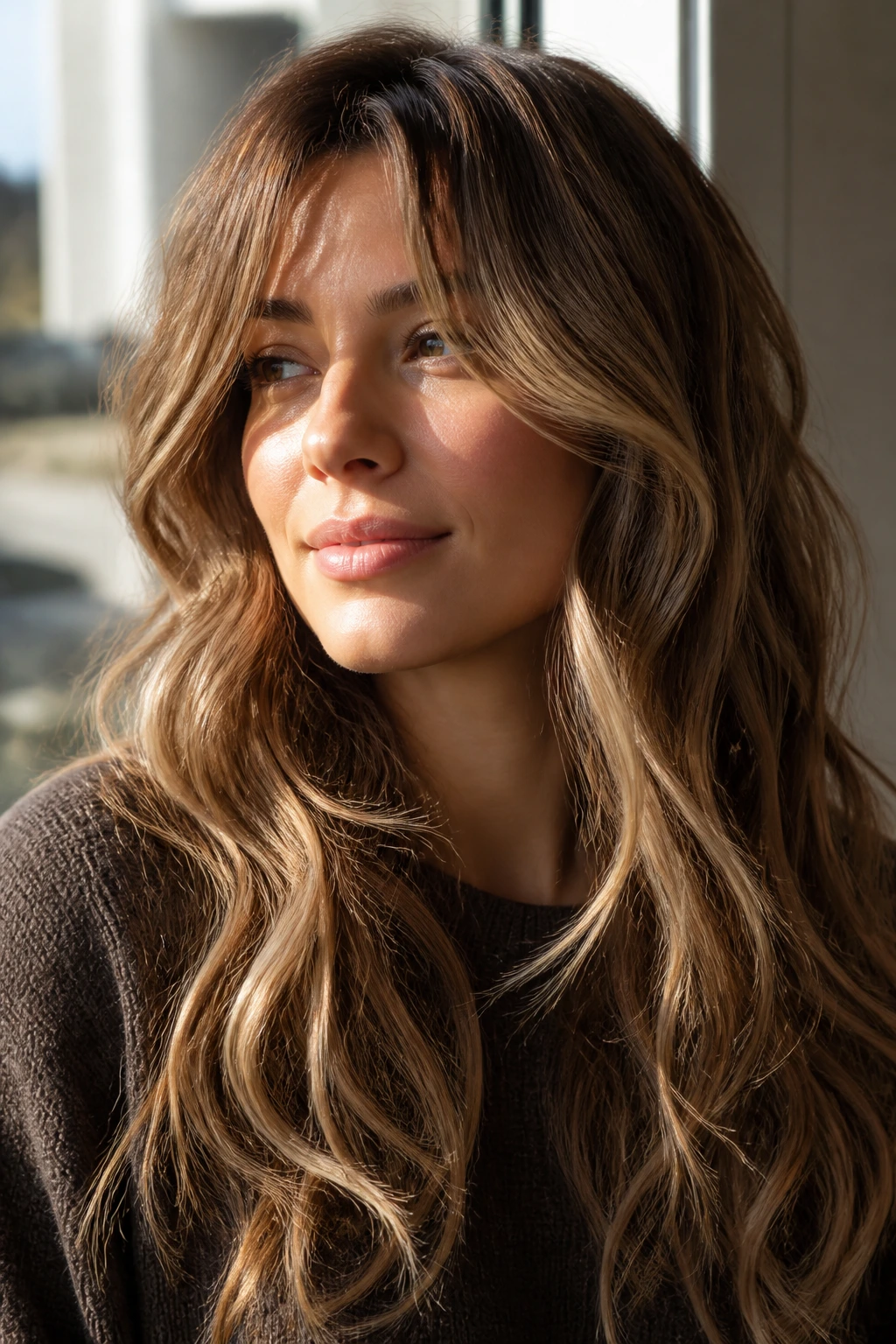
This is the most forgiving version in the whole bunch. Long layers keep the wave from sitting as one big sheet, and the front pieces can be guided to skim the cheekbones instead of meeting the jaw head-on. If you want the safest square-face option, this is it.
The style should feel loose at the bottom and lifted at the top. That combination keeps the face open. The waves don’t need to be identical, either. A little difference from one side to the other makes the whole thing feel less rigid.
Best For
- People who want length without a heavy outline
- Hair that puffs when it loses structure
- Anyone who likes soft movement more than defined curls
Ask for layers that begin below the chin, then style the front pieces away from the face. That one choice does a lot of the work.
The Shape Behind the Texture
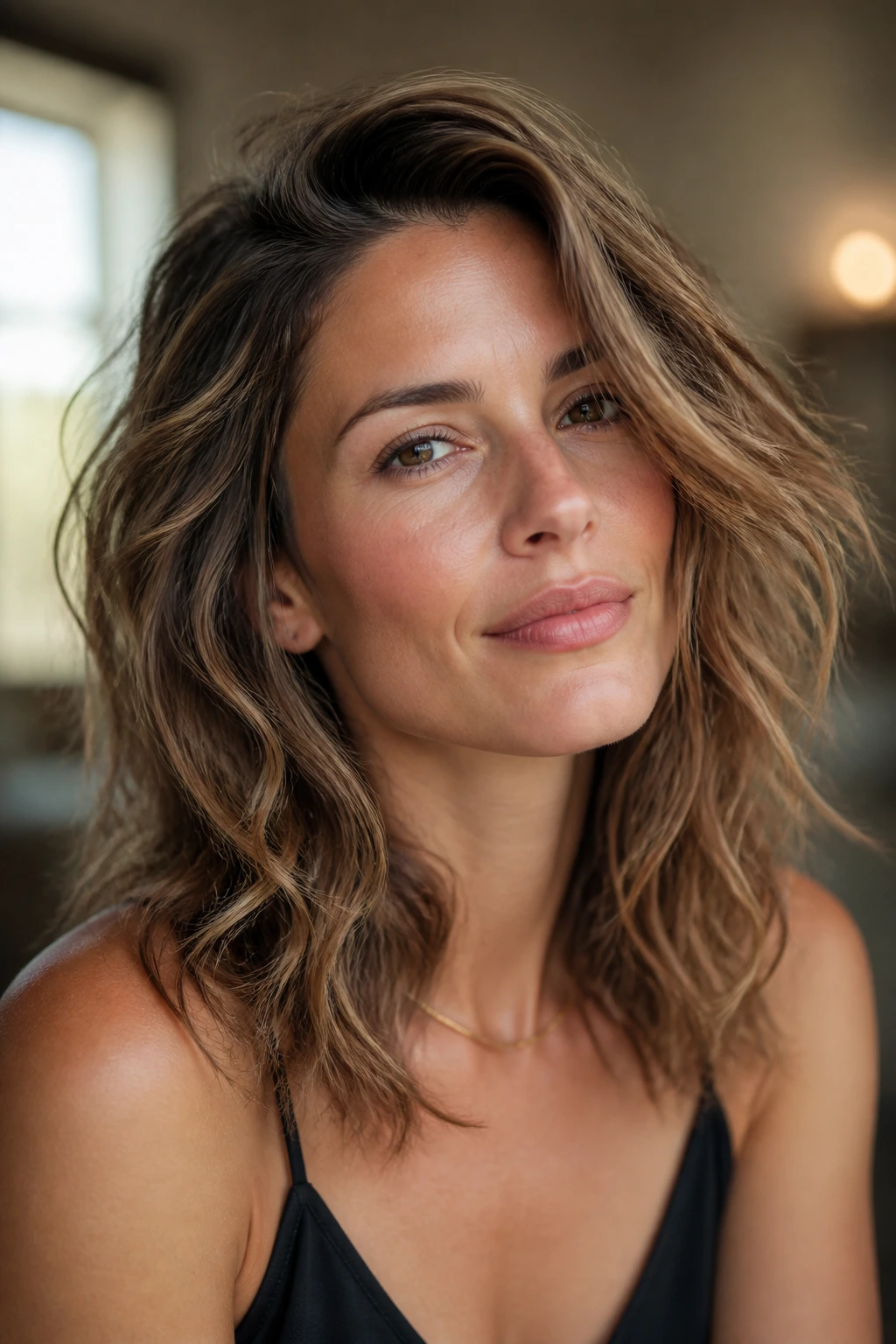
Square faces and frizzy hair usually get treated like a styling problem. I don’t think that’s the right frame. The face has strong lines. The hair has movement. Put them together in the wrong way and the effect can feel blunt; put them together well and the whole look loosens up.
The best messy waves here are not trying to erase texture. They’re arranging it. That shift matters. A side part here, a face-framing piece there, a little lift at the crown, a little slack at the ends—that’s the whole game.
Essential Tools for Frizz-Friendly Waves
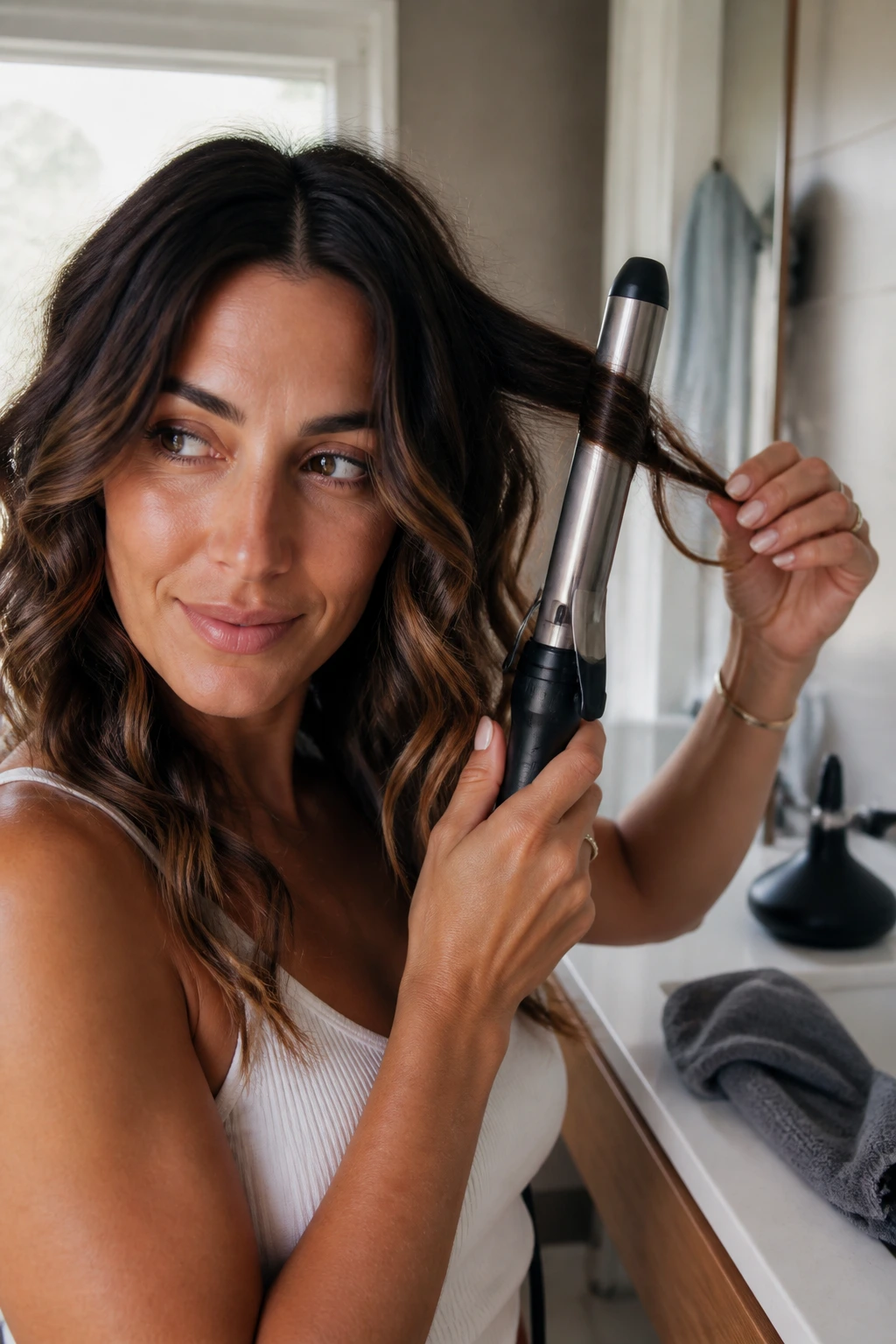
- 1-inch curling iron or wand: Best for creating loose bends without turning the hair into tight spirals.
- Diffuser attachment: Helps set texture with less frizz than a hot, direct blast of air.
- Wide-tooth comb: Good for distributing product through damp hair without tearing apart the wave pattern.
- Microfiber towel or cotton T-shirt: Cuts down on rough towel friction, which matters more with frizzy hair than most people realize.
- Sectioning clips: Make it easier to keep the front pieces intentional while the rest dries or sets.
- Satin scrunchies: Better than elastic bands for braid sets, half-up styles, and overnight waves.
- Lightweight curl cream or mousse: Pick one or the other first; using too much of both is how waves collapse.
- Flexible-hold hairspray: Keeps the style moving instead of freezing it into a shell.
- Dry shampoo: Useful at the roots on day two, especially if the crown goes flat while the ends stay puffy.
- Satin pillowcase or bonnet: Keeps the cuticle from roughing up overnight and helps the wave pattern last.
How to Choose Products and Cuts That Help the Shape
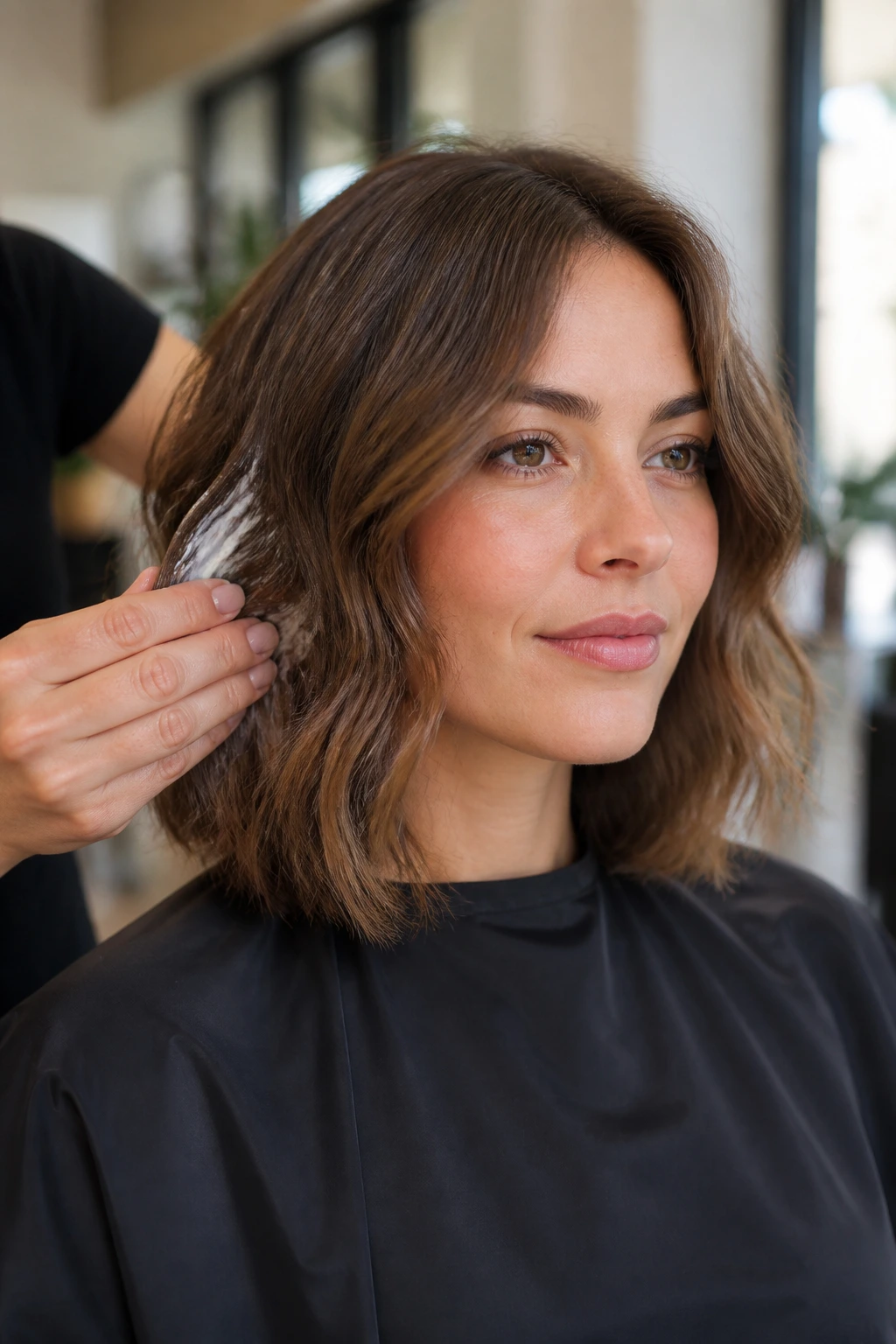
Frizzy hair usually needs less product than people think and more of the right product in the right place. Heavy cream all over the head can make the top droop and the ends clump. A better move is to put smoothing product where the frizz is loudest—often the outer layer and mid-lengths—and leave the roots a little lighter so they can keep their lift.
If your hair is coarse, a cream plus a light spray can be enough. If it’s finer but frizzy, mousse tends to behave better because it gives body without weighing down the wave. And if you’re dealing with humidity, look for a finish that says flexible or anti-frizz rather than glossy and heavy; glossy products often flatten the exact volume square faces need.
The cut matters just as much as the products. Long layers that start below the cheekbone are a safe bet. Curtain pieces, side-swept fringe, and a soft lob all help. What tends to work less well is a blunt line ending exactly at the jaw. That can make the face look wider and the hair look like it was cut with a ruler.
One more thing. If your hair grows big at the sides, ask for shape at the crown and softness around the perimeter, not extra width at the cheeks. That single sentence will save you a bad haircut.
How to Wear These Waves Without Fighting Your Face Shape
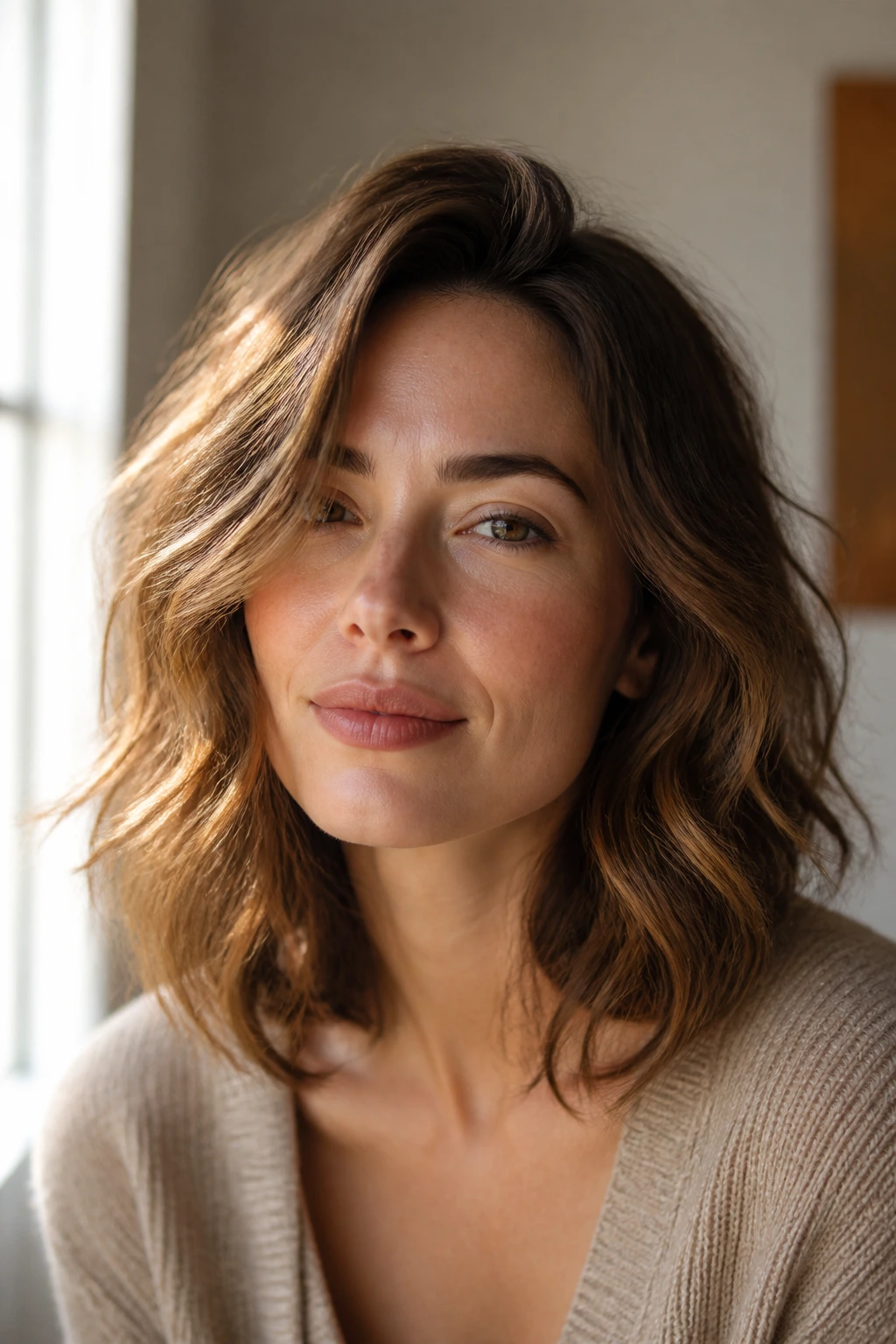
Presentation: Keep the most visible wave movement above or below the jaw, not sitting right on it. A slight off-center part, a lifted crown, and softer front pieces do more for a square face than uniform curls ever will.
Pairings: Soft necklines, open collars, and earrings that move a little tend to keep the look from feeling too angular. A sharp square neckline can echo the face shape in a way that feels heavy; a scoop or V-neck gives the waves room to do their job.
Proportion: If your hair is short, use tighter control near the roots and more looseness at the ends. If it’s long, keep the face-framing pieces intentional so the length doesn’t drag the style down.
Finish: Leave one or two pieces imperfect on purpose. That tiny bit of separation keeps the style from looking overdone, and on frizzy hair it often looks more polished than fighting for sameness.
Extra Texture Boosters and Personal Tweaks
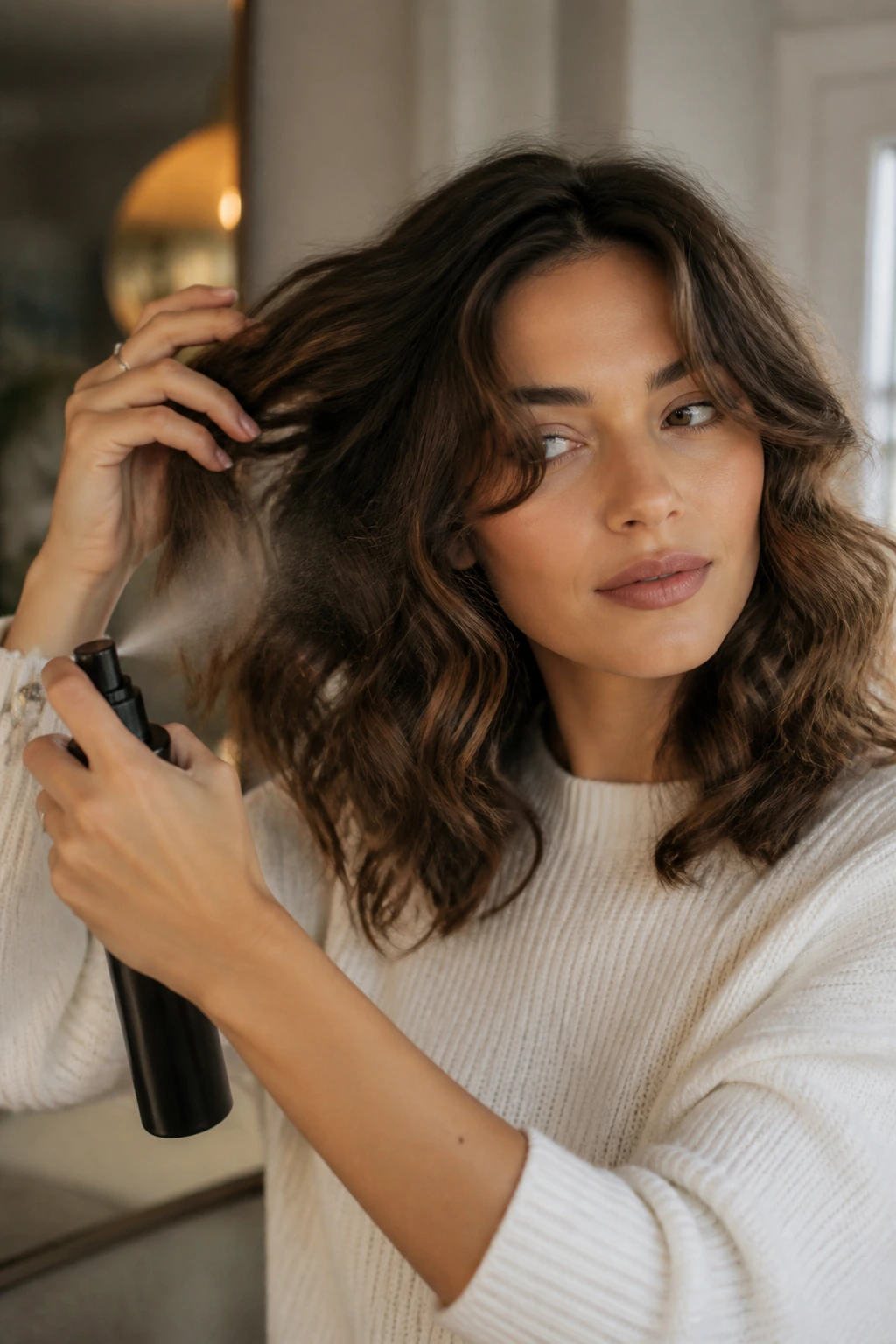
Texture Boost: If the wave looks too soft after drying, mist a little texturizing spray through the mid-lengths and squeeze once with your hands. Do not keep scrunching. That’s how a soft wave turns into a frizz cloud.
Customization: For coarse hair, use more cream and less spray. For fine hair, flip that ratio: mousse at the roots, a tiny bit of cream only at the ends. The goal is control, not coating.
Serving Suggestions: Tuck one side behind the ear, clip one front piece with a small barrette, or leave a narrow section loose around the cheekbone. Those small decisions change the whole mood of the style.
Make-It-Yours: If you like more polish, smooth the top with a boar-bristle brush before waving the lengths. If you like more grit, rough-dry the roots and leave the surface texture alone. Both paths work; they just land in different places.
Keeping Messy Waves Going Between Washes
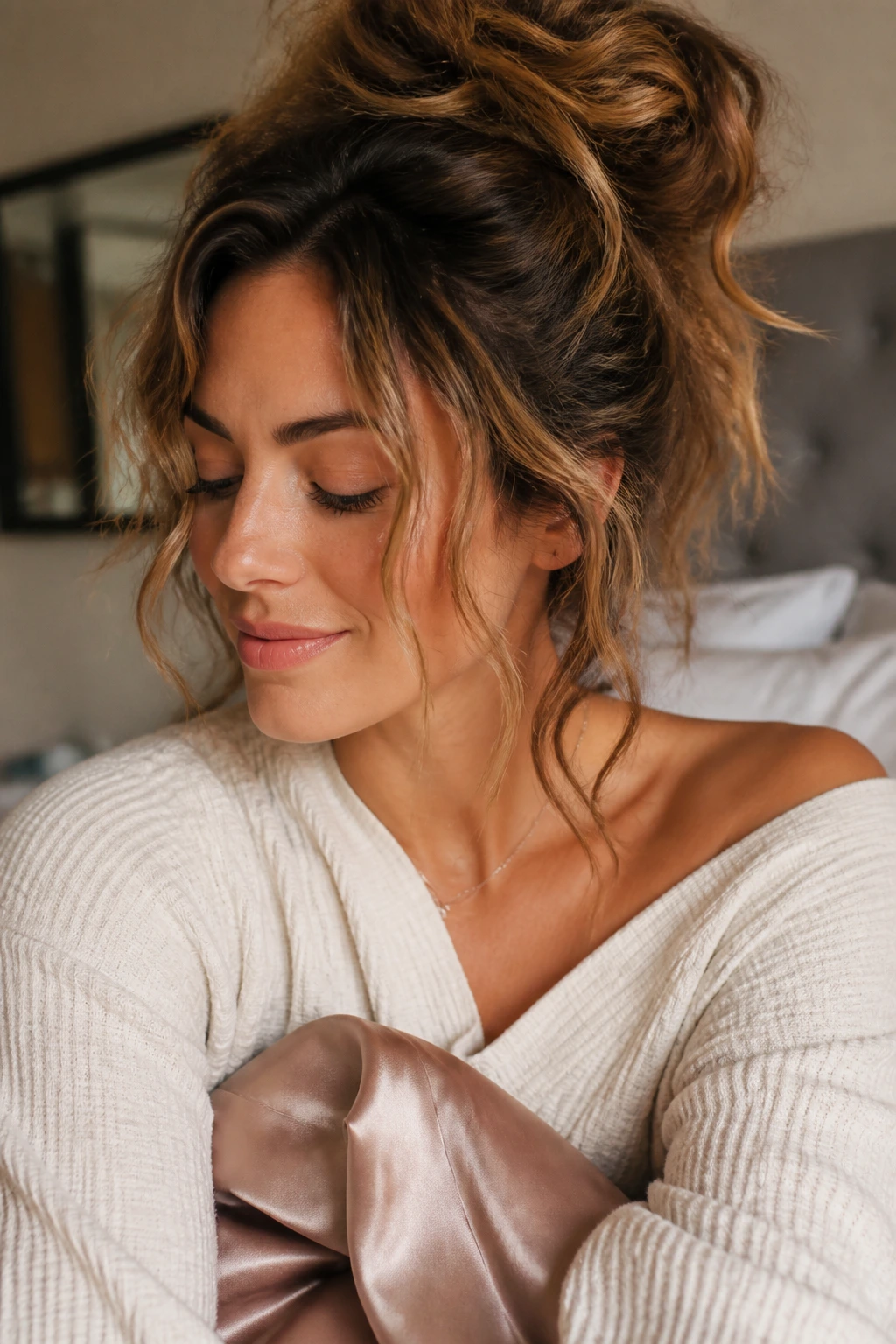
Messy waves usually look best on day one or day two, but they can last longer if you treat them like texture, not a style you can bully back into shape every morning. Sleep on a satin pillowcase or gather the hair into a loose pineapple at the crown. The goal is to protect the wave pattern without flattening the top.
If the roots go flat overnight, use dry shampoo at the crown and wait a minute before rubbing it in. That pause matters. It gives the powder time to grip the oil instead of disappearing into the hair. For the lengths, a quick mist of water mixed with a drop of leave-in can wake the wave back up. Don’t soak the whole head unless you want to start over.
Most of these styles can be refreshed for 2 to 3 days before they need a full wash. Pin-curl sets and robe-belt waves may stretch a little longer if you keep them covered at night. Air-dried styles usually need the fastest refresh because the surface frizz creeps back first.
The thing to avoid is daily brushing. Brushing breaks the wave into fuzz and expands the widest parts of the style right where you don’t want them. Use fingers or a wide-tooth comb with a little product instead. Slow. Gentle. Annoying, maybe, but effective.
Common Mistakes That Make the Style Look Boxy
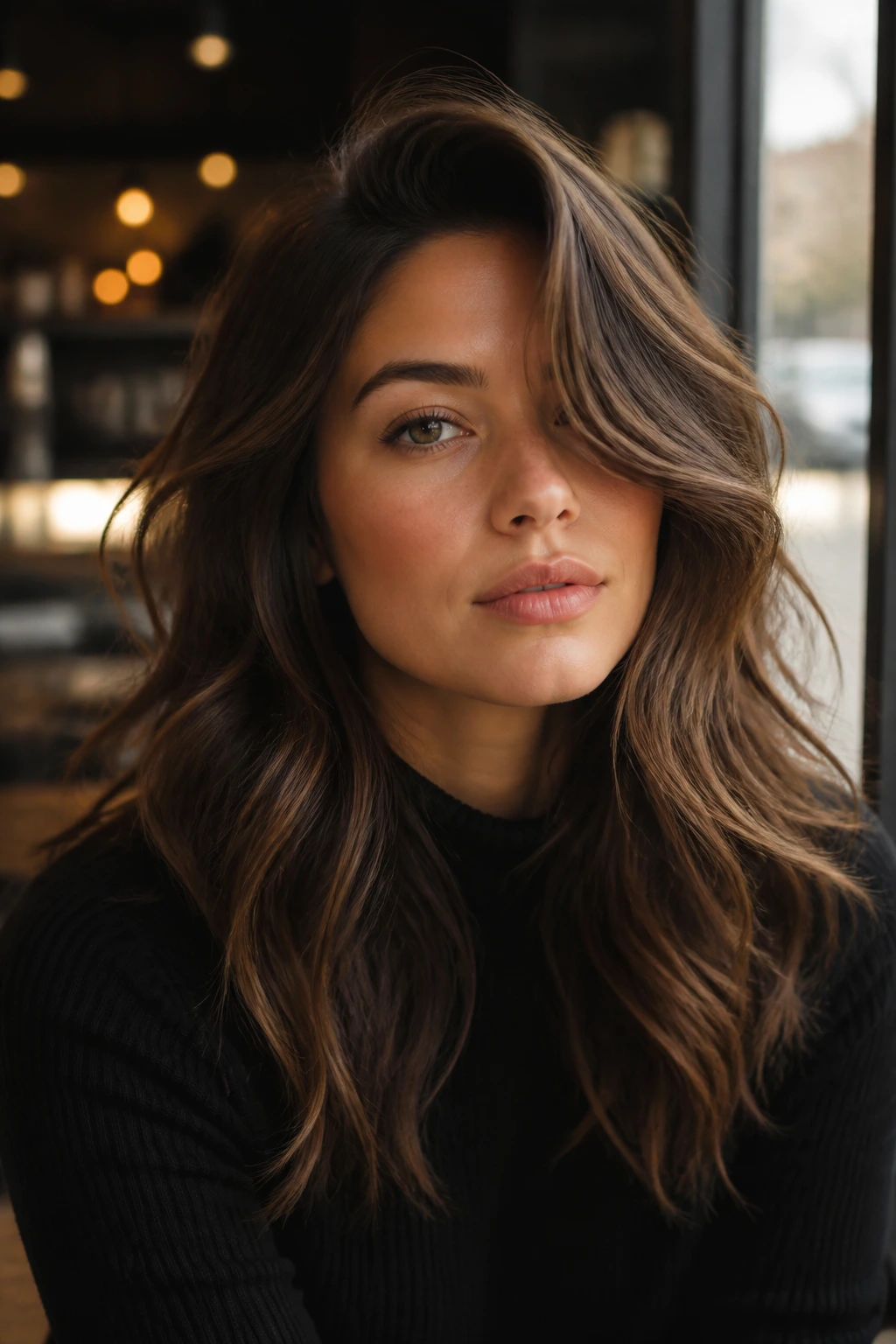
Too much volume at the jaw: If the hair puffs widest right where the jawline sits, the face can look broader. Shift the volume upward with layers, a side part, or a half-up shape.
Uniform waves from root to tip: That neat, even pattern can make the style feel helmet-like. Break it up with straighter ends, a few skipped sections, or different bend sizes.
Brushing out frizz too hard: A brush can turn texture into expansion. Use fingers once the hair is dry, and only use a brush when you’re reshaping damp hair.
Overloading the hair with cream: Heavy product weighs the roots down and makes the ends stringy. Start small. Add more only where the hair feels dry.
Ending the wave at the exact jawline: That’s the line that can make a square face look even squarer. Better to start the bend higher or let it fall lower.
Skipping hold entirely: Soft waves without any hold collapse fast. A flexible spray or light mousse keeps the shape from vanishing the moment you step outside.
Variations and Adaptations to Try
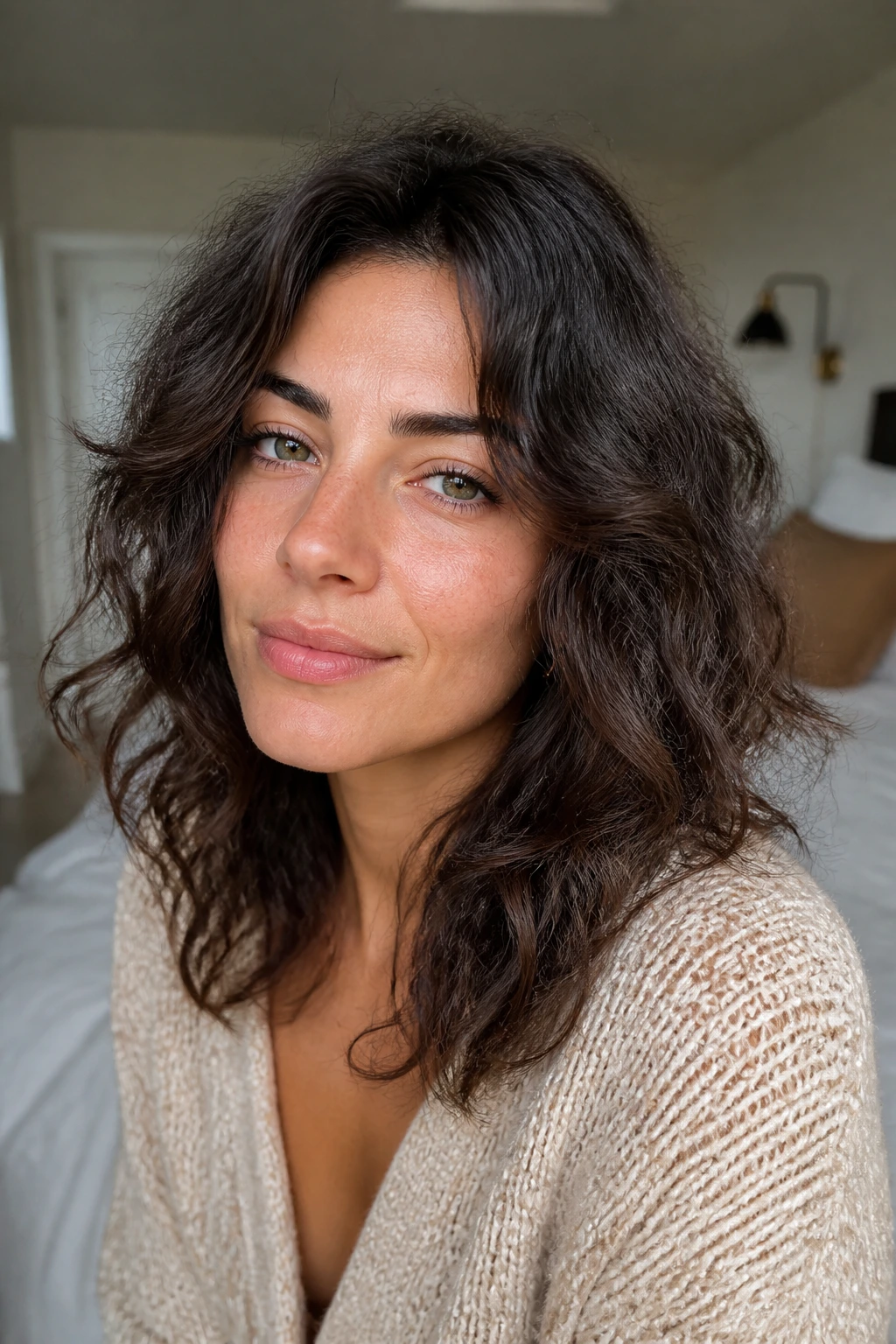
The No-Heat Wave: Braid damp hair, sleep on it, then separate the waves with oiled fingers in the morning. This is the easiest choice if your hair feels fried or you want less daily manipulation.
The Diffused Soft Bend: Use cream and mousse, then diffuse on low until the roots are about 80% dry. It gives the hair more polish than an air-dry but still keeps the texture loose.
The Short-Lob Fix: If your hair hits the chin or collarbone, keep the front pieces longer and the back slightly stacked. That stops the style from widening at the cheeks and gives the wave a cleaner fall.
The Bang-Friendly Version: Let curtain bangs or grown-out fringe blend into the front wave instead of forcing them straight. This softens the forehead and keeps the style from feeling chopped up.
The Humidity Shield: Use a smoothing serum on the outer layer, then finish with a humidity-resistant spray. It will not make frizz disappear, but it does keep the shape from exploding by lunchtime.
The Coarse-Hair Version: Add more moisture in the form of leave-in conditioner and keep the wave pattern larger and looser. Tight bends often fight coarse texture; broad bends usually cooperate.
Questions People Ask About Messy Waves on Square Faces
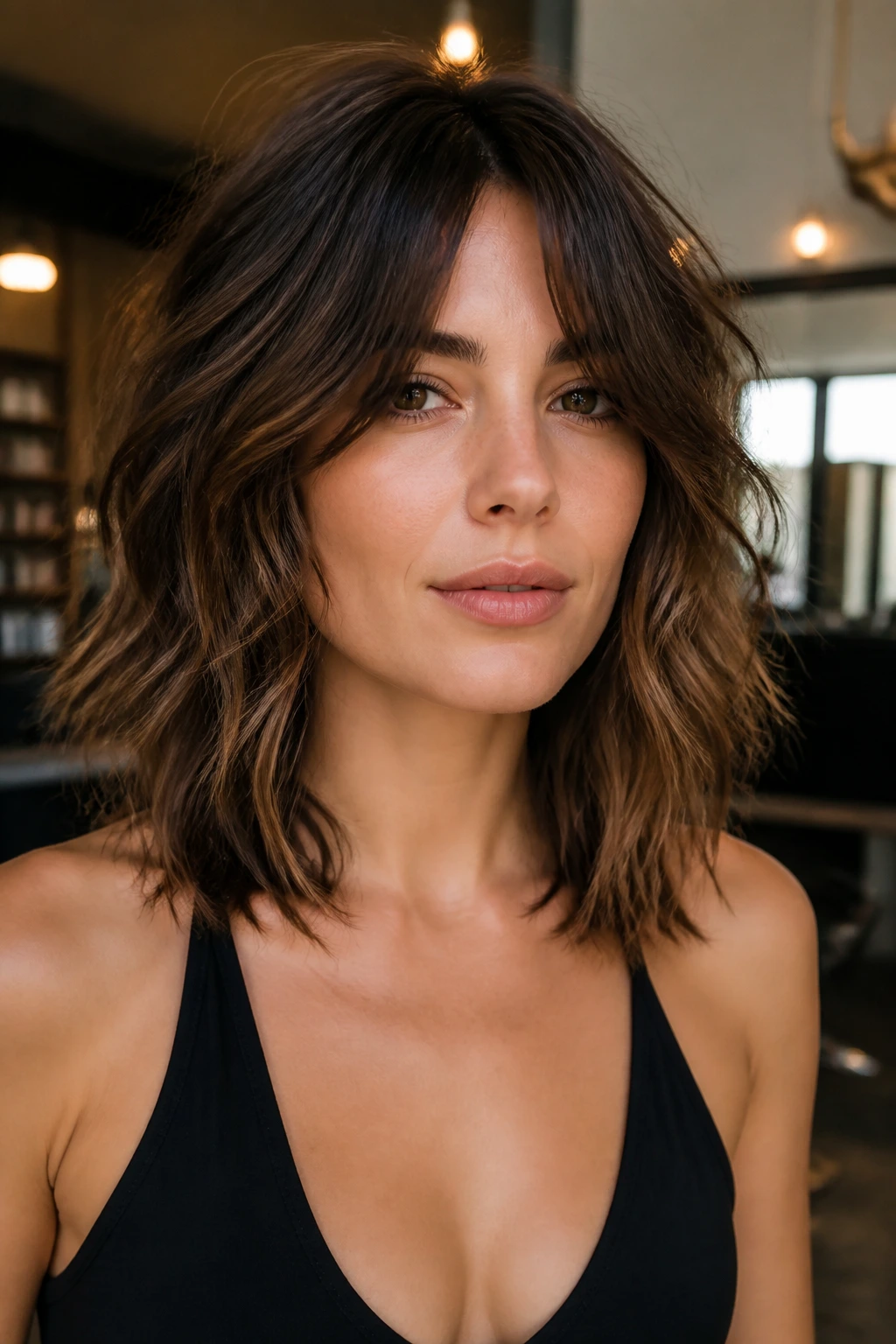
Will messy waves make a square face look wider?
They can, if the widest part of the style sits right at the jaw. The fix is to keep the movement softer at the cheeks, lift the crown a bit, and use a side part or front pieces that fall diagonally across the face.
Should I avoid a center part?
Not always. A very straight center part can make a square face feel more severe, but a loose, slightly off-center part often works fine. If you like the middle, break it up with face-framing pieces and softer ends.
What length works best for frizzy hair and a square face?
Collarbone length through long layers tends to be the safest range. That said, a short lob or shag can work if the cut has enough softness around the face and enough movement at the crown.
Can I do this without heat?
Yes. Braid sets, robe-belt waves, pin curls, and twist-outs all work well on frizzy hair. Heat gives you faster control, but it is not required for softness.
What if my frizz turns into puff by afternoon?
That usually means the hair is too dry or too brushed out. Use less product at the start, protect the hair while sleeping, and refresh only the mid-lengths with a light mist instead of rewetting the whole head.
Is mousse better than cream?
For fine or easily weighed-down hair, usually yes. For coarse or very dry hair, a cream may calm the surface better. Many people do well with both, but only in small amounts and in different zones.
How do I keep the wave from collapsing at the roots?
Don’t load product on the crown, and don’t pin or tie the hair too tightly when it’s damp. A little lift at the root with a diffuser, clip, or round brush gives the wave somewhere to live.
Can a square face wear big waves?
Absolutely, as long as the wave is broken up and not too symmetrical. Big waves can be flattering when they start below the cheekbone and move past the jaw instead of stopping there.
Soft Angles, Better Texture
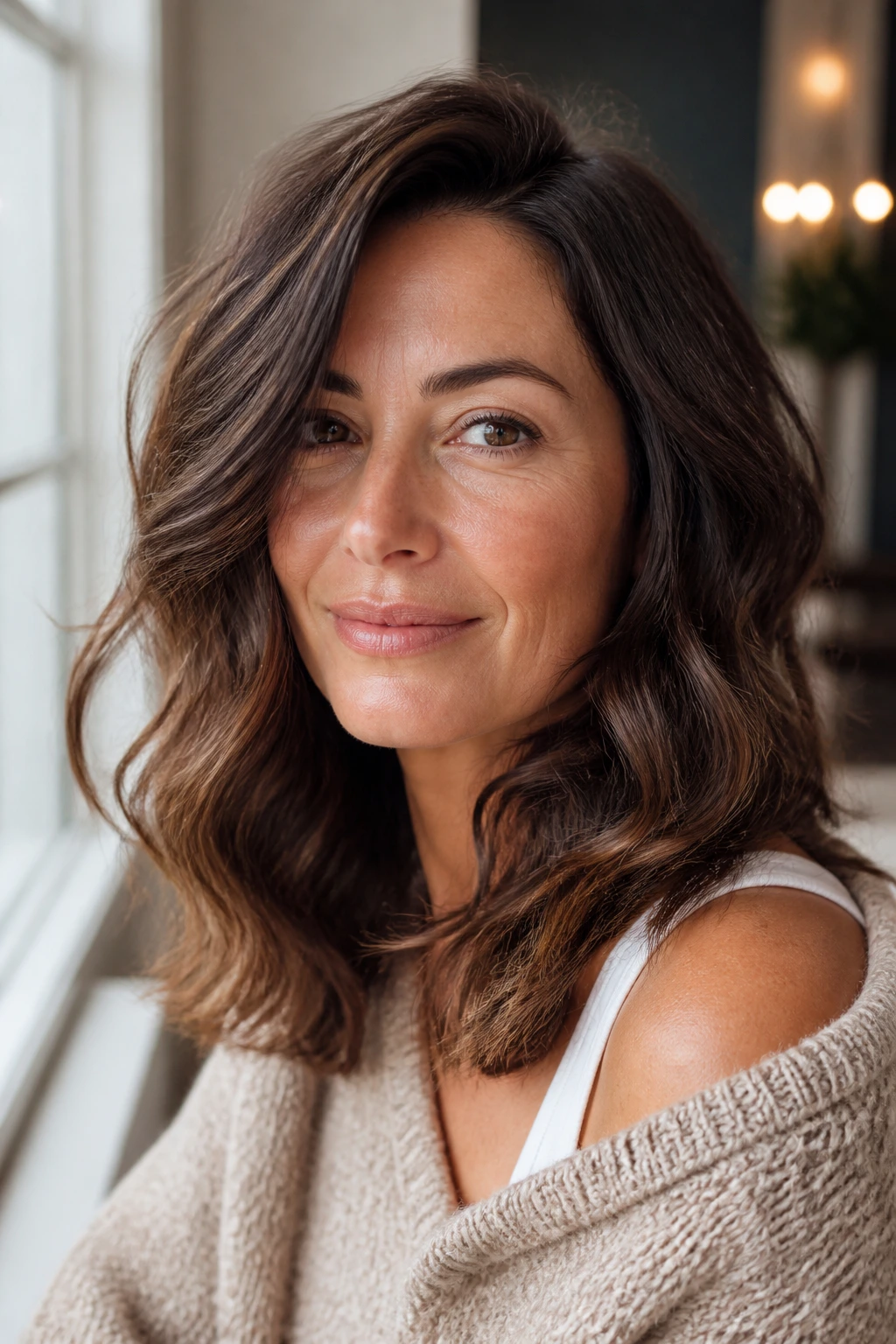
Messy waves are one of those styles that gets better when you stop asking the hair to behave like someone else’s hair. Frizz brings body. Square faces bring structure. Put them together with a side part, the right layers, and a little slack at the ends, and the whole thing starts to feel easy in a way straight styles rarely do.
I’d start with the version that matches your length first, then test how much softness your face wants around the cheeks. Some people need more front pieces. Some need more crown lift. Some need less product and more patience. The shape tells you pretty fast.
Pick one wave, wear it for a day, and see where the hair wants to break. That usually tells you more than any mirror selfie ever will.