



Shoulder-grazing curls sit in that interesting middle ground where a haircut can look polished, airy, and full of movement — or puff up into a shape that seems to have a mind of its own. Medium length hairstyles for curly hair are popular for a reason: you’ve got enough length to pin, braid, twist, and tuck, but not so much that your curls drag themselves flat by noon.
The catch is shape. Curly hair does not behave like straight hair with a little extra volume sprinkled on top. It shrinks, it bends, it stacks, and it changes personality depending on where the weight lands. A blunt line can make some curl patterns look boxy. Too many short layers can create a halo of frizz. The sweet spot lives somewhere between those two extremes, and that’s where medium length really earns its keep.
I’ve always liked this length on curls because it gives you options without demanding a half-hour of fuss every morning. You can wear it loose on Monday, clip it back on Tuesday, throw in a braid on Wednesday, and still look like the same person. The styles below lean into that flexibility — not the fake, glossy kind that falls apart the minute the humidity rises, but the real-life kind that survives a commute, a desk fan, and a coffee refill.
Why These 25 Styles Work So Well on Medium Curls
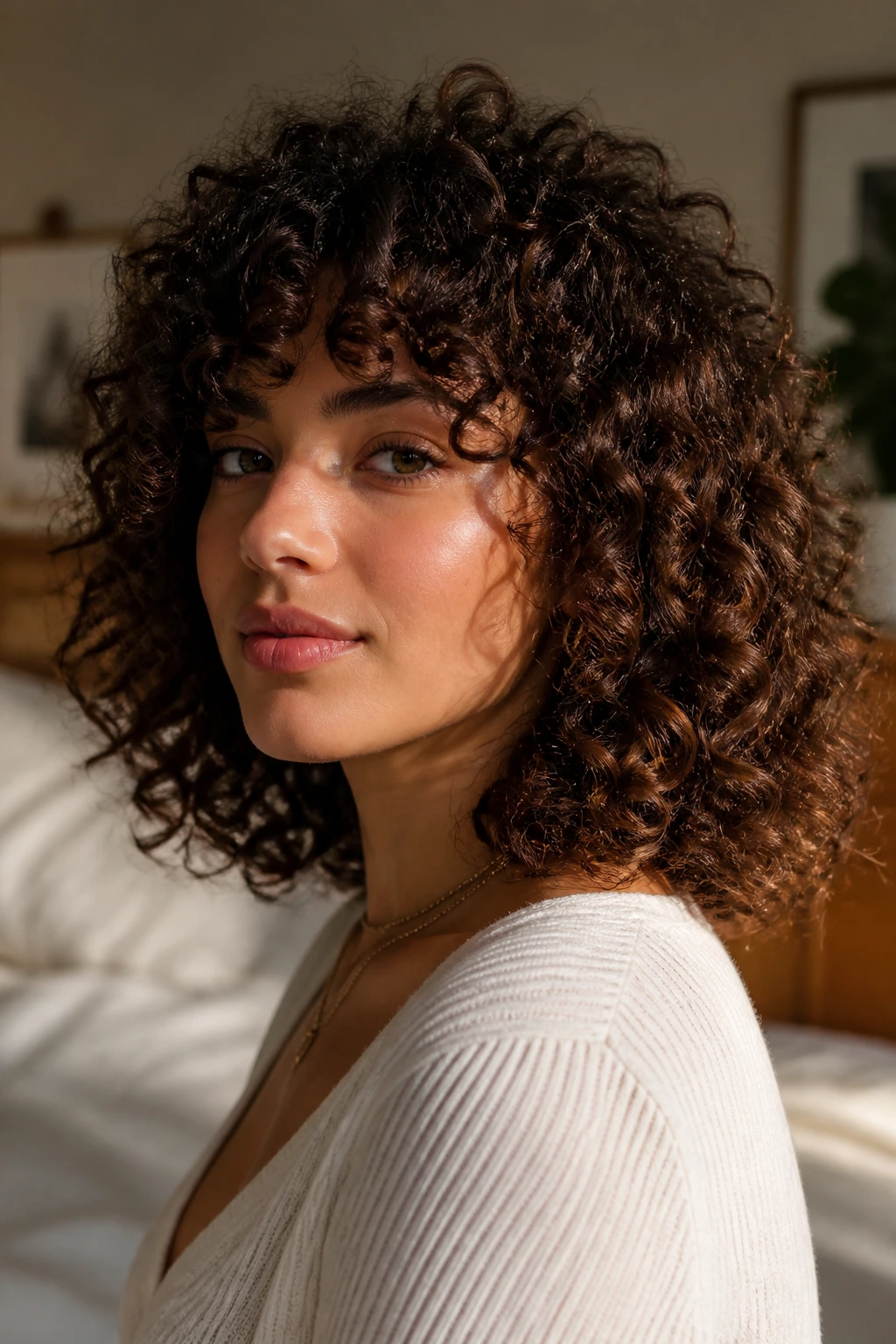
- They respect shrinkage: Medium curls often look longer when wet and shorter when dry, so these styles leave enough room for the curl pattern to spring without losing shape.
- They build around your natural volume: A lot of bad curly styling comes from trying to flatten the top and overstuff the ends. These looks do the opposite.
- They move from day one to day three: A good medium curly style can be worn loose, clipped back, or refreshed with water and leave-in instead of starting from scratch.
- They handle thick and fine curls differently: Some styles rely on shape alone; others use accessories or a side part to give finer curls more lift.
- They don’t need heat to look finished: A diffuser helps, sure, but most of these styles can be air-dried, set, and reshaped with fingers, clips, or a satin scrunchie.
- They grow out cleanly: If your cut needs a few weeks between trims, these styles still look intentional instead of overdue.
1. Soft Curly Lob with Internal Layers
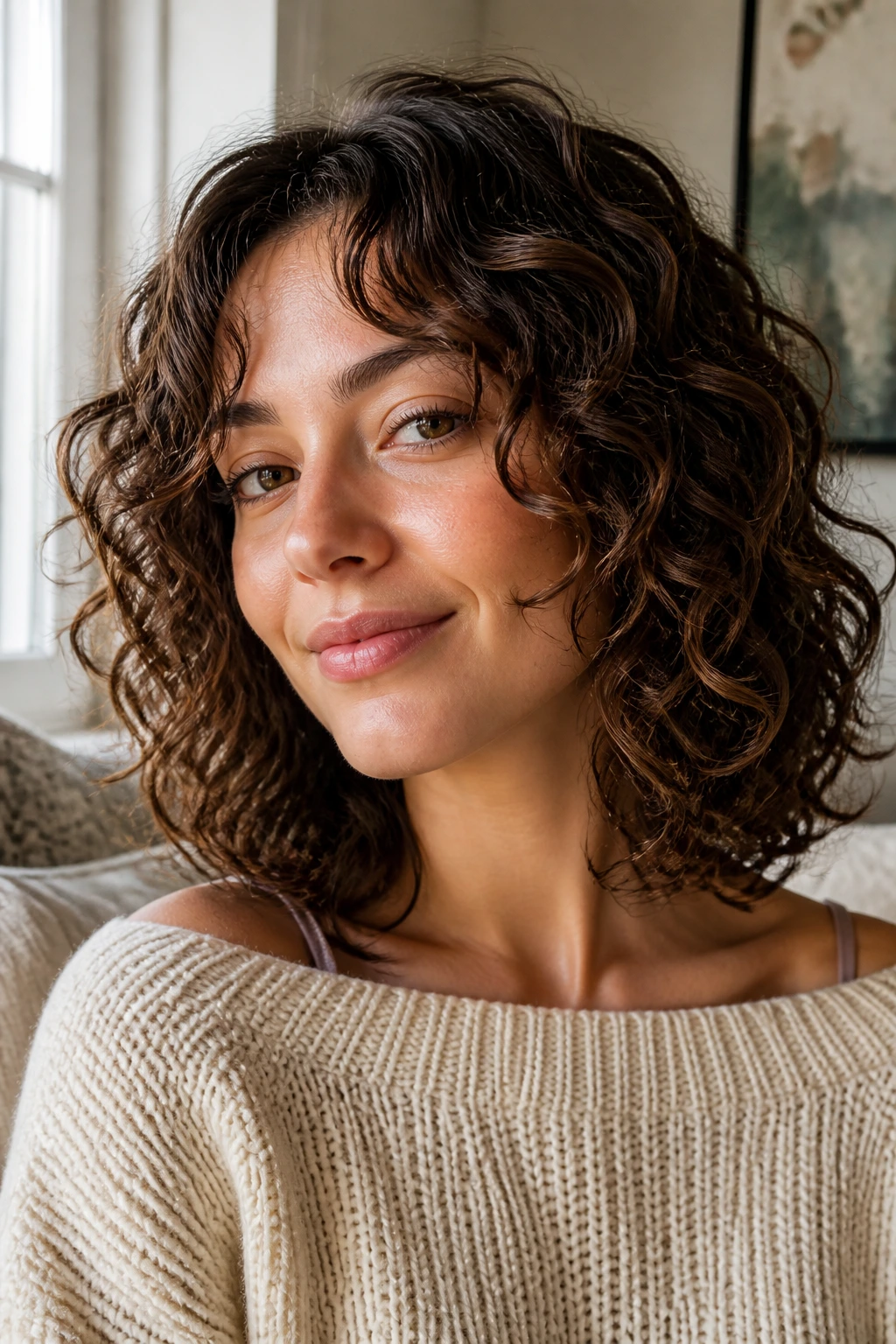
This is the style I’d hand to someone who wants curly hair to look tidy without looking stiff. The soft curly lob sits around the collarbone, then uses internal layers to remove bulk from the center of the shape. That matters more than people think. Without those hidden layers, medium curls can sit as one heavy block, and the ends start to flip out in odd directions.
The trick is keeping the outer line gentle. You want the silhouette to move when you turn your head, not stand there like a helmet. Ask for the shape to be cut dry or lightly stretched, because shrinkage changes everything. A shoulder-length lob on loose curls can read as chin-length once it dries. That is not a surprise you want after the fact.
A middle part gives this style a calm, balanced look. A side part adds lift at the root and makes the layers show. Either way, the finish should feel soft, not pieced-out. A little curl cream, a little gel, and a diffuser on low heat are usually enough.
2. Deep Side-Part Volume Sweep
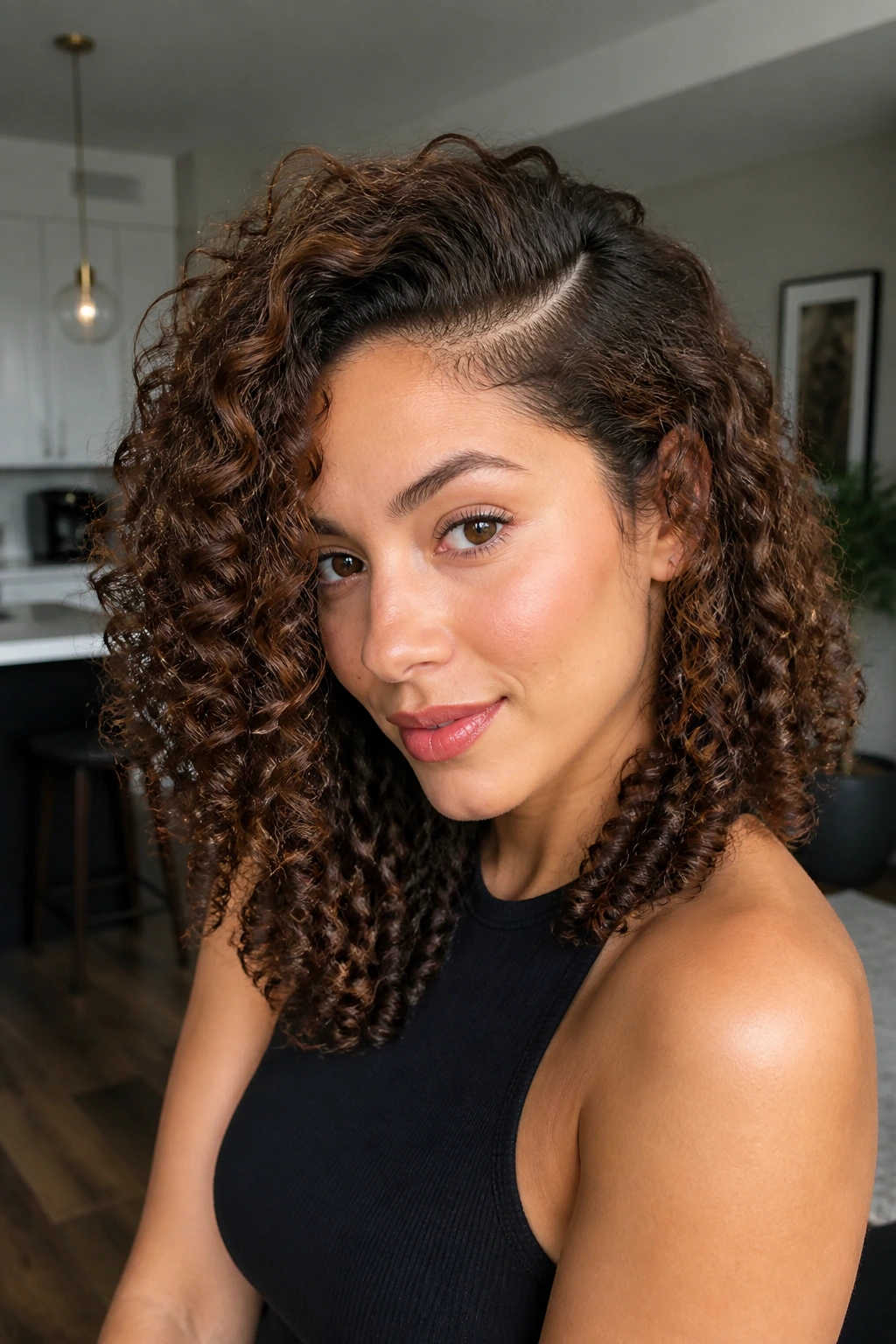
A deep side part changes the entire mood of medium curls in one move. Suddenly the roots on one side lift, the other side tucks closer to the face, and the whole cut looks more sculpted. It’s a good choice if your curls flatten at the crown or if you want a little drama without doing an actual updo.
This style works best when the curls have enough length to stack over the heavier side without collapsing. Medium length is perfect for that. The shorter layers near the cheekbones catch the light, while the longer side keeps the shape grounded. If your hair is dense, this part can also prevent the dreaded triangle effect by shifting the visual weight off the sides.
Use a rattail comb to place the part while the hair is damp, then clip the roots on the fuller side for 10 to 15 minutes while diffusing. That tiny bit of setting makes the lift last. It’s a small step. It matters.
3. Curly Shag with Airy Fringe
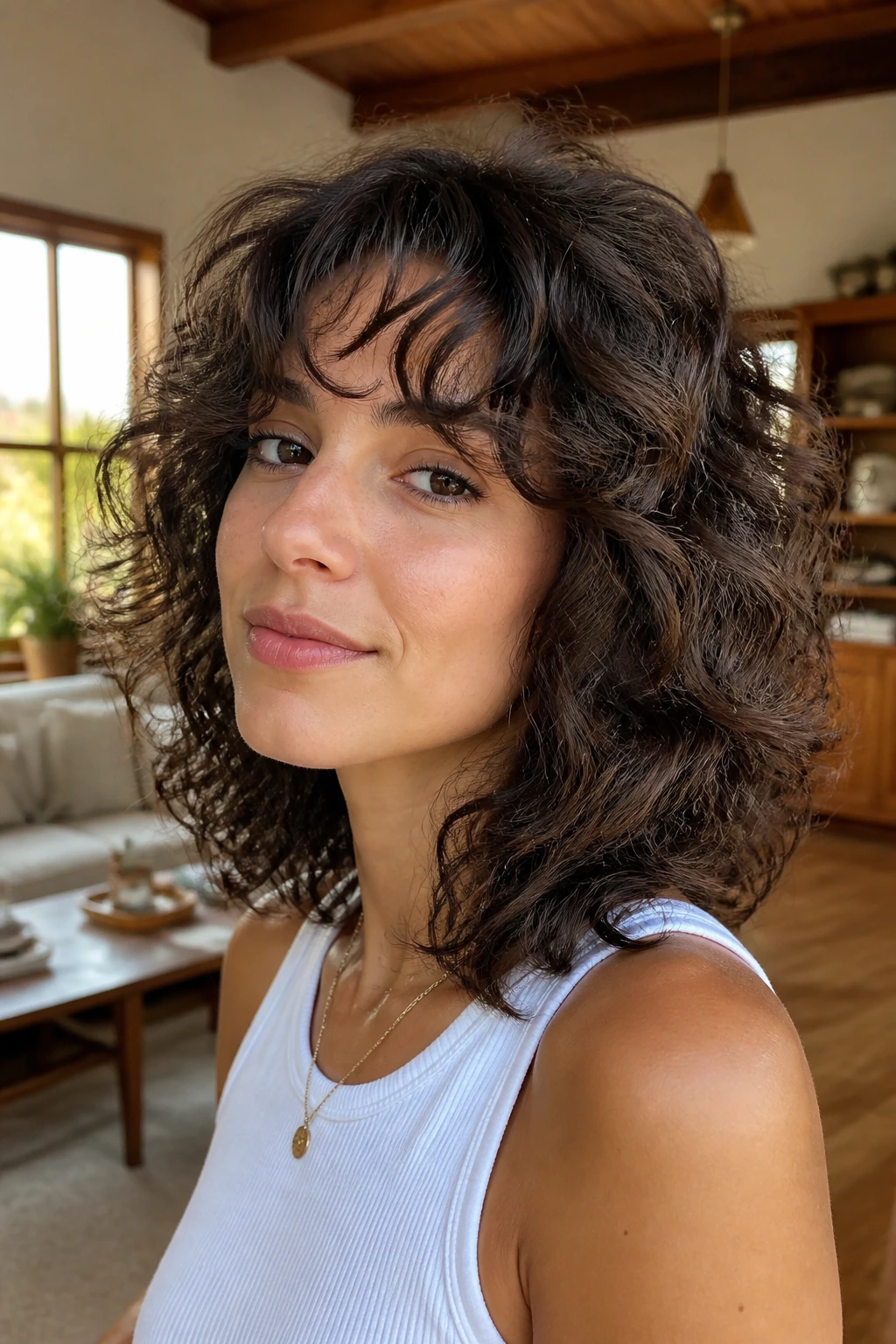
What makes the curly shag work is that it doesn’t pretend curly hair wants a neat outline. It embraces movement, then shapes it. The airy fringe softens the forehead, the crown gets a little lift, and the layers fall in a way that feels lived-in rather than overworked.
Why it flatters medium curls
The shag is one of the few cuts that can handle both loose waves and tighter spirals without looking confused. Medium length gives the layers enough room to separate, which keeps the shape from turning into a puffball. The fringe should land somewhere around the brows or just below, depending on curl shrinkage.
This is a great option if you like volume at the crown and movement around the face. It’s not the tidy haircut on the rack. It’s the one that has texture in the real world.
A light mousse at the roots, then a gel through the mids and ends, usually gives the best result. Don’t rake too hard. Let the curls clump a little on their own.
- Best for: Medium-density curls that want movement.
- Avoid if: You hate any kind of fringe maintenance.
- Best styling tool: A diffuser with a wide bowl.
- Mood: Relaxed, a little messy, and very flattering from the side.
4. Half-Up Twist with Face-Framing Pieces
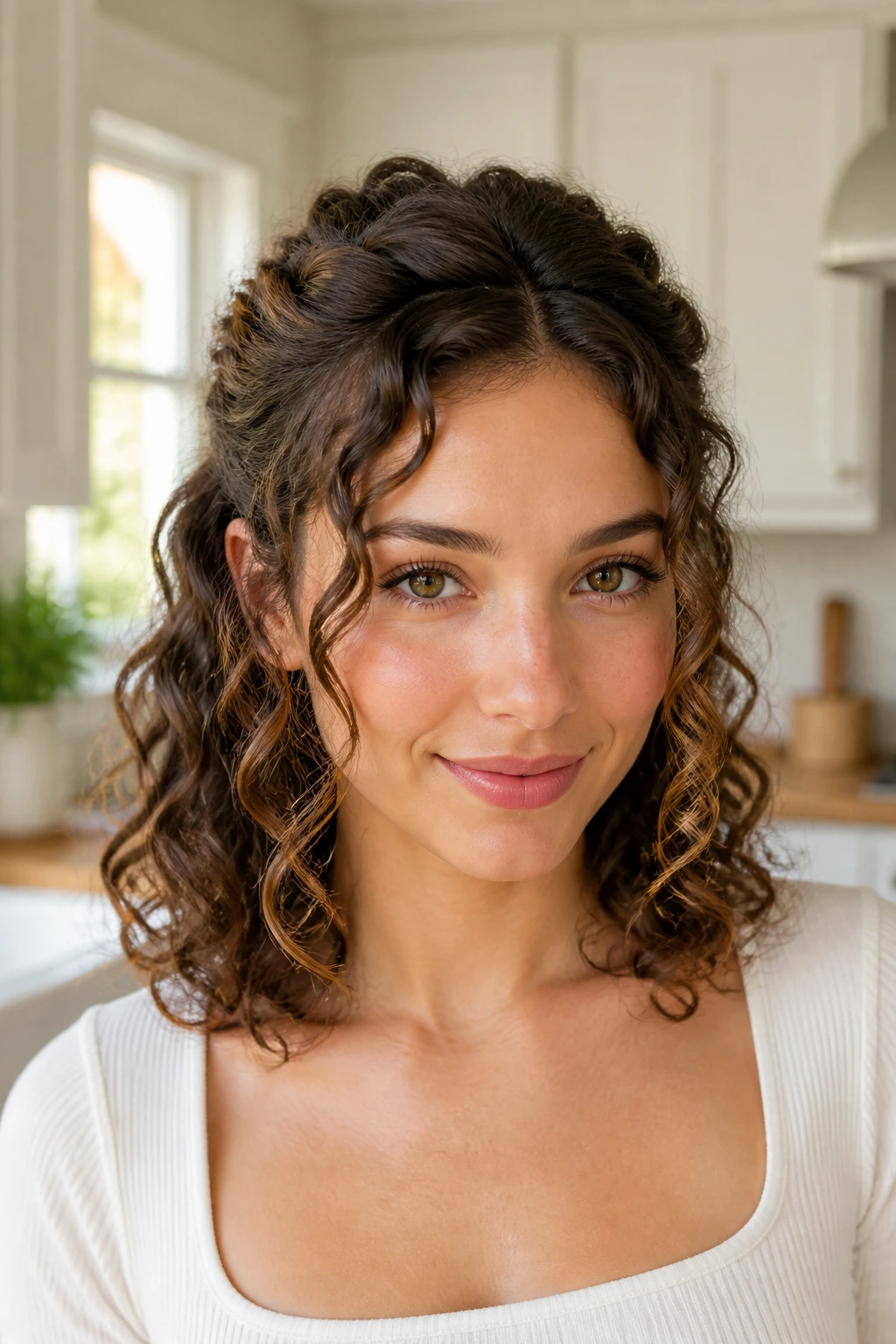
If you want to keep curls out of your face without losing the shape around it, the half-up twist is one of the easiest wins. Pull the top section back, twist it loosely at the crown, and let two or three face-framing pieces fall free. The contrast is what makes it good: control on top, softness around the jawline.
Medium length helps here because there’s enough hair to twist securely without making the back look thin. Shorter curls can slip. Longer curls can get heavy. This length lands in the middle and holds the twist with a single clip or a pair of pins.
I like this style for second-day curls because the roots usually have a little more grip by then. A spritz of water on the top section, a dab of leave-in, and five minutes with a clip can make it look fresh again. Keep the front pieces loose. Tight face-framing curls tend to lose the point.
5. Claw-Clip French Twist
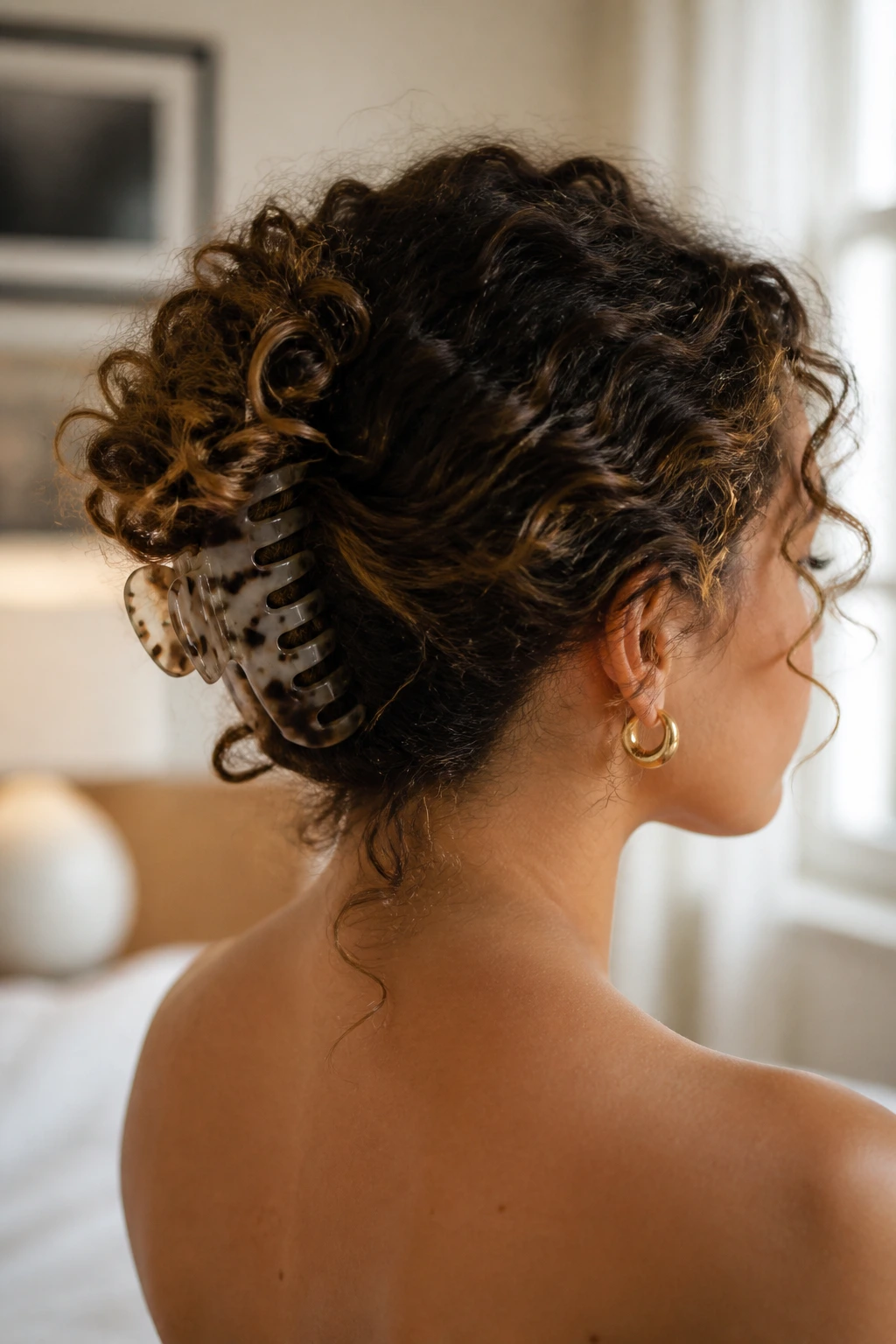
The claw clip has had a long run, and for curly hair I’m not mad about it. A French twist with medium curls gives you lift, texture, and a shape that doesn’t demand perfect smoothness. The ends can spill out a little. They should. That’s part of the charm.
This version works because medium length curls are long enough to gather, but not so long that the twist becomes heavy and slides down. Start by gathering the hair at the nape, twist upward, and secure with a large claw clip that can actually hold texture. Tiny fashion clips are cute. They are also a joke on dense curls.
Leave a few curls loose at the temples if the style feels too severe. The goal is not a slick bun impersonation. It’s a sculpted updo that still looks like curly hair.
6. Low Curly Ponytail with Wrapped Base
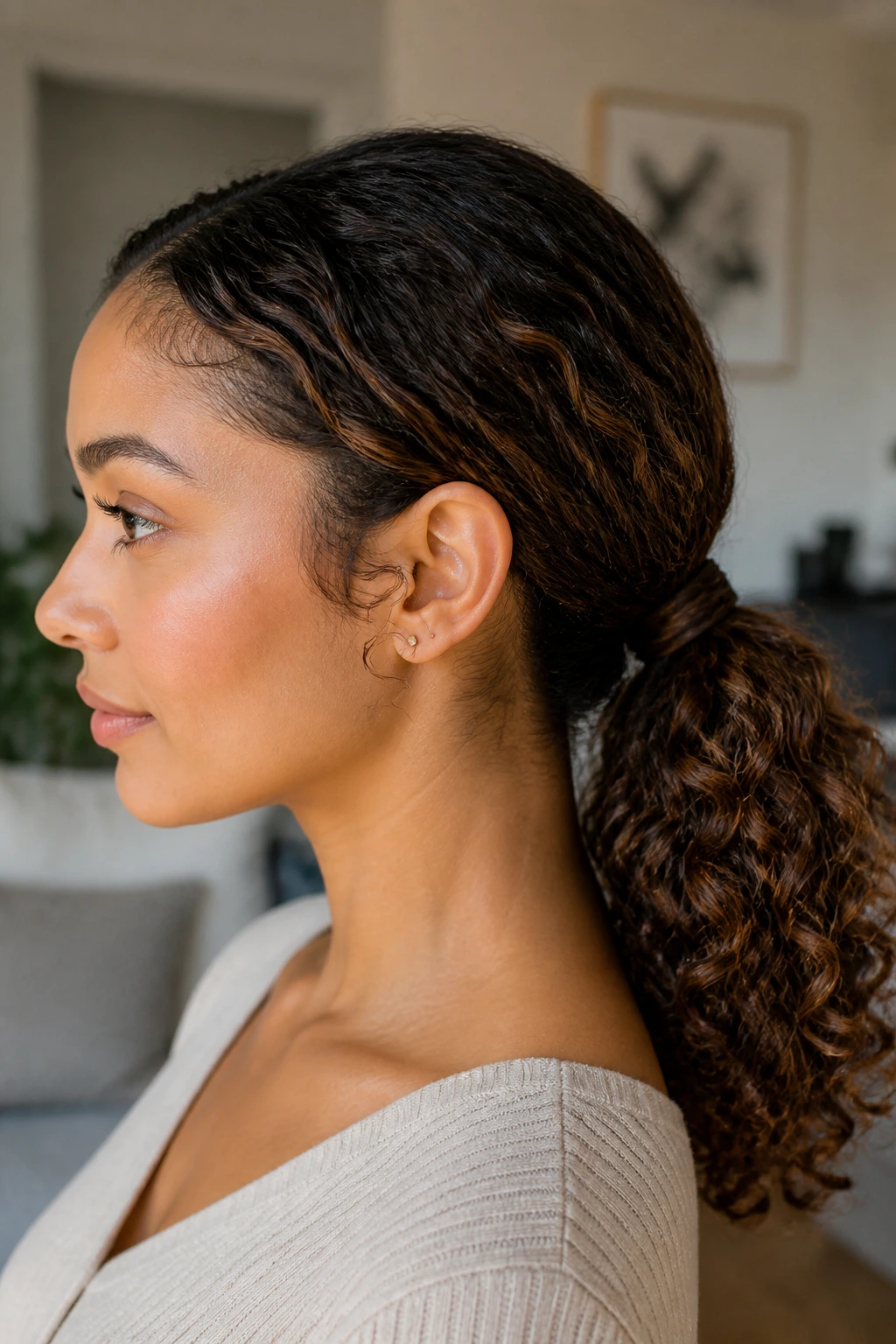
A low curly ponytail is the kind of style that sounds plain until you see it with texture. On medium curls, it lands at the perfect height — low enough to feel easy, high enough to show the curl pattern in the tail. Wrap a small section of hair around the elastic, and it instantly looks more finished.
The best part is the shape at the back. Medium-length curls don’t drag the pony down the way longer hair can, so you get bounce instead of a heavy rope. If your roots are a little frizzy, smooth the top with a tiny bit of gel on damp hands. Not too much. Curly hair can get crunchy fast when people panic with product.
This is one of those styles that works for errands, office days, and dinner out if the ponytail has decent definition. A side part makes it softer. A middle part makes it cleaner.
7. Tucked Curly Bob
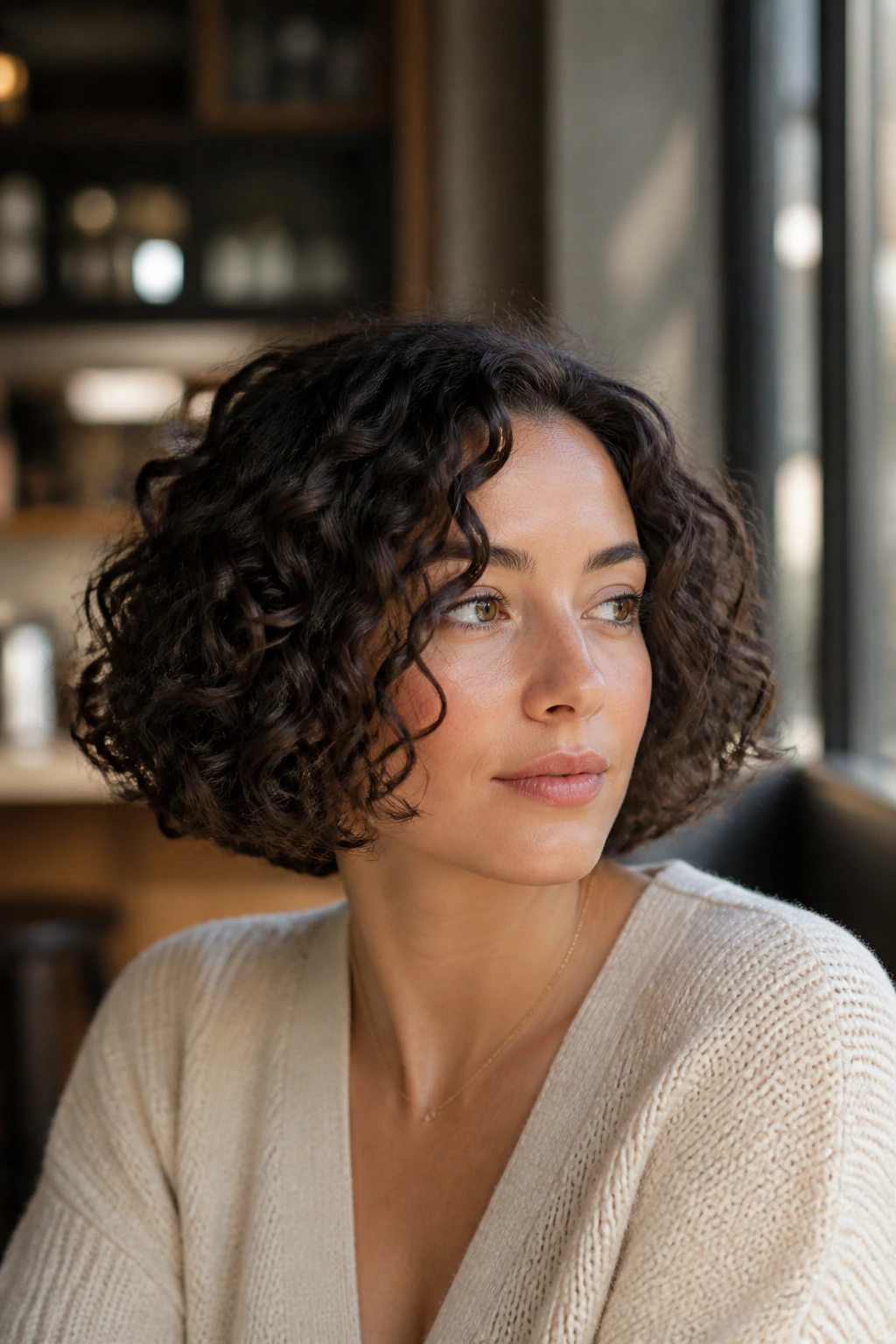
A tucked curly bob sits right at the border between playful and neat. The ends are tucked inward just enough to soften the outline, which keeps medium curls from ballooning outward at the bottom. If you have a stronger curl pattern, this shape can look beautifully rounded. If your curls are looser, it reads a little more polished and controlled.
The secret is letting the cut do the work. Ask for enough length to tuck, but not so much that the bob collapses under its own weight. The front should skim the chin or neck, with softness around the face. A blunt bob on curls can feel boxy. A tucked bob with subtle layering feels intentional.
This style is especially nice when you want your hair to frame your face instead of taking over your whole outfit. It looks good with earrings. It looks good with a turtleneck. It also looks good when you do almost nothing to it, which is never a bad quality in a hairstyle.
8. Crown Braid into Loose Ends
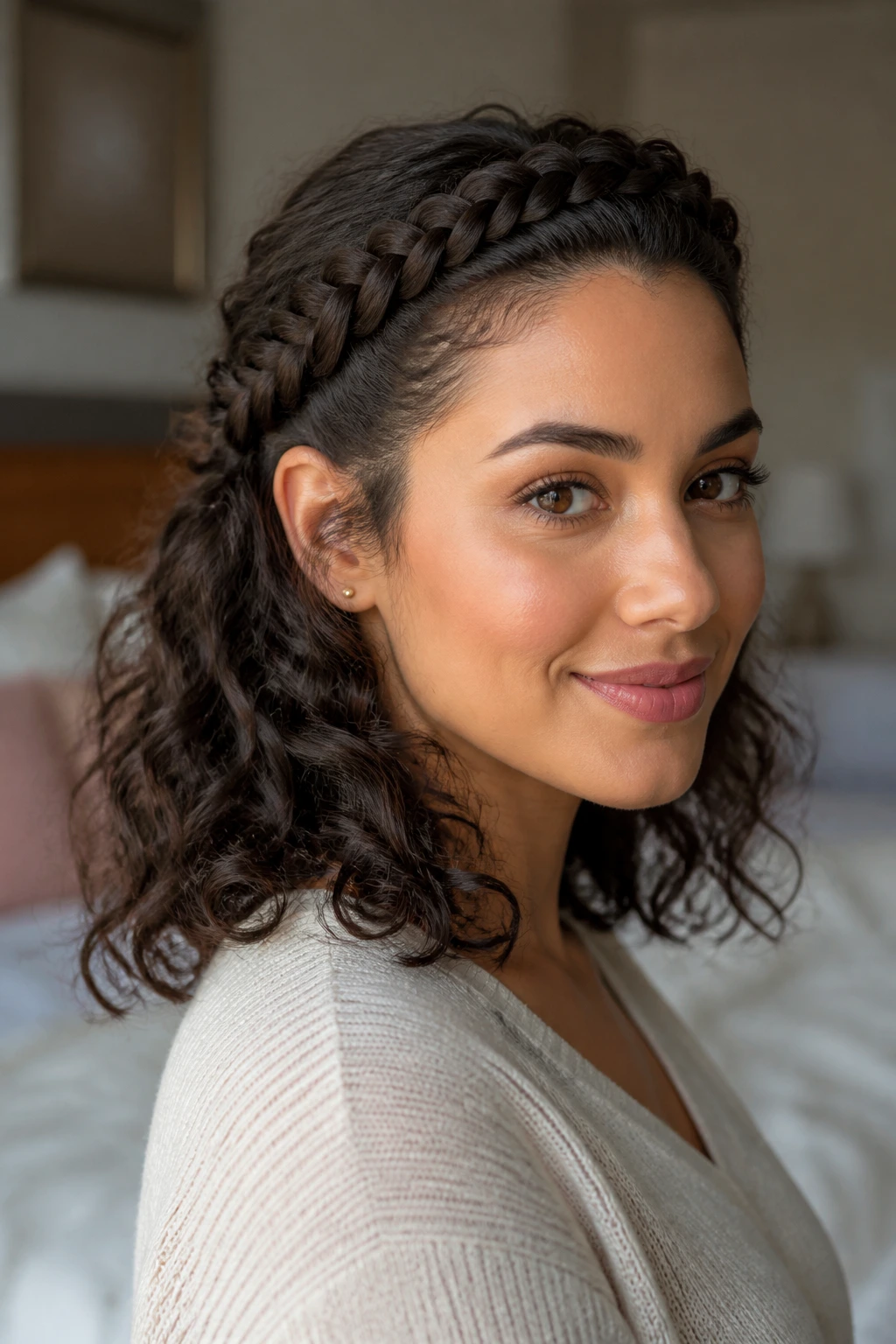
There’s something especially useful about a crown braid on medium curly hair: it keeps the front controlled while letting the lower curls stay visible. You braid along the hairline, wrap the braid toward the back, and leave the remaining length loose. That loose bottom section keeps the style from feeling too formal.
This works well when your curls are dense enough to give the braid some grip. Fine curls can do it too, but they usually need a little texturizing spray or second-day texture. The braid itself doesn’t need to be tight. In fact, a slightly softer braid looks better with curls because it blends into the hair instead of sitting on top like a separate object.
Use a few discreet pins under the braid to stop it from sliding. If you’ve ever had a braid start drifting by lunch, you know why that matters. It’s annoying. Also very fixable.
9. Curly Wolf Cut
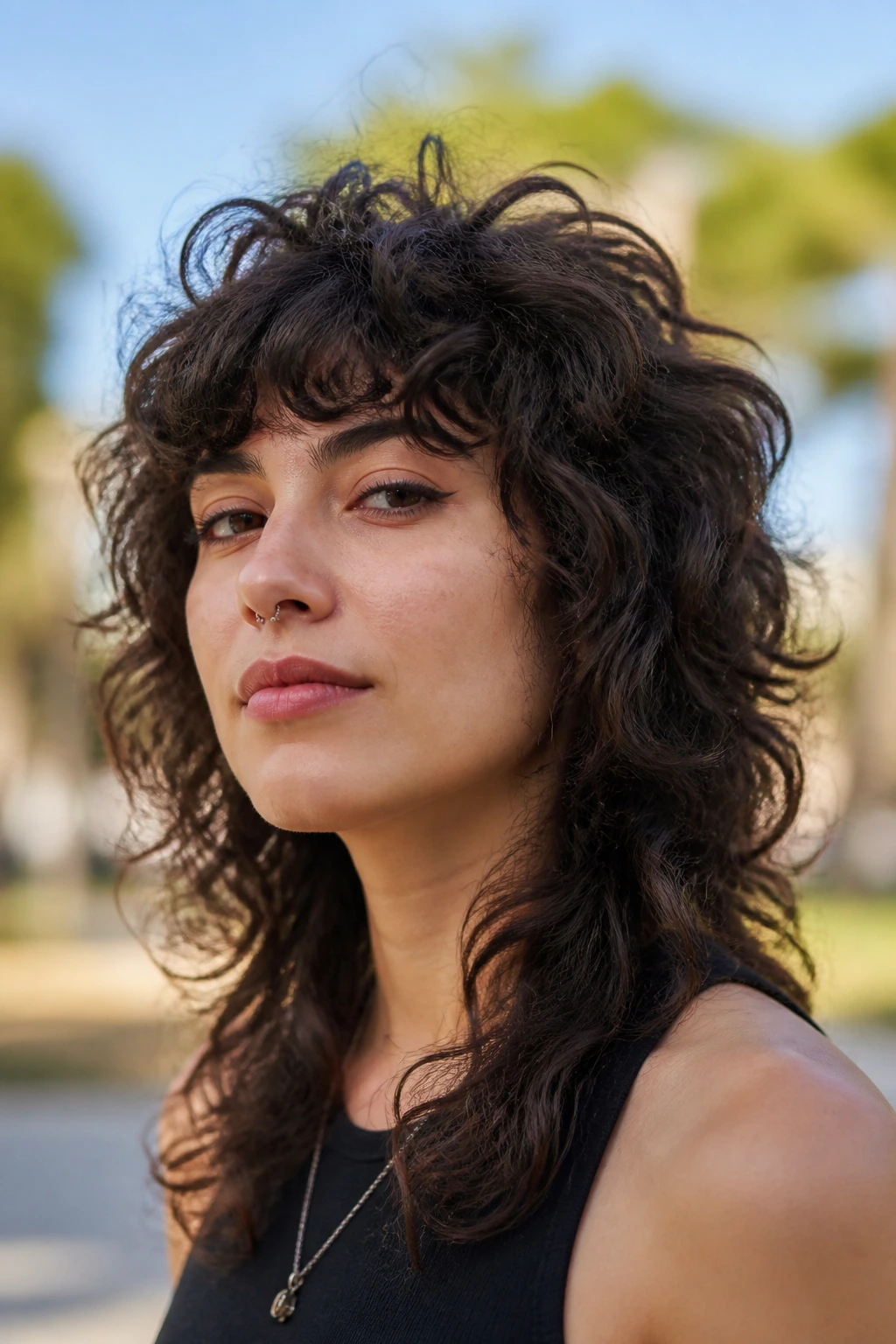
The curly wolf cut is not subtle, and that’s the point. It uses choppy layers around the crown and longer pieces near the bottom to create a shape that feels wild in a deliberate way. On medium-length curls, it can make the hair look bigger, lighter, and more textured without needing constant hand-fluffing.
This cut is for people who like personality in their hair. It is not the haircut for someone who wants one smooth silhouette and zero maintenance. The wolf cut wakes up best with mousse and a diffuser, then a bit of finger separation once the hair is fully dry. If you break up the curls too early, you’ll get frizz instead of shape.
I’d recommend this style for thick curls that tend to sit heavy around the face. The layers take some of that weight off and let the top move. It’s a little rebellious. In the best way.
10. Messy Curly Bun with Tendrils
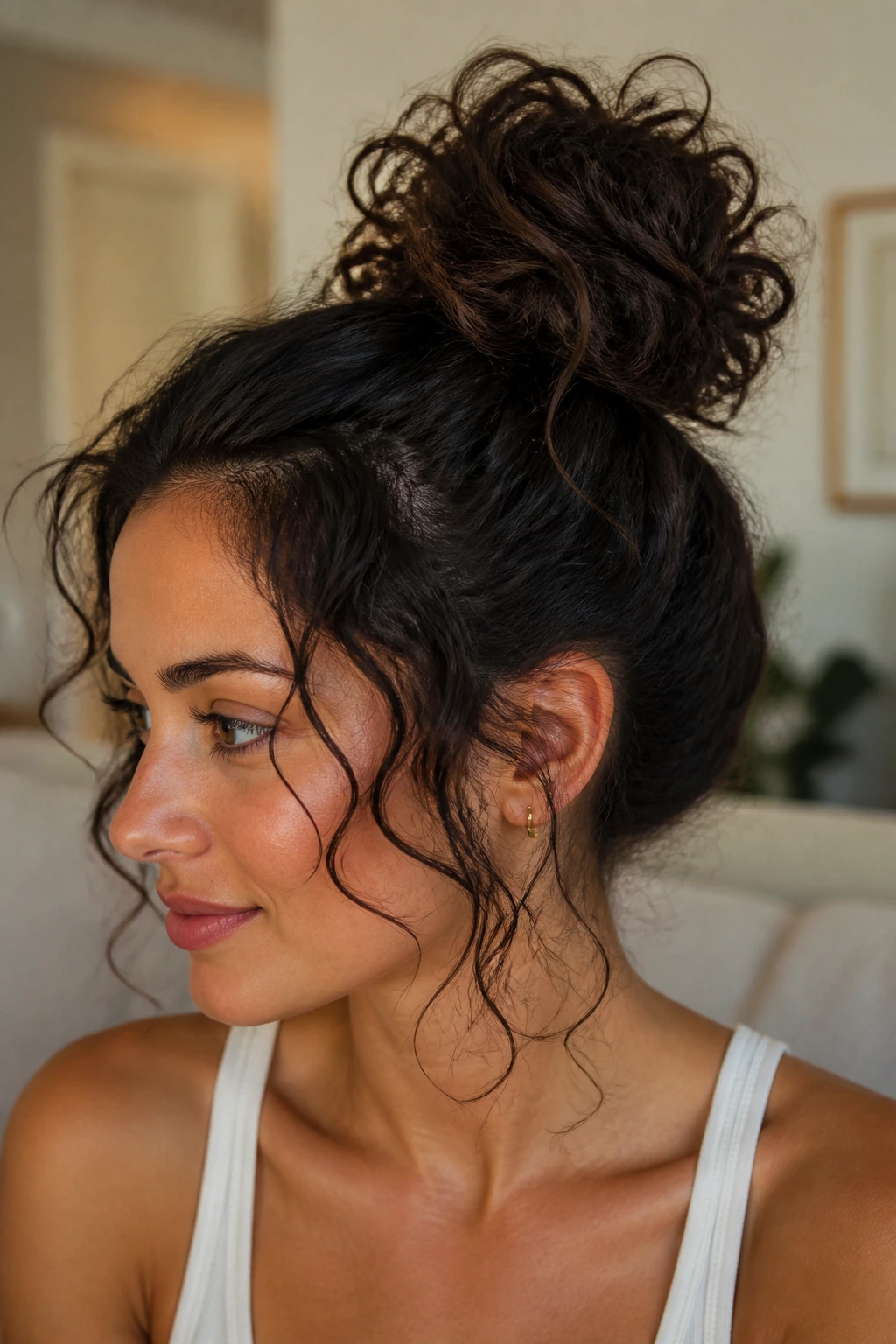
A messy curly bun is one of the easiest medium-length styles to wear when your hair feels too big to leave down and too short to overcomplicate. Pull the curls into a loose bun at the crown or mid-back of the head, then let a few tendrils fall free around the temples, ears, and neck.
The key word is loose. If you pull curly hair tight, the bun gets smaller than you expected and the top starts to puff in odd spots. Leave some air in the shape. Medium length gives you enough material for a decent bun without needing dozens of pins. That’s the whole advantage.
This style is good on day-two hair because a little texture helps the bun stay put. Use a satin scrunchie if you can. Regular elastics tend to snag curls and flatten the loop where the bun sits.
11. Side-Swept Cascade
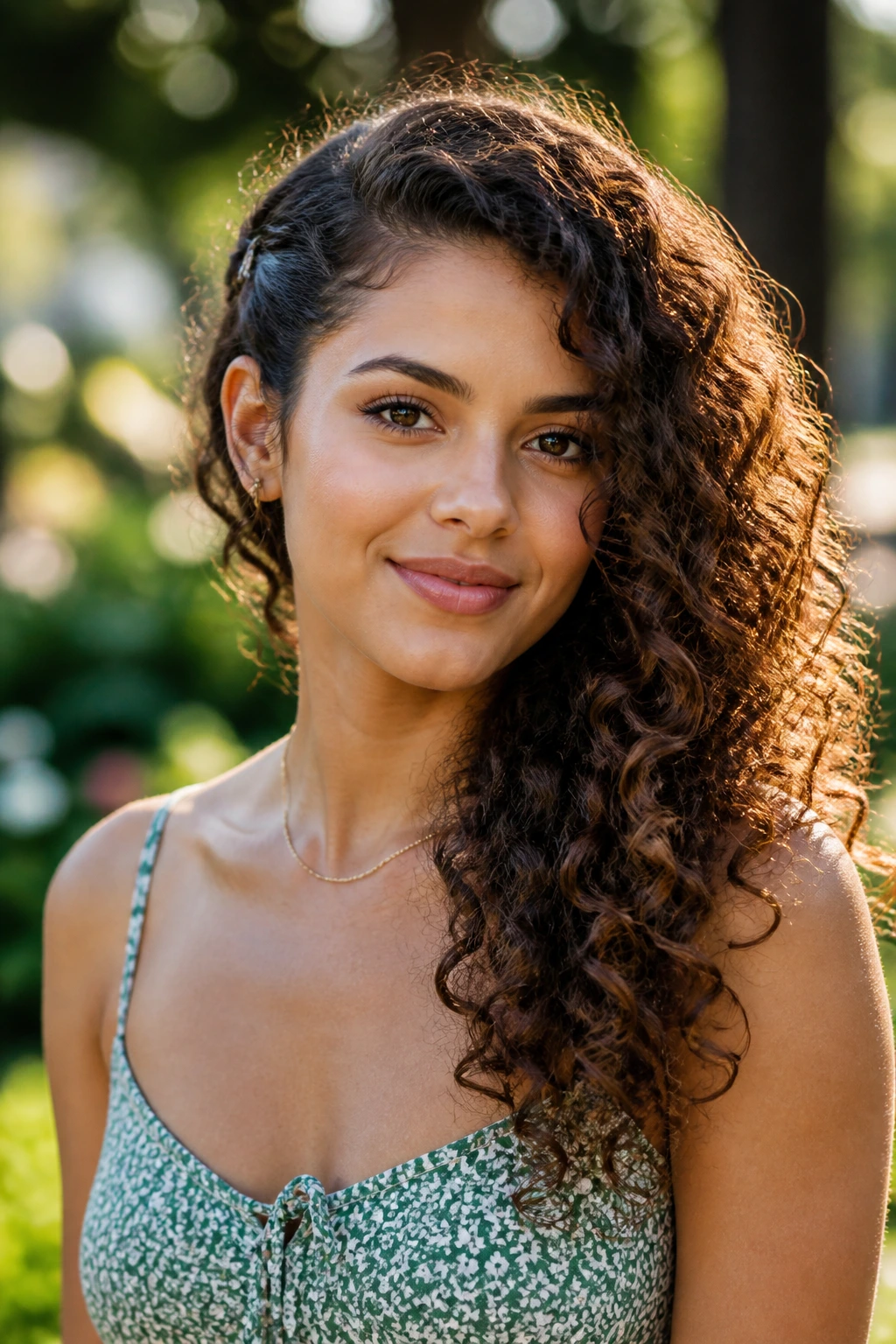
A side-swept cascade is one of those styles that looks more complicated than it is. Shift the curls to one side, pin a small section behind the opposite ear, and let the rest fall over the shoulder in a long sweep. The result feels soft, but not flat. It gives the hair a clear direction, which medium curls usually appreciate.
What makes it hold shape
The cascade works because you’re using the hair’s own weight to create structure. Medium length keeps the curls from becoming too heavy on one side, while the sweeping motion makes the volume look planned. If your face tends to get swallowed by big curls, this style opens things up without draining the body out of the lengths.
A little root lift on the pinned side helps prevent the style from looking one-sided in a bad way. I like to clip the roots for 5 to 10 minutes while the hair dries. Then remove the clip and let the curls fall naturally.
A soft barrette or a thin metal pin can finish the look. Or skip the accessory entirely. The shape does enough on its own.
12. Halo Braid with Loose Curls
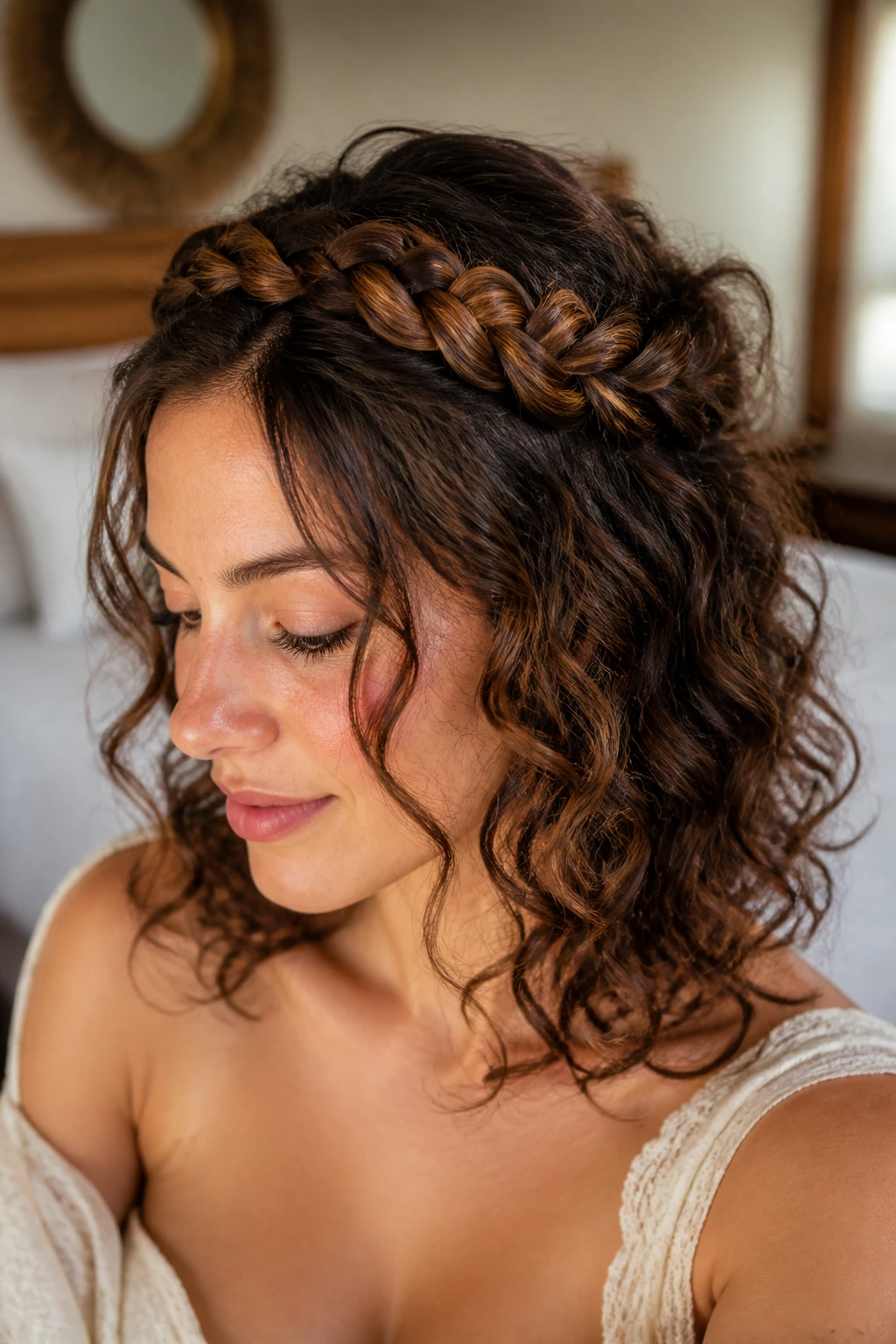
The halo braid gives medium curls a gentle frame around the head without hiding the texture underneath. Braid along the hairline, wrap the braid around the crown, and leave the back loose. It’s tidy, but not severe. The curls still do the talking.
This style shines when your hair has enough length to tuck the braid cleanly while keeping the ends loose and full. If the braid is too tight, it can pull at the scalp and look overdone. A softer braid sits better with medium curls, especially when you let a few pieces escape around the ears.
I prefer this for events where you want a little structure but don’t want your hair pinned to your head. It reads more relaxed than a full updo and more finished than leaving everything down. That balance is hard to get. This style gets it right.
13. Pineapple Half-Up
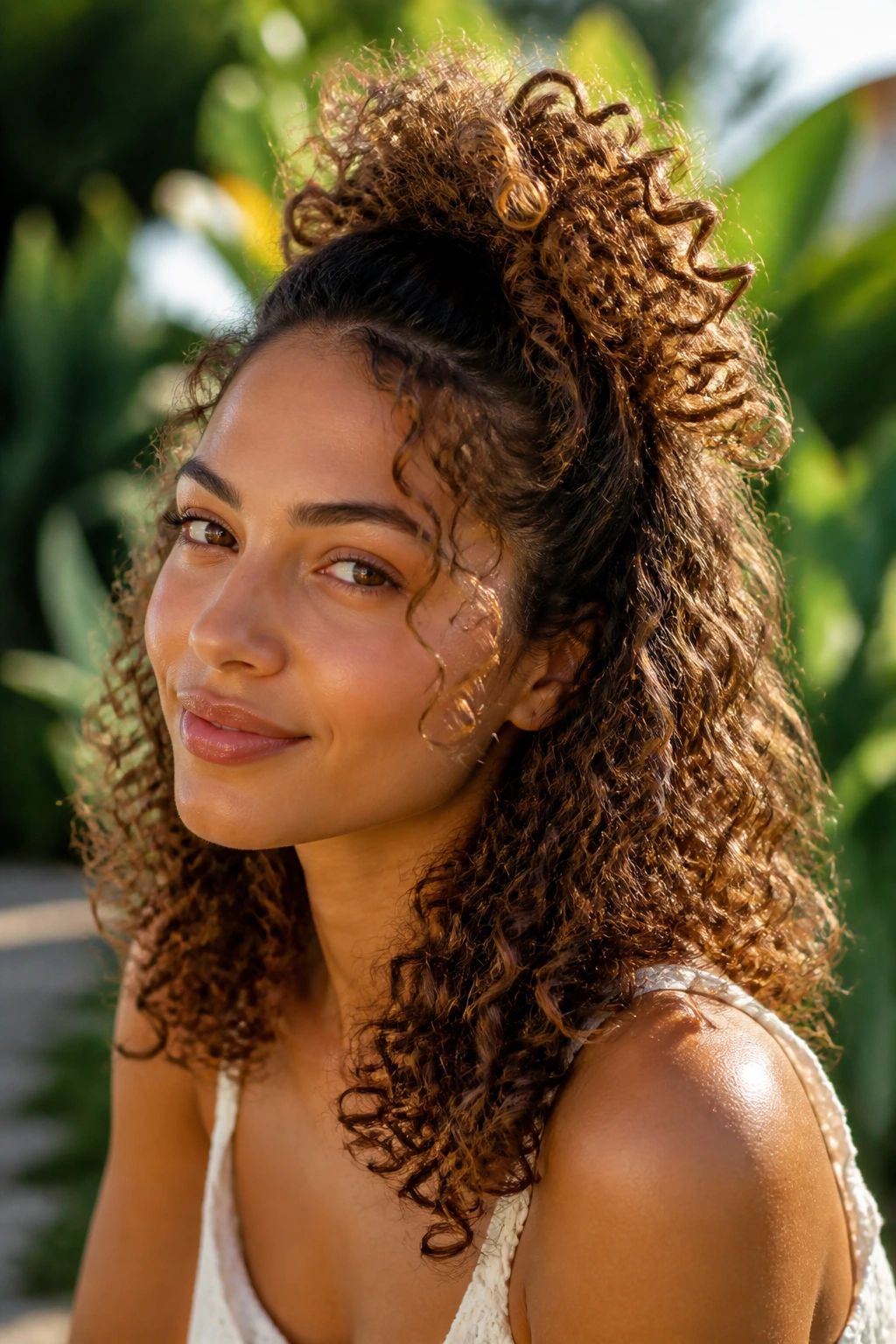
The pineapple half-up is basically a friendly compromise between wearing curls loose and putting them away. Gather the top half of the hair high at the crown, let it bloom upward, and leave the lower section down. On medium length curls, it creates a lot of height without turning into a full topknot.
It’s especially good for people whose curls flatten around the face but still want to keep the ends visible. You get lift where you need it and length where you want it. The higher placement also gives the hair a playful shape that works on loose waves and tighter ringlets alike.
A silk scrunchie is worth using here. It won’t leave a hard dent through the curl clump. And if the hair slips, clip the base underneath with one hidden bobby pin. Simple fix. Less drama.
14. Curtain Bangs with Shoulder Layers
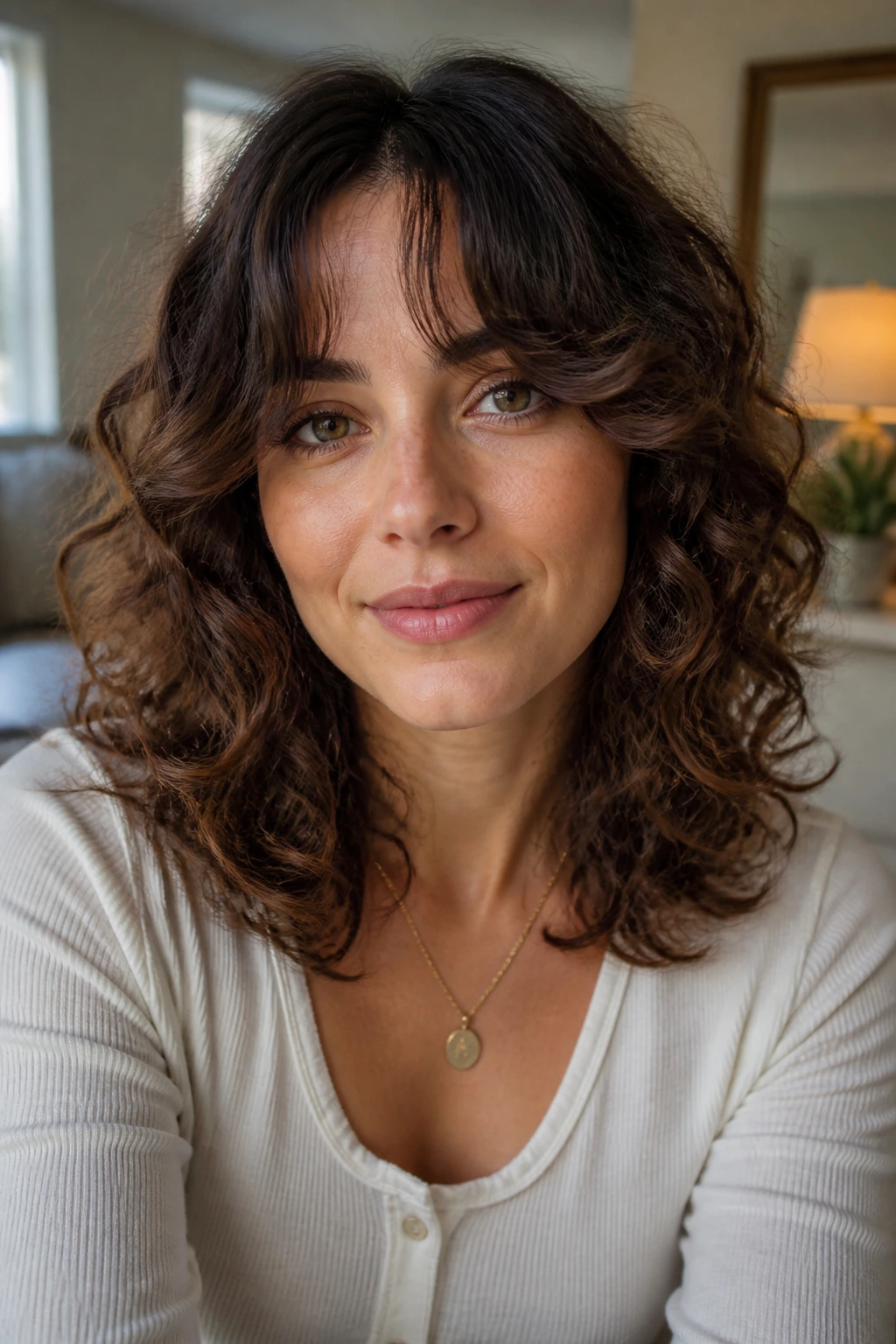
Curtain bangs on curly hair can be gorgeous, but they need commitment. The best version for medium length is a soft curtain fringe paired with shoulder-grazing layers that keep the front from getting too heavy. The bangs should split gently in the center and fall away from the face, not sit like a curtain that forgot to open.
Shrinkage matters a lot here. What looks like eyebrow length when wet may spring to cheekbone height once dry. That’s why dry cutting or at least curl-by-curl shaping makes such a difference. The front pieces should be long enough to blend into the layers, so the grow-out stays graceful.
If your hair has a loose curl pattern, this cut can give it more movement. If your curls are tighter, it keeps the fringe from turning into a blunt block. It’s a nice middle path. Not easy, but worth it.
15. Double Mini Braids into Curls
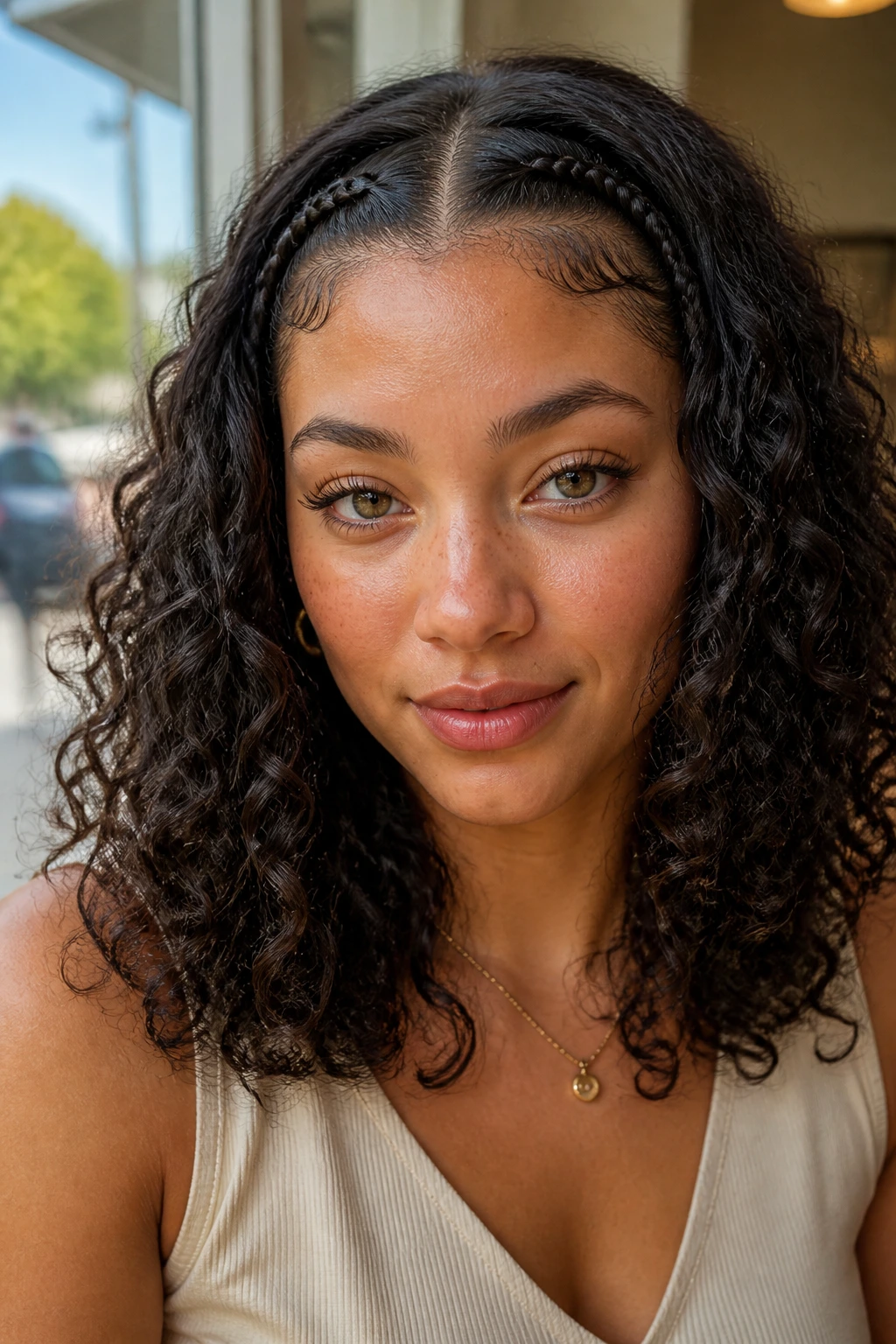
Two tiny braids along the front or sides can change the whole personality of medium curly hair. They keep the curls away from the face, add texture near the temples, and make the rest of the hair look fuller by comparison. The braids don’t need to be perfect. Slight unevenness actually helps them blend into the curls.
Best way to wear them
Start the braids on damp or second-day hair, when the texture is a little grippier. Secure each one with a tiny elastic or pin it back under the surrounding curls. From there, let the lengths stay loose and unforced. That contrast — structured front, free back — is what makes the look work.
This is a good style for people who want something casual but not plain. It also buys you a little extra time between wash days because the front sections stay contained while the rest of the hair stays in place.
16. Twisted Half-Up with Volume at the Crown
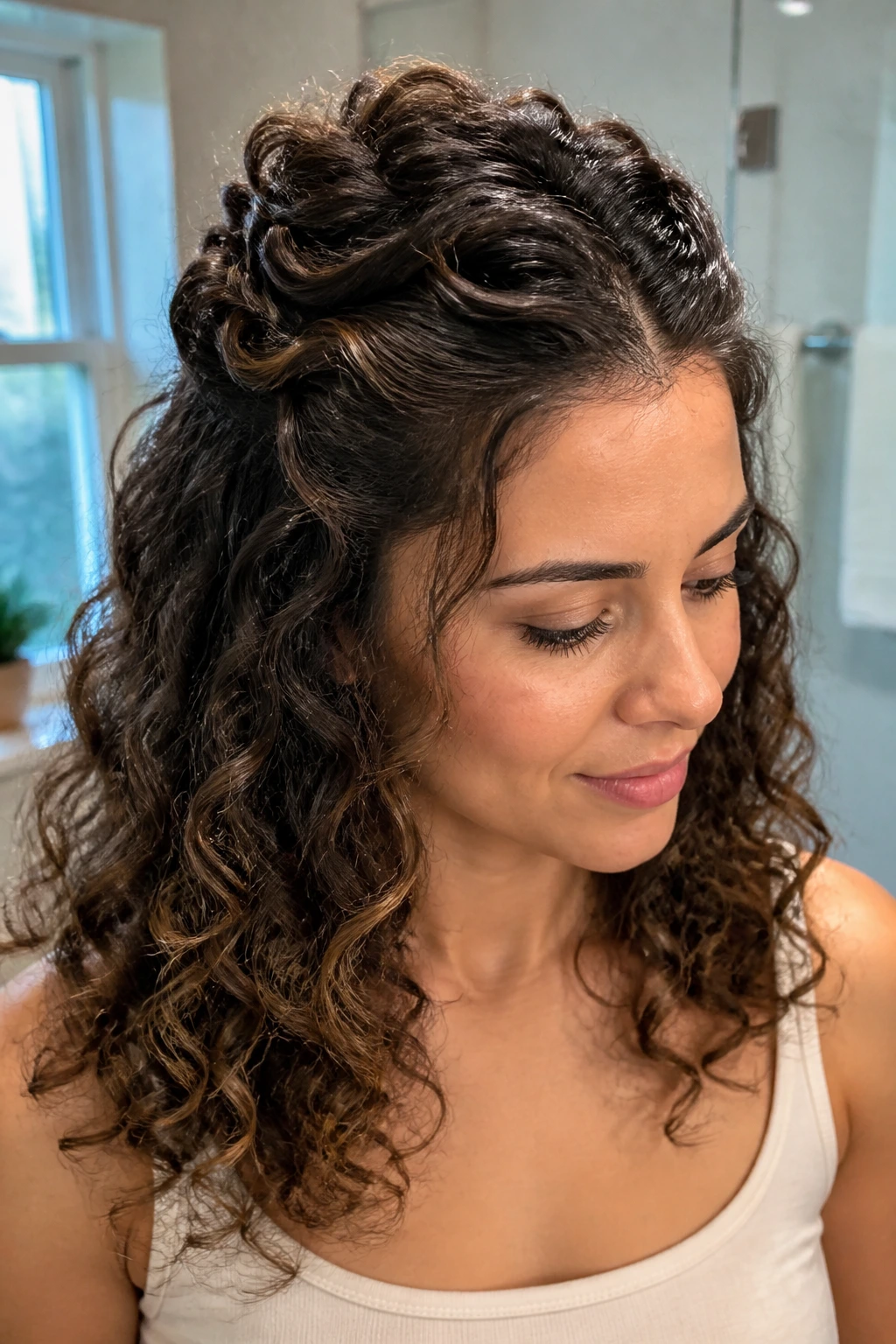
Twists are friendlier than braids when your curls are medium length and fairly dense. A twisted half-up style lifts the crown, keeps the front off the face, and still leaves plenty of curl pattern visible underneath. You take two top sections, twist them backward, and pin them where they meet.
The volume at the crown is the whole point. Don’t flatten it down. A little height makes the style look softer and helps the curls below stack more neatly. If the top is too sleek, the contrast disappears and the twist can look unfinished.
I like this one for curls that need a bit of direction but not a full updo. It’s also a good “I need to look put together in ten minutes” style. Which, honestly, is when most hair decisions happen.
17. Flipped-Out Curly Ends
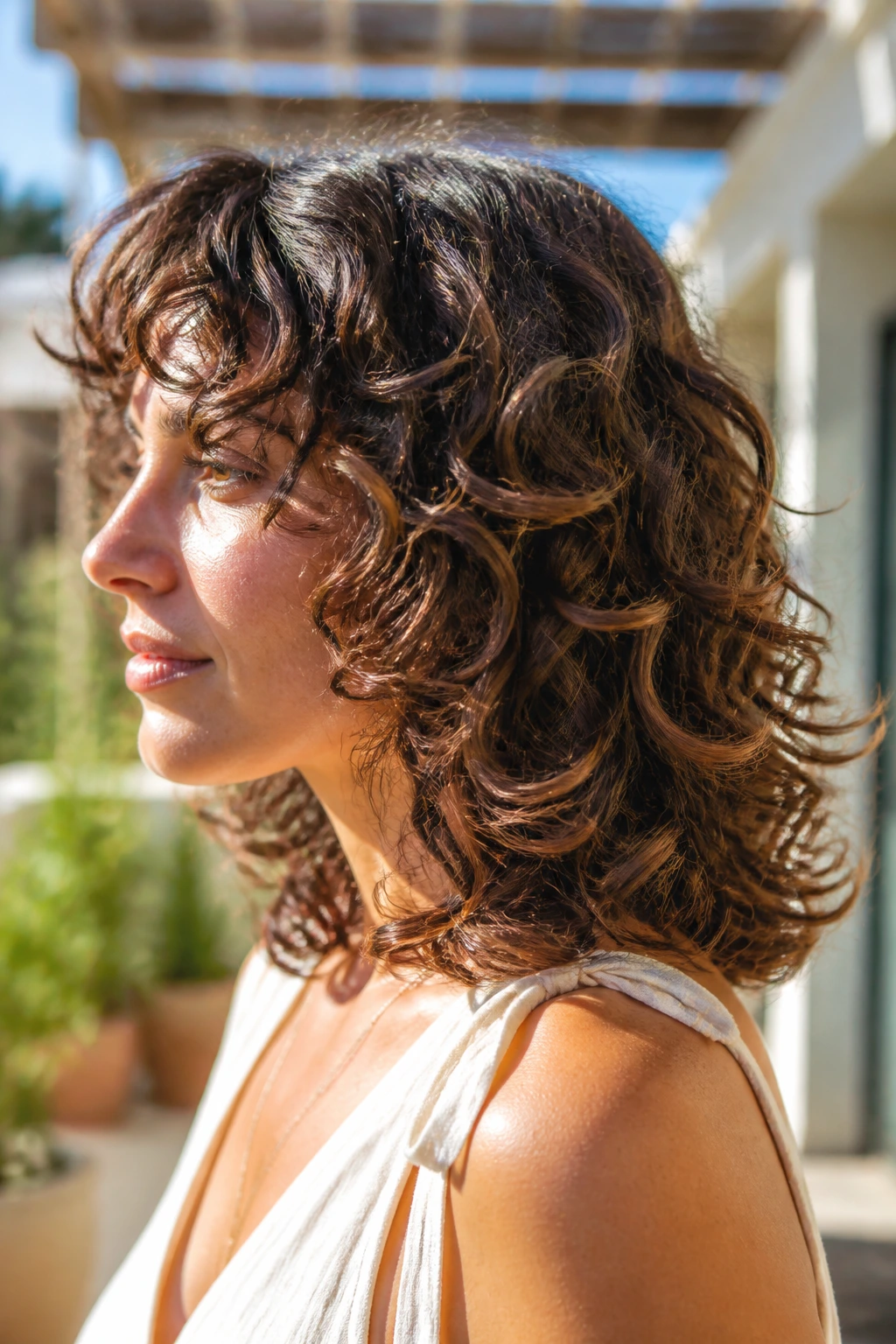
Flipped-out ends are a simple way to make medium curls look intentionally styled instead of just left alone. The shape comes from layering that encourages the ends to kick outward a little, especially around the shoulders and collarbone. It gives the haircut a light, lively finish.
This works best when the outer shape is not too heavy. If the ends are overloaded, they will just sink. A round brush is not the main player here; a diffuser and finger shaping usually do more for curly hair. The flip happens because of the cut, not because you bullied the hair into place.
This look has a little retro energy without going costume-y. It suits blunt-to-soft layered cuts and can make medium-length curls look bouncy even on low-energy mornings. That’s a good return on effort.
18. Sleek Front Sections and Full Ends
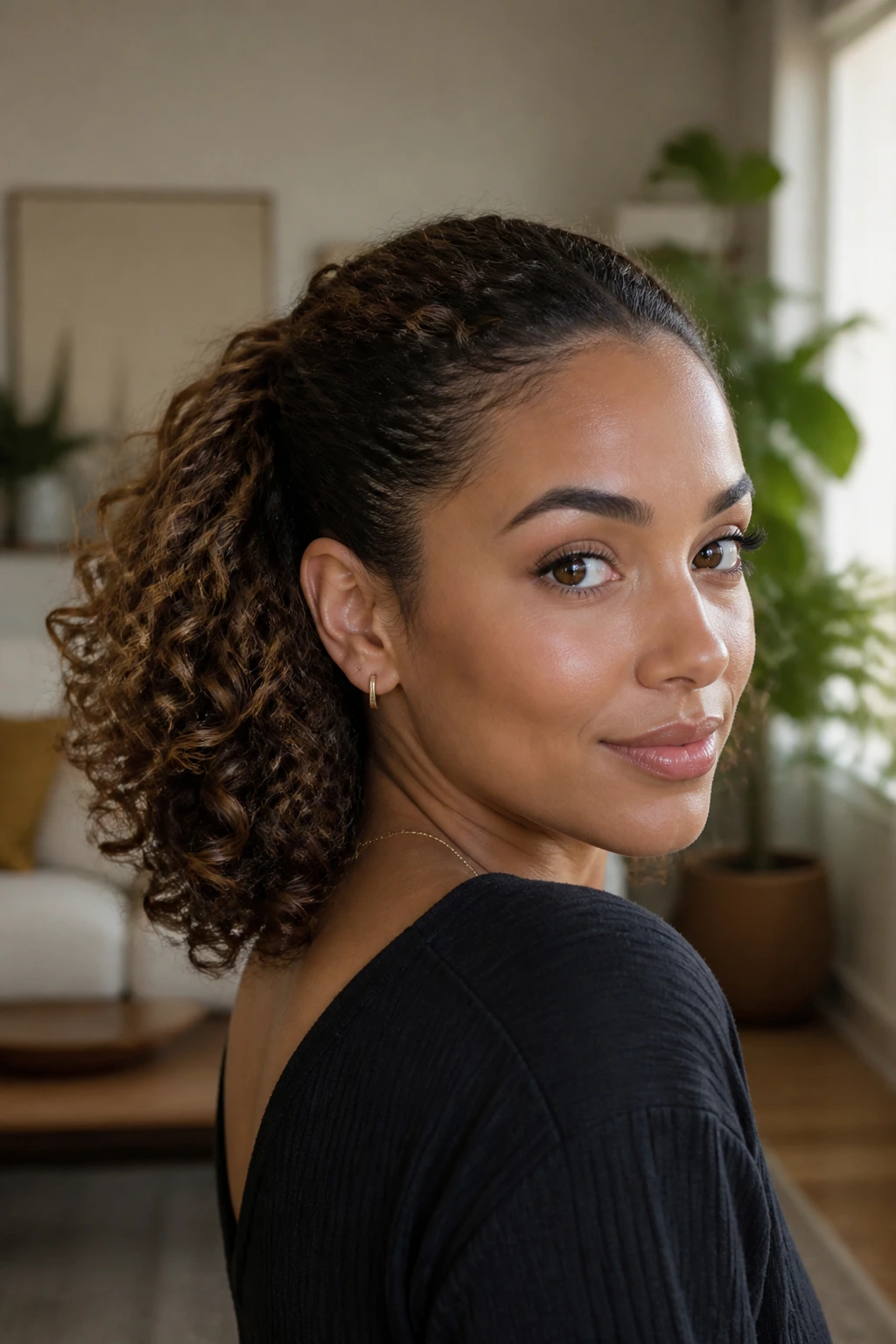
This style uses contrast in a smart way. Smooth the front sections back from the face, then let the back and ends stay full, textured, and curly. The effect is clean at the front and generous at the back, which keeps the shape from feeling too bulky near the cheeks.
Medium length is ideal because the curls still have enough spring to fill out the back without hanging too low. Use a touch of gel or edge control on the front only. Don’t coat the whole head in product unless you want the curl pattern to look overly pressed. The back should stay soft and touchable.
This is a good option when you want to show off earrings, makeup, or a neckline. It frames the face while letting the natural texture do the work behind it. Simple idea. Strong payoff.
19. Accessorized Side Clip Look
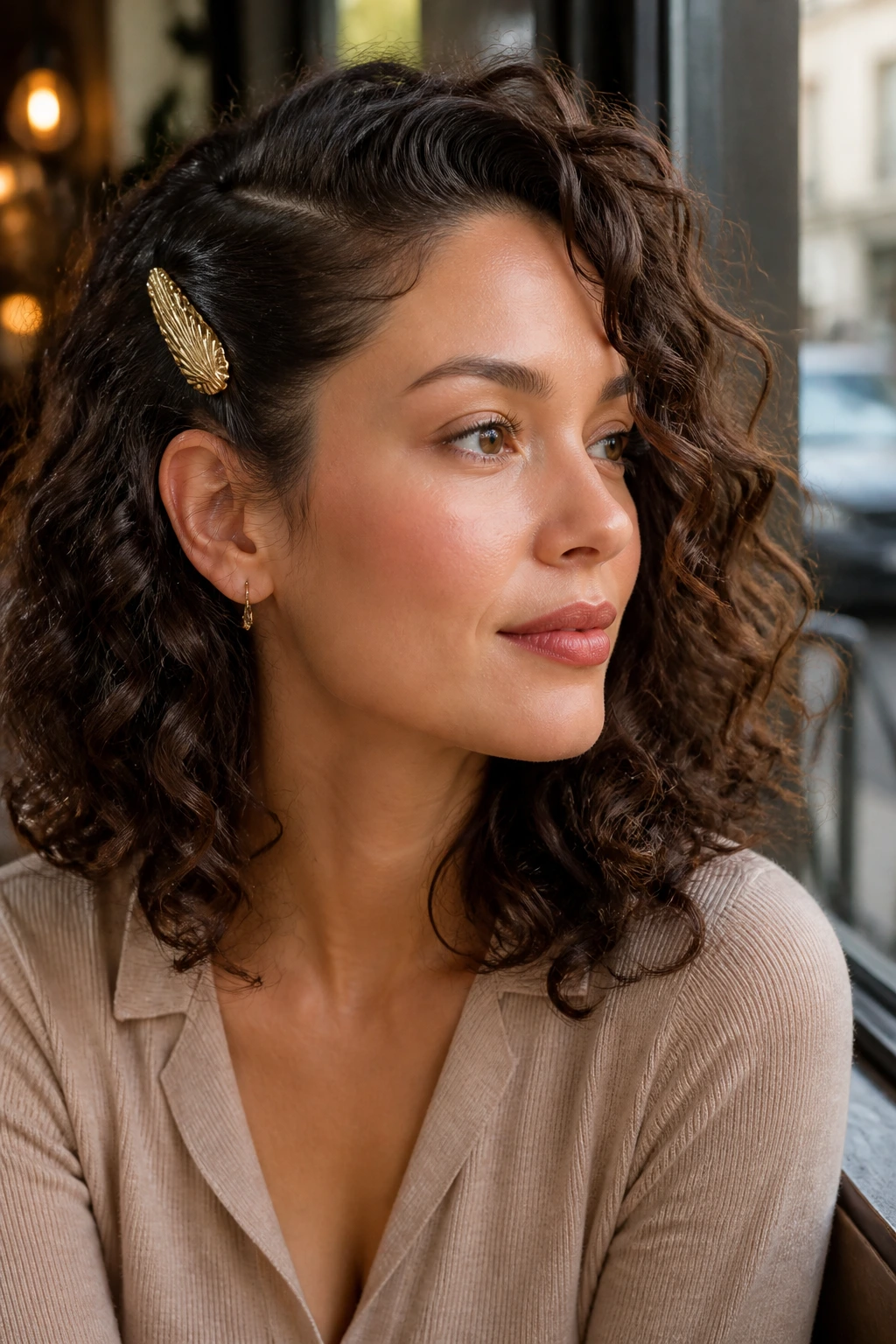
A side clip might seem minor, but on medium curly hair it can be the whole style. Sweep one side back, secure it with a strong clip, and leave the rest of the curls loose and full. The accessory acts like a visual anchor, which helps the style look purposeful even if you only spent three minutes on it.
Pick a clip that can hold texture, not just decorate it. Thick curls need a barrette with teeth or a snap clip that actually grips. The cheap shiny clip that slides off after an hour is not your friend here. Been there.
This works especially well when one side of the hair has a little more curl than the other. The clip balances the shape and keeps the front from falling into your eyes. One good clip. That’s the whole sentence.
20. Soft Curly Mohawk
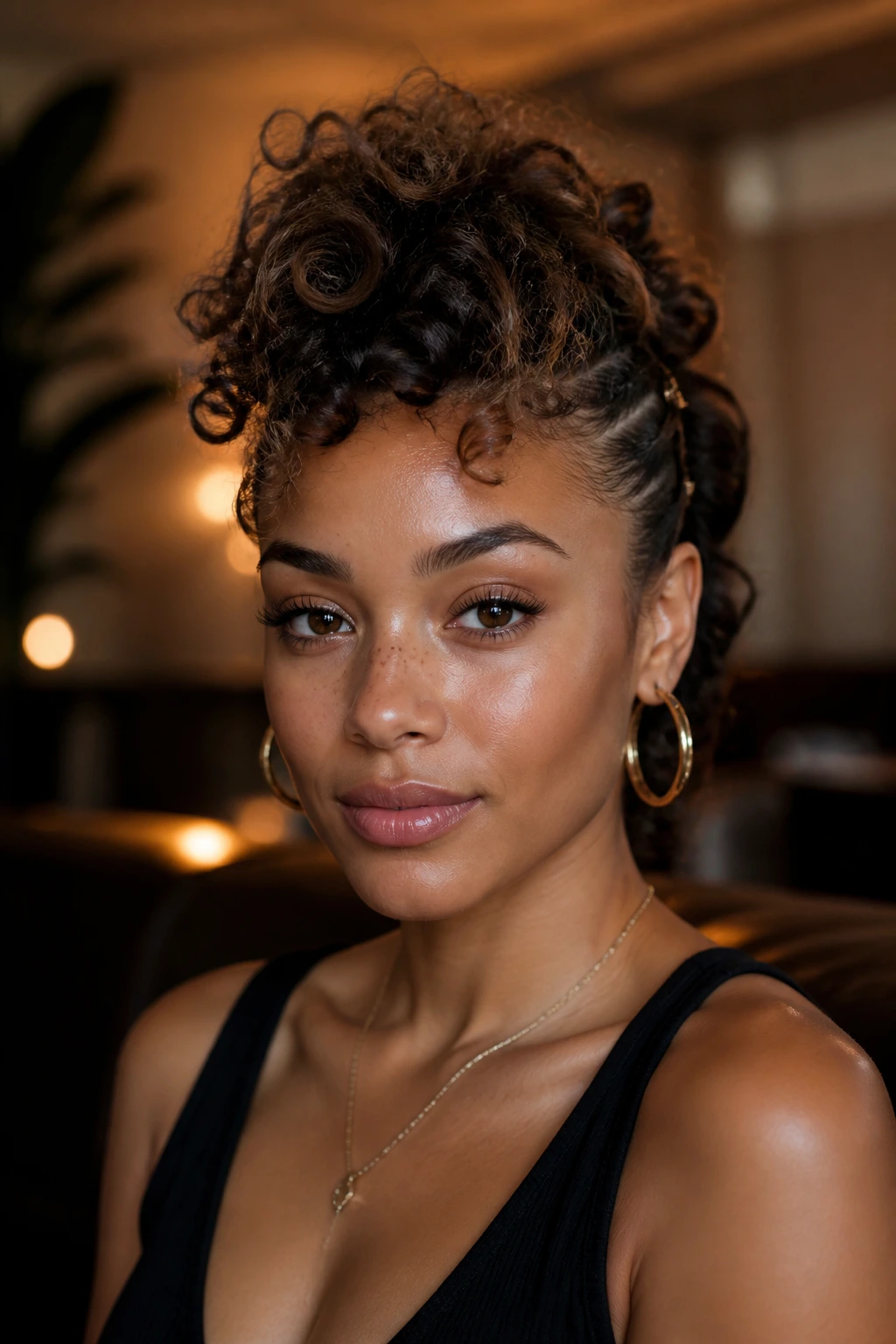
A soft curly mohawk sounds dramatic, but on medium length hair it’s more wearable than the name suggests. Pin or clip the sides back slightly and let the curls rise through the center like a textured ridge. The shape gets height without needing a lot of teasing, and the curls stay visible instead of crushed.
This style is especially useful for dense curls that naturally want to expand outward. By focusing the volume in the center, you give the hair a more streamlined silhouette. It’s also a strong choice for formal looks if you want something a little less expected than a smooth bun.
Use pins that hide under the curls, and leave enough softness at the temples so the look doesn’t turn severe. You want lift, not armor.
21. Rope-Twist Crown Detail
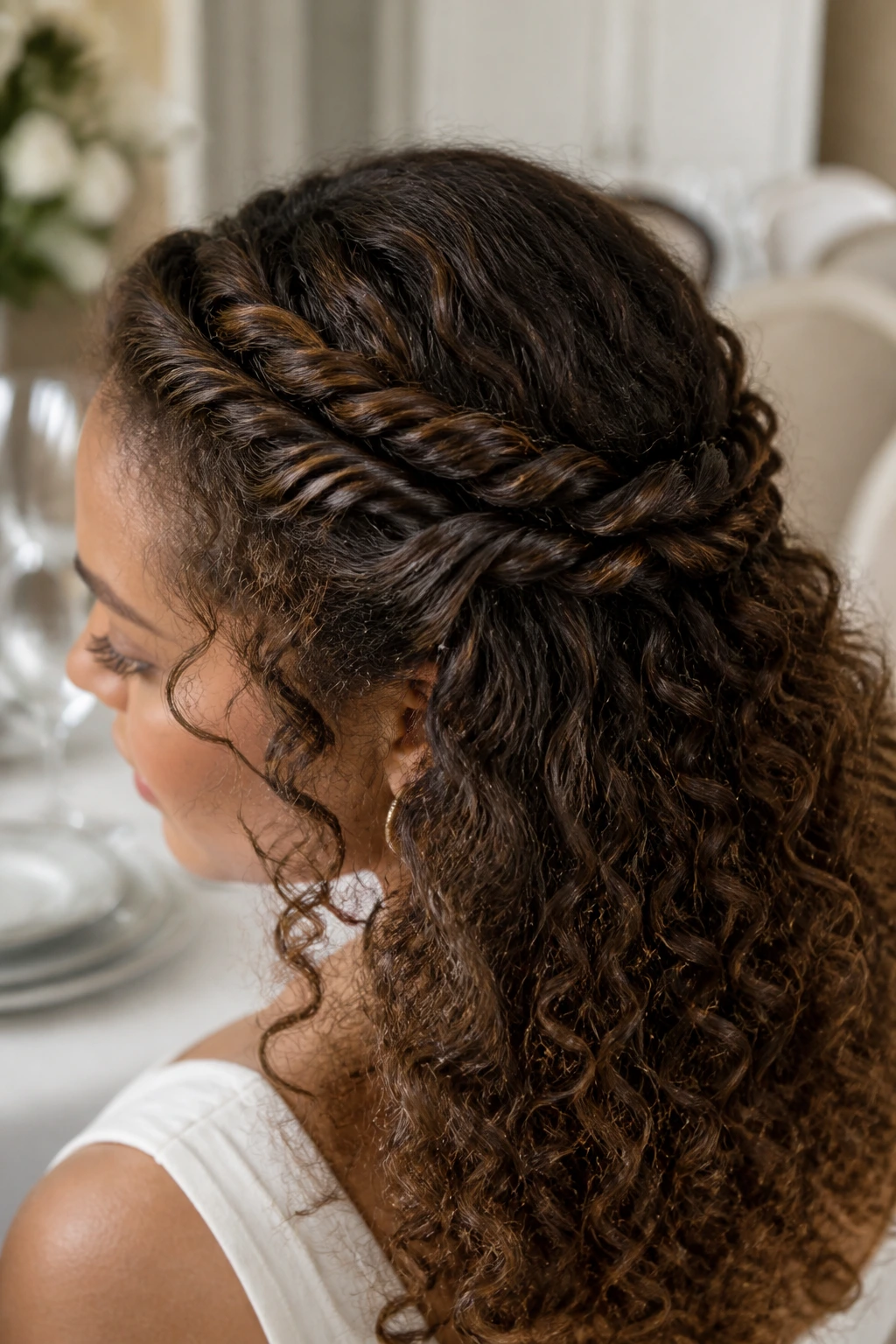
Rope twists are the neat little cousins of braids. On medium curls, a rope-twist crown detail gives the top half of the hair a refined finish while keeping the rest loose. Twist two sections around each other, pin them across the crown, and let the lengths spill down the back.
Why it feels different from a braid
A rope twist reads smoother and a bit more modern than a traditional braid because the two strands create a spiral instead of a woven pattern. That spiral blends well with curls. It doesn’t fight the texture, and it won’t look too busy if the rest of the hair is already full.
This is a nice style for weddings, dinners, or any day when you want a slightly dressed-up shape without piling all the curls on top of your head. It also works if you need the front secured but still want the length to move when you walk.
22. Defined Wash-and-Go with Center Part
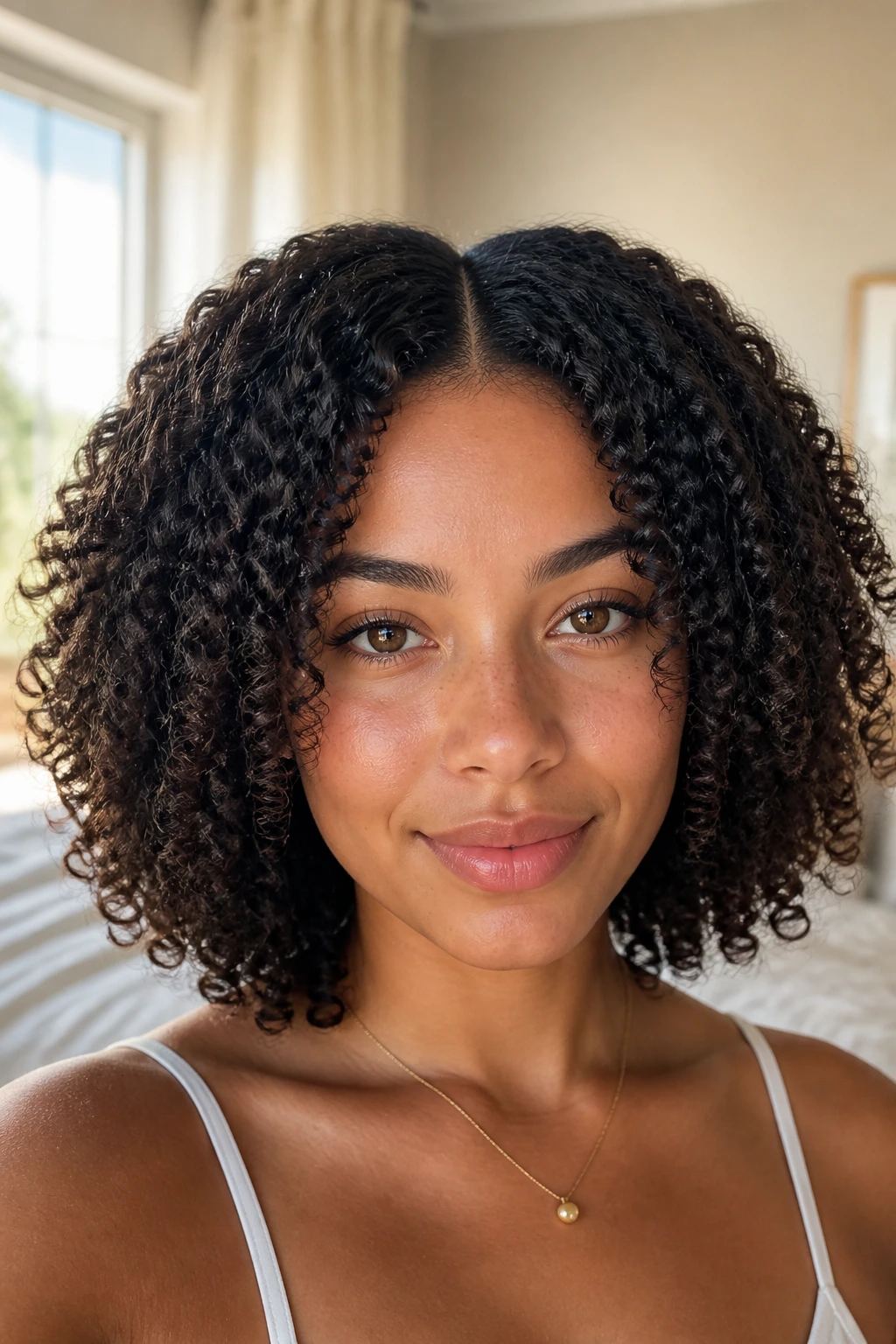
There’s a reason the wash-and-go keeps showing up in curly hair conversations. When it’s done well, it looks like the hair naturally grew into a flattering shape and nobody argued with it. The medium-length version is especially good because the curls can form a balanced line around the face without being dragged down by extra length.
The center part gives this style a clean spine. It divides the volume evenly and lets the curl pattern show on both sides. The key is definition at the root and enough hold through the mids and ends to stop the frizz from taking over by midday.
If your curls are layered, this style really shows it off. If they’re all one length, it can still work, but the shape may feel heavier. A good gel cast and a gentle scrunch-out make a big difference here.
23. Face-Framing Layers with Diffused Volume
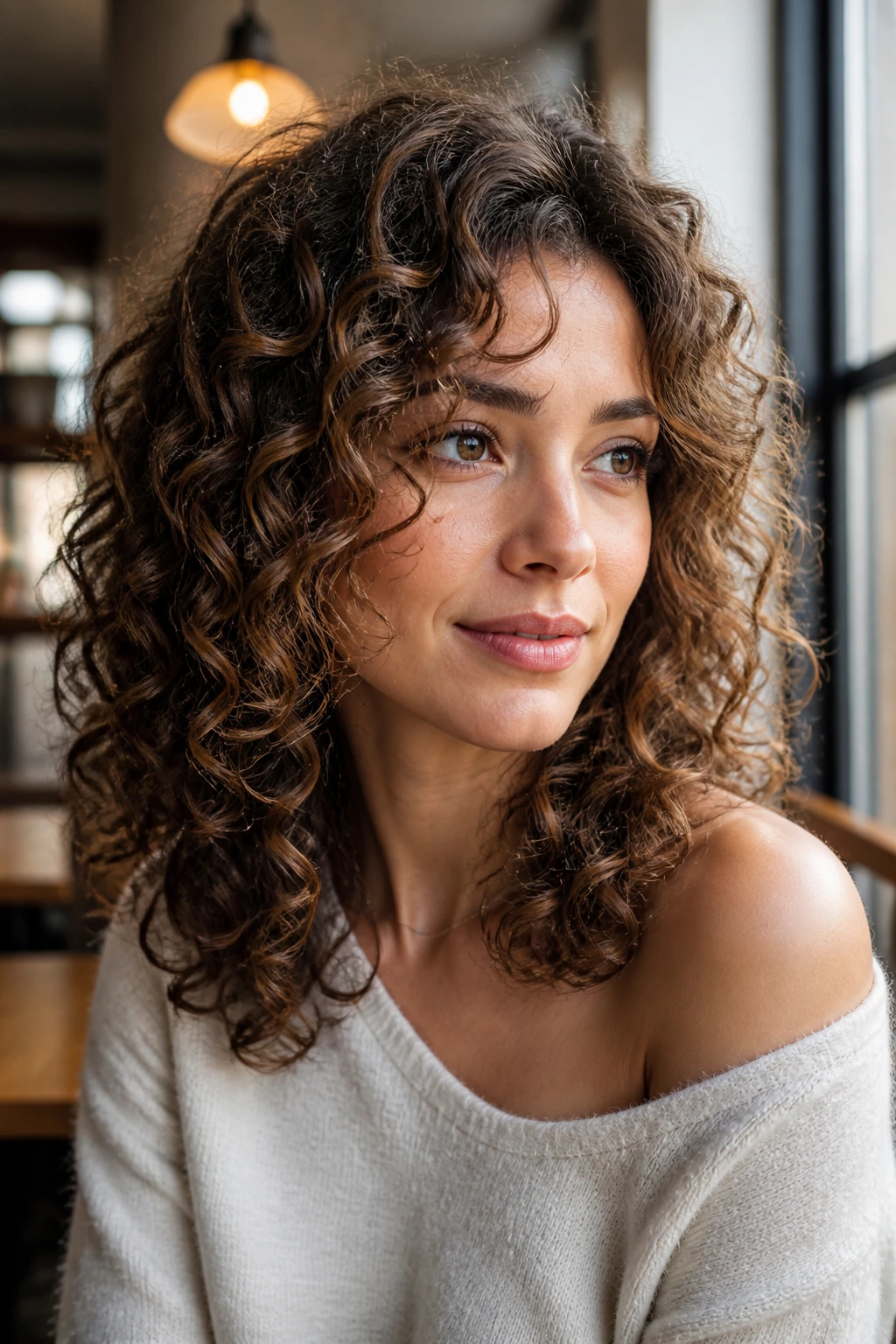
Face-framing layers can do more than soften the haircut. On medium curly hair, they can change where the eye goes first. The shortest pieces near the cheekbones give the face shape, while the longer layers around the shoulders keep the style from collapsing into one blunt shape.
How to keep the volume in the right place
Diffuse the roots first, then move to the lengths. If you dry the ends before the crown, the top can go flat and you’ll lose the lift that makes this cut feel airy. A root clip or two at the crown helps the front rise instead of lying down against the scalp.
This is one of my favorite styles for people who want their curls to look full but not heavy. The layers do the shaping. The diffuser just finishes the job.
24. Polished Lob with Barrette Accent
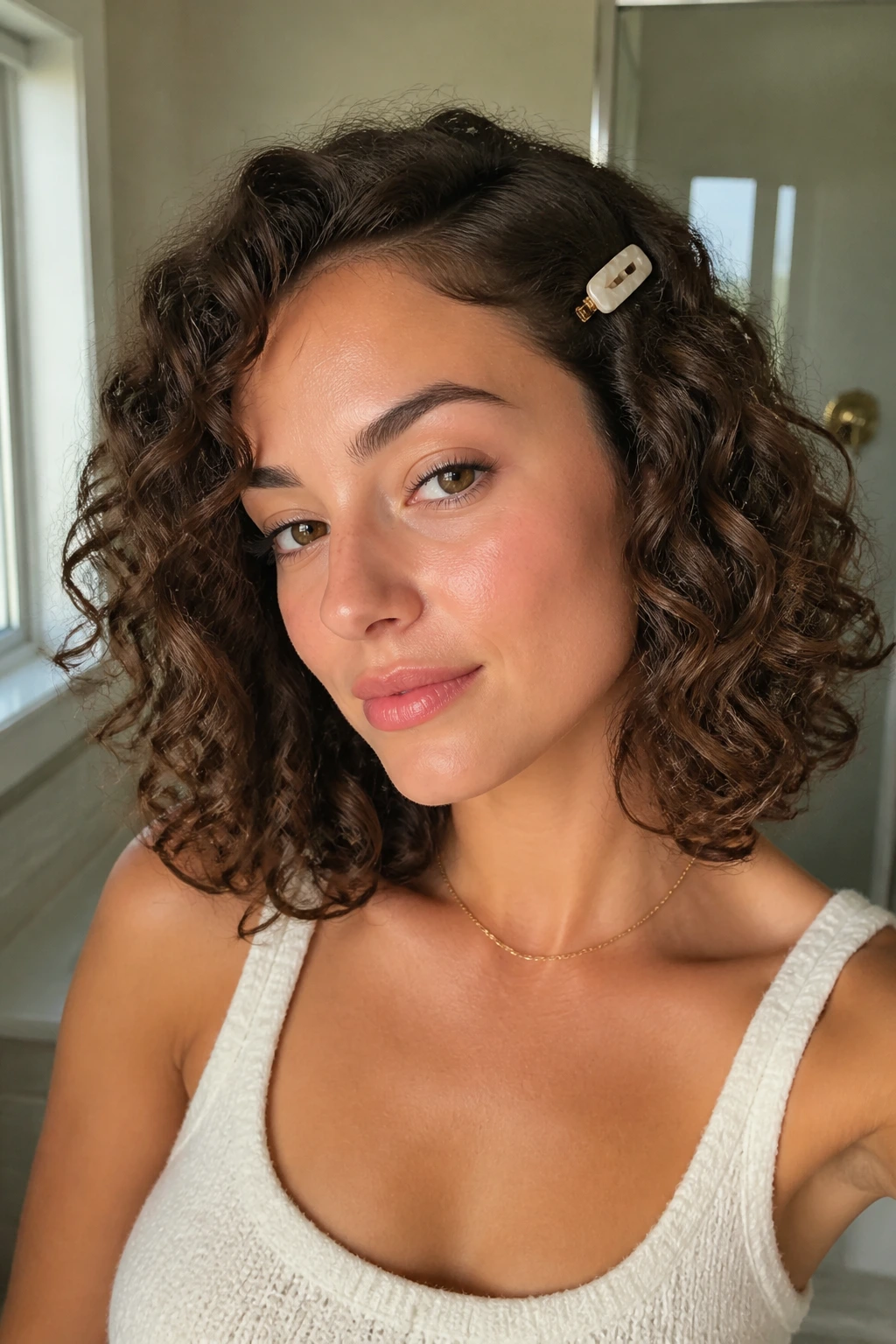
A polished lob with a barrette accent feels neat without looking overworked. Keep the curls smooth around the outer line, then clip one side back with a simple barrette — metal, pearl, matte resin, whatever suits the day. The accessory gives the shape a focal point.
The lob length matters here because it leaves room for the curls to stack but still reads clean near the shoulders. Too much length and the style starts to droop. Too little and the barrette can overpower the cut. Medium length sits in the comfortable middle.
This is a useful style when you want curly hair to look intentional with very little fuss. One clip. One part. Done.
25. Scarf-Wrapped Medium Curls
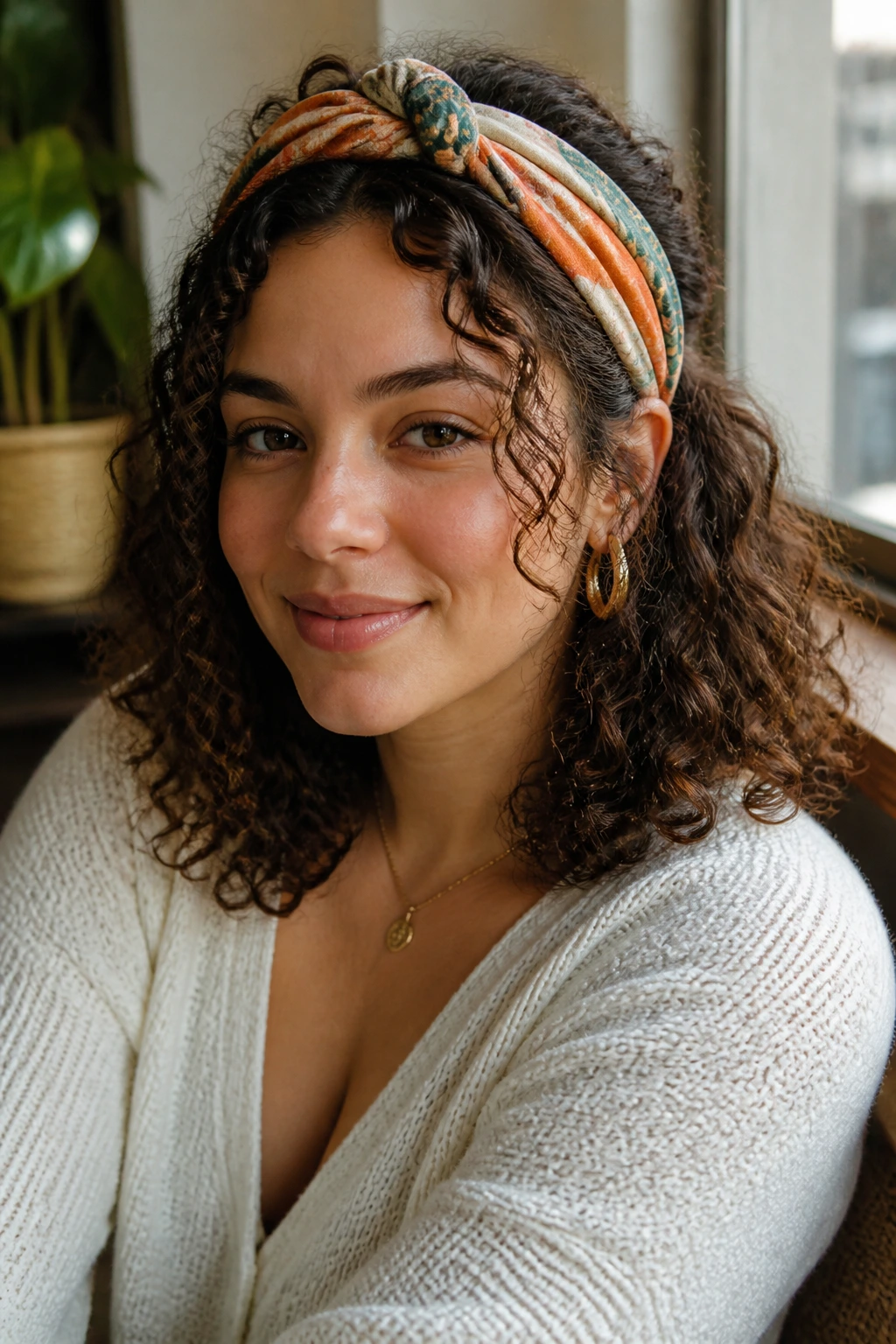
A scarf wrap can rescue medium curls on a day when the top is frizzy and the ends still look good. Tie the scarf around the head like a headband, then let the curls fall underneath or slightly over it. The wrap gives color, structure, and a little polish without hiding the texture.
This style is especially handy for curls that puff at the crown or lose definition near the hairline. The scarf holds those areas in place while the lower curls stay visible. Use a silk or cotton scarf that sits comfortably; slippery fabric looks pretty but tends to slide unless you anchor it well.
It’s an easy way to make the hair feel styled when you do not want to rewash or restyle everything. Sometimes the fix is not more product. Sometimes it’s a good scarf and a little nerve.
Why Medium Length Makes Curly Hair Easier to Shape
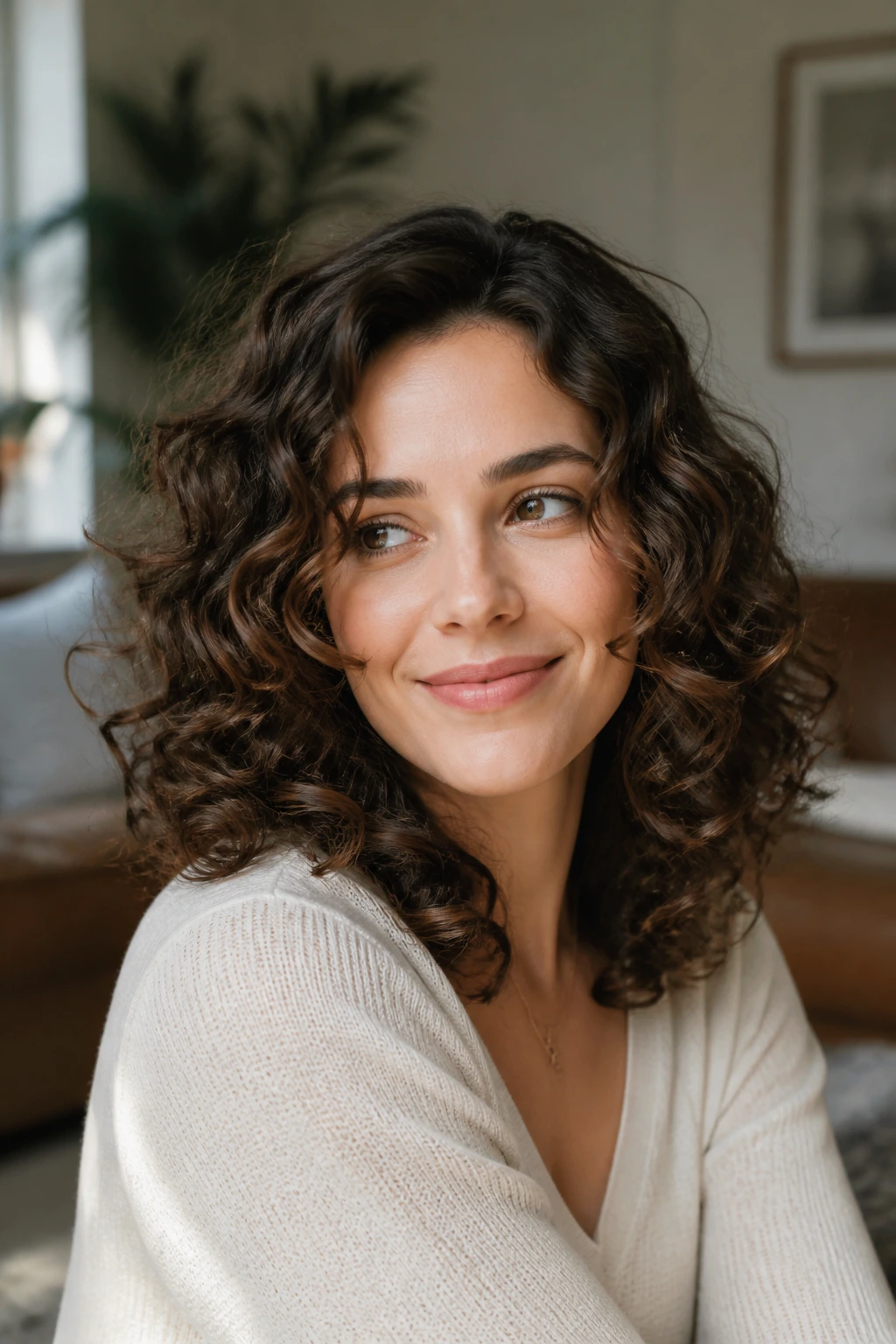
Medium length is the sweet spot where curls still have bounce, but the weight hasn’t dragged the pattern into a long, tired line. That matters for styling because the hair can hold twists, clips, braids, and volume without needing a mountain of pins. It’s the reason so many medium length hairstyles for curly hair look finished with less effort than very long cuts.
There’s also a practical side people forget. Medium curls dry faster than long curls, tangle less at the nape, and usually need fewer bobby pins to stay where you put them. On thick hair, that can be the difference between a style you wear and a style you fight.
The shape is easier to adjust too. If the cut is a little too full, layers can bring it back. If it’s too flat, a side part or a crown lift can wake it up. You get some room to work, which is where curly hair starts to feel friendly instead of fussy.
Essential Tools for These Styles
- Wide-tooth comb: Good for detangling damp curls without shredding the clumps.
- Microfiber towel or cotton T-shirt: Helps blot water without roughing up the cuticle.
- Curl cream: Adds slip and soft hold, especially for looser curl patterns.
- Strong-hold gel: Useful when you want the style to last past lunch.
- Mousse: Nice for root lift and lighter texture on finer curls.
- Diffuser attachment: Speeds drying and helps preserve curl shape.
- Duckbill clips: Great for root lift, crown setting, and pinned-back sections.
- Satin scrunchies: Better than tight elastics for ponytails and buns.
- Bobby pins with grip: Plain pins slide; textured ones hold better in dense curls.
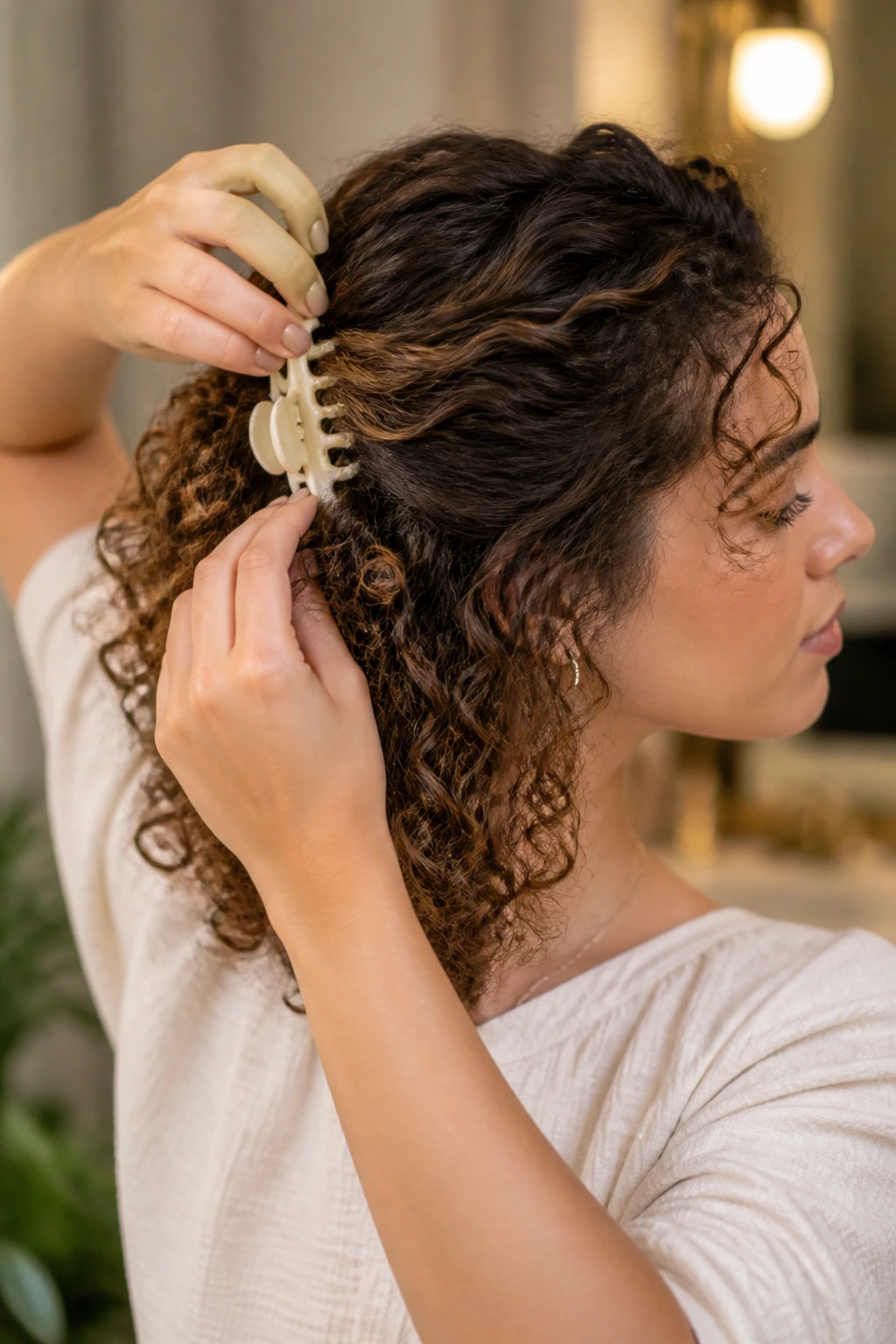
- Claw clip: Choose one with strong teeth and enough width for your curl volume.
- Rattail comb: Helpful for clean parts and sectioning braids or twists.
- Satin bonnet or pillowcase: Keeps the style from getting crushed overnight.
Smart Product and Cut Choices
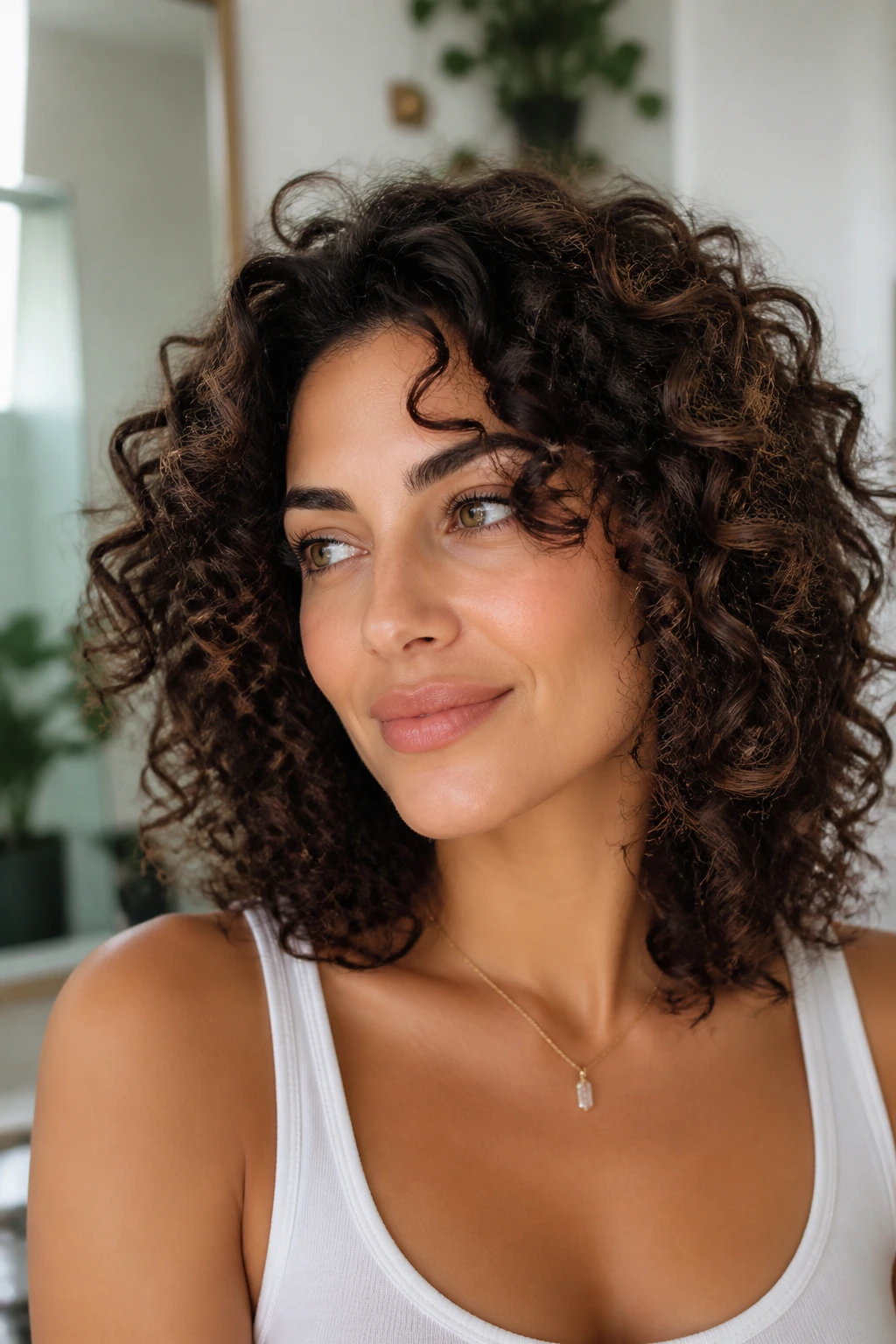
Medium curly hair behaves better when the cut is shaped around the curl pattern, not just trimmed to one blunt line. I prefer dry cutting or curl-by-curl shaping when possible because shrinkage changes where the ends land. A cut that looks balanced wet can come out too short, too square, or too full in all the wrong places once it dries.
Product choice matters, but not in a fussy way. A lightweight curl cream or leave-in gives slip; gel gives hold; mousse lifts the roots if they go limp. You do not need all three every day. Some curls look best with cream and gel. Others get weighed down unless the cream is barely there. Fine curls usually need less cream than thick curls. That sounds obvious, yet people keep slathering the same amount on every texture.
Color and cut shape matter too. Lighter ends can make layers read more clearly, while darker single-process color can make the silhouette feel heavier. If your curls are dense, ask for internal layers or a rounded shape so the bottom edge does not turn into a shelf. If your curls are looser, softer layers keep the hair from losing body too fast. One more thing: bring photos where the model has your curl density, not just your curl type. Those are not the same.
How to Wear These Styles Without Fighting Your Curl Pattern
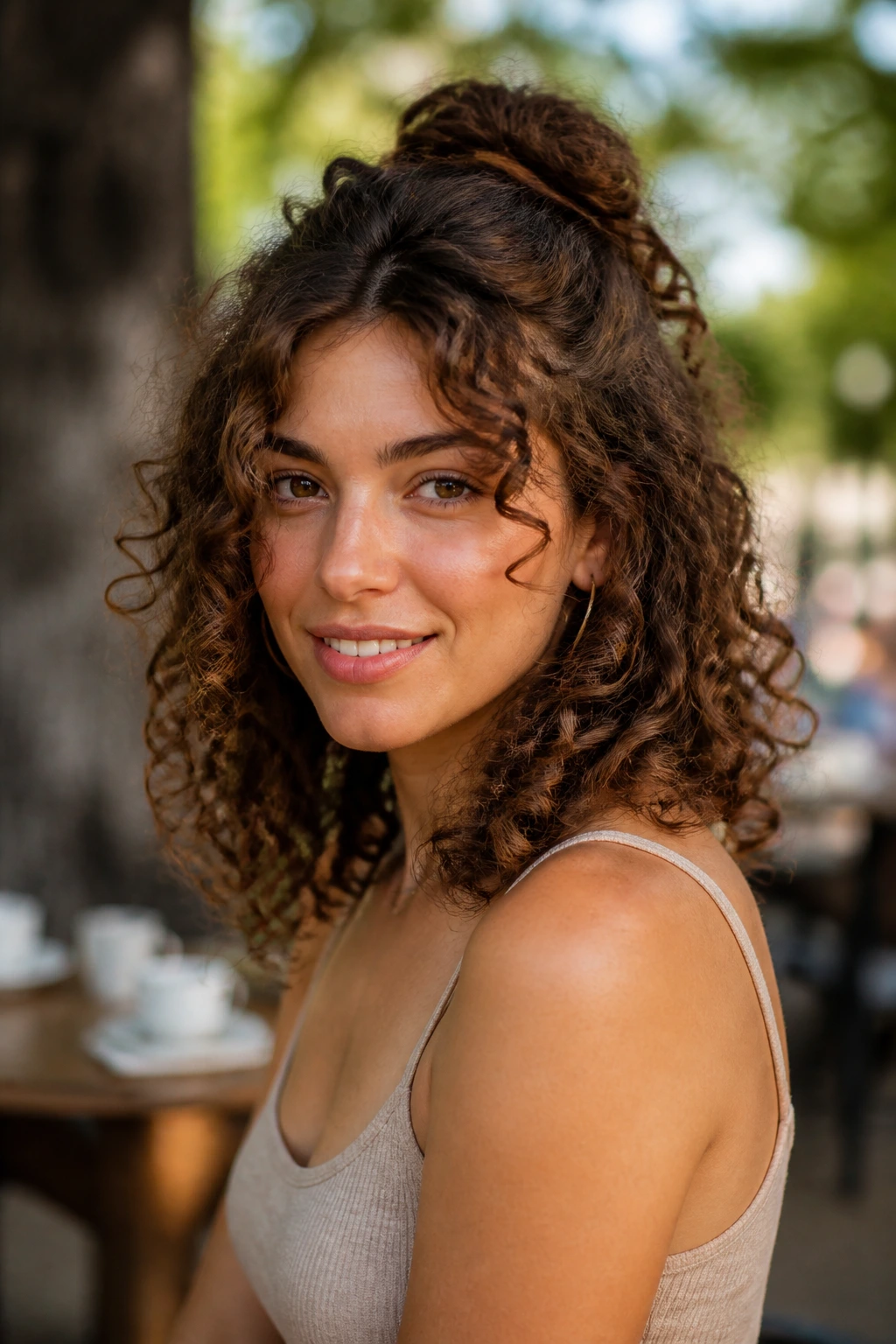
Presentation: Keep the silhouette aligned with the curl texture. If the style is meant to be soft and loose, don’t force every strand into place. If it’s meant to be tidy, smooth only the sections that need it and leave the rest with natural bend. The best medium curly styles still look like curls, not like someone tried to iron them into a shape they never asked for.
Accompaniments: Medium curly hair looks especially good with earrings, open necklines, and shirts that frame the shoulders. A side clip or scarf also pulls attention upward when you want the face to stand out. For more formal looks, a structured collar can balance a fuller curl shape nicely.
Wear Time: Loose down styles usually look best for 1 to 2 days, while pinned and braided versions often hold for 2 to 4 days with a satin bonnet at night. If you want the style to last, choose one with secure sections and minimal touching.
Best For: These looks work across offices, dinners, weddings, errands, and low-key weekends. The only thing I’d avoid is a style that needs constant hand-combing if you know you’ll be outside in wind or humidity for hours. Curls and weather have opinions.
Extra Ways to Personalize the Look
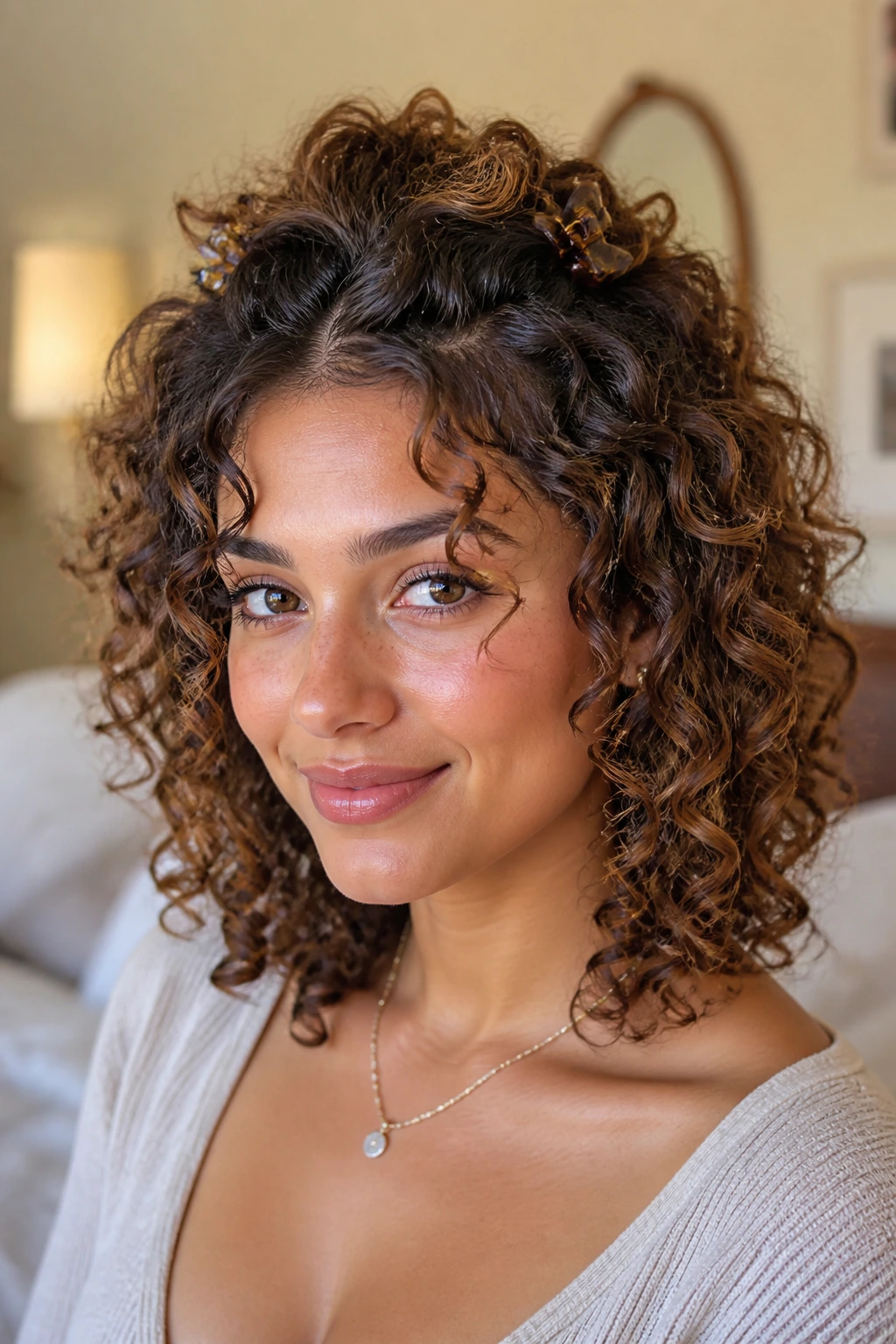
Volume Enhancement: Clip the roots at the crown while the hair dries, then remove the clips once the shape has set. This gives the top section lift without teasing. A little root lift goes a long way on medium curls.
Definition: If the curl clumps keep separating, apply gel in smaller sections and scrunch upward with your hands. The curls should look grouped, not sticky. If they feel hard after drying, you used too much hold or too little water.
Accessory Swap: Change the whole tone of the same style with one clip, one scarf, or a pair of small pins. Metal looks cleaner. Fabric reads softer. Pearls go formal fast. Curly hair responds well to accessories because the texture keeps them from looking flat.
Humidity Plan: In damp weather, choose styles with pinned sections, braids, or a stronger gel cast. Loose styles can still work, but they usually need extra protection at the crown and temple area. If the air is wet enough to make your curls swell in ten minutes, don’t build the style around perfect frizz control. Build it around shape.
Night Prep, Refreshing, and Style Longevity
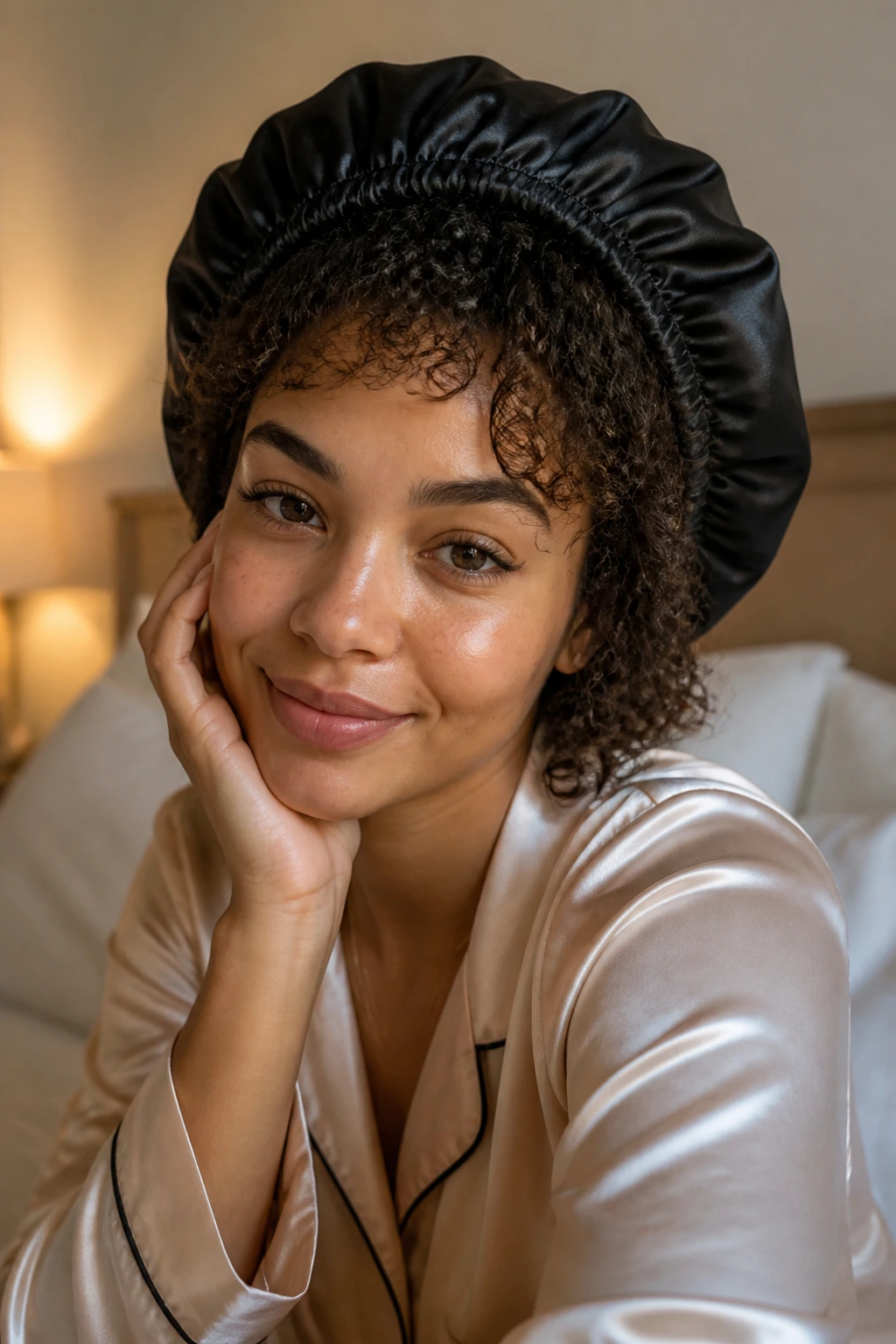
Medium curly styles last longer when the night routine is boring and consistent. A satin bonnet or pillowcase protects the shape, especially if the style has braids, twists, or a low pony. For loose styles, a loose pineapple at the crown keeps the curls from being crushed into the pillow. If you’re sleeping in a bun, keep the elastic soft and the placement high enough that you’re not flattening the back of the head.
In the morning, refresh with a spray bottle of water or a mix of water and a little leave-in conditioner. Mist lightly. Do not soak the hair unless you want to restart the whole drying process. Re-scrunch the curls, smooth the front if needed, and let the shape settle for a few minutes before deciding whether it needs more product.
Most loose medium curly styles hold well for 1 to 3 days, depending on density, weather, and how much you touch your hair. Braided and pinned styles often stretch farther. A scarf wrap can buy you another day if the roots are looking tired and the ends still have life. If a style starts failing at the crown, that’s usually where to fix it first. Not the ends. The crown.
Common Mistakes to Avoid
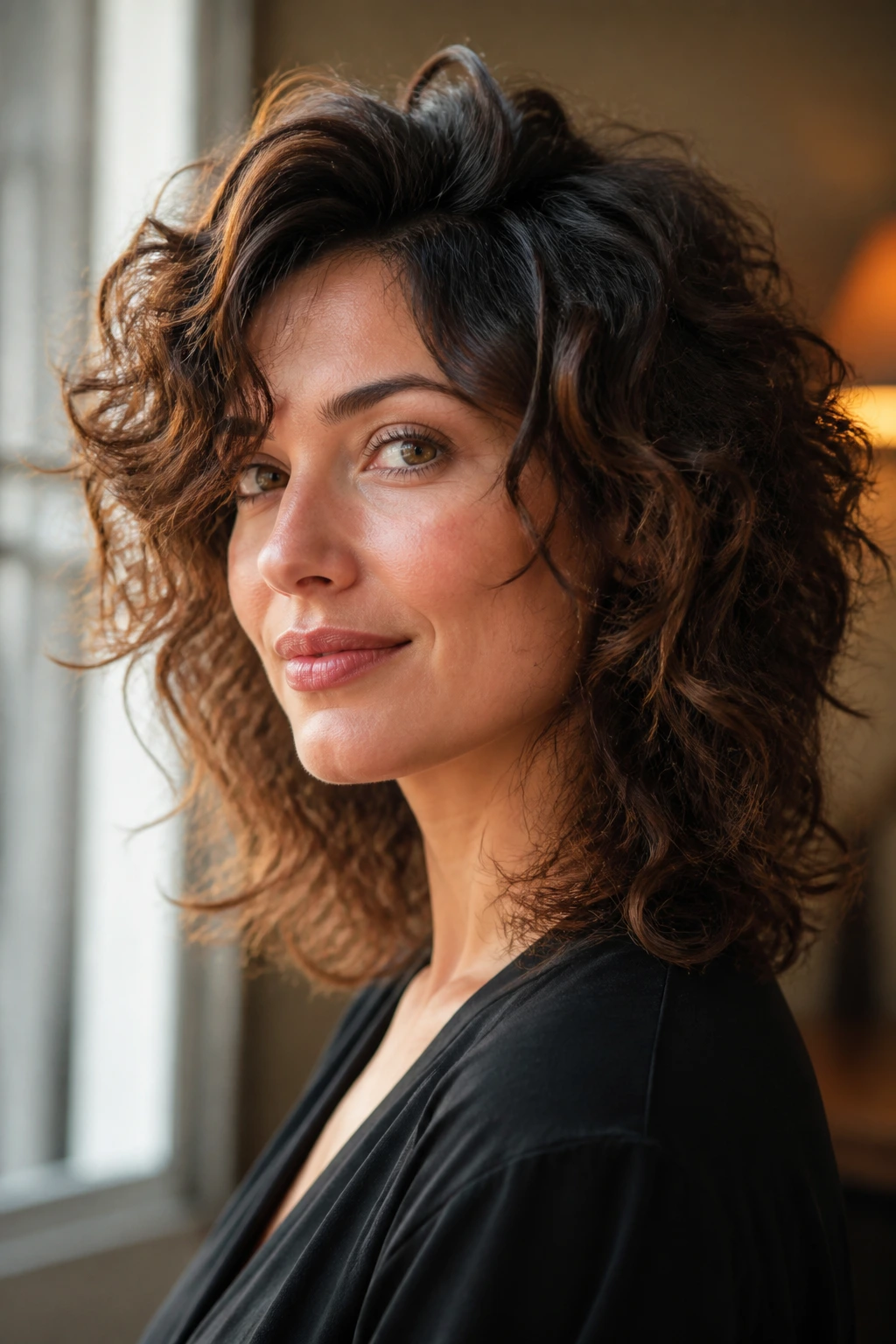
The first mistake is cutting the shape without accounting for shrinkage. Medium curly hair can lift several inches once it dries, and a stylist who ignores that can leave you with a cut that looks shorter and puffier than intended. Bring your curls in their natural state and talk about how they behave dry, not only wet.
The second mistake is overloading the hair with cream or oil before styling. That can make curls collapse, especially at medium length where the ends already carry enough weight. If the hair feels greasy before it’s dry, you’ve probably crossed the line. Start lighter than you think, then add more only where the curls need slip.
Another one: brushing curls dry and expecting them to fall back into shape. They usually won’t. You get frizz, broken clumps, and a shape that looks bigger in the wrong places. Detangle when damp, then leave the pattern alone unless you’re doing a refresh.
Watch the tension around ponytails and clips too. Pulling curls too tight at the crown can create dents that are hard to smooth out later. Worse, it can flatten the root so much that the style loses lift the second you take the accessory out. Secure the hair, don’t strangle it.
Last one: choosing a style that only looks good if every curl lands perfectly. That’s a trap. Medium curly hair needs some margin for life. Wind happens. Humidity happens. Real styling leaves a little room for both.
Variations and Adaptations to Try
Office-Ready Curl Polish: Pick the lob, side part, or polished barrette version and smooth only the top layer with gel. You keep the curl texture, but the overall shape reads cleaner and more controlled. It’s a simple fix for days when you want your hair to look tidy without giving it a slick, stiff finish.
Weekend Texture Mode: Go bigger with the wolf cut, shag, or side-swept cascade and let the roots stay airy. Use mousse and a diffuser, then separate a few curls at the end with your fingers. This version loves a little mess.
Humidity Shield: Choose styles with pins, braids, or a half-up structure. A crown braid, twisted half-up, or rope-twist detail gives the curls a frame when the air gets damp. Strong-hold gel at the front helps too, but the real defense is shape.
Fine-Curl Boost: If your curls are on the finer side, keep the layers softer and the products lighter. A pineapples, side clip, or half-up twist can add visual fullness without burying the curl pattern. Too much cream will flatten the shape fast, so stay cautious there.
Thick-Curl Control: Dense curls usually need internal layers, a stronger clip, and a little more sectioning when styling. A lob, tucked bob, or low ponytail makes the shape easier to manage. Dense hair looks beautiful when it’s given room, not when it’s squeezed.
Soft Formal Version: The halo braid, crown braid, and polished lob with a barrette can all be dressed up quickly. Add a shine spray on the outer layer, keep the front neat, and let the curls remain visible. That balance looks better than trying to hide the texture.
Frequently Asked Questions
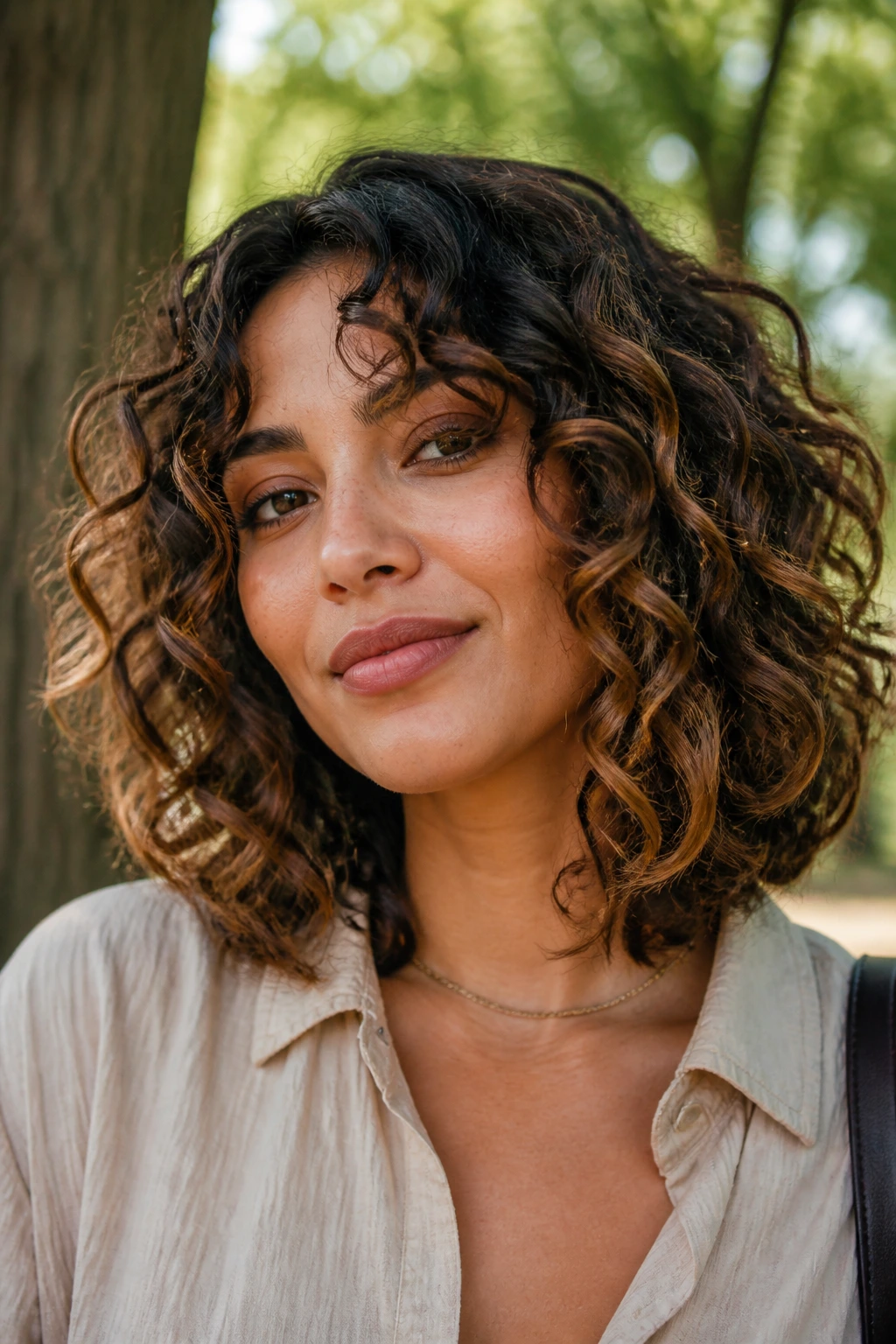
How short can medium length be on curly hair?
For curls, medium length often starts around the chin and runs to just below the shoulders, but shrinkage changes the rules. A cut that lands at the collarbone when wet can sit much higher once it dries, especially on tighter curl patterns. Always judge the shape in its dry state if you want the length to behave.
Do layers make curly hair thinner?
Not if they’re placed well. Good layers remove bulk where the hair stacks too heavily and leave enough weight at the ends so the curls still look full. Bad layers can create wispy ends that frizz out and make the whole cut look sparse.
Should curly hair be cut wet or dry?
Dry cutting gives the most accurate shape for many curl patterns because you can see shrinkage, volume, and direction as they naturally sit. Some stylists use a mixed approach, which works too. What matters is that the cut is shaped for your actual curl pattern, not a guess.
How do I stop medium curls from looking triangular?
The triangle shape usually shows up when the ends carry too much bulk and the top sits too flat. Internal layers, a lifted crown, and the right product balance help fix it. A side part or half-up style can also shift the volume in a better direction.
Which of these styles works best on second-day hair?
The claw-clip twist, low ponytail, crown braid, and half-up styles all get easier as the hair gains texture. Freshly washed curls can be slippery. Day-two hair usually has enough grip to hold shape without extra product.
Can fine curly hair wear these styles too?
Yes, but the lighter options usually work better. A side clip, soft lob, half-up twist, or defined wash-and-go tends to keep fine curls from being weighed down. Heavy creams and bulky buns can flatten the shape faster than you’d like.
What if my curls frizz up within an hour?
That usually means the hair needs more hold or better sealing at the outer layer. Try a stronger gel cast, less touching, and a satin wrap at night. Sometimes the problem is also hydration — dry curls frizz fast because they’re chasing moisture from the air.
Do bangs work with medium curly hairstyles?
They do, but they need room to shrink and shift. Curtain bangs and airy fringe tend to work better than blunt straight-across bangs on curly hair. The front pieces should blend into the layers so the grow-out doesn’t look awkward.
Can I use heat on these styles?
You can, but you do not need it for most of them. A diffuser and a low heat setting can refine the shape, while air-drying keeps the curl pattern softer and less stressed. If you do use heat, keep it low and finish with a cooler blast to help the set.
A Shape That Lets Curls Move
Medium curly hair is at its best when the cut gives the curls a job. Some styles frame the face. Some put the crown on display. Some just keep the whole head from turning into a puff of guesswork by lunchtime. That’s the real strength of medium length hairstyles for curly hair: they don’t trap the texture. They give it a shape to live in.
The styles that last are the ones that respect curl behavior instead of trying to flatten it out of existence. A good lob, a thoughtful shag, a pinned twist, a braided crown — each one works because it leaves the curls room to do what they already want to do.
Pick the shape that fits your density, your day, and your patience level. The best one is usually the one you can wear again without thinking too hard about it.