



Non-binary haircuts for women over 50 with curly hair work because they stop asking the curl to behave like straight hair in a wig. That sounds blunt, but it’s the heart of the matter. Once a cut starts following the actual bend of the strand — the spring, the shrinkage, the little surprises at the crown — the whole head looks more deliberate and a lot less fussy.
There’s also the matter of change. Curly hair often shifts after 50: the ends can thin out, gray strands can feel wirier or drier, and the shape that used to sit neatly at chin length may suddenly puff in the wrong places or collapse in others. A good androgynous cut doesn’t fight those changes. It uses them.
That’s why these shapes matter so much. A sharp nape, a broken fringe, a cropped side, a collarbone layer, a soft mullet line — each one changes how the curl falls on the face and how much work it takes to get out the door. Some of these cuts lean bold. Some sit quietly. A few are downright elegant in a way that has nothing to do with being polished and everything to do with being honest about texture.
Why These Cuts Feel Right on Curly Hair After 50

They make shrinkage work for you. Curly hair can bounce up two inches or more once it dries, so a cut that respects shrinkage keeps the shape from turning boxy or mushroom-like.
They give the crown a job. Older curly hair often loses a little density at the top while keeping fullness at the sides, and the right cut redistributes that weight instead of fighting it.
They soften the face without going soft on shape. A curved fringe, a tapered temple, or a side-swept piece can open the face while still keeping an androgynous line.
They’re easier to refresh. A cut with a clear silhouette can survive a rough sleep, a humid day, or a quick wash in the sink without needing a full restyle.
They work with silver, salt-and-pepper, and color-treated curls. Gray curls catch light differently; layers and edges help them look intentional instead of puffy or flat.
They let you choose your own signal. Some days you may want a cleaner barbered edge. Other days you may want volume, softness, or a little rebellion. The haircut can hold all of that.
1. Curly Pixie with a Soft Top
A curly pixie can be a tiny miracle when the sides are tight and the top is left long enough to move. The trick is not to chop it into a helmet. Leave about 2 to 4 inches on top, then taper the ears and nape so the curl has lift without bulk.
Why it works
This cut is good for women who want a clear shape and a fast morning routine. The short sides take weight off dense curls, while the longer top gives you enough length to create a little wave, a little bend, and a little attitude. It also keeps glasses from getting swallowed by too much side volume.
A dry cut works best here, because curls at the crown often spring up more than the hair at the temples. If your hair is fine, ask for softness rather than lots of tiny layers. Tiny layers can make the top look airy in the mirror and scattered by noon.
Styling note
- Use a small amount of curl cream on damp hair.
- Diffuse for 5 to 8 minutes, then stop before the top gets puffy.
- Push the front slightly forward or slightly to one side; that small shift changes the whole mood.
The nice part is the neck. Clean, open, cool. No extra drama back there.
2. Tapered Curly Crop
The tapered curly crop is the one I reach for when someone says, “I want short, but not sweet.” It’s clipped closer at the nape and around the temples, with enough length on top to show the curl pattern instead of hiding it.
What makes it different
The taper creates shape without making the head look wide. That matters with curly hair, because too much side width can turn a short cut into a rounded puffball. A good taper narrows the silhouette and keeps the ear area neat, which is a small thing until you spend a hot day in it.
This cut sits nicely on thick curls, gray curls, and hair that resists obedience. It also works if you like earrings, because the cut leaves the face open and the ear visible. If your hairline is soft or uneven, a taper can make it look intentional instead of like a compromise.
Ask for a gentle fade through the nape rather than a hard clip if you want the result to feel less barbered and more lived-in.
3. Chin-Length Curly Shag
A chin-length shag has a lovely stubbornness to it. It does not sit politely, and that’s the point. The layers start high enough to lift the crown, then fall around the cheekbones and jaw so the hair has movement without losing structure.
Why it works for curly hair
At this length, curls still bounce, but they don’t collapse under their own weight. That makes it a sweet spot for people with medium-density curls who want shape around the face without going cropped. It also gives the ends enough room to show off silver streaks or highlights.
The shag line softens a strong jaw and adds lift to a longer face. If your curls are loose, the layers can create a feathered edge. If your curls are tighter, the result is a little fuller and a little wilder. Both are good.
A chin-length shag needs a stylist who understands how curls stack when they dry. If the layers are cut too evenly, the shape turns triangular. If they’re cut with curl pattern in mind, the whole thing moves.
4. French Bob with a Curved Fringe

A French bob on curly hair has a cheeky little edge to it. The line sits near the jaw, sometimes a touch above, and the fringe curves gently instead of hanging like a blunt shelf. On curly hair after 50, that soft bend is what keeps it from feeling costume-y.
Best for
This cut works beautifully for people who want their glasses, cheekbones, and jawline to stay visible. The curved fringe breaks up a long forehead without swallowing the face. It also plays well with salt-and-pepper texture, because the movement keeps the silver from looking rigid.
Ask for this
Tell your stylist you want the fringe to live long enough to separate when dry. That part matters. Curly bangs look better when they skim and split a little, not when they cling in one heavy section.
A French bob can be styled with a diffuser and a dab of gel, but it does not need high drama. If the ends curve under and the fringe lands where your lashes start, you’re in the right zone.
5. Wolf Cut for Loose Curls
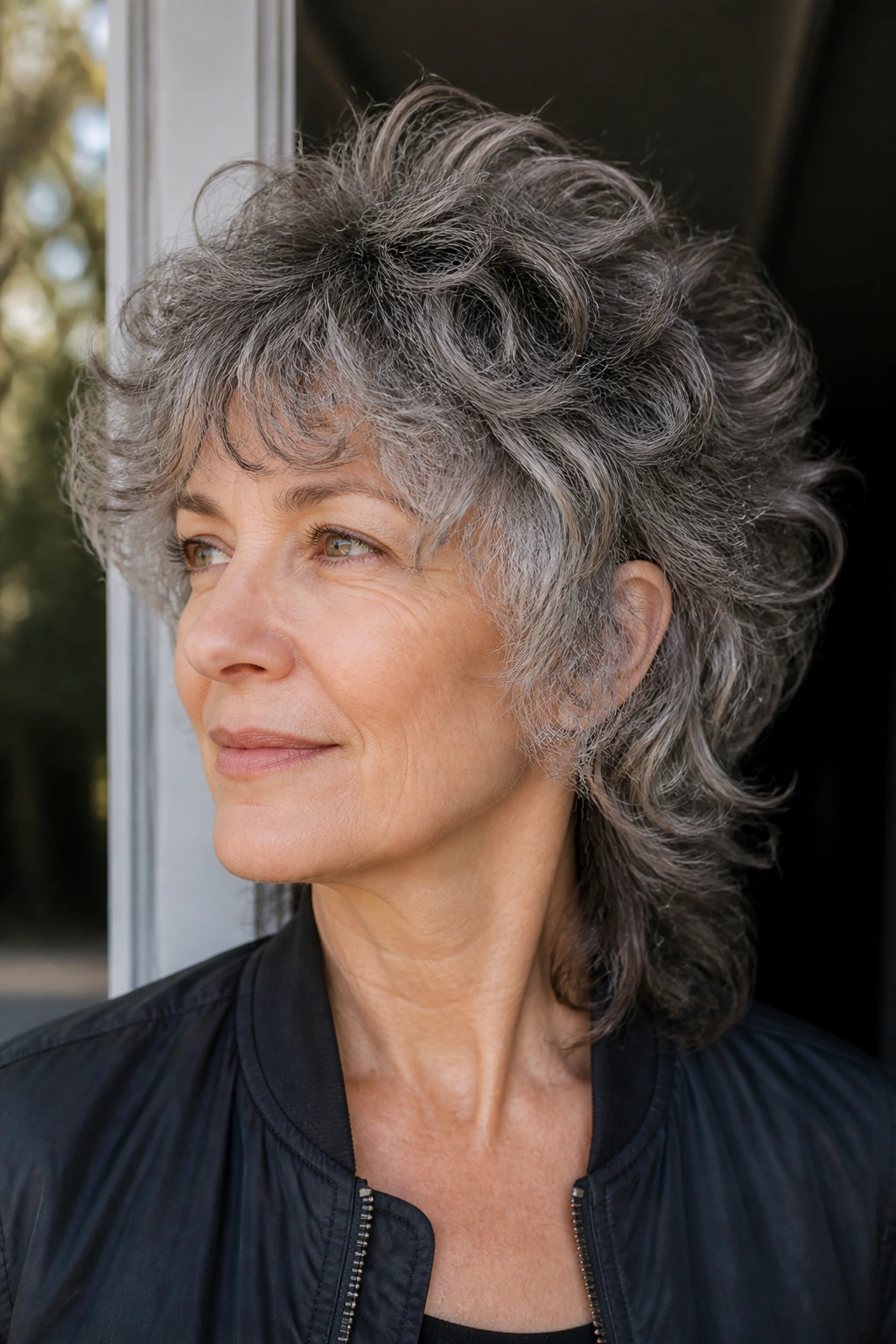
The wolf cut is what happens when a shag gets a little braver. The crown stays fuller, the layers get choppier, and the back often carries a slightly longer tail of shape. On loose curls and waves, it looks effortless in a way that is actually quite calculated.
The mechanism behind it
Loose curls often need height at the top and release at the bottom. The wolf cut gives both. It removes bulk from the middle of the head, which stops the dreaded triangle effect, while keeping enough perimeter length that the style doesn’t drift into a short crop too fast.
This is one of those cuts that can lean edgy or soft depending on how you style it. Scrunch it with mousse and diffuse it if you want larger, airy volume. Air-dry with cream if you want the layers to look more piecey and less lifted.
It’s a good pick for women who like clothes with a little structure — jackets, sharp collars, clean lines — because the haircut adds movement without turning the whole look fussy.
6. Collarbone Layers with Face-Framing Pieces
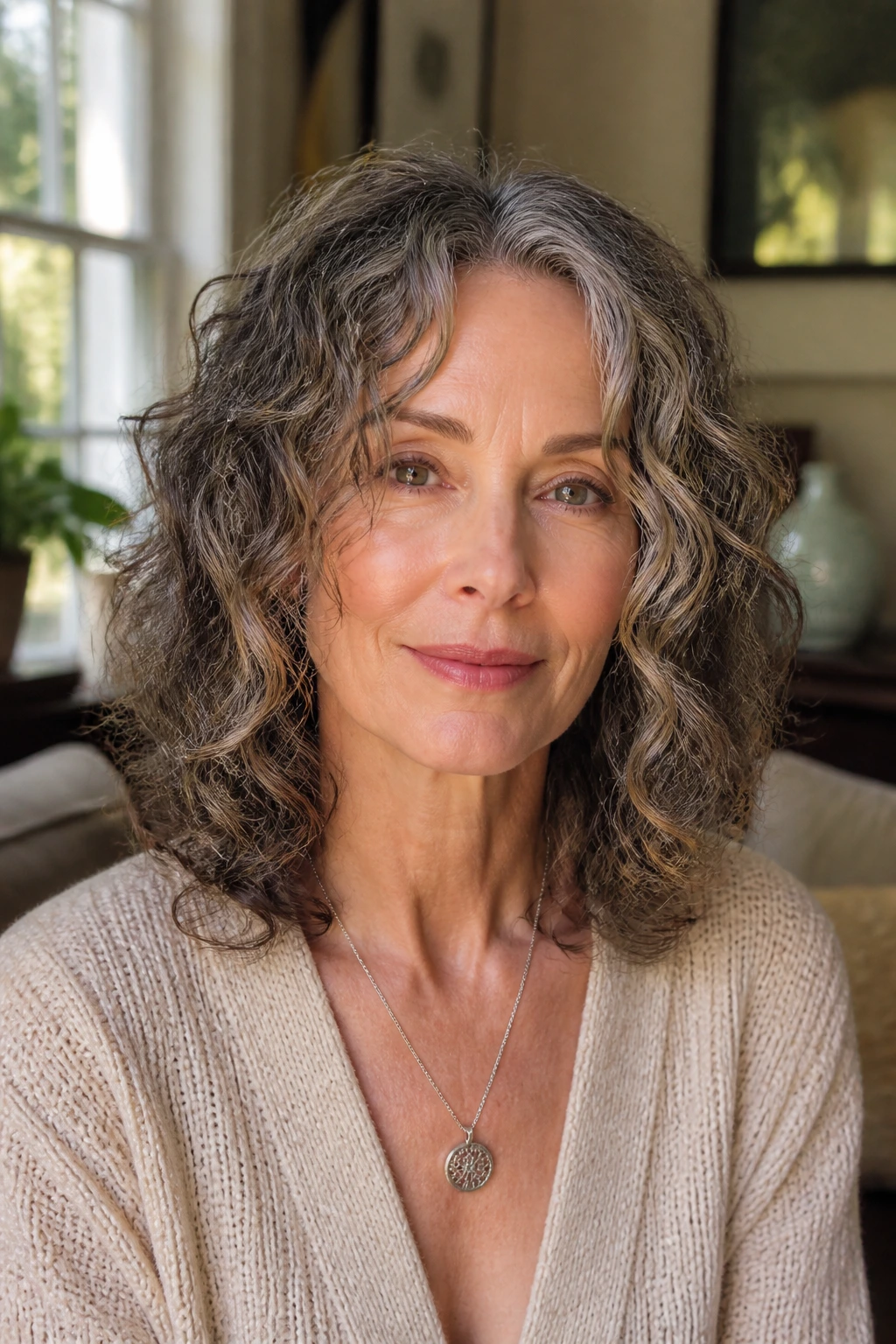
Not everyone wants to go short, and frankly, there’s no need to. Collarbone layers keep length in play while still letting the curl pattern show up with shape and purpose. The face-framing pieces matter here; they steer the eye and keep the cut from hanging heavy.
What to ask for
Ask for long internal layers rather than a lot of chopped outer layers. That keeps the ends from thinning out too much. Then ask for pieces around the face that start near the cheekbone or lip line, depending on how much openness you want.
This cut works well if your curls have thinned at the ends but still carry body underneath. It also suits people who wear their hair up some days and down on others. A collarbone shape gives you enough length for a clip, a low twist, or a loose pony while still looking deliberate when it’s down.
The main caution is weight. If the bottom is too blunt and dense, the curls can hang like a curtain. A little layer around the face solves that without making the whole cut disappear.
7. Tapered Afro Crop
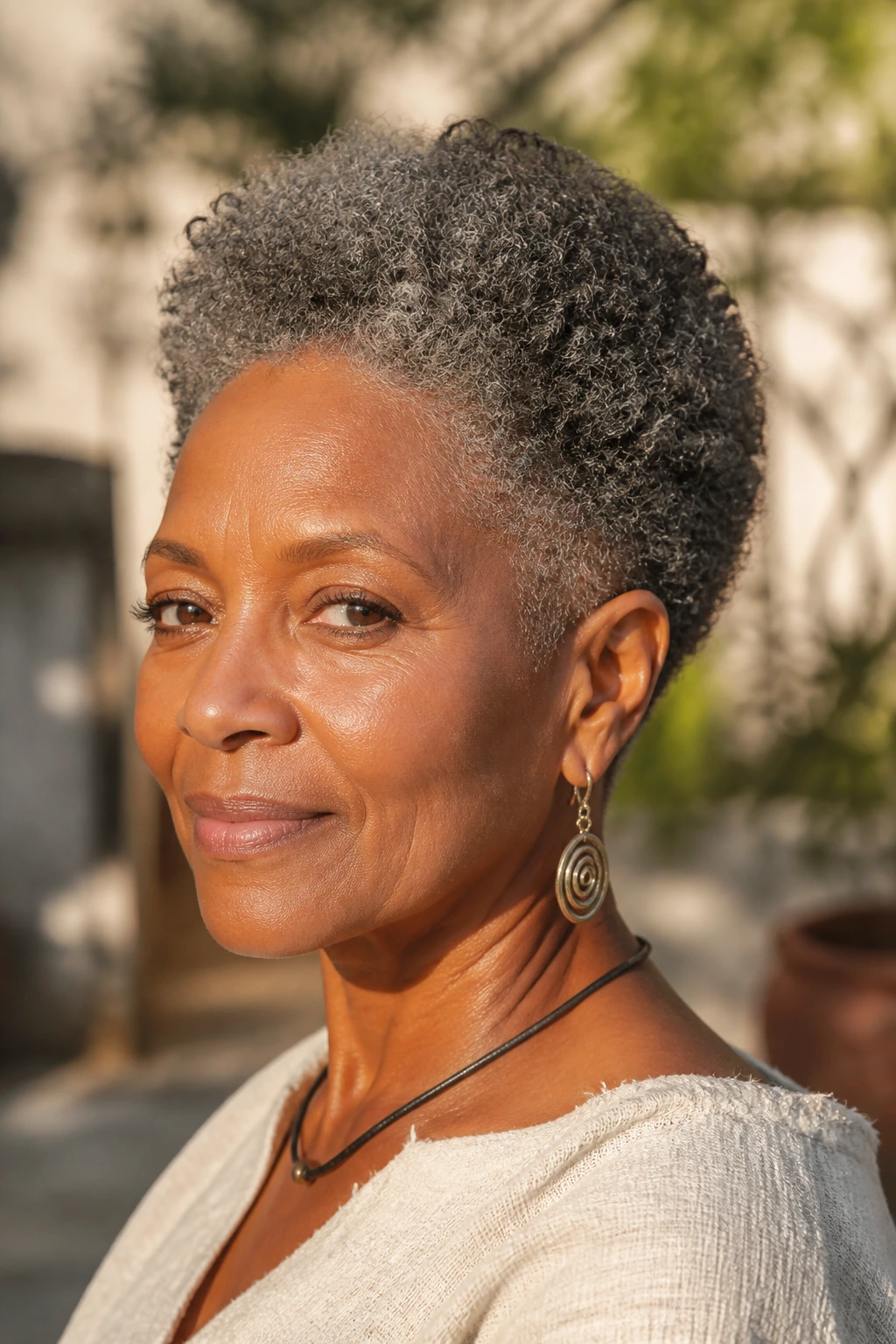
A tapered afro crop is all about shape discipline, and I mean that in the best way. The sides and nape are cut tighter, the top stays rounded, and the silhouette ends up clean, lifted, and full of personality.
Why it belongs on this list
Coily and tightly curled hair often looks best when the haircut respects the natural halo instead of trying to flatten it. A taper keeps the profile neat while letting the crown rise. On gray or silver coils, this shape can look especially striking because the edges frame the face like a soft architectural line.
The crop also makes scalp care easier. Less bulk at the nape means less friction against collars and less sweating under the back section. That sounds small until you’ve lived with a heavy neckline for too long.
If you want a more non-binary read, keep the outline crisp. If you want more softness, leave a little more length at the temples. Either way, the shape does the talking.
8. Jaw-Length Box Bob
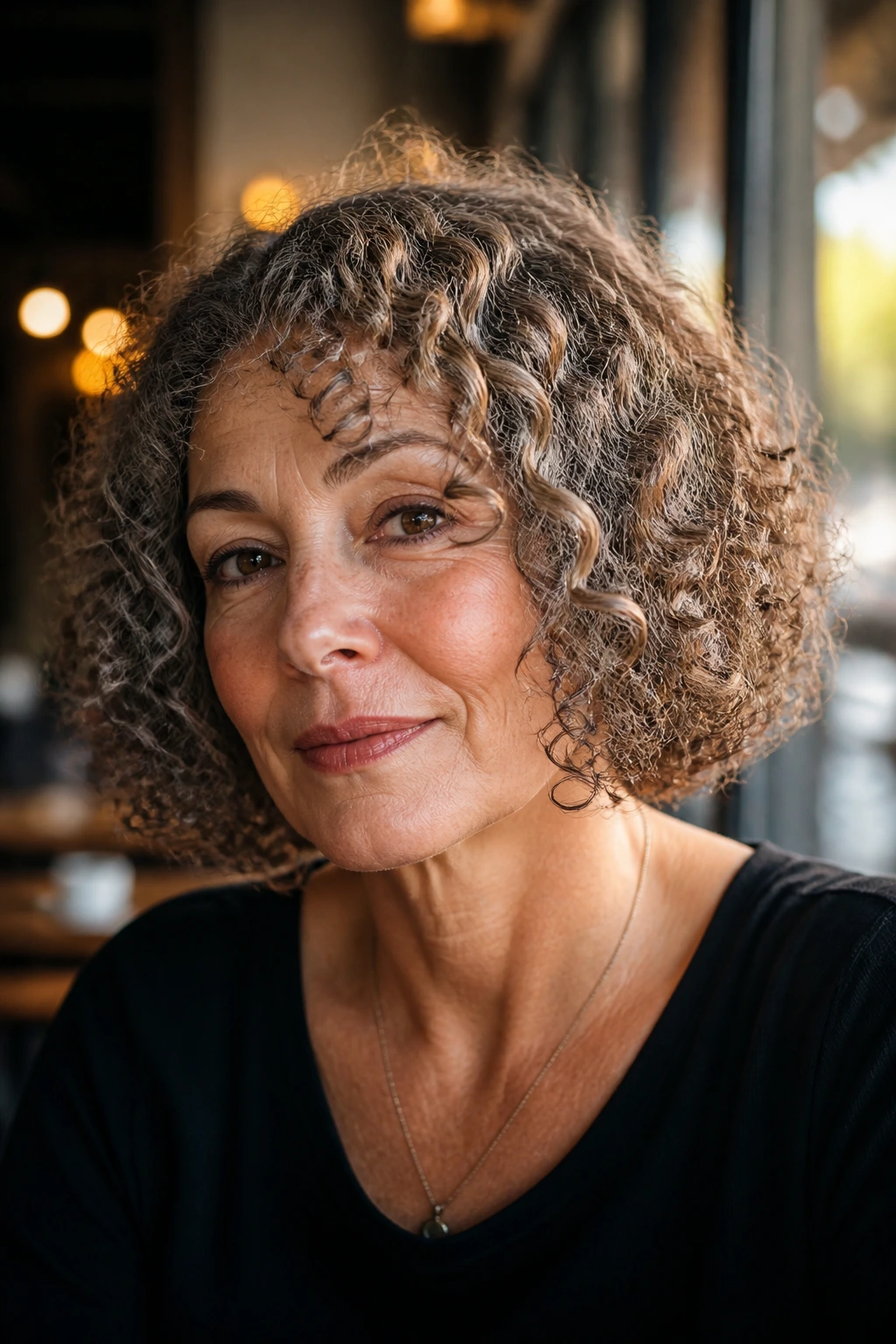
The jaw-length box bob is blunt in the best possible way. It creates a square-ish edge around the face, which sounds severe until you let curls break the line a little. Then it becomes strong, modern, and clean.
Who should try it
This cut is ideal for curls that have enough density to hold a perimeter. Fine, wispy hair can struggle here unless the curl pattern is sturdy. Dense curls, though? They wear this shape well, especially if you want your jawline to look sharper.
A box bob is less about softness and more about presence. That makes it good for people who prefer a low-fuss shape with a clear outline. It also pairs well with earrings and strong glasses frames because the haircut doesn’t compete for attention.
A blunt bob on curly hair needs honest maintenance. Split ends show faster. A trim every 6 to 8 weeks keeps the line clean before it starts to look fuzzy and undefined.
9. Asymmetrical Curly Bob
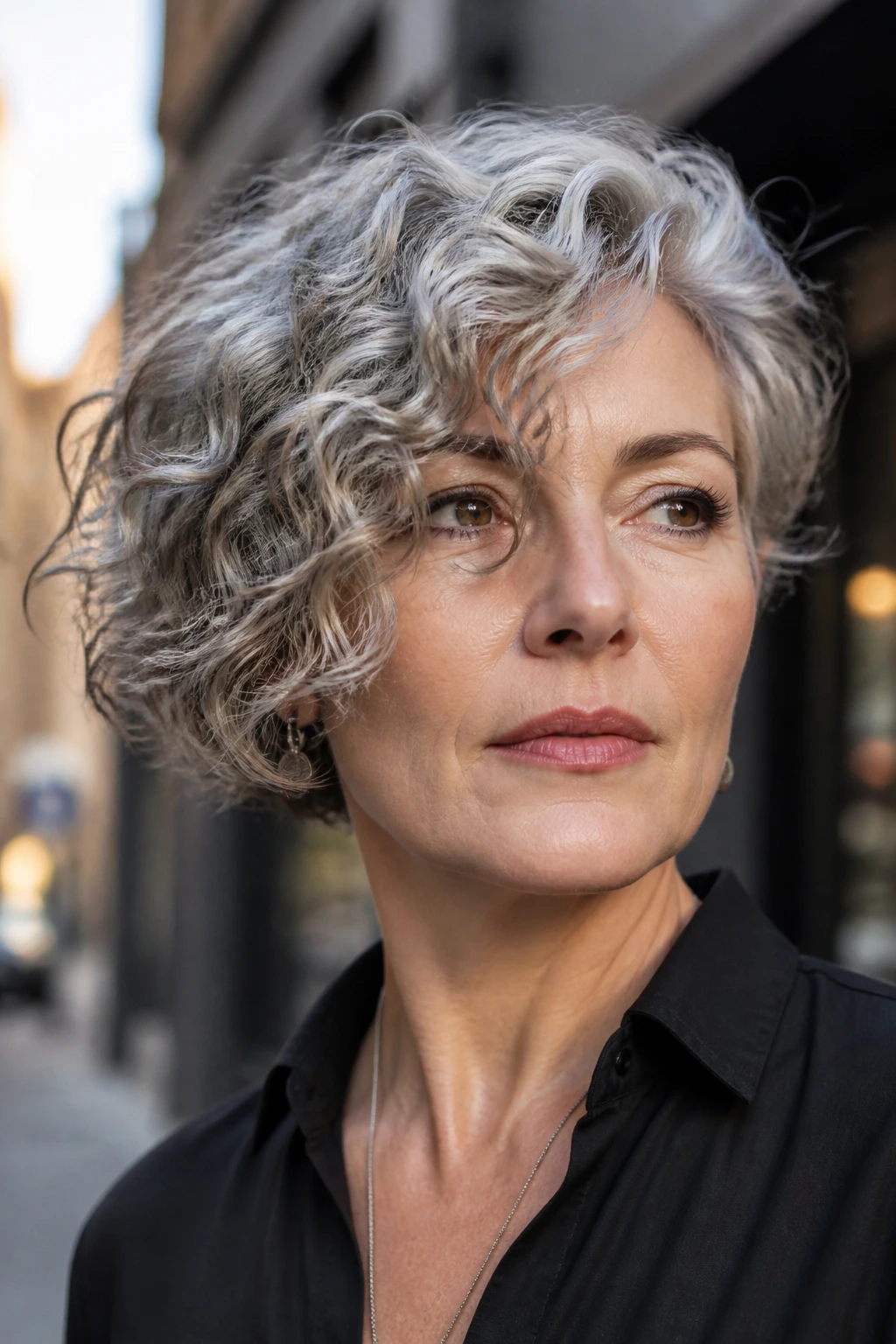
The asymmetrical bob gives you a little tilt and a little edge without going into costume territory. One side sits slightly longer, the other side lifts a bit shorter, and the uneven line keeps curls from settling into one predictable shape.
Why it works
Curly hair naturally creates asymmetry as it dries. This cut leans into that instead of pretending every strand will behave the same way. The result feels deliberate, not messy. It also suits faces that are a bit fuller on one side or have a stronger part line, because the haircut visually balances things out.
Keep the difference subtle if you want the cut to stay easy to wear. An inch or two is enough. A huge gap starts to feel theatrical unless that’s the point.
I like this shape for women who want their hair to say something without shouting. It looks good tucked behind one ear, and it looks even better when the front piece sweeps across the cheekbone instead of sitting flat.
10. Mixie with Longer Crown Length
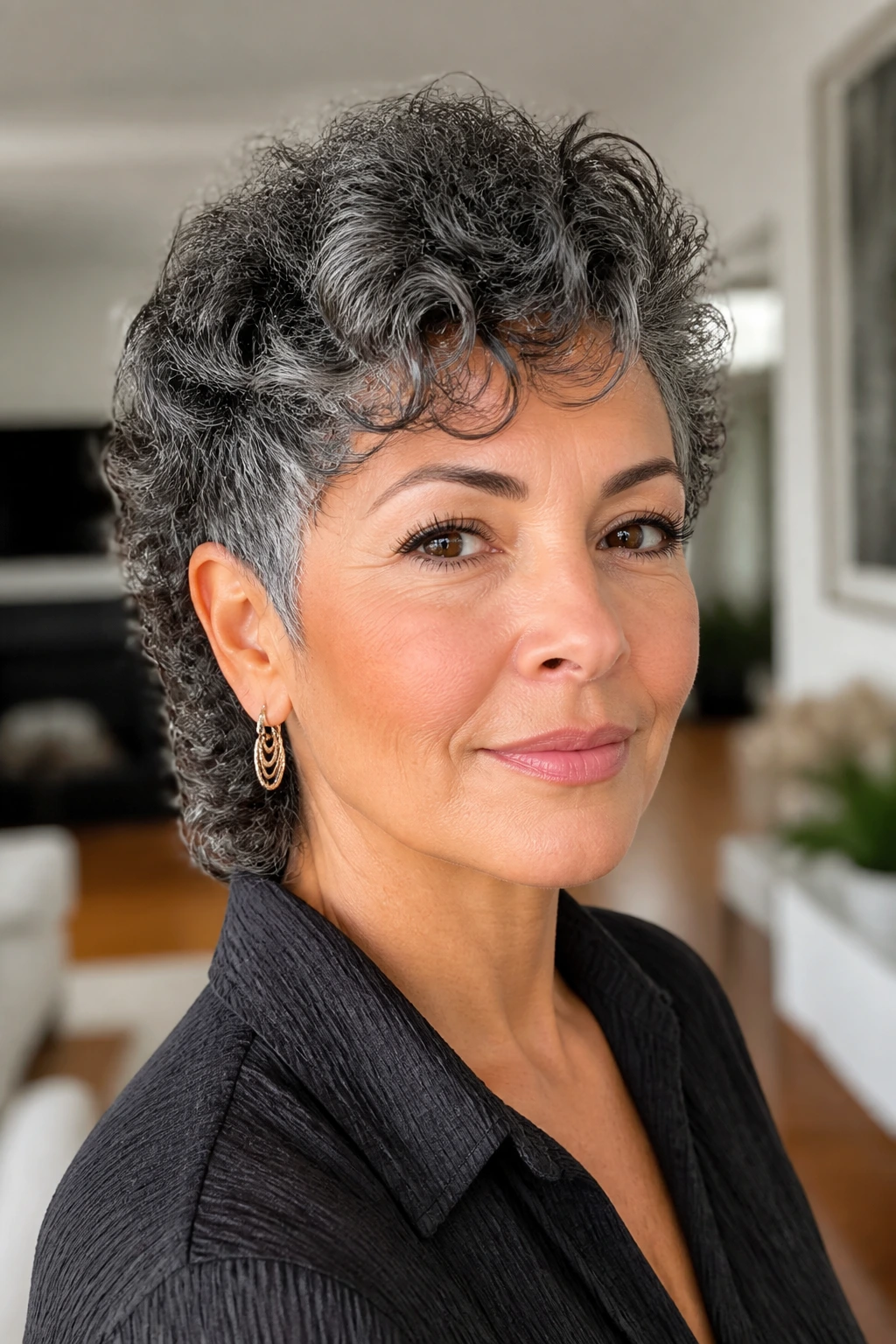
A mixie is part pixie, part mullet, and yes, it sounds like a compromise until you see it on curls. Then it starts making perfect sense. The crown stays longer and lively, the sides stay trimmed, and the back gets just enough length to soften the transition.
Why it has staying power
This cut is one of the best answers to the “I want short hair, but not the same short hair everyone else has” problem. It keeps the neck open, gives the top room to move, and lets the back carry a little curl tail so the silhouette doesn’t stop abruptly.
How to wear it
- Push the crown forward for more edge.
- Sweep it back with a light gel for a cleaner line.
- Let the back curl out a little if you want more shape at the neckline.
The mixie works best when the stylist cuts it in relation to your growth pattern. Cowlicks at the crown can make this cut sing or fight you, so bring your own problem spots up early. Hairdressers who like curls will usually ask about them first. The good ones, anyway.
11. Curly Undercut with Swept Top
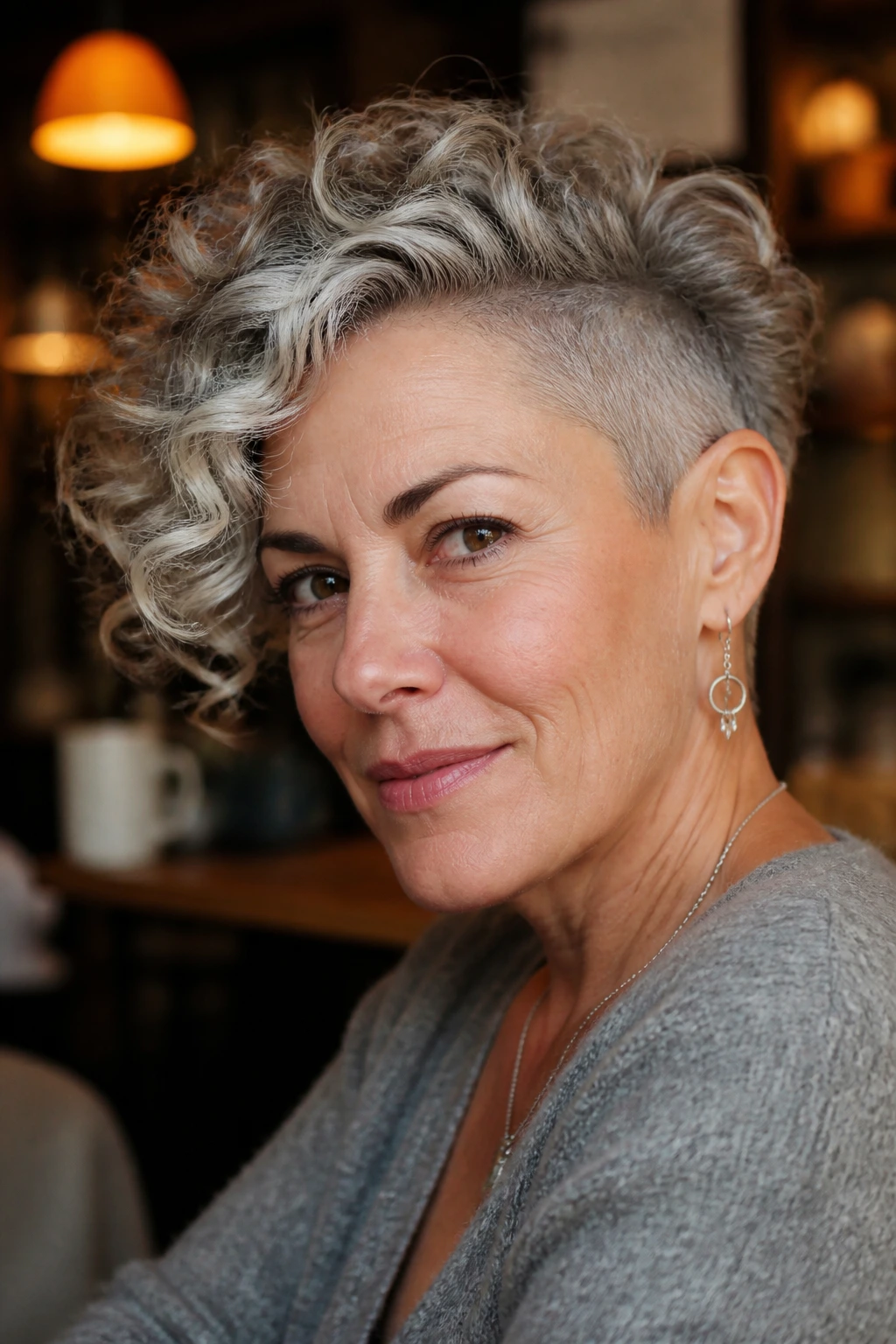
An undercut on curly hair after 50 is not about looking younger. That word gets tossed around too easily. It’s about removing bulk where you do not need it and keeping the top long enough to style in a clean sweep or a loose cloud.
What changes when the sides go short
The haircut gets air. That’s the simple version. The side sections stop puffing around the ears, the nape becomes lighter, and the top curls take center stage. If your hair is thick or your scalp gets hot easily, the undercut can feel like a relief.
You can keep the shaved section hidden under longer top layers if you want the style to be more discreet. Or you can let the shorter sides show, which gives the cut a sharper, more androgynous read.
This is one of the few short cuts where a strong side part can look better than a middle part. The sweep creates a diagonal line across the face, and diagonals are your friend when you want motion instead of bulk.
12. Rounded Pageboy for Dense Curls
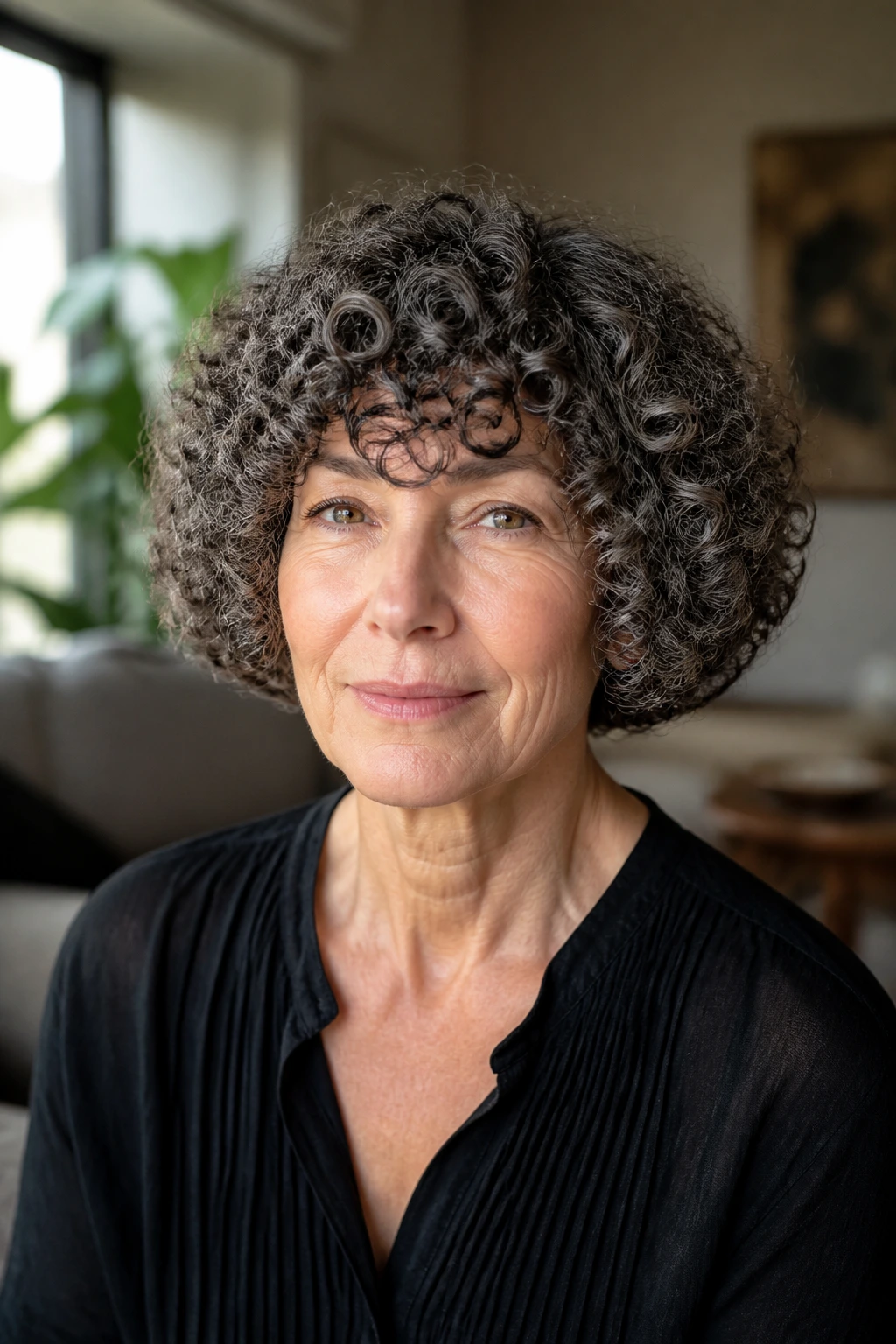
The pageboy gets overlooked because people picture it as too neat, too retro, too controlled. On curly hair, though, it turns into something else entirely: a rounded shape that frames the head without making it look heavy.
Why dense curls like it
Dense curls often need a perimeter that controls spread. The rounded pageboy does that while leaving enough softness at the edges so the shape still breathes. It works especially well when the curls are medium to tight and the hair has enough body to hold that curved line.
This cut is strong around the jaw and cheekbones. It can make the face look slimmer without stripping away volume at the sides, which is a nice balance if your hair tends to expand outward the second humidity shows up.
The key is not to over-layer it. You want internal removal, not a pile of choppy bits. Too many layers and the pageboy loses its rounded authority.
13. Shoulder-Length Curl Shag
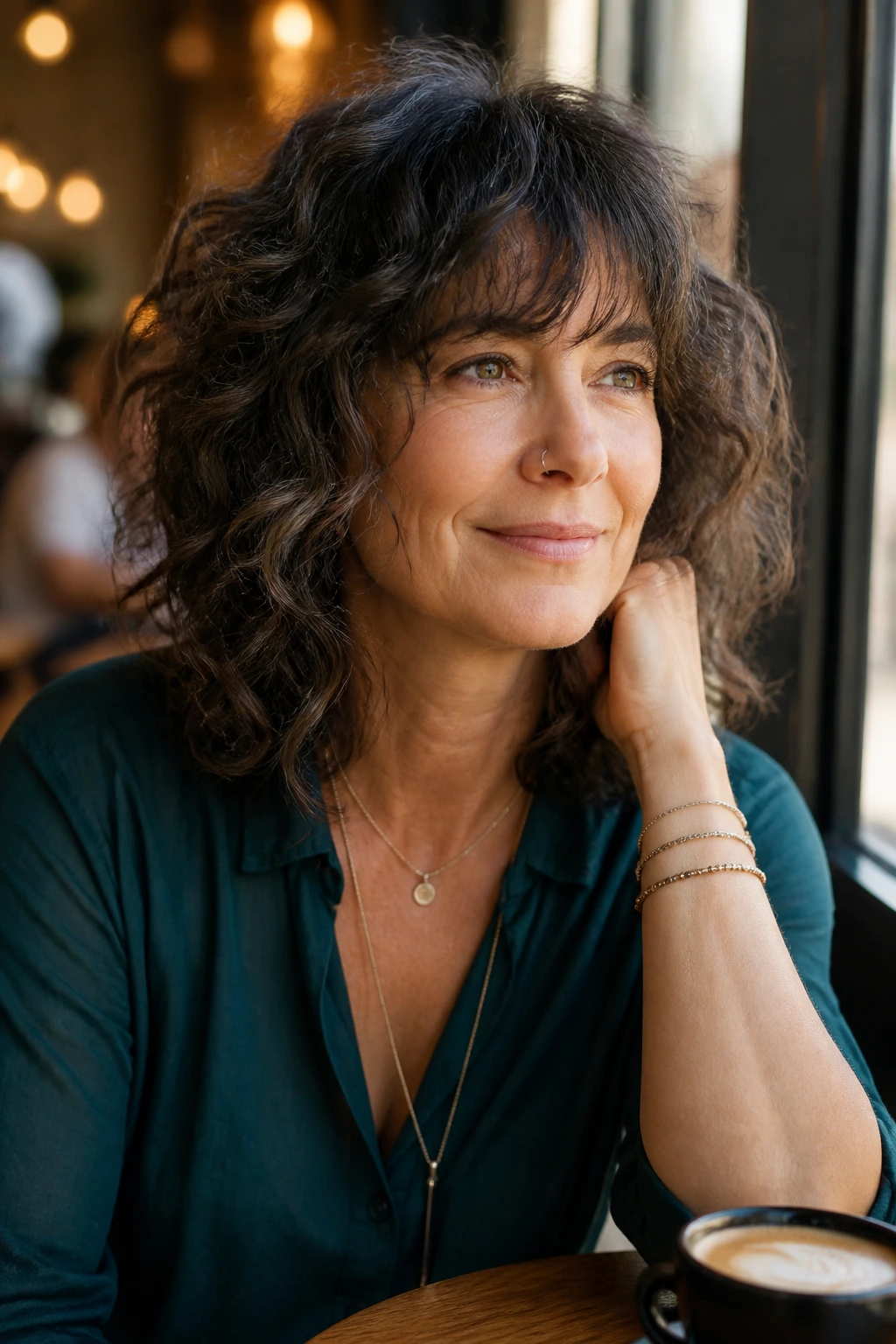
Shoulder-length hair often gets called safe. Fine. Safe can still look excellent when the shape is right. A shoulder-length curly shag gives you the swing of longer hair with the movement of a shorter cut, and it’s one of the easiest cuts to live with when you want flexibility.
The shape in practice
The layers should start high enough to keep the crown from flattening, then cascade through the lengths so the ends don’t hang in one thick curtain. A few face-framing pieces can open the front, but the real work happens through the inside of the cut.
This is a strong choice for women who like to clip their hair back sometimes. You can pull it into a low knot or a claw clip and still see the texture around the face. That matters more than people admit.
A shoulder-length shag can go soft or sharp depending on how the perimeter is finished. A cleaner bottom line reads more androgynous. Softer ends read more relaxed. Both work.
14. Micro-Layered Crop

Micro-layers are for curls that need movement without losing their outline. The layers are small, close together, and distributed with a light hand. The result is a crop that feels lively rather than chunky.
A good fit for
This cut suits springy curls, tighter waves, and hair that builds a lot of volume in a small area. If you’ve ever had a short cut turn into a triangle by the end of the day, micro-layers are worth looking at. They break up the bulk before it can sit in one heavy shape.
The crop works well for women who want texture to do the styling. A touch of leave-in, a bit of gel, and a quick diffuse is usually enough. The cut should do the main work; you should not need a round brush and 20 minutes of negotiation.
Ask for the layers to stay balanced through the crown and sides. Too much at the top and the hair puffs. Too much at the bottom and it stacks at the jaw. Tiny adjustments matter here.
15. Side-Part Bob with Soft Edges
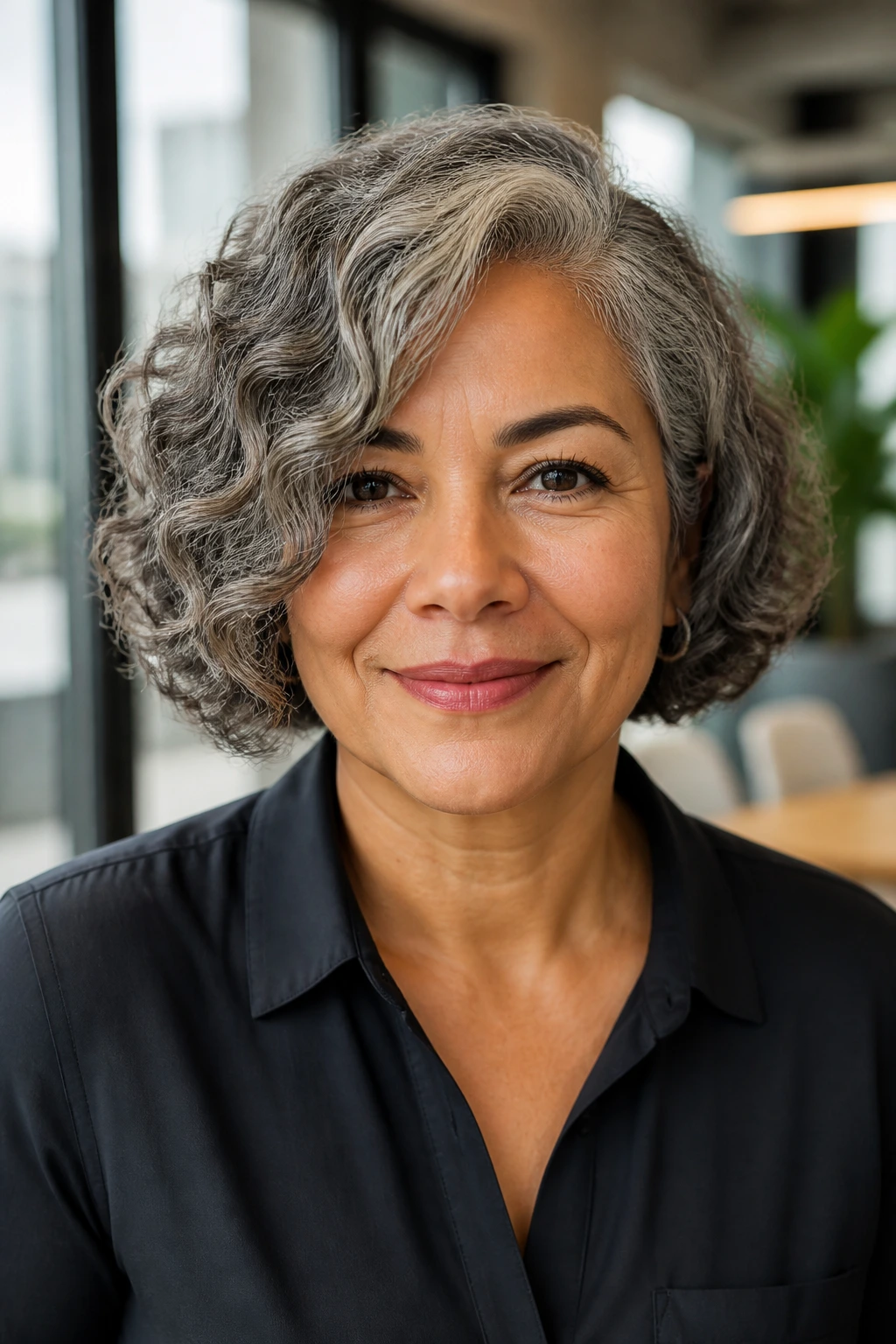
A side-part bob can change the whole feel of curly hair. Move the part off center, let the curls fall across the forehead, and suddenly the cut reads less neat and more tailored. It’s a small shift with a big payoff.
Why the part matters
Middle parts can be lovely, but they also make some faces look longer than intended. A side part breaks that line and gives the curls a diagonal movement that feels sharper. It can also help if one side of your hair grows flatter or if a cowlick insists on having opinions.
The soft edges keep the bob from feeling hard. Instead of a stiff line at the bottom, the curls should taper and bend slightly. That keeps the cut from looking like a helmet, which is the thing everyone is trying to avoid whether they say it or not.
This is a good option if you want something office-friendly without leaning prim. Clean, yes. Severe, no.
16. Curly Mullet with Tapered Neckline
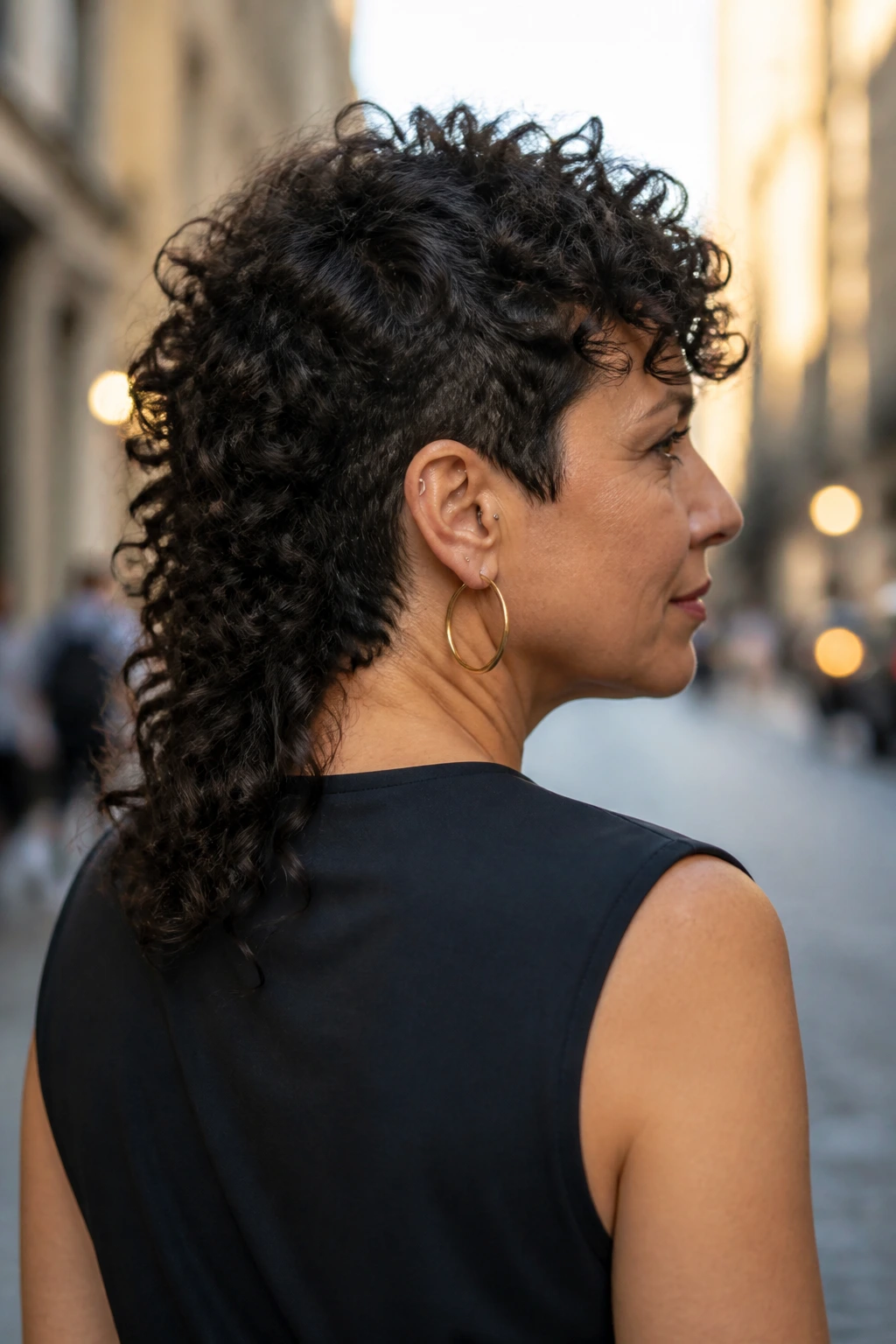
The curly mullet is not subtle. It is not supposed to be. The top and sides stay shorter, the back carries a little extra length, and the tapered neckline keeps the whole thing from looking sloppy. On the right curls, it is a fantastic shape.
What makes it wear well
Curls soften the mullet’s lines, which is why it can look much more wearable than it sounds on paper. The front can frame the face, the top can lift, and the back can curl out in a way that feels intentional rather than leftover. If you like a bit of punk energy, this is the cut.
A tapered neckline is non-negotiable here. Without it, the back can mushroom or frizz outward as it grows. With it, the style keeps its edge and looks cared for.
This is a cut for people who know they don’t want to disappear into a neat little shape. Good. Let the hair have a little opinion.
17. Bixie with Movement
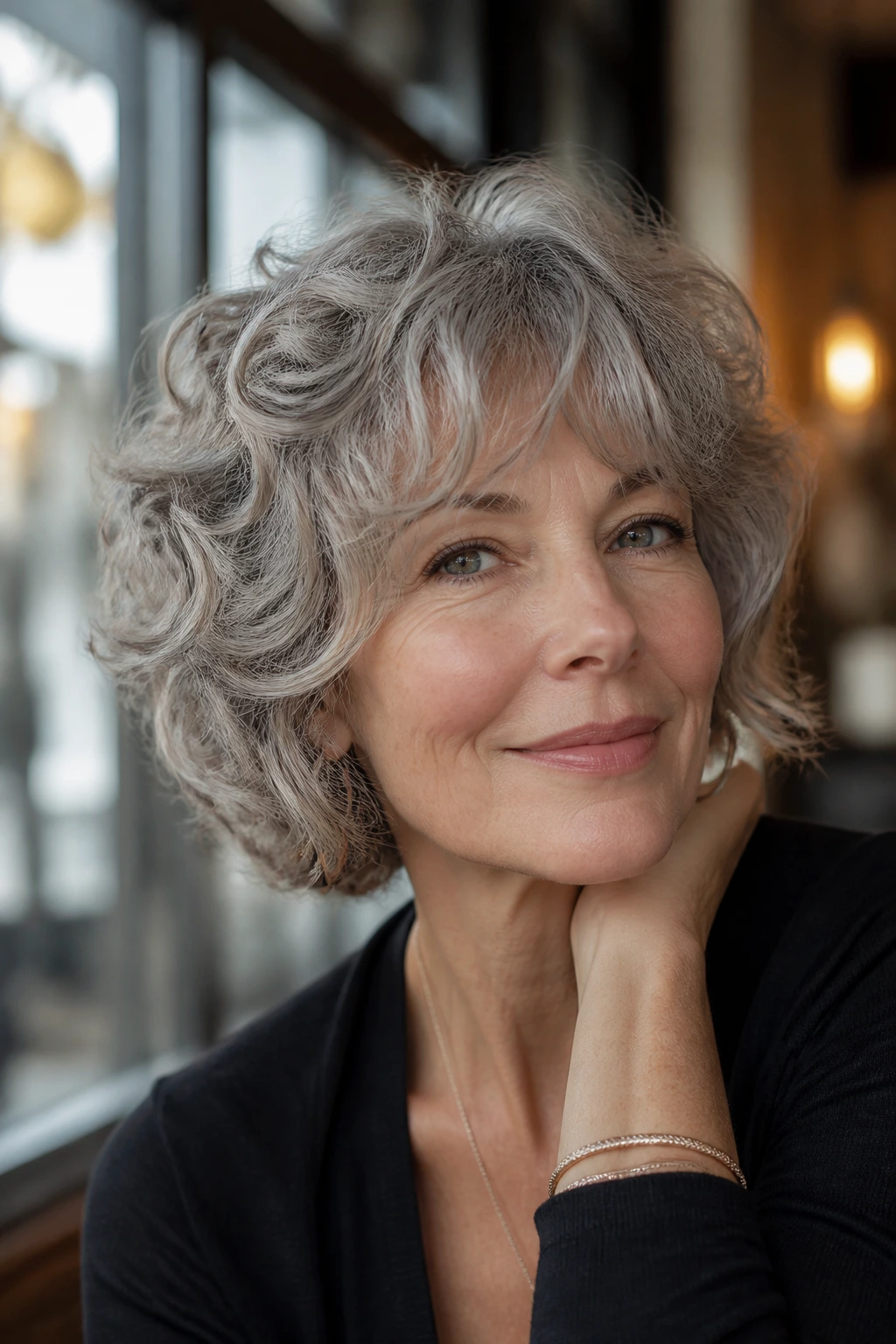
The bixie sits between a bob and a pixie, which makes it useful for someone who wants shorter hair but does not want to give up the softness around the jaw. Curls make this shape interesting because they add lift where a straight version might look flat.
Why it’s useful after 50
The bixie can take weight off the sides while keeping enough length around the face to avoid a harsh crop. That helps when hair density has shifted a little or when you want something lighter on the neck without exposing everything at once.
It also grows out well. That’s a real practical point. A cut that goes from crisp to awkward in three weeks is a waste of time and money. The bixie tends to blur gracefully into a longer bob shape, especially if the layers are cut with curl shrinkage in mind.
If you want a little more edge, ask for a shorter nape and keep the top pieces irregular. If you want softness, keep the outline rounder.
18. Long Curly Layers with Curtain Bangs
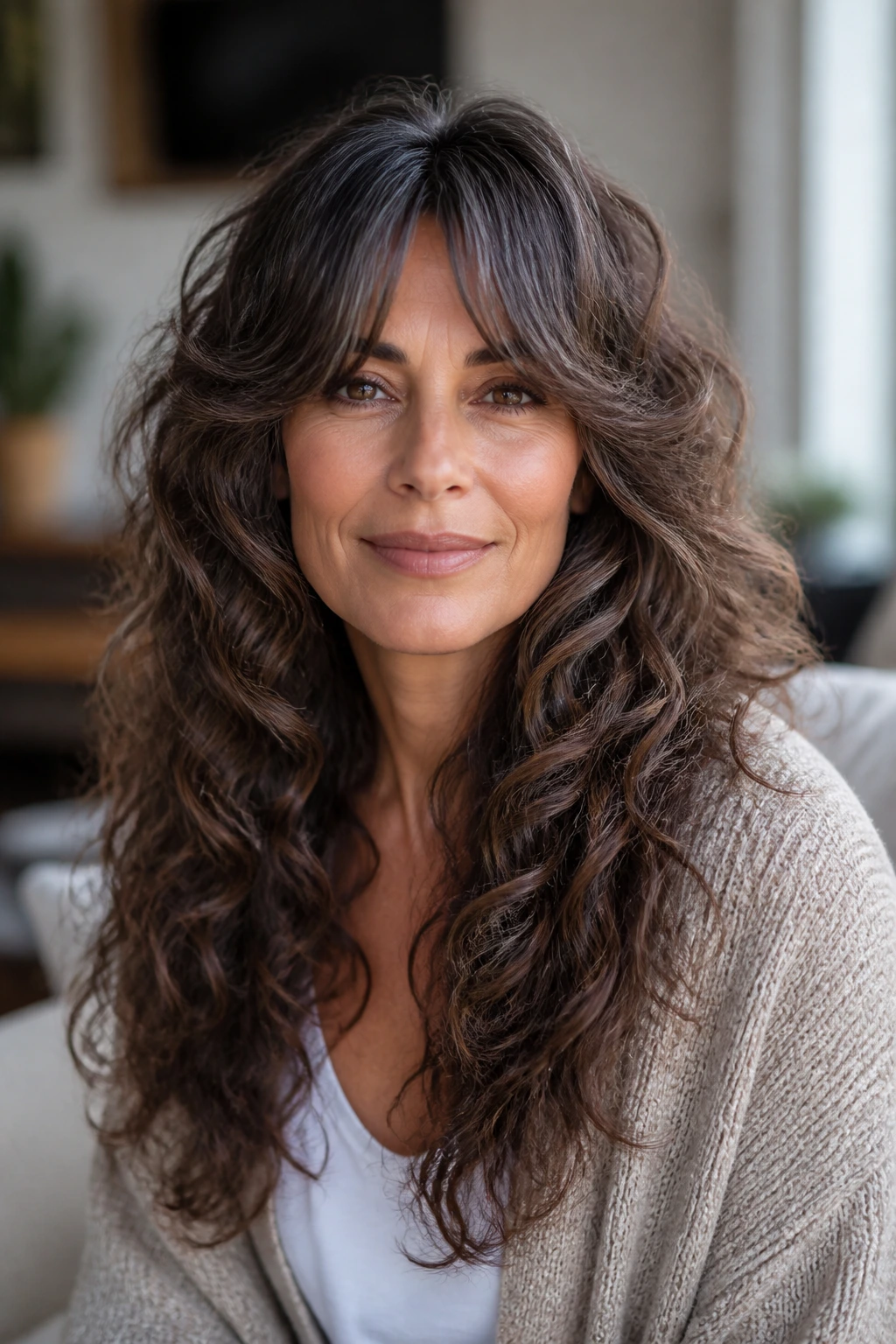
Long curls can feel too heavy if they’re cut in one length. Long layers fix that, and curtain bangs open the front without chopping the face in half. The result is airy, face-framing, and easier to move around in than a blunt long cut.
Where it shines
This is a strong choice for women who are not ready to lose length but want the hair to feel lighter. Curtain bangs can sit at the cheekbones or lip line and split away from the center, which gives the face room. They also play nicely with silver streaks because the motion keeps the front from looking flat.
The layers should start high enough to relieve bulk at the crown but not so high that the ends fray. A good long-layer cut still leaves the overall shape intact. You want movement, not a pile of disconnected pieces.
This style leans a little softer than some of the sharper cuts on this list. That does not make it less androgynous. It just means the lines come from movement rather than clipping.
19. Sculpted Lob with Internal Layers
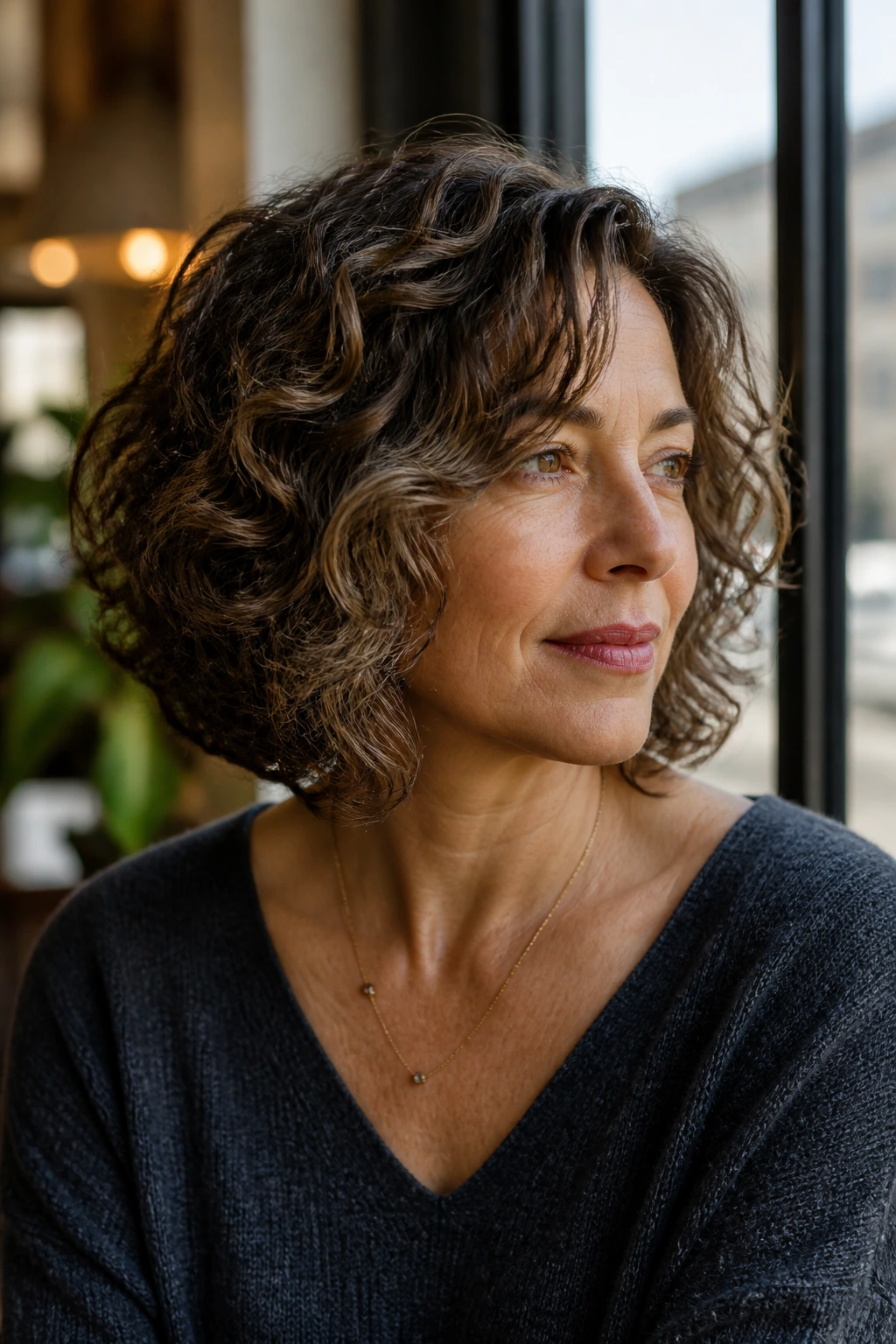
A lob, or long bob, can get dull fast if it’s left to hang in one flat curtain. Internal layers solve that. They remove bulk from inside the shape so the outside still reads clean and controlled.
Why it works for curl pattern
A sculpted lob is one of the best ways to keep length around the collarbone while avoiding the triangle effect. The outer line stays smooth enough to feel intentional, and the inside layers let the curls lift and separate. That matters if your hair has medium density and you want the style to hold up on day two.
The lob also sits well with glasses, scarves, and collars. Shorter cuts sometimes fight those pieces. A sculpted lob works with them.
If you like a little polish without stiffness, this is a smart choice. You can wear it with a side part, a middle part, or tucked behind one ear. The shape stays readable.
20. Curly Pixie-Mohawk
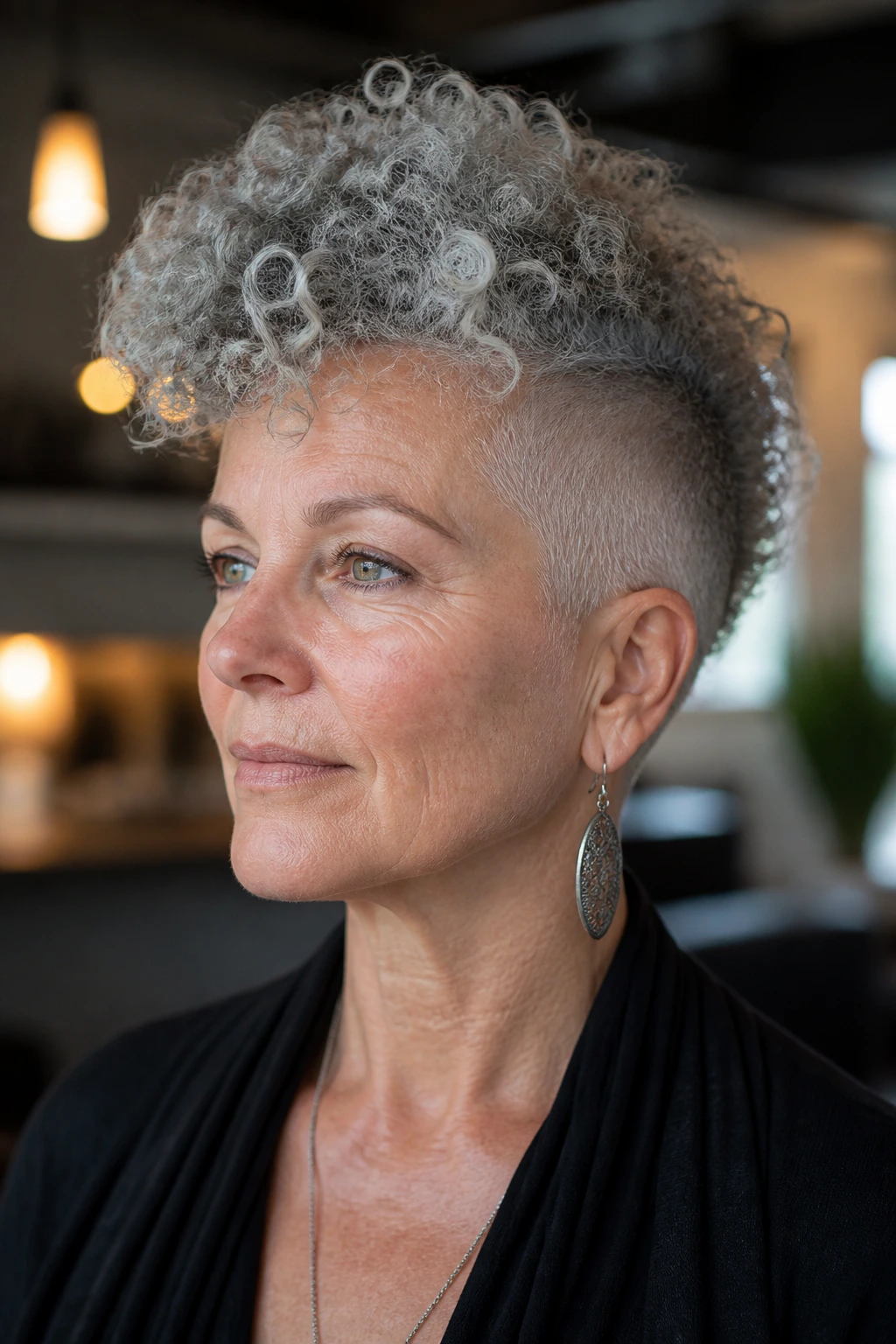
A pixie-mohawk has a streak of confidence in it. The sides are cut close, the center stays longer, and the curl is encouraged to rise right down the middle of the head. It creates a very clean outline with a lot of energy on top.
Who it suits
This cut suits people who like strong shape and do not mind being noticed. It flatters tighter curls especially well because the center strip can stand up and forward without collapsing. If your hair is thick, it removes a lot of bulk from the sides and leaves the top with a crisp line.
The mohawk part does not have to be extreme. It can be subtle, almost soft, if the length difference is modest. Or it can be sharper if you want the silhouette to say exactly what it means.
A pixie-mohawk also makes great use of gray. Silver curls through the center strip catch the light and make the line look sharper than any styling product could.
21. Mushroom Cut with Soft Volume
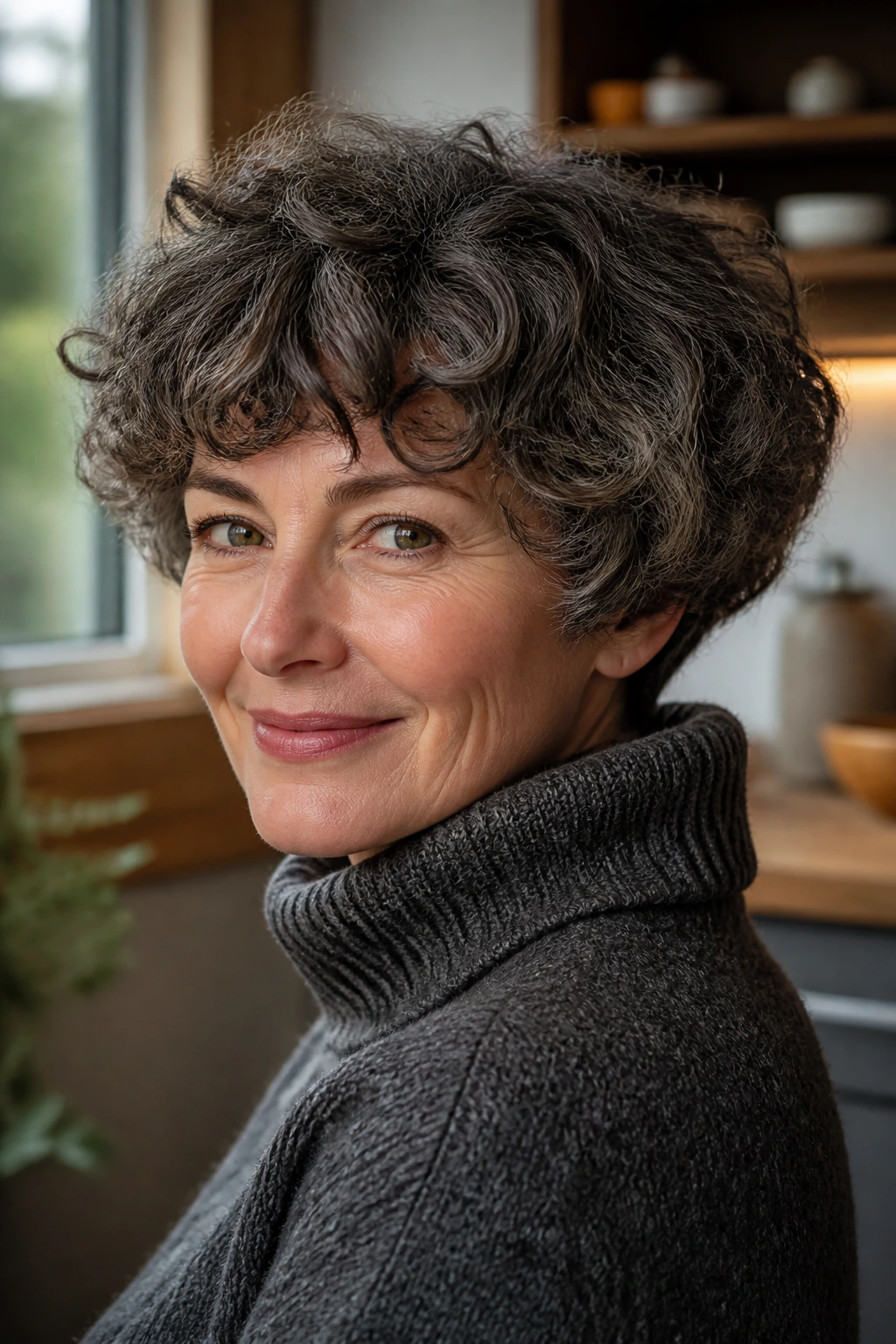
The mushroom cut has had a rough reputation, and I think that’s partly because people remember the bowl shape, not the texture. On curls, a softened mushroom can look architectural and a little mysterious, with volume sitting around the crown and a curved edge below.
Why to consider it
This cut works best when the curls are medium and the density is even. It gives you a rounded shape that feels deliberate, especially if you want something that reads neither traditionally feminine nor aggressively cropped. The curve does the work.
The secret is softness at the edges. The bottom should not look chopped into one hard line. It should bend, break, and move. That keeps the style from feeling rigid or old-fashioned.
I like this cut for people who enjoy strong silhouettes and minimal daily styling. Put a little product in, lift the roots, and the shape is there. It doesn’t need a lot of fuss to stay interesting.
22. Neck-Length Crop with Side Fringe
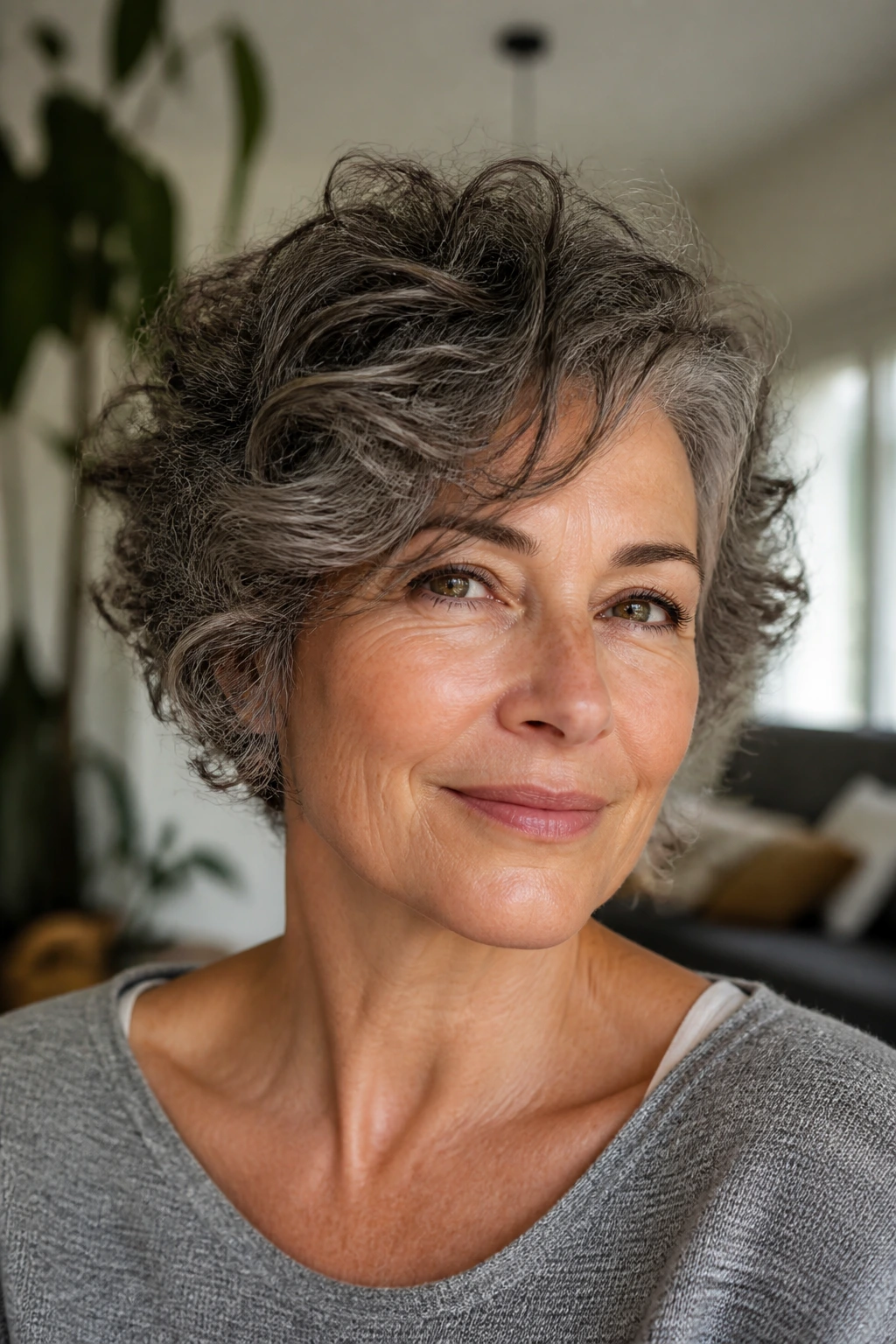
A neck-length crop is one of those cuts that looks simple until you notice how much shape is packed into it. The sides stay close enough to open the face, the nape is short enough to feel clean, and the side fringe adds a quiet little angle across the forehead.
What the side fringe does
The fringe gives movement without demanding the upkeep of full bangs. It can be long enough to tuck away, or short enough to give the face a sharper front edge. On curly hair, that flexibility is gold.
This is a good cut if you want your neck visible. Strange as it sounds, that changes the whole posture of a haircut. The line at the neck makes the head look lighter and the curls above it look more purposeful.
The crop works well with glasses and strong eyebrows. It also works for people who do not want a full shag, a full bob, or a full pixie. It sits in the middle and still has a point of view.
23. Deva-Cut Midlength Shape

A Deva-cut is less a shape than a method, but it earns a spot here because it changes the result more than most people expect. Each curl is cut in relation to how it actually hangs, which can make a midlength style feel far more personalized than a standard layered cut.
Why it matters
Midlength curly hair can get heavy fast. A Deva-cut helps the curls fall in their natural pattern rather than forcing them into a single outline. That’s useful if one side grows fuller, if your crown bends differently from your temples, or if the back has a different spring than the front.
This method is especially kind to women with mixed texture — tighter curls in some zones, looser bends in others. Instead of trying to smooth that out, the cut lets it become part of the design.
The result can be a little softer, a little less architectural, but it often wears beautifully. There’s no point in pretending every head needs a hard line. Some curls are happier with a shape that breathes.
24. Tousled Shoulder Bob
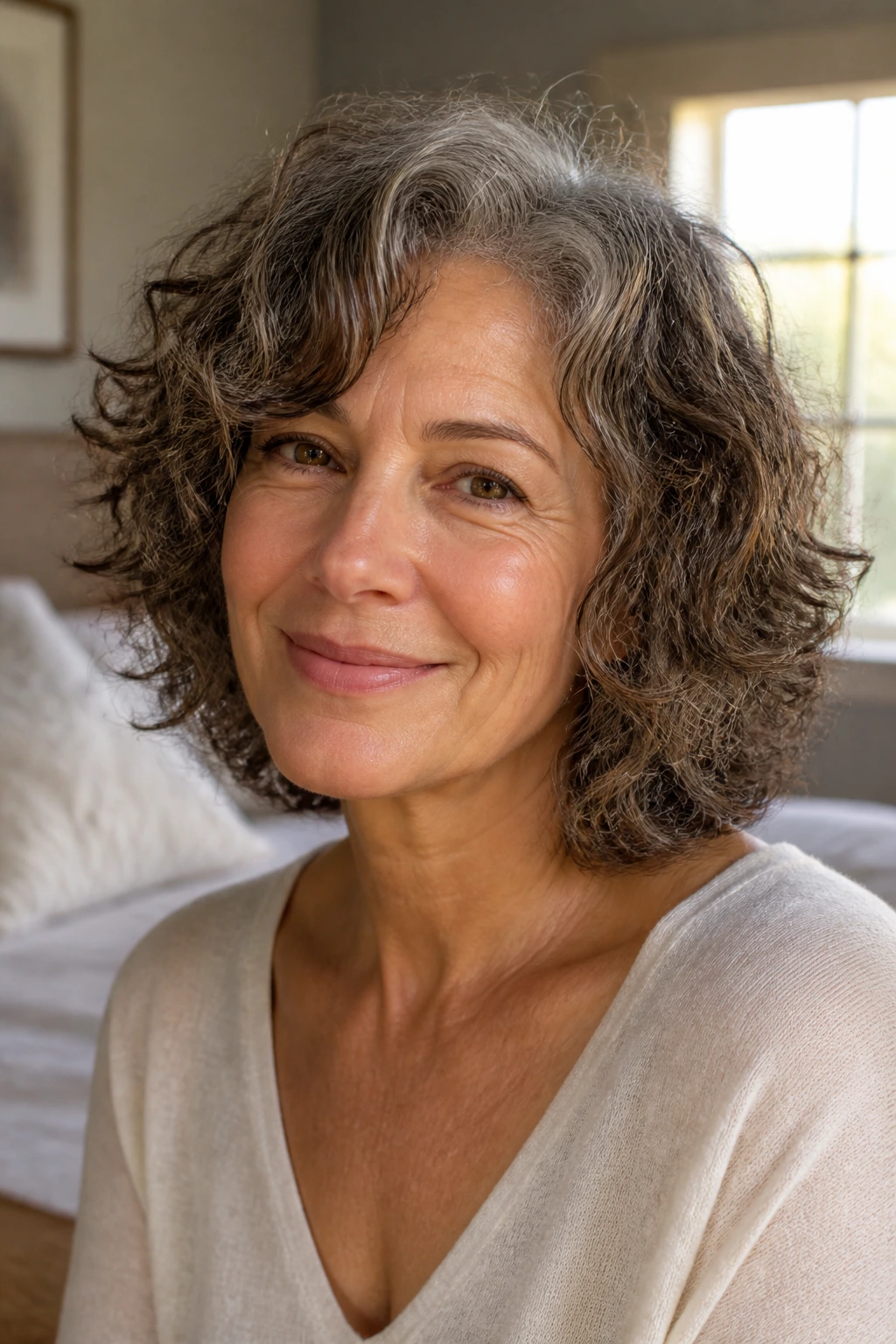
A tousled shoulder bob lands in an easy place. It has enough length to move, enough structure to hold shape, and enough looseness to avoid looking overdone. It is the cut you choose when you want your curls to look like they had a good life.
Why it stays useful
Shoulder-length hair can turn heavy around the collarbone, especially when the ends are thick. A tousled bob uses layers and a slightly broken perimeter to keep the silhouette from feeling blunt. The result is softer than a standard bob and less formal than a lob.
It works well if you want a cut that can be air-dried on most days and diffused when you care more. It also grows out in a forgiving way, which saves you from the awkward in-between stage that some shorter cuts punish you with.
A little scrunch cream, a quick root lift, and you’re done. Not fancy. Just enough.
25. Airy Curly Shag with Full Fringe
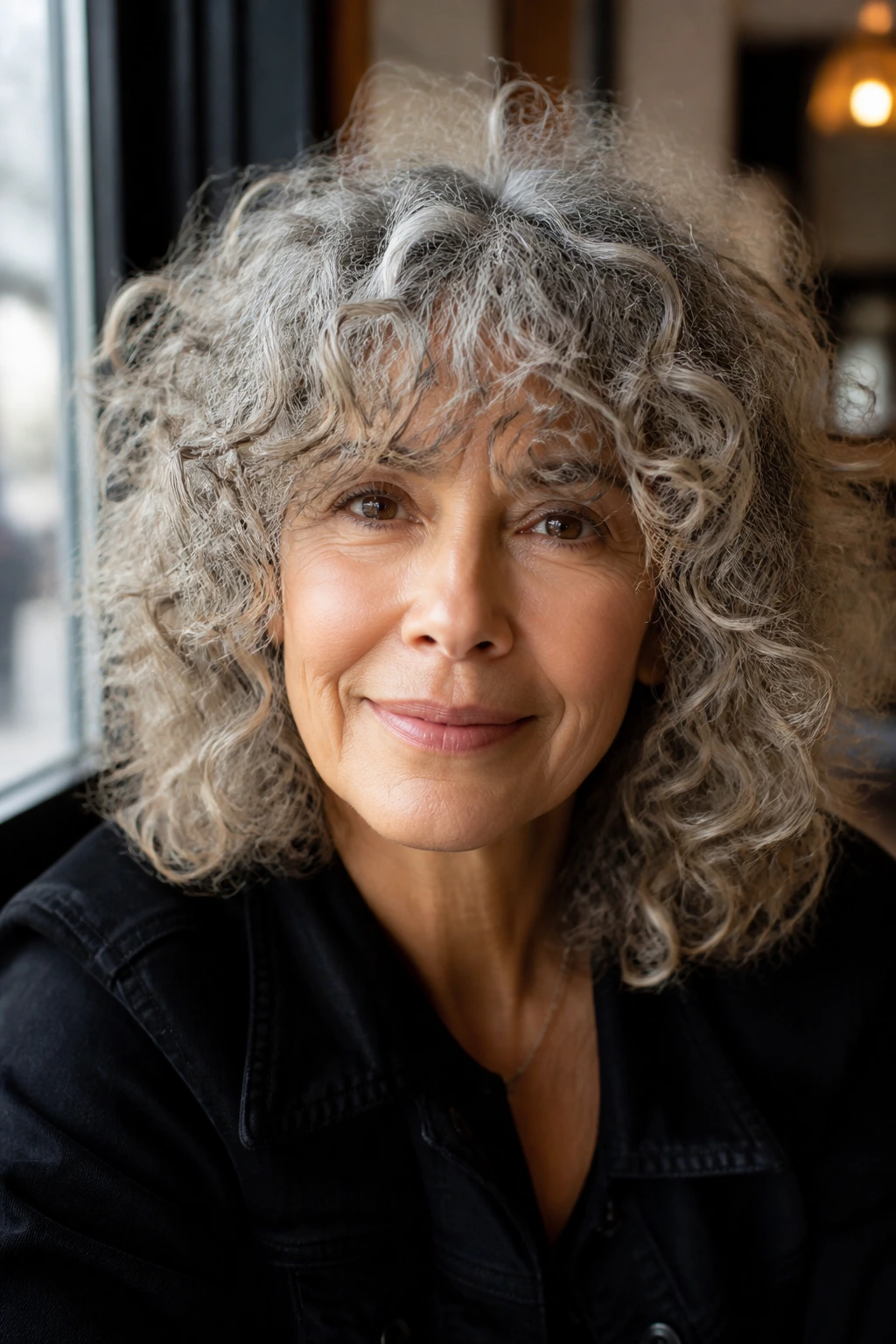
A full fringe on curly hair can be beautiful if it’s cut with respect for shrinkage and density. Pair it with an airy shag and the result is playful, strong, and full of texture. The fringe becomes part of the shape instead of sitting on top of it like an afterthought.
Why it works when it works
This cut is for curls that can handle a little volume in the front. The shag layers release weight through the sides and back, while the fringe brings the eye straight to the face. That can be striking on women with strong brows, a long forehead, or silver curls that you want to show off.
The bangs should usually be cut a touch longer than you think you need. Curly fringe shrinks. Sometimes a lot. If your stylist cuts them too short while the hair is wet, you may spend the next month negotiating with the mirror.
When it lands well, though, it lands hard. The whole cut feels alive.
The Shape Behind the Shape
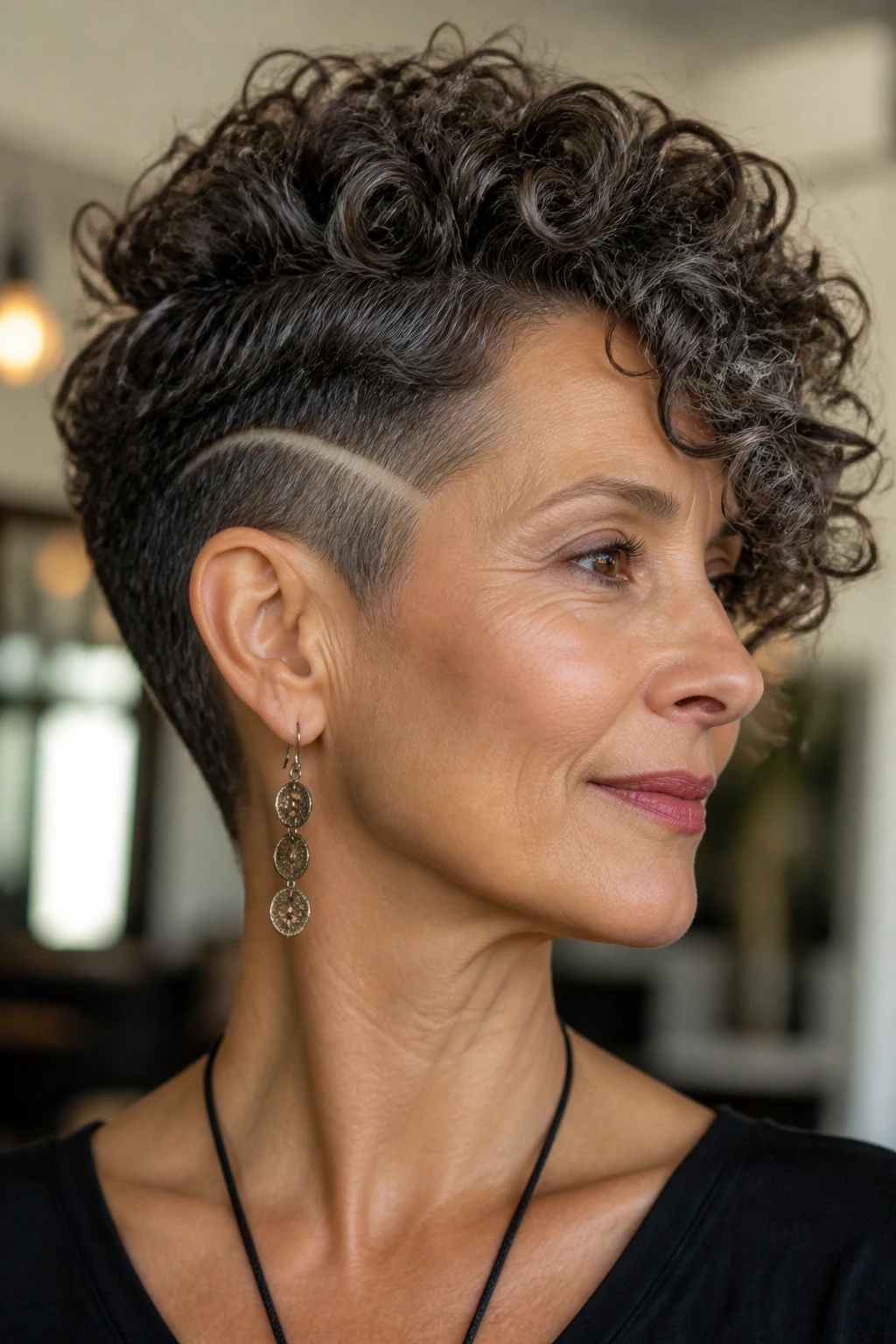
Short or long, the best non-binary curly cuts share the same basic logic: they decide where the eye should stop. Some use a clean nape. Some use a broken fringe. Some use asymmetry, and some use a rounded line that looks simple until you notice how carefully it’s built.
Curly hair after 50 does not need to be “tamed.” It needs a plan. That’s the part most salon conversations skip over. Not volume for volume’s sake. Not softness for softness’s sake. A plan that knows where your curl wants to stand, where it wants to bend, and where it wants to hang.
Essential Tools for These Cuts and the Daily Routine
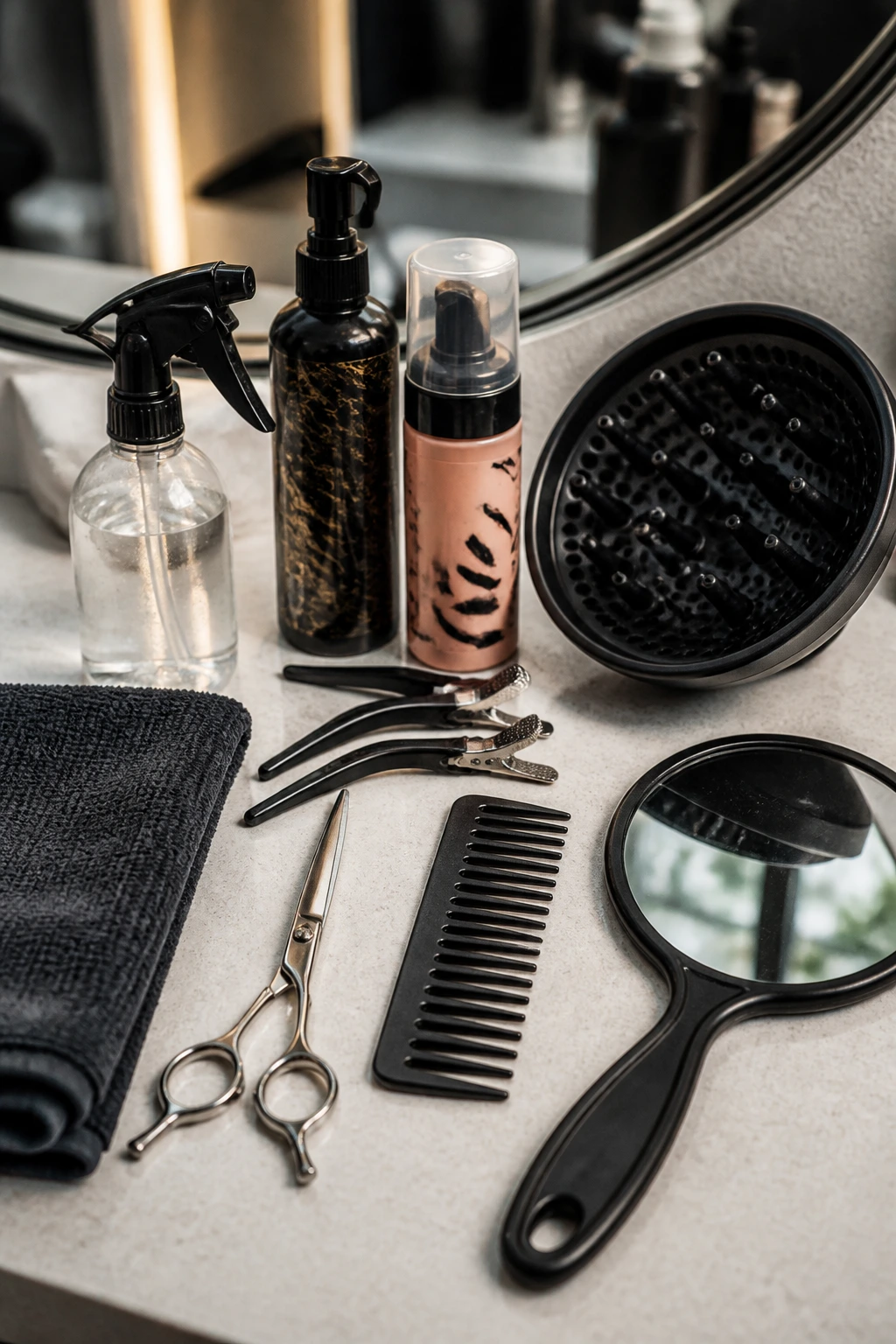
- Sharp haircutting shears: Dull scissors crush curl ends and leave them fuzzy, so a real pair matters.
- Wide-tooth comb: Use it only when the hair is soaked and conditioned; dry combing can break up the curl pattern in a bad way.
- Spray bottle with water: A few spritzes are enough to wake up flattened sections on day two.
- Diffuser attachment: The diffuser keeps curl clumps intact and reduces that halo of frizz that can ruin an otherwise good shape.
- Microfiber towel or cotton T-shirt: Both help blot water without roughing up the cuticle.
- Duckbill clips or root clips: Handy for lifting the crown while drying a shag, bob, or lob.
- Curl cream, mousse, or gel: Pick one styling base and learn what it does on your hair before stacking too many products on top.
- Hand mirror: Useful for checking the neckline and back shape, especially with cropped cuts.
- Small round brush or Denman-style brush: Optional, but useful if you want to direct bangs or smooth a fringe before diffusing.
Smart Salon Notes and Curl Product Picks
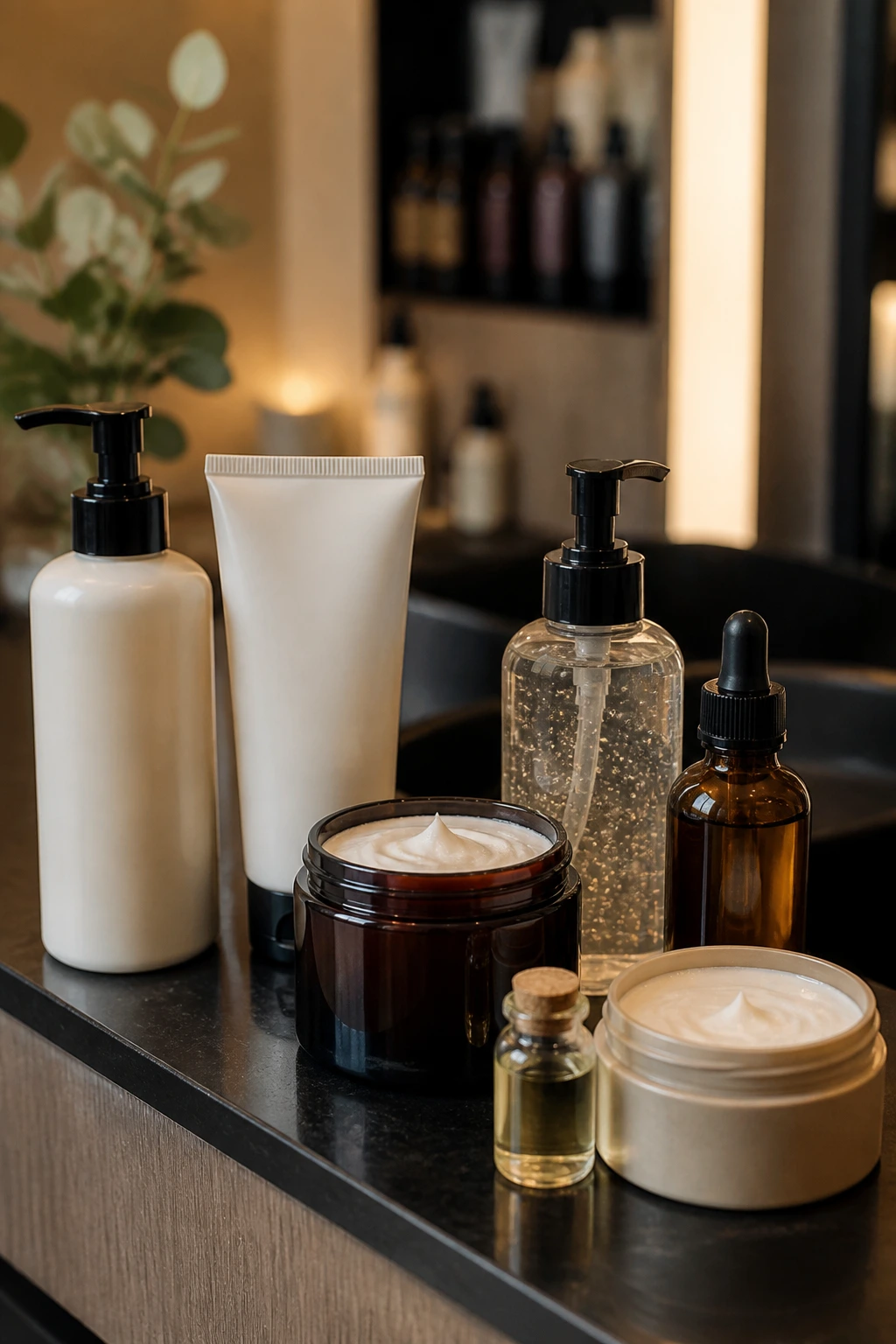
A good haircut starts before the scissors move. Bring photos, yes, but bring better photos than you think you need. Show one from the front, one from the side, and if the back matters to you, show that too. Hairdressers can guess at a vibe; they do much better when they can see the weight line, the fringe length, and the amount of scalp show you actually want.
Ask whether the stylist cuts curls dry or at least finishes the shape dry. That does not mean wet cutting is always wrong. It means curls shrink, and the person cutting them should care about that fact. If they shrug when you mention shrinkage, keep walking.
Product shopping matters too, and not because you need a bathroom shelf full of bottles. You need one or two things that fit your curl type. Fine curls usually hate heavy creams. Dense, dry curls often need more slip and a stronger hold. Gray curls usually appreciate a richer leave-in or a touch of oil on the ends, but not so much that the top goes flat by noon.
If your hair is coarse, look for products that soften without coating the strand in wax. If your hair is fine, keep the texture light and the hold clean. And if you color your hair, pay attention to how the product behaves on treated ends — those pieces often dry out first and need a bit of extra help.
How to Wear These Cuts in Everyday Life
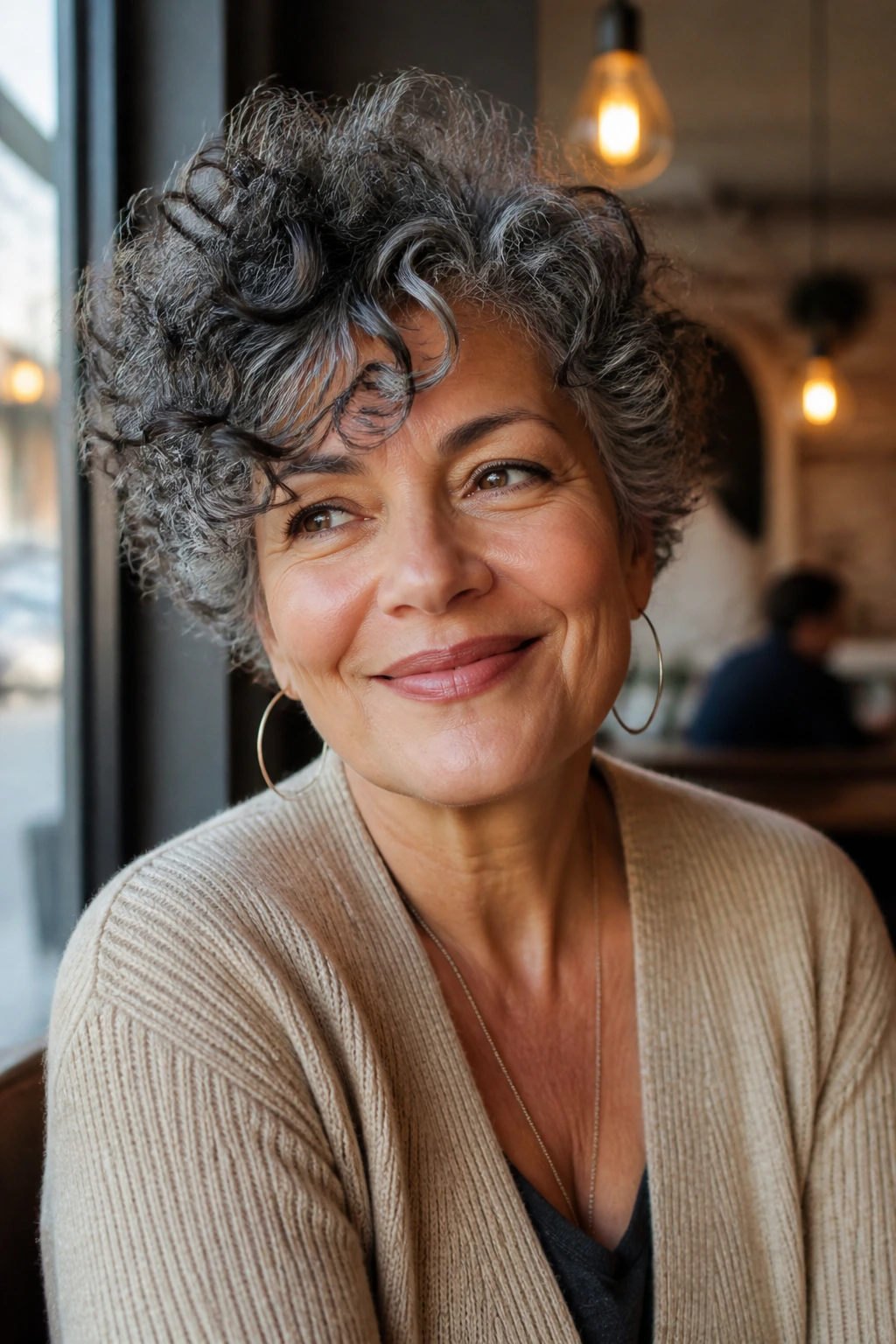
Everyday: Let the curls fall where they want, then nudge the front with your fingers and stop there. A clean neckline, a readable fringe, and a soft lift at the crown often beat a more elaborate finish.
Polished: Use a side part, smooth the top with a little leave-in, and diffuse the front so the shape sits close to the face. This works especially well with bobs, lobs, and sculpted crops when you want the cut to look intentional with glasses or sharp collars.
Low-effort mornings: Mist the hair, scrunch in a pea-sized amount of curl cream, and refresh only the pieces that frame the face. Nobody needs to restyle the back of the head from scratch if the front already carries the shape.
If you want edge: Push the part off-center, let one side sit flatter, and keep the crown lifted. A little asymmetry goes a long way with curls because the texture already does half the work.
Daily Styling and Refresh Routines

Curly hair is more forgiving when the cut is smart, but it still has habits. Mornings go easier if you know what your shape wants. Shorter cuts usually need root lift and a little direction at the fringe. Midlength cuts usually need hydration and clump control. Long layers need restraint, not more product.
On wash day, start with water and a cleanser that does not leave the hair squeaky or stripped. Then work your styling product through soaking-wet hair with your hands or a brush, depending on how much definition you want. The less you touch it after that, the better. Really. Touching it too much while it dries is one of the fastest ways to wreck a good cut.
For refreshes, water is usually enough if the haircut is doing its job. Add a tiny bit of leave-in to the ends if they feel dry. If the crown goes flat, lift it with your fingers and clip it for ten minutes while the hair re-sets. If the fringe puffs out, wet only the fringe and let it dry on its own or with a very gentle diffuser pass.
One practical note: curls after 50 often like a slightly lighter routine than they did years ago. A heavy routine can make the ends stretch and the roots collapse. Less can be more here, but only if the cut already has shape.
Keeping the Shape Between Appointments
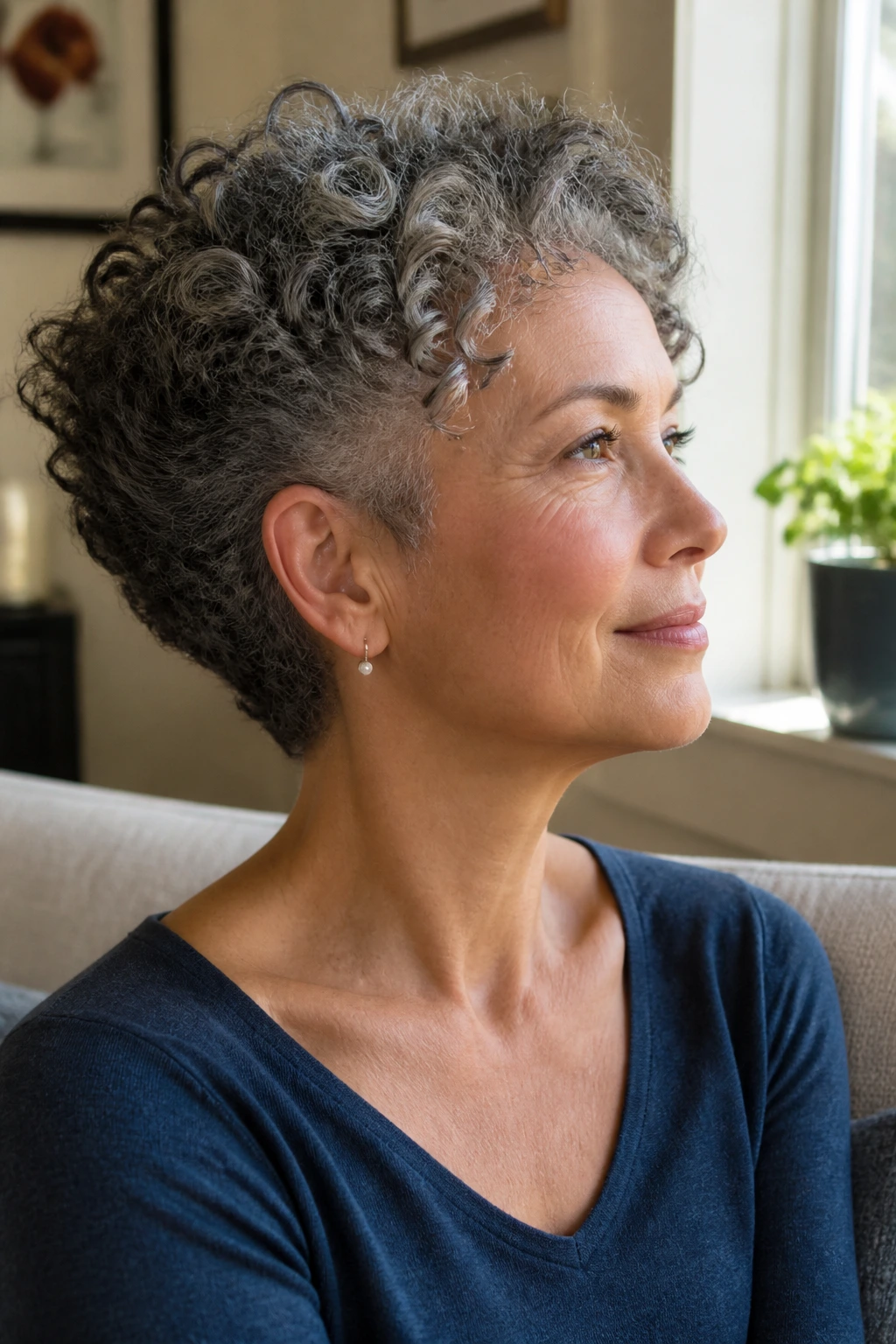
Short cropped cuts usually need a trim every 4 to 6 weeks if you want the neckline and temples to stay crisp. Bobs, shags, and lobs can usually stretch to 8 or even 10 weeks, but only if the ends are still reading as a line and not a puff. The moment the silhouette starts widening at the sides, it’s time.
A good at-home routine keeps the haircut looking sharper for longer. Sleep on a satin or silk pillowcase if you can, or at least pull the hair up loosely so the curls do not get crushed at the crown. Refresh the neckline with a tiny mist of water and a dab of gel if it starts to fuzz out. Gray curls often need a little extra moisture at the ends, especially in dry rooms or under strong heat.
If you wear a fringe, trim only with real caution. Curly bangs can go from perfect to comically short in one snip, because springiness is not negotiable. If you’re not comfortable trimming them dry, let the salon do it. That small errand can save you three weeks of irritation.
The best maintenance rule is simple: watch the outline, not every strand. If the shape still reads from across the room, you’re fine. If it’s turned into a cloud, the cut has grown past its sweet spot.
Additional Tips and Texture Boosters
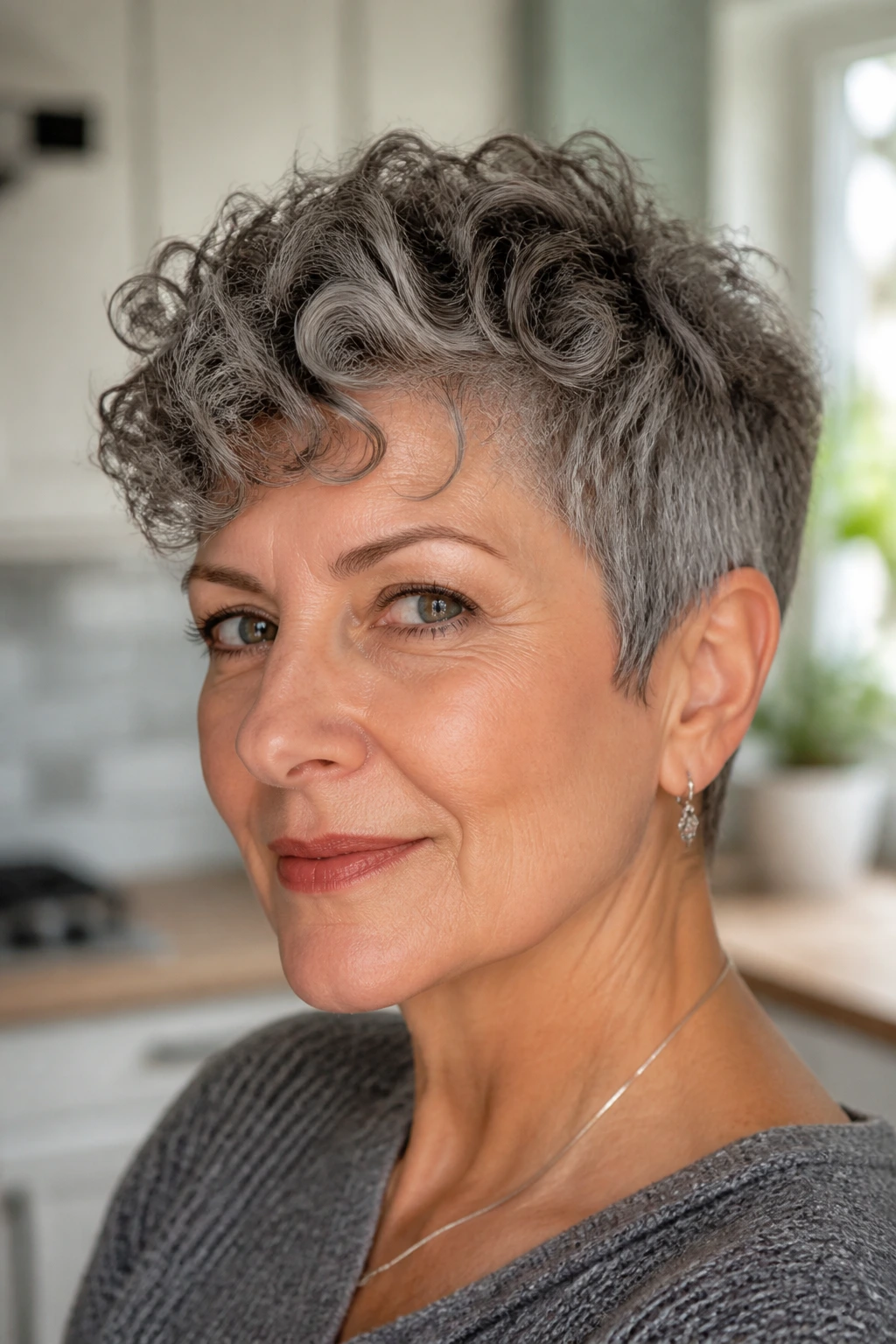
Definition: A small amount of strong-hold gel on soaking-wet hair will keep curls from frizzing apart, especially on bobs and shags. Scrunch the cast out once the hair is fully dry.
Volume: Clip the roots at the crown while the hair is drying, especially if you’re wearing a pixie, bixie, or lob. Ten minutes of root lift can change the whole top line.
Softness: If your curls feel crunchy or dry, finish the ends with one drop of lightweight oil rubbed between your palms. Only the ends. The scalp does not need a shine treatment.
Color: Silver, gray, and salt-and-pepper curls can look richer with subtle lowlights or a gloss that tones brass without flattening the natural contrast. A cut with layers or a broken fringe shows off that color better than one flat length.
Edge: Tucked-behind-the-ear styling, a hard part, or a close neckline can pull a cut toward a more androgynous line without changing the length much. Small choices, big effect.
Common Mistakes to Avoid
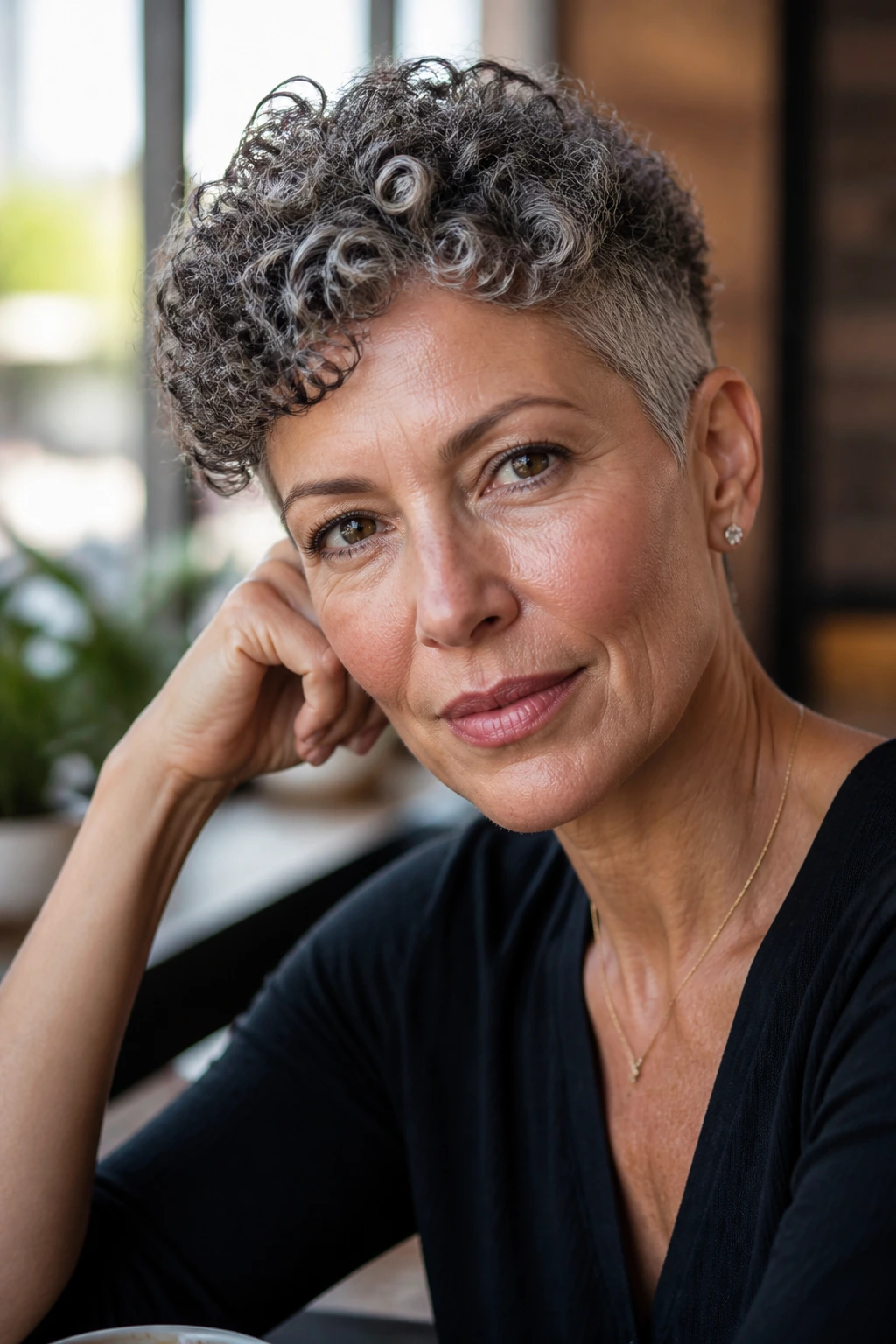
- Cutting curls too wet: Wet curls lie and tell the truth later, which is a bad deal. The shape can end up shorter, narrower, or more uneven once it dries. A dry or dry-finished cut helps the stylist see the real length.
- Too many short layers at the sides: That’s how you get a puffed-out triangle. If the sides already carry volume, keep the layering smarter and lower.
- Using heavy cream on fine curls: The hair goes limp, the roots collapse, and the cut looks older than it is. Light mousse or foam often works better on finer texture.
- Skipping neckline cleanup on cropped cuts: A fuzzy nape changes the whole impression. Even a good pixie can look neglected if the neckline grows out too far.
- Chasing perfectly even curls: They are not beads. They move, shrink, separate, and re-form. A cut with a little flexibility usually looks better than one forced into symmetry.
- Leaving the fringe too short: Curly bangs shrink more than straight ones, and the difference can be dramatic. Leave space for the bounce.
Variations and Adaptations to Try
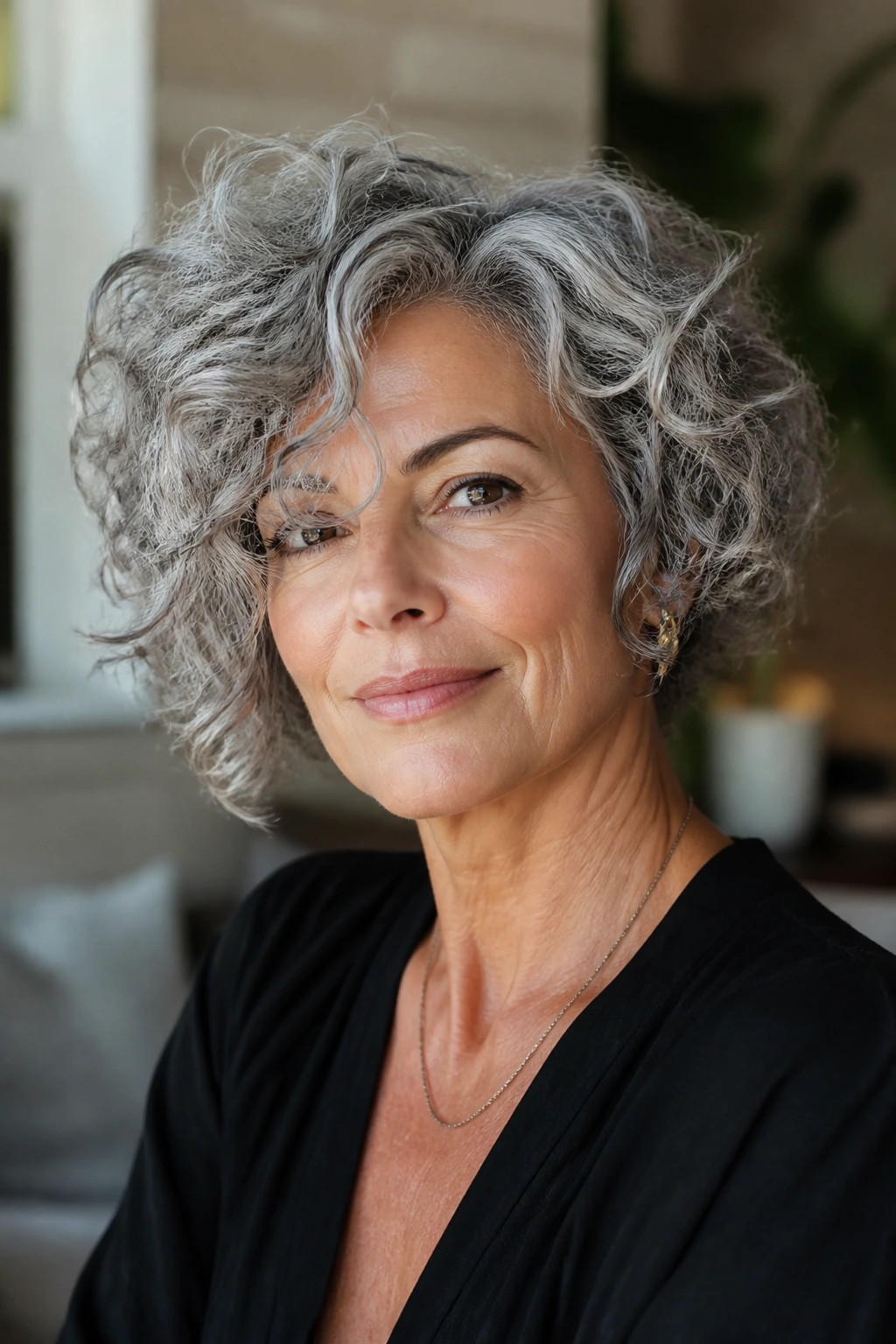
The Silver Halo: Ask for softer layers and a lighter fringe if your gray curls feel coarse at the ends. The goal is movement that shows off the color instead of boxing it in.
The Sharp Edge: Keep the nape tighter, the sideburns cleaner, and the part more deliberate. This adaptation works well if you want the haircut to read more barbered than romantic.
The Fine-Curl Lift: Reduce the number of layers and keep the top pieces a touch longer. Fine curls need room to clump, not a pile of short pieces that vanish into frizz.
The Dense-Curl Release: Add more internal removal through the middle of the haircut so the sides do not flare. This keeps heavy curls from building into a triangle by day two.
The Low-Maintenance Wash-and-Go: Choose a shape with a clean perimeter and avoid fringe that needs daily manipulation. Bobs, tapered crops, and sculpted lobs work well here.
The Bold Face-Framing Version: Increase the length around the cheekbones or add a stronger side sweep. That change pulls attention to the face and gives the haircut a little more personality without making it harder to wear.
Frequently Asked Questions

What does “non-binary haircut” mean in practice?
It usually means a cut that doesn’t lean too hard into traditional feminine softness or masculine barbershop lines. Think clean edges, texture, asymmetry, crop shapes, shags, and silhouettes that let you decide how the haircut reads.
Will short curly hair make my face look wider?
It can, if the sides are too full and the top is too flat. A taper, undercut, side part, or lifted crown usually fixes that by adding height and removing bulk where the head tends to spread outward.
Are bangs a bad idea after 50 with curls?
Not at all, but they need the right length and density. Curly fringe should usually be left longer than straight bangs, because the shrinkage is real and the bounce can be dramatic.
How do I ask for one of these cuts without sounding vague?
Bring photos of the front, side, and back, then describe what you want the haircut to do: more lift at the crown, less bulk at the nape, openness around the face, or a cleaner ear area. That gives the stylist a shape goal, not just a style label.
Can gray curls handle short layers?
Yes, but they often need a lighter hand. Gray hair can be drier and a bit wirier, so too many short layers may puff out or frizz. A good stylist will balance movement with enough weight to keep the shape calm.
Which cut is the easiest if I don’t want to style much?
A tapered crop, sculpted lob, or shoulder-length shag usually wins here. They keep a clear outline even when you air-dry and move on with your day.
What if my curls are more wavy than curly?
Several of these cuts still work. Wolf cuts, bobs, lobs, and curtain-bang shags can all flatter waves, especially if the layers are cut to keep the ends from hanging limp.
How often should I trim a short curly cut?
Every 4 to 6 weeks if you want the edges neat. Longer shags and lobs can stretch further, but once the silhouette loses its shape, the cut stops doing the work for you.
Is it better to cut curly hair dry or wet?
Dry cutting, or at least dry finishing, gives the most honest view of length and shrinkage. Wet cutting can still work if the stylist knows curls well, but the haircut should be checked in its natural state before you leave.
The Right Shape When You Want Less Fuss
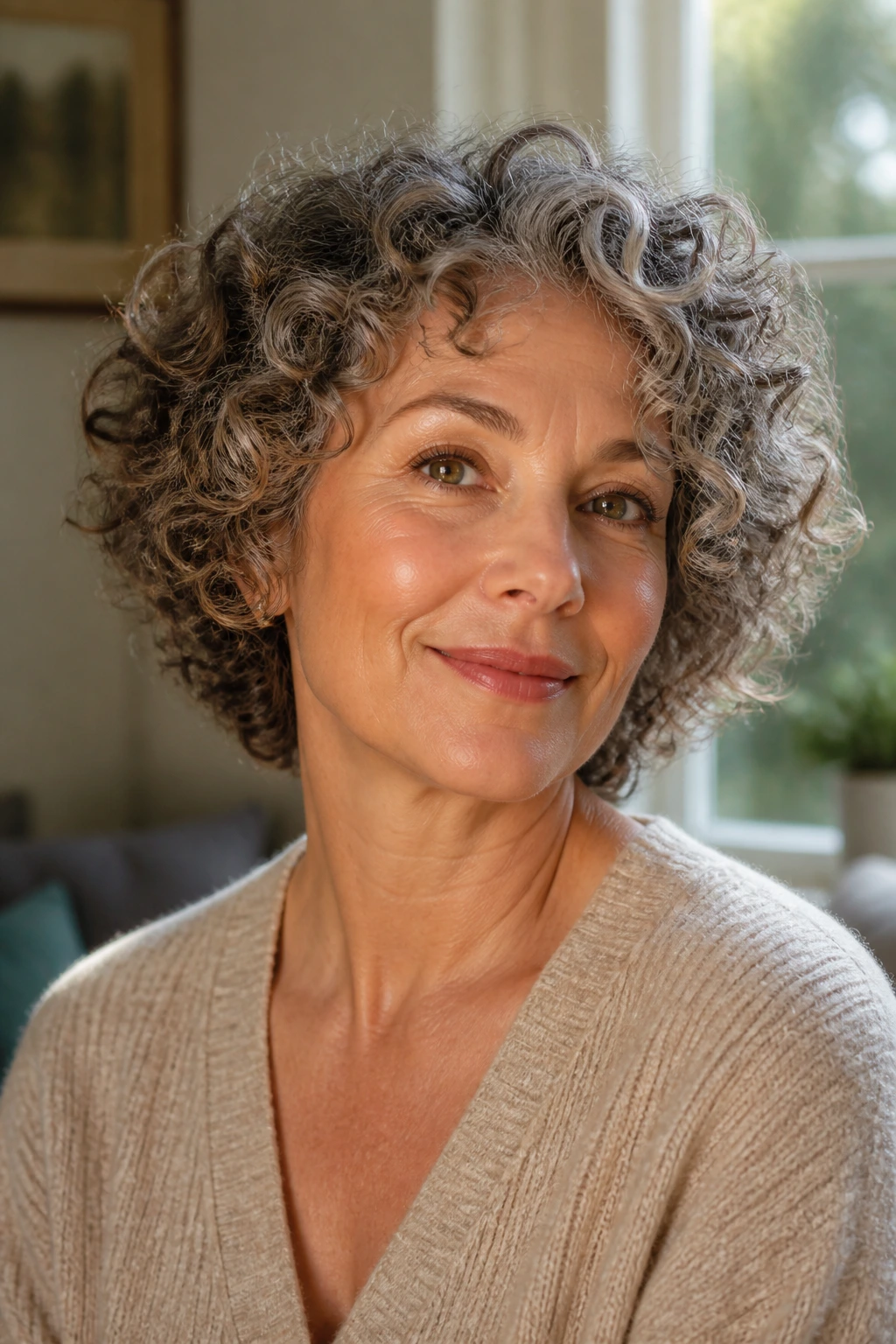
The best thing about these cuts is that they stop asking curly hair to pretend. That’s the real shift. Once the shape follows the curl, the hair becomes easier to live with, easier to refresh, and a lot more interesting to look at.
A haircut can carry edge without feeling harsh. It can be soft without turning mushy. For women over 50, that balance often feels more honest than the old rules ever did, and curls make the point even better.
Choose the version that gives your face room, keeps the neckline clear, and lets your texture show up without apology. Then wear it a few weeks, watch how it moves, and adjust from there — hair like this gets better when the cut and the curl start agreeing on the same shape.