



Oval faces and curls are a lucky combination, but they still need a haircut that knows what it’s doing. The best curly haircuts for oval faces don’t try to fight the curl pattern or “fix” the face shape. They shape the movement so the hair lands in the right places: cheekbones, jawline, collarbone, or just above the shoulders, depending on how much length you want to keep.
And curls are sneaky. A cut that looks balanced when wet can spring up a few inches as it dries, especially if your hair has strong shrinkage or a mixed curl pattern. That’s why the easy-looking cuts are often the ones with the smartest structure underneath — a cleaner perimeter, the right amount of layer, and no over-thinning that turns the ends into fuzz.
Oval faces can wear almost anything, which is both a gift and a trap. The options are wide open, so the real question becomes: do you want volume, polish, bounce, or a shape that air-dries and behaves with very little fuss? These 25 haircuts lean into those answers instead of making you guess.
Why These Cuts Work So Well Together
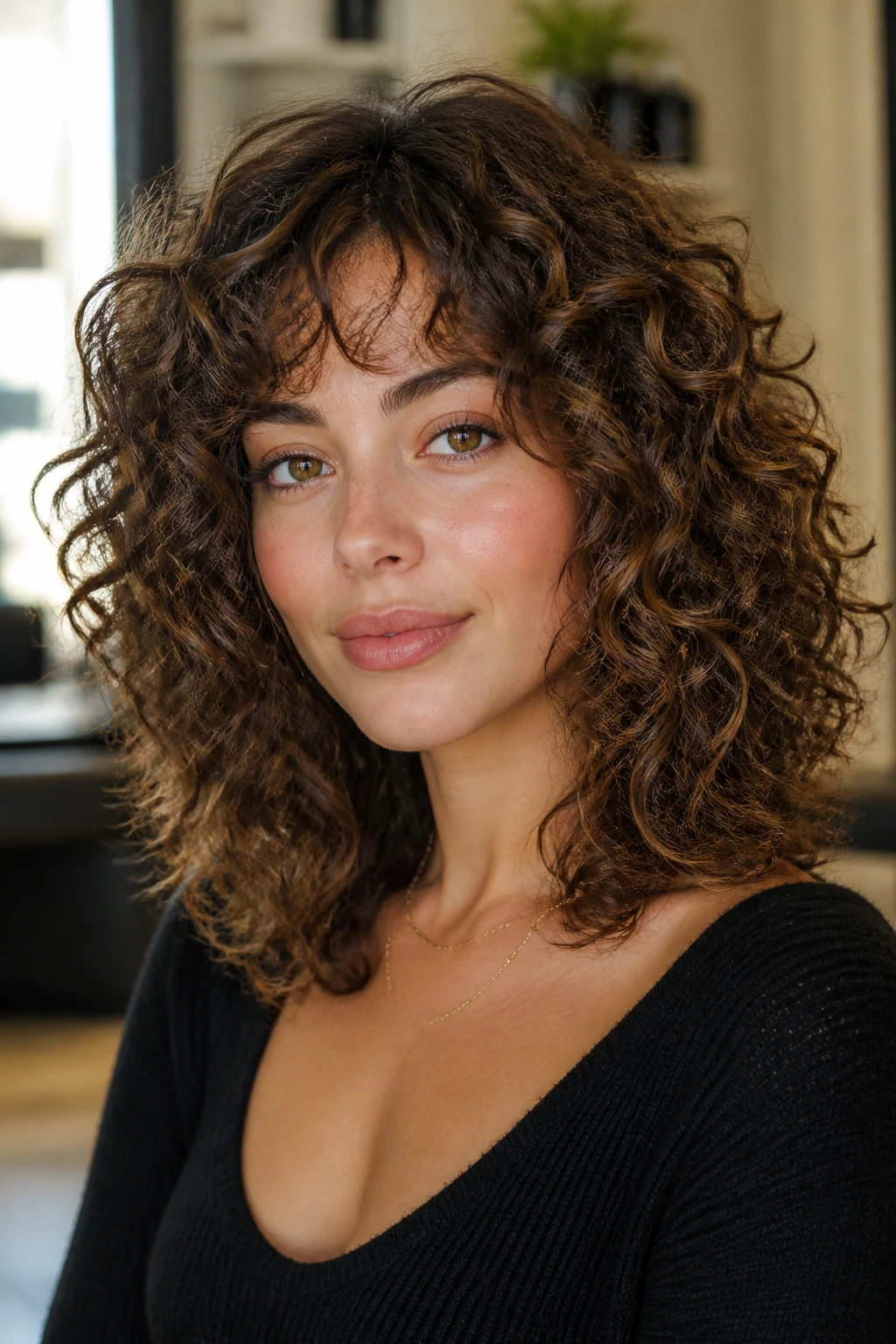
- Oval faces give you room to play: The face is already balanced, so the cut can focus on curl shape instead of correcting proportions.
- Curl shrinkage gets treated like part of the design: These styles are chosen to still look intentional when the curls rise, not just when they’re freshly cut.
- Low-styling cuts are the point here: Most of these shapes look finished with a little leave-in, a mousse, and a diffuser pass — not a full salon blowout.
- Different curl densities are covered: Fine spirals, medium ringlets, thick coils, and mixed textures all need different weight lines.
- The best cuts grow out gracefully: A good curly shape should still make sense at week six, not fall apart into a triangle or a helmet.
- Salon language gets easier: You can ask for a bob, shag, lob, or pixie and add one or two shape notes instead of describing an entire geometry lesson.
1. Long Layers for Curly Hair and Oval Faces
Long layers are the quiet workhorse of curly haircuts. They keep the length you like, but they stop the bottom from turning into one heavy, dangling curtain. On an oval face, that matters because the face doesn’t need much correction; it just needs the curls to move in a way that keeps the silhouette lively instead of flat.
This cut works best when the shortest layers start around the cheekbone or mouth, not high up near the temples. That keeps the top from puffing out and lets the longest curls skim past the collarbone or chest. If you want to wear your hair up sometimes, this is one of the most forgiving choices. The shape still holds even when a few curls escape.
2. Curly Lob That Skims the Collarbone
A curly lob is the haircut I keep coming back to when someone wants a shape that does not ask for a lot. It sits around the collarbone, which gives curls enough room to spring without getting swallowed by the neck or chin. On an oval face, that length keeps the look open and clean.
The trick is not to make the ends too thin. You want enough weight at the perimeter that the lob still reads as a lob after it dries, not as a shaggy half-step between styles. If your curls are loose, this cut gives nice swing. If they’re tighter, it keeps the profile neat and easy to refresh with a little water and mousse.
3. Shoulder-Length Shag with Airy Ends
A shoulder-length shag is for people who want movement without having to manufacture it every morning. The layers sit in different spots, so the curls stack in a softer, more broken-up way. That keeps the sides from bulking out and makes the whole shape feel lighter around the face.
It’s especially good if your hair gets puffy at the bottom when it’s one length. The shag cuts that weight in smart places, which means the curls can spring instead of dragging each other down. On an oval face, the texture frames the features without crowding them. It looks casual, but not random. Big difference.
4. Rounded Curly Bob with Soft Volume
The rounded curly bob is one of those cuts that sounds severe on paper and looks softer in real life. The perimeter usually lands around the jaw or just below it, then the internal shape stays curved so the volume follows the head rather than flaring out at the sides. That roundness works beautifully on an oval face because it keeps the eyes moving vertically.
This is a good choice if you like structure but don’t want a blunt, stiff line. The curls get enough room to bounce, but the shape still feels deliberate. I’d especially recommend it for medium-density curls that need help staying together. Too much thinning ruins the whole point. You want the bob to sit, not fray.
5. Curly Pixie with a Tapered Nape
Short hair can be the easiest curly haircut of all, if you like short hair in the first place. A curly pixie with a tapered nape removes all the extra bulk at the back and leaves the top long enough for the curls to show off. On an oval face, this cut puts the features front and center without making the head look too round.
The secret is keeping the top pieces soft, not chopped into tiny little spikes. Curls need a little room to form. If the sides are neatly tapered and the crown has enough length to curl, the whole cut looks clean with very little daily work. A fingertip of styling cream is usually enough.
6. Bixie Cut with Extra Curl at the Crown
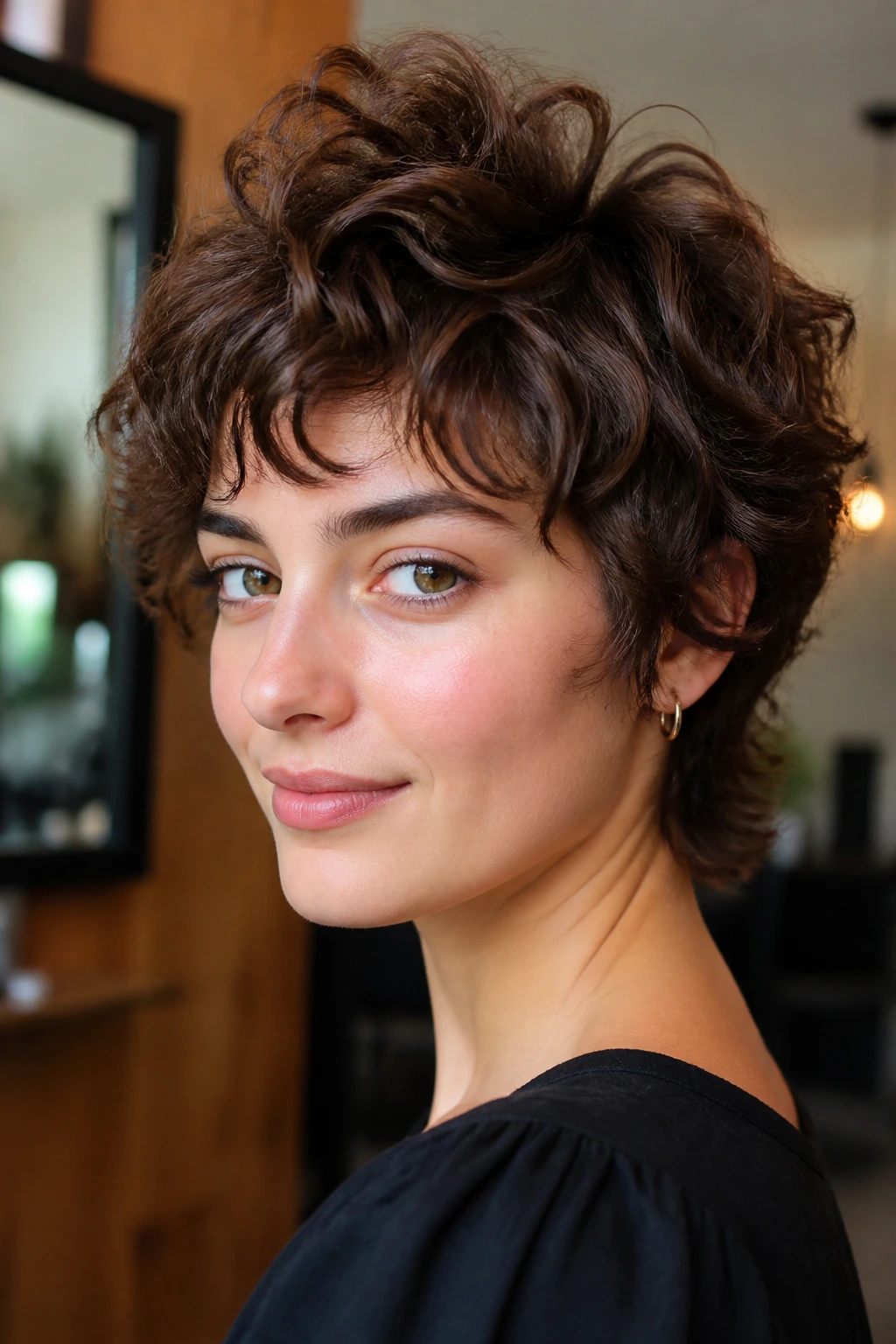
A bixie sits between a bob and a pixie, and that middle ground is exactly why it works so well for curls. You get the lighter feel of a short cut, but there’s still enough length on top and around the face for shape. It’s a smart choice if you’re curious about short hair but not ready to go full pixie.
The crown needs a little more length than the sides, or the curl pattern can collapse and look flat. Ask for softness around the temples and a bit of lift at the top. That keeps the face open. The bixie is especially good if your morning routine needs to be fast and you don’t want to fight a blow-dryer every day.
7. Curtain Bangs with Long Curls
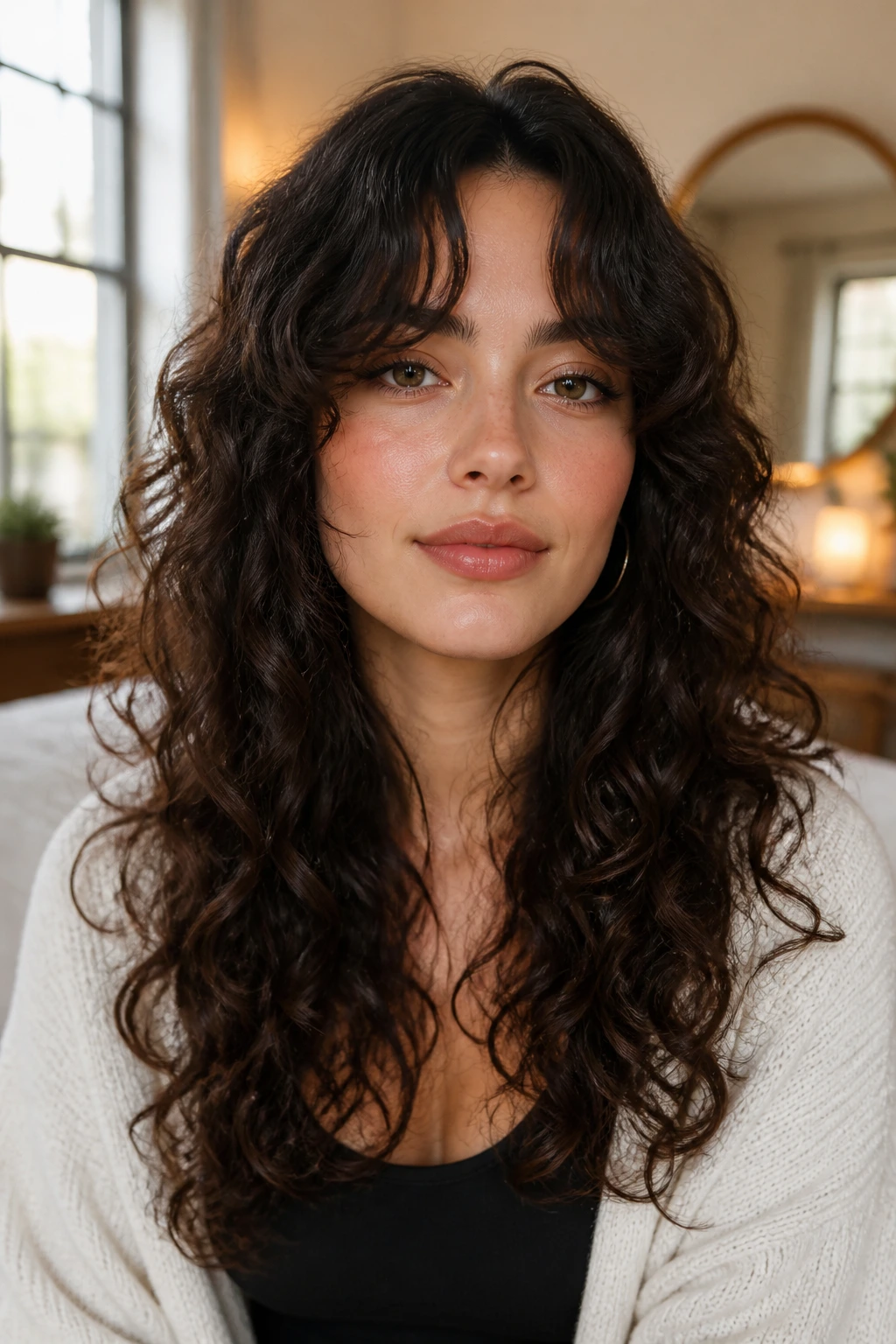
Curtain bangs are the gentlest way to add fringe to curly hair. They split away from the center, so they don’t box in the forehead or sit like a hard line across the face. On an oval face, that softness is useful because it frames the features without stealing all the attention.
The key is length. Curly bangs usually need to be cut longer than you think, because shrinkage will pull them up. Ask for the shortest point to live around the bridge of the nose or just below the eyes when dry, depending on curl tightness. The rest can fall into longer face-framing pieces. It’s a nice compromise if you want bangs but hate high-maintenance fringe.
8. Face-Framing Layers That Start at the Cheekbones
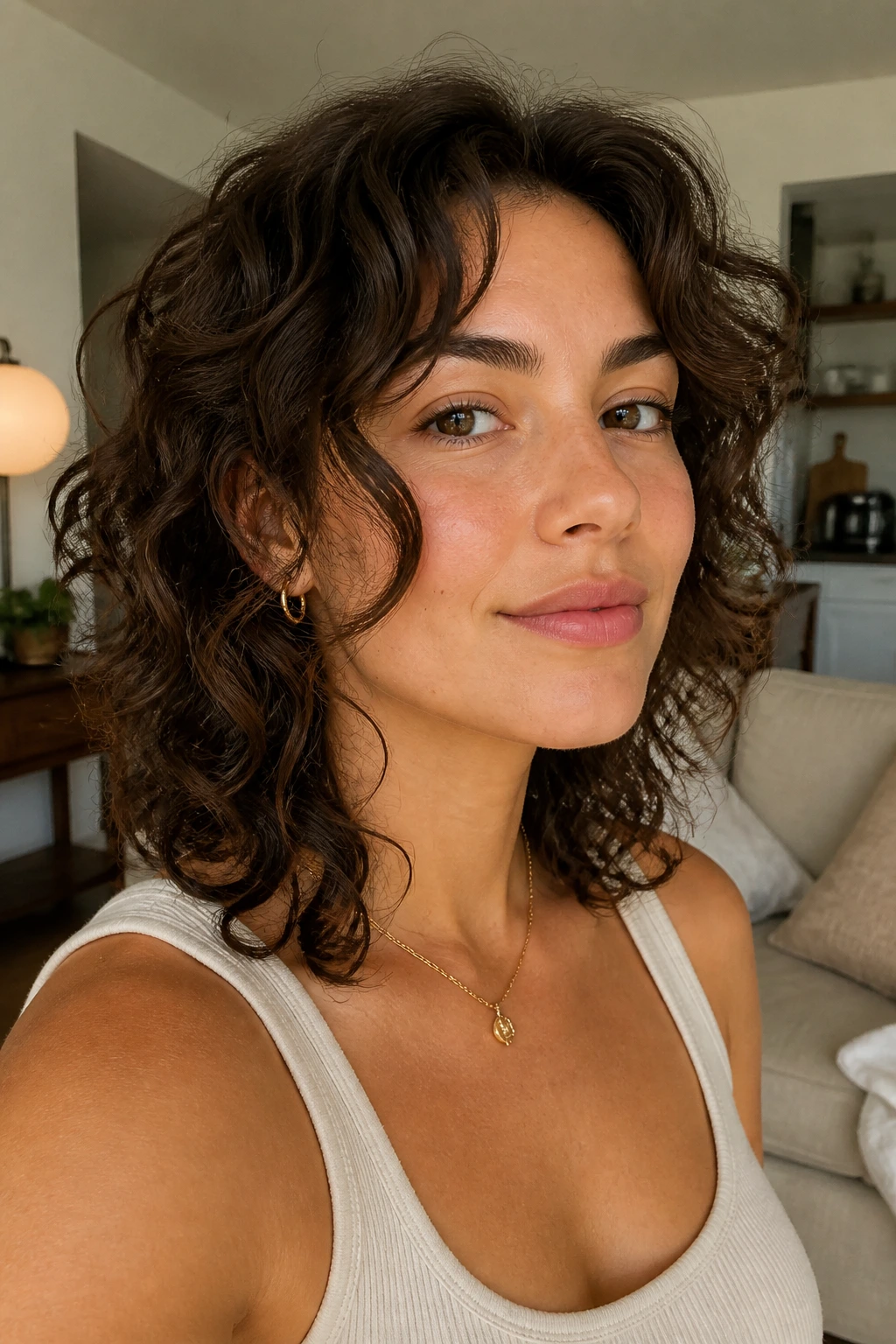
This is the haircut for someone who wants movement more than drama. The back can stay fairly long, while the front gets layers that begin around the cheekbones or mouth. That places the curl action right where the face benefits from it most, especially on an oval face that can wear a lot of shapes without looking crowded.
I like this cut because it solves a common problem: long curly hair that feels heavy around the front. A few well-placed layers change the whole mood of the haircut. The curls move away from the jaw instead of sitting on it. The effect is subtle, which is why it ages well between trims.
9. Wolf Cut for Curly Hair

A curly wolf cut is not for someone who wants polished and sleepy. It’s for someone who likes texture, volume, and a slightly wild outline that still makes sense. The crown stays fuller, the sides get broken up, and the length drops off in a way that lets curls pile into a sort of soft edge.
What makes it easy is that the shape does some of the styling for you. You don’t need every curl to behave perfectly; the cut already expects a little mess. On an oval face, the volume around the top and cheekbones adds energy without throwing off balance. Just don’t over-layer thin curls. That turns a cool cut into a sad one.
10. Tapered Cut for Dense Curls
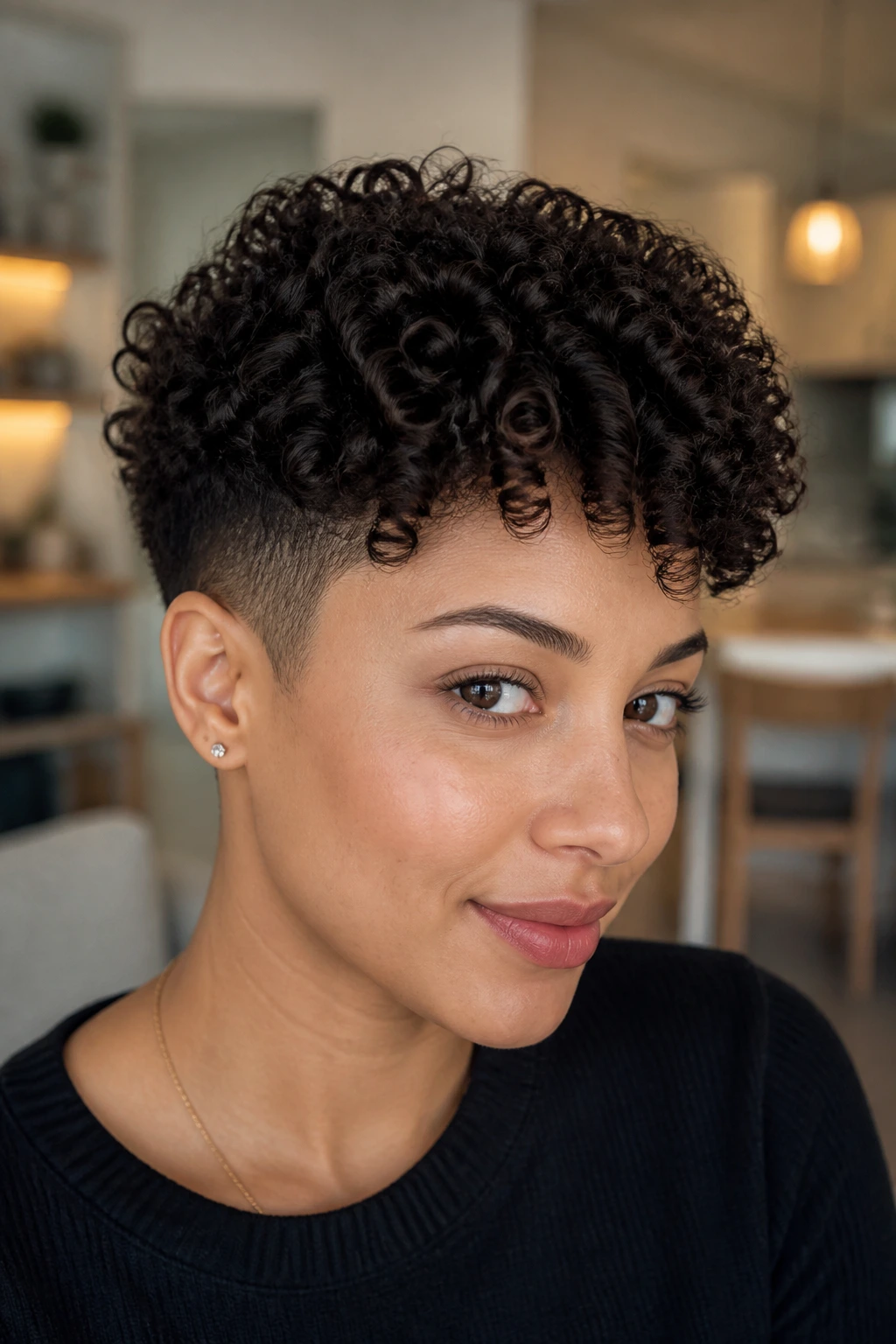
Dense curls need a haircut that respects gravity. A tapered cut does exactly that by reducing bulk at the sides and nape while keeping enough fullness through the top to preserve shape. The result is neat, breathable, and a lot easier to wear than a boxy, heavy outline.
This one is especially good if your hair puffs at the sides when it dries. Tapering keeps the silhouette from spreading outward like a triangle. On an oval face, that cleaner outline lets the features stay visible instead of getting buried under too much width. Ask for shaping, not aggressive thinning. Those are not the same thing.
11. Deva Cut for Defined Spiral Shapes
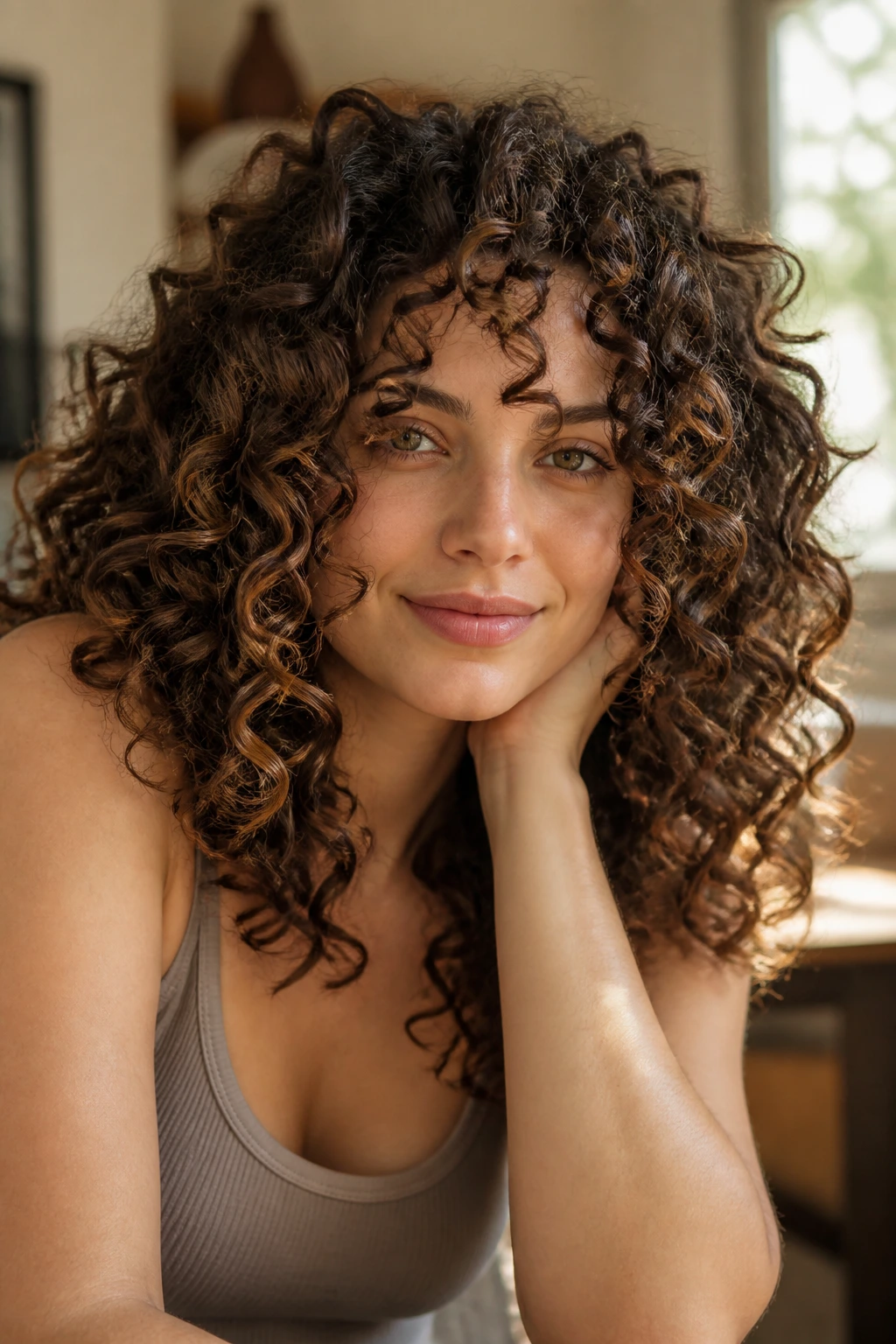
A Deva cut is less about the name and more about the method: curl by curl, usually on dry or mostly dry hair, so the stylist can see how each piece falls in real life. That’s a big deal for curly hair because a wet curl can lie to you. It stretches. It hides its future. Then it springs up and surprises everyone.
For oval faces, the advantage is precision around the front and crown. The cut can follow the actual curl pattern instead of guessing at it. If your curls grow in different directions, this method can clean up the shape without taking too much length. It’s one of the better choices if your haircut tends to feel uneven after the first wash.
12. Collarbone Cut for Curly Hair and Oval Faces
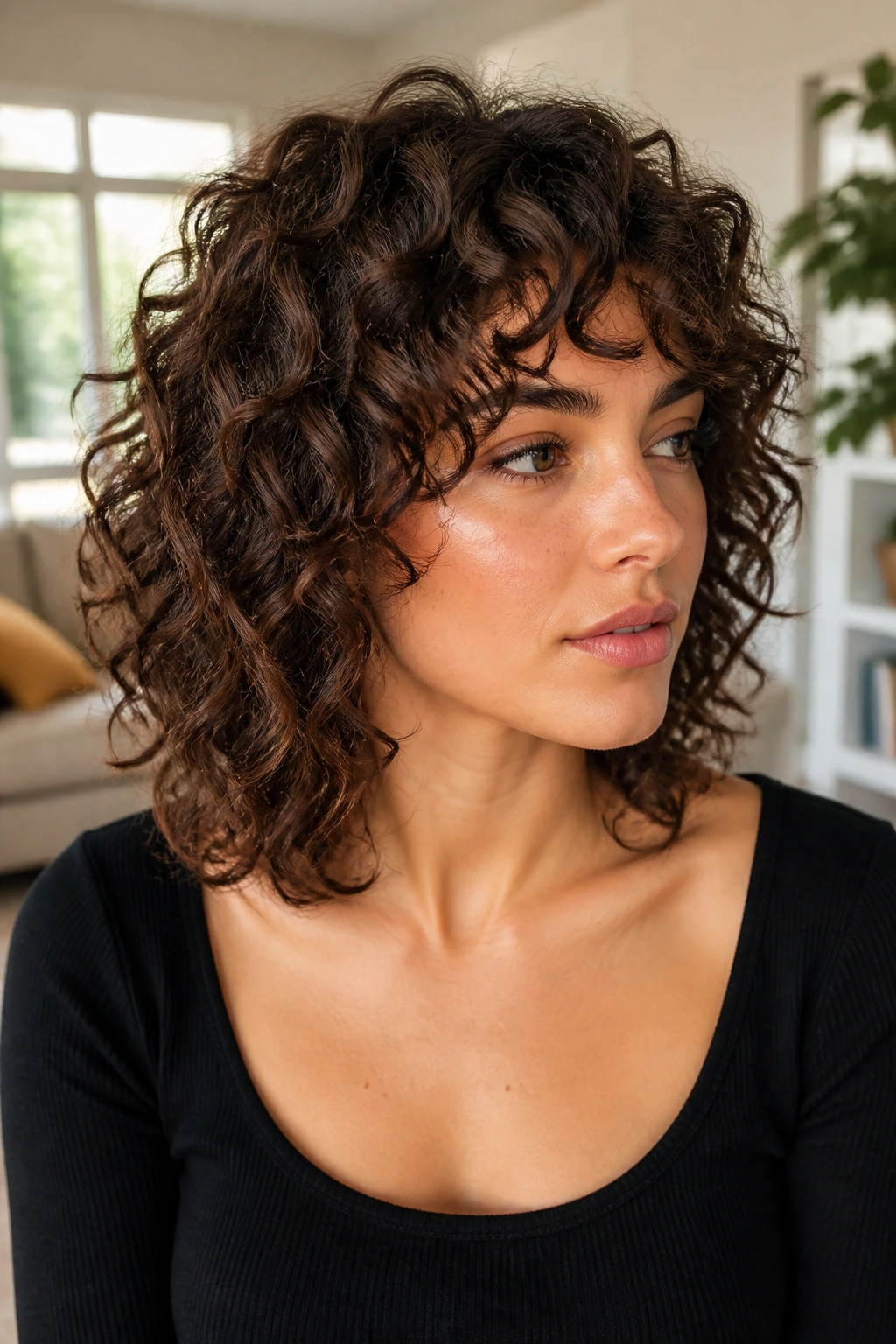
The collarbone cut sits in that sweet spot where hair feels long enough to pull back, but short enough to move. On curly hair, it often lands a little above or below the collarbone depending on shrinkage, which is why this length is so forgiving. It frames an oval face without dragging the whole look downward.
I like this cut for people who want polish with minimal effort. It’s easy to clip half up, easy to diffuse, and easy to refresh with water on day two. The shape should be soft around the front and fuller through the mid-lengths. If your stylist over-texturizes it, the ends can fray. That ruins the clean line.
13. Deep Side-Part Layers
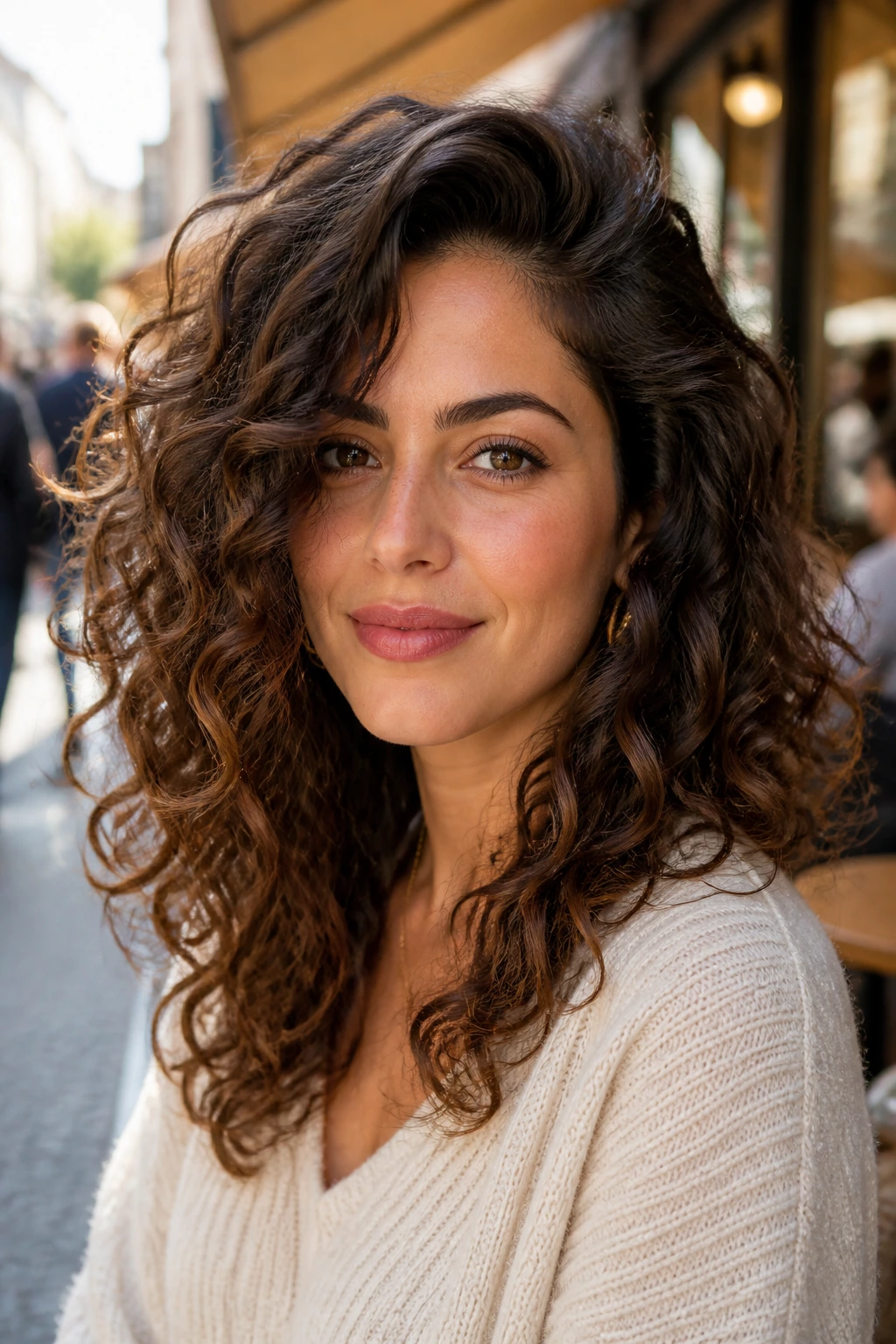
A deep side part changes the whole attitude of curly hair. It creates asymmetry, adds lift at the roots, and lets the curls sweep across the face in a way that feels deliberate. On an oval face, that’s a nice trick because the face shape already handles balance well — you can afford to be a little uneven.
This cut is especially useful if one side of your hair tends to fall flatter than the other. The deep part gives that weaker side a job to do. It also works well for curls that need a little drama without a big chop. If your hairline has a strong cowlick, the part may fight back. That’s worth testing before the cut gets too short.
14. U-Shaped Cut with Long Interior Layers
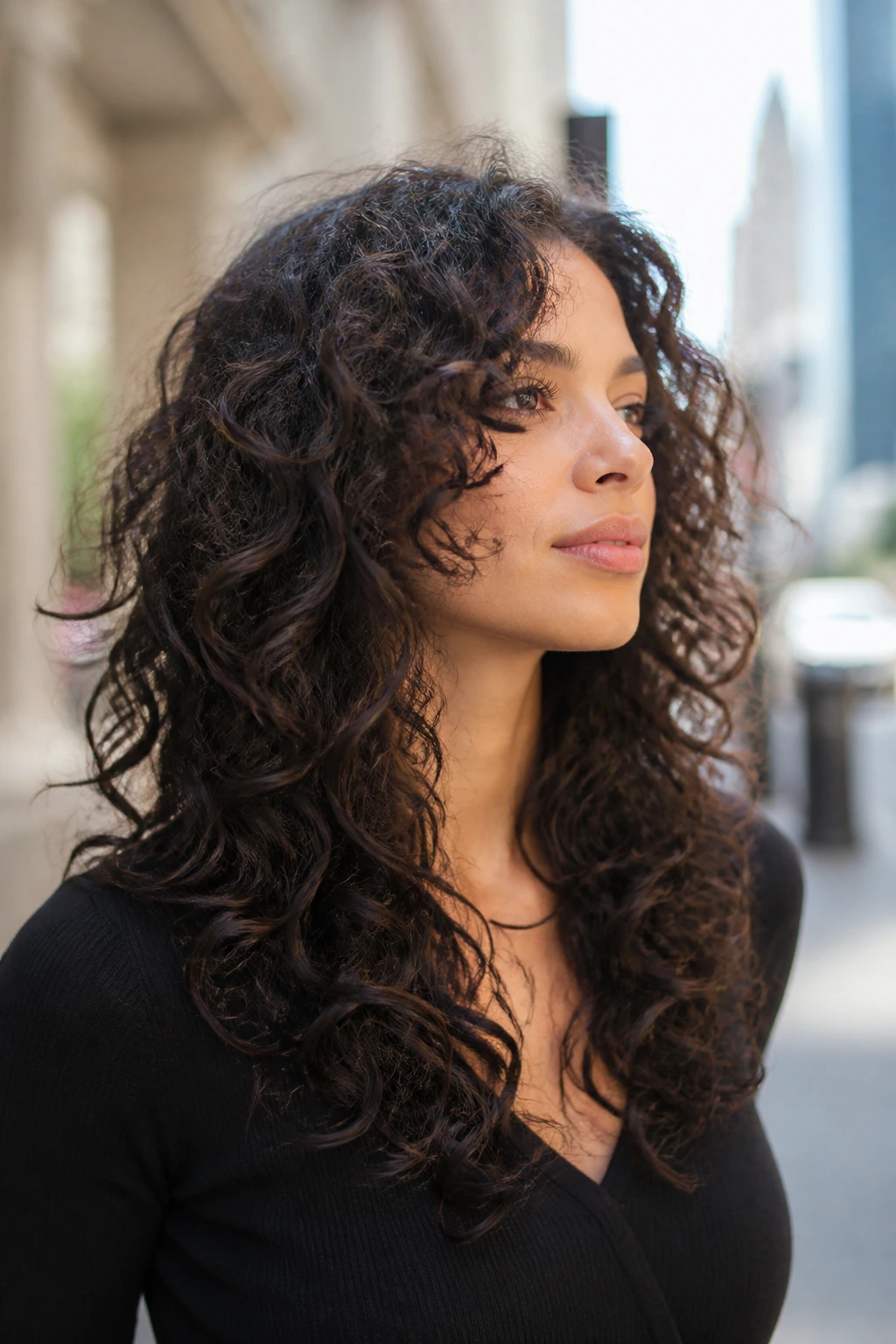
A U-shaped cut is one of the cleanest ways to keep long curly hair from looking bottom-heavy. The back stays longer, and the shape curves up slightly toward the front, which makes the silhouette feel softer than a straight-across line. Interior layers remove weight without turning the ends wispy.
This is a very good option if you wear your curls down most of the time and want them to fall with some movement. The U shape keeps length where you can see it, while the interior layers help with bounce. On an oval face, the curved outline mirrors the face’s balance without making it boring. It’s practical. Also a little pretty in that quiet way.
15. Curly Mullet with Soft Edges
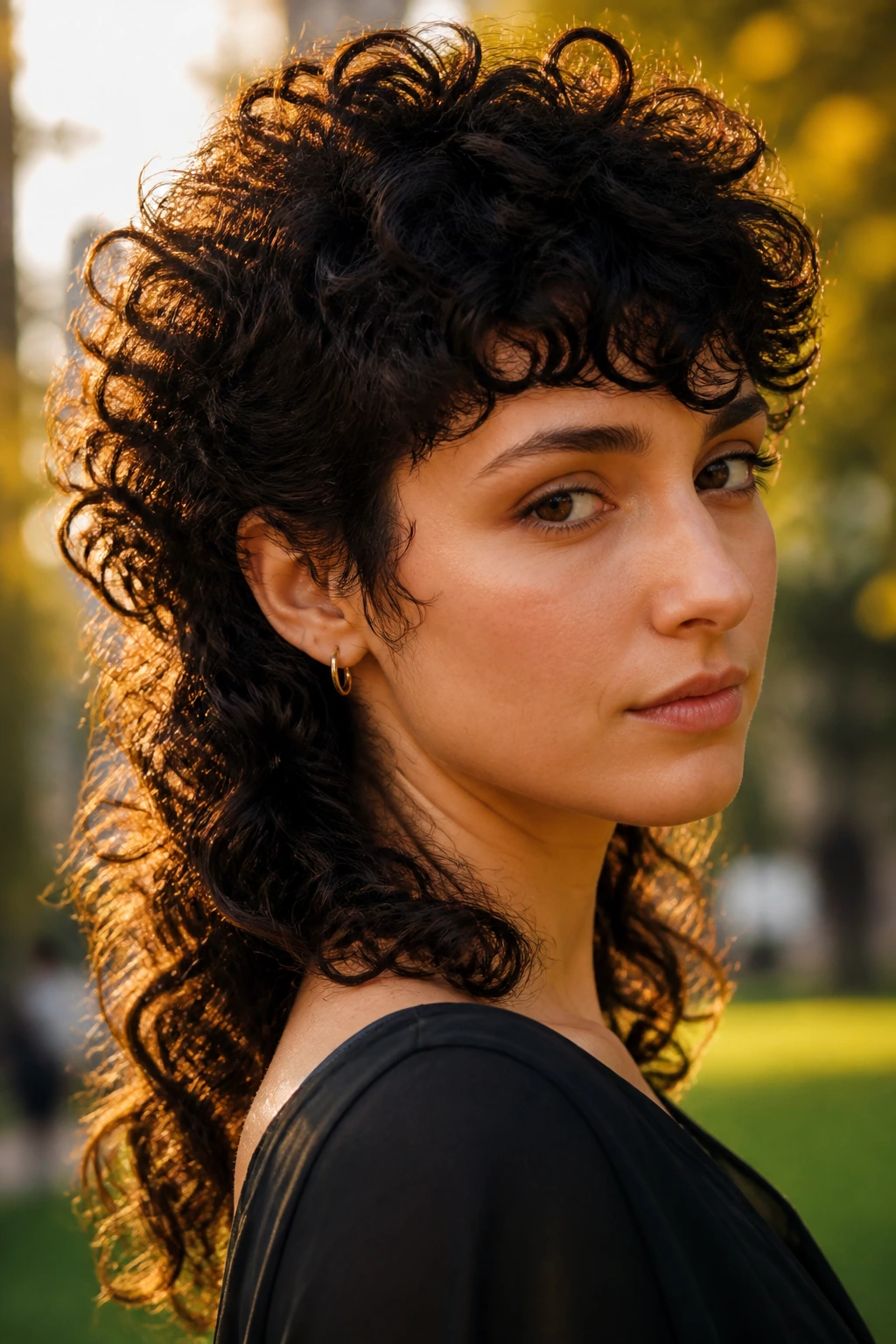
Yes, the curly mullet is back, but the soft-edged version is much more wearable than the name suggests. The top and sides stay shorter and lighter, while the back keeps some length. On curls, that contrast creates movement instead of a hard retro statement.
The reason it’s easier than people assume is that curls blur the line between sections. The cut looks modern instead of costume-like when the transitions are soft. An oval face can handle the shorter front because there’s enough vertical balance to keep it from looking too sharp. If you like structure with a little attitude, this one has range.
16. French Bob with a Curly Fringe

A French bob on curly hair is short, cheekbone-friendly, and more forgiving than people think. The length usually sits around the chin, with enough softness in the edges that the curls don’t turn into a hard block. Add a curly fringe, and the whole cut gets a lively, face-opening effect.
This works best if your curls have enough spring to keep the line from drooping. Oval faces can wear the shorter length without looking crowded, which is why this cut has such a clean feel. It does need regular shaping. Short curly bobs don’t hide messy growth the way longer cuts do. That’s the tradeoff.
17. Side-Swept Bangs for Curly Hair and Oval Faces
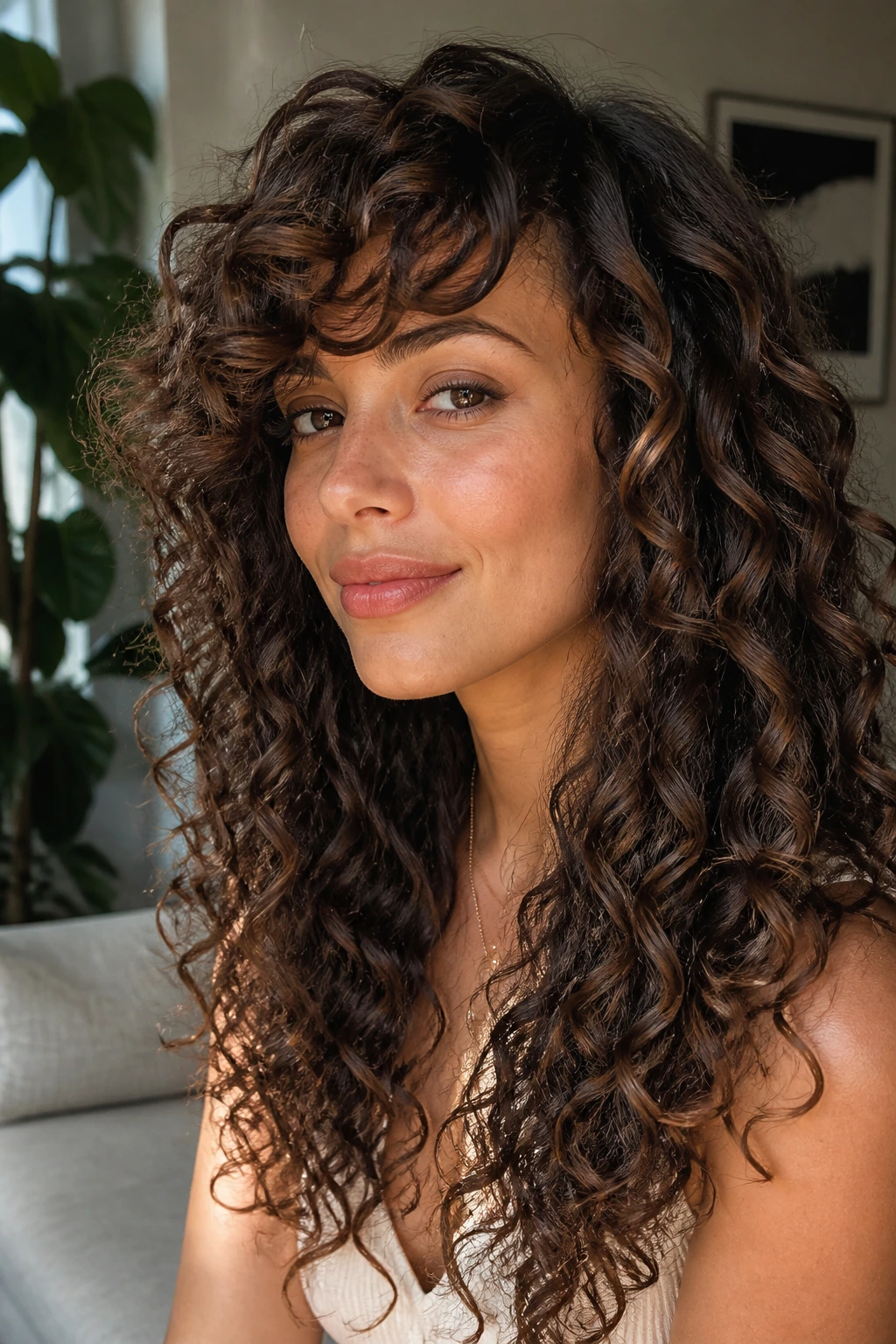
Side-swept bangs are the lazy person’s answer to fringe, and I mean that as a compliment. They soften the forehead, blend into the rest of the cut, and grow out more gracefully than blunt bangs. For curly hair and oval faces, they add movement without locking you into a super-specific shape.
The key is to keep the bangs long enough that they can sweep, not stop awkwardly in the middle of the cheek. Curl shrinkage matters here too, so don’t let a stylist take them too short. Side-swept bangs work especially well if you part your hair off-center and want the haircut to feel a little looser around the face.
18. Tapered Nape Bob with a Fuller Top
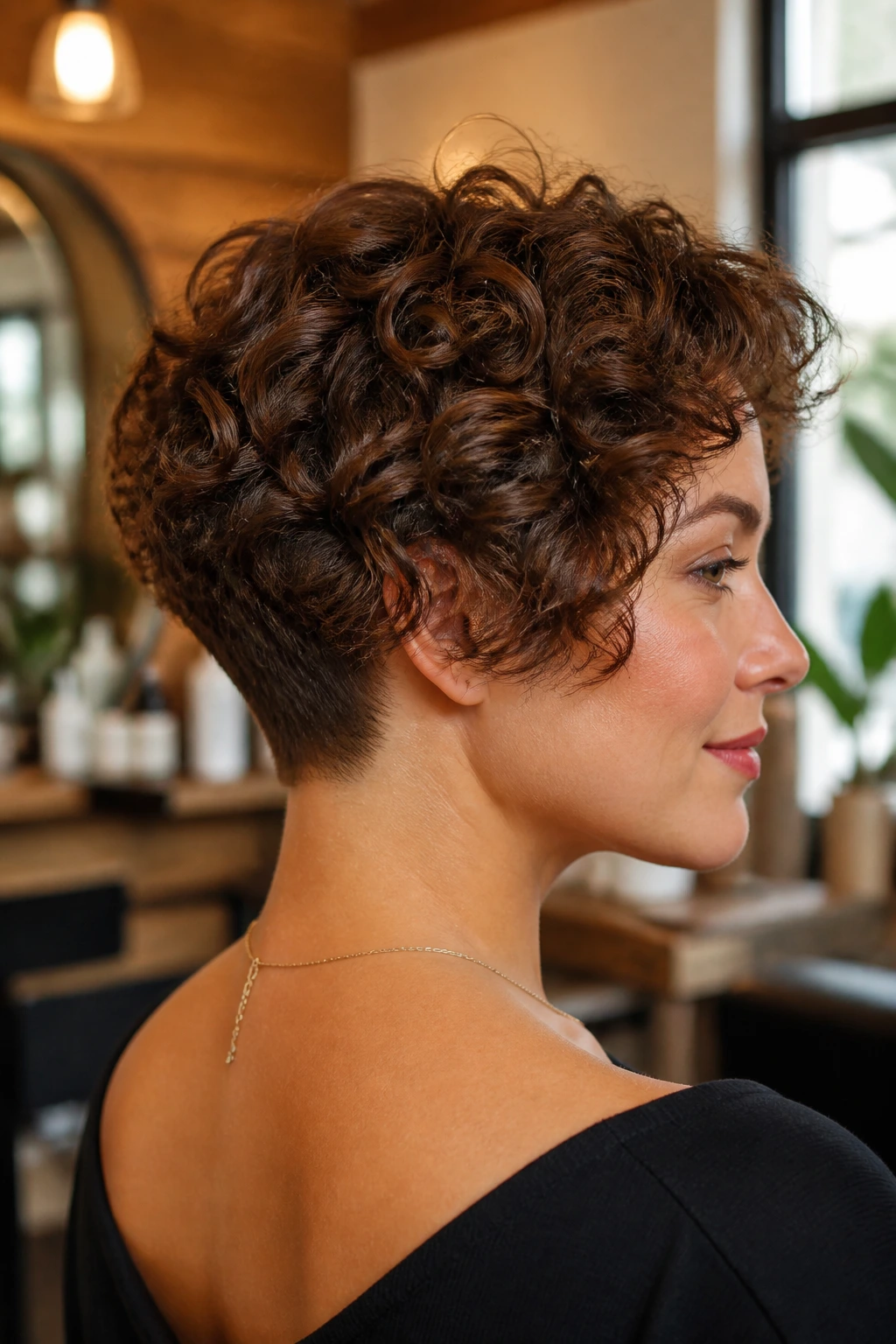
A tapered nape bob is one of the smartest short curly cuts for thick hair. The back is cleaned up close to the neck, while the top keeps enough fullness to show off the curl pattern. That contrast keeps the shape from ballooning outward.
It’s a good pick if you want short hair but hate the feeling of your neck disappearing into a block of curls. On an oval face, the fuller top gives lift without making the face look longer than it is. The shape stays neat, and the nape stays cool — literally and visually. It’s a tidy cut, not a boring one.
19. Midi Cut with Internal Layers
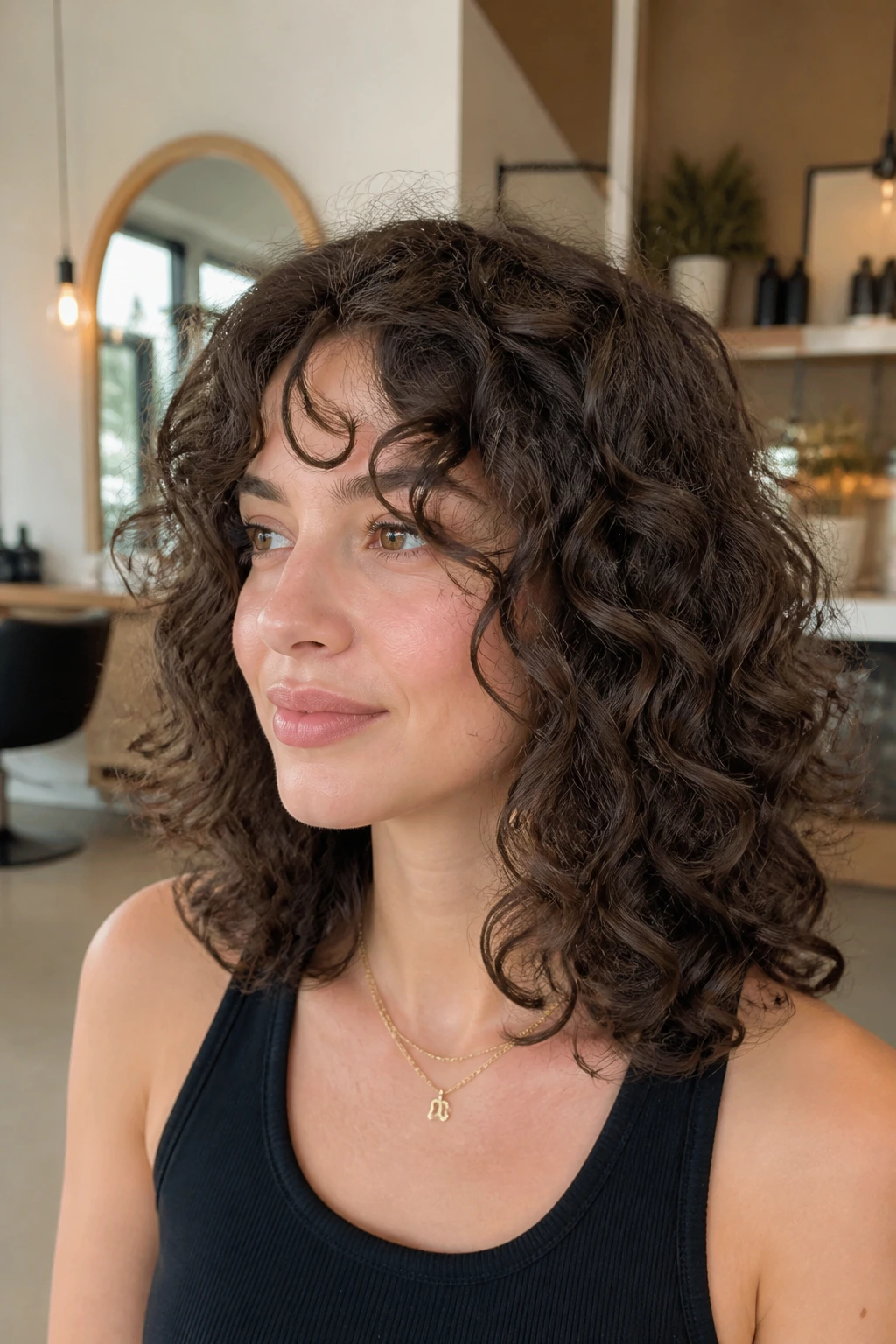
A midi cut lives in that upper-chest zone where curls can still bounce, but the style doesn’t demand constant babysitting. Internal layers take some weight out of the middle without breaking the outer shape apart. That’s the part I like. The cut keeps its smooth outline while the curls underneath do the lifting.
This is a strong option if you want your haircut to work for workdays, weekends, and the occasional half-up style without losing shape. On an oval face, the length helps maintain balance, while the internal layers stop the whole thing from feeling heavy. If your hair gets triangular when it’s long, this cut is a useful reset.
20. Inverted Curly Bob

An inverted bob is shorter in the back and longer in the front, which creates a clear angle without needing razor-sharp styling. On curly hair, that forward tilt can look elegant or energetic depending on how much volume you keep in the crown. Oval faces wear this shape well because the front pieces soften the jaw and cheek area.
The cut needs balance. Too much stacking in the back, and the curls can puff up like a helmet. Too little, and the angle disappears. Ask for a gentle inversion rather than a dramatic wedge. That keeps the shape easy to wear and much easier to grow out.
21. Blunt Curly Bob with Hidden Texture
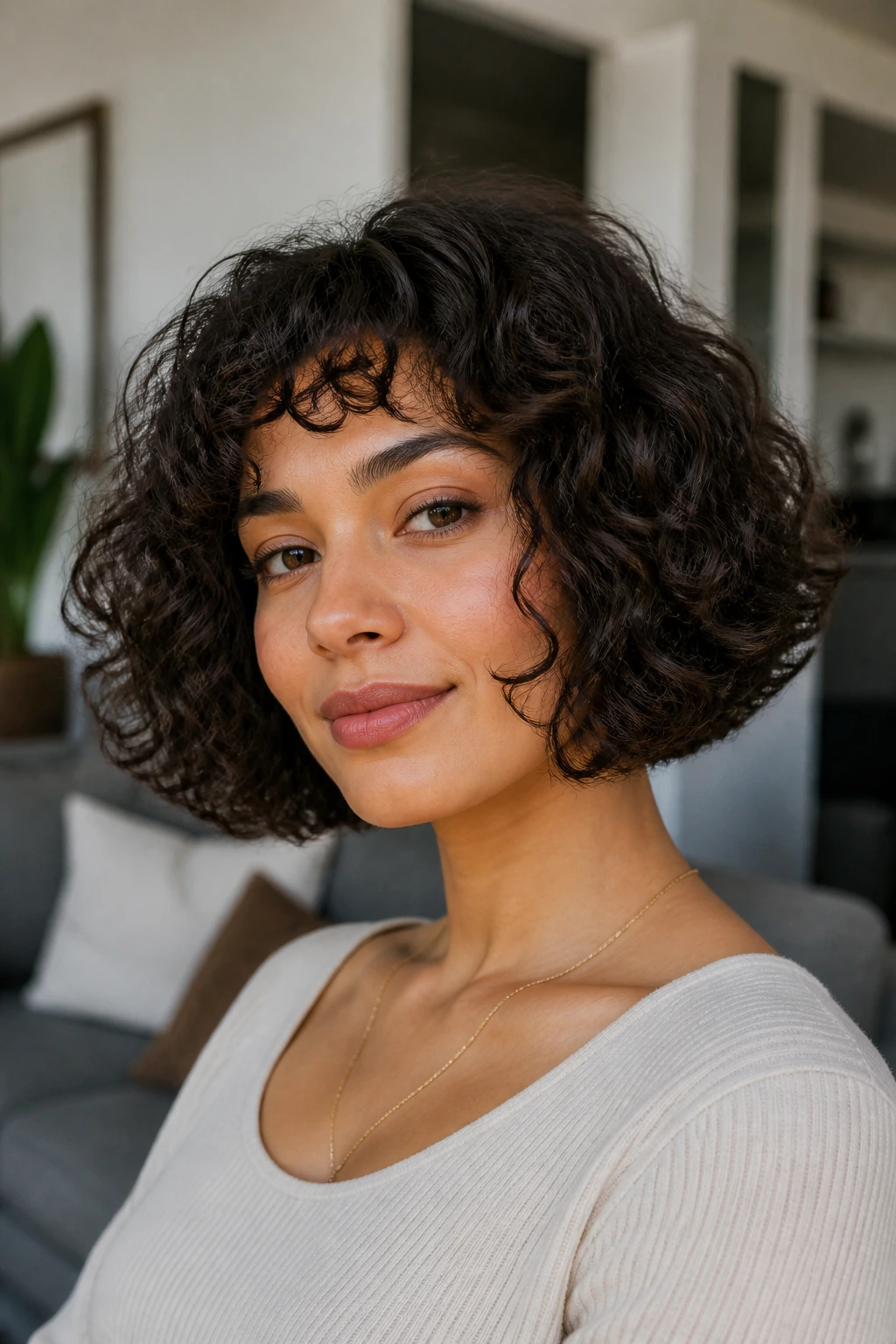
A blunt curly bob is a nice surprise when it’s done well. People often assume blunt means stiff, but on curls, the line can look full and crisp while the interior stays lightly shaped to avoid bulk. That makes it a strong choice for finer curls that need a little weight to hold the outline.
The front and sides should stay even enough to read as a bob, not as a shag. Hidden texture takes care of the movement underneath without making the ends look ragged. On an oval face, the clean perimeter can be flattering because it frames the jaw without adding extra width. It’s tidy. Not fussy.
22. Shaggy Lob with a Light Fringe
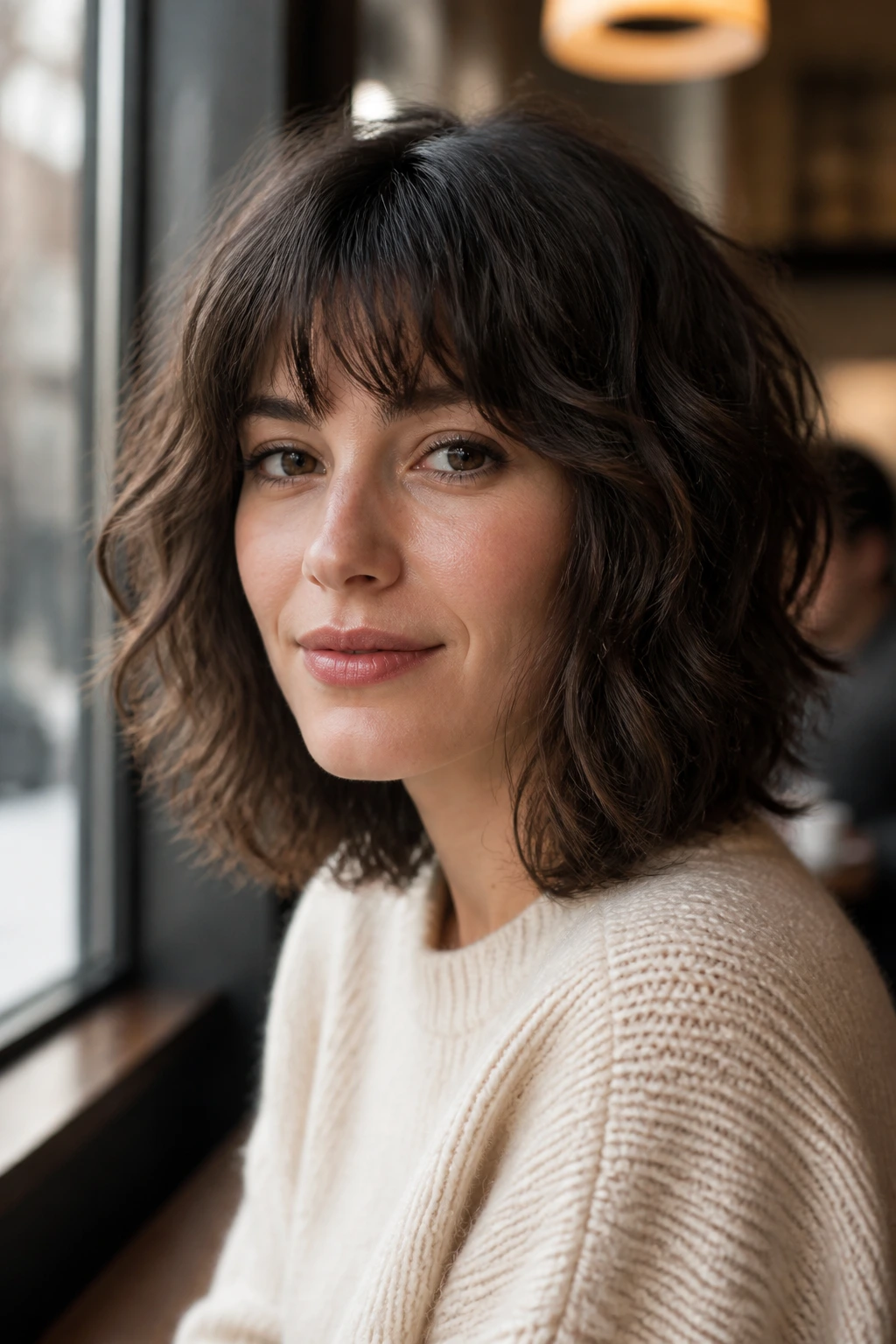
This is the haircut for people who want a shag but don’t want to look like they committed to a costume. The lob length keeps it versatile, while the shag layers add texture and the fringe softens the forehead. The result is easy, slightly undone, and very friendly to air-drying.
It works especially well if your curls like to separate a little instead of forming perfect clumps. The light fringe gives the cut a face-framing point of interest without demanding daily precision. On an oval face, that fringe helps fill out the upper third of the style so the hair doesn’t just hang straight down. A little motion. That’s the win.
23. Chin-Length Curly Crop
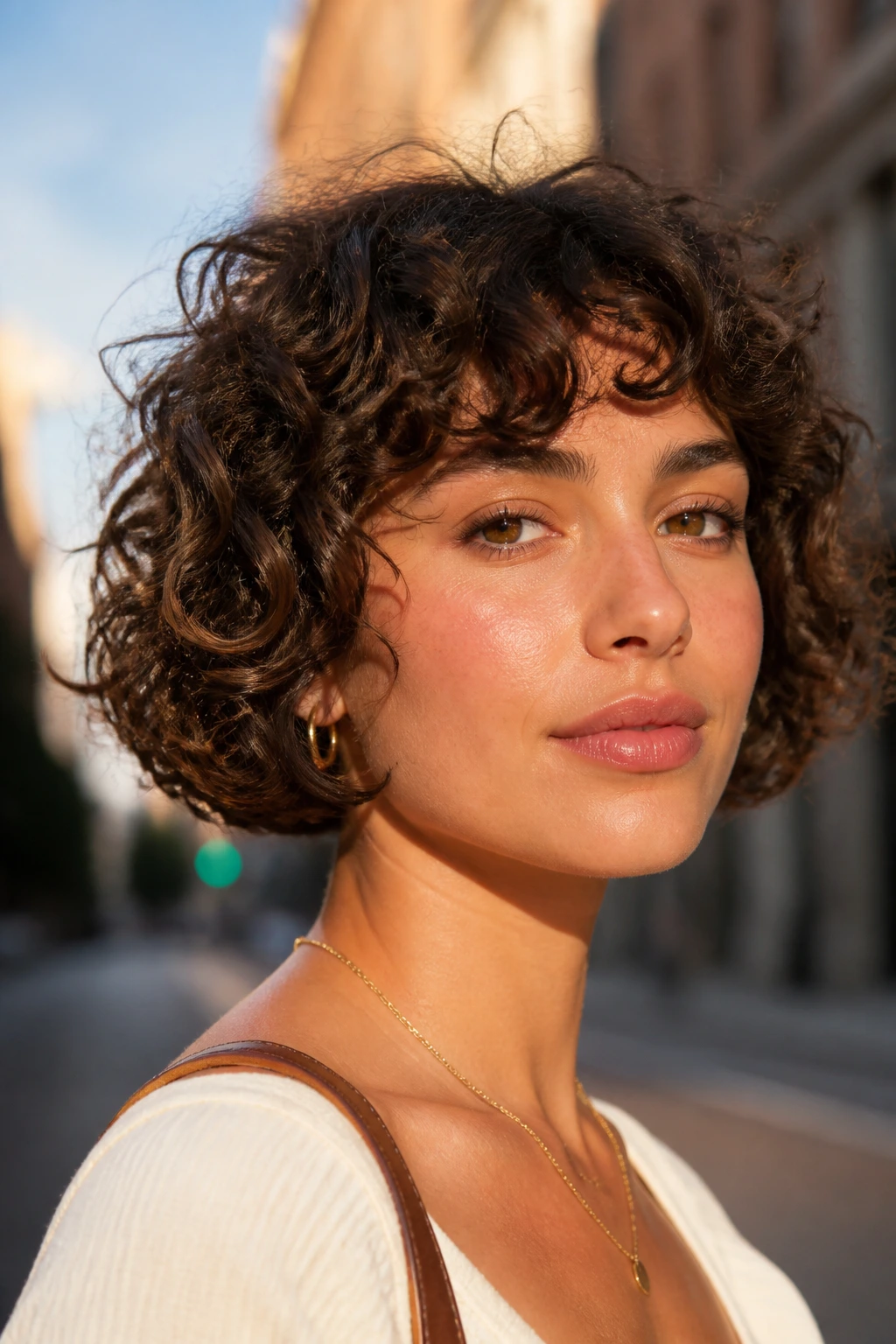
A chin-length crop is shorter than a bob but softer than a pixie, which makes it a good middle ground if you want your curls to show shape without swallowing your face. The length lands right at the jaw, so it can highlight bone structure instead of hiding it.
This cut is particularly good for springy curls that bounce back fast. The shorter length keeps the style light, and the face shape does a lot of the work. On an oval face, it’s easy to wear because the proportions stay open. You do need to keep an eye on the nape and side edges, though. A growing crop can lose its clean line in a hurry.
24. Halo Cut for Soft, Rounded Shape
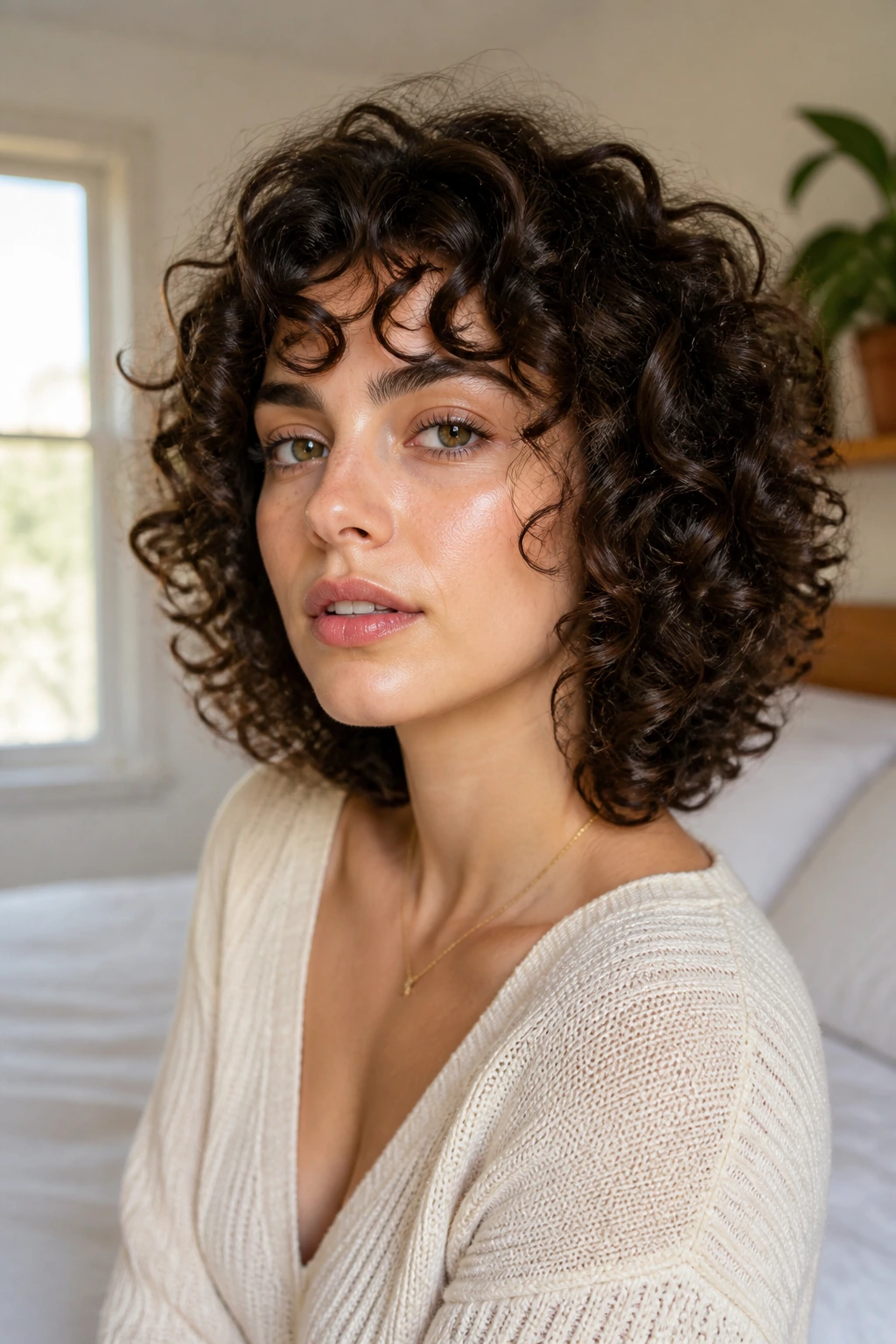
A halo cut shapes the curls into a rounded silhouette that sits around the head instead of hanging flat against it. It’s especially nice for dense curls and coils because it lets the texture look full without turning boxy. The curve around the face gives a soft frame that works well on an oval shape.
What I like here is the lack of fuss. Once the shape is right, it tends to stay right with basic product and a diffuser. The silhouette is readable from every angle, which is useful if your hair has a lot of density at the crown or sides. Ask for a rounded outline, not a fluffy one. There’s a difference, and it matters.
25. Butterfly Layers for Curly Hair and Oval Faces
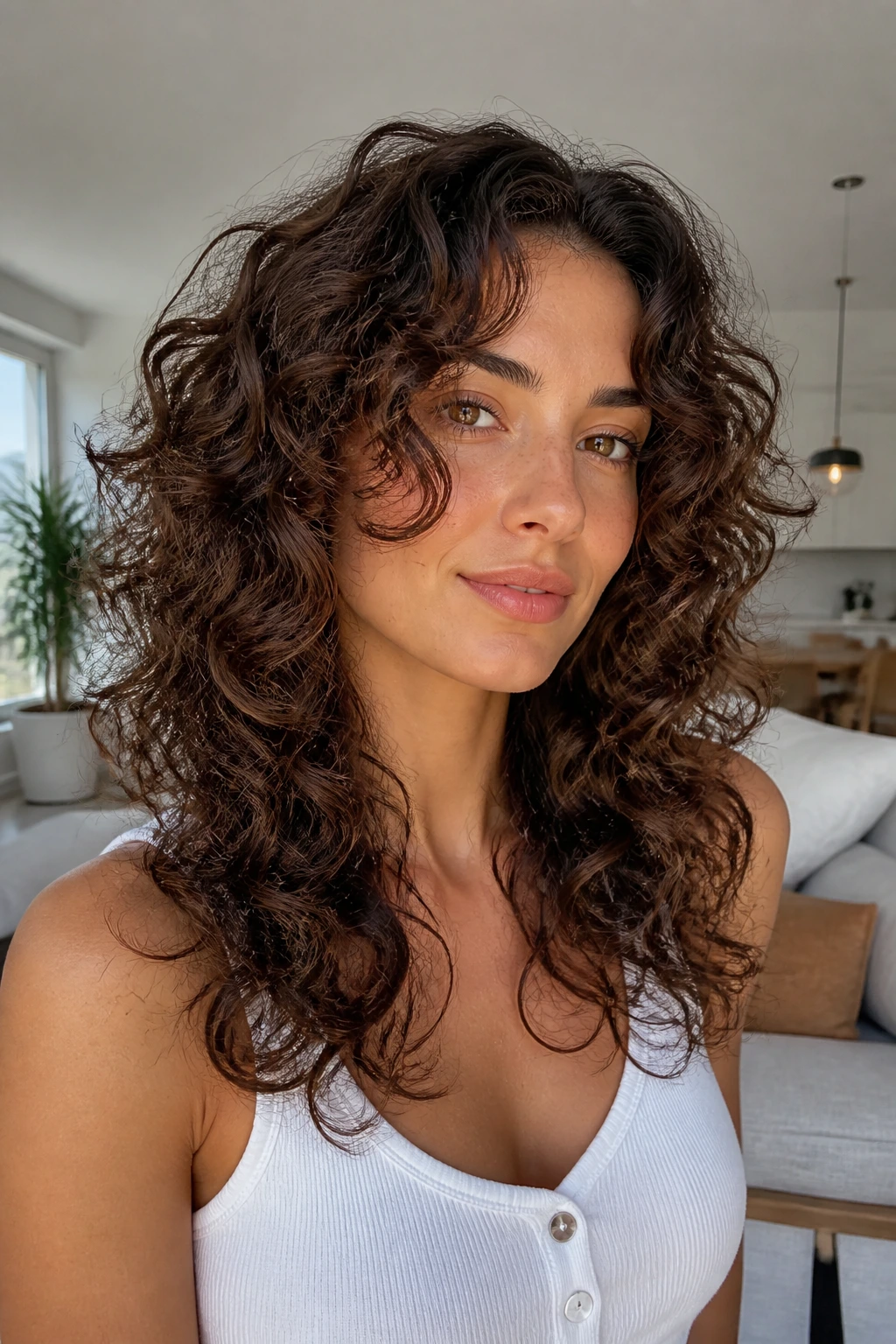
Butterfly layers give you the drama of shorter face-framing pieces while keeping the longer lengths in back. On curly hair, that contrast can look lush without making the cut feel heavy. For oval faces, it’s a smart way to add motion around the cheekbones and keep the overall shape open.
The shortest layers should usually stay below the chin once dry, or shrinkage can push them too high. That’s the part many people miss. Done well, this cut gives you movement around the face and length through the back, which is a nice balance if you like options. It’s one of the more flattering shapes for curls that need both lift and polish.
How to Choose the Curly Cut That Fits Your Routine
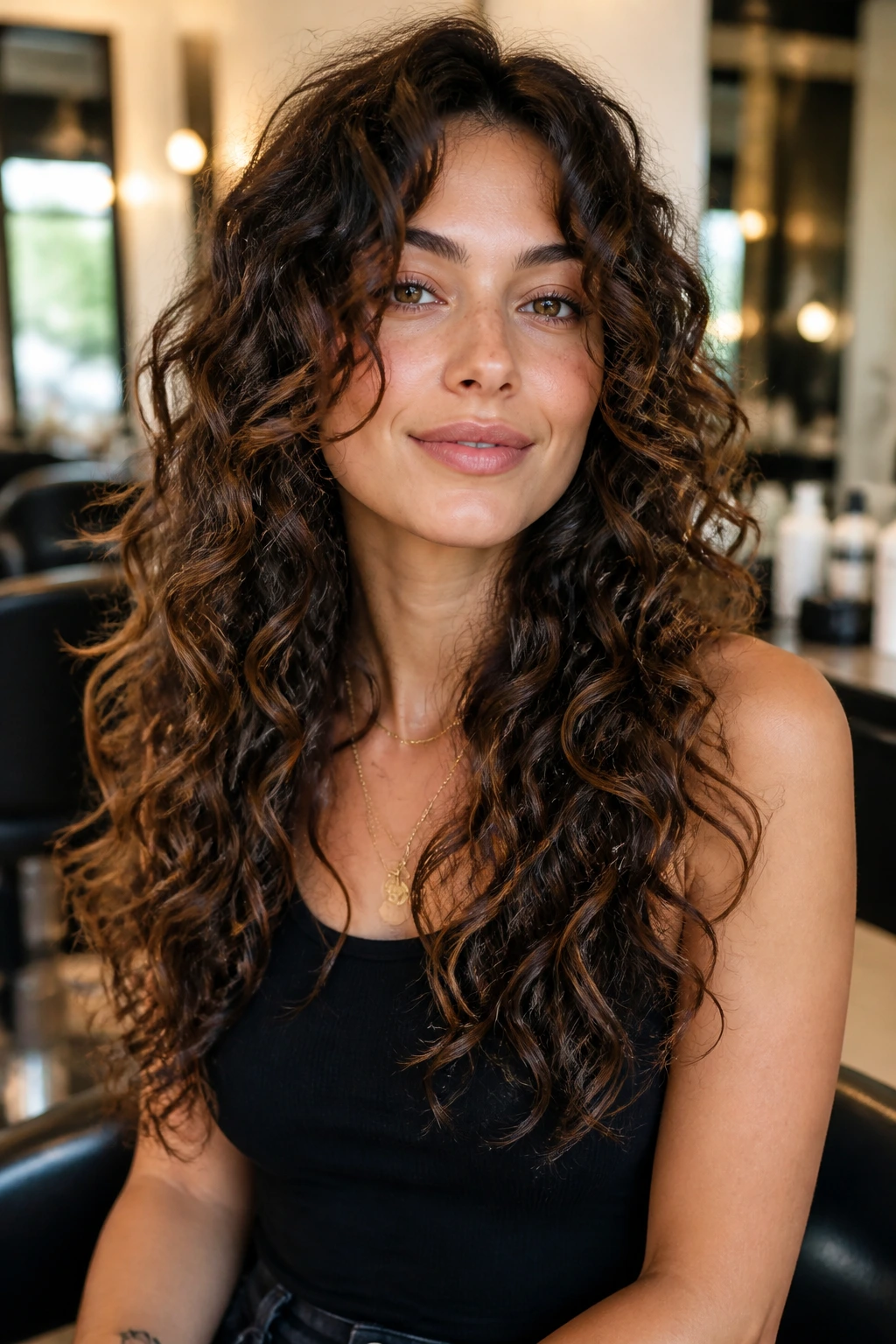
The easiest haircut is not the one with the prettiest name. It’s the one that matches how you actually live. If you air-dry most days, a lob, shag, or layered midi cut makes sense because the shape can finish itself. If you diffuse, you can handle a sharper bob or a more sculpted fringe. If you barely touch your hair after wash day, stay with cuts that keep their outline even when a few curls misbehave.
Shrinkage should always be part of the conversation. Tell your stylist how much your hair springs up when it dries. If you’re not sure, ask for the length to be checked on dry curls around the front. That one habit saves people from bangs that disappear and bobs that turn into helmets.
Bring photos with similar texture, not just similar length. A picture of a loose wave on thick hair won’t help much if your curls are tighter and finer. The better reference is a photo that matches your density, your curl pattern, and your preferred part. That gives the stylist something useful to copy, which is half the battle.
Say what you do not want. If you hate bulky sides, say that. If your crown goes flat, say that too. If you wear glasses, mention where they sit, because bangs and frame lines can argue with each other in a way nobody expects until it’s too late.
Essential Tools for These Haircuts
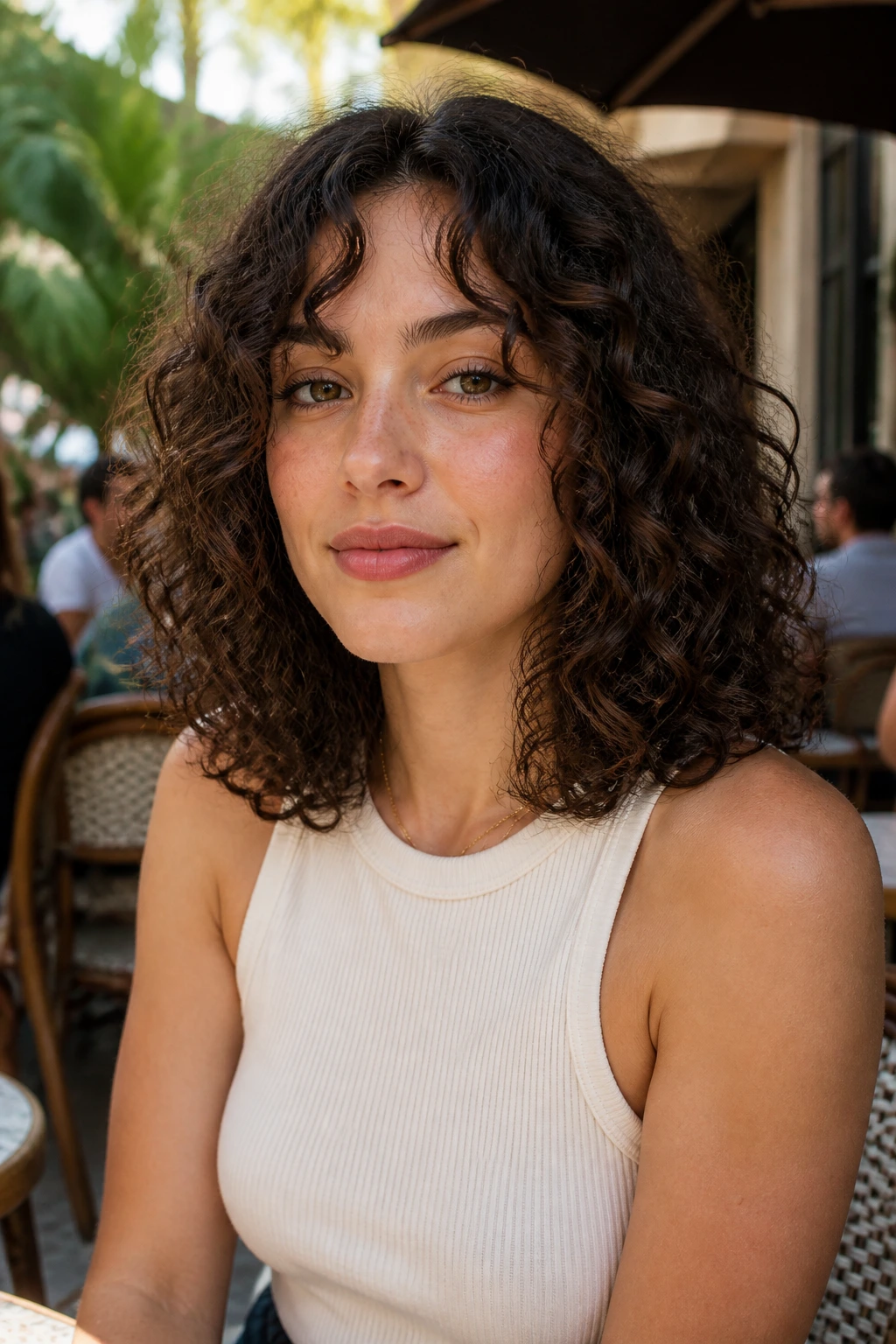
- Wide-tooth comb: Best for detangling wet curls without splitting the clumps apart.
- Spray bottle: Useful for reactivating front pieces, bangs, or crown curls between wash days.
- Microfiber towel or cotton T-shirt: Reduces roughness while you squeeze out water after washing.
- Curl cream or mousse: One light styling product is usually enough for these cuts; mousse keeps short and mid-length styles from getting weighed down.
- Diffuser attachment: Helps bobs, shags, lobs, and bangs keep shape while drying.
- Sectioning clips: Handy for curtain bangs, side parts, and layered cuts that need shaping in pieces.
- Satin pillowcase or bonnet: Keeps the silhouette from getting crushed overnight.
- Hand mirror: Worth it if your haircut depends on the nape or the back shape staying clean.
Keeping the Shape Between Salon Visits
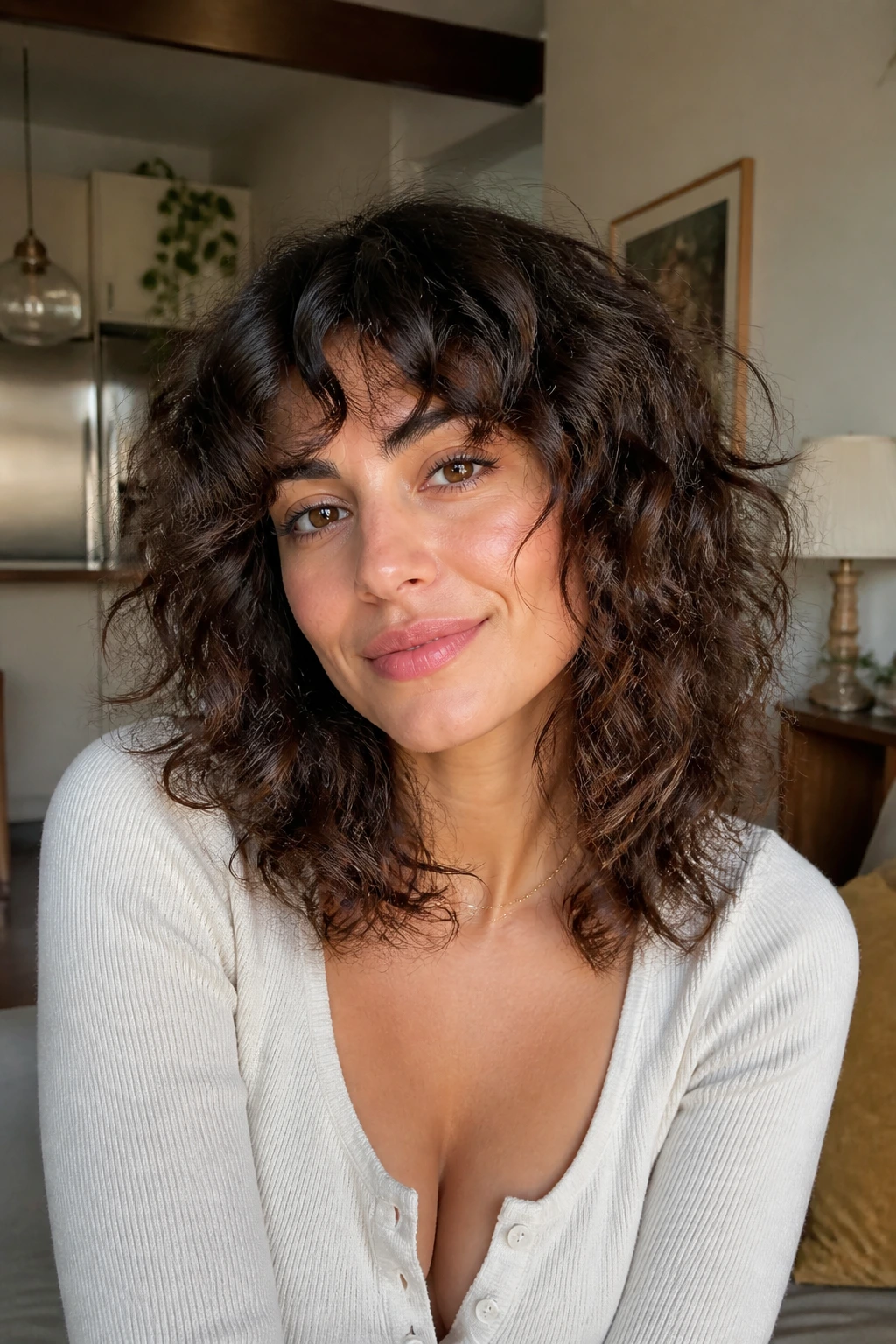
Curly haircuts age differently depending on length. A pixie, bixie, or curly fringe usually needs a trim every 4 to 6 weeks, because the shape lives in the details. Bobs and French bobs often want shaping every 6 to 8 weeks. Long layers, lobs, and U-shaped cuts can stretch to 8 to 12 weeks if the perimeter still looks tidy.
Refresh day-two curls with a light mist of water, a pea-sized amount of leave-in, and a little mousse if the roots have gone soft. Scrunch from the ends upward, then diffuse for a few minutes or let it air-dry. If the crown gets flat, clip the root area while it’s damp and let it dry lifted. That one small step saves a lot of disappointment.
Sleeping matters more than people like to admit. Pineapple the curls loosely, use a satin bonnet if your hair is long enough, and don’t jam the whole thing into a tight tie that creates dents. For bobs and crops, a satin pillowcase is often enough. For longer cuts, a bonnet or silk scarf keeps the shape cleaner.
If product buildup starts making the haircut look heavy, clarify every 2 to 4 weeks depending on how much mousse, cream, or gel you use. Curls that have too much residue lose bounce fast, and then the cut looks worse than it is. That is not a shape problem. It’s a cleanup problem.
Common Mistakes That Make Curly Haircuts Harder Than They Need to Be
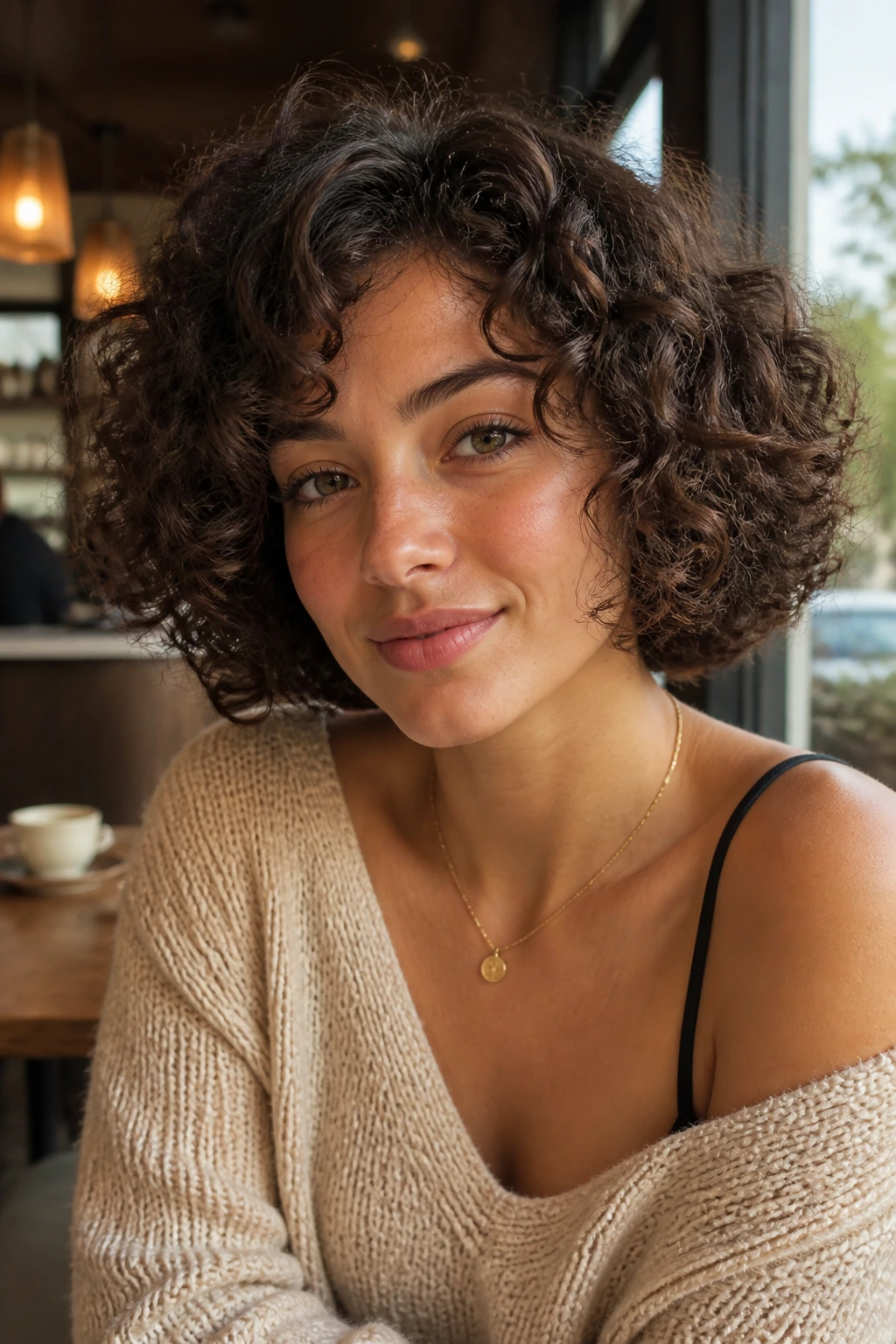
- Cutting for wet length alone: Wet curls lie. A bob that looks chin-length when wet may land much shorter once dry, especially on tighter patterns. Ask for a dry check on the front and crown if shrinkage is strong.
- Over-thinning the ends: This makes the perimeter look see-through and frizzy, not airy. If you want less bulk, ask for internal shaping or gentle weight removal instead of aggressive thinning shears.
- Ignoring the front view: A cut can look fine from the back and awkward from the face. Face-framing pieces, fringe length, and part placement matter more on oval faces than people think.
- Choosing a cut that needs daily heat styling: If you do not want to round-brush your hair every morning, don’t pick a shape that depends on it. That’s how “easy” haircuts turn into chores.
- Letting bangs grow too long before trimming them: Curly bangs can go from cute to annoying fast. They lose their shape, split in the middle, and end up hiding in the rest of the cut.
- Skipping trim maintenance on short cuts: Pixies, bixies, and bobs lose their structure faster than long layers. Once the nape and sides blur out, the whole silhouette gets lazy-looking.
Variations and Adaptations to Try
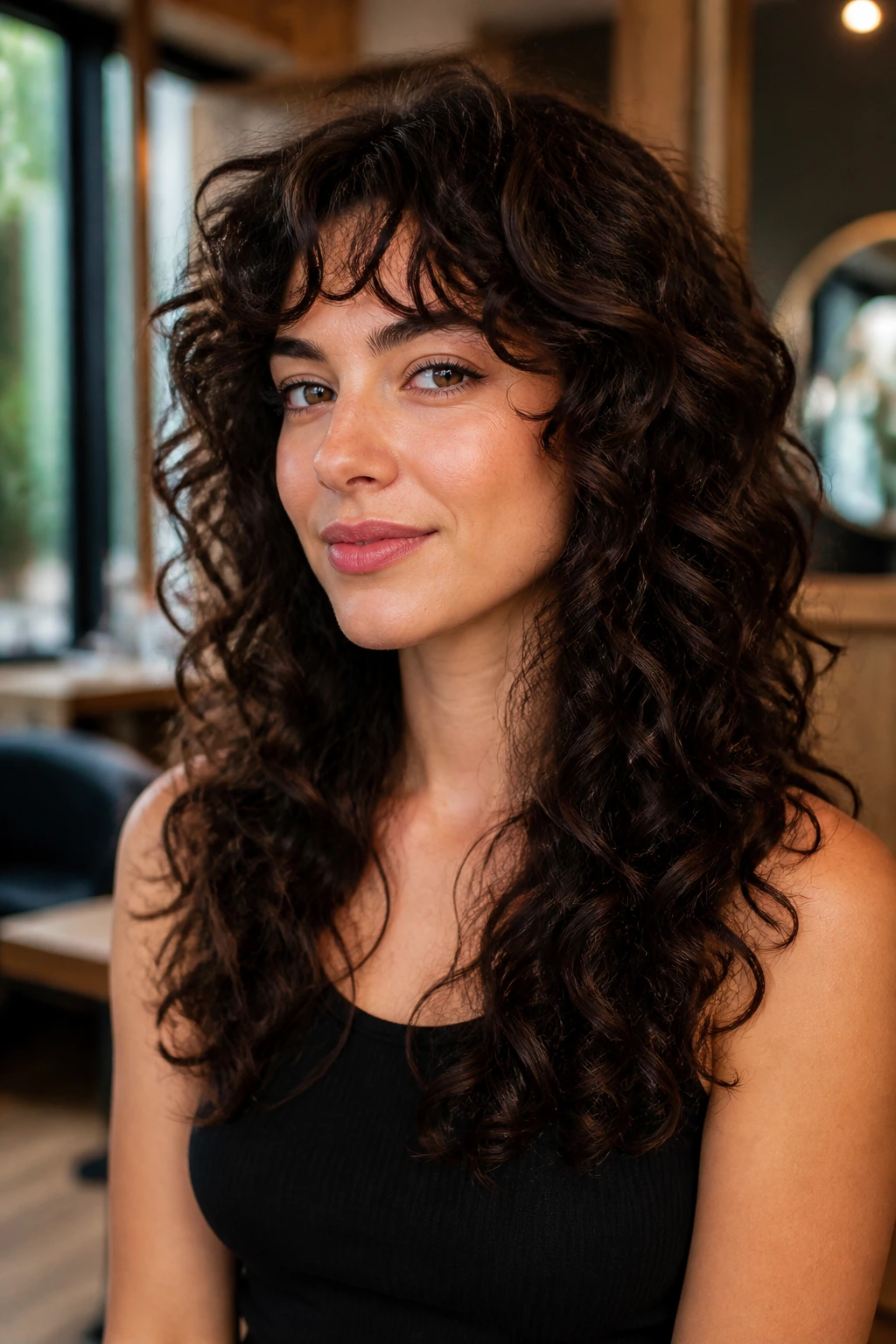
Fine-Curl Soft Weight Cut
If your curls are fine or loosely packed, keep the layers longer and the perimeter cleaner. Too many short layers can make the hair look sparse at the ends. A blunt lob, rounded bob, or collarbone cut usually holds up better than a heavily shagged shape.
Dense-Curl Tapered Shape
For thick curls or coils, ask for tapering through the nape and sides with enough room left at the crown. This keeps the silhouette from ballooning outward. It also cuts down the time you spend fluffing and re-fluffing the same two trouble spots.
Low-Fuss Air-Dry Version
If your routine leans lazy — and honestly, many do — stick to lobs, U-shapes, long layers, or a soft shag. These cuts dry in a more forgiving way and do not need a lot of hand-shaping. A little mousse and a microfiber towel usually does the job.
Bang-Friendly Balance
If you want fringe but fear regret, choose curtain bangs or side-swept bangs that begin longer and can blend into the rest of the cut. That gives you room to live with the shape before you commit to anything blunt. Curly bangs are much nicer when they can move.
Short-Hair Commitment Cut
If you know you want short hair, lean into a pixie, bixie, French bob, or tapered nape bob. These styles look best when the edges are fresh, so regular trims are part of the deal. The upside is a cut that feels light and quick to style.
Questions People Ask Before They Change Their Curl Shape
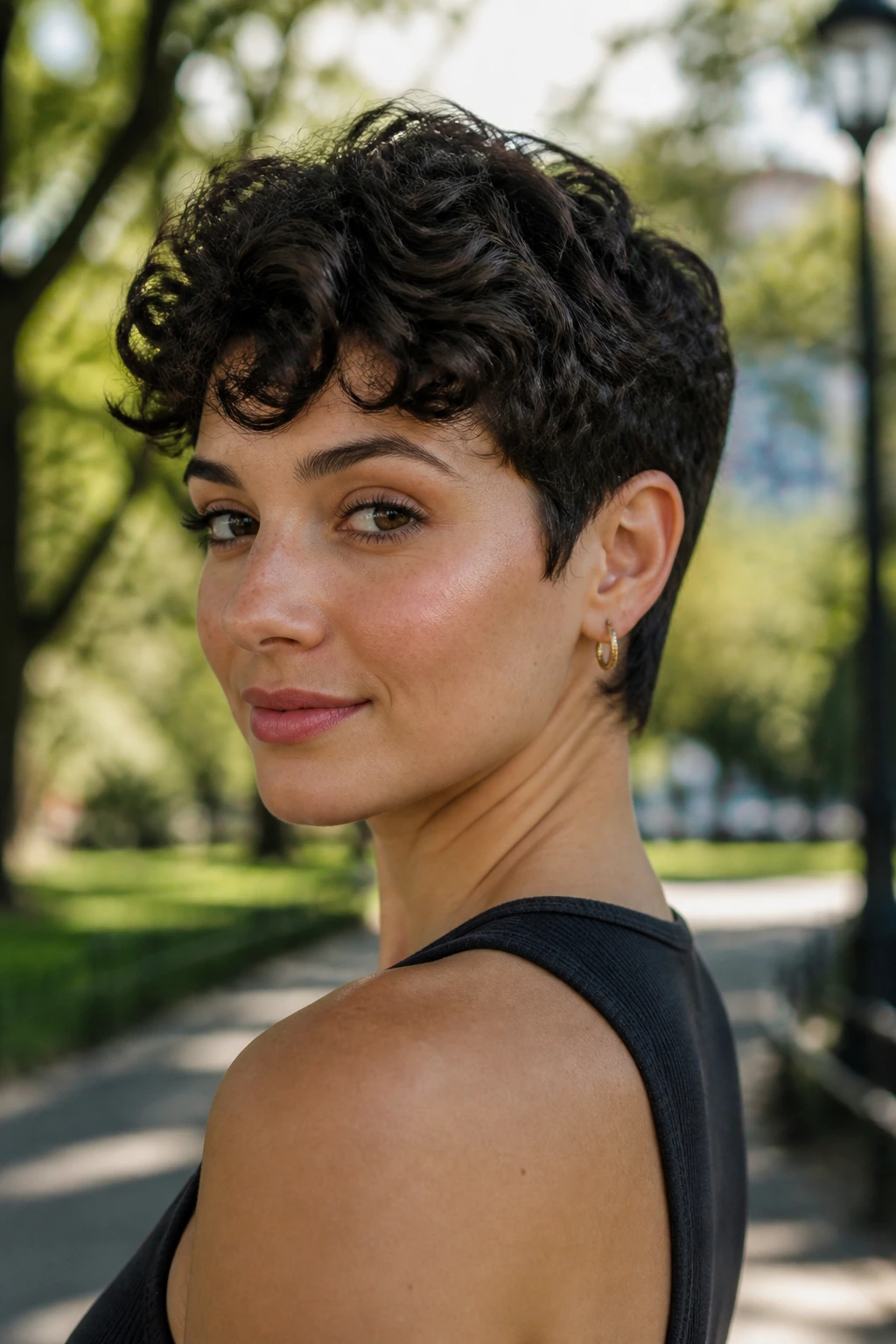
Should curly hair be cut dry or wet?
For many curl patterns, a dry or mostly dry cut gives the clearest read on where the curls actually sit. Wet cutting still has a place, especially for basic shaping, but it can hide shrinkage and cowlicks. A good stylist often does a mix of both.
What haircut is easiest for curly hair and an oval face?
If you want low effort, the collarbone lob, long layers, or a shoulder-length shag are hard to beat. They keep enough length to feel safe while still giving the curls a shape that moves on its own. Short styles are easy too, but they need more regular trims.
Do bangs work on curly hair if you have an oval face?
Yes, and oval faces are one of the easiest shapes for fringe. Curtain bangs and side-swept bangs are the least risky because they soften the face without cutting it off. Blunt bangs can work too, but they need more maintenance and a better sense of shrinkage.
Will layers make my curls frizzy?
Not if they’re done with care. Frizz usually comes from layers that are too short, too thinned out, or cut without respect for how your curls clump together. Smart layering should remove bulk while keeping definition.
How short can I go without losing curl shape?
Short enough for shape, not so short that the curls have nowhere to live. Pixies, bixies, French bobs, and chin-length crops can all work well, but the exact length depends on how much your hair springs up and how tight the curls are. A dry consultation helps here.
What if my curls are different lengths or patterns on each side?
That’s normal. A curl-by-curl approach or a stylist who shapes the cut on dry hair can balance the uneven pieces without forcing both sides into the same mold. Mixed patterns usually need more observation, not more chopping.
How often should I trim a curly haircut?
Short cuts need the most frequent clean-up — usually every 4 to 6 weeks. Bobs and lobs can go longer, while long layered cuts can stretch farther if the outline still looks good. Fringe is the piece that usually asks for attention first.
Which cut is best if my hair is thick and gets bulky?
A tapered cut, a shag, or a layered midi cut usually handles bulk better than a blunt one-length shape. You want internal weight removal and a perimeter that does not sit straight out from the head. That is what keeps thick curls from looking boxy.
The Shape That Lets Curls Move

The nicest thing about an oval face is that it gives curls room to behave without fighting the geometry. That does not mean every cut is equal. Some shapes make the curl pattern look rich and alive; others make it look heavy, fuzzy, or oddly flat in the crown.
A good curly haircut should feel like it belongs to your routine, not someone else’s salon photo. If you like quick mornings, pick the shapes that air-dry with a clean outline. If you like a little edge, go shorter or add bangs. If you want the safest bet, long layers and collarbone cuts are still hard to beat.
The real win is simple. Get the cut that lets your curls do what they already want to do — just with a better shape around them.