



A bob can be ruthless. Cut it an inch too high at the cheeks, and a round face can read wider than it really is; let the front pieces stop at exactly the wrong spot, and the area under the chin takes center stage whether you wanted it to or not. That’s why short bobs for double chins and round faces are less about “short hair” and more about shape control.
The best ones don’t hide your face. They redirect it. A little lift at the crown, a little angle at the front, a little movement through the ends — that’s the whole trick, and it’s a better trick than chasing some imaginary “perfect” cut. I’m especially fond of bobs that look deliberate from the side profile, because side profiles are where a lot of cuts either quietly succeed or betray you.
Some bobs make the face look broader. Some carve out length, soften the jawline, and keep the neck from disappearing into the shape. The difference is usually tiny on paper — maybe half an inch of length, maybe a deeper side part, maybe a softer edge — but it can change the whole read of the haircut. That’s where the useful stuff lives.
Why These Bobs Earn Their Keep
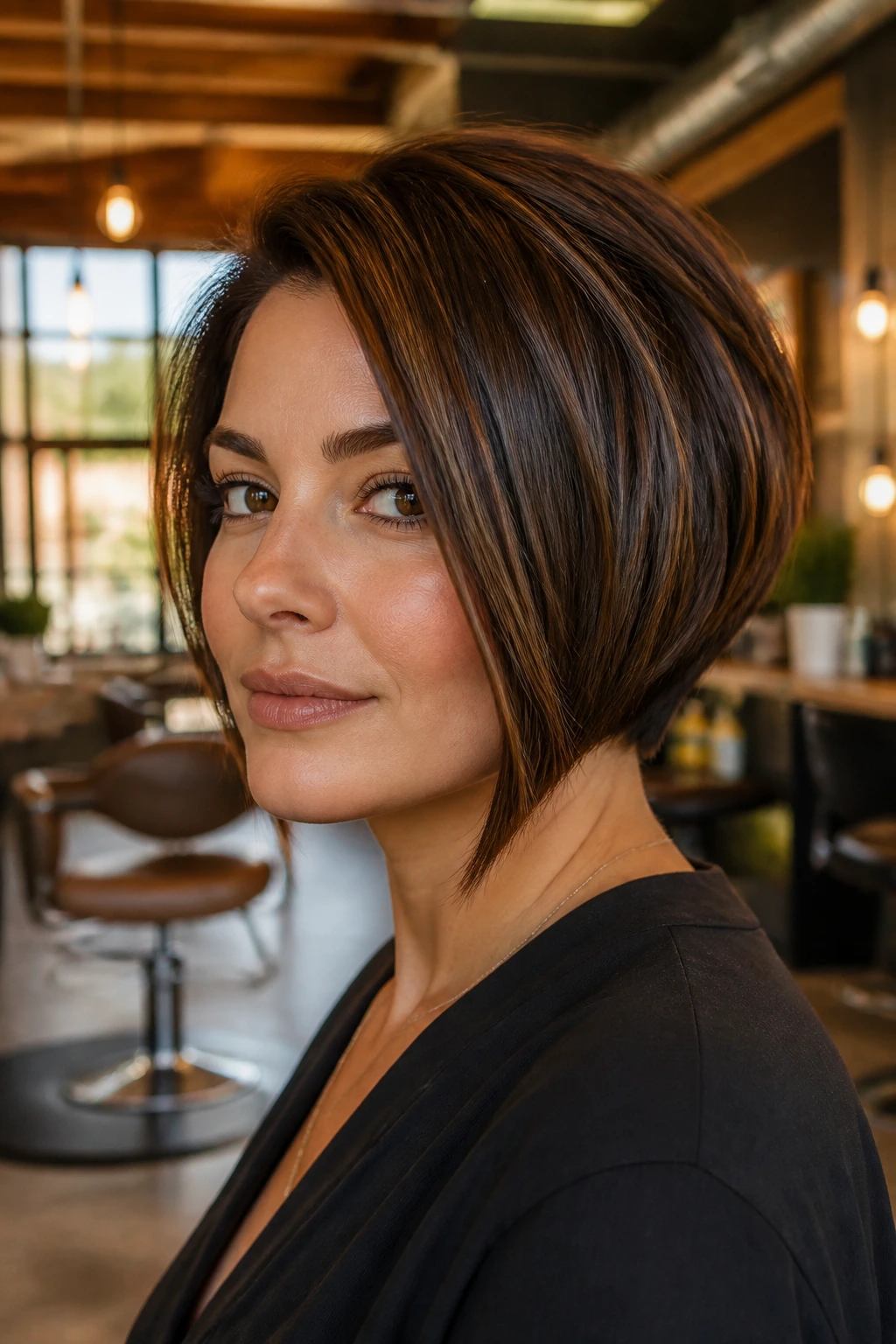
-
They create diagonal lines: A front edge that falls below the chin draws the eye downward instead of stopping it at the widest part of the face.
-
They keep width under control: The best versions use lift at the crown and a slimmer nape so the haircut doesn’t puff out at cheek level.
-
They work with your texture instead of fighting it: Straight, wavy, and curly hair each need a different perimeter, and the right bob respects that.
-
They’re easier to style than they look: A quick bend with a brush, a little mousse, or a rough air-dry can make the shape hold without a full blowout.
-
They play nicely with glasses and earrings: That matters more than people think. The wrong bob can crowd the face; the right one gives the rest of your styling room to breathe.
-
They grow out better than a precision crop: A good bob still looks intentional when it picks up an extra inch or two, which saves you from that awkward in-between stage.
1. Collar-Grazing A-Line Bob
This is the bob I reach for when someone wants a clean shape without that hard stop right at the chin. The front pieces sit a touch longer than the back, and that small angle does a lot of heavy lifting. It feels sharper than a blunt cut, but it still has enough softness to avoid looking severe.
Why it flatters the face
A-line structure works because it creates movement toward the collarbone, not straight across the cheeks. If your face is round or your chin line is soft, that diagonal front gives the eye somewhere to go. I like this cut best when the front lands just below the chin and the nape stays tidy and slightly shorter.
- Keep the front ½ to 1 inch below the chin so it doesn’t widen the middle of the face.
- Ask for a clean, tapered back rather than a bulky stack.
- Works well with a middle or off-center part, depending on how much symmetry you want.
- Style with a round brush bend, not a tight curl.
Tip: if your hair flips outward at the ends, ask your stylist to bevel the perimeter just enough to encourage an inward curve.
2. Side-Parted Textured Bob
A side part can do more for a round face than another inch of length. It shifts the visual weight away from the center of the face and gives the crown a little lift, which is exactly what softer jawlines tend to need. Add texture, and the shape stops reading as one solid block.
The reason this works is simple: symmetry can make width stand out, while an off-center part breaks the face into cleaner lines. I like this on hair that has some natural wave, but it also helps straight hair that tends to lie flat against the cheeks. A few loose bends through the ends keep the cut from feeling helmet-like.
Wear it with a little root volume, not a smooth flat top. That’s the part people often miss. The part does some of the slimming, but the crown lift is what keeps the shape from collapsing into the face.
3. Tapered Nape Bob
What makes this cut different is the back. The nape is trimmed closer to the head, while the front stays a bit fuller and longer, so the whole silhouette narrows in the right place. On thick hair, that taper is worth its weight in gold.
How to wear it
The nape should sit neat and compact, not fluffy. If the back puffs out, the haircut turns square fast. Ask for the front to brush the jawline or fall slightly below it, and keep the longest pieces from landing exactly at cheek level.
Key details
- Stronger lift at the back of the crown.
- Front pieces kept slightly longer for balance.
- Best on straight to wavy hair.
- Needs a trim every 5 to 7 weeks to keep the taper clean.
Watch this: too much stacking can make the back look dated. You want shape, not a little helmet.
4. French Bob with Wispy Fringe
This cut has attitude, but it needs the right length to behave on a round face. A wispy fringe softens the forehead without chopping the face in half, and the bob itself should sit just below the chin or skim the jaw with light ends. If everything is cut too blunt and too high, it can swell the cheeks. Nobody wants that.
The fringe is the useful part here. It should be airy, not dense. A heavy brow line can compress the face, while a light fringe opens it up and keeps the haircut from looking too square. I like this on people who want a little Paris energy without the cartoon version of it.
This is one of those styles that depends on restraint. Keep the fringe piecey, the ends soft, and the overall outline a little longer than you think you need.
5. Face-Framing Layered Bob
This one earns its keep through movement. The layers start near the cheekbone or just below it and drift toward the jaw, which means the face gets contour without harsh edges. On a round face, that framing can matter more than the overall length.
A lot of layered bobs go wrong because the layers are too short and too busy. This is not that. The best version keeps the perimeter intact and uses the front pieces to direct attention downward. I especially like it on hair that needs a little help moving away from the cheeks.
The other nice thing is how easy it is to style. A medium round brush, a little bend away from the face, and you’re done. That’s enough. If the layers are cut well, they’ll do their job without a lot of fuss.
6. Broken-Wave Bob
Unlike a pin-straight bob, a broken-wave bob keeps the shape from reading as one solid line. The waves should be soft, imperfect, and separated just enough that they don’t collapse into a single round shape. That little bit of texture helps the haircut sit away from the cheeks.
This is the bob I prefer for hair that looks too heavy when it’s perfectly smooth. The broken bends make the perimeter look lighter, and they pull the eye down the length of the face instead of across it. If you wear your hair air-dried a lot, this is one of the more forgiving options.
For styling, think mousse at the roots, a quick twist with a curling wand, and fingers instead of a brush. Brush it out too much and you lose the point. It should look like the hair moved naturally and then decided to stay that way.
7. One-Side-Longer Asymmetrical Bob
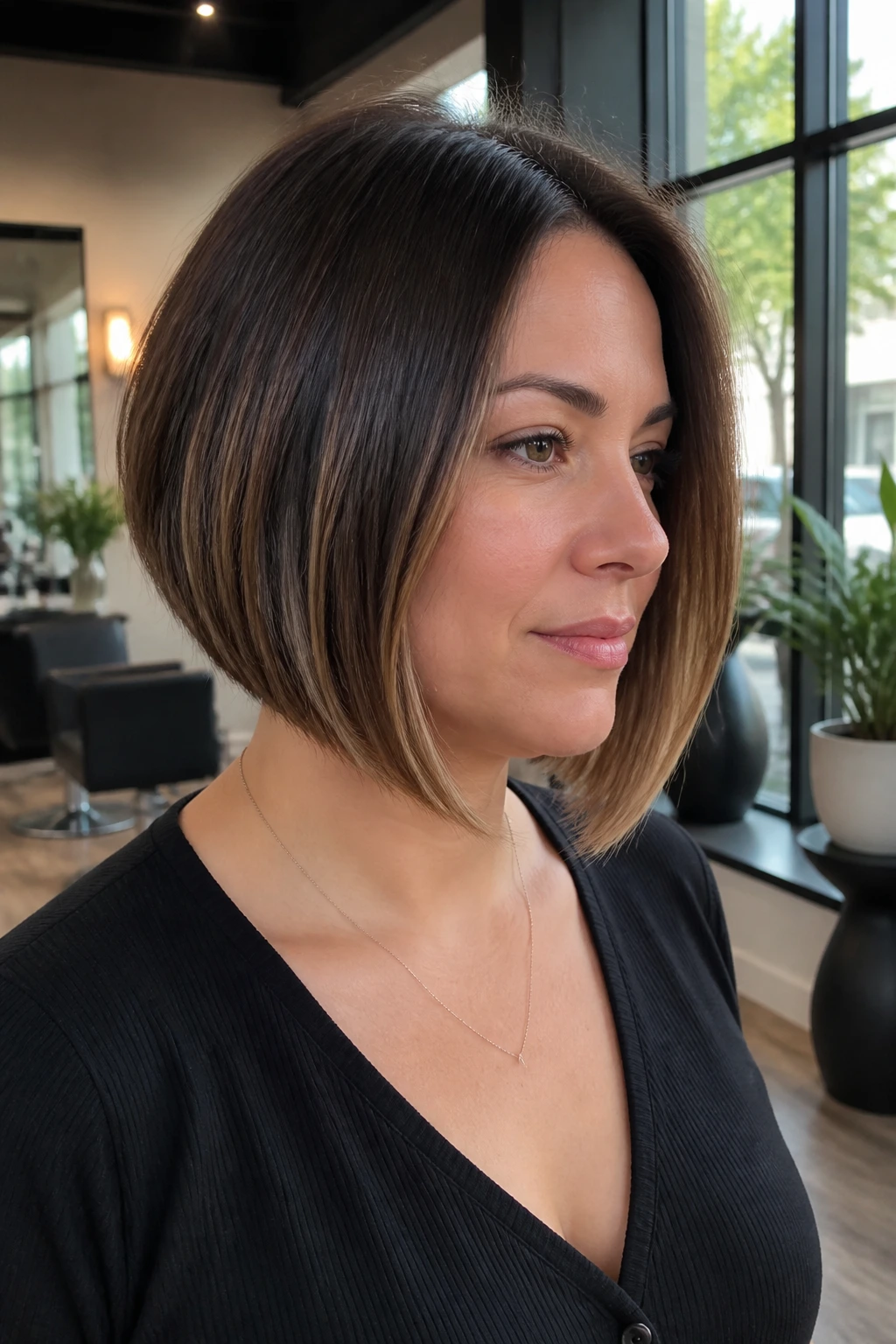
A small imbalance can be flattering. One side that sits even half an inch longer breaks the circle of the face and gives the cut a more angular line. That’s the reason asymmetry keeps coming back in bob haircuts — it changes how the eye travels.
The difference does not need to be dramatic. In fact, a mild asymmetry usually looks better than a loud one on round faces. You want the shape to feel intentional when you look straight ahead, but still subtle enough that it doesn’t scream for attention every time you turn your head.
This style is especially useful if one side of your face feels fuller than the other, or if you tend to tuck hair behind one ear. The longer side gives you a built-in diagonal. Nice and simple.
8. Deep-Part Blunt Bob
A blunt bob is not the enemy. A blunt bob with a deep side part can be excellent, because the hard line at the bottom gets balanced by the asymmetry at the top. That combo can make a round face look leaner without adding a lot of layers.
The key is where the blunt line sits. If it lands exactly at the fullest part of the cheek, it can make the face read wider. Shift it slightly below the chin, push the part over, and the whole cut changes character. The line becomes chic instead of boxy.
I like this one on straight hair that naturally behaves. It gives shine room to do its thing. If your hair is very thick, ask for a tiny amount of internal debulking so the ends don’t look too heavy.
9. Curved-Under Bob
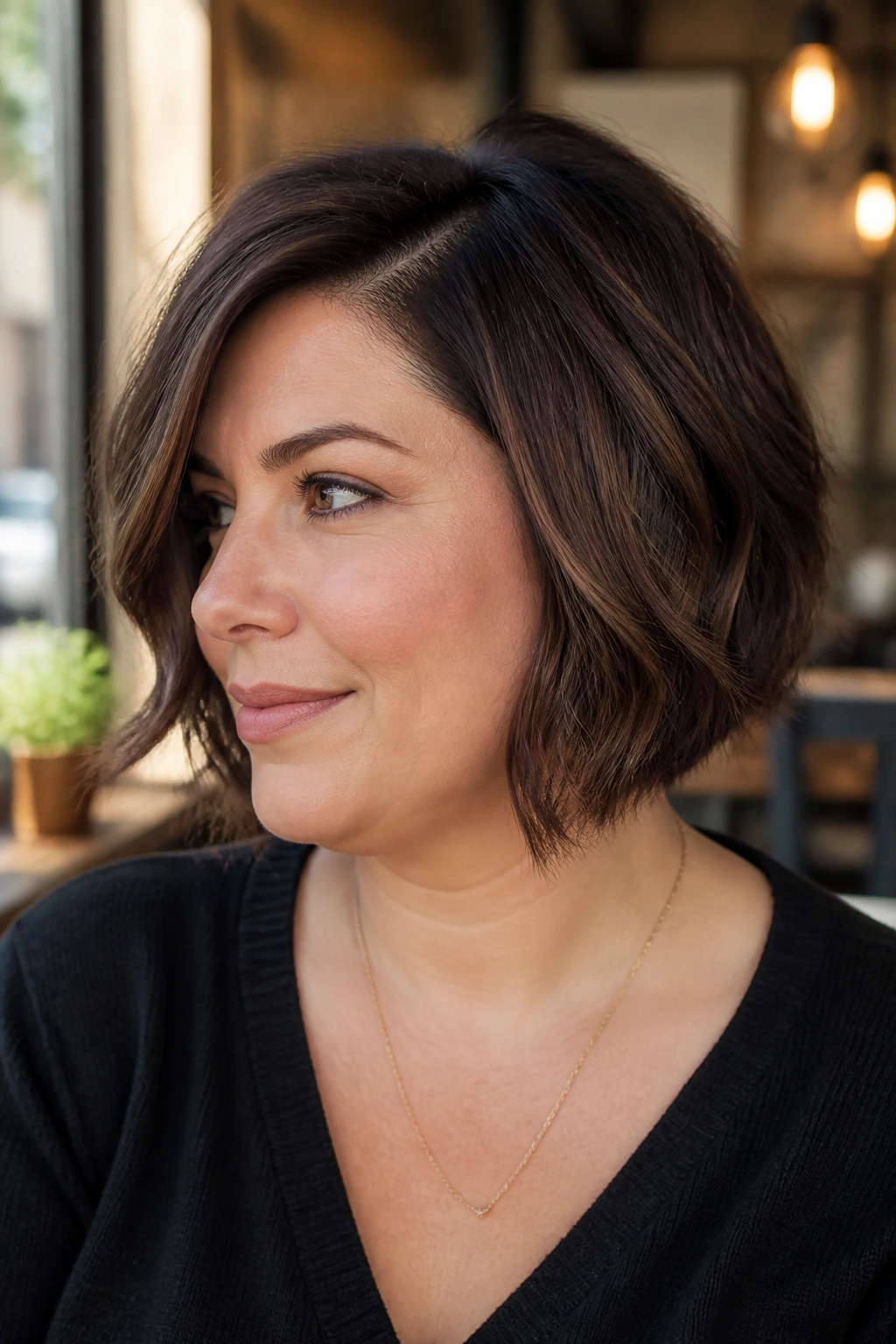
This is the polished cousin of a standard bob. The ends curve gently inward, but not in that old-fashioned, over-styled way that makes the hair look sealed to the jaw. The curve should be soft and deliberate, like the haircut knows where it wants to stop.
For round faces, the inward bend matters because it keeps the silhouette narrow near the bottom. If the ends flip outward, the face can seem wider. If the curve is too tight, the cut starts to feel dated. The sweet spot is a loose C-shape that hugs the neck without crowding it.
This shape is good when you want a neat bob that still softens the face. It works best with a blow-dry, a round brush, and a light hand on product. Heavy cream will drag it down.
10. Chin-Skimming Soft-Edge Bob
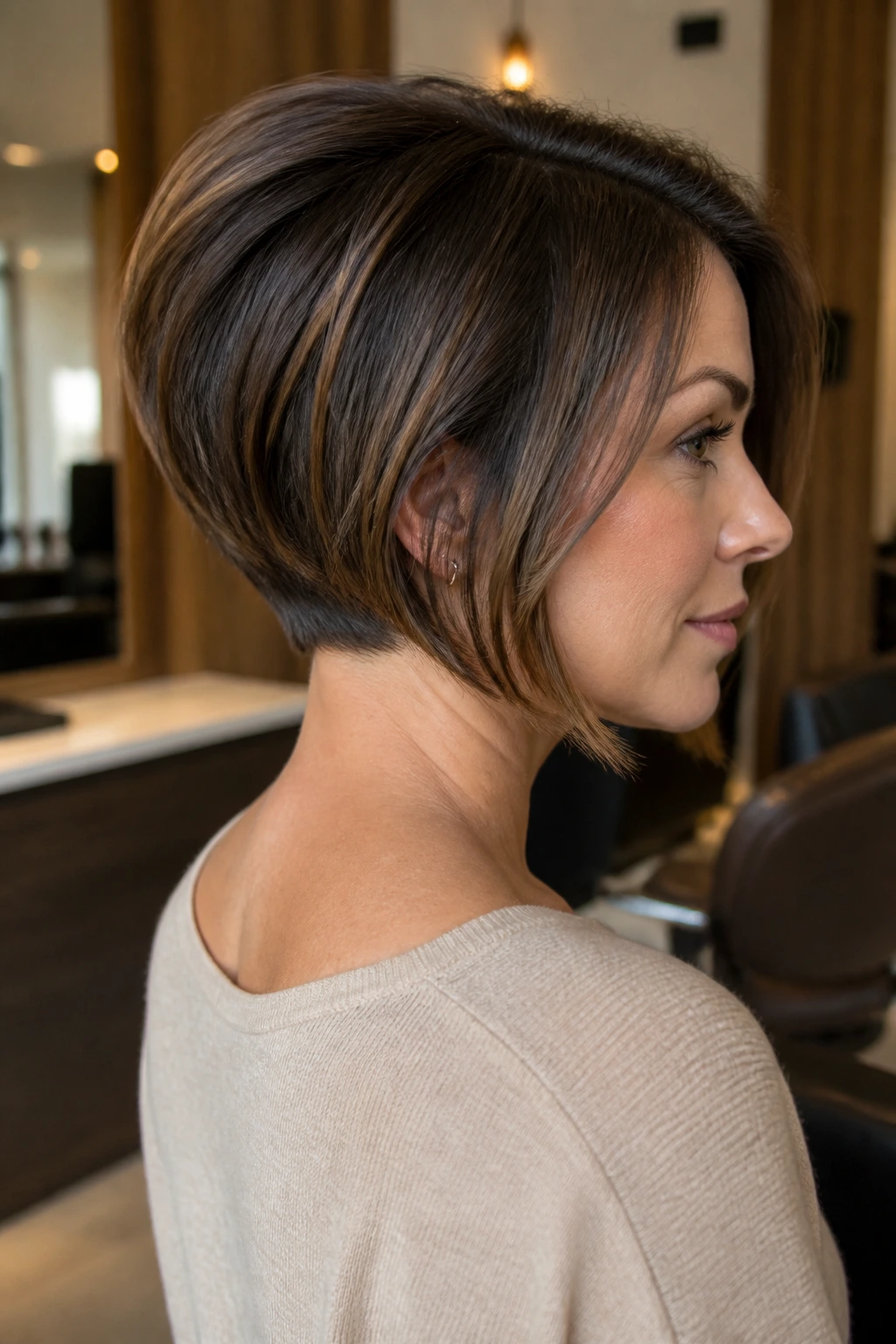
A chin-skimming bob sounds risky, and on some faces it is. On the right face, though, it can create a nice frame that hits just under the widest cheek point and keeps the jawline looking clean. The softness comes from the edges, not from the length.
What saves this cut is movement. The perimeter should not feel blunt or stiff. Light texture through the ends keeps the line from sitting too hard at the chin, and that matters if you want the haircut to soften the area under the face instead of emphasizing it.
If you try this cut, ask for the front to stay a hair below the chin rather than at it. That tiny difference changes everything. Seriously, half an inch can make the haircut feel edited instead of boxed in.
11. Curtain-Bang Bob

Can bangs work on a round face? Absolutely — if they open rather than close the face. Curtain bangs do that better than straight, heavy fringe because they part in the middle and fall away at the cheekbones. That creates two vertical panels instead of one blunt bar.
The bob underneath should stay light around the jaw. If the bangs are soft but the ends are thick and square, the cut loses balance fast. I like this version when the goal is to soften the face while keeping it interesting from the front.
A curtain-bang bob also buys you flexibility. You can wear the bangs blown away from the face, tucked, or allowed to split naturally. That makes the cut feel less fixed and a little easier to live with on lazy mornings.
12. Razor-Trimmed Bob
A razor cut can be beautiful here, but only when the stylist knows how to control the shape. The razor removes bulk and creates airy ends, which helps if your hair tends to balloon at the sides. The result should feel feathered, not shredded.
This cut is best when the goal is to keep the bob light around the face. The softened perimeter gives a round face more movement, and it prevents the haircut from turning into one solid block. Fine hair can love this, but so can thicker hair if the razor work stays inside the shape instead of around the edges.
The danger is obvious: too much razor, too many wisps, and the cut starts to fray. Ask for movement, not damage.
13. Inverted Bob
The inverted bob is the practical cousin of the A-line. Shorter in the back, longer in the front, it creates a clean slope that is flattering on round faces because it gives the face a longer visual line. The back can be stacked a little, but it should still feel sleek.
I like this one when someone wants a stronger shape but doesn’t want it severe. The front pieces can hit just below the jaw, which gives enough coverage to soften the lower face without hiding everything. It’s a very “look like you meant it” haircut.
This cut shines when the neck is left visible. If the back is too long or too bulky, you lose the lift that makes it work. The whole point is contrast.
14. Tucked-Behind-Ear Bob
Sometimes the smartest styling move is not a cut at all. Tucking one side behind the ear opens the face, shows the jawline, and gives a round shape a little asymmetry on the cheap. Paired with the right bob, it can make the haircut feel instantly slimmer.
This works especially well when the front pieces are a touch longer than the chin. The tuck reveals one cheek and lets the opposite side fall softly, which creates a diagonal line across the face. It also plays nicely with earrings and glasses, which is a nice bonus.
I like this on days when the hair is not freshly styled. A slightly messy tuck looks intentional in a way a fully polished bob sometimes doesn’t.
15. Sleek Glass Bob
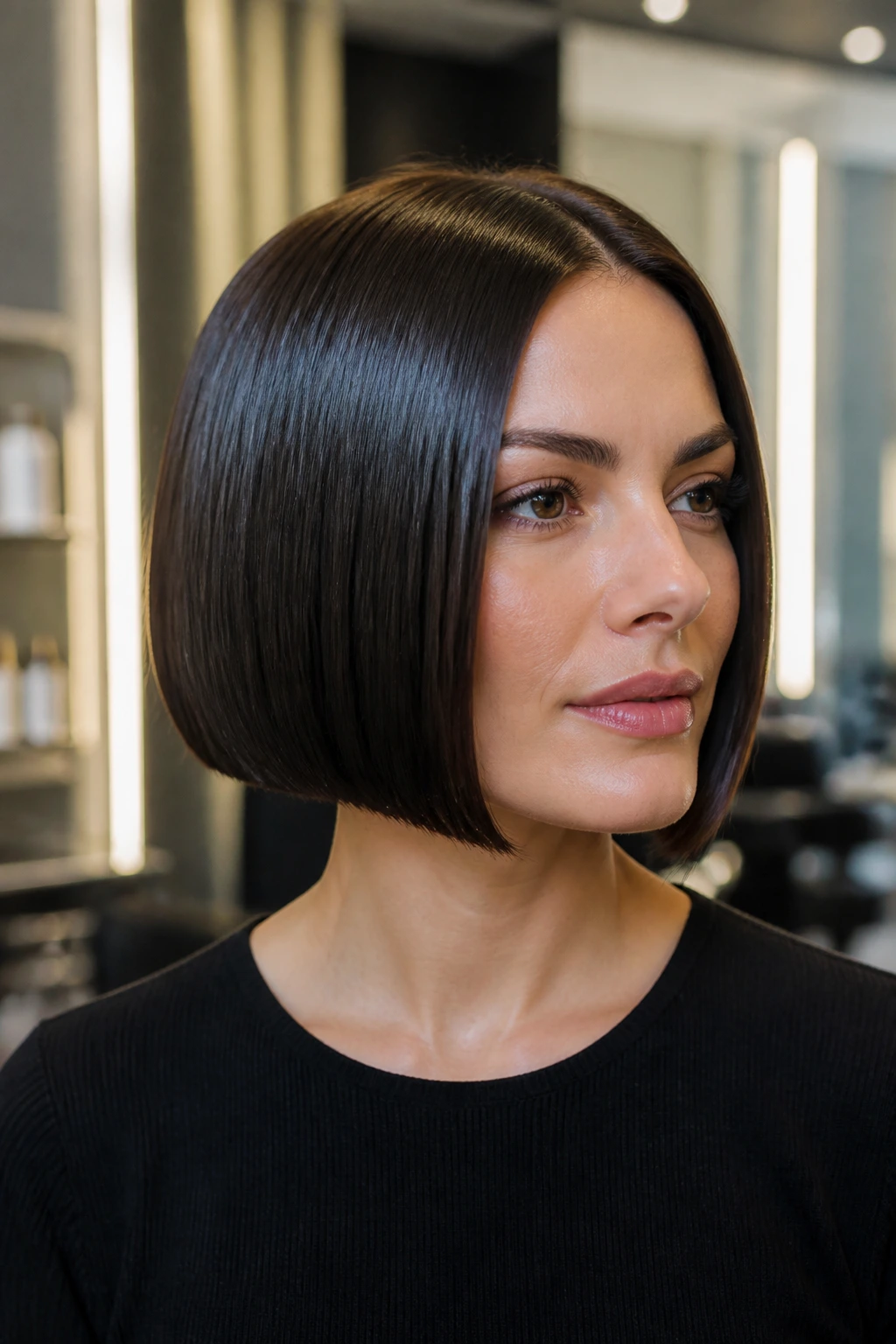
A sleek bob can be stunning on a round face, but it has to be precise. The shine gives the cut a clean vertical read, and the lack of big volume at the sides stops the face from looking wider. The ends should be sharp enough to look intentional, not blunt enough to feel boxed in.
This is the version for people who like polish. It needs heat protection, a good blow-dry, and a flat iron only on the last inch or two if the hair wants to curve. Too much ironing near the cheek line can widen the face, so keep the smoothness close to the perimeter and the crown lifted.
The reason I like this style is the discipline it demands. No fluffy roots. No big outward bend. Just a clean line and a little shine.
16. Shaggy Bob
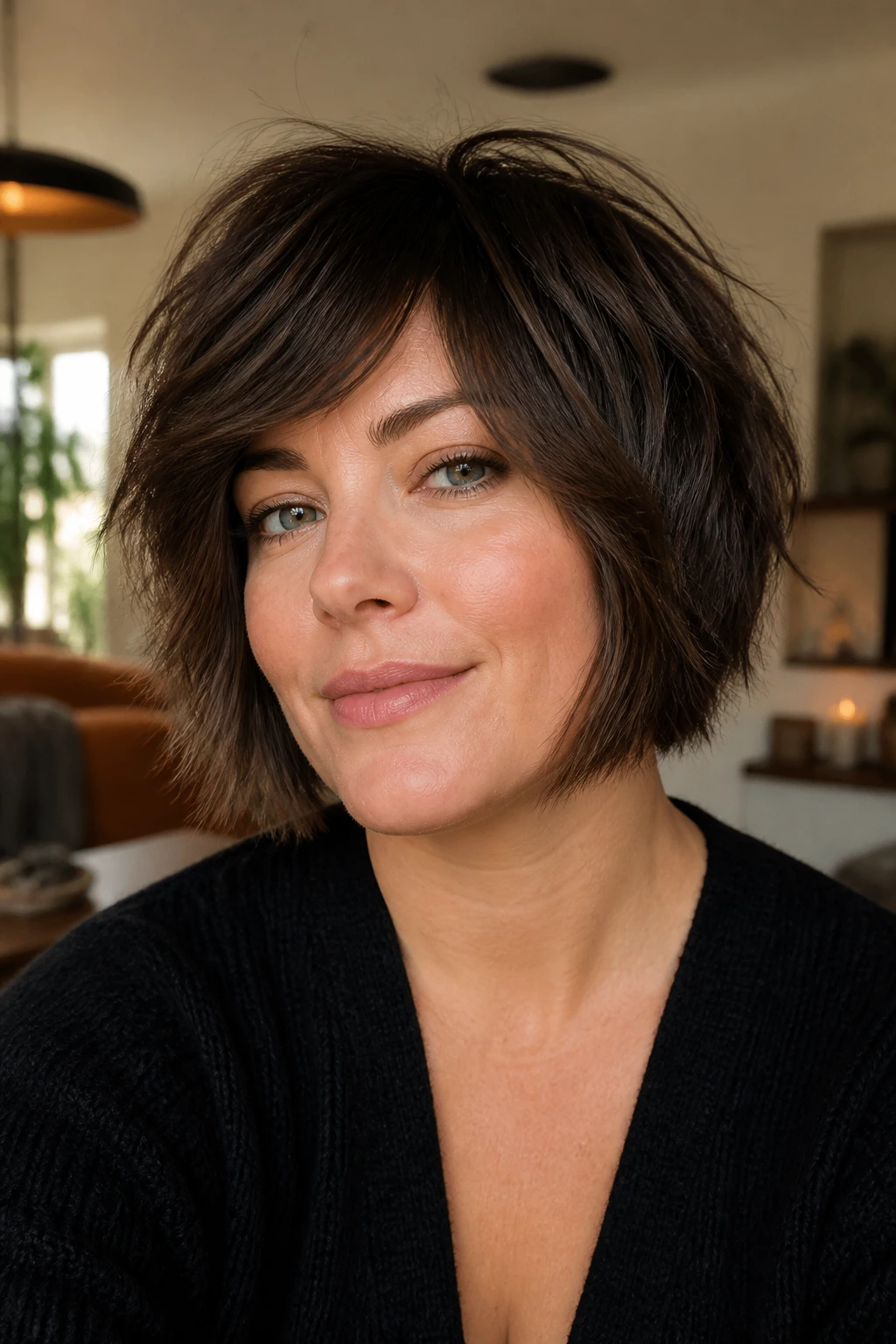
A shaggy bob is a good answer when straight precision feels too severe. The broken layers and piecey texture soften the silhouette, which can be useful on fuller cheeks and a soft chin. It reads relaxed, but it still needs structure or it turns into a frizzy triangle.
The trick is keeping the top a bit lighter without carving the sides too short. You want movement around the face, not a mushroom shape. On wavy hair, this cut can air-dry into something pretty close to finished if you use a small amount of curl cream and scrunch it in.
I’d pick this if your hair hates being forced into a smooth shape. It looks better when it has a little attitude.
17. Airy Curly Bob
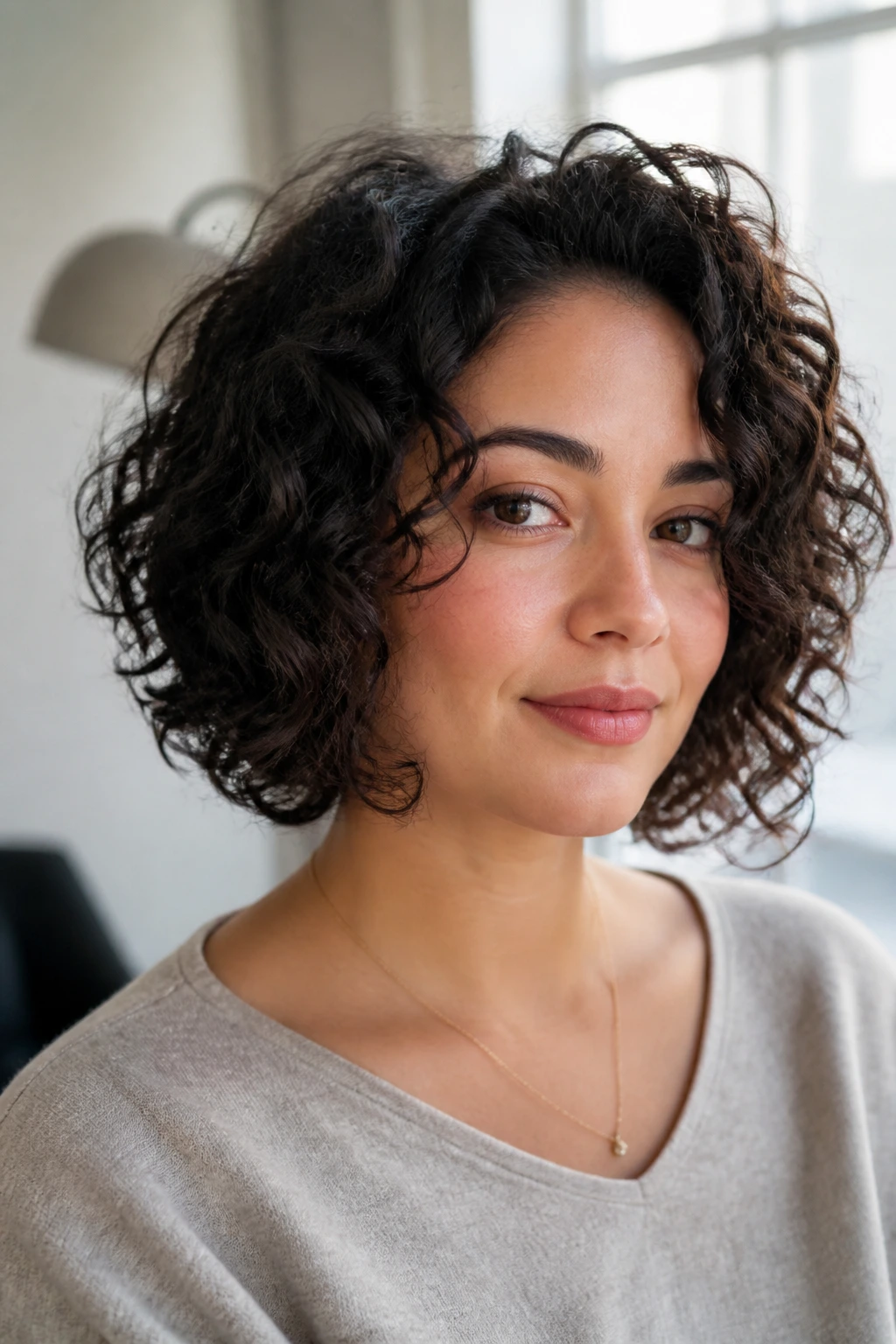
Curly hair and short bobs can be a very good match, as long as the cut is shaped for the curl pattern, not against it. The best curly bob for a round face keeps the bulk from sitting right at the cheek line and lets the curls fall with some vertical movement. Dry cutting often helps here, because shrinkage is no joke.
You want the longest curls to land below the widest part of the face, and the crown to stay light enough that the silhouette lifts instead of spreading. That difference is huge. If curls are cut too short at the sides, the shape can puff outward fast.
A good curly bob should feel full but not wide. That is the whole balancing act.
18. Feathered Crown Bob
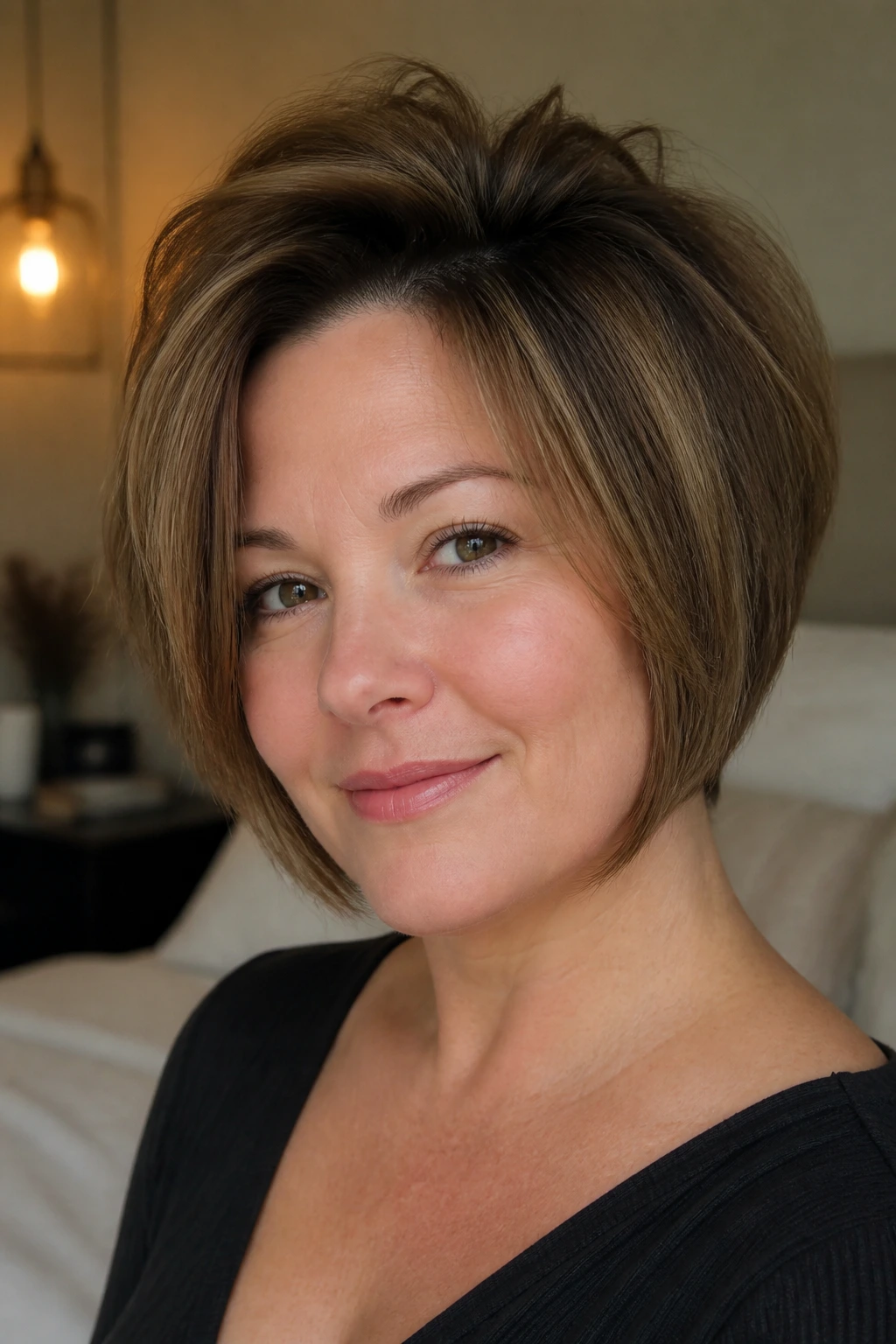
Crown volume is one of the most underrated tools in haircutting. A feathered crown pulls the eye upward, which makes the lower face feel lighter by comparison. That’s especially helpful if you want to soften the look of a double chin without hiding your neck under a curtain of hair.
The rest of the cut should stay controlled. Too much feathering everywhere turns the bob into a fluffy cloud. Keep the lift concentrated at the top, then let the sides taper cleanly toward the jaw. That gives the shape a little height without adding width.
This bob is a quiet win for fine hair that tends to collapse. A bit of mousse at the roots and a round brush through the crown are enough to make it behave.
19. Side-Swept Bang Bob
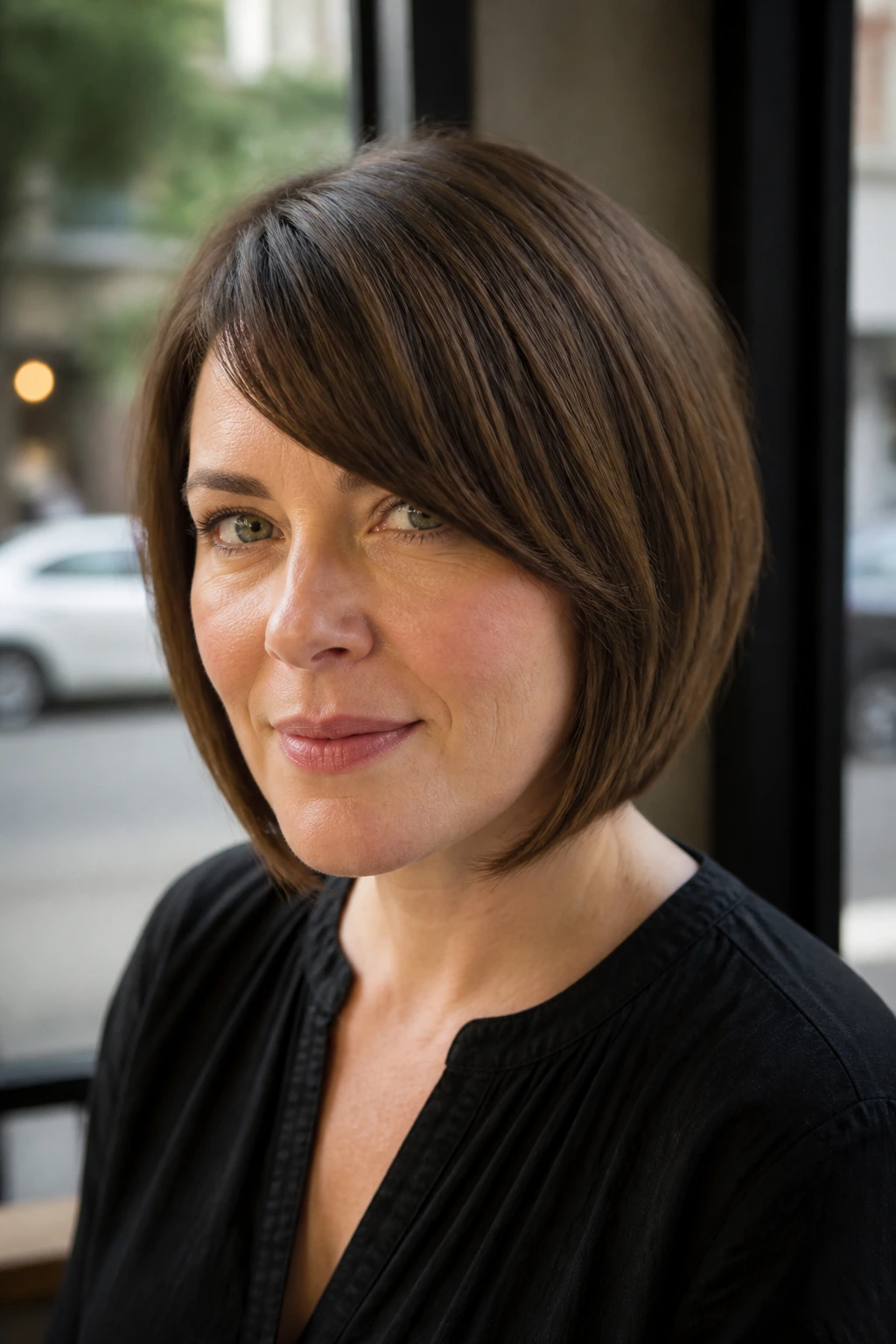
Side-swept bangs are the nice compromise when you want fringe but not full frontal coverage. They direct the eye diagonally across the face, which is one of the simplest ways to soften roundness. The rest of the bob can stay fairly clean and still feel balanced.
The bang should start near the high point of the eyebrow and fall lightly toward the cheekbone. If it gets too heavy, it becomes a curtain and loses the point. I like this best with a bob that sits just below the chin, because the longer front and angled fringe work together.
This is also a forgiving cut on days when the hair is not perfect. A quick side blow-dry and a touch of spray will usually be enough.
20. Invisible-Layer Bob
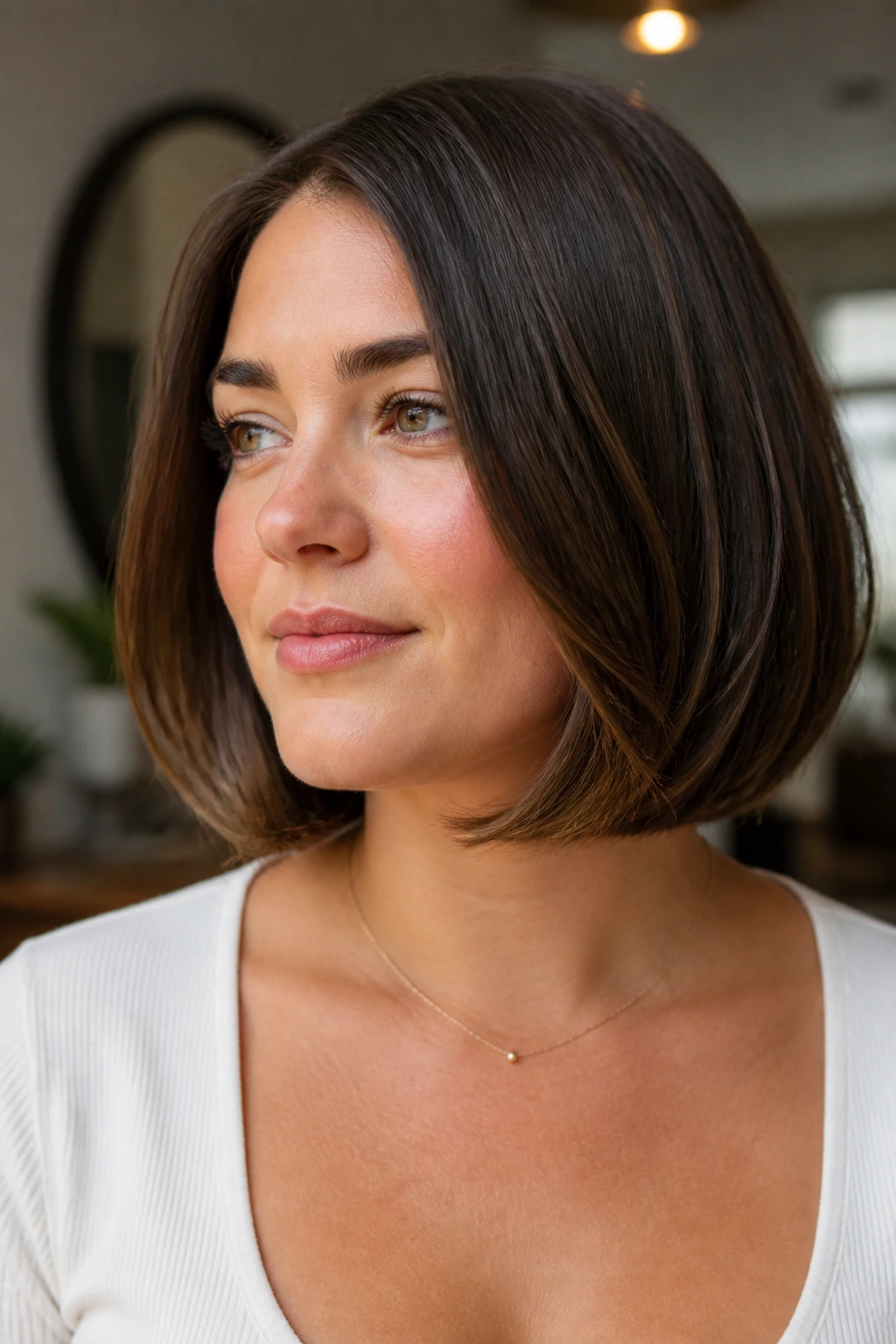
Invisible layers are exactly what they sound like: layers you can feel more than see. They remove weight inside the shape so the bob moves better, but the outline still looks clean. That’s a strong move for round faces, because the haircut keeps its structure while losing the bulk that can widen the cheeks.
This is the version I suggest for people who like bobs but hate the “too poofy” problem. The perimeter stays crisp, the inside gets lighter, and the hair falls with less puff. It’s a very practical cut, which I appreciate.
Ask for the layers to be hidden inside the shape rather than chopped around the outside. That distinction matters. Visible layers around the cheeks can widen the face if they land in the wrong place.
21. Wedge Bob
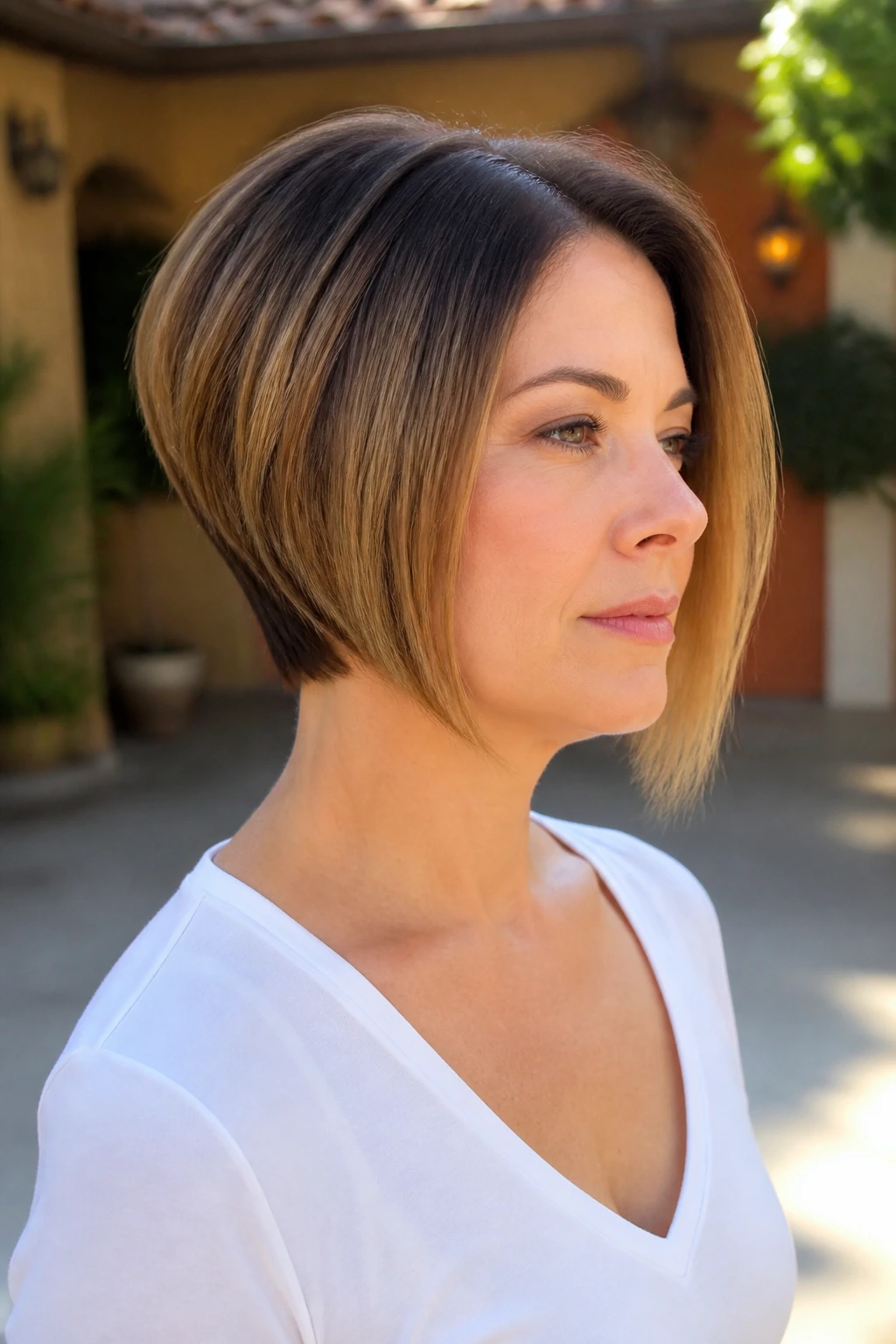
The wedge bob is all about angle and lift. The back is short and rounded, while the front carries more length, so the haircut looks sculpted from the side. On a round face, that side profile can be a lifesaver.
This cut works because it keeps the heaviest part of the shape away from the jaw. The volume lives higher and closer to the crown, which helps lengthen the face visually. The front can still touch the jaw or sit a bit below it, but the real work is happening in the back.
It’s not the softest option on the list, and that’s the point. If you want structure, this is one of the sharper ways to get it.
22. Soft Undercut Bob
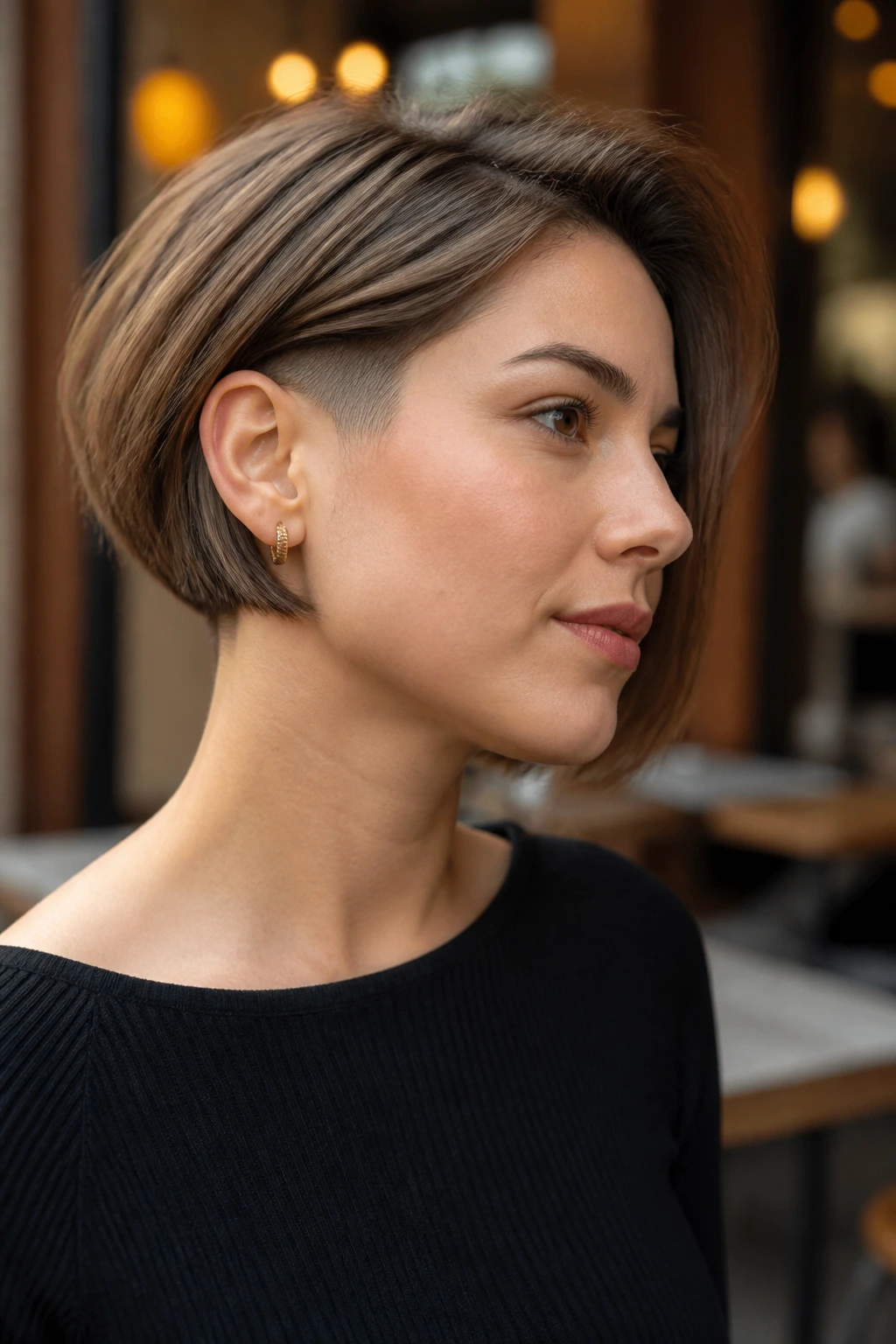
A soft undercut is the secret weapon for thick hair. It removes some bulk underneath the surface so the bob doesn’t mushroom out from the sides and bottom. The haircut looks lighter and sits closer to the head, which can make a round face look slimmer in profile.
The word “soft” matters here. You do not want a harsh undercut unless you’re after a very specific look. The goal is to thin the hidden layers enough that the top shape can fall cleanly. On humid days, that kind of control is worth a lot.
This is the cut I’d choose if the hair is heavy, wide, and constantly expanding by noon. It solves a real problem.
23. Bubble Bob

A bubble bob can work, but only if it’s treated carefully. The rounded shape should live in the silhouette, not in extra width around the cheeks. If the curve is too puffed or too high, the face will look wider. If it’s controlled and slightly longer in front, it can look sleek and modern.
The best version has a clean nape, a little lift at the crown, and ends that curve in rather than outward. That gives the haircut a rounded finish without making the face rounder. It’s a fine line, and I wouldn’t ask for this cut unless you have a stylist who understands shape.
The payoff is a bob that looks deliberate and glossy. Just keep the volume where it belongs.
24. Micro-Stacked Bob
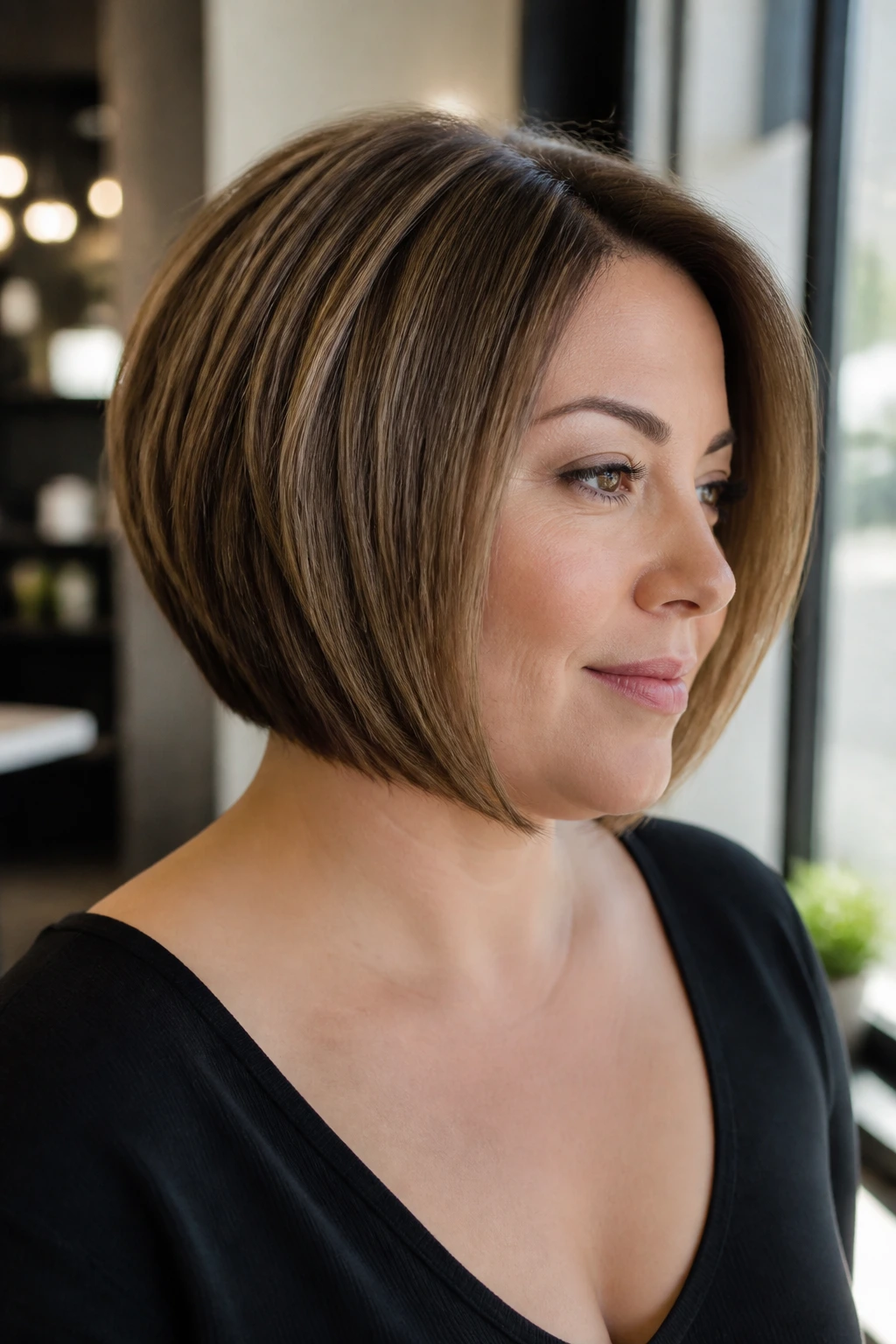
A micro-stack is the quieter version of a stacked bob. Instead of a dramatic curve in the back, you get just enough stacking to build shape without making the cut look dated or too bulky. That subtle lift can help a round face by raising the visual line away from the jaw.
I like this one for hair that needs a little body at the back but not a lot of roundness at the sides. The front can stay long enough to soften the chin, and the back gets just enough structure to avoid collapsing. It’s tidy. It works.
If you’ve ever had a bob that looked flat in the mirror and puffy in photos, this is one to consider. The stack can fix that odd little imbalance.
25. Textured Box Bob
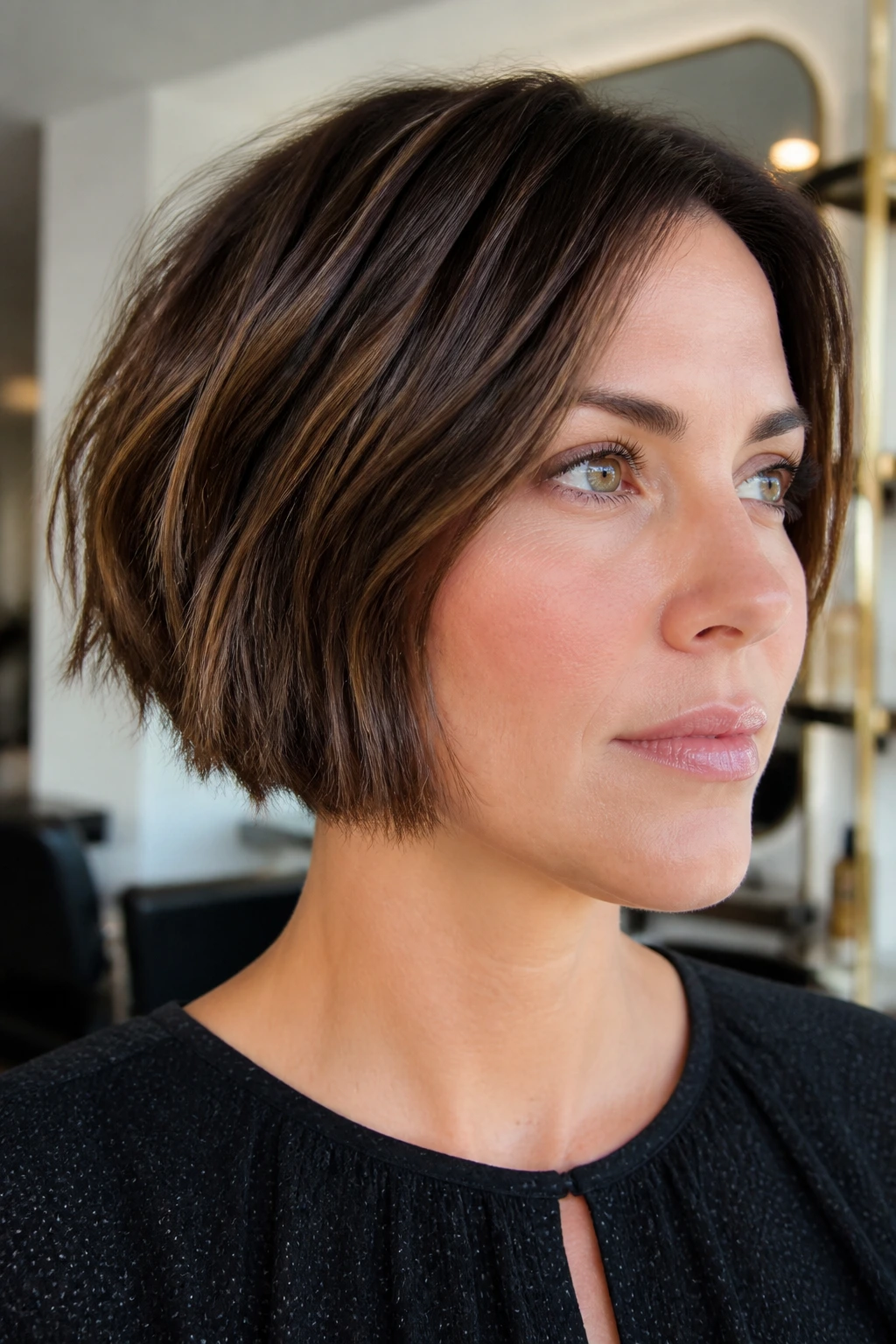
A box bob sounds square, and that can sound scary on a round face. But with the right texture, the square outline gives you definition where softness is already doing too much. Think of it as structure with the edges filed down a bit.
The trick is not to make the sides bulky. The cut should stay clean near the ears and slightly broken through the ends so it doesn’t feel like a block. That balance can sharpen the lower face without making it harsh.
I’d pick this if your style leans crisp and tailored. It looks especially good with straight hair, a neat side part, and clothing that has some structure at the neckline.
26. Short Lob with Front Angle
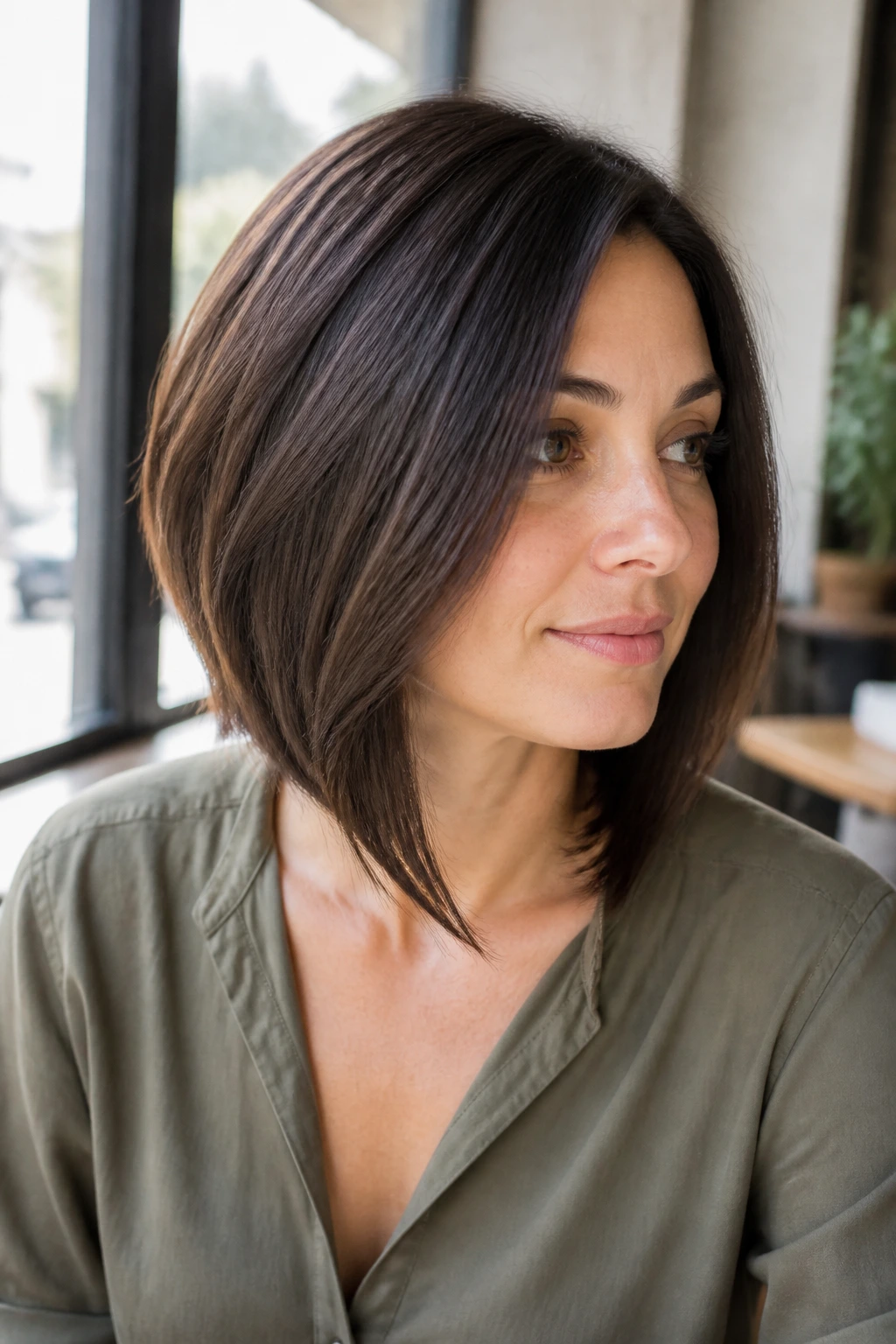
A short lob gives you a little breathing room if you’re nervous about going too short. The front angle keeps the face from looking cut off, while the slightly longer length offers a softer transition around the jaw and neck. It’s the cautious choice, but not in a boring way.
This is often the most flattering entry point for people who want the benefit of a bob without the commitment of a sharp chin-length line. The front should fall below the chin, ideally closer to the top of the collarbone, and the back can still be lighter. That gives you shape without a hard border.
If you’re deciding between a bob and a lob, this is usually the safer bet. Safer doesn’t mean dull.
27. Bottleneck-Bang Bob
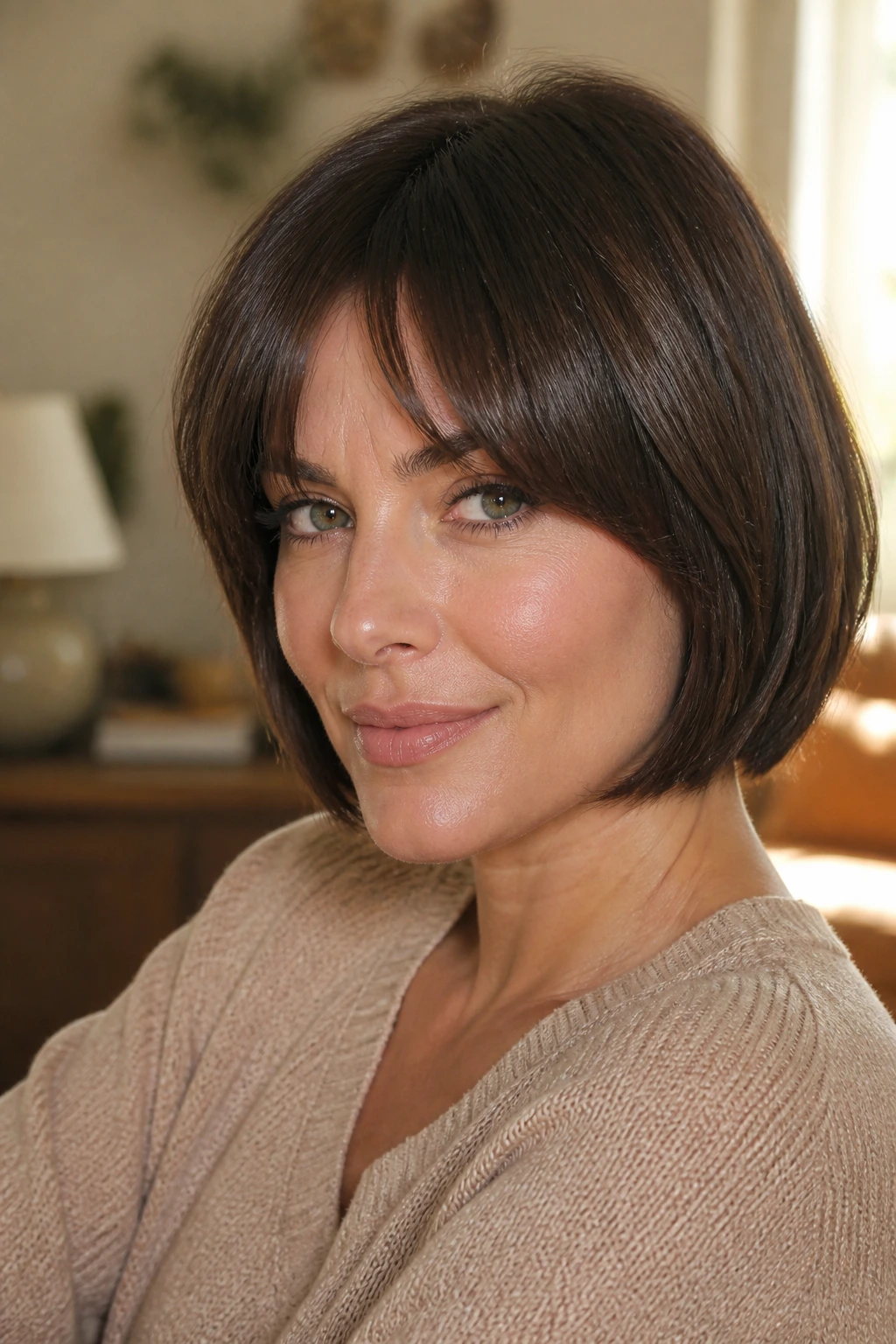
Bottleneck bangs work because they’re narrow near the center and open out toward the cheekbones. That shape does a nice job of softening a round face without putting a blunt horizontal line across the forehead. Paired with a bob, they can make the whole cut feel lighter.
The bob underneath should stay compact but not tight. I like this version when the bangs need to do a little of the styling work. They frame the eyes, move the focus upward, and leave the jawline a little quieter.
This is a good pick if full curtain bangs feel too much and side bangs feel too fussy. The bottleneck shape sits in that middle ground.
28. Graduated Lift Bob
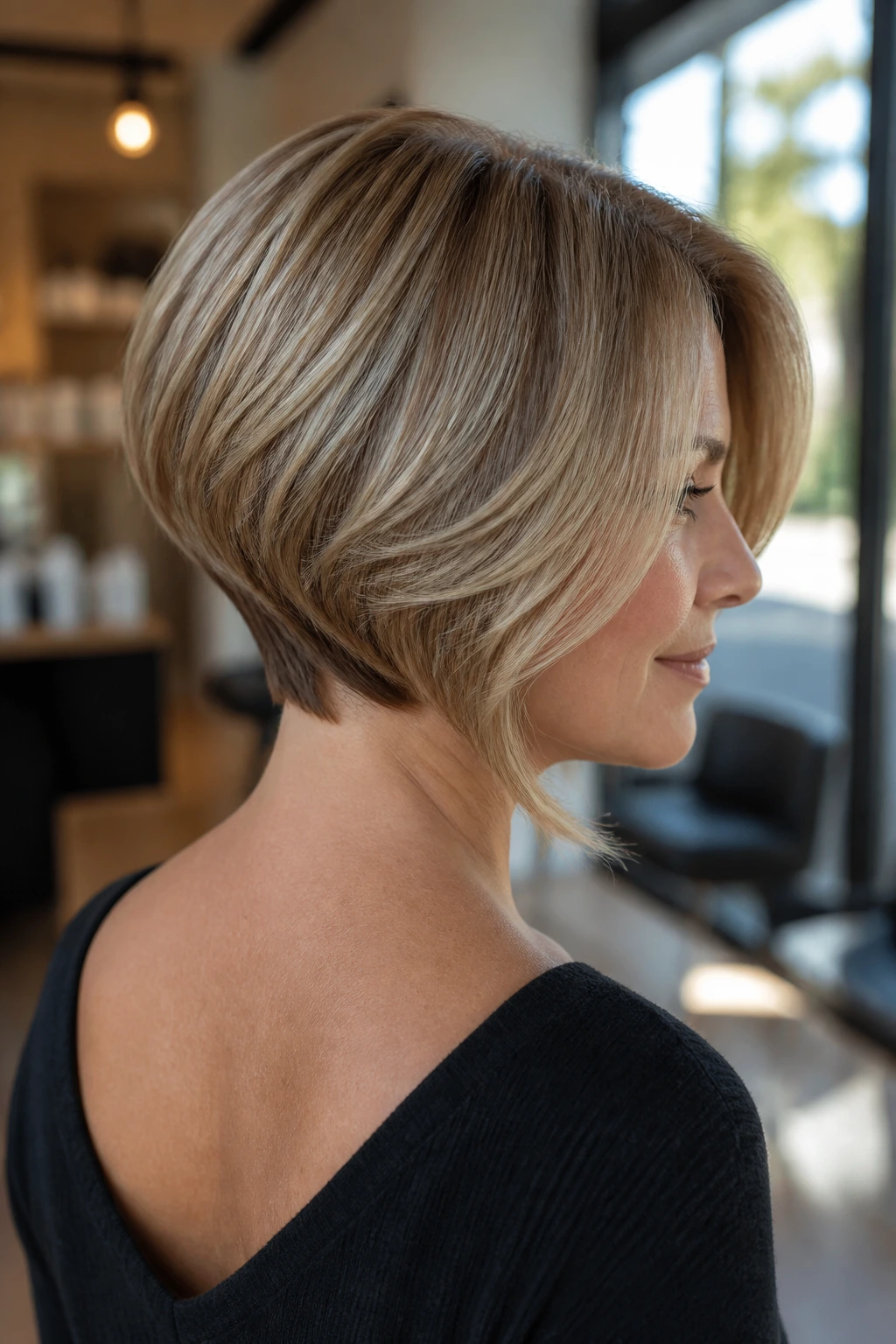
This is the bob that does the most work in the back. Graduation creates lift, and lift creates a cleaner silhouette, which helps a round face by moving the eye up instead of across. The front should still carry enough length to avoid stopping at the chin.
The graduation needs to be controlled, though. Too much stack and the cut starts to feel old-fashioned. Too little and you lose the whole point. The sweet spot is a shape that looks compact from behind and gently longer from the front.
If your hair is thick, flat, or prone to sitting heavy at the nape, this is a smart cut. It has some backbone.
How to Explain the Cut to Your Stylist
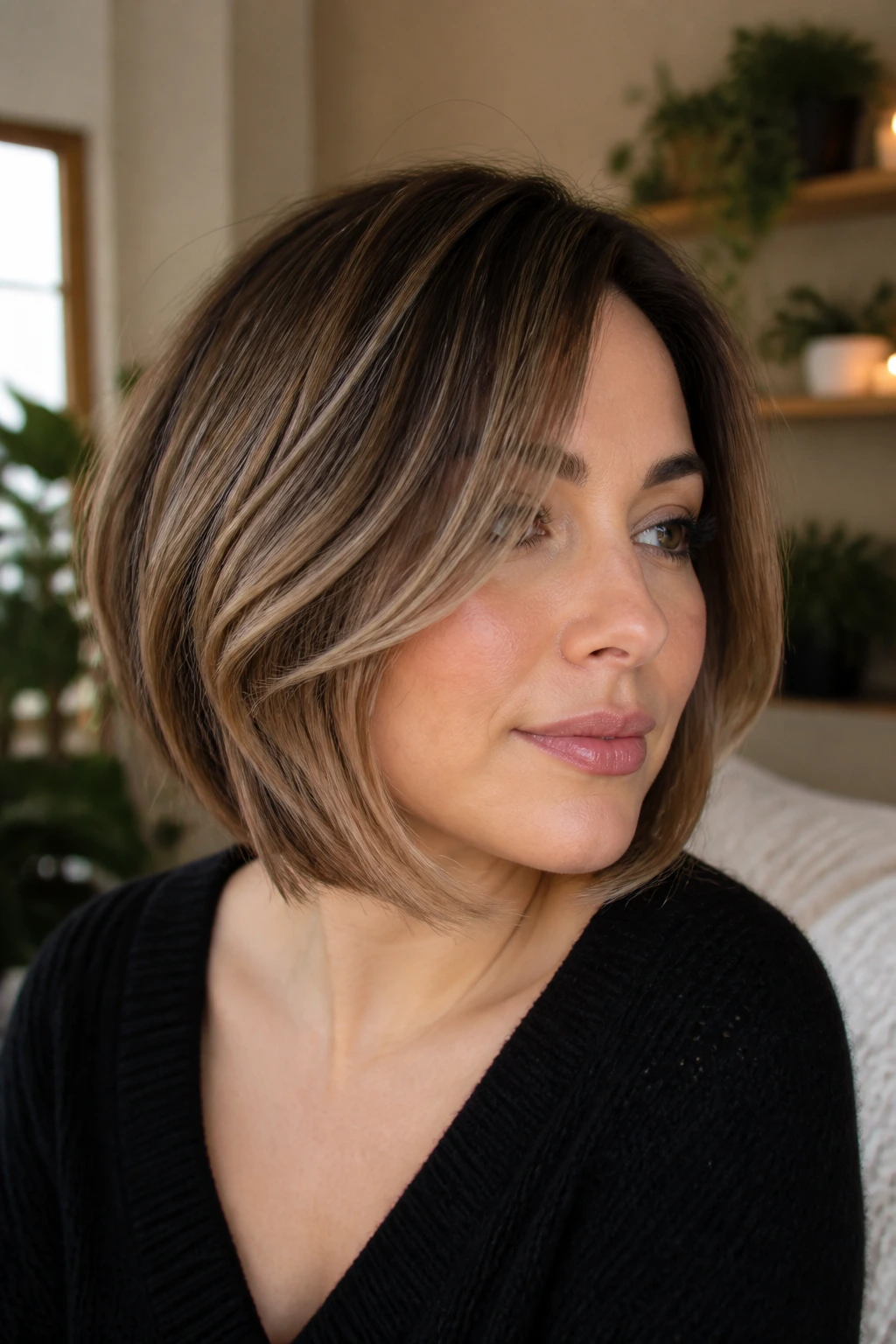
A great bob starts with specific words, not vague ones. If you sit down and say “make it flattering,” you’ll get whatever the stylist thinks flattering means, and that may or may not line up with your face, texture, or maintenance tolerance. Bring photos, yes, but bring direction too.
Length landmarks that matter
Tell your stylist where you want the front to land in relation to your chin and collarbone. For round faces, I usually like to hear some version of: “Keep the front below the chin, not at the widest part of my cheeks.” That one sentence says more than a dozen adjectives.
If you want a bob with more softness, ask for the longest pieces to graze the jaw or dip just below it. If you want more shape, ask for a subtle angle from back to front. The difference between those two asks is real, and it shows up immediately when the hair moves.
Texture notes that save a haircut
Texture changes everything. Fine hair usually needs compact structure so it doesn’t go stringy, while thick hair often needs hidden weight removal so the bob won’t swell outward. Wavy hair usually needs a little extra room in the front, and curls need shape cut around the shrinkage, not the wet length.
Say what your hair does on day two, not just how it looks after a salon blowout. Does it puff at the sides? Flip outward? Fall flat at the crown? Those are the clues that matter.
Bring the right photos
Bring one photo of the front, one of the side, and if you can, one of the back. Side views are the most useful and the most ignored. A bob can look flattering from straight on and completely different from profile, which is where the round-face question usually shows up.
The Tools That Make Short Bobs Behave
-
Blow dryer with a concentrator nozzle: It directs air where you want it, which matters when you’re trying to keep the sides smooth and the crown lifted.
-
Round brush, 1½ to 2 inches: Best for bending the ends inward or creating a soft curve under the face.
-
Small vent brush: Useful for fast drying fine hair without flattening the top.
-
1-inch curling iron or wand: Good for broken waves and piecey texture on shorter bobs.
-
Flat iron: Optional, but handy for a sleek glass bob or for smoothing the front pieces only.
-
Heat protectant spray: Non-negotiable if you use hot tools. The ends of a bob get punished quickly.
-
Volumizing mousse: A small amount at the roots helps bobs keep lift instead of collapsing into the cheeks.
-
Texturizing spray: Best for broken-wave, shaggy, and piecey styles that need separation.
-
Duckbill clips: Great for setting the crown while the hair cools, which locks in lift.
-
Satin pillowcase: Low-tech, but it helps the shape survive the night without friction and frizz.
Choosing the Right Bob for Your Hair Texture
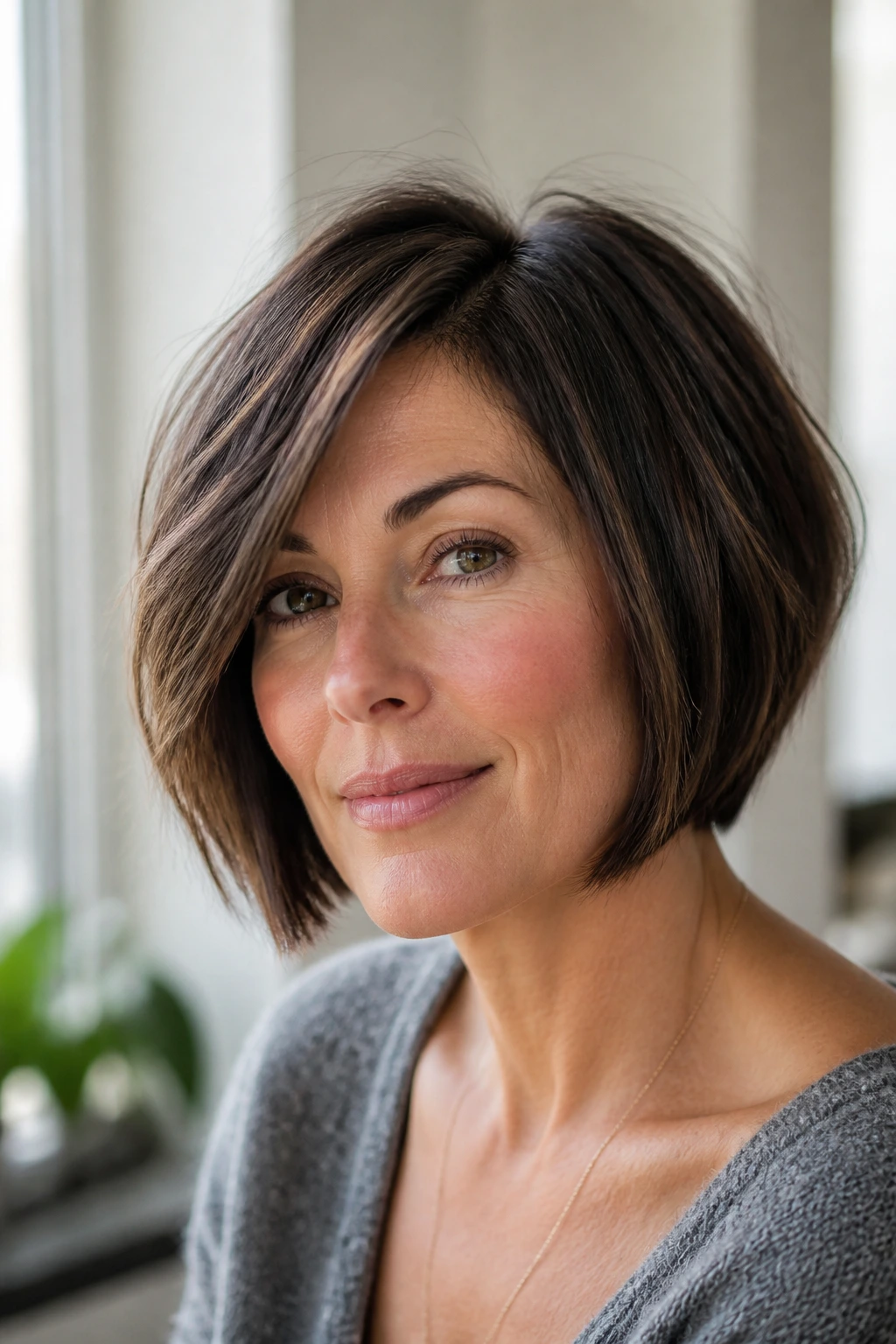
Fine hair, thick hair, waves, and curls do not behave the same way. I know that sounds obvious, but it’s the difference between a bob that frames the face and one that grows sideways by lunch. The best cut is the one that respects how your hair naturally falls.
Fine hair
Fine hair usually likes a cleaner perimeter and a little lift at the crown. A blunt or lightly angled bob can make the ends feel fuller, while invisible layers prevent the cut from looking see-through. Keep too much razoring out of it unless the hair has enough density to handle the loss.
Thick hair
Thick hair needs weight management. Internal layers, a soft undercut, or a controlled stack can keep the bob from ballooning out at the jawline. If the hair is very dense, avoid wide blunt ends that sit at cheek level and puff out when air gets under them.
Wavy hair
Wavy hair likes shape that’s a little longer in front and a little looser at the edge. A broken-wave bob or side-parted textured bob can make waves work with the face instead of around it. Ask for enough length to let the wave fall, because cutting it too short can make it spring wider.
Curly hair
Curly hair needs its own map. A dry cut, or at least a cut informed by shrinkage, is worth insisting on if the curls shrink dramatically. Keep the widest curl cluster below the cheek area, and build the shape so it lifts at the crown instead of spreading at the sides.
How to Wear These Bobs With Glasses, Earrings, and Necklines
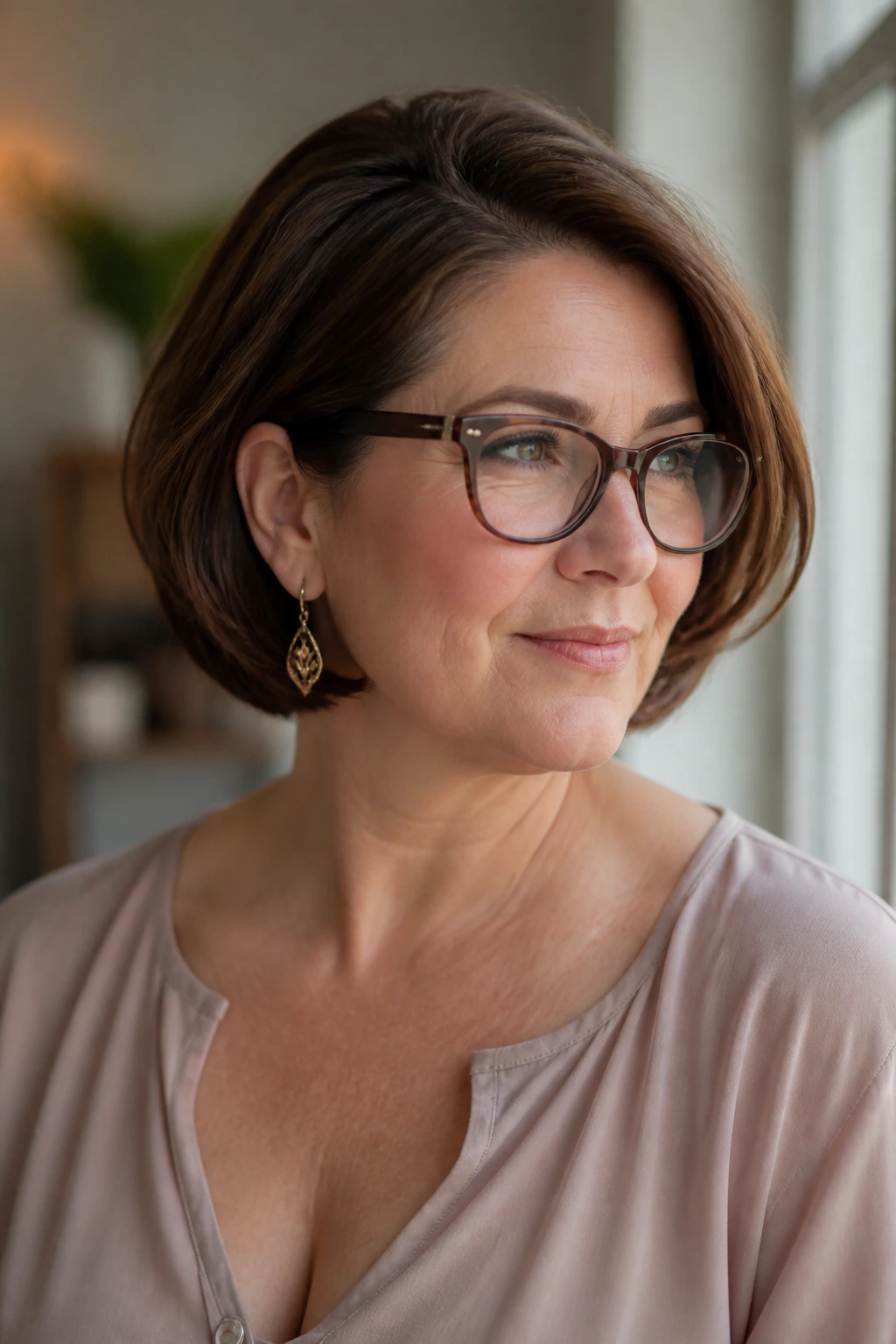
Silhouette: The haircut should leave a little air around the face. If the bob ends exactly where your glasses sit or where your cheeks are fullest, the whole look can crowd itself. A bit of space below the chin helps the face read longer and cleaner.
Best pairings: Drop earrings, slim hoops, open necklines, and jackets with a sharp shoulder line all work well with these cuts. They give the bob a framework, which sounds fussy but isn’t — it just keeps the haircut from floating alone on your face.
Proportion: If your neck is short, avoid a heavy line right at the chin. If your jaw is softer, keep some length in the front so the haircut can taper instead of stopping abruptly. That little bit of proportion work matters more than most people think.
Mood: Sleek bobs read polished and crisp; broken-wave bobs read relaxed; shaggy bobs read casual and a little undone. Pick the finish that matches your clothes and your life. A haircut that fights your wardrobe will always feel off.
Styling Tweaks That Change the Whole Shape
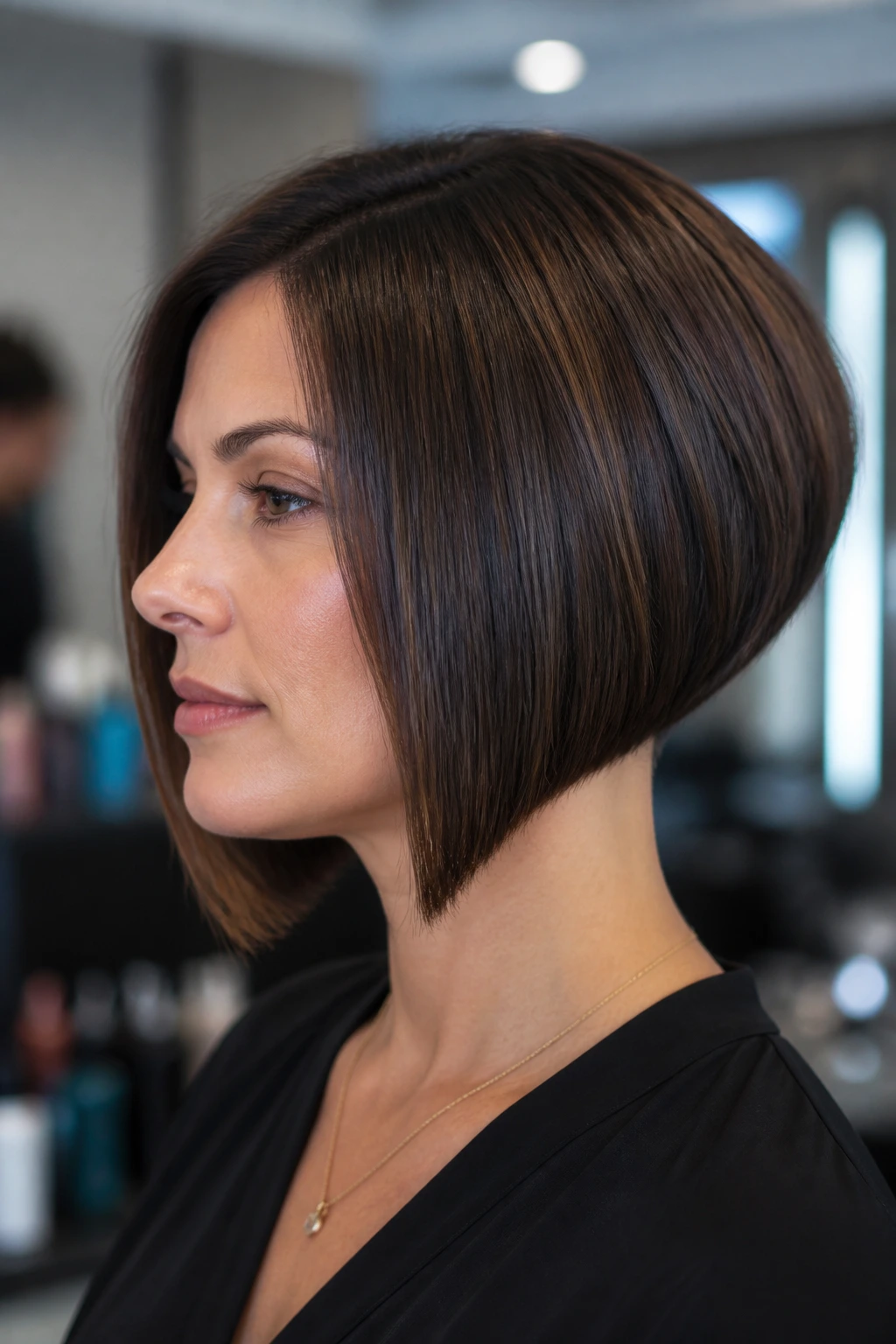
Root lift: A small amount of mousse or root spray at the crown can change the entire profile of a bob. You do not need giant volume — just enough lift to keep the eye from settling on the cheeks.
Part switch: A middle part can look clean, but a slight side part often helps round faces more because it breaks symmetry. If a cut feels too wide, moving the part by even an inch can change the read.
Texture control: Smooth ends slim the shape; broken ends soften it. Pick one on purpose. A bob that accidentally mixes both usually looks confused.
Finishing touch: Keep shine spray or serum away from the roots and focus it on the last inch or two. That keeps the crown from flattening while still giving the bob a finished look.
Common Mistakes That Make a Bob Look Wider

-
Cutting the front exactly at chin level: That’s the spot where a round face often looks fullest. Move the length slightly below the chin and the haircut tends to sit better.
-
Building volume at the sides instead of the crown: Side fullness pushes the face outward. Crown lift pulls the eye up and changes the silhouette in a much better way.
-
Using a thick, heavy fringe with no balance: Full bangs can work, but only if the rest of the cut has height or movement. Without that, the haircut can feel boxed in.
-
Curling the ends outward on both sides: That makes the widest part of the cut flare away from the face. An inward bend or a loose wave is usually kinder.
-
Letting thick hair go unthinned: Dense hair can expand into a triangle if it’s cut blunt and left alone. Internal removal of weight fixes that better than chopping the outer edge.
Variations and Adaptations to Try
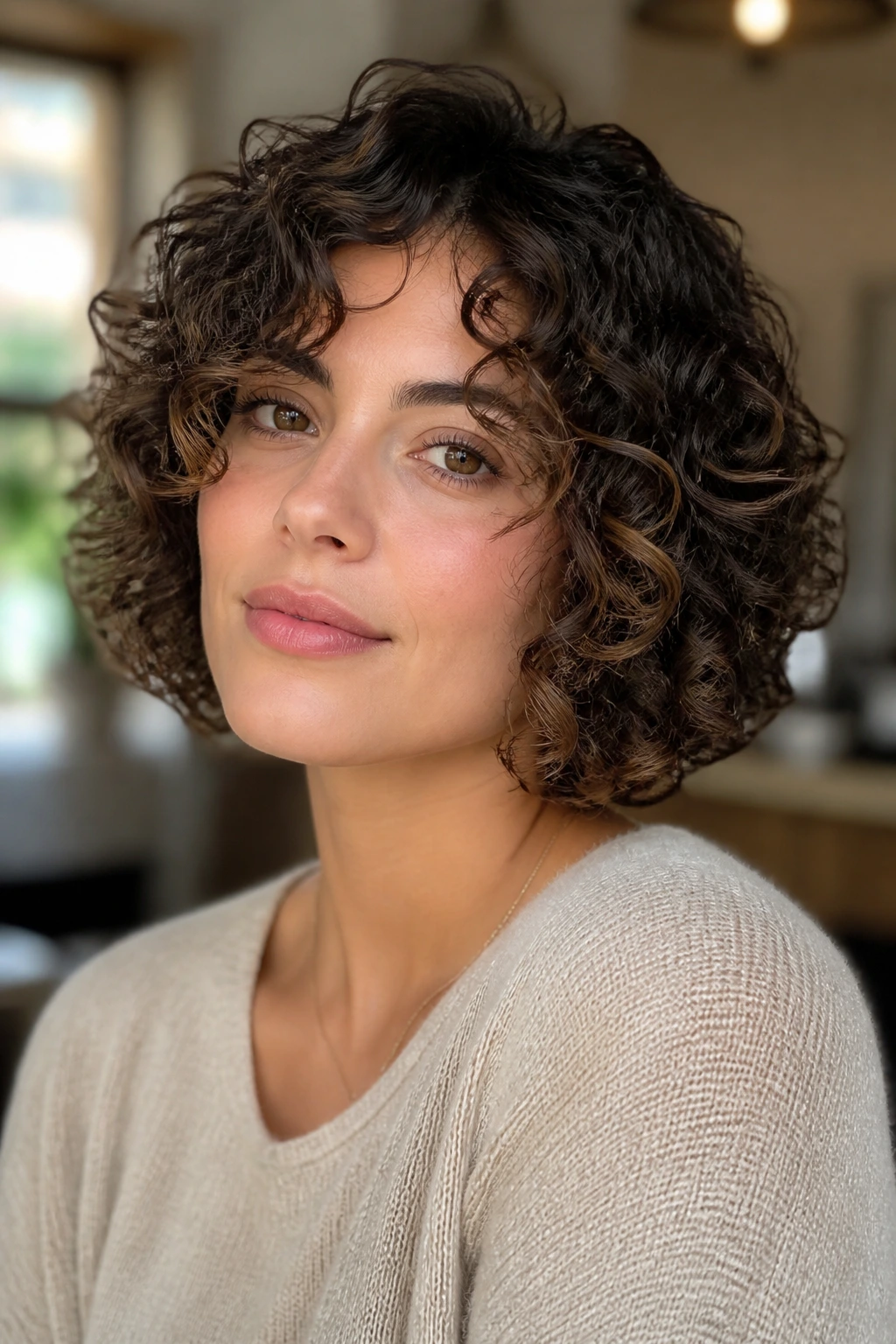
The Fine-Hair Lift Bob: Keep the perimeter blunt and the layers hidden. Fine hair looks fuller when the line is clean and the crown has a little root support.
The Curly Dry-Cut Bob: Cut curls dry or nearly dry so the shrinkage is honest. That gives you a shape that lands below the cheekbones instead of springing up into them.
The Glasses-Friendly Bob: Ask for front pieces that clear the frames by a small margin and avoid dense fringe that collides with the temples. Clean space around the eyes makes the whole cut look intentional.
The Thick-Hair Tamer: Pair a soft undercut with a light angle in the front. You get less bulk at the jaw and more movement where the face needs it.
The Low-Maintenance Grow-Out Bob: Choose a short lob with front angle rather than a high-precision crop. It grows out more gracefully and still keeps the face lengthened while it does.
Keeping the Shape Between Salon Visits
Bobs are honest about growth. An inch can change the whole outline, especially when the cut depends on angle or crown lift. For the sharper shapes — inverted bobs, stacked bobs, blunt bobs — I’d plan on a trim every 5 to 7 weeks. Softer textured versions can usually go 6 to 8 weeks before the perimeter starts to feel fuzzy.
Night care matters too. A satin pillowcase cuts down on friction, and that means fewer bent ends in the morning. If your bob likes to flip at the nape, clip the front sections loosely before bed or smooth them with a light mist of water and leave-in conditioner before you dry them down. Not soaked. Just damp enough to reset the bend.
Day two is where many bobs go from cute to annoying. Dry shampoo at the roots helps, but don’t pile it on the sides if you want the face to stay narrow. A small puff of product at the crown and a quick re-bend of the front pieces usually does more than a full restyle.
If your bob starts looking wide, resist the urge to add more side volume. That usually makes the problem worse. Clean the root, lift the crown, and leave the sides calmer.
FAQs About Short Bobs for Double Chins and Round Faces
What bob length is most flattering for a round face?
Usually, a length that lands just below the chin or closer to the top of the collarbone works best. That extra inch or two keeps the haircut from stopping at the widest part of the face.
Are blunt bobs bad for double chins?
Not by default. A blunt bob can look very sharp if it sits below the chin and has crown lift, but a blunt line right at jaw level can make the lower face read wider.
Do bangs help or hurt a round face?
It depends on the kind of bangs. Curtain bangs, side-swept bangs, and bottleneck bangs usually soften the face better than thick, straight fringe that cuts across the forehead.
Should I ask for layers?
If your hair is thick, probably yes — but keep them hidden or controlled. Too many visible layers around the cheeks can widen the face instead of slimming it.
What if my hair is curly?
Then the shape has to respect shrinkage. A bob that looks perfect wet can land too high when dry, so ask for a curl-aware cut and keep the longest pieces below the cheek area.
Can I wear a bob with glasses?
Absolutely. The trick is leaving a little space around the frames so the hair and glasses don’t fight for the same real estate. Side parts and soft fringe usually make that easier.
How do I stop my bob from puffing out at the sides?
Reduce side volume and increase crown lift. A round brush at the roots, a light product at the top, and less product on the mid-lengths usually helps.
Which bob is easiest to style every day?
A short lob with front angle or a side-parted textured bob tends to be forgiving. They don’t need perfect symmetry, and they still look intentional when you’re in a hurry.
The Shape That Does the Heavy Lifting
A good bob doesn’t need to shout. It just needs to know where to stop, where to lift, and where to leave a little room around the face. That’s why the best short bobs for double chins and round faces aren’t really about hiding anything — they’re about editing the outline so the haircut works with your features instead of sitting on top of them.
The nice part is how small the changes can be. A deeper side part. One more inch in the front. A cleaner taper at the nape. That’s often enough to make the whole thing click.
If you’re bringing photos to a stylist, bring side views and not just front shots. The side is where the shape earns its keep, and once you start looking there, the right bob becomes much easier to spot.