



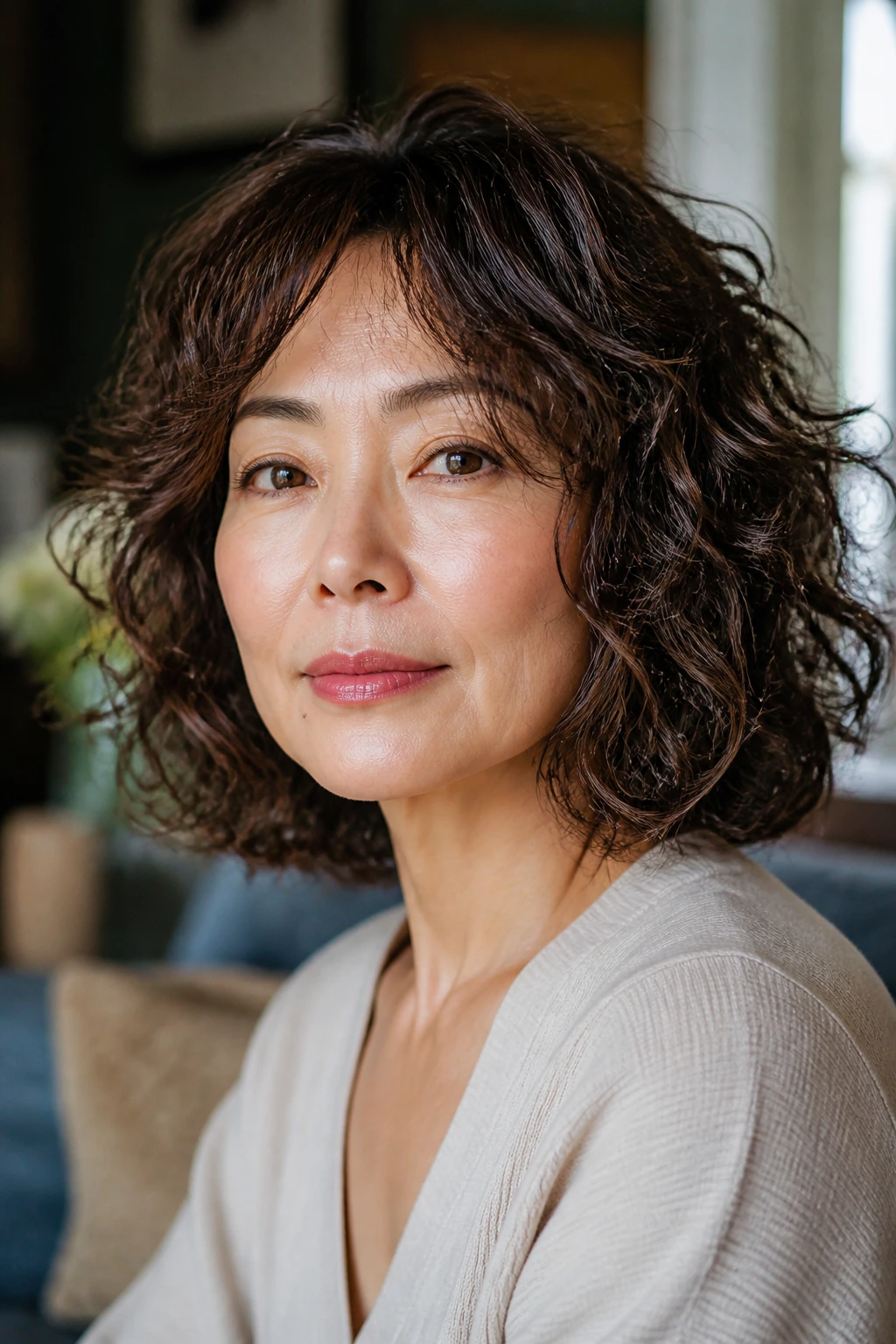
A Japanese long bob can be one of the smartest haircuts for curly hair when it’s shaped with a little restraint. The right version keeps the outline clean, lets the curl do the moving, and avoids that wide, boxy triangle that shows up when too much bulk sits at the sides.
That matters even more after 50. Curls often dry out faster, silver strands can feel wirier, and the old tricks stop behaving the way they did before. A cut that lands at the collarbone, keeps its perimeter honest, and doesn’t over-thin the body of the hair usually looks calmer, not younger in some vague way — calmer in the face, calmer in the neck, calmer when you run late and air-dry it anyway.
I’m partial to long bobs that look intentional even when they’re a little imperfect. That’s the whole charm here: a good Japanese long bob gives curly hair enough structure to stay neat, but enough room to stay alive. The styles below range from polished and blunt to soft and shaggy, because one size never fits every curl pattern, every face, or every morning.
Why These Curly Lobs Earn Their Place
-
The outline stays readable: A long bob gives curls a place to land, so the shape still makes sense even when humidity nudges the curl outward by half an inch or more.
-
The length softens the lower face: Ends that sit at the collarbone or just below it keep the jaw from feeling boxed in, which is a real gift if your curls puff near the cheekbones.
-
Grow-out looks deliberate: A clean lob can stretch another few weeks before a trim starts looking shaggy, because the silhouette is built into the perimeter, not only into the styling.
-
Silver and salt-and-pepper hair shines better here: Gray curls often catch light in a way darker hair doesn’t, and a lob gives that brightness room to show instead of hiding it inside a heavy shape.
-
You can style it two or three ways: Air-dried, diffused, or brushed smooth, this cut usually still behaves because the haircut itself does most of the heavy lifting.
-
It plays nicely with face-framing pieces: A long bob can open the cheekbones, skim glasses, and keep the neck visible without forcing the whole cut into a stiff, helmet-like shape.
The Collarbone Rule That Keeps the Shape Clean
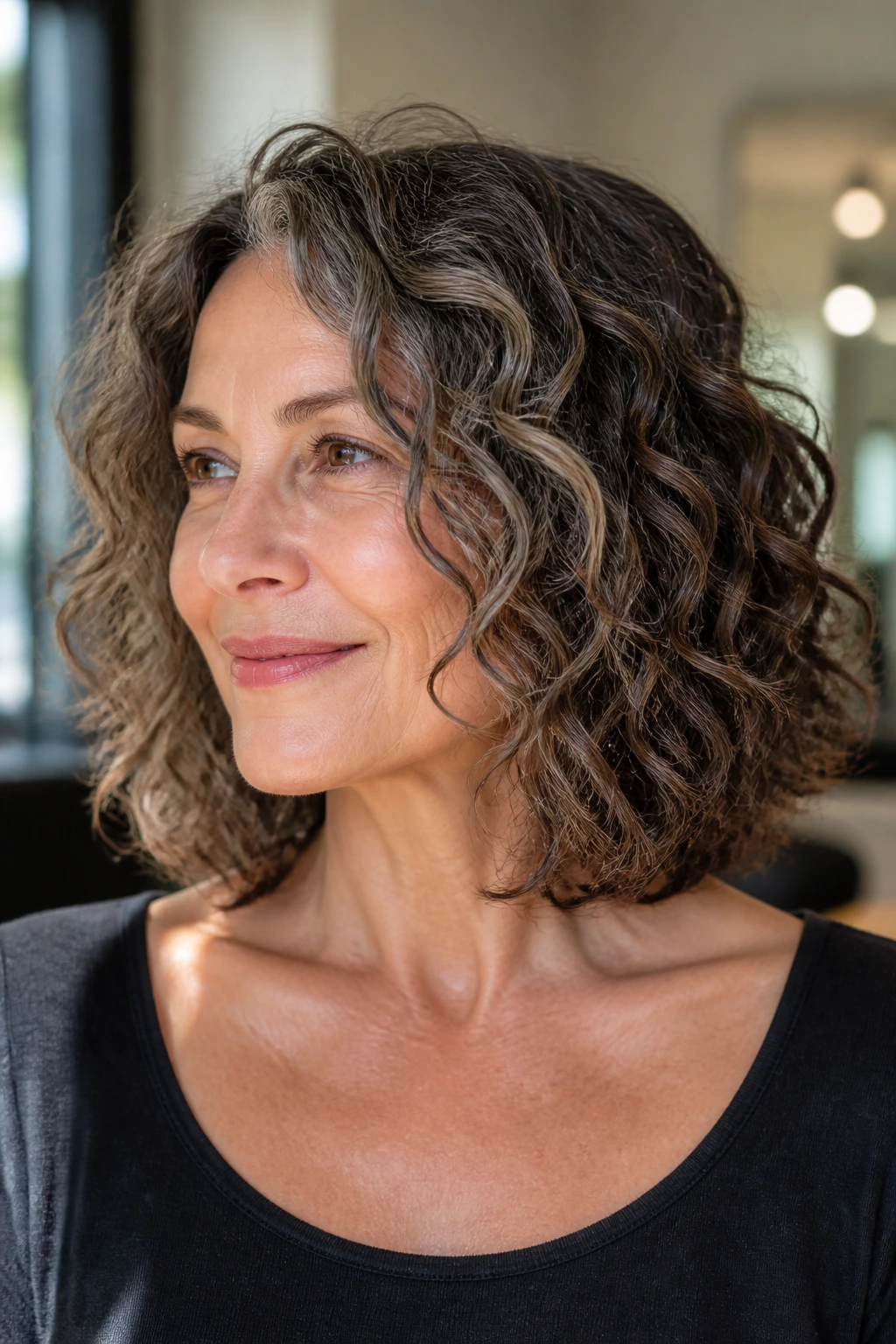
The collarbone is the sweet spot more often than not. Shorter than that, and curly hair starts to flare at the jaw. Longer than that, and the lob can lose its point unless the curls are very springy or the density is high.
Shrinkage is the part people misjudge. A curl that looks shoulder length when wet may sit 1 to 3 inches higher once it dries, and some tighter curl patterns shrink even more. If you want the finished cut to hit the collarbone, ask for the perimeter to be cut a little longer than that when the hair is dry, then check the shape in motion instead of only in the chair.
I also like a little asymmetry in the length plan. Not a dramatic angle. Just enough difference between front and back to keep the face open and the neck from disappearing. On curly hair, that tiny shift can make the cut feel lighter without actually removing the weight that holds the curls together.
Dry Cutting, Interior Layers, and the Japanese Touch
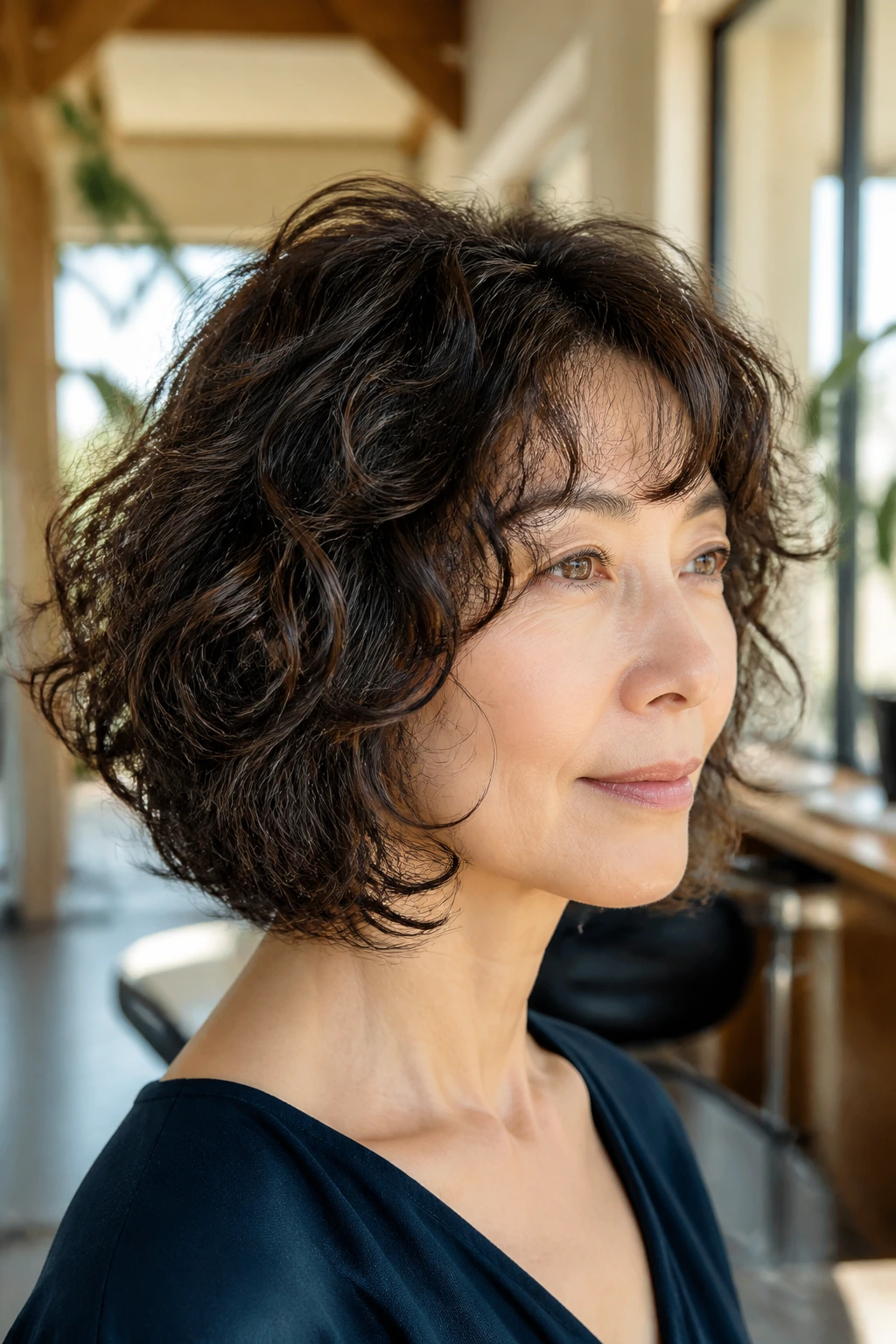
Japanese-inspired cutting tends to respect the outline of the haircut. That is why it works so well here. The perimeter stays clean, the interior gets just enough movement to keep the shape from feeling blocky, and the curl is allowed to do its own thing instead of being chopped into little pieces.
Dry cutting matters because curls lie. Wet curls can look obedient right up until they dry and spring in a direction nobody planned. A stylist who cuts at least part of the shape dry can see where the curl sits, where it bends, and where a heavy patch wants to push the whole side outward.
I prefer internal layers over lots of short surface layers for this kind of lob. Remove too much from the outside, and the ends fray. Remove a little weight from the middle, and the curve gets softer without losing the line. That is the difference between a cut that looks expensive and one that looks like it tried too hard.
How to Choose the Right Lob for Your Curl Pattern and Face
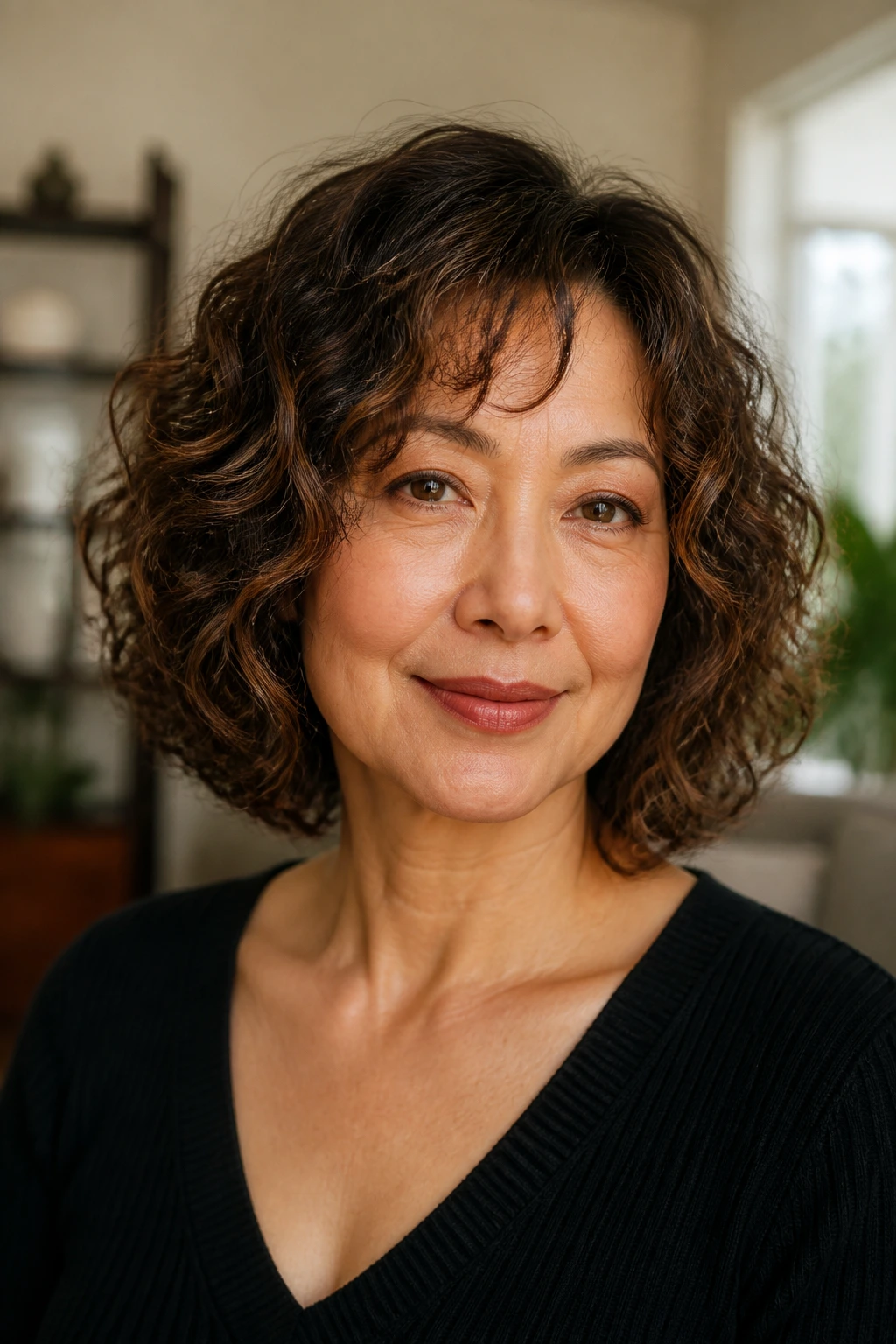
A curl pattern with a loose wave can take a cleaner, more one-length outline. Tighter curls usually need a touch more room through the front so the hair doesn’t spring up and crowd the cheeks. Fine curls often look best with fewer layers and a bit more bluntness. Dense curls can carry more movement without going fluffy.
Face shape changes the game too. Round faces usually benefit from a little more length in front and a side part that breaks the symmetry. Square faces often soften nicely with curved layers and pieces that fall just below the jaw. Long faces usually like some width around the sides and bangs that don’t sit too high on the forehead.
One more thing. Glasses change everything. If you wear them, the front pieces should either graze the frames or sit just below them, never in that annoying little zone that catches the temple arm every time you turn your head.
1. Collarbone Curl Lob With Clean Ends
This is the one I reach for first when someone wants a shape that does not fuss. The perimeter lands at the collarbone, the ends stay tidy, and the curl has enough length to settle instead of ballooning at the cheeks. It’s the lob that keeps its manners.
For women over 50, this cut tends to be kind to the neck and jaw at the same time. It leaves enough hair for a little tuck behind the ear, but not so much that the whole style starts dragging. If your curls are dense, ask for a dry perimeter check and only a light touch on the inside.
Best for: medium to thick curls that need order more than they need drama.
Watch for: cutting it too short in the front. A quarter-inch can matter here.
2. Curtain-Bang Lob That Opens the Face
Can curtain bangs work with curly hair? Yes, if they’re left long enough to bend. That’s the catch most people miss. A fringe that starts around the cheekbone, not the eyebrow, tends to fall into a soft sweep instead of sticking out like a little shelf.
I like this version on women whose curls frame the face but hide it a bit too much. The bangs pull the eye upward, which matters if your hair has started to widen at the lower half of the face. Keep the center shorter than the sides, then let the curl pattern decide the final shape.
A curtain bang lob also gives you a fast styling trick on rough mornings. Water, a dab of cream, a finger twist on each front piece. Done. If the fringe dries too square, the cut was probably too short to begin with.
3. Blunt Japanese Lob With Hidden Texture
This one is sharp on the outside and softer inside the shape. The perimeter is mostly one length, which gives the cut that clean Japanese feel, but the stylist removes only a little bulk from the interior so the curls can move without puffing outward.
It works because curly hair often looks better with a strong line than with a lot of chopped-up ends. Too many surface layers make the outline fuzzy. A blunt lob keeps the bottom edge visible, which is especially nice when the hair has silver strands or a mix of textures.
I like this for people who hate spending twenty minutes reshaping their hair every morning. Air-dry it with a light cream, shake it out with your fingers, and let the ends do the work. If the curls are very tight, keep the blunt line a touch longer so the shape doesn’t spring up and sit at the jaw.
4. Side-Part Silver Lob With Lift at the Temple
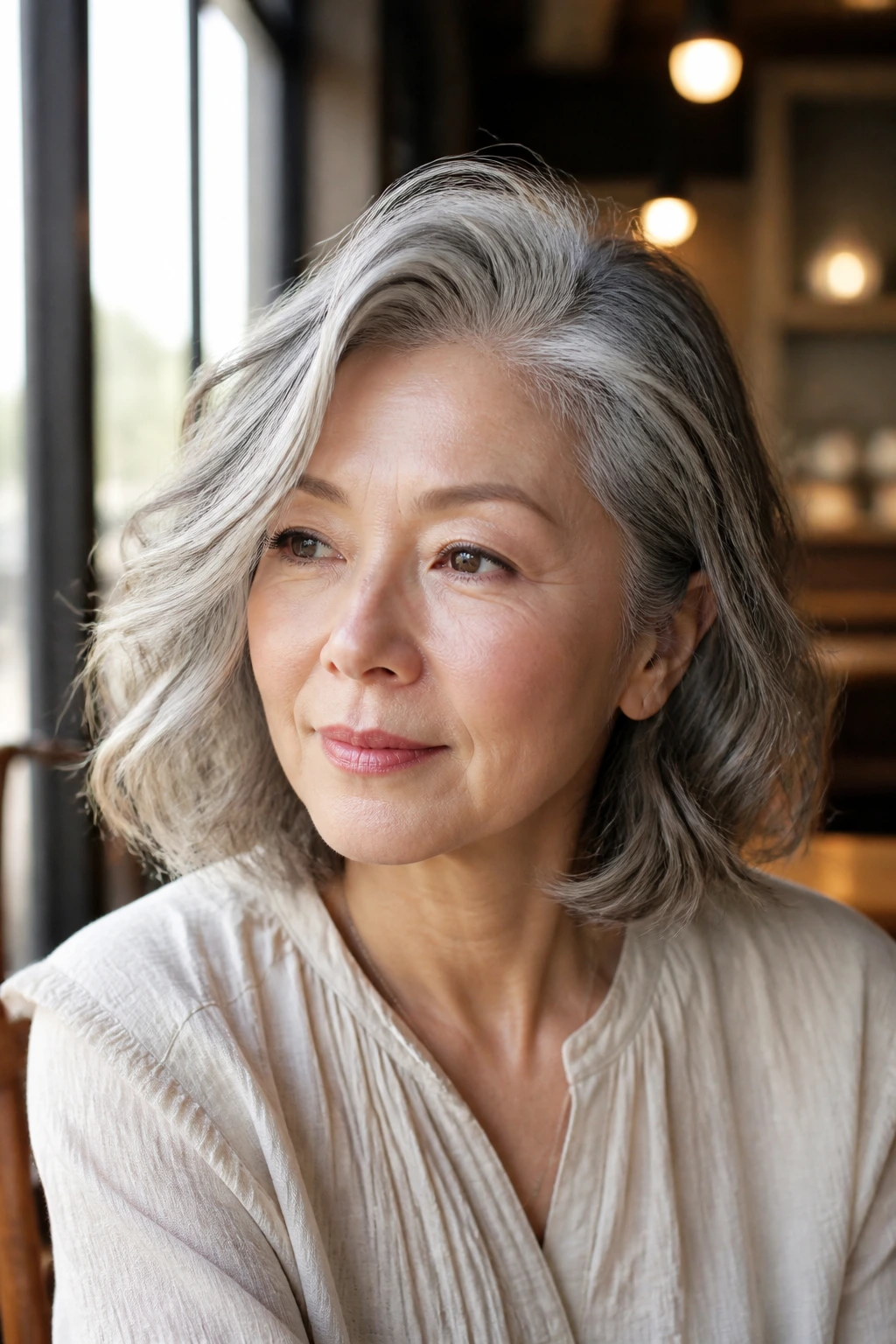
A deep side part can wake up a curly lob fast. It gives the crown a little height, moves the volume away from the middle of the face, and lets silver strands flash in the light instead of blending into a flat curtain.
This is one of my favorite cuts for hair that has started to feel a little fine at the top. The side part creates lift without teasing, and the longer side can sit near the cheekbone while the shorter side keeps the neck from looking overloaded. There’s something very clean about that.
- Use this when: the top goes flat by noon.
- Skip it when: your hair already has a strong one-sided cowlick and no patience for a fight.
5. Rounded Volume Lob With a Soft Crown
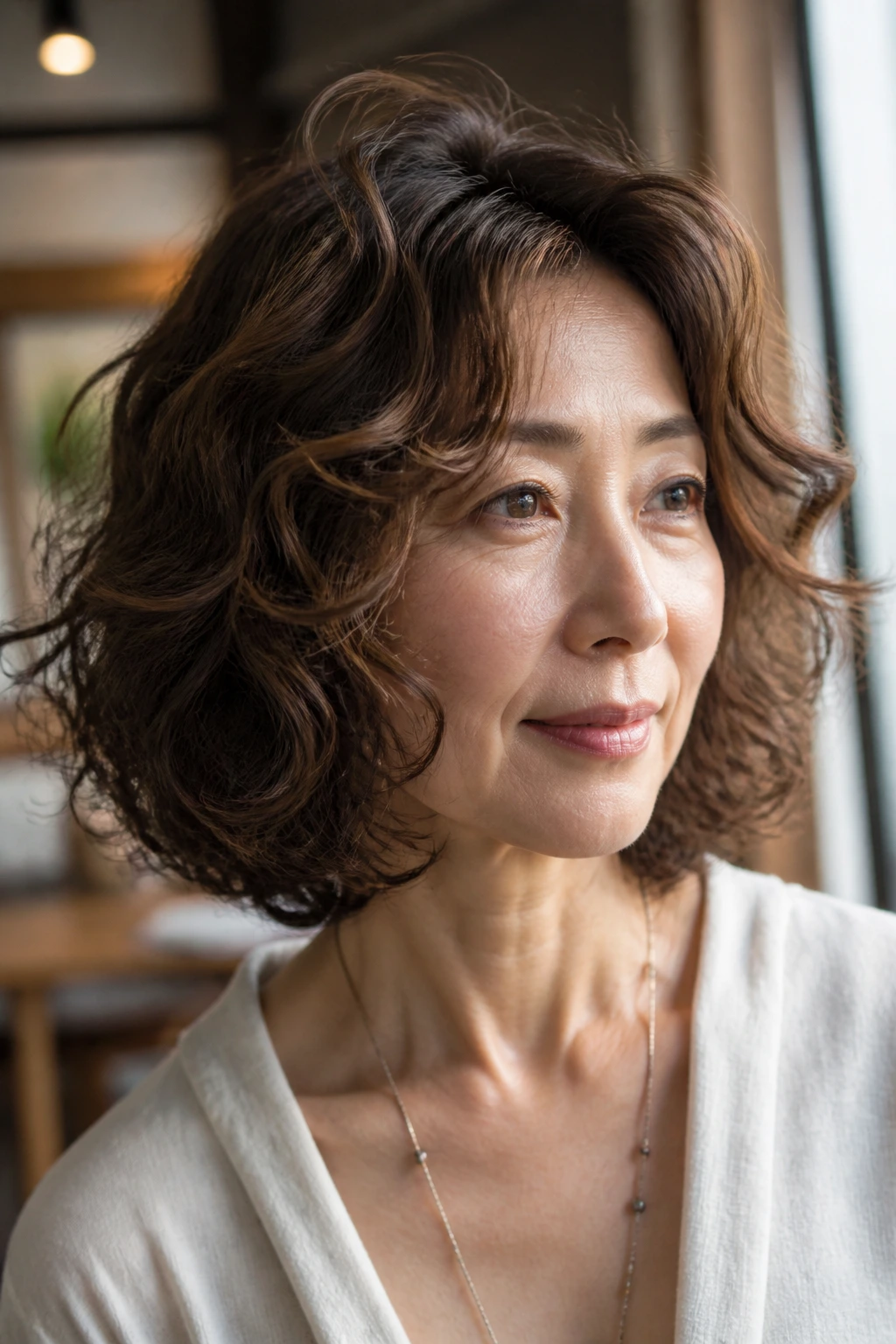
If your curls are dense, this shape can be a relief. The outline stays curved rather than square, and the crown gets enough space to rise gently instead of collapsing under its own weight. It feels balanced, not puffy.
The trick is restraint. Rounded does not mean fluffy. The stylist should leave weight through the lower half while carving just enough motion into the upper interior to keep the silhouette from turning heavy. On thick curls, that small detail changes everything.
I like this shape on women whose hair has a lot of body but no desire to behave in layers. The round form gives the curls somewhere to go, and the ends can still skim the collarbone or rest a bit above it. It looks especially good when you want the hair to frame earrings without swallowing them.
6. A-Line Lob That Narrows the Jawline
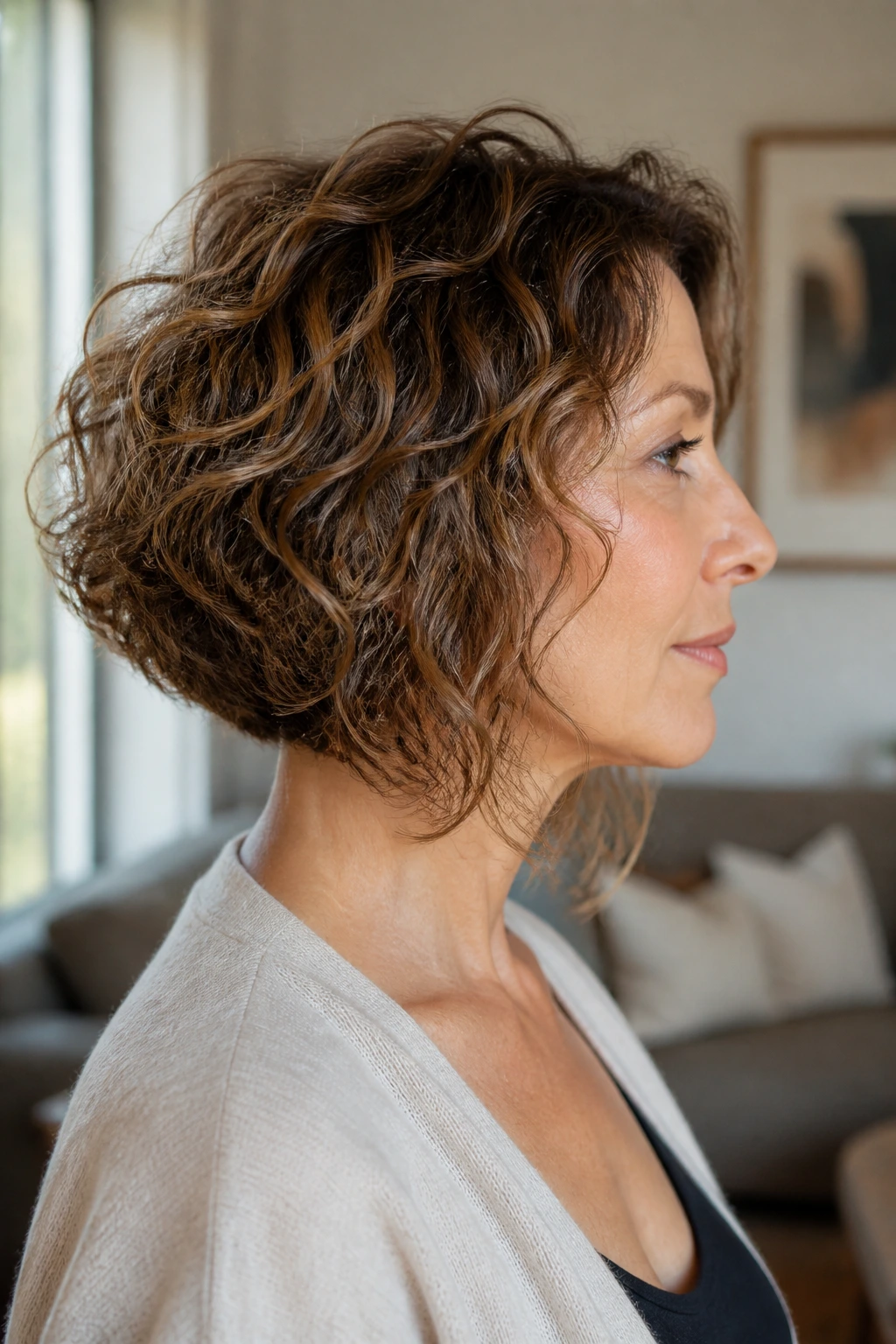
A slight A-line can do a lot with very little drama. The back sits a touch shorter, the front drapes a touch longer, and the whole cut points the eye downward in a soft line. That can slim the jaw without looking severe.
Curly hair needs that angle to be subtle. Too much and the front starts to hang; too little and the shape disappears once the curl springs up. I would ask for a gentle difference, not a sharp one, and I’d check it dry before making it more dramatic.
This is one of the better choices if your face feels broader at the cheekbone than you want. The front pieces can land below the chin, which keeps the face open while still giving the haircut a clean finish from the side.
7. Wispy Fringe Lob With a Soft Forehead Line
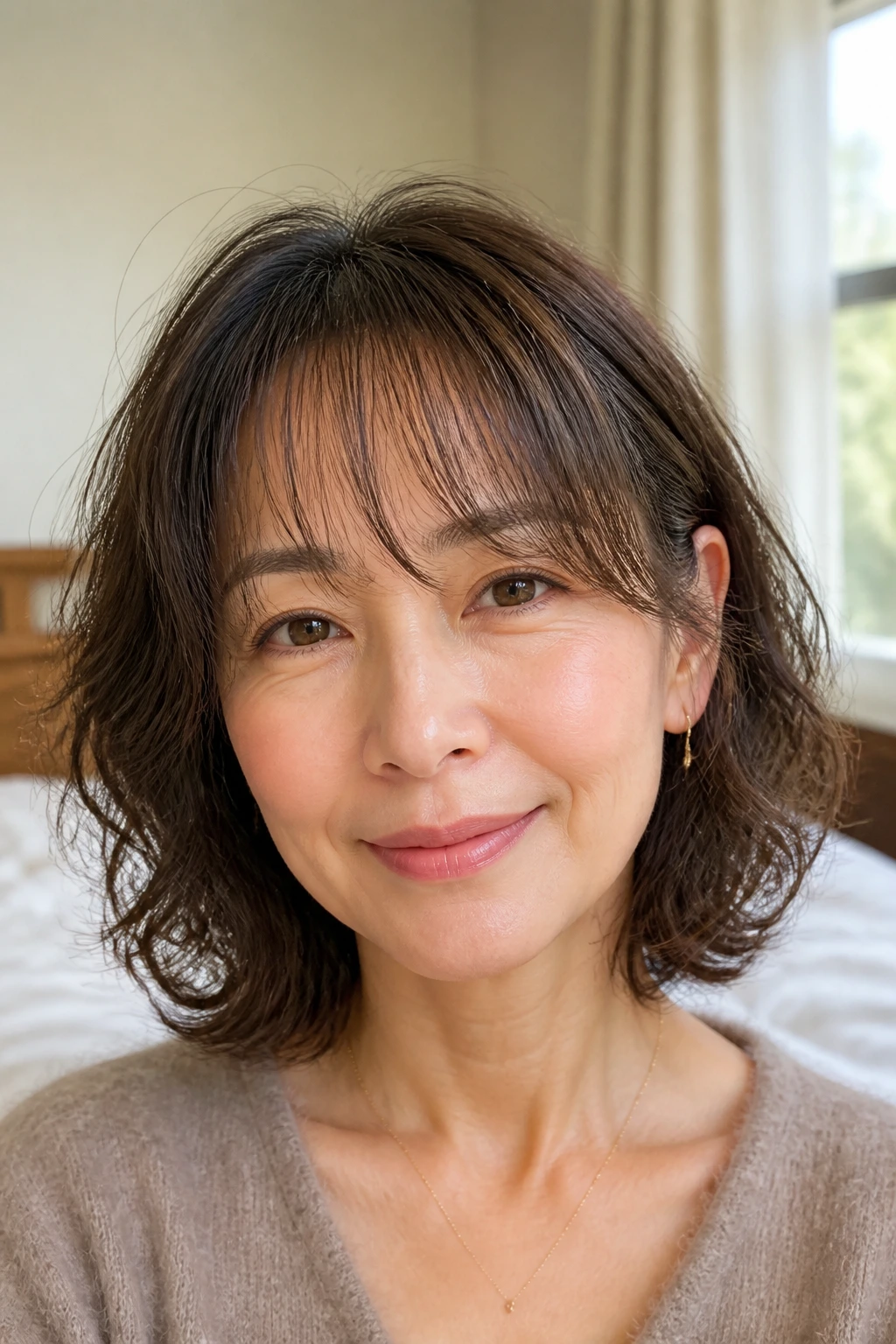
A wispy fringe is not the same thing as a chopped-up bang. On curly hair, it should be longer, softer, and a little movable. The goal is a forehead line that breathes, not a fringe that sits there like a curtain rod.
The best version starts with a few long pieces in the center and blends them out toward the temples. That keeps the curl from jumping too high. Short bangs on curly hair can be a gamble, and I don’t love gambles when the weather is damp.
This cut is especially flattering if you wear your hair behind one ear a lot. The fringe gives you a bit of softness up top, while the lob itself stays neat around the shoulders. It’s a good cut for people who want interest near the face without giving up length.
8. Shag-Lite Japanese Lob With Just Enough Edge
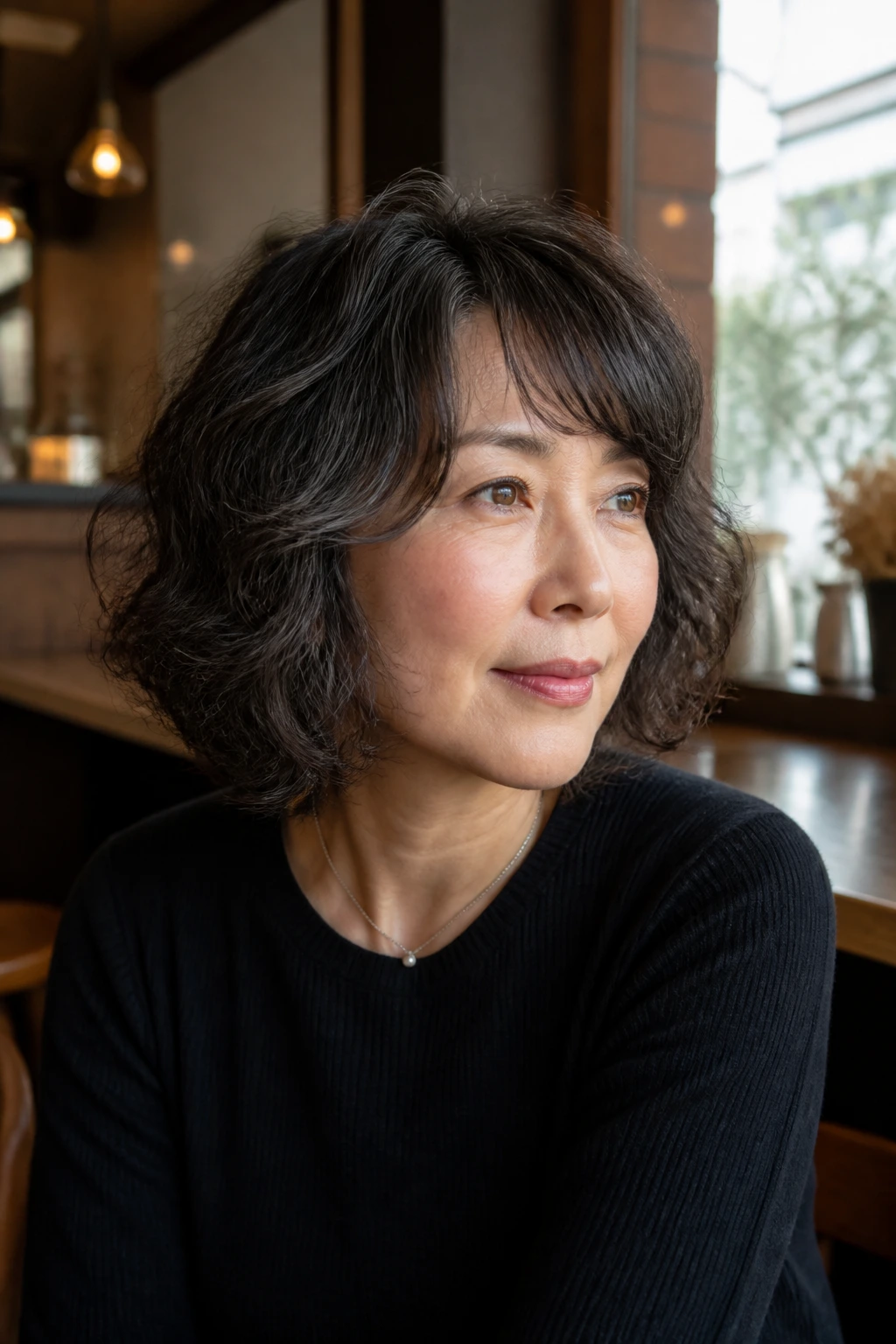
A full shag can get wild fast on curly hair. A shag-lite lob is the quieter cousin. It keeps the line of a long bob, then adds a few interior layers around the cheek and collarbone so the curls don’t stack into one big mass.
I like this when the hair has plenty of density but the owner wants motion. The interior pieces can be cut long enough to blend, which avoids the choppy look that reads younger for the wrong reasons. This version is about movement, not attitude.
If you’ve worn blunt cuts for years and want a small change, this is a safer leap than a full shag. It gives the curl some air while keeping the overall shape tidy enough for work, dinners, and the kind of days when you only have five minutes before the car honks.
9. Tucked-Ear Lob That Feels Easy and Neat
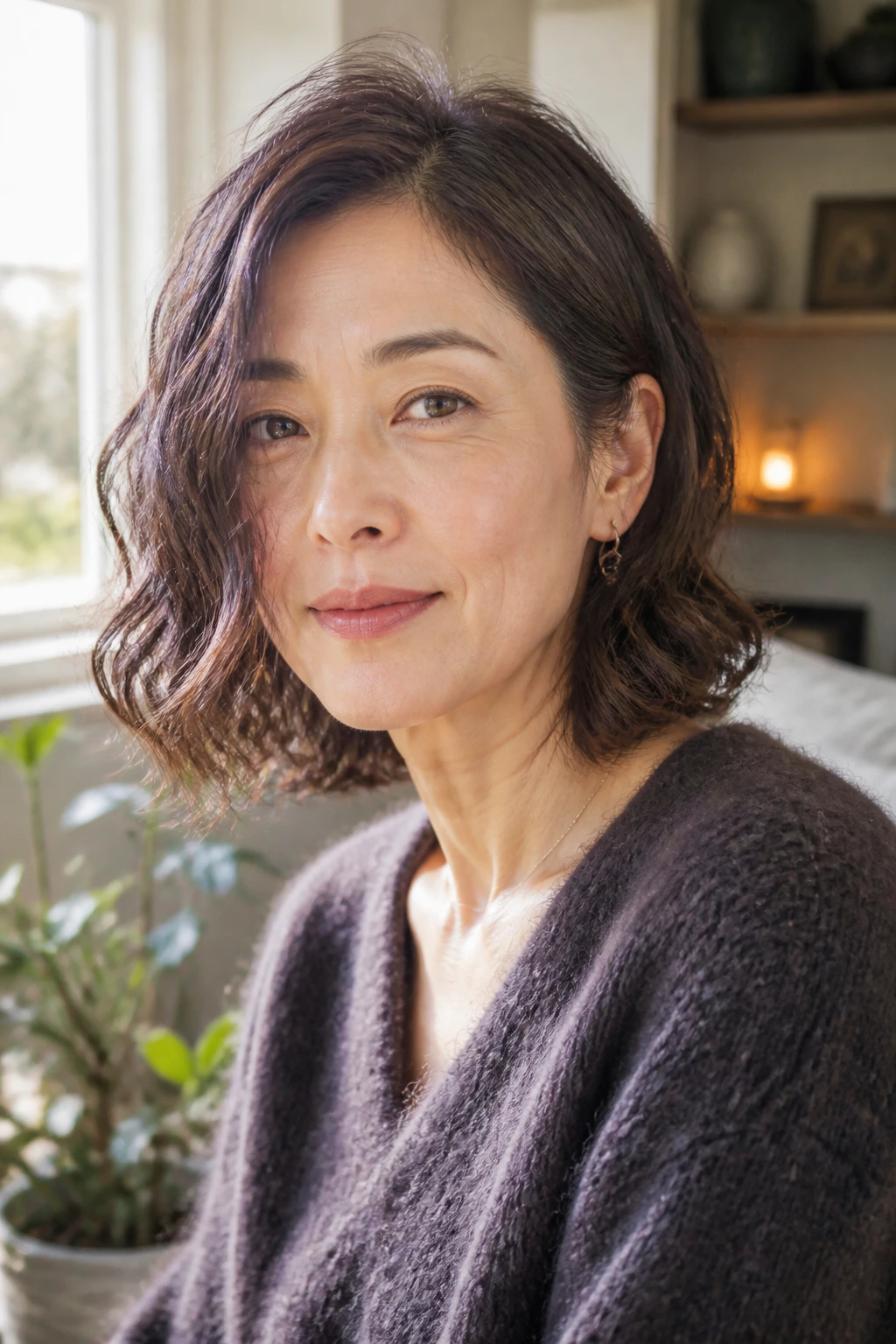
Some cuts look best when they’re a little imperfect. This is one of them. The front pieces are long enough to tuck, the back stays clean, and the whole shape looks finished even if you only styled half of it.
The tucked-ear version works well on women over 50 because it gives you control over the face frame. Wear both sides down for softness. Tuck one side for a quick lift. Or do the slightly mismatched thing that always looks more polished than it should — one ear visible, one side loose.
That little tuck also helps if your curls tend to frizz near the cheekbones. Hair that’s tucked away from the face can stay neater for hours, especially if you smooth the section with a tiny bit of cream first.
10. Deep Side-Sweep Lob With Asymmetry
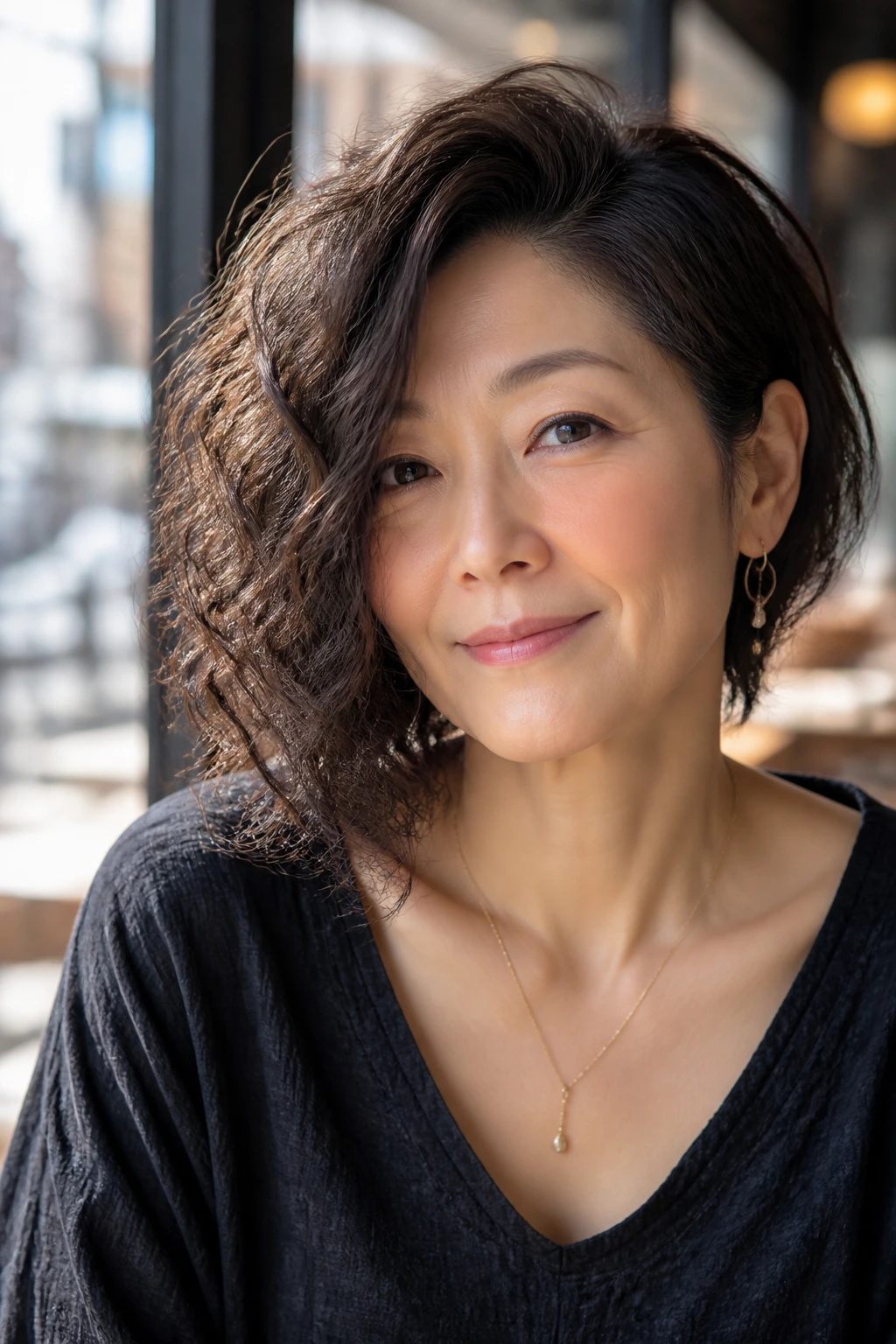
A deep side sweep gives the haircut attitude without making it loud. The part shifts the weight, the curls cascade across the forehead, and the longer side creates a line that feels flattering on rounder faces or fuller cheeks.
I prefer this shape when the curl pattern is strong but not overly springy. If the hair is very tight, the sweep can bounce up too much and lose the elegant drape. On looser curls, though, it lands beautifully and gives the cut a little movement every time you turn your head.
The part should be placed where the hair naturally wants to fall, or close to it. Fighting a cowlick only creates a shape that needs daily negotiation. Nobody needs that.
11. Glossy Evening Lob With Polished Ends
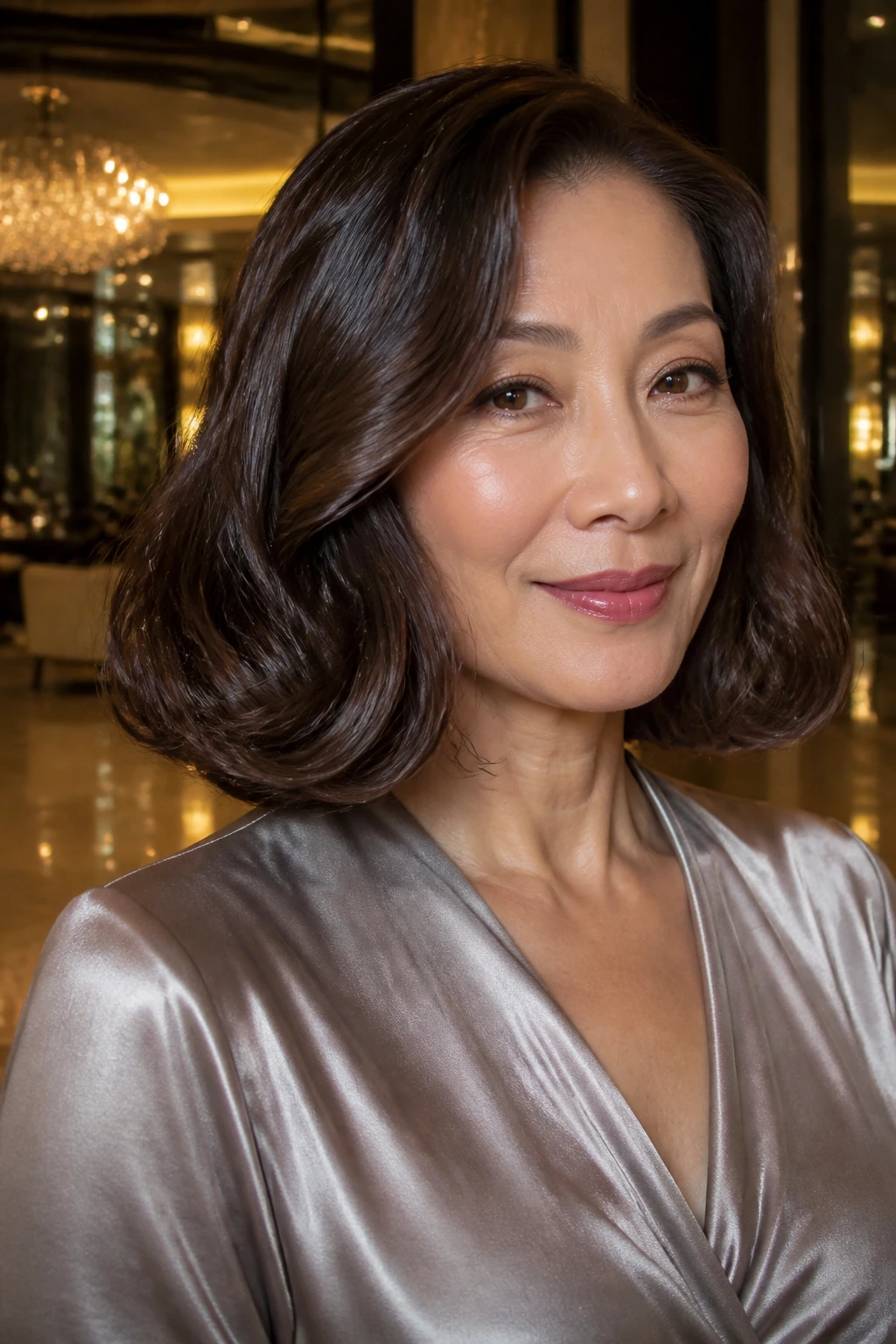
This is the version that looks a little dressed up even in daylight. The ends are smoother, the curl is more controlled, and the perimeter stays crisp enough to catch light along the bottom edge. It’s a clean look.
A glossy lob usually needs a stronger finish than the air-dried styles. I like a small amount of smoothing cream through the mid-lengths and a diffuser pass with low airflow. If the hair is silver or salt-and-pepper, the sheen can be striking because the shape gives the shine a clear frame.
This cut is useful if your usual curls lean fuzzy and you want a version that feels more deliberate for dinners, events, or workdays with a sharper dress code. It does ask for a little more styling. Not much. Just enough to make the line read.
12. Air-Dried Wash-and-Go Lob That Still Behaves
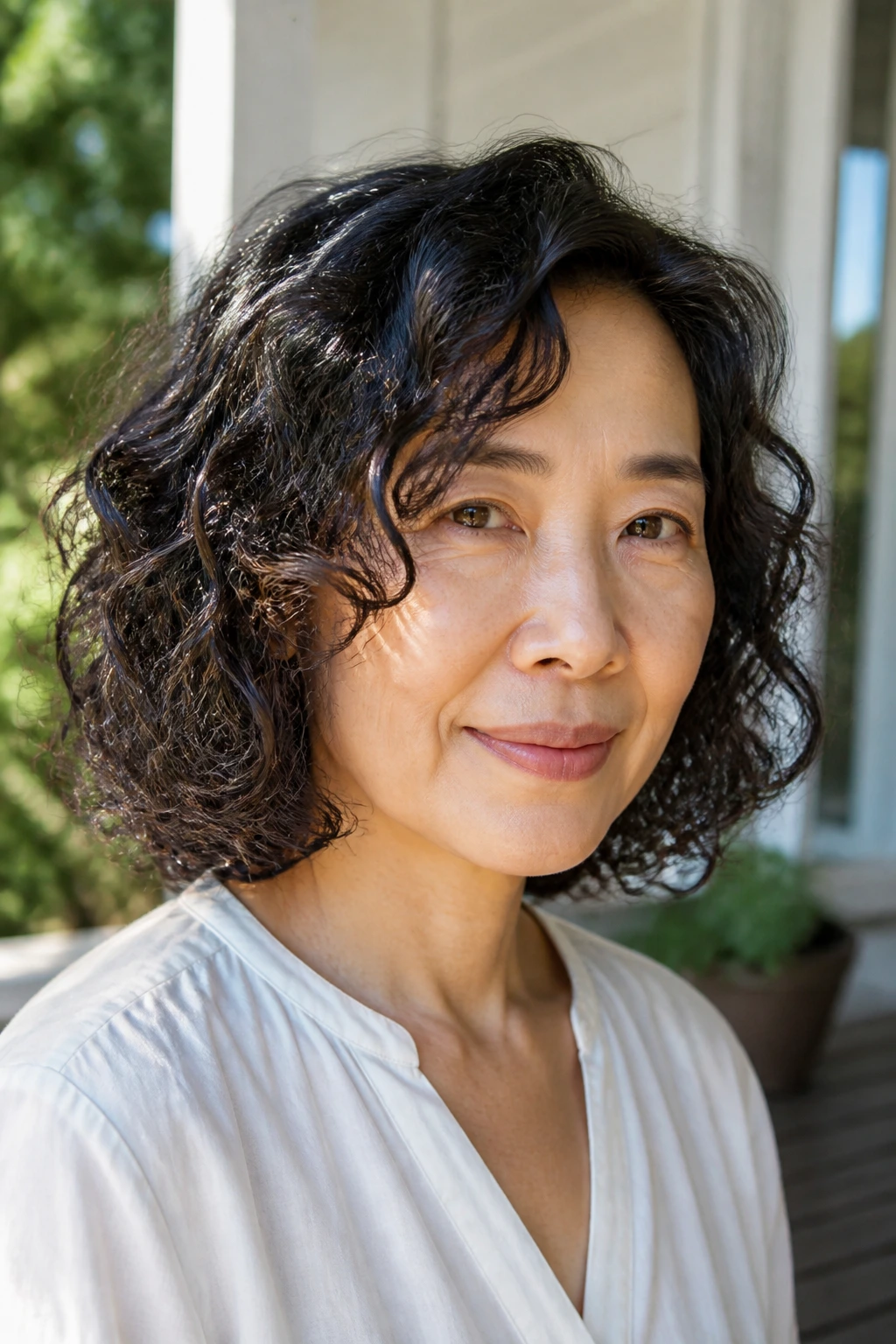
A wash-and-go lob works when the cut is built for it. That means the perimeter is clean, the interior layers are balanced, and the curl pattern is left enough length to form its own shape without being forced.
I like this for busy mornings, but only if the haircut has been tailored to the curl’s natural bend. A shape that looks amazing with a blow-dryer and miserable on its own is not low-maintenance; it’s just styled maintenance. This one should work with a little scrunching, a small amount of cream, and a patient hour in the air.
- Best detail: the front pieces should dry in a direction you can live with.
- Best habit: don’t touch it while it sets.
That second part matters. Curly hair can punish fiddling.
13. Face-Framing Lob for Glasses Wearers
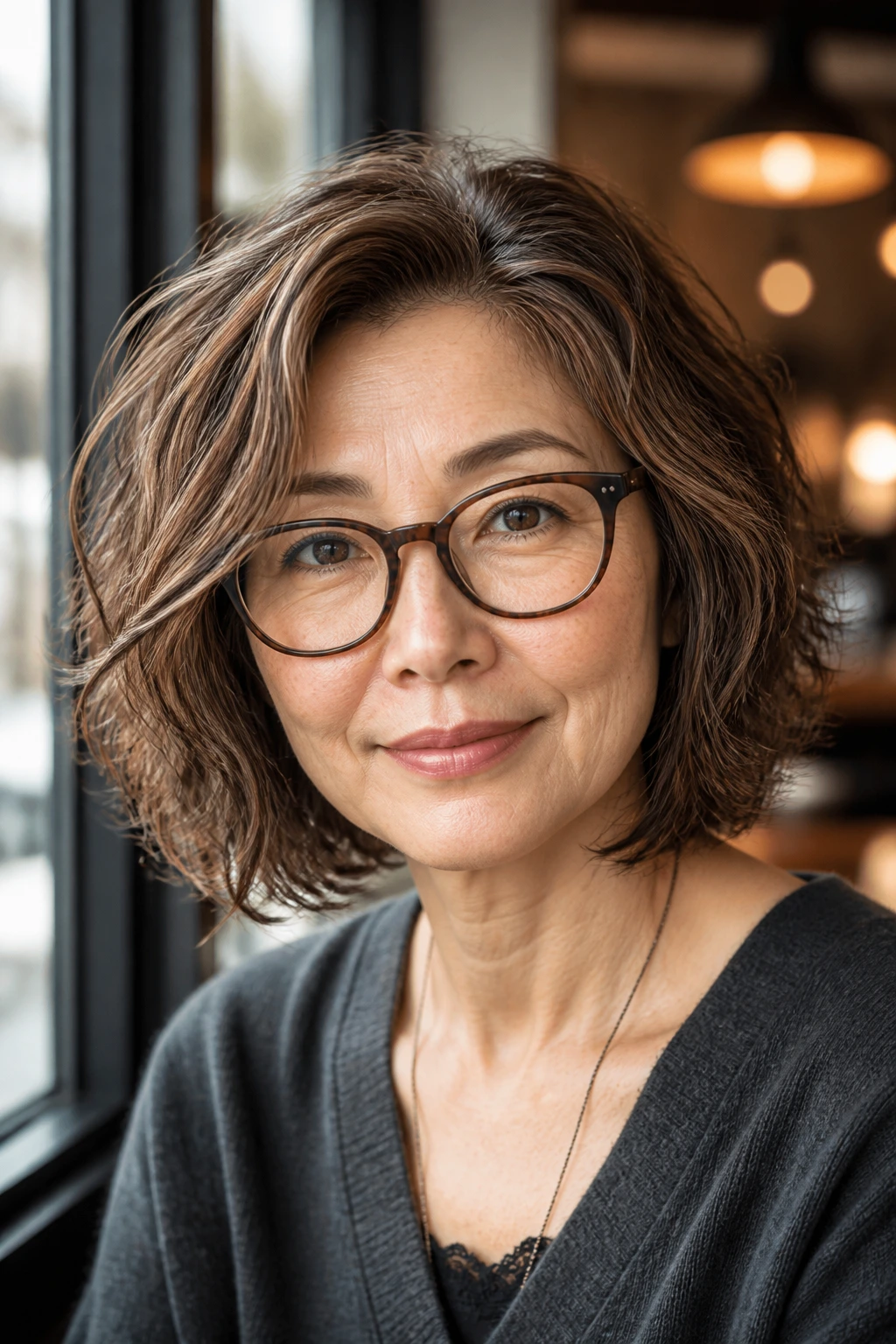
Glasses change where the eye lands, and a good lob works with that instead of fighting it. The front pieces should clear the frames or touch them lightly at the outer edge, not jam into the arms every time you blink.
This style is lovely when you want the haircut to soften the face without hiding your eyes. A little length near the cheekbone helps balance the glasses, especially if the frames are bold. If the frames are thin, the lob can be a touch more textured and still read clean.
I’d keep the sides a little longer for this one. Hair that ends right at the glasses line can get annoying fast. A half-inch makes a bigger difference than people expect.
14. Salt-and-Pepper Sculpted Lob With Bright Edges
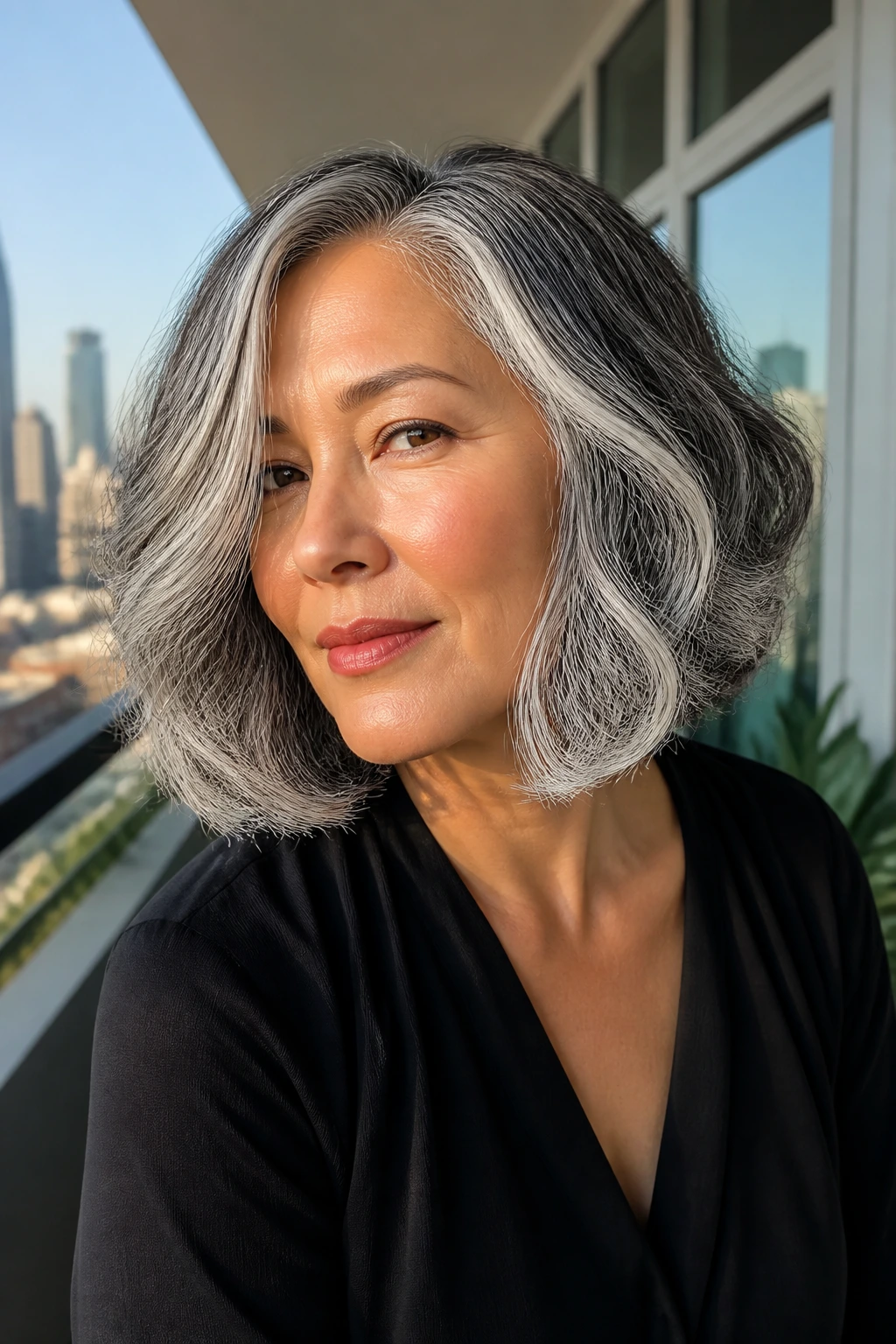
Salt-and-pepper hair looks its best when the cut respects the contrast. A sculpted lob does that by keeping the perimeter tidy and the curls separated just enough to show the different tones. The gray pieces stop looking accidental and start looking purposeful.
This is a strong choice if you have naturally thick hair with a mix of textures. Gray strands often pop up with a little more resistance, so a blunt-ish line with controlled interior weight helps keep the style from going wild. I love a side part here because it lets the silver streaks travel across the face instead of sitting in one heavy block.
The result feels calm, not fussy. That’s the point. The cut doesn’t need extra decoration when the hair color is already doing half the visual work.
15. Internal-Layer Lob That Hides the Bulk
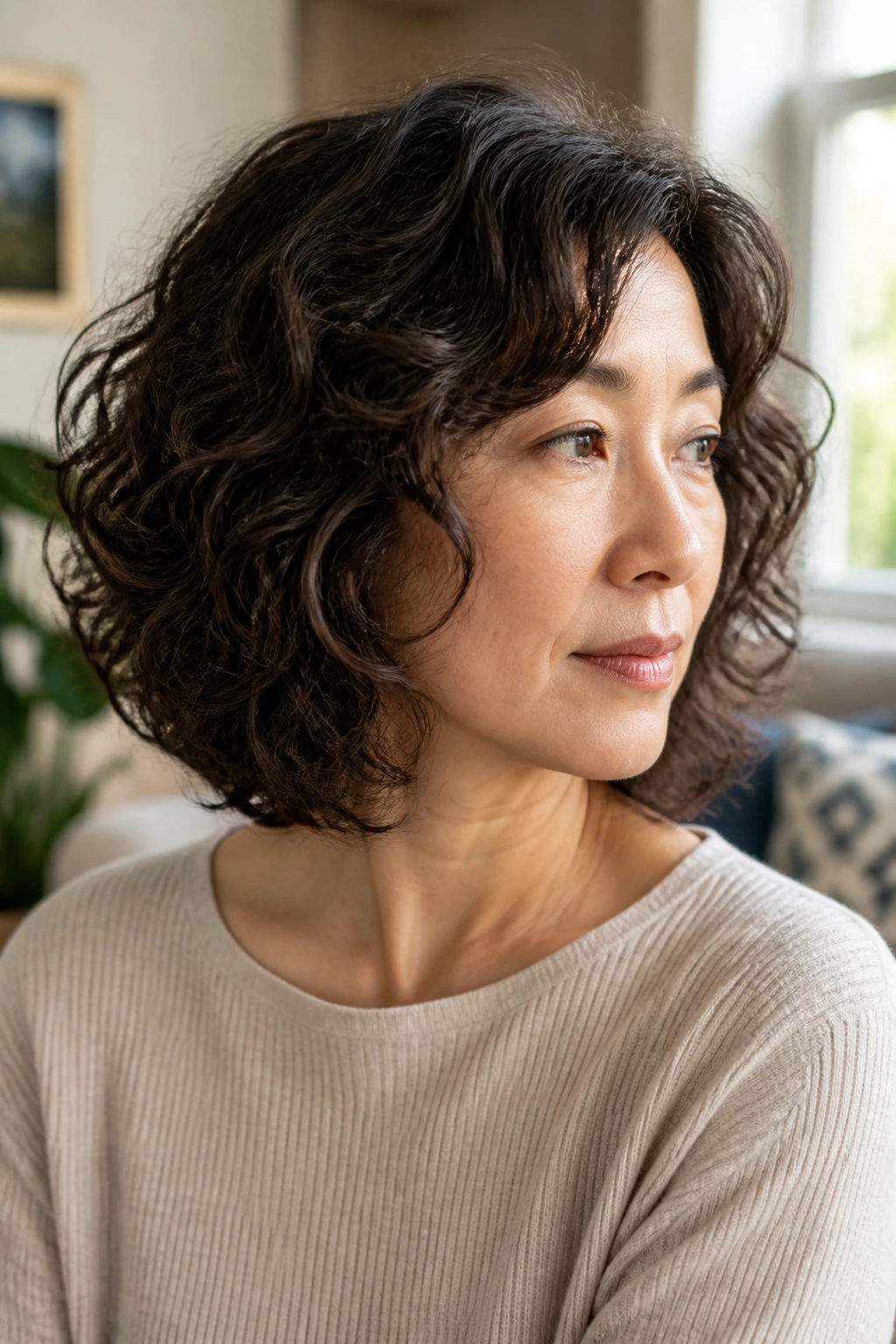
Not all layers are loud. Internal layers sit inside the haircut, where they take weight out without changing the outer line too much. For dense curly hair, that can be the difference between a shape that floats and a shape that swallows your head.
I prefer this version when someone wants the look of a clean lob but the hair itself is too thick to cooperate without help. The stylist can remove bulk from the middle and lower interior, then leave the perimeter intact. The curl gets room to move, but the outline stays modern.
This one is a smart choice if you’ve had bad luck with “thinning” cuts that left the ends stringy. Internal layers are the quieter fix. They solve the problem without advertising it.
16. Polished Shoulder-Skim Lob With Soft Bend
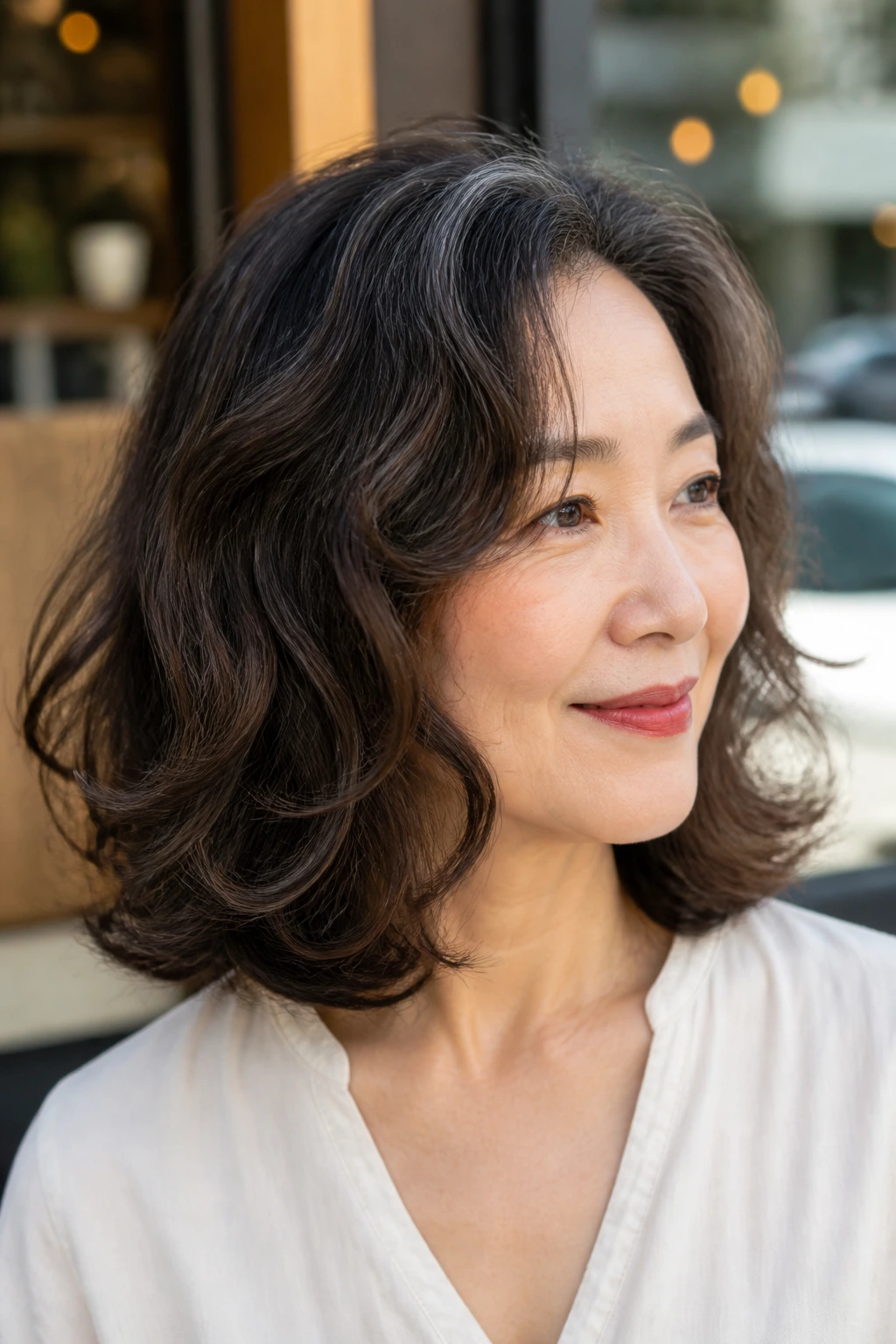
A shoulder-skim lob sits in a useful zone. It’s long enough to pull back, short enough to feel deliberate, and close enough to the shoulders to create a soft bend in the curl instead of a hard flip.
That bend matters. When curls brush the shoulders, they can kick outward in odd places. A cut that ends just above or just below that line behaves better, especially if the hair is medium density. The shape looks easy, but it’s actually doing a lot of balancing work.
This is one of the more forgiving options if you’re not ready for a shorter bob. It gives you the security blanket of length with a cleaner finish than a traditional long cut.
17. Soft Perm Lob With Classic Bounce
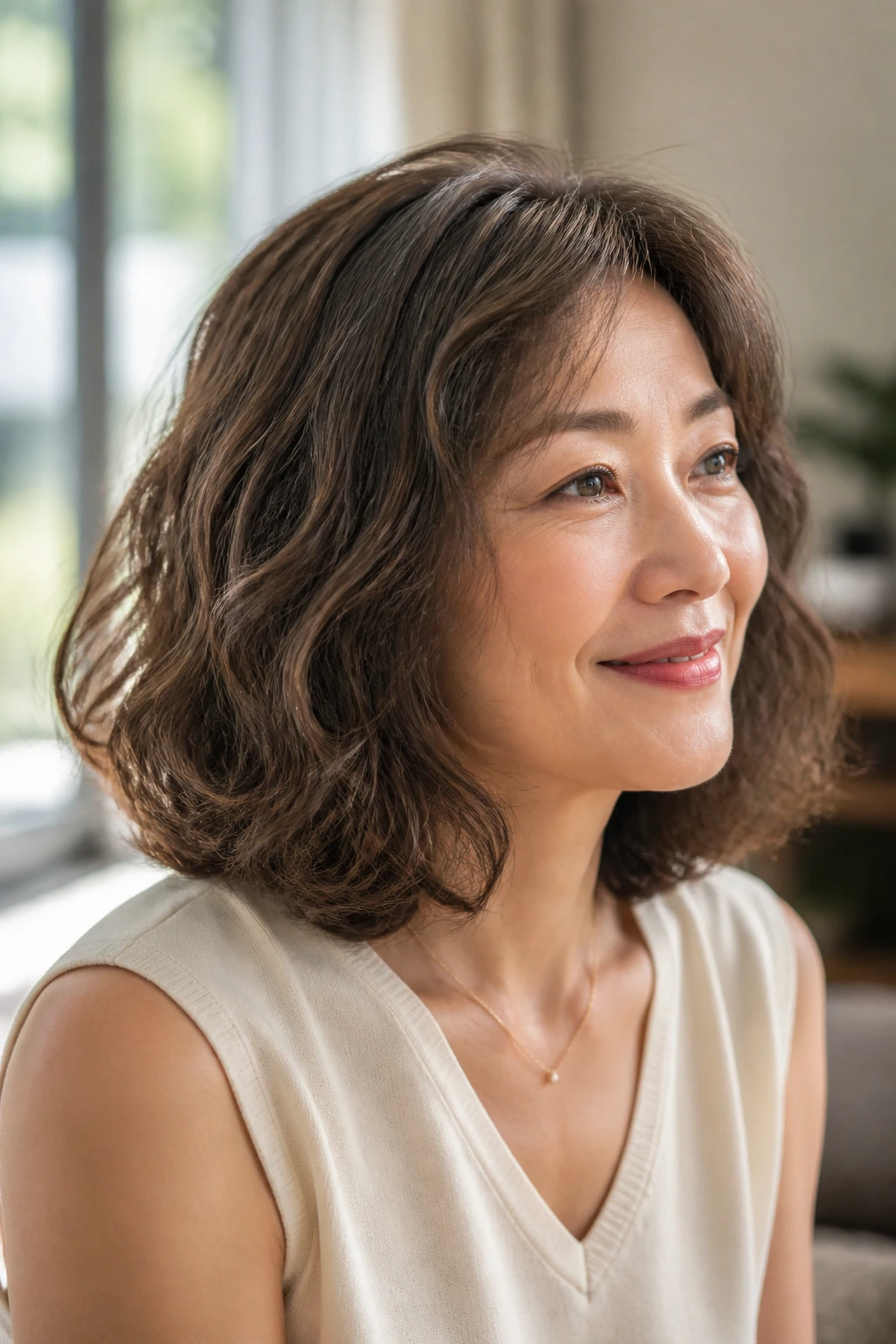
A soft perm lob can be a good match for women who want more predictable curl than their natural pattern gives them. The length keeps the shape from feeling too round, and the lob format gives the perm room to fall instead of clustering at the ears.
The best part is the bounce at the ends. Not the overdone kind. Just enough spring to keep the cut alive. If the perm is tight, ask for a longer perimeter and a light finish around the face so the front doesn’t crowd the cheeks.
This style pairs well with silver or highlighted hair because the curl pattern shows the color shifts clearly. It looks considered, not overworked.
18. Neck-Opening Graduated Lob That Lifts at the Back
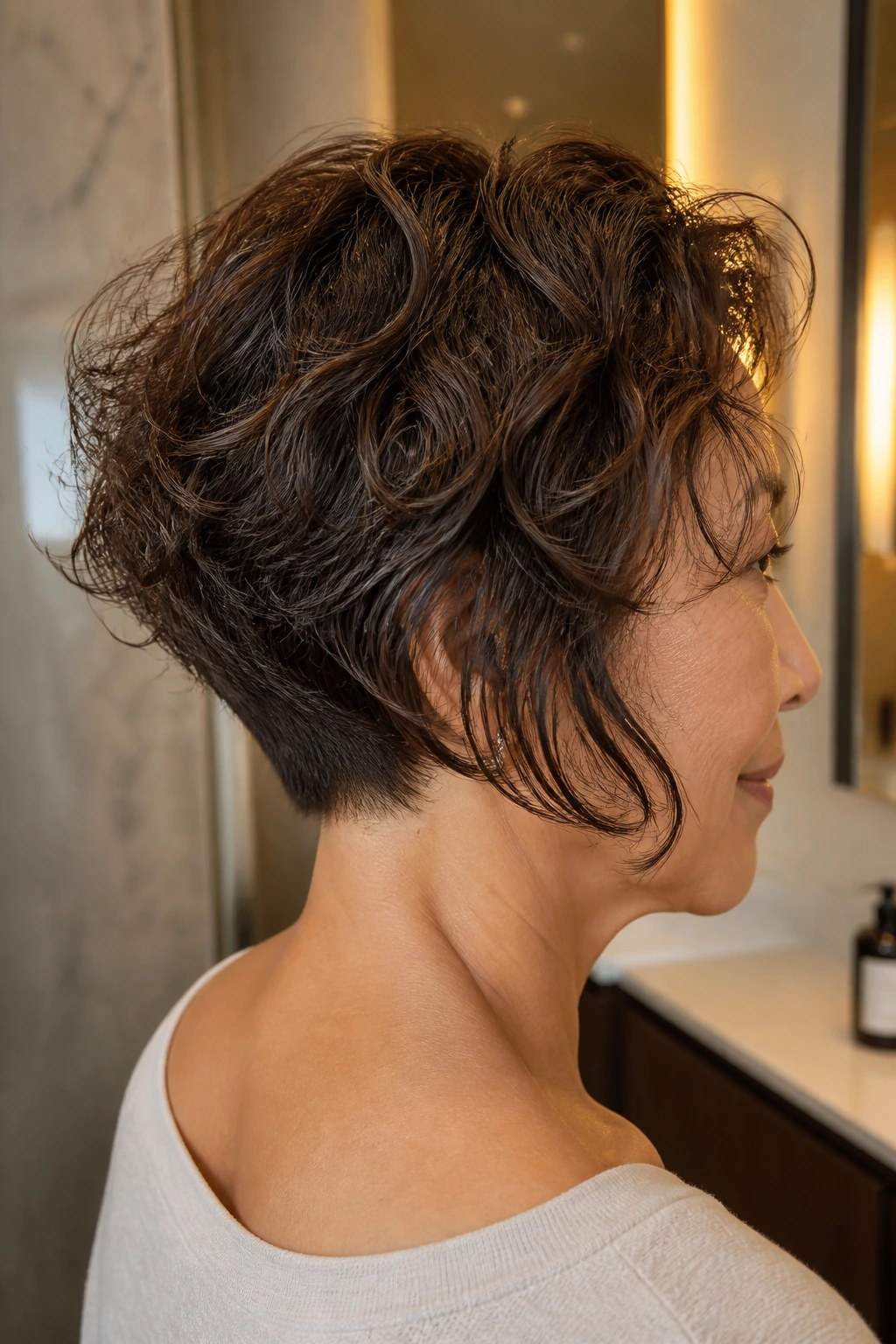
A small graduation in the back can open the neck and give the lob a more tailored line. The back sits a little higher, the front stays longer, and the whole shape feels lifted without needing a lot of round-brush work.
I like this for women whose curls fall flat at the crown but puff at the sides. That tiny rise in the back changes the balance. The haircut feels lighter from behind, which matters more than people think when a style has to work from every angle.
The graduation should stay subtle. If the back is too short, the curls in front can look heavy by comparison. You want lift, not a wedge.
19. Frizz-Friendly Lob That Survives Humidity
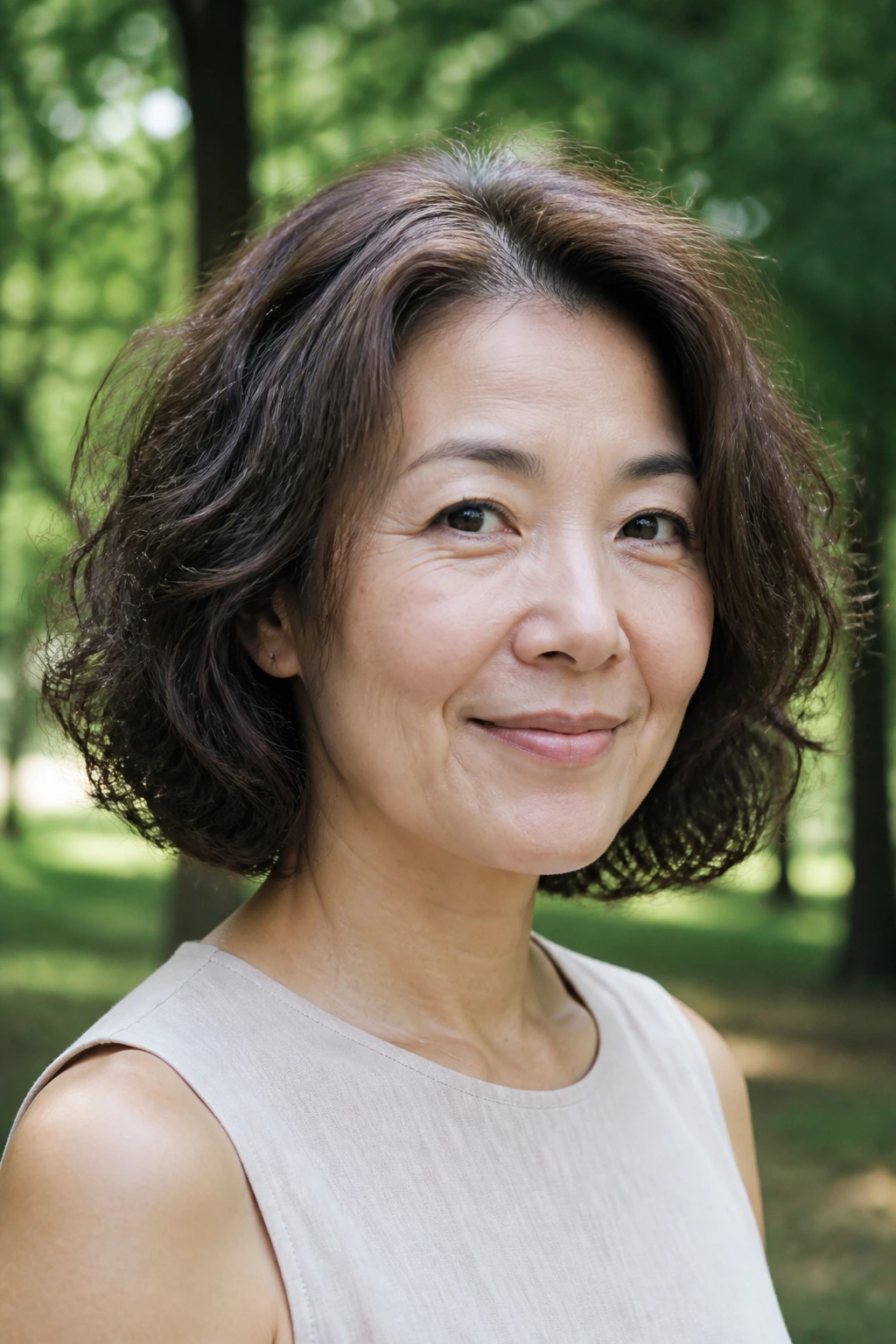
Humidity is the rude guest at the party. A frizz-friendly lob is built to ignore it. The shape stays a bit longer, the layers stay soft, and the perimeter has enough weight to resist puffing at the edges.
This is not about fighting every strand. It’s about cutting hair in a way that lets it swell a little without losing the outline. If your curls expand in humid air, avoid too many short layers around the crown. They only give the frizz more places to sit.
- Best move: use a light gel through the outer layer, then scrunch with a microfiber towel.
- Best result: a halo that stays controlled instead of fuzzy.
That little halo is fine when it’s intentional. It is not fine when it looks like the cut forgot where it ended.
20. Feathered Crown Lob With Lift at the Top
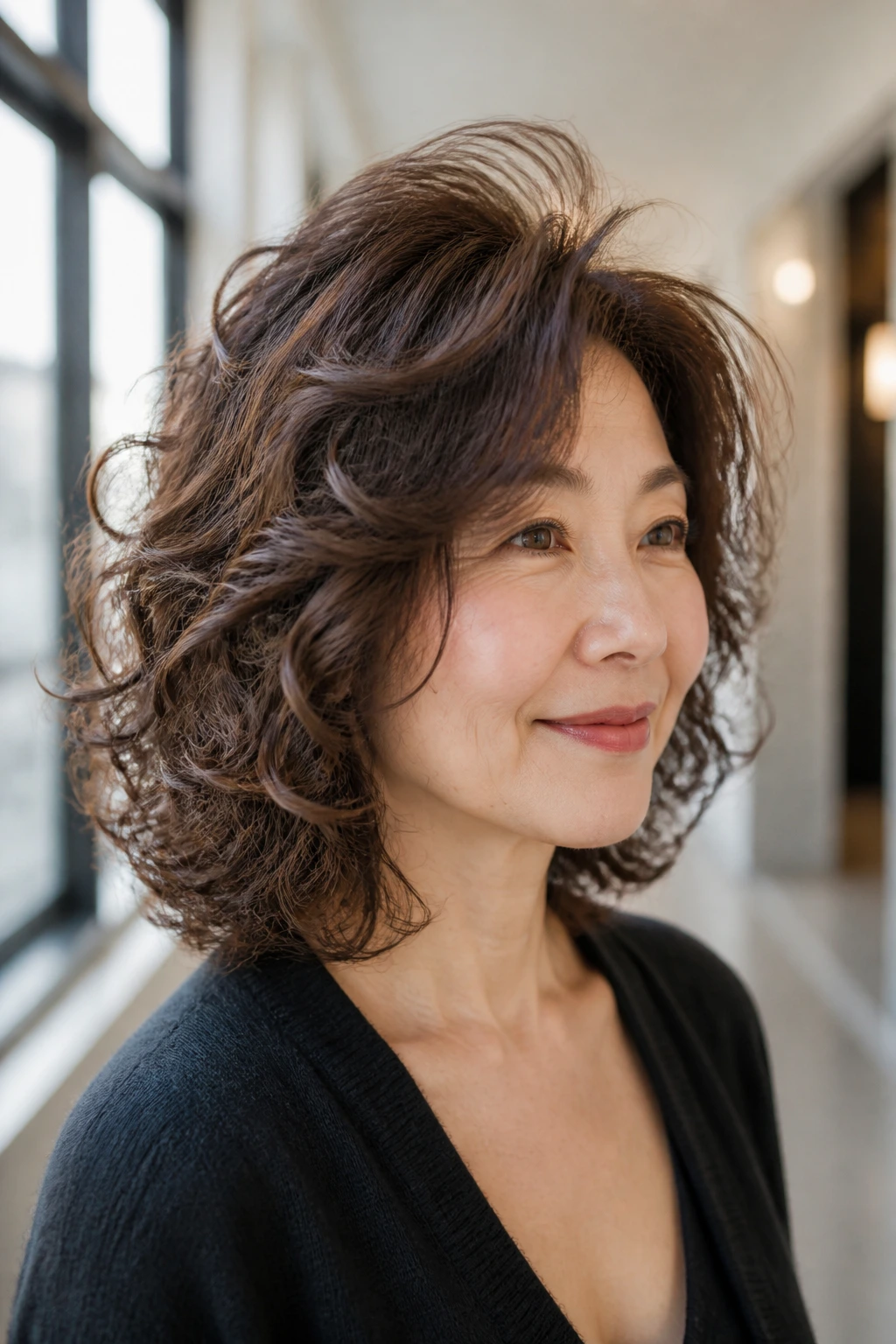
Feathering sounds airy, but on curly hair it has to be handled carefully. The right feathered crown lob uses soft interior shaping near the top so the crown rises without the sides exploding outward.
I like this on hair that has gotten flatter with time. Some people blame age; often it’s just gravity and a little loss of density. A soft crown can fix the visual problem without teasing, sprays, or a lot of daily work.
Keep the feathering away from the bottom inch or two. That’s where the line lives. If the ends get too light, the whole cut can lose its shape by lunchtime.
21. Minimalist One-Length Lob With a Modern Edge
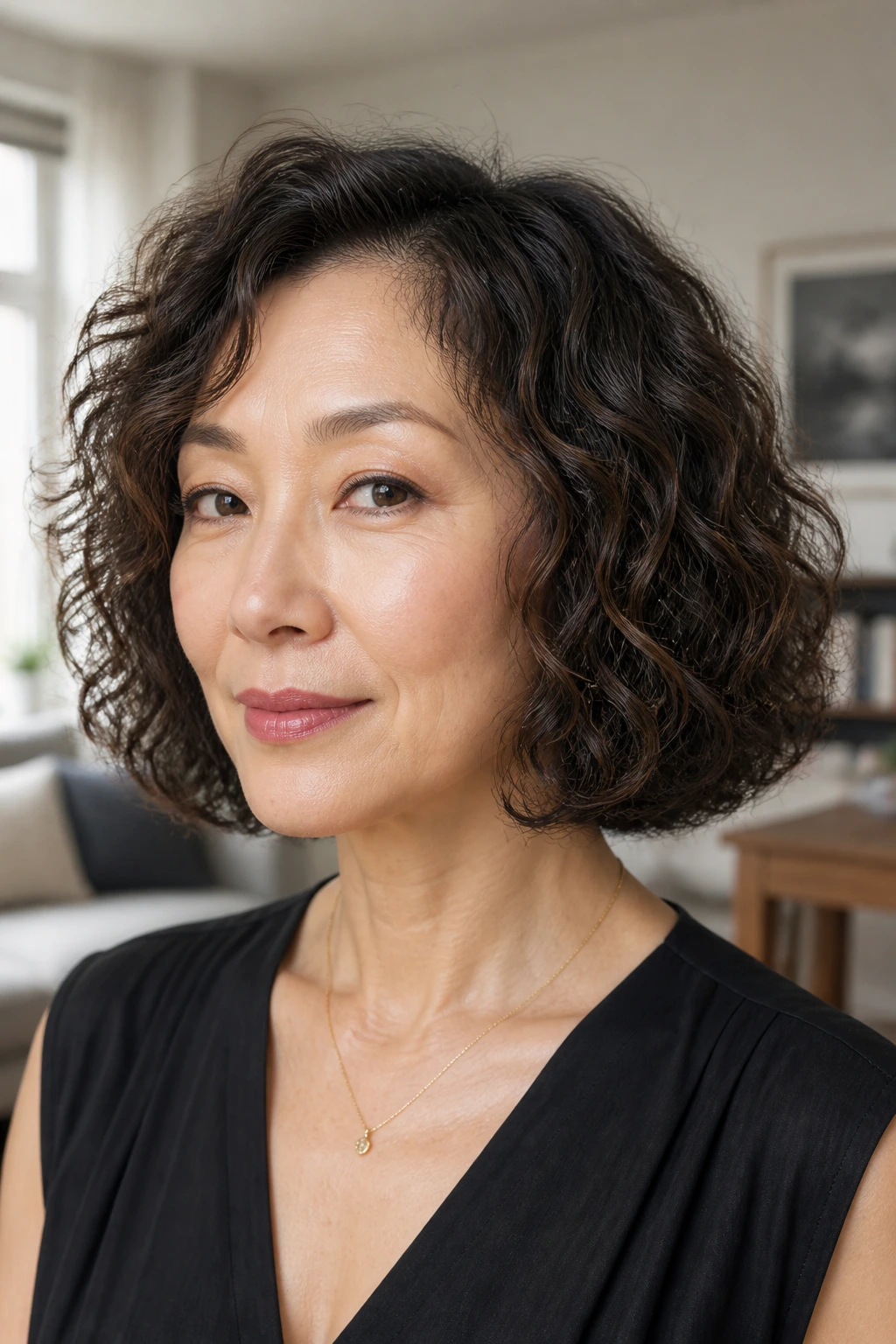
A one-length lob sounds plain until you see curly hair in it. Then it looks very sharp. The line is clear, the curl pattern becomes the texture, and the haircut stops competing with itself.
This works best when the hair is not overly dense and the curls are fairly even from root to end. If the density is too high, the bottom edge can widen. If the hair is fine, the one-length shape can create the illusion of more body because there isn’t a lot of chop breaking the line apart.
It’s a quiet haircut. Not boring. Quiet. And sometimes that is the better choice, especially when the curls already have plenty to say.
22. Elegant Gray Halo Lob With Soft Surrounding Pieces
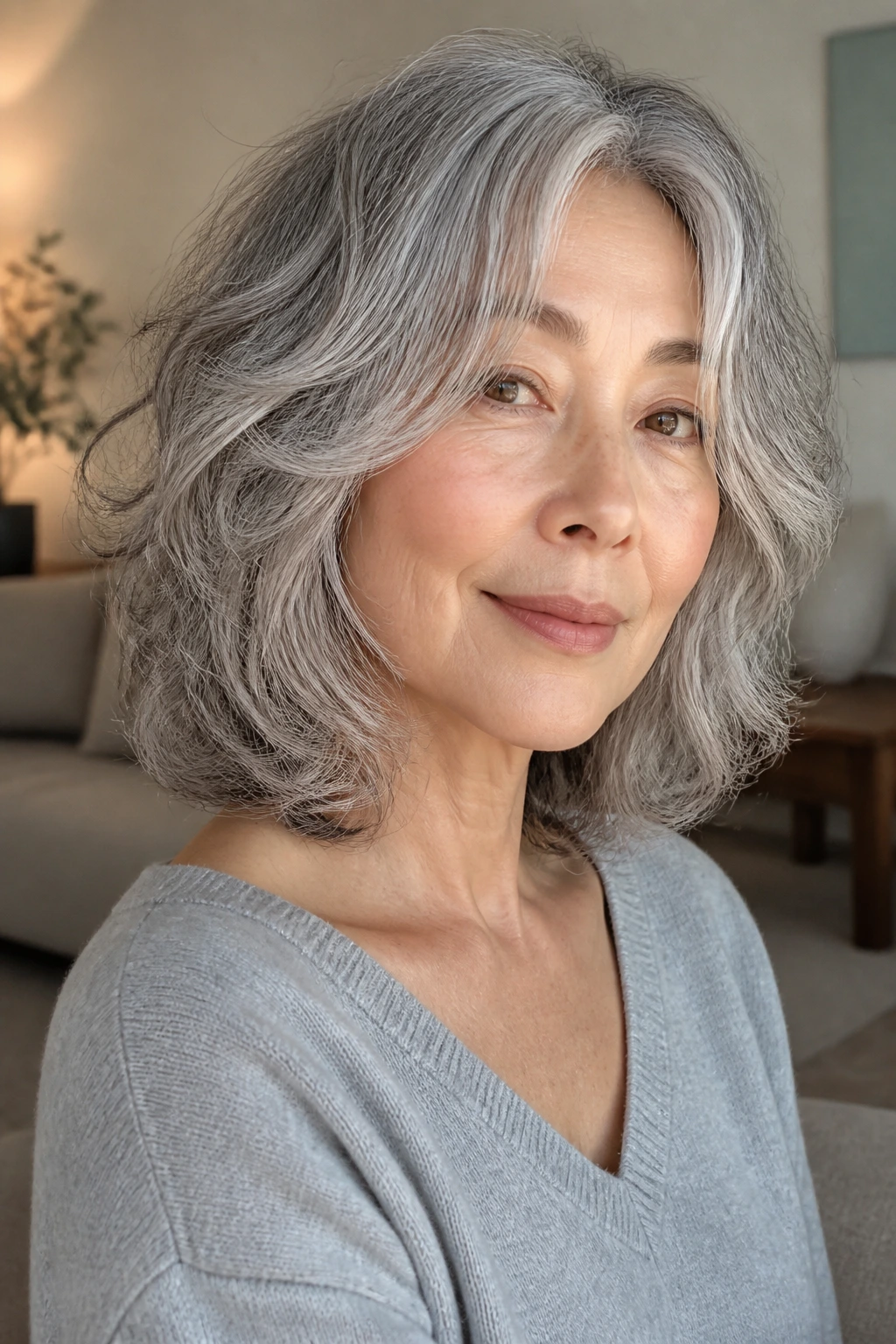
This one is all about how the silver sits around the face. A gray halo lob uses the natural brightness of the hair to frame the features, with soft front pieces that keep the look from feeling hard or severe.
I like this shape when the gray is mixed through the whole head rather than concentrated in one streak. The haircut should let the color travel, not box it in. Longer face-framing pieces around the cheekbones and a steady collarbone length make the whole style feel graceful without becoming precious.
It’s one of the easiest cuts to wear with minimal makeup, a good sweater, and a pair of earrings. The shape does the work. You just keep it honest.
How to Ask for the Cut Without Ending Up with a Triangle
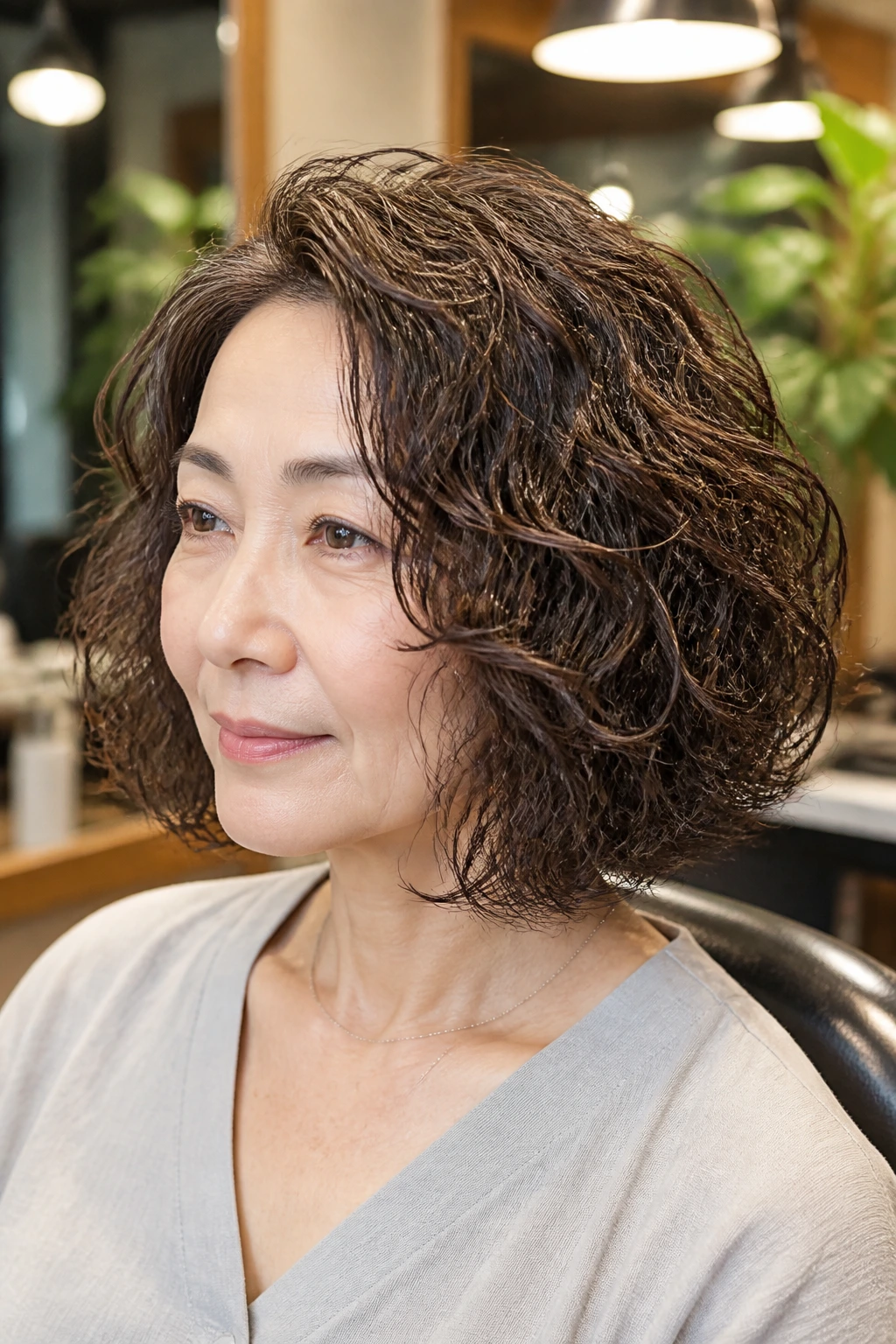
The best salon conversation is plain and specific. Say you want a Japanese-inspired long bob for curly hair with a clean perimeter, not a round puff. Tell the stylist where you want the finished length to sit after shrinkage, and mention whether your curls spring up 1 inch, 2 inches, or more when dry.
I would also ask for the weight to stay in the outline unless your hair is truly dense. That sounds counterintuitive, but curly hair often needs the ends to stay substantial so the shape doesn’t fray. If layers are needed, ask for them to be placed inside the cut rather than scattered all over the surface.
Bring one photo of the outline and one photo of the fringe or face-framing detail. One photo is never enough. It might show the length but hide the density, or show the bangs but not the shape around the shoulders. Two pictures tell a cleaner story.
Wash-Day Styling That Keeps the Shape Soft
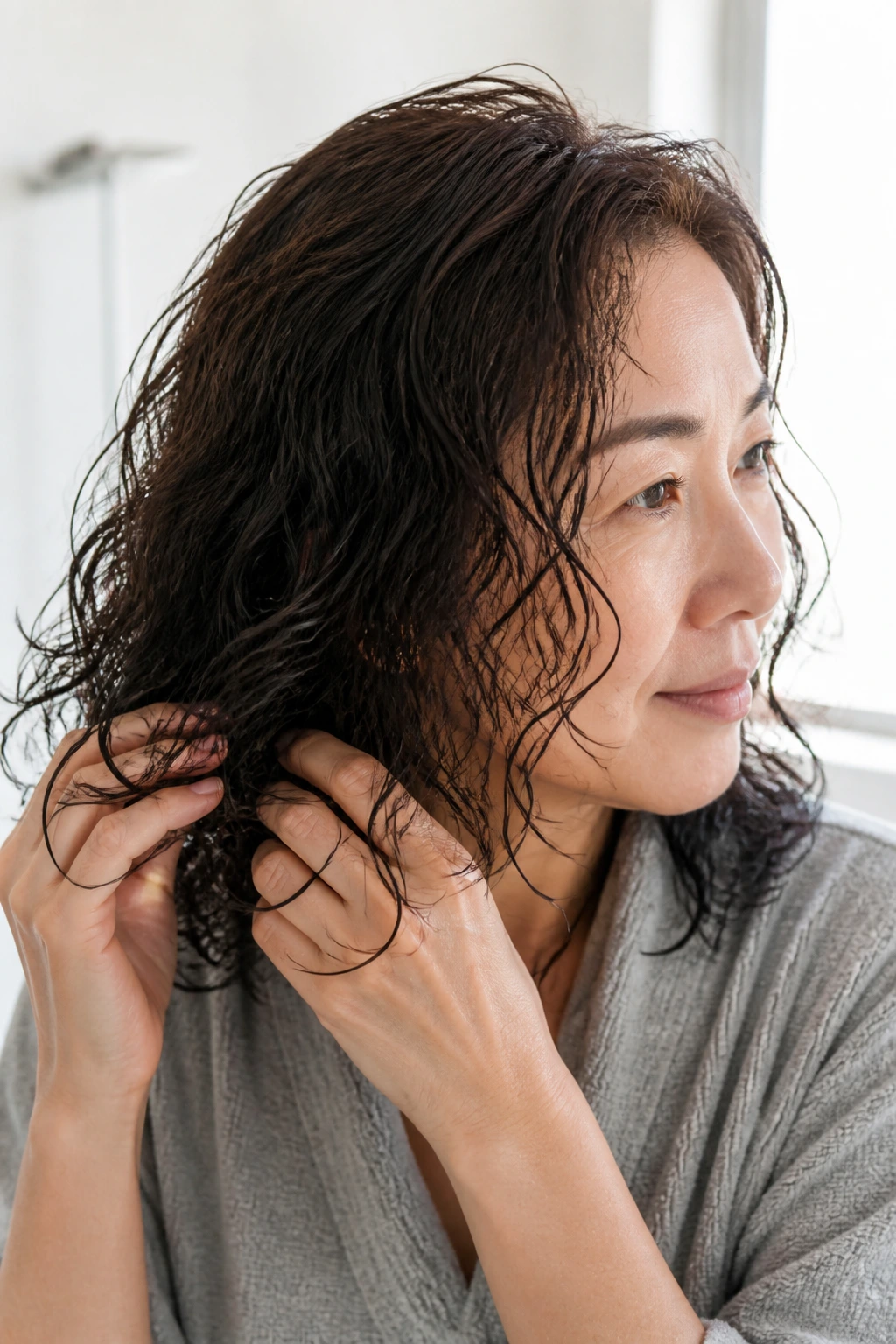
A good lob does not need a fussy routine. It needs a routine that respects the cut. After washing, squeeze out water with a microfiber towel or a soft T-shirt, then work a small amount of curl cream through the mid-lengths and ends. Start with less than you think. Curly hair punishes overloading.
For most curly lobs, I like a light mousse at the root and a cream or gel on the lengths. That combination keeps the crown from collapsing while still giving the perimeter enough hold to stay defined. If the hair is fine, use the mousse sparingly and keep heavier products off the roots.
Diffusing on low heat works well if you want more lift. Air-drying works better if your curl pattern is already consistent and you have time to leave it alone. The one rule that never gets old: don’t rake through it while it’s half-dry unless you want frizz and uneven clumps.
Tools That Make the Routine Easier
-
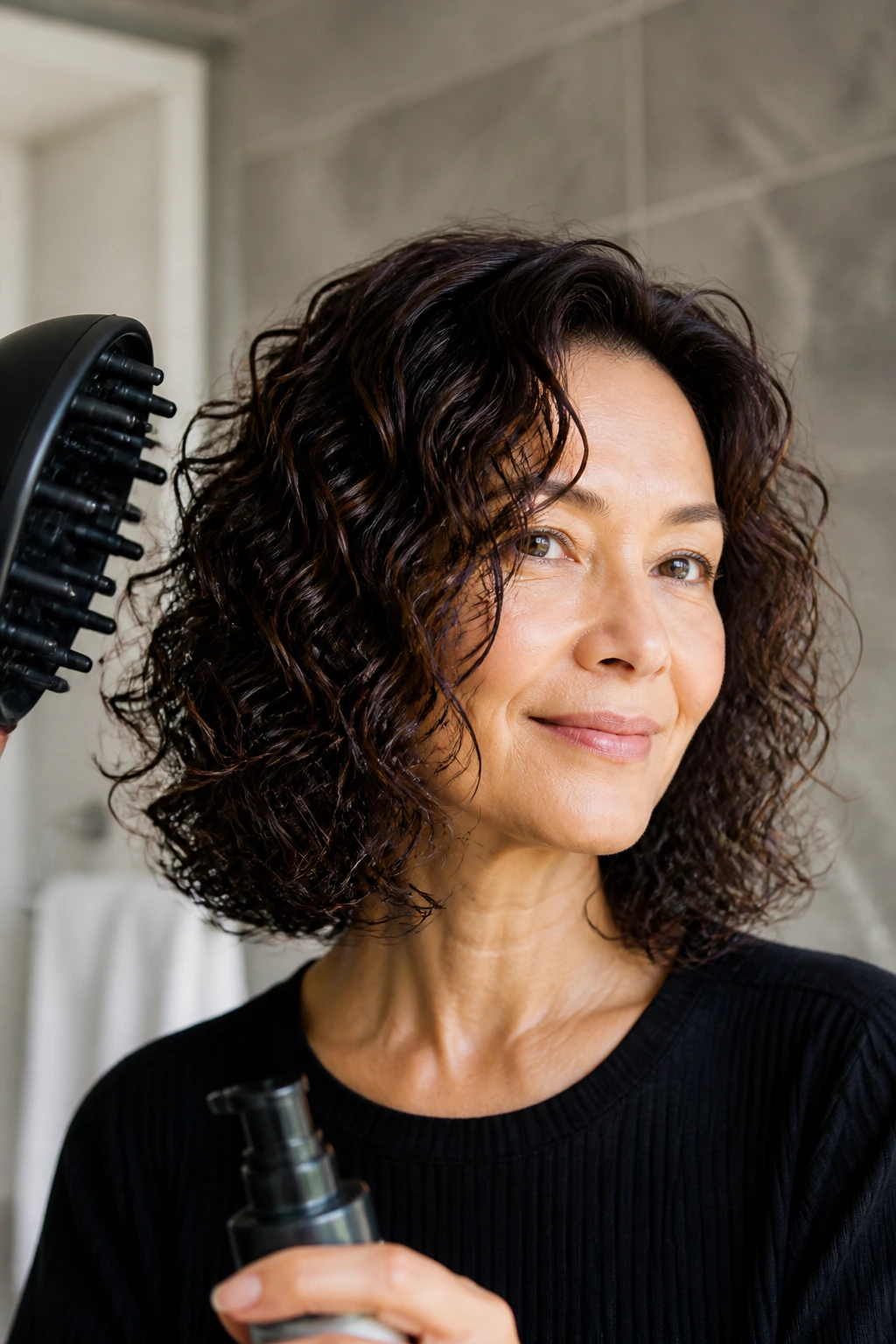
Diffuser attachment: Keeps curl clumps intact and softens the blast of heat; low speed is usually enough.
-
Microfiber towel or cotton T-shirt: Helps remove water without roughing up the cuticle, which matters when silver strands are already a little dry.
-
Wide-tooth comb: Useful for distributing conditioner in the shower and nothing more aggressive than that.
-
Duckbill clips or sectioning clips: Handy when you want to dry the front pieces in a specific direction.
-
Spray bottle: A little water can revive the front or reshape a flattened side without starting over.
-
Leave-in conditioner or curl cream: Pick one that disappears into the hair instead of sitting on top like wax.
-
Satin pillowcase or bonnet: Keeps the lob from getting crushed at the ends overnight.
Mistakes That Flatten the Cut or Puff It Out
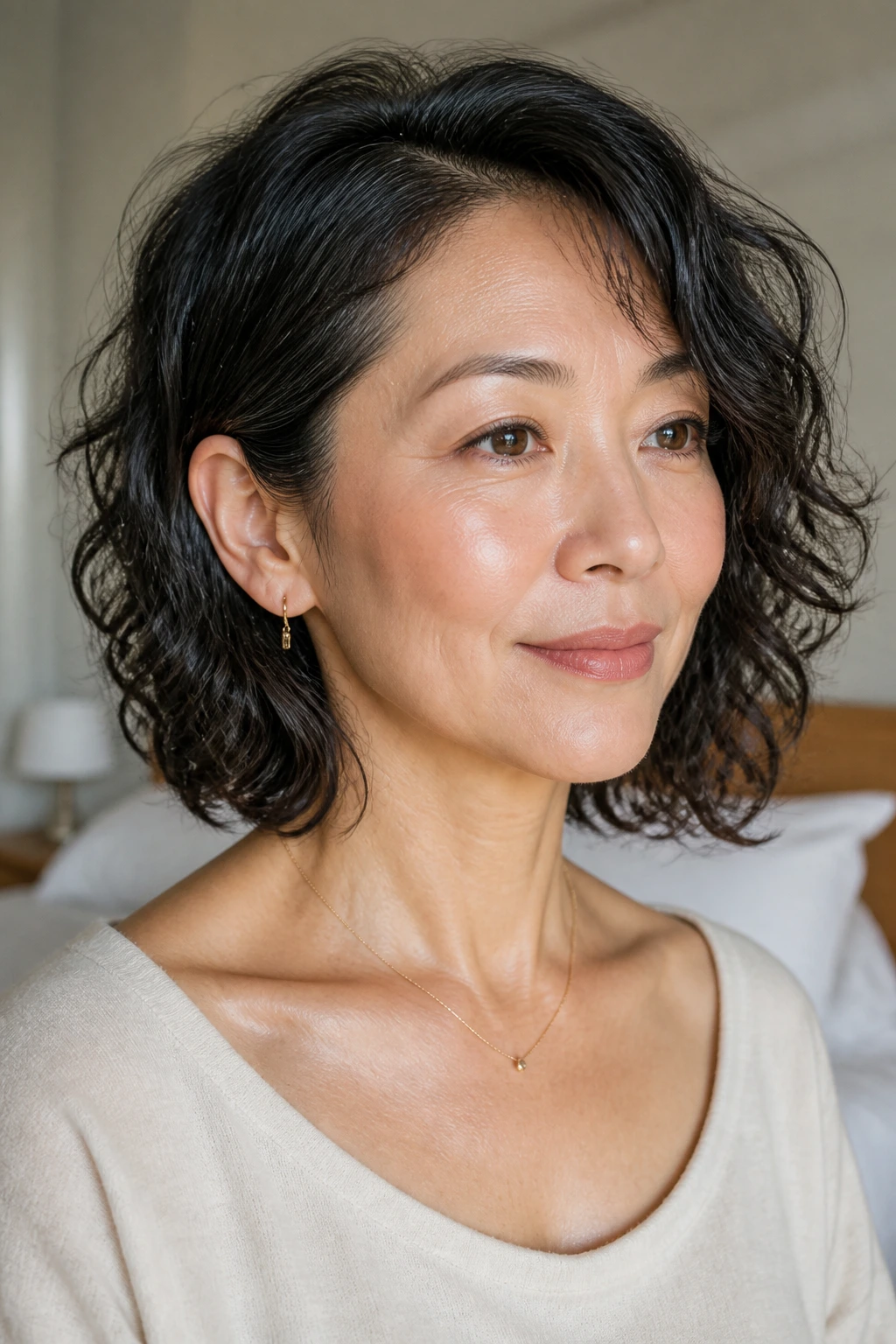
The first mistake is over-layering. Too many short layers make curly hair expand at the sides and lose its clean line. The fix is a blunt or softly layered perimeter with only a little internal shaping.
The second mistake is cutting it too short in the front. Curly hair bounces, and that bounce can turn a cute cheekbone piece into an awkward little shelf. Keep the front longer than you think, then let the curls shorten the visual line on their own.
The third mistake is loading the roots with product. A heavy cream up top makes the crown sag, then the sides puff up to compensate. Put the rich product on the mid-lengths and ends, and keep the root area lighter.
The fourth mistake is trimming a curly lob as if it were straight hair. It isn’t. A wet curl can hide shrinkage, and a straightened section can hide a bend that will return in full force after washing. Dry checks save a lot of regret.
Variations and Alternatives Worth Trying
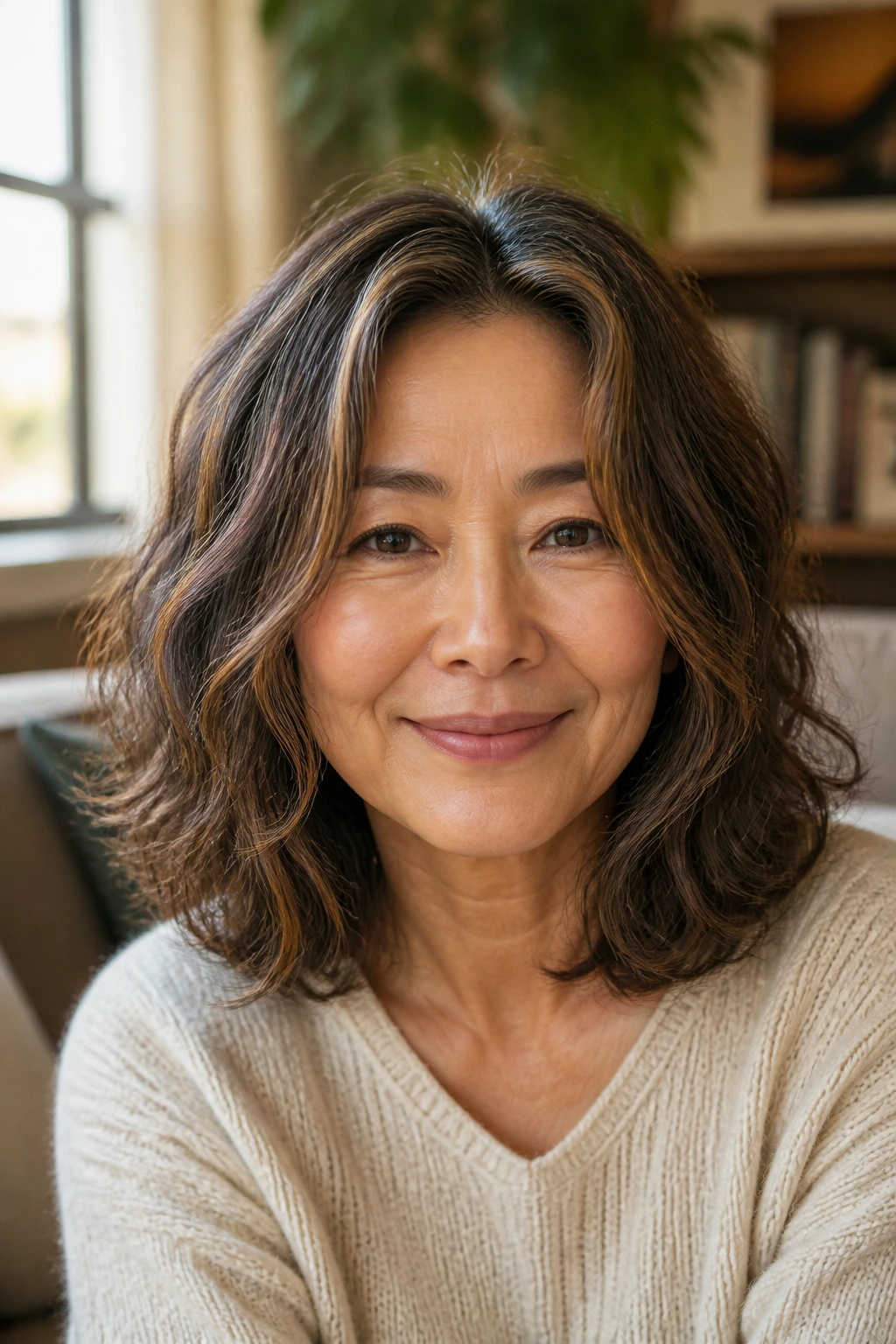
The Looser Wave Version
If your hair is more wavy than curly, keep the perimeter a touch longer and the layers softer. You want movement, not a strong round shape. A center part usually works well here because the wave pattern falls open instead of collapsing to one side.
The Thick Curl Version
Dense hair usually needs internal weight removal and a slightly longer front. Leave enough bulk at the bottom to stop the ends from flying away, then shape the interior so the cut can breathe. This version tends to look best when the curls are defined with a diffuser.
The Fine Hair Version
Fine curls do better with a cleaner outline and fewer short layers. A blunt-ish lob makes the hair look fuller at the edge, and a mousse at the root helps keep the crown from going flat. Skip heavy oils unless the ends are truly dry.
The Gray-Forward Version
If your silver strands are the main event, let them be. Keep the lob polished, not overworked, so the color has space to shine. A shine spray or a tiny drop of serum on the ends can make the silver look crisp instead of dull.
The Low-Styling Version
For the person who wants to wash, scrunch, and go, ask for a collarbone length with minimal internal layering. This keeps the hair from demanding too much shaping on busy mornings. The cut should still look decent when you barely touch it.
Keeping the Length Between Salon Visits
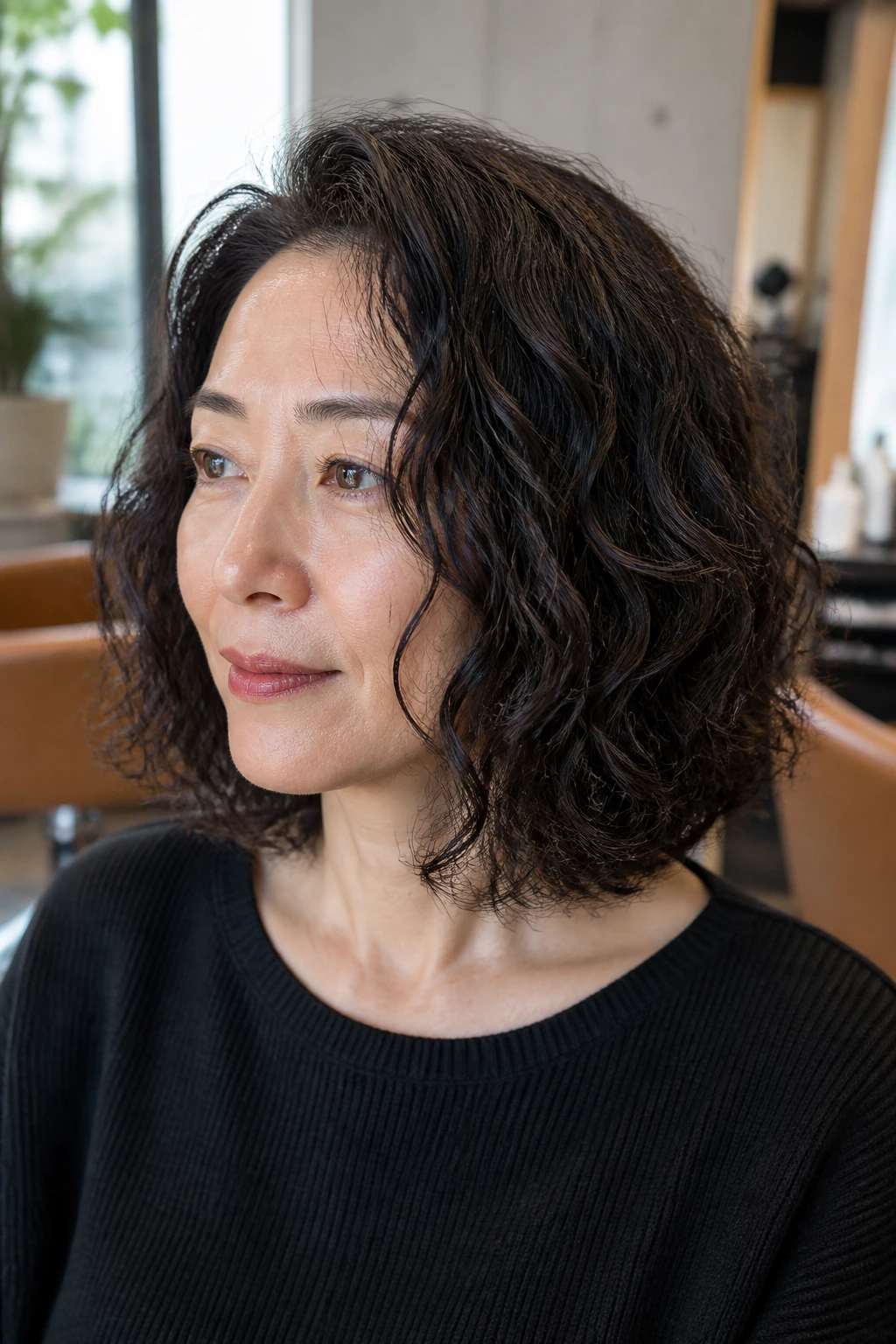
Curly lobs grow out well if you do not let the ends go ragged. Most people do well with a trim every 8 to 10 weeks if the perimeter is blunt, or every 10 to 12 weeks if the cut already has a soft internal shape. Let it go longer than that and the outline starts to blur.
In between trims, refresh the shape with a little water and a small amount of leave-in on the front pieces. If one side flips weirdly at the collarbone, dampen that section only and twist it around your fingers while it dries. You do not need to rewash the whole head to fix one unruly bend.
Once a month, clarify if you use a lot of cream or gel. Product build-up can make curly hair look dull and heavy, especially on silver strands. A clean rinse gives the cut back its spring.
Frequently Asked Questions
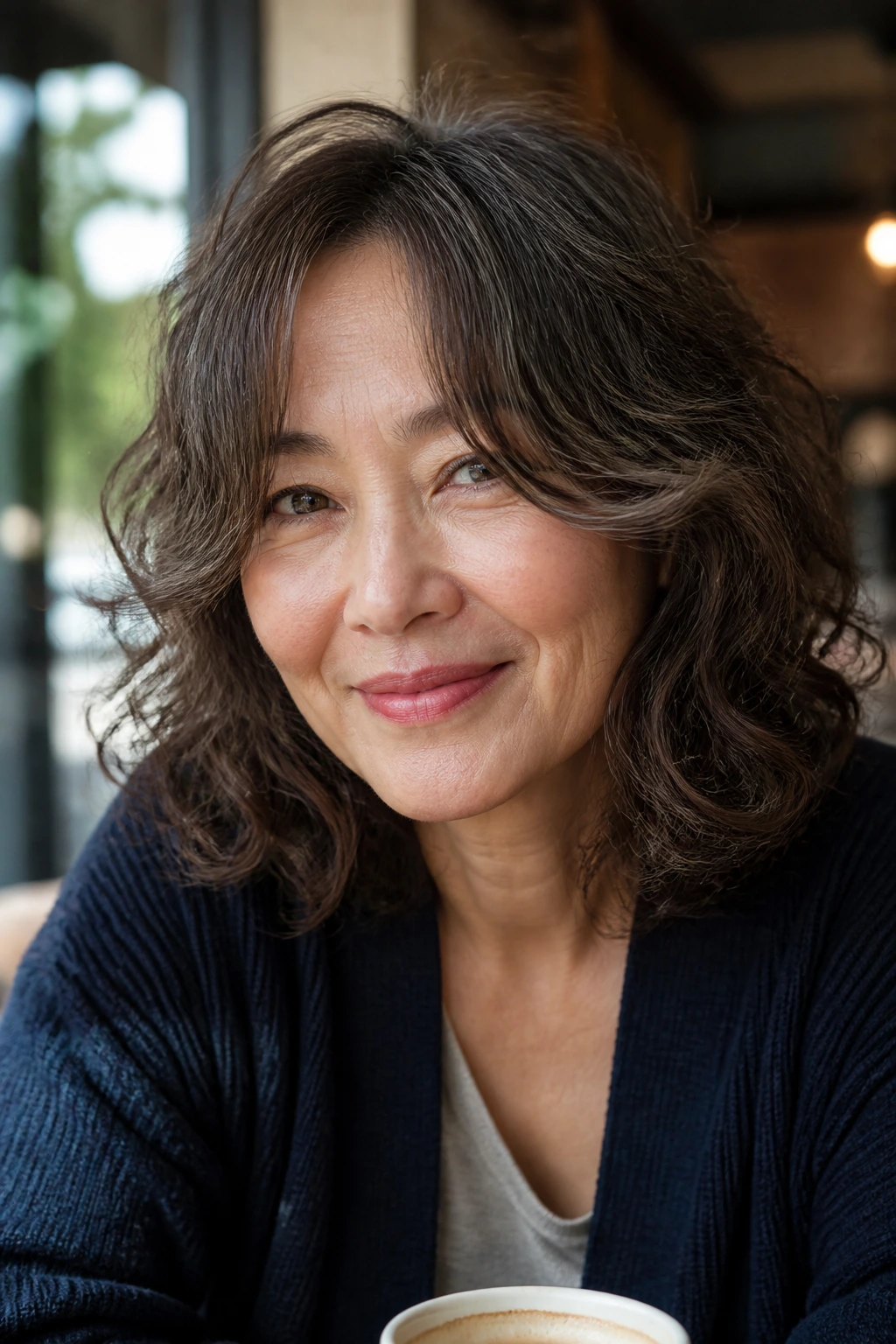
Can curly hair over 50 really wear a Japanese long bob without looking bulky?
Yes, if the perimeter is cut with the shrinkage in mind and the layers stay mostly inside the shape. The clean line is what keeps the style from turning into a triangle, not a pile of short layers around the outside.
Should this cut be done on wet hair or dry hair?
Dry cutting is safer for curly hair because it shows the true length and the way the curls sit. A stylist can still wash and refine the shape, but the first pass should respect what the curl is actually doing, not what it pretends to do when wet.
What if my curls shrink a lot?
Ask for the finished target to sit lower than the spot you want on the wet head. If your curls shrink more than 25%, the front may need an extra inch or two of length so it lands where you expect after drying.
Is a lob better than a shorter bob for thinning hair?
Often, yes. A lob gives thinning or finer curls more surface area, which can make the hair look fuller without forcing it into a short shape that exposes the scalp or the crown.
Will bangs ruin the shape if my hair is curly?
Not if they’re long enough. Curtain bangs, wispy fringe, or soft face-framing pieces usually behave better than short blunt bangs, which can spring up and sit too high.
Can I air-dry this haircut and still look put together?
You can, as long as the cut has enough structure in the perimeter and not too many chopped layers. A curl cream plus a light hold product is usually enough to keep the shape from wandering.
How do I keep the ends from puffing out at the shoulders?
Keep the perimeter a little longer than the shoulder line or a little shorter, so the curls do not hit that exact bounce point. A small change in length can stop the flip-out better than any styling trick.
Does this style work with glasses and earrings?
Very well, if the face-framing pieces are cut to sit either above or below the frame line. The lob keeps the neck visible for earrings, and the front can be shaped so the glasses don’t get buried.
A Shape That Still Feels Fresh
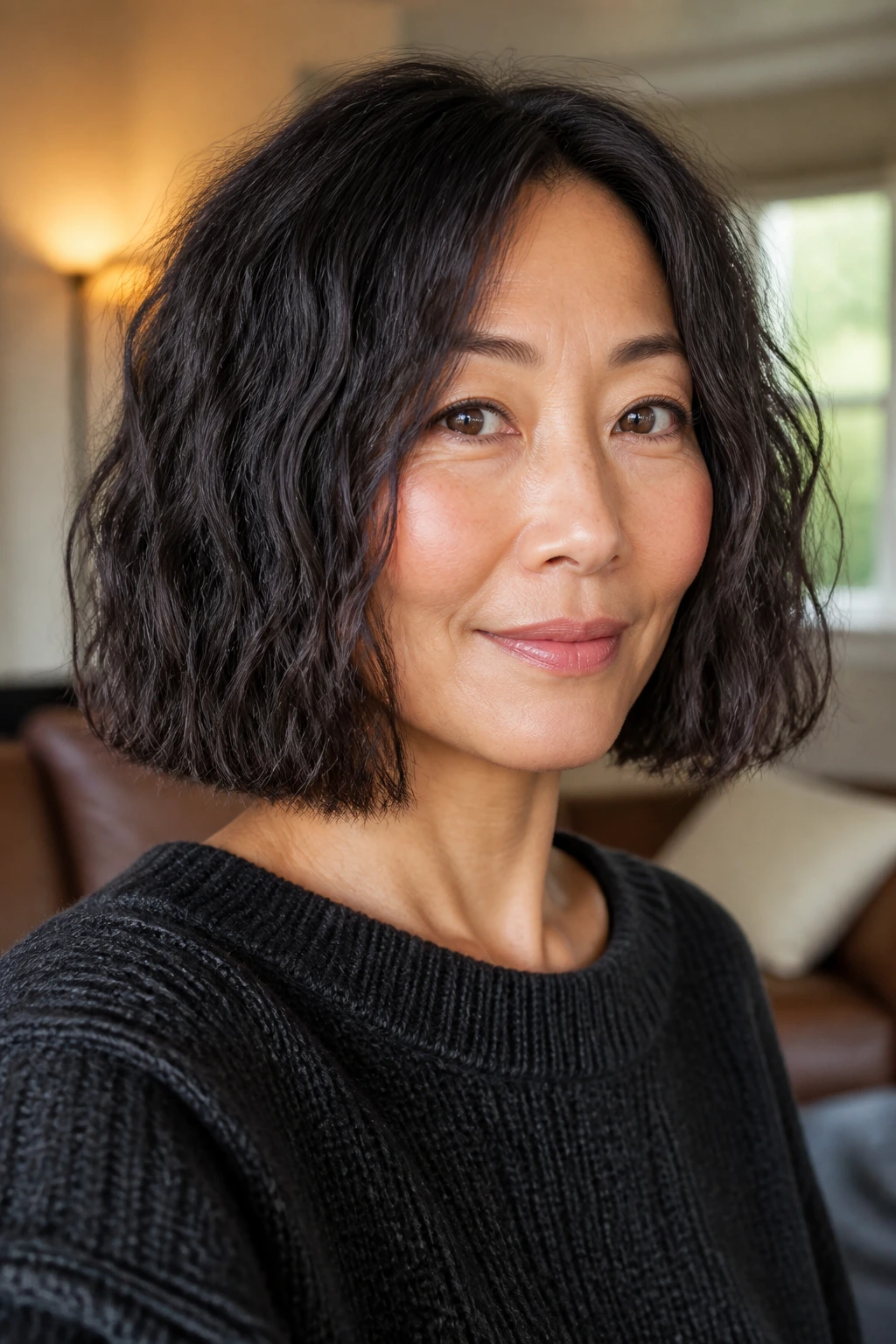
The best thing about a Japanese long bob on curly hair is that it doesn’t need to shout. The cut earns its keep through balance: enough length to soften the face, enough structure to keep the outline tidy, and enough curl left intact to look alive when you move.
That balance is especially useful after 50, when hair texture may shift and your patience for high-maintenance styling gets shorter. A good lob makes peace with all of that. It gives you a shape that can air-dry, diffuse, or smooth out for dinner, and it still looks like the same haircut the next morning.
Choose the version that matches your curl pattern, keep the perimeter clean, and do not let anyone over-thin it into frizz. That’s the whole trick, and it’s a very good one.