



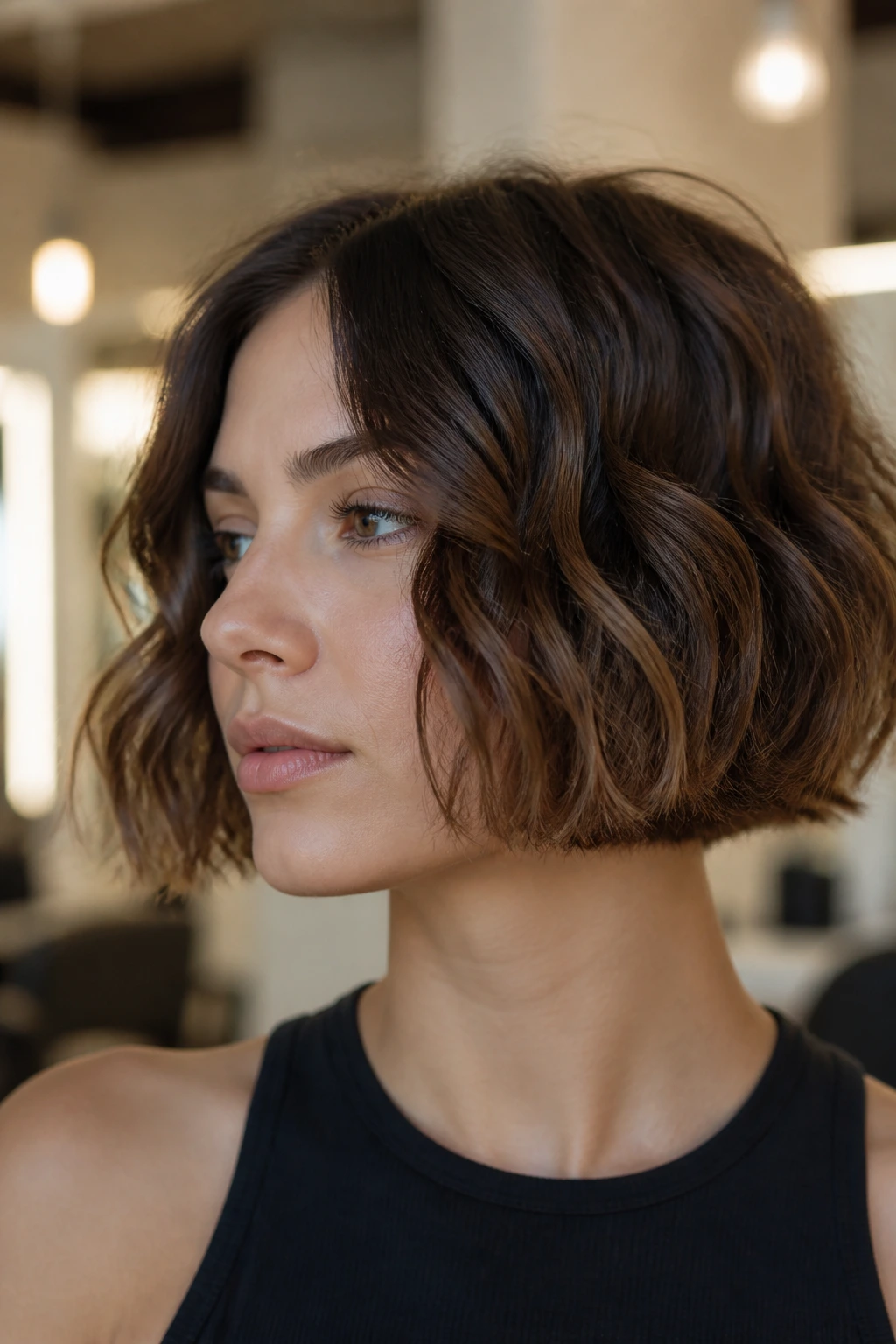
Chin length center part bobs for wavy hair can be sneaky like that. On the right head, they look clean and sharp at the jaw, then soft and a little unruly through the ends, which is the whole charm. The cut gives your wave pattern a boundary to live inside instead of letting it drift into that shapeless middle ground where hair looks busy but not styled.
Wavy hair has opinions. It bends, kicks, swells, and sometimes splits in ways that look better at 9 a.m. than 3 p.m., so the cut itself has to do some of the work. A center part adds symmetry; a chin-length line adds structure; the wave adds movement. When those three things line up, you get a bob that feels polished without flattening the texture you actually want to keep.
The trick is not making the hair behave like straight hair. That usually goes wrong fast. The better move is choosing a shape that respects the bend, keeps the line visible, and lets the ends sit right where the jaw can do some framing. Some versions are blunt and glossy. Others are airy, piecey, and a little cool around the edges. Both can work. The good ones just need the right cut line, the right product weight, and a stylist who understands that wavy hair shrinks when it dries.
Why These Bobs Work So Well on Wavy Hair
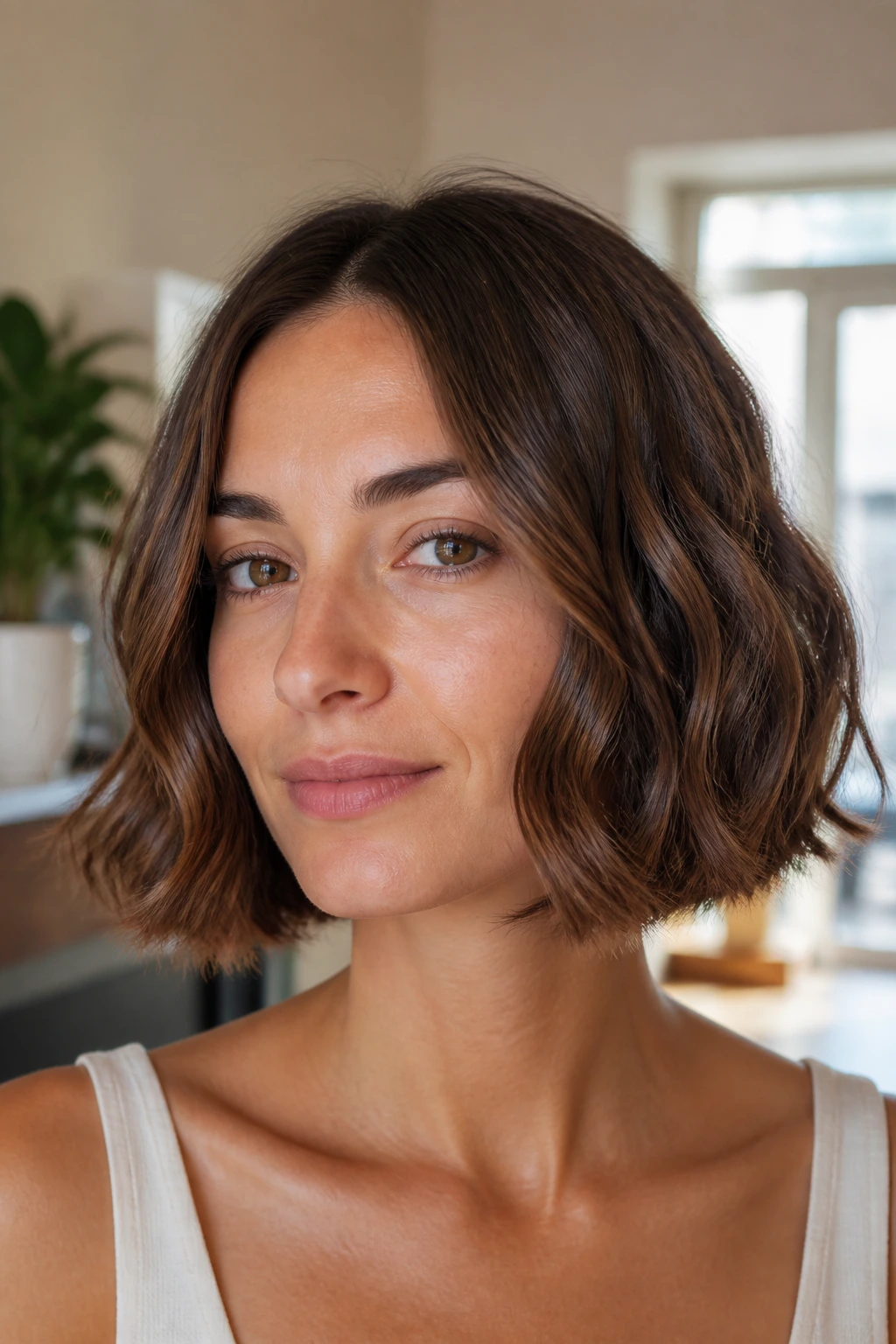
- The chin-length line gives the wave a stopping point: Instead of collapsing into the neck or puffing at the shoulders, the hair lands right where the jaw can shape it.
- A center part keeps the silhouette balanced: Wavy hair can lean crooked fast, and a middle part reins in that drift without making the style stiff.
- The shorter length cuts down on fuzzy ends: The damaged, poofy last inch disappears, which is why the cut often looks healthier immediately.
- Texture does the styling work for you: A little mousse, a quick scrunch, and a clean part can do more than ten minutes with a round brush.
- This length can swing both polished and undone: The same bob can look sleek with a blow-dry or lived-in with air-drying and a touch of salt spray.
1. Air-Dried Center Bob
This is the bob I think of first when someone says they want wavy hair to look like itself. The cut sits around the chin, the center part stays clean, and the ends dry into a soft bend instead of a stiff curve. If your wave pattern is more 2B than 2C, this version gives you movement without a lot of product or heat.
Why It Works on Wavy Hair
The perimeter should be blunt enough to hold shape, but not so hard-edged that it turns boxy. Ask for a dry check if your stylist can do one, because wavy hair often lands higher once it shrinks. A tiny bit of point cutting at the ends keeps the line from looking heavy.
- Best for waves that dry in loose S-shapes
- Good if you want a cut that looks better the less you fuss with it
- Ideal with a pea-size mousse and a microfiber towel, not a pile of cream
What to ask for: keep the length at the chin or just under it, with minimal layering and a clean center part.
2. Blunt Jawline Bob
A blunt chin-length bob on wavy hair has a little attitude. The line is crisp, the bottom edge is full, and the wave moves on top of that line instead of breaking it apart. If your hair is medium density and you hate wispy ends, this shape feels tidy without getting stiff.
The blunt edge does one useful thing really well: it makes the wave look denser. That matters a lot on finer textures, where too many layers can leave the ends looking see-through by day two. Keep the interior mostly intact and let the part stay straight; the contrast between the clean base and the bendy surface is the point.
3. French Bob With a Center Part

Yes, the French bob can wear a center part. It just changes the mood a little. Instead of the usual cheeky, short-and-fringey version, this one lands at the chin with soft movement and a bit of lift at the roots, which keeps it from feeling severe.
The best versions of this cut leave a touch of weight at the bottom so the wave doesn’t blow up into a halo. It works especially well if your hair bends in the middle but goes flatter near the roots. A quick mist of root spray before drying can fix that in a way a heavy cream never will.
4. Razor-Cut Chin Bob

This is the one for dense, wavy hair that tends to turn into a triangle if left alone. A razor-cut bob softens the ends and breaks up bulk, which keeps the chin-length shape from feeling too solid. The result is lighter, airier, and a little more piecey around the face.
What Makes It Different
The razor should live mostly in the mid-lengths and ends, not all the way up near the crown. Too much razor work at the top can make wavy hair frizz out and lose its clean shape. Done well, though, this cut gives the wave room to fall instead of stacking on itself.
- Ask for the perimeter to stay visible
- Ask for internal thinning only where the hair puffs out
- Skip this version if your ends are already fragile or bleach-weary
5. Invisible-Layer Bob
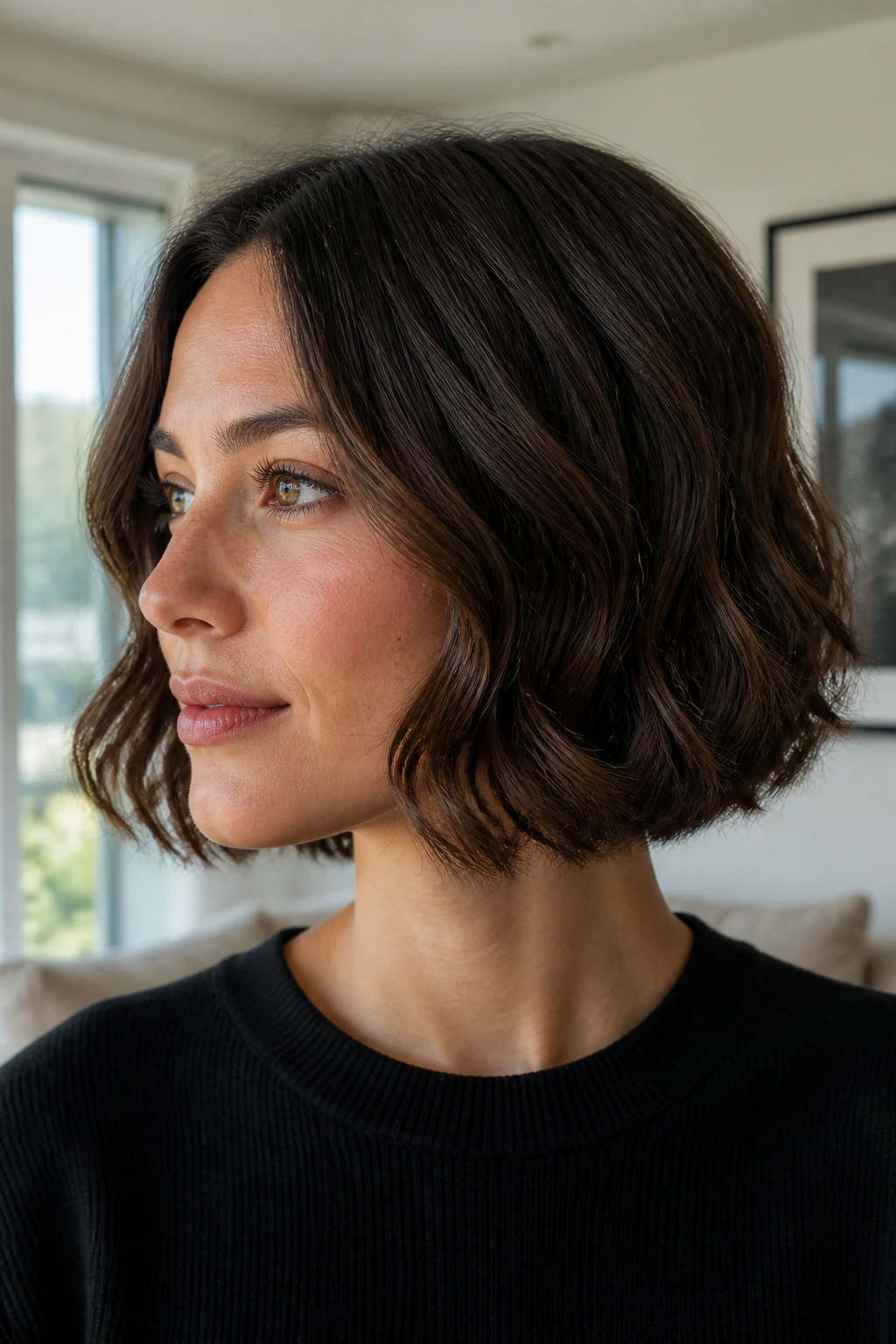
This is the quiet fix for thick wavy hair. The outside line still looks simple and chin length, but the inside has hidden layers that remove bulk and help the hair collapse into a smoother shape. Nothing obvious. Nothing choppy. Just less helmet, more swing.
The center part matters here because it keeps the haircut symmetrical while the hidden layers do the heavy lifting underneath. If your hair tends to swell at the sides, this is one of the smarter choices in the whole group. It keeps the volume where you want it and cuts it where you don’t.
6. Curtain-Fringe Center Bob
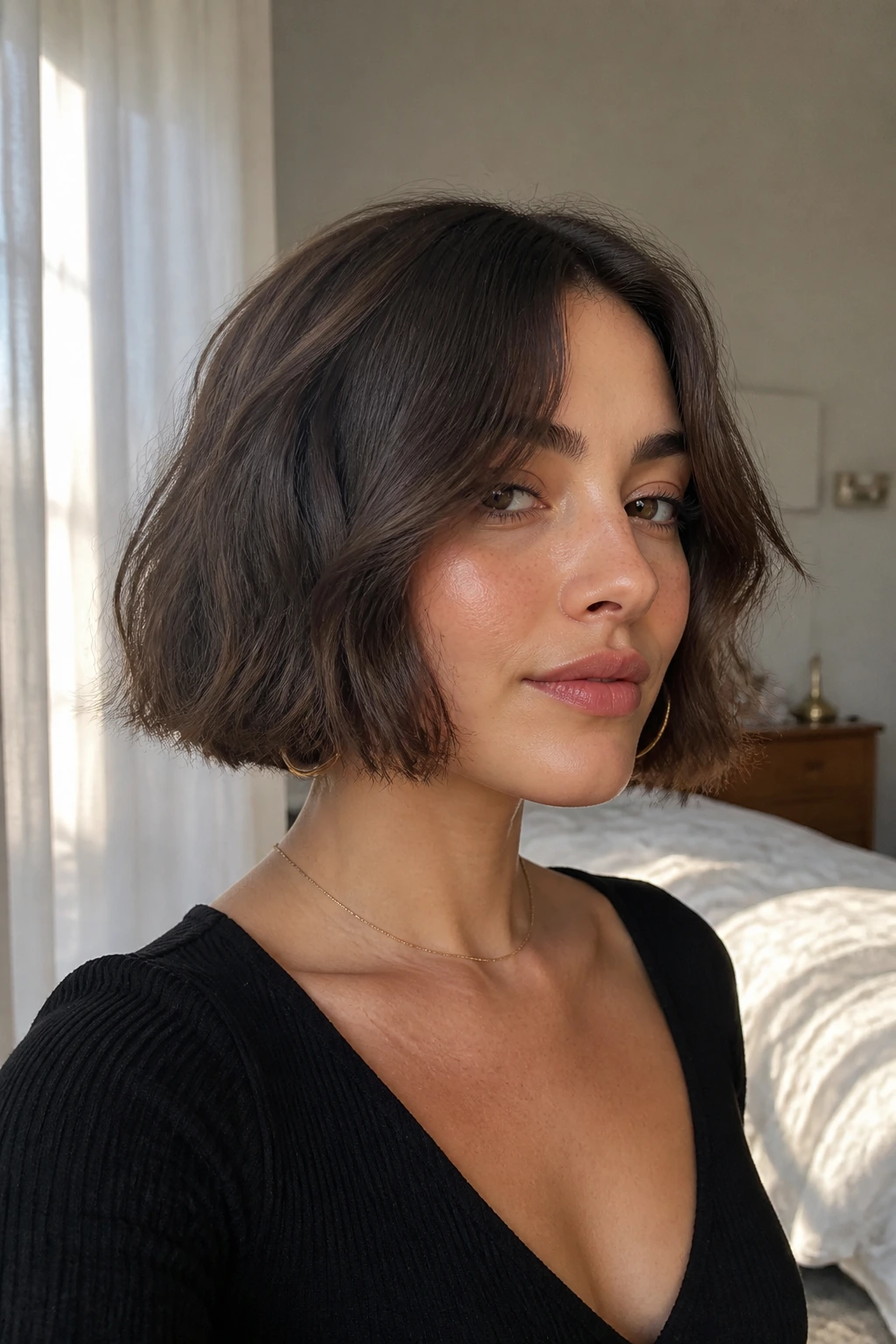
A curtain fringe changes the whole face of a bob. With wavy hair, the split fringe falls into the part line and softens the forehead while the chin-length perimeter stays neat beneath it. It’s a strong choice if you want the cut to feel a little more styled even on air-dry days.
The fringe should be long enough to brush the cheeks, not sit like a hard shelf. That little bit of length lets the wave move instead of sticking out. A round brush or large Velcro roller at the front can make the fringe bend properly, and the rest of the bob can stay scruffier. That contrast is what makes it work.
7. Face-Framing Chin Bob
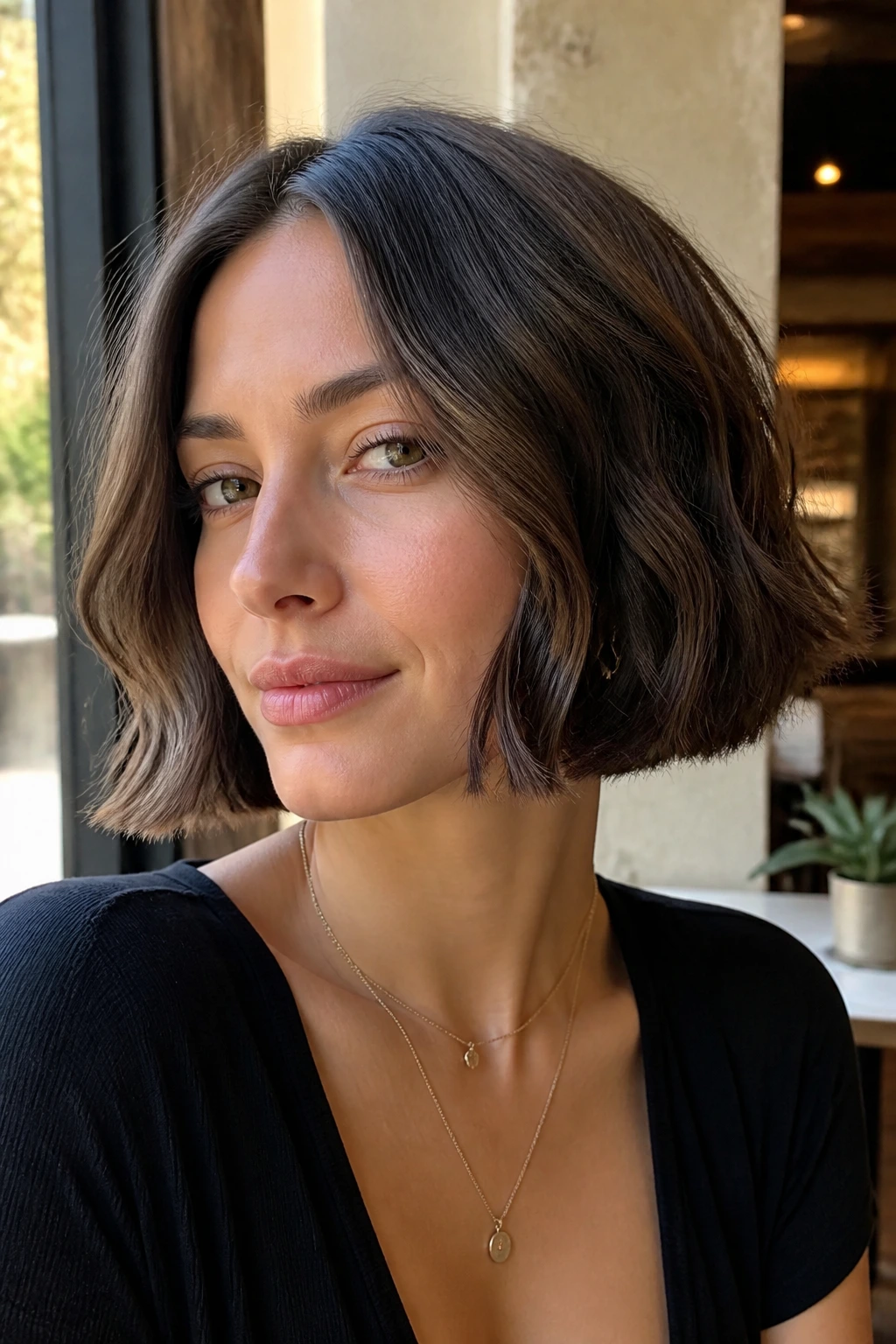
This version is all about the front corners. They’re left a touch longer so they skim the jaw and cheekbones, which gives wavy hair a little more motion without losing the clean chin-length finish. If your face likes softer lines, this shape can be a very good fit.
Good Things to Ask For
- A gentle angle from back to front, not a steep A-line
- Soft point cutting around the face
- Enough length in the front pieces to tuck behind one ear
The center part keeps the look open, while the front pieces pull the eye inward. It’s one of those cuts that looks better when the ends are slightly bent under instead of curled into a full wave.
8. Root-Lift Bob
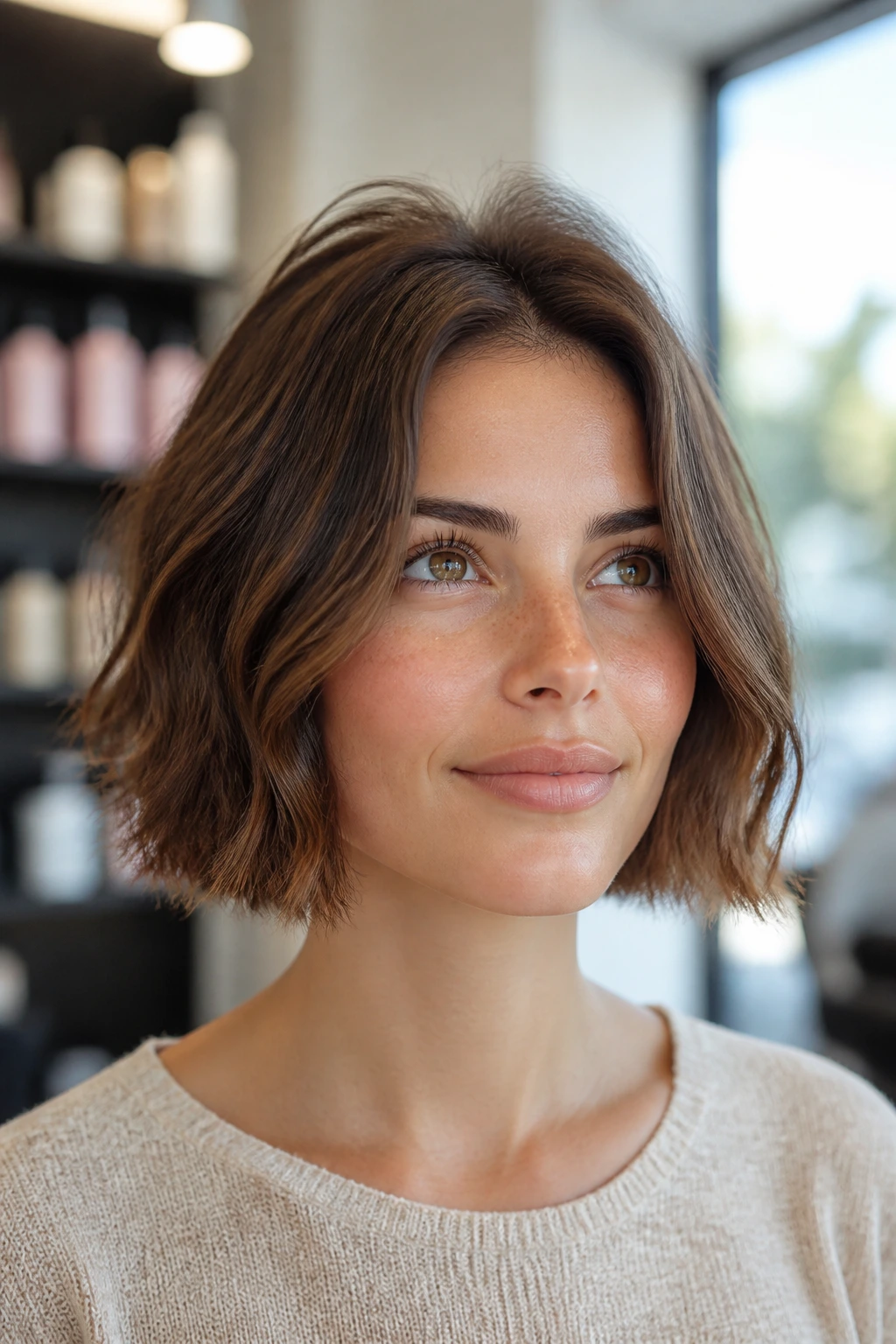
Flat crown? This is the answer before you start reaching for hot tools. A root-lift bob for wavy hair uses a chin-length shape with a little extra support at the top, so the center part doesn’t collapse into a stripe down the scalp. It’s especially useful for fine hair that bends well but loses height fast.
The styling matters here as much as the cut. Use a lightweight mousse at the roots, clip the crown while it cools, and keep the part clean while the hair is still damp. That small routine gives you lift without having to rough up the ends.
9. Salt-Spray Bob

This version leans relaxed and slightly gritty. The center part stays in place, but the texture is separated and touchable, with that matte finish salt spray gives when it’s used in moderation. Too much and the hair feels dry. The right amount and the wave suddenly looks deliberate.
I like this shape for medium-density hair that needs grip more than shine. A little scrunching while the hair is half-dry helps the wave form into pieces instead of one soft puff. If you live in humidity, pair the spray with a small amount of anti-frizz serum on the very ends. Not the roots. The roots need lift, not grease.
10. Thick-Hair Center Bob
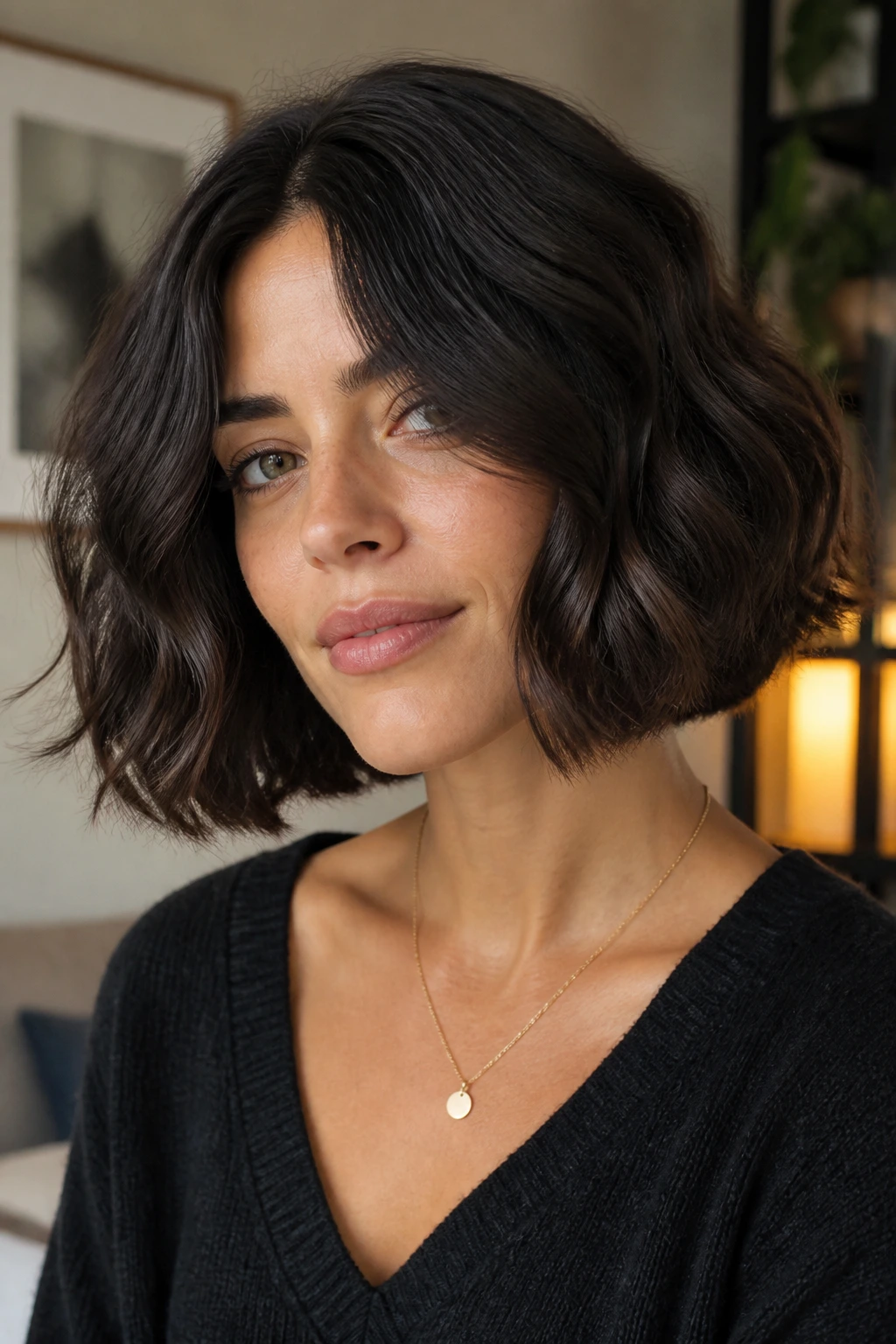
Thick wavy hair can wear a chin bob beautifully, but it needs shape control. If the cut is too blunt and too full, it can sit like a shelf. If it’s over-thinned, it can puff. The sweet spot is hidden weight removal, with the perimeter still looking solid.
The Best Balance
- Keep the chin-length line clean
- Remove bulk inside the haircut, not all over the surface
- Use a diffuser on low heat so the wave keeps its clumps
This cut feels strongest when the ends are not razor-fried and the top layer isn’t stripped too short. A little mass at the bottom keeps thick hair from exploding outward.
11. Fine-Hair Center Bob

Fine wavy hair loves a blunt edge. It gives the illusion of density and helps the center part stay neat instead of splitting into thin, airy sections that disappear by lunch. The mistake people make here is over-layering to “add movement.” On fine hair, that usually takes more away than it gives.
A chin-length bob with just enough weight at the ends can make fine waves look fuller than they are. Add a light mousse, a little root clip, and avoid heavy creams that drag the shape down. The goal is bounce, not slickness.
12. Rounded Center Bob

This is the bob that curves under the jaw instead of hanging straight down. On wavy hair, that rounded silhouette can look polished without feeling fussy, especially if the ends naturally kick out. The shape softens the jawline and keeps the bob from feeling too geometric.
A round brush or hot-air brush helps, but the cut matters more than the tool. Ask for a subtle bevel at the ends and a center part that stays balanced. If your hair is prone to flipping out, this version gives you a better starting point than a sharp blunt line ever will.
13. Glossy Blowout Bob
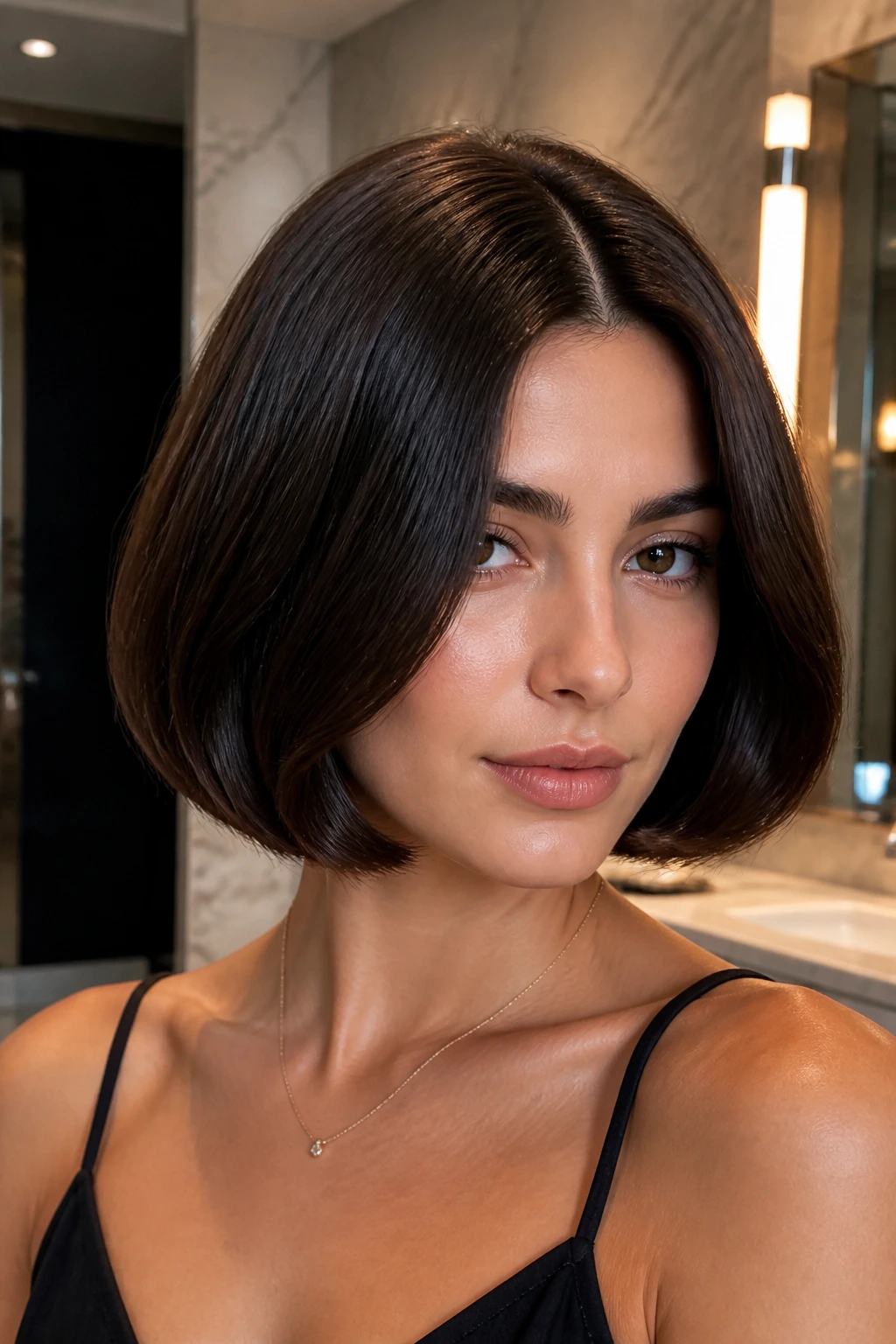
This one is for the days you want the wave to look controlled, not wild. The center part stays exact, the ends bend under with a brush, and the finish has a smooth shine that makes the cut feel expensive without requiring a lot of length. It works especially well on healthy hair that can take a bit of heat.
The real trick is not making the whole head straight. You want root polish and a soft bend through the mid-lengths, not a pin-straight cap with a weird bump at the bottom. A heat protectant, medium round brush, and a light serum at the ends are enough. Keep the serum off the scalp. That’s where glossy turns greasy fast.
14. Wet-Look Center Bob

Short wavy hair and wet-look styling have a nice relationship. The chin-length bob keeps the product from overwhelming the shape, and the center part gives the style an obvious line to follow. This is one of the few cuts where gel can look chic instead of crunchy, as long as you use it with restraint.
The hair should be damp, not dripping. Work the gel through from mid-length to ends, comb the part clean, and let a few strands separate naturally around the face. If the whole thing dries into one sheet, there was too much product. If the crown lifts and the ends stay defined, you’ve got it.
15. Slightly Asymmetrical Center Bob
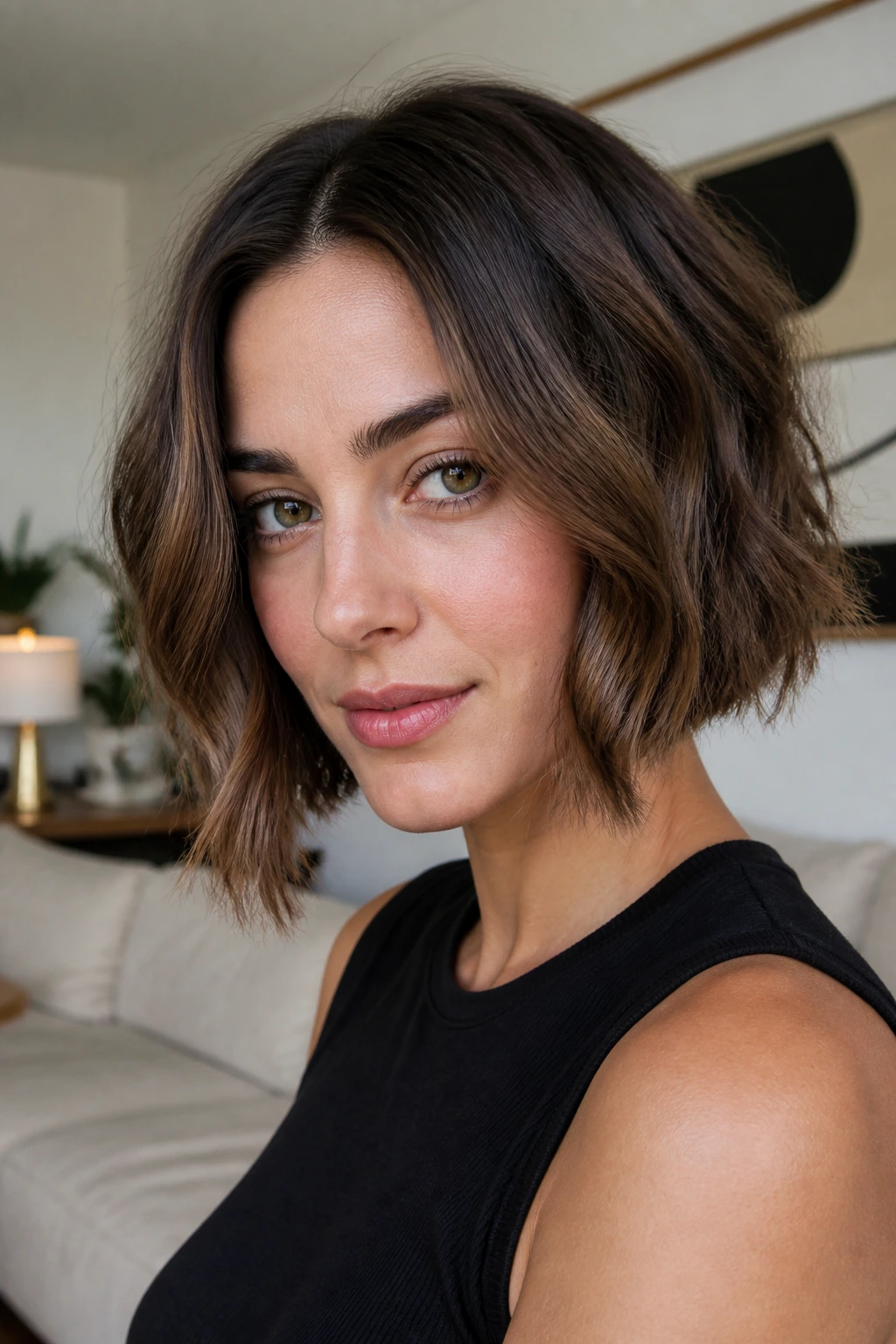
A tiny difference from one side to the other can make wavy hair feel less rigid. This isn’t a dramatic asymmetrical chop. It’s more subtle: one front corner falls a half inch longer, so the bob has a bit of movement even while the center part stays steady.
That small shift helps if your waves dry unevenly or one side always kicks out more than the other. Instead of fighting the imbalance, the cut absorbs it. I like this version on hair that has a stubborn side or a cowlick near the temple. The slightly off-center energy can look better than forced symmetry.
16. Diffused Wave Bob
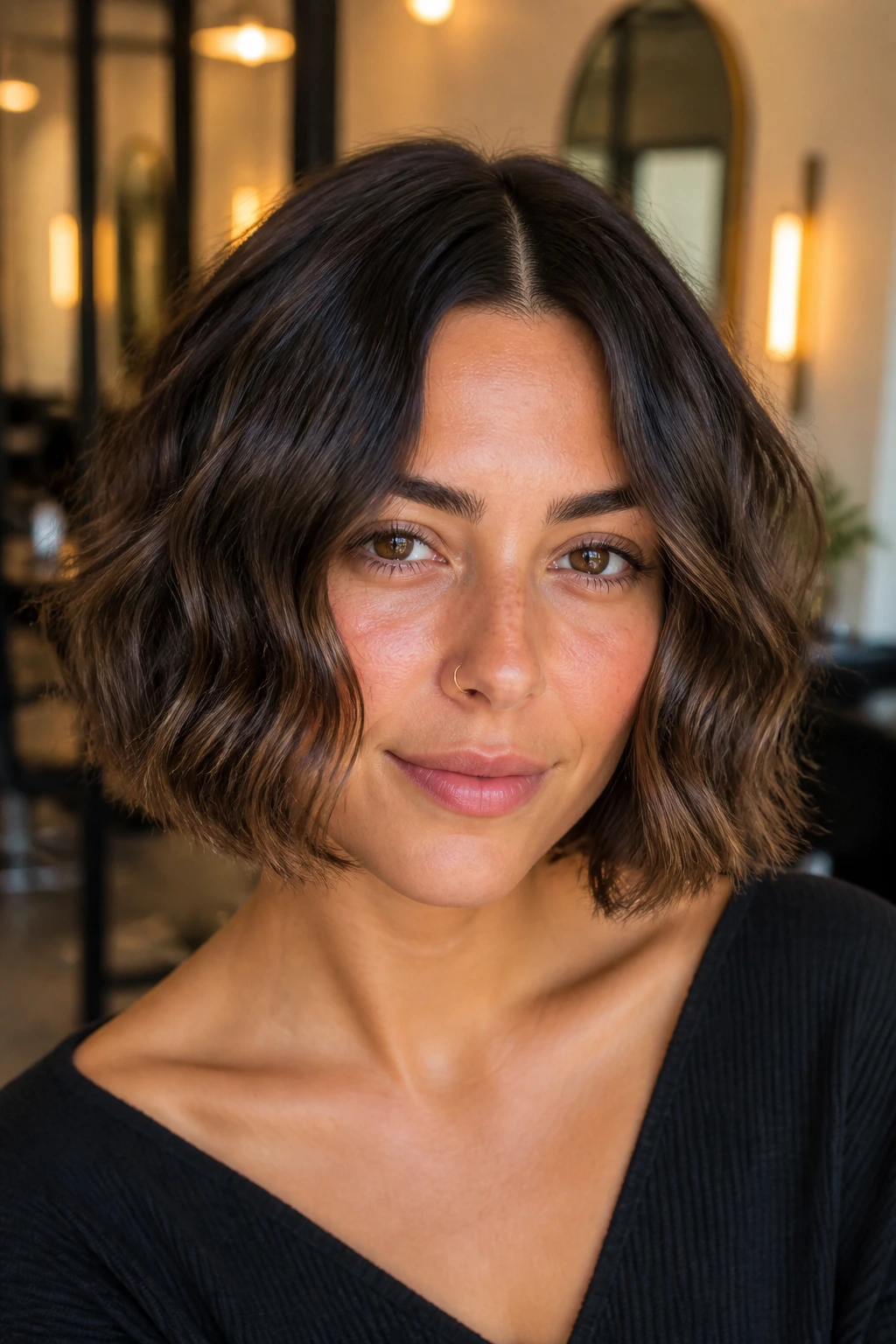
If your best hair days happen with a diffuser, this is your shape. The bob sits at the chin, the part stays centered, and the wave is encouraged to keep its clumps instead of getting brushed apart. A low-heat, low-speed diffuse gives you lift without turning the ends fuzzy.
The Diffuser Move
Hover-dry until the roots start to set, then cup the ends for short bursts. Don’t blast the hair around. The whole point is to preserve the bend. A little mousse underneath and a touch of curl cream through the lengths will usually do the job.
This version loves 2B and 2C waves that already have pattern but need support. It’s one of the easiest cuts to wear when you want your texture to look obvious.
17. Soft Shag Center Bob

A shag and a bob can absolutely meet in the middle. The chin-length perimeter keeps the shape tidy, while soft interior layers give the waves room to move. It feels more relaxed, less polished, and a little easier to wear if you prefer hair that never looks too “done.”
The danger here is over-layering. Too much and the cut starts to float away from the face in the wrong way. Ask for softness, not choppiness. The ends should still land in a visible line, even if that line is a bit broken and airy.
18. Bubble Center Bob

The bubble bob rounds under at the bottom and holds a fuller silhouette through the body of the haircut. On wavy hair, that shape can be surprisingly flattering because it keeps the sides from sticking out and gives the whole cut a nice, tucked-in feel.
This works best when the interior is controlled and the ends are not too shredded. Think of it as a shape that wants to sit close to the jaw but still move when you turn your head. A small round brush or a bend from a flat iron can make the curve more obvious, but the haircut should already want to sit that way.
19. Glassy Center Bob
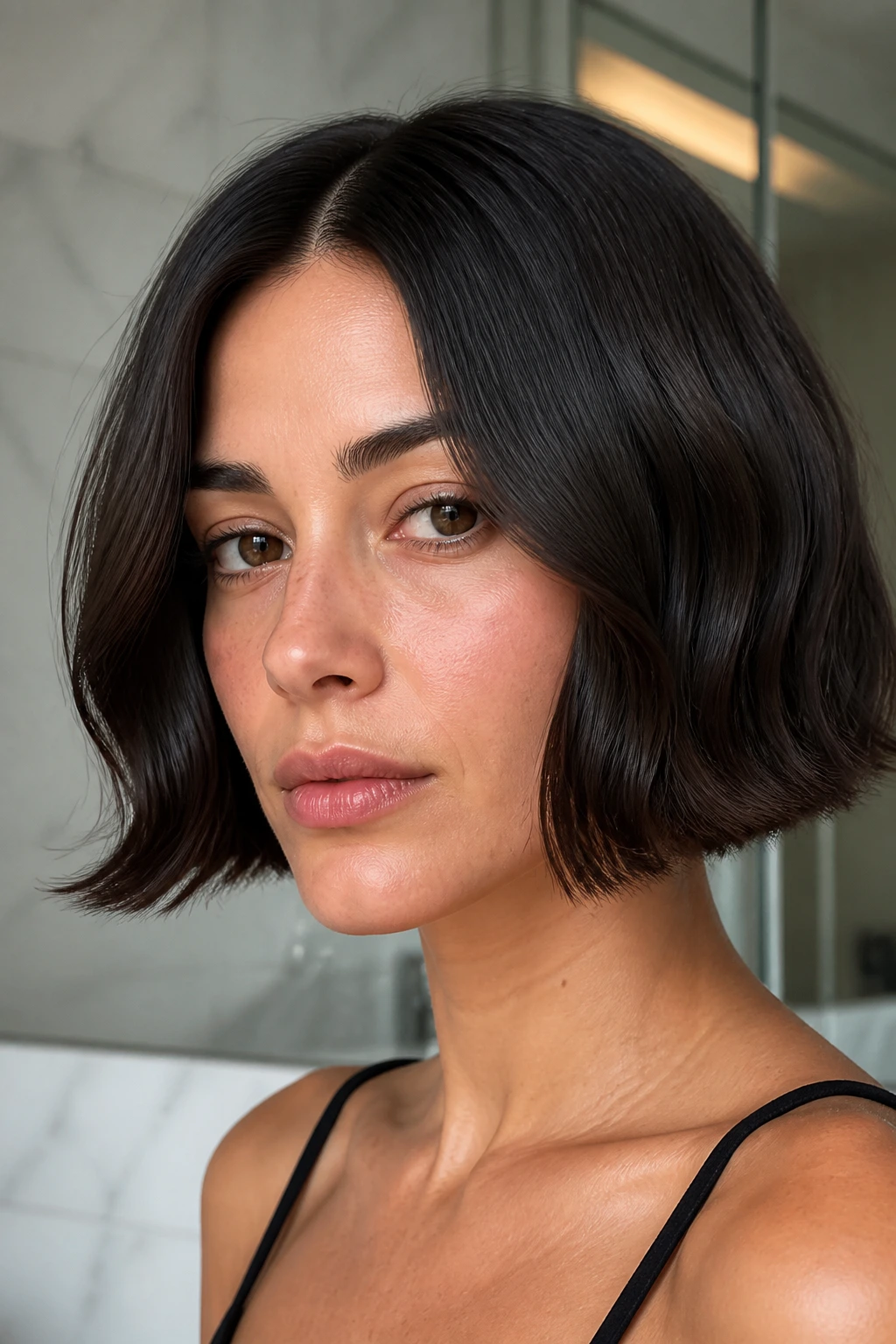
This is the sleek one. The center part is exact, the surface is smooth, and the wave stays mostly underneath the polished finish. It’s a good choice if your hair is naturally wavy but you like clean lines and a mirror-like surface.
The key is preparation. Blow-dry with tension, use a smoothing cream sparingly, and finish with a pea-sized amount of serum at the ends. Too much product and the bob looks limp. Too little and every frizz halo shows up under bright light. It’s a narrow window, but when you hit it, the cut looks sharp.
20. Tucked Center Bob

Sometimes the easiest styling move is the one that changes the whole line of the haircut. With a chin-length center bob, tucking one side behind the ear can sharpen the jaw and show off the neckline while the other side stays loose and wavy. It’s subtle, but it changes the mood fast.
This version suits days when the wave pattern is behaving and you want to show a little face. Use a light spray or cream so the tucked side stays smooth instead of puffing out. A small earring or a tucked-forward blouse collar gives the cut a reason to sit that way. Yes, hair likes context.
21. Day-After Center Bob
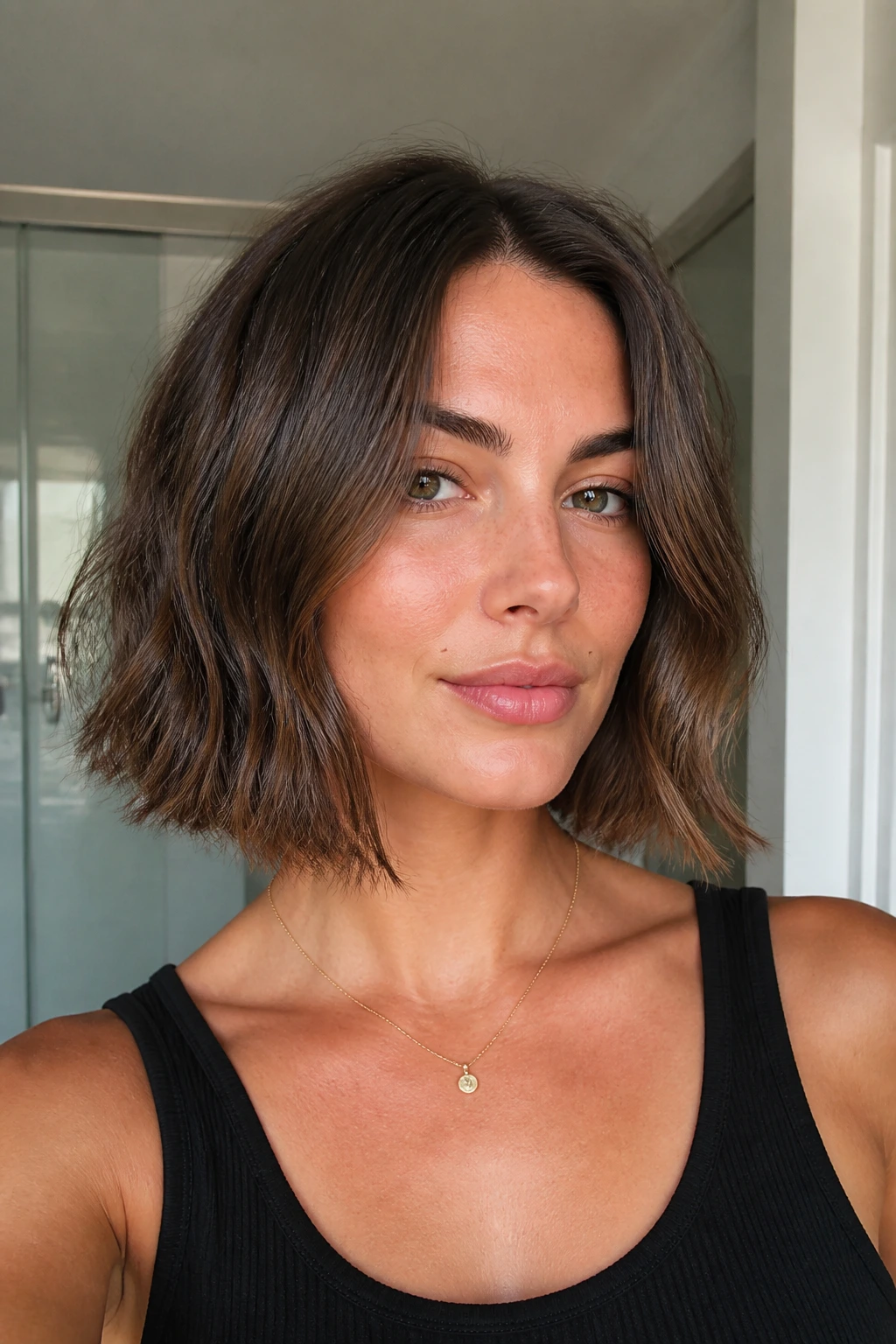
The day-after bob is for people who do not want to wash their hair every time the crown loses a little lift. A chin-length center part holds up well on the second day if the cut was balanced correctly, because the weight is short enough that the wave can bounce back with a mist of water and a small amount of mousse.
The trick is refreshing the part and the ends separately. Wet the roots lightly, re-split the part with your fingers, then scrunch the mid-lengths and let them dry a little before touching them again. If the ends have gone fuzzy, a tiny drop of serum on damp palms can calm them down.
22. Graduated Center Bob
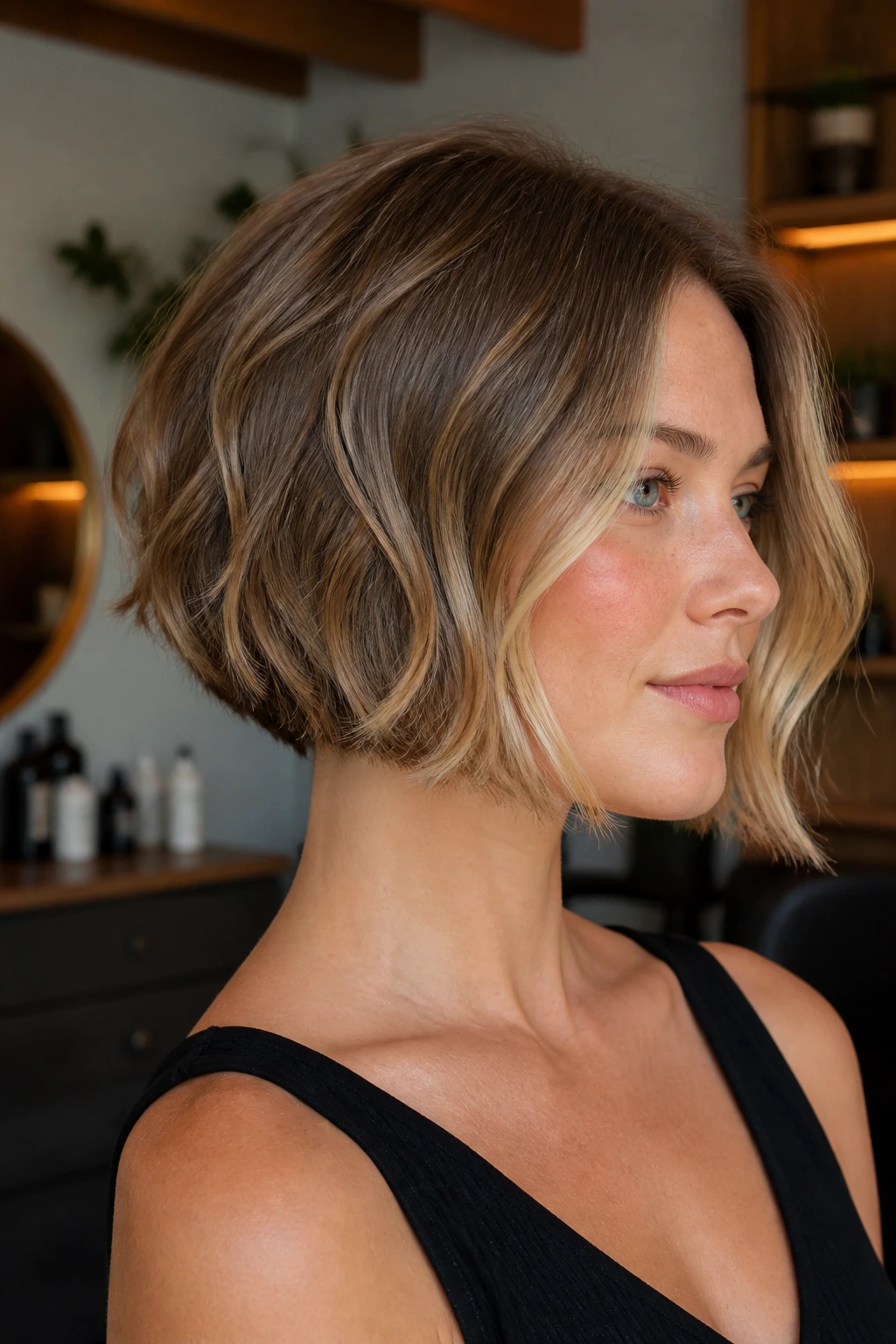
A gentle graduation at the back can make wavy hair sit close to the nape while the front keeps that chin-length swing. It gives the cut shape without a dramatic angle, which is useful if you like a cleaner silhouette but don’t want something severe.
This is one of the stronger choices for thick hair that wants to puff out under the ears. The slight stack at the back helps the bob sit instead of mushrooming. The front should still stay soft and centered, so the result feels balanced rather than haircut-heavy.
23. Swoopy Center Bob

This one leans into movement at the front. The ends near the face sweep inward or slightly forward, which gives the bob a little drama without adding much length. On wavy hair, those front pieces can be shaped with a large brush or a quick bend from a curling iron.
Best When You Want Motion
- Let the front corners be the softest part of the cut
- Keep the crown controlled so the swoop doesn’t get buried
- Use a light hold spray only after the shape is set
The center part keeps the symmetry, but the front pieces keep the haircut from feeling static. Nice balance. That’s the whole trick.
24. Mini-Undercut Center Bob

This is a practical haircut disguised as a stylish one. A hidden undercut or very short nape section can remove bulk from dense, wavy hair so the chin-length bob falls closer to the head and stays cleaner around the jaw. You won’t see much of the undercut unless the hair is lifted.
It’s a smart move if your hair swells at the back and refuses to lie flat. The top layers still look like a bob, but the interior weight is easier to manage. Ask for a subtle undercut, not a shaved patch, unless you want that to show.
25. Wispy Fringe Center Bob

A wispy fringe can soften a center-part bob without turning it into a full curtain bang situation. The fringe should split lightly at the center or fall in soft fragments around the eyes, while the rest of the bob keeps its chin-length line. It feels airy, not heavy.
This version suits people who like a little face movement but hate a dense fringe. Wavy hair does well here because the fringe can dry with a bend rather than a blunt line. Keep the fringe pieces longer than you think; too short and they bounce in odd directions.
26. Minimal One-Length Bob

There is a lot to be said for leaving the haircut alone. A one-length chin bob with a center part can look clean, modern, and quietly strong when the wave pattern is already doing enough. No shattering. No heavy layering. Just a solid shape and a bit of polish at the ends.
This version works best on healthy hair with a good bend through the middle. It is not the place for dramatic texturizing. The appeal is restraint, and restraint depends on the cut line staying visible even after the hair dries.
27. Piecey Center Bob

If you like hair that looks separated in a good way, this is your version. The wave is encouraged to break into visible sections, which gives the bob a lighter, more lived-in feel. A center part works here because it keeps the shape anchored while the texture gets a little messy.
A small amount of styling cream, rubbed through damp hands and scrunched into the mid-lengths, is enough. Too much and the pieces clump in a sad way. Too little and the hair can frizz into fluff. The sweet spot is right in between, and annoyingly, it usually takes less product than people think.
28. Defined Wave Center Bob
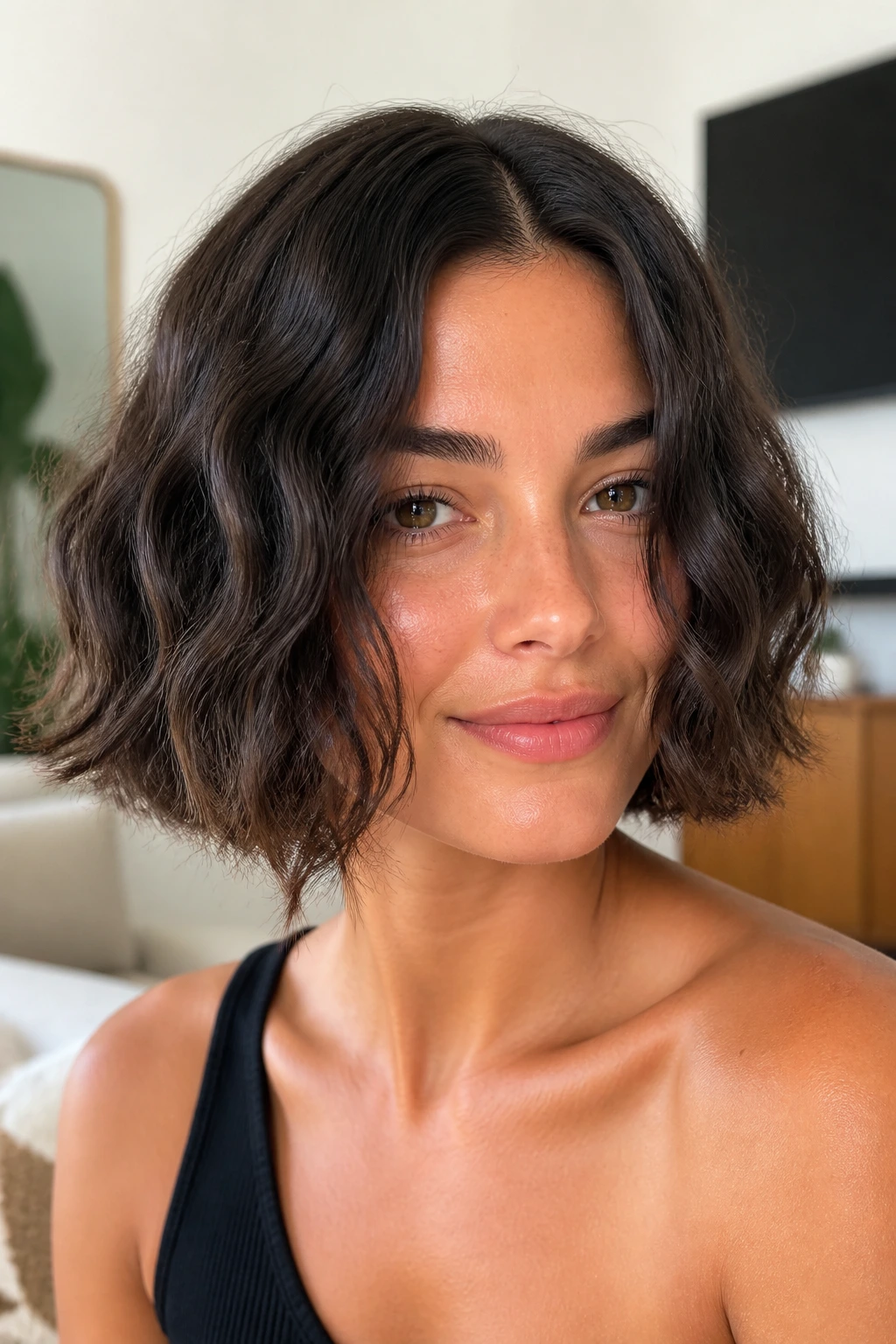
This is the version for when you want the wave itself to be the main event. The chin-length cut gives the pattern a frame, and the center part makes the whole thing look balanced. Defined waves sit somewhere between air-dried and styled: not too soft, not too rigid, just visible enough to feel finished.
A curl cream or lightweight gel on soaking-wet hair can help create that definition. Scrunch, diffuse on low, and leave the wave clumps alone until they’re dry. Once they are set, break the cast with clean hands and a tiny bit of serum at the ends. The result is controlled texture, not helmet hair. Which is a relief.
Why Chin-Length Center-Part Bobs Work So Well on Wavy Hair
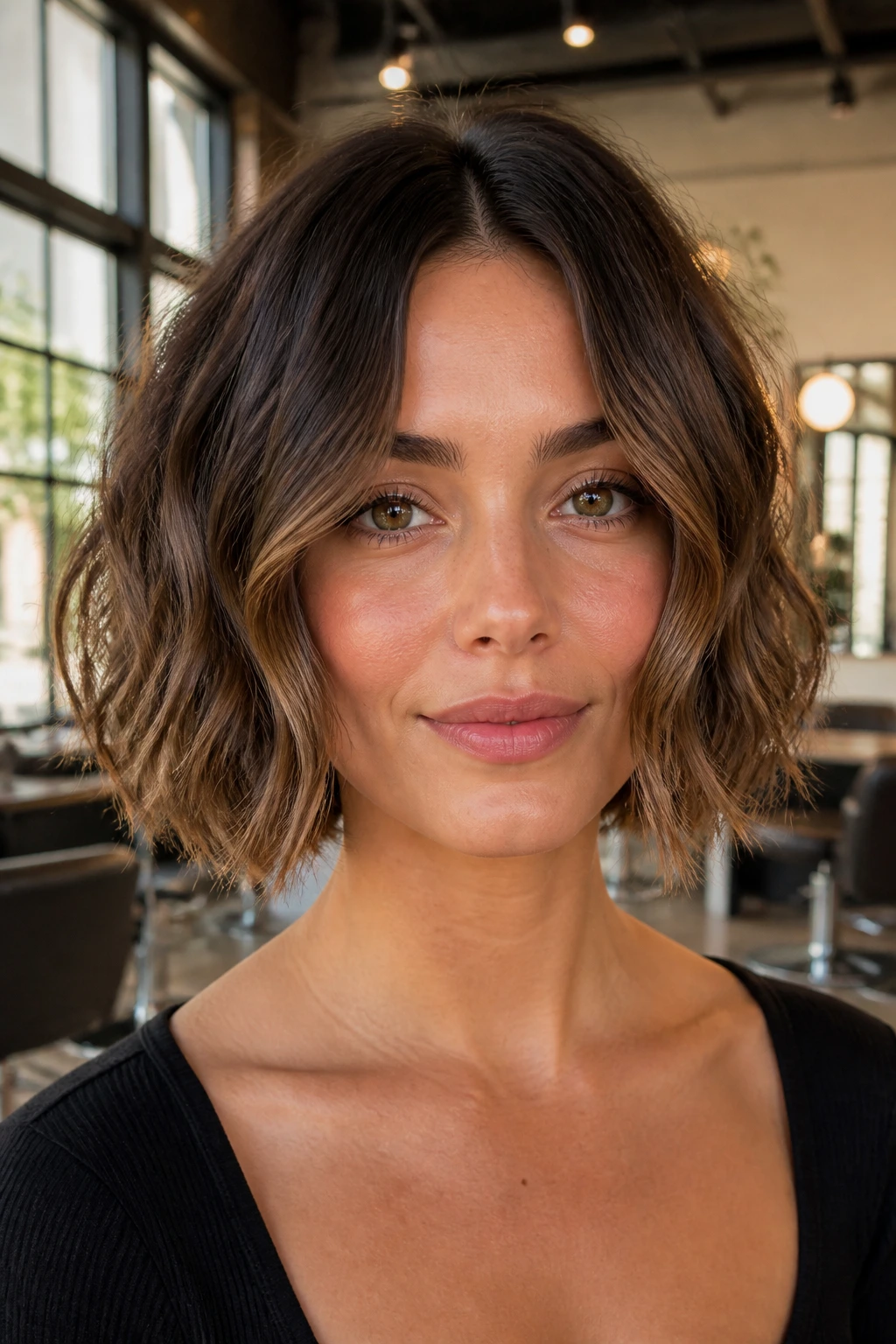
Wavy hair likes a shape that respects its built-in movement. A chin-length bob does that by giving the bend somewhere to land before the ends start to fuzz out or collapse. The center part keeps the silhouette balanced, which matters more on wavy textures than people expect. One side can swell, the other can flatten, and the part becomes the spine of the haircut.
The length is also practical in a way longer cuts often are not. At the chin, the wave still has room to show, but it isn’t long enough to drag itself into a triangle. That middle zone is where the haircut starts doing useful work. It helps the hair look shorter and fuller at the same time, which is a rare combination.
The jawline does some of the styling
A chin-length perimeter interacts with your face in a way shoulder-grazing cuts often miss. It gives a hard visual stop right where the jaw turns, so the wave looks framed instead of lost. That framing is the reason these cuts can look crisp even when they’re not blow-dried within an inch of their life.
Center parts need clean weight distribution
Wavy hair can fall off-center if one side is heavier or more porous than the other. A center part exposes that immediately. A good cut evens the weight so the part looks tidy instead of wandering around the scalp, and that usually means a little interior balance plus a perimeter that stays visible after drying.
What to Ask Your Stylist Before the First Snip
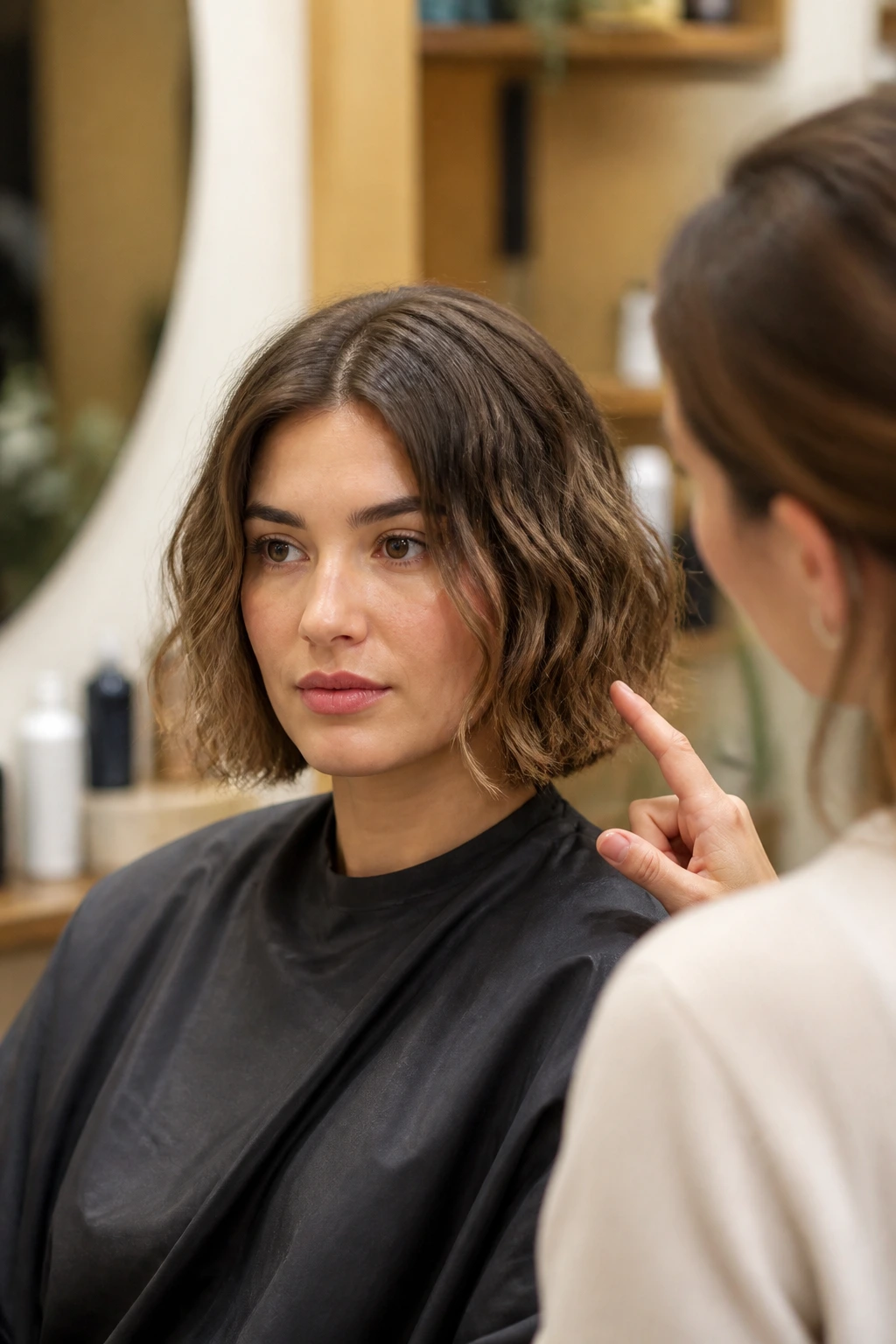
Bring photos, yes, but bring the right kind. The best references show hair with a similar wave pattern and density, not just a pretty bob on pin-straight strands. A photo on straight hair can lie to you. A lot. If the stylist can see where your wave lives and where it gets frizzy, the cut will land much closer to what you want.
Ask for a dry check if your hair shrinks a lot. Ask for the perimeter to sit at the chin or a hair below it. Ask them not to over-thin the top unless your density really needs it. If your wave clumps differently on each side, say that out loud. It sounds small, but it saves a lot of frustration.
Good salon phrases
- “Keep the line visible even when it air-dries.”
- “I want movement, not a stacked triangle.”
- “Please check the length after the hair starts to dry.”
- “My waves get puffier at the sides, so leave some weight there.”
That last one is the kind of sentence that changes a haircut. A good stylist hears it and immediately knows where not to get aggressive with the scissors.
The Brushes, Clips, and Products That Earn Their Place
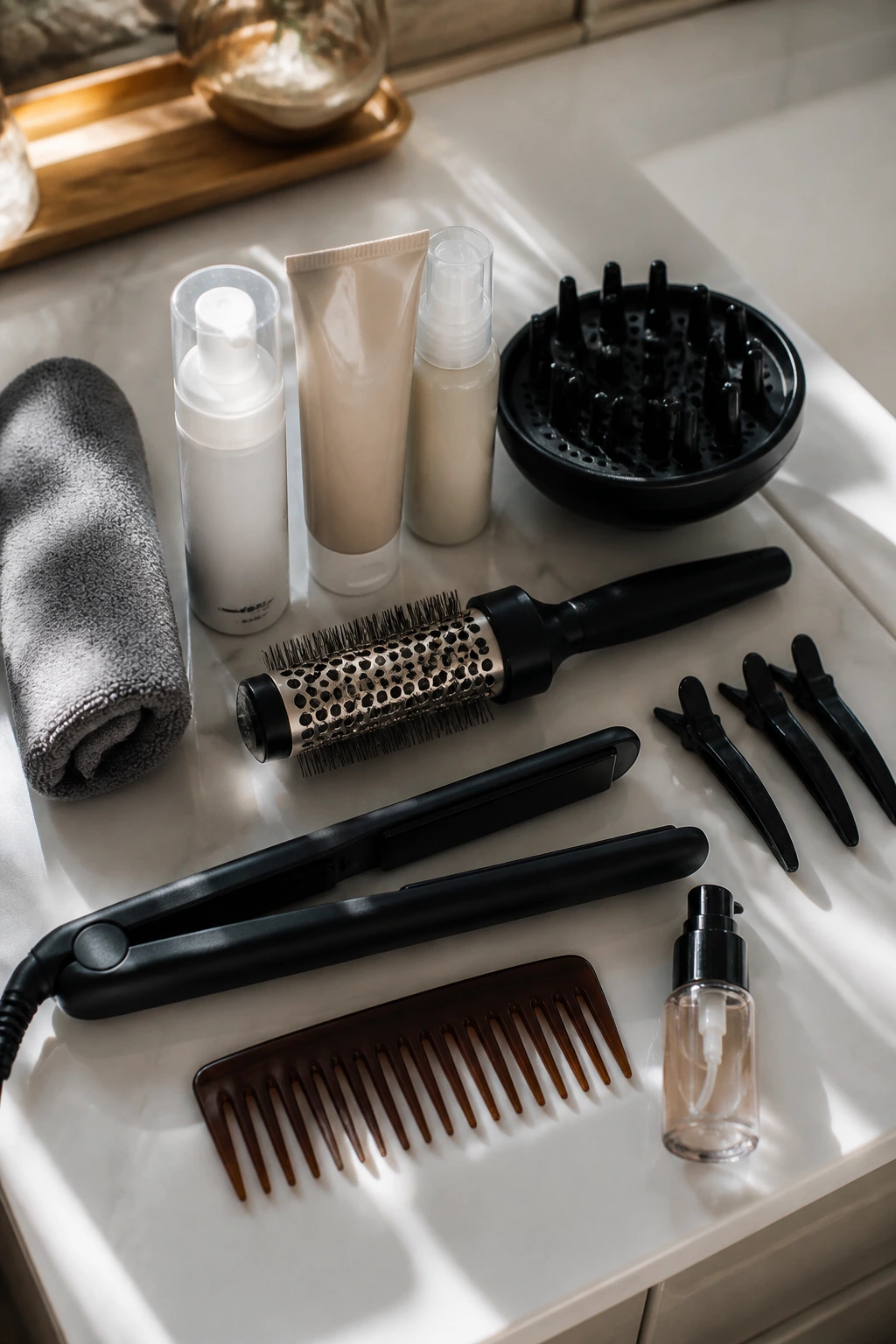
You do not need a drawer full of gadgets. You need a few tools that match the haircut. Wavy bob hair behaves best when it’s encouraged, not bullied, so the tool list stays short and practical.
- Microfiber towel or cotton T-shirt: Blots water without roughing up the wave clumps.
- Lightweight mousse: Gives the roots support without turning the ends stiff.
- Curl cream or wave cream: Good for softer definition on dry or frizz-prone lengths.
- Diffuser attachment: Keeps the wave from getting blasted apart by hot air.
- Medium round brush: Useful when you want the chin curve to tuck under.
- Duckbill or root clips: Lifts the crown while the hair cools and sets.
- 1-inch flat iron: Handy for polishing a few stubborn bends, not for ironing the whole head flat.
- Wide-tooth comb: Better than a brush when the hair is wet and fragile.
- Smoothing serum: A tiny amount on the ends keeps the outline neat.
- Dry shampoo: Helps day-two roots stay cleaner around the center part.
The most non-obvious one is the root clip. People skip it, then wonder why the top goes flat. That tiny clip is often the difference between a bob that sits up and one that slumps.
How to Style It on Air-Dry, Diffuse, and Blow-Dry Days
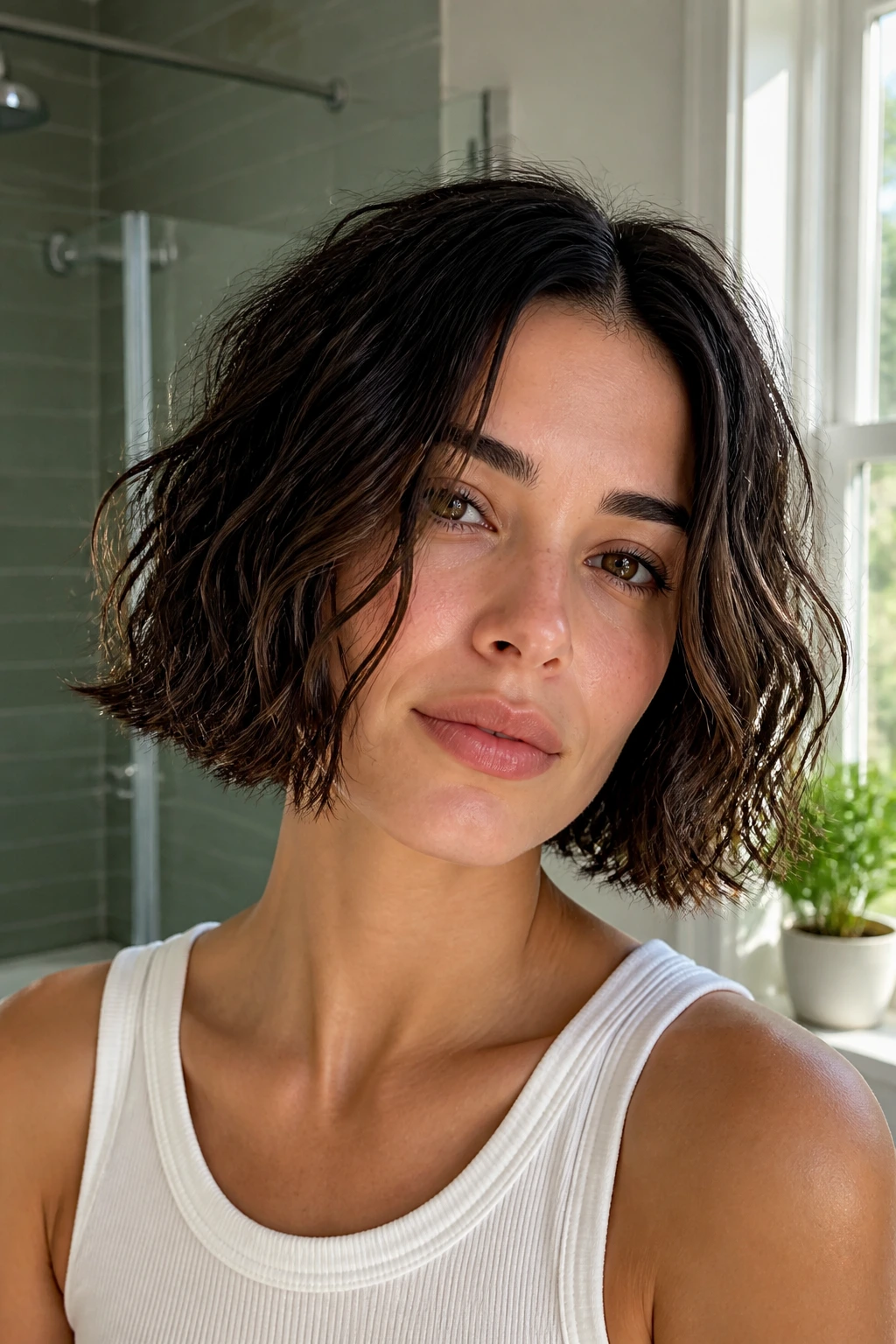
Air-dry route: Work a small amount of mousse or light cream through soaking-wet hair, then part it in the center before the roots start to dry crooked. Scrunch once, maybe twice. Then stop touching it. That part matters. Wavy hair gets frizzy when it’s constantly handled.
Diffuse route: Hover-dry first so the roots begin to set, then cup the lengths in the diffuser for short passes at low heat. Keep the head tipped only a little, not hanging upside down the entire time, unless you want extra lift at the expense of a little control. Stop when the hair is about 80 percent dry and let the rest air-finish.
Blow-dry route: Use a round brush to tuck the ends under while keeping the center part crisp. This is the smoother, cleaner finish. It takes more time, but the outline stays sharp longer, which is useful if your wave tends to frizz by noon.
Day-two rescue: Mist the middle lengths lightly with water, add a tiny bit of mousse to the roots, then scrunch the ends back into place. If the crown has gone limp, clip the part line for 10 minutes while you get dressed.
Extra Styling Moves That Save a Flat Crown

Root lift: Clip the crown at the part while the hair cools, even if you already diffused. That one step can keep the bob from sinking against the scalp.
Frizz control: Use serum only on the last inch or two. Put it higher and you lose the clean wave shape near the face, which is usually the prettiest part.
Wave revival: If the ends have gone weird, dampen your hands and twist just the front two sections back into place. Do not soak the whole head again unless you enjoy restarting your morning.
Polish move: Smooth the top with a boar-bristle brush, but leave the wave below the ears alone. The contrast between the sleek top and the textured ends looks sharper than making everything equally smooth.
Fastest fix: Flip the part slightly while the hair is still damp, then let it reset in the middle. That tiny move can rescue a part line that keeps separating too wide.
Common Mistakes That Ruin the Line
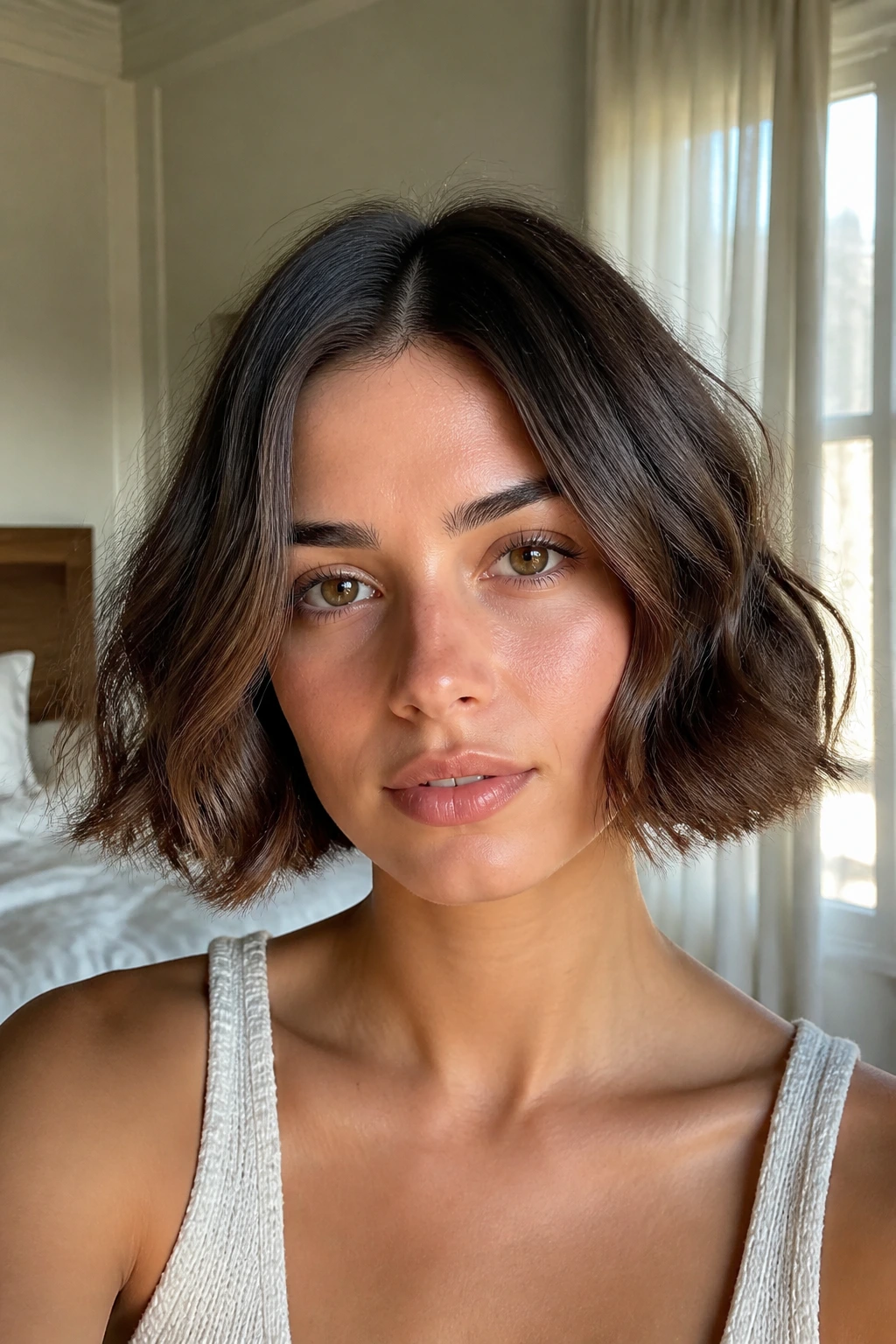
Cutting it too short on day one: Wavy hair springs up. A lot. If the stylist cuts to the chin when the hair is wet and stretched, the final result can land above the jaw and puff where you least want it. Ask for a dry check or a slightly longer perimeter.
Removing too much bulk at the top: This is how the dreaded triangle happens. The ends flare while the crown loses support. Keep the interior shaping controlled, especially on thick or coarse waves.
Using heavy cream on fine hair: The bob turns limp and the center part sags into the scalp. Fine waves need light mousse or a soft leave-in, not a greasy layer that kills lift.
Blasting the hair with high heat: Wavy hair doesn’t need punishment. Too much heat creates frizz, and the chin-length outline starts to look fuzzy instead of crisp. Use low to medium heat and stop before the hair is bone-dry.
Skipping trims for too long: The ends start to fray, then the whole bob loses its clean edge. You can get away with some grow-out, but once the line becomes wispy, the haircut stops reading as a bob.
Variations and Adjustments Worth Trying
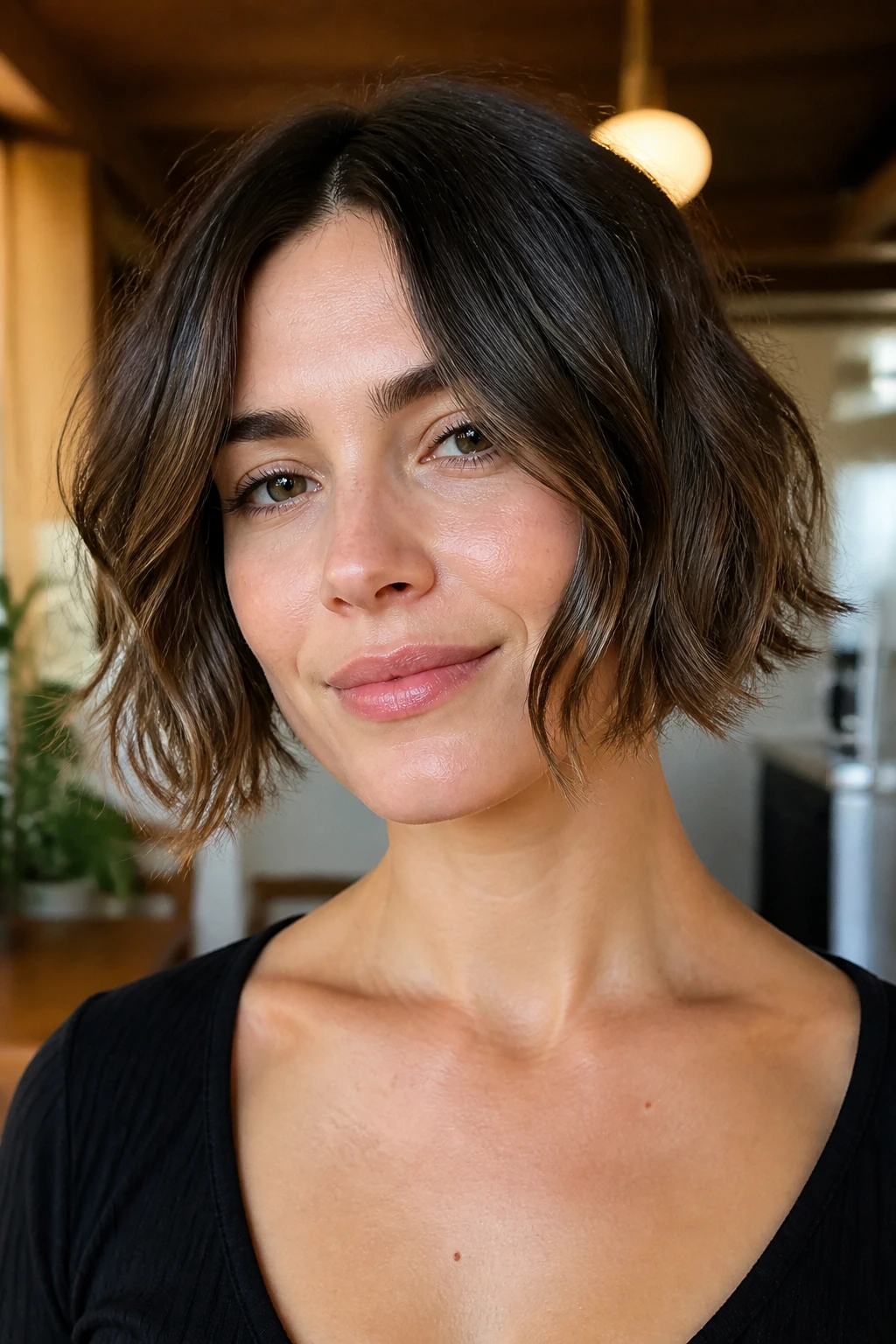
Fine-Wave Friendly Version: Ask for a blunt perimeter, minimal layering, and a lightweight mousse finish. This keeps the hair from looking sparse at the ends and gives the center part enough structure to stay put.
Thick-Hair Fix: Keep the surface line visible, but remove bulk inside the haircut with hidden shaping or a subtle undercut. That stops the sides from puffing out around the jaw.
Frizz-Prone Version: Leave a touch more length at the front and style with gel or cream on soaking-wet hair. A little extra length gives the wave room to settle without frizzing straight up.
More Polished Finish: Blow-dry with a round brush and finish with serum on the bottom inch only. This is the cleaner, sharper version for workdays or events.
Grow-Out Version: Let the front corners extend by a half inch while keeping the neckline trimmed. You get a softer bob-lob hybrid without losing the shape entirely.
Maintenance, Grow-Out, and Day-Two Refreshing
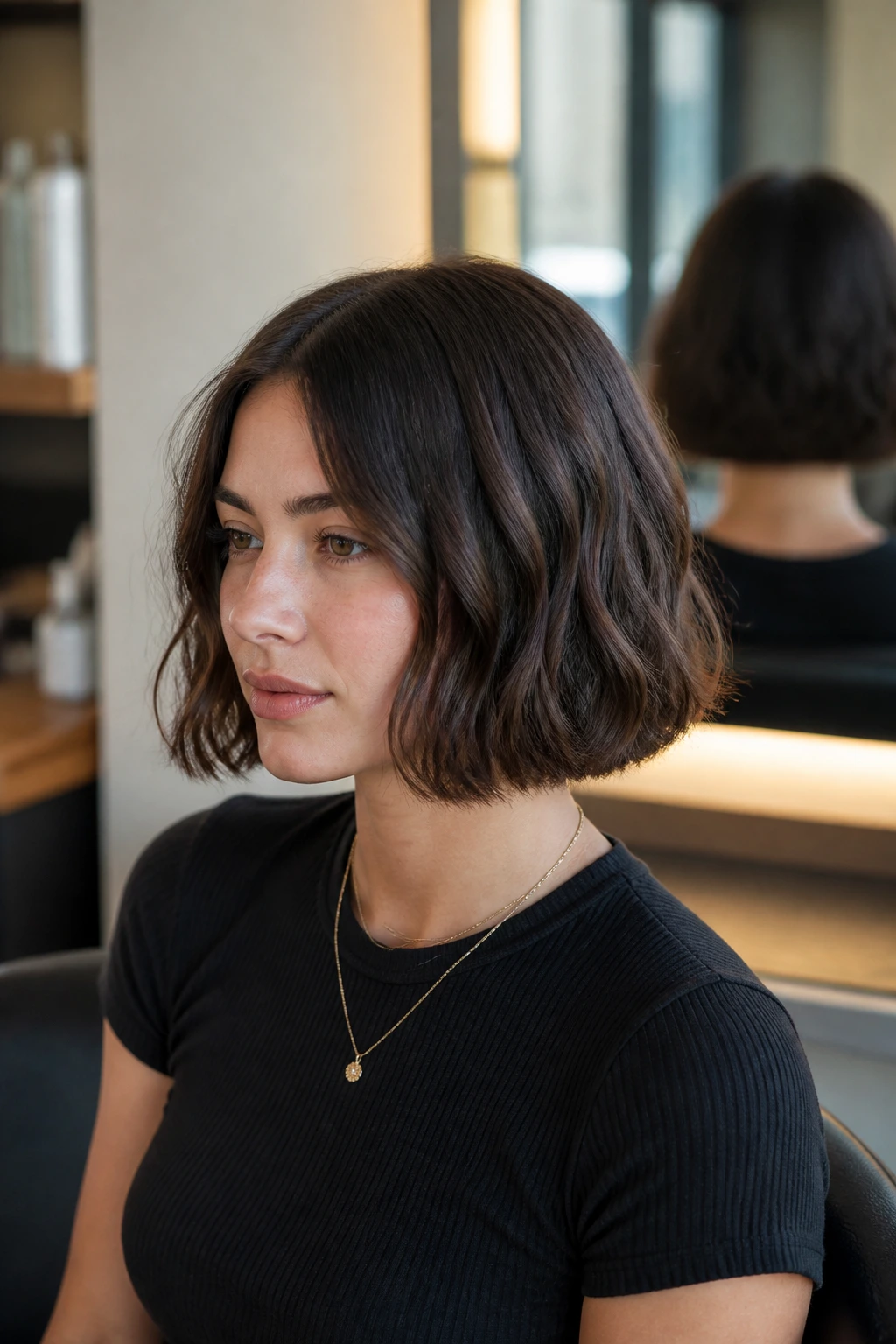
A chin-length bob looks its sharpest when it’s trimmed regularly. For blunt or glassy versions, plan on a trim every 6 to 8 weeks. Textured or shaggy versions can stretch closer to 8 to 10 weeks, but if the ends start to fray, the shape loses its edge fast. That is especially obvious on wavy hair because the silhouette starts to blur first at the bottom.
Day-to-day care matters too. Sleep on a silk pillowcase if you can. It cuts down on the roughness that makes the center part split weirdly in the morning. On wash day, blot instead of rubbing. Use a little mousse or curl cream, not both in heavy amounts unless your hair really needs it. And if the bob starts flipping out at the ends, do not panic. A quick pass with a round brush or one gentle bend from a small iron usually fixes it.
A simple upkeep rhythm
- Every wash: re-center the part while the hair is damp
- Every 2 to 4 days: refresh roots with water or dry shampoo
- Every 6 to 10 weeks: trim, depending on how blunt or layered the cut is
- When growing it out: keep the front corners neat so the shape does not turn into a shapeless shoulder hover
Frequently Asked Questions
Does a chin-length center-part bob work on every wave pattern?
Not every wave pattern will behave the same way, but most 2A to 2C textures can wear it well with the right cut line. Looser waves usually need more root support; denser waves usually need more interior weight control.
Is a blunt bob or layered bob better for wavy hair?
Blunt suits fine to medium hair and keeps the ends looking full. Layers help thick or puffy hair calm down. The wrong answer is usually “too many layers,” because that can make the bob frizz out at the top and lose its line.
Can I wear this cut if my hair is frizzy?
Yes, but you’ll want a cut that leaves a little weight at the bottom and products that define rather than puff. A small amount of gel or wave cream on damp hair usually works better than a heavy leave-in that coats everything.
How often should I style it with heat?
Only when you want a smoother finish. A chin bob can air-dry or diffuse just fine most days. If you do use heat, keep it on the ends and front pieces, not all over the head.
What if one side always flips out more than the other?
That usually means the wave pattern is uneven or the haircut is carrying more weight on one side. A stylist can adjust the perimeter or slightly change the angle. At home, a tiny bend with a flat iron on the stubborn side usually solves it.
Can fine hair wear a center part without looking flat?
Yes, if the cut is blunt enough and the roots get some support. Fine wavy hair often needs root clips, a light mousse, and a clean part set while damp so the shape doesn’t collapse.
How do I keep the bob from puffing at the jaw?
Don’t over-thin the sides, and don’t pile on rich cream. Use a cut that leaves enough weight to control the silhouette, then dry with a diffuser or brush the ends under so the shape stays close to the face.
What’s the easiest version to maintain?
The air-dried chin bob with minimal layers tends to be the least fussy. It lets the wave do the work, but still has enough structure to look like a real haircut on day two.
The Shape That Keeps Its Line

A good chin-length center part bob doesn’t fight wavy hair. It gives it a cleaner border and lets the texture show up where it counts. That’s why the cut can look crisp on one person, soft on another, and a little lived-in on someone else — the shape stays the same, but the wave writes its own version across it.
The best part is how practical the haircut is once it’s tailored properly. A blunt edge can make fine hair look denser. Hidden layers can keep thick hair from turning boxy. A center part can make the whole thing feel balanced instead of accidental. When those details are right, the bob stops looking like a trend and starts looking like the haircut you keep reaching for because it behaves.