



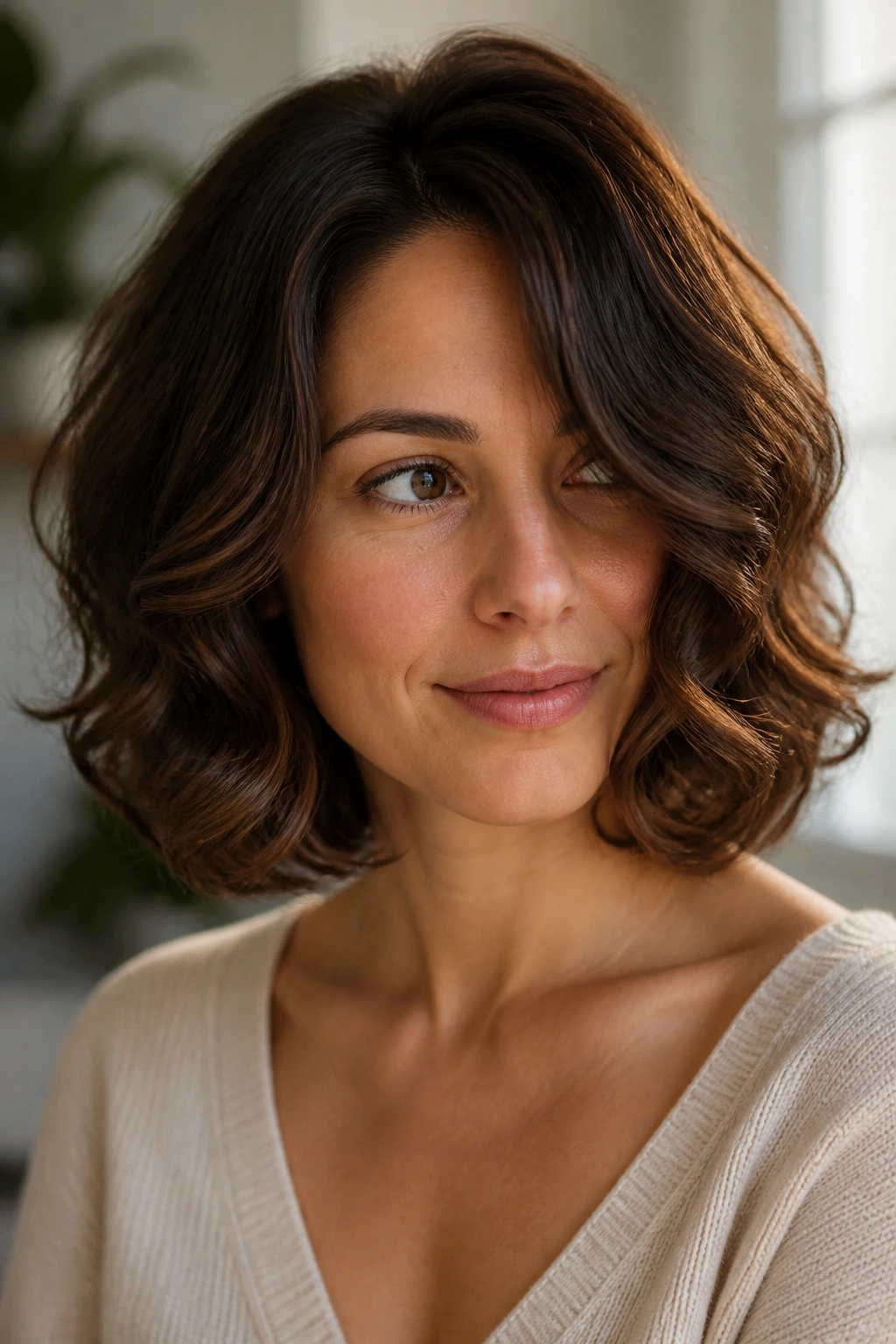
Thick, medium-length hair has a habit of telling on you. If the cut is too blunt, the ends can sit there like a shelf. If the layering is too aggressive, the whole thing goes fluffy in the wrong places. A soft curled bob fixes that balance when it’s done with a little restraint and a little nerve: enough shape to show the curl, enough weight to keep the outline calm.
That’s why soft curled bobs for medium hair with thick hair work so well when the curl is loose, brushed out, and placed with intention. You’re not trying to build ringlets from root to tip. You’re creating movement through the middle and ends, then letting the hair settle into a line that still feels like a bob, not a halo.
The sweet spot is often somewhere between chin and collarbone. Shorter than that, thick hair can turn boxy fast. Longer than that, and you’re flirting with a lob whether you meant to or not. The styles below stay in that useful middle ground, where the weight can be managed, the curl can breathe, and the shape still looks clean at the end of the day.
Why These Soft Curled Bobs Work So Well on Thick Medium Hair
-
They control bulk without flattening the hair: Thick hair needs some internal weight removed, but not so much that the ends explode outward. A soft curl gives movement while the cut keeps the outline steady.
-
They work with, not against, density: Medium hair with a lot of hair in each section can hold a bend for hours when the barrel size is right. A 1-inch to 1.25-inch iron usually gives a curve, not a spiral.
-
They give you options on rough hair days: These bobs can be worn brushed out, tucked behind the ears, or pushed into a side part and still look deliberate. That matters when thick hair decides to have opinions.
-
They make the bottom line look expensive without looking stiff: The best versions have a rounded edge, not a helmet shape. That clean perimeter is what keeps the style from going frizzy at the ends.
-
They’re easier to refresh than longer curls: A few clipped sections, a pass of dry shampoo at the roots, and a mist of water or leave-in through the ends is often enough. No full reset needed.
-
They play nicely with face shape changes: Move the part a half-inch, add a fringe, or drop the length by an inch and the whole bob changes mood. Small adjustments matter more here than dramatic ones.
1. Chin-Grazing Curled Bob
A chin-grazing bob gives thick hair somewhere precise to stop. That matters. When the cut lands right at the jaw, the curl sits cleanly instead of dragging the whole shape down the neck, and the result is a bob that feels sharp but still soft at the edge.
Why it works
The shorter line trims away the heavy bottom that thick hair usually carries. Soft curls then bend around the chin instead of ballooning below it, which keeps the style neat even after the waves loosen.
Ask your stylist for a clean perimeter with just enough internal debulking to stop the sides from puffing. At home, curl the top layer away from the face and leave the last inch out of the iron so the ends stay a little straighter. That tiny detail keeps the bob from looking overdone.
2. Collarbone Bob with Invisible Layers
What if you like the bob shape but don’t want the hair to sit too high? Then the collarbone version is the one to watch. It brushes the shoulders, which gives thick hair some swing, and the hidden layers stop the cut from turning into a wall.
The magic here is the layering you can’t easily see. Long internal layers remove weight from the middle of the head, so the curl falls in ribbons instead of in one dense block. A 1.25-inch wand works well for this shape because it creates a bend large enough to look relaxed.
3. French Bob with Soft Ends
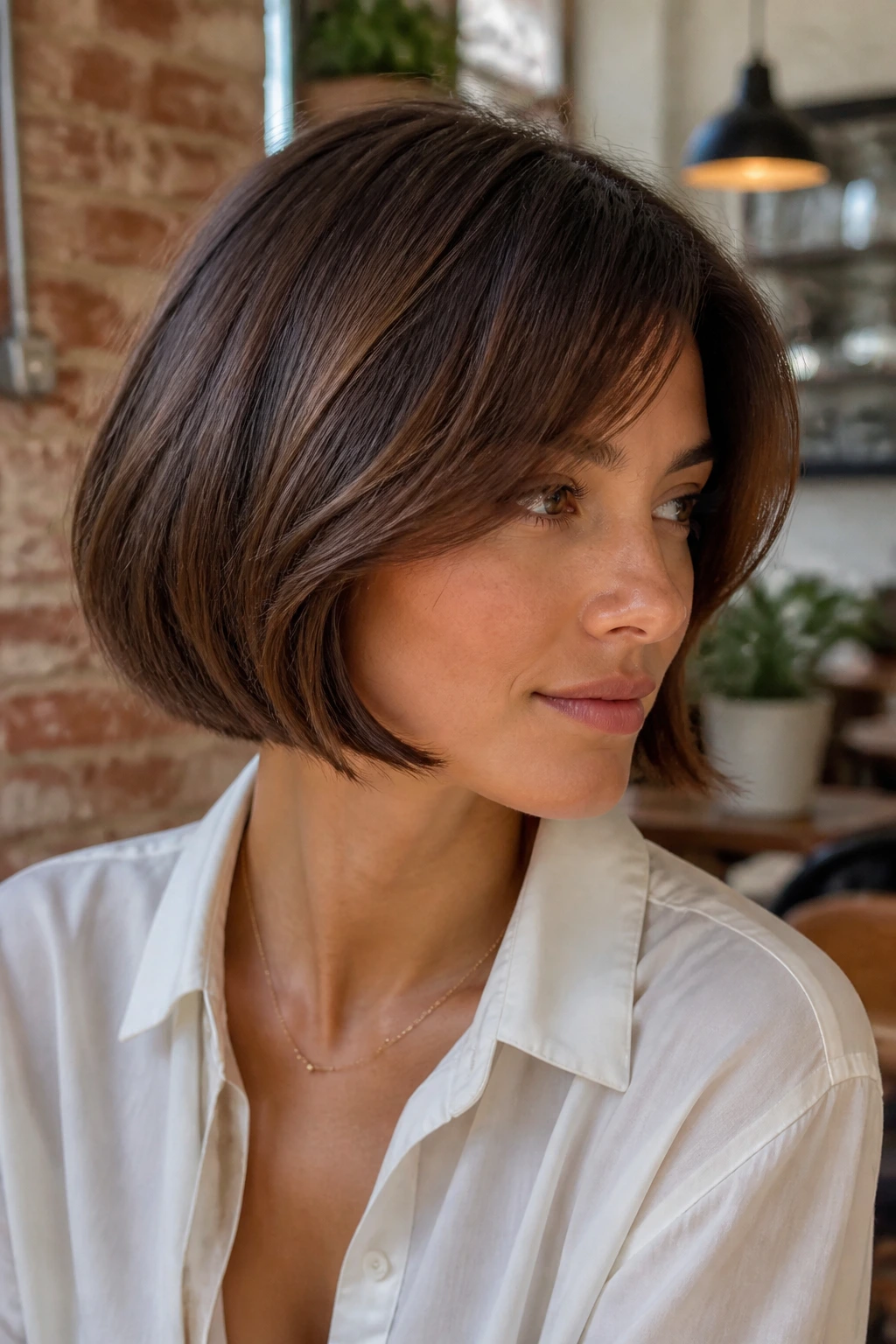
The French bob usually brings a cleaner, shorter attitude, but on thick medium hair it gets better when the ends are softened. You want cheekbone energy, not a blunt little shelf.
A side part helps this cut avoid the “helmet” problem. So does a little point-cutting at the ends, which breaks up the line just enough for the curl to settle. I like this version most on hair that has natural body already; it needs less persuading to move.
4. Italian Bob with Brushed-Out Waves
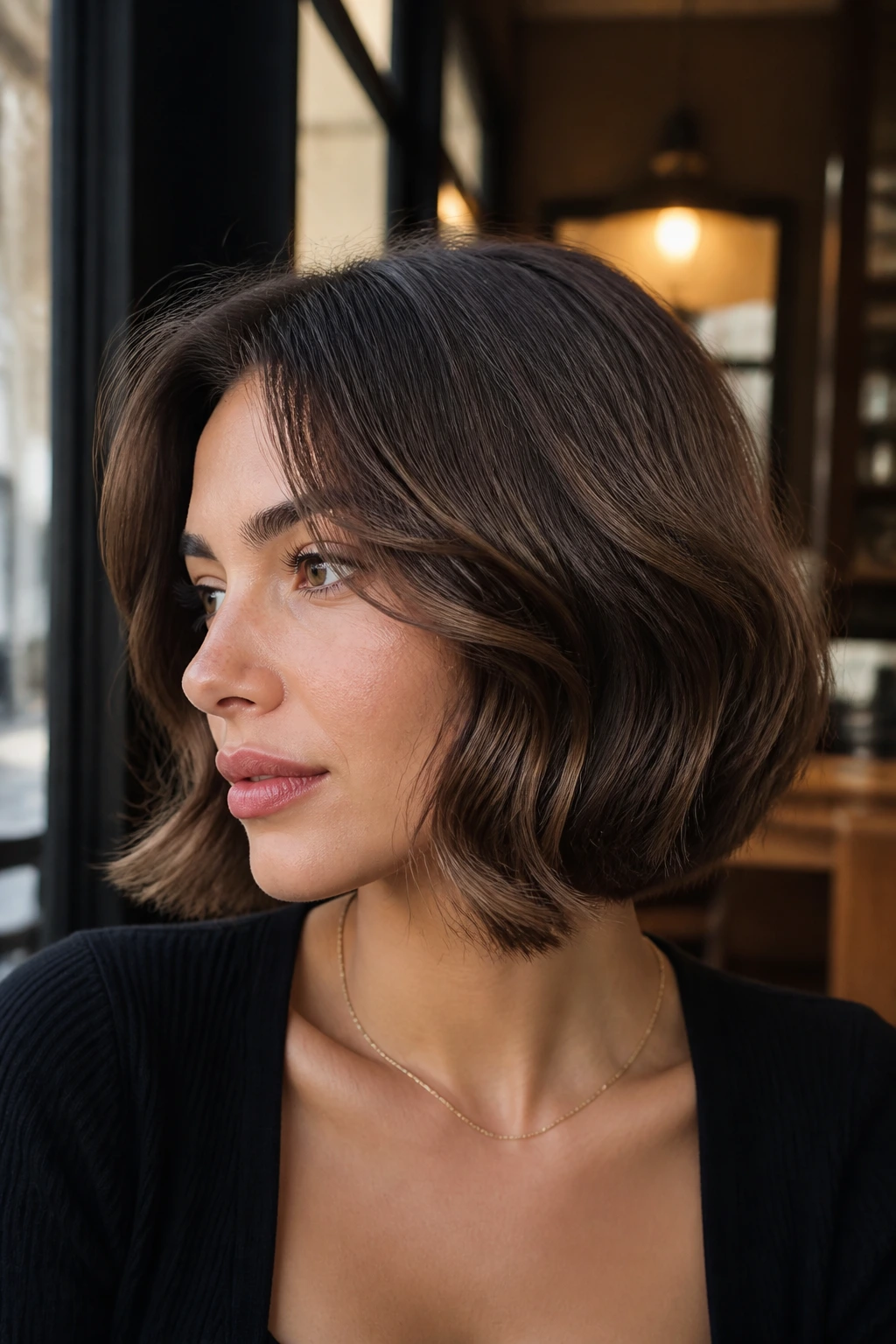
An Italian bob is all about polish. The hair looks smooth at the crown, then opens into soft, brushed-out waves through the mid-lengths. Thick hair can carry that look beautifully because the density gives the wave weight.
Styling note
Start with a round brush blow-dry or a quick rough dry plus a smoothing cream. Then wrap large sections around a barrel, let them cool, and brush them out once the hair is fully set. The wave should look like it came from the cut, not from a curling contest.
This one works especially well if your hair tends to frizz on the surface but stays hefty underneath. The glossy finish hides a lot. So does a little shine spray, applied to the hands first and smoothed lightly over the outer layer.
5. Rounded Center-Part Bob

Thick hair can go wide in the wrong way when the cut is all one length. A rounded center-part bob solves that by curving the silhouette inward at the sides and letting the curl settle into a soft bowl shape.
This is one of the cleanest choices for people who don’t want movement to mean mess. Keep the longest pieces just below the chin or right at the upper neck, then bend the ends under with a round brush or a large-barrel iron. The middle part creates symmetry, but the rounded edge keeps it from feeling severe.
6. A-Line Curl Bob
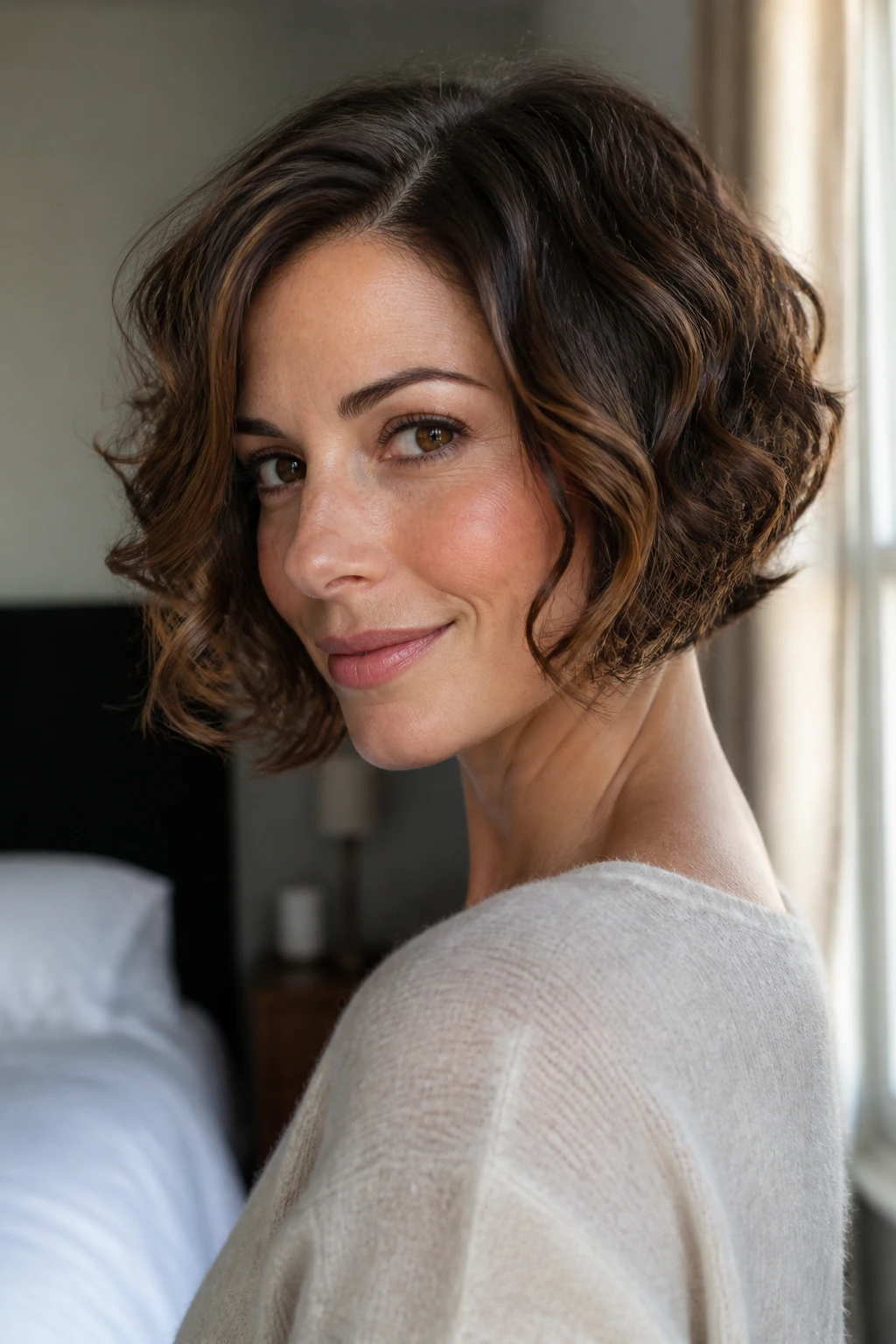
The A-line bob gives you a little drama without much fuss. Shorter at the back, longer toward the front, it lets thick hair keep some length where you want it while trimming bulk off the nape.
That back-short, front-long shape is especially useful if your hair puffs at the neck. Soft curls in the front frame the cheekbones, and the longer pieces can graze the collarbone instead of flipping awkwardly. Ask for a gentle angle, not a steep one. Too much difference and the style starts shouting.
7. Stacked Bob with Airy Back
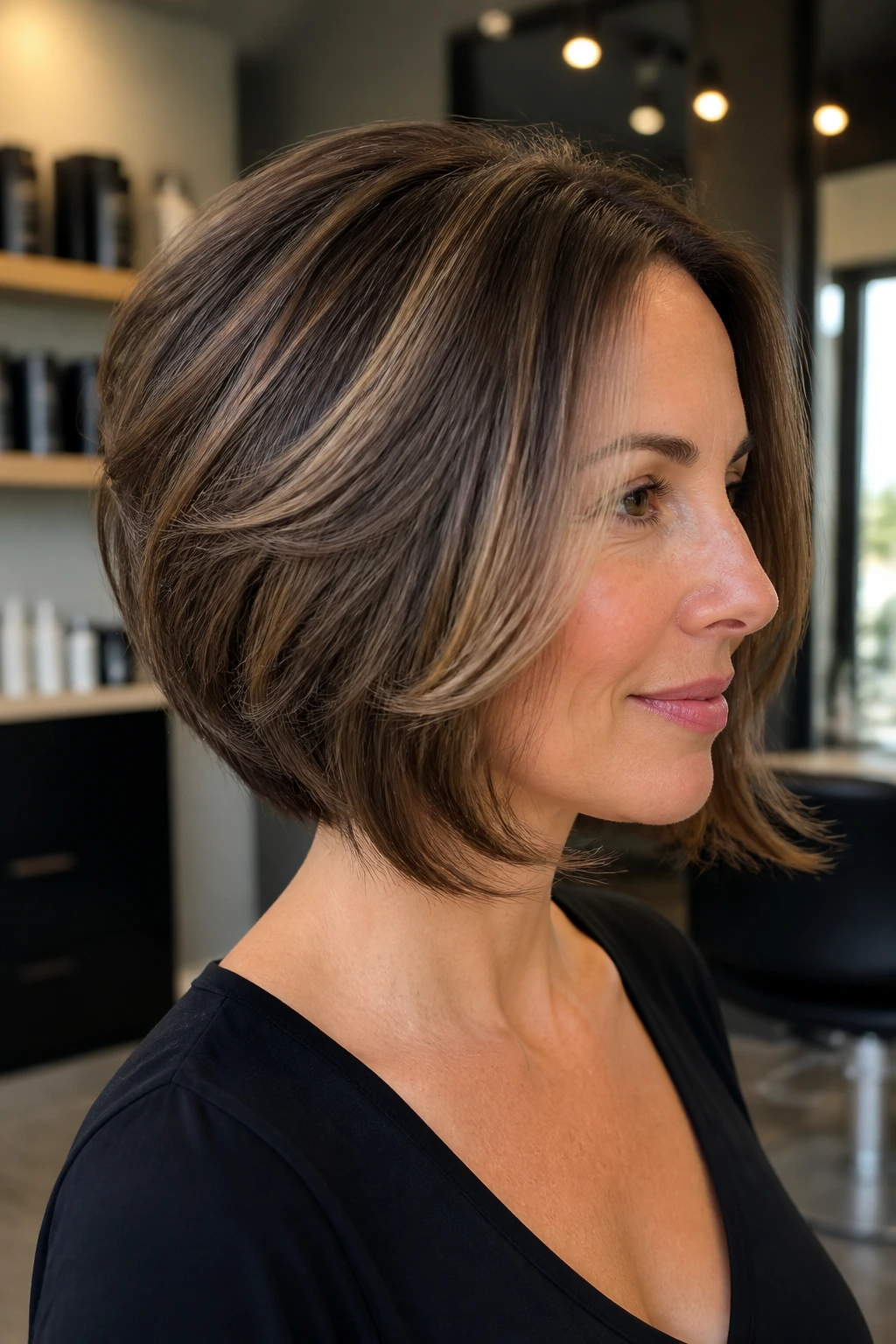
A stacked bob can be a lifesaver for thick hair that hangs heavy at the crown and flat at the nape. The back is cut with more layering and a little graduation, which creates lift without needing a mountain of product.
It’s not a haircut for people who want zero shape. It’s for people who want shape that does some of the work for them. The soft curls sit better when the back is already lifted, so the sides don’t drag the whole cut downward. If your hair is dense enough to eat volume, this is one of the smarter choices.
8. Shaggy Bob with Loose Texture

A shaggy bob makes thick hair look lighter because it stops trying to behave like one solid block. The ends are shattered a bit, the layers are soft, and the curl is messy in the good way — not the “I forgot a brush” way.
This style gets stronger on hair with natural wave or a little bend. Rough-dry it with a diffuser, twist a few pieces around your fingers, and leave the crown a bit imperfect. The whole point is movement. Not uniformity.
9. Curtain Bang Bob

Curtain bangs change the whole face frame. On a bob, they make thick hair feel less heavy through the front because the fringe splits away from the center and blends into the sides.
The trick is keeping the bang area soft while the rest of the bob stays curled. If the curls begin too high, the fringe and the side sections start fighting each other. Start the bend below the cheekbone, then sweep the front pieces off the face. That gives the bangs room to do their job.
10. Deep Side-Part Bob
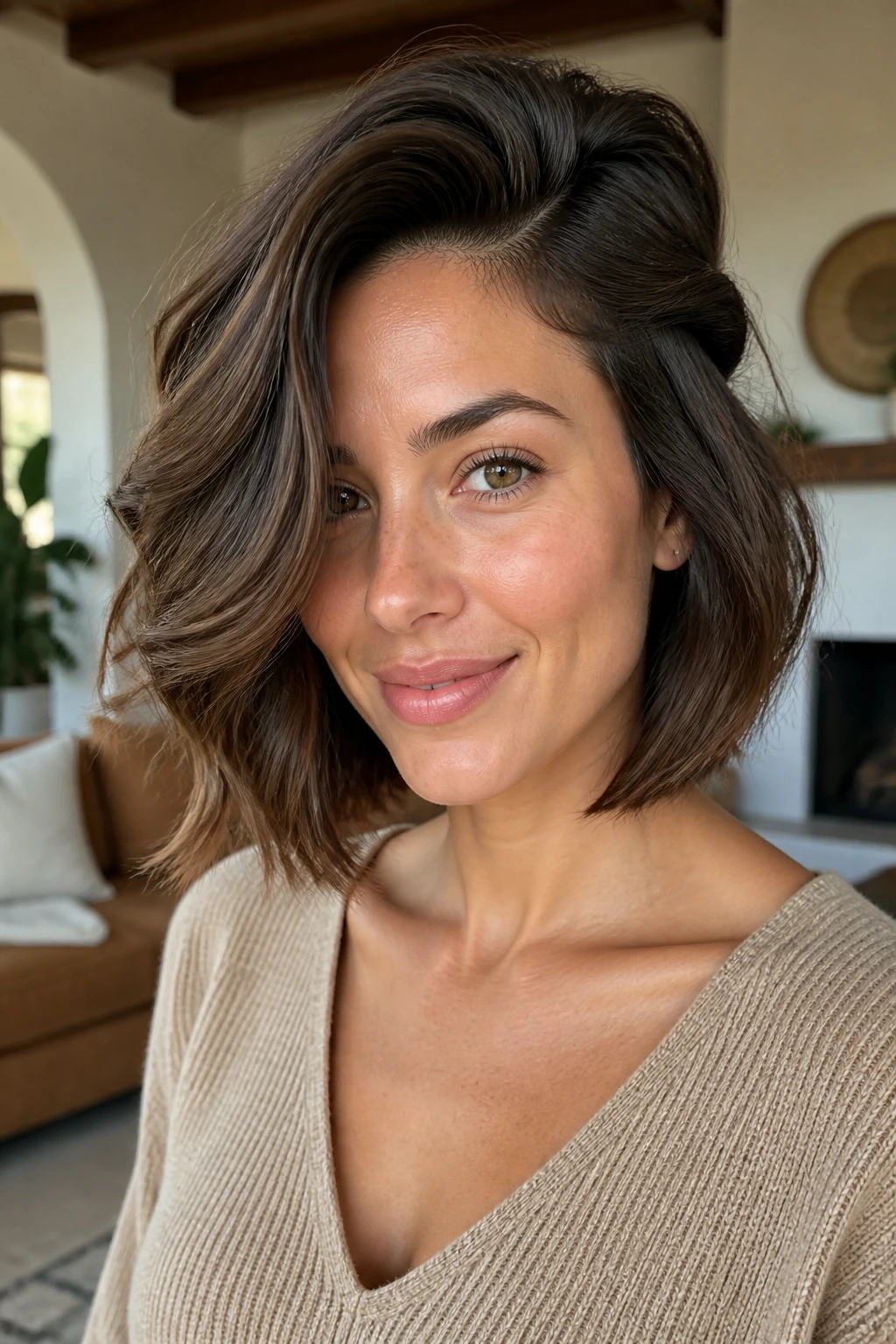
A deep side part is the simplest way to get movement fast. It lifts one side, reduces the width across the top, and lets thick hair fall into a sleek curve rather than a wide triangle.
This one is a good fix for hair that always wants to split down the middle and puff out on both sides. A side part of even two inches changes the whole mood. Pin the heavier side at the roots while it cools, then let the curl fall over it. The result looks intentional, not accidental.
11. Blunt Bob with S-Waves
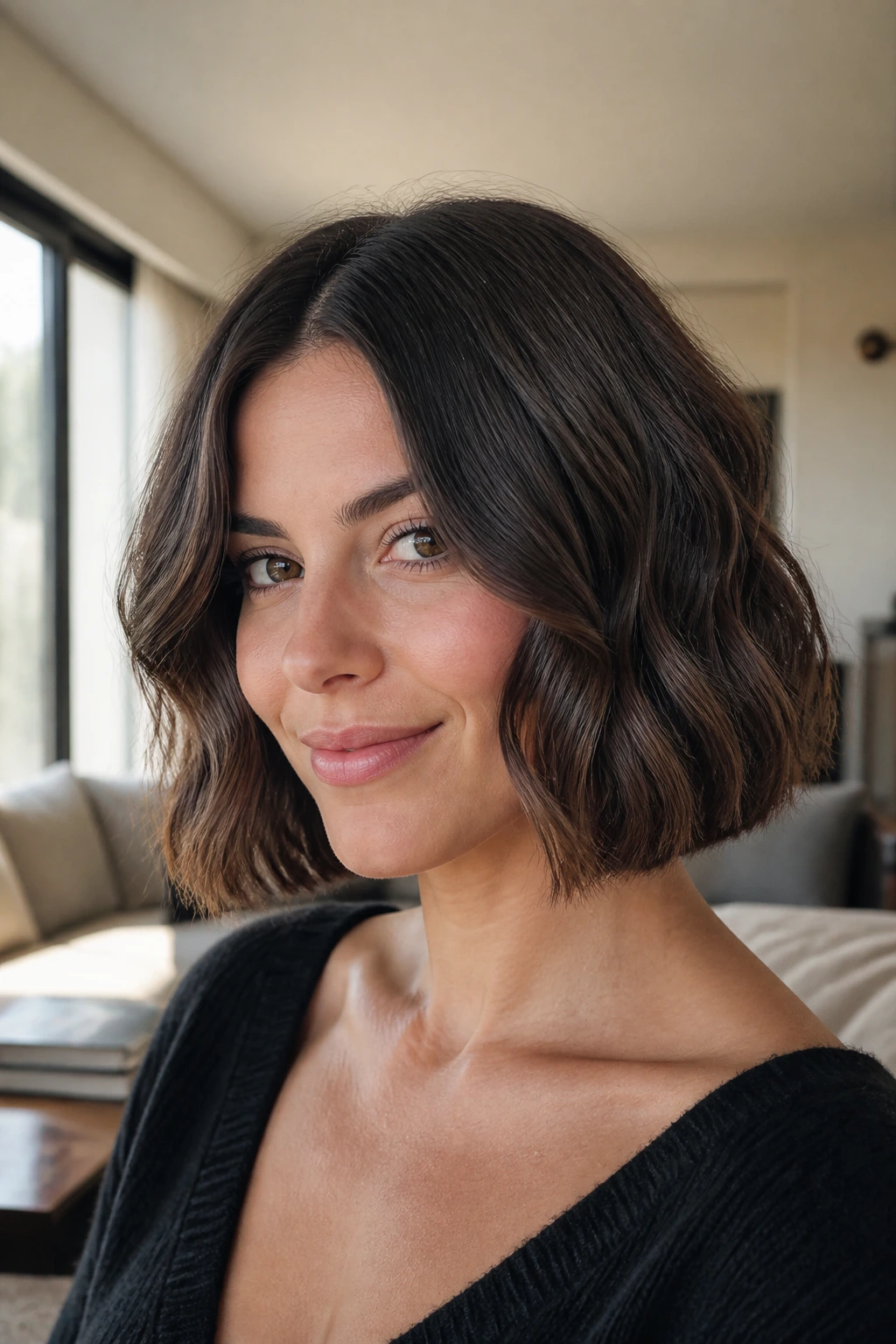
A blunt bob on thick hair sounds strict, but it gets interesting when the styling is soft. Instead of tight curls, create S-waves with a flat iron or a waving tool, then brush them out just enough to blur the lines.
The blunt edge gives the cut its structure. The wave keeps it from feeling hard. That contrast is why this version works when you want your hair to look polished on day one and still hold its shape on day two. Keep the ends clean, though. If the perimeter frays, the whole point disappears.
12. Jaw-Length Textured Bob
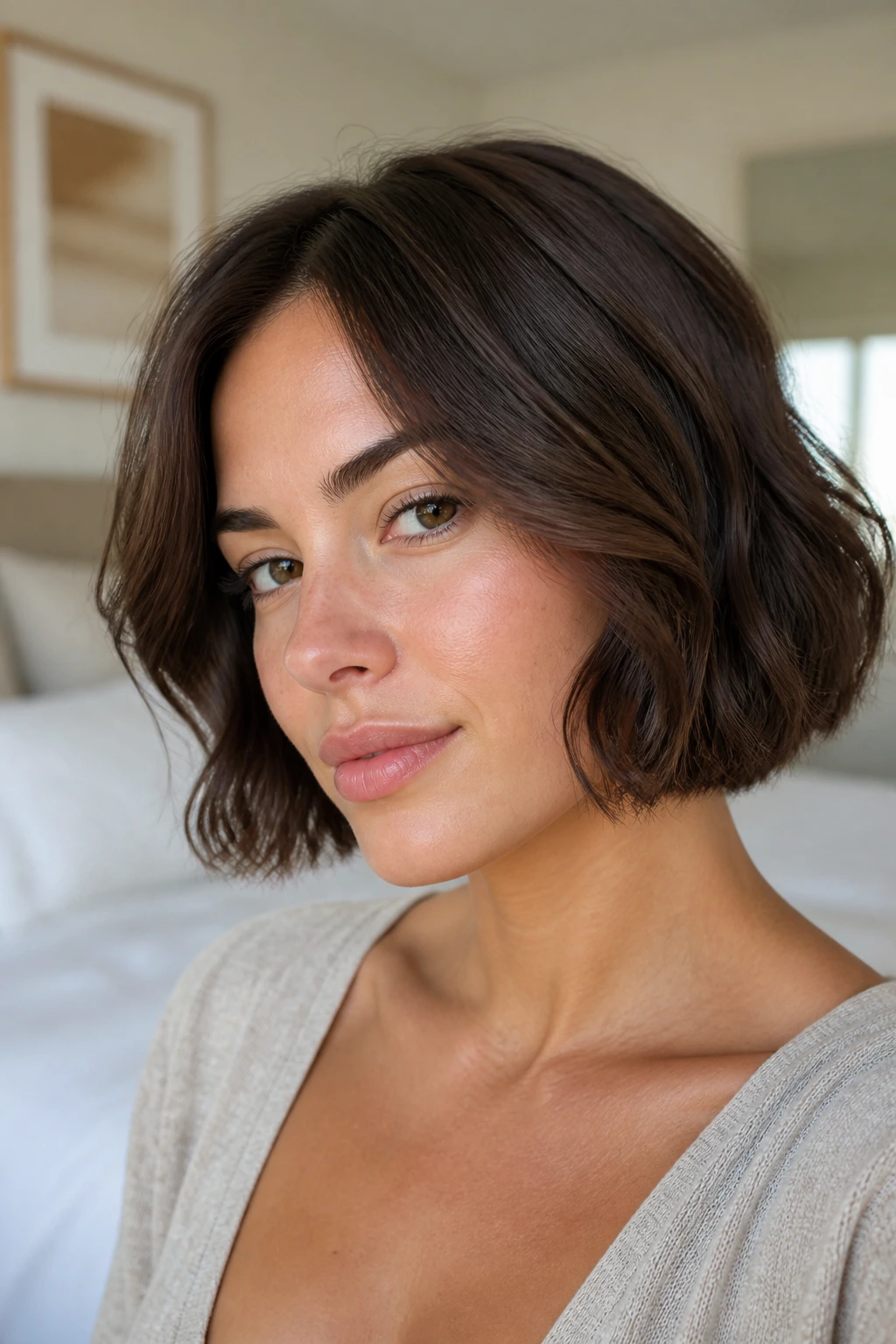
Jaw-length is one of those lengths that can look incredible or irritating, depending on the texture work. On thick hair, a textured bob at the jaw keeps the weight high enough to stay controlled but short enough to avoid shoulder flips.
Use a little less curl here. A soft bend through the middle and a turned-under end are usually enough. You want the bob to frame the jaw, not crowd it. If your jawline is strong, this cut shows it off. If you want softness near the face, ask for a few shorter pieces around the cheekbone.
13. Feathered Bob with Face-Framing Pieces
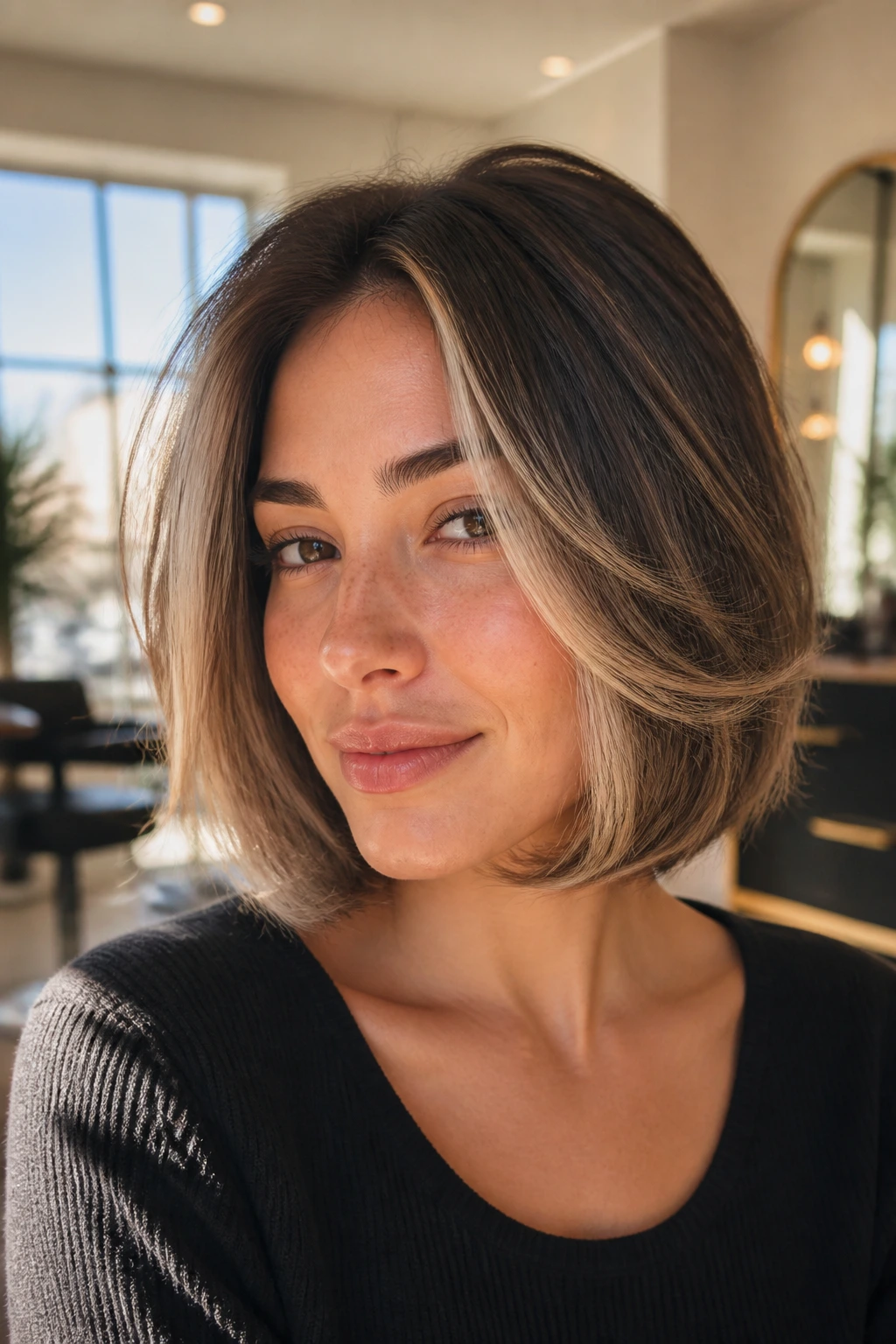
Feathered layers take the edge off thick hair without stripping away the fullness people usually want to keep. The front pieces are the real star here. They sit lighter, move better, and let the rest of the bob stay fuller in back.
This style has a softer mood than a blunt bob, and that matters if your hair tends to feel heavy around the cheeks. Use a round brush on the face-framing sections and a larger barrel on the rest. The mix gives the cut some lift without making it frizzy.
14. Asymmetrical Curled Bob
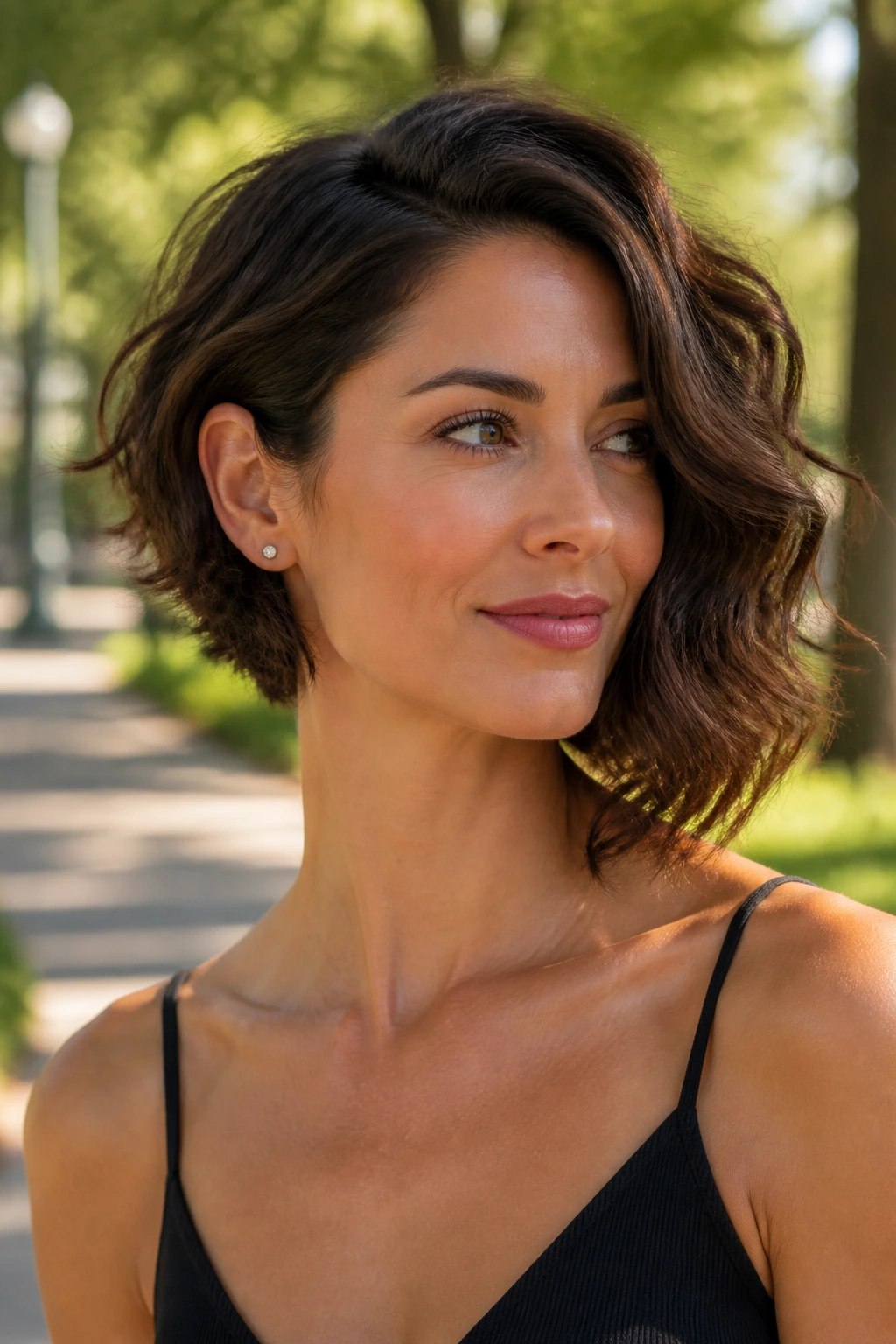
One side slightly longer than the other changes the whole silhouette. Thick hair benefits from asymmetry because it breaks up the bulk visually before the bulk has a chance to take over.
I like this on people who wear one side tucked behind the ear a lot. The longer side can fall toward the collarbone while the shorter side opens the face. Soft curls keep the asymmetry from looking sharp or editorial. If the difference in length is subtle, the style still feels wearable.
15. Tucked-Behind-Ear Bob
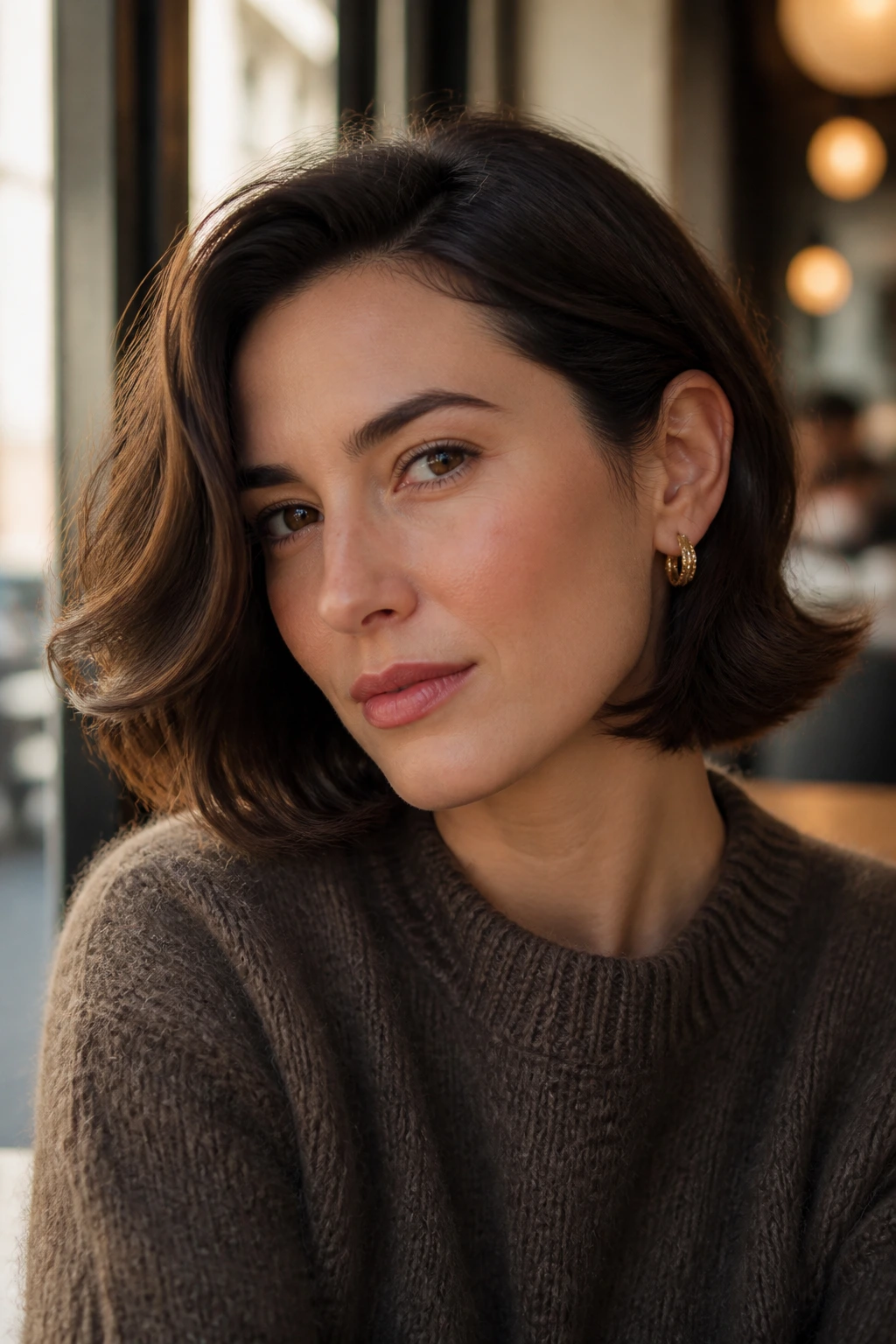
A tucked bob is a small styling choice that changes the cut more than you’d think. Thick hair usually has enough density to hold a clean tuck without collapsing, which means you can open one side of the face and keep the other side full.
The best version leaves enough length around the ear to tuck without fighting flyaways. A light mist of flexible spray on the top layer helps the hair stay put without getting crunchy. It’s a polished look, but not a stiff one. That’s the sweet spot.
16. Hollywood Bob with Glossy Bend
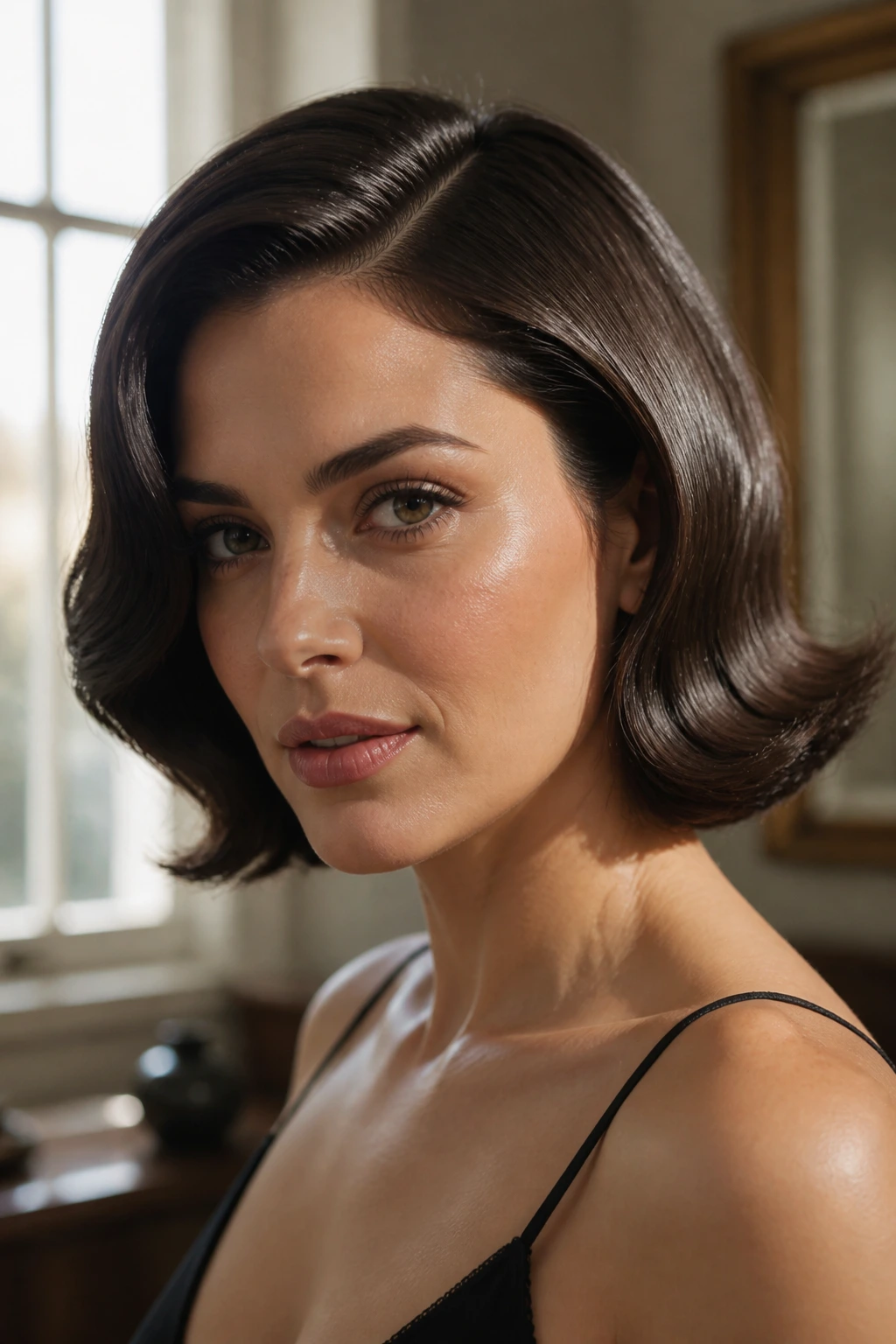
A Hollywood bob is a soft curl bob with discipline. The wave is smoother, the shine is higher, and the finish looks almost brushed into place. Thick hair can wear this beautifully because the density gives the wave a luxurious weight.
Use a large barrel, pin the curls while they cool, and don’t touch them until they’re fully cold. That cooling time matters more than most people think. Once brushed out, the curl turns into a molded bend that catches the light and sits close to the head. No puff. No fluff.
17. Choppy Shoulder Bob

Shoulder length is where thick hair starts to misbehave if the cut is too plain. A choppy bob keeps that length from feeling heavy by breaking up the ends and scattering the movement a little.
This style is good for people who want a longer bob but don’t want the straight-across heaviness of one solid line. The curls don’t need to be uniform; they just need direction. Use a texturizing spray at the end, not a heavy cream. Cream can weigh the shape down fast here.
18. Curled Bob with Long Fringe

A long fringe changes the balance of a bob in a useful way. It gives your eyes a frame, softens the forehead, and pulls the rest of the hair out of the face so the medium-length cut feels lighter.
This works best when the fringe is bent, not curled into a full loop. I’d keep the fringe pieces longer at the outer edges so they can blend into the cheek area. Thick hair likes that kind of transition. It stops the front from looking like a separate haircut.
19. Cloud Bob with Rounded Volume

A cloud bob sounds airy, and that’s exactly the point. The shape is rounded, the volume sits softly around the head, and the curl is loose enough to feel touchable rather than stiff.
This is a strong choice if your hair is thick, coarse, and naturally full through the mid-lengths. Instead of trying to flatten it, work with the fullness and shape the top with a round brush. The cut should carry the body for you. A little mousse at the roots and a large barrel through the ends usually does the trick.
20. Grown-Out Lob with Soft Curl

Not everyone wants a true bob. Fair enough. A grown-out lob gives you the same soft curl treatment, but with a little more length through the collarbone area, which can be easier if your thick hair feels dramatic when it’s shorter.
This is the style I’d point to if you want the look of a bob without sacrificing much ponytail potential. The curls can be larger and looser, and the ends have enough weight to swing rather than flip. A center part keeps it modern, while a side part makes it feel softer.
21. Undercut Bob for Very Thick Hair
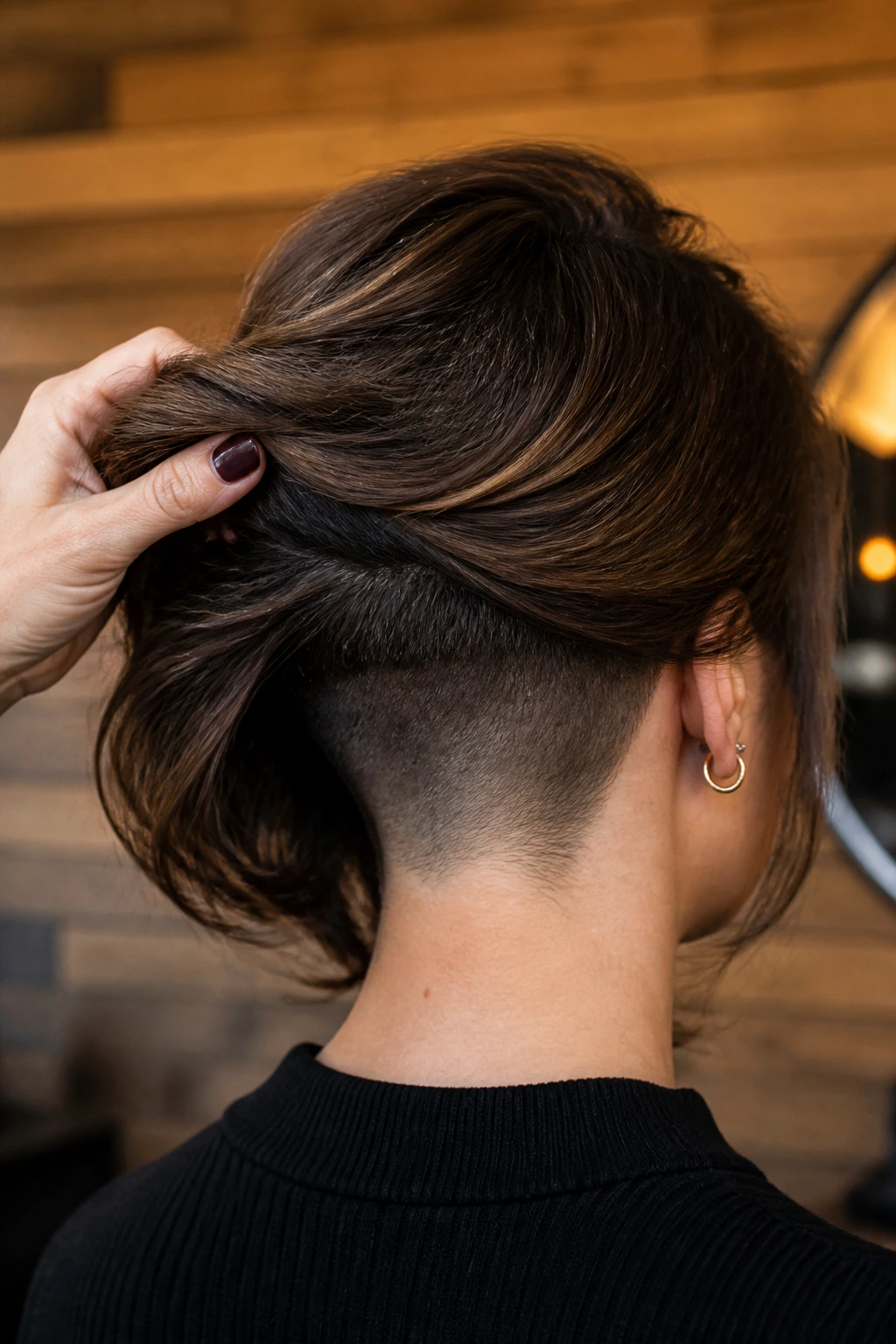
If your hair is so dense that every haircut turns into a wrestling match, a hidden undercut can be the difference between “manageable” and “why is this so much hair.” It removes bulk underneath while keeping the top layer full and smooth.
This is not about making the haircut look edgy, although it can. It’s about taking enough weight away from the nape and lower sides so the soft curls can actually sit where they’re supposed to. The surface still looks like a bob. The underneath does the hard work.
22. Air-Dry Bob with Diffused Ends
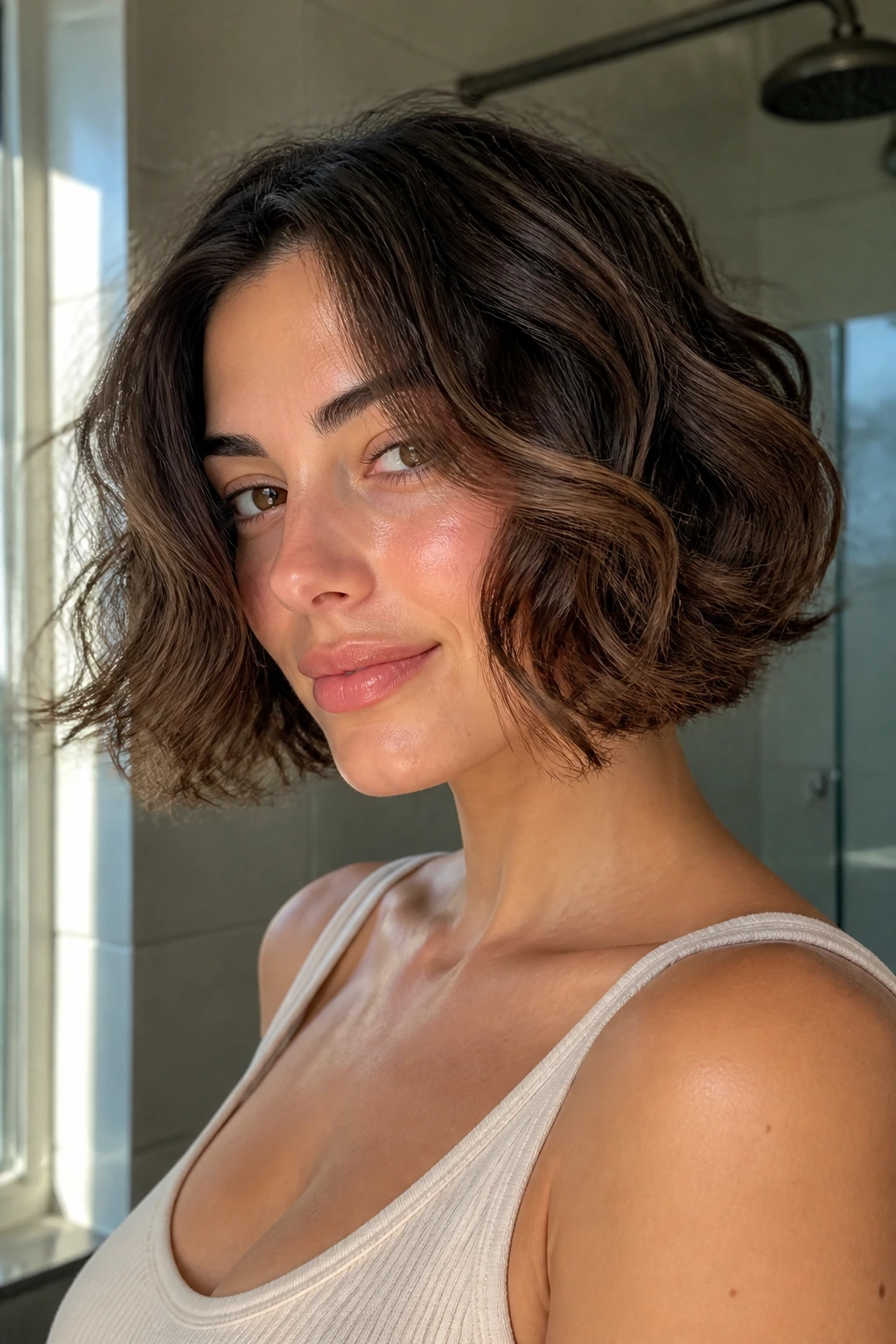
An air-dry bob is a good choice when you want the curl to look relaxed from the start. Thick hair often holds enough natural movement that you can let it dry on its own or finish with a diffuser for shape around the ends.
The key is to keep the product light. A small amount of curl cream or leave-in through damp mids and ends helps, but too much will weigh thick hair down and make the top limp. Scrunch gently, don’t rake, and let the hair form its own pattern. The finished look should feel soft, not sculpted.
23. Flip-Under Bob
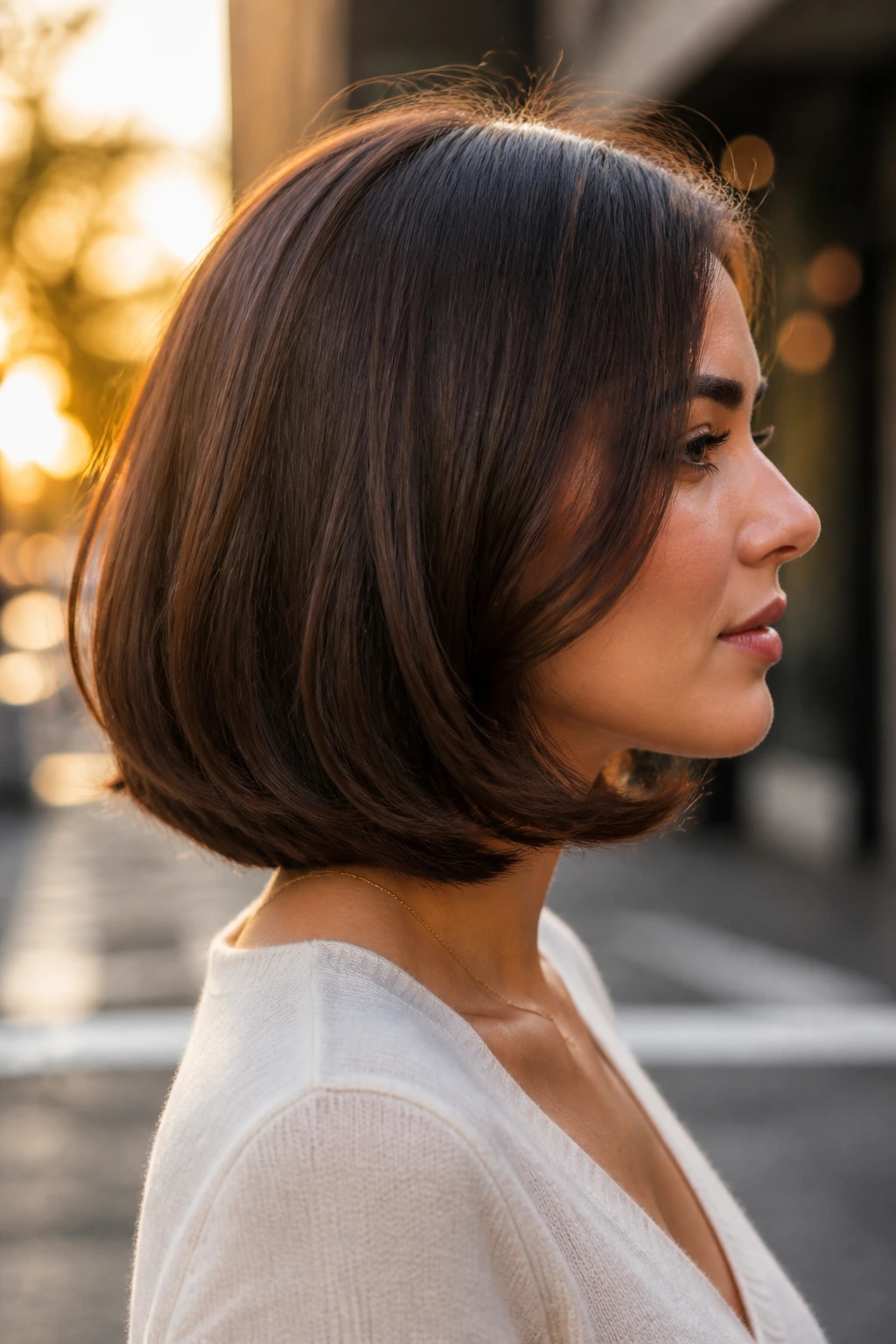
A flip-under bob gives thick hair a clean bottom line. The ends curve inward, which keeps the shape neat and stops it from flaring out around the shoulders.
This style is especially useful if your hair tends to flip outward at the collarbone the minute it dries. A round brush or a hot roller set on the ends can fix that quickly. The inward turn makes the bob feel more finished, even on a plain T-shirt day. Small detail. Big payoff.
24. Piecey Bob with Light Ends
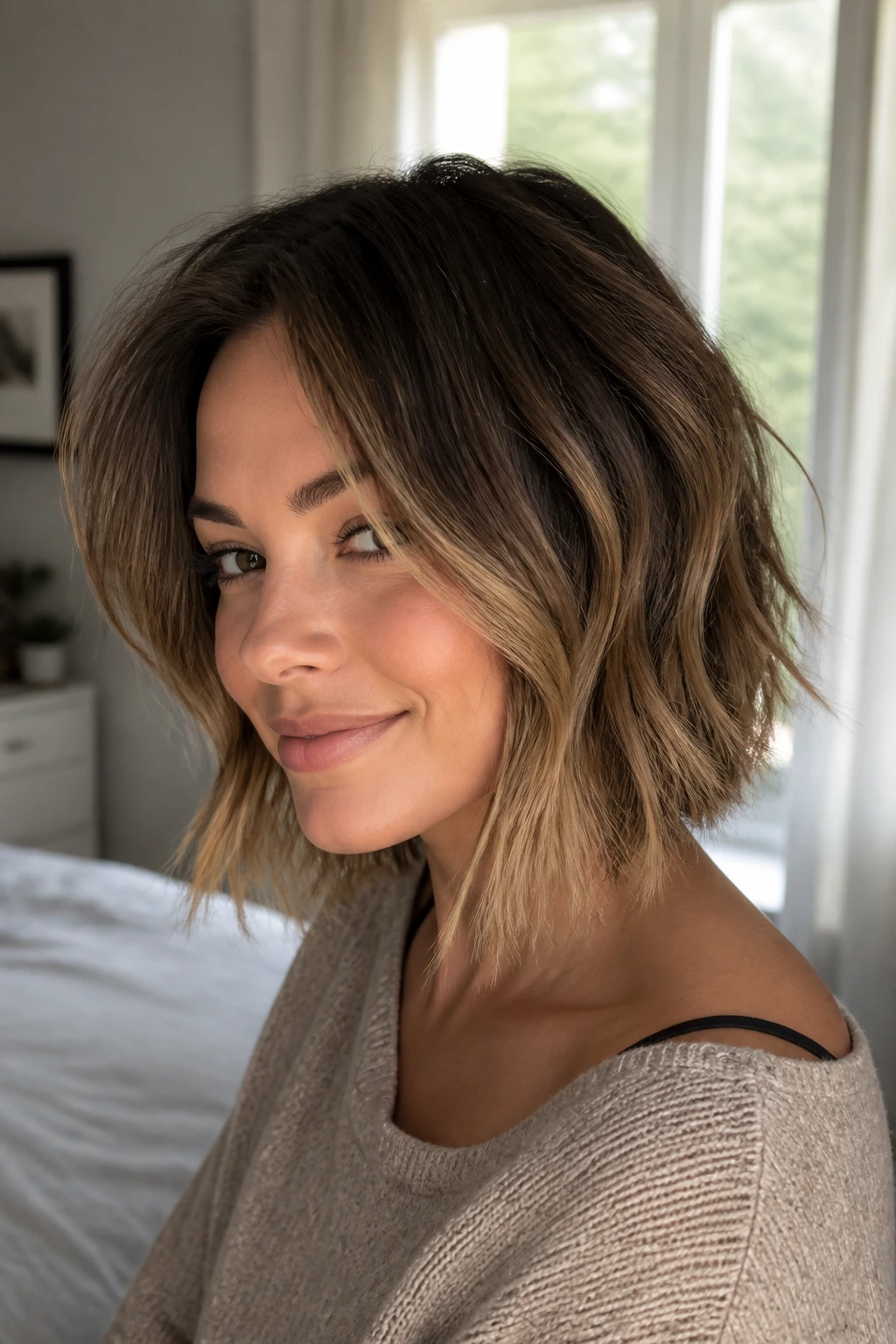
Piecey ends keep thick hair from looking too solid. Instead of a heavy curtain of hair, you get separated pieces that move individually, which makes the whole cut feel lighter and more modern.
A little wax rubbed between the fingers and tapped into the ends is usually enough. Don’t smear it all over the head. That’s how thick hair gets greasy fast. Keep the shape loose, and let some pieces fall forward while others tuck back. The unevenness is the point.
25. Polished Side-Swept Bob
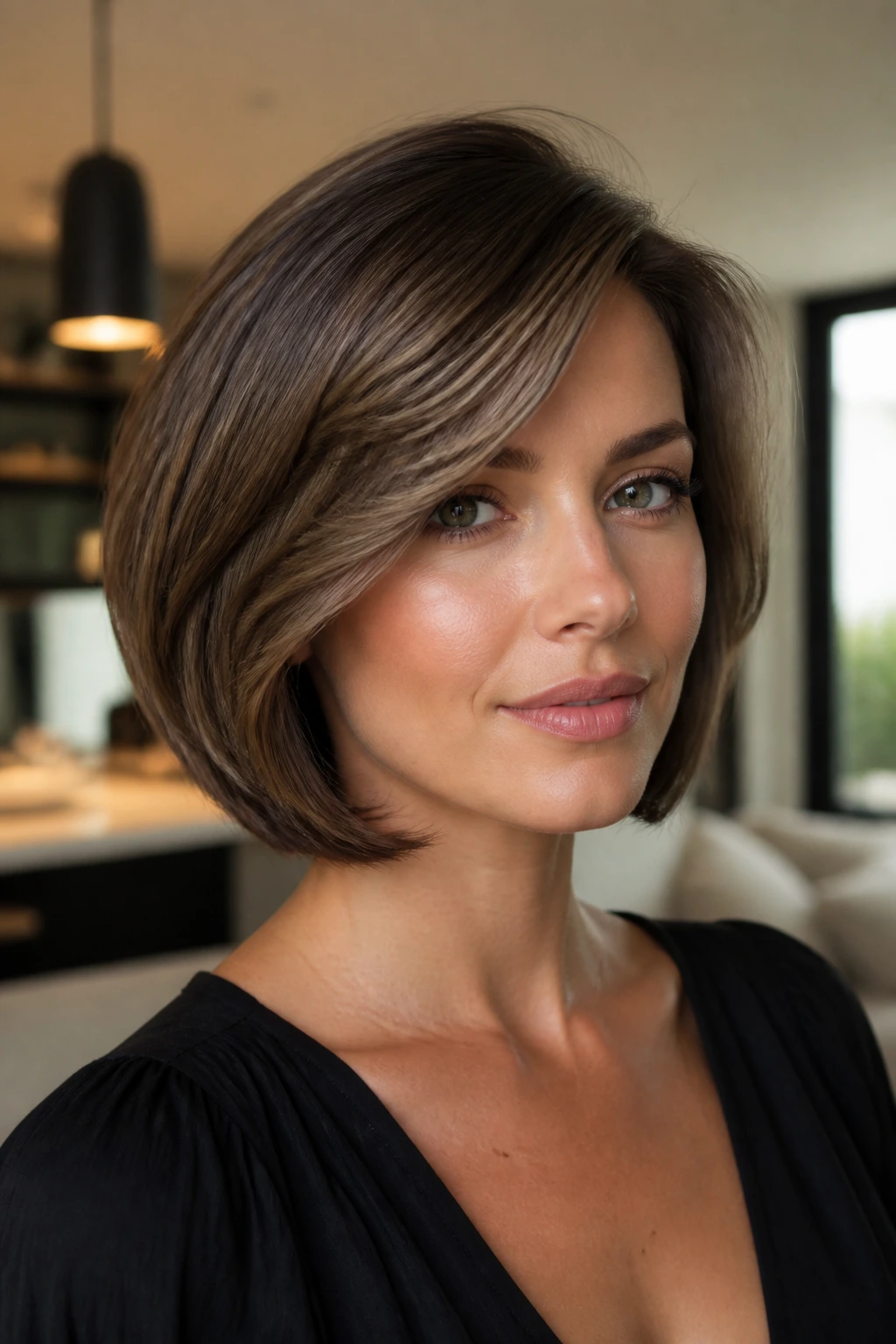
A side-swept bob is a strong final choice because it softens a thick haircut without making it messy. The sweep across the forehead opens the face, while the curved ends keep the bob tidy through the jaw and neck.
It’s a good style when you want the hair to look styled, not stiff. Set the front section with a larger roller or a round brush, then let the rest fall into loose bends. The combination is flattering on medium hair because the density gives the sweep enough hold to stay in place.
How to Ask for the Cut So Thick Hair Behaves
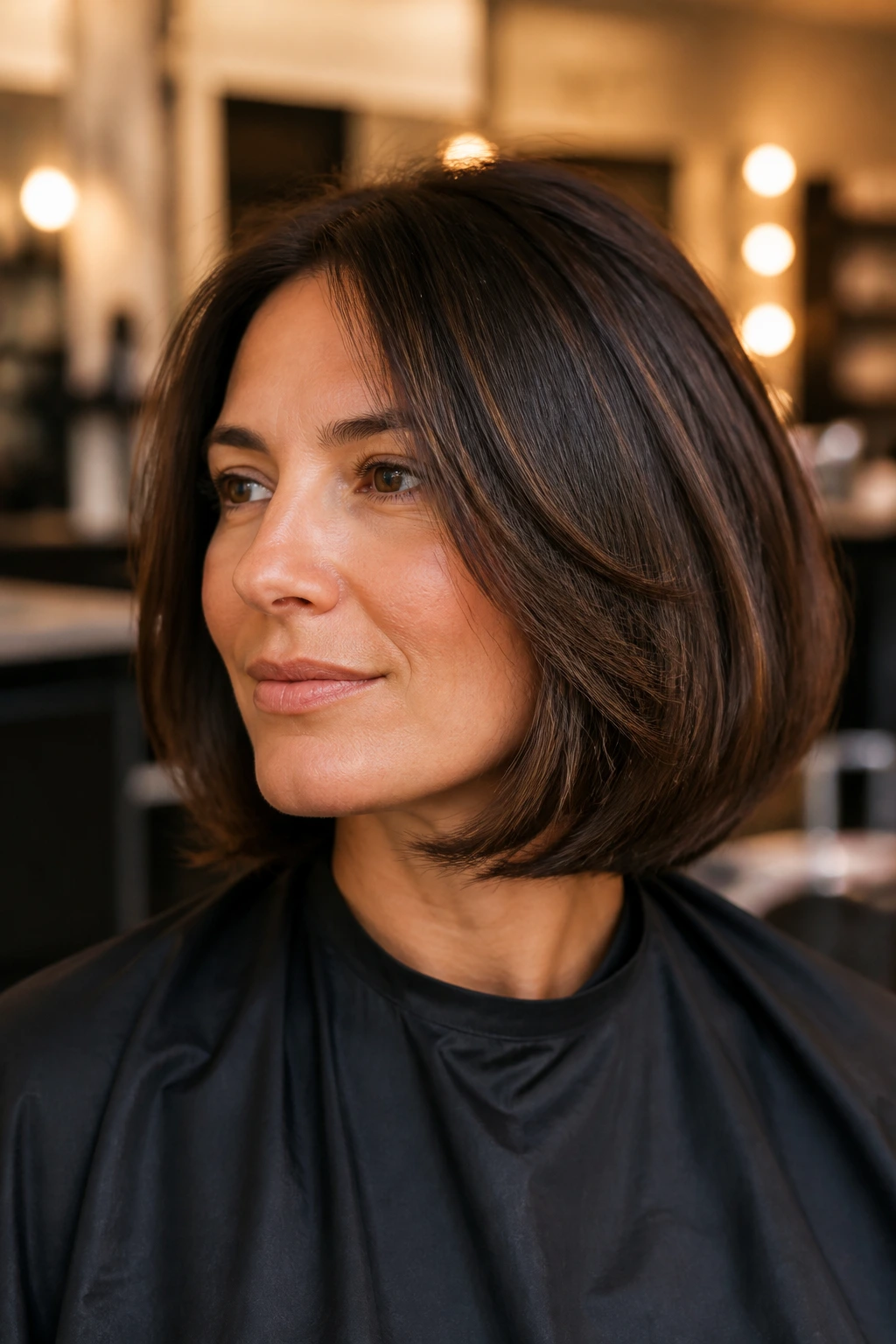
Thick medium hair needs shape, not just length taken off. That starts at the salon chair. If you walk in and ask for “a bob with soft curls,” the result can land anywhere from boxy to fluffy, and neither is ideal.
Ask for a length that lands either at the chin, just below it, or at the collarbone. Then talk about where the weight should come out. I prefer internal layering or subtle graduation over aggressive thinning, because thick hair can lose its body too quickly when it’s overcut. You want the perimeter to stay clean. You want the inside to breathe.
Bring up your styling routine too. If you usually air-dry, the cut should support that. If you blow-dry with a round brush, the ends can be cut a little fuller so they’ll tuck under more easily. And if your hair has a stubborn part or a cowlick at the crown, say it out loud. That tiny detail can change how the bob sits by a full inch.
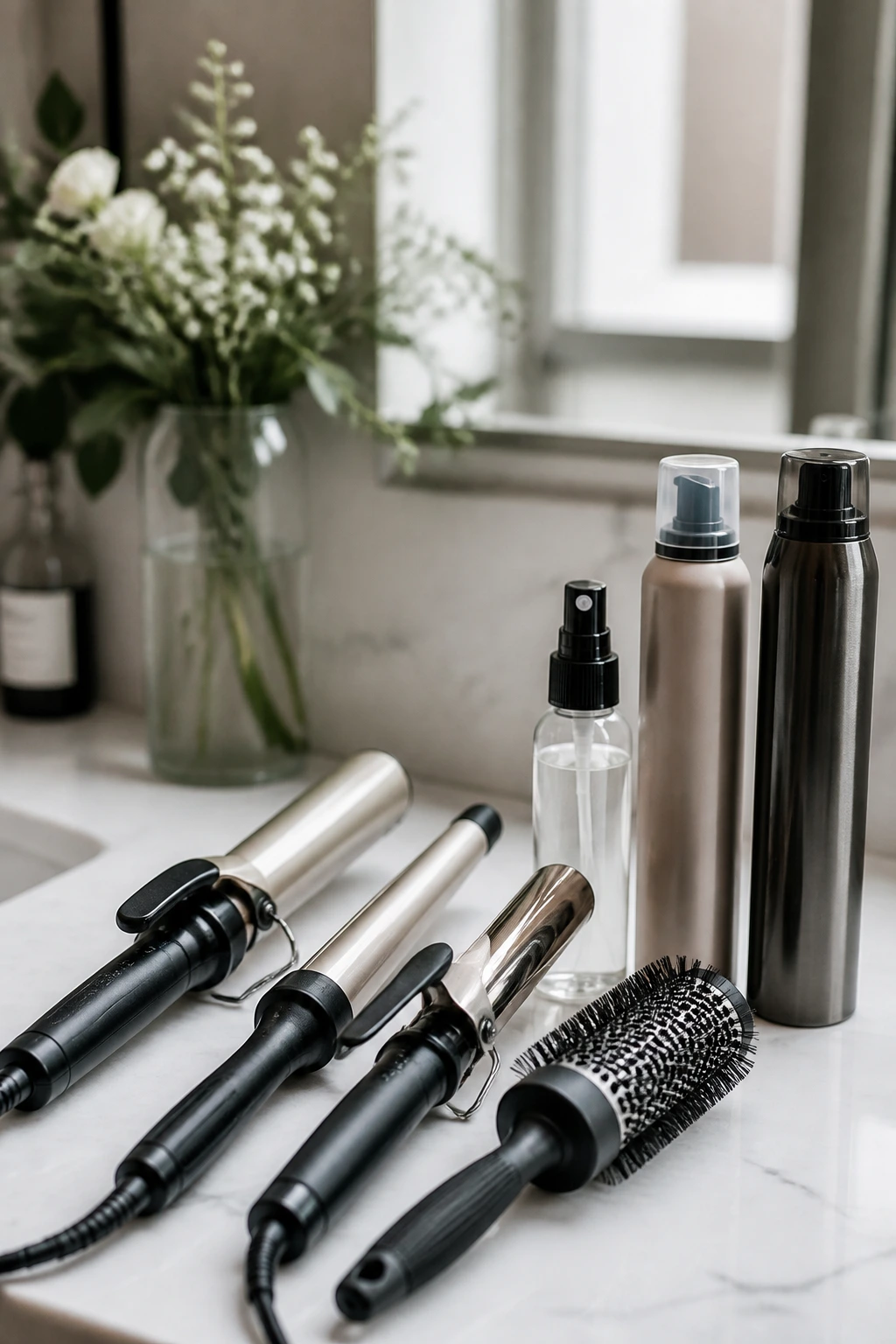
Essential Tools for Soft Curled Bobs
-
1-inch curling iron or wand: Best for creating a soft bend through medium-length hair without spirals that shrink the bob too much.
-
1.25-inch barrel: Better for brushed-out waves and longer bobs, especially if your hair is dense and resists curl.
-
Heat protectant spray: Thick hair can take heat better than fine hair, but the outer layer still needs protection from dryness and frizz.
-
Lightweight mousse: Gives roots a little lift without turning the whole cut stiff or sticky.
-
Flexible-hold hairspray: Holds the curl shape while still letting you brush it out and move it around.
-
Sectioning clips: Thick hair needs smaller working sections, or the curl won’t set evenly.
-
Round brush: Useful for bending the ends under, flipping them slightly out, or smoothing the front pieces around the face.
-
Diffuser attachment: Handy if you want an air-dried or low-heat finish that keeps the curl soft.
The Styling Moves That Keep the Curl Soft
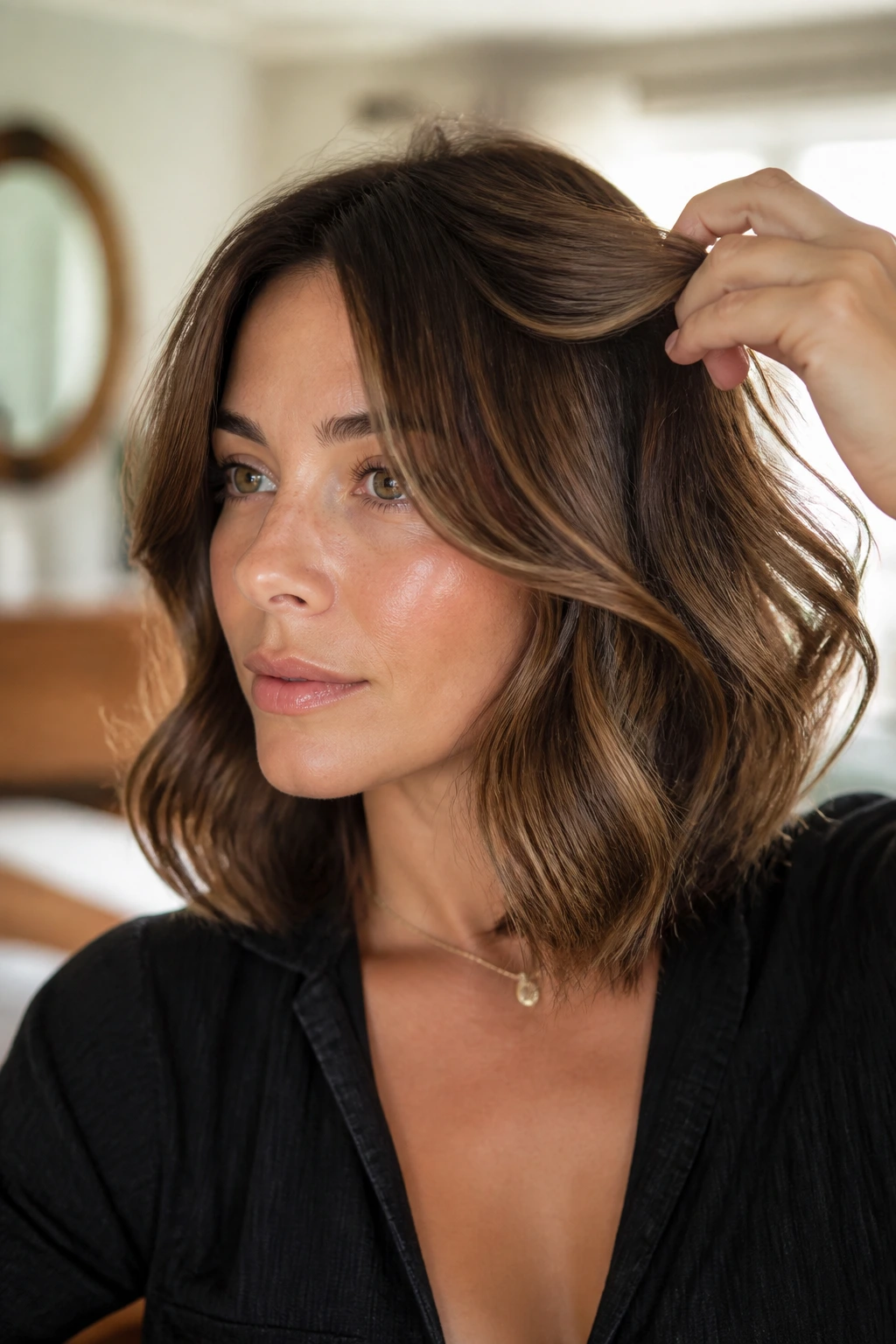
Section smaller than you think. Thick hair can swallow a curling iron section whole. Work in pieces about 1 to 1.5 inches wide so the heat gets through and the curl actually lasts.
Let the curl cool before you touch it. Seriously. If you brush it while it’s warm, it drops faster and gets frizzier at the ends. Clip the curls up for 10 to 15 minutes if you want a softer, longer-lasting bend.
Curl the front pieces away from the face. That one move keeps the bob open and light. If every piece turns the same way, the style can collapse into a block. Alternating direction in the back helps too, but keep the very front pieces consistent.
Use less product than your instincts tell you. Thick hair can take more than fine hair, but soft curl bobs don’t need a lot of cream. Start with a pea-sized amount of smoothing product or a golf-ball of mousse, not half the bottle.
Brush the ends, not the roots. A paddle brush through the top can flatten volume fast. Use your hands or a wide-tooth comb to loosen the curl, then leave the root area alone.
Common Mistakes That Make Thick Bobs Go Boxy
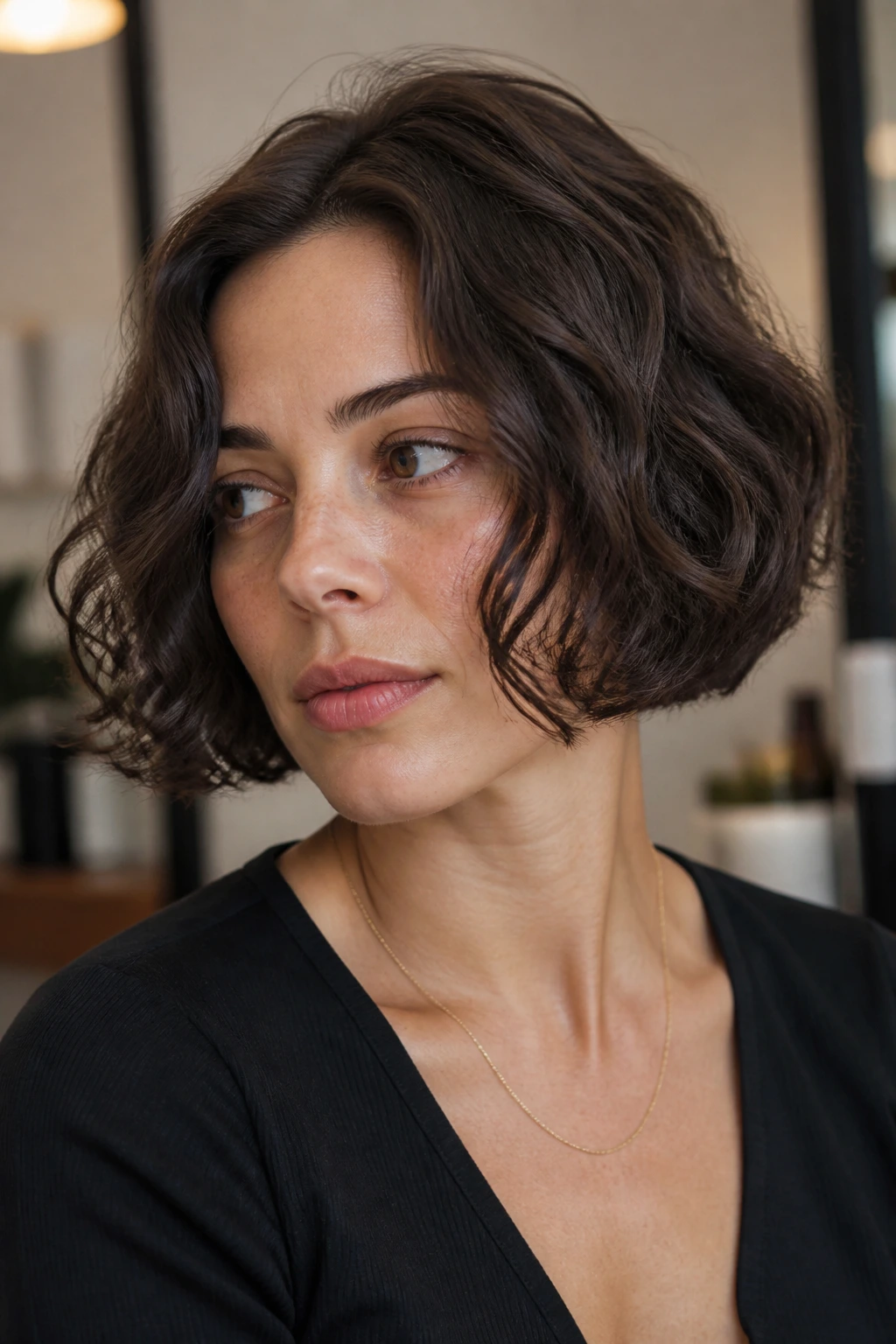
A few mistakes keep showing up with thick hair, and they’re all fixable.
Too much length in one block. When the bob is one heavy curtain from top to bottom, it sits wide at the sides. The fix is hidden weight removal or a touch of graduation, not more product.
Curling everything too tightly. Tight curls shrink medium hair and make thick hair read as puffy. A larger barrel, brushed-out finish, and straighter ends will keep the shape soft.
Skipping the crown. Thick hair often needs a little lift at the roots or the front collapses while the ends puff out. A quick blast with mousse and a round brush at the root can change the whole silhouette.
Using too much oil or cream. The hair might feel smooth in your hands, but the style goes limp by lunchtime. Put heavy products only on the last few inches if the ends are dry.
Ignoring how the bob grows out. A cut that looks clean on day one can swing into triangle territory if the layers are wrong. If you like low-maintenance hair, ask for a shape that still falls well after six to eight weeks.
Variations and Alternatives to Try
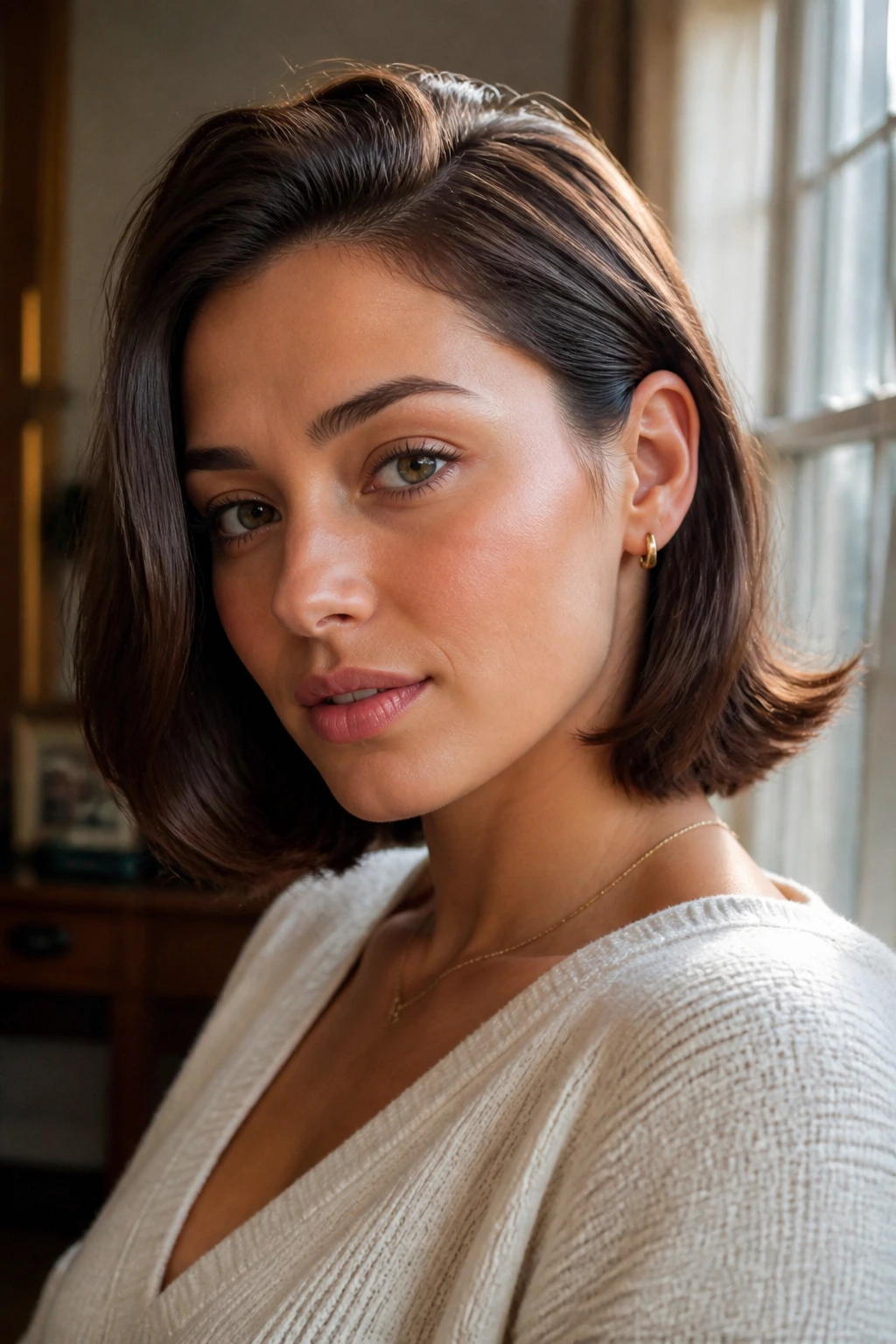
The Soft French Flip: Keep the bob shorter and add a slight bend at the ends, then tuck one side behind the ear. It feels crisp, but not severe, and it’s a nice match for thick hair that wants a little structure.
The Air-Dry Bend: Skip the hot tools and work in curl cream plus a diffuser. This suits hair with natural wave better than hair that dries pin-straight, but when it works, it looks relaxed in a clean way.
The Fringe-Forward Cut: Add curtain bangs or a long side fringe to shift attention higher on the face. This is a smart move if the bob feels too bottom-heavy or if your forehead reads long with a center part.
The Underlayer Fix: Keep the outer line full while removing bulk underneath with careful internal shaping or a hidden undercut. It’s the best option for very dense hair that otherwise refuses to sit close to the head.
The Glam Finish: Swap the casual brush-out for a polished, glossy wave with a side part and a larger roller set. The cut stays the same, but the mood changes completely.
How to Keep a Curled Bob Looking Fresh
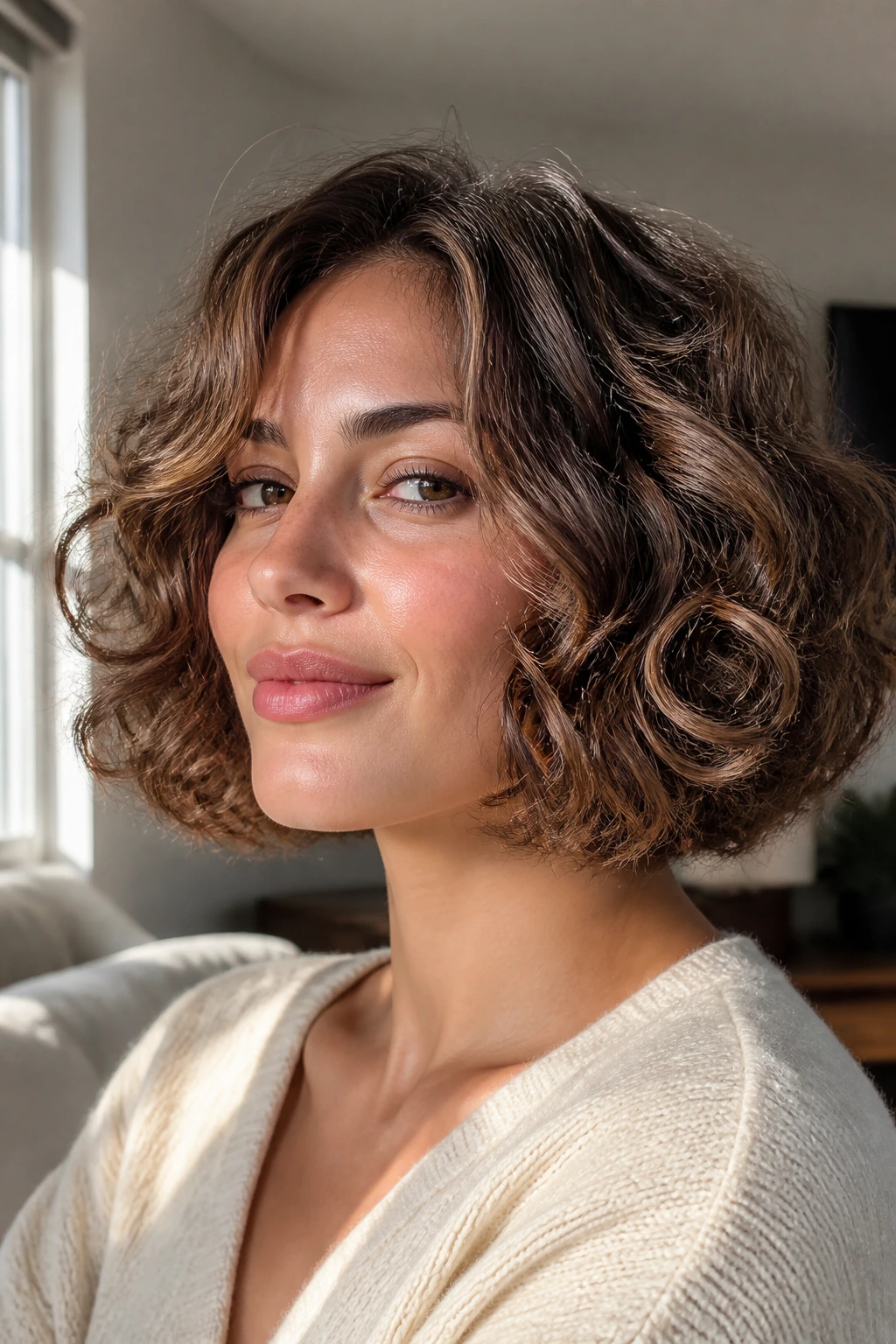
Thick medium hair usually holds shape better than finer hair, but it still needs a rhythm. Don’t overwash it. Two or three days between shampoos is enough for many people, and the second day often gives the bob better grip than day one.
At night, a loose clip or a silk scrunchie can keep the curl from getting crushed at the nape. If the ends bend weirdly while you sleep, mist them lightly with water in the morning and rewrap just the last few inches around your fingers. You do not need to restyle the whole head.
Dry shampoo belongs at the roots, not through the lengths. Too much on the ends makes thick hair feel dusty and stiff. A trim every 6 to 8 weeks keeps the perimeter from growing fuzzy, especially if the bob is shorter or blunt. Longer versions can stretch a little farther, but once the shape starts flipping out in a way you didn’t choose, it’s time.
Frequently Asked Questions
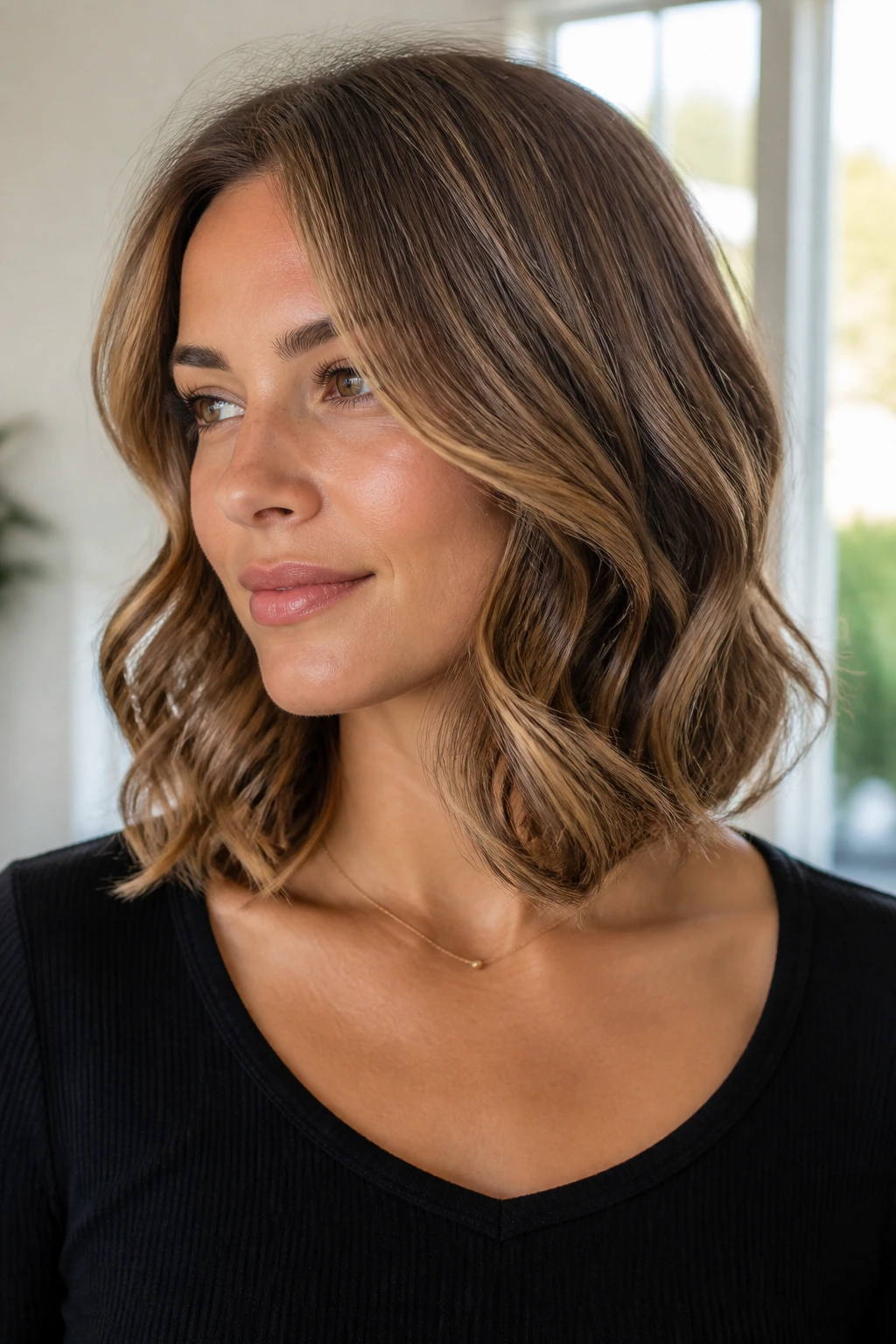
Which bob length is easiest for thick medium hair to manage?
A collarbone bob is often the easiest because it gives the hair enough length to weigh itself down a little, but not so much that the curl disappears. If you want something shorter, a chin-grazing version can work too, as long as the bottom line is cleaned up.
Do thick bobs need layers?
Usually, yes — but not the choppy kind that strip the hair bare. Thick hair does better with internal layering, light graduation, or face-framing pieces that remove bulk without tearing up the perimeter.
Can I wear soft curls on a blunt bob?
Absolutely. A blunt bob can look especially good with soft bends, as long as the curls are brushed out and the ends stay tidy. The trick is keeping the line clean while the inside of the hair carries the movement.
What barrel size should I use for this look?
A 1-inch barrel gives a more defined bend, while a 1.25-inch barrel creates softer waves that last longer on thick hair. If your hair is shoulder length or longer, the bigger barrel usually looks less cramped.
How do I stop my bob from puffing out at the sides?
Ask for less bulk through the middle of the cut, not more product on top. During styling, keep the root area smooth, curl in medium sections, and let the curls cool fully before brushing them out.
Can I air-dry a curled bob?
Yes, if your hair has some natural wave. Use a light mousse or curl cream, scrunch gently, and avoid touching it while it dries. If your hair dries pin-straight, you’ll probably still need a diffuser or a few heat-set bends.
What if the ends keep flipping outward?
That usually means the bob is hitting the shoulder at an awkward point or the ends are too blunt for your hair texture. A small length adjustment — even half an inch — or a softer perimeter can fix it fast.
How often should I trim thick hair in a bob?
Every 6 to 8 weeks keeps most bobs in shape. Shorter cuts need the trim more often because thick hair shows growth quickly, especially around the jaw and nape.
The Bob Shapes That Actually Move

Thick medium hair doesn’t need to be fought into submission. It needs a cut that knows where to stop, where to release weight, and where to let the curl do a little work. That’s the whole trick, and it’s why soft curled bobs can look so polished without feeling rigid.
Pick the version that matches how much shape you want to see in the mirror. Some of these bobs sit sharp at the jaw. Some drift to the collarbone and feel looser. All of them work best when the curl stays soft, the ends stay honest, and the cut leaves room for the hair to move instead of bulge.