



A side-swept bob with a fringe is the haircut equivalent of a well-cut shirt: it does a lot of work before anyone notices the details. The hair falls in a diagonal line, the fringe slips across one brow or cheekbone, and the whole shape looks deliberate even when you had eight minutes, one brush, and a half-warm blow dryer.
That matters on mornings when the clock is louder than the mirror. A blunt bob can be gorgeous, sure, but it tends to show every sleep bend and every lazy section from a rushed dry. A side-swept fringe changes the math. It gives the eye a direction to follow, hides a less-than-perfect part, and lets the cut look styled even when the crown is doing its own thing.
I like this family of cuts because it bends around real life. Some versions want a quick round-brush bend. Others are happy with a rough dry, a little dry shampoo, and a finger-twist at the front. The best ones do not demand perfection. They just need the right shape, the right length, and a fringe that behaves.
Why These Side-Swept Bobs Earn Their Keep on Busy Mornings
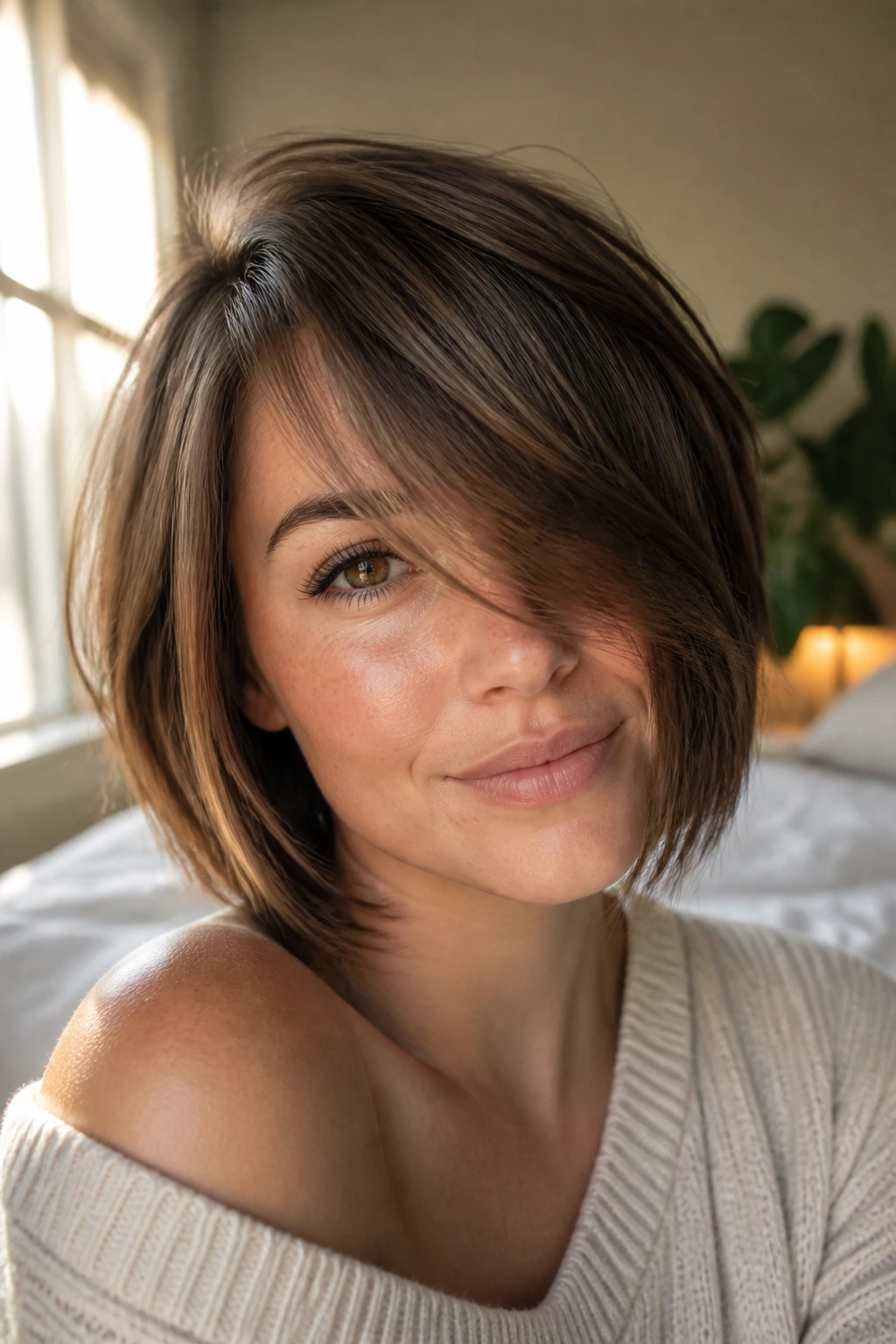
- The diagonal line does the heavy lifting: a side part and a swept fringe create movement even when the rest of your hair is flat.
- They dry faster than shoulder-length layers: chin-length to collarbone cuts shed water faster, which means less time with the dryer.
- The fringe hides uneven morning texture: if one side falls better than the other, the sweep still reads as intentional.
- They grow out gracefully: a long side fringe can drift into face-framing layers instead of turning into an awkward shelf.
- They work with second-day hair: a little mist, a brush, and a bend at the front usually brings the shape back.
1. Chin-Length Sleek Sweep
A chin-length side-swept bob is the cleanest version of the whole family. It sits just under the jaw, so the line feels sharp, but the long fringe keeps it from looking stiff. On straight or lightly wavy hair, a quick pass with a round brush at the front is often enough.
What makes it morning-friendly is the shape. The front can be misted, brushed across, and clipped for two minutes while you do the rest of your face. Once the bend cools, the bob holds its direction. Use a touch of smoothing cream on the ends only. Too much at the fringe and it splits by noon.
Best for: fine to medium hair that dries fast
Morning time: about 6 minutes
Watch out for: a fringe cut too short; it loses the easy sweep.
2. Soft French Bob with a Side Fringe
This one looks relaxed on purpose. The ends brush the jaw, the fringe falls long enough to skim one brow, and the whole cut feels as if it dried in exactly the right place. That is the charm of a French-leaning bob: it wants texture, not precision.
I like it on hair that already has some bend. Put mousse at the roots, rough-dry to about 80 percent, then twist the front sections around your fingers while they cool. If the fringe lands a touch unevenly, leave it alone. A little irregularity keeps it from looking overworked.
Why it stays easy
The cut works because the front line is soft, not blunt. You can tuck one side behind the ear, leave the other loose, and still look finished. That buys you time.
3. Stacked Nape Bob with a Long Diagonal Fringe
When thick hair eats up your morning, a stacked nape bob earns its place. The back is cut shorter and lifted higher, which removes bulk where you do not want it, while the long diagonal fringe keeps the front soft. It dries faster than a one-length bob because there is less mass sitting at the neck.
Ask for internal weight removal, not a bunch of short, choppy layers. That keeps the shape tidy and stops the fringe from kicking away from the face. If your hair tends to puff out at the bottom, this is one of the few bobs that can tame it without forcing you into a full blowout every day.
- Works well for: dense, straight, or slightly wavy hair
- Styling note: direct the front downward first, then sweep it across
- Skip if: you want a very soft grow-out; the stack is tidy but not shy
4. Collarbone Lob with an Airy Fringe
If you want ponytail insurance, this is the one. A lob grazing the collarbone can be tucked, clipped, or worn loose, and the airy side fringe keeps the front from feeling heavy. Busy mornings like a length that still looks styled when you skip the brush.
The sweet spot is the fringe: long enough to move, light enough to separate. A flat iron bend at the front and a quick spray of texturizing mist on the ends is usually enough. And if the day turns into a mess, the length gives you options. That flexibility is the real payoff.
5. Feathered Bob for Fine Hair
Feathering is useful when the hair itself is soft and a little slippery. A feathered bob lifts away from the cheekbones, and the side fringe keeps the shape from collapsing into a plain bowl. It looks like you spent time on it, even if you did not.
Keep the layers light. Too much slicing can make fine hair look see-through at the ends, which is a headache nobody needs at 7 a.m. I prefer soft internal movement and a blunt-enough perimeter. That combination gives you body without turning the haircut into a maintenance project.
Best move for mornings
Blow-dry the roots first, then sweep the fringe across with a small round brush. Finish with dry shampoo at the part. Done.
6. Blunt Bob with a Side Bend
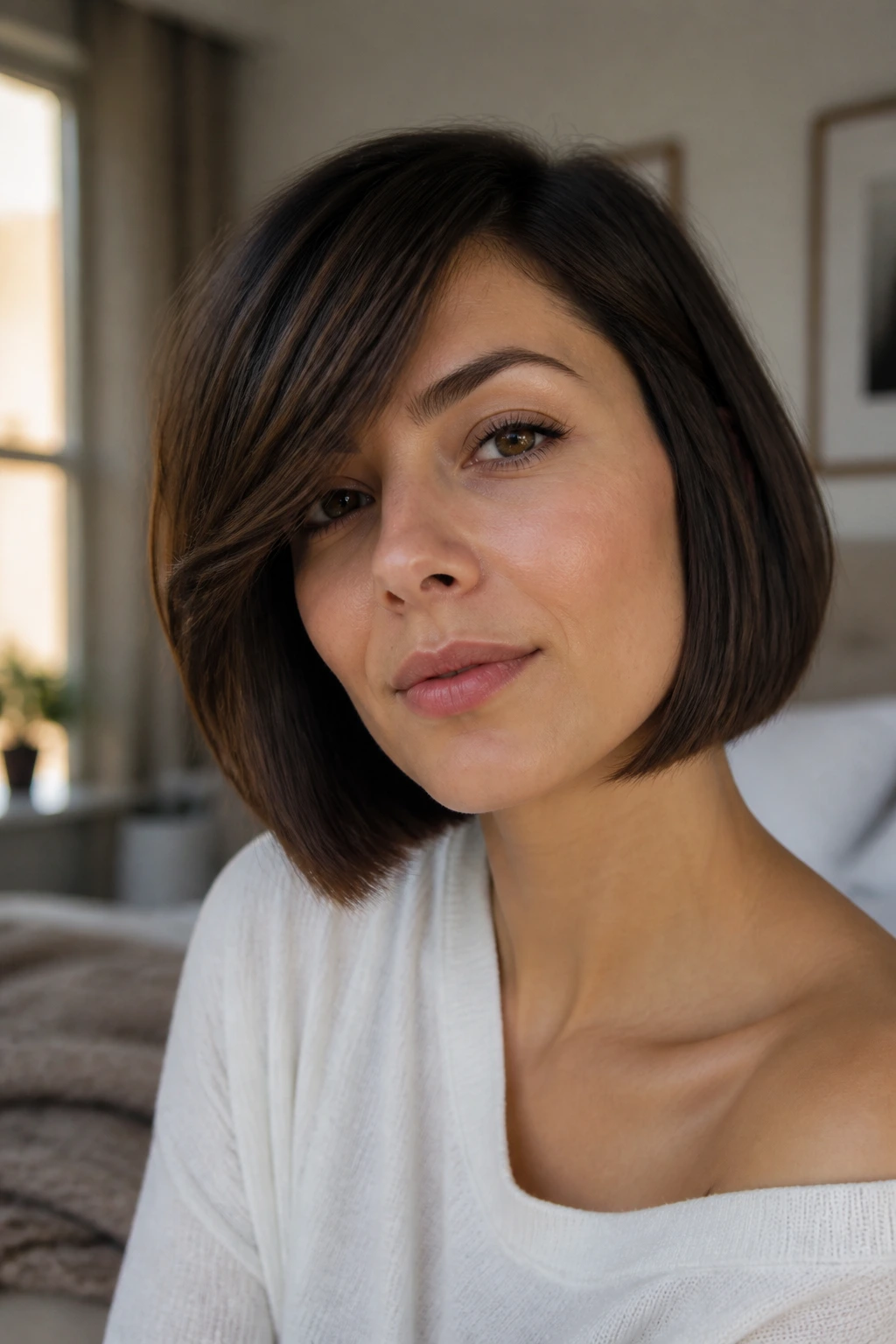
A blunt bob with a side bend is for people who like clean lines but do not want the fringe to feel severe. The ends stay even, which means the cut keeps its shape with less daily fuss, and the side bend stops it from looking like a helmet.
This one is especially good if you live in a straight-hair lane. The fringe can be brushed forward, angled over, and pinned for a minute while it cools. The flat edge at the bottom does the rest. No need to curl every strand into submission.
7. Curly Bob with a Swooping Fringe
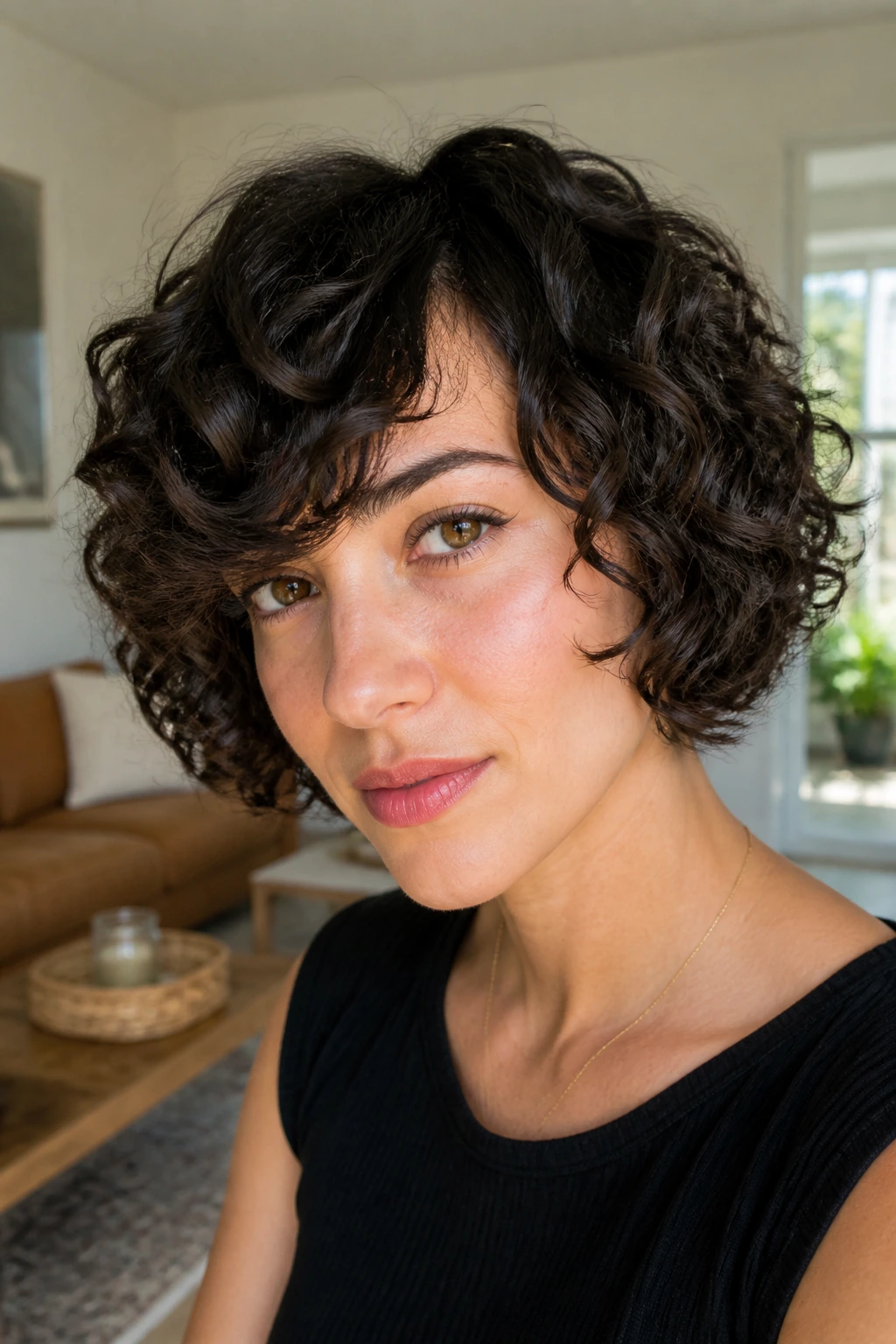
Can a side-swept fringe work on curls? Yes — if you let it be a little longer than you think. Curly hair shrinks, and the fringe needs that extra length so it can arc across the forehead instead of bouncing up like a corkscrew.
Diffuser time matters here. Scrunch in a light curl cream, flip the head, and dry the roots first so the shape does not flatten. Then direct the front with your fingers, not a brush. A brush can break the curl pattern and make the fringe frizzy by lunch.
What to ask for
Ask for a longer fringe that follows the curl pattern. That keeps the front from turning into a too-short triangle once it dries.
8. Razored Bob with Broken Ends
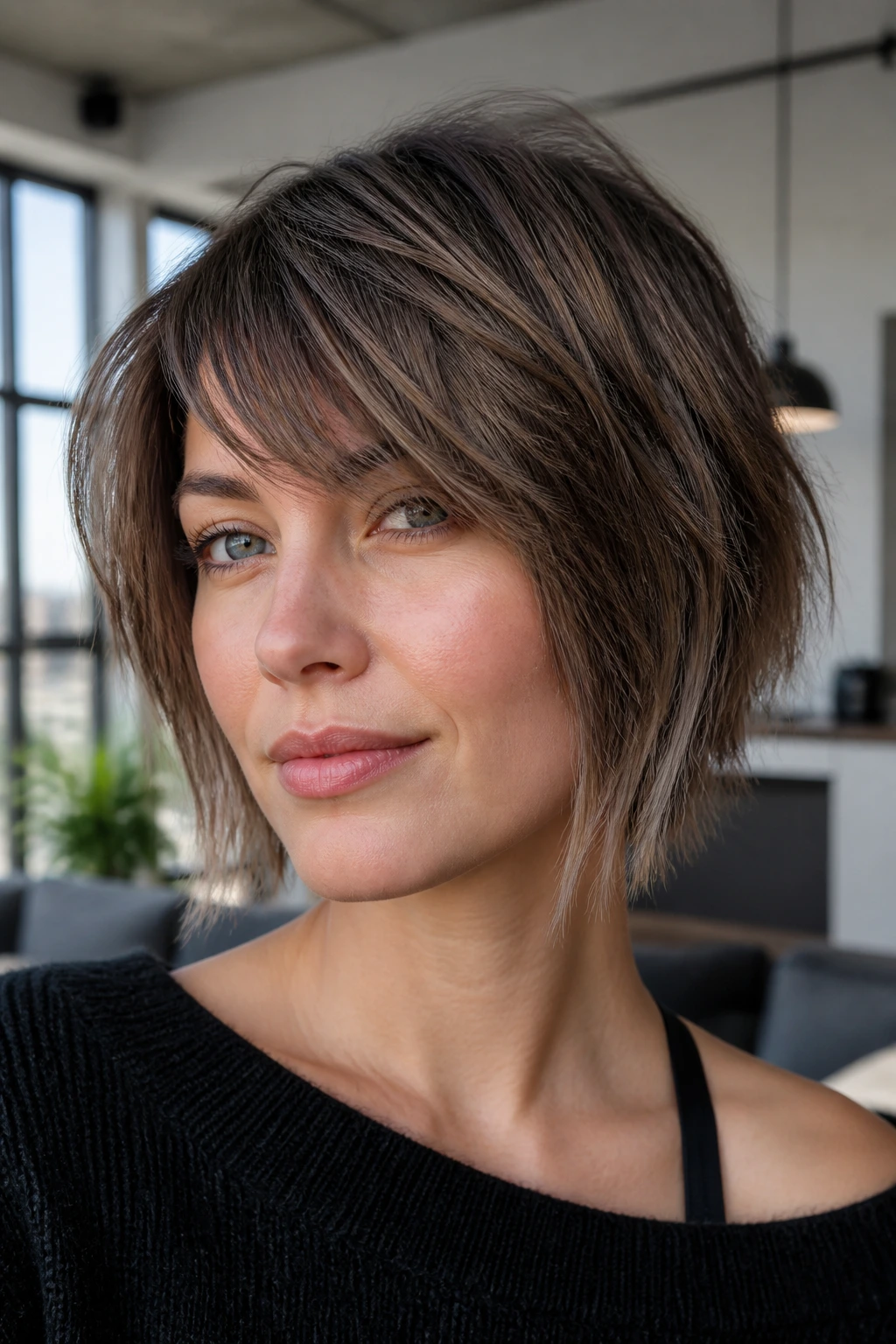
A razored bob is a good call when you want movement without a lot of styling. The ends look broken up in a soft way, which means the cut already has texture before you touch it. The side fringe blends into that choppier edge and keeps the front from feeling too precise.
This is the sort of bob that likes a little texturizing spray and not much else. You can rough dry it, twist the fringe into place, and leave the ends imperfect. I would not pair this one with heavy cream or oil. It thrives on airiness, not slickness.
9. Asymmetrical Bob with a Deep Side Part
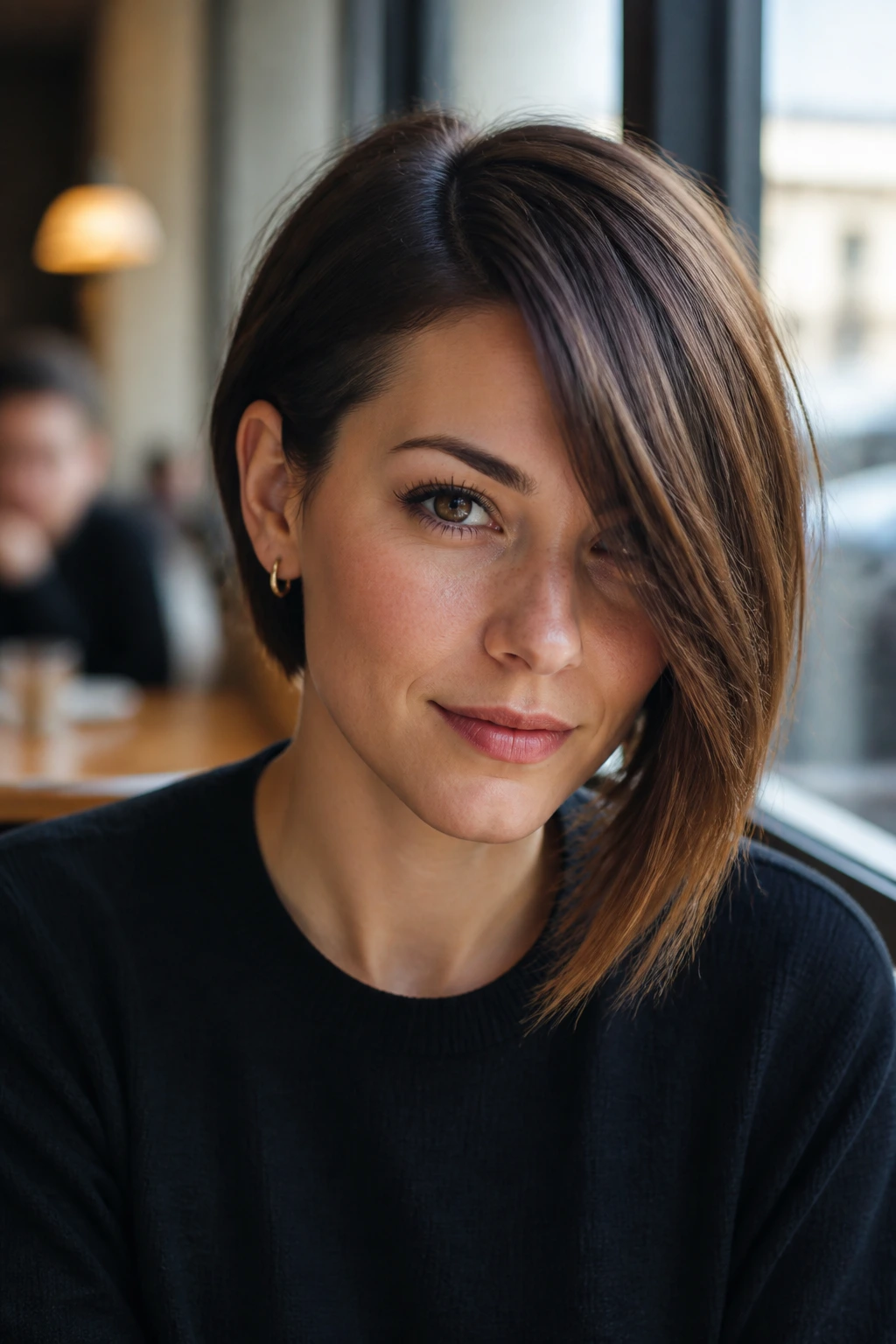
One side longer, one side shorter. Simple. The asymmetry gives the haircut its own built-in style, which is handy when you do not want to spend time forcing shape into flat hair. A deep side part sends the fringe across the forehead and makes the whole cut look intentional in seconds.
This version suits anyone who likes a little edge without committing to a dramatic shape. The longer side can skim the jaw or cheekbone, which gives you room to tuck one ear and let the other side fall. It is a good cut for mornings when you want structure but not stiffness.
10. Inverted Bob with Face-Framing Fringe
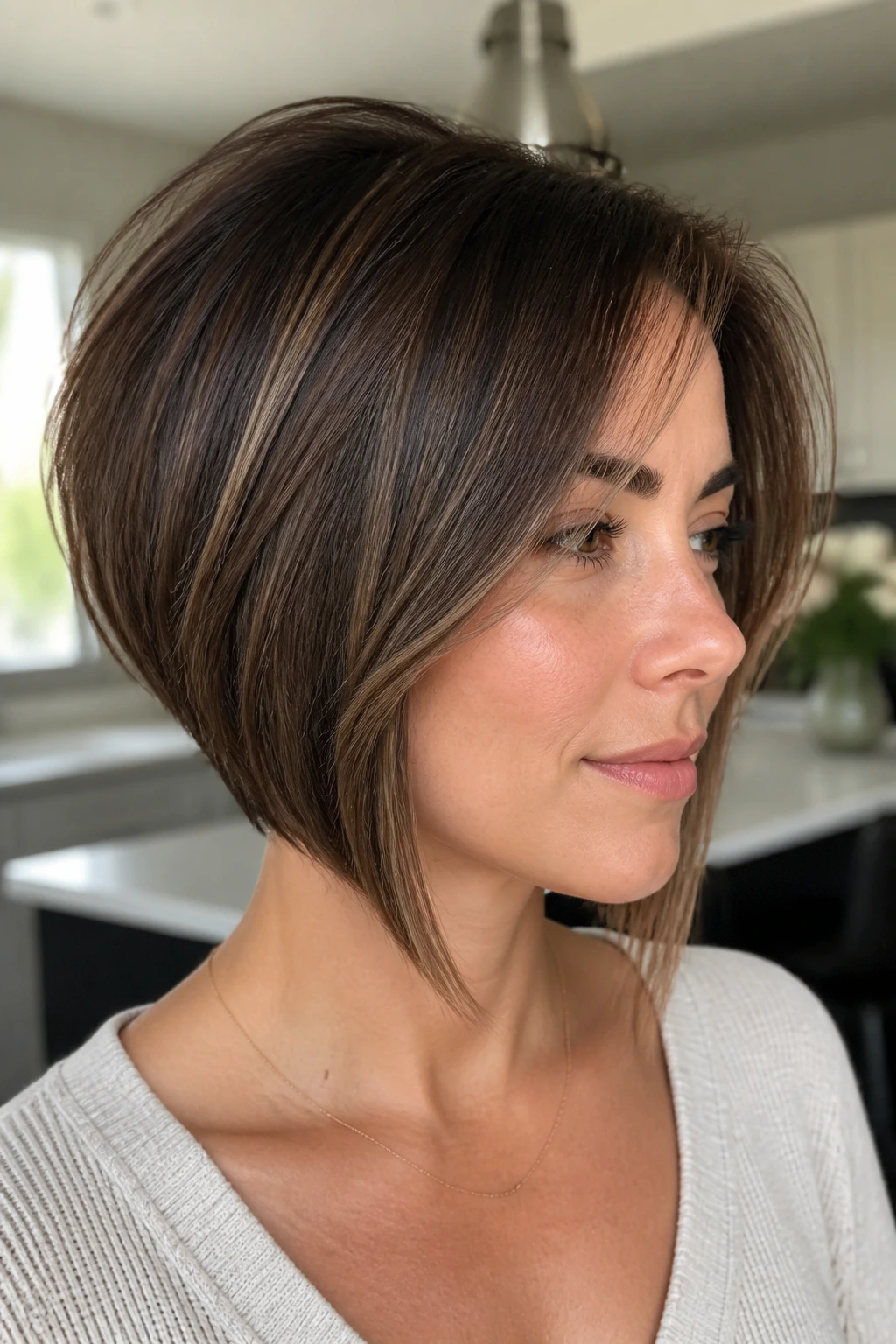
An inverted bob builds a shorter back and a longer front, which means the haircut naturally points the eye forward. Add a side fringe that grazes the cheekbone, and you get a shape that feels lifted without needing much heat. It is especially useful if your hair tends to fall flat at the crown.
The cut looks polished with one round-brush pass at the front and a quick bevel at the ends. You do not need to push every strand into place. Let the front pieces fall in a clean line and keep the nape neat. That contrast is what makes it work.
11. Rounded Bob with a Polished Tuck
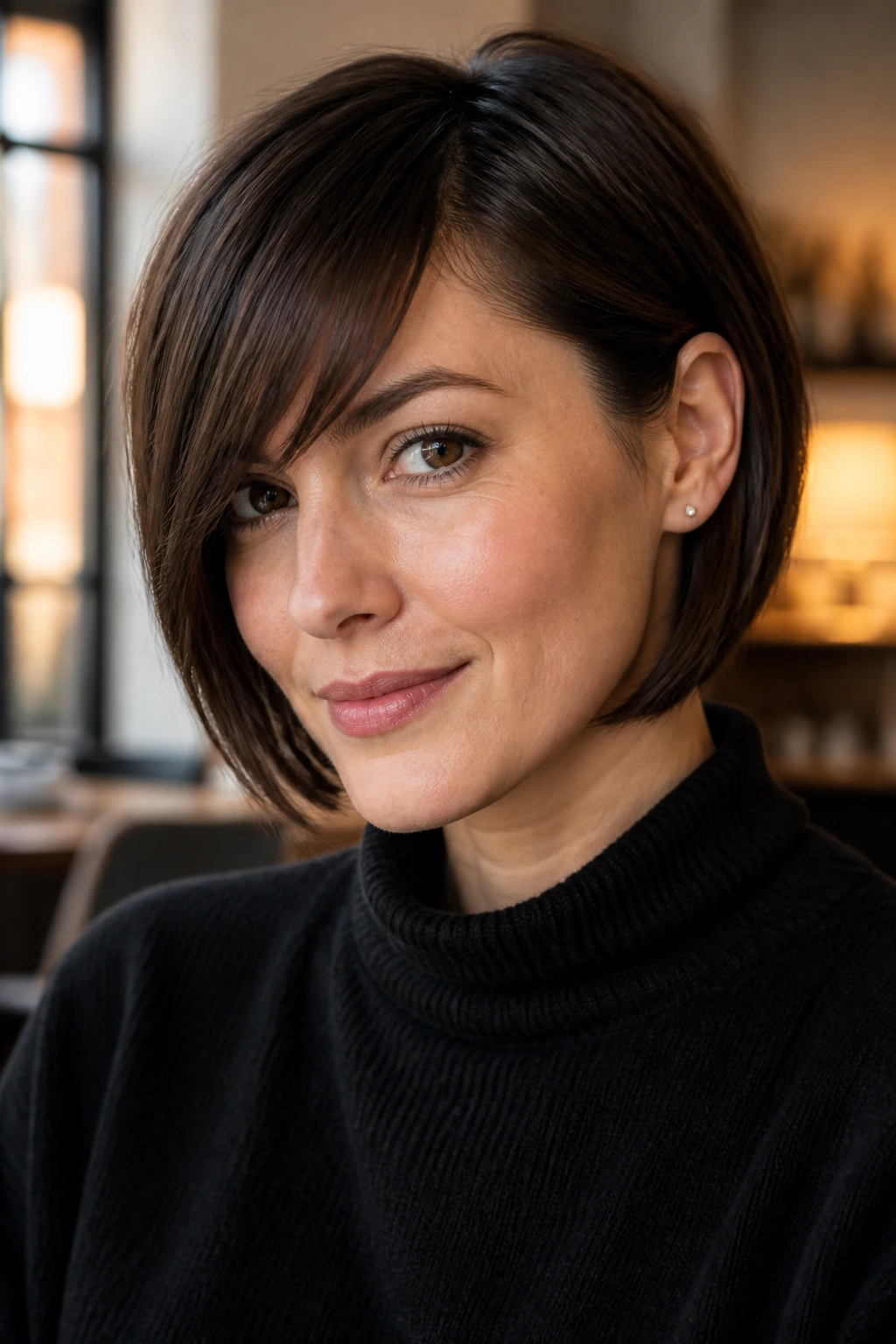
A rounded bob hugs the head a little more closely, which makes it feel tidy and easy to control. The side fringe is what keeps it from looking severe. One side can sweep across the forehead, then tuck lightly behind the ear so the shape opens up around the face.
I like this one for anyone who wears earrings or glasses. The tucked side gives the face room, and the curve around the jaw softens the whole silhouette. It takes about five minutes with a brush and a blow dryer, which is exactly the point.
Morning trick
Clip the sweeping side out of the way while you do your makeup, then let it cool in that direction. The bend sticks better.
12. Wavy Lob with a Loose Fringe

A wavy lob with a loose fringe is one of the easier versions to live with because it likes a little mess. The fringe does not need a hard line; it just needs direction. That means a sleep crease or a rough dry is not a disaster.
Use a light mousse on damp hair, scrunch the ends, and let the front air-dry until it is mostly set. If the fringe needs a touch more shape, bend it with a flat iron for two seconds and stop. The charm here is looseness. Do not overwork it.
13. Textured Crop Bob

This is the shortest, most impatient version in the bunch. The textured crop bob sits above the jaw, the fringe is broken and piecey, and the whole cut looks best when it has a bit of movement. It is a smart choice if you want the fastest dry time possible.
A pea-sized amount of matte paste at the ends is enough. Work it through with your fingers, not a comb, and let the fringe fall where it wants to. This bob does not need a polished blowout to look finished. It needs shape and confidence. That is all.
14. Italian Bob with a Heavy Side Sweep
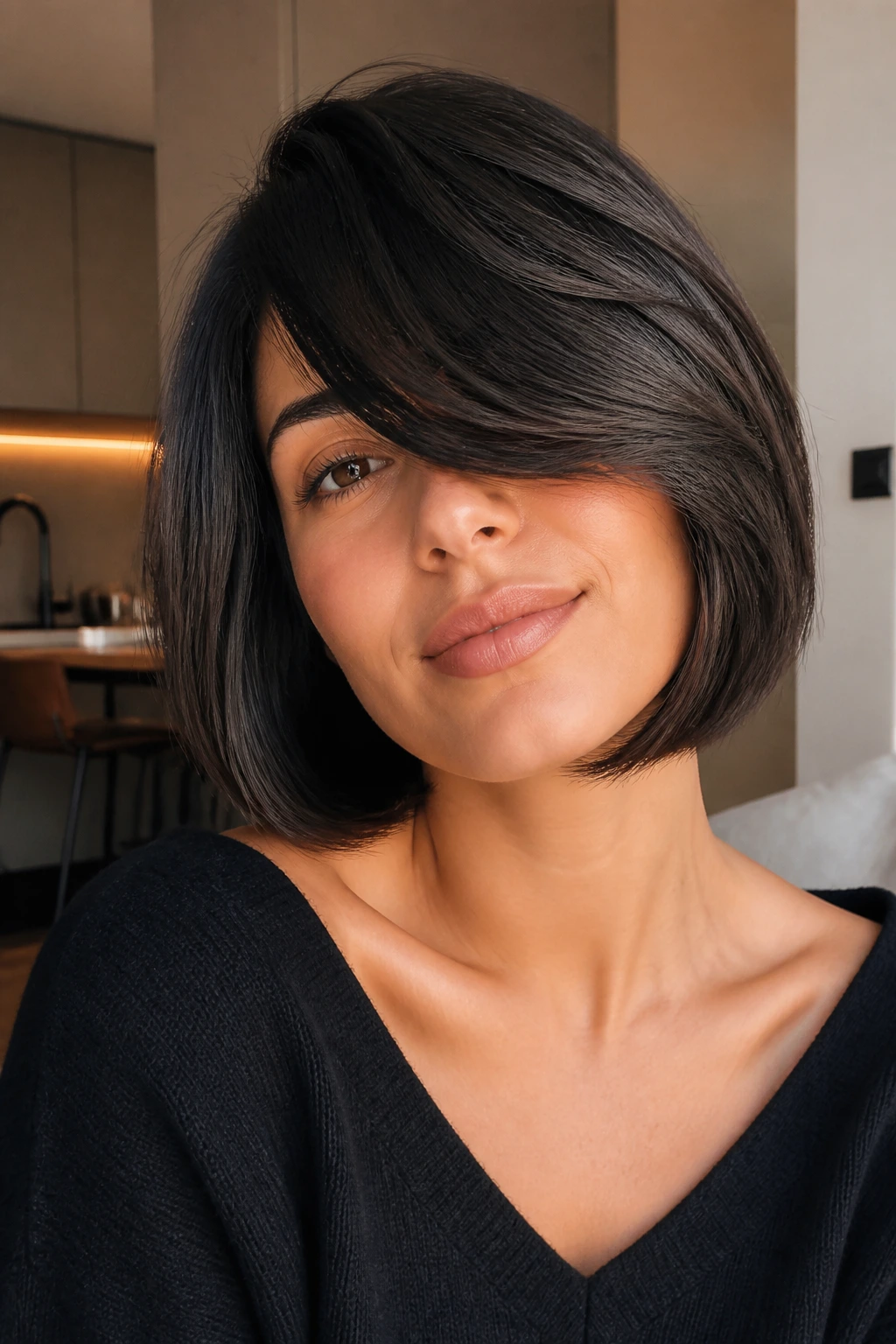
The Italian bob brings a fuller silhouette, a little more gloss, and a side sweep that feels generous rather than wispy. The fringe is heavier here, which can be useful if your forehead is broad or your hairline has a stubborn cowlick. The weight helps it stay in place.
This cut is good when you like a blow-dry look but do not want the hair to look over-layered. Use a round brush to bend the front away from the face, then let the ends curve inward on their own. It is a polished shape, but not a fussy one.
15. Tucked-Behind-Ear Bob

Some mornings are solved by one tuck. A bob that can be slipped behind the ear and still look deliberate is worth more than a cut that needs constant fixing. The fringe takes the lead here, sweeping across the forehead while one side stays open.
That little tuck does a lot. It shows the jawline, keeps hair off the face, and makes earrings or glasses part of the style instead of obstacles. If you want a haircut that plays nicely with quick errands, this is a solid pick.
16. Layered Lob with a Long Fringe

A layered lob gives you movement without making the shape too airy. The long fringe folds into the layers, which means it can grow out without landing in an awkward stage right away. That matters if you are not in the mood for salon visits every few weeks.
The style works well when you want to clip part of it back for the gym or a work call. The front can still sweep over the face even when the rest is pulled half up. It is a practical cut, and I mean that in the best way.
17. Fine-Hair Bob with Root Lift
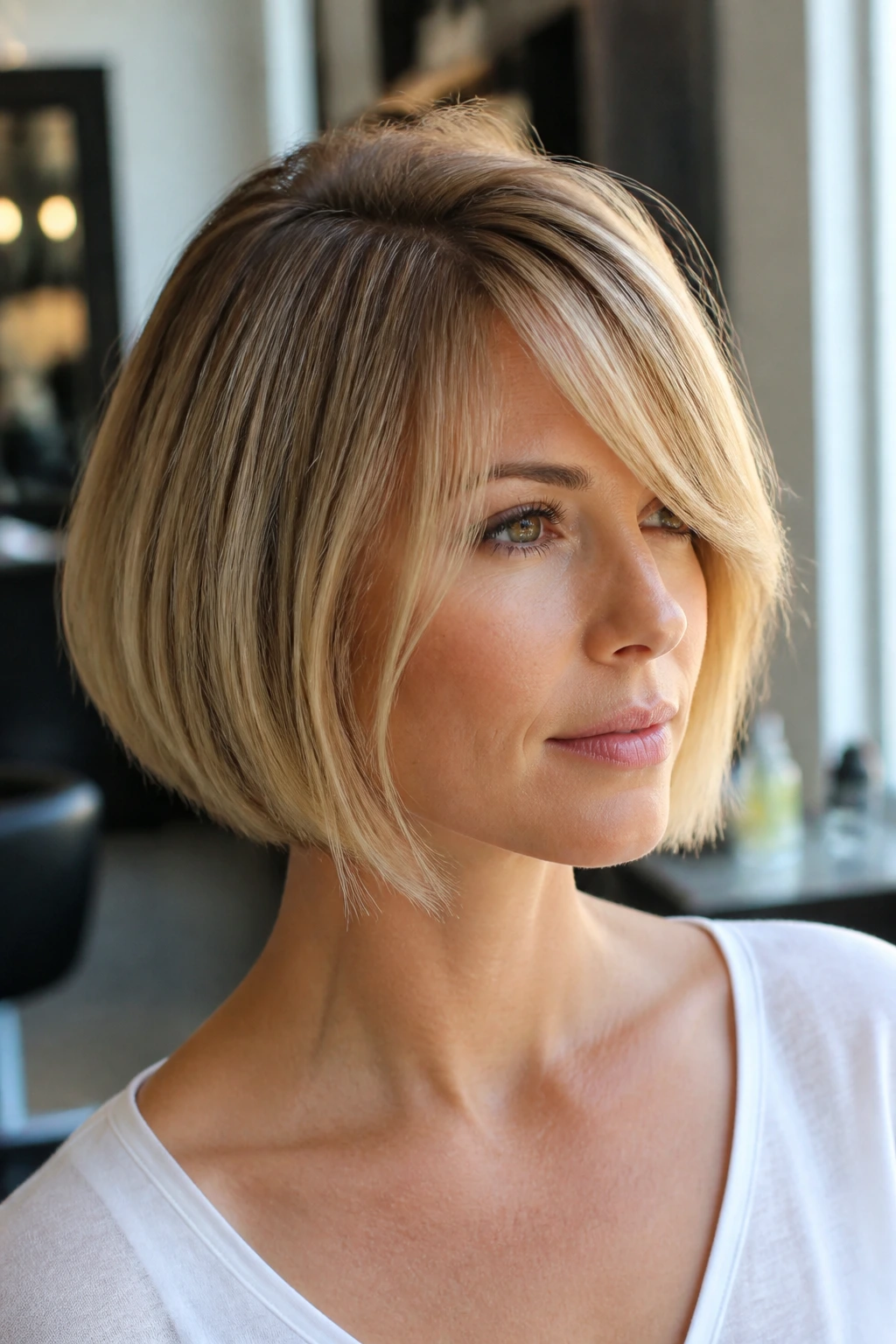
Fine hair needs a little help at the crown, and this bob is built for that. The ends stay fairly clean, the fringe stays long enough to move, and the root lift gives the whole cut enough presence to avoid looking flat by breakfast.
Use mousse at the roots, then blow-dry the front upward and over with a vent brush. Do not drown the hair in cream. Fine strands go limp fast, especially around the fringe, and the wrong product turns a light bob into a greasy one.
Root-lift rule
Dry the roots first, while the hair is still damp. Once the crown lies flat, it takes more effort to wake it back up.
18. Thick-Hair Bob with Internal Weight Removal
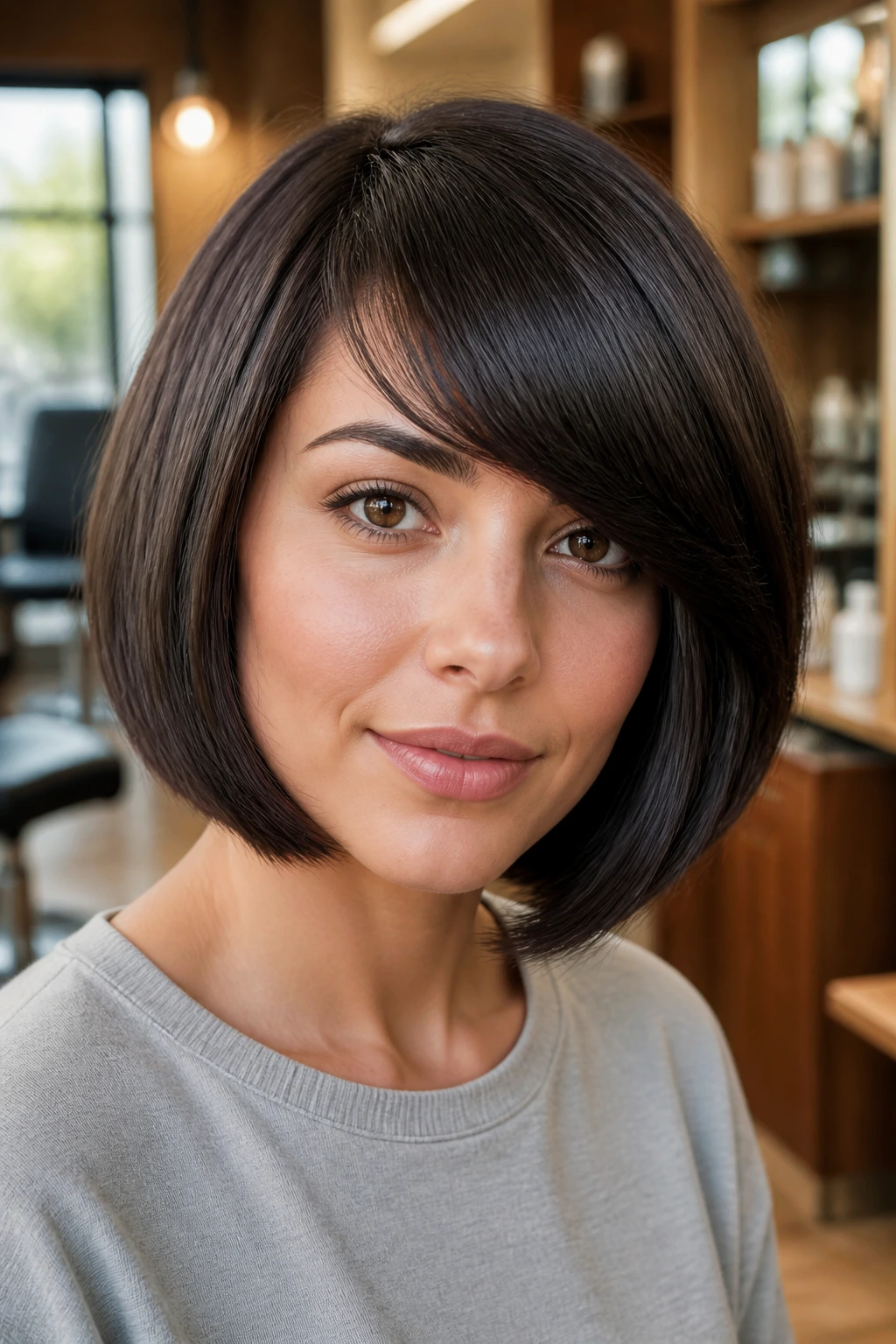
Thick hair can look gorgeous in a bob, but only if the inside has been lightened in the right places. Internal weight removal trims the bulk without turning the perimeter wispy. The side fringe stays heavy enough to sweep cleanly instead of puffing out.
This is a good one for people who are tired of spending 20 minutes with a brush just to make the shape sit down. A sleekening cream on the mid-lengths, a quick bend at the front, and the cut usually behaves. The haircut does the work, not your arms.
19. Beachy Bob with Piecey Fringe
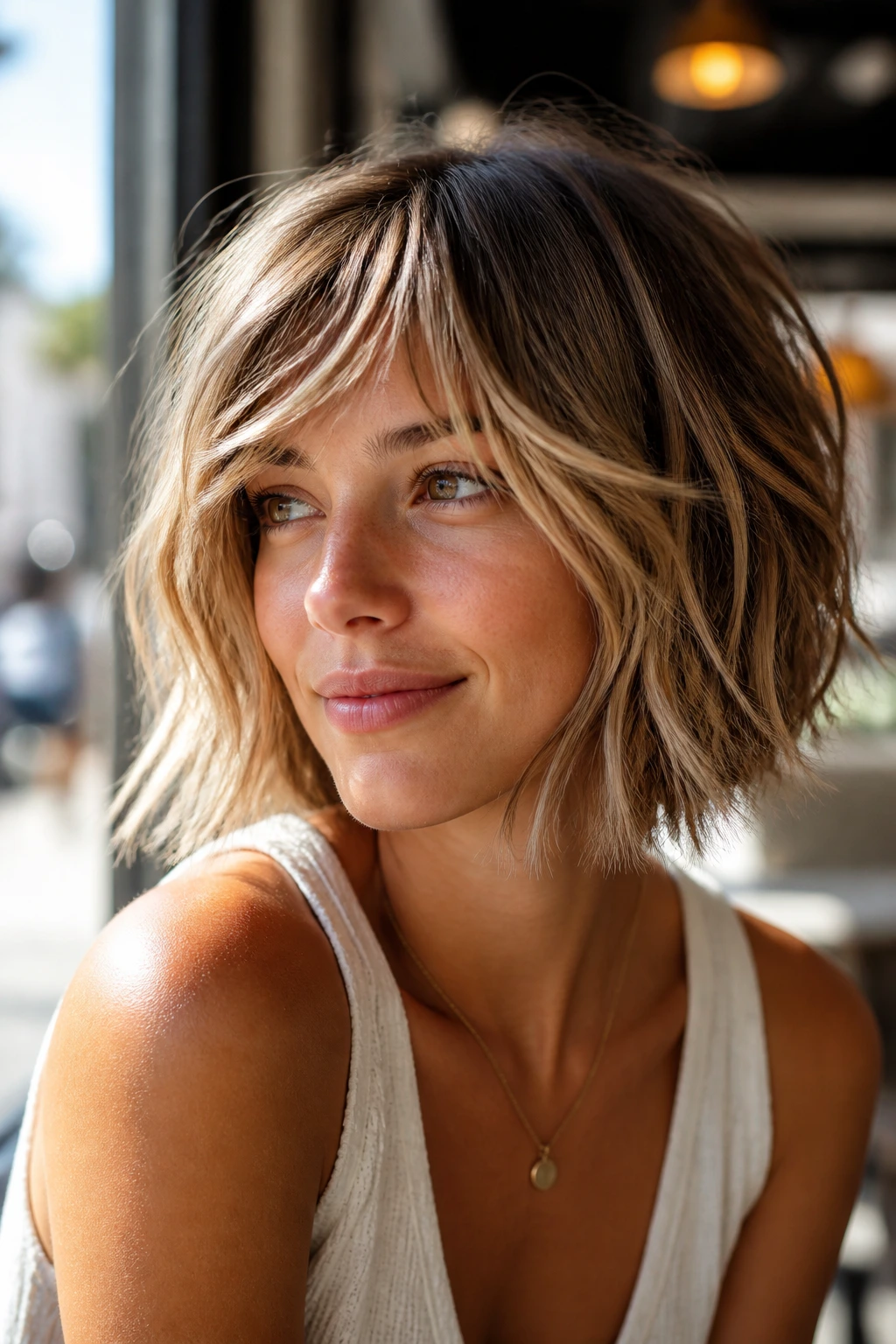
A beachy bob is for the days when you want hair that looks touched, not polished. The fringe breaks into pieces, the ends move a little, and the whole thing feels casual without looking unfinished. Salt spray is the main event here — use it lightly or the fringe can get sticky.
Work the spray through damp hair, scrunch, and let the front air-dry partway before you decide whether it needs a brush. Most of the time, it does not. A side sweep and a few finger-separated pieces are enough.
20. Soft A-Line Bob
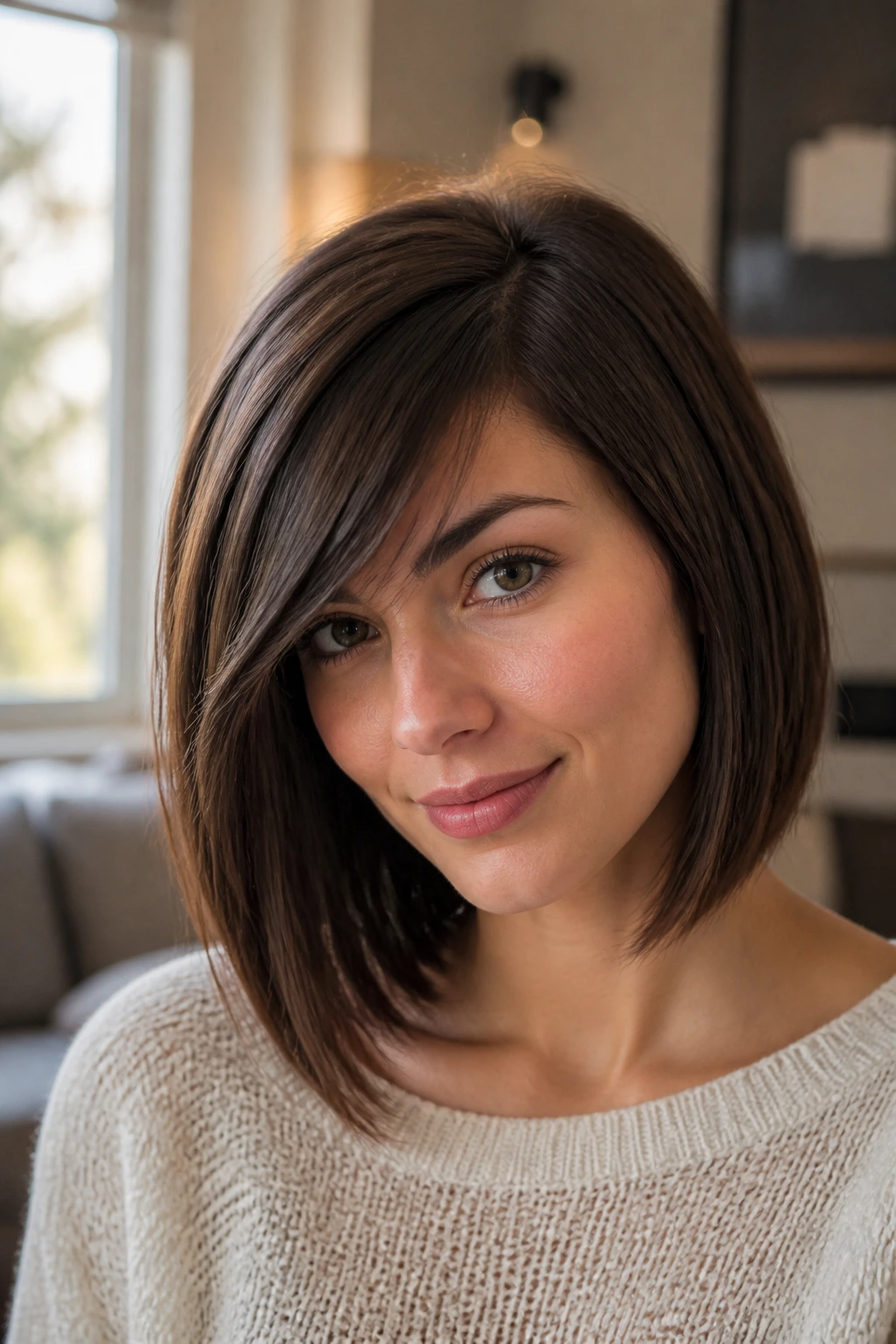
An A-line bob is slightly longer in front, which gives the face a gentle diagonal. Pair that with a side fringe and the whole cut starts to guide the eye downward and inward. That can be useful if you want a shape that softens a strong jaw.
The A-line version is also friendlier on rough mornings because the front length buys you options. You can tuck it, let it fall, or bend it with a brush and move on. I prefer this shape when someone wants structure but not a hard edge.
21. Pageboy-Inspired Bob
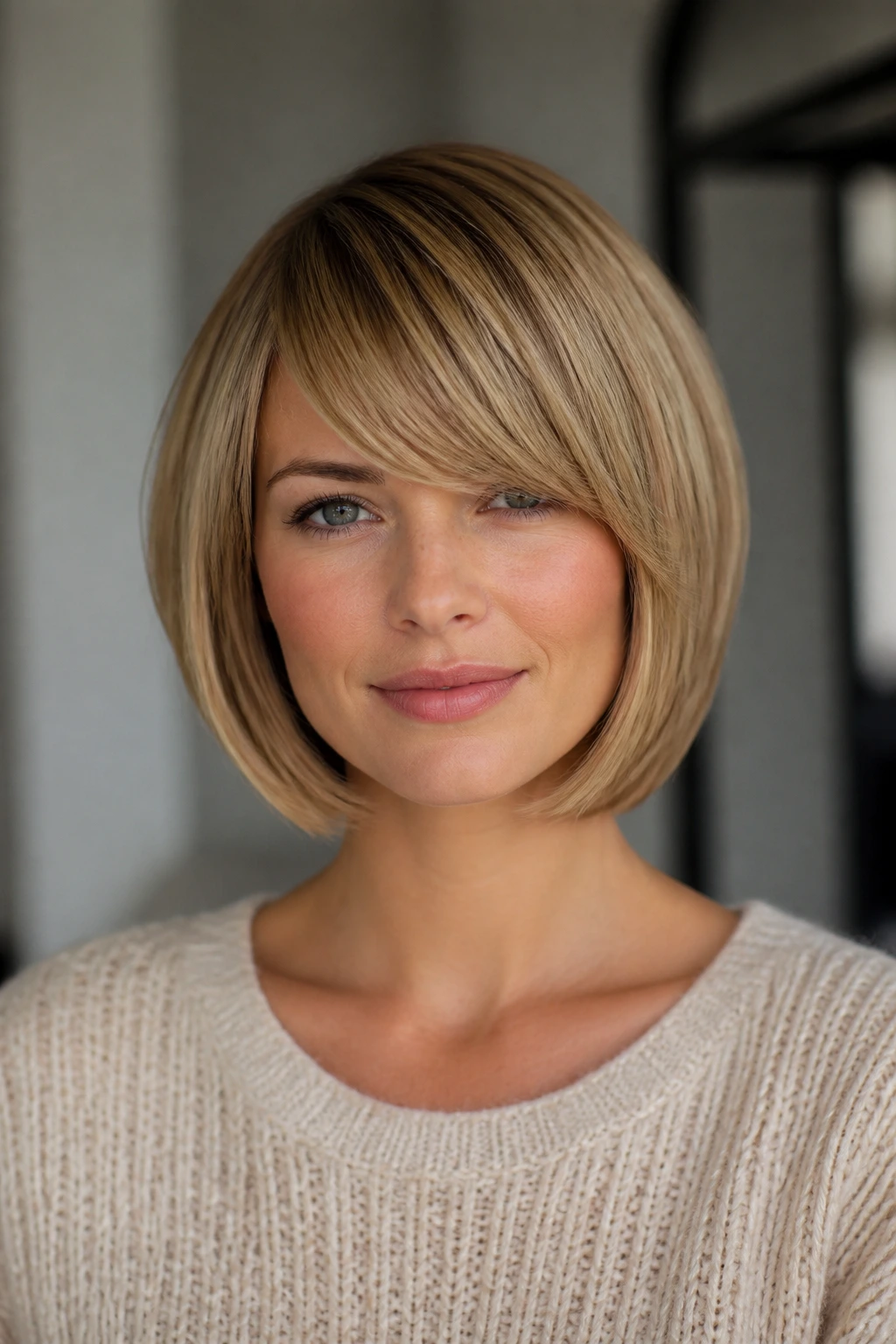
The pageboy shape has a rounded, tucked-under feeling, but the side-swept fringe keeps it from going full retro. The result is neat, low-drama, and easy to revive with a round brush. If your hair is straight and dense, this one can behave like it was trained.
A pageboy-inspired bob is not about lots of movement. It is about a clear silhouette. That makes it a good fit for people who want a predictable morning routine and do not want to wonder what their hair is doing every time they walk past a mirror.
22. Air-Dry Lob with Minimal Layers

If you do not want to spend much time with heat tools, this is the safe bet. The lob gives the hair enough weight to sit nicely while still drying faster than long layers, and the fringe is cut long enough to fall into place as it dries.
A tiny amount of leave-in conditioner through the ends is enough. Scrunch the front section once, then leave it alone. Air-dry styles fail when they get fiddled with every five minutes. Let this one settle.
23. Glasses-Friendly Bob

A side-swept fringe and glasses can get along, but the spacing matters. The fringe should either skim just above the frames or fall softly beside them, not land right in the middle and keep brushing the lenses all day. That tiny detail changes the whole morning.
This bob works best when the front is long enough to move but not so heavy that it sits on your frames. If you wear glasses daily, tell your stylist at the chair. It is one of those practical details that should be planned, not discovered later.
Useful note
Frames with a thicker top rim usually need a slightly longer fringe. Thin metal frames can handle a softer sweep.
24. C-Curve Bob with a Side Fringe
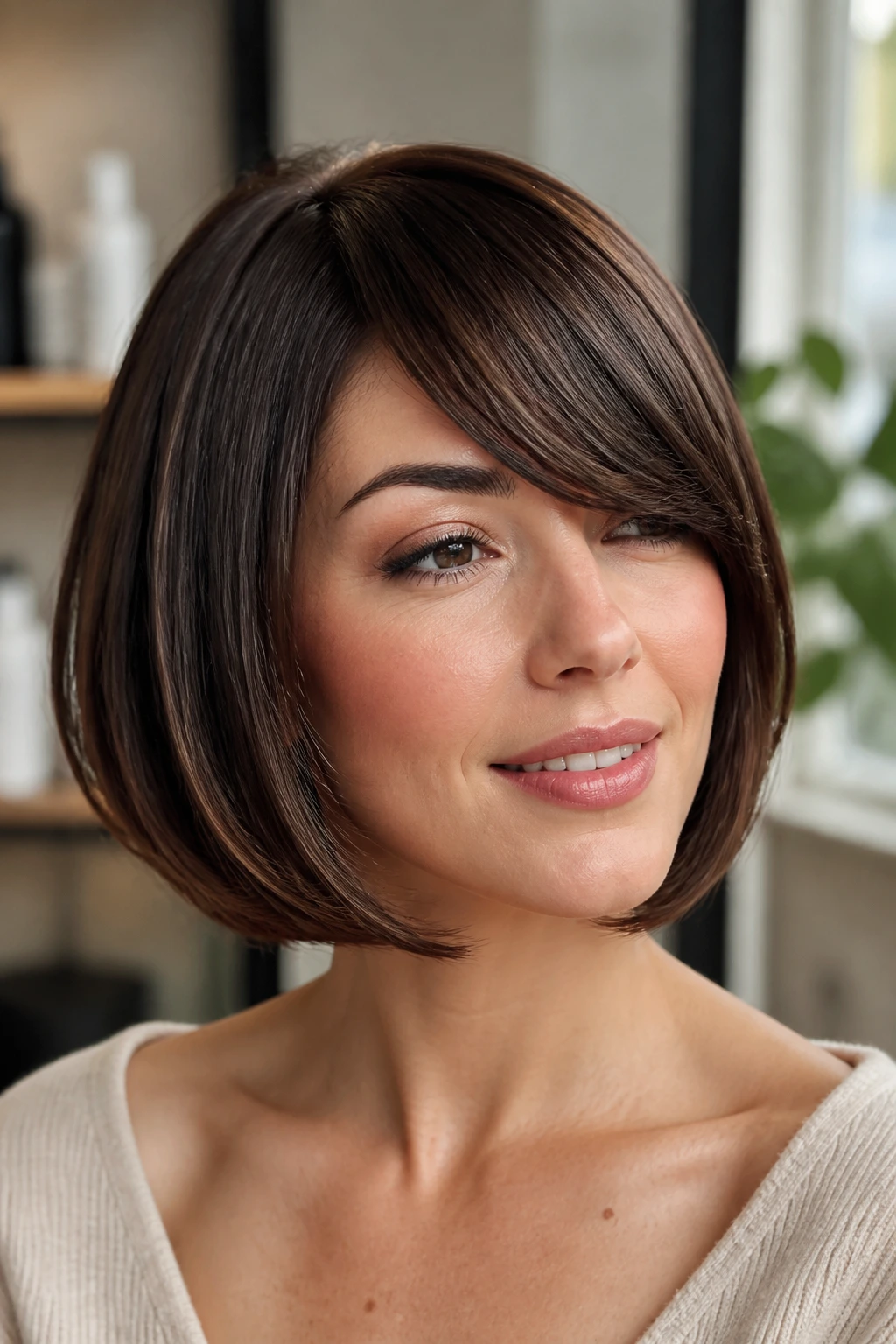
A C-curve bob bends the ends inward, which gives the haircut a neat, contained look. The side fringe follows the same arc, so the whole style feels connected. It is a good choice if you want hair that looks brushed even when you were not especially careful.
This one usually needs a quick round-brush pass on the ends and a separate moment for the fringe. Once the curve is set, it tends to hold through the day. The shape is tidy, but not severe. That balance is why people keep coming back to it.
25. Wedge Bob with a Gentle Stack
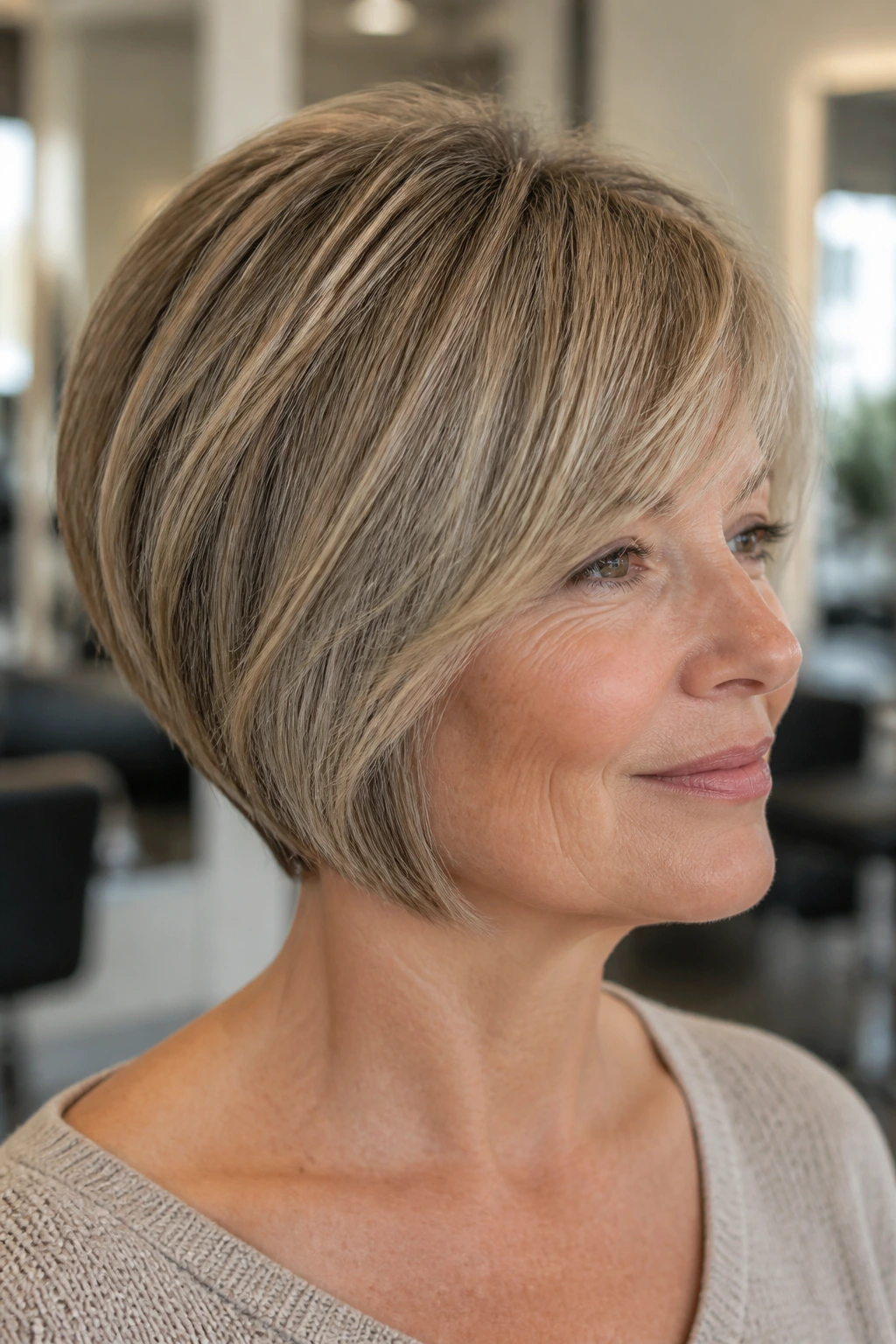
A wedge bob gives you lift in the back without making the style stiff. The stack is gentle, not sharp, and the side fringe softens the geometry. If you want your hair to sit away from the neck and still look modern, this is a useful shape.
It is also a decent answer for thick hair that keeps collapsing at the crown. The lifted back does some of the work for you. You can rough dry it, tap a little smoothing cream through the front, and go.
26. Half-Up Friendly Lob
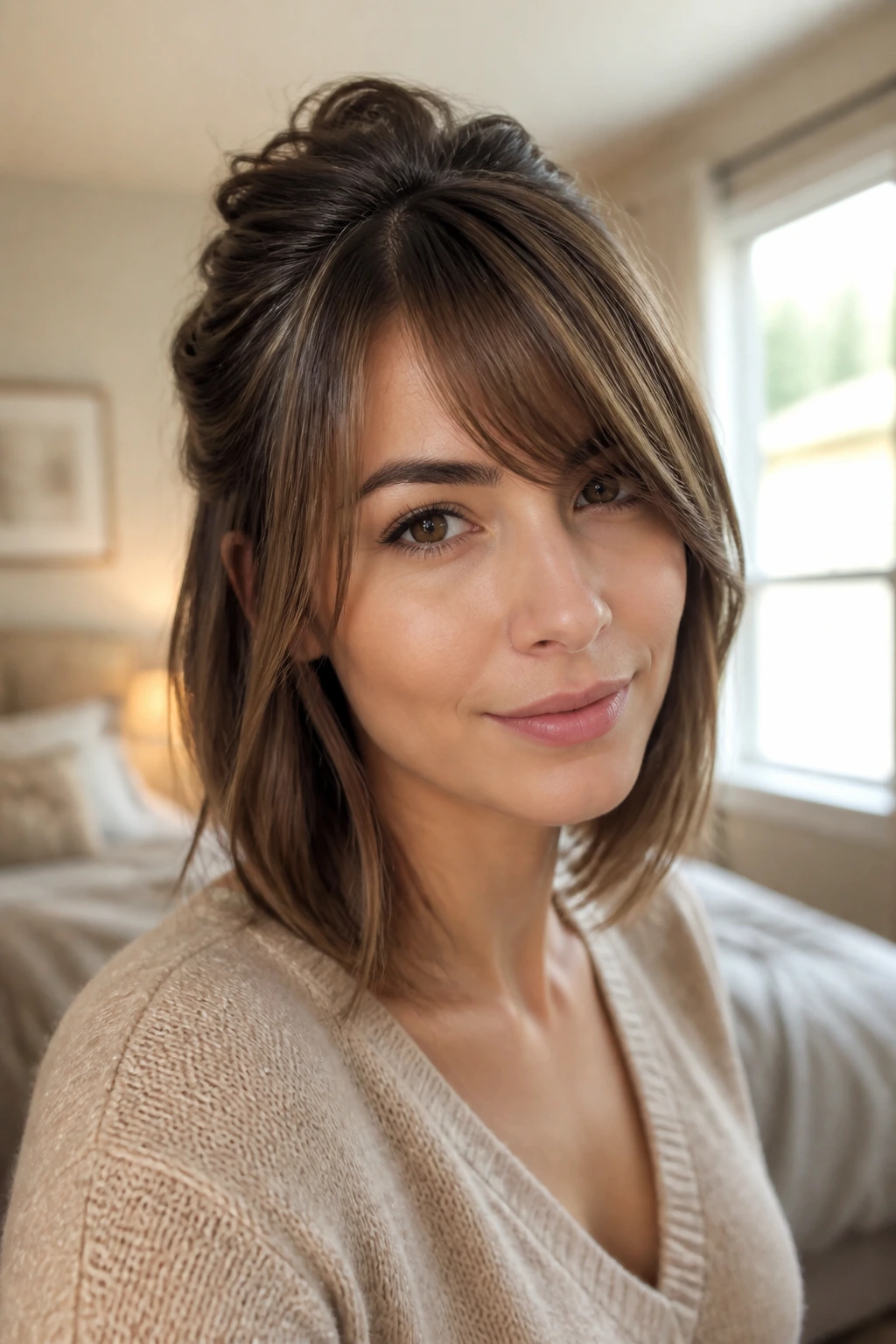
Some haircuts are only pretty when they are fully down. This one isn’t. A half-up friendly lob keeps enough length for clips, mini claws, and small elastic bands, while the fringe stays loose and gives the style a front.
That matters on mornings when you need your hair out of the way but do not want a full ponytail. Pull the top half back, leave the fringe sweeping sideways, and you still look dressed. It is practical without feeling plain.
27. Slept-In Bob
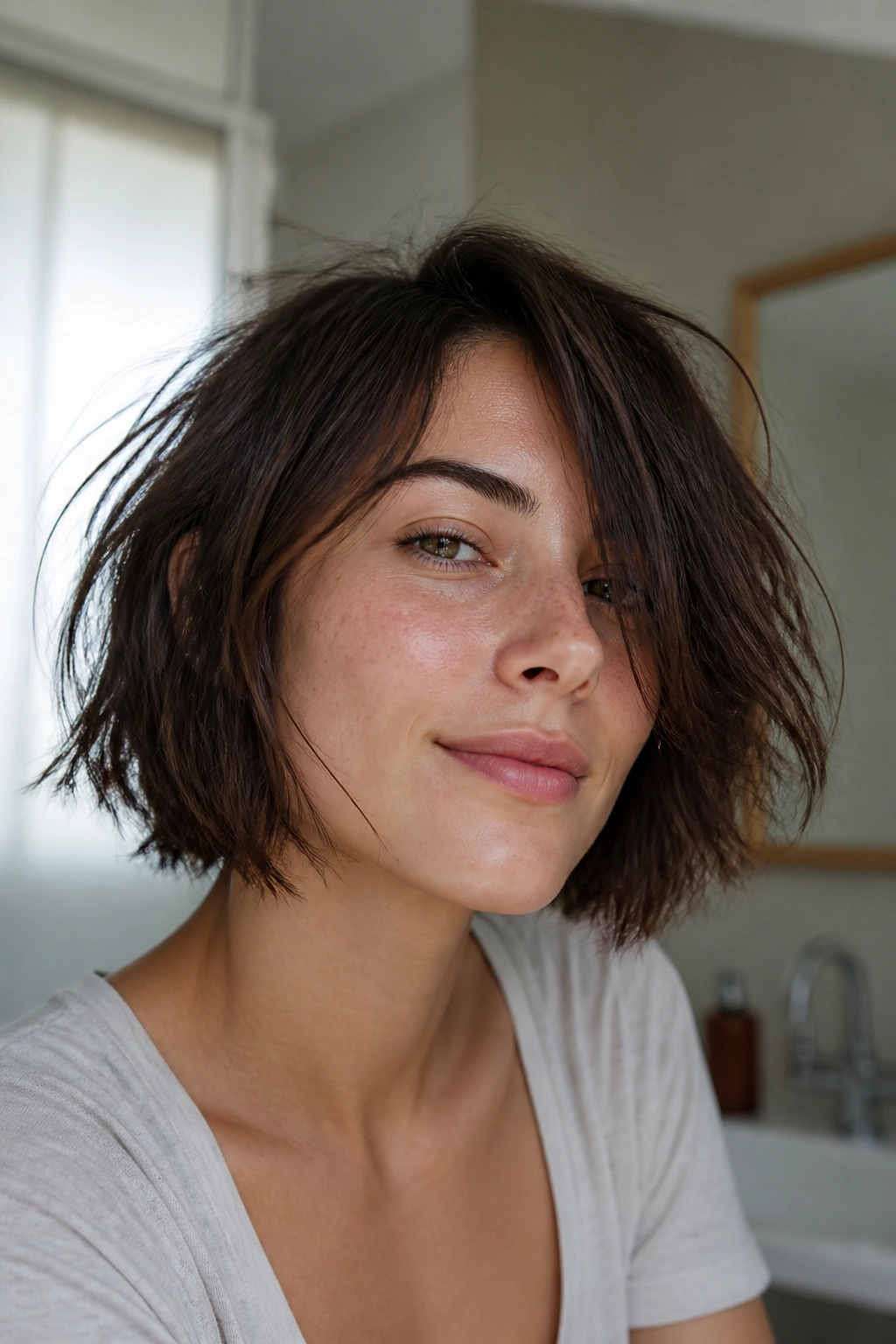
A slept-in bob is not a mess; it is a cut that understands texture. The fringe is long enough to be pushed around a little, the ends are cut to move, and the overall shape gets better when you do not fuss too much.
This is the style for people who hate repeating the same blow-dry every day. A bit of dry shampoo at the roots, a finger-combed side part, and a quick tuck is often all it needs. If your hair gets a nice bend overnight, this cut will make use of it instead of fighting it.
28. Work-Ready Bob with a Soft Side Sweep

This is the version I think gets overlooked. A work-ready bob does not need to look dramatic; it just needs to look neat, calm, and intentional before you leave the house. The side sweep gives it shape, and the bob length keeps it from eating up time.
Keep the ends smooth, the fringe long enough to move, and the crown lifted just a little. That’s it. It is one of the easiest cuts to return to every morning because it does not demand a different mood every day.
Why a Side-Swept Bob Works So Well on a Rushed Schedule
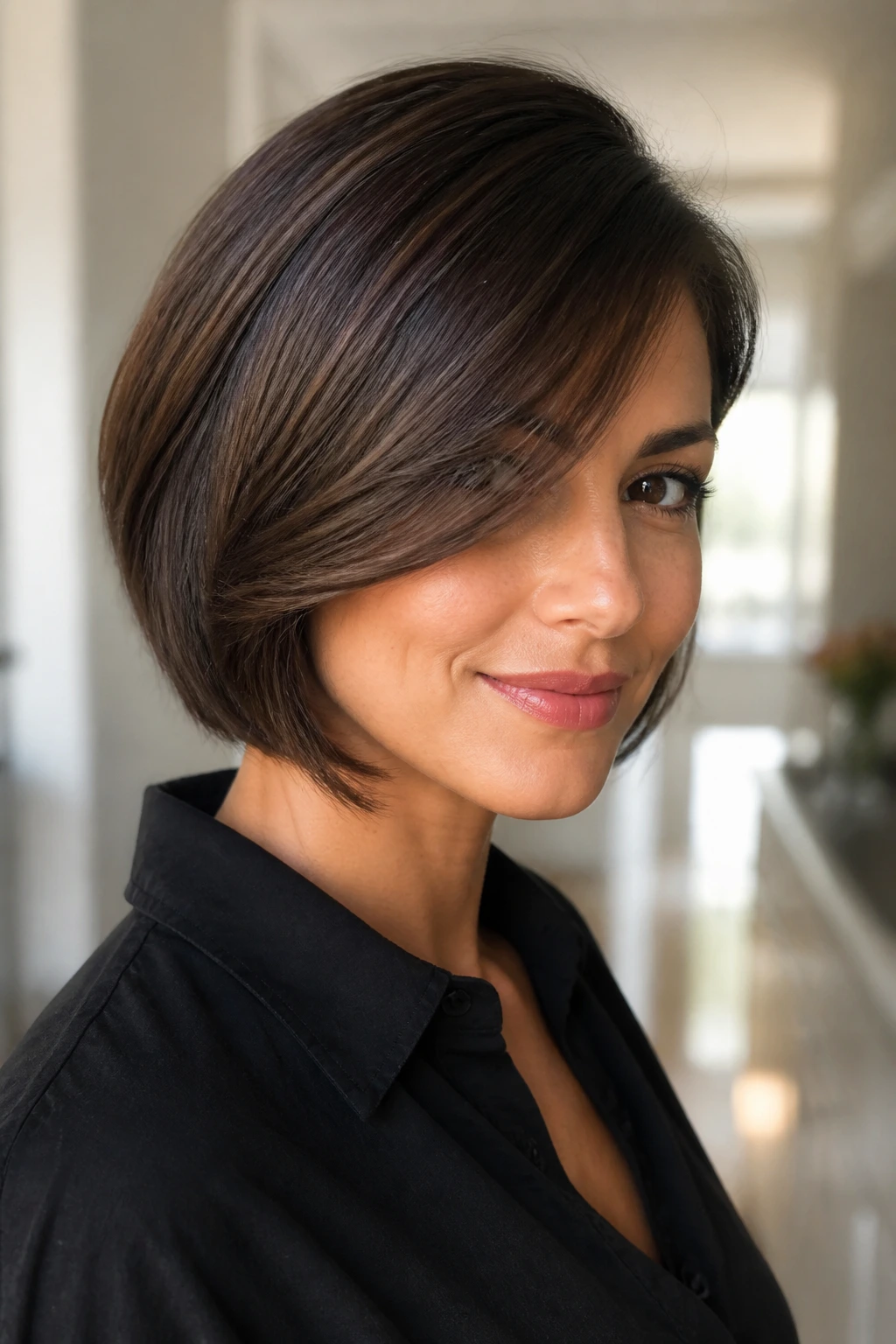
The whole trick is direction. A side part gives the eye a path, and the fringe becomes that path’s starting point. Even if the rest of your hair is doing something mildly annoying — a bend at the nape, a flat crown, a sleepy kink on one side — the haircut still reads as arranged.
Length matters too. Bobs and lobs dry faster than long layers because there is less hair to move around, and less hair means less chance for the ends to go rogue before you leave the house. That is why these cuts are so forgiving. They are short enough to behave, long enough to tuck, and flexible enough to survive day two.
The best versions also leave room for error. A chin-length sweep can be brushed into place in a minute. A lob can be clipped back. A curly bob can be misted and left alone. That little bit of slack is why these cuts keep showing up in real bathrooms, not just on salon boards.
How to Pick the Right Fringe, Part, and Length
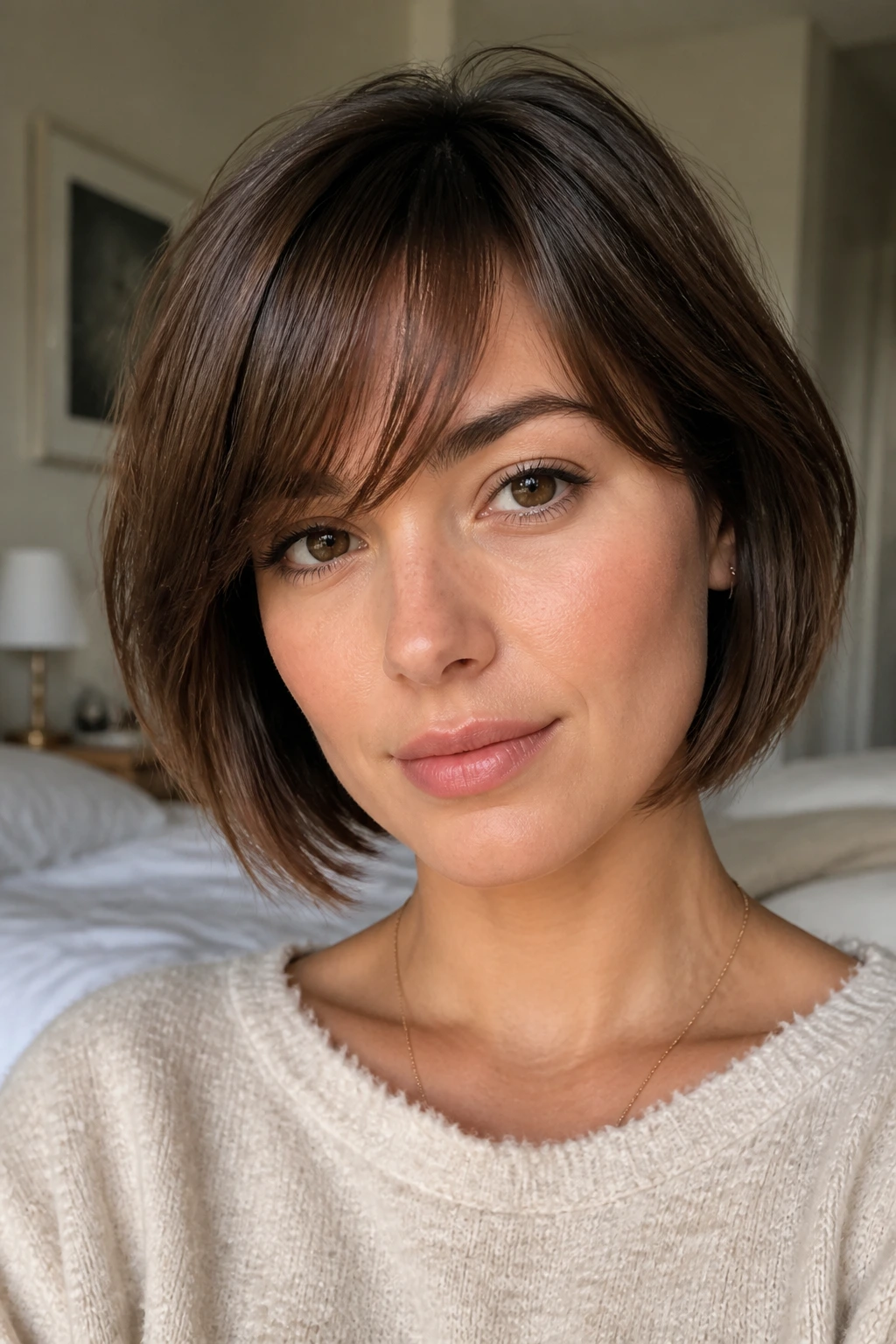
The right side-swept bob starts with the front, not the back. If the fringe fights your hairline, the whole cut gets needy. If it follows the natural fall of your hair, styling gets easier the second you wake up. I always tell people to think about where their hair already wants to land, then work with that line instead of arguing with it.
If your hair is fine
Go a little blunter at the ends and a little longer in the fringe. Fine hair can go wispy fast, and too many short layers make the perimeter look thin. A clean line and a soft sweep give you the best of both worlds.
If your hair is thick
Ask for internal weight removal, not a pile of tiny layers. Thick hair needs room to move, but it also needs structure. If the stylist thins it too much, the fringe can separate and puff out by lunch.
If you wear glasses
Keep the fringe either above the frame line or just beside it. Landing directly on the lenses is a nuisance. A tiny bit of extra length solves that problem.
How to talk to your stylist
Bring a photo, then say what the haircut needs to do at 7 a.m. That sentence matters. Do you want to air-dry it? Clip it back? Wear it with a side part every day? Tell them. The best side-swept bobs are cut for a routine, not just for a photo.
Essential Tools for Fast Styling
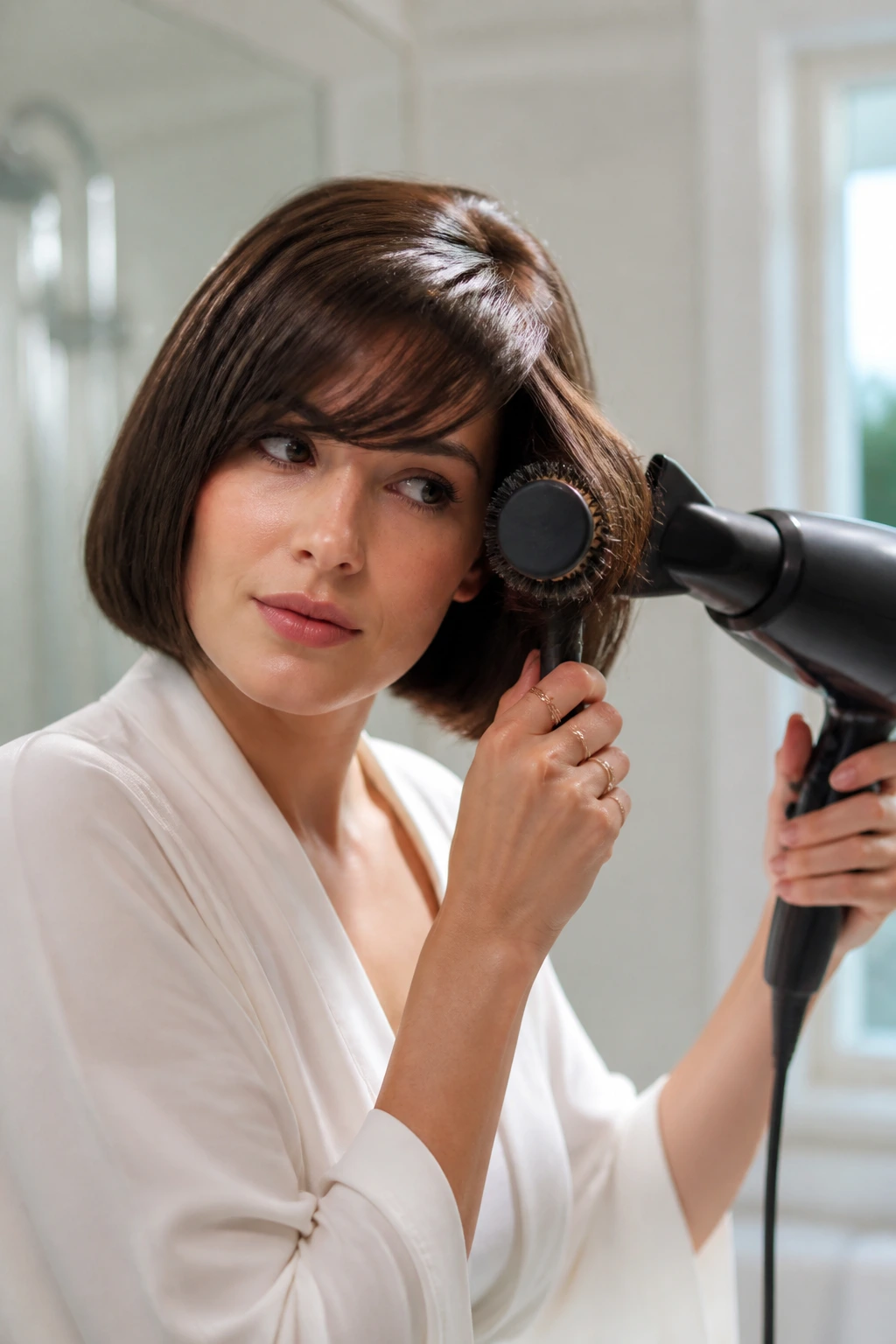
- Hair dryer with a concentrator nozzle: directs air onto the fringe and keeps the bend cleaner.
- 1-inch or 1.25-inch round brush: small enough to shape the front without over-curling it.
- Vent brush: useful for rough drying the roots fast when you do not have time for polish.
- Heat protectant spray: one light coat before a dryer or iron keeps the fringe from drying out.
- Light mousse or root-lift spray: gives the crown enough body to hold the side sweep.
- Dry shampoo: works on second-day roots and helps a fringe stop looking oily by noon.
- Texturizing spray: good for piecey finishes and a lived-in lob.
- Duckbill clips or sectioning clips: hold the front in place while it cools.
- Flat iron with beveled edges: handy for a quick bend at the ends or a one-pass sweep at the fringe.
- Microfiber towel or cotton T-shirt: cuts down on frizz at the front after a wash.
The Fastest Morning Routine for a Side-Swept Bob
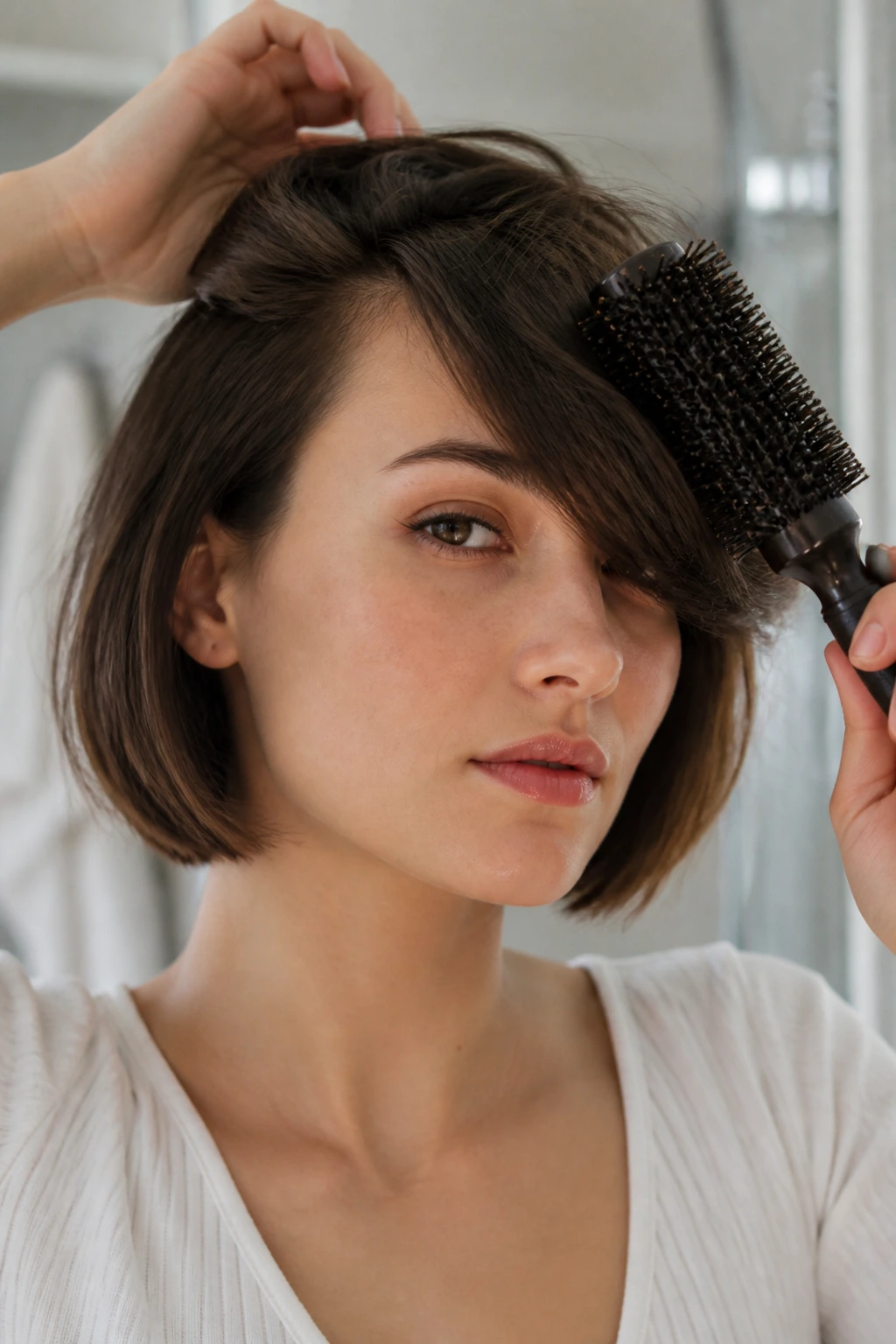
Five-minute rescue
Start with the fringe. That is where the eye goes first, and it is where a bad morning shows fastest. Mist the front lightly, blow-dry the fringe across the forehead with a brush, then rough-dry the crown for lift. If the ends need help, bend only the last inch or two.
Ten-minute polish
When you have a little more time, clip the front to the side while you dry the back. Let it cool in that direction. Then use a round brush to create a soft bend at the front pieces and the bottom edge. A cool shot at the end helps the shape hold.
No-heat version
This one is for days when the dryer stays in the drawer. Work in a small amount of mousse, part the hair where it naturally falls, and twist the fringe once while it is damp. Once dry, shake it loose and add dry shampoo at the roots. It will not look salon-sleek. It will look done, which is enough.
Small Tweaks That Make the Cut Easier to Wear
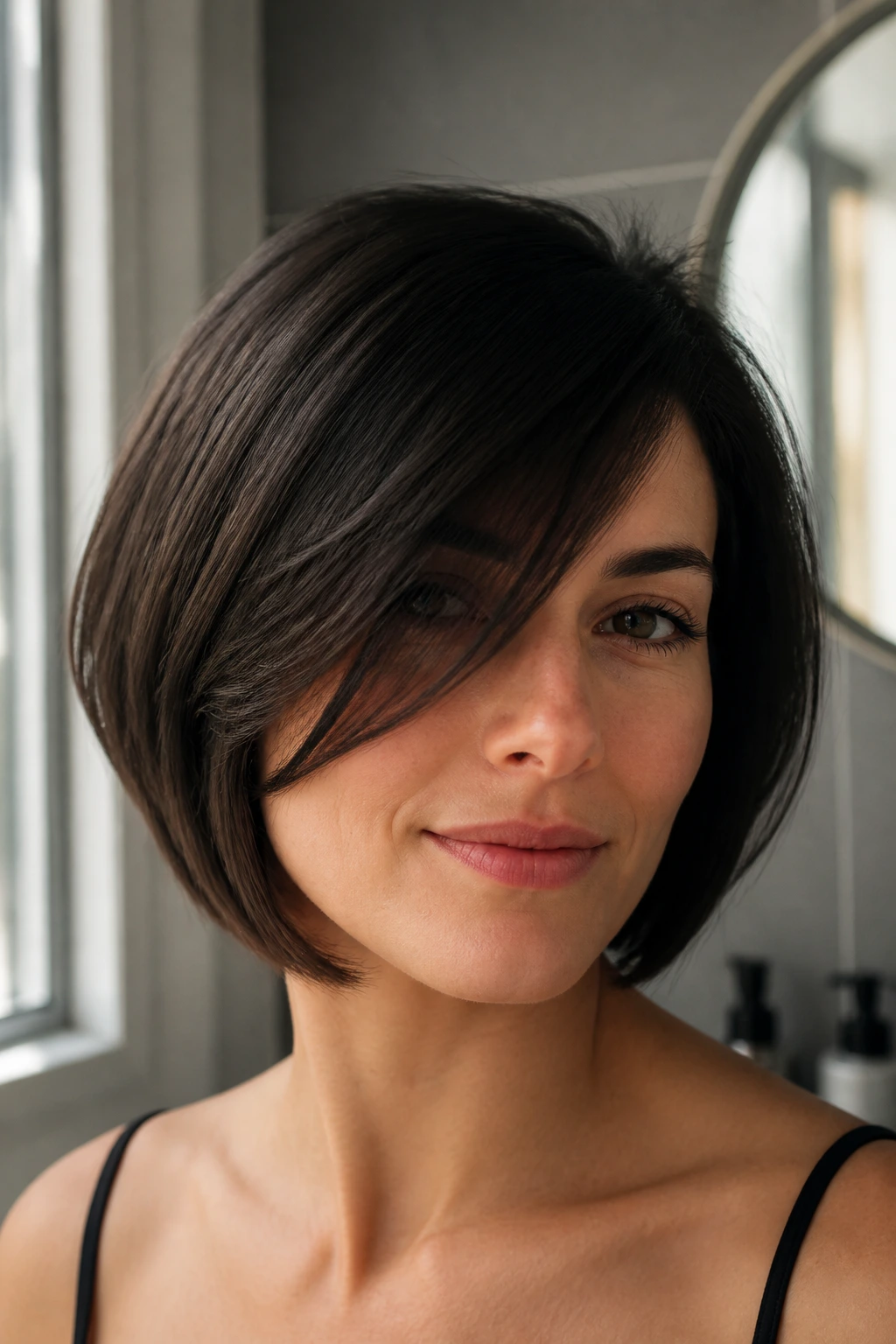
Fringe first: dry the fringe before the rest of the head if you want the shape to sit cleanly. Once it dries bent the wrong way, you will spend more time fixing it.
Product restraint: keep heavy cream, oil, and shine serum away from the fringe. They belong on the ends, not on the front pieces that need lift and movement.
Part placement: if your hair keeps splitting oddly, move the part about half an inch. That small shift can calm a stubborn crown faster than another layer of product.
Clip while cooling: after you bend the front with a dryer or iron, clip it in place for a few minutes. Hair remembers shape better once it cools.
Night prep: if you know you will be rushed, tuck the heavier side behind one ear loosely before bed or clip the front into the direction you want it to fall. It is a small thing. It helps.
Common Mistakes That Make This Cut Harder Than It Should Be

- Cutting the fringe too short: it springs up, splits oddly, and needs constant touching. Keep it long enough to sweep or tuck.
- Over-layering fine hair: the ends go stringy and the cut loses its body. Leave some weight in the perimeter.
- Ignoring cowlicks and growth patterns: if the fringe grows out toward one side, fight it and you get a daily battle. Cut with the grain when you can.
- Using too much oil near the front: the fringe separates and looks greasy by midday. Save richer products for the ends.
- Forgetting the crown: a flat crown makes even a great bob look tired. Lift the roots before worrying about the ends.
- Choosing a fringe that clashes with glasses: if the fringe sits on the frames, you will keep brushing it away. Adjust the length before the cut is final.
Variations and Alternatives for Different Hair Types

The No-Heat Sweep: Ask for a longer fringe and a lob that hits the collarbone. Add mousse, air-dry, and let the side part do the styling. It is the easiest route if you hate daily heat.
The Fine-Hair Lift: Keep the ends blunt, the layers light, and the crown supported with mousse or root spray. This version needs lift more than texture. It looks best when the front has a soft bend, not a curl.
The Thick-Hair Debulk: Use a stacked back or internal thinning so the shape sits closer to the head. The fringe should stay long enough to move. Too much slicing makes this one fussy.
The Curl-Friendly Bend: Cut the fringe longer than you think and let it follow the curl pattern. Diffuse the roots, then leave the front a little imperfect. A polished curl bob often looks worse than a relaxed one.
The Grow-Out Friendly Lob: Choose a collarbone length and a side fringe that can slip into face-framing layers later. This one is useful if you want to stretch salon visits without losing shape.
Keeping the Shape Fresh Between Salon Visits
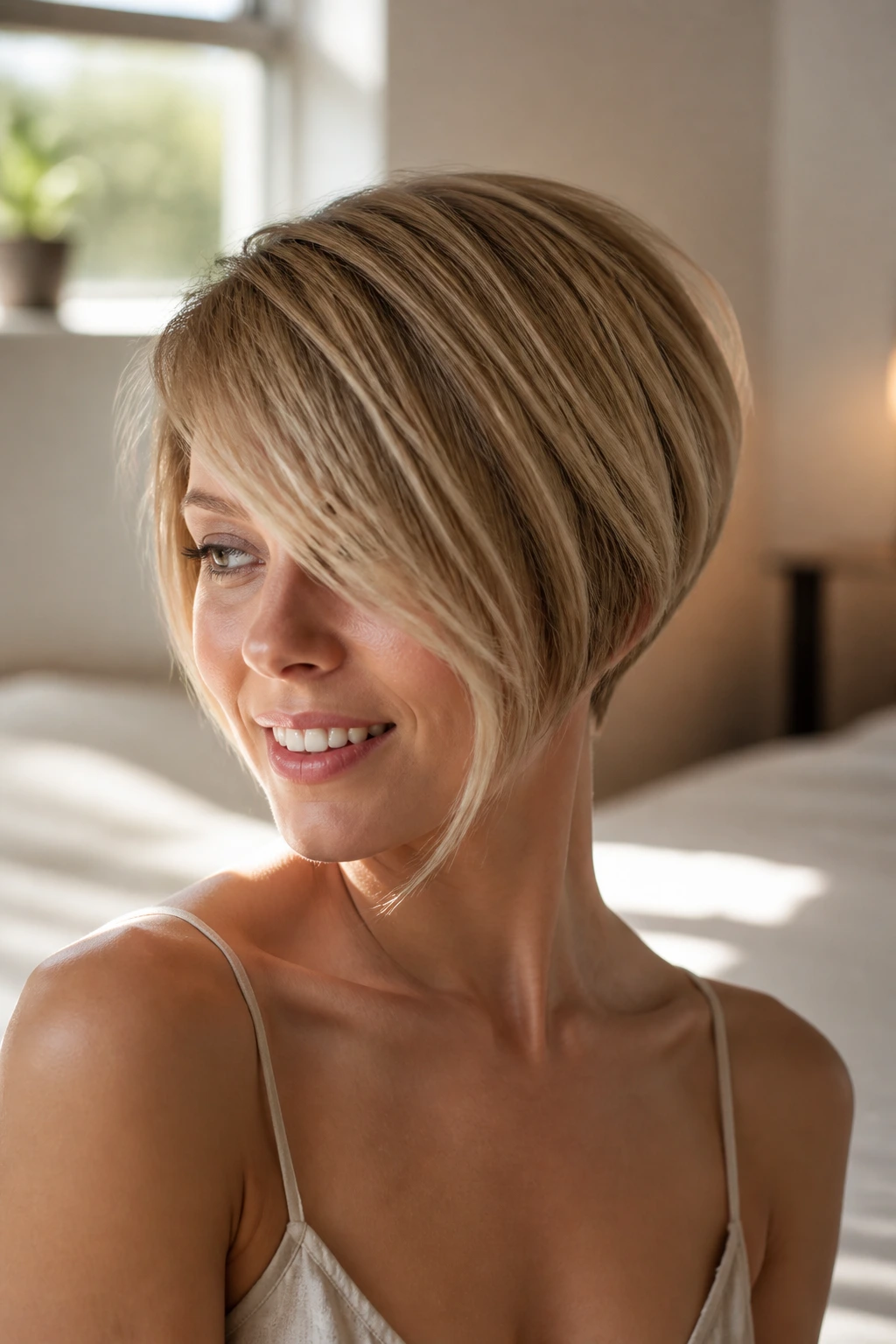
A side-swept bob stays easy only if the trim schedule stays honest. Fringe trims usually need attention every 4 to 6 weeks because the front changes the fastest. The rest of the bob often holds shape for 6 to 8 weeks, depending on how much growth you can tolerate before the line starts to slump.
Fringe oil is the other maintenance issue. It is the first section to get touched, brushed, and bent out of shape, so it usually needs a quick dry shampoo pass more often than the rest of the hair. I like to tap the powder into the roots, wait a minute, then brush it through with a clean, dry brush. That keeps the front from looking dusty.
At night, a loose clip or a silk pillowcase helps more than people expect. The goal is not to freeze the hair in place. The goal is to keep the front from getting a deep crease across the sweep. If the ends start flipping hard, that is usually a sign the cut needs a small trim — not another layer of product.
Questions People Ask Before They Book

Will a side-swept bob work if my hair is very straight?
Yes. Straight hair actually shows off the shape well, especially if the front is cut with a soft bevel. The only catch is that the fringe may need a quick bend at the front so it does not look too severe.
Can curly hair wear a side-swept fringe without a lot of fuss?
It can, but the fringe should be cut longer than a straight-hair fringe. Curl shrinkage is real, and a shorter cut tends to bounce up out of place. A diffuser and a little leave-in cream usually handle the rest.
How short should the fringe be?
Short enough to frame the face, long enough to sweep. If you want the least daily work, keep it grazing the cheekbone or eyebrow rather than cutting it high above the brow. That gives you room as it grows.
What if my hair parts itself in the wrong place?
Work with it. A part that fights the grain will keep showing up as a weird bump or split at the front. Moving the part slightly can calm the whole cut down.
Does this style work with glasses?
Yes, if the fringe is planned around the frames. The front should not sit right on the lenses all day. Ask your stylist to check the line while you are wearing your glasses.
How do I stop the fringe from getting greasy?
Keep oils and creams off the front, and use dry shampoo before it looks obvious. The fringe is close to the face, so it picks up skin oils faster than the rest of the cut.
Can I grow this into a lob later?
Absolutely. That is one of the nicest parts of the cut. A side fringe softens the grow-out, and the shorter bob can slide into a collarbone length without a harsh transition.
What should I ask for if I hate styling my hair?
Say you want a cut that air-dries with a side sweep and does not need a full blowout. That tells the stylist to keep the fringe long enough to move and the perimeter clean enough to hold its shape.
The Cut That Stays On Schedule
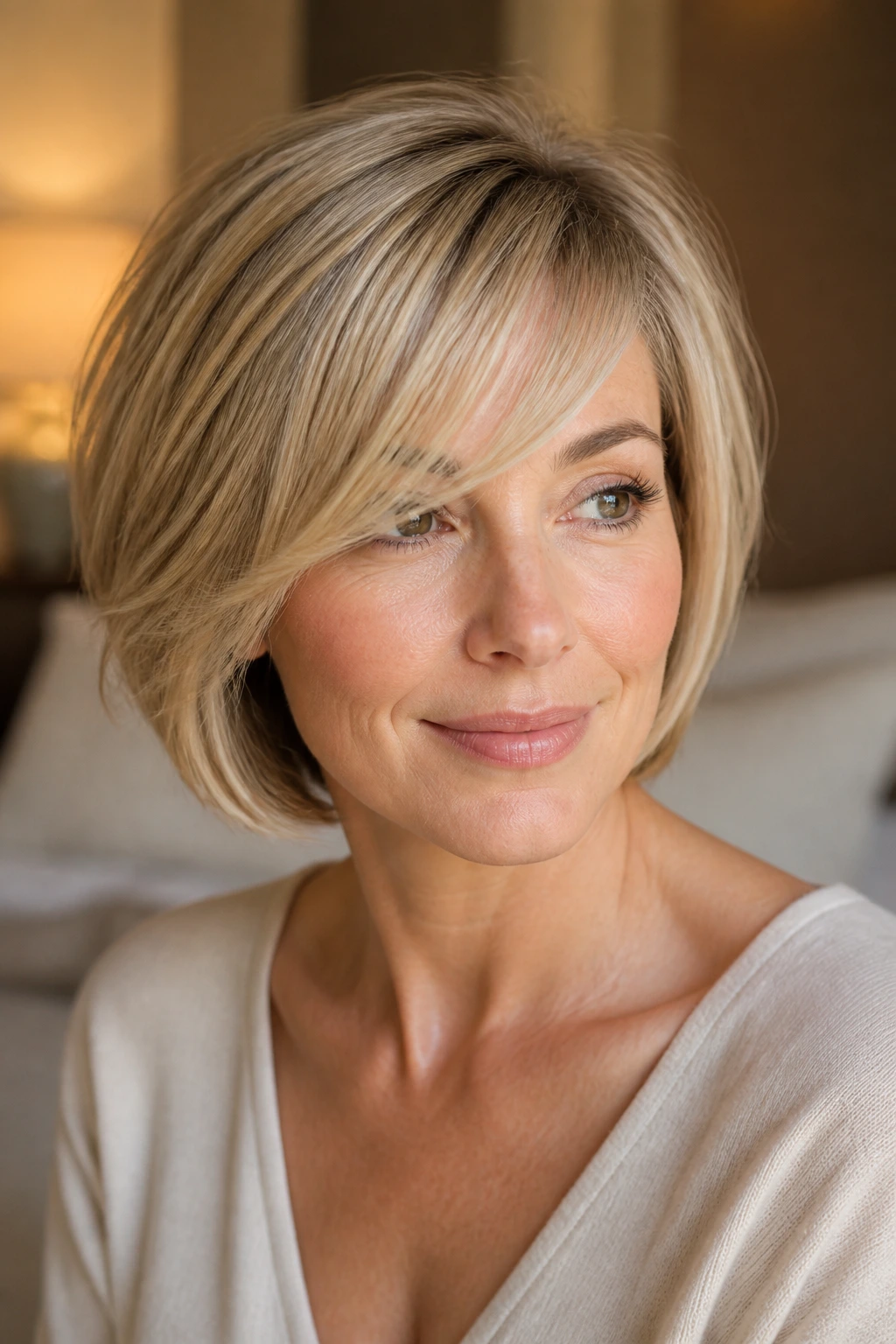
A good side-swept bob with a fringe does not ask for a morning ritual. It gives you a shape you can revive with a brush, a clip, or a three-minute bend at the front, and then it gets on with the day. That is the real appeal here — not glamour, not drama, just a haircut that can keep pace.
If you choose the version that matches your hair texture instead of fighting it, this style becomes easier every time you wear it. The fringe stops feeling like a chore. The bob starts behaving like a shortcut. And on a rushed morning, that is about as good as hair gets.