



An A-line bob for round faces and fine hair solves a shape problem that a blunt chin cut often makes worse. The longer front pieces pull the eye downward, the shorter back gives the nape some lift, and the whole cut builds a cleaner line around the face without asking fine strands to do too much work.
That last part matters. Fine hair can look gorgeous in a bob, but the wrong version turns wispy fast: too many layers, too much thinning, or a front that stops right at the widest part of the cheek. The cut needs weight in the perimeter and enough angle to stretch the face a little. Not a lot. Just enough to change the silhouette.
The versions that work best share one trait: they know where to stop. Some end at the jaw, some graze the collarbone, some lean sleek and glassy while others stay soft and air-dried. The details are where the magic lives — a side part here, a blunt line there, a tiny stack at the back, a fringe that breaks up width across the face. Once you start looking at A-line bobs that way, the whole category opens up.
Why This Collection Works for Round Faces and Fine Hair

-
Face-Lengthening Angle: The forward tilt of an A-line bob creates diagonal lines, which visually stretch a round face instead of echoing its width.
-
Perimeter Density: Keeping the ends blunt or only lightly textured helps fine hair look fuller at the bottom, where the shape is most visible.
-
Volume Without Bulk: A slight stack at the back can lift the crown and nape without piling on layers that make fine strands collapse.
-
Parting Flexibility: Side parts, off-center parts, and soft curtain bangs all give you ways to break up width at the cheeks.
-
Styling Range: These cuts can go sleek, airy, wavy, tucked, or polished, so the same basic shape can work on weekday mornings and dressier nights.
-
Salon-Friendly Direction: Each version gives you a clear thing to ask for: more angle, less thinning, a blunt edge, a softer front, or a bigger crown.
1. Chin-Grazing A-Line Bob with a Deep Side Part
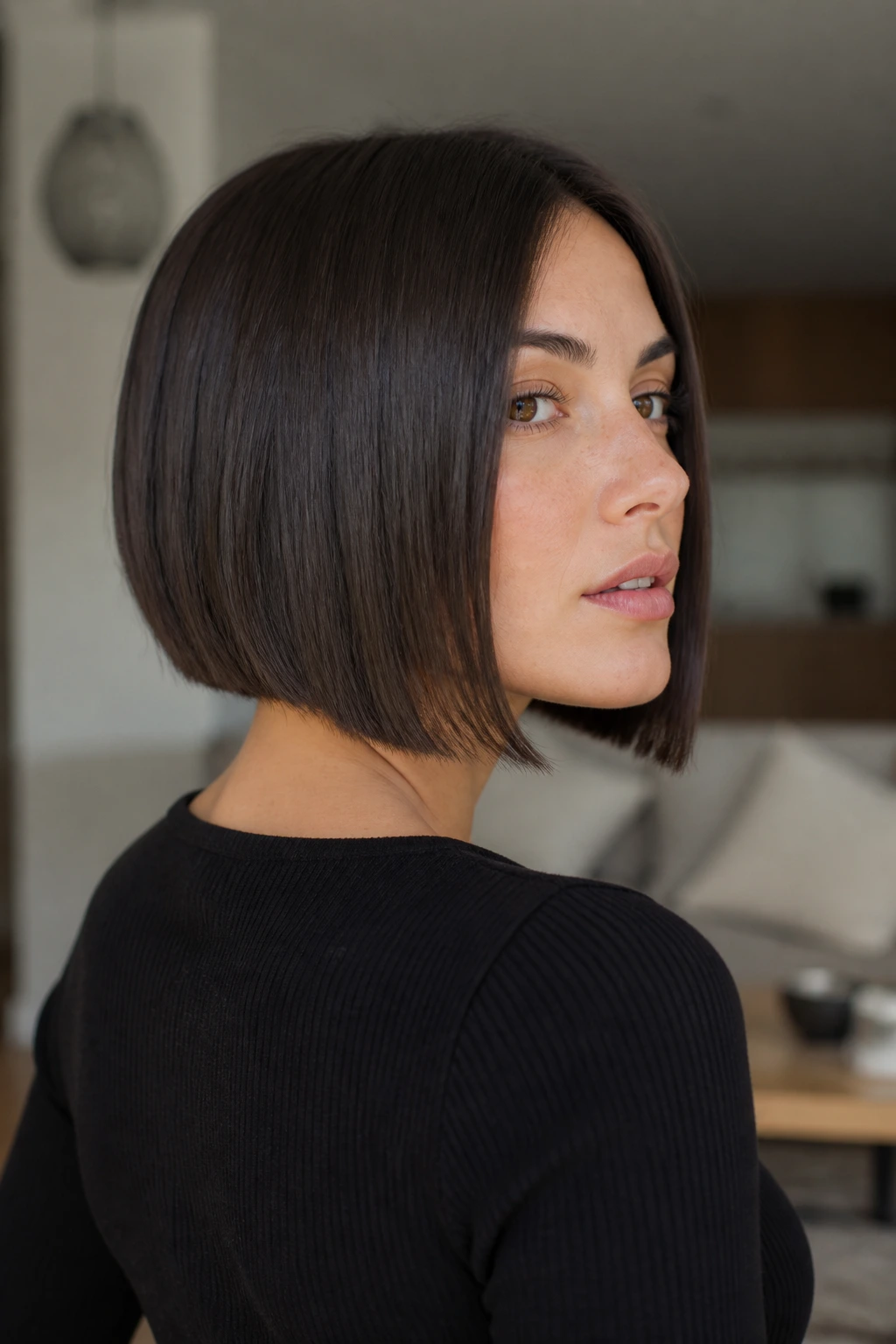
This is the cleanest place to start if you want a bob that does not argue with your face shape. The front pieces skim just below the chin, the back sits a touch shorter at the nape, and the deep side part breaks the symmetry that can make a round face look wider than it is. The whole thing feels sharp in a very quiet way.
Fine hair loves this version because the line stays solid. A blunt perimeter at the bottom makes the ends look thicker, and the side part gives the top a little lift without asking for a lot of product. If your hair slips flat by lunchtime, this cut gives you a better starting point than a soft, layered bob ever will.
Ask for this at the salon: keep the front long enough to land below the chin, keep the back gently shorter, and avoid heavy thinning through the ends. If your stylist reaches for the razor immediately, pause them. A clean edge matters here.
2. Softly Stacked A-Line Bob That Lifts the Nape
A little stack goes a long way on fine hair. This version uses a subtle graduation in the back — just enough to build shape at the nape and a bit of height at the crown, but not so much that the cut starts looking old-school or overdone. The front still keeps the A-line shape, so the face stays lengthened.
What makes it friendly for round faces is the balance. The lifted back creates a visual push upward, while the longer front pieces keep the eye moving down the sides of the face. If you’ve ever worn a bob that sat too flat at the back, you know how fast that shape can go limp. This fixes that without turning into a wedge.
Styling note
Blow-dry the crown first with a round brush and a little root-lift spray, then curve the ends under just enough to show the angle. You want movement, not helmet hair.
3. Collarbone-Grazing A-Line Lob for Extra Coverage
If you like the idea of a bob but still want some length around your face, the lob version is the calm choice. The front sits near the collarbone, which gives round faces a longer vertical line, and the shorter back keeps the shape from feeling heavy. It’s the easiest transition cut in the bunch.
Fine hair benefits from the extra length only if the perimeter stays clean. A lot of long bobs get over-layered, and then the ends start looking see-through. Keep the bottom line blunt and let the angle do the work. You do not need a lot of internal cutting to make this shape interesting.
This version also plays well with glasses, necklaces, and high necklines. The length keeps the face open, and the angle keeps the outline crisp. It’s a good one if you want to grow out a shorter bob without losing the shape halfway through.
4. Blunt A-Line Bob with Hidden Graduation
This is the sneaky density cut. From the outside, it reads as a strong, blunt bob with a clean slant from back to front. Underneath, there’s just enough graduation to keep the back from puffing out and to help the front fall neatly. The result looks thicker than a heavily layered bob ever will.
Round faces usually benefit from a sharp perimeter like this because it carves a visible edge under the cheeks. The blunt ends keep the cut from scattering, which is a common problem with fine hair. If the hair is too thin, soft layers can turn the whole outline into mist. This version avoids that trap.
What to ask for
- Keep the outline blunt at the bottom.
- Use minimal graduation in the back.
- Leave the front long enough to skim the jaw or below.
- Skip aggressive thinning shears unless your hair is unusually dense.
5. Razor-Textured A-Line Bob with Airy Ends
This cut has a little more movement through the ends, but the texture should still be controlled. A light razor pass through the last inch or so can make straight fine hair look less boxy, especially if your hair naturally bends or flips. The trick is restraint. Too much razor work and the ends go fuzzy.
The A-line shape is still the star. The front needs to stay longer than the widest part of the cheek, and the back should remain neat enough that the eye sees a definite angle. If you want a softer, less polished bob, this is a good middle ground.
It suits people who like a lived-in finish more than a perfect blowout. A little texturizing spray at the mid-lengths can keep the ends separated without making them crunchy. Keep the product light. Fine hair does not need a thick paste to look piecey.
6. Air-Dried A-Line Bob with Loose Waves
Not every bob needs a round brush and a hard part. This version leans into natural bend, which can be a gift if your hair has even a hint of wave. The A-line still matters — longer in front, shorter in back — but the finish is soft, slightly undone, and better for people who would rather air-dry than fight a blow-dryer.
Round faces usually look good with the wave pattern kept below the cheekbone. That keeps the width from sitting right at the face’s fullest point. On fine hair, the best version of this cut uses a lightweight mousse or cream and very little oil. Heavy products kill the movement before it starts.
A loose wave makes the angle feel less severe. That’s useful if you like structure but don’t want a sharp, polished edge every day. It’s the sort of cut that looks better on day two, once the wave has settled a little and the front pieces have a touch of grit.
7. Sleek Glass A-Line Bob with a Crisp Finish
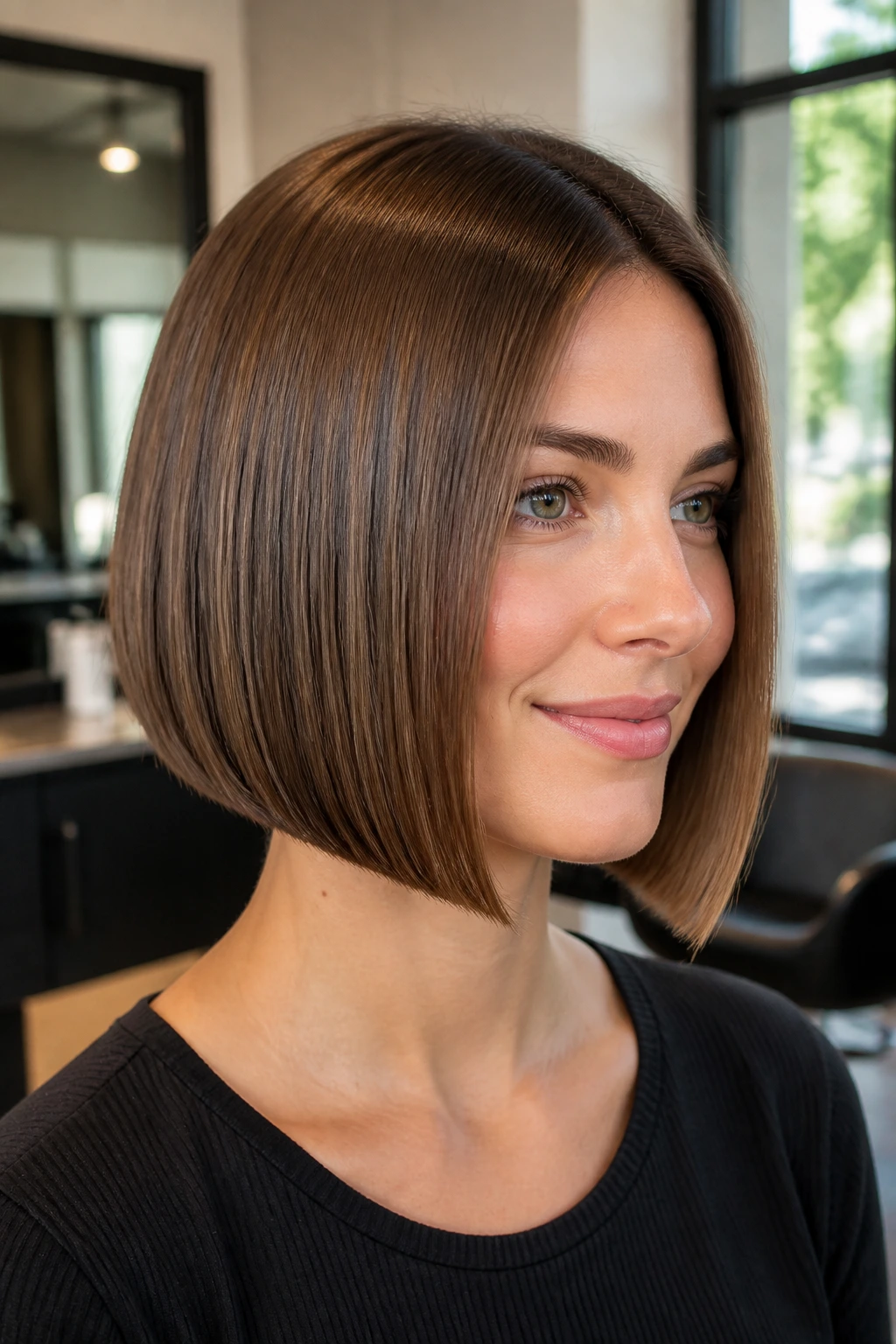
This is the sharp one. The line is clean, the ends are straight, and the finish has that smooth, reflective look that only works when the cut is precise. Fine hair can actually shine in this version because the strands lie close together, which makes the perimeter read fuller. The trick is not to overheat it or flatten the life out of it.
Round faces benefit from the straight vertical feel of this cut. A middle part can work if the front pieces are long enough, but a soft off-center part usually gives a little more lift at the crown. Either way, the front should be long enough to skim past the cheeks.
Use a heat protectant, a flat brush, and a tiny amount of serum on the ends only. If the product reaches the roots, the whole effect goes greasy fast. This is the bob that looks expensive when it is clean and precise — and a little tired if it gets overworked.
8. French-Inspired A-Line Bob with Wispy Fringe

A fringe changes the whole conversation. In this version, the bob keeps its angled shape, but the bangs soften the forehead and interrupt the roundness of the face with a little movement across the top. The fringe should be light, not heavy. Think airy pieces that skim the brows or break just above them.
Fine hair tends to work well with wispy bangs because they don’t need a lot of density to look intentional. A soft fringe gives you another line to play with, which helps the haircut feel fuller overall. If the bang is too thick, though, it can steal too much hair from the rest of the cut. That matters with fine strands.
This version looks best when the fringe is allowed to separate a little. A quick blow-dry with a small round brush, then a tiny mist of texture spray, usually does the job. Heavy styling cream on bangs is a shortcut to limp strands and forehead stickiness. Skip that.
9. A-Line Bob with Long Curtain Bangs
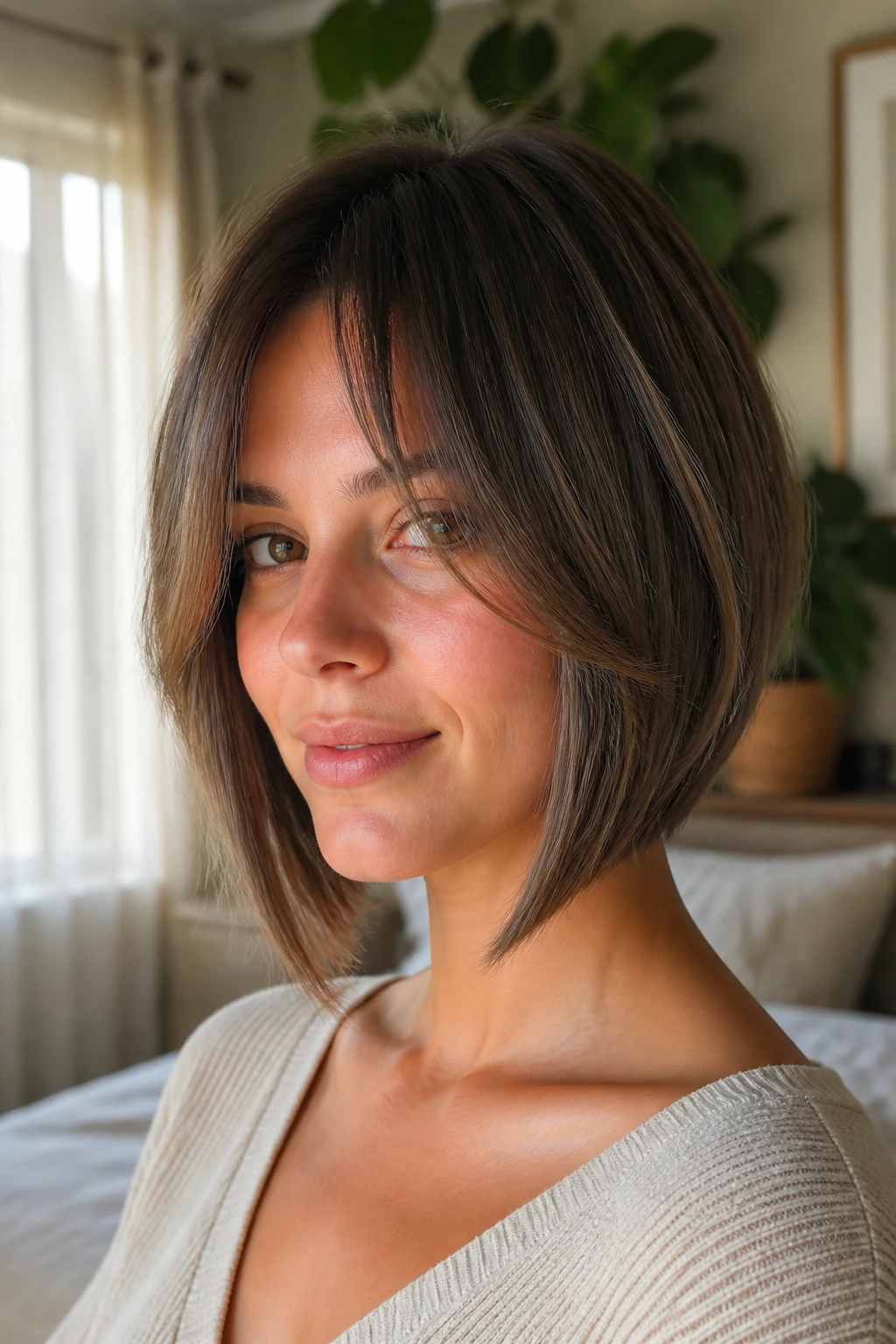
Curtain bangs belong in this conversation because they do one specific thing very well: they frame the cheeks without stopping at the cheeks. That matters on round faces. The shorter inner pieces open at the center and sweep out toward the jaw, which creates a longer line on both sides of the face.
On fine hair, curtain bangs work best when they are kept light and blended into the front of the bob. The front pieces should start around the cheekbone and then fall into the longer angle. If the bang area gets too dense, the rest of the cut loses air.
This is the version for someone who wants softness without giving up shape. It feels a little less severe than a blunt front and a little more styled than a wash-and-go bob. If your hair is flat at the crown, a small lift at the roots near the part helps the whole thing open up.
10. Micro A-Line Bob That Tucks Cleanly at the Nape
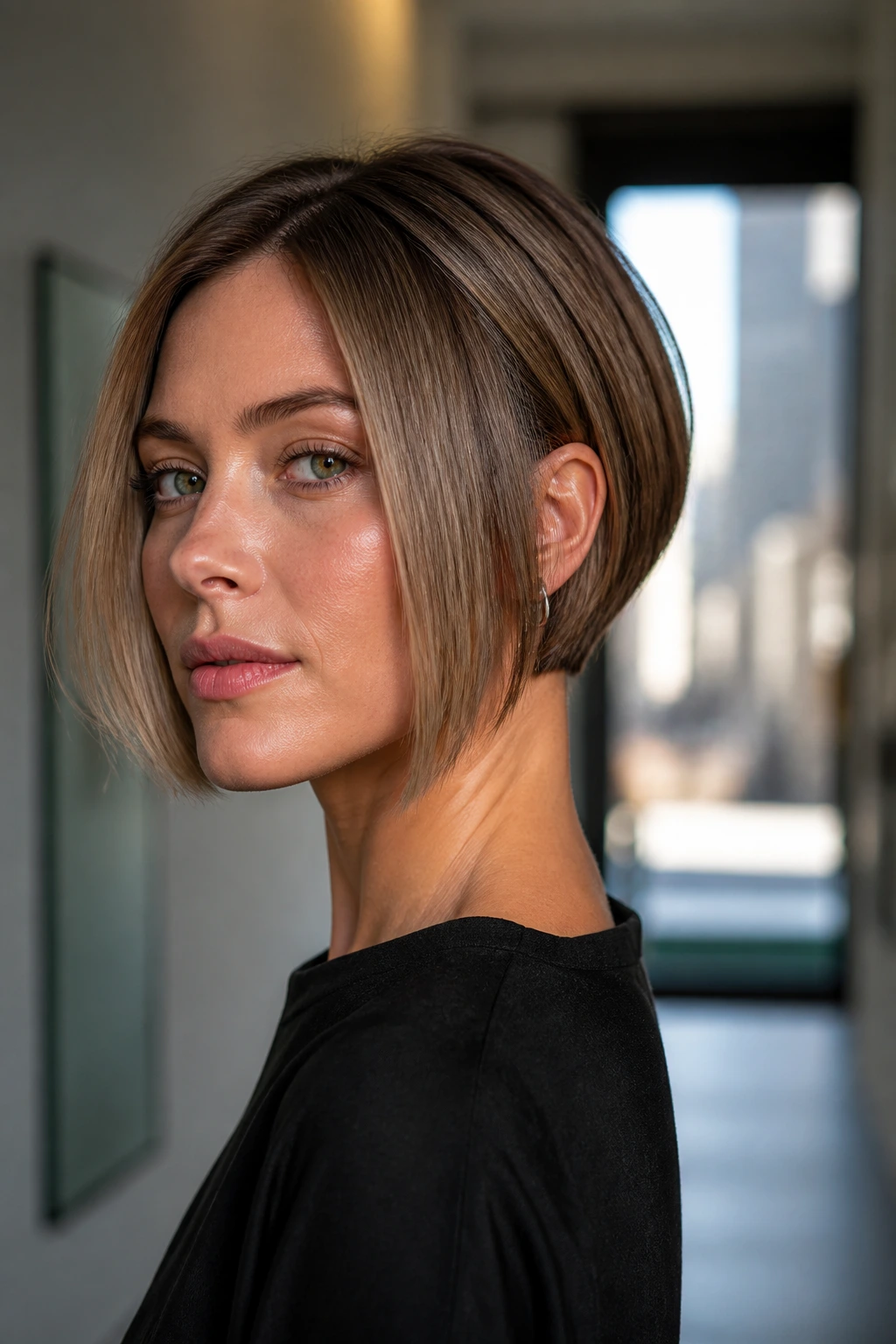
Shorter bobs can be tricky on round faces, but the micro A-line works when the front stays long enough to keep the line moving downward. The back is tucked tight at the nape, which gives fine hair a tidy base, while the front edges land farther forward to keep the silhouette from feeling square.
This cut is bold in a neat, geometric way. It suits fine hair that needs structure more than length. The short back creates the illusion of fullness where the hair usually lies flat, and the longer front pieces stop the face from looking too broad.
It is not a lazy haircut. You’ll need a decent blow-dry or a quick pass with a flat iron to keep the front from flipping in strange directions. If you want something low-maintenance, keep reading — this is not that one.
11. Feathered A-Line Bob With a Soft Crown
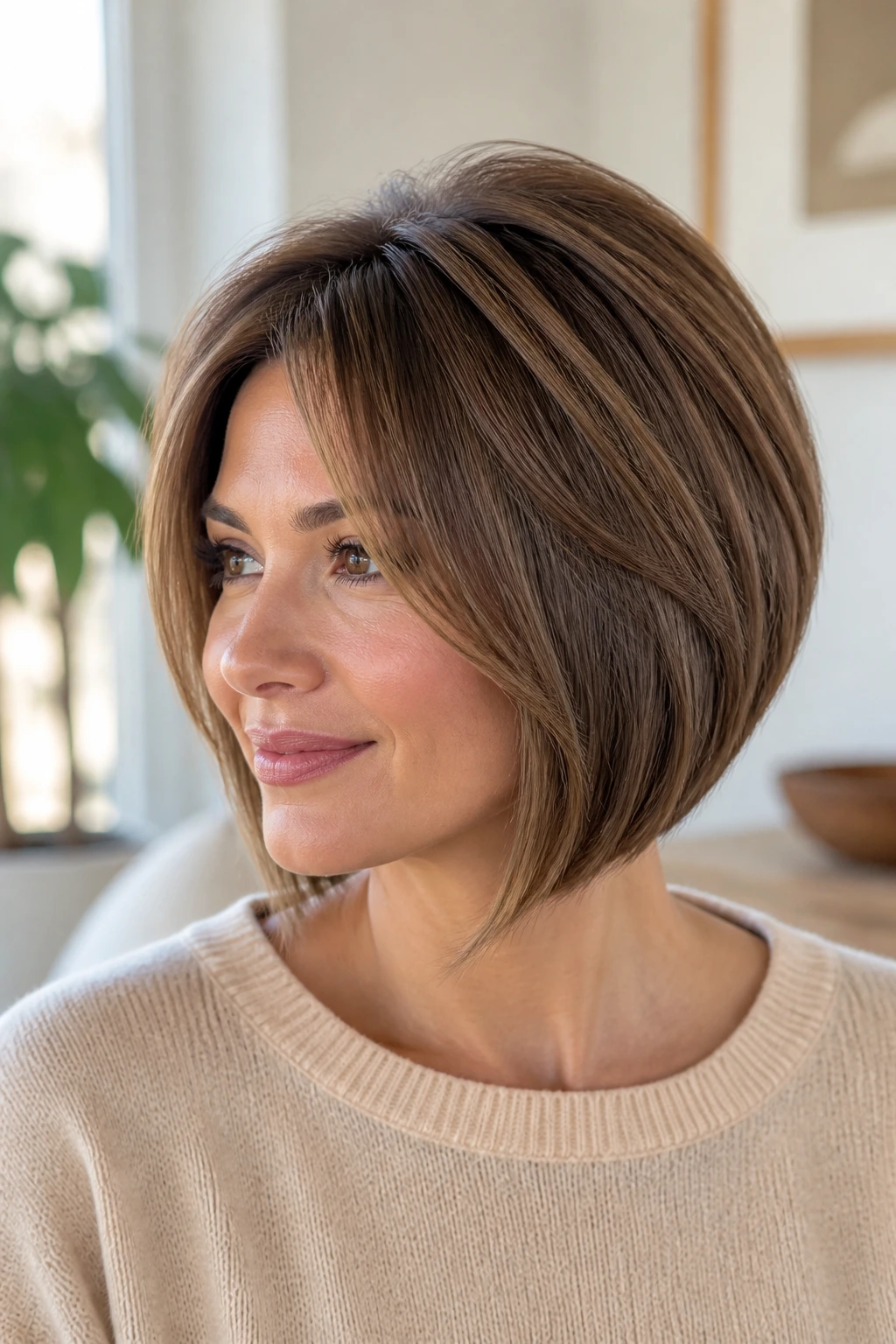
Feathering gets a bad reputation when it’s overdone, but used lightly, it can be a smart move for fine hair. The trick is to feather only the top and temple areas, leaving the bottom perimeter intact. That gives the crown some lift while keeping the ends from looking thin.
Round faces benefit from the soft movement around the top because it lifts the eye upward instead of pulling everything side to side. The A-line shape still keeps the long front pieces in play, so you get the elongating effect without a hard edge. It’s a gentle cut, but not a boring one.
Best when:
- Your hair lies flat at the crown.
- You want movement without a shag.
- You prefer a round-brush finish over a razor-sharp line.
- You need a bob that still looks neat at work.
12. Side-Swept Bang A-Line Bob
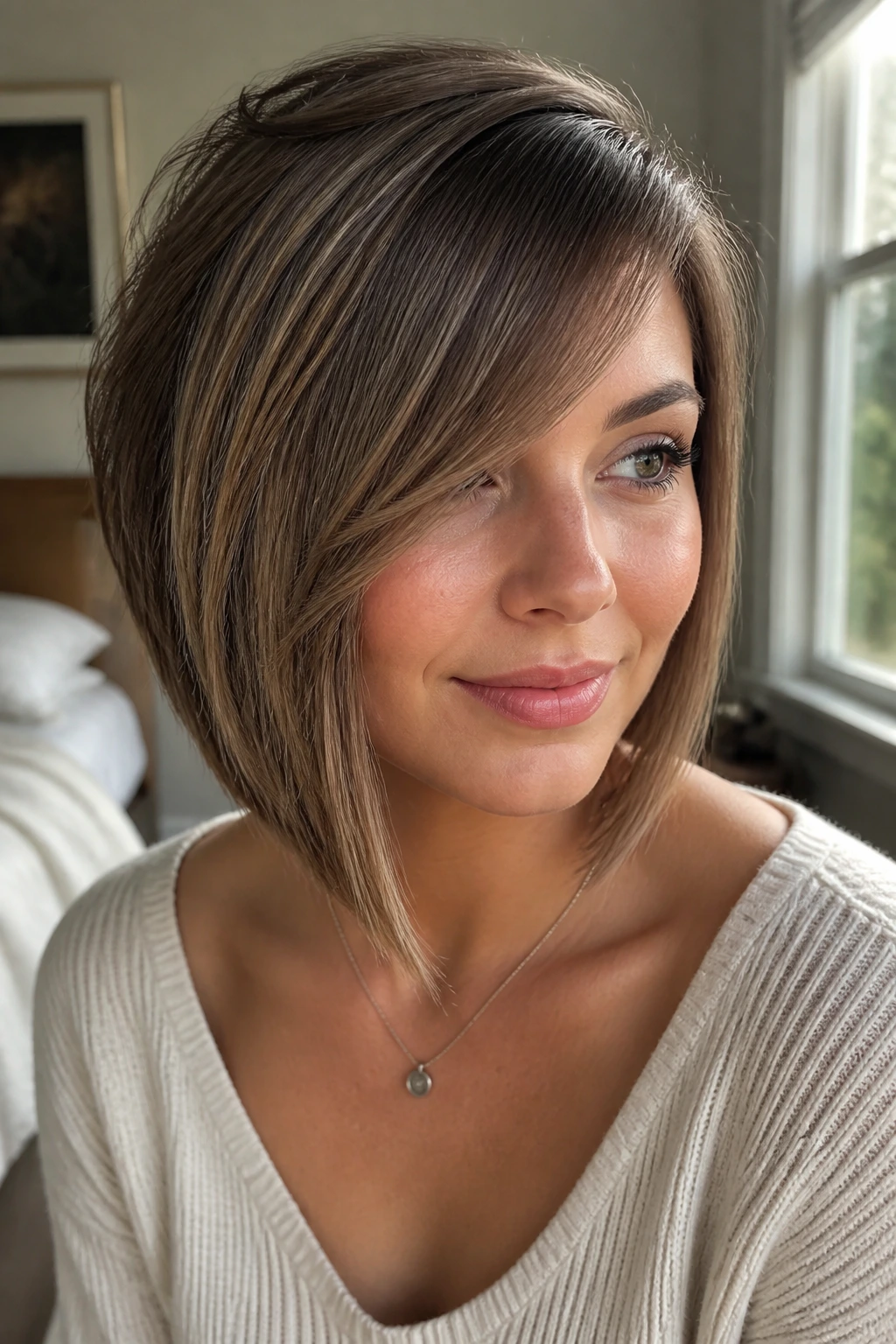
A side-swept bang can save a bob from looking too round. That diagonal sweep across the forehead creates a line that cuts through the width of the face, which is useful if you have fuller cheeks or a softer jaw. The rest of the cut stays angled, so the whole look feels connected.
Fine hair likes this version because the bang does not need to be heavy to make an impact. Even a lighter bang section can change the shape of the face when it’s directed properly. The key is to keep the side sweep long enough to blend into the front pieces, not stop above them like an afterthought.
This is one of those styles that works harder than it looks. If your glasses sit high on the nose or your forehead is on the shorter side, keep the bang light and movable. Too much bulk up front makes the whole cut feel crowded.
13. Dimensional A-Line Bob With Front Highlights
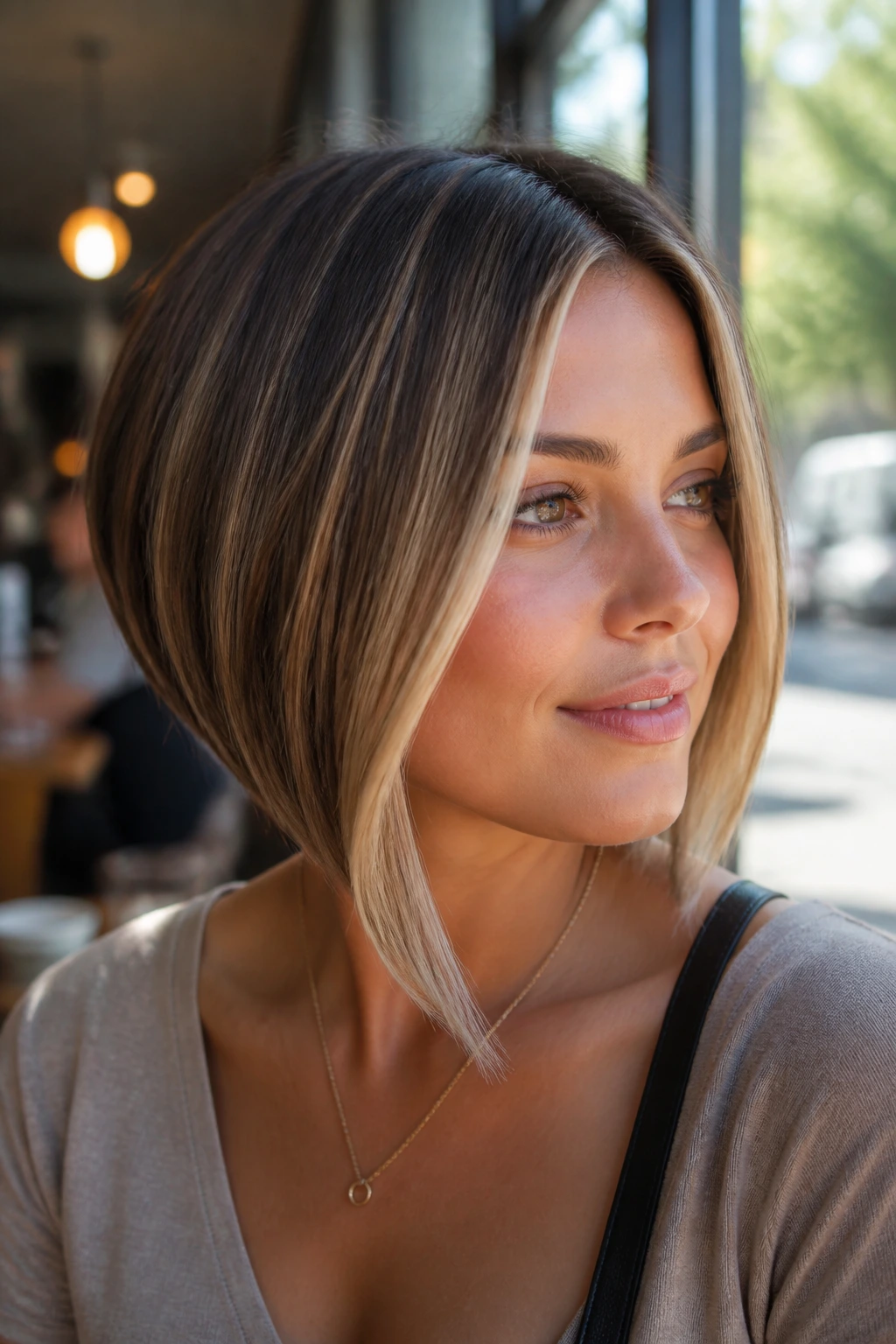
Color can change how a cut reads, and on fine hair, that matters more than people admit. A few well-placed highlights around the front pieces make the angle more visible, especially when the haircut is sleek or slightly waved. The brighter front catches the eye; the darker interior makes the ends look denser.
Round faces benefit from that brightness if it stays below the widest part of the cheeks. You want the eye moving downward along the front panels of hair, not stopping right beside the face. A soft balayage or a couple of bright money pieces can do that without making the cut feel stripey.
This version is especially smart if your hair looks flat in photos. Dimension creates shadows and light, and that extra contrast can make a fine bob feel fuller. Keep the highlights subtle at the ends if your hair is fragile. Over-lightening fine hair tends to remove the very strength you’re trying to fake.
14. Shag-Lite A-Line Bob With Just Enough Texture
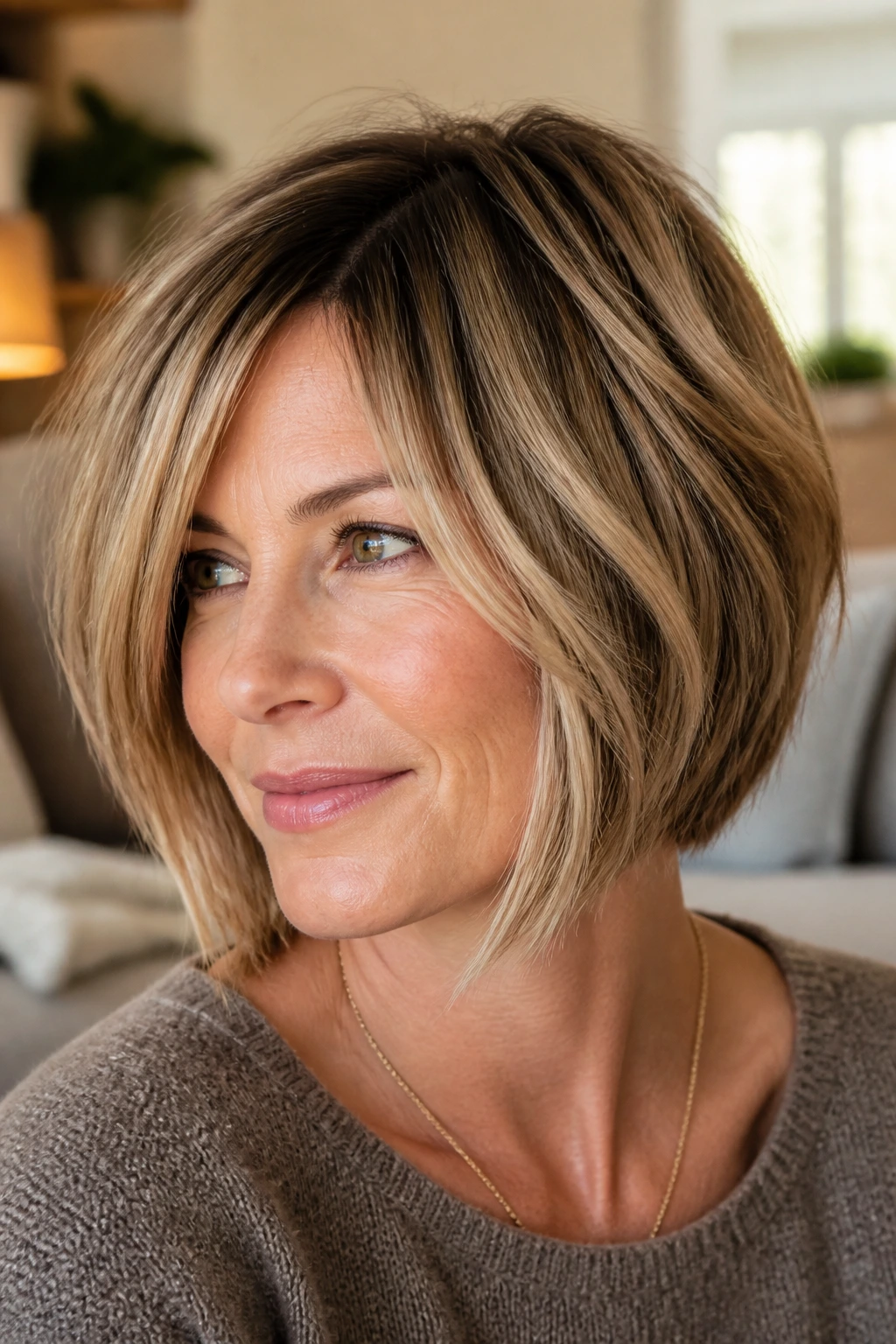
This is not a full shag, and that distinction matters. A shag-lite A-line bob keeps the perimeter strong while allowing a little texture through the mid-lengths and crown. You get movement, but the shape still reads as a bob. For fine hair, that balance is the whole point.
Round faces usually do better when the front pieces are left longer and the shortest layers stay out of the cheek area. If the texture gets too high, the cut starts widening the face instead of narrowing it. So the safe move is to keep the texture soft and the angle obvious.
This is a good one for people who like a relaxed finish and don’t want to spend ten minutes flattening every strand into place. A little dry texture spray and finger-styling can be enough. The cut should look interesting even when it’s not perfect. That’s the charm.
15. Curly A-Line Bob That Follows the Curl Pattern
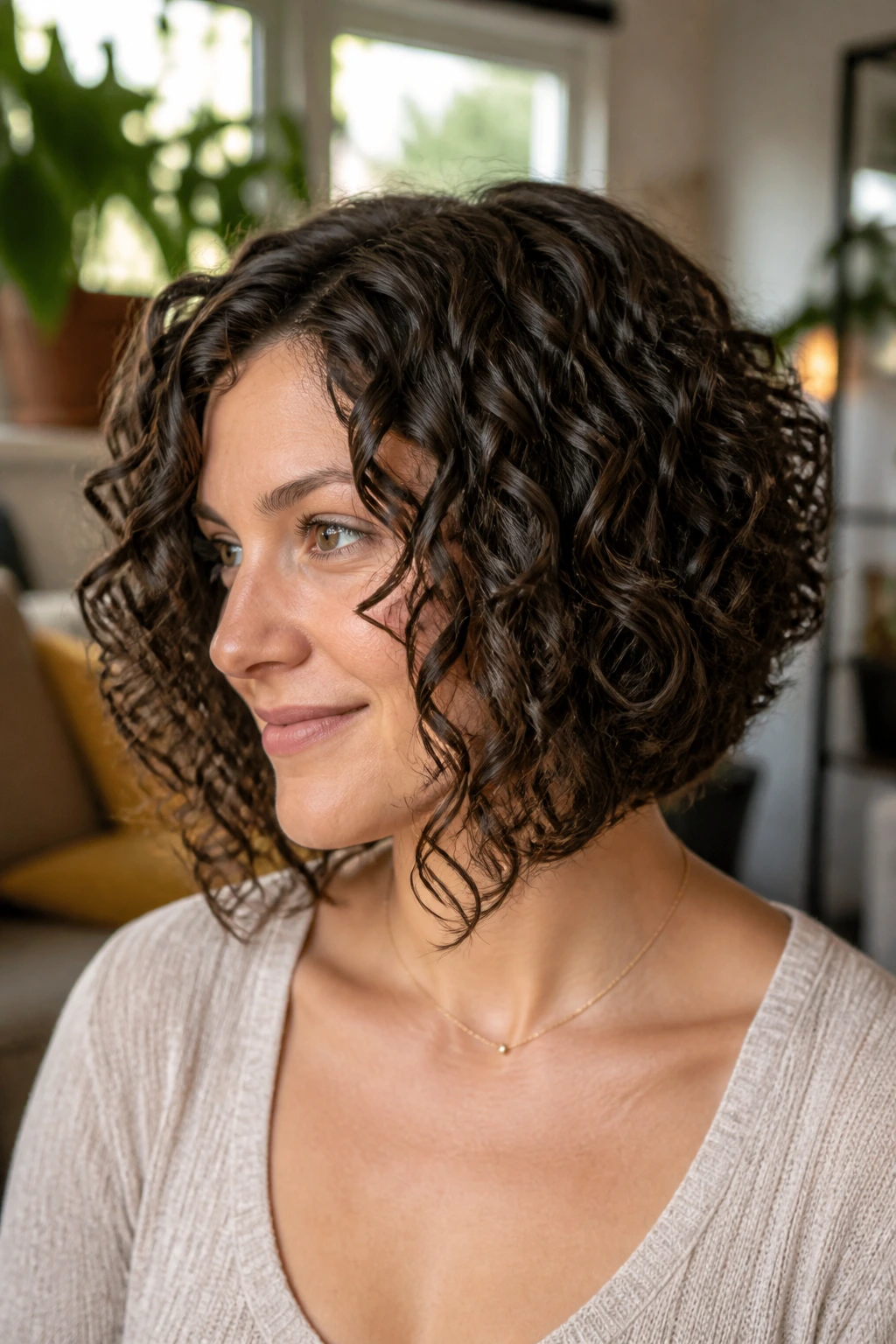
Yes, curls can absolutely wear an A-line bob. The trick is to cut it with the curl’s shrinkage in mind, because curls will spring up and change the angle once they dry. The front should usually be left longer than you think, especially around the chin and mouth area.
Round faces benefit when the curls are shaped to fall forward and down, not puff out at the sides. A dry cut or a curl-by-curl approach often gives a better result than a one-length wet cut, because the shape can be checked where it actually lives — in the dried curl pattern, not the wet strand.
Fine curly hair needs careful handling. Too many layers and the shape goes airy in a bad way; too little and the curls stack into a triangle. A good stylist will balance the line by keeping the perimeter visible and removing only the excess bulk where it really needs it.
16. Inverted A-Line Bob With a Stronger Back Lift
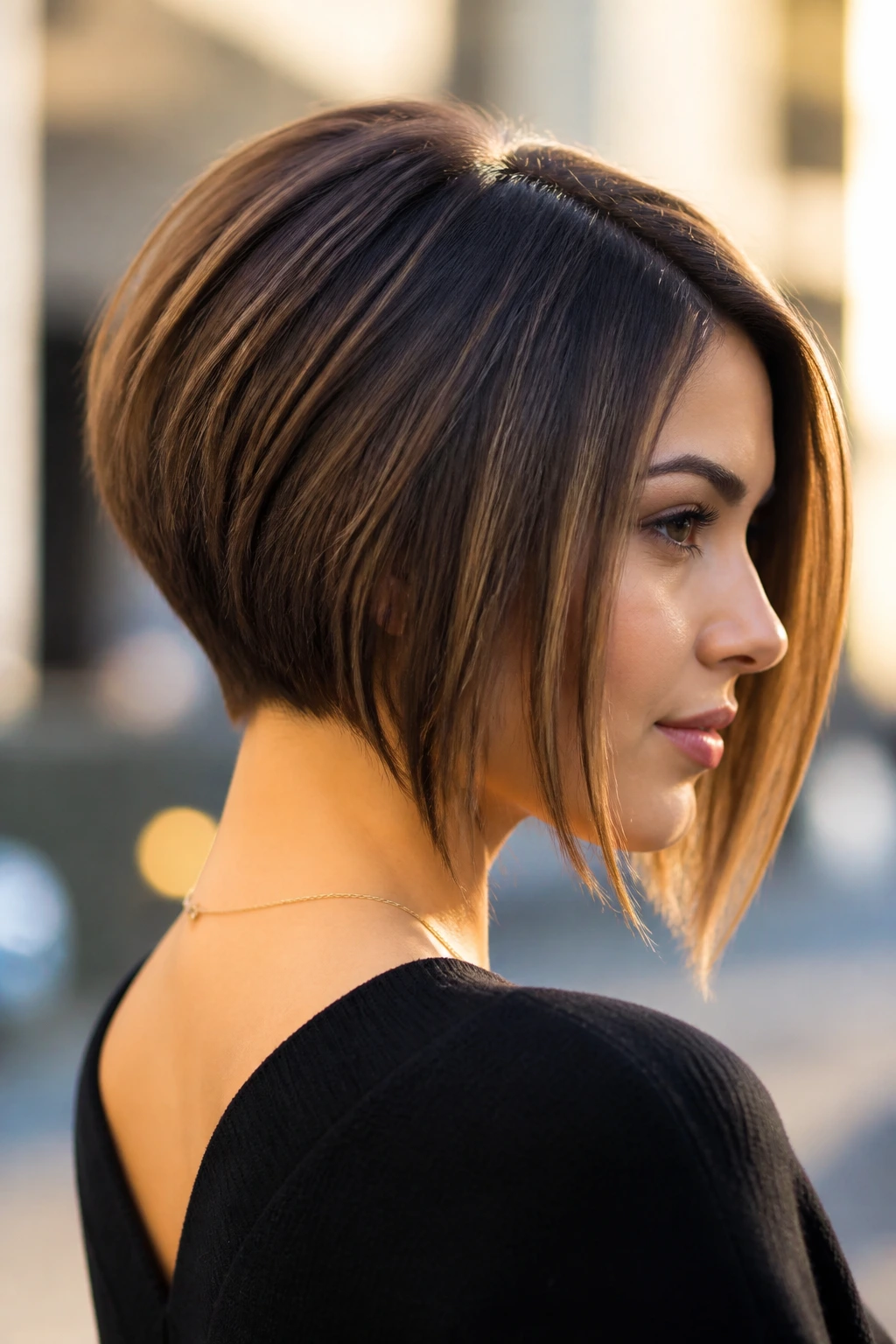
This is the more assertive cousin of the soft stacked bob. The back is shorter and fuller at the crown, and the angle to the front is more obvious. On fine hair, that extra lift can create a surprisingly strong silhouette, especially if your hair tends to lie limp right behind the ears.
Round faces look good with this when the front sections stay long enough to cut past the cheek line. If the angle is too short, the whole haircut can widen the face. But when it’s calibrated well, the result feels tailored and sharp.
The warning here is simple: do not over-thin the back. The whole point is to create the illusion of density, not strip the hair down until the scalp starts peeking through. Ask for internal structure, not a shredded finish.
17. Rounded-End A-Line Bob With a Soft Curve Under
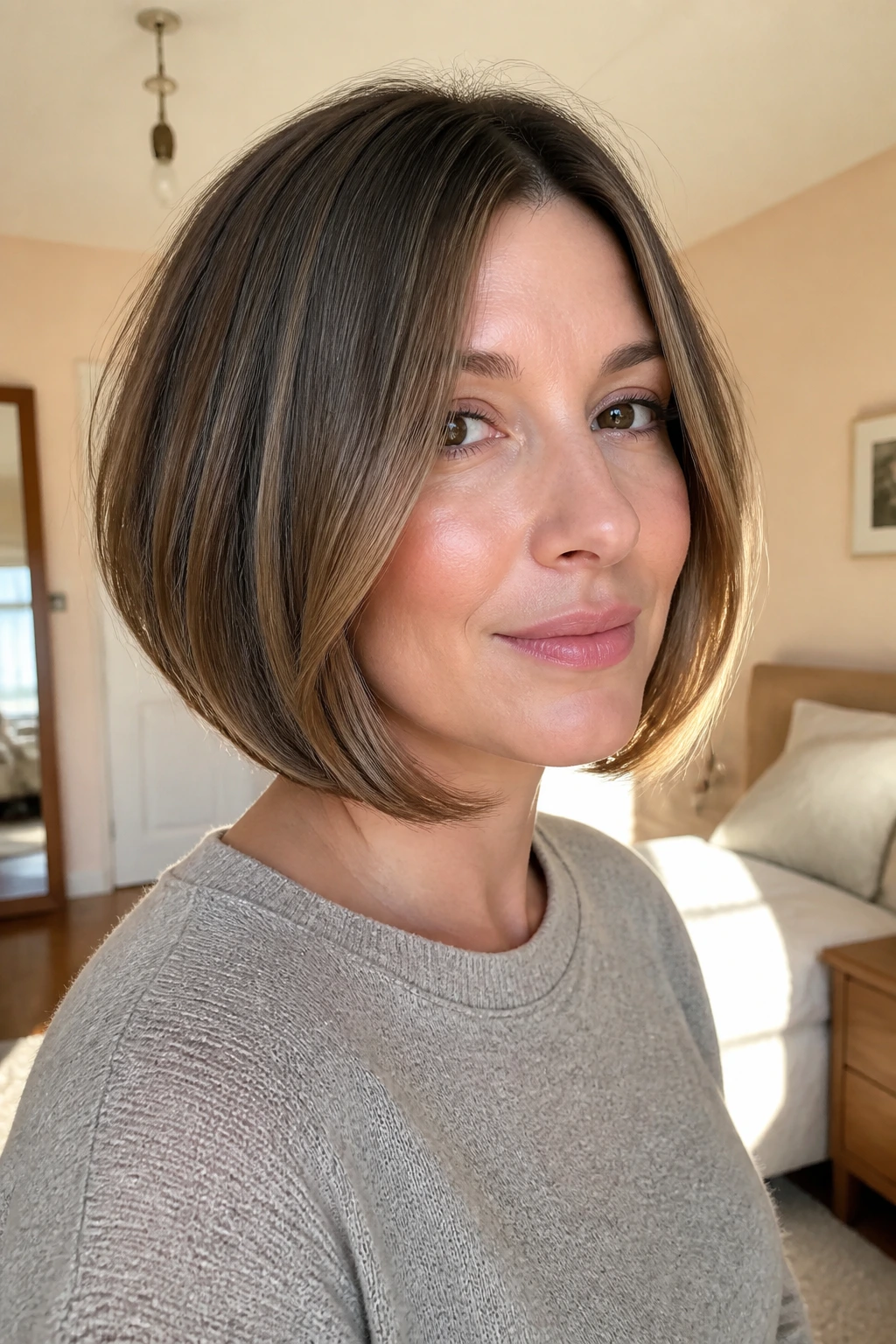
Some people want the angle, but not the hard edge. Rounded ends give you that middle ground. The perimeter still tilts shorter in back and longer in front, but the ends curve under a little, which softens the jaw and keeps the cut from feeling severe.
This version suits round faces because the shape doesn’t echo the cheeks too closely. Instead of a blunt box, you get a gentle sweep that still points downward. Fine hair looks fuller when the ends are curved under, since the line feels connected instead of scattered.
It’s also a forgiving option if your blow-dry skills are average at best. A round brush, a medium heat setting, and a quick cool shot at the ends usually get you there. The bob will look intentional even if your styling is not immaculate. I always trust a cut that can survive a slightly rushed morning.
18. Jaw-Skimming A-Line Bob With a Clean Outline
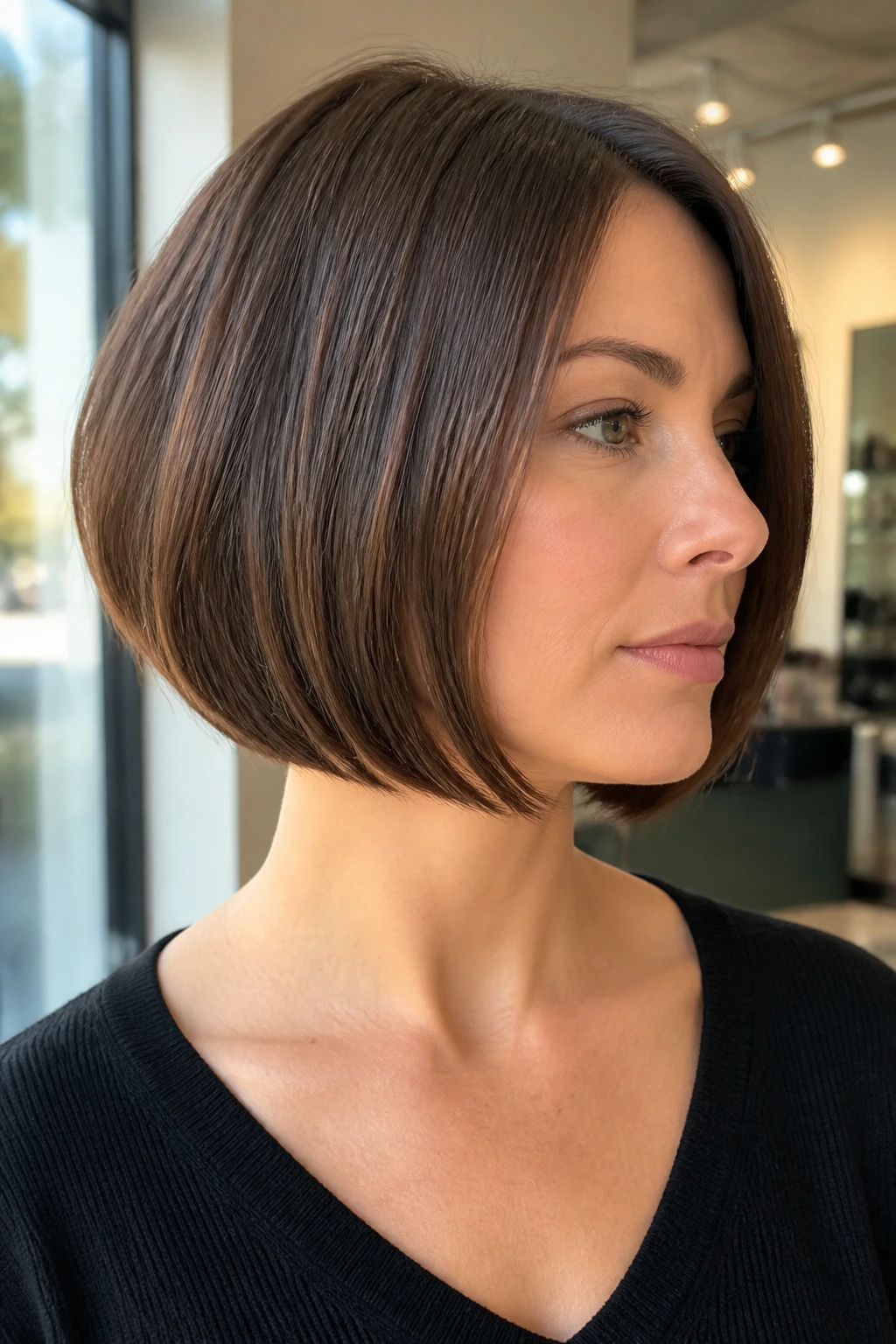
A jaw-skimming bob sounds simple, but on a round face, the exact placement is everything. The front should hover around the jaw rather than stop right on it, which keeps the face from looking wider. The back stays neat and slightly shorter, so the shape keeps its angle.
Fine hair benefits from the crisp outline. A clean line makes the hair read thicker at the edge, and that edge is what people notice first. If the haircut is too soft, the eye stops seeing the boundary and the density disappears with it.
This cut likes a side part or a slight off-center part better than a dead-center split if your face is very round. The diagonal creates tension in the shape, which is exactly what you want. A subtle bend under at the ends helps too. Straight down can look blunt in the wrong way; a little curve is kinder.
19. Deep Side-Part A-Line Bob With Crown Volume
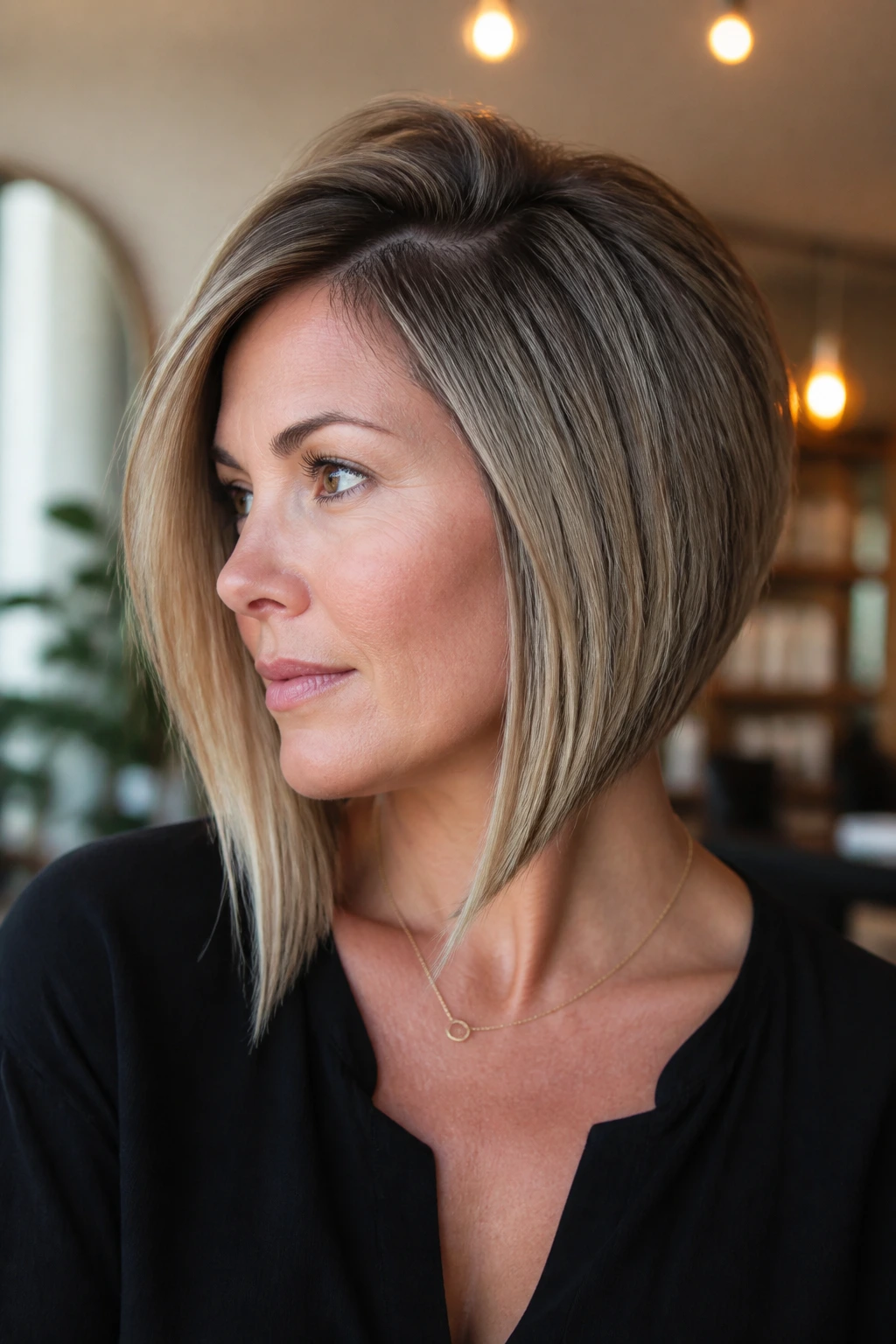
If your crown goes flat the second you step outside, this one deserves a hard look. The deep side part gives instant lift at the roots, and the A-line shape carries that volume downward into the front pieces. It’s one of the quickest ways to make fine hair look less sparse without adding a lot of product.
Round faces gain from the off-balance shape. The heavier side pulls the eye upward and across, while the longer front section opens the jawline. The trick is not to make the top too fluffy. You want lift, not a pouf.
A root spray applied to damp hair, followed by a quick blast of heat at the crown, makes this cut hold much better. Clip the lifted side for a minute while it cools if your hair is stubborn. It’s an old trick. Still works.
20. Tapered A-Line Bob With a Quiet Underlayer
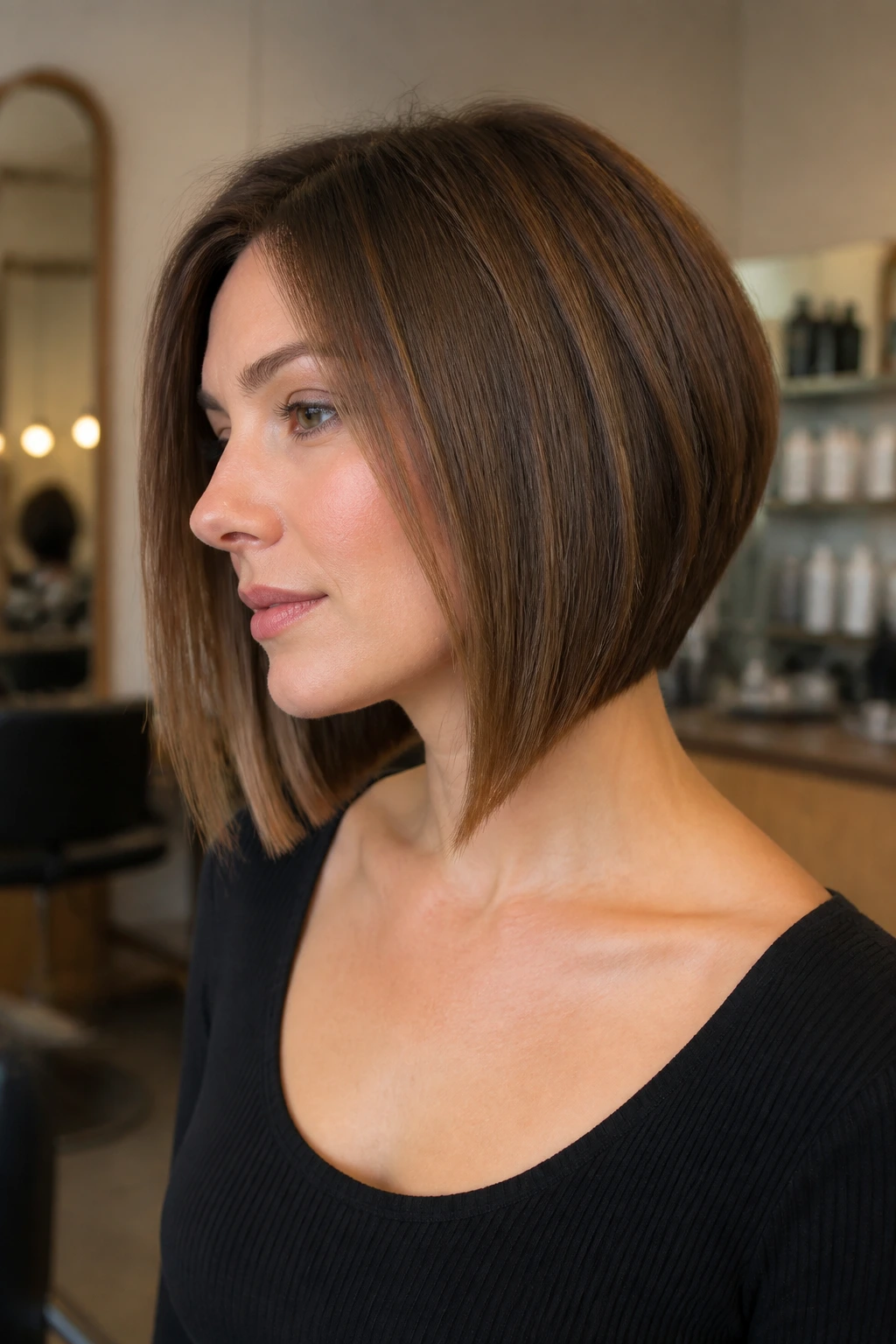
A tapered underlayer can be useful when fine hair has enough density to support it but needs help shedding bulk near the nape. The surface keeps its A-line outline, while the hidden underlayer removes weight so the top sits better. That creates movement without sacrificing the visible edge.
This cut is especially nice if your hair collects at the neck or flips out in strange places. The taper helps the back sit flatter, and the longer front lengths still frame the face. Round faces benefit because the cut remains directional, not round and puffy.
Do not ask for so much internal removal that the bottom loses its shape. That’s the line to watch. The underlayer should support the silhouette, not become the silhouette. A good cut looks full even when you lift the top section with your fingers.
21. Asymmetrical A-Line Bob That Breaks the Symmetry
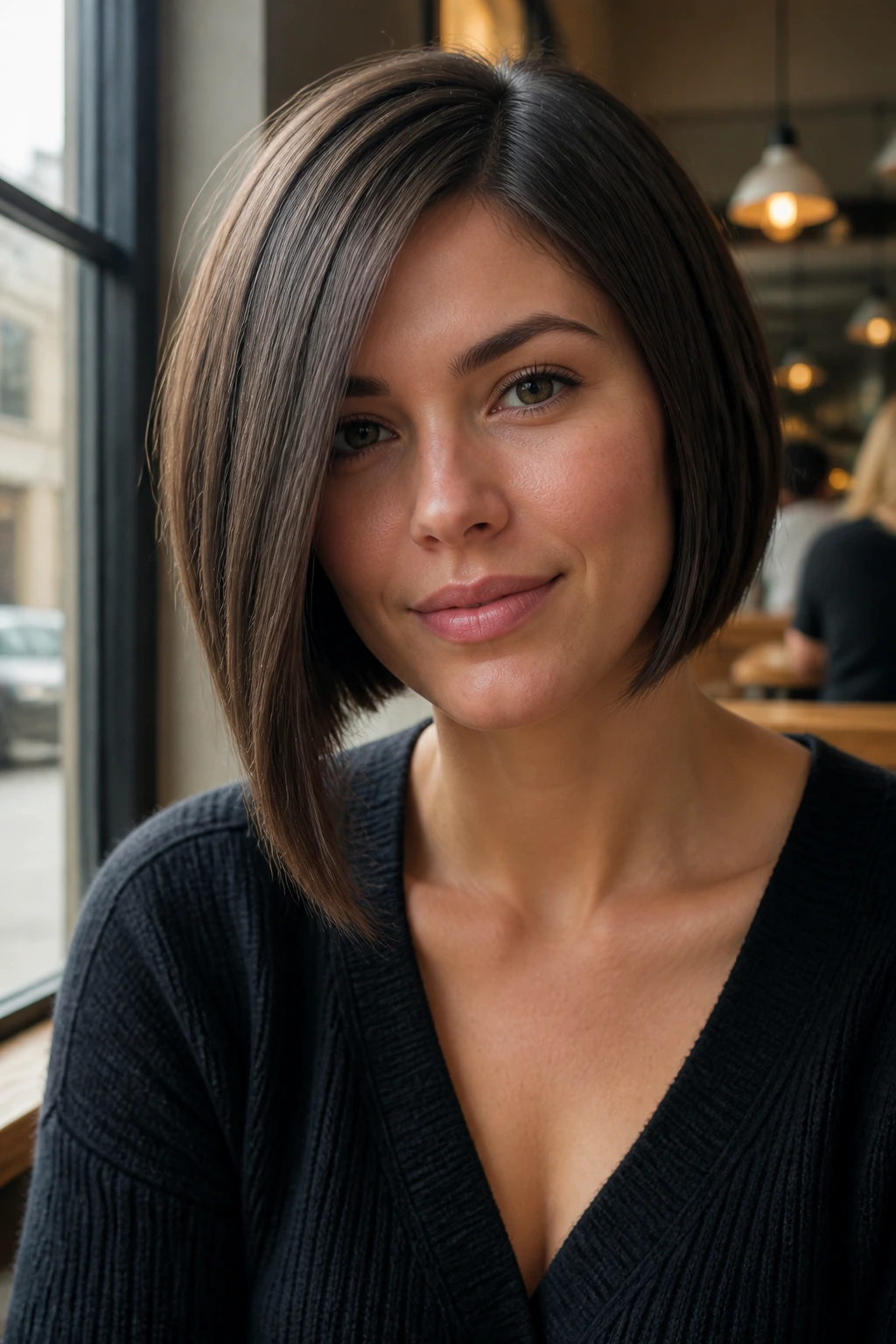
A small asymmetry changes the whole mood of a bob. One side is slightly longer than the other — not by inches, just enough to create a visible difference. On a round face, that broken line can be flattering because it interrupts the broad, even shape of the cheeks.
Fine hair handles asymmetry well because the shape doesn’t depend on mass. It depends on line. That means even a subtle shift from one side to the other can read clearly. If you want edge without going too short or too dramatic, this is a smart place to land.
Keep the difference modest. A half inch to an inch is usually enough unless you want the cut to look visibly directional. Too much asymmetry and the result starts feeling costume-y. The best version is the one that makes people look twice, not the one that shouts.
22. Tousled A-Line Bob With Light Layers

This is the everyday favorite for a reason. It keeps the angle of the A-line, but softens the finish with a few light layers that encourage movement. The goal is not a shag and not a blunt helmet. It’s a bob that looks better with a little shake in it.
Round faces benefit when the layers begin low enough that they do not widen the cheeks. Keep the front pieces long, keep the crown light, and let the movement happen below the cheekbone. Fine hair likes this because the cut stays lively without becoming see-through.
It’s a good choice for second-day hair. A bit of dry shampoo at the roots, one or two bends from a flat iron, and you’re done. No need to polish every strand. This version earns its place by being easy.
23. Polished Blowout A-Line Bob
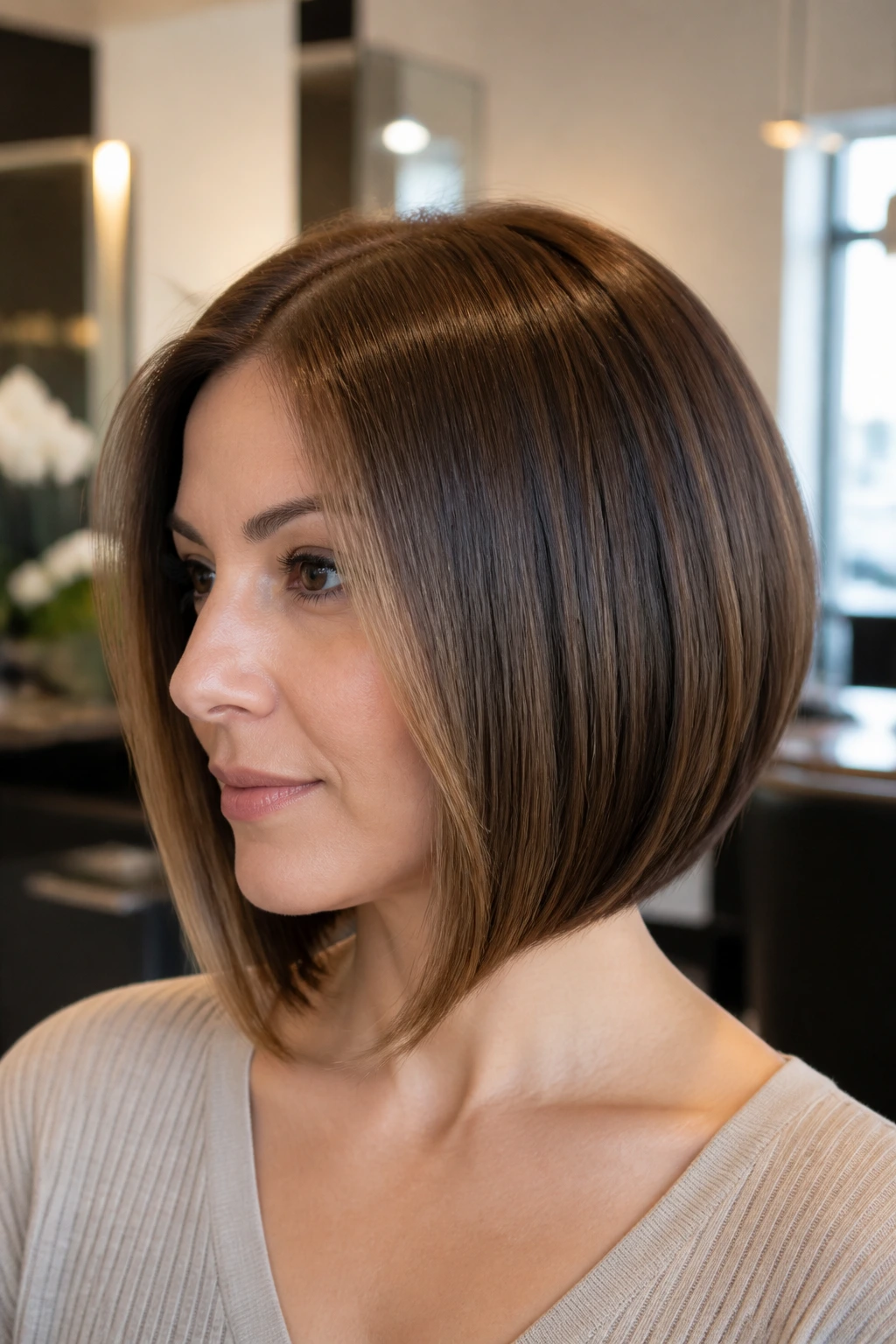
Some cuts live for a good blowout, and this is one of them. The polished version of an A-line bob has smooth roots, curved ends, and a clear, glossy line from back to front. On fine hair, a proper blowout can create more apparent density than any amount of texturizing spray.
Round faces look nice in this shape because the angle stays clean while the volume sits higher at the crown. The front pieces can be turned slightly under or brushed just off the face. Either way, the line should remain visible. If the ends puff outward, the whole thing loses its shape.
A round brush, a concentrator nozzle, and a cool shot matter here. So does patience. If you rush the drying, you end up with soft roots and awkward flips at the ends. A precise blowout is what makes this version feel expensive in the best sense.
24. Ear-Tucked A-Line Bob With Long Front Pieces
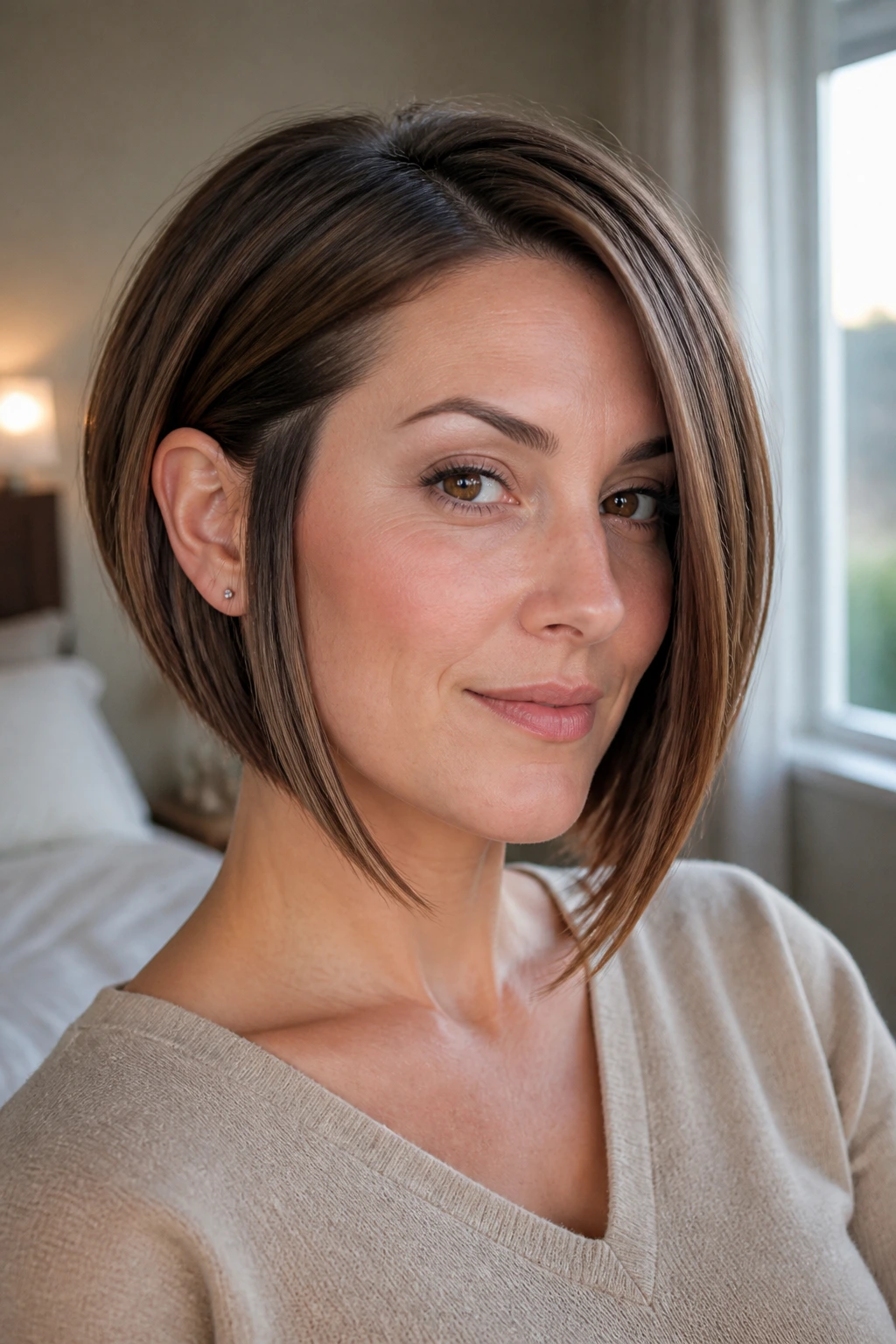
This cut is made for people who like to tuck one side behind the ear and let the front pieces do the work. The longer front panel skims the jaw or collarbone, while the shorter back keeps the nape neat. The ear tuck opens the face and makes earrings, glasses, and jawline angles stand out more clearly.
Round faces benefit because the untucked side gives that downward movement along the cheek. Fine hair benefits because the cut does not need a lot of thickness to look intentional. The shape does most of the talking.
A light styling cream or a quick mist of flexible-hold spray can keep the tucked side from slipping out without freezing it in place. If your hair is very fine, set the tuck with a small pin underneath for an hour and let the curve form. Small tricks matter more than big products here.
25. Low-Maintenance A-Line Bob With Minimal Layering
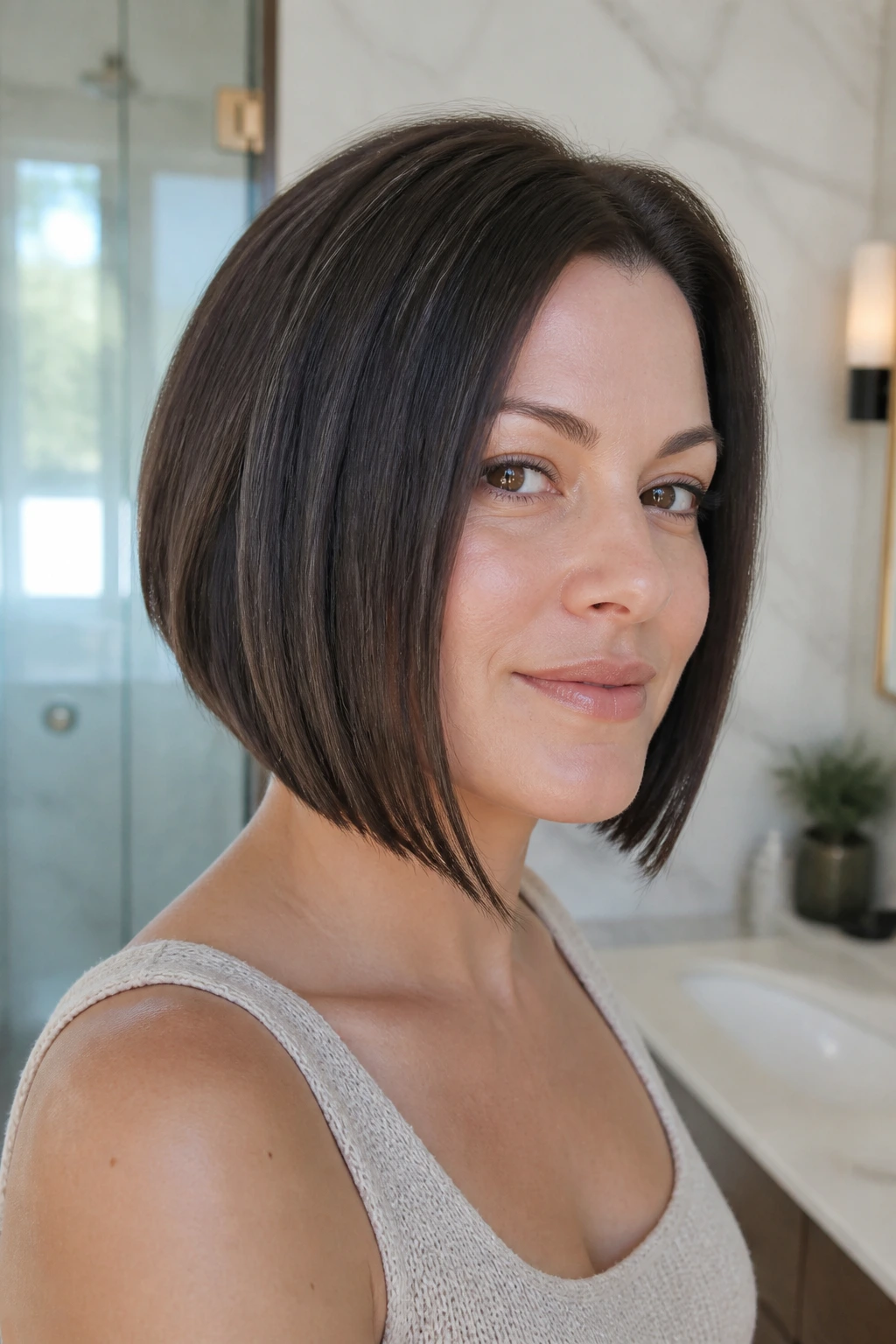
Not every good haircut needs a lot of tricks. This version keeps the A-line subtle, the layers minimal, and the shape easy to live with. The front is long enough to flatter a round face, the back is short enough to keep the outline tidy, and the ends stay blunt enough to make fine hair look denser.
This is the one for someone who wants the shape without the fuss. It air-dries decently, it tucks behind the ear without collapsing, and it does not demand a perfect styling session every morning. If you want a bob that still looks like a bob after a long day, this one earns its keep.
I like this version for people who are nervous about going too short or too layered. It’s calm, straightforward, and easy to trim back into shape. Sometimes the least dramatic cut is the one you wear the longest.
Why the A-Line Shape Helps Round Faces and Fine Hair

The geometry is doing real work here. A round face usually looks best with some length added through the sides, because straight horizontal lines can make the face feel wider. An A-line bob solves that by tilting the front downward. Even a small change — front pieces that sit an inch or two below the chin — changes the whole read of the face.
Fine hair needs a different kind of help. It doesn’t want a mountain of layers stacked through the ends. It wants a perimeter that looks full, clean, and deliberate. That’s why the best A-line bob often keeps the bottom edge blunt or only lightly textured. The weight line stays visible, and the hair looks thicker than it is.
The sweet spot is balance. Too much graduation in the back and the hair can expose the scalp. Too much layering in the front and the face widens. Keep the front longer, the bottom edge cleaner, and the top only as light as it needs to be. That’s the formula that keeps showing up because it works.
What to Ask for at the Salon
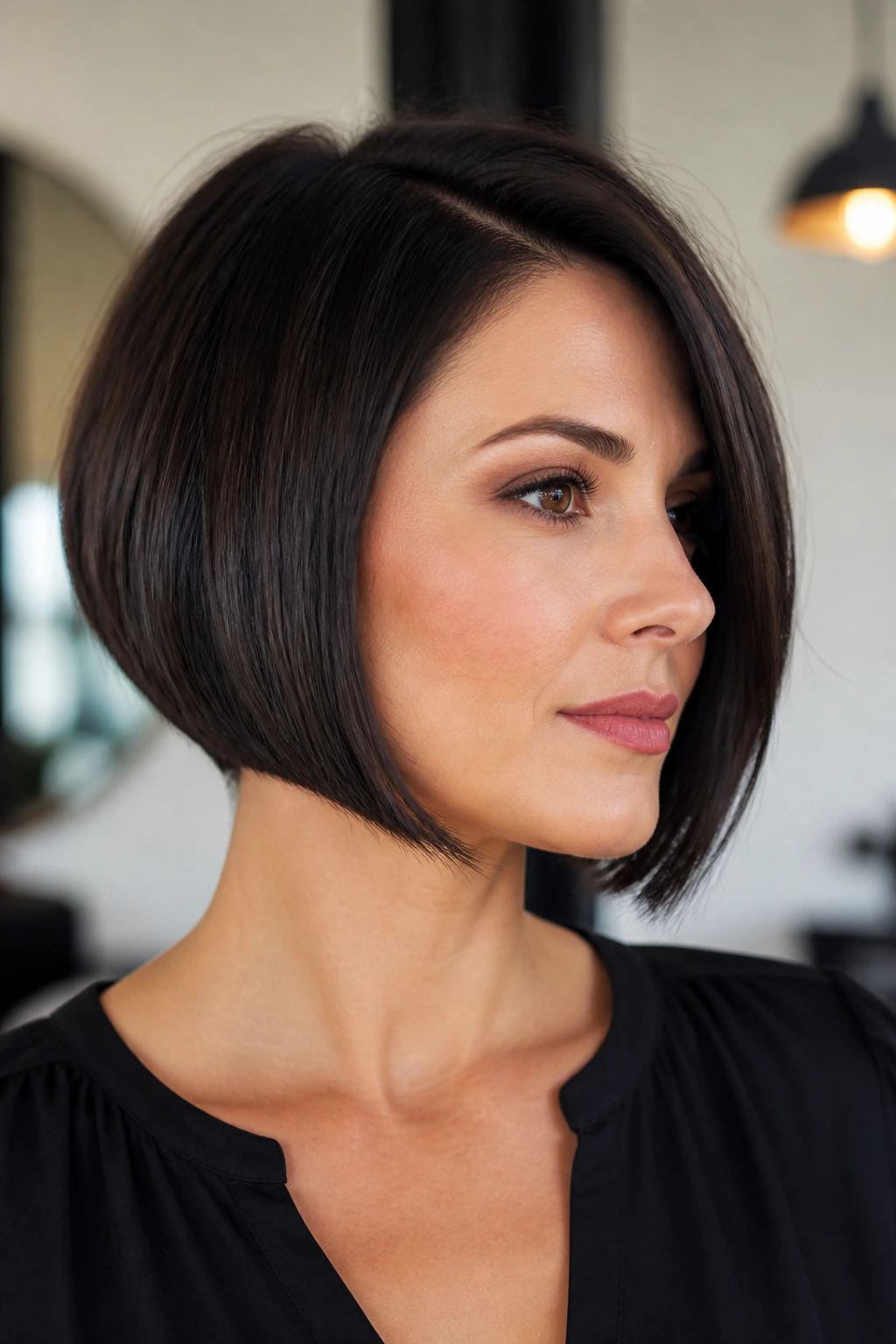
Bring photos, but also bring plain language. Say you want an A-line bob that keeps the front long enough to slim a round face and the ends full enough to help fine hair look denser. That single sentence tells the stylist more than three vague inspiration pictures.
Ask where the front will fall when the hair is dry. Wet hair can lie to you. On fine hair, especially, the cut often shrinks a little as it dries and settles. If you want the front to skim the chin, ask for it to be cut with that shrinkage in mind.
A few useful phrases
- “Keep the perimeter blunt.”
- “I want a soft A-line, not a heavy wedge.”
- “Please don’t over-thin the ends.”
- “Leave enough length in front to pass the chin.”
- “I need the crown to hold a little lift.”
If your hair is very fine, mention whether it slips flat at the roots, flips outward at the nape, or bends in one stubborn direction. Those details matter more than hair type labels. A good cut is built around what your hair actually does.
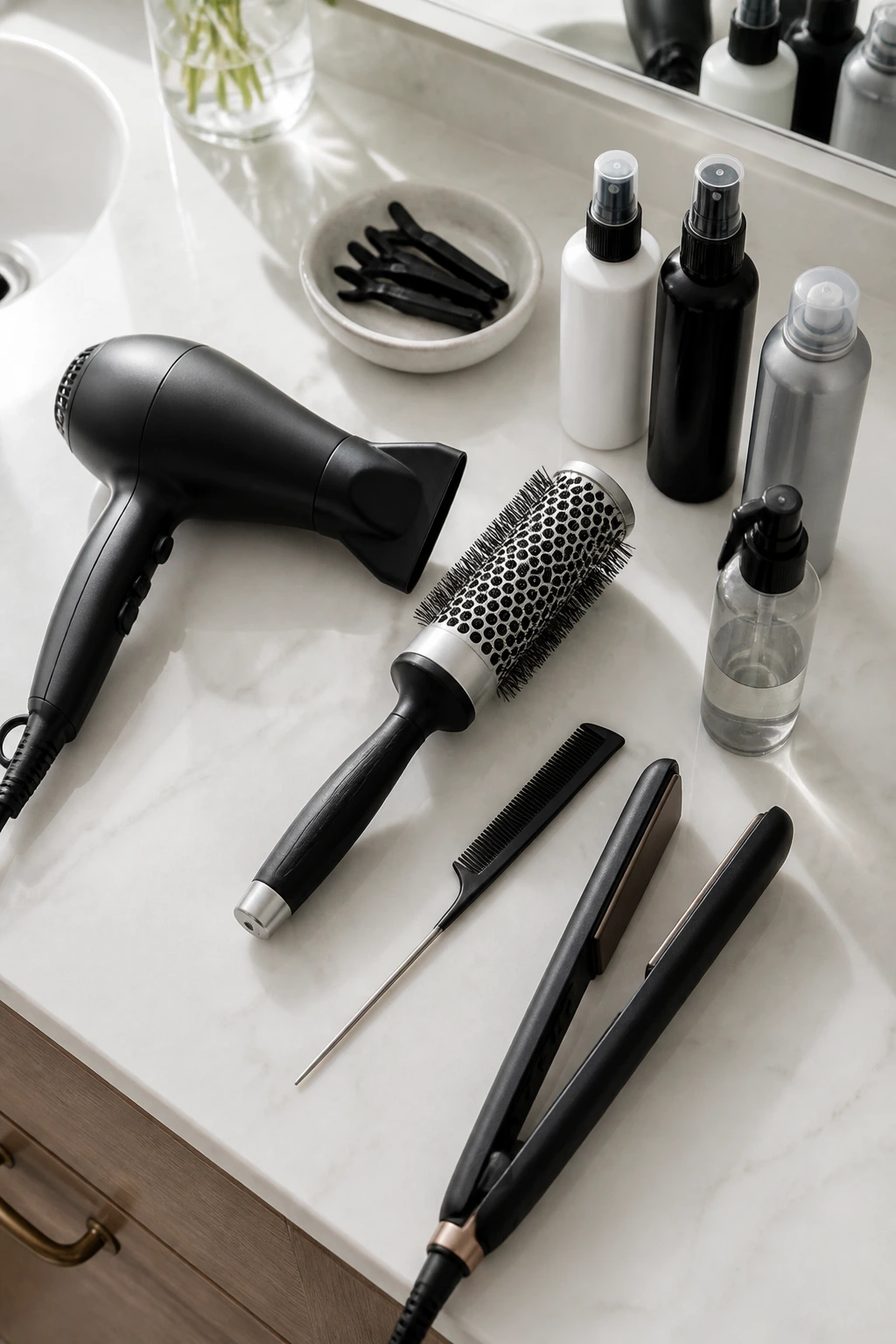
Essential Tools for These Styles
-
Blow dryer with a concentrator nozzle: Helps direct airflow at the roots and keeps the A-line shape smooth instead of fuzzy.
-
Medium round brush: Useful for turning the ends under and giving the crown a controlled lift.
-
Tail comb: Makes clean parts and helps section the hair without guessing.
-
Sectioning clips: Handy when you’re blow-drying in layers, especially if your hair slips out of place fast.
-
Root-lift spray or mousse: Gives fine hair support at the base without the heaviness of cream.
-
Lightweight heat protectant: Non-negotiable if you use a flat iron or round brush every few days.
-
Flat iron with narrow plates: Best for subtle bends, polished ends, or smoothing the front pieces.
-
Texturizing spray: Good for the tousled, shag-lite, and air-dried versions when you want separation without crunch.
-
Dry shampoo: Extends the life of the shape at the roots and helps a fine bob keep some lift on day two.
-
Silk or satin pillowcase: Cuts down on friction, which matters more than people think when you’re preserving a clean bob line overnight.
How to Wear These Bobs Without Fighting the Cut
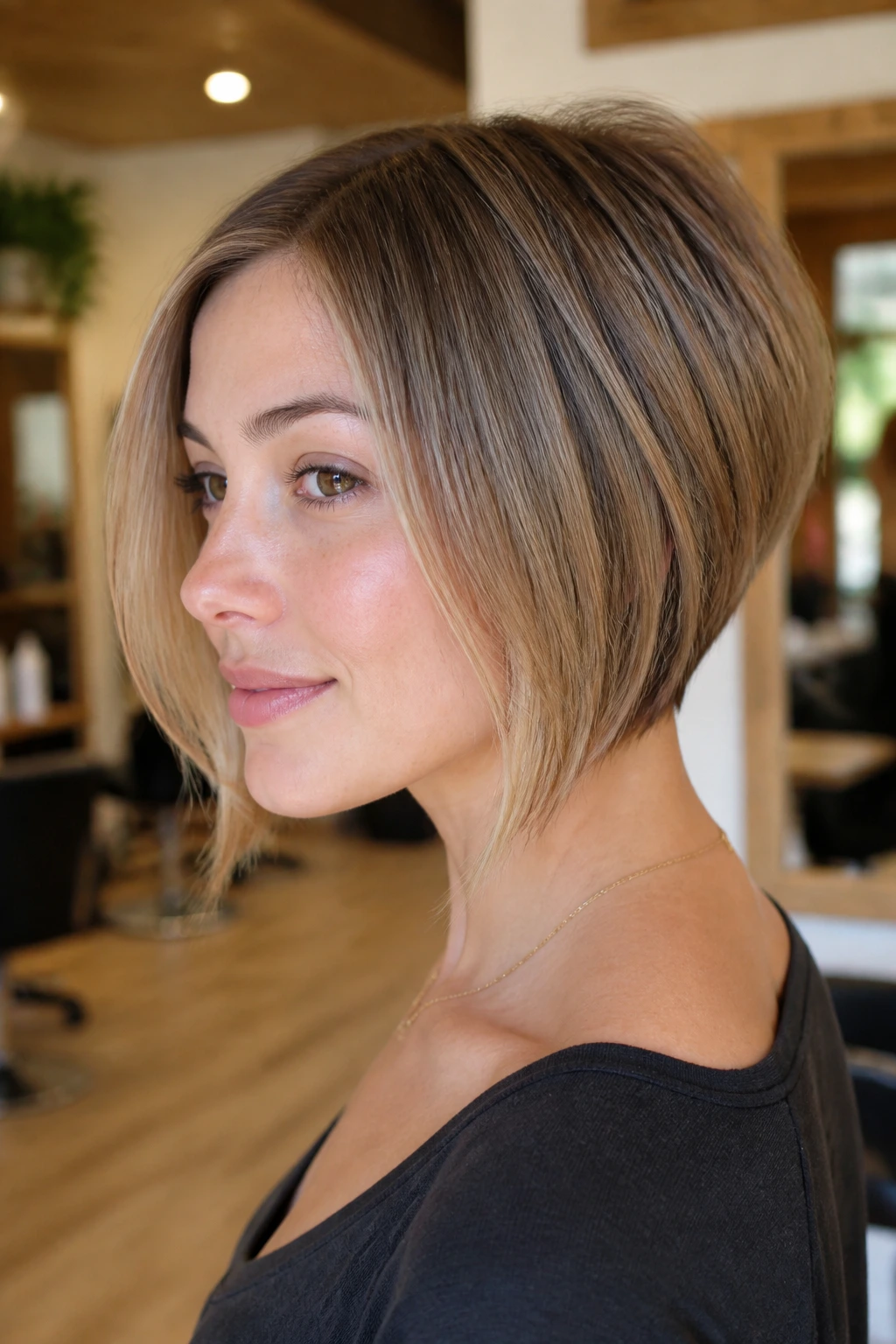
Presentation: Keep the angle visible. That means the front should either skim the face, bend slightly under, or fall just past the jaw. If the hair sticks out like a shelf, the shape loses its polish fast.
Styling: Fine hair usually does best with a lightweight root product, a quick blow-dry at the crown, and a tiny bit of smoothing at the ends. You do not need to coat every strand. Two pumps of mousse or a nickel-size amount of cream is usually enough, and more can flatten the whole look.
Pairing: This cut looks especially good with earrings that show the jawline, glasses with narrower frames, and necklines that open the neck a little — V-necks, scoops, boat necks. That’s not a rule. Just a useful way to let the angle breathe.
Longevity: Sleek versions can hold for two or three days with dry shampoo and a quick re-bend on the front pieces. Tousled versions tend to look best on day two. If the nape starts flipping oddly, a flat iron pass on just the bottom half can fix it in under two minutes.
Styling Tweaks That Make Fine Hair Look Fuller

Root Lift: Fine hair usually needs support where it starts, not where it ends. A small amount of mousse at the roots, then a blow-dry with the head slightly angled and the part clipped while it cools, gives a cleaner lift than piling on dry shampoo later.
Texture Control: The ends should look touched, not shredded. If you want movement, bend the front pieces with a flat iron and leave the bottom perimeter intact. That keeps the hair looking denser while still showing shape.
Face-Framing Detail: Front pieces that land below the cheekbone do more for a round face than short wispy layers ever will. If you want softness, cut the softness into the front length, not the middle of the haircut.
Make-It-Yours: If you wear your hair straight, go for a blunt or glassy version. If your hair has wave, lean into a tousled or air-dried version. If your crown is flat, choose a stacked or deep side-part style. Do not fight the part your hair already prefers unless you have time for daily styling.
Common Mistakes to Avoid
-
Cutting the front too short: If the front ends sit at the widest part of the cheek, the face can look broader instead of longer. Keep the front at or below the chin if roundness is your main concern.
-
Thinning fine hair too much: Overusing razors or thinning shears can leave the ends wispy and see-through. Ask for controlled texture, not aggressive debulking.
-
Stacking the back too hard: A sharp wedge can expose the scalp and make fine hair look sparse. A soft stack usually gives enough lift without stealing density.
-
Using heavy creams everywhere: Rich styling products can drag the roots flat and make the perimeter collapse. Fine hair usually needs lighter mousse, spray, or a pea-size cream at most.
-
Ignoring the natural part: Forcing a deep side part on hair that wants a center split can make the style fall apart by lunch. Work with your growth pattern, then tweak it a little instead of battling it.
-
Skipping regular trims: The A-line line gets soft and floppy when the ends grow out too far. Every 6 to 8 weeks is the sweet spot for keeping the angle visible.
Variations and Adaptations to Try
Glossy Minimalist: Keep the line blunt, the layers nearly invisible, and the finish sleek. This is the cleanest version for straight fine hair, especially if you like a sharp outline and minimal styling time.
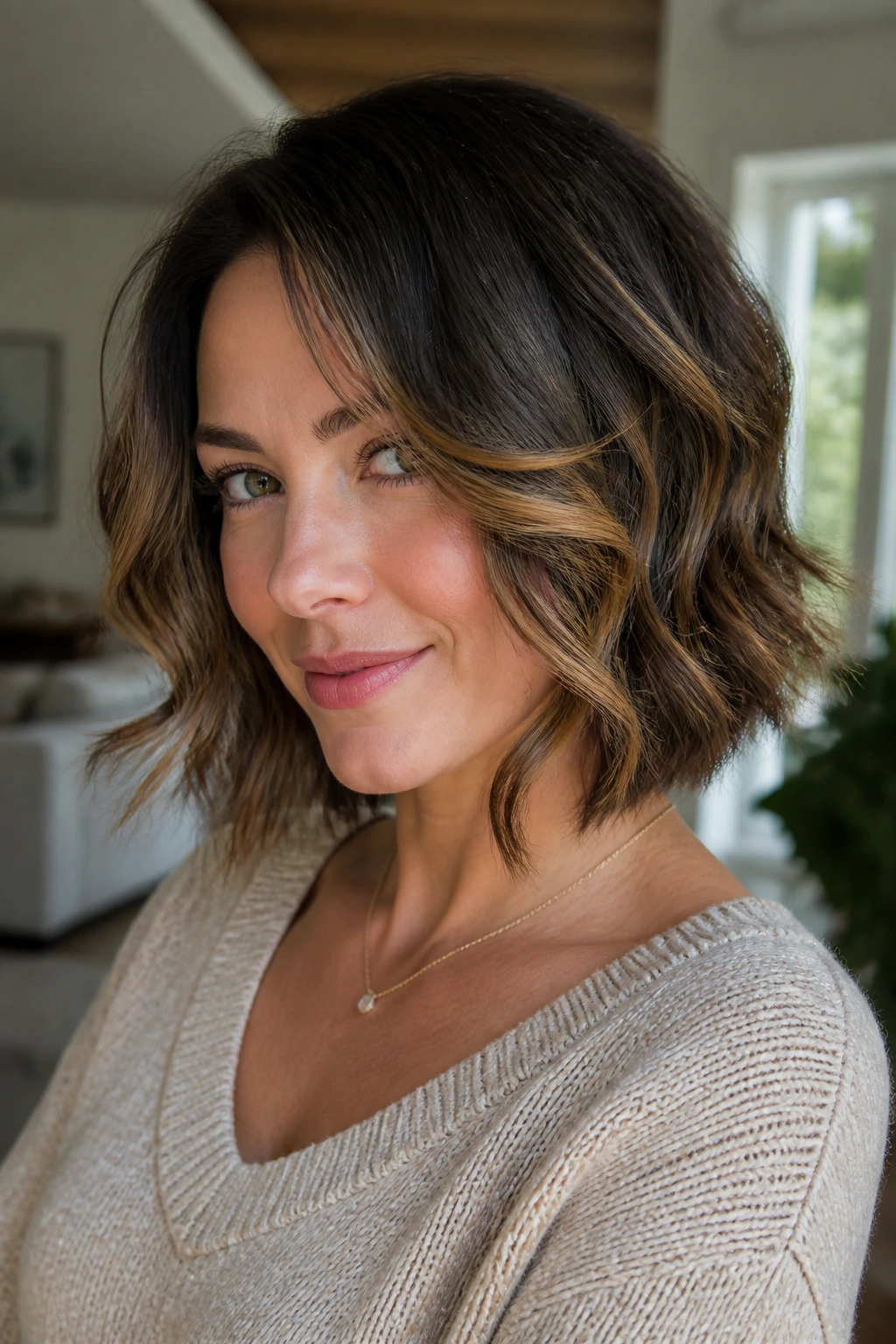
Soft Wave Version: Add loose bends only from the cheekbone down. The cut stays angled, but the finish feels looser and less formal. It’s a good option if you want movement without a shag.
Bang Swap: Change the front without changing the cut. Curtain bangs, side-swept bangs, or a wispy fringe all alter the face-framing effect while keeping the A-line base intact.
Long Grow-Out Lob: Let the front reach the collarbone and keep the back just shorter. This is useful if you’re growing out a shorter bob or don’t want a cut that needs frequent trips to the salon.
Curly-First Shape: Cut the bob around the curl pattern instead of forcing a straight-line shape. The angle will still show, but the finish stays better balanced once the curls dry.
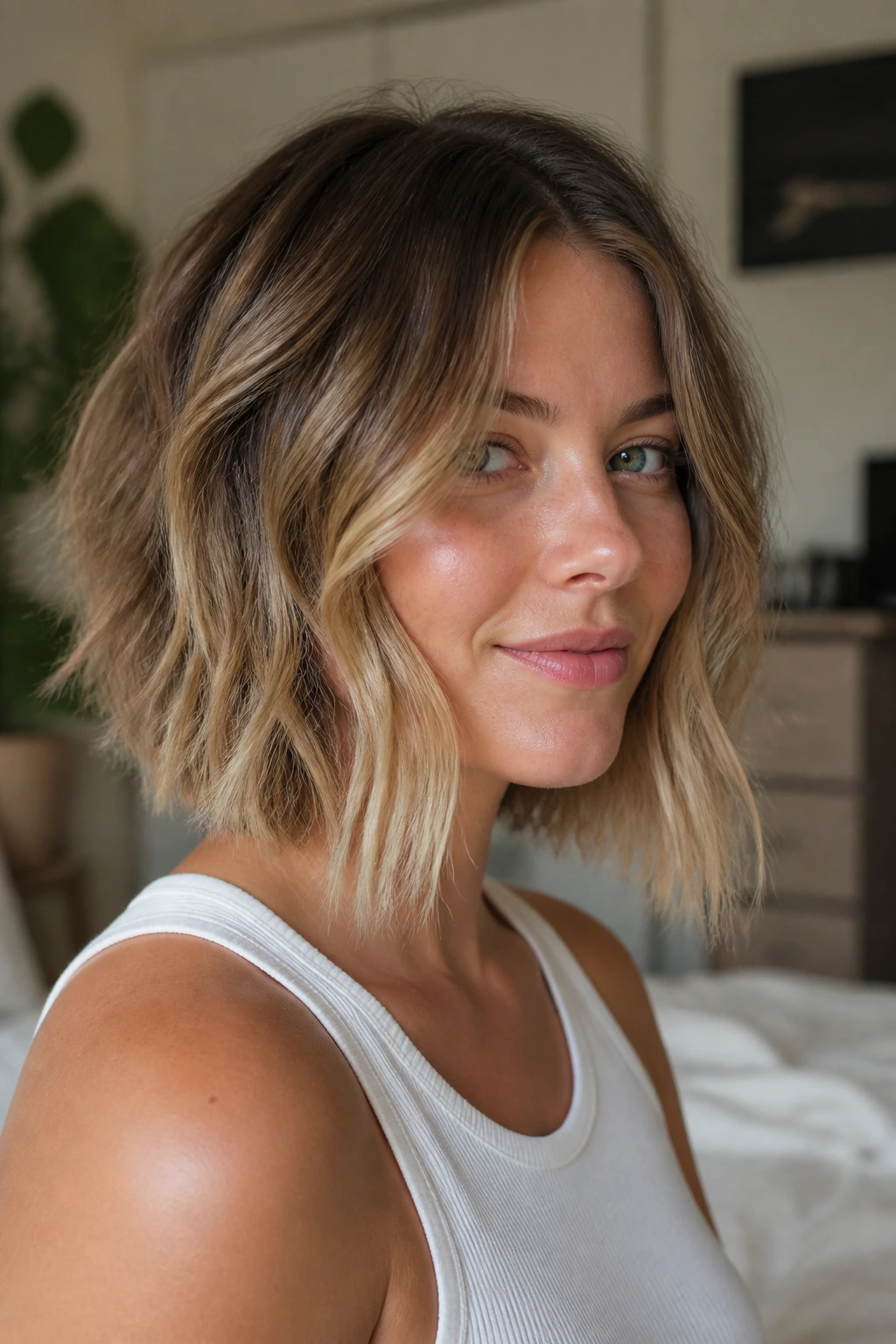
Color-Boosted Outline: Add subtle brightness around the front panels or a deeper shadow underneath. The contrast makes the angle easier to see and gives fine hair a denser look.
Maintenance, Sleep, and Trim Timing

A good A-line bob needs regular maintenance, but not the kind that eats your life. For most fine-hair versions, a trim every 6 to 8 weeks keeps the angle crisp and stops the front from drifting into awkward, in-between length. If your hair grows fast or the back starts flipping strangely, lean closer to 6 weeks.
Overnight care matters more than people expect. A silk or satin pillowcase reduces friction, which helps keep the ends smooth instead of frayed. If the bob is sleek, tuck the hair loosely behind the ears or clip the crown lightly before bed so it doesn’t wake up with a hard bend.
Wash frequency depends on how fast your roots get oily, but fine hair often needs a lighter rhythm than thick hair. If you wash often, use a gentle shampoo and keep conditioner on the mid-lengths and ends only. The roots do not need much help. Too much conditioner there flattens the crown fast.
For refreshing, dry shampoo at the roots and a quick bend through the front pieces usually buy you another day or two. If the ends lose shape, focus on the bottom half with a flat iron rather than redoing the whole head. That little trick saves time and keeps the cut looking intentional instead of overworked.
Questions People Ask About A-Line Bobs for Round Faces and Fine Hair
Is an A-line bob actually good for a round face?
Yes, when the front is long enough to create vertical lines and the sides do not end right at the cheekbone. The angle helps stretch the face visually instead of widening it. A center part can work, but a soft side part often gives more lift.
Will fine hair look thinner in an A-line bob?
Not if the perimeter stays blunt and the layering stays controlled. Fine hair usually looks thinner when it’s shredded too much or over-thinned with a razor. The right A-line bob makes the ends look denser, not wispy.
Should I get a stacked back or a blunt bob?
If your crown is flat, a soft stack can help. If your hair is already thin and fragile, a blunt perimeter with only minimal graduation is usually safer. The choice depends on whether you need lift or density more urgently.
Can I wear curtain bangs with this cut?
Yes, and they’re one of the better options for a round face. Curtain bangs create movement across the forehead without chopping the face horizontally. Keep them light and blended so they don’t swallow the rest of the cut.
What if my hair flips out at the nape?
That usually means the back is either too short for your growth pattern or the cut needs a better bevel at the ends. A stylist can soften the nape line or extend the length slightly so the hair curves under instead of kicking out.
Does this cut work on wavy or curly hair?
It does, but it needs to be cut with the texture in mind. Wavy and curly hair shrink when dry, so the front usually has to be left longer than a straight-hair client would need. A dry cut can help the shape land where it should.
How often will I need to style it?
Sleek versions usually want a little work after each wash. Tousled or air-dried versions can be revived with dry shampoo and a few quick bends on day two. The cut should not need a full reset every morning if it’s shaped well.
What should I avoid if my hair is very fine?
Avoid heavy layering through the ends, aggressive thinning, and too much product near the roots. Those three things can make even a good bob look limp. Ask for structure, not decoration.
A Shape That Keeps Its Job
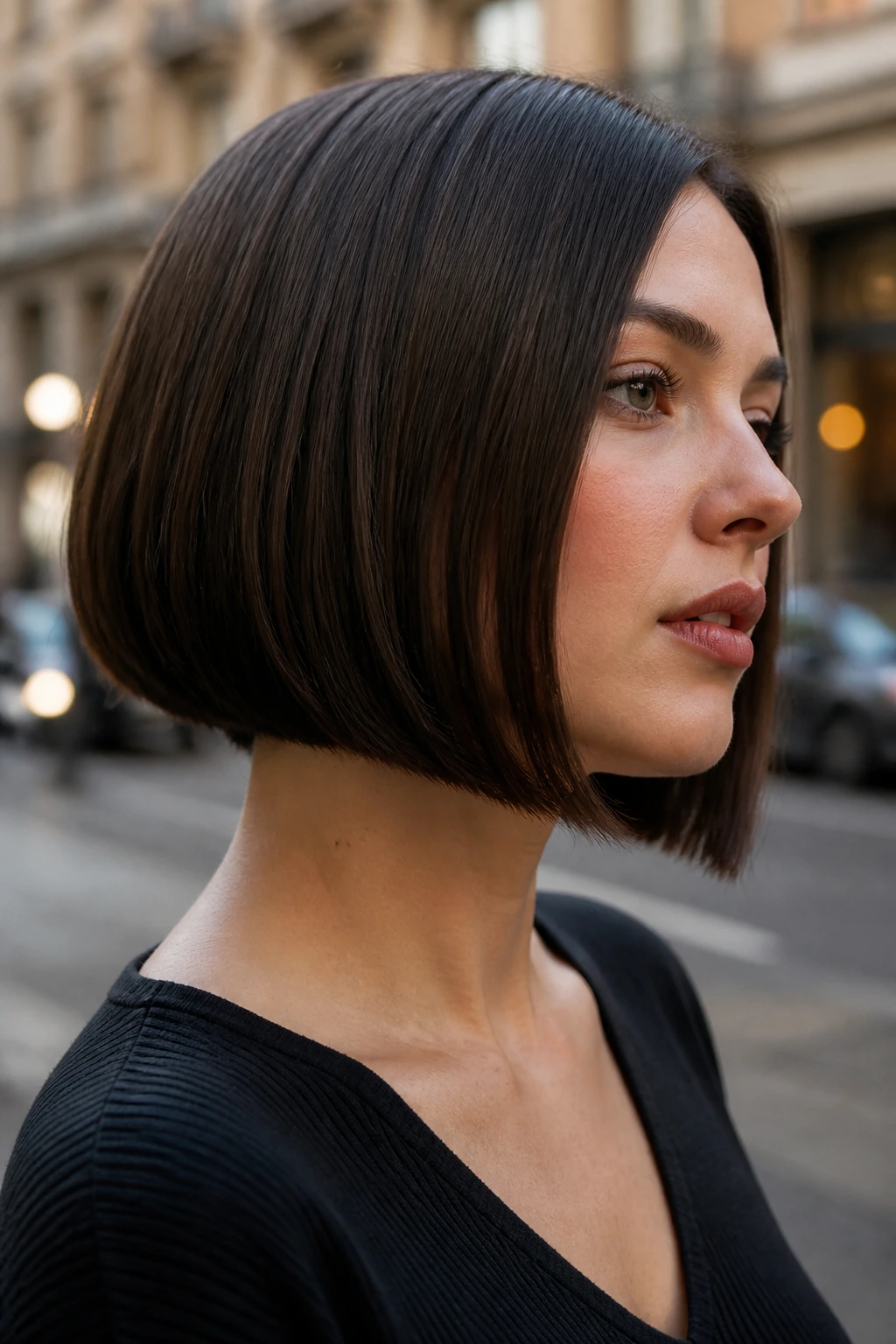
The nicest thing about an A-line bob is that it has a job to do. It can slim a round face, give fine hair a thicker edge, and still leave room for softness, bangs, waves, or a glassy finish. That’s a rare combination. A lot of haircuts promise movement and end up giving you fluff. This one can stay precise if it’s cut with some discipline.
If you’re heading to the salon, keep the request simple: longer in front, cleaner at the perimeter, lighter at the crown only if you need lift. That alone will steer you away from the most common mistakes. Bring one photo that shows the angle you want and another that shows the texture you like. That usually helps more than talking in vague style words.
Pick the version that matches your daily life, not the one that looks best under perfect lighting. That’s the bob you’ll keep reaching for.