



A long bob can be a sharp move for wavy hair and square faces, but only when the cut understands geometry. End it at the jaw and you get a hard horizontal line right where the face is already strongest. Drop it to the collarbone, add a little bend, and the whole thing softens. The outline starts to move.
That matters more than most haircut charts admit. Square faces usually have a broad forehead, a strong jaw, and similar width through the cheek area. Wavy hair already brings texture to the party, which means the cut does not need to do all the work; it just needs to stop the wave from collapsing into a boxy shape. A good lob gives the hair room to swing.
I keep coming back to this length because it has range. You can wear it air-dried and loose, bent with a wand, tucked behind one ear, or blown smooth for a cleaner line. The useful part is finding the version that flatters your face shape without killing your wave pattern, and there are more good options here than most people realize.
Why These Long Bobs Work So Well on Square Faces
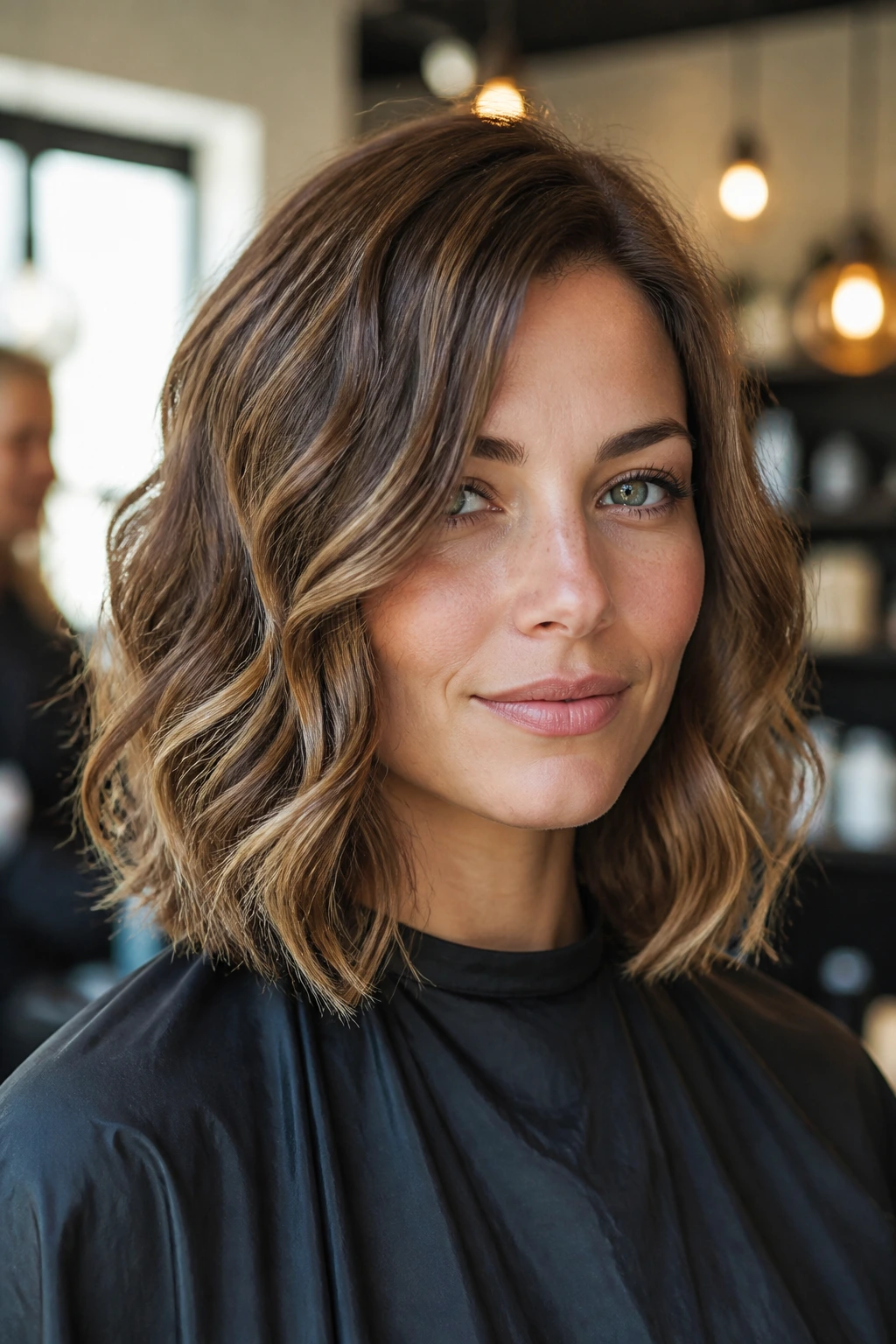
- Collarbone length changes the line of the face: Ending below the jaw pulls the eye downward, which keeps the haircut from echoing the square outline of the face.
- Waves break up hard edges: A soft bend around the cheeks and ends adds movement where a blunt line would feel rigid.
- You get shape without losing swing: The best long bob for wavy hair still has enough length to move, so it never feels like a helmet.
- Bangs become useful, not fussy: Curtain bangs, side fringes, and bottleneck bangs can soften the forehead and guide attention to the eyes.
- The grow-out is kinder: A lob can stretch for weeks before it starts looking awkward, which is a real advantage if you hate frequent trims.
1. Collarbone Soft Wave Lob
A collarbone-grazing lob is the cleanest place to start if you want shape without drama. The ends sit just below the widest part of the jaw, so the cut does not box the face in, and the wave pattern gets room to fall in loose curves.
Why it works
Ask for a slightly blunt perimeter with soft point-cut ends and only a touch of internal layering. That keeps the silhouette full enough to feel intentional, but not so heavy that the waves puff out at the sides. If your hair bends naturally, this shape usually air-dries with the least argument.
- Length: Collarbone, or about 1–2 inches below the jaw.
- Texture: Loose S-waves that fall in separate pieces, not one heavy sheet.
- Styling note: A 1-inch wand on just the front pieces is usually enough.
- Best for: Medium-density hair that needs shape but not a lot of removal.
Best move: keep the front pieces a hair longer than the back so the jaw never becomes the visual stopping point.
2. Off-Center Broken Wave Lob
A tiny shift in the part changes the whole haircut. An off-center part makes the face feel less symmetrical, and for a square jaw that can be a relief. It also gives the waves a chance to fall in a more natural, slightly messy pattern.
The broken-wave finish matters here. You want bends that start mid-length and loosen near the ends, not glossy ringlets that pile up at the cheek. I like this version for hair that has a little grit to it already, because the texture does half the styling for you.
Use a lightweight mousse at the roots, then scrunch while the hair is still damp. Let the ends dry with a little separation. If the part feels too severe, move it only an inch and see how fast the face softens.
3. Textured Blunt Lob Below the Jaw
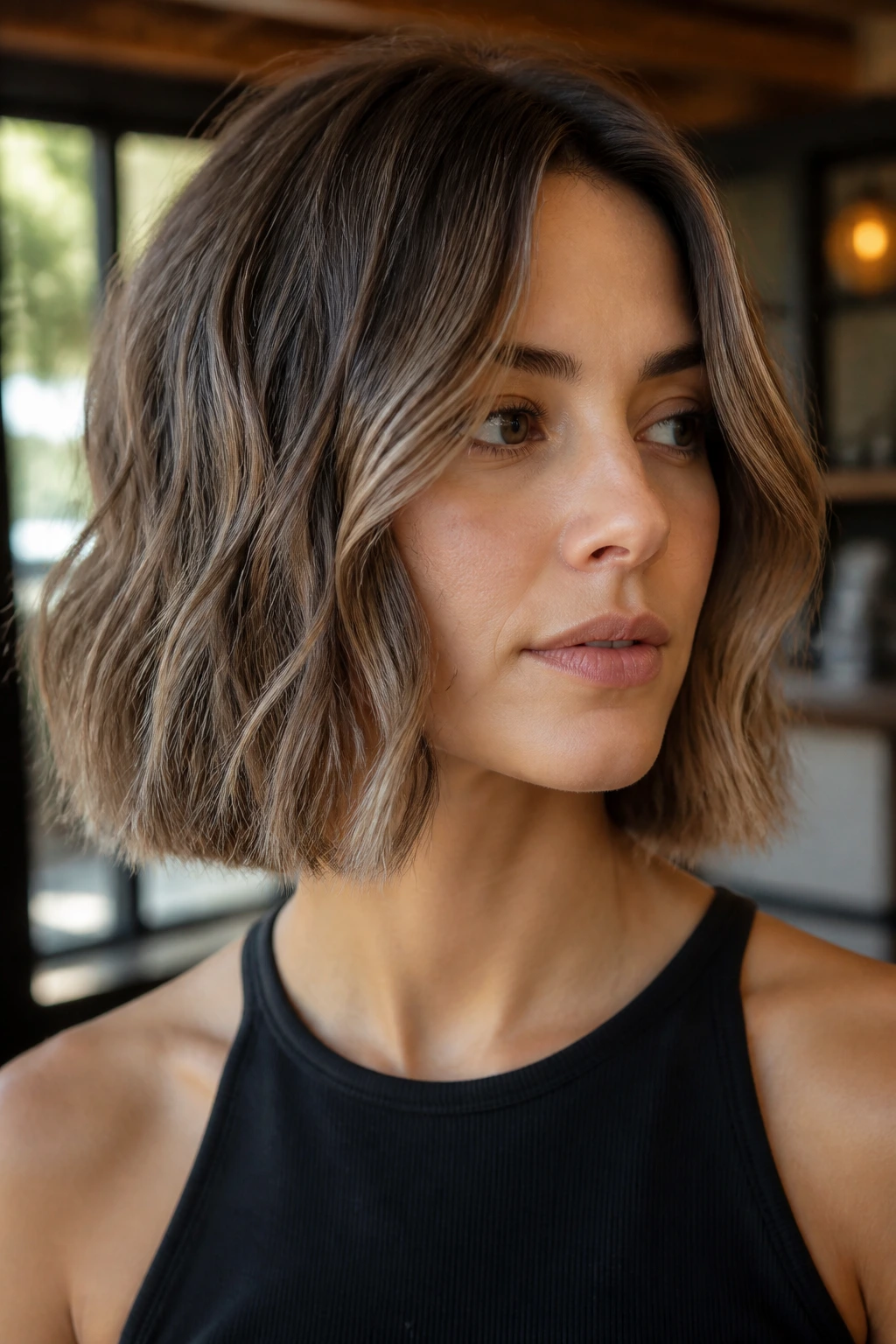
Can a blunt lob work on a square face? Yes, but only if the blunt line sits below the jaw and the ends are softened a little. A chin-length blunt cut on a square face can look too boxy. A collarbone blunt cut with waves? Different story.
What to ask for
Request a solid perimeter with very light texturizing at the tips. Not thinning. That is the trap. You want the line to stay strong enough to look polished, but the waves should break it up so it does not read as a shelf.
How to wear it
This shape looks best when the waves are loose and brushed apart with fingers rather than combed into uniform curls. If your hair is thick, the blunt outline keeps it from exploding outward. If your hair is finer, the solid edge gives the illusion of more density.
4. Cheekbone-Lift Layered Lob
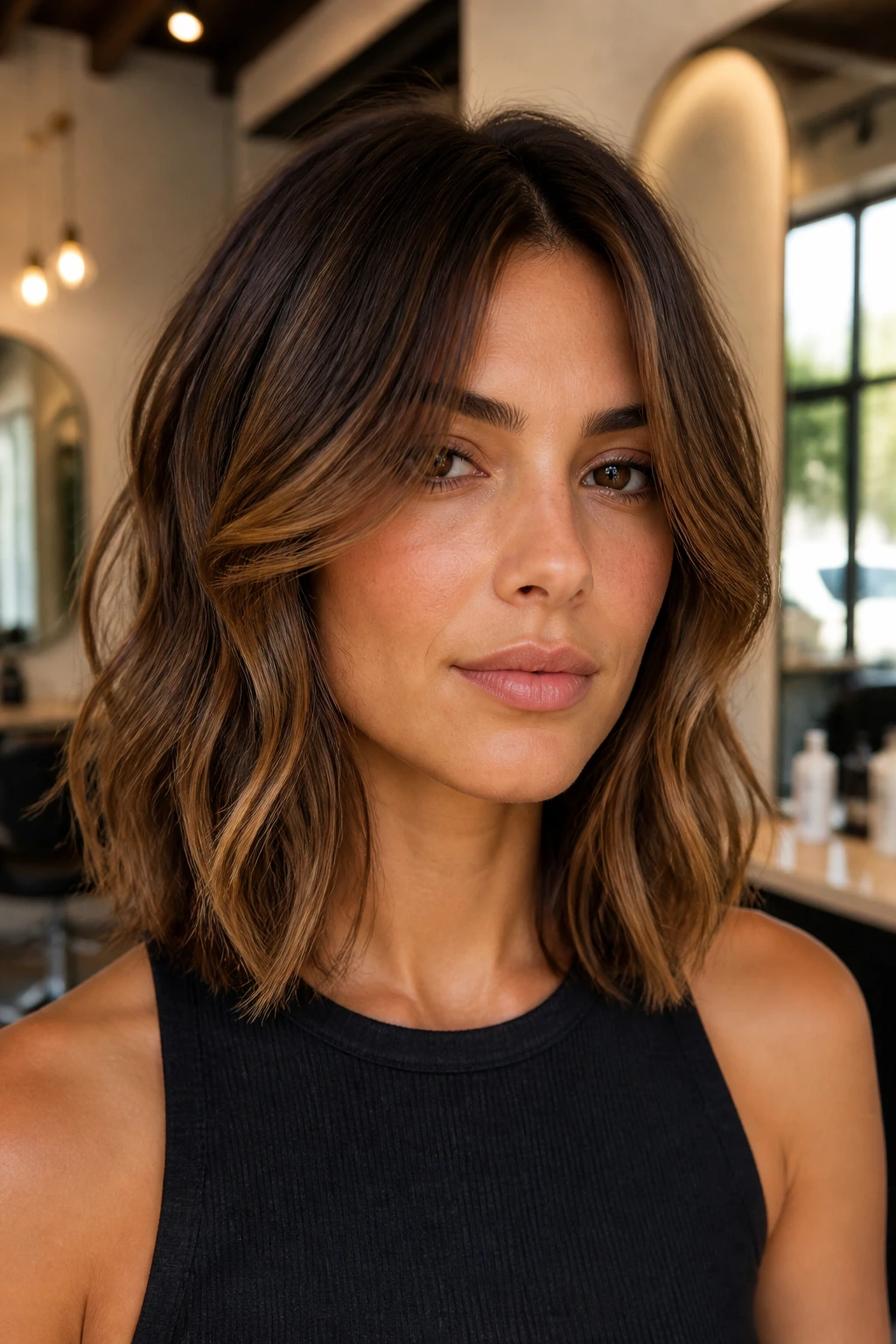
Picture the shortest face-framing layer landing right at the top of the cheekbone. That one move changes the whole face. It draws the eye upward, then lets the rest of the hair fall past the jaw.
This is the lob I’d point square-faced clients toward when they want softness but not curtain bangs. The front angles are doing the work, not a fringe. Ask for light layers that begin near the cheekbone and taper into the length, with the perimeter kept long enough to skim the collarbone.
A little bend through the front pieces makes the cheekbones look sharper and the jaw look calmer. That contrast is the point. Too much volume at the sides ruins it, so keep the roots controlled and let the movement happen in the lower half of the hair.
5. Deep Side-Part Long Bob
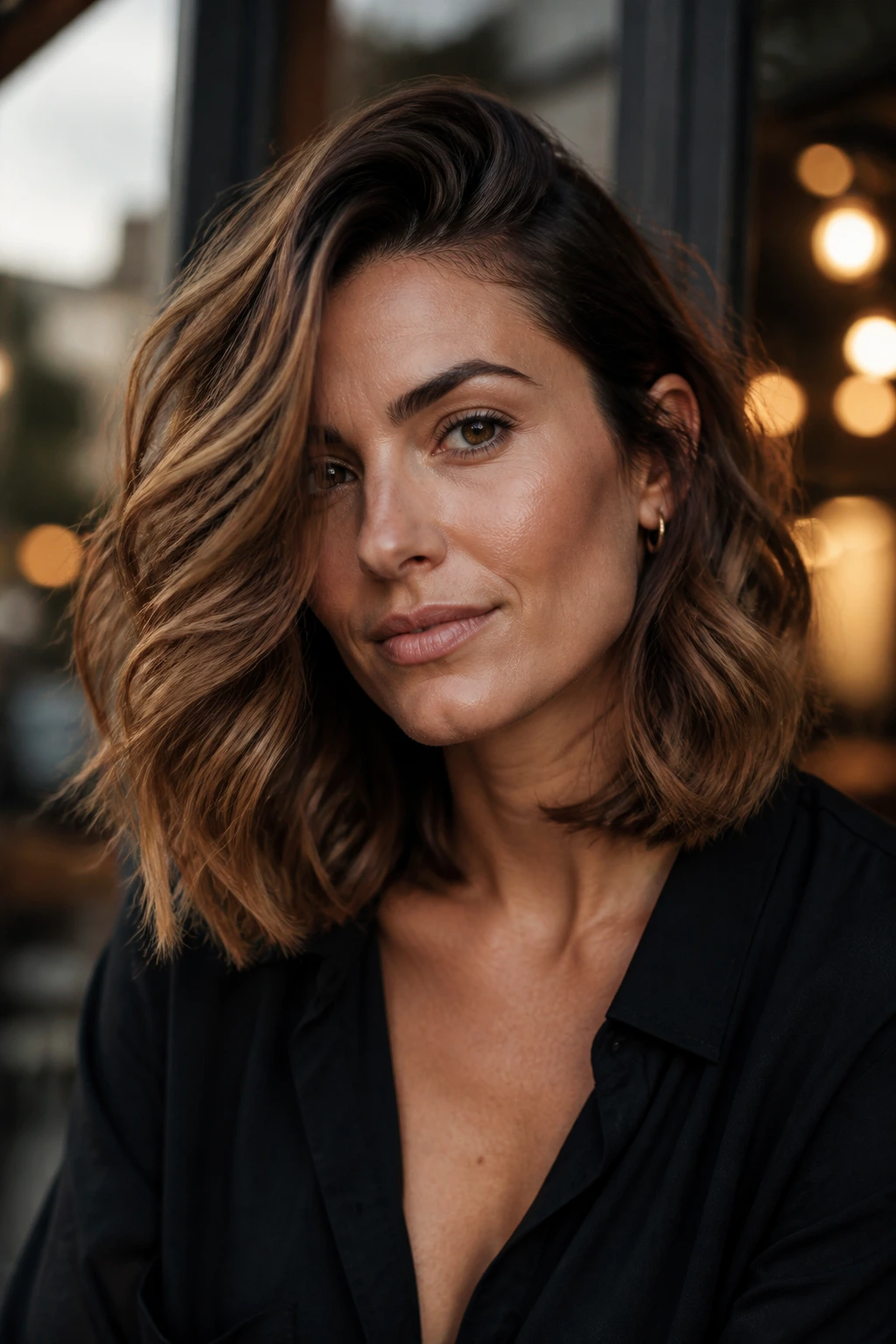
A deep side part brings a diagonal line across the face, and diagonals are your friend when the bone structure is square. They interrupt all that clean horizontal width. The haircut feels a little more dramatic, too, which suits wavy texture nicely.
I like this cut on hair that has some natural lift at the crown. Sweep the heavier side over with a round brush or a large Velcro roller if you want extra bend at the root. The ends can stay loose and slightly irregular.
It is a strong choice for nights out, but it does not have to be formal. A deep side part with lived-in waves can look casual in a good way, especially if the side with less hair tucks neatly behind the ear. That little asymmetry does a lot.
6. Shaggy Wavy Lob
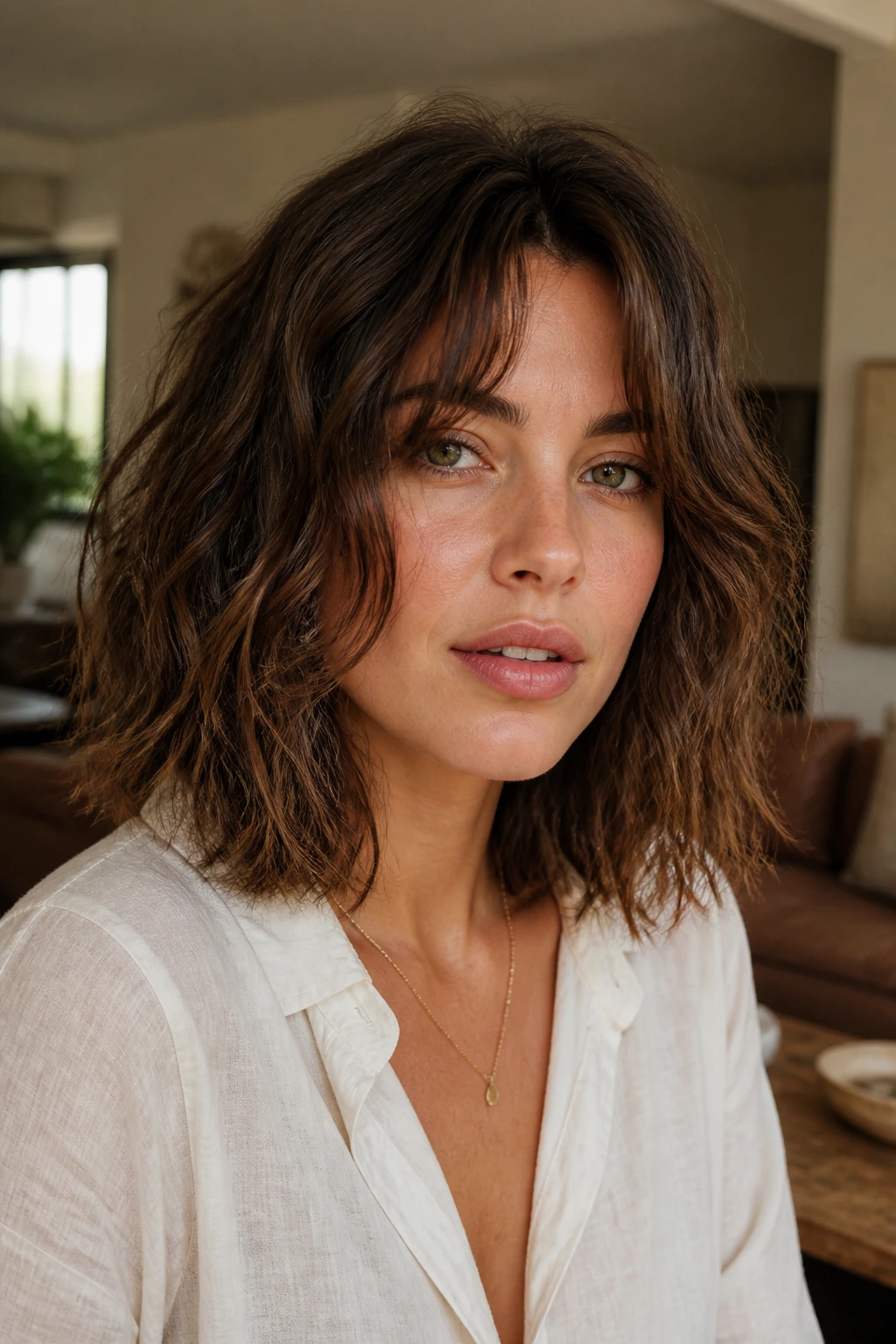
A shaggy lob is the opposite of fussy. It works because it avoids that blunt, tidy finish that can make square faces look broader. The ends are choppy, the layers are airy, and the waves get to keep their shape.
This version suits people who hate fighting their texture. If your hair gets bigger when it dries, a shag gives the volume somewhere to go instead of letting it puff at the sides. Ask for internal layers rather than a lot of perimeter slicing, so the haircut still feels like a lob and not a mini wolf cut.
Best for
- Medium to thick wavy hair
- Air-dry routines
- A slightly undone finish
The nice part is the grow-out. Even when the layers get softer, the shape still looks deliberate. That is rare.
7. Curtain-Bang Collarbone Lob

Curtain bangs can be a square face’s best friend when they are cut with enough length to move. Short bangs that stop too high on the forehead can emphasize angles. Longer curtain bangs that part through the middle and sweep to the cheekbone do the opposite.
Ask for a fringe that starts around the bridge of the nose and blends into face-framing layers. That gives you a soft opening at the center and a tapered edge near the jaw. On wavy hair, the bend in the fringe matters as much as the cut itself.
I like this look blown with a round brush just at the bangs, then left a little looser everywhere else. It keeps the front polished and the body relaxed. Too much curl in the fringe can make the face feel crowded, so stay gentle with the iron.
8. A-Line Lob With Soft Front Angle
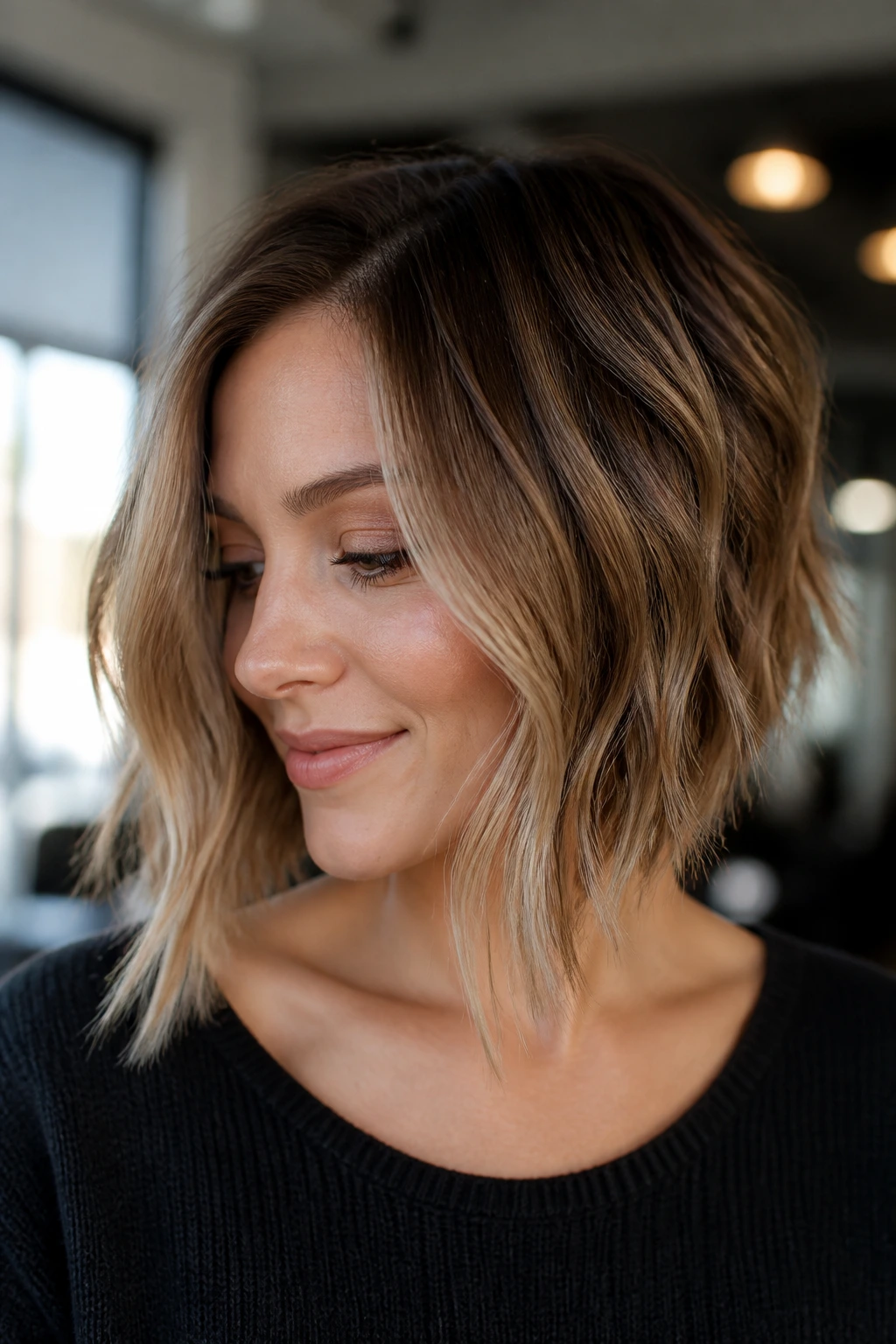
A slight A-line shape can do a lot for a square face because the longer front pieces create a downward line. The eye follows that diagonal, not the jaw. Keep the difference subtle, though. If the front is too long and the back too short, the haircut starts to look dated fast.
This is one of the best choices for thicker wavy hair. The shorter back removes bulk from the nape, while the longer front preserves a soft frame around the face. The wave pattern has room to sit without puffing up into a triangle.
Tell your stylist you want the front to hit around the collarbone and the back to sit a little higher. Not a dramatic angle. Just enough to tilt the shape forward.
9. Razor-Cut Wave Lob
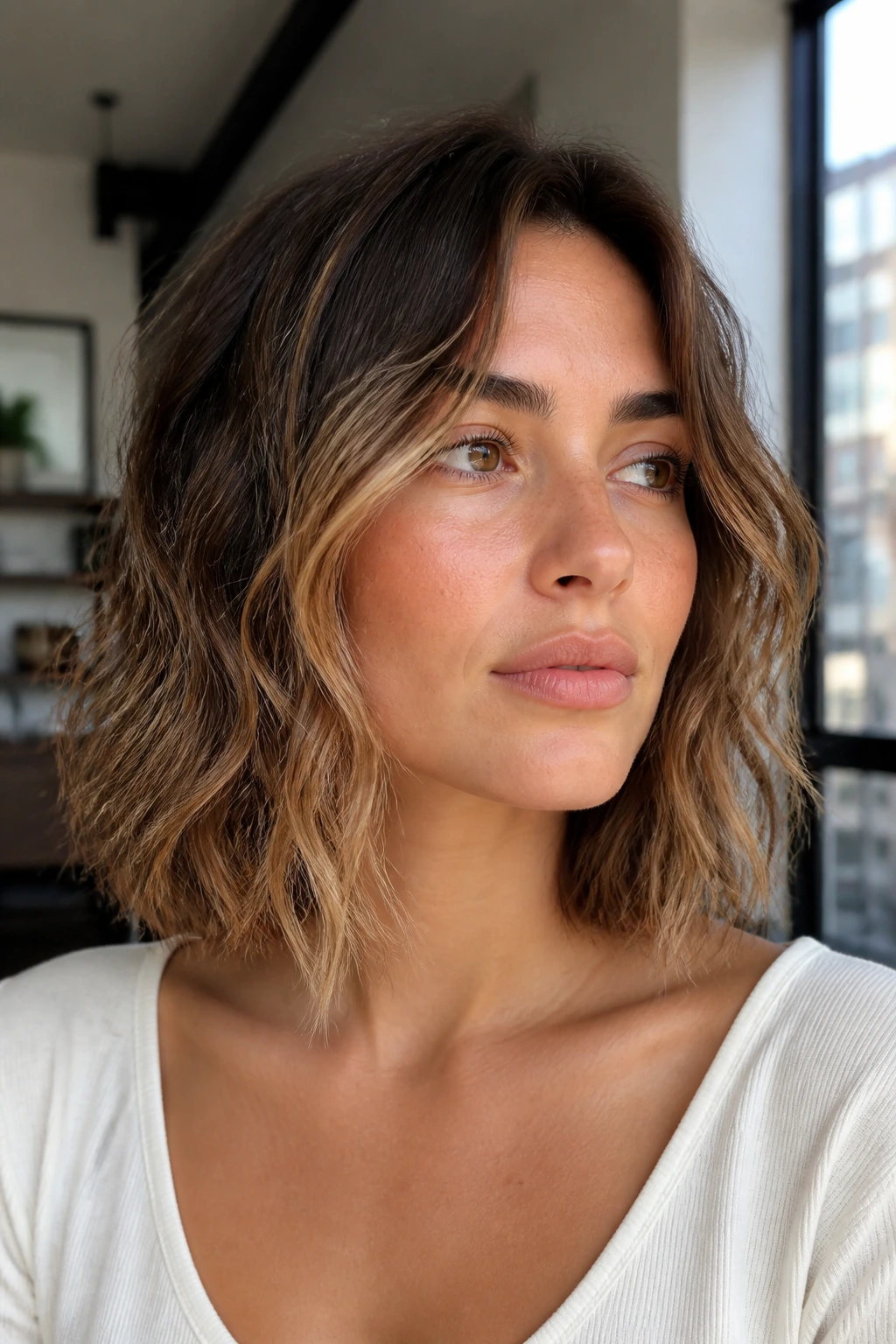
A razor cut gives wavy hair a softer edge, but it needs a careful hand. Done well, it removes the heavy feel from the ends and helps the waves separate into pieces. Done badly, it can fray the finish and make fine hair look see-through.
That is why I like this cut most on dense waves. The razor takes weight out of the perimeter and adds movement near the face, which keeps a square jaw from feeling boxed in. A stylist who knows when to stop is everything here.
Use a light cream, not a heavy balm, or the texture can slump. This lob is about airy movement, not a greasy finish. If the ends start looking fuzzy, back off on product before you blame the haircut.
10. Sliced-Ends Long Bob
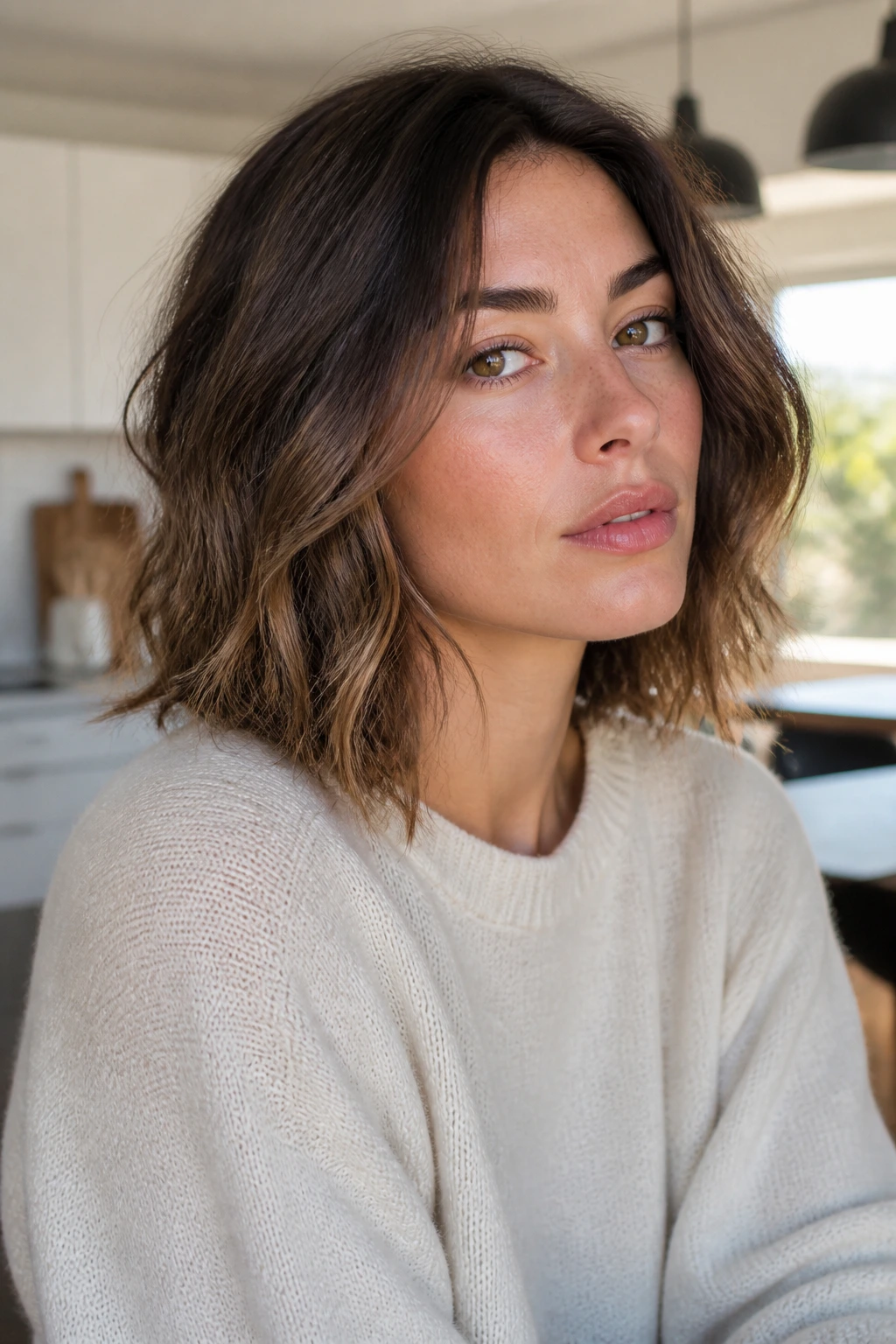
Sliced ends make the haircut feel lighter without erasing the shape. Instead of one blunt line, the tips break into pieces that move when you turn your head. That is useful on wavy hair because the bend looks intentional rather than overworked.
For square faces, the trick is keeping the slice work low and focused near the lower half of the length. Too much thinning around the jaw can widen that area. The best version still looks full, just less heavy.
I’d choose this cut if your hair dries in thick, stubborn sections. The sliced finish helps the waves stack more loosely, so the silhouette feels softer. It is also good if you like to wear the hair tucked behind one ear and want the tucked side to fall back without a lump.
11. Inverted Lob With Tapered Nape
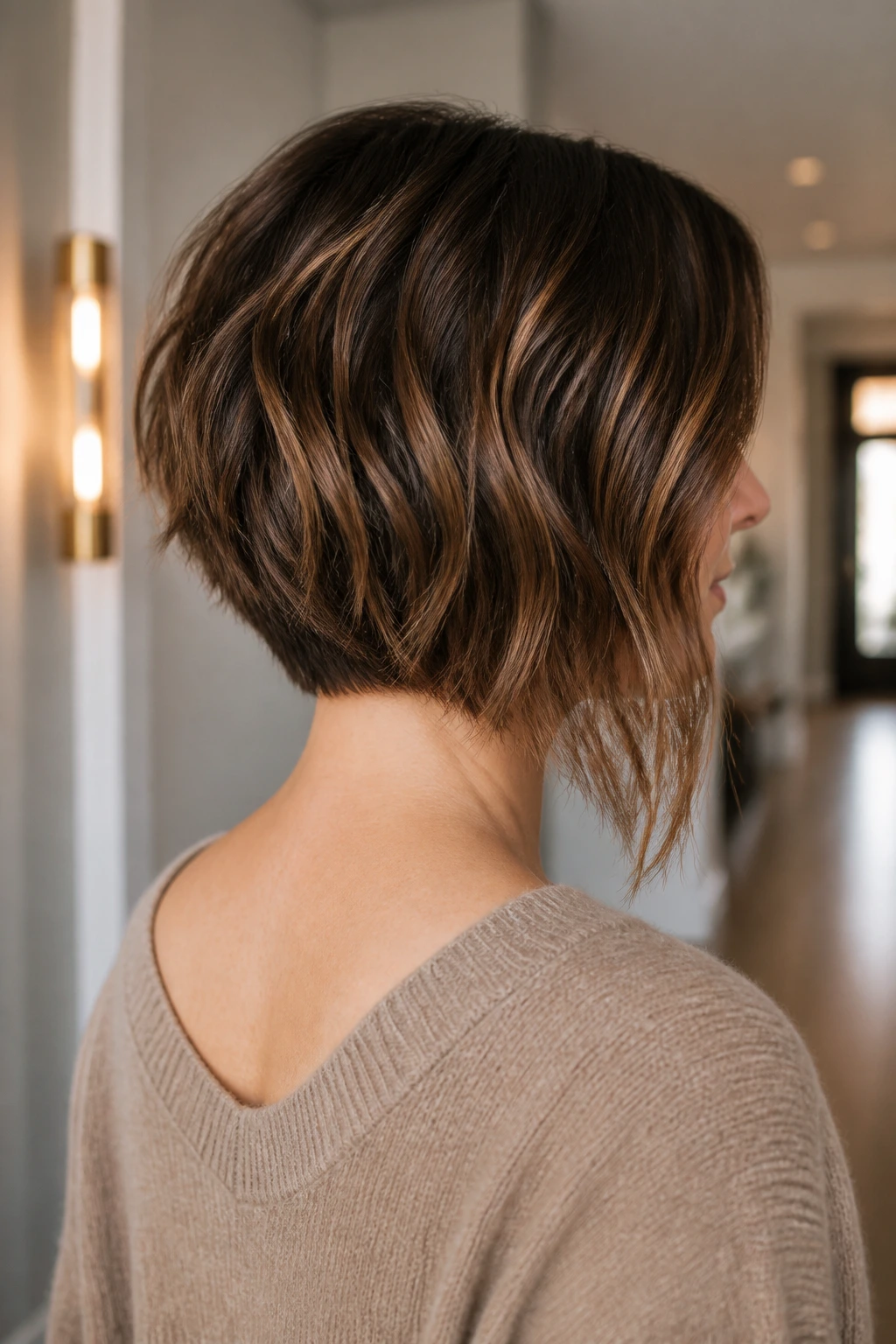
An inverted lob can be surprisingly flattering on a square face when the angle is subtle. The back sits a little shorter, the front stays longer, and the whole cut directs the eye forward and down. That helps lengthen the face without making it look stretched.
The nape should be tapered cleanly, not shaved close. You want lift, not severity. On wavy hair, the front pieces should keep enough weight to swing. If they get too thin, the cut loses the shape that makes it work.
This is one of those cuts that looks especially sharp with a tucked side and a little root volume. It has structure. Just not the hard kind.
12. Bottleneck-Bang Lob
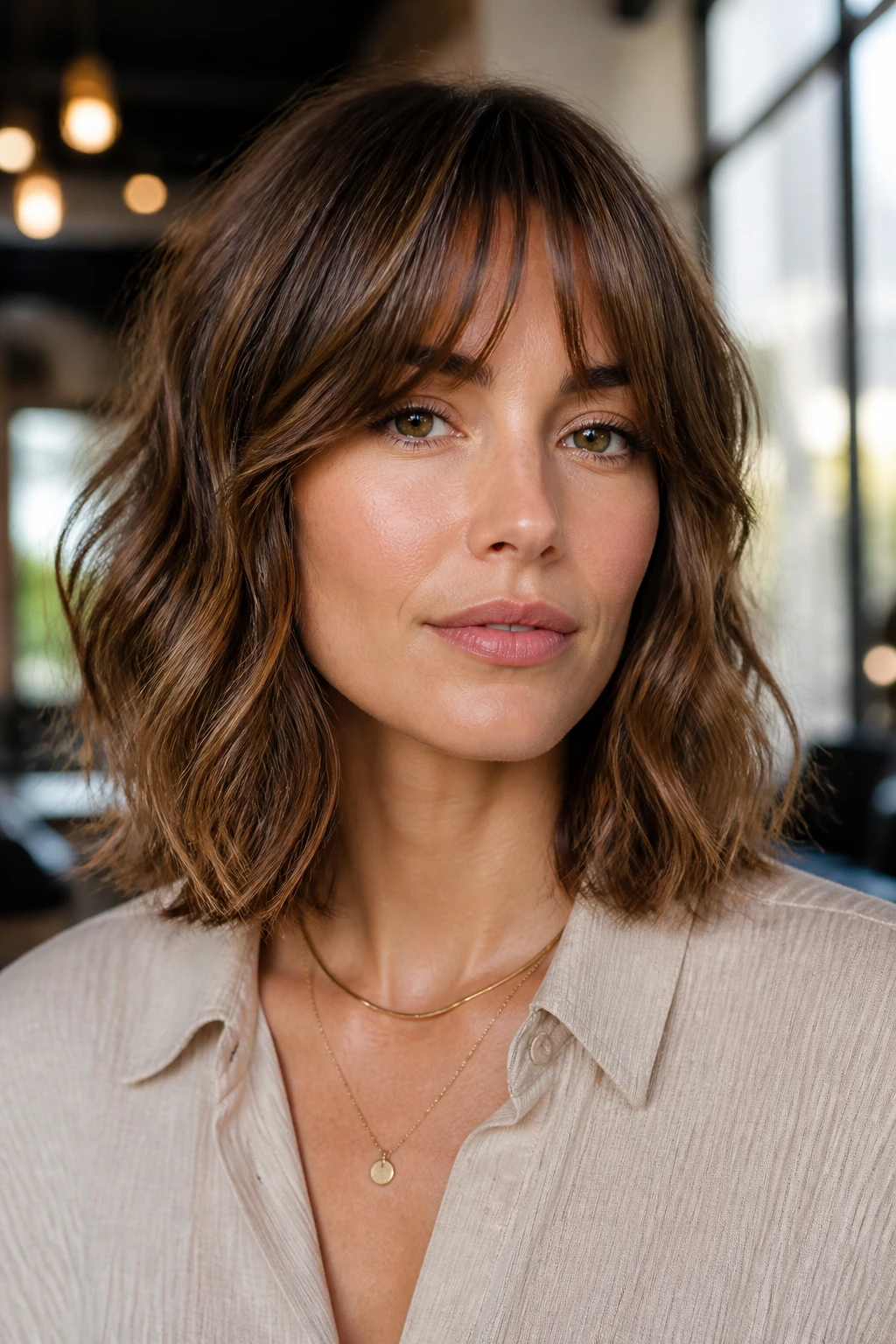
Bottleneck bangs are the low-key answer to full fringe. They start narrower in the center, open slightly at the brows, and widen toward the cheekbones. That shape is useful on square faces because it softens the upper half without flattening the whole look.
Pair them with a collarbone lob and the haircut starts to feel balanced in a smart way. The bangs keep the forehead from taking over, while the length keeps the jaw from looking extra wide. I like this version when the wave pattern is medium or loose, because the fringe can blend into the sides without too much effort.
Blow the fringe forward first, then sweep it apart with your fingers while it is still warm. That keeps the center soft and the edges airy.
13. Beachy Air-Dry Lob
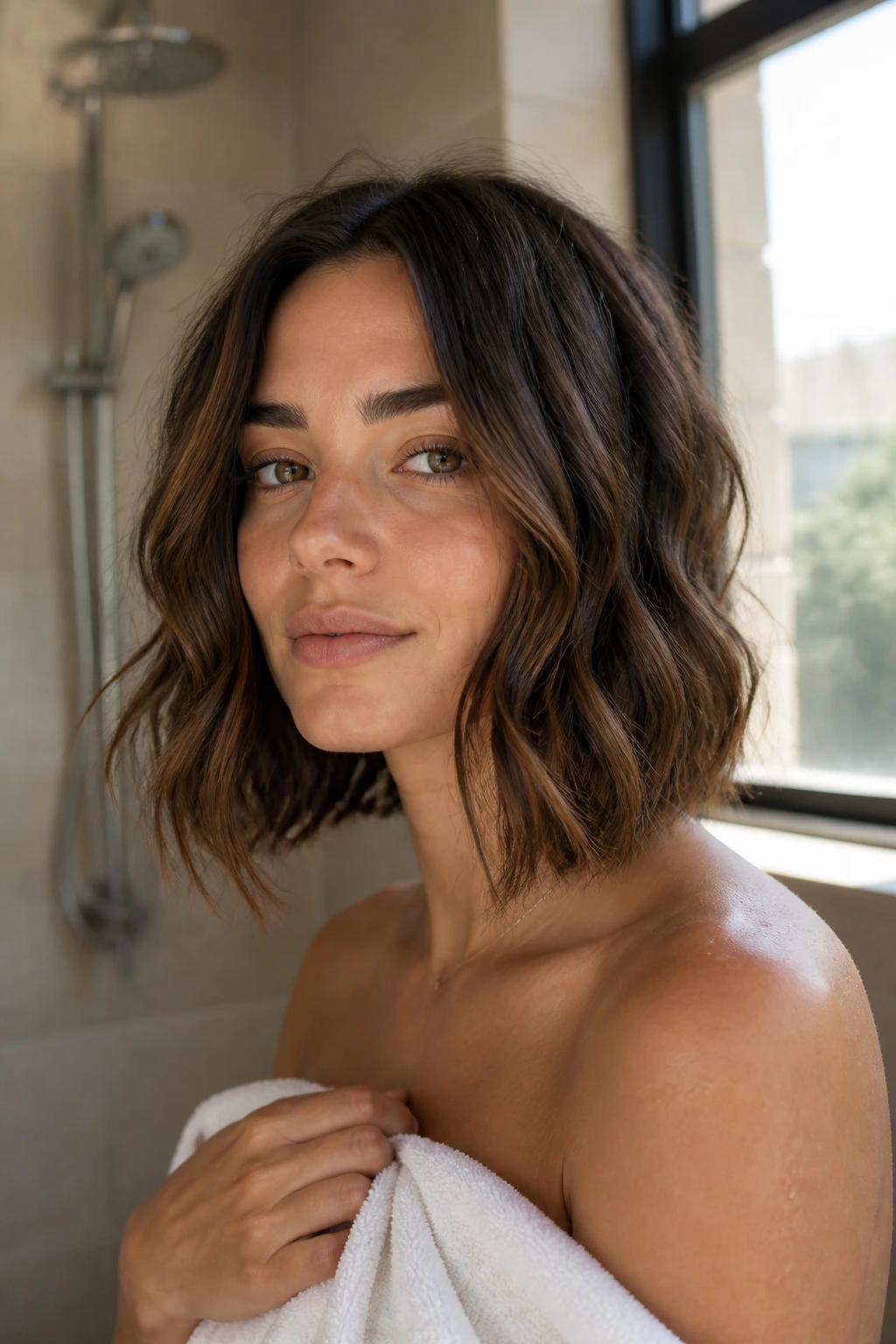
Some cuts are built for a round brush. This one is built for a towel and a bit of patience. A beachy air-dry lob works well because square faces usually benefit from shape that is soft and broken, not perfect. The waves create the movement that a blunt face line would otherwise demand.
The routine that helps
- Apply a light mousse to damp hair from roots to ends.
- Scrunch, then let the hair dry with a center or slight off-center part.
- Touch only the front pieces with a wand if they dry too flat.
- Finish with a tiny mist of texturizing spray.
The cut itself should stay long enough to sit below the jaw, with a few face-framing pieces that curve inward. That keeps the finished look from feeling too wide at the sides. Air-drying can go puffy if you overload it with cream, so keep the product light.
14. Feathery Internal-Layer Lob

This is the lob for someone who wants movement without obvious choppiness. The layers live inside the haircut, where they remove weight and let the outer shape stay smooth. On square faces, that matters because the perimeter still needs to read soft and controlled.
It works especially well on thick wavy hair. The feathering prevents the sides from kicking out too wide, and the longer front pieces keep the line past the jaw. You get a haircut with swing that does not look messy from the back.
If you wear your hair behind the shoulders a lot, this shape stays tidy. It is one of the less flashy options in the list, which is exactly why I like it. It does the job and stays out of the way.
15. Shoulder-Grazing Flip Lob
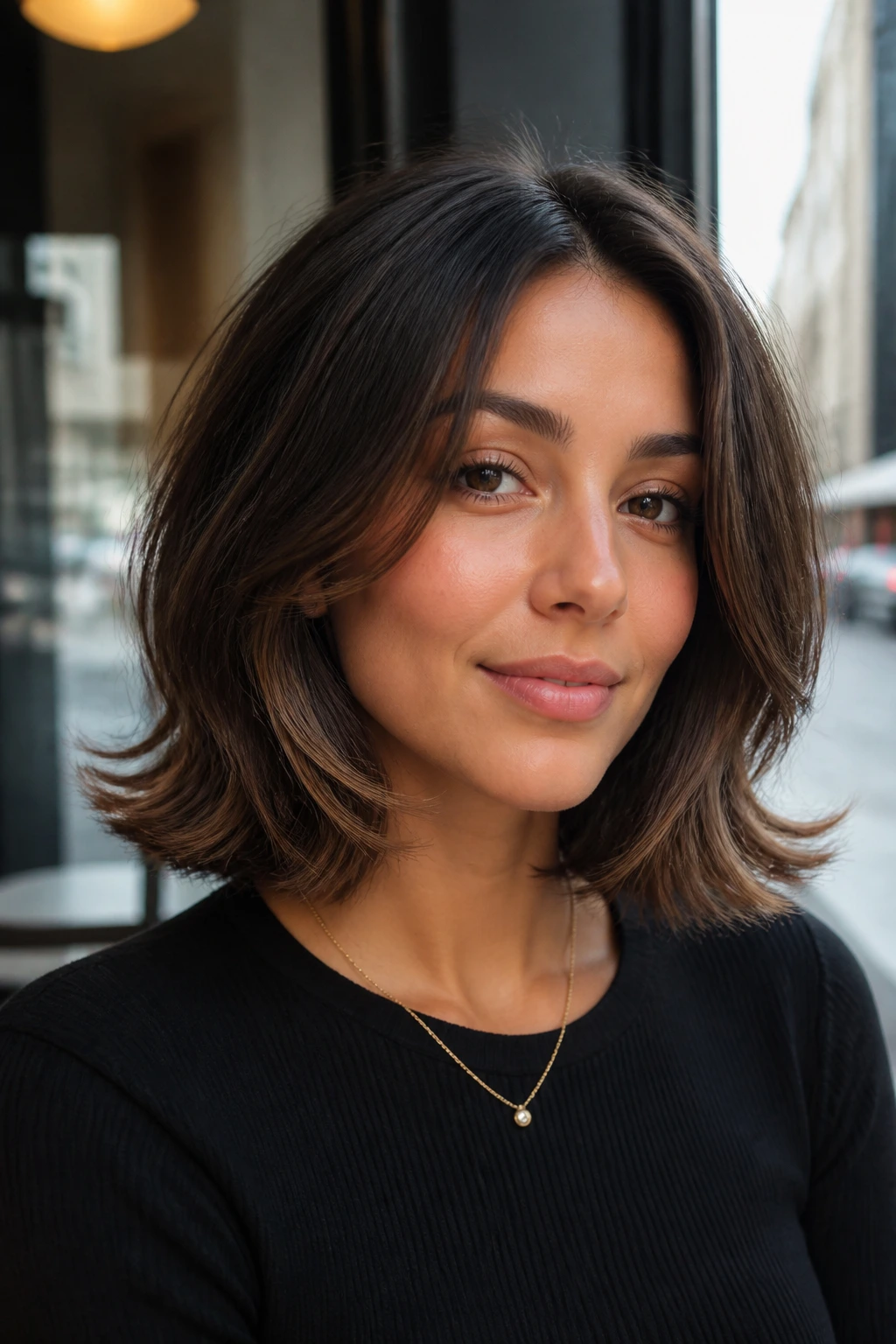
Can a flip at the ends soften a square face? Absolutely. When the ends brush the shoulders and turn out a little, the shape stops dead at the jaw and starts moving again. That motion matters.
Ask for a lob that lands right at the shoulders or a touch below, with soft layers around the face and enough length to create an outward bend if you like to blow-dry it. The flip should be loose, almost accidental. A hard, retro flip can read too stiff on square faces.
This cut is a nice match for people who want a little polish without losing softness. It works at brunch, at the office, and with a plain T-shirt. The trick is keeping the bend at the ends, not piling volume at the cheeks.
16. Center-Part Soft Wave Lob

A center part can work on a square face, but only when the lob has enough softness in the body. The waves should start a little below the eyes or around the cheekbone, not right at the temples. That keeps the middle part from feeling too severe.
This style is better than people give it credit for. The symmetry can be calming when the cut itself is loose and slightly curved at the ends. I like it on hair that has medium density and a natural wave that settles without too much product.
A center-part lob looks especially good when the front pieces are a half inch longer than the rest. That little difference keeps the line from feeling blunt across the jaw.
17. Choppy Micro-Layer Lob

Micro-layers are tiny, almost hidden, but they make a big difference in hair that stacks up when it dries. The cut still looks like a lob from the outside, yet the interior has enough movement to stop the width from ballooning at the sides.
This is a smart pick for coarse wavy hair. The small layers remove bulk without destroying the perimeter. On square faces, that means the haircut stays smooth around the jaw instead of flaring outward like a triangle.
Keep the finish piecey rather than fluffy. A pea-size amount of cream is usually enough; too much and you lose the separation that makes this cut work. It is a quiet haircut, but a useful one.
18. Rounded Lob With Long Front Pieces
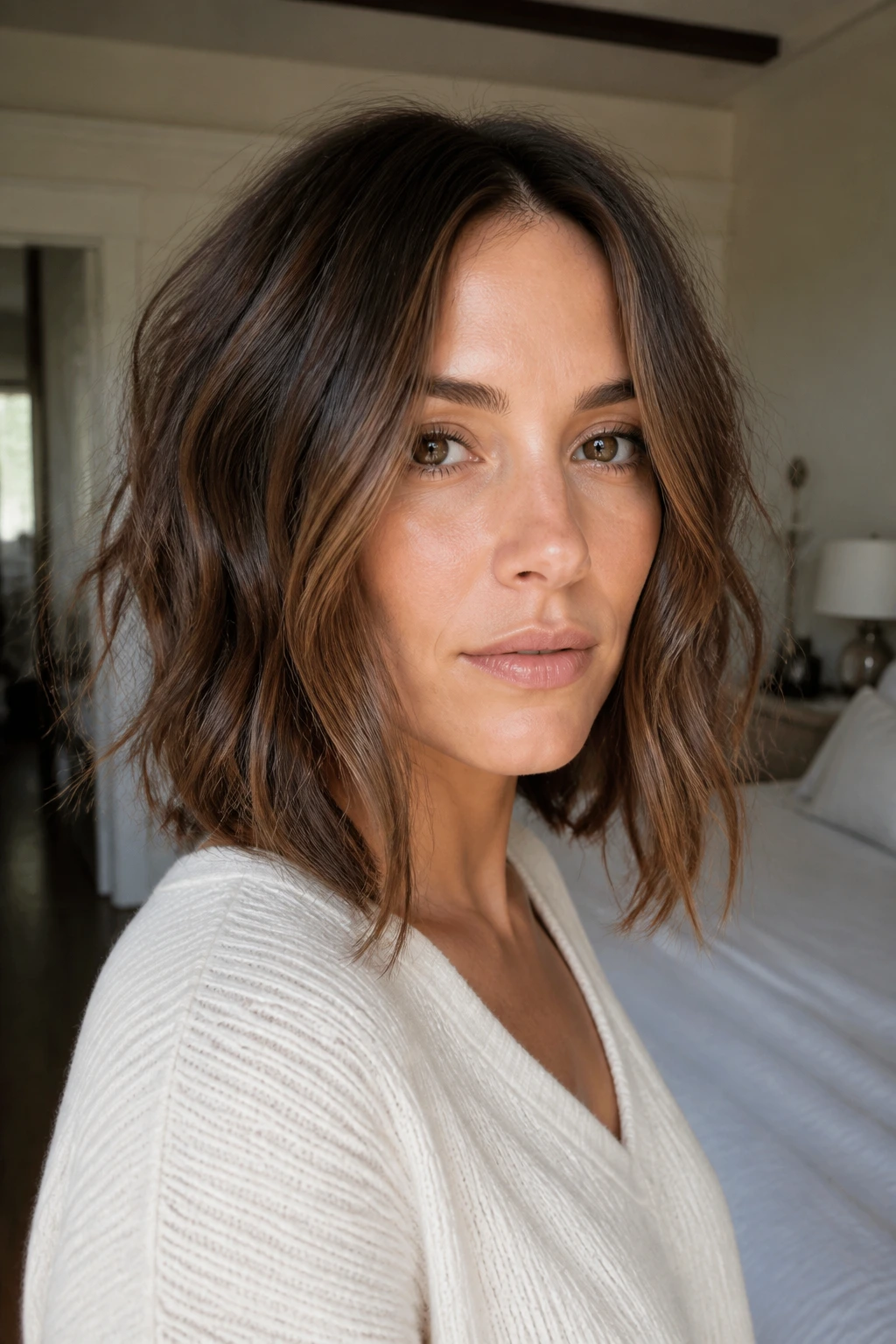
A rounded lob is one of the easiest ways to soften angular features. The sides curve gently instead of sticking straight out, and the longer front pieces create a narrow frame that points downward. That shape helps a square face look less blocky.
The key is keeping the roundness subtle. You are not building a helmet. You are rounding the silhouette just enough that the ends sit softly against the neck and shoulders. Wavy hair makes this even easier because the bend already wants to curve.
I like this version when someone wants a neat finish without losing a bit of movement. It can be worn smooth or wavy, and it never asks for a dramatic styling session.
19. Sleek-Root Wavy Lob
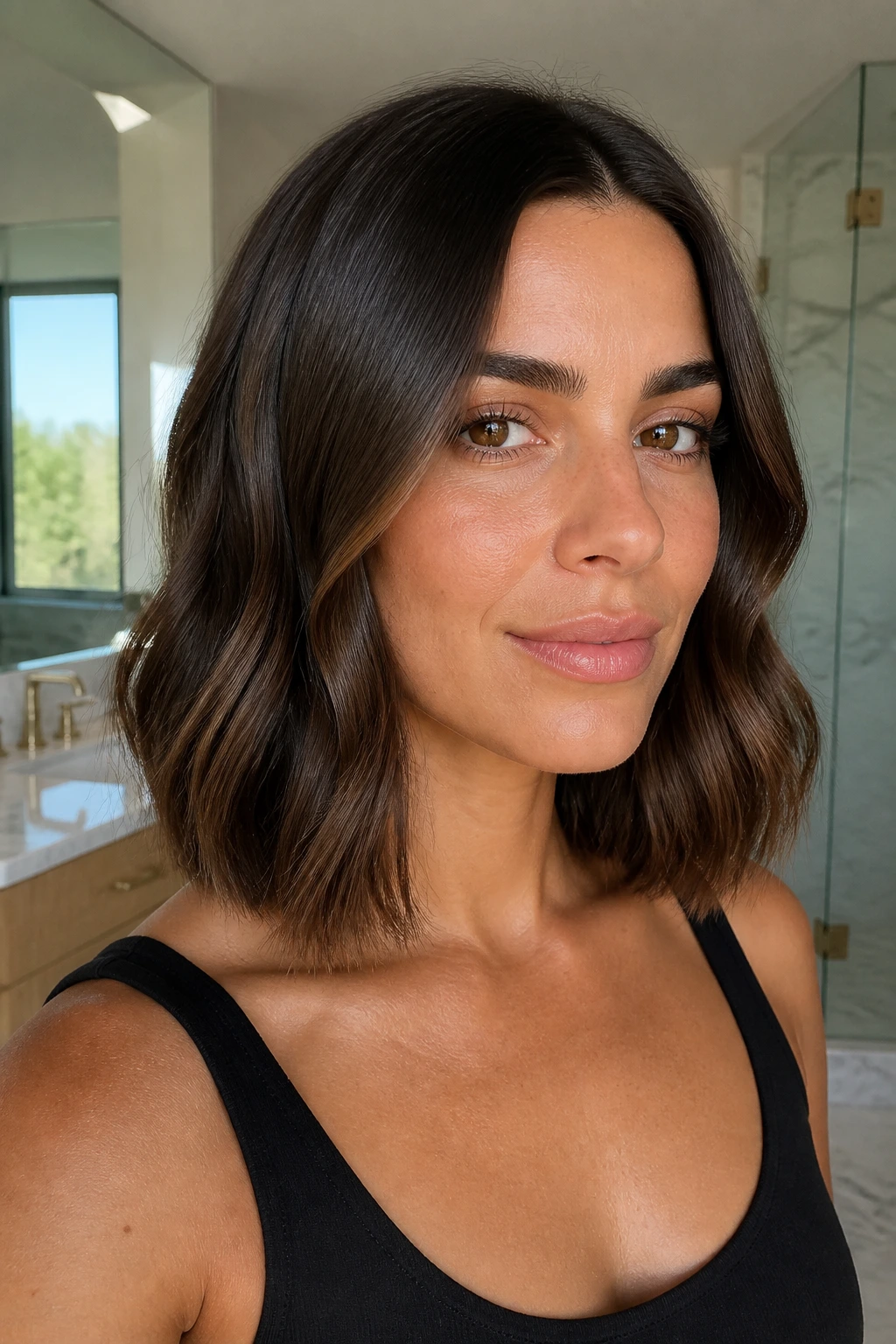
Not every wavy lob has to be messy. A sleek-root version keeps the top smooth and lets the waves start lower, which keeps the shape controlled through the widest part of the face. That is a nice trick for square jawlines.
Use a blow dryer or flat brush at the roots, then switch to wave through the mid-lengths and ends. The contrast between smooth top and textured bottom makes the haircut look cleaner. It also prevents the crown from puffing out, which can happen fast on dense waves.
This is a favorite if you want a haircut that can move from casual to polished with a small styling change. A little smoothing cream at the roots goes a long way here.
20. Invisible-Layer Lob
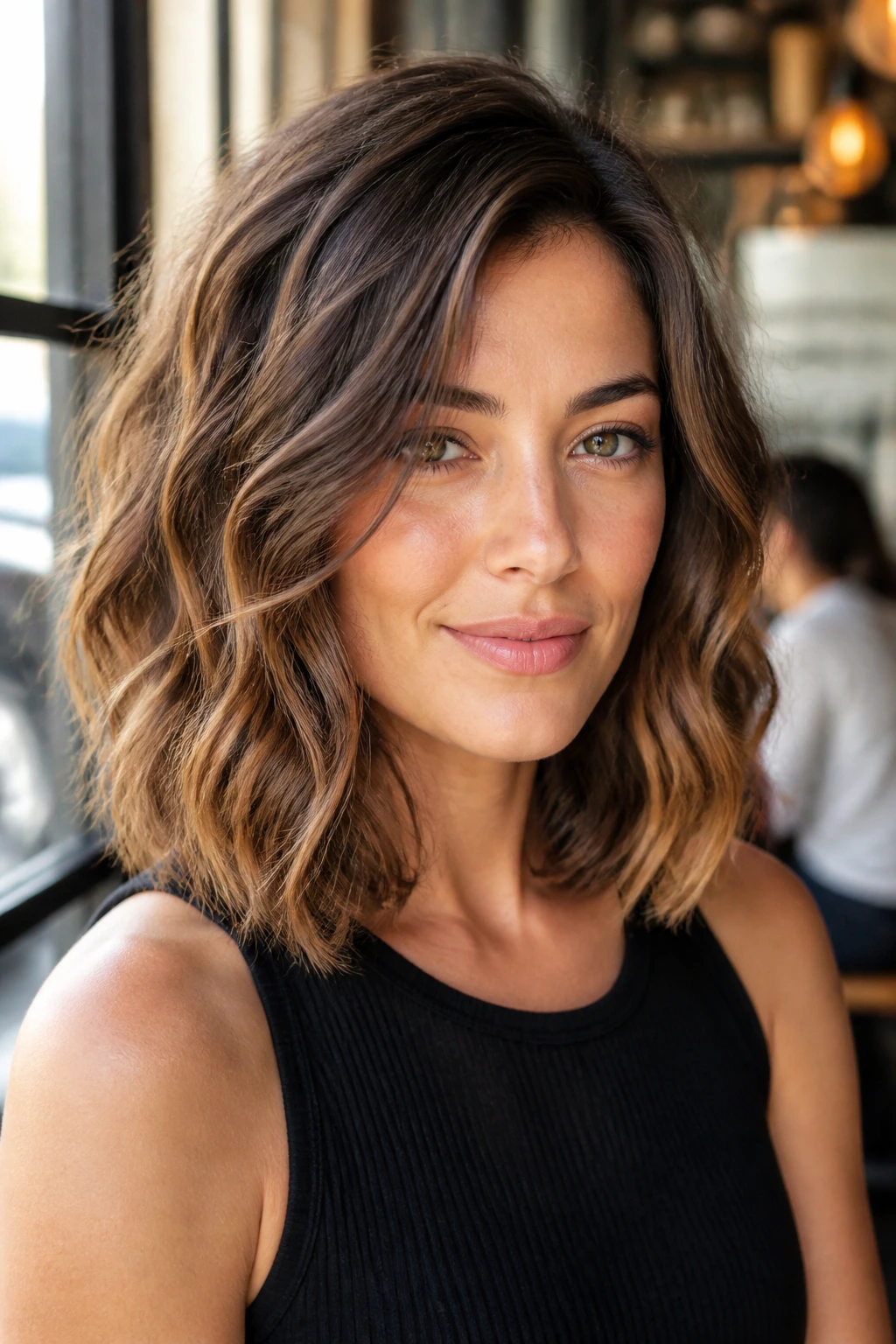
Invisible layers are the sort of thing you notice only because the hair suddenly behaves better. The outside still looks full and even, but the inside has been lightly carved so the wave can fall more freely. On square faces, that keeps the sides from feeling heavy.
I like this cut for anyone who wants softness but hates visible choppiness. It gives the hair movement without shouting about it. The front pieces can still frame the cheekbones, but the perimeter stays clean.
The cut is also forgiving on busy mornings. If you air-dry it, it usually settles into a tidy wave pattern without much coaxing. That is worth a lot.
21. French-Girl Lob With Jaw-Skimming Fringe

A French-girl lob tends to be a little undone, a little polished, and not too precious. For a square face, the important detail is the fringe: it should skim the jaw or cheek, not stop bluntly across the forehead. That keeps the face from looking wider.
This cut has a certain lived-in ease that suits wavy texture. The hair falls in loose pieces, the fringe breaks up the top of the face, and the length stays long enough to soften the jaw. It looks better the less you overthink it.
Best styling note
Keep the fringe soft with a round brush or just a quick bend from a flat iron. If the front gets too round, it stops looking relaxed and starts looking costume-y.
22. Polished Wave Lob
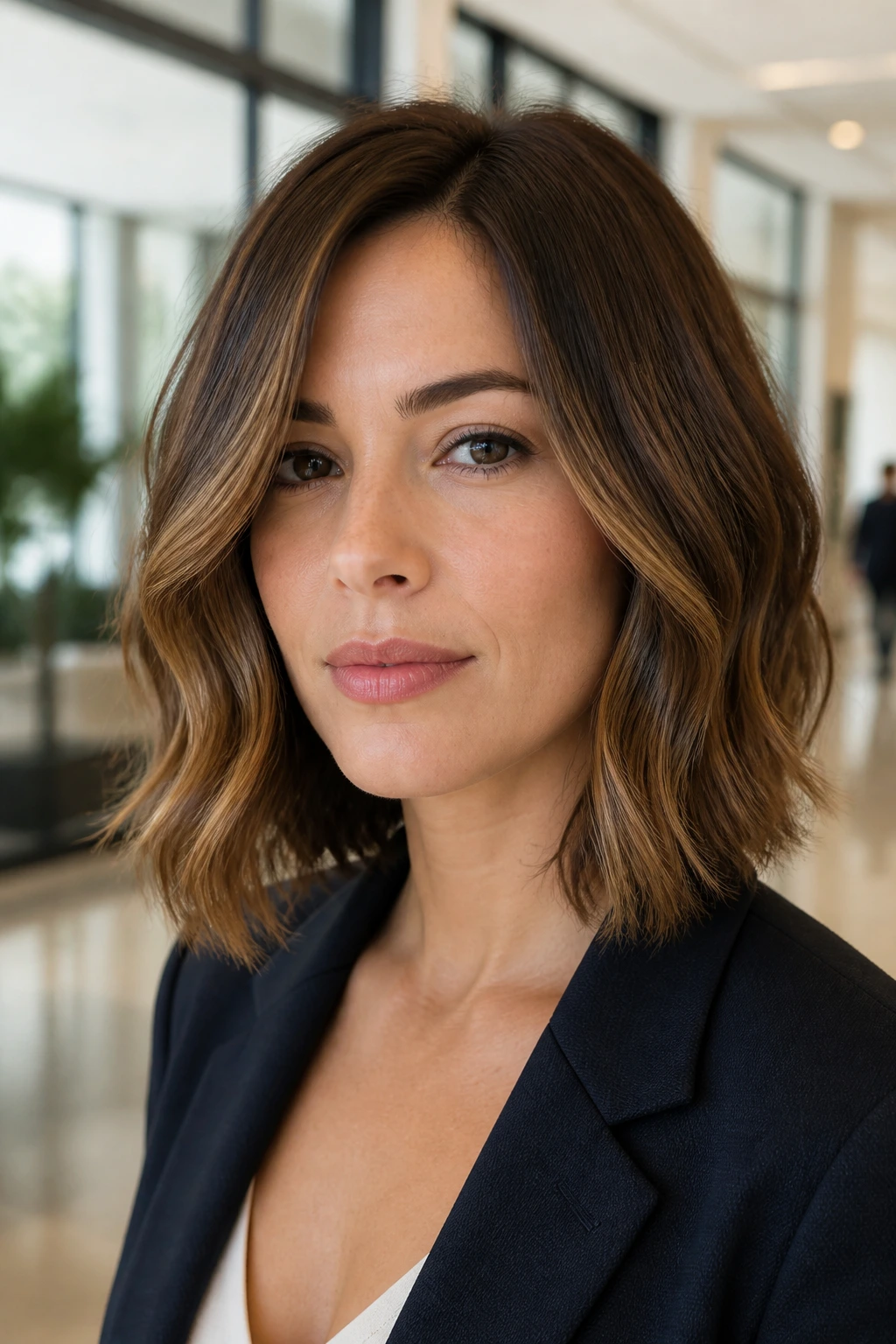
A polished wave lob is what I’d recommend when you want the shape to look intentional from every angle. The waves are brushed into smooth S-curves, the ends are neat, and the overall silhouette stays controlled. For square faces, that polish keeps the haircut from spreading sideways.
This is the version that behaves best in photos, meetings, and anywhere you want the line to look clean. It still works because the movement sits below the jaw, not on top of it. That detail is doing a lot of the work.
Use a medium-hold styling lotion and a wide-barrel iron, then break the waves up with your fingers. The finish should look touched, not stiff.
23. Heavy-Wave Lob With Long Fringe

Some waves carry a lot of body, and that is not a problem if the cut respects it. A heavy-wave lob keeps enough weight in the perimeter so the hair does not puff out into a triangle. The long fringe gives the face a softer opening at the top.
This is a strong choice for thick wavy hair that tends to grow wide. The longer fringe breaks the forehead line, while the collarbone length keeps the jaw from feeling emphasized. You want the waves to sit in loose columns, not one giant fluffy shape.
If your hair has a lot of density, ask your stylist to leave the ends full and remove bulk inside the shape. That keeps the cut stable.
24. Piecey Tapered-End Lob
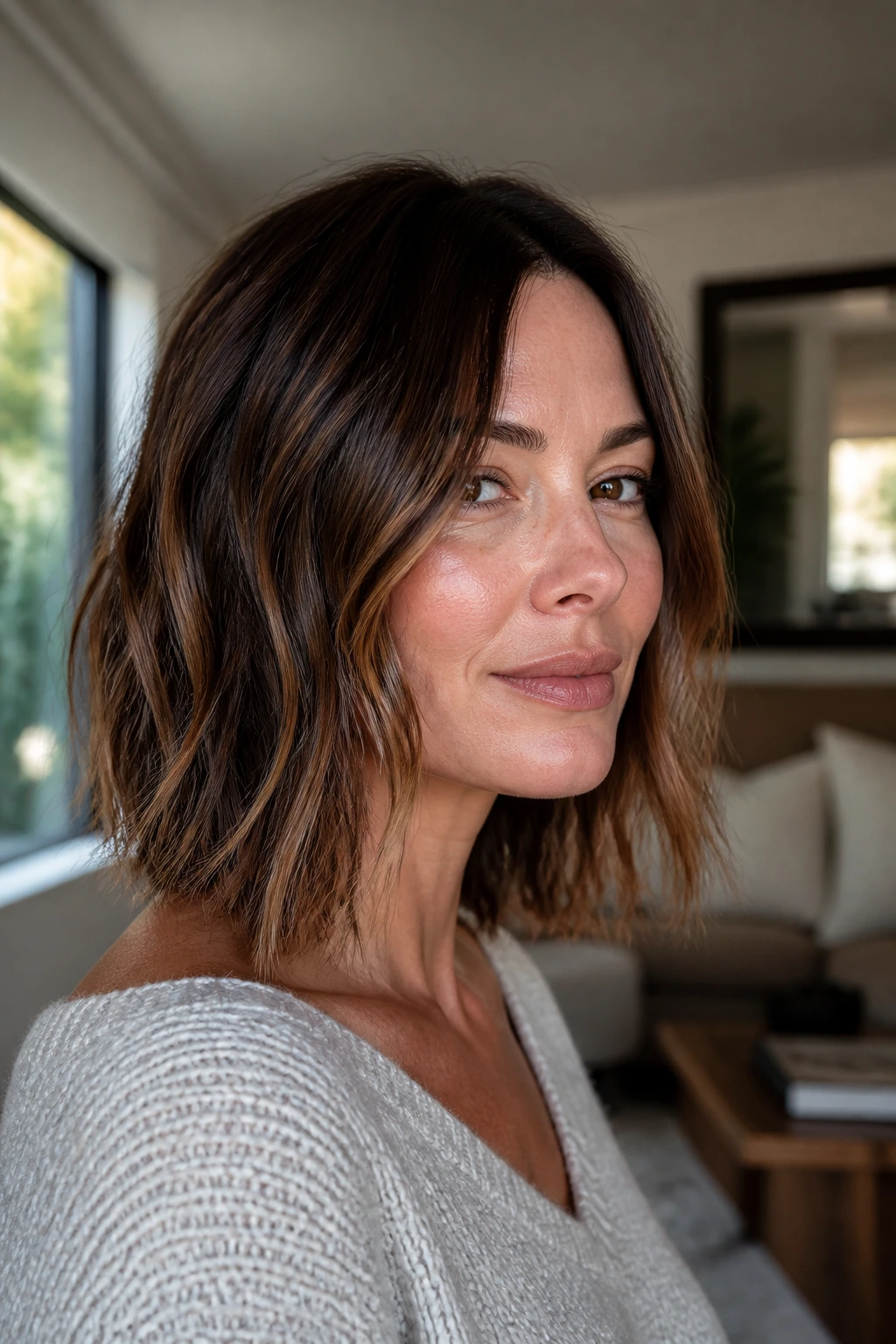
Piecey ends are useful when you want movement without losing structure. The taper keeps the outline from looking heavy, while the separation at the tips lets the waves fall into clean pieces. Square faces benefit because the haircut moves instead of stopping in one straight row.
This is a good place for a side part or a soft center part. Both work, depending on where you want the attention to go. I like it when a few front pieces are tucked and the rest fall loosely around the shoulders.
The style grows out gracefully, too. Once the taper softens, it still looks deliberate. That makes it an easy repeat haircut.
25. Grow-Out Lob With Soft Perimeter
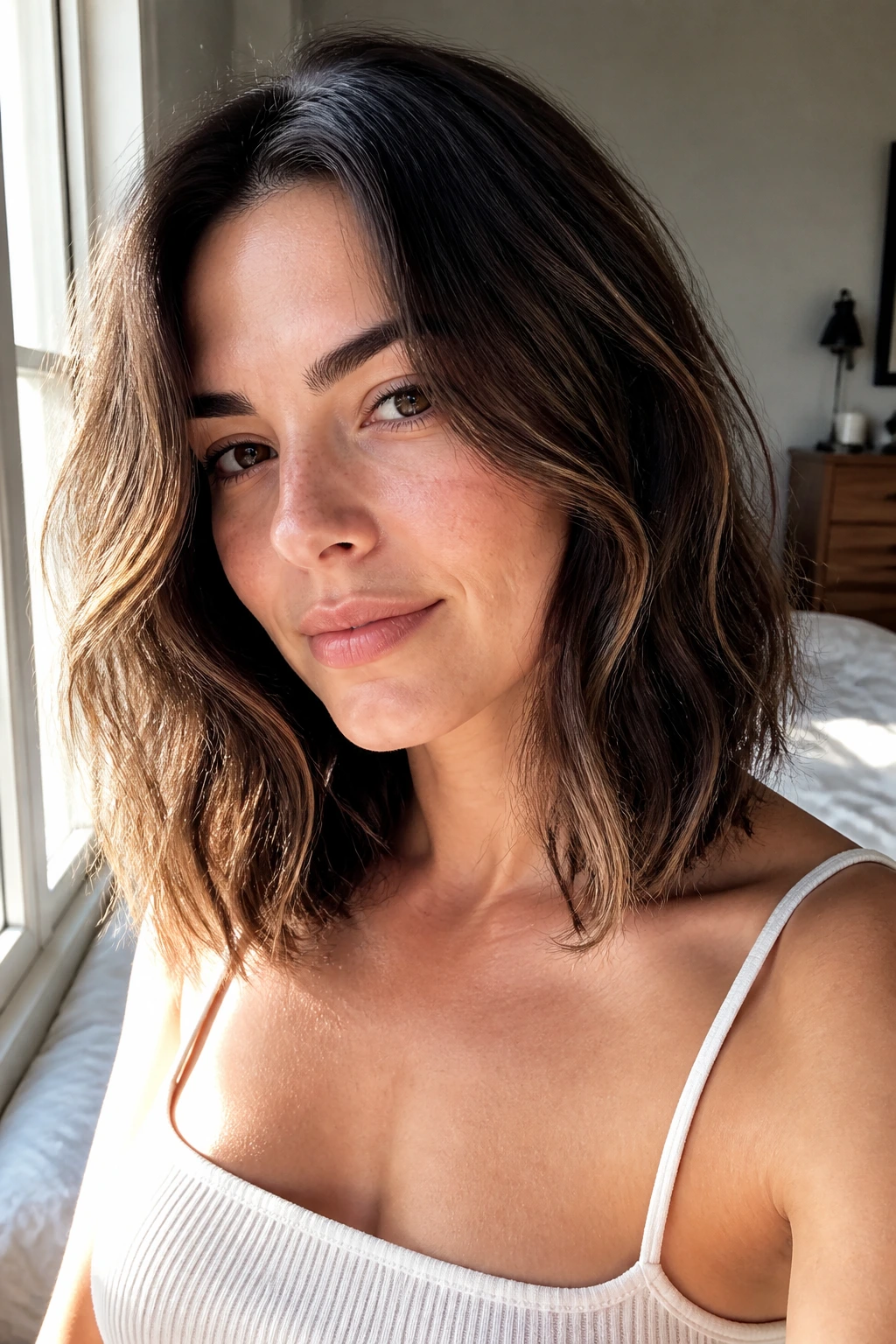
A lob that grows out well is worth more than one that looks great only on day one. This version keeps a soft perimeter below the jaw and enough interior structure to survive a few extra weeks before a trim. On a square face, that longer line keeps the shape from creeping back toward the jaw.
It is the practical ending point of the list, because not everyone wants to baby a haircut. You can wear it wavy, air-dry it, or smooth it, and it still reads as a long bob rather than an in-between grow-out stage.
Ask for a collarbone length, soft face framing, and minimal bulk removal at the sides. If you like a clean finish, trim the ends before they flip outward too much. That is usually when the shape starts to wander.
Why the Collarbone Zone Softens a Square Jaw
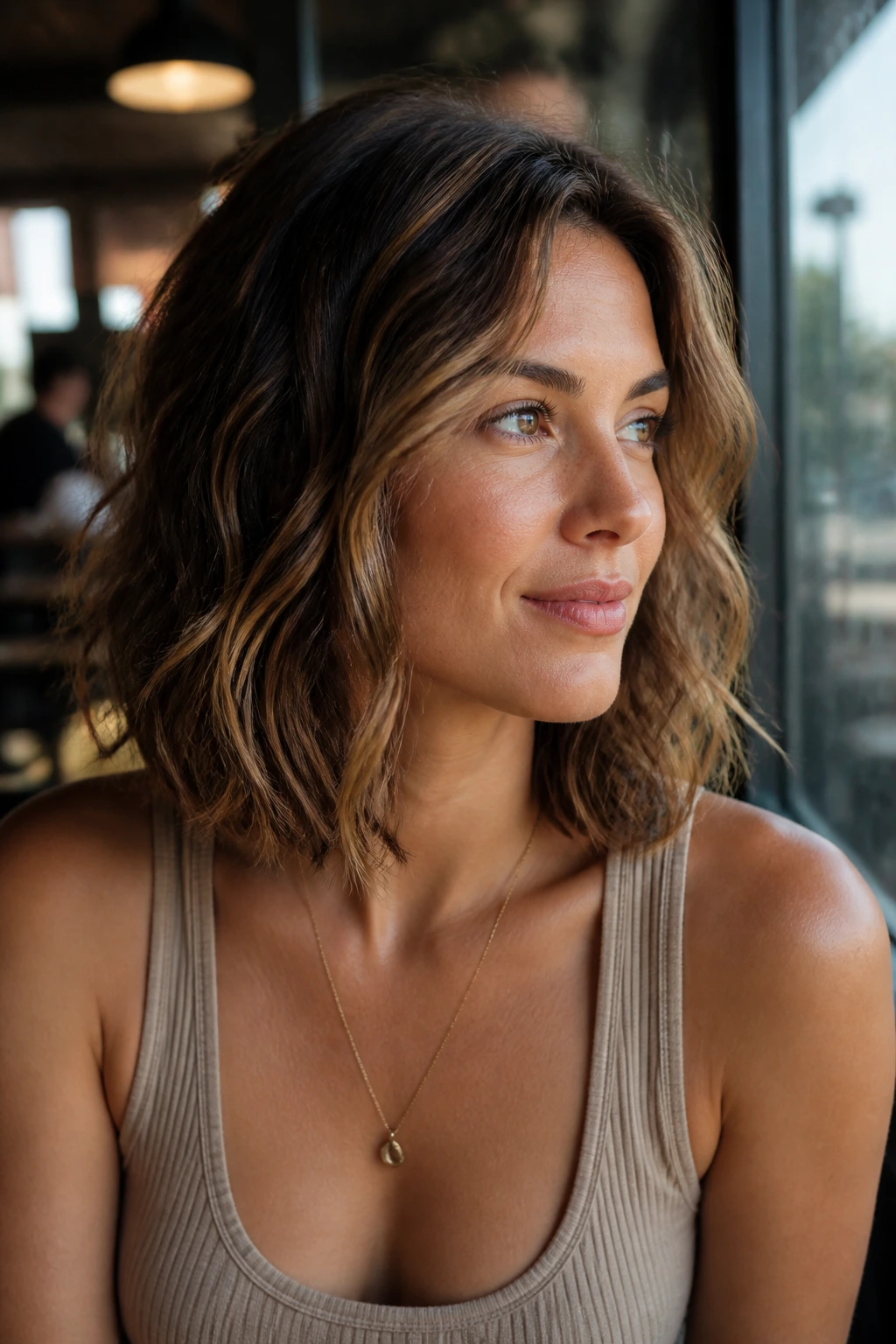
Square faces already have strong edges. That is the whole point of the shape. The trick with a long bob is not to fight that structure head-on; it is to steer the eye a little lower and keep the perimeter moving.
A cut that lands around the collarbone works because it misses the jawline by a few inches. Those inches matter. They give the hair a place to swing, and they stop the outline from repeating the same hard line you already have in the bone structure. When the ends sit right on the jaw, the haircut can look like a ruler. When they sit lower, the line relaxes.
Wavy hair adds another layer. The bend breaks up the width, so even a blunt-ish lob can feel softer if the waves are left loose. Straight hair can show every edge. Wavy hair hides a lot of sins. That is why the best versions here lean into texture instead of trying to iron it flat.
Where the length should sit
The sweet spot is usually the collarbone or just below it. Shorter than that, and the cut starts to make the jaw the star. Longer than that, and you drift into mid-length territory, which can be lovely but loses the crisp lob shape.
Why texture matters more than perfection
A perfect curl set is not the goal. Slight irregularity is. Broken waves, air-dried bends, and soft ends keep the face from looking over-framed. That is the whole game.
Essential Tools for Styling Wavy Lobs
- Wide-tooth comb: Detangles damp waves without pulling the bend apart.
- Mousse or foam: Gives loose waves enough hold so they do not collapse by lunch.
- Lightweight leave-in conditioner: Keeps ends soft without making the perimeter greasy.
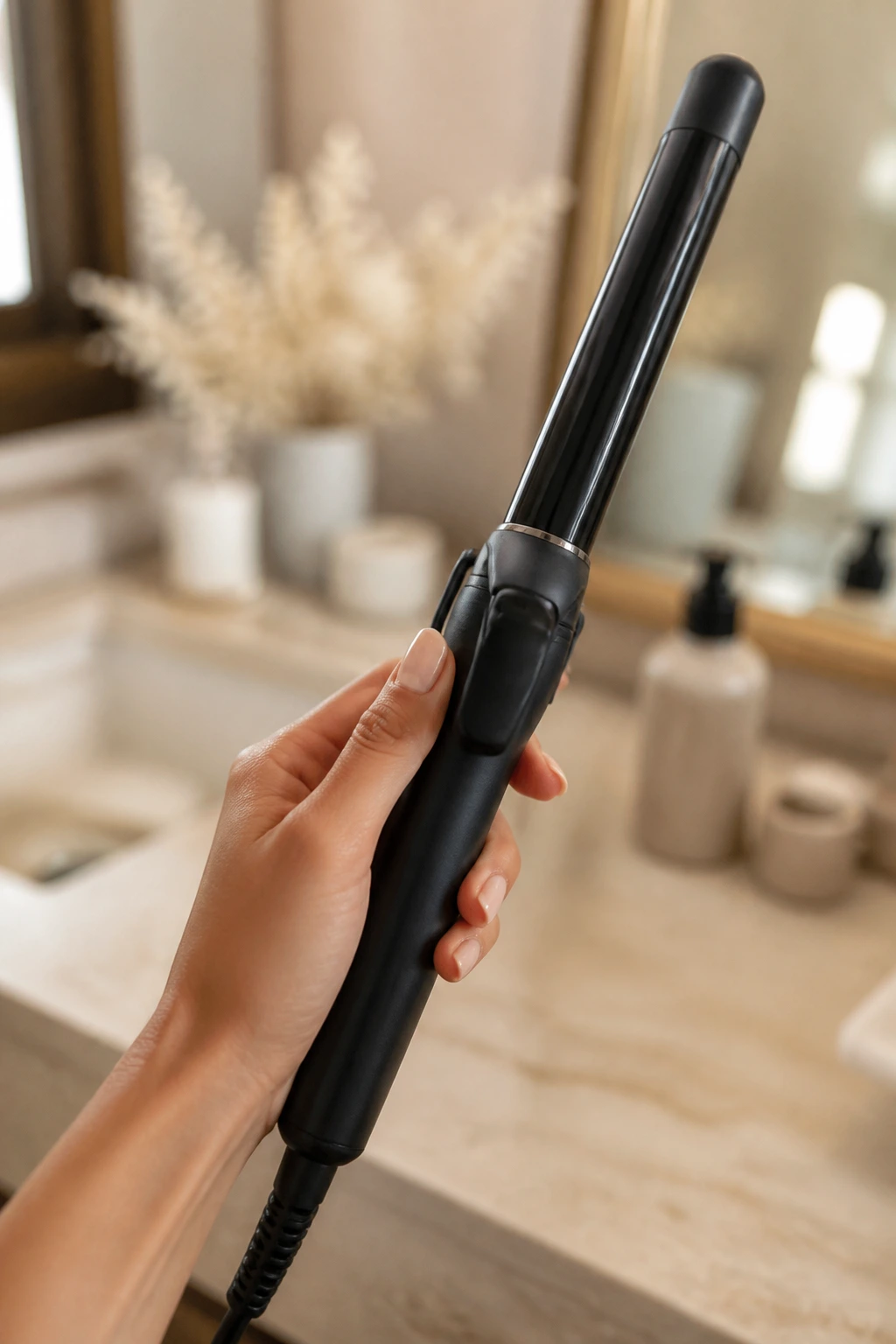
- 1-inch curling wand: Useful for fixing the front pieces and adding bend where the hair goes flat.
- Diffuser attachment: Helps waves dry with volume at the roots and less frizz through the ends.
- Heat protectant spray: Non-negotiable if you use any heat at all.
- Sectioning clips: Handy when you want the front pieces shaped more carefully than the rest.
- Texturizing spray: Good for the last 10 percent of separation; do not drown the hair in it.
- Round brush, medium size: Best for curtain bangs, side parts, and root lift.
What to Tell Your Stylist Before the Cut
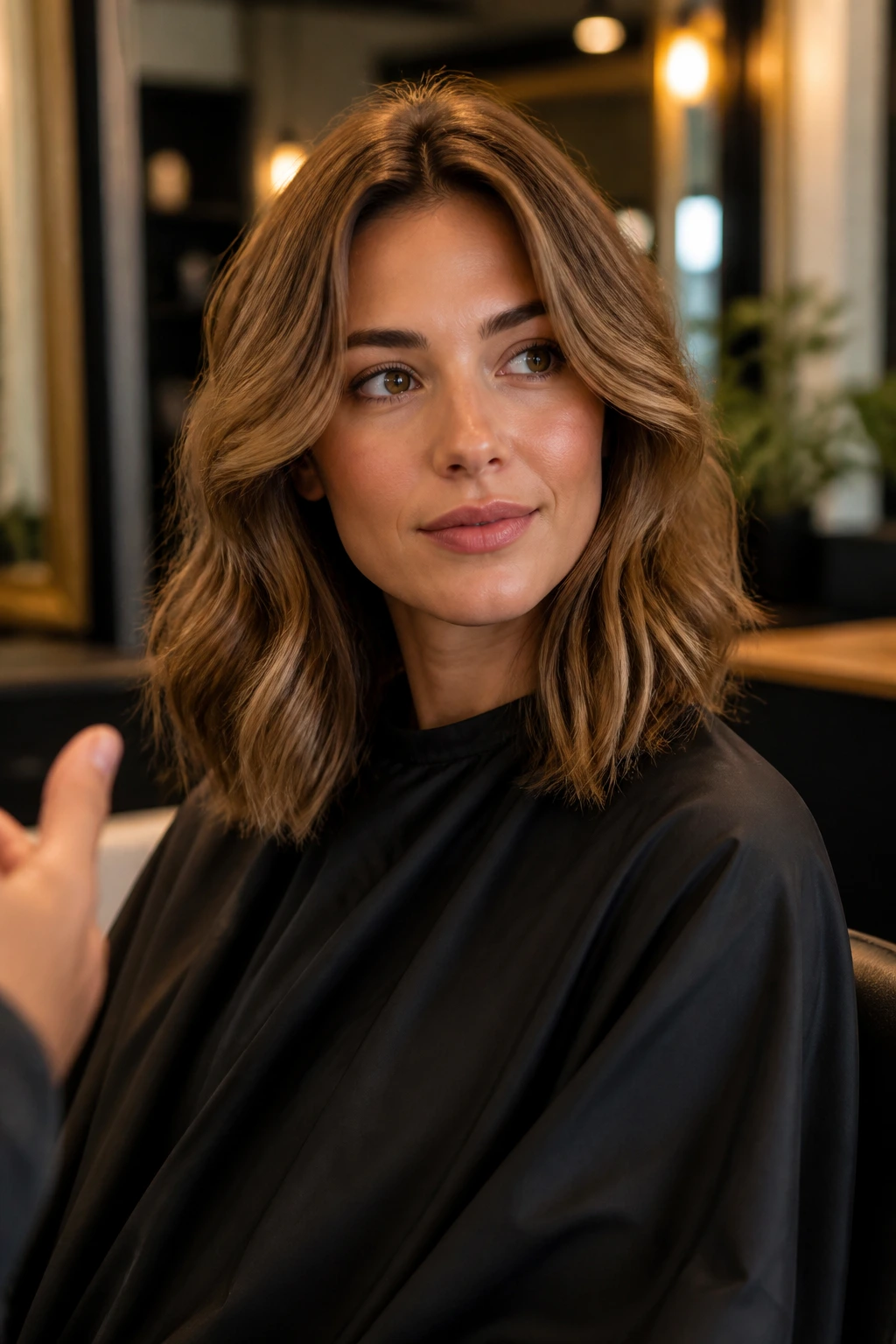
Bring photos, but bring the right ones. A front shot tells one story; a side view tells another. If the lob you like ends at the jaw in the picture and you have a square face, ask what happens if it drops two inches lower. That small adjustment often changes everything.
Tell your stylist how your waves behave when they air-dry. Do they puff out at the sides? Do they clump into thicker sections? Do the ends go straighter than the roots? Those details matter more than a generic “wavy” label. A dry cut or a cut that follows the natural wave pattern can make a huge difference, especially if your hair has a strong bend.
Mention your usual part, too. A center part, off-center part, and deep side part all place weight differently around the face. If you never wear your hair in a center part, do not let the cut rely on one. The same goes for bangs. Curtain bangs need a different approach than a long side fringe, and the shortest face-framing piece should be planned, not guessed.
How to Style a Wavy Lob Without Flattening the Bend

Start at the roots. If the root dries flat, the whole cut can lose shape and drag the eye straight to the jaw. A little mousse at the crown, then a quick lift with the diffuser, usually solves that.
Leave the ends a little imperfect. The ends are where a lot of people overdo it. If every piece is curled the same direction, the haircut feels stiff. Wrap only a few front pieces around the wand, then leave the rest loose and break them up with your fingers.
Watch the heat. Fine hair usually behaves better around 280–300°F; coarse waves may need 320–350°F. Higher heat does not equal better hair. It often just means flatter ends by day two.
Save the heavy product for the ends. A pea-size amount of cream is enough for many lob lengths. If the sides start to look damp or stringy, you have gone too far.
Use the neckline. Tucking one side behind the ear or letting the front pieces skim the collarbone changes how the cut frames the jaw. Tiny shift. Big effect.
Small Shape Tweaks That Change the Whole Cut

Part Shift: Move the part half an inch to an inch off center and the haircut often looks less severe right away. That little asymmetry stops the face from reading as a square block.
Cheekbone Cue: If you want the face to feel softer, ask the shortest front piece to land near the top of the cheekbone. It gives the eye a place to stop before it reaches the jaw.
Density Control: Thick hair usually needs interior weight removal, not shorter length. Fine hair usually needs a cleaner perimeter and fewer layers. That is the difference between a lob that floats and one that frays.
Finish Choice: Dry shampoo at the roots, not the ends. Texture spray on the mid-lengths, not the crown. The product placement matters as much as the product itself.
Night Prep: A loose clip at the crown or a silk pillowcase keeps the wave from getting crushed overnight. You wake up with less reshape work. Small thing. Huge payoff.
Common Mistakes That Make a Lob Feel Boxy
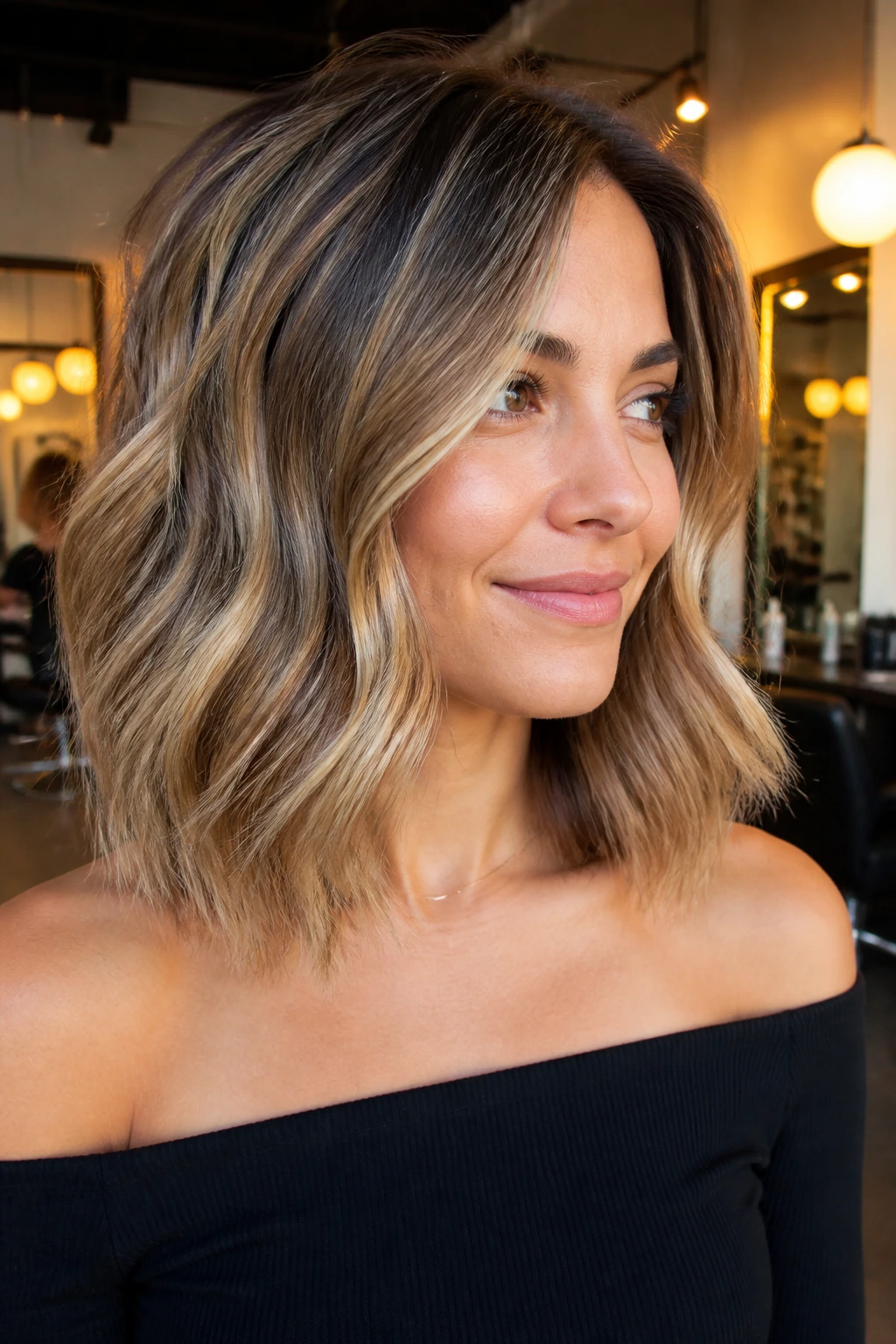
- Cutting it right at the jaw: That is the fastest way to make a square face look wider. Move the length below the jaw and the whole shape loosens up.
- Over-layering fine wavy hair: Too many layers make the sides puffy and thin the ends out too much. Keep the perimeter strong and the layering light.
- Using too much cream or oil: Heavy product can make the hair clump at the sides and show every horizontal line. Start small and add only at the ends if needed.
- Ignoring wave shrinkage: Hair that looks collarbone length when wet may jump higher as it dries. Always account for that before you judge the cut.
- Making the bangs too blunt: Straight-across fringe can feel heavy on a square face. Softer fringe shapes usually play nicer with the bone structure.
- Styling every wave into the same pattern: Uniform curls can make the haircut stiff. The better version has a few uneven bends.
Variations and Adaptations to Try

Fine-Hair Lob: Keep the perimeter clean, the layers minimal, and the product light. Too much internal removal will leave the ends wispy and flat.
Thick-Hair Lob: Ask for interior weight removal and a slightly longer length, often just past the collarbone. That keeps the silhouette from ballooning out at the sides.
Heat-Free Lob: Build the cut around air-drying and scrunching, with soft face-framing pieces that keep their shape without an iron. A little mousse and a diffuser are usually enough.
Curly-Wavy Lob: Leave the layers longer and cut with the natural spring in mind. A dry cut or curl-by-curl approach can stop the face shape from getting too wide.
Fringe-Forward Lob: Curtain bangs or bottleneck bangs can shift focus upward and soften the forehead. Keep the fringe long enough to part and move.
Low-Maintenance Grow-Out Lob: Choose a soft perimeter, minimal texture at the ends, and a length that still looks right after six extra weeks. This one matters if you hate living at the salon.
Keeping the Cut Fresh Between Trims
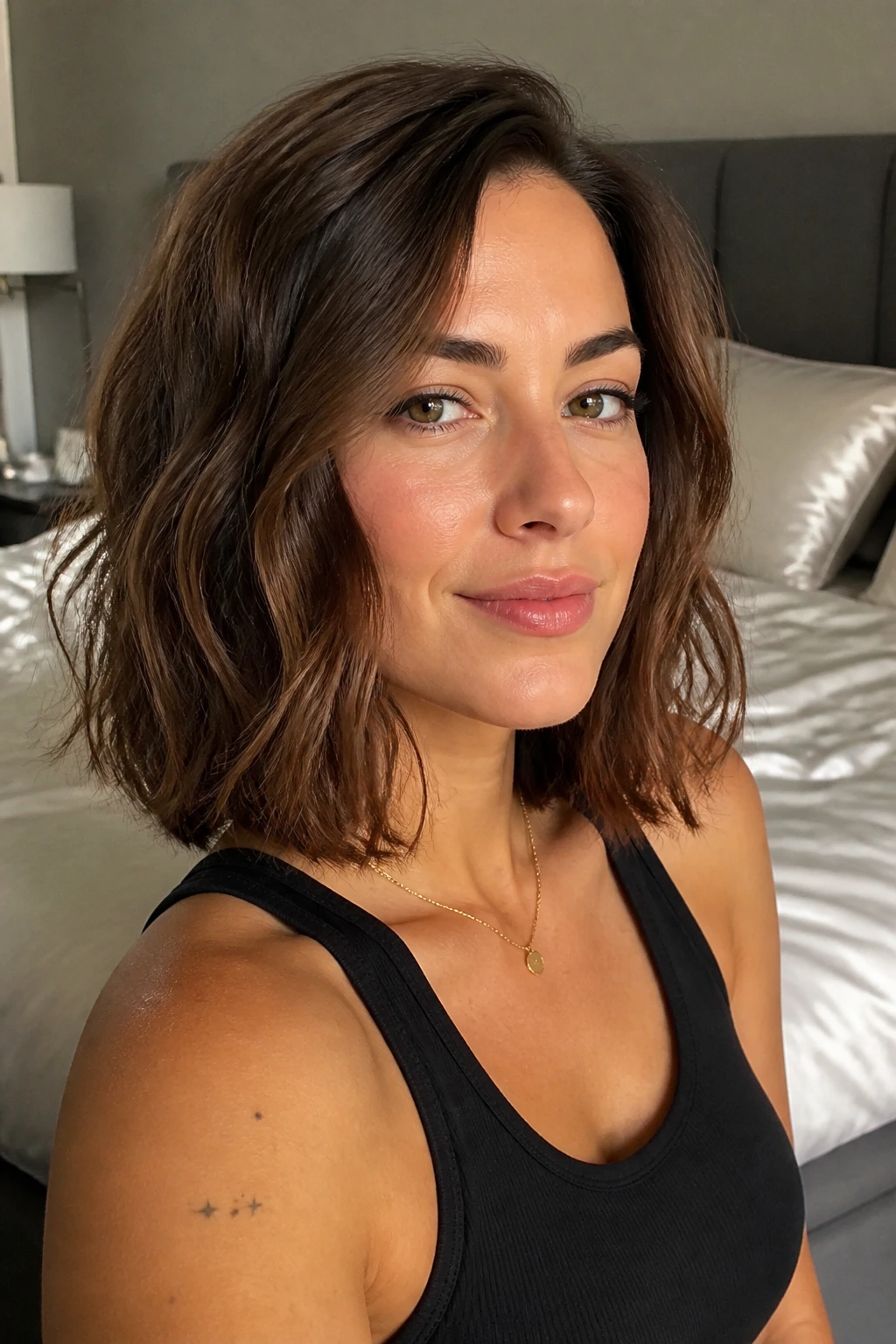
A long bob stays sharp when you pay attention to the perimeter. Once the ends hit the collarbone and start flipping in odd directions, the whole shape can feel less deliberate. For most wavy lobs, a trim every 8 to 10 weeks keeps the outline clean. If you like a softer grow-out, 10 to 12 weeks can work, but the sides may start to widen.
Wavy hair usually benefits from a clear wash rhythm. If your scalp runs oily, wash as often as you need and use a light leave-in on the ends. If your hair is dry, you can stretch washes a bit and refresh with a water mist, mousse, or a tiny touch of cream. A clarifying shampoo every 2 to 4 weeks helps if texture spray starts making the hair gritty.
Sleeping matters more than people think. A silk pillowcase, loose bun, or clip at the crown keeps the bend from getting smashed. Day two is often better than day one for a lob, but only if you do not pile on heavy product and flatten the root.
Frequently Asked Questions
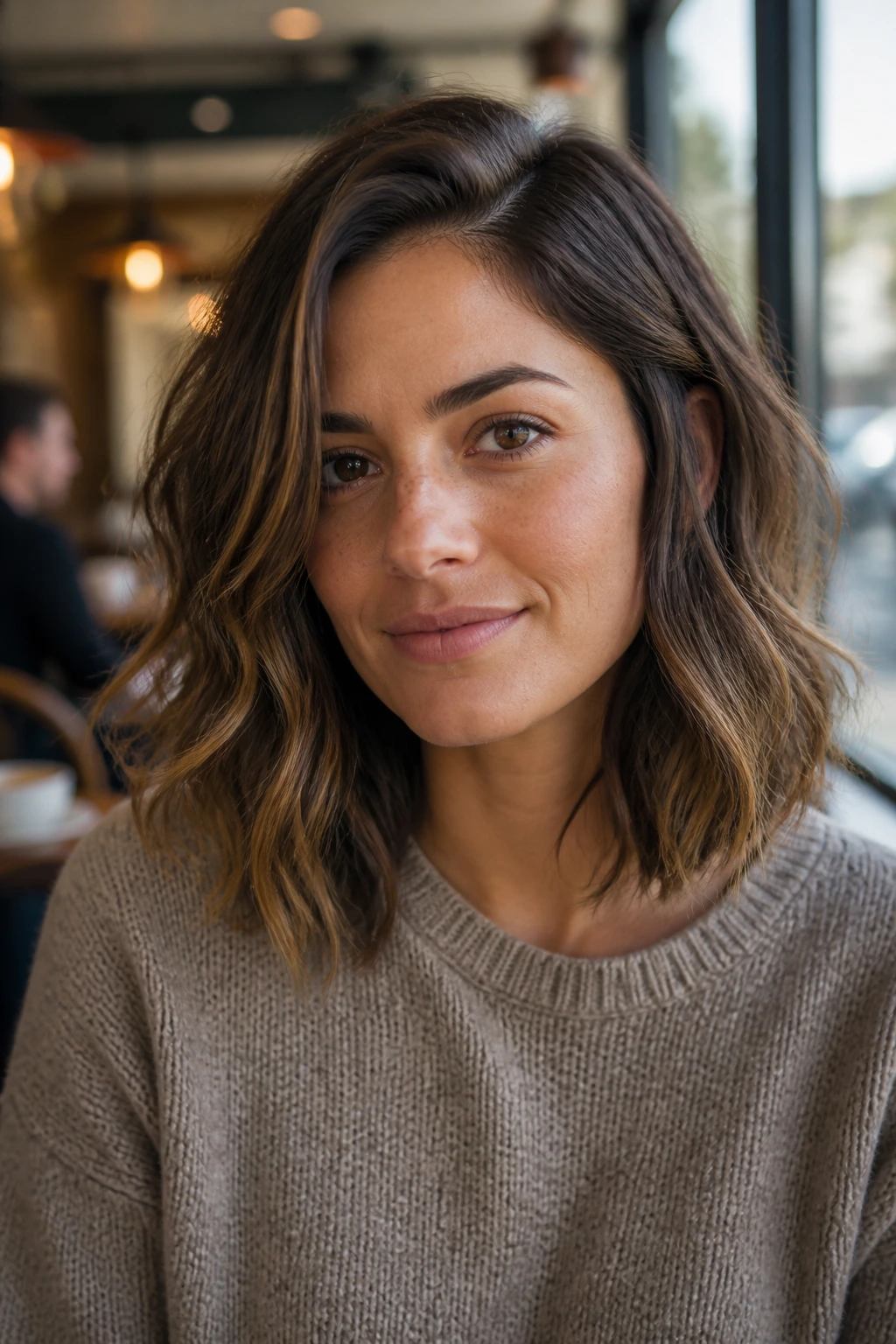
What lob length is best for a square face?
The safest sweet spot is usually the collarbone or a little below it. That keeps the cut away from the jawline, which is where a square face already has plenty of structure.
Should square faces avoid blunt lobs?
Not automatically. A blunt lob can work if it sits below the jaw and the ends are softened a bit with point cutting or wave styling. A blunt cut that stops at the jaw is the one that tends to look boxy.
Are curtain bangs good for wavy hair and square faces?
Yes, if they are cut long enough to part and move. Curtain bangs that hit around the cheekbone soften the forehead and blend into the lob without crowding the face.
Does a center part make a square face look wider?
It can, but the haircut matters more than the part. A center part with soft waves and collarbone length can look balanced; a center part with blunt chin-length hair is another story.
How often should I trim a long bob?
Most wavy lobs look their best with trims every 8 to 10 weeks. If you like a softer grow-out, you can stretch a little longer, but the ends will start to lose their clean line.
Can thick wavy hair wear a lob without puffing out?
Absolutely. The trick is removing bulk from the inside of the cut, not from the perimeter. That keeps the shape controlled while still letting the waves move.
What if my waves go flat at the top and puffy at the ends?
That usually means the roots need lift and the ends need less product. Try mousse at the crown, a diffuser on low heat, and a small amount of cream only on the last few inches.
Can I wear a lob straight sometimes and wavy other times?
Yes, and that is one reason the cut works so well. A lob that ends below the jaw still looks good when it is smooth, but the wave adds the softness that square faces often need most.
The Lob That Keeps Its Shape
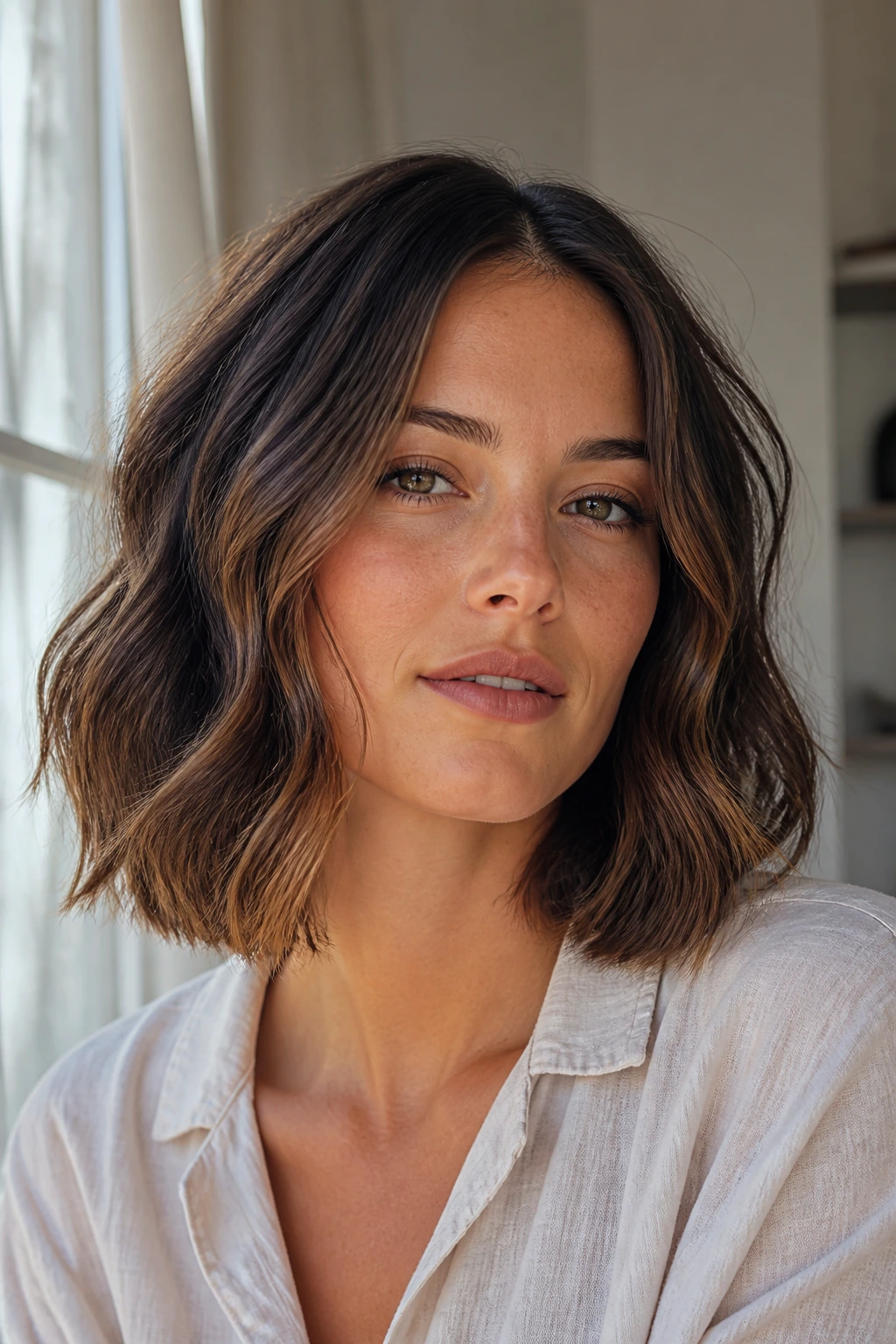
The best long bobs for wavy hair and square faces do the same quiet job: they keep the jaw from taking over while letting the wave pattern look like part of the design, not a problem to fix. That is why collarbone length keeps showing up here. It gives the hair a little room to breathe.
If you are choosing between two versions, pick the one that sits lower and moves more easily. The cut should look good with one pass of a diffuser or a quick bend from a wand, not a full styling battle. That is the version you will actually wear.
And that is the real test. The right lob should make your face look softer, your waves look intentional, and your morning routine feel less like a negotiation.