



Brown hair goes flat fast when every strand sits at the same level. Brunettes with lowlights get a different kind of color: less sameness, more movement, and a deeper finish that still reads brown instead of drifting into black. A level-5 mocha ribbon tucked under chestnut or espresso surface color can make a blunt bob look thicker and a long wave look deliberate instead of one-note.
I like lowlights on brunette hair because they do not shout. They sit underneath, in the folds, around the ears, or through the interior of curls, and the result is one of the rare salon moves that looks better as it grows out. The trick is choosing a brown that matches your undertone and your haircut instead of chasing a photo that only works under ring lights.
That is where these 28 shade brown hairstyles for brunettes with lowlights get useful: some are glossy and smooth, some are shaggy and matte, some lean cool and smoky, some lean warm and chestnut. The common thread is depth that moves when you turn your head. And if your brunette has been reading as flat in daylight, these are the cuts and color placements that bring the shape back.
Why Brown Hairstyles for Brunettes with Lowlights Look Richer With Movement
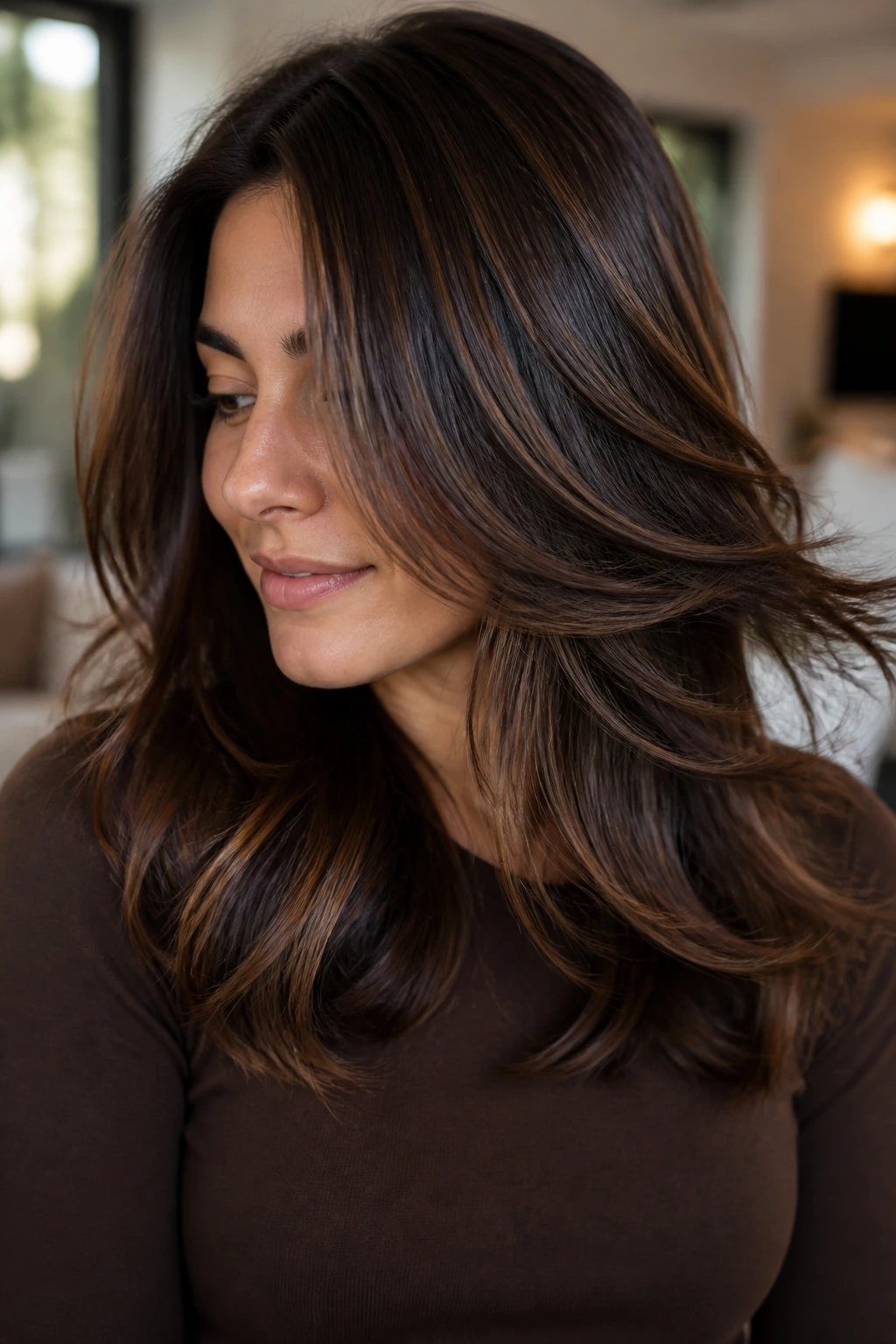
Depth is the whole point here. Lowlights work best when they sit one to two levels darker than your base, not four or five. Go too dark and the hair starts to read heavy; stay within a small range and you get shadow, not mud.
Placement matters more than the shade name on the swatch. A brunette bob with lowlights hidden under the top layer looks cleaner than a bob with dark streaks painted on top. The eye should catch the movement when hair bends, flips, or curls.
Straight hair and textured hair need different maps. On straight hair, lowlights need softness around the face and interior depth near the ends. On curls and waves, the color needs to follow the bend of the hair so the dark pieces land in the hollows, not across the front of the curl.
Less maintenance is a real benefit. Darker pieces fade more gracefully than highlights, so the grow-out line stays quieter. You still need gloss and toning, but you are not staring down the same bright-root problem every time the part shifts.
There is room for warmth or coolness. Chestnut, cocoa, and mahogany lean warm; espresso, mushroom, and truffle lean cool. That means you can make brunette hair look softer, smokier, or richer without changing the whole identity of the color.
1. Chestnut Ribbon Layers
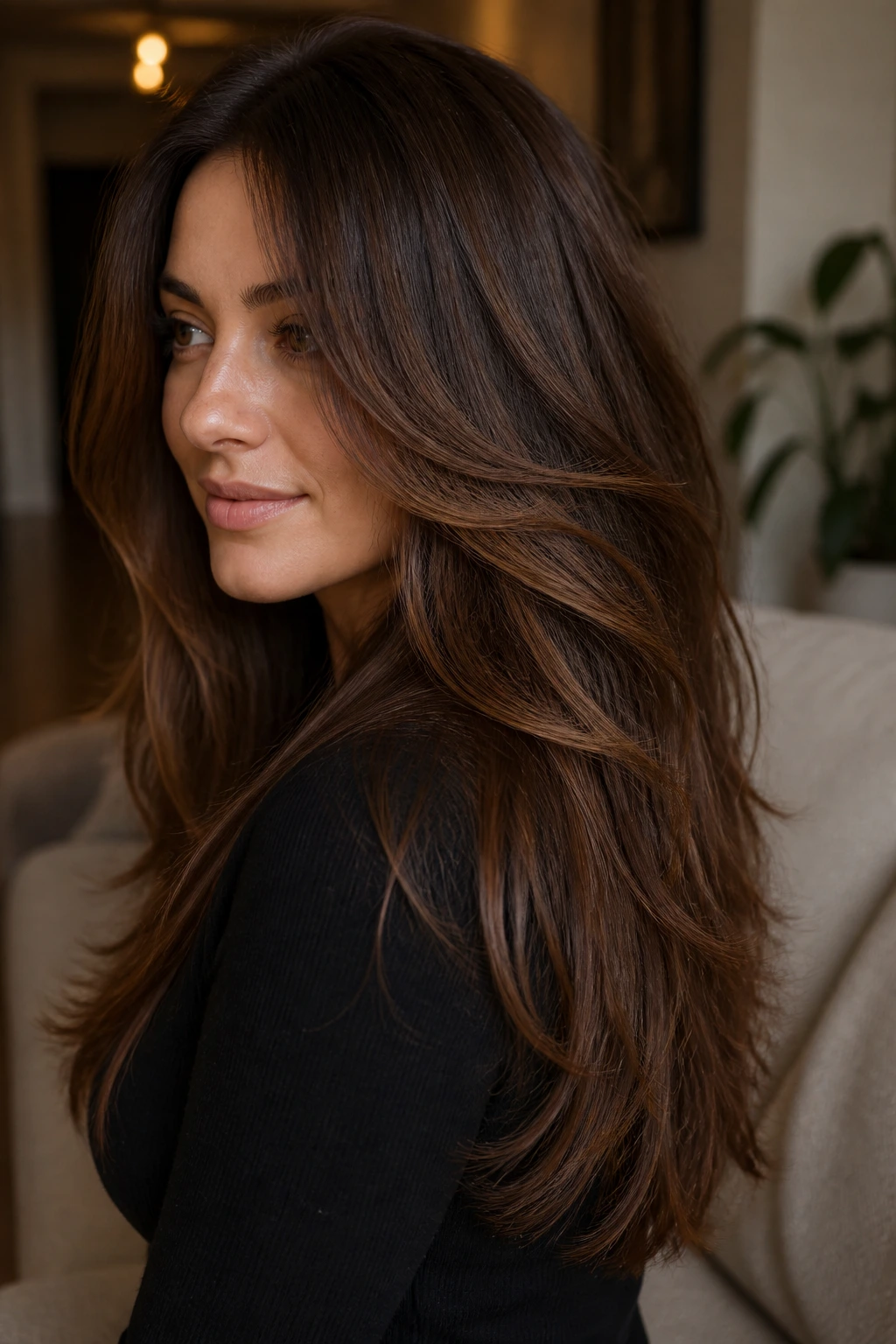
Chestnut lowlights running through long layers give brunette hair a soft, woven look. The color does its best work when the layers move, because the darker ribbons appear and disappear as the ends swing. It feels lived-in, not loud.
Why It Works
This style is smart for medium to thick hair because the layers keep the silhouette light while the chestnut lowlights stop the surface from looking flat. If your base is a warm level 5 or 6, the contrast stays believable instead of stripey. The color almost acts like shadow under lamplight.
- Best on: shoulder-length to long hair with natural bend.
- Ask for: chestnut lowlights placed through the interior and lower thirds, not just the top layer.
- Finish with: a 1.25-inch iron or a round brush blowout for visible ribboning.
Pro tip: keep the front pieces a shade lighter than the nape if you want the cut to look softer around the face.
2. Espresso Glass Bob
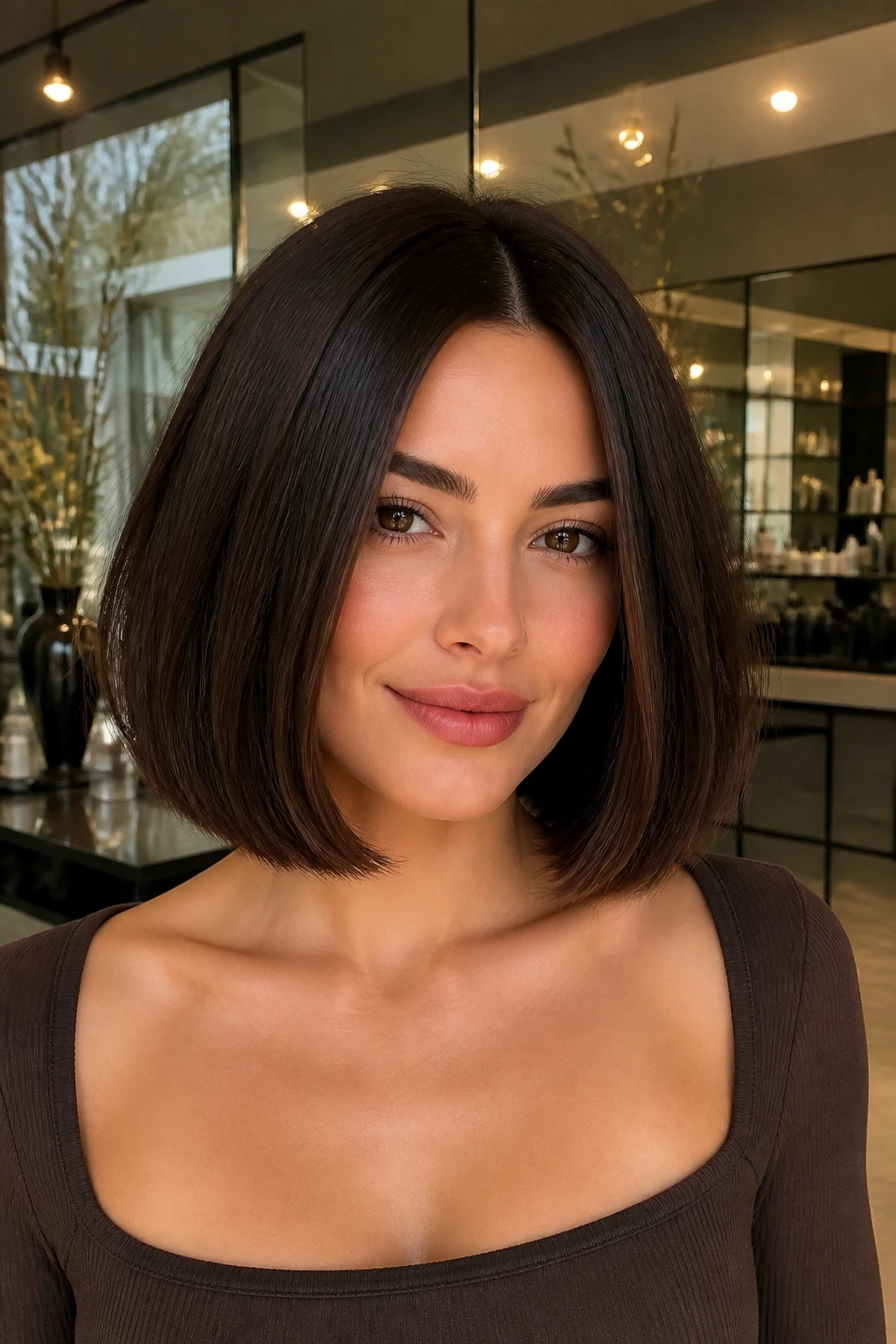
A blunt bob plus espresso lowlights is one of those combinations that looks expensive without trying very hard. The shape is clean, and the darker panels underneath make the cut look denser at the ends. Gloss is doing a lot of work here.
A bob like this needs smoothing, not volume for volume’s sake. If you rough-dry it and call it done, the lowlights can disappear into the rest of the brown. A flat brush blow-dry, a quick pass with a flat iron, and a pea-sized amount of serum at the ends usually gives the best result.
3. Cocoa Curls with Walnut Depth
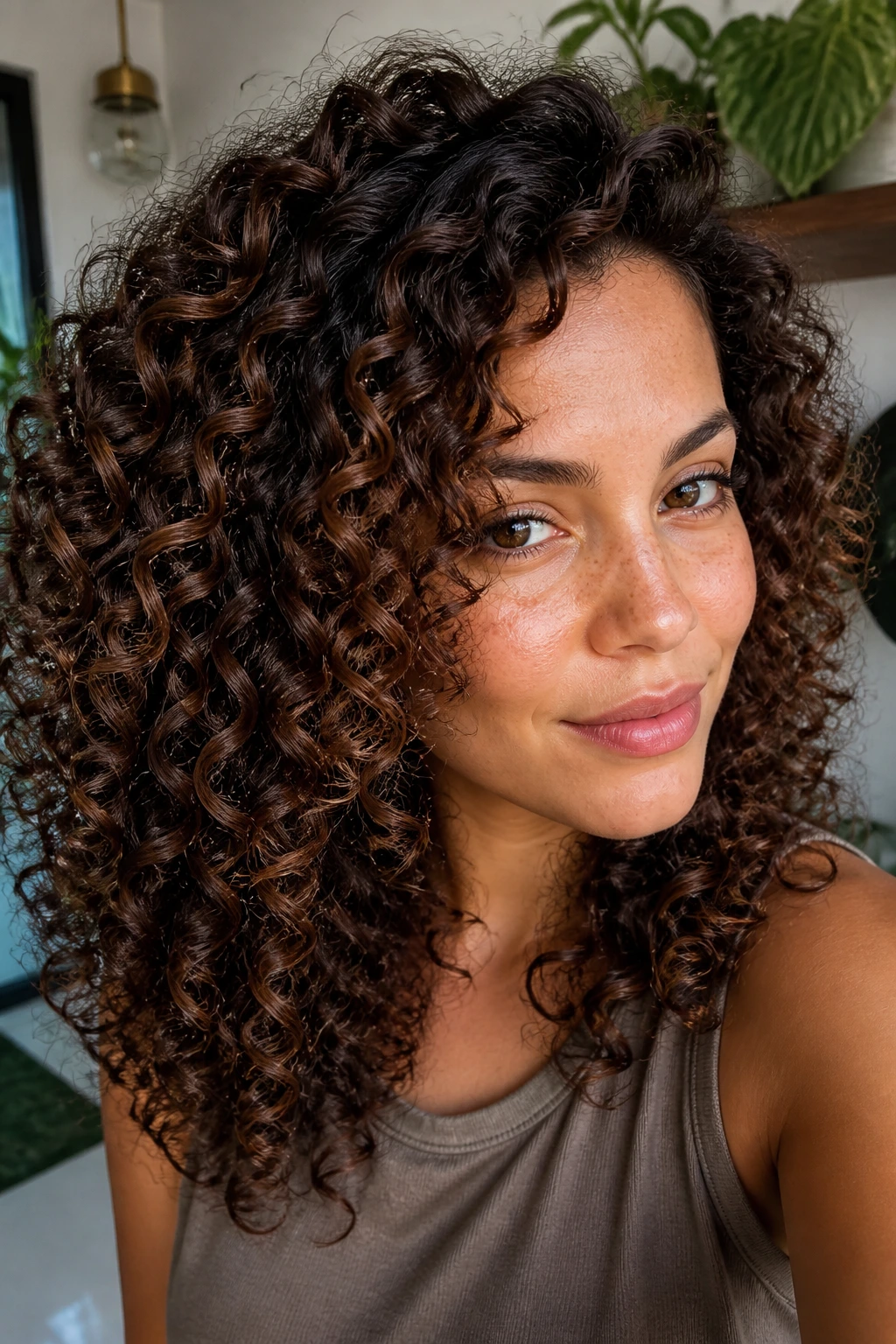
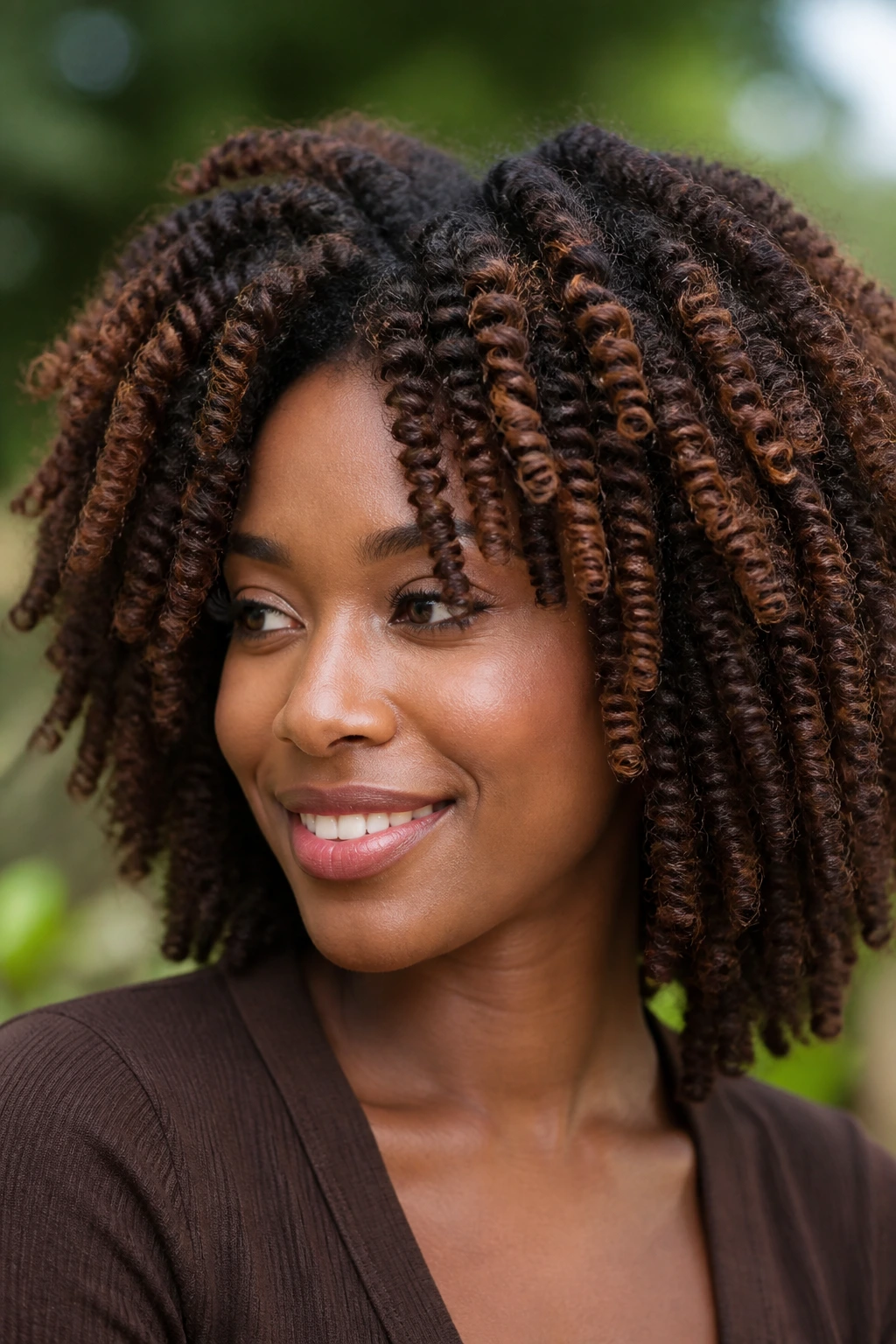
Why do curls look better with lowlights than straight hair sometimes? Because curls already have built-in shadows, and walnut lowlights deepen those shadows instead of fighting them. The color lands in the curl valleys and makes each coil read more three-dimensional.
How to Style It
Use a diffuser on low heat and stop touching the curls once they set. Too much handling smears the curl pattern and hides the lowlight placement. If your curls are medium or tight, ask for the lowlights to be painted in curl-by-curl sections so the color follows the spiral.
A leave-in cream with a light gel topcoat keeps the finish defined. Heavy oils flatten the contrast fast.
4. Mushroom Brown Shag
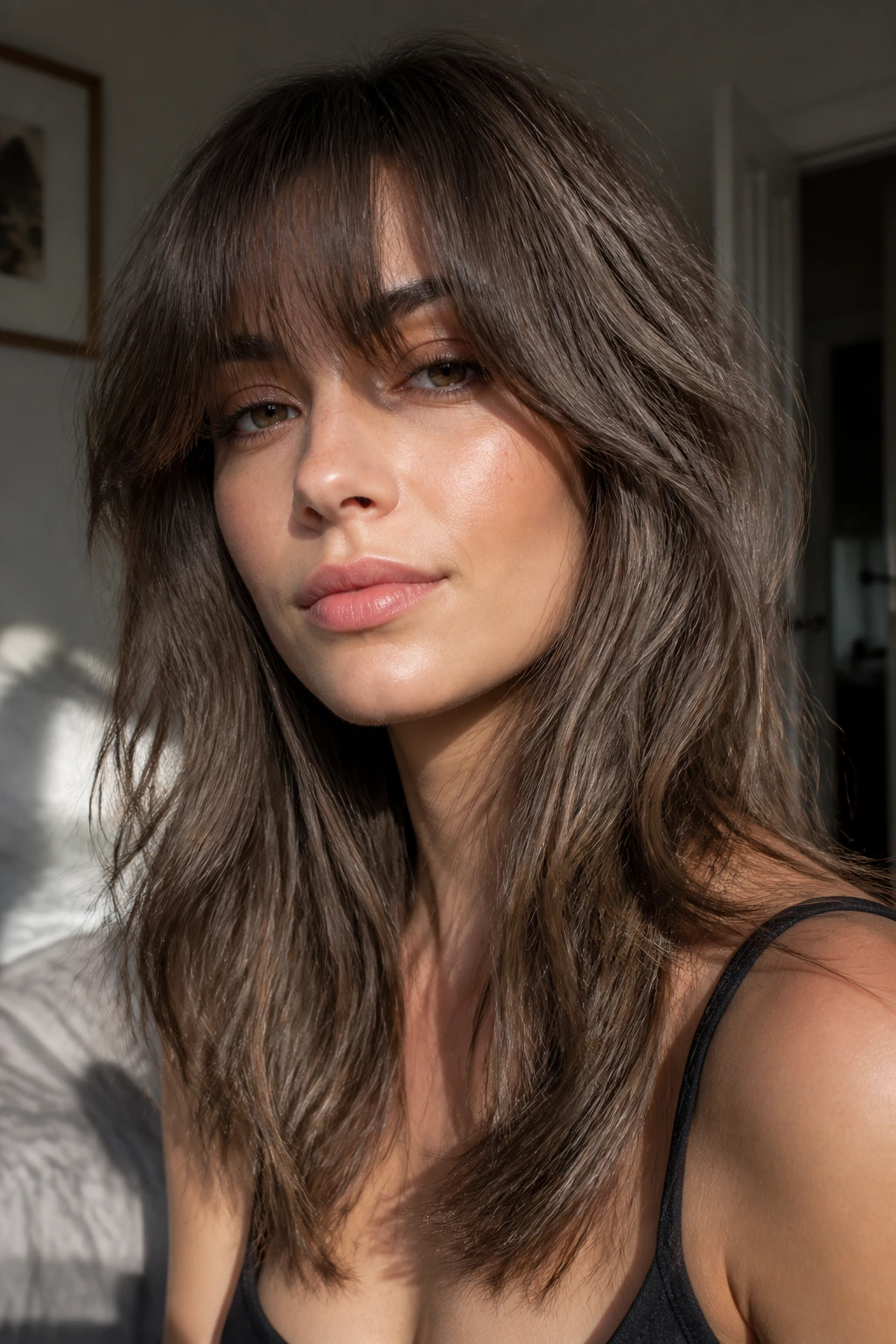
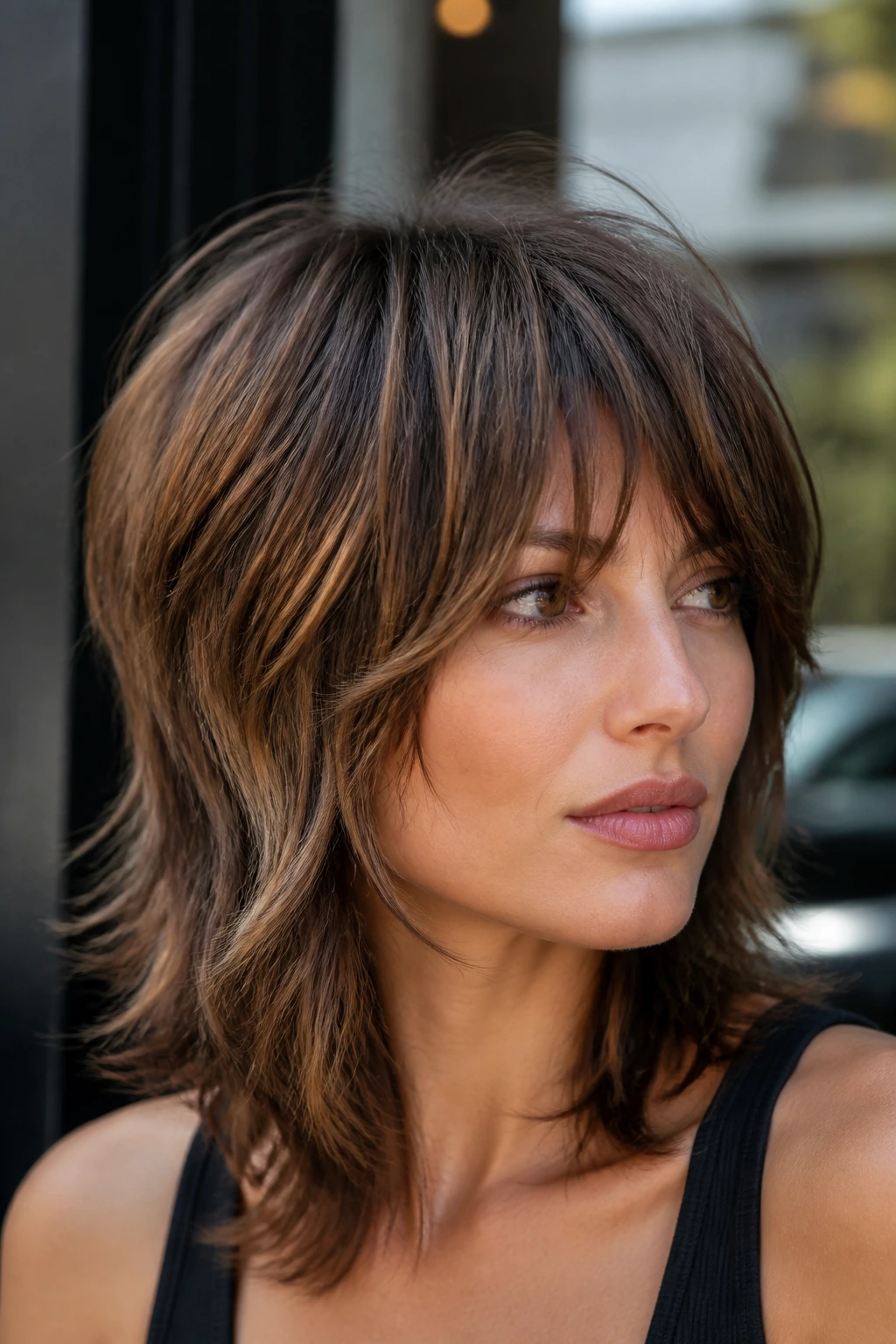
A shag loves a cooler brown tone, and mushroom lowlights give the whole cut a smoky, earthy finish. The layers sit in different planes, so the darker pieces show up when the hair breaks apart at the ends. It is messy on purpose, which is the point.
This cut works especially well if your hair has a natural wave or a little bend from sleeping in a braid. Dry texture spray at the crown and a bit of separation through the ends make the lowlights look intentional rather than randomly placed. If your brunette tends to feel too warm, mushroom tones pull the color back into a softer, muted range.
5. Mocha Ribbon Waves
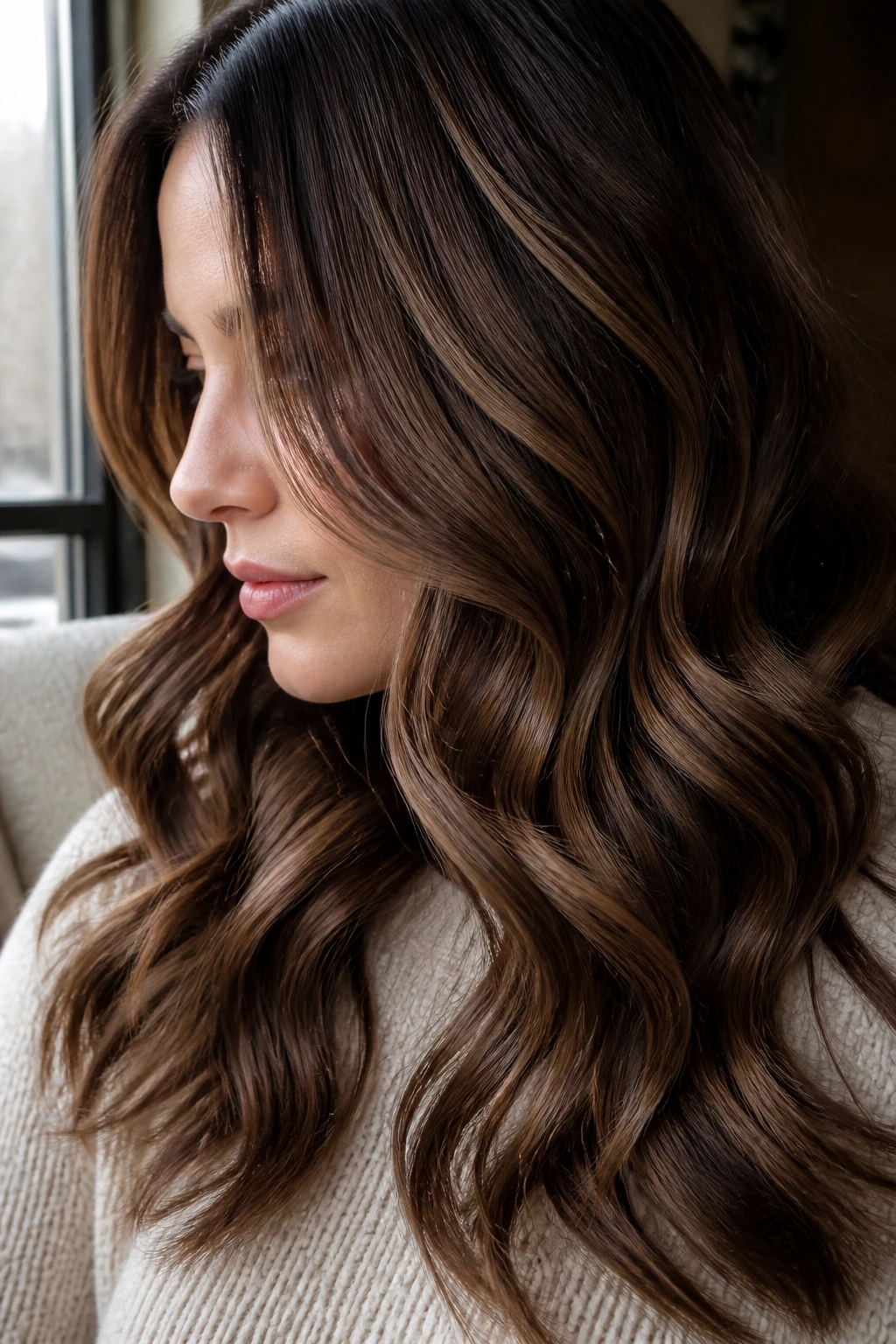
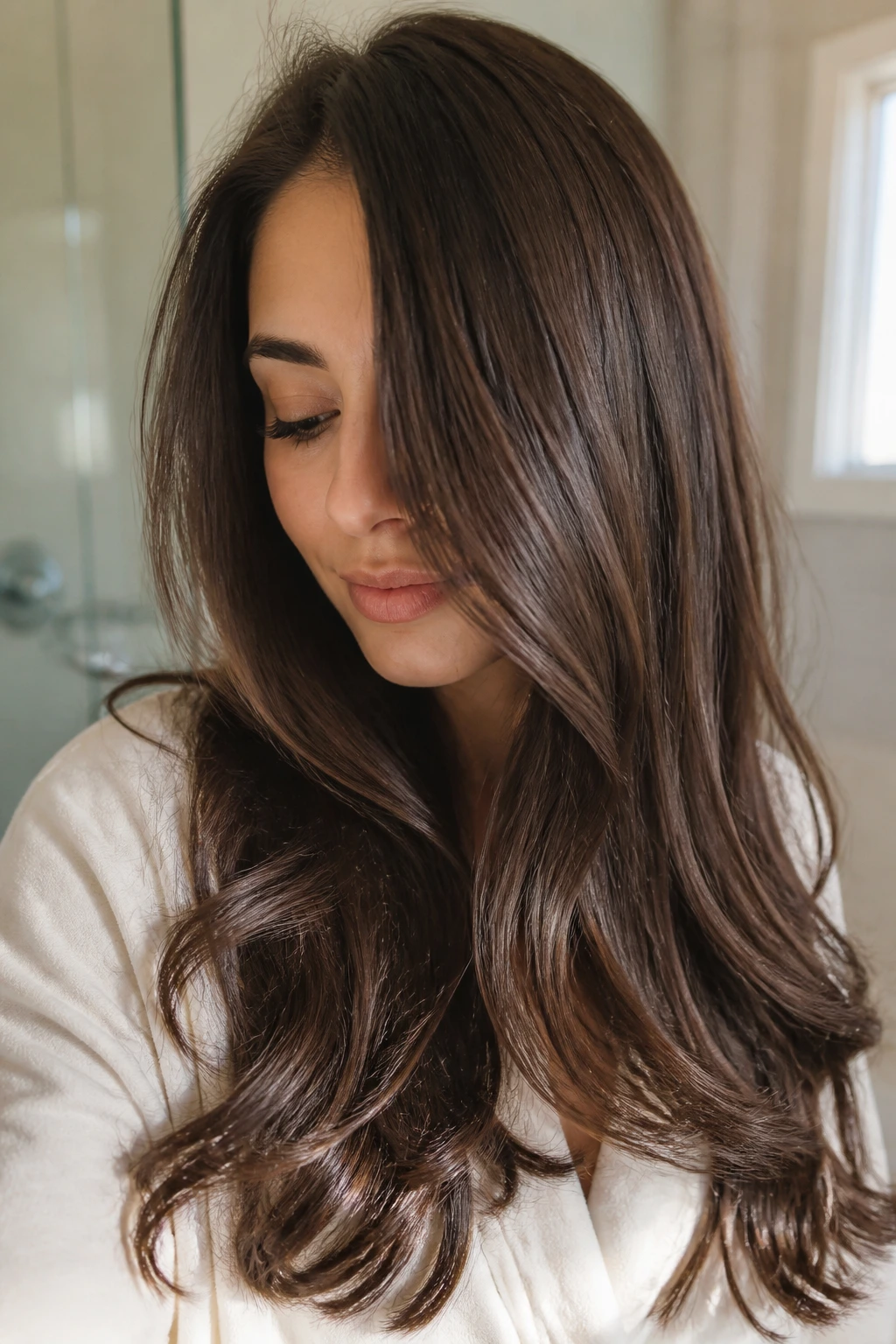
Mocha lowlights in loose waves are the quiet answer to brunette color that feels a little too plain. Nothing here needs to be dramatic. The appeal is the way the waves keep opening and closing around the darker pieces, so the hair looks different from every angle.
I reach for this kind of shade when someone wants dimension but does not want to look “done.” The waves can be made with a 1-inch curling iron, but they should be brushed out until the bend is soft and wide. Tight curls will swallow the ribbon effect.
6. Walnut Curtain Bangs
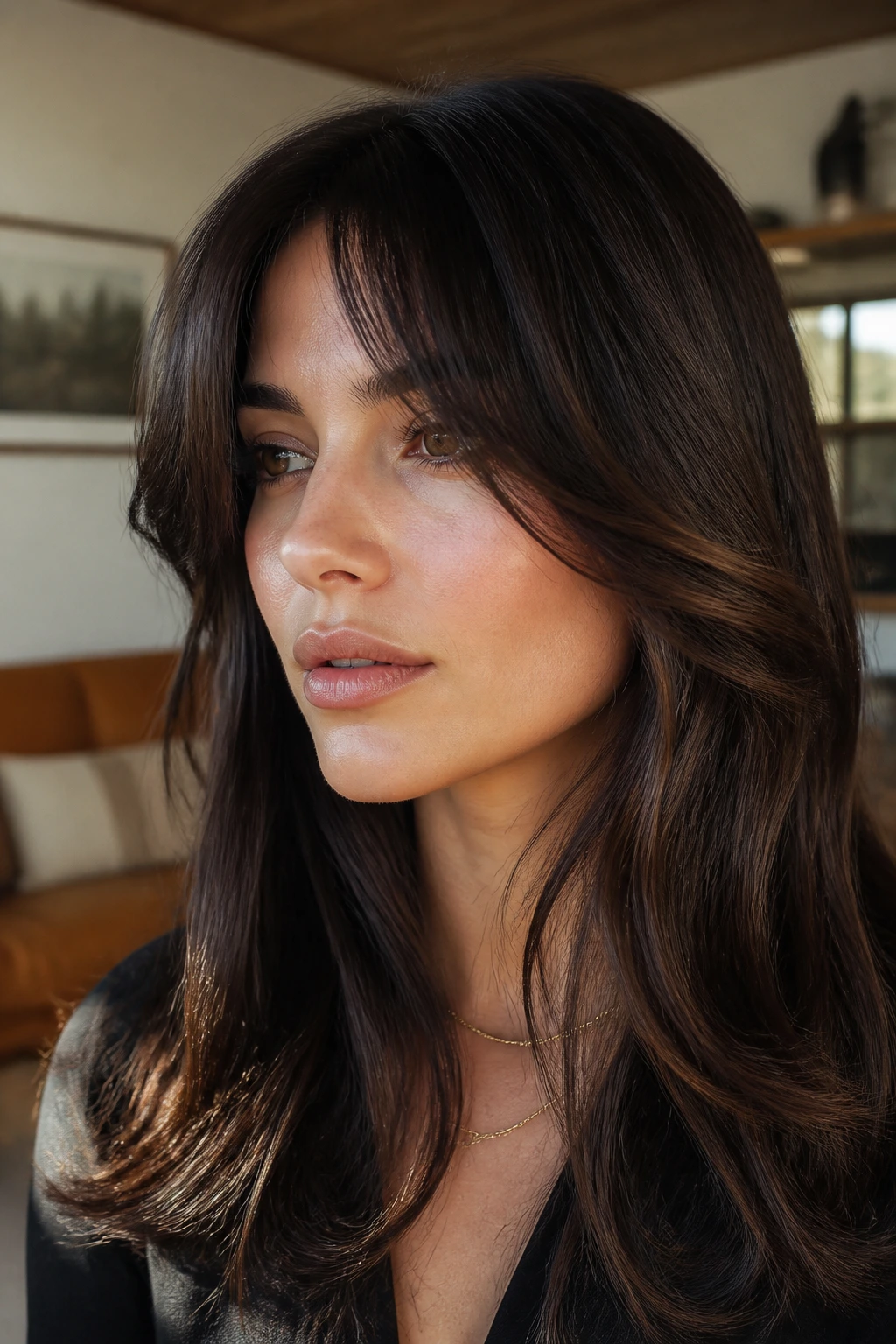
Curtain bangs change the whole face-framing story, and walnut lowlights make those bangs feel fuller at the roots. The darker pieces sit around the cheekbones and temples, which is where your eye goes first anyway. That is a smart place to spend the color.
Unlike blunt fringe, curtain bangs need movement to show the lowlights. Blow them back and away from the face with a medium round brush, then let them cool before touching them. If they collapse too flat, the brown looks heavier than it should.
7. Chocolate Blowout Layers
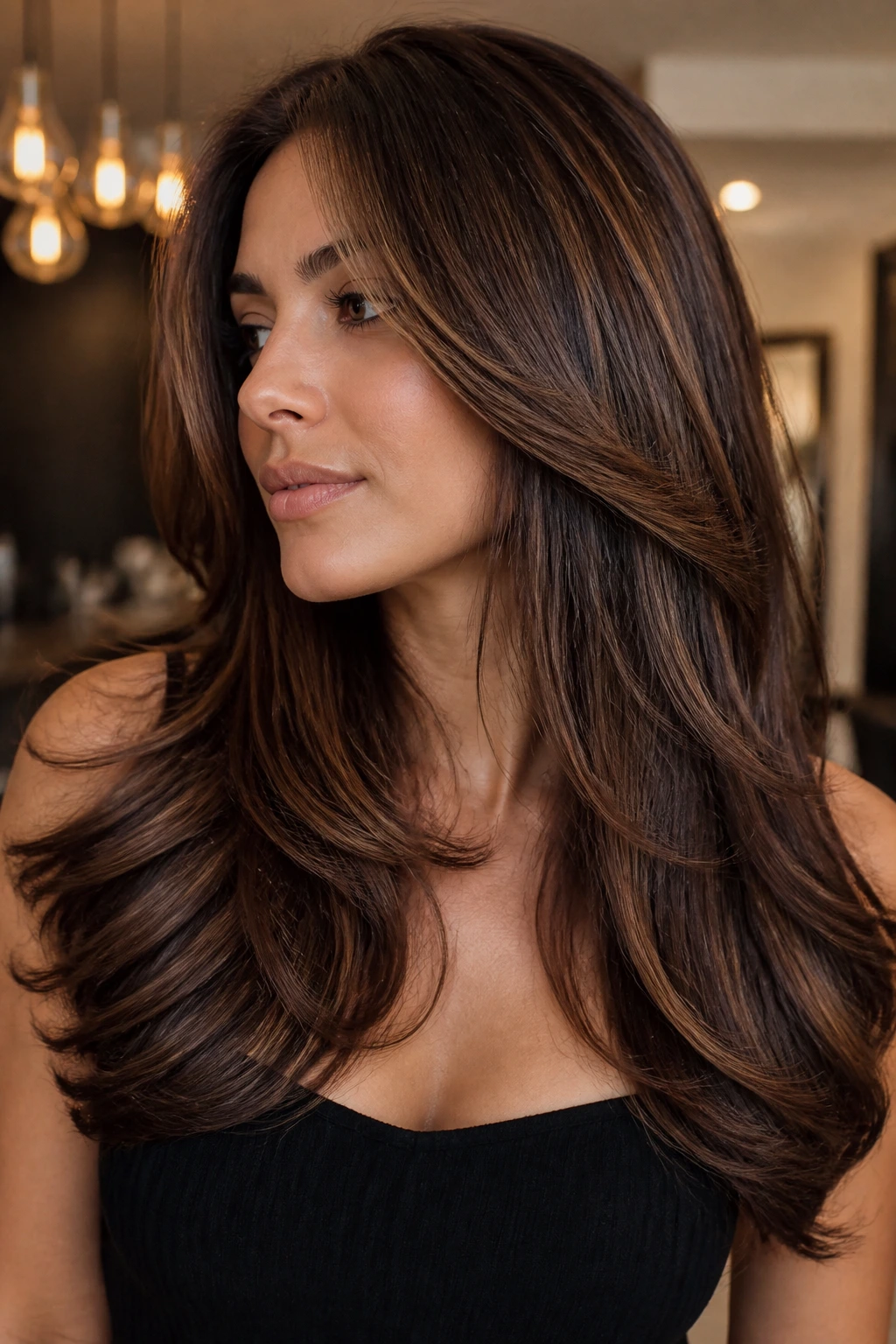
Chocolate lowlights and a proper blowout are a strong pair because the shape needs bounce. Long layers already give you movement; the lowlights make that movement visible. When the ends flip just a little, the darker pieces catch the eye.
What to Ask For
- Placement: lowlights through the interior, with extra depth around the ends.
- Tone: chocolate brown if your base is warm; neutral brown if your skin runs cooler.
- Styling: round-brush blowout with lifted roots and curled-under ends.
Do not blast this look with a heavy oil. You want shine, not grease.
8. Smoky Cinnamon Lob
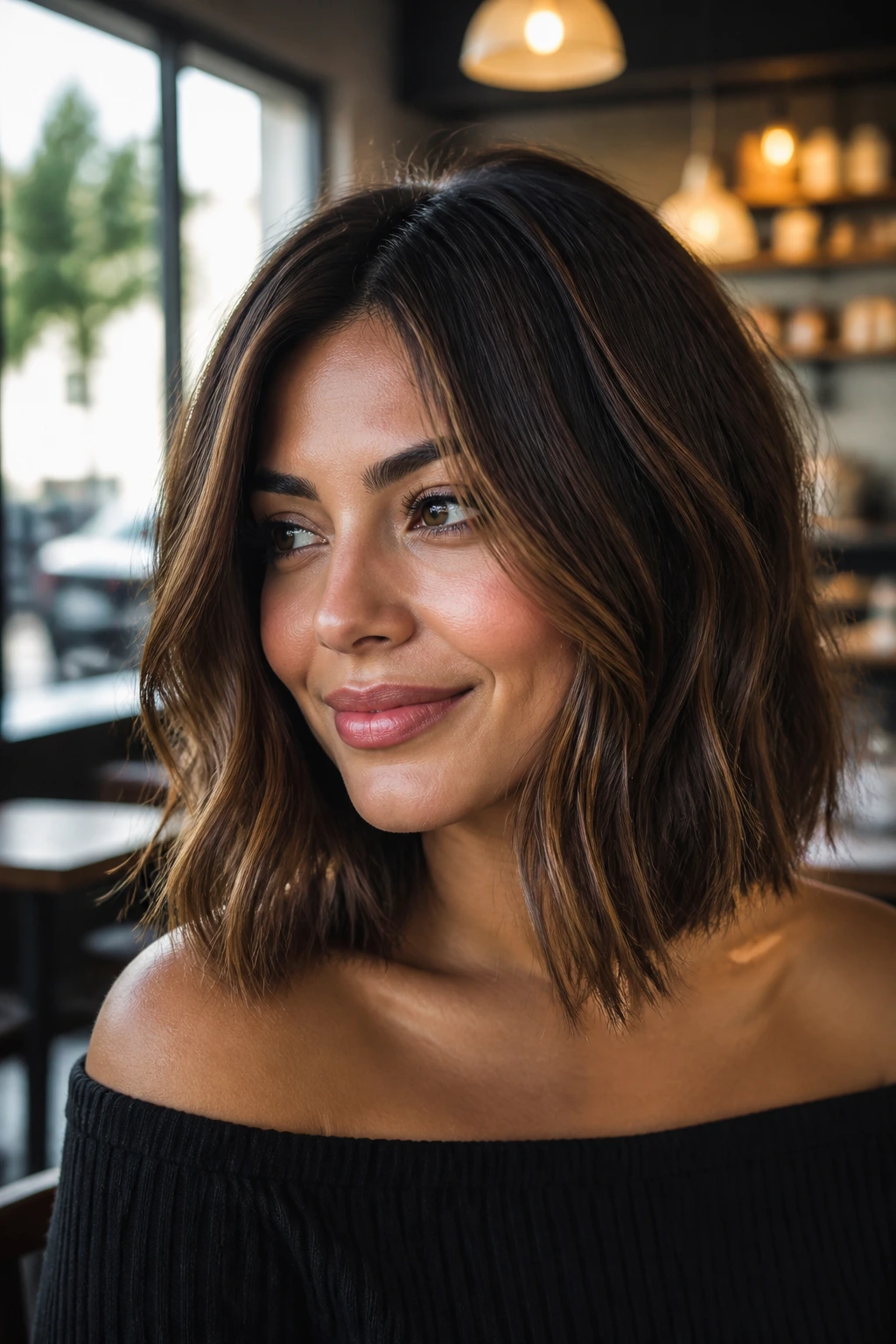
A lob with smoky cinnamon lowlights has just enough warmth to keep the brunette from looking dull, but not so much warmth that it turns coppery. The collarbone length gives the color a place to move. It is a very wearable cut if you like low maintenance but still want shape.
The best version has slightly bent ends, not sharp flips. A flat iron wave, set in alternating directions, gives the lowlights room to show through. And because the length is shorter, the darker pieces stay visible even when the hair is tucked behind the ear.
9. Ash Brown Blunt Bob
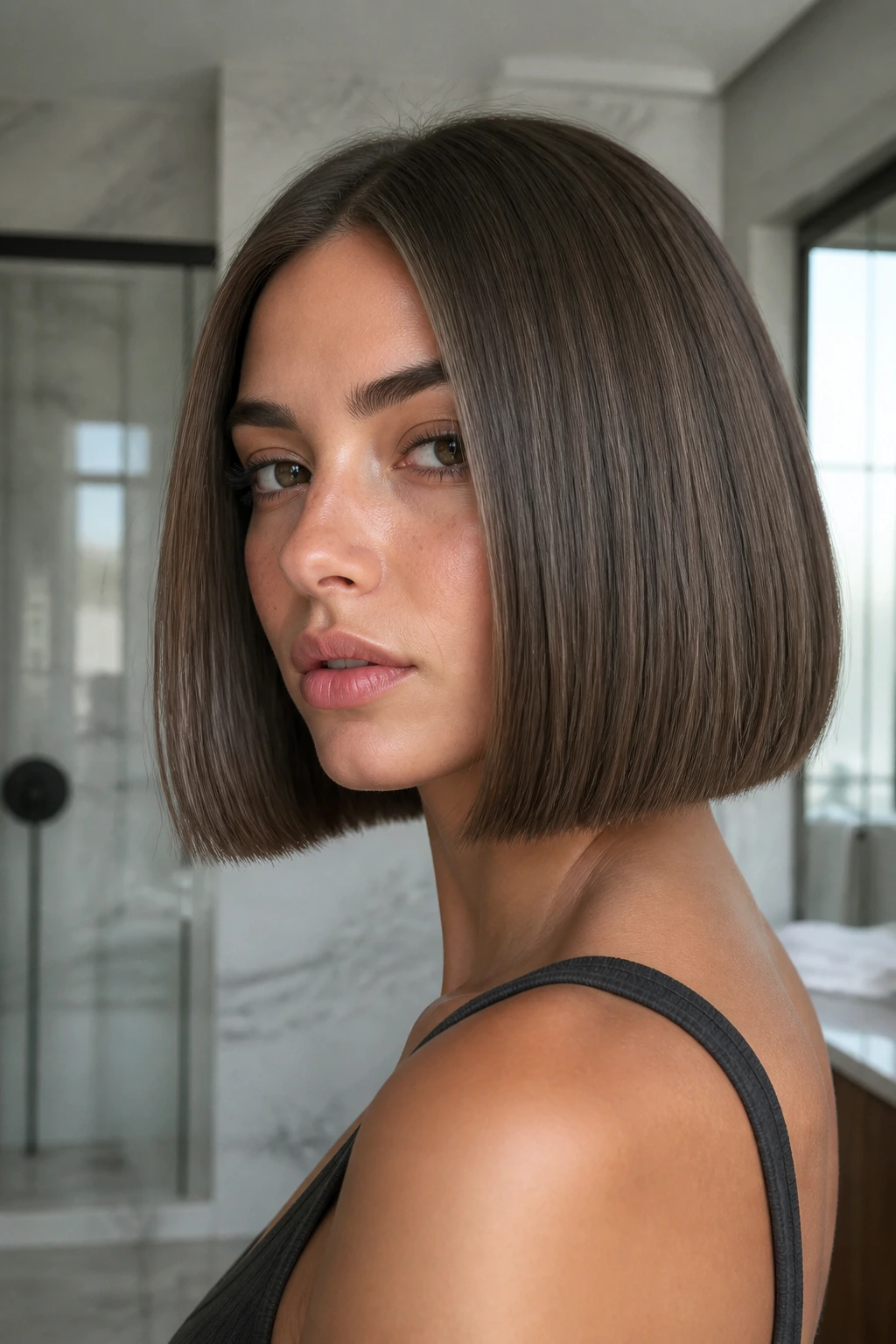
Ash brown lowlights in a blunt bob are all about control. The cool tone keeps the color from getting red in bright light, and the blunt edge makes fine hair look denser. It is one of the cleanest ways to do brunette dimension without adding fluff.
This cut works best when the perimeter stays sharp. If layers get too soft, the ash tone can look dusty instead of sleek. A quick root lift and a smooth finish are enough; you do not need big waves here.
10. Truffle Tousled Lob
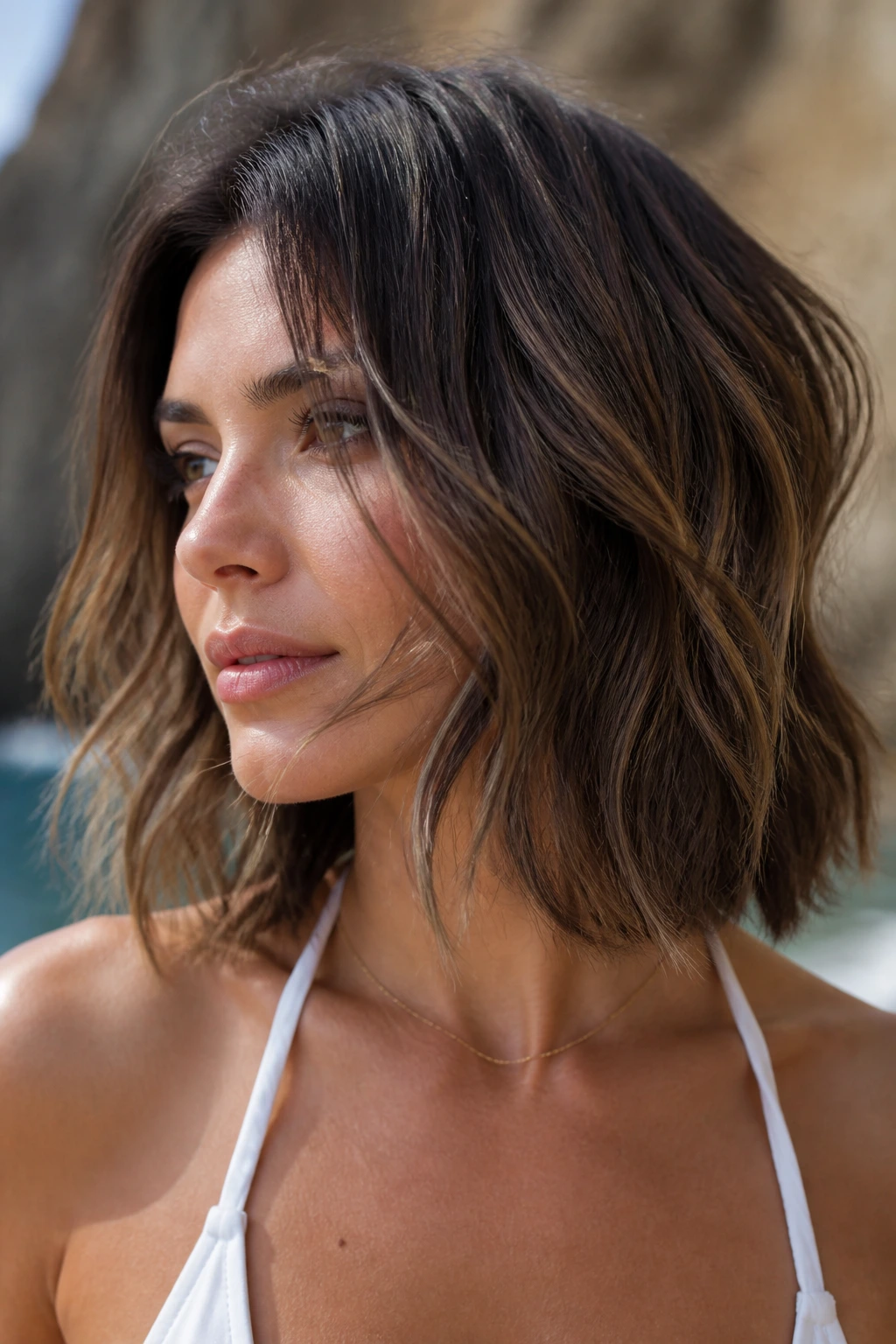
Truffle lowlights love a tousled lob because the texture breaks up the brown in a flattering way. Think of it as a cut that does not mind a little mess. The darker ribbons live underneath, so the top still feels soft while the ends carry depth.
A sea-salt spray can help, but too much makes the hair gritty and dull. I prefer a light mousse at the roots, then a few loose bends with a curling wand. The aim is separation, not beach-house stiffness.
11. Maple Pixie with Soft Depth
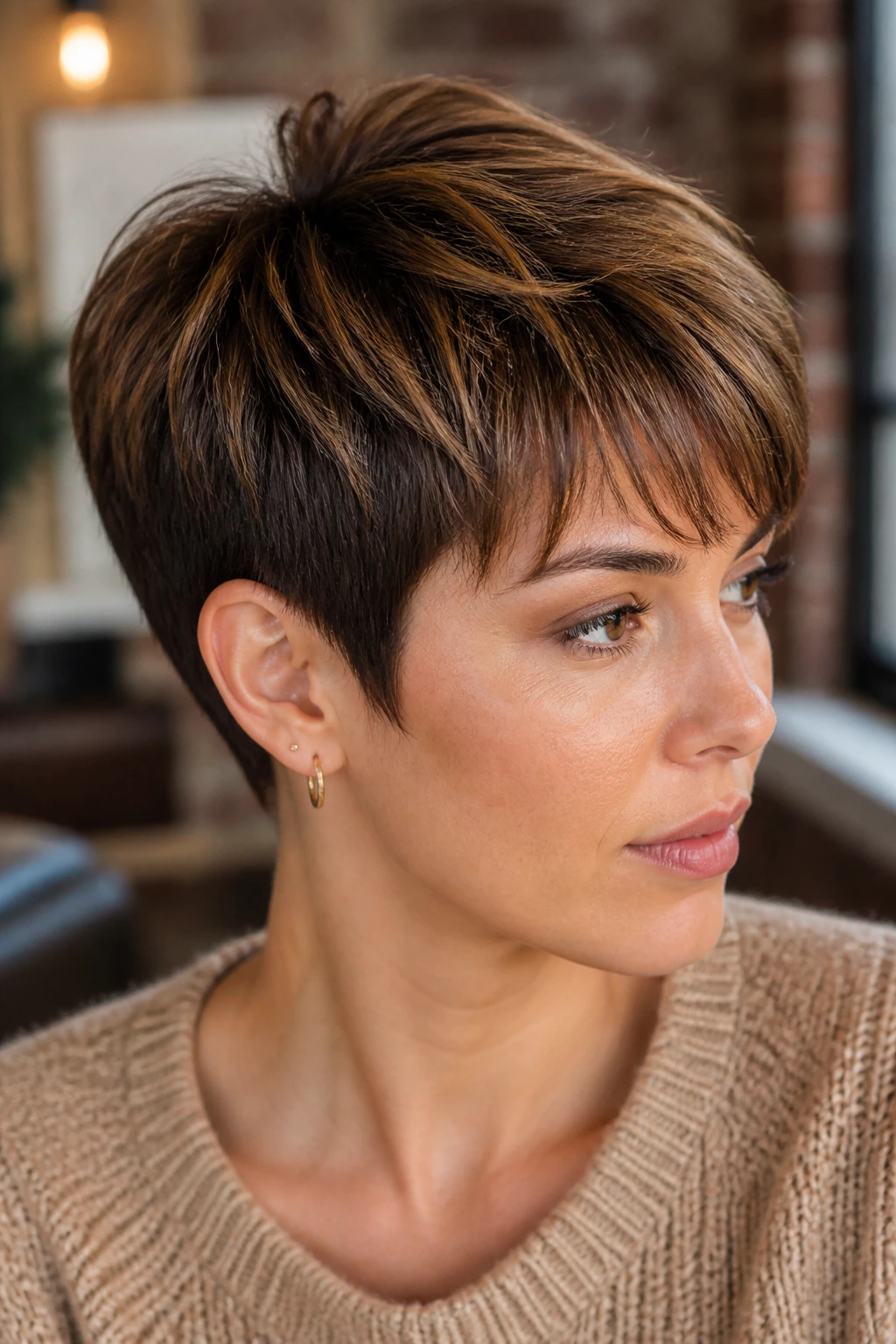
A pixie with maple-brown depth is proof that short hair does not have to be flat. When the lowlights sit at the crown and around the temple, the cut gets a little shadow that makes the shape look fuller. On a pixie, that matters more than shine.
Keep the texture piecey. A matte cream or a tiny bit of wax shows the layers without making them stiff. If the hair is fine, ask for micro-lowlights that stay close to your base tone so the scalp area does not look too stark.
12. Dark Roast Waist-Length Layers
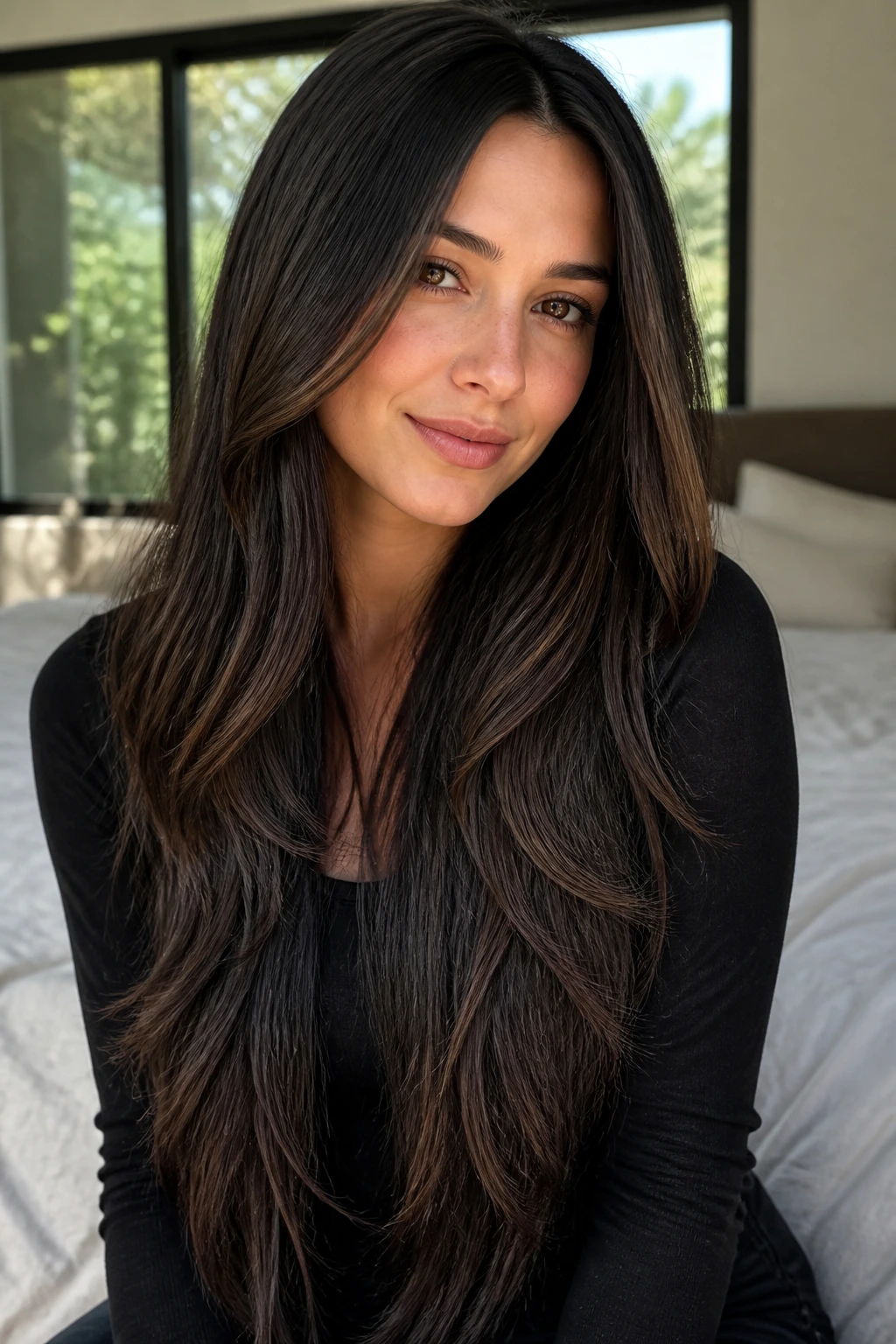
Long hair can get heavy fast, and dark roast lowlights keep that weight from turning into a brown curtain. The darker pieces help the layers read as layers, especially around the mid-lengths and ends. It is a good move if your hair is thick and tends to swallow shape.
This is not the place for over-blown curls. A smooth bend from mid-shaft down usually shows the color better than big spirals. If you wear your hair straight most of the time, tuck in a few lowlights near the bottom third so the ends do not disappear.
13. Velvet Brown Natural Curls
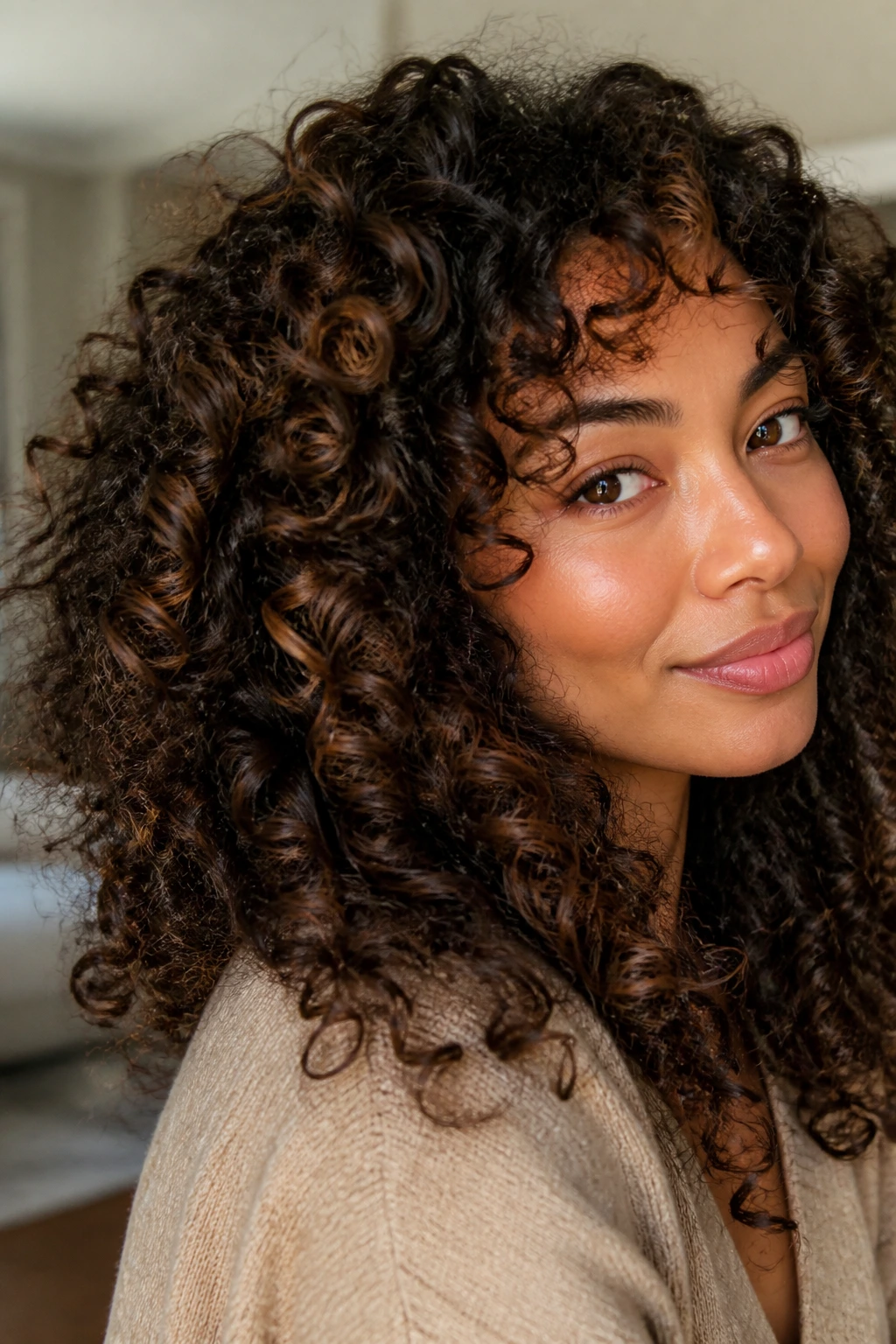
Velvet brown lowlights make natural curls look plush instead of puffy. That is the difference. The darker shade sits inside the curl pattern, where it creates shadow and lets the ringlets read individually.
Why It Works on Curl Patterns
The color should follow the curl, not the part line. If you paint lowlights only where the hair lies flat, the effect vanishes once the curls spring back. Ask for curl-by-curl placement and a dry map if your stylist knows how to work that way.
A diffuser on low heat keeps the curl clumps intact. Once the hair dries, a light oil on the ends is fine, but skip anything slick near the roots.
14. Hazelnut Flip Ends
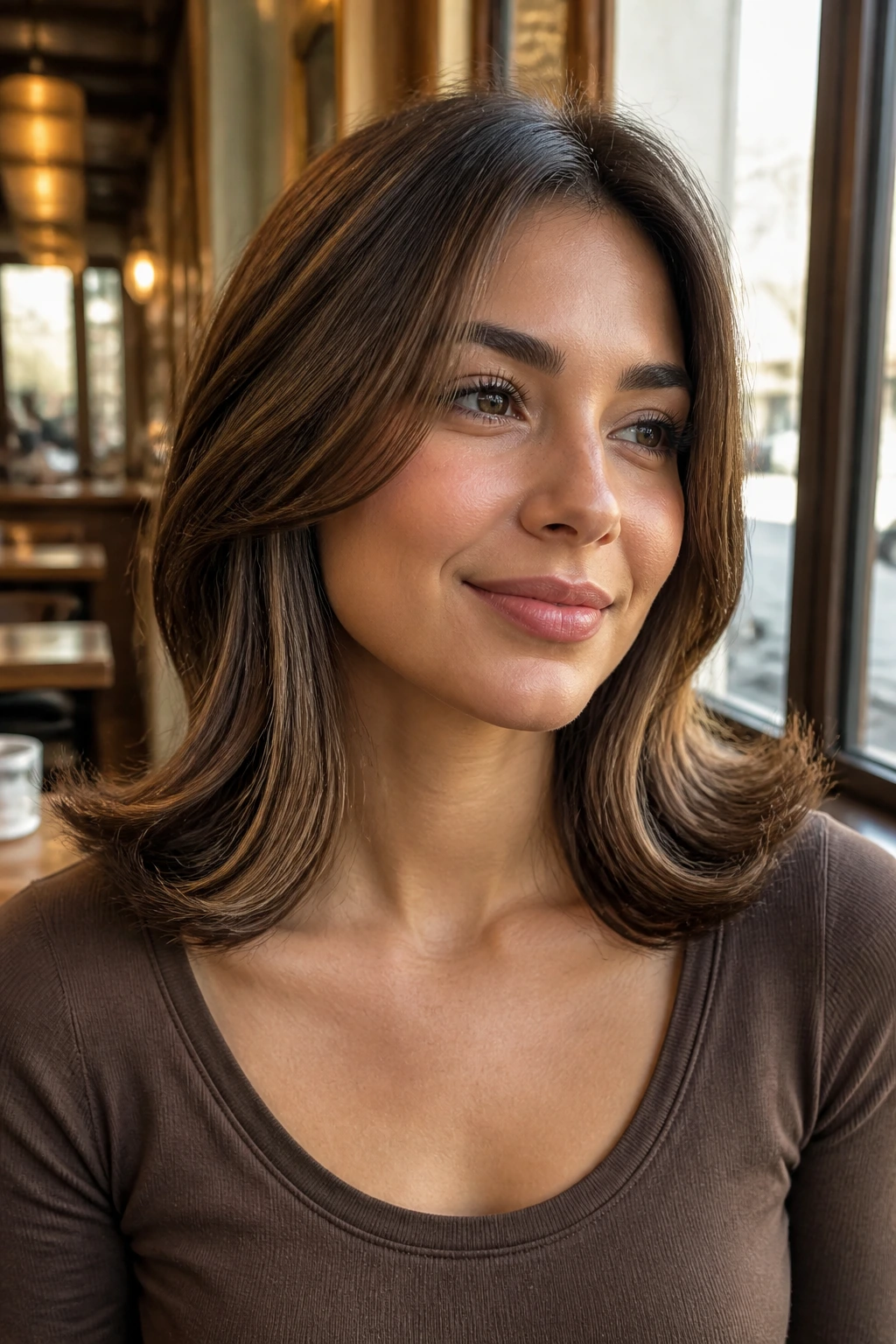
Hazelnut lowlights and flipped ends give brunette hair a little retro lift. The ends turn outward or inward just enough to show the darker tone underneath. It works because the cut has a built-in shape instead of relying on perfect texture.
This style is better than it sounds on medium-length hair. The flip creates movement at the collarbone, where brunette color can otherwise go invisible. A medium barrel brush or a quick pass with a flat iron at the ends does the trick.
15. Smoky Brunette Wolf Cut
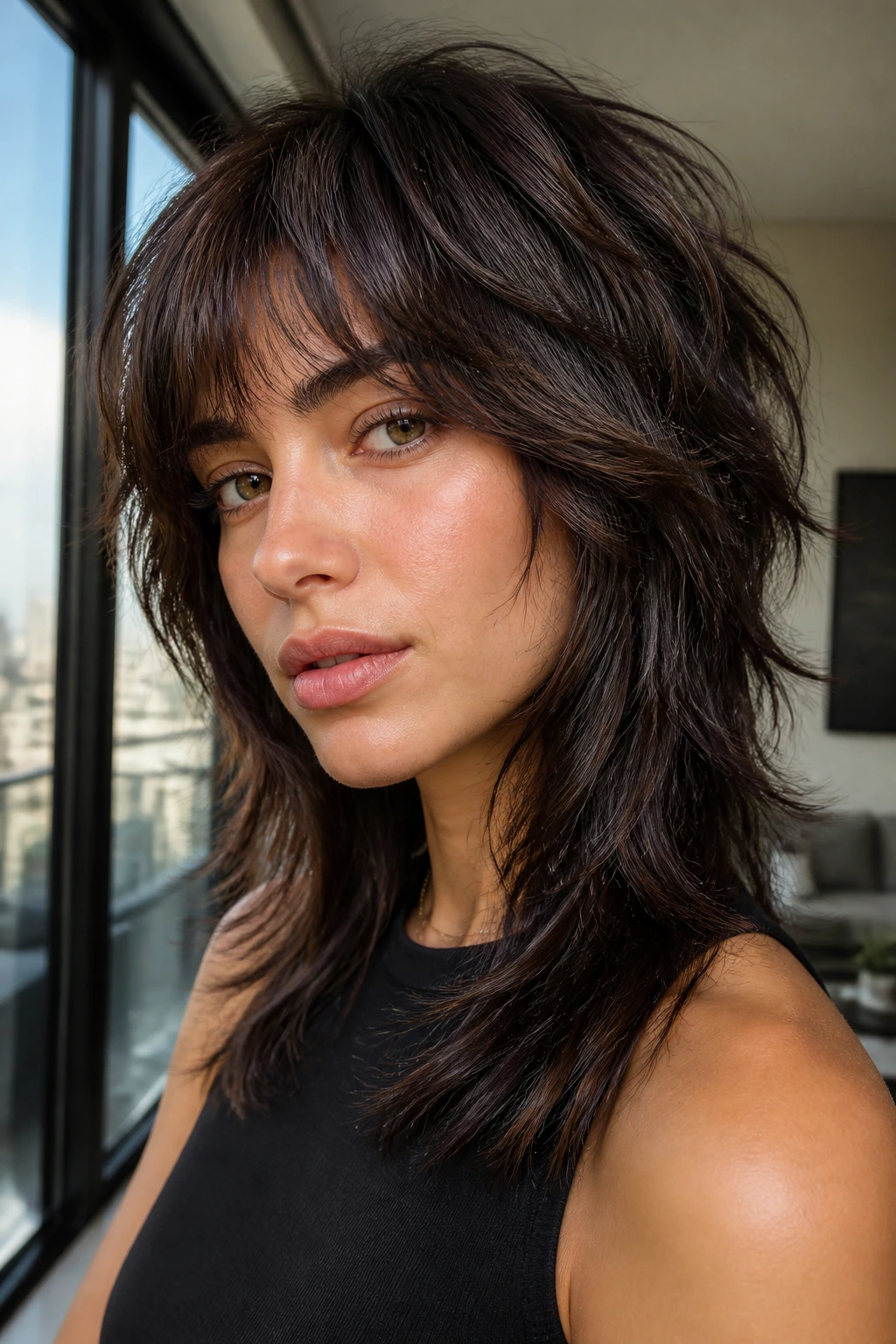
A wolf cut already has attitude. Smoky lowlights deepen that attitude by making the choppy layers look sharper and less fuzzy. If your hair has wave, this cut can look messy in the best way.
What Makes It Different
The lowlights should follow the underlayers so the top does not read like one dark sheet. That is the mistake people make with this cut. They paint too much on the surface, then wonder why the texture looks muddy.
Use a matte paste or a texture spray with a light hand. The cut needs separation, not a crunchy shell.
16. Mahogany Silk Press
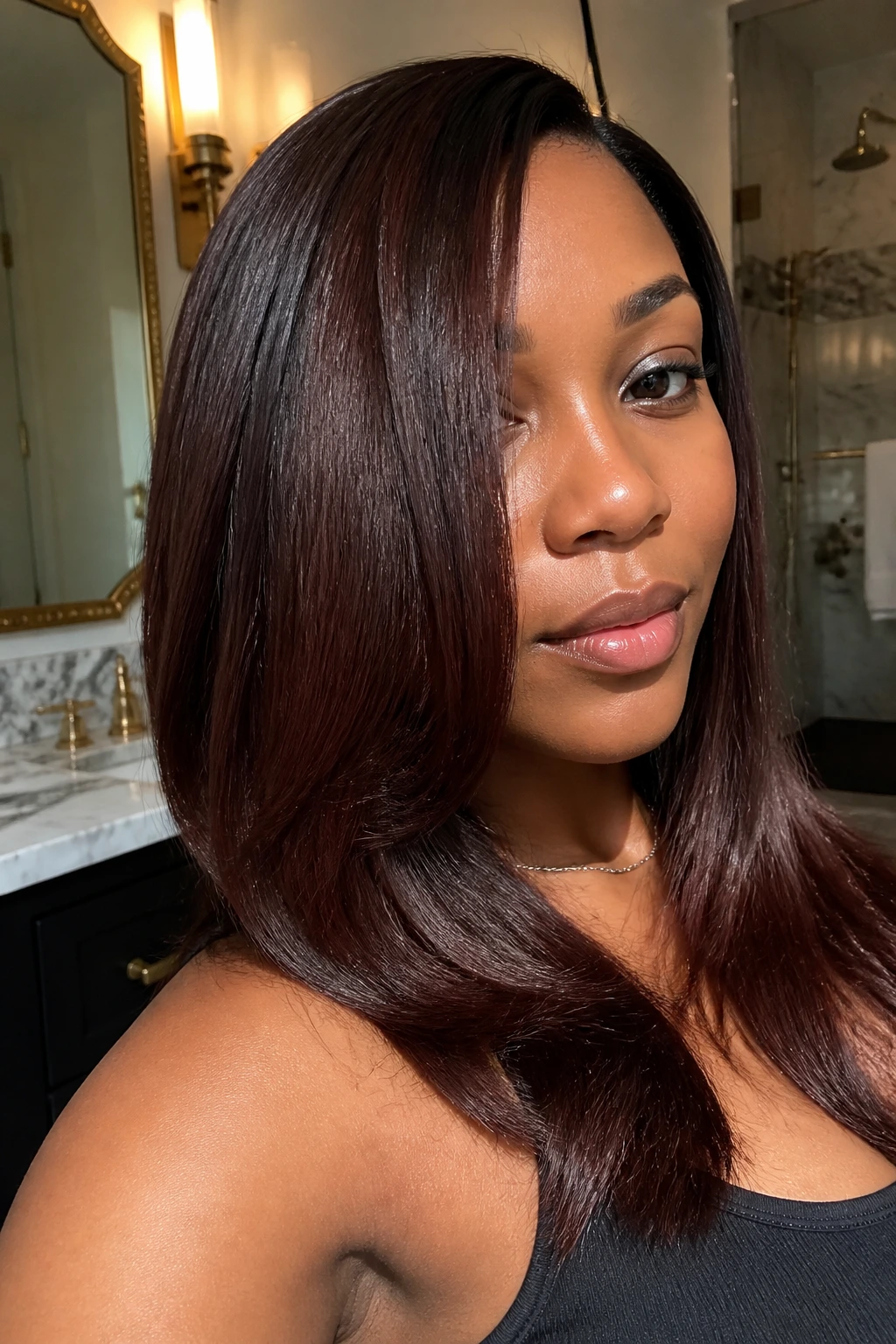
Mahogany lowlights under a silk press give textured hair a rich, polished finish. The point is not to erase the natural hair; it is to let the press show the color depth more clearly. Mahogany has enough warmth to keep the result from looking flat.
Style Notes
- Start with strong heat protection, especially on the ends.
- Press in small sections so the lowlights stay visible through the lengths.
- Finish with a light serum, not a heavy glossing oil.
That last step matters. Too much product will soak the mahogany tone into a dark blur, and the whole effect disappears.
17. Toasted Almond Braided Half-Up
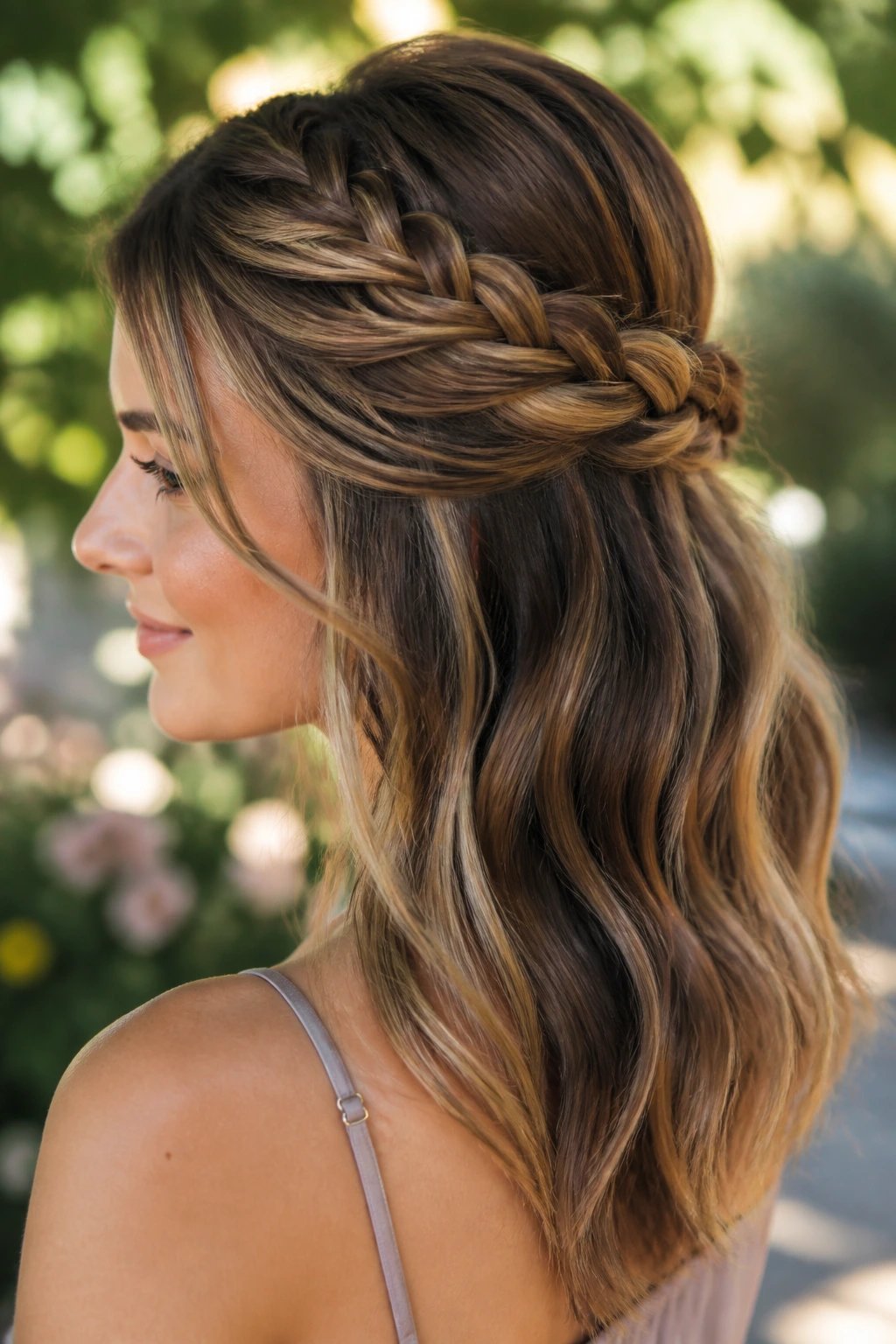
Braids are underrated for brunette lowlights because the weave shows every shade shift. Toasted almond tones tucked into a half-up braid give you that nice pattern of dark and slightly darker pieces without looking fussy. It is one of the easiest ways to show color on second-day hair.
Keep a few face-framing strands loose. If everything is pulled back tight, you lose the soft contrast that makes the lowlights visible. A little dry shampoo at the roots gives the braid more grip and keeps the style from collapsing by noon.
18. Taupe Brown Low Bun
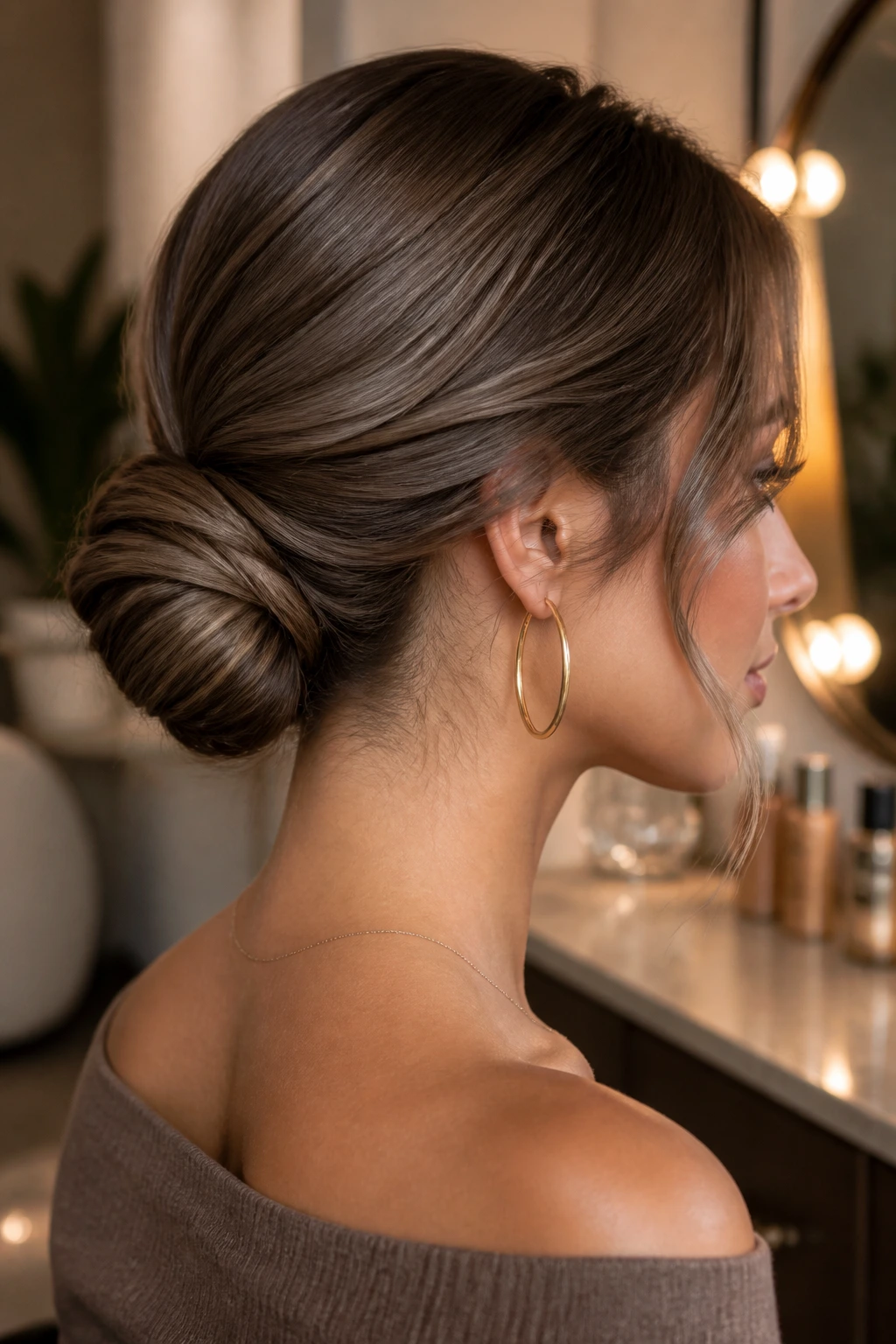
A low bun with taupe lowlights is neat, cool, and sharper than people expect from brown hair. The lowlights mostly show in the twist of the bun and along the nape, where the hair bends into itself. That makes the color feel tailored instead of loud.
Unlike a messy topknot, this style wants control. Smooth the surface with a brush, then leave just enough texture in the bun so the darker pieces don’t vanish. A few hidden pins and a clean side part make the whole thing look deliberate.
19. Coffee Bean High Ponytail
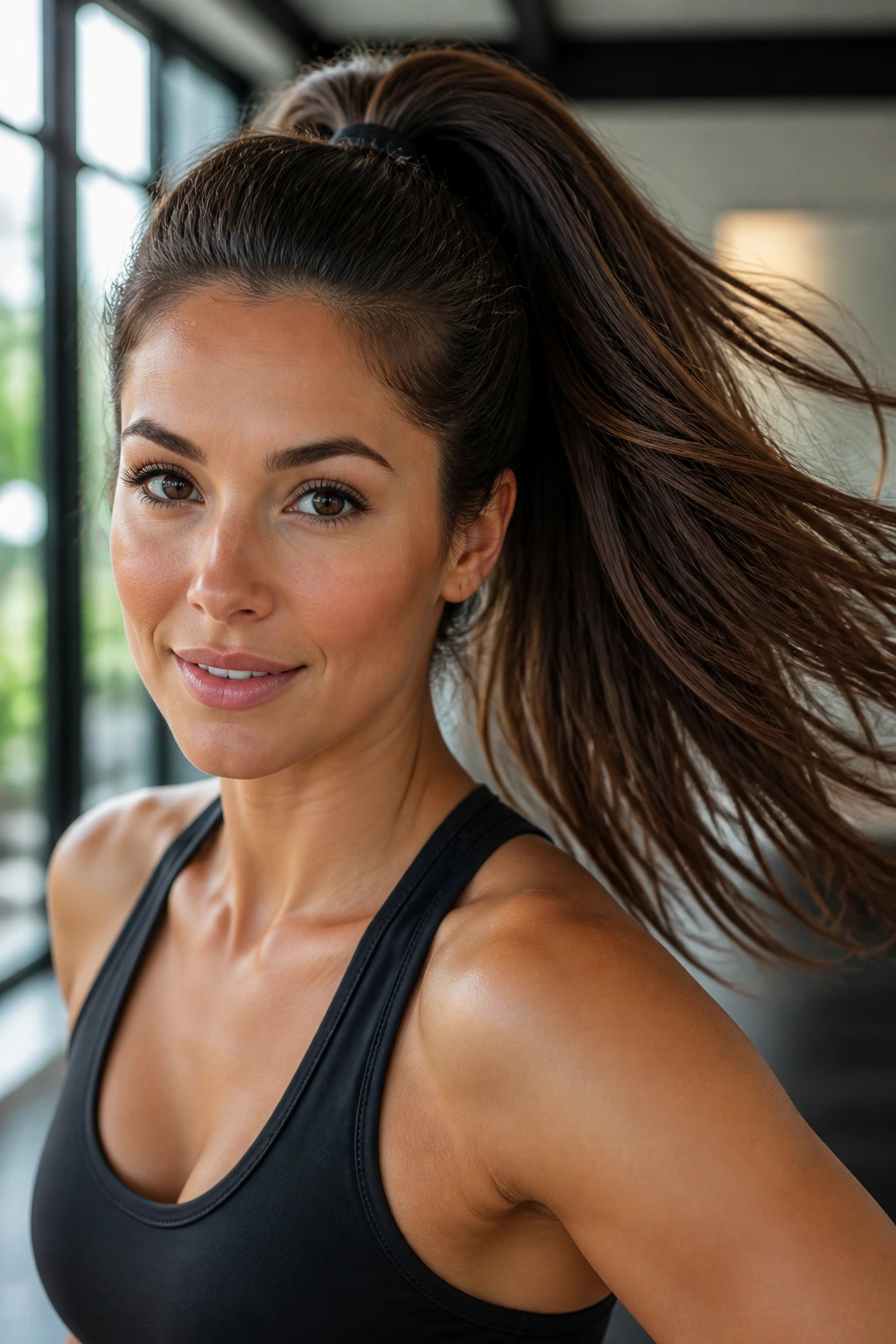
A high ponytail shows brunette lowlights in motion. Every time the tail swings, the darker strands come forward, and the color looks richer than it does when hair hangs still. Coffee bean lowlights are especially good if your base leans medium-dark.
Quick Facts
- Best for: long hair, gym-to-dinner hair, or days when you want the face lifted.
- Best placement: through the tail and under the crown, not just around the hairline.
- Best finish: wrapped base with a small section of hair for polish.
A little teasing at the crown helps, but keep it controlled. You want lift, not a tangled nest.
20. Bronze Brunette Half-Up Waves
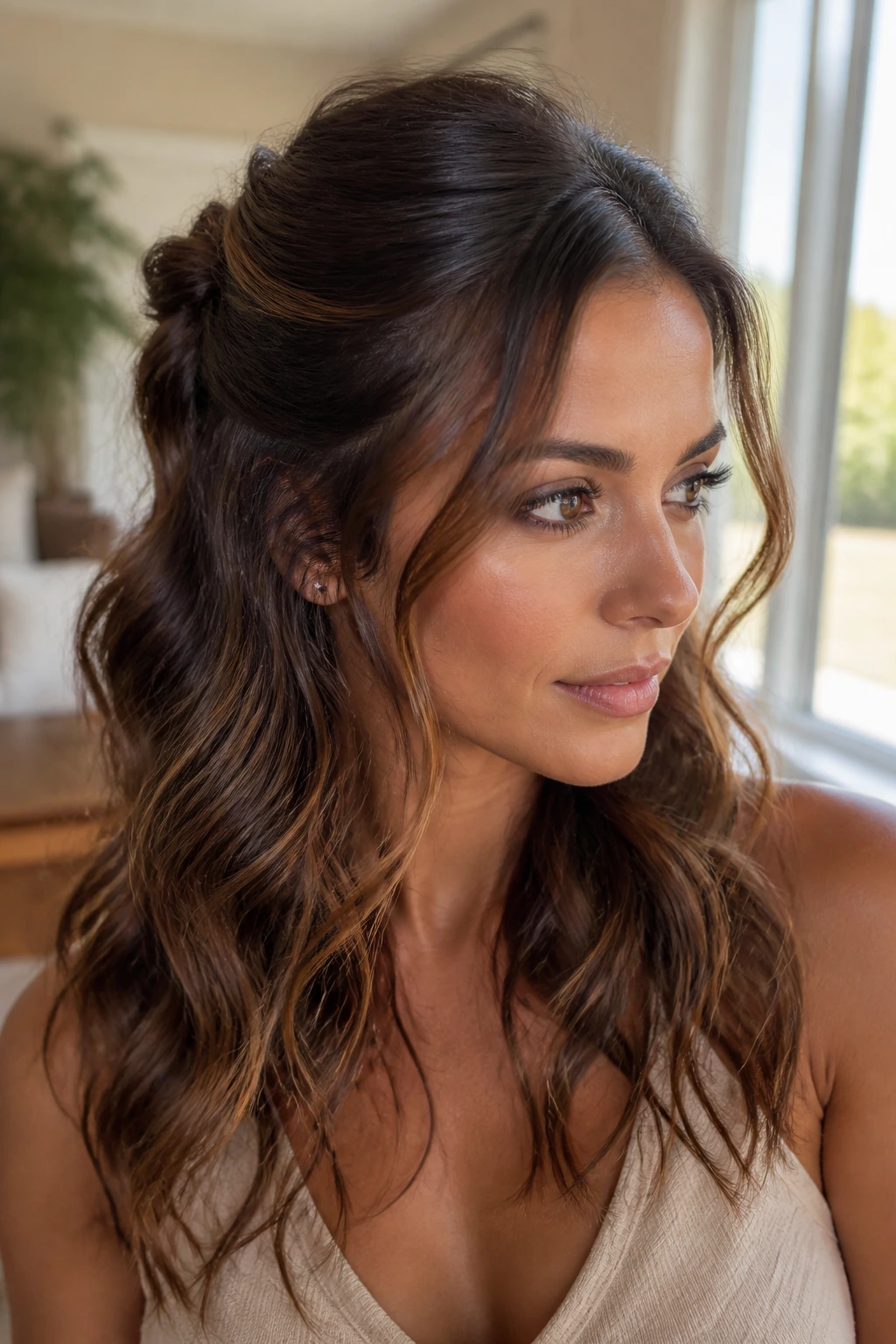
Bronze-toned lowlights in half-up waves sit in that sweet spot between warm and dimensional. The top half keeps the face open, while the loose lower waves let the darker pieces show in layers. It is a good choice if your brunette hair tends to look too plain from the front.
The half-up section also gives you a clean place to show the color contrast around the temples. A satin ribbon or a simple clip can finish it, but the texture should stay soft. Hard curls make bronze tones look busier than they need to be.
21. Suede Brown French Bob
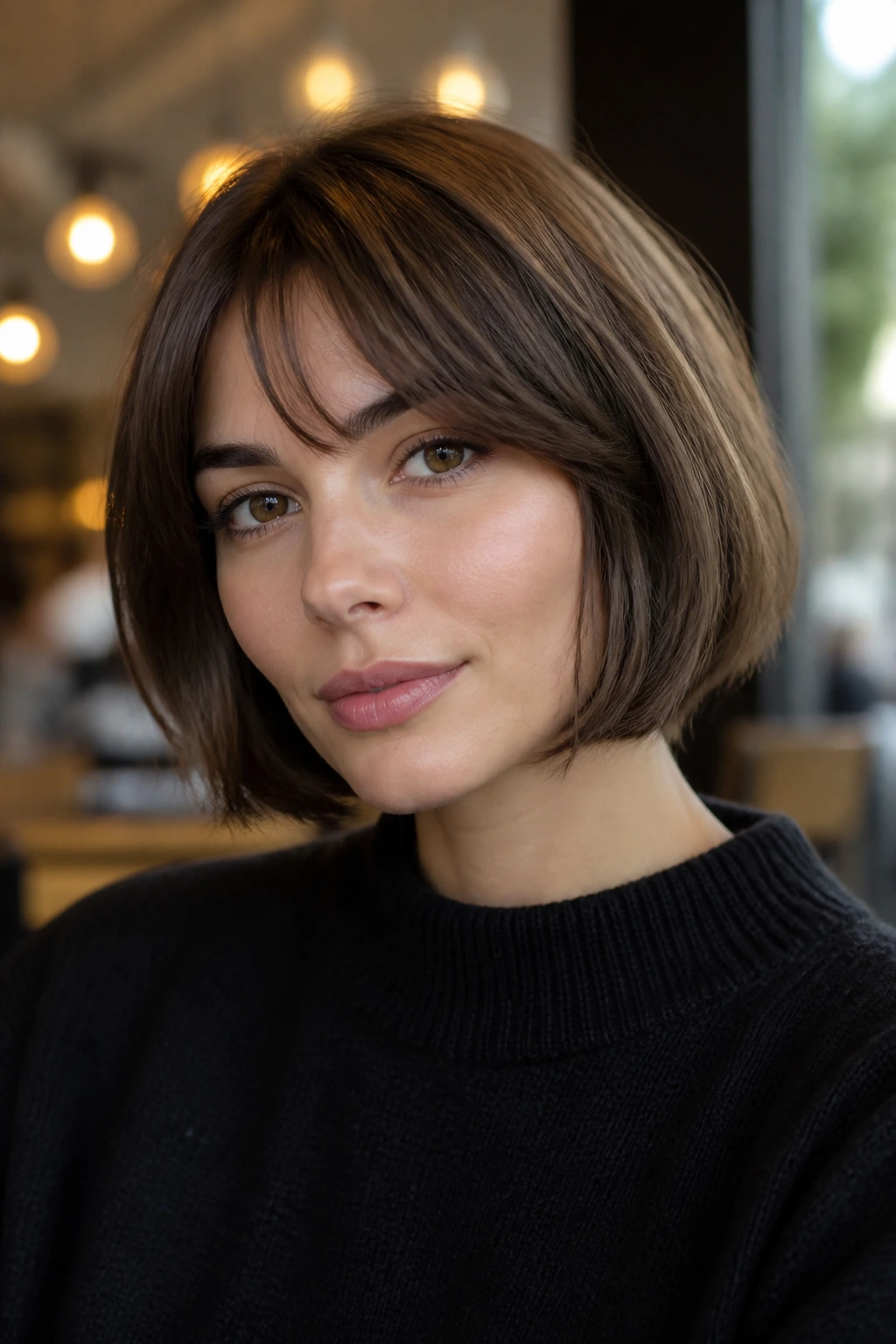
A French bob with suede lowlights has a soft matte finish that feels chic in a very unforced way. The jawline length keeps the color close to the face, and the cool brown tone prevents the cut from looking heavy. It is especially good on fine to medium hair.
Why It Stands Out
The ends should bend in just a little, not flip hard. That small curve is enough to catch the darker lowlights under the surface. If the bob is too stiff, the color reads one-dimensional; if it has too much wave, the shape loses its edge.
A side part gives this cut a little more room to breathe. I like it better than a dead-center part on this particular style.
22. Cinnamon-Sugar Ringlets
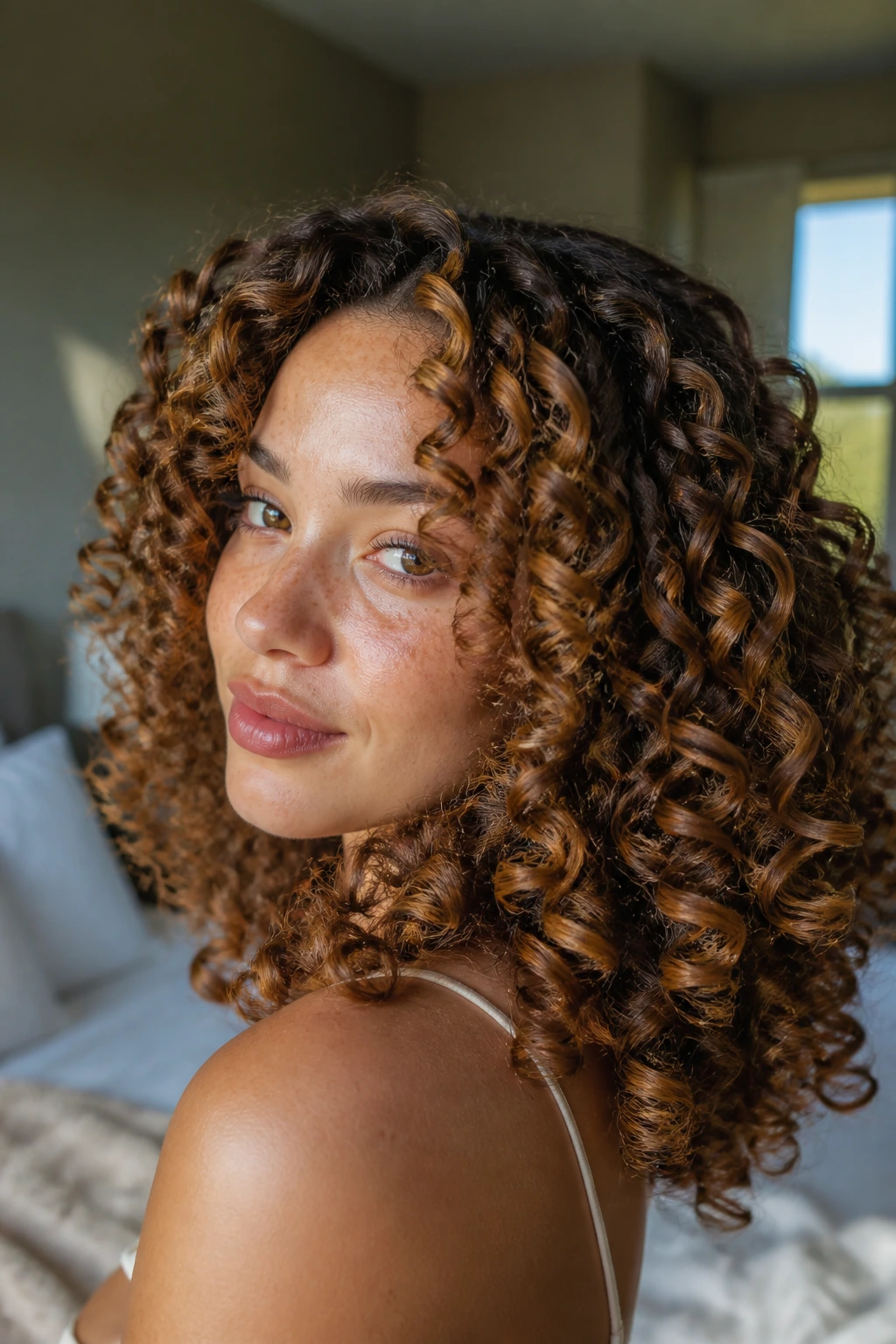
What happens when you add lowlights to ringlets? The curls get a clearer outline. Cinnamon-sugar brown is warm enough to feel lively, but the darker lowlights keep the spirals from looking fuzzy in dry air.
This look needs moisture more than most. Use a cream that defines without coating, then set the ringlets and leave them alone while they dry. Once they’re dry, separate the curls with clean fingers instead of a brush. A brush will wreck the shape and flatten the darker pieces.
23. Chestnut Ribbon Ponytail
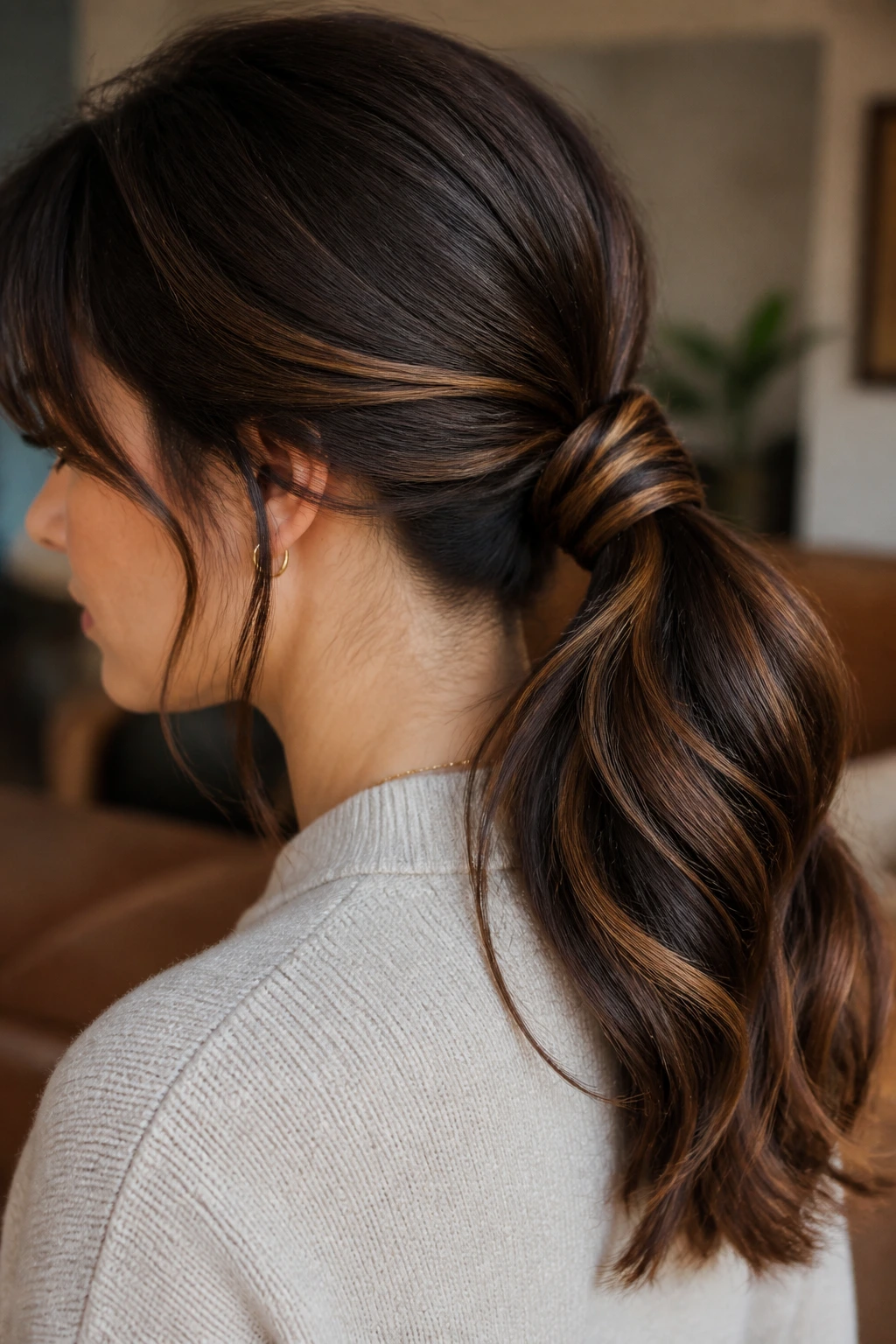
A ponytail sounds simple until you give it chestnut ribbons of lowlight and a few loose bends through the tail. Then it suddenly has depth. The color shows best when the ponytail is not pulled into a severe knot at the crown.
This is a good everyday style if your hair is medium or long and you want the color to stay visible without constant heat styling. Wrap a small section around the elastic, secure it under the ponytail, and tug the tail just a little for width. Small things. Big payoff.
24. Espresso Braided Crown
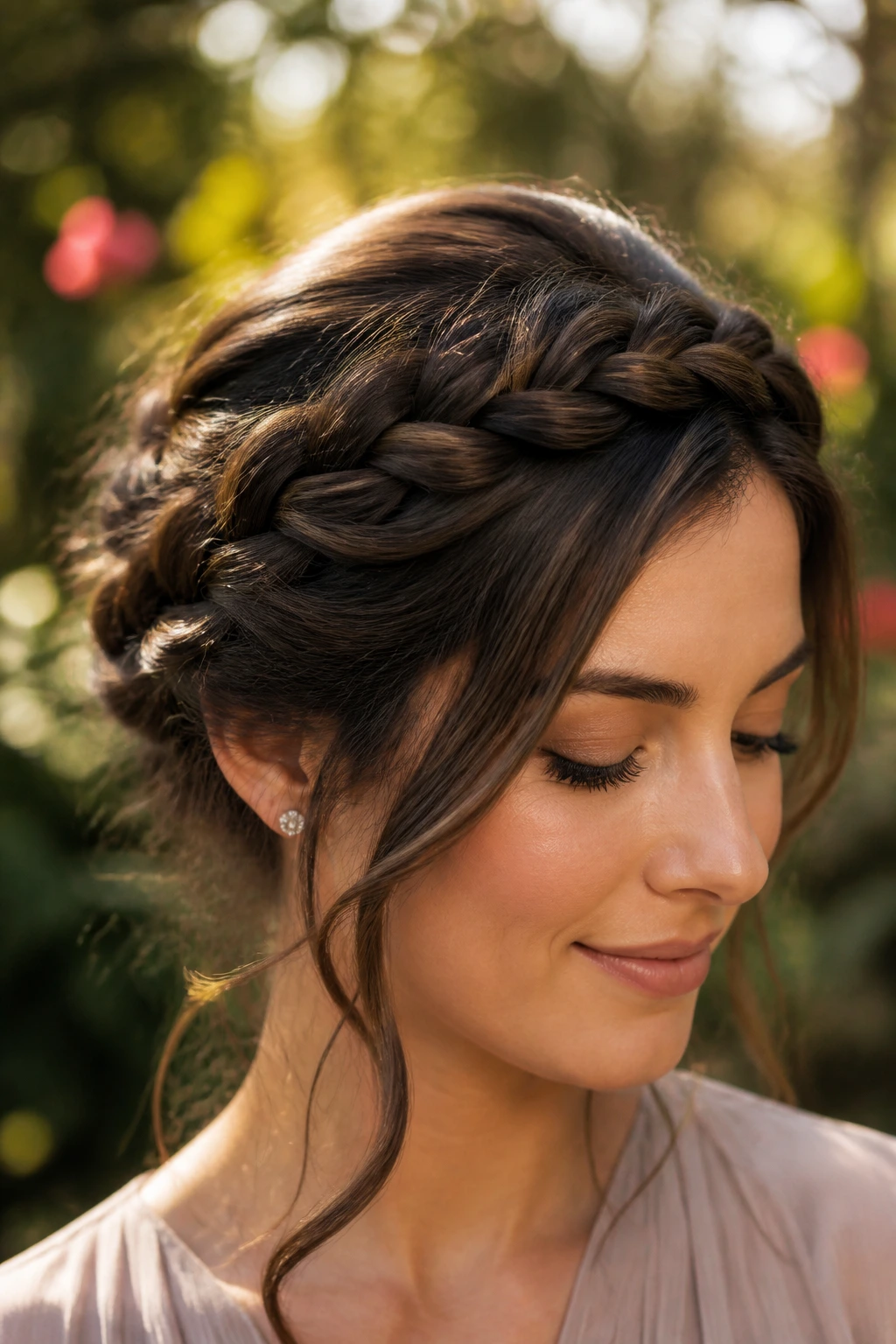
The braided crown is one of the easiest places to show brunette lowlights because braids expose color in layers. Espresso pieces tucked through the braid create contrast as the plait twists over itself. You get detail even if the rest of the hair is tucked back.
Use a light grip spray before braiding so the pieces stay in place. Too much slip and the braid softens out by lunch. A couple of hidden pins above the ear help the crown sit flat without looking overworked.
25. Cocoa Mocha Twist-Out
A twist-out on brunette hair with cocoa-mocha lowlights gives texture that reads from across the room without looking harsh. The twists create their own pattern, and the lowlights settle into that pattern like shading in a sketch. It’s especially good for coily and textured hair that needs definition.
How to Wear It
Make the twists uniform if you want a clean finish, or vary the size a little if you want more volume on top. The lowlights look best when the hair is fully dry before you unravel it. If the twists are even slightly damp, the shape frizzes and the color loses its clean separation.
A little shine butter on the ends is enough. More than that, and the darker pieces start to blur.
26. Nutmeg Layered Shag
Nutmeg lowlights give a layered shag a warmer, softer edge than mushroom or ash. That matters if your skin tone likes a little warmth near the face. The shag still brings movement, but the nutmeg brown keeps it from feeling too cool or severe.
Why This One Works
The layers should sit a little unevenly on purpose. That irregular shape helps the lowlights peek through in different places. If the cut is too polished, you lose the whole point.
Air-dry with a light curl cream if your hair has wave. If it is straighter, bend the ends with a wand and scrunch them once the heat is out. The color needs motion.
27. Umber Side-Part Blowout
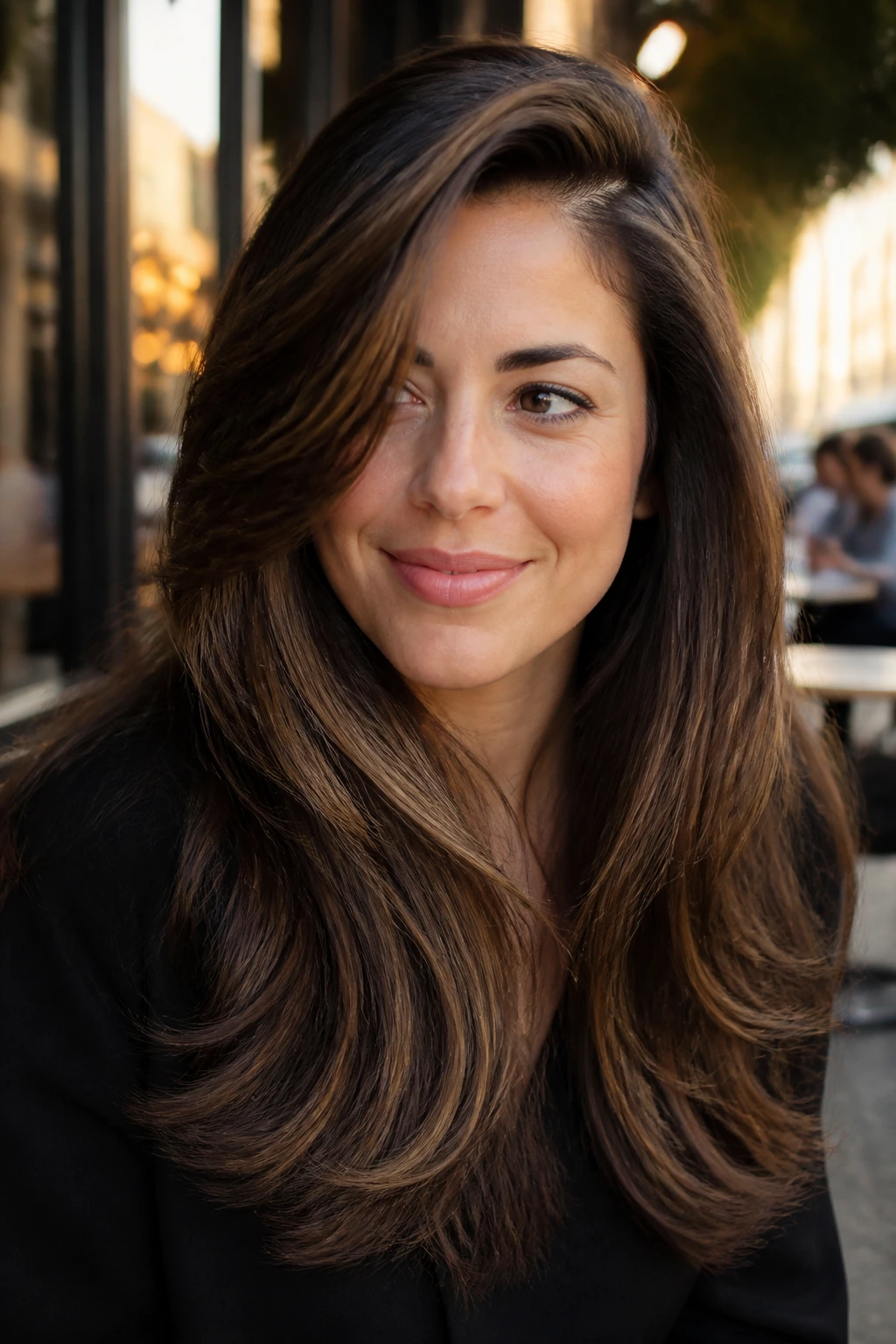
A deep side part changes how brunette lowlights land across the face. Umber is a strong shade for this because it gives the hair a rich, grounded base without moving into black. The blowout lifts the top while the darker sections sit in the underlayers.
How to Get the Most From It
Use a large round brush and direct the front pieces away from the face first. Then set the roots with a cool shot so the part stays put. If you want the lowlights to show more, tuck the heavier side behind one ear after the hair cools.
This is one of the few styles where a little volume actually helps the color read better.
28. Mocha Tucked-Behind-Ear Lob
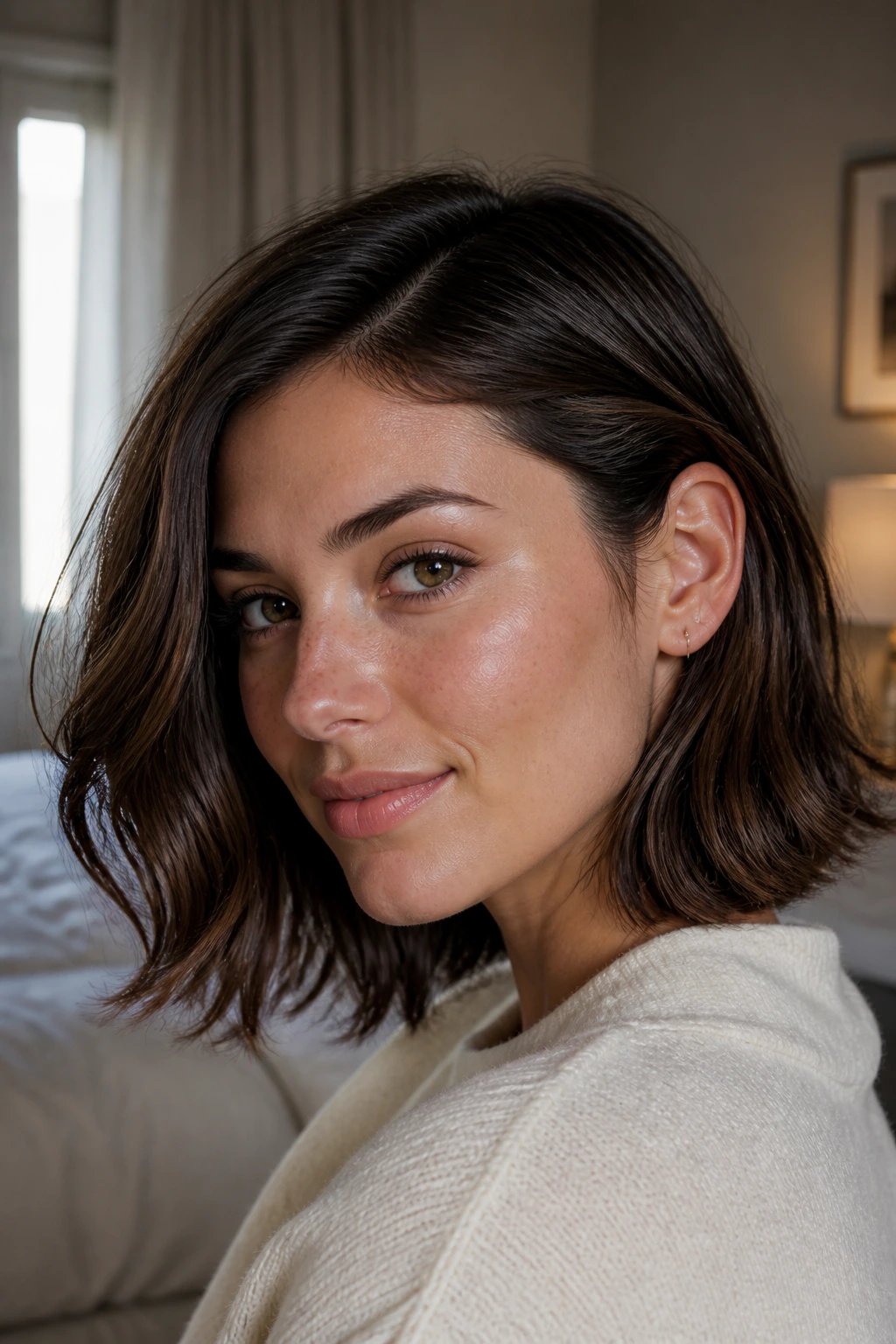
A tucked-behind-the-ear lob is simple, but it gives mocha lowlights a neat stage to play on. The tuck opens the cheekbone area and lets the darker tones show along the jaw and under the crown. It is a clean look for people who do not want to fight their hair every morning.
That tucked side should still have some bend. Bone-straight hair can make the contrast feel abrupt, while a soft wave lets the mocha tones blend into the rest of the brunette. If you want a tiny bit more interest, change the part by half an inch. That small shift matters more than people think.
Why Brown Hairstyles for Brunettes with Lowlights Need Real Shape
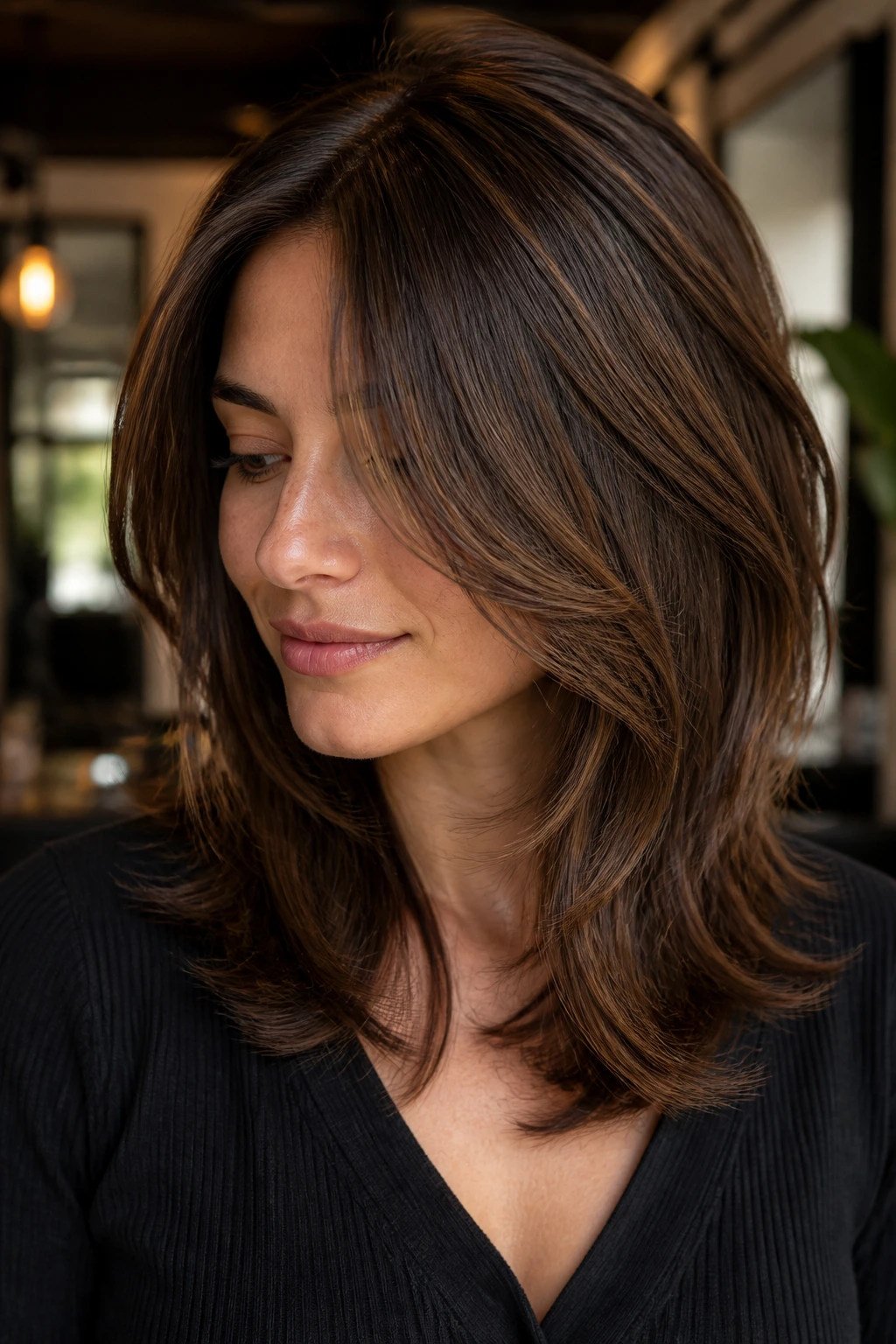
Brown color gets boring when the cut does not give it anywhere to move. That is the quiet truth most salon photos skip. Lowlights are not there to add darkness for its own sake; they are there to break up a flat surface, which means the haircut has to open and close around them.
If the hair is one length and dead-straight, the lowlights need careful placement near the ends and around the face. If the hair has layers, waves, or curls, the color can sit deeper inside the shape and do more of the work for you. Either way, the best brunette color does not sit on top like paint. It lives in the bends.
I also think brown hair looks better when the undertone is chosen with a bit of nerve. Too many people ask for “brown” as if brown is one shade. It isn’t. Chestnut has warmth, mushroom has smoke, espresso has bite, and truffle has that muted coolness that makes a blunt cut look expensive without screaming for attention.
The Tools That Keep Brunette Lowlights Looking Clean
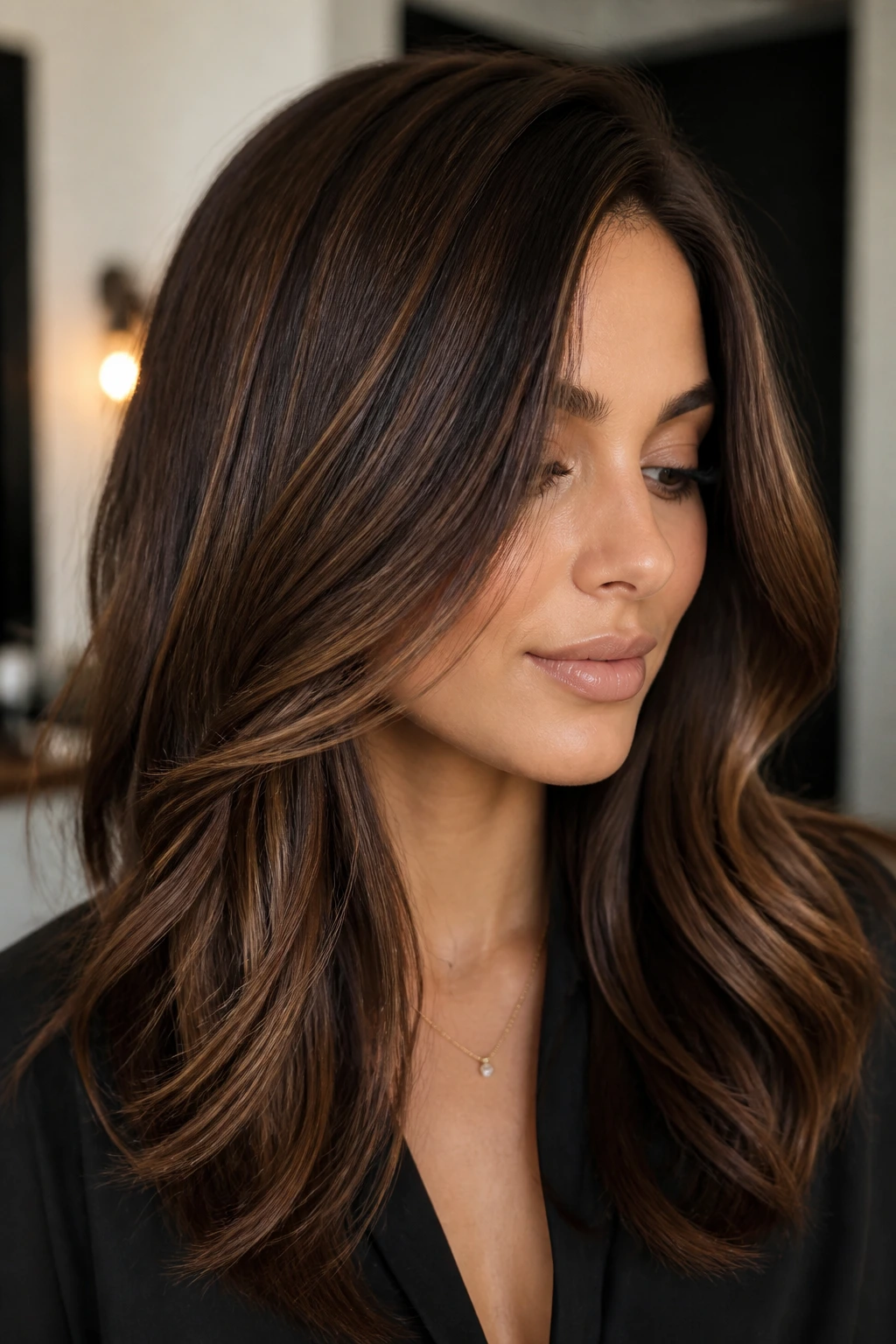
You do not need a closet full of products, but you do need the right ones. Brown color shows damage fast when the hair gets dry, and lowlights lose their shape when the cuticle roughs up. Keep the routine simple and consistent.
- Color-safe shampoo: Pick a gentle formula that does not strip tone in two washes. Harsh cleansing makes brunette color fade toward orange.
- Moisturizing conditioner: Use it from mid-length to ends. The ends carry the lowlight pattern, and dry ends turn muddy fast.
- Heat protectant: Spray or cream before blow-drying, flat ironing, or curling. Brown tones look dull when the hair gets singed.
- Wide-tooth comb: Good for wet detangling without ripping apart curl groups or wave pattern.
- Round brush: Useful for blowouts that show chestnut, mocha, and chocolate ribbons.
- 1-inch curling iron or wand: Ideal for soft bends that let lowlights peek through.
- Tail comb and sectioning clips: Helps keep lowlight placement neat if you are working with a stylist or doing touch-ups.
- Microfiber towel or soft T-shirt: Cuts down on frizz and keeps the surface smoother.
- Gloss or brown glaze: A clear or tinted gloss brings back shine between salon visits.
- Satin pillowcase: Not glamorous, but it keeps the ends from roughing up overnight.
How to Ask for the Right Brown at the Salon
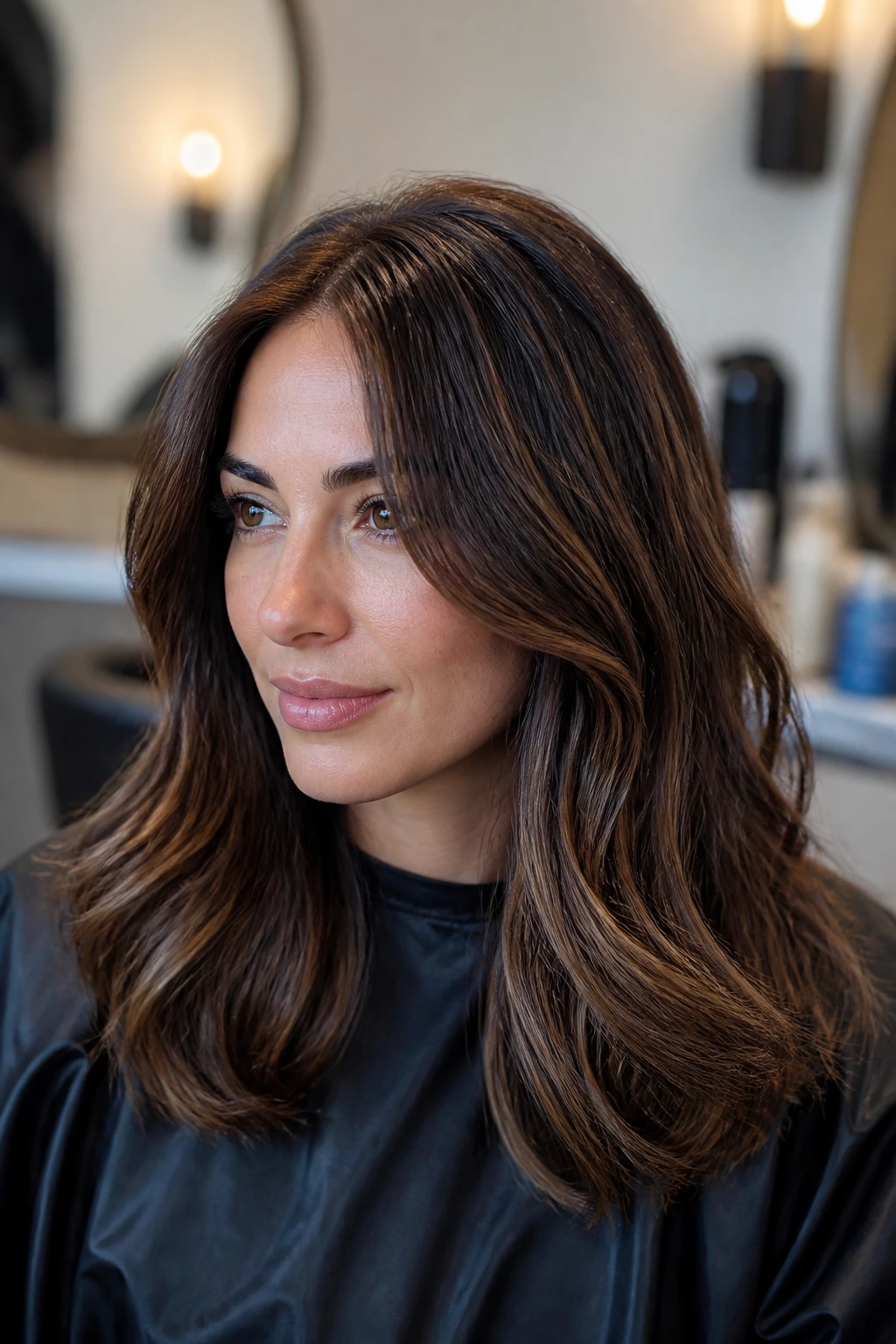
Bring words, not just screenshots. A photo helps, but color level matters more than people think. Ask your colorist to work with levels and undertones: a level 4 espresso is much deeper than a level 6 chestnut, and the gap between them changes how the lowlights read in daylight.
Start With the Base
Say what your natural or current base level is. If your hair is already dark brown, the lowlights should usually sit only one level deeper. If your hair is medium brown, you can often go one to two levels darker without the result getting heavy.
Name the Tone
Warm skin usually plays nicely with chestnut, mocha, mahogany, and cinnamon-brown. Cool skin often looks cleaner with ash, mushroom, taupe, or truffle. Neutral skin can usually wear either side, which is unfair but convenient.
Be Specific About Placement
Ask for lowlights through the interior, around the ears, and under the top layer if you want movement. If you want the color to show around the face, say so. If you want low maintenance, ask for a softer grow-out with fewer dark pieces at the hairline.
A good colorist will also talk about gloss after the service. That matters. The gloss is what makes brown read shiny instead of dull.
How to Style Brown Hairstyles for Brunettes with Lowlights So the Depth Shows
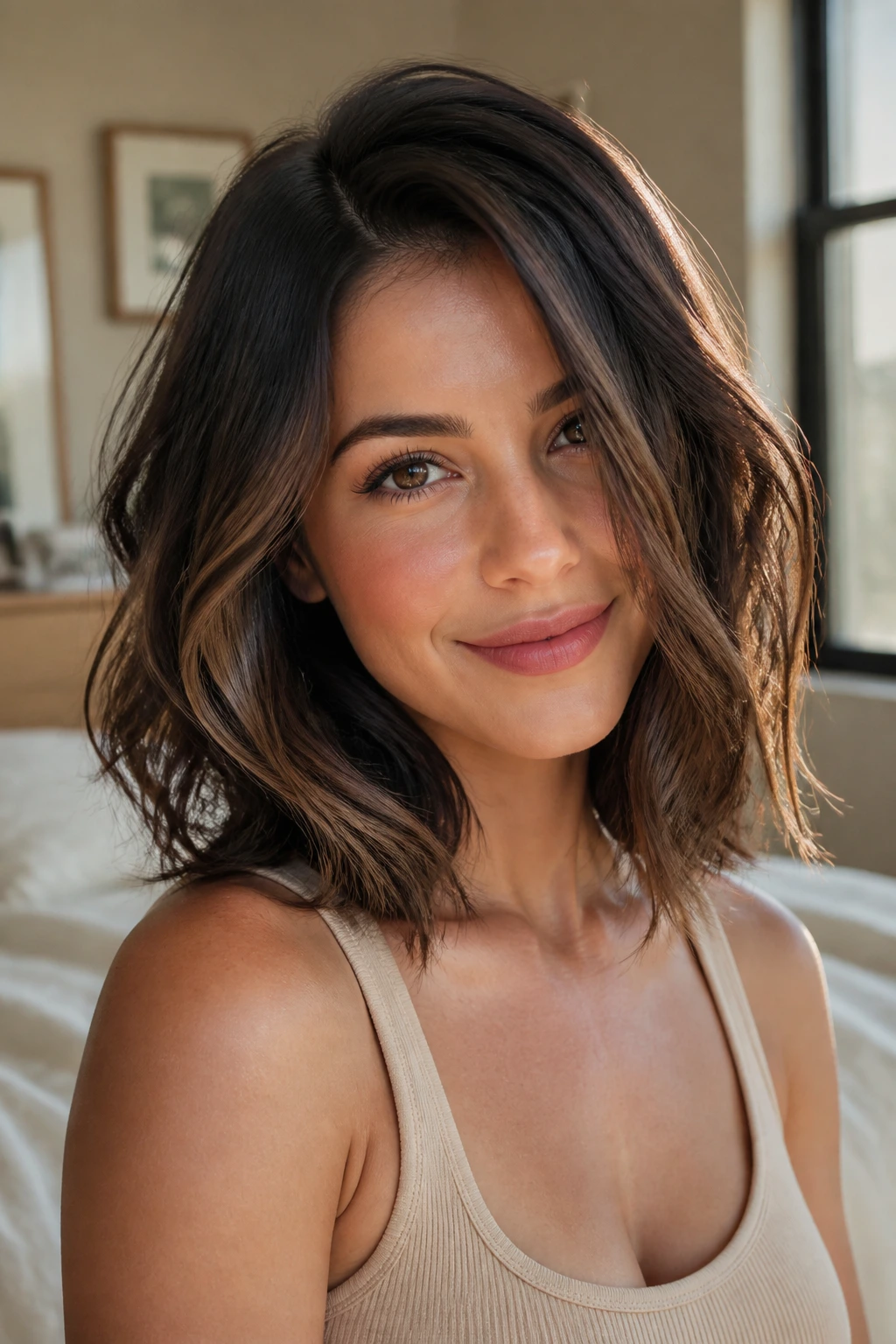
Parting: A middle part shows symmetry and makes ribboned lowlights look even. A deep side part shifts the dark pieces toward one side of the face, which can be flattering when you want a little lift near the crown.
Texture: Soft bends show dimension better than stiff curls or pin-straight hair. A 1-inch iron, a loose blowout, or a set of large rollers usually gives you enough movement without turning the style into pageant hair. If the wave is too tight, the lowlights disappear into the pattern.
Accessories: Tortoiseshell clips, brass pins, matte black elastics, and brown-toned scrunchies sit quietly in brunette hair. Bright plastic accessories can steal attention from the color. I’m partial to simple metal pins because they let the brown do the talking.
Lighting: Window light shows the cooler side of ash and mushroom tones. Warm indoor bulbs bring out chestnut, mahogany, and mocha. If you’re taking a photo, stand a few feet from the window, not directly under it, so the lowlights don’t get washed out.
Extra Ways to Make Brown Lowlights Pop
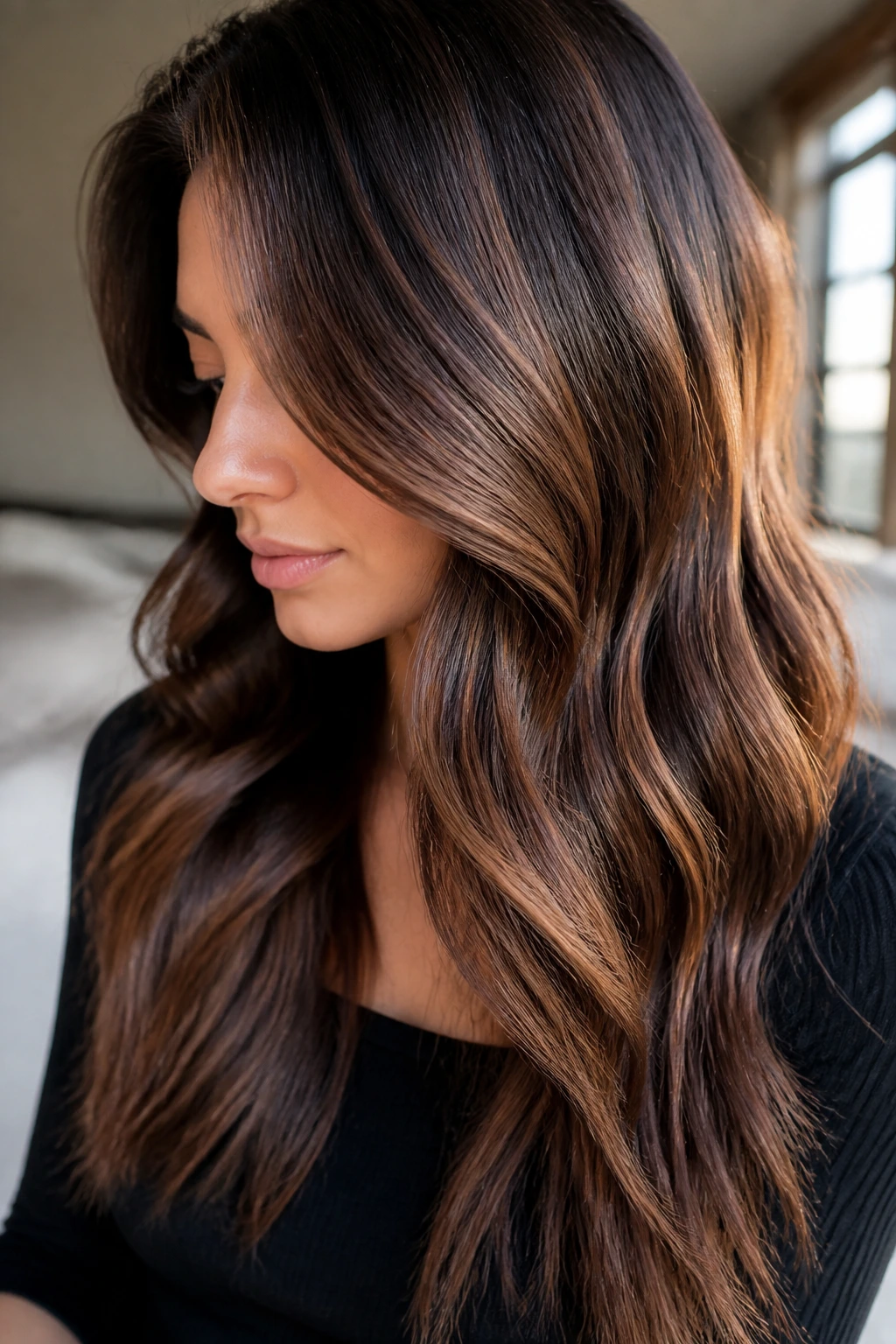
Gloss Boost: A clear or brown gloss every 6 to 8 weeks brings back shine before the color starts looking dusty. It’s one of the fastest ways to make brunette hair look freshly done without a full color appointment.
Texture Boost: A little root lift and a soft bend through the ends do more for dimension than a lot of product ever will. If the hair is too flat, the lowlights sit there and disappear.
Face-Frame Boost: Ask for the front pieces to be shaped so the lowlights land near the cheekbone and jawline. That tiny adjustment can make a face look more open and the cut more expensive.
Budget Boost: A brown color-depositing mask or tinted conditioner can stretch the salon finish between visits. Use it lightly; too much pigment can darken the hair faster than you expect.
Low-Effort Boost: Flip your part by an inch on wash day. It changes which pieces catch the light, and with brunette lowlights, that small shift is often enough.
The Common Mistakes That Make Brunette Hair Look Flat
Making the lowlights too dark. If the shade drops too far below your base, the hair starts reading black in indoor light. The fix is simple: stay within one or two levels of your natural brown unless your stylist is intentionally building high contrast.
Putting the color only on the top layer. That creates stripey pieces near the part and nowhere else. Lowlights work better when they sit inside the haircut, under the crown, and through the bends.
Using too much purple shampoo. Purple shampoo can be useful on blonde hair, but brunette hair does not need much of it. Overdoing it leaves brown hair chalky and weirdly smoky in a bad way. Use color-safe shampoo most of the time and purple only when brass shows up.
Ignoring the haircut. A blunt, heavy shape can bury the dimension. If you want the color to show, give it a cut that moves: layers, a bob with a bend, a shag, or a lob with air in it.
Styling everything poker-straight. Straight hair can be chic, but it hides a lot of lowlight placement unless the cut is razor clean. A soft bend or a curved end lets the brown tones breathe.
Skipping gloss and trims. Dry ends swallow the lowlight pattern. A trim every 8 to 12 weeks and a gloss cycle keep the color from turning frayed.
Easy Variations and Adaptations to Try
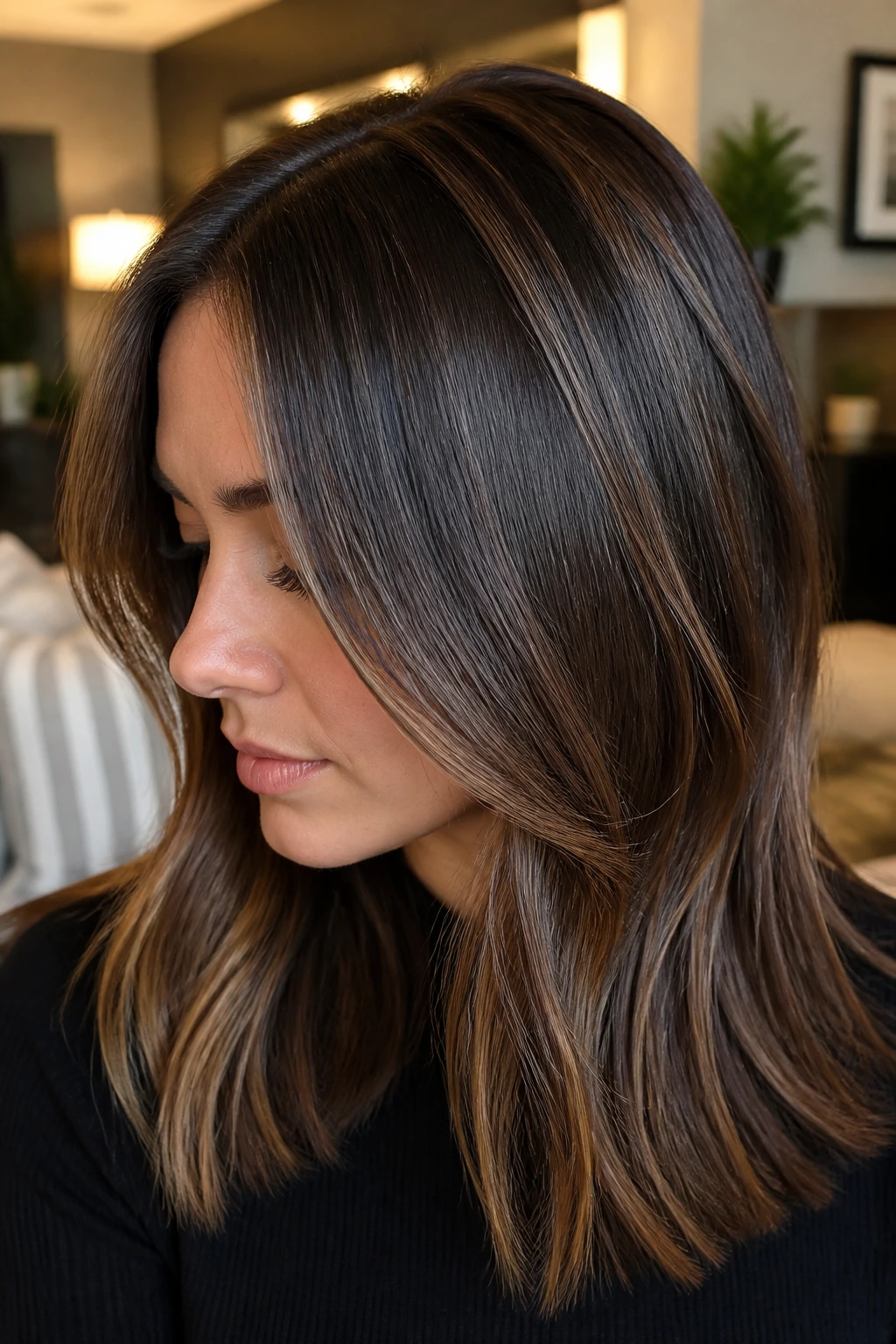
Cool Mushroom Brunette: Choose ash, taupe, or mushroom lowlights if your skin runs cool or neutral. This version looks especially good on shags, blunt bobs, and anything with a soft matte finish. It keeps brunette hair from pulling too red under indoor lights.
Warm Chestnut Brunette: Chestnut, mocha, and mahogany tones give the hair warmth without sliding into copper. This version is the one I reach for when the goal is soft richness rather than a cooler editorial look. It fits waves, blowouts, and longer layers particularly well.
Curly Coil Version: On curls and coils, lowlights should follow the curl pattern and land inside the clumps. That keeps the color from looking painted on top. If your hair is very textured, ask for dry placement so the stylist can see where the curl falls.
Short and Shadowy: Pixies, French bobs, and blunt micro-bobs all benefit from lowlights placed near the crown and under the surface. The result is small, controlled depth rather than heavy color. It is a smart pick if you want low upkeep and a sharper shape.
High-Contrast Brunette: If your hair is thick and you like a more dramatic finish, go a little darker under the top layer and keep the top slightly lighter. This can make waves, braids, and blowouts look fuller. The trick is to keep the contrast elegant, not zebra-striped.
Sleek Office Brunette: For a polished, work-friendly look, keep the lowlights concentrated under a smooth blowout, lob, or low bun. The color shows when you move, but the overall effect stays neat. This is the version that looks good even when you have no time to fuss with it.
Maintenance, Glosses, and Grow-Out Care
Brunette lowlights are kinder to grow-out than many color services, but they still need a routine. Wash with lukewarm water, not hot water, because hot water opens the cuticle and makes brown fade faster. Two to three washes a week is plenty for most hair unless you are training an oily scalp.
A color-safe shampoo and a moisturizing conditioner do most of the heavy lifting. If your hair is fine, keep conditioner on the mid-lengths and ends only. If it is coarse or curly, let it sit a little longer on the dry sections where the lowlights live.
Heat styling should stay controlled. Use a protectant every time, and try to keep hot tools in the 300 to 350°F range unless your hair is very resistant. Higher heat can rough up the surface and blur the tonal difference that makes the lowlights interesting.
Gloss every 6 to 8 weeks if you want the brown to stay shiny. Refresh the lowlights themselves every 8 to 12 weeks if you like a cleaner salon finish, or stretch longer if you prefer softer grow-out. The darker pieces usually fade slower than highlights, which is one reason brunette lowlights are easier to live with than bright blonde streaks.
If the hair feels dry or stretchy, use a weekly mask with some protein in it. If it feels stiff, switch to a moisture mask for a while. Brown color looks better on hair that moves.
Frequently Asked Questions About Brown Lowlights
What is the difference between lowlights and highlights on brunette hair?
Highlights are lighter pieces; lowlights are darker pieces. On brunette hair, lowlights are usually used to add depth, reduce a flat look, and make the cut appear fuller.
Do lowlights make brown hair look thicker?
They often do, especially on fine or medium hair. The darker panels create shadow around the ends and interior layers, which gives the eye more texture to read.
Which brown lowlight shade works best for cool skin?
Ash brown, mushroom, taupe, and truffle are the safest bets. They keep the hair from turning too red or orange near the face.
Can curly hair handle brunette lowlights?
Yes, and curls often show the contrast better than straight hair. The key is placing the color with the curl pattern so the lowlights land in the bends instead of cutting across them.
How often should brunette lowlights be refreshed?
Most people can go 8 to 12 weeks before the lowlights need a real refresh. A gloss may be needed sooner if the shine fades or the brown starts to look dusty.
What if my lowlights came out too dark?
Give them a wash or two before panicking. If they still feel too heavy, ask for a gloss or soft toner to lift the surface feel rather than trying to bleach them out right away.
Can I do lowlights at home?
You can, but brunette lowlights are easy to overdo. If the placement is too thick or the shade is too dark, the hair looks striped. A salon service is safer if you want soft dimension rather than a strong color shift.
Should I use purple shampoo on brunette lowlights?
Only if you see brass and only sparingly. Most brunette lowlights need color-safe, moisturizing care more than violet pigment, which can make brown hair look dry and gray.
Keeping the Brown Rich
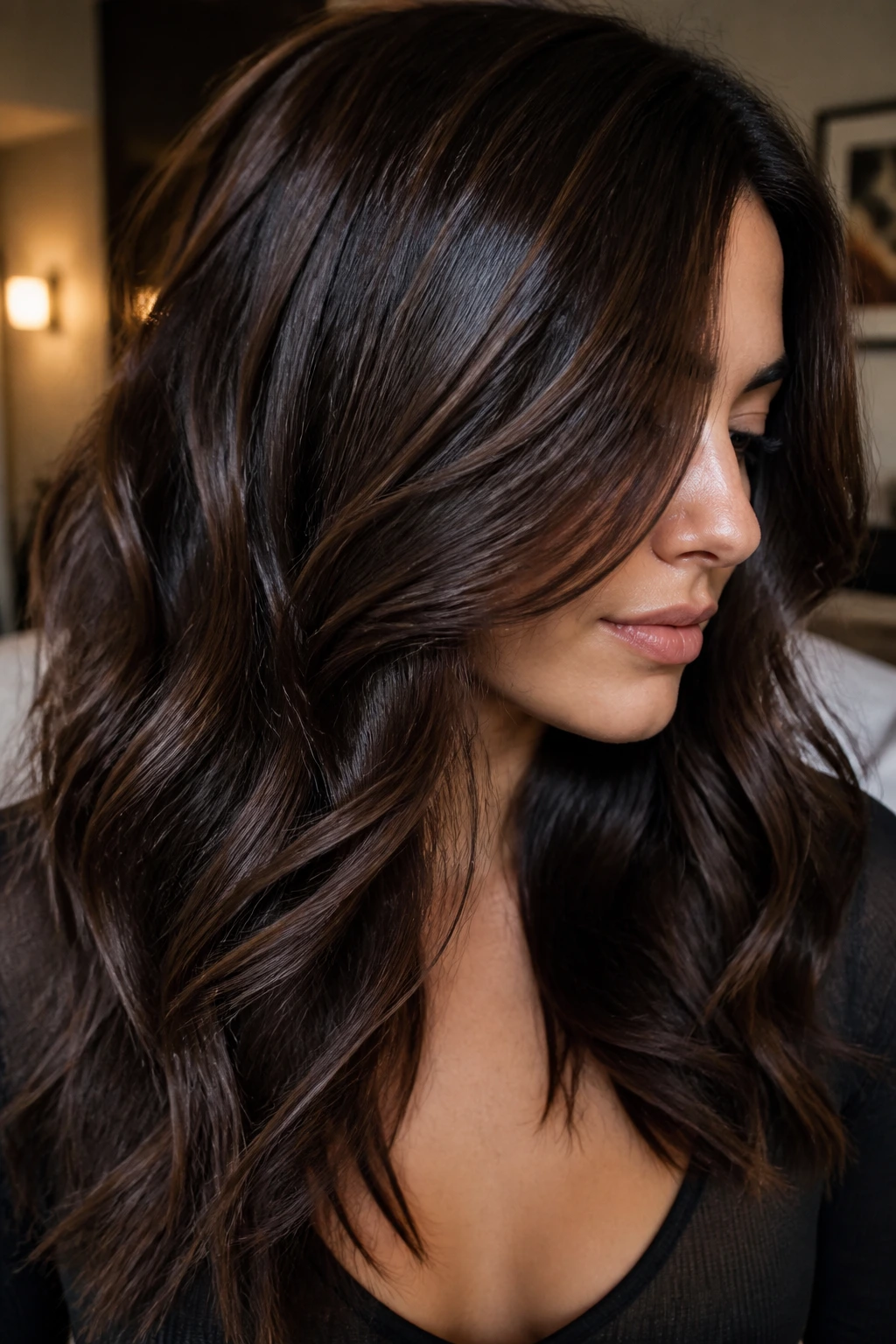
The best brunette color is rarely the one with the most obvious contrast. It is the one that moves when your hair moves, shifts a little in different light, and still feels like your own color instead of a costume. That is what lowlights do well when they are placed with a steady hand.
If your brunette has been looking a little tired, start with depth before you chase brightness. A better cut, a smarter brown tone, and a small amount of shadow in the right places can change the whole thing. Then the hair starts doing that nice, slightly annoying salon thing where it looks better on day three than it did on day one.