



Brown blonde highlights for brunettes with wavy hair have one neat advantage that straight styles don’t give you: every bend in the hair catches light in a different place, so the color reads like movement instead of a stripe. That’s why the same shade can look flat on a pin-straight cut and suddenly feel expensive, soft, and lived-in the moment a wave pattern enters the picture.
The trick is choosing a brown-to-blonde range that respects the brunette base instead of fighting it. A level 4 or 5 brown can carry caramel, honey, beige, mushroom, and toasted blonde pieces without losing depth. Push the blonde too pale, though, and the ends can start to look rougher than they felt in the bowl, especially on wavy hair that already leans a little dry at the perimeter.
The best versions of this look do three things at once: they keep a little root shadow, they place brightness where the eye naturally lands, and they follow the bends in the wave so the lighter pieces look ribboned, not painted on with a ruler. Some of the styles below are soft enough for someone who wants a quiet change. Others have a little more swing to them — chunky, face-framing, or glossy in a way that shows up the second the hair moves.
Why Brown Blonde Highlights Look So Good on Wavy Brunettes
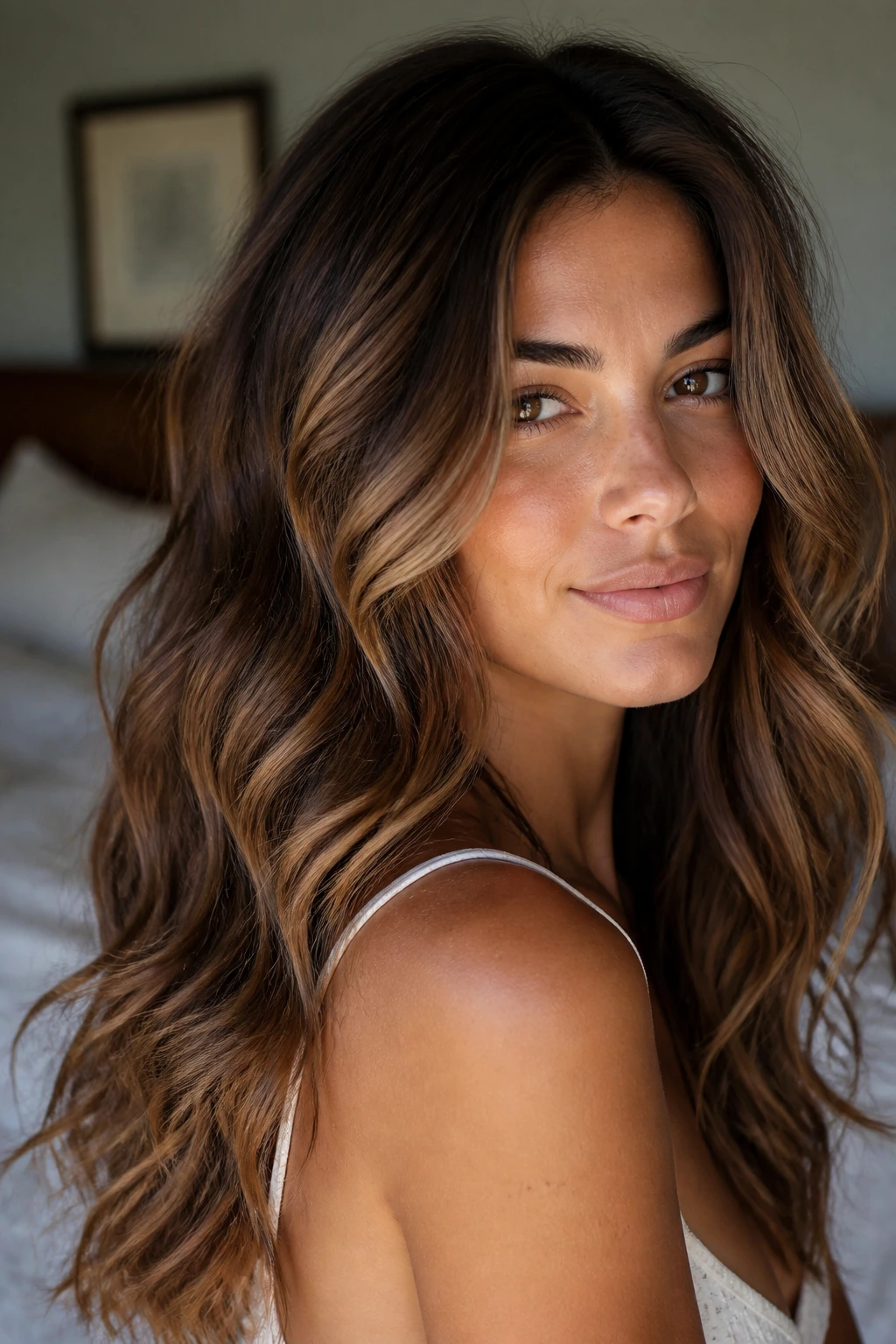
Movement is doing half the work here. Wavy hair breaks up color the minute it bends, which means a caramel or beige blonde highlight doesn’t sit on the surface like a line; it disappears and reappears as the wave folds over itself. That makes brown blonde highlights feel richer on wavy brunettes than on smoother textures, where the same placement can look more obvious and less blended.
Soft contrast keeps the grow-out from shouting. When brunette roots stay close to the natural base and the blonde sits one to three levels lighter instead of jumping straight to pale platinum, the whole effect grows out with less drama. That matters if you like to stretch salon visits and don’t want a hard edge at the part line after six weeks.
Face brightness matters more than total lightness. A few lighter pieces around the cheekbones, temple, or crown can change the whole look of a brunette wave pattern without flooding the head with blonde. The result is cleaner and more dimensional, and the hair usually keeps more weight and shine than an all-over lighter transformation.
Texture changes the finish. Loose 2A and 2B waves tend to show ribbon placement best, while 2C waves can handle slightly chunkier pieces because the bend already creates a softer break in the color. If the hair is heavily layered, a good color placement can make the cut look sharper; if it’s one-length or blunt, the same highlight pattern may need to stay finer so it doesn’t turn blocky.
- Brown base, blonde placement: The darker backdrop keeps the lighter pieces from looking too loud.
- Waves first, color second: The wave pattern decides where the light reads strongest.
- Root shadow is your friend: A little darkness at the scalp makes the blonde look intentional, not overprocessed.
- Glossing matters: A beige or honey gloss pulls the pieces together after lightening and stops the color from reading patchy.
1. Caramel Ribbon Balayage
Caramel ribbon balayage is the one I reach for when someone wants visible change without giving up the depth that makes brunette waves look thick. The caramel sits warm and soft, not orange, and the ribbons follow the S-bend of the wave so the color flickers rather than blocks out the base.
Why It Works on Waves
The placement matters as much as the shade. Ask for painted pieces that start around the mid-lengths and brighten more heavily toward the ends, with a few lighter threads around the face. On 2B and 2C waves, that ribboning gives a lot of movement for a fairly gentle lift.
This is a strong choice for medium brunettes who want a warm result that still looks polished after air-drying. It also tends to grow out nicely because the root stays dark enough to keep the contrast under control.
2. Honey Babylights at the Crown
Want the hair to look fuller at the top without losing your brunette base? Honey babylights at the crown do that job quietly. The lighter pieces are so fine they read as shimmer first and color second, which is exactly why they work on wavy brunettes who hate stripey highlights.
The best placement follows the part line, the crown, and the top layer around the face. A few micro-weaves in honey beige can make the roots look lifted and the wave pattern look denser, especially if the hair tends to fall flat at the scalp.
A stylist should keep the lighter pieces narrow — think tiny, frequent foils rather than broad swaths. That gives you a soft light-catching effect when the hair moves and keeps the ends from looking overdone.
3. Beige Money Piece
A beige money piece is for the person who wants the front of the face to wake up without turning the whole head lighter. On wavy brunettes, the front sections frame the cheekbones, and a beige blonde there can make the eyes look brighter in a way that is hard to miss.
The key is not to make those front pieces too thick. A slightly wider slice at the temple and a softer veil near the part usually looks better than one blunt stripe, especially if you wear your hair in loose waves or a middle part.
If your brunette base runs cool, keep the beige more neutral than golden. If it’s warmer, a touch of honey in the front pieces keeps the blonde from reading flat.
4. Toffee Veil Balayage
Toffee veil balayage is one of those low-drama color jobs that still looks considered. The highlight sits under a curtain of brunette, so the lighter pieces peek through the wave instead of taking over the top layer. It’s a strong move for someone who wants dimension that shows up in motion, not just in a bathroom mirror.
I like this on medium-length waves and long layers because the veil effect needs room to move. If the hair is too heavily thinned out, the pieces can look scattered instead of soft, and you lose the whole point.
The tone is worth protecting too. Ask for toffee, not brassy gold, and finish with a beige gloss so the color keeps its brown-blonde balance rather than drifting orange.
5. Mushroom Bronde Waves
Mushroom bronde works when you want the color cool enough to feel modern but not so ash-heavy that it washes out the face. The mix of brunette, beige, and muted blonde sits in that smoky middle ground that reads especially well on wavy hair because the texture already softens the edges.
What Makes the Tone Work
The magic here is restraint. Instead of chasing a bright blonde result, the highlight stays within a muted bronde range — more latte foam than lemon. On naturally dark brunettes, that usually means the lift is controlled and the gloss does a lot of the heavy lifting after the foils come out.
This is a smart pick if your skin looks better next to cooler neutrals or if gold highlights usually pull too orange on you. It can be a little unforgiving on very dry hair, though, so keep the ends trimmed and use a bond treatment weekly if the lightening process is aggressive.
6. Cinnamon-Dusted Ends
Cinnamon-dusted ends give wavy brunettes a warm, late-day glow without painting the whole head lighter. The lighter pieces stay concentrated toward the lower half, so the color looks richer near the scalp and brighter at the perimeter where the waves flick outward.
That placement is especially useful on longer hair. The ends catch a lot of light when they bend, and cinnamon-beige blonde there can make the whole cut look more intentional than a random brightening job spread everywhere.
If you like to wear your hair in a half-up clip or loose braid, this one shows well. The lighter ends peek through in a way that looks relaxed instead of flat.
7. Golden Foilayage
Golden foilayage is for brunettes who want a little more brightness than balayage usually gives, but without losing the soft grow-out. Foils let the gold lift a touch higher and cleaner, while the hand-painted placement still keeps the result from looking rigid.
This is a strong option on dense, wavy hair because the foil pattern can reach deeper into the interior. If the color only lives on the outer layer, thick waves can swallow it up and make the whole job look too subtle.
Keep the gold in the warm-beige lane, not yellow. The moment it starts reading banana blonde, the brunette base can look muddy beside it.
8. Ash Beige Micro-Highlights
Ash beige micro-highlights are the answer when you want the lightness but not the warmth. The fine placement keeps the color soft, and the muted beige tone stops the blonde from fighting with cooler brunette bases.
These are especially nice on looser waves that can handle tiny points of brightness scattered through the mids and crown. Because the pieces are so narrow, the effect is more mist than stripe, which keeps the hairstyle calm even when the light level changes.
Use This When…
- Your brunette base is cool or neutral and gold looks too strong.
- You want the hair to look lighter without a dramatic salon-to-salon shift.
- You like polished waves that still move.
- You don’t want the front sections to announce themselves first.
9. Butterscotch Face Framing
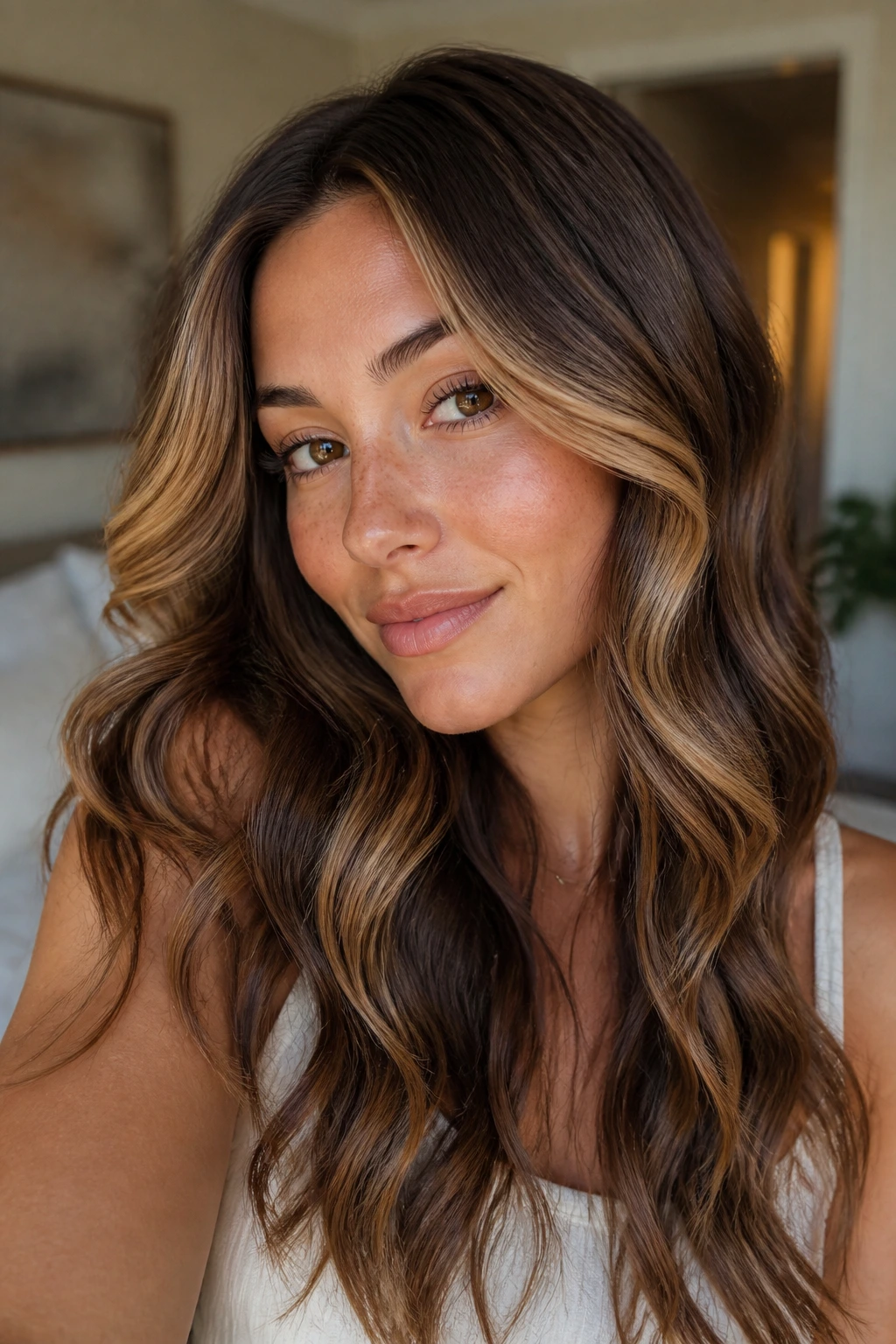
Butterscotch around the face is a cheat code for making wavy brunette hair look richer and brighter at the same time. The front pieces sit just light enough to catch the eye, while the rest of the hair stays grounded in brown.
The best version starts somewhere between the temple and cheekbone, then tapers down so the blonde doesn’t form a hard line at the jaw. If the face framing is too blunt, the whole look can feel like one highlight patch sitting on top of the haircut.
This one works beautifully with curtain bangs and longer layers. The waves push the lighter pieces forward when you move, which is where the butterscotch tone gets its charm.
10. Chestnut-to-Blonde Melt
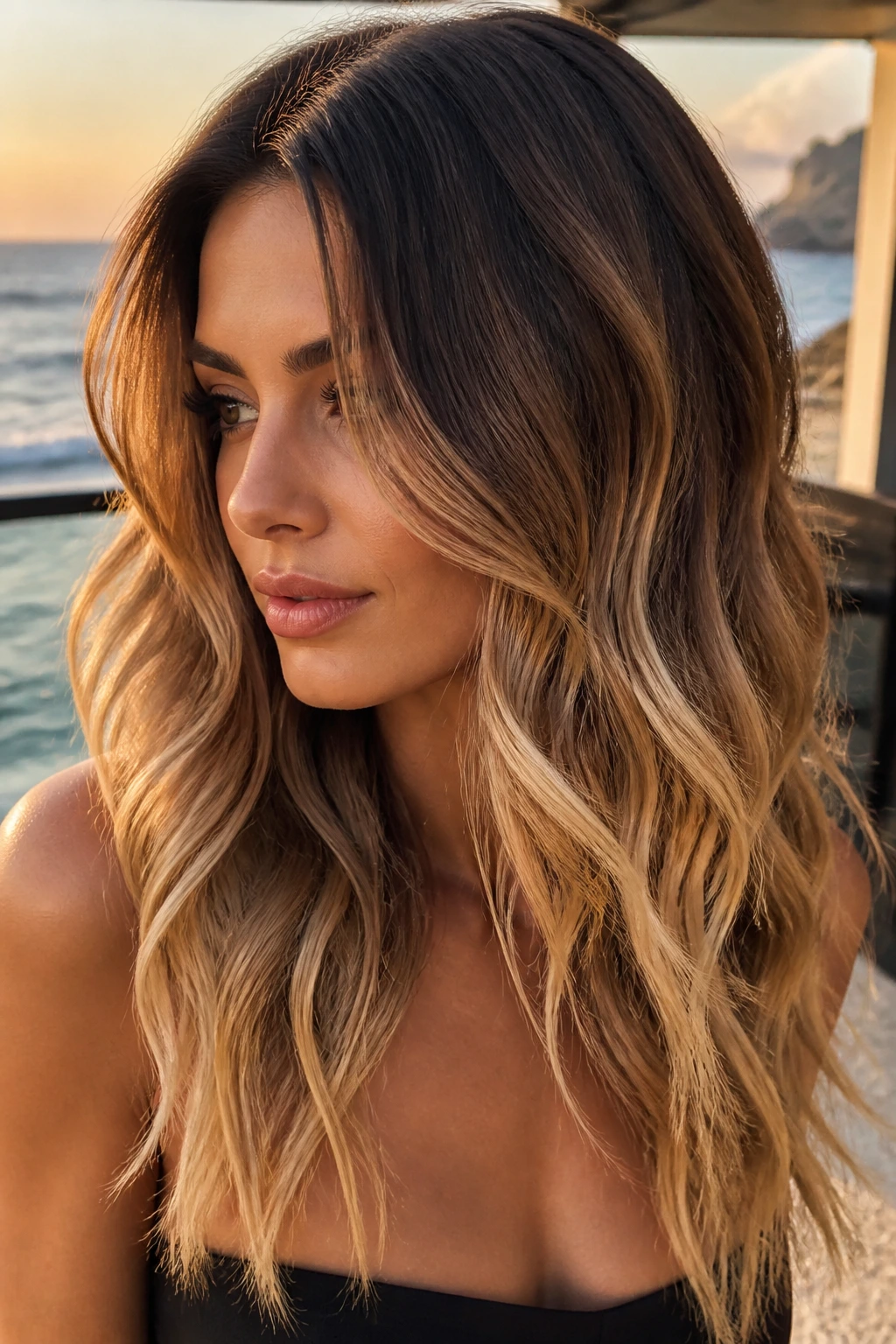
Chestnut-to-blonde melt is a softer route for someone who wants the brunette depth to stay visible from roots to ends. The transition starts chestnut and gradually opens into a beige or honey blonde through the mid-lengths, so nothing feels abrupt.
That gradual fade matters on wavy hair because the bends already create texture. A hard line can make the wave look choppy; a melt keeps the color moving with the cut instead of fighting it.
How to Keep the Transition Soft
Ask for fewer chunky foils and more blended painting through the middle. The stylists who do this well usually layer the lightness, not the whole section, so the blonde comes through in a staggered way when the hair bends.
This is a strong choice for longer layers and softly curled blowouts. It’s less about the blonde itself and more about the way the brunette keeps breathing under it.
11. Champagne Accent Pieces
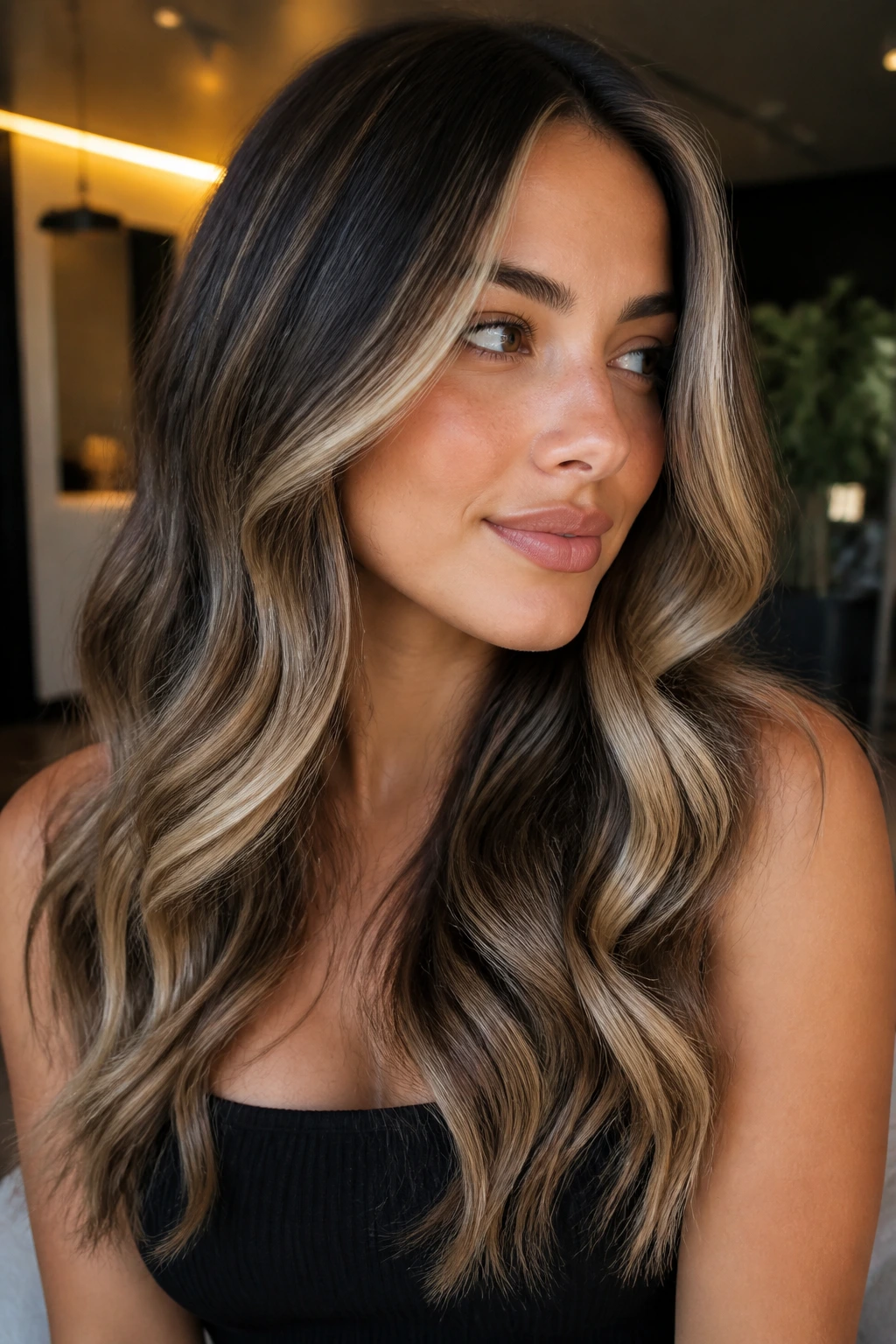
Champagne accent pieces are the sleek option in this group. The tone sits between beige and pearl, which gives wavy brunette hair a cleaner, slightly cooler shine than caramel or honey.
I like this when the goal is refinement rather than warmth. A few champagne strands placed near the front, crown, and upper mids can make the hair look brighter under indoor light without changing the whole mood of the color.
The catch is upkeep. Champagne can drift dull if you over-wash or pile on heavy oils, so it works best on hair that already has decent shine and gets regular glossing.
12. Sunlit Brunette Balayage
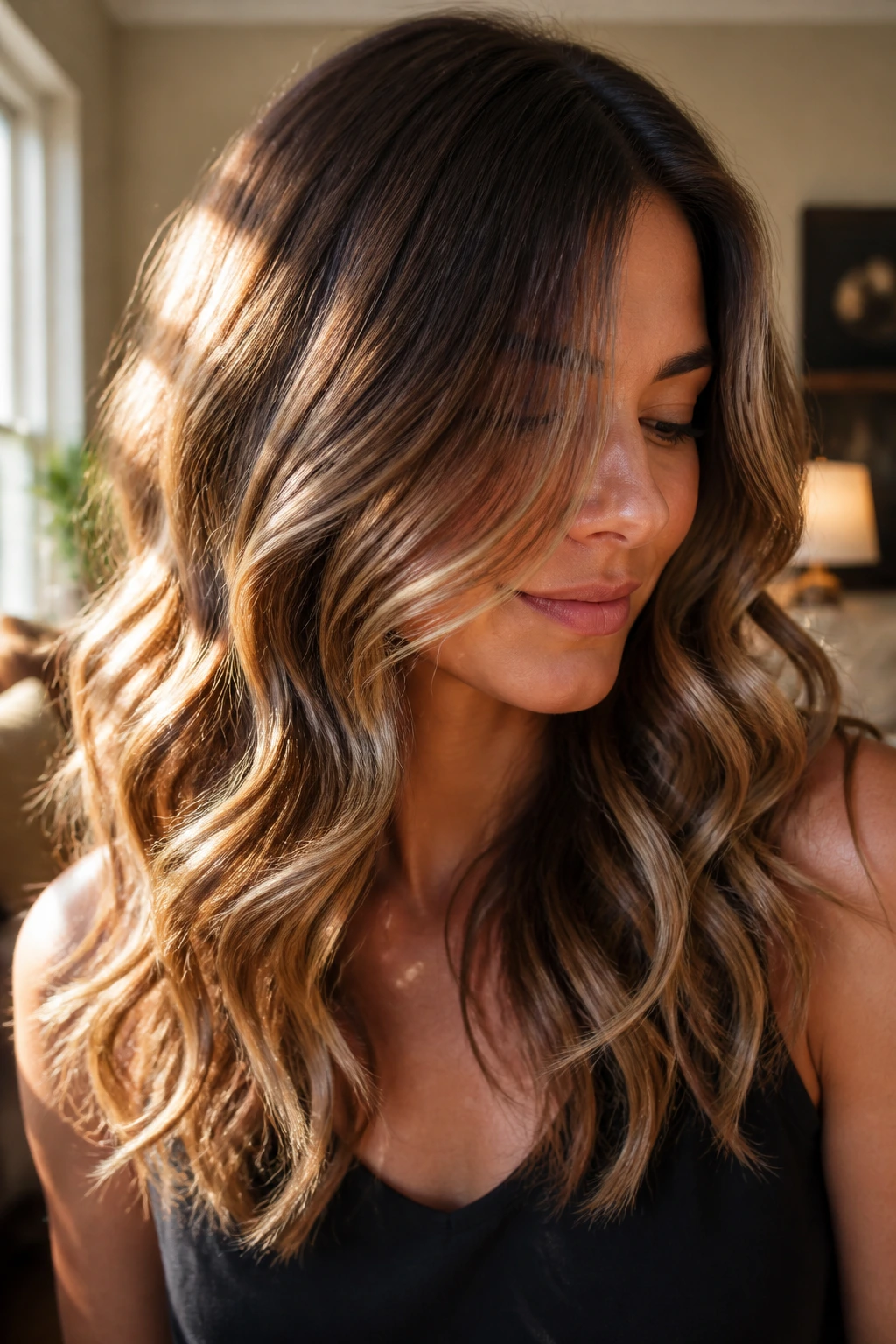
Sunlit brunette balayage should look like the hair spent time outdoors and picked up light in the obvious places — not like it was stripped and rebuilt from scratch. That means brighter mids, softer roots, and ends that catch the most light when the waves bend.
This is one of the best styles for someone who wants the color to feel casual on day one and still make sense six weeks later. The brunette base keeps the look anchored, and the wavy texture makes the lighter pieces flicker instead of sitting still.
If you wear your hair with a side part, the sunlit pieces can be concentrated on the heavier side to balance the shape. That small detail changes the whole face frame.
13. Chunky 90s Blonde Ribbons
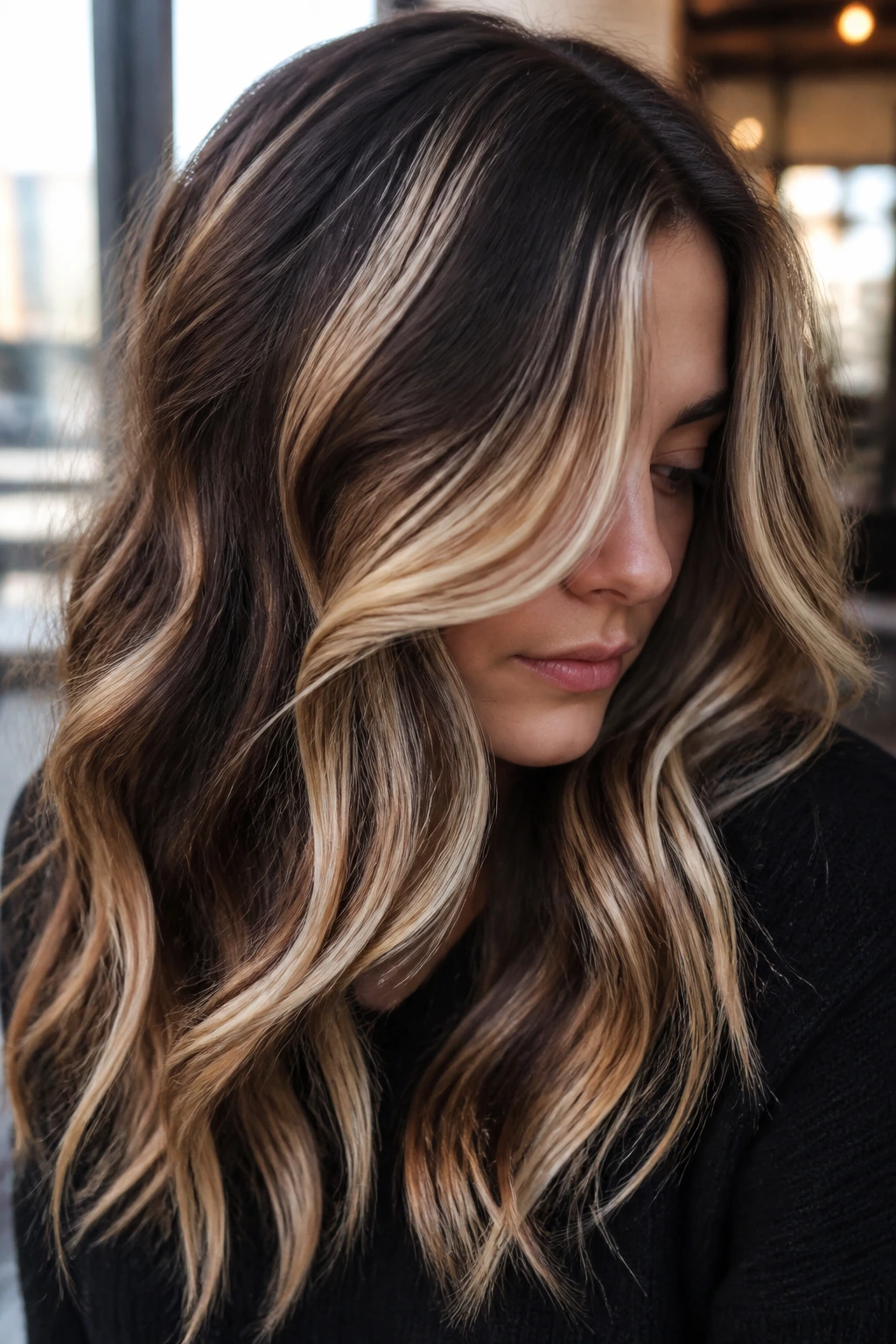
Chunky 90s blonde ribbons are not subtle, and that’s the appeal. On wavy brunettes, the broader light pieces can look deliberate instead of heavy because the wave breaks them into segments as the hair moves.
This version needs a steady hand. If the ribbons are too wide or too close together, the hair can lose depth and start reading brassy fast. Done well, though, it gives the brunette base a bold contrast that still feels wearable because the waves soften the edges.
Best for Hair That…
- Has a lot of density and can carry wider color sections.
- Is cut with layers so the ribbons don’t sit like blocks.
- Needs visible brightness from across the room.
- Can handle a little more salon maintenance than a low-key balayage.
14. Latte Lowlights with Blonde Threads
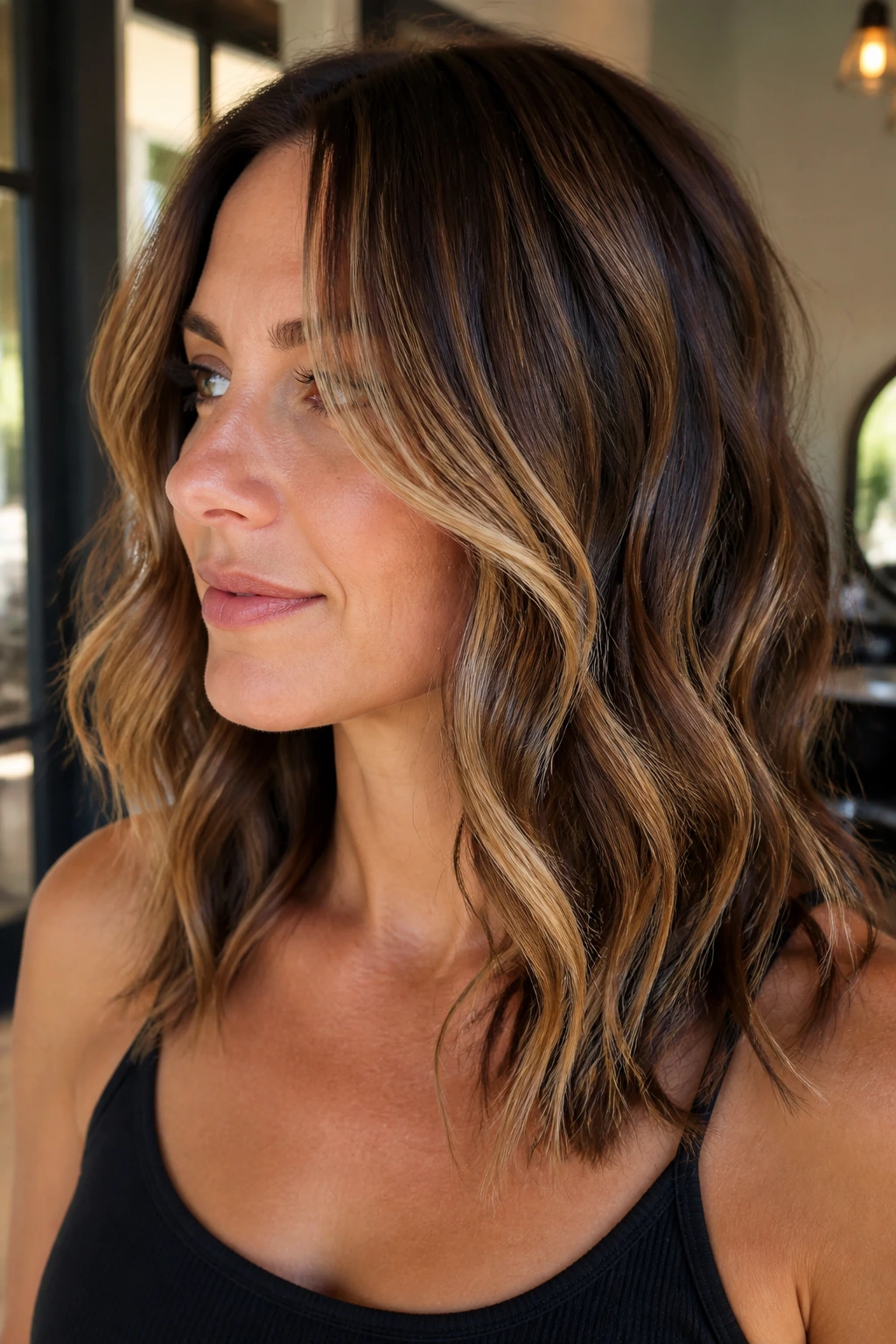
Latte lowlights with blonde threads flip the usual highlight-only formula. You keep some darker latte pieces inside the hair, then tuck in blonde threads so the waves have depth and brightness at the same time.
This is one of my favorite fixes for brunettes whose highlights looked washed out after a few rounds of lightening. The lowlights put the shadow back, which makes the blonde look fresher and keeps the wave pattern from turning too light around the face.
It’s also good for fine hair that needs the illusion of bulk. The darker strands give the hair more visual body, and the blonde threads show up best where the wave bends.
15. Sand Beige Mid-Length Waves
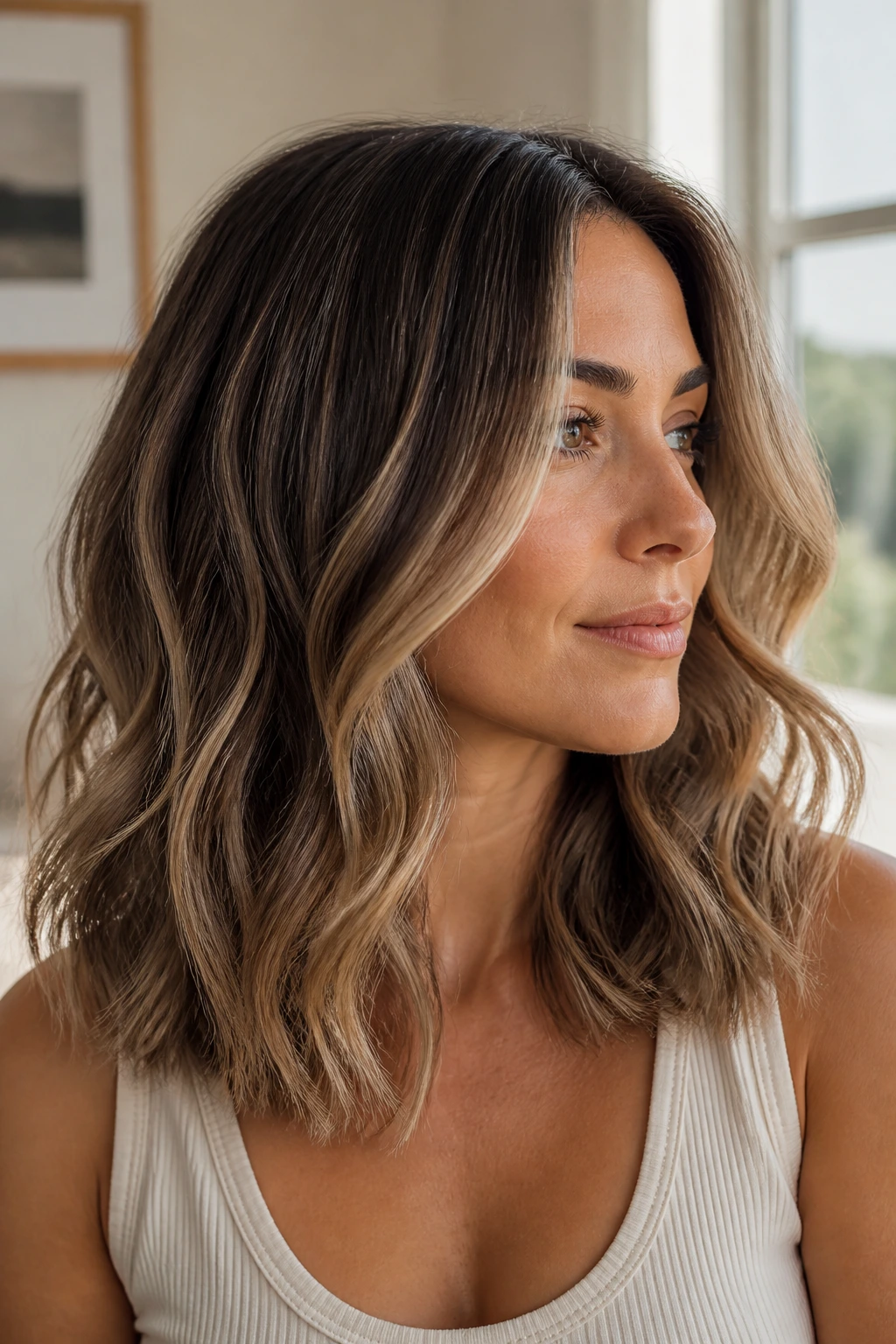
Sand beige is the no-nonsense neutral in this list. It doesn’t scream warm or cool, which makes it useful for brunettes who want an easier color choice and don’t want to spend half the appointment arguing over toner.
The best placement lives around the mid-lengths, where waves usually show the most curve. If you put all the lightness on the ends, the style can look bottom-heavy; if you spread it more evenly through the midsection, the waves start doing the visual work for you.
It’s a clean match for collarbone cuts and airy layers. The movement shows up, but the overall result stays soft.
16. Almond Cream Highlights
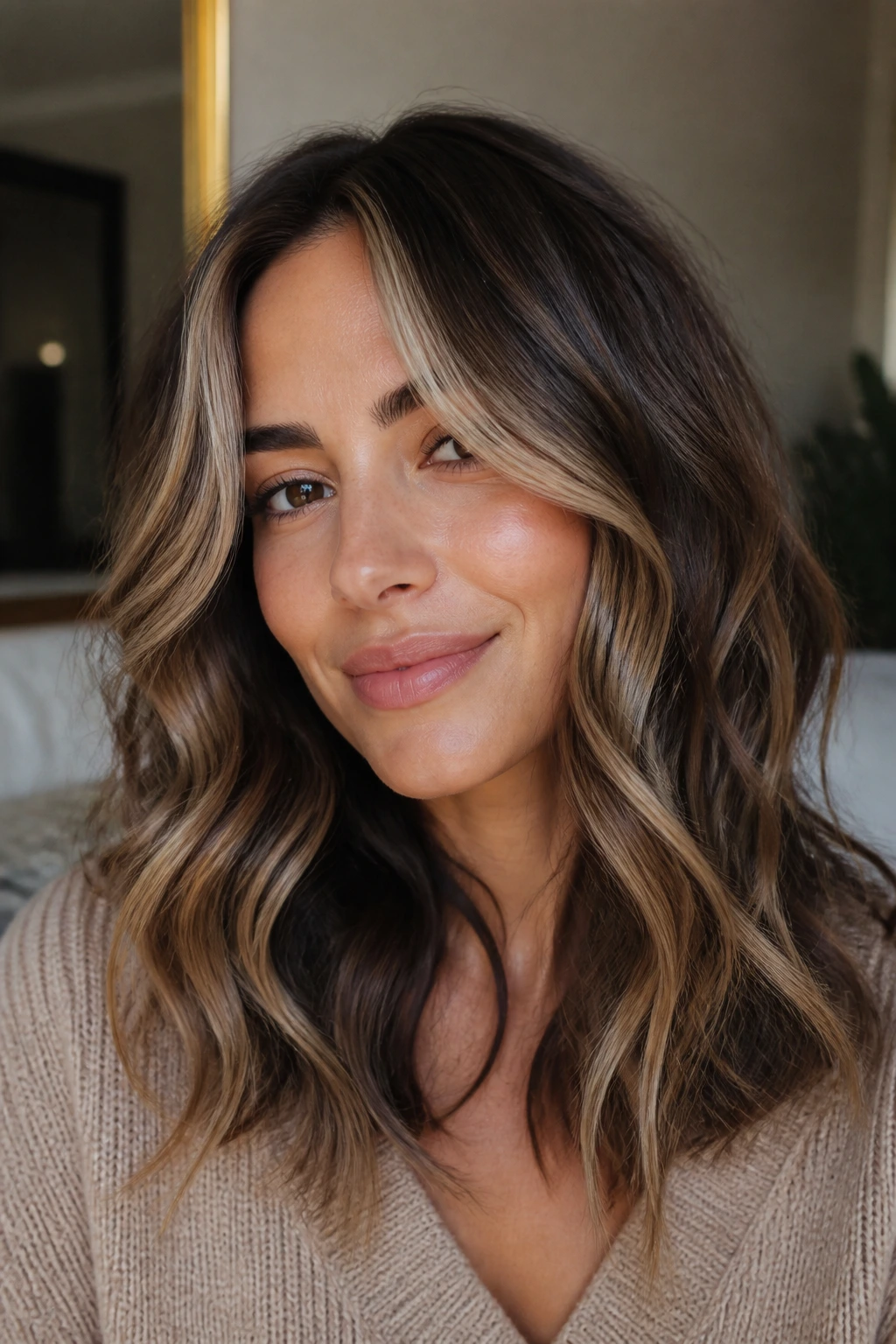
Almond cream highlights are warmer than beige but softer than gold. On brunette waves, that middle tone gives the hair a creamy lift that looks expensive in daylight and still makes sense under indoor bulbs.
This placement is useful if you don’t want harsh front pieces. A thin halo of almond cream around the upper face and a few wider pieces through the mids can brighten the whole head without making the hair look striped.
I’d choose this for someone who likes a polished blow-dry and loose bends rather than very tight curls. The softer the wave, the smoother the almond tone reads.
17. Rooted Vanilla Balayage
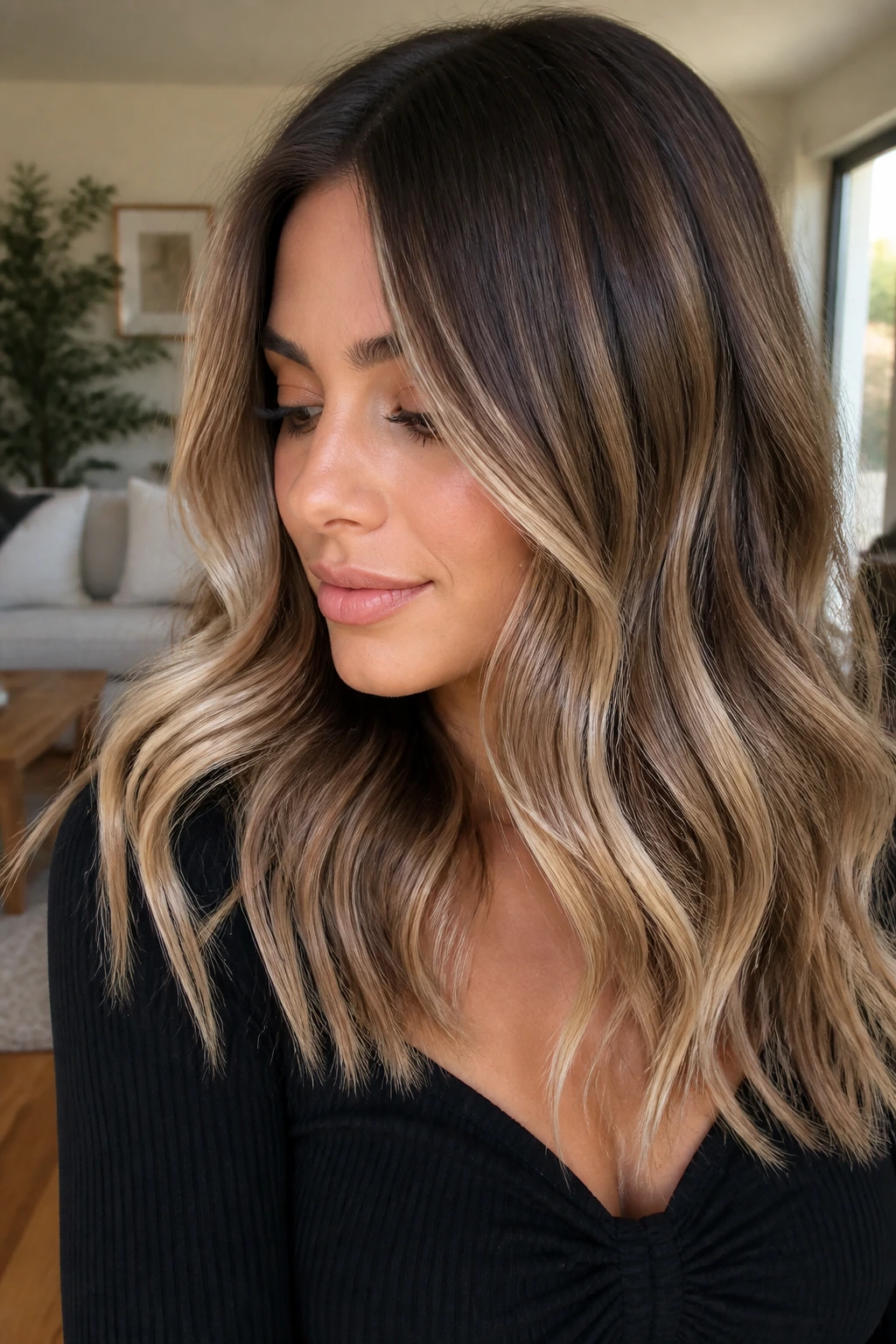
Rooted vanilla balayage keeps the top darker and lets the lighter color bloom farther down. That rooted finish is part of the appeal — it lets brunette waves keep their natural shadow while the blonde appears where the hair actually moves.
The vanilla tone is sweet but not sugary. It tends to work best when the lightening stops at a clean beige-blonde rather than a very pale lift, because the brunette root already gives enough contrast.
If you live in a clip or bun most days, this is a smart choice. The grow-out stays calm, and the hair still looks intentional when you let it fall.
18. Honey Halo Highlighting
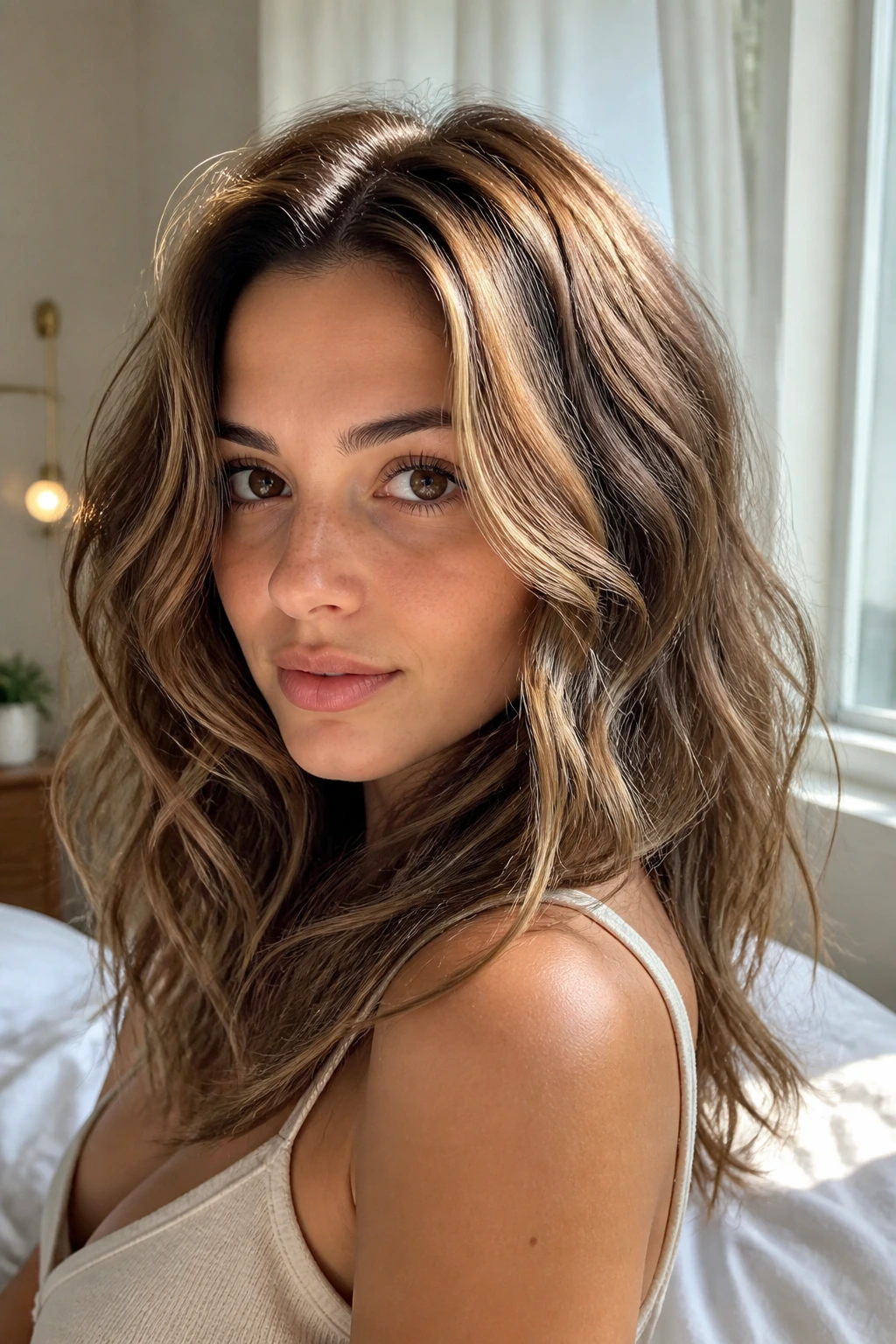
Honey halo highlighting is all about brightness at the top layer and around the perimeter of the face. The halo gives wavy brunette hair a lifted edge, and the honey tone keeps it soft enough to wear every day.
Why the Halo Placement Helps
The top layer is where light hits first, especially on waves that bend away from the head. A halo placement works with that natural pattern instead of scattering light everywhere, which is why it can make the hair look fuller without flooding the whole head with blonde.
This look favors shoulder-length and longer cuts, especially if the layers are slightly rounded. If the hair is too blunt, the halo can look more obvious than intended. With movement, though, it becomes one of the prettiest ways to brighten a brunette base.
19. Mocha Money Piece
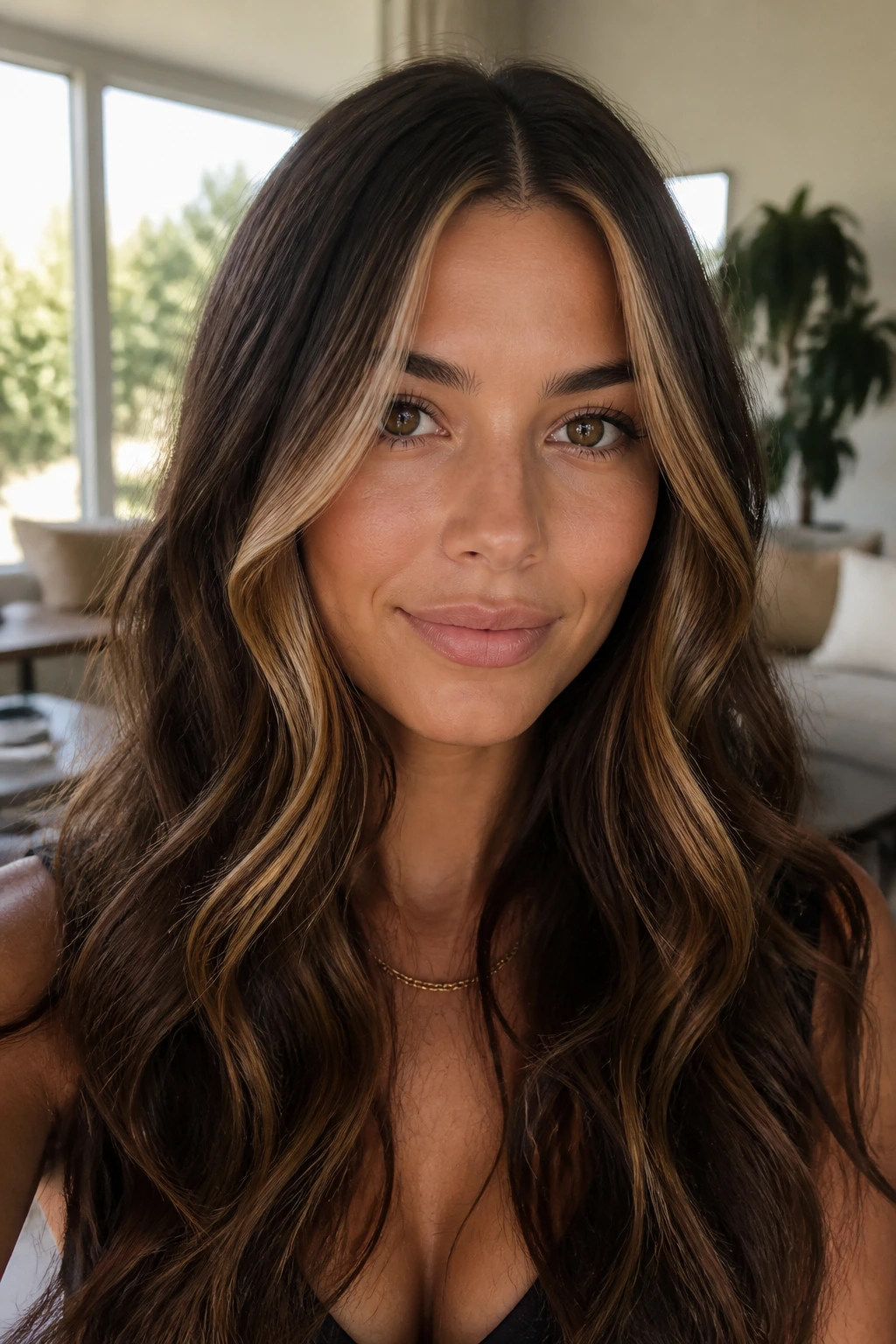
Mocha money piece color is for someone who wants a little drama right at the front and not much else. The mocha base at the scalp keeps the look grounded, while the lighter front panels give the wave pattern a clean frame.
This is a good compromise if you’re hesitant about a full highlight job. You get the impact of blonde near the face, but the rest of the brunette stays intact, which makes maintenance easier and the grow-out less fussy.
A center part makes the contrast feel modern. A deep side part makes the front pieces look even louder, which is useful if you want the face framing to do most of the talking.
20. Soft Ombré Blonde Ends
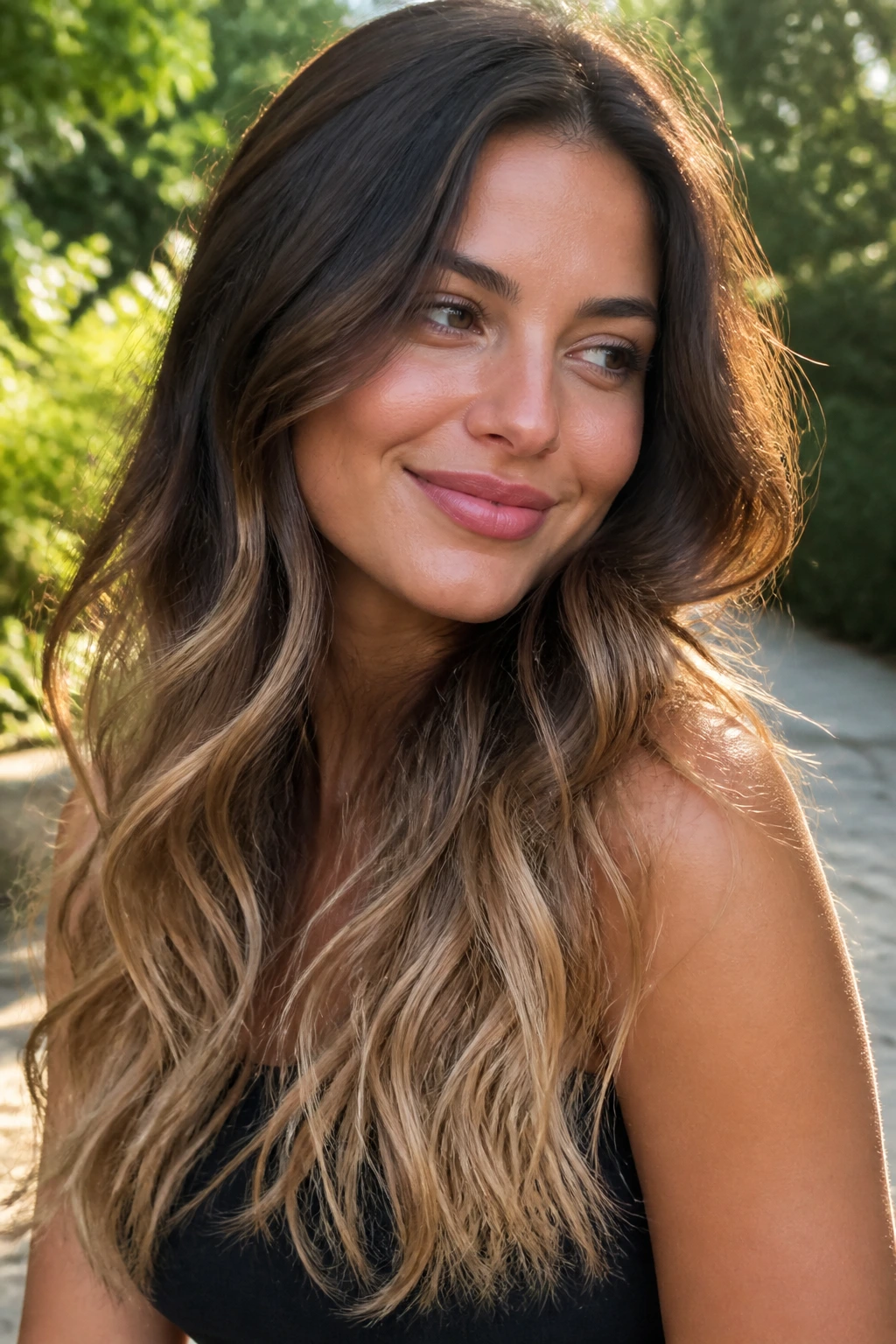
Soft ombré blonde ends push the lightness downward and let the roots stay dark. On brunettes with wavy hair, that creates a nice sweep at the bottom of the cut, especially if the waves are long enough to show a clean fade.
This style is less about precision and more about flow. The ends should look kissed by light, not bleached to the point where they feel fragile, which is why a beige or honey blonde finish usually looks better than icy blonde here.
Best When You Want Less Fuss
If you don’t want a lot of foils near the scalp, ombré gives you room to breathe. The grow-out is softer, the roots stay natural, and the haircut still gets a visible brightening at the ends.
21. Bronze and Cream Blend
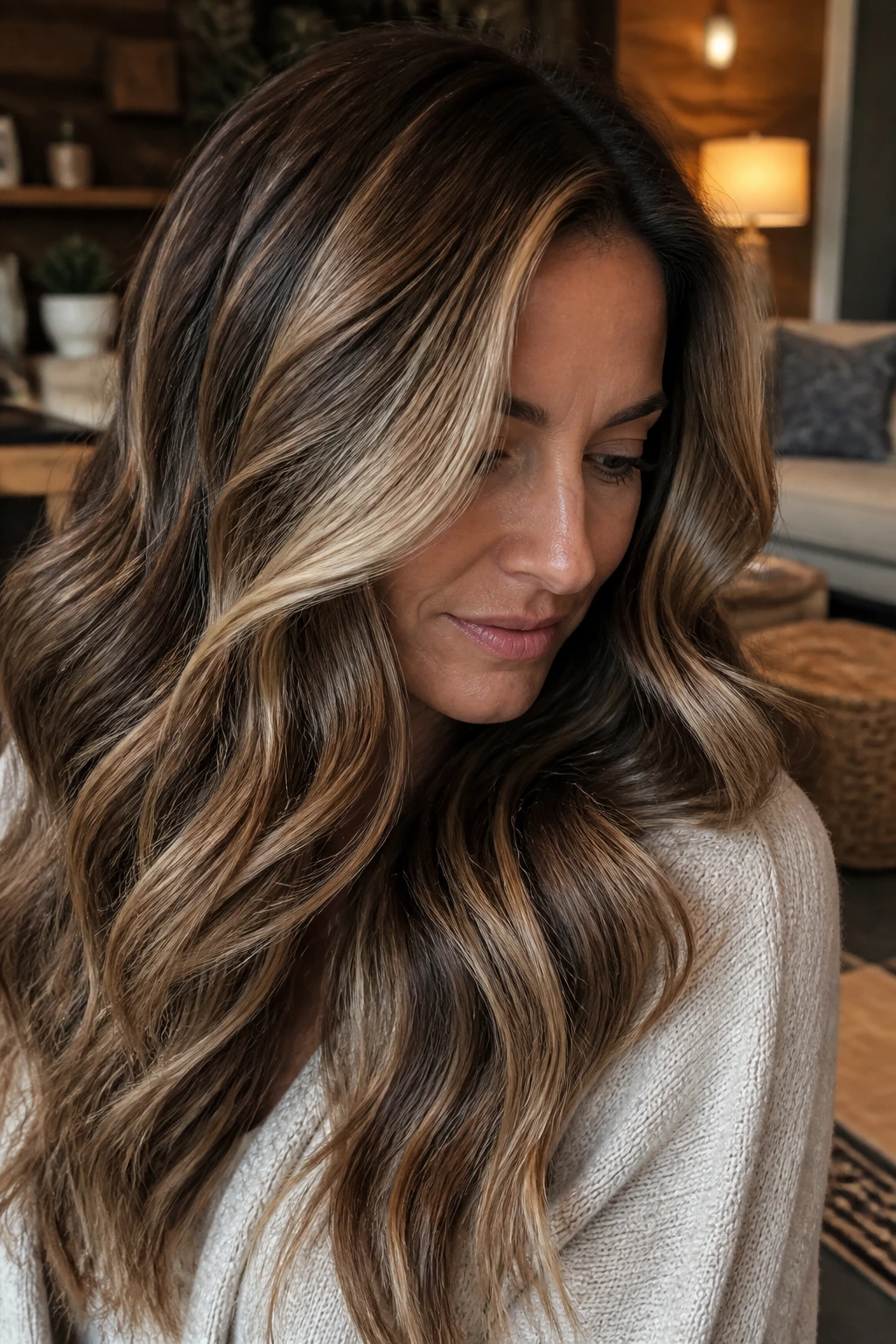
Bronze and cream is a nice answer for brunettes who like warmth but don’t want everything to turn gold. The bronze brings depth; the cream keeps the light pieces from disappearing into the base.
That blend shows especially well on thick waves because the contrast doesn’t depend on one tone alone. The bronze pieces create shadow inside the wave, and the cream threads sit on top where the curl bends, so the color keeps changing as the hair moves.
If you’re choosing between caramel and beige, this sits somewhere in the middle. That’s not a boring place. It’s often the smartest one.
22. Sandy Curtain Bang Highlights
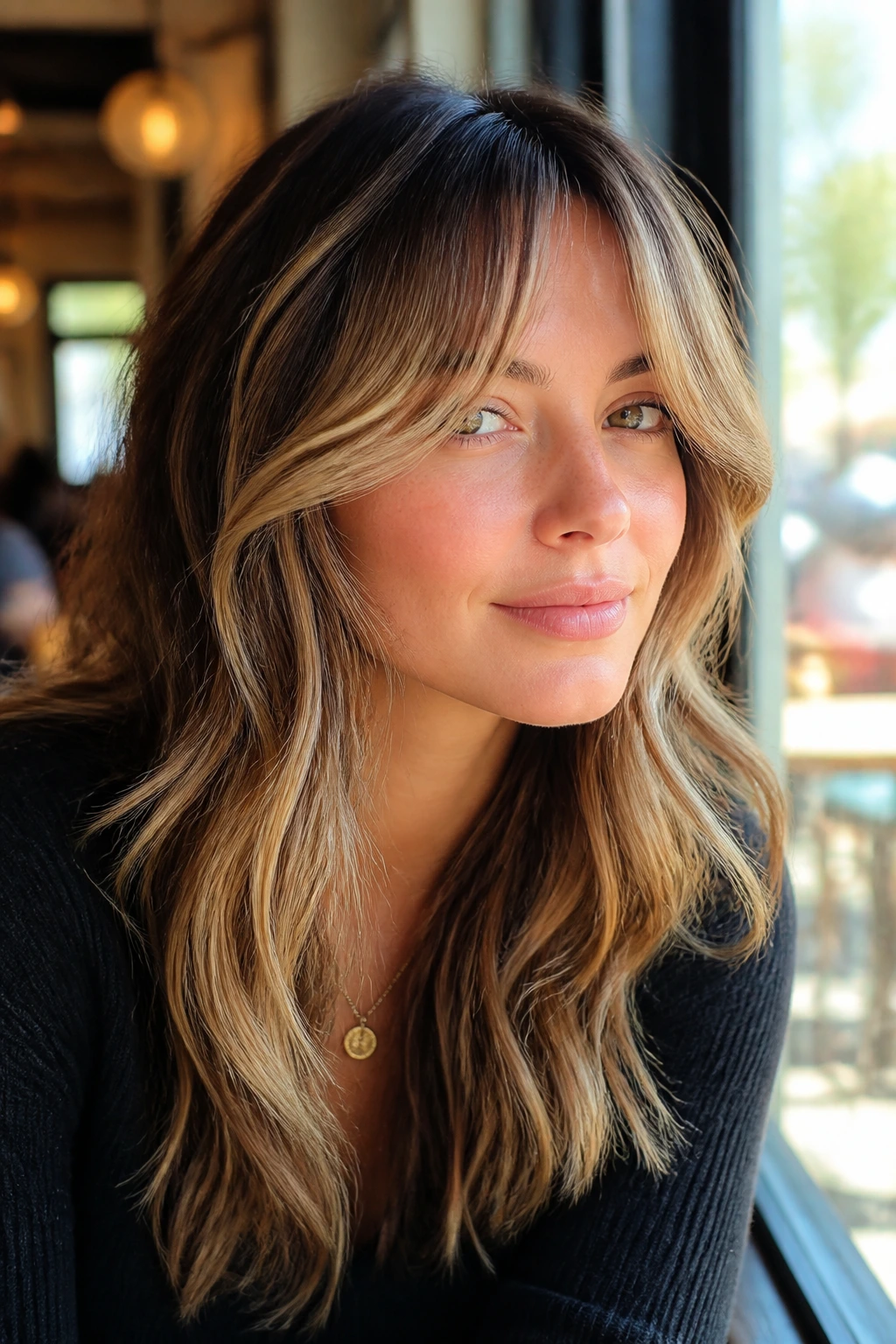
Curtain bangs change the whole way highlights behave. Once the hair splits at the center and falls around the face, sandy pieces in the bang area can frame the eyes without needing much brightness elsewhere.
The sandy tone is calmer than gold and a touch softer than beige. It works best when the bangs are blended into the front layers so the highlight doesn’t stop at a blunt line near the brow.
This is a strong option for shoulder-length brunettes and longer shags. The bangs catch the light first, then the rest of the waves pick it up second, which makes the whole cut feel more layered.
23. Espresso and Caramel Contrast
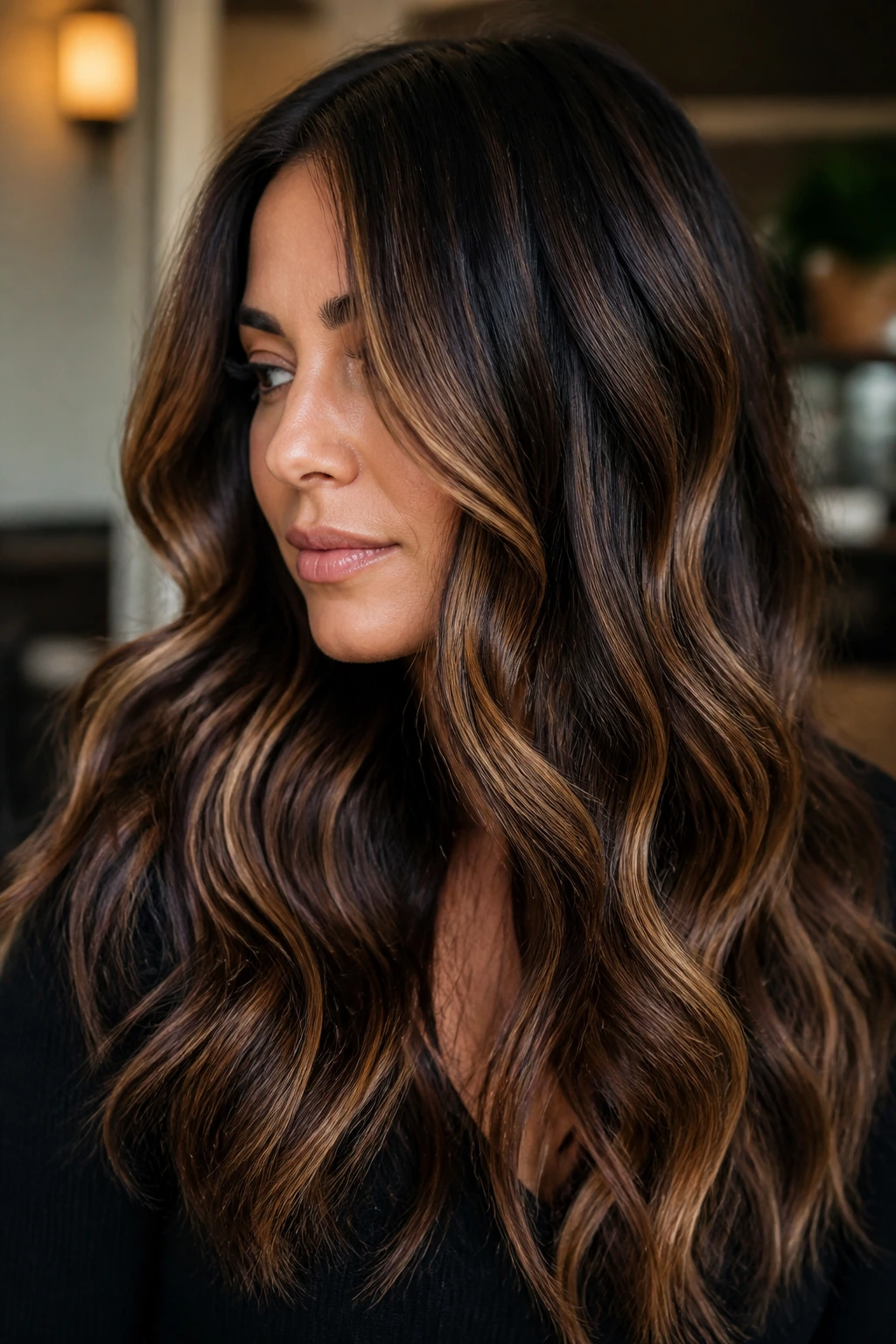
Espresso and caramel contrast is for brunettes who want a deeper, richer look with just enough blonde to catch the light. The espresso pieces sit inside the hair and the caramel threads move through the wave, so the hair keeps its dark base and still feels bright.
I like this on hair that’s dense, long, or cut with strong layers. The contrast makes the wave pattern easier to read, especially if the hair tends to collapse into one shade when it dries.
If you want a color that looks polished on day two, this is a good lane. The depth at the root helps everything hold together.
24. Pearly Beige Ribboning
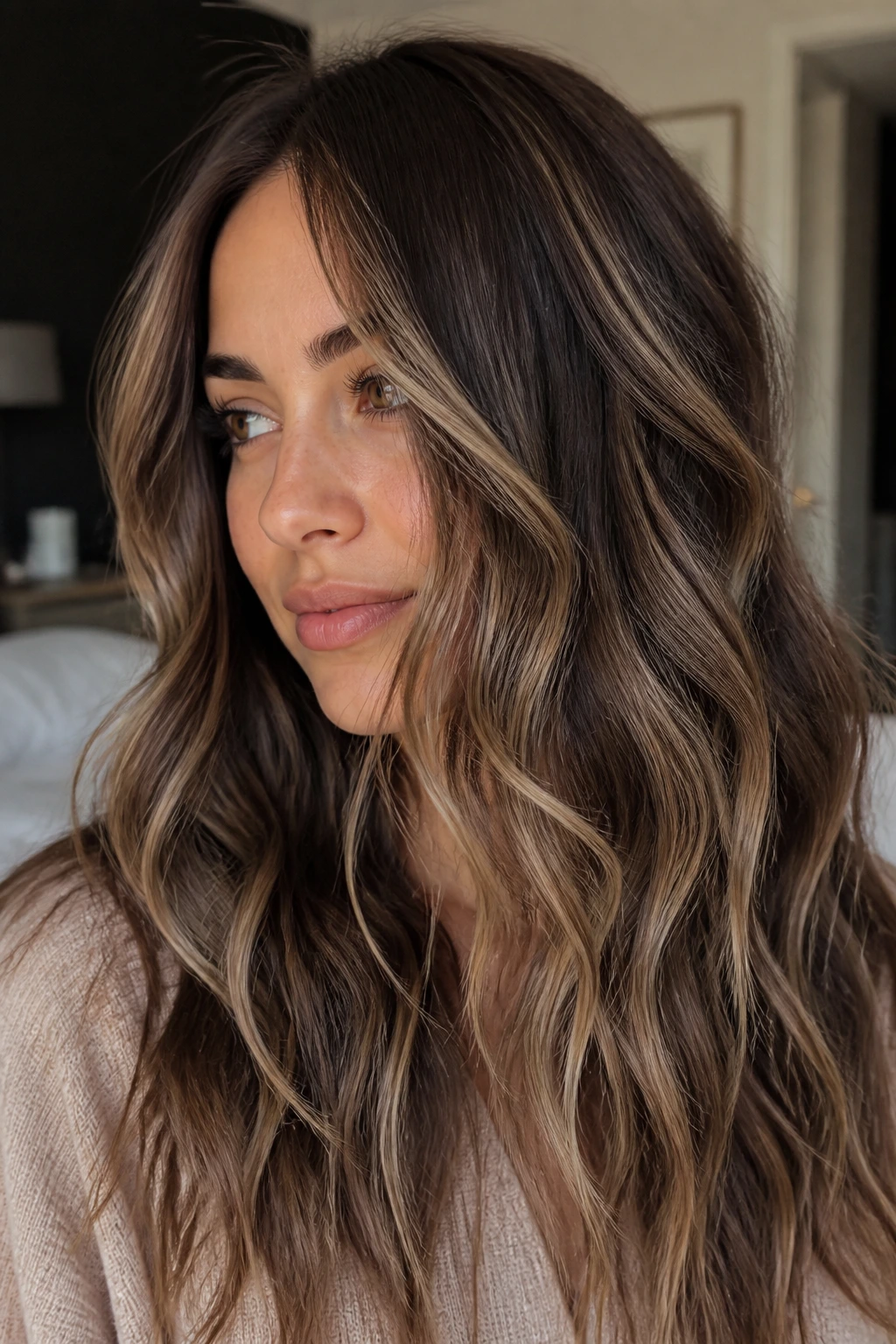
Pearly beige ribboning is the cooler, smoother version of a standard beige highlight. The pearl note takes the edge off warmth and gives the waves a soft shine that doesn’t lean yellow.
The ribbons should be fine and a little staggered. If they’re too broad, the pearl tone can start to look flat; if they’re too thin, the color disappears entirely in dense brunette hair. The sweet spot is somewhere in the middle — enough to catch light, not enough to shout.
This is a nice pick if you wear silver jewelry, cool-toned makeup, or neutral clothing and want the hair to sit in that same lane.
25. Toasted Coconut Highlights
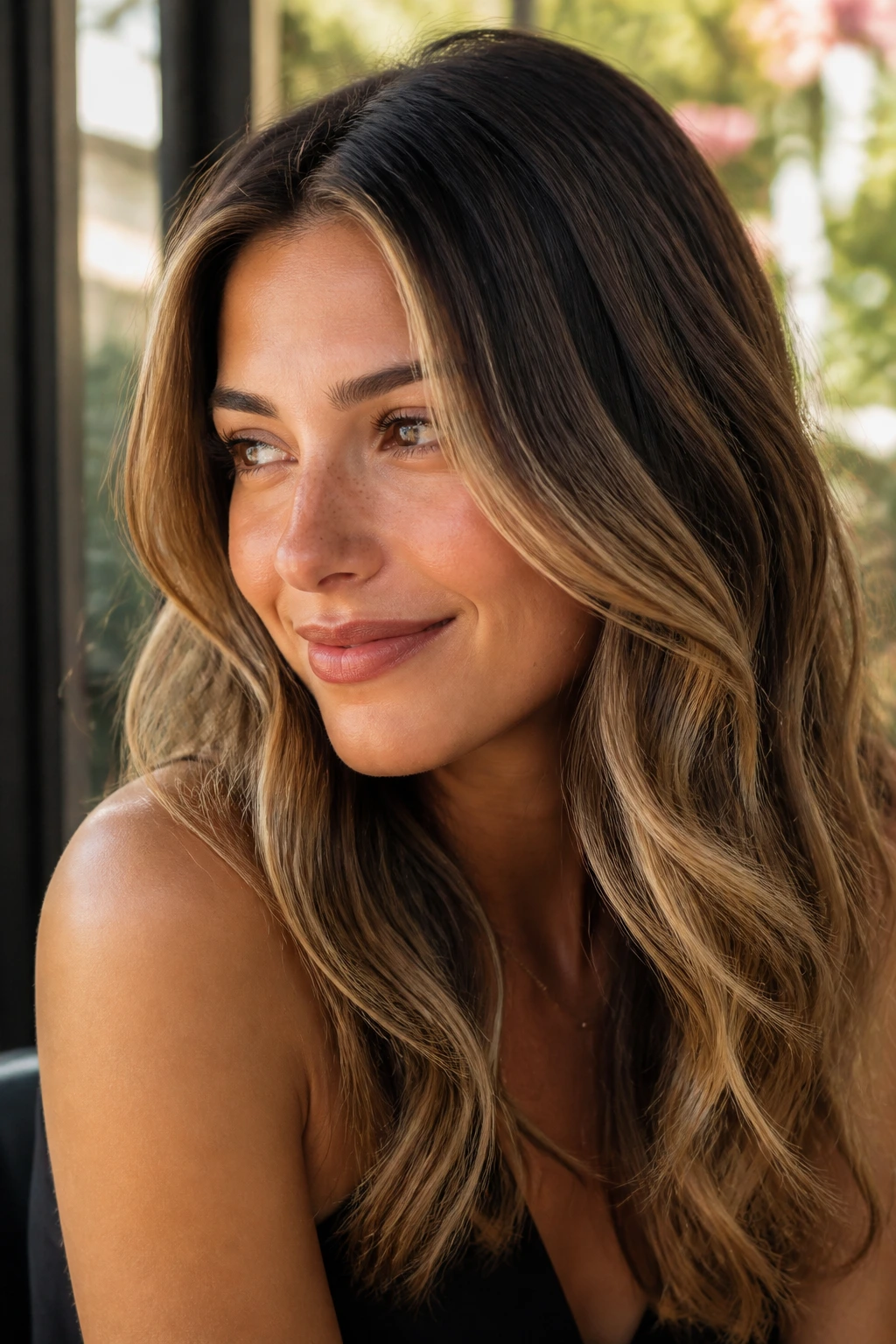
Toasted coconut highlights keep the root darker and the lighter pieces creamy, like the hair has a warm shell and a soft blonde inside. The tone sits between beige and pale gold, which makes it easy to wear on brunette waves that need brightness without a brassy finish.
This style plays well with texture. Loose bends and soft waves break up the cream pieces so they don’t look too uniform, which is the whole reason this look works better on wavy hair than on flat, straight hair.
A Good Fit If You Want…
- A lighter finish that still respects your brunette base.
- A warm blonde that doesn’t turn orange.
- Something that looks good in messy waves, not just salon styling.
- A color that can be refreshed with gloss instead of full lightening every time.
26. Warm Bronde Slices
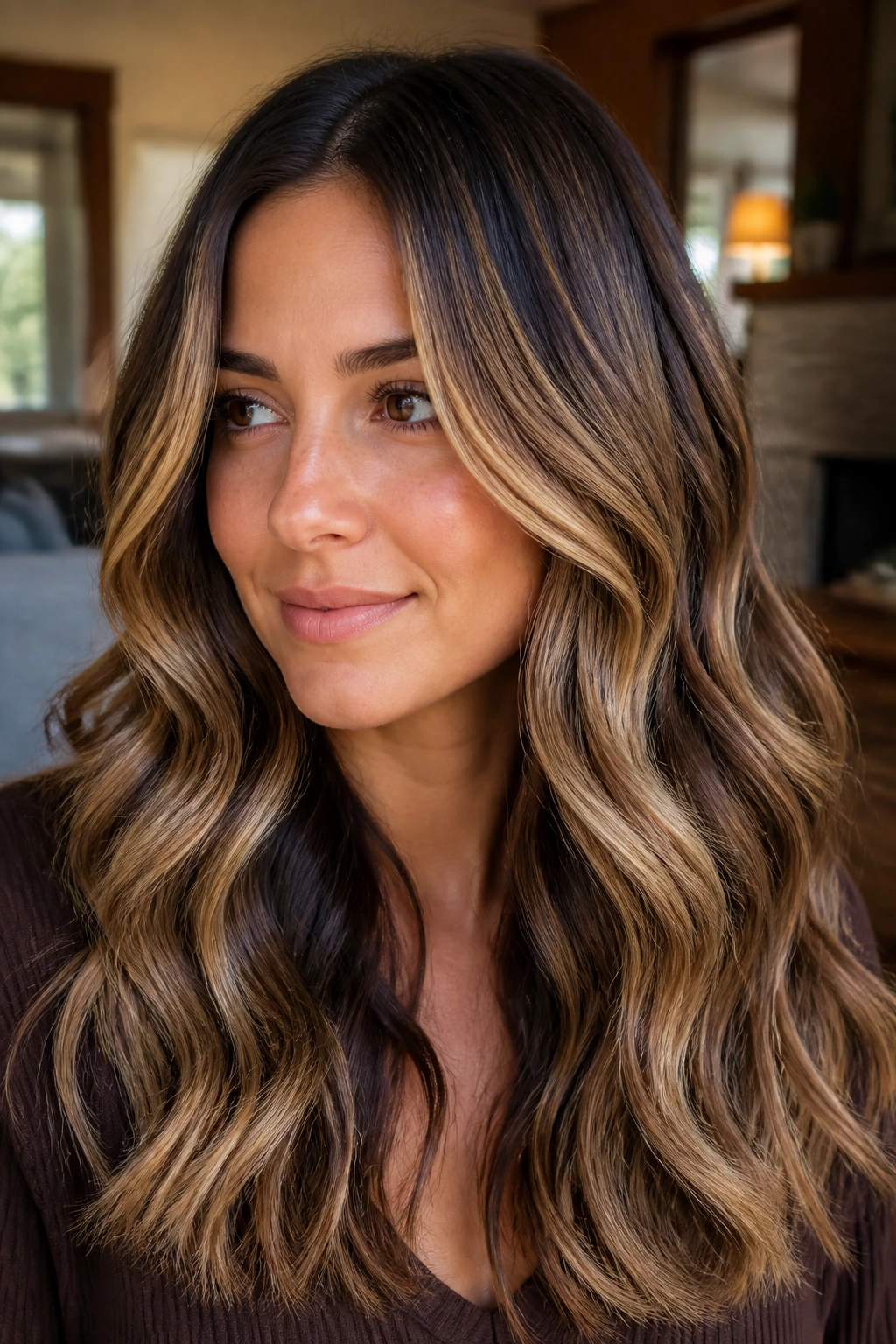
Warm bronde slices use broader sections than babylights, but the color itself stays in that brown-blonde middle. On brunette waves, the wider slices show up in motion and give the hair more obvious dimension without turning it into a full blonde job.
This is smart for thicker hair or darker brunettes that need a visible lift. The warm bronde tone keeps things cozy and wearable, and the slice placement lets the wave pattern do the rest.
If you want a look that reads from across the room but still has softness at the root, this is one of the stronger options. It’s not shy, and it shouldn’t be.
27. Smoky Taupe Dimension
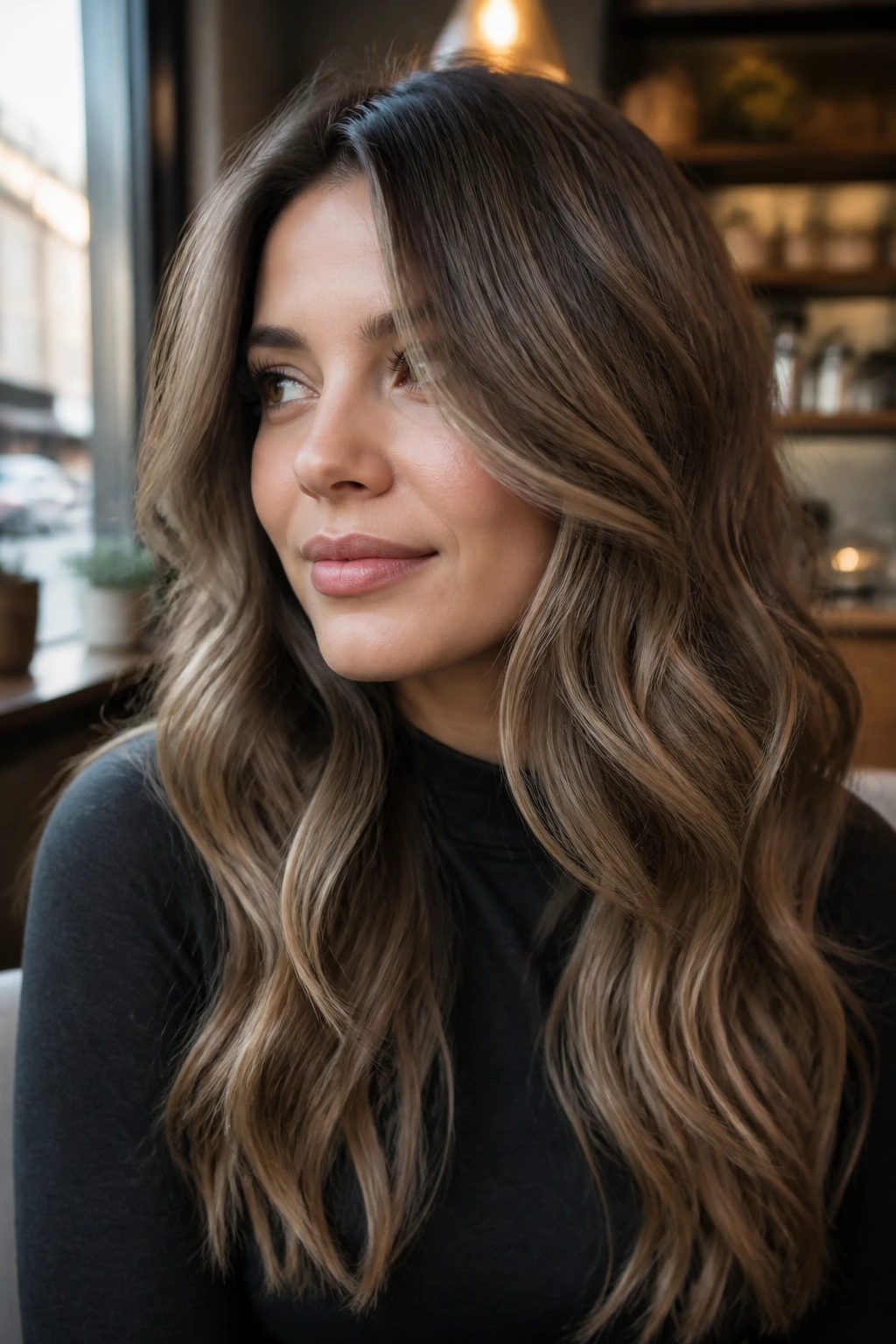
Smoky taupe dimension leans cool, muted, and a little quieter than the warm looks above. The taupe note keeps the blonde from feeling sugary, and the brunette base stays visible enough to hold the whole style together.
This is a strong fit for ashier brunettes or anyone whose hair pulls red when lightened too much. A taupe gloss can calm that warmth fast, especially if the foils were lifted a little more than planned.
The best result lives in the balance between muted and bright. Too much ash, and the hair can look dusty. Too little, and it slides back toward gold.
28. Light-Chasing Peekaboo Pieces
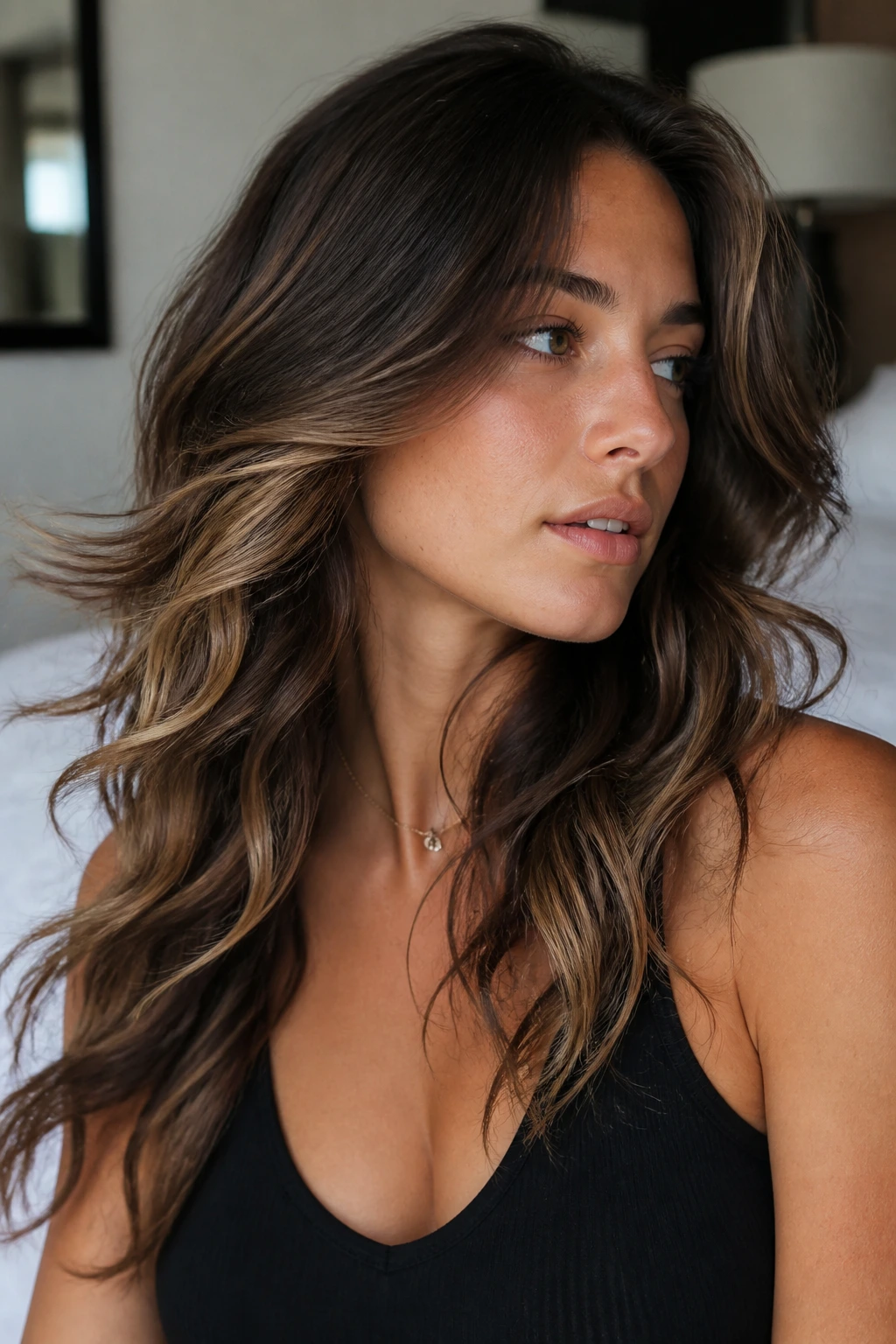
Light-chasing peekaboo pieces are hidden until the hair moves, which is a nice way to make brunette waves feel more playful without changing the top layer too much. The lighter strands sit underneath and around the interior bends, so they flash through when the hair swings or gets tucked behind the ear.
This is the quietest color idea in the bunch, and it’s one of the smartest if you work in a place with stricter dress codes or you just don’t want the change to announce itself right away. The waves do the reveal for you.
It also pairs well with layered cuts, because the interior pieces peek through as the layers separate. Subtle? Yes. Boring? Not even close.
Why Brown Blonde Highlights Follow the Wave Pattern So Well
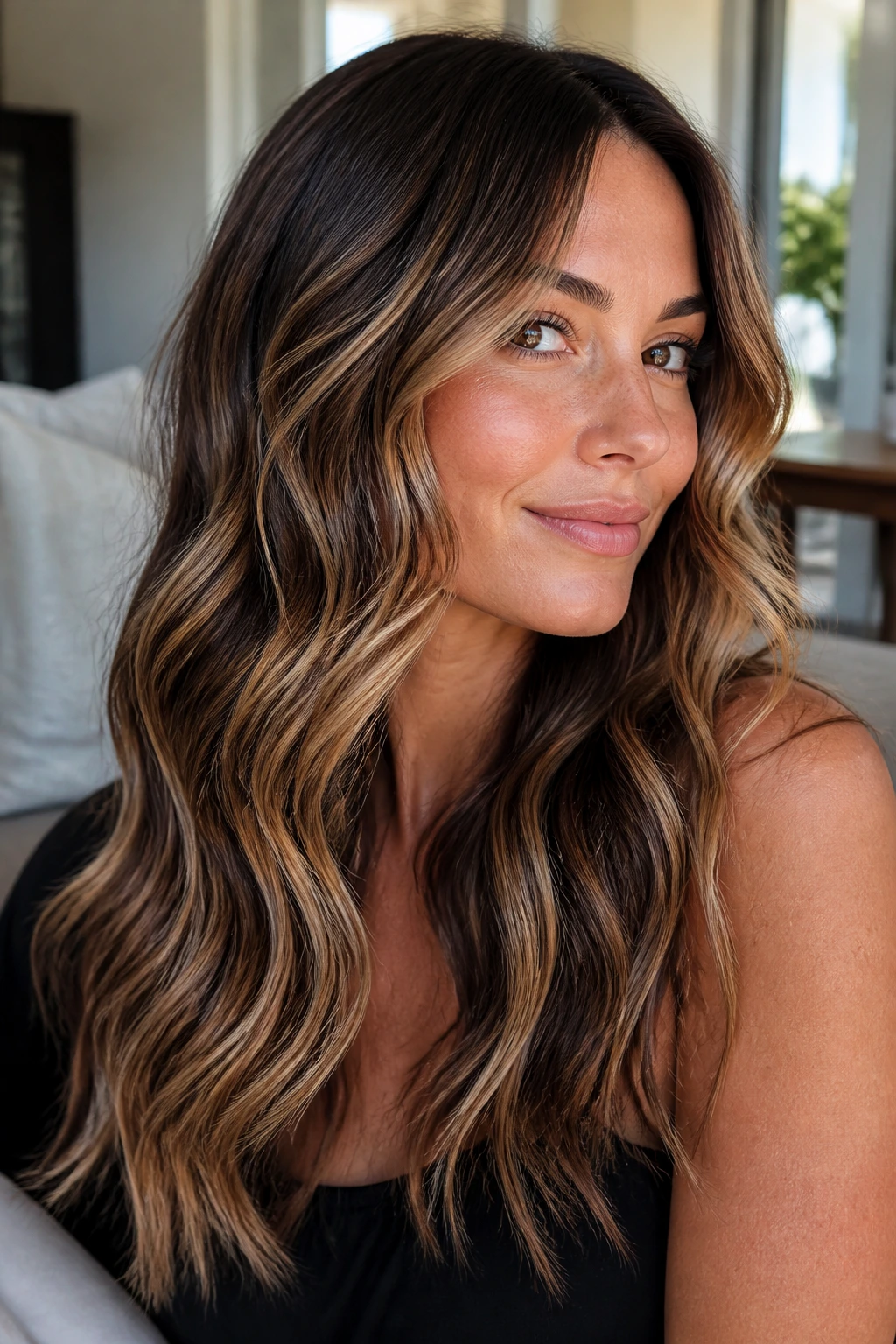
Wavy hair gives color a little architecture. The bends create shelves of light and shadow, and that means a brown base with blonde pieces doesn’t sit in one flat plane the way it often does on straighter hair. The eye picks up the contrast in fragments, which is why even a few well-placed ribbons can look like a full makeover.
That’s also why placement matters more than raw brightness. A lighter piece that lands on the outside of an S-wave will show up more than a much paler piece buried in a straight section. Good colorists work with that. They paint where the wave will fold, not just where the hair looks empty on the foil.
I’d argue this is the easiest texture to make dimensional color look expensive. You don’t need a lot of blonde. You need the right blonde in the right place, plus a gloss that keeps the tones from wandering too far warm or too cool.
Essential Tools for Keeping Brunette Highlights Glossy
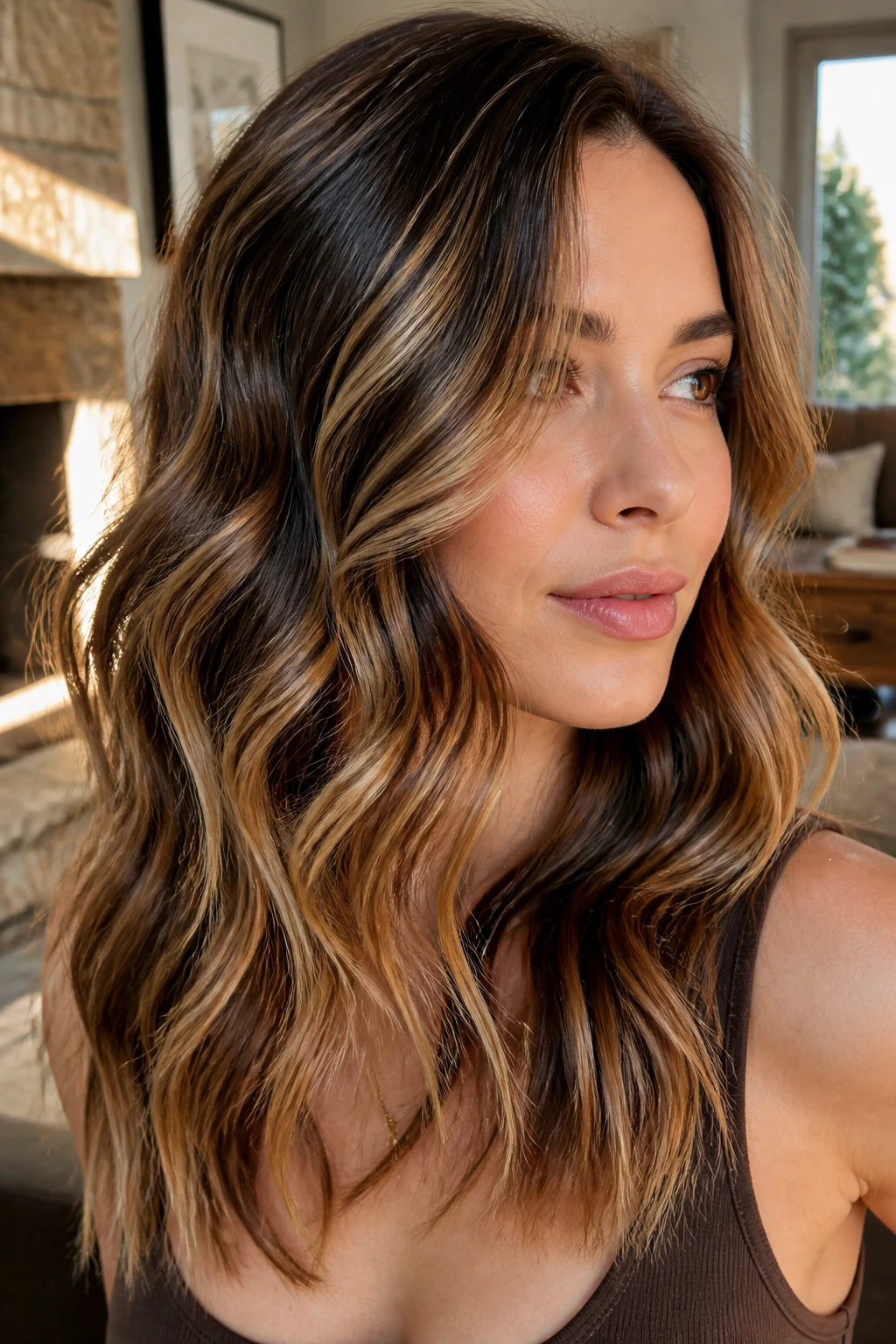
- Color-safe sulfate-free shampoo: Keeps the brunette base from fading and stops the blonde from going chalky.
- Purple shampoo: Useful for beige, pearl, and cream highlights that start drifting yellow; use it sparingly, not every wash.
- Blue shampoo: Better if the lightened pieces pull orange rather than yellow on a darker brunette base.
- Bond-building treatment: Helpful on lightened ends that feel a little stretchy or dry after coloring.
- Heat protectant spray: Non-negotiable before diffusing, curling, or touching the hair with a flat iron.
- Wide-tooth comb or detangling brush: Lets you separate waves without tearing the lighter sections.
- Microfiber towel or cotton T-shirt: Cuts frizz and keeps the cuticle from roughing up after washing.
- Silk pillowcase or bonnet: Reduces nighttime friction, which is where a lot of highlight dullness starts.
- 1.25-inch curling iron or wand: Optional, but useful if you want to reshape the wave pattern so the ribbons show.
Choosing the Right Brown Blonde Tone for Your Base
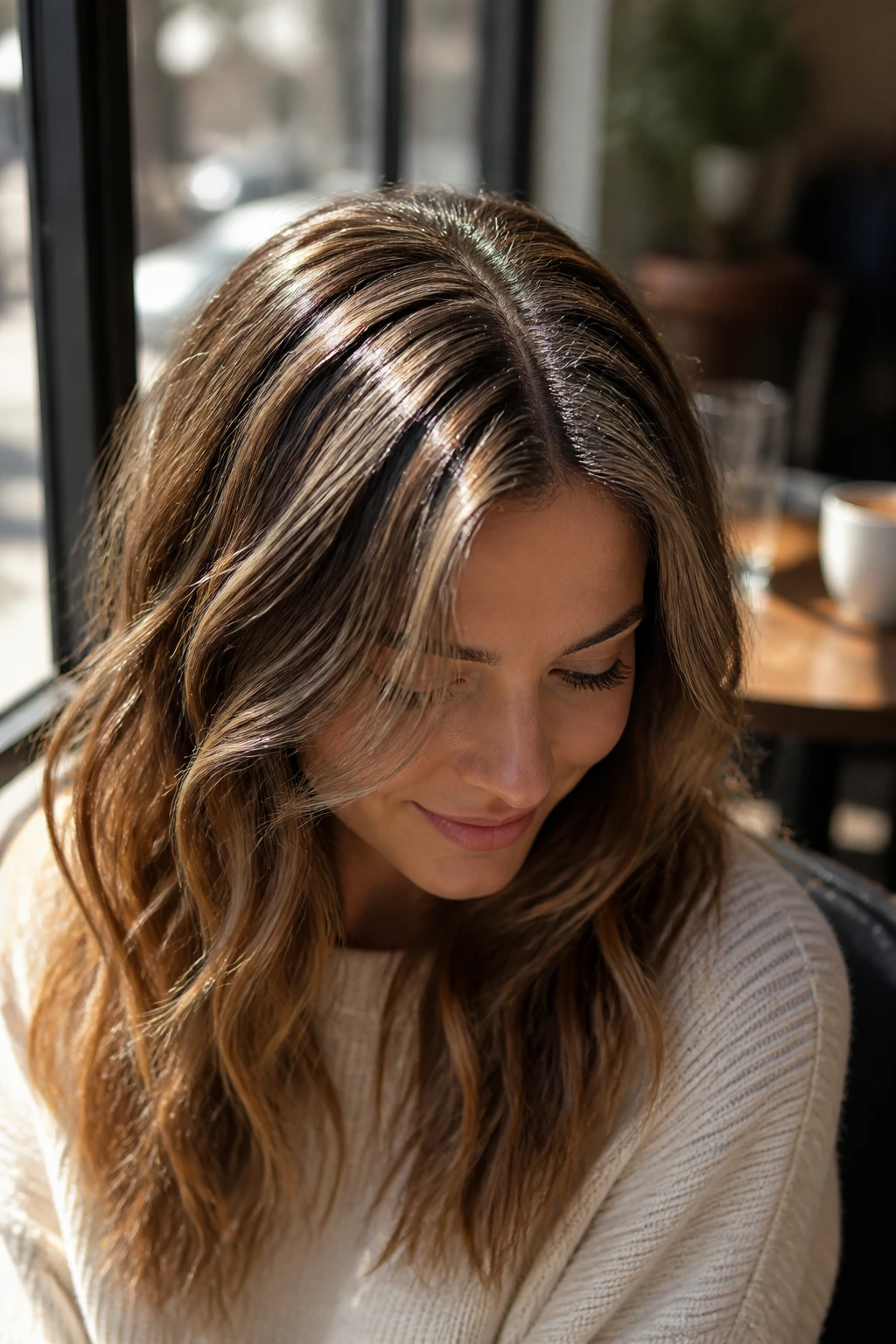
The shade should match the brunette, not bully it. If your base sits in the dark brown range, caramel, toffee, honey, and bronze usually look more believable than pale beige. If your natural color is medium brown, you can move into champagne, almond cream, and sand beige without the contrast turning harsh.
Undertone matters too. Warm brunettes usually look good with honey, butterscotch, caramel, and bronze. Cooler brunettes tend to hold ash beige, mushroom, pearly beige, and smoky taupe better. Neutral brunettes are the easiest to work with because they can usually wear both directions if the gloss is handled carefully.
Bring reference photos that match your wave pattern, not just the color. A style that looks gorgeous on loose 2A bends may turn stripey on tighter 2C waves or on a thick lob. Ask the stylist what level the blonde will reach before toner, and ask what shade the toner will be. Those two answers matter more than the Instagram picture.
How to Wear These Highlights So the Waves Stay Visible
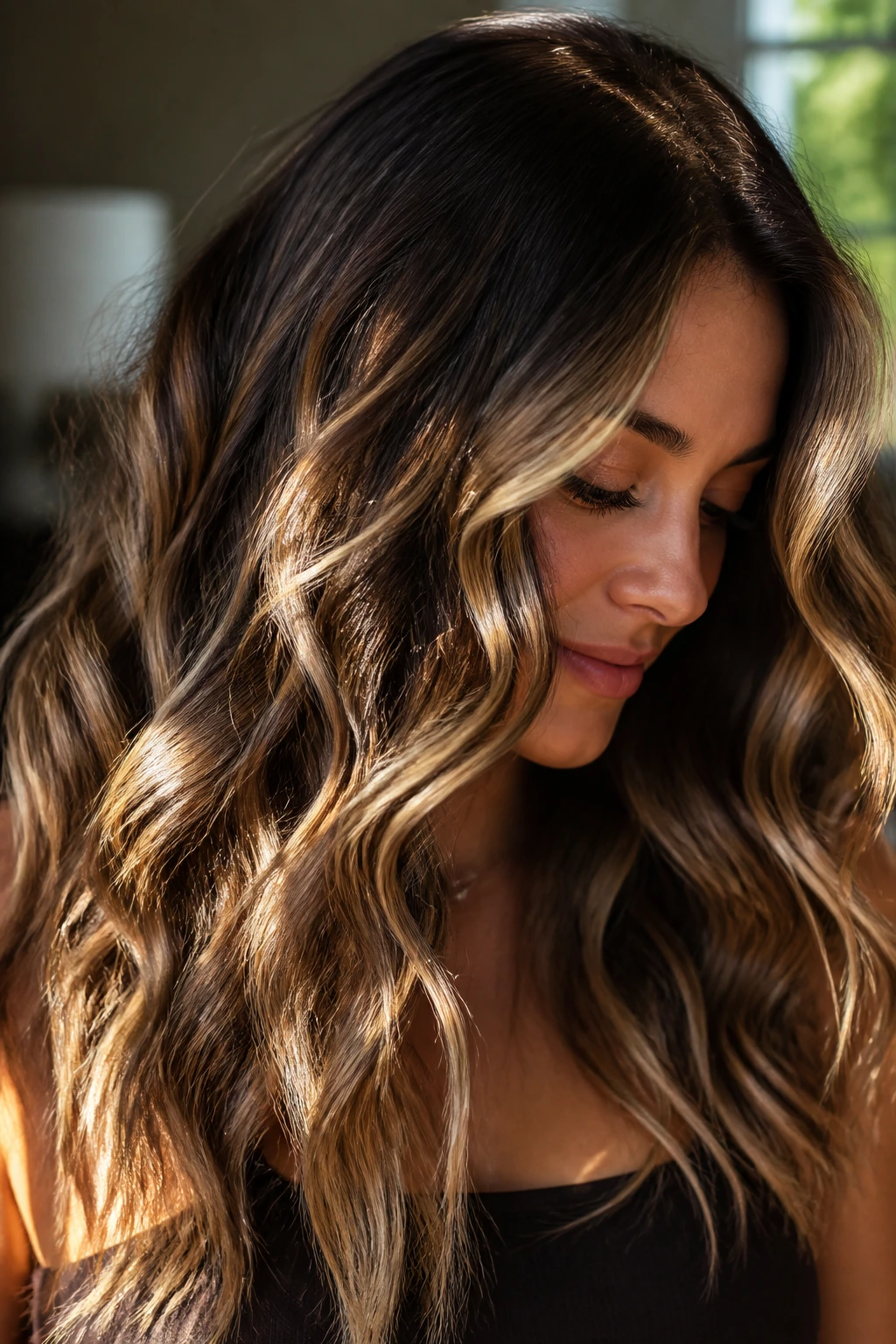
Presentation: Style the hair so the wave pattern is loose enough to show the ribbons. A one-inch wand or large bend, brushed out with fingers, lets the blonde sit on top of the brunette instead of getting swallowed by a tight curl.
Best Cuts: Long layers, collarbone lobs, curtain bangs, butterfly cuts, and soft shags all give the highlights room to move. A heavy one-length cut can still work, but the color usually needs to be a little more concentrated around the front and mids so it doesn’t disappear.
Style Pairings: A center part makes face-framing highlights look balanced. A side part gives the crown more lift and can make babylights or money pieces look brighter. If the highlight placement is subtle, clip the top layer back for a minute and let the underlayers show through — that’s where the dimension usually lives.
Finish: Keep serum light. One pea-size drop through the ends is enough for most wave patterns. Too much product and the blonde pieces turn slick, which kills the contrast you paid for.
Additional Tips and Style Boosters
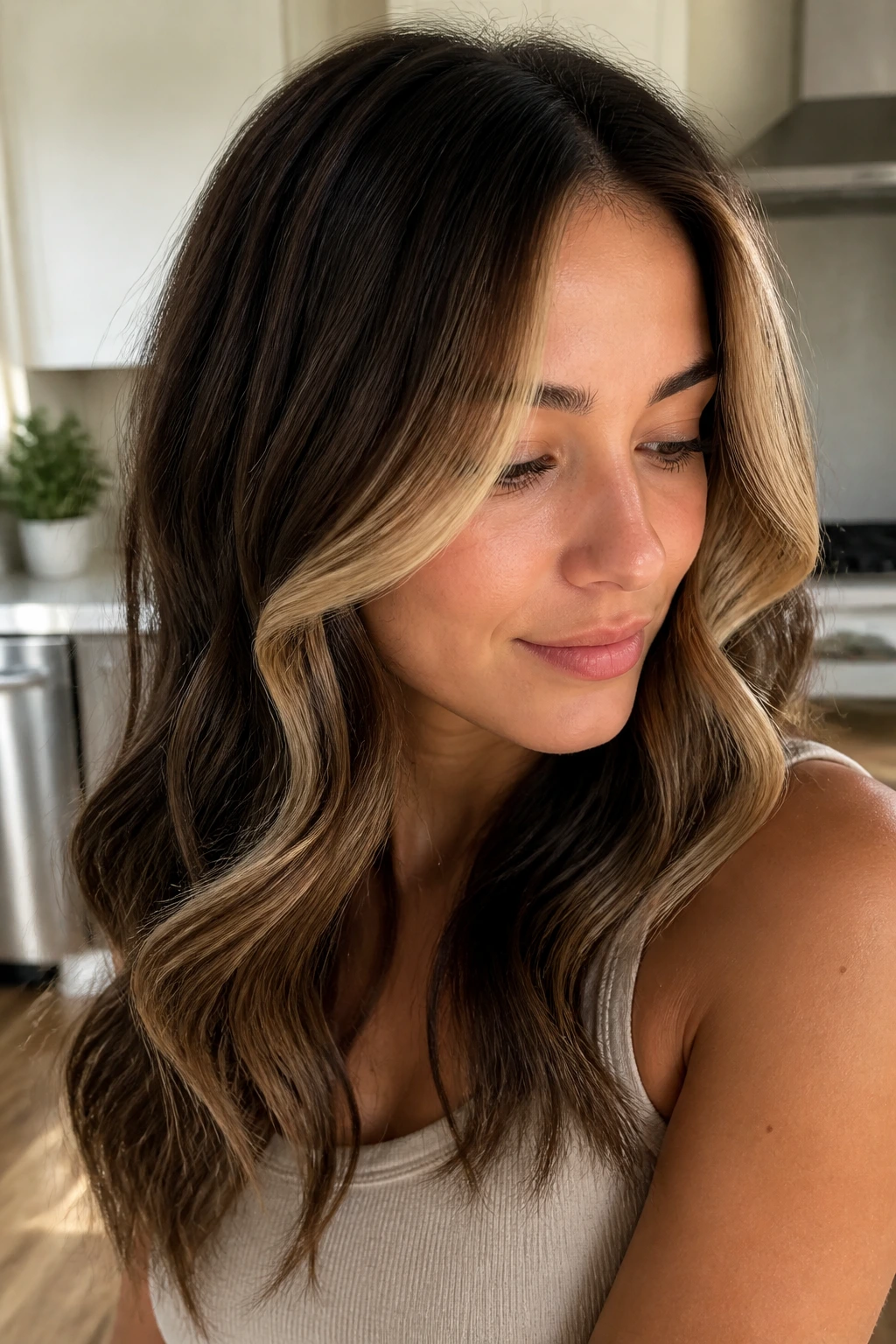
Gloss Booster: Ask for a clear or beige gloss after the lightening service. It seals the cuticle, tones the blonde, and keeps the brunette base from looking raw around the edges. A gloss every 6 to 8 weeks usually keeps the color in the sweet spot.
Wave Booster: If your waves fall flat, work a small amount of mousse through damp roots and a light cream through the mids, then scrunch and diffuse on low heat. The highlights show better when the wave pattern has shape.
Cost-Saver: If you don’t want a full head of foils, focus on face framing, crown brightening, and a few mid-length ribbons. That still gives you the color story without the service time or the upkeep of a full transformation.
Salon Strategy: Bring one photo in indoor light, one in daylight, and one of your hair when it’s dry and natural. That tells the colorist more than a single filtered image ever will.
Make-It-Yours: If your hair is fine, keep the lighter pieces narrow and scattered. If it’s thick, ask for some interior brightness so the color doesn’t live only on the top layer.
Common Mistakes That Flatten the Dimension
-
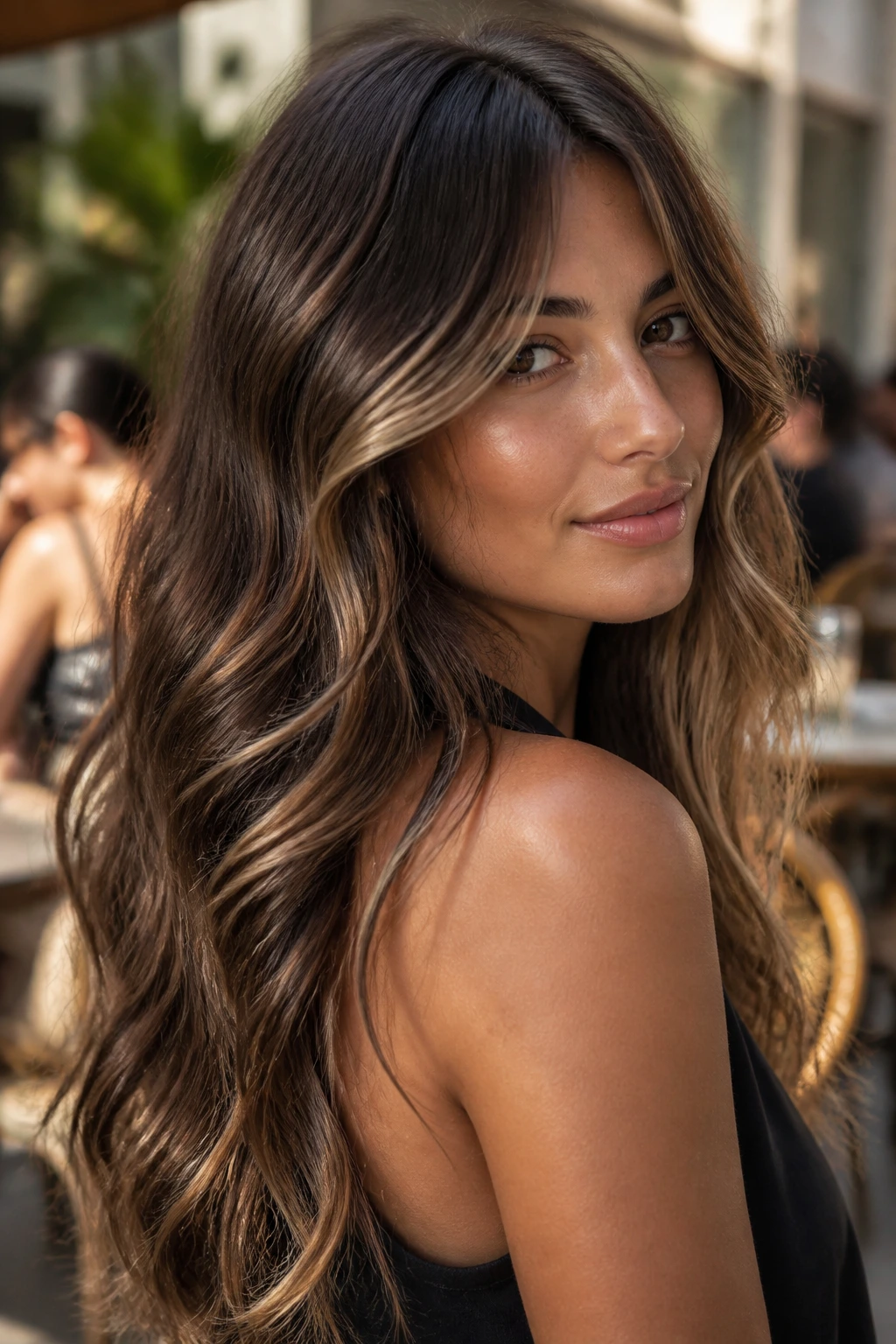
Going too pale too fast: If a brunette base jumps straight to very light blonde in one round, the hair can lose shine and the ends can feel brittle. A slower lift with a beige or honey finish usually reads better on waves.
-
Highlighting only the outer layer: The top can look pretty in the chair and disappear the minute the hair moves. Ask for some interior placement so the color shows through the bends, not just on top of them.
-
Choosing the wrong toner: Golden toner on a cool brunette can look brassy, while ash toner on a warm base can turn the hair muddy. The fix is simple: match the gloss to the undertone, not to a trend photo.
-
Using too much purple shampoo: It can strip warmth out of honey and caramel pieces fast, especially on porous ends. Use it only when the blonde starts to yellow, and dilute it with regular shampoo if the tone shifts quickly.
-
Curling the hair too tightly after coloring: Tight ringlets hide the ribboning and can make the blonde look patchy. Loose waves show the color better and keep the brunette base visible.
Variations and Adaptations to Try
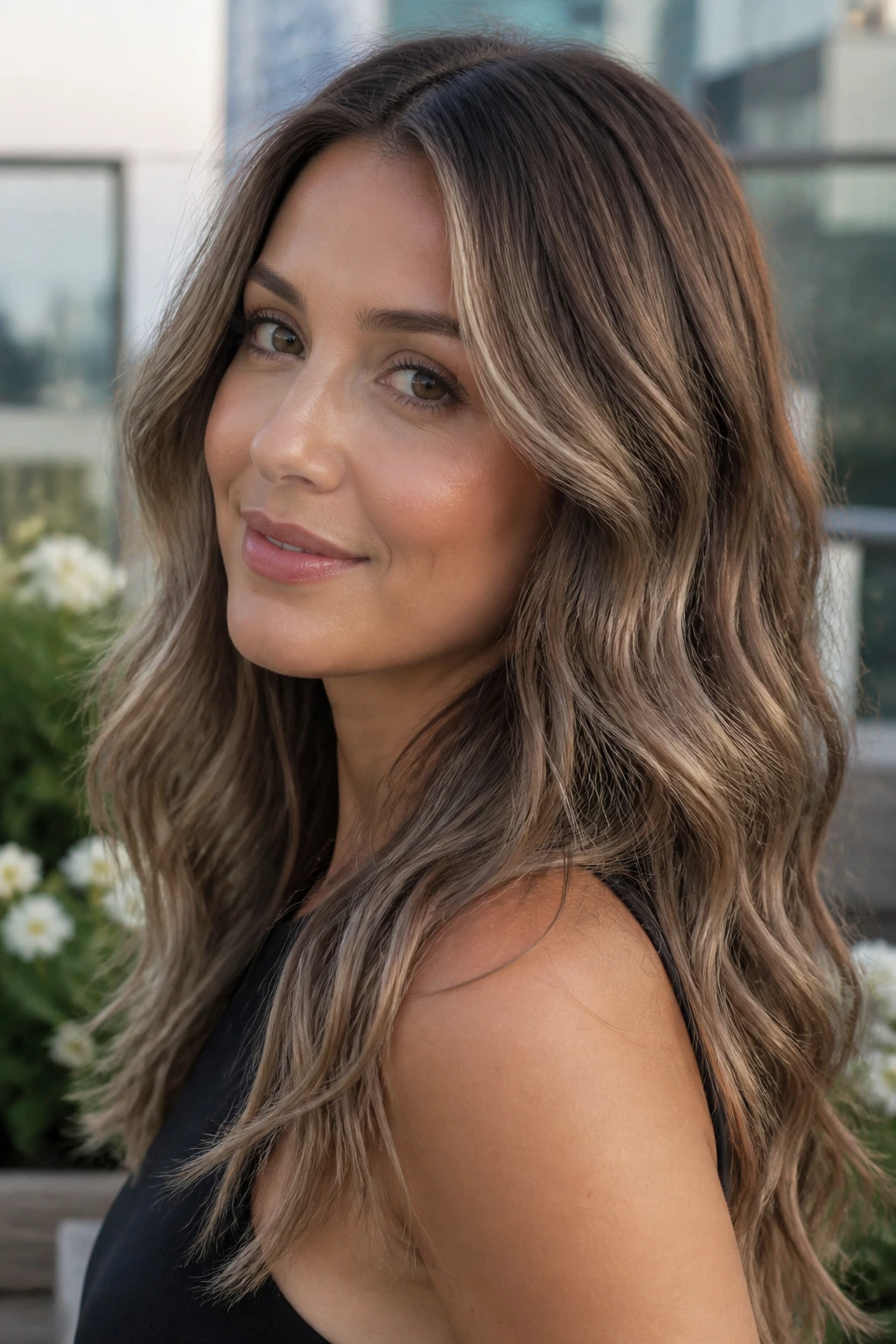
Soft Bronde Fade: This version keeps the brunette base front and center and lets the blonde ease in slowly through the mids and ends. It’s a strong choice if you’re new to highlights and want to see how your hair handles lightening before you commit to a bigger change.
High-Contrast Ribbon Set: Broader blonde pieces, a little more spacing, and a firmer contrast at the front make this one bolder. It works best on dense waves and layered cuts that can support the visual weight.
Cool Beige Smoke: Swap honey and caramel tones for ash beige, pearl, and taupe. This is the version to choose if warm tones turn orange on your hair or if your skin looks better next to cooler neutrals.
Short Lob Adaptation: On a collarbone or chin-length lob, keep the bright pieces concentrated around the face and through the top third of the hair. Too much lightness at the ends can make a shorter cut look thin.
Low-Maintenance Rooted Grow-Out: Ask for a darker root smudge and keep the highlight placement focused on the top and front. It’s the easiest option to stretch between appointments because the root stays deliberate instead of looking grown out.
Maintenance, Glossing, and Grow-Out Care
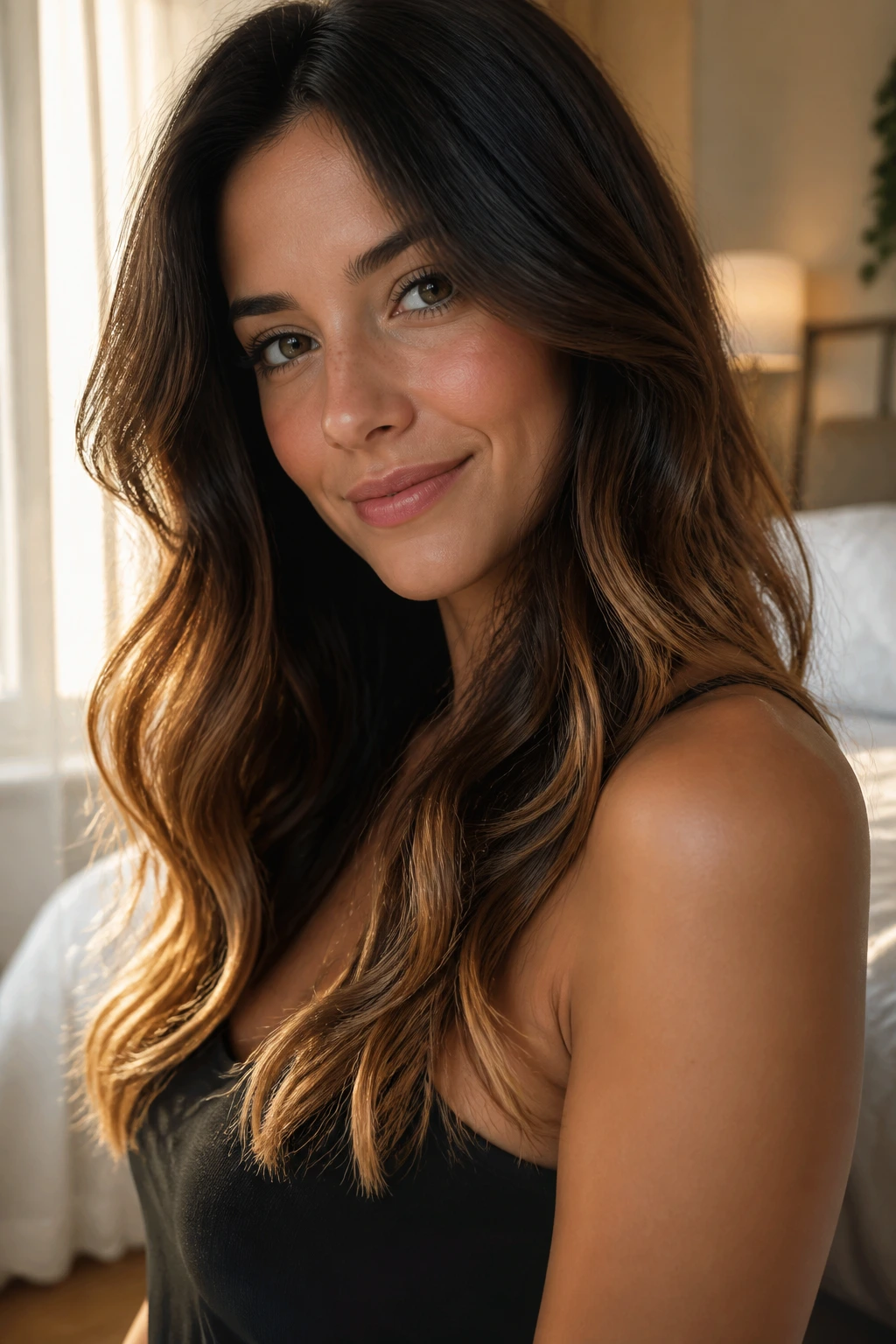
Fresh highlights usually look their best after the first wash has settled the cuticle and the gloss has had time to work. For the first 48 hours after coloring, it helps to avoid shampoo unless the stylist tells you otherwise. After that, wash 2 to 3 times a week if you can; wavy hair and lighter pieces both tend to stay happier when they’re not being scrubbed constantly.
Use cool or lukewarm water. Hot water pulls tone out faster and can rough up the lightened ends, which is exactly how nice beige pieces start looking dry. If the blonde is leaning yellow, use purple shampoo every second or third wash. If it starts turning orange on a darker brunette base, blue shampoo usually does a better job.
Schedule a gloss refresh every 6 to 8 weeks if you want the tone to stay clean. Full highlight refreshes often land around 8 to 12 weeks for softer looks and a little sooner for bolder money-piece or chunky ribbon styles. Deep-condition the mids and ends once a week, and don’t be stingy with a silk pillowcase. Friction is not kind to lightened hair.
Frequently Asked Questions
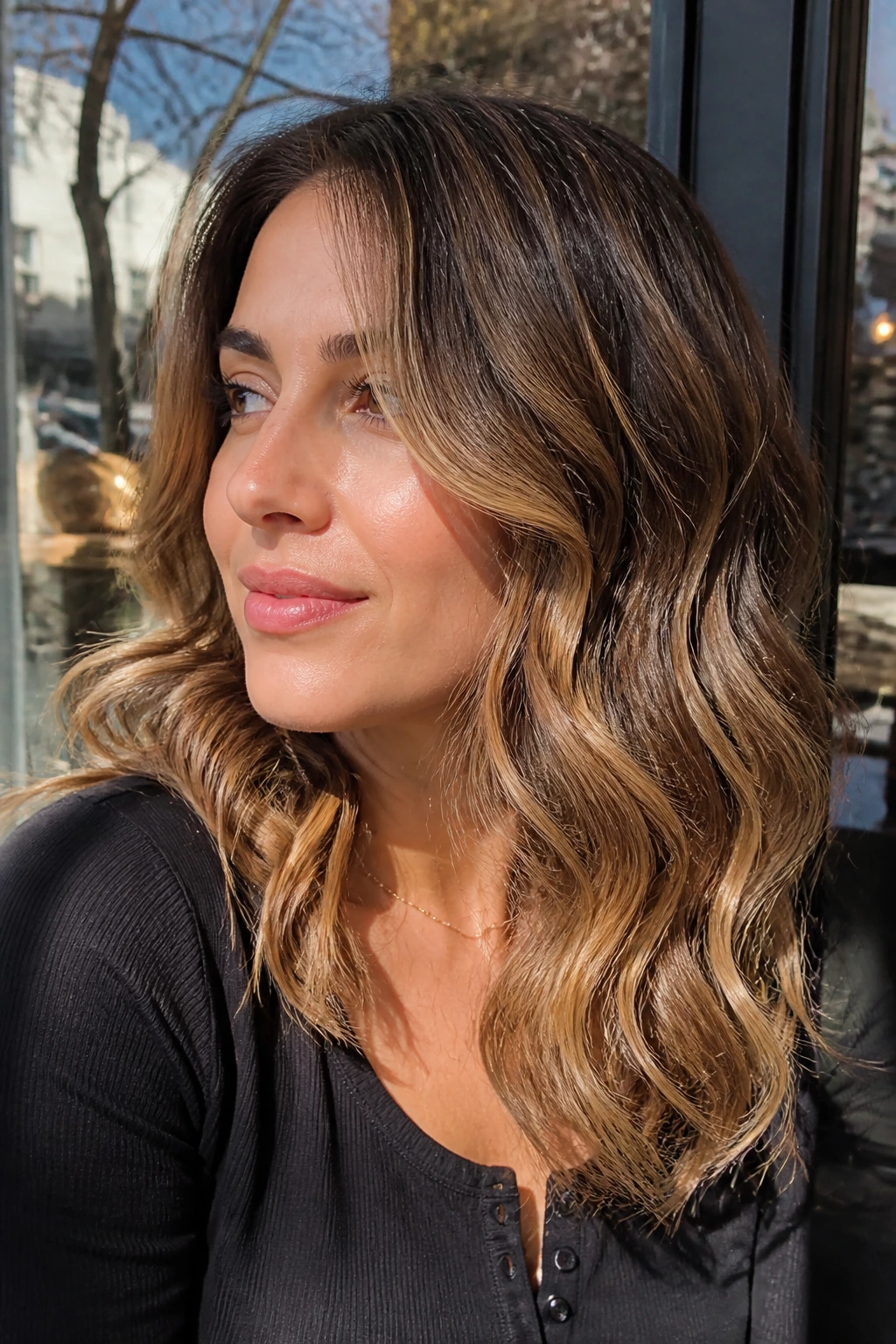
Can I get brown blonde highlights without bleaching my hair much?
Sometimes, yes, but the result will stay more caramel or honey than true blonde. If your brunette base is dark, lightening is usually needed for the blonde pieces to show properly, even if it’s kept controlled and subtle.
What’s the difference between balayage and foilayage for this look?
Balayage is painted by hand for a softer, more diffused finish, while foilayage uses foils to get a cleaner, lighter lift. For wavy brunettes, foilayage often gives more brightness, but balayage can look softer and grow out more quietly.
Will highlights make my wavy hair frizzier?
They can if the lightening is too aggressive or the hair is over-dried. A controlled lift, a good gloss, and a bond treatment usually keep the wave pattern intact, but the ends may need a little more care than before.
How do I keep the blonde from turning orange?
Use a blue shampoo if the brass looks orange and a purple shampoo if it looks yellow. Also, don’t overuse hot water and don’t skip gloss appointments if the toner fades quickly.
What should I ask for at the salon if I want something subtle?
Ask for soft balayage, fine ribbons, root shadow, and a beige or honey gloss. Say you want dimension that shows in waves, not a high-contrast stripe pattern.
What if my hair is very dark brown?
Keep the first round of highlights in the caramel, bronze, or toffee range. Jumping to pale blonde in one visit can leave dark brunette hair stressed and the light pieces looking disconnected from the base.
Can this work on a lob or shorter cut?
Absolutely, but the placement has to be tighter. A short cut usually looks best with brighter pieces around the face, a little movement at the crown, and enough depth underneath to keep the shape from looking thin.
How often do I need to touch it up?
Soft, rooted styles can go 10 to 12 weeks between major appointments if you’re happy with the grow-out. Brighter or more face-framing looks usually need a gloss or partial refresh sooner, around 6 to 8 weeks.
The Softest Kind of Brightness
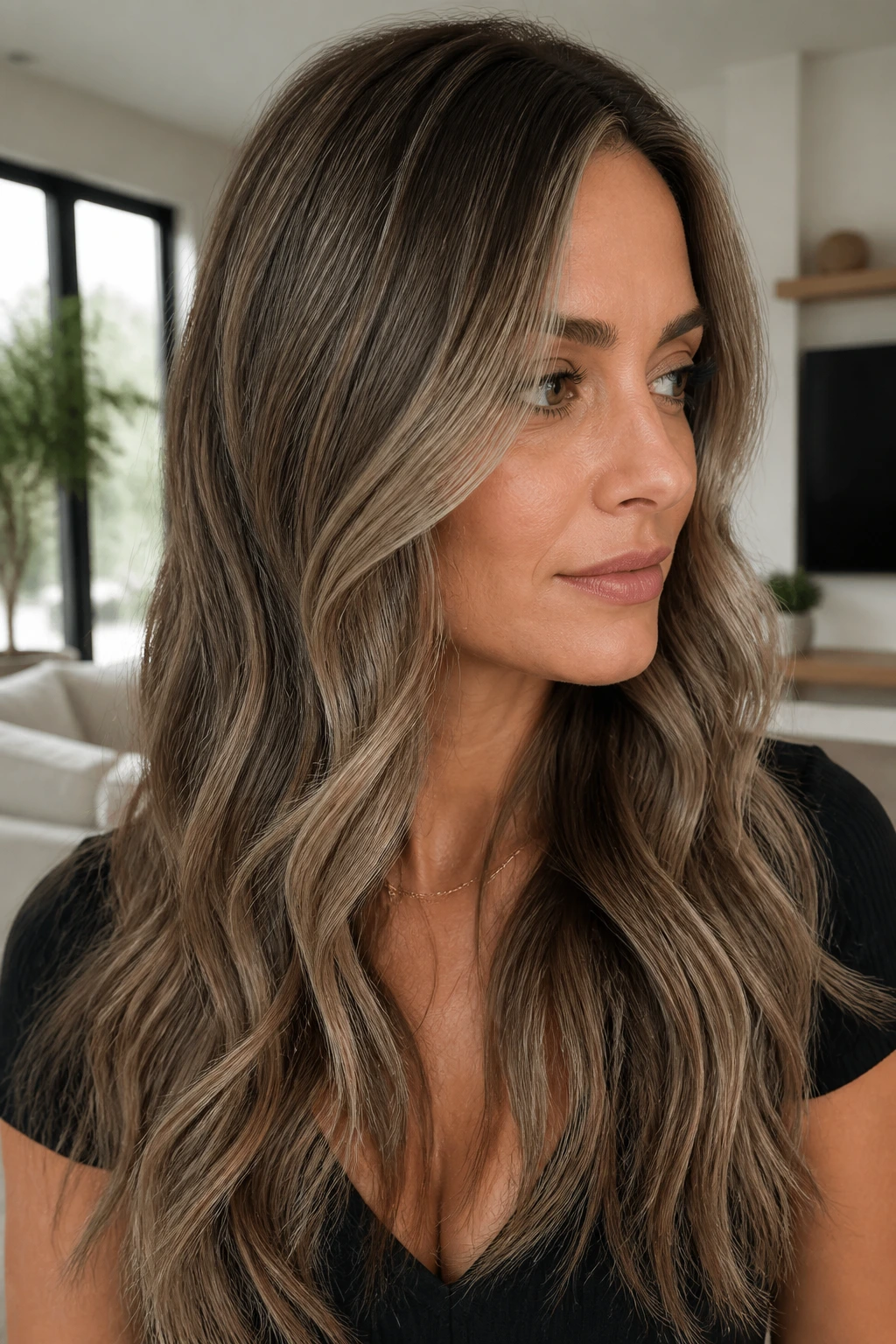
The nicest thing about brown blonde highlights on wavy brunettes is that they don’t need to be loud to feel fresh. A careful ribbon of caramel, a beige money piece, a rooted vanilla melt — any of those can change the mood of the hair without stealing the brunette depth that makes the waves look full in the first place.
And that’s the part I trust most. The hair still looks like hair. It just catches the light a little better when it moves, which is usually all most people are actually after anyway.