



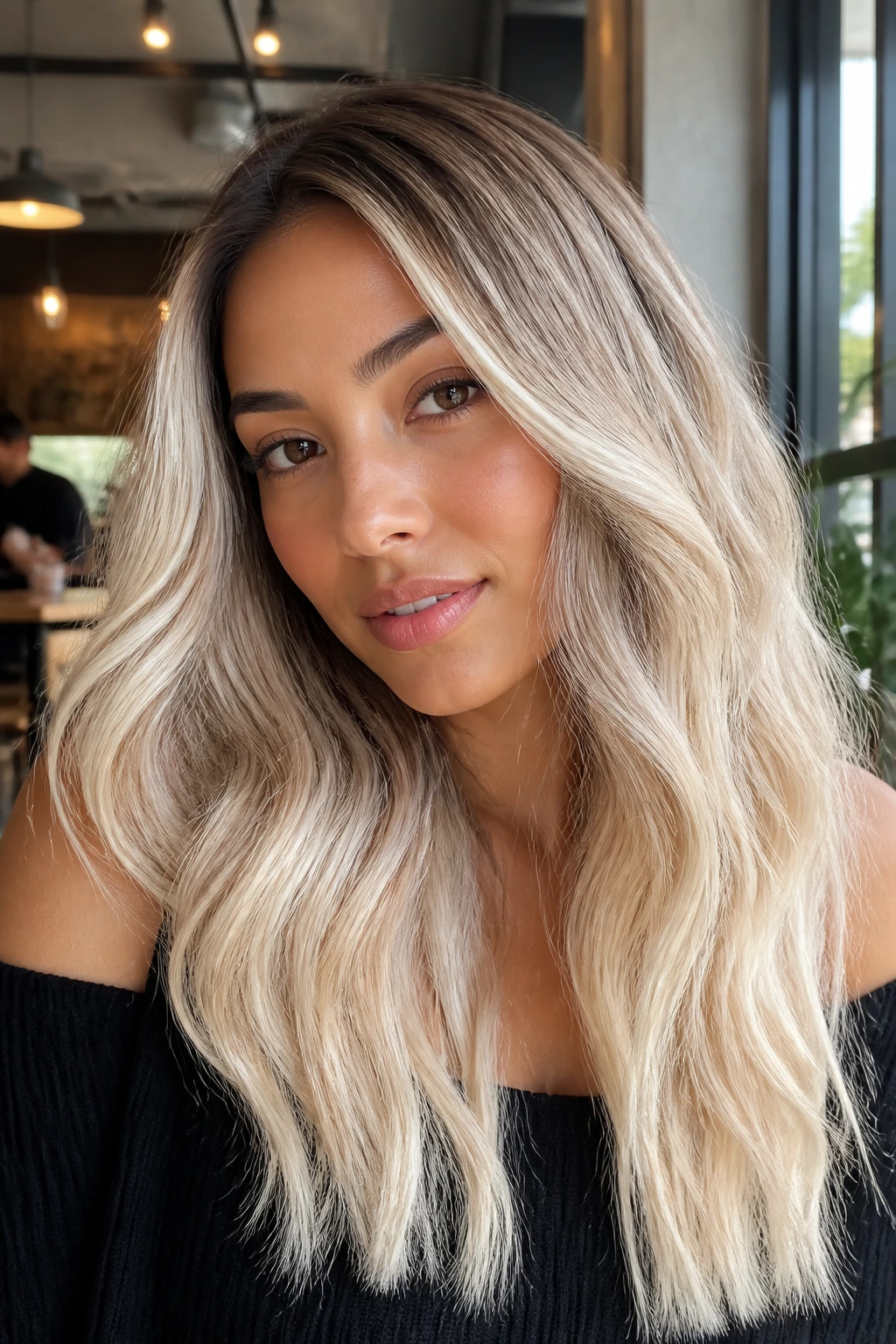
Platinum blonde ombre can look cold on warm skin tones when the transition is too abrupt, but the right melt has a different personality altogether.
If your skin leans golden, peach, olive, or caramel, the trick is not avoiding platinum. It is giving the eye a softer place to land before the lightest blonde shows up. A beige root, a honeyed midband, or a smoked-out shadow root can keep the face lively while the ends go nearly white.
I keep coming back to this because hair color lives next to skin, not in a vacuum. A slab of icy blonde at the scalp can make warm complexions look a little flat, while a gradient that starts deeper and softens near the cheekbones keeps the whole look moving. That difference is small in theory and obvious in a mirror.
Platinum blonde ombre for warm skin tones works best when the brightness feels earned. Not pasted on. The shades below lean into that idea from different angles—some are soft and beige, some are bolder and high-contrast, and a few are for people who want the ends to look almost arctic while the roots still do the heavy lifting.
Why These Platinum Ombre Ideas Work on Warm Undertones
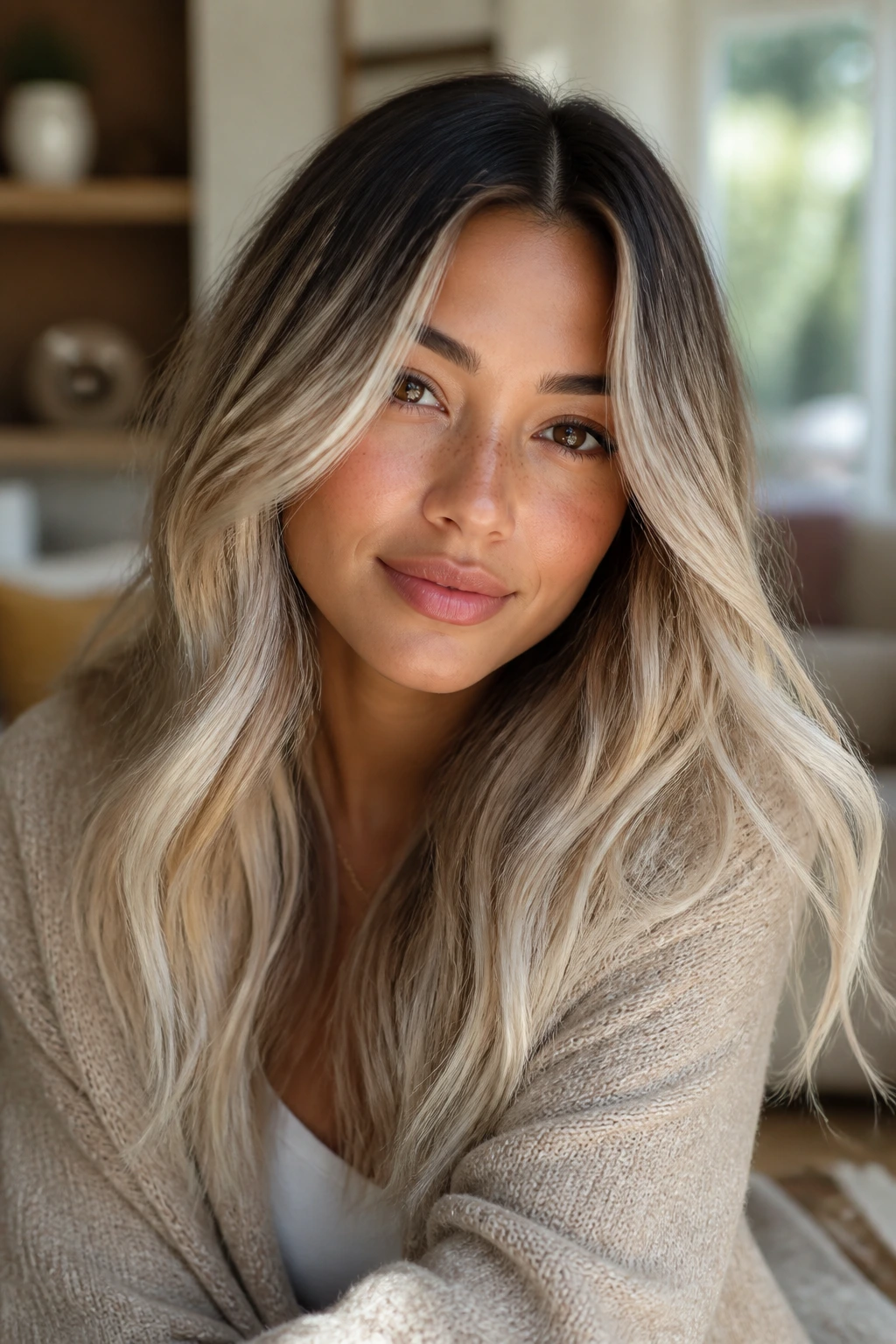
Soft Root Relief: The first inch or two near the scalp does a lot of work, and a shadow root keeps platinum from sitting too hard against golden or peach skin.
Beige and Champagne Middle Ground: Beige, pearl, and champagne midtones bridge the gap between brunette depth and icy ends without turning the whole look muddy.
Face-Framing Brightness: Warm skin usually looks best when the brightest pieces sit around the cheeks and jawline, not as a hard band at the hairline.
Texture Matters: Waves, curls, and layered cuts break up the transition so platinum reads as movement instead of a blunt color block.
Low-Stress Grow-Out: Ombre gives you a little breathing room between appointments, which matters when the lightest blonde is taking more than one sitting to reach.
1. Beige-Root Platinum Melt
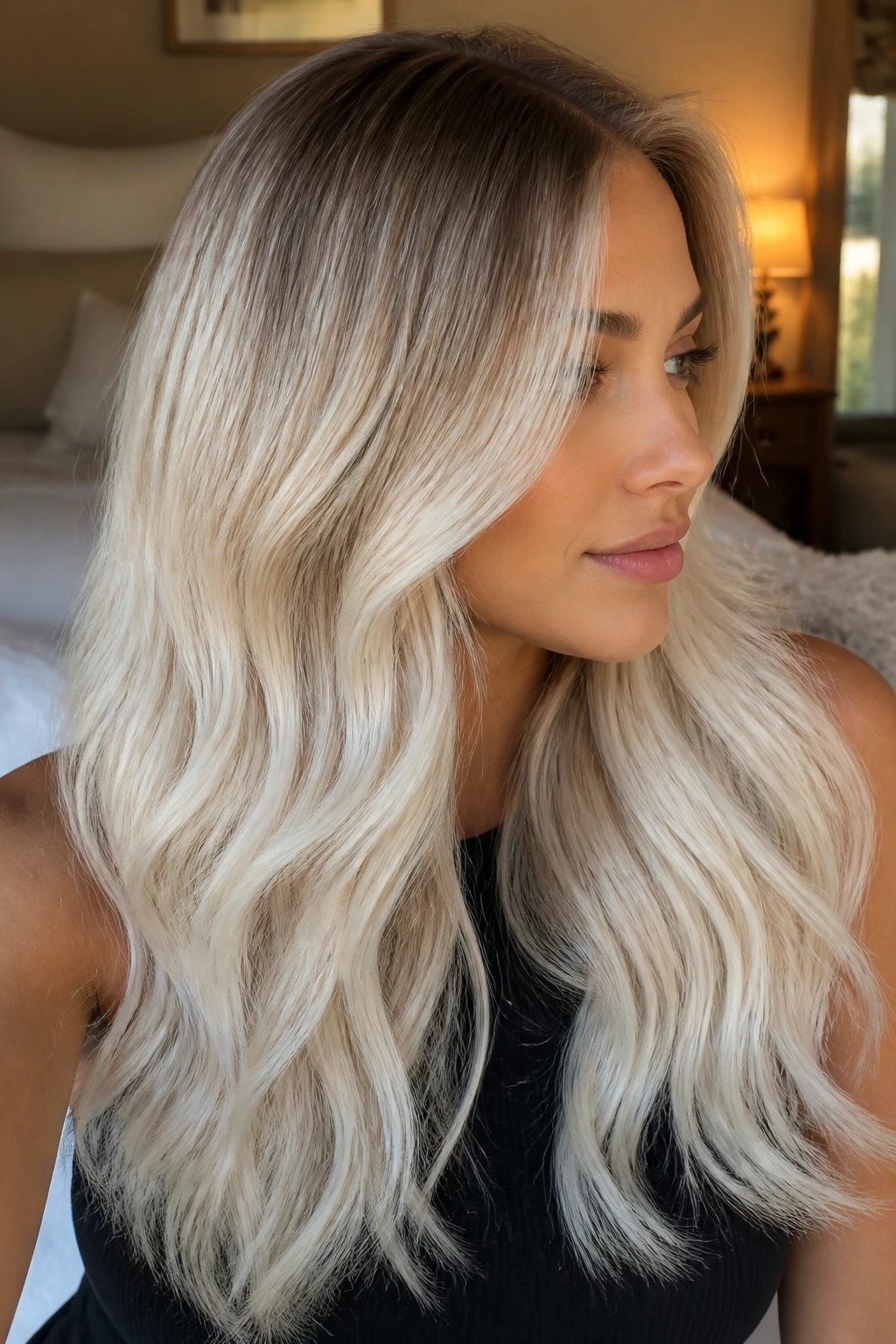
This is the version I recommend to people who like platinum but hate the look of a hard line at the scalp. The root stays a soft beige-brown, then the color loosens through the mids before it lands in clean, pale platinum at the ends. On warm skin, that beige bridge keeps the face from going chalky.
Why It Flatters Warm Skin
A 1- to 2-inch shadow root gives your colorist room to blur the transition instead of stacking warmth and frost side by side. The beige midband matters just as much as the platinum ends, because it keeps the blonde from feeling flat under indoor light.
- Ask for the ends to lift to a pale yellow, not white-silver before toner.
- Keep the melt soft around the temples so the color doesn’t frame the face too sharply.
- Pair it with loose waves; they show the gradient better than a stiff blowout.
Best note: this one looks richer when the toner lands in beige or pearl, not steel.
2. Honey Brunette to Platinum Waves
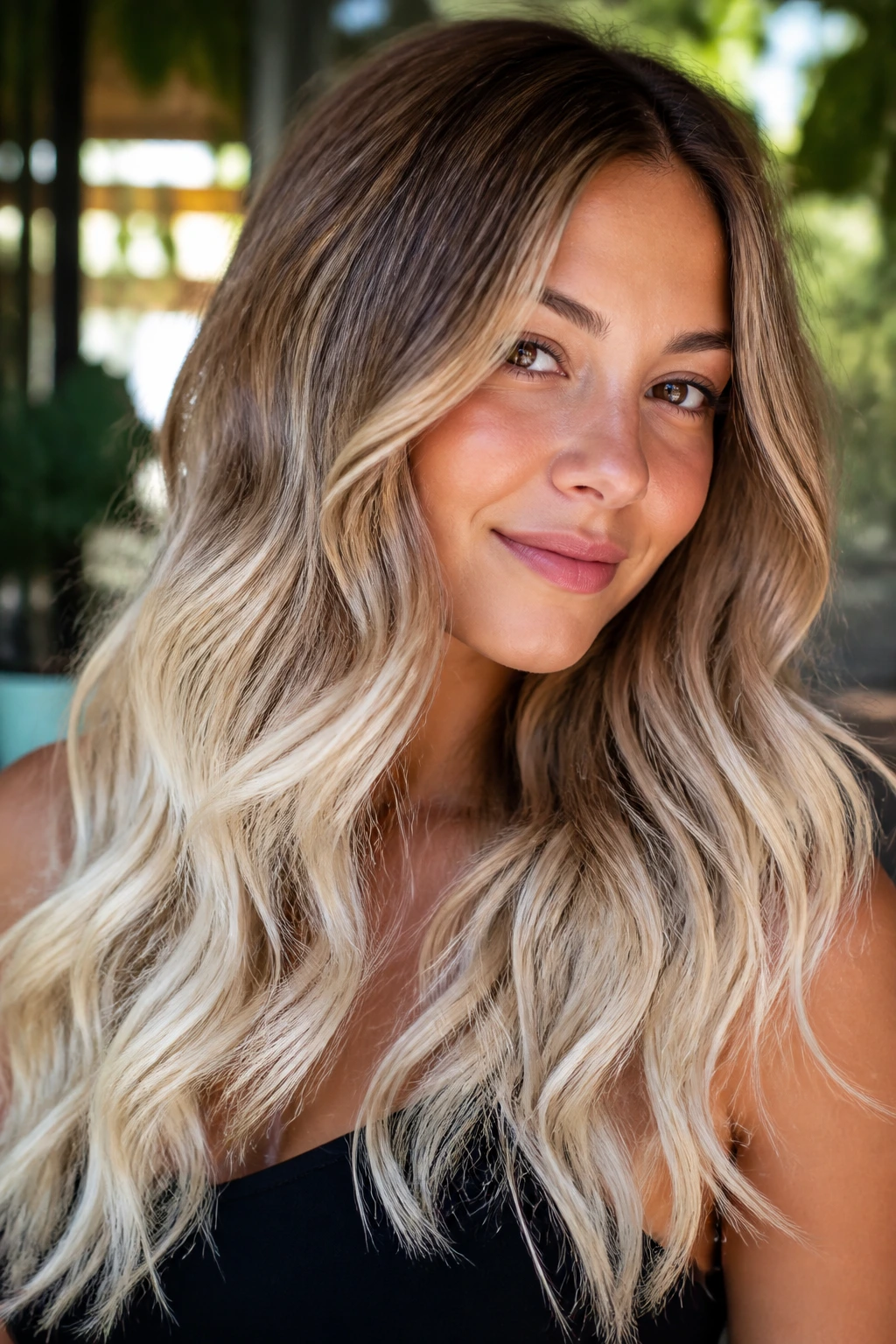
The bluntest route to platinum is rarely the prettiest one. A honey brunette base gives warm skin something familiar to sit against, then the blonde starts to open up through broad balayage pieces before turning nearly white at the ends. It feels more expensive than a flat all-over lift because the color keeps changing as the hair moves.
What I like here is the middle. Not the root, not the tip—the middle. That honey band keeps the transition from feeling abrupt, and it makes the platinum read brighter because it has contrast without that sharp, unflattering snap at the scalp.
This is especially good on wavy hair that has some natural bounce. The bends catch the pale ends and make the whole thing look deliberate, not overworked. If your skin is golden or olive, this is one of the easiest ways to wear platinum without looking drained.
3. Champagne Ribbon Ombre
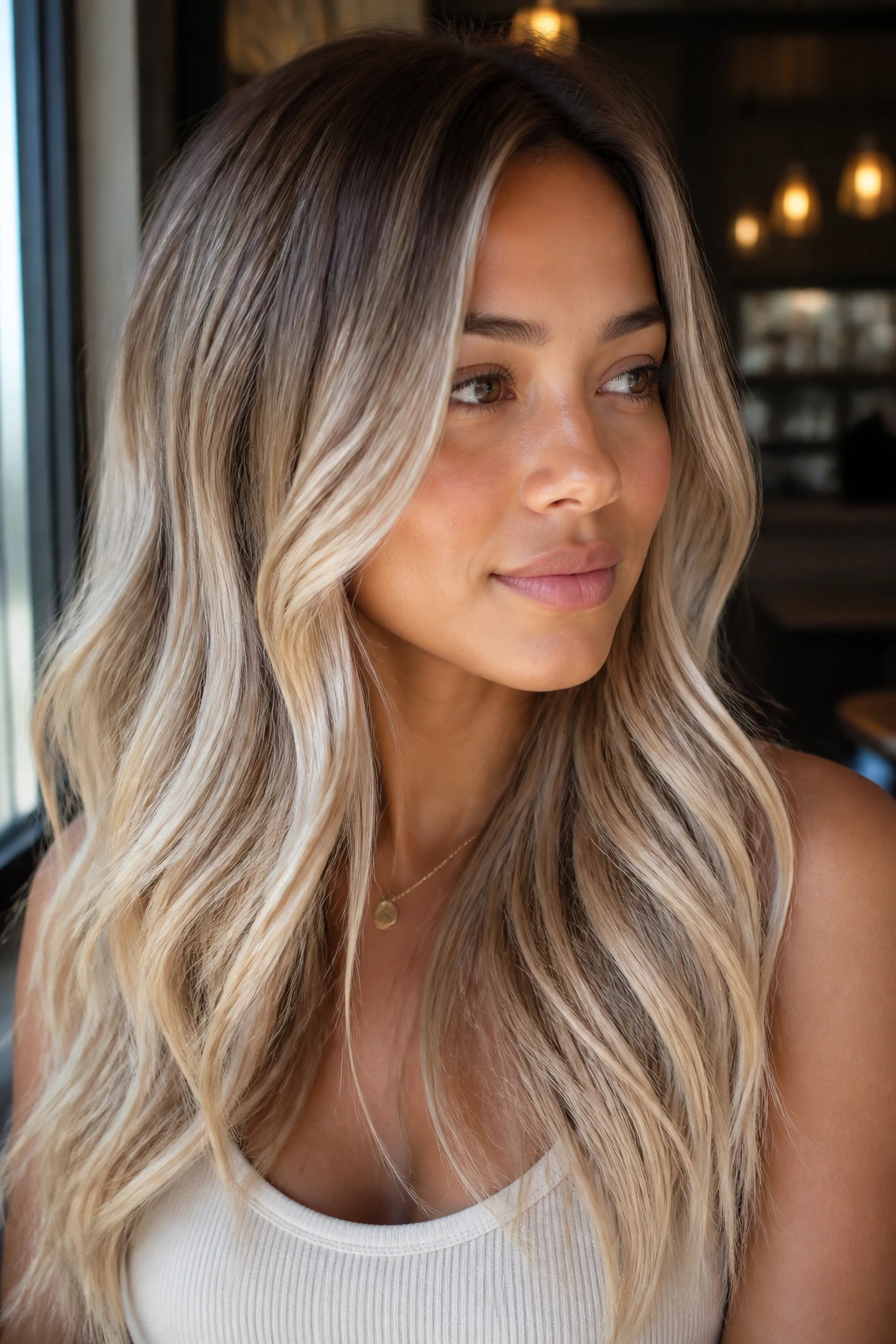
What if you want platinum, but you do not want the hair to shout before you do? Champagne ribbon ombre is the answer. The blonde comes in thin, scattered ribbons rather than a thick panel, so warm skin gets brightness without the face becoming the only thing people notice.
Where the Ribbons Should Sit
The lightest pieces should start below the cheekbone on most face shapes. That placement lets the warm skin stay in control near the forehead, while the champagne ends bring the lift.
- Use micro-babylights through the top layer for softness.
- Keep the toner in the champagne family, not a gray-violet finish.
- Add a few brighter pieces around the front if the haircut is long and layered.
This is one of the more wearable platinum blonde ombre choices for warm skin tones with fair peach undertones. It gives you shine and brightness, but the color still has air in it. That matters.
4. Caramel Money Piece Platinum
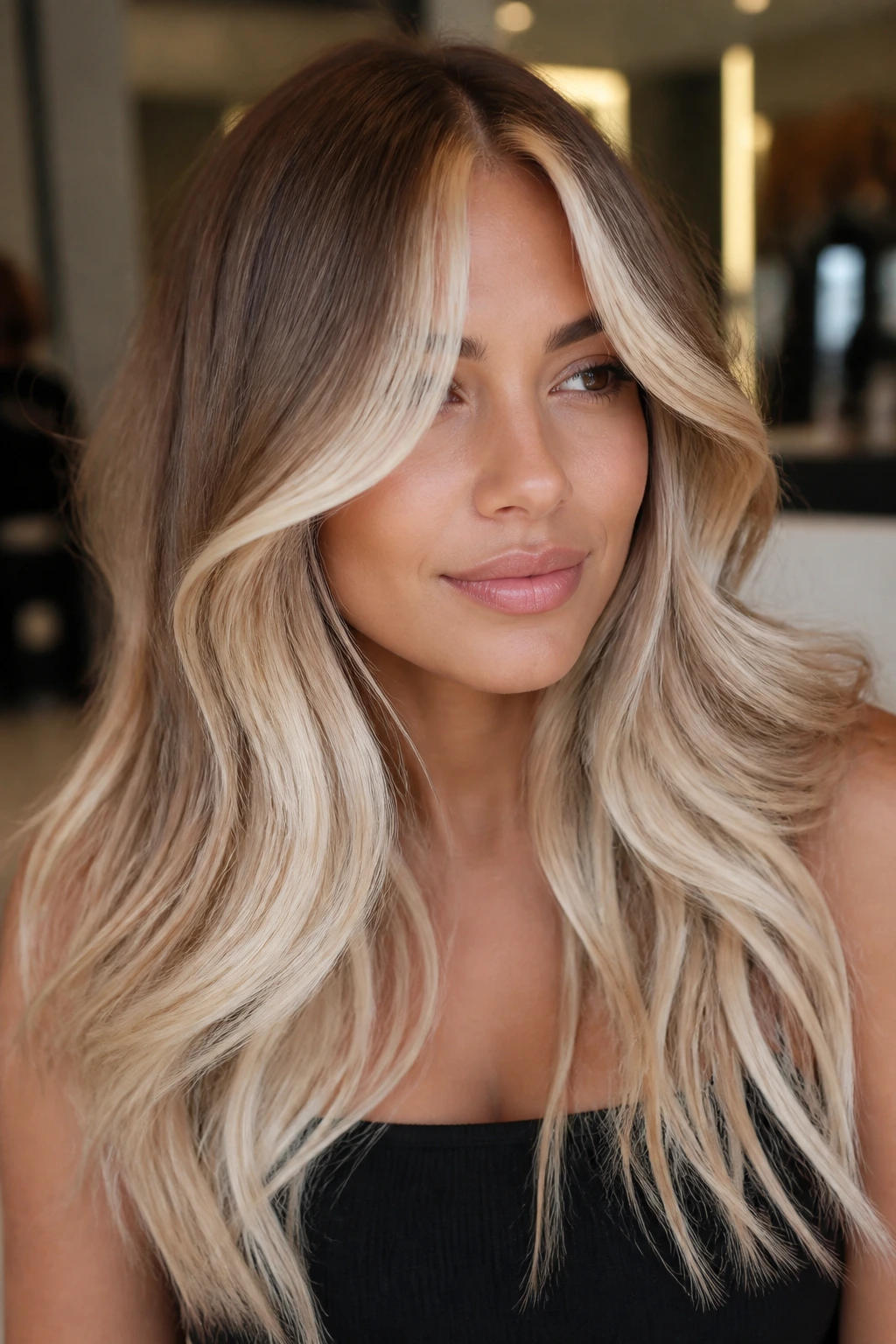
Picture a deep caramel base with a bright, almost-white money piece around the face and platinum melting into the ends. That’s the look. It’s a little bolder, a little more editorial, and it’s especially good if you wear curtain bangs or long face-framing layers that can carry the contrast.
The money piece does the heavy lifting here. It throws light onto the cheeks and eyes, which helps warm skin look fresh instead of washed out. The rest of the ombre can stay softer and more caramel, so the bright front section never feels disconnected from the rest of the head.
A lot of people ask for platinum all over the front and then wonder why the hairline looks harsh. This avoids that problem. The root stays rooted, the front gets the spotlight, and the ends finish the story.
5. Buttery Lob with Platinum Ends
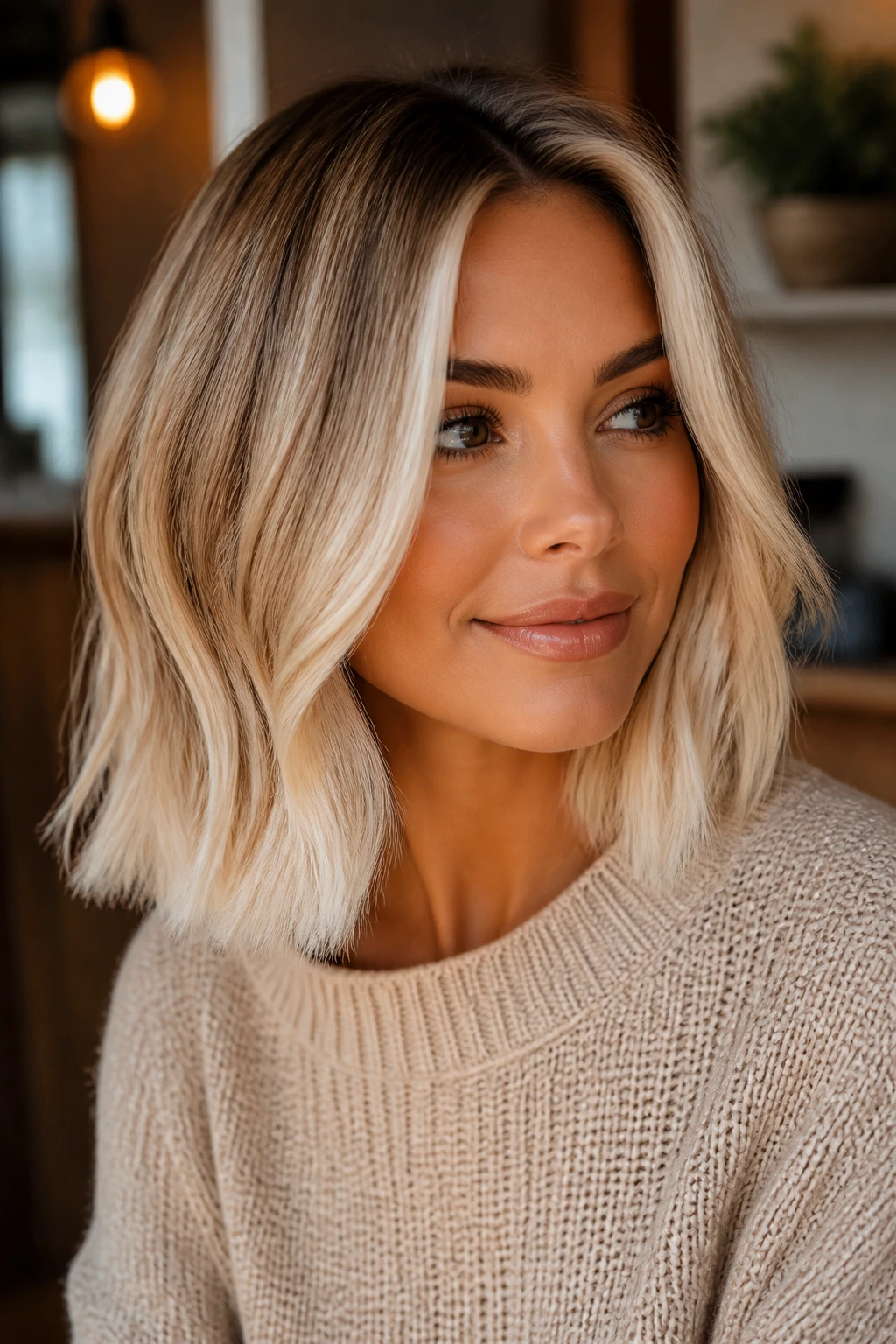
A blunt lob can look too heavy if every inch of it is the same tone, which is why this version works so well. The mids stay buttery and warm, the ends fade into platinum, and the cut keeps the color from swallowing the face. On warm skin, that buttery center is the part that makes the icy ends feel intentional.
I like this on thicker hair because a lob can hold the shape of the melt without turning puffy. The ends still need to be lightened cleanly, though. If they stop at a yellow-orange stage, the whole look reads brassy instead of creamy.
This shade pairs well with a side part or a soft center part. Either way, the clean line of the cut gives the platinum a sharp finish while the warm base keeps the complexion from going flat.
6. Cinnamon-to-Ice Gradient
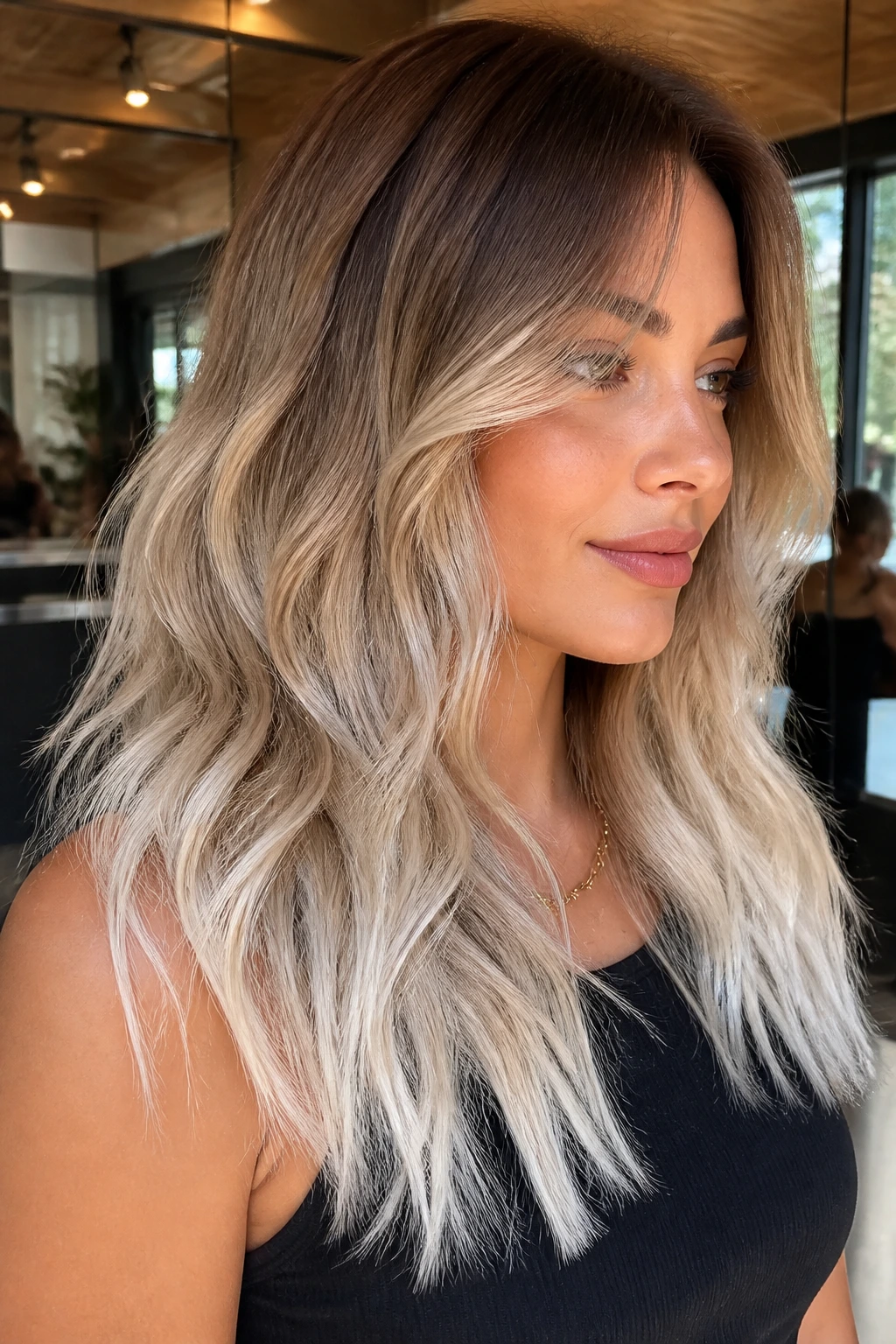
This is the high-contrast choice. A cinnamon root against pale ice ends gives warm skin real drama, but the key is that the cinnamon needs to be deep enough to ground the face. If the root is too orange, the whole thing turns noisy. If it’s too ashy, the warmth in the skin disappears.
Why It Works Better Than a Flat Platinum
Unlike a single-tone platinum, this gradient gives the eye a place to rest before the brightness hits. The darker root also helps if your natural hair is medium to dark brown and you do not want every appointment to feel like a full bleach session.
It works best on long layers or a shaggy cut, where the eye can follow the change in tone. Straight, one-length hair can make the contrast look harsher than it really is. If your skin is deep and warm, this can be one of the most striking options on the list.
7. Cream Soda Curly Ombre
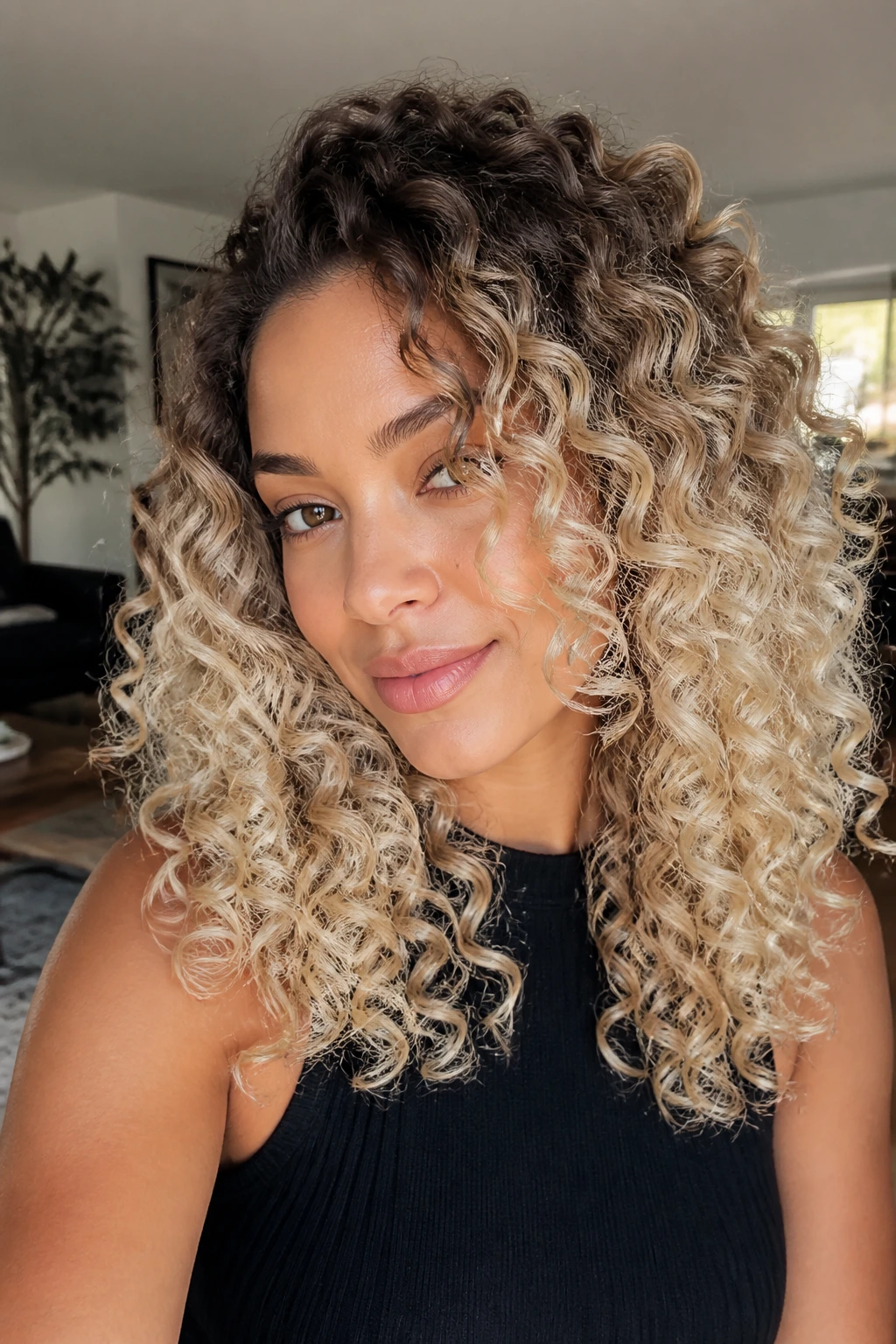
Curly hair needs a different touch. The curl pattern already creates shadow and highlight, so the platinum should be placed where the spirals naturally open—not sprayed everywhere like frosting on a cake. Cream soda ombre starts with a soft root and lets the blonde build from the midlengths down.
How to Keep the Curl Pattern Visible
The trick is to stretch a few curls during placement so the colorist can see where the lightest ends will actually sit once the hair springs back. Otherwise, the blonde gets hidden too high up and the bottom looks heavier than the top.
- Ask for painted ribbons, not chunky stripes.
- Tone the blonde toward cream and beige, not silver.
- Diffuse on low heat so the curl shape stays intact.
On warm skin, the creamy tone keeps the face from looking disconnected from the hair. It’s brighter than a caramel ombre, but it still feels soft.
8. Smoky Beige Balayage
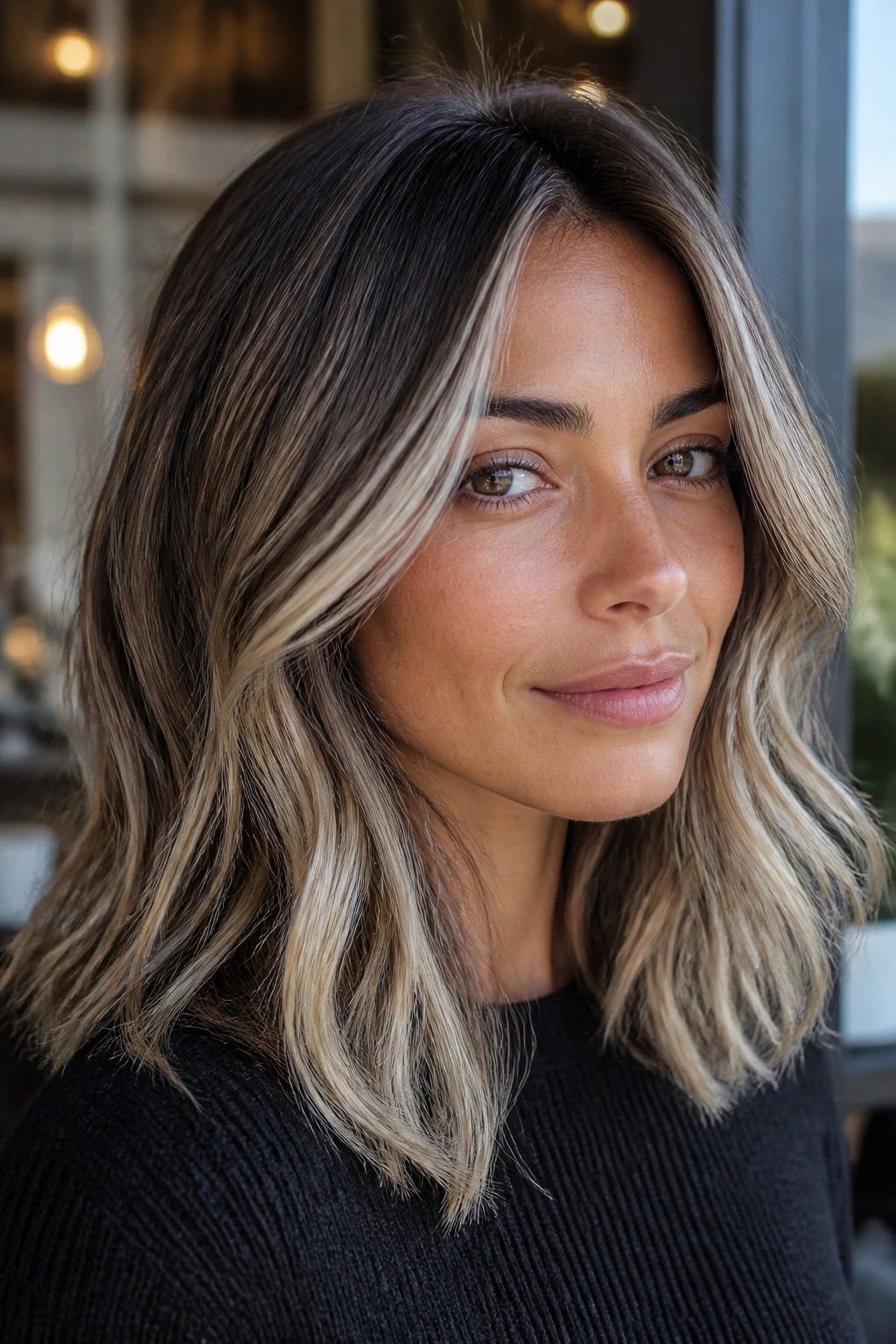
If your warm skin runs more olive than golden, smoky beige can be a smart lane to stay in. It sits between ash and cream, which sounds picky until you see it next to the face. Too much ash makes the skin look tired. Too much gold can read orange. Smoky beige lands in the middle.
This version is less about drama and more about control. The platinum appears in pieces, usually through the ends and around the face, while the upper section stays a shade deeper. That makes the grow-out softer and gives the blonde a lived-in edge.
I’d reach for this on medium-length hair with some layering. It stops the color from looking like a single sheet and helps the cooler blonde sit more comfortably on warm undertones.
9. Peach-Glaze Platinum
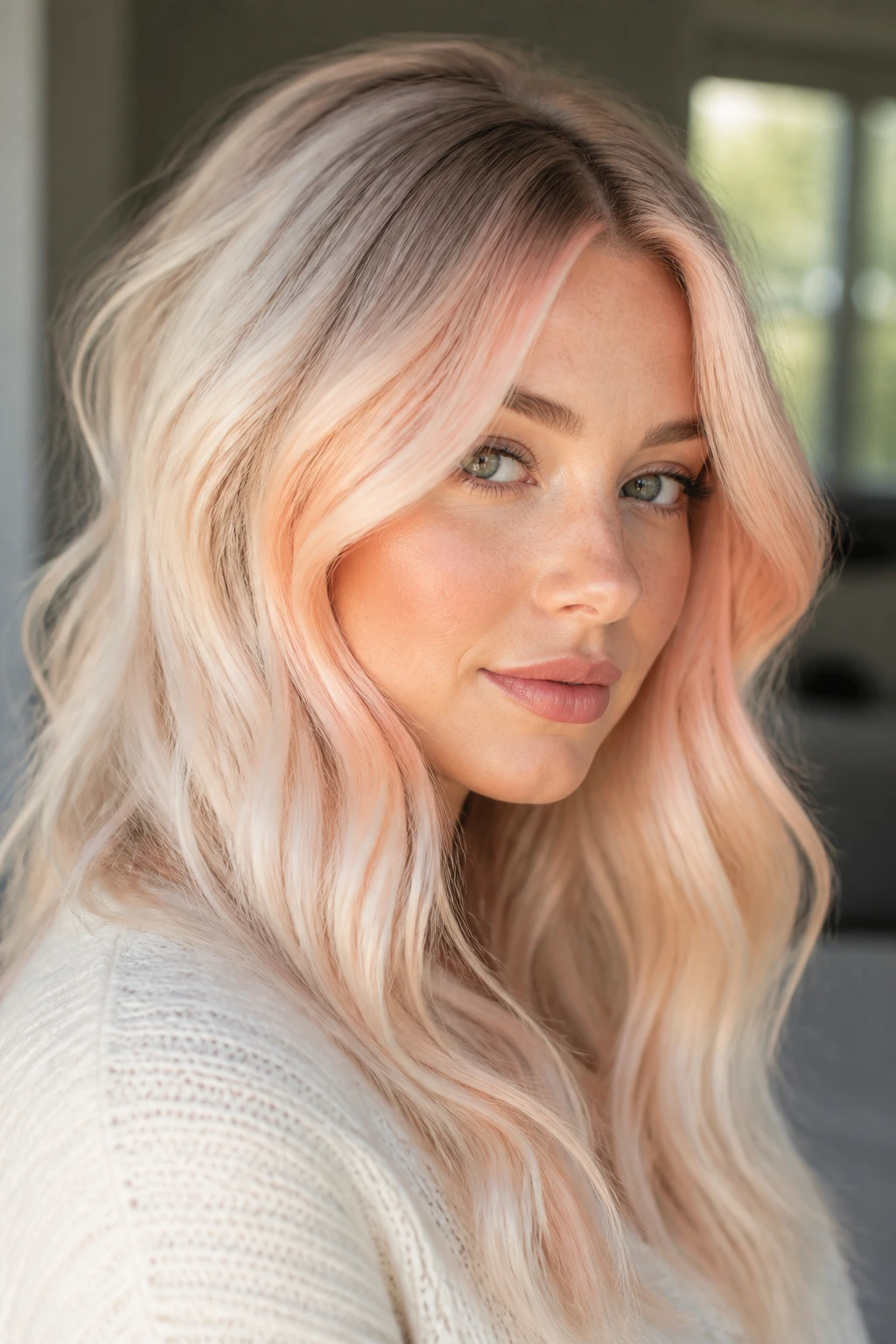
Peach is the unsung hero here. It keeps platinum from going dead against fair warm skin, especially if your cheeks already carry a natural blush tone. The look starts with a warm base and then shifts toward pale blonde through a peachy glaze that sits between beige and gold.
What I like most is the softness around the face. A little peach in the gloss keeps the eyes from being pulled straight to the hairline. The platinum still feels bright, but not sterile.
This is one of the easiest ways to wear platinum blonde ombre for warm skin tones if you like softer makeup—think bronzer, cream blush, and a warm nude lip. The hair won’t fight the rest of the face.
10. Espresso Root Platinum Ribbon Ends
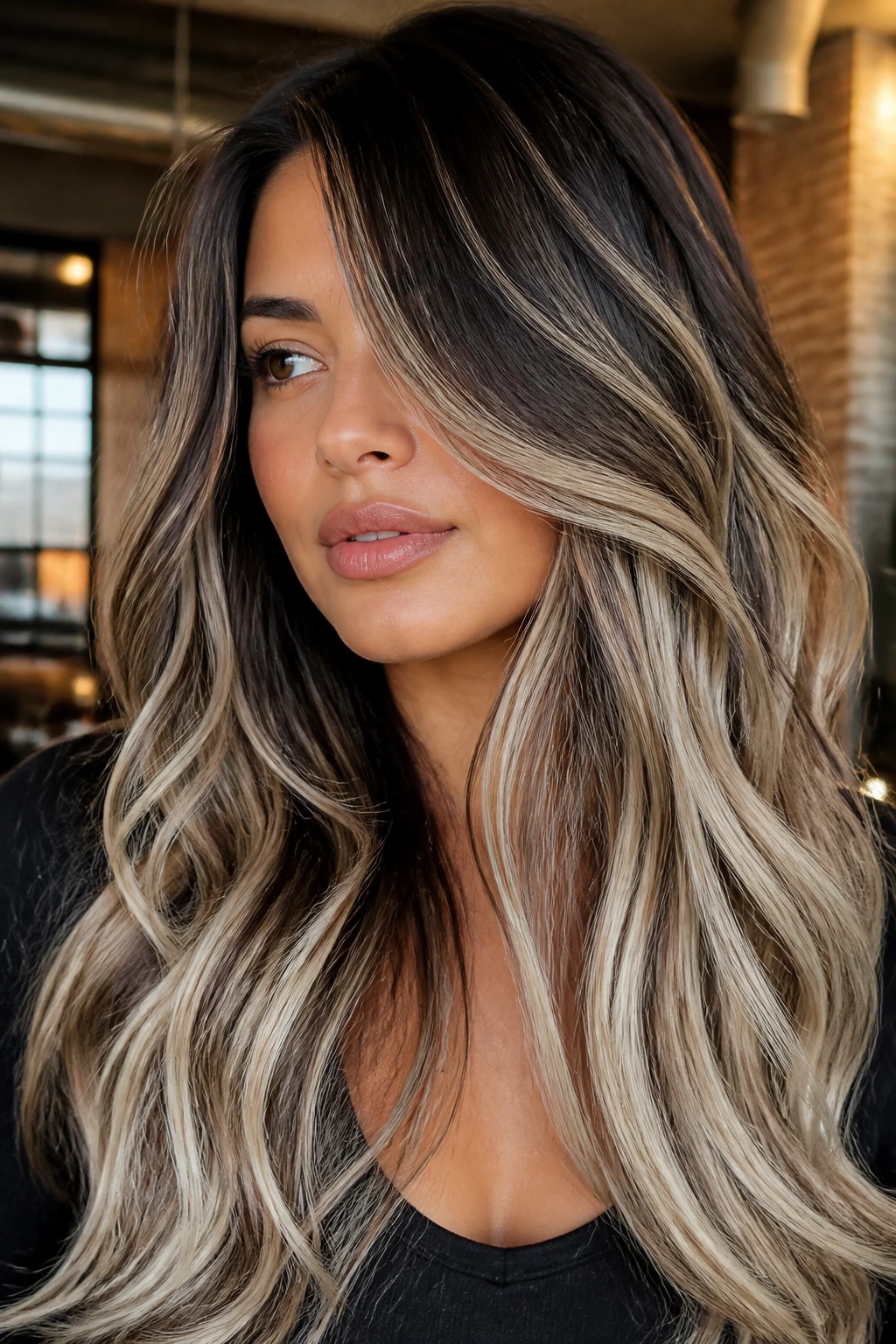
This one has bite. An espresso root, a few ribboned mids, then platinum at the ends gives you the kind of contrast that reads clean and modern without turning the whole head into a single bright sheet. Warm skin can handle it because the dark root keeps the complexion anchored.
The Shape of the Contrast
The best version has thin, vertical ribbons through the mids rather than a thick block of light. That breaks up the darkness and gives the ends room to shine.
- Keep the root espresso, not soft brown, if you want the contrast to stay visible.
- Let the platinum finish at the bottom third of the hair.
- Works best on layered cuts or long blunt lengths with texture.
This is a strong choice for people who wear defined brows or a bolder lip. The hair has enough punch to hold its own.
11. Golden Sand Long Layers
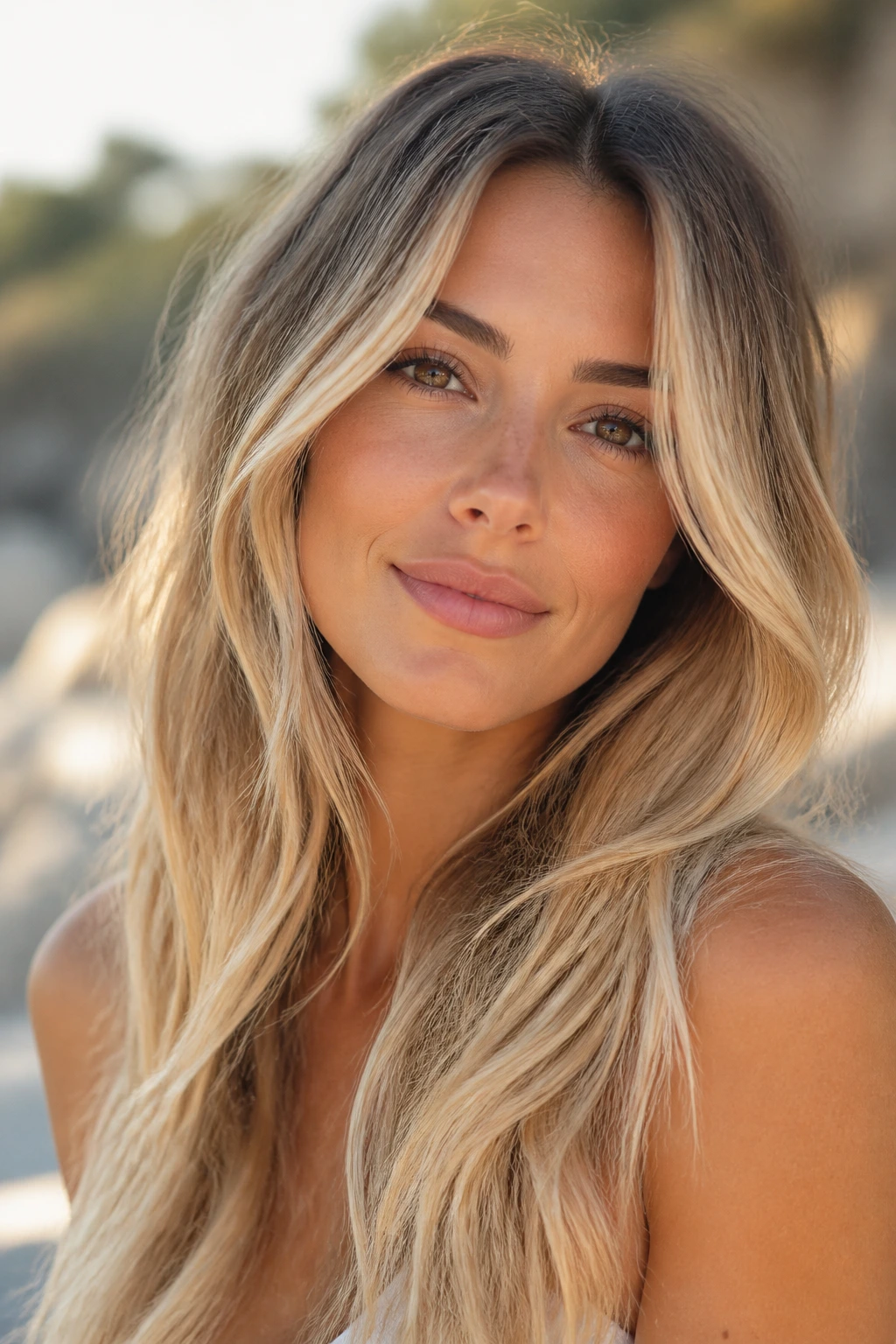
Golden sand sits in that sweet spot between warm brunette and pale blonde, and long layers give it room to show off. The root stays deeper, the mids turn sandy and luminous, and the ends carry the platinum finish without snapping cold against the skin.
Long layers matter because they keep the color moving. A flat sheet of hair can make platinum look obvious in the wrong way; a layered cut makes it look airy. On warm skin, that airiness is what keeps the face from getting overwhelmed.
This is one of the easiest platinum blonde ombre looks to live with if you don’t want constant correction. The sand tone softens the grow-out, and the platinum reads more like a finish than a stunt.
12. Soft Pearl Bob
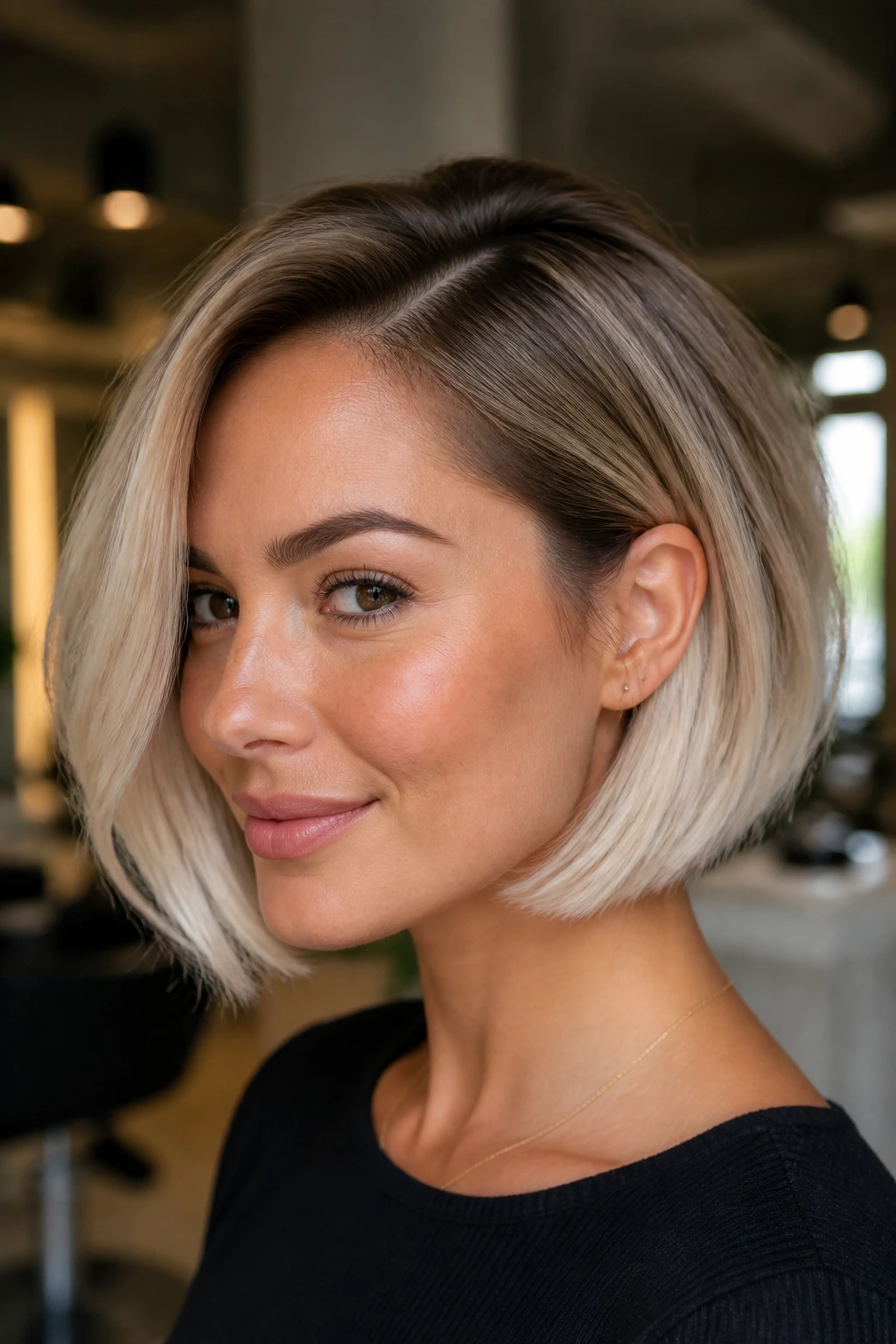
A bob does not leave much room for a dramatic melt, so the tone has to do the work. Soft pearl is cleaner than beige, but not so icy that it drains warm skin. The platinum usually sits in the lower half of the cut, while the top stays a touch deeper and more neutral.
The bob shape makes the color look crisp. That crispness is a good thing if the pearl tone stays soft and the transition is feathered at the jawline. I prefer this with a slight side part or a tucked-behind-the-ear finish because it shows the clean edge of the cut.
If you want platinum without the maintenance of long hair, this is one of the more polished ways to wear it.
13. Mushroom Blonde Ombre
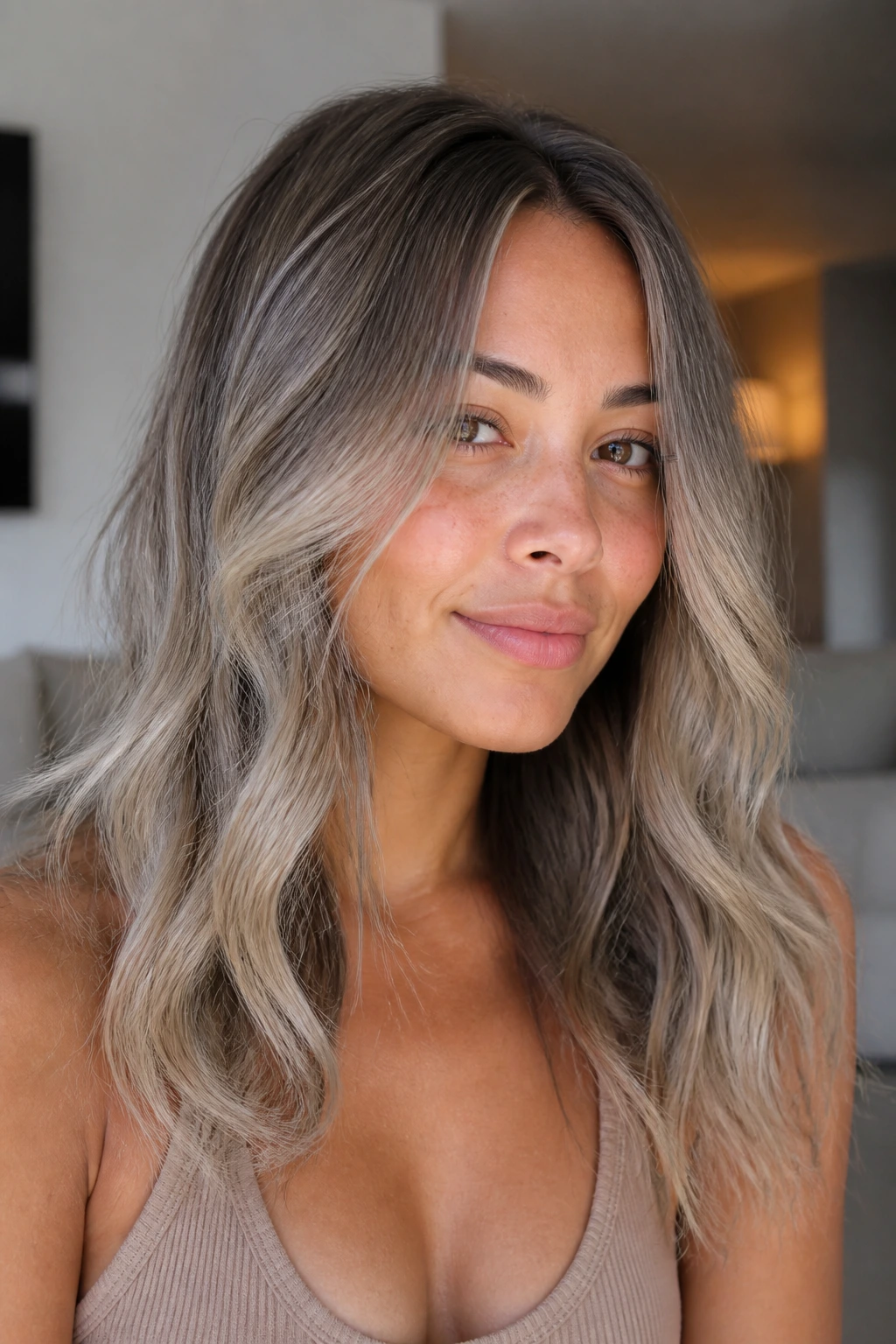
Can mushroom blonde work on warm skin? Yes, if it stays earthy and never turns flat gray. The whole point is to give the blonde a neutral base so the platinum ends don’t look pasted on. That neutral middle is especially useful for olive skin, which can go muddy if the blonde gets too warm or too cool.
Why the Neutral Zone Matters
Mushroom blonde gives the eye a breather between the root and the lightest ends. The result is a cooler-looking blonde that still sits comfortably on warmer complexions.
If you wear a lot of black, charcoal, or earthy neutrals, this shade feels especially at home. It has a quiet edge to it. Not flashy, just clean.
14. Copper-Kissed Platinum Ends
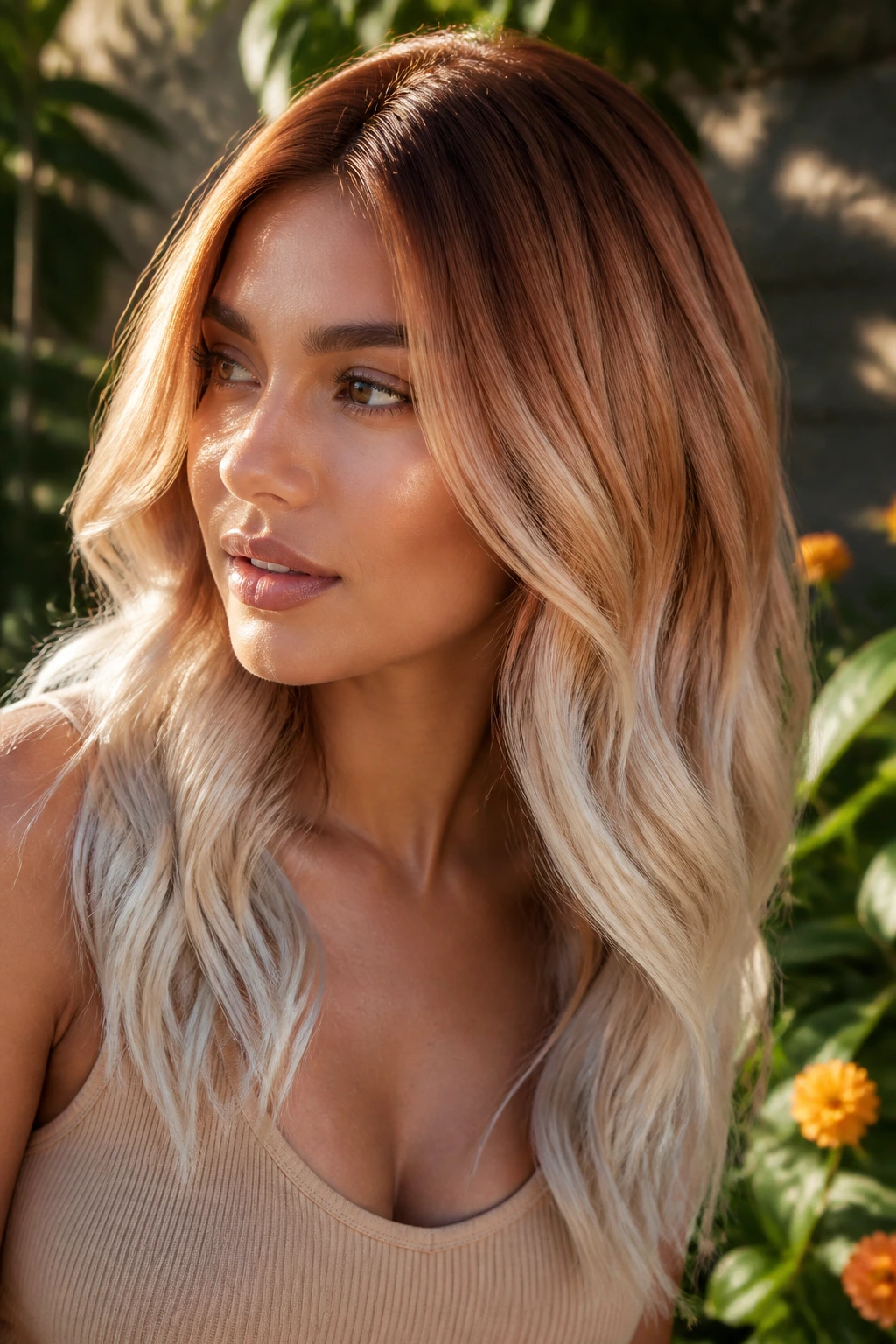
Copper-kissed platinum is for people who want warmth in the root and brightness at the finish. The copper does not have to stay bright all the way through; it can live softly under the platinum, where it changes how the blonde reads against the skin. That’s the part most people miss.
On warm skin, copper near the crown or mids can make platinum feel expensive rather than stark. The blonde becomes a contrast point, not a separate species of color.
This is especially good if your natural hair has red or auburn hints. Those undertones are not a problem here. They become part of the design.
15. Vanilla Cream Face Frame
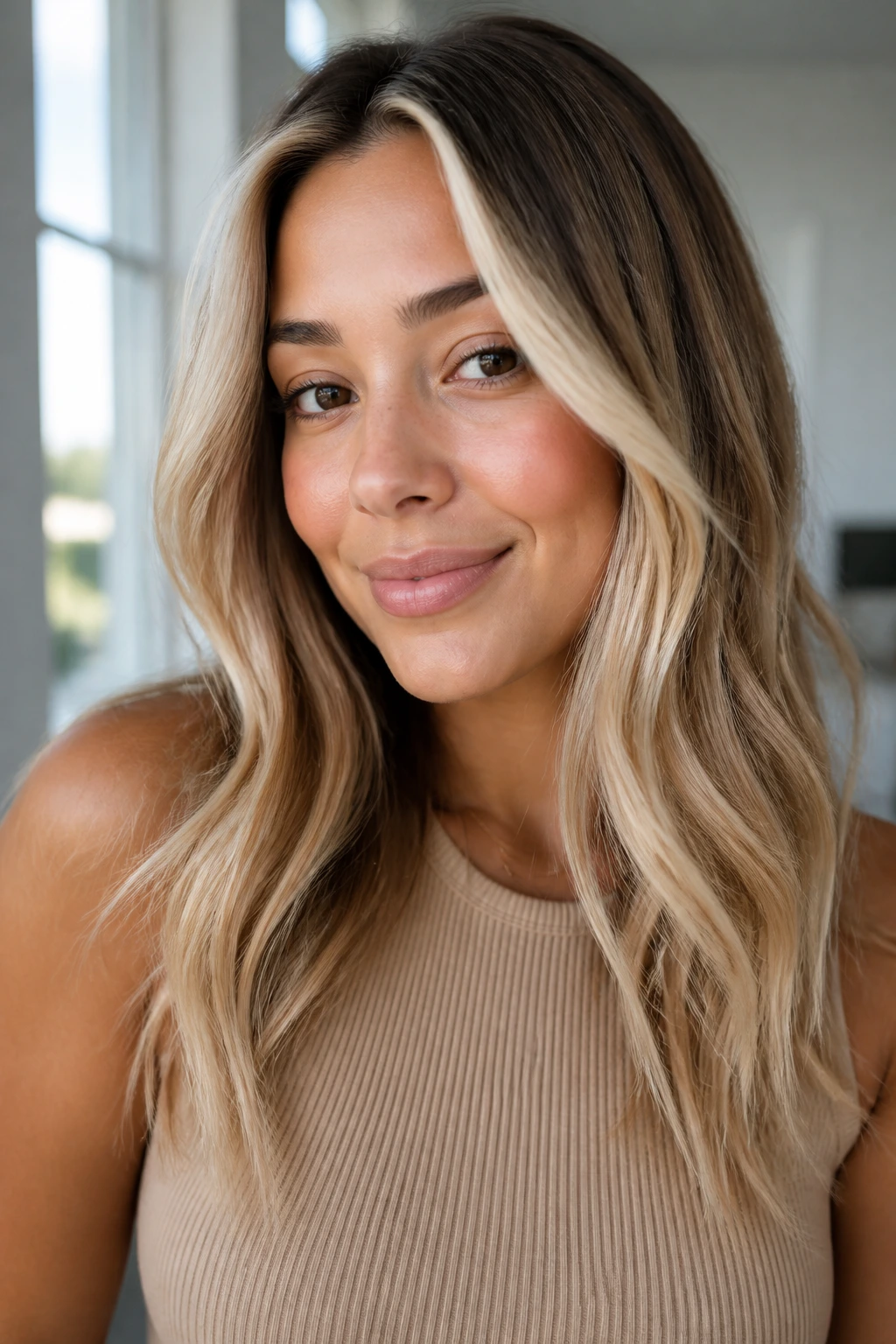
A vanilla cream face frame is one of the easiest ways to try platinum without taking the whole head to the edge. The lighter pieces sit around the face, then melt into a softer blonde through the ends. On warm skin, that cream tone keeps the brightness from going blue or gray.
I like this on fine hair because the face-framing brightness gives the illusion of more density around the front. It also works well if you keep your length long and want the color to feel light without losing depth.
The key is restraint. Too wide, and the face frame turns into a stripe. Keep it narrow enough to blend, and it reads soft from every angle.
16. Bronze-to-Platinum Shag
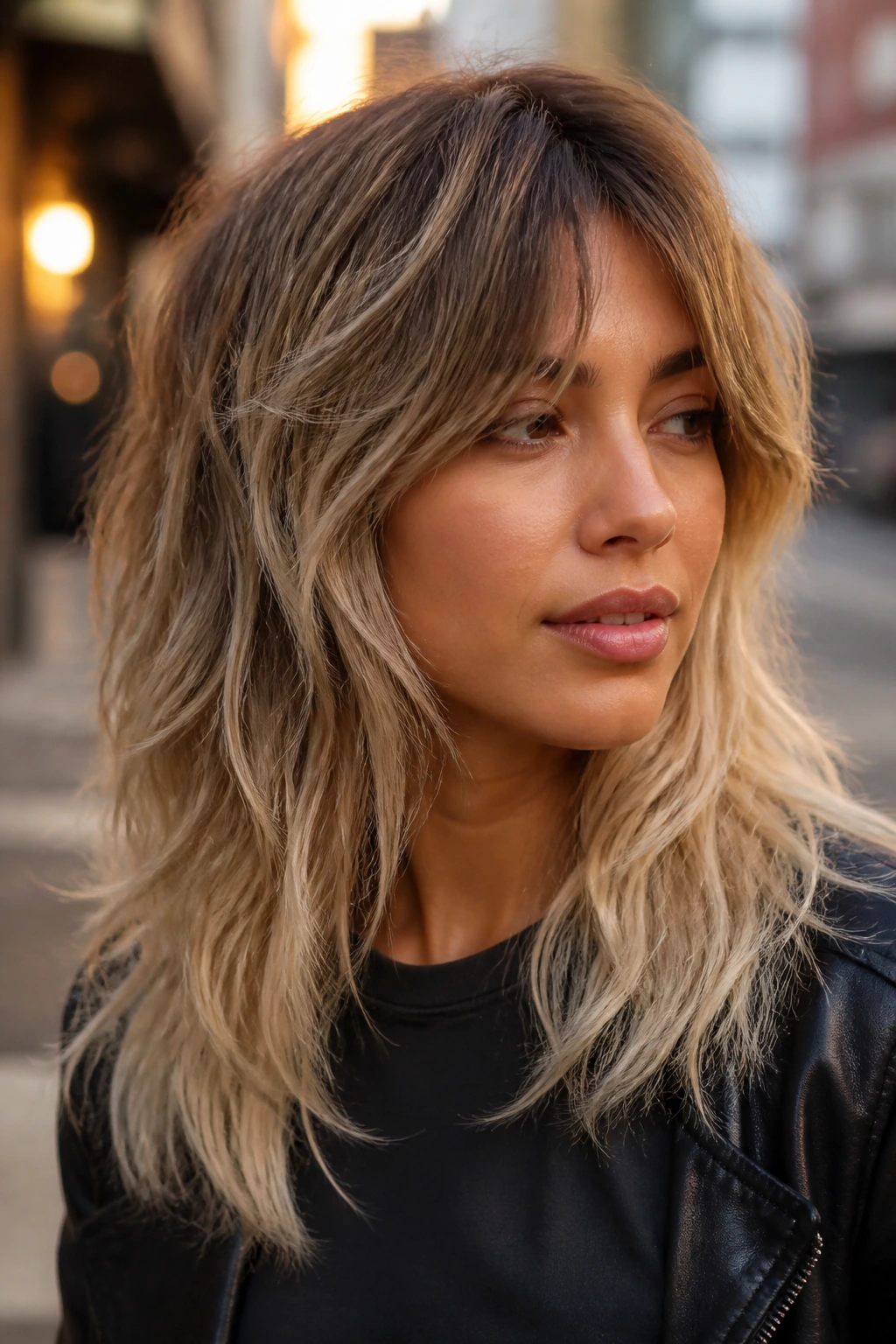
A shag can handle a louder contrast because the layers break the line up for you. Bronze at the top, pale platinum at the bottom, and plenty of movement in between—that’s the formula. Warm skin tends to love this because the bronze keeps the face from going pale while the layers keep the lightness from feeling stiff.
What Makes It Different
The haircut is half the story. A shag gives the blonde texture to live in, which means the platinum doesn’t need to do all the visual work.
This is a good choice if your hair likes body or natural wave. On straight hair, the contrast can look more graphic; on wavy hair, it looks messy in the best way.
17. Warm Beige Pixie Melt
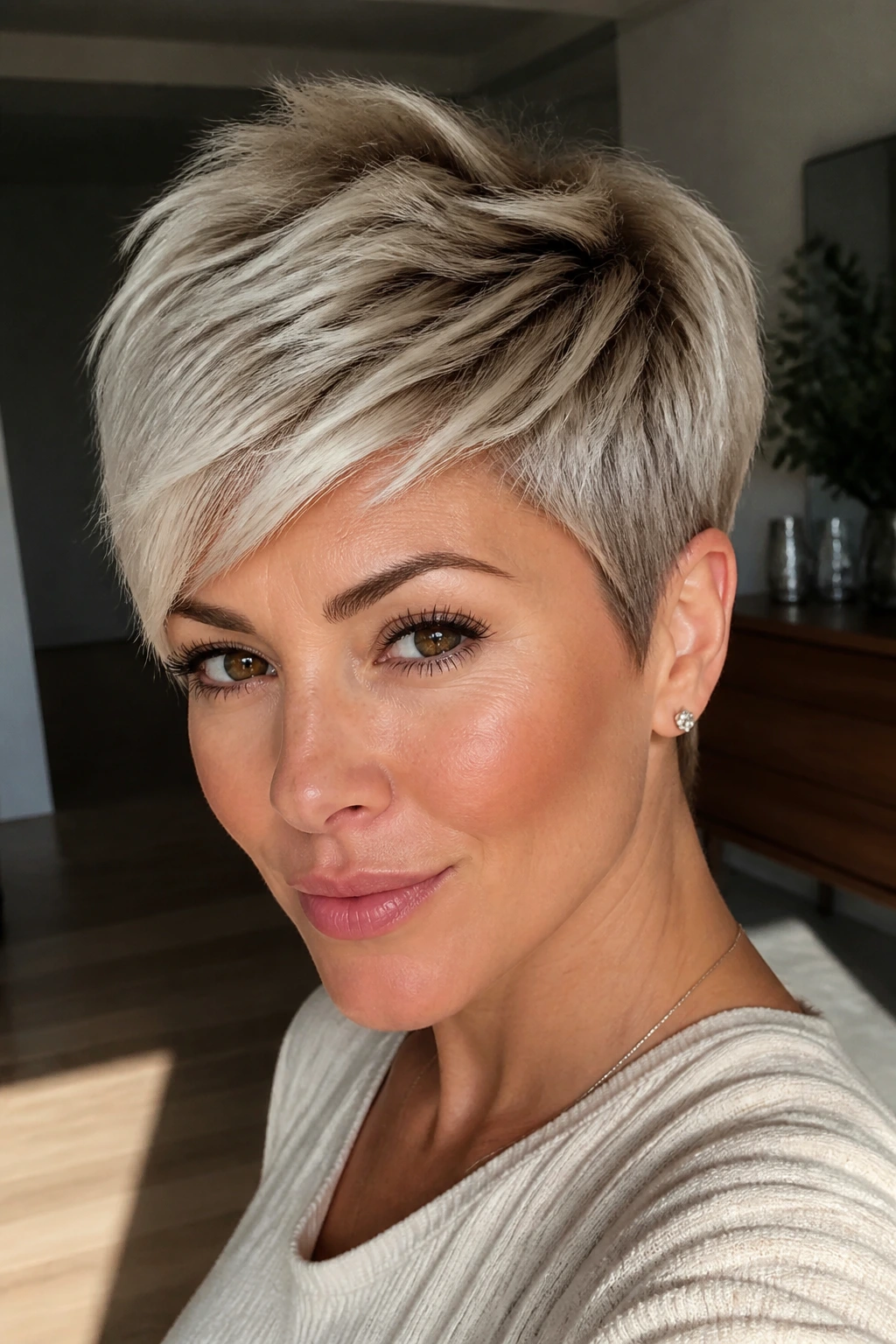
Short hair does not need to be timid about platinum. A pixie melt keeps the sides and back a touch deeper, then lifts the top layers toward beige platinum. The shape stays sharp, but the color softens the whole cut so it doesn’t look harsh against warm skin.
This is a smart way to go lighter if you want something low on length and high on payoff. The warm beige root keeps the scalp from going stark, and the platinum on top catches light in a very direct way.
I especially like this with a textured finish. A little paste or cream through the crown makes the gradient visible instead of flattening it out.
18. Bronde to Platinum
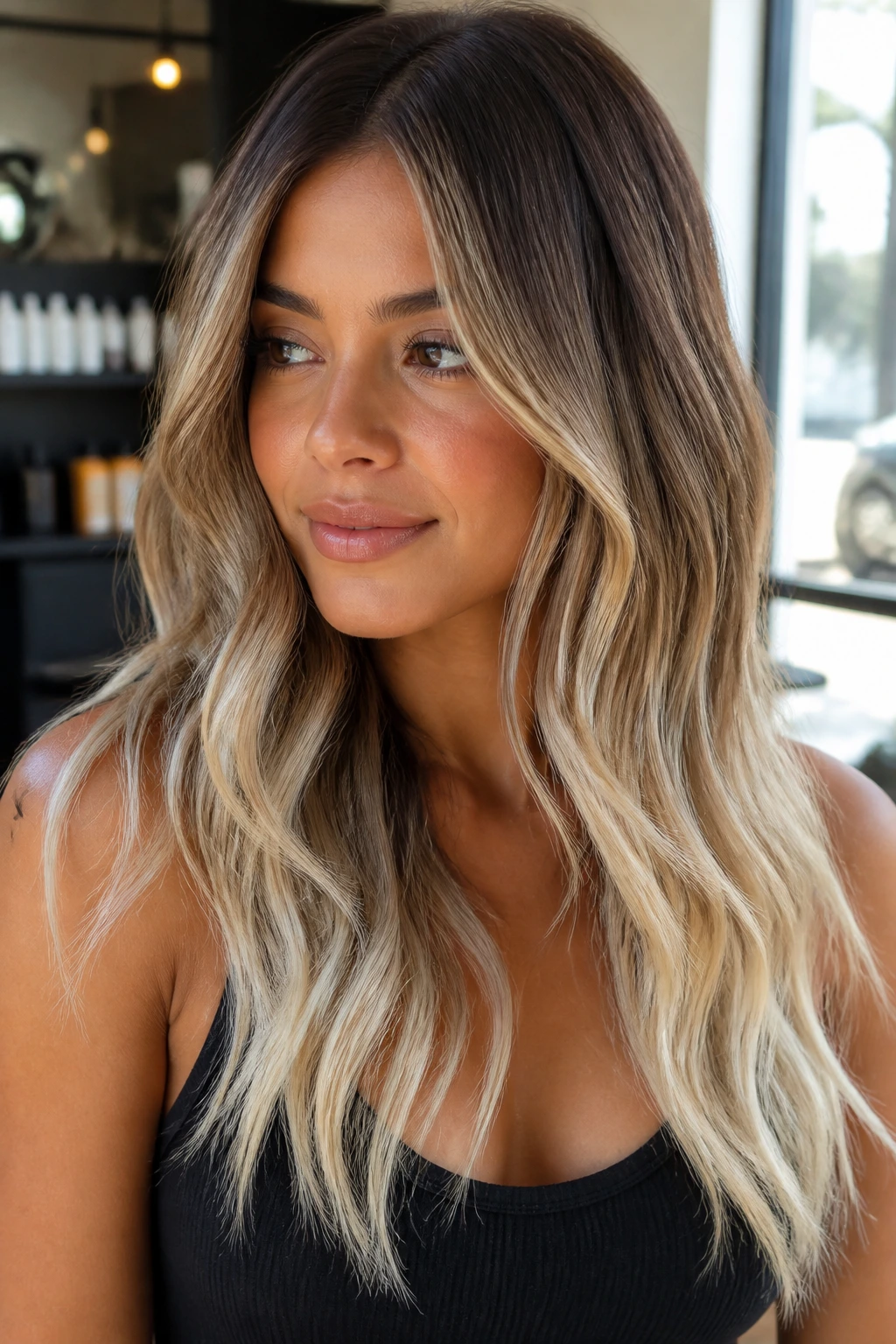
Bronde is a useful middle road. It gives the hair enough depth to ground warm skin, then the platinum starts at the ends where it can shine without taking over. If you want grow-out that behaves itself, this is one of the easiest choices on the list.
It works because the middle stays dimensional. You’re not asking the eye to jump from brunette to ice in one second. That little pause in the color story makes a big difference.
This is a strong pick for someone who wants to lighten gradually over time. You can shift the bronde lighter with each appointment without losing the shape of the look.
19. Taupe Shadow-Root Platinum
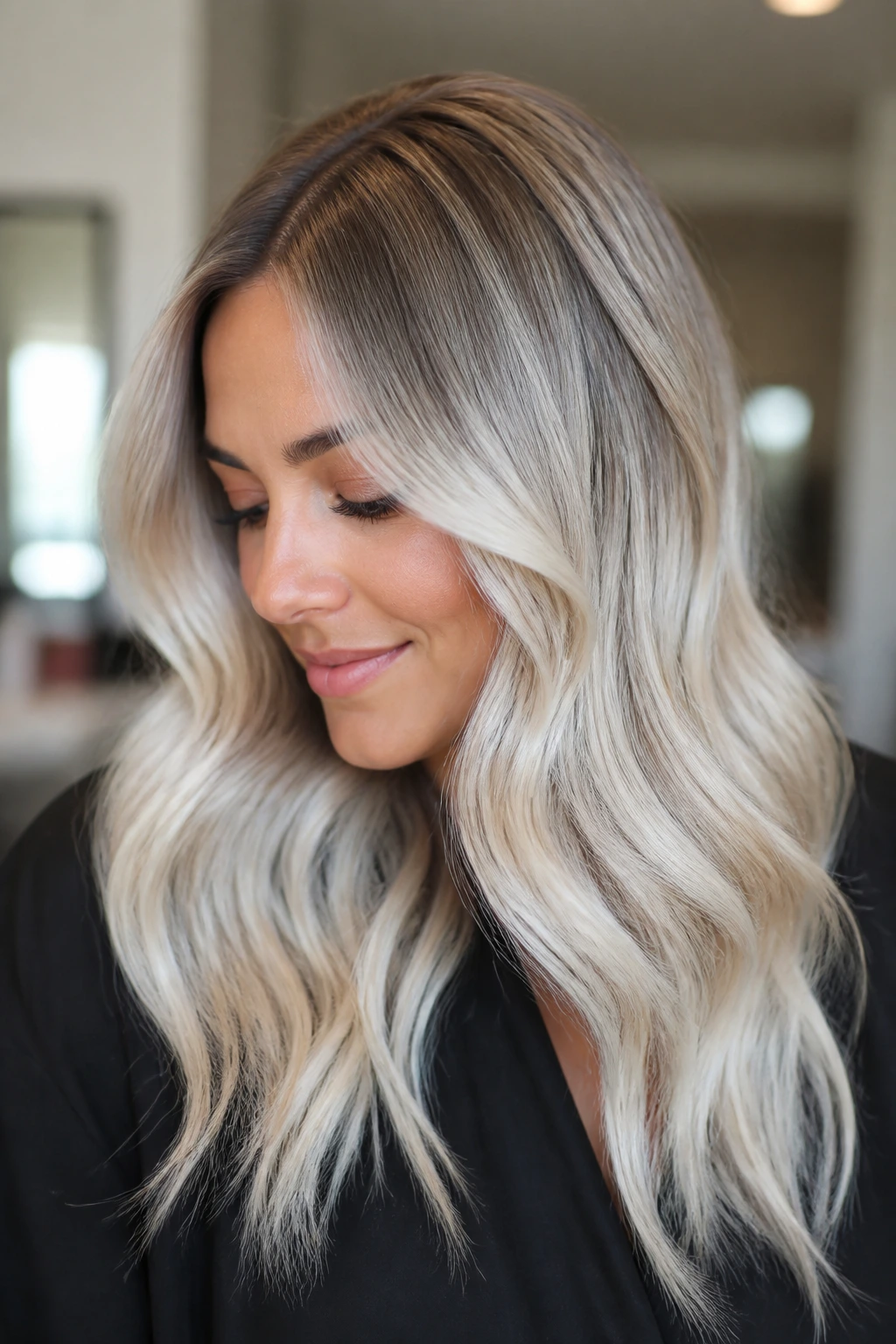
Taupe gets overlooked because it sounds quiet, and quiet is exactly why it works. A taupe shadow root softens the scalp area, but it doesn’t bring in so much warmth that the platinum ends get dulled. On warm skin, that balance can feel cleaner than a very golden root.
Why Taupe Beats Stark Ash
A strong ash root can make warm skin look tired. Taupe keeps the tone neutral enough to support the platinum without creating that gray cast around the forehead.
This is a good choice if your complexion sits somewhere between peach and olive. It’s also one of the more graceful grow-out options, since the root blur doesn’t look like a correction job after a few weeks.
20. Honeyed Curly Halo
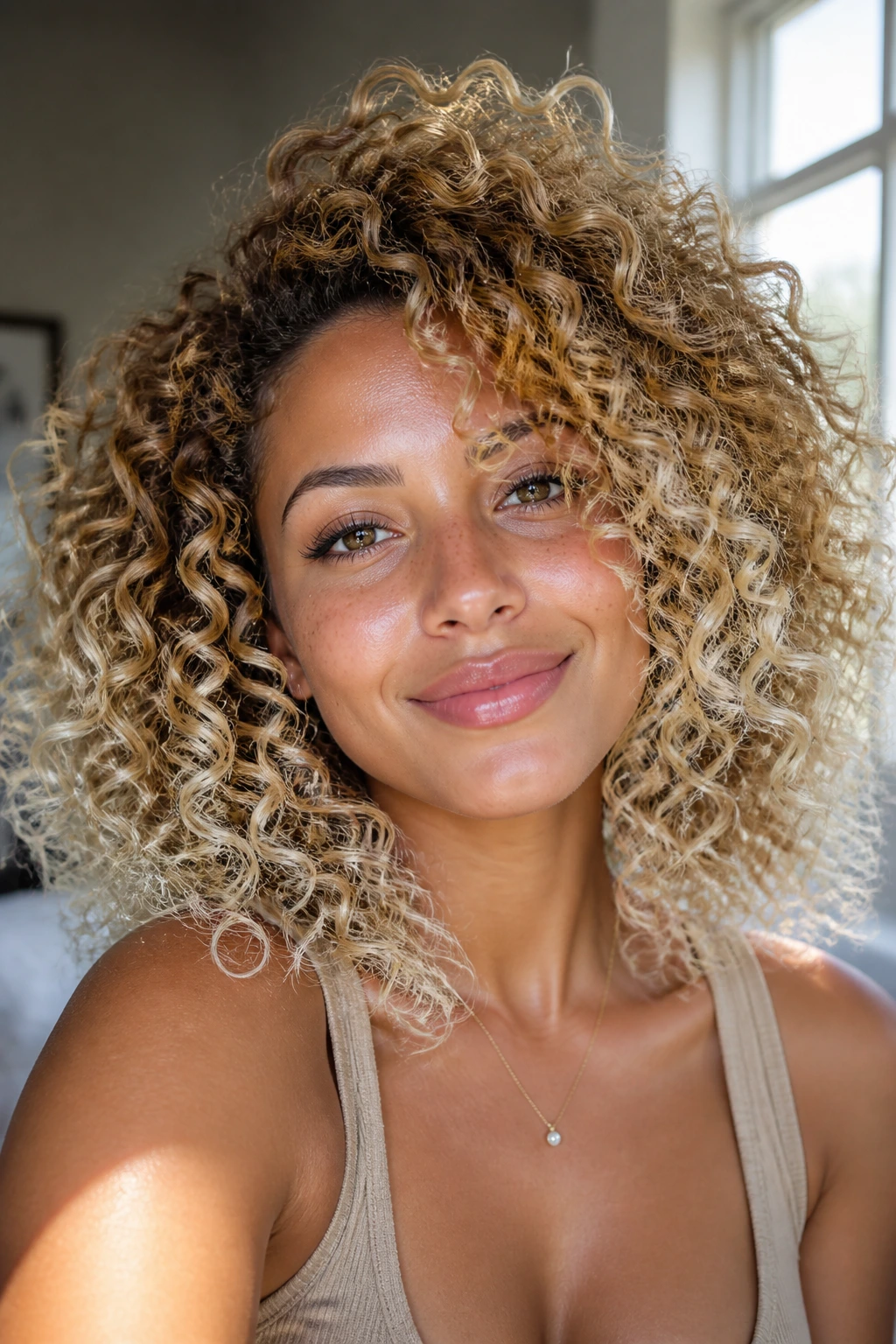
A curly halo turns the brightest blonde into a frame rather than a flood. Honey sits under the platinum in the root and lower layers, then the lighter ends appear where the curls catch air and light. It’s a smart way to work with texture instead of fighting it.
For warm skin, the honey base is doing real work here. The platinum reads brighter because it has warmth beside it, and the face keeps a little color near the scalp.
- Stretch curls before placement so the lightest parts land where they’ll actually show.
- Keep the halo brighter around the top perimeter and front sections.
- Use a diffuser and a light curl cream, not a heavy butter that dims the blonde.
21. Pale Champagne Luxe Waves
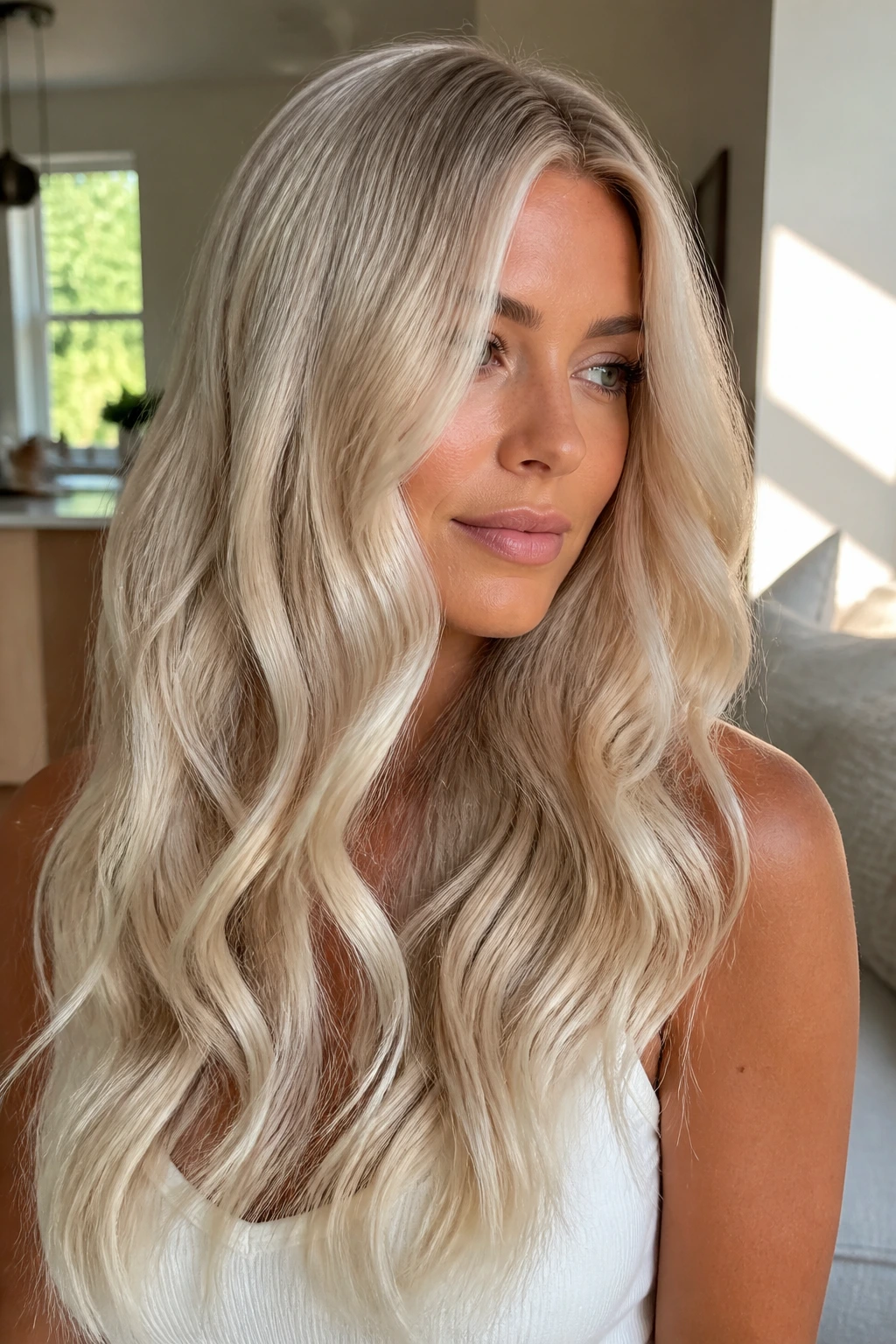
If you want platinum to feel polished rather than harsh, champagne is the safer finish than silver. Pale champagne luxe waves use a warm-neutral gloss to keep the blonde bright, then let the wave pattern create softness across the ends. On warm skin, that finish reads refined without turning icy.
This is a good choice for long hair and bigger bends. The waves spread the light around, and the champagne tone prevents the blonde from looking flat under indoor lighting.
I’d call this one the dress-up option. It still works every day, but it has a little more shine and a little less grit than the edgier looks above.
22. Cool Platinum with Warm Root Blur
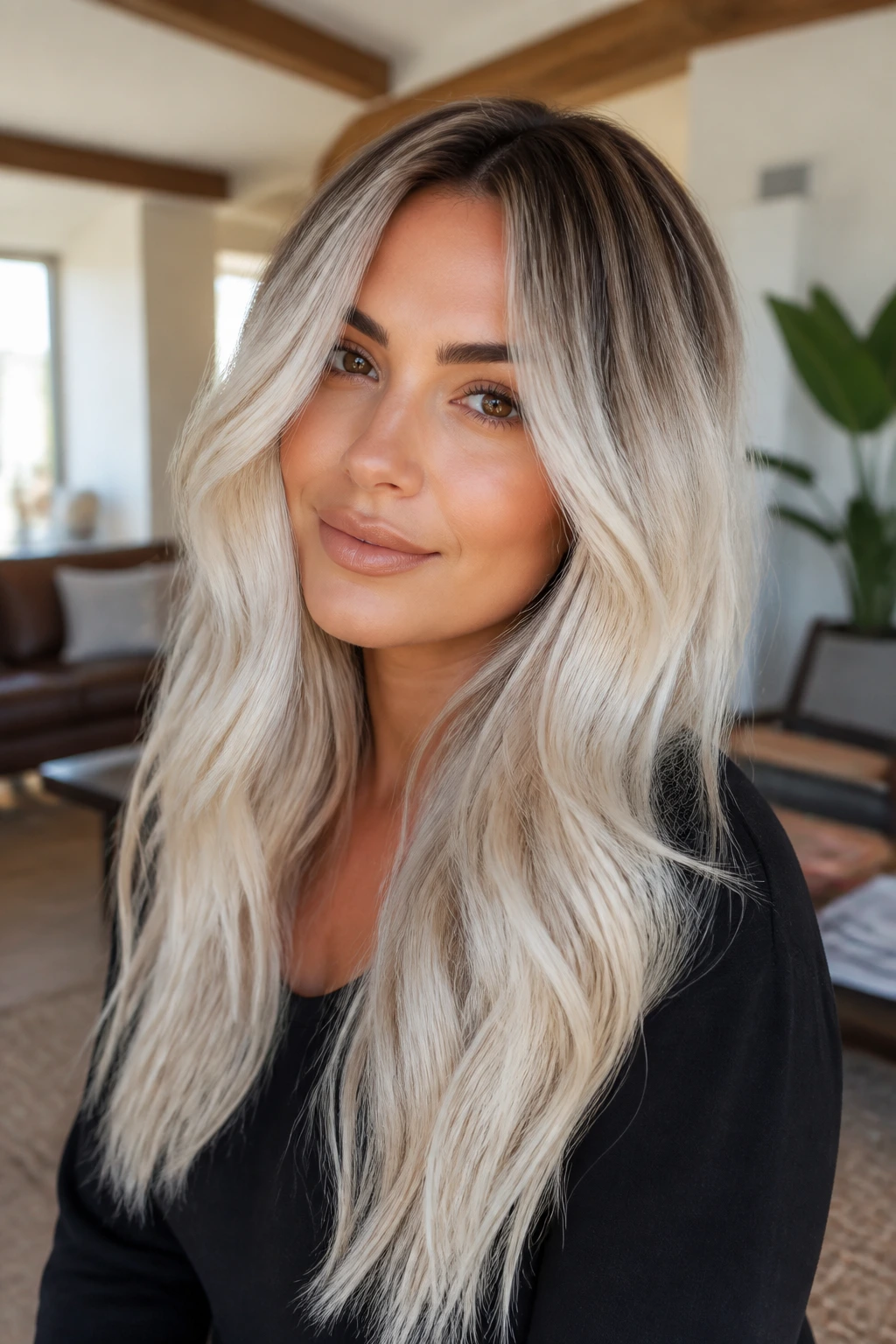
This is the risky one, and also the most fashion-forward. The ends stay truly cool and pale, but the root blur is warm enough to keep warm skin from disappearing into the blonde. The result is high contrast without a harsh scalp line.
You need some confidence for this one. It looks best when the haircut is clean and the makeup has a little warmth in it—bronze, peach, or a soft terracotta lip. If the root blur is skipped, the whole thing can feel too severe.
For people who love a striking blonde and do not want to back off into beige, this is the cleanest compromise I know.
Why a Soft Root Makes Platinum Work on Warm Skin
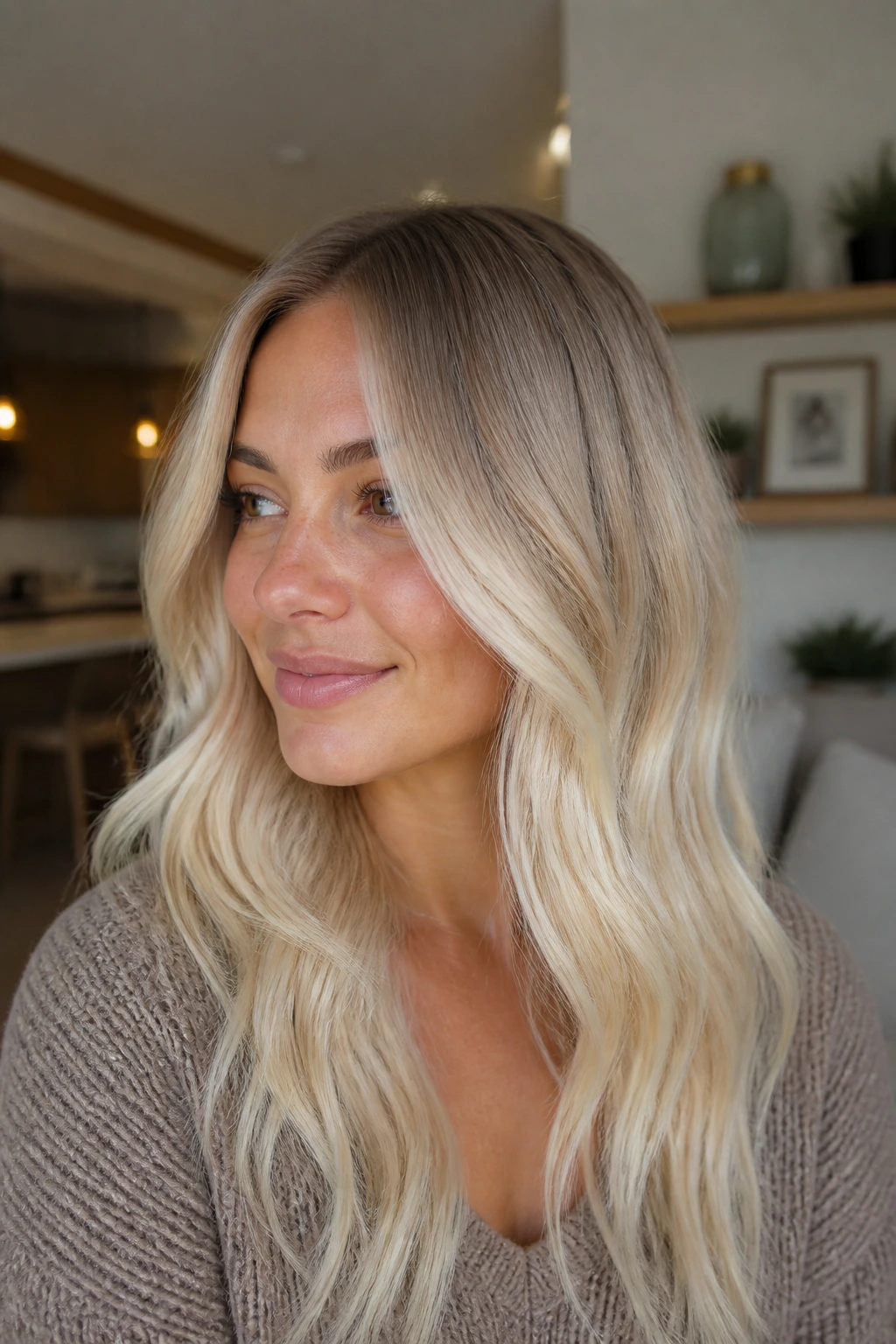
Warm skin tones don’t fail against platinum. They just need a bridge.
That bridge is usually a shadow root, a beige melt, or a warm-neutral midband that keeps the eye from hitting a wall of silver at the scalp. When the lightest blonde starts too high, the face can look pale in a way that has nothing to do with the hair being “too blonde” and everything to do with contrast. The root area is doing visual math before the rest of the color even gets a chance.
There’s also a practical side to this. A softer root gives the grow-out a better shape, which matters if you don’t want to visit the salon every few weeks just to erase a harsh line. I prefer platinum ombre on warm skin when the brightest blonde sits lower—around the mids and ends—because that lets the complexion keep its own color near the face. The platinum shows up where it should: at the edges, in the movement, and in the places the light hits last.
The Tools That Keep the Blend Clean
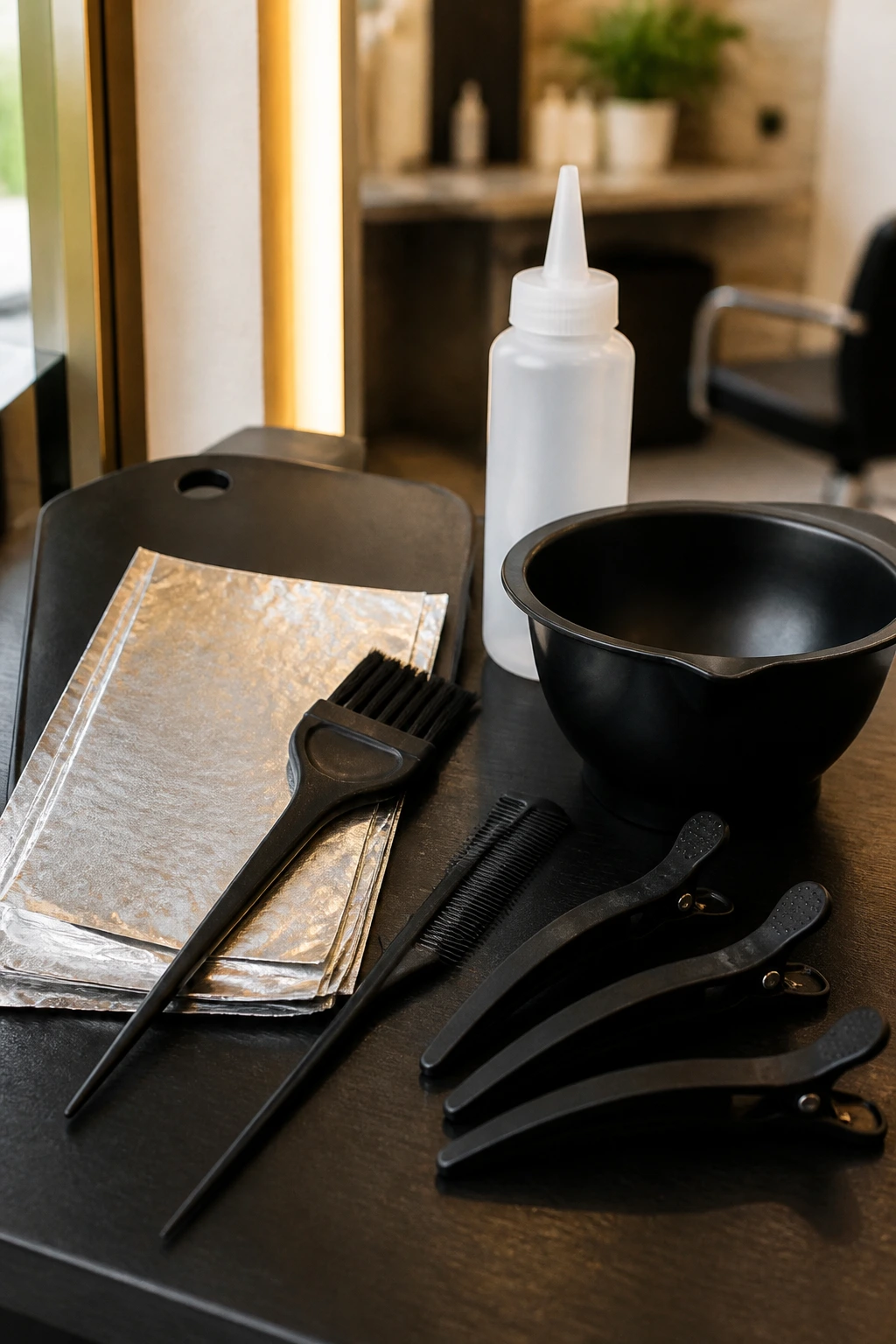
You do not need a drawer full of gadgets, but the right tools make the difference between a soft melt and a stripey mess.
- Balayage board or foil sheets: Helpful for controlling where the lightener lands, especially on long hair.
- Tint brush: A medium brush gives you more control over feathered paint lines than a giant color brush.
- Tail comb: Good for clean sections and fine baby-light placement around the face.
- Sectioning clips: Keep the top half of the hair out of the way while you work the lower layers.
- Mixing bowl: Use a nonmetal bowl for lightener and toner so the formula stays consistent.
- Developer measuring bottle or scale: Lightener changes fast when the mix is off, so measuring matters.
- Color-safe shampoo and conditioner: Regular shampoo strips toner faster than most people expect.
- Purple or blue toning mask: Choose one based on how yellow or orange the blonde pulls.
- Bond builder or bond mask: Useful after lifting, especially if the hair is fine or already processed.
- Heat protectant: Non-negotiable if you blow-dry or curl the hair often.
Choosing the Right Toner, Lightener, and Gloss
The colorist conversation matters more than the picture you bring in. A strand can look icy online and still need beige in real life. That’s normal. Lighting lies, and warm skin shows the lie faster than cooler complexions do.
If your hair is medium brown or darker, ask how many sessions the lift will take before you talk about the exact platinum tone. That question saves people from one of two ugly outcomes: hair that is overprocessed to reach the wrong shade, or hair that is toned so hard it turns gray and flat. A good platinum blonde ombre for warm skin tones usually lands somewhere between pearl, beige, and champagne.
Also: be honest about your history. Box dye, henna, old dark gloss, and heavy heat damage all change the game. A strand test can tell you more in 20 minutes than a whole mood board can in 20 minutes of guessing.
How to Wear These Shades Day to Day
Placement: Keep the brightest blonde around the cheekbones, jawline, and ends if you want the color to flatter warm skin instead of fighting it. If the face is very golden or peach, a deeper root and brighter lower half usually looks cleaner than a bright crown.
Styling: Loose bends show the gradient better than poker-straight hair. A 1.25-inch curling iron, used in alternating directions, gives the blonde movement without making it frizzy. Straight styling can work too, but it makes the transition feel more graphic.
Makeup Pairing: Terracotta blush, caramel bronzer, and warm nude lips help the complexion stay alive next to platinum. Cool pinks can work, but they need a little balance somewhere else on the face.
Wardrobe Pairing: Cream, camel, olive, chocolate, denim, and soft black sit well beside light blonde. Crisp optic white can make cool ends feel colder, so I usually like a little warmth near the collar or earrings.
Additional Tips and Color Boosters
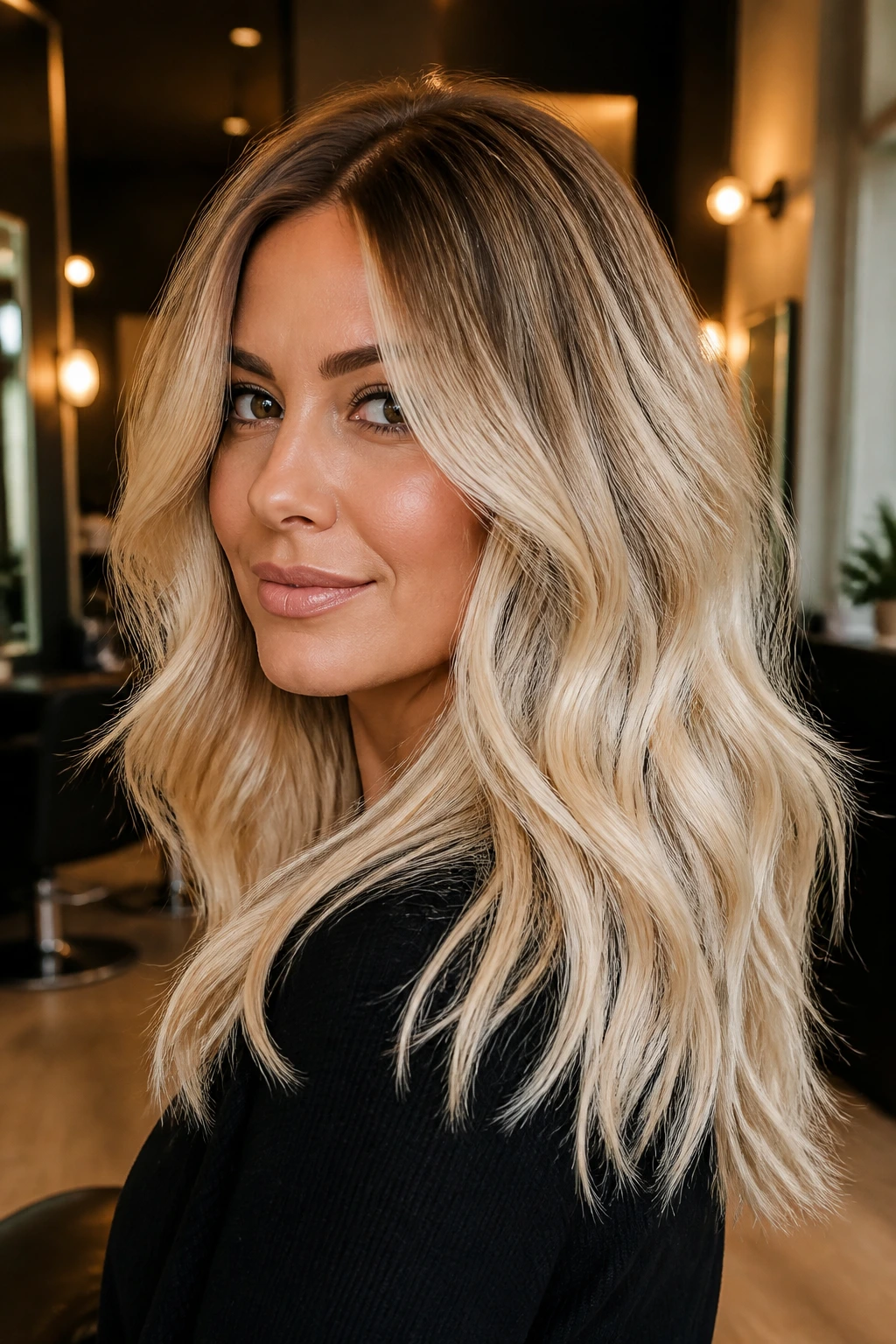
Tone Enhancement: A beige, pearl, or champagne gloss every 6 to 8 weeks keeps the blonde from drifting dull or too silver. Ask for a gloss, not a heavy toner, if the color just needs shine.
Contrast Control: If the ends feel too stark, add a few lowlights one shade deeper than the root shadow. That softens the step between the brunette base and the platinum finish.
Texture Boost: Curls and bends make ombre look expensive because they break the color into pieces. If you wear your hair straight, try a slight bevel at the ends so the fade doesn’t look like a flat curtain.
Make-It-Yours: For low-maintenance wear, keep the platinum below the ears. For a bolder look, add a bright money piece or a crisp face frame, then let the rest of the color stay softer.
Keeping the Color Fresh Between Appointments
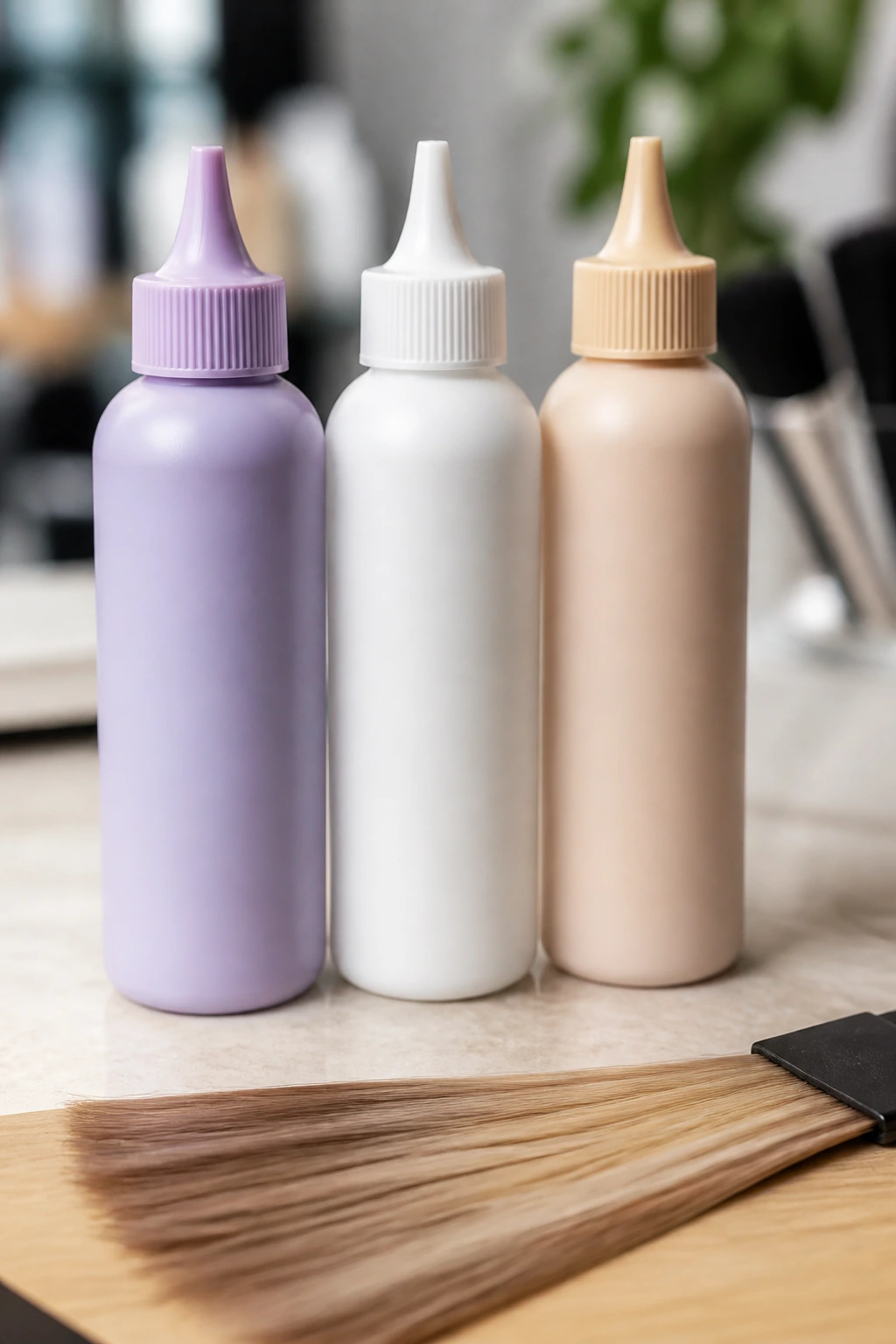
Platinum on warm skin looks best when it stays bright, not over-toned. That means you need a rhythm, not a panic routine.
Wash two to three times a week with a sulfate-free shampoo if your hair tolerates it. If the blonde starts to yellow, use purple shampoo once every second or third wash, not every time. Too much violet can make the ends look chalky, especially on fine hair. A deep conditioner once a week helps the ends stay smooth, which matters because porous platinum drinks up product faster than darker hair does.
Heat is the other enemy. Use a heat protectant every time you blow-dry or curl, and keep hot tools around 300°F to 350°F if your hair is already lightened. Root touch-ups usually fall somewhere around 6 to 10 weeks depending on how obvious you want the grow-out to look, while gloss refreshes often make sense every 4 to 8 weeks. If the hair starts feeling gummy or stretchy, step back from protein-heavy products and lean on bond care instead.
Swimming and strong sun can change platinum fast. A silicone-free leave-in or a UV spray helps, and so does rinsing hair with clean water before it hits the pool. Small habits. Big difference.
Mistakes That Make Warm Skin Look Washed Out
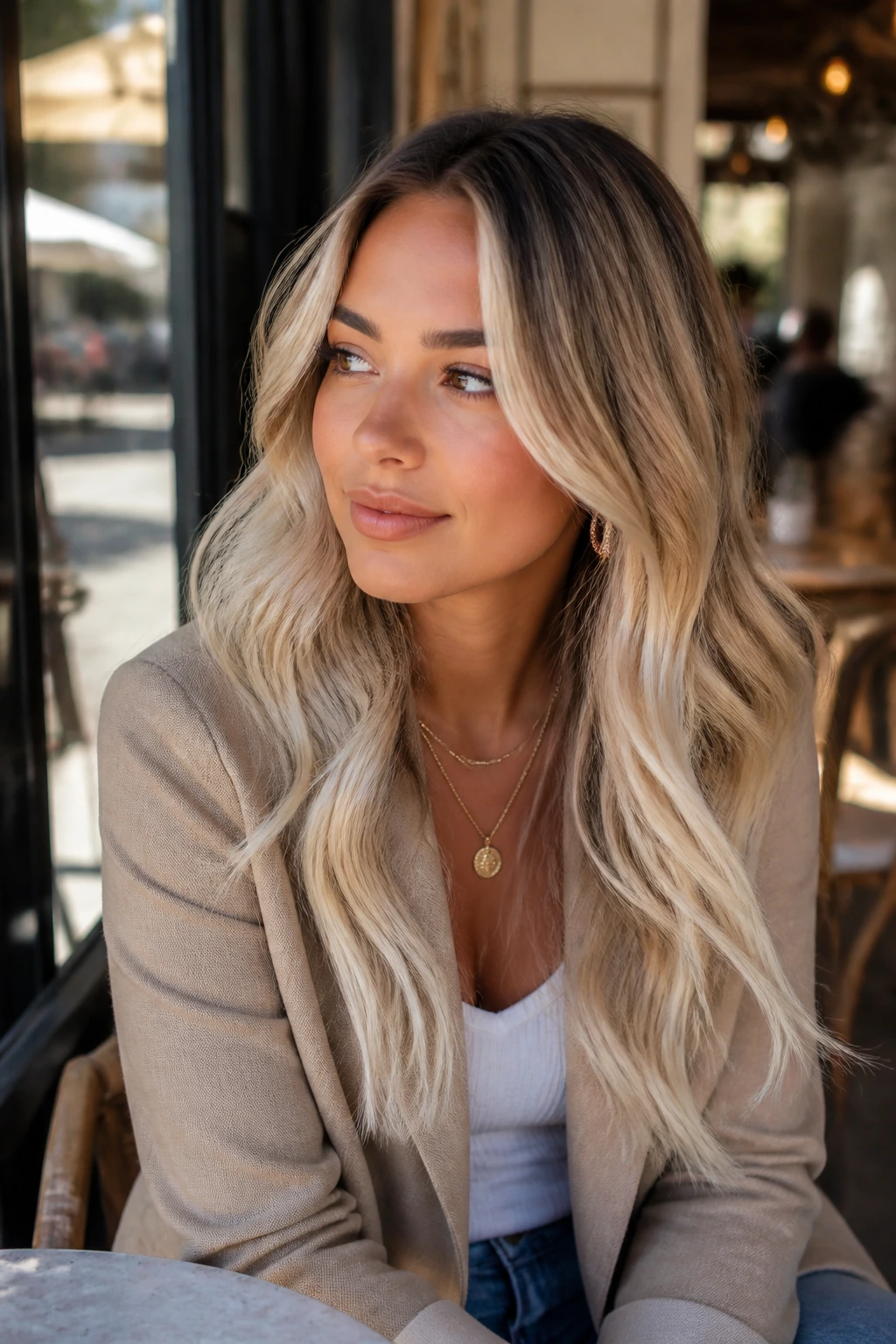
Too much silver toner: The blonde turns flat and the face loses its color. Fix it by asking for beige, champagne, or pearl next time, and back off the purple shampoo.
Starting platinum at the scalp: A harsh root line makes warm skin look too pale around the forehead. Keep a soft shadow root or root blur so the color has a transition zone.
Lifting the ends unevenly: Patchy lightening makes the blonde look dull even when the tone is right. The fix is slower lifting, smaller sections, and a strand test before the whole head is processed.
Ignoring porosity: Ends that are already fragile grab toner too fast and turn smoky or gray. Use a gentler gloss on porous hair and deep condition before your next appointment.
Going one-note: A single flat shade of platinum can flatten the face. Babylights, lowlights, and a little warmth in the middle keep the hair from reading like a sheet of paper.
Styling it too sleek, too often: Pin-straight platinum shows every color break and every rough edge. A softer bend usually flatters warm skin more because it spreads the contrast out.
Questions People Ask Before Booking Platinum Ombre
Will platinum blonde ombre wash out warm skin tones?
Not if the root and midtone are handled well. Warm skin usually looks better with a beige, champagne, or taupe bridge before the platinum starts, because the face keeps some color near the scalp.
What root shade looks best with golden or peach undertones?
A honey brown, caramel brown, or neutral beige-brown root usually works well. Very ashy roots can look harsh, while very orange roots can fight the skin instead of supporting it.
Can dark brown hair reach platinum in one appointment?
Sometimes, but it depends on the starting color, the history of the hair, and how light the hair can safely lift. Darker hair often needs multiple sessions if you want the ends bright enough to hold a true platinum tone without damage.
Is balayage or ombre better for warm skin?
Ombre gives a clearer transition from dark to light, while balayage softens the brightness in scattered pieces. If you want a more obvious fade, ombre is usually the better fit; if you want diffusion, balayage tends to look softer.
How often does platinum need toner?
Most platinum shades need a gloss or toner refresh every 4 to 8 weeks, depending on how often you wash your hair and how porous it is. If the blonde starts looking too dull or too yellow, that’s your sign.
What if my hair is curly?
Ask for the lightener to be placed with the curl pattern stretched out, not coiled tight. That keeps the platinum from sitting too high and helps the gradient show when the curls spring back.
Can I keep this low-maintenance?
Yes. A shadow root, beige mids, and platinum only through the lower half of the hair are the easiest ways to stretch the time between appointments. The more of the root you keep soft, the less obvious the grow-out.
What makeup works best with these shades?
Warm blush, bronzer, and nude lips with a little peach or terracotta usually look best. Very cool makeup can make the platinum feel sharper against warm skin, especially if the blonde is icy.
Does platinum work on short hair?
It can, but the placement has to be cleaner because there is less length for the fade to show. Pixies and bobs look best when the top is softened with beige or taupe and the lightest blonde stays controlled.
A Bright Finish That Still Feels Like You
The best platinum blonde ombre for warm skin tones does not fight the skin; it gives it structure. A soft root, a thoughtful middle, and pale ends that arrive gradually can make the whole look feel balanced instead of severe. That’s the part people often miss when they chase the brightest shade in the room.
If you’re deciding where to start, begin with the tone that makes your skin look awake in daylight, then let the platinum live where it has room to breathe. That usually means the ends. Sometimes the mids. Rarely the scalp.