



Brown caramel honey highlights for olive skin can look rich, soft, and expensive-looking in the best possible way — or they can go muddy, orange, and oddly flat if the tone is off by even a little. That’s the whole game here. Olive skin has a sneaky way of making bad warmth obvious. A highlight that’s too pale can drain the face; one that leans too yellow can read brassy; one that’s too ash-heavy can make the whole look feel tired instead of glossy.
The sweet spot sits in the middle: brown depth at the base, caramel in the mid-lengths, and honey where you want light to catch. That combination works because it echoes the green-gold cast that shows up in a lot of olive complexions. The hair doesn’t compete with the skin. It supports it. And when the placement is smart — around the face, through the ends, or woven into curls instead of dumped on top — the whole thing looks like your hair was expensive before anyone even notices the color.
There’s a reason this family of shades keeps coming back. It’s forgiving in grow-out. It works on blunt bobs and waist-length waves. It can go soft and barely-there, or bold and stripy if you want a little attitude. The trick is choosing the right brown, then deciding how much caramel and honey your face can hold without tipping the balance.
Why These Shades Keep Working on Olive Skin
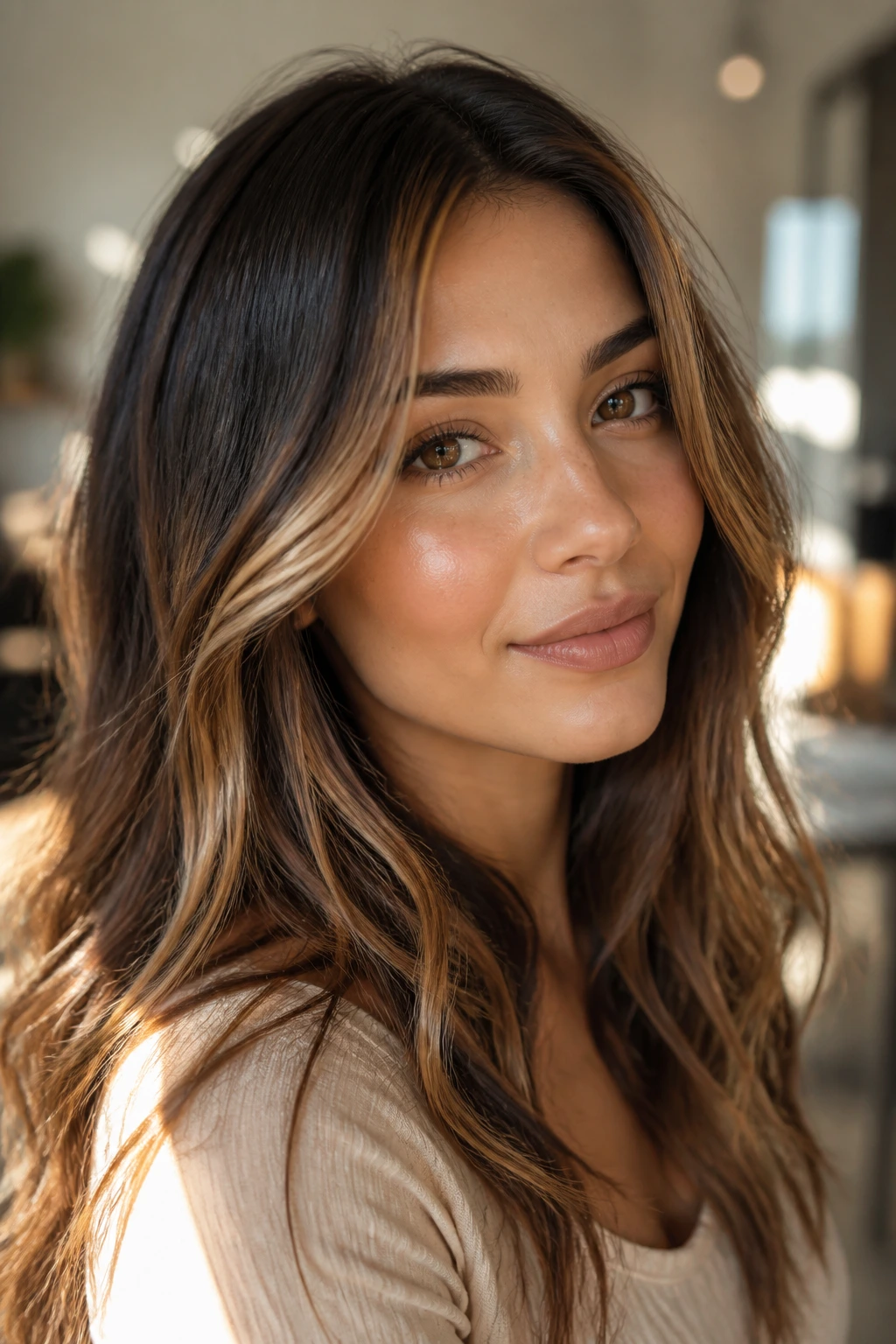
Undertone Match: Caramel and honey sit in that warm-beige zone that tends to flatter olive skin without turning the complexion sallow. They echo the golden side of olive undertones while leaving enough depth near the root to keep the hair from looking washed out.
Soft Contrast: Brown bases with lighter ribbons create movement without the hard stripe effect. That matters on olive skin, because harsh contrast can make the skin color look patchy in bright daylight.
Grow-Out Friendly: When the root stays a shade or two deeper than the highlights, regrowth looks intentional instead of obvious. You can stretch appointments longer, and the style still keeps its shape.
Light-Refracting Finish: Honey pieces placed where the sun would hit — cheekbones, ends, crown, and the outer curve of waves — catch light in a way that makes hair look thicker. The shine reads first, the color second.
Flexible Tone Control: If your olive skin leans warm, you can push the caramel richer. If it leans neutral or a little cool, beige caramel keeps the warmth from running too orange. That tiny adjustment changes everything.
Works on Real Hair Textures: Straight hair shows the ribbons cleanly, waves blur them into a melt, and curls turn the whole thing into little flashes of color. Same palette. Different personality.
1. Soft Caramel Money Piece
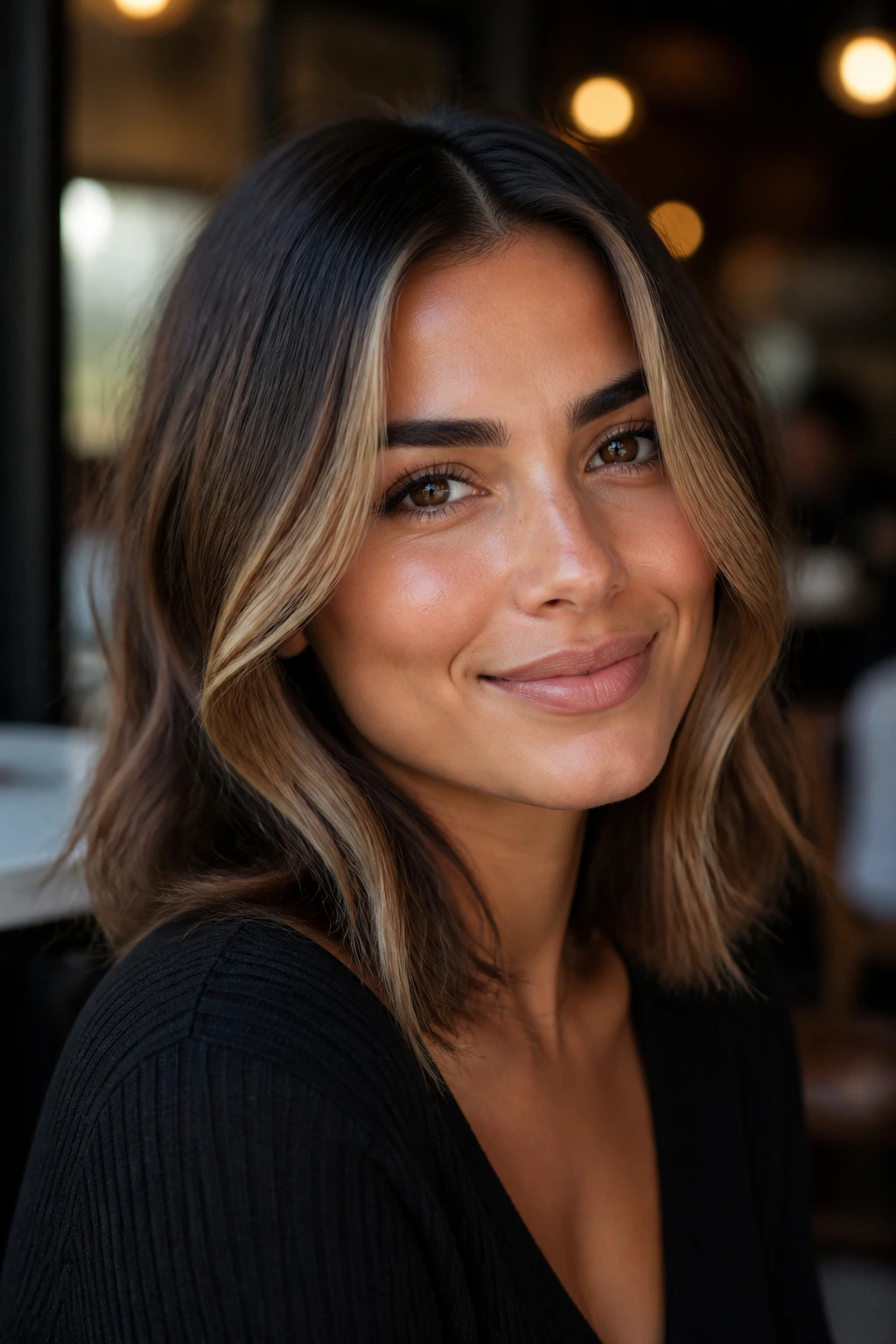
A face frame done in soft caramel is the quickest way to wake up olive skin without committing to a full head of lightness. The front pieces sit like a built-in glow strip, and when the caramel stays one or two levels lighter than the base, the effect is flattering instead of loud.
Why this one works
The money piece gives you brightness right where it matters most: around the cheekbones, temples, and the center part. On olive skin, that front brightness can stop the complexion from looking flat on days when your hair is pulled back or tucked behind the ears.
What to ask for
- Ask for two narrow face-framing panels that start around the brow bone and feather down through the first few inches of hair.
- Keep the tone beige-caramel, not orange-copper, unless your olive skin leans very warm.
- Leave the root shadow intact so the front pieces don’t look pasted on.
If your hair is shoulder length or longer, the front panels can be a touch lighter than the rest of the head. That tiny difference creates a cleaner frame and keeps the color from disappearing into the base.
A blunt bob with a caramel money piece looks sharp. Long layers look softer. Either way, this is the kind of highlight that does a lot of work with very little actual color.
2. Honey Balayage on a Dark Brunette Base
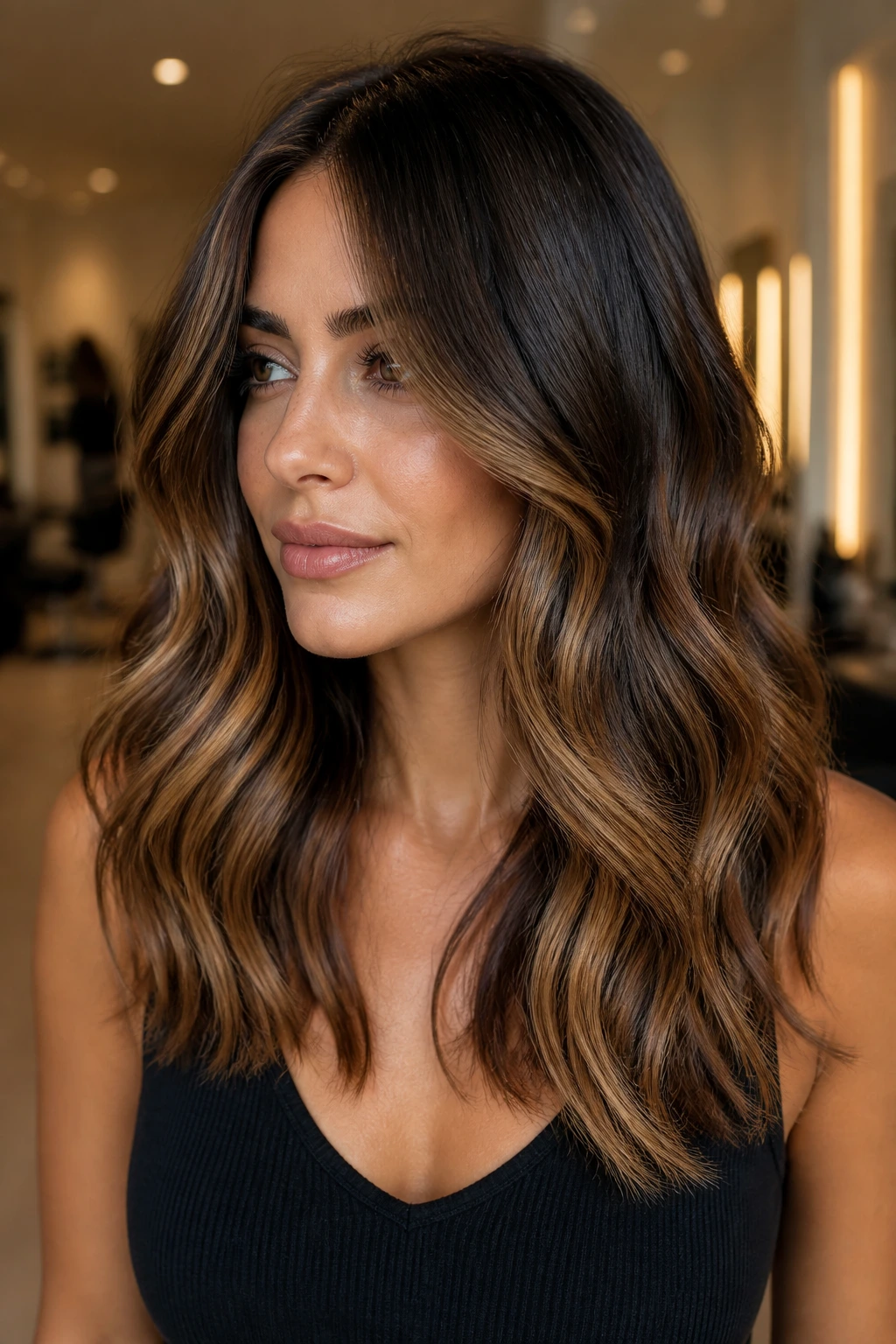
Honey balayage on dark brown hair is the look people think is simple until they try to do it at home and realize placement is the whole point. Too much lightness and the contrast gets stripey. Too little and the honey vanishes.
What makes it flattering
Dark brunette depth holds the honey in place. That matters for olive skin because the richness near the roots keeps the face from looking washed out, while the lighter lengths add movement and warmth. The balayage hand-painting technique gives the color a broken, organic edge instead of a hard line.
I like this version best on medium to deeper olive complexions. The base color stays close to espresso, mocha, or cocoa, and the honey sits mostly on the mid-lengths and ends. That balance keeps the warmth controlled.
Best placement notes
- Keep the brightest honey pieces below the cheekbones if you want a low-drama finish.
- Let a few painted pieces skim the outer layers only so the color shows when you move.
- Ask for a soft gloss after lightening; honey turns nicer when it looks shiny, not dry.
This one is especially good if you want dimension without a heavy highlight pattern near the scalp. It grows out gracefully, and that’s a real plus because balayage starts looking expensive when it stops looking newly done.
3. Micro Babylights with a Glossed Brown Root
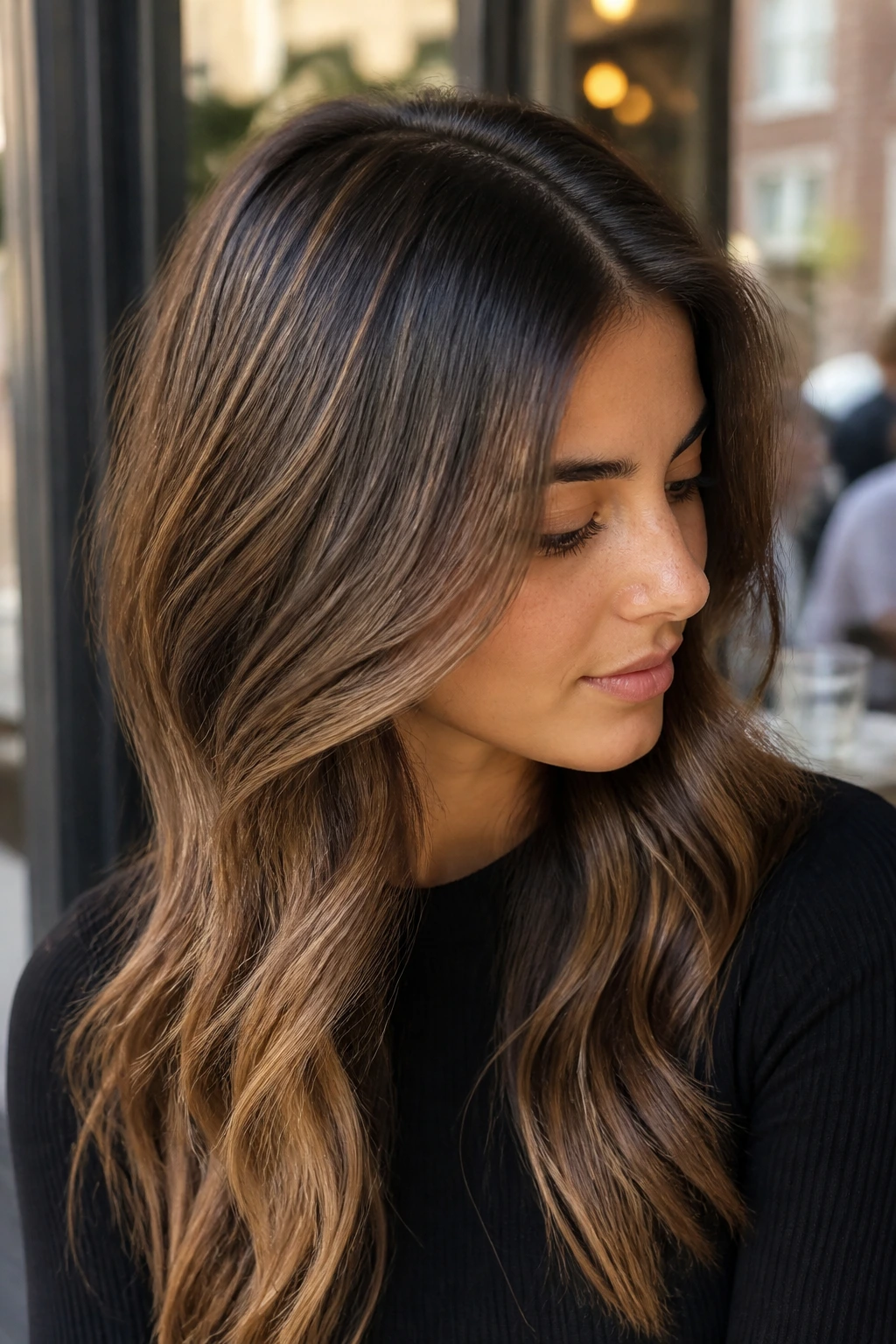
Babylights are the quietest option in the whole set. Tiny, almost threadlike highlights soften the brown base instead of announcing themselves from across the room, which is exactly why they work so well on olive skin.
Why the tiny pieces matter
With olive undertones, broad blonde streaks can feel too blunt. Babylights, though, scatter tiny flashes of caramel and honey through the hair so the skin stays the focus. The root remains brown, the ends gain a little light, and the whole thing looks like natural sun exposure rather than obvious coloring.
If your hair is fine, this is especially smart. Thick chunks of light can make fine hair look thinner; micro-lighting keeps the surface busy in a good way. On wavy hair, the result is even better because the highlights disappear and reappear as the hair bends.
Quick placement cues
- Ask for very thin slices through the crown and around the temples.
- Keep the tone in the caramel-beige range if you want the finish to stay soft.
- Finish with a cool-toned or neutral gloss, not a strong ash toner that steals the warmth.
This is one of those looks that doesn’t shout from a salon mirror, but a week later it still looks polished in daylight. That’s the value. Quiet color. Less fuss.
4. Caramel Ribbons on Long Layers
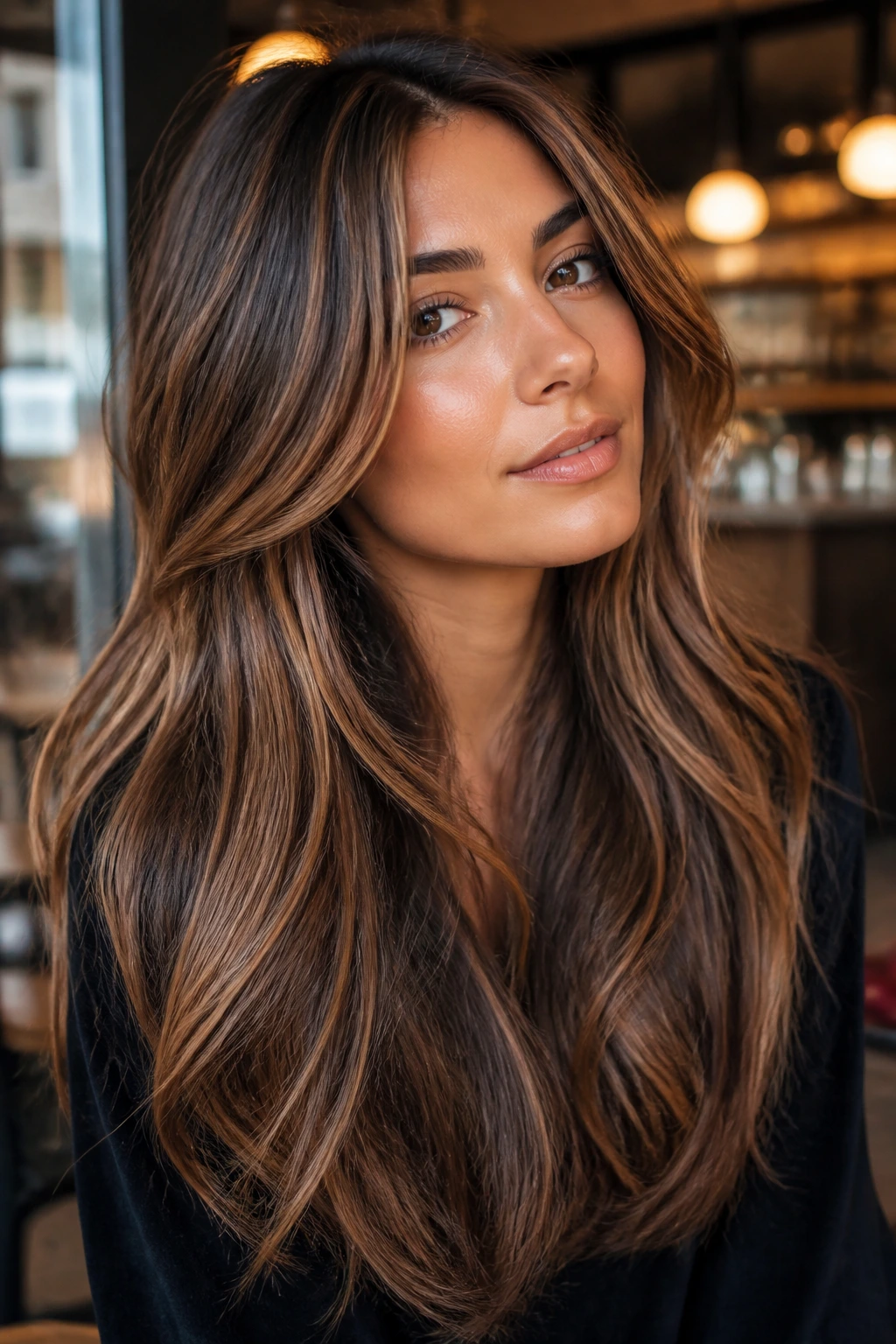
Long layers are made for caramel ribbons because the movement gives the highlights somewhere to go. Without layers, long brown hair can swallow the color. With them, the lighter pieces fall in separate sheets and keep the whole style from turning into one dark block.
The visual payoff
Caramel ribbons give olive skin a gentle lift, especially if the face tends to read a touch green in certain lighting. The warmth in the color acts like a soft reflector. You see the hair first, then the skin looks brighter beside it.
The trick is to keep the ribbons narrower near the face and wider toward the ends. That creates a natural shift in brightness as the hair moves. It also keeps the grow-out line from feeling harsh when the top grows in.
Best for
- Long, layered cuts that need shape
- Hair that waves easily with a round brush or curling iron
- People who want dimension but not a full blonde transformation
If the colorist overloads the top layer with too much caramel, the style can lose depth fast. I prefer to leave the crown deeper and let the ends carry the light. It reads more natural, and natural is doing a lot of heavy lifting here.
5. Chestnut Brown with Honey Ends
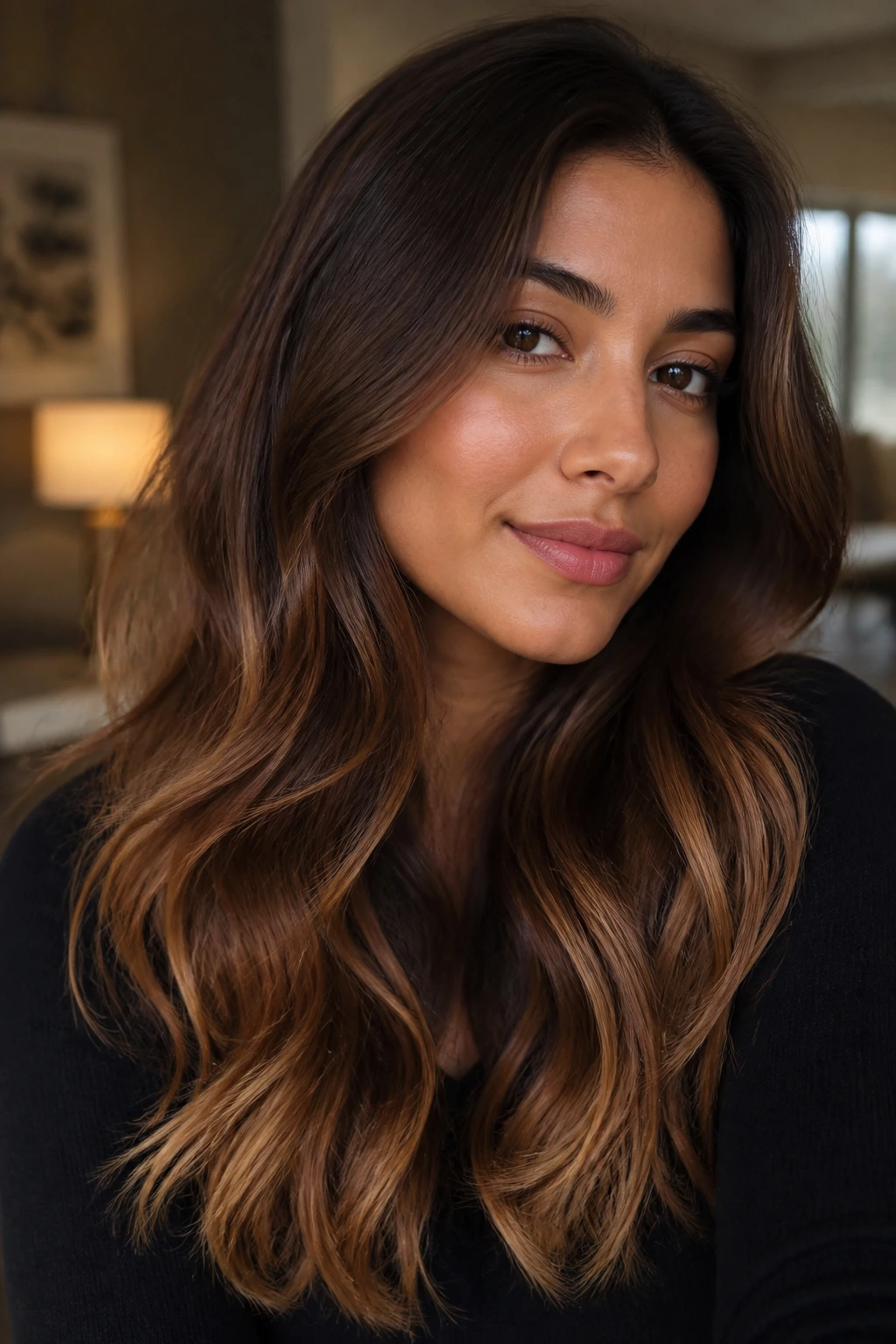
Chestnut and honey together can be gorgeous on olive skin because chestnut has enough red-gold warmth to keep the hair from looking flat, while the honey ends stop it from going too dark.
The transition matters. You want the shift from brown to honey to feel gradual, almost like the ends were kissed by light over time. When the blend is done well, the hair gets a soft ombré effect without looking like a separate color was slapped on top.
A good fit when you want subtle drama
This is the one I’d point to for someone who wants visible change but hates high maintenance. The roots stay chestnut, the mid-lengths melt into caramel, and the ends finish with a soft honey glow. You get dimension without a lot of time in the chair.
Ask for this detail
What to say out loud
- “Keep the root rich and chestnut.”
- “Let the honey start lower, around the mid-lengths.”
- “I want a smooth blend, not a hard line.”
That last line matters. A hard ombré can look choppy on olive skin, especially if the lighter ends are too yellow. Chestnut gives the whole thing a grounded, grown-up feel. Honey brings the life.
6. Cinnamon Lowlight Mix for Extra Depth
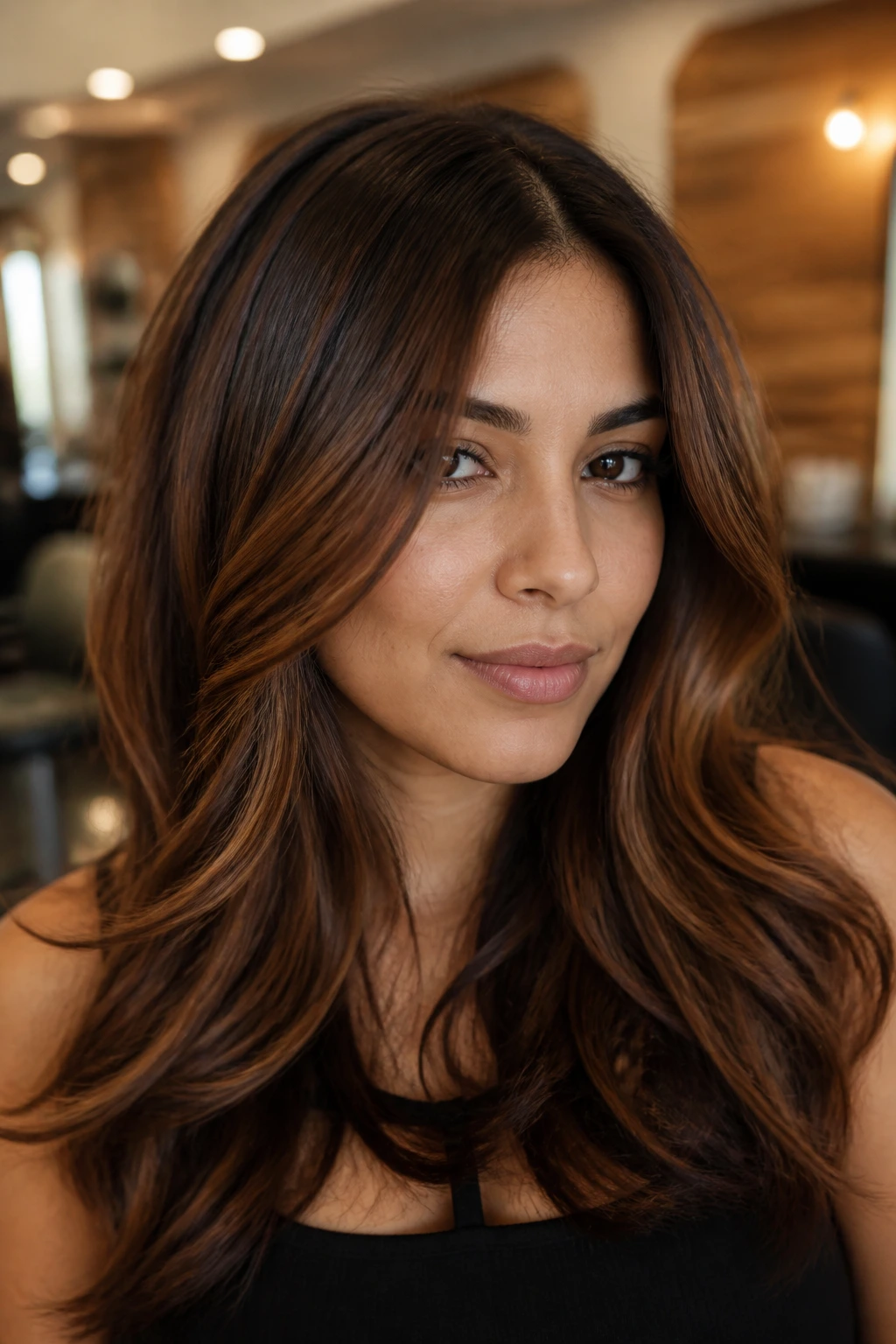
Not every flattering highlight look is about lifting the hair lighter. Sometimes the smartest move is adding lowlights first, then weaving in honey so the caramel has something to sit against. Cinnamon lowlights do that beautifully.
The warmth in cinnamon can deepen the brown base and make the lighter pieces look richer. On olive skin, that deeper contrast keeps the complexion from fading into the hair. There’s a reason deep brunette styles with warm dimension often look more expensive than super-light blonding. The depth is doing real work.
What this look is good at
- Keeping thick hair from looking puffy
- Making fine highlights look fuller
- Adding a warm red-brown note without going full auburn
If your olive skin leans warm, cinnamon can feel lush. If it leans neutral, keep the cinnamon thin and tuck the honey closer to the surface. Too much red can pull the look in a direction you may not want.
I like this option for people who say they want “brown with something in it.” That usually means they don’t want obvious blonde, but they also don’t want a flat block of brown. Cinnamon and honey give you the middle lane.
7. Mushroom Brown with a Warm Honey Veil
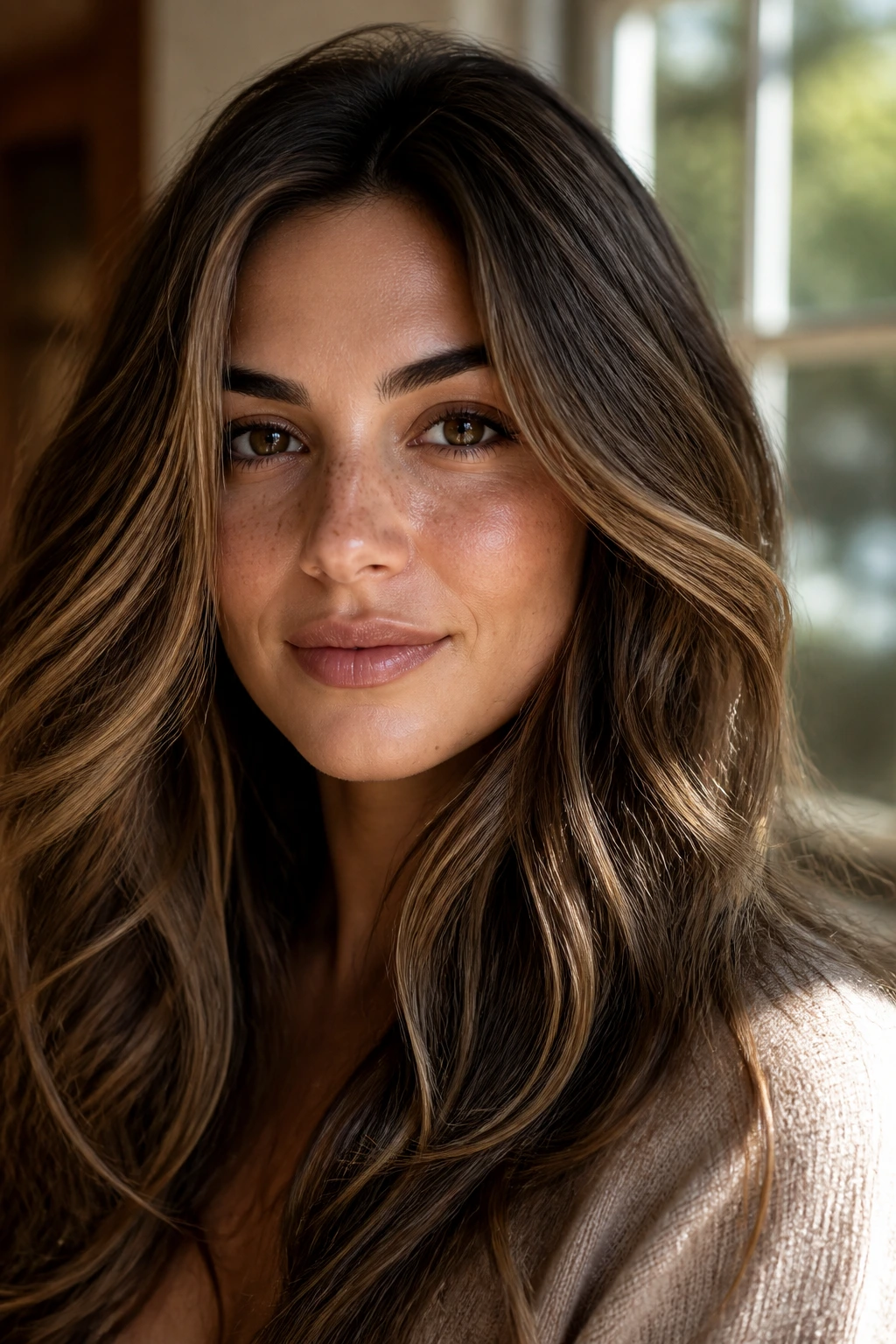
Mushroom brown is often described as cool, but on olive skin I prefer it with a warm honey veil. Pure cool brown can turn a little dusty against warm-leaning olive complexions. Add just enough honey and the whole thing wakes up.
The contrast is the point
Mushroom brown gives you the earthy base; honey gives you the light. Together, they create a soft, smoky brunette that still feels bright around the edges. That’s useful if you like darker hair but don’t want the ends to disappear in low light.
This is a strong choice for neutral olive skin, especially if your natural hair is already a level 5 or 6 brown. The honey doesn’t need to be pale. It just needs to be visible enough to break up the cooler base.
A small but useful note
If the honey is too yellow, the mushroom base gets grumpy. Sounds odd, but you see it in the mirror immediately. The color starts to feel off-balance. A beige gloss keeps the warmth civilized.
This is one of my favorite “quiet luxury” brunette options, though I’ll say that carefully because that phrase gets used for everything. What I mean is simple: the color looks deliberate, dimensional, and expensive because no single tone is fighting for attention.
8. Toffee Balayage on a Lob
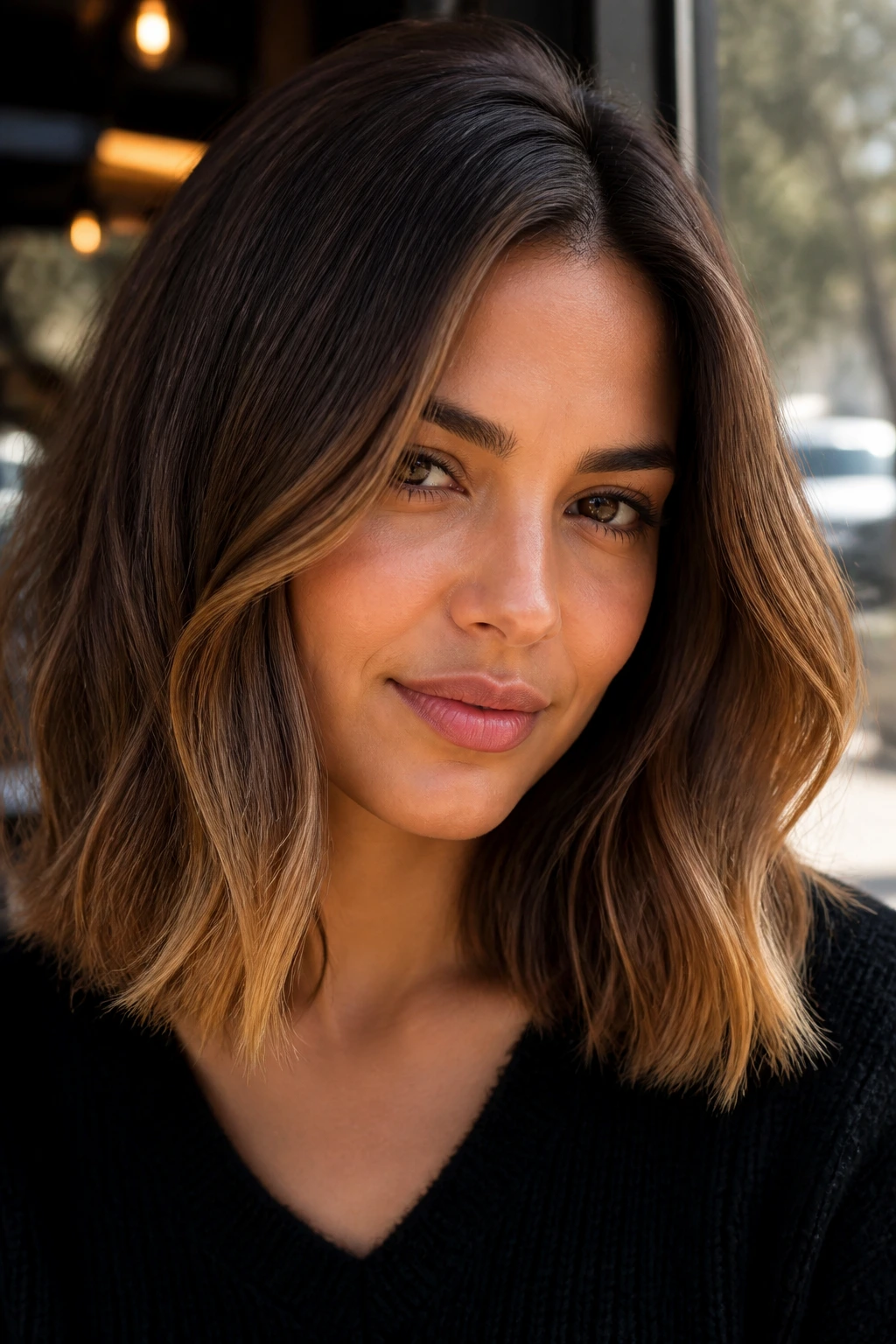
A lob gives toffee balayage room to move. On shorter hair, the color has less length to fade into, so placement needs to be cleaner. That’s why the lob works: it shows the contrast, but not so much that the highlights look chopped up.
The toffee tone is a little warmer than caramel and a little softer than straight honey. On olive skin, that middle ground can be a sweet spot if you want warmth without brass. The face stays framed, the ends stay bright, and the haircut itself looks more expensive because the color follows the shape.
The structure helps
A lob with subtle layers lets the toffee catch on the curved edge of the cut. That makes the whole style look polished even when air-dried. If you wear your hair straight, the color reads clean and graphic. If you wave it, the ribbons break up and look softer.
Good to know: ask your colorist to keep the brightest pieces from chin level down if you want a longer-looking lob. Too much brightness near the root can make the cut look shorter and broader than it is.
9. Curly Caramel Halo
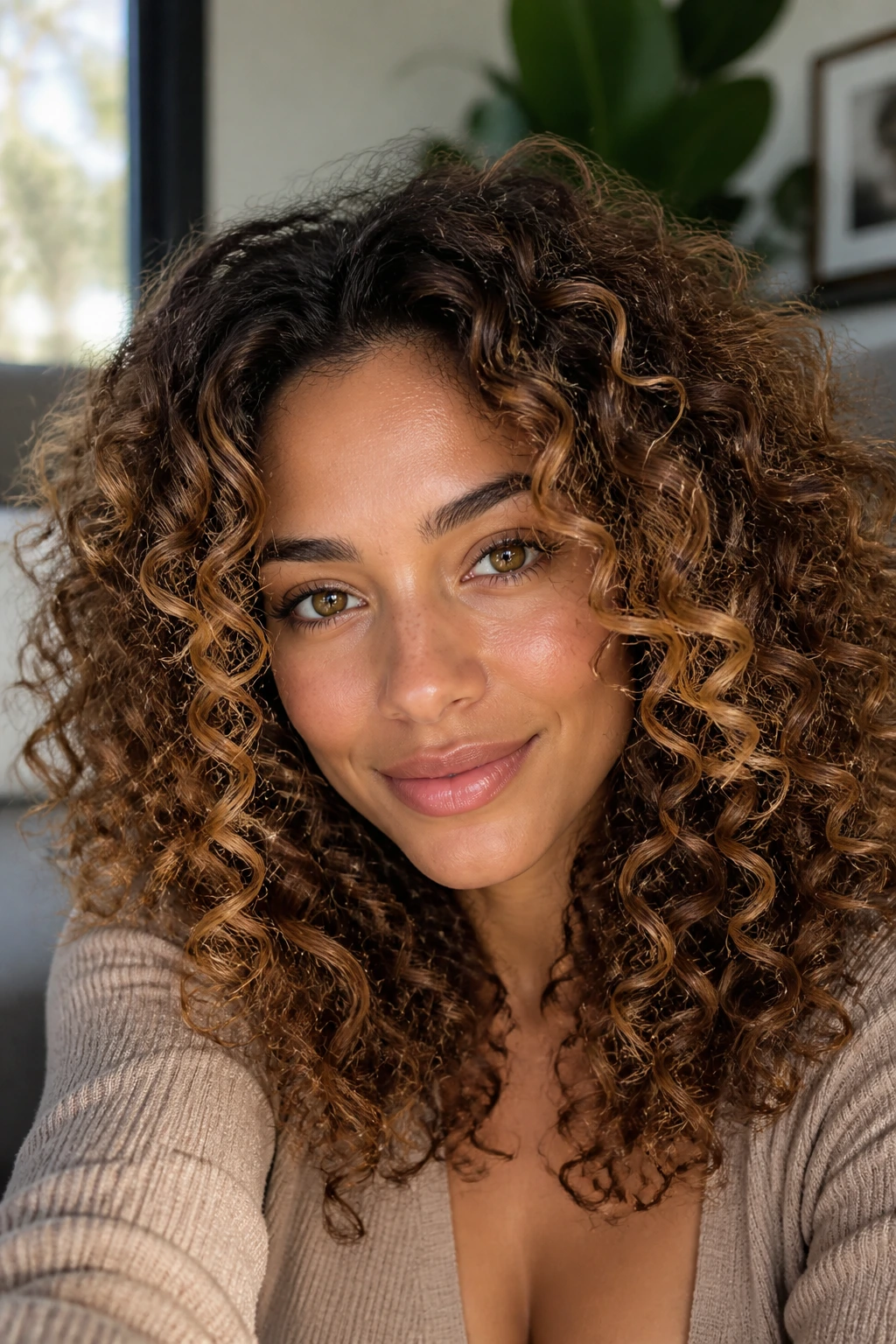
Curly hair changes everything. The same caramel highlight that looks soft on straight hair can turn into a halo of movement on curls, and on olive skin that can be gorgeous. The trick is to place the lighter pieces where the curls actually show their shape.
Why curls love this approach
A halo of caramel and honey around curls keeps the top from going dark and heavy. It also helps define the curl pattern because the highlights fall on the bends and ridges of the hair, not just the surface. Olive skin benefits from that lift near the face, especially if the natural base is rich brown.
What to ask for
- Keep the highlights painted through the outer curl pattern, not all the way to the roots.
- Ask for a tone that sits in the caramel-beige family, with only small touches of honey.
- Avoid over-lightening the ends if your curls are dry; porous curls fade fast.
Curly hair rarely needs a lot of highlight to show the result. A few well-placed ribbons can do more than a full set of foils. That’s the kind of restraint that usually pays off.
10. Espresso Base with Biscotti Streaks
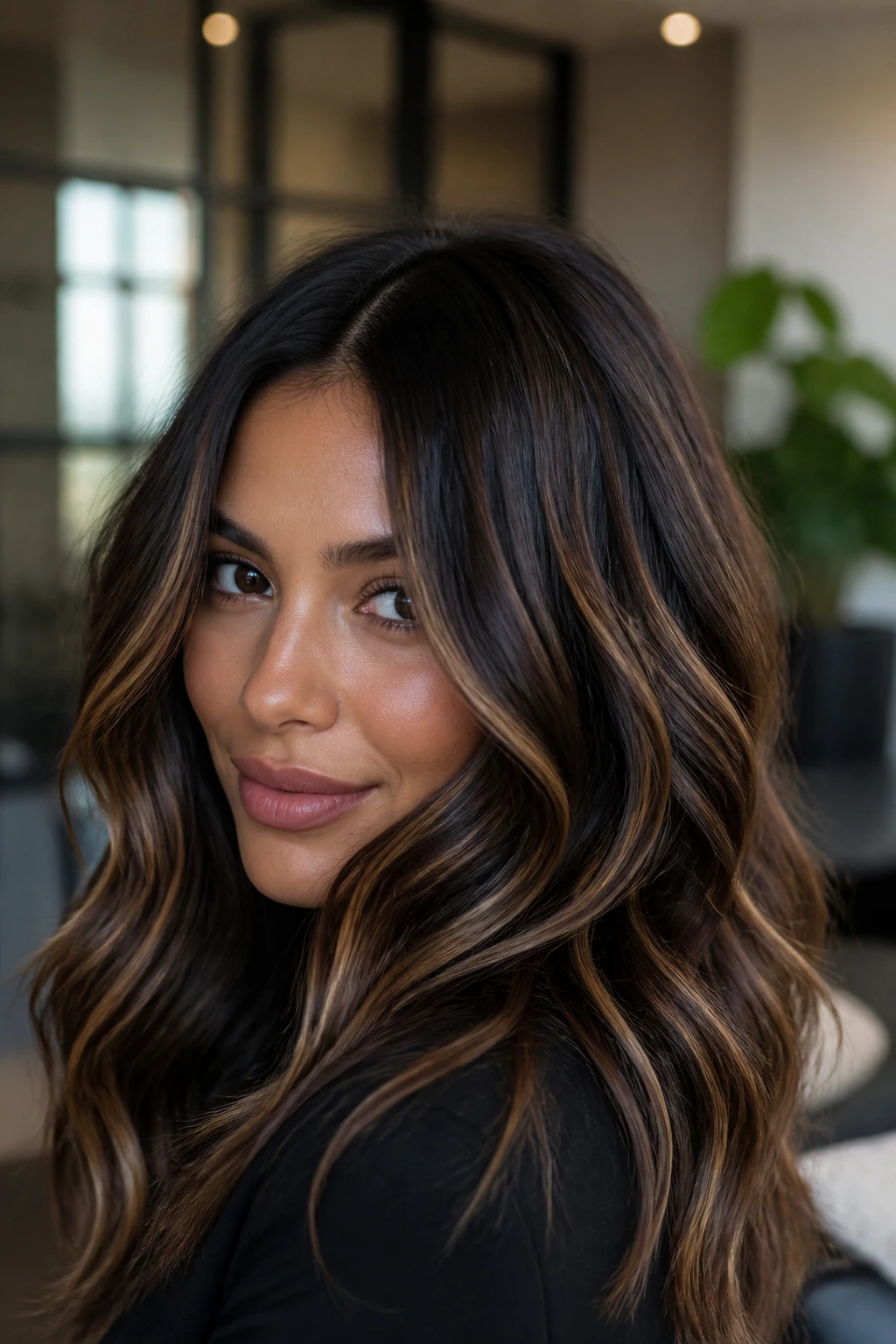
Espresso hair with biscotti streaks is for someone who wants warmth, but on a controlled leash. The base stays dark and rich, and the lighter pieces sit like baked, golden-brown streaks rather than bright blonde stripes.
Why it flatters olive skin
Dark espresso anchors the face. The biscotti streaks bring in the caramel-honey warmth without flooding the whole head with light. Olive skin, especially if it leans medium or deep, usually looks strongest with that kind of contrast. You get brightness without losing the depth that makes brown hair look luxurious in the first place.
This look also behaves well under different lighting. In office light it stays polished. In daylight the streaks show more clearly. At night, the darkness still has enough weight to keep the color grounded.
One detail worth insisting on
Ask for thin, broken streaks rather than one chunky panel on each side. Biscotti is meant to feel scattered and refined. If the streaks are too wide, they start looking stripy, and the whole effect gets louder than it needs to be.
This is a good one if you like brunettes with a hint of bakery warmth. Yes, that’s a weird phrase. Also accurate.
11. Bronde Melt with Root Shadow
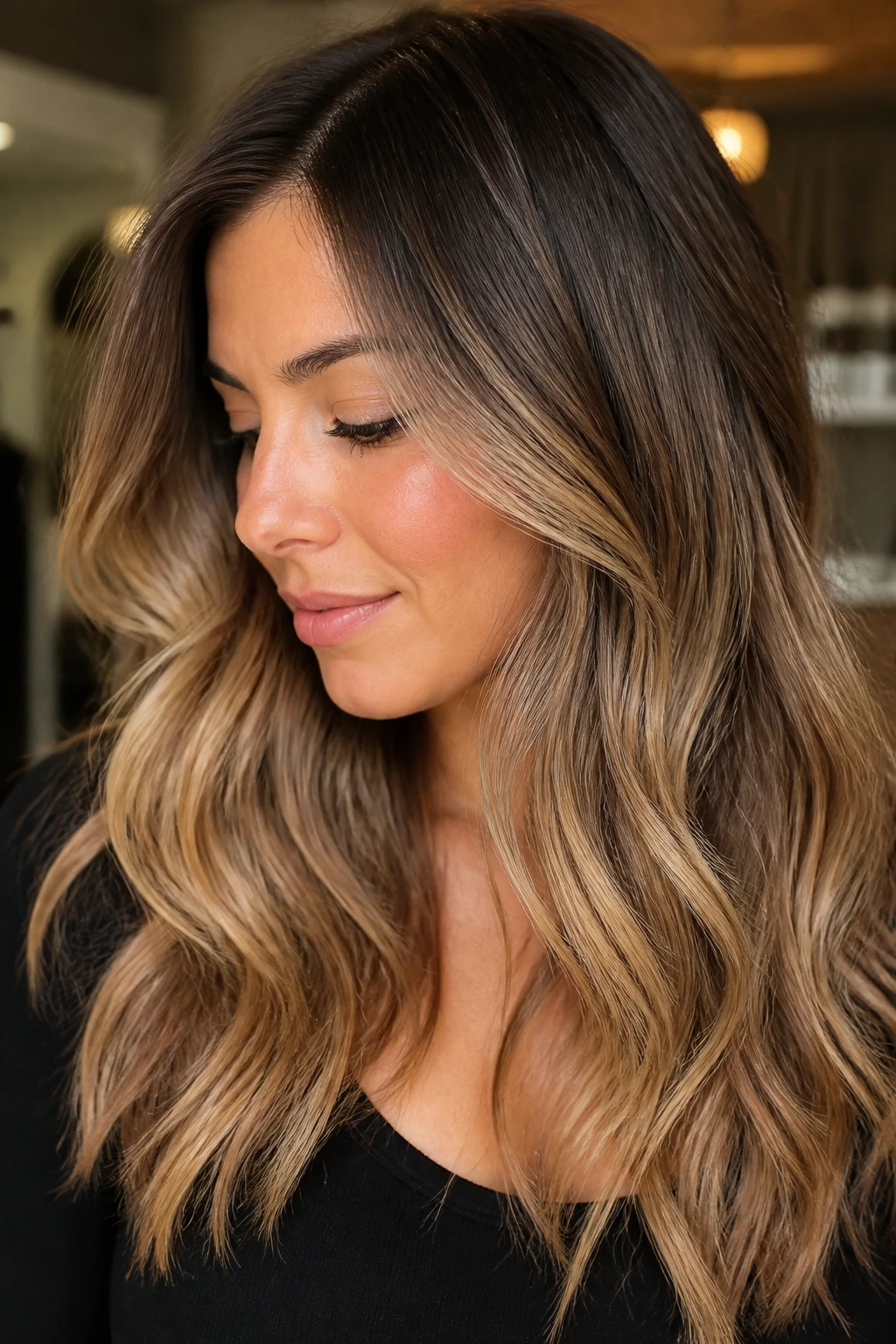
Bronde gets overused as a word, but the concept still works when it’s done right: brown at the root, beige-caramel through the middle, honey near the ends, all blended until the line between them almost disappears.
The reason it works on olive skin
Root shadow matters here. It keeps the scalp area darker so the highlight doesn’t overpower the complexion. Olive skin often looks best when the lightest pieces are not jammed right at the root. Give the color a little breathing room and it looks more natural.
A bronde melt is useful if you want softness rather than a sharp highlight pattern. It also makes the hair appear fuller because the eye can’t pin down one flat tone. The color moves.
Quick details to remember
- Ask for a root that’s 1 to 2 levels deeper than the mid-lengths.
- Keep the brightest honey mostly on the lower third of the hair.
- Finish with a neutral gloss so the caramel doesn’t drift too orange.
This is one of the easiest looks to live with if you’re busy, because the regrowth is baked into the design. That’s not a small thing.
12. Soft Ombré from Cocoa to Honey
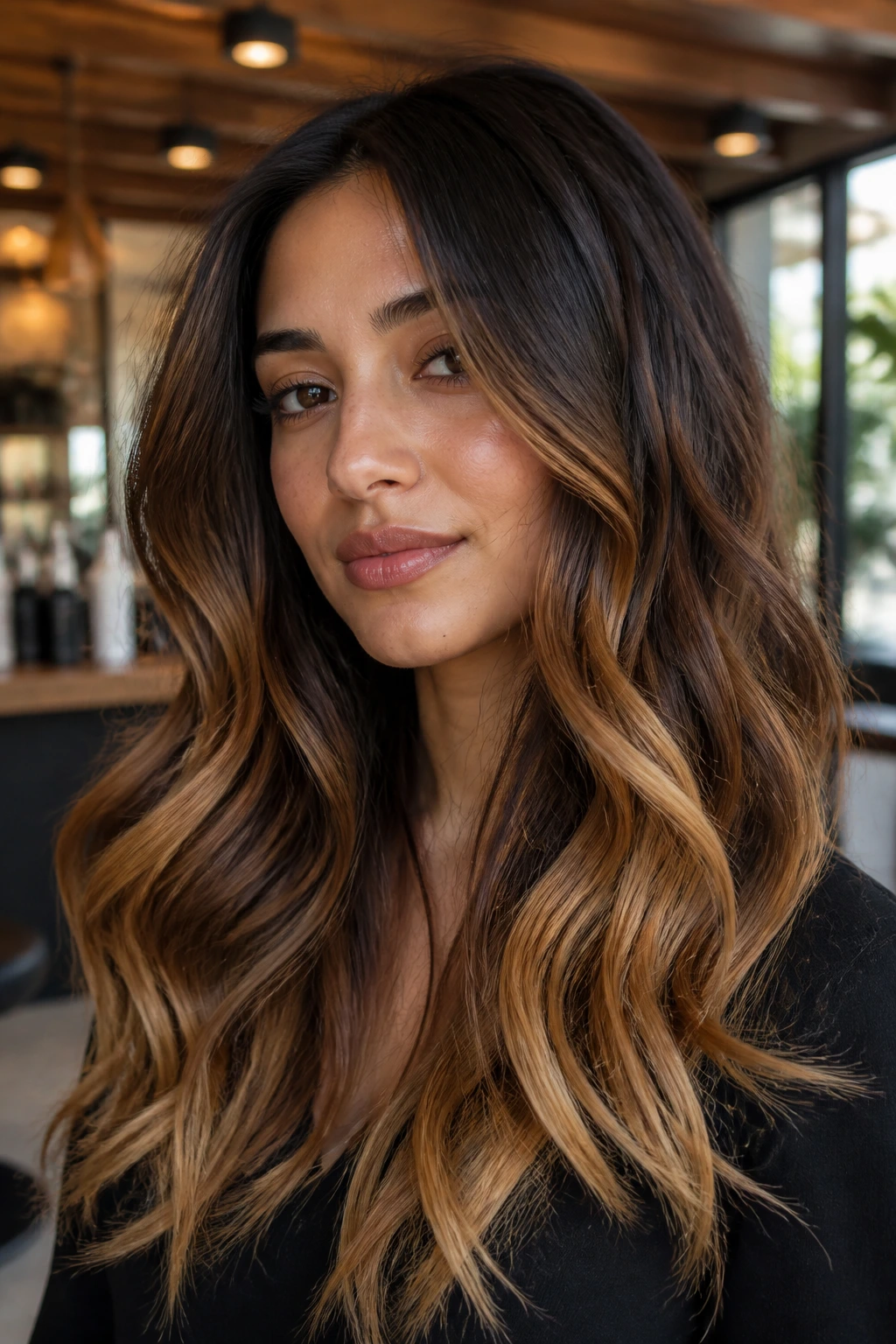
A soft ombré can look dramatic in the salon chair and surprisingly wearable two days later, which is the part people forget. The transition from cocoa to honey needs to be slow enough that the eye can follow it without seeing a hard break.
That slow fade is especially flattering on olive skin because it gives the face depth near the scalp and warmth toward the ends. The skin doesn’t have to compete with bright light around the hairline. The light lives lower, where it can do its job without shouting.
When this makes sense
If you want a low-maintenance color story with a bit of edge, this is the one. The cocoa root keeps the style substantial. The honey ends catch the light. And because the midpoint is softened with caramel, the shift feels polished instead of abrupt.
The only real danger is lifting the ends too far. Honey should stay honey. If it reaches pale gold or yellow, the hair starts looking dated fast. Keep the tone soft and the blend smooth.
13. Chunky 90s Caramel Stripes
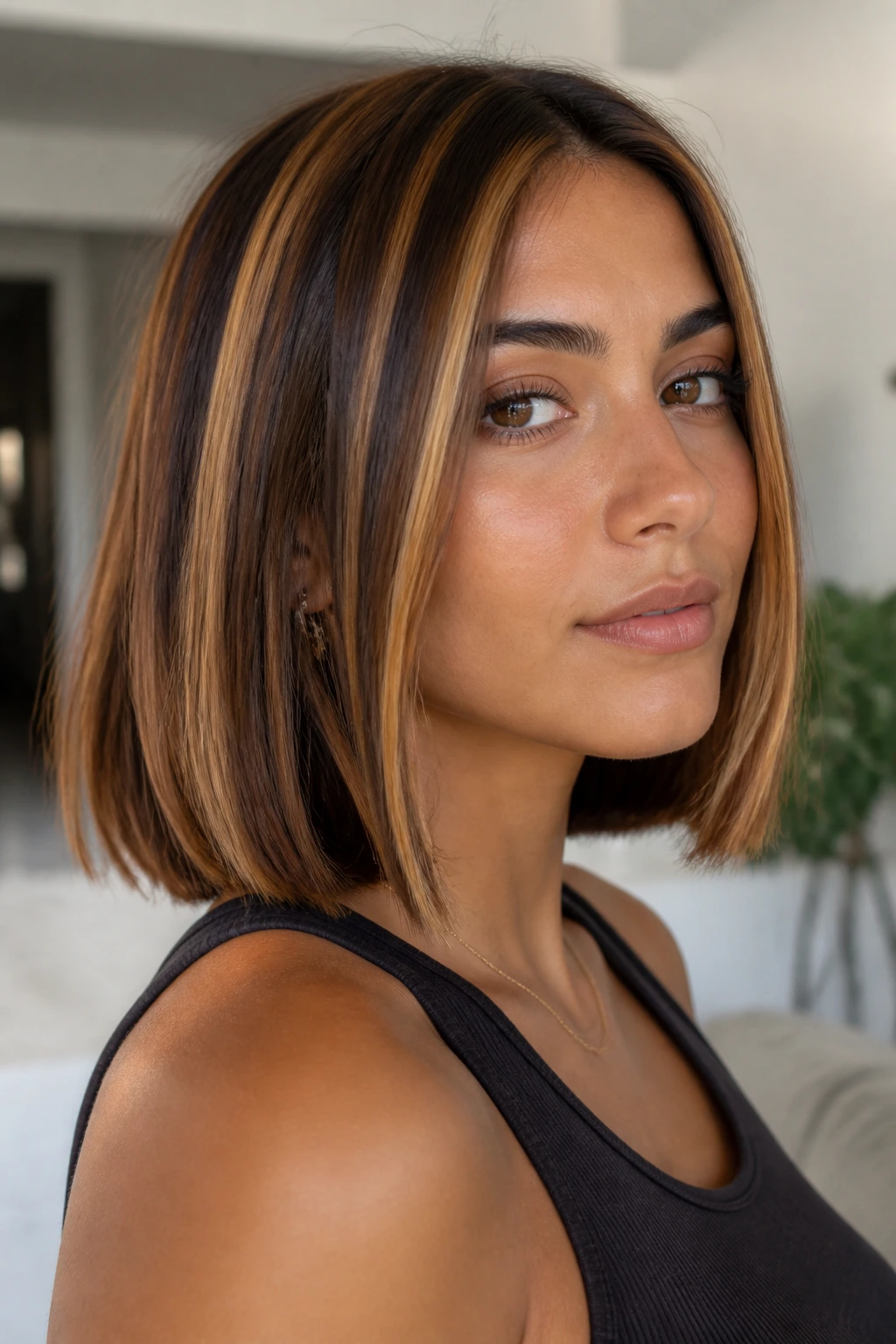
Not everyone wants whisper-soft dimension. Some people want the stripe, the outline, the visible highlight. On olive skin, chunky caramel stripes can work if the tone stays warm enough and the base remains rich.
A contrarian option that still makes sense
The 90s-inspired stripe has more attitude than the other looks here. That contrast can be fantastic on medium olive skin, especially if you want the highlights to read from across the room. It looks strongest on blunt cuts, sleek blowouts, and face-framing layers that can hold the structure.
The key is color choice. Caramel should be warm and brown-based, not pale yellow. You want the stripe to feel like a deliberate accent, not a failed attempt at blonde.
Best use case
- If your haircut is sharp, not shaggy
- If you like visible contrast
- If you don’t mind touching up more often
I’d avoid this version if your skin leans very cool olive, because thick warm pieces can overpower the undertone. For warm or neutral olive skin, though, it can be a fun, confident choice.
14. Peekaboo Honey Panels
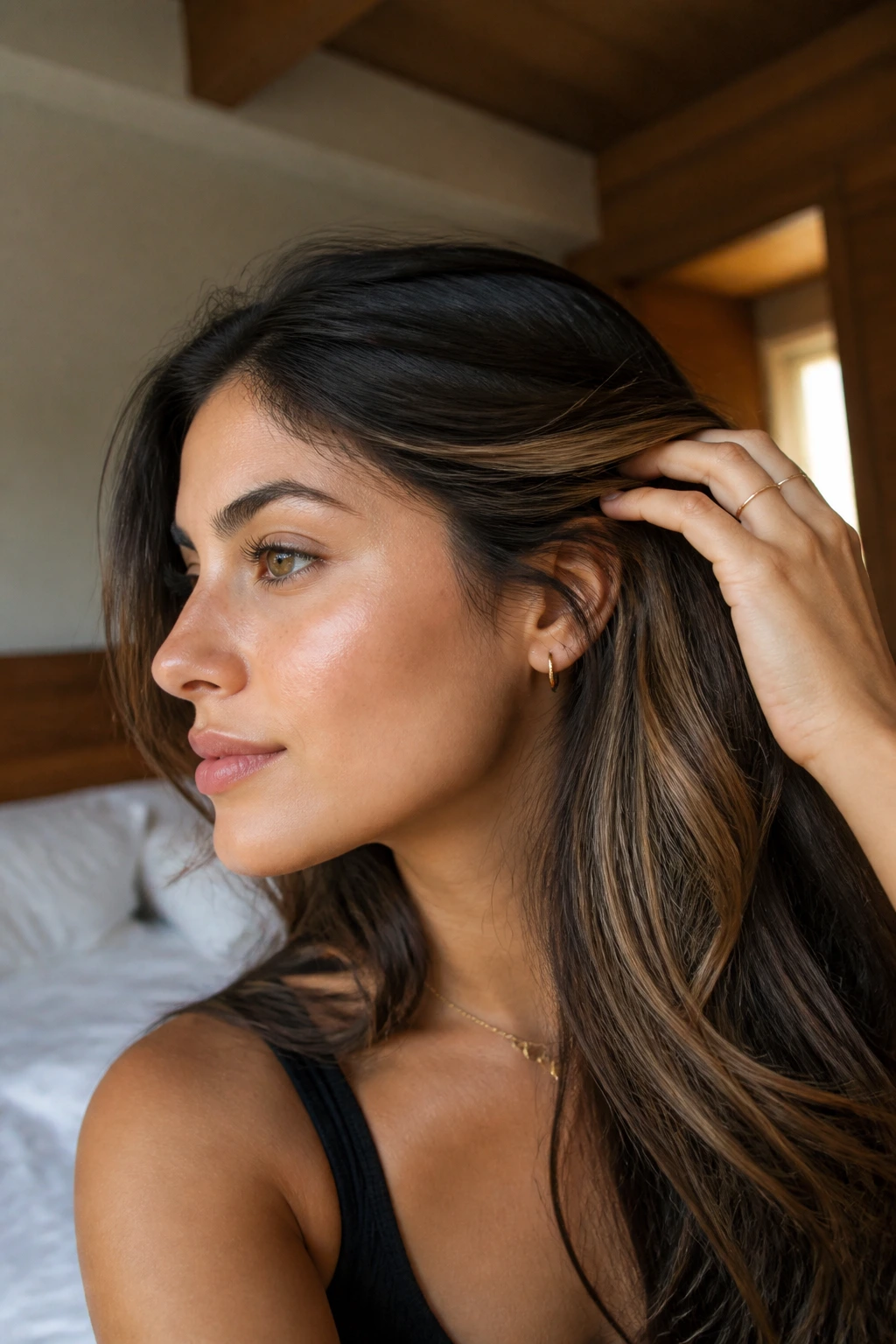
Peekaboo color hides under the top layers and reveals itself when the hair moves. That makes it a clever way to play with honey on olive skin without committing to a fully bright surface.
The benefit is simple. The top layer keeps the look grounded, while the hidden honey panels flash through when you tuck the hair behind your ears or wear it in a half-up style. It’s a little more playful than standard highlights and a little less obvious than full balayage.
Where this shines
This placement works especially well on thick hair. The underlayers hold the color, and the top layer preserves depth. On olive skin, that depth is useful because the face can stay framed by brown while the hidden honey adds lift from below.
A good colorist will place the panels where they bend around the head — around the occipital area, under the crown, and maybe a few pieces near the nape. It’s more strategic than flashy.
If you like the idea of color that changes when you move, this is your lane. Static hair can feel a bit too polite sometimes.
15. Dimensional Walnut Brown with Golden Threading
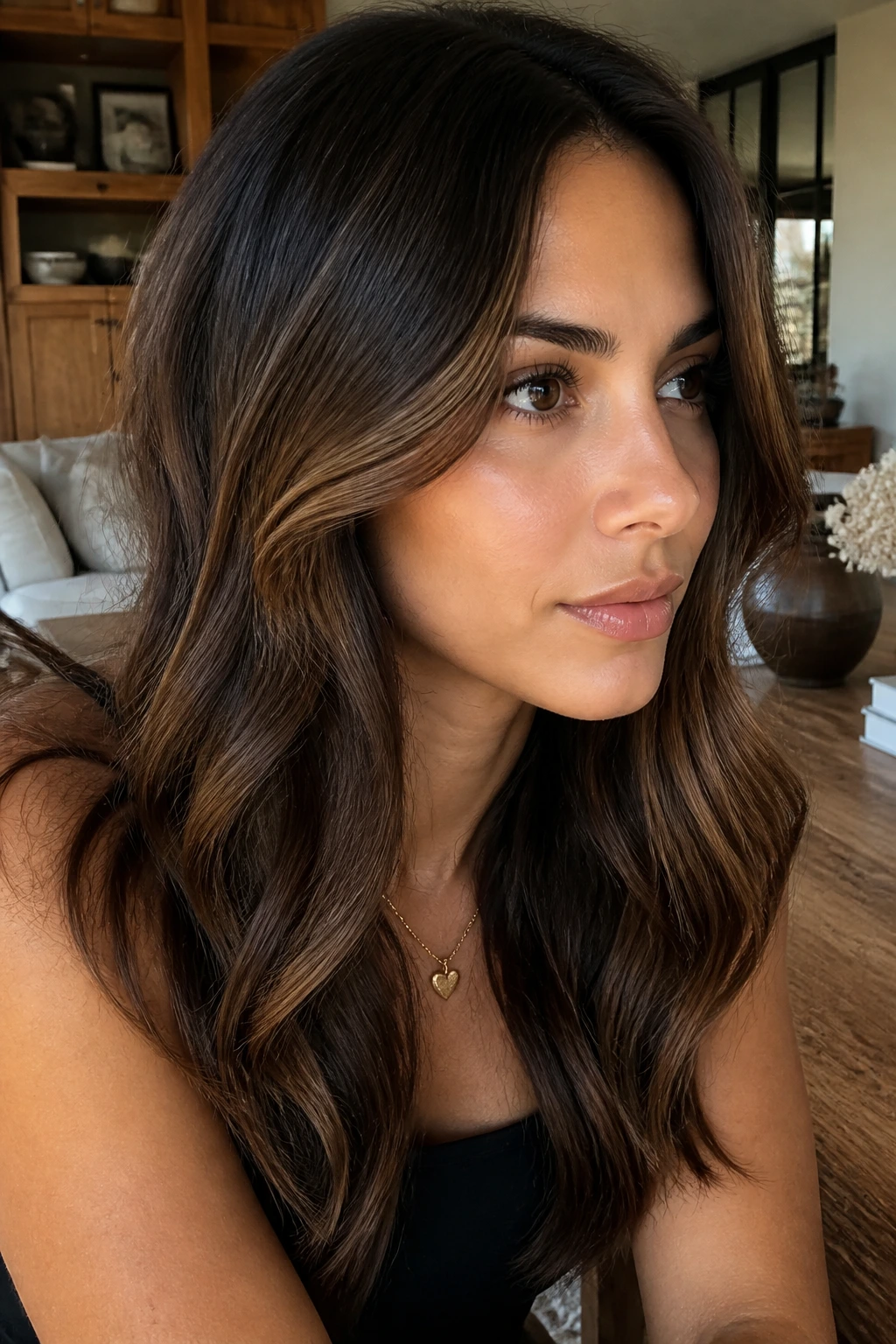
Walnut brown gives you a slightly warmer base than espresso, which makes it a lovely starting point for olive skin. Add fine golden threading and the result is softer than caramel stripes but richer than babylights.
Why the threading matters
Threading places ultra-fine highlights through the brown like fine lines in wood grain. That means the color shows up as texture first and brightness second. On olive skin, that’s a strong move because the face stays balanced while the hair picks up subtle warmth.
Best for these hair types
- Medium-density hair
- Haircuts with movement, especially long layers
- Clients who want dimension without a dramatic root-to-end shift
Golden threading is also useful if your hair tends to look flat in indoor light. The fine pieces keep the hair from collapsing into one shade. It’s a quiet fix, but a real one.
I like this look because it refuses to be precious. It’s polished, yes, but not in the overdone way where every strand needs to be visible from space. The grainy, layered effect is the point.
16. Brunette Shag with Airy Highlights
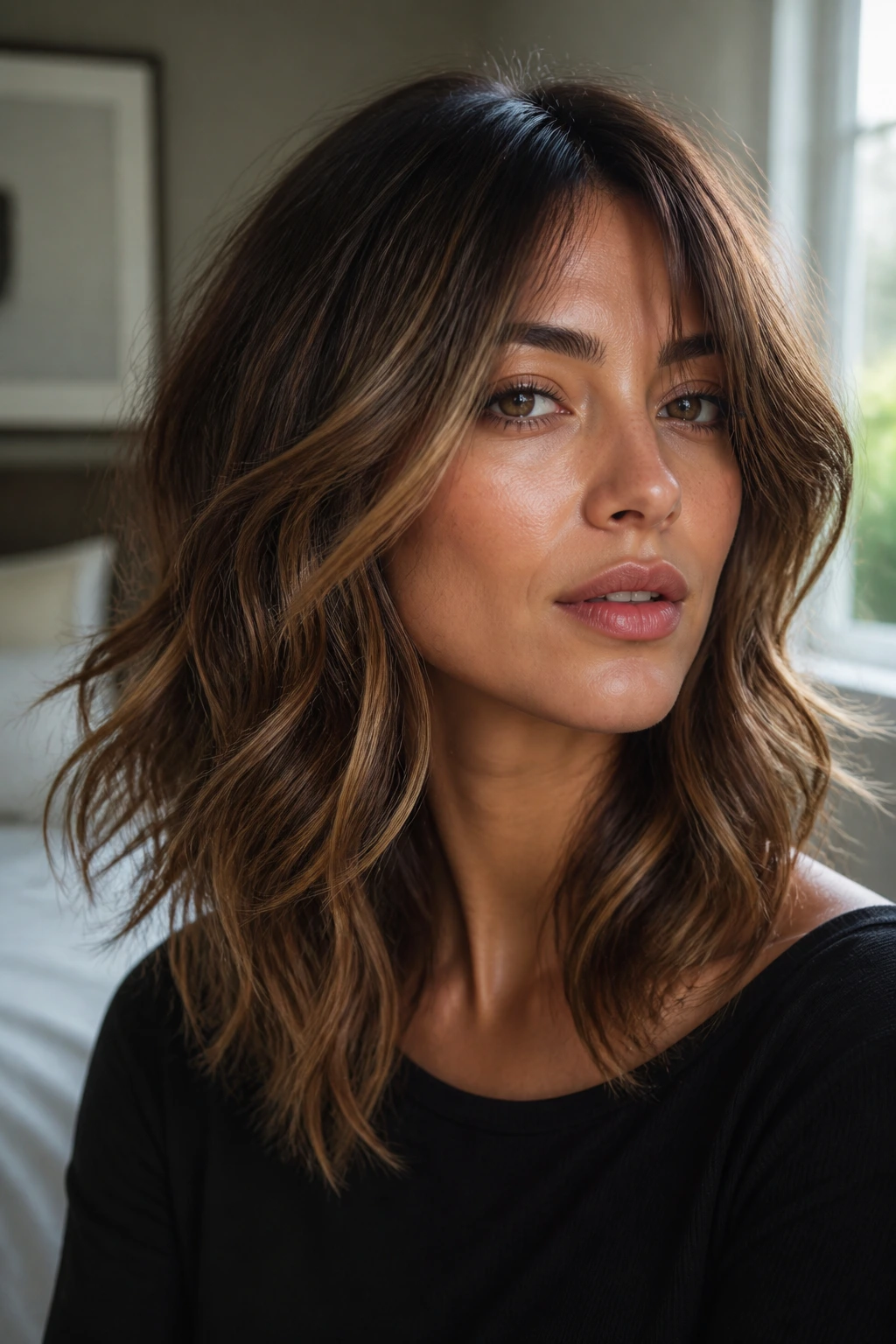
A shag cut needs color that can move with it. Brown-caramel-honey highlights do that well because the layered cut breaks up the light and gives the color places to land around the face and crown.
The messy, feathered ends keep the highlights from feeling too clean. That’s good. A shag should have edges. On olive skin, those airy pieces around the face can brighten the complexion without turning the whole head pale.
What to watch
If the highlights are too uniform, the shag loses its roughness and starts looking styled to death. Keep some pieces lighter, some darker, and let the layers do the work. The goal is texture, not perfection.
A shag with honey through the outer layers also grows out well because the cut itself hides some of the regrowth. That’s a nice little bonus. Not every good-looking color needs a brutal maintenance schedule.
17. Smoky Brown with Beige-Caramel Ribbons
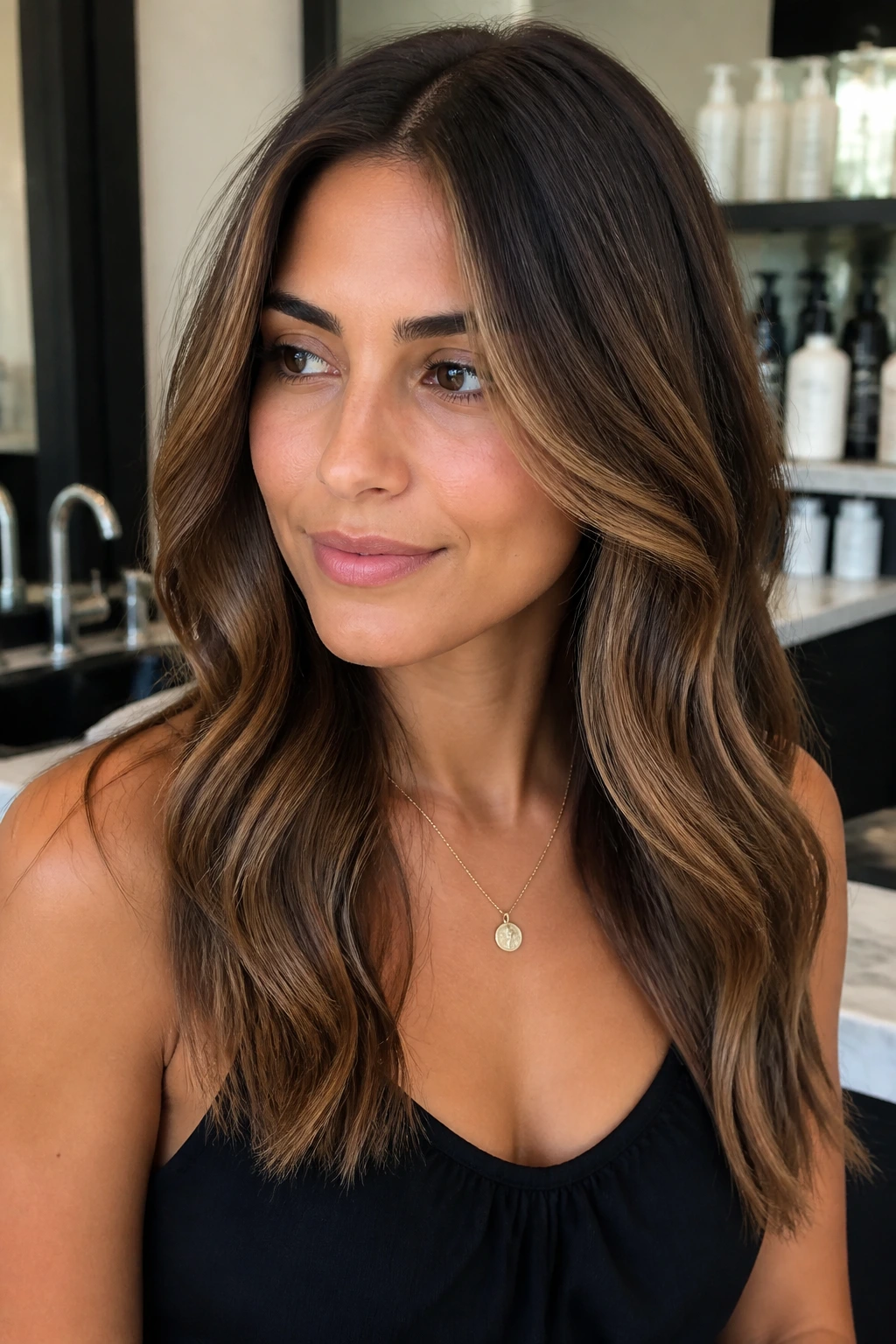
Smoky brown is one of the best bases for olive skin because it sits in the middle — not too warm, not too cool. Add beige-caramel ribbons and the color gets enough light to keep it interesting without tilting orange.
Comparison matters here
Unlike a straight caramel highlight, beige-caramel softens the warmth. That’s useful if your skin reads neutral-olive or a touch cool. The ribbons still brighten the hair, but they don’t shout. They read as sheen, not stripe.
This is a strong option for people who want their highlights to look expensive in low light and even better in sun. The smoky base preserves depth. The beige-caramel keeps the hair from going murky.
It also works well on straight hair because the contrast is tidy and the ribbons can be placed with precision. On wavy hair, the same ribbons blur into something softer. Two very different moods from the same color family. That’s why this shade set is so practical.
18. Glossy Chocolate Hair with Sunlit Ends
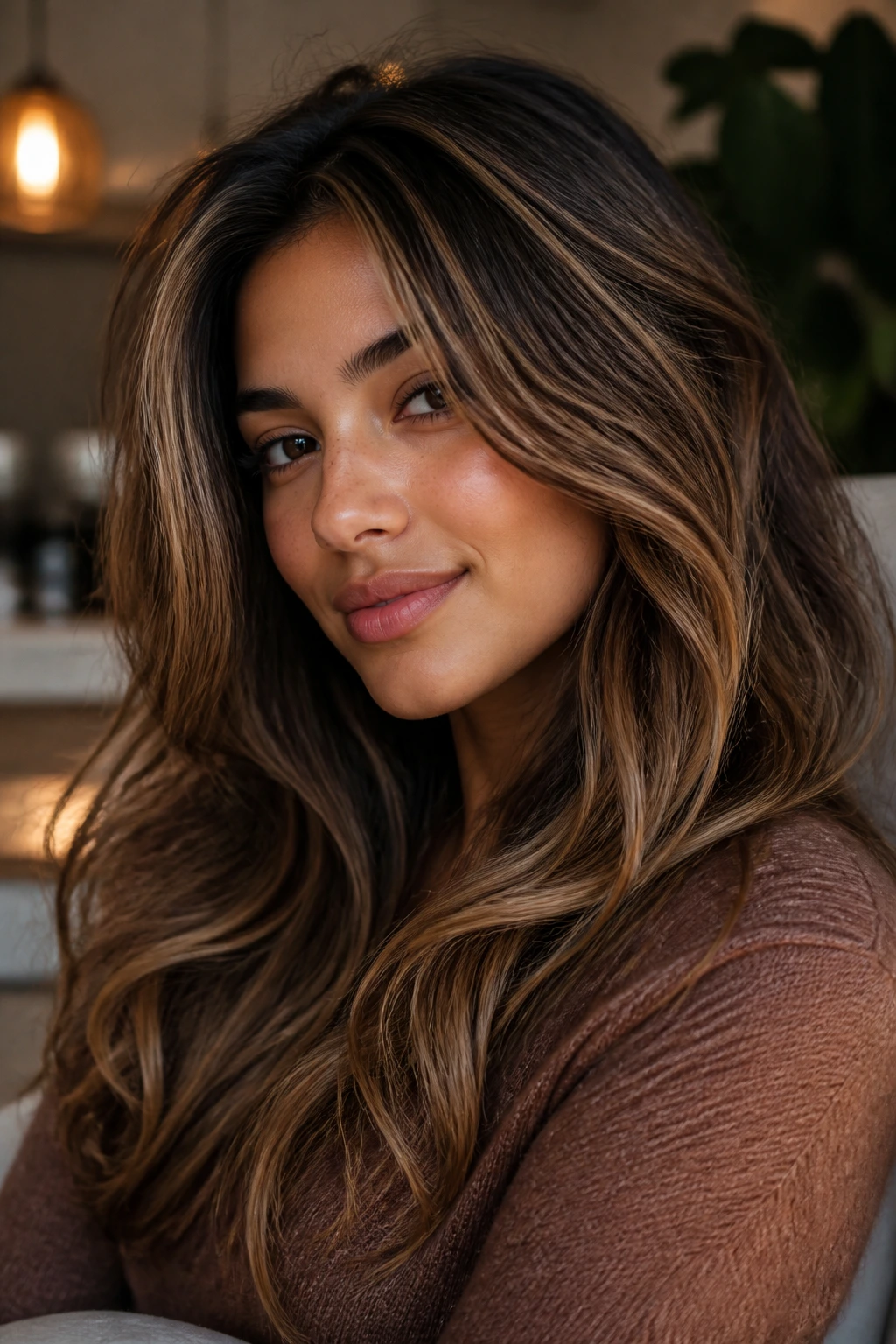
Chocolate brown with sunlit ends is a classic for a reason. The base gives the hair depth, and the ends catch enough honey and caramel to make the whole thing feel alive.
The important part is gloss. Without shine, the ends can look dry, especially if they’ve been lightened more than once. With shine, the color becomes richer and the ends look intentional, not fried.
The sensory version
In daylight, the ends should look like they were touched by sun for about a month, not stripped in a single appointment. That’s the feel you want. Soft. Warm. A little reflective, never crispy.
If your olive skin leans warm, you can allow a bit more gold in the ends. If it leans neutral, keep the honey beige. Either way, the chocolate base should remain noticeable. The contrast is doing half the flattering.
This is one of those looks that ages well because it doesn’t depend on a perfect blowout. The color itself carries the style.
19. Shoulder-Length Layers with Honey Face Brightening
Shoulder-length hair can lose color detail if the placement is lazy. Honey face brightening fixes that fast. It gives the cut a little lift right where the eyes look first, and that matters more on olive skin than people think.
Why this placement feels balanced
When the brightest pieces land around the face and the shoulder line, the hair appears lighter without the roots looking too exposed. That keeps the color from overpowering the skin. You get brightness where it helps and depth where it’s needed.
Quick facts
- Keep the front pieces one shade lighter than the rest if you want softness.
- Let the color sit around the collarbone and cheekbone area.
- Use a medium-round brush blowout to show the shape of the layers.
This look works especially well if you tuck one side behind the ear. The asymmetry shows the bright pieces and lets the darker side anchor the face. Simple move. Big payoff.
20. Soft Copper-Caramel Blend for Warm Olive Skin
If your olive skin leans warm, a little copper in the caramel can be lovely. The trick is restraint. You want warmth, not red hair pretending to be brunette.
Why this can work
Warm olive skin often handles amber and copper tones better than cooler olive skin. A soft copper-caramel blend can make the complexion glow instead of looking muddy. The catch is saturation. Too much copper and the hair starts stealing attention from the face.
This version is strongest when the copper sits inside the caramel, not on top of it. Think brown sugar with a faint reddish warmth. Not fire. Not orange. Just enough warmth to shift the tone.
If you’re unsure, keep the copper near the mid-lengths and use more honey at the ends. That gives you a warmer outline without making the roots too hot. Hair color is full of these tiny compromises, and this is one of the useful ones.
21. Neutral Beige Brunette with Caramel Accents
Neutral beige brunette is one of the safest bets for olive skin that sits in the middle of the undertone range. The beige keeps the color from going brassy, while caramel accents add enough warmth to make the hair look lived in.
A neutral finish matters more than people realize. Olive skin can be extremely sensitive to tone shifts, and beige is the shade that usually behaves. It doesn’t go too gold. It doesn’t go too ash. It just sits there, politely doing its job.
Where it shines
This is an ideal pick if you’re nervous about warmth but still want dimension. The caramel accents can be tiny or broad, depending on how much contrast you like. Keep them soft around the face, then slightly richer through the ends.
The result feels calm. Not boring. Calm. There’s a difference, and it’s a good one.
22. Braided-Look Highlight Placement
Braids reveal color in a different way than loose waves do. Sections twist over each other and show the underside, which means caramel and honey can pop in tiny flashes instead of broad swaths.
Why this matters for olive skin
Braided placement is helpful if you want your highlights to look dimensional in updos, ponytails, and half-up styles. The color shows from multiple angles, which gives the brown base more movement. On olive skin, that movement keeps the look lively even when the hair is tied back.
The best version uses highlights concentrated along the side panels and outer lengths, then a few lighter pieces woven through the crown. Too many light strands can make the braid look busy. A few well-placed ones make it look textured.
This is a smart option for people who wear their hair up a lot. The color still gets to be seen. That’s the whole point.
23. Deep Mocha with Almond Honey Melt
Deep mocha is the kind of base that makes honey look richer by contrast. Add almond-toned honey — not yellow, not orange, just soft and toasted — and you get a melt that suits olive skin without looking too sugary.
Why almond matters
Almond honey sits between beige and gold. That’s useful if your olive skin leans neutral or slightly cool, because the tone doesn’t overpower the complexion. It gives you lightness, but the lightness has discipline.
The effect in the mirror
The hair should look deeper at the root, creamy through the middle, and softly reflective at the ends. If the highlights are too bright, the whole style loses that mocha depth. If they’re too dim, the almond note disappears.
This is a polished, wearable option for people who want the warmth of honey with a more muted finish. It’s one of the least fussy versions in the whole set.
24. Short Bob with Precision Caramel Pieces
A short bob doesn’t need a lot of color to make an impact. In fact, too much color can make it look busy. Precision caramel pieces solve that by placing light exactly where the cut can show it off.
The bob’s clean line gives the caramel a chance to look graphic. On olive skin, that controlled brightness can sharpen the face and make the jawline look more defined. The pieces should sit close to the front and the outer curve of the hair, not scattered randomly all over the head.
Best use case
- Straight or slightly wavy bobs
- Clients who like neat, tailored color
- Anyone who wants visible dimension without long-growth maintenance
If the bob is chin length, keep the brightest pieces below the cheekbone so the color doesn’t crowd the face. That one adjustment can keep the cut from feeling top-heavy.
25. Rich Cocoa with Buttery Honey Finish
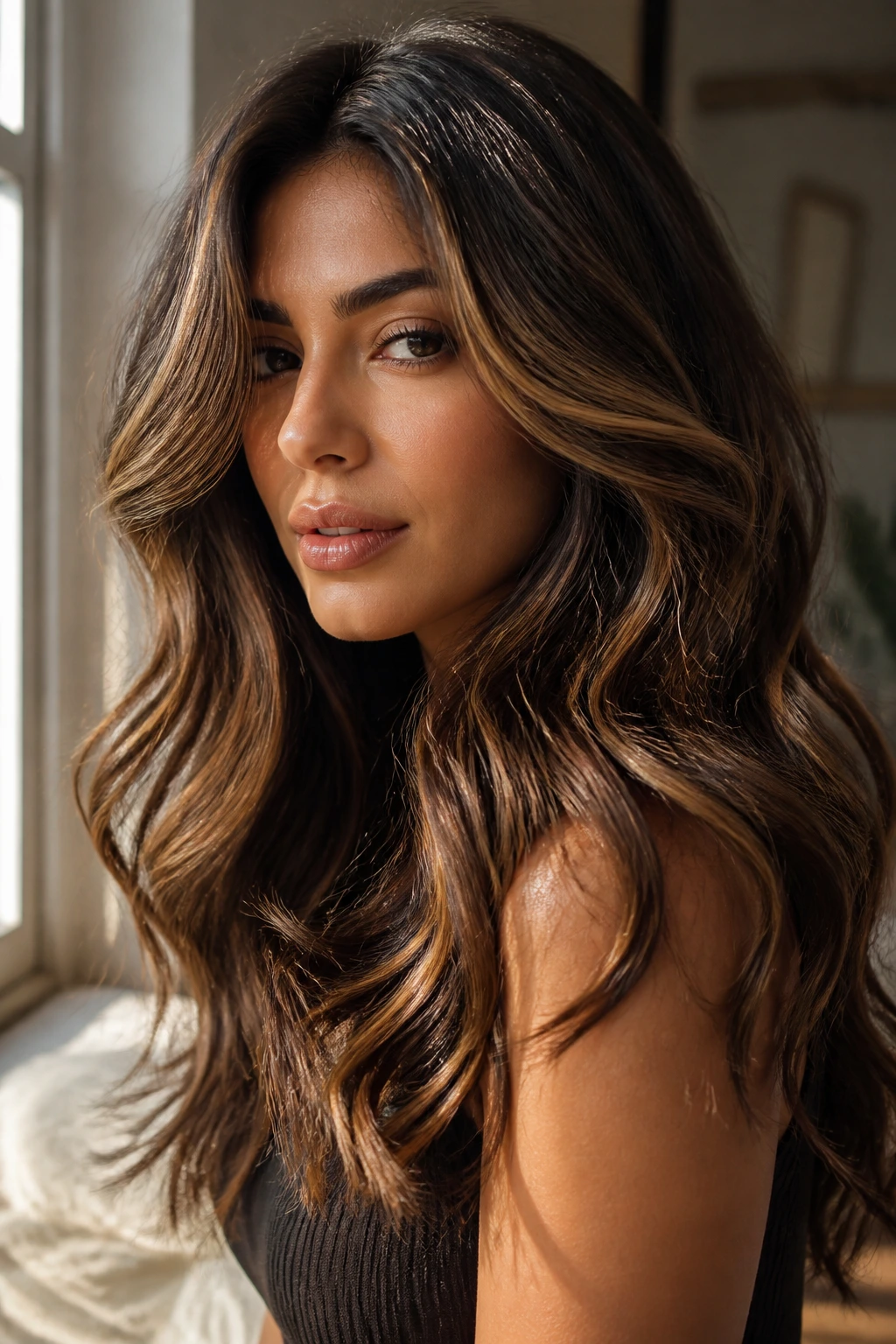
Rich cocoa with a buttery honey finish is the warmest, softest close to this whole palette. The cocoa keeps the base full and grounded. The buttery honey adds a faint creamy brightness that makes the hair feel plush instead of flat.
This is the version I’d choose when someone says they want color that looks touchable. The honey isn’t stark. It’s velvety. On olive skin, that kind of gentle warmth can be extremely flattering because it enhances the complexion without pulling yellow.
The finish should feel expensive in the old-school sense: healthy, thick, glossy, and a little dimensional in motion. Not flashy. Not overworked. Just rich.
How Brown and Honey Change on Olive Skin in Different Lighting
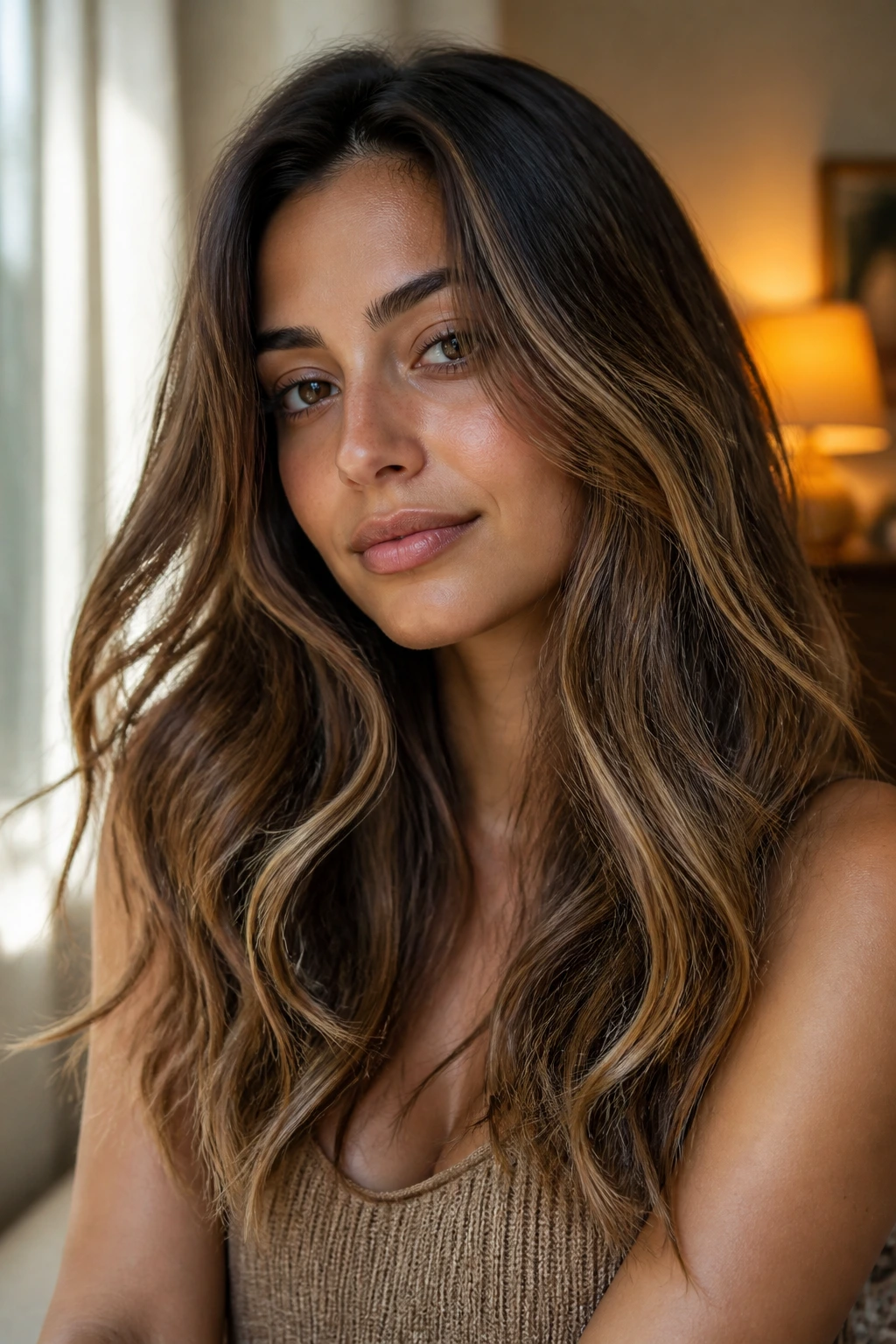
Olive skin is the kind of complexion that can look one way in the bathroom mirror and another in daylight, under warm bulbs, or in the blue light of late afternoon. That’s why hair color for this undertone is never just about the swatch. It’s about behavior.
Honey that looks soft and beige in a salon chair can turn bright gold outside if the toner is too warm. Caramel that looks perfect in indirect light can go orange under yellow indoor bulbs if the base is too light. And brown that looks deep and elegant in shadow can disappear into the skin if the highlights are too sparse.
The easiest way to avoid that mess is to think in layers. Keep the base rich enough to anchor the face. Let the lighter pieces show up where the hair moves. And choose beige-honey over yellow-honey if your olive skin already reads warm in daylight. That one decision often saves the whole look.
How to Ask Your Colorist for the Right Tone
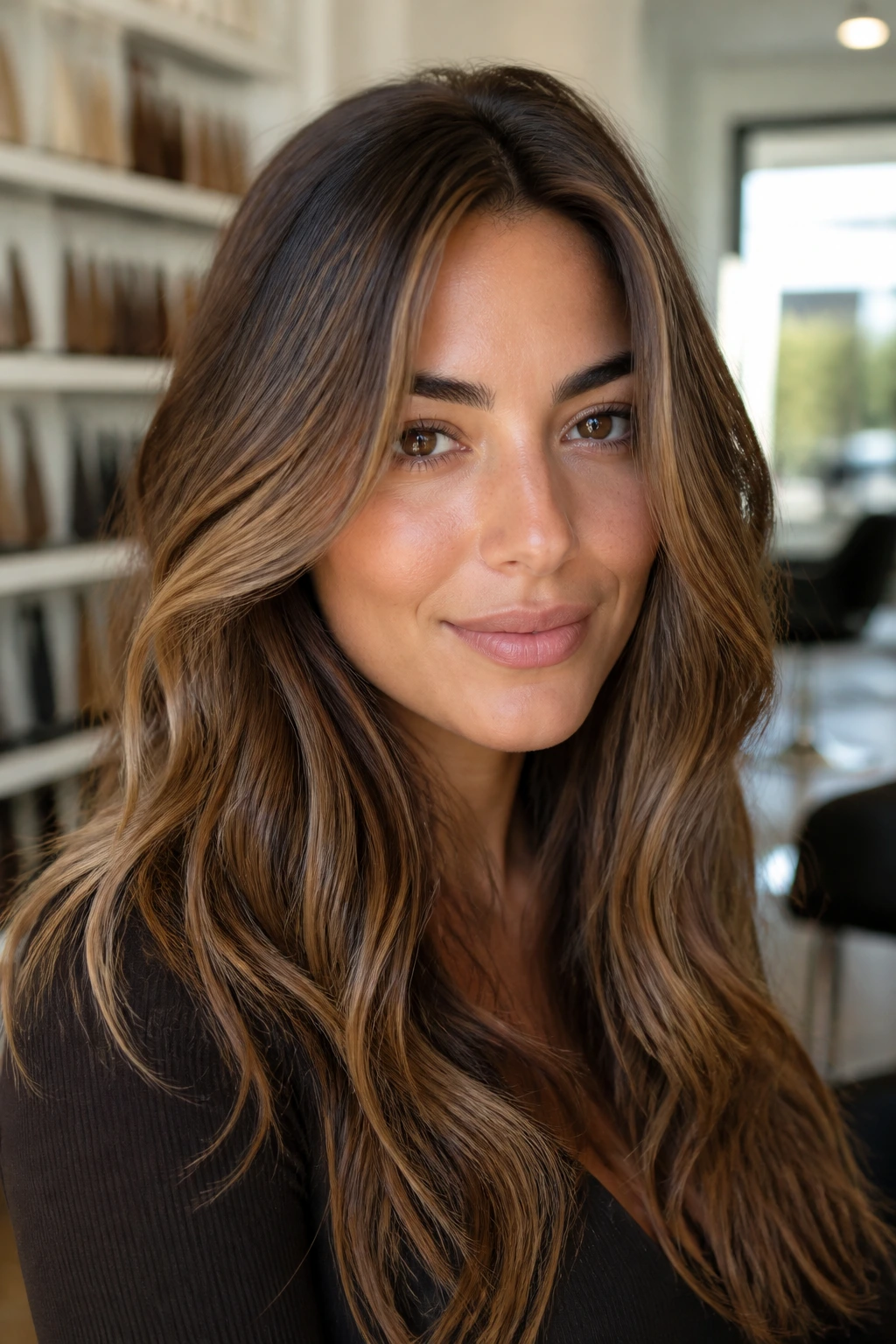
A lot of bad highlight results come from vague language. “I want caramel” can mean six different things to six different people. Be specific.
Bring photos with the same base depth as your own hair, not just pretty images of lighter brunettes on someone else’s head. Then point out what you like: the root shadow, the brightness around the face, the ends, the level of contrast. A good colorist can work from that. A vague “make it warm” is how people end up with orange.
Say it like this
- “I want brown-caramel-honey dimension, not blonde strips.”
- “Keep the root one or two levels deeper than the mids.”
- “Use beige-gold if you need warmth, not copper unless it’s controlled.”
- “I want the front brighter, but not chunky.”
If your olive skin leans cool or neutral, say that plainly. If it leans warm, say that too. Colorists use undertone language all the time, but they can’t read your face better than you can describe it. Bring the details.
Essential Tools and Products for the Look
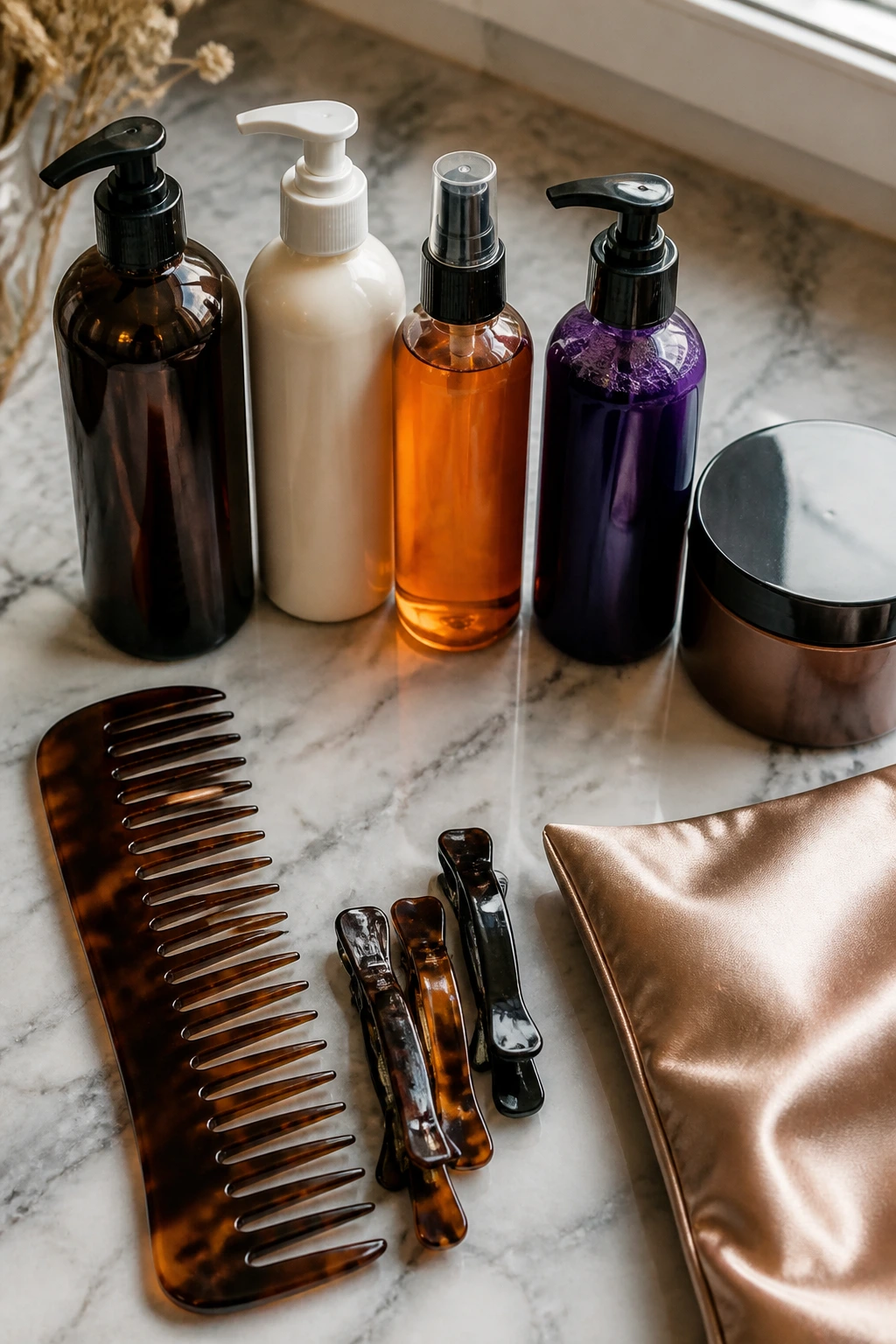
You do not need a drawer full of products, but you do need the right ones. Brown and honey shades look best when they stay shiny and the tone stays clean.
- Sulfate-free shampoo: Keeps the brown base from fading too fast and helps the lighter pieces stay softer.
- Color-safe conditioner: Adds slip and keeps caramel ribbons from looking dry at the ends.
- Heat protectant spray: Non-negotiable if you blow-dry or curl, because honey pieces show damage faster than the darker base.
- Blue or purple shampoo: Use sparingly and only if brass starts creeping in; too much can dull warm caramel.
- Glossing treatment or shine serum: Helps caramel and honey reflect light instead of looking dusty.
- Wide-tooth comb: Better for detangling highlighted hair than a fine brush that yanks at lightened sections.
- Sectioning clips: Useful for at-home toning, drying, or checking where the brightest pieces actually sit.
- Silk or satin pillowcase: Cuts down on roughness around the front pieces and ends, where the color usually fades first.
If you’re doing a salon appointment, a balayage board or foils may be part of the process. At home, the most important thing is restraint. Warm brunette color usually looks better after a good gloss than after another round of lightening.
How to Style the Color So the Placement Shows
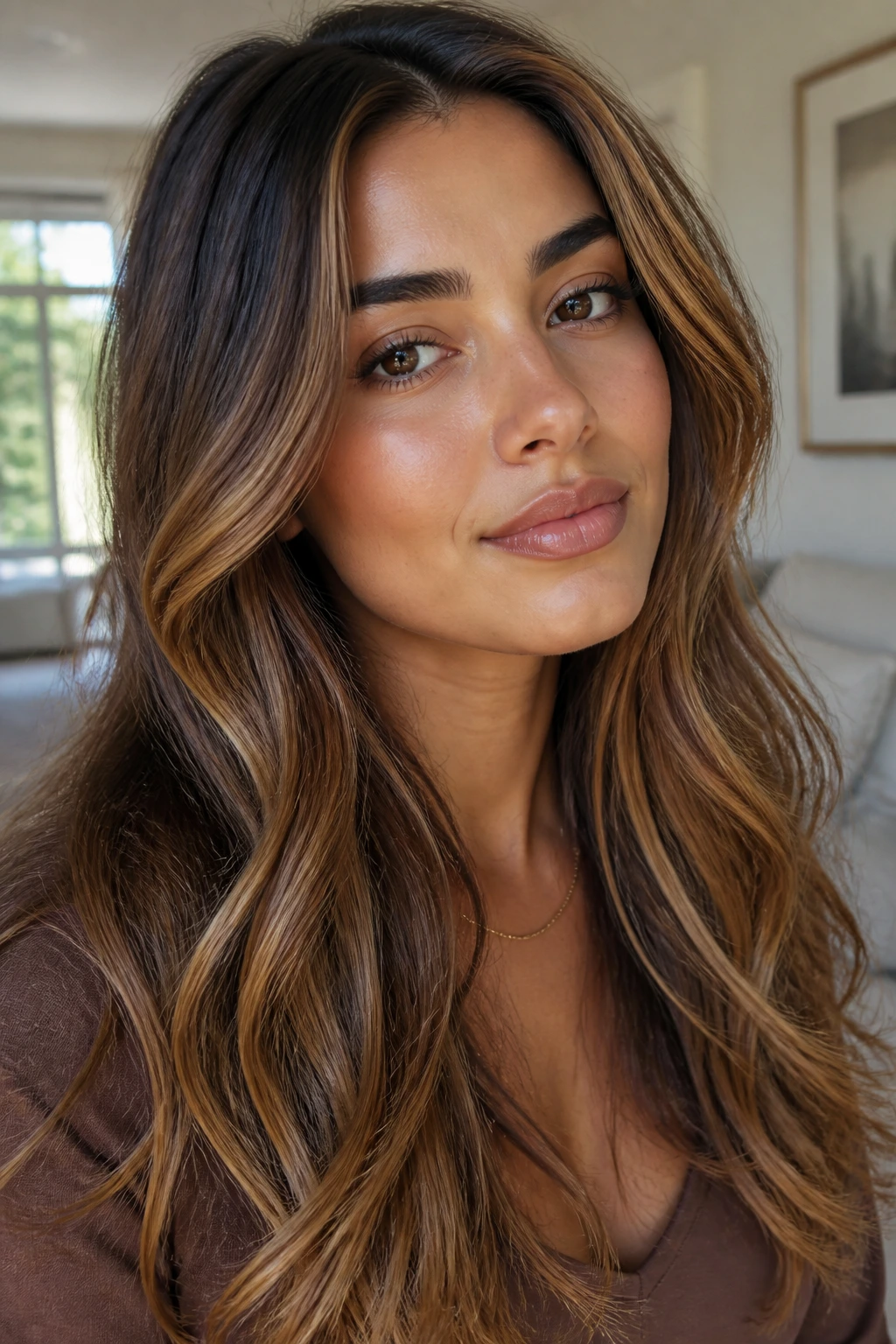
Hair color is half the story. Styling is the other half. The same caramel and honey pieces can disappear in limp hair and look gorgeous in a loose bend or a clean blowout.
Loose waves
Loose waves are the easiest way to show dimension. Use a 1-inch to 1.25-inch curling iron, wrap the hair away from the face, and leave the ends slightly straighter so the color reads in long lines. The highlights should look broken up, not curled into a tight pattern.
Sleek blowout
A smooth blowout makes brown bases look richer and gives caramel highlights a polished edge. Use a round brush and direct the front sections away from the face so the money piece opens up. A tiny bit of serum on the ends keeps honey tones from looking frayed.
Curly and coily textures
Diffused curls show off highlight placement better than people expect. Scrunch the hair with leave-in conditioner, then diffuse until the pattern sets. The lighter pieces should land on the outer ring of the curls, where they catch movement.
Updos and braids
Pull the hair up once in a while. Braids, buns, and half-ups reveal peekaboo strands and hidden lowlights. If your color is well placed, the style looks different every time you move your head.
Additional Tips and Glow Boosters
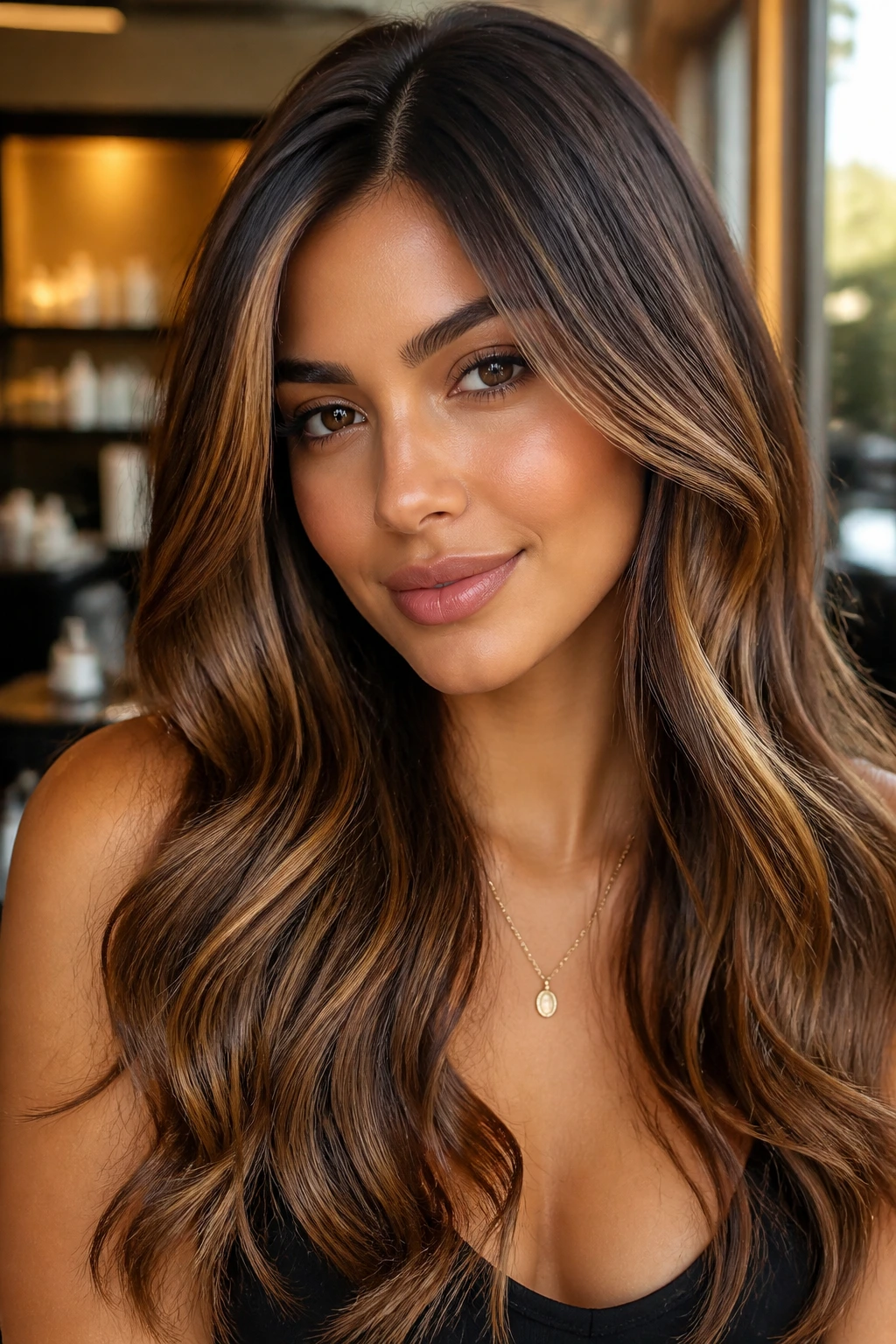
Flavor Enhancement: A clear gloss between color appointments can make brown, caramel, and honey shades look deeper and cleaner at the same time. Ask for a beige or neutral gloss if your highlights have gone a touch too warm.
Customization: If you wear your hair parted the same way every day, ask for a stronger money piece on that side. You’ll see the color more often, and the placement won’t disappear when the hair falls back into its usual shape.
Serving Suggestions: Soft waves, tucked-behind-the-ear styling, and a clean middle part all show off the contrast differently. Tiny gold hoops, peach blush, and warm brow makeup also play nicely with caramel and honey hair, though I’d stop short of matching everything too perfectly.
Make-It-Yours: If you like low maintenance, keep the highlights fine and the root shadow soft. If you want bolder contrast, widen the face frame and let the honey sit closer to the ends. If your olive skin leans cool, favor beige over golden honey. If it leans warm, a little more gold can be lovely.
Common Mistakes to Avoid
The first mistake is going too light too fast. On olive skin, very pale highlights can jump out in a harsh way and make the face look tired. The fix is simple: stay in the caramel-to-honey lane unless you’re intentionally going for high contrast and you’re prepared to keep up with toner.
Another problem is choosing the wrong warmth. Orange-brown pieces can look loud against some olive complexions, especially if the skin already carries a lot of yellow or green. The symptom is easy to spot — the hair looks brighter than the face, and not in a good way. Ask for beige-gold or soft toffee instead of straight copper.
Skipping a root shadow is another classic slip. If the highlights start right at the scalp, they can look stripy as soon as the hair grows a half inch. Leaving depth at the root softens the whole thing and buys you time between appointments.
Overtoning is sneaky. Hair can come out of the chair looking perfect, then one too many purple shampoo washes leaves it chalky. Use toner as a tool, not a religion. Once every week or two is plenty for most caramel-honey brunettes.
Last one: ignoring the haircut. Highlights without shape can look busy. Layers, bobs, shags, and soft face framing make the color believable. Without that, even good color can look oddly pasted on.
Variations and Alternatives to Try
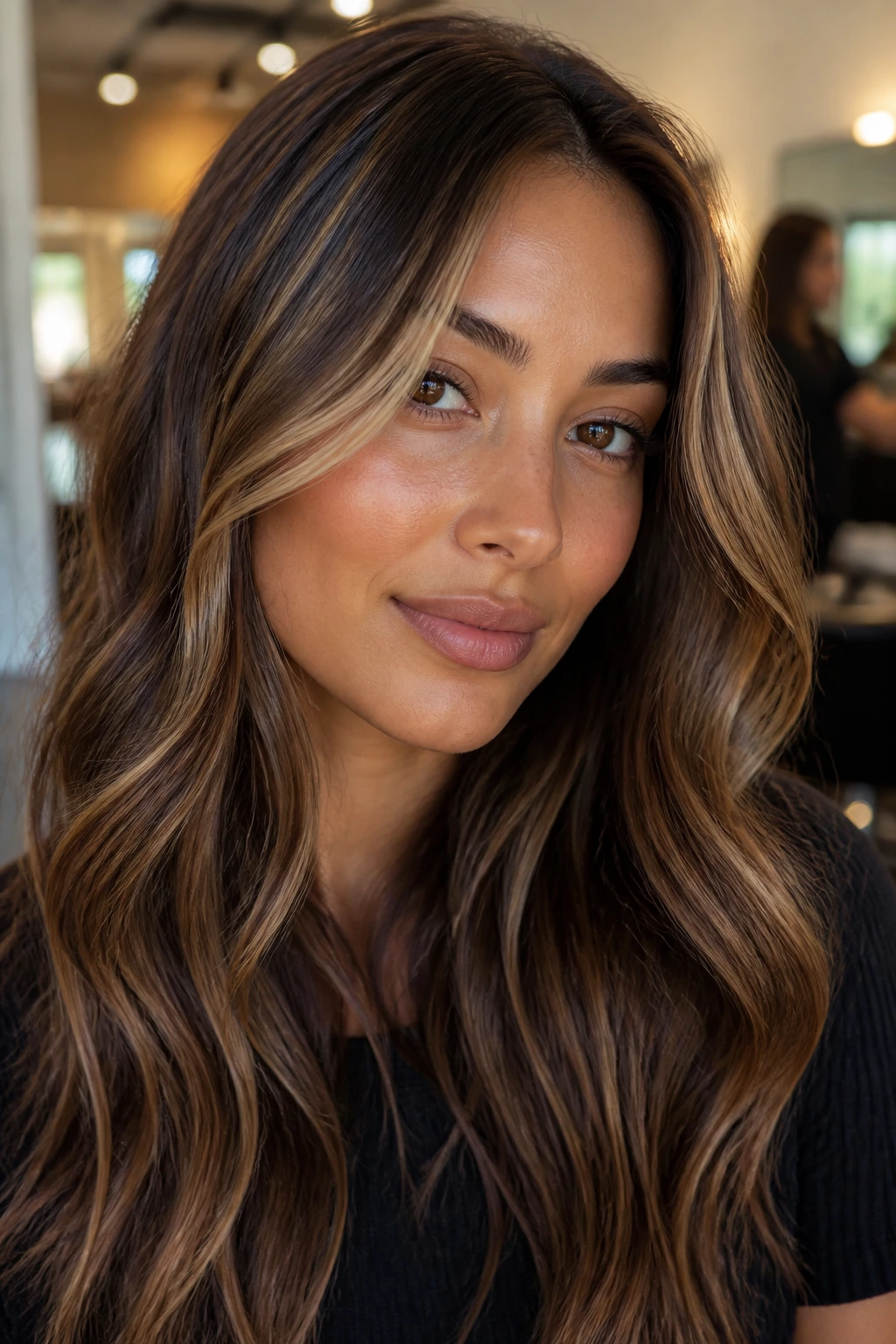
Beige Honey Melt: Keep the highlights soft and pale beige rather than golden. This works well if your olive skin leans neutral and you want brightness without a warm cast.
Golden Chestnut Ribboning: Add a little more gold to a chestnut base and keep the ribbons narrow. It’s a nicer fit for warm olive skin and gives you that sunlit effect without looking blonde.
Smoky Brunette Lived-In Color: Push the base deeper and keep the caramel very sparse. The result is more understated, with just enough warmth to stop the hair from looking flat.
Chunkier Retro Contrast: Use wider caramel panels around the face and through the top layers. This version has more attitude and needs more upkeep, but it can look fantastic on sharper cuts.
Curly Halo Dimension: Place the light pieces around the outer curl pattern and leave the underside darker. That keeps the shape strong and gives the curls a soft halo effect when they bounce.
Maintenance, Toning, and Grow-Out
Brown caramel honey highlights are not the highest-maintenance color in the salon, but they still need attention if you want the tone to stay clean. Wash two to three times a week if you can. Hot water strips warmth fast, and warmth is the whole point here. Cooler water at the rinse stage helps more than people expect.
A gloss refresh every 6 to 8 weeks keeps the caramel from drying out and the honey from turning brassy. If your hair is porous, you may notice the lighter pieces fading first around the front and ends. That’s normal. Those parts get the most heat and friction, so they need the most care.
If brass starts showing up, use blue shampoo sparingly — about once every 10 to 14 days for many brunettes, less if your color is already soft. Purple shampoo is better for very yellow lightness, but on warm caramel it can dull the shine if you overdo it. And please don’t use both at the same time like you’re trying to mop a floor. Pick the problem you actually have.
Balayage and softer ombré looks can usually stretch to 10 to 14 weeks before they need a full refresh. More structured face-framing highlights or chunky stripes may need a touch-up sooner, especially if the root line starts to distract from the placement. The color should look intentional all the way through the grow-out stage. If it doesn’t, the tone or placement needs adjusting, not more product.
Frequently Asked Questions
Will caramel and honey highlights work on cool olive skin?
Yes, but keep the tones softer and more beige than golden. Cool olive skin usually looks better with beige-caramel and almond honey than with bright yellow-gold pieces, which can feel too warm.
How light should the highlights be for olive skin?
A lot of the time, one to three levels lighter than the base is enough. That range adds dimension without blowing out the face or making the highlights fight the skin tone.
Can I get this look on very dark brown or black hair?
Yes, but the process usually takes more patience and more careful lifting. On darker hair, caramel and honey often look best when the base stays rich and the lighter pieces are placed strategically rather than spread everywhere.
How do I keep the highlights from turning orange?
Ask for beige or neutral caramel instead of copper-heavy warmth, and don’t overuse strong purple shampoo. A gloss with the right undertone does more than frequent toning at home.
Do these highlights work on curly hair?
They do, and sometimes they look even better on curls because the texture breaks the color into soft flashes. The key is placement: the light pieces need to follow the curl pattern instead of sitting as flat streaks.
How often should I refresh the color?
Most people can stretch a gloss refresh to 6 to 8 weeks and a bigger color appointment to roughly 10 to 14 weeks, depending on how fast the hair grows and how much contrast they want to keep. If the root shadow still looks clean, you can usually wait.
What haircut shows these shades best?
Layered cuts, bobs, and shags all show dimension well because they give the color movement. One-length cuts can work too, but they need smarter placement so the highlights don’t disappear into the shape.
Can I do this at home?
A glossy brown refresh, yes. Full highlights, not my first recommendation unless you already have a steady hand and a good understanding of lift, toner, and sectioning. Caramel and honey can go wrong quickly if the base turns uneven.
A Warm Finish That Holds Its Shape
The nicest thing about brown caramel honey highlights for olive skin is that they can look soft without being vague. There’s still structure here. The brown keeps the look grounded, the caramel gives it movement, and the honey adds the lift that makes the whole thing feel alive.
Get the tone right, keep the placement thoughtful, and let the haircut do some of the work. That’s the formula people often miss. The color doesn’t need to shout. It just needs to sit in the right place and glow a little when the light changes.