



Red blonde lowlights can rescue medium skin from that flat, over-bleached look that makes hair read as one beige sheet. The right red lowlight — cinnamon, copper, auburn, rosewood, strawberry, even a muted cherry-brown — adds depth at the roots and through the midlengths so the skin looks warmer and the hair looks thicker. The wrong one, though, is easy to spot. It turns pumpkin-orange at the front, muddies the ends, and sits on the head like it was painted on with a marker.
Medium skin tones are a funny sweet spot. They can carry warmth without looking brassy, and they can hold richer red pigment without the harsh contrast that happens on very fair skin. But they also show mistakes fast. Put a red that’s too bright against a golden-beige complexion and the hair can start stealing the show in a bad way. Go too dark and the whole look caves in.
The best red blonde lowlights don’t scream red. They move. They flash when the hair swings, soften the blonde, and give medium skin that good kind of contrast — the kind that makes cheekbones read a little cleaner and the hairline look less washed out. The details matter here more than most people think. Placement does half the work. Undertone does the rest.
Why Red-Blonde Lowlights Suit Medium Skin So Well
-
They add depth without turning the whole head dark. A medium blonde base with a few cinnamon or auburn ribbons underneath keeps dimension alive, especially when the light hits the sides of the face.
-
They work with golden, neutral, and olive undertones in different ways. Copper warms golden skin, rosewood softens neutral skin, and muted auburn keeps olive skin from looking too green or flat.
-
They make blonde look more expensive without needing more bleach. A little depth near the roots and underlayers often does more than another round of lightening, and your hair usually feels better for it.
-
They give fine hair more visual thickness. Thin, even blonde can look wispy; lowlights create the illusion of strands stacked over each other, which reads as fuller from a few feet away.
-
They are easier to grow out than a full red refresh. Because the red sits in chosen sections instead of everywhere, the fade looks softer and the regrowth line is less bossy.
1. Cinnamon Ribbon Lowlights
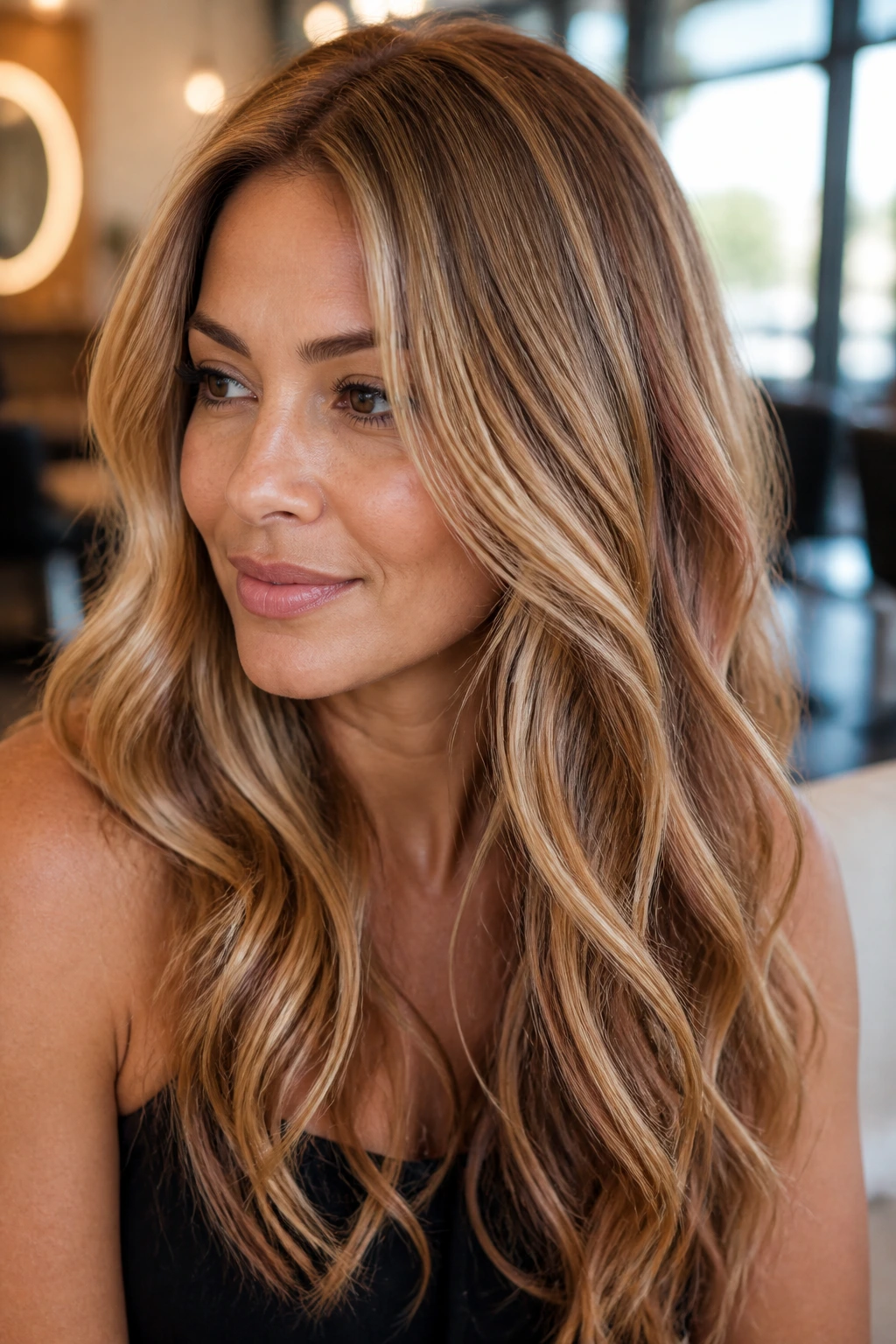
Cinnamon ribbons are the safe bet that doesn’t feel boring. They thread through a honey or beige blonde base like warm brown sugar with a red edge, and on medium skin they usually land in that sweet spot between lively and grounded. Too bright, and the hair starts looking coppery in a way that can clash with peachy skin. Kept soft, the result is movement you notice when the hair turns, not when you stare straight at it.
Best for: medium skin with golden or peach undertones. The cinnamon cast brings warmth back without leaning orange.
Ask for thin, scattered ribbons through the midlengths and lower crown, not chunky blocks near the hairline. The front should feel gentle. The magic is in the underlayer.
2. Copper Veil Lowlights
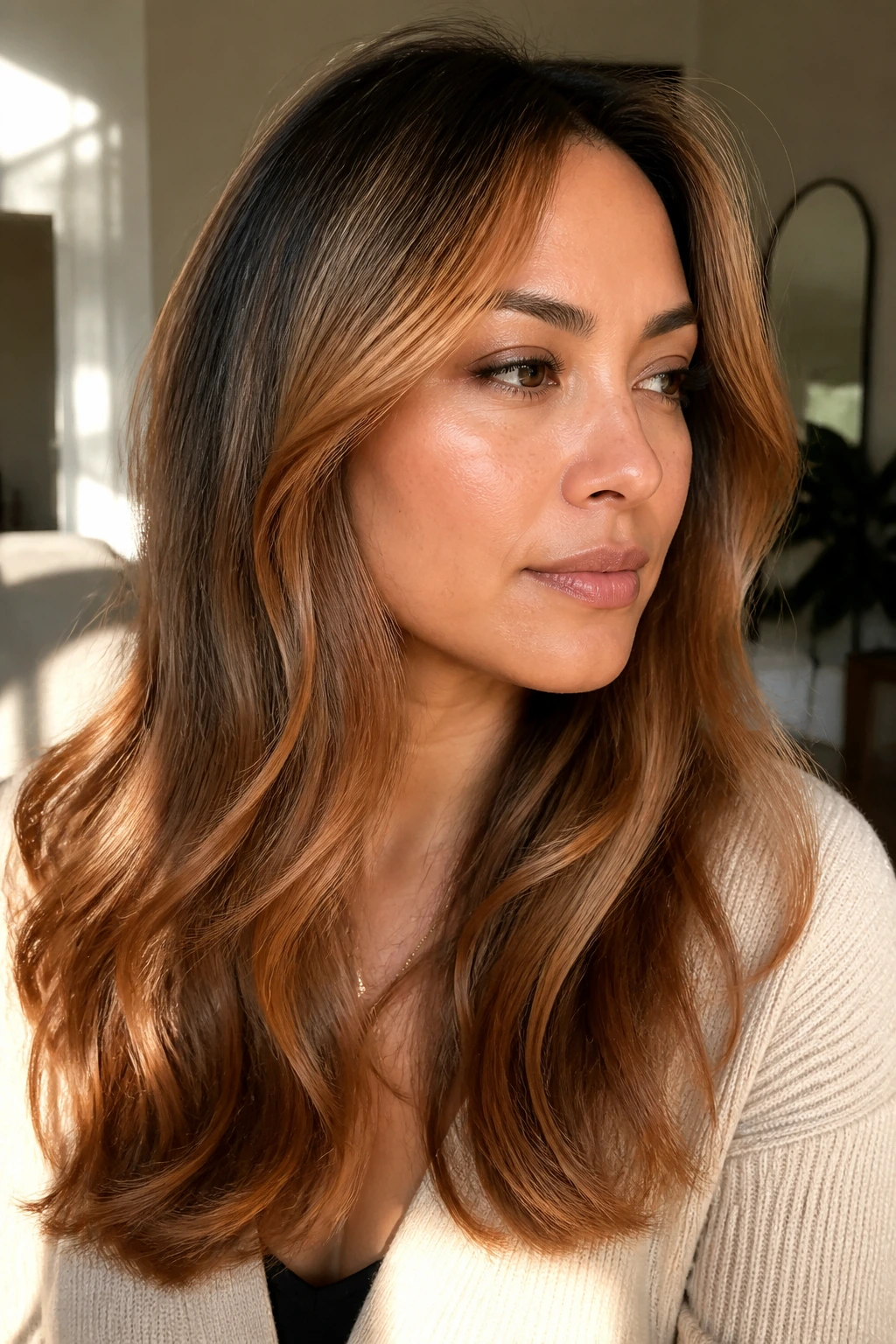
Copper veil lowlights have a translucent look that sits somewhere between blonde and red-brown. They’re a good choice when you want warmth that catches light but do not want your hair to read as “red hair.” On medium skin, copper can wake the face up fast, especially if the complexion leans olive or neutral.
The trick is keeping the copper muted enough that it doesn’t turn neon in sunlight. A soft copper with a brown base works better than a vivid orange-red. I like this look when the haircut has layers; the veil shows up in the movement rather than fighting the shape of the cut.
A few well-placed copper strands under the top layer can do more than a whole head of bright pieces.
3. Auburn Underpainting
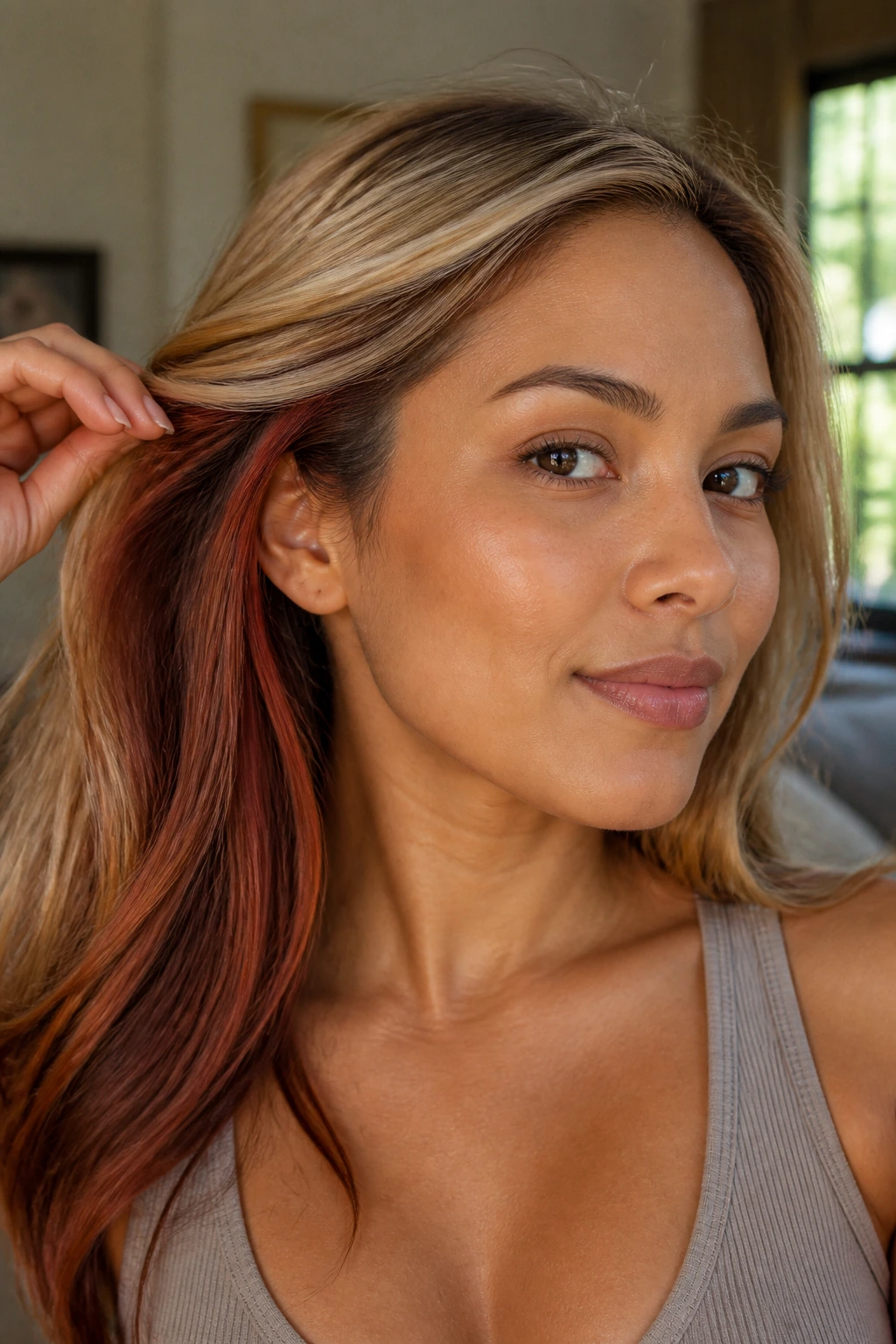
Auburn underpainting is for people who want the red to feel buried a little. From the top, the hair still reads blonde, but when you lift a section or tuck it behind your ear, the auburn underneath flashes through. On medium skin, that hidden depth gives the complexion more warmth without forcing the whole look into red territory.
This one works especially well if your blonde has gone a little too pale or ash-heavy. Auburn underpainting brings back richness, and it does it quietly. The front can stay lighter if you want brightness around the face; the depth underneath keeps the length from looking thin.
If you wear your hair half-up a lot, this placement is a smart one. The underlayer shows enough to matter.
4. Strawberry Smudge Lowlights
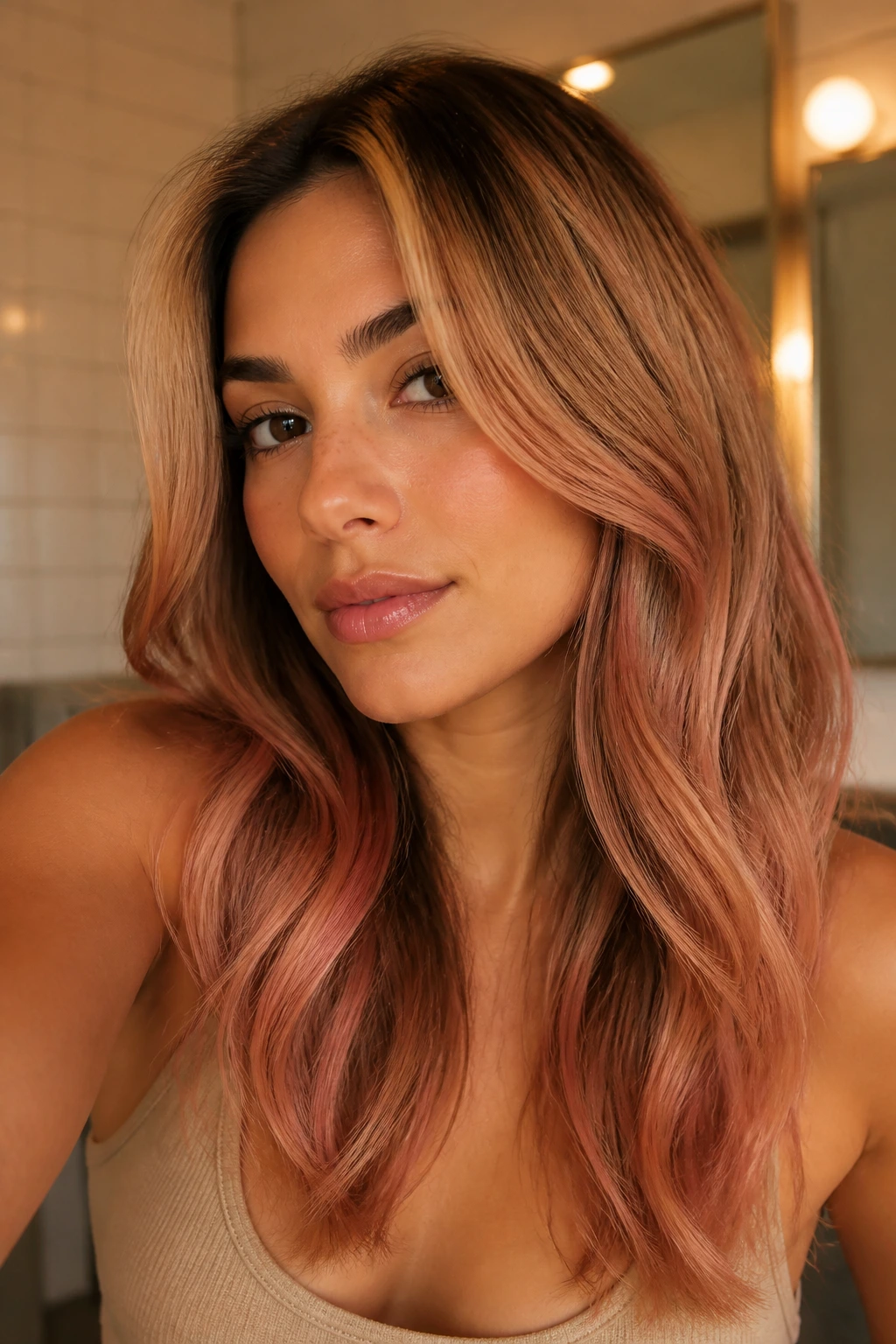
Strawberry smudge lowlights lean sweeter than copper and softer than auburn. Think muted pink-red with blonde still visible through it, not candy pink and not full red. On medium skin, especially beige or rosy undertones, strawberry lowlights can make the complexion look fresh instead of ruddy.
These work best when they’re smudged through the midlengths, with the color feathered so there isn’t a hard line where red stops and blonde starts. The point is melt, not stripe. If the hair is wavy, even better — the bends show the tone change more naturally.
A strawberry lowlight can go wrong fast if it’s too light and too pink. Keep it grounded. The prettiest versions usually have a whisper of beige-brown under them.
5. Rosewood Shadow Lines
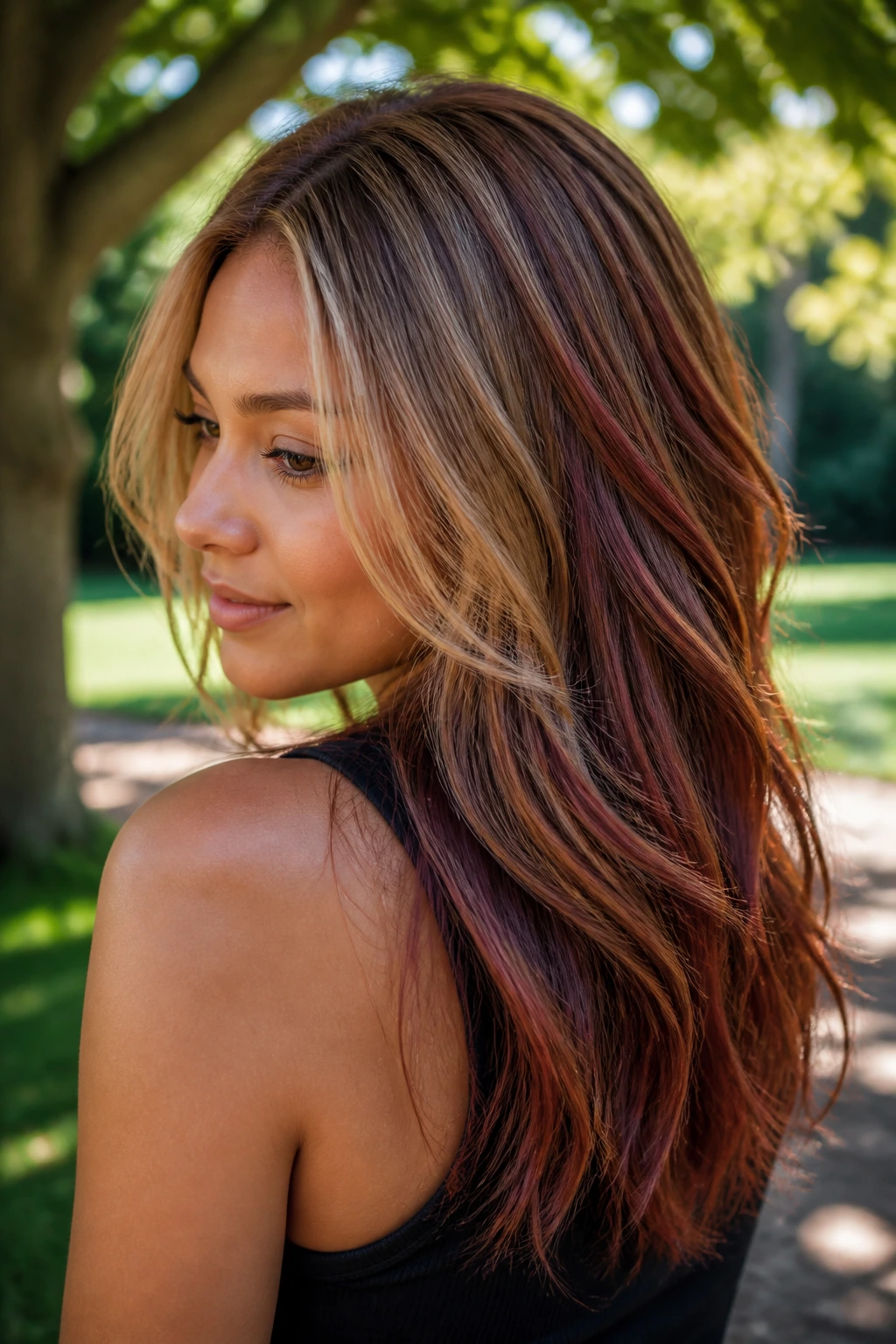
Rosewood is one of my favorite choices for medium skin because it behaves. It has enough red to matter, enough brown to stay wearable, and enough softness to keep the finish from looking harsh at the scalp. Shadow lines in rosewood are especially good if your blonde base is on the cooler side and you want to warm it without going full copper.
This shade flatters medium complexions that sit neutral. It doesn’t fight the skin. It sits beside it and makes both the hair and face read richer.
Placement note: keep the rosewood lowlights concentrated through the interior layers and the back of the head. If you put too much of it around the front hairline, the face can start looking a little flushed.
6. Burnt Apricot Panels
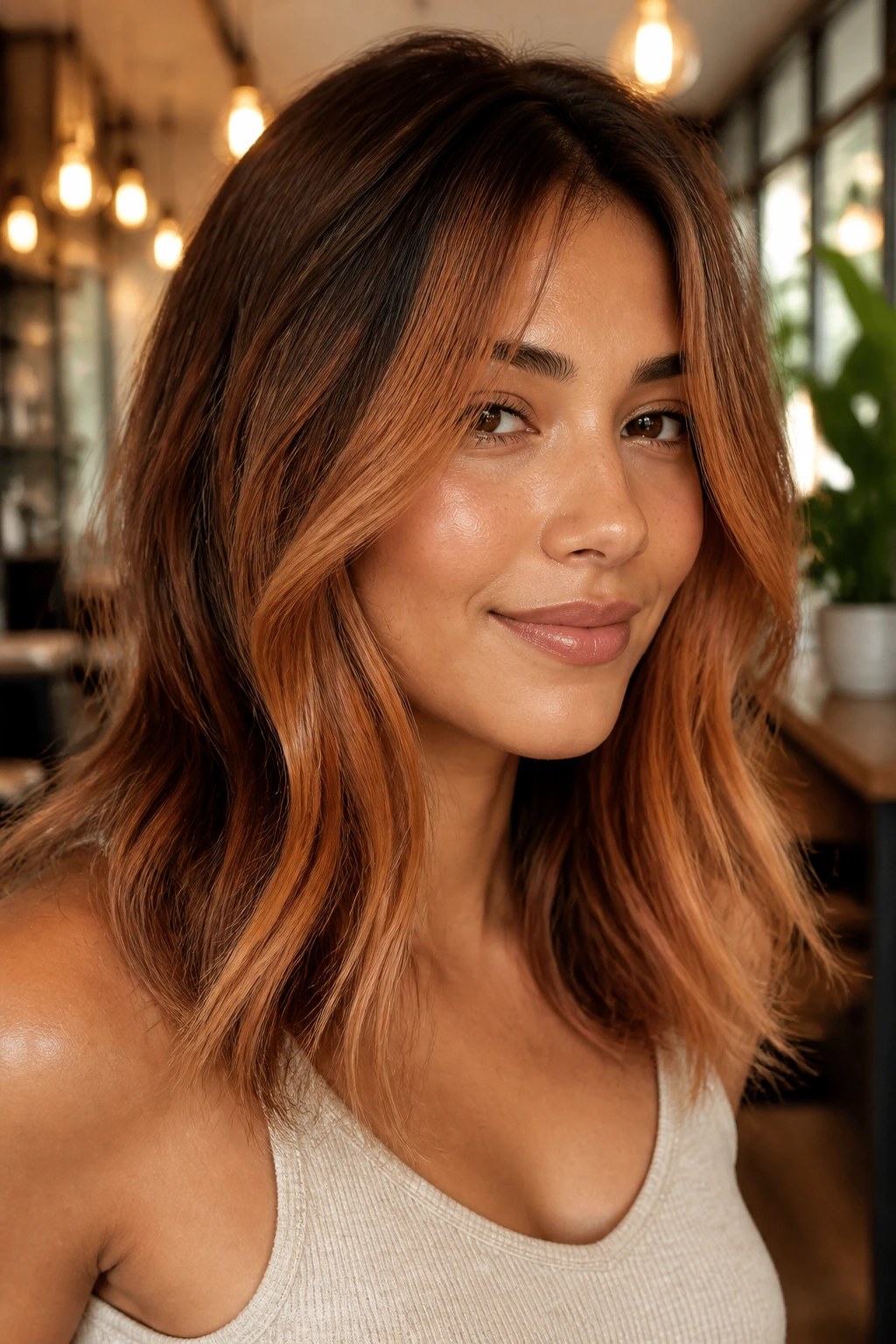
Burnt apricot gives you that sun-warmed, late-afternoon look without moving into neon territory. It’s a red-blonde lowlight that feels dusty and warm, almost like peach that has been left near a brick wall. On medium skin with warm undertones, it can make the skin look brighter in a way that isn’t loud.
Panels work well if your haircut has long layers or a blunt bob. You need enough surface area for the color to show. Thin apricot ribbons will disappear in thick, curly hair unless they’re placed with intention, so this style benefits from slightly wider painted sections through the interior.
It’s a good compromise for someone who wants red but worries about commitment. The burnt edge keeps the shade from reading childish or candy-bright.
7. Maple Red Dimension
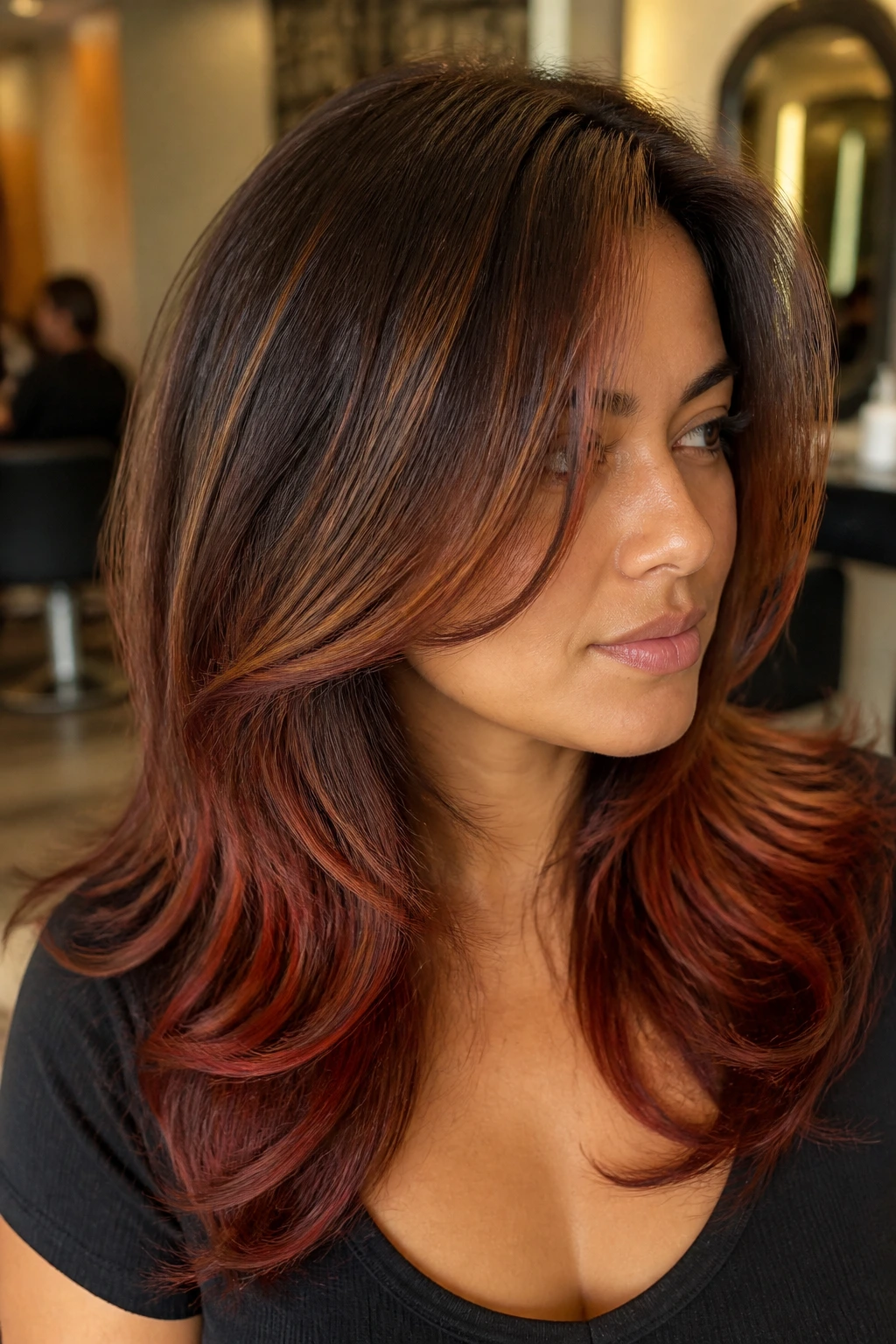
Maple red dimension is deeper than strawberry and softer than true auburn. It has that syrupy brown-red tone that looks especially good when blonde hair needs more weight around the ends. Medium skin tends to wear this easily because the color doesn’t compete with the complexion; it frames it.
I like this on layered lobs and long hair that tends to frizz at the bottom. The darker ribbons make the length look tidier. They also stop light blonde from going too flat against the face.
If your skin leans golden, maple red is a strong choice. If it leans olive, keep the red side muted and ask for more brown in the formula. That one adjustment makes a huge difference.
8. Merlot Peekaboo Ribbons
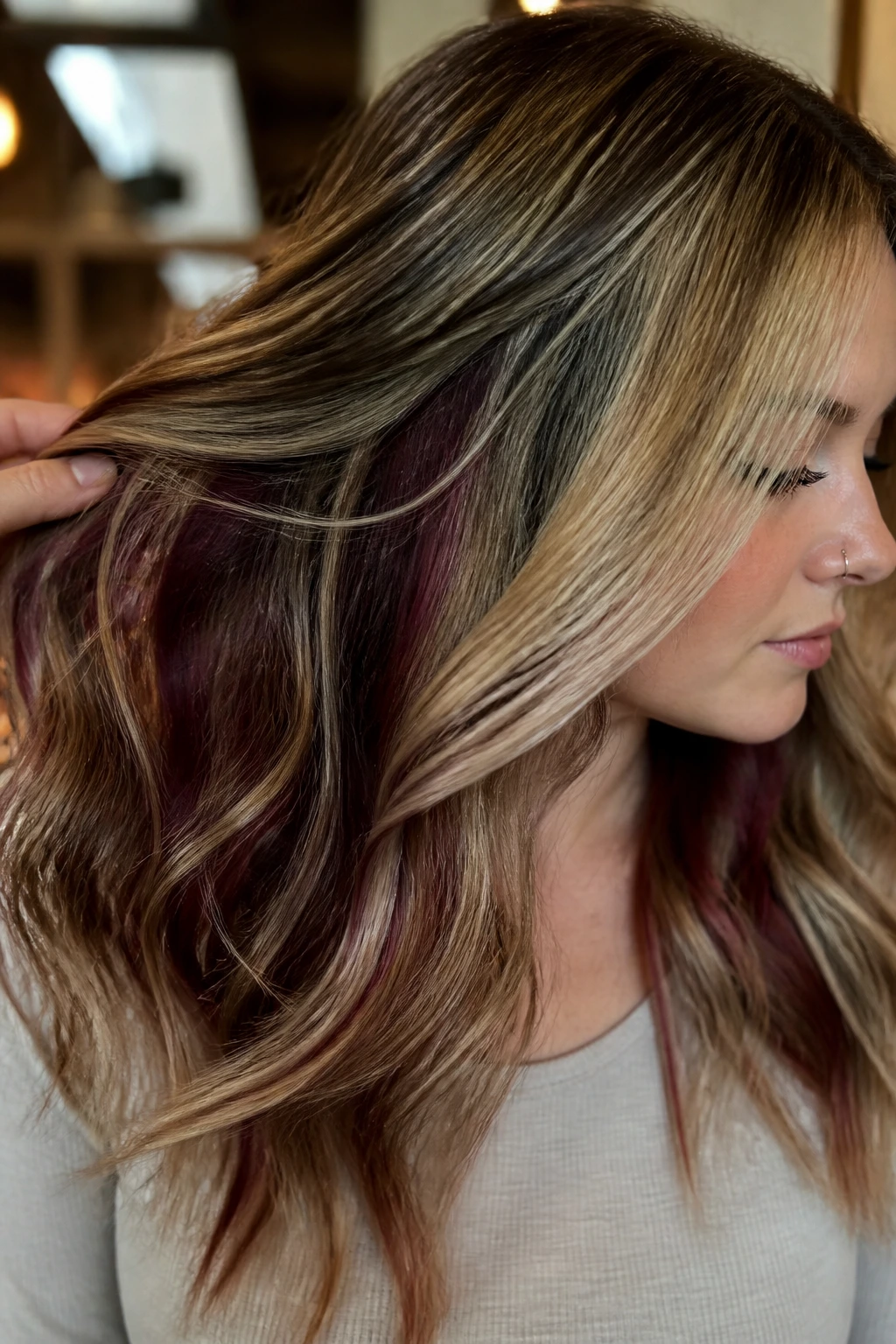
Merlot peekaboo ribbons are for the person who wants some drama but doesn’t want every strand to announce it. The merlot tone hides under the top layer and shows up when the hair moves, especially in curls or waves. On medium skin, the wine-red depth can make warm undertones look polished rather than ruddy.
This shade needs restraint. Too much merlot and the hair can read like burgundy paint. Done in thin hidden ribbons, it looks like the blonde has been shadowed from underneath.
If you wear your hair up often, the peekaboo effect is a bonus. A loose bun or claw clip lets the color flash at the nape without taking over the whole look.
9. Ginger Honey Weave
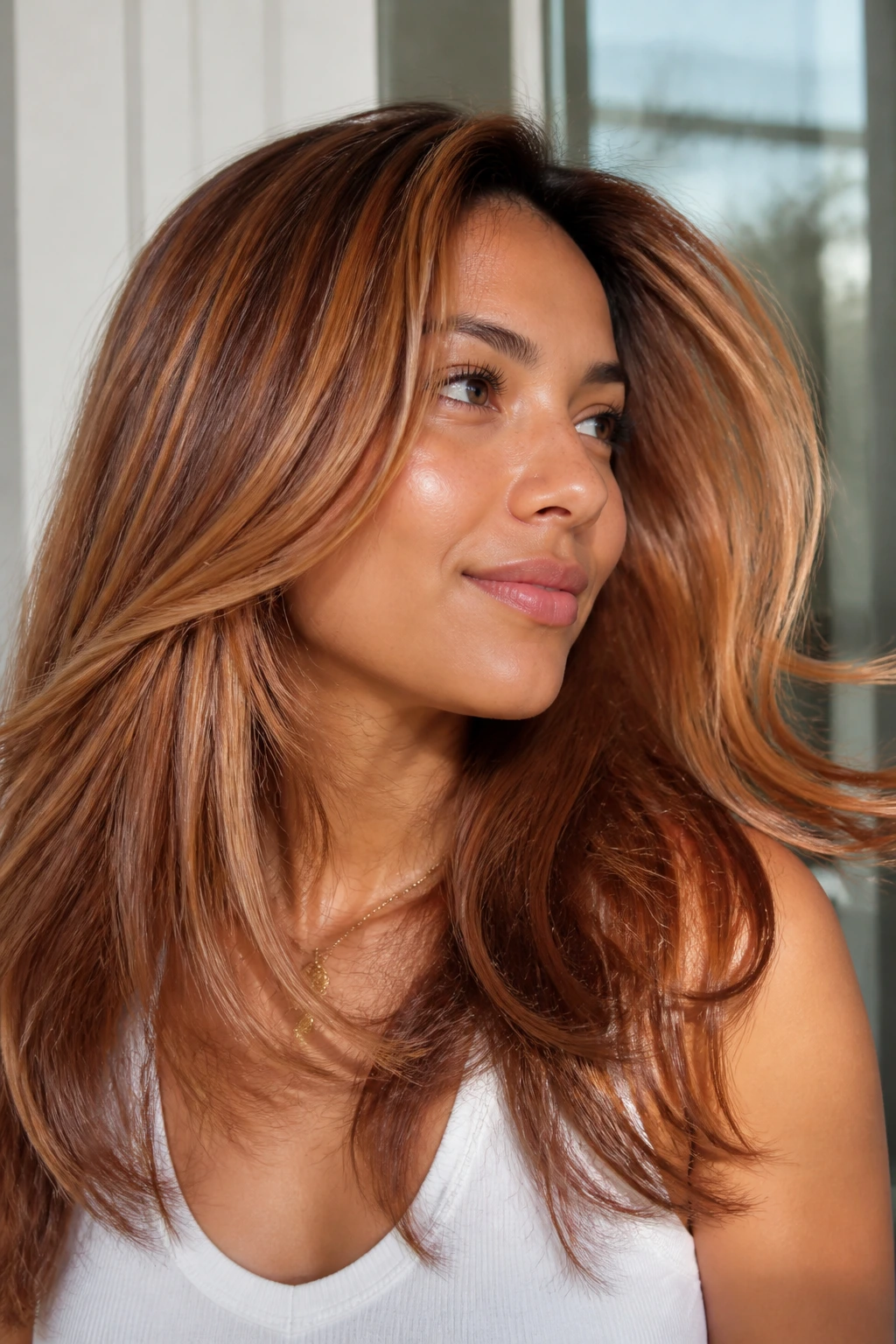
Ginger honey weave is lighter and brighter than most people expect when they hear “lowlights.” That’s the point. It gives blonde hair just enough ginger warmth to stop it from looking chalky, and on medium skin it can be a lifesaver if the face needs softness rather than contrast.
This one is especially good for springy curls, shag cuts, and lived-in layers. The weave pattern lets the color move through the texture instead of sitting in one blunt line. You want fine placement, almost like stitching, so the ginger doesn’t overpower the blonde.
If your base is very light, ask for a beige-ginger formula instead of a true orange-gold. That keeps the result from going too bright.
10. Terracotta Balayage Lowlights
Terracotta balayage lowlights have more earth in them than copper, and that matters. Terracotta reads red-brown, not red-orange, which makes it easier on medium skin tones that need richness more than brightness. The color settles into the hair like clay — warm, grounded, a little matte, and very wearable.
Balayage placement helps here because the hand-painted edges soften the transition. You do not want terracotta stripes. You want broad, feathered pieces running through the midlengths and ends, where they can deepen the blonde without swallowing it.
This is one of the better choices for thick hair. The earthy tone keeps the style from ballooning visually. It gives shape.
11. Peach Copper Threads
Peach copper threads are delicate, and that delicacy is what makes them work. On medium skin, the peach side softens the copper so the hair looks glowing rather than fiery. It’s one of the more flattering options for people who want warmth but worry about red making their skin look blotchy.
Threads, not panels. That’s the key. These should be whisper-thin, woven through blonde sections so they show up as a soft tint rather than a dramatic stripe.
If your base is a pale blonde, this can be gorgeous. On darker blonde, the peach copper gives a faint sunset effect. I’d keep the roots light and let the warmth live through the lengths.
12. Rusted Blonde Depth
Rusted blonde depth is richer than honey, darker than strawberry, and a bit more serious than copper. The rust tone is what gives it character. It makes medium skin look warm without pushing it into orange territory, which is where a lot of red-blonde formulas go wrong.
This is one of those shades that looks better when it’s not too shiny. A soft gloss, yes. A glassy, high-shine finish, not always. The slight matte quality helps the rust read as depth instead of brightness.
Try this if your blonde has grown too flat at the ends. A rusted lowlight placed through the underside adds weight and structure fast.
13. Saffron Auburn Ends
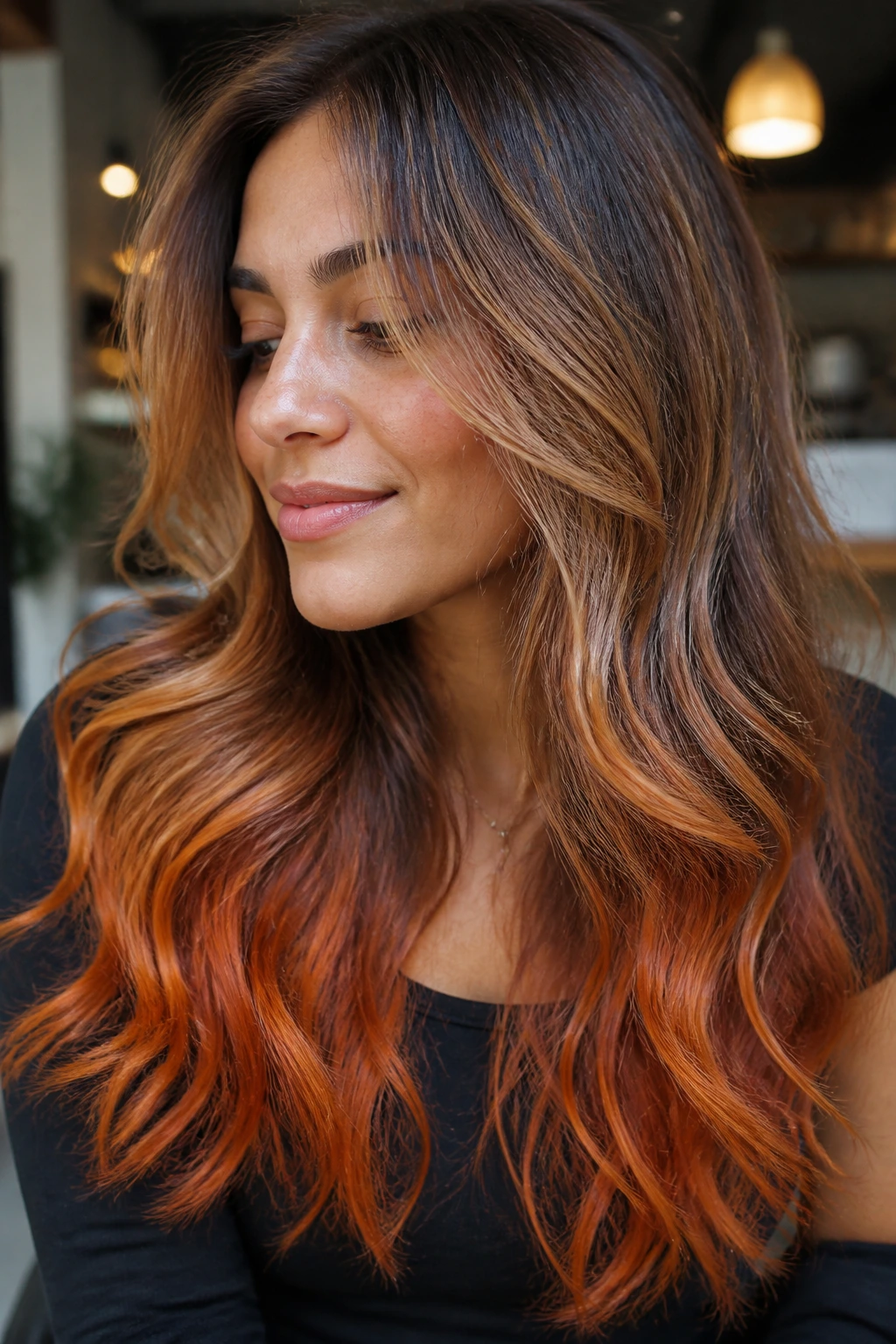
Saffron auburn ends give the hair a warm finish without committing the whole head to red. The saffron note lifts the auburn just enough to keep it from reading heavy. On medium skin, that can be a useful trick if you want the ends to glow while the top stays blonde.
This style works nicely on long layers and soft waves. The eye goes straight to the movement at the bottom. It is not a look I’d choose for one-length, super-straight hair unless the placement is very controlled, because blunt ends can make the color feel blocky.
Keep the root zone lighter. The payoff is in the last few inches.
14. Cherry Cola Contrast
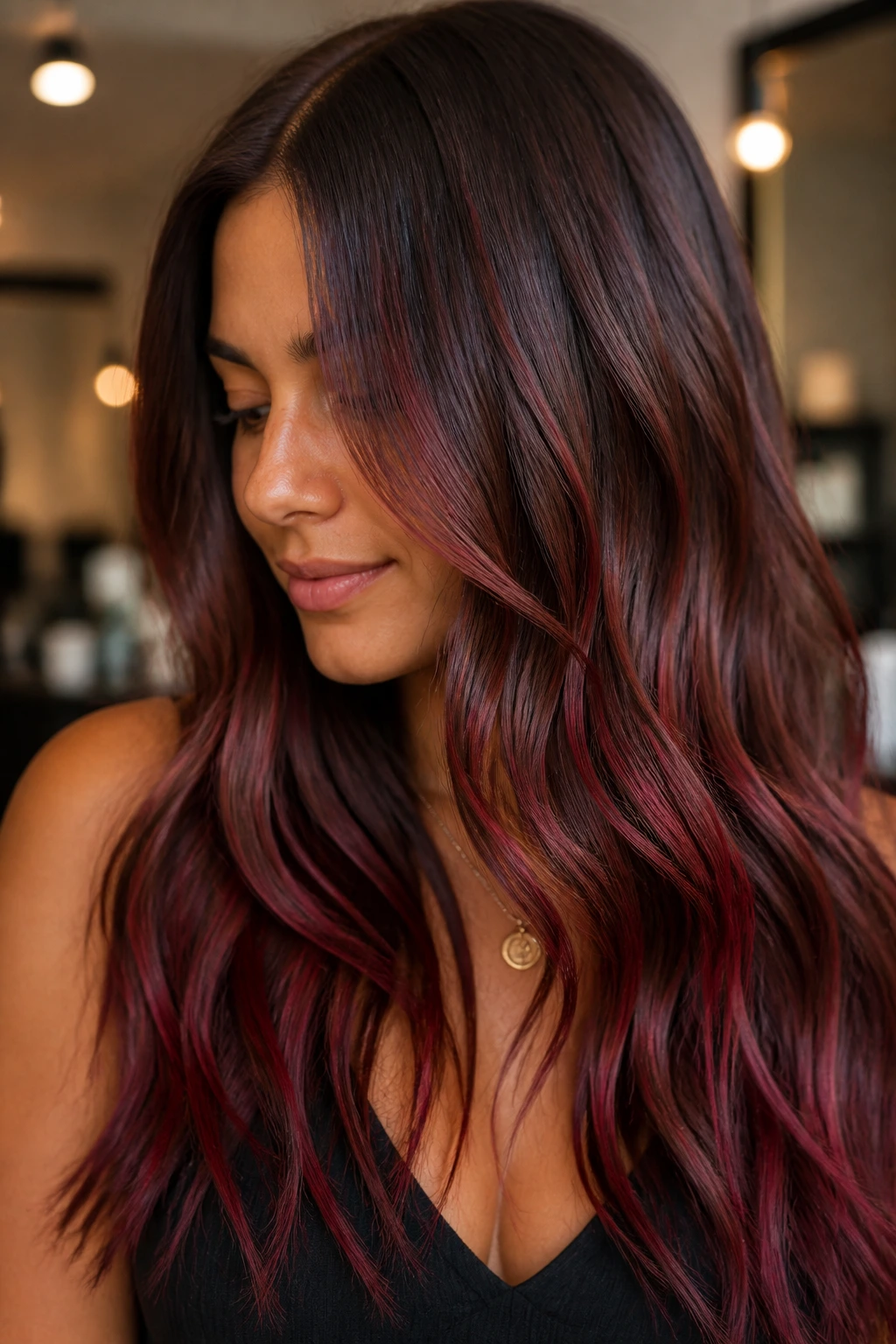
Cherry cola contrast is bolder than most of the other ideas here. It’s still red-blonde, but the lowlights lean darker and richer, with a cola-brown base under a cherry sheen. Medium skin can carry this better than fair skin because the contrast feels intentional rather than harsh.
The secret is not using too much bright cherry. You want cola first, cherry second. That order matters. If the red gets too clean and too vivid, the hair starts fighting the face.
This is a strong pick for darker blondes or light brunettes who want dimension instead of a full red shift. It adds presence. Not a whisper. A statement, but a controlled one.
15. Brick Red Face-Framing Lowlights
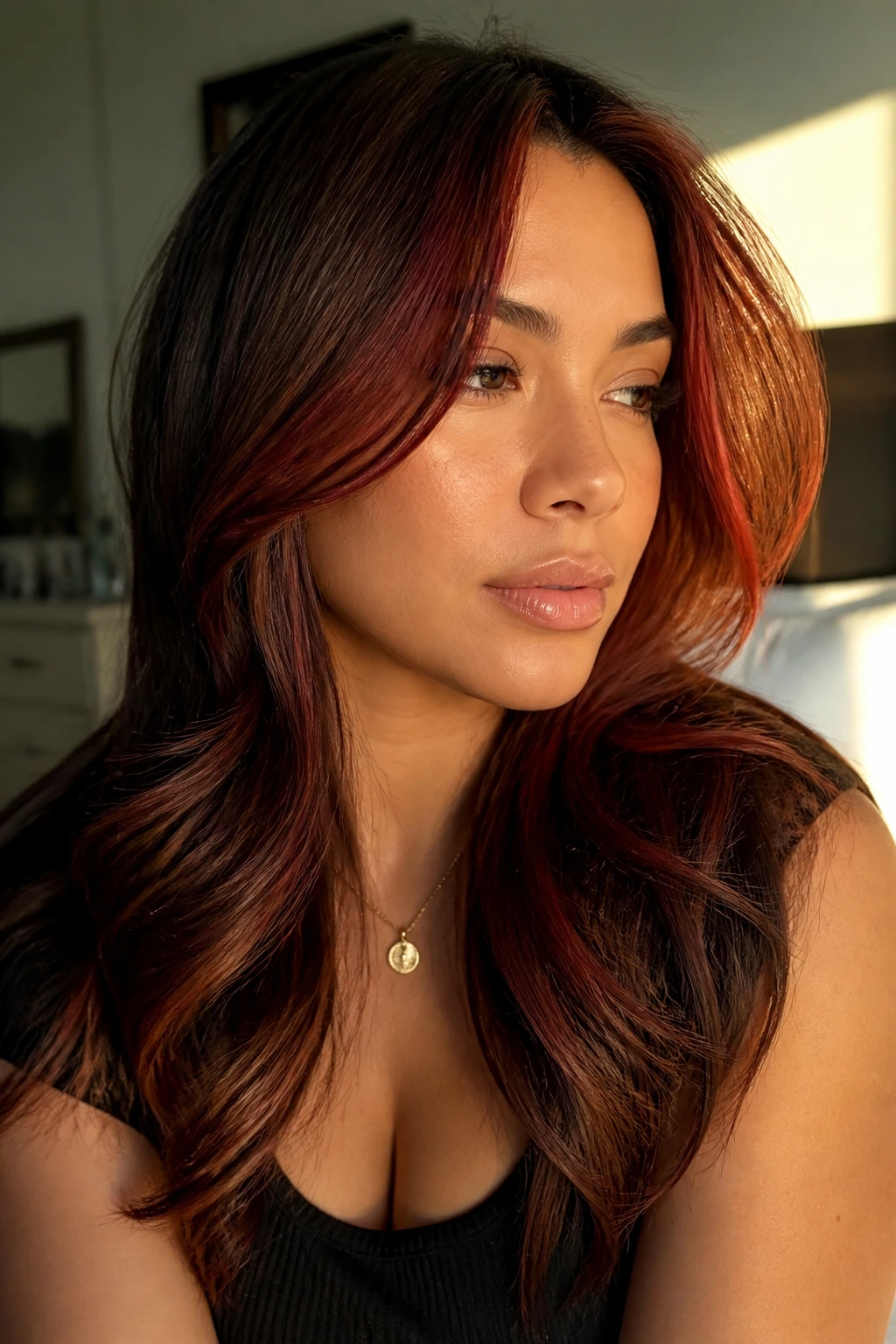
Brick red around the face is a good move when medium skin needs warmth near the cheekbones and jaw. Brick red is warmer and earthier than cherry, so it tends to sit well on golden and olive undertones. The face-framing placement keeps the look readable even if the rest of the lowlights stay subtle.
I’d keep these pieces slightly finer at the front hairline and a touch denser at the temple. That gives the face enough color without drawing a hard line down the side of the head. On curls, brick red can look incredibly dimensional because the pattern breaks it up naturally.
If you tend to wear bronzer, this shade plays nicely with that makeup. It can deepen the whole palette in a good way.
16. Chestnut Strawberry Blend
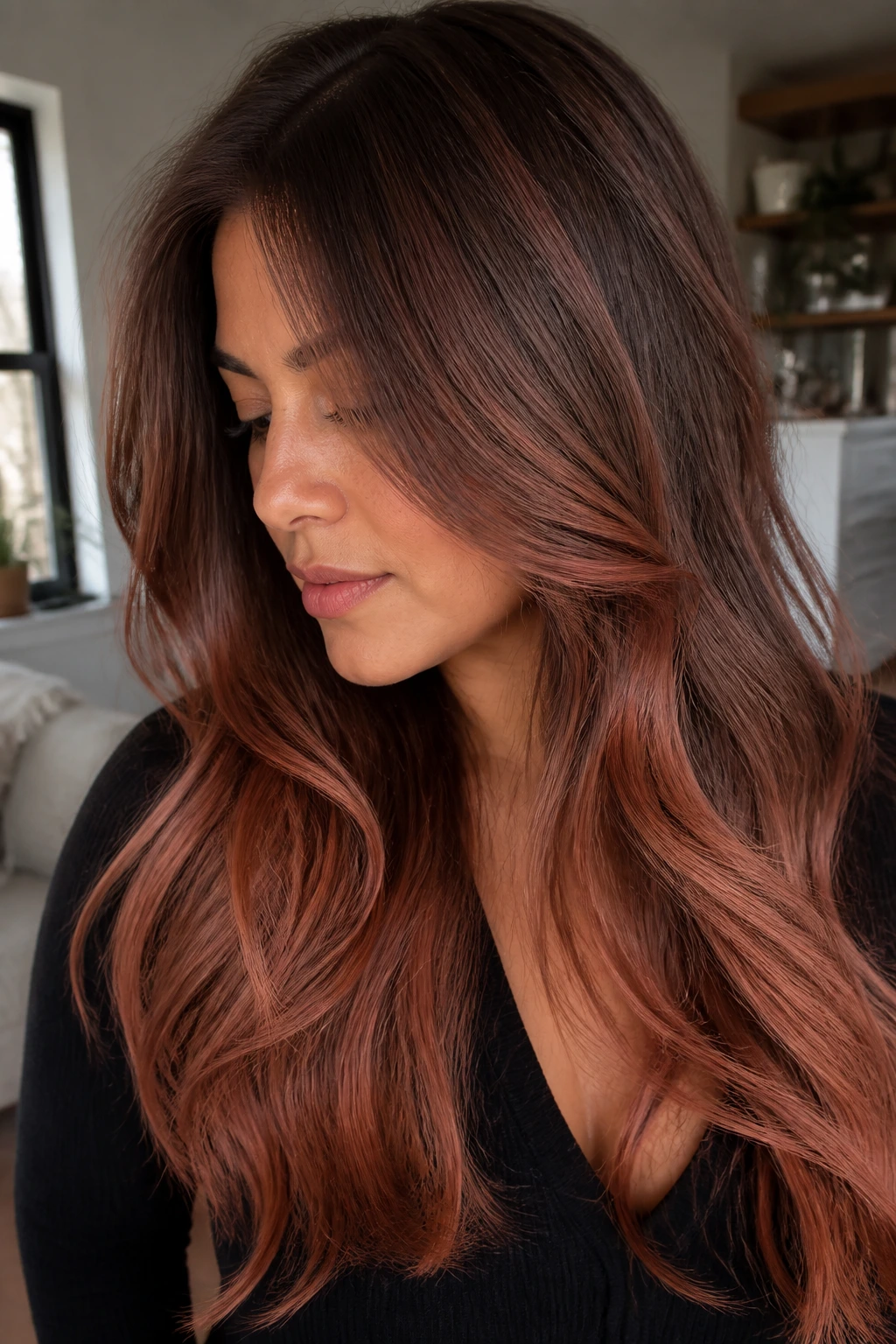
Chestnut strawberry blend is one of the most balanced combinations in the whole group. Chestnut gives the lowlight a brown anchor, and strawberry keeps it from feeling too dark or too serious. On medium skin, that balance matters because pure red can sometimes overcook the undertone.
This is especially nice for long layered cuts where the color can move from chestnut at the roots into strawberry at the ends. The blend should feel gradual, not striped. If the formula is applied in soft ribbons, the result is plush and flattering.
People who want warmth without obvious copper often land here by accident — and stay there on purpose.
17. Coral Bronze Threads
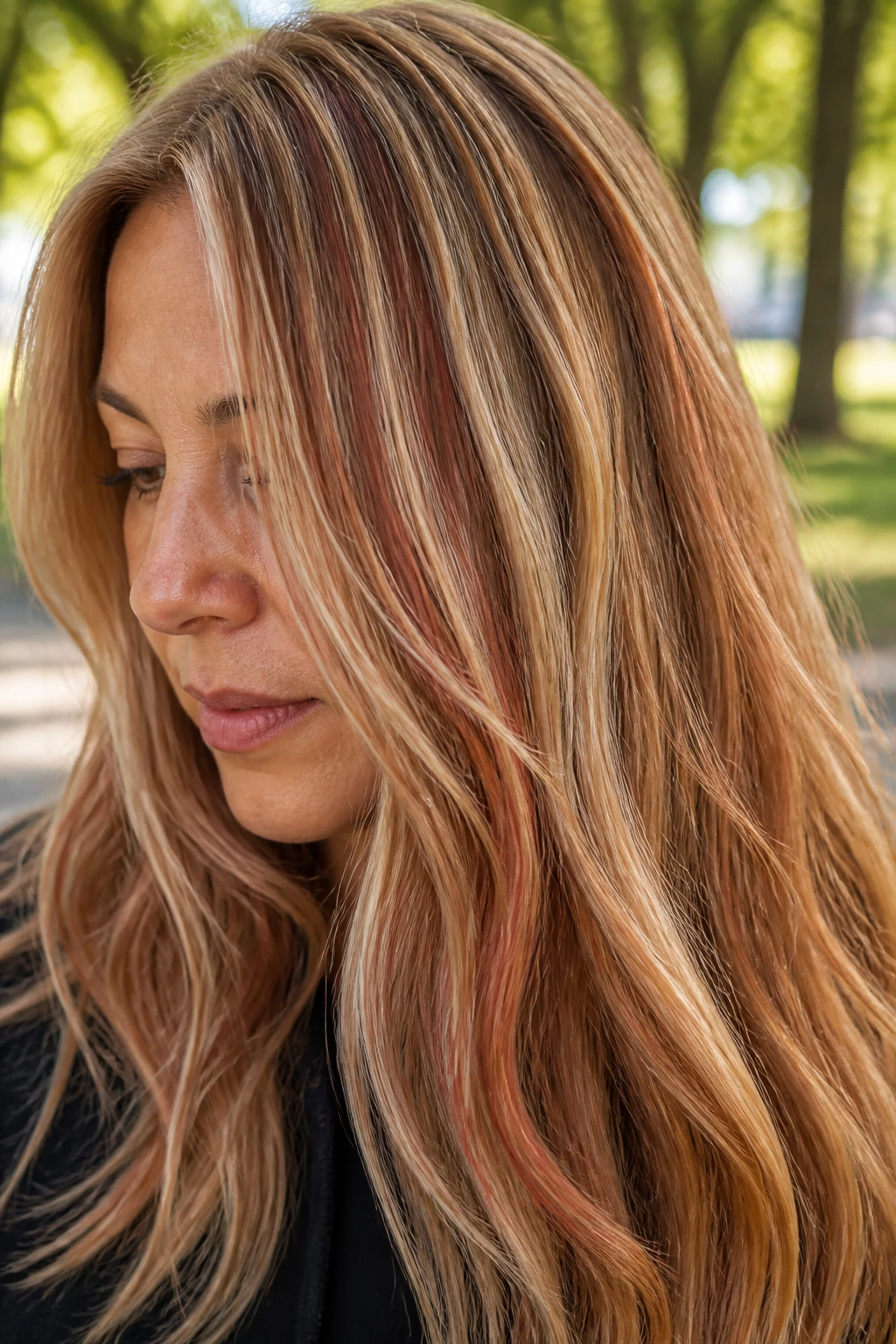
Coral bronze threads sit on the lighter, brighter side of red blonde lowlights. The coral gives the hair a lively edge, while the bronze keeps it from turning sugary. On medium skin with neutral undertones, this can be a smart way to add warmth while still keeping the whole look airy.
Because the shade is light, placement matters even more. The threads need to be fine and evenly scattered through the blonde so they read as tone, not color blocks. If the hair is very porous, the coral can grab quickly, so a salon gloss is usually safer than a heavy permanent formula.
This one is lovely if you like warmth but hate dark hair around the face.
18. Paprika Root Melt
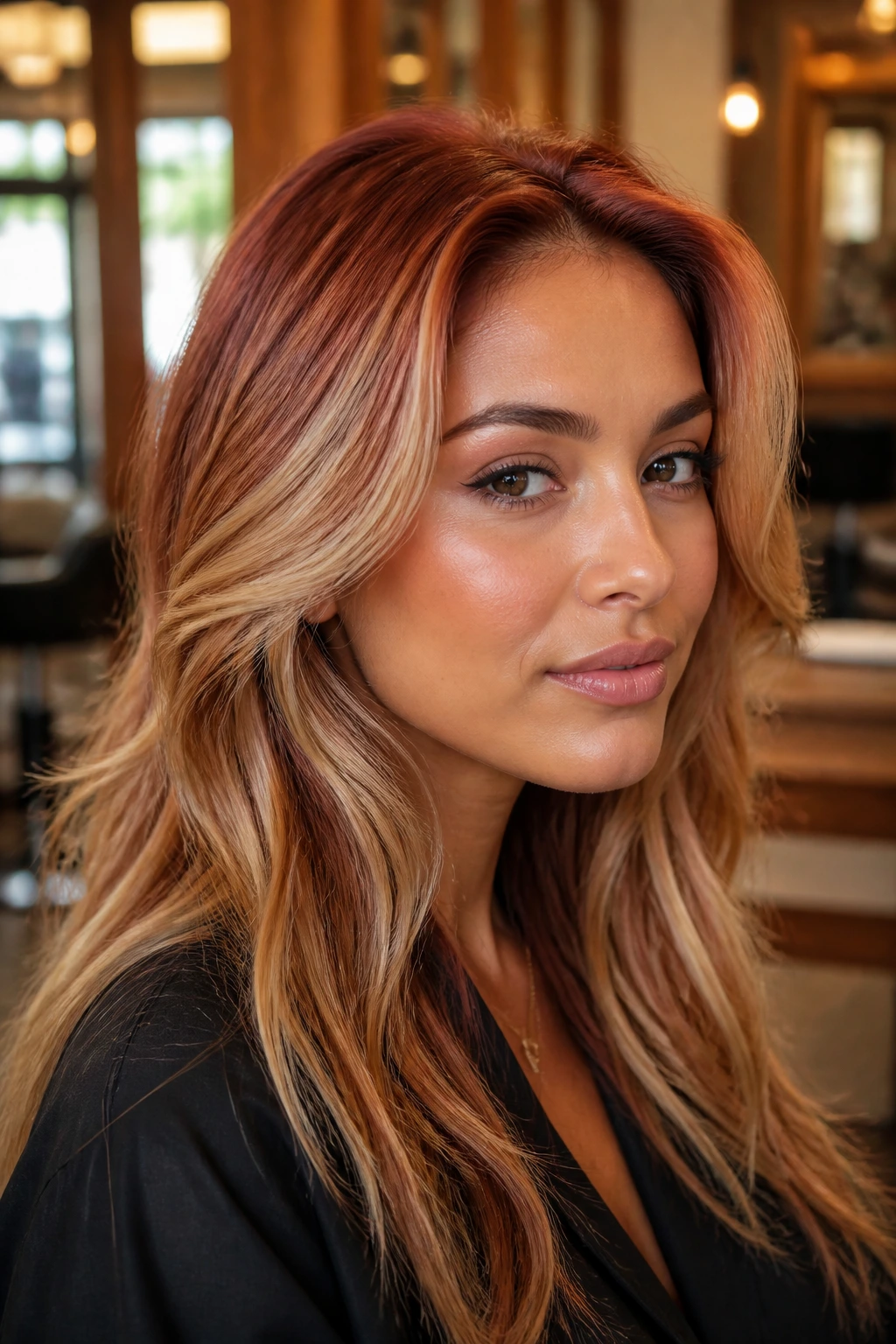
Paprika root melt brings the red-blonde story closer to the scalp. That sounds intense, but a good root melt is still soft. The paprika tone should blur from the natural root into the blonde length, not sit like a stripe. Medium skin often benefits from this because the deeper top gives the face more structure.
Use this if your blonde has too much lightness at the crown and feels disconnected from your complexion. The root melt restores contrast. It also helps stretch salon visits because the grow-out is built into the look.
I’d keep the paprika muted, almost smoky. Bright paprika at the roots can become too eager.
19. Cranberry Glaze Ribbons
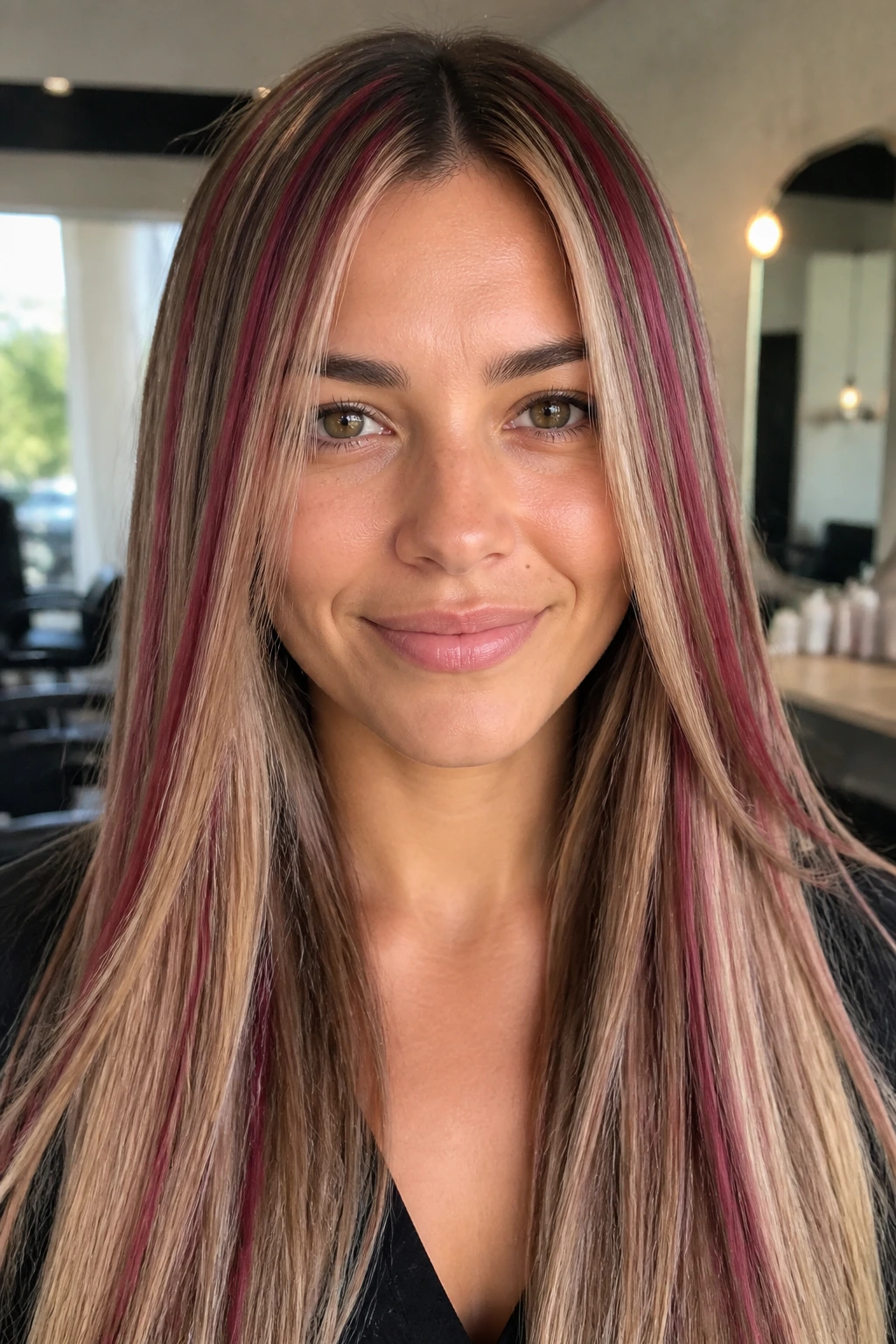
Cranberry glaze ribbons are cooler than copper and sharper than rosewood. They bring a jewel-tone red into the blonde without turning the whole style burgundy. Medium skin with neutral or slightly cool undertones can wear this especially well, because the cranberry keeps the complexion from looking too yellow.
The glaze part matters. You want sheen, not saturation. A softer finish keeps the cranberry from looking like a block of color. Thin ribbons through the interior layers work best.
This is one of the more striking options for straight hair, where the reflected shine shows off the red. On curls, it turns softer and more playful.
20. Spiced Toffee Lowlights
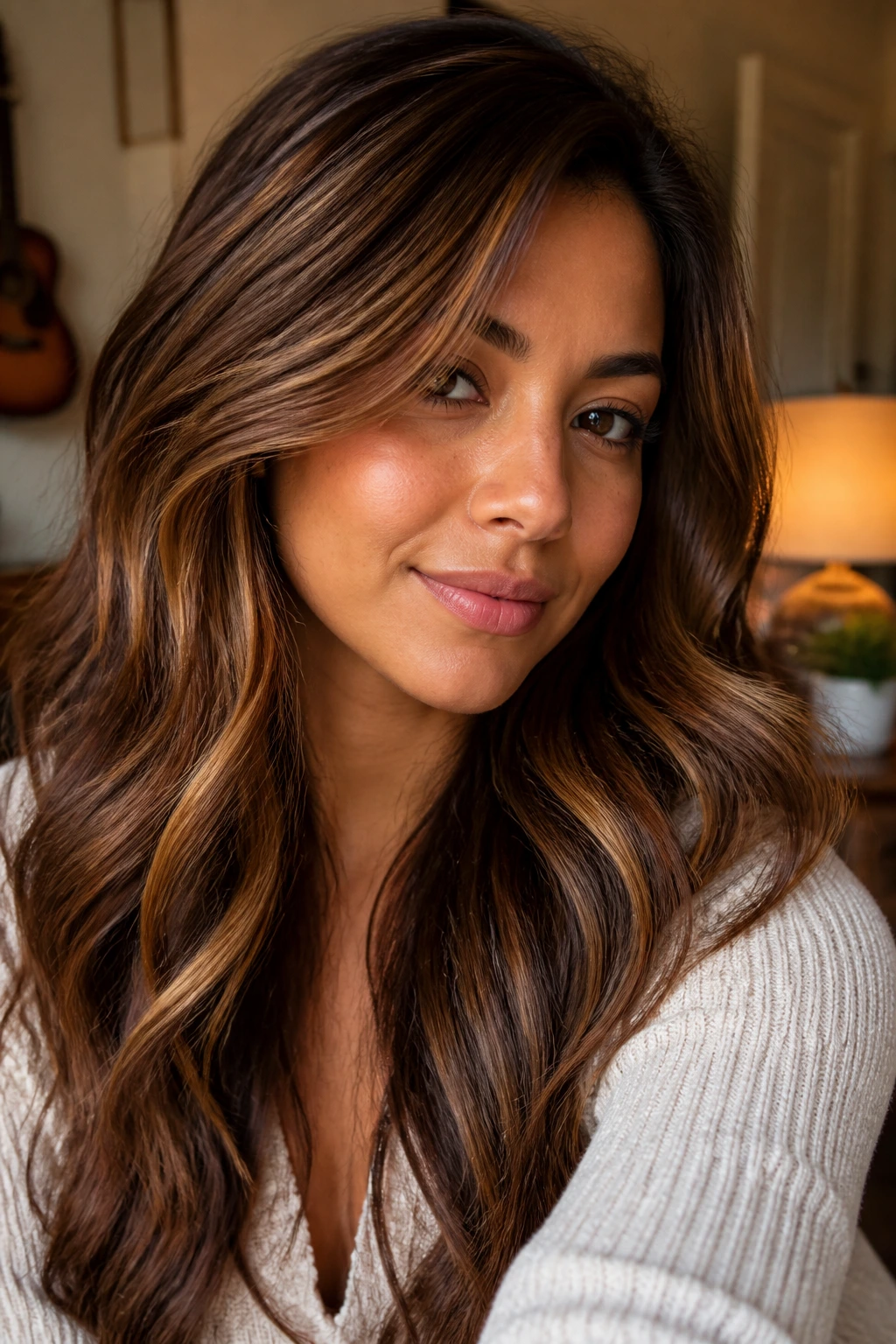
Spiced toffee lowlights are the low-drama option that still makes a difference. They are brown-forward, with just enough red warmth to keep medium skin from looking drained. I reach for this idea when someone likes blonde but needs a little more body in the color.
The tone works well on long bobs, blunt cuts, and hair that sits close to the head. Toffee adds shape where the haircut itself is simple. It also pairs well with minimal makeup because the hair already carries warmth.
If you’re nervous about red, start here. It’s the gentlest path into the family.
21. Amber Red Contour
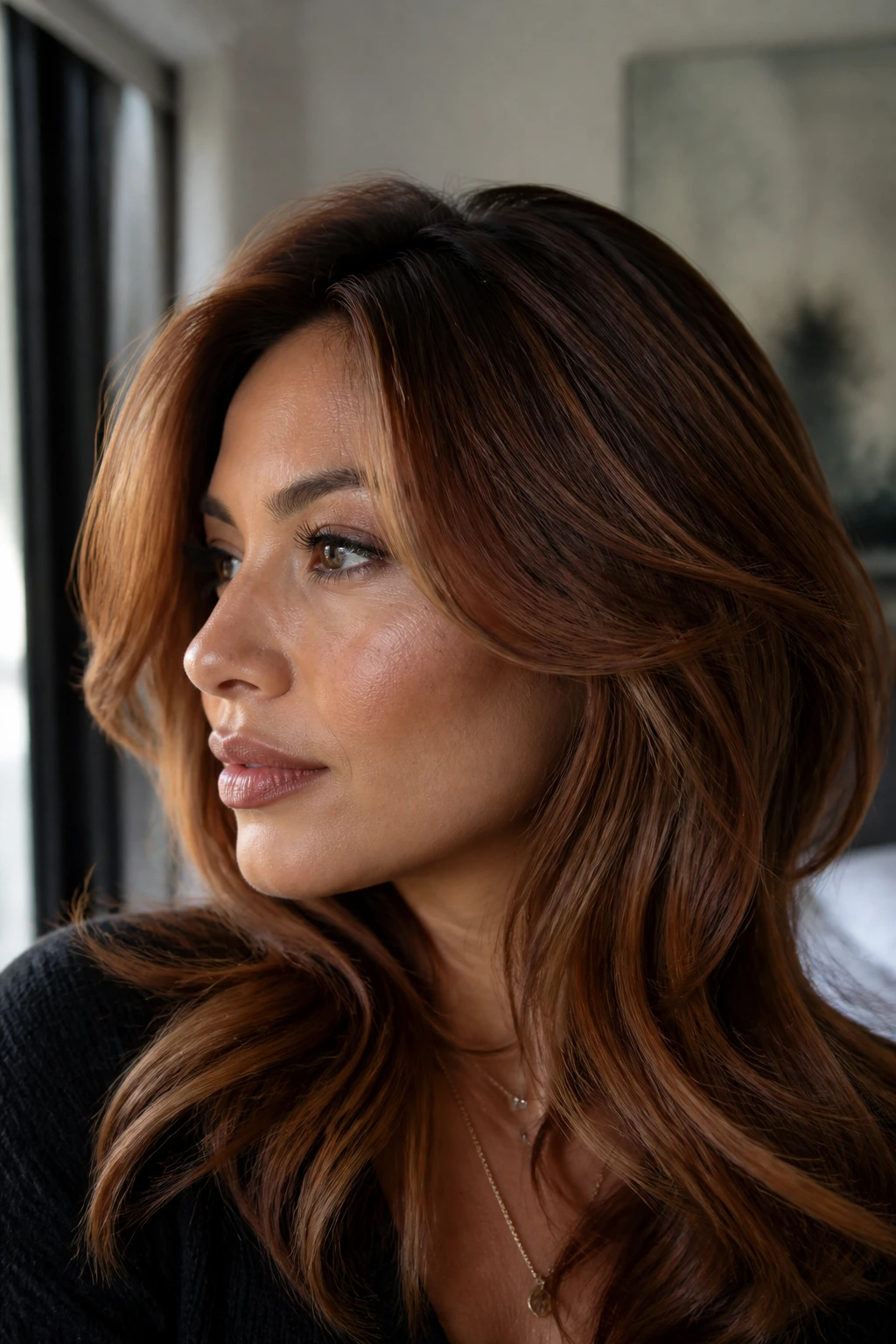
Amber red contour is basically face-shaping with color. Place the deeper amber-red lowlights around the outer curves of the face and a bit through the temple area, and the whole haircut starts to feel more intentional. On medium skin, the amber warmth can brighten the face without needing a light blonde money piece.
This is one of those styles that looks especially good on layered cuts and waves. The contour pieces catch movement first, which is the whole point. If the hair is pin-straight, the effect becomes more graphic, so ask for softer edges.
A good amber contour should make the skin look lit from the side, not painted over.
22. Rose Gold Shadow Melt
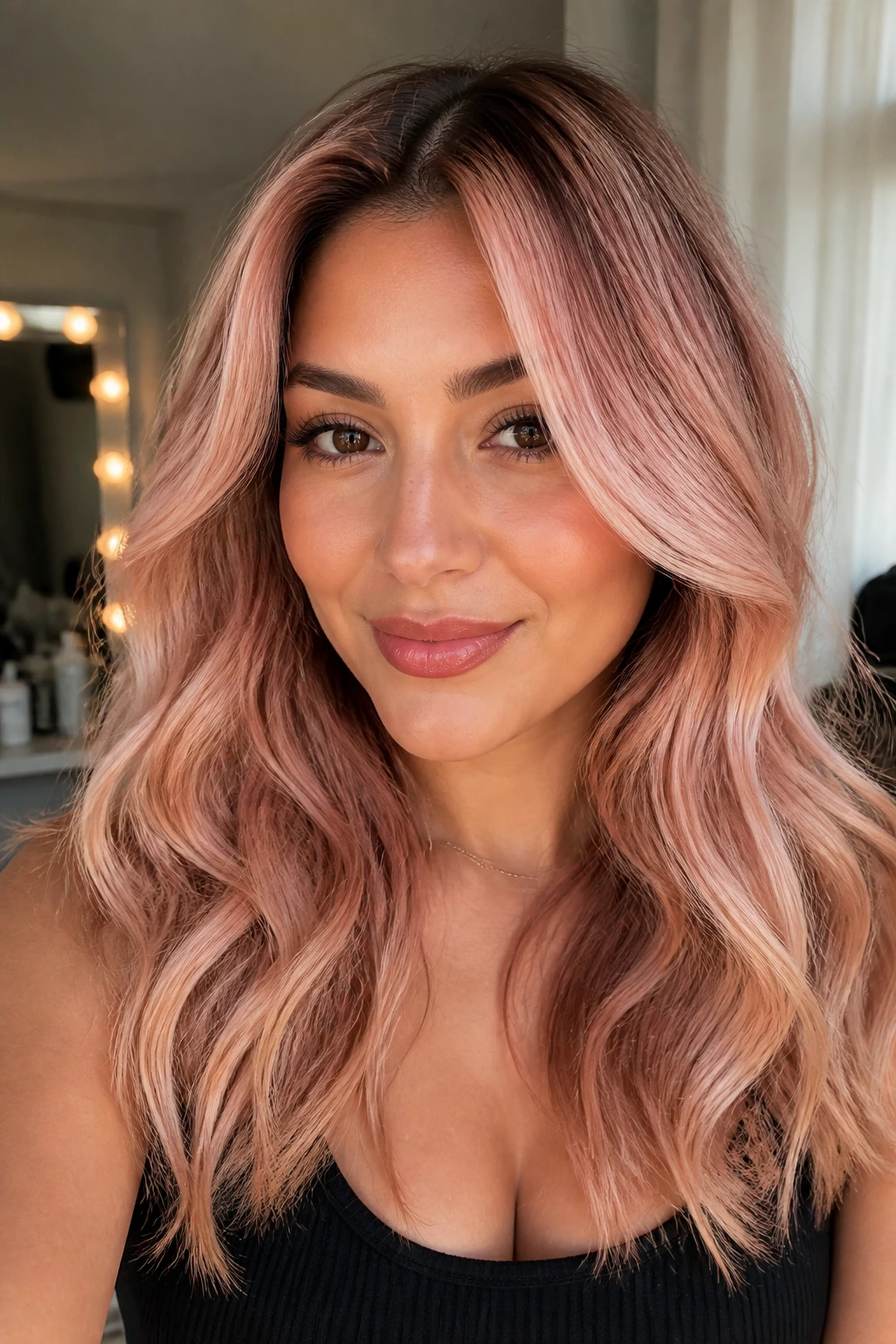
Rose gold shadow melt softens the classic red-blonde mix into something airy. The shadow keeps the lowlights from appearing flat, and the rose gold hue adds a flush that medium skin can wear beautifully when the undertones are neutral or warm. This is a good option if you like softness more than contrast.
Shadow melts need a careful hand. The darker roots should blend into the rose gold rather than stop abruptly. On blondes that fade quickly, the shadow also helps the color last longer because the eye sees the gradient, not the regrowth line.
It’s a pretty choice, yes, but the bigger win is how forgiving it is as it grows out.
23. Auburn Peekaboo Layers
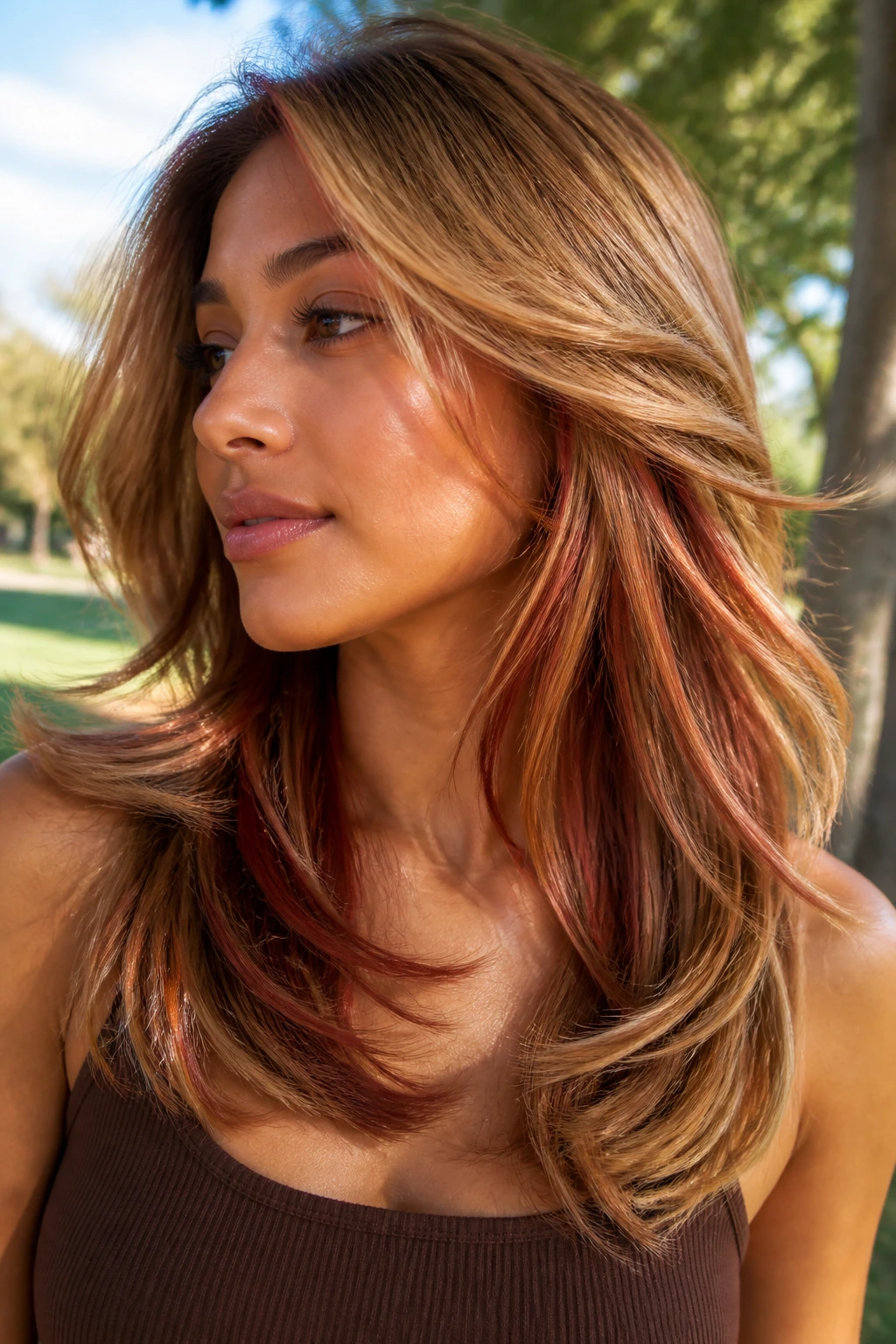
Auburn peekaboo layers work when you want red-blonde lowlights that show up in motion. The auburn stays tucked beneath the top coat of blonde, and the layers let it flash through when the hair flips or lifts. On medium skin, this keeps the color interesting without making the whole head darker.
This style loves haircuts with movement. Shags, long layers, and angled lobs all let the peekaboo effect breathe. If the cut is too heavy, the color hides too much.
The shade itself should be softened, not dense. A sheer auburn underlayer feels modern. A blocky one feels old-school in a hurry.
24. Chili Chocolate Lowlights
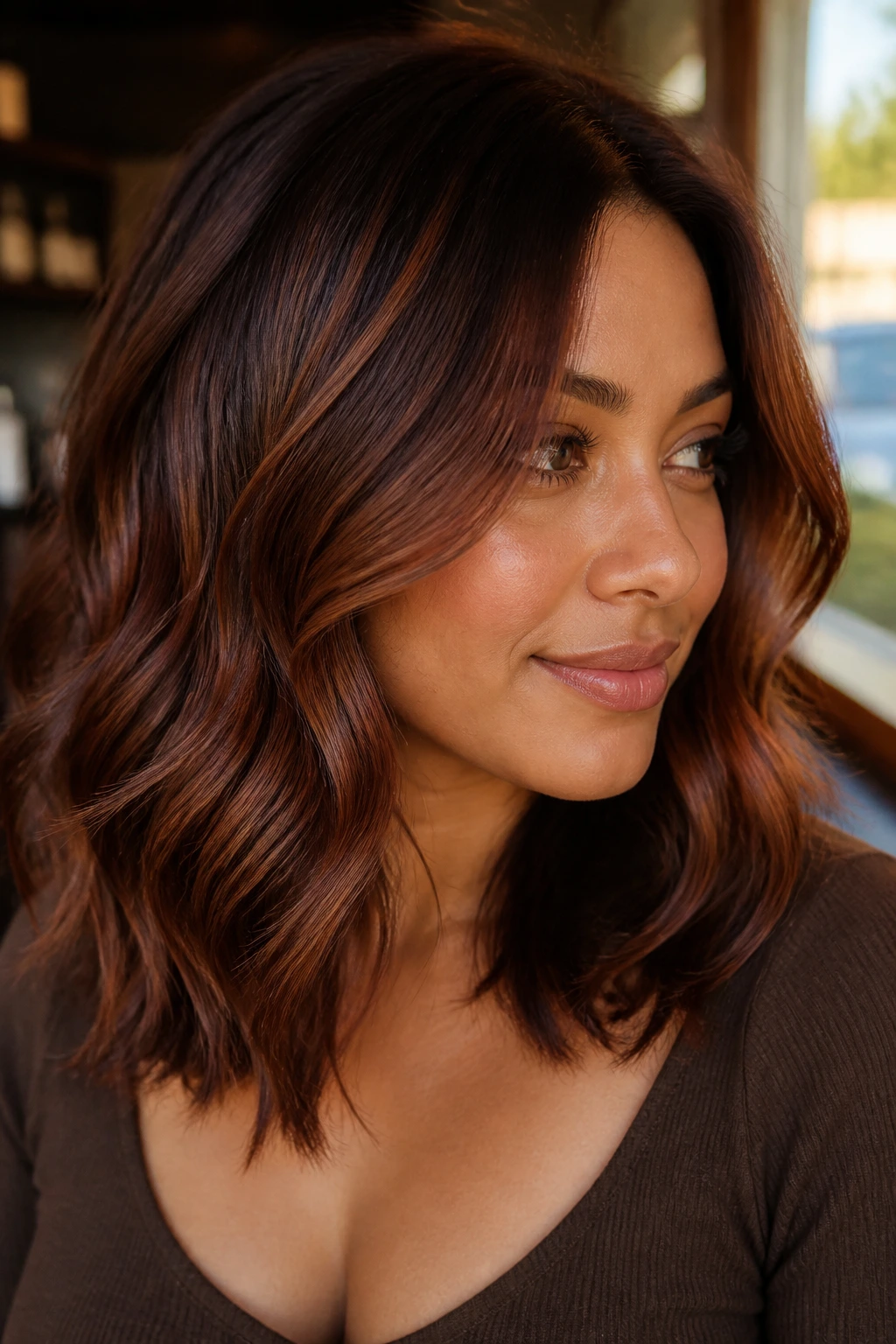
Chili chocolate is for people who want warmth with some bite. The chocolate base keeps the lowlight grounded, while the chili note gives it a red flicker that medium skin can wear without looking washed out. This one is especially useful on darker blondes who need something richer than copper.
I like this around the back and under the crown. It creates depth where the hair needs it most and keeps the front from becoming too heavy. If you have curls, the color really wakes up in the bends.
The mistake to avoid is going too red. Chili chocolate should whisper spice, not shout it.
25. Copper-Red Babylights
Copper-red babylights are tiny, fine, and easy to underestimate. That’s why they work. Instead of obvious streaks, you get dozens of slender red-copper threads that flicker through the blonde and keep medium skin from looking flat. The effect is soft, airy, and much more believable than a heavy block of color.
These are especially good for fine hair because babylights create depth without losing lightness. They also age well as they grow out, which matters more than people admit. A color that still looks intentional six weeks later is worth the salon time.
Ask for micro-fine placement and a formula that leans copper first, red second.
26. Firelight Underlayer Lowlights
Firelight underlayer lowlights are dramatic in the best way when you keep them hidden. The top blonde stays bright, while the lower sections carry a warm red glow that shows when the hair moves. On medium skin, this gives the whole style warmth without making the complexion compete with it.
This works especially well if you wear hair loose and layered. The underlayer can peek through at the sides and at the nape, which keeps things from feeling too uniform. It is one of the smarter options if you want a color that changes depending on the angle.
The firelight effect should be warm and golden-red, not deep burgundy. If it gets too dark, the lift disappears.
27. Mahogany Micro-Lowlights
Mahogany micro-lowlights are the answer when you want richness but not obvious red. Mahogany sits between brown and red, and in tiny placements it gives medium skin a polished frame without screaming for attention. The color also makes blonde hair look less fragile, especially at the ends.
Micro-lowlights are a good call on fine to medium hair because they don’t create chunky contrast. The pattern stays elegant and clean. On curls, they can be slightly thicker, since the texture breaks up the line naturally.
This is the shade I’d point someone toward if they keep saying, “I want warmth, but not copper.” Mahogany is usually what they mean.
28. Sunset Scarlet Veil
Sunset scarlet veil is the boldest note in the bunch, but it can still be wearable when the placement is soft. The scarlet stays muted by blonde and copper, so it reads like sunset light rather than red paint. Medium skin can hold this shade because the warmth feels harmonious, not abrupt.
A veil placement matters here more than anywhere else. Keep the scarlet in soft layers under the top surface and through the ends, then let a few pieces near the face catch the eye. If the whole head gets saturated, the look loses its shape fast.
For anyone who wants red-blonde lowlights with a little more drama, this is the one that gives you a payoff without forcing a full color commitment.
Why These Shades Work Better Than a Flat Blonde
A flat blonde can be pretty for about ten minutes. After that, it starts asking a lot from the skin. On medium tones, especially those with gold, beige, or olive in the mix, a little lowlight depth keeps the face from getting drained by the hair.
The red family is useful because it warms without always going orange. Copper brings light. Auburn brings weight. Strawberry brings freshness. Rosewood and mahogany add shadow without making the style heavy. The right choice depends less on the name and more on the undertone of the skin and the amount of light you want the hair to keep.
Tools That Make Color Decisions Easier
- A phone full of saved photos: Bring 3 to 5 pictures with the same red-blonde family so the conversation stays focused.
- A daylight mirror or window light: Hair color shifts hard under bathroom lighting, and you want to judge warmth in real light.
- A tail comb: Useful for looking at where the lowlights sit, especially if you’re checking placement at home or talking through sections with a stylist.
- Color-safe shampoo: Red pigments fade faster than people expect, and gentle cleansing buys you more wear between appointments.
- A sulfate-free conditioner: Keeps the hair from feeling rough, which matters because porous hair loses red tone faster.
- A bond-building mask: Helpful if the hair has been lightened more than once and feels stretchy or dry at the ends.
- Heat protectant spray: Flat irons and curling wands can pull red right out of the hair if you skip this step.
- A satin pillowcase: Not glamorous, but it cuts down on friction and helps the finish stay smoother.
- A gloss or color-refreshing mask: Good for keeping the red side alive when the blonde starts to look dull.
- A wide-tooth comb: Better than yanking a brush through damp, color-treated hair.
Picking the Right Red for Your Undertone
The easiest mistake is assuming all red-blonde lowlights are interchangeable. They are not. A copper that looks rich on golden skin can look brassy on olive skin, and a rosewood that softens neutral skin can turn sleepy on a very warm complexion.
Golden and peach undertones
Copper, cinnamon, burnt apricot, and amber usually work best here. They echo the warmth already in the skin instead of fighting it. If you go too cool, the face can look slightly sallow.
Neutral undertones
Rosewood, strawberry smudge, maple red, and rose gold shadow melt are safe starting points. Neutral skin can take red in either direction, but the best results usually sit in the middle, where brown and red are balanced.
Olive undertones
Muted auburn, terracotta, mahogany, and rusted blonde depth tend to behave better. Too much orange can pull the green out of the skin, and that’s a problem you notice fast in daylight. A touch more brown in the formula usually fixes it.
When you book the service, ask for lowlights that are one to two levels deeper than your blonde base, not five levels darker. That one detail changes everything. It keeps the color dimensional instead of heavy.
How to Wear Red-Blonde Lowlights Day to Day
Placement: The prettiest look usually puts the richest lowlights through the midlengths, underlayers, and side sections, with lighter pieces around the face left intact. That keeps the skin from getting boxed in by color.
Styling: Loose waves show the ribbons best, but straight hair can look striking if the lowlights are finely placed. A blowout with a round brush gives the red depth a soft sheen. Tight curls need a bit more contrast in the sectioning so the color doesn’t disappear.
Makeup: Warm blush, bronze, taupe, and terracotta tend to sit well with these shades. A harsh pink lip can clash with copper and auburn; a muted rose or brown-red usually works better.
Wardrobe: Earth tones, cream, denim, rust, olive, and deep navy all tend to sit nicely beside red-blonde lowlights. Bright cool neon shades can make the hair look louder than intended.
The color should feel like part of the whole look, not a separate event. That’s the line.
Extra Shine, Softness, and Depth
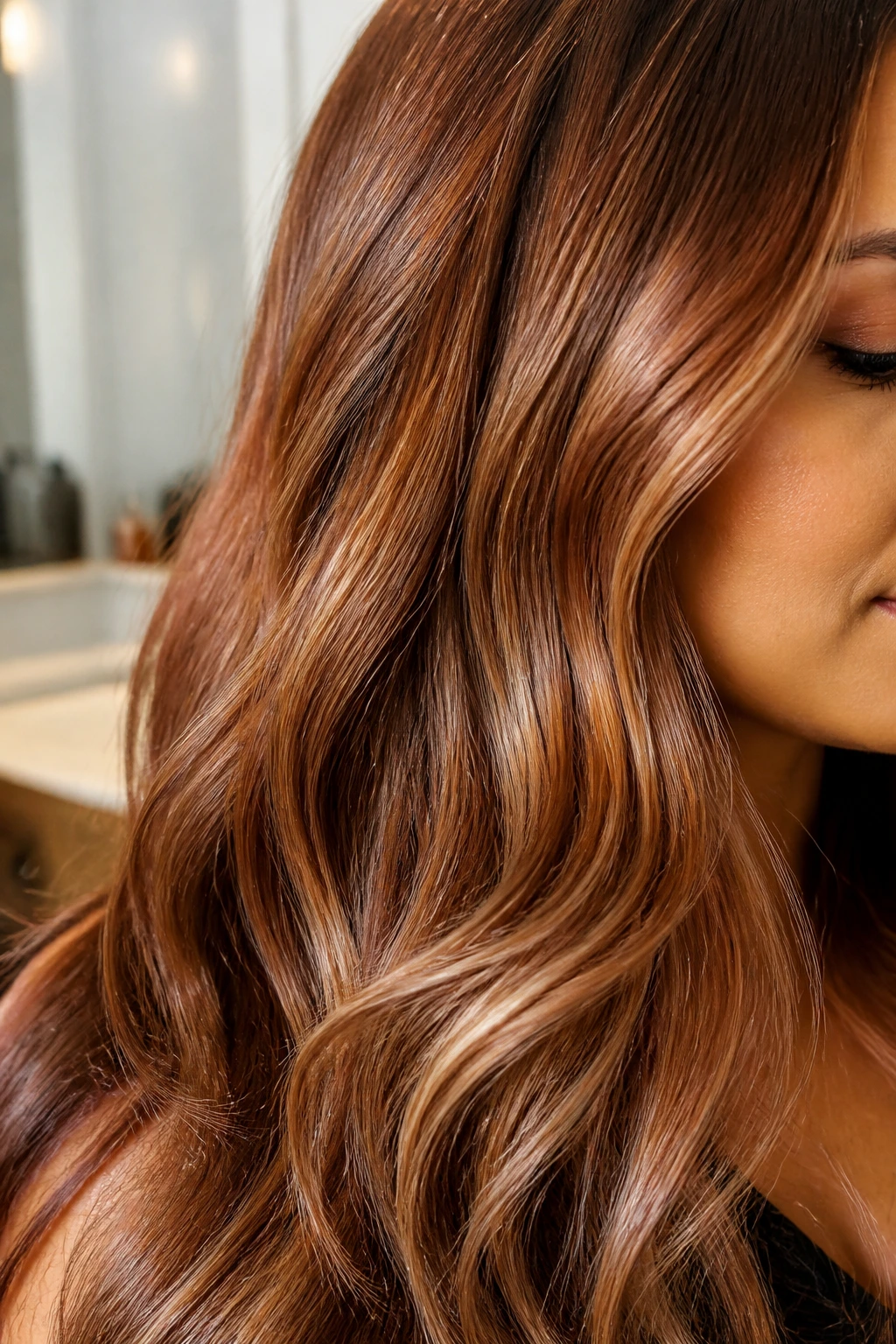
Flavor Enhancement: A clear or beige-toned gloss after coloring keeps the red-blonde tones from looking dusty. Ask for a salon gloss every 4 to 6 weeks if the hair is porous or faded at the ends.
Customization: If the hair is thick, ask for broader painted ribbons under the top layer. If it’s fine, go with micro-lowlights or babylights so the dimension shows up without eating the blonde.
Serving Suggestions: Face-framing pieces, a soft wave, and a center or slightly off-center part will show the lowlights without making the style look overworked. A deep side part can make the color read richer and more dramatic, which some cuts need.
Make-It-Yours: For cooler makeup wearers, lean rosewood or cranberry. For warm-toned wardrobes and bronzed skin, copper, cinnamon, and terracotta usually read better. If you want something low-key, keep the red hidden under the top layers and let the surface stay blonde.
Keeping the Color Fresh Between Salon Visits
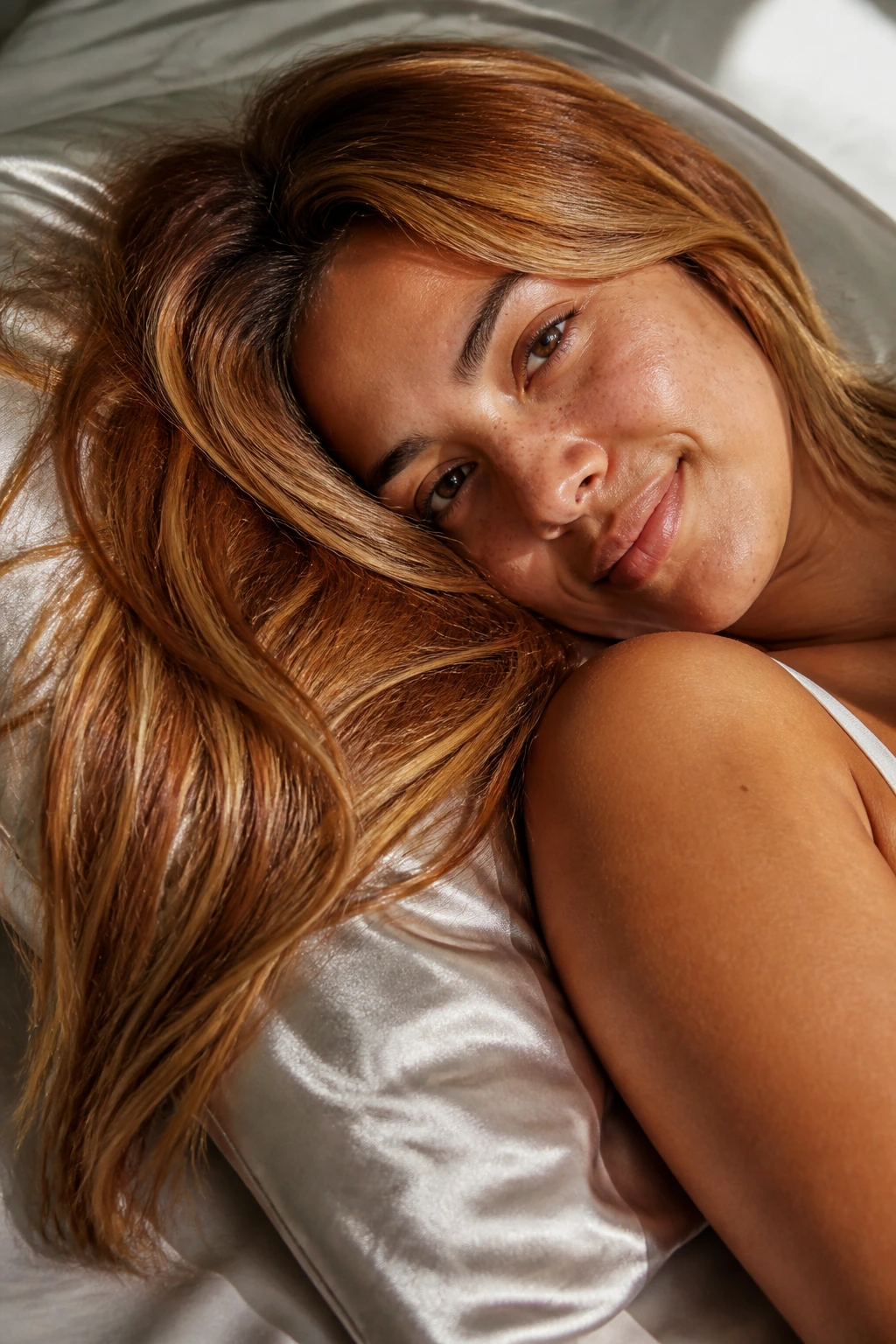
Red pigments fade faster than blonde does, and that’s the annoying truth of it. The outer layer — especially around the face, the part line, and the ends — usually loses warmth first because that’s where heat, water, and UV exposure hit hardest.
Wash the hair 2 to 3 times a week if you can. More than that, and the red side starts washing out faster than the blonde. Use lukewarm water, not hot. Hot water strips color and opens the cuticle too much, which is a quick way to make the ends look tired.
A salon gloss every 4 to 6 weeks keeps the red-blonde family looking fresh without full recoloring. Full lowlight refreshes usually land around 6 to 8 weeks, though porous or heavily lightened hair may need tone earlier. If you heat-style often, protect the ends every single time. No exceptions. A 350°F flat iron on unprotected color-treated hair can chew through tone faster than people expect.
At night, use a satin pillowcase or wrap the hair loosely if it tangles. If the midlengths are dry, a small amount of leave-in on damp hair is better than piling on oil after styling. Too much oil can make the red look dull.
Variations and Adaptations to Try
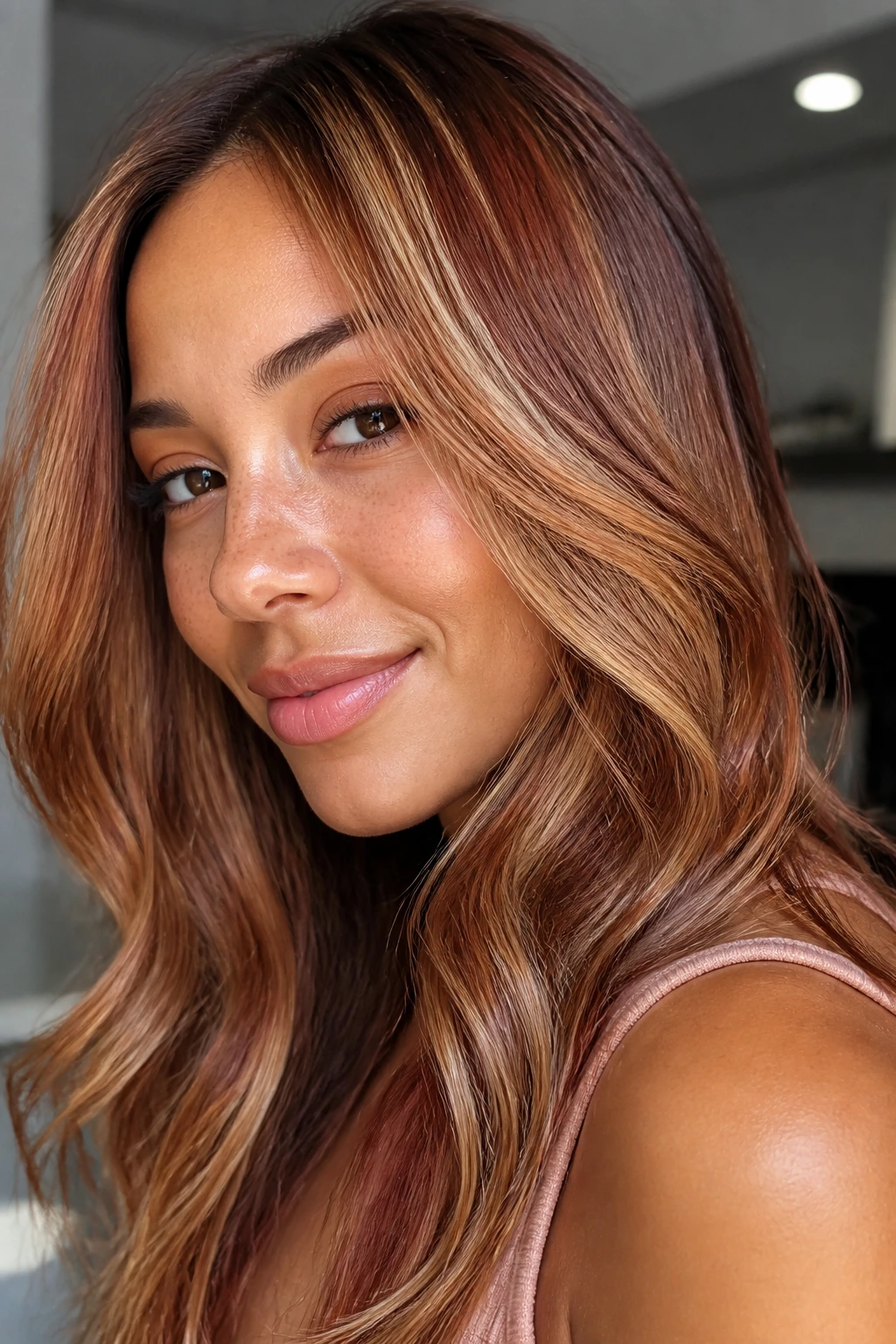
Soft Copper Melt: This version keeps the copper diffuse from roots to ends, with no hard contrast. It suits medium skin that already has warmth and wants depth, not drama.
Muted Strawberry Beige: Take the strawberry down a notch and blend in beige lowlight color. That gives a softer, more wearable finish for neutral skin and fine hair.
Mahogany Interior Layers: Use deeper mahogany underneath the blonde surface, especially on long or thick hair. The hair gets body and shadow without the front going dark.
Terracotta Curl Ribboning: Curly and coily textures can hold terracotta lowlights beautifully when the sections are slightly wider. The warmth shows through the curl pattern instead of sitting on top of it.
Rosewood Face-Frame: Keep the front pieces rosewood and let the back stay more copper or auburn. This works when you want the skin to look soft and the length to feel a little richer.
Low-Commitment Peekaboo: Put the red-blonde lowlights only under the top layer and through the nape. It’s the easiest way to test a warmer color family without changing the whole head.
Common Mistakes to Avoid
Going too dark too fast: If the lowlights are more than two or three levels deeper than the blonde, medium skin can look shadowed instead of lifted. Ask for depth, not darkness.
Choosing a red that’s too bright: Cherry and orange-red look exciting in the bowl and harsh in daylight. If the formula is screaming before the hair is dry, it is probably too loud for everyday wear.
Ignoring placement: Thick, evenly spaced stripes can make the color look dated. Soft ribbons, interior panels, and underlayers read more natural and flatter the face better.
Forgetting porosity: Lightened ends grab red fast. If the hair is porous, the ends can go muddy while the roots look fine. A gloss or lower-strength formula helps keep the tone even.
Over-washing the fade out: Red tone leaves fast with frequent shampooing. If you wash daily, the warm part of the color will disappear first, and the whole look turns flat. Dry shampoo can buy you time between washes.
Leaving the hairline too heavy: Heavy red around the temples can make medium skin look flushed. Softer pieces near the face usually age better and feel less harsh.
Variations and Adaptations for Different Hair Types
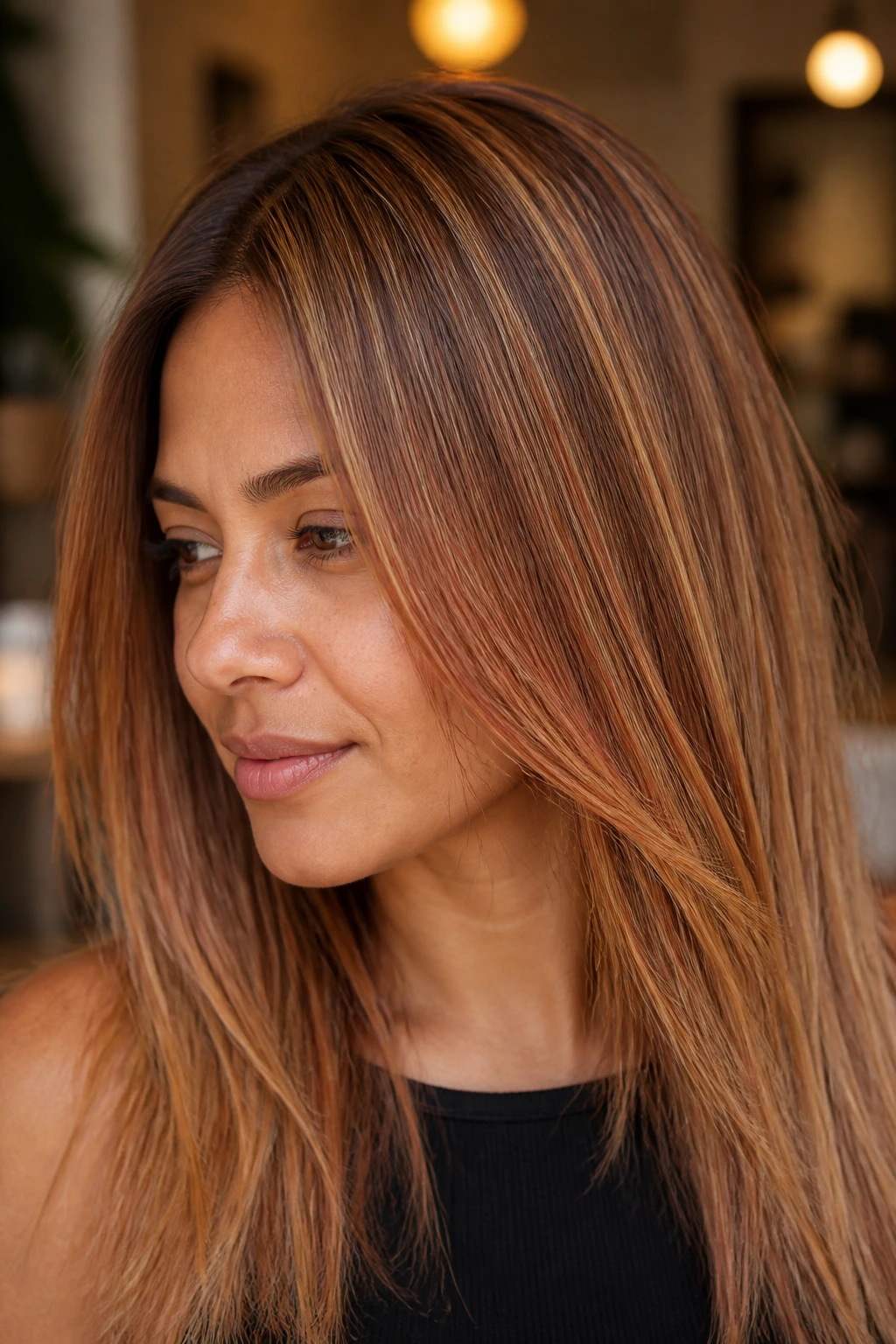
Fine Hair, Micro-Lowlight Edition: Keep the sections tiny and use copper, rosewood, or soft cinnamon. Fine hair loses dimension fast if the pieces are too broad.
Thick Hair, Deeper Panel Version: Use broader terracotta, auburn, or mahogany panels underneath. Thick hair needs more visible contrast so the color doesn’t vanish into the density.
Curly Hair, Ribbon-Weave Version: Weave the lowlights through the bends rather than painting straight lines. Curls already break up the color, so the formula can stay softer and still show.
Low-Maintenance Grow-Out Version: Keep the red-blonde tones under the top layer and near the ends. The grow-out stays gentler, and you can stretch appointments longer.
Bold Warm Version: For people who want red to show, push into cherry cola, sunset scarlet, or brick red contouring. The key is still balance — even bold red looks better when the blonde is left in the mix.
Frequently Asked Questions
Do red blonde lowlights work on olive medium skin?
Yes, but the shade choice matters. Olive skin usually looks best with muted auburn, rosewood, terracotta, or mahogany rather than bright orange-red, which can pull the complexion off balance.
How dark should the lowlights be?
Usually one to two levels deeper than your base blonde is enough. If you go much darker, the color can read as a brunette stripe instead of a red-blonde shift.
Can I get red blonde lowlights without bleach?
If your hair is already light enough, yes. A demi-permanent lowlight can deposit tone without lifting the hair, which is often the better move when you want warmth, not more lightness.
Will red lowlights fade fast?
They usually fade faster than neutral brown lowlights because red pigment is less stubborn in porous hair. Color-safe shampoo, cool water, and a gloss schedule help keep the tone alive longer.
What’s the best red lowlight for warm medium skin?
Cinnamon, copper, burnt apricot, and amber are usually the easiest wins. They echo the skin’s warmth and keep the blonde from looking pale or ashy.
Can I do this on curly hair?
Absolutely, and curls often make the color look better because the texture breaks up the ribbons. Just ask for placement that follows the curl pattern so the lowlights don’t disappear inside the shape.
What if my hair pulls orange when it’s colored?
That usually means the formula is too copper-heavy or the lift underneath was too warm. A colorist can correct that with a more brown-based red or a glazing step that cools the orange edge.
How often should I refresh the color?
A gloss every 4 to 6 weeks and a full refresh around 6 to 8 weeks is a solid starting point. If your hair is very porous or you wash often, you may need a touch-up sooner.
Can I keep the blonde bright and still add lowlights?
Yes. In fact, that’s where this color family shines. The blonde stays lively while the red-blonde pieces underneath create depth, which is far nicer than losing all the lightness.
The Kind of Color That Moves With You
Red blonde lowlights do their best work when they’re not trying to be the loudest thing in the room. On medium skin, that subtlety is the whole point. A little cinnamon under the crown, some auburn near the ends, a strip of rosewood around the face — those details change how the whole head reads.
The nicest version is usually the one that looks better in motion than in a mirror held dead still. Hair turns. Light shifts. Skin changes with it. That’s where these colors earn their keep, and why the right red-blonde lowlight can make even a simple cut look far more intentional.