



Warm skin can make brown highlights look rich or flat, and the difference usually comes down to one thing: whether the brown has enough gold, red, or toasted depth to echo what’s already in your face. The best brown medium highlights for warm skin tones don’t shout blonde. They sit in that sweet spot where the hair still looks brunette, but the light catches caramel, chestnut, mocha, and toffee in a way that makes the whole head feel alive.
That sweet spot matters more than people think. Too pale, and the color can throw a yellow cast against peachy or golden skin. Too ash, and the hair starts looking smoked out and tired, which is a strange fate for a color that should feel glossy and expensive. Medium brown highlights solve that problem because they add dimension without stealing the base, and they grow out in a softer way than high-contrast blonde pieces.
The looks below range from whisper-soft ribbons to chunkier lowlight combinations, because warm brunettes do not all want the same thing. Some people want a face frame that brightens their cheekbones in daylight. Others want a deeper, richer brunette with just enough lift to show off waves. A few want the sort of color that looks like it was spent an afternoon in good sunlight and came back with better manners.
Why Brown Medium Highlights Work So Well on Warm Skin
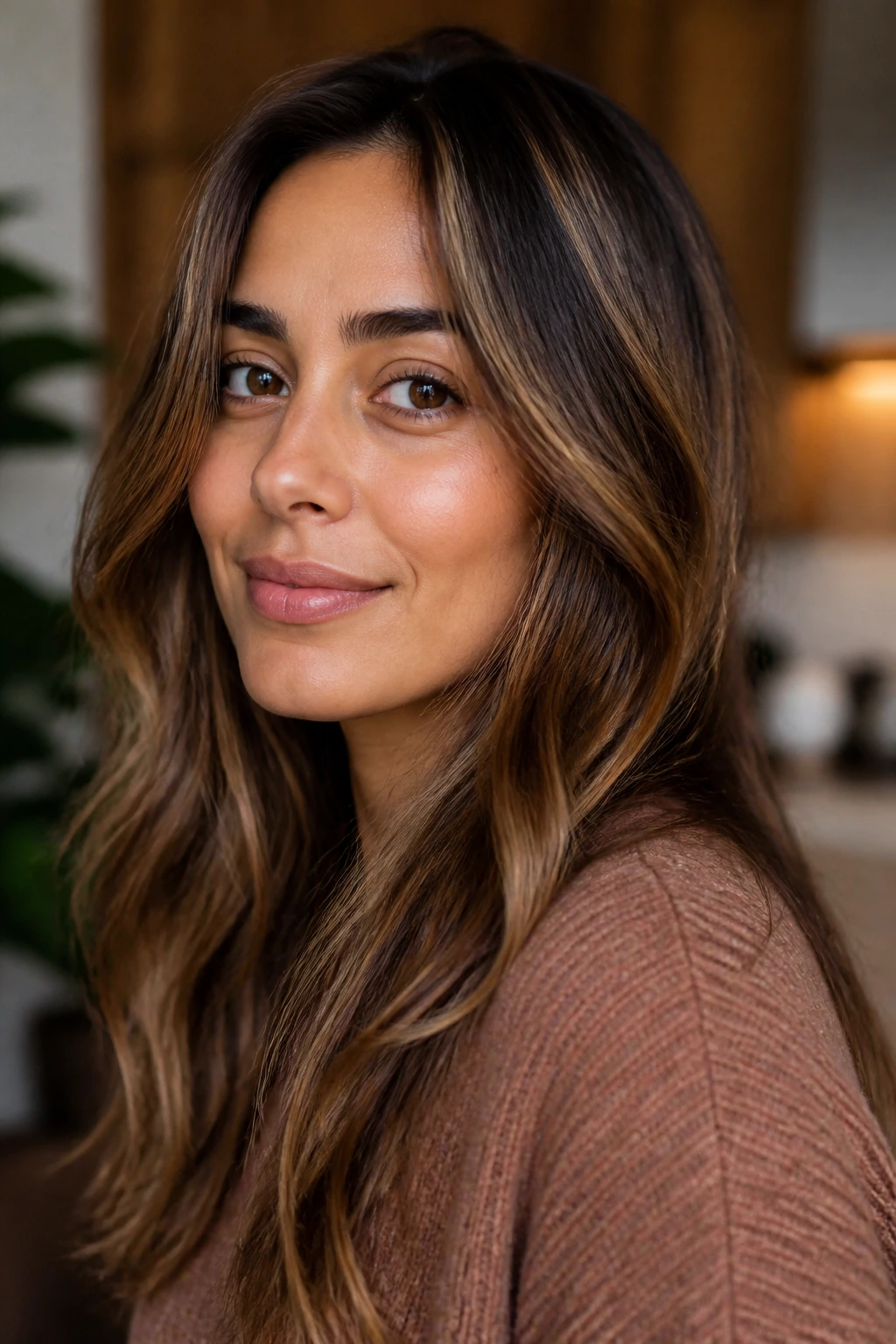
-
Undertone match: Caramel, chestnut, mocha, walnut, and toffee live in the same warm family as golden, peach, and olive skin, so the color reads as part of your face instead of competing with it.
-
Soft grow-out: Medium brown ribbons blur into a brunette base more gently than pale blonde foils, which means the line at the root stays quieter for longer.
-
Better texture payoff: On waves and curls, these shades catch bends and ridges instead of sitting in one flat stripe. That matters. Flat color is the enemy here.
-
More control over brightness: You can brighten the front pieces, keep the crown darker, and still end up with a cohesive look. That balance is hard to fake with one-tone color.
-
Works across hair types: Fine hair can use thin babylights, thick hair can handle broader panels, and curly hair can wear ribbons that wrap around each curl clump without looking chunky.
1. Caramel Ribbons Through Espresso Brown
Caramel ribbons are the safest place to start if you want visible change without crossing into blonde territory. On espresso brown hair, those threads of light sit like tiny sun-struck seams, especially around the face and through the mid-lengths where movement matters most.
Why It Works
A ribbon this size should be narrow enough to move with the hair, not sit on top of it like stripes. Ask for pieces that are about 1/8 to 1/4 inch wide near the face, then a few softer slices through the back so the color doesn’t get front-heavy. The caramel should lift only one to two levels above your base, which keeps warm skin looking fresh instead of washed out.
Best for: someone who wants dimension first and brightness second. It’s low drama in the best way.
- Keep the ribbons soft around the part.
- Let the ends stay deeper than the mids.
- Finish with a clear gloss so the caramel doesn’t look dry.
2. Chestnut Balayage on Long Layers
Chestnut balayage has a quiet sort of confidence. It gives long layers enough warmth to show shape, but it never turns the hair into a gold helmet, which is something warm brunettes should fear more than they do.
Chestnut is the color that keeps brunettes from looking heavy. It has enough red-brown life in it to flatter golden skin, but not so much copper that it starts fighting with peach blush or bronzed makeup. On layered hair, hand-painted chestnut through the lower half creates a slow gradient, so the eye sees movement before it notices color.
The trick is to keep the brightest areas a little below the cheekbone and let the top stay a shade deeper. That way, the hair still has a root, which is what makes balayage look grown-up instead of streaky.
3. Mocha Money Piece with Dimensional Ends
Want a brighter face without committing to an all-over lift? A mocha money piece does the job with less chaos than a full set of face-framing foils. The color sits right in that medium-brown range that makes warm skin look clearer, especially if your face tends to flush or tan easily.
How to Wear It
The front sections should be a shade lighter than the rest of the hair, but not dramatically lighter. Think soft mocha with a satin finish, not beige blonde. Keep the ends dimensional by leaving the lower lengths a little deeper, because a money piece looks richer when it isn’t repeated all the way down.
- Ask for a face frame about 1 to 1.5 inches wide on each side.
- Keep the brightness focused around the cheekbones and jawline.
- Let the ends stay smoky and grounded.
Best for: round, oval, and heart-shaped faces that benefit from a little light near the eyes.
4. Cinnamon Ribbon Highlights on a Wavy Lob
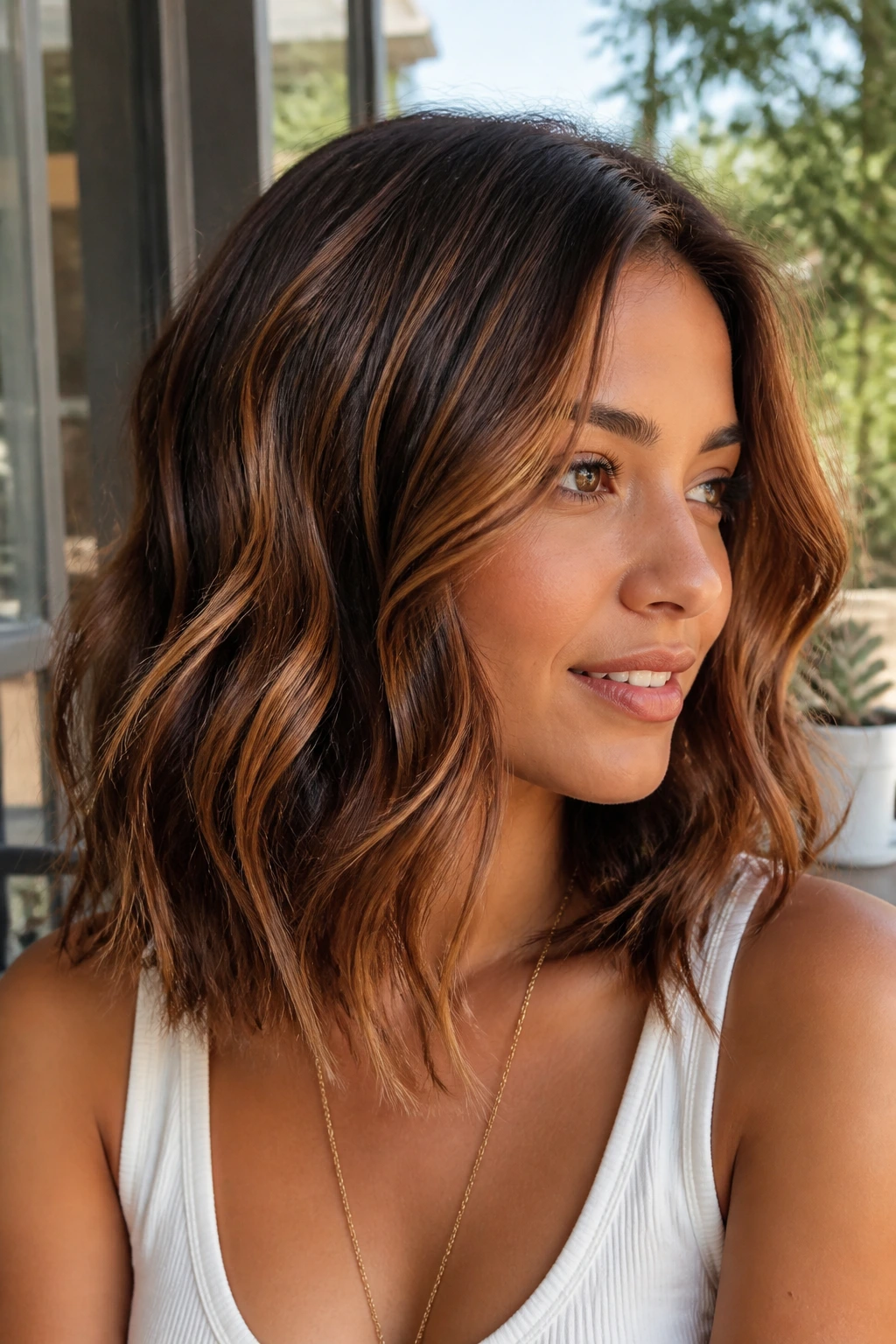
A wavy lob is the kind of haircut that tells on bad color. If the highlights are too chunky, every bend looks striped. If they’re too fine, the color disappears. Cinnamon ribbons thread that needle because they bring warm red-brown light without turning the whole cut copper.
The right version shows up in the bends of the wave, not just on the surface. That’s why I like this shade on hair that gets air-dried into a bend or curled with a 1 to 1.25-inch iron. The movement opens the ribbon and lets the cinnamon glow without looking loud.
What to Watch For
Too much cinnamon can go orange fast on already warm skin. Keep the ribboning soft, and ask your colorist to leave a few deeper mocha pieces between the brighter ones. That contrast is what keeps the cut from blurring into one warm block.
5. Toffee Lowlights Woven into Medium Brown
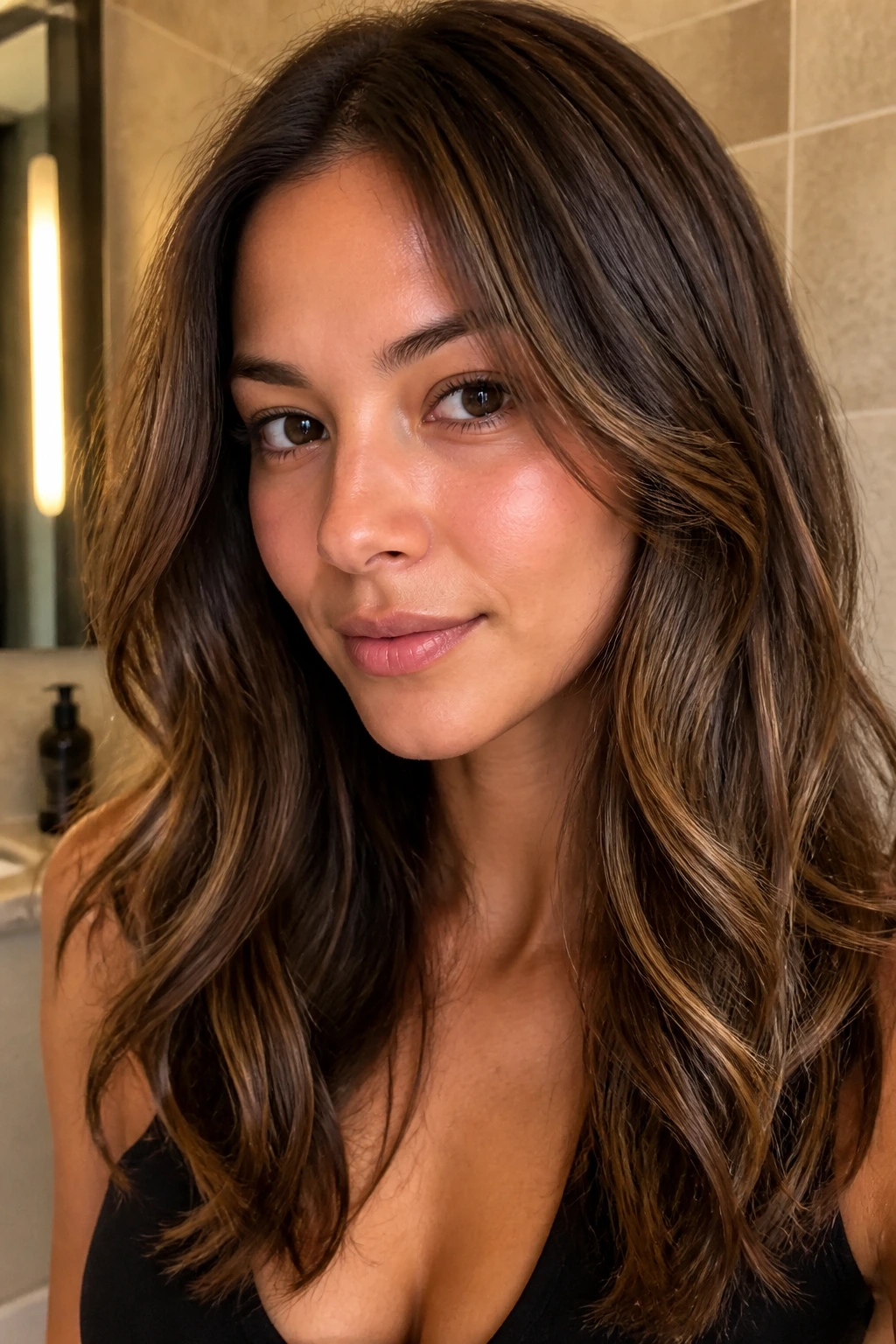
Not every good brunette look is built on lifting. Sometimes the smartest move is to go darker in the right places, and toffee lowlights are one of my favorite ways to do it. They tuck into medium brown hair and give the lighter pieces a frame, which matters a lot if your hair has gotten too bright at the ends.
Toffee lowlights are especially useful when warm skin starts looking a little washed by over-lightened hair. The added depth brings back the face, and that sounds dramatic until you see it in a mirror. Then it’s obvious.
Best for: anyone whose existing highlights feel too scattered or too light on the ends. The result looks denser, not darker for the sake of being darker.
6. Honeyed Chestnut Gloss on Warm Brunette
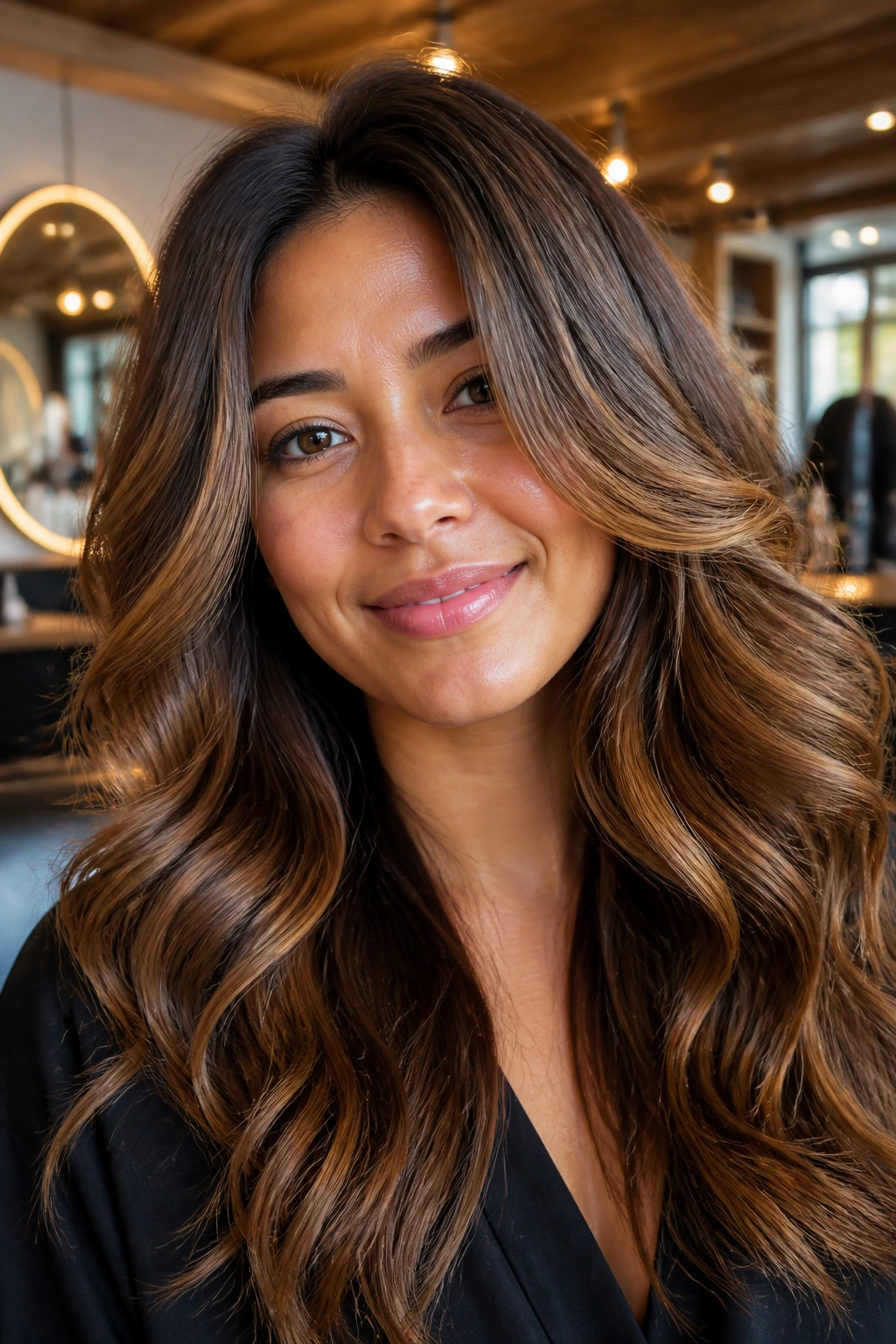
Some color jobs need less lifting and more polish. Honeyed chestnut gloss is one of those. It works like a tinted topcoat over brunette hair, adding warm reflection so the surface looks smoother and richer without changing the whole haircut.
A gloss like this is a smart fix for hair that has faded to a dry brown after sun, heat styling, or too many weeks between salon visits. The honey note keeps the chestnut from looking flat, and warm skin gets that nice soft glow that happens when the hair and face sit in the same color family.
The best part is the maintenance. A gloss is usually easier to live with than a full highlight session, and the grow-out is forgiving because the roots stay close to the base.
7. Cocoa Babylights for Fine Hair
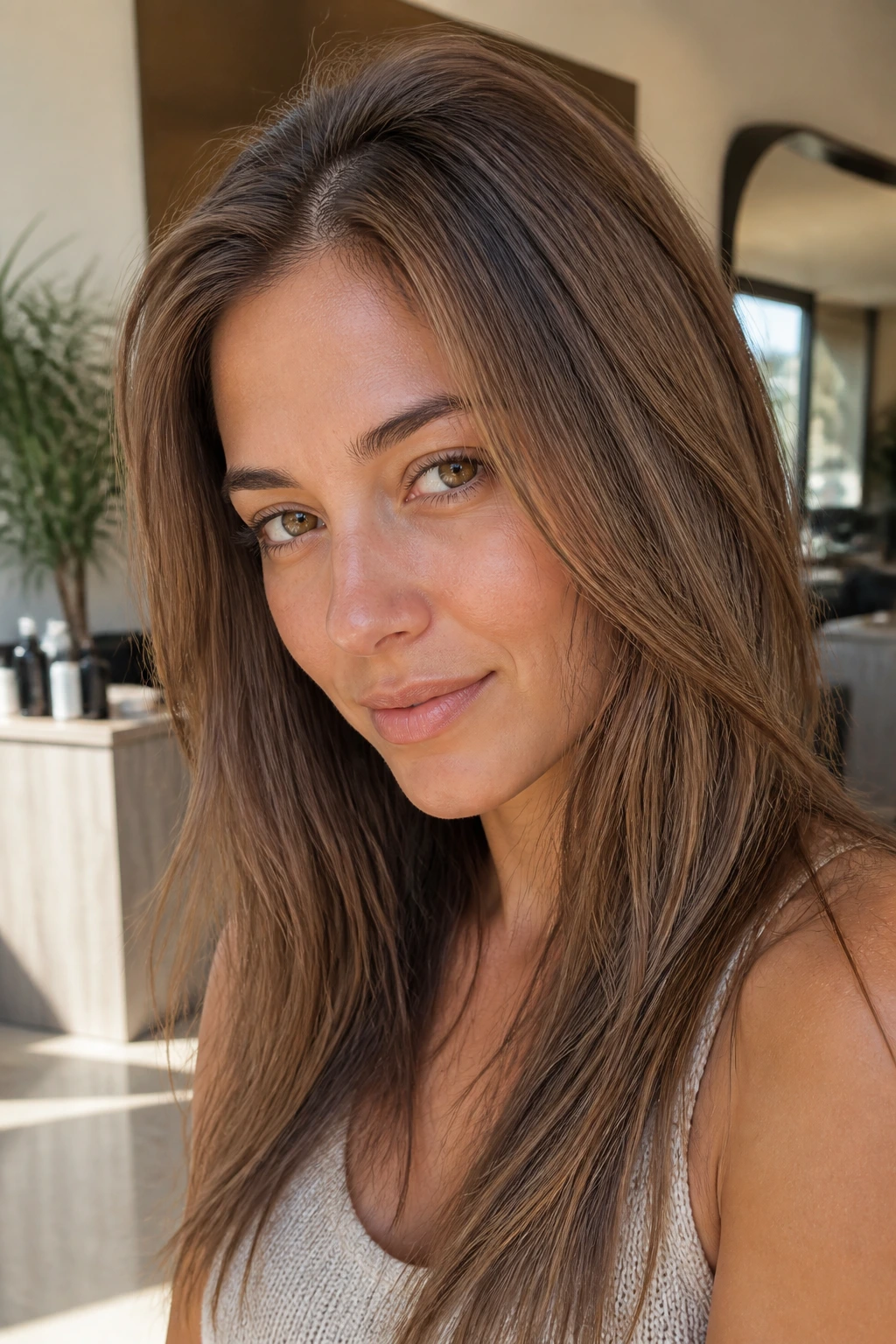
Fine hair can get swallowed by bold highlight panels. That’s why cocoa babylights are such a good choice. They’re tiny, close together, and just lighter than the base, which gives the hair a kind of woven texture without making the strands look see-through.
Why It Works
Babylights mimic the sort of natural lightening hair gets after a long stretch of sunlight, but the cocoa tone keeps the whole look grounded for warm skin. If your hair is fine, ask for very narrow weaves at the crown and around the part, then slightly more visible pieces through the sides where you want movement.
The result is subtle on purpose. That’s the point.
Tip: keep the toner warm, not beige. A cool toner on fine hair can make the whole head look dusty.
8. Maple Melt on Shoulder-Length Hair
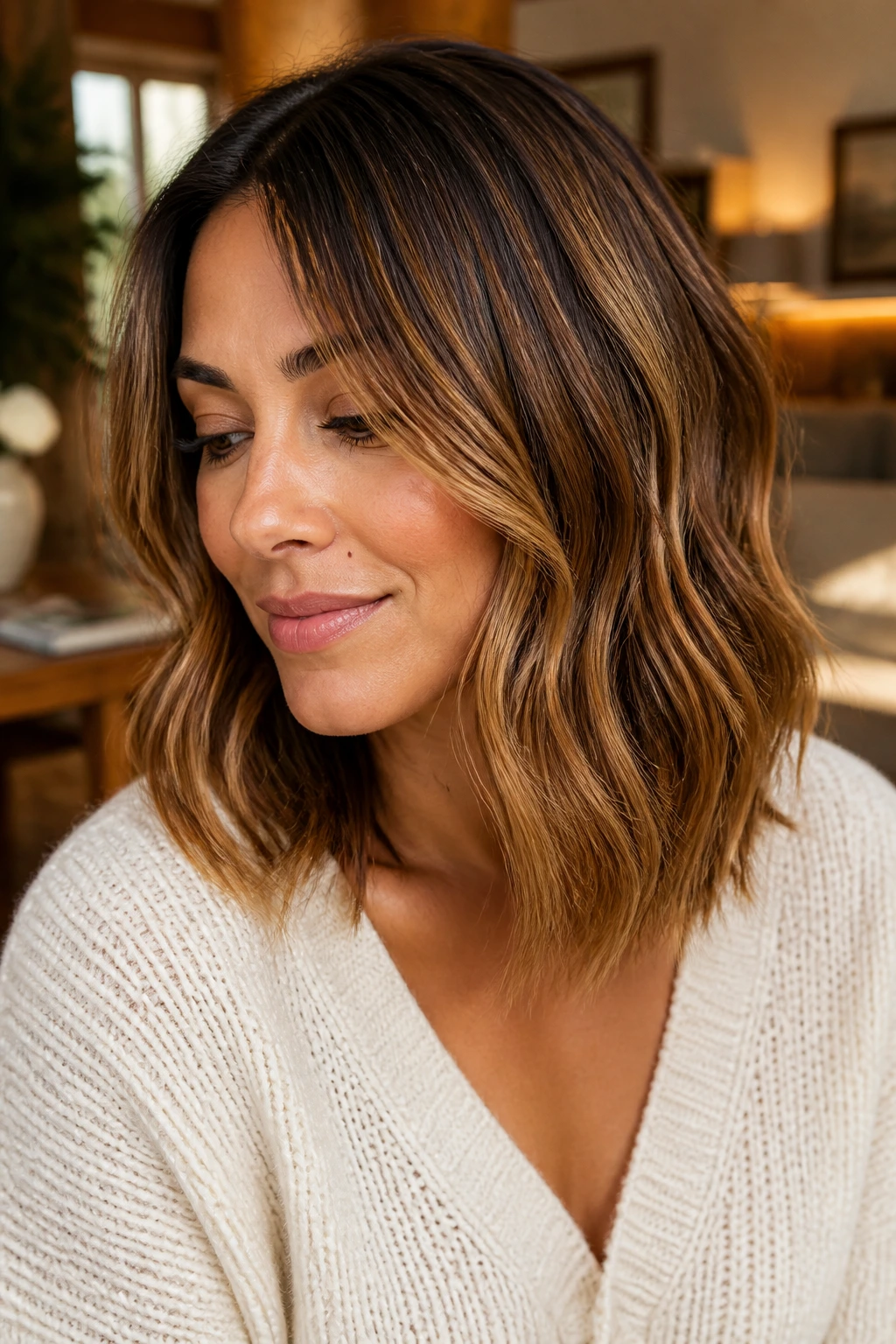
A maple melt gives shoulder-length hair a soft start at the root and a warmer finish at the ends. It’s the kind of color that looks like it grew that way, which is a hard trick to pull off when the base is brown and the goal is dimension, not drama.
I like this one on shoulder-length cuts because the color has enough room to fade from darker root to medium maple mid-lengths without getting muddy. On shorter hair, the blend can feel rushed. On longer hair, it can lose the point. Shoulder length is the sweet spot.
The warmth is important here. Maple has that amber-brown edge that flatters golden and peach undertones without making the hair too red.
9. Hazelnut Panels on Thick Layers
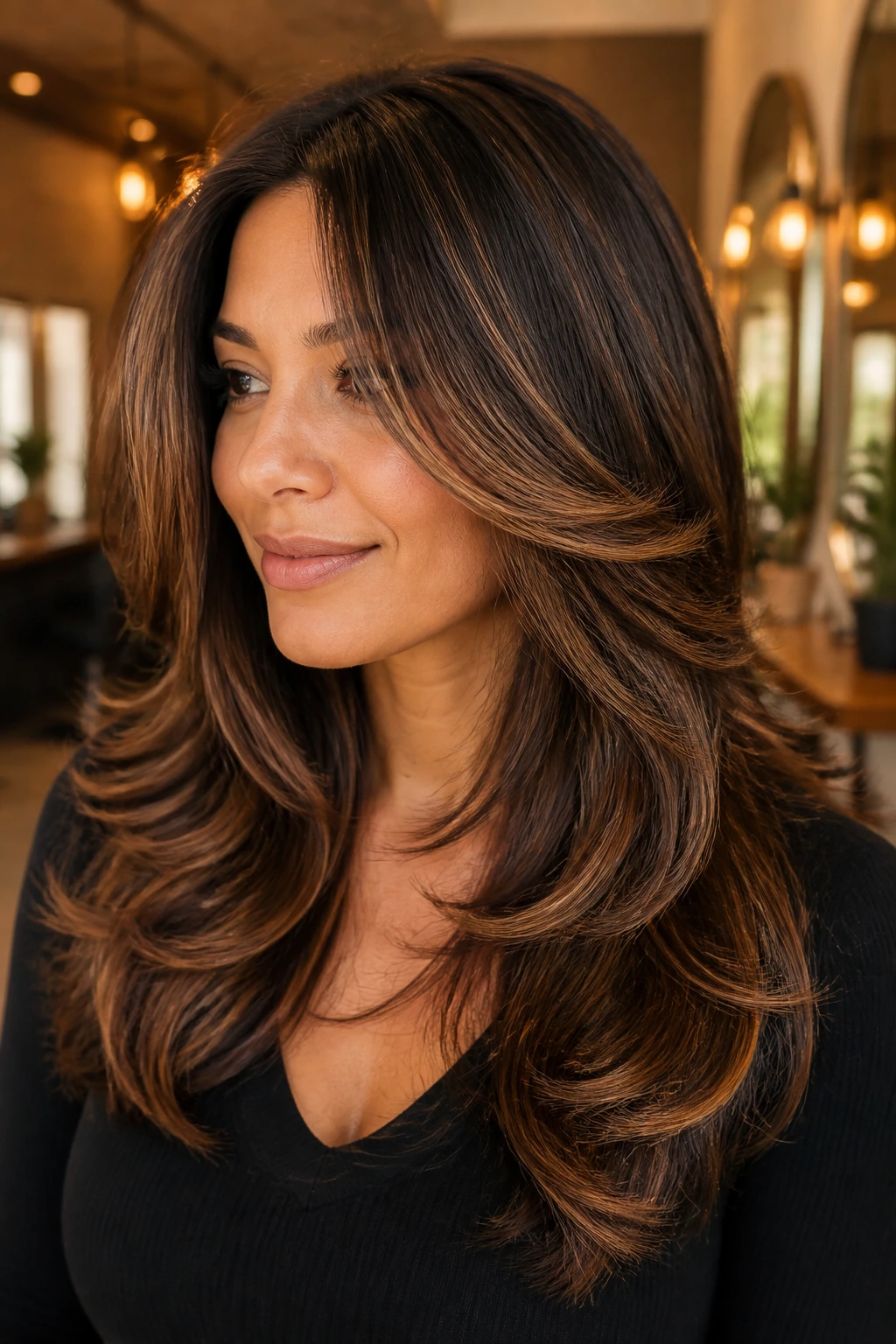
Thick hair can handle bolder placement, and hazelnut panels take advantage of that. Instead of tiny hidden highlights, you get visible pieces that break up density and show off the shape of the cut. On warm skin, hazelnut reads rich, not brassy, which is exactly what a lot of brunettes want but can’t quite name.
How to Use It
Ask for medium-width panels through the lower half and a few lighter strips around the face. On thick hair, too many fine pieces can disappear into the mass. Slightly wider placement gives you better payoff and makes each wave, bend, or curl look intentional.
This is one of the few looks where a stronger contrast is useful. The hair needs something to say.
10. Amber-Glazed Face Frame
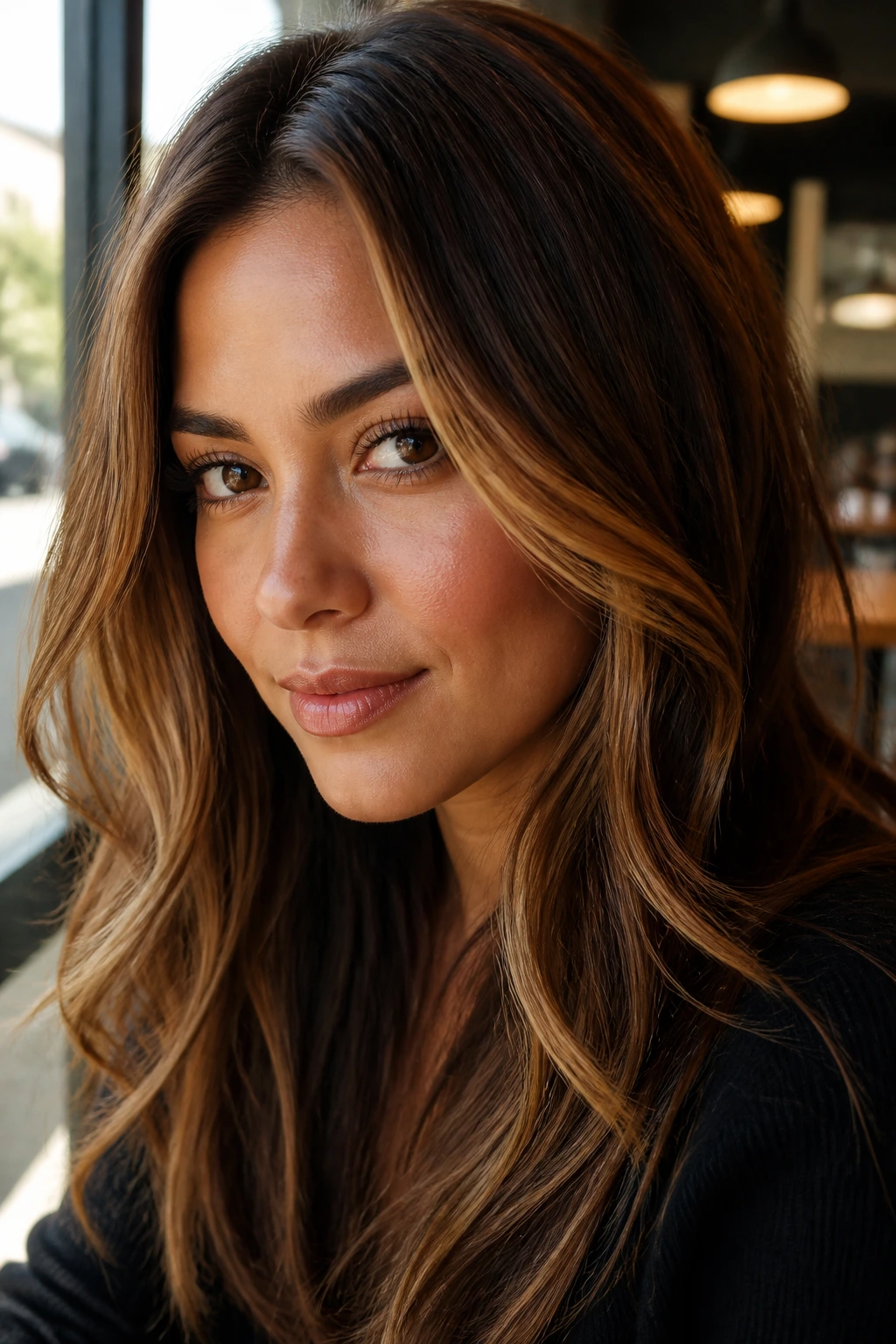
Amber around the face does a specific job: it wakes up the skin. If your complexion leans golden or peach, this shade can make the cheeks look brighter and the eyes look less tired, even on a bare face.
The key is restraint. A face frame that’s too wide starts looking chunky, and amber that climbs too high toward the crown can take over the haircut. I prefer the brightest piece to sit near the cheekbones and the softer glaze to fade into a medium brown through the rest of the front.
Best for: anyone who wants a visible change at the front without touching the whole head.
11. Sable and Caramel Contrast
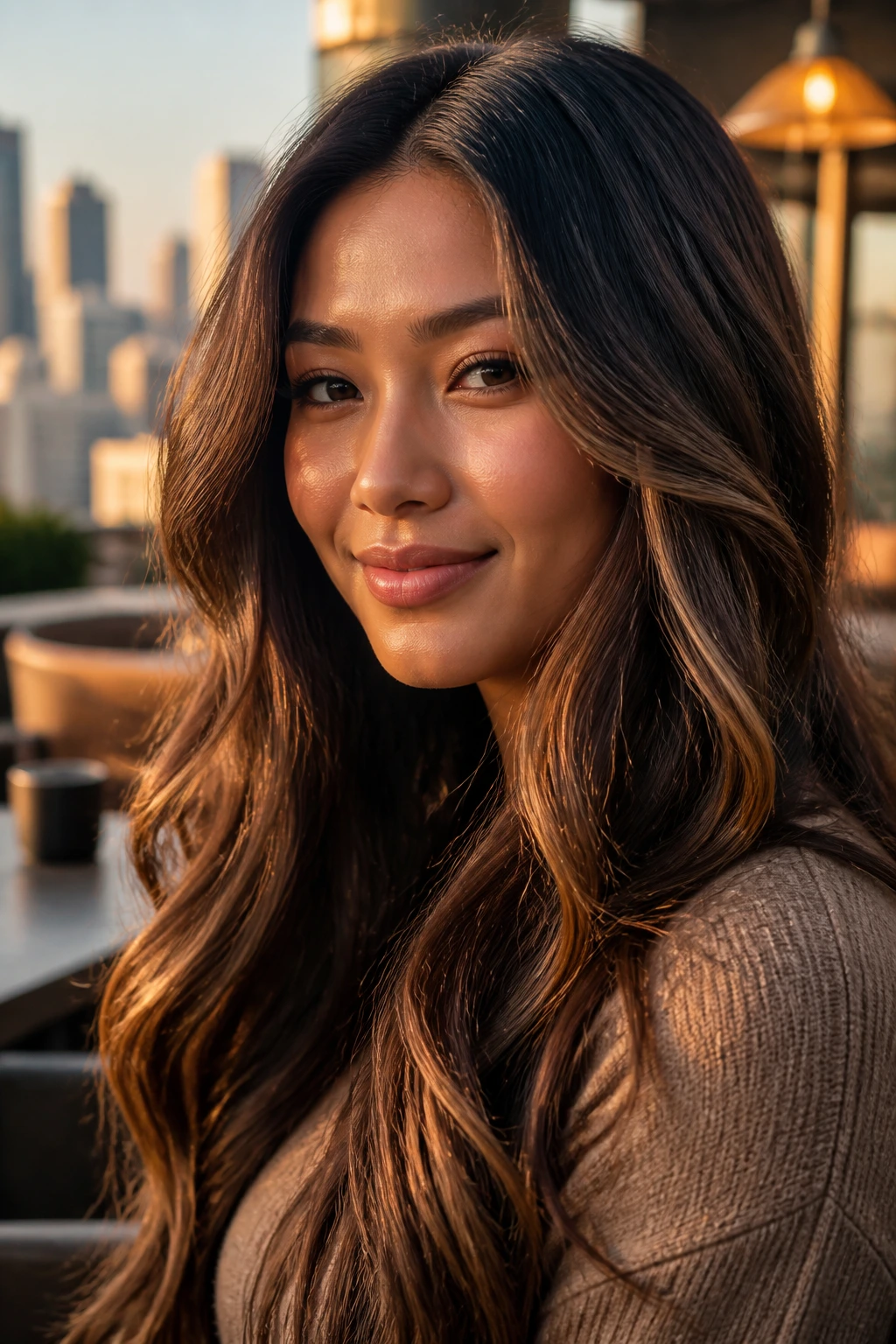
This is the look for people who want the hair to have some edge. Sable lowlights keep the base deep, while caramel pieces break through the surface so the color doesn’t fall flat in daylight. On warm skin, that contrast looks crisp rather than harsh because the caramel still sits in a warm family.
It’s a particularly good choice if your hair has multiple textures or if you wear it in half-up styles a lot. The deeper pieces keep the underlayers from vanishing, and the caramel shows where the hair moves. That movement is what saves the look from reading blocky.
If you like dimension you can see from across a room, this one earns its keep.
12. Burnt Sugar Balayage
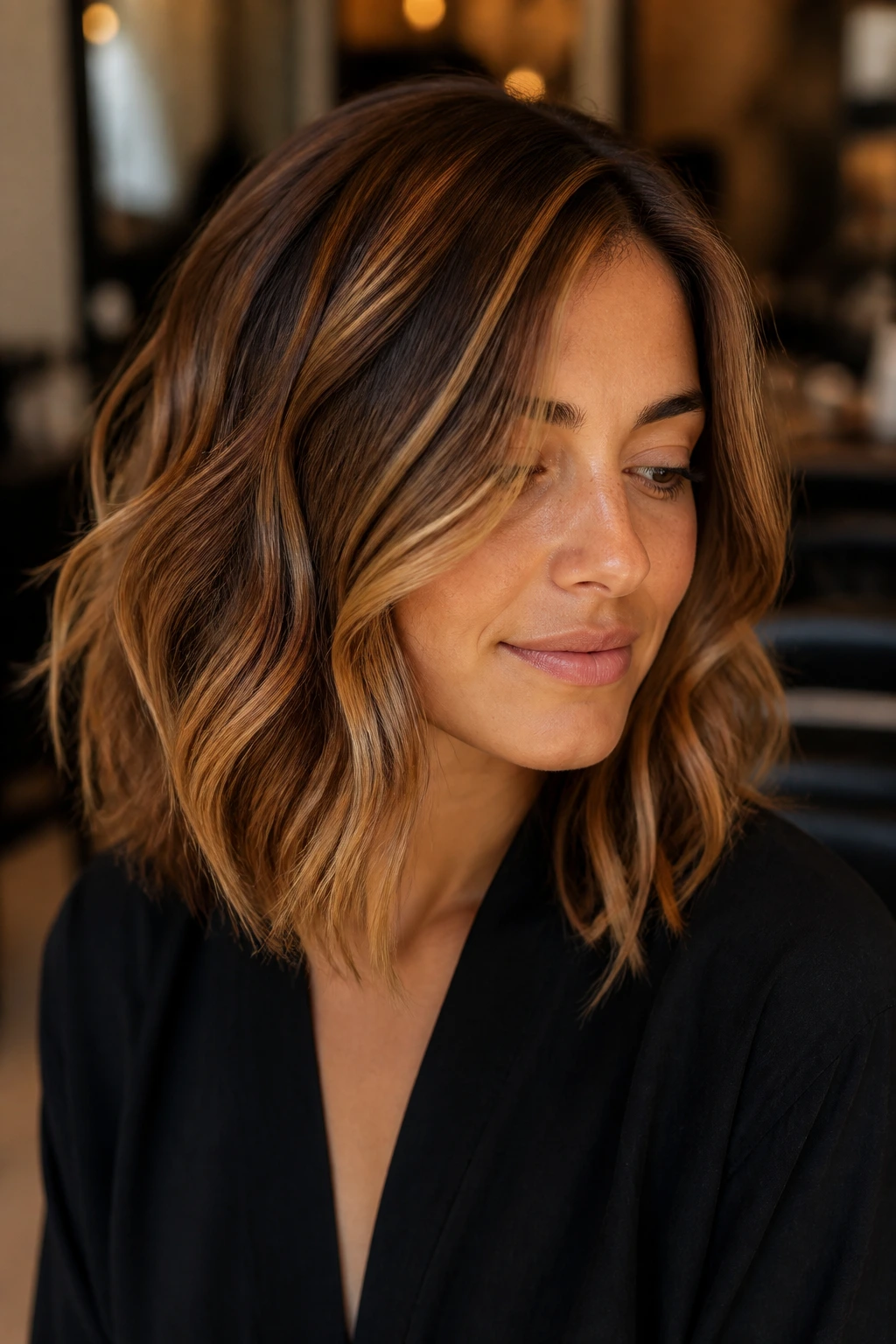
Burnt sugar balayage lives between caramel and brown with a toasted edge that feels a little richer than standard highlights. It’s the sort of color that makes straight hair look less plain and wavy hair look more expensive, though I hate that phrase and still use it here because it fits.
The reason it flatters warm skin is simple: the shade carries enough gold to keep the face bright, but enough depth to avoid the pale-yellow problem that can make a complexion look sallow. Keep the brightest pieces through the mid-lengths and ends, and let the root stay a touch darker so the blend has shape.
This is a good choice if you want warmth, but not sweetness.
13. Toasted Pecan Highlights on Dark Brunette
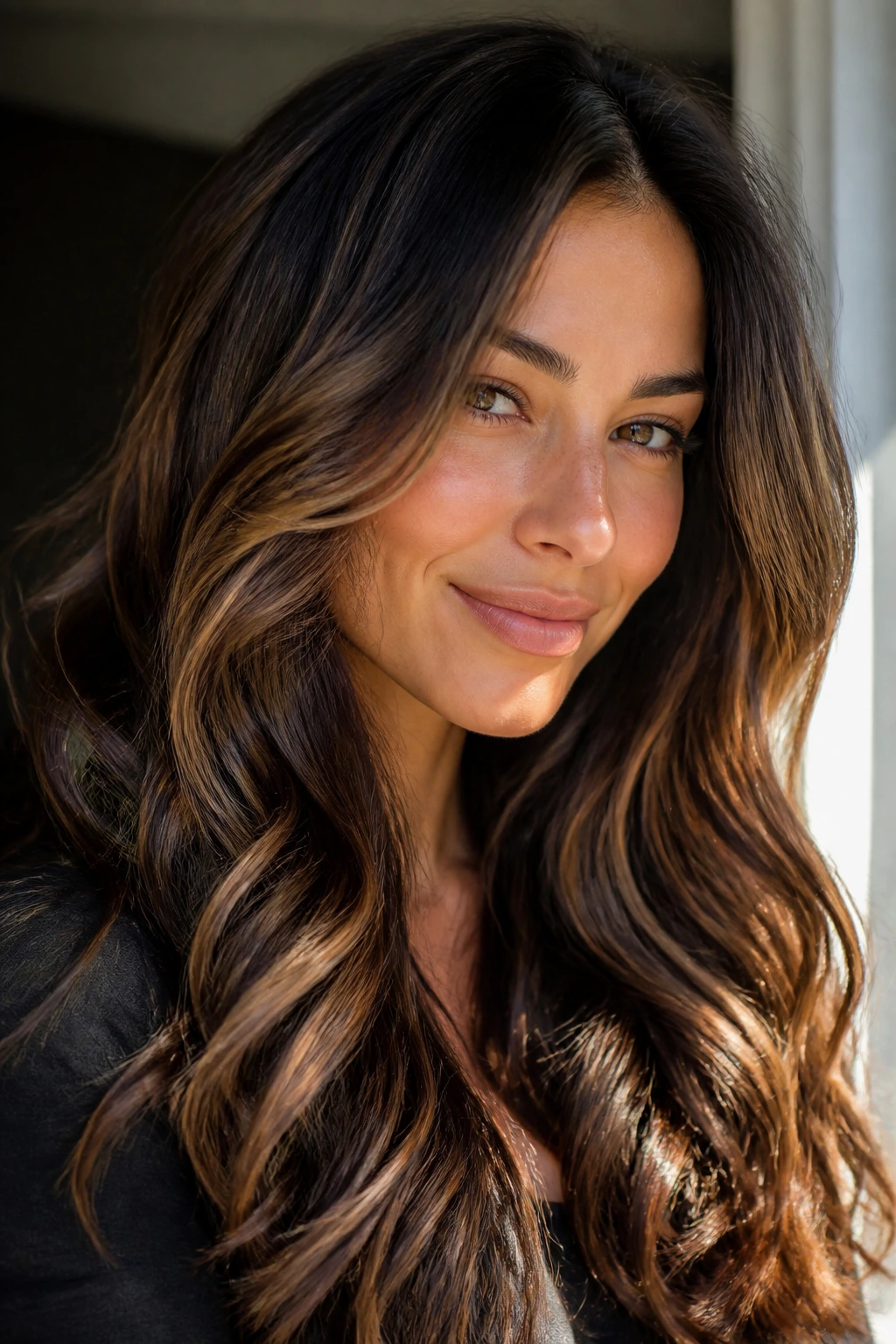
Dark brunette hair needs a little strategy. If you lift too far, the pieces can turn orange. If you don’t lift enough, the highlights disappear. Toasted pecan is the middle ground, and it has enough brown backbone to stay believable on deeper bases.
The look works especially well when the pecan pieces are placed where light naturally hits the hair: temple, crown, and the outer edges of layers. That keeps the lift visible without needing a full head of brightness. Warm skin benefits because the color never leaves the brown family, so it keeps the face grounded.
Worth asking for: a few stronger panels in front, softer slices in back.
14. Brown Sugar Bronde with a Brown Backbone
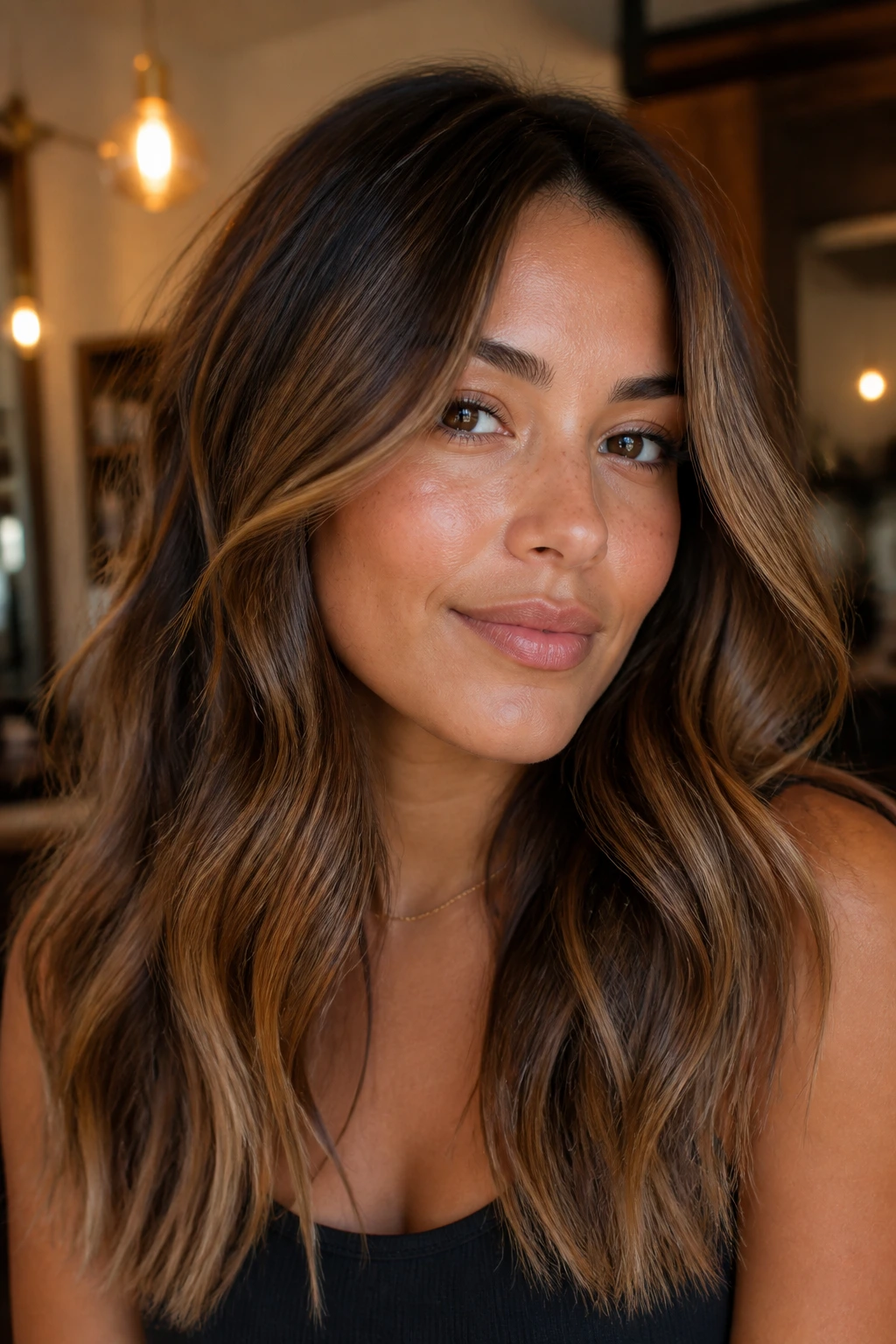
Bronde can get slippery fast. Too much blonde and the hair stops feeling like brunette. Too much brown and the whole thing loses lift. Brown sugar bronde avoids that by keeping the base clearly brown and treating the lighter pieces like seasoning, not the whole meal.
On warm skin, the result is easy to wear because the color never turns icy. The lighter strands stay caramel-biscuit-gold, which is where bronde should live if you want it to look friendly instead of fashion-week rigid.
The brown backbone matters. Without it, the look becomes generic.
15. Cola-Toned Money Pieces
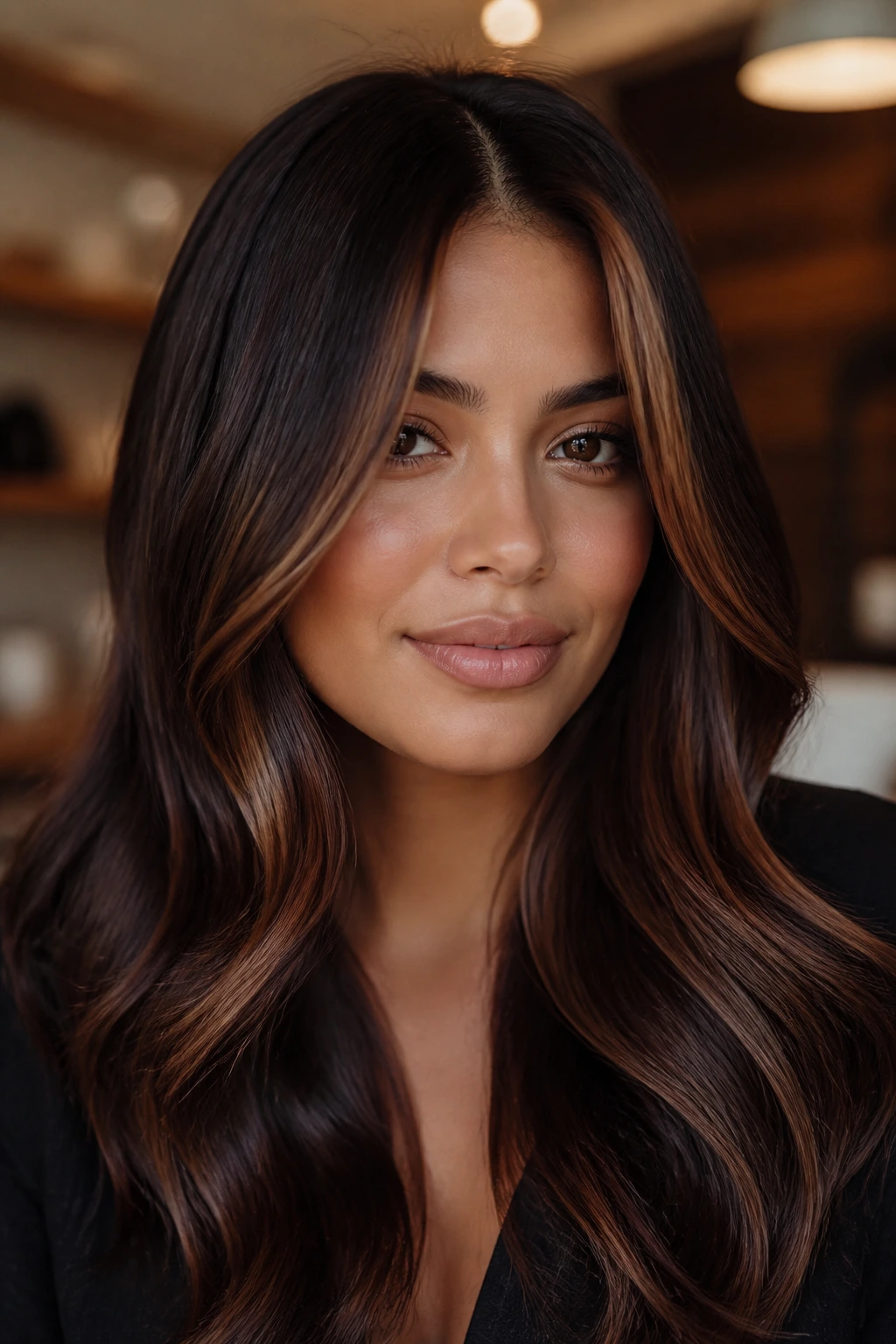
Cola-toned money pieces are darker and richer than mocha, with a subtle red-brown finish that gives the front of the face a glossy frame. If your warm undertone is more peach than gold, this shade can be a smart move because it brings warmth without flirting with orange.
What makes it work is the shine. Cola tones look best when the front sections are smooth, glossy, and clearly separated from the rest of the hair by shape, not by a giant leap in lightness. Keep the brightness just enough to show the face frame when you tuck the hair behind the ear.
A center part shows this best, though a deep side part can make it feel more dramatic.
16. Coffee Bean Lowlights for Extra Depth
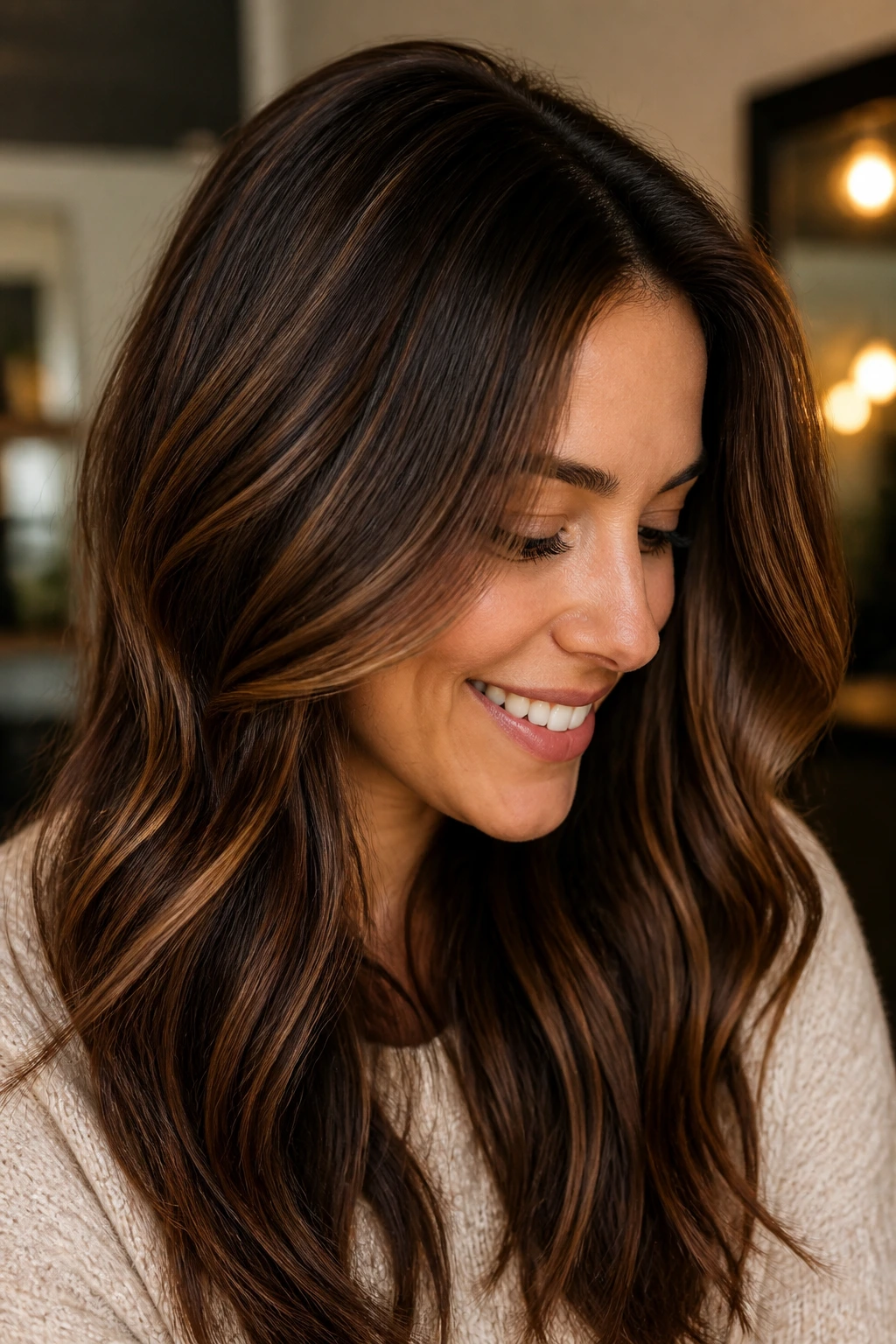
Sometimes the answer is not more light. Coffee bean lowlights restore the shadows that make highlights look expensive instead of blown out. They’re especially useful if your hair has been highlighted a few times and started to lose that clean brunette depth around the nape and underlayers.
A good lowlight should feel like a support beam, not a second color story. That means placing it where the hair naturally hides and weaving it through sections that need density back. On warm skin, the deeper brown keeps the face from floating away from the haircut.
Fix for over-lightened hair: add lowlights before you add more bleach. That order saves a lot of trouble.
17. Bronze Brown Midlights
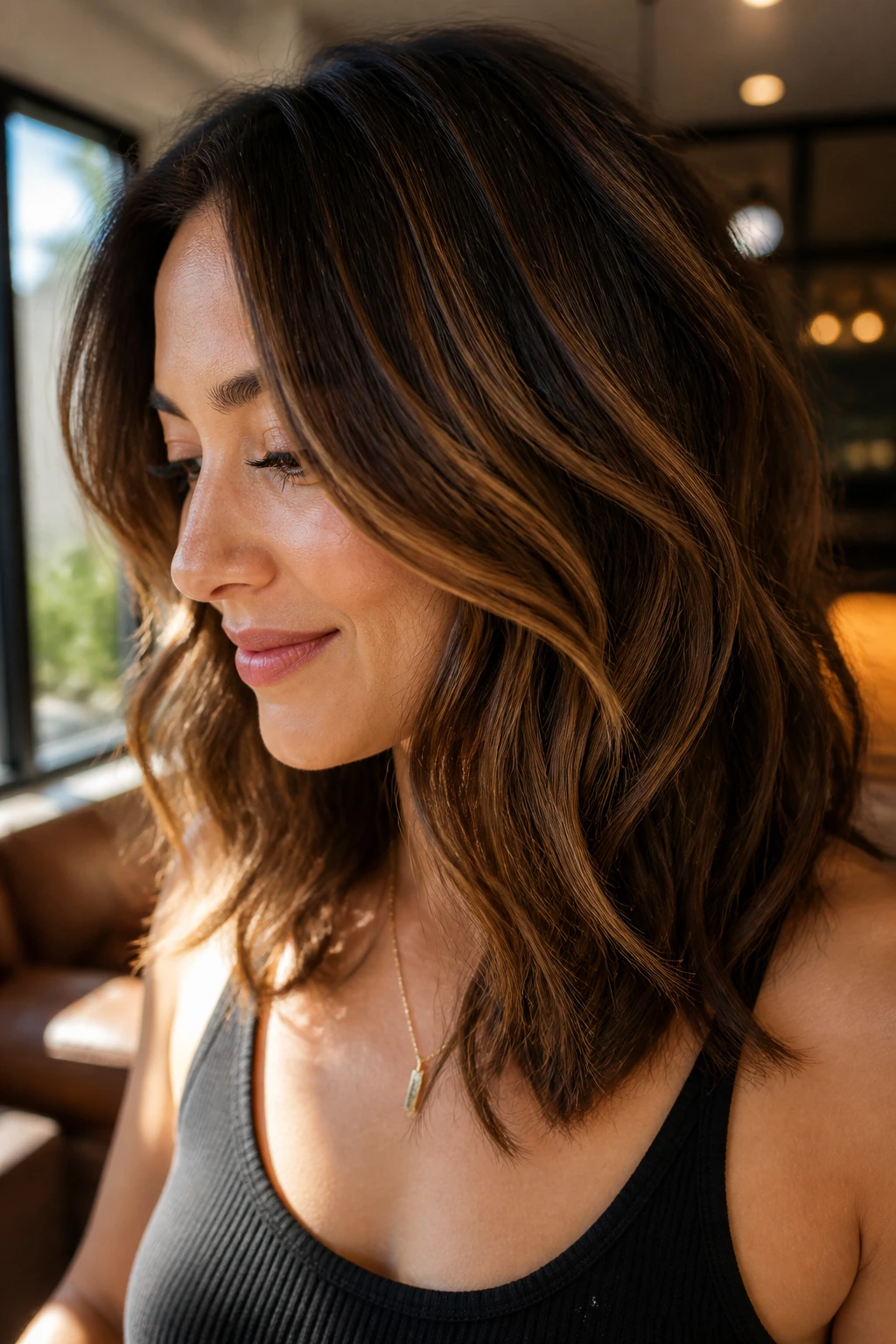
Midlights sit between the dark base and the lightest highlight, and they’re one of the best tricks in a colorist’s toolbox. Bronze brown midlights stop the hair from looking striped. They connect the shades so the eye reads one layered brunette, not three separate colors fighting in the mirror.
This is especially useful on shoulder-length and layered cuts where every section is visible. Bronze has enough warmth for golden skin, but the brown keeps it from becoming shiny gold. That balance is the whole game here.
If you like dimension but hate obvious foils, this look lands in a good place.
18. Cinnamon Swirl on Curly Hair
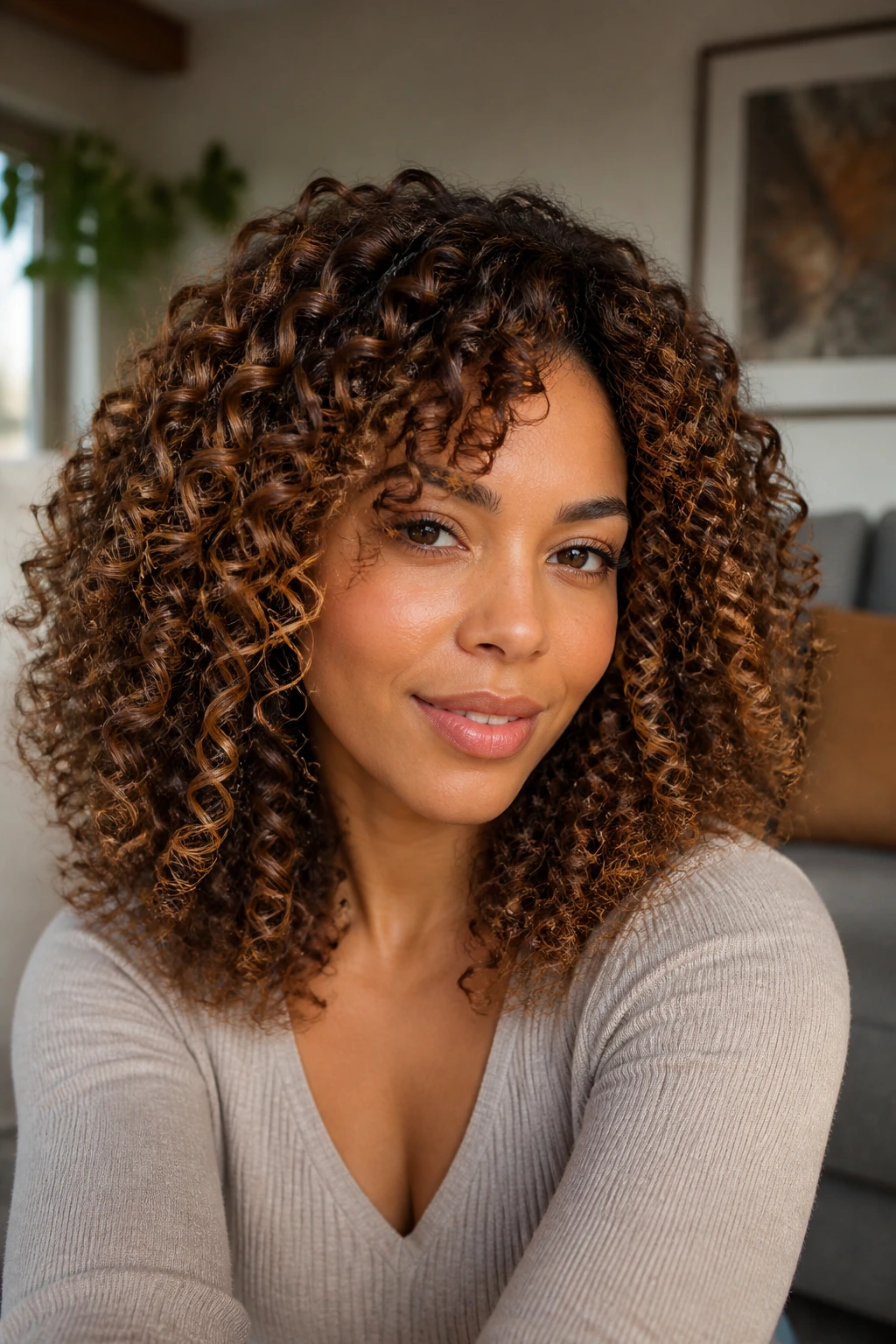
Curly hair doesn’t need loud contrast to show dimension. It needs placement that follows the curl pattern, and cinnamon swirl highlights do exactly that. The color wraps around the coil, so each curl gets a little flash of warmth when it moves.
The mistake people make with curly highlights is painting them too evenly. Curly hair is not a sheet. It’s a stack of spirals, and the highlights should respect that shape. Keep the cinnamon concentrated around the top layers and outer ring of curls, then let deeper brown sit underneath for support.
That’s what keeps warm skin looking balanced and the curls looking springy instead of frosted.
19. Teddy-Brown Foils for a Natural Look
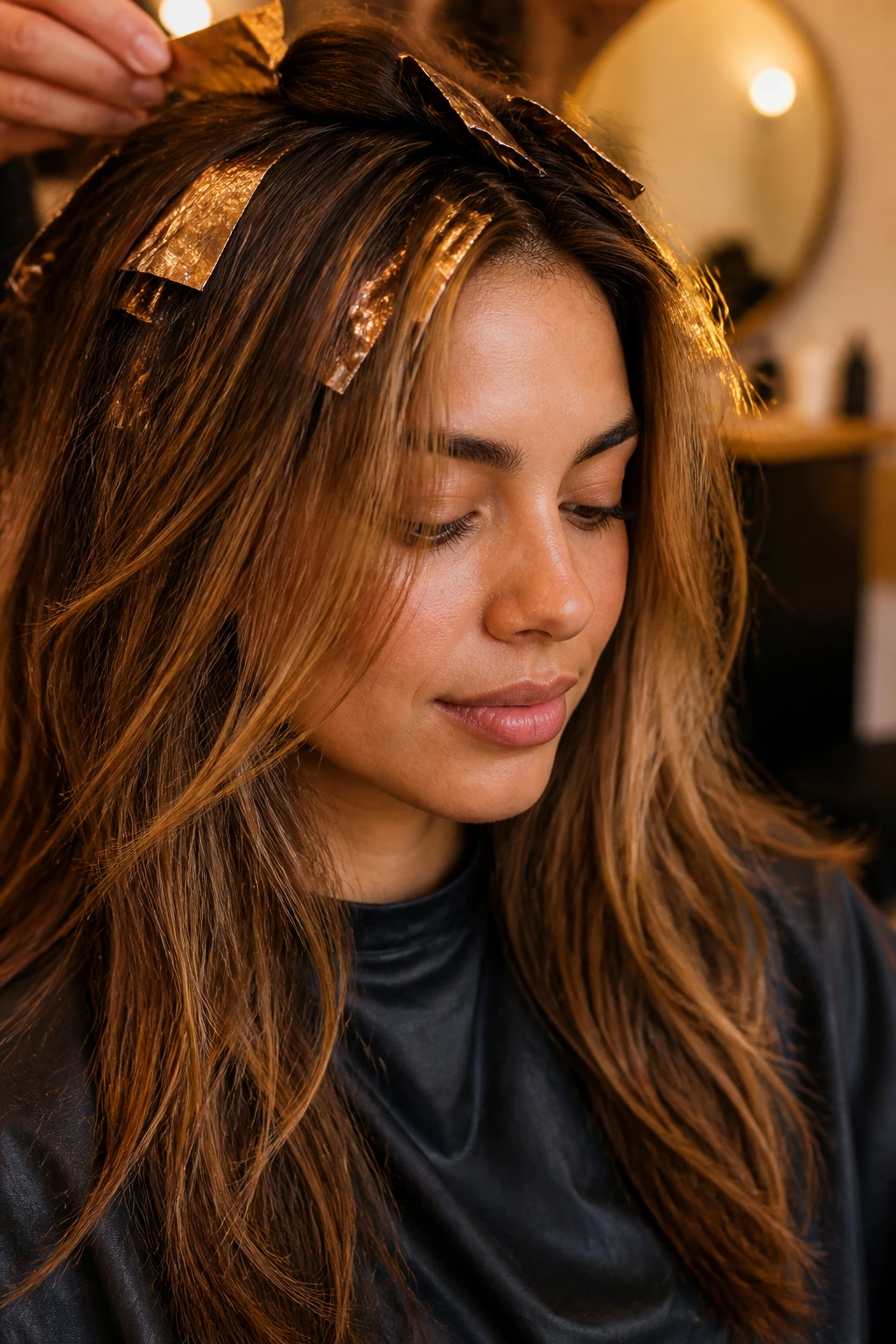
Teddy-brown foils are for the person who wants other people to think the hair is just naturally good. Not louder, not lighter, just cleaner and more dimensional. The shade sits in that soft warm-brown lane that flatters skin with gold or peach in it, and the foil placement can stay fine enough to avoid a stripey finish.
What Makes It Different
Unlike brighter caramel looks, teddy brown doesn’t demand attention from across the room. It gets noticed up close, which is often the more elegant choice. Ask for the foils to be concentrated around the top and front, with the back kept quieter so the haircut holds its shape.
This is a nice first highlight for someone nervous about maintenance or contrast.
20. Honey Mocha on Long Waves
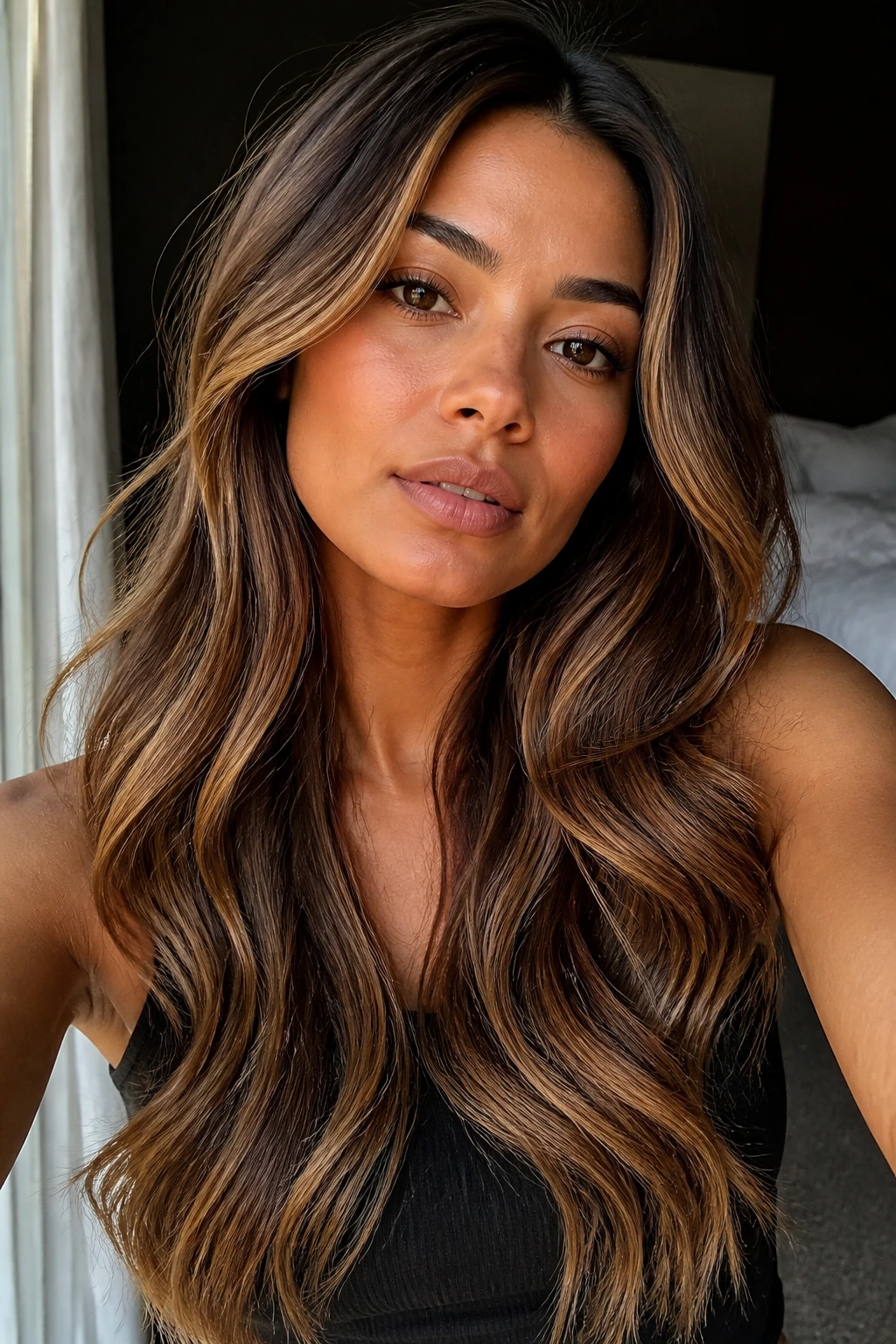
Long waves can swallow subtle color, so honey mocha needs enough presence to show. The honey keeps the brown from looking flat, while the mocha roots and underlayers protect the depth that makes long hair look thick.
This shade loves movement. When waves are brushed out, the honey catches just enough light to show the bend in the hair, and warm skin gets the bonus of a golden reflection near the face. It’s a forgiving color too. The grow-out is soft, and the ends don’t need to be baby-lighted to make the whole thing work.
If your hair is long and you wear it loose most days, this is one of the easier wins.
21. Smoky Chocolate with Gold Ends
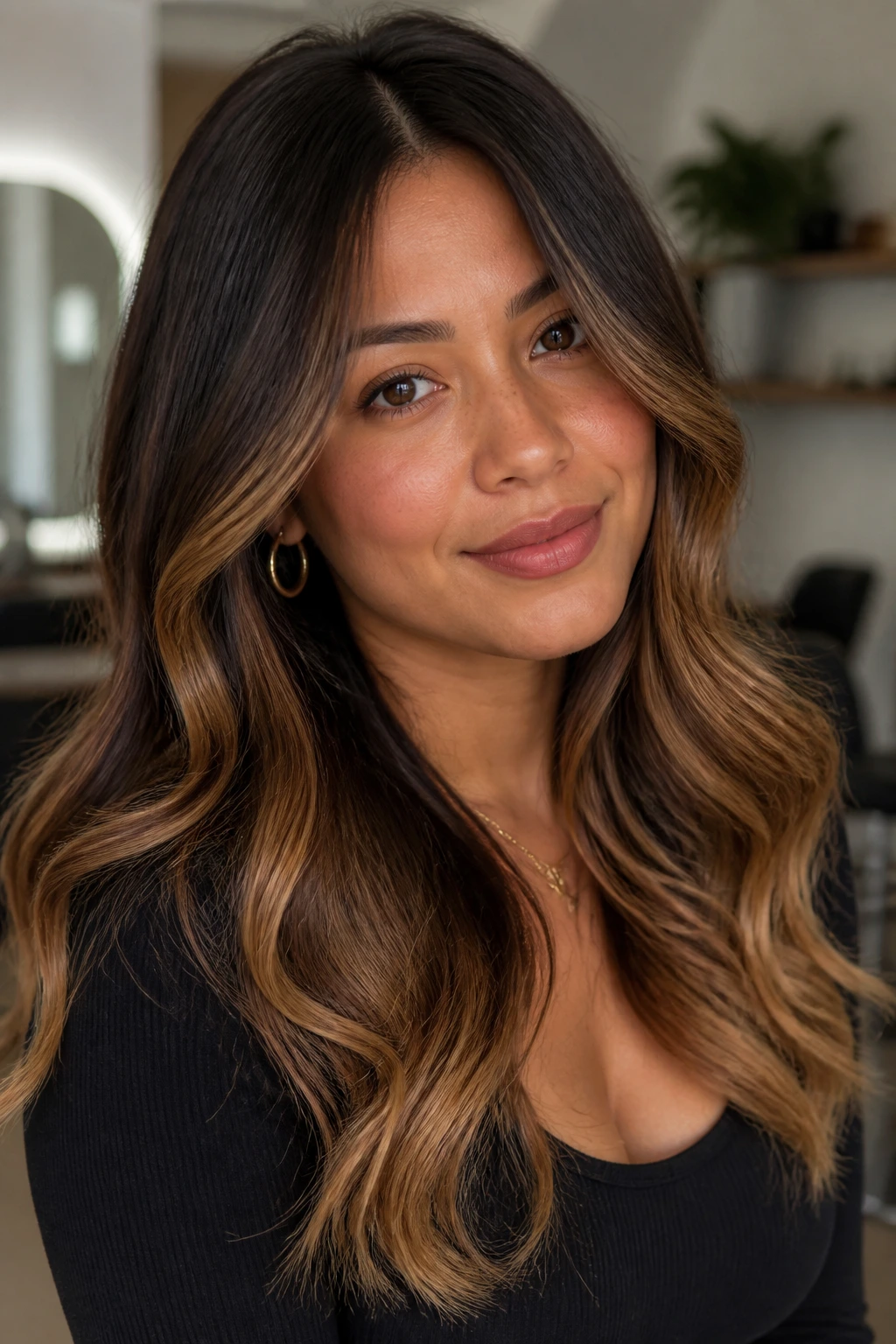
Smoky chocolate keeps the root and upper lengths deep, then the gold ends soften the finish so the hair doesn’t feel heavy. On warm skin, the contrast reads polished rather than stark because the gold is still warm, not icy.
How to Make It Wearable
Keep the smoky part closer to chocolate than ash. If it gets too cool, the whole look can start to flatten the complexion. The gold ends should stay narrow and controlled, especially on straight hair, where every line shows.
This one fits best if you like low maintenance at the root but still want something interesting at the ends. It’s a good compromise.
22. Rusted Chestnut for Copper Lovers
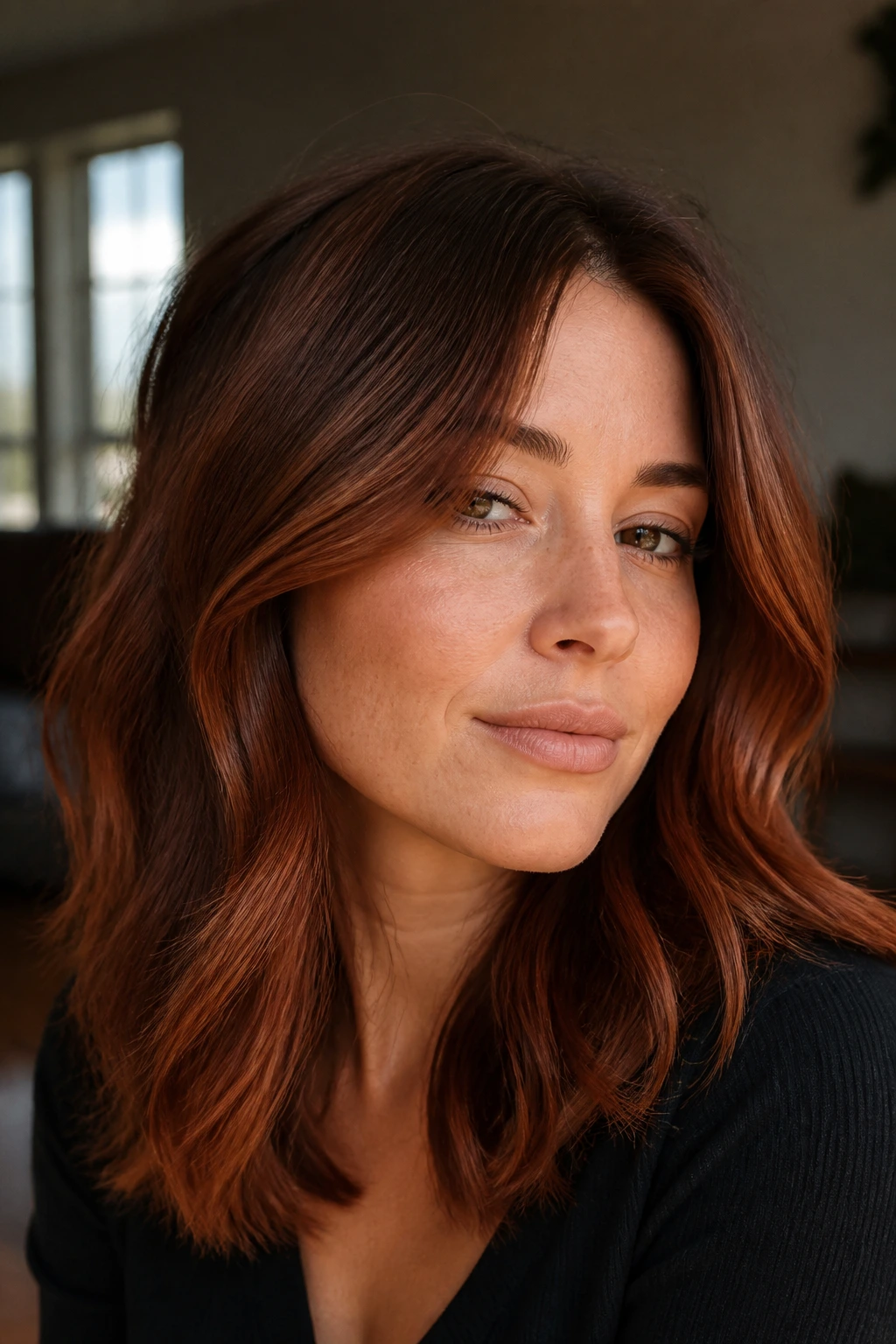
Rusted chestnut is for someone who likes a little fire in the hair but still wants to stay in brunette territory. It carries more copper-red warmth than standard chestnut, which can look stunning on peachy or golden skin if the tone is kept grounded with brown.
The danger here is going too bright. A little rust goes a long way. I’d keep the lightest pieces around the face and fold the rest into the middle of the hair so the color feels warm, not flashy. On layered cuts, this shade gives the ends a glow that looks almost lit from inside.
If you wear terracotta makeup, this color has an easy relationship with it.
23. Soft Walnut Highlights with Curtain Bangs
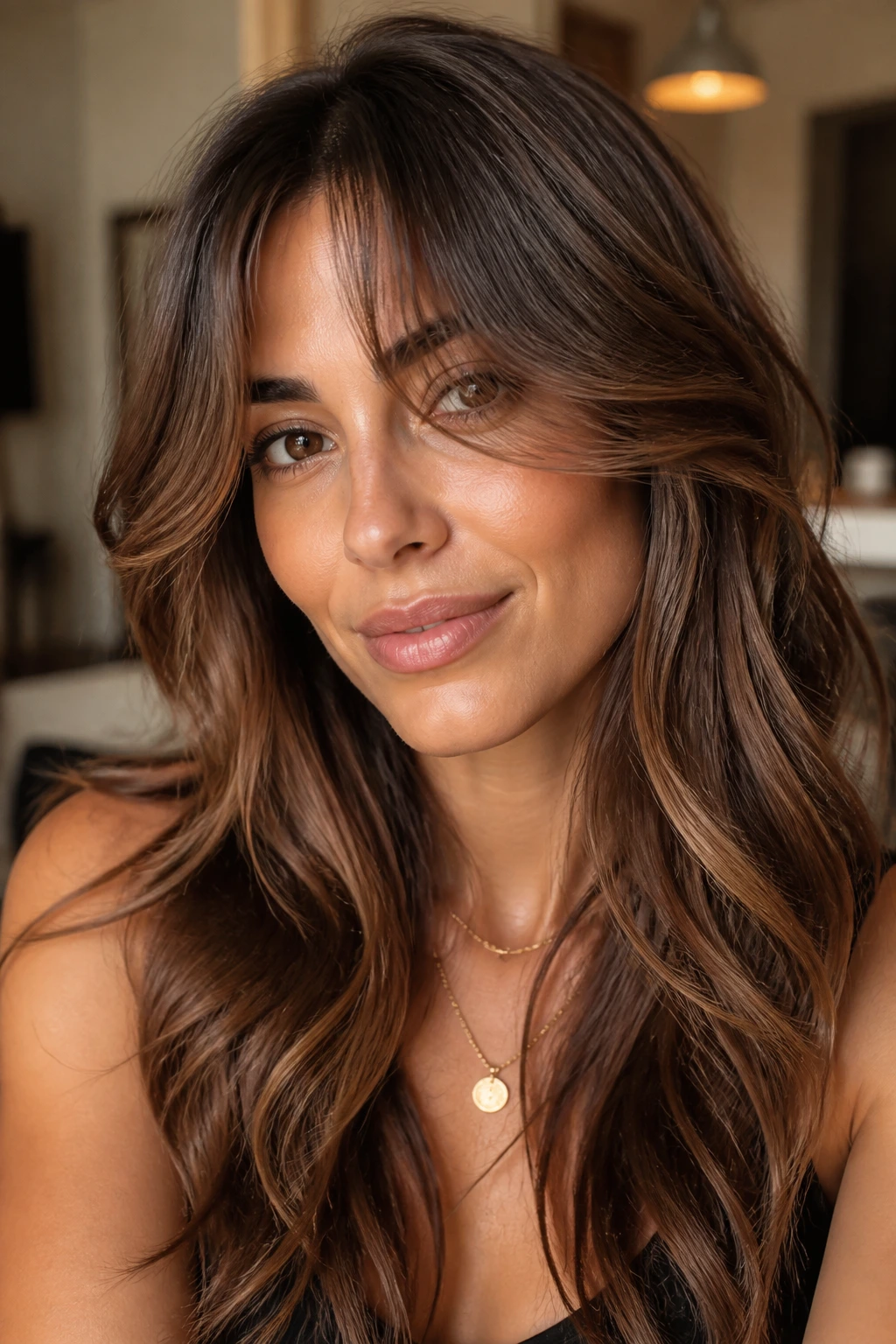
Curtain bangs are a gift to warm brunettes because they give you a place to put brightness without changing the whole head. Soft walnut highlights work well here since they frame the eyes and cheeks in a way that feels lived-in, not overdone.
Walnut needs to stay soft. Too much light and it stops looking like walnut. Too little and it disappears. Keep the highlights concentrated around the curtain bangs and the top layers that sweep away from the face, then let the lower lengths stay slightly deeper so the cut keeps its shape.
This is a strong choice if you want your hair to feel face-focused without losing the brunette base.
24. Brown Sugar Balayage for Bob Cuts
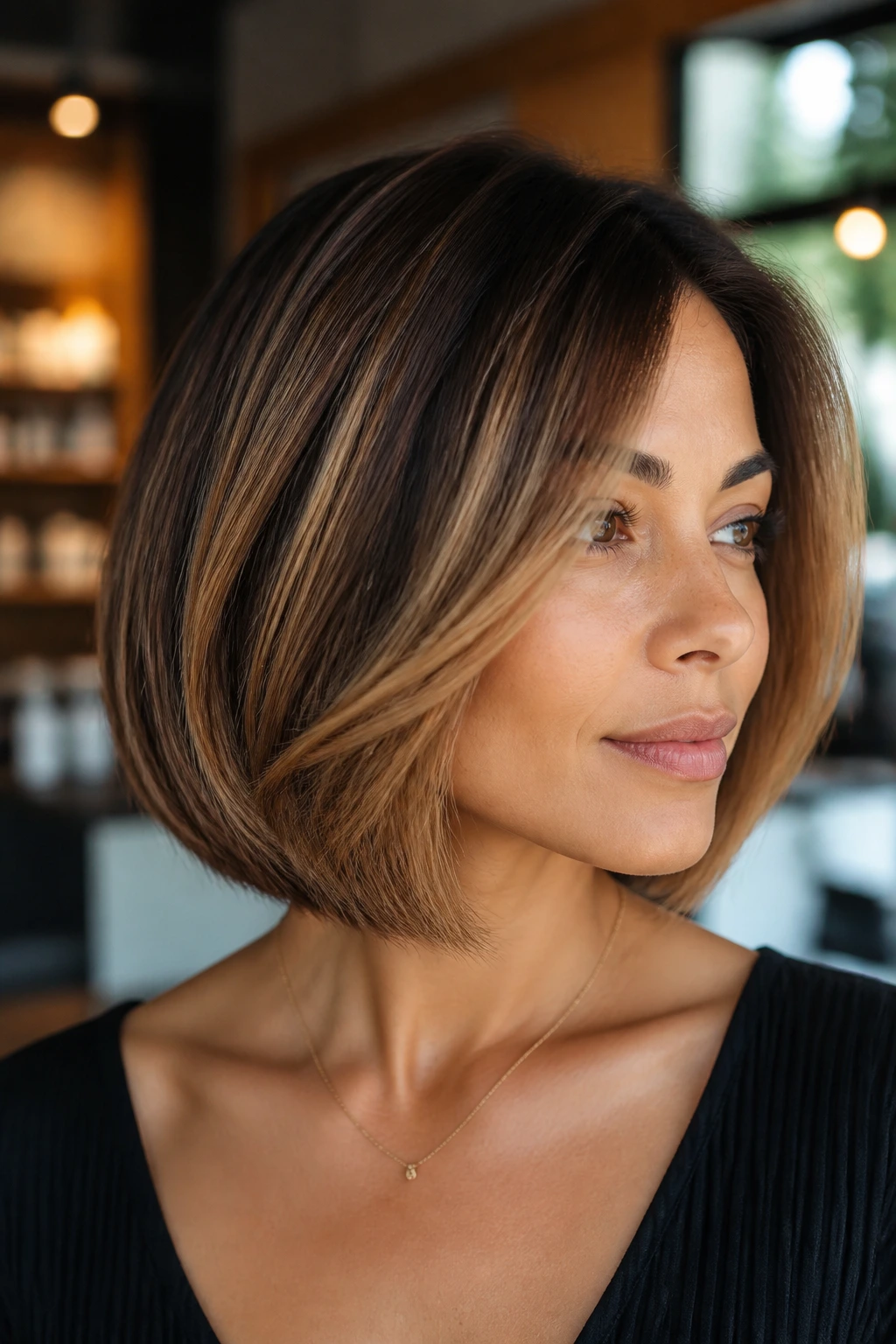
A bob can make color look sharper, which is both a blessing and a trap. Brown sugar balayage softens that edge with ribbons that break up the solid shape and give the cut movement without needing long length to do the work.
The trick on a bob is to keep the lightness mid-shaft to ends, not too close to the root, unless you want a stronger piecey effect. On warm skin, brown sugar tones make the face look healthy and grounded, and the haircut feels less severe.
Short hair is honest. This color helps it stay on your side.
25. Biscotti Brown with Airy Dimension
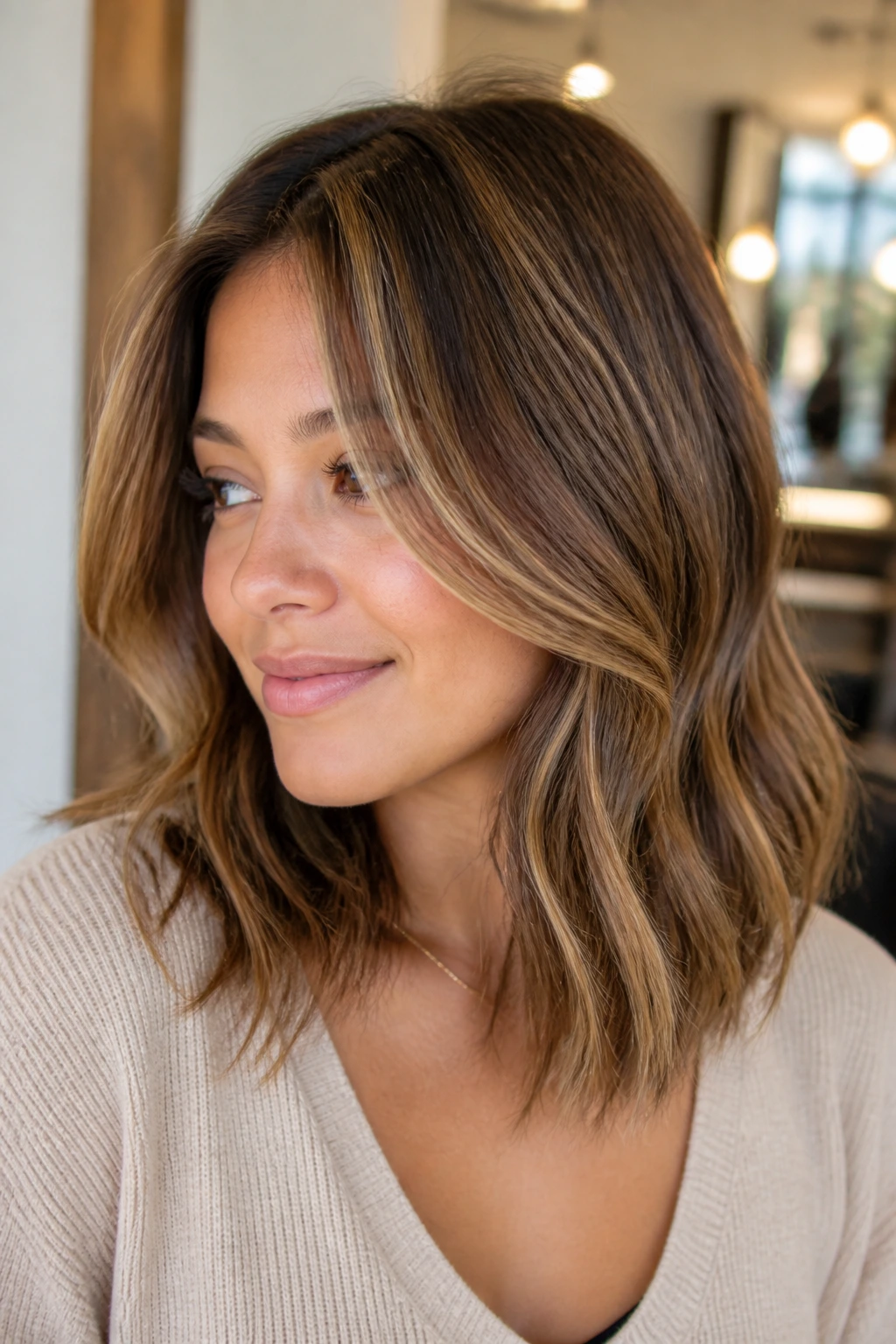
Biscotti brown sits in that lovely middle place between beige and caramel, but it still reads brunette first. That makes it a good pick for warm skin if you want brightness without the hard jump to blonde. The airy part comes from how the color is placed, not from making the tone pale.
I like this on hair that already has some natural bend or a blowout with movement. The lighter strands need air around them to show. If everything is too packed together, the biscotti pieces can blur. Keep the highlights scattered and leave some plain brown in between so the hair has room to breathe.
It’s a quiet look, but not a boring one.
26. Hazelnut Smudge Melt
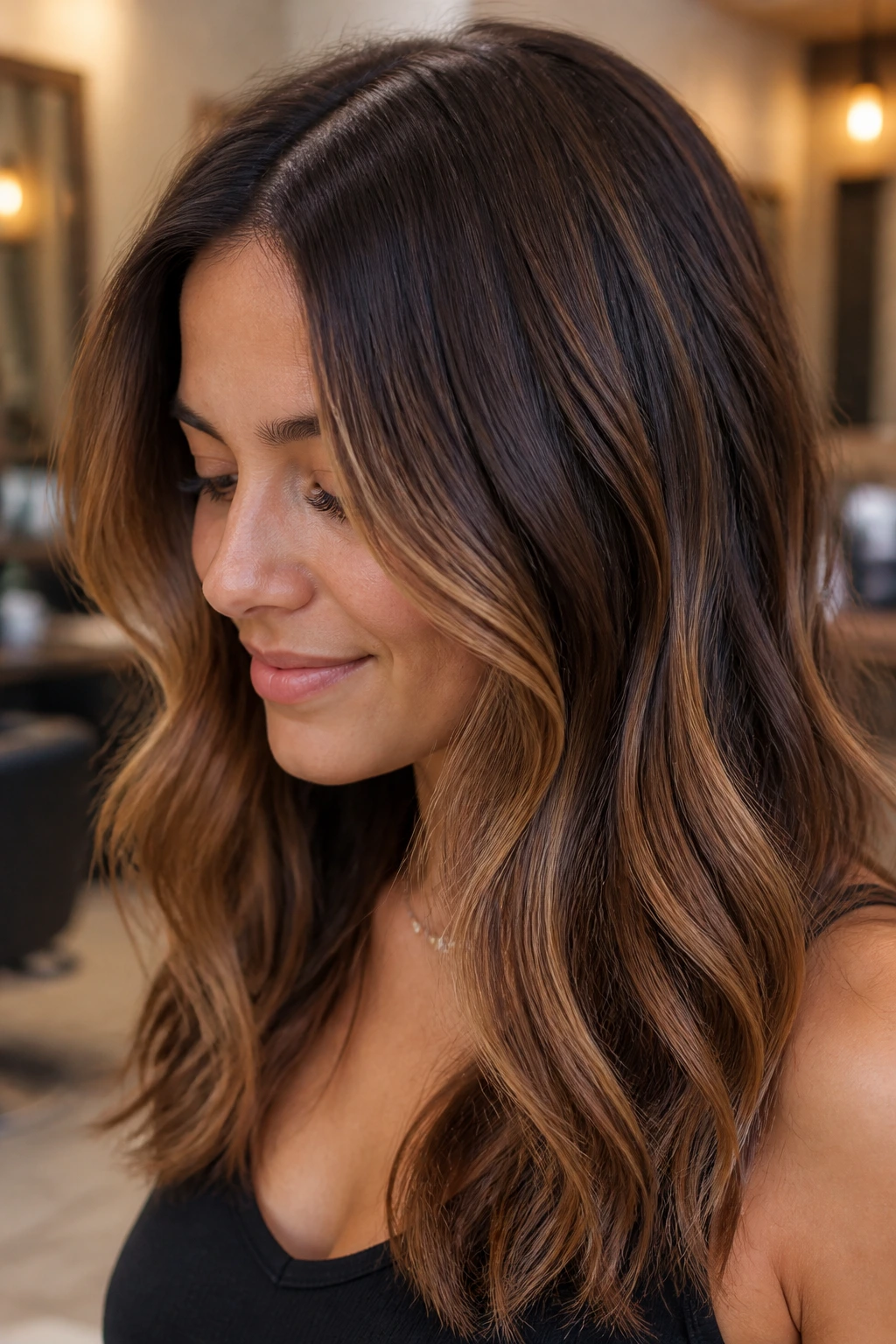
A hazelnut smudge melt is built for easy grow-out. The root stays soft and slightly deeper, then the hazelnut tone melts downward so the transition never looks harsh. For warm skin, this is one of the most wearable brunette looks because it keeps the whole palette inside the same warm-brown lane.
Why It Holds Up
The smudge at the root makes regrowth less obvious, which means you don’t get the sharp line that can make highlights look old fast. Ask for the melt to stay soft around the part and a little brighter near the ends, where movement shows most.
This is a low-maintenance color that still looks finished. That’s a nice combination.
27. Desert Caramel on Straight Hair
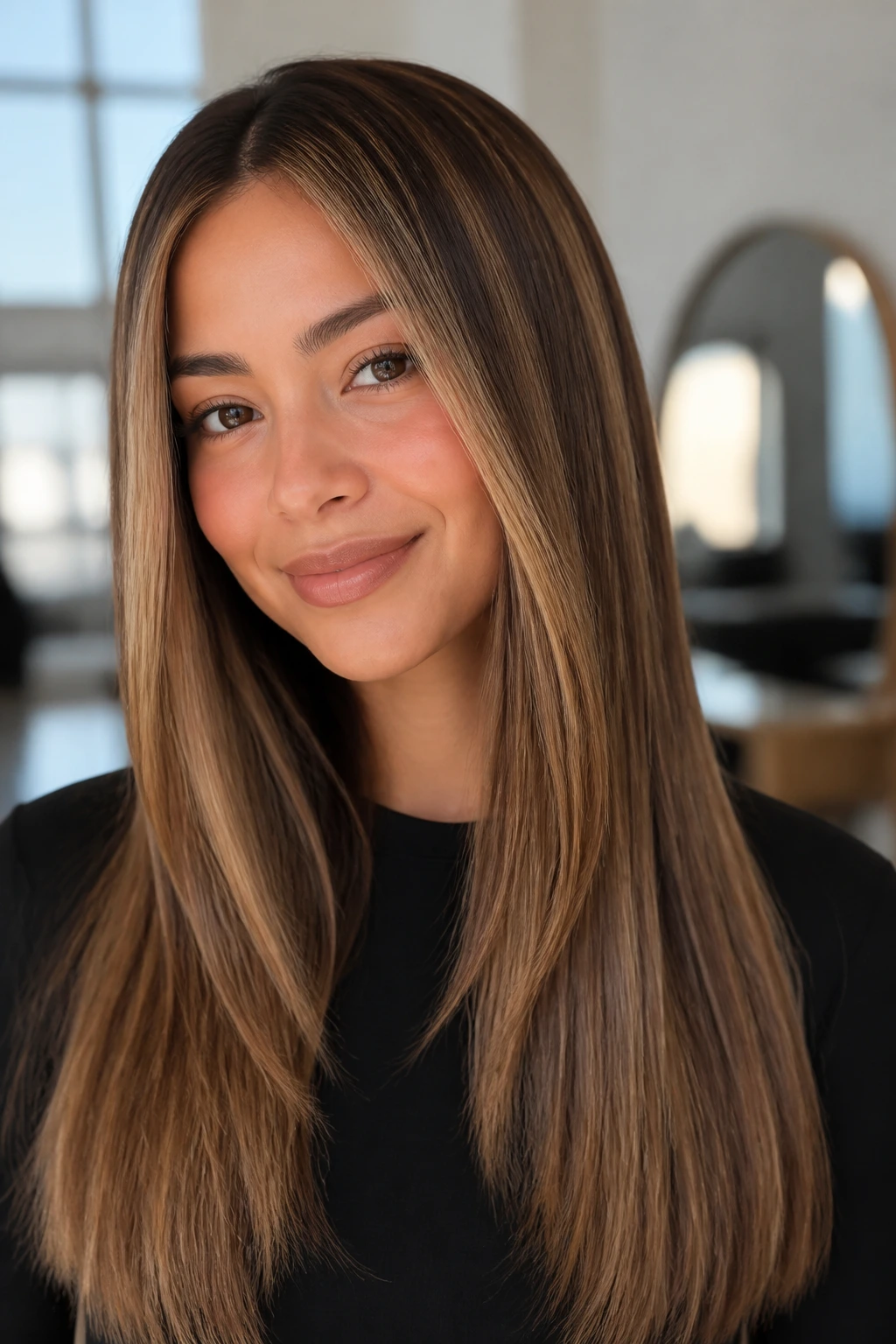
Straight hair is unforgiving. It shows every placement choice, good or bad, because there’s no wave pattern to hide behind. Desert caramel can be a smart solution because the color is warm and sandy, but still brown enough to keep the strands from looking like a blonde experiment.
The best version uses narrow ribbons with slightly wider pieces near the front so the face gets some lift. Keep the back softer. Straight hair reflects light in clean lines, so too many wide stripes can look harsh. Desert caramel should read as a shimmer, not a zebra effect.
If your hair is pin-straight, this is where the brown medium highlight family earns its keep.
28. Deep Auburn-Brown Accent Pieces
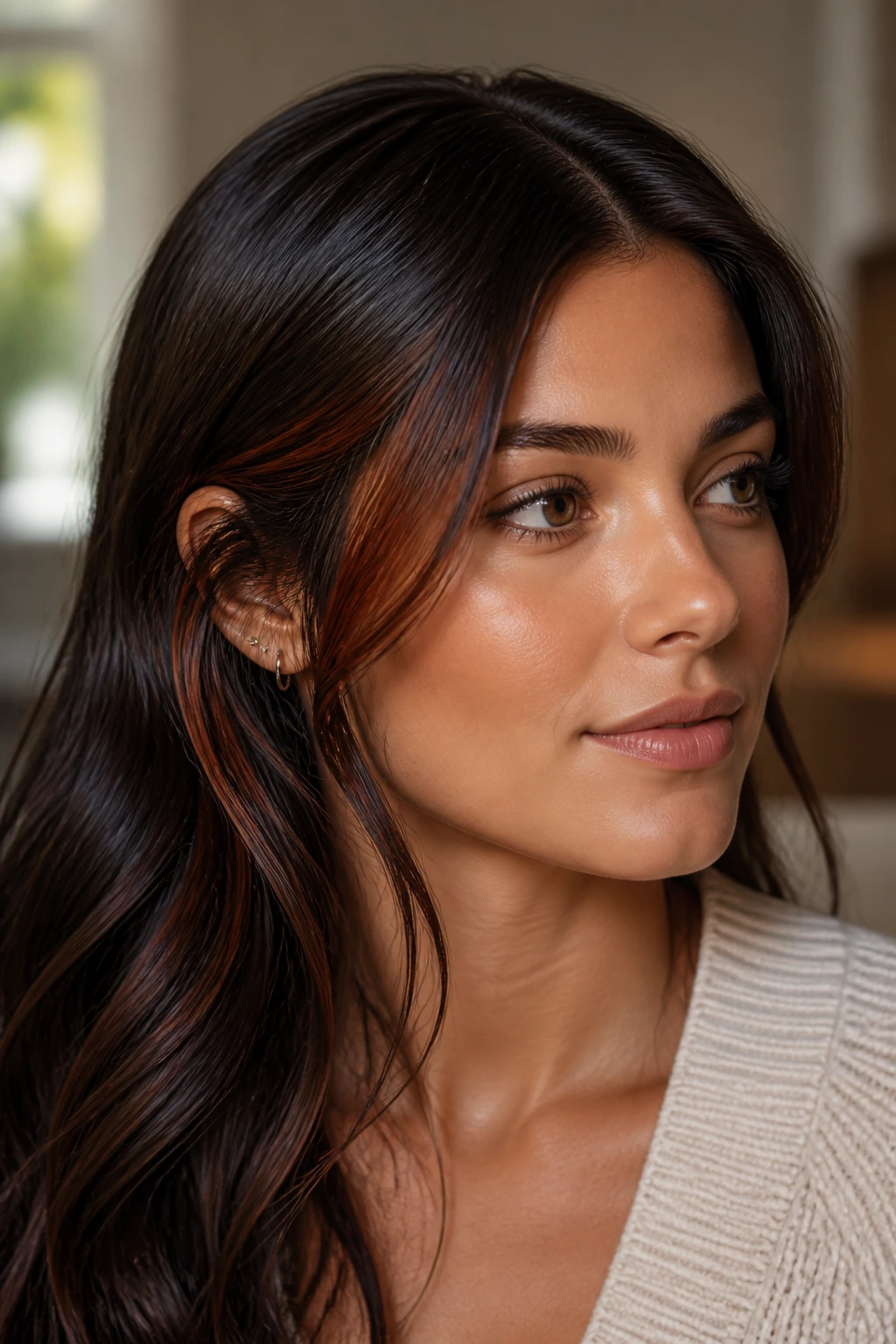
Auburn-brown accent pieces are for warm skin that can handle a little more red in the mix. They give the hair a darker, richer glow than standard caramel and can look especially good near the temples, behind the ears, and in the lower layers where light hits as the head moves.
Unlike full copper, auburn-brown stays inside brunette territory. That matters if you want the color to remain grown-up and not drift into autumn costume territory. A few carefully placed accent pieces are enough. You do not need the whole head.
This is the kind of shade that looks best when the hair is glossy and the ends are trimmed clean. Scruffy ends dull it fast.
Why Medium Brown Highlights Keep Warm Undertones Looking Fresh
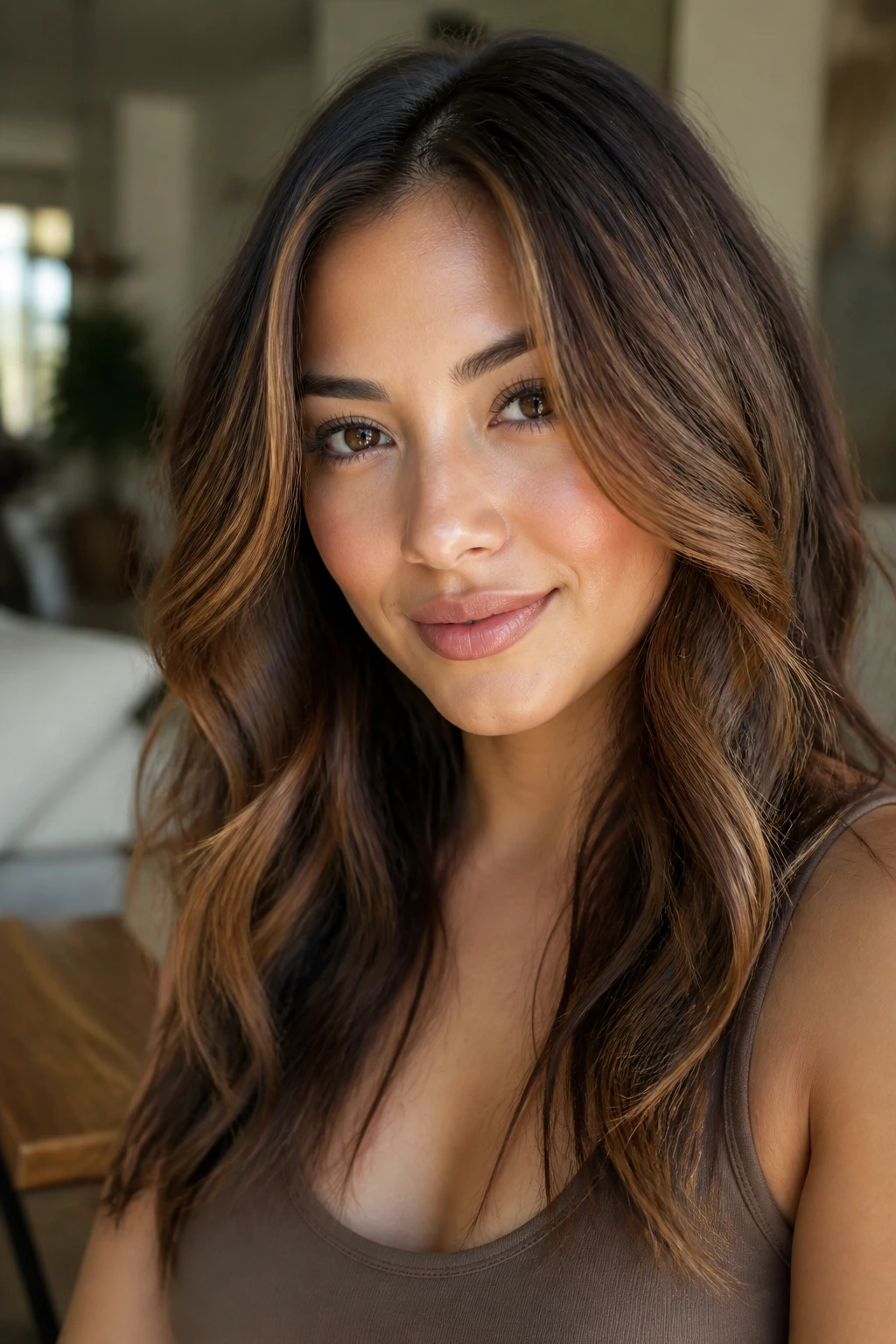
Warm skin already carries a lot of color, so the hair should support it, not compete with it. That’s why medium brown highlights work so well. They echo the same gold, peach, amber, and copper notes you can already see in the face, which makes the whole look feel coherent without trying too hard.
The most flattering versions usually sit one to three levels lighter than the base. Go lighter than that and the pieces can turn brassy or too blonde, especially if your skin leans peach. Stay within the brown family and the glow tends to stay cleaner. The hair still looks like brunette hair. It just has better lighting.
Placement matters just as much as tone. A few brighter ribbons near the front can wake up the face, while deeper lowlights through the back keep the color from collapsing into one flat shade. That mix is the reason a good brunette highlight job looks expensive up close. There’s shadow. There’s light. And there’s a reason both were placed where they are.
How to Choose the Right Brown Shade and Placement
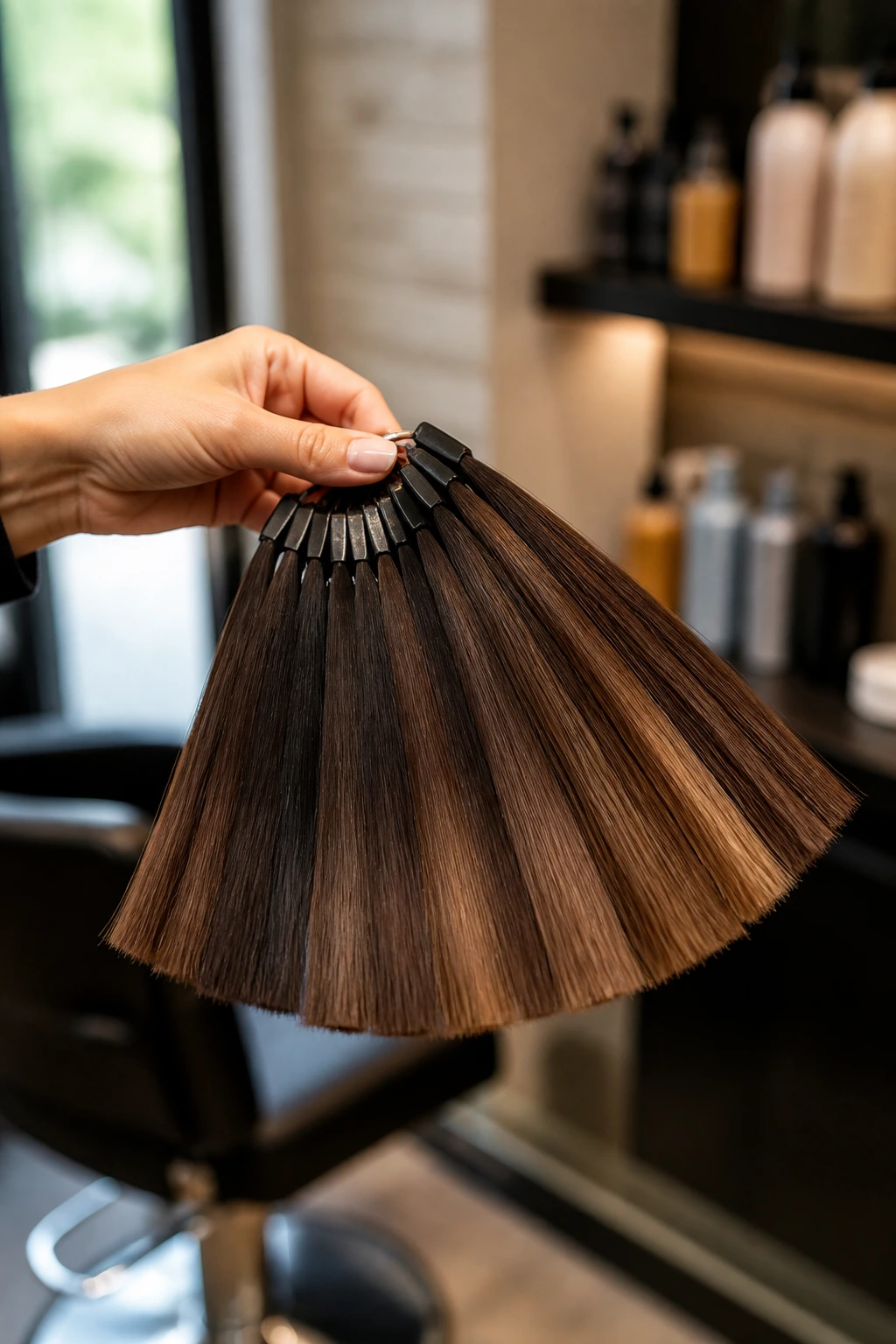
Ask for the tone before you ask for the trend. That’s the cleaner way to get a color you can live with. If your skin is golden, caramel, chestnut, honey brown, and amber-brown usually sit well. If your skin leans peach, mocha, toffee, and cola-toned browns tend to be kinder. If you have warm skin with a bit of olive, walnut and bronze often look richer than a yellow-gold blonde would.
Placement should follow the haircut, not fight it. On long hair, painterly ribbons through the mid-lengths and ends give the most movement. On a bob, the ends need enough light to show shape. On curls, the color has to wrap around the curl pattern or it’ll disappear into the texture.
A good rule: if you wear your hair up a lot, spend the brightness near the front and crown. If you wear it down, spread the dimension farther through the ends. That one choice changes everything.
Salon Tools and At-Home Products That Matter
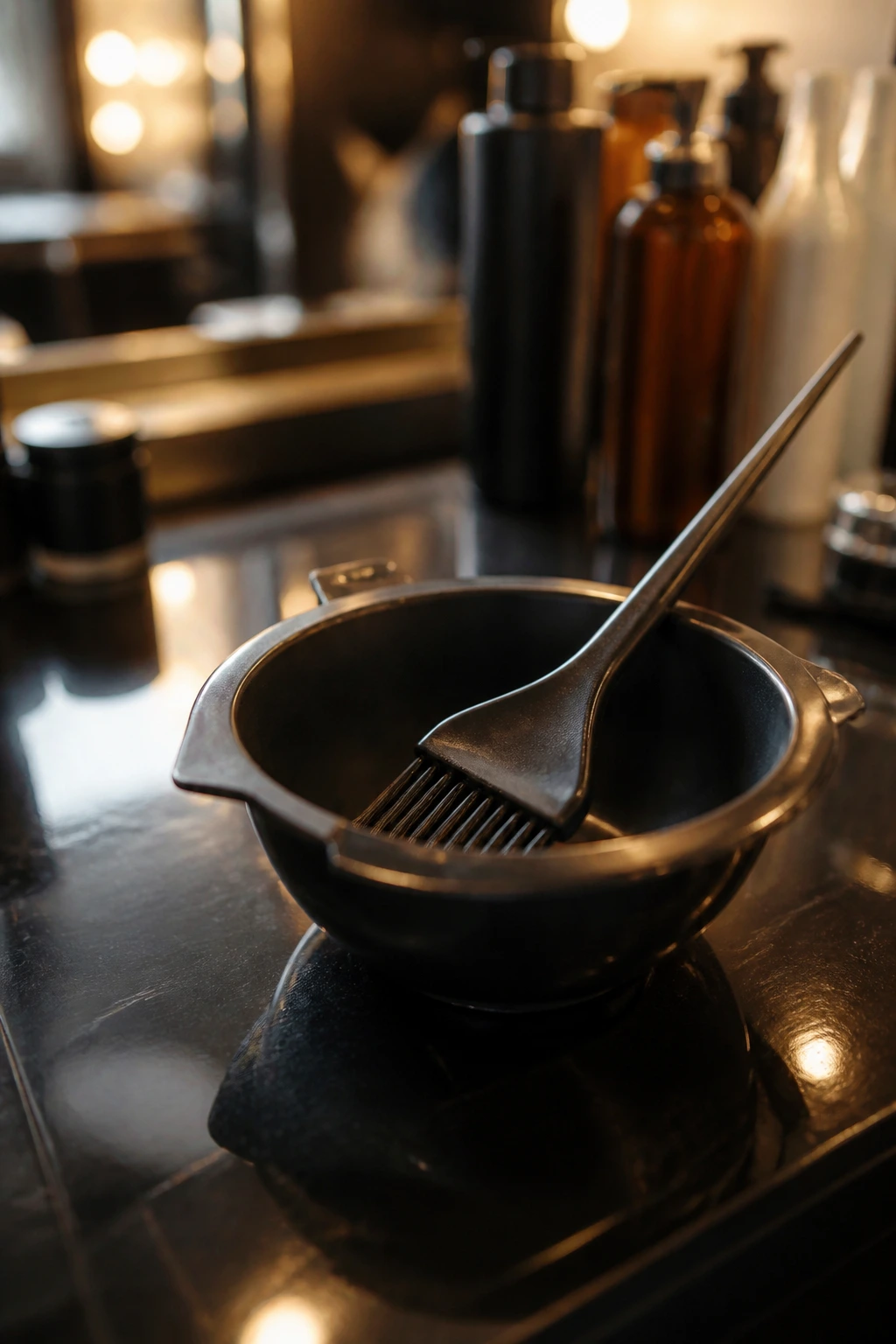
-
Tint brush and bowl: Useful for glosses, root smudges, and toner. A cheap one works fine if it has a firm brush head.
-
Foils or balayage board: Foils give stronger lift and cleaner brightness. A board helps when painting long ribbons by hand.
-
Sectioning clips: Clean partings are the difference between intentional placement and color chaos.
-
Tail comb: Good for fine weaves, baby lights, and separating face-framing sections without dragging color everywhere.
-
Color-safe shampoo: Choose a sulfate-free formula if you want the warm brown tones to hold their shine.
-
Deep conditioner or color mask: Brown highlights go dull faster when the ends are dry. A weekly mask keeps the light pieces from looking dusty.
-
Heat protectant spray: Non-negotiable if you blow-dry, flat iron, or curl often.
-
Wide-tooth comb: Helps curls and waves keep their pattern after conditioning.
-
Purple or blue shampoo, used sparingly: Only if brass starts leaning too orange. Overuse can mute warm brown highlights and make them look chalky.
How to Show Off Brown Highlights Without Making Them Look Flat
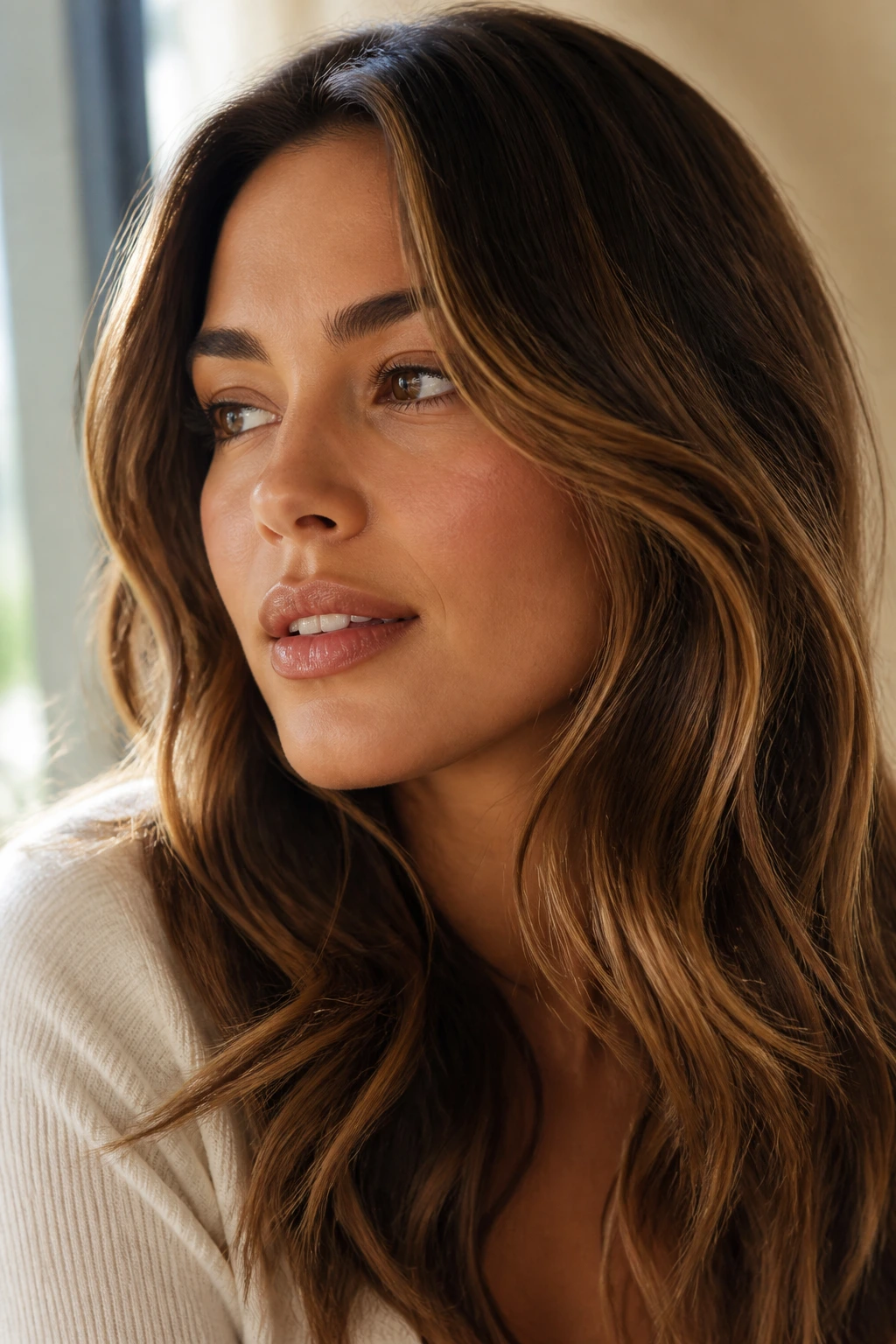
Styling: Loose waves are the easiest way to make caramel, chestnut, and mocha pieces show up. A 1 to 1.25-inch iron or a round brush blowout creates bends that catch the light in layers, which is the whole point of dimensional brunette color.
Parting: A center part tends to show face-framing highlights cleanly, while a soft off-center part can make the color feel less symmetrical and more lived-in. If the front pieces are the star, tuck one side behind the ear. That tiny move changes the read of the whole haircut.
Finish: Use a light serum on the ends, not the roots. Warm brown highlights look richest when the surface reflects a little shine, but greasy roots will kill that effect in a minute.
Texture: If your hair is naturally straight, add bends at the mid-lengths rather than curling the whole head. Straight hair can turn striped fast. A few soft bends keep it looking modern instead of overstyled.
Additional Tips for Shine, Contrast, and Color Balance
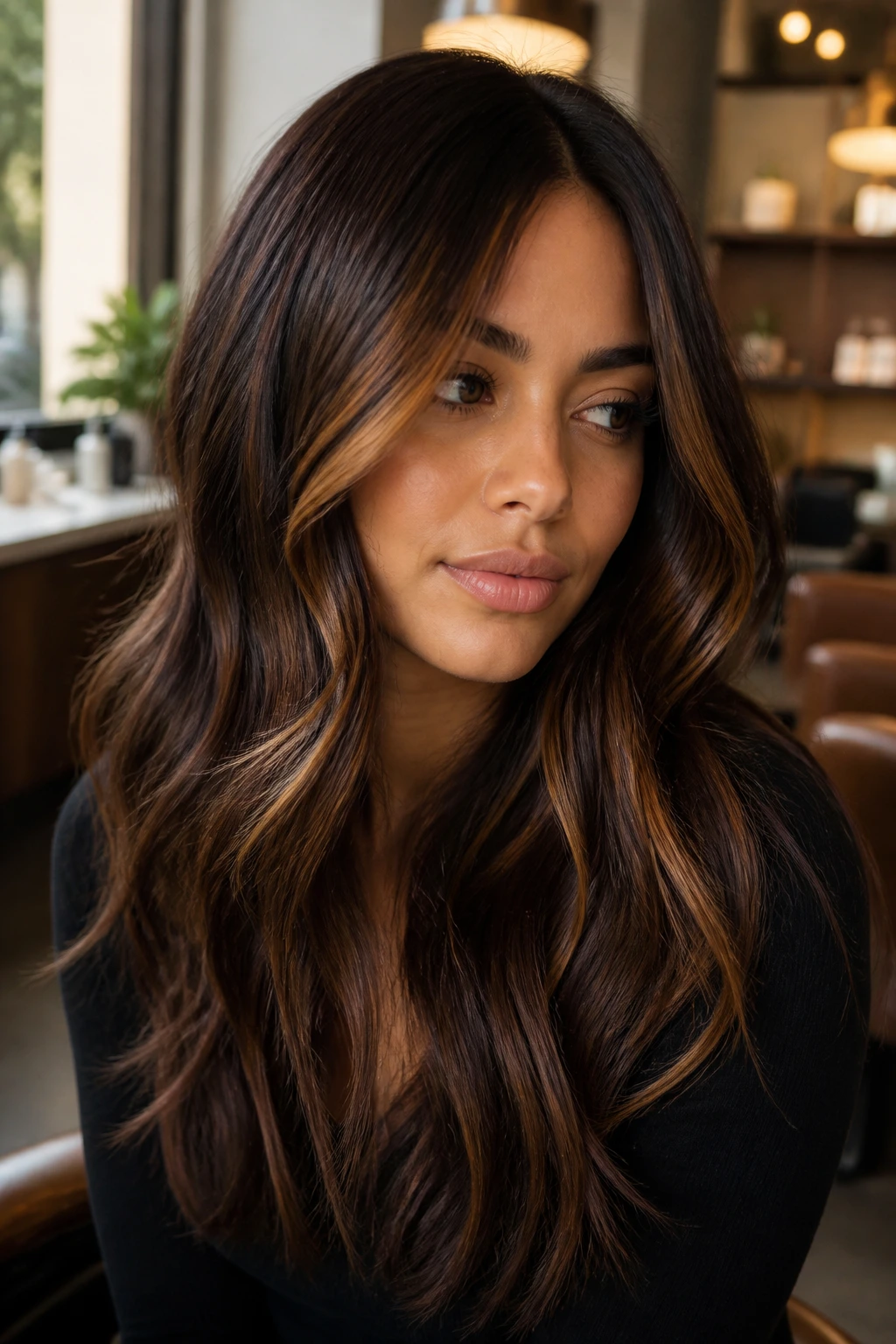
Shine Booster: A clear gloss every 6 to 8 weeks keeps medium brown highlights from losing their warmth. It’s one of the least glamorous salon services, and one of the most useful.
Contrast Control: If your hair is too light around the face, ask for a few darker lowlights near the part and underneath. That tiny bit of shadow gives the highlights something to sit against.
Color Balance: Gold jewelry, peach blush, terracotta lipstick, and bronzed eye shadow all echo warm brunette tones. You do not need a full makeup overhaul, just enough warmth to keep the color story coherent.
Make-It-Yours: If you want lower maintenance, keep the brightest pieces away from the root. If you want more drama, move the lightness closer to the face and keep the back deeper. Same color family. Different attitude.
Keeping the Color Fresh Between Visits
Brown highlights don’t need the same frantic upkeep as pale blonde, but they still need care. Wash 2 to 3 times a week if your scalp can handle it, and use cool or lukewarm water rather than hot. Hot water strips the gloss faster than most people expect.
A color gloss or demi-permanent refresh every 6 to 10 weeks keeps the warm tones clean. If your hair pulls orange when it fades, a salon toner can calm it down without erasing the warmth. If it pulls flat, ask for a little gold-brown back in the mix. That’s the difference between dull and dimensional.
Heat protection matters here too. The lighter the ribbon, the faster the shine burns off under flat irons and curling wands. A mist before styling and a leave-in conditioner on the ends go a long way. So does sleeping on a silk or satin pillowcase if your hair tangles easily. Not glamorous. Very useful.
Variations and Adaptations to Try
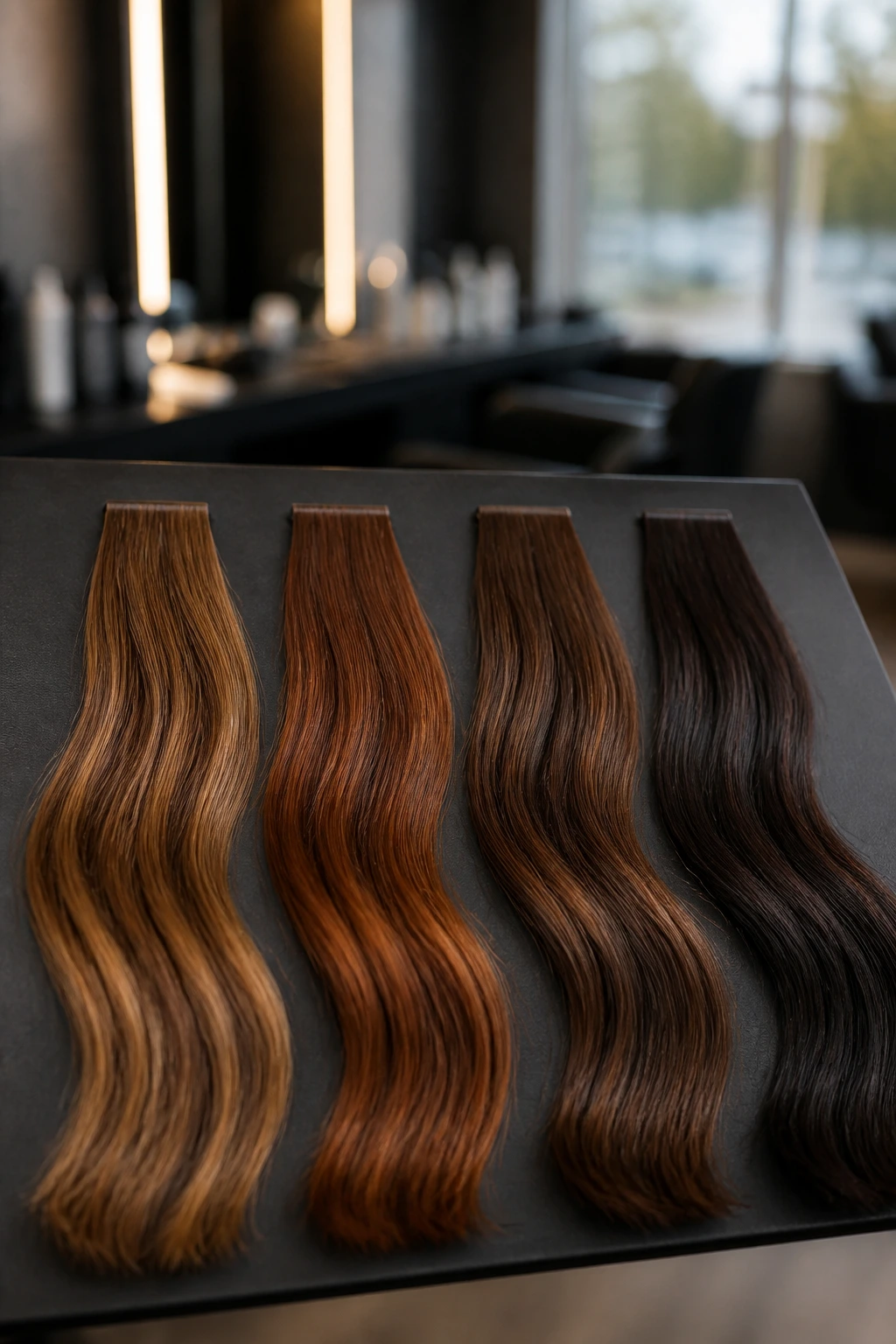
Soft Office Caramel: Keep the placement fine and close to the base, with only a few brighter face-framing pieces. This version is for someone who wants dimension that shows under daylight, not a bold stripe when they walk into a meeting.
Curly Chestnut Halo: Put the lightest chestnut through the outer ring of curls and leave the inner layers deeper. The halo effect gives curls shape without flattening the pattern or making the hair look frosted.
Gray-Blending Walnut Veil: If you’re blending early grays, walnut lowlights plus a few warm highlights can make the grow-out look softer. It doesn’t erase silver, and that’s fine. It just keeps the contrast from feeling abrupt.
Extra-Gloss Chocolate Ribbon: Keep the lift subtle and lean hard on shine. This version is excellent if your hair is healthy but a little tired-looking, because reflection does more for it than brightness.
Copper-Leaning Chestnut: Add a touch more red-brown for skin that runs peach or gold. Keep it one step away from true copper so it stays wearable and doesn’t drag the whole look into orange.
Rooty Espresso Melt: Leave the roots deep, then melt into caramel or hazelnut mids. This is the least needy option in the group and one of the easiest to grow out.
Common Mistakes That Flatten Warm Brunettes
-
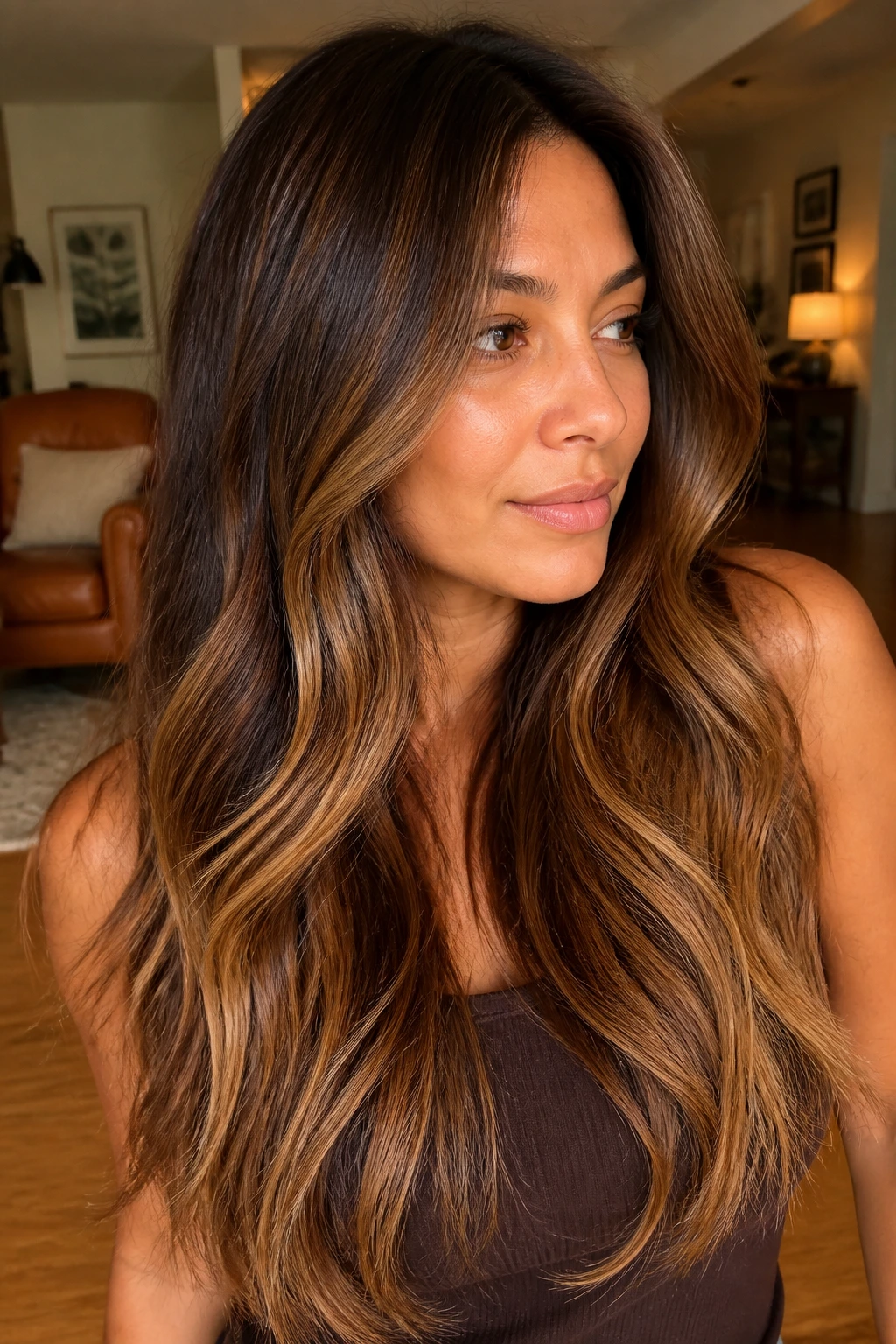
Going too ash: Ash brown can look chic on the wrong person and flat on the right one. If your skin is warm, too much cool pigment can make the face look tired. Ask for brown, chestnut, caramel, or mocha with warmth still intact.
-
Making the highlights too chunky: Wide stripes on straight or fine hair can look dated fast. The fix is finer weaves through the crown and a few slightly wider pieces near the front where they can actually frame the face.
-
Skipping the lowlights: Bright pieces without shadow can make brunette hair look stringy. A few deeper ribbons underneath give the highlights something to sit against and help the hair feel fuller.
-
Overusing purple shampoo: One or two uses can knock out brass. Using it every wash can mute warm highlights and make them look dull or gray. Save it for when the color starts drifting orange.
-
Ignoring the haircut: Color can’t save split ends or a blunt shape that fights the highlight placement. If the ends are rough, trim them first. If the cut is too one-length, ask for layers or face framing so the color has movement.
Frequently Asked Questions
What brown highlights look best on warm skin tones?
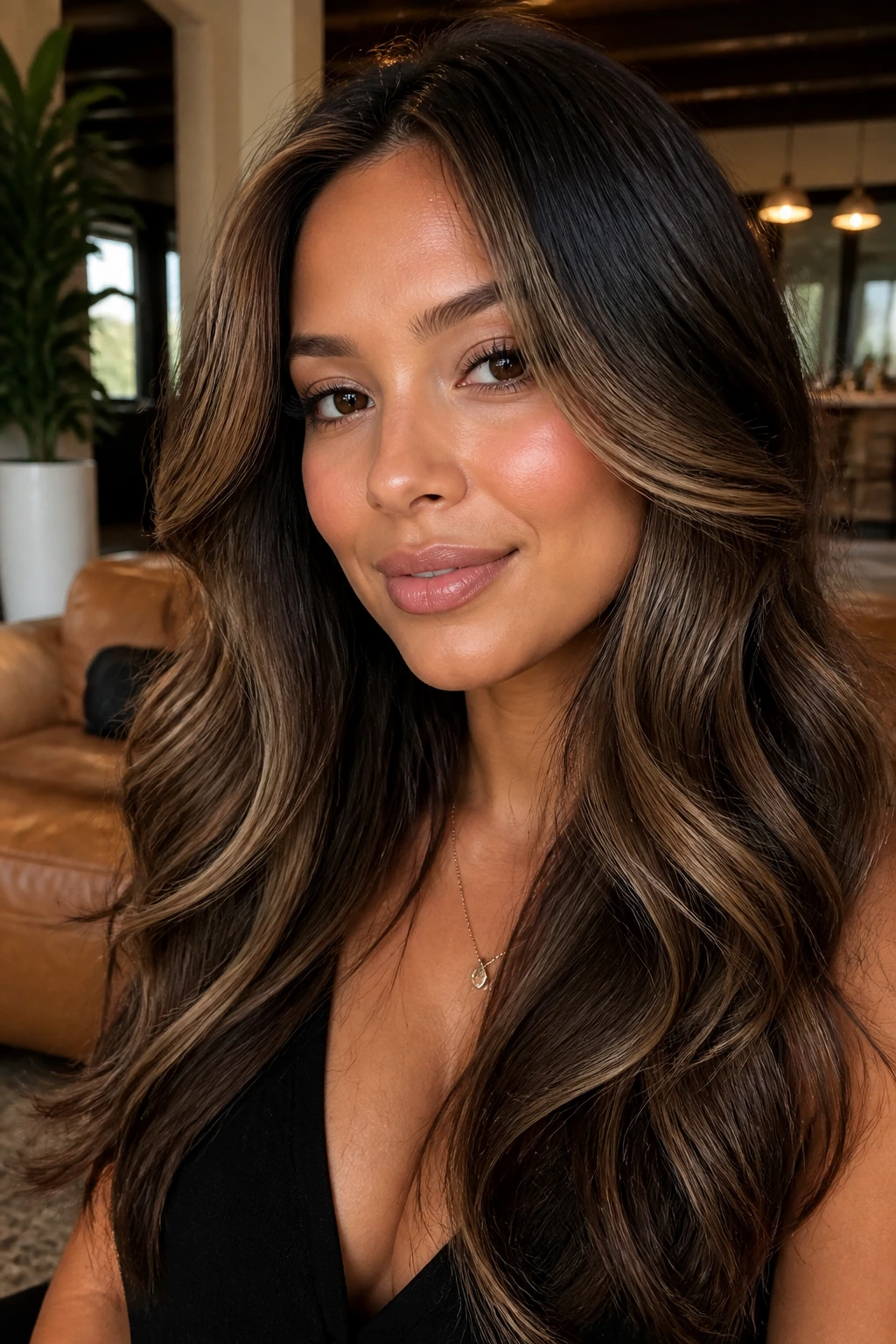
Caramel, chestnut, mocha, toffee, honey brown, and walnut are the safest bets. They stay inside the warm family, so the hair brightens the face instead of making the complexion look flat.
Can warm skin wear cooler brown highlights?
Sometimes, but the cooler the brown gets, the more it can drain warmth from the face. If you want a cooler edge, keep it subtle and balance it with a warm gloss or a few caramel pieces around the front.
How light should the highlights be?
For the most wearable result, stay about 1 to 3 levels lighter than your base. That range gives visible dimension without drifting into blonde territory, which can be a little harsh on warm undertones.
Are lowlights useful, or should I only ask for highlights?
Lowlights are often the missing piece. They bring back depth, make the highlights look richer, and help thicker or over-lightened hair feel fuller. On brunettes, shadow matters as much as brightness.
Do these shades work on curly hair?
Yes, but placement has to follow the curl pattern. Paint or foil the outer curl ring and a few strategic pieces near the face, then leave the inner layers deeper so the curl shape stays intact.
How often do I need to refresh medium brown highlights?
A gloss every 6 to 8 weeks helps keep the warmth clean, and a full highlight refresh usually lands somewhere around 8 to 12 weeks, depending on how soft or visible you want the grow-out to be.
Can I do this without bleach?
If you’re only going one shade lighter, a demi-permanent gloss or deposit-only color may be enough. For true lift on darker brunettes, some lightening is usually needed, even if it’s gentle and controlled.
What if my highlights turn too orange?
That usually means the lift was warm but not balanced enough. A salon toner can push the tone back toward chestnut or mocha, and at home you may need a blue-leaning shampoo used sparingly rather than every wash.
What should I tell my colorist if I want a natural look?
Say you want medium-brown dimension, not blonde streaks, and ask for fine ribbons with a soft face frame. If you have a photo, bring one that shows both the tone and the placement, because those are not always the same thing.
The Warm Brunette Sweet Spot
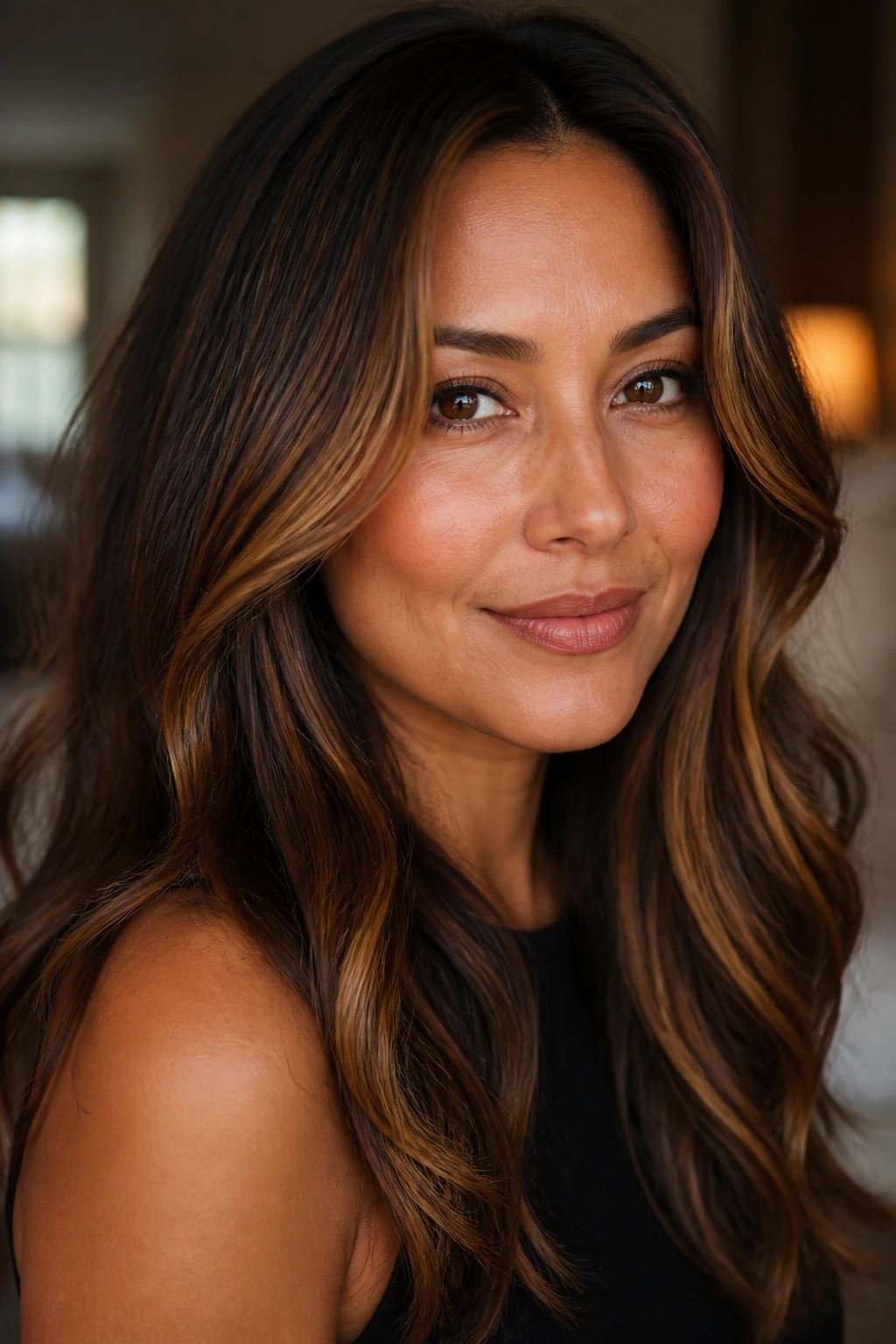
Medium brown highlights are at their best when they don’t try to be blonde. That’s the whole appeal. They brighten warm skin with caramel, chestnut, mocha, walnut, and honey-brown tones that feel believable, glossy, and easier to live with than a big, pale transformation.
If you choose the tone with care and let the placement follow the haircut, the result can be quietly striking. Not flashy. Not flat either. Just hair that looks like it knows exactly how to sit in the light, which is usually the mark of a good brunette color job.