



Olive skin can make dark blonde ombre look expensive in a way platinum never quite manages. The color sits in that sweet middle zone: enough depth at the root to keep the face from going washed out, enough lightness at the ends to give wavy hair movement, and enough softness in the fade that the whole thing reads as lived-in instead of striped.
That balance matters. Too pale, and olive undertones can look flat or a little green around the jaw. Too gold, and the ends tip orange fast, which is a brutal look under daylight. The best versions stay creamy, beige, mushroom, sand, or honey-beige — shades that let the waves do the talking instead of forcing the color to scream.
And wavy hair changes the game. A flat color job can look fine in a mirror, then turn dull once the hair bends and breaks up the light. Ombre gives you movement built into the shape. The darker root stays close to the scalp, the mid-lengths carry the transition, and the lighter ends land where the wave catches sun, lamp light, and every tiny shift in angle.
Why Dark Blonde Ombre for Olive Skin and Wavy Hair Works So Well
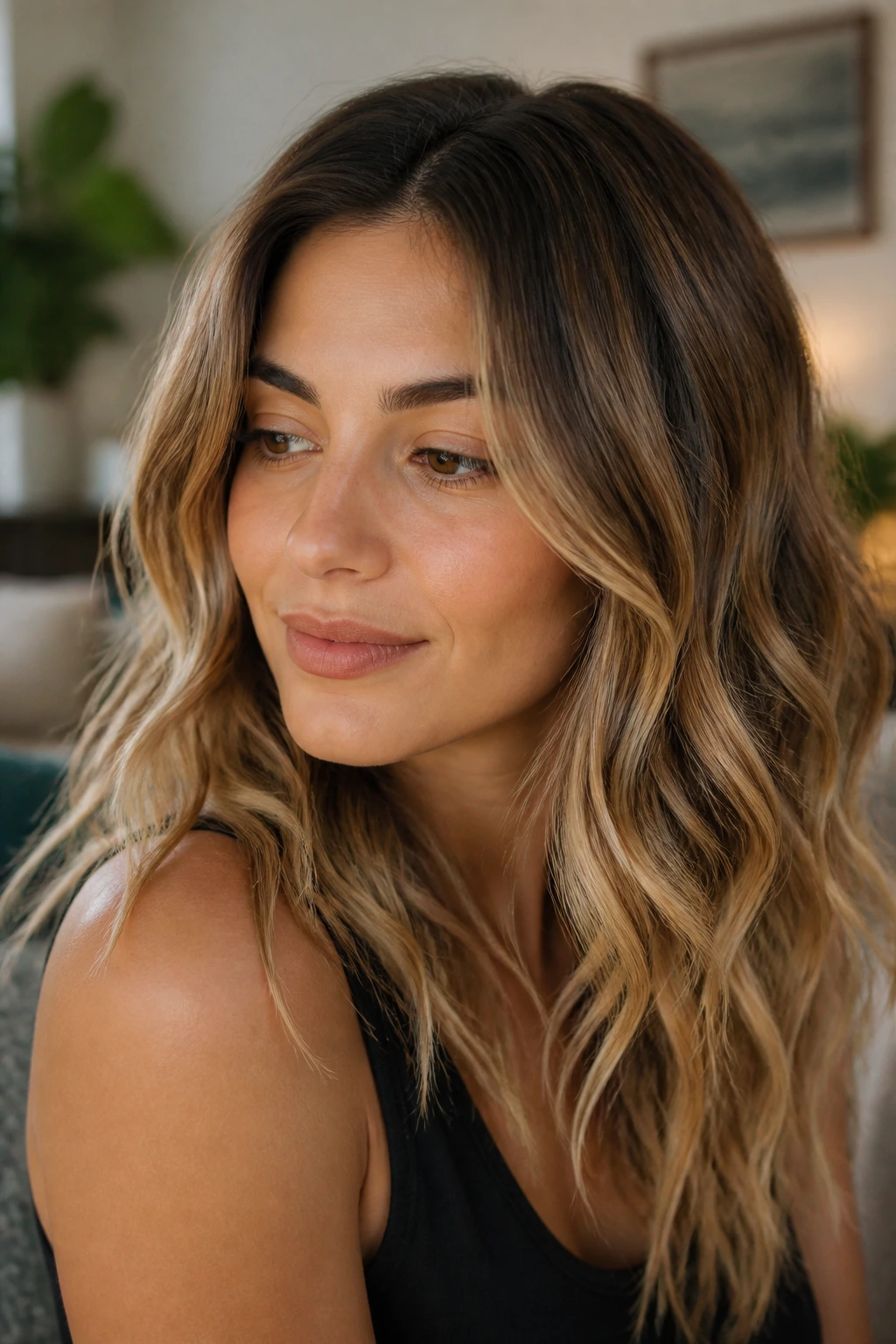
-
Root depth keeps the face grounded: A level 3 to 5 base stops olive skin from looking chalky, especially around the forehead and cheeks where light hair can wash things out fast.
-
Wave pattern makes the fade look richer: Curves and bends break up the light, so beige ends on wavy hair look dimensional instead of one flat band.
-
Muted blondes handle undertones better: Mushroom, sand, oat, and beige-blonde tones sit nicely on olive skin because they soften green, gold, or neutral undertones instead of fighting them.
-
Grow-out stays softer than a blunt highlight line: A dark blonde ombre can stretch 8 to 14 weeks before it starts to look harsh, depending on how light the ends are and how fast your hair grows.
-
Styling is less fussy than it looks: Air-dried bends, diffuser waves, or a loose 1.25-inch iron wave all show the color well. You do not need poker-straight hair for the fade to make sense.
-
The finish can be tuned easily: A gloss can push the look warmer, cooler, or softer without another full bleach session, which is one reason this color family holds up so well.
1. Espresso Root Melt to Sandy Beige Ends
A deep espresso root fading into sandy beige ends is the safest, cleanest entry point if you want contrast without drama. The root stays dark enough to flatter olive skin, while the ends lift just far enough to feel bright in the bends of your waves.
This one works because the transition is quiet. No hard stripe. No chunky jump from brown to blonde. Ask for a root melt that stretches a couple of inches down, then a beige toner on the ends — not white, not yellow, but that soft beach-sand shade that looks better in daylight than in salon lighting.
For wavy hair, the payoff is in the movement. Every bend carries a different amount of light, so the color looks more expensive when the hair is a little undone. A middle part gives it a sleek feel. A loose side part makes the beige ends look even softer.
If your olive skin runs neutral, this is a strong first choice. If you lean warmer, keep the beige creamy rather than icy.
2. Chestnut Waves with Honey Cream Ends
Chestnut and honey cream is warmer than it sounds, but not in the sticky, brassy way people fear. The chestnut root keeps the color rich, and the honey cream ends add a soft glow that olive skin can wear without looking tired.
What matters here is restraint. Honey should mean pale gold with a beige backbone, not yellow-candy brightness. Ask for the lightest pieces to stay below the cheekbone on wavy hair, where they’ll blink in and out of view as the waves move. That keeps the color from sitting on top of the hair like frosting.
This is a nice fit if your olive skin has golden undertones or if your complexion looks a little flat under very cool beige shades. The warmth wakes up the face. It also gives thick waves a fuller feel, since the lighter ends make the outer curve of the hair read wider and more textured.
A gloss every 6 to 8 weeks keeps the honey from drifting orange. That part matters more than people think.
3. Mushroom Brown to Beige Blonde Fade
Mushroom brown is one of those shades that sounds odd on paper and looks fantastic on the right head. On olive skin, it can be a relief. The taupe-gray-brown base keeps the color anchored, and the beige blonde ends keep it from feeling muddy.
This is the cool-leaning choice for people whose olive undertones go green-gray or who find honey tones too loud. The trick is not to push the ends all the way to icy blonde. Leave them in the beige family, or the contrast can get harsh against the skin and the wave pattern starts looking frayed instead of soft.
I like this on medium-density wavy hair because the cooler pieces make each ripple read clearly. If your hair is fine, ask for fewer but more deliberate ribbons so the fade doesn’t turn wispy. If your hair is dense, you can take the lightness a little higher through the mid-lengths.
It’s subtle. That’s the point.
4. Caramel Ribbon Balayage on Deep Brunette
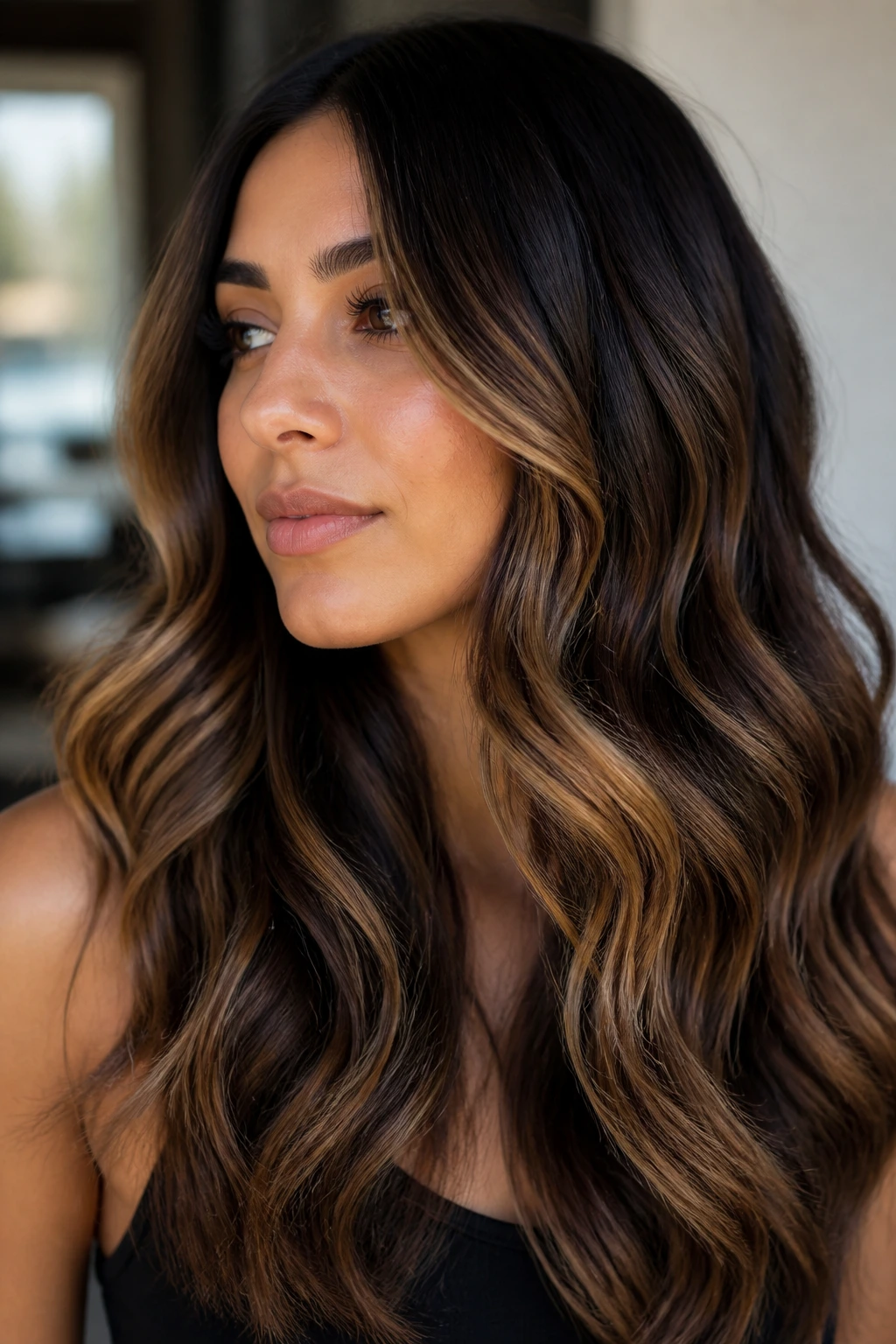
Caramel ribbon balayage is for people who want to see the color move. Not from a mile away. Up close, in the bends, in the little flips at the ends of wavy hair.
The brunette base stays deep, which olive skin usually likes. Then the caramel pieces are painted in loose ribbons, not all over. That keeps the pattern dimensional and avoids the “striped beach hair” problem that shows up when too many highlights are packed too evenly. On waves, ribbons are better than bands. Always.
This style is especially good if your hair is thick or you wear your waves with a bit of volume at the root. The caramel catches on the outer curve of the wave and warms the face without flooding it with blonde. Ask your colorist to keep the brightest pieces around the top layer and face frame, then leave the underneath sections a shade deeper.
It’s a workhorse look. Easy to dress up, easy to let air-dry, and forgiving when the roots come back in.
5. Rooted Bronde with Olive-Skin-Friendly Beige Ends
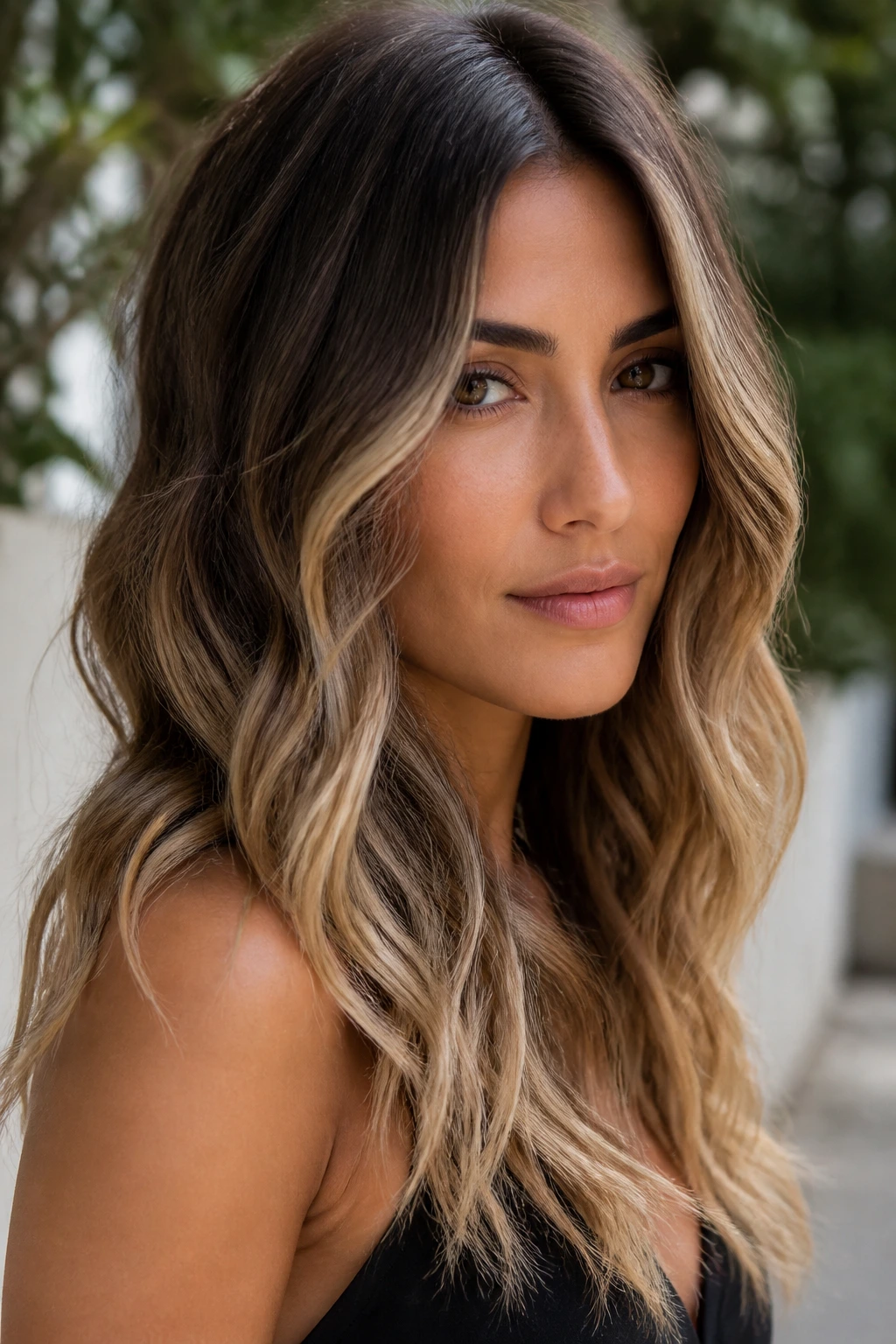
This is the one I’d hand to someone who says, “I want lighter hair, but I don’t want to look like I tried too hard.” Rooted bronde sits right between brown and blonde, which is a sweet zone for olive skin because it keeps the face from getting flattened by too much lightness.
The root shadow should stay about one to two levels darker than the mid-lengths. That little shift matters more than you’d think. It gives the color a soft frame and keeps the grow-out clean. The beige ends should stay creamy, not pale yellow, so they don’t fight the undertone of the skin.
Ask for this if you want softness first
- A shadow root that starts just below the part line
- Beige-blonde ends with no orange cast
- Face-framing pieces one notch lighter than the back
- Wave-friendly placement that follows the bend, not the straight line of the hair
On wavy hair, rooted bronde looks especially good with medium layers. The color catches the shape without making the ends look thin.
6. Smoky Taupe Ombre with Soft Lift
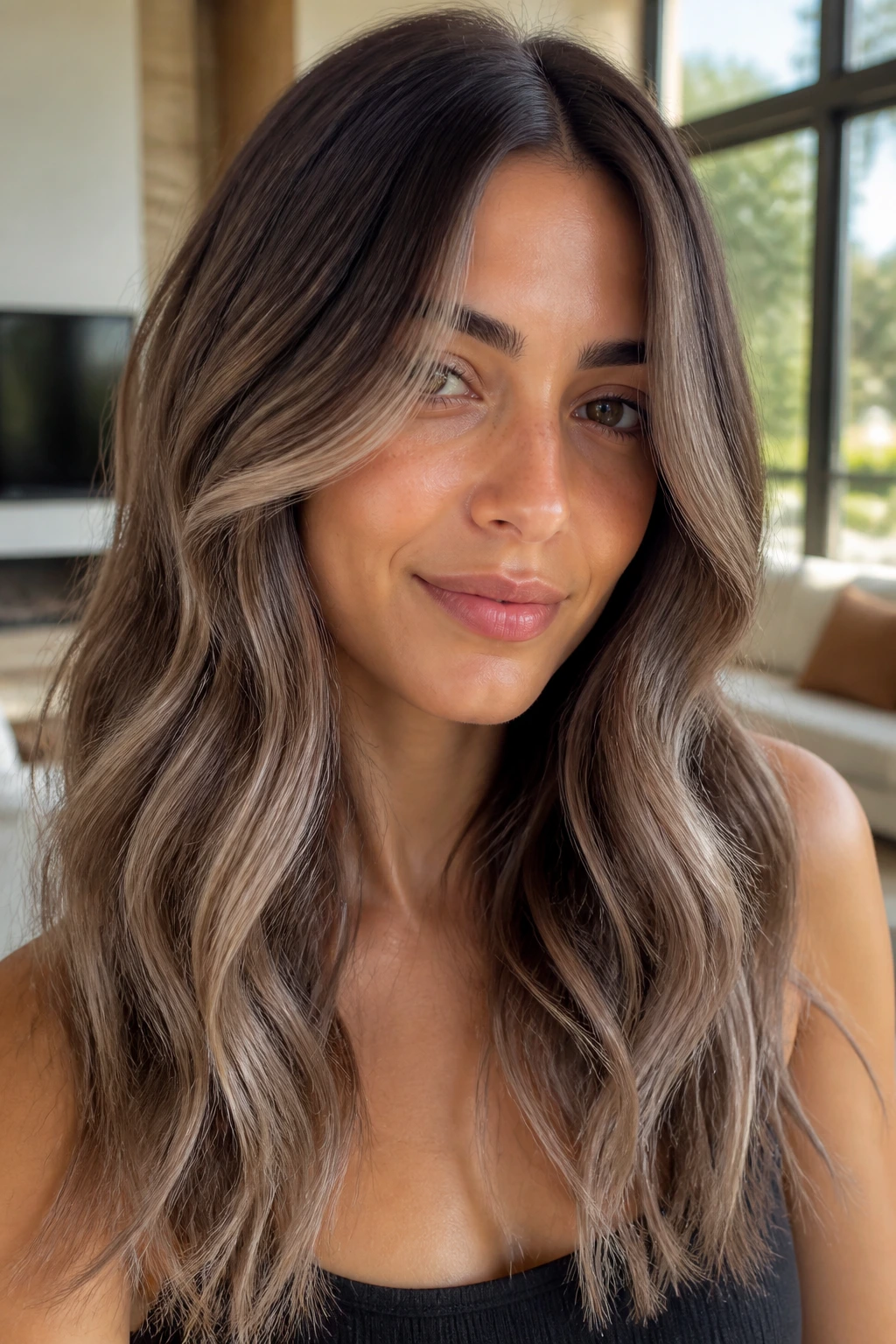
Smoky taupe is the cool-girl version of dark blonde ombre, except it still has enough warmth in the beige to suit olive skin. It’s muted, not dull. There’s a difference, and a big one.
This shade works when gold makes your complexion look a bit too shiny or when brighter blonde pieces seem to jump out too hard. The taupe base should stay velvety, then the ends can lift to a soft beige that never gets chalky. The whole thing should feel brushed, not frosted.
Wavy hair loves this because taupe reads almost like shadow in motion. That means the bends hold shape even when the style is loose. A diffuser helps, but honestly, an air-dry cream and a good cut do half the work here. Long layers are better than blunt ends; blunt ends make this color feel heavier than it is.
If you wear a lot of silver jewelry or cooler makeup, this may be the quietest, most polished option in the bunch.
7. Maple Brown to Toasted Oat Ombre
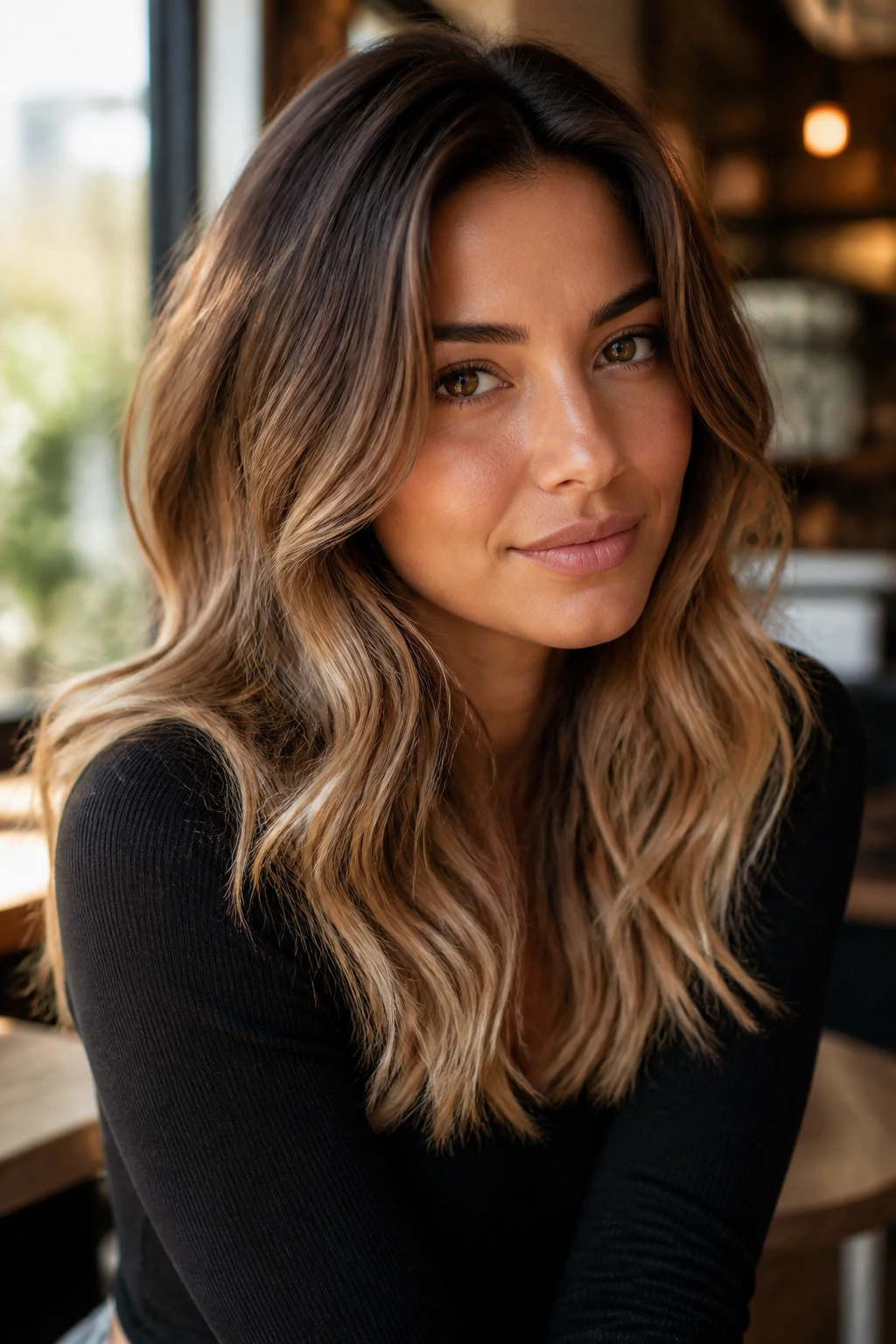
Maple brown has a warm, chestnut-syrup richness that sounds sweeter than it looks. Paired with toasted oat ends, it lands in a very wearable middle ground for olive skin: warm enough to keep the complexion alive, muted enough to avoid brass.
The key is texture. Toasted oat should not look like yellow blonde. Think soft grain, not butter. On wavy hair, that shade especially likes the mid-lengths and ends because the bends make the oat tone flicker instead of sit still. It gives the hair a little visual depth, even if the cut is simple.
This is a good choice if you want warmth but hate the way true gold can turn loud after a few washes. It also suits medium-brown natural roots that don’t need a massive lift. The transition can stay relaxed and still look intentional.
A gloss with a beige-gold finish keeps the oat from going flat. If your hair drinks up toner fast, plan on refreshing it sooner rather than later.
8. Cinnamon Root Smudge to Soft Gold Ends
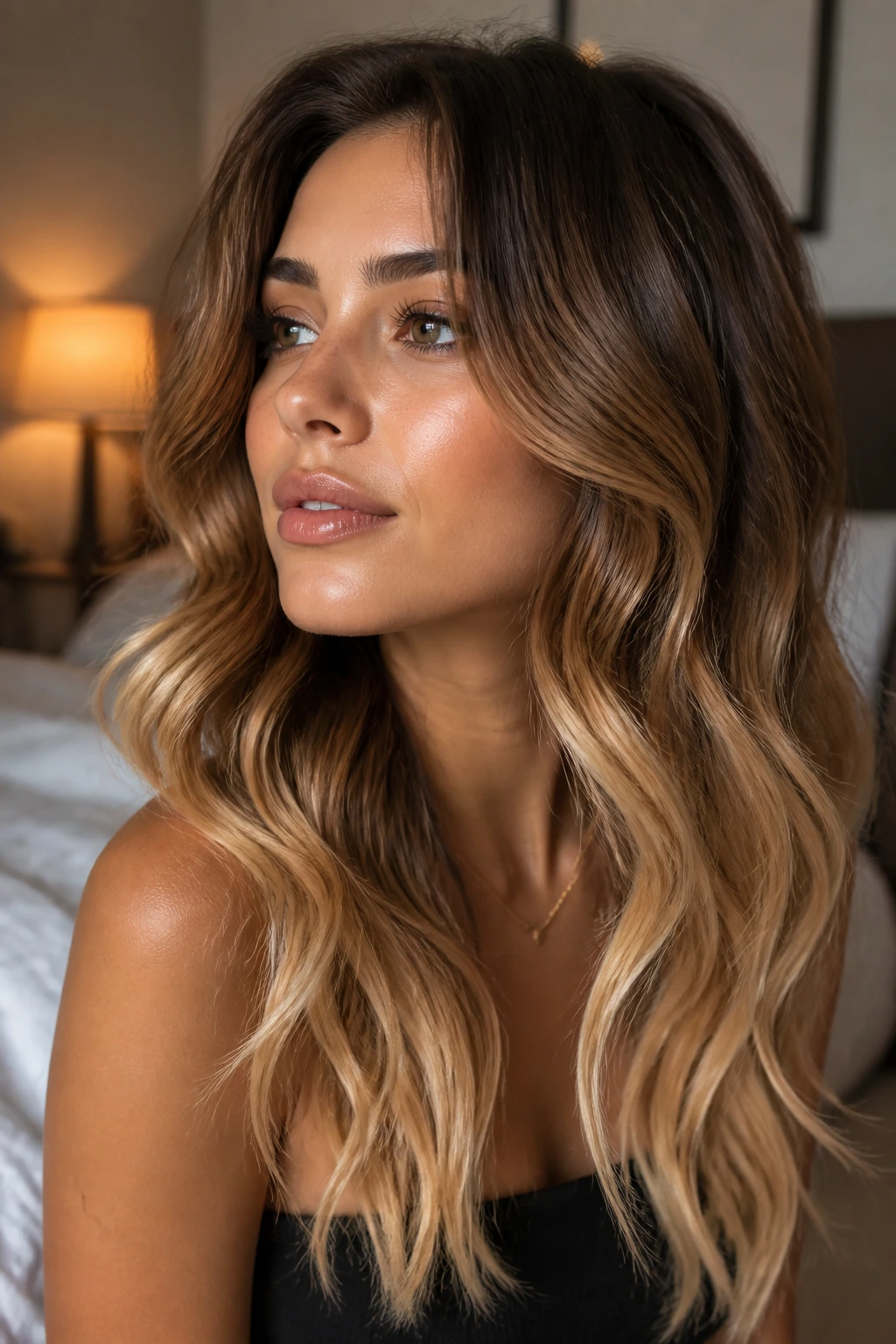
Cinnamon at the root sounds intense, but on olive skin it can work like blush for the hair. The warmth lifts the complexion, and the soft gold ends finish the look with a little light, not a blast of it.
This one is especially nice if your wavy hair falls in broad S-curves. The warmth at the root makes the bend feel fuller, then the gold settles at the ends where the hair naturally catches the most light. Ask for the gold to stay soft and slightly beige so it doesn’t swing toward copper.
I like this on hair that already has some natural warm pigment. It avoids that over-processed, too-cool finish some olive-skinned people get from ashy dyes. If your skin has golden or green-olive undertones, this shade can be especially flattering around the temples and cheekbones.
A side part can make the cinnamon root look richer. Middle part? Softer. Either way, keep the face frame a touch lighter than the nape.
9. Cocoa Lengths with Vanilla Face Frames
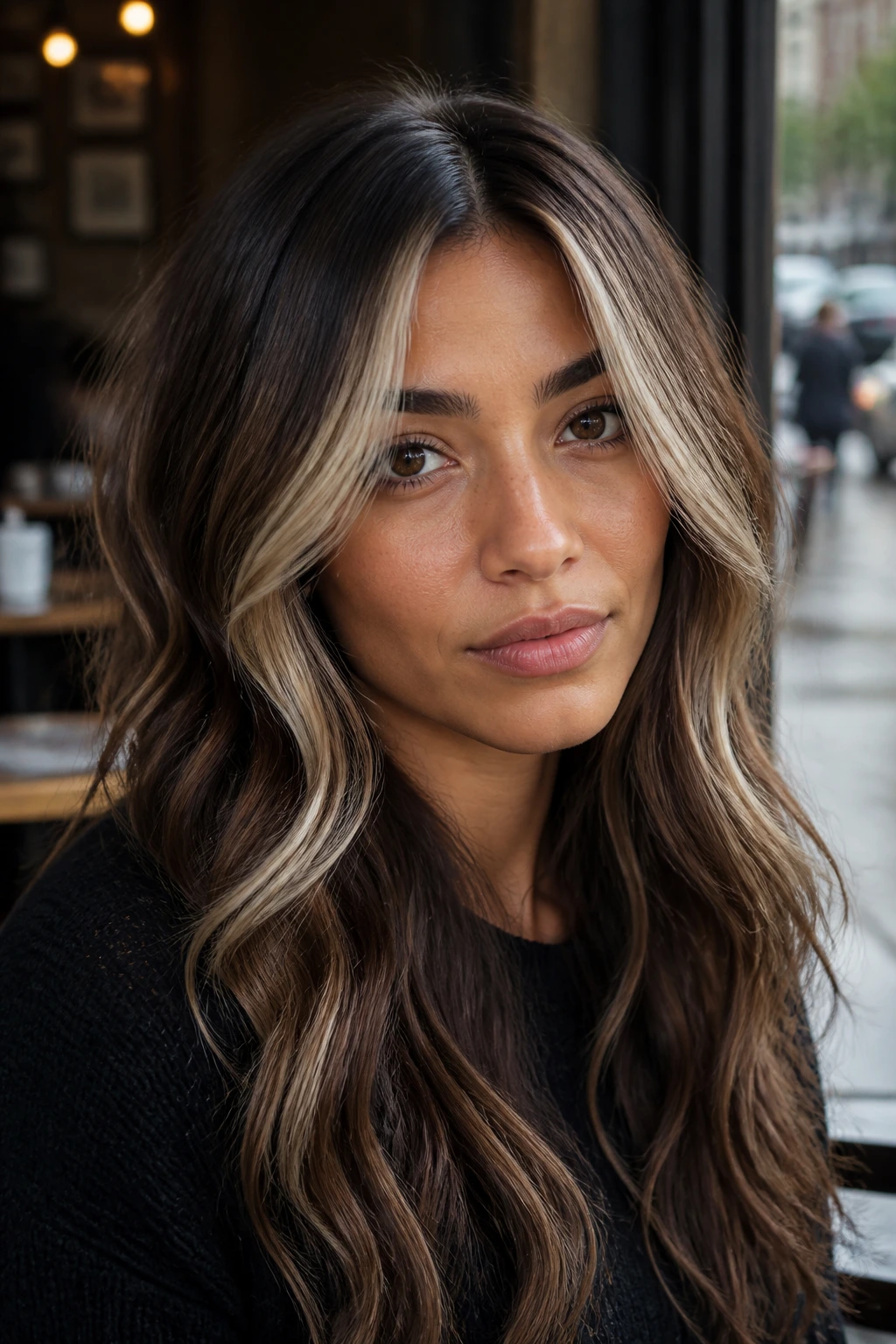
This one is sneaky. Most of the hair stays cocoa, which keeps olive skin grounded and lets the waves look dense. Then the face frame gets a vanilla lift — just enough brightness to wake up the eyes and cheekbones.
That tiny hit of light can change the whole mood of the cut. If the front pieces are painted well, the rest of the color can stay quieter and deeper. That’s useful for wavy hair because the front wave usually moves the most and shows the shape first. The vanilla pieces should be creamy, not icy. Think soft candlelight, not white paint.
It’s a strong option if you like wearing your hair half-up or tucked behind the ears. The front pieces still do their job when the rest of the hair is off the face. And because the ends aren’t all lightened equally, the regrowth is easier to live with.
If you have a rounder face, keep the brightest panels below the cheekbone. That lengthens the shape instead of widening it.
10. Ash Beige Surf Waves
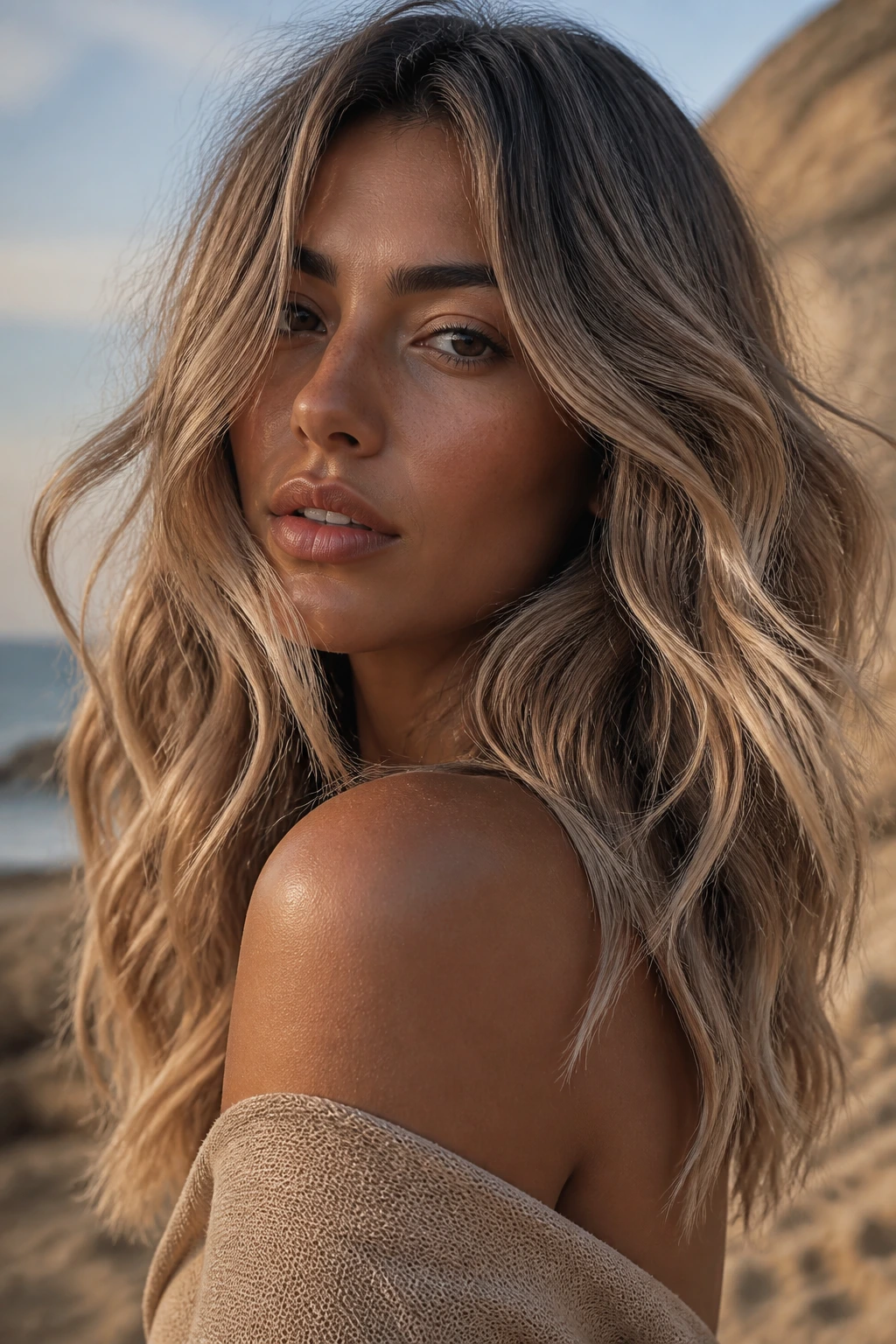
Ash beige surf waves are for the person who wants lightness but hates gold. The color stays cool enough to look modern, but the beige keeps it from going flat or dusty against olive skin.
The important thing here is balance. Too much ash and the hair can start looking gray in low light. Too much beige and it turns warm in a hurry. The best version splits the difference, then lets the wave pattern do the rest. On naturally wavy hair, the surf-wave shape gives the ash beige plenty of movement without forcing the color to carry all the visual interest.
This works especially well if your natural base is already medium brown. You’re not fighting the hair; you’re just softening it. A loose bend with a 1.25-inch iron, brushed out once it cools, gives the color that airy feel. Don’t over-style it. The best part is how the tone shifts when the light changes.
If your skin is olive and leans cool or neutral, this can look sharp in a good way.
11. Bronze-to-Biscuit Fade
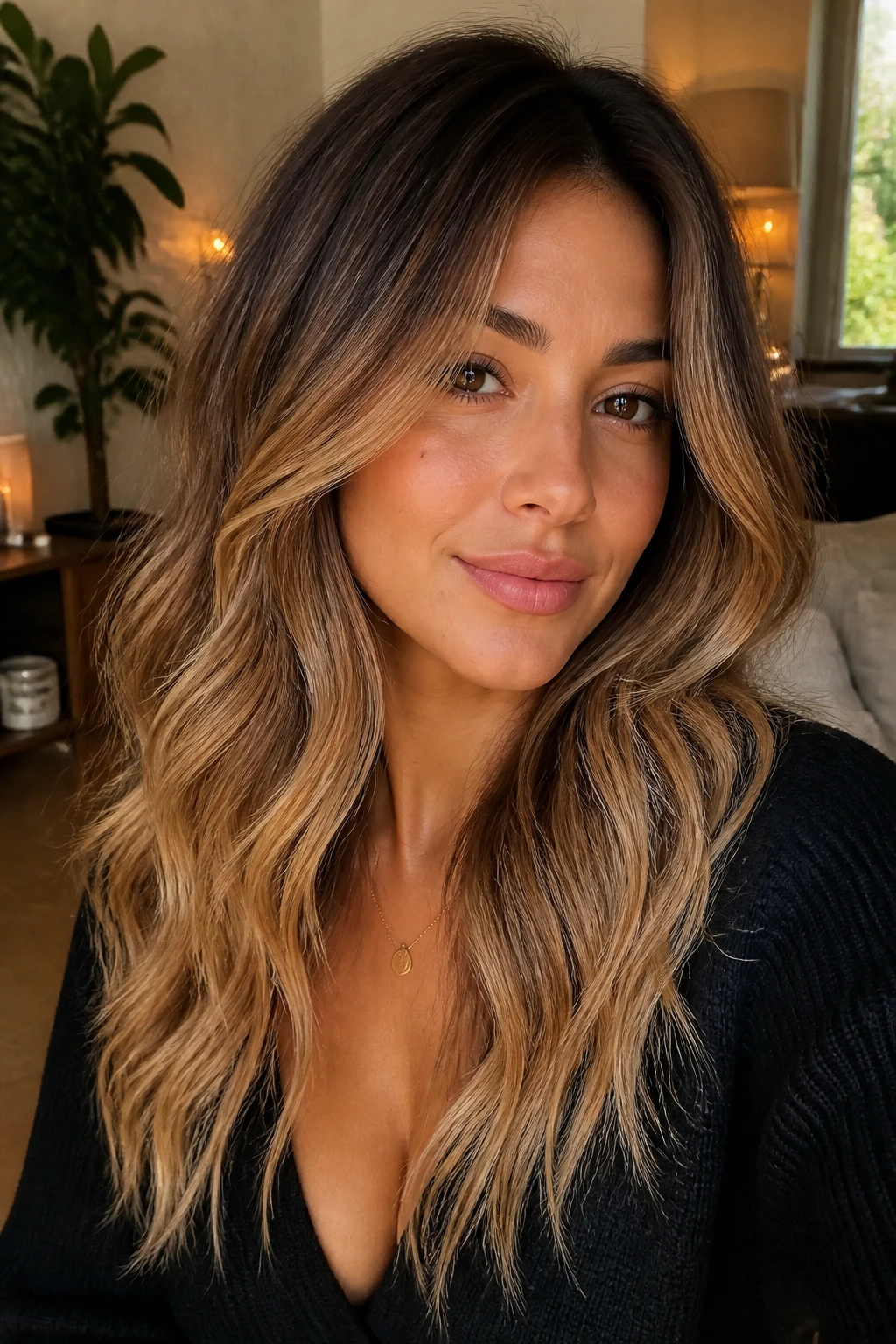
Bronze-to-biscuit is warmer than the ash looks, but it still avoids the heavy orange tone that can get messy fast. Bronze at the root gives olive skin a lived-in glow, then biscuit ends keep the blonde side calm and creamy.
This is a nice compromise for people who want warmth and softness at the same time. Bronze brings depth. Biscuit brings light. The fade between them is what makes the color feel easy on wavy hair, because each bend can show a slightly different tone without becoming obvious or stripy.
I’d choose this for someone with medium to thick waves who wants a color that looks good even when the style gets a little messy. It can handle texture. It can handle humidity. And it doesn’t need the ends to be icy to be interesting.
Ask for a gloss that sits in the beige-gold range, not peach. Peach can skew too warm on olive skin unless the rest of the makeup and wardrobe are carrying that warmth too.
12. Curtain-Frame Sandy Beige Ombre
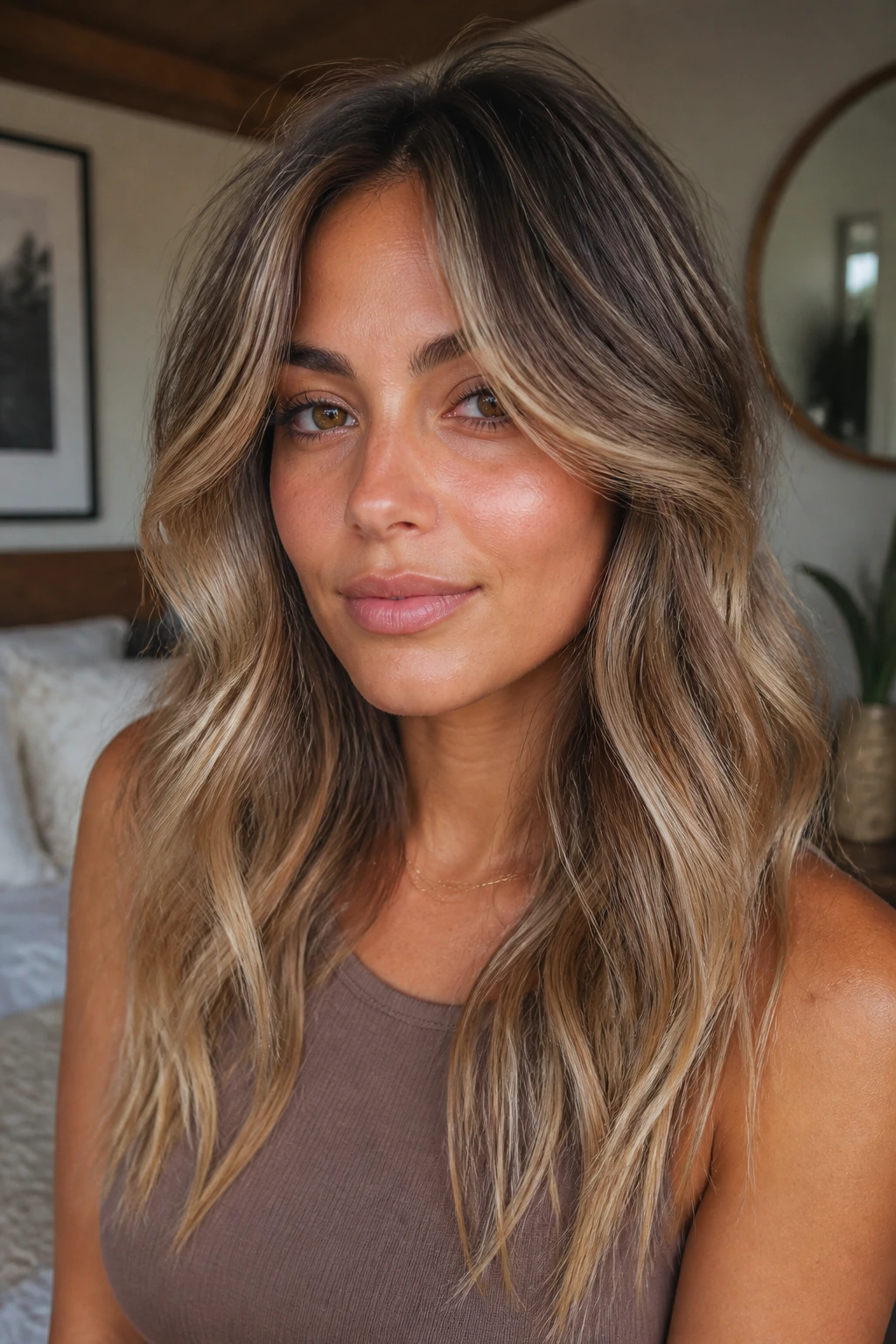
Curtain bangs and face-framing layers change how ombre reads. They pull the eye right to the front, which means the sandy beige has to be placed with some care. Done right, this looks soft and very face-friendly on olive skin.
The best thing here is that the lighter panels start around the cheekbone and sweep down with the curtain shape. That makes the movement feel connected instead of random. Sandy beige keeps the ends soft enough for olive undertones, and the root can stay deep so the bangs don’t look disconnected from the rest of the head.
Wavy hair and curtain framing are a good pair because the color and the shape both move. When the bangs fall open, the beige shows. When they tuck back, the darker root takes over. That ebb and flow keeps the style from feeling overdone.
If your waves are loose, this is a lovely way to add brightness without bleaching every inch of length. The front does the heavy lifting.
13. Sepia Brown to Almond Ends
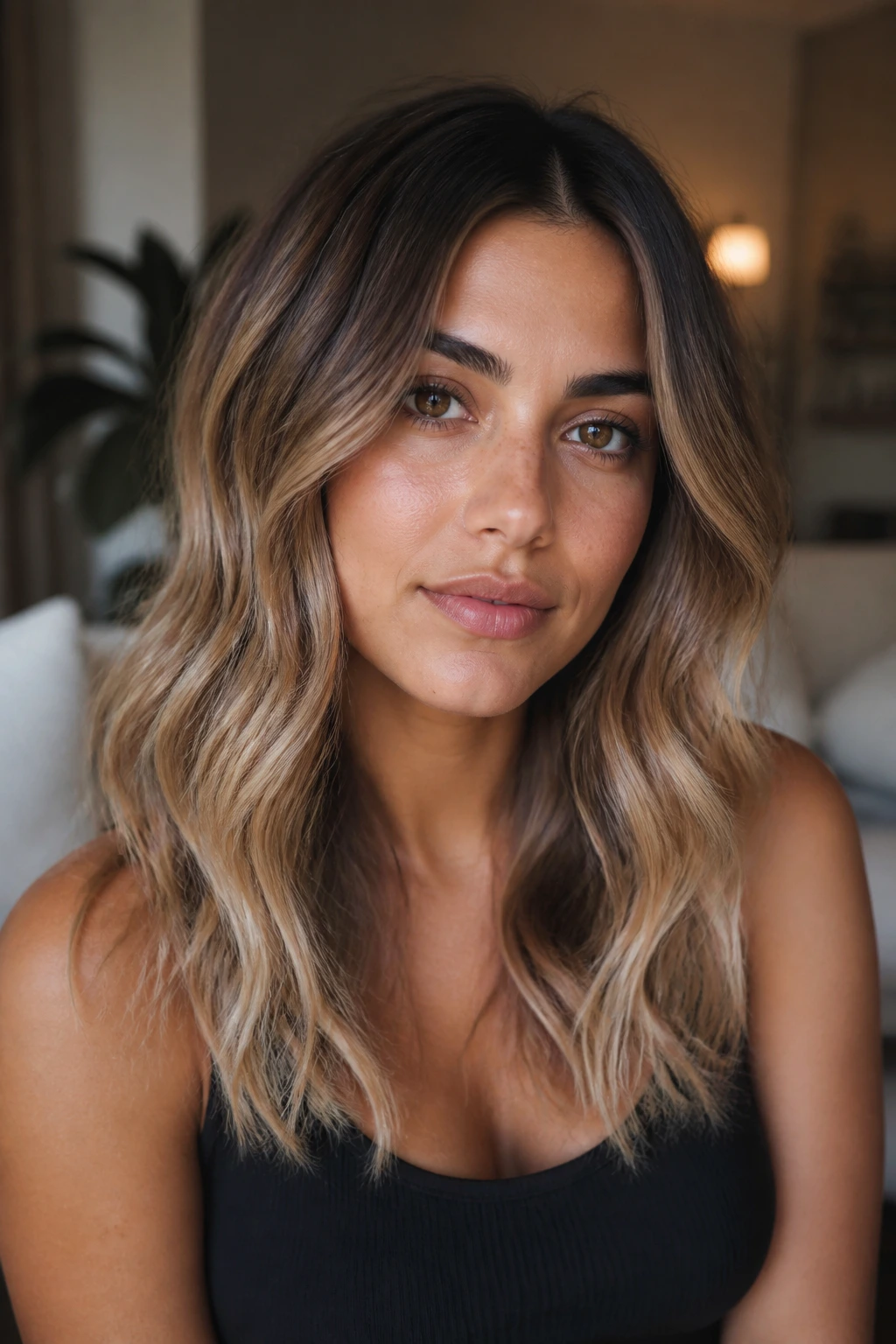
Sepia brown has that old-photo depth to it — warm, a little muted, and flattering in a way that does not ask for attention. Almond ends lift it just enough to keep the look from sinking into one color block.
This is a quiet ombre. Not boring. Quiet. On olive skin, that can be a gift because the tones stay in the same family as the complexion instead of competing with it. The almond should be soft and milky, not high-contrast blonde, especially if the waves are medium width. Wide waves can hold a stronger fade; tighter waves usually look best with a gentler lift.
I like this for medium-length cuts where the ends curl under a bit. The almond shade peeks out in the bends, which gives the color a little motion even when the hair is not freshly styled. It’s one of those shades that looks good on a Tuesday and still looks like you meant it.
A shine spray helps this one. Matte sepia can go a little sleepy if the cut is too blunt.
14. Hazelnut Melt with Champagne Tips
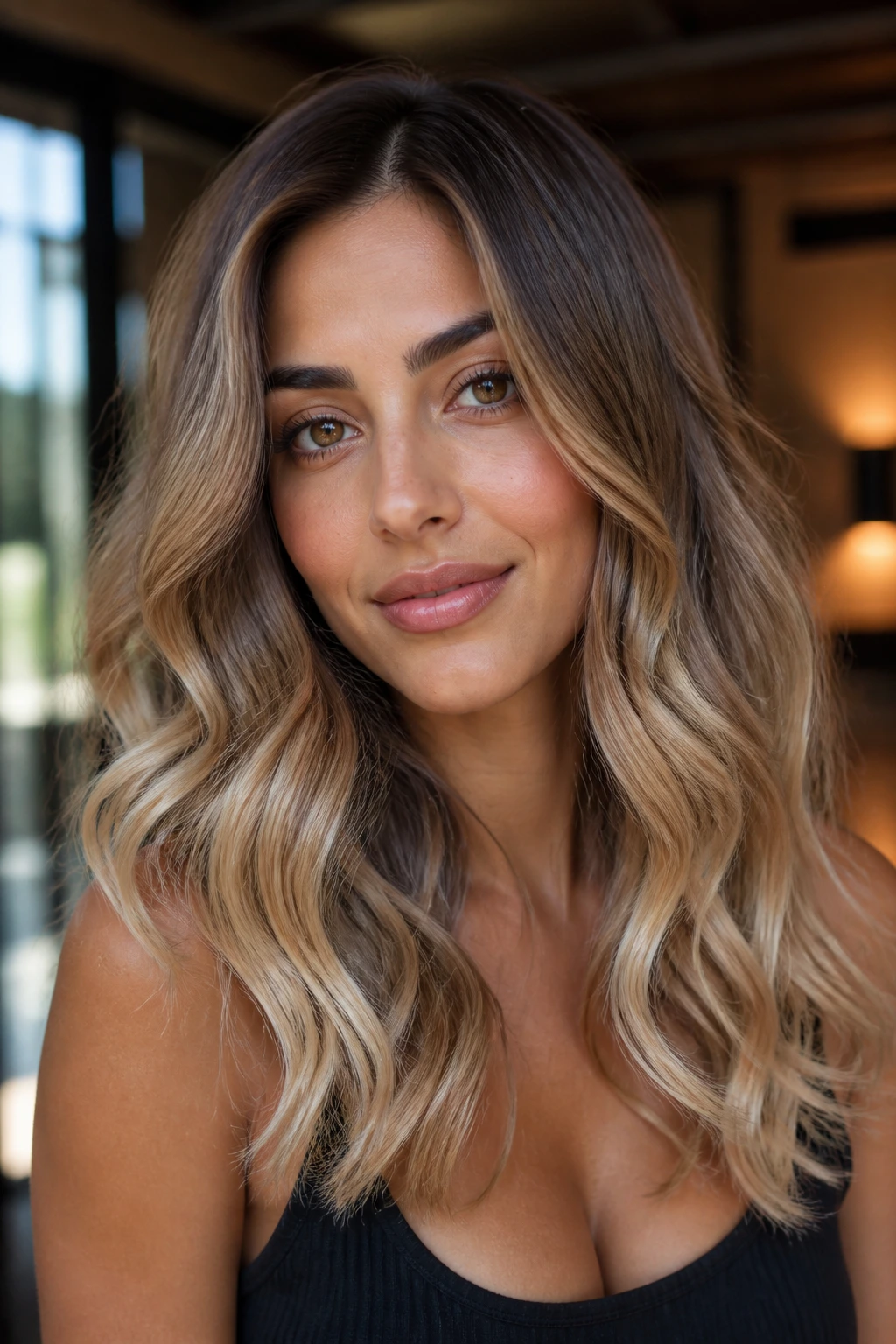
Hazelnut melt with champagne tips is what happens when you want some sparkle but still care about restraint. The hazelnut root keeps the base rich, and the champagne at the ends gives the hair a lifted finish that can work on olive skin if the tone stays creamy.
Champagne is a tricky word in color talk. It can mean soft beige, pale gold, or a slightly cool gleam. Here, I’d keep it in the beige-gold lane, never frosty. On wavy hair, those lighter tips catch the end of each bend and make the whole style look a little more expensive than a single-tone blonde.
This is a smart choice if you wear your hair down a lot. The ends show in motion, especially when the waves hit the collarbone or shoulder. If your skin runs olive-neutral, champagne can brighten without turning the face yellow.
The root melt should be smooth and low-contrast. If the color jumps too fast from hazelnut to champagne, the effect gets busy. Keep it blended, and let the wave shape carry the brightness.
15. Driftwood Brown to Dusty Blonde
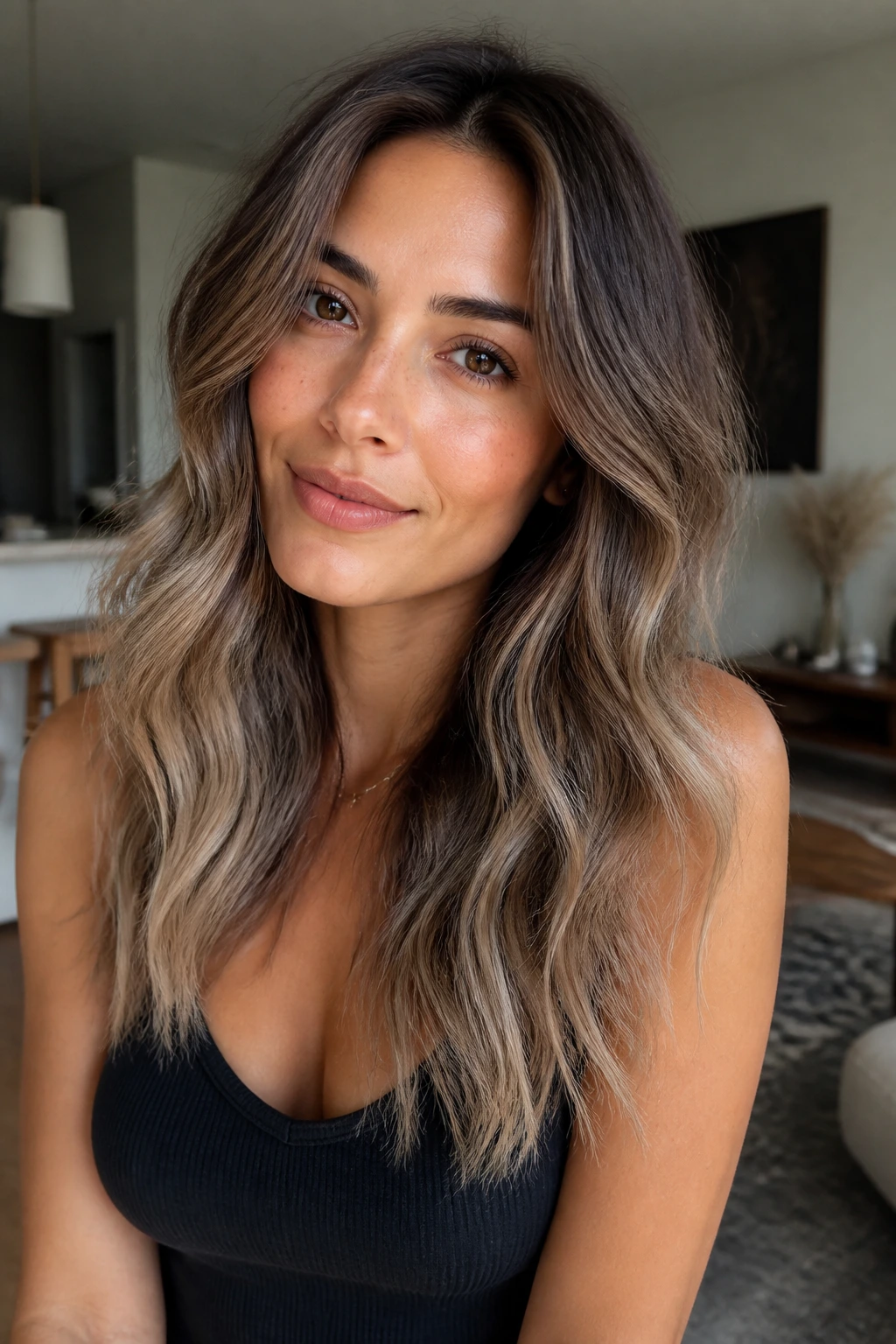
Driftwood brown is dry, smoky, and a little coastal without trying too hard. Dusty blonde keeps the lightness muted, which is exactly what olive skin often needs when bright blonde feels too blunt.
This look has a matte finish that works well on hair with texture. Waves give it dimension, and the dusty blonde doesn’t overpower the root. It’s especially good if your natural hair is already a medium brown with a cool cast. Instead of fighting that tone, the color leans into it.
If you like an understated palette in clothes and makeup, this one fits. It doesn’t scream warm. It doesn’t scream cool. It just sits there looking balanced. And because the ends aren’t ultra-light, the regrowth line stays soft for longer than most people expect.
A blunt cut can make this look a little heavy. Soft layers or a lob shape help the driftwood tone move.
16. Mocha-to-Mushroom Gradient
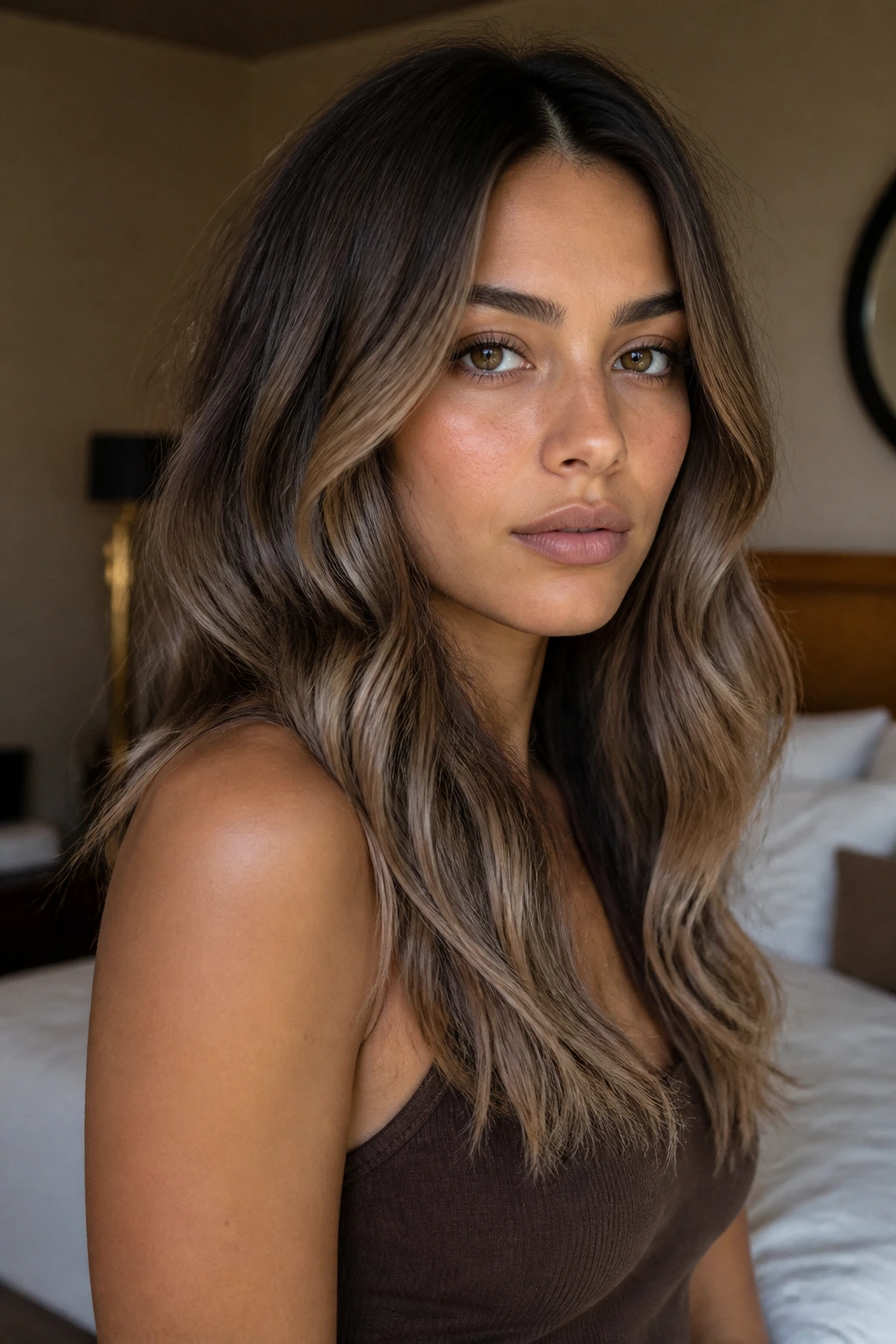
Mocha to mushroom is a useful answer when gold keeps turning strange on your hair. The mocha root is rich and grounded, and the mushroom lengths add that cool taupe note olive skin can wear without looking drained.
This is one of the more polished options in the group. The fade matters more than the brightness. You want the transition to feel seamless but not blurry — soft enough to avoid a stripe, distinct enough that the color doesn’t collapse into one flat brown. On wavy hair, mushroom tones are especially nice because they catch light in a subtle, almost smoky way.
It suits people who like a little edge without going dramatic. If you usually wear black eyeliner, silver hoops, and a structured jacket, this color will probably feel natural. If your makeup leans warm and peachy, a beige gloss can keep the mushroom from getting too cold.
A lot of people ask for ash when they really want mushroom. They are not the same thing. Mushroom has more depth.
17. Golden Wheat Ends on Rooted Brunette
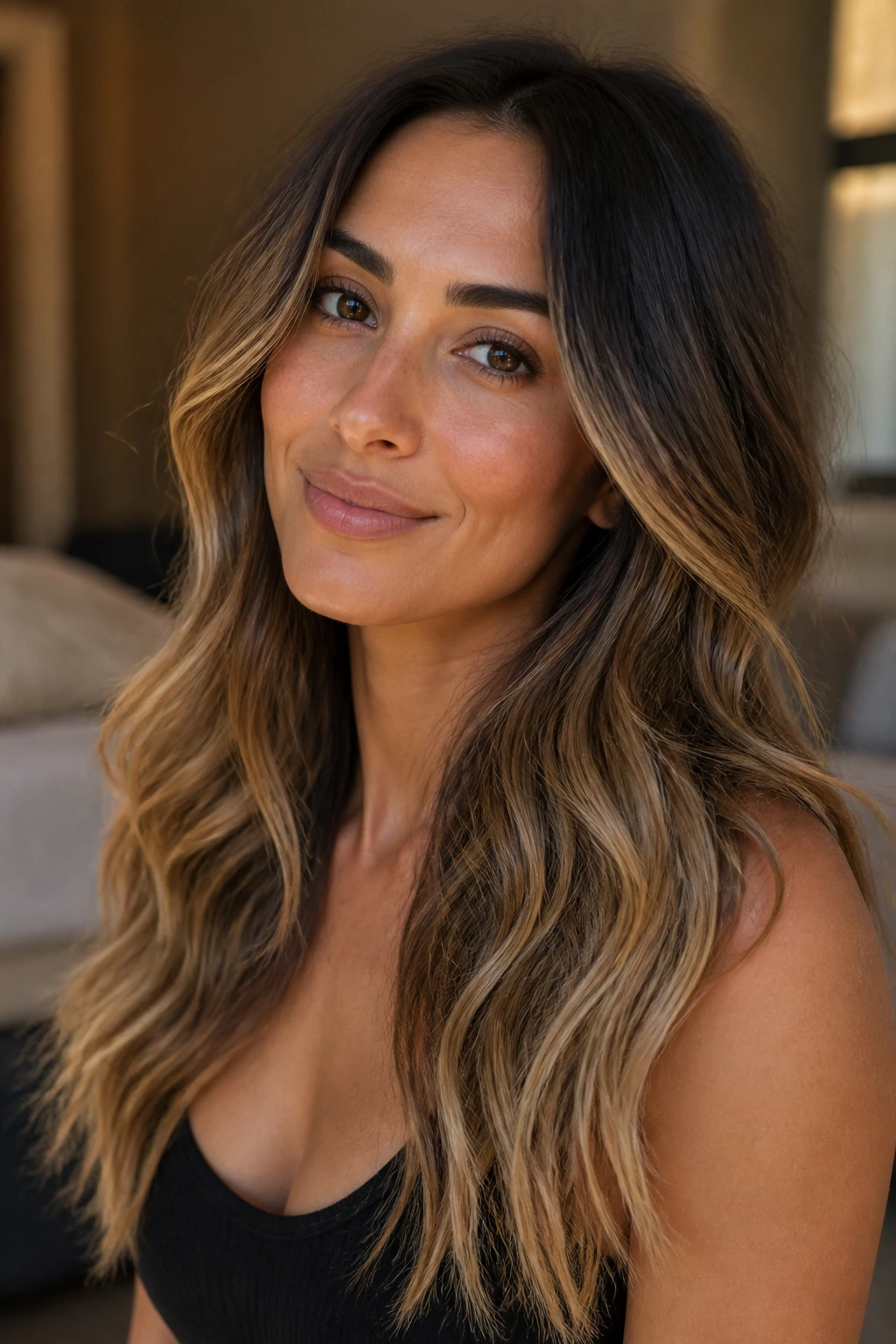
Golden wheat ends can look too sunny on some skin tones. On olive skin, though, they work when the root stays deep and the wheat is softened enough to read beige-gold rather than bright yellow.
This version is excellent on thick, long waves. The root depth keeps the cut from flattening at the crown, and the lighter ends give the wave pattern a sun-struck finish. The color looks richest when the wheat pieces are concentrated on the outer layer and the last three or four inches of length.
If your olive skin has warm or neutral undertones, this can bring life to the face fast. If you lean cooler, keep the wheat a little dustier and avoid pushing it toward honey. The whole point is to glow, not to glow-up-the-room loud.
This shade also pairs well with layered cuts, because the different lengths show off different amounts of light. Straight hair can wear it, sure. Wavy hair gets the better deal.
18. Toffee Wave Lines with Lived-In Depth
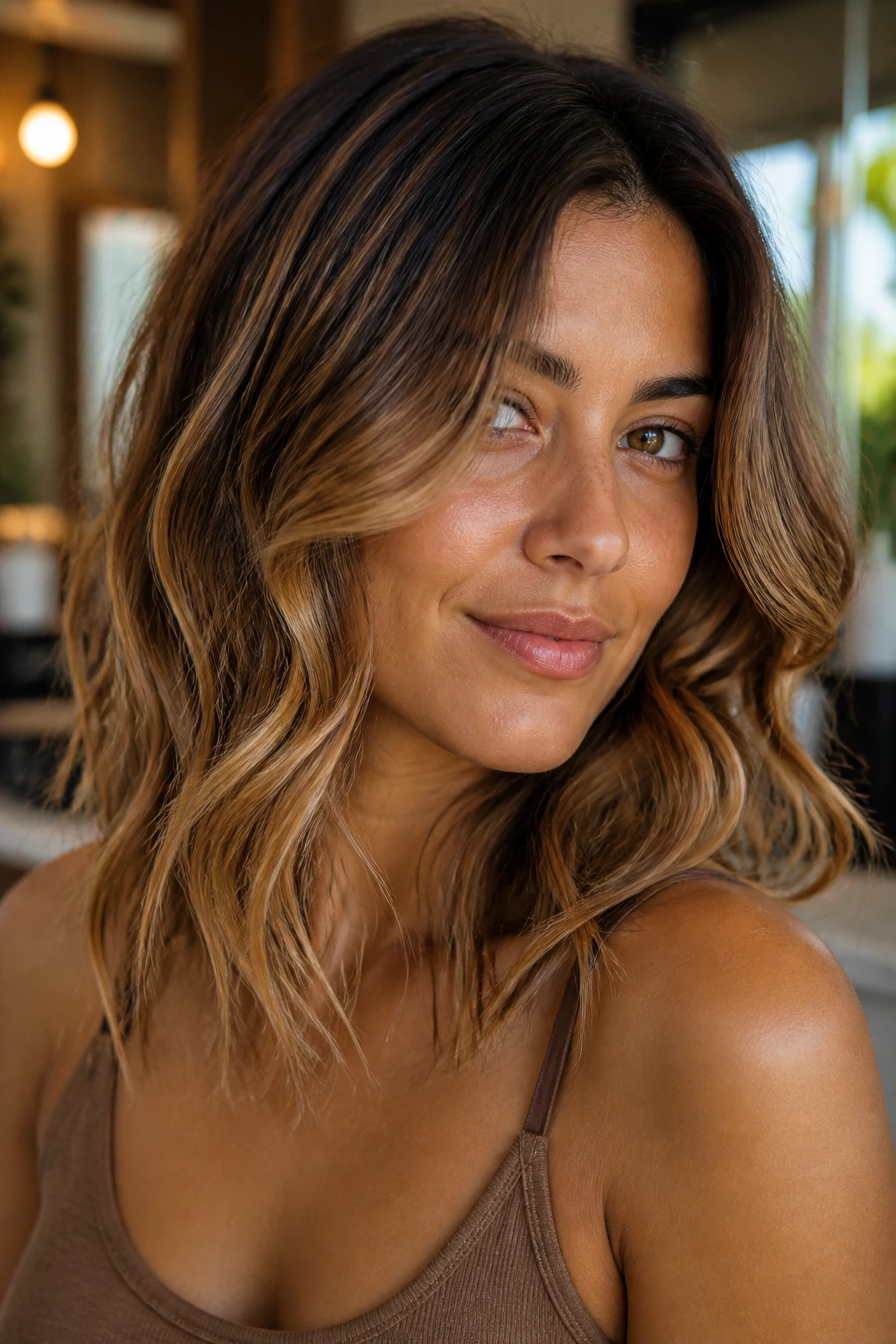
Toffee wave lines are all about placement. Not every piece needs to be bright. In fact, the best versions are not bright at all in the traditional sense. They’re lined through the waves like thin brushstrokes, which gives olive skin a gentle lift without a hard blonde statement.
This is one of the best choices if you want your hair to look rich from every angle. Toffee has enough warmth to stop the color from going flat, and the lived-in depth underneath keeps the light pieces from feeling harsh. On wavy hair, those thin lines show up most when the strands separate a little, which makes the color feel natural and dynamic.
I’d pick this for shoulder-length or longer waves, especially if you don’t want to see obvious grow-out at the crown. The color is forgiving. It lets the root stay dark and still look deliberate.
If you’re tired of high-contrast blonde pictures that never seem to live well in real life, this is the antidote.
19. Soft Sable with Pearl Ends
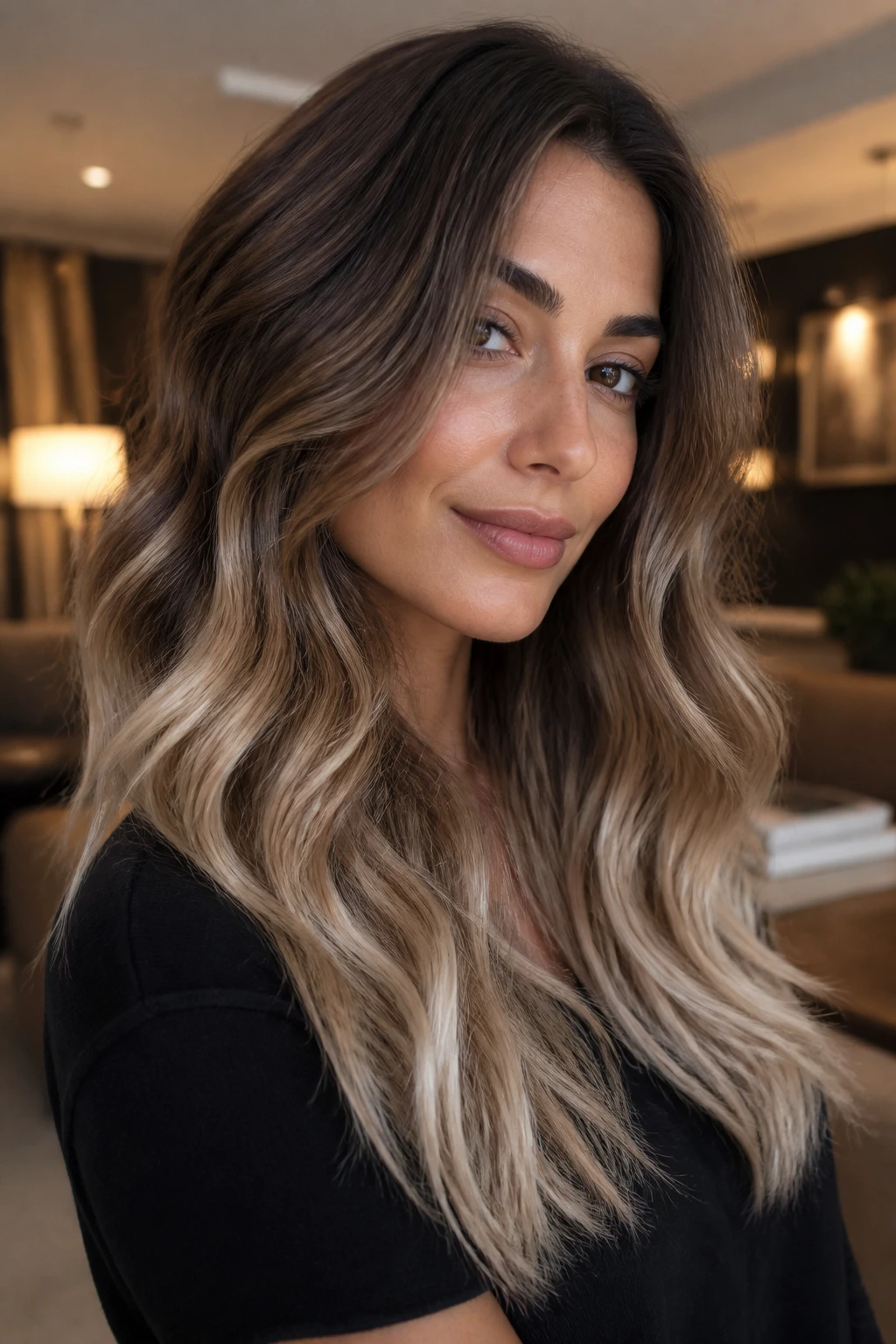
Soft sable is rich, deep, and a little moody. Pearl ends lighten it up in a way that suits olive skin when the pearl stays creamy and not blue-white. That tiny distinction matters. A lot.
This is a good pick when you want contrast but you still want the hair to feel plush. Pearl ends on wavy hair can look airy, especially if the waves are loose and brushed out after cooling. The deep sable base gives the style weight, while the lighter ends keep the movement visible.
Because the base is dark, this color works best if your skin can handle a cooler note. Neutral olive skin usually can. Warm olive skin can still wear it if the pearl leans beige rather than icy. A soft makeup look — peach blush, neutral lip, brushed brow — keeps the whole thing balanced.
It’s a little more editorial than some of the warmer shades here. Not fussy. Just more specific.
20. Latte Brown to Flaxen Tips
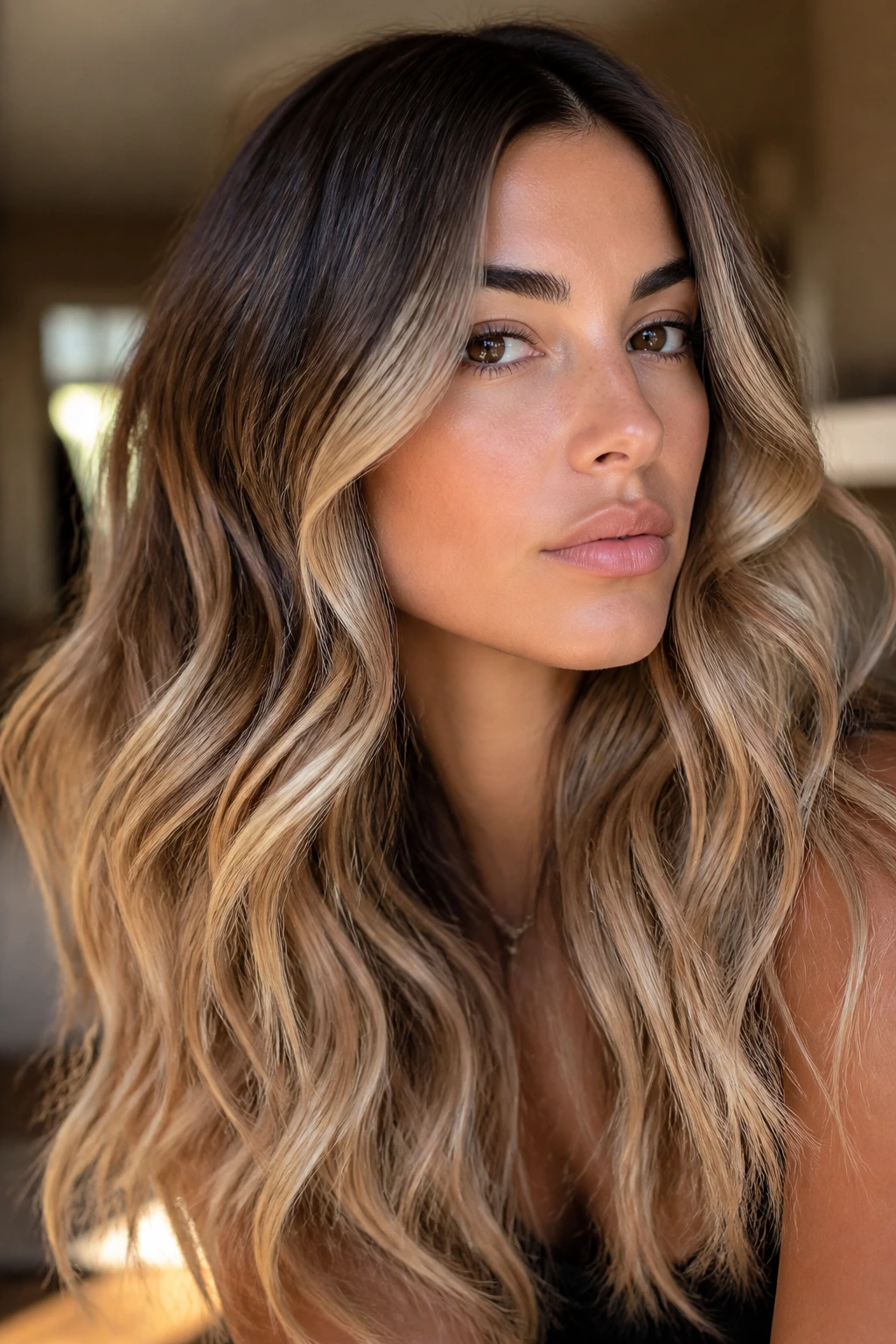
Latte brown to flaxen tips is lighter than most people expect from a dark blonde ombre, but it can work when the fade is slow and the flaxen stays soft. The latte root keeps the color anchored, and the tips bring the airy finish.
This one is best when you want a visible change. The ends move farther from the base than in the mushroom or sepia versions, so the contrast is clearer. On wavy hair, that contrast shows beautifully in the S-bend, because the lighter tips pop out at the curve and then disappear again.
Olive skin can wear flaxen if the tone is creamy, not straw-colored. If the tips go too dry or yellow, the whole look loses its polish fast. A toner or gloss matters here more than in darker fades.
I’d choose this when the haircut has movement already — layers, face framing, maybe a soft lob. The color needs a shape to sit on.
21. Sandstone Balayage with Deep Roots
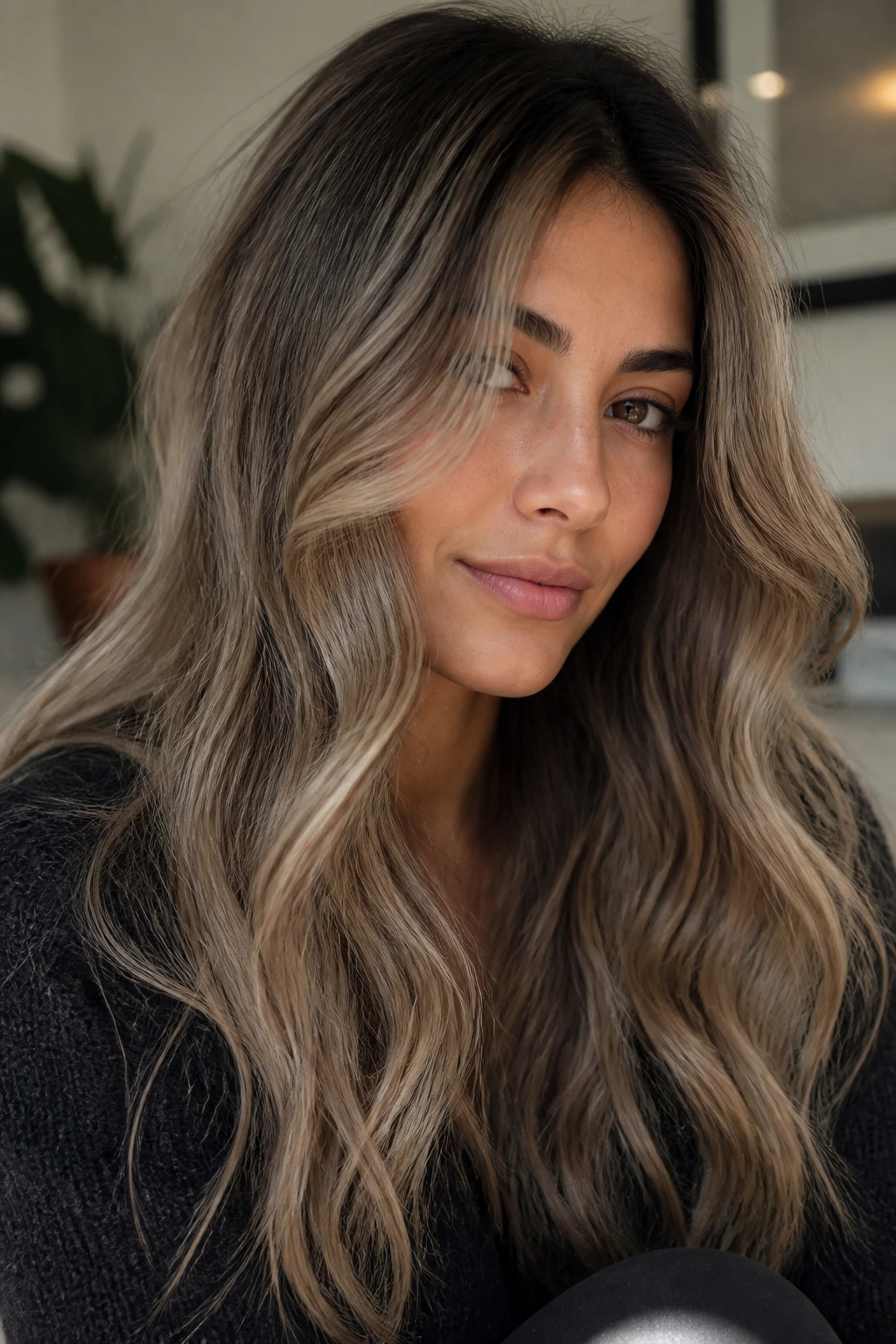
Sandstone balayage with deep roots is one of the most balanced looks in the bunch, and I think it’s underrated. The deep roots keep olive skin looking grounded, while the sandstone pieces bring in that warm-gray-beige blend that makes wavy hair look fuller.
This is a particularly good option if your natural hair is dark brown and you do not want the upkeep of a bigger blonde shift. The balayage can stay concentrated through the mid-lengths, then drift lighter toward the ends. That gives you brightness where the wave bends and depth where the hair needs it most.
The name sounds earthy because the color behaves that way. It’s soft, layered, and a little mineral in tone. On olive skin, that mineral quality works better than overly glossy gold. It feels cooler than caramel, warmer than mushroom, and easier to wear than both if you hate picking sides.
Ask for hand-painted pieces that follow the hair’s natural bend. On wavy hair, placement is half the look.
22. Mid-Brown to Pale Beige Ombré
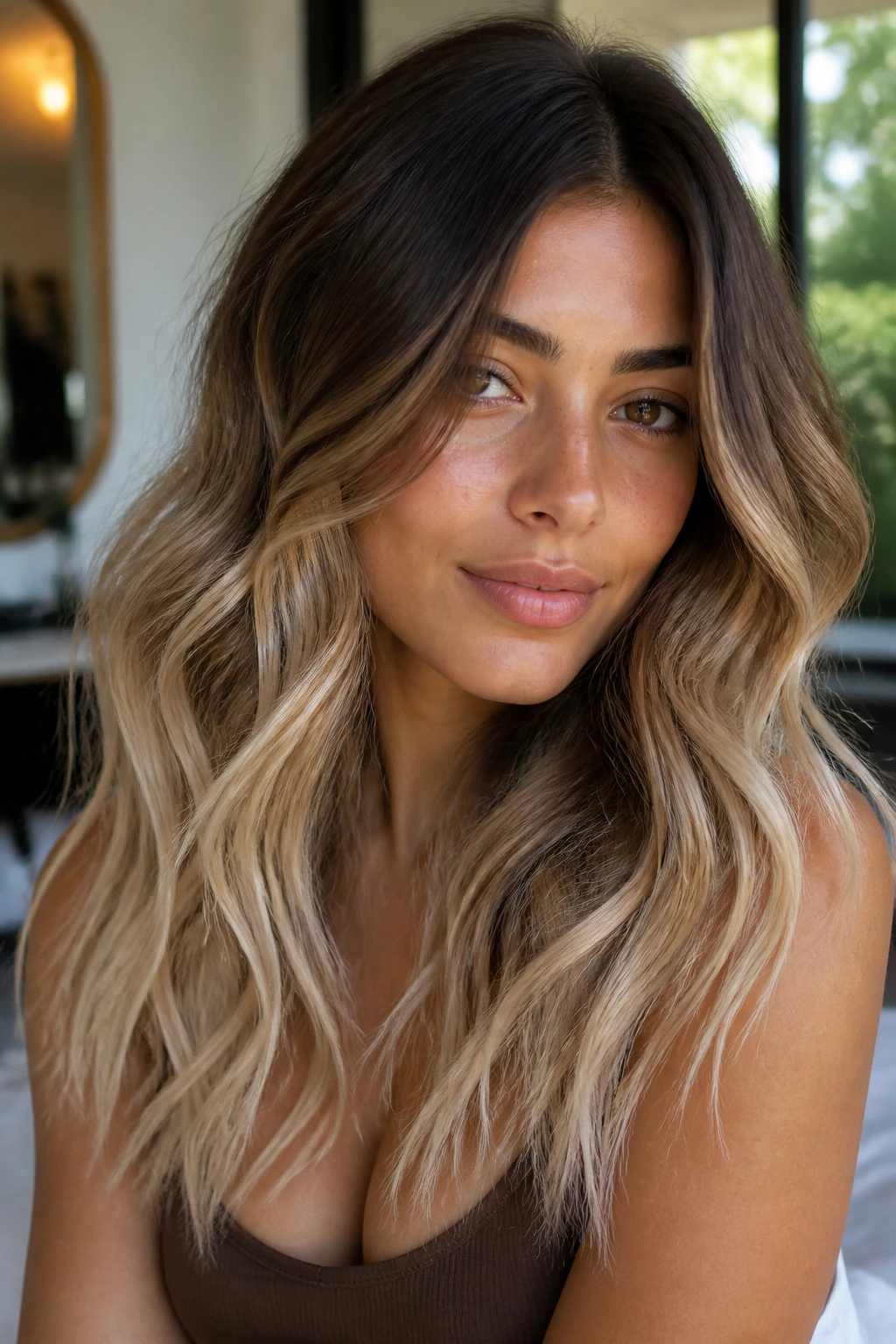
This is the boldest lightening option in the set, and it needs a careful hand. Mid-brown roots give olive skin a strong anchor, while the pale beige ends create a clear ombre effect that still avoids the harshness of white-blonde.
The beige has to stay creamy. If it goes too yellow, the skin can look sallow. If it goes too icy, the contrast can get stark. The sweet spot sits in the middle: pale enough to read blonde, soft enough to keep the face relaxed. On wavy hair, this kind of light end looks best when the cut has movement through the lower half, because the color can then break up naturally instead of hanging like one long curtain.
This is for someone who wants people to notice the color. Not in a loud way, but in the way that a clean, strong fade always gets noticed. It pairs well with deeper makeup, a structured haircut, or a wardrobe that already includes some contrast.
If the rest of the look is soft, this one becomes the focal point. That can be a good thing.
What Makes Dark Blonde Ombre So Good on Olive Skin and Wavy Hair
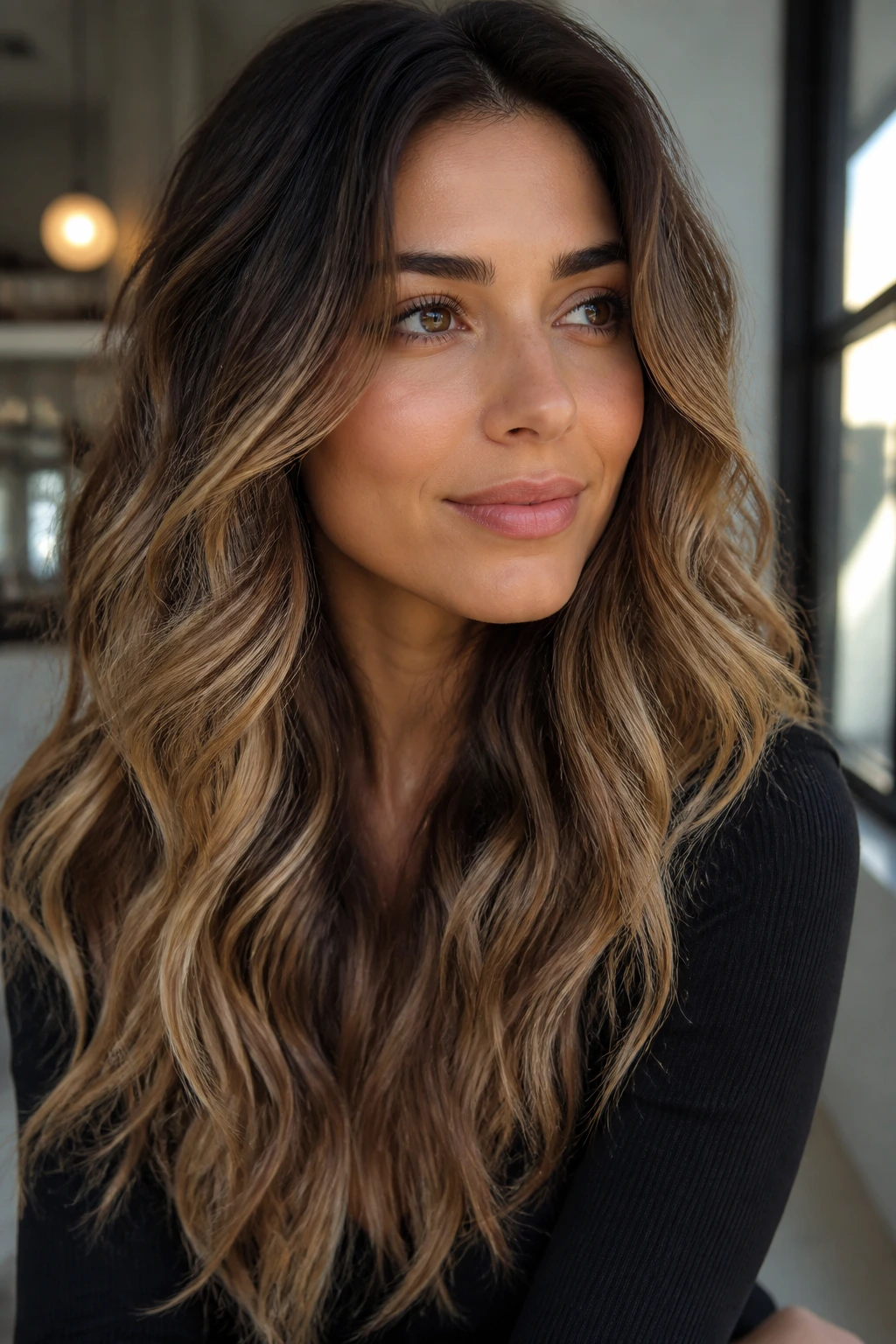
The reason this color family keeps working is simple: it respects the face before it tries to brighten the hair. Olive skin usually has a mix of green, gold, or neutral undertones, and dark blonde ombre gives you room to stay within that range instead of forcing your complexion to sit next to a color that does not belong there.
Wavy hair helps because it does not hold one flat reflection. A wave has a top, a side, a dip, and a shadow. That means the same beige or sand tone can look different from one inch to the next, which is exactly what you want when the goal is movement instead of a block of lightness.
The root shadow matters too. Too many people focus only on how light the ends go, then wonder why the color looks stripy or harsh two weeks later. The dark base is what lets the blonde feel soft. It is the frame around the painting, annoying as that sounds.
And yes, tone matters more than people admit. Beige, sand, mushroom, oat, biscuit, pearl, and dusty blonde are not interchangeable. They all push olive skin in slightly different directions, and once you start noticing that, it becomes much easier to pick a shade that looks like it belongs on your head.
Choosing the Right Lift Level Without Overdoing It
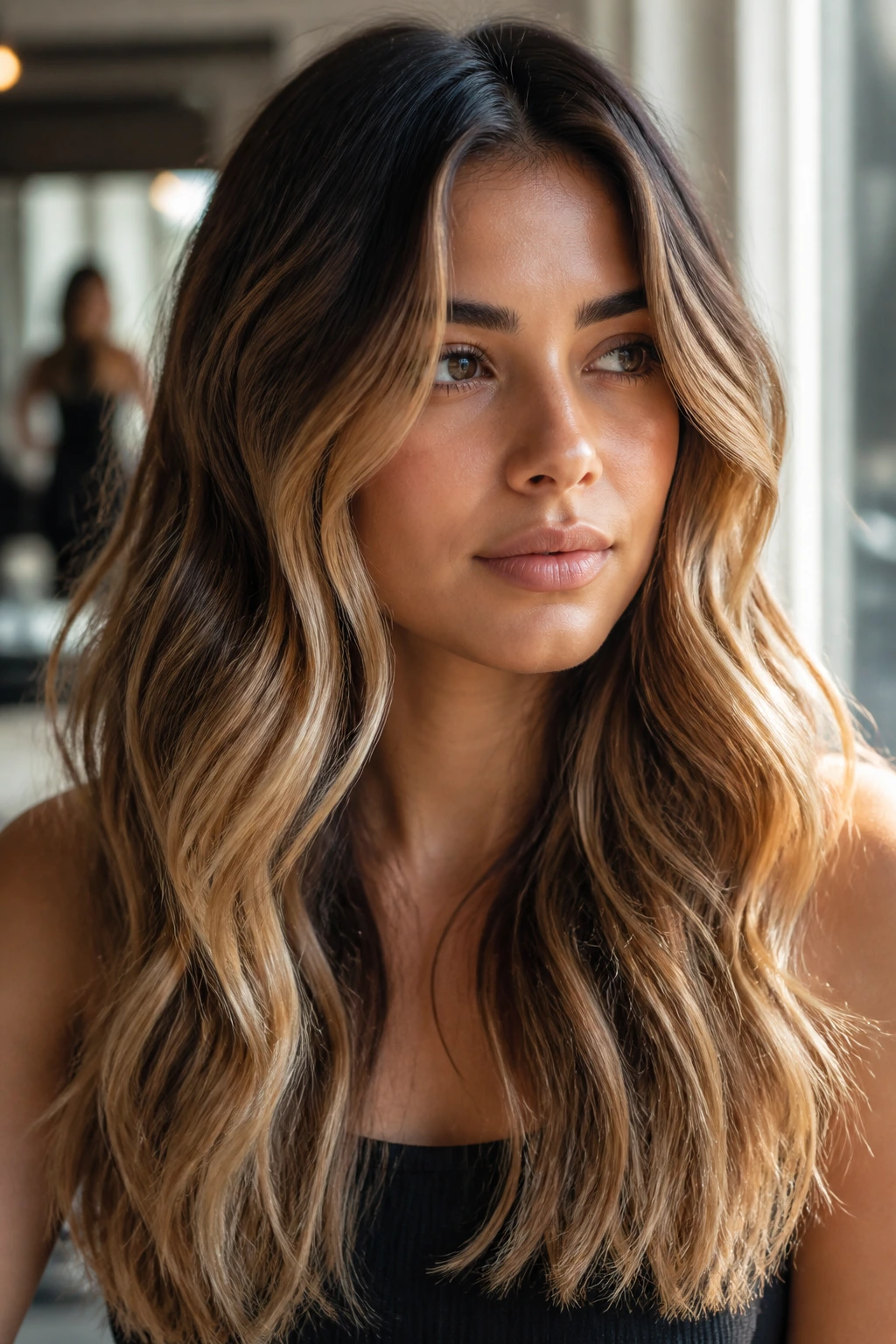
The best dark blonde ombre usually lives one to three levels lighter than you think it should. That is not me being coy. It’s the difference between hair that moves and hair that looks fried. If your starting base is dark brown, the ends often look better at a level 7, 8, or soft 9 — not a bleachy white 10 unless you want a lot of upkeep.
On olive skin, a small shift in tone can matter more than a huge jump in brightness. A level 8 beige-blonde can flatter the face more than a level 10 pale blonde because the beige keeps the skin from losing warmth. If your undertones are cooler, mushroom and ash-beige tones can sit at the same lift level and read completely different.
Ask your colorist to think in terms of shadow, midtone, and finish. Shadow at the root. Midtone through the body of the hair. Finish at the ends. That way the fade can be adjusted around your actual hair texture and not just a swatch chart.
If your hair has been colored before, don’t assume it will lift evenly in one sitting. Previously dyed ends often grab color differently. That’s where a gloss or toner becomes the real hero.
Essential Tools for Salon Reference and At-Home Styling
-
3 to 6 reference photos in natural light: Bring pictures that show the same undertone and similar wave pattern, not just a pretty blonde on a different skin tone.
-
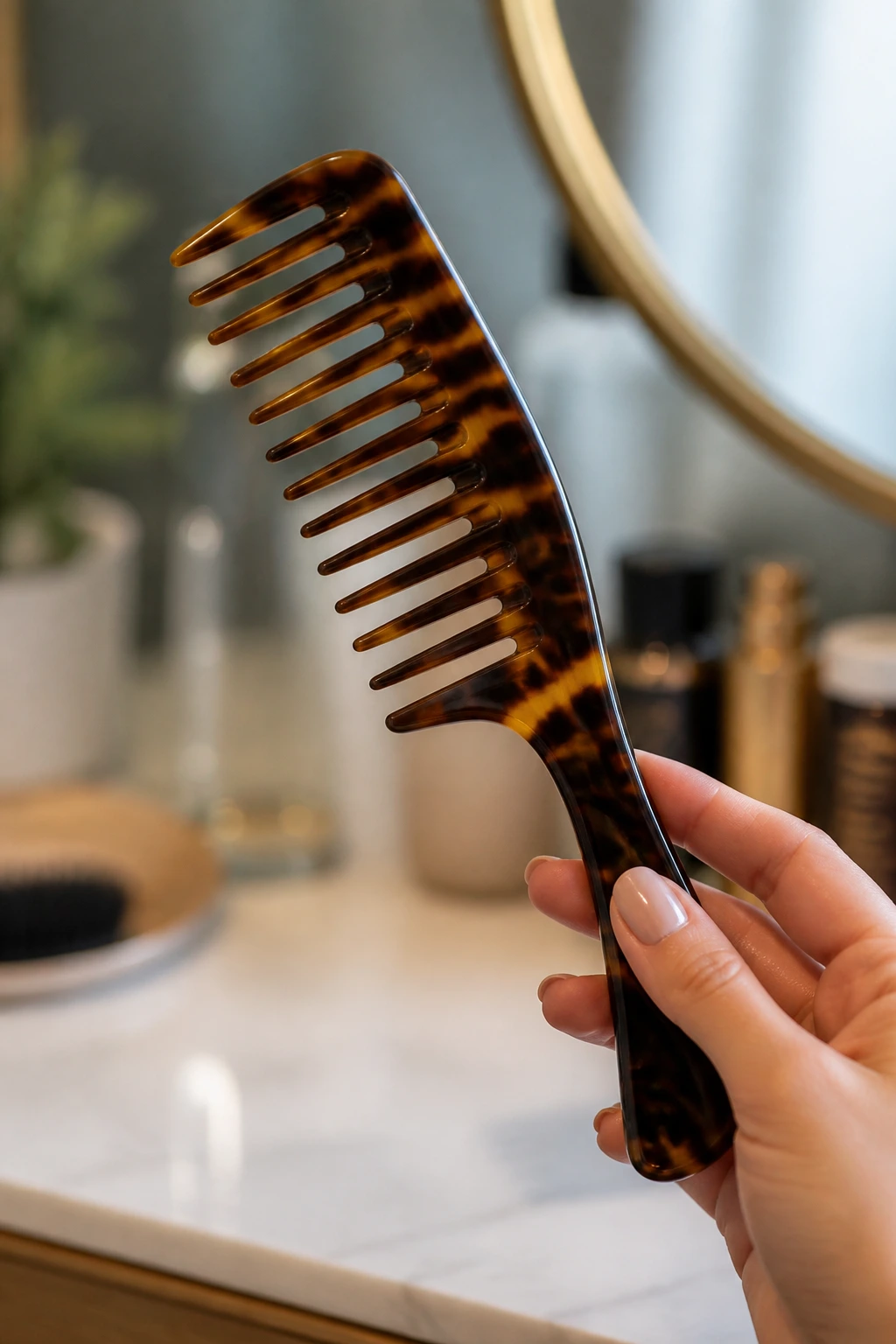
Wide-tooth comb: This keeps wave clumps intact after washing, which matters because separated waves show the ombre placement better.
-
Microfiber towel or cotton T-shirt: Regular terry cloth can rough up the cuticle and puff the ends.
-
Heat protectant rated for 400°F or higher: If you use a wand or iron, this is non-negotiable. Light ends show heat damage fast.
-
Lightweight leave-in conditioner: A few sprays through the mid-lengths and ends help the beige and sand tones look smoother.
-
Color-safe shampoo and conditioner: Sulfates are not the enemy for every head, but harsh shampoo can strip toner from pale beige ends faster than you’d like.
-
Purple or blue-violet shampoo: Use it only if the ends drift too yellow. Too much will make beige hair look dull and muddy.
-
1.25-inch curling iron or wand: A medium barrel gives wavy hair a loose bend that shows the color placement without making the pattern look stiff.
-
Diffuser attachment: Handy if your natural wave needs help without a lot of direct heat.
-
Sectioning clips: They make home styling less chaotic, especially when you’re trying to keep the top layers smooth and the lower layers defined.
Smart Shade Notes for Olive Undertones
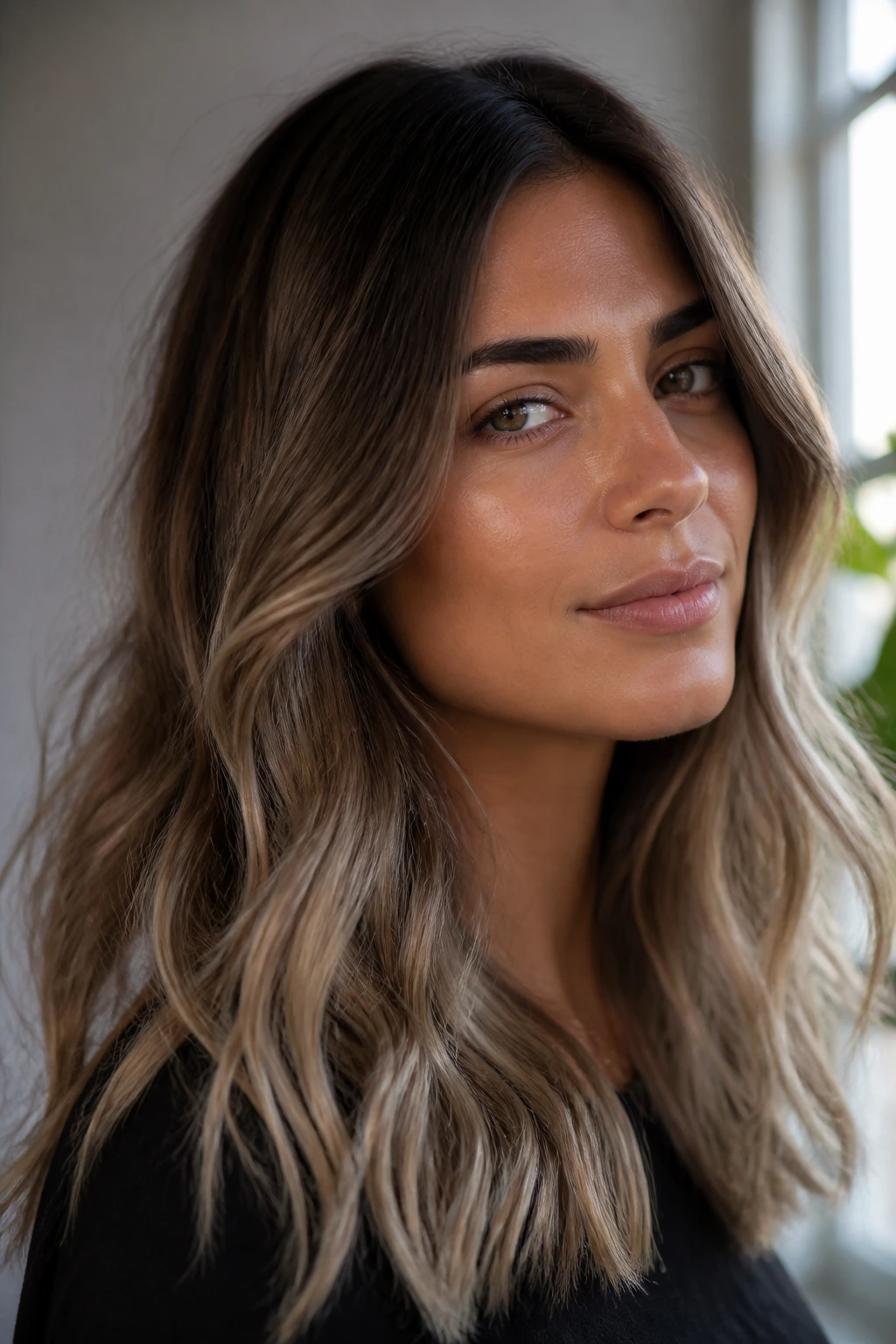
Olive skin does not behave like one fixed color family. It can lean warm, neutral, or cool, and that changes the best version of dark blonde ombre. If you ignore that, the result can look off even when the haircut is good.
Warm olive undertones
Warm olive skin usually loves honey-beige, caramel, toasted oat, bronze, biscuit, and soft gold. The goal is warmth with restraint. Too much yellow and the hair starts competing with the skin; too little and the face can look drained.
Neutral olive undertones
Neutral olive has the most room to play. Sandy beige, rooted bronde, sandstone, and mushroom-beige blends all work well here. You can move warmer or cooler depending on what you wear and how much contrast you like around the face.
Cool olive undertones
Cooler olive skin often does better with mushroom, taupe, ash-beige, driftwood, and pearl-ended fades. These shades keep the complexion from looking sallow. The trick is not to go flat gray. Stay soft, creamy, and dimensional.
If you are not sure where you land, hold a gold necklace and a silver necklace near your face in daylight. That old test still helps. So does looking at the color of your veins, though hair colorists care more about how your skin reacts to warmth under natural light than any single trick.
How to Style These Shades So the Color Shows
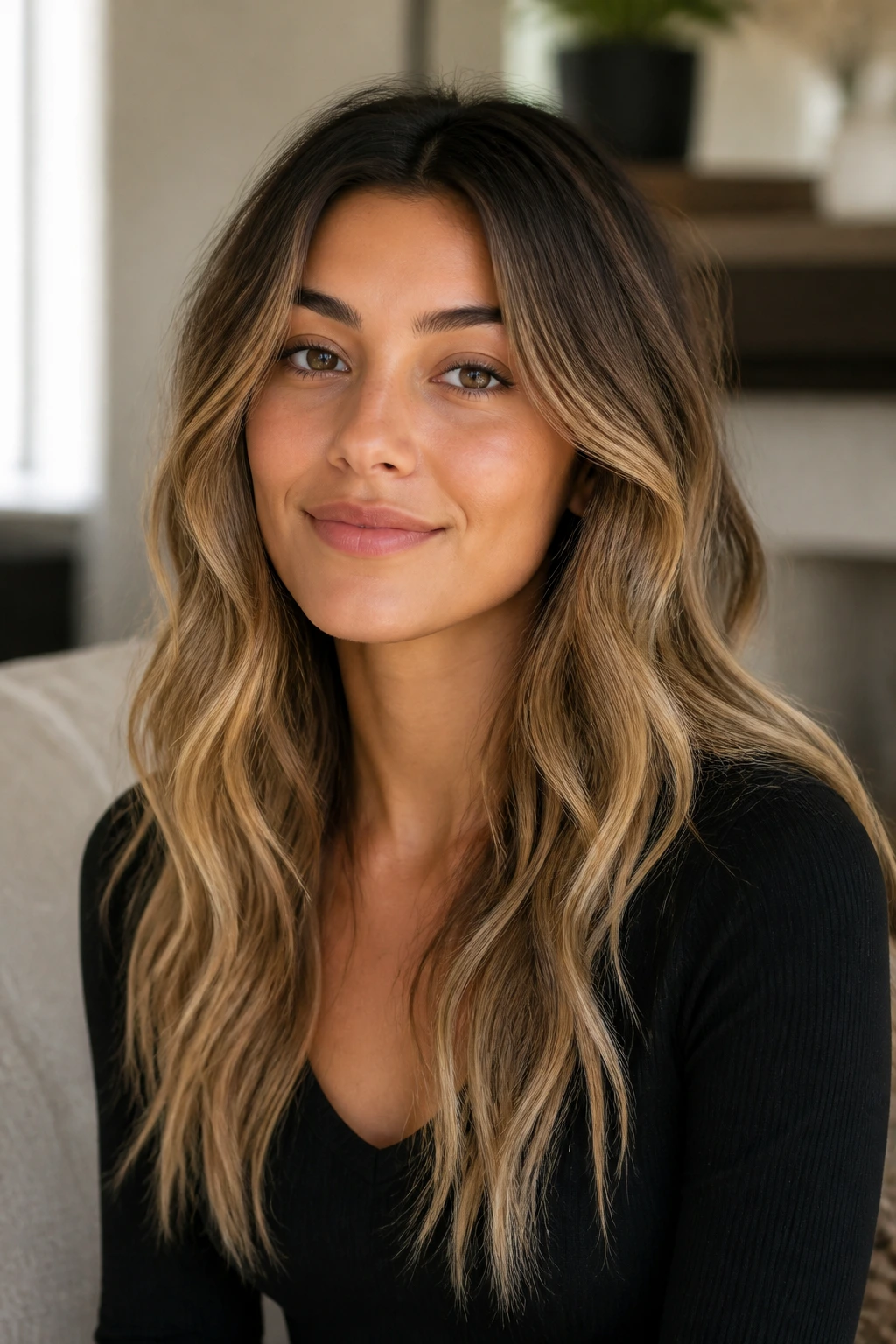
The cut matters as much as the color. Long layers, a soft lob, curtain bangs, or face-framing pieces all help the ombre break up in a way that looks deliberate. A blunt one-length cut can hide some of the tonal shift, especially if the ends are only a few shades lighter than the root.
Waves should look touched, not crimped. A loose bend with a 1.25-inch iron or a diffuser gives the blonde pieces a chance to move. Brush out curls once they cool if you want that softer balayage feel. If you leave the waves too tight, the color can look patchy and overworked.
Makeup can help the tone read correctly. Warm olive skin often likes peach blush and a muted terracotta lip with honey or caramel shades. Cooler olive skin usually pairs better with rose, taupe, or a neutral brown lip. That is not a rule carved in stone, but it saves you from a face that fights the hair.
Jewelry changes the finish too. Gold tends to make honey, bronze, and wheat tones feel warmer. Silver or brushed pewter can make mushroom, ash-beige, and taupe shades look more intentional. Small detail. Big effect.
Maintenance, Toning, and Grow-Out
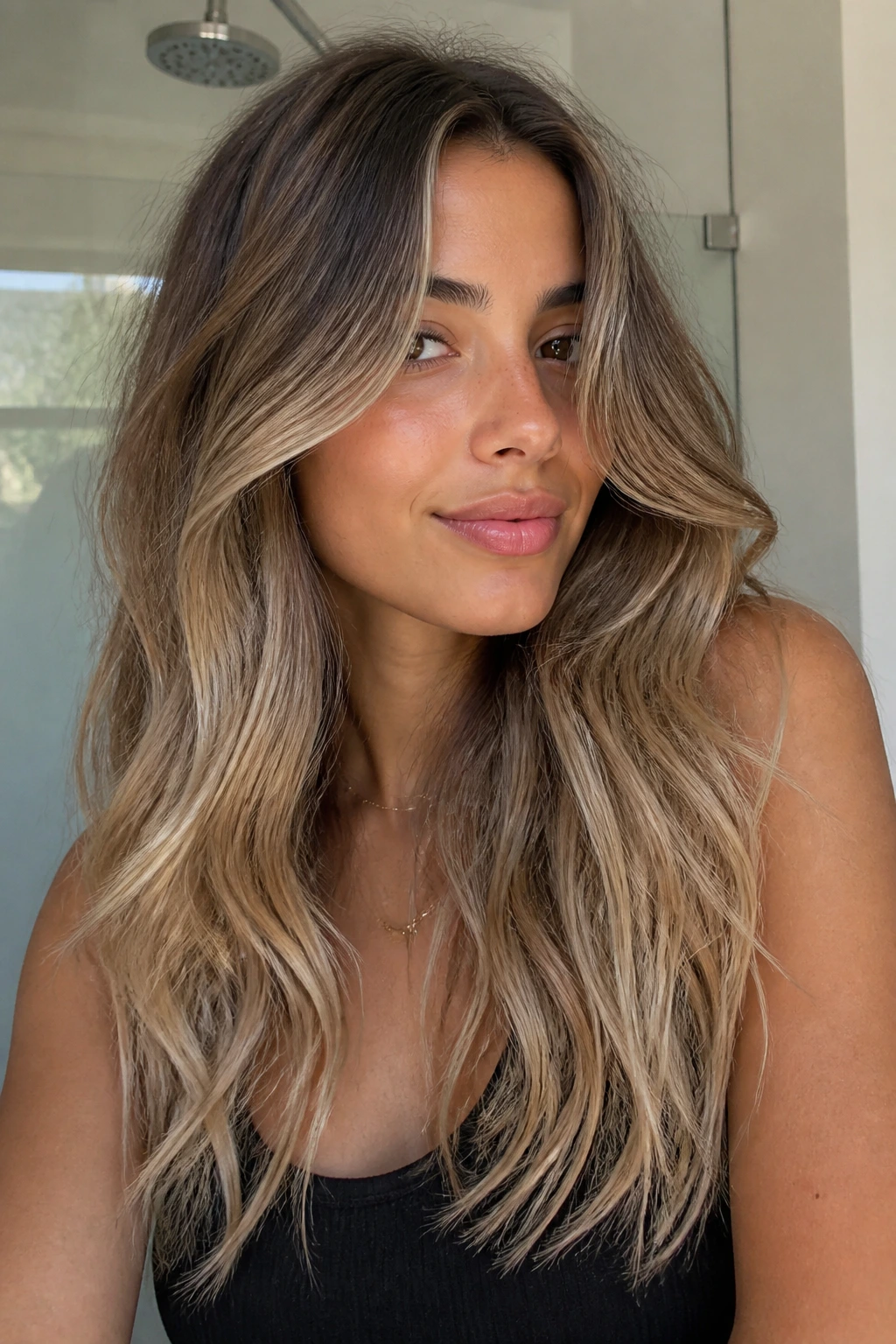
Dark blonde ombre is forgiving, but it is not maintenance-free. If you want the ends to stay creamy instead of crispy-looking, plan on a gloss or toner refresh every 6 to 8 weeks. That timing can stretch longer if the blonde is closer to beige than pale gold.
Wash frequency matters more than people think. Colored wavy hair usually does better with 2 to 3 washes a week, not daily shampooing. Overwashing strips the toner faster and leaves the light ends rough. If your scalp needs more frequent cleansing, use a gentle shampoo at the roots and let the runoff handle the ends.
A deep conditioner or mask every 7 to 10 days keeps the lighter pieces from feeling dry and frayed. Focus it on the lower half of the hair. Do not pile heavy oils at the crown unless your hair is extremely coarse; the roots need movement to keep the ombre looking airy.
For heat styling, a protectant every single time is the rule, not the suggestion. Once pale beige ends start to dry out, they lose that creamy finish fast. Trim every 8 to 12 weeks so the lighter ends do not split and break, which is what turns a soft fade into a ragged one.
Additional Tips and Shade Boosters
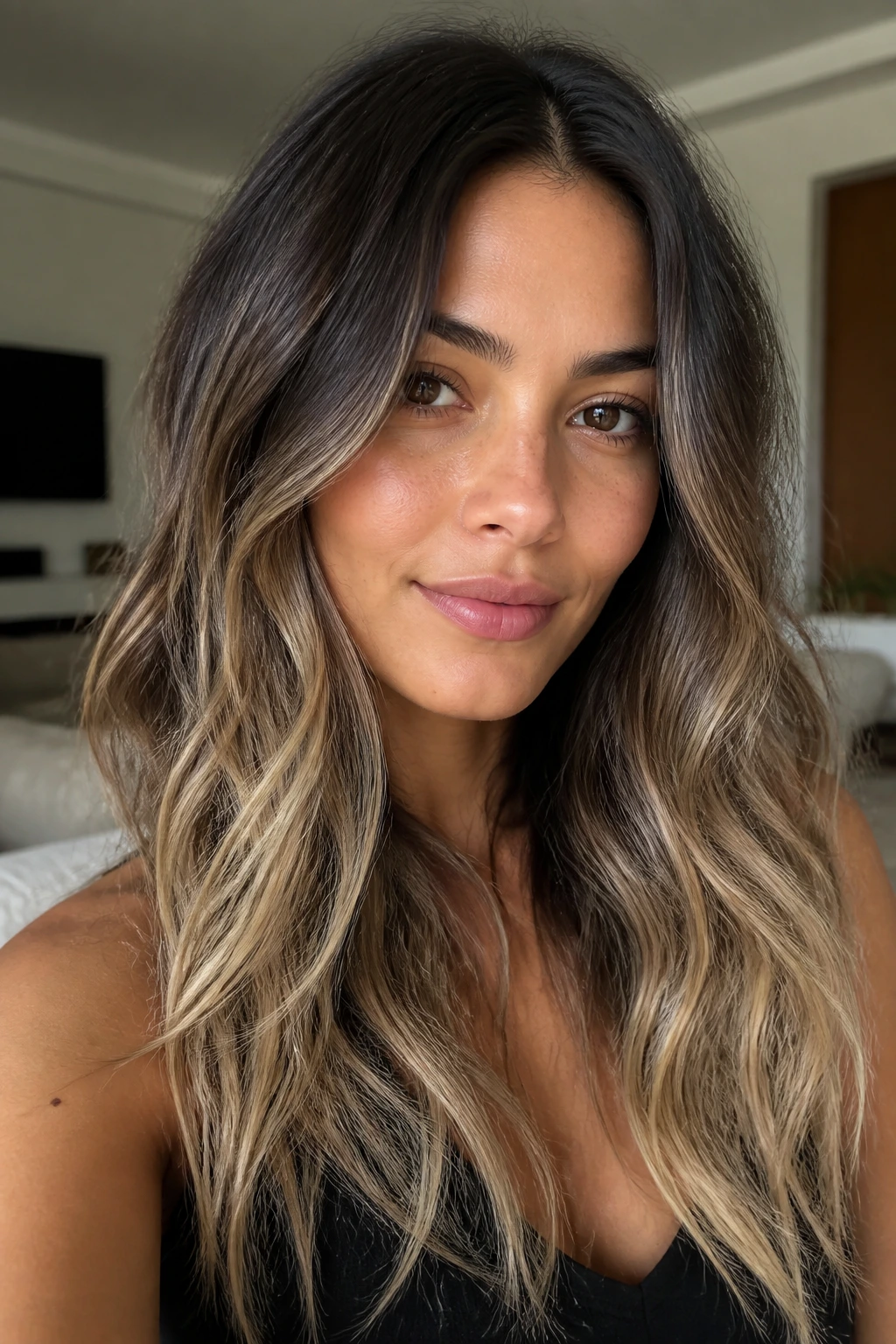
Flavor Enhancement: A clear or beige gloss over the mid-lengths can make the whole ombre look softer without changing the lift level. This is one of the easiest ways to make the color look more polished between salon visits.
Customization: If you like warmer hair but worry about brass, ask for caramel at the mid-lengths and beige at the ends. If you prefer cooler tones, ask for mushroom or taupe through the transition and only a whisper of beige at the tips.
Serving Suggestions: A middle part makes many of these shades look balanced and clean. A deep side part gives the root more drama and lets the lighter pieces show on one side first, which can be flattering if you want the face frame to do extra work.
Make-It-Yours: If your hair is fine, keep the blonde concentrated on a few clean ribbons so the ends do not look thin. If your hair is thick, use more panels but keep them soft and feathered. For coarse hair, a little more warmth helps the color look glossy instead of dusty.
Common Mistakes to Avoid
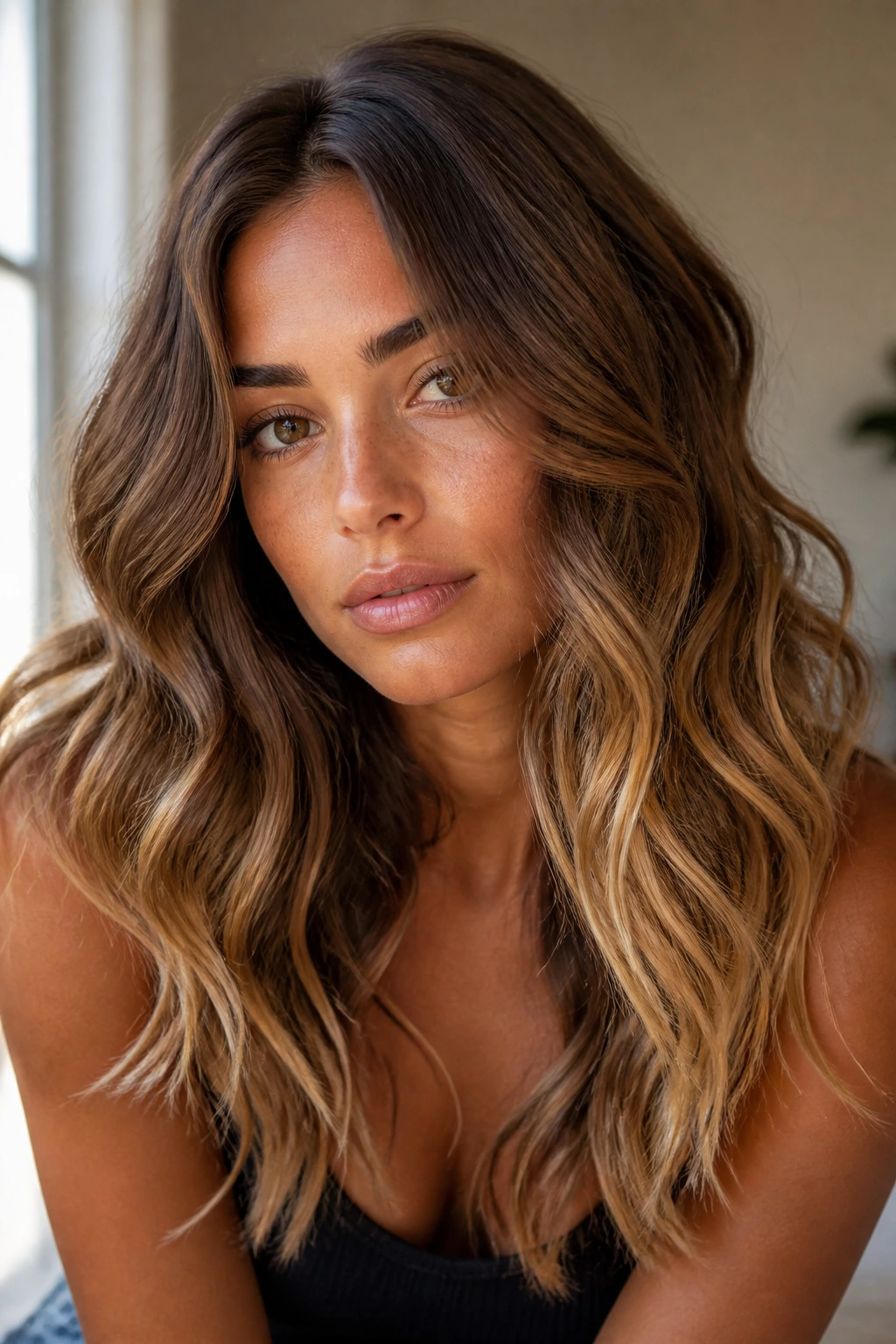
Going too pale too fast: Pale ends can look impressive in a swatch book and terrible against olive skin if the root is not deep enough. The fix is to stop one level darker than you think and revisit the brightness later with toner or a second session.
Choosing the wrong blonde tone: Yellow blonde can make olive skin look tired, while stark ash can make warm olive skin look muddy. Beige, mushroom, sand, and oat are safer starting points because they leave room to adjust.
Painting the light pieces too high on wavy hair: If the blonde starts too close to the scalp, the grow-out line gets obvious and the wave pattern can look stripey. Ask for a soft melt or a gradual balayage placement that follows the bend of the hair instead of crossing it in straight bands.
Skipping the root shadow: A heavy blonde from root to tip removes the depth olive skin usually needs. The darker base keeps the face grounded and makes the whole thing easier to wear on ordinary days, not just after a fresh blowout.
Overusing purple shampoo: One wash too many and beige ends can turn flat, chalky, or oddly gray. Use it sparingly, and only when the lighter pieces start drifting yellow.
Ignoring the haircut: Color alone can’t rescue blunt, bulky ends. Soft layers, a lob, or face-framing pieces help the ombre show up where the light lands.
Variations and Alternative Approaches to Try
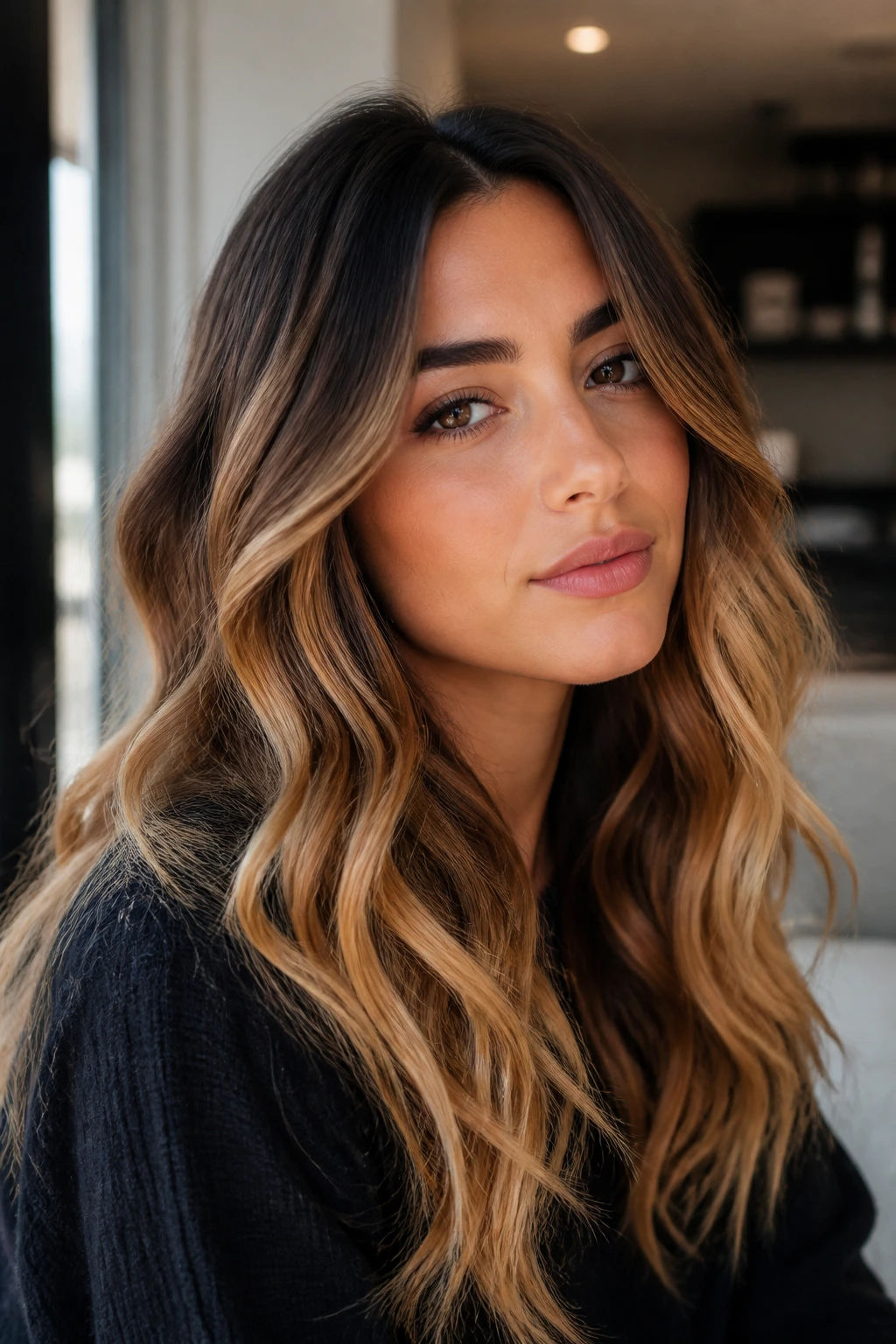
The Honey-Soft Version: Keep the root dark brown, then use honey-beige ends instead of sandy beige. This suits warm olive skin and looks especially good on thick waves that can carry a little warmth without turning brassy.
The Mushroom Mute-Down: If gold never behaves on your hair, push the fade toward taupe and mushroom instead. This version stays cooler, calmer, and better suited to neutral or cool olive undertones.
The Face-Frame First Look: Brighten only the front pieces and the last few inches of length. It’s a smart move if you want lightness near the face but don’t want to commit to a bigger blonde shift across the whole head.
The Lob-Length Edit: On a shoulder-length cut, keep the ombre tighter and higher contrast at the ends. The shorter length makes the fade look modern and keeps the light pieces from disappearing into long layers.
The Glossy Beige Upgrade: If your blonde ends start to look dry, a clear or beige glaze can bring back shine without changing the tone much. This version is for people who like a cleaner, healthier finish more than a loud color statement.
The Low-Maintenance Root Melt: Stretch the root shadow farther down and keep the ombre soft. Less upkeep. Less visible grow-out. Still plenty of movement when the waves open up.
Frequently Asked Questions
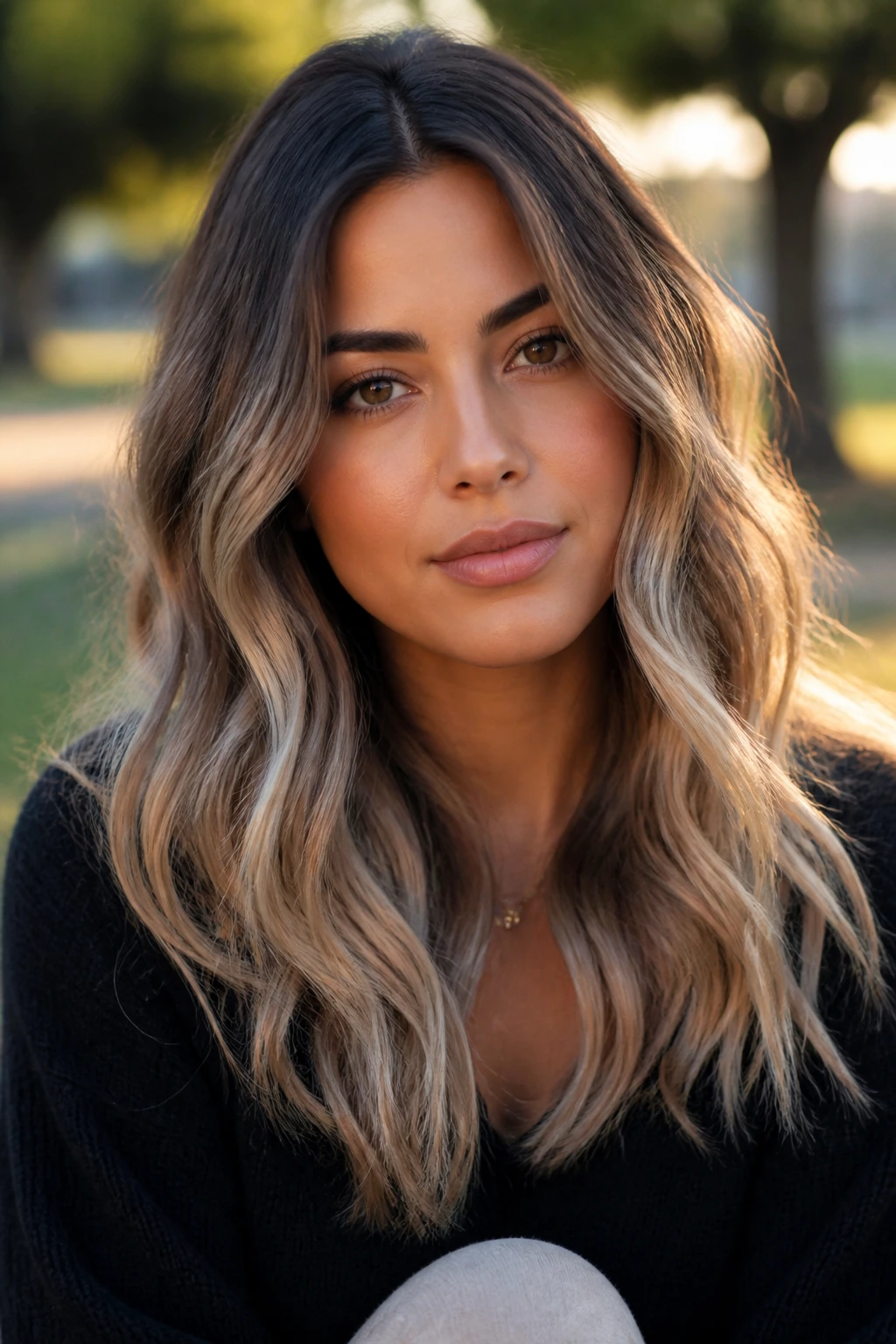
Will dark blonde ombre make olive skin look green or sallow?
It can, if the tone is wrong. The safest shades are beige, sand, mushroom, oat, and soft gold with a creamy base; those keep olive undertones from turning murky or washed out.
Is balayage better than foil highlights for wavy hair?
For most wavy hair, balayage gives a softer fade and better grow-out because the color follows the bend of the wave. Foils make sense when you need more lift or a brighter, more controlled blonde near the face.
How light can the ends go before the look stops flattering olive skin?
That depends on your undertone, but most olive skin looks best when the ends stay creamy rather than icy. A pale beige or soft level 8 to 9 usually wears better than a white-blonde finish unless the root is quite deep and the toner is spot-on.
Can I get this look if my hair is naturally very dark?
Yes, but the process may need more than one session if you want the ends to stay healthy. Going from very dark hair to dark blonde ombre often works better as a gradual lift, especially if the hair has previous color on it.
How often should I tone dark blonde ombre hair?
Every 6 to 8 weeks is a practical range for most people, though pale ends may need a refresh sooner if they pull yellow. A gloss or glaze can stretch the tone longer without another round of lightening.
What if my ombre turns orange after a few washes?
That usually means the underlying warmth is showing through. A beige or blue-violet toner can help, but the right fix depends on whether the orange leans golden or copper. Ask a colorist to correct the tone rather than stacking more purple shampoo on it.
Does this color work on short hair, or does it need length?
It works on short hair too, especially a lob or a layered bob. The key is placement: keep the lighter pieces lower and softer so the fade has room to show instead of turning into a hard stripe.
What should I bring to the salon besides a photo?
Bring one picture of the tone you like, one of the placement you like, and one of the wave shape you want to preserve. That gives your colorist a much better read on the finish you’re actually after, not just the color swatch.
Soft Root, Easy Grow-Out
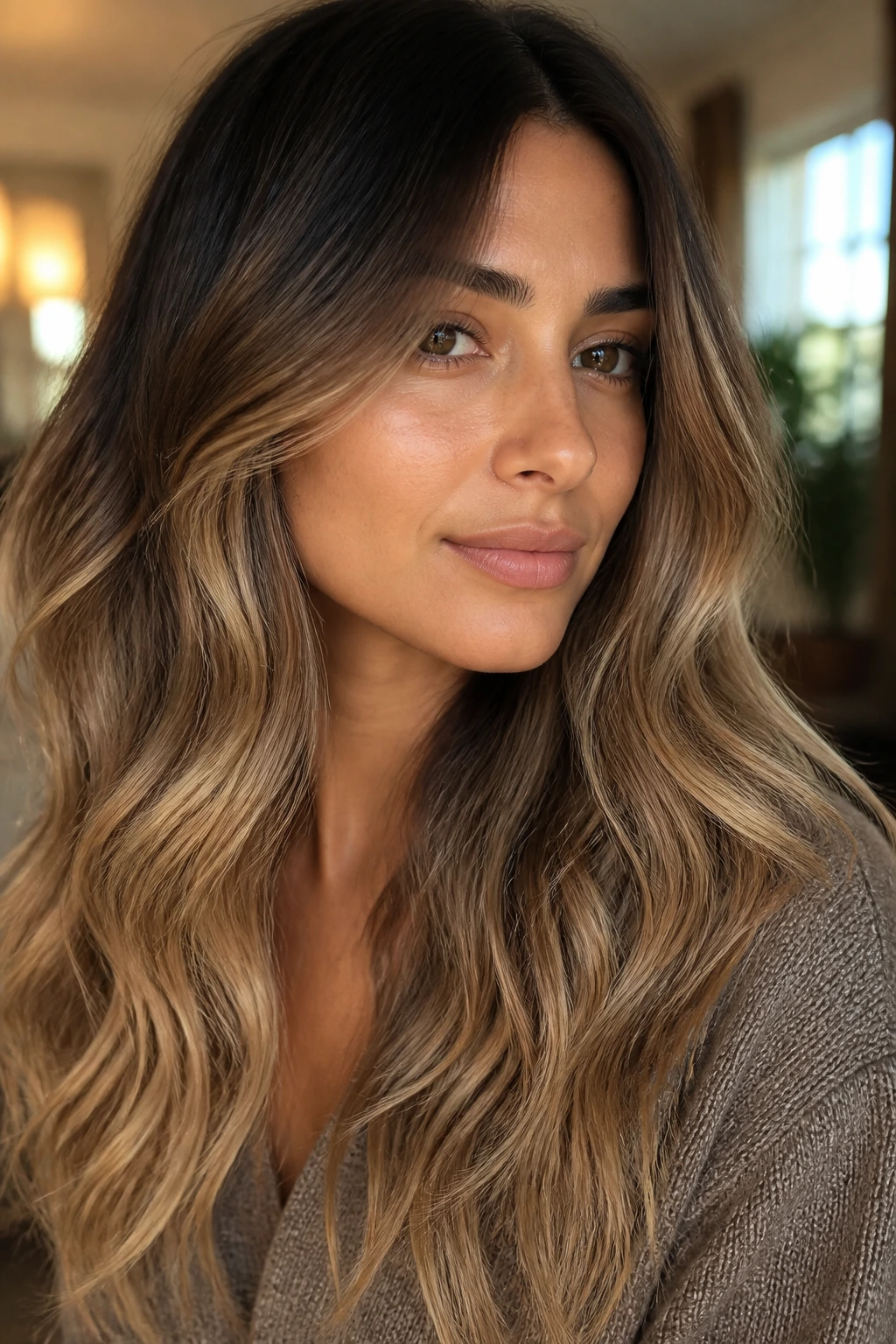
The best dark blonde ombre on olive skin doesn’t fight the face. It sits with it. The root stays deep enough to keep the complexion grounded, the ends stay creamy enough to catch the light, and the waves do the rest of the work without looking forced.
That’s why the whole category has so much range. You can go warm, cool, muted, bright, subtle, or a little more dramatic, and still keep the same basic idea intact: depth at the top, movement through the middle, brightness where the hair bends. Once you get that structure right, everything else becomes easier.
Bring the right reference, be honest about your undertone, and keep the fade soft. The rest is just choosing how much beige, mushroom, honey, or sand you want to live with.